

At the risk of reigniting that phoney Battle of the Bands nonsense, the major hype (and then some) the mainstream press caught on to over a supposed Blur vs Oasis feud was never where I was at in the mid-1990s. Turning on the telly then – and again this summer with regard to the latter act – you’d think the entire nation was all-consumed by their respective labels’ tiresome Britpop shenanigans. I loved both bands’ output, buying up the records like millions more, but never truly felt a need to catch Blur at Glastonbury in ’94 or Mile End in ’95, nor Oasis at Knebworth in ’96. All a bit too big for me, like watching your favourite non-league sides scale the heights to the Premier League only to find you’d struggle for a season ticket from there because of increased demand.
I continued to splash out on the quality product in Blur’s case when the new LPs and side-projects rolled out, but I’d much rather have caught both acts when they were playing smaller clubs and weren’t being routinely touted as the biggest things since David Gates’ sliced outfit. However, when I saw the premise of a new book from musician, composer and political activist Dave Rowntree, best known as the drummer for Blur, it truly resonated, seeing as it concentrates on the early days… before Parklife took them to that next mega level. I loved that LP and many more that followed, continuing to follow the four-piece’s journeys in sound, but reading about the period up to ’93 was of more interest to this indie lad at heart.
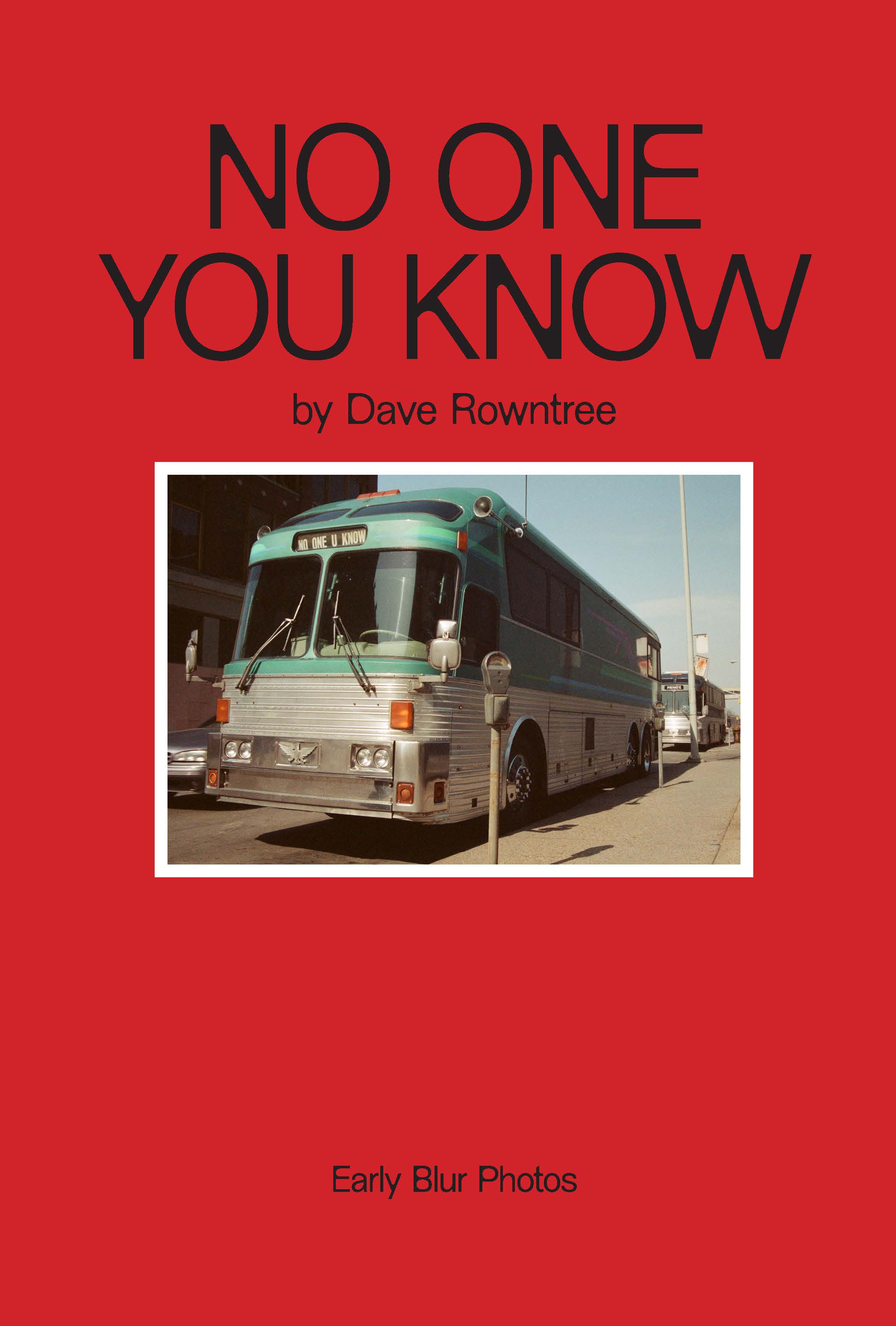
No One You Know: Dave Rowntree’s Early Blur Photos comprises a series of evocative images captured by their founder member and percussionist in those formative years, snapping away with a newly purchased Olympus OM10 35mm camera behind the scenes as Blur progressed from recording days at Maison Rouge in Fulham, West London, to debut overseas adventures in Japan, Canada, the USA and Mexico. Their first proper adventures, you could argue.
As Dave puts it in his introduction, ‘Outside the UK music press echo chamber very few people knew who we were and wouldn’t do until the release of our third album, Parklife, the four Brit Awards and the very public spat with Oasis. The pictures I took are of a band right at the start of their career. They’re of what we did between the gigs, interviews and photo sessions. They are of us hanging out, relaxing, travelling, eating and, especially in the early days, drinking. They are snapshots of what life in Blur was really like in the first few years when the TV cameras and tape recorders were turned off.’
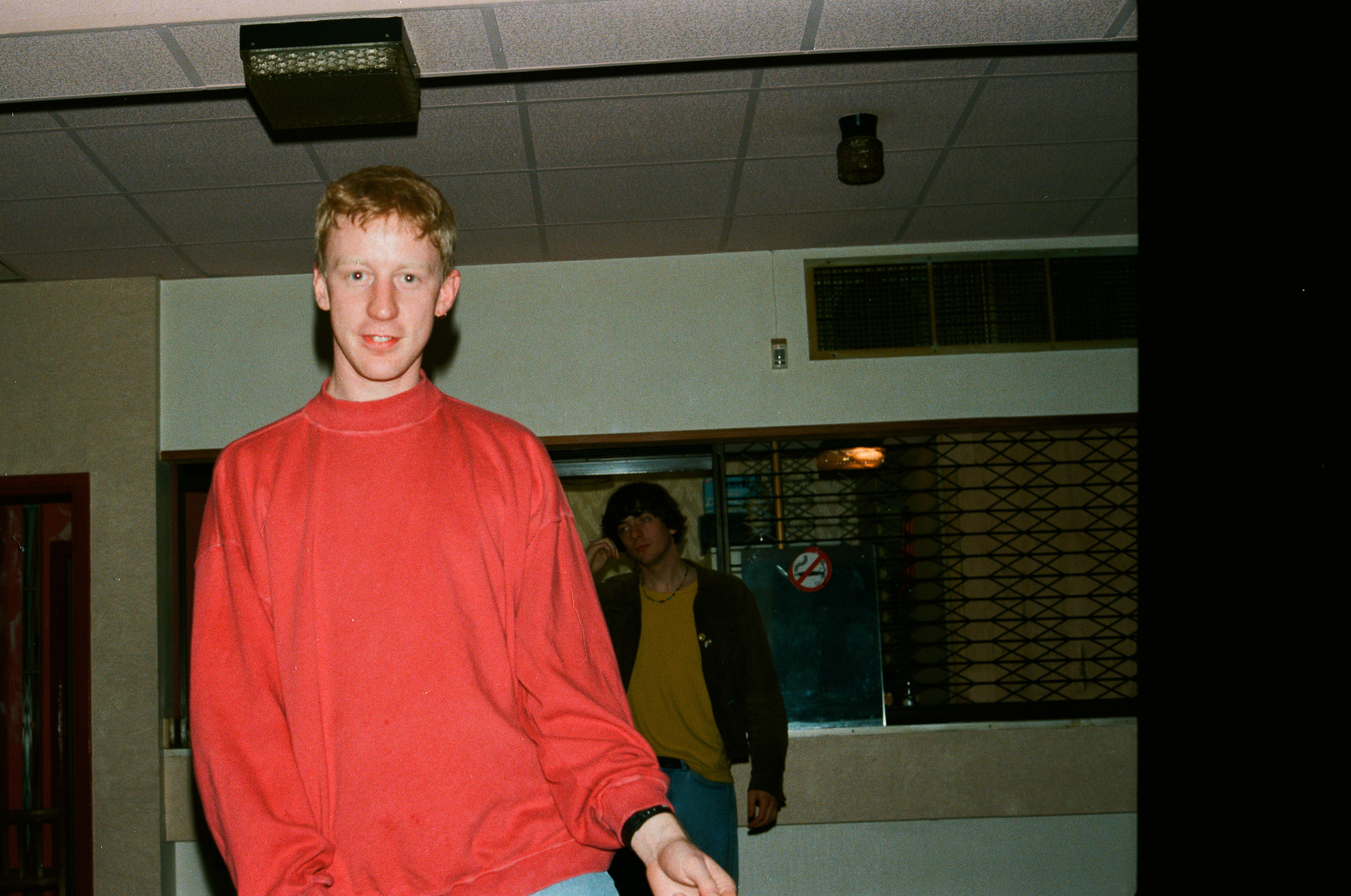
En route, we get hundreds of previously unseen photographs, Dave capturing many an eye-catching insider moment, including close-up and personal pics of singer Damon Albarn, guitarist Graham Coxon, bassist Alex James and himself in those early stages of that rise to the top – from playing games on the tour bus to larking around backstage, messing about in hotel rooms, at video shoots, with fans and friends. And it serves as a neat document of what it’s like to be in a young band during those vital first few years, ‘when everything is new, romantic and fresh.’
There’s also a personal foreword and Dave’s memories attached to the images, No One You Know – its title taken from the sign on the front of the tour bus as they made their way across North America – providing a visual insight into the first few years of one of Britain’s most successful, well-loved bands, from one of only four people who knew what it was really like.
All a perfect excuse to track down Dave in the week he followed an interview with John Robb at the Louder Than Words music literature festival in Manchester with dates at the Cellar Arts Club in Worthing, West Sussex (Thursday, 20th November) and Waterstones in Yeovil, Somerset this weekend (Sunday, 23rd November, where he’ll be interviewed by self-confessed cardigan-wearing writer, apparently ‘one of the 20 most rebellious women in Bristol’, Jane Duffus).
Dave was on his way up to the capital when we spoke, the 61-year-old with the impressive CV spanning several genres these days based near my old patch around Guildford, Surrey, where I left for love in late 1993… around the time Blur were working with Stephen Street and Stephen Hague (they only tended to work in the studio with blokes called Stephen in those days) at the afore-mentioned Maison Rouge, across the road from Chelsea FC’s Stamford Bridge home, 30 miles from my old front door in Shalford.
‘Ah, I know Shalford – very nice! A small world, as they say.’
Did I ever mention that The Stranglers rehearsed in the scout hut at the end of my road, where I attended Cubs, that an early incarnation of The Vapors did the same at the village hall, and Phil Collins was a local in my mate’s parents’ pub, where he once jammed with a fella called Clapton one Christmas? Oh, apparently I did, so I best move on, telling Dave there and then his book provides a great little snapshot of Blur at a pivotal spell in their career. I also cut to the chase and asked whether his assertion that his ‘foggy memory of the early days is certainly the despair of those who know me well’ was down to classic rock ’n’ roll excess or just a poor memory.
‘I’ve always had a poor memory for certain things. I’m terrible at remembering names. I’ve always struggled to find words. Halfway through a sentence, I’ve realised I don’t actually know the name for the thing I’m about to need to name and have to divert the sentence elsewhere. I’ve always been like that.’
I know that feeling. He has my sympathy.
‘Being in a band is different every day, but fundamentally it’s quite a repetitive thing. You do thousands and thousands of shows and do an awful lot of days in the studio, and those tend to merge into one. I think that’s really what it is, so unless something remarkable happens at a show, it’s often quite hard – a month or so later – to remember which one that was. ‘What gig was it in Boston?’
I can imagine that. And I suppose you’ve been on, for want of as better description, something of a treadmill at times.
‘Well, treadmill is rather a pejorative word, isn’t it? I was doing what I always wanted to do. It was bloody hard work, but I wouldn’t have changed it for the world.’
Indeed. I can’t imagine you’d ever have been tempted to see out your initial role as a computer programmer for Colchester Council. And if you had, you’d surely have contemplated (at 61) retirement by now.
‘I’m not even sure they have computer programmers at local authorities anymore! That’s all a thing of the past. But yeah, I’d have been miserable had I not got to be in a successful band. That was my passion, what I desperately wanted to do. The reality is, most people who desperately want to do it don’t get to do it anyway. That’s kind of where we were at the start of the book.
‘In the first few years of the band it was far from clear that we were going to be able to go on to have a career, because we were a tiny little band, unknown everywhere really, but unknown especially in the places we were just starting to tour – in America, Japan, Europe – and the music we were playing was very unfashionable in those days. It wasn’t until the mid-’90s when suddenly the fashion changed and what we were doing became very fashionable. It then had to have its own chart, so you could be in a chart, because there was no hope of bands like ours grazing the main chart. In fact, that was quite a laughable idea.’
True, and there were so many bands on the cusp of it around then. It’s almost like those sliding doors moments where, while you worked hard from the very beginning, there were still elements of luck required at certain points to ensure it turned into the huge story it became.
‘Absolutely, there are a thousand of those moments, and things that seemed like a massive disaster at the time turned out to be fundamental to the making of the band. The classic thing of being ripped off by our first manager, that was nearly the end of the band. But as it turned out, that forced us to make some changes, one of which was touring America for several months. That made us re-evaluate where we came from, and that became the basis of the next few albums, us thinking about England and Englishness, what we liked about it and what we didn’t like, repeat the characters and all of that. And that was the birth of Britpop, to some extent. Things that seem awful can go on to be the fulcrums around which everything turn.’

Looking back at the Blur gigography, especially your earlier London dates, I see a few venues I was frequenting in the second half of the 1980s. We must have rubbed shoulders on a few occasions without realising. I’m thinking of places like the Cricketers, Kennington, venues in Kilburn, Tufnell Park, Camden, plus the Mean Fiddler, the Sir George Robey, the Borderline, the Marquee, the Powerhaus… In my case it was seeing bands I also felt should have made it but didn’t quite have that luck. And, of course, everyone has those tales of nights when the A&R men or a label or publisher takes a shine to another band on the bill rather than your own. So near, yet so far.
‘Yeah, at the time we were starting out, I heard one estimate that there were 100,000 bands in the country. It’s not like the cream necessarily rises to the top. As you say, there’s an awful lot of luck involved. You have to be at the right place at the right time. You have to work hard and make good music, but lots and lots of bands were working hard and making good music. None of this is guaranteed.’
Absolutely, and I get the impression you never took it for granted. And with regard to memories of those years, we tend to find within bands that someone will have a great memory of how it all came to pass, while another member is more likely to collect all those old hand bills, take those snaps, or whatever, and between you all, you pull it all back together. I’m guessing you fit into that latter box, out of the four of you.
‘Actually, we all have a box of junk where we threw all the… ephemera – I’d hate to call it memorabilia, because we’re still going! – as it went. I’ve certainly got a box of stuff, and I know Alex has, and Graham has a house full of stuff – he’s got every t-shirt he’s ever worn! So if you want to write a book on Graham’s fashion, you’re spoiled for choice! Damon’s got some stuff as well. But it was never, certainly in my case, kept with any particular idea of using it later on. It was more a case of, ‘When it’s all over, it’d be nice to remember this.’
That aside, it was music that got you over the line. And I get the impression that from the start – much as I love the inspirational punk ideal of taking things from scratch – you came from extremely musical backgrounds.
‘Yeah, certainly Graham, Damon and I were classically trained musicians, we could read music and had a kind of formal music training background. But really, the thing that saved us – because we made some terrible decisions along the way that could have finished the band – was playing live. We were then, and I hope still are, excellent live. So no matter how terribly everything else was going, we could turn up, play a gig, and everyone would go, ‘Oh yeah, that’s them. That’s what it’s all about.’
On that front, I also get the impression that while there was clearly underlying boredom between gigs, on the tour bus, you made the most of that down time, not least listening back to the night before’s performance, trying to work out what worked and what didn’t, what could be improved upon.
‘Yeah, I took that on, because we recorded the show every night, first of all for my own peace of mind, making sure what I was doing was okay. Then I started listening more widely, picking out things and mentioning stuff at soundchecks that we might try and change. That became my role. I don’t do that anymore, but we don’t have those three-day bus journeys with nothing to do now! This was pre-mobile phones, pre-CDs even. You’d have five or six cassettes, swap them around with everybody else, two or three books, and once you’ve gone through that, that was that – that was your entertainment gone, and you were desperately looking for things to do.’

You were fairly well travelled before all that, by the sound of it, with regular trips to France, for instance.
‘I definitely wasn’t well travelled… But yes, I’d gone to live in France for a couple of years. That was a great thing to do, and I retain that abiding love of France.’
There’s a description in the book of a ‘a ginger hippie with a predilection for playing gigs in his pyjamas.’ Discuss.
‘Yep, that was how I joined the band! It didn’t last long, because that made me a bit of an outlier on the stage. But that’s what signed up to Blur – a ginger hippie in his pyjamas!’
What became of that chocolate brown Ford Cortina you drove that did its service up and down the A12, into the capital and back for rehearsals and shows.
‘I scrapped it. I took it down the scrapyard and got 25 quid for it. And I think they were ripped off. I think it was worth half that.’
That’s a shame. I could see that at the heart of a Blur ephemera exhibition in years to come. Maybe we should lie, pretend it’s still out there, have a go at mocking up another one for that purpose. I won’t let on if you don’t.
‘Ha ha!’
You talk with some awe about that first rehearsal in Euston, and how you came together as a band that first time there. These are all important firsts, aren’t they?
‘Yeah, and that’s what the book is about, it turns out. I struggled for a long time to try and find out what it all meant, what I wanted to say with the book. And that was it, really – it was the firsts! It was that exciting time in the early days when the band was doing all these things for the first time. After a while, they became routine, but yeah – the first time in America, the first time in Japan, the first time in Canada, the first time in the studio with a proper producer… All these things felt like, and were to some extent, incredible milestones. And capturing that feeling of excitement and trepidation, that’s what I think the photos do, that’s what they show.’

As someone who’s edited quite a few fans’ history books of popular acts, I always prefer those early day struggle tales over ‘biggest band in the world’ type antics in ‘enormodomes’. And there are only so many times you can read about VIP experiences in soulless stadia, as compared to first-night nerves in fleapit clubs or dodgy rehearsal rooms. Maybe I can just relate to that more, thinking perhaps it could have been me in that situation.
‘Yes, those years are the kind of missing years for most bands. By the time you’ve reached the public consciousness, you’ve already gone through that. It’s a growing process, usually. Not so in the case of boy bands, which is usually a downfall, but bands seem to arrive on the scene fully formed, with an image and something to say. But that’s taken years of trial and error, and it’s largely undocumented. That wasn’t the case for us as much, that we were evolving an image particularly, or a sound – that seemed to arrive fairly unbidden – but we were kind of figuring out what it was all about, who we were, what we wanted to sing about, all that kind of stuff. That was the thing that really kind of evolved over those first few years.’
Your purchase of a 35mm Olympus camera was timely, and you clearly have an eye for composition. There are many good images in the book. I guess it helps that you were part of a young band of annoyingly good-looking blokes, but it’s all pretty evocative and looks great.
‘Yeah, there’s something about film shooting on film, it makes things have a kind of classic feel that is completely missing with digital photography. You can superimpose film grain on it, but you haven’t solved any problems – you’ve just added some noise! Film grain isn’t actually noise at all. It’s something completely different, and all those defects with different kinds of film emulsions are actually what give it character now. You worked so hard in those days to get the kind of pristine photorealism you get with digital cameras, but we found when it arrived it’d taken the soul out of it and the struggle with the film was part of the art of it all. The chemistry is always part of the art. So we struggled in vain. When film cameras died and digital cameras took over, I lost interest, really.’
I had the pleasure this week of speaking to Dave Hill from Slade, and we got on to the subject of his band’s formative bonding moments in the Bahamas in the ’60s, down on their luck and paying off a huge debt in this seemingly ideal tropical setting, stuck in one room together. Similarly, The Beatles had their Hamburg years. How about Blur? I get the impression your greatest bonding moments came when you were travelling across North America on that tour bus, rethinking your direction after an earlier false start, Do you think that truly brought you together? You clearly had similar interests, with close cross-friendships between you, but you still had to learn to live with each other in close quarters and get on with each other. That’s quite a skill, really, isn’t it?
‘Yeah, that’s what splits most bands up. That and money. Having to live in each other’s pockets, seven days a week, 365 days a year. That’s what it was for decades, and that’s a very hard relationship to manage, no matter how much you like the people. But what I’ll come back to is that the thing that’s always saved us is the gigs. Whatever else is going on, when we go on stage and the first few notes of the first song are played, everything gets washed away and everything is renewed. Everything starts afresh.’
Back in the early days, the term the NME used – I’d read it from cover to cover in the ’80s – was ‘ligging’, and you seemed to do a right lot of that outside the nine to five recording existence. You clearly worked hard and were put through your paces by the likes of Stephen Street, but getting on to gig guestlists and all that – getting known and mixing with the right people – was all part of it. Did you see yourself as a party band? Or was it just letting the hair down after a busy day?
‘Erm… everybody was doing it. There were a bunch of us – all the current bands, all the current journalists, the young people in the record companies – we all went round together, all to the same things. Especially on a Thursday when it was Syndrome. But pretty much every night there’d be a good band on, so you’d ring round, figure out where we were going, and we’d turn up en masse and head for the bar. And the very journalists criticising bands for doing that were doing it themselves! Ha ha!’

Were Food Records looking after you in that respect?
‘Yeah, we didn’t have any money, so weren’t partying that much, to be honest. You’d get a couple of drinks in, but hope there was somebody from the label to buy some drinks, or something through your publisher. You’d get a couple, then get one more or have enough money for the taxi home. It was pretty meagre times, to be honest. In the very early days we were living on five pounds a week each, relying on the generosity of the people we worked with, by and large.’
Incidentally, I lost touch with what became of keyboard player/vocalist Cara Tivey after her first spell with Billy Bragg (following her time with the Au Pairs, Fine Young Cannibals and Everything But the Girl). I either didn’t realise or forgot in the fog if time that she not only featured with you live during the Modern Life Is Rubbish and Parklife era, but also had an additional role as ‘the band mum for many years’, the one who ‘would make sure that people had presents on their birthdays and that restaurants had things that everybody could eat.’
‘Oh yes, she was a keyboard player for many years, she’d finished with Billy and was looking for a new adventure, and we were lucky enough to find her. She was great.’
You talk about a love affair with Japan from day one. And is Dave Mania, the fanzine put together by Japan’s toppermost Dave Rowntree fans, still in print, I wonder?
‘I think the Dave Maniacs are probably grandmothers now. They’ve probably got other things going on, and have certainly got their own families to worry about! But we still have a great reception in Japan. It’s still a fantastic place for us to play. And I hope all the Dave Maniacs are still involved!’
And what have you got planned for 2026? Will you be returning to politics in these troubled times – with the fascists at the gate – or are you channelling your energy into other projects?
‘My main job when I’m not doing Blur is writing and composing scores for films and TV shows. And the book promo tour will continue to next summer, probably. Politics-wise, we’ll just have to see. I’m an activist rather than a politician, and local elections are coming up in May. I’m not holding my breath, but I’ll get out there, knock on some doors, see what I can do.’
Will that be in the South-East then, or where you previously stood in East Anglia?
‘I left East Anglia about 10 years ago. I’ve lived in London most of my adult life anyway. I come from Colchester and I’ve lived around there and in Norwich and up by Cromer, but continue to live in distance of London for my film career.’
As a former Guildford lad who went to live in the North-West for three decades before heading to West Cornwall, I’m acutely aware of how people on the same wavelength in our towns and smaller cities are drawn together in such places – by music, the arts, whatever. I guess that was the case in your friendship with Graham and later Damon back in the day, in a town where you’d tend to get to know most of those on that same provincial scene.
‘Yep, in small towns everyone plays in bands with everyone else, the music community was a small one, and we knew each other very well. Bizarrely, I’d never met Damon, but pretty much everybody else.’
Until he stood you up in that pub when you were courting him as a singer for your previous band, yeah?
‘He did! Anyway, it ended well! Ha ha!’
On the subject of suburban bands making it big, in my old manor I had The Jam, The Stranglers, then The Vapors on my patch to inspire, making me realise you could make it big from that patch after all. Who inspired this young percussionist with ambition on his own patch, when you were contemplating that move to the capital?
‘There weren’t that many celebrated people from Colchester. Sade had made it big, but… Colchester was one of those towns a bit too close to London. So if you have ambition, you probably go to London. A musical brain-drain, unfortunately.’
Finally, at the back end of 1990 – 35 years ago – there was the ‘She’s So High’ tour for the second single from the second LP. Was the belief firm at that point? Did you see the chart position you attained as a step-up, or did you consider yourselves still at the last saloon? As it turned out, the next single, ‘There’s No Other Way’, fared better, but I wonder how you felt, career-wise, before.
‘We were still, at that point and still are now, incredibly motivated, incredibly ambitious, but as I say, it was by no means guaranteed that anything was going to happen, and we were under no illusions that there was a mountain to climb, and we could fall off at any time.
‘I very much wanted the band to be successful and I certainly had ambition, but it would be an exaggeration to say I was sure it was going to be. I knew it was going to be difficult.’

No One You Know: Dave Rowntree’s Early Blur Photos by Dave Rowntree is out now, published by Hero and available from all good booksellers or online, with a few tickets still available for Dave’s appearance at Waterstones, Middle Street, Yeovil, at 4pm this Sunday, 23rd November, with further details via this link. You can also find out more about Dave’s interviewer, Jane Duffus, who has seven published books behind her, via her website here.
And while we’re plugging great reads, Malcolm Wyatt’s Solid Bond In Your Heart: A People’s History of The Jam (Spenwood Books, 2025), his follow-up to 2023’s Wild! Wild! Wild! A People’s History of Slade for the same publisher, is available from Burning Shed. You can also order signed /personalised copies via the author himself, with both titles £25 plus p&p. Malcolm is also the author of 2018’s This Day in Music’s Guide to The Clash, with a handful of copies still available direct from the author.


 writewyattuk