Bruce Foxton – Smash the Clock (Absolute/Bass Tone Records, 2016)

Bruce-Foxton-Smash-The-Clock-Cover-300dpi-squareSo Bruce Foxton has a top-40 hit, 33 years after he last troubled the charts with debut solo single, Freak. In at No.31, pop-pickers, thanks largely to the 21st-century phenomenon of crowd-funding pre-orders, with new LP Smash the Clock his first studio album to chart since The Jam reached No.1 with The Gift in 1982.

I’ve said it before, but I still have a soft spot for Bruce’s first lone venture, 1984’s Touch Sensitive. The production’s dated in places, and maybe it’s partly nostalgia on my part, but there are fine moments on what seemed for many years like it would be his sole album outside the band that made his name.

That changed however when 2012’s Back in the Room saw the light of day, a new batch of songs having taken shape between From The Jam live engagements, Bruce joining forces with his main band cohort, Russell Hastings, the results lovingly put together at Paul Weller’s Black Barn Studios in Surrey.

What a great return that proved, including several contributions from Weller himself, with Charles Rees producing/engineering. Rees and his studio boss are key to the latest record too. And while in a sense Smash the Clock is Back in the Room Again, that’s a positive – it’s another record Bruce can be rightly proud of. It’s about much more than just those exquisite driving bass riffs and inventive guitar parts.

Again, the core of the album involves ‘Foxton & Hastings’, as the retro clock on the cover suggests (if not the name on the spine – Bruce taking the credit on that count), with major contributions – as last time – from Big Country drummer Mark Brzezicki plus session player and occasional FTJ keyboard warrior Tom Heel too.

As a Pledge Music crowd-funder for all this, I was thrilled to hear the ‘thunk’ on the doormat last weekend as my signed CD turned up, and from the stylish CD booklet to the music stored on the disc within the jewel case, it’s a winning investment. In fact, I’m jealous of those who splashed out for the vinyl now (and I should add that Smash the Clock entered the vinyl chart at number 7, and the independent album chart at number 4, pop kids).

Because of the history behind that Foxton & Hastings partnership, I guess there’s always going to be a slight ‘retro’ feel to proceedings. But no way does that taint the finished package. In fact, there are indications here – diehard fans of the Woking trio take note – of what The Jam might have been like all these years on if Buckler, Foxton and Weller had reconvened. So while Bruce has been busy this past week doing the media rounds, reminding reporter after reporter that a full reunion’s not likely to happen, his LP suggests it’s kind of already has.

Bass Instinct: Bruce Foxton, performing with From The Jam at Cardiff Tramshed last December (Photo: Warren Meadows)

Bass Instinct: Bruce Foxton, performing with From The Jam at Cardiff Tramshed last December (Photo: Warren Meadows)

Russell told me in an interview two years ago (with a link here) that Weller once told him, ‘I thought you’d be one of those look-a-likies’. That was delivered in the sense that Paul clearly realised Hastings was someone with far too much respect and understanding for the original material to contemplate cheap karaoke renditions. And if further evidence was needed of that (for anyone who hasn’t seen From The Jam live or heard the last Foxton album) it’s here on Smash the Clock.

We certainly get off to a fantastic start with the brassy, breezy Now The Time Has Come, the horns bringing to mind Absolute Beginners and Boys About Town. But as with every track on this album, the emphasis is on that first word ‘now’. The subject matter may be more about facing up to responsibilities, but there’s a youthful air that belies the artists’ ages. Sure, there are occasional signs of Bruce slowing down the pace across these 13 tracks, but there’s enough energy to suggest the old spirit remains intact. Part of that’s down to the Stone Foundation horn section (trumpet, sax and baritone sax), but a lot’s down to the song-craft. This is no identi-kit Jam record, and while Russell has clearly immersed himself in Weller’s words and music for many years, he’s used it to good effect, soaking it all up and learning how to write great songs. What’s more, he works well with Bruce, and his more famous cohort creatively thrives off his association with Russ. Add to that the studio craft imparted and inspired by Team Weller in Ripley, and you’re always going to be in for a treat.

I half-mentioned the LP cover, and will enlarge on that, mentioning Bruce’s Fender Precision bass smashing through that artisan Foxton & Hastings timepiece (’Made in England’, no less), the acknowledged suggestion of that title theme being that good music is ageless and timeless. And this record is a sum of various influences, from the ‘60s bands that inspired the artists to the late ‘70s and early ‘80s vibe The Jam cultivated, and beyond. By way of example, there’s a Stone Roses vibe to track two, Round & Round, but also hints of solo Weller on a song slower but reminiscent of 1982’s Precious.

Altering the pace again, the evocative Pictures & Diamonds suggests something more rooted in the 1960s, Heel’s prominent organ (so to speak) bringing to mind The Doors and The Zombies while Weller’s guitar suggests Space Oddity-era Bowie. Our Paul also returns for the next track, Louder, this time on piano, and again there’s a ‘60s thing going on, Russ’s more mellow vocal bringing to mind Justin Hayward in Moody Blues days on a perfect song for a sunny summer afternoon.

We get a more upbeat swing on Sunday Morning, and this time I’m reminded of later, less-nutty Madness. In fact, imagine for a minute Suggs delivering Russell’s lines, and it all fits into place. And then that first half (yep, even without the vinyl, that’s still how I roll) finishes in style on Full Circle. And while last time Bruce had Stax legend Steve Cropper among his special guests, this time there’s a homegrown guitar-master in the form of the wonderful Wilko Johnson. That said, while his chops are unmistakable they’re subtle too, with this very much a band project rather than a call for heroic solos. Talking of legends, Manfred Mann and Blues Band singer Paul Jones supplies harmonica, giving this r’n’b stormer something of a Nine Below Zero taste as well as a down’n’dirty Dr Feelgood flavour.

The second half of proceedings gets off to a quality start as Bruce delivers title track Smash the Clock. And as with arguably his most memorable Jam moment, Smithers-Jones, the lead singer’s additions help take it to another level, Foxton & Hastings again sounding so good together. I guess you could say this is part two of the Smithers-Jones story, but with the ‘punch the clock’ sentiment of the original (partly alluding to Bruce’s father’s working toils) supplanted by a fresh twist on the tale. What’s more, the melody takes me back to another of my favourite albums, New Clear Days by fellow Surrey boys The Vapors. Added to all that there’s Tony ‘Rico’ Richardson’s emotionally-charged sax, helping take us to a whole new strata. Put simply, Bruce and co. have created a mighty sub-three minute cut expertly fusing nostalgia and that alluded to now spirit.

There’s little time for reflection though, Bruce’s near-neighbour Paul Jones back in the mix with his mouth organ on Back Street, Dead Street for a good old-fashioned r’n’b jam bridging the gap towards the less frenetic Writing on the Wall (not to be confused with Touch Sensitive’s Writing’s on the Wall), a further showcase for Russ’s vocal aptitude and that afore-mentioned song-craft, this artist clearly growing in stature, the heady influences around him definitely rubbing off.

Song Craft: Russell Hastings (Photo: Warren Meadows)

Song Craft: Russell Hastings (Photo: Warren Meadows)

Bruce takes on a similar theme with the pensive and (I’m guessing) autobiographical There are Times (To Make Me Happy), melancholic and reflective, but ultimately uplifting. Personal, but stirringly soulful with it. And then we have Alright Now, punctuated by Heel’s Hammond, the band building steadily towards the album’s climax, gathering momentum as they head towards the penultimate cut, a celebratory in the circumstances Running Away From You, this time with more recent FTJ recruit Mike Randon in Brzezicki’s drum-seat.

And then we’re away, 50 Yards Down Sandy Lane to be precise, and not so far away from the setting of Mr Weller’s 22 Dreams, Rico adding flute this time, like a pied piper leading Bruce and co. away from Black Barn, the hard graft done … and to a highly-commendable, durable standard I might add. In short, this album’s a delight.

  • Bruce-Foxton-Smash-The-Clock-Cover-300dpi-squareWord has it that in late 2016 From The Jam will launch their ‘As and Bs’ tour, including rare tracks from The Jam’s back-catalogue. For news of that, other dates, and how to get hold of Smash the Clock, check out www.brucefoxton.com.
  • You can also keep right up to date with From The Jam via their Facebook and Twitter links too. 
  • To catch up with this blog’s most recent feature/interview with Bruce (from January 2016), try the following link, which will also nudge you to previous From The Jam and The Jam related pieces on here. 
Posted in Books Films, TV & Radio, Music | Tagged , , , , , , , , , , , , , | 6 Comments

Further Adventures of The Wonder Stuff – the Miles Hunt interview

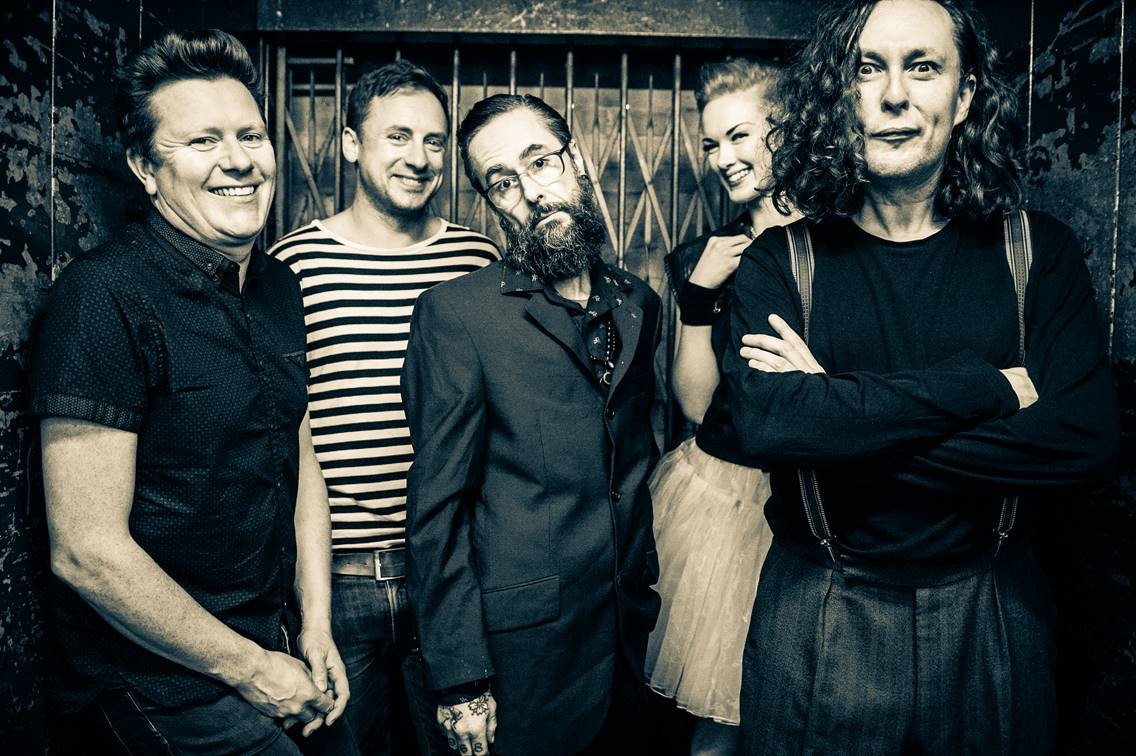
Five Live: The Wonder Stuff, 2016 style. From the left - Dan Donnelly, Erica Nockalls, Miles Hunt, Mark McCarthy, Tony Arthy

Five Live: The Wonder Stuff, 2016 style. From the left – Dan Donnelly, Erica Nockalls, Miles Hunt, Mark McCarthy, Tony Arthy

Miles Hunt was taking a break from archiving material in the studio when I caught him on the phone at his rural Shropshire base, not far from his Black Country roots.

“Not so far at all. It’s still Midlands, innit”.

We might as well start with a little history, going back to Miles’ roots, long before Stourbridge outfit The Wonder Stuff came to life. I tell him I hadn’t realised until recently that he’s a nephew of keyboard and horns player Bill Hunt, one of the early members of the Electric Light Orchestra (ELO) that defected with Roy Wood to form Wizzard. So was Uncle Bill a big influence on Miles getting into this rock’n’roll malarkey?

“I suppose so. It didn’t seem unusual. It was all we knew, having an uncle on Top of the Pops and the like, and me and my brother were really into the pop music of the early ‘70s when we were growing up. And as well as Bill, one of the biggest bands in the country at the time was Slade, and there was a sense of pride that they were from where we were from.”

Ooh, I love it when an interviewee mentions Slade. It gives me a chance to talk lots of nonsense about Nod, Jim, Dave and Don. I was going to mention the (pretty obvious) connections anyway, but he’s saved me the trouble of trying too hard.

It must have given you boys from the Black Country stuff added confidence seeing them make it big.

“Yeah, they were working-class guys catapulted to national fame. The music they played had such an energy, and we were just the right age to catch it.”

You’ve always acknowledged those great bands from your neck of the woods, covering among other nuggets Slade’s Coz I Luv You and Far Far Away and The Move’s Blackberry Way, The Beat’s Save it for Later, Dexy’s There, There My Dear and even Duran Duran’s Planet Earth.

“Yeah, we just wanted to celebrate the music of the Midlands, which I think national media – and by that I mean London – overlooks.

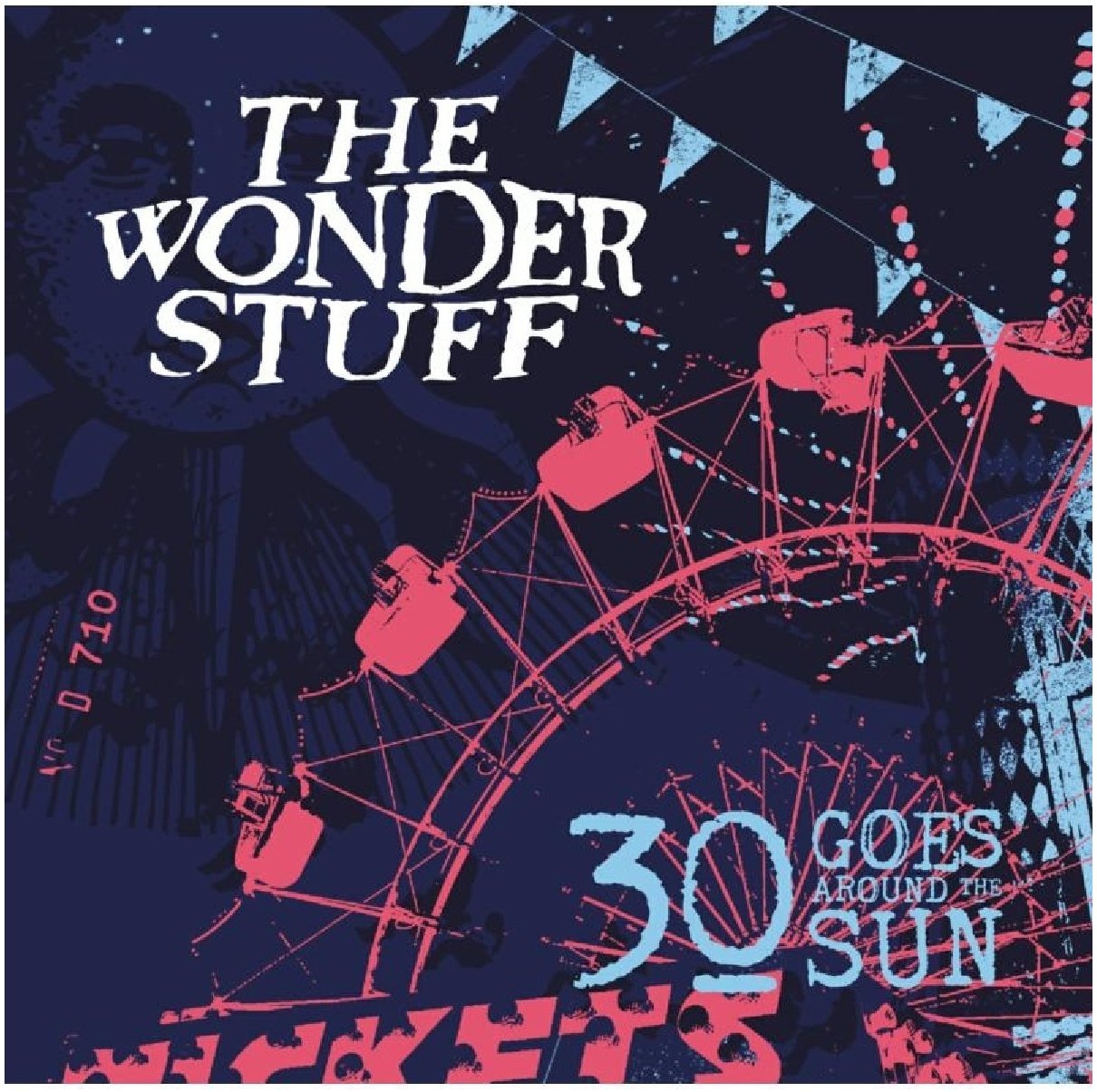
30goessleeve“We sat around trying to work out why someone like Roy Wood doesn’t get the praise he deserves. A lot of bands from here – including ourselves – have this self-deprecating sense of humour. It’s part of that Midlands make-up, whether you’re in a band or not.

“You have bands from Manchester or Liverpool from 50 to five years ago – and I don’t mean this as a slag-off, whether it’s McCartney, McCulloch or The Stone Roses – comfortable telling everyone they’re the greatest band on the planet. Imagine that sentence coming out of Noddy Holder’s mouth! He’d never say that, and nor would Ozzy Osbourne or Roy Wood. Instead, we’d make some remark with ourselves as the butt of the gag. So I often wonder whether the media thinks if we’re not taking ourselves seriously, why should they.”

Seeing as you mentioned Slade first, do you think you could ever entice the elusive Jim Lea out to share violin duties with Erica (for the uninitiated, that’s Miles’ partner Erica Nockalls, ‘violinist, vocalist, songwriter and visual artist’) one night, maybe get him on stage at the Robin in Bilston?

“I don’t know. I speak to Dave Hill once a year, last time back in December (around the same time I did, with the resultant interview here), trying to get him to play on our record. But he was in Russia at the time, and when we broke for Christmas everyone was too knackered and it never happened. I haven’t spoken to Jim Lea in 20-odd years, and never hear about anyone bumping into him. People tell me they’ve spotted Robert Plant in Kinver or wherever, but never Jimmy Lea.”

51zSLL98xgLMiles started out drumming for a band called From Eden, who jut happened to be the genesis of both Pop Will Eat Itself and The Wonder Stuff. Could that combination ever have worked?

“No! I’ve still got those old tapes, all digitalised now. I see the worth in it, but we were all so young. All we were was the result of our influences. I was trying to play like a cross between Slade’s Don Powell and Pete de Freitas from the Bunnymen – just hitting the f***ing things as hard as you can!

“We were into Psychedelic Furs, Bauhaus, the Bunnymen, but then they kicked me out and Graham Crabb took over on drums and became the co-singer. They got a bit more glam-rock after that. We were more alternative goth, but then they were listening to Hanoi Rocks and Mott the Hoople, trying to learn the way they played. It was entertaining though, and tight, and Clint (Mansell) was a fabulous frontman.”

Are you still that ‘big-mouth drummer’ who placed an advert to play in a band into Echo & the Bunnymen and Joy Division?

“I’m exactly the same. I don’t feel like I’ve changed, although I might be a little calmer. I wasn’t really the big-mouthed drummer back then. They were all five years older than me. I sort of grew into that big-mouth character – or the gobshite, as I call him – to sort of protect my shyness when I became a singer.”

I see your original drummer Martin Gilks was with revered Wolverhampton indie outfit The Mighty Lemon Drops before The Wonder Stuff came to fruition. It’s a small world … kind of.

“Yeah, he was on their first demo, one that went around and that we were all very impressed with, a cassette called Some of my Best Friends are Songs.”

Was there stiff competition among you all?

51doNA+mcTL“Oh, desperate, yeah! We were nice to each other’s faces but it was like that thing in Spinal Tap when they bump into that other band playing The Enormodome. They’re all pals and ‘we’ve got to get together soon’, but as soon as they walk away …”

I can’t seem to avoid this during so many interviews with bands who made it big in the ‘60s, ‘70s, ‘80s or ‘90s – it becomes something of a procession of significant anniversaries. But this March marked the band’s 30th anniversary – or 30 Goes Around the Sun as Miles would have it, to name-check the latest Wonder Stuff LP. Has that time flown?

“It has, and interestingly I discovered when writing my last book that Slade also look upon March 19th as their birthday as well. They’d have been 20 years old when we formed. As you get older you realise every aspect of life seems to speed up. I was speaking to Pat Collier yesterday (who produced three original Wonder Stuff LPs), and we couldn’t believe three years had passed since we last spoke. That seemed ridiculous.

“And when we were in Japan a couple of week ago, to me it seemed like we’d just been there, but I was told it had been years. So it continues to fly by. But I guess that just means we’re enjoying it.”

It just so happens that Miles has a big birthday coming this summer – his 50th. Has that led to a midlife crisis, or did he get over all that a long time ago?

“Yeah, I didn’t bother with that! I’ve been having too much of a good time.”

It’s 23 years this summer since original Wonder Stuff bass player Rob ‘The Bass Thing’ Jones died, while Martin Gilks was killed in a motorbike accident 10 years ago. 61nKNpWFQ4LDo tragedies like those put all the other moans and groans into perspective, sharpening Miles’ resolve to live for the moment?

“I suppose so. I’ve never really analysed it, but those things have an effect. When I hear people moaning about hitting 50 or whatever, I remind them that there isn’t a better option!

“Stop f***ing moaning! You’re better off celebrating making it to 50. Some of my best mates weren’t lucky enough to do that.

“None of us were even 30 when Rob died. We’d been a very tight bunch of lads. It was a blow, and for at least seven or eight years I couldn’t say his name without crying.”

We hear many scare stories of publishing and record deals involving ‘60s and ‘70s bands. How was it for you signing for Polydor in ’87. Were you looked after?

“Yeah, I moaned at the time but that was just sparring really. We got on with all the staff there. I’ve had opportunity to stand in the MD’s office, stick my finger in his face and call him a c***, but then when we’d finish yelling at each other and he’d be like, ‘You alright?’ and I’d go ‘Yeah, yeah’.

“And now, finding ourselves in Tokyo the other week and Chicago later this year, with 700 or so people turning up to shows, I realise it wasn’t me going around postering those cities – it was the record company doing all that promo work years ago that I still get to benefit from.

“I had a great time at Polydor and liked all the people there. We didn’t always agree with each other but were treated incredibly fairly and had sensible management, with opportunities to re-negotiate and get as much money as we could.

“And that was them telling us! Saying ’Now you’ve sold a quarter of a million records, you do know you can renegotiate and get more? But we were also made to realise if we increased an advance from £100,000 to £200,000, all we’d really do was bring £100,000 worth of pressure and would have to work that back.

“Similarly, in 1997 I asked the MD, Lucian Grainge, to drop me, and he dutifully did. He knew I had no intention of making his company money. He’d done all his shouting at me and knew that wasn’t going to work.”

wonder stuff wonderstuff construction modern idiot 1993Times have clearly changed in the industry since those Polydor days. What was Miles’ experience of the crowd-funding approach with the new Wonder Stuff LP?

“We did a Pledge-style thing with my book, using their business model from our website rather than giving them 15 per cent for use of their Blue Peter-esque thermometer.

“All they were doing was giving us a platform. We talked to them though, and they were great people, but decided to do it ourselves. But things have changed now. It’s not just the thermometer. This album came out in March but you could pre-order last October, yet every sale counted as a first week sale for a chart position.

“We kind of got swept along by that! Our drummer Tony (Arthy) thought that very exciting, having never experienced that before. We were in a dressing room in Newcastle on tour and it felt really nice when we charted, the same week James and Primal Scream did.”

I put to Miles that he was presumably waiting for a call from Top of the Pops that never arrived, and he laughs. But let’s go back there to the first part of the story there, the period from 1986 to 1994, in which the band had four much-loved top-20 studio LPs – The Eight Legged Groove Machine, Hup, Never Loved Elvis and Construction for the Modern Idiot – plus a best-selling singles album and 13 UK top-40 singles, including the No.1 cover of Tommy Roe’s Dizzy with comics Reeves and Mortimer.

In short, they seemed to be eight wild years, with mass adulation for a top live and studio act. But what I’ve read since suggests they weren’t always having a great time. Towards the end it was certainly getting fraught, and earlier sleeve-notes suggest the tension was there as early as 1989, like for instance those for 38 Line Poem from Hup, Miles suggesting he might already have quit by then.

“The last six months that Bob was in the band, suffering with his boozing, it wasn’t a very happy band to be in. Then we decided to carry on for another four years, and it was kind of like …”

Dizzy Rascals: Eric Morecambe and Ernie Wise pose for the camera.

Dizzy Rascals: Eric Morecambe and Ernie Wise wait for the Stuffies to arrive in Stockton


Miles, barely three months after publishing The Wonder Stuff Diaries 86-89, thinks through what he’s going to say, then starts again.

“I’m just at the point of starting my new book, and remember the first four years as mostly a great time, as everything we were doing was for the first time – like going to America or on Top of the Pops, or receiving cheques for £2,000 in royalties. But once you get to 1990, with two new members, nothing’s for the first time. And by ‘92, you realise you’ve picked the most repetitive f***ing job in the world. I know the rest of the world is suffering a lot more – trying to put kids through school and pay a mortgage, but I chose a very different way of living.

“I could still look at a calendar and know I was going to be in Japan in November and Australia in December, and didn’t want all these things mapped out. The next year would be the same, and the year after. I didn’t enjoy that – the whinings of a petulant young sh**!

I know where he’s coming from there, but it’s difficult to have too much sympathy. Thankfully he realises that though, and acknowledges that as he was doing most of the Wonder Stuff interviews back then, we were in danger of forever having ‘moaning Miles’ in our faces in the music press.

“Yeah, imagine that bloke reading the NME, thinking, ‘Thanks mate, I’m getting the same bus every morning to go to the same factory! I’ve been doing it five years and will for another 35 f***ing years.  I don’t wanna hear you whining!’ I understand that now, of course.”

Novel Idea: Miles' first volume of inside Stuff stories

Novel Idea: Miles’ first volume of inside Stuff stories

In time The Wonder Stuff defined their sound, not least through adding fiddle and banjo parts, first through Martin Bell. and since 2005 through Erica on violin.

“Well, before all this I was a Dylan fan, and my favourite albums of his were Desire and Blood on the Tracks, which have some great fiddle on them.

“Then I was getting into The Waterboys before we formed the band, and they also had that feel. Violins too. It wasn’t Martin that took us on. It was me. If it wasn’t Martin it would have been another fiddle player. We wanted to change the sound of the band.”

I can see Miles is heading for a rant there, so divert him on to safer ground. Does he ever hold sweepstakes over what time an interviewer will bring in a question about the band’s collaboration with Vic Reeves and Bob Mortimer on Dizzy?

“I certainly never minded it. It was a great time, and if I get in a cab with a guitar-case and the driver asks if I’m a musician, without the Vic Reeves part I’d have to tell a very long story. Since we did that – 25 years ago – the answer’s a lot easier. ‘Do you know Vic Reeves?’ ‘Yeah’. ‘You know Dizzy?’ ‘Yeah’. That’s all I have to say.”

Will Vic and Bob make a cameo appearance when you play close to their old patch in Stockton-on-Tees this week (at the Georgian Theatre on Friday, May 27th, with a link here)?

“Ha! I doubt it very much!”

Do you think you got out at the right time, with The Wonder Stuff initially calling it a day in 1994?

“Definitely. We couldn’t have known how big the change was going to be, but it was coming. And with everything that followed in BritPop … well, between A Wish Away and Size of a Cow we’d done the f****** lot!

“We were ready to do something else, as we both proved. I went off to do Vent 414 and the rest went off and did We Know Where You Live. That was the stuff we were really into – Jane’s Addiction and Faith No More influenced American rock was what we were listening to.

“I didn’t buy a single record by a BritPop artist through that whole period. I was at MTV Europe doing 120 Minutes, and the records coming in every day were fantastic – American stuff like Pavement and Sebadoh, then European bands like Blumfeld.

VJ Days: Miles in his MTV days, while presenting 120 Minutes

VJ Days: Miles in his MTV days, while presenting 120 Minutes

“I had absolutely no want at all to listen to Supergrass or any of that. We’d covered pretty much everything that happened in BritPop four or five years earlier. The huge difference was that this stuff sold in its f****** millions, whereas we were lucky to get a quarter of a million sales.”

When they did call it a day, though – what a way to go out, headlining in front of 30,000 at the Phoenix Festival in Warwickshire in mid-July, 1994. And there was that famous last line too, Miles putting a positive twist on John Lydon’s memorable question, asking the crowd, ‘Ever get the feeling you’ve been treated?’ Miles laughs when I put this to him, and I ask when that first came into his head.

“To be honest, I don’t know if it was my line. Jake Shillingford of My Life Story was a great mate, and just before we went on he and I were talking. He later said in an email something that pertained that it was his line, and I’m not going to deny that. But as I’m about to write about that period in my book, so I must check that.”

I only managed to see The Wonder Stuff twice back then. Unfortunately, for the second time my abiding memory is of my car being broken into and my specs being nicked on the return from that March ‘94 show at Preston Guild Hall, one of their last.

But another – 25 years ago this summer – was certainly a great experience for me, seeing The Wonder Stuff headline one of the two nights of Martin Hannett tribute show Cities in the Park in Manchester’s Heaton Park in August 1991. And I shouldn’t have to tell you that on their day they were a tremendous band. In fact, there was a line in an interview somewhere where Miles said, ’Half measures are no good. We’re brilliant pop entertainment’. That summed up the Stuffies’ live experience, I felt. Also, they once said, ‘If we weren’t in a band, we’d be roadies’. And I can see that too. Perhaps it goes back to that genuine Black Country ethos.

Anyway, what had changed by 2000 to get the band back together again?

“Well, Malc (Treece, guitar) and I had gigged as an acoustic duo in America for around five months, by which time both Vent 414 and We Know Where You Live had folded. We were writing together, and after another US tour my agent said about doing the same acoustic show in the UK. Then came word of an offer on the table for five nights at The Forum in London with the original line-up.

“I said, ‘I’ll have a word’. It came up two years before, but Gilks wouldn’t do it, so I thought we couldn’t do it without him. I honestly expected to phone him and be told that was still the case.

Live Stuff: The Wonder Stuff, coming to a town near you (Photo: Nick Sayers)

Live Stuff: The Wonder Stuff, coming to a town near you (Photo: Nick Sayers)

“But he asked if I was in London any time and we met for a drink, when he said, ‘Yeah, alright then’. I was genuinely surprised. Mind you, when my agent told us about all that, I said, ‘No one’s going to see us for five nights, you f****** idiot!’ But lo and behold, he was right.”

And yet by 2004 that incarnation of the band was over. Does that suggest you’re a difficult bloke to work with, or was everybody in The Wonder Stuff hard work?

“Yeah … we just don’t like each other! Simple as that. Martin (Gilks) was in management by then, having a hand in Reef (in case you missed it, this blog spoke to Gary Stringer from Reef earlier this year, with a link here), and the way he viewed managing a band and the way I viewed being in a band were diametrically opposed. There was no middle ground.

“On the final tour his idea was to play venues he knew we couldn’t fill and get the biggest fees from the promoters, bullshitting them. We’d just get this huge chunk of money and the promoters would lose a huge chunk. He’d just say, ‘Let’s just drive this into the ground’. But this was what I wanted to do.

“He felt it was going nowhere and we weren’t going to do an album together – we weren’t getting on. I didn’t want that, but two gigs got cancelled, involving around 12,000 capacity rooms, while London and Birmingham went ahead.

“It was kind of my fault as well. I was a terrible pot-smoker at the time and wasn’t on top of my game. And he was a very difficult bloke to disagree with, particularly on the management front when he was in cahoots with his brother.”

Miles continues, but I haven’t got an expensive lawyer like he has, so I’ll draw a veil there. Wait for his next book – or the one after that – for details of the court wrangles that followed.

12373253_1504310919899452_3886138313732423989_n-2Anyway, now that legal situation is all settled, Miles is these days joined on the road by the afore-mentioned Erica and Tony plus Mark McCarthy (bass) and most recent addition Dan Donnelly (guitar). And it’s a good vibe again?

“It’s brilliant. We have an absolute ball.”

I see you’re often doing semi-acoustic shows with Erica too.

“We do that every month really. We live very rurally. My plan is to do gigs every month and do a bit of travelling, so we don’t go stir-crazy here. That’s the idea.”

And this Saturday, The Wonder Stuff will be headlining Manchester Academy’s latest Gigantic indie all-dayer, with support from The House of Love, The Darling Buds, CUD, The Frank And Walters, and S*M*A*S*H.

Meanwhile, a host of other revered indie acts play the other two venues involved, with the Academy 2 seeing Jesus Jones headlining, with support from Bentley Rhythm Ace, Back To The Planet and Credit To The Nation, and Club Academy hosting headliners BMX Bandits, with support from The Telescopes, Bivouac and Jack Adapter. Furthermore, the event’s official after-show special guest DJ is Mike Joyce of The Smiths.

It sounds a good ‘un, I put to Miles.

“There’s some really great stuff on, and I’m particularly looking forward to seeing The House of Love. I haven’t seen them in years. I loved them.”

So is this indie showcase event the closest you’ll get to fully paid-up membership of the ‘80s Rewind circuit?

“I guess so! Although I’d happily join something like that if the money’s good. I gave up trying to be cool years ago!”

12417904_1514685158862028_6937860818379825730_n-3For tickets and further details of the Gigantic all-dayer (Saturday, May 28, doors 1.30pm) call 0161 832 1111, head here, or keep up to date via a special Academy Facebook page and Twitter.  

A number of other Wonder Stuff happenings are scheduled for this summer, from Sunday, May 29th’s visit to the Down by the River Festival through to Sunday, August 28th’s Summer Fest in Solihull. What’s more, Miles and Erica bring their show to Gloucester’s Milefest (July 1st) and the Lowther Pavilion in Lytham (August 6th). For full tour details and further dates through to November, follow this link. And for all the latest from the band, try the official website here and the band’s Facebook and Twitter links.

Posted in Books Films, TV & Radio, Comedy & Theatre, Music | Tagged , , , , , , , , , , , , , , , , , , , , , , , , , | 1 Comment

The ups and downs of a geographically-challenged Cards fan – a Woking FC 2015/16 season review

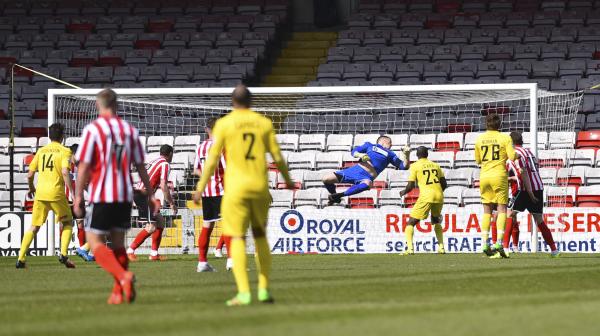
Tyneside Toking: Matt Robinson converts Jake Caprice's fine cross at the International Stadium, for our fourth goal in a 5-1 pre-Christmas cracker against Gateshead (Photo: David Holmes)

Tyneside Tonking: Matt Robinson converts Jake Caprice’s fine cross at the International Stadium, for our fourth goal in a 5-1 pre-Christmas cracker against Gateshead (Photo: David Holmes)

That’s it for another season, and even by recent Woking FC standards this was rollercoaster-esque. Not in an overly-exciting way though. It was all over as a competition far too soon.

Considering the comparatively small budget and those early injury woes, we didn’t do so bad. A lack of consistency cost us, although at stages we were fairly consistent in letting in goals at inopportune moments. But take away two poor spells and we might even have made the play-offs, fellow part-timers Braintree Town proving in finishing a commendable third place what can be achieved amid all the bigger spenders.

Those of us who were there on day one on the Wirral will have replayed many times a key moment when we lost the previous season’s top-scorer Scott Rendell with barely 40 minutes of the season gone. Twang went the anterior cruciate ligaments, zing went the strings of our hearts. But not in a Broadway style. Gutting. Then there was defender Ismail Yakubu’s copycat ACL injury three weeks later, both following Mike Cestor’s lead from the previous term. However, the resultant crowd-funding appeals and the cash they brought in for our injured parties’ rehabilitation – from players and fans alike, across the sporting spectrum – put into perspective many of the negatives surrounding the big business that is 21st century football.

On the field, despite our opening day 1-0 defeat at Prenton Park we somehow – and it was a case of somehow on a few occasions – went on to pull six wins out of the bag over the next nine fixtures, with only one more slim reverse, at Macclesfield (my next match), the last of those victories against the team who ended up play-off finalists, Forest Green. In the next game we slipped up against Cheltenham, but only the most pessimistic saw that as the beginning of a major slide.

As it turned out we more or less reversed that earlier form, winning just one match in that 10-game league sequence, that against a Halifax side that struggled to get going all season. I was there for that one, but also the rain-ravaged embarrassment that followed a fortnight later, our early FA Cup exit at Maidenhead United. I think I’m only just drying out now (at least mentally). A far more positive sequence followed, a cracking victory at Chester and home drubbing of Tranmere followed by what turned out to be just a minor blip, a reverse at Barrow – our only defeat in that third 10-match sequence. The Cardinals again amassed seven wins, including a 5-1 pre-Christmas cracker at Gateshead and festive double over Aldershot.

But who could have guessed that our victory at Wrexham on January 9th would be our last league win for 14 weeks? A calamitous run followed, that fourth 10-game sequence bringing just two more points, the last nil-pointer at doomed Welling of all places, and another witnessed first-hand by this geographically-challenged scribe at Altrincham, another team that went on to drop a division. Dreadful form.

Thankfully, although the season was effectively over for us by then, we managed to put a proper run together from there, finishing on fine form – three wins and two draws from six not to be sneezed at as our play-off campaign gave way to the hayfever season. In fact, our only loss came at the hands of a Grimsby side who finally secured a return to the League via a Wembley play-off final. And I particular enjoyed my first visit to Sincil Bank, that day’s victory over Lincoln City a special occasion until around 6pm. But more of that later.

A few years ago a workmate told me the finishing positions I moaned about during the Glenn Cockerill era had to be far preferable to year upon year being more exciting but ending up fighting the drop. I guess he was right, and two years after Glenn left we finally lost our Conference top-flight status, but it turned out to be a positive sequence of events, the Garry Hill era that followed well worth the initial pain. I’ll stand by my earlier thinking though, craving neat football and excitement over ground-out results every time. But on this season’s showing it looks like we’re a mid-table side that happen to play interesting football. We have occasional storming performances, but also the odd stinker. We have the odd spell of total football, but also moments of defensive suicide. It doesn’t help the heart-rate.

If I had a quid for every time I heard WFC press officer (and clubman of the year) John Moore berate another defensive switch-off leading to an opposition goal this season on BBC Surrey, I could afford to comfortably put my hand in my pocket at Gateshead to buy the team and travelling fans a pint each next time we score five at the International Stadium. But we could do without those moments of déjà vu leading to Mooro exclaiming, ‘How many times ….’ during Gary Smith’s commentaries (at least once a match at one stage). But I’m even depressing myself with this negative talk, so let’s celebrate the finer moments of this topsy-turvy season too, starting where I left off last time (with a link to the last piece here).

August

Devon Cream: Ismail Yakubu is mobbed by his team-mates as he tries to sneak off for a burger after his late winner at Torquay (Photo: David Holmes)

Devon Cream: Ismail Yakubu is mobbed by team-mates as he goes to jump the burger queue after a winner at Torquay (Photo: David Holmes)

I’ll try not to go back over old ground, moaning about the new season arriving too early and that Tranmere visit coming before I’d even had my family holiday. But back then, we seemed to be riding the storm, that first-day blip quickly put behind us as good work against Bromley led to more home victories over Altrincham and Chester, sandwiching one on the Fawlty Towers set at Torquay. I was listening in via Smithy and Mooro on the radio for all four, debutant loanee Dan Holman soon proving a suitable replacement for crocked Scott Rendell, having a hand in both goals in a 2-0 win over Alty – scoring one, setting up Gez Sole for the other – while we sealed a 1-0 stoppage-time win on the English Riviera – Yakubu heading home Kadell Daniel’s corner – then climbed to second with a 5-2 thrashing of Chester, John Goddard’s penalty followed by Holman, Daniel, Goddard (again) and loanee Ben Pattie’s finishes. All was well in Surrey as I headed off to the Far West.

I was seeking out mystical stone circles and ancient Celtic monuments on the afternoon of our battle at Boreham Wood. So while the Wyatt clan perilously faced twisted ankles and gorse-bush cuts amid desolate granite moorland, Joey Jones, Mark Ricketts and the Yak fared far worse at Meadow Park, our new-found rock in defence the latest victim of our dreaded cruciate curse. Thankfully we had a Daniel strike behind us, but it took a spirited performance to ensure a draw. Then Goddard and new signing Jimmy Keohane ensured a 2-0 bank holiday home win over Welling, inspiring a celebratory barbecue at our hired cottage, raising glasses after a cracking day sightseeing and news of another victory. I wasn’t looking forward to my return, but we had scores to settle at Macclesfield, where I was on the reporter’s bench that coming weekend.

September

As it turned out, two frustrating afternoons followed, those next games highlighting our weak spots. Reluctant as I am to admit it, Macc just about deserved their victory, showing far more invention. Joey J was on target late doors, but a 2-1 home win was about right, our patched-up squad unable to stretch an unbeaten run to seven games. Come to think of it, league visits to the Moss Rose are never great, the best we’ve had to show since our 2012 top-flight return a 0-0 draw against a Steve King side. Since then we’ve had three straight defeats, added to three more before the Silkmen’s 15 seasons in the League, with no victory in nine visits over 22 years. Thankfully, we have that 1-0 FA Trophy quarter-final in early 1995 to savour though – the year we went on to beat Kiddie at Wembley. Oh yes – Thommo in the last minute, and all that.

I was more confident about the next weekend’s trip across the Pennines, the West Riding having witnessed a few Woking victories over the years. It was my first trip to Nethermoor since my UniBond League reporting days, and I’ve always enjoyed the scenery and friendly Yorkshire welcome. In late 2002 I had two visits seven weeks apart, a 2-1 Lions’ win over Chorley followed by a 3-3 draw with Bamber Bridge, the other Lancashire team I covered. I hadn’t returned since a 3-1 Magpies win in April 2004, but it seemed that the hospitality still applied, Goddard’s early 30-yard free-kick putting us ahead, our roving midfielder quickly doubling the lead from a Chris Arthur lay-off. This time we were the dominant, inventive outfit. Surely it was a just a case of how many we’d rattle past these rather tame Lions.

Yet from there we showcased our frailties, two goals in eight minutes seeing the hosts level before Brian Saah headed home from a corner to see us back in front at the break. Guiseley levelled again, but we seemed to put the game to bed on 75 minutes, confusion in the home box leading to Keohane setting up Holman for a fourth. Yet we were ultimately foiled by the imposing Jake Lawlor deep into an astounding eight minutes of stoppage time, the white and navy contingent going understandably wild. So, after three away games – all in glorious sunshine – I’d seen us grab just one measly point.

Three days later we made up for that with a blistering display at home to Forest Green, Goddard and Keohane goals sealing a superb victory, a delight to listen to. But next up was a 1-0 home defeat to promotion-contenders Cheltenham following a second-half Danny Wright header, and there were respective 2-1 and 2-0 reverses at Braintree and Dover, the former including a goal from WFC reporter Phil Batts’ man of the match Keiran Murtagh. Seeing as we haven’t won at Crabble for four years and – as far as I know – never at Cressing Road, I wasn’t too surprised by either defeat. Regarding Dover, I previously waxed lyrical on an early ‘95 postponement spoiling a weekend visit to the Kentish port (one of the groundstaff telling me, ‘There’s more chance of it being played on the Goodwin Sands’). I’ve since seen us win there, but that was against Margate – while Hartsdown Park was being developed – one night in November 2003, a 2-1 win for Glenn Cockerill’s side sealed by two own goals. Quality. This time I witnessed our pain from afar, after a flier to Surrey with my girls, suffering a televised Friday night defeat via BT Sport on the WFC social club big screen.

October

A fourth straight league defeat followed, relegation-possibles Southport winning 2-1 at Kingfield, Murtagh again scoring for us, while in our other home games in October we were held 2-2 by Torquay – Daniel putting us ahead within two minutes, but Holman having to score late on to secure the point – and lost 1-0 to slow-starters Wrexham, with plenty of gnashed teeth over key refereeing decisions in the latter two. From where I was sat, listening in on my computer in my front room 230 miles away, they were clear-cut penalties. Fact. By then, I’d finally witnessed an away win though, back in West Yorkshire against a Halifax outfit down on their luck, an emphatic 3-0 win including cracking strikes from Holman (twice) and Goddard (another mighty free-kick), showing us in our best light, quality finishing complemented by a cohesive, assured display, showing true potential. The defence was solid – not least Charlton loanee Terell Thomas – while we proved dominant in midfield, with Daniel and the scorers sharp up top and plenty of service from the wings. We’d shown what we could do, now just needed to work on those frailties, the season still young.

But then came our nightmare on York Road, and I can think of nothing positive to relate regarding a dire afternoon on the terraces at Maidenhead. The sight of flat-capped Magpies boss Alan Devonshire on the sidelines made me think of happier days when giant-killing managers seemed to always look like that, the hosts deserving of their 3-0 victory and resultant Port Vale payday. Let’s just say the late rain that autumnal afternoon in Berkshire was somewhat purifying for all of us who made the trip. It’s testament to the fans that they turned up in impressive numbers that next weekend at Kidderminster, but another grim late 1-0 defeat followed. Incidentally, we only took 11 points out of 24 against the relegated four this season. That tells us something.

November

Alone Again: Jake Cole feeling left out as his fellow Cards get a little target practise in the Surrey Senior Cup (Photo: David Holmes)

Alone Again: Jake Cole feels left out as we get some Surrey Senior Cup target practise (Photo: David Holmes)

Garry H turned a few heads after our Maidenhead shocker, putting his whole squad up for sale and telling reporters, ‘We’re in a rut and we’ve got to dig deep’. Thankfully, by the time of my November 21st visit to Chester, we’d at least remembered which end of the spade was which. That month started brightly, Keohane and Holman bagging hat-tricks as we smashed struggling Combined Counties League outfit Sutton Common Rovers 10-0 in the Surrey Senior Cup, a competition that moneybags clubs like Man United, Man City, Chelsea and Arsenal have yet to distinguish themselves in, I might add.

John Goddard then showed his worth again with his ninth goal of the season to secure a 1-1 home draw with this season’s over-achievers Braintree, before Macclesfield completed a quick double over us with a 5-2 thrashing at Kingfield, late Holman and Jones strikes merely consolations. A much-improved performance followed on the North Wales border though, the Cards grabbing only their second league win in 11 attempts, assured finishing from Dan H and Johnny G book-ending a steely, confidence-boosting 2-1 victory, the kind of determined performance the long-suffering fans had craved on a day when the sun’s rays could only half-shield us from the worst of a bitter cold wind.

We also saw promise from debutant loanee Joe Quigley and classy displays by Jake Cole, Joey Jones – switched to central defence – plus Chris Arthur and Bruno Andrade in a true team performance. And that was followed by an impressive 4-1 home win over Tranmere, making up for that opening day, a double from the highly-impressive Holman and strikes from Goddard and home debutant Quigley ensuring a first home win in seven.

But we finished the month with defeat on another filthy day in Northern England. On that occasion I was soaked before I left Lancashire, supporting my youngest daughter’s outdoor drama performance as part of a Christmas lights switch-on. The plan was to head straight on to the M6 and beyond, but torrential rain left me wringing clothes out back home, getting changed before heading out again. With that in mind, I had no reason to feel disappointed that the press box at Holker Street was enclosed and away from those hardy Cards fans enduring the lashing rain and a cold wind howling in off the Irish Sea.

We had our hopes up as Joey J’s glancing header from Andrade’s free-kick early in the second half cancelled out Barrow’s opener, but our good work was ultimately undone by  Steve Williams, a 28-year-old ex-Bradford City and Inverness Caledonian Thistle defender from my adopted neck of the woods, one I last saw playing for Bamber Bridge and previously West Lancs League favourites Charnock Richard (whose step seven status puts them at the same level as Merrow and Virginia Water).

As it turned out, that rain hardly diminished for another week or so, by which time Storm Desmond (named in tribute to defensive colossus Des Walker) brought devastating floods and 50 severe weather warnings in Cumbria and North Lancashire, military, RNLI, Mountain Rescue and volunteers from all over helping rescue operations in Carlisle and parts of the Lake District – a month of rain falling in 24 hours.

By then parts of the A590 linking Barrow to the M6 were impassable, and another old Woking haunt, Brunton Park, was under water, with supposed sightings of koi carp in Carlisle United’s goalmouth. But the clean-up operation at least allowed us to again put everything into context, all that Carlisle and its neighbours suffered giving a little perspective as to the true nature of loyalty and community spirit – Carlisle players helping bail out their neighbours in the aftermath, something worth noting while contemplating the aired frustrations of despairing fair-weather Chelsea and Man United fans.

December

That turned out to be our only defeat in the next eight weeks, a run starting with a 3-1 home win over Lincoln, as ‘Andrade, Goddard and Holman vied for the conjuror-in-chief title’, with ‘fine performances throughout’ according to WFC reporter Brian Caffarey, who also singled out midfielder Matt Robinson for praise on a day when Holman scored twice and Quigley added another in between. A 2-1 FA Trophy win at Boreham Wood followed, Giuseppe Sole’s added time free-kick the culmination of a Cards fightback after an early setback, Brian Saah’s rare strike – a volley to be proud of – just after the hour having levelled matters.

We entered the festive season in 10th place after a 5-1 thrashing of Gateshead the Saturday before Christmas, a result few of us could see coming. It had a lot in its favour, not least two fine strikes from Holman and collectors’ items from Andrade, Robinson and Quigley, at a ground where you have to try that little bit harder to create atmosphere, due to the distance of the pitch from the stand. On a day of relatively-flowing football with an undercurrent of needle to keep the ref busy, my highlights included the moment one local – in response to playful goading from our small band of travelling fans – sang, ‘I can see me sneaking out!’ as he made for the International Stadium exits after Big Joe Q made it five. In similar vein, not long before, one frustrated Heed fan shouted at a player slowly fetching the ball, ‘Howay man! You’re wasting time!’ with just enough of a comic delay before a fellow local – less optimistic about his side’s chances of salvaging something – added a low-key but clearly audible, ‘Thank God’.

Not long after filing my report, the rain bucketing down, I headed back over the Tyne Bridge to nearby Heaton, with St James’s Park brilliantly lit up in the night sky, yet no real compunction to join the unhappy Magpies’ fans as their hit’n’miss side battled basement outfit Villa. I don’t doubt for one moment my friend Ed’s ‘Church’ is a theatre of dreams on its day, but I’d had more than enough of my share of footballing joy for one day.

Christmas Cheer: Garry Hill and his victorious Cards salute the travelling 700 at the Rec on Boxing Day (Photo: David Holmes)

Christmas Cheer: Garry Hill and his victors salute the 700 at the Rec on Boxing Day (Photo: David Holmes)

And what a Christmas it turned out to be, 700 Woking fans among a 3,000-plus gate at the Rec as the Cards beat their fierce rivals, a lone Goddard strike settling the game before half time after good work by defensive star man Joey J and Holman. A goalless home draw with Boreham Wood then rounded off the year, this punter among the Kingfield faithful, feeling the Herts visitors had enough spirit about them to secure a further National League season, something they only just managed as it turned out.

January

Back in Lancashire but without an internet connection and cursing BT, I was reliant on my sister’s texting service as we completed our double over Aldershot with a 2-1 New Year’s Day home win, Quigley and Goddard setting each other up for a two-goal half-time lead, 800 North Hants visitors among a 3,700 gate getting behind their side, but having to make do with a single Rhys Browne strike with quarter of an hour spare.

Our run continued at the Racecourse Ground, yours truly on hand for a 3-1 win, 90-plus minutes of rain on a pitch already saturated in parts unable to deter another fine victory in North Wales, the Cards moving within a point of the play-off zone. While an early own goal from home keeper Rhys Taylor following a mighty Keiran Murtagh free-kick was quickly cancelled out, decisive second-half finishes from Quigley and Andrade saw the Cards stretch their league record to seven wins from nine and push us up to sixth.

For me, Norwich loanee Cameron Norman was a prime example of a pleasingly-determined Woking team ethic, caked in mud from early on and busy on the left flank, the game decided seven minutes from time as St Bruno took advantage of a poor clearance, striding forward before a decisive left-footed strike, the 22-year-old midfielder keeping his cool where many may have blasted and lost their footing. But who would have thought we’d have to wait another 97 days before the next league victory?

There was at least a little revenge before that poor run kicked in, a 6-1 home drubbing of Maidenhead in the FA Trophy making up for October’s FA Cup no-show, the Cards coming back from a half-time deficit in style, Murtagh claiming a double but Chris Arthur getting the pick of the bunch, his 30-yard strike deservedly securing our goal of the season award, just  seeing off the Andrade wonder-strike that secured a 1-1 home draw with Halifax in the next game, stretching our unbeaten record to nine games in all competitions.

I was there to see that run end at lowly Altrincham the following midweek, our only moment of note in a 3-1 defeat at Moss Lane a mighty second-half strike from dead-ball specialist Giuseppe Sole. Put simply, the Cards were second-best against Lee Sinnott’s strugglers, who grew in stature as the night wore on.

WFC reporter Matt Goldsmith described our next point as ‘attritional’, the Cards held 2-2 by Barrow at Kingfield, our goals coming from Goddard and Sole in a game best remembered for an early injury to ref’s assistant Matthew Rushton, pole-axed by a close-quarters deflection, Gez’s equaliser (all the goals coming in the first half) arriving nine minutes into a 15-minute period of first-half stoppage time.

February

There was a promising start to the next month, Quigley with the only goal in a 1-0 home defeat of National League South side Oxford City in the FA Trophy, securing a quarter-final, our loanee striker adding two more in midweek as we saw off next-door neighbours Westfield 4-1 in the Surrey Senior Cup at Kingfield, ensuring another quarter-final.

But then came four straight defeats, the first a 1-0 reverse at home to Guiseley (enough to keep them up as it turned out), the second a 2-1 loss at Bromley, despite Goddard putting us ahead, followed by successive 3-1 and 2-0 slips at Grimsby in the pace of five days, Sole scoring our goal in the first game, while the latter defeat set up the Mariners for a two-legged Trophy semi-final against Bognor Regis, the Cleethorpes boys going on to win that but lose out to Halifax on their second successive Sunday afternoon outing to Wembley.

March

Holman's Mustard: Demolition Dan with his new matchball. How rude. (Photo: David Holmes)

Holman’s Mustard: Demolition Dan with his new matchball. Bloody show-off. (Photo: David Holmes)

Things weren’t about to get a lot better for the Cards as the next month arrived. We did manage our only win in that wretched sequence, a 3-1 Surrey Senior Cup win at Molesey in which man of the match Goddard scored twice. But our league form was dreadful, any outside hopes of a play-off place soon ruled out. We also lost 1-0 at home to Dover, 2-1 at Eastleigh – Joey Jones’ early strike seeing us ahead for an hour, before the Spitfires came back and strafed us, Will Evans settling it with the last kick – and were then humbled 4-0 at on-form Cheltenham. What’s more, our former Colchester loan ace Dan Holman scored all bloody four in the latter, on his way to 30 goals in just 44 matches this season, 14 of those coming from 26 Woking appearances.

Then came another kick in the teeth (while we were floored, naturally) – a 3-1 Surrey Senior Cup exit at home to Merstham of the Ryman Premier League (who went on to beat Godalming Town 4-1 in the final at Kingfield), Johnny Goddard on the spot with a second-half penalty to half the deficit before the visitors finished us off.

We finally got a league point though – 55 days after our last one – in a 1-1 draw with bottom-markers Kidderminster, Cambridge United loanee Daniel Carr having put us ahead with his first Cards strike. But even that was followed by a 2-1 loss, and that at Park View Road, Welling. Cue the heavy sigh.

April

Accordingly, confidence remained pretty low when I next caught the Cards, for what turned out to be a 2-2 draw at Haig Avenue against Southport, and it was definitely two points lost rather than one gained. There were positives, not least two great goals from Bournemouth loanee Matt Butcher, and in the way the visitors rode early pressure then built a healthy lead. But in the end the fragile nature of a team without a league win in 12 attempts over 12 long weeks told. And my perverse highlight of the day? Probably the apt moment Gary Smith lost his studio connection during a post-match BBC Surrey interview with Garry Hill, leading to a neat exchange – the gaffer putting his interviewer’s technical problems into perspective during a rant which somehow went out live, suggesting he’d happily swap places with the matchday commentator rather than deal with his own set of problems.

Arguably the hosts – three points behind the Cards – had more to fight for that day, caretaker boss Andy Bishop going into this match on the back of a win and a draw since taking over from Dino Maamria. Yet the Surrey visitors’ inability to close out a game ultimately cost our off-form outfit, the hosts scoring twice in the last quarter-hour. Another draw followed as Gateshead visited Surrey, Matt Robinson having put us ahead in a 1-1 outcome. On the plus side though, we’d – finally – as good as hobbled over the safety line, and that point against an in-form Tyneside outfit was certainly no disgrace. But still we waited for that elusive victory.

Few would have put money on that arriving at Forest Green though, a side destined for the play-offs and still at that point in contention with nearest neighbours Cheltenham for the title. We left it late too, a Carr penalty 21 minutes from time cancelling out an early home lead, Norman then popping up in added time with the decider. As Ray Avards put it for the club website, “There was to be a final twist to the match … Matt Butcher’s corner, won by the persistence of Murtagh near the corner flag, saw Arnold attempt to punch the ball away, but he could only deflect it to Andrade lurking on the left of the area. His clipped cross was only half-cleared and it fell for Cameron Norman, the centre-back having a split second to steady himself as the ball settled, before the home defence swallowed him up. There was time, nevertheless, for the Norwich City youngster to drill the ball through the forest of legs and in for the winner. Joy unconfined as he was mobbed at the barrier by jubilant Cards’ fans.”

Hopes of building on that win against in-form Grimsby at Kingfield were dashed by expert finishing from Padraig Amond, who netted a hat-trick to restore his place at the top of the league’s scoring charts, making it three wins out of three for the Mariners against us that season. Andrade pulled a goal back on 71 minutes, but Amond settled it to ensure his side’s play-off place, one they used to great effect.

But then came Lincoln, this scribe on the road with the Cards for the final time in 2015/16, for what turned out to be a cracking encounter in the Far East, so to speak, the Surrey visitors securing a memorable 3-2 victory. I’d been to Lincoln for matches before, but that was in my reporting days working for Lancashire newspapers, having caught Chorley at Lincoln United a couple of times in the UniBond League. A very nice set-up it was too, and I can now say the same about Sincil Bank, a ground I’d only passed by on previous Lincolnshire trips.

On the day, man of the moment Johnny G was there at the right time in the right place with a left-footed finish to secure the Cards’ league double over the Imps, back from a four-game absence following a hamstring injury to pop up with a decisive strike three minutes from time, allaying fears after the hosts rubbed out Woking’s early two-goal lead.

The hosts enjoyed most of the early pressure, my man of the match Jake Cole – who deservedly scooped a couple of awards at the end of season presentation, after 50 appearances in total – on fine form to keep us involved before Butcher’s corner led to Murtagh heading us in front. And with the hosts somewhat stunned, Jake Caprice’s next cross left the hosts chasing shadows, Andrade swivelling slightly left then tucking home within three minutes of the opener, his second in two matches.

Special K: Midfield maestro Keiran Murtagh puts us ahead at Sincil Bank (Photo: David Holmes)

Special K: Midfield maestro Keiran Murtagh puts us ahead at Sincil Bank (Photo: David Holmes)

Within two minutes of the second half Imps’ top-scorer Matt Rhead halved the deficit with a header from a deep cross for his 23rd of the season, Woking somehow contriving to lose possession again more or less straight away, Jack Muldoon’s left-foot power-strike making it 2-2 on 48 minutes. But then Robinson set up a late counter-attack, winning out in the middle of the park and feeding Goddard on the left, the final sub’s perfectly-timed run seeing him expertly draw the keeper then fire through his legs.

There were supposedly 59 Woking supporters there to enjoy the moment among a 2,500 crowd, but enjoy it we did, the post-match interviews a joy to behold, despite this reporter’s usual problems chasing internet connections. Either way, I was quite relaxed as I made my way back up the road to the car I’d left in a hurry at a quarter to three, city centre traffic and space-hunting having delayed me. But while I’d got in the ground and settled in time for the kick-off – just about – I later found out I’d fallen foul of local restrictions. It seems that the off-road space I chose, thinking the local garage were done for the day and I’d be okay to park, was anything but.

It turns out that the garage I’d found was attached to a Peugeot dealership, with a second entrance accessible from the other side of the car park, hence the company’s decision to activate hidden barriers and lock the place up for the night – probably while I was getting my copy to the Surrey Advertiser and listening to Garry H – a joy to behold when he gets going – talk us through our final away win of the season (our eighth, by the way, of which I’d witnessed five). To cut a long story short – and yes, it still hurts to relay the story – a succession of calls to the dealership, premises security blokes and local police failed to get the barriers dropped, this roving reporter finally forced to book with Airbnb at around 9pm, effectively staying on a stranger’s floor just off the main drag, heading home the next morning instead.

And the moral of the story? Well, when you park up in a strange town, always look for tell-tale black spots at the entrance of off-road parking facilities. Alternatively, leave home at least an hour earlier than Google Maps suggests. Here endeth my sorry public information announcement.

Anyway, a week later the Cards wrapped the season up in style, that man Goddard going out on a high with the goal that ultimately saw off Eastleigh – his 20th of the season, from 49 appearances – within two minutes of Keiran Murtagh’s opener. Matt Tubbs pulled one back, but the Spitfires couldn’t find a way through again, Woking securing a top-half finish – our fourth in succession – that looked extremely unlikely at the end of April.

Here Comes the Summer

As is always the case at season’s end, much has already gone on at Kingfield, with much more happening behind closed doors while I type this, no doubt. That includes new playing contracts for Keiran Murtagh and Ismail Yakubu, and the appointment of a new chairman – following the departure of Mike Smith – long-time fan and former supporters’ trust chairman Rosemary Johnson. Early days, but I’m guessing Rose will be a breath of fresh air in her new role, and is certainly someone with a track record suggesting real potential in getting various factions within and outside the club talking to each other properly.

We’ve lost Bruno Andrade to Boreham Wood, loanee Matt Robinson to Dagenham and Redbridge, and player of the season and top-scorer John Goddard to Swindon Town, set for League One football. But let’s hope he can emulate Bournemouth’s Harry Arter and new England Under-15s coach Kevin Betsy from here. He’s certainly made a lot of friends and earned plenty of respect during his three seasons with us.

Apparently, Garry Hill and Steve Thompson are talking with the club about a new deal, having just one more season left on the contract. And that’s promising from where I’m sat. The gaffer had called for a return to full-time status, and while that’s seemingly not an option short of a new wealthy sponsor arriving, a boost is definitely needed behind the scenes to get the club competing over a whole season. Then again, we lost £450,000 last term, I understand, and clearly can’t afford to carry on much longer at that rate of return.

Goodbye Johnny: The Cards' player of the season, John Goddard, says his farewells at Kingfield, before the next chapter unfolds at Swindon Town (Photo: David Holmes)

Goodbye Johnny: Player of the season, John Goddard, says his farewells before his move to Swindon Town (Photo: David Holmes)

You may have seen word of a league restructure that would increase the number of League clubs from 92 to 100, split into five equal 20-club divisions to save money and reduce fixture congestion, but that won’t be until 2019/20 at the earliest. That gives us three seasons to get there of our own accord, but all the same is a proposal WFC director of football and all-round Cards legend Geoff Chapple told the Surrey Advertiser was the ‘best thing I’ve heard in 25 years’. It needs to get 90% support from the current 72 clubs outside the Premier League first though, in time for next summer’s AGM.

In the meantime, here’s to 2016/17. I’m not offering any predictions yet, but I’m looking forward to a return to York City (after eight seasons apart, following our 2009 relegation to the Conference South) following four more years back in the Football League. I’d have preferred AFC Fylde to see off North Ferriby in the National League North play-off final, but they lost in extra-time, so I miss out on a 15-mile journey from mine and instead have a 216-mile round-trip. It’ll be nice to make up for our dreadful 4-0 FA Trophy exit at Grange Lane in late 2013 though. Finally, there’s the return of old foes Dagenham & Redbridge (relegated from League Two) and Sutton United (National League South champions), plus a chance to sample the delights of Maidstone United (NLS play-off winners) and Solihull Moors (NLN champions). Bring it on. But not too soon, I’ve got the Euro Championships and my holidays first.

Posted in Football, sport | Tagged , , , , , , , , , , , , , , , , , , , , , , , , , , , , , , , , , , | 2 Comments

What the world needs now – the John Lydon interview

00BAND002_20_web“Hallo, is that John?” I ask my illustrious interviewee, somewhat needlessly.

“It is … ‘allo!”

“Good day to you. It’s Malcolm here, calling from Leyland, Lancashire.”

“Fantastic. Let’s take the scenic route!”

It’s seven months since the release of What The World Needs Now…, the 10th studio album by Public Image Ltd, aka PiL, the band formed in 1978 by the Sex Pistols’ frontman formerly known as Johnny Rotten.

In some respects it’s hard to believe it’s been so long since PiL’s explosive self-titled debut 45 and following LP Public Image – First Issue signalled the next phase of John’s leftfield career. At that point John was joined by Keith Levene (guitar), Jah Wobble (bass) and Jim Walker (drums), but PiL had something of a shifting line-up and certainly employed a unique fusing of styles all the way through to 1992’s That What Is Not album.

A 17-year hiatus followed before John reactivated the band in 2009, and from 2012’s critically-acclaimed comeback album This is PiL onwards they’ve remained on a high. And like that first release and many more that followed in the intervening years, the single that preceded PiL’s latest long player, Double Trouble, was somewhat explosive. A second single, The One, is also up there with the very best from the PiL stable these last four decades. And now they’re enjoying a busy European and UK touring schedule.

As I put it to John, What the World Needs Now … includes some of his finer moments over a long, long career.

“Well, thank you. I think it’s rather good mi’self.”

Like novels by well-known actors or comedians, you probably read that in his distinctive voice. And you’ll probably carry that on now.

“And I’m very pleased that for the first time in my very long career I’ve been able to keep a band together for more than one album! It’s historical for us. We all appreciate that independence has brought us unity. You have to stand up to these large labels or they tend to break you up rather than keep you together.”

PIL_What_the_World_Needs_Now.The current line-up, together since 2009, also involves Lu Edmonds (guitar, etc) and Bruce Smith (drums) – both first recruited in 1986 – plus Scott Firth (bass). And John describes the band in 2014 autobiography Anger is an Energy – My Life Uncensored as a ‘very happy bunch’ that ‘look out for each other’. I put it to him that he gave two of his band something of an apprenticeship many moons ago … and they came back to him.

“I know what you’re referring to, but you must understand that I’ve known Lu and Bruce practically my entire musical life, from when they were in other bands. We go way back. All three of us really are at the very roots of punk. And Scotty just fits in really well with us because he has an easy going personality and is very, very good at company. That’s the key to it – we like each other.

“I’ve learned to work and smile in the face of adversity, but I don’t want that to be the be-all and end-all of my experiences in music. There are many people I’ve worked with over the years that I miss … but there are many I don’t!”

Mr Lydon is at his chilling best for the last part of that statement, and I’m quite tempted to ask for a few examples. But I carry on, asking if he think he easier to work with now than when he formed PiL in 1978?

“Err …. if anything I was much easier going then. I wasn’t quite so hard on myself.”

With that, he comes up with a trademark throat clearance, half-way through my next question, but adds a swift ‘sorry’, and I continue. Is there added pressure with the advancing years? Let’s face it, few of your contemporaries have stayed the distance like yourself.

“Oh no – there’s been no mellowing! It’s kind of like a fine wine – I find I’m improving with age. And of course I’ve always got in mind that I mustn’t go past my sell-by date. There’s the happy balance – at the moment things are doing really well and all the right things are falling in the right slots.”

This album’s relatively accessible, I’d say. I wouldn’t use the word commercial though. There are still Lydonesque moments ruling out daytime radio airplay – getting a bit sweary, shall we say.

“Oh, for calamity’s sake!”

I carry on, but he’s clearly ruminating on this. I start my next question, saying it’s a shame in a sense that the record industry isn’t as it was …

“It’s a shame that us as a species hasn’t evolved past the point of realising all language is useful and we’re one of nature’s best creations because of language. Banning or chastisement of certain words is pretty damn foolish. And I use the negative words sometimes to very positive thoughts. I’m not openly insulting anyone.”

PiLFirstIssueWell, let’s face it, it’s almost poetry from your mouth.

“Why that’s what I told the judge!”

I think you’d clean up with a few of those tracks as singles, and by way of example, Double Trouble is every bit as exciting or explosive as anything you’ve come up with these last 40 years. Are you as fired up as you ever were?

“Oh yeah! Well, it depends on the situation in the song I’m dealing with, but if it’s high energetic thoughts that’s what’s going to be accompanying it. We try to be as accurate as we can in our songs.”

At the other end of the LP is the equally-splendid Shoom. Is that your modern-day rewrite of a certain Bacharach and David song?

“No, that’s actually a requiem to my father … and missing him, and thinking about him in the studio. I wanted to capture that sense of cheeky fun he had – a very working-class way and that pubby culture we loved every weekend – sitting down and shooting the breeze! And it’s ironic that what is wrongly judged bad language isn’t – it’s very descriptive and hilarious.”

That said – I’ll try this question again – it is half a century since Burt and Hal gave us What the World Needs Now. Had you realised that when you recorded it?

“No, I don’t quite put thing together like that. I was just thinking of my Dad, and that was that.”

Will the new album form the basis of your tour set? Or do you tend to chop and change as the mood fits?

“We tend to chop and change, depending on the mood of the night and what the crowd are giving back to us. They’re the oil in the engine.”

How much is this a John Lydon album?

“Oh, it’s not – you can never view it that way. It’s a PIL album. All of us contribute equally. There are no egos involved. That’s why the work flows so freely. There’s humour in there too – something I’m not known for … but I always thought I was!”

Well, it’s always been there. Perhaps people just don’t know how to take you.

“Yeah, they take things too seriously. I’m sorry, but to survive any kind of life at all you’ve got to be self-depreciating. I’ll be the first to pop me own bubble!”

Is the next PiL record already taking shape? Have you written much lately?

“No, it’ll come about as we tour. The longer we tour the more eager we’ll be to get back into a studio and write new songs. That’s how it works.”

And will there be a TV advert to pay for it? Or did the autobiography put you on a better financial footing?

“Oh, I don’t run it that way at all. We make money through live gigs. We work and work and work, playing our little bottoms off until we’re absolutely physically and mentally drained. Then we’ve hopefully made enough to get back in a studio and start the process all over again.”

It seems to work that way with bands these days, getting by on live work rather than the big record label advance culture of the past.

“It does with us. Hard work makes us tighter.”

I see on the PiL website you posted Cygnet Committee when Bowie died. I hadn’t realised before, but there’s a lot of John Lydon singing style in that early track.

“Oh … probably because we’re both from London.”

Maybe that’s part of it. It’s just something that I hadn’t really picked up on before.

“Well, that’s the side of Bowie I liked – the more in-depth stuff. There we have it. But his presence shall be missed, and it needs to be said. Not by all the current idiots out there either. There’s something of a village community building preposterous claims around themselves. Poor man.

“Listen, I love the way he died – with great dignity. And he wanted a quiet pauper’s grave. What an excellent thing. No pomp and circumstance. My respect to him in death rose immeasurably.”

Somewhat like you, he continued to confound expectations, in his case with those last two albums. Creatively, they were as good as anything …

“Not bad at all, eh.”

Lining Up: Bruce Smith, Scott Firth, John Lydon and Lu Edmonds, coming to a town near you.

Lining Up: Bruce Smith, Scott Firth, John Lydon and Lu Edmonds, coming to a town near you.

We’ve mentioned Bowie there, and in the past you’ve expressed admiration for the likes of Oscar Wilde, people who stood up for what they believed in.

“Yeah, anyone who’s brave enough to stand up and endure is going to get five stars in my book, no matter what walk of life they come from. It’s the bravery of it, and then you find it isn’t brave at all, it’s what’s needed in order to have a good existence. Tell it like it is!”

I’ve recently been reading a biography of the Faces (with my subsequent review here), a band that made a big impression on an old bandmate of yours, Glenn Matlock …

“Yeah, me too. I used to love them live.”

Well, that got me thinking. Their story is one of rock’n’roll excess but also of a band reckoning they were having a good time …

“I always thought so, live. And they translated that to the audience very, very well. And you never felt left out. You felt like they were involving you. They weren’t snobs.”

Is that something you aim to do with PiL?

“Yes, a sense of camaraderie. And definitely our audience knows that. They know they’re more than welcome.”

So, on to the tour, and this weekend PiL’s mainland European tour leg ends in Ukraine.

“That’s going to be a bundle of fun!”

Do those visits to Kiev and Kharkiv concern you in the current climate?

“We’ve been there before, so know the territory, and the situation was brewing last time we were there. We have friends … not in high places though. People are people, and all that catastrophe is going on, but we’ve still got lives to lead.”

The UK leg includes Blackburn in early June (my excuse for talking to John). Will you be trying to see a bit of the old country en route? And are you a good traveller?

“I’m a very good traveller. I love it. I don’t sleep much on a tour bus. What I do is stare out of the windows – seeing the countryside go by, the town, the cities, the people – to this day it fascinates me deeply. It’s like free movies … what I’d call reality TV.”

How about following Lu’s lead and growing a bit of facial hair in time for the Bearded Theory Festival at the end of May?

“Oh no – that’s terrible, that is! And I’ll let him know that! But Lu is Lu, and he doesn’t do anything for fashion reasons. I’ll guarantee that!”

So we’re not likely to see a hipster-like PiL out there this summer?

“No, no, no! There’s just no connection at all.”

The football season will be over by then. When was the last time you watched your beloved Arsenal?

“Probably the last game. There are some problems there. But me – I’m Arsenal, win, lose or draw. And I wouldn’t dare presume to be the manager. I know nothing about managing a football team. And all those loud-mouths yaying or naying don’t count. You don’t talk bad about your team in public! What kind of loyalty’s that? That’s just fodder for the enemy.”

Well, you’re talking to someone who supports a non-league team.

“Exactly, you tell me anyone who follows any football team at all that’s having a good time … and I’ll tell you they’re in the wrong sport!”

Talking of leisure pursuits, we know your LP sleeves well enough. Does your artwork – the drawings, paintings, and so on – take up a fair amount of your spare time?

double_trouble_10“Yeah.”

Is that a different discipline for you, something you switch off from?

“It comes in spurts. It’ll just come on me without any calling or preparation, then I’ll just spend two weeks doing nothing but painting – totally, completely involved … and then stop. I don’t know what the on-button is, nor the off-button, but it’s something I let happen. And when the time’s right, it’s right. I’ve never done anything to a stopwatch.”

You’re a big reader, as covered in depth in the autobiography.

“I love books!”

What was the last great book you read?

“Oh gosh, that would be sometime back. Probably the A-Z or Yellow Pages! I’ll find that very interesting – going through numbers and addresses. With books in particular I know that’s some other human being’s heart and soul being poured out in the most honest way they can. For me, it’s an enormous privilege that somebody lets me in that deep into their thinking process. What I try to do is match up to that in my own work and be as honest as I possibly can.”

We’re in a situation over here in the UK where libraries are being closed and public spending budgets slashed …

“It’s the same here in the States, and all around the world. It’s really the dismantling of culture. The internet is not going to serve us. It will turn us into slaves. All information and all free thought will become some kind of electronic opinion. And you know that comes with censorship. So there you go – the death of civilisation.

“I don’t mean to be too negative but do see that as a frightening, alarming possibility. It’s the same with live music – it’s so fundamentally important to us as a species that we go out and meet each other socially. And that’s what live music offers. If these things are slowly being taken away from us, we’ll have no connection as human beings any longer.”

There’s been something of a love-hate relationship between you, England and your Irish roots. Has living in LA all this time made you appreciate what we do best?

“I just speak as I find. It doesn’t matter where I am physically on planet Earth. My heart and soul is Blighty. That never goes away, it’s just that I can’t bear one more rainy November, thank you! That’s when all the illnesses come back.”

I get the impression you’re a great believer in the welfare state framework you left behind in this country – the free healthcare, free education, libraries, and so on. Perhaps you’re more of a patriot than you’re given credit for.

Once Rotten: John Lydon, four decades after his Sex Pistols days

Once Rotten: John Lydon, four decades after his Sex Pistols days

“Well, I love my Blighty! “I love my Blighty! That can never be taken away from me, no matter what the upper echelons of the media would like to distort. I’m horse and cart, me!

That fits in nicely with your love of Steptoe and Son, one of the TV comedies that I understand helped you through a difficult period getting over spinal meningitis, suffering severe memory loss as a child.

“That was one of the prime motivators of my early youth, when I had no memory and it took a long time for that to come back. It was comedies like that which really helped me. I learned to laugh at myself and my predicament. And that eliminates your self-pity, through humour.

“That and anger, of course, which I use to search inside myself as to how I could ever have forgotten my own parents. Upon all of that substantial stonework I’ve built my church … which by the way has no religion.”

When I was a newspaper reporter, I’d often interview happy married couples about significant wedding anniversaries. Yourself and Nora have been together 40 years now. So what’s the secret of your success?

“Bare-faced, brassic honesty … and not harbouring grudges or keeping things secretly moody. Just full on! We deliver the goods and see what happens.”

We’re led to believe celebrity relationships don’t tend to work so well most of the time.

“Well, we’re both very loyal, that’s the thing. Very different, but at the same time capable of finishing each other’s sentences. We can have blazing, furious rows, as indeed the song Double Trouble indicates. But we’re more than willing to find a happy resolve and laugh at ourselves for being so agitated!”

Are you still to some extent that nervous, shy, retiring kid you once saw yourself as?

“Ah yeah, well that’s the major tour de force. Absolutely. That’s what I am. Yet here I am in an industry that demands I go out and expose myself! But it’s incredibly healthy for me to put myself into this and try and force myself to defeat my own shyness. And I do it nightly on stage.

Standing Out: John Lydon with his PiL bandmates Bruce, Scott and Lu

Standing Out: John Lydon with his PiL bandmates Bruce, Scott and Lu

“For me there’s a great sense of achievement after every gig. Then I can go back to the hotel room and be shy again, where there’s also a real me, with a completely different attitude. I couldn’t live with Johnny Rotten all day long. He comes out at night, that one!”

Could you ever have stuck it out as a woodwork teacher or working in the building trade?

“I could have. Anything to do with helping kids would always work for me. Anything to do with biology, animals, shark research … I’d be more than capable and fully involved.”

Despite your sheer doggedness going about things, following your principles, leading to plenty of past controversy, you’re now deemed something of a national treasure.

“Well, good – then you should sell me and use the money wisely! I don’t mind, as long as I’m going to a good cause!”

The first Sex Pistols’ Never Mind the Bollocks recordings were made 40 years ago this October. With hindsight, how does that LP rate against the best of that era for you?

“I don’t think there’s anything that can compare to it at that precise moment. Nothing. It changed my life, and it changed many people’s lives. And all for the better! We opened up the idea that you could challenge the powers that be – for the first time ever really, in British culture – that the Royal Family was able to be discussed.”

Does it seem odd that us interviewers still ask about that period? It was just three or so years of a 40-plus year career.

“I’ve to really thank Margaret Thatcher’s Government for an awful lot of it. It was her that was fanning the fire!”

While she was in opposition at the time, I see your point. Are you suggesting that  if they’d ignored you, it might never have happened?

Never_Mind_the_Bollocks,_Here's_the_Sex_Pistols“That would be fine too! But the album would still have been made. It’s just that it hit at exactly the right time. That’s what I always expect youth moments to come along and do. We’re waiting longer than usual though – the youth of today tend to be a little lazier than when we were young! And I don’t mean to sound like an old fart. I view myself as 60 years young. You’re never going to take my childhood away. Illness tried to do that. I shall remain eternally young … if only just to spite diseases.”

Time to wrap up, and I thank John for his time, honesty, humour and all those past and present works.

“Good on you, sir!”

And with that he switches to sing-song Irish brogue, adapting his own twist on an old adage (which you may partly recognise from Rise), delivered at breakneck speed.

“May the road rise, your enemies always be behind you, may they scatter, flatter, batter and shatter! Cheers!”

After dates in Spain, Germany, Slovakia and Poland, PiL reach Ukraine this weekend for shows at Kiev’s Club Atlas this Friday, May 20, and Kharkiv’s Cinema Concert Hall (KKZ) this Saturday, May 21.

And then come the UK dates: Coventry, The Copper Rooms (Warwick University), Tuesday May 24; Wakefield, Warehouse 23, Wednesday May 25; Wrexham, William Aston Hall, Thursday May 26; Walton-On-Trent, Bearded Theory Festival, Saturday May 28; Cardiff, Tramshed, Sunday, May 29; Sunderland, The Point, Monday May 30; Lincoln, Engine Shed, Wednesday June 1; Blackburn, King George’s Hall, Thursday June 2; London, Indigo at O2, Saturday June 4; Oxford, O2 Academy, Monday, June 6; Sheffield, O2 Academy, Tuesday June 7; Holmfirth, Picturedrome, Wednesday June 8; PIL-1201Falkirk, Warehouse, Friday, June 10; Inverness, Ironworks, Saturday June 11; Edinburgh, Liquid Rooms, Sunday June 12; Wolverhampton, Slade Rooms, Tuesday June 14; Brighton, Concorde 2, Wednesday June 15; Bath, Komedia, Friday June 17; Northampton, Roadmender, Saturday June 18. 

For full ticket information and links plus all the latest from Public Image Ltd, head over to www.pilofficial.com.


Posted in Books Films, TV & Radio, Music | Tagged , , , , , , , , , , , , , , , , , , | 5 Comments

Discovering the negligible risk of exposure to local radio activity

Broadcast Aspersions: The blogger, wired for sound, with Leyland Festival Radio's Brian Ashman, left, and Keith Bradshaw right behind him

Broadcast Aspersions: Wired for sound, with Leyland Festival Radio’s Brian Ashman and Keith Bradshaw right behind me and Eric Clapton laying down Sally in my ears (Photo: Ruth Bradshaw)

It’s an odd thing for me to end up on the other side of the mic. but that’s what happened when this writewyattuk scribe was a live guest of networking guru, magazine proprietor, MC, public speaker and community radio host Keith Bradshaw.

The station in question was Leyland Festival Radio, and I admit to a few anxious moments before, possibly even more than for recent interviews with a certain John Lydon (check back here next week) and Graham Nash a month ago. Yet, as with those latter two examples, there would be little to fear, the results well worth the pre-match tension.

I shouldn’t have been too nervous. I’d known Keith several years, going back to my Chorley and Leyland Guardian newspaper days, when he supplied athletics copy and came in to talk about his charity walking sideline, a covered in 2000’s Fundraising in the Foothills at Fifty (if you do the maths there, it’ll save me mentioning his age). With Keith was his good lady, Ruthie, also part of the morning crew at Leyland Festival Radio, and both looked after me, as did Brian Ashman, the man who disputed the fancy ‘station controller’ title I afforded him on air, but deserves extra kudos for making us a brew on arrival.

The thought of an 8am live spot suggested something of a rude awakening, but the commute was barely a mile from writewyattuk hq, and that fresh start at least gave my voice a little gruff presence (not a Welsh actor, surprisingly). Having given a few talks and readings for nursery and primary school kids, high school and university students and local business clubs in recent years, my main concern was of talking too much once I got going. But through Keith’s deft questioning and prior research it was all made to seem fairly effortless.

A couple of friends later observed how my early nerves made me sound more Northern, but I guess I did leave Surrey for Lancashire 22 years ago (with five years of weekend and holiday commutes before that). Besides, word has it that after a few minutes I sounded more myself, a little more relaxed. Incidentally, another good friend wanted to know if that really was Michael Parkinson interviewing me. Morecambe born and bred Keith couldn’t be drawn on that comparison with the esteemed Yorkshire chat show legend, but did admit his Grandma was originally from Barnsley, so maybe there’s something in that.

140161Keith asked me the previous day to choose a couple of songs that fitted that morning’s theme (I won’t say what, in case you’re about to listen in), proving something of a dilemma for this music fan. I eventually got down to a shortlist of around eight tracks – almost enough to fill the hour – finally deciding on one alluding to my recent interview with Duke Fakir of The Four Tops (a single first heard on the Reach Out album the year I was born), and a Nick Drake favourite from 1971’s superb Bryter Later.

What’s that? Nick Drake on early morning commercial radio? Well, why not? It is after all one of his more breezy numbers – at least musically – and gave me an opportunity to say something gushingly-positive about how we should make the most of our time here on Planet Earth (maybe I should have selected a Duran Duran track) while we still can.

I’ll confess I’m not one for commercial radio these days. I listened to Capital Radio in my youth, and have chanced upon a few golden oldie channels in more recent times, but the ads usually scare me off. My wireless fix comes from BBC 6 Music and occasionally Radio 2 and Radio 5 Live, and I find it hard to stomach much of what I hear my youngest daughter listening to on Radio Chicken. I won’t be more specific. It’s unfair to name the actual station, not least as I’ve visited, conducted an interview there, and met some lovely people. But I’m sure you’ll all know similar examples across the country, playing bland chart pop. Did we endure all that abuse from our Dads about those ‘freaks’ we listened to – David Bowie, Brian Ferry, Adam Ant, and so on – only to have to put up with all today’s commercial drivel? I don’t reckon so.

I’d experienced a little radio exposure before, albeit in the dim and distant past. I don’t mean mentions from the likes of Radio 1 legend John Peel (who said suitably lovely things about my mid-‘80s fanzine, Captains Log) or various moments in more recent years with BBC Surrey’s Jon Howick and Gary Smith, contributing to, sitting alongside or just listening in to coverage of my beloved Woking FC, home and away. Nor do I mean past interviews with the likes of esteemed BBC 6 Music presenters Mark Radcliffe and Tom Robinson.

I’m referring to my sixth form days, spending a few weeks at County Sound in Guildford while wondering which path to take next, a spell of work experience leading to a further stint helping (or hindering, I can’t be sure, it was all a long time ago) presenter David FitzGerald with his evening and weekend shows. Fitz may be familiar to many from his Anglia Television and Sky News days, or scriptwriting for The Bill and Spitting Image, in the West Country through his BBC Radio Devon show and BBC South West’s Spotlight, and prior to that alongside station mascot Gus Honeybun – the highly-excitable rabbit who traded in bunny hops – on TSW, a claim to fame shared with Fern Britton.

Of course, the broadcasting landscape has changed in recent times, with a proliferation of internet radio stations and community ventures out there these days. And that has to be a positive progression. Leyland Festival Radio is just one, but knows its market and I found it a remarkably professional set-up, not least considering the fact that it’s tucked away above a small town centre charity shop. I hope that doesn’t sound patronising. It’s not meant to be, and the likes of Keith and his fellow broadcast regulars seem naturals on the mic. Because of the close proximity of a nearby market town where I worked in my early years in journalism, it would be easy to add a few Phoenix Nights-type ‘Chorley FM – coming in your ears’ quips, or even a couple of Alan Partridge lines from his Radio Norwich days. But there’s no real excuse for serious comparisons.

51vjdHztMyL._SY300_As for Leyland Festival itself, it’s great seeing such community ventures thriving in this day and age, amid a dearth of austerity measures, forced council cutbacks and negative Government approaches to creative initiatives that don’t make a stack of money for shareholders and financial institutions.

I can’t recall too many regattas and parades in my formative days in the South-East, although my elder sister – then 21 – was a particularly fetching Britannia on a 1977 Guildford Carnival float. But I was struck how such community events were integral to the local calendar in certain parts of Lancashire when I started visiting. That included Preston’s Caribbean Carnival (and later the Mela too) and the Adlington Carnival, the latter of which I reported on, interviewing top names like Bullseye’s Jim Bowen and Coronation Street’s Tyrone Dobbs (Alan Halsall) and Ashley Peacock (Steven Arnold), while getting to wave to Mavis and Derek Wilton as they passed by in their open-top limo one year. Yep, I lived life in the fast lane at times.

It was a similar story when I visited towns like Bakewell, Derbyshire, during the summer months, yet when I first moved North, Leyland Festival seemed to be at death’s door, like the town’s ailing automotive industry at the time. But thanks to community champions like Keith Bradshaw and many more we’ve had something of a revival of late, and the vehicle procession alone is well worth a look. The fact that my daughters have been among those parading and starring at procession-end on Worden Park with their Double R Arts youth theatre groups is just one good reason to head along for this blogger. And if you tune into Leyland Festival Radio over the next few weeks you’ll be able to keep up to date with what’s happening on June 18th this year (with the official website here).

Back to my Leyland Festival Radio visit, and while it was a shame I had to put a pencil-line through other possibilities on Keith’s song theme – including those from Al Green, The Beatles, Ramones, Slade, The Undertones, and even another Four Tops choice – it would have been rude to take over. I wasn’t rehearsing for an imminent military coup, after all. As it was, Keith has good taste anyway, even though I couldn’t hear a word he was saying in our post-interview photo-shoot as I was wearing his headphones while fellow Surrey old boy Eric Clapton was telling Sally to lay down in my ears (so to speak).

There were a few more things I would have liked to cover during our chat, but I didn’t want it to sound like a blatant plug for my writing services. And overall it was a relatively painless experience from my point of view. In fact, I’ll be a little more positive and say it was highly enjoyable. I still prefer the medium of pen and paper or keyboard and computer screen. That way I can self-edit. But live radio proved to be a blast and I’d happily return to the airwaves.

So, barely an hour after I climbed the stars at No.21, Hough Lane (the home of The Good Rock Foundation charitable organisation, of which you can find out more here) I was bidding farewell to Keith and Ruthie (on to their Leyland Leader duties) then heading back to the day-job. It’s all over for now, but I’m guessing it’ll only be a matter of time 11038012_434593370032599_2340084777147951129_nbefore the Sony Awards people are in touch. I’ll keep you posted.

For more details about Leyland Festival Radio, head here, and for a link to Keith Bradshaw’s on-air interview with the scribe behind writewyattuk, try this mixcloud.com link. 


Posted in Books Films, TV & Radio, Music | Tagged , , , , , , , , , , , | Leave a comment

Stand up for James – the Jim Glennie interview

Magnificent Seven: James today, with Nothing But Love for us (from the left - Jim Glennie, Saul Davies, Mark Hunter, Tim Booth, David Baynton-Power, Andy Diagram, Larry Gott)

Magnificent Seven: James today, with Nothing But Love for us (from the left – Jim Glennie, Saul Davies, Mark Hunter, Tim Booth, David Baynton-Power, Andy Diagram, Larry Gott)

When I caught up with Jim Glennie, revered bass player of the band James, he was just a few hours off a low-key live show back on his old patch in Manchester.

Admittedly, that was a while ago, the date in question serving as something of a warm-up and album launch in one, premiering the 14th James studio album, Girl at the End of the World, at Manchester’s Academy 2, a venue the band – now well into their fourth decade – had somehow missed out on playing before.

If you’re based in the North West and didn’t make it along for that momentous occasion, there’s another chance tomorrow (Friday, May 13) when James return to their old stomping ground, calling in at Manchester Arena. And if you’re not, there are dates still to come in Leeds, Hull, Newcastle, Glasgow, Birmingham and Nottingham this month, plus another 10 shows this summer and early autumn in the UK and mainland Europe.

Girl at the End of the World – like 2014’s La Petite Mort put together with the help of German producer Max Dingel – was released two months ago now, 25 years to the day their biggest hit, the re-recorded Sit Down, was issued. It led to a great response from fans and critics alike, and since then we’ve had a second single from the album, the sublime Nothing But Love following album teaser To My Surprise.

In fact, the new 12-track long player came close to finally knocking Adele’s 25 off the top of the UK album charts, leading the way  in the midweek charts in its first week of release, 2,000 sales ahead, only marginally slipping to second place at the end of its first full week.

And now the band – no chart slouches over the years, with an impressive 20 UK top-40 singles under their belt – are part-way through a busy touring agenda which also included a three-night takeover of London, playing Shepherds Bush Empire, Kentish Town Forum and Brixton Academy. Which all goes to show there clearly remains huge affection for the band, some 25,000 tour tickets snapped up on the first day of sale and around 60,000 fans expected overall across 15 shows.

For all that though, James – namely Tim Booth (singer), Jim Glennie (bass), Adrian Oxall (guitars, deputising for Larry Gott), Saul Davies (guitar/violin), Mark Hunter (keyboards), David Baynton-Power (drums) and Andy Diagram (trumpet) – are more focused on creativity and invention than record and ticket sales.

While the new album was recorded live at RAK Studios in London, it was written in the Scottish Highlands, as the last LP was. There, in the dining room of a remote 18th century coaching inn in midwinter, they set about recapturing the freewheeling spirit that lies at the heart of their best work. Apparently, they built a rehearsal room within and ‘bunkered down’ in their ‘man-cave’, mattresses gaffer-taped to the windows for soundproofing, cut off from families and the world.

According to front-man Tim Booth, “If a lot of the tracks sound quite fast, you can blame that on the raw Scottish weather. We were working with a drum machine and were conscious of setting a quick tempo to inspire dance grooves and keep us on the move as the temperature outside was five below zero.”

James - LPThe album that followed those sessions gives a firm indication of where James are at today, still writing great songs yet never taking the easy road. And for all their past success, they remain fresh and contemporary, unwilling to coast on the back of 13 million album sales over 30 years.

Again, like the last album, Mark Hunter and Saul Davies co-wrote and shaped the final songs, and as Jim Glennie told me, “We began to open up the songwriting on La Petite Mort. But we’ve now taken that to a new level. We loved La Petite Mort, and its songs worked so well live that we’ve pushed ourselves more this time. We love guitars, but since the Wah Wah album in 1994 we’ve embraced samples and loops as well as traditional instruments.

“Mark’s an amazing keyboard player and we’ve created more space for him. Rather than surround him with dozens of guitar overdubs, we’ve given him the room to really express himself and he’s become more central to our overall sound.”

For many, the single To My Surprise was the first track heard, frontman Tim Booth tackling fundamentalism with disdainful humour, while elsewhere on the album he talks about his adopted Californian homeland on Move Down South. But let’s be clear on something – this album is, like the last one, very much an across-the-board band project, incorporating important contributions from all of James’ ‘magnificent seven’.

That’s not to say there aren’t stand-outs though, and the anthemic mandolin-flecked Nothing But Love shines for me in the way Sit Down did all those years ago. In fact, as Tim put it, “We knew immediately it was a big song. Love songs tend to tread such a well-worn path that I avoid them unless I have something new to say or I’m so blinded by emotion I can’t help myself. It’s about love’s euphoria and ecstasy – that love-bomb that goes off and changes everything. But love is a high-stakes game, as something you love can also be lost.”

It’s a little late to be giving you a full-blown review here – you probably already know the score already. But from Jim’s driving bass-line on storming opener Bitch – which threatens to be an instrumental for the first couple of minutes – through to the titular finale, it’s a winner. And as Tim requests at the album’s climax, ‘Remind me to breathe at the end of the world; Appreciate scenes and the love I’ve received; To love who I’ve been at the end of the world’.

Jim Glennie certainly had total faith in the finished album when we spoke, despite feeling nervous of introducing the world to the latest songs in a live setting at that afore-mentioned Academy 2 show.

“We’ve been working quite hard to get ready for this, planning to do 10 songs off the album … so there’s going to be a lot of fear! We haven’t got that safety net of slipping back into things that you know. With a lot of the stuff it will be the first time we’ve performed them.

“It’s a bit scary, but that’s okay – we like scary! We’re not a band that seeks to take that away from what we do. We’re not a band that wants to over-rehearse and make sure everything’s bolted down. We like a little bit of danger and risk.”

When we spoke, I’d only had a couple of listens to Girl at the End of the World, but I was already loving it. That said, I did mention to Jim how there was a slight ‘80s vibe, not so much as to where James were at then, but more a kind of retro vibe the likes of The Killers nailed much later (as it was, I didn’t even realise at the time that Max Dingel previously engineered The Killers’ Sam’s Town).

La_Petite_Mort_-_album_cover“That’s difficult to pin down. For us it feels quite connected to La Petite Mort. That opened a lot of doors for us, creatively being quite a turning point for us and a slight re-invention. It kind of shifted the sound of James and we’ve embraced that. Getting on with the second album straight away was about keeping that energy and momentum. I think we’ve ended up with something we’re incredibly proud of and fits very nicely within the broad confines of James, but is a little different.”

I’d also say it sounds a little more immediate than the last album.

“Again, it’s difficult for me to say. I’m the least objective person on the planet for this – I absolutely love it! For me every song on a James album could and should be a massive worldwide hit, which is absolutely ridiculous! As a band we’re not great at seeing how things fit into the greater context. That’s why we have people around us – fortunately – to help with that. We have a very committed record company and I’m very grateful for that.

“The writing process changed slightly on La Petite Mort. We upped it from three of us to five again. It was like the baby steps of that relationship. With this record that’s much more established. This album pushed things further and it’s given us the space and the confidence in what we’re doing to push it. This has kind of moved us on from last time.”

So what is it about the Scottish Highlands that bring the best out of the band? Is it a lack of mobile phone signals?

“I think we get left alone. I live up there, in the middle of nowhere. Funnily enough, Saul’s moved up too. I’m on the West Coast, he’s on the East Coast. We absolutely love it. There are no distractions and we’re not pulled into doing other things. We had two and a half weeks in this big house in a place called Gairloch in Wester Ross, and it’s beautiful.

“We were there in January and it was a proper Scottish winter, with lots of snow and minus 10 outside. Distractions were few and far between. You could wrap up and go out for a nice walk along a freezing cold beach if you wanted – and we did. But we were there to focus, and it works for us, as it did with the last album. And what we came out with from that session were the demos which went on to become this album.”

There’s definitely an epic feel worthy of the landscape, almost Waterboys-like, not least with Andy’s trumpet.

“I think you’re right. Not a bad comparison, I guess. We’re an odd band in that respect. There’s a lot of technology on this record, but also a real sense – with the violins, the cellos, the trumpets – of mixing and matching elements of what people might call organic as opposed to a more processed sound. And it’s about getting that balance right.”

I love the accompanying video for Nothing But Love, but wonder if you’ve missed a trick. There was a great opportunity here for you to pay tribute to the setting by all donning kilts, carrying bagpipes, in a nod to Slade’s Run Run Away. And if not bagpipes, you could at least have tried mandolins.

“That’s a great idea! I’ve got a kilt actually, so I’m alright!”

MI0001889811Can you remember back far enough to recall what there was to distract you back in your  Factory or Sire days, before Gold Mother took you on to that whole new level, long before mobile phones and social media?

“Things were different in those days. We were all based in Manchester and there wasn’t a great deal else to do. We constantly rehearsed between the sparse number of gigs we could arrange and organise. We would rehearse for no reason. We’d get in a room and just bang away for hours, day after day, working out what we were as a band and trying to write songs … in a very hit and miss kind of way.

“There was virtually no communication between us. We were an odd little band! Now we’re geographically scattered around, so have to be more organised in how we work together. Everyone’s shipped in and we lock ourselves away, start first thing in the morning and work away until we go to bed. It’s great – productive but really good fun as well.”

Are you a family man between your stints with James?

“I haven’t got young kids, which makes things a little easier, but I’m married and away from home a fair amount. But Tim’s got young sons, Saul’s got two kids and Mark’s got two. It’s not the easiest thing in the world to pull people away from their responsibilities, but it’s the nature of the job. It can be difficult at times but you make the best of it.”

This summer marks the 30th anniversary of debut LP Stutter, the first of two for US label Sire, produced by Lenny Kaye and Gil Norton. Ever wonder how it got to be 14 studio albums?

“All the time! It always seems daft. I’ve never been able to project beyond where we are. It’s never felt like something that could be a long-term thing. I’ve never thought, ‘Right, we’re going to do another three albums then …’ My imagination won’t go beyond where we are! I think if this one goes okay, BMG might want us to do another record. That’s as far as it’s ever gone for the last 35 years!

“Something might happen that changes that. It’s never felt like it’s completely up to us whether we carry on if or if we don’t. Circumstances can be imposed upon you. I think that’s quite a healthy attitude. I’m not sure what phase of our career we’re in now – whether we’re in our autumn or twilight years. But whatever there is left now, I’m going to make the most of it, throw everything into it.”

Speaking of time phases, it’s 25 years since the world really went mad for James, in the wake of the re-release of Gold Mother, with one of the biggest-selling singles that year, a gigantic GMEX date and all that. In fact, the live experience has always been a key component of the James experience. Do you struggle to personalise such big venue shows?

“James has always been about playing live, connecting with people on a personal level. We play the songs we want to play and if it feels like we’re going through the motions with a song we rest it and put songs on the set-list that require us to be present to perform them.

“That’s kept for us our vitality and spark on stage, and I hope that translates to an audience. We ask quite a lot of a crowd. We won’t just go there and play everything they want to hear. We’re still here after 35 years, but I don’t know how long we’d last if we tried to do what we thought people wanted. I think it would just go horribly wrong, we’d hate ourselves and split up.

“We’re quite selfish in that respect. We do what we want to, and I think that’s the way we can give people the most we can. There are challenges when you play somewhere huge like Manchester Arena. A different kind of relationship has to be projected to the back of the place to make people feel involved.”

Six Appeal: From Manchester to the Scottish Highlands, and beyond

Six Appeal: James – from Manchester to the Scottish Highlands, and way beyond

Yet somehow, for all their Manchester shows before now, the album launch involved a first for the band – playing the Academy 2.

“I can’t believe we’ve never played it before. I’ve seen so many bands there. It was such a pivotal part of my musical background – as the MDH in those days, the debating hall. It was the same for Tim and Saul. They were at the Uni going to see bands, while I was living in Manchester, getting signed in by students to get into those gigs.

“That’s why we’re playing there – because of all that history and the impact it had on us. I was in a band then, and would say, ‘One day I’m going to be up there!’ I’ve said that in a few places in Manchester, and played pretty much everywhere else since. That’s why playing the Apollo was so important as well. I’ll never forget that. It was the same for The Ritz. But for some reason it never quite happened with the MDH.”

I suppose you kind of leap-frogged it, going from smaller venues to much larger ones in such a stratospheric rise.

“I guess we did. There’s a time in your career where that would be the venue to play, but we missed it.”

Going back to the band’s pre-Tim Booth days, tell me about your experiences with fellow founder members Paul Gilbertson (guitar), Gavan Whelan (drums) and then Danny Ram (vocals, later a cage-fighter) rehearsing in a scout hut in Withington.

“That was down to Paul having his garden back on to this scout hut. We could climb over the fence and then we were in. When we started we had no idea what we were doing, so the Scoutmaster used to tune our guitars. I think we were pretty bad, I’ve got to say. Thankfully, I haven’t got any recordings.”

The band went through a string of names – from Venereal and the Diseases to Volume Distortion, then Model Team International, Model Team and finally James. But long before that came that very first show at Eccles Royal British Legion, in early 1980. Were they a committed four-piece back then?

“Massively! We absolutely loved it and were completely addicted to it. It’s just that we weren’t very good! I was just addicted to the buzz. It was so alien to me. I’m quite a shy person really, but loved the fear and self-consciousness. It was awkward and horrible but at the same time like a fairground ride – that mixture of excitement and terror. I was completely and utterly pulled in. I didn’t think, ‘I’m going to make a career out of this’, but definitely wanted to do it again and wanted another gig.”

The following year they got to support The Fall at Manchester Poly. So who was it that then spotted Tim, this drama student from Leeds, dancing in a Manchester nightclub in 1982, subsequently deciding to invite him to join you?

480px-James_jimoneep“It would have been Paul. He was a keen dancer himself. We had this mad idea to get somebody dancing, Tim turned up, and because he was at uni we thought, ‘Great, he can help us write lyrics!’ That’s how it came about. For his first gig, we were supporting Orange Juice at Sheffield Leadmill, when we were still called Model Team. I can still picture him on stage, doing backing vocals, dancing, shaking a tambourine, looking terrified – wide-eyed and completely and utterly terrified!”

He was obviously a great fit though, soon graduating to lead singer.

“Absolutely. He grew into the role. Again, I don’t think he felt, ‘I’m going to be a singer in a band’, but there was a mad turn of fate and a few odd twists that could so easily have not happened. We might not have bumped into him that night. If so who knows how things would be now.”

That takes me to the band name, which people still seem split on. Was it down to your Sunday name or a nod to Orange Juice guitarist James Kirk? You were certainly big fans, as early tracks like Summer Song suggest.

“Me and Paul loved Orange Juice and that whole Postcard thing. We were huge fans and they very kindly took us on for about three gigs – I think we did Oxford and Reading too. There was definitely an influence in the music we were doing, and it was Paul who suggested the name.

“We picked up on it at the time because someone in the band had that name, but no one ever called me James. I was Jimmy then, and I’m Jim now. It’s never really felt like my name. I knew the undercurrent was that Paul idolised James Kirk! So what’s the right answer? I don’t know – some weird kind of hybrid between the two!”

You probably know a lot of this, but I should at least try to summarise some key moments that followed. By the end of 1982 the band had a support at the Haçienda, as filmed on A Factory Outing, leading to a deal with Tony Wilson’s iconic label. The Jimone EP followed in late 1983 and was a single of the week in the NME and Sounds, the first of many John Peel radio sessions following, plus a Brixton Academy support with New Order.

In 1984 guitarist Larry Gott replaced Paul, the band soon touring with The Smiths at the invitation of Johnny Marr and Morrissey. In fact, it was only while preparing for this interview that I vaguely remembered – with the help of an old diary – that I saw James on The Smiths’ Meat is Murder tour at Guildford Civic Hall in late February 1985.

The band went on to release the Stutter and Strip-mine albums for Factory, then a self-financed live LP, the brilliantly-titled One Man Clapping. All were indie chart successes, as was an early version of Sit Down, Tim, Jim and Larry now augmented by David, Mark, Andy and Saul – the band’s ‘magnificent seven’.

But although I liked James from the start, I admit to Jim I only really started paying proper attention in late ’89 with the single Come Home, snapping up Gold Mother on Fontana vinyl seven months later. And that was the album that broke them commercially, going on to sell two million and yield three hits, triumphant appearances at Glastonbury and supports with The Cure at Crystal Palace Bowl and David Bowie at Manchester City’s Maine Road following, ending that year with two sell-outs at Manchester’s 15,000-capacity G-Mex venue.

Another big year followed, 1991 a re-recorded Sit Down spending three weeks at No. 2 in the charts, the band headlining Reading Festival and bringing Manchester traffic to a halt with a free concert from a rooftop overlooking Piccadilly Gardens. Then came 1992’s Seven album, the first US and Japanese tours, an open-air concert at Alton Towers for 30,000 broadcast live on Radio 1, and another Glastonbury appearance.

James_LaidIn 1993, an acoustic tour with Neil Young was followed by Laid, produced in Peter Gabriel’s Real World studio by Brian Eno – the first of five James albums he was involved with – and selling 600,000 copies, breaking the band in the States.

The list of new highs continued, 1994 seeing further Eno-production Wah Wah, an appearance at Woodstock Two, an extensive US tour, and much more. Eventually, Whiplash finally appeared in 1997, the next year’s Best Of compilation shifting 900,000 copies, topping the charts and going triple-platinum, fuelling a sell-out arena tour.

That part of the story ended in 2001 after Pleased to Meet You – like 1999’s Millionaires also produced by Enoas internal as internal tensions led to a farewell tour that included an MEN Arena show recorded for a live album and DVD. At that point, the general band feeling was that it was all over for good. Yet five years later Tim, Jim and Larry – who had left in 1995 – were jamming again, and by 2007 the band were writing prolifically and on a UK tour, 35,000 tickets selling out in hours. And 10 years and five more albums beyond that reformation, the love for James remains.

From The Hacienda to the rooftops of Piccadilly Gardens and from a Radio 1 Live festival in Heaton Park and one-off at Blackpool’s Tower Ballroom to Beijing’s Heineken Beat Festival, three nights at a Greek amphitheatre in Thessaloniki in 2009, Castlefield Bowl in 2014 and beyond, there have been many memorable James shows.

So, off the top of his head, can Jim pick out a couple of venues that have stood out since that low-key Eccles debut?

“Glasgow Barrowlands is probably one of the best if not the best I’ve ever played. It’s a strange venue, in a rough part of Glasgow, where the carpet sticks to your shoes when you go in, but there’s an atmosphere that is just absolutely priceless.

“And Manchester Ritz I absolutely love. We’ve done a couple of nights there which were absolutely amazing. We started a tour there, with Happy Mondays supporting, doing two nights. It’s great. Everyone’s really close and the floor’s sprung so you’ve this kind of bounce you get from the crowd. Yeah!”

Bar One: James, heading to a city near you this summer

Bar One: James are heading for a city near you this summer

For tickets for James’ Manchester Arena show on Friday, May 13, head to
gigsandtours.com
(0844 811 0051), ticketmaster.co.uk (0844 826 2826) or
arena ticketing partner eventim (0844 847 800).

And for more James tour dates and all the latest from the band head over to www.wearejames.com.


Posted in Books Films, TV & Radio, Music | Tagged , , , , , , , , , , , , , , , , , , , , , | 3 Comments

New beat route to Shakin’ Street – the Ciaran McLaughlin interview

Drum Major: Ciaran McLaughlin in live action with The Everlasting Yeah at 229 The Venue, Great Portland Street, London (Photo copyright: Kate Greaves)

Drum Major: Ciaran McLaughlin with The Everlasting Yeah at London’s 229 The Venue (Photo: Kate Greaves)

This coming week sees the latest live outing for The Everlasting Yeah, at Putney’s Half Moon. Meanwhile, this month marks the 30th anniversary of the recording of Manic Pop Thrill, the debut LP by That Petrol Emotion, the band that gave rise to the Yeah. Reason enough for a new epic writewyattuk article on both bands, with The Undertones thrown in as a bonus, starring Ciaran McLaughlin, who has featured with all three outfits.

There’s a recording out there on the worldwide web from one of the landmark gigs in my life, pivotal not because it was genuinely plate-shifting in a seismic sense but as it was the first time That Petrol Emotion made their way on to my old patch.

It was recorded in November 1985 at the very first Buzz Club, at that stage based at The Agincourt, Camberley, this punter already buzzing about the London-Irish headliners, having first caught them five months earlier in the capital, avidly following their progress since via the NME gig guide and word of mouth around town.

I soon got to love the support too, Wolverhampton’s Mighty Lemon Drops, and this was also something of a landmark in the sense that your scribe – newly-turned 18 – soon became a Buzz Club regular as this happening moved across the Surrey/Hampshire border to Aldershot’s West End Centre. But that’s another story. Instead, let’s concentrate on that recording (with a link here). It’s only one song, a single, It’s a Good Thing, but takes me right back, not least hearing lead singer Steve Mack’s introductory banter.

“You’re probably wondering why we’re so jolly. Well, this is our last date on a tour that’s taken us all over the world. We’ve been to hundreds of continents. This is our final gig. We’ve made it big, now we’re going to quit while we’re ahead!”

I can’t imagine for one moment I believed the chirpy American frontman at the time. This wasn’t so much the final TPE gig as maybe the last of their first year together, and it would be eight and a half years before emotional farewells in Clapham and Dublin spelled the end, as documented on impressive swansong album Final Flame.

But I’m getting ahead of myself, for when I recently spoke to Ciaran McLaughlin, singing-drummer and songwriter extraordinaire of The Everlasting Yeah and That Petrol Emotion, we started with a little geographic trip down Memory Lane, by way of my Guildford roots and talk of a town a mere 12 miles to the North West as the crow flies, best known for Graham Parker, The Members and … erm … Bros.

“Of course! The Buzz Club! I don’t know why, but I remember getting to that gig really vividly. It was a Sunday night. I really enjoyed that night. I think it’s the only time I’ve ever been in Camberley. It was run by this girl involved with another band …”

That’ll be friend of this blog Jo Bartlett, whose Go! Service supported the Petrols upstairs at The Enterprise, Chalk Farm, in the summer of ’85 (my second-ever TPE gig), then of  Bluetrain, Here Comes Jordan, It’s Jo & Danny, and most recently Kodiak Island, the co-creator of the Green Man Festival in South Wales and a singer-songwriter of some note.
that-petrol“She was really nice. I think that’s the only time I’ve ever been in Camberley in all my 30 years or so here!”

Speaking of the Buzz Club, I missed it but understand the Petrols played the very last one in March 1993, supported by Molly Half Head.

“Do you know what? That’s a blank! But sometime for no particular reason, some gigs stick in your mind, whereas others may as well never have happened!”

That old ‘all the towns roll into one’ scenario. To quote the 1969 coach-trip film, If it’s Tuesday, This Must be Belgium.

“Kind of. But I remember playing Brussels the last time. I’m nearly 99 per cent sure we stayed in the Molenbeek area, back in the news of late. We were put up in this funny little digs next to the venue, probably part of it. We all stayed in this big dorm, about eight of us in a room, with bunk beds and stuff.”

As regular readers here will know, the first time I saw the Petrols was in June 1985 at the Pindar of Wakefield, King’s Cross, the night my brother made drunken small talk with a passing Andy Kershaw as he left.

“We did a live broadcast on his Saturday afternoon show on the old Radio 1 which went out live, as opposed to a recorded Peel session. We were really nervous. I think he was in Broadcasting House while we were in the Maida Vale studio. I’m not sure if anyone recorded it. I know we didn’t.

“I don’t remember much about the Pindar of Wakefield, but remember another gig in that neck of the woods, at New Merlin’s Cave. I remember it even better because it was the first place we saw the band Stump, who I loved. I walked in and the first song they did was Kitchen Table. I couldn’t believe what I was hearing – all these kind of weird rhythms. I thought, ‘My God!’ I was in heaven. That was the night we asked them to support us on the Manic Pop Thrill tour.”

Of course, we recently lost Stump’s lead singer, the wonderfully-eccentric Mick Lynch.

“Yeah, Mick was in a bad way for a long time. Really sad. A real shame.”

On a brighter note, I witnessed many more great early TPE gigs around London in those pre-album days – the Boston Arms, the Cricketers, the Electric Ballroom, the Sir George Robey, Bay 63 …

“Did you ever chat to us back in the day? Were we ever rude to you?”

I’d had this conversation with fellow Everlasting Yeah pair Damian O’Neill and Raymond Gorman, but let Ciaran know we mostly kept it to respectful nods, foolishly thinking it best to keep our heroes at arm’s length. Wrong really, but there you go.

“Well, here we are now! And it is funny how things come around again.”
MI0002088846Ciaran mentioned supporting The Long Ryders in Guildford, and that’s where I interviewed TPE and Undertones legend John O’Neill for my fanzine, Captains Log, backstage at the Civic Hall on 1988’s End of the Millennium Psychosis Blues tour, one of John’s last shows before returning to Derry. Raymond was missing at the time, not in a good place health-wise by all accounts. As it turns out, nor were band relations.

“Oh my God, that was the worst time.”

That wasn’t the impression I got at the time. John – Damian’s brother – seemed optimistic, suggesting that while he was leaving, the band was in good hands, not least with Ciaran making an impact as a songwriter.

“I don’t think we felt like that at the time. Not at all. When John left we had a few songs, and I had one in particular we played at the Town and Country Club, I think. Melody Maker reviewed it, saying it sounded like Fields of the Nephilim. I was like, ‘Right, that’s it! It’s finished!”

“But in desperation I went away and wrote Scum Surfin’ and Blue to Black, thinking we’ve got to do something here. And Raymond had written Abandon. We brought them to the same rehearsal, not knowing we were going to. I remember that quite vividly, thinking, ‘Yes! We’re on to something here!”

Despite all that, I love that Roli Mosiman-produced third album, not least the mix of styles – there were plenty of John’s songs, but a few by the others too, including Ciaran.

“Well, I’d still stand up for The Price of my Soul. I think that was a good song.”

The more dance-oriented material was coming through too, like Groove Check and Here It Is … Take It! And there was the Ciaran-penned single Genius Move before that.

“It’s all water under the bridge, but in retrospect would have been better if we put Genius Move on the album. That would have tied it together a bit. It was a bit too all over the place.”

Maybe, but I happen to like all over the place sometimes.

“Well, our intentions were entirely honourable and our hearts were in the right place, but we lost a lot of momentum on that album and never got it back. When Chemicrazy came out we knew it was a great record, but we’d already lost all that ground. The Stone Roses and all that had happened in the meantime, so it was just like … ‘Forget it!’”

That+Petrol+Emotion+-+Genius+Move+-+12-+RECORD-MAXI+SINGLE-455318I get the impression from past interviews and conversations that Ciaran took it worst out of the band when it ended.

“At the time I didn’t think I did, but in retrospect I think I very much did. That’s certainly one of the reasons I wasn’t involved with The Wavewalkers. I just didn’t want to be involved. I was really quite soured by it all.”

I know where you’re coming from, but in the scheme of things it was more or less a decade, the whole journey, and The Beatles barely lasted that. It was a reasonable stint.

“I know, but just felt we had a lot more to offer. We actually thought when Brendan (Kelly) joined the band that we were playing better than ever. We just couldn’t understand it. It seemed the more we put in, the less we were getting out of it at that stage. And when it actually came to it… yeah, I was pretty bitter about it all really.

“Sometimes when I read about it all I still get a bit hacked off. What was the problem? Why couldn’t we sell any records?”

I’d taken my eye off the ball by then, moving away to Lancashire around then. It’s only listening back now that I realise how good those last two albums were. But soon the world was going mad for BritPop, and you weren’t seen as part of that – victims of timing maybe.

“Yeah, we were in the wrong place at the wrong time. I sometimes wonder if we’d kept going another couple of years whether things would have turned. We were writing songs like Hey Venus, not a million miles away from what was charting around then. Anyway, it doesn’t matter. These things happen, and you’ve just got to kind of move on.”

Ciaran’s keen to draw a line there, but I’m not quite done and bring up the related subject of peer recognition. I recall reading how Paul Weller loved Blur’s Modern Life is Rubbish and how that made me listen closer to them. Maybe if Damon Albarn had similarly remarked on That Petrol Emotion as an influence, that may have helped attract a new audience.

“Well, we’d hear on the grapevine – being in a music industry where lots of people know each other – that Kevin Shields was a really big fan, and Graham Coxon was a really big fan. We were thinking, ‘Someone say something in the press!’ But no one ever did. Anyway …”

Fond Farewell: That Petrol Emotion say goodbye. From the left, Raymond Gorman, Steve Mack, Ciaran McLaughlin, Brendan Kelly, Damian O'Neill (Photo: Dave Walsh)

Fond Farewell: That Petrol Emotion say goodbye. From the left, Raymond Gorman, Steve Mack, Ciaran McLaughlin, Brendan Kelly, Damian O’Neill (Photo: Dave Walsh)

We leave it there, instead talking about Camberwell-based Ciaran’s arrival from Derry in 1984.

“I was actually here three months before I joined the band. I went to see Damian O’Neill and Mickey Bradley, who after The Undertones split up formed a band called Eleven…”

I laugh there. It seems like every interview I do regarding TPE or The Undertones drifts to Eleven at some point. Everyone seems to want to wash their hands of them. But I liked them, having seen them at The Marquee a couple of times that summer and enjoying their Peel session.

“Well, I’m just a bystander, guv! I went to see them in Dingwalls that July while doing voluntary work in North London. It was there that a friend told me John and Raymond were forming a band and maybe looking for a drummer. That’s when I wrote to John, and that’s how it all started to happen.”

That’s as good a time as any to mention Ciaran’s illustrious past in The Undertones. You knew that, right? In fact, he features in Mickey Bradley’s excellent band memoir, Teenage Kicks: My Life as an Undertone (with a review here). Has Ciaran read the book yet?

“Not yet. I will though.”

There are a nice couple of mentions of you.

“Well, that’s good. I think the first time I played with The Undertones I must have been 15.”

Shall I tell you what Mickey’s written? Then you can tell me if it’s right.

“Go on then … lies, damned lies!”

51D1i3B1XsLI mention a gig at Derry’s Orchard Gallery in the summer of ’79, Ciaran playing with The Corner Boys with (the unrelated) Linus McLaughlin …

“All true so far!”

I’m guessing that, like Damian came in for older brother Vinny in The Undertones, Linus stepped in for big brother Eugene in The Corner Boys. Is that right?

“Well, Eugene was a good friend of The Undertones.”

Was that how your band got the invite?

“Well, the full story is … in 1978 when Teenage Kicks was released, Billy (Doherty) left The Undertones, with the band quite public about the fact that they all left at one point …”

Except your Everlasting Yeah and TPE compatriate Damian, I believe. But carry on.

“Billy left when that first single came out, but before it was played by John Peel. In the meantime they advertised in our local newspaper for a drummer. They didn’t name themselves. They just said, ‘Derry punk band seeks drummer’. And apparently I was the only applicant!

“I was 14 or 15 and went for – in adverted commas – ‘an interview’ with John up in the O’Neill house. It was actually Linus who told me, ‘You’ve got the job’, which was brilliant! But in the meantime Peel had picked up on Teenage Kicks and Billy sensibly rejoined!

I got to know them through that though. Derry’s a small place, and there weren’t a lot of people at that time going to see The Undertones. I’m not even sure if I knew who the band were. I’d been drumming about a year and was desperate to be in a band. ‘Derry punk band’? I thought, ‘That’s up my street!’ At the time The Undertones were reviled in Derry, because most of the population didn’t like punk music. But it got me in contact with them, and I played the Orchard Gallery with them again in 1980 then went on their European tour.

“I was just about to start university and it just messed me up. I didn’t want to be there anymore. Everyone else was dead excited but I hated it – I wanted to be in a band! I was in Belfast four years – studying English literature – and found it like a prison sentence, I just wanted to be out and in a band.”

There’s footage of Ciaran with The Undertones, a televised performance in Paris recorded for Chorus at Theatre Le Palace in 1980, released on Salvo’s 2013 CD/DVD package An Introduction To. Not as if you see much of him.

“That’s me on drums – I’m just sitting at the back, like a goalkeeper! That was such a blast. I was 17 then, and it was so exciting.”

Was there ever a feeling that Billy might not come back at that stage?

Remember Paris: Ciaran McLaughlin deputising for Billy Doherty in The Undertones at Theatre Le Palace, 1980 (Licensed courtesy of L'Institut National De L'audioviuel)

Remember Paris: Ciaran McLaughlin deputising for Billy Doherty in The Undertones at Theatre Le Palace, 1980 (Licensed courtesy of L’Institut National De L’audioviuel)

“I think Billy probably hated my guts for several years, because I was always kind of there as a possible replacement! But it never happened.”

A bit of a rush-goalie?

“Exactly, but I ended up in the Petrols anyway, so in some ways it all worked out.”

I think Mickey refers to you as the ‘hero of the hour’.

“Oh, that’s good. I look forward to reading it even more now! I’ll always remember that first time more than any other. They must have been apprehensive as well, having more or less asked me out of the crowd to play. It could’ve gone either way, I guess.

“After a few songs we were doing (She’s a) Runaround from the first album, and there’s this little instrumental break in the middle which comes to a drum solo, going around the kit to set up for the final verse. There must have been apprehension in the band that I wasn’t going to get this right, maybe. But it passed off without incident and as soon as I had the downbeat on the cymbal Mickey turned around and gave me a huge grin, as if to say, ‘This is going to be great, isn’t it?’ And indeed it was! I’ll never forget that. I was only a kid, and they were my favourite band at the time.”

You weren’t far off Damian’s age.

“I’m only a couple of years younger, but he’d already played in the band, made records and been on tour, while I was just stepping out of the crowd. It may as well have been decades, really, when you’re that age. That was an evening of around seven or eight bands, yet I played in four, including The Undertones! They came up to me earlier and Mickey said, ‘Do you know our songs?’ I said, ‘Of course’. Then, ‘Do you want to play?’ A great moment!”

Fast forward a bit and back to the Petrols, and this month marks the 30th anniversary of the recording of Manic Pop Thrill. I know I was excited when I first heard the album, knowing most of the songs live. In fact, on St Valentine’s Night, 1986, having snapped up their first singles, Keen and V2, and devoured two Peel sessions, I was at Hammersmith Clarendon for their last date before they headed to South Wales to record that debut. But what did Ciaran think of the finished record when it came out?
that_petrol_emotion-manic_pop_thrill(1)“I was talking to Raymond about it recently. Neither of us were particularly excited by Keen or V2, but when Manic Pop Thrill was finished we were all buzzing. I still think it’s a great record.”

I had that thrill of hearing songs I knew so well on record, not far off the way how I imagined them. So there was a sense of ownership for me, let alone you.

“Yeah, it was so exciting, and it was the first time we’d worked with a producer, Hugh Jones, and he got it completely. We had a tight group of friends around us who came to all the gigs, had their own opinions and often told us them … in quite a forthright manner. And when we brought the record back to our flat they were all so excited by it. It was such fun to make. Everything about making Manic Pop Thrill was a pleasure.

“We recorded it live, pretty much, with a small PA. Most records now involve overdubs and so on. But Hugh had the old school nous to be able to set it up, hiring this PA. So we all played together and basically it went down live. I’m sure that’s why it sounds the way it does. There were microphones there, and also down a narrow hallway so he could get reverb. Nowadays they’re all apps, but the reverb room was a barn full of big panes of glass hanging from the roof. Real reverb!”

You will have been well aware of the history of Rockfield Studios and all those who recorded there before you, not least Echo and the Bunnymen and The Teardrop Explodes.

“Yeah, and of course Hugh worked with them. He’d tell great stories of Julian Cope running around the hills dressed in a white smock, with vomit down the front, chasing after Gary Dwyer, the drummer, in some acid-induced frenzy!”

Do you think it helped that two band members – the O’Neill brothers – had already been there, done it, and got the matching jumpers?

“Up to a point. On the strength of Keen and V2, I think they weren’t as clued up as you’d think they were. But with regard to songwriting, I think that’s why the album stands up. With John, and I guess Raymond too, you couldn’t get stuff past them if it wasn’t good enough. There was a lot of quality control in the songs.”

Did that work both ways though? Were you a little scared of bringing songs in?

“You were as well, and there weren’t many songs by Damian or me. But I didn’t really know how to write songs. Just seeing how it all came together was a bit of a mystery.”
That+Petrol+Emotion+-+It's+A+Good+Thing+-+7-+RECORD-182349One song by Ciaran did make it on to the first album, the brilliant Tightlipped. Don’t take this the wrong way, but while I love that track (the first TPE song I learned on my bass) the lyrics were a little, erm … wordy. Take for example, ‘Purposely the seeds of doubt are being shown by a faceless world, perpetrating verbiage gullible minds accept’. And this on an LP recorded in the week Spitting Image’s The Chicken Song ruled the roost, and the UK top-10 included The Matchroom Mob’s Snooker Loopy, Falco’s Rock Me Amadeus and Level 42’s Lessons in Love.

“Oh God, aye!”

Don’t get me wrong. I probably had those lines proudly scrawled on my A-level history and sociology coursework folders. It was poetic … but a tad po-faced.

“Yeah, well. This is the man who later wrote A Little Bit of Uh-Huh and a Whole Lotta Oh Yeah. ‘Perpetrating verbiage?’ Give me a break, man!”

What a great debut album though (expert a retro review on this here blog very soon), including a few early examples of those trademark Sympathy for the Devil type backing vocals and harmonies – ‘woo–woos’, for want of a better description.

“Yes, I can’t get enough of them! That runs right through from Fleshprint, the first song on the first album to Taking that Damn Train Again on Anima Rising. I think there are going to be some on the next record as well. I don’t know what it is, but it pushes all our buttons … and it works.

”It wasn’t something I thought about until listening back to Anima Rising, but we’re all big fans of black music, soul music, whatever you want to call it. I love Gladys Knight and the Pips, Curtis Mayfield, The Impressions, all those harmonies in the backing vocals – woo-woos and oohs! I think that subconsciously creeps in sometimes, making it more poppy.”

Funny you should mention that soulful undercurrent. I was thinking about one of John’s songs on the first album, Blindspot

“Great song, yeah.”

You can chart a progression from a fella who I’m guessing was behind the decision – for better or worse – to cover The Miracles’ Save Me on The Undertones’ final album.

“Yeah, I don’t know who made that decision, but it’s on there, right.”
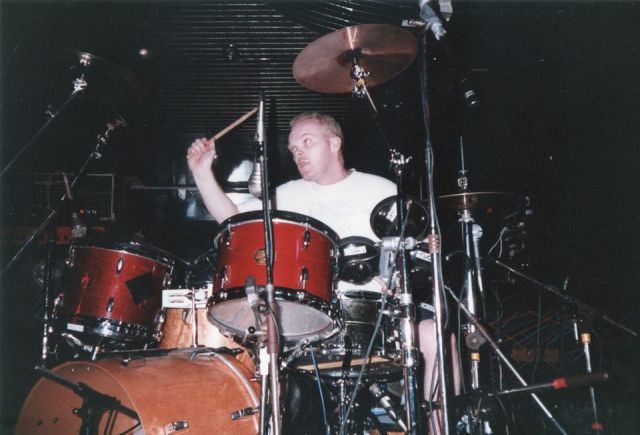
13140875_10153679425311491_627374845_n

Petrols Days: Ciaran with TPE at Birmingham’s Edwards No.8, September ’92 (Photo: Kate Greaves)

Blindspot carries harder subject matter but still has a Smokey Robinson vibe, something I hadn’t really thought about before.

“Well, I was thinking last week I’m probably just a frustrated soul boy. I love rock music, but if I was going to a desert island I think quite a lot of records I’d take would be soul records. Sometimes with that ’60 and ‘70s soul thing, you don’t get the album thing, but the songs and singles especially are gold.”

A discussion followed regarding a mutual love of ‘60s and ‘70s soul and how – in my case – I really only became alive to those genres in the mid-80s, the period I discovered the Petrols. Talk about The Four Tops followed, after this blog’s interview with Duke Fakir, prompting Ciaran to profess his love for the single, Bernadette.

“I got into soul was through Dexy’s Midnight Runners. And once you make that initial impact, you’ve got this whole world to discover. I even found a new track on-line recently, by Mary Love, Born to Live with Heartache, I hadn’t heard before. I thought, ‘This is brilliant!’ Quite gritty in a way, the subject matter, a bit of a heartbreaker like a lot of Northern Soul. Just a great song. And that suggests there are others out there I haven’t heard before. That kind of keeps you going!”

Briefly on to the second album, 1987’s Babble, and while I’m in danger of another ‘don’t get me wrong, but …’ there are plenty of great songs there, but it has the feel of a ‘difficult third album’, albeit an LP too soon. Please discuss.

“We were hard up for songs really. We were short of songs when we made the record. We made Manic Pop Thrill for Demon and put a few more songs as extras on 12”s. Then we did the deal with Polydor and they wanted a record out, and when we went into the studio I don’t think we had enough good songs.”

There are some corkers though, including a couple of Ciaran’s, not least album closer Creeping to the Cross.

“Bits of the record are good, no doubt. But I think the production has dated and it’s very much of its time – although I think that’s what made it have an impact at the time.”

13187628_10153679425316491_1491171985_n (1)

Infinite Thrill: Ciaran with TPE at The Venue in Oxford in May ’93 (Photo: Kate Greaves)

You mentioned a love of Stump, and there are a few ‘wig-out’ moments there, like your song, Split.

“I don’t know what to say about that! I was still learning how to put stuff together. And when you’re learning, all your influences are a bit nearer the surface. I was listening to Big Flame too, with all that manic, quick, fast guitar.”

By then you’d ditched the ‘perpetrating verbiage’ though.

“Yeah! We ditched the verbiage! I tell you what, though, John O’Neill, writing songs a lot longer than me, managed to get the word ‘vicissitudes’ on one of the b-sides, so outdid me! Do you know what, though, the older you get the more you think, keep it simple”.

I mentioned to John during our 1988 interview how his lyrics often involved talk of factories.

“Maybe there was some hidden message going on there!”

There were signs of a new dance direction by then, as heard on Here It is … Take It and Groove Check. Before that album you wrote the wondrous Genius Move, then on the album gave us the brooding The Price of My Soul and – among several co-writes – the mighty Under the Sky with Raymond, something of a tribute to Can.

“I guess we were listening to all this stuff in the van, and that comes through a little. I’d say though that our first homage to Can was a song on one of the early singles, Mine, that Damian wrote with Steve. There was definitely an influence, whether or not it’s discernible. We’d always try and cover those things up to make it sound more like us rather than a rip-off.

“I’d never really heard Can properly until I’d joined the Petrols. All I remembered was I Want More. But I remember hearing You Do Right for the first time, Raymond playing it in the flat, thinking, ‘My God! What’s this?’ Again you might not hear it in the finished song, but Can came through on Mouth Crazy from the first album, Damian playing right up the neck. A total nick! But then it’s put in context.”

That+Petrol+Emotion+-+Chemicrazy+-+LP+RECORD-253338All the best bands do it, with The Undertones admitting to Steve Lamacq recently how I Can’t Explain kind of became Jump Boys, something I can hear clearly now it’s been mentioned.

“John was very good at that, and I mean that in a very complimentary way! And everyone nicks. The secret is, if you’re going to do it give it a twist – make it different. Even all the Motown guys nicked off themselves. It’s the Same Old Song!”

At this point – 40 minutes in – I gave Ciaran a chance to get away and get his tea. But he seemed to be enjoying himself, despite my invasive questioning.

“I sometimes think the Petrols have been erased from history in some Stalinish putsch, so it’s nice to have people remembering stuff! Sometimes it feels like you’ve dropped off the radar. But – going back to the soul thing – you’ve got to keep the faith!”

Perhaps I’ve just had time to dwell on how good those last two albums were and how much bigger the band could have been. That’s not so much revising history as disappointment that it never really happened for you commercially. There’s also been a realisation that Ciaran was something of a driving force in part two of the story (from ’88 onwards).

“Well, I felt when John left we had to pick the ball up, so was just doing what I could. I also knew the guy who writes the songs has more of a say and an input into the direction of the band. I had a kid by that stage as well, so extra responsibility to support my family. Even when we wrote Scum Surfin’, Abandon and Blue to Black the record company came back and asked, ‘Where are the singles?’ So we went away and I wrote Hey Venus, Raymond wrote Tingle, and I wrote Sensitise, finding a bit of myself I never knew existed. Traditionally John had written most of the singles – It’s a Good Thing, Big Decision … Now John wasn’t there, I made a conscious effort to fill the gap.”

By the time of the fifth album, 1993’s Fireproof, all your songs seemed to be at the top end of the record.

“I think that was a democratic decision. Unfortunately we were run as a democracy, so didn’t function too well at times! I remember sitting in a room in Los Angeles choosing the track listing for Chemicrazy, trying to thrash out what worked well.”

By the time the TPE story came to an end, Ciaran was long since settled in South London, with two young children. Was there any money left in the band pot?

“There wasn’t much. We did one publishing deal that brought some money in, but when we signed in 1987 we were on £100 a week, and when we split up we still were! We were going on the road and not getting paid. Our roadies were – we were employing them. But we weren’t. I remember coming back from a four-week tour of Europe with a couple of hundred quid in my pocket, thinking this is not sustainable.”

I gather that you worked together in a dole office with Raymond for a short spell.

“Yeah, short-term before the last gigs, having split the previous year, doing a stint at the Benefits Agency. That was a good laugh, but that was about it!”

That+Petrol+Emotion+-+Fireproof+-+LP+RECORD-504035Camberwell-based Ciaran’s children are now in their 20s, ‘both massive music fans’, ‘brainwashed on countless car journeys’. Neither have followed his lead into the murky world of the rock band, although his son’s ‘a great guitar player who’s really got into electronica’. Has Ciaran ever used his English literature degree outside of music?

“Not really, apart from the use of ‘verbiage’ in a song! I do find words hard. It’s easier to pick up melodies, something half-heard or misheard, then suddenly you’ve got a melody.”

Despite playing down his considerable songcraft, he’s clearly proved himself as more than a great drummer. Of course, there’s a strong tradition of singing-drummers over the years, and I was only recently (namedrop, namedrop) speaking to Graham Nash about The Band’s Levon Helm …

“Are you not going to mention Phil Collins there?”

I could, particularly as we lived in the same village a few years. I’ll always stand up for Phil. Despite the media hype to the contrary, he was a lovely fella as I recall. Besides, he never sent me a fax terminating our friendship.

Anyway, seeing The Everlasting Yeah at The Lexington in Islington earlier this year, it was easy to see what a key part Ciaran plays in the band’s dynamic. Doe that go right back to his Derry band roots, or has that come with age and a current project where the lack of an obvious front-man has given all four band members the chance to shine?

“I always had a big mouth! In The Corner Boys I sang a bit as well, but when I joined the Petrols I was the drummer, just trying to fit in. Gradually you find your voice. It’s because I’m such a big fan of music. I can’t keep my mouth shut! I don’t know. I can’t explain it.”

Singing Drummer: Ciaran McLaughlin (right of bandmate Raymond Gorman) adds vocal touches to The Everlasting Yeah, live at the Lexington, Islington (Photo copyright: Kate Greaves)

Sweet Harmonies: Ciaran McLaughlin (right of bandmate Raymond Gorman) adds vocal touches to The Everlasting Yeah, live at the Lexington, Islington (Photo copyright: Kate Greaves)

Is it something in the Irish background and psyche? Or is it just a cliché that everyone plays music down the pub and has a sing-song? It’s not seen as an English quality (although Paul McCartney and Ray Davies might argue with that assumption).

“It’s a different culture I suppose, that whole artistic side – singing, playing music, storytelling, something going back to pre-Norman times. And Irish culture somehow managed to preserve itself through all the changes down the centuries.”

Were you brought up with music around you?

“My mum told me that when I was a toddler they’d hang a transistor radio on the side of the cot. So maybe that’s how I became obsessed with music. She reckons I was mad about The Beatles when I was two or three. So it’s obviously gone under my brain!”

After the Petrols split, I gather you were playing with a jazz band around London.

“I did for a while. That was fun. I really didn’t want to get back into pop or rock music. I didn’t think I could bear emotional rejection and go through all that again – the anger and bewilderment. That sounds a bit dramatic, but … Anyway, eventually I started writing again, and did straight after the band split. But I never wanted to be in another band like the Petrols.”

I get the impression from past conversations there are lots of Ciaran McLaughlin songs waiting to be released.

“I know the good ones that stood my annual cull! When you first write a song you think it’s great, then later realise it’s not. But there are ones that stand up to the test of time, and I know Raymond has some. It’s just that they don’t fit with what we do. I write a lot of acoustic songs, listening to singer-songwriters like Joni Mitchell.

“Me and Raymond kept each other going. I remember him coming round the house one Saturday, playing him some songs. He told me that’s what got him into writing again, having been totally disillusioned as well. That was 20 years ago, but we still keep each other going.”

Concentrating on The Everlasting Yeah, I’ll steer clear of the superlatives – it’s all out there already, not least on this website – but your songwriting has proved inspirational. By way of example, tell me how Everything is Beautiful came about?

13140721_10153682312666491_950991702_n

Beats International: Ciaran McLaughlin in live action at Tufnell Park’s Dirty Water Club in 2014, formerly known as the Boston Arms (Photo copyright: Kate Greaves)

“That was a song I wrote in that period, and one we felt fit. If you’ve got a catalogue of songs, you can always dip in, and it was Raymond who suggested that. It’s the same with some of his older songs. But I’m a big believer in the bulk of your material being current and the idea that each time has it own energy.

“If you draw too much from the past – even if no one’s heard those songs – that energy’s missing. You need something that’s now, the four of us in the band doing something. That has to be the core of the record, and that’s what Anima Rising is. The next one will be too. Only then can you pull one or two older songs in, if they fit.”

That was the only slow song you played at The Lexington. Let’s face it, you’re not as young as you were, all four of you. But somehow you all seem to have that energy.

“Well, I played the opening song of the LP to a guy at work and he couldn’t believe it was me! He reckoned I sounded 20 years younger. I have to say the four of us somehow generate an energy together.”

As Bob Dylan put it, ‘I was so much older then, I’m younger than that now’.

“Yeah, I just think we’re playing music that could be made by a band in their 30s. We’re not really into nostalgia – just doing something current. Ultimately, I’m a bit wary of the past and big reunions. I’m about the now and looking forward.”

I can see that, despite asking all these questions about your musical past! With that in mind, there were new songs road-tested at The Lexington. Will it be a similar set at Putney’s Half Moon?

“We’re hoping to do at least one additional song. We’re still working it out! We write songs together, and at the moment we’ve got a large section, coming together in the same way The Grind works.”

Hoodlum Angels: The Everlasting Yeah, live at the Lexington. From the left: Brendan Kelly, Damian O'Neill, Raymond Gorman (Photo copyright: Kate Greaves)

Hoodlum Angels: Ciaran’s Everlasting Yeah rhythm buddies, live at the Lexington. From the left: Brendan Kelly, Damian O’Neill, Raymond Gorman (Photo copyright: Kate Greaves)

It must be hard fitting this around the day-jobs, in Ciaran’s case audio description work for the visually-impaired. What if someone came forward with a wad of cash to pay for studio time and so on?

“We’ve all got families, commitments, jobs, so can only really rehearse once a week, sometimes not even that. It takes a while for things to come together. I was talking to Brendan about this, and we agreed if we had that extra time to rehearse we’d be so far ahead. But what we have now that we didn’t 20 years ago makes it more enjoyable than the latter stages of the Petrols. Perhaps it had become a job by then. Lack of success kind of grinds you down. We’re older as well, so tend not to get so worked up about stupid stuff.”

Also in contrast to the old days is the political side. The band clearly remain passionate about certain issues, but the political landscape has changed and the new songs seem more person-political than hinting at the kind of polemic and soundbites the music press liked to stoke up in the past (arguably to the detriment of the music).

“Absolutely, and I find all the organisations, movements and -isms you get now, I can’t identify with them wholly. There are so many imperfections and you’re sort of hostage to fortune once you affiliate with them. What happened to us was a good example. I know for sure things were held against us, people maybe interpreting things we said, rightly or wrongly to be a, b or c. And then they were finished with us.”

There were definitely elements of lazy journalism too, putting labels on you that ultimately stuck.

“They did, but I think we were naive as well, expecting the nuances of what we were trying to say would somehow be picked up on and someone would spend time trying to figure it out. Sometimes it’s easier to write black and white then move on, and we were the ones who had to pick up the slack, being labelled with whatever. Very frustrating.”

From the distant past to the happening present and the future – what happens in the long run? Will there be a solo album at some stage?

“There will definitely be a second Everlasting Yeah album. Me and Raymond have talked about a third as well, maybe an acoustic or at least a lighter record, so we have somewhere to put that … stuff! We’ve got enough songs of that ilk that are really good but are not being utilised – proper songs with verse, chorus and middle bit! We can’t plan that far ahead though. We’ve got to get the second album out first! It’s just something we talk about in a ‘wouldn’t it be great’ kind of way!

Early Days: That Petrol Emotion. From the left - John O'Neill, Damian O'Neill, Raymond Gorman, Steve Mack and Ciaran McLaughlin.

Early Days: That Petrol Emotion – John & Damian O’Neill, Raymond Gorman, Steve Mack, Ciaran McLaughlin.

“But Anima Rising is the record I’m most happy with, of all those we’ve made – the whole way it sounds is us! We made it for ourselves almost, so the fact that other people enjoyed it is brilliant. And now we want to do it all again.”

I feel duty-bound to ask what happens if a fifth person comes in (no names, no pack drill). The four-piece model works so well – would you ever consider changing that dynamic?

“I would never say never, even if it’s just to get another instrumentalist to expand the sound – as long as it’s interesting. I always feel it’s really dodgy when you get bands that all of a sudden get really big then add members. I remember REM did that with an extra guitarist. It wasn’t any better – it was the beginning of the end.

“You’ve got to discipline yourself to work within the limits you’ve got. At the moment, the way things are, it’s hard enough as it is with four, without a fifth! I quite like it the way it is. It works, and we’re a tight little unit.”

Good answer, and without even mentioning Steve Mack … until now.

“Actually, we saw Steve last year. He loved Anima Rising. He was really gracious in his praise, and that was great. He’s still in Seattle and was making noises about getting us to go over and play there. We’d love to, but realistically it’s not going to happen. Those days of flying to the other side of the world to do one gig … I don’t know if they ever existed!”

We could always re-commission Concorde. You could play a gig in London then fly over for another in Seattle the same day – in tribute to fellow singing-drummer Phil Collins, recreating Live Aid at Wembley and Philadelphia in ‘85, that same summer I first saw the Petrols.

“Well, there you go. Or play for some Russian oligarch, who pays your rent for the next 15 years.”

You heard it first. But until that’s confirmed, I’ll settle for a second album and some new dates for The Everlasting Yeah, starting next Thursday, May 12th at the Half Moon, Putney (with a link for tickets here).

For a selection of past writewyattuk interviews, features and reviews with The Everlasting Yeah, That Petrol Emotion and The Undertones, use the search button at the top of this page. And for the latest from The Everlasting Yeah, try their website, Facebook and Twitter links.

6797_10153439005905978_1777348787047226251_n

Posted in Books Films, TV & Radio, Music | Tagged , , , , , , , , , , , , , , , , | 5 Comments

Reaching out for the Four Tops – the Duke Fakir interview

Tops Entertainment: Duke Fakir, surrounded by his fellow Four Tops, 2016 style

Tops Entertainment: Duke Fakir, surrounded by his fellow Four Tops, 2016 style

I’ve enthused here many times before now about my love of classic soul, from the ’60s sounds of Atlantic and Stax to the best of the ‘70s scene on Hi and Philadelphia, fuelling explorations into the Northern Soul scene and much more besides. It’s had a hold on me for as long as I can recall, the wonders of the Motown back-catalogue at the heart of that.

It’s never been an exclusive passion. It runs alongside an appreciation of many genres. But it’s always there, as previously expressed in my Otis Redding feature three years ago, and last summer’s interview with Martha Reeves. At first it was something I suppose I only really picked up on via a little transistor radio and my older sister’s Dansette and a few treasured 45s. But by the mid-‘80s as a working lad, I finally had cash to splash and delve through the vinyl record racks in my hometown, Guildford, discovering or re-appraising artists from Aretha Franklin, Booker T & The MGs and Curtis Mayfield through to Stevie Wonder, The Temptations and Wilson Pickett.

Of all the great acts that came out of that era, The Four Tops had a mighty impact, this young lad swayed by all those intense moments of devotion, heartbreak and loyalty, Levi Stubbs’ impassioned cries speaking to me and for me. As a 19-year-old earning a weekly wage after years of Saturday jobs, I memorably used my Boot’s staff discount one day to snap up two prime slices of vinyl – a 12-track reissue of the Tops’ Greatest Hits and an 18-track Telstar compilation from the Tempts. I’ve checked my diaries, and that was early February 1987 (the same day I finally got a vinyl version of The Undertones’ Hypnotised, my cassette as good as knackered by then). In fact, I remember the branch manager that evening – a sharp-suited ‘60s throwback if ever there was one – questioning my purchases as I left, then praising my selection, not least the Tops’ collection. And what an album – from Baby I Need Your Loving right through to Shake Me, Wake Me (When It’s Over).

The latter LP cover is great in itself, the Tops in proper dance formation – wearing matching blue open-neck shirts and black suits, harmonising and synchronising their moves at what seems to be an impromptu alfresco show, performing in front of tables of far less cool white punters. And both albums were played to death in the following years (all three actually), key components of my 1980s’ soundtrack. When people trot out tired lines about ‘80s music and cite songs like Come on Eileen, Gold, Karma Chameleon and The Power of Love, I’m lost. For me it was much more about the Tempts’ Ain’t Too Proud to Beg and the Tops’ It’s the Same Old Song.

I also loved my 1972 Motown Yesteryear 45 coupling the sublime Walk Away Renee and You Keep Me Running Away, just two of six fantastic singles from the stunning 1967 album Reach Out, released three months before I was born. Both bands’ Anthology recordings were next for me, discovering even more quality songs. And to this day the Tops and the Tempts remain in-car CD regulars, as I explained to Abdul ‘Duke’ Fakir when I called him in Detroit, Michigan, the original home of Motown.

1338622693_the-four-tops-greatest-hits“Oh wow!”

What’s more, I add, I often flick through a treasured 1984 copy of Gerri Hirshey’s Nowhere to Run – The Story of Soul Music, lapping up the background into that whole scene, just wishing I was there.

“Okay – very good!”

I realise at this early stage of our transatlantic telephone conversation that I’m sounding like a stalker, so back off a little, instead asking Duke – the sole survivor from the original Tops – how he picks his live set-list. You see, The Four Tops are over here touring with The Temptations this coming autumn (hence my excuse for the phone-call). And let’s face it, from 1964’s Baby I Need Your Loving through to 1988’s Loco in Acapulco alone, I’ve totted up around 50 singles for his band alone (incidentally, it’s closer to 80 for the Temptations between 1961’s Oh Mother of Mine and 1984 hit Treat Her Like a Lady).

“Well, what we plan to do this year is research more into playing songs which were big in the UK but weren’t big in the US. Loco in Acapulco would be one, A Simple Game another, and there’s quite a few more. I don’t have the set-list we’re going to do yet, but I could tell you pretty much the songs we have been doing.”

This genial gent’s all set to grab me the set-list the band are working on at that point, misunderstanding my drift – be it down to my accent, general over-enthusiasm, the time of day, or the phone reception – but I assure him that won’t be necessary. Whatever they come up with will go down a storm with audiences in the UK, where there quite rightly remains a lot of love for the band.

It was noon UK time and 7am stateside when we hooked up, but first tenor Duke was already in fine voice.

“It’s a little early in the morning, but I’m an early-bird, so that’s not a problem!”

We start by talking about home, and Duke’s home life and devotion to his family.

“That’s exactly why I never moved out of Detroit. That’s why we all stayed here. We have big families here – sisters, brothers, cousins, and so on. My personal family is extremely big, but my children are grown now, and they have children. So I’m Grandaddy, but they don’t call me that. One set calls me Poppa, the others call me Pop.

“Two of my kids have moved out of Detroit, and they’re the ones with grandkids, so I usually have to travel, which I do a lot in my off-time. I go to Minnesota to see my son’s grandkids, and Atlanta to see my daughter’s children. That’s what I do with any spare time … that and golf. So yeah, I’m a big family man – I love my family, my kids and grandkids.”

Fourtops-reachout-albumIt sounds like this 80-year-old American of Ethiopian and Bangladeshi descent is bordering on great-grandfatherhood too.

“You know what? I am a great-grandpa! One of my grandkids has a little son, born a couple of months ago in Minneapolis.  So now I’ve reached the ‘great’ stage! And I’m very proud of that.”

Of course, Duke and his band reached that ‘great’ stage as soon as they had a few hits under their belts. But I don’t dwell on that. Instead, I bring up the celebrations for his 80th birthday last Boxing Day.

“Well, d’you know, a big party was planned. I was going down with my wife to Atlanta where my daughter is, but then the Detroit Pistons basketball team asked if we would perform that day. I hated to turn them down, so told the family we could always have a party later – I’ll be 80 all year long!

“But then the Pistons basketball team surprised me. On a big screen they ran a history of my life, something I didn’t know about. They also gave me a jersey with my name on it and a number 80. I thought that was absolutely excellent. So I celebrated by doing what I do – actually performing.”

When Motown moved on to Los Angeles in 1972, The Four Tops stayed in Detroit, signing for ABC. I put it to Duke that it must have been hard seeing so many good friends move away.

“It was. We actually went out to Los Angeles, just to be sure. We knew we didn’t want to leave but went out and looked around, looking at houses, having a big discussion among ourselves. But we decided ‘no’, we didn’t want to raise our families out there. We wanted to stay right here in Detroit, where the rest of the family was. We ended up staying … and I’m glad we did. I’ve raised a wonderful family, my kids are all professionals, and I’ve had a great life here in Detroit.”

Lots of bands chop and change personnel, but the group that started out as The Four Aims changed little more than their name in their first four decades. In fact, Duke and fellow Tops Renaldo ‘Obie’ Benson, Lawrence Payton and lead singer Levi Stubbs (a cousin of Jackie Wilson) performed together from 1953 until 1997.

“Yes, for 44 wonderful, wonderful, great fun-loving and exciting years. We had so much fun together and enjoyed doing things off stage together. More than that we enjoyed singing, rehearsing and performing – no matter what. We had arguments from time to time, but when we got to the stage there was nothing to argue about – it was all love!”

In Duke’s case it’s been a staggering 60-plus years in the band, and these days he’s joined by Ronnie McNeir, Larry Payton Jnr. (Roquel), and Harold ‘Spike’ Bonhart. A change was finally forced upon the group when Lawrence Snr. died in 1997. They initially continued as a three-piece – as The Tops – before Theo Peoples, formerly of The Temptations, joined, taking on the lead role when Levi suffered a stroke in 2000 (he passed away in late 2008), with his position assumed by Ronnie. When Obie died of cancer in 2005 he was replaced by Lawrence Snr.’s son Roquel, while Spike replaced Theo in 2011.

While keen not to dwell on the subject, I put it to Duke that I’m guessing not a week goes by without him thanking his lucky stars he’s still out there.

Lining Up: The Four Tops in earlier days, with Duke Fakir back right

Lining Up: The Four Tops in earlier days, with Duke Fakir back right

“Yes, but it’s bittersweet, because sometimes I wonder why. We all did the same things and I think our health was about the same. I don’t really know, I wonder about it sometimes, but I’m healthy. And there’s no doubt about it, I dream about them quite a bit.

“But the group we have now is almost as close as we were. We have Lawrence’s son and Ronnie, who was like Renaldo’s younger brother and around for 30 years, so like a Top anyway! It wasn’t like I had to pick up strangers. That would have been hard for me to do. They were more like family members automatically adopted into the group.

“The lead singer we have now has always been a fan, especially a Levi fan, always wanting to sing with The Four Tops. And he does sound quite a bit like Levi. In a way we’re like Memorex – the closest thing to being The Four Tops, and I think the people still enjoy us as if we were the Tops.”

Was Lawrence’s son a regular at the studio in the old days?

“Oh yeah, he was always around us! He was a little kid when we started, but in the ’80s and ‘90s was always around the studio and so forth. He knew all our songs. I didn’t have to teach him hardly anything. He definitely has the voice of his father and the musical ear of his father, who could put harmonies together like a composer. So we’re very fortunate in that respect. It’s made it all very easy for me to carry on. And they’re keeping the legacy really alive.”

What arguably marked The Four Tops out among their peers was Levi’s rich baritone, while many other great Motown acts had a tenor leading. Was that a problem for this particular first tenor?

“Look, when I met Levi and we first started singing together, way back before we started The Four Tops, I just knew he had an incredible voice. He was destined to be lead singer, whether it was going to be all by himself or whatever. He had the most incredible voice. I’d never even think about singing lead when he was around.

“He was a master performer and had a terrific voice. He could touch you just by singing about a stone! Incredible. I look at him as one of the finest lead singers in the world at that particular time.”

Duke met Levi at high school in Detroit. Did they click straight away?

images“Oh, we were fun! In fact, Levi actually moved in with me. I was an athlete and I played on the basketball and football teams, and Levi would ride the bus with me going to the game with these team players. We would have the whole bus – the cheerleaders and the athletes – just singing songs. We were always close like that, and he had people singing everywhere he went!”

As I understand it, you met Larry and Obie at a party in 1953 …

“Let me tell you there – we had known each other quite a while. They sang in different groups, so I knew they could sing and sing well. This was a party that was kind of bourgeoise. The ladies were very … the wheels were primed! They were all high-class, very fine young ladies, and you had to be invited.

“They invited Levi and I and asked us to sing. We thought about Obie and Lawrence joining us, but didn’t tell them. These were handsome young men and we thought we were fairly handsome young men ourselves. We figured if we had a group we could probably get away with a few of these fine ladies for ourselves – that’s why we went along! Singing was the by-product of us going to the party looking for the girls! But once we started singing …

“We told Levi to just pick a song and sing the lead. We’d just back him up. Well, when he started, we all fell in like we’d been rehearsing the song for months! Our blend was incredible. We were just looking at each other as we were singing, and right after we said, ‘Man, this is a group! This is a group!” The next day we started rehearsing and became The Four Aims.”

And the rest is history.

“Yes, indeed.”

The band’s name change followed a move to Chess Records in 1956. Yet they were still a few years and several labels off the big time with Berry Gordy at Motown. Talking to Martha Reeves last year, she said that if Holland/Dozier/Holland came up with a song at Hitsville USA,  you’d all be there hoping to get it. Was there stiff competition as you recall it?

“Well, actually there was not. With Holland/Dozier/Holland, they didn’t jut write songs and say who was going to do it. They wrote songs for specific artists, and I loved them for that. They wrote specifically for Martha (Reeves), as they did for Jnr. Walker, and when it came to the Tops, they wrote specifically for us.

“All those songs are a little different, but all have the Holland/Dozier/Holland flavour. They were tailors, and would fit you for what your need was. That’s my true opinion of it. They were tailors of music!”

Truly Tempted: The Temptations, 1965 - David Ruffin (bottom left), Melvin Franklin (top left), Paul Williams (top right), Otis Williams (bottom right), and Eddie Kendricks (centre)

Truly Tempted: The Temptations, 1965 – David Ruffin (bottom left), Melvin Franklin (top left), Paul Williams (top right), Otis Williams (bottom right), and Eddie Kendricks (centre)

The Four Tops have eight dates here this time with The Temptations, and all bar one feature ‘70s disco, soul, R&B and funk outfit Tavares too. Duke’s band have co-headlined many times with the Tempts, who these days comprise founder member Otis Williams plus Ron Tyson (on board since 1983), Terry Weeks (since 1997) and recent recruits Larry Braggs and Willie Greene Jnr.

But how about those Rhode Island brothers – Cape Verdean collective Antone (Chubby), Arthur (Pooch), Feliciano (Butch) and Perry (Tiny) Tavares, best known for It Only Takes a Minute, Saturday Night Fever’s More Than A Woman, and Heaven Must Be Missing An Angel? Do you know them well?

“Oh yeah! We’ve worked with them in the States a few times, and become very good friends. But like with The Tops and The Temptations we’re always very competitive once we reach the stage. We’re very friendly with The Temptations, sometimes have meals together and play golf together. And we’ve played golf and had meals with Tavares. But when you hit the stage, it’s bloody murder!”

I’m not sure if that last phrase was delivered with Duke’s version of a British accent, but he’s still laughing hard as I ask if he’s ever been tempted to jump on stage with the other bands, joining in on a couple of their songs.

“I never feel like that. We all perform differently and I’ve never wanted to step out of my role into somebody else’s. We’ve always been who we are. We’ve always known our place and know what we do, and just try to do that to the best of our ability … every night. That’s worked well for us. I’m very happy to just be a Top. I’ve never wanted to be anything other than that.”

Finally, there’s always been a special relationship between Motown acts and UK audiences, hasn’t there?

“Oh, there really has, from day one. From the first promotion when we first came over … right up to today. And it’s more than special. This is our favourite tour and we love the people of the UK … and they treat us like royalty. They love The Four Tops and they respond to us. They’re just incredible. It’s such a great feeling. Every night on stage it’s a wonderful, wonderful feeling. And we look forward to coming there in October.”

Brotherly Love: Special tour guests Tavares, back in their earlier days

Brotherly Love: Special tour guests Tavares, back in their earlier days

UK dates (featuring The Four Tops, The Temptations and also Tavares unless stated, with all shows 7.30pm, tickets £45/£40 except London and Southend, which are £47.50/£42.50 via www.ticketline.co.uk, the 24-hour ticket-line 0844 888 9991, or via the following venue links): October 21 – Liverpool Echo Arena; October 22 – Manchester Arena; October 23 – Leeds First Direct Arena; October 25 – Nottingham Capital FM Arena; October 26 – Birmingham Genting Arena; October 27 – London O2 Arena; October 29 – Bournemouth BIC; October 30: (without Tavares) Southend Cliffs Pavilion.    

And for further details on the autumn tour, check out these Four Tops, Tavares and Temptations links.

Live Presence: The Four Tops in live action (Photo copyright: http://thefourtopsenterprises.com/ / http://sabrina-feige.de/

Live Presence: The Four Tops in live action (Photo copyright: http://thefourtopsenterprises.com/ / http://sabrina-feige.de/

Posted in Books Films, TV & Radio, Music | Tagged , , , , , , , , , | 6 Comments

Celebrating Songs of Stage and Screen, with Blake’s Stephen Bowman

Three's Company: Humphrey Berney, Ollie Baines and Stephen Bowman, collectively known as Blake

Three’s Company: Humphrey Berney, Ollie Baines and Stephen Bowman, collectively known as Blake

It was the morning after the night before when I spoke to Stephen Bowman, one of the three mighty voices behind close-harmony group Blake.

But this is a tale of a rare night when this top-selling trio didn’t have to sing for their supper rather than one of rock-n-roll excess, and it’s one that fits in nicely with this boy band with a difference’s current Songs of Stage and Screen show.

Stephen, who sing bass-baritone in Blake, said: “Last night we had an interesting evening at a celebration to mark composer the 88th birthday of Monty Norman, who wrote the James Bond theme, and were very lucky to have another 88-year-old, Roger Moore, turn up and give us a few anecdotes. I got to hear the most wonderful thing – Roger Moore doing an impression of Sean Connery. And actually he does a bloody good impression of him!”

So did 35-year-old Stephen and his fellow bandmates have to do their bit too?

“Actually, last night was one of those lovely occasions where we just got to it down and watch.”

When I spoke to Stephen he was between engagements in Horsham and the Isle of Wight with fellow original Ollie Baines, 33, and more recent addition Humphrey Berney, another 35-year-old.

“It’s always nice to go on a holiday, taking that 30 or 40-minute ferry ride across the Solent. And once you’re there it does feel like you’re in a different country altogether!”

Blake’s current tour reaches Lancashire next week – my reason for calling – with a date at Preston’s Charter Theatre (01772 80 44 44) on Tuesday, May 3rd then Southport’s Atkinson Theatre (01704 533 333) the day after, the boys promising tracks from musicals, plus the usual collision of pop and classical songs in what is billed as their ‘most eclectic stage spectacular yet’, ‘accompanied by great musicians and impressive video projections’.

Eclectic Warrior: Stephen Bowman, one-third of Blake, heading to your neck of the woods

Eclectic Warrior: Stephen Bowman, one-third of Blake, heading to your neck of the woods

You can also factor in a little rat-pack banter with the audience and plenty of good stories. And if you can’t make it along then , there’s also Lancaster’s Grand Theatre (01524 64695) on September 23, their penultimate tour date.

It’s not a bad way to get around the country, is it?

“It’s a fantastic way of getting around the UK, and the lovely thing about touring is that you get to see so many towns you wouldn’t otherwise visit. All of us live in London, so when it comes to touring we tend to do a show then come back when we can, but very often we have three or four together and stay over in hotels, getting to immerse ourselves in the world of the North, which is great. There are a lot of gems among them, and I’m sure Preston is one of those. It’s our first time.”

They weren’t so far off last August, appearing with Lucy Kay at the Symphony at the Tower fundraiser for St Catherine’s Hospice, at nearby Hoghton.

“Yes, we were close by, and hopefully a lot of people who saw us at Hoghton Tower will remember us. That was fantastic fun, with around 4,500 people there, and a great crowd. If we get a crowd that fun in Preston we’ll be delighted.”

That got us on to the subject of friend of this blog Lucy, who I interviewed at the time (with a link here if your missed it), and proved a big hit with Blake too.

“Lucy was a real delight, a sweet girl, and the audience really enjoyed her.”

Anyway, back to Stephen, and I believe one of his favourite leisure pursuits between dates and recording commitments involves his motorbike. So what does he ride?

In Harmony: Blake's 2014 album

In Harmony: Blake’s 2014 album

“I’ve had all sorts, including a Honda Fireblade for four to five year before moving over to a Suzuki GSX-R1000, which tends to get me around quickly.”

Ever get a chance to roll the bike on board the tour truck so you can get away before sound-checks?

“Yes, we have our support trucks carrying our equipment – lighting, projection and so on, and this show especially is very visual. There’s the music, live vocals and instrumentals, but with large projections for the back of the stage, showing clips of movies and imagery during songs. But they’ve never let me put the bike in the back! If I want to take it with me, I’ve got to ride it. The last time was the previous occasion we went to the Isle of Wight. I did a little tour of the island, which was absolutely fantastic.”

You’re well respected for performing a huge mix of genres. What do you tend to listen to between shows? Does your love of motorbiking mark you mout as a secret Steppenwolf or Bruce Springsteen fan?

“My joy outside of the music we sing is EDM – electronic dance music. I listen to Chvrches quite a lot and an American group called Lucius. I tend to listen to music with a beat. And when I’m motorcycling longer distances I tend to have headphones under the helmet so I have a soundtrack for those longer motorway stints – normally quite fun and upbeat.”

I gather you only really started singing in your teens, but you clearly made a quick impression. Was there a moment where you suddenly realised this could be your future?

“Well, the other guys in the group are both core classical, school choristers from the age of six and studying classical music intensely through their school years. I came to it all later, so my first experience of singing in front of people were as part of bands. And that different approach is great for the show, which varies between classical and contemporary music – from songs people know from the pop charts from the last 20 years or so.

“In that respect it’s quite useful for them to have someone who sings those songs in the style they were intended. There’s a mixture of vocal styles within the group and we take advantage of that.

“When I was 16 I entered the Bath Young Musician of the Year competition, which was my first opportunity to sing classical after years of giving it a go, and it was an amazing moment at a venue holding around 400 people, and the buzz I got from singing in front of those people and putting a smile on their faces was an absolute lightbulb moment. I knew I was really lucky and felt this was something I could do for the rest of my life. And I got there in the end.”

“I was really lucky to get a place at the Guildhall School of Music and Drama at the age of 17, becoming a very young entrant to that college.”

Are you still the youngest baritone to win a place there?

“I think I am! I took the audition when I was still 16.”

Stage Presence: Blake are entertaining audiences with their Songs of Stage and Screen

Stage Presence: Blake are entertaining audiences with their Songs of Stage and Screen

“I had something of a hiatus beyond all that, taking five or six years concentrating mostly on songwriting, working with other artists and for myself.

“I kind of switched off the vocal idea of what I was and got on with the songwriting. Then by chance Blake came along, and I may never have sung again if not for Blake.”

I believe it was a Facebook reunion involving your fellow Blake co-founder Ollie, a multi-instrumentalist and former teacher, that was the catalyst.

“Yes, Ollie had also been at the Guildhall, after me, and a lot of us tend to join an alumni group to keep in touch and help find others in the music industry to work with. Myself and Ollie got chatting on Facebook about the idea of this harmony group that would sing classical and pop, then started looking around for others.

“We had a good rehearsal at the Guildhall, and very shortly after I managed to get us in front of Universal Records via our manager. It was all gratuitous timing.”

I’m not doubting the talent involved, but there was an element of luck in getting that big break, wasn’t there? You did after all strike a record deal within days and make your first album within six months, then see it top the UK classical charts.

“Absolutely, the music industry is 99 per cent really hard work and one per cent chance, and the latter is essential – but you still have to make that opportunity.

“We felt that getting that initial opportunity to get in front of a label and get them to say ‘yes’ was all you had to do to stay in the industry, but in actual fact you find out quite quickly that all of your life you can end up jumping through hoops for people and doing auditions, proving yourself, in this country and in our case also overseas, having to reprove ourselves a lot from Asia and America to Australia and Russia. So you can never take it for granted – there’s always another level you have to push for.”

Humphrey, with his operatic background, has been part of the story for some time now. Are you all good company on the road?

“Yes, and the nice thing for us is that we started as four, coming up for 10 years now, and have been three now for almost three years, and the current three are all core musicians, not wannabe actors, and we’re very dedicated to what we do.

“Blake is our life and we are very proud of that. We have a shared dream, which is to continue to get Blake to more of the world, and in terms of what keeps us going it’s a very similar sense of humour.

Quote Unquote: Monty Python's Life of Brian is a firm favourite with the Blake boys

Quote Unquote: Monty Python’s Life of Brian is a firm favourite with the Blake boys

“Between the three of us we can very easily quote the whole of The Life of Brian and The Holy Grail, and a lot of The Meaning of Life too. So it’s Monty Python that keeps us together really.”

I’ve just been reading a biography about the Faces. I can’t see the three of you trashing hotel rooms though. Or am I wrong?

“I wish I could admit to throwing a television out of a window at some point, but they tend to fix flat-panel TVs to the walls these days.”

You can probably blame Rod Stewart and his old bandmates for that.

“Yeah – they ruined it for everyone!”

From The Beach Boys to Snow Patrol and from Paul Simon to U2 and Gustav Holst to Vangelis, do you all pitch in with ideas for covers?

“The best time for us to find and discuss potential covers is when we’re driving between gigs. You’ve got a sound system and you can voice ideas to each other. So we play a song and try and work out potential harmonies, and if we feel that song has legs we’ll take it into the studio and start picking it apart with a pianist, so all three members get a lot of opportunities to put forward songs they like.

“You can sense that across our albums. You’ve got the heavier classical options through Ollie, the classical and musical selections from Humphrey (Barney), and more pop and rock selections tend to come from me. And that mixture makes it a lot of fun to work together.”

A proper road test, you could say. A bit about yourself now – you were brought up in Bath, and we’ve mentioned your time with the Guildhall School at the Barbican. I also understand your Mum was opera-trained.

“She was. She loved opera, and by osmosis I was exposed to a fair amount of it, mainly light operettas such as those by Gilbert and Sullivan, which to this day I enjoy, massively.”

Meanwhile, your Dad played guitar in a band in Germany, didn’t he?

“Yes, he was a blues guitarist who moved over here, far more schooled in rock and blues. There was definitely competition between them in terms of what I’d end up enjoying. Mum would be in the kitchen playing something loudly and Dad would be in the living room upping the level on his stereo. I was this confused four-year-old walking between two rooms trying to understand all that!

“But it was a good thing, that mixture of genres early on in life. It’s a healthy thing for everybody. You can appreciate a lot more music. I love classical music, I love songs from musicals and I love pop, but also love the more esoteric electronica as well, enjoying that wide range. I haven’t managed to get a taste for rap yet, but I’ll never say never!”

So how did your parents meet?

Match Maker: England's 1966 World Cup victory over West Germany brought Stephen's parents together ... in Dusseldorf

Match Maker: England’s 1966 World Cup victory over West Germany brought Stephen’s parents together … in Dusseldorf

“It’s a wonderful story involving England versus West Germany in the 1966 World Cup Final. Dad was based in Dusseldorf and Mum was there briefly to do a short course in dress design. They were in a bar together on the day of the final, on different sides, a few cheering for England in one corner, and my Dad nursing his beer after the defeat, getting chatting with my Mum. In that moment he fell very much in love and decided she would be the woman he would marry. They were very much an unlikely coupling, but it worked, and he moved to the UK.”

Fast forward a few years, and there was a spell for you playing with indie and jazz bands in Bath, I believe.

“Yeah, like a lot of young kids I found music through groups I idolised at the time, like Pulp, Oasis and Blur. A lot of stuff I was singing when I was 12, 13, 14, was very much in that BritPop and indie style. I was a massive fan of Damon Albarn – and still am – and did a lot of covers of Blur songs.

There was also a link with near-neighbours Tears for Fears in your hometown. How did that come about?

“That was the most bizarre link. My parents moved house in Bath, into a house that belonged to Curt Smith. I was around 10 then. And in the house he left an entire recording studio, so I grew up looking at this room thinking, ‘One day, I’d love this for myself’.

“During my teens I built up my own keyboards, and a computer recording system. That’s what got me into songwriting. And then I got to know Roland Orzabal in Bath quite well, got to play his music, and he gave me input. Tears for Fears were definitely the most famous group from Bath and had worldwide fame. I’ve met Curt and Roland since and they still tour the world, and their songs endure. So it was great to have had advice from them early in life.”

Stephen’s also managed to release a solo album in a busy career so far, 2004’s Bamboo Haze. Did the fact that he went off and got a ‘proper job’ – in sales and marketing – help him decide this was really what he wanted to do in life?

“It was a bit of both. Having a nine-to-five job and having to concentrate on that gives you some real life experience. If you live in the bubble of music from teenage years onwards a lot of your songwriting does tend to be quite idealistic – based on ideals of life and love. That’s wonderful, but I’d say having that five or six years on the road as a salesman, getting on with life and doing what everybody else does, gives you a nice, useful perspective, with a tinge of reality.

“It also helped fund all the equipment I bought for my own studio and gave me my evenings and weekends to dedicate to music. So it was quite a good thing for me.”

Time to sum up now, and Blake have toured the world (everywhere from the Philippines and South Korea to Barbados and Russia), had No.1 hits in many countries, sold more than a million albums, won a Brit Award for Album of the Year, and performed on nearly 150 TV shows. They’ve playing Wembley, the Olympic Stadium, Buckingham Palace, the White House, Melbourne racetrack, and entertained royalty in Monaco and at home (and I don’t just mean performing for Dame Shirley Bassey at her 70th birthday – an alliance that led to recording with the legend herself).

Bath Royalty: Tears for Fears proved to be a big inspiration for Blake's Stephen Bowman

Bath Royalty: Tears for Fears proved to be a big inspiration for Blake’s Stephen Bowman

Meanwhile, their version of Swing Low Sweet Chariot was adopted by the England RL team, and then there’s the celebrity fans – such as Keira Knightley, Ewan McGregor, Kevin Spacey and Will Smith – and high-profile charity work, performing for HM The Queen and Prince Harry at the Festival of Remembrance, launching a Walking with the Wounded South Pole Challenge, working with the Sing to Beat Breast Cancer Choir, and other engagements with Help for Heroes, the British Legion, MIND, among others.

So does Stephen ever have to pinch himself to get over the fact that his band are out there doing all this, when the TV cameras are on them for The Graham Norton Show, The One Show or Strictly Come Dancing for example, or they’re working on a film soundtrack with Hans Zimmer?

“You do have to pinch yourself, but as with anything you do in life, if there is a degree of regularity to it, it becomes slightly normalised. What I tend to find is that when I talk about the experiences I’ve been lucky enough to have in my life with friends and family or people like yourself, it’s in those moments that I have brief seconds where I realise I really did do all this. So I tend to look back on those moments only when I’m telling anecdotes and stories.

“And in 10 years together there’s this massive wash of things we’ve done and achieved. We’ve been very lucky. Very few artists get to experience what we’ve experienced.”

Finally, past members Jules and Dominic went off to act (Jules since releasing his own solo LP). So what of the three of you who remain – is there a five or 10-year plan?

“Well, I would hope that in 10 years I would have some kiddies. That would be nice. I haven’t managed to pop any of those out yet!

“With musicians, especially pop musicians, you’ll go for so long and then everything stops and they go on to normal life. The nice thing about the style of what we do is quite relaxed, and almost gentlemanly, albeit with a very dry sense of humour. And that affords us a kind of rat-pack style environment to have fun.

“There’s really no reason for us ever to stop what we’re doing, as long as people keep coming to our concerts. And luckily for us they seem to be coming in greater numbers year on year, which is wonderful.

“So from our point of view it would be something we’d love to continue doing, and that’s the feeling for all of us. None of us are waiting for a chance of a solo career. We had those members previously, and they left to do their own thing. Now we’ve got this lovely little tight-knit group. So I see us doing this until we’re potentially quite old and a lot more grey than I already am.”

And is the first step of all that another album?

“We’re looking at heading towards something quite big and more classical – big anthemic stuff. But this year is so packed with touring that we’re not likely to record anything. We might make a concert DVD, but in terms of a new album we’re going to peg that for 2017. It’s a big undertaking when you do it the way we do it, with orchestras and so on. We work always with our amazing fan-base around the world, and they help us fund those albums through crowd-sourcing methods, while we spend a lot of time planning it.”

For further tour information and all the latest from Blake, head to their website or keep in touch with the boys via Facebook and Twitter.

12745762_10154055300050466_5517400941945259080_n


Posted in Books Films, TV & Radio, Comedy & Theatre, Music | Tagged , , , , , , , , , , , , , | 5 Comments

Welcome to The Magnetic North – in conversation with Simon Tong

Town Bound: Hannah Peel, Simon Tong and Erland Cooper head back to Skelmerdale from Ashurst's Beacon (Photo: McCoy Wynne)

Town Bound: Hannah Peel, Simon Tong and Erland Cooper head back to Skelmerdale from Ashurst’s Beacon (Photo: McCoy Wynne)

Simon Tong may still be best known in some quarters for his guitar and keyboard work with The Verve, but he’s certainly been a busy lad since leaving them in 1999.

In fact, that period accounted for just three years of a creative career in which he’s also featured – most notably – alongside Damon Albarn with Blur and Gorillaz.

And while further work with Damon is mooted, a musician noted for many key moments on The Verve’s Urban Hymns and Gorillaz albums Demon Days and Plastic Beach is all about The Magnetic North at present, enjoying plenty of critical acclaim.

South London-based Simon, 43, also plays with the bands Transmission – alongside ex-Killing Joke pair Youth and Paul Ferguson, plus Dreadzone’s Tim Bran – and ‘heavyweight folk-rock band’ Erland and the Carnival.

And it was through the latter – joining forces with singer Gawain Erland Cooper – that he got involved with his latest project, the pair collaborating with composer, orchestral arranger, multi-instrumentalist and singer Hannah Peel, who also features with former writewyattuk interviewee John Foxx and his band The Maths.

The first fruits of that union were heard on 2012’s critically-acclaimed LP Orkney: Symphony of the Magnetic North. And that was followed last month by the similarly well-received album Prospect of Skelmersdale.

Yes, you read that right – the latter is a somewhat unlikely tribute to a place Simon knows well, having moved from Bolton to the West Lancashire new town in the mid-1980s. And like their brilliantly-atmospheric debut offering, Prospect of Skelmersdale is a fantastic piece of work – evocative, emotional, ethereal, and in turns majestic and melancholy.

Subway Sect: Hannah, Simon and Erland, going underground in Skem (Photo: McCoy Wynne)

Subway Sect: Hannah, Simon and Erland, going underground in Skem (Photo: McCoy Wynne)

Seeing as Erland’s from Orkney – hence the theme of the first album – and Hannah’s a Barnsley lass who spent her early years in Craigavon, County Armagh, are we to assume the subject matter of the latest album is down to Simon alone?

“Actually, it’s very much a band project. With the previous album, Erland’s from the Orkney Islands, so it was very much his idea initially, but we all wrote the songs. Myself and Hannah visited, stayed there and wrote about our views of the islands.

“It was the same with Skelmersdale really. We started with a few songs and a few ideas, then they went up and spent some time there. They had no idea what was in store for them in that part of the world! Again, they did some writing themselves, so it was very much a collaborative process.”

I wonder how many of us would have guessed this as the follow-up to that mighty work inspired by Orkney. But that brings me to next time – does it follow that they’ll be highlighting the contrasting qualities of Craigavon or Barnsley through Hannah’s links there?

“Yeah, I think so. It’s quite a personal thing to agree to make something about where you come from. I didn’t really want to do it. It was a bit too close to home! It’s really up to Hannah, as to whether she wants to do it. And if so, where she thinks would be a nice place to write about.”
So do you think she might be up for that?

“She better be, yeah!”

Simon, who has also featured on The Good, The Bad & The Queen project through his friendship and working partnership with Damon Albarn, first joined forces with Orcadian musician Erland in 2006, leading to the ongoing Erland and the Carnival, also featuring David Nock, Andrew Bruce and Danny Wheeler.

“We met first in London. He approached a producer I know, Youth, who was with Killing Joke and produced The Verve, wanting to do some demos with him. Youth was looking for young artists, and Erland, then in his early 20s, turned up on his doorstep, saying, ‘I want to be a singer, can you help me?’

“I met him a few years later at a folk night me and Youth were putting on. We got chatting about music and he was a big fan of Jackson C. Frank. We were talking about him and both really liked Jackson’s song My Name is Carnival, and ended up writing together, making demos and forming a little band.

“We did a couple of albums and through a friend in common, Hannah ended up supporting us on a little UK tour. We’d just started talking about the Orkney project and felt we needed someone else involved, having envisaged it as a lot more orchestral and cinematic.

“And she was perfect – she played trombone, she sang, did string arrangements and played violin. Hannah was a perfect fit, we got on really well, and it grew from there really.”

Erland and Hannah’s voices certainly work well together.

“Yes, they seem to complement each other.”

Do you pitch in with the odd harmony?

“Not really. I might have an idea, but singing’s not really my bag unfortunately. I’m more a frustrated singer!”

Stepping Up: Skelmersdale on camera (Photo: McCoy Wynne)

Stepping Up: Vintage Skelmersdale on camera

Whereas Simon properly left West Lancashire in the late ‘90s, eventually settling in South London, I headed the other way, having first visited the North West from the South East in 1989. Yet I find Prospect of Skelmersdale evocative of the Lancashire I got to know during early visits.

The Magnetic North’s musical tribute of sorts provides something of a soundscape bringing to mind those formative trips out, my better half determined to show me much more than the dark satanic mills I probably expected. And it turns out that Simon first moved to Skelmersdale from the Farnworth area of Bolton in the mid-‘80s.

“Yes, I lived in Bolton until I was 11, then moved to Skelmersdale and was there until my mid-20s, pretty much as The Verve took off.”

He seems fairly reluctant to go too deeply into his own story, at least no further than the music and the album itself, so I don’t push it. But he has documented before his family link to the town’s long-established Transcendental Meditation community, his parents’ initial reason for moving.

Is it fair to say he was something of an outsider in his formative days in Skem? His musical endeavours give the impression of a deep-thinking lad somewhat removed from a lot of what was going on around you. Much of that neighbourhood had Merseyside links, but he was a Bolton lad.

“Yeah, but I think there are a lot of outsiders in Skelmersdale – I think it’s a town made up of outsiders, with a lot of people moving there for whatever reason. The TM community started there in the early ‘80s, but the people who already lived there were very accepting of it really. I think they found it very amusing at first, and there’s never been any antagonism really.”

Let’s face it. Skelmersdale’s unlikely to ever win too many tourist accolades. Yet when I put a link to the band’s Northway Southway on my Facebook page I found myself adding, ‘Finding beauty in the mundane is real art’. That’s not meant to sound patronising (or pretentious), but Simon, Erland and Hannah have somehow encapsulated something artful in the mundane.

“Perhaps it’s something in the roundabouts and the concrete!”

First Footing: The Magnetic North's debut album, from 2012

First Footing: The Magnetic North’s debut album, from 2012

That could be part of it. But as someone based in not so far off Leyland who’s also worked in Chorley and Preston, there’s plenty of evidence of roundabouts and concrete there too.

Take for instance my adopted hometown, Leyland, once known – pre-motor and rubber days – for it pastoral beauty, and still with plenty to celebrate on that front through its rich parkland, but at its heart something of a concrete jungle in places.

Along with Chorley it somehow avoided amalgamated new town status in the ‘60s and ‘70s, but evidence suggests something of a Skem effect in a once-thriving industrial area. Meanwhile, new estates keep popping up, and a huge new neighbour, Buckshaw Village, has sprung up on adjoining former Royal Ordnance land.

In short, it all seems to be part of a movement joining all the gaps between the Irish Sea and the Pennines, giving me course to doubt the more optimistic brave new world vision put forward by the town planners all those years before.

“Well, last time I went, Skelmersdale felt different to me than when I was growing up there. They planted thousands of trees when they built the place and over the years they’ve come into maturity, and it feels like the countryside is grabbing it back and taking it over.”

That’s a more positive way of looking at it, and I have to say The Magnetic North’s latest opus almost inspires me to head down to Junction 26 of the M6 and head along the M58 to re-find the Skelmersdale exit, going through passport control around Pimbo. Let’s face it though, my only real reason for calling by before now was to cover occasional football matches at Skelmersdale United.

“Yes, most people just drive past it on the motorway.”

I get the feeling Simon has something of a love-hate relationship with his former new town, and is only really beginning to rationalise it now he’s been away a long time.

“I suppose so. I’ve got fond memories of it as well as sad memories. It’s a strange place. The fact that it’s a new town did make it different to growing up in more traditional towns like Bolton and Leyland. It’s got a weird kind of displaced feel about it. It feels like most of the people I knew have moved on to other places now.”

That’s not just a Lancashire thing of course. Anyone who’s lived in or near a new town anywhere in the UK should be able to appreciate the theme, and the sentiment. And Prospect of Skelmersdale certainly has a universal feel and somewhat timeless quality, something I think anyone who grew up in the ‘50s,’60s, ‘70s and even the ‘80s can relate to.

Hanging Around: The Magnetic North take in the delights of Skelmersdale (Photo: McCoy Wynne)

Hanging Around: The Magnetic North take in the delights of Skelmersdale (Photo: McCoy Wynne)

“Yes, especially in the ‘80s, when there was that whole thing that Mrs Thatcher hated the word ‘community’ and seemed to want to destroy communities as much as possible. Places like Skelmersdale have had to create their own community, wherever they were shifted from – be it Bootle or Liverpool, or wherever their families were. Over the years, people have had to create their own communities again from scratch.

“I think they’re quite proud of that. We did a blog for Q magazine, which was supposed to be a tongue-in-cheek ‘rough guide to Skelmersdale’, very much on the light side. But we got a few angry responses from the area, saying we were taking the piss, letting us know how proud they were of their town and how this was a great opportunity to be more positive about it after being so downtrodden over the years.

“So that was one of our points when we were making this album. We felt we needed to put something really positive in there as well as the bleakness – putting some hope in there. Towns like Skelmersdale, and similar places up and down the country, have to do it themselves, having been failed by successive Governments – Conservative, Labour, whoever. At the end of the day it’s the local people who have got to make their lives liveable and better. So we felt we couldn’t paint a bad picture. We had to find positives, and we did.

“We found a lot of writers’ groups and artists, including a great artist called David Ball, originally from the town. If you get a chance, look at his website. He did a great project based at the main shopping area, getting lots of people to bring along old photographs from the ’60s and ‘70s.

“He published them in an amazing coffee table book. You can look at picture of something seemingly mundane, like a red Ribble bus driving around a roundabout with a ‘70s or ‘80s haze from the camera film, and to me it looks magical. And if someone from abroad saw it, they’d probably see it very differently from what we might.”

Out of interest, there’s a link to David Ball’s Skem project here. Meanwhile I see a comparison in the artwork of some of the early Ladybird picture books, depicting a futuristic vision of what these wonderful modern new towns might look like.

“Yeah. Nostalgia is built into it, although you don’t think at the time you’re ever going to look back at something like that with nostalgia. Time enriches things.”

As I was scribbling down notes while listening to the new Magnetic North album, I thought of a few bands that sprang to mind – from Belle & Sebastian and Noah and the Whale through to British Sea Power, Public Service Broadcasting and Smoke Fairies. Any of those ring true to Simon?

“Maybe. I suppose those are similar people who tend to sing about where they come from. Not kitchen sink, that’s not the term, but about people and places.”

Magnetic Presence: Hannah Peel

Magnetic Presence: Hannah Peel

Also, no doubt primarily through Hannah’s vocal, I also thought of Dubstar or even an indie version of Enya … or at least what Enya would be like with a little more edge.

“Well, if we sell a tenth of the records she has, we’d be happy!”

I’m not alone in my praise for the album, and a few weeks ago Prospect Of Skelmersdale was album of the day on BBC 6 Music (the band also featuring in conversation with station presenter and friend of this blog Tom Robinson recently). There’s been a great reaction, hasn’t there?

“It’s been nice, and in France the last album did well, and this one has also created a lot of interest. We’ve been doing quite a lot of press over there. It’s very odd speaking to French journalists about Skelmersdale! But I think France had similar kinds of new town project.”

Which brings me on to Cergy-Pontoise on this album – is that you celebrating West Lancashire’s twinning arrangement?

“Yes, it’s a kind of new town on the outskirts of Paris.”

Did you ever visit there with your school?

“No, but I’d see a sign mentioning the twinning when I drove into town. There was something romantic about that. I felt it must be an amazing place – just like Skem, but outside Paris!”

It’s a nice pan-European idea, and you certainly seem to have attracted a strong French following.

“Yes, I think they just like the concept. They don’t see it as pretentious, but more of an idea behind an album rather than just a collection of songs.”

And how was The Magnetic North’s recent live show in Paris?

“It was good. It was the first show we’ve played in four years, so it was a little rough round the edges, but it was great.”

Verve Day: Simon Tong spent three years with Richard Ashcroft and co.

Verve Days: Simon spent three years with fellow Lancastrian Richard Ashcroft and co.

How does it work live – is it the three of you and lots of loops?

“Well, it’s the three of us and whoever we can afford, usually a drummer and one or two string players. It can get quite expensive. We can’t play too many gigs because we have to cover our costs.”

I envisage quite a visual show, with old film footage running in the background, like the Skelmersdale public information film that features on one of your promo videos. Am I right?

“Yes, wherever possible we’ll project images and film behind us.”

The band’s album launch involved a sell-out at The Forge in London on April 14, with that followed by a show at St Phillip’s Church in Salford this Sunday, May 1st (with a link here) and a ‘homecoming’ of sorts at the E Rooms in Skelmersdale on Friday, May 6th, the latter another sell-out as it turns out.

I’m guessing that makes The Magnetic North the first band whose live itinerary reads, ‘London, Salford, Skelmersdale’. But will this ‘occasional three-piece’ always just be another project – however consuming at times – for Erland, Hannah and Simon? Because you all seem to be busy elsewhere.

“I think you have to be these days, the way the music industry is going. It’s shrinking! You have to keep your hand in with as many things as possible, I suppose. That’s becoming the norm for a lot of musicians, and to be honest it’s quite enjoyable to do that. In the old days you’d probably be stuck with one band, playing the same songs with the same people. So it’s quite nice to play with lots of different people.”

Simon also played guitar on Client’s 2007 album Heartland and has set up a record label with Youth, Butterfly Recordings’ current acts including Indigo Moss and Duke Garwood and the label releasing the What the Folk compilation.

For those not in the know I should add that the afore-mentioned Youth, real name Martin Glover, is also known for The Fireman project, alongside a certain Paul McCartney. Then there are the Killing Joke bass player’s many production credits on work by Tom Jones, The Orb, Maria McKee, Delores O’Riordan, Kate Bush, Guns & Roses, Primal Scream, Embrace, Siouxsie and the Banshees, Art of Noise, Crowded House, Yazoo, Erasure, Banararama, U2, INXS, James, Depeche Mode, Texas, Dido, Pink Floyd, and The Charlatans. Not to mention Take That, Wet Wet Wet (ah, sod it … too late).

Back to Simon though. He seems to be a musician who’s always pushed boundaries, from his work with The Verve to an on-going link with Damon Albarn, The Magnetic North and his other projects with Erland and Youth.

“I’ve just been lucky to work with lots of interesting people, I suppose. I’ve always tried to learn from them and take things from different people.”

Simon was brought in to The Verve in 1996 to replace lead guitarist Nick McCabe, after the band’s first short-lived split, remaining with them when McCabe returned. The highly-acclaimed 1997 album Urban Hymns followed, Simon playing on the big hits like The Drugs Don’t Work, Bittersweet Symphony and Sonnet. They disbanded in 1999, reforming for a couple of years from 2007 without Simon.

Behind You: Erland (and the Carnival)

Behind You: Erland (and the Carnival)

That must seem a little distant now, but looking back on your three years with The Verve, were those happy days on the whole?

“Yeah.”

A good apprenticeship?

“Very much so. But it just seems so long ago now. It will be 20 years next year since Urban Hymns. Ridiculous!”

Do you keep in touch with Richard Ashcroft and the rest of the band?

“Not really. Just Simon (Jones) … now and again. Everyone’s splintered off into doing other things.”

After that 1999 disbandment, the two Simons paired up in The Shining, although sticking together for just a year. And while Jones went back to his bass and keyboard duties with The Verve, his namesake replaced Graham Coxon in Blur, recruited as a guitarist for live performances. Furthermore, he stuck with Damon to contribute guitar to 2005 Gorillaz album Demon Days.

The following year he was part of another Albarn venture, also featuring The Clash bass player Paul Simonon and drummer Tony Allen, The Good, The Bad and The Queen album released in January 2007 to good reviews, a pan-European tour following.

Since then, Simon’s also contributed to most recent Gorillaz album, 2010’s Plastic Beach, and 2012’s Dr Dee soundtrack, written by Albarn. So do Damon and Simon still keep tabs on each other and share a few of their ongoing projects?

“Yes, and hopefully there’s something next year I’m going to be working on with him.”

So there’s something else to look forward to. Finally, I bring up the fact that Simon was voted The Axe Factor’s 40th greatest guitarist of the last 30 years not so long ago. Having spoken to him, I get the feeling this rather unassuming fella might struggle with that accolade a little. Then again, he did step into Graham Coxon’s considerable boots with Blur for a while.

“Yeah … that was a learning curve.”

Passing Through: The Magnetic North take it to the underpass (Photo: McCoy Wynne)

Passing Through: The Magnetic North take it to the underpass (Photo: McCoy Wynne)

As well as their forthcoming Salford and Skelmersdale dates, appearances have also been confirmed at the Port Eliot Festival, St Germans, Cornwall, in late July, and the Green Man Festival in the Brecon Beacons, South Wales, in August. For further details of those and further Magnetic North news check out their website and the band’s Facebook and Twitter links. Meanwhile, Prospect Of Skelmersdale is out now.

Posted in Books Films, TV & Radio, Music | Tagged , , , , , , , , , , , , , , , , , , | 9 Comments