Exploring the gravitational pull of Public Service Broadcasting – a writewyattuk interview

PSB_Space_8321

Taking Flight: Wrigglesworth and Willgoose let loose in the control room

I’m not alone in my fascination for all things space-related, and was captivated as a child by the later Apollo missions, at least one of which I vaguely recall catching on telly at primary school in the early ’70s.

And it appears there was a similar attraction during the later manned flight era for J. Willgoose, Esq., the pseudonymous mastermind behind indie favourites Public Service Broadcasting.

Willgoose’s first space memory involved the Challenger space shuttle disaster. But he has happier recollections too.

“I remember being on holiday in Florida one year, when my Dad was adamant he heard a massive sonic boom one morning.

“When he read the news and saw it was the space shuttle returning home he was very happy.”

Why this talk of space? Well, for PSB’s latest album, Willgoose was granted further unique access to historically-important British Film Institute footage, going back in time to explore the period when the USA and USSR fought to gain the upper hand on a whole new frontier.

And the result is The Race for Space, out on February 23, the stunning follow-up to Public Service Broadcasting’s acclaimed 2013 debut LP Inform – Educate – Entertain (with this blog’s review of that album here).

I can’t pretend to have followed the band since the very beginning, and while I was vaguely aware of the ROYGBIV single through BBC 6Music, it wasn’t really until I heard the startling Spitfire one afternoon on the Radcliffe & Maconie show that I was hooked.

downloadOnly then did I feel a compulsion to dig back into the back-catalogue, taking in The War Room EP and watching the accompanying promos. Again, those World War Two films – not least the Humphrey Jennings classics – always stir something deep within for this scribe, no doubt transported back to afternoons in front of the black and white TV watching war flicks and documentaries with my Dad in the ’70s and ’80s.

There have been many great hairs on the back of the head moments from PSB since, not least when that first album dropped through the letterbox.

And it’s fair to say this new album takes us to a whole new level – as you’ll see when I post my review of The Race for Space on the release date. But before then, here’s the result of my recent chat with the enigmatic, self-styled ‘director-general’ of the Public Service Broadcasting phenomenon, officially known as nothing more than J.

Prior to that first album’s release, I witnessed a memorable PSB performance at Preston’s 53 Degrees in mid-March, 2013, a review of which was posted on this blog (with a link here).

That show will always stand out for me, while Willgoose and drummer Wriggleworth (not even a first initial this time, I’m afraid) have enjoyed many more highlights since, including festival successes at SXSW in Texas, Glastonbury, Bestival and the Green Man, and sell-outs at London’s Forum, New York’s Mercury Lounge and Rome’s Lanificio.

There were prestigious supports to The Rolling Stones, New Order and the Manic Street Preachers too, plus their current Kaiser Chiefs tour outings, the band branching out from their indie roots yet remaining cult heroes, with Willgoose coming over modest, slightly shy, and quintessentially English.

They’re not an outfit willing to re-cover the same ground either, and hopefully you’ll have already heard one such departure, the new LP’s lead single Gagarin, which features a six-piece brass section for a superbad funk-driven theme dedicated to a cosmonaut who was arguably the world’s most famous man in the early ‘60s.

There’s a bit of a ‘70s cop show feel too – or at least a James Taylor Quartet style cover of one – to Gagarin. So what came first – the tune or the theme?

“It was the idea of the tune, I suppose. I had a rough demo sitting around from a couple of years ago for a song I was writing about Greenwich Mean Time.

“The subject matter wasn’t gripping enough really, but I always held on to the riff and ended up going back to it, adapting then rebuilding it, while wondering how it was actually going to fit.

Dynamic Duo: Public Service Broadcasting's Wriggleworth, left, and Willgoose, on stage at Preston's 53 Degrees  in March (Photo: writewyattuk)

Dynamic Duo: Public Service Broadcasting’s Wriggleworth, left, and Willgoose, on stage at Preston’s 53 Degrees in March (Photo: writewyattuk)

“It doesn’t really fit, but I quite like the incongruous nature of that. We also wanted to capture a bit of the exuberance of that period. Just watching the footage of the crowds when they met Gagarin, to try and get that down rather than anything too literal.

“When we were recording that, with the six of them in a little circle, I decided to join them, listening on headphones, but had to get out within around 40 seconds. It was so loud, like being punched in the ears repeatedly! It was just an assault.”

So you walked away from your director-general role on this occasion?

“Yeah, I just scurried away, and talked down the line to them. It was much safer.”

The video is a revelation too, Willgoose and Wrigglesworth donning space suits then putting on an energetic dance routine before catching a bus home. And you can’t tell me that’s not them giving it some on the floor. Did it take a while to master those athletic moves?

“Oh crikey – yeah, that was hard work. My hips are still aching actually.”

Back to the subject matter, and Yuri Gagarin was a world hero after that first journey into outer space in 1961, wasn’t he?
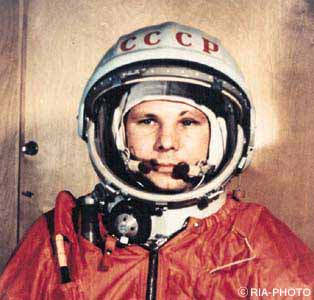
World Hero: Soviet Union cosmonaut Yuri Gagarin

World Hero: Soviet Union cosmonaut Yuri Gagarin

“He was, and I find it very sad watching the footage, knowing he died only around seven years later in a plane crash.

“He seemed warm and friendly. There’s great footage of him in Moss Side, Manchester, visiting a workers’ union.

“They wanted to put the top down in the car he was travelling in, and he insisted on it – despite the rain – thinking if people have come to see me, I can stand the wet.”

While their first album involved just Willgoose and Wrigglesworth, the new one starts with a celestial choir, and includes guest vocalists Smoke Fairies too, on a Sigur Ros-style tribute to Vostok 6 cosmonaut Valentina Tereshkova, the first woman in space.

But don’t let their past and present subject matter make you think this is all about nostalgia. Instead, The Race For Space vividly re-imagines the super-powers’ rivalry for space supremacy between 1957 and 1972, its many highlights including the first space walk, a ride on the Sputnik 1 satellite and touchdown on the lunar Sea Of Tranquility.

It’s not just the obvious milestones and triumphs covered either, PSB tapping into stirring stories of life, death and courage along the way, all to a compelling soundtrack of techno, folk and electro-rock.

They start with a musical piece built around JF Kennedy’s landmark 1962 Rice University speech, creating a logical bridge from the first album’s highly-evocative and stirring Everest, the president name-checking pioneering British mountaineer George Mallory.

So did Willgoose already know where he was headed when the first album came out?

“I knew I wanted to write an album about the Space Race, and I wanted to start it with Kennedy’s speech.

“It wasn’t until I sat down and read the transcript to highlight the pieces I wanted to use that I noticed the link. It’s perfect. I’d like to say it was a brilliant stroke of genius, but I stumbled upon it, albeit quite happily.”

bfi-2So how did the link with the BFI come about?

“It started a long time ago, writing a song based around the Protect and Survive nuclear safety announcements. I rang them and confused them quite comprehensively.

“They took a brief bit of persuading and an extra email, but came back with the double thumbs-up and ever since have been really supportive and accommodating.

“I think they like the fact we’re giving a new lease of life to stuff that might otherwise be sitting in an archive somewhere. It seems to work as well for them as us…I hope”

Is there a similar American archive link now?

“NASA material is freely available and copyright-free, so getting hold of that – at least audio-wise – wasn’t going to be a problem. The concern was getting Russian footage and being able to use that.

“But it was another extraordinary stroke of luck really, as the BFI a couple of months before I rang inherited a whole load of Russian footage, sending me a massive list and asking which I would like!”

So here’s a deep question – is there a lesson to be learned in these troubled times? And do you think the Race for Space ultimately stopped the Americans and Russians blowing us all to smithereens?

“Who knows. It’s one of life’s biggest ironies that so much technological and telecommunication progress is driven by war.

“That’s the only way this innovation and change is pushed through with so much financial support.

“The sheer amount of things that have come out of the Space Race – and all its by-products – make this the ultimate example of the creative and technological leaps that can be made during conflicts.”

Second track Sputnik, with its Pump up the Volume-like intro giving rise to another PSB instant classic and even a little trance dance at times, gets us properly up and running, and highlights – as with the first album – that heady mix of retrospective meets futuristic.

In fact, PSB have always prided themselves on ‘teaching the lessons of the past through the music of the future’. With that in mind, surely Willgoose gets frustrated if he’s perceived as someone just wallowing in nostalgia and couched in a different era.

psblogo“I guess so, because that flies in the face of what we’re actually presenting really. For me, the interesting stuff happens between the lines of the past and present, such as the secondary Space Race struggle between India and China and so on.

“It’s just re-framing the past, putting it in a more modern context, I guess.

“That all sounds pretty pretentious and highbrow though. Really, we’re just sticking a beat underneath satellite noises.”

Yes. The term ‘self-effacing’ comes up quite a lot when discussing Willgoose. He’s certainly not driven by ego.

It might not help that his bow-tie and tweed jacket image suggest Matt Smith-era Dr Who, as my youngest daughter pointed out recently. The man himself takes this all pretty well though…to a point.

“Well, that is a big issue, because he became The Doctor in 2010 I think, whereas I’ve been doing this since … well, the first gig was on the 7th of August, 2009.

“So there’s a little historical proof out there that I beat him to it, and he just needs to back off really.”

There’s fighting talk. So is that essentially why Matt Smith stepped aside for Peter Capaldi?

“I think he was obviously feeling the pressure.”

There was a mighty reaction and plenty of adulation for Inform – Educate – Entertain. Those were clearly proud days.

“Yes, but it’s weird looking back with the second album waiting to come out. So much of what happened first time around just passed us by because we were so busy and caught up in the whirlwind of everything, so you don’t really have any perspective on it.

“When we got to No. 21 in the album charts it felt strange but nice, and I think we had a gig in Newcastle that night. But you don’t really take it in.

psblp“It’s all just such a strange experience and it’s only going to be in around 10 years time when I’m back to the day-job that I’ll realise that was all actually quite good and we did alright.”

There must have been moments though, such as when he heard his teen-year heroes the Manic Street Preachers were fans of PSB.

“I still struggle to get my head around that. It’s like two different worlds – my teenage world then this modern version.”

That first album set the bar very high. Did that give you a few sleepless nights working out how you could top that?

“As a kid I always got my homework done as early as possible, and I’ve carried that into adult life.

“I knew even before the last album was out that this was going to be the next album, but wanted to keep a lid on it. I just didn’t want to let on.”

You do realise I’m going to have to ask you now though. So where do you go after outer space?

“Well, I think I know … but I’m not going to tell you. I was listening to a Harry Belafonte calypso album the other day and that gave me the final piece of the jigsaw, as unexpected as that sounds.”

Wow. That’s already got me thinking … and looking forward to that. But this is not the place for speculation on that front. At least not now.

Moving on, anyone who’s seen PSB live knows just how technologically-reliant they are at times.

Talking to Bruce Foxton last year ahead of From the Jam’s  Setting Sons retrospective tour, he confessed to concerns as to using a click track on one song, let alone trying to sync as much as Willgoose does. Has it ever gone badly wrong?

“Yeah, because it’s bound to, isn’t it. Even in the Space Race they had a 99 per cent non-failure rate, but that left over a million parts that could quite easily go wrong.

Spaced Out: Wrigglewsorth and Willgoose ponder over the big questions

Spaced Out: Wrigglewsorth and Willgoose ponder the big questions

“We’re not quite up to that many, but we’ve certainly got lots of stuff being plugged in and out.

“We had one gig where we had to abandon the last song, one of the worst feelings ever. But we’ve invested in various resistant technologies since, and hopefully it won’t ever happen again. You live and learn.”

Besides, Willgoose and Wriggleworth are clearly a great team, and it’s not just them either.

“We’re the core of the band, but there’s Mr B doing – certainly in the UK, where we’ve got the space and the budget – the set design and live visuals too. And we’re adding a third touring musician, trying to expand the live musical spectacle.”

Incidentally, that will be for the tour with the Kaiser Chiefs as well as the album’s official launch parties at the National Space Centre in Leicester on February 26/27 and subsequent UK tour.”

Furthermore, PSB’s attention to detail includes the cover art, and the new LP comes in a choice of either NASA or USSR front covers, opening to a gatefold centre in which – just as in space – there is no correct way up or down.

“Again, that all comes out of the idea of playing the two sides off against each other. It’s a nice way of getting that across visually.

“Various people at various stages weren’t very happy that there wasn’t going to be a track listing, the logistics of putting the barcode on, and so on.

“But we’ve found a way through it really, and I’m glad with how it’s worked out. And there have got to be some advantages of running your own label, surely.”

Funny you should say that, I get the feeling there will be a few major companies ready to snap your hands off, but guess that wouldn’t appeal.

Live Signal: J Willgoose, Esq. in action

Live Signal: Unlikely guitar hero J Willgoose, Esq. in action

“I find it hard to see how we would fit in. It would have to be a very good sales pitch, and I’m not sure we’re quite doing our bit to go the other way.

“But hopefully with this album we’ll convince a few people we’re not quite such a flash in the pan and one-album wonder.”

So did PSB get to see much of the bigger bands they’ve supported so far?

“The Rolling Stones were in and out within about five minutes. The limos arrive and they go straight off. Fair enough though. They’ve been around so long and clearly get bored of the hanging around and people telling them how wonderful they are.

“We didn’t meet New Order either. We were straight off to another gig so couldn’t wait around and say ‘thanks for having us’.

“With the Manics, we were on the road with them for quite a long period. Again, you don’t want to over-stay your welcome, so try and keep a respectful distance, but we got on well and they were lovely chaps.”

Then there’s the choir and the guest vocalists on the album too. Have you been aware of Sussex dream-folk duo Smoke Fairies for some time?

“Definitely. I remember hearing them on Marc Riley’s show doing various sessions. Just through listening to 6Music, as I tend to when I’m around home.”

As a radio station, they’ve been very supportive of you.

Beamed Up: Pubic Service Broadcasting, the live spectacle

Beamed Up: Pubic Service Broadcasting’s dynamic duo, a live spectacle

“They have. I think it helps that we’re a bit different and they get a lot of listener response. Radio should always be about getting people engaged and responding, and we’re lucky that people do that with us.”

I gather you weren’t so sure at first as to the respectful connotations regarding the track Fire in the Cockpit. But in the end, you felt it would have been more disrespectful not to include those parts of the story.

“Yes, it was quite illuminating reading the astronauts’ accounts. They were a very pragmatic bunch and as much as they were devastated that their friends and close colleagues died in an awful way, they recognised it saved more lives than it cost in the end.

“It was a terrible tragedy but such a big part of the Space Race, and to leave that out just felt wrong and under-playing it all.”

The Other Side is another standout, on the scale of the first album’s Lit Up, and seems to sum up in less than six and a half minutes an amazing moment in history – the first NASA voyage around the dark side of the moon.

It’s one of those moments where you kind of know where it’s going, but you’re still there on the edge of the seat, for a couple of minutes transported into that Houston control room.

“I think so much of that is about the tension in his voice in the control room, and the conflict in him that you can hear him trying so hard to disguise.

“Although he talks about there being such a great tension in the air, he’s obviously trying to be the omnipotent voice of narration.

“The moment that really gets me is when they do re-establish contact, and you hear a little cheer in the background.

“It is similar to Lit Up in structure though, so I don’t think we’ll be able to play both live in the same set. But I was very happy with how that turned out.”

Suits You: PSB's new stage costumes

Suits You: Public Service Broadcasting show off their new stage costumes

Yet for all that poignancy, Willgoose has said before that PSB should ultimately be about putting smiles on faces. And illustrating that nicely, there’s the sheer joy of the Apollo 11 moon landing speed trial of Go!

“Again, with Apollo 8, the Genesis reading would be better known, but it was about trying to avoid the most famous aspects. I remember listening to those call-outs and thinking, ‘Hang on a minute!’ You can tell the story in terms of descent, landing and so on.

“Essentially, it’s superficially mundane, I suppose. They land on the moon and you just have an engineer saying, ‘We have shut down’. But I find all that so exciting, with teams of highly-skilled people working very hard to realise something so special.”

We saw all that again late last year with the euphoria for the Rosetta mission from the European Space Agency team after the Philae lander touched down, on a comet a mere four billion miles away. And then there was the confirmation early this year that Beagle 2 had in fact landed on Mars after all, 12 years after vanishing.

“Yes, it’s all coming back to the surface actually, which I’d like to say this release was planned to time with.”

I don’t doubt that. This is after all a band in touch with technological advances.  There’s no ‘one small step’ media soundbite though, true to form.

download (1)I have to say I was worried when I heard they were taking on Night Train for the last album though. That 1936 GPO Film Unit classic, with its famous WH Auden poem, is almost sacred ground. But again they found a way around it.

“Yes, it’s a risk taking on something quite well known. With most of our stuff we’re trying to bring material which isn’t so well known widely, and Night Mail is one of those films people are aware of, and the poem at the end is a big bit of that.

“I didn’t want to stay away from that piece entirely, but it fit the out-tro so well and gave it the rhythm. We ended up recreating our own rhythm of a train and I think that came out alright.”

It certainly did come out alright, as this master of understatement puts it. But I reckon there might well be a bigger reaction to The Race for Space when it finally sees the light of day.

Summing up, it’s been a busy five and a half years for the band. And I finished by asking just how many showed up for Willgoose’s one-man Public Service Broadcasting debut at a pub in Tooting, south London, that night in August 2009?

“Quite a few, because it was free! I didn’t look out until the second-last song, glanced up, saw the room was fairly full, panicked, and looked straight back down again!”

Only you’re not by definition an exhibitionist, are you?

file6“No, and I don’t really want to start prancing around down the front with a guitar. People quite like that, the way we don’t try to be anything we’re not.

“They appreciate the dry wit. I don’t think it would work if we were leaping around.”

For more details about the new album, past releases, and dates on the forthcoming UK tour, head to www.PublicServiceBroadcasting.net.

This is a revised and expanded version of a Malcolm Wyatt feature first published in the Lancashire Evening Post on February 12th, 2015.

And for the writewyattuk verdict on The Race for Space, head here.

Posted in Books Films, TV & Radio, Music | Tagged , , , , , , , , , , , , , , | 4 Comments

The Evergreen Bunnyman – in conversation with Will Sergeant

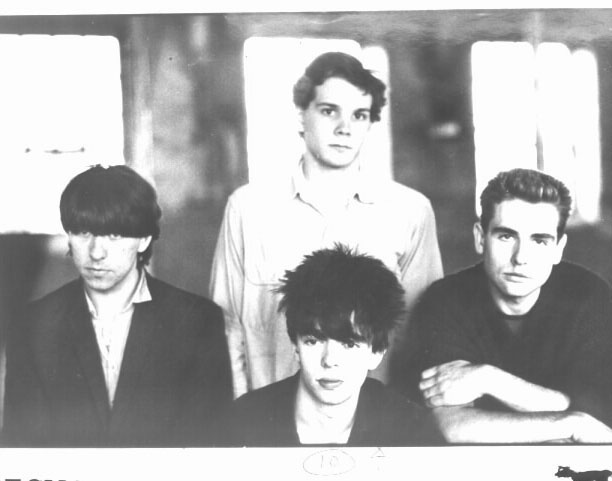
Meteorites' Impact: Will Sergeant, far right, and Ian McCulloch, centre/front, with the current Bunnymen line-up

Meteorites’ Impact: Will Sergeant, far right, and Ian McCulloch, centre/front, with the current Bunnymen line-up

Some 36 years after Echo and The Bunnymen’s legendary live debut at Liverpool’s cult club Eric’s, they’re still very much with us.

The band have 12 albums behind them and are starting on a 13th, and this month play dates in Newcastle, Birmingham, Belfast and Dublin before a home city return for a February 20 show at Liverpool Philharmonic Hall.

The original drum machine disputed to have suggested the name has long gone, drummer Pete De Freitas died in a motorbike accident more than a quarter of a century ago, and bass player Les Pattinson is now in Australia.

Singer Ian McCulloch and lead guitarist Will Sergeant resolutely remain on board though, with the latter – due to Mac’s five-year absence from 1989 – the only constant member.

And for all the up and downs over the years, when I caught up with Will this week, the 56-year-old came over as nothing less than grounded, level-headed and without ego.

Some of the darker moments between band-mates and rival groups from that post-punk Liverpool scene are well chronicled. But there’s obviously plenty of love too.

For all those world travels with his music and artwork, Will’s not strayed far from his Melling roots either, telling me proudly he’s a ‘Lancashire lad – born and bred’.

He’s based in Scarisbrick these days, with a home studio set-up, while Mac lives ‘just across town, around Woolton way.’

You probably know the rough story, but the band formed in Liverpool in 1978 and were responsible for some of the late 20th century’s most celebrated singles and albums.

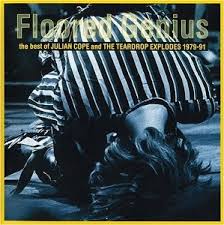
As mentioned in my recent interview with Julian Cope, I only recently revisited those years courtesy of the legendary lead singer of The Teardrop Explodes’ Head On memoirs, recalling his years on that Liverpool punk and post-punk scene from 1976-82.

Early Days: The seminal and youthful Echo and the Bunnymen line-up, with Will, left, sporting his mighty fringe

Early Days: The seminal and youthful Echo and The Bunnymen line-up, with Will, left, sporting his mighty fringe

Will and Mac obviously played key parts in all that, Will’s first mention coming in early 1978 as Julian recalls how – along with Mac and Paul Simpson – they first heard game-changing Pere Ubu album, The Modern Dance.

At that stage, it seems that Will and Simmo were Industrial/Domestic, described by Julian as ‘a noise group with two guitars, through echo units’, adding, ‘We joined up the two groups one time at Will’s house and recorded a version of Satisfaction and the Big in Japan theme tune. Will played way off key all the time. It sounded great, but I thought he was so weird that I couldn’t tell if it was intentional.’

Simmo later moved over to the Teardrop Explodes faction, with Mac and Will soon playing together, Les Pattinson then joining them.

There are many fly-on-the-wall moments in music history for me, and one involves a trip to Eric’s for the night in mid-November ’78 that the fledgling Echo and The Bunnymen opened for The Teardrop Explodes, both bands’ first outing.

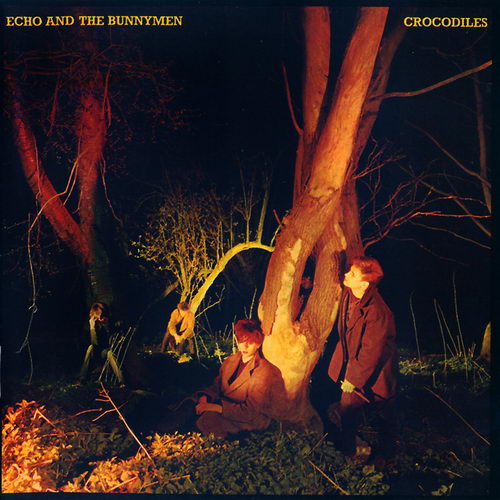
That proved to be a catalyst for both groups, let alone Pete Wylie in the wings, and Will returns to Julian’s story a few more times from there, not least when his band stole a march with the release of their debut album, Crocodiles, in the summer of 1980.

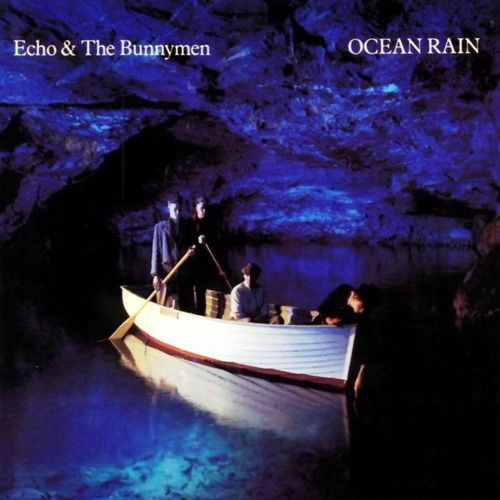
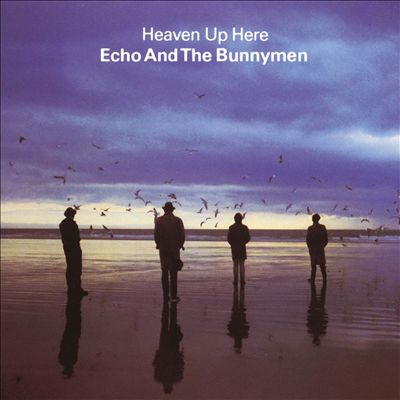
That album included some great moments, including the first of many great Bunnymen singles, Rescue, by which time drummer Pete de Freitas was on board. And in time, they were rightly lauded as an album band too, follow-up Heaven Up Here (1981) then Porcupine (1983) and Ocean Rain (1984) ensuring their elevation to the big time and plenty of acclaim.

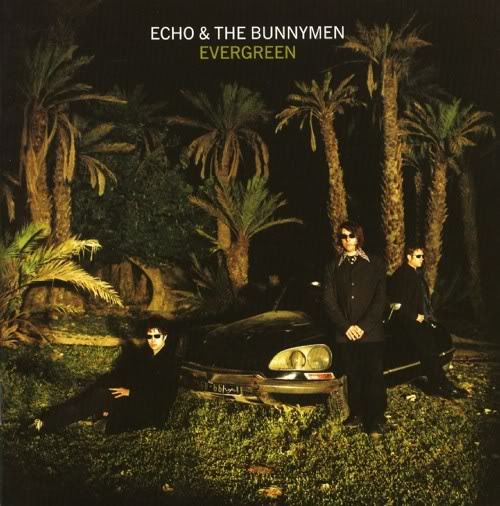
This is not the place for that full history, but I will mention a triumphant return in 1997 with Evergreen after that initial termand signpost many less-trumpeted but similarly worthy cuts since.

And there certainly remains a deep love for The Bunnymen all over the world, although it’s clearly not been an easy ride.

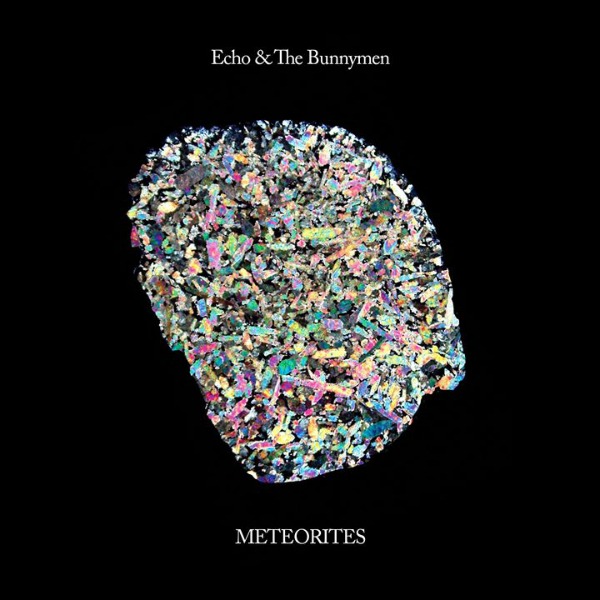
The band’s latest LP, last June’s splendid Meteorites – their first in five years – showcases an outfit still on fine form, featuring 10 new McCulloch songs.

It’s unmistakably The Bunnymen, with several stand-outs, and should appeal to a wider audience, not least a few Elbow fans I reckon. So is Will slightly peeved that it hasn’t inspired huge sales yet?

Echo-The-Bunnymen“No. That’s finished all that stuff. We’re not in that world anymore. People aren’t that interested. There are too many other things to spend your cash on.”

Didn’t you go down the ‘pledge’ route with the latest album?

“Yeah, but I didn’t have a right lot to do with that. The management dealt with all that, rather than me and Mac.

“I’ve done my own solo projects though, and quite like it, because it puts the power back in your hands.

“You can decide what you’re going to put out, without pressure from anyone but yourself.

“We’ve since parted company with that management though, and now have part of our old management, who seem to know us a bit better.”

Even when The Bunnymen had the big company backing, they retained an indie spirit, not least thinking back to Will’s 1978 self-produced Weird as Fish.

“That’s exactly it. I never wanted to be just some lackey for a record company. That’s never going to work with me.

“I’m too much of a control freak. That’s where the tension’s been with Mac. He’s a control freak too.”

You’ve always had musical outlets, including Glide and Poltergeist (also featuring Les Pattinson).

“I’d say the Poltergeist album was a good one, considering we did it for buttons and recorded it at my house, on a computer and with a few bits of drums in a studio.

“It was done pretty cheap, but I think that’s the way forward. You don’t need these big studios anymore. It’s a whole different vibe.”

Do you get offers for soundtrack work?

“No. Never. Have you got any?”

Guitar Icon: Will Sergeant  in early live action with The Bunnymen

Guitar Icon: Will Sergeant in early live action with The Bunnymen

Afraid not. That surprises me that he’s not approached more often though.

“I got offered a couple of adverts once, but never saw the ad at the end of it. I think it was for whisky. In the end they used Fanfare for the Common Man instead.

“You can spend hours and hours and submit something, and they might not like it. But I think I’m perfect for that sort of stuff.”

Some of those bigger studio experiences have been good for Will though, not least The Bunnymen’s work in South Wales at Rockfield Studios, again with some of the odder moments chronicles in Head On.

“I loved it there. It was probably the happiest time of my life, until all the usual marriage, kids and the rest of that.

“We’d never really experienced that before. We were just scumbags from Liverpool, but then all of a sudden treated by nice people.

“You’d go to the fridge and it would be stocked full of grub, rather than getting by on half a tin of beans. It was just brilliant.

“Ultimately, you pay for everything, but we didn’t really think of that at the time.”

I get the impression from Julian’s book that Will’s first band forays into a recording career were slightly frustrated by interference from the likes of Dave Balfe, the Zoo Records associate of Bill Drummond, who in later years signed Blur (and was the subject of their first No.1, Country House). So what did Will make of Julian’s memoirs?

“I’ve never read them, and believe that book’s hard to get hold of now. I’m not a big reader though. It’s just time. I’d rather have a record on, or watch a film or some TV. I can’t concentrate – there’s always 20 things going on in my head.”

I certainly get the impression Julian was a prolific diary-writer, otherwise he might not have remembered quite as much about those days.

“Well – remembered, or just made some of it up! I know the story about the camouflage netting was a lot of bollocks – totally.

“That was me and Les. We came out of our hotel room one morning, both wearing army pants, and between the two of us from there started conspiring to make it a bit more of a uniform.

“They had us down as a band with no image, almost, so we thought we’d make a strong image, and the camou netting was just a development of that. Julian’s version is just nonsense.”

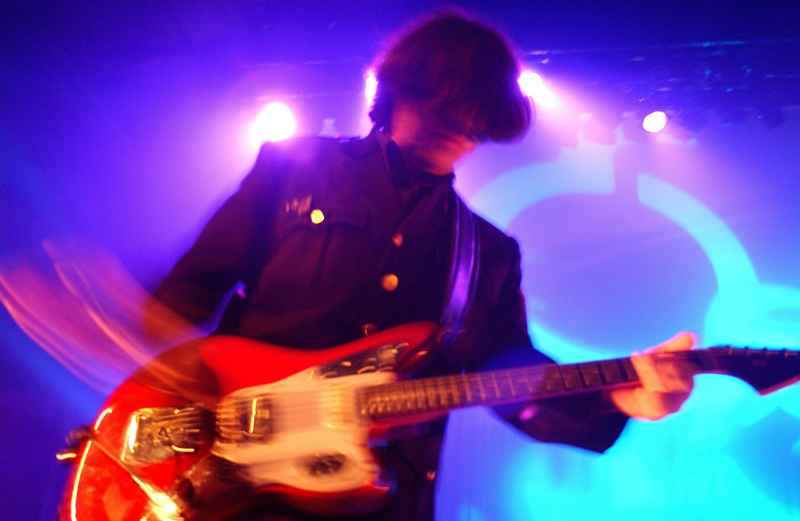
Home Work: Will lets loose at Liverpool Royal Court Theatre

Home Work: Will lets loose at Liverpool Royal Court Theatre

Was it good to be back with Les (who left The Bunnymen in 1997) for the Poltergeist project?

“It was, but he‘s moved to Australia now. I did say when he left I’ll get someone else in and carry on though.

“I think he thought it might be massive, but no one really noticed, and we’re not really flavour of the month anymore.

“There are a few diehard fans, mind. But it’s only weird instrumental stuff – it’s hardly Top of the Pops material.”

When that album came out, Will said it gave him free rein rather than just be a session player for Mac in The Bunnymen. So what changed?

“I think it was getting shot of that management. They saw Mac as the only one that mattered as far as I could tell. They’d hardly get in touch with me.

“But we’ve since met and started writing together, and it’s been alright. That’s all I want really – to be in my own band. That’s not really a lot to ask, is it?”

Sorry to remind you, but at your advancing age, do you still like to turn up the amps and let rip, or are you more mellow these days?

“Yeah, and I’ve just been blasting out some music this morning! I won’t tell you what though – it might put you off.”

You can’t leave me dangling there, Will. Come on, spill the beans!

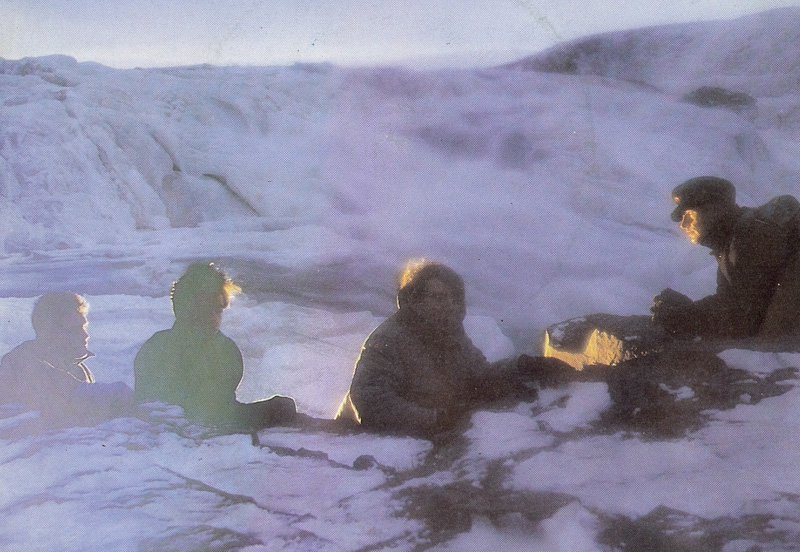
Snow Way: Echo and the Bunnymen take to the cold cabinets of Iceland for the Porcupine promo shoot

Snow Way: Echo and the Bunnymen take to the cold cabinets of Iceland for the Porcupine promo shoot

“Mmm … it was Hergest Ridge by Mike Oldfield actually!”

We’ll, I could have been guessing a long while before I came up with that.

“Well, I loved Tubular Bells when it came out, and all of those bands from that era get slagged off, but I still love Yes, E.L.P. and all that.

“It’s the music of my childhood, y’know and I revisit all that stuff all the time.”

So what did Will first see and hear that made him think he wanted to pick up a guitar?

“Well, as soon as you’re into music, you want to play guitar, but you just think that’s for posh kids who go to posh schools and have lessons.

“You dream of being Jimmy Page or whoever, but think that’s for other people – not for you.

“It was punk that fired all that. You realised you didn’t have to be a Julian Bream style player.

“Then there were the likes of Brian Eno, just having a few knobs to twiddle and a tape recorder. You thought, ‘I can do that!’

“I bought my first tape recorder from the Freemans catalogue when I was around 15. I had a paper round, so would have been paying for it from that.

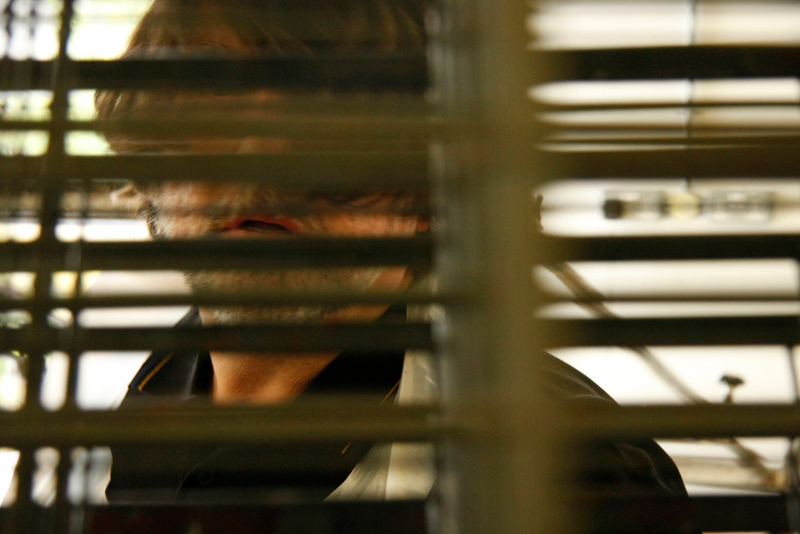
Slats Entertainment: Will Sergeant in a publicity shot for an art exhibition

Slats Entertainment: The bearded Will Sergeant in a publicity shot for an art exhibition

“Then I had a Saturday job in catering, one that became full time. That was in Liverpool and led me to find Eric’s really.”

Will’s day-job back then – as a commis chef in a department store in the city – overlapped with his time in The Bunnymen, just as his band, Pete Wylie’s Wah! line-up that particular month, and The Teardrop Explodes were finding their feet.

“When the rush died off at around two in the afternoon, I’d wander around in my lunch-hour and go to record shops, saw these posters, and came across Eric’s. I thought that sounded interesting, and started going on my own.”

The rest is of course history. But what amazes me now, looking back, was how short a spell of time it was between The Beatles and the Merseybeat movement then punk and new wave.

“I know. I find it amazing that I bought my first Velvet Underground record when I was around 13, a compilation. That would have been 1971, so was only around four years later, but to us kids those four years were a lifetime.

“Now that period of time is nothing to us. It’s not fair – it should be the other way round.”

So, getting back up to date, has Will learned better how to co-exist with Mac these days?

“Yeah, but we never had any punch-ups or anything like that – just cold silences and moods and all that nonsense.”

And there’s clearly that creative spark when they get together.

“Yeah, and at the end of the day – I like him, and he’s funny. Things can be difficult, but you just get through it.”

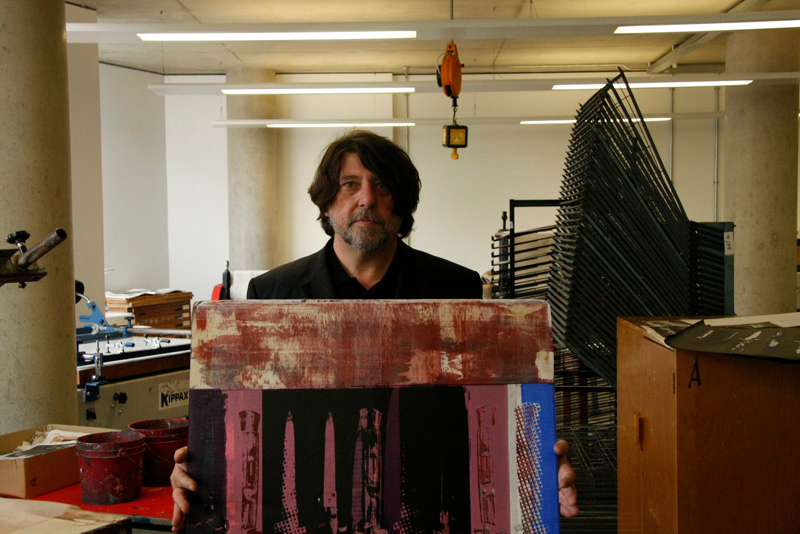
The Works: Will proudly exhibits his artwork in a welcome sideline from his musical career

The Works: Will proudly exhibits his artwork in a welcome sideline from his musical career

Outside of The Bunnymen and his side-projects, Will has made a name for himself through his art, with successful exhibitions in Liverpool and Los Angeles, and fine examples of his work on the band’s website.

Was art always important to you, or is that more a recent release from the music side?

“I’ve always been into art, and loved the lessons at school. Our art teacher was a bit of a nobhead but …”

Do you think that’s what stopped you going down that line and off to art school?

“Yeah. They were different days.”

But perhaps it wasn’t meant to be at that stage, and instead he rose to fame with The Bunnymen.

Along the way, the band worked with some big names in the studios too, something that clearly has helped Will learn his craft. I’m thinking of people like Hugh Jones at Rockfield …

“Yeah, I loved working with Hugh …”

Then there was studio engineer Geoff Emerick, best known for his work with The Beatles …

“He was great …”

itemAnd way back there was fellow Liverpudlian and The Lightning Seeds mastermind Ian Broudie too …

“I’d like to get back to working with Ian. We see him all the time, with him being back in Liverpool. He’s one of our oldest mates.”

Meteorites saw the band work with another feted producer, former Killing Joke guitarist Youth, best known for work with Paul McCartney’s The Fireman project, Embrace, U2 and The Verve perhaps. What made you choose him?

“That was through the same management. I went down to his house for about two days, did a bit of guitar, came home, and did the rest of it here.

“I’ve got pretty much the same set-up that he’s got though. So what was the point?”

I remember hearing how on Crowded House’s Together Alone he loved to get the band in the right zone with a little primal screaming in the mornings.

“I don’t know. I wasn’t there in the morning! I wasn’t that impressed to be honest.”

I’m guessing it’s going to be different this time.

“Well yeah, the way it’s going at the minute.”

Mac’s sister jokingly asked once when Will was going to learn to play the other 11 strings on his 12-string guitar. How does he rate his playing these days?

“I don’t … I just don’t.”

You certainly don’t seem to get precious about all this.

“No, it’s just a tool isn’t it. It’s like saying to a plumber, ‘How do you rate your spanner work?’ It’s just a spanner!

55629“I like the look of guitars more. Then I just experiment and mess around. I don’t know what I’m doing half of the time.

“It’s not like I’m dialling in sounds I know. I’m just flicking through, trying to find something that sounds good. It’s just instinctive.”

Getting back to those old adversaries from your formative days in Liverpool, does Will keep in touch with the other member of the feted Crucial Three alongside Mac and The Teardrop Explodes’ Julian Cope – Pete Wylie?

“I see him in town now and then. I get on with Pete, and when we meet, we’ll have a drink.

”There’s still a few of us around. There’s also Paul Simpson (The Teardrop Explodes), then Eddie Lundon (China Crisis), and the lads from The Farm …

“Everyone gets on these days, after all that weird stuff from the ’80s. Back then, you were more likely to cross the road so you didn’t have to look at Peter Coyle out of The Lotus Eaters. That’s all gone. Everyone’s grown up.”

And I see Pete Wylie’s going down the Pledge Music line music himself now, working on the superbly-titled Pete Sounds album.

“Is he? Well, record companies can’t see any money in it, so for something like us it makes sense. We are on a proper label in America though, through Universal.”

After all these years, is there a Bunnymen album or track you feel has been overlooked and deserves far better attention?

“Erm … I like Heads will Roll (from 1983’s Porcupine) …. Angels and Devils (from 1984’s Ocean Rain)… There’s loads, and a lot more I like than I don’t like.”

As an album, I love Evergreen.

“By Barbara Streisand?”

bunnymen evergreenOf course! But I prefer The Bunnymen’s version. Maybe it just hit me at the right time, and it’s certainly stood the test of time. Was that a good experience making that album?

“Yeah, it was great, having Les back and everything. Siberia (2005) was good too, and Flowers (2001).”

You mentioned Mike Oldfield earlier. From that same era, I was thinking of Jeff Lynne recently re-recording his whole back-catalogue. Is that something you’d consider? Take for example Ocean Rain, rightly held up as a classic. Would you change anything about that, given the chance?

“I don’t listen back to it enough to think about it, but generally with all our records I think I’d make Les’ bass a bit bassier.

“Sometimes they sound a bit thin. But that’s the way he likes to play, so it could pop out and you could hear the lines.

“I remember what’s-his-name out of U2 said to him, “Hey Les, how d’you get your bass to sound so trebly?” And he said, “I turn the treble up.”

What was the last great new album you loved and inspired you?

“I quite like a band called The Soundcarriers, cut from that Broadcast, Stereolab cloth, a little loungey and 60s-ish.

“I like The Black Angels, and recently bought that Jacco Gardner album. I liked the sound of the Temples album and someone told me he did that in a bedroom situation, rather than a big studio.”

So have you got a few songs towards a new Bunnymen album?

“We’ve a couple on the go. We sat down the other week. It’s a case of finding time now, but it’s something we’re looking forward to.”

You’ve a few dates coming, including a home fixture for Liverpool Philharmonic on February 20. Looking forward to that?

“I don’t like playing it, although I love the place. I like going to things there. The last I saw was The Imagined Village folk project, with Martin Carthy and so on.

Room Service: Will Sergeant in Belgium in 2003

Room Service: Will Sergeant in Belgium in 2003

“I love a bit of folk and stuff like The Unthanks, and as a solo guitar player I think Chris Wood is brilliant, with this weird, laconic delivery.

”I also saw Pere Ubu when they did the film soundtrack They Came From Outer Space …. and Harry Hill!”

Not together, I’m guessing. Then again, on reflection, the thought of seeing Harry, Stouffer the Cat and co. covering Non-Alignment Pact would be a site to see.

”But generally I don’t like playing places where the audience is sat down. You feel like you’re entertaining. I prefer it when the band and the audience are one.

“Then you’re part of it, they’re part of it, and you can inspire each other to do things.”

I seem to recall the Royal Court Theatre offered a bit of that from past jaunts there to see the afore-mentioned Crowded House and The Lightning Seeds.

“Yeah, that used to be an amazing gig. But now I believe it’s more a comedy place rather than for bands.”

After these February dates, there’s also the Gigantic all-dayer in late May at Manchester Academy, although clearly Will’s taking each gig as it comes – to amend the sporting cliché – and hadn’t looked that far ahead yet.

Wrapping up, whatever became of the original Echo and The Bunnymen drum machine?

“It got stolen, when we were in The Ministry in Liverpool, the rehearsal place we shared with The Teardrops. I’d painted it fluorescent green.

MI0003515824“There was another, and this was in the days before you could programme them, and that was used on Over the Wall (from 1981’s Heaven Up Here).

“We only used that first one rarely, on Street to Street (the 1979 version of Monkeys on that Liverpool bands compilation) and the first single (The Pictures on My Wall, also 1979).

“We also leant it to Orchestral Manoeuvres in the Dark and they used it on their first album (1980) a little. But then it just vanished.”

Finally, name-checking 1997’s Nothing Lasts Forever, ever think when you started with Les and Mac in 1978 you might still be at it 37 years later.

“No. I didn’t think anything of it. I remember an interview with The Beatles where they’d said it would last two years – and they only lasted 10 years in the end.

“I dunno. It’s been a very strange life … considering I’m just some scally who had a paper round.”

For ticket details of Echo and The Bunnymen’s forthcoming UK dates, call 0844 811 0051 or go to their http://www.bunnymen.com/ website, while you can find out more about Will’s artwork at http://www.willsergeant.com/

This is a revised and expanded version of a Malcolm Wyatt interview/feature for the Lancashire Evening Post, published on February 5th, 2015. For the online version of the original, head here.

And if you missed the recent writewyattuk interview/feature with Julian Cope, try this link here.


Posted in Books Films, TV & Radio, Music | Tagged , , , , , , , , , , , , , | 8 Comments

What the Rambling Railwayman did next – the Geoff Burch story continues

Pompey Bound: A Class 47 diesel-electric emerges from St Catherine's tunnel, Guildford, with a cross-country service from Liverpool to Portsmouth Harbour in the mid-80s, just one of many great shots featured  (Photo: Geoff Burch)

Pompey Bound: A Class 47 diesel-electric emerges from St Catherine’s tunnel, Guildford, with a cross-country Liverpool to Portsmouth Harbour service in the mid-’80s, just one of many great shots featured in Geoff’s latest epic (Photo: Geoff Burch)

Those who have been with me for a while on this blog know it involves a broad church of interests, from comedy and football (two subjects sometimes inter-linked, I admit) to music.

There are other passions highlighted too, including nostalgia for the steam railway era, no doubt heavily influenced by my Dad’s formative years as a loco fireman.

Bob Wyatt moved on in his working life after a few happy years scratching a living ‘on the shovel’, but never lost his childhood love of steam and all things railways.

Meanwhile, others stuck with that world as a career option long after the diesels and electrics took over, including one of Dad’s workmates at the Guildford loco depot.

Geoff Burch was only just getting started when Bob jacked it in to become a postman, but kept at it, and 30 years later had progressed from loco cleaner to fireman then secondman and driver, before taking on training duties.

And while Geoff left the industry after John Major’s 1993 Railway Act led to a major overhaul – barely 25 years after Dr Beeching’s cuts proved fatal to much of the old network – he was back a few years later to pass on his expertise again.

So while my Dad’s passion for railways in time became a spare-time hobby (maybe obsession’s a better word), Geoff devoted his working hours to that noble profession too. And even when Geoff retired in 2009, he kept his hand in, chronicling his own journey from those initial days in my old hometown onwards.

The first part of that story, his 2011 publishing debut The Ramblings of a Railwayman, covered Geoff’s steam days from April 1961 to July 1967, while part two, Further Ramblings of Railwaymen (2012) looked in more depth at some of the stories and characters who worked at his side.

If you missed this blog’s subsequent review, there’s a link here. It’s fair to say I recommended both though, and now Geoff’s back in print with another epic tome, this time covering the next 40-plus years – in the process shedding light on an often-neglected chapter in our recent social history.

Rambling Railwayman’s Recollections – Secondman, Driver and Instructor Days 1967-2009 is another heavyweight success in its field – a large format 300-plus page hardback. I’d add ‘A4 size’, but it’s not quite the size of one of Gresley’s much-loved Pacific locos.

Write Idea: The author takes a breather between signing copies of his latest epic at Guildford Museum in November, 2014 (Photo: Geoff Burch)

Write Lines: The author takes a breather between signing copies of his latest epic at Guildford Museum (Photo: Geoff Burch)

While the cover price is a formidable £25, that makes sense when you pick up this colossal tome and look at some of the evocative photography inside. It’s certainly not easy to read propped up in bed last thing at night, but I’m glad he’s taken the trouble.

Geoff, a youthful 68, was a fireman on one of the last working steam locos out of Guildford in the summer of ’67 – barely four months before my arrival at the nearby maternity home. And I reckon I can gauge (sorry) a few of my own milestone moments over the next 45-plus years while following his career journey.

The day after that emotional steam farewell, Geoff switched to nearby Woking’s mixed traction depot as a secondman, having already put in the hours to get to grips with the newer technology.

After successfully passing his rules, regs and various exams over that next couple of years he became a passed secondman, then successfully applied for a driver vacancy at Effingham Junction in late 1972 – by which time I was completing my first full school term.

Barely a year later, he was back at Woking, remaining at the Surrey town’s mixed traction depot until 1987, when he made his first foray into instructing at Waterloo’s operations training centre, something that became permanent in late ’88.

I didn’t know him then – despite the fact that somewhere down the line we’re loosely related on my Nan’s side of the family. But Geoff’s duties will have regularly seen him in contact with my Dad, at that time on alternate-week shifts loading mail bags onto trains at Guildford. What’s more, I was finding my own feet in the working world then, financing a hectic social life, based within a mile of the station, just up the line.

A month later, when I started five years of weekend commutes between Surrey and Lancashire, brandishing my young person’s railcard, Geoff reached senior instructor status, a post he held until 1994 – the year I finally moved to the North-West.

Then came that Tory Government BR business split and privatisation, Geoff taking voluntary redundancy after a railway career spanning 33 years, more or less the same period of time my Dad spent in his post-railway working days as a postie.

Clearly he wasn’t ready for the scrapheap though, and ever eager to learn new skills he put his newly-cultivated computer skills to use with Surrey Police, staying for 11 years in various training roles.

He never lost touch with his old railway colleagues though, and in 2004 rejoined the industry as an operations trainer at South West Trains’ Basingstoke base, with more posts following before Geoff finally ended his railway career in early 2009.

Right Lines: Four types of motive power at Guildford in 1968, early on in Geoff's post-steam career (Photo: John Scrace)

Platform Roots: Four types of motive power at Guildford in 1968, early on in Geoff’s post-steam career (Photo: John Scrace)

It was only at that point – just when I was finding my way into self-employment – that he threw himself heart and soul into writing and talking about his busy working life, bravely carving out a new career of sorts.

I have to say I didn’t think his latest work was ever as likely to interest me as its predecessors. The diesels and electrics just didn’t have the nostalgic power those steam locos had. But as Eurostar operations standards manager Ian Verrinder puts it in his foreword, he ‘always felt there was another important chapter to be written’ so pestered Geoff to write it, and ‘the array of previously-unpublished photographs alone should make the book a must-have’.

And as Ian adds, ‘It is the description of a time that’s now passed which will endear it to railwaymen and enthusiasts alike. The post-steam period is often neglected in favour of the more aesthetically-pleasing era that preceded it. Personally, I’m glad Geoff has produced a book that is able to redress this imbalance’.

I quite agree with that sentiment, and I was soon won over. That’s not to say it’s all to my taste, and at times Geoff’s latest epic is clearly aimed at the real railway buffs and might even be mistaken for a training manual. But for all the generations that grew up (or arguably didn’t) wanting to be train drivers, there’s an opportunity here to live your fantasies through osmosis.

I’d have preferred to have heard more about the man behind the controls and manuals – Geoff the family man, Geoff the amateur photographer and Geoff the motorbike nut and music lover. In fact, it’s that latter link that drew us together, with Geoff a fellow regular at Ben’s Collectors Records in Guildford, where both of us have been known to talk railways with the boss, Ben Darnton – whose father Leigh is among his photographic contributors.

But there’s no denying that the more technology-heavy sections are key to our railway heritage and industrial history. And the weight of responsibility Geoff and his workmates carried with regards to passenger and public safety often leaves me astounded.

Here and there, he tells us of accidents, incidents and near-misses that happened on his watch or those of his colleagues. What went wrong and what thankfully didn’t makes you realise how important it is to have such professionals involved, dedicated to ensuring this industry continues to operate safely.

Like the last two books, it’s the vignettes of everyday life at the depots and out on the track that make for the best reading, bolstered by Geoff’s choice of wonderfully-evocative images and brief biogs of colleagues and the engines they handled.

Ian Verrinder tells us he joined the industry in ‘the days of Margaret Thatcher, the Falkland Islands war and national strikes’, finding an industry ‘still coming to terms with the end of steam’, where the ‘steam men tolerated the diesel age but their memories were tied to coal and water’.

But he also remembers discussions with men without academic qualifications who ‘had more about them than many of the managers I subsequently met later in my career’. And he remembered how Geoff, 18 years his senior, would ‘treat the younger secondmen with friendliness’.

Night Train: A Class 74 electro-diesel stands at Woking in the early hours of December 3, 1977 (Photo: David Hayes)

Night Train: A Class 74 electro-diesel stands at Woking in the early hours of December 3, 1977 (Photo: David Hayes)

Geoff too mentions the animosity between some of the original ‘motormen’ and the mixed traction men, not least because of pay differentials. But despite all the internal politics, he was clearly eager to successfully serve his apprenticeship.

He talks of his first day at Woking, travelling in from Guildford on his 500cc Triumph Tiger 100 motorbike, already with a few hours behind him as a secondman between steam firing duties.

Between freight, ballast and stone turns across London and the South-East down to Salisbury, the South Coast and back, he clearly put in the hard graft too, keeping a diary of his notable experiences en route.

Along the way, he traded up his 35mm Ilford Sportsman camera to a Practica 1B SLR with a 50mm 2.8 Tessar lens and various attachments, even taking to the air for his hobby, the results on show here including a superb aerial shot of the old Guildford loco depot.

And it’s clear from his photographic stock – from various sources and in colour as well as black and white – just how many types of motive power needed mastering.

We get a flavour of how much associated technical gadgetry he had to get his head around too – from complicated electric/diesel controllers to short-circuiting bars, switch poles and wooden paddles for emergencies, through to an array of cab controls and switches.

Then there are the scribbled crib-notes and drawings from his notebooks, detailing workings of high voltage conductor rail supplies and fuse configurations, again leaving this reader in no doubt as to the gravity of the task.

You can factor into that the difficulties associated with learning routes and overcoming signalling, wiring and braking conundrums as Geoff switched between depots, turns and routes. He also tells first-hand of occasional driver errors and accidents – sometimes down to the operator, sometimes down to the equipment, engineering works and deviations, and sometimes through passengers crossing live rails. It doesn’t bear thinking about.

But Geoff was clearly born for the job, and in May 1969 was handed his EP key (electro-pneumatic, for us heathens) – marking the passing of his driving exams. Then there were the commendations and awards for swift reactions in such emergencies too.

Much changed in Geoff’s life en route, and we see his look change towards the era of the droopy moustache and beyond, our rambling railwayman trading up to a mighty Norton Commando 750cc before finally succumbing to four wheels, shelling out on a classy teal blue MGB GT in the mid-’70s.

Boat Train: A Class 74 electro-diesel leaves Southampton's old docks bound for Waterloo in May 1975, with the P&O's Oriana in the background (Photo: George Woods)

Boat Train: A Class 74 electro-diesel leaves Southampton’s old docks bound for Waterloo in May 1975, with the P&O’s Oriana in the background (Photo: George Woods)

There are light and dramatic moments recounted, like the tale of the indignant woman who waved her brolly at him when he forgot to stop at Hersham, or the secret deal with a colleague to get a couple of hours off that rebounded on him – an act of bravery and good practise to avoid a potential disaster overlooked through his honesty, leading to disciplinary punishment instead.

Then there was the time Geoff decided to avoid a cold, lonely night on Basingstoke station before a 5.30am ballast shift, catching a few more hours’ kip before catching the 4.30am paper train from Woking. That rebounded on him when the train was diverted, Geoff forced to decamp at Farncombe and walk back to Guildford, having to explain himself to his guv’nor.

He tells the stories in far better detail of course, and many more are shared too, perfectly accompanied by that vast stock of great images that take you back to the various scenes.

Geoff continued to take on more and more diverse roles as he got to know his way around the various classes – from 33/2 to 47s and 50s, 73s, and 4VEPs, to name but a few. And his driving skills and knowledge clearly made an impression on the training staff as he was invited to join them.

He went on to travel all over the region to instruct – even on the old Tube stock on the Isle of Wight – on his way to managing a team of six trainers, ‘a dream I would have never thought possible when I joined the railway as a 15-year-old engine cleaner at Guildford 30 years earlier’.

Times were changing, however, and by early 1994 his face didn’t seem to fit with some of the bosses. He was soon officially out of a job, saying no to a sideways move and instead taking his newly-honed computer skills to help deliver IT courses with Surrey Police.

But Geoff kept his ear to the ground when it came to the railways, even realising a fresh dream when he got to ride in the cab on a Eurostar return run from Waterloo to Paris, following that the next year with a Brussels trip.

A decade after leaving, he returned to his beloved industry, joining SWT at Basingstoke as a trainer in late 2005, carrying on in various roles across the region until early 2009, when a further economic slump and restructure saw his job cease to exist – ruling out a possible return to a five-day week role in favour of early retirement.

But that proved to be the catalyst for Geoff to embark on his next great adventure – his subsequent writing sideline. And consequently, this distinguished and committed railwayman – and one of life’s good guys, I might add – has documented through first-hand experience over these past six years a key part of a story that deserves to be told – from the steam era onwards.

JacketSPINEFrontRambling Railwayman’s Recollections – Secondman, Driver and Instructor Days 1967-2009 by Geoff Burch is priced £25 plus £5 p&p and available from the author’s website here.

Geoff’s first book has completely sold out and is now only available in e-book format, but follow-up Further Ramblings of Railwaymen is still available in hardback and e-book format. To order either, and for details of Geoff’s forthcoming talks and presentations and much more, follow the same link.

Posted in Books Films, TV & Radio, Railways | Tagged , , , , , , , , , , , , | Leave a comment

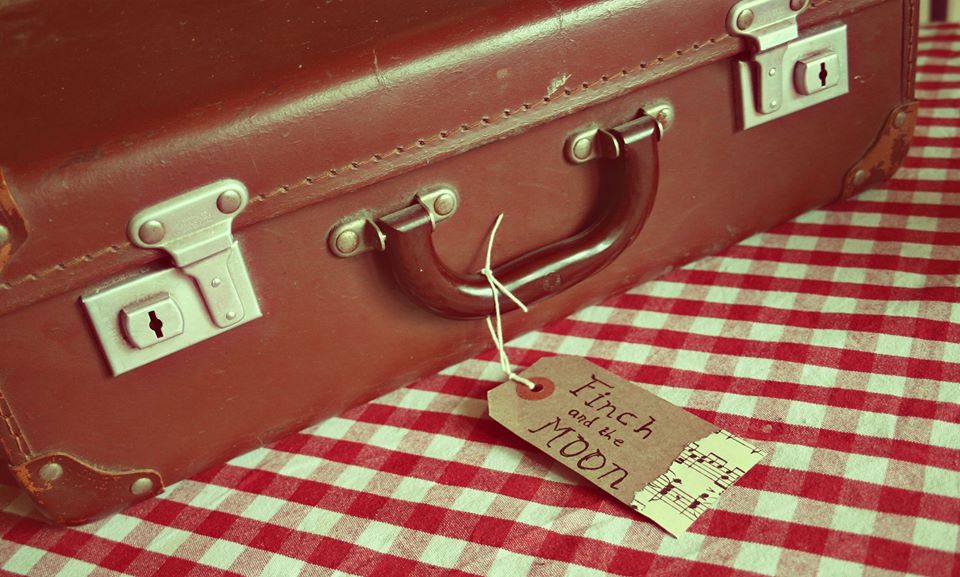
Sweet harmonies – introducing Finch and the Moon

Sweet Harmonies: Finch and the Moon's Lee Parry and Caitlin Gilligan (Marc McGarraghy/Yellow Mustang Photography)

Folk Roots: Finch and the Moon’s Lee Parry and Caitlin Gilligan (Marc McGarraghy/Yellow Mustang Photography)

It’s been a happening few months for Caitlin Gilligan and Lee Parry, collectively known as Finch and the Moon.

The harmony-driven acoustic pairing recently headlined an event at Manchester’s Castle Hotel, helping spread the word about their From Sand to Sea four-track EP.

They led a bill effectively showcasing a growing North-West folk scene, and while featuring just Caitlin and Lee on their debut release, I get the feeling they may branch out from here.

Lee was on a bus into Manchester ahead of a Paris weekend when we caught up, and I don’t reckon it was just that he was sharing public transport making him come over shy.

Believe me, this is a fella unlikely to go big on self-promotion, reticent to give too many rock-n-‘roll soundbites detailing a bright musical future.

Nevertheless, it’s been a promising start to 2015 for Finch and the Moon, with plenty of interest in their first recordings and a good night had by all at their Castle launch.

Caitlin’s brother Calum Gilligan (who has appeared with Lucy Hume in the rather splendid Subject to Change) and Jonny Woodhead also put in sparkling solo sets on the night.

In fact, looking at the photographs, I thought I’d stumbled upon out-takes from the Coen brothers’ 2013 movie Inside Llewyn Davis, the early ‘60s Greenwich Village scene transported to the North-West of England. So how did Lee feel the launch went?

“It was really well attended, and the support acts were great, both Jonny and Calum. Our set went through without too many hitches, and we sold a few CDs.”

Diamond Duo: Lee Parry and Caitlin Gilligan (Photo: Ronnie Brandon)

Diamond Duo: Lee and Caitlin showcase those delightful harmonies (Photo: Ronnie Brandon)

Those who got along certainly seemed to be raving about it. Has the Castle in Manchester become something of a home from home?

“Kind of. It’s a great venue and the sound system’s really good too. We’ve been lucky enough to get a few support slots there so far.”

There seems to be something of a semi-acoustic movement around Greater Manchester at the moment, which no doubt you feel part of.

“I’d say so. It’s been strong for a while, and this year should see a big push, with a lot more big gigs.”

Lee also name-checked other performers on that scene, including Alastair James Dickie and Joe McAdam, with the latter’s open mic. event at the Whiskey Jar a regular Tuesday night haunt.

So go on then, Lee – explain the name, Finch and the Moon. I’m thinking it’s related to Scout or Atticus Finch from Harper Lee’s classic 1960 US novel To Kill a Mockingbird.

“You are correct! We spent ages thinking of a name and then decided to adopt these two characters. I think Finch was my suggestion, while Caitlin is enamoured with the moon and all things celestial.”

(Incidentally, when I was putting this together, my 15-year-old daughter reminded me of a character called Finch in the Chocolate Box series by Caitlin’s mum, best-selling author Cathy Cassidy. But perhaps that’s another story, so to speak)  

I’m getting a band feel on a couple of the EP’s tracks, thinking Finch and the Moon might in time evolve a little from this current two-piece.

“Absolutely, especially for the bigger gigs. It was me and Caitlin playing all the instruments this time, which was nice to do, but it would be good to get more people involved and chip in new ideas.”

The EP’s title is there in the somewhat dreamy lead track Baby, Lay with Me – ‘my kingdom from sea to sand’.

“Yeah, well, we were talking about something set in stone that would explain the feel of it.”

Vocal Lee: Finch and the Moon's Lee Parry (Marc McGarraghy/Yellow Mustang Photography)

Vocal Lee: Finch and the Moon’s Lee Parry (Marc McGarraghy/Yellow Mustang Photography)

It’s a beautiful song, the tandem vocals underpinned by understated guitar and Caitlin’s occasional flight of fancy tangents. It works on at least two levels – as a sweet lullaby or an outright love song with a ‘me and you against the world’ sentiment.

Do they both pitch in with the lyrics and music?

“It tends to be one or other of us coming in with a verse or chorus, and we either go ahead or dismiss it, putting it in a list of maybes.”

I have to say, Lee’s vocal on lead track Baby, Lay With Me and the EP’s pensive closer This Town Has Fallen brings to mind Art Garfunkel.

“Oh, that’s great – thank you!”

And perhaps the overall harmony suggests an Everly Brothers touch too. Did you grow up around those kind of influences?

“I did, with a bit of classic rock or dad rock too. Those harmony-driven influences were a big part of my growing up.

You also cite Woody Guthrie, Pete Seeger and Bob Dylan – possibly with Caitlin’s folk roots shining through, a love she shares with her brother and parents. Was it the same with Lee?

“Absolutely. And like you say, with Caitlin, her brother plays that kind of set, and with her parents that stuff’s played around the house quite a bit. There’s a nice kind of organic, freedom-fighting kind of influence there.”

Finch and the Moon’s influences also extend to blues and gospel. But it’s not all about the past. I’ve heard Laura Marling mentioned. So what other contemporary acts appeal?

“Well, I wish Fleet Foxes would bring something else out, and really like New Orleans-based Hurray for the Riff Raff, who I’ve been lucky enough to see a couple of times in Manchester.”

A lot of that vast musical mood-board can be heard in Caitlin’s voice, which takes us into a whole different setting at times.

You can definitely hear Americana influences, but Finch and the Moon don’t come over as copyist. Maybe there’s a bit of the Girl from the North Country there, and I don’t just mean the Bob Dylan song.

Folk Roots: Finch and the Moon's Caitlin Gilligan  (Marc McGarraghy/Yellow Mustang Photography)

North Country: Finch and the Moon’s Caitlin Gilligan (Marc McGarraghy/Yellow Mustang Photography)

“Absolutely, yeah, and Caitlin grew up in the hills of Galloway, so Scottish folk was a big part of her growing up.”

Funny you should say that, as one of the tracks prompted me to scribble down ‘The Proclaimers’, thinking of some of their more country moments.

It’s not all guitars and sublime harmonies though. How about Lee’s whistling skills on the new record – is that difficult to pull off live?

“I whistle all the time while walking around, so get lots of practise. It’s not too hard actually. There’s a bit of fiddly mic. technique, mind.”

Respect. I’d get the giggles, whether I was trying to emulate Otis Redding, John Lennon, Bryan Ferry or even Roger Whittaker.

So is the washboard, which also features, a new-found skill for Caitlin?

“That’s quite new to her. She really likes Pokey la Farge, who have a very Cajun feel, and they use washboard, harmonica and all that.”

Lee was at the controls for all the songs on the EP. Is that something he’s learning as he goes along?

“I studied music tech at A-level a few years ago, and ever since I’ve recorded my own material in the bedroom.”

But in this case, all the songs were recorded in Caitlin’s parents’ kitchen in the Wirral, I believe.

“Yeah, it’s great, a really nice sound. I was there one weekend, having a cup of coffee and just realised how good it sounded, so thought, ‘Let’s do it here!’

Are those yer actual Birkenhead birds (cue 1970s politically-incorrect imagery) singing at the beginning?

“Yes, we captured a few outside.”

Not literally, I’m guessing. And it was all recorded over four days, so I guess it all just fell right for you.

“It was pretty much non-stop. Caitlin’s family were away for a long weekend, so we worked right through.”

There’s a feeling of motive power – be it on the North American railroads or our own West Coast mainline – attached to the EP’s country-tinged second track Train of Thought.

“That’s one of Caitlin’s, and I think mostly inspired by that. Being from Scotland, she spent a lot of time heading down to Manchester for uni.”

There’s a nice retro feel there, and an array of styles, while third track I Miss You, I’m Blue and I’m Down is perhaps my favourite on the EP.

Live Spotlight: Finch and the Moon's Lee and Caitlin

Live Spotlight: Finch and the Moon’s Lee and Caitlin share a joke between songs

It could be Johnny and June Carter Cash, but perhaps more likely Woody Guthrie’s granddaughter Sarah Lee Guthrie harmonising with Johnny Irion.

“That actually came from an Everly Brothers listening session, evolving from those sweet harmonies and simple chords.”

There’s a cinematic sound throughout too, and – like all of these tracks to some extent – it seems tailor-made for a film soundtrack. Maybe I just need to pen a film that goes with it.

“Yeah? Thank you!”

So did they record any other songs for these sessions?

“We did one other, The Keeper, but it’s more a sea shanty and a little more upbeat, so didn’t quite fit in with the overall vibe.”

Hotel Line-Up: Jonny Woodhead, Caitlin, Lee and Calum Gilligan at The Castle (Photo: Marc McGarraghy, Yellow Mustang Photography)

Hotel Line-Up: Jonny Woodhead, Caitlin, Lee and Calum Gilligan at The Castle (Marc McGarraghy, Yellow Mustang Photography)

What happens next? Dare I mention a debut album?

“Eventually, yeah. We’ve just put lots of Manchester gigs together to push the EP, and a few further afield in York, and have applied for a long list of summer festivals.”

Any particular highlights spring to mind from your first nine months performing together?

“Yes, the Wickerman Festival was amazing, where we got to open the acoustic stage on the Friday.”

As well as that growing South-West Scotland annual event, there was an outdoor highlight in North Yorkshire, at Galtres. I have to admit my ignorance here though – I thought that was an overseas festival. And you have to admit, it does sound French.

The band have a bit of a following East of the Pennines too, not least as Lee’s originally from York, having met Caitlin while both were students in Manchester.

That’s all behind them now though, Lee graduating in September and Caitlin just before, with Finch and the Moon now taking up much of the pair’s time. So do they both still play solo gigs as well?

“We do, and happened to record Caitlin’s debut EP at the same time as this. I think it’s nice for us both to have outlets beside the duo.”

Do the solo shows help build confidence, or was that never an issue?

“I’ve been playing live around 12 years now, and have known everything that can go wrong to go wrong … so yes!”

Guitar Town: Lee and Caitlin in live action

Guitar Town: Lee and Caitlin take it to the bridge, acoustic style

I get the impression you can’t really teach a good harmony though. Was it a pretty intuitive thing for you when you joined forces?

“Absolutely. I was sat in the Whiskey Jar when I heard Caitlin for the first time, and something just clicked. I thought I’ve got to get on board with her. And that was it!”

I know a little about the Gilligan clan as a creative pool. So how about the Parry family?

“Erm … just me, I’m afraid. Or at least nothing at all that I can find.”

Finally, your press suggests ‘a mutual love for songs with a laid-back feel and emphasis on a strong melody/harmony line’. I think I might have worked that out! Ever feel the need to rock out a bit?

“Well … not so much. But now you mention it, we both like First Aid Kit, and were saying the other day how their first two albums were pretty laid-back while the latest is more rocky.

“But for now we just love singing and strong melodies and letting the music speak for itself.”

10805842_384257535078915_4300193015367287650_n (1)To find out more about Finch and the Moon, forthcoming live shows, and how to get your hands on the debut EP, try these links:

Bandcamp: www.finchandthemoon.bandcamp.com

Facebook: www.facebook.com/finchandthemoon

SoundCloud: www.soundcloud.com/finchandthemoon

Twitter: www.twitter.com/finchandthemoon

Posted in Books Films, TV & Radio, Music | Tagged , , , , , , , , , , , , , | 2 Comments

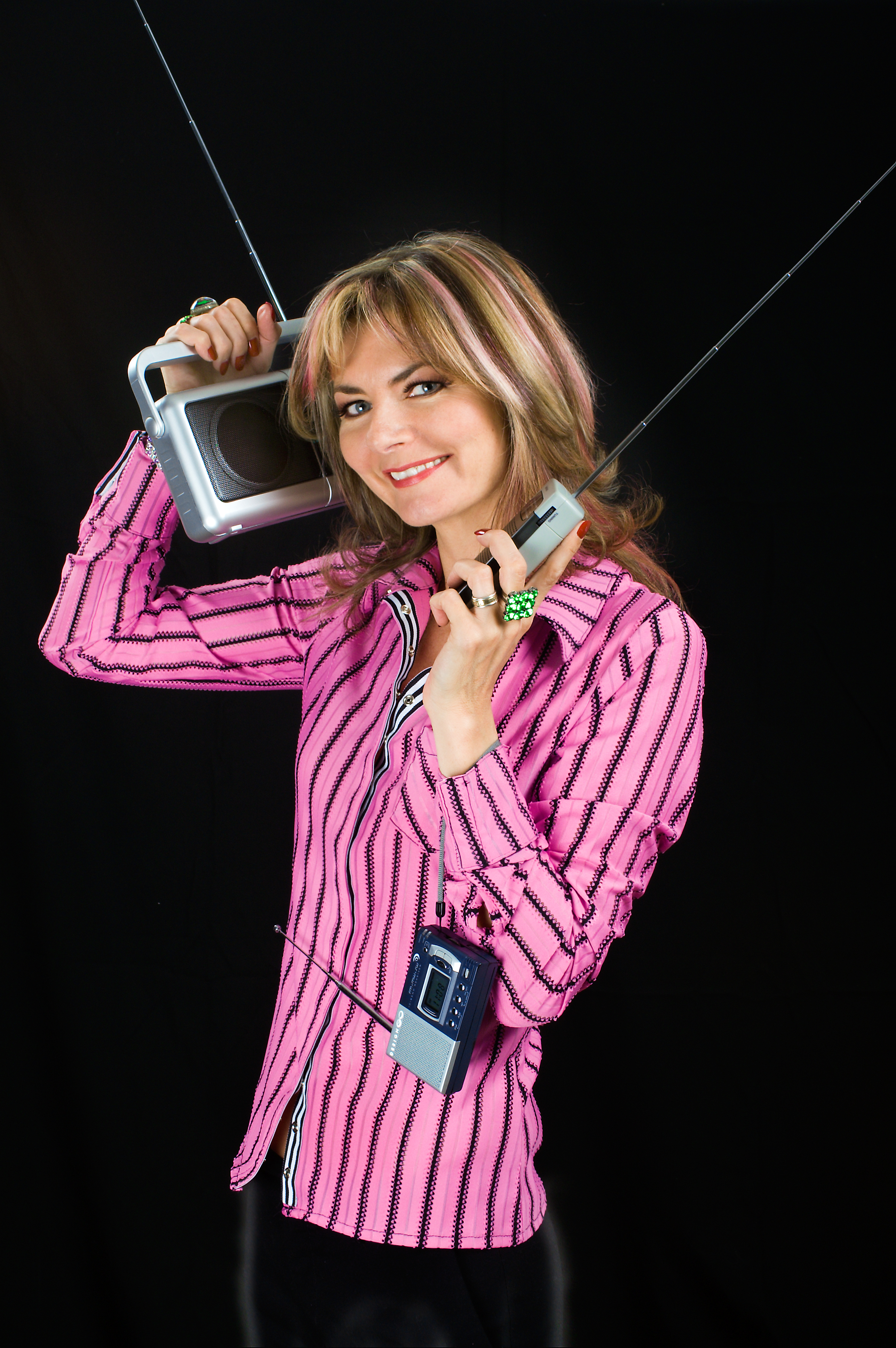
Uninformed As I Am – the Jo Caulfield interview

Hey Jo Let's Go: Drummer turned comic Jo Caulfield (Photo: http://www.jocaulfield.com/)

Hey Jo Let’s Go: Drummer turned comic Jo Caulfield (Photo: http://www.jocaulfield.com/)

Jo Caulfield is having a bit of a domestic crisis, and is pleased to be distracted by her gentleman caller.

Let’s not panic though. These are First World problems. They involve the comedian and panel show regular’s cooker and its timer function, which she feels is completely beyond her.

“I tried it for ages, then thought, ’Why don’t I just look at the instructions?’ But that didn’t help me either.”

We go through the etiquette in such situations, deciding it’s accepted practise for a woman to check the instructions, but clearly a no-no for fellas.

“Either way, I’m just an idiot. It’s not as if I make anything which is reliant on time anyway. It’s just a clock. And if the alarm goes off, someone’s either breaking in … or baking.”

Jo’s just back from a welcome winter break in the warm climes of Florida after a busy 2014, a year we saw a fair bit of this panel show regular and esteemed stand-up comic on our TV screens.

Home these days is Edinburgh, as Jo starts to explain before – with comic timing, so to speak – her cooker starts beeping.

We soon suss it’s neither someone breaking in or baking though, so carry on.

Jo moved up from London around four years ago, contemplating Brighton and Bristol before deciding on heading north of the border.

She’s definitely got that Romany spirit too, having moved a fair bit over the years.

Road Trip: Jo Caulfield (Photo: http://www.jocaulfield.com/)

Road Trip: Jo Caulfield (Photo: http://www.jocaulfield.com/)

Jo was born in Wales to Irish parents, brought up in the east Midlands, went to high school in Matlock, and while living in London made frequent trips to Edinburgh before her big move.

“I lived in London a long time and really liked it, but then just thought, ‘Do you know what – it’s too big and full’. I guess it’s just getting older, thinking about quality of life.

“Edinburgh offers a kind of perfect city living. We’re 10 minutes from the centre of town and I can come out of my house and see the castle, yet have a feeling of space.”

And is your adopted city over-run with comics?

“During the Festival it is, which is great, but then everyone’s leaving – just when I’ve got used to them all living here. It’s like a big holiday camp of comedians.

“But I always moved around as a kid, with my Dad being in the Forces, so I can settle anywhere. And there’s a lot of travelling as a comedian.”

When Jo was squatting around Kilburn Park in London in the mid-‘80s – while playing drums in an all-girl rockabilly band – did she know she wanted to be a comedian?

“I had no idea! People are very organised with their lives these days, but I wasn’t at all. By complete chance, I fell into comedy.

“I liked being funny, as a waitress or behind a bar. I realised that was quite good currency and got a thrill out of making mates laugh. But it wasn’t until a friend did an open mic. comedy spot that I went along.

“I watched a bit on the TV, and remember seeing a video of Steve Martin. Before then, apart from Dave Allen, it was men in shirts telling jokes. None of it rang true.

“But when I saw Steve Martin I thought, ‘He’s just an idiot – anyone can do this!’ not realising he was very skilful, but made it look that way.”

There was an independent ethic to Jo though – maybe fitting in with the music scene she was into and her love of bands like The Cramps – and she was soon organising her own comedy nights.

“My sister’s a writer and involved in fringe theatre, while I’d been in a band and had a market stall, so knew I didn’t really want a job as such, although I was always working.

Visiting You:  Jo Caulfield  (Photo: http://www.jocaulfield.com/)

Visiting You: Jo Caulfield (Photo: http://www.jocaulfield.com/)

“With stand-up, it seemed like you didn’t have to pass exams and all looked very simple. You could just phone up for a spot, and they’d say, ‘Come back in a month’. Then, if you were any good, they’d re-book you.”

You mention waitressing – waiting on tables seems to have been a sure-fire way into comedy, judging by my recent interviewee Katherine Ryan, Jack Dee and yourself.

“It’s really good if you have nothing else to fall back on. With waitressing and bar work I can always earn money, and I continued to do so until I got to the stage where I was being asked which nights I could work, and I’d say ‘None’ – realising I was now earning a living as a comedian instead.”

And did she keep the drumming up, for something to fall back on?

“No. I was never really any good. I’ve got very bad hand and eye coordination. But it was fun and we did a few gigs. Some of them could play – but I couldn’t! For me it was just very basic time-keeping.”

That mention of Katherine Ryan reminded me to tell Jo she’d let me down on BBC cult teatime quiz show Pointless that previous night, during a question in the show’s grand final involving people who had appeared on a choice of three panel shows in 2013.

It worked out that Canadian comic Katherine was pointless in the Never Mind The Buzzcocks and Mock The Week categories, but Jo’s name didn’t come up for some reason.

But I put it to her on consolation that surely that meant at least one person among the 100 polled must have known her name.

“I suppose so. But it shows that you can go on a lot of panel shows and people still won’t know who you are too.”

Tuned In: Jo Caulfield  (Photo: http://www.jocaulfield.com/)

Tuned In: Jo Caulfield (Photo: http://www.jocaulfield.com/)

Moving on, that was quite an entrepreneurial move, starting her own club night, wasn’t it?

“I don’t know why, but I’ve always had that business ethic, since I was little. I remember bothering neighbours by trying to sell them perfume I’d made.

“I’d already had the market stall, and when I saw how comedy worked, I realised if I wanted to be booked I should just run a night then book myself.

“It only costs you if you don’t make any money on the door. Then you have to put your hand in your own pocket to pay acts.

“The pubs didn’t charge me, because they were selling beer, and I already had an amp from being in the band.

“It was also a great way to watch comedy, get to know comics and learn how to approach promoters successfully.

“You wouldn’t believe it. People would phone me at eight on a Sunday morning. I was never going to book them! And it was the same if they were rude to me.”

Does she remember much about her first gig?

“Yes, it was at the Comedy Cafe in London, which is still running. The current owner, Noel Faulkner, was the bar manager then, and was encouraging. Other comics on the bill that night were too.

“It was a competition and we did 10 minutes each. I scribbled down conversational material, things I’d said or stories I’d told friends, and won.

Devilish Antics:  Jo Caulfield (Photo: http://www.jocaulfield.com/)

Devilish Antics: Jo Caulfield (Photo: http://www.jocaulfield.com/)

“That happens a lot for first-timers. At that stage, you don’t know enough to be terrified!

“I’d had several drinks too, which his something I’d never do now, because it doesn’t help. But that night it did help.

“I was just determined not to run out of the building. I wanted to get on stage, do this, see what happened.

“And to make people laugh? Well, I was so high – I was hooked immediately!

“I came back the next week and did a completely different 10 minutes. I thought that’s how it worked. But when that didn’t go so well, I was advised to work on that first 10 minutes until it was really good – then add another five, then another.

“It took me a couple of weeks to realise I had to learn how to do this. I also started taping my act, working out just when people are laughing.

“But when it goes well, you’re hooked on that feeling, and it can get you through the more awful moments.”

Her first real media break came while writing for Graham Norton. How did she get to know the stand-up comic turned chat show host?

“We did a gig in Peterborough, then I drove us to another in Chester. I’m a very slow driver – I’ve never been in the fast lane. So it was a long journey, yet we just got on really well.

“He then got the pilot for a show, and the only warm-ups he knew were men. He didn’t want that vibe, and as I’d done warm-ups for Morwenna Banks’ sketch show, a producer suggested me, and Graham realised he already knew me.

The Passenger: Graham Norton got to appreciate Jo's driving skills

The Passenger: Graham Norton got to appreciate Jo’s driving skills

“I was his warm-up, and then he was having trouble finding writers. In a weird way, they were writing ‘too gay’ for him. It was a bit more John Inman and less showbiz and gossip, as he wanted.

“So I had a trial then stayed on for the next seven years, including three months in New York, and LA too.

“It really helped me work out how to write jokes, and was a regular wage, so I could pick and choose gigs and develop my own material.”

Jo soon got radio work too, with Radio 4 commissioning the very entertaining It’s That Jo Caulfield Again then Jo Caulfield Won’t Shut Up. Any further series planned?

“Not at the moment. There are just so few slots in radio, and pretty much every comic I know now has had a series of Radio 4!”

There have been lots of awards and nominations since, and TV work. What’s the best experience for Jo – panel shows, radio, stand-up, or writing?

“It’s all good, but the ultimate is being on stage in front of people who want to see you, and sometimes in front of people who don’t want to see you!

“When they don’t know who you are, yet can see by the end these people have really enjoyed it, it’s a great feeling.

“But panel shows can be very exciting, especially Have I Got News For You because I really admire Ian Hislop for all he’s done with Private Eye, and then there’s a comedy hero in Paul Merton.

“It’s times like that when I think of my time as a waitress, and it still seems ludicrous.

“I’m also lucky that people speak English all around the world, so I travel all over doing comedy.

“I was on a bill in Stockholm where all the acts were Swedish apart from me, all performing in Swedish, but then I performed in English and everyone was fine with it.

“I didn’t even try a ‘hello’ – they were just kind of like, ‘Oh, don’t bother! We’ll understand you’.

“And when I look back, I’m amazed I didn’t get heckled more when I was starting out – because you’re terrible then, and you have to learn your craft in public.

Jo Horny: The uninformed Jo Caulfield is coming to a town near you (Photo: http://www.jocaulfield.com/)

Jo Horny: The uninformed Jo Caulfield is coming to a town near you (Photo: http://www.jocaulfield.com/)

“It’s not like learning the drums in your own room, listening to a record. The only way you’ll learn is by doing it in front of people.

“Basically, you’re just ruining their night for 10 minutes. And I’m just so amazed that audiences tolerate that.”

Does it ever worry you giving an opinion or observation on something that perhaps no one will share, and you might die on your posterior?

“Sometimes you realise it‘s just you that feels a certain way, but maybe that’s a good thing, and that’s why it makes it funny – that you’re so annoyed at something and nobody can understand why.

“Alternatively, you might see everyone bristle and realise everyone is annoyed by this specific thing.”

Which takes us nicely on to Jo’s current show, Uninformed Opinions. Can she explain the concept in a nutshell?

“I think it’s about being under the illusion I’m quite intelligent but then realising I retain no information.

“I’ll be watching a quiz and arrogantly think I know all about something but then end up shouting at the television, as the questions suggest they’ve deliberately chosen subjects that will make me feel stupid.

“There’s also pride before a fall, being very quick to think I’m right about something only to realise I might not be.

“Then there’s the realisation that this is how I am, and I’m not going to become more intelligent. I read a lot, but clearly it doesn’t help.

Jo Cool: Comedian Jo Caulfield could be heading your way (Photo: http://www.jocaulfield.com/)

Jo Cool: Comedian Jo Caulfield could be heading your way (Photo: http://www.jocaulfield.com/)

“I also have theories, but then throw it away by admitting I’ve not researched any of it.”

So I’m guessing most of this is unscripted then.

“Not really. And I also like to ask my audience to put down on paper things that really annoy them, then go through them. That’s fantastic, and makes it live.

“It also allows me to inform my opinion there on the spot. Some will disagree, so we get into a discussion and decide what we think about this person’s opinion.

“Sometimes it’s almost a parish meeting, very local, and something I’ve no idea about, like some new roundabout everyone will get very annoyed about.”

That brings me on to her forthcoming date at Chorley Little Theatre on February 14 – my excuse for talking to Jo, playing in a location that’s been previously dubbed a town full of roundabouts.

“Well, that’s when it works, when something comes up that can only work on that night. Because nobody else cares except for the people in that specific town.

“I also like to analyse people’s relationships, and as I’m doing the Chorley show on Valentine’s night, I will definitely do that.

“I love coming to conclusions about people, giving my judgement then seeing what others think, then putting it to the actual couple. And nearly always, the women will agree with me.”

So is Jo a big one for Valentine’s Day, seeing as that’s the day she heads to Chorley. Or does she pretend it’s just an overblown business venture?

Main Attraction: Jo Caulfield (Photo: http://www.jocaulfield.com/)

Main Attraction: Jo Caulfield (Photo: http://www.jocaulfield.com/)

“I think for most couples, to go out for dinner on Valentine’s night is usually pretty awful. You sit there wondering if you look as happy as that other couple over there.

“And I’m always mistrustful of the couple where he’s done too much, so must be a bastard for the rest of the year.

“I’ll still always get my husband a card, then he won’t and will say, ‘But you said …’ to which I’ll say, ‘Yeah, I say that every year, but I do want an actual card!’

“You’ve sort of got to do that. Yet I would be mistrustful if he was to do anything – that would seem a bit creepy somehow, to do it only on a special day.

“I think you have to come to a loose agreement if one of you likes Valentine’s. In my case, neither of us really care, and the worst thing would be to be in a restaurant surrounded by other couples. It would look like we don’t really get on.

“But I would say that going to a comedy show is a very good idea for something to do on Valentine’s Day!”

So how many gigs is Jo averaging a year at the moment?

“I genuinely don’t know, but looking at my board now … erm … four, five, six … yeah, well … plenty, shall we say.”

Well, that cleared that up then. And has Jo made some good friends on the comedy circuit down the years?

“Definitely. I was thinking about this recently. A friend of mine, Mike Gunn, was supporting Lee Mack on his tour, and when he came to Edinburgh we got tickets.

“It was so nice as Mike and I started the same time, have known each other 20 years, and we both knew Lee, who said ‘I’ve missed this, sitting around with other comics in a dressing room.’ It’s such a laugh.”

So is she looking forward to her return to Chorley Little Theatre?

“Yes, and a good friend of mine from school is coming up from Wigan that night.

“In fact, I asked her for some insight about Chorley and she said, ‘Yeah, they use a knife and fork to eat a pie’. So I reckon that’s all I really need to know about Chorley.’

For Jo’s forthcoming tour dates and more information about her, head to her official website here.

This is a revised and expanded version of a Malcolm Wyatt feature for the Lancashire Evening Post, published on Thursday, January 29th, 2014. For the online version of the original, try here

Jo’s just the latest in a long line of comedy stars to feature on writewyattuk.wordpress.com. Try our Comedy & Theatre section to see who’s also put in an appearance of late.

Posted in Books Films, TV & Radio, Comedy & Theatre | Tagged , , , , , , , , , , , | 3 Comments

More than Saturday night entertainment – the Julian Cope interview

Dressing Up: Julian Cope, Trip Advizer extraordinaire

Dressing Up: Julian Cope, Trip Advizer extraordinaire

“Before we start, I should warn you we’re in the middle of nowhere. If we keep cutting out, it might be because of the heavy snowfall we’ve had. If I suddenly disappear, you’ll have to ring back.”

Julian Cope, legendary frontman of The Teardrop Explodes turned successful solo artist and self-confessed nutcase, is out in the wilds again.

He’s based with his wife Dorian in Avebury, Wiltshire these days, researching and writing between tour dates and family engagements with his grown-up daughters.

While Julian was raised in Tamworth and made his name as one of the leading post-punk forces in Liverpool, his current base seems practical for an artist now often better associated with neolithic burial chambers and standing stones.

And his home – “literally a terminus” – is just the place he needs to work on the follow-up to recent novel, One Three One, and prepare for a forthcoming seven-date tour.

Julian’s no stranger to writing, having penned a wealth of great songs over the years and receiving plenty of acclaim for autobiographical works Head On and Repossessed. Then there are the further books on underground musicology – not least his works on krautrock – as well as Neolithic culture and archaeology.

You can add to that the musical side-projects, in bands like Queen Elizabeth, Brain Donor and Black Sheep (although, let’s face it, there are few bands like them).

So, which title sits best with him – visionary rock musician, musicologist, cultural commentator, post-punk icon, Arch-drude, modern antiquarian or novelist?

“To be honest, I’ve just been lucky to hit rock’n’roll at a time when I could be all these things. If I’d started maybe five years earlier I wouldn’t have been accepted as all these things.

“You needed people like Patti Smith coming in, demanding to be a poet and rock’n’roller. And people have adopted a very generous spirit towards me.

Lips Synch: Julian Cope takes the mic.

Lips Synch: Julian Cope takes the mic.

“I’ve come to the conclusion over the years that it’s not how good I am or how good my projects are, but the fact that I do finish them, and punt them out into the wider world.

“A lot of people might think, ‘I don’t give a damn about ancient monuments, but Cope writes in a way that makes them intriguing – this tripping, psychedelic rock’n’roller.”

A case in point is his year 2000 BBC Bristol film documentary The Modern Antiquarian, the arch-drude’s megalithic roadtrip to accompany his 1998 book of the same name, Julian travelling the length and breadth of the UK, mainland and offshore – adding his own soundtrack – to showcase our wealth of ancient monuments and historic sites.

Let’s be honest. If presented by someone else, I might have switched off within 20 minutes, but it all seems mightily unpredictable in Julian’s hands – not least to see what bizarre outfit he might be wearing in the next scene.

“As an artist, a poet or rock’n’roller, you’ve got to be interesting and also genuinely have an obsession. You can’t manufacture interestingness.

“When I did The Modern Antiquarian, the only reason the book got finished was because I just wanted to know what was going on, all the way up to the Shetlands.”

He’s also plugging his latest album at present, Trip Advizer, a compilation covering the period from 1999 to date. Is it a bit of a Julian Cope musical CV for the last 15 years?

“That’s a good one! Yeah, I like that. It’s a musical CV.”

It also appears to be a celebration of his move away from the established music industry ‘greedheads’, as he would have it. And he even voices his own promo advert.

Of course, Julian famously had a fiery relationship with his first label boss, Bill Drummond. These days, it’s his own label, led by the mysterious Lord Yatesbury.

10934081_375106556007283_960143647021223922_nI asked him what the venerable peer makes of it all, but before Julian could comment on how Drummond and Yatesbury compare, the phone is snatched away from him, and I hear these plummy tones roaring down the telephone line.

“Lord Yatesbury always adopts a generous attitude towards the greedheads, because hopefully it’s not a dynasty we’re fighting against. They’re all individuals, so at least their greediness is brought on because we have such a doubtful meritocracy.”

At that point, Julian wrestles back the phone, adding his own explanation of where he’s at.

“I think because I came out of punk, there were antecedents to punk, and the best were people who were unbeatable in their own way.

“Jim Morrison as a person demanded he was able to use terms like ‘shaman’ at a time when rock’n’roll wasn’t really far past being Saturday night entertainment. All my heroes have turned out to be cheeky monkeys! It’s like, ‘Who are you to do this?’”

He goes on to explain how The Modern Antiquarian led to a link with The British Museum, Julian going on to present two shows at this iconic location, its hierarchy more or less giving him free rein too.

“This director, who was in his 70s, wore golf spats and looked like Bing Crosby, said, ‘I think this is going to be so much fun, but would you do me a favour? You don’t dress very conventionally – would you dress the same way when you present?’

“I told him I’d be delighted. It had never occurred to me for it to be any other way.

“So when I did my mini-Cope festival, they were delighted, not only as it sold out, but also because I looked like a rock’n’roll maniac. And it went so well that they offered me the same thing the next year.

“To a certain extent, I think people have a place in their heart for at least one full-on mentalist, and people know that ultimately my goal is education and enlightenment rather than a big wad of dosh.”

True. And I don’t suppose the word ‘compromise’ comes into it for Julian.

“That’s the thing. But I’ve been very lucky. I’ve been with my wife 33 years, and she’s driven in no way anything other than changing people’s attitudes to things.

615KTHZ20ZL“Being American, she sees things differently, saying, ‘Holy shit! How old’s this?’ to which I reply, ‘Imagine if Jesus Chris came to see this – this place would be older to him than he is to us!’

“I’ve tried to explain these things to her family too, but of course it’s just abstract. To them, something that’s old is something that pre-dates the American Civil War.”

Regarding the need for self-promotion in today’s music industry today, it’s fair to say it’s all changed immeasurably since The Teardrop Explodes imploded. Does it frustrate Julian that he needs to do a bit more self-promotion today? Or does that complement his sense of independent spirit?

“It’s something I’ve always done. One of the things very marked about punk was that it allowed people to release material on independent labels and be very much their own spokesmen.

“Of course, some punks were opportunists who leapt onto a major label to become the new Rod Stewart. But for everybody who did that, there were people like Mark E. Smith and Howard Devoto, who really brought an erudite and wise side to something that is also still mental!

“I think that’s the important thing – to be able to sustain a long career and be considered an outsider and a maverick yet still be able to keep a conversation together and finish a book … an album … to deliver. And that’s been my most successful side.”

Aside from all the side-projects and writing, I get the feeling there’s still a competitive edge driving Julian – wanting to let the wider world know he’s still a happening artist, ‘and look, here’s another seven albums you might have missed’.

“This is another thing – you’re only as good as your partner. If you don’t have a partner who’s gung-ho for the whole thing, eventually they’ll start to tire of your singularity.

“If my wife was like, ‘Okay, I’ll facilitate this in the hope it all comes out nice’, I wouldn’t have been successful.

“The reason projects like The Modern Antiquarian were successful was because they had to take on archaeology at almost university level. And the only way I could do that was to go to more places and take photos and have experience of places that no archaeologist could even hope to get to – because it would just cost too much time.

“It was a bit depressing at the time. We went to the Orkneys for seven days then went the next year for another seven days. On the last day, I said to my wife, ‘I hate to say this, but we’re going to have to come up here for a third year’.

“By that time we had two baby daughters, but she was fine, and said ‘get in the car … that’s what we do.’

“And then when that book came out, there was a great review from someone in Southampton University’s archaeology department, also the editor of a magazine called Antiquity, saying, ‘Whatever we believe Cope has brought to this archaeological party, what we know is that in order to supercede this book we’re going to have to bring forth an even bigger book!’

juliancopeheadonrepo“That’s it, isn’t it! You can’t trump somebody that easily. And there is an element of ‘size matters’ here.

“That’s the attitude I’ve adopted pretty much with everything – so long as I’m thorough, it doesn’t really matter what my conclusions are. People will now trust that my conclusion is based on evidence I have found.”

Fearing this is turning into a university lecture, I try to divert Julian into slightly more rock’n’roll waters, commenting that – judging by the cover shot on the new CD – for all his recent acceptance in academic circles, he clearly still has a hankering for dressing up in old military gear.

“I think that in order to make the best impression, it’s best to disguise myself as an invader. The opportunities of rock’n’roll  are that you can still look an absolute fierce knobhound. Also, I’d ask. ‘who put the fist in pacifist?’”

On that same documentary, Julian talks about not having learned to drive until he was 34, but how he couldn’t face the idea of not being in control now. Again, that seems to fit in with his view of taking hold of his music career after those formative Teardrop days.

“Yeah, the worry is that it’s very important for a man – and I only say that because I don’t feel I’m in a position to talk for women as well – not to fall into middle age, but constantly try something new you didn’t know how to do.

“Pablo Picasso said, ‘I am always doing that which I can not do, in order that I may learn how to do it.’

“Where I was brought up, nobody had a car, and by the time everybody was driving I was a rock’n’roller, being ferried everywhere.

“So when I finally learned to drive, there was a certain sense of freedom. I still live with that sense of freedom, and I’m always trying to serve new apprenticeships.

“When I did my book about Ancient Europe ….”

At that point we lose our signal, this scribe spending the next few minutes trying to reconnect with Avebury’s Arctic wasteland until Julian finally picks up and growls out a deep and slightly seedy ‘hello!”

I tell him I was worried he’s disappeared down his own personal fogou, in keeping with his love of the Iron Age underground movement.

p10007701“Well yes, we’ve got one in the basement, Sir!”

Did he remember what he was saying? He sure did, and carried straight on.

“For the European book I did all the drawings myself. I’m not an artist but needed lots of drawings to show some of the beautiful stones people in Britain didn’t know.

“I ended up going to my favourite artist of archaeological drawings to pick his brains. He said, ‘All you need to do is draw everything four times as big. Then, when it’s reduced it will look pretty good’.

“I did precisely that, spent ages, and looking back now, nobody’s ever commented that I got a right shit artist in!

“You see, punk taught me to adopt an attitude of positivity, then you can achieve something. And what makes me more useful than most is that I just won’t be beaten. I’ll always struggle on to some kind of conclusion.”

Back to the music, and I understand we have Julian’s mum’s love of poetry to thank for his desire to produce a neat opening line in his songs, something I first appreciated on The Teardrop Explodes’ breakthrough hit Reward in 1981, with “Bless my cotton socks, I’m in the news!”

“Absolutely. When I got into rock’n’roll, there were maybe only two Doors fans at my school – I was one, and the other became my girlfriend. And it’s through them that I figured you’ve got to grab people with that first line, as it’s meant to be a pop art culture.

“I’ll even deploy very dubious first line in order to ensnare people. In an art form that started off as Saturday night entertainment, you’ve still got to come over like that, because people won’t walk away humming your song if it’s merely a beautiful idea.”

I mention Reward, although I have to admit – having heard it first aged around 13 – I had thought for some time that Julian was singing, ‘Where’s my cotton socks? I’m in the nude’.

“That’s the thing though – it got your attention! Loads of people thought it was ‘in the nude’. It’s a bit like Hendrix’s ‘Excuse me while I kiss this guy’ rather than ‘the sky’.

“It grabs you, and with Reward, it’s all so hectic that it’s actually finished before you’ve realised. It’s just a rush.

“And I do find that people will give me more of a generous attitude because that will have been their opening interface with me.”

Reward Acceptance; Julian, in his flying jacket days, with his former Teardrop Explodes bandmates

Reward Acceptance; Julian, in his flying jacket days, with his former Teardrop Explodes bandmates

Incidentally, whatever became of the Austin Champ jeep used in the accompanying video, the one driven around Liverpool’s early-‘80s dock wasteland by his band and a few notable hangers-on?

“I think one of our tour managers sold it. You see, Bill Drummond never paid him ….

Now there’s a surprise!

“I know!”

Sorry, carry on …

“That Austin Champ had been around since the Korean War. I said, ‘Look, we’ve got to have a military vehicle’, and we first found a DUKW amphibious vehicle. I said, ‘I want to be at the prowl of that!’ But it turned out it did about four miles to the gallon.

“So that was the first time we did compromise. We went for the Austin Champ instead, although it turned out it had a Rolls Royce engine and only did eight miles to the gallon!

“Yeah man, looking back though, it sorted us out, separating us from the rest of the pop groups.”

It certainly did, and although you went on record to say you weren’t into the idea of promo videos, that one will always stick in the memory.

“That’s the great thing. And the video very much reflected the way we were living.”

The_Teardrop_Explodes_-_Kilimanjaro_Not as if Julian remembers too much about the location, having employed a heavy dependency on LSD at the time, as candidly – and rather entertainingly – illustrated in Head On.

“I remember a guy from the record company arriving for the video, which Don Letts was directing, when Gary (Dwyer, his Teardrop Explodes bandmate) and I were tripping.

“He said to Bill, ‘How’s Julian going to work this?’ And Bill said (adopts a Scottish accent), ‘Julian’s got a great respect for Don. He won’t let LSD get in the way!”

We both laugh.

“And of course it didn’t. Besides, years later it makes a good story as well.

“Funnily enough though, I was talking to someone from the Liverpool Echo and they were asking about those locations, and I said, ‘You know what? I haven’t got a clue!”

I take it your professionalism hadn’t fully kicked in after all then?

“Mmmm .. and then people just drove me home.”

While we’re on the subject of Liverpool, Julian will be near old haunts like the legendary Eric’s nightspot when he plays the Epstein Theatre as part of this new tour. So when did he last visit Billy Fury’s Wondrous Place?

“I’ve been quite a lot lately, as I’m writing a follow-up novel to One Three One, as the first one did much better than I expected … and my publishers expected. And a few stories I want to tell take place in the great bowl of the Irish Sea, in the area between Ormskirk and the Wirral.

“So I’ve been doing a lot of research there. In fact, I was driving through the Mersey Tunnel this time last week.”

downloadI tell him there’s a nice display of memorabilia involving his former Crucial Three compatriate and fellow local legend Pete Wylie, of The Mighty Wah! fame, at the Museum of Liverpool now.

I suggest he should donate something to mark his own part in the story. And if we can’t track down the old Reward jeep, perhaps one of his infamous revolving microphone stands from his post-Teardrop solo career will do instead.

“There were three of those stands, and I broke the first one but couldn’t bear to throw it away. The second I gave away to a goth. . Looking back, I wish I hadn’t, because he never did anything with it. I thought he might have some kind of maverick career in the ’90s.

“I still have the final one, but don’t know if I could bear to give it away. It’s got a fantastic quote from William Blake painted on it, that took me weeks.”

All the same, I think he should be commemorated in the museum somewhere at least.

”Erm …I think my time will come, you know. The problem with Pete Wylie was that he was always too busy thinking of what he represented and didn’t actually get on with much art.

“What I’m trying to do is the opposite, trying to just get on with the art. The personality cult can come after I’m dead!”

We move on then, and as a result I probably miss out on a chance to get Julian on to the subject of the other third of The Crucial Three, Echo and the Bunnymen frontman Ian McCulloch. Ah well, maybe next time. But we stick with those heady days a while longer.

I’m a bit late, but I’ve only recently finished Head On. And although I shouldn’t really be surprised, I have to say Julian’s a cracking writer. There’s a lot of detail in there, despite the fact that there have been a few chemical interludes since, shall we say. So was he a meticulous diary writer back then?

“I was. I also lived a life that was very well recorded, so to a certain extent I could call up friends and ask, ‘After that gig, we did that journey from so-and-so to so-and-so. Did I really fall out of the van?’ And they’d say, ‘Course you did, you nutcase!’

“I wouldn’t say I was proud of Head On, but I was proud of the fact that considering The Teardrop Explodes was quite a failure in terms of having a long-term cultural impact, at least it makes for a great story!”

img229I’d disagree with Julian over the impact the band made, not least when you think of all those great singles and album tracks like The Great Dominions. Then there were all the bands that followed in their wake, not least The Mighty Lemon Drops – who also did a cracking, speedier version of When I Dream -and Inspiral Carpets, both of whom took the Teardrop influence on to great effect. But that’s another story.

Instead, I point out that – while it seems wrong to say it – his novels’ descriptions of his acid trips were extremely entertaining.

“I think that’s the thing, isn’t it. Coming out of punk, we weren’t really going to have Grateful Dead-like acid trips. There was going to be a lot of slobbering and drooling, and a lot of pure danger, I think, looking back.”

You’re not wrong. I’m still traumatised at his description of a ‘game’ in which the singer, stoned in the back, climbed out of a vehicle traveling at speed, and across the roof to drop back into the other passenger window – several times.

Having read that, and some of the other lurid tales involving him and notable others, I wonder how he’s still with us today!

“I look back now and think I wouldn’t have wanted to be our tour manager. And it’s noticeable that Bill Drummond would always invite people to look after us who didn’t have much to lose!”

That takes us on to a tale about one such tour manager, a Liverpudlian called Bill Proctor.

“He was the one who sold the jeep and that Bill never paid. He lived on this amazing gunboat on the Thames.

“The only time I ever went there I was tripping, so it was probably a bit bigger than I remember it. Actually, I don’t think I even mentioned the gunboat in my book.

“He kept wine bottles down the torpedo tube! He was an amazing person.”

That was then, but this is now, with Julian happily resettled in another historic setting, one arguably poles apart from Liverpool.

Avebury Enigma: A classic Wiltshire-based '70s children's TV chiller

Avebury Enigma: A classic Wiltshire-based ’70s children’s TV chiller

I mention how I remember being a little freaked out as a nine-year-old seeing the Children of the Stones BBC 1 children’s drama, which was filmed in  Avebury – something that seemed no less disturbing when I saw an episode again recently as part of a screenwriting session on my university masters course.

Clearly, Julian’s seen it too.

“Wasn’t that freaky! And now I’m going to make you even more scared …”

I’m not going to repeat the story he then imparts, although maybe Julian will if you ask him nicely, involving a little ‘life imitating art’ in his adopted home village.

I will annoyingly give you the last line though, in which Julian concludes, “If I wrote that in a novel, you’d say, ‘Not only is that gross, but it’s not got any foot in reality! So yeah, Children of the Stones – a little bit over the top, but maybe not that over the top.”

Seeing as I’ve caught him just after midday, I ask how a typical day – if there’s such a thing – starts for Julian Cope at present.

“I wake up about half six, and I’m doing lots of research, so the first hour and half involves internet research.

“This time of year the days are too short for doing any really good field-work. I have lots of maps of the Irish Sea area I’m concentrating on though.

“Then my wife comes in, has a cup of tea with me, then we’re both on a schedule of writing. Writing together in the same room, we’re like two informers looking at each other – making sure we’re not both on Ebay!

“I also do a lot of my own artwork, hand-rendered, and while I find the short days problematic, I actually work harder as I know the day’s coming to an end quicker.”

Julian_Cope-FriedDoes he ever revisit his hometown, Tamworth, or nearby Drayton Bassett, where he set up home with Dorian after The Teardrop Explodes years, and the location for the cover of 1986 album Fried – with a stoned Julian famously disguised as a tortoise.

“Yes, last time about a year ago. My daughters are both fascinated by a period when their Dad would appear naked underneath a turtle shell for a record sleeve!

“Last time we were there,I was ferrying them around as I was on my way to Sheffield to do some work with my web guy. We do a lot of stuff like that. They’re very interested, saying “Dad, you really get away with a lot of stuff!

It’s a fair point.

“Yeah man! And I have to agree with that! My youngest daughter worked at Faber & Faber for a while and spent most of the time fending off questions from older staff members asking, ‘Is it true your Dad did so-and-so?’

“She was quite surprised that these people were interested in these mad stories. And I think both girls are intrigued by Western culture based on quite extreme characters.”

I know I’ve missed a few big moments, but last time I saw Julian live was at Guildford Civic Hall on 1987’s Saint Julian tour, not long after a hit single with World Shut Your Mouth, probably coincidng with the Trampolene single.

Was that album the last time you felt the need to prove you could still play this pop game?

“I think I was just surprised to be in a position to have another stab at it. I think I’d gone just a bit too far with the psychedelic.

“Being the way I am though, I guess my natural propensity for being a weird sod is just around the corner!

Saint+Julian+JulianCope_SaintJulian_Bklt16p“After Saint Julian, I just said no, working out what my strengths are, and playing to them.”

More chart success followed with the glorious Charlotte Anne from 1988’s My Nation Underground  and Beautiful Love from 1991’s Peggy Suicide, the latter reminding me of an entertaining fella I was travelling with in New Zealand who loved to dance to that particular track every night.

My point in mentioning this to Julian is that there seem to be certain pockets in time which you remember when you hear certain music.

“I like that, and I think that’s still the great power of rock’n’roll, isn’t it! Ultimately, it can always be reduced to being great Saturday night entertainment.”

So is the Julian Cope that Dorian puts up with in 2014 a little easier than the one she first latched on to in 1981?

“She says I’m more difficult. She knows precisely what my end-game is, so finds it more difficult to keep control of me.

“But what I like is that she had mad parents, including a very mad father. Whenever her father and I got together we were close friends. He was a real nutcase.

“My mother-in-law would say, ‘Oh, Julian’s always very easy to manage, compared to Steve’. And my wife’s always said to me, ‘You’ve never ever bored me’.”

Having children – with his daughters Albany and Avalon now 23 and 20 respectively – also brought Julian a new focus.

“I think that’s really good for someone known as a nutcase artist. In order to become a successful father, you’ve either not got to be yourself, or be yourself but have a good explanation. And I’ve chosen the latter!”

Finally, what advice might 57-year-old Julian offer his 17-year-old student self in 1975, or even his 27-year-old shell-clad self in 1985?

“I would say keep going, and it will all turn out fine. Just persist!”

Julian Cope is at Liverpool’s Epstein Theatre on Thursday, February 5, with tickets £23 in advance (£25 on the door) via 0844 888 4411, online at www.epsteinliverpool.co.uk or in person at the venue.

This is a revised and mightily-expanded version of a Malcolm Wyatt feature first published in the Lancashire Evening Post on Thursday, January 22.

Thanks to fellow writer Jim Wilkinson for steering me towards Julian’s written works a couple of years back.

For more about the Arch-drude’s many projects, live shows and the Trip Advizer album, head over to his website here.

10513279_354658134718792_8321958644885431850_n

Posted in Books Films, TV & Radio, Music | Tagged , , , , , , , , , , , | 7 Comments

Still diving for pearls – the Elkie Brooks interview

Reaching Out: Elkie Brooks is heading for a big birthday (Photo: Greg Daly)

Reaching Out: Elkie Brooks is heading for a big birthday (Photo: Greg Daly)

At the end of February, Elkie Brooks turns 70, and that seems difficult to believe. In fact, the Lancashire-born vocal talent agrees, chipping in with, “Likewise!”

Elkie, born Elaine Bookbinder in Broughton, Salford, and brought up in Prestwich, North Manchester, settled in North Devon in the early ’80s with her husband, sound engineer Trevor Jordan.

But while age might be creeping up on an artist now in her fifth decade on the circuit, this mum of two grown-up sons clearly keeps herself young – not least with the help of a little aikido, her coastal lifestyle, and continued recording and live work.

What’s more, she doesn’t seem to have slowed down at all.

“Yeah, well … it’s attitude really. It’s like with everything.”

Elkie has made more than 20 solo studio albums, with another on the way, and has a special birthday tour coming up, including something of a homecoming at The Lowry, close to her old turf on Wednesday, February 4.

One of the most successful and popular singers the UK has ever produced, she has numerous hit singles, million-selling albums and awards behind her.

From her big hits to a little blues, rock and jazz, Elkie continues to leave a winning impression on live audiences on her annual tours. And music’s always been there for her.

“I enjoy it, and if I didn’t I would have gone on and done something else. There were moments where I wasn’t enjoying it in the ‘60s and was thinking of doing something else.

Front Cover copy“But then I had the good fortune of meeting up with people like the late Humphrey Lyttelton, and my first husband, Pete Gage.

“Pete had the idea of forming Dada, and that became Vinegar Joe. Otherwise, I might have gone back to Manchester and tried something else.”

What might she have tried instead?

“I’ve always liked cooking, and loved domestic science at school and PE. I don’t think I would have had the patience for to be a music teacher though.

“It was only later that I started to play piano. Working in a lot of Northern clubs they couldn’t play my music, and I thought I couldn’t do any worse, so it prompted me to learn.

“Also, my best friend, Maxine, was thinking of going to Israel on a kibbutz and later on join the army, and all that seems pretty romantic when you’re 17.

“But instead I stuck at it, and here I am today.”

A lot of that story is told in Elkie’s 2012 autobiography, Finding My Voice, and it’s certainly been one hell of a journey.

She’s chosen a lovely part of the world to live too, as I tell her down the telephone line from wintry Lancashire.

“Not at the moment, Malcolm – it’s blowing a hooley out there! I’m looking over at the sea and it’s looking a bit rough.

“I still managed to get out there this morning and do my aikido though, and exercises with a skipping rope and a hula hoop.

“Some mornings I go out, others I just stay in and exercise, but I just made it this morning before it started bucketing down.”

I tell her that on a boat trip off the coast of North Devon with my better half in the early ’90s, the skipper told us ‘that’s Elkie Brooks’ house over there’, in a prime spot overlooking Woody Bay.

“Oh really! Did you see Trees? We were there for around 20 years.”

Vingar Joe: Elkie Brooks at Aylesbury Civic Centre in late 1972 with her former band, including Pete Gage and Robert Palmer (Photo: Brian Cooke Redferns / http://briancooke.e-printphoto.co.uk/)

Vingar Joe: Elkie Brooks at Aylesbury Civic Centre in late 1972 with her former band, including Pete Gage and Robert Palmer (Photo: Brian Cooke Redferns / http://briancooke.e-printphoto.co.uk/)

Elkie lost that treasured estate after major financial problems, her long-term accountant admitting a tax shortfall of around £250,000. So is she still quite close to the old place?

“No, and it hurts me to go back really. We were pushed into a position of selling it. I’m not the only one, but being the trendy person I am, I got into trouble sooner than most!

“You play your music and have a lot of trust in people behind the scenes, who are supposed to take care of your business, and sometimes they don’t always do that.”

I’m guessing she’s far more in charge of your own affairs now though.

“Well, my son is. We’re now doing our fourth album together. He takes care of the technical side too, with a very up-to-date studio in his house.

“He plays guitar and bass and programmes drums, and we write together. We’re about half-way through this latest album. We were hoping it to be out by my birthday, but it’s got to be right.”

Elkie’s roots are definitely Lancastrian though.

“I was born in Broughton Park but brought up in Cavendish Road, to the North of Salford. That said, when I go back now to Salford Quays and the place where the BBC is, it’s all rather alien to me. I didn’t grow up in that area though, but more Prestwich.”

Does she still have family up in the North-West?

“Yes. Mum’s there, my cousin Hilary and best friend Helen. They’ll all be coming to the show, and my brother Ray, to whom I’m still very close.”

412FXZ8i04L._SY344_BO1,204,203,200_Is Elkie’s Jewish heritage important to her? And has she ever made a pilgrimage to the part of Eastern Europe where her family has its roots?

“I went to Poland in the mid-‘60s, but not to the actual area where my grandparents came from.

“I’m afraid that at the time I wasn’t really taking that much notice. Now it would mean a lot more to me.”

Elkie took her first name from the Yiddish equivalent of Elaine, but traded in her surname on the advice of promoter Don Arden, the father of Sharon Osbourne.

“Don promoted all these American acts and was doing a show at the Palace Theatre in Manchester in March 1960, and I read in The Jewish Telegraph that he was holding auditions for dancers and singers.

“I went along, waited for several hours, then he saw me, thought I was wonderful and put me on the show that night.

“I travelled with the show for a couple of nights then got poorly and had to go home, but he kept in contact and brought me to London for lots of auditions.

“It took me ages before I go established, with Eric Delaney and His Band, in 1962 or 1963. It wasn’t easy to get into it all, but I stuck at it.”

Elkie got her break at the age of 15, and proved an influence on her brother Tony too, later swapping his job in the family bakery to play drums for Billy J. Kramer and The Dakotas.

It was Elkie’s sparkling cover of Etta James’s Something’s Got a Hold on Me in 1964 that marked her first recording experience.

“Well, considering I was 19, I did a reasonably good job, but there’s no one sings it like Etta in my opinion.”

Having listened back to a few of those early singles, there was never any doubt about her voice, but maybe she was steered the wrong way, ending up more on the cabaret scene, which didn’t seem right for her.

“Not at all, but with everything in life you’ve got to take out the positive side, and that was that it got me playing piano.

“I don’t play incredibly well, not to the standard of my own keyboard player (Lee Noble), but play fairly proficiently – enough to accompany myself.”

Happy Days: Elkie Brooks back in the late '70s

Happy Days: Elkie Brooks back in the late ’70s

A lot of big-name supports followed, including a certain Liverpudlian four-piece. But did she get to meet The Beatles properly?

“No. I did a 1964 show at the Hammersmith Odeon with them, now the Apollo, but they were very insular.

“There were always people going in and out of their dressing room, but they didn’t really socialise with the rest of us on the show.

“To be honest, I just thought they were a nice little band from Liverpool that copied a lot of black music.

“I have to say they did write a lot of amazing songs that still hold up today though.

“I did have my own dressing room at the top of the Odeon though, and used it again when I did a celebration of Humphrey Lyttelton’s life in 2008.”

I’m also intrigued about her link around that time with influential Mod band Small Faces, or at least their lead singer Steve Marriott.

“I met Stevie Marriott many years ago via a manager I had at the time, Ian Samwell (who also wrote for Cliff Richard and Dusty Springfield), and Steve and I became very friendly.

“I loved him very much. He was a wonderful musician and used to come over to my flat and we’d jam together.

“There was never any romance. He was more like my little brother. And I mean little – I was five foot three and he was only about five foot!

“I got on extremely well with him, and he deserved to do really well.”

Then Elkie went out on the road with The Animals.

“I did go on tour with them, but just as one of the many artists on that show. I happened to meet Alan Price when he was doing shows in London at the Scene Club.

“He wanted to meet Georgie Fame, who I happened to be having a bit of a romance with at the time!

Profile Shot: Elkie Brooks at the mic.

Profile Shot: Elkie Brooks at the mic.

“I had a slight romance with Alan too, and he really wanted to meet Georgie. Read my book, and you’ll see!”

That brought me on to The Flamingo Club in London, where Georgie was a regular, as was Elkie’s first husband-to-be, guitarist Pete Gage.

I mentioned (as I seem to in a lot of interviews with those who cut their professional teeth in the ’60s!) how I loved Georgie’s 1964 live album recorded at that swinging Soho nightspot.

“Ooh, I’ve got that in my collection somewhere! I’d get up with the band and jam, and used to love it.

“Georgie was a natural musician. He was wonderful. I would show him my music from the cabaret circuit, and bless him – he couldn’t read it. He probably can now.”

Then came the link with Pete, who was previously with the Ram Jam Band – best known for their alliance with ’60s soul star Geno Washington.

“I never saw them, but met Pete because my manager at that time, Jean Lincoln (then the fiancee of Flamingo owner Rik Gunnell), thought it a good idea for me to have a backing band.

“Pete came to see me and liked my singing but felt I didn’t have any musical direction.

“Yet we got on well as people and ended up living together, and he had this great idea of forming Dada a year or two into our relationship. And that’s how it all started.”

So Elkie ended up as part of a jazz fusion 12-piece who made one album, and from Dada sprang Vinegar Joe, with Robert Palmer also adding vocals. Were those wild days?

“We had a good time. It was hard-going, gigging every night and were only together from 1971 until March 1974 but did three albums, which was quite an achievement considering all that time on the road.”

Did she stay in touch with Robert, who died aged just 54 in 2003 after a successful solo career?

“I stay in touch with his mum, and owe her a call actually, as it’s her birthday in a few days. But it was all a bit sour with Robert.

Vocal Passion: Elkie Brooks gives it her all (Photo: Phil Slaughter)

Vocal Passion: Elkie Brooks gives it her all (Photo: Phil Slaughter)

“When he left the band, he had it all planned about a year before he told us, and (Island boss) Chris Blackwell gave him the chance of making his own album in Nassau, and that broke the band up.”

After a spell in America, Elkie returned, her first footings back as a solo artist more soul and r’n’b-oriented, including her take on Fontella Bass’s Rescue Me.

Did she know where she wanted to head by that stage?

“No, it was a difficult time for me. I’d been part of a band and loved it. I love being part of a team. I don’t mind fronting it, but like to have a team.

“Robert wasn’t like that. He wasn’t a team player in any way. He was more out for himself. But I only realised that when the band broke up.”

First solo album Rich Man’s Woman ensured a few column inches, not least on account of a photograph of Elkie on the sleeve deemed racy back in the day.

But Elkie saw that album as a missed opportunity to properly launch herself.

220px-Elk2DA“It wasn’t until the next album, Two Days Away, when the company really got what I was doing, with Pearl’s a Singer.

“With the previous album, if you were to speak to Derek Green, the head of A&M, he was very disappointed. It wasn’t what he envisaged – nor me, to be perfectly blunt.

“The demos were better than the album. In retrospect, if I’d asserted myself a little more with the producers rather than listen to what they were saying …

“The producers, Kenny Kerner & Richie Wise, were flavour of the month at the time, so you think they know best for you. But that’s not always the case.”

Her next album, 1977’s Two Days Away, changed all that though, not least thanks to winning production from legendary songwriters Jerry Leiber and Mike Stoller.

“I think I was in luck with the next album with Jerry. He was a very talented lyricist.  I got on extremely well with him.

“When you work with two producers, one sees it one way, the other another. One asked me to sing one way, the other a different way.

“But I’d go to the loo, come back, have a cup of tea, then sing it the way I wanted. And they’d say, that’s what we wanted!’

“They just wanted to assert themselves. But Jerry was a treasure, and I thoroughly enjoyed his company and working with him.”

220px-ElkPEARLSThat album included Elkie’s first top-10 single, Pearl’s a Singer, and steady success followed, peaking in the early ‘80s as Pearls and follow-up Pearls II made the top five.

In fact, she managed seven top-40 albums with A&M after her debut stalled, and then scored a top-five single and album with No More the Fool on the Legend label in 1986.

Did she ever get chance to enjoy that success?

“Well, I was always on the road, and had a manager and promoter who worked me into the ground. Now I’m much more in control of that situation.

“Back then I hated doing night after night, and I don’t do that anymore, having a day off in between shows.

“It’s not just the singing, there’s also the travelling, the sound-checks, rehearsals. I’d be singing for about three hours a day, and you need to rest for 24 hours after that.

“People don’t understand. I remember my father, God rest his soul, saying, ‘what do you need a holiday for? It’s a holiday for you every day!’ That’s how people perceive it.”

I get the feeling she could have stuck with that winning formula and more middle-of-the-road territory. But is that really her?

“It worked for a time, and I have to say I’ve recorded some songs I’ve not been too sure about. Some have worked, but I like to be 100 per cent these days.

“I enjoy it though. People keep coming to the shows, I get a good reaction, and that’s all I can ask for.”

There was an element of juggling family life for Elkie as well, having married Trevor Jordan in 1978, with her sons born in 1979 and 1986.

Reflective Mood: Elkie Brooks (Photo: Paul Cox)

Reflective Mood: Elkie Brooks (Photo: Paul Cox)

Did both of her lads follow her into the music industry?

“One’s starting a business as a fitness coach, but the other’s on the business side of all this other than when we’re working together creatively in the studio.”

Is there a song or an album she’s more proud of than anything else?

“The albums that stick out for me are Two Days Away, and the last I did with my son, 2010’s Powerless, which are very compatible.

Elkie_Brooks_and_Humphrey_Lyttelton_-_Trouble_in_Mind“I also love the one I did with Humph (Lyttelton), Trouble In Mind, in 2003, and also the Amazing album in 1996 with Tony Britten and the Royal Philharmonic.”

I’ve always had a weakness for Lilac Wine, so to speak. Is there a particular track that stands out for Elkie across her work?

“It’s very difficult for me to say. Ask any artist, and it’s usually what they’re working on.”

I was looking at a few old Top of the Pops clips, and one for Lilac Wine was spoiled by the fact that they had this colourful lilac wreath background and seemed determined to use it throughout, even to the point where you could hardly see Elkie in the frame.

“Oh God, I can imagine!”

Are there any old hits she’d rather not play these days?

“I do them all, Sunshine after the Rain, No More the Fool, Don’t Cry Out Loud, Fool if you Think it’s Over. Pearl’s a Singer, Lilac Wine, Nights in White Satin … all the big hits.

“People expect me to. I’ve been down the road where I’ve only done current stuff I’ve been working on, and people haven’t bought it yet and don’t know it. I think that unfair when they pay good money and want to hear the old hits.

“I incorporate new material from an album I’m working on, or something from the Powerless album, and some good old rock and r’n’b in the second half that people have always requested. I change things around now and again, and it works.”

Does she sit comfortably with some of those titles afforded her, like The British Queen of Blues?

“I don’t mind. Call me whatever you like as long as people keep coming to see me!”

I read somewhere that Elkie’s had more albums that have reached the top 75 of the UK album chart than any other British female artist.

“Is that right? Well, they haven’t given me a badge for that yet!”

Does it take more to keep that voice in good shape these days than maybe 30 or 40 years ago?

“Not at all. I’d say it’s better now than years ago. And you can’t buy experience.”

Looking Forward: Elkie Brooks is working on a new album (Photo: Christophe Cohen)

Looking Forward: Elkie Brooks is working on a new album (Photo: Christophe Cohen)

So what’s the secret of that big husky voice?

“Plenty of rest, and good eating. I look after myself.”

That doesn’t seem to fit in with her sound, with raspy elements of a Rod Stewart or even a Janis Joplin or Noddy Holder on some of her more r’n’b moments.

“I don’t think of myself like that. My singing voice is a lot clearer than my speaking voice.”

So it’s not down to a bit of indulgence in her Vinegar Joe days and those early days on the circuit?

“Not at all! I’ve always had a husky voice from being a little girl. My mother’s friends used to call me Tallulah Bankhead for that reason!

220px-ElkBK“I remember my headmistress saying, ‘You sound like a boy, Bookbinder!” and I could never get in the school choir because it would always be too high for me.

“But I discovered a lot of black singers over the years, from when I was 11 or 12, who also sang in my key. So I thought, ‘Yeah, I’m not the only one!’”

And will we be talking about a 75th or 80th anniversary show a few years down the line?

“God knows! Put it this way, I have a reasonably good fitness level for my age and still enjoy the music and love playing certain theatres. As long as that’s the case, people will still keep seeing me.

“But when I really start warbling – as a lot of older singers do – that’s the time to say thank you and goodnight! That way, people will remember me the way I was.”

Elkie Brooks plays The Lowry in Salford on Wednesday, February 4, with ticket details at http://www.thelowry.com/event/elkie-brooks-live-in-concert.

And for more on Elkie, her back catalogue, her autobiography, tour dates and more, head to her official website here.

This is a revised and expanded take on a Malcolm Wyatt feature for the Lancashire Evening Post, first published on Thursday, January 15th, 2014. for the original’s online version, try here.


Posted in Books Films, TV & Radio, Music | Tagged , , , , , , , , , , , , | 8 Comments

Pleasure & Pain is part and parcel of T’Pau’s game – the Carol Decker interview

Pleasure Principal: Carol Decker, all set to head your way with T'Pau again - on record and on tour

Pleasure Principal: Carol Decker, all set to head your way with T’Pau again – on record and on tour

I’ve had hassle in the past about my vast collection of old football and music magazines, not least when moving to a house with less storage space a decade ago.

But now and again I chance upon features trickier to find in this computer-centric day and age, not least when interviewing artists that once made bigger headlines.

That was the case when it came to setting up an interview with Carol Decker last summer, ahead of T’Pau’s planned Pleasure & Pain tour.

As it turned out, those shows were postponed due to a family illness, but a revised 20-date tour to help launch an album of the same name is now set to go ahead.

With that in mind, I felt it was time to blow dust off my copy of Q magazine from November 1988 and remind myself just what a big deal T’Pau were at that stage.

Carol and song-writing partner Ronnie Rogers graced the cover of Q26, joining U2 – on the back of Rattle and Hum – and Amnesty International benefit tourists Bruce Springsteen, Peter Gabriel, Sting, Tracy Chapman and Youssou N’Dour.

Within its pages, Tom Hibbert met T’Pau’s leading lights at their Kentish Town gaff in a ‘rock’n’roll couple’ feature, in an edition also featuring Billy Bragg, Robert Cray, Siouxsie Sioux and Tanita Tikaram.

The interviewer detailed T’Pau’s elevation from the spit and sawdust circuit, while the pair – an item for many moons at that stage – were photographed by Chris Taylor on their bed with Jessie the Red Setter, Carol playing guitar and singing for the camera.

There followed something of a good-natured ragging from the redhead about what Ron should wear for the photocall, followed by a trawl through the band’s back story and what prompted their move from Shrewsbury to London’s bright lights.

Carol suggested they hardly had a moment to themselves at that stage, with plenty of in-depth warts’n’all detail added about those formative days learning their craft.

  Old Times; Ron, Carol and Jessie at home in Kentish Town back in 1988 for a feature with Q magazine


Old Times; Ron, Carol and Jessie at home in Kentish Town back in 1988 for a feature with Q magazine

T’Pau were on the crest of a wave back then, two years after Heart and Soul helped break them.

And as those of a certain age may recall, next single China in your Hand topped the charts for five weeks, while the Bridge of Spies album sold 1.2 million copies, a stadium tour with Canadian cutaway-t-shirt rocker Bryan Adams helping spread the word.

I think the resultant Q feature reads quite well all these years on, not least as a bit of ’80s pop history. Carol wasn’t convinced when I mentioned it though.

“I thought they took the piss a bit, actually. The music media were not fond of T’Pau. They saw us as a cheesy, mainstream band, and took every opportunity to have a go.

“We were sort of tabloid favourites, really, and sold a shed-load of records, but weren’t cool or mean enough.

“When we got asked to do a big feature for Q magazine and got on the cover, I couldn’t believe it. But I wasn’t very happy with the article. I think they set us up.

“Anyway, moving forward …”

When I caught up with Carol, she’d got in late the previous night from a gig at Scone Palace, a fair trip from her home in Henley-on-Thames, where the Lancashire-born chanteuse and husband Richard Coates had a gastro pub a couple of years before.

“We had the pub for eight years, but let it go two years ago. I didn’t have a right lot to do with it, apart from propping up the bar.

1618535_830812613624643_3403048413113730304_n“My husband was the chef and owner, and it was such hard work. We never saw him! It was only up the road, but he was knackered all the time, and I just said, ‘come on’.

“Richard is such a fantastic chef, and was in the Michelin guides with it all, but could never take a day off. People said they could always tell when he wasn’t in the kitchen. And reputation is everything to him.

“It was all just too much, so he’s a gun for hire now, a consultant executive chef, sorts other people out, and likes the freedom of that.”

So how did Carol, originally from Huyton, Lancashire, before moving with her folks to Shropshire, end up re-locating – after her London days – to Oxfordshire?

“We moved here in 2005. It’s very pretty, and we moved here for all the right reasons, like schools and that.

“Kentish Town was great was I was single or part of a couple, but a little edgy when the kids came along, and we thought it was time to get the hell out of Dodge!”

Carol and Richard have two children, with Scarlett aged 16 and Dylan 12. So what do they make of Mum hitting the road with her music?

“Well, Scarlett loves Muse, and only ever listens to one band at a time. When she was younger it was Gorillaz, and now it’s just Muse.

“But Dylan loves any kind of music and is always singing. I had two shows at the weekend, and he came along to both.

Old China: That monster hit that reached the top

Old China: That monster hit that reached the top

“Unfortunately I sprained my ankle, and said that when I did China in Your Hand he could come on stage and help me back off.

“He loved that, and was waving to the crowd – about 20,000 people. He got a round of applause and loved the attention. He’s very much a chip off the old block.”

Pretty soon after that, you might have chanced upon Carol on our screens again, on the BBC’s addictive quiz Pointless in a celebrities special, partnering former Kajagoogoo singer Limahl.

Then, there she was again just before Christmas, this time claiming the show’s coveted trophy with none other than Paul Young. Yes, it appears that The Secret of Association still stands for something in this day and age.

And now T’Pau are set to return with that brand new album and UK tour, Carol and Ron having teamed up for the first time in nearly 25 years to re-ignite the spark that brought us all those old hits.

As I put pen to keyboard, I’ve only heard the first single, Nowhere, all set for download on January 18 and avaialble for pre-orders now. But it’s fair to say you won’t be disappointed, a powerhouse of a song with those unmistakable vocals to the fore, and a strong hook. In short, an assured return.

Maybe there will be no surprises either that overall the pair’s newly-finished songs provide a rock ‘n’ roll tale drenched in Pleasure and Pain.

As a brief reminder of times past, T’Pau’s first album, Bridge of Spies, spent several months on the UK and Billboard charts, going four-times platinum and starting a journey that spawned two more top-10 albums and a raft of hit singles.

That all ended abruptly after four years amid ill health, bitterness and marriage disintegration. Carol and Ron remained friends, but their personal relationship had run its course and each had went their own way.

And although Carol built a new T’Pau around her in 1997 and released new album Red, it wasn’t until the band’s 25th anniversary in 2013 that co-writer Ron re-joined the band for a celebratory tour.

They then got to work on songs they started a quarter of a decade earlier, those faint chances of a brand new T’Pau album slowly becoming a reality.

During the final stages of recording though, Carol’s mum – who she saw as her inspiration and No.1 fan and supporter – was taken ill and passed away, but not before her daughter was able to play her Demolition Man, one of her favourite tracks, but unrecorded until now.

It duly received the thumbs-up, but in typical T’Pau tradition the moment’s pleasure was mixed with immeasurable pain.

Yet Carol reflected: “We’re no different to anyone else. Our story and our lives reflect what happens to everyone, everyday.

Breakthrough LP: The album that made T'Pau's name

Breakthrough LP: The album that made T’Pau’s name

“We’ve reached the stage where there’s nothing in the way anymore. We can go out and be ourselves, and that’s what these songs and this tour are about.”

Talking of loyal fans, in recognition of the band’s continued support, the brand new album is initially exclusively available to those showing up for the upcoming gigs, before a wider release.

And as well as a selection of the new material, the new tour will feature all the big hits and several past album tracks.

As Carol put it, “We’re immensely proud of what we’ve achieved both in the past, and particularly with this new album.”

The Pleasure & Pain tour comes on the back of a busy 2014 for Carol, including plenty of appearances on the ‘80s revival circuit, as I learned when we spoke in late July.

“Well, yes, there are all these ’80s festivals now. They’ve sprung up everywhere. But as far as I’m concerned, it’s just about making hay while the sun shines.

“But this will be my first studio album in 15 years, and we’re right in the middle of recording that up at Ronnie’s place, his studio in Wales.

“We formed the band together and wrote all the songs together, but have some great guys working with us too.”

I put it to Carol that she must feel a little constrained by all those ’80s roadshow gigs, with their shorter greatest hit sets, when she’s still writing plenty of new material.

“Well, I have mixed feelings about it all. Sometimes I think, ‘What a laugh!’ I’m getting paid for singing four songs for 20 minutes in places like Scone Palace, or in the grounds of some other fantastic stately home, with the whole thing just such an enjoyable, no-pressure experience.

“But it’s all about the old hits, so yeah – you’re right. Creatively, it’s not fulfilling. Yet we’ve got some great new songs, and I’m really excited about the album, and it would be nice to have new songs to sing.

“The target audience that want to come and see us do other stuff are excited too, with lots of comments on Facebook and those following on Twitter.

“So it would be nice for the audience and us to have some new things to do.”

Pointless Celebrities: Carol with Limahl ... although she later went back on with Paul Young (Photo: BBC)

Pointless Celebrities: Carol with Limahl … and she later went back on with Paul Young

At this point I mentioned to Carol that my better half says a gig she did at Birmingham NEC in 1987 was the loudest she’d ever been to.

She laughs at this, and I put to her that if that’s still the case they may bring the house down at some of the venues on the forthcoming tour – not least considering that their two London gigs are not at The O2 Arena but an old pub haunt of mine, The Half Moon in Putney.

“Probably, yeah. We’ve got a fantastic sound engineer, though, so it should be appropriate to the venue. Those big old sheds were noisy, weren’t they?”

The 20-date tour runs from January 22 at Camberley Theatre to March 14 at Selkirk Victoria Halls. And that’s alright by Carol.

“We’re just doing small gigs. When I do the big ‘80s shows I’m on a big multi-bill, so collectively we pull in 20,000 people. Which is great, especially at events like Rewind.

“I did another on Saturday night to 5,000 people too, with Rick Astley and the Bananas …

(Incidentally, I’m guessing that’s Bananarama rather than the Warrington crooner’s new band).

“But individually we’re all in different places now, so on the last tour I did last year we sold out Milton Keynes Stable, so we’re looking at 400 or so people. That’s where I am now.”

Well, for me those gigs are always the better ones anyway.

“They’re different. I do like the shock and awe of a big gig, and it’s quite nice to say, ‘Oh my God, I’ve sold this many tickets!’

1521868_781987725173799_8483923510017967317_n“When we used to sell out arenas, my ego would definitely like that. But I’m enjoying concerts of all different sizes.

“I also do different set-ups like semi-acoustic shows where I take four musicians with me, with a cajon and close harmonies, or I’ll turn up at Rewind and have a fantastic house band that they provide, complete with a sax player for China in Your Hand.

“Then I’ll do the Half Moon or the Bedford in Balham, so it’s very mixed now. It’s very interesting like that, and I’ve learned to roll with the punches. You have to.”

My original reason for talking to Carol was that T’Pau were down to play Preston’s 53 Degrees, a venue that has since been mothballed, one of many we’re at risk of losing across the country in these hard times.

“I just think there were so many more places to play when I was younger, of that kind of size.

“I spent a lot of my childhood in Shropshire, and went to college in Shrewsbury, and every band you could lay your name to played the Arts Centre, where I saw everyone from The Pretenders to The Beat, or the Town Hall. Yet a lot of those places have gone now.”

I mentioned the new single, and it’s clear there’s no less oomph in Carol’s vocal delivery these days. So, on the subject of that big voice of hers, has she always looked after it?

“Absolutely, and thank the Lord, I can still sing. I’ve just had this conversation actually. My best friend, just over from America and my tour manager back in the day, was saying exactly that – ‘You’re so lucky you can sing … at your age’.

“Your voice ages, like the rest of you. I can be incredibly badly behaved at times, yet I’ll feel it in my voice if I’ve been up drinking.

“Last night I’d got in from Scotland, and Jenny was in from LA, and we just sank a few bottles of wine on the patio, and I’m croaky today.

Lotta Bottle: We'll drink to that, Carol

Lotta Bottle: We’ll drink to that, Carol

“If I had some work on, I wouldn’t do that. And when I don’t have a sprained ankle, I do work out. It’s a physical job, and you’ve got to be fit.”

Carol came into all this a little late, aged 22 and at art school. Were there jobs before that? And had she not considered this as a career path before?

“I didn’t really know what to do with myself. I flunked my A-levels and went and au paired for my uncle, who lived in Eindhoven, to get away.

“All my friends had gone to uni or college, and my parents moved from Shropshire to Warwickshire. I didn’t know anybody, so just started bumming around, going from job to job.

“One of the jobs I got was working on the art team at Ironbridge Gorge Museum, when I came back to the UK, and I just thought, ‘I’ll go to art school’.

“Another friend was going, so I just sort of cobbled together a very bad portfolio and bluffed my way in, and in that environment I met a different kind of person.

“I’d been to a very strait-laced girls grammar school, but in art school met a whole different type of person, and met musicians from going to parties. I always knew I could sing, so I just gave it a shot.”

It was clearly meant to be. So what were her first band like, The Lazers? Has she still got some old demos?

“Yes I have, but haven’t got anything to play them on! We were a ska band actually.”

Was that what you were playing when you first met Ronnie and poached him for the band?

“No, we went more pop. Ron was more of a melodic writer, and we just sort of drifted into a different style of music.

“The guy who formed The Lazers – Julian, who lives in Australia now – was more into ska meets Wilko Johnson. I kind of fell into that, because this was my first band, but it wasn’t really the style of music I wanted to do.

“So when I met Ronnie we started to create our own kind of thing.”

Ron Run: Carol's co-writer/band co-founder Ronnie Rogers busy in the studio on the new LP (Photo: Carol Decker/T'Pau)

Ron Run: Carol’s co-writer/band co-founder Ronnie Rogers busy in the studio (Photo: Carol Decker/T’Pau)

It proved a great apprenticeship, no doubt. Yet it was still around six years or so before they got that big record deal.

“Oh God, yeah, we got turned down all the time, but finally got some management, who got us a showcase with Siren, who were a Virgin company.

“It looked like it was an overnight thing, because we took off like a rocket, but it was a very hard slog.”

I recall records in my collection from Faith Brothers and It’s Immaterial on that same offshoot label. And then my old Undertones hero Feargal Sharkey was in the Virgin camp around then.

“Yeah! I used to hang out with Feargal! We used to end up in various states in hotels and that.”

Are there many artists from that era that Carol still talks to regularly?

“No, in fact I’ve made more friends in the last decade since I’ve started doing all the ‘80s shows. Back then it was more competitive.

“Nowadays, I’ll go backstage at an ‘80s concert and we’re all in our late 40s or in our 50s, all got kids, and sit around having a glass of wine. It’s a great camaraderie.

“We’re all very supportive. But when we were all young, we were all viciously competitive and wanted to fire up the charts.”

Vocal Power: Carol Decker gives it her all on the live circuit

Vocal Power: Carol Decker still gives it her all on the live circuit

So who’s in the band these days?

“Well, Ronnie’s back, which is great, and our guitarist is James Ashby, who’s just turned 25, then there’s Carsten Moss on keyboards. He’s Norwegian.

It’s interesting with the writing, because Scandinavians have great pop sensibilities and I love Swedish and Norwegian bands. Karsten brings a whole new dimension.

“Then there’s Kez Gunes on bass, a fantastic player with a great soul voice as well, and Dave Hattee on drums, who’s been with me 14 or 15 years.”

Incidentally, I believe Odette Adams adds backing vocals too. So it’s just Carol and Ronnie from the original line-up. Was it odd getting back after sharing so much over the years?

“It was for the first couple of gigs, him being back on stage with me, because we hadn’t gigged together for 15 years, but we quickly fell back into stride, and it’s all good.”

Of course, it was a jeans commercial that gave you that first big break, wasn’t it?

“Yeah, Pepe.”

A jeans advert … a stadium tour with Bryan Adams … it all screams ‘the 1980s’ to me there!

“Yeah, well you need your lucky break. Even if you’re talented! And the jeans commercial was incredibly helpful.

“Everyone thought, ‘That’s such a cool song, then the Americans loved it. Like I say, you just need your lucky breaks.”

Red Hot: Carol still likes to party, and is coming to a town near you with the reformed T'Pau

Red Hot: Carol still likes to party, and is coming to a town near you with the reformed T’Pau

At that point, Carol was ready to party a bit more with her LA visitor, and keen to be away, but there was still time for a couple more questions.

I believe China in Your Hand is on more than 150 compilation albums. Ever get fed up playing that song?

“Err … sometimes. Yes. But I really like Heart and Soul, which is my favourite, and sometimes I’m just not in the mood to sing a big old ballad all the time.

“But you mustn’t grumble! That just sounds so bratty. At least my music still gets played and I’m remembered for something.

“And I’m still in gainful employment as a result of it. But yeah, sometimes you just think, ‘I don’t want to sing this one’.”

Finally, confidence has been an issue at certain points in your career. Do Carol’s experiences over the ’80s and beyond make it easier to take on the modern pared-down music industry (not least seeing as the band weren’t overnight successes first time)?

“Absolutely, yeah. But I’m not in the industry with a capital ‘I’ anymore, and we’re in our own little bubble now.

“I’ve come to be proud of myself, and do shows like Rewind with people like Tony Hadley and other pals like Martin Fry and Kim Wilde.

“We were the big-hitters of our day, and we’re still going strong. And I’m proud of that.

“You will get people who’ll knock it, and say ‘give it up’, but I’ll just shrug it off, because there will always be some twat, especially now.

10478187_845367295502508_4843503561225363599_n“That’s the downside of social media – everybody is a keyboard warrior and you just get some nasty people who live to troll.

“But I’m proud of myself and proud of my friends as well, and I’ve now been a professional singer for 27 years.

“I’ve earned a good living, and I provide for my family, the phone’s still ringing, and the bookings are still coming in – so I must have got something right!”

And if the mighty Nowhere is anything to go by, you just know that Carol will be giving plenty of the old Heart and Soul when she’s out there for the Pleasure and Pain tour.

“Definitely, and I’m very much looking forward to playing the new songs to everybody too, so … see you there!”

This is a revised and expanded version of a Malcolm Wyatt feature/interview with Carol for the Lancashire Evening Post, first published on January 8th, 2015, with a link to the original’s online version here.

For all the latest from Carol and T’Pau, plus details of the forthcoming tour and how to get hold of a Pleasure & Pain album, go to the official website

Posted in Music | Tagged , , , , , , , , , , , | 1 Comment

9 by 7 – Jo Bartlett – a writewyattuk review

jo_album1On first hearing Jo Bartlett’s 9 by 7, I wasn’t quite sure what to think. Only it’s a bit of an enigma. But like the best puzzles, it’s worth the effort decoding.

You see, it has the mark of a greatest hits collection, yet it’s a ‘best of’ containing tracks that either haven’t been hits yet or should have been first time around but somehow weren’t.

It’s not all Jo on this ‘solo’ recording either, these nine songs written and produced by this talented singer-songwriter but featuring seven guest musicians too. Hence the title.

Those guests include former Bluetrain compadre Richard Handyside for one, adding some nice electric guitar touches.

That perhaps sums up the finished product – Jo’s past and present influences proudly worn on the sleeve in a CV displaying some of her finer moments from the last 15 years.

The six tracks I recognise seem to have been given a fresh makeover, one that definitely works yet was arguably never needed in the first place.

Opening track Dying Kiss, released as a single in late November, is a prime example, a mellow, almost trip-hop version of a wondrous track that first appeared on Jo’s second collaboration with hubby Danny Hagan under their It’s Jo and Danny flag.

On 2001’s Thugs Lounge it was a winner for these ears, but never got the attention it deserved and later returned in a different format on the duo’s fourth album, four years later.

And here it is again, further tweaked but again to great effect with the help of programming from Aaron Gilbert, of Fat Boy Slim, Pendulum and Depeche Mode fame.

dyingkissIt’s all the more ambient, but that serves to highlight further the quality hook, and it’s hopefully about to finally get the attention it deserves.

Four of the tracks here first came our way on last year’s Highway Found EP, starting with Measure of the Storm, its underlying riff reminiscent of a slowed-down Caterpillar by The Cure. That’s not the last time I mention Bobby Smith’s boys either.

Furthermore, the way Jo sings ‘can’t catch the next one’ takes me back to the awesome Harriet Wheeler and my old favourites The Sundays.

Then there’s Rising to the Bait, its Lloyd Cole and The Commotions guitar intro again sign-posting Jo’s proven indie roots.

That wouldn’t be enough though, and like its bedfellows this is a song that builds and gets in your head the more you listen.

In fact, both tracks seem better presented in this album setting, as if they rise to the bait of the competition around them, adding something of a documentary soundtrack feel.

For this ‘80s and ‘90s indie fan there are hints of a few other revered artists in places, The Go-Betweens occasionally springing to mind here and there.

There’s a Nick Drake element too, as you might expect from someone who co-founded the Green Man Festival and was at the forefront of the Freak Folk scene before forming psychedelic instrumental quartet The Yellow Moon Band.

Driven Away is another song I loved from Thugs Lounge, released as a single back then, one possibly as neglected as the fine album it represented.

I love the static-wrapped indie grunge that sparred with Jo’s sweet vocal and the Celtic pipework on the original, and because of that I shouldn’t even entertain this version.

But again Jo creates her own ground zero remix, folktronic elements adding new layers which somehow work to a tee.

I might still prefer the more-shouty original, but this laid-back early hours alternative gives us fresh perspective.

Multi Tasking: Jo lets loose at the keyboard, live (Photo: Jo Bartlett)

Multi Tasking: Jo lets loose at the keyboard, live (Photo: Jo Bartlett)

Then comes Highway Found, one of my top five tunes from the year just gone, which one reviewer (okay, it was me) called ‘gorgeously but lightly layered, the subtle strings giving a wistful feel that brings to mind Catch by The Cure’. Reckon he’s right too.

Furthermore, it remains as aurally pleasing (missus) as it did when I first gave it a spin. Wistful, dreamy, part-melancholic, part-pensive, but super-sweet.

Pretty soon, some hip American TV series or film will pick up on it, and this song will be huge. Quite right too. A hit in the waiting.

Olympic is new to me, and like many of It’s Jo and Danny’s instrumental moments works perfectly. It’s more than a filler too, like some of those binding moments on Paul Weller’s 22 Dreams or perhaps Nick Drake’s Bryter Later.

It starts off like a cross between Peter Gabriel’s Solsbury Hill and The Wolfhounds’ Lost But Happy, then ups its pace, like an early ’80s Inter City train ad jingle being covered by the Transatlantic Sessions house band.

What Do You Say To That? is another newie, Jo’s dream-like vocal and the initial competing guitar riff – taking me back to the Farmer’s Boys, incidentally – merging with synth bass and taking on hints of Colourbox or St Etienne maybe.

Then we get the deftly-powerful Advent, its stirring chorus bringing to mind the vocal stylings of Aimee Mann, Cerys Matthews and even Sheryl Crow in places, further showcasing Jo’s crossover potential.

Like Highway Found, maybe Ellie Goulding will have a hit with it. Just a suggestion. We’ll let everyone know we loved the original first though.

And as with the other tracks from the Highway Found EP, closing track Suitable Drama sits just right here, its folk undertones perpetuating as the song gathers momentum.

Training Days: Richard Handyside was also involved with Bluetrain's last incarnation (Photo: Jo Bartlett)

Training Days: Richard Handyside was also involved with Bluetrain’s last incarnation (Photo: Jo Bartlett)

What starts as a bass-led strum is complemented by those strings again (arranged by Mike Siddell, whose previous clients include Laura Marling and Mumford & Sons) and in time underpinned by Waterboys-style guitar and those strings. Yep – Drake again.

It’s perfect exit music too, whether you‘re picturing a long distance car journey or even a little island hopping by ferry. A transport of delight.

Come to think of it, Jo is our pilot here, expertly negotiating the hazardous channels between guitar-driven pop and more experimental fare throughout this fine record.

9 by 7 by Jo Bartlett is available on Strike Back Records (Cat. No. SBR210D) and will be released on January 12th, 2015.

For more details about to get a copy, keep up to date with Jo’s musical projects and follow links to downloads and all that, check out her Fringe on Top website.

And if per chance you missed my epic chat and feature with Ms Bartlett in July 2014, there’s a link to be found here.
Posted in Music | Tagged , , , , , , , , , , , , | 1 Comment

Building on the past, towards a brave new year

Burnel Side: The Stranglers, 2014 Style (Photo copyright: Warren Meadows)

Burnel Side: The Stranglers, 2014 style – with J-J Burnel, left, and Baz Warne out front (Photo copyright: Warren Meadows)

It’s that time of year when we’re full of high hopes for the future and plans we can’t usually keep. But 2014 was a great year for all of us at writewyattuk (ok, so that’s just me), and 2015 promises to take this party to new heights.

The year ahead should see publication finally arrive for this ever-optimistic writer, some 25 years after calling time on music fanzine Captains Log (three editions and an unpublished fourth), and 20 years after passing on the editor’s hat for unofficial Woking FC ‘zine Wubble Yoo (five editions).

Since then there have been lots of false starts, finished books yet to see the light of day, half-boiled or at least non-realised novels and germs of ideas, and nothing that ever properly landed on the racks and that bestsellers’ section (for one reason or other).

Work gets in the way of course, especially when mortgages and growing families are at stake, something that carries forward from the days I was doing clerical jobs in the South East right through to two decades in and around journalism. In some respects, writing remains a middle-class pursuit, or at least the hobby of the second wage earner in the house. But there are only so many years when you can say ‘this will be the year’ without properly delivering before people stop taking you seriously.

So while I’m not going to go into full details at this point, let’s just say there are at least a couple of projects that should finally see publication this year, and a few more that will be pitched in readiness for the next. But amid all that striving towards the big break, I intend to carry on adding features, interviews and reviews to this site.

Before then though, here’s a big thank you to all those who featured here over 2014 and all those who put up with me adding finishing touches to many of those pieces (particularly my better half and our two girls while waiting for their tea or to go out somewhere). Then of course there are all of you out there in Cyberville who clicked on to this site to find out whatever the hell I was pontificating about.

Stat-wise, I should point out that I’m now up to more than 52,000 views since the spring of 2012, with at least 1,000 per month over the last 10 months (and more than 3,000 per month for three of those). In fact, 35,000 of those overall ‘hits’ came in 2014, as opposed to 12,000 in 2013 and 5,000 in my blog’s first nine months. And that suggests progress.

The biggest viewing stats followed my interview with former Marillion front-man Fish in late September, not least thanks to the man himself re-posting on his facebook page. He was a pleasure to deal with and I wish him well in his ‘retirement’ year. Funnily enough, I also got to speak to his ex-bandmate Pete Trewavas late in the year about his parallel career, and he also came over well (even if he didn’t get round to re-posting – hint, hint).

Then there were the 3,000 hits I got thanks to The Stranglers’ social media team, flagging up a live review and my interview with fellow ex-Guildfordian, Jean-Jacques Burnel, who proved as forthcoming as I might have wished, every bit as entertaining as his stage presence suggests. The fact that it came just a year on from an interview with Hugh Cornwell – another true pro to deal with in my experience – meant The Stranglers’ fanbase has certainly helped raise this blog’s profile.

Angry Boys: Russ and Bruce at Chester Live Rooms (Photo: Warren Meadows)

Angry Boys: Russ and Bruce at Chester Live Rooms (Photo: Warren Meadows)

The same can be said for From the Jam fans, after bassist Bruce Foxton – the only artiste I’ve interviewed twice since this blog began (three times if I add the piece that formed part of my first-ever Captains Log in 1987). I also had a good old chinwag with Bruce’s primary collaborator, guitarist and vocalist Russell Hastings, and that got plenty of views too thanks to their social media team, those two pieces and a live review amassing more than 2,500 hits between them.

Big Country’s stalwart guitarist Bruce Watson was another giving me a little box office appeal, our interview bringing in 1,300 views, just about replacing the previous year’s hit stats for fellow Scots Deacon Blue following a Ricky Ross feature and live review.

I can also report plenty of healthy interest in my Dave Hemingway feature, covering Housemartins, Beautiful South and South days, and subsequent live review, this scribe catching up with the East Yorkshireman for the first time since our post-interview pub crawl 25 years earlier in Aldershot.

There were also major retweets from Roger McGuinn, who was definitely worth breaking my holiday for, having interviewed the Byrds guitar maestro from my big sister’s house on the Surrey/Hants border. And the same goes for fellow statesider Judy Street, the cult Northern Soul favourite regularly in touch after our initial Skype video call and a little groundwork from Preston’s Got Soul‘s Andrew Kirkham.

Talking of that ’60s US soul vibe, I’ll mention the fun I had in early December with falsetto king Eddie Holman, who kept my phoneline engaged for an age. Actually, I still can’t bring myself to find out how much that call cost me from his home in Philadelphia.

Also on the subject of phone bills, I dread to think how much my 50-minute epic with Hazel O’Connor from her home in the Irish Republic cost. Worth every penny, mind. Like Eddie, that woman can talk, but again it was anecdotal magic.

On the same lines, so to speak, I had a few problems hearing heavy metal hero Biff Byford for my Saxon piece earlier in the year, thanks to a dodgy Skype connection from West Yorkshire, but got a far better reception when I tracked down Black Star Riders’ guitarist Damon Johnson a few months later. I was in awe at how well that went, and it was only when I mentioned this later to the band’s fantastically-named manager Ace Trump that he let on that Damon was speaking to me from Leicester rather than his native Alabama, their tour having started by that stage. Definitely a case of Trump 1 Chump 0.

Talking of technical problems, hats off to indie legend Damon Gough, aka Badly Drawn Boy, former Manfred Mann and McGuinness Flint treasure Tom McGuinness, and Deadwood Dog frontman Mick Stokes, after all three helped me out of potential flaps. With Tom it was down to equipment failure, having to nip out to get new batteries for my digi-recorder after the machine froze, the man whose band so successfully covered Bob Dylan’s If You Gotta Go, Go Now kind enough to find time for me later that eve-of-tour day. With Damon and Mick it was worse, having recorded fine interviews with both only to discover the jack was in the wrong socket and I could only hear my questions. Idiot. Needless to say, both stepped up to the plate and we tried again. Thanks fellas!

Rising Rapidly: The Everlasting Yeah (l-r, Damian O'Neill, Brendan Kelly, Ciaran McLaughlin, Raymond Gorman (Photo: Simon Bradley)

Rising Rapidly: The Everlasting Yeah (l-r, Damian O’Neill, Brendan Kelly, Ciaran McLaughlin, Raymond Gorman (Photo: Simon Bradley)

I’ve managed a lot of interviews with artists I’ve admired over the years, and one such recent highlight was my chat with Undertones guitarist Damian O’Neill. They say you should never meet your heroes, and I avoided doing so for many years, but Dee proved a true gem. It was a similar tale with Raymond Gorman, co-driver of The Everlasting Yeah – who made my album of the year in Anima Rising – who just so happened to share much of Damian’s journey over the years, back in Derry then in London and out on the road from the mid-’80s as key components of That Petrol Emotion. In fact, Raymond talked so much I ended up splitting the resultant two-hour interview (in two phases I might add) into three. I get the feeling there’s plenty more of the story to impart too, so stay posted for the next instalment in 2015, from another source (he adds, cryptically).

Talking of musical heroes, I got to quiz the ever-approachable David Gedge over the Pennines at Hebden Bridge Trades Club, talking Cinerama, The Wedding Present and much more. My list of eminent interviewees also included Rezillos and Revillos inspiration Eugene Reynolds at home in East Anglia – like Jean-Jacques Burnel caught between motorbike jaunts – to talk about his seminal ’70s and ’80s new wave days and the band’s recent re-emergence. And I also caught up with another survivor from my Captains Log era, talented singer-songwriter, DJ, band and gig promoter Jo Bartlett for our first interview in more than 25 years, going all the way back to those early Go! Service and Bluetrain years and more recently It’s Jo & Danny and The Yellow Moon Band.

More recent happening acts were also tracked down, not least Reverend & The Makers’ frontman Jon McClure and Miles Kane – who proved similarly entertaining between live dates. And it was good to get an inside view on alt-J’s huge success in the last couple of years from Gus Unger-Hamilton, not least the story of the band’s latest successful LP This Is All Yours, which made it into many end of year top fives, not least mine.

Thanks for that go to alt-J promoter Ian Cheek, who was also on the case to set me up -albeit via email from the US – with electronica legend Gary Numan, in a year when this blog also featured one of his contemporaries on that front, former Ultravox frontman John Foxx, another of my email interviewees. In fact, my feature on Foxx then led to a call from his old schoolmate, veteran stand-up comic Phil Cool, who sought me out to put his own memories of those ’50s classroom and park days in Chorley, and was then held up on the phone for a great deal longer by this scribe.

My over-sized questionnaires also made their way to (and were perfectly dealt with by) Spin Doctors vocalist and lyricist Chris Barron, rising children’s author Ruth Eastham, Stiff and Ian Dury music biographer Richard Balls, and Subways frontman Billy Lunn, and while I had to ration the latter’s use of the exclamation mark, his was a nice reflection of another great year for that energetic indie three-piece.

Totally Rad: Katherine Ryan warms to her task

Totally Rad: Katherine Ryan warms to her task

It was a big year for catching up with happening comics too, and Katherine Ryan – while hard to get hold of in the first place – proved a gem, the same going for Kerry Godliman, good enough to ring me back, Susan Calman and Mark Steel, although none of those last three managed to share my links. Just saying.

Also on the comedy front, it was a pleasure to joust on various subjects with the ever-engaging Frank Skinner, with a lot of ground covered in a relatively small window (yep, I know – writewyattuk provides plenty of mixed metaphors). And talking of those who like to talk, Craig Charles – caught just before he was confirmed to join the I’m a Celebrity circus Down Under – was great fun to talk to, as his weekly radio shows – like Skinner’s -would suggest.

I got to learn a lot from Paul Carrack too, this esteemed musician offering first-hand memories from across the years, yet my subject remaining a down-to-earth Yorkshireman, with no sign of an ego. And while I was a little worried what I might get from bestselling crime writer Martina Cole, as anyone who’s dipped into her rather wholesome books might expect, it proved to be a highly-enjoyable early morning chat with a real charmer.

I like to try something a little different here now and again (which normally means getting very few hits, but whatever …), not least focusing on my love of children’s lit. And this year that included a piece on authors visiting schools, thanks to guitar-wielding teacher-turned-writer John Dougherty.

There was also a visit to the North-East to take a look around the wonderful Seven Stories, and public gatherings like Benjamin Zephaniah‘s Black History Month launch in Preston and a World Book Day roadshow event in Blackburn involving national treasures Cathy Cassidy, Lauren St John, ultra-energetic World of Norm author Jonathan Meres, and rising stars Laura Dockrill, Curtis Jobling and Alex T Smith. As it was, I also caught a few words with Lauren, but we were a little distracted by all those young fans queuing to have books signed, so I hope to try something again this coming year with the gifted Zimbabwean.

Signing On: Benjamin Zephaniah poses with the blogger and his youngest daughter (Photo: Malcolm Wyatt)

Signing On: Benjamin Zephaniah poses with the blogger and his youngest daughter (Photo: Malcolm Wyatt)

Book promoter Jake Hope helped set up a few of those events, and also got me involved in the War Girls event with prized authors Theresa Breslin, Melvin Burgess, Berlie Doherty and Anne Fine, while Jeff Wayne was another who had plenty of tales to tell from across the decades, from his work with David Essex to his own US roots and the phenomenal success of his creative interpretations of The War of The Worlds. You might be thinking that not all these people could possibly be good guys, but I can only report what I found, and similarly it was nice speaking with twinkly-eyed TV baker and housewives’ choice Paul Hollywood and Only Fools and Horses spiv John Challis – another charmer who provided engaging anecdotes by the barrow-load.

I also talked films and theatre with Northern Irish playwrights Daragh Carville, (marking The Life and Times of Mitchell & Kenyon) and Stephanie McKervill (No Man’s Land), while Frank and The Men Who Stare at Goats writer Jon Ronson was bright and breezy via Skype from New York and Chumbawamba guitarist-turned-writer Boff Whalley told me all about one-woman play Wrong ‘Un and a whole lot more.

Sometimes it’s the lesser-known musicians on your own doorstep that shine, and this blog tries to look beyond the obvious, with cases in point in talking to Merry Hell manager and folk activist Damian Liptrot about the innovative Armistice Pals project, and emerging North-West alternative jazz talent Stuart McCallum. We like to do alternative too, and where else might you read about schlock horror punks Evil Blizzard, care of drummer Mark Whiteside, TV scientist and self-proclaimed nerd Steve Mould, and new age drunken folk rapper Beans on Toast, all of whom proving a pleasure to converse with.

And while I’m on the subject of features not quite fitting in with the rest, I’ve been able to rely on my fellow Cardinals fans for hits too, via the latest instalments of my parallel life watching Woking FC from afar. As I write this, the team – despite a tricky end-of-year sequence and limited financial backing – remain on the cusp of a play-off this season, and still in the FA Trophy, while playing the kind of entertaining football that still inspires me to put pen to paper about us and the Beautiful Game’s non-league reaches.

Inspiral Shades: The Carpets, 2014 (Photo: Ian Rook)

Inspiral Shades: The Carpets, 2014 (Photo: Ian Rook)

Returning to the bread and butter of this blog, my piece with Marc Almond and John Harle was semi-syndicated, but I’m hoping there’s chance of a one-to-one with Marc in 2015. Meanwhile, I recently spoke to the highly-approachable Stephen Holt, back in tow with Inspiral Carpets, and he proved a gem – a frontman with no front, you could say. And my main excuse for getting in touch – the finale of the band’s end of year tour to celebrate their first album in 20 years – another of my top five albums of 2014 – was my last gig of the old year, and the last for Preston’s 53 Degrees as it stands, this blog getting the low-down on that troubled venue from its ex-events assistant Mark Charlesworth, who chased various acts to ensure some of these interviews happened.

The same can be said for promoters Maria Philippou and Dave Clarke, both setting up big-name interviews, the latter helping not only get hold of the Spin Doctors and rising talent John McCullagh (I know, you haven’t seen that yet), UB40 sax legend Brian Travers – another fantastic interviewee – and loveable retro vocal ensemble The Puppini Sisters, but also helped set up my Ian Dury feature and just happened to know Lisbee Stainton, another emerging songwriting talent who proved a pleasure to deal with. In fact, the latter came my way via Hollow Horse‘s Carl Barrow, a music fan-turned-promoter who has put so much into attracting big-name acts to a Lancashire backwater – not least a memorable night featuring Lisbee – and an example to us all in that respect.

Raised glasses too for the many great photographers – professionals and gifted amateurs alike – who have supplied images for these features. I don’t make any money from all this, but the wordpress set-up seems to do the job for now.

Early Research: The blogger in Jan '78, wired for sound and studying the Beautiful Game (Photo: The MIW Collection)

Early Research: The blogger in Jan ’78, wired for sound and studying the Beautiful Game (Photo: The MIW Collection)

With that in mind, big thanks to my former editor Gillian Parkinson for ensuring a little financial recompense for some of these pieces, and to Alan Burrows and Barry Freeman at the Lancashire Evening Post for putting some of these interviewees my way in the first place.

So what’s next? Well, several interview and feature plans are already pencilled in, and more will follow. So even if it takes a few months to finally get those books out there, you’ll be hearing plenty more from me in 2015 if you stick with writewyattuk.wordpress.uk.

And on that note – a happy new year to you all.

Posted in Books Films, TV & Radio, Comedy & Theatre, Music, sport | Tagged , , , , , , , , , , , , , , , , , , , , , , , , , , , , , , , , , , | 2 Comments