

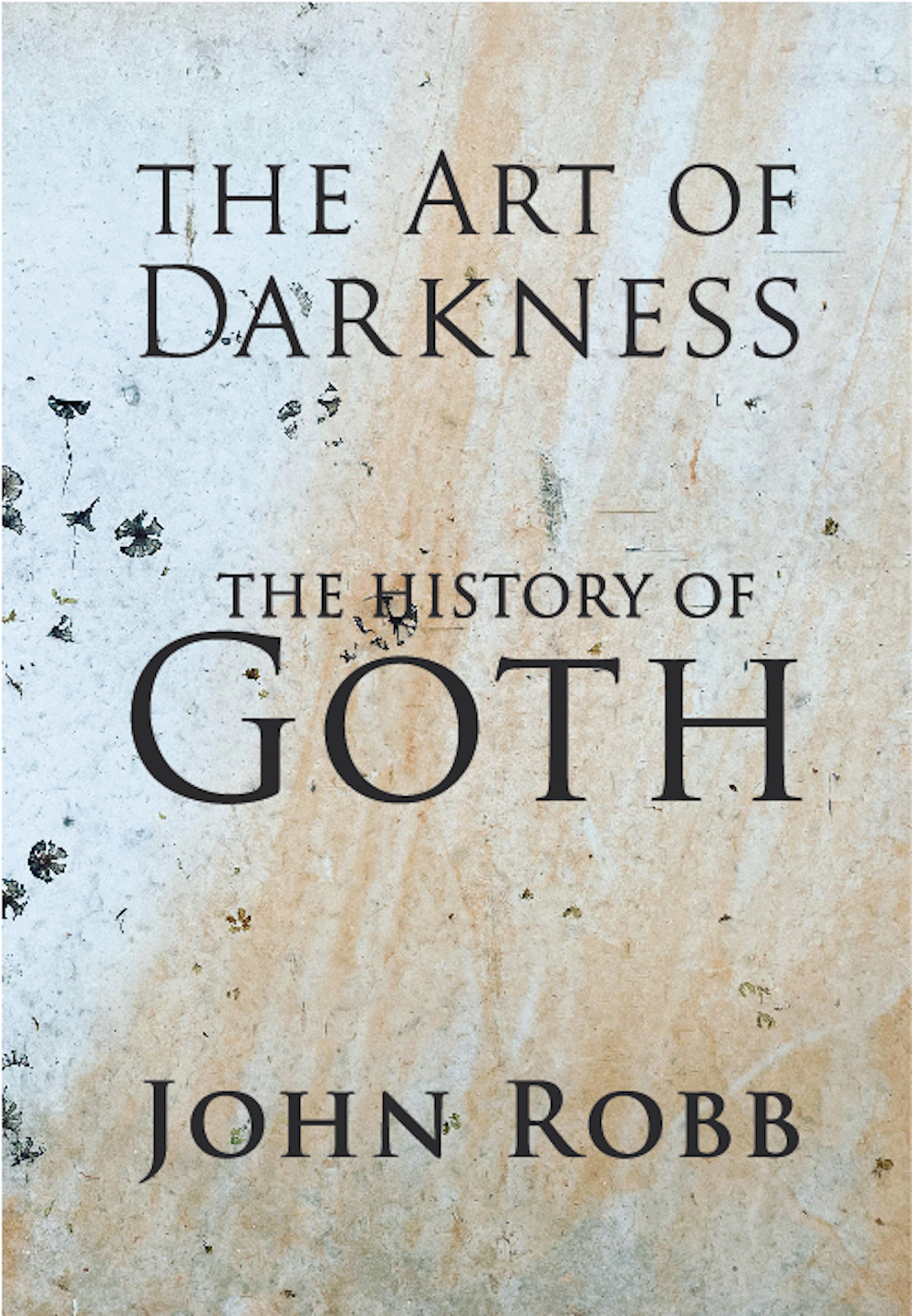
Do You Believe in the Power of Rock ‘n’ Roll? John Robb does, and I’ve got to realise in recent years that you don’t have to do quite so much preparation for a chat with this ever-entertaining Manchester-based, Fylde coast-born alternative music aficionado.
Throw in a few choice observations about glam, punk, post-punk and indie, for example, and you’re away, as audiences across the UK will soon experience for themselves.
The author, bass player/vocalist, journalist, presenter, pundit and all-round man about town is set for a 22-date tour celebrating his life in music, running from late March to early May, where he’s sure to discuss everything from recently released bestseller The Art Of Darkness – The History of Goth to being the first person to interview Nirvana, coining of the term ‘Britpop’, and no end of adventures on the post-punk frontline.
His latest press release throws in ‘many-faceted creature’ too, as well as ‘music website boss, publisher, festival boss, eco-warrior, vegan behemoth and talking head singer from post-punk mainstays The Membranes’. And regular readers here will recall we’ve chewed the fat on many of those fronts before, but this time we’re concentrating on that talking tour.
Growing up in Fleetwood and Blackpool before punk rock ‘saved him’, John formed The Membranes, the highly influential, forward thinking post-punk band whose more recent albums have attracted no lack of critical acclaim. But he’s never one to put all his Lovely Eggs in one basket, so to speak, and that always ran alongside his writing, formative days on the Rox fanzine leading to a breakthrough ’80s stint with the established rock press, thrashing out copy for Sounds, his CV including becoming somewhat instrumental in kick-starting and documenting the Madchester scene.
These days, his Louder Than War website is apparently the fifth most-read UK music and culture site, and like its founder it remains at the forefront of diverse modern culture. Also a talking head on Channel 5 music documentaries and regular TV and radio face and voice, and having also dabbled with his other band project, Goldblade, John’s always happy (and richly qualified) to pitch in on music, culture and politics, having become one of our leading in-conversation hosts, with his own successful YouTube channel and a rightly adored book and music festival, Louder Than Words, annually run on his Manchester patch.
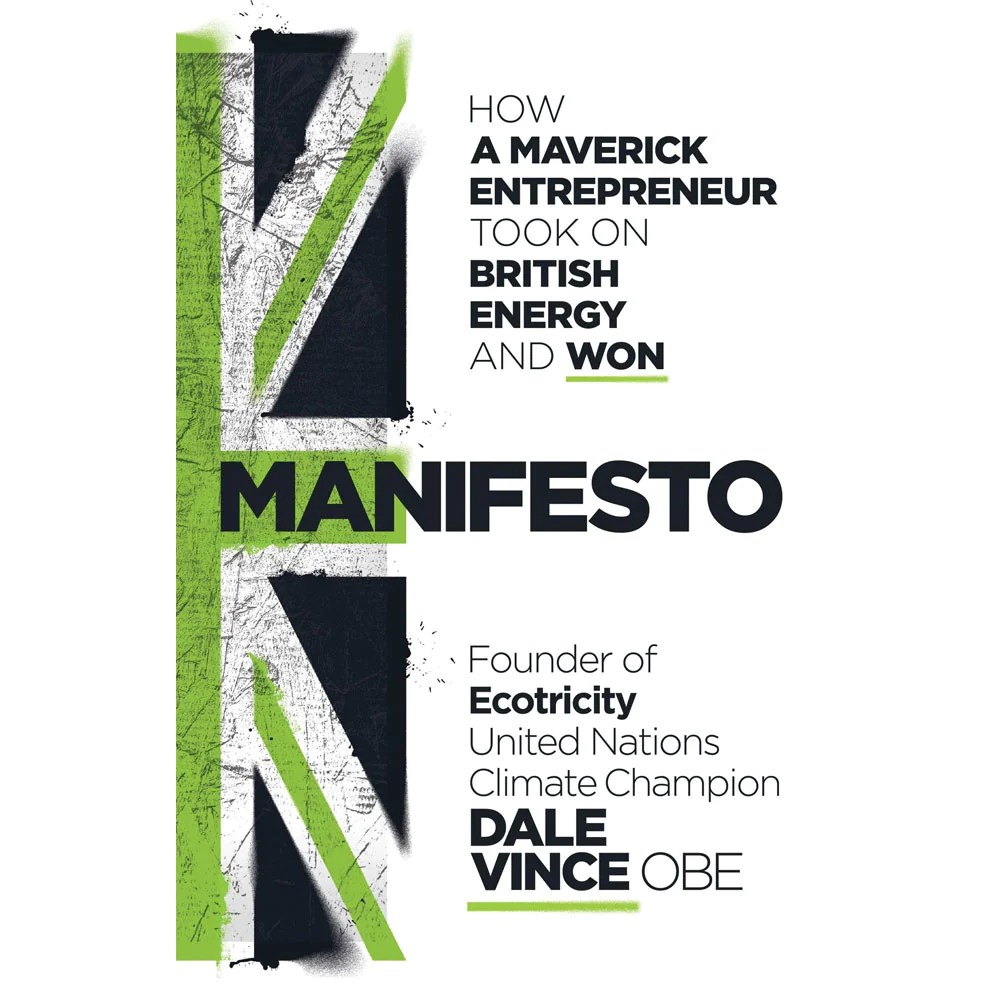
Then there are the best-selling books, also including Punk Rock – an Oral History and The Stone Roses and the Resurrection of British Pop, plus 2021’s publication on leading eco-energy boss Dale Vince, Manifesto, my interviewee now working on his autobiography and collected journalism works, part of the process of that neatly entwined with his Do You Believe in the Power of Rock ‘n’ Roll? tour.
But don’t go thinking he has his own plush office space among the swank of modern Manchester, Nuevo Cottonopolis’ own JR clearly one not to get too anchored down in his work, laughing when I ask him if the seemingly ever-falling rain has confined him to his desk.
“My office is usually just a little posh café in town where I sit and type away, but I’ve been away a few days so I’m just catching up.”
He was in Guernsey the previous week, his first trip to the Channel Islands, but now he’s back, back spinning plates (borrowed from the café, maybe) while looking forward to those live dates, following the success of his last jaunt around the British isles, promoting The Art Of Darkness – The History of Goth.
“Because that book tour went really, a promoter got in touch and said I should go out and do a spoken word thing. I’ll still talk about that book as part of it, but also other stuff I’ve done, for instance that first Nirvana interview, growing up in punk rock in Blackpool, post-punk, and the very DIY nature of it.
“You know, the first gig we played, we’d never been plugged into an amp before, didn’t know what chords were, or anything, it was so fumbling, and lots of people can go, ‘Yeah, I remember doing that as well.’ It’s not just about me. There will be stories that people should recognise, because we’ve all been through that kind of phase, the way punk could just turn people into creatives, who had never previously been creative.
“It was so inspiring, and it will be good to tell that kind of story. The story of bands like the Pistols are really important, but it’s been told a million times, and one of the great things about punk is that it was people in small towns getting it all wrong that actually created something really interesting.”
I was thinking about this recently, be that getting it wrong or just going off at major tangents. For instance, Haircut One Hundred, with Nick Heyward heavily into The Jam and guitarist Graham Jones well into The Clash, but then they went somewhere completely different, helped create an iconic pop outfit. That’s just one example telling a different story, with punk the spark for that DIY approach, inspired kids getting out there and doing their own thing.
“Yeah, the DIY thing was brilliant. Before that, the stage was something locked away from you. I was really into glam rock before punk, including all those bands like Sweet and Mud that you’re meant to pretend you didn’t like now, but were all really ace. And of course, Bowie and T-Rex, but to have any idea of making music seemed to be so remote. Bowie seemed like he was from outer space and everyone else was from London, and in Blackpool both scenes seemed so far away.”
And the consensus seems to be that the prog scene was also out of reach, unless you were some kind of virtuoso guitar or keyboard wizard.

“I think that prog thing’s been over-played. For a lot of us, 12 or 13 growing up watching Top of the Pops, you didn’t really know those people even existed. It wasn’t something you couldn’t attain so much as something you were totally unaware of. The music we really knew about was glam rock, then when I started buying music newspapers in about ’74, we’d read about all these other bands, interviews with bands like Man or Budgie, thinking, ‘How do these people even survive if they’re not on Top of the Pops?’ Not knowing you can spend your whole life being in bands and still not get to that level.”
Are you working on your autobiography alongside this latest tour?
“Yeah, somebody’s asked me to do it, so I’ve started collecting stories. And I’ve got loads of stories.”
I don’t doubt it. Are you thinking the live dates are going to prick your memory on a few more tales?
“Oh yeah, I think so, and we’ll see which ones people will be interested in, and the way to make it all work, so maybe I’ll partially be trying that out as I go along. But there are loads and loads of good stories, being part of that Manchester scene and all those years writing for the music papers, later life adventures like being at the Berlin Wall when that came down, when the pickaxes came out, smashing it down… there’s tons of stuff to put in there.
“But people could go to one of these events and not have any idea who I was – which is totally cool – and still understand the stories, because they grew up in those times and have stories themselves, or if they’re younger it could be like watching an archaeological dig into a pop cultural past! Ha ha!”
It’s a fair point, that archaeological Time Team led by a lad from the Fylde coast who was there for a key part of our cultural history, overseeing Britpop. Madchester, the grunge scene and more, not least what was going on at the edge of Eastern Europe. You never had pretensions of being there in the first place, I’m thinking. How did that happen?
“Yeah, you can’t really say that yourself, can you. You just do your thing. And I guess, in a way coming from a place like Blackpool, you could never be cool. You weren’t hanging around with Vivienne Westwood. You’re too far away. It doesn’t really matter what you get into, you just follow your instinct, and often I’ve got into things on that basis… like Nirvana, before the first single.”
That debut release being a 1988 cover of Dutch rockers Shocking Blue’s 1969 track ‘Love Buzz’, on Seattle indie label Sub Pop, made record of the week by Sounds, who’d already carried that first interview with John.
“The few people that heard them were saying, ‘These are very good,’ and I’m going, ‘These are amazing!’ But I didn’t have any idea they were going to sell millions of records. They were just really great. It was more an instinctive thing.”

How do you look back on those Sounds days, and how long a spell was that?
“About five years, and the great thing about Sounds was… if you were writing about a new band in the NME, you’d have to check their midweek chart position first, whereas in Sounds, you’d just write about them. They’d say, ‘We’re not always into what you write about, musically, but we’ll just let you write about it.’ For us freelancers, that’s what made it a really brilliant paper. And what’s the point of having a freelancer on your paper if you don’t trust what they write about?”
Remind me how you got involved? I was – a few years later – this lad from the Surrey suburbs hoping to be spotted writing about indie bands for my Captains Log fanzine, London and South-East based. But in retrospect I wasn’t pushy enough to break into that world. I’m guessing there were mentors for you though that truly believed and pushed you, ultimately giving you that springboard.
“I had the fanzine, but also wrote for ZigZag. The weird thing is that I had a bit of a fallout with James Brown, who I’d known since he was 14, this kid writing a fanzine. But to sort of make up, he got me into Sounds. But it’s not like being a proper journalist, being a music journalist. It’s not like you go for a job interview. You kind of stumble into it. And in the end, if you’re a massive music-head and can write a bit, you’ll be a music journalist. It was never a career option… that’s why it’s funny now – although a lot harder as there’s a lot less money – that people say it’s not a career option. It never was a career option! Ha ha! It was always a very chaotic existence.”
Did you go straight from living in Blackpool to London, before settling in Manchester?
“I never lived in London. I went to Manchester… and stayed. But I’ve always moved around, couch surfing and so on.”
Do you think that, pre-punk days, the music papers would have entertained the idea of a writer living away from the capital?
“Well, I write about music from all over the world. I don’t have geographical boundaries. Being based in Manchester, it’s an obvious thing to say now that it’s a huge music scene. But even then, it was a cool music scene, and I felt close to that because I already knew people there, and there was always lots to write about.”

The Art Of Darkness – The History of Goth has done really well. And not only have you written a mammoth book there, but you also put in the legwork to sell it, with lots of public events and so on.
“You have to, really. Initially, it was self-released, because I fell out with about three publishers, as their idea of what the book should be about was different from mine. So I bought the book back off one of them, put it out itself. I had no idea how it was going to do. I thought, ‘If this flops, I’m going to lose quite a bit of money. But… then it went crazy, selling hand over foot, and I couldn’t keep up with it while I was on tour. Manchester University has a printing arm, though, and they took it over for me, because you don’t want to be on a train trying to get to the ferry for the Isle of Wight and trying to order 20 books for events. It’s so difficult. So they kind of took over, and it’s been a lot easier since, and just carried on selling. It’s way over 20,000 now. That’s a relief. Ha ha!
“And I like touring, so that’s a plus. I know how to do it, being in a band for years. I can arrange my own tours. I don’t have to wait for a book company to get me three Waterstones events. I can go out there, get in touch with record shops, venues, anyone who’s got a space, up and down the country. If they can cover certain costs, we can do it, and loads of people are up for it.”
It’s great sharing those stories at public events too, isn’t it, as I’ve found out with my Clash and Slade events. And you really have very little idea of what tales will come your way in those situations.
“Oh, I love that, and when I tour – all kinds of tours – I sit in with the merch. it’s nice when people buy stuff, because that keeps you going. But, you know what, it doesn’t really matter if they do – I just like to talk to people about music and stuff. My ideal gig – as well as sold out! – will be one where you get to chat to everybody who’s there, and hang out.”
At that point John mentions, by way of example, the second date of the tour, on March 23rd at Chorley Theatre, close to my patch.
“I haven’t been to Chorley since 1983, when I played a gig there. A pub, by the town square. I’ve got photographs of the gig that someone sent me, and I remember it very clearly. Luckily for a writer, I’ve got a photographic memory.”
Chorley has never really been seen as on the circuit, despite the odd memorable show, such as The Fall at Tatton Community Centre, just across town, where the audience included members of James, something Jim Glennie told me all about in a past interview.
“Well, the gig circuit was really ad hoc then. The venue campaign going on now is brilliant, and it’s really important. But I remember how ‘untogether’ gigs were in the ’80s, the person putting on the gig often younger than we were… probably not even allowed in the venue! Then they’d run out of money, collecting all the money, putting it in a plastic bag. It was super-DIY, wasn’t it. Ha ha!”
That grass roots image reminds me of you telling me about The Membranes playing upstairs at the Enterprise in Chalk Farm, London, on the evening of Live Aid in the Summer of ‘85, five weeks after my own visit to Dan Treacy’s Room at the Top happening there, catching That Petrol Emotion.
“Yeah, the only gig in town on the night of Live Aid, about 200 people crammed into a room that should have held about 130! There was a bar downstairs, and a massive crack appeared in the roof, so the landlady came and told us off! Somebody sent me pictures of it.”
I seem to recall from my own visit that the stage was no more than a step up from the crowd, the audience on the front row – the one in front of me – more or less linking arms to protect the band from stage invasions.
“Yeah, it must have been about three inches high. I’ll have to look back at the photos! And I never actually saw Live Aid, because I was playing that night. It’s like opposite ends of pop culture, musically – there were the bands that played Live Aid, and they were the diagrammatic opposite of our world, really.
“I’m not knocking it. I know Bob Geldof, he’s a good guy, and what he was doing was good. But as a piece of captivating entertainment, that’s different, isn’t it. Ha ha!”
And I’m guessing no one offered to transport The Membranes on Concorde to the next gig.
“Ha ha! No!”
You mentioned Chorley Theatre, a lovely venue that I know well, and there are lots on this tour that must jump out at you, such as the Music Room at Liverpool Philharmonic.
“That’s a really nice space, and it’s a slightly different circuit than what I’d normally do, so a lot of these are new venues to me. There’s towns on this tour I’ve never been to, although I’ve been to nearly every town in Britain. I’m looking forward to going to places like Pocklington and Selby, which I’ve passed but never been in.

“And when I go to any town on tour, we always look around, so there will be things about that town threaded into the talk. Like when we play in Norwich with the band, we go to this lookout tower, by the mediaeval walls, the Cow Tower. Every gig, I ask, ‘Anybody ever been to the Cow Tower?’ and people get really confused!”
That’s a late 14th century artillery blockhouse, pop kids. And talk of Norwich got me on to one of my favourite subjects, discussing various bands based there in the first half of the ’80s, chiefly The Farmer’s Boys, The Higsons, and Serious Drinking, and how there was supposedly no such scene until John Peel’s on-air patronage for those outfits created one.
“Yeah, a made-up scene, but the bands were good enough to make it worth that label. They all had cool, really catchy songs, and if those bands were going now, they’d be going really well. It’s funny now, looking back at that post-punk period – all the bands were kind of pioneers, treated as outsiders. Now you hear bands doing really well in the indie mainstream, like Yard Act from Leeds – they’d have been the sort of band that supported us in 1984 – quite quirky, really good, about 100 people liking them; but on today’s scene, they’ve had a No.2 album!”
Will you properly prepare for these live shows? Is there a framework you try to stick to? I can’t imagine you being too rigid on that. You’re more off the cuff, surely. I can’t imagine you getting lost in the headlights, but there must be moments when the mind goes blank.
“It never goes blank. I’ve been told to have some kind of structure though! I’ll probably have a setlist and just move around that. But I can’t learn it. I know Henry Rollins quite well, and seen him do his thing loads of times, and thought he was quite off the cuff, but he learns the whole thing, one end to the other. That to me is really impressive – how do you learn two hours of stuff? Stewart Lee is the same. He’s brilliant, and I asked him the same and he said he kind of learns most of it, although he goes off on those tangents. I’m impressed with that. I’d rather stand there two hours, off the cuff. Nearly everyone goes, ‘Oh my God, how can you do that?’ But I find it much easier to do that than learn it! And I like to change it every night.
“In Chorley, it’ll definitely have a Blackpool, Preston, Chorley and Lancashire line to it, but in Southampton I’d have a different version, alongside the main stories. It’ll be about the place I’m in, such as the music scene that came out of those towns and how those things connected with me. “And there will be two halves some nights, the first half my talk and the second half me in conversation with somebody then a Q&A with the audience, which is great – people could be asking me completely random stuff!”
At this point I suggest he gets local lad John Foxx along for an ‘in conversation’ at Chorley, letting on about Phil Cool getting in touch with me after I interviewed John, giving his side of a story that connected them in their school days.
“There are some weird crossovers, aren’t there! Like with Blackpool’s music scene. Jethro Tull went to my school, way before me, and when I interviewed Lemmy once, who also lived in Blackpool at one stage, I asked, ‘Did you ever meet Ian Anderson?’ And he said, ‘I didn’t know him that well, but yeah, I sold him my guitar… I wished I’d kept it!’ So when I interviewed Ian, I asked, ‘Did you buy a guitar off Lemmy?’ And he said yeah, remembering what he paid for it and everything. They both knew Roy Harper as well. He used to shout poetry at seagulls, and everyone was a bit scared of him! You wouldn’t think of those three being on the same time zone, but sometimes, in a very small town…

“And yet David Ball from Soft Cell and Chris Lowe from the Pet Shop Boys went to the same Blackpool school, and were one year apart, but never met each other.”
And what’s next for you, writing-wise, beyond the autobiography?
“I’m collating it now, putting little stories down, but I’m also writing a children’s book… kind of not for children! I wrote it in the pandemic, and about a month ago went back to it, thinking ‘This is actually pretty good!’ It’s about England… mythical England, it’s about nature, it’s pretty trippy, but kind of works as a book. It’s got Pan in there, running around Lancashire. It’s not going to be a bestseller, but someone who read it said it’s really evocative about nature. And because I still own my little book company, I thought I might put out a limited edition.
“I’m also still working on this green education project with Dale Vince, helping create green jobs. We’ve got the courses together now, so that’s closer to a launch point. There are so many projects going on, including a zero carbon project in Blackpool.
“I’ve said for some time that one thing Blackpool really needs is a university. Now they’re actually going to open a branch of Lancaster University in Blackpool, which is great. But I still think Blackpool needs it own university. Coming from around there you notice how snobby people really are about that. The university in Preston {UCLan} has done wonders for that area, it’s got a whole other vibe in the city centre, which you wouldn’t normally have.
“I went to Stafford Poly, which became Staffordshire University, in Stoke now. I went back a couple of years ago, and they gave me a doctorate. I only ever went to one lecture and got thrown out, but now I’ve finally got my degree, after 41 years!
“The weird thing is that Dale Vince went there at the same time. When I helped write his book for him, he told me he went to this ‘really boring polytechnic in the Midlands.’ Turns out it was the same one… and the same year! He obviously went to as few lectures as I did. We never met each other.
“Meanwhile, Blackpool wants me to be one of five representatives for a project in the House of Lords next month. That will be really cool. I’ve loads of ideas for all that. I don’t know how it’s supposed to work, how they choose where universities should be. But maybe we just need to cut the crap and make this all happen.
“I mean, why’s Blackpool not a city? I was in Brighton over the weekend, and it’s great, but it isn’t massively bigger than Blackpool. It’s going for city status too, but they won’t have it. Again, it’s snobbery. Living in Manchester now, I find every normal person loves Blackpool. And people like Ian Brown say, ‘You were so lucky growing up in Blackpool.’ They still go for day-trips.”
And while I’m on, I’ll mention how much I enjoyed my first visit to Louder Than Words last November. It was great to see Slade legend Don Powell, and there was a real buzz about the place. I just wished I had the time to fit in a few more events. Maybe next time.
“Ah, you should. And maybe we need Don back again too. We’d love that. Everyone loves him, and he loves going.”
For past feature-interviews with John Robb on this website, follow these links:
Journey to the Art of Darkness – talking The History of Goth with John Robb (Feb 25, 2023)
On the frontline, embracing the future – putting the world to rights with John Robb (Jul 9, 2021)
Fylde under nature – talking The Membranes’ new record and much more with John Robb (Jun 5, 2019)
Tripping the dark fantastic with The Membranes – in conversation with John Robb (Dec 1, 2016)

John Robb’s Do You Believe in the Power of Rock ‘n’ Roll UK tour 2024 dates: March – 22 Selby Town Hall; 23 Chorley Theatre; 27 Kendal Brewery Arts; 28 Sale Waterside; 29 Halifax Square Chapel. April – 10 Sheffield Leadmill; 11 Pocklington Arts Centre; 12 Buxton Pavilion Arts; 18 Worcester Huntingdon Hall; 19 Bristol Folk House; 20 Southampton The Attic; 21 Cambridge Junction; 22 Sudbury Quay Theatre; 23 Colchester Arts Centre; 24 Norwich Arts Centre; 26 Chester Storyhouse Garret; 27 Liverpool Philharmonic Music Room; 28 Leeds The Old Woollen. May – 1 Brighton Komedia; 3 London Woolwich Works; 4 London Soho 21; 9 Edinburgh Voodoo Rooms. For more information check out John Robb’s Twitter, Instagram, and Facebook links.


 writewyattuk