
Once upon a time in an era seemingly rife with bands splitting ‘due to musical differences’, my own band started a rumour, then denied it, that we’d split up due to ‘t-shirt differences’. That was in the late ’80s, the idea no doubt fuelled by a few pints – as was the case with most of our creative gambits – and realisation that this could be the best way to end it, the previous idea of having a six-month sabbatical dashed when it emerged that none of us could agree when that should start. In an era of shambling indie outfits, we were arguably the most shambolic.
It wasn’t so much about tensions within the group as that we were a garage band seemingly fated never to leave the garage (at least until the lead guitarist’s homebrew was polished off). That’s where we started, and give or take a couple of practises in a bandmate’s cottage near Windsor and at my brother’s place on the outskirts of Woking, the rock ‘n’ roll dream stalled right there. We could have been huge, but decided to quit while we were ahead.
But in the creative partnership I’m about to tell you about, it was a t-shirt that brought this band project together, Swansea Sound’s ex-Pooh Sticks frontman Huw Williams (aka Hue Pooh) at a festival in Laugharne, Carmarthenshire when he saw ‘poet, philosopher and failure’ Brian Bilston deliver his set in a Heavenly top. Accordingly, news of that occurrence was shared with bandmates Amelia Fletcher and Rob Pursey, who happened to be among the leading lights of aforementioned ’90s indiepop outfit Heavenly… and also make music with The Catenary Wires these days.
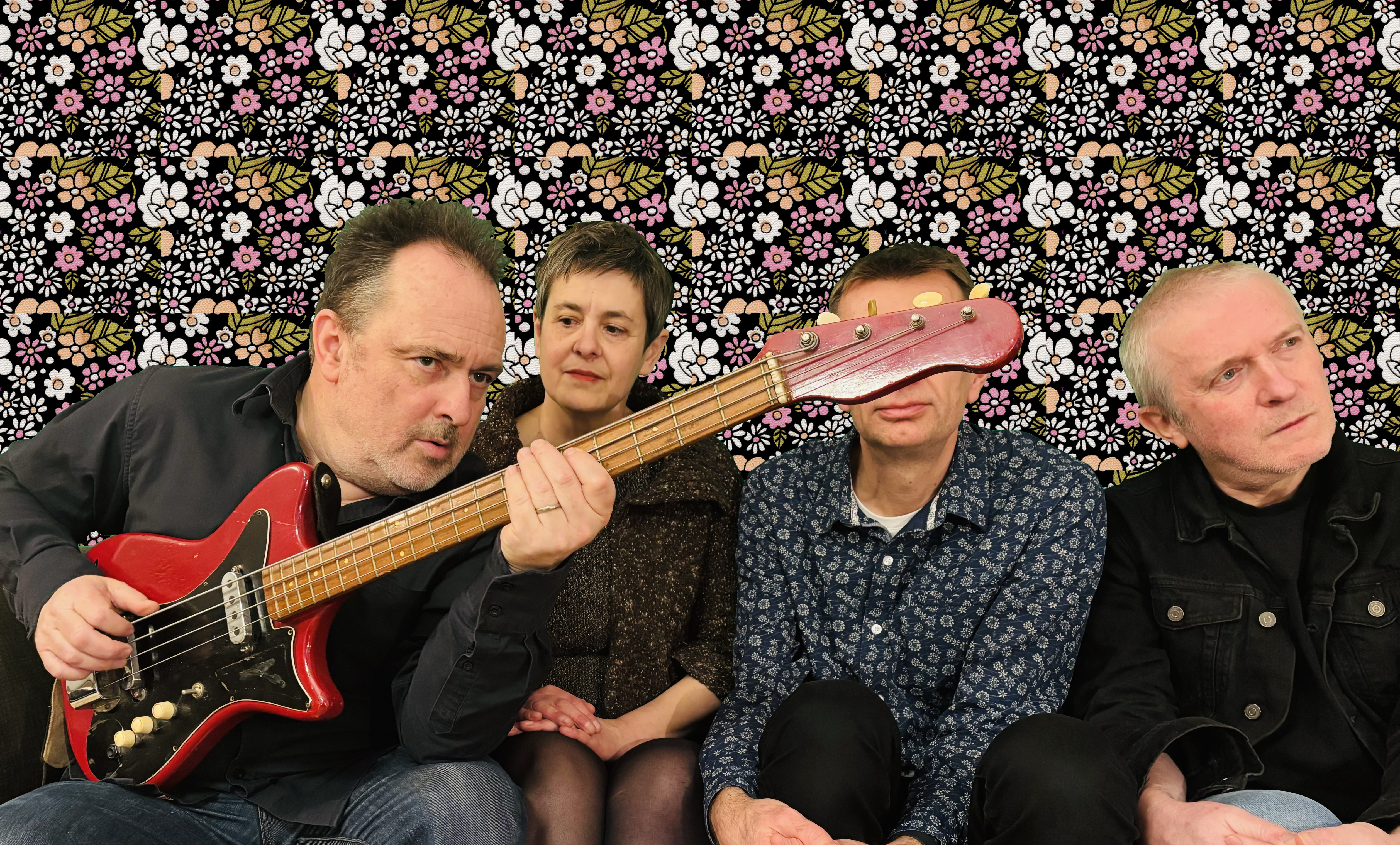
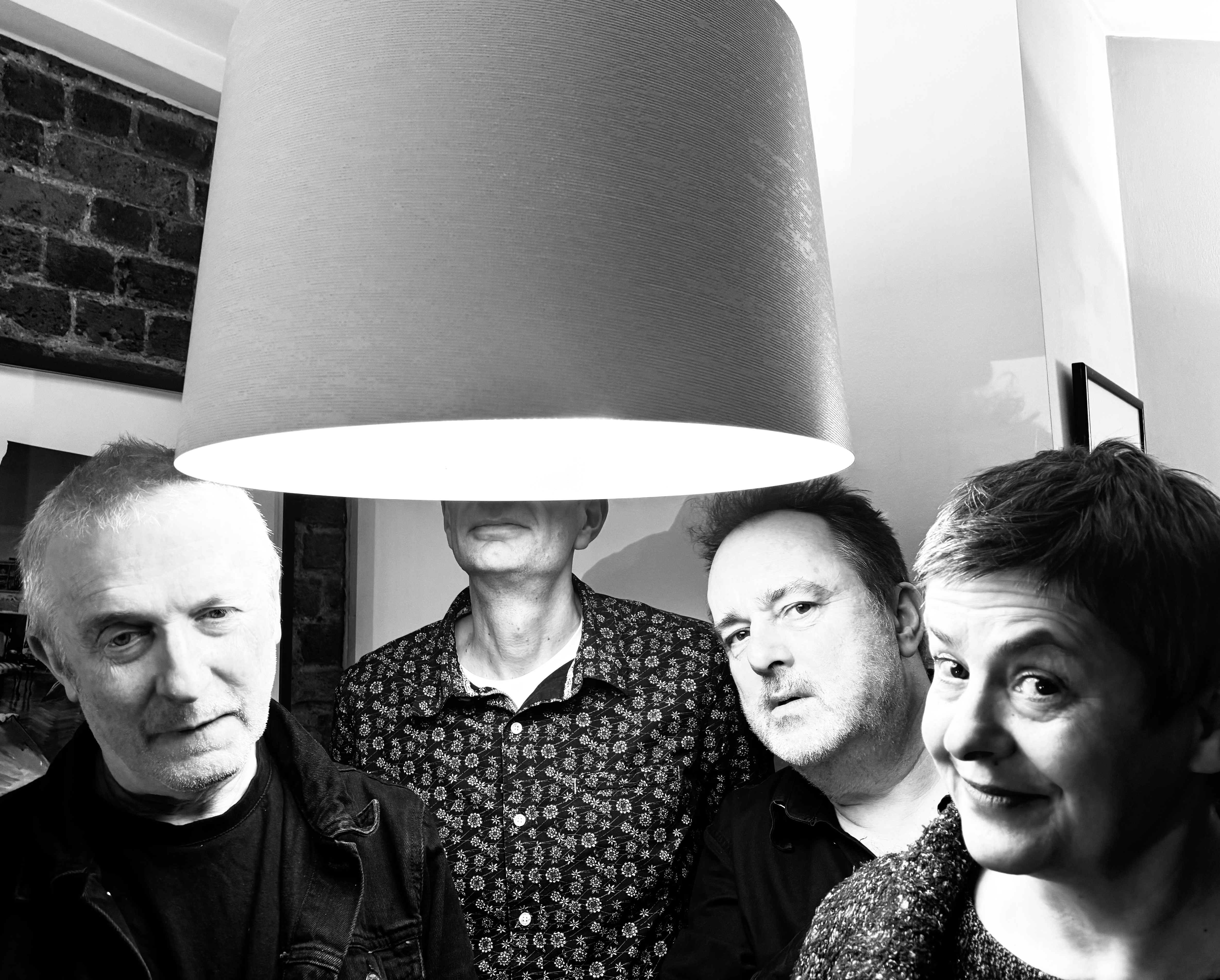
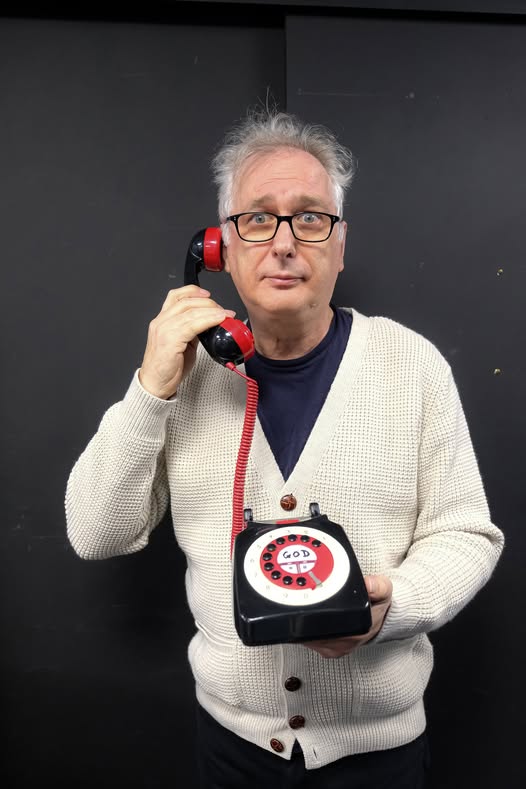
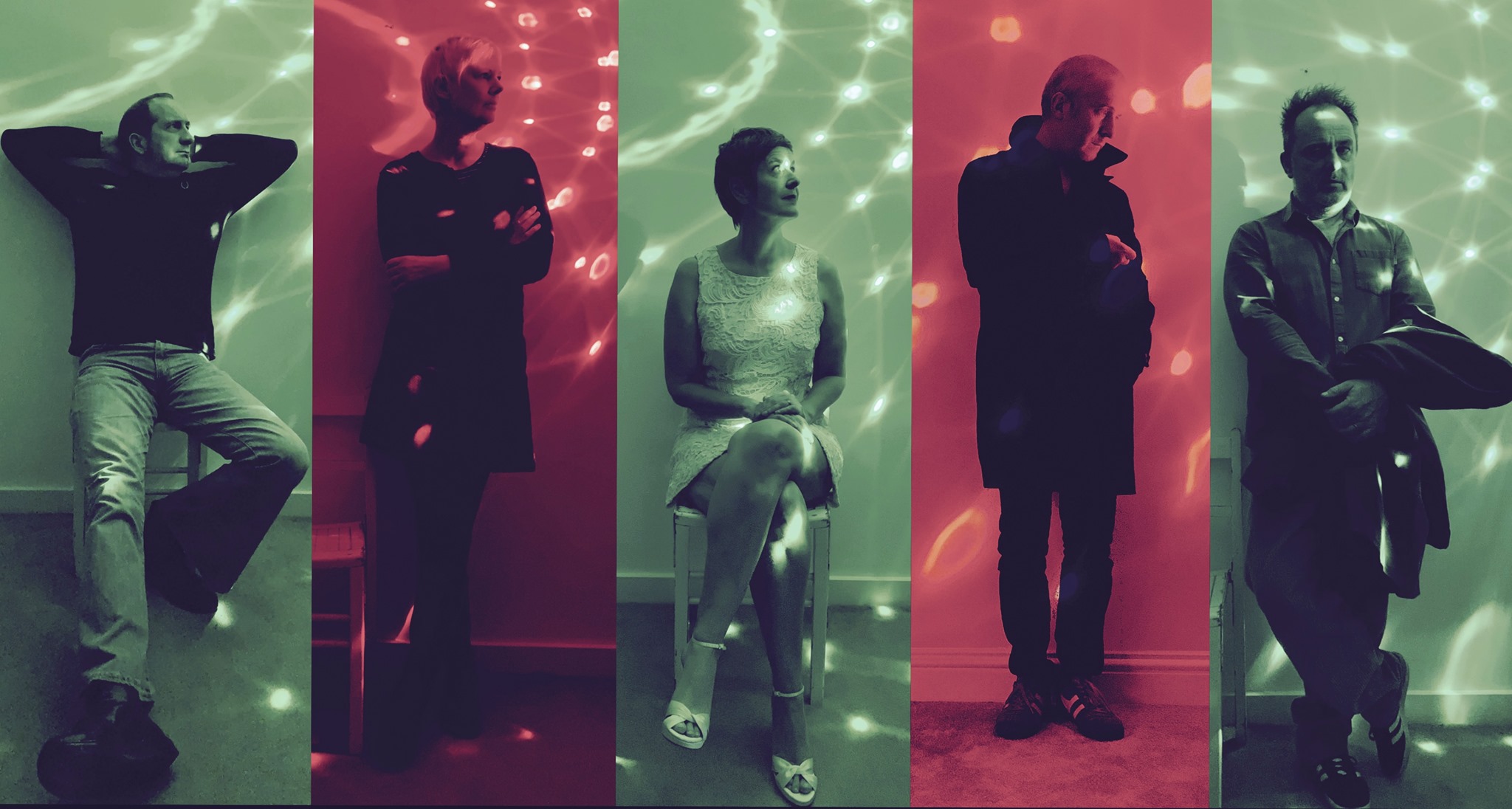
You’ll know Brian. One of the UK’s most popular poets, he started out by sharing his poems online and now has over half a million followers on social media and a raft of bestselling books. After a succession of sell-out live shows in his (ahem) own write, he’s currently on tour with writer, poet, film and TV producer Henry Normal, and as of last week now has a collaborative LP with The Catenary Wires out there, with Brian, Amelia and Rob joined by Ian Button (drums) and Fay Hallam (keyboards), this latest release coming four years after the previous Catenary Wires long player, Birling Gap (featured in this 2021 feature-interview) since when they’ve focused on dates around the world with Heavenly and Swansea Sound.
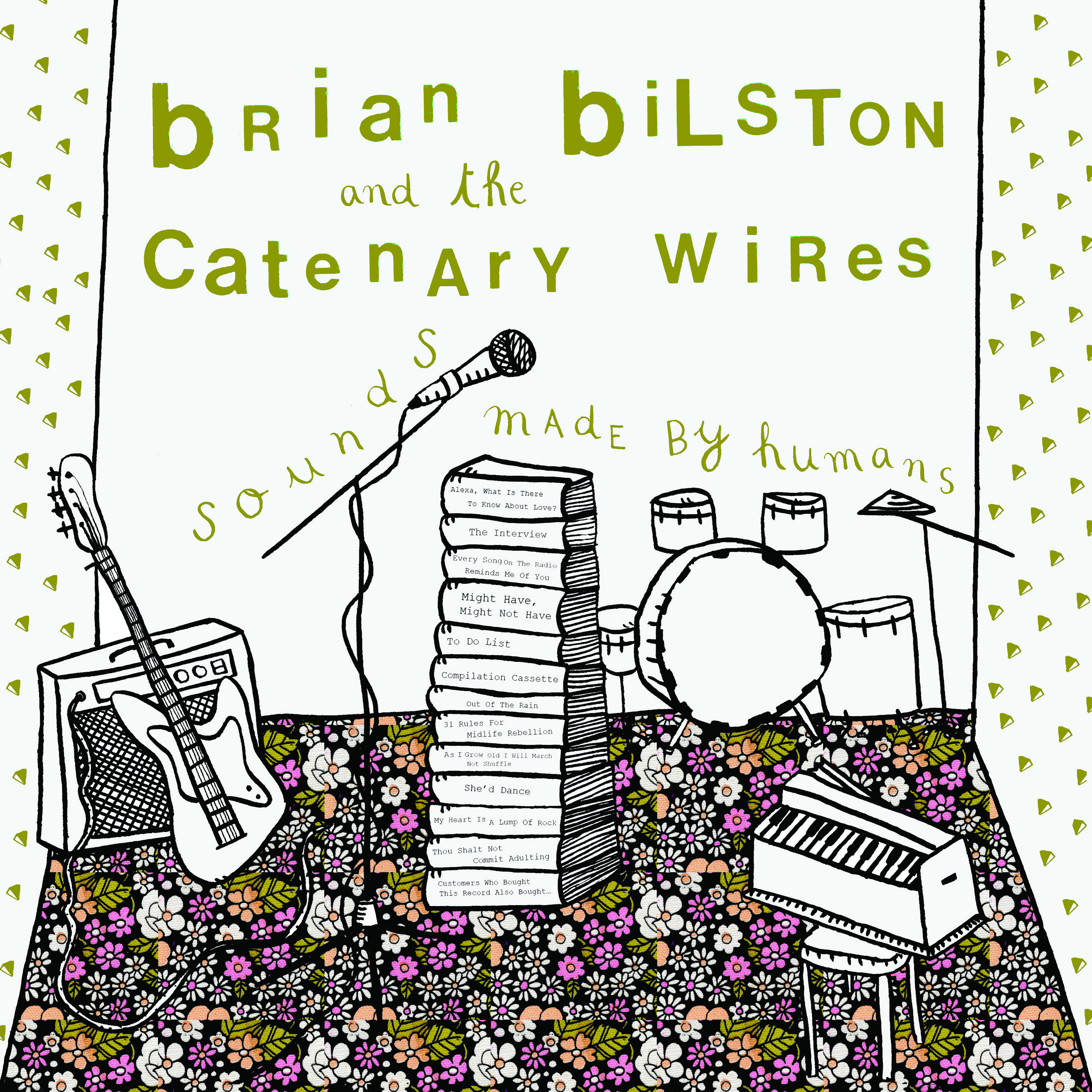
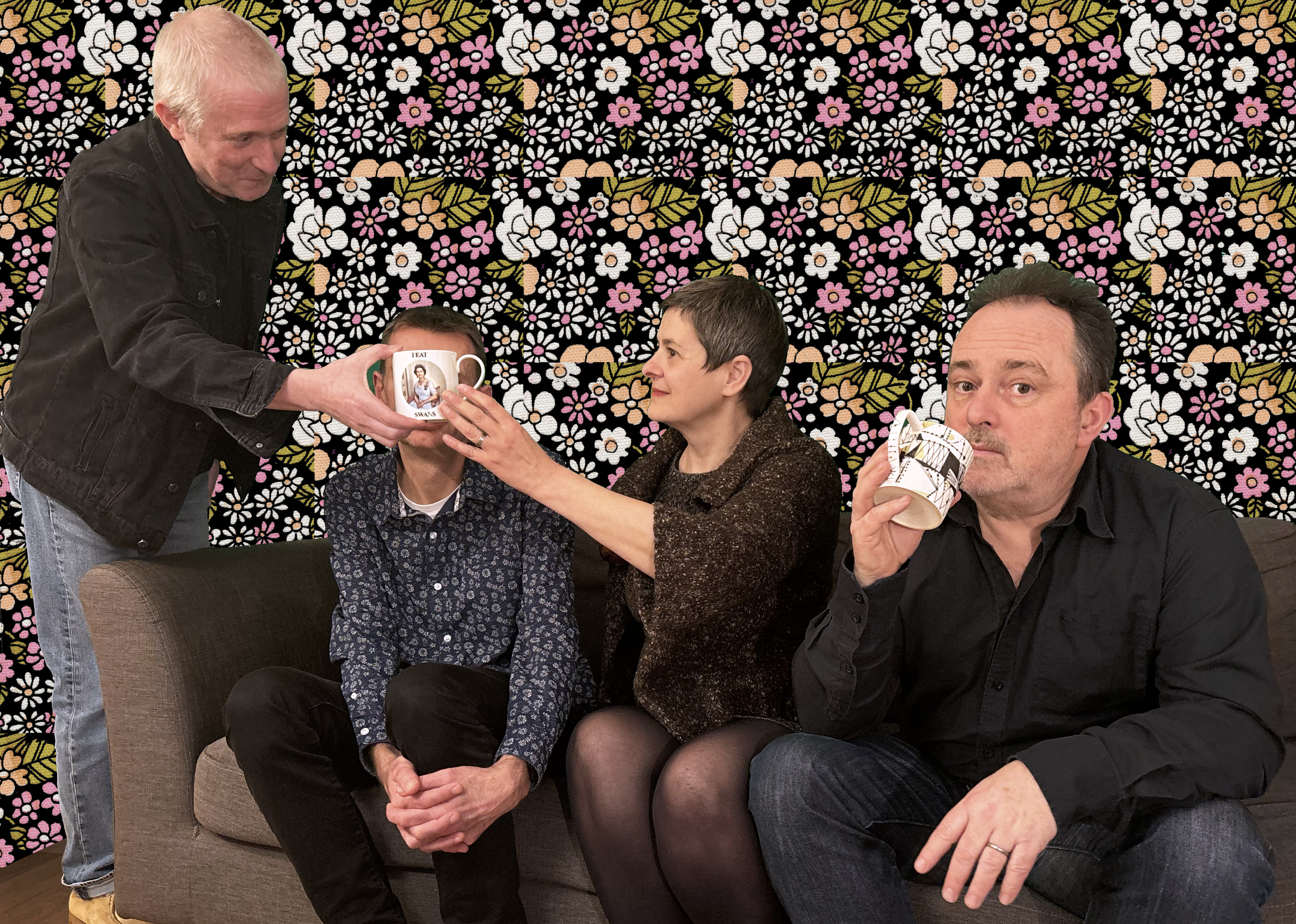
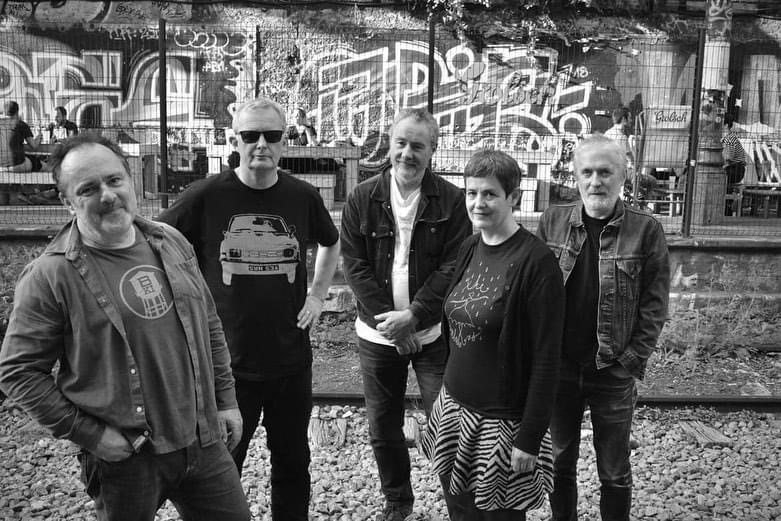
It was a couple of years ago that word reached Rob and Amelia that Brian was a Heavenly fan, and given that they were fans of Brian’s poetry, introductions were made and friendships formed, the result of that link the rather marvellous Sounds Made by Humans. And we’re not talking a set of readings with musical backdrops. As the band put it, ‘It’s a collection of songs, where words and music have become completely intertwined. There are verses, and there are choruses. There is no ‘riffing’, no improvisation. In many ways, Brian’s poems are already like pop songs: brief, direct, and witty; sometimes poignant, sometimes biting and political; but always economical, and always accessible.’
It’s bloody good too, Rob taking 13 of Brian’s poems and creating melodies and arrangements which were then played by the full band. Sometimes the words are sung by Amelia or Rob, sometimes they are spoken by Brian, and sometimes both these things happen at once. As they put it, ‘This is a pop record where the poetry and the music are equal partners: sounds made by humans in perfect artistic alignment.’ All the better a reason to get hold of Brian and quiz him more while he’s back home in Oxford on a 48-hour pass after 15 shows in 17 days (‘very rock n’ roll’, as he put it) with Henry Normal. So how’s the tour going? Is this your biggest such venture so far?
‘It’s going very well. Always amazing to see how many people turn up for what is, at heart, an evening of poetry. We did a similar tour last Spring – although that was a little more spaced out, so more time in between shows to make progress with the laundry.’
Not only is Henry good company, but I gather he does the driving and you get free ‘what went well’ mentoring regarding nightly sets, from a fella with a rather impressive CV.
‘Yeah! It’s a huge privilege spending time with Henry. He’s so experienced and has real insights into what works on stage and what does not, particularly in terms of comedy. Throw in the driving, too, then I’m sure I’m getting more out of the experience than he is.’
Your itinerary included the Glee Club in Birmingham. Does this lad from Birmingham enjoy hometown gigs, or is there more pressure performing on your old doorstep?
‘It does feel different to perform in front of your nearest and dearest. I’ve got better at putting that to one side, but part of me still wonders what they must make of it all, not least as I was always the quiet, shy lad in the corner who went out of his way not to be in the spotlight.’
Seldom do those who don’t get along to your gigs see photos of you. Does the supposed secrecy around the identity of the ‘Banksy of Poetry’ make things trickier? (cue shouts of ‘I’ve seen you hanging out your Y-fronts, Brian Bilston!’ from Midlands audiences)
‘The whole secrecy thing has become increasingly hard to maintain, particularly now I’m touring. Most people who come to see me, though, are very good at not sharing pictures. I’m more laid back about it all now – I never really intended to be quite so mysterious originally, but after a while I started to like that no one knew who I was. Even now, I think I’ve only ever been spotted twice out in the wild.’
Your attempt at anonymity tells its own tale, but do you still feel you’re a rather shy, somewhat reticent poet rather than out-and-out performer?
‘I’m still shy but a lot more confident on stage these days. I feel I know what I’m doing – and if people don’t like it, it’s their problem not mine! I don’t think I’ll ever be a ‘performer’ as such, though; I simply don’t have the dance routines.’
Did you get your early live music grounding in Birmingham? And if so, what shows stood out?
‘I didn’t go to many gigs during my teenage years. Partly because I didn’t have many people around me who shared my taste in music; but also, because it used to be vaguely terrifying to leave the house at night. Two gigs stand out though: Lloyd Cole & the Commotions at the Odeon in about 1985 and a couple of years later The Wedding Present at the Irish Centre in Digbeth.’
I’ve also heard mention of The Smiths and a few more at the more jingly-jangly edges of the spectrum as influences.
‘Annoyingly I missed out on The Smiths; I’ve seen Morrissey live a few times but the less said about that, perhaps. I only saw Heavenly once before their reunion shows last year. I’ve seen The Wedding Present lots of times, possibly more than any other band. The Fall, the Blue Aeroplanes and Half Man Half Biscuit were all bands, though, I’d see pretty much every year.’
I see songwriters like Paul Weller, Chris Difford, Ian Dury, John O’Neill and Pete Shelley among our foremost poets, building on what came before through Ray Davies, Lennon & McCartney, Bob Dylan, and so on. Do you see a distinction between songwriters and poets?
‘I don’t really see a huge distinction. In both cases, it’s people doing things with words to make a point or present a world view or simply to express how they feel. It’s obviously easier in a pop song to get away without saying much if the tune is catchy enough, but I’ve always been drawn to songs with smart, articulate and funny lyrics; all those you mention above tick that box, as do Stephen Merritt, Lloyd Cole, Nigel Blackwell, Mark E. Smith, to name a handful.’
Are your poems chiefly written as poetry, or is there a dreamer within that sees them being performed by a band, preferably your own?
‘I’d never really thought of them in any other way than words on the page. That some of them ended up first being read by me on stage, then reinterpreted as proper songs, is a development that still makes me feel mildly astonished.’
Were there a few ‘pinch me’ moments in the studio, a realisation that it’d come to this – cult musicians putting your words to songs?
‘Definitely. Even now I’m not altogether sure I believe it. One of the poems I read on stage is a mock-inspirational poem called ‘Message to the 14-Year-Old Me’. I think if I was able to send a message to the 19-year-old me that I’d end up making music with Rob and Amelia, he would have dismissed my words as the ravings of a deranged old man.’
Did you instinctively have an idea of the poems you felt could be used?
‘I wasn’t completely confident in my choices. They were driven, though, partly by structure – poems with regular structures, often incorporating some element of rhyme – and partly by topic (love poems, poems involving music, poems about issues to do with getting ‘old’).’
Did you give Rob and Amelia a feel of what you like, or leave them to it, knowing their track record?
‘We tried to avoid conversations at the outset about what we liked, or examples of where poems had been put to music successfully before. It felt a little nerve-racking, to know what might be coming back at me once Rob had thought about the music: what if I didn’t like what he did. Fortunately, that was never an issue; I was bowled over by how he’d managed to capture the poems in his arrangements, particularly the mood of each one.’
Were the poems pretty much fully formed, or tinkered with in the studio?
‘Some songs just seemed to work first time and only needed minor tinkering; a few, though, needed a little more back and forth. From my end, sometimes I’d rewrite words – or write new lyrics so the song could have a chorus or a refrain. Rob, in turn, would try out different arrangements, occasionally starting over again; it was a very collaborative process.’
This wasn’t your first foray into a rock ‘n’ roll world. Tell me about Mad Cow, allegedly ‘Swansea’s answer to the Happy Mondays’. Was that in your uni days?
‘That’s right. We had a few of our songs but mainly did covers (Velvet Underground, Channel 4 News theme, etc). Whenever we played, one fan would join us on stage with maracas, first changing into a leotard and floral bathing cap. We were quite a shambles really… in a good way.’
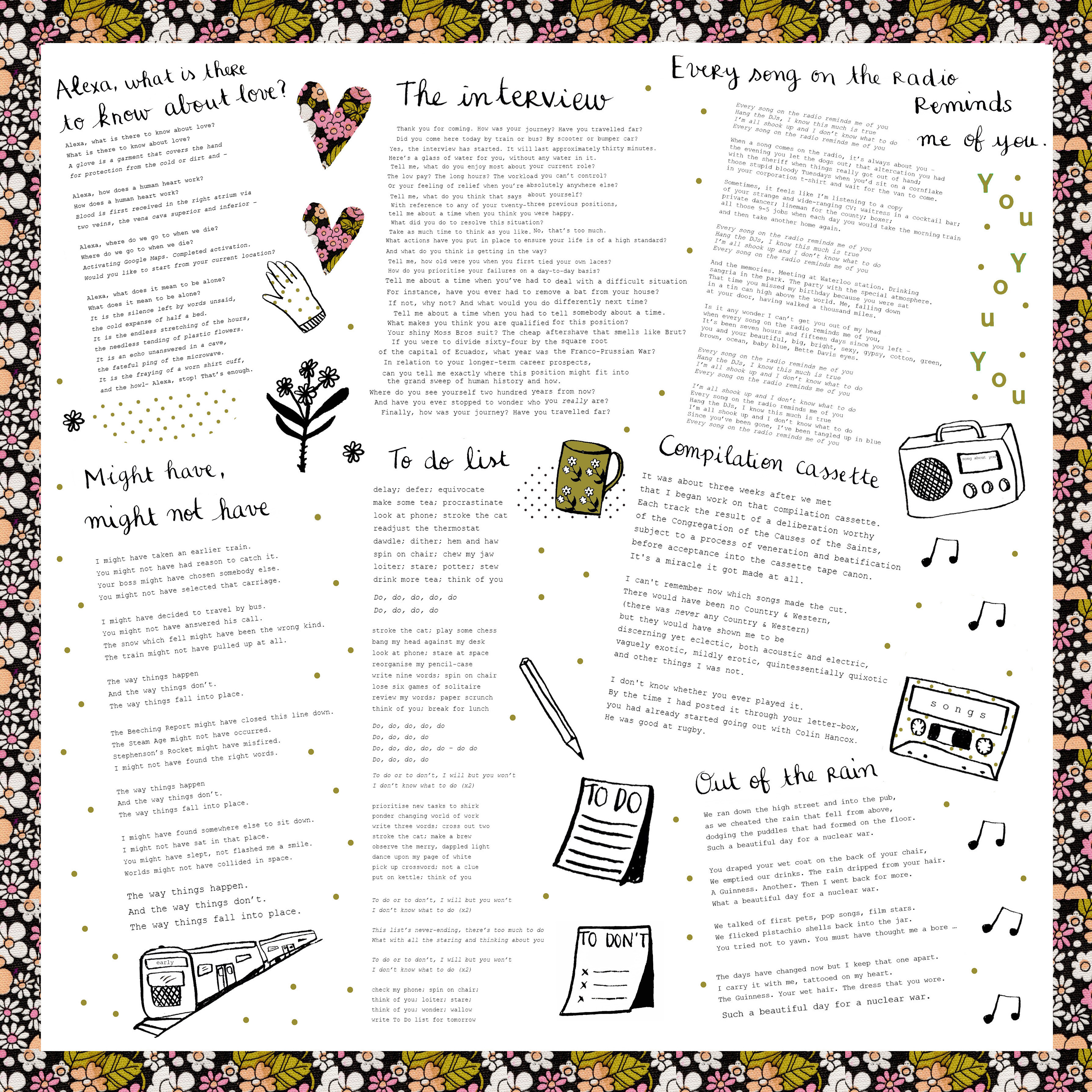
At this point we get on to Sounds Made by Humans, side one, opener ‘Alexa, What is There to Know About Love?’ For all its perceived humour it’s rather deep, driven by a Cocteau Twins-like vibe, and I get the impression that’s your M.O. in poetry – mixing light and shade.
‘Yes, and this is a really good example of where Rob totally got the mood of the poem from the outset. It’s about loneliness more than anything, alongside a feeling of alienation caused by technology, and I think he really captures that in his arrangement. There’s a haunting quality which I really love.’
Regarding ‘The Interview’, I don’t think I could be bothered with the rigmarole of a standard job interviews these days. If it’s a case of working with someone on the same wavelength, fair enough, but that ‘what would you bring to this job?’ malarkey grates. Was that part of your motivation – ‘been there, done that, never again’?
‘This stems from having spent several decades working in an office, being on both ends of the interview process. I feel sorry for anyone who has to go to an interview; it’s so hard to show anyone the real you in that situation, and they can be very intimidating experiences. There’s also a falsity we often have to bring to our answers in order to give the replies that might give us the job, for example ‘where do you want to be in five years?’ Frankly, anywhere else but here.’
And how, as you ask here, do you prioritise your failures on a daily basis?
‘I start with the quick win failures – such as forgetting it’s bin day – before moving on to larger, existential failures.’
‘Every Song on the Radio Reminds Me of You’ is a lyrical masterpiece. I recall hearing ‘She’s Not There’ by The Zombies in my youth, thinking ‘That’s about my breakup!’ Hundreds of love songs followed that made me feel similarly. PD Heaton tackled the subject with a degree of cynicism on ‘Song for Whoever’, but this is more of a celebration, however tongue-in-cheek.
‘I thought I’d have fun with that trope we often see in movies and TV shows, where the radio (or sometimes TV) provides no escape from heartbreak and seems to be speaking to you directly. At the same time, it is a celebration; radio has always been very important to me in my life.‘
‘Might Have, Might Not Have’ is another oft-examined concept – looking at life’s sliding door moments – but again you do it so well, the listener’s grey matter properly mined. And it’s delivered Blue Aeroplanes style, another band I love. Gerard Langley had the likes of Rodney Allen to bolster his songcraft, and you have indie queen Amelia. What does the teenage you with several records featuring those sumptuous vocals make of that?
‘Total bemusement! I’ve always loved Amelia’s voice. The fact that I can now hear it alongside my own weirds me out (in a good way, of course).’
‘To Do List’ seems to be about procrastination… something I know so well. Your Days Like These book – that idea of a poem for every day of the year – was a great success from where I’m sat. It’s struck me how high pressure that could be, however many poems you may already have half-written or stockpiled. A bit like – on record – The Wedding Present’s year of singles. Or daily cartoons in newspapers – only a few cartoonists pull that off with honour. Would you consider something of that ilk again? And was it a good discipline, having daily deadlines to help ward off the inevitable drying up?
‘Fortunately, I didn’t attempt to write Days Like These in real time; the whole project took a couple of years. A prompt can really help me sometimes. All those years working in an office have meant that I feel I need to be productive in some way every day. I have routines I stick to – and when I get completely bereft of ideas, I’ll take time out, go for a walk or a bike ride.’
There’s been a novel, talk of a follow-up, and you write for children. Do you have a ‘to do’ list?
‘I don’t have any longer-term plans, other than to keep writing, enjoy these moments when I can. All of this has been unplanned; If I’d ever proactively attempted to become a ‘poet’, write books, perform on stage, it wouldn’t have ended well. I’m not ambitious, beyond wanting the next poem to be a really good one.’
‘Compilation Cassette’ is another song of unrequited love, and one I certainly relate to, having spent many an hour in the past labouring on similar cassettes. And top marks for calling it that – back in our day there was none of this American ‘mixtape’ nonsense.
‘I found the whole mixtape terminology confusing when I first encountered it. All very suspicious.’
As for side one closer, ‘Out of the Rain’, there’s a Manchester feel for me. And not just because of the mention of rain. I’d mention the Blue Aeroplanes again, but also hear Morrissey-Marr owning this, the former’s melancholia neatly tempered by that guitar sound. I’m back in my late ’80s bubble again, looking for a job, then finding a job…
‘I’m reminded of Johnny Marr, too, with that guitar sound. Glorious.’
Before I turn over, when did you give up the day job? And was that decision foisted upon you, or was it just the right time to do your own thing?
‘It’s been about eight years, I think. I did enjoy my job, but it was losing its shine and I had the opportunity to get out at the moment I was finding an audience for my writing. I’d imagined that I’d be heading back to the world of offices and salaries after 18 months or so, but managed to make a go of it somehow.’
Your background was in academic publishing but imagine amid all that there was always something on the boil. My writing started properly with self-published fanzines. Ever delve into that world?
‘I’d written little poems for a long time, but only for my own consumption. I also wrote things like spoof football match reports and had long harboured ambitions of writing a novel. I didn’t really have the confidence – or application – to think I could actually make a living out of it.’
Your elevation came via social media. Was that a good way of getting the name out there?
‘None of this would have happened without social media. I didn’t join Twitter, though, with the intention of sharing my poems; I was just curious as to what Twitter was and what people were doing on it. Even the adoption of the name Brian Bilston was somewhat unthought through. I thought that way people at work couldn’t see I was spending so much time on there.’
You’ve mentioned Twitter and how politics was an early driver – your anti-racist and anti-fascist sensibilities given air space, ‘passive aggressive’ poetic moments committed to notepads during works conference hotel stays and so on. I’m still guilty of some of that, despite realising I’m often sounding off in echo chambers of like-minded folk, and that there are only so many hours available each day to be properly creative. It can be a timewaster.
‘A few years back I realised the last ten poems I’d written were either about Brexit or Trump. That’s the thing about social media, it can whip you up into a frenzy. So I step back quite a lot from it nowadays, for balance and equilibrium. It’s easy to get embroiled, worked up by the news every day. I used to think it was helpful to write a poem in response, but there’s a limit to that – now I appreciate a little more distance from it all, for my mental health if nothing else.’
‘Accidental poet’ is a term I hear in relation to your performing and writing roots, but your track record so far suggests this was absolutely the right way to go. Do you still have early morning moments of doubt though, or a fear of walking on to a stage?
‘I think I’ll always have doubts. That’s just who I am: a doubting Brian.’
Brian Bilston continues to do very well in terms of kudos and appreciation. Does he still find time to write match reports for the Dudley Echo, or did he prefer the pad and pen days and ultimately feel pushed out by this modern era of ‘as it happens’ live reporting from the ground?
‘Alas, the Dudley Echo folded when the poetry took off. There’s part of Brian Bilston, though, who wishes he was there still there, commenting on changes to the Halesowen Town line-up.’
Did Brian ever cross paths with Pat McGatt, the world-famous sports reporter immortalised in song by The Fall‘s Mark E. Smith?
‘No, but I do have hotdogs and seat for Mr Hogg.’
In an online conversation recently, a friend contemplated writing his life story and another suggested it was a great idea, as one of his mates did and made loads of money. That’s not the norm, far as I know. Do your books do okay, or would you have to think about a day job again if not for the live shows?
‘The two need to work in combination. Until the live shows, it was a rather precarious existence. My books have sold well, the caveat being that they’re books of poetry; so it’s all relative. The shows have made a difference, though, so I’m no longer on the treadmill of having to try to write a new book every year.’
You didn’t come down the modern route – via the performance poetry circuit – but you’ve been a regular gig-goer. Did you catch masters of that trade like John Cooper Clarke in the past, and take inspiration?
‘I’ve seen JCC a few times, but I’ve not been out to see many poets perform their stuff. More helpful for me is to look at comedians and how they put their sets together. Reading poems on stage is easy, what’s hard are the bits in between the poems.’
I was disappointed to hear he didn’t much enjoy the process of making LPs with the Invisible Girls. I felt they sounded even better on record, thanks to Martin Hannett and co. Were those records an influence on you?
‘Not really. I’m the other way around – I prefer him reading on stage, rather than listen to them accompanied by music. There’s such a force and rhythm behind those poems that I sometimes think the music just gets in the way.’
You’re also a fan of Spike Milligan. Aside from his wondrous redefining of TV comedy, I prefer his amazing war memoirs, but could probably recite more of his works than any established poet. What do you like most about his work?
‘I love Spike’s silliness, a much-underrated human quality. But I also love that he was a lot more than that: melancholy, thoughtful, often and profound.’
Roger McGough also gets a respectful nod from you, and of the next generation, John Hegley. What appealed there?
‘I love the different ways humour can be injected into poetry. They were the first poets I encountered who were genuinely funny, in their own unique ways. It was also fun and experimental, and a kick in the teeth of those who took their poetry too seriously.’
Philip Larkin was something of a game changer for you, having studied him at A-level. What chimed with you there?
‘I love the mixture of bleakness and humour. Throw in some swearing and that’s a heady mix for a teenager from Brum growing up in the Thatcher years (ironically given Larkin’s love of Thatcher).’
I’ve also got a soft spot for the LPs John Betjeman made with Jim Parker. Partly nostalgia (my Dad loved them), but a guilty secret for me at first. Did Betjeman resound with you?
‘Not so much, but I think I’d appreciate him more now. I need to re-read him.’
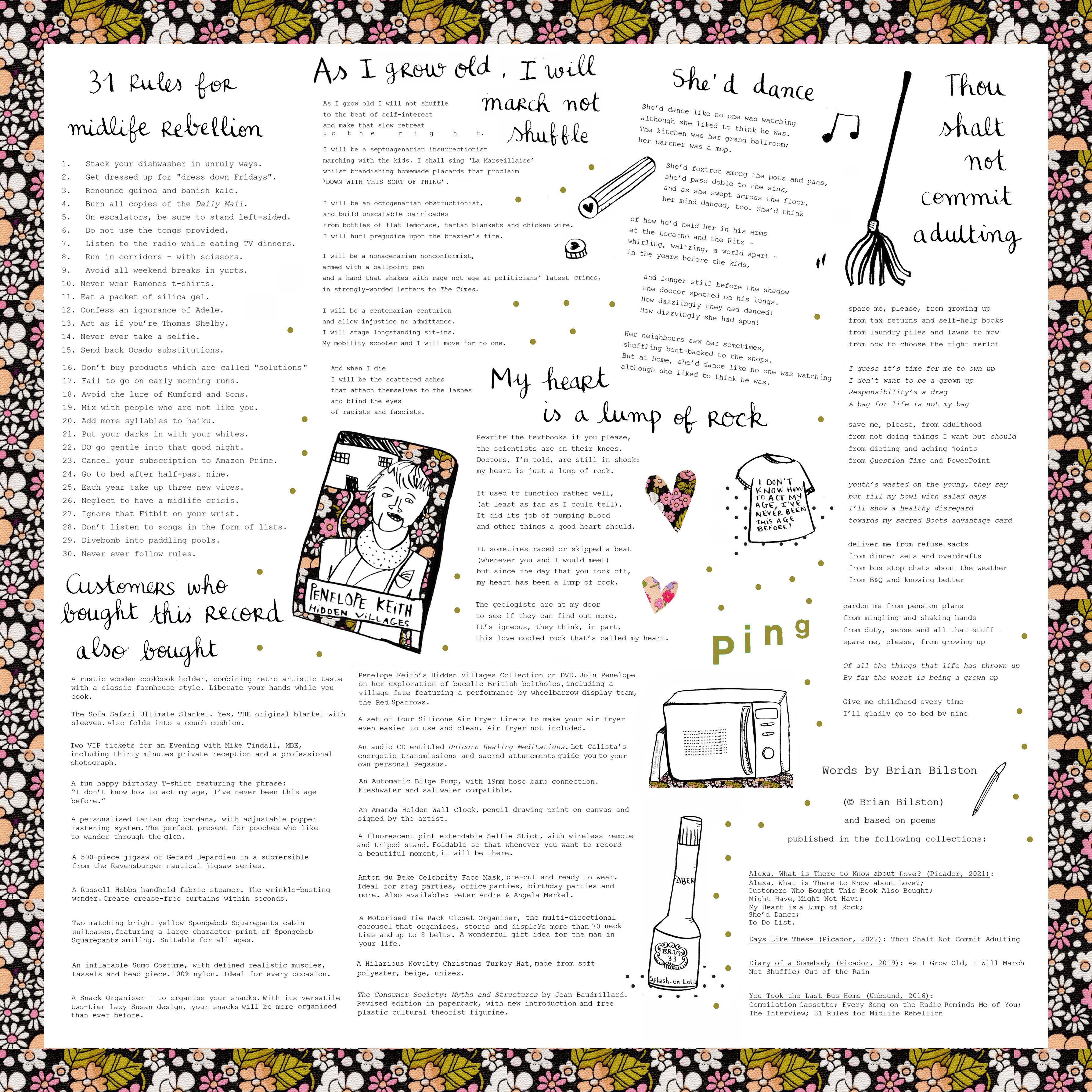
On to side two then, with ‘31 Rules for Midlife Rebellion’ the first track I heard from this mighty collaboration, delivered with late-‘70s post-punk passion. Sheer genius, and my inner punk feels you can’t really beat a one-chord guitar solo.
‘I love that guitar solo, too.’
‘As I Grow Old I Will March not Shuffle’ is another winner, more angular, exploring aVictor Meldrew effect maybe, our hero hoping to live long enough to be a ‘nonagenarian non-conformist’.
‘The words of this are a little pompous, but deliberately so. This is our attempt to rock out on the album.’
Alternatively, ‘She’d Dance’ carries a Cinerama-like European feel. But there’s also something of the understanding warmth of The Jam’s ‘Liza Radley’ or Ian Dury’s ‘Razzle in my Pocket’ maybe. A thing of beauty, arguably the saddest song here, but rather heart-warming.
‘This is one of the few songs on the album I tend to read regularly at shows. It’s sad but I like light and shade in my music and poetry; if they’re all trying to be amusing, it can get rather wearing.’
‘My Heart is a Lump of Rock’ has a Swansea Sound feel but also a Blur vibe (arguably ironic considering Rob’s distrust of that Blur-Oasis battle rubbish still feeding the popular media). Perhaps I’ll suggest Teenage Fanclub instead. Either way, I love the idea of geologists arriving at your door for further studies of your heart.
‘Yes, let’s go for Teenage Fanclub. We’ll all settle for that!’
‘Thou Shalt Not Commit Adulting’ includes some of your finest lines and is encapsulated in a late-70s feel neatly conveyed by Amelia’s quirky punk-pop delivery and Buzzcocks guitars. Nice.
‘It’s a lovely upbeat, punk pop rendition of my poem. I love the riff coming in towards the end.’
And then we’re away on ‘Customers Who Bought This Record Also Bought…’ – another list song of distinction. Part The Generation Game conveyor belt, part modern-day interweb shopping channel. Perhaps a fresh career on QVC awaits. If so, put me down for a Penelope Keith’s Hidden Villages DVD set and an Angela Merkel facemask.
‘Ha! That’s an excellent description. It’s a lounge-style critique of runaway consumerism. I genuinely do despair at all the crap there is out there.’
Is the setlist going to be a challenge for your upcoming shows with The Catenary Wires, being rolled out later this year?
‘I don’t think so. The benefit of having one album comprising 13 songs is that the setlist just writes itself. I think the only thing we’ll need to figure out is whether we play the songs in album order, or move them around a bit.’
Finally, to further fire your interview panel questions back at you, where do you see yourself in 200 years’ time? And how was your journey to this point? Have you travelled far?
‘I’d struggle where to see myself in 200 minutes’ time. As for my journey, it’s been fun, unplanned and entirely unexpected: I’ve travelled so far, I can’t remember anymore quite where I started out from.’
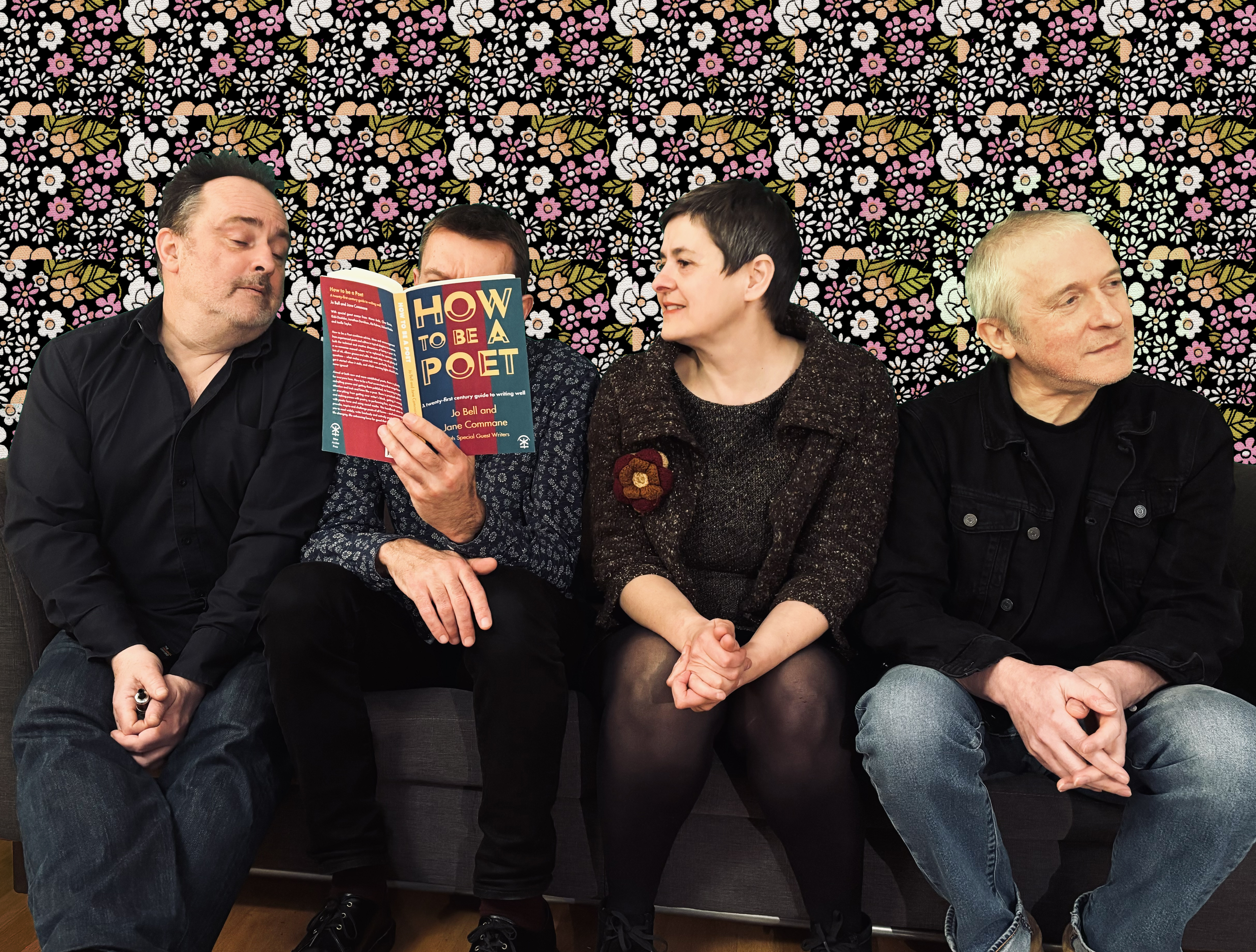
Brian Bilston and The Catenary Wires will be performing song-poems at selected UK venues in November 2025, with details to follow. Meanwhile, Brian Bilston’s current poetry-only appearance details can be found via this link. You can also keep up with Brian’s antics via social media, including his Facebook and Instagram pages and his website.
For the latest from The Catenary Wires, you can follow them on Facebook and Instagram. And for the latest from Amelia and Rob’s Skepwax Records stable, check out their Facebook, Instagram and BlueSky links or visit www.skepwax.bandcamp.com and www.skepwax.com


 writewyattuk