
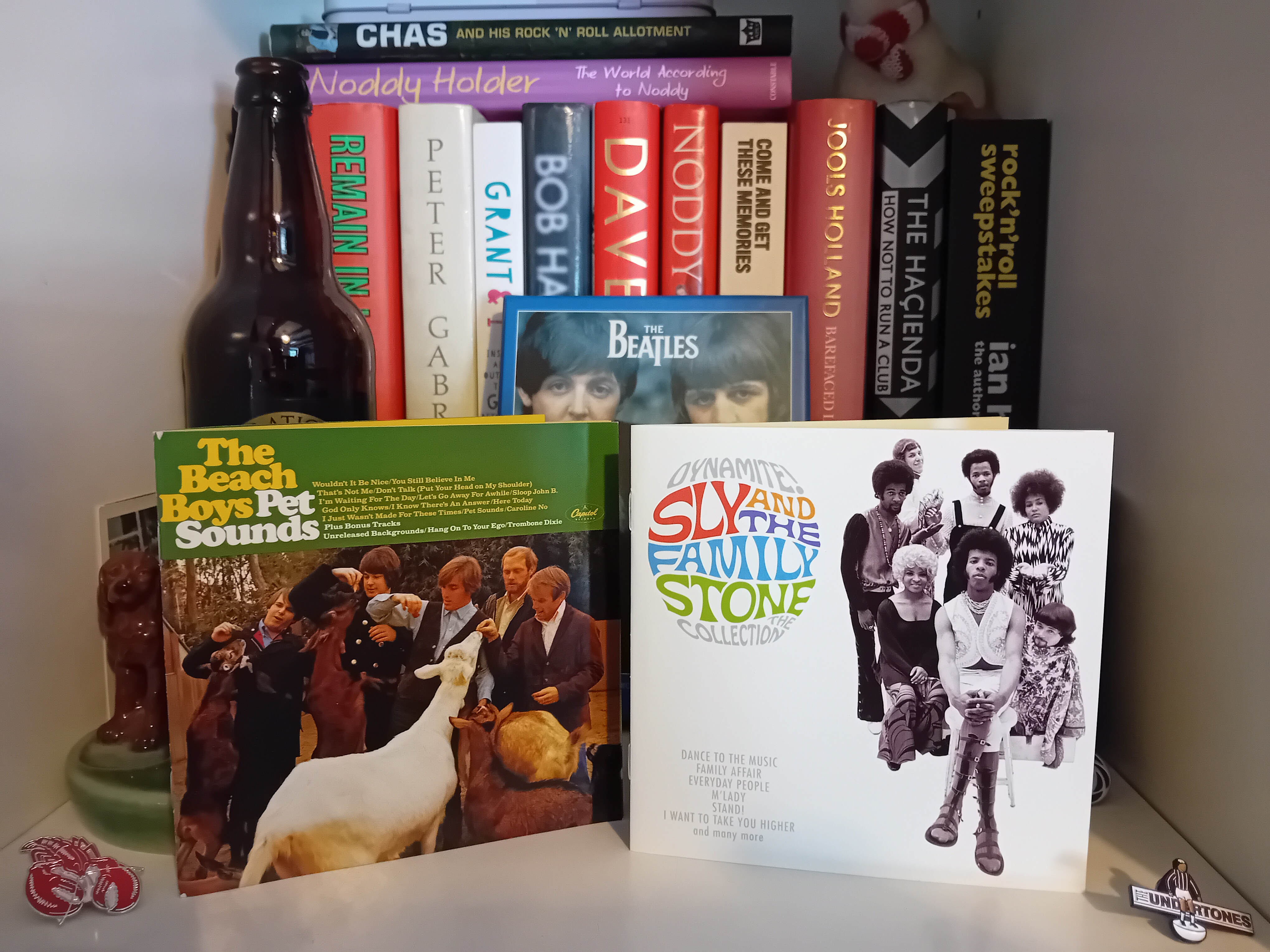
‘You’ve got to keep in mind love is here… today
And it’s gone… tomorrow, it’s here and gone so fast’
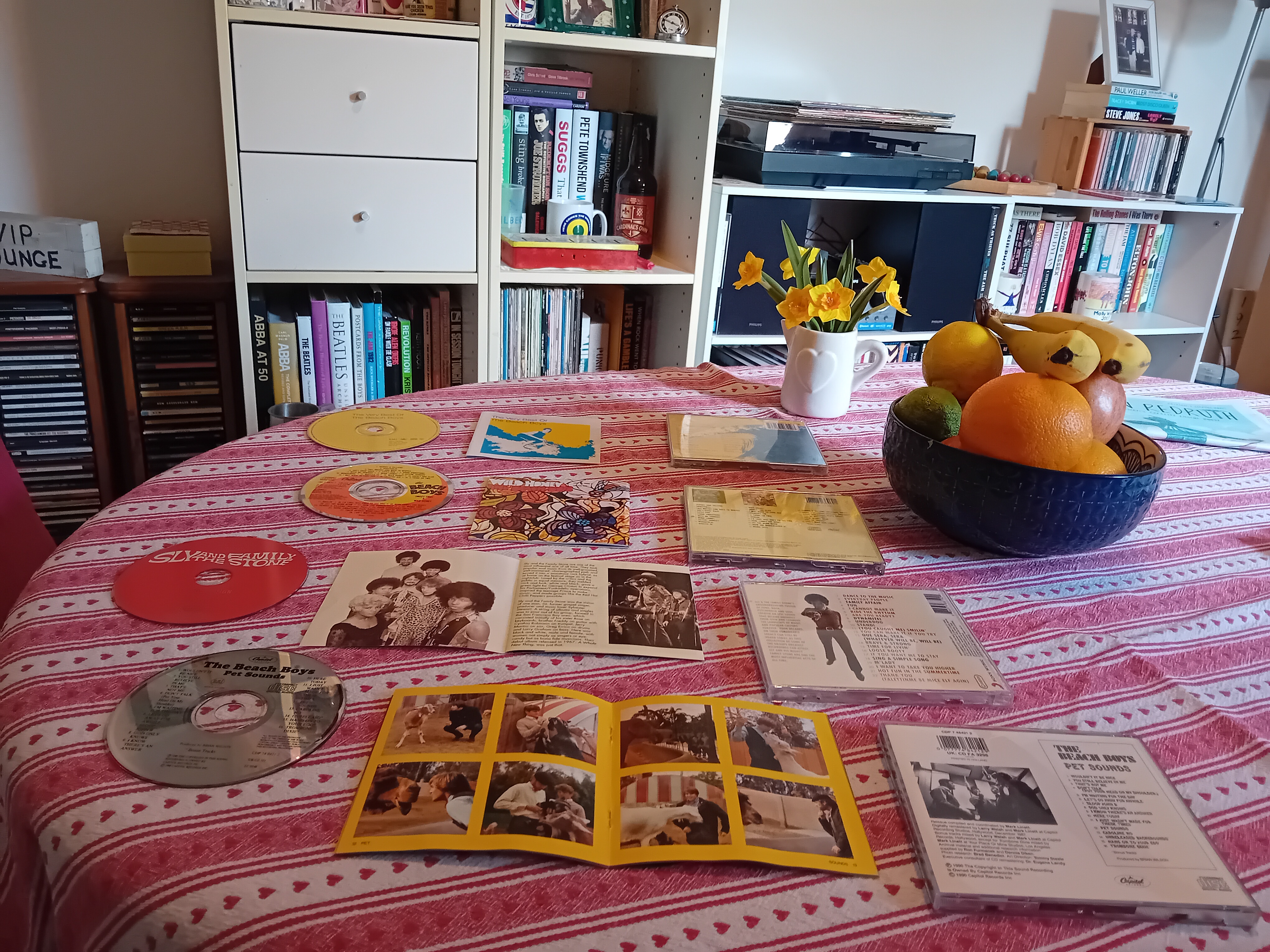
The night I heard about Brian Wilson’s exit, I felt a compulsion to head to my back room for a timely spin of Pet Sounds, wrapping myself in the warmth of that ground-breaking 1966 recording by way of a tribute.
News of his passing emerged two days after we learned of the departure of fellow 83-year-old innovative force Sylvester Stewart, best known by his stage name, Sly Stone. And I was reminded of a time I would regularly slip on my turntable Epic’s 1970 Sly and the Family Stone Greatest Hits or EMI’s 1976 Beach Boys compilation 20 Golden Greats (the one with a surfer riding the waves as its cover), both capable of putting a spring in my step before a night out.
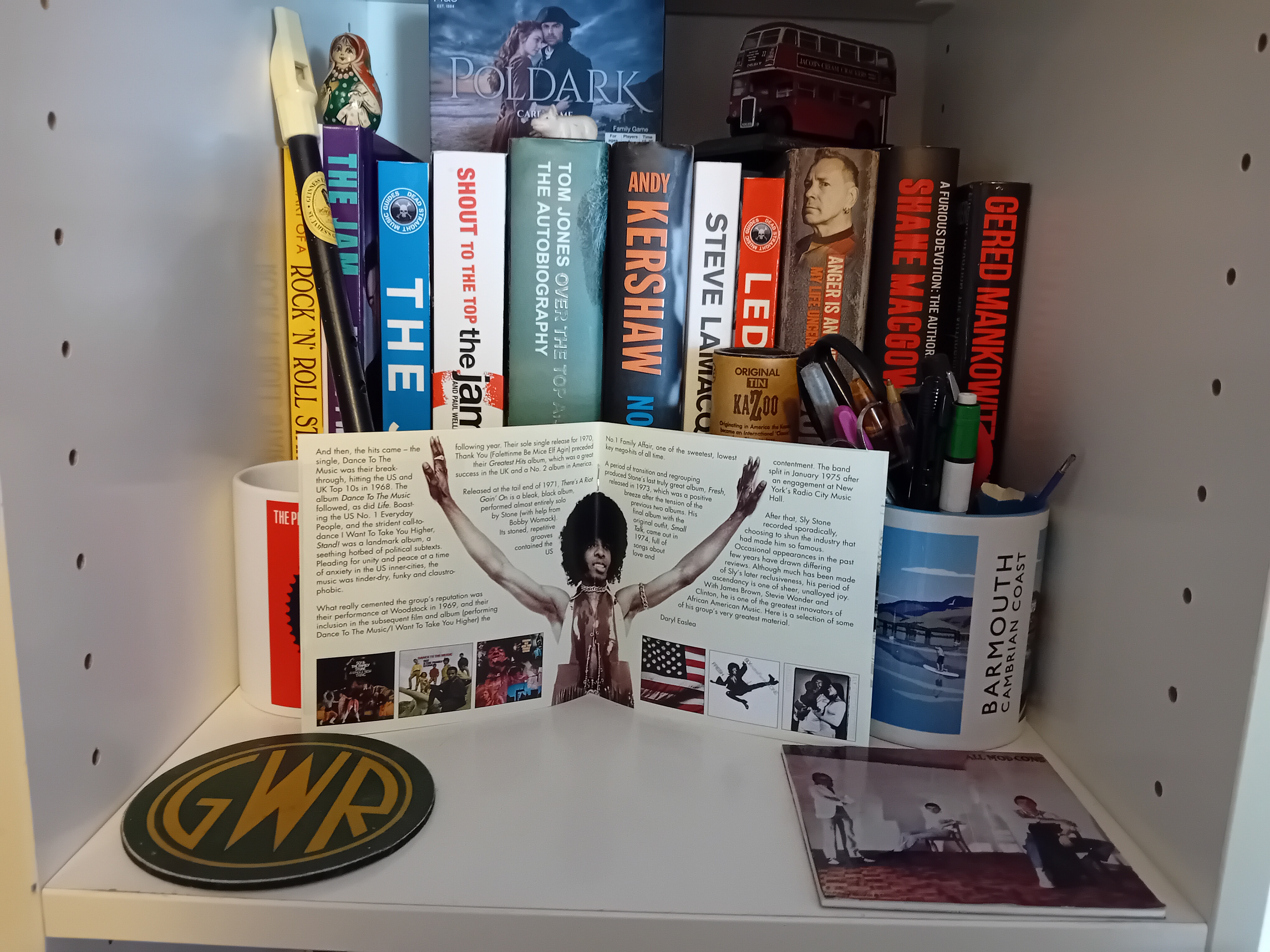
Give or take a few of the better-known singles, my conversion to San Francisco Bay’s Sly and his rich song catalogue was retrospective, while properly discovering the deep joy of ’60s and ’70s soul and funk in the second half of the ’80s. And the Family Stone gathered all I loved about those classic Motown, Atlantic and Stax outfits and took it further… took it higher, actually, melding pop, soul, rock and funk, paving the way for George Clinton, Prince, and all that. Sly pulled together a string of great records between 1967 and 1974, his band initially including sister Rose and brother Freddy (‘You see, it’s in the blood…’). And as Dary Easlea put it in the sleeve notes for Sony’s 2011 22-track Dynamite! The Collection, ‘Here was black and white, male and female, with women not simply as singers or eye-candy but as bona fide musicians.’
We’re talking a call to dance here, alongside social commentary through music, echoing the main themes of that troubled era. Again quoting Daryl Easlea, they were ‘pleading for unity and peace at a time of anxiety in the US inner cities,’ their music ‘tinder-dry, funky and claustrophobic,’ led by an artist seen as ‘one of the greatest innovators of African American music’. Praise, indeed, and rightly so. That word influential gets used a lot, but if you’re unfamiliar with his full body of work and deeper cuts, I reckon the fact that a lot of it sounds familiar on a first listen but you can’t quite place why, show’s the inspirational reach of the fella, his spirit in so much great soul music we’ve heard since.
While I admit being late to the party for Sly (and what a party!), I can’t recall a time when the lads from Hawthorne, California with the super-close harmonies – another quality Family Affair – weren’t key components of my formative years’ soundtrack. Seemingly, there was no such mystery for me in the late-’80s about knowledge of the Beach Boys’ own track record… but again I had much still to immerse myself in to get the full picture. And that’s probably still the case.
By the time I made my home debut in late 1967, Brian Wilson’s troubled Smile project had been abandoned (yet thankfully completed later) then watered down and released as Smiley Smile, Capitol winning a battle to include sonic masterpiece ‘Good Vibrations’, 18 months after Brian first committed it to tape as part of the Pet Sounds sessions. He came back to that, big time, the classic track Beatles publicist Derek Taylor dubbed a ‘pocket symphony’ released as a single the previous autumn, the first Beach Boys 45 to top both the UK and US charts. And by the time I was an avid wireless listener in the early ’70s, that’s what that band were to me, a classic singles band receiving regular radio airplay, closely associated with summertime and fun, fun, fun.
It’s not in doubt that they produced one of the finest ever runs of pop singles, hitting the jackpot from ‘Surfin’ USA’ in early ’63 – when Brian was 20 – onwards, amassing two UK No.1s among 28 top 40 hits. The album stats are equally impressive – with two more No.1s from 34 top 40 hits since 1965, albeit with their chart-toppers rather inevitably hits compilations, including that ’76 ‘best of’, which spent an amazing 10 weeks at the top that summer, amid the height of the drought. No wonder we associate this band with high summer.
And those 45s were everywhere in my youth, mostly on BBC Radio 1 or Capital Radio, on the air in rural Surrey or during West Country and Isle of Wight breaks. In fact, I associate Brian’s arrangement of traditional Bahamian folk song ‘Sloop John B’ with a well-known pub by the harbour slipway in St Ives, Cornwall, The Sloop, and just a couple of streets back from there Porthmeor Beach was where all those songs about surfing and beach life spoke to me… this boy happy watching waves break and surfers weave their way inshore, all those hits in mind.
As for ‘Help Me, Rhonda’, that was a nod to the Welsh valleys, right? I mean, The Byrds tackled Pete Seeger’s ‘The Bells of Rhymney’ around the same time. And ‘Barbara Ann’ surely carries the spirit of a cracking late night in the studio, like listening to the merry voices downstairs as a lad, not least after one too many sherries for the old ‘uns at Christmas. Great music makes the world a much smaller place.
It would be a few years until I got anywhere near ‘California Girls’ (we didn’t even meet any when we camped near the north Norfolk coast in ’88, by which time I probably equated that song more with poodle-haired David Lee Roth’s rocky cover), but the Beach Boys were certainly there for me by the time of my first brief West Coast US visit in 1991, or more precisely a week or so later as the infectiously-upbeat coach driver-cum-tour guide driving a busload of us backpackers around New Zealand’s South Island treated us to surf classics on loop, from the moment we stepped back on board, the morning after the night before. I’d envisaged Split Enz, maybe even The Chills, but instead got ‘I Get Around’, ‘Little Deuce Coupe’, ‘Surfin’ Safari’’ and ‘Fun, Fun, Fun’ at every turn, the international pull of Brian Wilson’s songcraft for all to hear.
That love was handed down to the next generation too. When my girls were young (but not so young that they didn’t see through the rather lazy adaptation that brought about ‘Little Saint Nick’, a festive season regular at our house), I’d smile as I put my head around the bedroom door to see them playing – in their own special way – with Barbie and Cindy dolls to a soundtrack of Wilson-penned classics… often with rather distinctive lyrical rewrites – more Central Lancs than US West Coast. I won’t even go into their take on ‘Do It Again’.
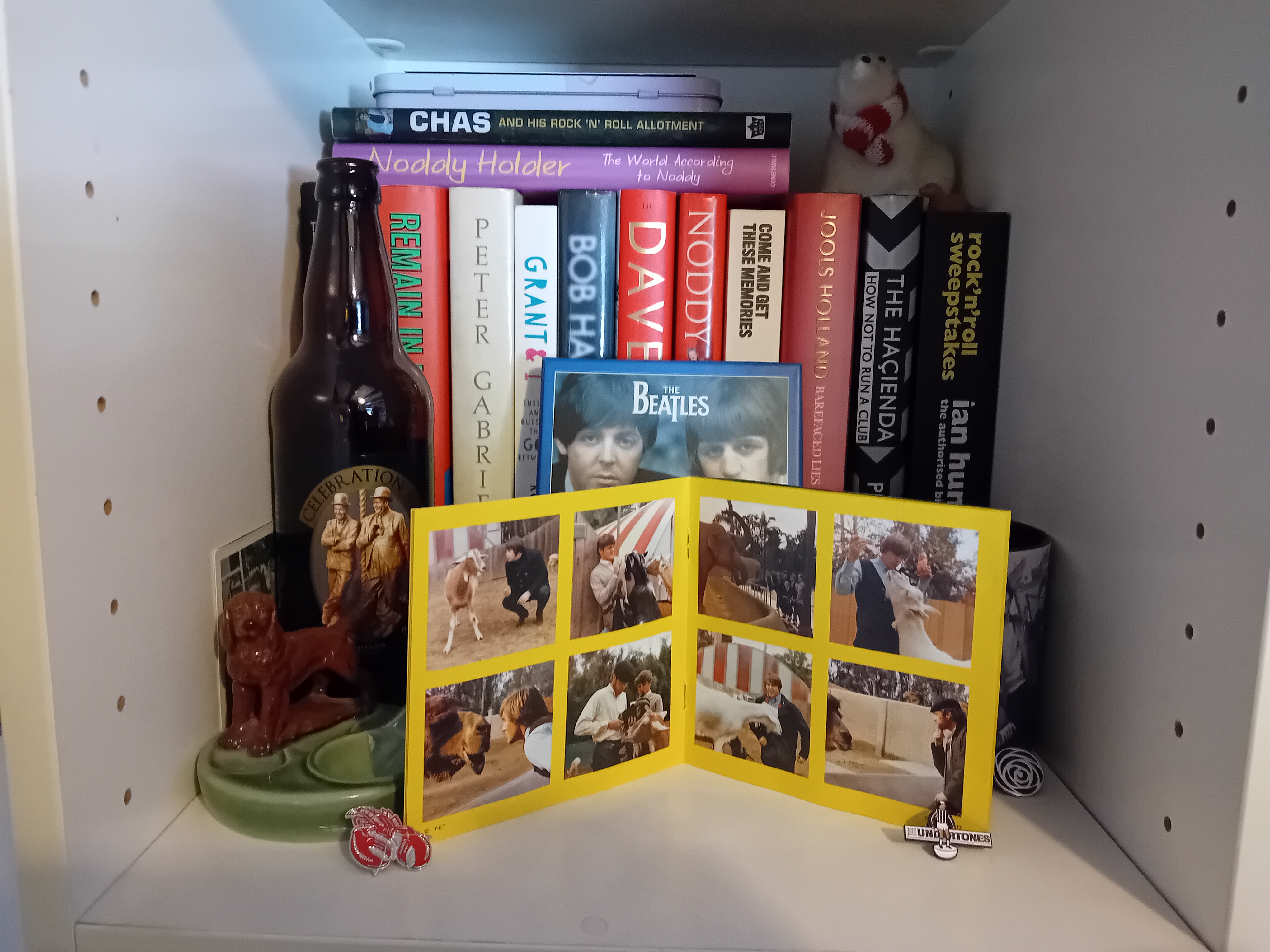
But it was Pet Sounds I needed to hear again this week, returning to that distinctive green, yellow and white framed cover, sort of Five Go Feeding at San Diego Zoo by George Jerman, an aural work of art there for me since that second half of the ‘80s. And while 20 Golden Greats was about the sound of summer, Pet Sounds added a melancholic, wistful air to that nostalgic framework, its sublime twists and turns making an increasing impression on me.
Competition between The Beatles and The Beach Boys at the time inspired both acts to greater and greater heights. And for Brian Wilson, it was the release of Rubber Soul – the US pressing, sans singles – that compelled him to head back into the studio, resulting in his finest album by far… and a contender for the best record of all time. I can’t truly remember the first time I listened all the way through, but I know it wasn’t a gamechanger for a while. Sure enough though, it soon worked its magic on me, perhaps making more sense to this teenager once I’d experience a little more life, love and loss.
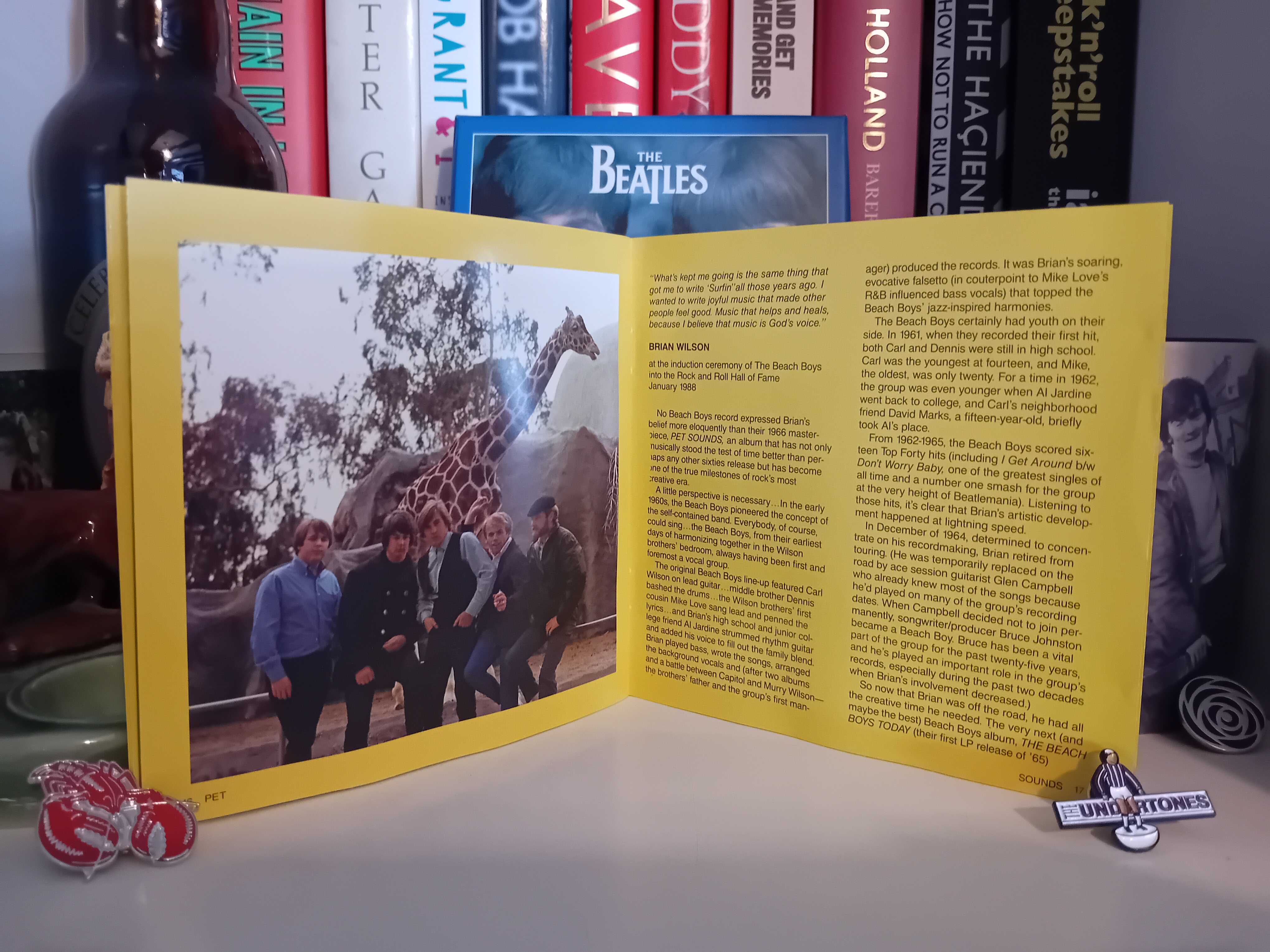
As Brian put it in 1990, in the notes for that year’s remastered CD release, ‘ln December of 1965, I heard the album Rubber Soul by The Beatles. It was definitely a challenge for me. I saw that every cut was very artistically interesting and stimulating. I immediately went to work on the songs for Pet Sounds.’ You probably know the story from there, but I’ll cover some of that territory. In came advertising copywriter Tony Asher, the pair of them bouncing words, music and ideas off one another, Brian’s bandmates at that point touring, their creative bandleader having quit the road, enabling him to pour his efforts into his studio-based songcraft.
By January ’66, he was working on the first instrumental cuts, ‘each track a sound experience of its own’. He added, ‘I was obsessed with exploring, musically, how I felt inside.’ Twelve songs later, ‘totally exhausting some of my musical creativity,’ he shared those numbers with his bandmates, and ‘they all flipped,’ the true heart and soul nature of what he had created soon apparent.
With recording complete in April, the LP was released in May in the US ‘to a confused public,’ as biographer David Leaf put it. We seemed to get it on this side of the Atlantic though, and by early July it was on its way to a half-year stay in the UK top 10, peaking at No.2 (kept off the top by, yikes, The Sound of Music) in a 39-week top 40 stay. As with every musical genius, there was friction between the artist and the label, Capitol clearly not seeing its full potential. But Brian knew where it was at… and was ultimately proved right.
While it was the singles I knew first, much of the content and its themes initially passing me by, this ex-chorister understood harmonies, that amazing blend of voices between three brothers, a cousin and a high school friend recognised as something special. Clearly, technology had moved on by the time I was fully on board, but what they got down on tape that winter and spring in Hollywood was way ahead of its time. I guess Brian just wasn’t made for those times, the 23-year-old’s labours as chief writer, player, producer and all-round genius shining through. quickly finding his own innovative way.
This was no one-man band either. As he put it himself, ‘The boys filled out the album for me, and we had a classic on our hands.’ There’s an understatement if ever there was one, and the band’s input ran to much more than ensuring that wondrous vocal blend. This was an ensemble recording, for all Brian’s magic, its creator’s lead vocal duties augmented by those from Mike Love and Carl Wilson, the latter integral to ‘God Only Knows’.
There are certainly no fillers, Pet Sounds the epitome of the raised creative bar, as Paul McCartney quickly acknowledged, calling ‘God Only Knows’ the best song ever written, suggesting what he heard inspired his input for the Sgt Pepper’s LP that followed.
Brian’s own highlight was ‘Caroline, No’, but for me it could be so many of those songs. I think of that finale as the inspiration for many more frankly less dynamic songs heard on the radio in the ’70s, much of which I’d have seen as middle of the road fluff by the time punk and new wave had made an impression on me. But in his hands, it was anything but.
Looking at the credits and background info, I see that on ‘Wouldn’t It Be Nice’ he went for take 21, while for ‘You Still Believe Me’ it was take 23, ‘God Only Knows’ was take 20, and ‘Here Today’ saw takes 11 and 20 stitched together for the master. That says something about the hard graft put in, to great effect.
I like more recent find ‘Trombone Dixie’ too, an instrumental borne out of his earlier recording sessions that would have been a highpoint for many a band of that era. But I’m not suggesting Brian should have snuck it on there. He got everything spot on. The same has to be said for ‘Good Vibrations’, cut in mid-February but a song he decided to leave for later. A great call.
There’s not much I can write here about Brian Wilson and the Beach Boys that hasn’t been heard a thousand times, but the sheer perfection of ‘Wouldn’t It Be Nice’, ‘God Only Knows’, and so much more… well. I don’t mind admitting a few tears as I played the latter the night I heard the news… not for the first time. And there they were again on ‘Here Today’ in that moment the backing is all stripped back and Mike Love comes in with the first, ‘Love is here…’
Challenging times were ahead beyond Pet Sounds, but as Brian said in those remaster notes, ‘When you make a great album, it is good for your confidence and it tells you that you can continue to record in that same spirit. I really fulfilled a dream with this album.’ He certainly did that, for us too as it turned out. And maybe that was also Sly Stone’s message in the Family Stone’s Sixties sign-off of sorts, ‘Thank You (Falettinme Be Mice Elf Agin)’, a song I first knew best from Magazine’s wondrous Martin Hannett-produced cover version.
Time to head off and play that again, I reckon, maybe with a side-serving of that year’s ‘Everyday People’ (cited within, of course) and 1971’s ‘Family Affair’. Then tomorrow, perhaps I’ll return to the wonderful Dance to the Music LP. After all, every now and again we all need a little ‘Dance to the Medley’, right? Inspirational. Thank you, Sly.
And to finish back at Brian Wilson’s door, the man who created The Beach Boys’ 1966 masterpiece signed off those 1990 remaster sleeve notes with, ‘This album is personally from me to you.’ And Pet Sounds truly is the gift that keeps giving. Thank you, Brian.


 writewyattuk
A fine and generous homage, Malc.
I very rarely seek out the early ‘cars and girls’ surf stuff, but that mid-60s period produced some sublime pop. I played ‘Surf’s Up’ yesterday and realised I should do that again soon.
As for Sly, put me down for ‘late for the party’ also. Read the 33 ⅓ book on ‘There’s a Riot Goin’ On’ during lockdown and enjoyed spending time with it.