From Bombay to Sala Apolo, o’er the hills and far away – the Norman Watt-Roy interview

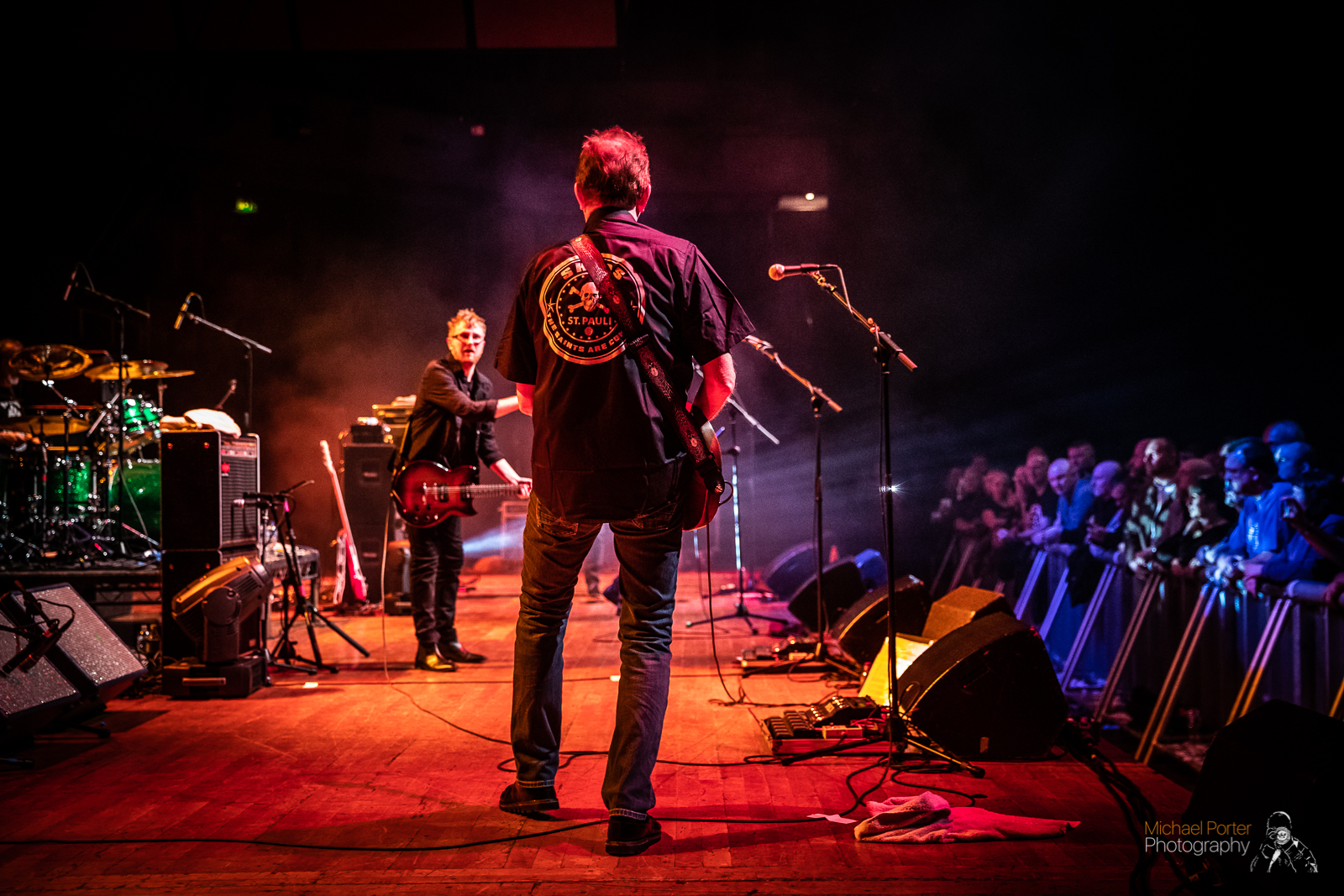
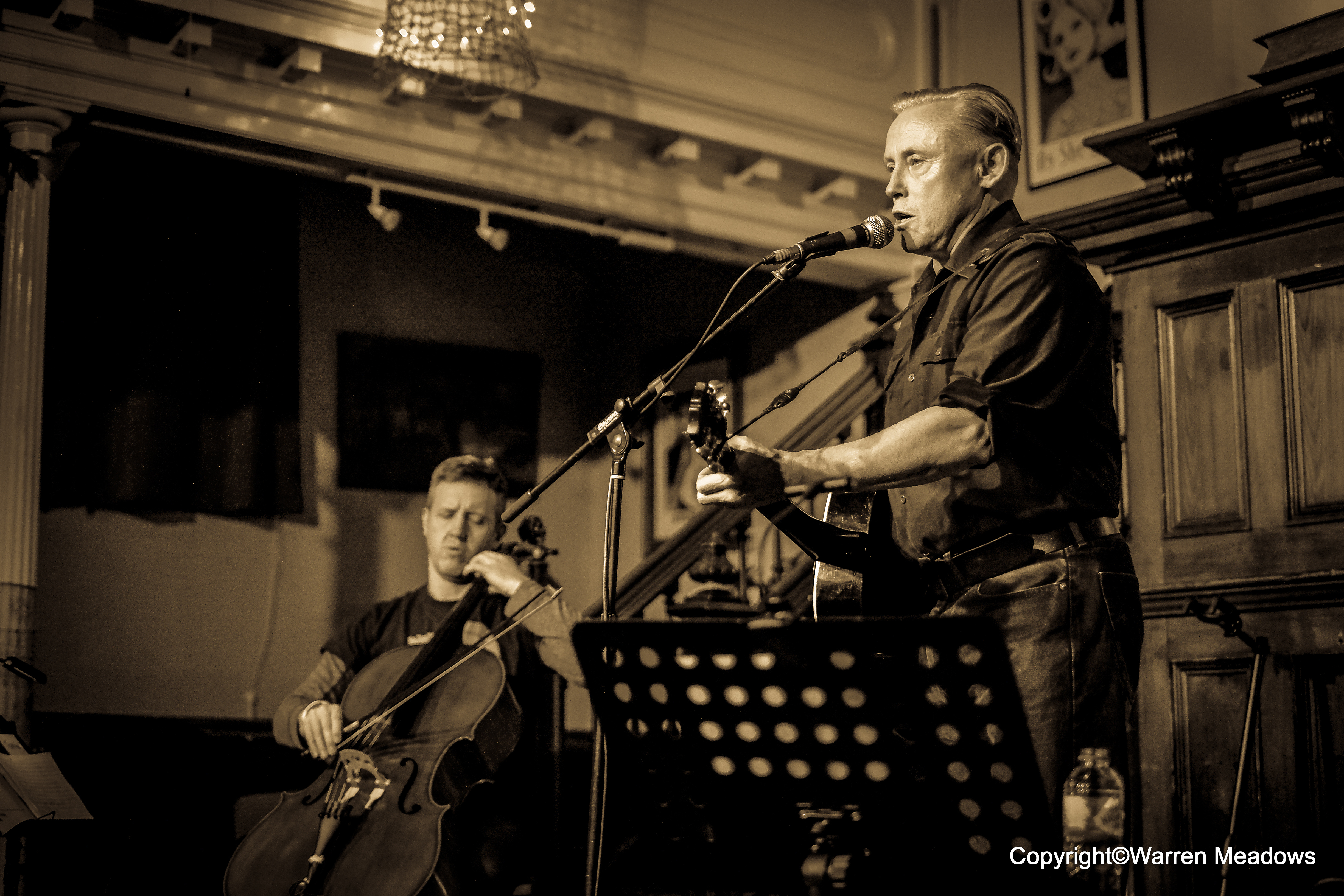
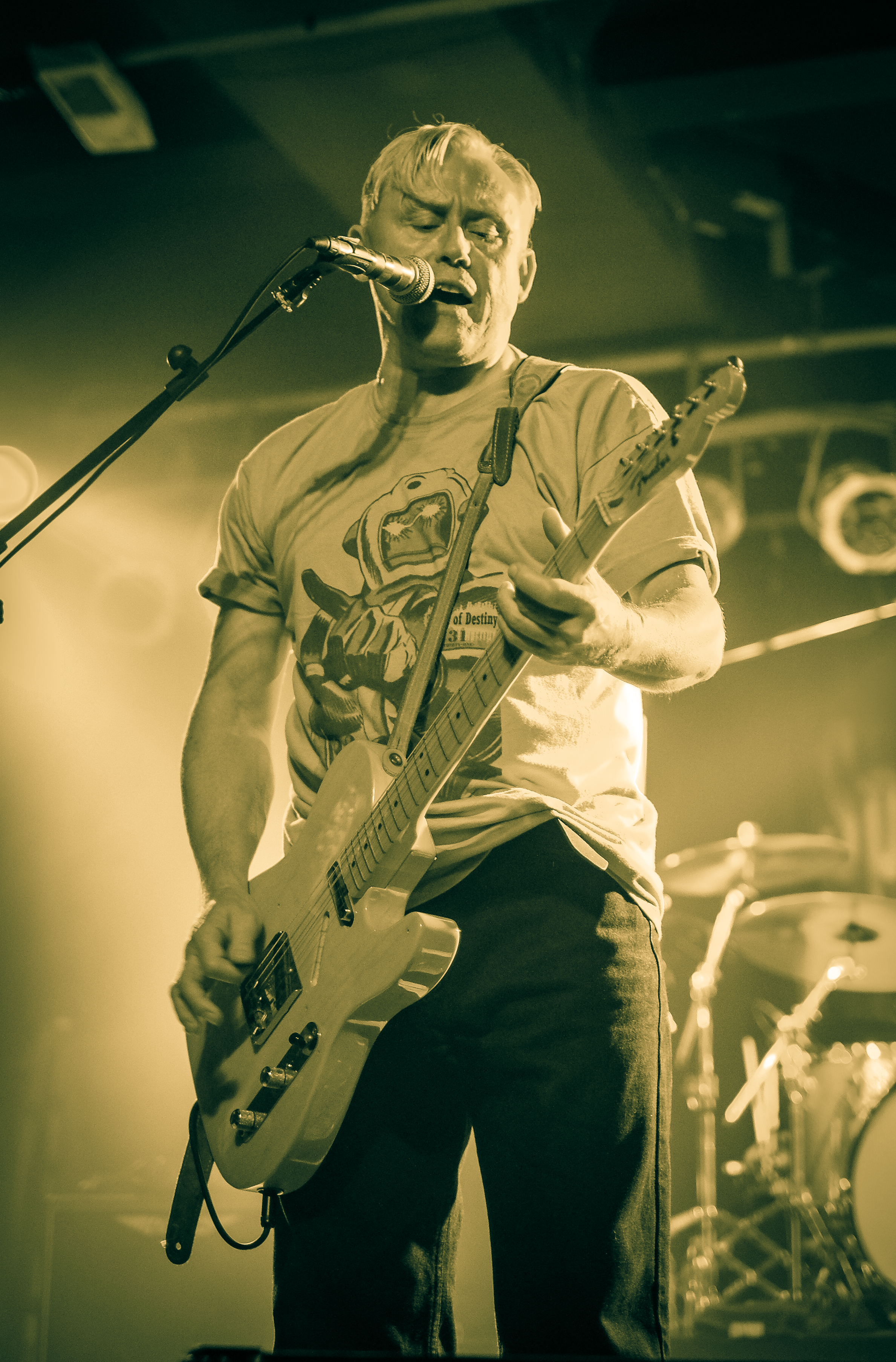
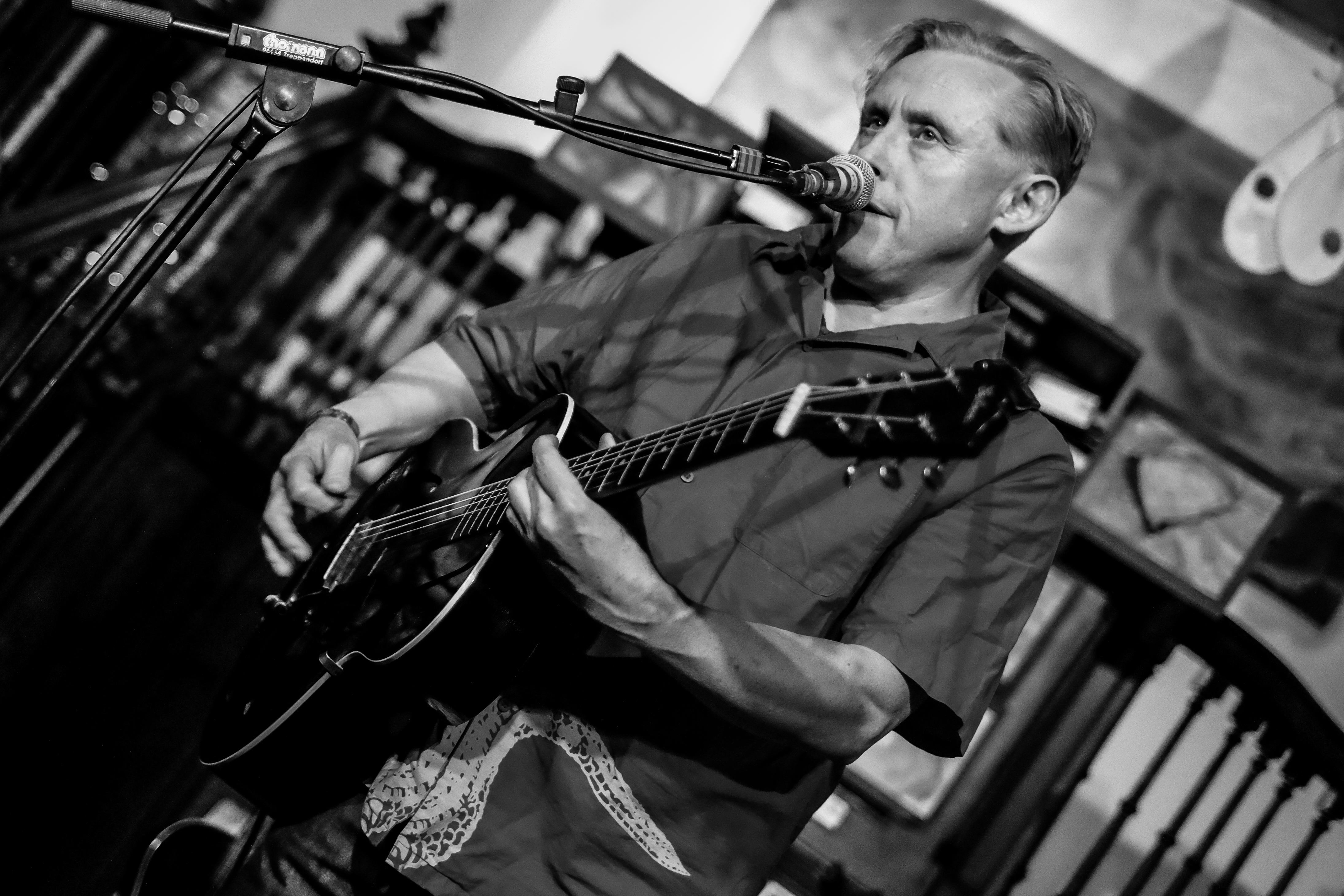
Watch Out!: The Wilko Johnson band in action, coming to a venue near you  (Photo: Leif Laaksonen)

I should warn you before you get any further that there’s an underlying current of adulation in this here feature/interview. Another day and another musical hero brought to book (or the WonderWeb in this case), as I spend an all-too-quick half-hour in the telephonic company of bass guitar marvel Norman Watt-Roy.

But if you’re okay with that, come with me on this latest internet journey from Bombay to Sala Apolo, Barcelona, o’er the hills and far away … on to Cheltenham Town Hall by April 27th, the last date I see in Norm’s diary for now with guitar legend Wilko Johnson’s band.

Rock’n’roll and rhythm & blues are certainly here to stay, judging by the outcome of recent health trials and tribulations for both Wilko and Norman. Chances are that you’ll know the story of Wilko’s miraculous return from near-death after a mighty battle with a cancerous tumour. Julien Temple directed a fantastic documentary about it, and the tale was retold on these pages in August 2016 (linked here). I was then back in touch with the artist formerly known as John Wilkinson in May 2018 (linked here), celebrating the release of his first LP of new material in three decades, Blow Your Mind.

But what about bandmate Norman’s own health battle? Well, we’ll get to that in good time, this Anglo-Indian master of the bass guitar fretboard having shed light on many career highlights with me ahead of the band’s latest UK tour, their trio completed by Dylan Howe (son of Yes guitar legend Steve Howe), shows at Teatro Barcelo, Madrid; Sala Apolo, Barcelona; Centro Cultural de Belem, Lisbon; and Casa de Musica, Oporto, followed by the first UK dates at Buxton Opera House (February 28), Warrington Parr Hall (Friday, March 1st) and Bexhill’s De La Warr Pavilion (Saturday, March 2nd), splendid settings all.

Following Wilko’s miraculous recovery, the original Dr Feelgood guitarist has enjoyed a rousing return to the live arena, including a UK No.1 album with Who legend Roger Daltrey, Going Back Home, a sold-out show at the Royal Albert Hall to mark his 70th birthday in July 2017, then that acclaimed LP of his own.

See Wilko live and you can’t help but marvel at his frenetic stage wanders and finger-style, chop-chord strum (the ‘stab’, as he describes it), a distinctive mix of simultaneous chords and lead picking. But you’d be equally impressed by Dylan’s rearguard action and Norm’s wondrous bass ambles, the former session man a true artisan of the four-string kind.

The pair first joined forces when Wilko had a short spell with Ian Dury’s band – Norman having been on board as a Blockhead from near enough the beginning, and right beyond Ian’s sad death in 2000. Wilko went on to form his own trio, Norman soon a key ingredient there too.

I caught him at home in Fulham, South West London, the day before he jetted off to Spain and Portugal with the band, warm-ups for a busy 2019 schedule with Wilko back home.  And I pointed out early on how the first couple of times I saw him live was with Wilko rather than The Blockheads, not far from his manor, at the Kennington Cricketers in January ’86.

“Oh, the Oval Cricketers, brilliant gig! We used to do that once a month, regular, that and the Half Moon, Putney and the Powerhaus …”

The Half Moon was the other one I was going to mention, in late December ’87, another special night, with Salvatore Ramundo on drums in those days.

“I live just around the corner from there. I got to know Wilko when he joined the Blockheads in ’79, and we went all over the world. And while he was with us, he’d go out on the road with his Solid Senders. He never stopped working.

“Then around ’84 or ’85 his bass player left him, and I wasn’t here, but he asked my missus if I’d be up for four or five gigs he had left, and she said, ‘I’m sure he’ll do it.’

“Actually, I was in Germany with The Clash at that point, with Joe Strummer, doing their last album, Cut the Crap.”

Ah, the album most Clash fans wish had never happened.

“Well, it wasn’t really The Clash – it was Joe on his own with a load of other players really. But that’s when I started with Wilko. It started with those gigs and then they just kept coming in, so we kept doing them.”

I recall such a buzz at those shows I mentioned, everyone so excited to see Wilko do his stuff on a stage, not least his moves. And there was a live album I bought, Watch Out!

“Yes, I think some of that was recorded at the Half Moon or The Cricketers. So you go back a bit.”

Well, sort of, but I was only born in 1967, at which stage I gather you were with a band called Living Daylights.

“Yeah, I was about 16 at the time. I started playing at school with my brother. We had a band and I was playing rhythm guitar, with (brother) Garth playing lead. Bass players were quite hard to find, but when I was around 14, I started teaching a friend of my brother’s who bought the bass and the amp the shop had.

“We said, ‘Look, if you buy that, you can join our band’. We forgot to ask him if he could play though. But I’d started showing him what to do, and after about a week he had big blisters on his fingers and said, ‘You can keep the bass. I don’t wanna be in the band anymore!’ My brother then said, ‘Norm, you’ll have to play bass,’ and that’s when I started out and fell in love with it.”

What was it about the bass that you loved? And did you have bass heroes then?

“Well, we also had this soul band, and learning all those lines I didn’t know who was playing – it would have been James Jamerson and Carol Kaye – but I loved those lines, they were just so melodic and counter-melodies to the songs. I just loved it. It was something I could get my teeth into. Even people like Paul McCartney – what a melodious bass player!”

Was that with The Greatest Show on Earth?

“No, first was the Guyatones, then the Living Daylights, then we had The Sonny Burke Outfit (backing a US artist whose CV included soundtrack co-writes with Peggy Lee on animated Disney classic, Lady and the Tramp), this little soul band where we’d back all these so-called American singers. My brother got in touch with an agency, and they were supposed to be from America, but some were from Brixton or Stoke Newington, putting on American accents! But they did all the Tamla and Stax stuff and that was a great schooling. We toured all over Europe. We’d do American GI bases around Germany. We spent months out there.”

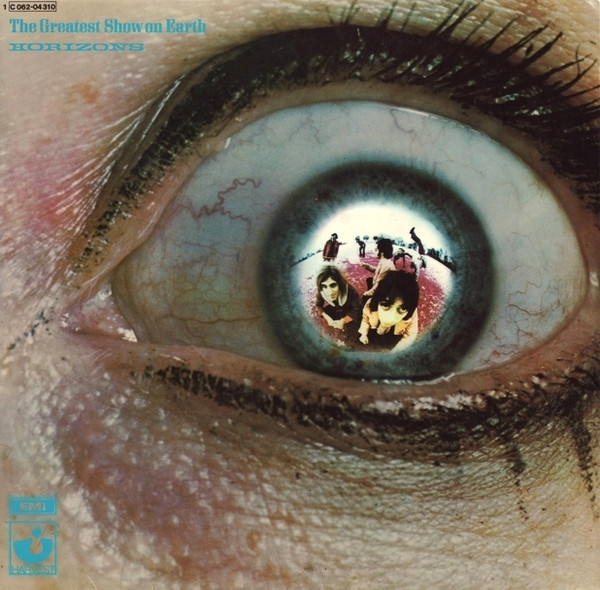
In fact, Living Daylights had a single on the Phillips label in early ’67, ‘Let’s Live for Today’, while two years later The Greatest Show on Earth were with Harvest, the single ‘Real Cool World’ released in February 1970, a hit in Europe and a No.1 in Switzerland. Two TGSOE albums followed that year, Horizons followed by The Going’s Easy. But there were complications before all that for young Norman.

“Oh yeah, the thing was that when I first went to Germany with my brother, on my first passport – I’ve still got it, actually – I had to have a special licence from the Home Office, because I was only 14 or 15 but playing in these clubs  I shouldn’t really have been in. But it was allowed as I had someone older in the band kind of looking after me.”

A bit like George Harrison’s situation when he first played in Germany?

“Yeah, I can relate to George! It was a nine-piece soul band and a fantastic schooling, working like that and playing all that kind of material – great stuff to learn and play.”
Have you got kids of your own these days, Norman?

“No, but my brothers and sisters have, and I’ve got around five bass players in the family, all very good, and my sister’s son is 21 and really good now – he’s learned all my stuff! And my cousin plays, and his children, he’s done some really good stuff.”

And I’m guessing you wouldn’t still be out there if you weren’t still enjoying it 50 or so years down the road.

“No, I love, I love it! It’s fantastic, and funnily enough it’s got easier. I think when you’re young you just expend all this energy, but when you get older you learn how to pace yourself. And being on the road is great fun.”

You’ve lost some great mates over the years though.

“Oh yeah, like Charley …”

That’s who I was set to mention first. My first Ian Dury and the Blockheads gig was one of two benefit shows for Guyana-born drummer Charlie Charles’ family after his death from cancer, held at Kentish Town’s Town & Country Club (The Forum these days) in September 1990.

“Yeah, that was with The Blockheads and Wilko’s band.”

Then my next was in August ‘92 when you were supporting Madness, the night they reckoned the crowd reaction to ‘One Step Beyond’ triggered an earthquake, that first Madstock event in Finsbury Park, North London.

“That’s right, and I toured with Madness as well after that. Bedders (Madness bass player Mark Bedford) kind of quit for a while and they asked me to go on the road with them. I did a couple of tours and did three or four Madstock shows with them after that first one.”

And last time I saw you was in March 2013 at Preston’s 53 Degrees with a post-Dury Blockheads line-up led by Derek ‘The Draw’ Hussey, when I recall a lot of talk mid-show about Wilko’s on-going battle with what was believed to be terminal cancer.

“Yeah, and I love the Blockheads as well. It’ll be 19 years this March since Ian died. We felt we couldn’t really replace him as such, he was such a one-off. So we didn’t really do anything for about a year, but we had so many hits on our website and that saying, ‘Please do some gigs – we’ll come!’ and while there seemed to be a lot of tribute bands around, there wasn’t anyone doing a tribute to Ian, so we thought, ‘Let’s go out there and try and keep the music alive’.

“And as one of Ian’s best friends, Derek just slotted into it. He was a poet as well, and they wrote together, and for nearly 20 years he’d come on the road and look after Ian, bringing him on and off stage, and many times Ian made him sing three or four songs at the end with him. So he knew several of the songs and we said you’ve got to come with us. The first gig was at Dingwall’s, with loads of support, like Phill Jupitus. It was a case of remembering all the lyrics, so we had Derek, Phill, Mark Lamarr, Keith Allen, all getting up. We did a few gigs like that, and it gave us such a buzz that we decided to keep going with Derek.”

It struck me then just what a tight band you were, but that’s not so surprising considering your collective history, not least with you, Mickey Gallagher (keyboards) and fellow Geordie John Turnbull (guitar) going right back (initially with Charlie).

“Well, we did the Loving Awareness project with Ronan O’Rahilly, and me and Charley were doing a lot of sessions for songwriters and stuff, and it was us who met Ian and Chaz (Jankel) and basically we demoed and made New Boots and Panties in a couple of weeks.”

I should fill in a few gaps there and mention that between The Greatest Show on Earth and Loving Awareness there was Glencoe, Norman joining them in 1972, his bandmates including guitarist John Turnbull. They released two albums, Glencoe, and The Spirit of Glencoe, plus three singles, and recorded four BBC Radio 1 sessions for John Peel. Then, in 1974, Glencoe joined forces with Mickey Gallagher, forming the nucleus of the band – with the addition of Charlie Charles – that became Loving Awareness, managed by Radio Caroline’s Ronan O’Rahilly.

So tell me more about that session with Charlie that led to an introduction to Ian and writing partner/guitarist Chaz. I’m guessing you were aware of Ian through his work with Kilburn and the High Roads.

“Oh yeah. I was doing a session with Charlie, some songwriter wanted us to put bass and drums on his song, and we were re in this little studio in Wimbledon called Alvic, run by two engineers, including Vic Sweeney, the drummer in the Alan Bown Set, and he really dug Charlie’s drumming and saw us as a great rhythm section. He knew Ian and Chaz and knew they were looking for a rhythm section and felt we’d fit the bill, asking if we’d like to come down that Monday and meet them. We’d heard of Ian from Kilburn and the High Roads and I’d seen them at the Tally Ho! and really liked them. I thought they were so different, like nothing I’d ever seen before. So I said we’d love to, and that’s when the four of us met and made that album.

“But when Stiff decided to release it (in 1977) we had to put a band together, so Ian and Chaz knew Davey (Payne) from Kilburn and the High Roads, and got him in, while we mentioned how Mickey and Johnny had been playing with us for the last three years in Loving Awareness, and doing various projects, so basically that was the beginning of The Blockheads.”

Of course, Ian wasn’t the easiest of characters to get on with though.

“Yeah, he could be difficult at times, but … I don’t know … we were like brothers. We spent so long on the road. We’d argue and things, but I loved him to bits. It was his words. He was such a master with lyrics. One of the first I saw when I first met him that time at Alvic, he had this big sheet of paper with all his lyrics, I picked up one, and it was ‘Billericay Dickie’.  I started reading it and thought it was amazing. ‘Clever Trever’ was another. I just fell in love with his words. Unbelievable! I’d never heard anything like it.”

Let’s go back even further, and touch on your own roots, in post-independence India. I realise you left when you were very young, but do you remember anything from those early days in Bombay?

“Well no, but I have pictures of India, and remember standing on a veranda, waving to my brother and sister as they were going off to school. But I left India when I was three years and nine months. We came to Southampton, then drove up to Highbury. We had a flat there, where I started my schooling at St Joan of Arc, off Blackstock Road.”

I recall a similar story from Spike Milligan, talking about leaving India and ending up in Catford, South-East London, albeit at the age of 12 in 1931. It must have been a mighty shock for your family.

“Oh yeah. We arrived in November 1954. Me and my brother had never seen snow, and the place was covered in it. ‘Wow, this is cold and white!’ So strange after Bombay. We’re what you call Anglo-Indian, and both Mum and Dad were in the Royal Air Force in India. That’s how they met. They were both born in Calcutta, as it was known then.”

Ever been back?

“I never have, although my cousins have. We’ve no family there now. We all came over. Funnily enough, my brother’s son went for his honeymoon two years ago, and went to look where we lived and actually found the flat. The woman who lived there invited him in and they sat and had a cup of tea and took loads of pictures. Unbelievable – the veranda was still there and everything, all these years later.”

Is your brother Garth still playing guitar?

”Unfortunately, health stopped him playing, but he played with all these 60s bands and did a lot of tours with the Solid 60s shows, long tours playing Australia, Indonesia, Japan, all over. One of the last was a three-month tour, but he was having problems with degenerative discs in his back. He’s 71 now. But if it wasn’t for that, he’d still be playing. He still happily plays at home though.”

Yet you’re still going strong, and I’m guessing this tour is still about the Blow Your Mind album. Is there another in the offing?

“That’s all down to Wilko. I’m amazed he came out with so many good songs. After all these years he can still write a great song.”

I guess you were on the circuit with Dr Feelgood back in the day.

“Oh yeah, when I was with Glencoe. I remember seeing them many years ago at The Kensington, but one I really remember was Wilko with the Solid Senders after he’d left the Feelgoods, down at Dingwall’s. I’d go down and watch him. Lew Lewis was in the band then. Fantastic.

“Funnily enough, I’d go down there with Kosmo Vinyl. The two of us really dug Wilko, and there was a period after Chaz had gone off to do his own thing with A&M, when we needed someone else to come into the band, and Kosmo suggested Wilko.

“Hugh Cornwell was in prison at the time, having been busted, and there was a benefit show to raise money for bail. Ian was involved, and when he was down there he saw Wilko in the corner, looking quite down. He said, ‘What’s up, Wilks?’ and he said, ‘My band’s broken up and I’m thinking of giving it all up.’ So Ian invited him down to the studio we were in, in Fulham. Wilko said yeah and ended up staying for a couple of years.”

Are you still in regular touch with Mickey Gallagher?

“Oh yeah, we’ve just finished a load of gigs and have loads more coming up this year. There’s four of us originals – Mickey, Chaz, Johnny and myself – and we’ve got Derek, John Roberts on drums and Gilad (Atzmon) on sax. We’re doing lots of festivals too.”

Main Man: Wilko Johnson, Norman Watt-Roy’s collaborator of many moons (Photo: Laurence Harvey)

Between Wilko’s commitments and those with The Blockheads, you’re not going to be at home much this year.

“No, but I love it that way. When my wife died 10 years ago, I said to Wilko, ‘Keep me busy!’ And the Blockheads do too. And I love it on the road. If I had a gig every night I’d be the happiest guy in the world! I sit at home and play all day, even when I’m not working. I just love it so much.”

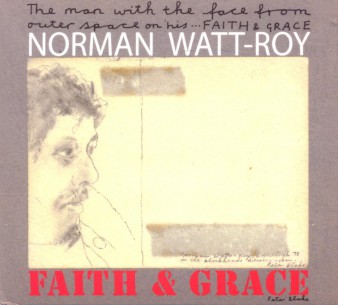
Might you be following up 2013’s Faith & Grace album (featuring Norman’s own band) at some point?

“Yeah, that really came about because of Wilko’s illness, and after the operation when he had a year off to recuperate. I had a couple of instrumental ideas I wanted to record, and Gilad is a brilliant producer as well. So we went to a studio at his house and he loved it so much he suggested we did some more. I felt I didn’t have enough material, but he suggested playing a few of Ian and Wilko’s covers as well. So I did ‘Roxette’, ‘Billericay Dickie’, and so on. It kind of got shelved when my wife died. She’d encouraged me to do it, but later Gilad pushed me into finishing it and when Wilko was recuperating it seemed the right time. So I put a band together with Gilad and Asaf (Sirkis) on drums and Frank (Harrison) on keyboards.”

I was reminding myself this morning of the promo video you did, shot live at the Half Moon in Putney.

“That’s right, and I took the band on the road, here and in Europe, then Japan, where me and Wilko have played so many times. They love him out there, and we’ve done 38 or so tours there. So we did the Fuji Rock Festival and some in Tokyo and Kyoto, and really enjoyed all that.

“As for doing any more … I just don’t really have the time. It’s the same with my band. They’re all constantly working and they’re fantastic players, doing jazz gigs and all sorts. To get them to commit to me for a month, and for me to pay them … I was very lucky that I got them to do all that. And it kept me busy too.”

Besides, Wilko’s still keeping you busy all these years on. And yet I think we all feared the worse when he got ill.
“Well yeah. Unbelievable, the whole thing. He was basically given six to eight months to live, and he accepted that. The growth he had started out the size of a fist, and it grew and grew, to the size of a football. But it didn’t hurt at all, and he was still doing gigs 15 months after his diagnosis. That was when Charlie Chan, this cancer surgeon, saw him and said, ‘Something’s not right. You should have been dead six months ago, but you’re still doing gigs!’ He wanted him to see this specialist friend of his, Emmanuel Huget, at Addenbrooke’s (Cambridge), the one who did the operation and saved Wilko’s life after this 12-hour op.

“I remember them saying, ‘We’ve done all these operations very successfully individually, but never on one person at once, but we think you can handle it.’ And they got it all … this seven-and-a-half pound growth … and he’s been cancer-free since. I think he likes life even more now. And being on the road is an absolute joy.”

We can see that from your demeanour on stage.

“Well, funnily enough I had a heart attack, while playing with Wilko at Hampton Court (Lido) in 2017. I wasn’t in any pain. We were coming up to the end of the set and I just felt really weak. I told Wilko, ‘I can’t play’. I took my bass off and Wilko looked round and said to Dylan, ‘Do a drum solo!’ I came off and they called an ambulance and I got rushed to hospital. The guy in the ambulance was looking at his machine, saying, ‘You’re actually having a heart attack now, Norman. I said, ‘Am I? I’m not in any pain’. But within three hours they’d operated and put this stent into my arteries and I was fine. I took a month off then we went to Japan and started another tour!

“They took me to St George’s at Tooting, because they knew I lived in Fulham, and that’s one of the best for heart care. I later got to know my surgeon, Zoe, very well, and she told me it was a minor heart attack, but I was very lucky to be surrounded by people and for the paramedics to be there, being an open-air festival. She said there are people who have felt a little funny, gone to bed and died in their sleep, so I was very lucky.

“Since then, people have said how the Grim Reaper’s tried to get both me and Wilko, and failed! I think it was Charles Shaar Murray who wrote, ‘Wilko stared Death in the face and saw Death back down’! I thought that was brilliant!”

Well, between yourself and Wilko’s recent experiences, there’s a mighty advert for the enduring importance of ongoing free NHS care for us all, surely.

“Oh, fantastic! It’s something we should definitely never lose and something that we’ll always support. And we do charity gigs for Addenbrooke’s and all sorts of things, and donate stuff – me and Wilko.”

I could have happily carried on talking to Norman for another half-hour, going deeper into his days with Glencoe and the early-‘70s Peel sessions, and discovered more about his session work – not least memories of work with Mickey Gallagher on the Sandinista! sessions at Electric Lady, New York City, and later Clash works.

Similarly, I’d have asked about the part he played, in more ways than one, in making Frankie Goes to Hollywood’s ‘Relax’ the mega-hit it became, and work over the years with the likes of Nick Lowe, Rachel Sweet, Jona Lewie, The Selecter, Wreckless Eric, Nick Cave, Viv Albertine … the list goes on.

But I had an appointment straight after to speak to Glenn Tilbrook, lined up as support in a solo capacity for this Wilko Johnson tour. Accordingly, I ended by wondering if there was anything in particular I should ask Glenn.

“Well, just tell him to keep writing really. He’s such a great songwriter.”

So is there anything he should know about sharing dressing rooms with you, Wilko and Dylan, seeing as he’ll be out there with you for several dates?

“Where? Is he? Oh brilliant! D’you know, I didn’t even know that! Oh, fantastic! We’ve met Glenn during past events for the Teenage Cancer Trust, which Roger Daltrey started. We’ve met there a few times. Oh well, that’s all good then.”

Three’s Company: Norman, Wilko and Dylan, still eager to Blow Your Mind, all these years on.

The Wilko Johnson band play Warrington Parr Hall (01925 442345) on Friday, March 1st, with special guest Glenn Tilbrook, 45 years after he first linked up with Chris Difford to form the much-loved Squeeze. For more about Wilko’s wanderings in 2019, head to http://wilkojohnson.com/ or keep in touch via Facebook and Twitter

For a 2014 reappraisal of Ian Dury & The Blockheads’ back-catalogue, head here. You can also try Richard Balls’ excellent Sex & Drugs & Rock’n’Roll – The Story of Ian Dury. (Omnibus 2000), its author (interviewed here in 2014) also responsible for Be Stiff – The Stiff Records Story (Soundcheck, 2014). You can also track down a copy of Looking Back At Me (Cadiz, 2012), the autobiography of Wilko Johnson, written with acclaimed rock writer (and drummer Dylan Howe’s other half) Zoë Howe, learning more about her books here
Posted in Books Films, TV & Radio, Music | Tagged , , , , , , , , , , , , , , , , , , , , , , , | 3 Comments

Finding Gold in a Brass Age – the David Gray interview


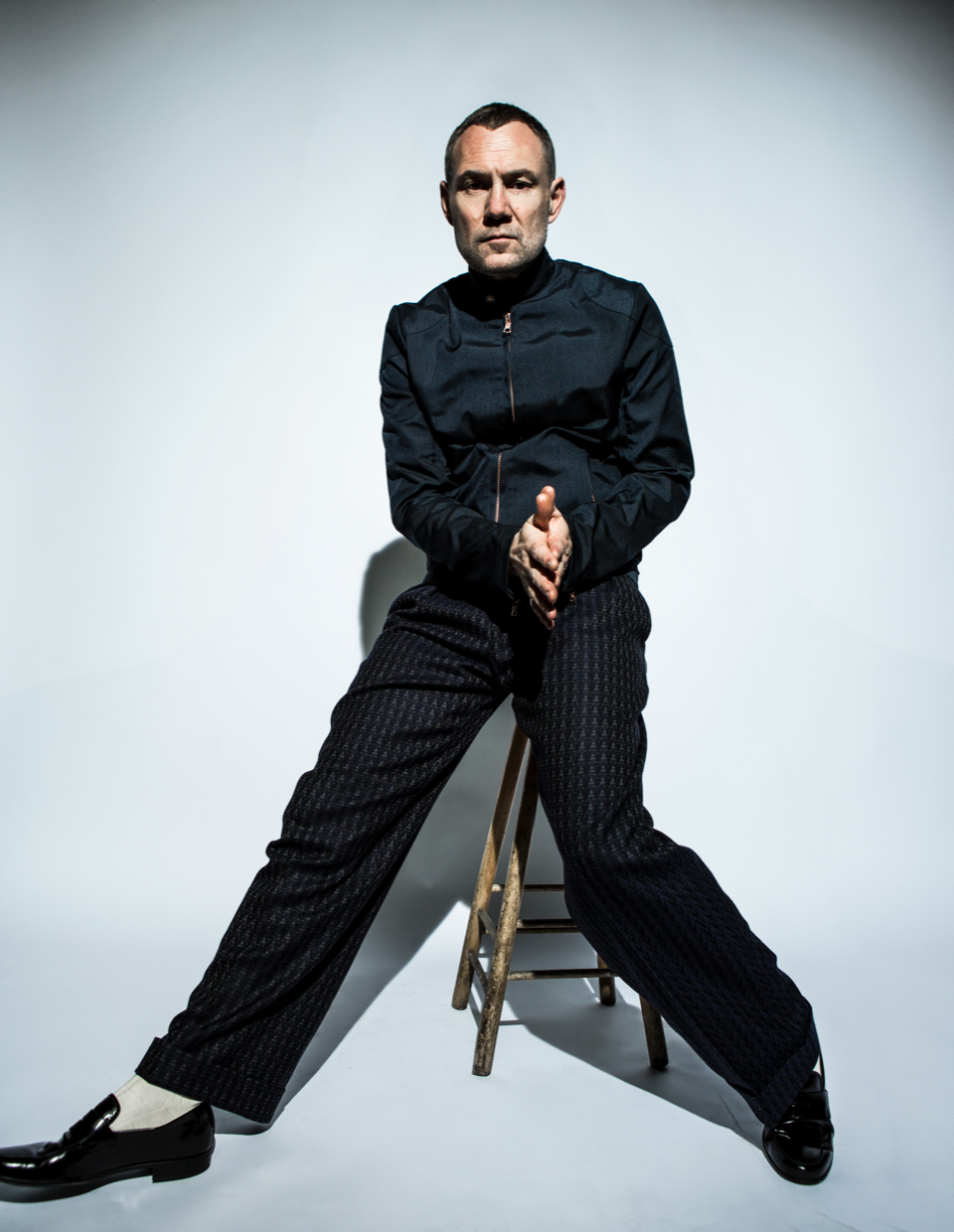
Gold Record: David Gray is back, and in style, with Gold in a Brass Age (Photo: Derrick Santini)

David Gray is no stranger to success, but sometimes it’s been a waiting game for the 50-year-old Sale-born singer-songwriter.

He’s topped the UK album charts three times during a recording career of more than 25 years, first in the summer of 2000 with White Ladder, the single ‘Babylon’ the first of his nine top-40 hits, several Brit and Grammy nominations following that multi-platinum LP, along with plenty of commercial and critical acclaim, reaching No.1 again with follow-up A New Day at Midnight in 2002 then Life in Slow Motion in 2005.

But while he received plenty of ground support from day one, it’s worth remembering that White Ladder was his fourth album and, self-released on IHT Records in late 1998, it failed to cross over for 18 months, Dave Matthews’ ATO Records’ re-release finally doing the trick. So you’ll understand why he’s showing plenty of patience awaiting the release of his 11th LP in 26 years, Gold In A Brass Age, his first of new material in four years.

The producer this time was Ben de Vries, a nice twist seeing as David worked with his father, fellow producer and soundtrack composer Marius de Vries, 14 years earlier on double-platinum Life in Slow Motion. And despite the pair not having met before, the seeds of the album’s sound were sewn early on in David’s home studio in London.

“We were talking about production ideas and artists we were currently listening to when Ben played the track ‘Sixes And Nines’ by Birkwin Jersey. With this electro-acoustic sound and very chopped-up aesthetic, it was a great reference point, precisely the sort of thing I was looking for.”

Of course, using electronics is nothing new for David – they were all over era-defining, 10-times platinum White Ladder in the late ‘90s and have featured on each album since. But it was working with Lamb’s Andy Barlow on 2014’s acclaimed Mutineers that opened his eyes to how they could transform his songwriting, not just his sound.

Mutineers played a key role in opening up a world of new sonic possibilities and in granting me the sense of creative freedom that I have now. Andy was very good at encouraging me to come at ideas from different angles and introduced a new, more open way of thinking that I was eager to explore more on this record. It’s easy to fall in to a rut and get encumbered by certain ways of working. Andy helped remind me that nothing is set in stone. I’ve never felt as undaunted by the creative process as I do now, knowing that a song can start anywhere, go anywhere.”

The LP is out on March 8th, followed by a 17-date UK and Irish tour ending with two nights in Dublin, in a country where he’s had seven top-10 albums, just across the water from his old family base in idyllic Solva, Pembrokeshire.

New LP: Gold in a Brass Age

New LP: David Gray’s Gold in a Brass Age is here

Raised in Altrincham before a family move to mid-Wales, he went to art college in Carmarthenshire then Liverpool before settling in London more than half a life ago. But don’t think for one moment he’s all about the past, his challenge here to retain the same excitement for music while pushing himself into unfamiliar terrain. And David was keen for all those interviewing him this week to properly listen to his latest long player first.

Hardly an onerous task, mind. Three listens in, I was already impressed. We’ll have to wait another few weeks before it’s unleashed on the world, but it must be good to be able to finally talk about it, right?

“Oh, absolutely. It’s been finished a long time, but it takes a while to set these things up and put them out properly. I needed to make a few arrangements – new record deal, new this, new that. I was hoping it’d be out last year but here we are. So it’ll be March 2019 and we’re about to tour it, and it’s going to be great.”

In fact, work on the album began in 2016 and was written and recorded in several month-long spells between tours to promote that year’s Best Of, including 50 US dates and a co-headline tour with Alison Krauss. Has he rehearsed with a band ahead of those dates?

“The rehearsals haven’t started in terms of a full band – that starts next week. But I’ve already rehearsed enough to do it. We did it at a stripped-down showcase level. That was really great, giving me a sense of what it would be like. We’ve done a certain amount of the donkey-work. It’s quite technical this time, because there’s no way you can get around the electronic aspect of the record. And it’s been a long time since I played lived live with a computer on stage.

“That has to be a part of it – live sampling, triggering electronic things and looping. I’ve got three looper pedals, they all need to sync to something, so they’ve all got to be played through a computer.”

And on tracks like ‘A Tight Ship’ and ‘Watching the Waves’ you’re duetting and harmonising with yourself (as is the case later with the similarly-splendid ‘Hall of Mirrors’, where the main guitar riff reminds me of the Rolling Stones’ ‘Gimme Shelter’ and perhaps the stand-out track for me).

“Yeah, that’s something I’ve done a lot these last few years. I enjoy it and I’m free and available and like looking for harmonies. It’s one of the most exciting parts of the whole process – starting to look at sections of the songs seeing what’s possible. It’s very instinctive. I don’t think, ‘I’ll do a fourth, a fifth, whatever’. Wherever I feel against the music I should move. It’s a very personal thing.

“So yeah, the vocals are always a massive part from my point of view, and you really widen the song with that effect of a lot of voices. It’s a big production technique which I used on the last record a lot and I’ve used it again here, perhaps with a slightly different vibe to it this time.”

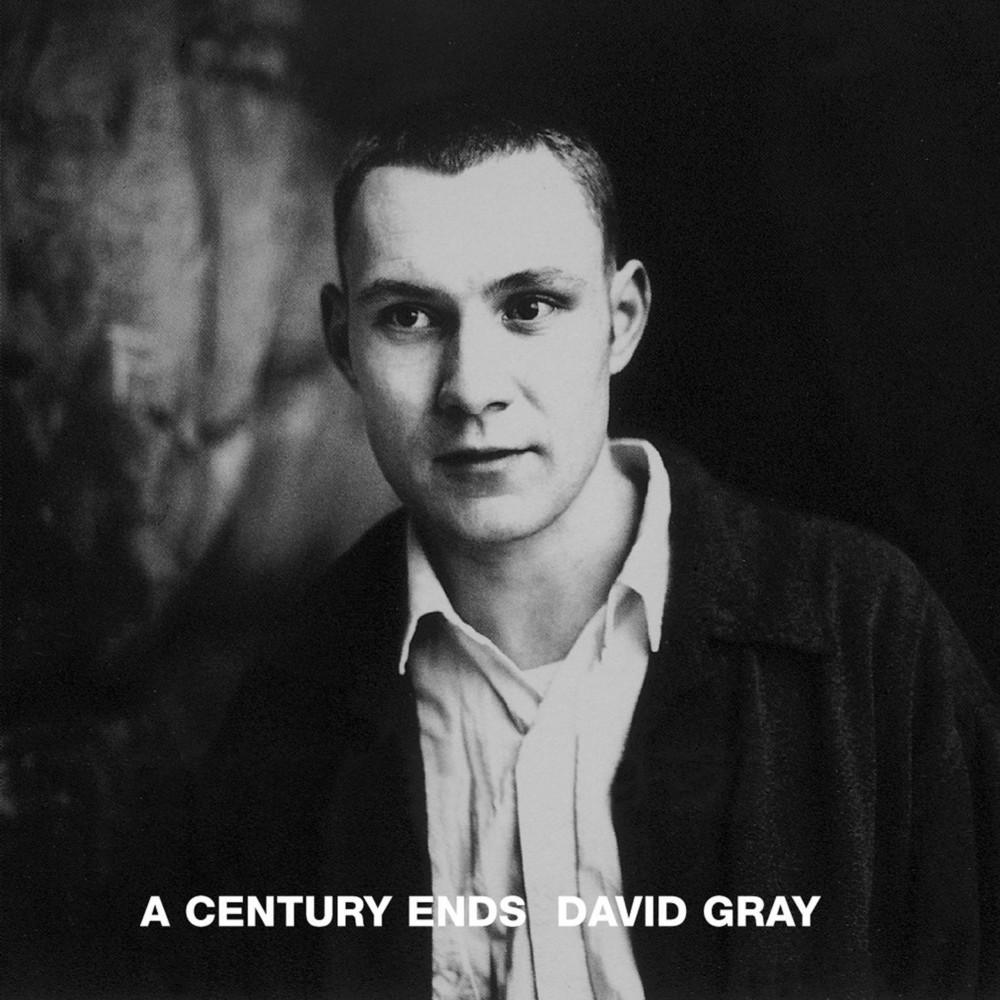
First Footing: The first David Gray long player, back in 1993

First Footing: The first David Gray LP, back in 1993

Well, we probably associate your voice with a certain gravelly, rich rasp of a vocal, yet there are occasional falsetto outings here too, and you seem comfortable wherever you are on the scale, the singing often softer, sweeter, more intimate.

“Yeah, the voice is the hardest thing to get around when you’re trying to make things sound different. I’ve definitely been delivering the lyrics softer most of the time, not all the time – sometimes you’ve got to drive it through.

“I mean, my voice is really loud when I sing out, so I’ve been constrained by trying to create this sense of intimacy on a lot of the songs, letting the vocals bloom on the mic., taking the velocity of everything you’re doing down as far as you can until you can still phrase, hit the note and control – just about – and that creates a different quality. And then you’ve got the vocals on top, with quite a few octaves involved.”

That inventive approach in using your voice reminds me of Crowded House frontman Neil Finn’s similar path in recent times – moving into areas where perhaps he wasn’t so comfortable initially. Is he on your radar?

“Well, obviously he’s great, but not somebody I’ve listened to avidly, although I know the more obvious things. He’s got such a great ear though, that guy, a great sense of melody and an effortless style.”

It’s more about his more recent work and the creative direction taken, like you successfully experimenting with a wider vocal range.

“I’ll check that out. Most days I can do them, but If I’ve had a big night out it might be a struggle!”

David’s lyrics have been transformed too, declamatory tales of love and loss replaced by couplets closer to poetry. And while his guitar and piano playing remain, ushering in of electronica and exploring of new textures and sound palettes alongside new production techniques has turned his approach to songwriting on its head.

Explaining his new approach, David said, “With this album, my default position was to try and approach everything differently. I didn’t begin by thinking ‘this could be a good hook’ or ‘these lyrics might work for a chorus’, and I was keen to get away from a traditional storytelling style.

“Instead of fitting words to melodies, I looked for snippets and phrases with a natural cadence, and let the rhythm and melody stem from there. It was a case of reimagining where a song might spring from and what form it might take.”

Breakthrough LP: It was 1998's White Ladder that helped David Gray's star rise

Breakthrough LP: It was 1998’s White Ladder that helped David Gray’s star rise to the top

There’s certainly a soulful feel up front on this record, although – I suggest to David – I’m not sure if there’s an attempt to put more commercially-accessible material there, a hangover from the early days of CDs and notions that ‘youth’ don’t have the staying power to properly listen all the way through. That aside, I say, there are elements for me of Stevie Wonder on the chorus of opening track (and lead single) ‘The Sapling’.

“Yeah, I feel there’s a real soulful vibe and swing, and that whole feel is closer to Prince than it is Van Morrison at times. That’s just the way it went. It wasn’t constructed with that view.

“We only constructed the record in a way that felt natural and you had to start with ‘The Sapling’, and it was then felt we should put ‘Gold in a Brass Age’ after it. Beyond that, one of the challenges was putting ’Furthering’ somewhere, because that song starts so slowly – it’s almost like in quarter-time, but it gets there in the end.

“The running order dictated itself, but there was definitely a different feel, and that was partly down to me and partly down to the producer and my drummer. A lot of rhythm gave birth to a lot of things on this record, with very rhythmical beginnings to quite a few songs.”

I mentioned Stevie Wonder there, and there are shades of Marvin Gaye on certain numbers, not least song two, the title track.

“Who doesn’t love those two? I mean Marvin … we’d all be thanking him forever for What’s Going On? if that was the only thing he’d ever done. It’s just knockout.

“To get some of that feel … and I’ve got that soul in the way I perform. That’s my thing. I’m a British soul singer in a way. That’s where my voice goes. It’s got a natural bluesiness. To dig into that and that kind of feel and sense of scatting off the rhythm, and being playful within the frame, those things get me high and so excited, working off the beat that way.”

Incidentally, where was that sapling you’re writing about?

“Well, there’s more of them coming. There’s a production line, isn’t there. One acorn sprouts up and another …”

Gray Day: David Gray is back with his 11th album in 26 years, after a five-year gap

I mean, did you have a particular location in mind when you wrote those lyrics?

“Well, I’ve seen my kids growing up and I’ve seen a lot of people come and go now, and there’s this cyclical nature of things. I watched a raindrop fall in a puddle, saw these concentric circles emanate out from that.

“I was in a park and they’d cut down a tree, I was looking at the rings and suddenly an acorn fell on the ground next to me and I thought, ‘God, it’s the same thing – the acorn creates the ring, just like ripples in a puddle, but over 150/200 years rather than a couple of seconds.

“But that’s still a blink of an eye in terms of the measurement we now have for the universe. That was the beginnings of the song, tying those two ideas together then bringing that human element into the middle of it. Non sequiturs – I’m very keen on things that have no relationship whatsoever to the verse. And there’s an example in ‘The Sapling’. ‘I kept it bottled up too long’. It’s nothing to do with what it says. It’s just a human cry in the middle of this thing. Later, it’s the same with ’Watching the Waves’, ‘Everything you are, I long to be.’ It doesn’t really tie to the verse or try to make sense. It’s just a step into something that feels right to me. I like the fact I don’t quite understand why.”

David said he didn’t realise there was an over-riding concept to this record, until it was done and he realised ‘time ticking by’ was a a recurring theme, ‘fragility, renewal, a changing of perspective’.

As he put it, “I’ve been through a phenomenal amount of emotional upheaval in recent years. You can only process so much; you just have to push most of it away. In the heat of the creative moment the weight of buried feeling becomes bound to the spark of a new idea and is magically transformed and given form. This album’s style isn’t autobiographical, I’ve markedly avoided that path, yet when I pull back from the record – it’s a pure document of my life at this time.”

I told him I was more or less the same age, just turned 50 – we’d have been in the same school year – and it’s inevitable at our time of life that we’re losing people dear to us and seeing our children finding their own path.

“Yeah, and no one tells you children are so annoying!”

For the record, he does love his own, of course.

“Well yeah, they’re gorgeous and all that, they’re vivacious beings, it’s impossible to resist their energy and charm. But they really get in your face when they get past a certain age!”

Following Up: 2002's album was David Gray's second UK chart-topper

Following Up: 2002’s album was David Gray’s second UK chart-topper

Explain in a nutshell the central concept of Gold in a Brass Age, a line I gather comes from a Kafka-esque Raymond Carver short story, Blackbird Pie. Are you a big reader?

“Yeah, I do read a lot. I read more than I listen to music these days. Carrying on from what I was saying about something just feeling right, we were working on a completely different song and I was doing these little loops of guitar, then had to step away to take a phone call and answer the door or whatever I was doing, and when I came back Ben had sort of looped these bits of guitar together and created this weird sort of groove, which is what you hear at the beginning of ‘Gold in a Brass Age’.

“I said, ‘That’s great, forget the song, let’s deal with this. So we started working into it and the song was born there and then. I had hairs standing up on the back of my neck. The whole thing just suddenly happened. When we’d finished after about five hours – just getting the basic thing down, vocals, guitars and bits and pieces – he asked, ‘What should I call it?’ And I just said ‘Gold in a Brass Age’. I’d been re-reading the Raymond Carver book which it came from, although I didn’t really know where it came from. I just had it sort of logged and said that.

“That felt like the right title for the album. You can interpret it very obviously as something special that rings true in a world of noise and meaninglessness. But the way he puts it in the story is more humorous. It’s something of infinite value almost, in a world of utter absurdity, his life taking an absurd twist. Something happens and he says, ’That’s gold in a brass age’. So that’s where it came from, and it’s got an uplifting quality. And this is certainly a brass age – let’s make no mistake.”

Actually, the piped instrumentation on the title track takes me back to Vangelis’ gorgeous 1992 soundtrack to 1492 – Conquest of Paradise, an old favourite on the car stereo, and its final track ‘Pinta, Nina, Santa Maria’. Meanwhile, something like ‘Furthering’ takes me back to The Blue Nile’s Hats, maybe even Neil Finn again – perhaps in ALT with Liam O’Manlai and Andy White this time – but with an underpinning of Prince on ‘Sometimes it Snows in April’ perhaps.

“I think all these influences are just in there, be it Talking Heads, Talk Talk, Prince, Marvin Gaye, Van Morrison, whatever. I’m steeped in all that. I’ve given my heart and soul listening to those records, so when things come out you find yourself reacting and influences come to the fore sometimes. At the end of that track, where the vocoders and the autotune kicks in, it’s obviously completely false, and for somebody who’s supposed to be a genuine, sensitive singer-songwriter, it’s a bit of a stretch for people’s heads, but it sounds so playful and so correct. We had a whale of a time doing that. That’s one of my favourite bits – myself and the producer. It just suddenly sprang up, and off we went.”

I get the feeling you could have rewritten White Ladder many more times over your career, but I don’t think that’s you. You’re more about keeping things fresh for yourself and everyone else.

“Yeah, it’s about trying to find something true to say in a way you haven’t said it before. Doing the same thing again until you’re so good at it you can do it with your eyes closed, I think I’ve defaulted to a position of taking creative risks or stepping into the unknown, and if I don’t feel a sense of that, I feel I’m not making the right move. I want to challenge what it is I’m doing in the hope of catching myself off-guard and revealing myself, through my heart, in a way that’s fresh and new but says something truthful … whatever that means, and I don’t think here’s any possibility of that happening if it’s just rehashing things and staying where you are.

“I’m always restless to move on. Sometimes I’m restless to peel away the layers and start again, sometimes I want to add more, like on Life in Slow Motion. But essentially the process doesn’t just stop. Each record will continue to be a different thing. I feel like I’m living in a world of possibilities, with ideas springing up left, right and centre. There’s almost not enough time in the day. That’s how I feel about the creative process. It feels so fertile – that world of sound and the approach I’ve been taking – to shake up the way I work. And I’ve grown to really love that sense of not quite knowing what I’m doing – I now see that as a very positive thing.”

Marius' Moment: In 2005, David Gray was working with Marius de Vries, and now he's working with his son, Ben.

Marius’ Moment: In 2005, David Gray worked  with Marius de Vries, and now he’s worked with his son, Ben.

David reckons, ‘This feels like a London record, more than any I’ve made since White Ladder. The city has a staggering capacity to tear itself apart and rebuild at a rate that’s almost too much to take in. In its own small way this album is both a part of, and a tribute to, that relentless energy’. So how long has he been based in the capital now?

“Staggeringly, more than half my life. I came here in April 1992, after art school in Liverpool. I had a band there and stayed around doing some demos, then came down to London, just in time for the election, when John Major won and Neil Kinnock fucked it up! I call it the death of the British imagination.”

And I’m guessing your North West roots are in the mix somewhere too.

“Definitely, yeah. Big time. Take me back to Manchester, stick me in a seat at Old Trafford, I’m just a hooligan. Ha!”

Were you surrounded by music growing up?

“Yeah, my Dad listened to records a lot and my Mum was a good singer. She sang more choral stuff really. She sang in a choir.”

Well, there are a few sampled operatic moments on this album.

“Yeah – that’s not me, that’s someone who knows what they’re doing! But yeah, my Manchester roots are very much a part of me, as is my time in Wales. But I’ve been here a long time now.

“London is a relentless place. It’s straining, it’s stifling, it’s a crush of sound and ideas and faces and people and things, and it’s sort of dehumanising – the scale and non-stop nature of it. Yet if you conserve that energy it can work for you. When you’re here a long time you see it tearing itself down, things you’re attached to – venues, places, pubs closing, the Astoria going, things being torn to the ground. You try and get your head around it and find different ways of dealing with the crush of people and terrifying speed of destruction and rebuilding.

“You get a detached, ironic, humorous thing but also a human, community level to some of the societies, clubs and cliques – the Soho set, the tattoo set, the graffiti people, the artists. There’s a glue and a sense of humour there, and this record feels it’s very much born in this city. My producer lives right in the centre of town, he’s younger and more a part of it. He’s in the soup while I just dip my toes in while he swims around in it. He’s the full crouton. I’m just a dipped celery stick in the soup of the city … sorry, this has all gone a bit Alan Partridge!”

Last Time: 2014's Mutineers saw David Gray, working with Andy Barlow, take a new direction

Last Time: 2014’s Mutineers saw David Gray, working with Andy Barlow, take a new direction

Maybe, but it’s hardly Matt and Luke Goss talk.

“Exactly, yeah.”

Incidentally, seeing as I mentioned the operatic touches, the track in question is ‘Hurricane Season’, which on first listen is the song we’d have mostly likely expected from the David Gray we felt we knew two decades ago. Yet it’s more complex than that, production-wise a rather layered, unexpected departure, with melodicas and soprano sax taking it off into unexpected territory, as if WriteWyattUK favourites The Magnetic North have suddenly turned up in the studio.

All in all, it’s an intimate album and has that feel. Yet he’s still playing some large-ish venues, I point out, and is obviously still comfortable with those kind of surroundings.

“Well, most are quite human-scale, theatres from about 1,000 to 3,000, but it’s the fact that the tickets have gone and the speed they’ve gone that has surprised me – because I don’t take any of this for granted anymore. Every record’s different and I’ve been putting a lot of effort in with the social media thing to connect with people rather than wait for someone to do me a favour, play something on the radio or whatever. And that seems to have worked.

“But the live thing is more like watching the studio on stage. I’ve got the computer, all these different looper pedals on my voice, on my keyboards, on my guitars, basically layering the sound live. It’s a completely different show to anything I’ve done before, and that in itself is really exciting.”

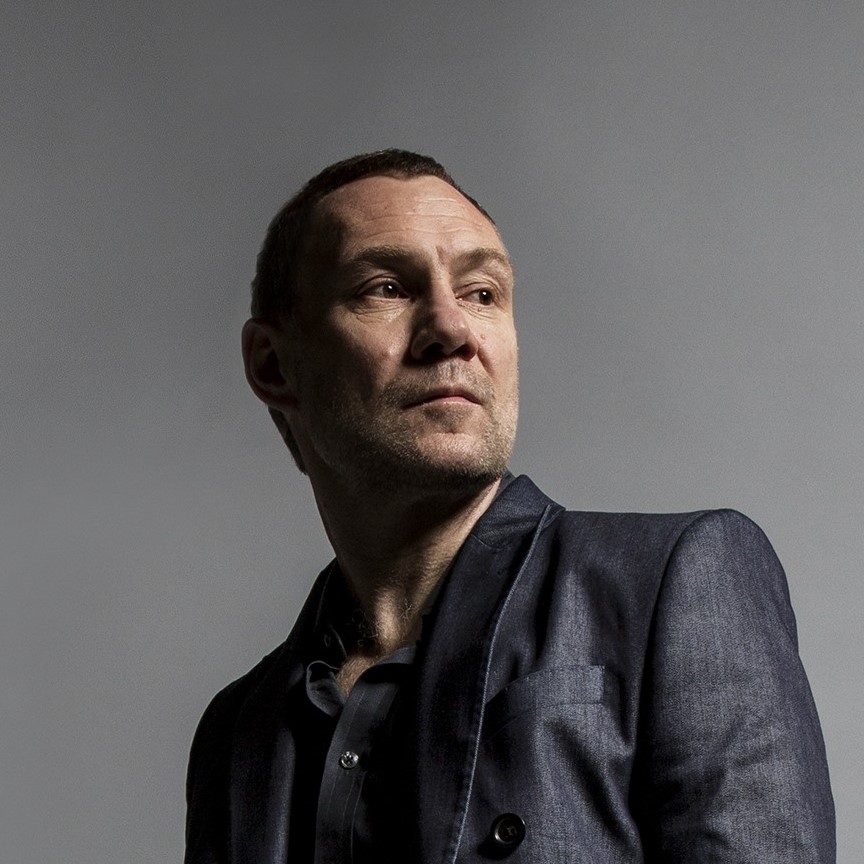
Striding On: Davd Gray, all set for a 17-date UK and Irish tour this Spring (Photo: Derrick Santini)

David Gray’s 11th album, Gold In A Brass Age is out on March 8th on IHT Records / AWAL Recordings, with a 17-date UK and Irish tour starting the following week in South Wales, calling at: Fri, 15 March – Cardiff St David’s Hall; Sat, 16 March – Cambridge Corn Exchange; Sun, 17 March – London Royal Festival Hall; Tue, 19 March – Brighton Dome; Wed, 20 March – Southend Cliffs Pavilion; Fri, 22 March – Manchester Bridgewater Hall; Sat, 23 March – Nottingham Royal Concert Hall; Sun, 24 March – Gateshead Sage; Tues, 26 March – Liverpool Philharmonic Hall; Wed, 27 March – Bournemouth Pavilion Theatre; Fri, 29 March – Birmingham Symphony Hall; Sat, 30 March – York Barbican; Sun, 31 March – Glasgow Royal Concert Hall; Tues, 2 April – Belfast Waterfront; Thur, 4 April – Castlebar Royal Theatre; Fri, 5 and Sat, 6 April – Dublin Bord Gais Theatre. For more details, head here.

For all the latest from David Gray, check out www.davidgray.com. You can also keep in touch via Facebook, Instagram and Twitter.

Posted in Books Films, TV & Radio, Music | Tagged , , , , , , , , , , , , , , , | 1 Comment

Penetration / The Mardigras Bombers / Vukovar – Preston, The Continental

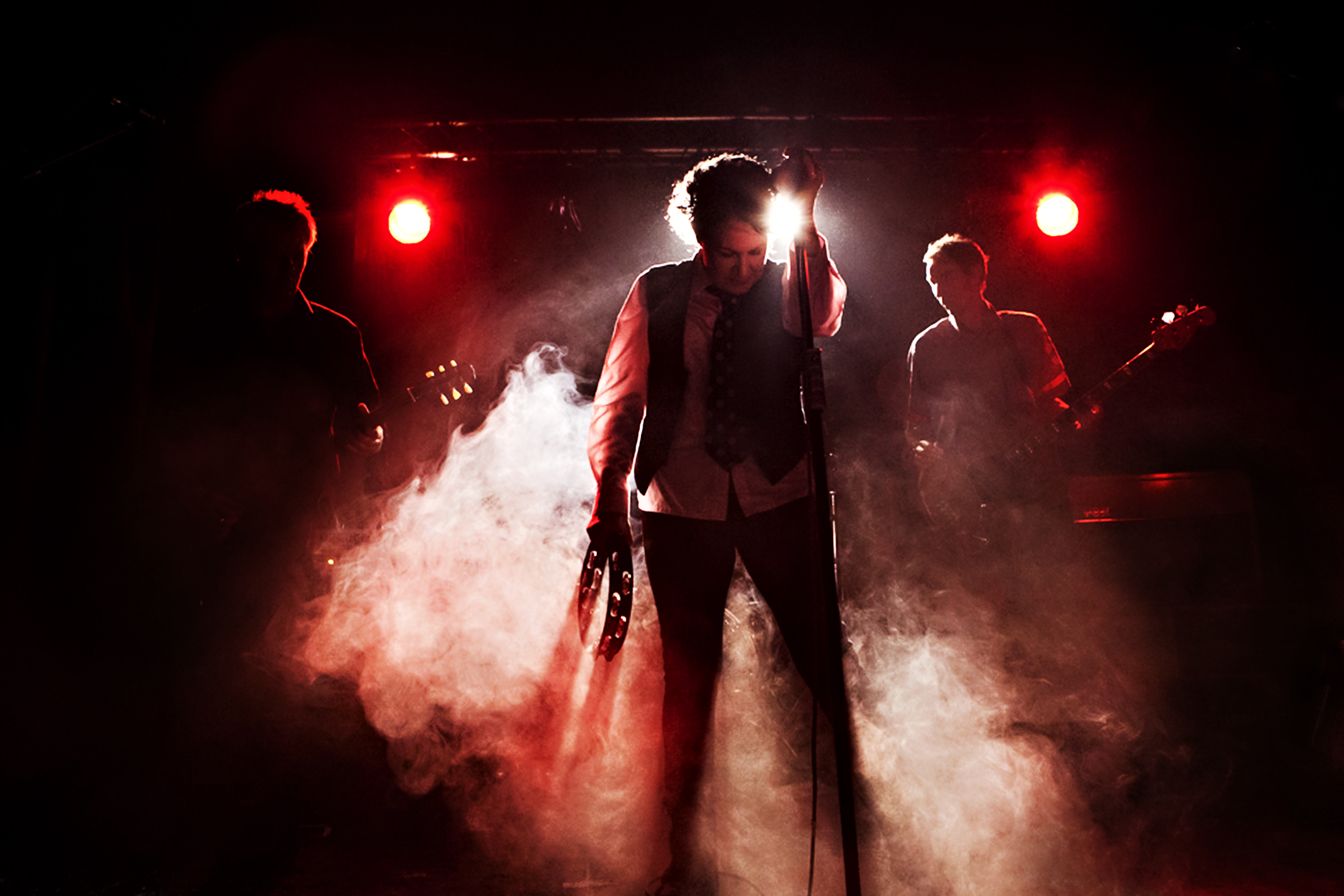
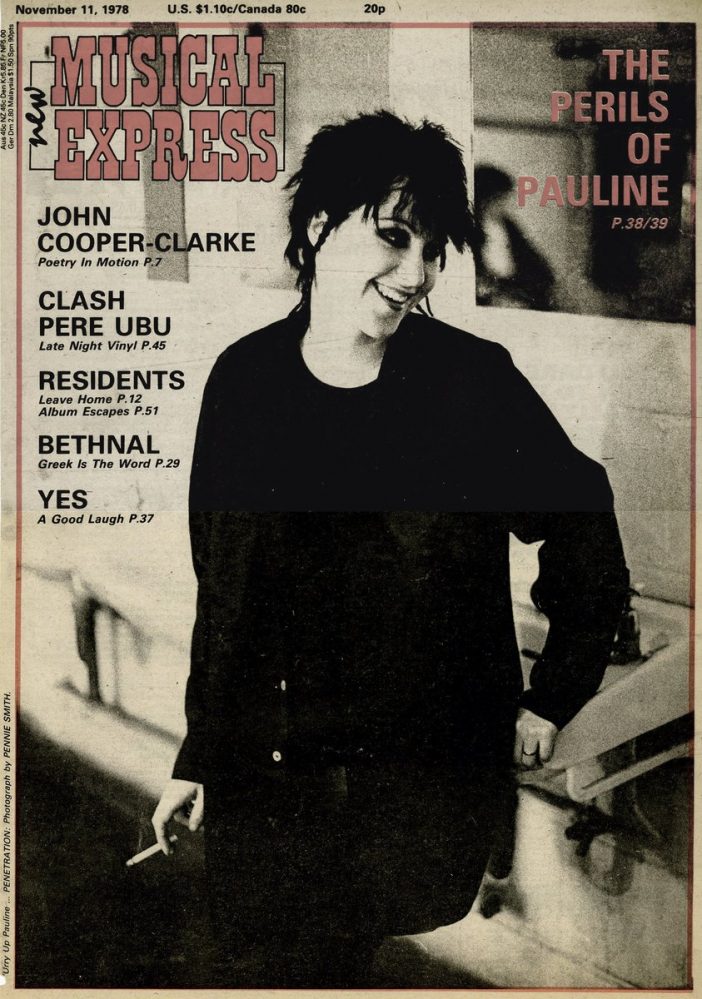
Complementary Therapy: Pauline Murray gives it her all with Penetration at  The Conti (Photo: Gary M Hough)

After a slow start to the year, gig-wise, in the space of a fortnight I’ve witnessed two fine acknowledgements to the songwriting of Pete Shelley.

First, a fitting rendition at Preston Guild Hall of the wondrous ‘What Do I Get’ by Dunfermline new wave legends Skids, then across town at The Continental there was Penetration opening with ‘Nostalgia’ and encoring with ‘I Don’t Mind’, a personal highlight on a night of many from these North East punk pioneers.

At one stage it was in doubt they’d even get there, Arctic conditions sweeping across the North Country, the tops between us and Tyneside treacherous. But thankfully there was just a slight delay, two locally-based opening acts holding the fort in their own inimitable styles.

It’s fair to say I’ve never seen the same Vukovar twice, and this is an outfit seemingly in a state of flux right now, between incarnations. Last time I caught them, there was a kind of Doors meets Family Cat and Jesus and Mary Chain vibe, while this time it was harder to get a handle on, bass player Rick joined by female guitar and keyboard players plus crouching, determined poet Simon Morris (Ceramic Hobs, Smell & Quim) reading aloud from his notebook.

But what with thrashing guitars, malfunctioning synths and dramatic stage exits … well, there’s always something to remember with this ensemble, in whatever format. I look forward to the next chapter in their somewhat outlandish art-house journey.

Band Substance: The Mardigras Bombers. L to R – Paddy (drums), Bianca (vocals), Ged (guitar), Damion (vocals), Mark (bass), Tom (keyboards).

I’m not entirely convinced anyone else would consider putting these three bands on in the same room, but They Eat Culture’s Rob Talbot seemed to got it right, and – next up – The Mardigras Bombers were just what was needed to bridge the gap between acts.

They use the term ‘post-punk’ but I don’t see so much of that. I’m not sure how it was when it was just songwriter Damion Gillett up front, before co-vocalist (and WriteWyattUK favourite) Bianca Kinane joined, but to me it’s more an Ike and Tina Turner Revue, the pair trading lines on original songs with passion a-plenty on a set of songs they mischieviously tell us are all about ‘death and sex’.

I hesitate before mentioning Meatloaf, but I guess it’s that duet approach, and this is more like I’d hope he’d be if he was less about theatrics, the Steinman-like stage pomposity reined right in and the rock’n’roll seeping through instead.

Bianca’s clearly holding back, a team player unwilling to hog the limelight, but there’s no doubting that great voice, shining through on every song, this tight sextet a great vehicle for her vocal run-outs, although unable to give it too many moves on a busy stage – lest they knock keyboard wiz Tom Wilson off the edge.

There was just one cover, their twist on outlandish 1975 Tubes prog-rocker ‘White Punks on Dope’ providing a worthy climax, taking me back to being enthralled by that number in late ’77, barely 10 years old, unsure I’d ever heard such majesty on the transistor.

Bass Instinct: Robert Blamire at Preston’s The Continental (Photo: Gary M Hough)

This was hardly Otis Redding’s 1967 love crowd, but there was an air of clear affection for Penetration from the very outset, and as it turned out a truly appreciative audience had good reason to be so enamoured.

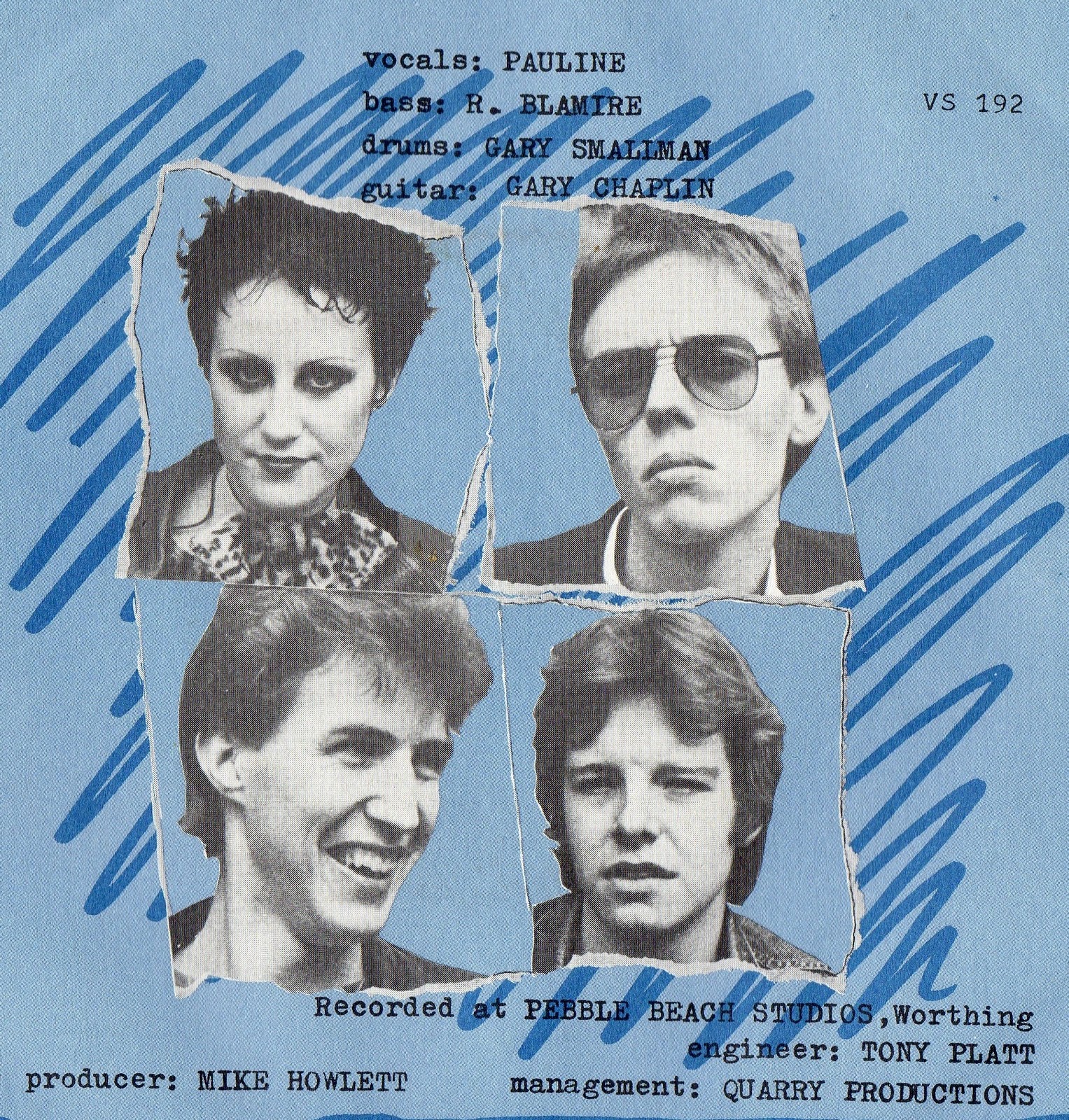
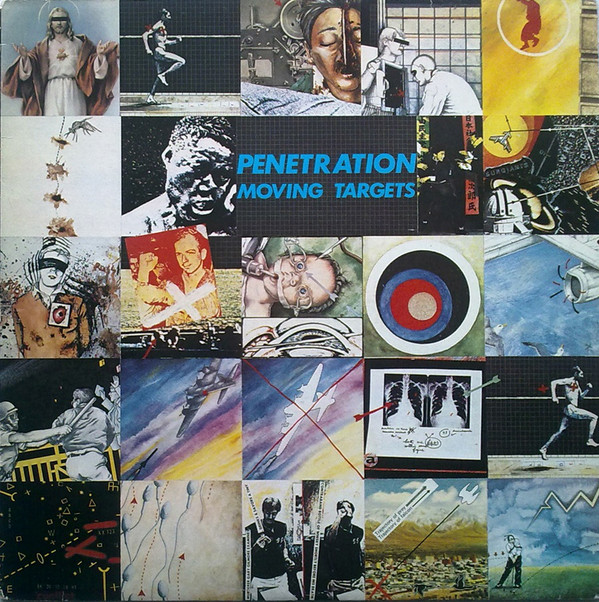
The set was built around revered 1978 debut album Moving Targets and its 1979 follow-up, Coming up for Air, all those songs rapturously received. What’s more, the maturity of the 21st century Penetration further enhances the songs, vocalist Pauline Murray and bass player/co-writer/hubby Robert Blamire (towering over the missus – part-Robert Forster, part Keith Richards) at the heart of it all, the pair flanked by no-nonsense guitarists Steve Wallace and Paul Harvey.

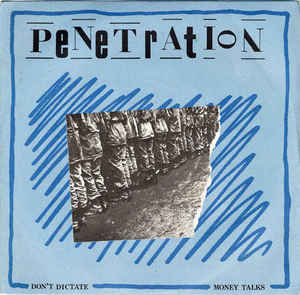
Cult 45 ‘Don’t Dictate’ went down a storm, and I swear I could hear accompanying brass on later single ‘Come into the Open’, another track taking me back to my pre-teens, with Pauline perfect, her vocal style truly complementary, interweaving between the grooves with powerful sax-reedy qualities.

Drum Major: Ken Goodinson at Preston’s The Continental (Photo: Gary M Hough)

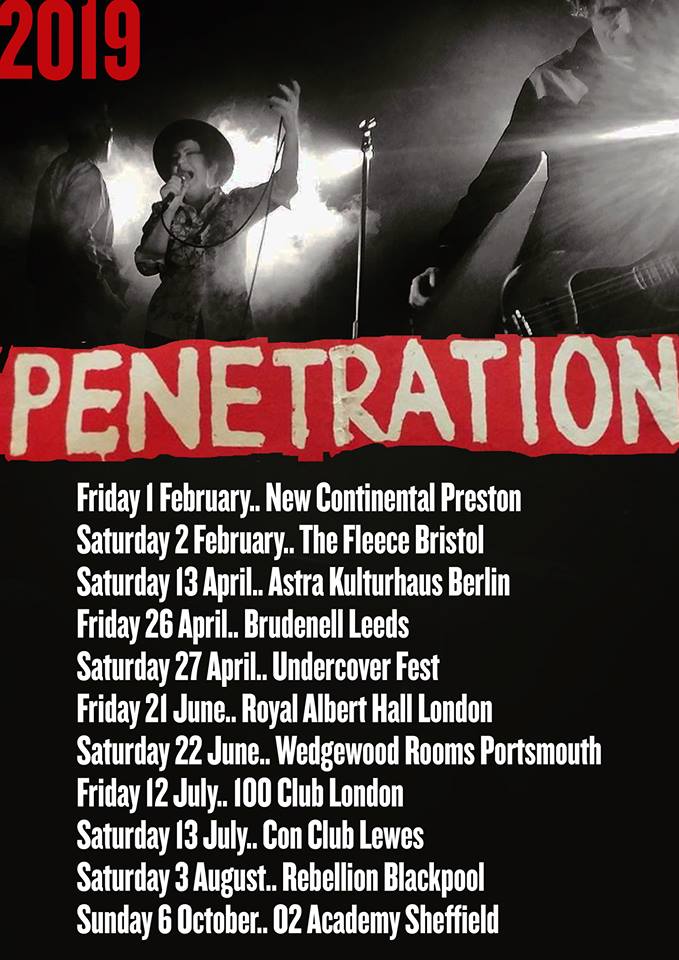
I’d like to have heard more of the band’s ‘second coming’ material, but this was night one of a series of 11 sporadic dates leading up to and beyond a Buzzcocks/ Skids/ Penetration Shelley tribute show at London’s Royal Albert Hall in May, so the onus was always going to be on recreating and reworking that seminal late-70s songbook.

Besides, I was more than happy with the Resolution tracks aired, the fantastic ‘Beat Goes On’ rightly closing the main set, while – after that awesome rendition of ‘I Don’t Mind’, one that left me feeling highly emotional – final encore ‘Calm Before the Storm’ was spell-binding, David Bowie’s ‘Modern Love’ given a County Durham twist in its ‘I don’t want to go out, I don’t want to stay at home’ intro, while the outro saw them away in style, the five-piece heading off one by one.

Pauline – her small talk with the audience all night a joy, and still possessing that uncompromising but sweet personable touch all these years on – was away first, after Andy Pandy-like ‘Good Night’ waves to us all. And her bandmates duly followed, the guitarists next, leaving that underpinning rhythm section, Robert’s chugging bass continuing a little longer before he too took his leave, Ken Goodinson’s John Maher-like hypnotic drumming bringing the set to a fitting conclusion.

Visible Girl: Pauline Murray, from The Continental and onwards in 2019 with Penetration (Photo: Gary M Hough)

You can head to this site’s feature/interview with Pauline Murray from January 2019 via this link, and with Bianca Kinane from December 2018 hereFor details of Penetration’s 2019 dates head to their Facebook page. You can also check out The Mardigras Bombers’ latest moves via this link, and find out more about Vukovar here

With thanks to Gary M Hough, who while only armed with his mobile phone camera on the night still managed to capture some great images. For more of his work head here.


Posted in Music | Tagged , , , , , , , , , , , , , , | 2 Comments

Away from the Odditorium with The Dandy Warhols – the Peter Holmström interview

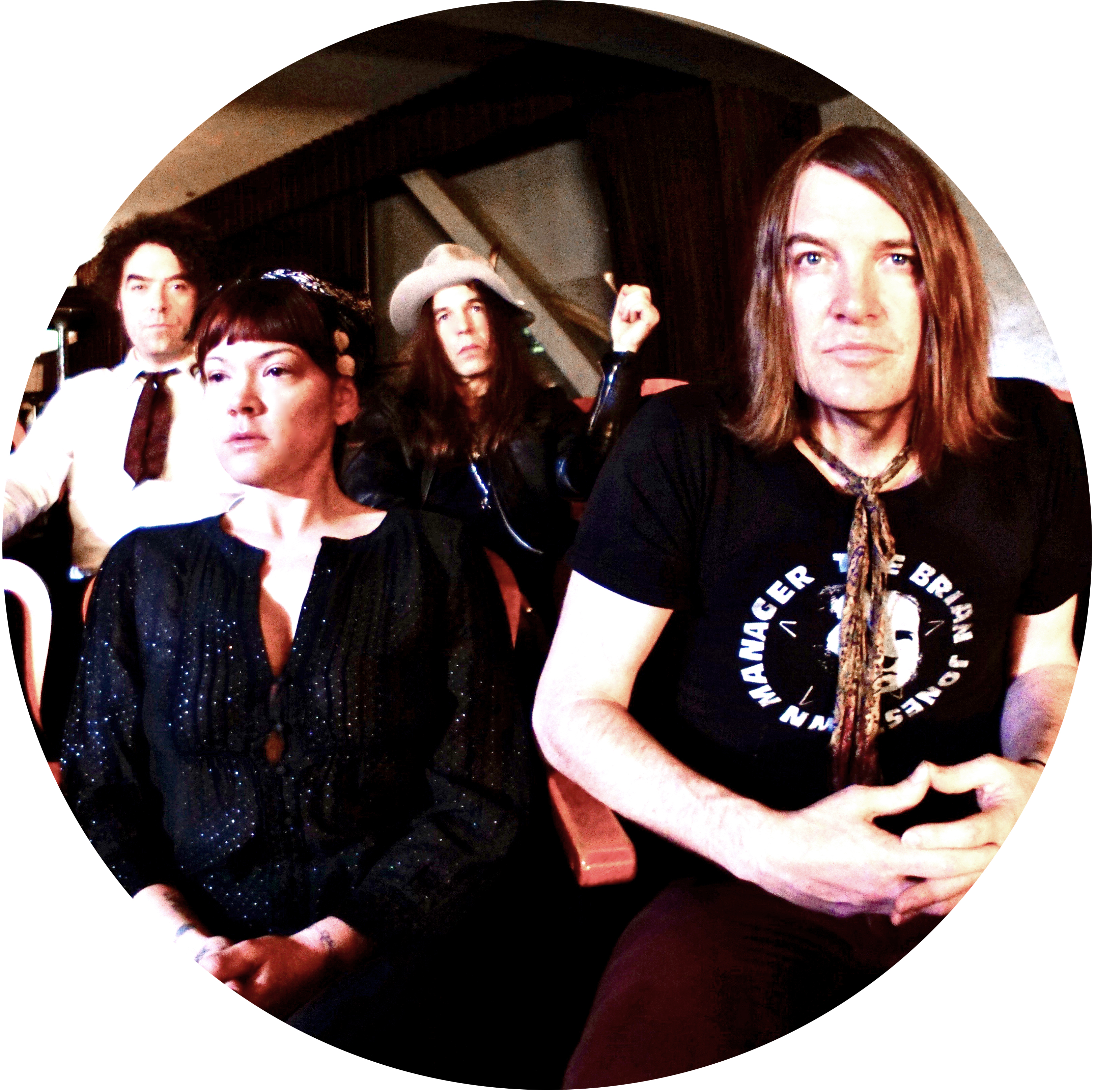
Odditorium Exports: Portland’s The Dandy Warhols, celebrating 25 happening years in the business

This week marked the return of The Dandy Warhols to British shores, a quarter of a century after singer/guitarist Courtney Taylor-Taylor and guitarist Peter Holmström first joined forces, a couple of friends who decided they ‘needed music to drink to’.

Best known over here for the hit ‘Bohemian Like You’ – which narrowly failed to chart in the UK in 1990 but saw success a year later after featuring in a mobile phone TV advert – the Portland, Oregon outfit took relatively little time to make an impact at home.

But such factors rarely guarantee longevity, Peter instead seeing their ability to survive tied to their work ethic from day one.

He was in cold and frosty Antwerp when I called late last week, ahead of a date in the Belgian city which opened a brief 25th anniversary tour culminating – after further appearances in Paris, Amsterdam, Berlin, Birmingham, Glasgow and Manchester – at Brixton Academy tonight (Friday, February 1st).

Looking forward to what his bandmate Zia McCabe (keyboards, vocals, who also clambered on board in 1994) called ‘a massive concussion of rock’n’roll a quarter of a century in the making,’ Peter continues to enjoy his travels with The Dandy Warhols.

“These are always the ones I look forward to. They’re way more interesting to me than US tours. Of course, it used to be more exciting before every city was essentially the same – the same chain stores everywhere. But whatever …”

I gather you’re a keen photographer too. Will you be out snapping between shows in the locations you visit?

“That’s faded off a bit, but I’ve always got a bit of a visual artist thing going on. I do take some pictures, but just for memories these days.”

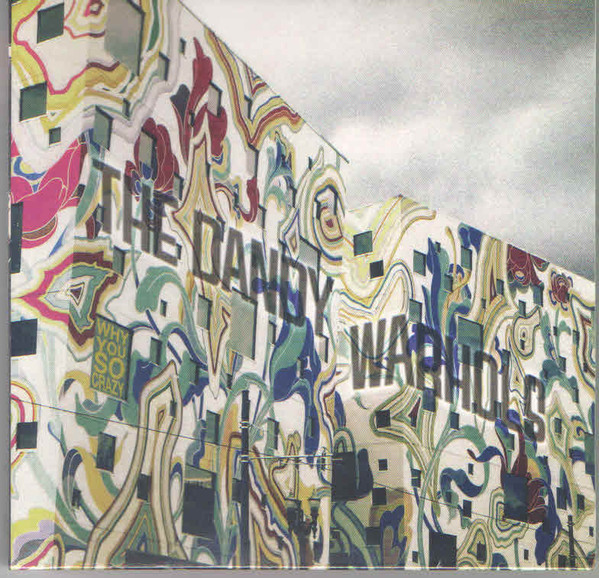
Don’t think for one moment this is all about nostalgia. They’re chiefly looking to spread the word about a new album, Why You So Crazy, out on Dine Alone Records.

You get a flavour of the new material in a single-shot 360° short film featuring Mad Men’s Jessica Paré for the single ‘Be Alright’, all the action taking place within the band’s self-run Portland HQ, The Odditorium.

It all centres around the consumption of a magic wine, their ‘band space’ including a bar owned by front-man Courtney, who directs the film and happens to have a passion for the wine world. and it was written and conceived by Kevin Moyer, an award-winning creative whose past music projects have featured, among others, Elliott Smith, Pearl Jam, and Willie Nelson.

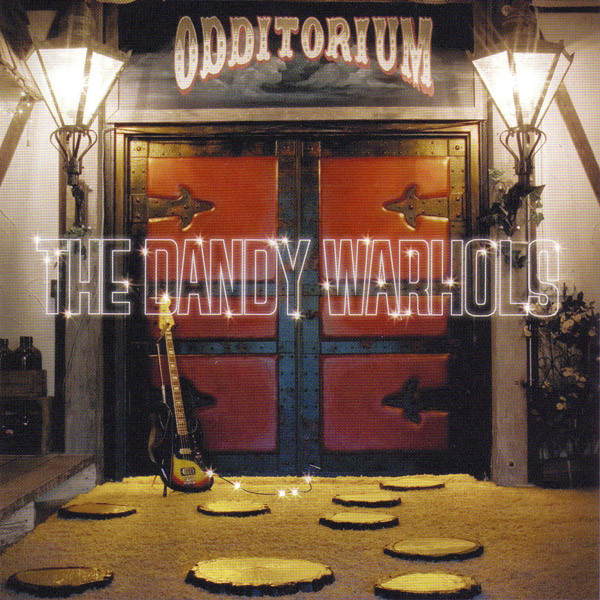
It was back in 2002 that The Dandy Warhols bought a 10,000 sq. ft. building in what was then industrial Northwest Portland, The Odditorium soon becoming not only their band headquarters and including a recording studio, but also a hang-out for friends and fellow artists.

As Kevin Moyer put it, “I’ve been there many times and it is such a cool and ethereal place, full of psychedelia and gothic touches and auras, that it just makes your head spin trying to take all of it in as you walk through the unique rock’n’roll space. So what better way than to use a head-spinning media format to take the viewer on a magical journey through the Dandy Warhols’ own space and sound.”

Courtney added, “We’ve always been driven to create art with emotional clarity. That’s what the world needs more than ever right now. I’ve never felt so strongly that people are losing their minds, and it’s more of them than ever before. Local politics, international politics, news programs, sitcoms, and our president all feel like the heat got turned up.

“It doesn’t feel like a natural progression of insanity, it just happened. Most people are behaving in a manner that can only be described as batshit crazy.”

The video certainly suggests a hive of activity, prompting me to ask Peter if the band’s base is always such a happening place.

“Ha! No, no, no. In the past, more so … but it still kicks off every once in a while.”

Club Class: The Dandy Warhols travel in a bit of luxury when they can

Club Class: The Dandy Warhols travel in a bit of luxury when they can

Have you helped bring a little employment to your home city through your HQ?

“Yeah, some, though probably not as much as we’d like, but we definitely employed a lot of our musician friends when we were building that place.”

Do you tend to hire it out for rehearsals to local musicians?

“Some, but it’s a tricky thing. We need the space a fair amount, so the whole scheduling things always gets in the way. Generally, whoever’s engineering for us can work on projects, and we all have our own projects we’re working on in there as well, and we do rent it out sometimes to touring bands. Morrissey did a whole series of rehearsals there before a tour, then Spoon, Black Rebel (Motorcycle Club), The Strokes … and The Shins rented it out last, I think.”

The latter are also Portland-based, aren’t they?

“Yeah, well, they live here now.”

Lots of great bands started there or gravitated towards the city. Is there a fellowship between musicians associated with Portland?

“Yeah, absolutely.”

Late last year I talked to Colin Meloy from The Decemberists. Is he on your radar, and is it a close enough city to get to know like-minded musicians in town?

“Sure, and my wife is really good friends with Colin’s wife Carson, and I know the band a little. I’ve known John (Moen), the drummer, forever. And Chris Funk is a good acquaintance. We know each other pretty well.

“But a lot of times with bands at the level of The Gossip and ours, we’re not in town very much, and not there at the same time.”

While ‘Be Alright’ showcases the band’s ‘classically off-kilter psych-pop’, there’s also what they call ‘country-fried Americana’ on ‘Motor City Steel’, and ‘gothic piano-propelled rumbas’ on ‘Forever’ on the new record.

In fact, there are references as far flung as Fred Astaire and Ginger Rogers, Don MacLean’s Chevy, and the church of Bowie’s ‘Modern Love,’ the 12 songs reflecting ‘surrealist visions of an alternate reality’. Arguably what we all need right now, on both sides of the Atlantic.

I’ve got to talk a bit about the past though, and it’ll be 20 years in 2020 since ‘Bohemian Like You’, the track they’re identified with more than any other over here, was first released. Is that the case in America too?

“Not in the same way…because that Vodafone advert never happened in the United States. It’s definitely one of the more recognised songs, but ‘We Used To Be Friends’ is as big if not bigger, as it was the theme song to Veronica Mars. When that came out, all of a sudden we had this bunch of kids up front, which was pretty cool.”

Despite what many might think over here, you were around for six years before your biggest UK hit. Hence this silver anniversary tour. Time flies.

“It certainly does … and I never quite expected this.”

Some bands, for whatever reason, don’t always get those breaks, and even if they do, a label may soon let them go and they’re done for after the briefest career. How have you kept it going? Luck? Hard work? Or both?

“Yeah … luck only gets you so far. You have to work hard and take advantage of the luck. And we already had a pretty decent work ethic underneath our belts, before the serious luck happened.”

For you, there have always been side-projects, from Pete and the International Airport to Rebel Drones. What percentage of your recent life, do you reckon, involves The Dandy Warhols?

“Oh, easy 50 per cent, for sure.”

Is that a good way of keeping it fresh – a little diversification en route?

”I don’t know what actually keeps it fresh. It just sort of is. We all continually want to be doing something we haven’t done before or something slightly different to the last time. Whatever it is, it’s always this continual urge not to want to do the same thing we just did.

“I find with the side-projects and working with other people, you learn something different and bring that back down, and that’s creative.”

You’re clearly still mates too, or this wouldn’t still be happening a quarter of a century later. But right at the beginning, it was just you and Courtney (Taylor-Taylor).

“Yeah, we were the first to get together.”

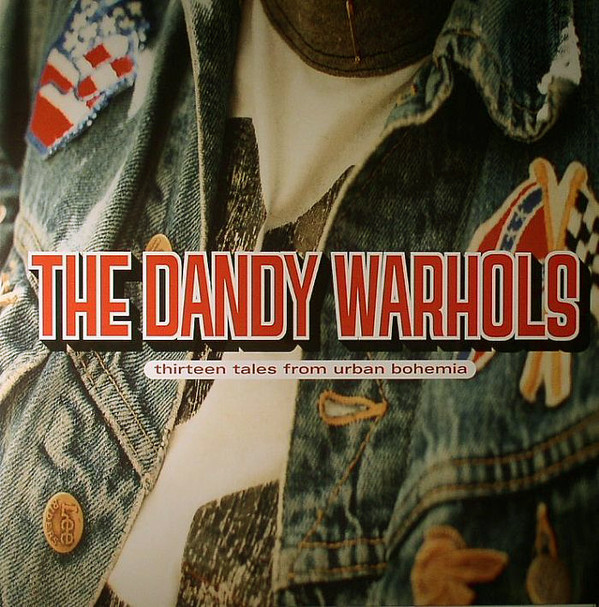
This is a band about far more than the more recognised hits mentioned so far, and if for some reason or other you missed out, you could do far worse than start with 1998 anti-drugs anthem ‘Not if You Were the Last Junkie on Earth’, check out 2000’s Thirteen Tales From Urban Bohemia album (including the ‘Bohemian Like You’, ‘Get Off’ and ‘Godless’ singles), and watch 2004 documentary film Dig! (also featuring San Francisco’s The Brian Jonestown Massacre), then exploring more in both directions from there.

Before all that, the early recordings include elements of ‘shoegazing’ for these ears, not least on early single ‘Ride’, perhaps rather aptly. Personnel-wise, did it take a while for the main elements of the band to slot into place and for them to become a proper unit?

“Not really. It was very quick. We got together and six months later played our first show, six months later we were putting out our demo tape and signed to an indie label. A year later that came out and we were being courted by major labels.

“The year after that we were putting out on a major label. That’s pretty quick. But it all just felt like it was happening at the right time. And it never got too big, too fast.”

Even so, there must have been ‘pinch me’ moments where you wondered how this had all happened.

“Well yeah, pretty much every year there was at least one. It was non-stop.”

When was the last time you felt that was the case?

“Pretty much every time we get on an airplane and go off on tour. There are times that are more exciting, like anytime we go to a place we haven’t been before, like when we went to Hong Kong, not long ago That was pretty cool.”

For the record, the band is completed by Brent DeBoer (drums, vocals), who took over  from initial sticksman Eric Hedford in 1998, so the band you see today have been around for a full two decades now.

Going right back to the beginning though, who was the first to inspire Peter to take up guitar and get up on a stage and do it yourself?

“I think the first guitar player was probably Angus Young. That somehow connected when I was like 12 or something. Maybe even younger. My Dad always played Pink Floyd records, so there’s always been a bit of that. But that was maybe a little more technical than I could do. But AC/DC, well …”

Were many of those influences from this side of the Atlantic?

“Later on, absolutely – like 90 per cent of my favourite guitar players, like Daniel Ash, Robert Smith, Kevin Shields, Keith Richards, Jimmy Page of course, David Gilmour …”

And you had a spell over here in the ‘80s.

“Yes, I lived in Bristol for a few years. My parents both wanted to live overseas, and my Dad had a job with a company that was both US and UK-based. That got us over. It was the late-‘70s/early-‘80s, an interesting time, especially musically, and I’m sure that made an impression.”

Am I right in thinking that the new record is the 10th Dandy Warhols studio album?

“So I’ve been told. Ha! There’s a couple of other records that didn’t really come out, so I don’t know what the count actually is, but everyone keeps saying 10, so we’ll go with that.”

And yet it all still seems fresh for you.

“Oh, absolutely. I’ve pushed myself, and I’ve always got something I’m interested in doing or trying to do, generally failing at that but coming up with something! It’s interesting.”

Incidentally, after their London finale there’s a return home and a North American leg of the tour, taking in Atlanta, Washington, Boston, Brooklyn, Toronto, Chicago, Minneapolis, Denver, Los Angeles, Santa Ana and San Francisco.

Agreeing on a set at this stage must give you a few headaches as a band, I suggested, trying to work out what to put in and what to leave out after 25 years together.

“Yeah, because there are so many songs we actually want to play. It’s really hard to figure out what we’re not going to play. Because everybody’s got their favourites.”

Do you tend to change things around from city to city?

“We try to. It’s always slightly different, but generally when we start off, it‘s the same, and we play that until we start getting frustrated or bored.”

Besides, as Zia puts it, ‘Don’t worry, we’ll figure it out and it will be legendary’. And you can’t say fairer than that.

Inflation Stations: The Dandy Warhols, waiting to take off for their latest European jaunt

The Dandy Warhols’ 25th anniversary tour’s European leg ends at London’s O2 Academy in Brixton tonight (Friday, February 1st). For more details and all the latest from the band, try their official website and keep in touch via Facebook, Instagram and Twitter.


Posted in Books Films, TV & Radio, Music | Tagged , , , , , , , , , , , , , , , , , , , | Leave a comment

A Manchester love affair on record – the C.P. Lee interview

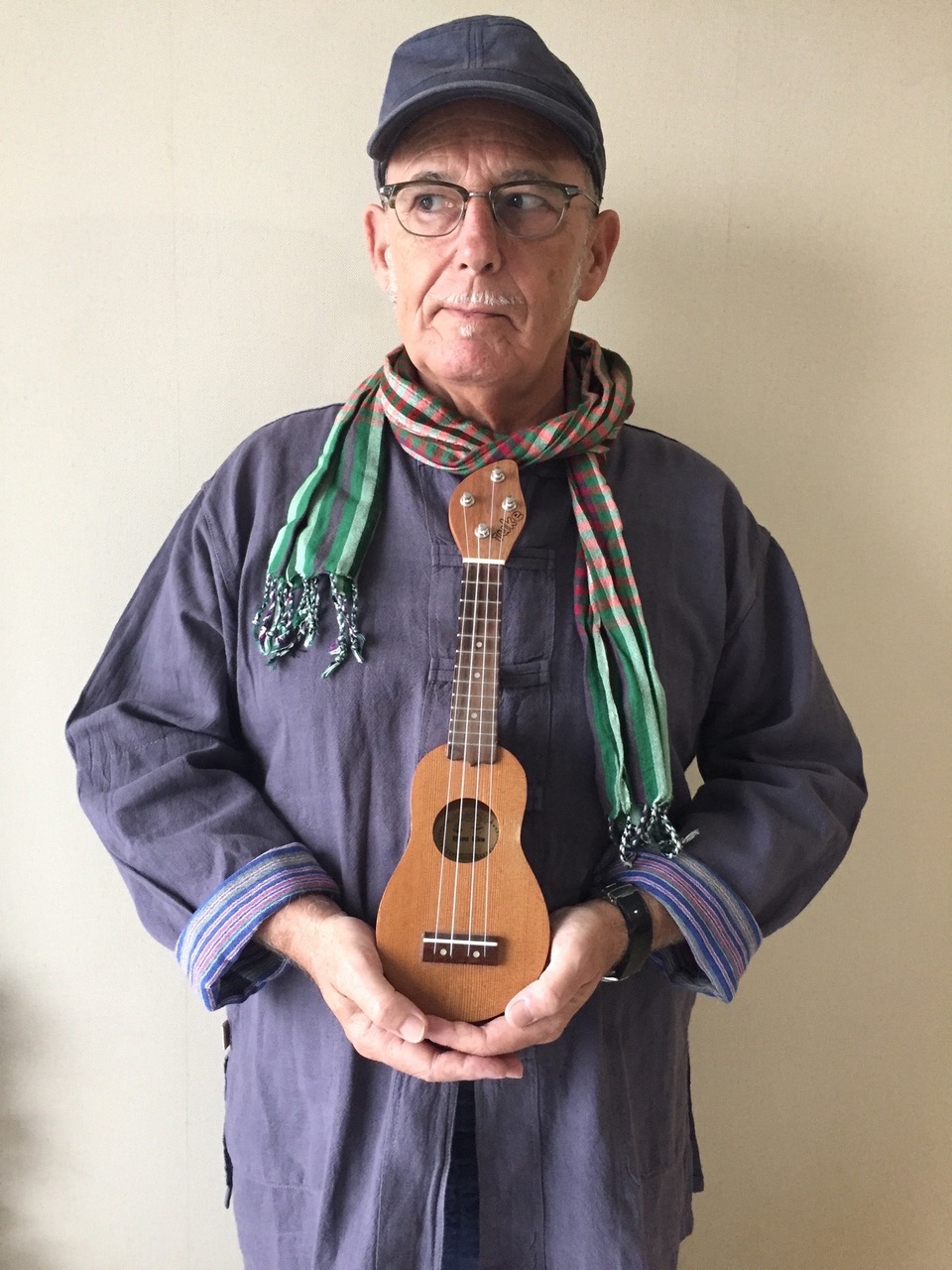
Uke Lee Device: C.P. Lee, still in love with Manchester all these years on

It wouldn’t be right to call C.P. Lee an unsung hero of the North West music scene. He’s sung a fair bit in his time and those who truly know the Manchester scene know full well who he is.

So I can’t even describe him as the most famous Mancunian you’ve probably never heard of. Instead, I’ll just try and tell you a bit more about him, condensed into as few paragraphs as I can manage.

Writer, broadcaster, lecturer and performer Christopher Paul Lee started out on the regional folk and beat club scene in the ‘60s, going on to co-found Greasy Bear.

As he told me, “I started in 1964 singing in folk clubs, and two years later with friends from school started an electric band, sort of John Mayall and Bob Dylan-y, then with another mate started singing harmony together. From that we just added more people, and suddenly it was Greasy Bear.

“We were into folk and American roots music – not as if it was called that then – like the Carter Family and the kind of thing The Byrds were doing, discovering country roots. If you listen to the Greasy Bear album it’s very much in that four-part harmony American style, with twangy guitars and stuff.”

I will, I tell him. I like the sound of that. Even if I am a few decades late to the party.

“Well, there’s plenty of time.”

Bear Essentials: C.P. Lee, second from right, in his days with Greasy Bear (Photo: Russ Tharlow)

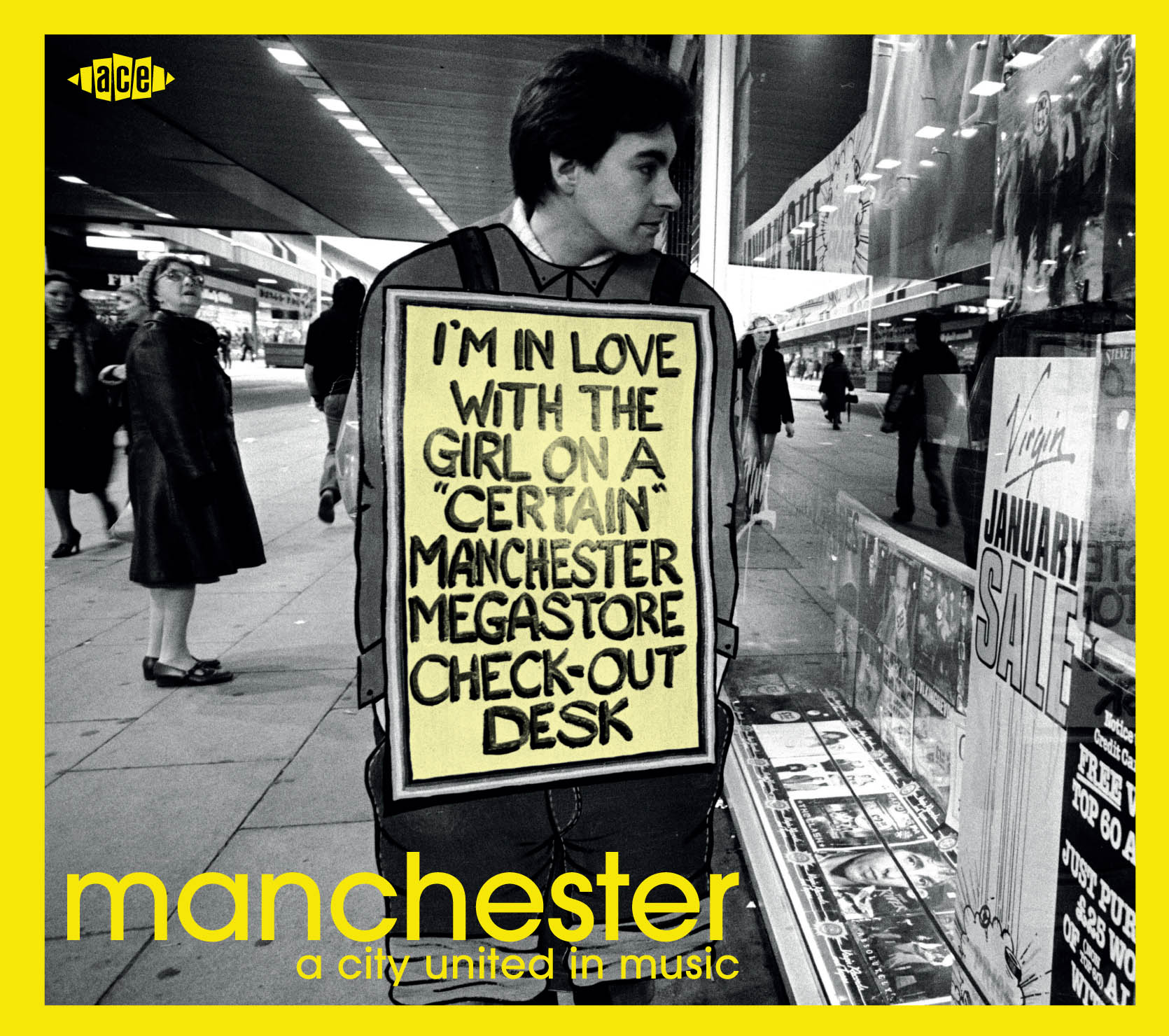
Greasy Bear are one of 45 acts featured – with the track ‘Geordie’, ‘a good example of their four-part harmony’ – on new Ace Records compilation, Manchester – A City United in Music, with C.P. and soul aficionado Ady Croasdell, of Kent Records fame, putting together a mighty two-disc selection spanning 55 years of music.

According to the sleevenotes, ‘Greasy Bear burnt out before they were even lit. Starting out as a duo, C.P. Lee and Ian Wilson initially focused on harmonies and acoustics. The next step was to become a trio by adding seasoned drummer Bruce Mitchell. Soon after came bass player John Gibson and finally Steve Whalley, from a band called the Puritans, added more harmonies and guitar. The Bear was originally managed by Twisted Wheel DJ and promoter Roger Eagle and they developed a distinctive vocal-driven rock sound. In 1970 they recorded an album for Vertigo, produced by Terry Brown, who worked with Dave Swarbrick and Martin Carthy, but it was shelved until eventually being released in 2016.’

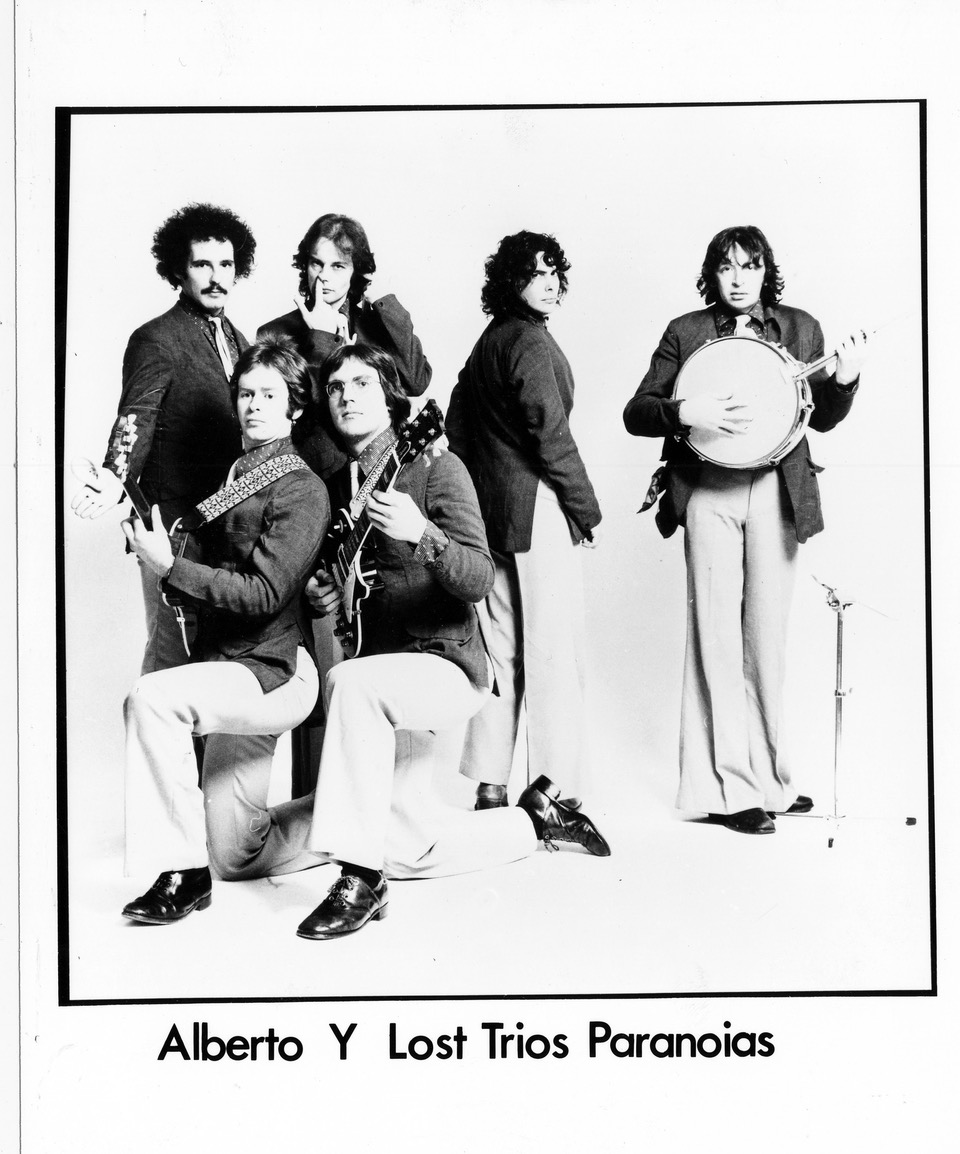
Today’s interviewee and Bruce Mitchell went on to co-found Alberto Y Lost Trios Paranoias, while Ian Wilson formed Sad Café with Toggery Five member Paul Young.

Of his next outfit, the sleevenotes read, ‘The Albertos were a seven-piece set of musicians, united in the mid-’70s by their boredom with the pretensions of the music scene. They started out writing comedy scripts before getting a musical gig together which kick-started a performance career of musical mayhem, described as ‘Dada cabaret’ by Melody Maker in 1975.

Their debut single came out a year earlier on Transatlantic, with subsequent 45s on the Logo subsidiary, while ‘Gobbin’ on Life’, the track included on this collection, produced by Nick Lowe and issued on a Stiff Records EP. was a Sex Pistols parody and a highlight of the ‘Berts’’ 1977 play Snuff Rock, which ran for several months at London’s Royal Court Theatre and the Roundhouse, then at Privates in New York City in 1980, about a rock star persuaded to kill himself on stage.

They even charted with ‘Heads Down, No Nonsense Mindless Boogie’ in 1978. And that’s where I came in. first hearing that single at the age of 10 on Nicky Horne’s Capital Radio show on a transistor radio under my pillow, loving it, seeing them as a bona fide punk band rather than some parody. Listening back, it’s as much Chas & Dave as it is punk, with lashings of Status Quo as well as Dr Feelgood style pub rock. What’s not to love there?

“Yeah, we got away with murder with that. Actually, we did lots of live sessions for Capital, oddly enough, even though people tend to think of it as a record-only station. We did late-night stuff for all sorts of people.”

While John Peel was a huge influence on so many, at that stage – maybe just because he was on slightly earlier – it was Nicky Horne who showed me the way, I told C.P.

“We can still take legal action.”

As it was, the Berts gathered increasing notoriety, by 1981 even with their own nationally-broadcast ITV show, Teach Yourself Gibberish. C.P. told Daniel Dylan Wray in The Quietus in April 2017 (linked here), ‘We were originally asked to do a seven-part comedy series for Saturday night when the pubs had shut, for students. So we said yeah and wrote these scripts and did a pilot before we went to New York in 1979, and then the New York thing died because of John Lennon getting shot, because you can’t open a show about a rock star getting killed on stage.

‘When we came back, Granada Television said for us to do this show. Unbeknown to us, another producer was doing a show with Elton John and Stephen Fry, shot in Didsbury, a precursor to The Young Ones. Rik [Mayall] and the lads were very fond of the Albertos actually, they used to come and see us as they were playing in 20th Century Coyote at Band On The Wall and they supported us. Someone at Granada said we can’t have two late-night shows, so we’re going to cut and edit your show to become a children’s show. Another career bit the dust.’

As it was, the Berts’ adventure was over by 1982, after three albums, after Les Prior – one of the group’s chief purveyors of madness – succumbed to Hodgkin Disease. But they had fans in high places from the start, including legendary broadcaster Anthony H. Wilson, who said of C.P.’s most famous band, “I didn’t go to the Stables Bar (Granada’s main watering hole) and live that strange metropolitan lifestyle that they lived. I wanted to find some way for me to live in the world I wanted to live in, which was the rock’n’roll world. I loved my day-job, being in TV and as a journalist, but I wanted my culture, and I chanced upon a bunch of people who were doing music and drugs, which was a group called the Albertos, and that crowd in Didsbury. Dougie James and Sad Café, those people. So it gets to about 1975 and I’ve got my own little arts programme on Granada, and being inserted as it were, into the south Manchester music scene. I was a third generation hippy, I suppose, but I was attracted to the fact that here was a bit of culture, and I kind of got involved in that on a personal basis, and at the same time I would put bands like the Albertos on television.”

From there, C.P. went on to write and perform a tribute show of routines by Lord Buckley, premiering in Manchester and then Amsterdam, New York and London, among other cities. Also working as a music journalist, in 1979 he then teamed up with John Scott as Gerry & the Holograms, the title track of their self-named album often claimed to have been ripped off by New Order’s mega-hit ‘Blue Monday’. Have a listen, and you’ll hear for yourself.

Come to think of it, that might also be the reason behind ‘Thieves Like Us’ being chosen as New Order’s contribution to the Ace compilation. Was there ever thought of litigation against Bernard, Hooky and co. in view of the similarities?

“Erm… yeah, there was … erm, but in the end I just thought I’m too old for this shit.”

Lawsuits seem to have taken up a lot of New Order’s time in recent years … and that’s just between the band members.

“Yeah, I think it was just coincidence, but it would have been nice to have been acknowledged and get a slice of the pie. But there you go. In another life …”

That contentious self-titled track features on this compilation, the sleevenotes suggesting it was ‘written on a bus’, the idea having ‘emerged from a spare Albertos’ day in Revolution Studios in Cheadle’. Apparently, ‘John Scott had borrowed a Roland synth from Granada TV and with C.P. Lee got down to experimenting. There’s this basic and totally simple riff, the repetition derived from an article that said if you smashed a hologram each fragment would contain the image. Gaining popular radio plays, including on the John Peel Show, it became one of Frank Zappa’s favourite records. Zappa’s claim in an American TV interview that Gerry was a husband and wife team from Sheffield – ‘he sang, she played the keyboards’ – causes much merriment to this day. People can’t help but notice the similarity between ‘Gerry & The Holograms’ and New Order’s ‘Blue Monday’ – two tunes sounding exactly the same, even though recorded two years apart, is totally coincidental of course (gritted teeth).’

In 2007, C.P. published his When We Were Thin memoir, its delights including word of how he produced one side of the first Factory Records release, ate muffins with Andy Warhol, and various shenanigans with Stiff Records artists Wreckless Eric and Elvis Costello. And all this from a fella whose claims to fame also involve treasured scenarios with Captain Beefheart and his actor namesake Christopher Lee.

He’s also written about Bob Dylan, Like The Night (Revisited) focusing on the night the US legend caused controversy among folkies after ‘going electric’ at Manchester Free Trade Hall in 1966. Meanwhile, Shake, Rattle & Rain was adapted from his PhD thesis on Manchester music-making. All worth seeking out, as incidentally is Leave the Capital, former Fall drummer Paul Hanley’s ‘history of Manchester music in 13 recordings’, something I’m also keen to cover on these pages some time soon.

Having turned 69 last weekend, C.P. – or Chris, to some – is now retired from his roles as course leader in film studies and senior lecturer at the University of Salford. But he still writes, give talks and makes documentaries for BBC radio and TV.

And this week, this co-trustee of the Manchester District Music Archive (a role taken on in 2004) was off to Gullivers in his beloved home city for a launch party of the new Ace compilation, of which Ady Croasdell – also present – said, ‘The idea for this compilation was given to me by record dealer Pete Smith, who like me is primarily involved with soul music as a day job but has had a love of pop music throughout his life’, its track listing having ‘evolved over about five years’.

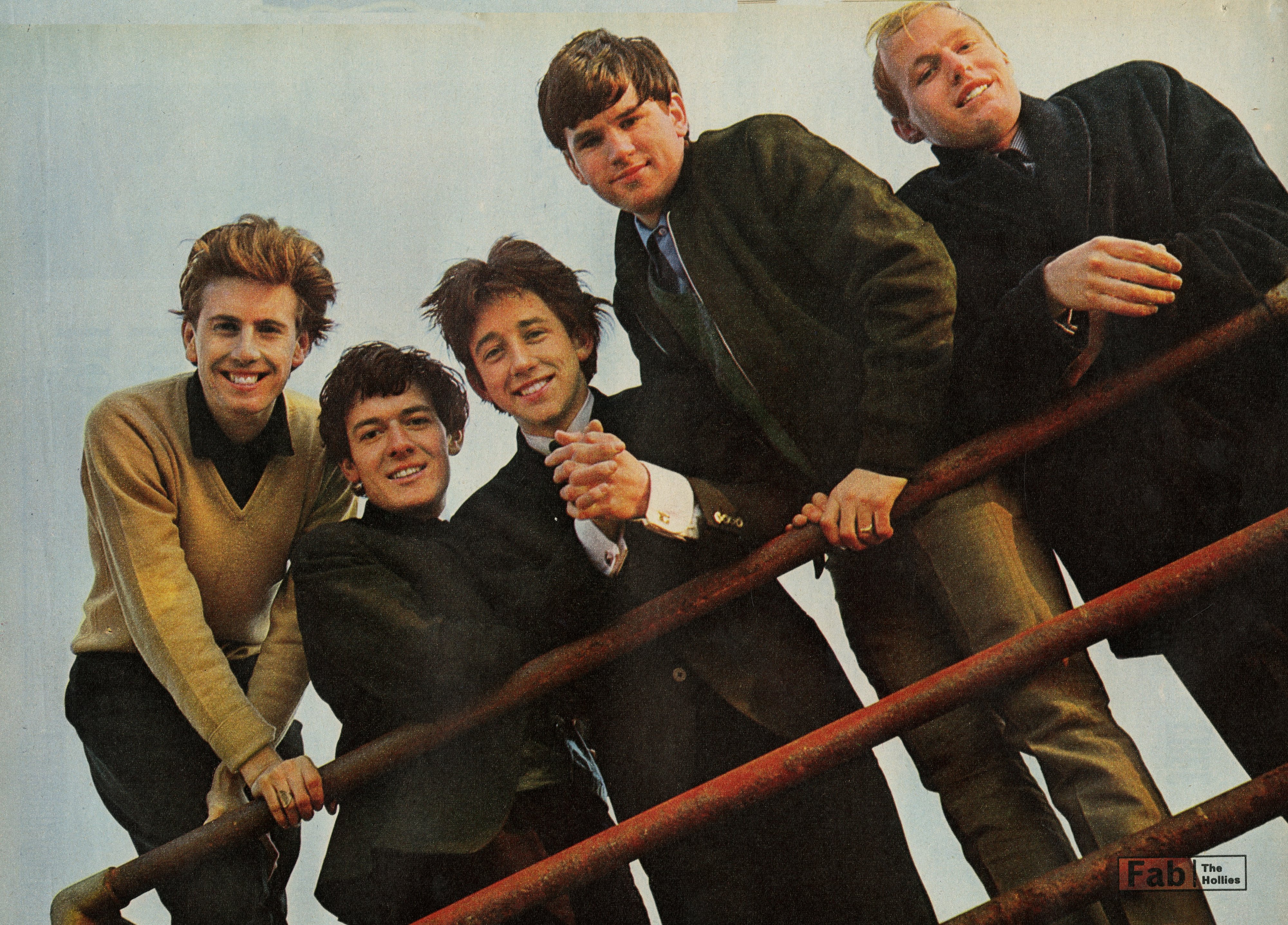
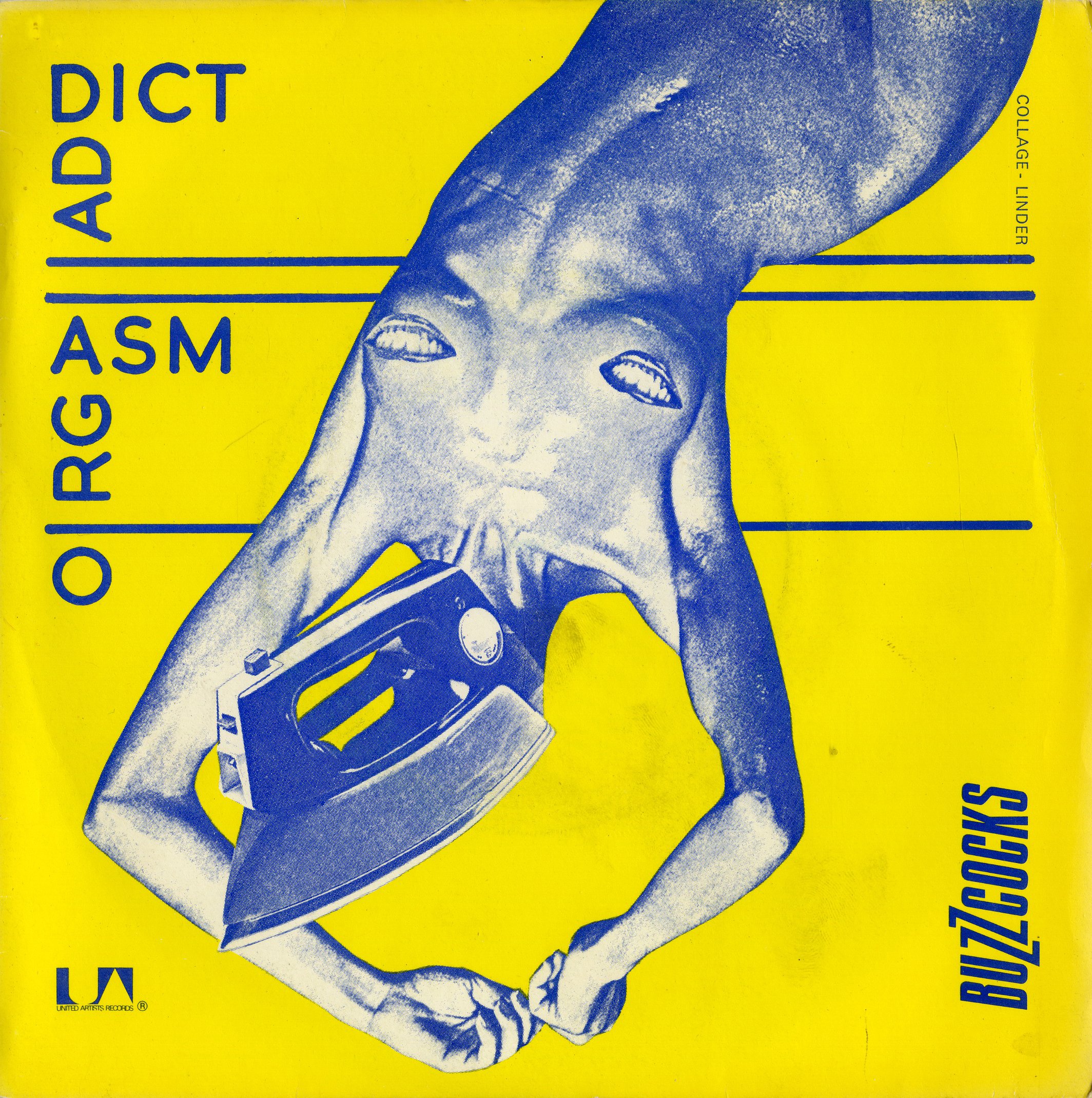
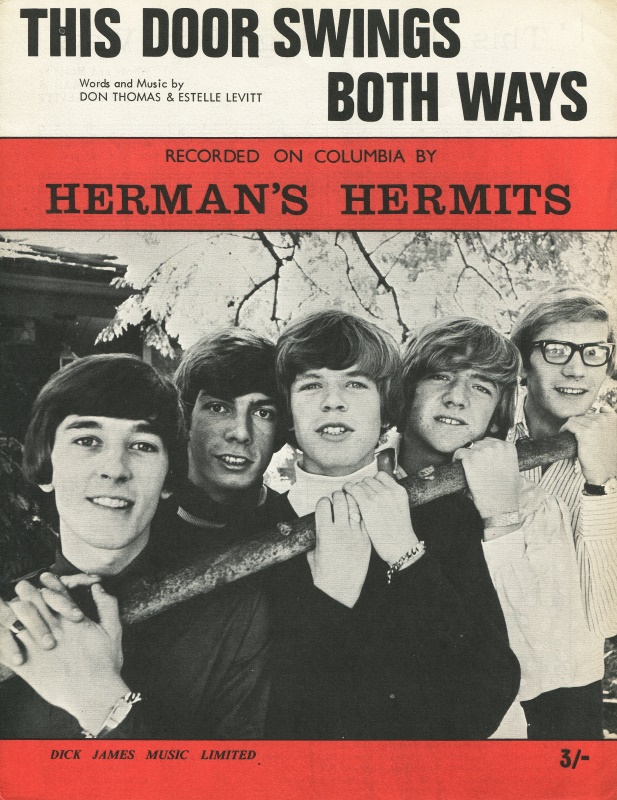
Their two-disc compilation moves from ‘60s beat revolution, Strawberry Studios’ pop era, northern punk and indie mayhem through to ’90s soul and the ‘Madchester’ years, and from Ewan MacColl through to Oasis, and it’s certainly a celebration of all things Manchester, taking in the likes of C.P.’s early heroes The Hollies and John Mayall, plus Wayne Fontana, Elkie Brooks, Georgie Fame, Herman’s Hermits, 10cc, Buzzcocks, Magazine, The Fall, Joy Division, Simply Red, Lisa Stansfield, M People, The Stone Roses, Inspiral Carpets, Happy Mondays, and Johnny Marr.

Of the latter, Ady added, “A handful of preferred tracks weren’t available for licensing, but the only major act missing was the Smiths, and Morrissey’s solo work as a secondary choice. Johnny Marr’s superb ‘New Town Velocity’ goes a long way to filling that omission.”

Legendary producer Martin Hannett’s influence shines through loud and clear on the second disc, and it’s full of local characters, including pre-Frank Sidebottom era Chris Sievey with The Freshies (as featured on the cover), pre-John Shuttleworth era Graham Fellows as Jilted John (along with the Berts helping showcase the ‘famously dry humour of the city’), and treasured performance poet John Cooper Clarke.

An accompanying 44-page booklet helps tell the story of the city’s musical history, written by C.P. with input by Ady and established music writer Jon Savage, including evocative photos by the likes of Kevin Cummins, artwork, and reminiscences from key players.

C.P. was at Manchester’s Piccadilly railway station when I tracked him down on a ‘brass monkeys’ late January afternoon. But don’t have too much sympathy, as soon after the launch party he was packing for a winter break in Thailand, seeing his son get married there. I soon asked him if he felt Manchester gets the respect it deserves in musical terms.

“Ooh … I think if you mention it internationally, people tend to think of MerseyBeat, but that was only a couple of years, and while The Beatles were of course a fantastic influence on music, they left and never went back, whereas, here in Manchester …

“I know Liverpool has had its renaissances since, and some great bands, but it’s more fits and starts on the Mersey, whereas Manchester’s had this consistent trudging towards a musical nirvana. It never went away. We had a quiet bit when the Chief Constable shut the clubs down, but the musicians revolted and founded a cooperative, Music Force, a tremendous thing that kept it spinning.”

That grassroots collective was set up to provide basics like equipment, possible gigs, van hire and poster design for working musicians, with C.P. part of it, describing it as ‘the fightback against the lack of opportunities for professional musicians’.

He added, ‘Part of the problem was – as happened in the 1960s – Manchester had a moralistic police chief who seemed determined to close down a nightclub and concert scene already eviscerated by the redevelopment of the city’s historical club zone as the Arndale Centre and various scares about youth and drugs. When punk arrived, stimulated by the two Lesser Free Trade Hall Sex Pistols gigs in June and July 1976, self-starting was the only possibility – and the possibility was there, thanks to Music Force and Buzzcocks.’

C.P. told me, “When Buzzcocks came along and Pete (Shelley) and Howard (Devoto) went to put on the Sex Pistols in Manchester, that’s who they went to, asking where they could afford to put them on. They gave them advice and hired out a PA as well, I think. That was at the Lesser Free Trade Hall, having had Dylan at the bigger one in ’66. And the list of bands that played there is unbelievable, all the way from Louis Armstrong through to anybody but The Beatles!”

Early Influence: The Hollies made a big impression on C.P. Lee

Were you catching lots of bands in town in your youth, or did you have to travel further afield?

“No, you just stayed in Manchester. Elton John said his favourite club in the world was the Twisted Wheel. The reputation it had for live music was second to none.  And from that you get the birth of Northern Soul. And remember that the house band there in the early ‘60s was John Mayall and the Bluesbreakers.

“People like Rod Stewart, with (Long John Baldry’s) Steampacket – and I think that was Elton John’s connection as well, playing keyboard for them for a while – came and played there, and you had all the great blues and R’n’B men – Muddy Waters, Howling Wolf, Screaming Jay Hawkins … you just stepped out of your front door really.

“By the time I was 16 I’d seen The Who, The Move, The Action, Ike and Tina Turner, Bob Dylan … it was never-ending. You had these amazing performers coming to Manchester and they gave Mancunian musicians a chance to play, and everything gave rise to everything else.”

While we talk about a Manchester scene, it’s not as clear-cut as music historians might make out, and C.P. writes, ‘Music ‘scenes’ are not specifically geographic. The word relates more to a metaphysical concept that dwells within a psychological realm of meaning pertaining to a coming together of likeminded people with shared interests and practices. Thus, within the Manchester scene there are a myriad scenes that would appear to the outsider to be mutually exclusive. For example, The Fall and M People share a similar geographic position but their music differs widely, while Freddie & the Dreamers and Oasis are both from the Manchester scene but decades apart.”

I asked him a bit more about that.

“I was just talking to (BBC Radio Manchester’s) Mike Sweeney about this, how you could take New Orleans as an example – an identifiable scene where the music can’t come from anything else other than New Orleans, whereas Manchester had this incredible mixture of styles.

“M People and The Fall – how could you be more markedly different? Or Elkie Brooks and Buzzcocks? But that’s part of the magic of Manchester. It absorbs all sorts of influences – you’ve got Irish roots, Italian roots, Afro-Caribbean roots, all sorts of different mixes of people here. And they’re still here, and so we keep still keep making the music.”

There are other schools of thought on all that, and I recall Peter Hook telling me in late 2017 how Tony Wilson felt Manchester stole all the Salford musicians.

“Ha! Or Prestwich! You could break Joy Division into Macclesfield, Salford, and South Manchester, but they all ended up living in Manchester. But the basis for all this is the 10 boroughs of Greater Manchester, so you’ve also got Georgie Fame from Leigh and Wynder K. Frog, who started in Bolton. A lot of people have forgotten about him (Mick Weaver), an amazing session man who lives in LA and plays on lots of albums, a great organist.

“And it’s fascinating that these people had the chance to do it, all because of the change in hire purchase laws. That was what did it! Instruments suddenly became accessible.

“Also in Manchester, there was the influence of popular music in America being dumped on us by Burtonwood airbase (a 15-minute train ride from the city). Every weekend, US troops poured into Manchester and many were playing in groups in the 1950s and 1960s. So we had all these influences happening.”

I guess it was a similar tale as the influence of what became known as Northern Soul.

“Exactly, with (journalist) Dave Godin going to the Twisted Wheel, saying, ‘If this must have a name, let’s call it Northern Soul’. That again fascinates me. Why did young apprentices from Stockport go crazy about urban Black American music?”

And the BBC’s Top of the Pops was recorded nearby for some time, wasn’t it?

“Yes, from the old BBC studios on Dickinson Road. ‘What Manchester does today, London does tomorrow.’”

Were you ever waiting at the stage door to meet the stars there?

“I was. I met Jimi Hendrix there in 1967. I met him a couple of times, but the first time was outside the BBC Studios when he was doing The Simon Dee Show, a hit talk show at the time. You’d get the most amazing people hanging around in the pub there, called The Welcome, known as Stage Two, run by a wrestler.

“There was a great moment when Herman’s Hermits had their first No.1 and were on Top of the Pops and the presenter said, ‘It’s fantastic. They’ve had a No.1, and there’s not one of them over 18’. They all then piled into the pub and the landlord, Roy, a fantastic bloke, said, ‘You’re barred!’ Tom Jones was another, celebrating too enthusiastically.”

And while the infamous Sex Pistols interview that cost him his job was filmed in London, Bill Grundy’s big TV break came at Granada.

“Yes, and the director of that show also directed the Albertos’ TV programme in 1980. There are all these strange little links.”

I’ll put you on the spot and ask for your five most influential Manchester acts or artists.

“Well, I would absolutely say The Hollies, who were remarkable harmonists and songwriters. In the ’60s for me I’d wait for every release with great excitement.

“Then a little later, when I was a performer, I’d then say Buzzcocks, who blasted out of nowhere. I’d been playing about 10 years then, but they really changed things. Richard Boon, their manager, said they felt like newcomers in a village where the locals weren’t very nice to them. But we got on very well and worked with Buzzcocks.

“Moving into the next decade, I loved M People for the sheer sophistication of what they were able to do, getting this American sound. This is something I think that comes from 10cc, who said, ‘You can make a studio another instrument’.

“Also, I was a big mate of Martin Hannett, and close to him for a long time, and you see the big influence he had quite a lot on the second CD, with the amount of things he produced and the ideas he came up with. Quite remarkable.  It was about Rabid Records and Factory Records, New Hormones and all these wonderful labels of the late ‘70s and early ‘80s.

“Rabid used the same musicians for Jilted John, Ed Banger, and people like that, so it was kind of like the Mancunian equivalent of the LA Wrecking Crew, involving people like John Scott, who I worked with in both The Albertos and Gerry & the Holograms.”

John Scott is a name that pops up a fair few times on the sleeve notes.

“Yeah, we were surprised while we were sequencing it just how much he appears. He was around doing lots and lots of things. So you’ve got all these fascinating people hovering about, multi-instrumentalists par excellence!”

I possibly interrupted his train of thought there, but i think we got to five. I’m counting 10cc, who got part-mentioned, or perhaps John Scott, which fits that concept of the unsung hero.

Getting back to Martin Hannett, I recall John Cooper Clarke saying he preferred unaccompanied poetry, but I love the records he did using Martin’s Invisible Girls as a backing band, and Pauline Murray recently had lots of positives to impart about working with him as part of Penetration and under her own name.

“Yes, he got about a bit, and had a wonderful reputation. But the thing about John Cooper Clarke was that we saw him in the folk clubs in the 1960s, the only places where poets, storytellers and comedians could get up and do it.  Then the same kind of thing happened with punk. The link between folk and punk was fascinating.

“The audiences and the performers were interchangeable, but they welcomed eccentricity. And John was able then to build his career. Also, I think those early Rabids things and the Sleepwalk stuff he did, I think the music really enhances it. And I’m not sure he would have broken through in quite the same way if those early discs hadn’t been made. They were weirdly wonderful.”

For me, part of the appeal of punk was part of its year zero approach, primarily its DIY ethic. As a great example I think of Buzzcocks making their own sleeves for the self-financed ’Spiral Scratch’, as bands like The Undertones did later with Terri Hooley’s Belfast label Good Vibrations. That was what it was really about, not spiky hair, outrage and bondage trousers as the wider media perceived it.

“Well, Jon Savage spotted lots of sartorial differences between London and Manchester in punk, and Pete Shelley said that up north, punk was allowed to develop in much the same way marsupials developed in Australia.  They were cut off from the mainland and went their own way. That’s true. London was much more seditionary and ‘fashionista’, while up here it was more about buying second-hand suits and making them your own, so you got a very distinctive look.”

We mentioned the Pistols and Buzzcocks at the Lesser Free Trade Hall, but what about The Clash joining them on the Anarchy tour at the Electric Circus (as witnessed by the leadin gpersonnel of th eband that became Joy Division, and so many more)?

“Do you know, I’m the only person in Manchester who wasn’t there! Because I was in a gigging band. I was touring. Tony Wilson said, ‘You’ve got to come and see them’, but I never got to see them. But I was on Stiff Records for a while and would go drinking with Elvis Costello and Johnny Rotten at the Marquee.”

There’s a lovely tale about you becoming Elvis Costello at one point, while you were working in the offices above.

“Oh, that was great. Jake Riviera hired me, because we looked a bit alike, to do a sales rep meeting that Elvis didn’t want to go to at Island Records. I went along, duly signed lots of albums, gave them all a good ‘way to go’ speech. It was great … and I was £25 better off!”

Did Elvis ever thank you?

“I believe he did. And I did a recording with Nick Lowe and Dave Edmunds (a track called ‘Food’) as The Takeaways, for an album called A Bunch of Stiffs, something else I was invited along to be on. They were great times then … but they’re great times now too – don’t forget the new kids … on the block!”

It seems apt that Buzzcocks lead off disc two of this compilation, with ‘Orgasm Addict’. It was sad to lose Pete Shelley. I’m guessing you got to know him well over the years.

“Yeah, we knew each other very well, and when he came back to Manchester we’d meet up. It was all very sad losing him, as it was that Eric Haydock died recently. I’d hate to think anybody else is going to pass over at some point. But we’re all getting a bit older.”

Eric, who was 75, was the original bass player of The Hollies, and is included on the Ace compilation with his band, Haydock’s Rockhouse, on the 1966 song, ’She Thinks’.

In the sleevenotes, C.P. writes, ‘He grew increasingly dissatisfied with the band’s management, who he felt were ripping them off, and was fired from the group in 1966. Meanwhile, over in Stockport a band called the Soul Executives were plying their trade. They were part of the embryonic mod music sound, using a brass section and organ, and just happened to be looking for a bass player when into their rehearsal room came Eric Haydock. His style of bass, solid and grooving, fitted perfectly with their overall sound, and at the suggestion of the Columbia label, they changed their name to Haydock’s Rockhouse. The label plumped for a version of Sam Cooke’s ‘Cupid’ as the A-side of their first single, a mistake really. Manfred Mann, reviewing it for Melody Maker, said that the Haydock-penned B-side, ‘She Thinks’, was much better. Unable to garner any publicity, the record didn’t chart. Neither did the follow-up, ‘Lovin’ You’, and the band went their separate ways. Eric worked in a music store in Manchester for a number of years. He was inducted into the Rock & Roll Hall of Fame in 2010.’ He was still occasionally playing in recent years.

City Player: Manchester’s Tony Wilson mural, as featured on the rear of the new Ace compilation

Finally, which of all the bands included does C.P. feel despair at the fact they never got to be as big as some of the others who broke through from his home city?

“Well … Alberto Y Los Trios Paranoias!”

Perhaps you could have retired a few years earlier then.

“Yeah, I have a great time, but there are people out there who will say, ‘Alberto who?’”

He told me another great story about The Black Swan in Sheffield, where he played several times and which hosted The Clash’s first gig, supporting the Sex Pistols in July ’76. But I might have to run that past my lawyers first, using it some other time. Besides, far too soon we ran out of time, not getting on to C.P.’s winning anecdotes about Captain Beefheart, Frank Zappa, and namesake actor Christopher Lee, as I mentioned as we wrapped up our conversation while he waited patiently by platform 13.

“Well, yeah, and the Beefheart anecdote is, well, legendary. That’s by the by, but yeah, call us again sometime!”

To read more about C.P. Lee and his publications, head here. And to learn more about Paul Hanley’s Leave the Capital, try the author’s blog here.

For more about Manchester – A City United in Music, out today (Friday, January 25th), and Ace Records’ impressive back-catalogue, head here. In the meantime, here’s the track listing:

Disc one:

  1. DIRTY OLD TOWN – EWAN MacCOLL featuring PEGGY SEEGER (1983)
  2. YES I DO – PETE MACLAINE & THE CLAN (1963)
  3. IF YOU GOTTA MAKE A FOOL OF SOMEBODY – FREDDIE & THE DREAMERS (1963)
  4. BABY THAT’S ALL – THE HOLLIES (1964)
  5. CRAWLING UP A HILL – JOHN MAYALL & THE BLUES BREAKERS (1964)
  6. BABY NOT LIKE YOU – THE WHIRLWINDS (1964)
  7. I’M GONNA JUMP – THE TOGGERY FIVE (1964)
  8. NOTHING LEFT TO DO BUT CRY – ELKIE BROOKS (1964)
  9. THE GAME OF LOVE – WAYNE FONTANA & THE MINDBENDERS (1965)
  10. IN THE MEANTIME – GEORGIE FAME & THE BLUE FLAMES (1965)
  11. BYE BIRDIE FLY – THE MEASLES (1965)
  12. SHE THINKS – HAYDOCK’S ROCKHOUSE (1966)
  13. EAST SIDE STORY – ST. LOUIS UNION (1966)
  14. HOW TO FIND A LOVER – THE MOCKINGBIRDS (1966)
  15. RUMPLESTILTSKIN – THE MAGIC LANTERNS (1966)
  16. THIS DOOR SWINGS BOTH WAYS – HERMAN’S HERMITS (1966)
  17. GRANNY TAKES A TRIP – THE PURPLE GANG (1967)
  18. I’M A MAN – WYNDER K. FROG (1967)
  19. THE SPIDER AND THE FLY – THE DAKOTAS (1968)
  20. GEORDIE – GREASY BEAR (2016)
  21. MOCKING BIRD – BARCLAY JAMES HARVEST (1971)
  22. YOU REALLY GOT ME – STACKWADDY (1972)
  23. LIFE IS A MINESTRONE – 10CC (1975)
  24. MR COOL – SWEET SENSATION (1975)

Disc two:

  1. ORGASM ADDICT – BUZZCOCKS (1977)
  2. YOU’RE A BORE – SLAUGHTER & THE DOGS (1977)
  3. INNOCENTS – JOHN COOPER CLARKE & THE CURIOUS YELLOWS (1977)
  4. GOBBIN’ ON LIFE – ALBERTO Y LOST TRIOS PARANOIAS (1977)
  5. GOING STEADY – JILTED JOHN (1978)
  6. GERRY & THE HOLOGRAMS – GERRY & THE HOLOGRAMS (1979)
  7. A SONG FROM UNDER THE FLOORBOARDS – MAGAZINE (1980)
  8. EDWARD FOX – SMACK (1980)
  9. WHO YOU LOOKING AT? – SALFORD JETS (1980)
  10. I’M IN LOVE WITH THE GIRL ON THE MANCHESTER VIRGIN MEGASTORE CHECKOUT DESK – THE FRESHIES (1981)
  11. LEAVE THE CAPITOL – THE FALL (1981)
  12. DEAD SOULS – JOY DIVISION (1979)
  13. THIEVES LIKE US – NEW ORDER (1984)
  14. COME TO MY AID – SIMPLY RED (1985)
  15. THINKING ABOUT HIS BABY – BLUE ZONE with LISA STANSFIELD (1987)
  16. HOW CAN I LOVE YOU MORE – M PEOPLE (1991)
  17. I WANNA BE ADORED (7-inch version) – THE STONE ROSES (1991)
  18. THIS IS HOW IT FEELS (Radio mix) – INSPIRAL CARPETS (1990)
  19. KINKY AFRO (Mix) – HAPPY MONDAYS (1990)
  20. NEW TOWN VELOCITY (single version) – JOHNNY MARR (2013)
  21. ROCK ’N’ ROLL STAR – OASIS (1994)
Posted in Books Films, TV & Radio, Comedy & Theatre, Music | Tagged , , , , , , , , , , , , , , , , , , , , , | 4 Comments

Skids / Big Country – Preston Guild Hall

Green Light: Dunfermline punk legends the Skids, live in Preston (Photo copyright: Michael Porter)

As the years pass, it’s natural to have doubts about what lies ahead. But seeing Richard Jobson and Bruce Watson work a stage, I’d like to think – as a rather prominent rock’n’roller once put it – we’ve all still got a lot o’ living to do.

OK, quoting Elvis may not be the best way to illustrate that, but as any Skids and Big Country gig these days inevitably pays tribute to Stuart Adamson – who outlasted The King by barely a year – you’ll understand if his surviving bandmates are determined to make the most of their days.

‘Jobbo’ himself was quick to acknowledge that sentiment at the Guild Hall, deciding that if he were to go that night, so be it. Or words to that effect. And both the Skids frontman and stalwart guitarist Bruce certainly act like they’re still in the prime of their lives. ‘Choose life, Choose Fife’, you could say.

Bruce was on board with Big Country from the start, giving two decades’ service before they initially called it a day, 18 months before the death of their co-founder.

But when they reconvened in tribute to Stu, he was there, and again five years on for a 25th anniversary tour. And this past decade he’s appeared many more times with a new-look outfit – sort of BC/AD, I guess – now also including his son, fellow guitarist Jamie.

Family Way: Jamie and Bruce Watson lead from the front with Big Country (Photo copyright: Michael Porter)

Yet while father and bairn have put in plenty of shifts for a band that released the first of nine studio albums 36 years ago, they also feature for Stuart’s previous outfit – to a point where young Jamie has been with the Skids longer than Big Country now.

And in Preston, the Watsons put in the hard graft for both, inspiring Jobbo to up the ante when it was his time to join the party.

When I say ‘up the ante’, I doubt he ever put in less than 100 per cent with Dunfermline’s premier punk exponents. And just watching him is enough to bring you out in a sweat.

Time constraints on the night meant this – night one of the Skids’ latest tour – would in essence be more a greatest hits package for each band, but they played to their strengths, even if sound issues meant I failed to get the full force of those Watson guitars in the opening set.

At that stage, there was still plenty of room on the dancefloor, and where those guitars are the key to Big Country – not least on stand-out hits and tonight’s closing songs,‘Fields of Fire’ and ‘In a Big Country’ – at times it was as if it was all coming from just off stage.

Preston Wonderland: Big Country rock the Guild Hall (Photo copyright: Michael Porter)

What’s more, while this is a band who proved time and again in the past they were at ease with stadium rock, I felt you’d get far more from them in a more intimate setting.

That’s not taking anything away from Big Country today, and Bruce’s fellow co-founder Mark Brzezicki was on typically sparkling form, not least on classic album The Crossing’s atmospheric ‘The Storm’, while more recent additions Simon Hough (vocals, acoustic guitar) and Scott Whitley (bass) also impressed.

In fact, all four outfield players seemed to be having the time of their lives, and that proved infectious. From ‘1,000 Stars’, ‘Look Away’, ‘Steeltown’, ‘Lost Patrol’, ‘Harvest Home’, ‘Inwards’, ‘Chance’ and ‘Wonderland’ onwards, all contributions were greatly received, the audience also in fine voice while Hough honoured Stu’s memory with his own respectful interpretations of those numbers.

The floor was far busier by the time the Skids took to the stage, the Watsons and Jobbo joined by much-loved Skids stalwarts Mike Baillie (drums) and Bill Simpson (bass, and like his bandmates endorsing Glasgow’s ant-racist St Pauli supporters’ club initiative) plus recent addition Rory Cowieson (keyboards), all helping take the evening to a new level.

They started with ’Animation’, then quickly hit top gear with the first album’s ‘Of One Skin’, a two-speed wonder sounding every bit as fresh four decades after its inclusion on debut LP, Scared to Dance.

Stage Stars: Bruce Watson, Richard Jobson and their bandmates gave it their all (Photo copyright: Michael Porter)

Jobson, in black Harrington, black t-shirt, black jeans, may have a fuller figure these days, but he’s no slouch, windmilling away and covering plenty of ground with those distinctive mazy dance moves.

‘Kings of the New World Order’ showed us they’re still more than capable of creating fresh statements, the frontman thanking us for coming out rather than sitting in on a winter’s night watching ‘Dancing on fucking ice’.

There was also Jobbo’s nod to the big names that helped keep his and Stu’s ‘The Saints Are Coming’ in the public eye, clearly proud of his work. And rightly so.

He then talked us through an afternoon stroll around Preston, belatedly answering questions posed on the streets, not least one regarding a rumour involving his virginity and a member of Pan’s People.

We got a further nod to the past with the anthemic ‘Working for the Yankee Dollar’ and ‘Hurry On Boys’, while the crowd were again in good voice for ‘A Woman in Winter’.

Skids Row: Bruce Watson, Richard Jobson and Bill Simpson lead the line (Photo copyright: Michael Porter)

Inevitably, we got ‘TV Stars’, with added withering lines about Boris Johnson and Theresa May, that crowd favourite part of a winning medley, followed by a nostalgic run through the Sex Pistols’ ‘Pretty Vacant’ and the Buzzcocks’ ‘What Do I Get’, the latter a fitting tribute to old friend Pete Shelley, extended by an a capella run through ‘Ever Fallen in Love (With Someone You Shouldn’t‘ve)’.

There was a  jibe about Jimmy Savile, Richard reliving the band’s uncomfortable Top of the Pops debut, while ‘Masquerade’ and ‘Into the Valley’ – my personal highlights – proved every bit as good as I’d hoped.

I’d have loved to hear ’Sweet Suburbia’ for old times’ sake, but The Absolute Game’s ‘Out of Town’ was a further tour de force.

By then, a venue curfew loomed though, with just enough time for Days in Europa’s ‘The Olympian’ and No Bad debut EP lead track ‘Charles’, another worthy tribute to its writer, a punk and new wave icon so integral to both outfits.

For this site’s recent interview with Skids drummer Mike Baillie and full details of the Skids’ 2019 tour, head here. This website also carries interviews with Bruce Watson (October 2014), Mark Brzezicki (September 2016) and Richard Jobson (May 2017).

Back Again: Influential Scots the Skids gave a blistering performance (Photo copyright: Michael Porter)

Thanks to Michael Porter for the use of a few of his great photographs from Preston Guild Hall, with a Facebook link here, adding a respectful nod to Gary M. Hough, also busy with his camera on the night. You can check out his fine work via this link

Posted in Books Films, TV & Radio, Music | Tagged , , , , , , , , , , , , , , , | Leave a comment

The Leader of The Pack, Theatre of Hate, Spear of Destiny … the Kirk Brandon interview

Captain Kirk: Kirk Brandon with Theatre of Hate at Chester Live Rooms (Photo copyright: Warren Meadows)

Captain Kirk: Kirk Brandon with Theatre of Hate at Chester Live Rooms (Photo copyright: Warren Meadows)

When I got through to Kirk Brandon, there was an uneasy silence at the other end of the line, his approach similar to mine – if you don’t know a number, let the caller do the hard graft and explain themselves first.

What’s more, who can blame him for any reticence to put his head above the parapet bearing in mind past interest from the media circus?

After I introduce myself, he tells me, “I thought it was another, ‘Have you been in an accident recently?’”

Indeed. Or in Kirk’s case, perhaps ‘Are you a Dead Man Walking?’ judging by his occasional live work with Stiff Little Fingers’ Jake Burns and The Ruts’ Segs Jennings and Dave Ruffy.

Westminster-born Kirk is now 62 but still going strong on the live scene, despite a few health problems over the years. He was at home in Brighton when I called, where I saw in recent years extra-curricular activities included tutoring at a music college. Has the South Coast been home for quite some time?

“Yeah, I went back to London for a couple of years then sort of got fed up with it really. I’m originally from London, but it‘s all just so corporate – everyone chasing the pound, shilling and pence. As my Dad put it, ‘All the rats are chasing the cheese, son, but there isn’t any more cheese and they’re just chasing each other.’ I thought that was a great way of putting it – the old cockney looney!”

Kirk reckons his family go back in Westminster ‘for around 140 years’, although he left the capital for Devon when he was around 10, going to school there.

“I’m really glad he took us out of London. That was basically for one reason – my sister’s poor health. She had bronchitis and pneumonia and living in London was pretty grim, and he wanted seaside air and all that.”

Early Days: Kirk Brandon back in 1978, during his days with The Pack

But while home became Churston in Torbay, eventually the big city called him back at 16.

“Well, unless you want to carry on working the Hobart washing machine for the rest of your life, or wash khazis …

“To be totally honest, I don’t really understand why I ended up in Brighton. I’ve lived in Philadelphia, I’ve lived in Copenhagen, in Hastings and all over London, in Lewes, and now back to Brighton. I do like visiting London though – the art galleries, seeing bands play, and seeing Chelsea play when I can get a ticket. But I wouldn’t want to live there 24/7. It’s just too much.

“I’d rather live in Huntingdon Beach, out on the (US) West Coast, somewhere warm. I’m gonna be a complete old duffer and say it, ‘When you get older, the arthritis starts.’ Ha!”

Or earlier in Kirk’s case, having in 1987 – aged barely 30 – developed reactive arthritis, in the form of Reitter Syndrome, a condition where the joints swell and fill with liquid, causing severe pain. He was unable to walk for more than a year. But he battled back, as he did after heart surgery in later years.

And now he’s going back to his musical roots, reforming The Pack, founded with school friend John Fuller and Scottish drummer Rab Fae Beith (later with UK Subs) as The Pack of Lies, their first songs taking shape in John’s uncle’s house in Stanmore.

The Pack itself formed in 1978 in Clapham, South London on the punk anarchist scene, at a time when Maggie Thatcher was a major polarising figure as Prime Minister.

Remembering those days, he wrote, “Looking back, the lyrics to the songs were simplistic, aggressive, confused, funny and silly – much like myself at the time. Life consisted at the time of trying to survive on the streets and squats of the south London – the whole period was funny, violent, grim and all at the same time, the band mirrored its surroundings – so no excuses made.

“The band’s first gig, now consisting of myself, Canadian brothers John and Simon Werner and Rab, was as much a shock to the band as to startled filmgoers. I remember they showed Marlon Brandon in The Wild One before we went on, so we were all juiced up for some kind of riot!

“What actually happened was about 150 people with thousand-yard stares stood stock-still, stunned at the power at the noise of the band – we were fucking angry!

The Pack: Kirk Brandon, right, with his first band, now back on the road, ‘squaring the circle’.

“A lot of the shows we played ended up in mini-riots and many venues were trashed. One night we played Deptford, South London at The Crypt, and I recall thinking, ‘Great, everybody’s dancing!’ Only when we had finished our set everybody was still dancing – in fact they were all trying to kill each other. We left the stage as The Crypt was being deconstructed.

“All band members, myself included, I would describe as a fairly unhinged bunch, and what passed for normal amongst the band and its constant crowd of friends and supporters, did not tie in necessarily with the outside world as a whole.

“This is a period that only now filmmakers are beginning to see the significance of. With all the violence and drugs, and with one member of the band becoming religious in the end it had to implode sooner or later.

“The music industry would not touch The Pack with a barge pole, apart from ‘King of Kings’, our Rough Trade single. For the band it was a lifestyle, the idea of making money out of it was just too far-fetched and in our own strange way seemed dishonest, preferring instead penury bolstered by dole cheques.

“The last gig took place at the 101 Club in Clapham. Ironically it was completely sold out by the time the band went on stage. However, by this time success was not an option the band was willing to take.

“Along the way we lost a few friends and a lot of idealism, but for a lot of us the memory still lives on.”

So why get the band back together again now, Kirk?

“Very good question! The actual answer is tinged with a bit of sadness. I was living in Hastings when a friend told me someone who played guitar for me wanted to meet up and have a drink, a fella called Simon. I said, ‘Simon who?’ It eventually clicked it was Simon Werner. He wanted to talk over old times.

Double Act: Kirk Brandon with cellist Sam Sansbury, Oswestry’s Hermon Chapel, late 2017 (Photo: Warren Meadows)

“Simon and John were born over here. Their parents emigrated to Canada with them, but they later came back. Anyway, we decided to meet but I got a call at the end of the week to tell me Simon had died in an accident (late November 2010).

“But later his brother, John the bass player, got in touch, we corresponded, and he later told me he was flying over and wanted to meet.

“We met at Foyles in Charing Cross Road, of all places, and spent hours talking about this and that. John really wanted to get the band back together again. But it would be without the drummers we had – one (Jimmy Walker) is I understand a recluse, and the other (Rab Fae Beith) … I don’t know where he is.

“John was really keen to ‘square the circle’, as he put it. A lot of bad things happened back then, and a lot of people died around the band. It was a really violent time. It wasn’t the music, it was just that South London punk rock squat scene – very politicised, very angry, with lots of people on the dole.

“But John wanted to play the music, which was what it was all about in the first place. I’ve always been busy with other projects, and I wasn’t sure as it stirred up so many emotions. Did I really want to put myself through that again? It wasn’t that much fun in the first place.

“Some of the music was quite brilliant and John was always keen to do it. Then, some months ago he said, ‘Look, I’m a few years older than you. If not now, when?’ And the way he said it hit me, so that’s what we’ve done. We’re gonna do these four shows and square the circle for John, and poor old Simon, who left behind a daughter, I think in her early teens.

“And some of the songs really stand up. ‘Brave New Soldiers’ is one of the best songs I’ve ever written. It’s up there with ‘Westworld’, ‘Propaganda’ and ‘Never Take Me Alive’.”

Did that spell in The Pack signify the first time you gained the confidence to believe you were a bona fide songwriter?

“Yeah, with that and ‘King of Kings’ and ‘Heathen’, Number 12’, ‘Machineworld’ … there’s some good times there.”

Rough Trade released ‘King of Kings’ on single, while the SS Label put out a four-track Kirk Brandon and The Pack of Lies EP in 1980, but that was more or less it, studio-wise, first time. it wasn’t meant to be, I’m guessing.

“It’s a shame, because there’s a lot of great music in there, and we could have used the help. Liam Sternberg, who also produced the Bangles and lots of other stuff, came in, did two of those songs and offered us some guidance. He was fantastic, the kind of person you need. If we’d had someone like him to back us and put out a record it would have been one of those benchmark albums.”

I’m guessing though that experience at least inspired you to press on and come back with Theatre of Hate.

“Erm … yeah … although it was a real chequered life.”

So equally it could have put you off doing anything else?

“Yeah, one of the roadies died, and it all got too much. The whole thing was crazy.”

You needed a rethink at that time, then?

“Absolutely, and straight after I had a year on Ladbroke Grove, on my own, and really enjoyed myself, doing what I wanted to do, going to Electric Cinema all-nighters, watching film noir and Robert De Niro seasons. I saw Taxi Driver 27 times! Ha! I kept going back to see it. And Mean Streets and all those Robert Mitchum B-movies and gangster films – Edward G. Robinson, James Cagney … I loved all that.”

That cinematic approach ultimately showed in his next two projects.

“Yes, that’s often quoted.”

Kirk formed post-punk outfit Theatre of Hate in 1980, with Stan Stammers on bass, Nigel Preston on drums, Billy Duffy on guitar (before he joined Ian Astbury in Southern Death Cult, later becoming Death Cult, then The Cult) and John ‘Boy’ Lennard on saxophone. The Clash’s Mick Jones produced their debut album Westworld, the single ‘Do You Believe in the Westworld?’ a minor UK hit (No.40) in early 1982, while the LP reached No.17.

But by the following year, it was all over, Kirk and Stan reconvening with Lascelle James (saxophone) and Chris Bell (drums) to form Spear of Destiny, showcasing a more melodic, less aggressive sound, moving further towards mainstream pop. Their 1985 album World Service, the third, reached No.11 in the UK, while follow-up Outland reached No.16, the latter – from 1987 – ending with ‘Never Take Me Alive’, which made it to No.14.

I reminded myself of those hit singles via the BBC’s Top of the Pops archives this week, Kirk with trademark teased punk peroxide blond hair in Theatre of Hate’s ‘Westworld’ appearance in ’82 (that episode also marking John Peel’s first TOTP appearance since 1968). A real rockabilly romp that still exerts power all these years on, the added sax takes it to a whole new level. And then the 1987 appearance with ‘Never Take Me Alive’ by a five-piece Spear of Destiny, Kirk having traded in capped sleeves for rolled-up canvas white shirt by then, the mohawk long gone, his blond tresses now in something of a wedge, the sax replaced by keyboards, but – his Gretsch in evidence – again with a powerful number, this time more of a slow-burner.

They swelled to a six-piece before slimming down to four again, yet their reputation as a live act never truly translated into sales beyond ‘Never Take Me Alive’, a series of unlucky turns following, from Kirk’s arthritic condition to a high-profile court case, bankruptcy and divorce.

Yet he finally clawed his way back and by 2004 was out as a solo artist supporting The Alarm, touring their In the Poppy Fields album, playing electric and acoustic selections, showcasing old and new.

Then came his first spell with punk supergroup Dead Man Walking, Kirk returning to the road with Spear of Destiny in 2007. And he continues to tour with them, Theatre of Hate, and a revamped Dead Men Walking, as well as putting on acoustic shows, including those with cellist Sam Sansbury.

He’s come a long way from those rowdy beginnings. Or has he? You can be the judge, checking out The Pack’s ‘Dead Ronin’ collection, originally released in 2001 and later this month available on limited-edition coloured vinyl via Newcastle indie label Overground Records. And you can also catch those live dates.

Bearing in mind the inevitable line-up change, I mentioned to Kirk how there have been a lot of personnel swaps over the years in his various outfits. But I guess he’s made some good friends over the years.

“Absolutely, and the guys in Spear – Craig Adams, Adrian Portas and Steve Allan Jones – they’ve been with me for more than 20 years, although the drummer’s only been with us four or five years. But until we got those three it was a floating line-up, and we always say it’s volunteer basis only. If you don’t wanna do it, don’t do it. And we’ve got a bunch of guys who just like the music. It’s really cool to have that. It’s not guns for hire and ‘how much are we getting paid?’”

Remind me about your part in Dead Man Walking, with roles in the past for the afore-mentioned Billy Duffy, The Alarm’s Mike Peters, The Clash’s Mick Jones, Stray Cats’ Brian Setzer and Slim Jim Phantom, The Damned’s Captain Sensible, Simple Minds’ Derek Forbes, Motorhead’s Lemmy, The Selecter’s Pauline Black, Sex Pistols and Rich Kids’ Glen Matlock, Big Country and Skids’ Bruce Watson, and Pete Wylie. Clearly another band with a revolving door recruitment policy.

“Yeah, and that was always going to be the case. It wasn’t going to be a fixed line-up. But the guys who are currently involved are Segs and Dave from The Ruts, and Jake Burns from Stiff Little Fingers. Jake can certainly talk, and people love his stories, and we have such a laugh. You get out of the van at the end and don’t even realise you’ve been on tour. It’s fun all the time. A great bunch of blokes. And we will try and do something soon. For definite. I spoke to Jake recently about that. I said, ‘We can’t let it drift – it was such fun!’

Might you drag Mick Jones back out of retirement for that?

“Erm, I haven’t seen Mick in a few years now, and he’s got his own thing with the Rotten Hill Mob. He’s brilliant though, and such a nice bloke. A brilliant guy.”

Were The Clash a big influence on you?

“Yeah, they took us out on tour and Mick produced all the Theatre of Hate singles and the Westworld album.”

He was a big Mott the Hoople fan and The Clash followed their lead in that way – as The Jam did – breaking down barriers between band and fans. Is that something you aspired to?

“Yeah, I don’t think anyone should be too high and mighty just because they play an instrument. I believe that music is a great leveller, and a great communication device. No matter who you are, you get it, even if you don’t like it.”

So what was the main catalyst for you in forming The Pack and predecessors The Pack of Lies?

“I heard ‘Anarchy in the UK’ on a 7” single and that changed everything. I don’t want to be too much of a smartarse, but I was there with a group of mates when we heard it in a record shop, and I said, ‘That’s it. That is it. I don’t know what it is, but that is it!’ They weren’t sure, but I was. I just knew it, that everything changes. I saw The Clash not long after that. I saw the Stranglers, the Ramones, whatever. I saw loads of other bands.”

And you never looked back (until now, maybe)?

“No. It changed lives, didn’t it. Music changed lives. And these people wouldn’t have been what they were without the music. It changed people’s mental outlooks. It was a revolution.”

And now you’re in your early 60s. If you’d had a regular nine-to-five job, you’d be retired by now, wouldn’t you?

“Retired happily in peace and quiet in the countryside with a nice little earner in my back pocket … instead of shouting me ‘ead off!”

What do you think you’d be doing now?

“Ha! I don’t know. A bit of stamp collecting, maybe. A bit of train spotting. Something nice and gentle.”

Instead, you chose punk rock.

“What a silly bastard! I could have had a nice little pension, talking about flowers with the wife. ‘The geraniums are coming up nice, love’. Instead, I’m playing some fucking dive in God knows where.”

I asked Kirk a bit more about home life, but he’s – perhaps understandably – quiet on all that, although he did mention how his daughter was at university in Copenhagen, with no intention of following his career path, something that tickled him. I should add that he’s immensely proud of her.

There have been health issues in recent years for Kirk, and not just the afore-mentioned arthritis.

“I had a (heart) valve replaced in 2009 and again in 2011. I’ve had heart attacks and a couple of mini-strokes, TIAs, and endocarditis … which isn’t much fun – the reason I had the valve replaced the second time. Apart from that, I’m fine!”

Does that inspire you to make the most of what you’ve got now – live for the day?

“I don’t know if you’ve ever had that kind of life-threatening situation, where family are gathered around you, and the nurse says, ‘If there’s anything you’d like to say to him, now would be a good time.’ All my family had that – brother, sister, ex-wife, whatever.

“When you come back from that, you see the world differently. Everything changes. You see your time lifeline, and see you’ve had 60/70 per cent of it already, and it impresses upon you how short life is. Everyone’s under the impression it goes on and on, but it doesn’t, and when people start dying of natural causes, strokes, heart attacks and cancer, your take on life changes.

“The rehab nurse said, and she’s absolutely right, ‘When you leave here, you find out what really matters to you, because that’s all you have left.” And I should spend more time with my sister, fly over to see her, and will sometime this year.

“Also, your immediate family – the people you really care about – have had their take on life change too. They now realise that, hang on a moment, this silly bastard could die, and we’re not going to see much more of him. Their take on your life with them also comes sharply into focus.

Live Presence: Kirk Brandon, still leading from the front (Photo copyright: Warren Meadows)

“It works both ways, not just for the person lying in the bed. And I really hope it’s taught me to be a little bit kinder to people. And a bit more appreciative of other people’s situation in life. I’m not a rich man, but I’m not lying there in minus two degrees on the streets of Brighton with snot all over my face, freezing. This is not funny.

“Can’t we possibly care enough for these people? And the amount of money that goes through the City of London every single day … you could build homes for the whole of Sussex if you wanted to. So why can’t we levy another tax on these corporations?”

And now we have a situation where those with money who helped bring about the Brexit farce are those who reinvested and did well from the financial woes that followed (he says, lighting the touch paper, seeing us off with a proper Kirk Brandon rant).

“Yes, all these money brokers, the moment they saw what was happening, bet on the pound going down. They bought currencies and they bought commodities and got out of the pound, and as they did it slid even further, so there’s no confidence in the pound. They just got the fuck out.”

The Pack, with special guests Desperate Measures, are out and about next week at Portsmouth Dockyard Club (Thursday, January 24), Bristol The Exchange (Friday, January 25), a sold-out Manchester Star & Garter (Saturday, January 26), and London Underworld (Sunday, January 27).

Then, ‘if Donald will allow us’, Spear of Destiny will visit North America, starting at The Red Party, New York on February 9, with four more US dates before a March 3 show at Astoria Hastings, Vancouver, Canada, then a date at Dreadnought Rock, Bathgate, Scotland on May 2, with more transatlantic dates lined up later in the year. There’s also Kirk’s Westworld Weekend XVII on May 10/11 at the Royal Hotel, Crewe, Cheshire. For more details about all those dates and The Pack’s Dead Ronin LP, head to www.kirkbrandon.com or Kirk’s Facebook page.

Chapel Preacher: Kirk Brandon, live in Oswestry in late 2017  (Photo copyright: Warren Meadows)

With special thanks to good friend of this website Warren Meadows for access to his splendid Kirk Brandon live photograph archives.


Posted in Books Films, TV & Radio, Music | Tagged , , , , , , , , , , , , , , , | Leave a comment

The enduring appeal of Penetration and the Invisible Girls – the Pauline Murray interview

Smoke Signals: Penetration in live action, and currently gearing up for their 2019 campaign

While Pauline Murray is now four decades down her chosen career path, it’s worth noting that the first incarnation of the band she co-founded as a teenager, County Durham’s pioneering punk outfit Penetration, was rather short-lived. It was certainly a happening time though.

“It probably lasted about three years in duration. We got together probably as 18-year-olds, and our drummer was 16, at the end of ’76. I’d already seen the Sex Pistols and various punk bands that year.

“We started off doing cover versions. We weren’t doing gigs. It was early ‘77 when we sort of established the four-piece line-up – Gary Chaplin (guitar), me, Rob (Robert Blamire, Pauline’s partner) and Gary Smallman (drums). Everything was so intense and fast, so full on, though, that I think we crammed a lifetime’s worth into three years. We did a lot.”

In my recent interview with The Sweet’s Andy Scott, he stressed something similar about the glam-rock movement, how that initial scene was also fairly short-lived.

“Well, punk wasn’t meant to last, by its very nature and what it stood for. It was very nihilistic, against everything. It was more about what we didn’t like, but that was a very necessary way to go about it.”

My excuse for talking to Pauline is her latest visit to the Continental in Preston, Lancashire, on February 1st, barely 14 months after her band dropped in as part of their 40th anniversary tour. And there’s clearly still a lot of love for Penetration out there (so to speak).

Their debut single, ‘Don’t Dictate’, is now acknowledged as a classic punk single, while first LP Moving Targets also proved to have enduring appeal. A second album followed in late 1979, Coming Up For Air, but it would be another 36 years before the next long player, 2015’s acclaimed Resolution.

As it was, Gary Chaplin left in early 1978, replaced by Neale Floyd, second guitarist Fred Purser joining that summer. And it was all over by late 1979, a disappointing response to that second album not helping. But they reformed in 2001, Pauline and Rob rejoined by Gary Smallman, with guitarists Steve Wallace and Paul Harvey drafted in.

Initially known as The Points, the Ferryhill outfit played their live debut at the Rock Garden pub in Middlesbrough in October 1976, soon renaming themselves after an Iggy (Pop) and the Stooges song.

The catalyst for change for Pauline and her bandmates in punk terms was seeing the Sex Pistols play in nearby North Yorkshire market town Northallerton, of all places, soon identified as the ‘Durham contingent’ on the punk scene, perhaps the North East’s answer to Siouxsie Sioux and the Bromley set in the eyes of the music press. But that movement didn’t just start in 1976, as far as Pauline is concerned.

“I think you’ve got to trace it back further, and for me probably to the early ‘70s, when I was a young person into David Bowie and T-Rex. I was massively into Bowie, as a lot of the early punks were. Because he was different I think it wheedled out all the people who were a little bit different at the time.

“We were into Bowie, Roxy Music and Sparks, and the New York Dolls a little later. And I think all those who sort of instigated punk came from that sort of time.

“Everything was short-lived though, even the Bowie thing, and in the mid-‘70s you had Bruce Springsteen, Tom Waits, Patti Smith, and you’d start hearing about New York bands. We were already into the Dolls, but then you’d hear about Television, Blondie, Ramones, Patti Smith, Jonathan Richman, and all that.”

Was pub rock important in that development for you too, bands like Dr Feelgood taking things back to basics?

“Yes, there was a vacuum really. I went to see loads of bands in the early ‘70s, always at the City Hall (Newcastle), a big seated venue, with the likes of ELP and all of that.

“Then there was a big drop-off of stuff, and I started to see in small venues Eddie and the Hot Rods, the Heavy Metal Kids, people like that. But Dr Feelgood, who people would see as the quintessential pub rock band, were also playing City Hall-like venues, as were early punk bands like The Stranglers.

“People like Eddie and the Hot Rods and Ian Dury were playing bigger venues by then, although you did get the pub rock thing in the fact that they we replaying old nightclubs and the like, so that was directly feeding into it as well.”

You mention The Stranglers, who Penetration supported at the City Hall in only their second gig. Was that a nervy moment?

“We were really young, and full of it, and I personally didn’t have any fear. I don’t think you have. But there weren’t many punk bands up here, and we had strong links with Manchester, Liverpool and London bands. So when people were doing gigs up here we’d quite often get asked to be a support.

“I suppose it would have been really daunting, but you just went on and did it. You had no fear, you had nothing to lose, and what you were doing was totally new. There were people who hated punk, so you really were an underdog, in every sense of the word.”

Penetration also played legendary London punk club The Roxy, and in early April ‘77 were on the same bill as Billy Idol’s band, Generation X there, their debut show in the capital. They also supported The Vibrators and toured with Manchester’s Buzzcocks, a band they remained close to, even recording versions of a couple of their songs.

“Well yes, we were true north. It doesn’t get much more north than where we were coming from. We weren’t even coming from a city, but from a pit village, even more startling in a way.

“But when punk started there were only a few bands. It wasn’t established. It was totally new, and we’d ring and go to Manchester, Sheffield, Hull, and up to Scotland.

“We’d go to Manchester and play the Electric Circus with Buzzcocks. We did a lot of gigs with them in the early days and toured with them several times, and covered Pete Shelley songs.

“I saw them the first time at the Screen on the Green (Islington) in ’76, possibly their first London gig, with Howard Devoto still involved, while The Clash had Keith Levene with them.”

From my own research into the early days of The Clash (subtle plug for this publication), I seem to recall they weren’t happy about their early hours slot there, as engineered by headline act the Sex Pistols and their manger, Malcolm McLaren.

“Well, the gig didn’t start until midnight. It was an all-night thing.”

Was Howard Devoto still with Buzzcocks when you started playing with them?

“By the time we played the Electric Circus, he wasn’t in the band, but he’d still come along. He was an intellectual, the sort of guy wandering around with his man bag with lots of books in it, that sort of character, more of a reader. And the punk thing was part-intellectual and part-arty, but a lot of it was raw energy – animal-type energy – and that kind of energy you needed to break things down.”

You mention the late Pete Shelley, and I got the impression you knew him well. An amazing talent, and I’d suggest he helped redefine the love song, making it more accessible in punk terms.

“He found a different way to write the love song. Love songs have been written again and again and again. Most of pop history is based around the love song. But he had a different take on the love song, more of a realistic take, which was what punk was about – trying to say what was happening for real.

“So ‘Orgasm Addict’ – who’d ever written about that? Or a song about falling in love with the wrong person? The gay side of it. Nothing had been expressed like that in the love song.

“A lot of stuff about punk was expressing all things in a new way, and by being nihilistic you actually get something come out that – putting all the other love songs to one side.

“And I’m sure someone like Pete Shelley was a Bowie fan. You can hear a lot of Bowie inflections in what he sings. But it was a new take on the love song, and teenage love was different to how teenagers expressed love in the ‘50s, ‘60s, or even the ‘70s. It was like, ‘We’ve had enough of all these slushy love songs. Let’s look at what love is really like’. And it’s quite angsty, y’know.”

Your Manchester links didn’t just stop with the Buzzcocks either.

“No, we had connections with The Fall, going to Manchester and doing lots of gigs with them, and we had connections with Warsaw, the band that would become Joy Division.

“We invited them up to Newcastle in 1977, jubilee time. We had a manager at the time who ran a record shop and we put an event on at the Guildhall (New Wave Jubilee Bop) – it was us, The Adverts, local band Harry Hack and the Big G, and Warsaw.

“John Cooper Clarke would also come across. And then there was (producer) Martin Hannett. We stayed at his house while we did the album, using Manchester musicians apart from Rob and I, like John Maher (Buzzcocks) on drums and Steve Hopkins (keyboards). So it was almost like Factory Records … but not.”

John Maher seems to have nipped in and out of your career over the years.

“Yeah, he did the Invisible Girls album, then toured with us. We asked him to do the last Penetration album. He lives on the Isle of Harris – that’s the only problem. We did tour with John, but it proved logistically very difficult – it takes him a full day to get here. Playing places like Manchester, we’d have to fly him to Glasgow and on from there. It became really difficult and we couldn’t rehearse as we wanted to.

“We also did a joint-tour with John Cooper Clarke, alternating the bill each night, using the same band apart from the bass player. So it’s all connected, y’know.”

And you recorded at Strawberry Studios in Stockport, I see.

“Yeah, staying at Martin Hannett’s place. We were talking about this recently, how Rob and I wrote all the songs for that album but then put all our trust in Martin, allowing him to interpret the songs in his way, to do his thing. It wasn’t easy, but it was an unusual album that came out of it.”

After their first two singles, Penetration recorded the first of two sessions for legendary BBC Radio 1 DJ John Peel in July ’78. Was Peelie a great help to your cause?

“Yes, he was probably the only DJ that would play any of the punk stuff, but it was such a force to reckon with that I don’t think he could have resisted it. It was going to break down at least one door, with the force of it. Somebody had to do it.

“John was a hippie before that. It wasn’t his natural type of music, but he could see it was a force to be reckoned with and somebody had to let it through the door. He was in the right place to let it all through, and the only place it could have got through was the BBC.”

I think people like my brother’s mates only got to know about Penetration through Peelie playing you in the first place. And his show was such a great way to let people in on the whole scene.

“There were so many people listening for new stuff. It was thrilling to get a Peel session, and I think John Peel was the first to play ‘Don’t Dictate’. That was thrilling when you think about it. We were on the radio!

“We did a couple of Peel sessions, and those sessions were great. When you think of all those fledgling bands given an opportunity to go into a studio and record their songs. It was a great thing to hear new music as it’s done by young people. And it was essential really to get it through.”

Their debut album soon followed that first Peel session, going on to reach No.6 in Sounds and No. 13 in the NME critics’ charts later that year.

In 1979, they toured Europe, the US and Britain, but that gruelling schedule took its toll, and a disappointing reaction to second LP, Coming Up For Air, proved to be the final straw, a split following that October.

However, going along with that initial punk ethic, Pauline soon moved on. In 1980 she collaborated with The Invisible Girls, also including Rob as well as Manchester musicians Vini Reilly, guitarist in The Durutti Column, and the afore-mentioned Steve Hopkins (who later pursued a career in experimental cold atom physics) and John Maher. An album followed, produced by Martin Hannett, together with three singles.

Pauline also went out under the name Pauline Murray and The Storm with Rob – who has also worked as a producer for various groups over the years – plus Tim Johnston and Paul Harvey, the latter now part of the reformed Penetration. There was also Pauline Murray and the Saint. In fact, it’s fair to say my interviewee has rarely stood still in her music career.

“Well, I did leave music for a while, after The Invisible Girls and all that. I was 23 and I’d had enough of it, although I did another solo album, self-financed on my label, Polestar Records.

“Then in 1990 I set up a rehearsal studio in Newcastle, called Polestar Studios. And we still have it. We were in one location for 21 years then moved about seven years ago, where we have rehearsal and recording studios.

“I didn’t do anything for about 20-odd years, then we got the band back together. When that came up, I never wanted to do it, but then I thought I’d try it.

“Then last year I recorded another solo album, to come out next year, again done in our own studio. Rob produced it, and we’ve had various people play on it. So yes, it doesn’t stand still.”

Is there another Penetration album in the offing?

“Not yet, but we’re playing the Royal Albert Hall in June. The line-up was set to be Buzzcocks, Skids and Penetration, and although Pete (Shelley) died, it’s still going ahead.

“So we’ve started putting on gigs leading up to that, to get ourselves match fit again. We’re also doing the Rebellion Festival in Blackpool again. While my album’s more or less ready to go, we didn’t want it to tangle up with all that, so it’s probably coming out around August.

“I also do acoustic shows and a lot of the songs were written acoustically, so we’ll do a few of those, and might do something with a band – like The invisible Girls.

“We’ve been working with Steve Hopkins again, and we’ve got Paul Thompson from Roxy Music on drums for some of it. But it’s taken a while, as we had a studio refit in the middle of it all.”

Will you showcase some of the new material at Preston?

“Not the new album, just Penetration songs. Then we’ll probably start writing again as a band, having had a year off in 2018 – only doing one gig.”

I was too young to see the band first time around, but my brother and his mates did, and over time I’ve understood more about your own important part in that whole punk story. And it all resonates.

“It does. You’ll link into it all in a different place from where I linked into it. Punk was a very powerful movement and the early bands were pioneering. We just did it, but when you look back, people hated it, but everything that came after was informed by it.

“The early bands had to find those gigs, whereas for the later ones those gigs were there and all the record labels were there. It showed the way. I mean, Buzzcocks did their Spiral Scratch EP themselves, and it was pioneering in every way. Yeah, that’s why it resonated.”

It was a similar story later across the water with Good Vibrations in Northern Ireland, the Terri Hooley record shop and label that brought us Rudi, The Outcasts and The Undertones, bands having to fold their own record sleeves, and so on.

“Exactly. And that initial energy of people doing it themselves is very powerful. It’s a very powerful statement when you do it yourself.”

So I’m guessing Newcastle-upon-Tyne is your home as well as your office these days.

“We’ve lived here since 1982, so yeah … that’s a long time.”

‘We’ in this case is Pauline and Rob, whose children are now in their 20s, both with musical talent of their own. Did they know much about their parents’ pioneering punk rock past while growing up?

“They knew nothing about it when they were little. We had the rehearsal studios, but weren’t out doing gigs. Our son’s now 25, and our daughter’s coming up to 23. But they didn’t really know anything about it until we reformed in the mid-‘00s.

“We were asked to do a gig on the South coast, a punk festival. We weren’t too keen but the guy supplied a sleeper bus, said he’d bus us down. They came with us, went to the gig and couldn’t believe it. That was the first time they realised their parents did something else.

Going Underground: Transfigure, the band that featured Pauline and Rob’s daughter, Grace Blamire, left

“But they’re both musical and both had bands. My daughter had an electronic band when she was about 17, her and her boyfriend, Transfigure. They went over to Europe and did loads of gigs, with the synth scene big over there.

“My son moved to London with a band, but then got picked up by a model agency, doing that for around three years – high-end stuff. But he’s very musical and is now working in our studio. He’s so good, really talented on the engineering and digital side.

“We’ve just got to draw more people to the studio now. I did my solo album in there and we’ve released various things so far.”

At this point I butted in and told Pauline that I’d seen Transfigure live, not having realised the link with lead singer, Grace Blamire. It makes perfect sense now, of course. Grace’s stage presence truly shone through on that occasion, when her band were part-way through a tour with Blancmange, playing Darwen’s Library Theatre in late 2017 (with my review here).

“It’s a shame that ended, but she’s now working on her own stuff. And our son had a really nice duo. They didn’t really do many gigs, but recorded everything themselves, also working on a project in London with these Swedish producers, but with no sign of anything coming out. That was a little frustrating and I think that’s why he came back. But he played a lot of instruments on this new album.

“So yes, unfortunately they both have the music bug – because it’s not the best life path, in a way!”

And somehow this year marks the 40th anniversary of debut Penetration album, Moving Targets. How often do you listen back to the old records?

“I don’t, unless I need to for reference purposes. We’ve made a conscious effort this time to put more of the second album into the set though, ahead of that album’s 40th anniversary. With something like (Buzzcocks cover) ‘Nostalgia’, you take shortcuts, but then go back and listen again to see how we did it then.”

And will part of the live set at Preston include songs from the third Penetration album, Resolution?

“Unfortunately, this time there’s not a lot, because we’re looking to do this Royal Albert Hall show, so we’ve got to find the right set. We were really happy with Resolution, but it’s difficult to integrate it. But at a later date, we’ll bring more of that in.”

And in the meantime, the studios remain the day-job for you and Rob, by the sound of it.

“Yes, that’s the main thing. That’s our living. We bought the building, and we’ve done up properties. We rented the building for 21 years but then bought an old school dinner depot from the council and moved Polestar into there as a big building project.”

Pauline also told me that the band Maximo Park rent some of the building, as does Arctic Monkeys keyboard player John Ashton.

At that stage, I told Pauline how on past trips to see my beloved Woking FC at Gateshead, I’d look back across the Tyne from the International Stadium, my Newcastle-based friend pointing out the Byker Wall, near where her studios are based.

“Well, we’re on the bottom edge of the Byker Wall, surrounded by allotments. It’s amazing, that wall, an amazing piece of ‘60s architecture.”

You were an art student before all this, weren’t you?

“Yes, I left school at 16 and did a foundation course in art and design at Darlington. I left before it finished but still did my A-levels. I just wanted to get a job and get some money by that time.”

Looking Ahead: The eyes have it for Pauline Murray

Is that where you met Rob?

“No, we went to the same grammar school in Ferryhill, although we didn’t really know each other. He knew Gary Chaplin and joined the band, so it was all connected. And it’s amazing what we achieved.”

The line-up at Preston will see Pauline and Rob joined by Paul Harvey and Steve Wallace, all four involved with 2015’s Resolution album, with Ken Goodinson on drums.

“It’s mostly the line-up we reformed with, although we did change guitarist as Paul – who did a lot of my solo stuff in the ‘80s – left for a while. And it’s a strong line-up.”

Have there been day jobs along the way, between bands, solo projects and bringing up a family?

“Rob’s family had a printing business and he went back and did stuff there for a while, but I didn’t go and get a day job, although I washed dishes for a year in a restaurant.

“But I always wanted to run some rehearsal studios, then found this building. I had no money but took a massive chance, took on the lease then realised what I’d done. That was in 1990.

“I had to make it work, or I was in trouble. So I haven’t really gone back to work for anybody. There’s no money and it’s harder, but you know where you are with things.”

Are you living the dream then?

“Not really. Everything I do is pretty much out of the ordinary. But when I make tea for the customers it’s living my own dream, I suppose.”

Lining Up: Penetration look to see if the author is watching from Gateshead’s International Stadium

Penetration, supported by The Mardigras Bombers (with more details in this December 2018 interview with co-vocalist Bianca Kinane-Ewart) and Vukovar (reviewed on this website in January 2017, linked here), play The Continental, South Meadow Lane, Preston, on Friday, February 1 (8pm), with tickets (£14 advance) from WeGotTickets, Skiddle and SEE Tickets, from the venue’s bar (01772 499425) and Preston indepedent store Action Records (01772 884772).

For more Penetration dates in 2019 and all the latest from the band, try their official website and Facebook and Twitter pages. And for a personal appraisal of Penetration’s career on vinyl (and a tribute to committed Penetration fan Alan Leadbeater), you can also head to friend of this site, Neil Waite’s Toppermost posting on the band from late 2017. 

Posted in Books Films, TV & Radio, Music | Tagged , , , , , , , , , , , , , , , , , , , , , , , , , , , , , , , | 2 Comments

If the Skids are United – the Mike Baillie interview

Monacled Mike: Skids drum major Mike Baillie in action at Newcastle Academy in June, 2017 (Photo: Mick Burgess)

Mike Baillie was a Skids fan from the start, and as a drummer with fellow Fife outfit Insect Bites, he proved the perfect candidate to join the band when the opportunity arose in 1979.

They formed two years earlier in their hometown, Dunfermline, lead singer Richard Jobson and guitarist Stuart Adamson joined by Bill Simpson (bass) and Tom Kellichan (drums), with their debut independent ‘Charles’ EP picked up by influential BBC Radio 1 DJ John Peel, soon landing a prestigious support with The Clash at the Kinema Ballroom in town, their stock continuing to rise, a deal with Virgin Records following.

Quickly they made a wider impact through singles like ‘Sweet Surburbia’, ‘The Saints are Coming’ and ‘Into the Valley’, the latter reaching the UK top-10 in late March, 1979, a month after the release of debut album Scared to Dance. And there were three further hits that year, ‘Masquerade’, ‘Charade’ and ‘Working for the Yankee Dollar’, all produced by Be-Bop Deluxe’s Bill Nelson, the latter two included on second LP, Days in Europa.

By then, Rusty Egan of Rich Kids and Visage fame had taken over from Tom Kellichan on drums, but it soon became apparent it wasn’t working. And that’s when Mike entered the story.

“I was a huge fan of the music before I had the opportunity to join. I was always completely beguiled by Stuart’s presence and his ability as a musician.”

Richard Jobson told me in May 2017 Mike were already part of the extended network when he joined, ‘a friend of ours … a fan of the band, hanging around with us as a kid … it was a close-knit community and we kind of grew up together through music, which pulled us all together.’ But how did he end up on board?

“I was rehearsing with another band in Dunfermline, and outside the rehearsal room we were listening to them, thinking, ‘My God, what is all this about?’ We were buzzing.

On Returning: The Skids, 21st century style. From left – Mike Baillie, Bill Simpson, Richard Jobson, Jamie Watson, Bruce Watson (Photo: Stephen Gunn Photography)

“I was at the first gig, the Chilean benefit, and a lot of the early gigs, really lucky to see so many. They then went off and became famous, and I played with a band called Matt Vinyl and the Decorators, an iconic sort of Edinburgh early punk band, my first proper full-on band, which kind of mutated into Insect Bites.”

I’ve read about that benefit show, a summer ’78 Fife Chile Defence gig on the outside stage of the Glen Pavilion in aid of Chilean refugees that led to near-riot, halted by police after organisers misunderstood and objected to the song ‘Contusion’, scuffles breaking out between cops and fans as plugs were pulled, police stopping Stuart playing, proceedings coming to an abrupt end. Anyway, I digress. Carry on, Mike.

“Then they just happened to be back in Dunfermline and I happened to be in the right pub at the right time. Richard and Stuart had spoken with the panel responsible for organising the band at the very start of their career, and Mike Douglas, their very first manager, said to me word was it was pretty obvious Rusty and Stuart weren’t getting on very well.

“So I just went up to then and said, ‘I hear you’re looking for a drummer. Here I am, give me a gig!’ Next day, I went back to the rehearsal room and played a bunch of songs with them, and that was basically my audition. Then I had to just kind of follow them around for ages before I got the opportunity to take over from Rusty at the end of the tour. It was great fun though, that Days of Europa tour.”

When I last spoke to Richard, I enquired as to when there would be a blue plaque erected outside the Pilmuir Street venue where that first Skids gig was staged in mid-August ’77.

“Well, it’s ironic that the Belleville Hotel, where that first gig was, belongs to my brother-in-law. He ran it as a club for the last 20-odd years, and actually it’s just closed down. But that’s how close that community is.”

And what do you remember as a fan about that momentous Clash/Skids bill at the Kinema Ballroom?

“It was amazing, and I just remember the whole chaos and this rush of energy, the whole place going absolutely crazy. Richard still talks about it to this day, and how important it was to be accepted by your idols. And it was completely surreal that this could happen in your little town … your grubby little grey town. It was an amazing experience.”

First for Mike as part of the Skids inner circle was that second album tie-in tour, and soon he was in the studio with them for 1980’s The Absolute Game. I’m guessing the making of that album, at The Manor and Audio International with Mick Glossop for Virgin, was his first proper experience of top-end recording, I put to him.

“Yeah, that’s right. It was literally a case of going from playing in punk bands around the pubs in Edinburgh and further afield in Scotland to joining the Skids.”

Living the dream?

“Basically, yeah. It was an incredible experience. And at the time we were aware of something pretty special going on, not just with us and our music, but being part of a whole movement. And having the exposure we did was just tremendous, meeting all these iconic people.”

Early Days: The Skids’ formative line-up. From the left – Bill Simpson (bass, vocals), Richard Jobson (vocals, guitar), Stuart Adamson (guitar, keyboards, vocals), Thomas Kellichan (drums)

But both Mike and Stuart were off before 1981’s Joy, the latter going on to worldwide success with new band Big Country. Yet, as it turned out, it was Stuart’s death in December 2001, aged just 43, that brought the band back together again.

After a tribute show in 2002, they reformed in 2007 to celebrate the band’s 30th anniversary with concerts at the iconic T in the Park festival then back in Dunfermline. And a decade later there was a new LP, ‘Burning Cities’, following a ‘Live In London’ album.

In the current line-up Mike, Richard Jobson and Bill Simpson are joined by father and son guitarists Bruce and Jamie Watson, who feature in both bands on the night, Bruce having been there with Stuart from day one in Big Country. And there’s a great dynamic all round, right?

“That’s right. Kindred spirits and all that, y’know. Bruce and Jamie obviously put in a huge effort to pull off two sets in one night, but they can cope with that sort of pressure.”

Is that right Jamie’s been longer in the Skids than Big Country now?

“That’s right, and its quite a thing to go out on the road with your son, do all this touring malarkey. But they have a fantastic relationship, and it definitely works. From Jamie’s perspective it was in 2007 when he stepped up to the plate and first came and played with us. And he’s such an experienced musician himself now. Yeah, those guys put in the miles.”

Up Front: Richard Jobson, lead singer of the Skids from the start (Photo: Nick Henderson).

So is it a case of old boys talking about shared memories when you’re together again?

“Oh God, aye! Our kids are all about Jamie’s age, so there is a bit of a ‘them and us’ kind of thing when we travel together. But it’s great and Jamie’s an incredible talent. I see him picking up a mandolin and it’s just mesmerizing – such a skilful player.”

Any chance of your own children joining the band?

“Ha! My son does play drums – surprise, surprise! Although he’s not playing so much now.”

It turns out that his son, now 29, was part of the Skids crew at one stage. Was it a surprise to his children – he has a 34-year-old daughter too – when the band got back together again, seeing just how much love there was still out there for them?

“When we first got back together in 2002 for Stuart’s tribute concert it was a great occasion but also a very sad and emotional one, but my family were all there.”

It still shocks me that Stuart’s no longer with us. Did you stay in touch?

“We run into each other a few times. I moved to Edinburgh and my family came along, but we did bump into each other a couple of times. Last time must have been around ‘95/’96. I was walking along in the West End of Edinburgh and we met by accident, and it was great. We had a really nice chat. We sat down, had coffee, and half an hour or so together.

“At that time I was working as a wine buyer. He was at that point really disillusioned with the way he was being treated by the press, and at that point in his career felt he’d been completely scunnered by the business.”

So he might have taken your lead and followed you into the wine industry.

“Ha! No, I don’t think so. He was a born musician!”

Burning Citizens: The Skids, back out there, and living the dream. From left - Bruce Watson, Mike Baillie, Richard Jobson, Bill Simpson, Jamie Watson (Photo: Gordon Smith)

Burning Citizens: The Skids, back out there, and living the dream. From left – Bruce Watson, Mike Baillie, Richard Jobson, Bill Simpson, Jamie Watson (Photo: Gordon Smith)

When you stepped away from the Skids, did you stay in music?

“I joined a band in Edinburgh, having been in London when the band broke up. But I still worked as a musician, and played here and there in various bands, ending up becoming a really cynical young man, completely disillusioned by the music business.

“My family had come along at that point. I didn’t really miss it at first. I’d gone through the process of developing with a group of musicians, putting a set together, getting a grass roots following, putting recordings together, and then the band break up, because for whatever reason people didn’t really have the same level of commitment as I did.

“By the late ‘80s and during the whole of the ’90s I didn’t really consider myself a musician anymore. My kit was in storage somewhere, and my focus of attention was far away from music and a lot of music coming out at that point didn’t interest me much, even though I’m sure there was a lot of worthwhile music out there, I’m sure.”

What had changed by the dawn of the new century for you to think about rejoining?

“Well, I got my son into playing, by the time he was around 12, and it was around that time, with Stuart’s tribute, that it sparked off his interest in learning to play. I bought him a kit and that kind of sparked my interest again. Then, wanting to keep my chops up, around 2002, knowing a network of musicians around Edinburgh, I began to play quite a lot, then of course 2007 came along. But we were all in different places and doing different things at the time.”

The idea certainly proved to have legs though, and a decade later came that well-received return album, Burning Cities, good enough to suggest there’s a fair bit ahead of the band from here.

“That’s it, and we’re very lucky to have the chance. I hate the word privilege, that’s the wrong word, but there was that chance to reform and put ourselves back out there. And it’s just absolutely incredible. The initial response we got was very strange to describe. We honestly had no idea so many promoters wanted to book us, and all the rest of it. And before long there was a tour on the cards. But as a musician I’m just so happy to have the opportunity to bring myself back up to speed, so to speak.”

There’s clearly a fresh, re-energised feeling about you all, and you seem to inspire that in your audience too. And it’s a loyal following.

“Yeah, it’s a bit like that analogy of a football manager having a 12th man on the pitch. It’s very much like that with the response we get with the crowd. And it’s not easy doing all this when you’re in your late 50s.”

While Mike moved to Edinburgh in 1981, he relocated back to his native Fife in July 2018, his bandmates all living nearby except for Richard, based in Bedfordshire these days. And are they all a little easier to get on with now? I get the impression there were a few tensions between you all back in the day.

“Ha! That was a very well-put question! Of course, we’re all very much more rounded individuals nowadays, with plenty of life experience and all the rest of it. When you think back to your experiences as a 19 or 20-year-old, there was a nervous energy that went into the performance.

“Your approach to your work was completely different back then – there was a fear of failure and spirit of competition, and the critics might want to cut you down. You’re always aware of the fact that you’re also likely to get bad press. That kind of energy we managed to channel into our music and was a big part of it, giving us that energy to pull it off. And it does require a lot of effort. It’s not something you can casually waltz into. It represents hours and hours of practice and hard work and effort to get to that level of performance.”

Now it seems you’re doing it for the right reasons – love of the job, and that old pressure is no longer there to succeed and sell records, please the record company, and so on.

“Yeah, we’re generally doing it because people respond so well to us. And we absolutely thrive on it. If your driver takes the wrong turn on the way to your hotel at two o’clock in the morning, your sense of humour could easily evaporate. But even through the tough times of touring, it still’s fun now, living for the moment.”

Soul Brothers: The Reid twins, spotted by Mike Baillie in the early days (Photo: Murdo MacLeod)

Footnote: During this interview, talking about Mike’s links to Edinburgh and time in the city, I mentioned another outfit who went on to the big time after being initially inspired by the punk years, having had a conversation about that scene with Charlie Reid of The Proclaimers not long before. And that prompted Mike to tell me a great story about his own early recollections of Charlie and twin Craig Reid.

“D’you know, at the very genesis of The Proclaimers … I was playing in a band in Edinburgh, and the front-man was an amazing artist called Harry Horse (real name Richard Horne, an English author, illustrator and cartoonist who moved to Edinburgh in 1978, later leading late ’80s bluegrass/psychobilly outfit Swampthrash) and we were managed by a man called Kenny MacDonald …”

Ah, that name rings a bell from reading up on and speaking to The Proclaimers.

“Well, Kenny was at that time a restaurateur at a place in Victoria Street, Leith, where we always used to hang out. It was great, and he was a really cool guy. We were in the bar there after a rehearsal once and he showed us a cassette tape and told us, ‘I’ll play you this band. I think you’ll like it.’ He put it on and we heard these bedroom recordings of those iconic early Proclaimers songs they’d written.

“Kenny said they were playing across the road, so 10 minutes later we went to see them. We traipsed across the road, down to this little club, and there was Craig and Charlie standing there with bongos and an acoustic guitar, playing ‘Letter From America’ and what have you. And we just looked at each other, collectively went, ‘Oh, my God! These guys are amazing!’

“It was one of those moments. I’ve bumped into Kenny here and there quite regularly since, and it’s great to see how they went from their bedroom to worldwide global fame, yet still remain so humble.”

And I think it’s fair to say that can be said about Mike Baillie too, on the evidence of our conversation. Long may he rock and roll.

Stage Craft: Skids in live action, and quite possibly coming to a venue near you very soon (Photo: Steve Gunn)

For this website’s May 2017 feature/interview with Richard Jobson, head here. There are also two more Big Country and Skids-related feature/ interviews on this site, with Bruce Watson from October 2014 and Mark Brzezicki from September 2016. And you can also follow this link for a Skids appreciation from Michael Martin for the splendid Toppermost music fans’ website. 

The Skids and Big Country play Preston Guild Hall’s Grand Hall on Saturday, January 19 (tickets £27 via 01772 80 44 44 and online here).

Further UK dates (without Big Country): Friday, January 18 – Swindon Meca (with Charred Hearts and Slagerij); Friday, January 25 – Oxford Town Hall; Saturday, January 26 – Coventry Empire; Friday, February 1 – Cambridge Junction; Saturday, February 2 – Norwich Waterfront; Thursday, February 7 – Cottingham Civic Hall; Friday, February 8 – Northampton Roadmender; Saturday, February 9 – Derby The Venue; Friday, February 15 – Swansea Sin City; Saturday, February 16 – Southampton The Brook; Friday, February 22 – Southend Chinnerys; Saturday, February 23 – Gloucester Guildhall.

For details of these and further late May and June 2019 dates in Manchester, Edinburgh, Leeds, Newcastle and Aberdeen, head to the band’s Facebook page. Skids were also on the bill with headliners Buzzcocks and also Penetration at the Royal Albert Hall in London on June 21st. What will become of that show is yet to be revealed, in light of Pete Shelley’s death late in 2018, but Penetration lead singer Pauline Murray is the subject of a WriteWyattUK interview next week. 

Posted in Books Films, TV & Radio, Music | Tagged , , , , , , , , , , , , , , , , , , , , | 1 Comment

Looking back at 2018. Part two – the second six months

In which WriteWyattUK scans the archives to cull a few choice quotes from the last six months of 2018’s feature/interviews on this site, taking a leaf out of Dr Feelgood’s books, following Johnny ‘Guitar’ Watson’s lead, ‘Looking back to see if she was looking back to see if I was looking back at her’. 

Whild Living: Slade legend Jim Lea looking back on an amazing career

July

“I think a lot of the people I interviewed – because we’re 20 years from the ceasefires and the Good Friday agreements – are talking about it differently now and maybe more openly than we would have before. Every now again, they’d look you in the eye and they would tell you their story. Suddenly there were layers of information that people were divulging that they might not have spoken about before. I think musicians often want to not alienate anyone so they kind of hold their tongue. Whereas now it’s like, ‘Let me tell you about what it was like when I was 16′. So it’s tumbling out a wee bit.” Belfast-based writer Stuart Bailie, who saw success with the excellent Trouble Songs – Music and Conflict in Northern Ireland

“Dave (Hill) broke a string and Don (Powell) said, ‘Hey mate, come over here.’ He’s got this quick wit and he said, ‘It says here you play the violin, is that right?’ I said yeah, and he said, ‘Do you play anything else?’ I said, ‘Well, a bit of piano and err ..’ and I just lied and said, ‘Oh, and the cello’, which I’d never even played. He said, ‘Ooh, cello as well?’ and I said, ‘Well, I didn’t get very far with that.’ And he said, ‘Did the spike keep sticking in your neck?’ Jim Lea, of Slade, on the moment that broke the ice during his ‘N’Betweens auditions, the band going on to major success after a name change.   

“I’d heard ‘Space Oddity’ on the radio and it was one of those records of our generation that I played over and over again. I couldn’t quite figure out what all the sounds were, and the way he painted a picture with the lyrics of being in outer space floating in a tin can … as a young eight or nine-year-old it was real theatre of the mind for me.” This Day in Music’s Neil Cossar, now a publisher, on a key moment in his music career.  

Lightning Conductor: Ian Broudie, out on tour and busy in the studio this year with the Lightning Seeds

“I didn’t really have a band. I recorded it all in the house on a four-track for that first album and then continued to record at home. And gradually home became a studio. So it was very much just about putting some songs out without any thought of anything else.” Multi-instrumentalist and producer Ian Broudie reflects on the early days of The Lightning Seeds. 

August

“We’re in our 37th year and what you and I are discussing here is about songs we’ve just made. It’s really refreshing and really heartening to me that I’m in a position whereby we’re not having to talk about ‘Sit Down’ and all that. I think that’s testament to the fact that we have pushed it, and we are moving forward. I think it’s great that we’re able to do that so convincingly.” Violinist and multi-instrumentalist Saul Davies, on board with James sincve 1989, and still part of a creative force.

Gear Factor: The Reid twins put the finishing touches to their tour transport (Photo: Murdo McLeod)

“I’m not really big on the flags. It was never about that for me. It was about democracy, and is still about democracy, and I would hope it’s more about getting a more modern country. It’s always ironic when you find the old Tories or even the old Labour left harking back. It’s not about that. It’s about looking forward. And to me the Britain they hark back to – my father’s Britain as a child – has gone. That’s where I’m coming from really.” Charlie Reid of The Proclaimers, on future hopes for his beloved Scotland in post-Brexit vote Britain.  

Band Substance: Cornershop’s first press shot, West Orange Studios, Preston, 1992. From left – Ben Ayres, Tjinder Singh, Avtar Singh, David Chambers.

“Politically, we are in a hot-pot of course, but the time is really ripe for other Cornershops to say something of the situation. Unfortunately, politics seem to have been taken out of music again and we are back to songs that don’t represent the hard political situations we are having to deal with. The youth seem more set on singing about meeting someone in a car park than why they can’t afford to buy a car. Tjinder Singh, of Cornershop, on the need for musicians to make their voices heard in the current poisoned political climate.   

“I started playing guitar 38 years ago, with my older sister’s and Mum and Dad’s record collections on in the background while I was learning to play. It wasn’t so much what I was listening to. I was listening to Hawkwind. I started when I was five, but not properly until I was seven or eight. It was my sister’s guitar. She was having lessons but got bored, so I started playing it, miming in the mirror with it at first. And my finger-style came from ‘Dear Prudence’ and ‘Blackbird’ off the White Album, (The Beatles).” John Bramwell, going solo in 2018, his I am Kloot days behind him, on his musical roots.

September

Hold Tight: Fay Fife with The Rezillos at Butlin’s GB Alternative Music Festival, Skegness (Photo: Gary M. Hough)

“We just completely gelled and took off. And we really communicated with the audience, and you could tell they were getting it. So that was the big moment – that realisation that our performance was quite something.” Fay Fife recalls her first night on stage with The Rezillos, 40 years earlier. 

“Back in the early ‘90s, my friend Lucky Pete, drummer of Gaz Mayall’s band The Trojans, left my Hank Williams book at Joe’s house. I wanted my book back and lived around the corner from Joe when he was living on Lancaster Road. I remember having a Baby Belling cooker and thought I would make a pie and customise the outside of the box – ‘Slim’s Pumpkin Pie’. I was cooking Sunday lunch at The Globe, Talbot Road at the time. Anyway … I turned up, rang the bell; Joe opened the door and I asked for my Hank book. He went and got it from the lounge and said he read it, which made me happy. Standing at the front door sporting my cowboy hat and pie in hand, I said ‘I made this for you’. He immediately invited me in, with my son Hughie and Lucky Pete. He seemed happy with the pie. We chatted and my son played with his kids Lola and Jazzy. This was the beginning of our friendship.” Artist Robert Gordon McHarg III on how he first got to know close friend Joe Strummer, having helped compile the JS001 boxset in late 2018.

All-Round Inspiration: Joe Strummer, Polaroid style (Photo: Bob Gruen)

“I see him in the kitchen with a half-eaten sandwich, his dog asleep on his feet, waving a piece of paper at me and asking me to fax it quick to Mick.” Lucinda Mellor, Joe Strummer’s widow, on her abiding memories of The Clash and Mescaleros legend, who died in late 2002. 

“I suppose it’s just a pop album. I don’t know what kind of pop, but the sound’s pretty simple, and not particularly experimental. I suppose if anything I was encouraging, ‘If in doubt keep it dangerous’. I thought it was quite a heavy record in its raw form, and it’s quite a breezy listen now.” Gruff Rhys, the former Super Furry Animals frontman, mulls over his wondrous 2018 LP, Babelsberg

“If you are a fan of ours, you don’t want to hear the same album all over again. I love well-written songs as much as I love Faust or Can. To write a simple song, and make it sound like something a four-year-old kid whistled on the way to the bus stop, is not easy. That’s what we’ve tried to do.” Musician and author Nick Power contemplates the thinking behind The Coral’s rather splendid 2018 album, Move Through the Dawn

How High: Goat Girl. From left – Rosy Bones, Clottie Cream, L.E.D., Naima Jelly (Photo: Holly Whitaker)

“I think there’s still money in it for the big cheeses. We get money to live off, because we can’t really have jobs, but it’s kind of like fake money really. And I don’t think there’s much in it for bands anymore. There’s a threshold.” Rosy Bones, of Goat Girl on the level of fame that’s come the way of Rough Trade’s latest capture in 2018, suggesting the financial gains are yet t0 follow.  

October

“You cannot control, and they have an absolute need to be a long way away from you in terms of the way a relationship changes. They must be their own person. And with the last track on the album, ‘Wanderlust’, that word’s the closest we can get to it, but another German word, ‘fernweh’, carries far more weight – about this absolute need to be away.” WriteWyattUK favourite Neil Arthur, of Blancmange, talks about the concept behind the latest wonderful Blancmange LP – getting to grips with changing circumstances in the home. 

Rebound Sound: Eleanor Friedberger, back to Europe in 2018 (Photograph: Chris Eckert)

“Yeah, now it seems kind of shocking that I’ve been making records on my own for seven years, almost as long as The Fiery Furnaces, and we made eight albums or something. I don’t know where that work ethic comes from. I’ve been lucky I haven’t had to have another job, and I’ve just plugged away at this.” Eleanor Friedberger thinks back over how long she’s been out there as a solo performer, having initially broken through alongside her brother, Matthew. 

“I’m not a big man for birthdays. They just come and … if you have too much time to think about them it means you’re not busy enough.” Former Stranglers frontman Hugh Cornwell dismisses talk of 70th birthday celebrations in 2019. 

Lining Up: The Men They Couldn’t Hang at Preston Guild Hall (Copyright: Michael Porter Photography)

“Oh, I’m amazed our voices have held up at all, after all the shouting, smoking and drinking! But I think we’re growing old disgracefully, which is good, and I think the sort of thing we’re doing means that we are able to continue doing things that don’t make us a laughing stock and retain a little dignity as well.” Phil Odgers, co-founder of The Men They Couldn’t Hang, considers the band’s longevity, 34 years after their first gig, in the year they delivered the marvellous Cock-a-Hoop, a 10th studio LP. 

November

“Talking about making a glam record is what we were setting out to do when putting material together and trying to find what would be the true line. We ended up talking a lot about Roxy Music, early Brian Eno, things like that. So I think with a lot of the songs, if it’s not apparent, they are at least in practise shot through with early glam.” Colin Meloy, the Decemberists’ frontman, on 2018’s mighty fine I’ll Be Your Girl album.

Time Out: Hazel O’Connor, enjoying a few moments to herself before the next set of dates.

“The more you experience in life, the more you have to get clued into the idea that it’s not forever and you have to treasure every single person that you treasure – good and bad, warts and all. Otherwise, you might blink and it’s gone.” Singer/songwriter Hazel O’Connor gets reflective, 38 years after her breakthrough moment in the film, Breaking Glass.

“I still expect the phone to ring at 2.15 every day, Walters on, ‘Did you hear The Archers?’ straight after. I miss them both, still. Everyone forgets that about Walters, not just a great producer but a great broadcaster in his own right. They were both great eccentrics of broadcasting.” Broadcaster and writer Andy Kershaw, having been told it’s 14 years since we lost John Peel and 17 since John Walters’ departure, and that both would have turned 80 in 2019.

UK Dates: The Cardigans, set for a return visit in early December 2018.

“After First Band on the Moon and the song ‘Lovefool’ became such big hits, we had to spend so much time talking about those, that we really felt tired of them. When you have a big hit like that, you can really get connected with one song, and the image of us then was happy-go-lucky, funny, ‘60s looking, whatever … which was not at all something we identified with very well, that perception of us. And we started to use different ways of recording. That was the first time we started to work with computers.” Nina Persson recalls the shift within The Cardigans ahead of Gran Turismo, which turned 20 in 2018 and led to a short celebratory run of UK dates.

December

“I went in and there was a Marshall stack there. I didn’t realise it was turned full on. I certainly woke up the room, let’s put it that way. Mick (Tucker)’s comment was, ‘Mm … you’re in, I think,’ pleased to see a bloke who didn’t mind hearing his guitar feeding back.” Guitarist Andy Scott recalls his successful 1970 audition with The Sweet. 

‘Omeward Bound: Dave Hill, back out on the road with Slade for Christmas 2018

“When I come home, I send pictures of the action we got, but then it’s usually, ‘That hedge needs cutting down there!’ And when I go out walking locally, people see me and it’s like, ‘Morning Dave. Alright? Where you been?’ Noddy (Holder) and myself are the most recognised, but I think people see us as friends as well as famous people. Also, we’re not a band people associated with politics or making a point. It’s nothing to do with music being used for a purpose of opinions or reactions. Our music has come from the stable of good records and meaningful songs – a rock’n’roll band.” Dave Hill on life back home, away from the stage, after five decades playing guitar in bands, most notably as part of the legendary Slade.

Stage Presence: Bianca Kinane-Ewart in live action

“It’s not about being better than anyone else. I had plenty of opportunities to be in groups who turned out quite famous, but it wasn’t right for me at that time. And I’ve never been the kind of person who would say I’d do something just because it would be good for my career. As long as I’m happy doing my music, in whatever capacity, that’s all that matters to me. And the older I get the more I realise you can have a bit of it all, really, and be happy, choose what you want to do.” Tipperary-born, Lancashire-based singer/songwriter Bianca Kinane-Ewart on 25-plus years in music. 

So that’s it, folks, another year chalked off. Thanks for your continued support. This website first dipped its toes into interwebtastic waters in the spring of 2012 and has now published more than 500 features, interviews and reviews over six and three-quarter years, attracting more than 300,000 views, with more than 80,000 of them in 2018. That said, don’t think for one moment I’m making any money from this malarkey. In fact, in the last seven months since ‘monetarising’ the site, I accumulated just short of £50 from it, less than it’s costing me a year to run. Ah well. Such is life. The important thing is I still have a roof over my head, a loving family and lots of emotional support, and now and again I get to talk to my heroes in music and comedy. That’s got to be worth it, right? What’s more, this was also the year in which I finally got my name on the front of a book, and you’ll find plenty more about This Day in Music’s Guide to The Clash here (including details of how to order a personalised, signed copy). 

Anyway, enough talk of business (with a very small ‘b’). Happy New Year to all my readers. Love and peace from WriteWyattUK HQ, and here’s to more features, reviews, fun and shenanigans in 2019. Bless y’all.     

Posted in Books Films, TV & Radio, Comedy & Theatre, Music | Tagged , , , , , , , , , , , , , , , , , , , , , , , , , , , , , , , , , , , , , , , , , , , , , | Leave a comment