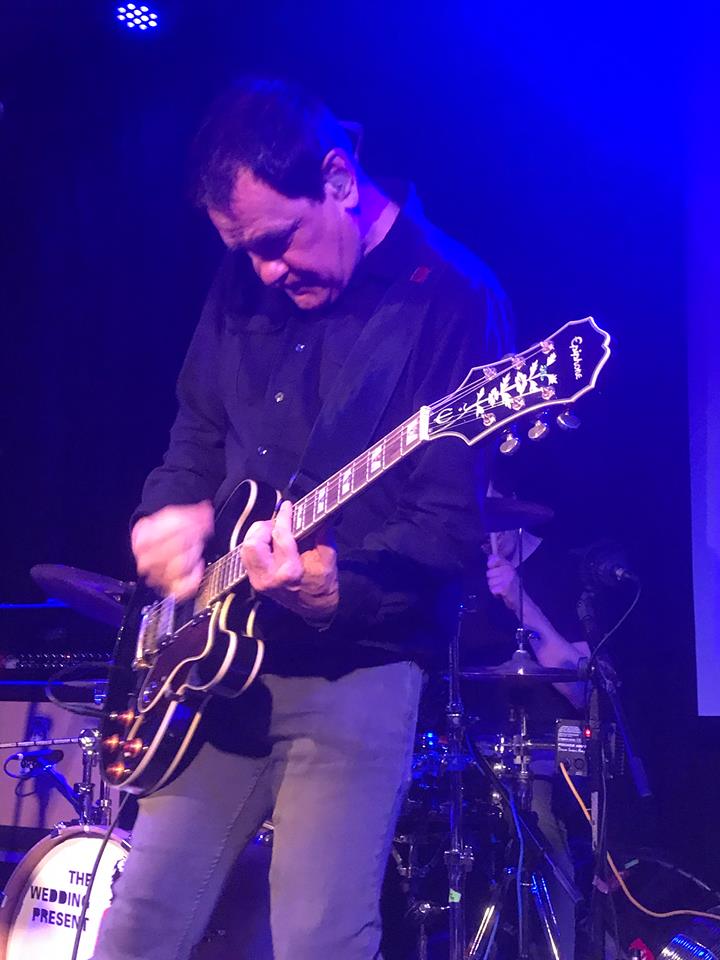
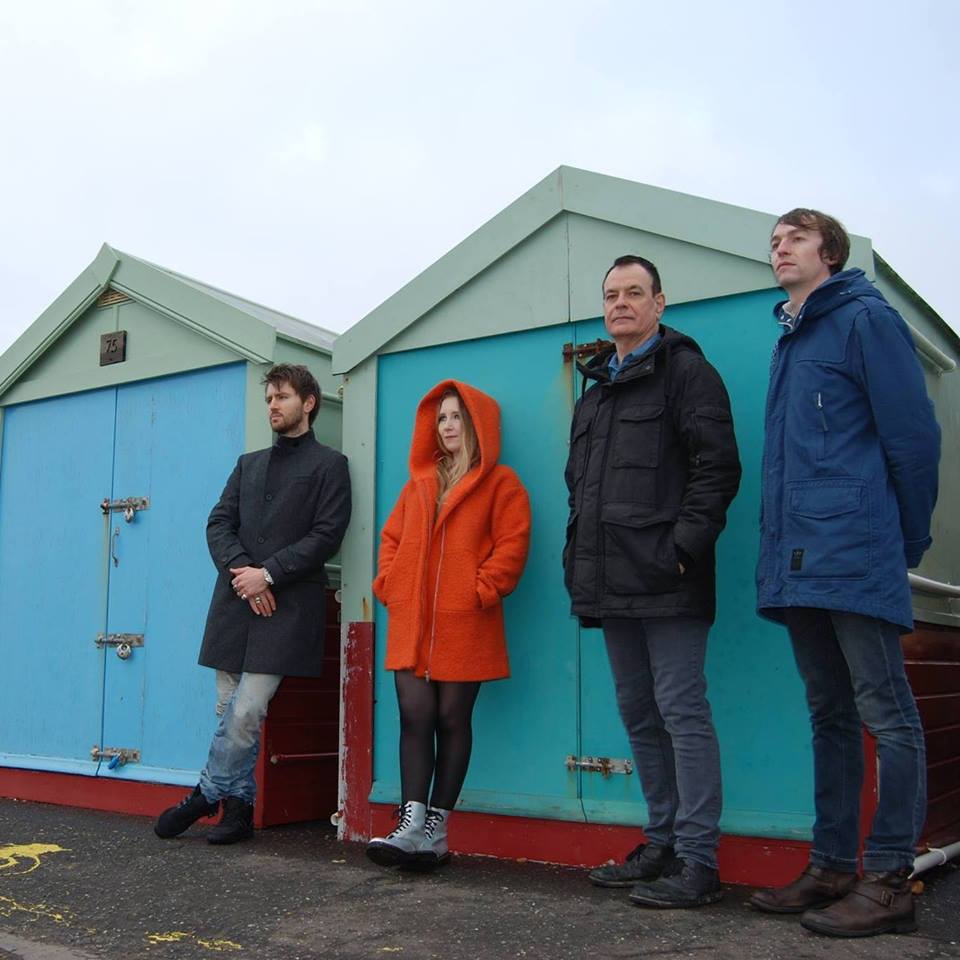
Believe Me Him – back in touch with Blancmange’s Neil Arthur

Mange Huit: Neil Arthur is back with Blancmange’s eight original studio album, Unfurnished Rooms

Based in Gloucestershire since leaving London a dozen years ago, Blancmange mastermind Neil Arthur continues to divide his time between the Cotswolds and old haunts in the capital.

“I really enjoy it, including walks when I finish work or early morning with my dog, who can never get enough exercise. My eldest’s in London, but the rest of the family’s here and I’ve good friends around. It’s in striking distance of London, and I get there quite a lot, seeing mates. But I love the countryside, as I did when I was up in Lancashire.”

This is where I add a bit of history. Most of you reading this will know the score, but synth-pop pioneers Blancmange formed in 1979 and were soon down to a pivotal core of two – Neil (vocals, guitar, electronics) and Londoner Stephen Luscombe (keyboards, synths). Seven hits followed, including top-20 singles Living on the Ceiling, Blind Vision, Waves and Don’t Tell Me, releasing albums Happy Families (1982), Mange Tout (1985) and Believe You Me (1986).

That looked like being the end of it, both drifting off into other projects. But the fans’ clamour (wasn’t he an Austrian ski legend?) remained, with plenty of love for the band, and they reformed 25 years later, releasing LP Blanc Burn in 2011. And while Stephen – suffering with his health in recent years – then left, Neil has continued under the band name ever since, releasing four more albums since 2015, including Unfurnished Rooms, set for release on September 29th.

Neil has fewer excuses to drop by his old base in Darwen these days, but can’t resist occasional visits to the Lancashire town he left at 19, and plays the Library Theatre (Wednesday, October 25th, 0844 847 1664) on his latest album tour.

“When I do get up there and we play Darwen, there are always a load of mates, and we always look forward to that. I try and get a walk on the moors too. Mum and Dad have a bench up there in their memory. I have a ‘nosey’ around, look back down over Darwen. It’s bizarre – it never leaves you, and I’m very, very proud of where I come from. Sometimes people say, ‘Where are you from up north? Are you from Yorkshire?’ I’m very much not from Yorkshire! I’m very much from Lancashire! And there’ll be songs on this album where that accent will come out … I’m sure.”

That accent’s undeniable, and it’s there to hear as early as the brooding, atmospheric title track that ushers in the new LP, those East Lancastrian tones in evidence as he conducts a ‘search’ of unfurnished rooms and unfinished works, more of which I’ll address in a separate review on this site very soon. But let’s just say for now that Blancmange fans should be extremely impressed, as suggested by the early online feedback to tracks Anna Dine, Share It Out and What’s the Time.

There’s a taste of the North West on track two as well, Neil’s narrative about a ‘chemical spillage on a trading estate in Altrincham’ on We Are The Chemicals giving us an air of mystery and threat, that Cheshire happening seemingly not an isolated incident, something similar occurring ‘in a garden shed 80 miles due south as the crow does fly’ and ‘in the boot of a hire car.’ Sparse and atmospheric with a rich vocal, slowly building, it’s an early highlight on an album of many more.

So is that a song about international terrorism or environmental pollution maybe, Neil?

“If I was to try and explain the meaning of the songs it would be like taking the last page out of a book. It’s better people make up their own minds, leave a certain amount of ambiguity. I’m always intrigued by what people think though!”

At that point I decide not to quiz him any deeper on the lyrical content, instead beginning my own advanced aural journey through Unfurnished Rooms a couple of days later. And I won’t be giving away too much by saying that I see clear lineage between Blancmange’s back-catalogue and the new material, and also between their early ’80s heyday and a more modern vibe, despite this being very much a different album to what’s come before, as is Neil’s wont.

While we’re on the subject of explanations, when Neil mentioned a reticence to explain any of his songs, that’s not to say he’s averse to extensive liner notes, as is evident by his hands-on involvement with this year’s other Blancmange release, The Blanc Tapes. It’s a major project in box-set form, grouping together digitalised versions of the bands early years’ demos right through to their last recordings first time aroundan exhaustive three-CD media books in a slipcase, comprising the first three LPs, 12″ mixes, non album B-sides, previously unreleased demos and rehearsals from Neil’s private collection, along with previously unreleased BBC Radio 1 sessions and live concerts recorded by the Beeb, plus photos and lyrics. What say, Neil?

“This tour is about the new album, but also for the last couple of years I’ve been working on this huge boxset project with the record company, the BBC and my manager, going through a mass of archives I had of demo tapes and rehearsals I kept.”

And it’s not called The Blanc Tapes for nothing – we’re talking cassettes in many instances, aren’t we?

“Exactly. It’s every single thing we recorded, and every piece of music on there came off a tape. now digitalised. When I was going through demos I was running them past Stephen, who’s not well these days, and for whom the most important thing is he looks after his health. But I’ve kept him informed all the way along. We talk a lot. He agreed to do three interviews as part of all this, and I think that did him the world of good. But generally he just said, ‘Get on with it!’ to me.”

You’re not usually one to revisit past works, but I get the impression that you enjoyed the experience.

“Some of it was quite emotive. I hadn’t listened to much of it since it was recorded. I’m a musician – I don’t want to listen to my own music!”

You’ve said that in the past, so I guessed you must have felt you were in the right place at this particular time to tackle it now.

“It took a lot of persuasion, but I decided if we were going to do this it would have to be done properly. I really wanted to get locked into it. And I think the record company and the graphic designer were absolutely amazing.

“Putting the boxset together was hard work without a doubt, but the liner notes were relatively straight-forward, having run them all past Stephen, who told me what he thought. What was difficult at times was listening to all those cassettes. That’s all we could record on in the beginning – all those demos on quarter-inch tape, reel to reel. And the first time I listened back it wasn’t the music that got me – it was the air just before the first sound. As soon as I heard it, I knew where it was. Whoa – that’s a proper big memory, that!

“There’s a really early demo of Waves, where I think we were trying to get the synth going, because Stephen was doing the organ bit …”

Winding it up?

“Yeah, practically! Steam-powered! We borrowed a Wasp synthesiser. The mic. was open and I coughed. Normally you‘d edit that out, but I decided to leave that on. There’s also chatting at the end of one track. And we hoped those sort of touches would draw people in. You see the journey we took – this experimental band who then started forming slightly more structured songs, and then the more polished end results that came out. It was a relatively short period – taking us from around ’78 to ’86 – and It’s a long time ago now, but there’s still a hardcore of fans who enjoy all that, and they’re absolutely wonderful.”

I love that recent publicity shot of you and Stephen sat in a launderette, sharing an old joke no doubt.

“Yeah, that was taken when we did something for Classic Pop. We did an interview the day before at Stephen’s flat. He didn’t really want to do another photo session, and wasn’t up to walking too far. I asked, ‘Is there a launderette near here?’ We always had this joke when we did Irene & Mavis (1980), featuring these two old dears who did avant-garde music, having met in a launderette. This launderette was just around the corner, so we did that instead!”

Now and again, I tell Neil, I’ll revisit the old songs, and while travelling back from my Cornish holidays recently, Don’t Tell Me came on one of my compilations, myself and my better half proceeding to embarrass our teenage daughters with our in-car dancing. I felt sure they secretly loved it though.

“My daughter’s a similar age and her and her mates, when they have parties, will put on Living on the Ceiling and another track and really enjoy it – which is lovely! And I’m flattered by that.”

Of course, your daughter appeared on some of Blancmange’s recordings, I recall.

“Yes, with some backing vocals on Semi-Detached and when we re-recorded some of the Happy Families Too album, doing a re-imagining of that.”

How about your lad, Joe? Is he still causing a stir in his particular musical field?

“Yeah, he’s got a few releases out at the moment on different labels and compilations. He’s now working under the name Kincaid rather than Applebottom, getting very good reaction for a joint venture (with Sinal), Longhaul Flight Bathroom Romance Scene, and sonically it’s very exciting! Yep, I’m very proud of him.”

I’ve since checked out a recent Pirate Studios live set recorded in London, and concur. In fact, there are inherent international influences that bring to mind some of the innovations Blancmange sprang upon the mainstream market all those years ago. Well worth checking out (and you can start here via the Kincaid – UK Facebook page).

Talking of collaborations, while Stephen is sitting things out these days Neil has another sonic partner he’s working wonders with, involving occasional trips to a studio in Cornwall run by a musician and producer best known in the industry simply as Benge, revered in electronica circles for several of his own projects, not least with further Lancashire synth innovator John Foxx and his band The Maths.

In his current abode, Neil tells me he ‘has a small workroom’ rather than a studio, as before, adding, ‘I tend to mix in another studio so have the bare minimum – basically just a laptop computer, then take it to that next stage in the studio’. And that’s where the trips to East Cornwall follow.

“Yes, I did the new Blancmange LP with Benge down there, and he added some amazing touches. Some of the analogue sounds are absolutely sensational. They’re unique, some of the synths we used. It’s been an absolute delight, Benge and I got to know each other doing the Fader project.”
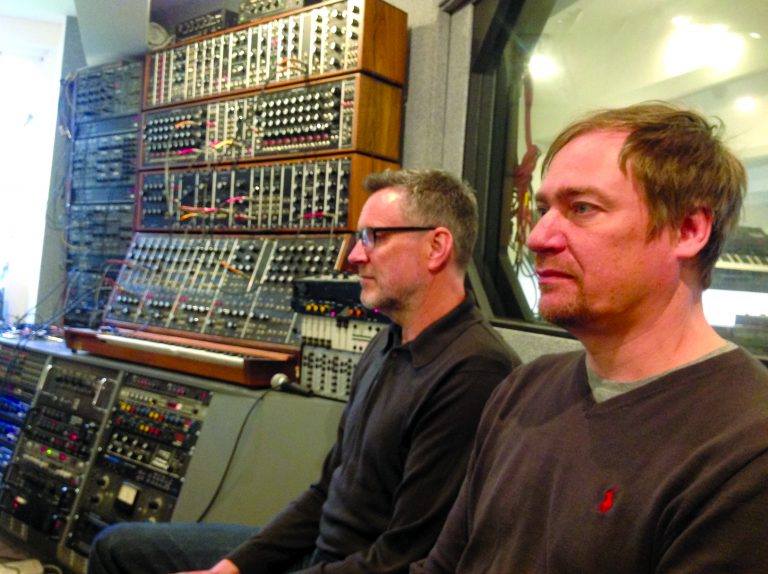
Listening In: Neil Arthur and Benge got their ears around the Fader project, and then the latest Blancmange album.

The latter album, followed an introduction through the pair’s shared management, Neil aware of Benge’s work with fellow Lancastrian, John Foxx, plus Gazelle Twin and Wrangler.

“We only met once before starting working together, but we certainly got to know each other, and sometimes music speaks louder than words, finding common ground and bonding on that.”

At that point we talk briefly about Benge’s new manor, and I mention how past writewyattuk interviewee Will Young is also a regular visitor to the Bodmin area. And his deadpan response?

“I didn’t see him whilst I was down. I had my head down. I didn’t even see King Arthur, and I’m an Arthur myself! I’ve been to Cornwall many times, but hadn’t been to Tintagel since I was very young, and it was absolutely peeing it down. I was the only person there. I had the whole place to myself. It was brilliant.”

So how does your super-sonic relationship with Benge work?

“With the Fader album, he was living in LA at that time with a view to moving there. He got a studio together and started writing all these instrumentals. At some point my manager told him he thought I’d like these, and when he did I absolutely locked in. It was meant to be. I had a load of lyrics and loads of it just seemed to fit. In a relatively short period of time we had an album’s worth, just sending files back and forth, working in our separate studios then got together for the mixing – the nuts and bolts of it.”

The resultant album, First Light,  came out in June, and pretty soon the pair were working again on the final sessions for what would become the latest Blancmange album. While all the songs on Unfurnished Rooms were written by Neil, his co-producer added percussion and layers of analogue synth, the pair then mixing the record in the latter’s Memetune studios. Does Neil instinctively know the difference between what becomes a Blancmange song and those that become Fader tracks?

“Yeah, the origins of all the Fader pieces came from Benge, him sending more developed or embryonic versions of instrumentals, with me adding the odd melody line, a vocal, and so on. With Blancmange I start it, writing songs and lyrics, and this time exchanging files. And his knowledge of those analogue instrumentation is far beyond mine. I’d write, and even if it was written on guitar I’d transfer that pretty soon to that electronic world I’m used to.

“There won’t be a guitar on a Fader album. That’s always going to be analog sound, but on a Blancmange album you could have anything, including the kitchen sink, or as we did back in the late ‘70s and ‘80s when we were using Indian instrumentation, Tupperware, guitar, synthesizer or synthesized drums, and what-have-you.”

Seeing as I hadn’t had a chance to listen to the new album when we spoke, I asked Neil to explain where he felt Unfurnished Rooms fitted among the Blancmange canon.

“Well … whereas Nil by Mouth was instrumental – as I thought it was about time we had a break from my gob! – and Semi-Detached had an instrumental on it too, then the last album Commuter 23 included several instrumentals, this is all structured songs with lyrics. That’s the way I decided I wanted to do it.

“There are 11 songs on the CD, and on the vinyl there are 10, but purely to ensure the quality of the cut wasn’t compromised, with the other track given away by those ordering the vinyl as a download. To answer your question though, we’re talking structured songs with lyrics and storylines.”

If he sounds a little vague there, I can understand that after my first few listens to the album. But that’s no bad thing, believe you me (sorry, I couldn’t resist adding those last three words). At the time though, I tried to ask a bit more. Prior to talking to Neil, I put on The Western from Blanc Burn, inspiring me to go right through that fine album again. Does that surmising put this latest album more in line with Blanc Burn?

“Yeah, although it doesn’t sound anything like that album. I’m not trying to do anything I’ve done before. That’s the only way I’d carry on. I’d have gone back to working in graphics otherwise, or tried to get another job.”

Last time we heard from you, it was on the back of the instrumental Nil by Mouth and partly-voiced Commuter 23. Was there a block, lyrically, at that stage, or were the notebooks still filling, with you just waiting on the right moment?

“The idea of the instrumental album really came from the fact that I’d spent more or less 20-odd years doing film music, giving me another insight into music production and writing. So I decided I’d explore that angle and have a break from the vocal approach.”

Who’ll be joining you on the road this time around? Is guitarist David Rhodes – on board in at least some capacity since the very first album 35 years ago – with you again?

“Absolutely. He’ll be playing guitar and doing vocals, while Oogoo Maia will be playing synthesisers and vocoder (I think that’s what he said, anyway), and Adam Fuest will be mixing and sorting out visuals, controlling sequencers, and God know’s what else!”

Will Blancmange super-fan John Grant – who appears on the new album’s epic finale Don’t Get Me Wrong – be making an appearance too?

“My goodness, wouldn’t that be lovely? I was so pleased when I heard he really liked our music. I asked him to take part via my manager. I had a song I said I’d really like him to play on. Not only did he play on it but he also ended up singing on it as well. And I couldn’t quite believe it!”

Blancmange also have dates with Heaven 17 later this year, and have already played with The Human League in 2017. Has Neil got to know Martyn Ware and Phil Oakey over the years?

“I was speaking to Phil last Sunday morning. We did a festival together, and last year did a handful of dates around bigger arenas as guests of theirs. I didn’t know him back in the day. I knew the girls, and Stephen was particularly friendly with them, but I knew Martyn quite well, as he helped us do one of our first demos. We go back a long way and he was a massive help to us, and we toured with them the other year. Him and Glenn (Gregory) and the rest of the team are just fantastic. So we’ll enjoy the Unfurnished Rooms tour and all those dates, without a doubt, promoting the album, and once we’ve done those we’ll be enjoying ourselves on tour with Heaven 17 as well, doing old and new songs.”

In the meantime, it’s now been 35 years since Happy Families. That must seem a lifetime away. As we’ve discussed, you’re not generally one to dwell on past successes, but I get the impression you’d left it just long enough to appreciate it all with hindsight through The Blanc Tapes project. And I’m guessing you ended up feeling very proud of that back-catalogue.

“Without sounding conceited, yeah I am actually! And I’d do it all again. I’d probably do it all exactly the same … and stop it at the same time as well. Fortunately we were able to return to it, and then I’ve been able to carry on from there … and I thoroughly enjoy it.”

With that Neil was away on another call, but not before I’d mentioned how I was looking forward to getting along and seeing him live.

“It would be lovely to see you there. Please make yourself know … either by throwing a rotten tomato or saying hello in a conventional way!”

Unfinished Roadworks: Neil Arthur’s Blancmange are heading to a town near you … very soon.

To revisit or catch up with the March 2016 writewyattuk interview/feature with Neil Arthur, head here.  

Blancmange’s Unfurnished Rooms UK tour dates: October 5th – Brighton Concorde 2; October 6th – London 229; October 19th – Southend Chinnery’s; October 20th  – Southampton 1865; October 25th – Darwen Library; October 26th – Newcastle Boiler Shop; October 27th – Edinburgh La Belle Angele; October 28th – Glasgow Audio; November 2nd – Bristol The Fleece; November 4th – Nottingham Rescue Rooms. For full tour information, details of how to order the new LP and early years’ boxset, and all the latest from the band, head to their official website or keep in touch via Facebook and Twitter.

You can also catch Blancmange supporting Heaven 17 on The Tour of Synthetic Delights around the UK, taking in: November 10th – Sheffield Foundry (Students’ Union); November 11th – Liverpool Hangar 34;  November 17th – Hull Welly; November 18th – Manchester Academy 2; November 24th – Coventry Copper Rooms; November 25th – Norwich Waterfront. For more information check out the Heaven 17 website, or try the band’s own Facebook and Twitter pages.


Posted in Books Films, TV & Radio, Music | Tagged , , , , , , , , , , , , , , , , , , | 3 Comments

Reprising the Roachford Files – the Andrew Roachford interview

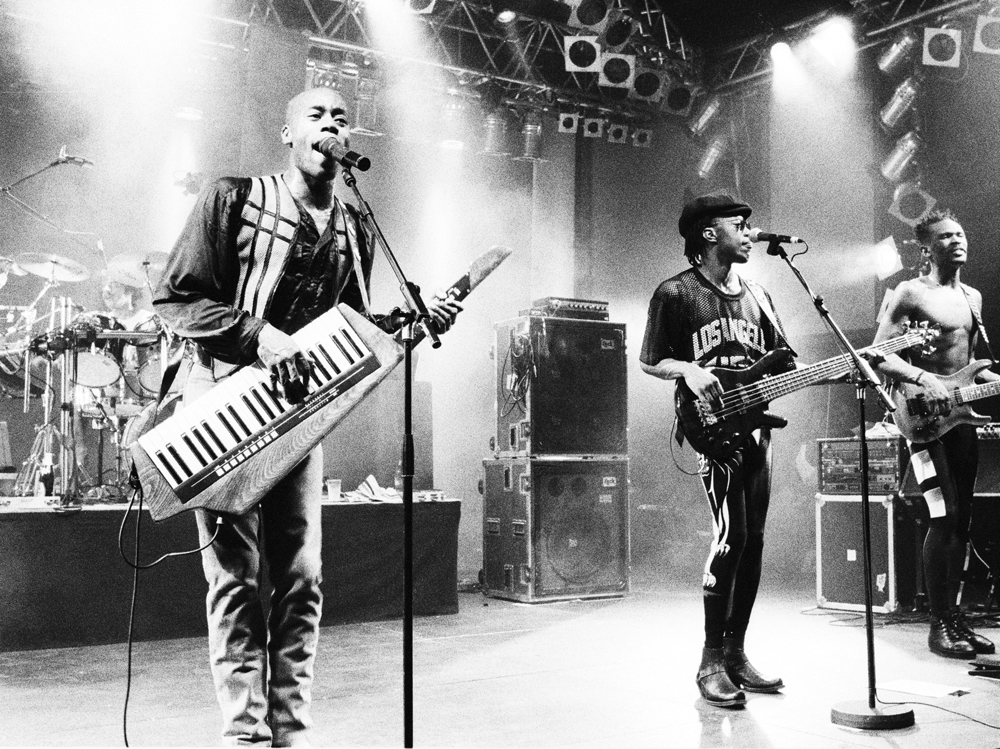
Soul Solutions: Andrew Roachford, hardly ever off the road, from the 1980s onwards

After his latest successful tour with Mike + The Mechanics, Andrew Roachford is back on the road with his band this autumn.

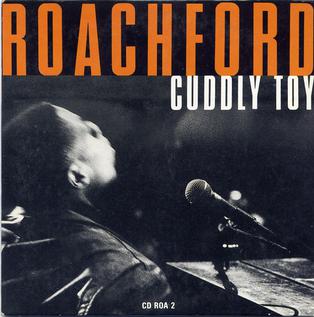
Know the name but struggling to place the back-catalogue? Well, his biggest hits came with his first collective in the ‘80s and ‘90s, going out under the name Roachford, their big UK hit Cuddly Toy a top-five smash when reissued in early 1989 and seven more top-40 singles following.

He’s remained busy ever since with his band, as a solo artist, and as a guest for the afore-mentioned outfit led by Genesis guitarist Mike Rutherford, impressing audiences with his own take on Mechanics and Genesis classics and a few of his own numbers.

To catch him live is to be convinced by his stage presence. Yet as he revealed to me, there was a time when he was reluctant to show his face on a stage, still seeing himself primarily as a musician rather than singer, despite that wonderful soulful voice.

So what came first as a performer? The voice, the keyboards or his percussion skills?

“I started as a piano player, and it was down to people like my uncle, Bill Roachford, who brought the rest out of me. He was a saxophone player who played a lot of clubs from the late ‘50s through to the ’80s, known well by the likes of Ronnie Scott, a bit of a legend in muso circles and rightly so – a truly amazing musician. He heard me singing in a bedroom and was the one who said, ‘Right, we’ve got to get you singing out there’.

“For me, singing was something very personal. It was like being naked. Doing that in front of an audience was an absolute nightmare for me. But he pushed me and pushed me, eventually settling the nerves a little. That said, I remember when I got signed how the record company came to the first gig and were horrified because I was surrounded by keyboards and you couldn’t see me! They said, ‘We want you to be a pop star! Can you at least take away one keyboard?’ They had to literally wean me off these keyboards I hid behind.”

At least when Howard Jones did that around that era, his hair was poking out over the top.

“Yeah, exactly! Eventually I got used to the idea of singing, yet never really defined myself as a singer. To this day I’d still say I’m a musician with the singing just part of it, an extension of the music.”

The past few years have seen Andrew co-writing and touring with Mike + the Mechanics, and even enjoying a little cinematic success through Cuddly Toy being included on the soundtrack of the film Alpha Papa. And the 52-year-old seems remains a fixture on the road, having been around the music business all his life, including a teenage stint with The Clash – which we’ll get on to later – and that commercial breakthrough with his first band at the close of the ’80s, having formed Roachford two years earlier.

That four-piece were soon building a reputation for live and studio work, and by 1988 Roachford were supporting Terence Trent D’Arby and The Christians. A seven-album deal with Columbia followed, the band becoming the label’s biggest-selling UK act for 10 years.

Andrew’s first solo LP, Heart of the Matter, saw the light of day in 2003, before follow-up Word of Mouth in June 2005 back under the band name. Then in 2010 he joined Mike + the Mechanics, sharing lead vocals with Tim Howar on the following year’s album The Road, the start of a happy alliance.

I caught up with him at home in Balham – that Gateway to the South immortalised by Peter Sellers – having been based in South and South West London for most of his days. Is he between dates at the moment?

“Exactly, although I think I’m always between dates! I’m constantly between dates and recording, and I’m also starting to write another album.”

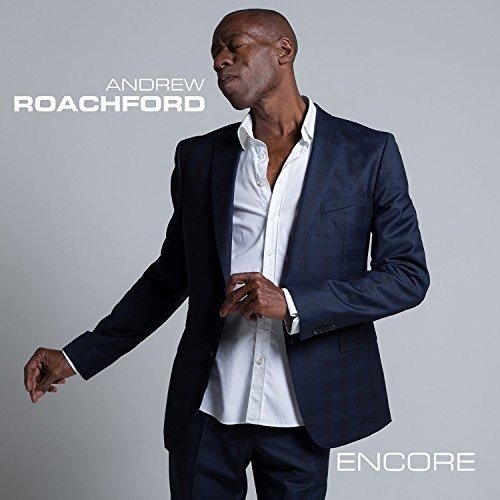
Let’s start with current release, Encore, though, an emotive, soulful album showcasing Andrew’s unique interpretation of classic tracks, all given something of a fresh Roachford twist.

“There’s an original track on there, but it’s more my take on songs I’ve always loved and I thought it would be interesting to put a twist on.”

That seems to be your general approach – making songs your own.

“I guess that’s because I’m a musician, not just someone who sings. I play piano and was bought up with an improvisation culture that my family taught me. I like to move things around. I don’t think I’ve ever done two gigs exactly the same.”

The Encore album sees Andrew with a full live band, capturing the kind of powerful performance he’s gained a reputation for, explaining, ‘Simplicity is the key’. Stand-out tracks include Sly and the Family Stone’s Family Affair, and Bill Withers’ Grammas’ Hands, both showcasing an artist on top of his game.

“This album showcases some of the songs that have fired me up over the years to become a performer and to look, to bring the magic in every show I play. I once read that a sign of a good singer wasn’t just about ability but more importantly about someone that when they sang you believe every word.”

He told me he switches between workbases, often working from home when starting out writing, but also at various studios, ‘depending on what vibe I want’. And what vibe is he heading towards with the next album?

“I think it’s going to be quite stripped down, all about the songs and the feel. When I listen to the great music I grew up with like Al Green’s Let’s Stay Together, I listen to the simplicity in the set and what it does to you, how it moves you. It’s important that music should have an emotional impact. That’s what I’m going for. It’s essentially soul.”

I love the albums Al Green did with Willie Mitchell, I tell him, not least Let’s Stay Together, Call Me and Still in Love With You, around that early ‘70s era.

“You know your stuff! I know that inside out and can’t get enough of that. It’s an education to someone like me when you hear the way they put the music together. It always feels so joyful, so effortless and yet so powerful.”

Al Green was another artist who reinterpreted songs, taking tracks by the likes of Barry Gibb, Willie Nelson and Kris Kristofferson, making them his own. You do a bit of that too.

“Definitely, and with Encore that was what it was all about. The originals are so perfect, classic songs like Bill Withers’ Ain’t No Sunshine, so you have to take that somewhere. It’s my nature to explore where things can go.

“With some of Al Green’s songs I thought his were originals but then found out they weren’t. First time I heard Jimi Hendrix doing Hey Joe I assumed it was his song because he put that spin on it. When Marvin Gaye sang I Heard it Through the Grapevine it was the same. I guess what they have in common is that they’re musical, so they can do that.”

He mentions a love of performing live, and is fired up about his forthcoming autumn tour.

“I love to be out on the road. I see myself as a working, gigging musician. That’s kind of what I’ve always done, no matter what’s happening as far as records are concerned. And it’s a great buzz you get when you connect with a crowd. There’s nothing like it.”

And you’ve just toured with Mike + the Mechanics too. You’re clearly enjoying that too.

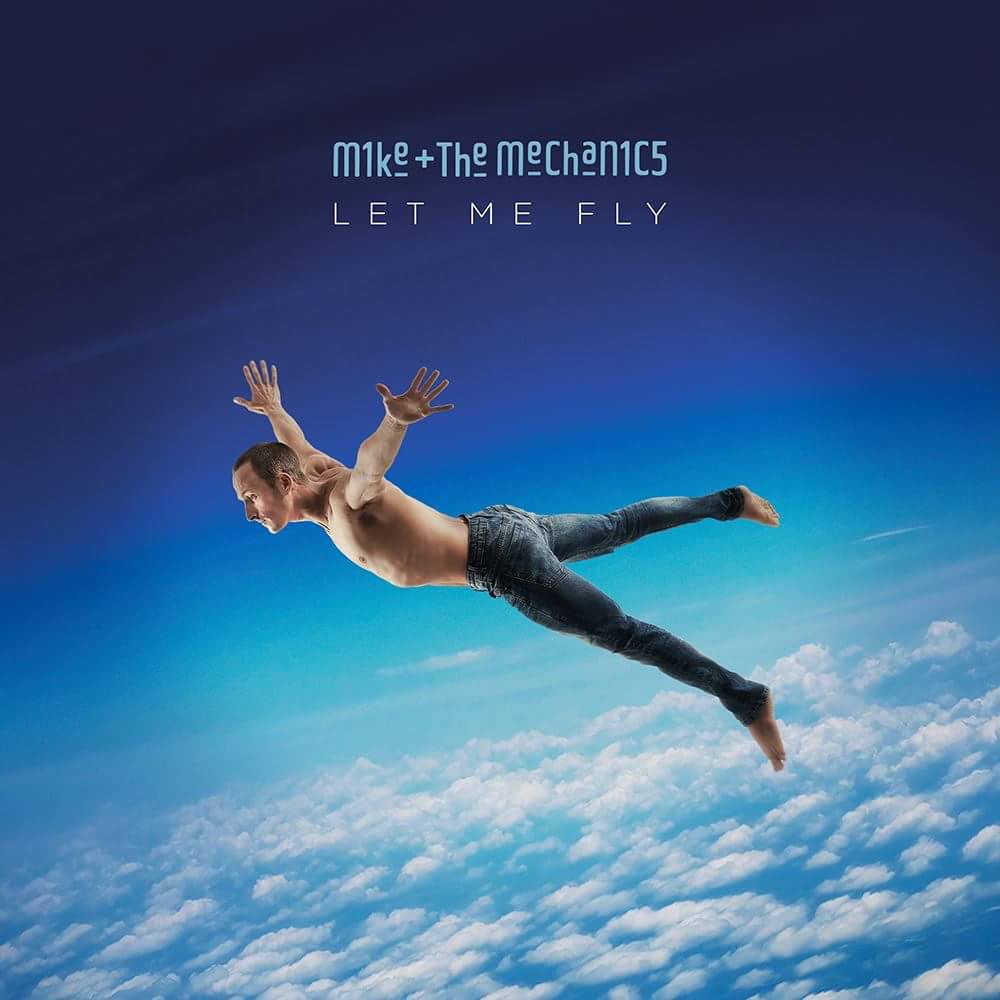
“Yeah, I think we’re on year six or seven now, and it’s going from strength to strength. We’re also out next month around Europe for quite an extensive tour, then I come back to do my UK tour. At the moment the Mechanics have a new album out, Let Me Fly, and it’s going down really well, getting lots of airplay, well received. So there’s a lot going on.”

A few years ago Mike Rutherford had Paul Carrack and Paul Young (of Sad Café fame, rather than the former Q-Tips singer) as co-vocalists, and I guess it’s a similar dynamic with yourself and Tim Howar.

“It’s very similar and I think Mike had that plan. When he was working with the two Pauls, Paul Carrack was more the soul, r’n’b voice, while Paul Young had more of a rock edge, even though he was quite soulful too.

“Sadly, Paul Young then passed away, and they carried on with just Paul Carrack, but then after a while the energy had gone, Mike wanted to take a break, and Paul wanted to pursue more of a solo career, having been with the band a long time. Years later, when Mike started writing again, he wanted someone to co-write, finish songs and actually sing them. But who? That was the big question … and my name came up.”

Did you already know each other?

“Yeah, we’d bumped into each other over the years at Top of the Pops and things like that. I knew Paul Carrack too. I wasn’t sure it would work, and don’t think Mike was. But then we got in the studio, jamming, and within 10 minutes it just started to happen. There was something there.”

Did you know Tim Howar?

“No, Mike introduced us in the studio. But we clicked straight away. We’ve got a great synergy together and Tim had this amazing ‘full of rock’ voice, whereas mine’s more old school r’n’b. That’s where I’m coming from. But I love guitar too, harking back to when soul music used guitars and had more edge to it. That’s what I love.”

No disrespect intended, but it would be easy to suggest that being with Mike + The Mechanics offers a more Radio 2 friendly approach – a bit safe, maybe. But that’s not necessarily the case, is it?

“Yeah, Paul Carrack has an amazing voice and is an amazing singer, but I think we’re quite different. And I think that difference works. The Mechanics needed to move on. With the first tour we did, people didn’t really know what to expect, having known the old line-up so long. You could kind of feel that in the audience, wondering how this was going to work.

“In the beginning ticket sales were okay but not great, but then people started to get their heads around the fact that it’s a different thing. And when we do songs like The Living Years people are just in tears. It’s a great song and I think I sing from a place people really relate to. It’s an amazing song and it’s an honour to sing. When I really relate to a message, it’s a lot easier to put myself into it, make it my own.”

Mechanics Mates: Tim Howar, Mike Rutherford and Andrew Roachford back in 2011

It worked very well for Paul Carrack, serving as a bridge between his time with Squeeze and being his own man. I’m guessing this has helped you reach a wider audience too.

“It definitely has. And a lot of people have come to gigs not knowing much about me, but now I see a cross-section of people at my shows, and some of that has something to do with my work with the Mechanics. Sometimes you have to bring the mountain to Muhammad, so to speak! When they come along I don’t think they know what to expect. But after I generally get, ‘We didn’t expect that!’”

There must come a time when you’re having to explain to people – or shout at the radio – it’s not just about Cuddly Toy though. Don;t get me wrong – it’s a great song, but there’s much more in your armoury.

“Yeah, it’s one of those things.”

Do you think you get tarred with that one big hit brush?

“You can be. Take Rick Astley, who has a really lovely voice, and writes material, but came on the scene with Stock Aitken Waterman – it was almost impossible for him for so many years to get taken seriously. And I can really understand that frustration.

“It’s different for me – I’ve never seen myself as a pop star, but a musician out there rocking and rolling. And people who have come to my gigs over the last 15 or 20 years don’t really come just for Cuddly Toy. But when it gets played again or is on a film soundtrack, the old crowd come back, trying to work out what I’m going to do as well as Cuddly Toy and Family Man. Then they realise they’ve missed so much.

“When I tour Europe, Mike likes me playing my own songs too, and at first they said, ‘Well, we’ve got to include Cuddly Toy. But outside the UK that song is not my big tune. I was discovered there later.”

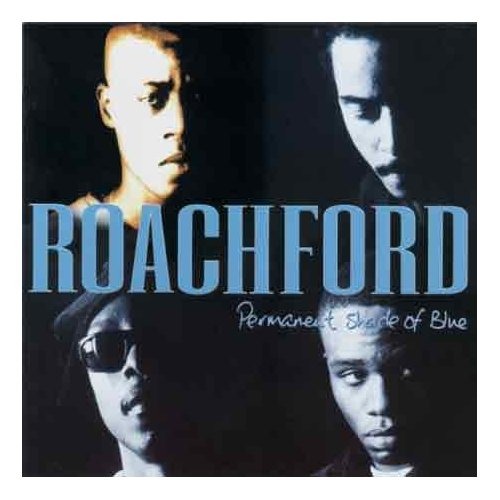
There’s a fine example online, a cracking live version of This Generation (from 1994’s Permanent Shade of Blue album) played in front of a studio audience in Liechtenstein in 2014. That’s just one song that seemed to be missed by the wider public.

“Yes, at some point I feel I should revisit and maybe re-record some of the old songs. My core fans want more people to hear those songs, getting frustrated on my behalf. I believe in that music, and feel sometimes it’s about timing.”

It’s not as if Cuddly Toy was a novelty song. At least you can be proud of it.

“Yeah, I guess what resonates about that song is that musically it had something going on. It wasn’t just manufactured pop. And people can tell the difference.”

You mentioned Bill Withers covers. What else is featured on Encore?

“Well, I love Sly and the Family Stone and bands from that era that weren’t in a particular pocket, and couldn’t be that narrowly categorised. And Family Affair is probably one of my favourite songs on this album. I also did a Red Hot Chili Peppers song, Under the Bridge, in a more soulful style.”

I guess the soul’s there in the original somewhere too.

“It is! But people don’t always hear it in that way until you do it in that way. It’s the same with Elton John. He was well into soul music, and although not obvious, that was at the root of what he was doing.”

I agree, and while you’ll probably laugh at me for this I’ll add that it was only really in the last five years or so that I truly realised Van Morrison was a soul singer.

“I’m the same! And it seems so obvious, once you know. It’s the same hearing the band Free, the singer – Paul Rodgers – saying he was trying to be Otis Redding. Now you think ‘of course!’

Soul Ambassador: The late, great Otis Redding, sorely missed

“Otis is another of my favourites. Again, he kind of cut through all the genres of the time. He was so powerful, so emotionally strong. I don’t think there’s a lot of that around now. There are a lot of people who are great technicians vocally, but who don’t allow themselves to be vulnerable or open up in that way.”

You mentioned never playing the same way two nights in a row, and Otis Redding was a master of that, to the point where he must have frustrated those recording him trying to get those previous performances down on tape.

“Yeah! And I guess the greats of our time include Amy Winehouse, yet you hear the producer Mark Ronson say how recording her was a nightmare as she did a completely different vocal every take.

“With Mike and the Mechanics I’ve had to rein it in a bit, as I’m pretty much free with my style, singing how I feel in that moment. But you have to respect the nature of the material and curb the movement a little.”

You mentioned earlier your uncle, Bill Roachford, being a musician. Was he a first generation UK arrival?

“Yeah, on my Mum’s side (Andrew’s surname is his mother’s) there were seven of them, but Bill came over on his own, around 18, quite a big deal coming to a country he’d never been to, and so different from the Caribbean. It may have looked glamorous watching snow scenes back in Barbados. but with no notion of how cold it must feel, and that damp British thing. It was kind of a shock.

“But then my Mum came over and they ended up living in the UK. The plan was never to stay but they ended up here longer than they were in the Caribbean, although my mother and uncle ended up moving back to Barbados.”

Guitar Man: Andrew Roachford tries a different approach

Andrew adds that the Roachford family were better known as teachers than musicians in Barbados.

“I wasn’t the first though, my mother and great-grandparents were in music. And I was very happy I could show my grandma before she died a massive poster for one of my gigs, marked ‘sold out’. That was lovely. She’d never been to England, but she was the one who insisted we learn to play piano.”

Andrew reckons he grew up ‘surrounded with jazz and soul’. Was there a lot of music around the house growing up?

“We’re talking literally bands rehearsing in the living room, so I heard a great level of musicianship. My mother would go to clubs, and my father played drums and is now a conductor. When my mother was pregnant with me she was going round all the gigs they were playing. So I was hearing music before I was born, and I think that makes a difference – it has an effect.”

Looking at the music you’ve played over the years, I guess you’re no music snob and you’re not one to lazily label bands and songs, categorising everything you hear.

“No, I really like Prince’s music, for example – there are influences of Sly and the Family Stone, James Brown and Curtis Mayfield, but he makes it his. He started through the r’n’b route, but was also into David Bowie and all sorts.

“People expect your tastes to be narrow, and reflect who they think you are culturally and socially, but I can fit quite comfortably with all kinds of people, and my music is a reflection of what I listen to. If you see my CD collection or my playlist, it’s very eclectic, but what it has in common is that is has some kind of soul and real grit to it. I love artists that move me, no matter what genre.”

There was the seven-album deal with Columbia. Yet you then made that solo move, and had the best of both worlds in that respect.

“I really enjoyed my time at Columbia. As it was so long I saw so many come and go, and when you’re in the music business the people who sign you are the ones that really believe in you. So when they leave the company you’re at the mercy of the new guys that come in, who might not have the same vision or passion, or it takes them a while to get it. That was happening for a bit and while the time I spent with Sony was great, by then it was time to move on. And there’s always going to be that struggle between art and commerce, so often contradicting each other.”

Band Substance: Andy Roachford and Derrick Taylor out front with Roachford in the late ’80s   (Photo: Flat Eric’s Bass & Guitar Collection blogsite)

Any other original Roachford members in your current band?

“No, the guys from the original band all have their own projects these days. For years the bass player (Derrick Taylor) was working as a musical director for Gabrielle, Hawi (Gondwe) the guitarist was with Amy Winehouse for a while. And the drummer, Chris (Taylor), who lives in Brighton, is more into world music and percussion.

“I think people seem to think it’s going to last forever when you have a group, but I don’t look at it like that. It lasts as long as it lasts, then something else happens. And I really love where I’m at now. I still see some of the guys and have a lot of respect for them, and was really lucky to work with them, but it was like a marriage and when we went our separate ways it was amazing to see other people and find so many other influences out there I had no idea about.”

With that in mind, excuse the pun but away from the studio and the road, are you a family man?

“Ha! Well, they call me the king of puns, so I may have heard that one before! But do you know what? I’ve spent so much of my life on the road I haven’t really had time. I kind of missed that one. I don’t really have a family in that sense but I’m on the road with my brother, and my cousins are around all the time. I’ve always had family around.”

Also on that rich Roachford CV was a stint working in the studio with The Clash as a teenager, something he felt helped give himan incredible grounding in music’. How did that link come about?

“It’s a crazy one really. When I started music college, Clash manager Bernie Rhodes was trying to start a record label, and needed to get some people into the studio to help with that, and one thing they wanted was an in-house keyboard player.

“They found me, and I didn’t really know anything about The Clash and definitely wasn’t a fan. When I started at the studio they were away in America, touring with David Bowie I think, so I didn’t see anyone from the band for six months. Then one day they turned up, just after they’d got rid of two members. I was basically there every day for a year or maybe more while they put that album together.”

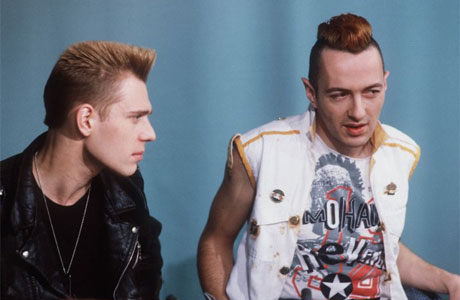
Clash Mates: Paul Simonon and Joe Strummer around the time of the Clash LP Andrew Roachford played on (Photo found on The Clash Blog)

So we’re talking about the final album, 1985’s Cut the Crap. Did you get to know Joe Strummer?

“Yes, very well. He was a lovely guy, a very intelligent guy and big-hearted, and that educated me about The Clash. He really felt what he was singing about and really meant it. Even though maybe he came from a nice background, he really was a working-class hero. He’d travel on the tube every day to the studio in Camden, and never went for all that pop star status.

“The last time I saw him was at Glastonbury Festival, with his band The Mescaleros. He was living in that area and found me, telling me he’d recorded all these jam sessions I was involved with, and had all the master tapes but couldn’t find a machine to play them on! It was an old eight-track two-inch tape.”

Have those sessions seen the light of day since?

“No, I haven’t heard anything about them. I need to talk to his family about that. But he invited me over. He was into his rave culture and invited me to this campfire gathering where they were going to be jamming. But I turned it down – I was getting a bit cold. It was the end of the evening. I wish I’d gone though. Instead, I went off-site, and that was the last time I saw him. He had a heart attack that following winter.

“But we really connected and I really liked him as a person. He also helped when I was still finding myself as a singer, telling me, ‘You’re great. If I sang like you I wouldn’t be in this band! That was his sense of humour. He was also into the whole soul scene and reggae thing. He was great.”

I was expecting you to say your link was through Mick Jones rather than Joe Strummer, through his time with Big Audio Dynamite.

“I met Mick afterwards. We were both on Columbia, although of course he knew my Clash connection. And of course you couldn’t help but notice Bernie Rhodes. He was so prominent, and had this strong connection with Sony and Columbia. Malcolm McLaren was connected with that whole thing as well.”

Did you get to know Mick Jones pretty well too?

“Yes, he’s a lovely guy as well. And it was great through Gorillaz seeing Mick and Paul Simonon back together again all those years later.”

Finally, you talk about a connection when you play live, and I guess that’s irrespective of the size of the crowd or venue on certain nights. There seem to be a few intimate venues on this autumn tour. Yet I get the impression audiences will get nothing less than a full-felt Roachford performance.

“Oh definitely! You have to honour the music and honour the people who bought a ticket, and whether it’s 65 people or 65,000 you’re going to get 100 per cent!”

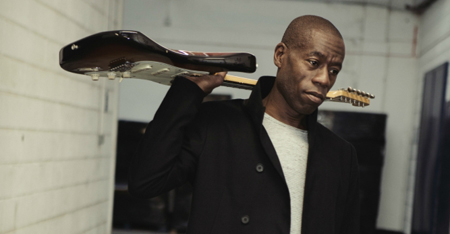
Travelling Man: Andrew Roachford, out and about and visiting a town near you in late 2017

Andrew Roachford’s UK tour visits Southport’s Atkinson Theatre (October 13th), Leicester The Musician (October 14th), Birmingham Academy (October 20th), Sheffield Academy (October 21st),  Southampton The Brook (October 27th), Seaton The Gateway (October 28th), Chester Live Rooms (November 2nd), Darwen Library Theatre (November 3rd), Selby The Venue (November 4th), Newcastle Academy (November 10th), Glasgow Oran Mor (November 11th), Aberdeen The Assembly (November 12th), Hull Fruit (November 17th), Norwich Waterfront Studio (November 18th), Lewes Con Club (November 19th), Farncombe St John’s Church (November 24th), Islington Academy (November 25th), Manchester Academy 3 (December 1st), Bedford Esquires (December 2nd), Douglas Villa Marina Prom Suite (December 7th). 

For more tour information and the latest from Roachford, head to his website and Facebook page. 

Posted in Books Films, TV & Radio, Music | Tagged , , , , , , , , , , , , , , , , , | 1 Comment

Talking ’bout that Who generation – back in conversation with Richard Houghton

Did you happen to catch a band called The High Numbers in Greenford, West London, in 1963? They were regulars at the Oldfield Hotel around then, still playing there the following year, by which time they’d changed name to The Who. Barbara Hicks was one of those lucky enough to be there, and remembers ‘the place was always completely full and jumping’.

Meanwhile, on the Mod scene at the Florida Rooms in Brighton, Hazel Smith tells us that same group’s singer, Roger Daltrey, had her and her friends ‘drooling’, putting her tinnitus down to that gig, having stood too close to the main speakers. Further afield, Mick Shelton was at the Corporation Hotel, Derby, saying The High Numbers (they regularly switched between names, dependent on bookings) ‘went down a storm’, while Tony Churchouse reckons they played so loud at the Regency Ballroom, Bath, ‘you could feel it in your stomach’.

John Schollar goes further back, having played in a band called The Beachcombers who placed an ad in the Harrow and Wembley Observer for a new drummer, Keith Moon turning up for the audition at the Royal British Legion, Harrow, in December 1962. Brought along by his Dad, aged around 16 – five years younger than the rest of the band – he was deemed unsuitable … until he played, getting the job there and then, sticking with them for around 18 months until joining Daltrey, John Entwistle and Pete Townshend in The Detours, the band soon re-christened. Schollar also mentions the young drummer shooting their singer with a starting pistol, one of the earliest anecdotes related to a legendary character soon labelled ‘Moon the loon’.

On another night at the Railway Hotel, Wealdstone, Harold Mortimer – the venue’s entertainment manager then – recalls one local ‘in a bit of a disagreeable mood’ arguing with Townshend, ending up throwing him on to a snow-covered pavement. And barely 10 miles south, Richard White, in a South London band called the Rivals, was on the bill with the band at Goldhawk Social Club, Shepherd’s Bush, remembering being complimented by Townshend on his bass playing, while Daltrey ‘always had a crowd of girls around him’ and ‘Keith was totally barmy – you’d be travelling somewhere by train and he’d be running through the railway carriages. He was very extrovert but very likeable and very sociable. He loved talking to people and loved having a laugh’.

There were occasional North West visits too, Steve Gomersall catching The High Numbers at Blackpool Opera House in August 1964, The Beatles and The Kinks further up the bill. He tells us how Entwistle was listening to the headliners in a dressing room through a tiny PA speaker, insisting John Lennon was singing a rude version of A Hard Day’s Night, not so much working like a dog as something far less savoury in the company of the screaming girls present, however oblivious they were.

We also get Michael Smith Guttridge, whose band The Avalons supported them at Rawtenstall Astoria, recalling how Moon – ‘probably the friendliest’ – ‘had gone walkabout’ in East Lancs, borrowing our drummer’s jacket’ while Townshend ‘was drinking red wine from the bottle, unaware that Keith had urinated in it’. And back on the West Coast, Syd Bloom was at Morecambe’s near-empty Floral Hall Ballroom, parked ‘right outside on the promenade’, when he found Daltrey ‘freaking out at the lack of interest’, saying how at Eel Pie Island people were ‘queueing for two days to get in’. But Daltrey still bought him a drink, inviting him backstage, adding, “I bet there weren’t 60 people there that night, but Keith Moon still managed to pick a fight with somebody’.

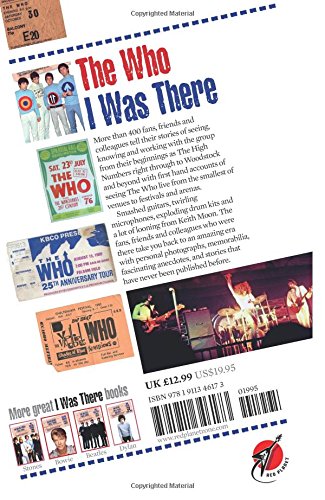
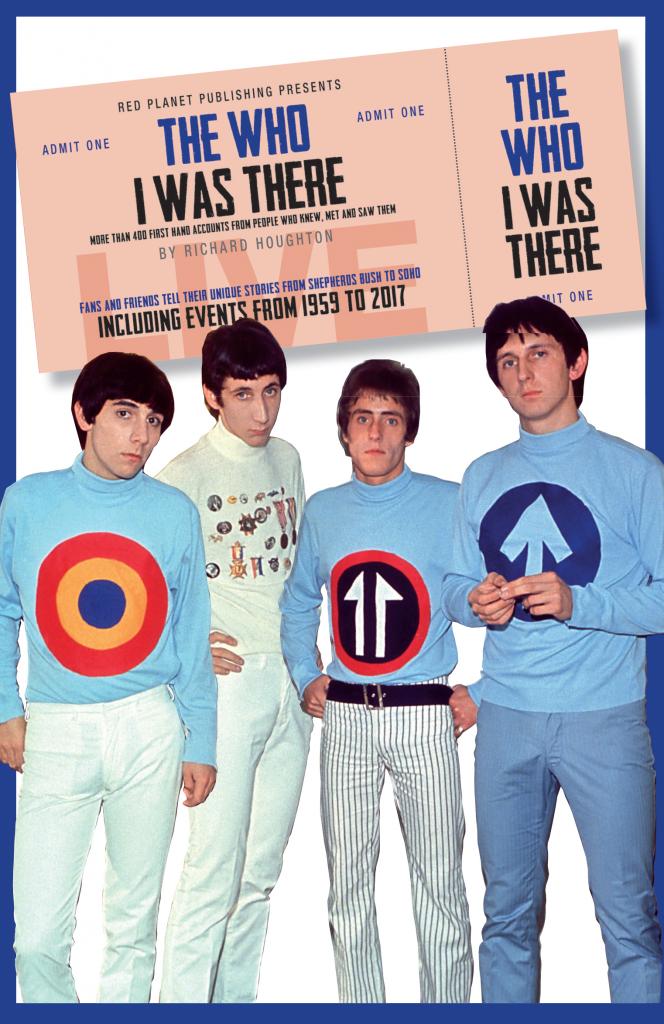
Those are just a few of the top tales of the influential r’n’b outfit’s early shows told to Richard Houghton for his new Red Planet title, The Who – I Was There, an epic read painstakingly compiled. And by the end of that year the band were Ready Steady Go regulars, Top of the Pops guests in Manchester, playing the Empire Pool, Wembley, the big time well and truly cracked. But what about the author, who was barely four when they played those first gigs as The Who –  when did they first come on to his radar?

“Listening to the radio as a teenager you inevitably got to hear The Who. When Radio 1 still played songs featuring guitars, stuff like Pinball Wizard would get an airing. I remember the greatest hits album, The Story of The Who, the cover of which featured an exploding pinball machine, being prominently displayed in the window of my local record shop in Northampton. It was a ‘must have’, and a great introduction to the back-catalogue.

Rich Pickings: Richard Houghton stands proudly with his latest publication, The Who – I Was There

Ever get to see them live?

“Yes, at Stafford Bingley Hall in 1979 and at Wembley Stadium in 1980, both times with Kenney Jones on drums. Sadly, I never saw them with Keith Moon. They were rumoured to be playing a ‘secret’ gig at Loughborough University the year I went up, as someone who worked there developed the lasers for their stage-show and playing the new student union building was supposed to be their way of saying ‘thank you’. But Keith’s death about a month before put paid to that.  I don’t know whether the story is true, but it would have been great to see them in an 1,100-capacity venue like that.”

The book runs to more than 400 pages, with 400-plus fans, friends and colleagues of the band telling their stories of seeing, knowing or working with them, right back to their roots. Can Richard explain the basic concept behind The Who – I Was There.

“I’m trying to tell the story of the band in the words of the people who were there and in the process give a different take on a story that has been told many times before. I’m hopefully capturing memories that might otherwise be lost and preserving something that is part social history, part pop history. Seeing a band live isn’t just about the band – it’s also about the people, the venue, how the crowd interacts. And I’m trying to take the reader back to what it was like to see The Who at the Railway in Wealdstone or the Trade in Watford during the height of Mod.”

Did this – like your last two books on The Beatles and The Rolling Stones – prove something of a learning curve?

“I was pretty familiar with the story of The Who, although some of the reflections on Tommy – how Pete Townshend had to do quite a sales job to persuade people to listen to an album about a severely disabled child who is empowered through playing pinball – were quite illuminating. But it left me feeling sorry for The Who’s sound engineer. Pete wasn’t afraid to let his feelings show if things weren’t right, as they often weren’t when they toured the Who’s Next album and were trying to work with backing tapes in what was the pre-digital age. Bob Pridden, who famously engineered a lot of The Who’s shows, was often on the receiving end of verbal abuse when things weren’t going right, especially when they were trying to use quadraphonic sound. It’s all so much simpler now for sound engineers.”

How do you feel The Who’s personnel differed from the characters in the other bands you’ve featured in this series?

“They were four quite strong personalities, all pulling in different directions. Even John Entwistle, who has a reputation for being the quiet one, was it seems quite the party animal. And the tension within the group often spilled out on stage – Roger quitting, Keith and John quitting, Pete punching Keith, and so on. The Who were famous for their explosive stage act, and the fireworks weren’t just theatrics put on for the audience.”

Do you think you know more about the individual members of The Who from writing this book? Only it’s far too easy to latch on to the clichés, i.e ‘Moon the loon’ and so on.

“What I learnt about Keith was that he was mad as a hatter but a really nice bloke. If he was a child now, he’s probably be diagnosed as having ADHD. But he channeled his energies into playing the drums and as a result became what he himself described as ‘the best Keith Moon-type drummer in the world.’ But the others come across as nice blokes too, giving lifts home to female fans to make sure they got home safely and so on.

“It’s easy to overlook how much contact big bands had with their audiences back in the day when you had to play six or seven nights a week to get your music heard. Don’t forget, when The Who started out there was no Radio One, and if you wanted your music to be heard then getting out and playing live was the best – in fact, the only – way to do it.”

Were there points in compiling this book where you felt, ‘Oh no, not another Keith Moon prank or Pete Townshend trashed guitar story’?

“No, because that’s part of what they were, and it also charts the evolution from a band that did it to create a spectacle through to a band that was forced to carry on doing it because the audience expected it.

“Some of the memories – ‘I caught a drumstick’, ‘I saw the roadie give Pete a guitar that had been patched together because he didn’t want to smash his Rickenbacker’ – are precious to the individuals telling those stories, and that’s what I’ve tried to encapsulate too. Teenage memories of seeing your heroes live on stage.  I think the instrument-smashing helps paint the picture of The Who, as do the stories about them ‘liberating’ gear from the BBC and flogging it to support bands!”

A lot of the material used has been previously unpublished, such as photos and memorabilia. Were there a few ‘wow’ moments while sifting through the responses?

“Although The Who’s career is well documented, the real ‘wow moments for me were in uncovering four different Who shows that were not listed in other books, including one in Wem in Shropshire where the three people who were there can’t even agree on which year it was and where the date doesn’t seem to be recorded anywhere. It’s not exactly up there with discovering Tutankhamun’s tomb, but it is still quite exciting from a rock historian’s point of view, if I can call myself that!”

If there was one Who or High Numbers gig you could go back in time and sneak into, which would it be?

“Even though it would be great to go back to when they were starting out and playing small clubs and dance halls, I think it would have to be one of their two gigs at Charlton Athletic FC’s ground, probably the 1974 show. They were playing to 60,000 people and it just seems like it was a fantastic celebration of their music.”

I get the impression Tommy got a lot of spins in the Houghton household at one stage, seeing as you mention how your son Bill knew the words to Sally Simpson by the time he was four.

“We had the soundtrack on the CD player in the car for a while, and it’s perhaps not fair to subject your child to something like that when he should be listening to The Wheels On The Bus or something a little less intellectually challenging than a Pete Townshend lyric. But in my defence he would keep asking for it.  And I wouldn’t let him watch the Ken Russell movie of the album, even though I had it on DVD. That was because it was an AA certificate – aimed at 14 year olds and older – when first released. I didn’t think some of the scenes in the film were suitable for a four-year-old, and certainly didn’t want to subject him to Oliver Reed’s singing.

“Bill’s 21 now. He’s more into Grime now than he is The Who … and I’m proud to say that I don’t really know what Grime is.”

Could you pick out a favourite Who album and track, for whatever reason?

“I think it has to be I Can See For Miles.  What I love about Pete Townshend is that he never writes what you would call classic boy-girl love songs. This is a great example: ‘You’re gonna lose that smile, because all the while…’ But Roger Daltrey’s singing about getting revenge in such a beautiful voice.”

I see your Rolling Stones book is getting a new edition. How will that differ from the original Gottahavebooks version reviewed on these pages two years ago?

“It will have around 25,000 extra words and loads of different images. The publisher will also be issuing it at a more competitive price, so hopefully more people will be tempted to buy it. I haven’t seen the artwork yet, but the layout on the Beatles and Who books have attracted lots of favourable comments, which is nice. The Rolling Stones are my first love, and I’m hoping to go and see them next month in Zurich, although the last time I travelled abroad to see the Stones Mick Jagger had a sore throat and the show was cancelled.”

You’re already hard at work on the next book too, I see – an I Was There project focusing on memories of Pink Floyd. How can people who saw the band get involved?

“I’m working on the book right now, and it’s amazing how many gigs they played in the late ‘60s before hitting the big time, including shows not far from my own Lancashire patch in Nelson, Southport, Ainsdale and Blackpool, the latter supporting Jimi Hendrix. And if you saw Pink Floyd, in the early days or later in their career, I’d love to hear your memories via isawpinkfloyd@gmail.com.

So how is this director of operations for Chorley Community Housing – based between offices in Chorley, Leigh and Manchester, where he also lives – managing to fit in the day-job with all this extra work?

“Writing the books is still a hobby. It would be great to be able to concentrate on my writing full-time, but I still need to pay my half of the mortgage.”

For a link to a writewyattuk interview with Richard Houghton following the publication of The Beatles – I Was There last year, head here.

The Who – I Was There is available from HMV stores and can be ordered at Waterstones, other reputable bookshops, or direct via redplanetzone.com. Red Planet’s I Was There series also includes Neil Cossar’s newly-published David Bowie – I Was There titles, available from the same outlets. Meanwhile, Richard’s Rolling Stones – I Was There is due out later this month, with his Pink Floyd book set to follow later this year, along with Neil Cossar’s Bob Dylan – I Was There.

Posted in Books Films, TV & Radio, Music | Tagged , , , , , , , , , , , , , , , , , , , , , , , , , , | 2 Comments

After the pills ‘n’ thrills and bellyaches – the Rowetta interview

:Mondays Return: Happy Mondays are back on the road (Photo: Paul Husband)

:Mondays Return: Happy Mondays are back on the road (Photo: Paul Husband)

Legendary Madchester trailblazers Happy Mondays are set to return later this year for a 25-date UK and Irish tour, their Twenty Four Hour Party People Greatest Hits Show, with those November and December appearances marking the 30th anniversary of the band’s debut LP.

But don’t think for one moment that Rowetta is having the summer off ahead of those 25 shows. In fact the band’s esteemed guest vocalist is busier than ever. That said, the day we spoke, the sun was out in her home city and she’d managed to sneak off to the park to walk her dogs.

Born Rowetta Idah, later taking the married name Satchell, she’s one of those music artists best known by her first name, like Madonna, Prince and … err, Bez, having recorded and toured with Happy Mondays from 1991/2000 and now back with the original line-up.

She was already on the scene when she joined the band that took her to that next level, a dance hit with Sweet Mercy, Reach Out, later sampled by various acts, most famously by Black Eyed Peas on their hit Boom Boom Pow. It’s also likely that you know her for her stint on The X-Factor in 2004, ending up ‘last lady standing’ in that hit ITV talent show’s first series, and in recent times has been working with Joy Division and New Order bass legend Peter Hook and his band, including her part in the Hacienda Classical project. But we’ll get to all that later.

Rowetta was between festival dates with the Mondays when I called, 17 years after her initial nine-year journey with Shaun Ryder, Bez and co. ended. And she’s loving it again.

“It’s more a greatest-hits set with these dates, but we’re really looking forward to adding songs for the tour. We played Sunderland at the weekend and we’re playing better than ever. Everyone’s getting along. It’s not going to be easy, with around five days on some weeks, but when you’re all getting along it’s a joy.”

A bit different to first time around?

“Completely! For a start Bez and Shaun don’t travel with the rest of us, as we go for soundchecks as well. But in general it’s just a lot easier.”

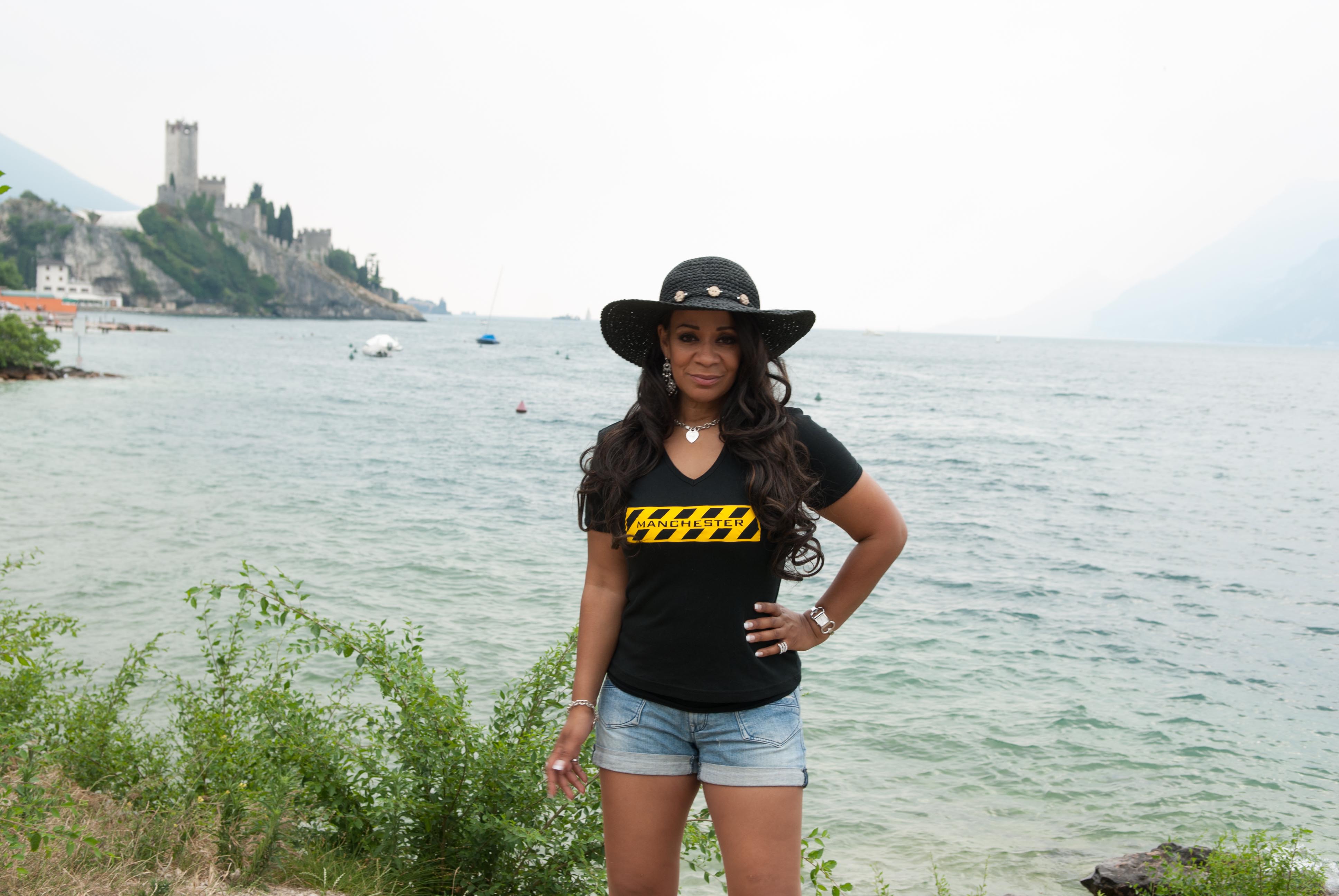
Happy Holidays: Rowetta in Lake Garda (Photo: Angie Wynne)

Happy Holidays: Rowetta during a visit to Lake Garda (Photo: Angie Wynne)

Are you suggesting you’ve all grown up?

“Well, you have to! I had children first time around, but a lot of them hadn’t settled down with partners and so on. Everyone’s different now. My children have grown now, while Shaun has little ones and likes going home to them. Completely different. It was one big party before, but there was a lot of addiction involved. That’s all gone out of the window and it’s a joy. You can really enjoy life now, and the music, and the gigs. It’s fantastic.”

So how old are your children now?

“They’re 33 and 34 … they’re older than me!”

Personally, I’d say Rowetta doesn’t seem any older now than when she was guesting with US dance collective Inner City in the mid-‘90s.

“I was only on one track, Your Love. Paris (Grey, vocalist) was pregnant at the time and we did this Serial Diva mix. And it’s a good tune. Actually, I was walking through the park with my kids one day in Manchester, and Johnny Marr was walking past with his kids and said, ‘I’ve just heard you on this track!’ He recognised my voice. That made my year!”

So how did she get involved with that Detroit outfit?

“Well, they got somebody to remix that track, and came to Manchester quite a bit. My voice was quite well known then, so rather than sampling me, they wanted me to come in, and it turned out really well. The problem was that they were about to tour but Paris changed her mind when she got pregnant, so they didn’t do any promo for that single.”

Rowetta’s first tentative steps into the business came in the late ‘80s, releasing club favourites Back Where We Belong and Passion with Vanilla Sound Corps, and Stop This Thing with Dynasty of Two. She also worked as a backing singer, credits including added vocals on Manchester outfit Simply Red’s hugely successful Stars album in 1991.

But it was with Happy Mondays that she truly crossed over, 1990’s top-five single Step On catapulting her to fame, followed by the albums Pills’n’Thrills and Bellyaches – given a 25th anniversary tour in 2015 – and less-lauded Yes Please! plus three hectic world tours. You could say that several uppers and downers followed before the turbulent Mondays split in 2000. But that wasn’t the end of the story, as it turned out.

Rowetta finally resurfaced, playing herself in Michael Winterbottom’s 2002 film 24 Hour Party People, with Steve Coogan in the key role as Tony Wilson in a memorable  comedic take on the Factory Records story.

It seems her past was never far behind. As we touched on addiction before, I asked how involved she was in the house and club scene.

“I sang a lot, including that big tune sampled by Black Eyed Peas and Robin S, so I was more known for my singing. I had two young children back then. Luckily I’m not an addict and I left all that behind. But I then joined the Mondays, not realising the sort of things they were on and how heavy it was. When I found out I just thought, ‘Oh no, not again! Do I know anyone who’s not on drugs?’ It makes life so much harder. I‘m just so lucky I’ve not got an addictive personality, surrounded by people who have.

“I like a whisky, but a lot of the time you drink because you’re bored or because of the people you’re around. Sometimes you just need to stop associating with those people. It’s all just part of growing up.”

First time around with the Mondays, the rest of the band had already been together a while. Were they on your radar from the start?

“Only through Tony Wilson. I watched his programme on Granada. I remember him saying in 1976 about the Sex Pistols being the greatest band in the world. Then he was saying the same about the Mondays in 1989. I decided I had to see this band. When I did I just went, ‘Oh my God, I can see myself on stage with these! It took me about six months to persuade everybody else though.

“I sat in the office all the time. I was managed by Elliot Rashman and his office was opposite Nathan McGough’s. I’d see mine then pop in to see theirs. Eventually I persuaded them they needed me! I could see myself doing a T-Rex type of thing, when Gloria Jones was involved.

“I wanted to be in a punk band but didn’t have the right voice. This was the closest I was going to get, apart from working with Hooky on Colony. That’s where I’m really at home, it’s just finding the opportunity to do things like that. As a kid I could never see how I could be in a punk band, but the Mondays found that role for me.”

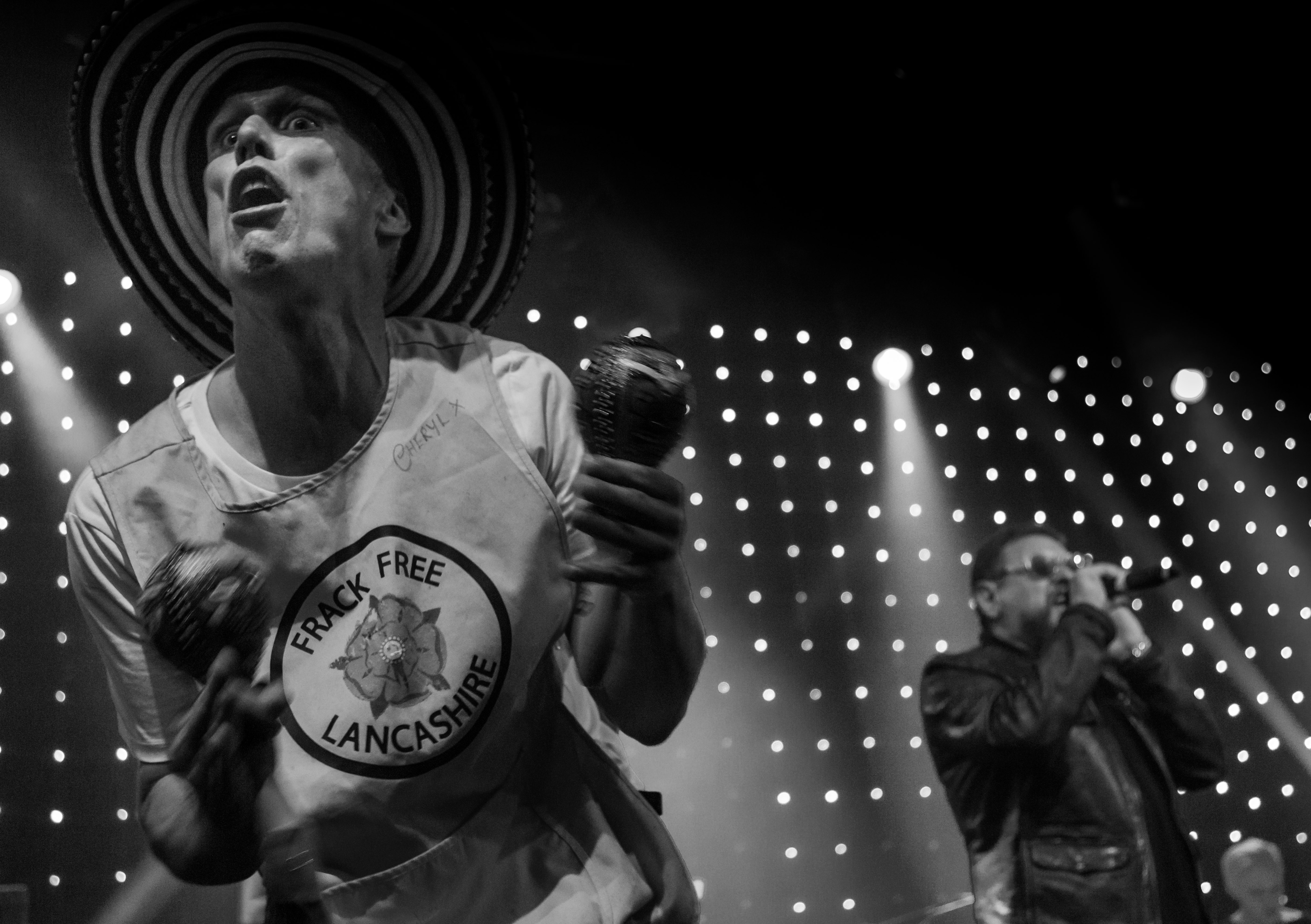
Step On: Bez in live action with Happy Mondays

Step On: The incomparable Bez and Shaun Ryder in live action with Happy Mondays

Born to an English mother of Jewish origin and a Nigerian father, who left when she was three, it took Rowetta a while to realise her potential. Was this Bury Grammar School pupil always confident of her abilities as a singer?

“Absolutely not! It was the last thing I wanted to be. There are those who say, ’I came out of the womb singing!’ I didn’t. My Mum would say, ‘Shut up!’ all the time. I wasn’t allowed in the choir. I stood out too much. It was never encouraged. I didn’t think I had any talent and wasn’t bothered. I never sang anything.

“Shirley Bassey said – and this might have happened to a lot of black American singers if they hadn’t been surrounded by people similar to them – when you’re in an all-white school with very clean, pure voices, and open your mouth and maybe sing an octave lower than some of the boys, people don’t appreciate that’s talent. You just don’t fit in.

“I was never encouraged until I was singing along to something while looking after this woman suffering cancer. We were sat upstairs in her pub and she told me I should go downstairs on to the stage and sing. I did, and the reaction was amazing. I couldn’t believe it. It was a rubbish song, I can’t even remember what it was, but later I entered a talent competition at Butlin’s, Barry Island, and never looked back. I couldn’t believe I won that competition. I thought I was older but was told I was only 10.”

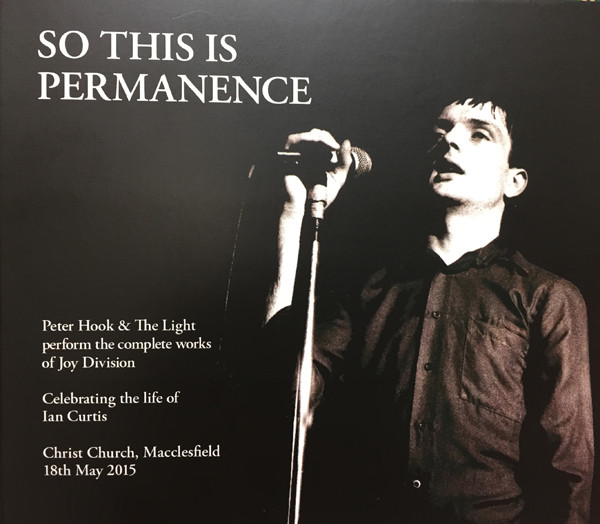
It was in 2010 that Rowetta first appeared with Peter Hook and the Light on his Unknown Pleasures tour, going back to the Joy Division catalogue. And the following year she also recorded with the band. Before we spoke, I reminded myself of that collaboration, watching a powerful live performance of Atmosphere recorded at a church in Macclesfield.

“Oh, amazing – the whole night! Howard Marks introduced us, someone else no longer with us. There’s a clip of him watching me while I’m singing New Dawn Fades, and he wrote the most incredible review. I get goosebumps reading that. It gave me the biggest confidence boost. And I’m so lucky I work with Hooky and the Hacienda Classical.

“I often spend Christmas with him and his family. I love them and he treats me like one of them. Singing with him is just a joy. He’s one of the greatest bass players in the world, his music’s phenomenal, as are Ian Curtis’ lyrics and melodies. I don’t think you can get better than that.”

Rowetta’s Manchester link was underlined recently with an impassioned performance on the BBC’s Andrew Marr Show backed by a Manchester Camerata string quartet, covering Candi Staton’s You Got the Love in memory of the victims of the Arena bombing. That spine-tingling moment came six days after the tragedy, and after an equally-emotional London show with Peter Hook and the Hacienda Classical (hence the Camerata link).

It made for powerful television, a timely, heart-felt response, Rowetta telling me she’d been particularly shaken by the sad tale of the youngest victim, eight-year-old Saffie Roussos.

“I couldn’t believe the response. I was buzzing after playing the Royal Albert Hall, yet still devastated by what had happened, and stayed on to do Andrew Marr’s show. My kids had a joint birthday that Tuesday, the day after the bombing. I said, ‘Let’s cancel your birthday this year’, and they were really understanding. I didn’t want to celebrate while children were missing.

“It was a really weird week, with the elation but also the devastation, so to be asked to sing on that show, which I love anyway, with a string quartet was just phenomenal. An honour any week, but on that Sunday in particular, with the Home Secretary and Diane Abbott there, it was surreal almost. And the response after … something like 200,000 people watched it immediately after, leaving all these comments, Twitter going mad, all these people with so much grief, saying how it affected them.

“I then got on a train to Leeds to meet a friend there, and got a round of applause. I started crying there and then. I couldn’t believe it. It was pure emotion, people telling me how they were feeling. Each night I kept thinking about that little girl and whether she’d been found, although you knew she’d passed. It brought the best out of Manchester, but was so horrible.

“We had that bombing in Manchester years before, but there were warnings before and no fatalities. This was completely different, and at a kids’ gig! I’ve played the Arena so many times, and was thinking of all the great nights there. Also, Peter Hook’s daughter was there, and the thought of that stampede to get out … I can’t imagine how bad that’d be.

“But we have to carry on, and we were honoured – myself and Hooky – to be asked by the Eavis family to lead a minute’s silence at Glastonbury Festival. Hooky asked me to say a few words at the end too. And to perform with the Hacienda Classical straight after …”

Those performances saw Rowetta truly back in the spotlight, 13 years after her successful stint on the first series of The X-Factor. On that occasion, having impressed the judges with a rendition of Lady Marmalade, she was placed in the over-25 category, her soulful, powerful voice soon proving a hit with audiences, her performances earned rave reviews. She went on to reach the final four, finishing as the highest-ranked female, even leading to an opportunity to release a self-titled album the next year.

Apparently Steve Brookstein won that year, but this is where my musical snobbery comes into it, and I borrow a phrase from my former boss Pete Storey when I tell Rowetta that – no offence – I missed all that, and if The X Factor was being filmed in my back garden I’d draw the curtains.

“I’ll be really honest and say that was for my Grandma. She didn’t like the Happy Mondays and didn’t like house music, and didn’t reckon I’d made it. If it wasn’t for her I probably would have walked away. But she loved the idea of me being on telly every week and was able to come and see me, and all her friends could see me singing songs she liked, including River Deep, Mountain High.

“I played along and got drunk before the audition, and enjoyed it. I wasn’t doing much else and thought, ‘What harm can it do?’ You then get right into it and wonder what you’re doing! Then there comes a point where you feel, ‘I’m not singing that song, and I’m not wearing that, after a few weeks. I look like a tit!

“At the beginning you don’t mind, and it’s ‘anything for Grandma!’ But I got a fantastic gay following from it, and to be the top woman in the show … It wasn’t my kind of scene and I was right out of my comfort zone. Not many songs I wanted to sing were allowed. I wanted to do Stop Crying Your Heart Out by Oasis, but Simon (Cowell) said that wouldn’t work. But a few years later he got Leona (Lewis) to do it! But it was good really, and got me back in the public eye.”

Simon Cowell described you as ‘Amazing, but barking bloody mad’, apparently.

“Well, I was drunk at the time! When he found I wasn’t really that mad he wanted me to be madder on TV. I can’t just perform like that though. I wanted to learn my songs. Then there are press stories coming out. My head was absolutely battered. And everywhere you go you’re recognised … for something you don’t really want to be recognised for! They say, ‘Sing Over the Rainbow to my Mum’, and you think, ‘I don’t really want to!’ That went on for a few years. But I’ve no regrets. I did enjoy it really.”

It was during her time on The X Factor that it was revealed to the wider public that Rowetta had been a victim of domestic violence at the hands of her ex-husband, a former drug dealer who she married at 18. She left him in 1987, the couple later divorcing, Rowetta since becoming a spokesperson for domestic violence awareness, and in 2005 featuring in BBC documentary Battered and Bruised.

You mention past run-ins with alcoholism, and spoke out on the issue after your personal experiences …

“The thing with me though, I drank too much, but there were reasons why I was drinking. The only thing I drink is whisky and I used to smoke cigarettes when I was down or when I was bored. When I decided to stop that and go around with different people all that stopped. My thing was that I was a battered wife. I got therapy, and now I don’t drink ridiculously, and don’t even smoke cigarettes.”

You talking about your experiences has helped other victims of domestic violence too.

“Definitely, and it’s an honour to be involved. I was lucky I wasn’t an addict. Sometimes you just need a cuddle. If you haven’t got anyone to get a cuddle from, that’s when you turn to other things.”

I get the impression you’re in a good place in that respect now, with relationships and so on.

“Fantastic, although I’m too busy to have a proper relationship. But I’m in a very happy place.”

Live Passion: Happy Mondays, live at Southampton Guildhall (Photo: Jack Gorman)

Live Passion: Happy Mondays, live at Southampton Guildhall (Photo: Jack Gorman)

Rowetta’s certainly remained busy since The X Factor, including TV appearances for the BBC’s Children in Need, and a cameo as herself on ITV’s Footballers’ Wives: Extra Time. She was also looking to forward to playing Preston Guild Hall’s summer ball when we spoke, while her cult club status has led to gigs as far away as Japan, as well as playing the Pop Goes the ’80s UK circuit.

Away from all that, she made her musical theatre debut in 2007 with Suranne Jones at Manchester’s Palace Theatre in The Best of Broadway, followed by a spell at the Indigo with Marti Webb, Stephen Gately and Maria Friedman in Christmas on Broadway. Later there were nationwide tours of The Songs of Sister Act with former Three Degrees star – and good friend – Sheila Ferguson and the London Community Gospel Choir. She’s also presented shows on Gaydio, community station Salford City Radio, and Manchester United FC fanzine show Red Wednesday on BBC Radio Manchester. So is it likely that her future is in radio or as an actress?

“No, I’m too busy singing! I’ve been offered musicals, but I’ve not got time with all the gigging and writing, rather than stopping in one venue for one show. I don’t think I could really do that for six weeks at the moment. I’m enjoying the way life is and I’ve just got a gig today to sing in New Orleans on Bourbon Street, a big gay event called Southern Decadence.

“With things like that and Happy Mondays, the Hacienda Classical shows, and singing in Ibiza – doing my house tunes – there isn’t the time! And hopefully life will continue like that. It’s just great. Yeah, I’ll try and stick with my music at the moment.”

Soul Survivor: Rowetta, busy as ever in 2017, and coming to a town near you (Photo: Angie Wynne)

Soul Survivor: Rowetta, busy as ever in 2017, and coming to a town near you (Photo: Angie Wynne)

Happy Mondays’ tour opens on Tuesday, November 14 at Bristol’s O2 Academy and includes visits to Brighton Dome (November 15th), London Roundhouse (November 16th), Cardiff Great Hall (November 17th); Portsmouth Pyramids (November 18th), Folkestone Leas Cliff Hall (November 22nd), Norwich UEA (November 23rd), Southend-on-Sea Cliffs Pavilion (November 24th), Cambridge Corn Exchange (November 25th), Preston Guild Hall (November 28th), Scunthorpe Baths Hall (November 29th), Carlisle The Sands Centre (November 30th), Liverpool Olympia (December 1st), Leeds O2 Academy (December 2nd), Birmingham O2 Institute (December 6th), Lincoln Engine Shed (December 7th), Newcastle O2 Academy (December 8th), Nottingham Rock City (December 9th), Manchester Academy 1 (December 13th), Llandudno Venue Cymru (December 14th), Dublin Vicar Street (December 15th), Aberdeen Beach Ballroom (December 20th), Inverness The Iron Works (December 21st), Kilmarnock Grand Hall (December 22nd), Glasgow O2 Academy (December 23rd). Tickets are available from www.alttickets.com, www.ticketweb.co.uk and www.seetickets.com, with more details via the band’s Facebook and Twitter pages. 

For this site’s interview with Shaun Ryder in September 2015, click this link.

Posted in Books Films, TV & Radio, Music | Tagged , , , , , , , , , , , , , , , , | 5 Comments

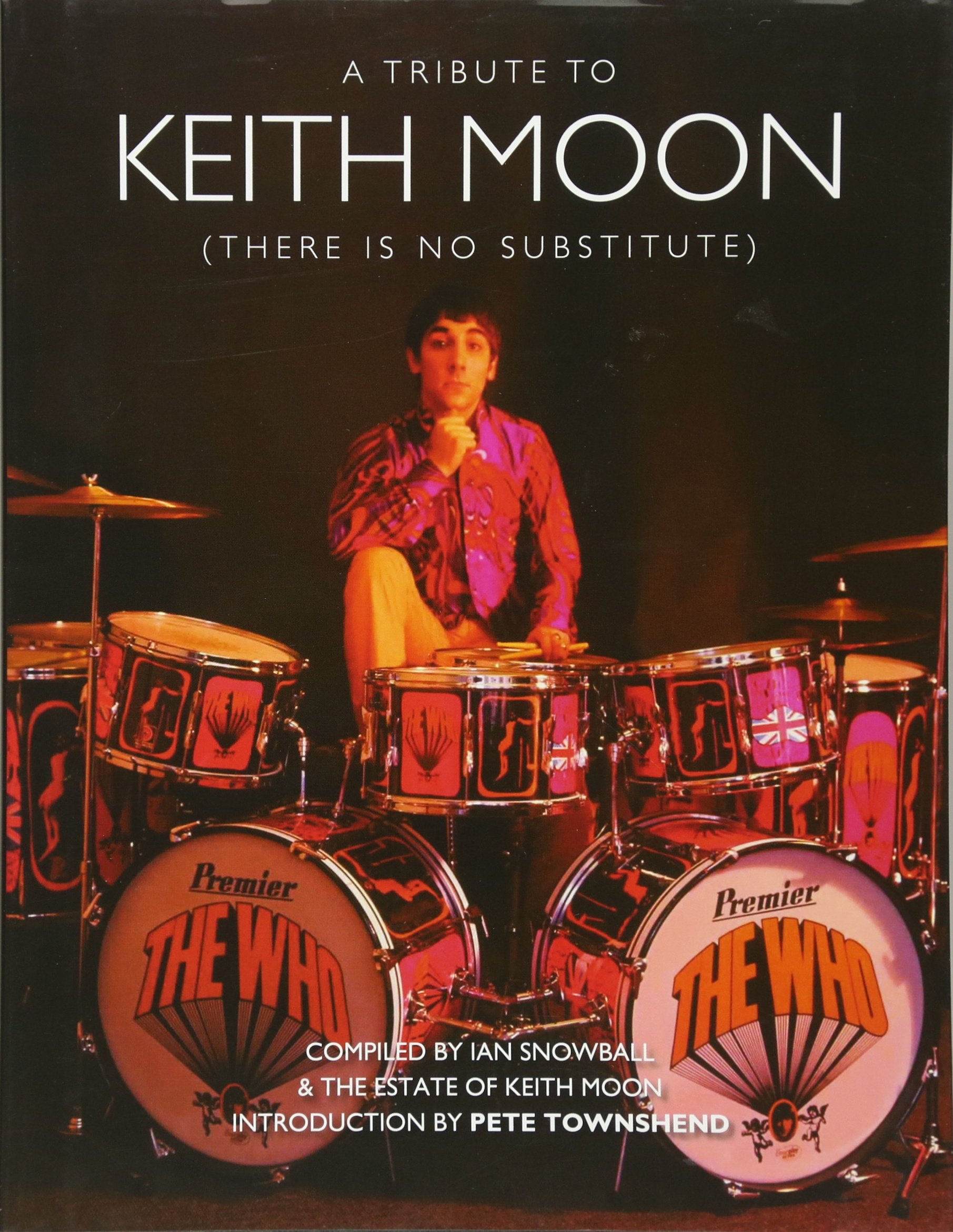
From Weller to the Moon – in conversation with music writer Ian Snowball

Sleeve Master: Ian Snowball with artist Sir Peter Blake and the classic 1995 Paul Weller sleeve he designed

Ian Snowball was writing the foreword for a book on a Merseyside football casual turned Para when I called, having also recently co-authored Beatles-related novel A Hard Day’s Month with his friend Mark Baxter.

There are many more publications out there with his name on the cover too, but on this occasion I wanted to talk chiefly about his latest music biography, celebrating 40 years of Paul Weller recordings.

A big music fan for three and a half decades, I suggested down the line to his home in Kent that he has fingers in many pies.

“That’s the way it is really. It’s about spreading that network as far as possible, and it’s all good for keeping the profile up.”

Snowy, as he’s known, certainly has that profile at present. You wonder how he manages to fit in his career, working in family mediation.

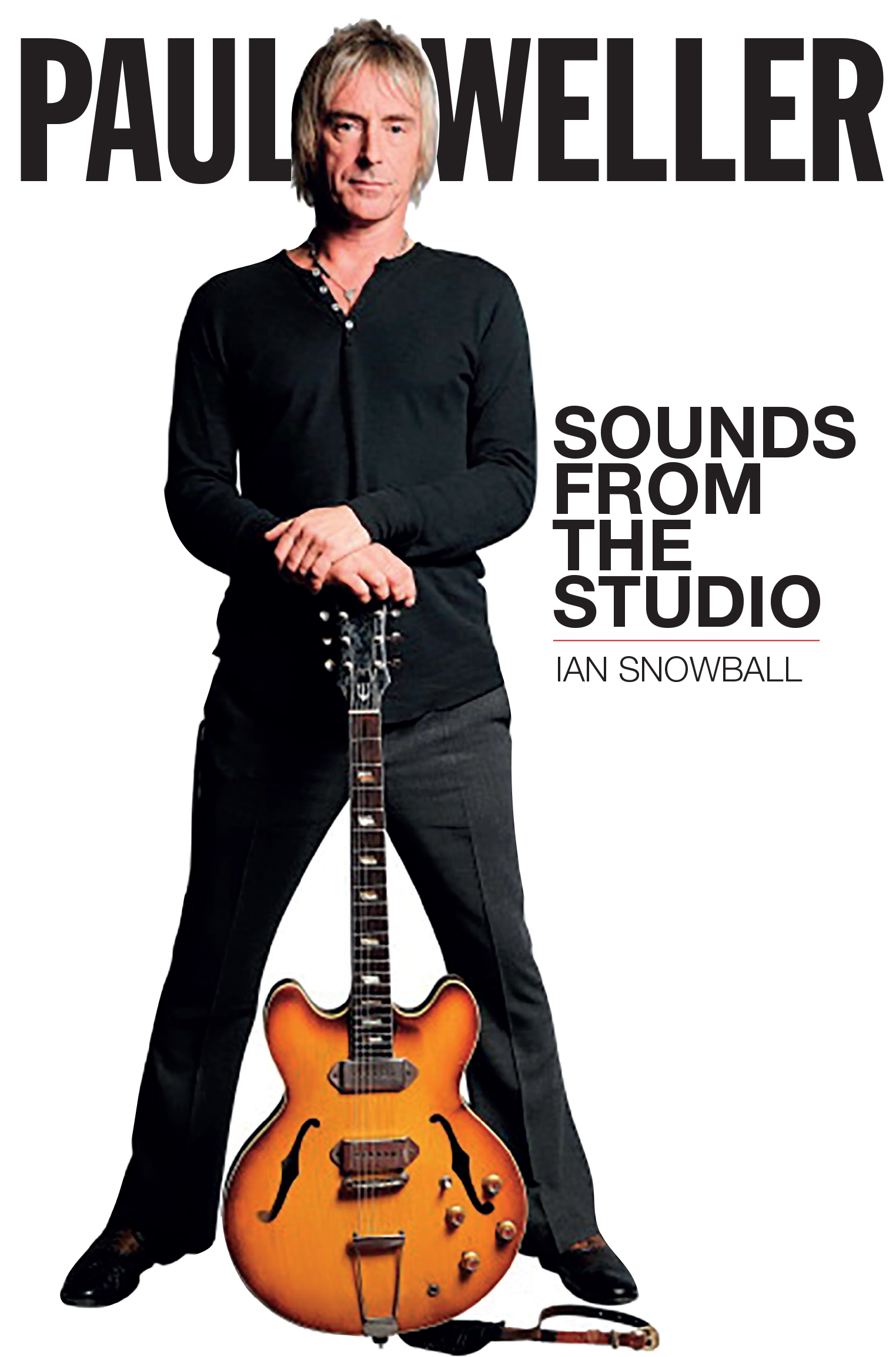
Paul Weller – Sounds from the Studio (Red Planet, 2017) sets out to explore the musical journey of one of the most successful and influential of all UK artists. It includes interviews with solo years’ collaborators such as Noel Gallagher and Steve Cradock, Style Council partner Mick Talbot, ex-Jam bandmates Steve Brookes, Rick Buckler and Bruce Foxton, and other key players – from musicians, producers and engineers to family members.

The author’s own love of music can be traced back to a passion for The Jam at the turn of the 1980s. What was the first recording he splashed out on?

“The first I bought with my own money was That’s Entertainment, when I turned 11 in 1981. The record hadn’t been long out and I bought it with some birthday money. I marched off down to Woolworth’s in Maidstone. It was a picture sleeve, and I remember getting home, realising – as with many 7” singles around then – there wasn’t a middle bit. I can almost picture myself racing back down there to get an adapter so I could play the record. I’d have then played it over and over, as you did. The kids of today are missing out, aren’t they?”

What was it that resonated with him about Paul Weller and The Jam?

“I was going to a youth club and the part of town I lived in was Mod-heavy, rather than skinhead or punk, and the jukebox there had three Jam tracks – Going Underground, Start and That’s Entertainment. They’d get played countless times every evening, and I was already aware of The Jam, with Setting Sons the album I first heard. They were soon my band, with the Mod thing important to me and my crowd.

“I’ve a photo of me at 11, wearing a pair of desert boots, sta press trousers, V-neck jumper and button-down shirt. Boys today of that age don’t seem to have that passion or the music or surroundings.”

Or that sense of tribalism, really.

“That’s it. People were more old-headed back then. And that was my gateway into finding out about bands like The Who and Small Faces. With songs like The Kinks’ David Watts or The Who’s Disguises I heard The Jam versions first. The recorded version of So Sad About Us, for example, came out about a month after Keith Moon’s death, but they’d been playing it two or three years. I didn’t know that until doing the book with Rick though.”

He’s name-dropping there, having not only written a 2016 commemoration of The Who’s drummer in A Tribute to Keith Moon (There Is No Substitute), but also working with The Jam’s revered sticks-man Rick Buckler on 2015’s That’s Entertainment: My Life in The Jam, both Omnibus Press titles.

“I’m just off the phone from Rick, funnily enough. We’ve another book coming out, in fact two by the end of the year, one an illustrated graphic novel covering the early days to the end of 1977, part one in a three-book series. We’re working with a great illustrator, bringing it to life in a different way, a 1,000-copy collectors’ item. Rick was adamant he didn’t want serious illustrations, so we found someone who’s done things in his own style. It seems to be in vogue right now. I was talking to one of the guys from Madness about doing a similar thing next year. Again, people want something collectible.”

The Keith Moon book plus Ready Steady Girls (Suave Collective, 2016, with Mark Baxter and Jason Brummell), Thick As Thieves: Personal Situations with The Jam and Supersonic: Personal Situations with Oasis (both Marshall Cavendish, with Stuart Deabill) suggest you’ve targeted a ‘coffee table’ market.

“Yes, I like that sort of thing. I love reading, but not everyone’s a reader. Some people prefer to sit there with a cup of coffee and a Rich Tea, flick through a couple of pages, put it down, come back to it later.”

I suppose that concept of creating stylish publications with lots of great pictures goes back to Mod culture.

“Yeah, and I’ve been very fortunate that every book I’ve done for a publisher has had a nice quality to it. Hopefully that will continue, but it’s getting tougher, getting publishers to put hands in pockets.”

Snowy’s published list also includes co-writes with Blackpool-born Pete McKenna such as In the Blood, Once Upon a Tribe, Nightshift/All Souled Out and Black Music White Britain. Then there’s Tribe: Made in Britain with Martin Roach, Soul Driver: Ocean Colour Scene with Tony Briggs, and The Kids Are All Square: Medway Punk & Beyond with Bob Collins. Add to those his The Who: In the City and Long Hot Summer, and even a children’s novel, 2013’s Sky and the Bell Guardians, written with his daughter Josie when she was eight.

But back to The Jam – how did it work with Rick Buckler? I get the impression he was hands-on with the writing side, as opposed to many music autobiographies.

“He’d come to my place, we’d sit down, have a couple of hours with a phone on the table, me pumping him with questions and able to steer it through knowing The Jam history. We’d have a bite to eat, come back and do another hour. Or I’d go to his local, we’d have breakfast, chew the cud for a while then sit down for a couple more hours, or do the same at his. Over about nine months there was a lot of work, the worst thing the transcribing. Each session we’d end up with up to 9,000 words, about five hours’ work.

“But it was all his voice, and that’s so important. Richard Dolan, who ghost-wrote Tony McCarroll’s Oasis book, told me early on it’s all about catching the voice. There’s a skill with that – it doesn’t come easy.”

It certainly seems that he’s living the dream, talking to his music heroes. That’s nicely illustrated in the introduction to the Keith Moon book, mentioning one sunny afternoon at a polo club in Surrey, having a chinwag with Kenney Jones. As a big fan of The Who and Small Faces, that must have been a thrill.

“Yeah, and I play drums, so doing the Rick thing was massive as well. I’ve been playing since I was 15. I was also trying to talk Mick Avory of The Kinks into doing a book. I love it when I get to talk to these guys, and this summer I’ve travelled around the country with Steve White, doing In Conversation nights. He has a drum-kit with him too so we’ll be talking away, then I’ll ask him to give a demonstration of Dropping Bombs on the White House or something. We’ll talk about his time with Paul Weller and the Style Council over the years. And for the launch of the Weller book I had Mick Talbot down for an In Conversation. That was great too.”

Has he got to know Weller well over the years?

“I wouldn’t say I know him well, but he’s always been as good as gold with me. I probably came on to his radar when he wasn’t drinking, and that made a difference. Fortunately he also gave us that foreword for Thick as Thieves. I think he’s always just seen me as a fan, a grafter, and no threat. I’m not there to dig him out about anything. And he’s mellowed a lot.”

Going Underground: Ian Snowball with drumming legend Rick Buckler, and no doubt a distant echo

I always had the impression – probably from old NME interviews and the like – that he could be a bit of a grouch, and hard work. But now I detect a ready wit and humour. And you only have to revisit some of the Style Council videos to see that was there then too.

“I think so. With Mick the other night, we talked a bit about The Jam and the seriousness and how The Style Council was totally different, and how it seemed Paul was having more of a laugh, something Mick pretty much confirmed. That was a really nice night, giving a real personal, intimate insight into The Style Council, who I loved.”

Snowy stuck with Weller while others wavered, the likes of me having a spell away beyond 1987’s The Cost of Loving, feeling he’d temporarily lost his way.

“I think most people did. Don’t think you’re alone in that! I agree, but a lot of us became a certain age around that time. Life takes over, you get distracted. I was in that boat, but still bought the records.”

For me the Paul Weller Movement signalled a return to form, even including a couple of reworked Jam covers.

“Absolutely, and that was a great album that followed. And having done this book, I’ve been listening to it from a different place. In the car, driving from A to B, I’ll listen and hear different things now. And I came out of it with an even greater admiration and respect for Paul Weller as a musician. People buying the book have also told me they’re going back to listen to this or that album, giving it attention in a different way.”

While my favourite post-Jam spell involved the early solo LPs up to Stanley Road then 22 Dreams, there’s no doubt that Weller’s still making great records, such as this year’s A Kind Revolution, at the tender age of 59.

“I love the last album and really like the track with Boy George. Really superb. And I know he’s currently recording his next one, which from what I’ve heard is an acoustic album.”

He’s not one to hang around, is he.

“Absolutely! And you can only admire him for that.”

Snowy’s other books include one with Geoff Blythe and Pete McKenna about Dexy’s Midnight Runners’ early years, 2014’s The Team That Dreams in Caffs.

“That was all about the Searching For the Young Soul Rebels album, that one-year period in 1980, working with the band’s official photographer at the time, Mike Laye, using his photographs. That was another coffee table type work, all black and white images, and visually they were such a great band. They looked fantastic, and that lent itself nicely to that.”

How did the Keith Moon project come about? I’m guessing it was important to get that blessing from the family and estate, including his daughter.

“That was a huge part, but there was part of me – as a drummer – disappointed so much emphasis was put on how Keith Moon was the mad one, ‘the loon’. I’m not skirting around that but Tony Fletcher’s written about that side of it. I just felt there was another side to him that got over-looked, over-shadowed. That was my angle and I think that’s why people stepped up to get involved in the interviews, as I wanted to do something a lot more positive.”

We mentioned a few of those who came forward, such as Mick Avory, and there was also Slade’s Don Powell, another of my heroes.

“Don had a reputation as being a really nice fella, and was fantastic – it was good talking to him about the early days of being in bands. And Slade were such a huge act of course. He’s in Denmark these days. We stay in touch via email.”

There was also From Ronnie’s to Ravers, again with Stuart Deabill, a ‘50-year history of London clubs, right back to the jazz days’. Was Snowy a club regular in his youth?

“Yeah, especially in the acid house rave period. That was about the diversity of the city really, from jazz to soul, reggae and dance music in a city with such great heritage and clubs, not least from a Mod standpoint.”

Oh, for a chance to go back in time, nip down Wardour Street and pop into the Flamingo club in the ’60s, around the era Georgie Fame played there.

“Absolutely! I was fortunate enough to talk to people who went to those clubs, and it always fascinates me. I’m always up for subjects that perhaps haven’t been tapped into.”

Meanwhile, there’s still the day-job between assignments, although Snowy tells me writing’s ‘become a second profession’.

“I’m still working to pay the bills. It does take up a lot of time, but I’m fortunate I just do the projects I want to do. That makes it easier.”

So how did he get involved? Was he moving in those circles anyway, at venues and so on?

“You do bump into people, but even as a kid I liked writing letters, long before the world of email. I wrote a few bits for different fanzines as well, and it just took off from there. It seems a long time ago now but it’s only 10 years or so. And you just keep going.”

And when Pete Townshend and Paul Weller write introductions for your books, that must make up for all those hours at a computer keyboard and all those unanswered calls and emails.

“Yeah, and the nice thing is I hope I’ve built a bit of a reputation for positive books rather than slating people. That gets around. You get to know people who know those people, get the green light here and there.”

Sometimes it’s about getting past PR people and those in the way of your heroes. It can be frustrating.

“I’ve had my fair share of that, but fortunately there’s often a way around that. And if there’s too much aggro I’ll just drop it. But with Pete Townshend, his PA was amazing, so attentive and got things done, never rushed you, as opposed to others who just haven’t got the time of day.”

Taking Notes: Music writer Ian Snowball, with several titles already under his belt, takes a deserved breather

Paul Weller: Sounds from the Studio by Ian Snowball (£12.99, paperback) is available now via HMV, all good bookshop and online outlets, or via publisher Red Planet.

Posted in Books Films, TV & Radio, Music | Tagged , , , , , , , , , , , , , , , , , | 2 Comments

The Wedding Present / The Catenary Wires / Miles Salisbury – The Continental, Preston

Continental Flair: David Gedge gets stuck in, Preston (Photo: Richard Houghton)

When Un-Peeled promoter Tuff Life Boogie broke the news that The Wedding Present were coming to my favourite Lancashire riverside locale in early March, there was much excitement from the North West indie fraternity, with one date soon not enough. And four and a half months on, I was lucky enough to catch the resultant two-night stand, a pair of memorable performances – both sell-outs yet still somewhat intimate – in the company of these John Peel favourites, three decades into their sparkling career.

It was main-man David Gedge’s first live Preston visit since a 53 Degrees show in late 2010 (a Bizarro 21st anniversary performance, one snowy night), his band having first played the Twang Club in January ‘86, then returning as conquering heroes in 1990 in Preston Poly days. And between those second and third visits ‘the semi-legendary Wedding Present’ (as Gedge put it this week) amassed 18 top-40 singles and seven top-40 LPs, with a few of those songs aired here in their first shows since a major Australasian tour.

I made it 36 songs over the two nights, seven of which were played both times – six from most recent masterpiece Going Going … and ’87 classic My Favourite Dress. And speaking of the latter, over two nights we got every track from much-feted debut LP George Best as well as many more favourites from down the years, not least storming finales Brassneck (night one) and Kennedy (night two) from 1989’s Bizarro. Incidentally, the second night was my better half’s first TWP date since a Manchester Hop and Grape appearance in October ’96, and she reckons they finished with Kennedy that night too, something that’s become more of a rare occurrence in recent years.

And the other tracks? Well, early singles Go Out and Get ‘Em Boy and You Should Always Keep in Touch With Your Friends were both surely aired at my first TWP gig at Reading Majestic in February ’87, and there was further Bizarro favourite What Have I Said Now? and 1990’s Crawl, Seamonsters‘ wondrous Dalliance and Dare (back-to-back, night one), 1992 hits Come Play with Me, Love Slave and Flying Saucer (always such a thrill), Mini‘s Drive and Watusi‘s Click Click (with Gedge and bass player Danielle Wadey’s harmonies at the core of another second night highlight).

Of the more recent material (all from the 21st century, so that counts, right?) there was Take Fountain‘s Interstate 5 and Valentina‘s Deer Caught in the Headlights and End Credits, the latter another night two revelation. Newer still, not only Going Going … choices Kill Devil Hills, Lead, the ultra-quirky Secretary, Fordland, Emporia and Ten Sleep (few of which were obvious choices, but all winning me over come Thursday night), but also the Jean-Paul Sartre Experience cover, Mothers.

That just leaves England from the Home Internationals EP, opening Thursday’s set, its combination of poet Simon Armitage’s reading and an introductory, laidback groove leading seamlessly into the heart-skipping Everyone Thinks He Looks Daft. Or at least it should have. Unfortunately, Danielle was struggling with her mic. stand after xylophonic interaction from her left, the smooth transition going to pot. But do you know what? Happenings like that make it for me. As tight as an outfit they are, I’d hate it too slick. Instead, they showed their usual good grace and humour, laughed and just got on with it.

Plenty more moments fitted that description, not least when Danielle, drummer Charlie Layton and guitarist Marcus Kain were struggling to hold it together mid-song, catching each other’s eyes. I put it down to a wild reverberation from the stage monitors part-way through What Have I Said Now? but my other half reckons she soon spotted guitar tech/ band photographer Jessica McMillan collecting a spider in a glass, Gedge unaware of what was going on behind him.

It comes as no surprise to seasoned followers that there was plenty of evidence over both nights that this will never be a band going through the motions, the impassioned Gedge surely kept young by the company he keeps. And while the first half of the opening set was a little patchy, sound-wise, the following evening proved to be another religious experience for this punter, and no doubt many more.

Countless personnel changes have followed since that Twang Club local debut, yet thy remain a proper band, the latest personnel buying into that whole-heartedly. They’re so tight as a unit, with Charlie so expressive and rather manic throughout, Aussie import Marcus’ six-string prowess equalling his bandleader’s, and Danielle now at home on bass as well as those sublime backing vocals (she was more a shy fifth member adding keyboards when I caught them in Hebden Bridge in 2014). What’s more, she delivers the ice-breaking Fact of the Day feature these days (on this occasion, Gedge inviting us to give ourselves a round of applause over two of this particular city’s national claims to fame).

Support on opening night was from amiable, behatted, acoustic guitar-toting Miles Salisbury, once of Preston College-formed Blank Students, who recorded a BBC Radio 1 session for Peel in 1981. I only caught half of his set, but he seemed to be having the time of his life. It might just have been nervous banter, but it worked. A fine falsetto too.

New Horizons: The Going Going … cover shot (Photo: Jessica McMillan)

The same has to be said of Thursday’s guests, splendid Kent-based duo The Catenary Wires, featuring ex-Talulah Gosh pair Amelia Fletcher and Rob Pursey, also Peel session veterans. Rob sat down and played guitar, Amelia sang and added apologetic ukulele, and they sang about their love, Margate Pier and much more. There was a brief mention of past times and My Favourite Dress too, although Amelia was just remarking on what she was wearing. But there is another link, their old band not only supporting the Weddoes in ‘87 – I recall seeing them at the University of London in May on that tour – but Amelia supplying vocals on several tracks in ’87 and ’88, including four on George Best.

As with his support acts, Gedge chatted away between songs, at one point inviting us all to his At the Edge of the Sea festival in Brighton, telling us we were all on the guest-list … as long as we showed up together by charabanc.

Granted, there were plenty of opportunities for nostalgia, but this wasn’t just an exercise in celebrating indie heritage, several of the selections from the past five years further indicating Gedge’s continued grasp on it all.

Huts’ Entertainment: The Wedding Present, 2017. From the left – Marcus Kain, Danielle Wadey, David Gedge, Charlie Layton

For the writewyattuk verdict on The Wedding Present at the Boileroom, Guildford, in February, check out this review, while my verdict on Going Going … is here

You can also find a past band appreciation on this site (wrapped around a review of 2012’s Valentinahere, and a link to Thirty Years in the Business, an interview with David Gedge at Hebden Bridge’s Trades Club from the summer of 2014, here

To find out more about soon-to-be-published official band publication The Wedding Present: Sometimes These Words Just Don’t Have To Be Said and how to pre-order at a specially-reduced price, head here.   

Finally, for full details of forthcoming TWP dates, including the At the Edge of the Sea festival, check out the official Scopitones website and keep in touch via Facebook and Twitter.

  • With thanks (as ever) to Rico La Rocca and Rob Talbot at The Continental, for their drive, helping bring so many fine acts to their neighbourhood.
Posted in Books Films, TV & Radio, Music | Tagged , , , , , , , , , , , , , , , , , | 4 Comments

Sunshine, moonlight, good times, boogie – the Tito Jackson interview

Tito Time: The third Jackson sibling, having the time of his life (Photo copyright: Taj Jackson/Kamelian, LLC)

It’s not even 9am in California, but it’s already Tito Time, with the third eldest Jackson sibling more than happy to share a few stories from his impressive career.

Guitarist and vocalist Tito – real name Toriano Adaryll Jackson – was a founder member of both The Jackson 5 and their successors The Jacksons, having been on board right from the start, originally performing with eldest brother Jackie and next-in-line Jermaine as the Jackson Brothers. It’s been something of a rollercoaster ever since, with many highs and a few lows, not least the death of third youngest sibling Michael in 2009. And after all those years with the family firm, the 63-year-old has released his first solo LP, while continuing to tour alongside his brothers on their 50th anniversary tour.

The Jacksons have performed as a four-piece since a 2012 reunion, with Tito, Jackie (aged 66) and Jermaine (62) joined by fellow Jackson 5 survivor Marlon (60), who first came to the party with Michael in 1964. And what a band, that combination of musical talent and choreography earning them pop royalty status, having sold more than 100 million records since their splendid Steeltown Records debut Big Boy in 1968, notching up 25 UK top-40 hits along the way – 12 of those making the top-10. What’s more, their breakthrough Motown successes I Want You Back and ABC, which first charted this side of the Atlantic in early 1970, remain as fresh as ever today.

Michael was soon at the forefront, barely 12 by the time the band became the first act to score US Billboard No.1s with their first four singles. And while he embarked on a solo career from 1971, he remained on board with the family band for 20 years. In fact, it was Jermaine who was first to leave, sticking with Motown as a solo artist while his brothers switched to Epic, youngest bro Randy joining for a re-brand, as per the 1976 LP The Jacksons.

Early Days: The Jackson 5 give it everything on The Ed Sullivan Show in the late ’60s.

They quickly re-established themselves, not least thanks to their sole UK No.1, the Gamble and Huff-penned Show You the Way to Go, from that eponymous LP, and 1978’s Destiny‘s first singles, Blame it on the Boogie (written – confusingly – by England’s own Mick Jackson, who had an earlier, arguably more Stevie Wonder-like hit with it) and the Michael and Randy co-write Shake Your Body (Down to the Ground).

In time Jermaine returned, the 1983 Motown 25: Yesterday, Today, Forever live TV special followed by 1984’s Victory album (the only LP featuring all six brothers), but Michael then jumped ship – properly on his way to a glittering career in his own right – and Marlon soon after. I should also point out – in this somewhat confusing family history – that throughout that period there was contrasting solo success for the Jackson sisters too, eldest sibling Rebbie and middle sis La Toya’s careers outshone by that of youngest sibling Janet from the mid-‘80s onwards.

Meanwhile, Tito and co. carried on until 1989, a reunion of all six brothers following 12 years later, two shows at Madison Square Garden, New York City, marking Michael’s 30th solo career anniversary. There were talks and moves towards another reunion too, but then came 2009’s devastating turn of events. Yet the remaining Jackson 4 got back together five years ago for the Unity tour, gigging on and off ever since. In fact, this ‘boy band’ with a difference – 251 years old between them – are set to return to these shores for the opening night of Blackpool’s Livewire Festival on Friday, August 25th, and the following day’s CarFest South, near Overton in Hampshire. And if the brothers get anywhere near their recent form in a 19-song set at Glastonbury Festival, those Tower Headlands Arena and Laverstoke Park Farm audiences are in for a treat. So did Tito enjoy his visit to Worthy Farm with his brothers?

“Oh that was fun, that whole Glastonbury situation! All the people really enjoyed the show, and that was one of the band’s dreams – to do Glastonbury.”

There’s a special atmosphere there, isn’t there.

“There is, and we get it on the telly here as well, and of course every band in the world would love to be a part of that. Not only was it a good feeling but it was also a great accomplishment for the band.”

It also gave Tito the chance to share a couple of songs from his solo LP with the wider world, giving me the opening for that big question – why go it alone only now, after all these years?

“I can answer that quite easily. When Michael was putting out Got to Be There (1972) and when Jackie was putting out Jackie Jackson (1973), then Marlon was putting out his records and Jermaine was putting out his records as solo artists, Tito was busy holding bottles for the babies! I said to myself, ‘How can I be a solo artist when I’ve got these young children? How am I going to find the time to spend time with these kids, who are only kids one time in their life? I can always do the music thing later in life’.

“Later, my boys came to the Los Angeles Forum and watched the brothers perform, then came home and started mimicking the brothers. I told them, ‘If you really want to be like the uncles you’ll have to learn your instruments and learn to do this for real’. I opened up the studio and gave them my experience, and they seemed very interested. So I kept working with them on that instead of doing the solo career, letting the boys be who they were.

“It was more feasible for me to help them out, and I’m glad I did it that way. I now look at my sons as nice young men – they’re brilliant and they’re not disobedient in any fashion. And I contribute that to the time I spent with them when they were younger kids.”

It’s also given you a self-made vocal trio to contribute to your album.

“Exactly! There’s a saying that it’s never too late to follow your dreams, and I’m one of the people trying to prove that to the world you can still have that success and it’s not over until the fat lady sings! And I’m enjoying this as much as when I Want You Back came out or ABC, enjoying my solo career at this age.”

There are some big names helping you out too, such as Big Daddy Kane, Betty Wright, Jocelyn Brown …

“Yeah, and 3T!”

Of course, and to put a fresh spin on a sentiment from the mighty Sam Cooke, it’s been a long time coming, but finally it’s Tito Time, yeah?

“It’s Tito Time, yeah! Not only that, but I’m not the only one who’s recognising that. My brothers are as well, supporting me wholeheartedly when I’m doing my music on stage. They’re right there with me, singing with me. And we’ve always been a family where if one brother does well, It shines with our whole family. So that’s where we are with that.”

Tito was looking forward to his UK return when we spoke, enjoying a little ‘off-time’ at home in Calabasas on the outskirts of Los Angeles. California’s been his home since 1968 – when he was 15, Michael was 10 and youngest sister Janet was barely two – and these days he divides his time between there and Las Vegas, Nevada, as do several of the brothers and his parents. So when was the last time he got back to Gary, Indiana, where the Jackson story started?

“A little less than a year ago. My Mum has an annual tribute show there in honour of my brother Michael.”

Good memories of your days there?

“Oh man! When I go back there, I can look at some of the things I did when I was a kid, some of my landmarks, such as the time I took a hammer to the wall in the bedroom. I still see the patchwork!”

Was that a release of teen angst?

“I don’t know what I was doing! I was probably trying to hang up a picture of something! There’s all kinds of memories in the home at 2300 Jackson Street and when we go there we can reminisce and still feel the vibe.”

As the band are currently part-way through a 50th anniversary tour, I asked Tito which of those early shows he remembers best? Was it, for example, their first appearance at the Apollo Theater, Harlem, New York, victors on an amateur night there in February, 1968, or their return to support Etta James at the same iconic venue three months later?

“Oh yeah, that was definitely one of the bigger moments for us. Also, the audition for Motown and The Ed Sullivan Show (both 1969). You can never forget those type of situations. They were ground-breaking moves for the young band, The Jackson 5, that stick with us. Also, being invested in the Rock & Roll Hall of Fame (1997) and the Victory tour (1984), further good memories for the band. Yeah, it’s been great.”

I hope this doesn’t make you feel old, but that first Apollo performance was barely three months after I was born.

“Well, that’s quite okay. No big deal. It’s funny how people often say how it’s been 50 years. It doesn’t seem that way to me or the brothers, it’s seems like half that time. We enjoy what we do, and when you enjoy what you do, time is not a factor. We just want to get up and have a good time and continue to do what you do. And that’s what we do.

“One thing I like about the situation with the brothers is that we’ve preserved our bodies and our health. We were a family act and our father made sure we got our rest and didn’t go out and party and do all those crazy things that a lot of other entertainers do. We’ve always had that guidance from our father and mother, who always looked over us and kept us as a family.”

Apollo Return: Word of that 1968 ‘Jive Five’ show supporting Etta James at the Apollo Theater, as detailed on the informative J5 Collector blog pages at http://j5collector.blogspot.co.uk

There have been upheavals though, including a few false dawns as well as landmark moments like the 1978 self-produced Destiny album. Was that the band finally stepping out of the shadows? For one thing, I understand you were finally free to play guitar on your own records for the first time.

“Yep, I got to play the guitar on my records, and a lot of the songs we did on the Destiny album I had started writing, like the song Destiny, which originated in my cabin in Big Bear. I called my cabin Destiny because it was a place away from home where I could get away and not be found. And that was a good time, our first time doing solo writing and producing, and a breaking time in our career where we had to step it up.”

Now, all those years on, you seem to still like each other judging by all those reunion tours. Do you see a lot of each other when you’re not working?

“Oh yeah. We have special days – holidays or birthdays for cousins and their kids and all participate in those events. We see each other all the time. As long as there’s a way whenever we’re in town. Absolutely!”

And what do those six grandchildren of yours make of Grandad Tito going still being out there, on the road?

“Well, as long as I bring them some t-shirts and candy and a couple of souvenirs, they deal with it … yeah!”

Time flies, and it’s hard to believe it’s been eight years now since we lost Michael. What do you think of first when you remember him?

“The first thing I think of is of him being my brother and the love we had for each other as brothers. That’s what I miss more than anything. Then I think of how brilliant he was as an entertainer, one of the greatest entertainers that ever held a microphone and hit a stage. I can’t deny him of that just because he was my brother. I have to recognise that he was a great. I tell people Michael would have been a leader in anybody’s band, even if he was in The Beatles or The Rolling Stones. He will definitely be missed. He was magical and different and very brilliant, he was a genius and I miss him tremendously. And the whole world misses Michael Jackson.”

When you’re not out there performing or writing songs, what do you like to listen to? I gather you’re a big fan of the blues.

“I love the blues, and I love listening to top-40 radio, and I put on my favourite radio stations and work on my cars. That’s what I do in my off-time.”

I get the impression from all that’s been written about the family over the years that we have you down as the Jackson brother with the inner calm. That’s how they like to portray you anyway – the quiet one, but he knows where he’s coming from and where he’s going. Is that about right?

“Yeah, well, when I speak, everybody listens! I don’t say too much but when I have something to say they’ll listen. I’m not saying that they take my advice though!”

I know you have a strong faith, but do you believe in fate? I’m thinking in particular of when you were 10 years old and caught playing your Dad’s guitar. Was that the spark that started this whole journey for you and your brothers?

“A lot of people say that, but I don’t know. There was so much happening around that time, and Jermaine, Jackie and I were singing harmonies behind my mother – country and western songs. With the guitar thing, my father played and didn’t want us to mess with it, but my mother let me play it, and I broke a string and didn’t know how to fix it, and he found out.

“He spoke to me for it, and then put it in my lap and told me to show him what I knew. And when I started playing, his mouth flew open! He gave me the guitar and told me to learn every song I heard on the radio. So I started learning The Temptations and all that, playing songs like My Girl, with Jackie, Jermaine and myself singing, starting to work out parts for these songs. It just grew into a group … and the rest is history!”

Jackson Four: From the left, Tito, Jackie, Marlon and Jermaine, still shaking it down to the ground

While we’re talking ‘boy bands’ with added class and plenty of soul, I can also point you towards past writewyattuk interviews with Duke Fakir of The Four Tops and Otis Williams of The Temptations. 

The Jacksons, supported by The Christians and Mica Paris, play Blackpool’s Tower Headlands Arena on Friday, August 25th for the Livewire Festival, with recent writewyattuk interviewee Pete Waterman introducing the Hit Factory Live on Saturday (Jason Donovan, Pepsi & Shirlie, Go West, Sinitta, Sam Fox, Brother Beyond, Undercover), and Will Smith & DJ Jazzy Jeff plus Fatman Scoops, Phats & Small and Tiger-S rounding things off on Sunday. For ticket details and more information call the box office on 0871 220 0260, visit the official website or go to seetickets.com.

Tito, Jackie, Jermaine and Marlon then head for CarFest South, for a BBC Children in Need fundraiser at Laverstoke Park Farm, near Overton in Hampshire, on Saturday, August 27th, the bill also including Cast, KT Tunstall, Mel C, Seasick Steve and Sophie Ellis-Bextor. For further details go to the official website or the event’s Facebook page. 

You can also check out all the latest from The Jacksons via their own Facebook page, and head to Tito’s Facebook page here


Posted in Books Films, TV & Radio, Comedy & Theatre, Music | Tagged , , , , , , , , , , , , , , , | 2 Comments

Public Service Broadcasting – Every Valley

I’ve mentioned on these pages before a love of archive documentary films, the British Film Institute restoring, reissuing and reminding us of so many inspirational cinematic moments in recent years, not least treasures from the pioneering GPO Film Unit and its successor, the Crown Film Unit.

That era included Harry Watt and Basil Wright’s Night Mail and further masterpieces from the likes of Alberto Cavalcanti and Humphrey Jennings, giving rise to another success story, British Transport Films following in their wake in 1949, the subject matter ranging from industry to travelogue, and often both.

In recent years I splashed out on the BFI’s GPO Film Unit, British Documentary Movement (1930-50) and British Transport Films DVD collections, reliving key moments in my youth watching black and white ‘shorts’ – cuppa in one hand, biscuits ready to dunk. And it’s not just about nostalgia. This was film-making as art.

One such film that resonated was Tony Thompson’s A Letter for Wales (1960), scripted by Brigit Barry and Norman Prouting and narrated by Welsh actor Donald Houston, reminiscing one night at Paddington as he posts home via the night mail train, remembering days of steam, bridges, boats, first love and more. And that came within three years of another Prouting and Houston link-up, Every Valley, Michael Clarke’s study of a day in the industrial valleys of South Wales, the locally-born screen star’s lyrical approach perfectly linking a soundtrack of arias, choruses and orchestral interludes from Handel’s Messiah.

Sixty years on, that film is the foundation for an album of the same name by a band that regularly raid the BFI vaults, going back to 2012’s The War Room, including their take on Night Mail a year later. And for their third album they’ve fallen from the heavens above (The Race for Space, 2015) to the coalfields of South Wales, previously believed to hold enough fossil fuels to last us another 400 years of work.

It’s a brave project, yet as with PSB’s previous concept album they mine the seam so effectively. It’s timely too. History teaches us so much, and in this chaotic, austerity and Brexit-obsessed era we’re struggling through, there’s plenty to dwell on. And if there’s one message to be taken from Every Valley, perhaps it’s the need for communities to come together and demand a better future.

While band leader J. Willgoose, Esq. admitted concerns about the idea of a group led by a ‘middle-class South Londoner’ (his description) turning up in Ebbw Vale to tell the locals’ tale, he also reported a positive response. And that won’t just be down to a part of the profits being donated to the South Wales Area Miners’ Benevolent Fund. Perhaps the main reason for the resultant ‘encouragement and acceptance’ was the fact that PSB avoid using their own words for the most part, instead telling the story ‘through the voices of the time or those who lived through it and who subsequently reflected on what it meant to them’.

While the hand of Willgoose looms large – producing and mixing as well as supplying guitar, synth and occasional percussive touches – it’s a team effort, the brass and strings arranged by bass player J.F. Abrahams, Wrigglesworth (again) a hewing colossus behind his drum-kit, and engineer James Campbell also digging deep.

And the result – like those archive documentaries – Is a lovingly-assembled, beautifully-honed work of art, in the style of The Magnetic North’s similarly-evocative Orkney: Symphony (2012) and Prospect of Skelmersdale (2016). It’s also arguably PSB’s most important work to date.

Subtly-picked acoustic guitar and strings introduce the title track, the scene set by the lilting voice of Donald Houston and a riff (carrying traces of The Blue Aeroplanes) that leads to fellow Welsh actor Richard Burton (you may recall them together in The Longest Day) in a clip from The Dick Cavett Show in 1980, his rich tones recalling a South Wales childhood aspiring to be one of the ‘Kings of the Underworld’.

Valley High: Wrigglesworth, Willgoose and Abraham give writewyattuk’s verdict on Every Valley some thought

Meanwhile, percussion and building brass characterise the sound of heavy industry in pursuit of a precious commodity, The Pit taking us deeper still into that magical, hellish subterranean world where we toiled, bass trombone and bass clarinet conveying us, the fall of coal on a working morning neatly personified by the drums.

You also get a sense of claustrophobia among the foul air, a sense of danger never far away, as we reach the heart of the matter on People Will Always Need Coal, the recruitment drive assurances of secure futures jarring in hindsight. As the voice tells us, ‘There’s more to mining than dust and dirt’, something that became apparent in the years of conflict to come, promises that ‘The South Wales Coalfield will be turning out best Welsh for a few hundred years yet’ later broken by the Government of the day. And throughout there’s that stirring staccato, Latin-like riff pushing us on.

Lead single Progress gave us a first glimpse into Every Valley, the mighty Camera Obscura’s Tracyanne Campbell adding a sweet vocal on a respectful nod to pioneers Kraftwerk and all things electronica, accentuating the tide of mechanisation that promised so much. Similarly, Go to the Road is also synth-driven yet a sense of a gathering storm is underpinned by Wrigglesworth’ powerhouse drumming and Abraham’s driving bass as we reach ‘the end of the road’ and that first mention of closures, a workforce caught in the political crossfire soon to be ‘chucked on the scrapheap’.

Anger surfaces as we kick off side two on All Out, grinding guitar bringing to mind The Wedding Present and local lads The Manic Street Preachers, PSB’s earlier Signal 30 relocated from race-track to the frontline. ‘We’re not going to take anymore. Enough is enough’ comes the battle cry. But this is about ‘the right to go out of the house in the morning and go to work’, not some vainglorious struggle, breakdown in respect for the old order inevitable – you can only take so many broken promises.

Turn No More reflects on what followed, and who better to convey visionary poet Idris Davies’ message (adapted from Gwalia Deserta, which also brought us Bells of Rhymney) than the Manics’ James Dean Bradfield. ‘In the places of my boyhood the pit-wheels turn no more’ and ‘In derelict valleys the hope of youth is slain’ he wrote just before the Second World War, changes already afoot. Yet even here are glimpses of optimism, not least in the lines, ‘Though blighted be the valleys, where man meets man with pain, the things my boyhood cherished stand firm and shall remain’.

Calls for a brighter future rise on They Gave Me a Lamp – with vocals, accordion and percussion from Haiku Salut – and take us by the hand into that uncertainty with renewed optimism, a sense of community ever stronger, and enveloping female empowerment. And that’s taken on through this album’s biggest revelation, 9Bach’s Lisa Jen Brown duetting with Willgoose – the unlikely vocalist, hence my surprise – on You + Me, an ‘intensely personal’ yet simple love song sung in Welsh and English, ‘a story of strength and togetherness in the face of apparently overwhelming odds’. Again the brass and strings stir us, bringing the point home. ‘If you take my hand and if we stand as one, we’ll have something they’ll never break. I have you and you have me’.

Mother of the Village adds further reflective light on an end of an era where ‘it was never going to be normal’ after the loss of the pit – the mother in the title – and the need to start afresh amid the harsh realities of what was lost or broken. And that sense of inherent resilience ultimately suggests we have the power to overcome, as embodied next in the album’s finale.

As the Houston-voiced Prouting commentary put it, as ‘The sun set in the west over South Wales, and mine and steelworks and factory spilled out their people to the evening and leisure as the people of the valleys – colliers and choristers, lovers and lonely alike – sang out aloud with life’. And that perfectly sets up Rod Edwards and Roger Hand’s Take Me Home, emotively voiced by the Beaufort Male Choir, not least as they sing of those fathers of the valleys, ‘He’d laugh and he’d say that’s one more day, and it’s good to feel the sun shine’.

For this is not about the political leaders who hogged the news all those years ago. There’s no mention of the opposing leaders, McGregor and Scargill, nor the real architects behind this whole sorry episode – Thatcher and co. Instead, PSB focus on those who rallied around in spite of it all. From days of prosperity through to the anger and conflict of the 1980s and ‘sad acceptance’ beyond, and a realisation that ’what was once the lifeblood of the valleys is no longer there, replaced by something far more intangible’, Every Valley offers valuable reflective insight into a story that could teach us so much. Perhaps we just need to listen.

Valley Visitors: Public Service Broadcasting, including engineering accomplice James Campbell, left, on location in South Wales (Photo: Dan Kendall)

Valley Visitors: Public Service Broadcasting, including James Campbell, on location (Photo: Dan Kendall)

For our most recent interview with J.Willgoose, Esq. – in April 2017 – and links to past Public Service Broadcasting features and reviews on this site, head here. And to get hold of Every Valley, available in a variety of formats, and the band’s forthcoming dates, try the band’s official website. You can also keep in touch via Facebook  and  Twitter

Posted in Books Films, TV & Radio, Music | Tagged , , , , , , , , , , , , , , , , , , , , | Leave a comment

Calling Captain Summertime – the Nick Heyward interview

Woodland Wonder: Nick Heyward takes it easy, and waits for the plaudits (Photo: nickheyward.com)

While Woodland Echoes is Nick Heyward’s seventh solo album, it’s his 10th in total, going right back to 1981’s Haircut 100 debut Pelican West. And this highly personable Beckenham-born singer/songwriter, guitarist and pianist is rightly proud of his latest offering, telling us, ‘I’m glad I’m alive, I’m glad I’m writing and putting records out’.

Even that quote takes me back to the first long player, Nick having ‘borrowed’ a little of the Lizette Reese-penned hymn Glad That I Live Am I for the last verse of Milk Film, as this ex-choirboy knew full well but was unlikely to let on to his mates.

If Nick was guilty of anything in those days – and for much of his career – it was for his relentlessly cheerful lyrics and tunes, as the early Haircuts hits underline. Fantastic Day speaks for itself, and who can forget Favourite Shirts‘ ‘Your favourite shirt is on the bed, do a somersault on your head.’ Not great advice for us with back and neck problems. In fact, his sole concern back then seemed to be a phobia of lakes, if Love Plus One‘s anything to go by. Yet Nick’s enthusiasm and optimism was contagious, and Pelican West still gets regular plays on my in-car system, not least when the sun’s out. What’s more, within a year he delivered another classic, a grown-up one by comparison.

But more of that later. Instead let’s focus on Woodland Echoes, his ‘first pop record in 18 years’ (since 1998 Creation rebirth of sorts, The Apple Bed), and an ‘accidentally-autobiographical reflection’ of the course Nick’s life has taken, its songs ‘influenced by love, nature, togetherness, ‘70s’ pop, America, open spaces and afternoon tea’. As the blurb has it, ‘This is the sound of a confident man in his mid-50s making music for nobody but himself’, Nick insisting it was only when he started compiling and sequencing the LP that he realised he had something different’.

As he puts it, “It came together like a storybook, a love story. I realised the songs were chapters. It starts with time passing; you find love and get a significant connection with your other half, in the forest of love. I’d never really had that connection. I didn’t know why I could always split up with people – it was either them or me.

“The passage of time is reflected on the album – it begins with a cuckoo clock ticking; as you age you become more selective about who you spend time with; no longer the hasty friendships of youth. Who is about the question of who do you keep and who you let go. When you stop looking for what you want, it is often there in front of your nose.”

Three listens in, I was impressed. There’s something of Skylarking-era XTC in places, such as opening track, Love is the Key by the Sea. While that’s quintessentially English, we cross the Atlantic for something of a Great Outdoors hoedown (complete with Jew’s harp) on Mountaintop before The Stars gives us old school Heyward quirkiness, as suggested by the line, ‘I’m a garden wall, you’re a spinning parasol’. A reflective, part-trippy Beautiful Morning carries traces of Pink Floyd’s Wish You Were Here, while Who is more Django Reinhardt goes camping, kind of Huck Finn’s Hot Club de France years. And Forest of Love would sit nicely on master songwriter Boo Hewerdine’s most recent offering, Swimming in Mercury.

He’s on top form for the guitar-driven Baby Blue Sky, inviting us on a coastal ride in a convertible on another perfect summer’s day. I’m channeling Paul McCartney (with George Harrison guitar touches) on radio-friendly love song, I Can See Her, while we’re catching Californian rays and filmic imagery on the evocative, somewhat epic Perfect Sunday Sun. Colourful, duelling acoustic guitars, glockenspiel and Fleet Foxes-style harmonies provide a semi-instrumental bridge – more Drake than Heyward – on New Beginning as we near journey’s end, Nick then back in classic pop territory on I Got a Lot  – think Tom Petty guesting with the Lightning Seeds – and then talking to the trees again on For Always, at one with nature on a closing track somewhat reminiscent of Dodgy, another outfit in their element staying out for the summer.

Recorded on a houseboat in Key West, Florida, and back in his native UK at Zak Starkey’s Salo Sound studio, there’s definitely an unhurried feel as well as a holiday vibe from an artist in somewhat transitory mode at present, between short-term accommodation. And in Baby Blue Sky, the flip of his double-A-side lead single, it certainly seems that Nick’s coined the sound of summer … again. In fact, I suggest to him on the phone, there’s almost a Teenage Fanclub vibe there, something not so many would associate with this ‘80s pop icon.

“A lot of people … many millions, in fact … don’t know I was on Creation Records, and I toured with Teenage Fanclub in America. I’m a big fan.”

Meanwhile, Mountaintop – the other side of that first single – is totally different again, more country-tinged.

“That was recorded near the Everglades, using a local band. It’s all blues there, but there was definitely a country influence. We were driving through Nashville and doing stuff over there. That’s nothing like the rest of the album either. But they all have this connection, a celebration of nature. There’s a track called Who and it’s gypsy jazz, and an out-and-out rock number like early AC/DC, I couldn’t put on the album though – people would think I was all over the shop, like a fox running all over the garden, into every bit of foliage you could find.”

Maybe we have the blueprint there for an extended album – Wild Woodland Echoes maybe?

“Well yeah. I’m Springwatch, through and through!”

Do you spend a lot of time in the States?

“It seems to have been that way. It wasn’t planned though. Maybe that’s down to Ian Shaw, who I worked with in the ’90s, who worked with Julian Cope and Alan McGee’s assistant Edward Ball. I played bass on his records and Alan would come down a lot, and really liked my song Kite, and said I should come to Creation Records. Anyway, Ian later moved to Key West to be near his Dad, ending up building a houseboat, including studio equipment. My girlfriend – now my fiancée – is from way up North in Minnesota, and while visiting her parents in Florida I went to see Ian.”

The LP’s certainly a mixed bag, style-wise.

“Yeah, I think that’s because it was recorded over a long period. It was either I save up for a property or invest in me and make an album. The more I was making it the more I really wanted it to sound like a proper vinyl record, and it’s mixed by Chris Sheldon, so all that took more investment and more time.”

Having Fun: Nick Heyward, not at all fazed by writewyattuk’s questions (Photo: nickheyward.com)

Nick’s son Oliver, 29, was also involved in the recording process, as a studio engineer.

“Yes, he’s doing brilliantly with sound engineering, and just the other day he was working with Chris Thomas and Sex Pistols drummer Paul Cook. He never wanted to play, but always looked at the equipment I had around and seemed to know how to work it. He does all the summer festivals, like Let’s Rock and Rewind shows I’m involved with.”

Nick also has a daughter, Katie, 26, who he says ‘writes lyrics effortlessly, but chooses at present not to get involved with music’. He hasn’t put her off, has he?

“I might have done! Ha!”

As it says on his website, ‘While the battle for the music industry was playing out as the ‘00s became the ‘10s, Nick stood aside from all this, released two albums under the radar, and got on with the business of life; seeing his children grow up, and finding love’.

It’s certainly been a full career so far, from major label, big money backing at Arista, Warner and Sony to more cult indie support with Creation, and now fully embracing the crowd-funding era. And that independent direct-to-audience concept seems to make sense for him, not least being so social media friendly. Yet while he has his own label these days, Glenhawk, he’s not averse to PR help, via his Pledge Music album initiative.

“That way I can carry on and do another album. That’s why touring is so important to me – from the summer gigs I can then invest back into making more music. And I’ve chosen that rather than owning a house, living in short-term rents.“

Until September that’s in Henley-on-Thames, near Oliver and much of his work. But now his daughter’s Sheffield-bound, he’s contemplating upping sticks again, possibly to there, or nearer Manchester or Liverpool. Speaking of the latter, he played The Cavern last November and previously featured at a show marking the end of the About the Young Idea exhibition at the Echo Arena, celebrating The Jam.

“Yeah, brilliant, and I’ve played with Russell Hastings and Bruce Foxton’s band (From The Jam) again recently, jumping on with them at Let’s Rock, doing Modern World.”

All Set: Nick Heyward awaits the next tricky question (Photo: nickheyward.com)

That’s a quality I like about this Kentish entertainer – it’s not about obvious covers. There’s also footage of him from 1994 playing The Jam’s Sounds from the Street for a TV show.

“Well, Fantastic Day was written when I was pogoing to The Jam! I’d go home inspired by them and others around that time, ending up buying a practice amp and guitar. I locked myself in my bedroom and kept playing D major, C major and G. I had to sing something over those chords, which just happened to be, ‘It’s a fantastic day’. I then thought, ‘Actually, that sounds like a song. I should write one of those other things you have in songs – a verse’. But I didn’t know any other chords, so just played C and G. Later, I learned another chord – F, so put that in just before the chorus.

“I then had this song I played in various bands, although it didn’t pop out until it was suggested in a rehearsal to play to a record company. So we did, and they decided to sign us.”

The rest was history, Nick having left school in 1977, aged 16, working as a commercial artist but soon realising his pop dream. And as the bit about Haircut 100 on his website says, ‘They played the pop game perfectly, tucking their Arran jumpers into their trousers, riding the post-new romantic funk wave, marrying Chic with the Monkees and opening their shows with a blistering cover of Low Rider by War.’

That all sounds pretty cool, but I still feel like I’m at an Alcoholics Anonymous meeting when I stand up and admit to Nick that Pelican West and North of a Miracle were two of my favourite LPs of the 1980s.

“Wow! Really!”

My tastes were more punk and new wave then, but I’d still regularly listen to both albums, and still do to this day. So why should I have felt a need to keep that to myself and feel reluctant to publicly appreciate his early work? Was it because of all the Smash Hits and fashion and pop teen mag coverage?

“It’s interesting. I don’t know why that was the case for us and not Edwyn Collins and Roddy Frame, who had similar kind of acts. It might have something to do with the fact we played with the pin-up thing. I don’t think Edwyn and Roddy did. Now we’ve got stats suggesting it’s 90% male fans buying records. Maybe that smaller percentage of women made it … off-putting.”

It was a golden era for white pop-funk and dance, from more mainstream ABC, Duran Duran, Haircut 100 and Spandau Ballet to indie-crossover outfits like A Certain Ratio, The Associates, Aztec Camera, Orange Juice, and The Higsons. I loved the latter’s East Anglian neighbours The Farmer’s Boys too, a band that seemed to be like a tipsy version of the Haircuts to me. All those bands still sound fresh for these ears, and that can’t just be nostalgia on my part, can it? But – as I suggested to Nick – perhaps for me it was more about the songs than what his band were wearing on Top of the Pops.

“Yeah, I think that first album was closer to Steely Dan than anything. It was more complicated, but I got tarred with the icon thing, probably in the same way David Essex was. But musically that’s never affected me, and I’m still doing what I do. Maybe it’s just down to people not being able to openly admit that.

“I also put music first and was playing Dreamin’ by Cliff Richard last night. I don’t give a f*** that it was Cliff. It was written by Alan Tarney (and Leo Sayer), one of this country’s great producers, songwriters and bass players. The way he crafted pop records … I listen to great pop music regardless of who it’s by, but I suppose if I was doing an interview for the New Musical Express I probably wouldn’t say I was listening to Cliff Richard.”

It struck me in later years that Nick was barely 22 when he made North of a Miracle. Yet it’s such a mature album, the artist co-producing with Beatles engineer Geoff Emerick and involving quality session players. As Uncut later put it, ‘If Elvis Costello had released this album, it might just feature in the lower reaches of those lists of all-time greats’. And for a record of that era it’s remarkably unfettered by the synth touches that quickly aged so many LPs around then.

“Well, hopefully I’m going to be doing that album somewhere soon, and get Geoff along to do a talk. To me he’s not only the guy who made Sgt. Pepper but also Imperial Bedroom and so much amazing music. He was the guy who put the microphone six inches closer to the bass and made the guitar on Paperback Writer sound more rocky. For me, he was there at the birth of rock music!”

Is it true that XTC were in line to record that album as well as Geoff? I’d have loved to heard their spin on the album.

“Yeah, and I’d still like to work with Andy Partridge. I speak to Thomas Walsh, of Pugwash fame, a lot. He has me in fits of laughter – he’s the most eloquent, hilarious man – and knows Andy really well. So you never know!

“Back then, we were sat in a coffee bar around the corner from Air Studios and Andy said, ‘Maybe we could be your band’. I was such a fan and was just stunned. I was thinking, ‘He doesn’t really mean that’. But that was a younger, startled, gob-smacked me. Now I’d say, ‘Oh yeah! What time? Nine o’clock? I’ll be there!’”

The following period wasn’t Nick’s best, and while I bought the more club-friendly single Warning Sign, his final top-40 hit in late ‘84, and Postcards From Home in 1986, the latter was soon in the bargain bins. There are some fine songs on Nick’s second solo LP, but production-wise he lost me. Perhaps I felt he was more interested in winning over the audience that saw him support Wham! at their Wembley farewell shows.

“Yeah, I’d lost that … it’s weird. I got to work at Air Studios and with Geoff Emerick and have great musicians, but then didn’t have that power, so the studios weren’t so good and my manager wasn’t really a manager. As a songwriter you’re as good as who you work with. In hindsight I see quite clearly things weren’t sounding so good. Howard Jones and Nik Kershaw were doing well at the time so I was put with Pete Collins and the results sounded good, but I must say my songwriting wasn’t as good around that period.”

I’d moved on by the time of his Warner Bros. Records move and 1988’s third album I Love You Avenue, the single You’re My World just another that failed to chart. And however good the records that followed, it’s a fickle market, Nick struggling to pull back that wider fanbase. By the time of 1993’s From Monday to Sunday he was revitalised though, touring regularly, particularly in the US, alongside the likes of Belly, The Lemonheads, Mazzy Star and Therapy? I think I only picked up on that later though, missing Tangled too, the 1995 album that pushed him further on again. However, I fully appreciated both later, and thankfully he was on Creation’s radar by then, acclaimed 1998 album The Apple Bed seeing Nick finally publicly acknowledged as having returned to form, even if he didn’t seem to sit comfortably with the new breed when that resurgence in interest came around the time of the BritPop phenomenon.

“Yeah, that all followed me getting to work with Ian Shaw, doing demos. That’s where Kite came about, the single Alan (McGee) first liked, a demo all the way through really, because it just worked with acoustic guitar, a drum, cello, trumpet and bassoon sound. That was it, and it was just one of those magical recordings.

“Ian just gave me a beat to play along to, I then took it home, felt I really liked it, opened a little book – and I don’t usually write that way – and tried some lyrics. I went back the next day to see if it worked, and sang it in literally one take. It wasn’t going on the album, but was the song Rob Stringer at Sony heard and thought was great.

“That proved to be the turning point. Maybe I was trying too hard before. Up until then I’d been giving people what I thought they wanted, and it was working. But then there was pressure after North of a Miracle. I was trying to write a hit, and nothing happened. But then I started being creative again in the studio, all this new material starting to pop out.”

Plenty of songs from that era have stood the test of time, such as 1993’s January Man, which for me was kind of On a Sunday part two (although that accolade arguably falls more directly to the rather splendid Perfect Sunday Sun on the new LP). He was properly back with us.

“That was it. It was like a blip before then, despite little glimpses like Traffic in Fleet Street (from I Love You Avenue). But then it was back again.”

On Spec: Nick going for the studious look with his fellow Haircuts, back in the day

Time flies, and it’s now 40 years since Nick and schoolmates Graham Jones and Les Nemes initially started a band. When was your first gig?

“The first as the band? That’s an interesting question. I’ll have to find that out.”

There were plenty of names, including Rugby, Boat Party, Captain Pennyworth and Moving England, before they settled on Haircut 100.

“We changed names so quickly! But the first would have been the four-piece with Pat (Hunt) on drums, probably the Ski Club of Great Britain, in the bar, inviting our friends. I don’t think (music writer) Adrian Thrills came to that, but it was either there or another around the corner in Kensington at the university supporting a band called The Tropicanos. Herschell Holder was in the brass section, and we went on to work with him on the album.”

Incidentally, Herschell had already played with Graham Parker, Eddy Grant and Black Slate by that stage. But as Nick’s website biography concedes, ‘Haircut 100 burnt briefly and brightly – the ultimate group of pals who, within a year, had hit the big time. It finished as quickly as it began’. So while the rest of the band carried on and made a second album, 1984’s Paint and Paint – Marc Fox taking over lead vocal duties – Nick had already released his debut solo LP. Does he keep in touch with his former bandmates?

“Well, Blair (Cunningham, drums) plays on two tracks on my album, and we played together last summer, along with Echo and the Bunnymen, one in a girls’ school playground turned out to be the best gig of the summer! Last summer I had tea in Marc’s garden, him and his lovely lady, and before then I went to Graham Jones’ wedding. I never miss a Haircut wedding, and I’ve been to every one of Blair’s!”

Inevitably there was talk of animosity at first, but Nick was clearly destined to be out on his own.

“Well, it’s just a long boring story about a band without a manager – like a football team without a manager would be a rudderless ship, probably not even getting outside the harbour. It could be the best ship in the world and the greatest crew, but if you haven’t got direction and a leader … But I’m always open to the idea of the six of us playing together again.”

So that might happen again?

“It’s up to us – it takes six people collectively to do that. The last time was when VH1 got us together for a TV show. That was really enjoyable. In the meantime though, I’m not twiddling my thumbs!”

Guitar Man: Nick Heyward knows a few more chords these days (Photo: nickheyward.com)

True enough, not just with the new album but a series of dates too, this week’s headline show at 229, Great Portland Street, Marylebone, seeing Nick – as with his Cotton Clouds festival appearance in the North West (Sunday, August 12th) – backed by his own five-piece band. There are also appearances on the Rewind circuit at Scone Palace, Perth (Sunday, July 23rd) at Capesthorne Hall, Macclesfield (Sunday, August 6th) and in his current backyard at Temple Island Meadows, Henley-on-Thames (Sunday, August 19th), while Nick is set to see out the gigging year for Let’s Rock Christmas at Wembley Arena (Thursday, December 14th).

For those shows he’ll be working with house bands he’s got to know well, including his own players in the Let’s Rock band and a Rewind band drawn ‘mostly from ABC and again great guys’. And when we spoke, he was looking forward to Let’s Rock in Southampton with The Human League, Belinda Carlisle, Kid Creole and the Coconuts, Tony Hadley and recent writewyattuk interviewees Howard Jones and Katrina Leskanich. I’m guessing he’s having a ball. Is there good camaraderie between the acts?

“There really is, and it’s getting nicer, meeting up every summer and playing with them. We really put the effort in to make the day work too. It’s not so much the bands as the audiences that lift the day, and when the weather’s good, it really works.”

Then again, I bet it’s equally memorable when it’s chucking it down during Fantastic Day.

“I’ve played that song in all weathers! I remember one at Alnwick Castle where it was literally hailstones, wind, and icicles, with everyone still out there, singing along. How hardy are they!”

Scooting Off: Nick Heyward heads off, another interview complete (Photo: nickheyward.com)

Nick Heyward appears at the Cotton Clouds Festival on Saturday, August 12th, on a bill also featuring The Coral, The Sugarhill Gang, the Everly Pregnant Brothers, and a DJ set from Inspiral Carpets’ Clint Boon, with tickets £39 plus booking from the festival website. There are also official Facebook, Twitter and Instagram pages. 

And for all the latest from Nick Heyward and more detail about Woodland Echoes and where to order the LP, head here.


Posted in Books Films, TV & Radio, Music | Tagged , , , , , , , , , , , , , , , , , , , , , , , | 3 Comments

Never Gonna Say Goodbye – the Pete Waterman interview

SAW Thing: Mike Stock, Matt Aitken and Pete Waterman, weighed down with awards, back in the day (Photo: http://pwl-empire.com)

Perhaps you know him best these days for the countless TV appearances as presenter, judge or pundit, from his shows on regional radio in the Midlands, or – going back a bit further – as a club DJ.

Alternatively, you maybe more aware of his hands-on involvement with Britain’s rail industry, building from scratch successful train businesses, creating hundreds of jobs, salvaging and preserving steam locomotives and championing model railways en route.

But Pete Waterman’s place in the history of popular cultural was cemented in the mid to late ‘80s and early ‘90s as the catalyst of a music production and songwriting partnership that scored more than 100 UK top-40 hits.

Stock Aitken Waterman sold a staggering 40 million records and earned an estimated £60 million, working with a who’s who of pop over that period, from Rick Astley and Kylie Minogue to Donna Summer and Steps. And at the heart of the trio’s PWL label, Pete was clearly the prime mover, his many accolades along the way including 13 Ivor Novellos, despite having left school unable to read or write.

What’s more, Pete remains as passionate about music today as he was working as a DJ for the Mecca organisation in his youth. So whatever you do, don’t mention retirement to this 70-year-old pop impresario, as I did early on when I tracked him down to his London office. In fact, I started by mentioning another septuagenarian I’d just spoken to for these pages, legendary Mott the Hoople front-man Ian Hunter, 78 years young and still touring and writing acclaimed material.

“Oh, and I remember seeing his band when I was a young lad!”

So now Pete’s hit 70, has he any ambition to retire?

“Not at all! Then again, I don’t perform like Ian does. If he’s still out there playing, that’s fantastic! Those guys were brilliant, coming in that post-Beatles pre-Bowie era, lucky to catch that brief time period, I guess.
“I loved Bowie. I was a soul boy, particularly Northern Soul and Motown, but working for Mecca I had to play stuff I wouldn’t have gone out and purchased … even Chirpy Chirpy Cheep Cheep! And just after that period we’re talking about, seeing Bowie break through, the rock scene improved dramatically, through Mott the Hoople and bands like that. A really interesting time.”
So when was the last time Pete DJ’d?

“I still work for BBC Radio Coventry and Warwickshire (and WM), every Saturday. And the great thing is that it’s about music rather than entertaining people dancing. The last time I DJ’d to people to dance to has to be 25 years ago … maybe for the last edition of The Hit Man and Her. And that’s gone on to be legendary really.”

TV Times: Michaela Strachan and Pete Waterman on the set of The Hit Man and Her (Photo: Granada TV/http://www.itv.com)

Us of a certain age remember that well, late night TV after a night out, if you weren’t out clubbing yourself, with Pete joined by Michaela Strachan in a Granada show that ran from September 1988 to December 1992. And in the region I later settled, it seemed that a fair few people knew some of the more prominent dancers that popped up on screen most weekends. Take That’s Jason Orange was one, as were a couple of members of 911.

While he was talking to me from the heart of the capital, Pete remains part-based in the North West, not far from Mr Smith’s, the club from which his hit show was first broadcast.

“I tend to live in Warrington from Friday to Sunday and here Monday to Thursday. And I love that … well, I love the train journey, don’t I!”

The capital’s received a few hard knocks of late, not least from the Westminster and London Bridge terrorist attacks. But it seems that Pete’s not ready to move out yet.

“We have an advantage in our old age sometimes, having been born at a time when people were dropping bombs on us every night out of the sky. Then I grew up in a period as a DJ when we were constantly clearing clubs and ballrooms because of IRA violence. Throughout my career, I took the security aspect as absolutely essential, as I had to. We were trained to do that at Mecca, working in public places, so to me there’s always been a real threat. It’s something I’ve had to live with, and you have to get on with life.”

Pete’s heading back to the North West for the Hit Factory Live Show on Saturday, August 26th though, part of the Livewire Festival at Blackpool’s Headland Arena over the August bank holiday. He’ll be appearing alongside and introducing several ‘80s and ‘90s superstars from his stable, not least Jason Donovan, Pepsi and Shirlie, Go West, Samantha Fox and Sinitta, plus Nathan Moore (Brother Beyond) and Undercover. Is there still strong competition among his acts?

“There was never competition for us. We didn’t allow that. You were there to enjoy yourself. If there was, you were in the wrong business. If you’re not enjoying it, don’t do it. We always said it could last five minutes, five weeks, or five years, so enjoy every moment. If you don’t, you’ll regret it.

“The great thing is we look back over 30 years or so and we’re still all friends. I went to a friend’s funeral yesterday, and you go back and think, ‘We’ve had a charmed life, we did what we wanted to do and have such fantastic memories’.

“We were in Blackpool regularly, including with The Hit Man and Her every six weeks or so. You look back and it’s magical. I’m very privileged to have been able to look back at so many great events. It was amazing, I got paid for it … and I kept my clothes on!”

There’s clearly a strong 80s’ retro market out there too, with Bananarama the latest PWL-associated act reforming.

“It’s incredible. I remember when journalists told me it wouldn’t happen, and I always said, ‘You’re wrong’. You can’t sell a million records in a couple of weeks if people ain’t keen on your record. You might sell 20,000 or 30,000, but not millions. And that’s what was happening.”

Pete left school at 15 in 1962 to work for British Railways, becoming a steam locomotive fireman based in Wolverhampton until his Stafford Road depot closed in 1963, choosing music instead, inspired by The Beatles.

That gives me the excuse to talk trains, telling Pete my Dad was a steam loco fireman from 1953 to 1961.

“Wow! Amazing. What a great career that was.”

I add that he reluctantly left British Railways to become a postman, hoping to support his growing family better.

“Yeah, probably better paid.”

Hit Factor: Pete Waterman shows us around the PWL empire. (Photo: http://pwl-empire.com)

So how about Pete – would he have changed his own career path, given the chance, and carried on where he started?

“No. I started on the railway at Wolverhampton, but I have to say I wouldn’t have done all I’ve done if I still worked for BR. I might have had a great time and enjoyed it, but … I love my railways and I’ve been able to buy trains to play with, but music pays the bills and trains are for enjoying myself.”

It was the same with my Dad. Getting out of that industry when he did, he at least retained his love of railways, never losing that passion. And that’s clearly the case for Pete too.

“Yeah, people tend to forget how dirty and how hard it was, and what unsocial hours and poor pay it offered. I remind people when they talk about taking the railway back that I worked on it and we were there. Drivers now get £60 or £70,00 a year. We don’t want to go back to where they were on £20 a week, working at four in the morning for four nights or four days sometimes, for less than £20. We don’t want to go backwards.”

He’s said to be worth around £30 million these days, according to the Sunday Times Rich List, and has been involved in several railway ventures. For instance, in 1988 he revived the name of the London and North Western Railway (LNWR), involving a rail vehicle maintenance business based at Crewe, with depots across the country, by the time of its sale the largest privately owned rail maintenance business in the country.

That was sold in 2008 to Arriva UK Trains, but there’s also the Waterman Railway Heritage Trust, which owns several steam and diesel locomotives. and then there’s his interest in model railways, his Just Like the Real Thing initiative specialising in O-gauge kits, having spoken about how his ability to become absorbed in making models helped him cope with the death of his eldest son. And as an avid collector his frustration at a lack of high-quality model railway kits on the market saw establish his own company, now widely regarded as a world leader and creating and sustaining jobs at the factory where the kits are made in Scotland.

Furthermore, in 2007 he became involved in a co-operative UK rail industry bid to create a national railway training scheme under the Labour government, halted in 2009. So, while I’ve got him on the subject, I ask – as a leading employer and innovator in the rail industry – what he makes of plans for a return to nationalisation of the railways. Something needs to be done, doesn’t it?

“Yeah, but once we renationalise the industry it becomes fat, lazy, and we go backwards. We need to rebalance, but you have to understand that every Government since 1948 except the last Tory one, under Patrick McLoughlin, has failed to put the money in. And five years of that has not made up for 55 years of under-investment. Yes, we’ve spent billions, but we needed to spend trillions, because our railway system is so far behind.

“If we spent £20 billion a year for 50 years that would only get us to where European railways are today. And we haven’t the money to do that. In a Utopian world, we’d like to have a state railway, but there’s no money to invest, because you have to have money from outside. It’s the only way. No party will do that over the NHS. If you have to argue railways versus health service, you lose every single time … and so you should.”

Having left the locomotive cab in the early ’60s, he started to build an impressive record collection, not least through acquiring rare US imports, his subsequent DJ-ing taking him across the UK, entertaining bigger crowds with a blend of classic R’n’B and soul. At one point, he was supplementing his income by work as a gravedigger then as a General Electric Company apprentice, becoming a trade union official.

Ska Boom: Fellow Coventry success story The Specials, back in the day

Gaining a residency with Mecca, initiatives such as matinee discos for under-18s in Coventry gave him valuable insight into what music interested young audiences. And it was at Coventry Locarno that he met long-time friend Neville Staple, later co-vocalist for The Specials, a band he went on to briefly manage, even going on to write the foreword to Staple’s biography, Original Rude Boy, in 2009. Did Pete recognise the themes of urban decay, unemployment and violence in the inner cities The Specials sang about in their evocative 1981 No.1 hit, Ghost Town?

“Oh, there’s no question. Absolutely perfect. Jerry (Dammers) for me was the best songwriter in that period and for all the youngsters who want to know what the ’70s were really like, go and listen to Jerry’s records. He summed that period up perfectly.”

In an early A&R role for the Philadelphia scene, Pete introduced the Three Degrees to the UK, a later move to Jamaica then seeing him work with Peter Tosh and Lee Perry, and produce Susan Cadogan crossover hit Hurts So Good. By 1979, he’d set up Loose Ends with Peter Collins, hits with artists like Musical Youth and Nick Kershaw following, setting up the PWL (Pete Waterman Limited) label in 1984.

Soon, he signed producers Matt Aitken and Mike Stock, Hazell Dean’s Whatever I Do the first of many successes, with 22 UK No.1s following, including those with Dead or Alive, Kylie Minogue, Bananarama, Steps, Mel and Kim, Donna Summer, Sinitta, Cliff Richard and Jason Donovan. But throughout his varied career, it seems Pete’s never sought to rely on one project. Is that a secret of his success?

“I just love working. If you sit and wait for it to come to you, it’ll never happen.”

Even as an enterprising young boy, he cycled between churches earning a few shillings singing in their choirs. Was his sense of business acumen better than his voice?

“Without question! And my enthusiasm outstripped both.”

Pop Impresario: Pete Waterman today, with retirement not on the cards (Photo: Sarah Lee)

His success in the music industry was recognised through honorary doctorates from Coventry University (2001) and the University of Liverpool (2004), and an OBE in the 2005 New Year’s Honours List. What’s more, he remains on board with local enterprise and training initiatives as well as his rail ventures, this thrice-married father-of-four also having seen four books published, including I Wish I Was Me: The Autobiography. And all that despite dealing with dyslexia, the music industry’s ‘Man of the Year’ in 1990 not learning to read and write until in his 40s. Did his dyslexia help fire him up in a bid to succeed? Or did it put barriers in his way from day one?

“It helped. I didn’t know what failure was. When you can’t read, how bad’s a review? You just got on with it. I never lied to anyone though. I would tell people I couldn’t read or write.”

Do you think things are easier for today’s generation in a similar position, now it’s better recognised?

“I think it’s impossible for today’s generation. I learned to spell through the internet, and wouldn’t recommend any kid to go to school and not learn to read and write. Quite the opposite – try twice as hard!”

It would be easy for this punk and new wave fan to write a former Pop Idol judge off as just another symbol of the established music industry, the ‘hit factory’ Pete created arguably a key influence on the current dearth of TV music talent shows. For that alone some of us may feel we should disown his pop legacy. But that’s not fair, is it?

“No, we set up to be independent. The Specials went their own way and I went mine. I had a mortgage I had to pay, salaries to find, so chose a way I could remain independent. And we were never, ever part of the music industry in that respect.”

He wasn’t really given kudos for that spirit though, despite PWL propping up that indie charts for many years.

“No, but look at the events of the General Election. Five months before everyone said Jeremy Corbyn was a waste of time. Similarly, everyone said of Stock Aitken and Waterman, ‘Forget it’, yet we went on to dominate the world! The public make up their own mind.”

When did he last speak to Mike Stock and Matt Aitken?

“Erm … last year.”

And how’s the relationship between you these days?

“We’re fine. I guess when you work that intensely for a while it comes to a positive end. I think it does.”

Was there a specific moment in your life when you saw a performer and knew what you wanted to do next?

“Yeah, with David Bowie, when I went to see the Serious Moonlight tour. I’d had hits before but that made me realise I knew what I wanted, and no compromise – if I fail, I fail, but this is what I want to do.”

He retains a love of pop all these years on. What was the last great acts he saw who he felt were on their way to deserved success?

“Over the last six months there have been some really good acts, like Clean Bandit, 21 Pilots – I love Stressed Out – and Bastille. Coldplay at the moment are on fire! They’re amazing.”

Anyone you’d still love to work with, who somehow slipped the net?

“There are a couple of young kids I’d love to meet. Jonas Blue is very talented. Dua Lipa too. I love her. That’s my sort of stuff. I guess I see what I did and what they’re doing 20 or 30 years on and see all the traits and excitement, and that’s fantastic.”

What would your advice be to the next generation of emerging artists?

“Stick to what you do. Don’t get carried away. Coldplay are a great example. They pop up all over but never let the quality drop. Chris Martin is exceptionally talented, putting himself with all sorts of people from different situations but still coming out a winner. That’s talent.”

And of what song attributable to yourself are you most proud?

“Oh, it’s Rick Astley’s Never Gonna Give You Up. It’s over something like 100 million hits on YouTube … or billions … God knows what it is these days! But it’s about so much more. The point is, that was a moment in time.”

Yep. I’ve since gone back and checked, and it’s 332 million internet hits now for that particular track … and counting. There’s no arguing with that. Respect due.

Hits Radio: Pete Waterman at the controls at BBC Coventry & Warwickshire (Photo: BBC)

For the full line-up, tickets and more information about the Livewire Festival this August bank holiday at Blackpool’s Headland Arena, call the box office on 0871 220 0260, visit the official website or go to http://www.seetickets.com.

Posted in Books Films, TV & Radio, Music, Railways | Tagged , , , , , , , , , , , , , , , , , | 4 Comments