Waiting for The Vapors’ return – the Dave Fenton interview

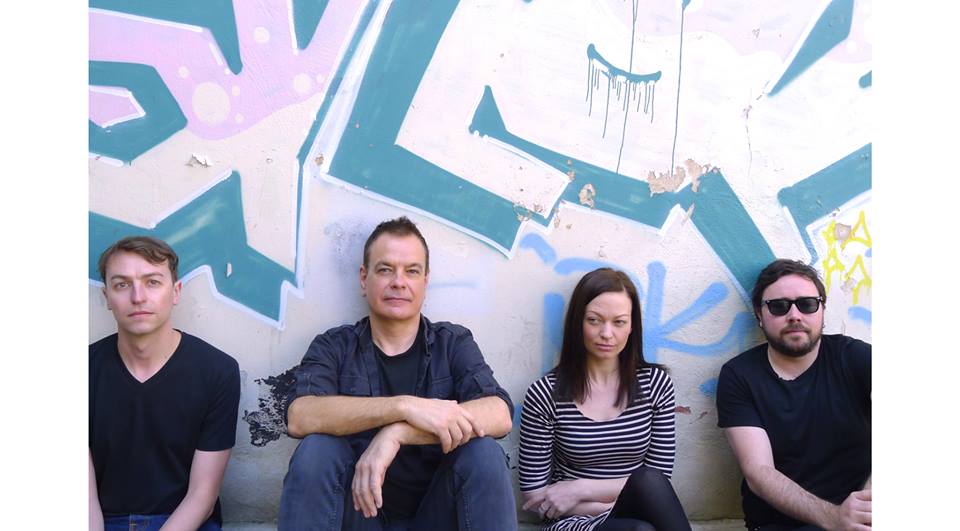
Vapors Trial: The 2016 line-up of The Vapors, with Michael Bowes, left, joining Dave Fenton, front, Ed Bazalgette, rear, and Steve Smith, right (Photo: The Vapors).

Vapors Trial: The 2016 line-up (from left) – Michael Bowes, Dave Fenton, Ed Bazalgette, Steve Smith

I’m guessing that if you’re reading this, you remember The Vapors. I also realise that many of you will now have the song Turning Japanese lodged in your head, and a few of you will think that was the whole story.

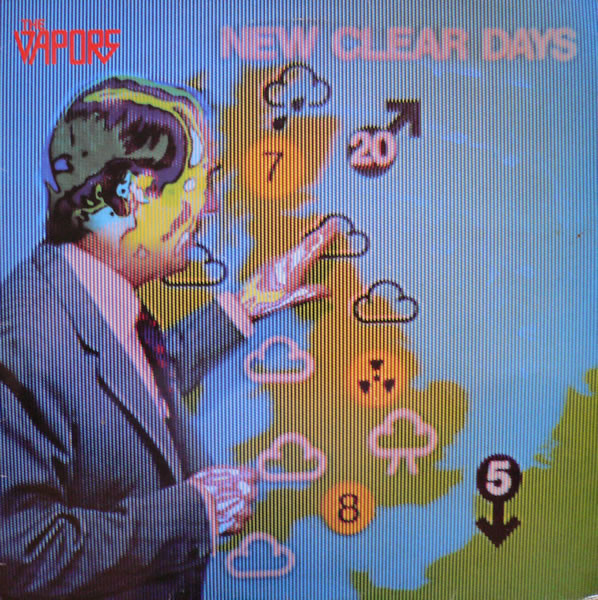
But while technically The Vapors were one-hit wonders, they were about so much more, not least to this perennial teenager, who still rates New Clear Days as one of the finest albums ever made.

It’s 36 years since this band from my hometown of Guildford, Surrey, had a worldwide hit with the afore-mentioned 45, and I might as well put on the record (so to speak) straight away that it was probably not about what you heard it was about. That’s been the band’s lead singer and main songwriter Dave Fenton’s take on the subject over the years anyway, although he acknowledges it didn’t do any harm anyway (the publicity about the meaning of the song, that is, rather than anything that might have affected his eyesight).

And now I’ve got that out of the way, I’ll let on for those who haven’t already heard that The Vapors are finally dipping a toe back in the water this autumn, with four national dates coming up – in Dublin, London, Liverpool, and Wolverhampton.

Not as if the musical journey ended for Dave when the band went their separate ways in 1982, with another decade elapsing before he got back to his day-job as a practising lawyer. As it turned out he was soon involved again anyway, spending 17 years as a London-based in-house solicitor for the Musicians’ Union from 1999.

Meanwhile, you may have spotted lead guitarist Ed Bazalgette’s name on TV credits over that same period, more recently directing hit BBC shows (and favourites of mine I might add) like Doctor Who and Poldark, and a documentary about his great-great-grandad Joseph Bazalgette, the 19th century civil engineer responsible for saving so many lives after major cholera epidemics through creating central London’s sewer system.

But now Dave – who has taken early retirement from his legal career – and Ed – between his on-screen assignments – are working together again, having rejoined bass player Steve Smith, who never really left the music scene. And while original drummer Howard Smith (no relation to Steve) is busy with his young family back in Guildford, there’s a worthy replacement in the experienced Michael Bowes. As I put it to Dave though, there was talk of a reunion a few years back. So why not then, and why now?

“We tried around 2001, but Ed was abroad a lot, working for the BBC, directing and editing, doing holiday programmes all over, so rehearsing was almost impossible. I was at the Musicians’ Union then, but don’t have any commitments at present, so can fit more around Ed. He’s still very busy, as is Steve, who also plays with The Shakespearos. In fact, one of the covers they do is Turning Japanese, and that’s how we ended up playing along with him recently at the Half Moon in Putney.
r-743607-1159611824-jpeg“Steve sent a text asking if we’d like to join in, for a laugh, myself and Ed saying yes. There were no rehearsals and it was the first time we’d been together on stage for 35 years, so it was a bit nerve-racking. But once we were up there it was fine.”

For me this reunion tour can’t come around quick enough, having missed out on the band first time around (I was only 14 going on 15 when they called it a day), having to make do with two studio albums and various singles instead.

“Well, you’ll get a second chance now.”

Dave’s based in Harpenden, Hertfordshire, these days, moving that side of the capital so he could get to a North London law practice a little easier. But then he ended up working for the Musicians’ Union in South London, and because his children were in school and he didn’t want to mess them about, he took on a longer commute again, continuing for 17 years. And that seems ironic for a guy who wrote a song for the first album based around commuter frustration, ending with the line, ‘Don’t let the trains getcha!’

“Well, they tried very hard … when they bothered turning up!”

Dave’s children are grown up now – the oldest 22, having finished his degree, the middle one 20, at university in Manchester, and the youngest 17, doing her A-levels. What do they make of Dad’s return to the music scene?

“They like it. I think they’re a bit chuffed they’ve got something to talk about to friends. Daniel, the middle one, even more so – he’s a really good guitarist, so when Ed can’t make it, he’s first reserve.”

The Jam bass player Bruce Foxton, who co-managed The Vapors with Paul Weller’s dad John,  recently spoke about them at a Q&A session at Liverpool’s About the Young Idea exhibition, citing ‘a great band’ with ‘great tracks’ who ‘burnt out kind of quickly’. Fair comment?

“I suppose it was. I felt a lot of pressure at the time but it was mainly down to external influences. It wasn’t arguments within the band.

“Our breakthrough hit, Turning Japanese, came out on United Artists, but between that and follow-up News at Ten, EMI bought the company out and those who signed us were made redundant. We got inherited by people who weren’t interested.

“That was the start, and there was a week when we were at No.3 and The Jam were at No.1 (with Going Underground), so it started to tell. Bruce and John realised they might be on a European tour with The Jam so couldn’t be on an American tour with us. It got too awkward, John held his hand up and said ‘Sorry, it doesn’t work anymore’. So within a few weeks of that hit we’d lost our record company and management.
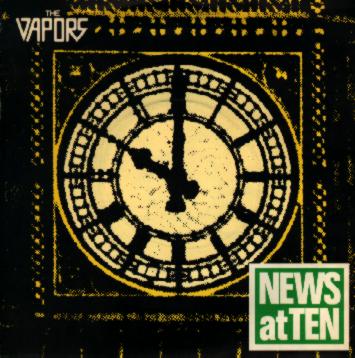
nat“Actually, we went in the day News at Ten was meant to come out to talk to our A&R man – as John was away – and he didn’t even know it had been released. And that was the bloke in charge of that department.

News at Ten charted at No.44 straight off, enough to automatically get a spot on Top of the Pops. But there was a BBC strike and the show was cancelled. Next time we made it on was almost a year later with Jimmie Jones, by which time we’d lost momentum.”

I put to Dave that I’d read about a further reason News at Ten failed to properly chart – the song title was seen as an ITV brand, so the BBC were reluctant to put it on their radio playlist. But he laughs at that, adding, “That’s the first time I’ve heard that! I’m not sure who made those kind of decisions. The main problem was that Top of the Pops wasn’t on.”

I admit to Dave that while I loved their debut album, it took me longer to warm to follow-up LP, Magnets, despite some quality moments.

“It’s a bit moodier, isn’t it.”

Yet I love New Clear Days, its themes of cold war politics, militarism, fashion fads and great love songs standing up to this day. How old was Dave when he penned those lyrics?

“I was around 26. Law school takes bloody ages – I had six months at law school, two years of articles, and that on top of a degree. Having qualified, I spent a year in practise, but decided if I didn’t try my luck then, I never would. I told my parents I was going to take a year out, and we managed to get a deal within that year.”

And what was meant to be a year’s sabbatical turned out to be a lot more.

“Yeah, about 15 years. Then me and my missus decided to have a family, so I though I better get a proper job! I’d been doing all sorts, from sound engineering to playing in bands, but the only way you could make more money was being away, touring. I’d have missed out on seeing my family grow up. So, difficult as it was to decide, I went back to the law.”

As it turns out, Bruce Foxton had first seen The Vapors before they were the settled band that made the albums. In fact, word has it that was at Scratchers, a music pub in Farncombe (properly known as The Three Lions) now run (and rejuvenated) by a good friend of mine, whose former band – that this scribe mis-managed back in the day – did a neat cover of The Vapors’ Bunkers. But that’s beside the point. Getting back to Dave, had there been many personnel changes by then?
download-1“There had been a Vapors band for a while, but we were previously BBC3 …”

Yes, Dave was ahead of his time there, his band moniker beating the Corporation’s own channel of the same name by around a quarter of a century. Anyway, carry on, Dave.

“There had been a few line-up changes before we settled on one, and it changed between Bruce seeing us and offering us gigs. By then I might have been the only person left.”

So you didn’t know Ed, Steve and Howard before?

“No. we all lived in Guildford, but our line-up was falling apart and I was looking for people while other bands were also falling apart, cherry-picking a new line-up. I felt Ed looked good on lead guitar and had the sort of style I wanted, while Steve was actually drumming, in a band called The Absolute, but I knew he played bass and was really solid.”

You seemed to get on well, and say there was no animosity come the 1982 split.

“It was all external stuff really, and pressure I felt from having no manager – everything falling to me as the leader, taking on all sorts of roles I didn’t want.”

Was that BBC Radio 1 session at Maida Vale in July 1979 for John Peel a big moment?

“Yeah, we sent in a cassette and I got a message to call, spoke to his producer (John Walters) and got invited in for a session. And that fitted in with John Weller getting us gigs in London.”

And how did you find working with John Weller?

“He was a lovely bloke. Really nice.”
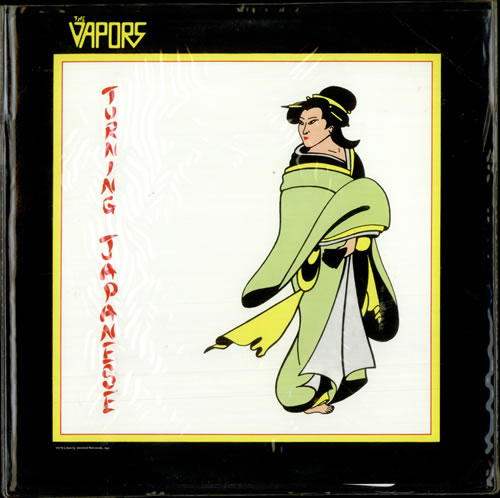
thevaporsturningjapanese-whitevinyl58919Within months the band also had a prestigious slot on The Jam’s Setting Sons tour.

“That was brilliant – our first real dabble into life on the road, going from playing to 20 people or one man and his dog in a pub to 2,000 seaters with The Jam. We each had our own minibus and every time we got to a service station had water pistol fights in the car park. They’d tape our clothes to the ceiling while we were on stage, that sort of thing, while we’d put talcum powder on the snare drum. I’ve got really happy memories of all that.”

It’s fair to say that fame followed very quickly from the moment the band had that settled line-up.

“We were talking about this at the weekend, how in 1979 everything that possibly could have gone wrong went right for us, from finding a record company and management to having a hit within a few weeks of the year. But the following year everything went horribly wrong, not least losing the people we were working with.”

I mentioned second album Magnets and its lack of success. A lot of bands had chances to bounce straight back from a difficult follow-up – The Jam’s Modern World being followed by All Mod Cons for example. But not you.

“But that was partly because I left. Everything got on top of me, and it was easier to walk away. I can’t really blame anyone else. I made us a one-hit wonder by not carrying on, really.”

Did the circumstances of that and an uneasy relationship with the label make Dave all the more determined to address such situations when he took on his Musicians’ Union role?

“No, like I said, it was more a case of finding a better way of making money than just being out there all the time. When you’ve got a young family you don’t want all that. But now my kids have grown up, I’m retired and can do what I want. Sometimes Ed will be busy and won’t be able to play, but if he can’t my son Dan can.”

Out of interest, did you already have a lot of the songs that would end up on New Clear Days when you struck that initial deal?

“Well, your first album is your entire life, while the second was rushed because you need to quickly get something else out there. But there were a few songs that didn’t make it on to the albums, some of which we might drag out when we’re playing again. But not for these first four gigs.”

Eastern Promise: Dave Fenton during the video for Turning Japanese.

Eastern Promise: Dave Fenton with a friend during the video for Turning Japanese.

Might that include those quality b-sides like Wasted and Talk Talk, both songs I love?

“It could do. Our new drummer likes Talk Talk too.”

The new drummer, Michael Bowes, certainly has an impressive musical CV, including two decades performing with artists such as Nelly Furtado, Joss Stone, Tears For Fears, Heather Small of M People, Michelle Gayle, and Laura Mvula.

“He’s a really good drummer, and I’ve worked with a few in my time. One of the best, and he’s a lovely guy. We get on really well and me, Steve and Ed feel like we’ve known him for years. It’s just fallen into place. We’ve been really lucky.”

Michael takes the place of Howard, who until recently ran a record shop in Guildford and now heads People Music Promotions, and for whom I understand the reformation has just fallen at the wrong time.

“That’s right. He has a new baby, and I think that’s the main reason he’s not doing it with us.”

Going back again, at their height, Turning Japanese even topped the charts in Australia, leading to a tour there.

“That was amazing, being paid to go over, being put up in brilliant hotels, with a handful of gigs, mainly up the East coast. Again, great memories.”

And then that same single was finally a success in America too.

“We dropped off in America on the way back. I don’t know why, but EMI weren’t going to put it out there at all, but then it started selling on import and they took notice. It was a hit in the clubs in New York and slowly went around the coast. It was almost six months later that it was big in Los Angeles. We sold lots of records but not at the same time, so it never charted. We kept going back to tour though, selling everything out first time, including two gigs at the Whisky a Go Go (West Hollywood, California) on the same day.”

That must have been amazing, playing venues more likely associated with the likes of The Byrds, The Doors and Otis Redding.
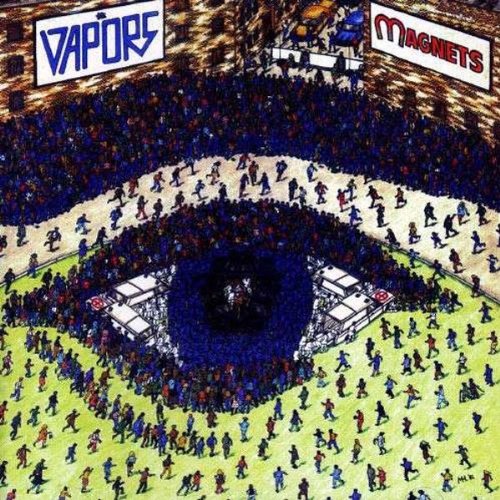
61t7ehcvoul“Well, yeah, some of our photos from that period were purely of the front of a building with our name up there. It looked so good!”

For all that the first album and News at Ten single stalled, chart-wise. I know there were mitigating circumstances, but I still can’t really believe that. I’ve found myself many times trying to get over that you weren’t just one-hit wonders, great as Turning Japanese was. So many more great songs didn’t get the wider appreciation. Have there been times when you thought, ‘Not that song again’?

“Not really. How can you moan about having that hit? It’s amazing to me that it’s still being played 35 years after. I never get fed up with that one.”

I’m pleased to hear that, but just wish there was similar success for songs like the wondrous Waiting for the Weekend.

“Well, we’re still playing it, so you never know. Maybe someone will re-release it!”

When Dave – born in Redhill and brought up in Reigate – returned to the legal profession in 1993, he was working for a firm in Guildford, and fellow pupils would occasionally spot him passing my secondary school on his way to work.

But when I was in the sixth form, Steve Smith’s next band Shoot! Dispute – a funk-driven five-piece in the style of the more quirky side of Altered Images, not least through Cathy Lomax’s distinctive vocals – were making something of an impact, and I recall seeing them live a couple of times. I still have their debut single, and remember well their two 1984 sessions for John Peel, who was also a fan. So was Dave keeping tabs on his old band-mates around then?

“I kind of lost touch around the time I moved to London.”

Were you aware of Ed’s work in television?

“I was, and since the advent of texts and mobile phones he’s been letting us know what he’s up to.”
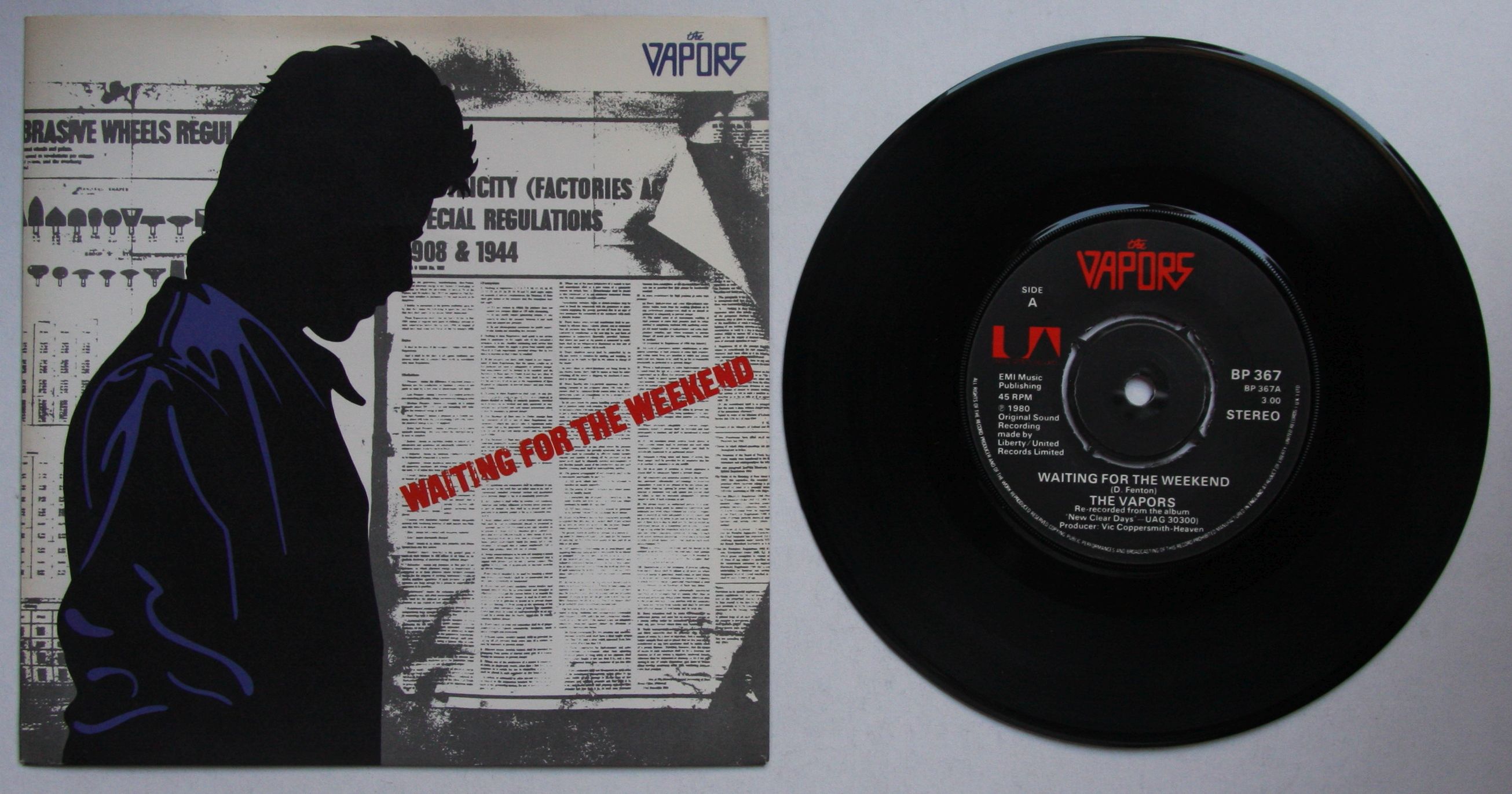
672157But now they’re back, initially for just those four dates, although there are already bookings for next year. Any recording going on behind the scenes?

“Not yet, but we’re talking about the beginning of next year for writing and have gigs booked in April and May. We’ll announce them when we’re more sorted. We’ve also got a couple of festivals lined up. We’re taking it easy really, making time to write and think about what else we want to be doing.”

Another of my favourite bands, The Undertones, tend to just get together for a few occasional shows between careers elsewhere. Will that be your approach?

“I think so, and generally at weekends so Ed can do it.”

Going back to those early days in Guildford, The Vapors rehearsed above a laundrette, not so far from the scout hut in my home village where The Stranglers had rehearsed. Meanwhile, The Jam started a few miles away in Woking and The Members sprang out of Camberley. So what was it about Surrey’s Sound of the Suburbs that evoked such great music in the wake of punk?

“Punk was the main influence, encouraging us to have a go, proving anyone could do it. You didn’t have to be an amazing musician to get up there on stage and excite people. We were going up to The Marquee and elsewhere … trying to get gigs!”

Was there a special moment when Dave thought, ‘That’s what I want to do!’

“Yeah, it was watching a band called The Screeens. The lead singer, who called himself Helmholtz Watson, was just brilliant. I think I got far more famous than he did though!”

I can confirm that. I can find nothing of a band of that name, and the only mention of the lead singer is through him using the name of the prinicipal character in Aldous Huxley’s early 1930s futuristic novel, Brave New World. But you already knew that of course.

“That was at Bishop Otter teacher training college (in Bognor Regis) where my brother went in the mid-’70s. I also remember hearing Devo at The Marquee, with ‘Jocko Homo’ being played in the break between bands one night, me thinking, ‘Good grief!’ That started my interest in them and made my stuff a bit jerkier than before. Some point after that they played The Rainbow. Without Devo, I’d not have written ‘Turning Japanese’.”
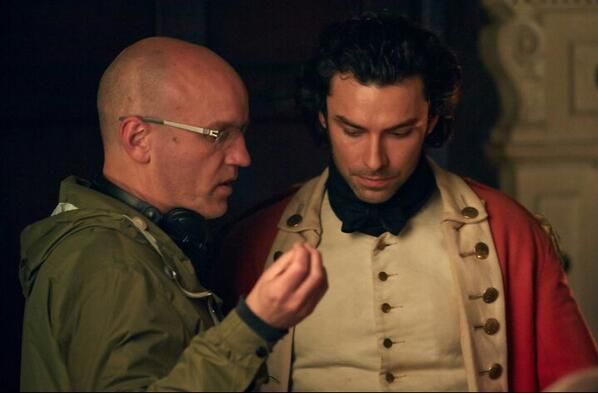
Direct Action: Ed Bazalgette on the set of the BBC's latest Poldark dramatisation with Ross poldark (Aidan Turner)

Direct Action: Ed Bazalgette on the set of the BBC’s latest Poldark dramatisation with Aidan Turner

And from what I can gather, Dave never stopped writing songs, even if the original band split almost 35 years ago.

“Yeah, I’ve loads of songs that only some people have heard. I had a band called the Vapor Corporation first, and did a lot of writing for that project, even though I didn’t front it. I think a lot of those songs still stand up. And that’s what the beginning of next year’s about, playing to each other what we’ve got in our pockets and writing new songs.”

Until then, is it more a case of the best of those first two albums for these four shows?

“Yes, but it’s taken a while to get this far. Ed’s been working all summer, Steve had three months touring and doing residences in Portugal. We haven’t been able to rehearse until this month. But we did five days on the trot and are doing weekends between now and the gigs. We’re getting there, but it’s taken a while to remember all the songs and how to play them.”

And has you voice changed?

“It’s dropped a bit. We’ve detuned by half a tone across the board. We’re working on the vocals right now.”

The Vapors visit Dublin’s Opium Rooms on Friday, October 14th, London’s Dingwall’s (in Camden) on Friday, November 4th, Liverpool’s Arts Club on Friday, November 18th, and Wolverhampton’s Slade Rooms on Saturday, November 19th. For ticket details and all the latest news from the band visit their Facebook page. You can also keep in touch via their Twitter and Instagram pages.

I’d also like to point you towards an appreciation of The Vapors from Neil Waite on the recommended Toppermost website, with a link here

14289867_1192536914144397_2837827237025238991_o


Posted in Books Films, TV & Radio, Music | Tagged , , , , , , , , , , , , , , , , , | 30 Comments

Teenage Fanclub – Here (PeMa/Merge, 2016)

TFC announce artwork[1]I’m not quite sure it was a good thing to come to this review on the back of penning my thoughts on the latest album from The Wedding Present. I love both bands, but they’ve taken radically different paths since their respective breaks.

That said, each remains relevant and vital all these years on, and while the Weddoes have just delivered a triumphant if complex 20-song opus, TFC’s own 12-track winner appears on the face of it far radio-friendly. Yet there’s real substance too.

In only their third studio outing in 14 years and the first since 2010’s acclaimed Shadows, the band again take an egalitarian approach, prime players Norman Blake, Gerard Love and Raymond McGinley contributing four songs each on an album put together between their native Glasgow and rural Provence (and mixed in Hamburg), the band’s central trio joined again by drummer Francis Macdonald, keyboard player Dave McGowan and long-time soundman David Henderson.

While the songs for this, their 10th long player, were written many miles apart (Norman lives in Canada these days), the band clearly still understand each other well enough to know where TFC are at collectively and creatively (and somewhat telephatically). There’s a recurring feel of optimism too, perhaps a thankfulness that they’re still as relevant today as in the late ‘80s, the onset of years clearly not robbing this unit of a youthful, enthusiastic, truthful approach to the music they love.

There’s certainly no doubting over the opening two tracks that they can still write infectious crossover hits, and lead-off single I’m in Love is a blast of fresh air, TFC-style, a soundtrack for a sunny day. Norman’s lead vocal is pitched perfectly, the harmonies are sublime, and yes, I like your trajectory too, Mr Blake. What’s more, at 162 seconds it doesn’t outstay its welcome.

Like the opener, this album rarely strays from themes of life and love, and while the singles market might have changed since Ain’t That Enough broke the top-20 some 19 years ago (yep, 19 years – count them), surely there’s still room for someone to show the kids of today the way.

There are, as we might expect, a few ‘60s influences across this album, and touches of the ‘70s here and there, this punter put in mind of Dave Hill’s guitar riff on Slade’s Far Far Away on Gerry’s radio-friendly Thin Air, although the song soon morphs into classic (and more likely) Byrds territory, complete with typically-joyous TFC guitar touches.

Ray’s songs often offer welcome gear changes, and he takes a more low-key, brooding approach as the baton is handed on for Hold On, with some inventive chord sequences to the fore. And while Here mostly incorporates a clean sound – bringing to mind Ron Sexsmith’s Long Player Late Bloomer in places – there’s no doubting the quality of the songs nor the musicianship, even if a few of us might appreciate a little more noise. I’d hesitate to suggest it’s polished though. There are enough nuggets to keep it the right side of ‘produced’. Maybe just ensure the speakers are turned right up.

Rock Idols: Teenage Fanclub, Here, there and everywhere.

Rock Idols: Teenage Fanclub, Here, there and everywhere.

On another Blake instant classic, The Darkest Part of the Night, the subtle strings among the chiming guitars (of freedom) work well. There are traces of the Travelling Wilburys too, but just when this track’s in danger of being too refined, those luscious guitar duels transport you.

I Have Nothing More To Say starts out more a Gerry Rafferty tribute than a Gerry Love track, with swirling pedal effects aplenty. But on repeated listens there’s much more, and I’m not just saying that as it slowly gives rise to a touch of glorious Stylophone-like distortion. It’s still more measured than a grunge approach of old, but it’s distortion all the same.

You could say Ray’s I Was Beautiful When I Was Alive takes us on something of an orbital trip around our senses (man). The band use the term ‘kraut-folk-rock’, their press release talking of ‘sonically replacing the steady beat of the German autobahn with the vast open skies of the Pacific Coast Road’. I get that, but also hear wondrous shades of late Small Faces classic The Autumn Stone and, more recently, The Everlasting Yeah’s dreamy Everything’s Beautiful before the synths lead us towards a stirring finish.

That ‘60s feel continues with a hint of Crosby, Stills and Nash amid the light guitar licks on Gerry’s soul-searching The First Sight, before the brass – bold as brass – helps ramp things up towards another rousing play-out. And the same can be said of Norman’s Live in the Moment, the writer’s more measured tones met by a flourish of trumpets that take us to the level the optimistic lyrics suggest, adding Love-esque qualities (and I’m talking Arthur Lee’s outfit there, rather than Gerry). Furthermore, check out the neat Edwyn Collins’ A Girl Like You style guitar late on.

From there, Ray’s beautifully-ethereal Steady State further conjures up images of gentle, long summer days and heat hazes, for the kind of seemingly effortless, reflective song that only the more carefree souls could nail. And if age is about feeling rather than dates on a birth certificate, here is perhaps further proof that this band remain worthy of their name after all these years.

Similarly, Gerry’s next inspired slice of rose-coloured clarity, It’s a Sign, conjures up an early ‘70s pop feel for me. I could see Pilot taking this back in time, having a sneaky hit with it. The Bay City Rollers may then try and pass it off as their own, but we’d know better.

On Ray’s lush ode to unerring friendship, With You, there’s an almost Bernard Sumner vocal (albeit more tuneful, I might add) in a melancholic, wistful take on a tried and tested TFC theme. The subtle Hammond organ works well too.

And finally, Norman’s reflective waltz Connected to Life provides an aptly-filmic closing statement, the title credits coming up and this listener sticking around right to the emotional end, particularly lapping up the relatively pared-back feedback.

Okay, so there are moments where I’d prefer the band to let rip, give us a little more of that old edge. But there’s more on Here than first meets the ear. And while TFC’s writing prowess has never been in doubt, perhaps they just don’t feel the need to shout from the rooftops about their abilities these days.

Here is a mature album, and arguably the next logical step after Man-made and Shadows for a band 27 years older than when they thrilled us with A Catholic Education. And let’s be thankful we’re still talking Teenage Fanclub rather than Midlife Crisis. It’s a triumph, and choosing where and when to rein themselves in makes the more unleashed moments all the more euphoric.

For all the latest from Teenage Fanclub, including tour dates and how to track down the new album, head to the band’s official website. And for a recent writewyattuk feature/ interview with Norman Blake, head … erm … Here.

Posted in Books Films, TV & Radio, Music | Tagged , , , , , , , , , | 2 Comments

Going, Going … The Wedding Present (Scopitones, 2016)

New Horizons: The Going Going ... cover shot (Photo: Jessica McMillan)

New Horizons: The Going Going … cover shot (Photo: Jessica McMillan)

A new Wedding Present album after a four-and-a-half year break, and we’re into uncharted territory again. It involves some journey too – a North American East-West road-trip (and a half) from Kittery to Santa Monica via various points, initially suggesting the band’s GPS device is on the blink.

The title’s nod to Philip Larkin’s 1972 poem of the same name suggests a further underlying theme too, lamenting all we’re losing sight of at home and abroad as the years unfold. And there’s a sense of yearning across these 20 tracks, the closest we’ve come to a David Gedge concept album in three decades.

Don’t be put off by that concept notion, by the way, even if there’s another element built in – the accompanying DVD of moving photographs, with major input from David’s partner Jessica McMillan on that front. Besides, I’ll concentrate on the music here, steering away from the idea of taking someone else’s vision of what songs might be about. Sometimes I prefer a darkened room and my own slant on it all.

In the way that those who loved 1987 debut LP George Best had to get their head around 1989 follow-up Bizarro, then made an extra leap of faith to understand 1991’s more complex Seamonsters, and then had to come to grips with 1994’s Watusi (and I could say the same of the major gear shifts over the next four albums too), it’s fair to say we can still expect the unexpected from the Boy Gedge, nine studio albums in.

After just a couple of spins of this epic LP – set down and recorded between Brighton, Liverpool, Provence and Seattle – I was sold on the idea though, enjoying the thrill of not quite knowing what was coming next, Going Going … steadily growing, growing on me. And unless I’m mistaken we finally have a joint Cinerama and The Wedding Present venture here, incorporating winning elements of both projects.

While opening track Kittery offers a building block instrumental rising to an almighty sound-storm – Samuel Beer-Pierce’s swirling organ hinting at late ‘60s psychedelia – Greenland has Charles Layton’s sparse drum boom punctuate ex-Fall associate Brix Smith’s co-ordinate narration, with further over-the-water influence on Marblehead, a sort of Coen brothers meets David Lynch soundtrack built around Melanie Howard’s ethereal vocal, aided by Paul Hiraga.

That in turn gives rise to the evocative piano and strings-led Sprague, European cinema brought to mind this time, despite the ongoing American link, and maybe even a little Sigur Ros or The Magnetic North. Furthermore, there’s a realisation that we’re now 15 minutes in and for all intents and purposes we haven’t heard so much as a stretched vocal from David Lewis Gedge.

But that’s quickly rectified on Two Bridges, by which time you can almost sense the relief of TWP purists. Even then it’s not straight-forward though, a crescendo of buzzing bass, guitar and rasping percussion threatening to take us to other mighty realms. Little Silver then pins us briefly back again before the power in the electric guitars floods through, just when you think we might be on for a quiet moment, the choral accompaniment reined in.

From there we fall seamlessly into a part-cuddly, part-roaring Bear, reminding me of some of the finer Marmite moments on the wondrous Watusi, not least its glorious inter-locking harmonies. But just when we think we might be on to a hits section, gloriously-chaotic stormer Secretary reminds me of the quirky 1994 b-side cover of Marc Riley’s Jumper Clown and 1995’s off-kilter single Sucker, with Gedge almost Lydonesque, out of his comfort zone yet strapped in by Katharine Wallinger’s vocal responses and suitably supersonic guitar lines.

By now there’ll be knowing nods from loyal fans, with Birdsnest the latest fine addition to Gedge’s quality alternative songbook, and while Kill Devil Hills took me more listens to truly appreciate, it also fits. The under-stated Bells was also a slow-burner for me, but worth the wait, I reckon. Who could resist those six-string surges anyway? When this band are on their game they’re certainly incorrigible, even if we don’t always know the destination.

It’s more like Crazy Horse on the introduction of Fifty-six before David shifts gear and heads elsewhere again, careering towards a mighty riff of further ‘60s keyboard touches and Katharine’s rhythmic bass and Charles’ pounding beat. That euphoric finish might suggest we’ve already reached the album’s climax, but we’re still some distance away, unless of course Fordland (the parent song of Granadaland, he adds mischievously) indicates part one of an eight-track play-out.

Stair Out: The Wedding Present, 2016, featuring (from left) David Gedge, Samuel Beer-Pearce, Charles Layton and Katharine Wallinger (Photo: The Wedding Present).

Stair Out: The Wedding Present, 2016, featuring (from left) David Gedge, Samuel Beer-Pearce, Charles Layton and Katharine Wallinger (Photo: The Wedding Present).

Actually, Emporia seems to take us back to the choral vaults, an atmospheric outing that builds towards the afore-mentioned Neil Young backing band tackling the Spencer Davis Group’s Keep on Running before a Flying Saucer-esque departure. And then we have the magnificent Broken Bow, already among my many Weddoes’ favourites. I love the semi-acoustic version I heard on Seattle‘s K-EXP – Gedge joined by TWP alumnus and further Going Going … contributor Terry de Castro – yet the full-on electric version is all the more stunning. I’d have preferred at least another 30 seconds of guitar raunch tagged on, but this way we’re left hungry for more.

Where to from there? Well, David hems us briefly back before Lead gathers steam, augmented by a few more stirring woodwind moments, while Ten Sleep puts us back on the front-foot, its upbeat fiddle-like licks and RPM surges and falls leading us to almost expected climactic distortion.

It also leads us to the beautiful Wales, so to speak, Andrew Teilo – on a loan deal from Pobol y Cym presumably – introducing something of an arthouse cinematic wonder complemented by Steve Fisk’s mellotron and organ … and those mighty guitars of course. Cue the piano, cue the credits, cue the emotion.

Which kind of makes me realise the band who don’t do encores have ended their latest album with two spectacularly worthy ones, starting in classic DLG lovesong territory on penultimate pleaser Rachel. I’m beyond expecting a top-20 hit, but it bloody well should be.

And then, with those heart-strings tugged again, the sun sets on the US West Coast with another mighty slice of instant nostalgia, the pensive, picturesque (though again involving a surging crescendo) Santa Monica, its echoes of Octopussy making me ponder whether the band have perhaps delivered Seamonsters pt. 2, a quarter of a century on. Mind you, all the songs do sound the same anyway, don’t they?

Incidentally, just before I was about to push the button on this review, I felt I best go back and read my review of the last album, Valentina, back in 2012 (with a link here), and I spotted the line, ‘Just when you think you know where they’re going, Gedge and co. are off again, taking an unexpected fork’. No change there then. As I suggested earlier – expect the unexpected.

If this is a concept album it’s not an obvious one, despite the geographic ramblings and the Larkin around. I also can’t bring myself to accept the notion that the missing word in the title is Gone. Instead, I’ll wonder what Gedge and his band will deliver in the year 2020. And while I wonder at times if this might not have been even more a classic album with around four songs chipped off, I’m not convinced that less is more in this case.

One thing’s for sure though – if you haven’t yet heard Going Going … I’m somewhat jealous, knowing your own voyage of discovery – getting to know your way around this platter – is still ahead of you.

Four Play: Charles, David, Katharine and Samuel let the writewyattuk verdict on Going Going ... sink in (Photo: The Wedding Present)

Four Play: Charles, David, Katharine and Samuel let the writewyattuk verdict on Going Going … properly sink in (Photo: The Wedding Present)

To get hold of a copy of The Wedding Present’s Going Going … or find out where David Gedge and co. are heading this autumn, visit the band’s official Scopitones websiteYou can also keep in touch via Facebook and Twitter.

And for a link back to a writewyattuk interview with David Gedge from two years ago, head here

Posted in Books Films, TV & Radio, Music | Tagged , , , , , , , , , , , , , , , | 5 Comments

Introducing the Islandman – the Elliott Morris interview

Steaming Ahead: Elliott Morris by Eduardo Kobra's Chalk Farm Roundhouse mural (Photo: Vanessa Haines Photography)

Steaming Ahead: Elliott Morris in a railway troubadour role, by Eduardo Kobra’s Chalk Farm Roundhouse mural (Photo copyright: Vanessa Haines Photography)

There’s a song on The Waterboys’ 1990 album Room to Roam that appears particularly apt in describing the career journey of inventive guitarist and singer-songwriter Elliott Morris.

In Islandman, Mike Scott cites England as his ‘spine, the backbone and the trunk’, Wales ‘two hands held apart’ and Scotland ‘my dreaming head’, and that seems to sum up the geographic and spiritual scope of Wiltshire-born, Welsh-raised, half-Scot Elliott’s own sense of belonging.

Elliott left Lincolnshire for South East London two years ago, but this talented 26-year-old doesn’t seem to hang around his Hither Green pad for long. Recently there was a Lochs, Lakes, Highlands and Islands tour north of the border, while he’s not long back from the Cambridge Folk Festival, and among other engagements still to come there’s the Looe Music Festival in Cornwall later this month.

What’s more, Elliott already has three Lake District dates booked this coming winter in Ambleside and a fair few others up and down the country in the pipeline, while I first caught him supporting Paul Carrack at Preston Guild Hall in late 2014 (with a review of that show here), on one of two tours with the former Ace, Mike + the Mechanics and Squeeze journeyman turned solo success.

Yes, I guess you could say Elliott gets around a bit. So how was his recent performance at the Cambridge Folk Festival?

“Amazing, really good, and this year totally for the craic – a bit of a family get-together, catching up with friends and seeing lots of incredible music. My friend Sam Kelly – who I met at an English Folk Dance and Song Society songwriting retreat in Aldeburgh, but played with two years earlier – was among those playing, and he’s making serious waves at the moment. I also know a lot of the guys from the Treacherous Orchestra, a few of them also involved with Duncan Chisholm, and that was phenomenal”.

Despite Caledonian links with the latter acts, I’m guessing his Cambridge appearance was somewhat removed from Elliott’s recent Scottish tour.

“The weather wasn’t too good, but it was an incredible experience. As we went up and across it was beautiful, and the time we had on Mull was the wettest I’ve ever seen it. And my Mum’s from Mull, so I’ve been over a few times. It’s pot luck – you can be up there and not see a drop of rain or you can be there and not see a mountain the entire time because of the rain. It’s the kind of place you can have three sorts of weather in a day.”

Duelling Guitars: Elliott Morris in good company by Brazilian artist Eduardo Kobra's street mural on the back wall of The Roundhouse, Chalk Farm (Photo copyright: Vanessa Haines Photography)

Duelling Guitars: Elliott Morris by Brazilian artist Eduardo Kobra’s street mural on the back wall of The Roundhouse (Photo copyright: Vanessa Haines Photography)

Despite being born in Swindon – and if that’s good enough for XTC, it’s good enough for me – and spending several years based in rural Lincolnshire, Elliott doesn’t fully identify himself as English, not least after a formative spell in Carmarthenshire. But he says he feels at home in Scotland.

“I’ve an aunt, uncle and Gran in Edinburgh. I go up a lot to play and have lots of friends on the Glasgow scene. It’s nice to be off-the-grid further afield too, with no distractions. My friend Christopher Bingham (aka ‘Bing’, the comedian, film and music producer) was on tour with me and the first thing he likes to do in the morning is check the internet to see what’s happening. That’s how he connects with his audience – totally different to my approach, which involves travelling and meeting people in the flesh! He found it quite difficult for the first few days, thinking he’d been forgotten, but got used to it. And perhaps it gave him a bit of clarity.”

Bing first saw Elliott perform when the former was studying at Lincoln University, the pair soon deciding to join forces. In fact, it was mentioned on a recent ‘vlog’ how it was about time his friend made a full-length album. And now it appears that’s happening, via a Pledge Music campaign.

“Before now I’ve only ever really done EPs – snap-shots rather than a heavy body of work – as it’s quite hard to get the time and money to do an album, hence this Pledge link.”

That seems to be the way forward these days – for long-established artists as much as emerging talents. Has it proved an exciting experience for Elliott?

“So far it’s been phenomenal. And the more people use that method the more it becomes an accepted route for an artist to make an album. It also shows how things are changing. Artists have their own social media imprints and connections, as opposed to labels paying for press pushes. Effectively, you’re drumming up interest in advance, so it works like a PR campaign when otherwise you’d probably be unable to afford that.

“If I was to release an album any other way it would only really be heard by the kind of diehard fans who have their finger on the pulse. But doing this for four months ahead of the album being made means people are already talking about it, getting information about it.”

Pensive Moment: Elliott Morris (Photo copyright: Vanessa Haines Photography)

Pensive Moment: Elliott Morris (Photo copyright: Vanessa Haines Photography)

Elliott’s fan-base has quickly grown, and understandably. Not only is he a great percussive guitar player with a fine voice, but there’s humour between songs when you see him live, including plenty of anecdotes about life on the road.

I’m guilty of missing several support acts over the years, but I’m glad the bar prices were steep enough at the Guild Hall the night past writewyattuk interviewee Paul Carrack visited to ensure I was in my seat early. Elliott was already holding court by then, coming over as a consummate performer and down to earth with it. No more than a handful of those present knew his work, but many were soon sold on his charm and playing.

“Well, thanks, man! Thing is, as a support act I’m under no illusions. I’m there for one job only – to keep the audience’s attention and make sure everything runs to schedule. I have barely half an hour to get people on board.”

It helps that Elliott has a rather distinctive way of playing guitar – involving tapping, slapping, strumming and fretting. In fact, he describes his work as ‘slappy tappy guitary singy songy folky poppy rock’, and I’m not sure it’s worth trying to improve on that description.

“That began as a joke, but kind of stuck. I wouldn’t call the way I play a defining feature of what I do, but it’s certainly up there. I always ensure there’s a song there too!”

Other notable guitar innovators have taken similar paths, bringing major success, and Newton Faulkner – a writewyattuk interviewee six months ago – springs to mind in that category, Elliott dubbing him, ‘a great guy … really cool’.

While he’s not seen Newton’s success yet, this young troubadour has been getting regular opportunities to perfect his approach and get his name out there, his own gigs bolstered by supports with not just Paul Carrack but also Big Country, Eddi Reader, Frank Turner, Seth Lakeman, Martin Carthy and Dave Swarbrick.

Praise for his work has come from far and wide too, BBC 6 Music presenter Tom Robinson dubbing him, ‘Extraordinary … ludicrously youthful and absurdly talented,’ while fellow revered live act turned broadcaster (and another past writewyattuk interviewee) Mike Harding said, ‘I suspect we’re going to be hearing quite a bit more of that lad in the weeks and months to come,’ and the rather distinctive BBC arts editor Will Gompertz raved, ‘Fantastic … really high quality stuff’.

Street Life: Elliott Morris (Photo copyright: Vanessa Haines Photography)

Street Life: Elliott Morris (Photo copyright: Vanessa Haines Photography)

Then there’s the matter of past live links with a certain Ed Sheeran.

“Yes. Ed and I used to gig-swap all the time. He’d head up to Lincoln one month, I’d go down to London the next. We shared the bill on loads of shows, the last after his first album came out, a Nando’s Festival in London. Only I was designated driver that day and am a veggie, so when I found out we got as much free beer and chicken as we wanted I was a little under-catered for! It was a fun gig though.”

But while Elliott’s won a lot of new fans along the way, on and off stage, punters have been known to apologise for listening in the first place.

“People come up after shows, and I know they mean it in the nicest of ways but it always comes across terribly and makes me laugh. They tell me, ‘I wouldn’t normally like what you do, but …’ and I think they mean both watching a support act and the type of music I play.

“I like to talk to an audience and give them reasons to come and chat after, telling them about myself. Fans of people like Paul Carrack know a fair bit about what he’s done for the past 30 years, whereas I’ve just walked on with a guitar. They’ve no idea who I am. But if I can make an impact and give them something to think about in the break …”

Elliott moved to South East London in late 2014, around the time I first saw him live.

“That was a wild, wild time. I started with Paul in early November at the London Palladium and moved to the capital a few days later, so it was the wrong way round. I was staying with my girlfriend’s dad in Camberley, Surrey, then had this defining moment. I was 25 but hadn’t lived at home for a long time – I was sofa-surfing, travel-lodging, all that.

“I had this show in Ipswich, starting the journey in Lincolnshire at my folks’ house, packing the car with all my belongings, driving down to the gig then on to London, my whole life in this vehicle!

“I thought it would phase me, moving to London, having lived in the countryside before, but I’m a mile and a bit from Blackheath and a 40-minute walk from Greenwich Park, so have all this greenery around. It doesn’t feel like I’m encased in concrete, the road I live on is quiet enough to be able to record demos there.”

Brolly Good: Paul Carrack took Elliott out on tour, to great effect

Brolly Good: Paul Carrack took Elliott out on tour, to great effect

And after the work with Paul Carrack, there’s a further Squeeze link there, with you not so far from the band’s heartland.

“Sure, and in this part of London there are lots of musicians and lots of studios, with the industry based here too.”

Elliott’s certainly played some amazing places in recent years, and I’m not talking so much about world-renowned venues as much as the off-the-beaten-track clubs and pubs, such as the Orkney Brewery.

He goes on to tell a great but very long story about why he has an affinity with that particular brewery, involving the shipment – via various hands – of a barrel of Dark Island Reserve ale from there to a friend’s shindig in Warwick, taking a somewhat circuitous route (not least including Carlisle, Newcastle and his folks’ pad in Lincolnshire).

Elliott adds, “Furthermore, the island is amazing – the history, the landscape. The same goes for the venue. They only recently started promoting it as such. But it was a sell-out, and that means the most when you travel so far from home and there are people to see you.”

Staying with the Scottish link, there was a Danny Kyle Award in 2013 from Glasgow’s Celtic Connections winter music festival. And of course it turns out that there’s a story there too.

“I signed up to play a slot and did this gig on a Tuesday while staying in Edinburgh with family for a few days. Then on the Friday we were in a bowling alley arcade when my phone rang and it was one of the organisers, who asked if I’d go back and play in the final.

“On the night it was nail-biting, up against another four acts, including fiddlers who’d been playing longer than they’d been walking. Then at the end we got on stage and they gave us all a special frame and a bottle of bubbly – so it turns out that everyone wins! I’ve since met someone else who won it another year, also not realising about the format, and my brother won it with his band a couple of years ago.”

Yes, it turns out that Elliott’s brother Bevan is also on the circuit, having just returned from a spell touring in America, but with most of his work with Newcastle-upon-Tyne alt-folk sextet Pons Aelius.

“I’m a very lucky boy having a double bass player in the family, and Bevan’s helped out behind the scenes with me. He’s the kind of guy who can put his hand to anything, not just double bass but drums and guitar, producing, and recording. He’s helped with previous EPs and will play on my album.”

As well as Elliott ‘on the stringed side’ and ‘a few friends on fiddles’, contributors on the LP also include esteemed singer-songwriter (and past writewyattuk interviewee) Lisbee Stainton, John Martyn’s fretless bass player Alan Thomson, and Paul Carrack’s son Jack on drums.

Pledge Artist: Elliott Morris (Photo copyright: Vanessa Haines Photography)

Pledge Artist: Elliott Morris (Photo copyright: Vanessa Haines Photography)

“Jack and I met on the tours with his Dad, after which we got talking and realised he was based nearby in East London. We had a couple of practises and gigs and it went really well.

“I first met Lisbee at the Hop Farm Festival, having seen each other’s names on festival bills. We talked of venues we’d played, heard each other’s set and agreed to get together. Our schedules take us off in different directions, so it was only recently that we put our heads together and started writing songs. I have one of her co-writes on my album and she’ll have one of mine for a future project. Also, she’s just moved to around a mile from me.

“So I moved here not knowing any musicians nearby but now find everyone’s gravitating towards me – which is wonderful!”

Incidentally, seeing as I mentioned Alan Thomson playing with John Martyn, Elliott has been known to tell a lovely story on stage involving the latter, revered folk artist, involving a gig in Wales. I won’t go into it here, but ask him next time he’s playing – you won’t be disappointed.

Anyway, as of this week Elliott was almost half-way towards his album pledge target, with seven weeks to spare of four months’ crowd-funding, and lots more dates to help further spread the word. And once he reaches his target, 10% of any extra money raised will go to men’s mental health charity Campaign Against Living Miserably (CALM).

“I’ve a couple of friends that have families that have benefited through CALM. A great charity, very important.”

His Pledge Music campaign includes not only album downloads, signed CDs, vinyl and Bing’s DVD of the latest Scottish tour, but a number of other EM-related items. And the more off-the-wall extras include an hour’s Skype guitar tuition with Elliott, offers of personal home concerts – one taker already coming forward in Lincolnshire, Elliott insisting it’s no-one he knows – and a supply of Harris tweed guitar straps.

“On my Scottish tour, I had a joke on stage about how they’re probably overrun with Harris tweed guitar straps, but believe it or not a couple of people in Orkney were really interested. Someone’s since emailed, asking if he can have one in a similar tartan to mine.

“There is a Morris (Welsh) tartan, so when my cousin got married on Jura, my Dad, brother and I had our own tartan ties, along with all the Northumberland and Scottish kilts there. That’s a bit garish and yellow though, despite a pretty cool red dragon on it, so with my Elliott dark blue and green tartan I’m bending the rules a little!”

Cornish Visit: Elliott Morris, heading for the Looe Music Festival (Photo copyright: Vanessa Haines Photography)

Cornish Visit: Elliott Morris, heading for the Looe Music Festival (Photo copyright: Vanessa Haines Photography)

Finally, we got on to the subject of the Looe Music Festival, which runs from September 23rd to 25th, headlined by recent writewyattuk interviewee Wilko Johnson, Bryan Ferry and Fun Lovin’ Criminals, with Elliott playing on the Sunday (25th).

That took us on to him admitting – despite all his UK travels in recent years – he hadn’t realised until playing in Cornwall last year just how far the country went in that direction, not least after a rash decision when playing Truro to go and see Land’s End ‘while he was there’, having to then power back before another show over the Devon border in Plymouth. And that in turn took us on to another tale, this one involving revered Devonian folk artist Seth Lakeman, also on the bill at Looe.

“I played with him once and have met him a few times, including one Wednesday night at the Folk Awards, where we ended up in the slowest-moving lift – me, a couple of my friends, him, and Nancy Kerr. It was all a bit awkward and I found myself asking him if he’d had a good weekend.

“I suppose it was because he’s someone I find synonymous with weekend festivals. Clearly he hadn’t played that weekend though, so I ended up explaining how I’d assumed he had and he was just looking a bit bemused. However, he ended up telling me about all the chores he’d done around the house that previous weekend, in this bizarre drawn-out conversation.”

For details of Elliott Morris and his next dates, try his Facebook page. There’s also a Twitter link and his own website. And to find out and get involved with his Pledge Music album campaign, head here.

  • With thanks to Vanessa Glynn (Vanessa Haines Photography) for use of her splendid photographs of Elliott. Her website is definitely worth checking out, and she can also be found via Instagram.


Posted in Books Films, TV & Radio, Music | Tagged , , , , , , , , , , , , , , , , , , , , , , , , , | 1 Comment

Fortune favours Lonely the Brave – the Mark Trotter interview

Room Mates: Lonely the Brave, back with their second album (Photo: Daniel Ackerley)

Room Mates: Lonely the Brave, back with their second album (Photo: Daniel Ackerley)

Two top-40 albums into their career, and with a fervent fan-base at home and overseas, Lonely the Brave are proving a major draw on the live circuit.

Their debut album, The Day’s War, peaked at No.14 in the UK charts, and there’s been a keen reaction to recent follow-up, Things Will Matter, as founder member and guitarist Mark Trotter concurs.

“We didn’t know what to expect. It’s quite different from the first album. It’s still ultimately us, but has a different feel. We’re very lucky our fans are so dedicated. Most understand we want to grow and keep pushing on, and are very supportive of that.”

There’s plenty of depth to Things Will Matter, with lots of brooding moments, an epic feel in places – as on Dust & Bones, which went straight in at No.1 on the UK vinyl singles chart  – and outright rock in others, not least Black Mire and Radar, both recorded as if in the face of a hurricane. At times the LP suggests American Mid-West landscapes rather than something borne out of Cambridgeshire. But I guess we’re talking similar countryside.

“Do you know what? It really is. My brother-in-law lives there, and when I visited I flew nine hours, got off the plane, and was wondering, ‘How did I end up in Cambridgeshire?’ It looks exactly the same … but bigger.”

Perhaps it’s something generated in the atmosphere through all those US Air Force bases.

“Absolutely. Yes, it’s all very odd.”

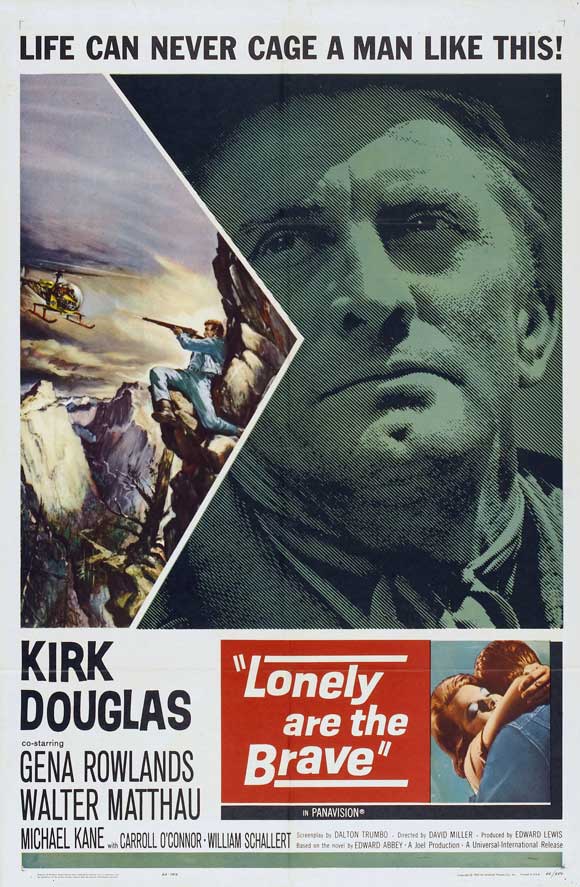
Poster-lonely-are-the-braveConsidering their penchant for wide open spaces, it seems apt that the band name resembles that of 1962 Western, Lonely are the Brave – the tale of a free-spirited drifter and one of life’s outsiders, determined to put right modern society’s wrongs, the hard way.

“When you say that, I guess it does, but that film had absolutely nothing to do with the name, although people assume it did. We really liked the idea of something that could be interpreted in more than one way, but it came about because we were in a situation where we had to make a real hard call that would upset some people, to get where we wanted to be. It was the only real option, but we knew it would isolate us and make it fairly tough.”

I stand by my analogy though. Besides, Kirk Douglas, who led the cast, reckons it was his finest film.

“Excellent!”

Things Will Matter certainly takes the listener on a big screen journey. How does Mark think it differs from their 2014 debut LP?

“The first album was written and recorded as a four-piece, and although with this record the foundation was previously written, it was recorded as a five-piece, and we’re very different people to the guys who wrote that first record.

“A lot has happened, individually and as a band, and all that has an effect. We’re probably not as naïve to the music industry. Things change, and that’s the point. Everything affects you as you go through this, and should have an affect on what you do musically.”

Cambridge has a proud musical history, and I’ll put in a word for a band I love, The Bible, while before that we had The Soft Boys. And from more recent times my youngest daughter would doubtless add the electronic edgy pop of Clean Bandit. But most people will think of Pink Floyd, with Syd Barrett and Dave Gilmour both local lads. Was Mark aware of that Floyd link growing up?

“Absolutely – how can you not be, as a musician growing up in Cambridge? Actually, I don’t think it’s played on as much as it should be, that proud heritage, although I’m a huge Pink Floyd fan, so I’m going to say that.

“I wouldn’t expect a statue of Dave Gilmour in the high street, but there’s been a real pick-up of late, and a good friend, Neil Jones, has been very much involved in recent Syd Barrett celebrations, which is great and certainly lends itself to the Cambridge scene.”

Brave Soldier: Mark Trotter, all the way from Cambridge (Photo: Daniel Ackerley)

Brave Soldier: Mark Trotter, all the way from Cambridge (Photo: Daniel Ackerley)

While most recent addition Ross Smithwick is from Bristol, the rest of Lonely the Brave still spend the majority of their time in and around their home city. Did Mark get to see a lot of bands there in his formative years?

“I had my musical education at the Corn Exchange! I lived in a village 15 miles out, but went to a music college there and played in bands in Cambridge.”

And is there a less rocky side of you that finds itself checking out the Cambridge Folk Festival too?

“I’ve actually never been – how bad is that? Bushy (Andrew Bushen, bass) has been loads, and ultimately I should have, but whenever it’s been a possibility there’s always been something else on.”

Maybe that’s a new direction for the band. By way of example, there’s a nice outro on the album’s final track, Jaws of Hell, involving just a little piano and lead singer David Jakes’ lone voice.

“Well, 100 per cent! The brooding aspect interests me a lot more than rock does! To be candid, I think sometimes we probably get misconstrued as the kind of band that gets featured in all those rock music magazines. That’s great, but it’s only one part of what we do.

“I’m obsessed with film-score music, classical, folk, and various other things, and that definitely has an effect on what we do. All those things come together to make our songs, not just one element. Yet that can be a blessing and a curse, to be honest!”

Since the album came out in late May, have you had a busy summer?

“It’s been an interesting one. We did all the major UK festivals for the last three or four years running, but this time did some smaller boutique ones, as well as mainland European shows, so it’s been busy but in a different way. It’s been quite nice actually.”

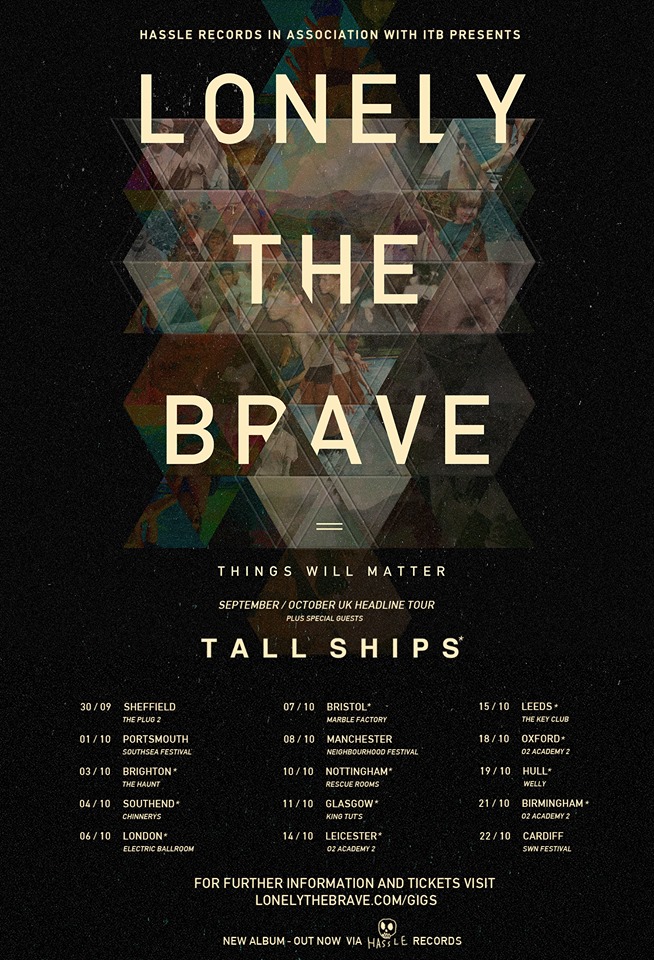
Lonely The Brave_Things Will Matter (FINAL)And now you’re doing a few dates to further promote the album and the latest EP – starting at Fort Fest in Bedford this Saturday (September 3) …

“That’s just down the road – I can drive to that one!”

Then there’s a breather before the main 15-show itinerary, running from September 30th’s visit to Plug in Sheffield and October 22nd’s appearance at the Swn Festival at the Tramshed in Cardiff.

“We’re really looking forward to getting out there again, for the first full tour to support the record. Last time we toured was just before the album came out, with just a selection of the new songs. This time the focus is on the new songs.”

That touring schedule includes Manchester’s Neighbourhood Festival, the band headlining Grosvenor Street’s The Zoo on Saturday, October 8th, part of a multi-venue event also including the likes of Circa Waves, Twin Atlantic, Kate Nash, Rae Morris and Little Comets.

Have the band got to know a few artistes from your time on the road these past few years?

“Yes, and of those you mention we toured with Twin Atlantic. They’re probably the sweetest guys we’ve met, doing all this. It’s great when you meet really nice people. And I can only think of one incident where someone hasn’t been really lovely.”

You do realise I have to ask who that was now?

“I can’t say! I can think of two, actually – one is very, very famous, the others nowhere near. Mind you, I’d never met Mumford and Sons before, but backstage at a festival last year we walked in, had a chat, and they were nice, genuine guys. So being massively successful doesn’t mean you’re going to be an arsehole!”

Coast Watch: I see Tall Ships, on the road with Lonely the Brave (Photo: Stacey Hatfield)

Coast Watch: I see Tall Ships, on the road with Lonely the Brave (Photo: Stacey Hatfield)

Lonely the Brave have up and coming Brighton-based Falmouth outfit Tall Ships on the road with them, and from what I’ve heard by them so far, they’re another band with a big sound. They should be a good fit.

“They’re a great band, and we just want to take out bands that we like, someone you can imagine wanting to watch every night. They were recommendations on the basis that Ross knows them really well, and when the name came up we all said yes, straight away.

“They’re great on record and live, and really sweet, and that’s important too. Something different, really interesting, our fans are going to want to listen to. They’ll push us as well.”

In an earlier interview, Mark – profiling the band – suggested he was the stress-head, while fellow guitarist Ross was super-chilled, singer David was the deep one, bass player Andrew ‘Bushy’ Bushen was the calm one, and Gavin ‘Mo’ Edgeley was the archetypal mad drummer. Is that about right? Anything to add?

“Erm … I guess. How long have you got? If you were going to sum it up, I guess that would be it. We all have our moments! But we’re mates and have been a long time, and that’s important when you’re living in each other’s pockets day in, day out.

“The way things are these days, you’ve got to be a businessman as well, although it’s a bit of a shame you can’t just concentrate on being a musician, focusing 100 % of your energy on writing the best songs, not thinking about the rest. But in my experience you can’t write a certain way that you think will sell better. You have to survive from it all.”

While BBC 1 DJ and early Lonely the Brave admirer Zane Lowe called the band a ‘curiosity’, adding, ‘If you’re a fan, hold onto them tightly – If you’re not, you will be,’ another review from Rock Sound said they ‘could be the biggest band on the planet,’ and the NME said, ‘The band’s name will soon be up in lights, whether they like it or not’. Basically, there’s been a lot of hyperbole written about them in the past, from record company people to the music press.

Lonely Line-up: The band are heading out on a 15-date autumn tour (Photo: Daniel Ackerley)

Lonely Line-up: The band are heading out on a 15-date autumn tour (Photo: Daniel Ackerley)

But I’m guessing they shy away from that big gun approach, as suggested by the fact that they remain on the books of indie label Hassle Records, taking a more DIY line.

“Yes, although we’ve got a very good group of people who look after us – it’s not just down to us. But we’re in control of what we’re writing and in charge of our own destiny. If a company is going to force what you’re doing, you’re not going to necessarily agree with that as an artist. So to be in a situation where you can say, ‘This is what we’re going to do and how we’re going to sound’ is quite liberating.

“Also, I look at some of my favourite bands, and they don’t get played on the radio but they’re massively successful. You don’t have to write singles. Take The National for example, my favourite band – I’ve never heard them on the radio, but they’re known the world over and worked bloody hard to get there.”

I mentioned David Jakes being the deep one, and get the feeling he’s not an obvious front-man, quite introverted by all accounts. Yet there’s something about performing that allows the less outward-going to somehow overcome the shyness and nerves, with a prime example in recent writewyattuk interviewee Gary Numan.

“Dave’s only ever done what Dave does, and people were confused by that initially, seeing this front-man not into jumping around and swinging a microphone around his head. That would never work for us – it’s so contrived. We’ve toured with bands who practise jump-kicks before they play. I mean, really? Come on! It’s not real. Be spontaneous about it!

“With Dave, all he wants to do is sing and give the best performance he can. And if he had to stand behind a curtain 20 foot away, I wouldn’t care.”

That would probably make me warm to a lead singer every time.

“He’ll openly admit it’s not his most comfortable place to be, but everyone expresses it differently. I get really animated on stage, but don’t really know what I’m doing half of the time! I just get so lost in the music. Dave does that, but in a different way, focusing in on himself and his performance, which in itself can be very intense.”

16576-the-days-warIn a niche-obsessed industry, I’ve heard comparisons of the band’s work with that of Bruce Springsteen, The Deftones, Pearl Jam and Biffy Clyro. In fact, there are allegations of stadium rock. Guilty as charged?

“I don’t know … I honestly don’t know. I think we’re equally at home on a big stage – and maybe more so – than some of the smaller stages. A small club gig is always fun and chaotic, and that’s great, but as a band you have to realise you can’t get up on a big stage in front of thousands and play the same – it doesn’t work. And I love playing big stages – it’s a lot of fun.”

You’re recognised as a strong live act. In fact, I understand that the fella behind the Hassle Records label – Ian ‘Wez’ Westley – was so impressed, seeing you in a London pub playing to around 20 people three years ago, that he ended up taking you on. Is that a typically-intense reaction?

“We’re a very different band to the one we were that night, but I remember that night very clearly. I remember Wez standing about 10 feet away, his arms crossed in front of him, us knowing exactly who he was, thinking, ‘Jeez, this is intense!’

“I think the majority of people who see us live end up getting it. It is intense. It’s not throwaway stuff we’re talking about. It’s all real-life experiences, Dave writing all the lyrics based on stuff he’s been through and we’ve been through and are going through. There’s nothing contrived about it.”

Of all the labels put your way, I believe you quite like the term ‘doom-pop’.

“We toured with a band called Bad Rabbits (from Boston, Massachusetts), and the drummer, Sheel,  said ‘I’ve been trying to work out what you guys are. I’m going to call you doom-pop’. I thought, ‘Yeah, I’ll take that!’

“But it’s a music industry thing – you have to have a label, be put in a little niche. I hate that.”

Live Presence: Mark Trotter, out front, with David Jakes to his left (Photo: Daniel Ackerley)

Live Presence: Mark Trotter, out front, with David Jakes to his left (Photo: Daniel Ackerley)

After two hit albums, do you still recognise yourself from that very first EP in 2008? And did you know where you were headed back then?

“I know where I wanted us to be, although I’m not sure if that’s where we were headed. Those are two different things! I think we’re still the same band, but with a lot more experience of life and as a band.

“When we first started writing and recording we were just four mates who loved music and all had jobs. Now this is our job and our profession, but while it’s different it’s much the same in some respects. The biggest thing for me is we have to keep progressing. If you don’t, what’s the point?”

How soon did the day-jobs go – in Mark’s case working for an asset management company – and this became a full-time profession for you all?

“Pretty quickly after we signed our deal. Things started to get really busy. It’s the same as everything though – it’s peaks and troughs. I’m not going to play the bleeding heart, but it’s difficult at this level.

“Look at the way the music industry works – you have massive pop bands making millions and everyone else struggling to survive, with not a lot in between. But I guess it’s about working smart, playing to your strengths, and for us that’s playing live and recording and keeping going as long as we possibly can.”

One more question, and it’s a far more flippant one at that, concerning the amount of facial hair in the band, at least judging by the latest publicity material. Is that still the case?

“Right now, yes, but my wife keeps hassling me to shave, so it’s probably going to be gone by this afternoon. It’s laziness more than anything else!”

13912784_10153929987763095_7519202596385471694_nLonely the Brave play The Zoo (Grosvenor Street, Manchester, 0161 273 1471) as part of the multi-venue Neighbourhood Festival on Saturday, October 8, with wristband tickets (allowing access to all venues) available via Gigs & Tours or Ticketmaster.

For more details about Lonely the Brave, recordings and dates, try their website, or keep in touch via Facebook and Twitter.

Posted in Books Films, TV & Radio, Music | Tagged , , , , , , , , , , , , , , , , , , , , , , | 1 Comment

Here’s where the story continues – tracking down Teenage Fanclub’s Norman Blake

Beach Boys: Teenage Fanclub, Here ... and now, on the North East Scottish coast

Beach Boys: Teenage Fanclub, Here … and now, on the North East Scottish coast

From the moment I first heard those searing guitars on debut single Everything Flows, I was sold on Teenage Fanclub. And although I find it difficult to comprehend this, it’s now been a quarter of a century since their first crossover success, the Bandwagonesque album.

By 1997 they had two more big-sellers behind them, their place at rock’n’roll’s top table secured by the Grand Prix and Songs from Northern Britain long players, again perfectly showcasing those close harmonies and irresistible hooks, the band having toured with Nirvana (and touted as Kurt Cobain’s favourite band), Radiohead and REM, and making five UK top-40 singles.

Fast forward a bit and – six years on from their rightly-acclaimed Shadows album – 10th long player Here is out in a fortnight, giving me the excuse to track down Ontario resident and TFC co-founder Norman Blake, who was enjoying a cuppa at his parents’ home in Glasgow before a long day of rehearsals in the old country.

“It involves a lot of songs we’ve completely forgotten how to play since we recorded them, and we haven’t done a proper tour for almost six years now. We recorded the initial backing tracks nearly three and a half years ago, so you really have to go back, take them apart, try and remember them. But it’s going well – we’ll get there!”

Slow going when you consider they released five albums in the first six years. Then again, this LP was recorded in Provence as well as band-mate Raymond McGinley’s base in Glasgow, then mixed in Hamburg and mastered in London.

“We like to make it all more of an adventure. Being in a different environment can be very inspiring. Raymond found this fantastic studio in the south of France with a really amazing EMI desk I believe the (Rolling) Stones recorded a couple of things on. It’s kind of sad that a lot of these big studios are fairly inexpensive now. There just isn’t the work. But that’s great for us – we get to work in amazing places.

“We came back to Glasgow almost two years ago and carried on, then almost a year ago were in Hamburg, mixing. It’s been ready almost a year but our US label, Merge, had to re-schedule a release. And after five years, what’s another year?”

And there was me thinking that was Ireland’s Eurovision success Johnny Logan. I decide to let this lie though, instead mentioning Norman’s transatlantic move to Canada, nearly seven years ago.

TFC announce artwork[1]“Modern technology keeps everyone in touch. That and cheap flights – that transatlantic flight is my commute to work! With the internet, communication’s easy. All we really have is a five-hour time difference.”

The tour’s North America leg in October starts in Toronto. Is that close to home?

“Yes, one hour west. I’m going to be able to enjoy having no jetlag, whereas the other guys will be a bit tired for the first couple of days.”

The new album will be available in Europe and North America on vinyl, digipak CD, digital download and even limited edition cassette.

“We’ve always had vinyl releases – even in the lean years when it seemed that format would disappear. But I too was really surprised – talking to the people who manufacture our records – that kids are buying cassettes again.”

Norman, aged 50 and with a daughter back home ‘coming up to 21’, remains a vinyl man though.

“Absolutely. Analog recordings are straight from master-tape to disc – everything else is pressed from there. It’s a better listen and a better experience really. You’ve got the 12” artwork, an inner sleeve with the lyrics … there’s really nothing like it. And the act of turning over to play the other size is a pleasurable experience.”

That’s true, and as it happens I can still recall my mate Alan playing me A Catholic Education all those years ago on vinyl. That takes me right back. And now, 26 years on, Here will be the third album on their own label, PeMa. I’m guessing there won’t ever be another big company like Columbia – where they were after Creation, making Howdy! in 2000 – behind TFC then.

tumblr_oa7gyiSpzz1ugjcsqo1_500“I wouldn’t imagine so. We’re at a stage now where although there’s a little more work on the administrative side, it’s better to be in control of the music we make. And there are now companies that can do the ‘fulfilment’ side of all that. In terms of advances, you have to pay it back anyway. We pay for the recordings ourselves. There’s a risk in that, but you’re in charge and no one’s saying, ’We love it, but there’s no single’!”

As it is, there is one anyway – the super-catchy single, I’m in Love. Do you think that first release off the album is pretty much indicative of what we’re about to get?

“I think so, although it takes some shifts. The first few songs are classic Teenage Fanclub, but then we put the brakes on a bit, get a little more exploratory. We’re always aware we’re making a Teenage Fanclub record, and as there are three of us writing it wouldn’t make sense if one of us started bringing techno songs to the studio. That’s not going to work in this context. In some ways that’s a strain, but I think there’s a certain sound Teenage Fanclub have that we want to retain.”

That said, there’s a track on the album, I Was Beautiful When I Was Alive (one of many highlights I’d add, after my first three listens to Here), which has been described by Norman as having elements of ‘kraut-folk-rock’.

“There is! It goes into this metronomic, long outro.”

The band’s previous platter, Shadows – itself following a five-year break – was seen by Uncut as ‘the sound of a great group ageing gracefully’. But aside from that and Here, which LP is Norman most proud of?

“I think for me personally it’s probably the Grand Prix album, because that’s when I met my wife. Also the Songs From Northern Britain record.”

It’s been 22 years since Norman met Krista – originally from Canada, hence his later move – while she was working at The Manor recording studio in Oxfordshire, the former home of a certain Richard Branson.

“Yes, she was the housekeeper there, at the studio where Tubular Bells was recorded.”

Teenage-Fanclub-BandwagonesqueIndeed. In fact, I still picture the original boss on the roof there, as he was at the beginning of a memorable 1980 BBC documentary about XTC recording Towers of London there, the owner at the time described by the narrator as ‘rock’n’roll’s merriest millionaire’.

“Well, my wife tells a great story from before I met her, about how she was walking in the gardens one day and saw this guy in a dark corner, having been told about this prowler, a local guy. She thought, ‘I bet I know who this is’, walked down, and it was Branson. He introduced himself and said, ‘I hope you don’t mind. I used to live here. I’m Richard.’ So they went up to the house for a cup of tea!”

Talking of name-dropping, the promo video for I’m in Love was recorded in and around Edwyn Collins’ studio in remote North East Scotland. It looks a nice part of the world too, and suitably remote. And it turns out that TFC have got to know the inspirational ex-Orange Juice frontman – who famously fought back from two cerebral haemorrhages and aphasia – well.

“Edwyn’s a good friend and an amazing guy. What happened to him, the way he dealt with that, and his recovery is absolutely inspirational.

“Edwyn and his wife Grace had a studio in London, but after a few years decided to return to Scotland, and the house where he lives was his grandfather’s. It’s in this sleepy little town, and it’s beautiful. And I think we were only the second band to record there, after Hooton Tennis Club. It’s a great spot.”

The afore-mentioned new single includes those revered TFC luscious harmonies, but with a smoother sound than the original fans might have expected if they’d lost touch with the band over recent years. Put it this way – if Norman’s opener on Shadows suggested Belle and Sebastian with edgy guitars, this LP’s first track brings to mind The Divine Comedy with six-string presence.

“Oh right! Okay. Well, that’s interesting, yeah!”

So are you mellowing as a band these days?

“I think we’ve always been fairly mellow. Satan – that’s about as thrash as we got!”

Oh yes, that gloriously-noisy 81-second track after sublime opener The Concept on Bandwagonesque.

Grand+Prix+PNG“It’s got so much energy and it’s down to the drummer to keep that going! No disrespect though – all our drummers have been fantastic – Francis (MacDonald), and before that Paul (Quinn) and Brendan (O’Hare).

“But we’ve always been honest, writing about what happens in our life. We’re never going to write a front-page headline and create a story around it.”

I tell Norman I can’t believe it’s 25 years since Bandwagonesque and another since their grungier debut, A Catholic Education, was first getting back-to-back plays in my car. Which of those did he think was closest to the record the band first wanted to make?

“It’s difficult, we were listening to all sorts then, and with the first album were big fans of Sonic Youth and also influenced by the (Rolling) Stones’ Exile on Main Street. But when we met Don Fleming, who produced Bandwagonesque, he remarked how everyone was doing that sort of grunge thing, and we should focus on our harmonies, as no one else did that. That was very influential in the direction of the band. And then of course we started listening to Alex Chilton and Big Star.”

They were also rediscovering The Beatles around then, with mentions too at that stage for the likes of Badfinger, The Beach Boys and The Byrds, the latter’s influence soon standing out, as it does to this day.

“Yeah, I think with those broad musical tastes all those things will be an influence. It also takes a bit of time to establish your own. Initially, you’re the sum of your influences. And if you’re lucky enough to be around for more than three albums, then you’re probably starting to define your own sound.”

Bandwagonesque, their debut for Alan McGee’s Creation label, was recorded at Amazon Studios, just outside Kirkby in Merseyside, in barely four weeks, yet went on to sell half a million copies. And soon after, that studio operation moved into central Liverpool and became Parr Street Studios, where there was another TFC link later on.

“We actually went to Parr Street when we were mixing extra tracks for the compilation album for our Creation/Sony deal, recording three songs there. That was a great experience too.

“With regard to Alan McGee, I don’t think we’d actually signed a contract with him by then, but he was paying for the studio. He was a great guy. Theoretically, we could have sold those tracks to the highest bidder. That was the amazing thing about Creation – Alan put his own money in, took risks.”

I heard that Mr McGee rates that album alongside Oasis’ Definitely Maybe, Primal Scream’s Screamadelica and My Bloody Valentine’s Loveless as Creation’s finest moments. Yet it appears TFC’s success wasn’t something he banked on when signing them.

51V55D6A1EL“That’s right. I’m sure he was pleasantly surprised when the record started to sell. But it was a great time to be around Creation, with so much happening.”

As tour manager Chas Banks put it on the sleevenotes to the 2002 Four Thousand Seven Hundred and Sixty-Six Seconds compilation, while the band has changed over the years, they always ‘held on tightly to their core understanding of just what Teenage Fanclub was and is about’. Is that about right?

“I think it is. Chas knows us better than most. But we’ve only gone from album to album, tour to tour. There’s never been a grand plan. We’ve been making it up as we’ve gone along for 27 years! If we ever got to the end of the recording process and said, ‘These aren’t very good’, difficult as that would be, I think we’d bin them.”

There’s also an element there of you impressing yourselves before looking to impress your public.

“Well, it’s not massively lucrative to be a musician these days. You have to really enjoy it and have to want to make albums. Also, it’s 10 albums now, so we’d hate our last album to be a turkey! And hopefully, we’ve maintained consistency.”

They certainly have, and as early as 1991 they were more or less in charge, co-producing their records. So I guess the way the music industry has gone these past 25 years has worked in their favour as true independent spirits.

“Yeah, and what’s amazing about music now is that anyone can make it. Most young people will have access to a computer and recording software. All you need is a microphone and instruments. The hardest thing is that there are so many people out there now, it’s difficult to be heard, and there’s no money in it, so labels are unwilling to put money forward for bands to tour. It’s much harder to establish yourself.”

Alan McGee also mentioned how in time – and pretty quickly – you proved you had three top songwriters. And as with the earlier albums, Here offers a ‘textbook representation of democracy in action’, with four tracks each from Norman, Gerard Love and Raymond McGinley. That’s quite a rarity in itself, isn’t it?

“I think that’s been a strength for us. You’re not reliant on one person to write the material. We’re talking 10 albums, so around 120 songs upwards – a tall order. We’ve been lucky enough to share that burden. When we make an album we bring around six songs then try to whittle those down, focusing on around four. There’s definitely friendly competition too. When someone brings in a great song, you feel, ‘Wow, I’m really going to have to up my game!”

At this point I mention a recent Steve Lamacq BBC 6 Music radio interview with The Undertones, which suggested that – despite winning contributions from band members over the years – they still tended to look first to John O’Neill when it came to writing new material.

MI0000484359“Actually, I love The Undertones too. Absolutely brilliant, brilliant songs. I’ve met them a couple of times. That was a thrill, being such a big fan as a kid. They’re good guys and still out there too.”

Ah yes – a man after my own heart. Meanwhile, the latest TFC press release talks of an ‘almost telepathic musicianship’ between Norman, Gerard, Raymond and soundman David Henderson. Furthermore, drummer Francis MacDonald joined more than a decade ago, while keyboard player Dave McGowan has featured on two albums. So I’m guessing they’re a good fit too.

“Yeah, they are. I think that just happens over time. You find the musicians you enjoy working with, lock in, and stay together. We’ve been very lucky, although Dave’s with Belle and Sebastian too, so unable to rehearse this week – he’s off to the far north of Sweden. But he’s an amazing musician and it’s great to have him.”

Seeing as we’ve mentioned Belle and Sebastian there – and Norman is a good friend of Stuart Murdoch, for whom he passed over his duties as Rector of the University 0f Glasgow in 2001 – let’s talk a bit more about both bands’ home city and its music scene. Norman previously played with Soup Dragons front-man Sean Dickson and fellow Glaswegians BMX Bandits, and when Teenage Fanclub started out they were part of a scene of their own making, along with the likes of The Pastels, Primal Scream and The Jesus and Mary Chain. So was there a keen sense of competition among those outfits?

“I suppose there was. It was certainly inspirational. When we started there was a club called Splash One that Bobby Gillespie and some of his friends started. A lot of people met through that. I think they put on the first Sonic Youth show in Glasgow, and great bands like Wire and Felt. So you got to see these incredible bands and hear this amazing music. I think a lot of Glasgow musicians formed and focused around that scene.

“Also, certainly initially, record label people were deciding to stay put rather than go to London, which helped the Glasgow scene go from strength to strength. Many incredible bands have come from this city, and within 25 or so years it’s been seen globally as a music city.”

It certainly took a few years to get from Norman’s earlier band The Boy Hairdressers – described by Stephen McRobbie of The Pastels as an ‘idiosyncratic take on ‘60s baroque pop’ – to a Teenage Fanclub we would now recognise, and make proper headway. Was Gerard’s arrival the major catalyst?

“I think so. For the first record I think I wrote more or less all the songs, but very quickly everyone was contributing and part of the dynamic. There were no barriers to anyone writing, no captain. It wasn’t ever my band. It very quickly became our band.”

And do your Glaswegian roots keep you grounded about your worth as musicians and songwriters?

“I’m sure they probably do. I’m staying at my parents’ house at the moment, and my Mum’s not going to let me get too much up myself! We’re always kind of grounded here.”

TeenageFanclubShadowsThe feeling I get from past interviews and comments from those who have worked with Teenage Fanclub is of a hard-working, committed band, but also one involving a group of good blokes, and friendly with it. And the band’s back-catalogue, continuing success and Norman’s amiable and honest nature in this interview confirmed that notion for me.

There’s plenty of talent there too, and Grammy-winning producer David Bianco, again for the 2002 compilation sleevenotes, talked of a ‘helping hand guiding the sessions for Grand Prix’. Have there been moments over the past three decades where it’s come naturally and others where you really had to work at it?

“There are definitely periods when it’s more of a struggle to write songs, but if that happens we just take our time. We never make a record until we’re ready and everyone has songs. I don’t think we’ve ever felt under too much pressure, other than personally.”

I didn’t get to see Teenage Fanclub live until January ’92 at Southampton University, 50 miles down the road from my Guildford base at the time. And then there was another truly memorable outing at The Forum, London, in late ’93, in the period leading up to the release of Grand Prix. Was that whole period a bit of a blur to Norman? After all, big things were happening for him at the time.

“It kind of was. We did a lot of back-to-back tours in America, and all these amazing things like going to Japan and playing with Nirvana. It was very intense, but I wouldn’t change it – an amazing experience.”

All these years on, the band remain live favourites, as suggested by their September sell-outs in Bristol, Islington, Edinburgh and Manchester, with more shows already sold out for the following 17-date UK leg from mid-November (after their return from North America). But will Norman and his band-mates be re-decorating venue dressing rooms for old time’s sake, copying their unlikely anti-rock’n’roll antics from all those years ago?

“That was at the Riverside, Newcastle. I remember we were talking about how horrible the dressing room was, with all that graffiti on the wall, asking our manager to phone the promoter and see if he could buy some paint. We did it, but as it turned out we couldn’t sit in there because of the toxic fumes from the freshly-painted walls, so didn’t really get to enjoy those pristine dressing rooms.”

TFC announce artwork[1] The new Teenage Fanclub album, Here, is released on September 9 on the PeMa label via Republic Of Music.

The main UK tour runs from a November 15th opener at Inverness Ironworks through to a date in Dublin and two sell-outs in Glasgow in early December. For full details and much more on the band’s forthcoming antics, head to http://www.teenagefanclub.com/ or follow them via their Facebook and Twitter pages.

Posted in Books Films, TV & Radio, Music | Tagged , , , , , , , , , , , , , , , , , , , , , , , | 4 Comments

Looking back with the ultimate R’n’B survivor – the Wilko Johnson interview

Survival Instinct: Wilko Johnson (Photo copyright: Leif Laaksonen)

Survival Instinct: Wilko Johnson and his band (Photo copyright: Leif Laaksonen)

I reckon Wilko Johnson forgot I was calling. Either that or he was just wrapped up in the book he was reading, Thomas Middleton’s early 17th century play, The Revenger’s Tragedy, enjoying time to himself back at home in Southend before his next batch of live and studio commitments.

Anyone who’s seen either of the fantastic Julien Temple documentary films involving Wilko (2009’s Dr Feelgood biopic Oil City Confidential and last year’s The Ecstasy of Wilko Johnson) will know he’s a keen star-gazer. And that’s putting it mildly. It wasn’t great weather in Lancashire, but I couldn’t assume it was the same in Essex. So what did he hope to see from his rooftop observatory that night?

“Not a lot actually – it’s raining!”

I let on that – although I loved the first film – it took me a while to get the courage to watch The Ecstasy. This riveting tale of his battle against cancer was perhaps too close to home for some of us, dealing with our own family health issues. It turned out to be amazing viewing though, every bit as compelling as Julien’s quirky take on Canvey Island’s favourite sons Dr Feelgood – the band in which Wilko made his name – and all the more emotional.

Wilko’s recent health battle has been well documented, the national and international media seemingly unable to get enough of it at times. But in case you missed it, this charismatic guitar hero – widowed in 2004 after his wife and childhood sweetheart Irene died of cancer – was diagnosed with incurable pancreatic cancer and given a few months to live in early 2013. The dad-of-two managed to accept his fate with uplifting positivity from the start though, and then somehow defied the death sentence handed down to him.

wilko_johnson_film_webI heard that Wilko – born John Wilkinson in the summer of 1947 in Canvey Island – preferred to avoid watching himself on screen. So has he seen the film yet?

“I’ve seen it once. It’s really good. Julien makes really good films, doesn’t he?”

The references are sublime, not least the classic film clips Julien weaves in or recreates, such as Ingmar Bergman’s 1957 Swedish fantasy-drama The Seventh Seal – Wilko playing chess with the Grim Reaper – and Powell and Pressberger’s 1946 masterpiece A Matter of Life & Death, again perfect in the circumstances.

It’s now three and a half years since Wilko told the world about his cancer, and he talks in that film about his diagnosis leading to a sharpening of the senses, as if seeing things properly for the first time. Is he still in that euphoric state, or have things drifted since?

“As I get better and better I get more and more miserable, so I’m returning to my old self! In fact, that whole episode of being ill then going through the op and that, it’s all like a dream. Getting the diagnosis put me into this strange state … a rather nice state in many ways. But that is a result of knowing your life’s coming to an end.

“Now it’s not coming to an end …. well, it will eventually. That whole state of consciousness, when I think back now, is like, ‘Wow! That was weird!’”

It’s the ultimate trip, I suppose.

“Mmm.”

oil cityAfter the success of both films, I’m hoping there might be a third Johnson/Temple collaboration. But if so, on what subject?

“I really have no idea. I’m seeing Julien soon, but don’t think about anything like that anymore.  I just carry on, go along with the flow. I reckon he’s got some ideas though.”

When time’s against you, I’m guessing there’s a lot of reordering in your life. What were you happiest to drop from the daily grind to fit in what really matters?

“I didn’t really think about that. It just puts you in this strange place where you’re kind of isolated from the world. People often say cancer’s a very lonely thing, and it certainly is. You’re living in this state of mind which cuts you off from the world. You don’t drop things, but there are a lot of things you don’t care about anymore.”

On a more positive note, it at least pushed Wilko higher up the ‘to do‘ list for making a record with The Who frontman Roger Daltrey … with an amazing outcome on 2014’s Going Back Home.

“Yeah – that was a fantastic career move, wasn’t it? Doing the thing with Roger was just one example of all the strange things that took place that year. And that one worked out good!”

Wilko quotes some apt literary lines during The Ecstasy, including those from another 17th century source, John Donne’s No Man is an Island (‘Send not to know for whom the bell tolls; it tolls for thee’). Was there always a love of reading for this Essex lad who studied Anglo-Saxon and ancient Icelandic sagas at university in Newcastle-upon-Tyne? Was he encouraged to look at books at home?

“Maybe. I started reading very young. From the word go it’s something I’ve always done.”

Wilko-Johnson-and-Roger-DaltreyWilko taught English for a while after returning from overland travels to India, but soon the band he co-founded, Dr Feelgood, were taking off, securing their first record deal in 1974. Some four decades later, how was the experience of writing Don’t You Leave Me Here: My Life (aided by music writer Zoe Howe, who has also written biographies of late Feelgoods frontman Lee Brilleaux, Stevie Nicks, The Jesus and Mary Chain, The Slits and Florence + the Machine, and happens to be Wilko’s drummer Dylan Howe’s wife)?

“That was all a bit weird. I’d never written a book before. Sometimes it was good, sometimes it was a bit freaky, and some of it was upsetting – looking back on the bad things. Writing about Dr Feelgood I mentioned how we had a big argument and broke up, and the publisher said I should say more. I said, ‘Well, it was a long time ago …’

“But for the first time I actually looked back and remembered the argument that broke the band up. And I thought, ‘Bloody hell – those b***ards! They done me wrong!’ I was right and they were wrong! That was unpleasant. I was really wronged. And after this bust-up they were saying in the papers it was my fault, blaming it all on me, just lying about me really. Well … f*** ‘em!”

That was in 1977, with a spell fronting the Solid Senders following, before he joined Ian Dury and the Blockheads, then went his own way again. And he’s led the Wilko Johnson Band for around 35 years now.

Back to the health story, and after his highly-emotional Spring 2013 farewell tour and swiftly-recorded album with Roger Daltrey, it turned out that Wilko didn’t have the more common adenocarcinoma of the pancreas after all, but a less virulent, more treatable form. And in late April 2014 he underwent a radical 11-hour operation to remove a mighty 3kg tumour, six months later memorably and rather miraculously announcing – while accepting Q magazine’s ‘icon award’ – that he was ‘cancer-free’.

dr_feelgood_-_1975_-_down_by_the_jettyHow are the energy levels right now, with quite a few shows lined up this summer?

“It’s really good actually, the gigs and everything. It’s going very well.”

My excuse for speaking to Wilko is his Great British R’n’B festival appearance in Colne, East Lancashire, on Sunday, August 28th. And R’nB is a genre he’ll forever be associated with, this artist who recently added his name to The First Time I Met the Blues, a Chess Masters compilation.

What came first for Wilko when it came to inspiration – hearing Johnny Kidd and the Pirates, or being turned on to The Rolling Stones, subsequently leading him to Muddy Wolf, John Lee Hooker, Little Walter, Bo Diddley, Chuck Berry and all those innovators?

“I was a teenager, so you’re getting everything, aren’t you. I suppose the music I was into and what-not meant I was led into all that by The Stones chiefly. That’s how I found out about rhythm and blues. But it all seems fantastic when you’re a teenager.”

Funny you should say that. I was stopped in my tracks as a pre-teen by the music of punk and new wave bands like The Jam, The Stranglers, The Clash, Sex Pistols and The Undertones, who all acknowledged Dr Feelgood’s influence on them.

“Yeah, it all goes on like that.”

Wilko has his regular band with him at Colne, joining forces with revered Blockheads bass player Norman Watt-Roy and drummer Dylan Howe. There’s something about that three-piece set-up I find so powerful, I tell him. Perhaps it’s just difficult to hide – you have to give your all.

CS576138-01A-BIG“Yeah, it takes it right down to the bone. It’s great. Roger told me The Who went for that singer and three-piece line-up because of Johnny Kidd and the Pirates. In the early days – as The High Numbers – they supported them and decided that was what they wanted to do. So the Pirates influenced The Who, who then influenced Dr Feelgood, and we influenced The Jam. You just pass it on and on!”

One of those Feelgood-influenced bands I mentioned were The Stranglers, and Wilko remains friends with their bass player, JJ Burnel, who said nice things about him in an interview with me a while ago (with a link here).

“Yeah, we were pretty good mates, and he moved into my flat.”

That was in West Hampstead, wasn’t it?

“Yeah, we had some good times back then.”

Thinking of Wilko as this Canvey boy when the Island was arguably looked down on, then as this clever working-class lad at a mostly middle-class grammar school, and so on, is it fair to say he was always a bit of an outsider?

“I don’t think so. I never felt that way. And when I’m on Canvey Island I don’t feel like an outsider. I feel like an insider!”

Of course, as a fellow left-hander I’ve been known to blame that on not properly learning guitar, when really it was down to a lack of dedication instead, concentrating on other things. Besides, there was Wilko, Paul McCartney, Jimi Hendrix and many more gifted left-handers showing me up on that front.

“Well, there you go!”

Live Wires: Dylan, Wilko and Norman give it some (Photo copyright: Leif Laaksonen)

Live Wires: Dylan, Wilko and Norman give it some (Photo copyright: Leif Laaksonen)

I guess that if you really want to learn something, you’ll do it, right?

“Yeah. Looking back to learning the guitar, again I was a teenager and you happily sit there twanging away for hours and hours. I can’t imagine doing a thing like that now though.”

It struck me recently that your famous Fender Telecaster has been in the business even longer than you, pushing 50-plus years now. Do you know much about its first dozen years?

“I have two ‘62 Telecasters, one of which I bought new in about 1965, buying the other around the time Dr Feelgood started to become successful, as I didn’t want to take my old one on the road anymore. I painted that red and black. That was its beginning with me. Where or what it was before though, I do not know.”

I understand your brother, Malcolm, plays guitar too. Were those musical genes from the Wilkinson side or your Mum’s side?

“I don’t know. There was absolutely no music in our family that I know of. Nothing like that. I started playing rock’n’roll as a teenager, and Malcolm got a bit involved, then followed on to classical music. He’s very good. He plays the lute as well, and makes his living as a guitar teacher.”

Tunnel Vision: Norman, Wilko and Dylan, going underground (Photo copyright: Leif Laaksonen)

Tunnel Vision: Norman, Wilko and Dylan, going underground (Photo copyright: Leif Laaksonen)

Meanwhile, Wilko’s son Simon followed him into performing with his band, Eight Rounds Rapid.

“Oh yeah!”

How about your other son, Matthew – you didn’t put him off, did you?

“No! When he was about three years old – when the Feelgoods were really happening – he came to a few gigs, and like loads of kids he was fascinated by the drums. So for his third birthday or that Christmas I bought him a little drum kit. I showed it to him, and he just said, ‘Where’s me sticks?’ So yeah, he dabbled around with it as a kid.”

I won’t go into too much detail here, as it’s elsewhere on this blog in an earlier appreciation of all things Wilko following the initial news of his diagnosis (see the link at the end). But the first time I saw him live was something of a revelation. I knew of his Dr Feelgood past and all those records, but didn’t know too much about the band’s guitarist as a performer, so have clear memories of my first sight of him gliding across the stage – only seeing him from the waist up – at the Kennington Cricketers in early ‘86, and later at Putney Half Moon (in late ‘87). And in between those gigs I shelled out on live album Watch Out! too.

wilkowatchThat involved Norman as well, although it was Salvatore Ramundo on drums back then. Has Wilko kept in touch with the latter?

“He lives in Italy now. Funnily enough, I was just trying to call him earlier about something. So yes, we keep in touch.”

I know you never really liked the term ‘pub rock’, as Dr Feelgood were often described as prime exponents of, but we seem in danger of losing more and more of those treasured pub venues you once played in.

“Yeah, it kind of goes up and down, I suppose as the way music goes. When me and Norman started this band around the mid-‘80s, at that moment there were loads of good gigs in London and you could make a living just playing around there. Like you say – The Cricketers, the Half Moon, The Marquee, The Mean Fiddler, The Powerhaus. There were lots of gigs and lots of live music going down. Then it gradually changed with the dance thing, those live venues started going and the gigs went. What the scene is now, I do not know. I wonder what people are doing now!”

Those venues certainly had a great atmosphere, perfect for live music.

“Well yeah. It’s kind of the ideal situation for rock’n’roll, those kind of gigs. I think so.”

Three years ago Norman was emotional talking about Wilko’s health battle on stage at Preston’s 53 Degrees before the post-Dury Blockheads played Sweet Gene Vincent, which was also dedicated to their late lead singer and original drummer Charley Charles.

Norman and Wilko were together in the Blockheads for a short while, Wilko touring with the band, memorably introducing himself on 1980’s I Want To Be Straight and then featuring on the Laughter album. They later resumed a working relationship as part of Wilko’s band, and I put it to him that Norman always comes over as a decent bloke.

“Isn’t he just! Wow man! When Ian Dury asked me to join The Blockheads, I did it because I really wanted to play with that bass player! I didn’t know Norman then, but he was absolutely my favourite bass player. When I joined The Blockheads we became great mates.

Dr._Feelgood_-_Malpractice“He’s just so good at what he does, a really great guy. We’ve been great friends for all these years now.”

And now it appears that these two 60-somethings are kept young by 47-year-old Dylan Howe on the road. But with Wilko’s amazing recovery, is there a feeling that this has all turned him into something of a fraud?

“It was a bit weird. When I got cancer, I didn’t ask for any of that, but suddenly all these newspapers wanted to interview me and get me to talk about it. I suppose a lot of people don’t want to talk about those things, whereas I did. So you’re going through your deep thoughts on death and whatever. Then a year later you’re saying, ‘Well, actually …”

Let’s not count our blessings here, but you’re in danger at this rate of celebrating your 70th on the road next year. Is it still a case of ‘take each day as it comes’ after all you’ve endured?

“Ever since my recovery it’s all been a bonus really. So yeah, I just take things as they come.”

Do you keep in touch with Charlie Chan, the ‘frustrated photographer and itinerant cancer surgeon’ from Cheltenham who first suspected Wilko’s tumour might be operable after all, after a fateful evening taking photos at a gig?

“Oh, indeed! I last saw him a couple of weeks ago.”

Can you remember anything about the op? Were you up there on the ceiling looking down?

“No, but I did have that experience once in a dentist’s chair when I was a kid. But this was 11 or 12 hours, so to make you unconscious that long they’ve really got to dope you up.

Reflective Mode: Wilko Johnson (Photo copyright: Looking Back: Leif Laaksonen)

Reflective Mode: Wilko Johnson (Photo copyright: Looking Back: Leif Laaksonen)

“The day before the operation we went to Cambridge to stay in a hotel so we could get into the hospital first thing in the morning. I remember that but can’t remember going across to the hospital, being anaesthetised or anything else. It’s an absolute blank.”

You make a nice comment on the documentary about your debt to the medical staff that helped you pull through at Cambridge’s Addenbrooke’s Hospital.

“Well, bloody hell – what can I say? Absolutely! It’s difficult for me to look on all the people at Addenbrooke’s – particularly Mr Huguet, the surgeon – as humans!

“When you’re in that situation and you see the work they do – what an institution the NHS is! And it’s terrifying the way they want to … well, these people!”

Away from the music, some people will know Wilko best for his role as mute executioner Ilyn Payne in 2011 and 2012 in hit American TV fantasy-drama Game of Thrones.

“Again, that was a surprise thing, the only bit of acting I’ve ever done. It was most enjoyable though. I took part in the first two series but then of course the cancer came along. My character’s not dead though. He lives on too! So they could possibly stick me in the next series. I hope they do. We shall see.”

Mute Warning: Wilko Johnson in Game of Thrones (Copyright: HBO)

Mute Warning: Wilko Johnson in Game of Thrones (Copyright: HBO)

You’re playing a few dates at present, and clearly loving that, but how about a new album?

“Well, I’m going for a meeting with the record company tomorrow, and we’re going to be talking about that, yeah!”

Finally, what advice might today’s Wilko offer to early ‘70s English tutor Mr Wilkinson, that might have saved him a bit of aggro in the following years?

“I tell you what, I think I’d probably just say, ‘Man, you ain’t so clever!’ But tomorrow’s me could probably come back tomorrow and tell me that too!”

Wilko Johnson’s band play the international stage at the Great British R&B Festival on Sunday, August 28th, with Willie and The Bandits and The Jive Aces also on the bill. The line-up for the event’s 27th year also includes Dave Edmunds, Nine Below Zero and Bernie Marsden’s Blues and Green project (Friday, August 26th);  Nikki Hill, Earl Thomas and James Hunter (Saturday, August 27th), then Jordan Patterson, Sari Schorr and the Devon Allman Band (Monday, August 29th). There’s also a British stage and a daytime acoustic stage, the event running through to 6.30pm on Monday, August 29, with several local venues involved. Full four-day tickets are £95, with individual day tickets £28 for Friday, Saturday and Sunday night for the international stage, or £20 for Monday afternoon. For more information, full line-ups, directions, and tickets, head here.

Celebration Time: Wilko and his band, coming to entertain you (Photo copyright: Leif Laaksonen)

Celebration Time: Wilko and his band, coming to entertain you (Photo copyright: Leif Laaksonen)

And for all the latest from Wilko, including a number of live dates between now and mid-October, check out his website or keep in touch via Facebook and Twitter.

Finally, for that April 2013 Wilko appreciation on this website, head here.


Posted in Books Films, TV & Radio, Music | Tagged , , , , , , , , , , , , , , , , , , , , , , , , , , , , , , , | 6 Comments

About the Young Idea – talking about The Jam with Nicky Weller

Display Material: Inside the All Mod Cons area of the exhibition (Photo: About the Young Idea)

Display Material: Inside the All Mod Cons area of the exhibition (Photo: About the Young Idea)

From the moment you turn right at the desk inside the Cunard Building’s The Jam – About the Young Idea exhibition and head down a mock London Underground tunnel lined with promo posters publicising the original records, you’re in for a mighty slice of nostalgia.

At once, you’re Down in the Tube Station at Midnight, these historic Liverpool Pier Head rooms transformed into the capital at the start of a room-to-room ramble, one guiding you through the life of a band that came up through punk and helped kick-start a Mod revival, enjoying five years of major success before going out at the top in late 1982.

From memorabilia collages to the band’s stage gear (clothes and equipment), early hand-written lyrics to guitars (including Paul’s iconic pop-art Rickenbacker), press cuttings to live photos, and with vinyl, fashion and even pots of jam on sale for charity, it’s all there.

You also get a vivid picture of the band’s background and can take a peak through a window display recreating the Weller household in the ‘60s, and another of a mocked-up backstage area. And while the staff are there to ensure you don’t ride on any of the scooters on show, it’s very much interactive, with plenty to listen to and gaze upon in wonder.

I was no Mod, but loved The Jam from the moment I first heard them, this three-piece from a few miles up the road in my native Surrey having a similar effect on at least two generations then, and plenty since. And this winning collection – first housed at London’s Somerset House last year – charting the rise and influence of the band is for three months this summer (until late September) not far from my more recent doorstep in North-West England.

I loved every record Paul Weller, Bruce Foxton and Rick Bucker made from 1977 onwards, immersing myself in their history and post-Jam careers. But you don’t have to be a big fan to appreciate this show.

City Gents: Paul, rick and Bruce picked out for The Jam's In the city exhibition area (Photo: About the Young Idea)

City Gents: Paul, Rick and Bruce picked out for the In the City area (Photo: About the Young Idea)

It’s every bit as much about the fashion, culture and politics of the era, taking you back to the band members’ ‘60s and early ‘70s roots, with plenty of unearthed, unseen content and exhibits from a group who became the voice of a generation. It’s not what you might expect either, evolving as it goes and evocative for anyone growing up in that era or who has since got the bug for live music and youth culture.

Each room at this grade-II listed building has a theme, whether it involves the formation of the band and the town they sprang from, each album they made, or the legacy they left. Meanwhile, giant screens, TVs and sound systems belt out Jam classics, promo videos, documentaries and films about the band and Britain at the time they reigned supreme. And in what’s thought to be a first, there’s also an interactive element, a free app allowing visitors to engage with the exhibits by scanning VCodes, saving five favourites to a mobile device for later.

Furthermore, my own pilgrimage – a lad with Woking roots despite a move to Lancashire in the ‘90s – was made all the more special by meeting Paul Weller’s sister Nicky in the café at the end of my visit. And the first thing I put to Nicky, staying in Liverpool throughout the run, was what a great event it was, and so much more than you might expect.

“Well, that’s what we wanted to achieve really.”

Woking Roots: Nicky and Paul Weller (Photo: About the Young Idea)

Woking Roots: Nicky and Paul Weller (Photo: About the Young Idea)

The sheer amount of items on display is staggering, I tell her. They can’t all be stored in the attic at Weller HQ between exhibitions, surely.

“No! They’ve been in a lock-up since we finished at Somerset House.”

I’m guessing a lot came from you and your Mum’s days helping with The Jam’s fan club.

“Definitely. It’s down to everyone getting stuck in, and along the way people have come to us and said, ‘Look, I’ve found this!’ That’s really nice, and we’re still adding things.”

Even while I was in, a few items were turning up in display cases.

“Every day something is added or comes in and we think, ‘We can’t miss that out!’ It’s nice to be able to do that – we couldn’t at Somerset House.”

I believe some came from Paul’s shed, and your Dad (legendary Jam manager John Weller) was a great collector too.

“Yep, and Mum’s the biggest magpie ever! She kept so much. And it’s great that they have all kept things really.”

I understand that a few of those items hadn’t been looked at since they were first packed away, such as some of the cine footage.

“We didn’t even know some of that existed. Some of the quarter-inch (cartridge tape), like finding Blueberry Rock (a 1973 Paul Weller song).”

It must have been quite emotional, not least with your Dad in mind (John Weller died in 2009, aged 77, having also managed his son in The Style Council and as a solo artist).

“Definitely, me and Mum were sat in the garage going through it all, and it was emotional. We hadn’t unpacked a lot of it since Dad died. It’s been quite therapeutic, I guess.”

It’s nice to see a fair bit about John, including a new documentary playing in a room dedicated to him. It can’t have been easy for you all in recent times. Was this a nice way to pay your own tribute?

“Yeah, such a little part of that story was at Somerset House last year, just due to the lack of space really. This time we wanted to make sure it was properly shown. So it’s much more of a tribute.”

Scooter Club: Going underground at the Liverpool exhibition (Photo: About the Young Idea)

Scooter Club: Going underground at the Liverpool exhibition (Photo: About the Young Idea)

A friend of mine from Woking who saw a lot of the early gigs – including some of those at Michael’s, Sheerwater Youth Club, the YMCA, Westfield Club, and the Liberal Club – said when I posted a photo from the exhibition on social media, ‘Johnny Weller, absolute legend, always very good to us back in the day’. And that’s something I’ve heard a few times.

“Yeah, a lot of people come up and say, ‘I met your Dad. He was really lovely and did this or that, gave us money, let kids in backstage, all that. That’s what he was like.”

Is that right that he was also the amateur boxer on the title credit sequence of Grandstand?

“Yes, he was. I’ve got copies of that. The BBC found it for us and put it on a DVD.”

I’m guessing there was a fair bit of foresight involved in keeping this collection together. I know there was never anything less than 100% belief from Paul and your Dad over finding fame, so perhaps that had an influence. Or were you just hoarders?

“I think we’re natural hoarders – all of us! I still am. My partner Russell is a record collector, and we collect posters and everything. I’m glad we do, but even now I can’t stop. I went to a Buzzcocks gig the other night up here the other night and saw a lovely limited edition Eric’s poster and had to have it. That never leaves you!”

Tunnel Vision: Down in the Tube Station at Pier Head (Photo: About the Young Idea)

Tunnel Vision: Down in the Tube Station at Pier Head (Photo: About the Young Idea)

Nicky lives in Maida Vale, London, these days, but plans to stick around in Liverpool throughout the exhibition.

“I’ve been up here since May. I love it. I’m going home tonight for a couple of days for a change of scenery though. Mum’s been telling me, ‘I haven’t seen you for weeks!’”

Among the most evocative displayed items are her brother’s school exercise book jottings and doodles, and it appears he already had the name for the band and the logo then, although The Jam turned out to be far cooler than the group he drew.

“Absolutely! I think that as well. But he obviously always had it in his head … the whole concept.”

From what I’ve heard from your team, and have now seen in person, you’re very much ‘hands on’ when it comes to this exhibition. There’s even talk of you running a vacuum around at closing time.

“Oh definitely. I do everything – the tills, the payroll, the cleaning … but that’s part of being the boss. You’ve got to get stuck in. How can I tell someone they’re not doing something right if I can’t do it myself?”

Are you still on £5 a week, like you were at the age of 14 looking after The Jam’s fan club?

“I’m on nothing a week at the moment, actually! We’ve had backing to do this exhibition from Liverpool City Council, so they have to be paid back first. So fingers crossed it makes a bit of profit – otherwise me, Russ (Reader) and Den (Davis) are going to be doing this for nothing. But we’re enjoying it anyway.”

Meeting Nicky: The blogger with Nicky Weller in the About the Young Idea cafe (Photo: Richard Houghton)

Meeting Nicky: The blogger with Nicky Weller in the exhibition’s cafe (Photo: Richard Houghton)

Thinking of those fan club days, they must have involved a lot of mail, judging by the band’s popularity.

“A hell of a lot of mail – crazy amounts! You sort of forget how big The Jam were really, and how quickly they became so popular. It wasn’t an overnight success either. They worked hard to get there, but it was quite amazing the extent of it.”

After trying to get a few words in with Dave Lees in the café and talking to the girls in the exhibit rooms, it’s clear that Nicky has a dedicated team around her.

“Yeah! You’re lucky you got some words in with Dave! He doesn’t stop – he’s our little mine of information!”

It’s not just about the obvious display items either, great as Paul’s guitars and all those photographs are. There are lots of surprises, and that’s for anyone with an interest in ‘60s, ‘70s and ‘80s music, fashion and culture.

“Definitely. Even if you weren’t that interested in The Jam, coming to this exhibition, there’s so much social history and a real picture of what was going on at the time. Tourists off the street have told us how great they thought it was and what a good afternoon they’ve spent. That’s what we want to encourage.

“We’ve even got Pokemon in here, for kids in with their Mums and Dads … whatever that means … it’s all bonkers to me!”

Managing Expectations: John Weller greets the visitors in his own special way (Photo: Malcolm Wyatt)

Managing Expectations: John Weller greets the visitors in his own special way (Photo: Malcolm Wyatt)

Has your brother been along yet?

“He hasn’t yet. He’s coming along at the end of August. He’s with his kids at the moment, enjoying his year off.”

How about Jam bassist (and past writewyattuk interviewee) Bruce Foxton (playing and recording these days with his From the Jam colleague Russell Hastings)?

“Bruce is coming on August 22 for a Q&A session and an acoustic event with Russ. So that’ll be good too.”

And the drummer, Rick Buckler (a fellow past writewyattuk interviewee)?

“Rick came on the opening night and to open the exhibition the next day, and hopefully he’ll come back to do an Q&A and sign his book (2015 Omnibus publication That’s Entertainment – My Life in The Jam, co-written with Ian Snowball).”

Location-wise, the Cunard Building, one of Liverpool’s ‘Three Graces’, is perfectly placed, close to the city and the Mersey waterfront. And when you’re done with the exhibits, you can always admire its part-Italian Renaissance, part-Greek Revival architecture.

Fashion Statement: Inside About the New Idea (Photo: Malcolm Wyatt)

Fashion Statement: Inside About the New Idea (Photo: Malcolm Wyatt)

There are even ‘four lads who shook the world’ cast in bronze not far behind the building, newly donated to the city by the Cavern Club. So I can see why Liverpool was chosen.

“We looked at lots of places, including Scotland, Newcastle, Manchester and Birmingham. But when we came to Liverpool we had such a good response from the council. This wasn’t the original building we were going into, so it was all a bit of a rush in the end, but I’m glad we did choose the Cunard. Nothing like this has ever been done in this room, and with the musical history here – The Beatles, Merseybeat, Gerry & The Pacemakers, all those bands – it’s perfect. It’s like a Mecca for music. And if you’re coming here to see The Beatles, you’ve got to come and see The Jam too!”

Jam fans were famously loyal, and there were large number of fan club members in Liverpool, Manchester and throughout the North West.

“Yeah, huge! After London, Liverpool and Scotland, along with Newcastle, Manchester was probably our biggest fan-base.”

Did you ever get out on tour with the band?

“A little … but only through bunking off school! I was a kid, selling badges and so on. I wasn’t as involved though until around the time The Jam broke up, working at Solid Bond Studios for Paul.”

Jam Collage: Mementoes of the band in the exhibition's entrance hall (Photo: Malcolm Wyatt)

Jam Collage: Memorabilia of the band in the exhibition’s entrance hall (Photo: Malcolm Wyatt)

I seem to recall from recollections of friends from Woking that Paul was a Beatles obsessive as a kid. Was that before your time?

“No, he’s only around four years older. I remember him having his Beatles records in his clothes drawers and his shirts in a little neat pile on the floor – that was his pride and joy.”

Do you ever go back to Woking, and what’s left of Stanley Road (the family home has long since been demolished)?

“I do, when I’m at home I make sure I’m down pretty much once a week to see Mum. She was up here for a week with me too, and really enjoyed it.”

I tell Nicky about my own close links to Woking, my great-grandparents moving to the town in the 1890s, a link that continued until my Nan passed away a century later, and with both my Dad and Grandad born and brought up in the same part of town. And then there’s my support of the town’s football team, Woking FC – whose clubhouse memorably features in The Style Council’s A Solid Bond in your Heart video – watching them home and away when I can, despite being based 230 miles away these days.

I get the feeling, I tell Nicky, that Paul never lost that affinity with his Woking roots either – not just via The Jam but also as a solo artist, for example the locations on the video to Uh Huh Oh Yeah.

Town Identity: The blogger, part of the exhibition reception committee (Photo: Richard Houghton)

Town Identity: The blogger, part of the exhibition reception committee (Photo: Richard Houghton)

Growing up, he probably just wanted to be out of there and up to London, but I have the impression he properly appreciates it all a bit more now.

“I think so. Obviously, Paul has his studio near there and whenever he feels like writing he’s there every week, doing something. Mum’s moved nearby as well, so it’s nice to pop by. And it’s so green, isn’t it? When you’re up in London all week it’s only about half an hour’s drive, but you’re back in the middle of the country again.”

Yep, Pretty Green you could say, So, where’s next for the exhibition? Might it be destined for a UK or world tour of its own?

“I’d like it go international. At the moment I can’t even get my head around it, but there are people asking us to move it abroad. We’ll see what happens.”

Among all the exhibits and memorabilia, have you a favourite item, or something most precious to you?

“I think it’s probably Paul’s school books. They’re brilliant. They were the best find really.”

Suits You: Redefining style at the About the Young Idea exhibition (Photo: Malcolm Wyatt)

Suits You: Redefining style at the About the Young Idea exhibition (Photo: Malcolm Wyatt)

And what items receive the most mentions from visitors?

“I think it’s them, actually. Also the clothes – people really seem to love the way we’ve displayed them this time.

“And I just think there’s so much more to see. It’s a real insight into everything.”

This exhibition ends on September 25, but is changing as it goes. Any more surprises coming?

“All the rooms have different bits and pieces I can think of. Those who only came along on the opening might have missed at least one display. One guy who’s a military collector recreated the whole Setting Sons LP (inside) cover – from the army jacket right down to the little knick-knacks.

“I even had to get a roll of fake dirt to put in the bottom of the tray. He did something for Eton Rifles too. It’s amazing what people come up with. Someone came in the other day with a little Eric’s card, and I felt that had to go straight into that display. Yep, it’s ever evolving!”

Cunard Building: One of Liverpool's 'Three Graces', home to the About the Young Idea exhibition (Photo: Malcolm Wyatt)

Cunard Building: One of Liverpool’s ‘Three Graces’, home to the About the Young Idea exhibition (Photo: Malcolm Wyatt)

The Jam – About the Young Idea is open daily from 10am until 6pm at the Cunard Building, Liverpool Pier Head, until September 25th, with tickets £9.50 at peak times and £5 off-peak and only a limited number sold each day. For further details – including information about a special literary event on September 3rd – head here.  

Meanwhile, there’s a whole lot of The Jam-related material on this website, not least interviews with Bruce Foxton and Rick Buckler, and plenty of reviews too. Just type The Jam, Bruce Foxton, Paul Weller and Rick Buckler into the search section and see what you can find. 

Posted in Books Films, TV & Radio, Music | Tagged , , , , , , , , , , , , , | 5 Comments

On the write wavelength – the Jenn Ashworth interview

Rave Reviews: Author Jenn Ashcroft has earned plenty of critical acclaim over the last few years (Photo copyright: Martin Figura)

Rave Reviews: Author Jenn Ashworth (Photo copyright: Martin Figura)

Jenn Ashworth is part-way into a busy schedule of promotional visits, travelling to and from her North Lancashire base spreading the word about newly-published, critically-acclaimed novel Fell, a haunting, mysterious tale set on the edge of Morecambe Bay.

Born in 1982 in Preston, Lancashire, Jenn studied English at Newnham College, Cambridge, before a creative writing MA at the University of Manchester. Her first novel, 2009’s A Kind of Intimacy, won a 2010 Betty Trask Award, while 2011 follow-up Cold Light brought recognition for Jenn as one of the UK’s 12 best new novelists from the BBC’s Culture Show.

Her books have since been translated into French, Italian and German, and published in the USA, and her short stories, reviews and articles have appeared in various publications, including The Guardian. She also wrote the prize-winning blog, Every Day I Lie a Little.

Three years ago her Chorley-based third novel, The Friday Gospels, arguably shed light on her experiences growing up in the Mormon church (as was the case for fellow North-West based author Carys Bray’s 2014 debut novel A Song for Issy Bradley). And now the former prison librarian, who also lectures in creative writing at Lancaster University, is back in Chorley as a guest of independent bookshop ebb & flo, talking about Fell at the town’s central library.

And at a time when so many libraries are under threat of closure, Jenn’s more than happy to speak out in praise of these local centres of learning that played such a key part in her own life story.

“I hated high school, and many times when I was supposed to be there, I was actually in the Harris Library in Preston. I remember sitting there one weekday morning, leaning against a radiator reading Melvin Burgess’s The Baby and Fly Pie in one sitting.

“It was my safe and happy place – a good place to be alone, and read whatever I wanted. I was too young to know anything about book hype, the cannon or what books were suitable for a teenage girl of my class and background. So I read whatever I wanted. I cherish those memories, and later on became a librarian because I wanted to help facilitate that freedom for others.”

ebbandflow_logo_homeIt’s also nice to see independent booksellers like event promoter ebb & flo doing well in these times of austerity.

“Indie bookshops are incredibly important for readers and writers: I’ve been visiting a lot these past couple of weeks – from Plackitt and Booth, Lytham, to Broadhursts, Southport, and Pritchards, Crosby.

“Each one is different – each bookseller knows their own readers and gives something of themselves in selecting and promoting the books. They are labours of love. I love to visit them.”

Jenn was at Waterstone’s in Deansgate, Manchester, for her most recent Fell event. How did that go?

“It went really well – a lovely audience asked lots of interesting questions and were very patient with me turning up gibbering and slightly late after having my car rear-ended on the way.

“This is my fourth book so there were familiar faces, readers who have become friends over the years – as well as some who’d perhaps never heard of me or my work before. I think this is what bookshops do best: bringing readers together, facilitating interesting conversations.”

You’ve written very eloquently about your education, not least years of ‘school refusal’. Yet you passed your exams and went ‘up’ to Cambridge. Did you feel an outsider there, or did it help you seek out fellow creative minds on your wavelength?

“I was happy there. The workload was phenomenal but all those libraries … and that sense of dizzying freedom within the structure of a very broad and demanding course. There were some difficulties – I wasn’t by any means the only free-school-dinner kid there, but it felt like it a lot of the time, and Cambridge is an incredibly expensive place to live.

“I cleaned and worked in bars to help feed myself, which meant I wasn’t able to do lots of the other amazing things the city and university has on offer. That was difficult sometimes. But my overall memories are happy. I was surrounded by people as curious about reading and language as I was, pretty much for the first time – that experience outweighed all the other differences I noticed and experienced.”

Talking Books: Jenn Ashworth at the Writers’ Centre, Norwich (Photo copyright: Martin Figura)

Talking Books: Jenn Ashworth at the Writers’ Centre, Norwich (Photo copyright: Martin Figura)

Has your writing about your school days inspired others to relate their own similar experiences and traumas?

“The article I wrote for The Guardian about my experiences with high school had a huge response. Lots of teenagers and parents wrote to me about their own experiences and I was massively proud of being able to bring my own experience into the open, letting children who could not ‘do school’ know that there was no reason why they couldn’t go on and be successful.

“I certainly wouldn’t use the word trauma though – I was just a bad fit for the kind of education that was on offer.”

When you did your master of arts at Manchester Uni, did you already know where you were heading, career-wise?

“I always knew I wanted to be a writer. Doing an MA in creative writing isn’t the only or even the best way to make that happen for many writers, but it was formative for me – the very first time I’d shown my work to a group of strangers and heard what they thought of it. After you’d done that for a year, reviews hold no fear at all. It both toughened me and made me a more sensitive reader and writer, an experience I hope to give to my own MA students.”

How did your librarian spells at the Bodleian in Cambridge and a Lancashire prison compare?

“My work at the Bodleian was behind-the-scenes, checking in new acquisitions, rarely meeting readers. I enjoyed it, but it taught me that what I really wanted to do was be a public librarian and work directly with readers.

“The prison work I did, at HMP Garth, Leyland, remains one of the best jobs I’ve ever had, though sadly the worst paid. I worked with men on long sentences – some of whom only just learning to read, some of which studying OU courses. It was my job to support them all, and I hope I did.”

Write Advice: Jenn Ashworth at the Manchester Blog Awards in 2010 (Photo copyright: Tim Power)

Write Advice: Jenn Ashworth at the Manchester Blog Awards in 2010 (Photo copyright: Tim Power)

How do you fit family life around your writing (Jenn has two school-age children)?

“I work it out the same as most parents – I juggle. I think I have it easier than many working parents because my work is flexible, and I don’t need much special equipment to write – only a chair and a computer or notebook.”

Is yours a house creaking under bookshelves? Have you a study or writing shed where you work? Do you write in silence, or with music in the background?

“I keep most of my books in my office at Lancaster University – I don’t write there very much because it’s a busy department, but if inspiration strikes at work I’ll sneak off to my car or the library and get a few hundred words down when I can.

“Most of my writing takes place in bed, though that’s not too good for my back, so I’m hatching a plan for a garden office, hopefully containing a comfy day-bed and blanket, and will be the place where the next book is written.

“I don’t need silence to write. My family are almost always around. But I can’t listen to music and imagine at the same time.”

Is your lecturing post at Lancaster Uni a good way to keep in touch with emerging writers and channel creative energies?

“It’s important to me because teaching forces me to collect my thoughts around a particular topic and articulate them in ways I might never have before: it makes me decide what I think about things.

Debut Success: 2009's A Kind of Intimacy

Debut Success: 2009’s A Kind of Intimacy

“It also means I’m working with people struggling with the same things as I do – with confidence, with motivation, with a technical problem or with anxieties about literary worth and influence.

“It isn’t always easy to get the balance right and some weeks I get to the Friday and realise I’ve been helping everyone else with their writing but not spent enough time on my own, but I’m learning to manage that better.”

Your first novel, A Kind of Intimacy, won a Betty Trask Award. What did you do with the £1,500 prize money?

“I was writing full time and expecting a baby, and I think I spent a little bit on repairing my laptop and the rest on rent. It was a bit of a life-saver, that prize money. My landlord certainly appreciated it.”

What came first for you – finding an agent or a publisher? And have you stuck with the same representation?

“I’ve had my agent since the very beginning of my career and he nursed me through that first year when everyone was rejecting my first novel and it was finally published by a small publisher – Arcadia – who did an amazing job marketing it.

“I’m happy with Sceptre and hope to stay there for a long time, but it’s true that many authors change publishers a number of times during their career while staying with the same agent from the outset.”

After 2011’s Cold Light (partly written during Jenn’s HMP Garth lunch hours), you featured on the BBC’s Culture Show as one of the UK’s our 12 best new writers. Was that a big moment?

“It was a very, very strange moment. I don’t think many writers set pen to paper because they nurse an ambition of being on television! It really helped sales of the books, and I was glad for that. And when the fuss died down a bit I could return to my darkened room to toil away in the usual obscurity.”

Second Footing: 2011's Cold Light

Second Footing: 2011’s Cold Light

Was there a specific moment when you realised you’d truly made it?

“I think the moment when you see the book as an object – that by a magical process it gets taken from the hard-drive of your computer and turned into an actual thing with a cover and title page – is hard to beat. And it’s always been a moment of celebration when the author copies arrive in their box from my publisher.

“I’ve never seen anyone on a train reading my book – I think if that ever happened I’d be pretty excited about it. But I don’t think of those things as ‘making it’. I write, so I am a writer. Everything else is a bonus.”

Your novels have been translated into several languages and published stateside. Are those all slightly surreal moments for this Lancashire lass?

“I often wonder what people in Paris or Istanbul or Frankfurt or New York make of my very Northern, very domestic novels. But we all write from the place we start, don’t we?”

How much did your Mormon upbringing shape you, not least in questioning beliefs and faith and becoming a writer? How much of your upbringing was in The Friday Gospels or any other novel?

“I don’t write autobiographically. I’m a fiction writer. But of course my own perspectives and interests have been shaped by experiences. And I didn’t really need to do much research on British Mormon culture after having been brought up firmly embedded within it.

“I think I’ve always had a very curious and critical mind. That made it impossible for me to be a good Mormon girl, but it certainly helped me become a writer, and my interest in faith, family, awkwardness and odd characters is a gift that came from my childhood.”

Were books your way of escape? Were there a lot around the house? And do you remain an avid reader among all your other roles today?

“Books were my world: they weren’t only my safe place, they were the place, even in the most fantastic fiction, where I felt I was being told and shown truths no-one else would tell me. And I’m still an avid reader – a couple of hours a day if I can. More if I have the chance.”

Fell has earned rave reviews, not least from The Sunday Times and various online sites. You mention Grange-over-Sands’ former TB hospitals and convalescent homes for wounded First World War soldiers – building on the idea of recovering from illness. Are Morecambe Bay and Grange places you knew well from your earliest days?

“Yes – I remember going on days out when I was a child – walking around Grange-over-Sands, eating ice-creams by the duck pond. I didn’t know about the old lido until I was much older, but as soon as I heard about it I think I knew I was going to write about it. I’ve always loved the sea and seashores. They’re such strange places, aren’t they?”

The crumbling house and desolate coastline – its shifting sands and treacherous tides – are key to the novel too. Did you always have that specific area in mind?

“Yes, right from the beginning. It is a book about change, decay and transformation. There could be no other landscape in which to set it.”

There’s certainly a haunted feel to the area, whether we’re thinking ancient history or more recent events like the tragic drowning of the Chinese cockle-pickers. We also recently had a successful Gothic horror story set there, Preston author (a fellow former librarian) Andrew Michael Hurley winning the 2015 Costa first novel award for The Loney, an amazing success, not least considering its initial print run was just 300 copies.

“Andrew Hurley is an amazing writer – I remember when The Loney first came out, the wonderful Tartarus Press wanting to push the book into people’s hands.

Costa Success: Andrew Michael Hurley's The Loney

Costa Success: Andrew Michael Hurley’s The Loney

“Tartarus did what small presses are so brilliantly good at – taking a chance on a strange book by a new writer. The fact that it’s become so popular – and justifiably so – demonstrates how much we need our small presses.

“That’s where the innovation and risk taking in publishing is coming from. There is always hope, I think, for a writer to find their readers. We won’t all be bestsellers and not every book is going to make money. That’s fine. But writers can and should always hope they will find their readers.”

Bookmunch said of Fell it’s a ‘fascinating and original way to tell a story’, the idea of using spirits as narrators. Is that right that it took a few redrafts before switching from first-person narrative?

“I always knew the book would be narrated strangely – that it wouldn’t be the same as the other first person narratives I’d worked on before. I wanted to try something different, and the subject matter of the book demanded something different. But the idea of ghosts, and the first person plural omniscient – which is a mouthful! – came after a few trial-and-error drafts where I tried other ways of telling.”

Have you always enjoyed spooky stories and paranormal tales? What were the big literary influences on you in those formative years?

“I think one of the first stories I wrote was a ghost or zombie story. I’ve always had a taste for the weird and scary. One of my favourite writers is Shirley Jackson – she manages to combine the domestic and the strange, the uncanny and the everyday, in a way that I can only be envious of.”

At a time when the world seems obsessed by chasing Pokemons, you write a tale with a nod to the myth of Baucis and Philemon. Are you a big fan of Greek mythology?

“I am, yes. These are our oldest stories. There are good reasons why we’ve remembered them and reinterpreted them for so long, and it’s fitting that some of my work involved transforming an old story, one which itself was about transformation.”

Before A Kind of Intimacy there were two unpublished novels – the first written aged 17. Ever consider reworking it or getting it published as it is?

“Oh God, no!”

Mormon Mindset: 2013's The Friday Gospels

Mormon Mindset: 2013’s The Friday Gospels

Is that right that you lost your second novel when your computer was stolen?

“That was when I was living in Oxford. I was devastated, but consider it a stroke of luck now. It allowed me to abandon a project that wasn’t working – a huge plotless thing about a woman who made a hot air balloon in her garden shed – and start on A Kind of Intimacy.

“I probably would have been working on that novel now if a kind thief hadn’t taken it away from me!”

The Spectator called your writing ‘so sharp and vivid’, ‘meticulous and mournful at the same time’. Looking back at your first unpublished novel, how do you feel you’ve developed?

“I think – I hope – I’ve got much better. More subtle in exploring character, more precise in the way I evoke setting. I hope so. The way I use humour in my novels has become, I think, more careful, less cruel and more humane, without, I hope, losing its satirical edge.

“Then again, the writer should never have the last word on a book: that belongs to the reader.”

Does your writing day involve a lot of hard graft to get to the finished product?

“Yes. Lots and lots and lots of drafts, and thrown away pages, and entire rewrites from scratch. I used to think I would move away from that process and write fewer drafts, but I think that is just the kind of writer I am.

“It takes a long time but slowness isn’t a bad thing when it comes to writing. And when it is going well, it doesn’t feel like hard work, it feels like playing.”

You write novels, short stories, interactive fiction, reviews and features, you’re a freelance editor and writing mentor, you lecture on creative writing, you blog, and so much more. Does that leave enough hours for your leisure-time love of knitting and origami?

“Of course! All work and no play, etc. … It’s also very good for my brain to be creative without using language. I’m interested in patterns and repetition. I suppose that’s where origami, knitting and spirograph takes me.”

curious-tales-header-banner-e1417387602557You’re a co-founder of The Curious Tales Publishing Collective, and were also behind the Lancashire Writing Hub and The Writing Smithy literary consultancy. Tell me more.

“Curious Tales is a small collective aimed at working collaboratively on writing projects where the writers and artists involve oversee all aspects of the work – from writing and illustrating to marketing and publication.

“It’s an incredible amount of work, and not always easy – but it’s taught me a lot about collaboration and what a myth the lone solitary writer is: we always work in dialogue with other writers and artists, and with our readers.

“The Lancashire Writing Hub and The Writing Smithy were freelance projects that I don’t work on any more: I play to my strengths these days, which mainly lie in writing and teaching.”

On the WriteWords website in 2009 you wrote, ‘I don’t seem to be able to think unless I have a pen in my hand and I can’t ever see myself stopping’. Is that still the case?

“Yes. Writing and reading are how I meet and try to understand the world.”

You also class yourself as a ‘Twitter layabout’. Is procrastination and surfing social media an important part of your day?

“I love the way it connects writers and readers to each other – but all the bad things people say about social media are true too. I don’t sign in when I’m writing. I find it too distracting.”

Creative Breather: Jenn Ashworth (Photo copyright: Martin Figura)

Creative Breather: Jenn Ashworth (Photo copyright: Martin Figura)

Finally, what are you working on next?

“I’m writing a collaborative novella with Richard Hirst, another Curious Tales member I’ve written with before, and some personal essays.

“I have an idea for a new novel but I’m not ready to start yet. I need a breather!”

Jenn Ashworth’s ebb & flo bookshop author event/book signing is on Thursday, August 11 (6.45pm for a 7pm start) at Chorley Library, Union Street, Chorley. All her books will be on sale, with tickets £6 from ebb & flo, Gillibrand Street, Chorley (£4 redeemable against a  copy of Fell) and early booking recommended.

And for more information about Jenn, head to her website via this link and keep in touch via her Facebook and Twitter pages.  


Posted in Books Films, TV & Radio | Tagged , , , , , , , , , , , , , , , , , , , , , | 1 Comment

Matteo’s Modern world – in conversation with writer Matteo Sedazzari

Time Out: A Crafty Cigarette author Matteo Sedazzari on a fag break

Time Out: A Crafty Cigarette – Tales of a Teenage Mod author Matteo Sedazzari takes a fag break

Matteo Sedazzari was part-way through his latest social networking drive when we spoke, spreading the word about debut novel A Crafty Cigarette – Tales of a Teenage Mod while getting to grips with the ever-changing world of new media.

“I like learning new skills. You get people of our age who are very reactionary and don’t understand all that, but I love it. Once you do all that, you’re in control. No one’s mastered social media yet. If they tell you they have, they’re f***ing lying!”

It’s pretty clear within minutes of talking to Matteo that he’s somewhat driven, and he’s determined to get his work out to as wide an audience as possible – to an extent that many of his threads of conversation are half-finished, buzzing from one impassioned statement to another.

This interview also tends to flip between subjects, and I found myself moving chunks around in a bid to make things flow as seamlessly as possible. But first I’ll fill you in on A Crafty Cigarette, which has set Matteo on his way as a published author.

It’s the tale of a teenager coming of age in the late ’70s on South West London’s Surrey fringes, his journey into adulthood set to a soundtrack by The Jam, the band inspiring Matteo’s protagonist to embrace all things Mod, that revivalist spirit leading him to find his voice, a new confidence and a fresh outlook.

As someone just a year younger than the author (he’s 49) and brought up barely 15 miles from his old turf, I identify with many of the themes, not least a love of the music of local lads Paul Weller, Bruce Foxton and Rick Buckler. And in his characters I recognise acquaintances from my own formative days. Much of that background applies to the author too, his flawed hero sharing his half-Italian roots and a mischievous nature that left him prone to trouble inside and outside school and a need to be accepted by teenage peers in a new neighbourhood.

It’s all told amid a flowing first-person narrative, the key character struggling to forge his identity, naivety apparent as we see him develop on the page, growing up by the chapter. That’s not an easy trick. Few authors manage it. I can only think of Roddy Doyle off the top of my head. Yet Matteo re-immerses himself in his teen world, and it works. The editor in me would challenge the punctuation and sentence structure, but once I got into his rhythm it made sense, the reader seeing the world through this lad’s eyes. It’s an easy read too. I polished it off in a few days, triggering my own memories from that era, albeit in my case without so much first-hand ‘naughtiness’ (Matteo’s word) or rebellion.

Others see elements of gonzo lit and pulp fiction, and Trainspotting author Irvine Welsh called it ‘a great debut that deals with the joys and pains of growing up’, while iconic punk performance poet John Cooper Clarke’s foreword suggests, ‘It’s almost impossible to write the way you speak but Signor Sedazzari has that gift, and his chuckle-heavy account of his teenage escapades, obsessions, senseless capers of one kind or another and good-humoured keeping of the faith in the face of disappointment has film treatment written all over it’.

Layout 1A Crafty Cigarette saw the light of day less than a year ago, Matteo wasting no time in offering up interviews while taking complete ownership of the project. He’s already on his second edition, this fanzine writer turned author breaking free of his first publishing deal in a quest to cover every base. What’s more, he’s equally excited about his next novel, Tales of Oscar de Paul and other Adventures, anxious for it to be known he has much more up his sleeve than one ‘rites of passage’ story, proud as he is of his debut. Meanwhile, Matteo’s also looking to expand his Alan McGee-backed publishing wing, Zani (as he puts it, ‘online optimism for the new beat generation’).

“Zani is a labour of love, an online mag for which I’m always pushing for sponsorship. A Crafty Cigarette was originally published via Old Dog Books, but I then realised I could do this on my own, broke away, now aim to bring out more books my way, not just my own.”

Among those already lined up are his brother Paolo Sedazzari’s Made in Feltham and one by Zani contributor Dean Cavanagh, a writing partner of Irvine Welsh. Then there’s Oscar de Paul, set in West London, a short ride from his Walton-on-Thames roots. Do all his stories involve life experiences?

A Crafty Cigarette is semi-autobiographical, but I emphasise that ‘semi’ part. The structure of how the kid became a Mod is loosely based on me, with those involved based on real people. As for the adventures and kids having so much insight … no one was really that insightful, in my experience.

“Yet while I was writing A Crafty Cigarette, I was reading Gillian Flynn’s Gone Girl and was blown away by it. It was the literary equivalent of The Jam’s All Mod Cons as an album for me, and my first since Mario Puzo’s The Godfather that I read in one sitting.

“The way she writes, that darkness, in a humorous way. I like American writers and fast-paced pulp fiction with a good visual concept. I had a similar experience with an English writer (past writewyattuk interviewee) Martina Cole. I bought Dangerous Lady in a charity shop for 50p, and found it very raw, very American, how she writes. Her style is addictive, like Gillian Flynn’s. Then there are American pulp-fiction writer Joe R. Lansdale’s short stories – again, dark.

“When I started writing A Crafty Cigarette I immersed myself in so much, including Alan Bleasdale’s Scully, which he wrote in his early 30s (an initial 1978 BBC play gave rise to 1984’s Channel Four series). I absorbed that, found it really important. Then there’s Terry Taylor’s Baron’s Court, All Change (Beats Bums & Bohemians), about a kid working in a shop who discovers modern jazz in the late ‘50s, starts selling weed, just before the whole Mod epidemic came about. Another big influence. My brother said, ‘You’ve got to read this before you write your own’.

“I then read Mark Twain’s Huckleberry Finn and Tom Sawyer books, wanting to keep the element of youth in there and that whole summer feel. It’s the same with Erich Kastner’s Emil and the Detectives, for that child-like feel. And I watched a lot of original Grange Hill, from the Tucker Jenkins years.”

Mod Royalty: Paul Weller gives his endorsement to A Crafty Cigarette (Photo: Matteo Sedazzari)

Mod Royalty: Paul Weller gives his endorsement to A Crafty Cigarette (Photo: Matteo Sedazzari)

At this point I mention a 1983 BBC series I felt fits in alongside those, Johnny Jarvis, and it’s another he’s keen to reference, pointing me towards a piece for Zani on that very subject last May (with a link here). He also mentions Harlan Ellison’s Memos From Purgatory (1961), an account of the author’s undercover experiences in New York’s notorious Hell’s Kitchen gangland.

“And then there was the music – listening to The Jam and Secret Affair. With all that, my memory just triggered – this emotional recall. And once you get in that zone …”

I’m finding it hard to get a word in, but just scan through my notes, mentally ticking off questions as he brings them up. And he’s soon telling me more about his next book.

Oscar de Paul is set in the present, but with flashbacks back to the ‘60s. Oscar belongs to a gang called The Magnificent Six, a bunch of casuals, the coolest kids on the block. It’s a collection of short stories involving him, his friends and family. It’s not just about youth culture, but his uncle’s experiences with the police, a character trying to make it in an all-girl band in the ‘90s … each story linking back to Oscar. It’s set in Shepherd’s Bush, where my brother lived for many years. I got to know the area, could visualise it, have a feel for it.

“I didn’t want A Crafty Cigarette to be a manifesto for Mod, and didn’t want to make out that everything about it was great. There were lots of insecurities. It turned out more an homage to If. As a child and as a teenager I dreamed of the kids taking over the school, smashing it up. As for the title, I didn’t want to call it When You’re Young or The Kids Are Alright, referencing The Jam or The Who. If you’re a true Mod you’re going to have your own identity, and this is my brand, my product.

“I want to do A Crafty Cigarette part two, but first want Oscar de Paul out there, more adult in content, with proper punctuation and so on. Then people will realise I can change my style. For me it’s all about flow, entertaining people, painting a picture.”

I finally butt in, telling Matteo the first few questions I’d written had been jettisoned amid his rapid stream of consciousness. He’s certainly fired up about his work.

“Well, you’re easy to talk to! Think of it as a compliment. I’ve been interviewed by certain people who clearly haven’t read the book and ask the same old questions. It is getting a bit like a Ronnie Corbett sketch though – answering questions before you’ve asked them!

“I’ve been writing for many years through Zani, interviewing people like Alan McGee, Chas Smash (Madness), Clem Burke (Blondie), Bobby Womack, Shaun Ryder (Happy Mondays /Black Grape), Paul Weller, Rick Buckler … but when I started writing my first novel I felt this was what I was meant to do.”

Rick's Place: Matteo Sedazzari with Rick Buckler

Rick’s Place: Matteo with The Jam drummer Rick Buckler (Photo: Matteo Sedazzari)

Getting back to A Crafty Cigarette, without giving too much away, I guess things didn’t go a bit Mick Travis (Malcolm McDowell’s character in the 1968 film of If) at your school. How was your experience of the education system?

“Bad. I had poor handwriting and spelling, so was dismissed as thick. But I f***ing knew I was clever and bright. I was up against it but also very inquisitive, forever asking teachers, ’Why?’ I found, like the kid in my book, school pigeon-holed you. Hand your homework in on time, nice and neat and tidy, and you’re an A-grade student. They were just preparing those kids for corporate culture. If a kid was a bit maverick, a bit different …

“I was fortunate I had such strong belief at an early age. I’m a late bloomer but always knew I could do it. When I left school I went to night-school and got three f***ing A-levels, went back to my year head and said, ‘Look at that! Remember me? CSE failure!’ I hated the teachers and lessons, but loved the pupils in my age group and loved being a Mod, winding up teachers. I didn’t bunk off. I had a laugh every day.”

There’s an element of fantasy in the book, but it’s the more reality-based passages where you’re strongest. For example, about an older brother introducing you to new experiences.

“My brother gave me two things – The Jam and a love of the Italian national team. By the time of the 1978 World Cup, discovering a love for Juventus the year before, I got into all that. I still get that tingle when the Azzurri come on and the national anthem plays. As for the Jam, I discovered them by accident. I knew of them, but didn’t know too much about them. Playing All Mod Cons for the first time was probably my most spiritual, pivotal moment when it comes to music.

“There were two sets of Jam fans – older ones, my brother’s age, four years older than me, and ‘Puppy’ Mods like us, still at school, asking for permission to go to gigs, having to go with an older person. Because you were with that older gang, you could have a fag. You wanted to look old. It was rebellion, like the more hedonistic things later on such as acid house and raving. But that wasn’t as intelligent as the Mod thing. It was more about living it up.”

You describe A Crafty Cigarette as an ‘insight into the passion of youth’. But for me it’s about finding a sense of identity too, and your Italian background was key. It’s a sweeping generalisation, but there’s a neat correlation with Mod – sharp dressing, scooters, so on.

“Being Italian in the ‘70s and ‘80s, you were a Wop, an ‘Itie’, had 13 reverse gears and one forward, gags about the Italian Book of Heroes … English kids in the ‘70s didn’t go to Italy on holiday, didn’t have pasta in their diet. My take is that people only started thinking this was cool through football and Italia ‘90, latching on to (Salvatore) Schillaci. Also, air-fares dropped, people got into inter-railing, and in time so did some of the kids who took the Mickey. I don’t remember Mods or kids my age saying, ‘F*** me, you’re lucky!’

“I had the perfect background for the Mod revival. My father’s from Milan, Mum’s from Essex – you couldn’t get a better combination for a pure Mod! I think I was introduced to style by my mother. There are pictures of me as a kid visiting my grandparents in Milan, and I wonder where the hell I got that cashmere overcoat from at six years old! My father moved to England in the ‘50s, but it was my mother who changed her identity rather than him. She came from Dagenham and didn’t want to end up just another working-class girl. She met my father, educated herself, learning Italian and all about Italian food and style.”

Poster boys: Matteo makes a point of Paul, Rick and Bruce's influence

Poster boys: Matteo makes a point of Paul, Rick and Bruce’s influence

At this point, Matteo veers off into memories of Italy and his ongoing love for the country.

“I lived in Sardinia for a while as a child and was in Cagliari the first and only time they won the League (1969/70). The first famous person I met – a true icon – was ‘Gigi’ Riva. That was one of my earliest memories, him coming to the main piazza. It was f***ing madness! I already understood that was something special.

“In my acid house phase I took a break from all that, got more into clubbing, but towards the end of the ’90s I returned and have every year since. I’m more an armchair Juventus fan these days – I’m no Ultra! But via the wonders of Facebook I’ve discovered two long-lost cousins there.

“Anyway, there were other influences. Through my brother I got into the Russian revolution, loving all that – like Citizen Smith! And I recall a TV adaptation of Nicholas Nickleby where the kids rebel against the teachers. I thought that was cool. Then I’d hear Paul Weller singing In the Crowd and Down in the Tube Station at Midnight, Billy Hunt … feeling, ‘I’ve no idea who this Paul, Bruce and Rick are, but they speak to me!”

Weller came over as an angry fella in those days.

“That intensity was a wonderful thing. I bumped into him last October near where we both live and he’s far more mellow these days. He was cool when I showed him my book. He’s evolved, we’ve all evolved. Looking back I think, ‘Oh my God, did I really do all that?’

The way he drifted towards internationalist leanings in The Style Council era fitted in with all that.

“Yes, and in a sense I got more in with the Casuals around then. I found them a little more upbeat. Weller embraced that whole soul scene, saw what was going on, the Wag Club and all that. That’s been overlooked. It wasn’t just one thing! It wasn’t all about Mod.”

You’re talking to someone who stayed clear of all those tribes, never one to follow the crowd.

“Exactly. There were things you felt you weren’t supposed to like. It was like keeping a dirty mag under your bed – you didn’t want other Mods to know you liked jazz-funk! Looking back, you shouldn’t have that at such an early age. It’s great to look smart and belong to a gang if you’re learning from each other, but if that gang’s restricting your own self-development, that’s wrong.”

Is that where you’re going with A Crafty Cigarette part two?

“Well, the way I saw Mod, or at least my experience, was that it was split into two parts – the first from 1979 to 1981, very childlike, very Charlie Brown (as in Peanuts), very comical, us all still at school. Then leaving school it got very violent, with skinheads and Casuals. We were no match for some of those kids. They had baseball bats and knives and would hurt us. People forget about that looking back on the Ben Sherman style and all that. It was war.

Double Act: Dean Cavanagh and Irvine Welsh give their endorsement to Matteo's debut novel

Double Act: Dean Cavanagh and Irvine Welsh give their endorsement to Matteo’s debut novel

“Now I get off a train in London and walk to Carnaby Street and Soho. I don’t do anything to intimidate kids and don’t look like a target. I can’t speak for today’s kids, but back then we got assaulted by some pub geezers, the police turning around, saying, ‘If I was out of uniform, I’d give you a hiding myself.”

Personally, I was too accepting of all that growing up, but I’m angrier now, more likely to speak out, particularly on political matters. Maybe it’s a Victor Meldrew thing.

“Actually, I’m going to do a piece on Victor Meldrew – such a cool character, and I’d rather be f***ing angry and stand up for my rights and have less friends if it means the people who stand by me are worth knowing. To try and fit in with all men, you’re taking the path to being a sociopath. And I’ve still got the angry in me.”

Matteo started his Positive Energy of Madness fanzine during the height of acid house, including in 1990 a first interview in two years with Paul Weller, between the disbandment of The Style Council and formation of The Paul Weller Movement.

“I always tend to get my best interviews by going beyond press officers. I got to know Paul through him buying my fanzine at Sign of the Times in Kensington Market, and Fiona Cartledge there sweet-talked him into doing an interview.”

Word has it that The Face invited Matteo into their office, trying to get the interview, unsuccessfully. And while Positive Energy of Madness folded in 1994, it re-emerged online in 2003, gradually giving rise to Zani. What did Matteo do for work then?

“I was in sales for many years, working from home, in business development. It was about building relationships, not fishing for information – getting to know what people want.”

As well as Alan McGee’s backing, Matteo has had positive feedback from some big names.

“I interviewed John Cooper Clarke and we got on well. I asked him to do a foreword and he read A Crafty Cigarette then a couple of months later called me, read it out. I recorded it, and was mesmerised! Now Irvine Welsh has got behind the new edition. Again, ‘Wow!’”

Foreword March: Matteo Sedazzari with John Cooper Clarke

Foreword March: Matteo Sedazzari with iconic performance poet John Cooper Clarke

John Cooper Clarke said it has ‘film treatment written all over it’. Any further word there?

“There are people interested. That’s all I’ll say at the moment … until that cheque’s signed, sealed, delivered into my bank account and cleared! Meanwhile, I believe in testing myself. I could have gone straight on to A Crafty Cigarette part two. Instead I’m putting my energies into Oscar de Paul, looking towards a wider market.

“I’m going to be facing a lot of rejections and disinterest, but as long as good reviews outweigh bad … All I care about is the control of my own destiny, welfare, happiness. All I know is destiny’s in my own hands. And you can’t get more Mod than that!”

13173907_10153737022824037_5766840180659962125_nTo check out Matteo’s publishing empire and online magazine try this web link, and for details of how to get hold of A Crafty Cigarette, head here. You can also keep in touch with all things Zani via his Facebook and Twitter pages.

There’s also a Kindle taster of A Crafty Cigarette here


Posted in Books Films, TV & Radio, Music | Tagged , , , , , , , , , , , , , , , , , , , , , , , , , , | 2 Comments