Aboard the Mothership with Hawkwind – the Dave Brock interview

HAWKS 2016 COLLAGE with TimIt takes a while for Dave Brock to reach the phone, his wife Kris – a former Hawkwind dancer, these days the band’s manager – searching for him at their Devon base while their ‘very stubborn’ Hungarian Sheepdogs prove their worth as guard-dogs, barking down the line … or perhaps calling their master.

Finally Hawkwind’s Captain of the Mothership reaches me, his craft having docked at Earth Studios before The Machine Stops tour.

“We’re down here rehearsing, but also having a bit of a purge of junk – throwing things out.”

Earth Studios is clearly an inspirational setting, despite the junk, with Hawkwind’s 74-year-old co-founder, singer/songwriter, guitar and keyboard player based there for quite some time. How long?

“Years!”

I’m not sure if Dave’s talking earth or light years, but it’s not important anyway. Am I right in thinking his studio is a converted barn and former milking shed?

“Yes … with clutter though.”

Was it a milking shed when he moved in?

“Yes, many years ago. We had to drill up cow-pens with a hydraulic drill, de-woodworm all the beams, put about a foot of concrete on the floor. But I was a lot younger then … and we had our young road crew!”

Dave’s been in Devon several years now, his parents moving down from Middlesex first. But while he likes the pace of West Country life, the road beckons now and again.
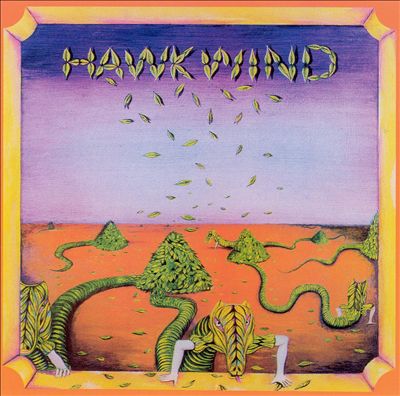
MI0001876245Or should I say the supersonic highway? I’m guessing he still gets a buzz from playing live all those years after the band’s August 1969 debut jam at All Saints Hall, Notting Hill.

“I wouldn’t do it if it was boring. It is an art form … believe it or not!”

It certainly is with Hawkwind, whose current tour is about to reach its final four dates, with several summer shows – including those in Greece, Sweden, Italy and Germany – following a little later.

“When we go to these places we usually have a couple of days off, maybe go a day before. Some of the festivals are really interesting, with lots of bands. It’s nice to be able to see a few and see what’s going on. That’s the joy – going out, sampling some fine wines … like those in Germany!”

I believe this is your first show in 24 years at Preston Guild Hall (my excuse for speaking to the band, and date 11 on this section of the tour).

“Is it? Well, we played Preston a couple of years ago. I suppose we haven’t played the Guild Hall for a while though. Hawkwind fans will know – there’s a chart of every gig we’ve ever done!”

I’ve since checked out two gig archives and reckon this is Hawkwind’s 17th Preston trip since December 1972, but their first Guild Hall visit since April 1992, the last two involving UCLan’s 53 Degrees in March 2008 and April 2013. There have been many more North West outings along the way too, the first at Blackpool Casino in May 1970 and May 1971, as well as the first of five gigs in six years at Lancaster University in November 1972, and the first of seven in 25 years at Blackburn’s King George’s Hall a month later.

What’s more, the Mothership docked at Morecambe Dome (1997 and 2006), Southport Theatre (1997) and Blackpool Summer Camp (2003). Don’t take my work for it though – try this hawklord.com link and http://www.starfarer.net/ for a comprehensive list of past UK dates, from that Notting Hill debut onwards.

In the meantime, I’ll focus on the current visit, for a live concept show showcasing new album The Machine Stops, E.M. Forster’s dystopian vision of the future brought to life in classic Hawkwind style. And apparently you can expect a spectacular array of music, lights, dance and visual effects, and ‘a journey from the surface of this world to the centre of the next, with time for a few old favourites along the way’.
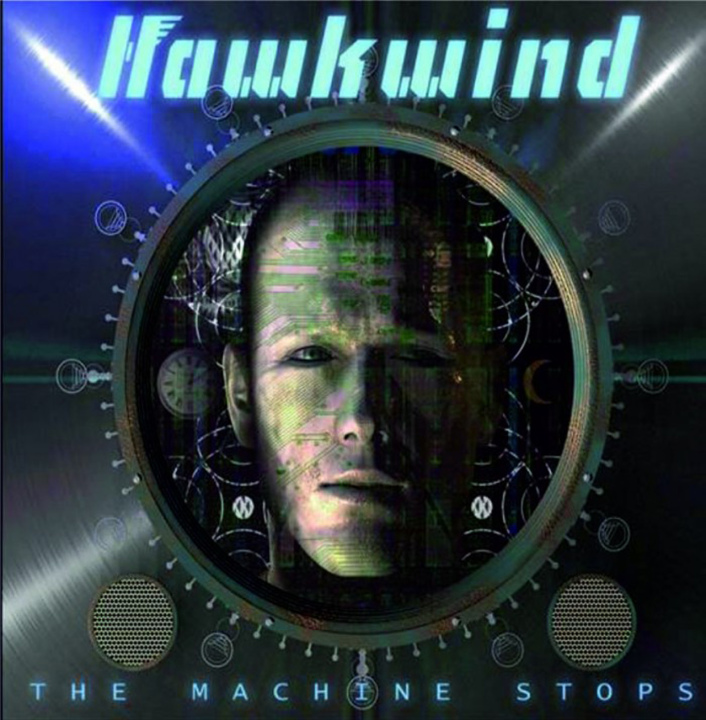
706x720So how long has Dave been aware of E.M. Forster’s 1909 novella – written in the wake of better-known sci-fi stories such as HG Wells’ The Time Machine, War of the Worlds and The First Men in the Moon?

“It was Kris who actually read the book, and said what a wonderful story it was. It’s an interesting one, quite relevant to today in a way, with computer technology and so on.”

E.M. Forster’s not an author readily associated in literary circles for sci-fi, is he?

“I know. Funnily enough, I’ve a huge book of his life story. He lived quite a varied existence, was with the Bloomsbury Set, travelled around a lot, hence A Passage to India and so on, living quite an artistic, Bohemian lifestyle.”

You seem to be a big reader, but I gather you’ve never really classed yourself as a lyricist.

“I think some journalist wrote that. I’ve written a huge amount of songs. I suppose there was the time when I was working with Bob Calvert.”

South African writer, poet, and musician Bob Calvert, who died in 1988, was a vocalist with Hawkwind from 1972 to 1973 and 1975 to 1979.

“He wrote a lot with me. I’d do the music and he’d mainly do the lyrics, but that was just two or three years during that era. I want to get a big book of poems out actually. I thought that while listening to Poetry Hour on Radio 4 the other day.”

Is The Machine Stops your way of reclaiming back the crown of successful musical adaptations of classic sci-fi fiction from Jeff Wayne?
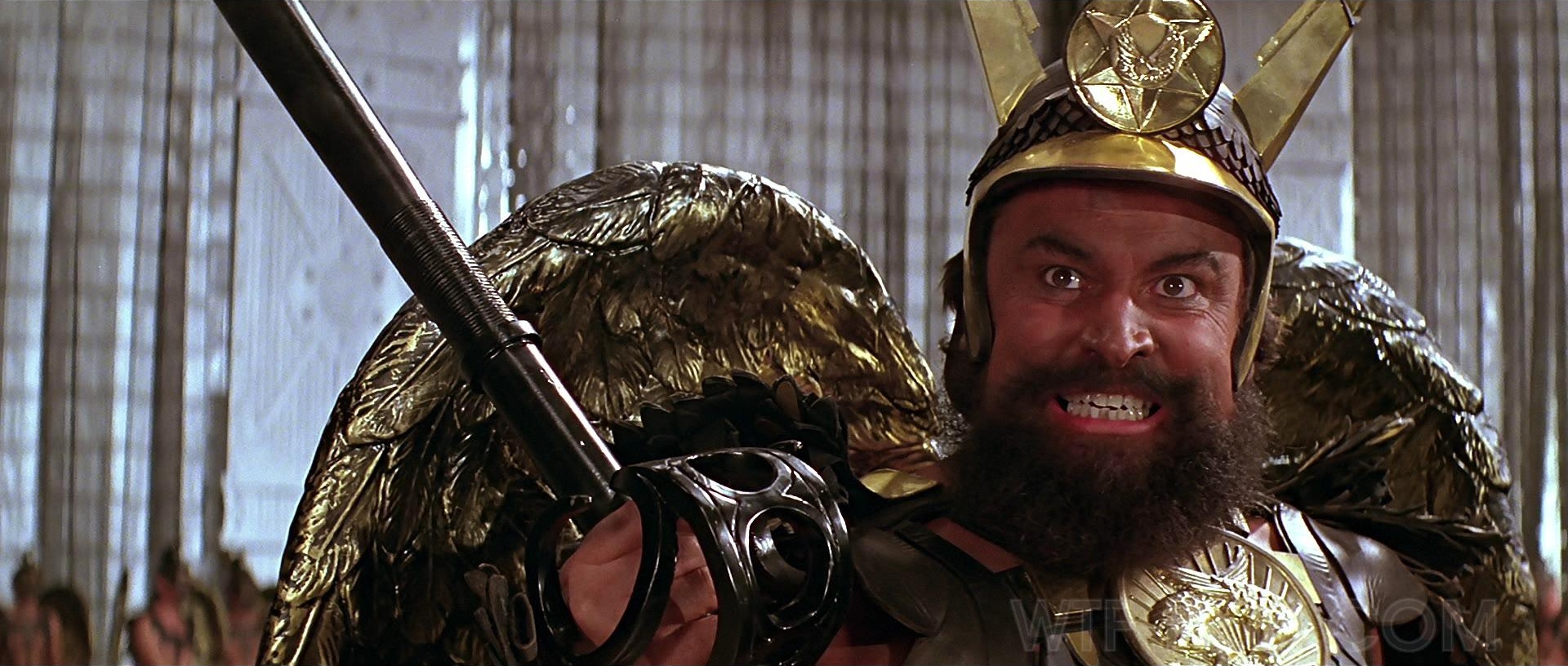
Prince Charming: Brian Blessed gets ready to ham it up as Prince Vultan in the 1980 film version of Flash Gordon

Prince Charming: Brian Blessed gets ready to ham it up as Prince Vultan in the 1980 film version of Flash Gordon

“Well, he does something totally different from us. We’ve been doing this on and off for years. And reading sci-fi books does give you good ideas for writing lyrics. Music is for people to drift away and visualise what’s going on, like Damnation Alley (from 1977’s Quark, Strangeness and Charm) or Sonic Attack (from 1981’s LP of the same name).

“When we did Sonic Attack with Brian Blessed, first off he did a polite Radio 4 version, ‘In case of sonic attack on your district …’. Very quiet and unlike Brian Blessed! I phoned him and said, ‘Brian – you’re a Hawkman in Flash Gordon,’ and did an impression of him in that. He said, ‘Oh, I get the picture, right …’

And Blessed – who appeared with Hawkwind at the Shepherd’s Bush Empire on Sonic Attack as recently as early 2014, a recording later released as a single – hammed it up from there, didn’t he?

“He certainly did!”

Totting up, I make it 30 albums between a self-titled 1970 debut and The Machine Stops, with 13 Hawkwind LPs making the UK top 40. So does it irk Dave that his band are still primarily known for one 1972 top-three UK hit, three years into their 47-year existence?
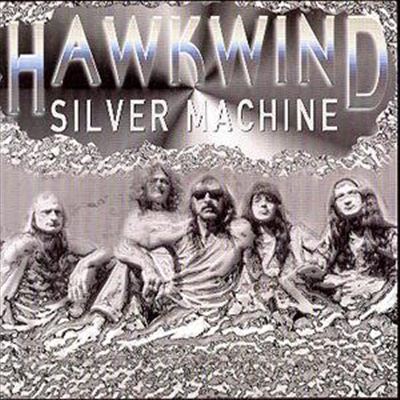
MI0001819277“You mean Silver Machine?”

Yes … or is that a badge of pride?

“Well, it’s a badge of pride! It’s a great song, and one played endlessly on the radio. Each one of us tried to do the vocals, and of course it was Lemmy who succeeded.

“Funnily enough, we had a single with Sam Fox, covering Gimme Shelter for a homeless charity, and that was Richard, our drummer, singing. He’s got a fantastic voice.”

If Dave – who received a lifetime achievement award at the annual Progressive Music Awards in 2013 – is suggesting others got the credit when it came to hit records, he’s certainly not complaining.

Getting back to Lemmy, who died just after Christmas last year four days after his 70th birthday, it’s now more than 40 years since a drugs bust on the US/Canadian border signalled his departure from Hawkwind. That wasn’t so long after recording Motorhead, the track that inspired his new band’s name. Was Dave in touch with Lemmy in his later years?

“We played together at festivals, where Motorhead would also be on, and we’d meet up. Right up until he died we were in touch. And if he played Bristol we’d go up and see him. Funnily enough, Phil Campbell (the Welsh guitarist who served more than 30 years in Motorhead) played with us only a couple of weeks ago in Seaton. Kris got his band to play, and he came and played Silver Machine with us. He told us, ‘I’ve always wanted to play with you!’ We’ll probably see him at Cardiff on this tour.”

Lemmy was one of many musicians who has featured with Hawkwind in getting on for five decades, including Cream drumming legend Ginger Baker (1980-81) and Arthur Brown (2001-03). When did Dave lose count of the numbers involved?

“I never counted. In a way you have to think it like a jazz musician. You can draw parallels where lots of different musicians go in and out of bands, adding bits and pieces. That’s how it should be. It shouldn’t stay boring.”

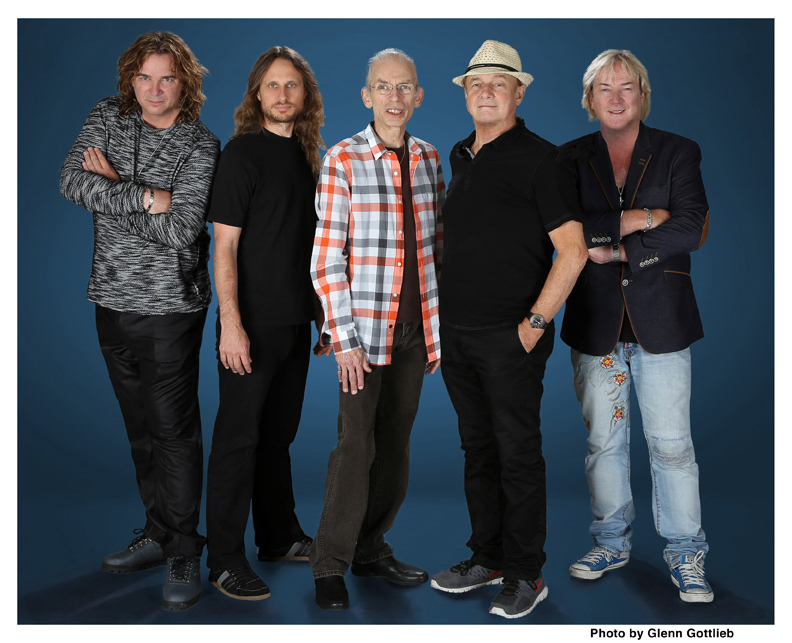
That said, the current line up – with Dave joined by Richard Chadwick (drums, vocals), Mr Dibs (vocals), Niall Hone (keyboards, effects), Dead Fred (keyboards, violin, vocals), Haz Wheaton (bass) and Tim Blake (keyboards, theremin) – make up the longest established line-up in Hawkwind history. Between them they’ve clocked up more than 112 years aboard the Mothership, and Richard has been with them since the late ‘80s.
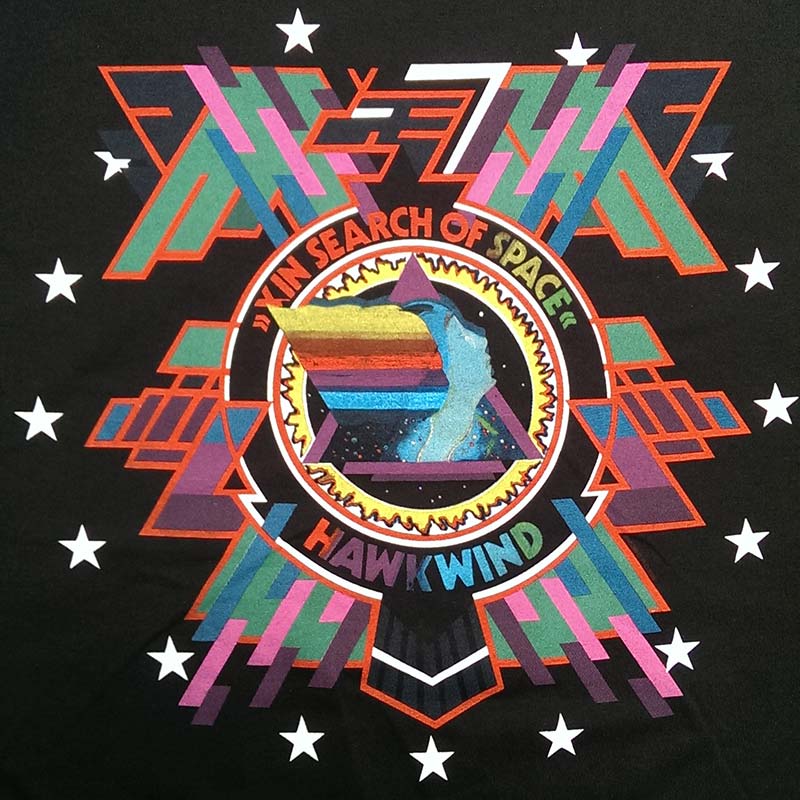
hw-is-01“That’s right. I think it’s 28 years for Richard now … blimey! In fact this line-up’s been going about 10 years.”

Does that make it the longest-serving membership?

“It is, I think. Tim comes in and out. He’s recording his own album in France and I was supposed to be going over. Unfortunately we all went down with this bad cold. He’s also in the middle of his new recording with Crystal Machine.”

Dave, the only constant member throughout Hawkwind’s distinguished history, was playing banjo at the age of 12, listening to Fats Domino and Humphrey Lyttelton, leaving school in 1959 to work as a capstan-setter before time with an animation company. But he pursued a love of music at night at clubs like Eel Pie Island, playing New Orleans trad jazz and blues, or busking with friends such as The Yardbirds’ Eric Clapton and Keith Relf.

He soon started the Dharma Blues Band with pianist Mike King and harmonica player Luke Francis, recording blues covers and backing touring US blues singers like Memphis Slim and Champion Jack Dupree. Dave then quit his job to busk and travel around Europe, co-forming The Famous Cure, touring the Netherlands. And as the psychedelic scene grew and the band started experimenting with LSD, the music changed, playing electric instruments and effects units.

In 1968 he joined a band of buskers touring Britain on a double-decker bus, and with Mick Slattery and bass player John Harrison, Hawkwind evolved, drummer Terry Olli, Nik Turner  (sax) and Dik Mik (electronics) soon joining. Gatecrashing a talent night in Notting Hill, the new band – dubbed Group X at the last minute – played an extended 20-minute jam based on The Byrds’ Eight Miles High. Legendary Radio 1 DJ John Peel, in the audience, told event organiser Douglas Smith to keep an eye on them, Smith duly signing them and getting a deal with Liberty Records, the band settling on their name after brief billing as Hawkwind Zoo.

Hawkwind have incorporated various styles over the years, from hard rock to metal, prog to psychedelia, even punk (the Sex Pistols covering them back in the day). But they’ve stuck by their original premise – influenced by The Moody Blues, Steve Miller Band, Kraftwerk and kraut-rock bands Neu! and Can – of simple three-chord rock with experimental electronic music.

“That’s true. We haven’t really changed. We’ve just carried on playing electronic music with heavy chords – spacey music. It’s like a ship sailing along. We just drop people off at islands along the way, they come on board again another time.”

That seems an apt analogy for someone who started watching bands at Eel Pie Island.

“That’s the joy of it. I knew all The Yardbirds. They lived in Richmond, and an old mate ran The Crawdaddy Club and booked The Rolling Stones there. He’s around 77 now. I only spoke to him quite recently. And who’d have thought Ginger Baker would be playing with us in later years?
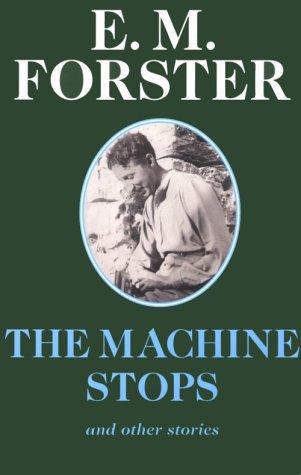
machine_stops“As long as you enjoy doing it, it’s great. And this last album was quite a challenge really. It’s an interesting concept that flows along, so it takes people on the journey E.M. Forster wrote. In the storyline, this character struggles to contact his mother as the machine’s falling apart because no one knows how to fix it. They live below ground. Lots of humans live above ground, but they’ve told him it’s dangerous. Yet he finds it’s not charred black after all – the land is beautifully green.”

While The Machine Stops is dystopian fiction, Dave feels it’s something we can all relate to, the way the world’s turning.

“You know yourself if your computer goes wrong you haven’t the faintest idea how to repair it. Sometimes you switch it on or off and it’s downloading bloody things you don’t want! You don’t know how to stop it. All these little things prove we’re slaves to these machines.”

Speaking of technology, are there times when you want to leave the Mothership and go out with a guitar or banjo instead, reverting to your busking and trad jazz and blues roots?

“No. I did my solo albums, you see. That was my escape. I still write loads, so if the band don’t particularly like a song I’ll do it myself.”

I get the impression you’re a reluctant front-man, preferring others to take centre-stage … or the show itself.

“The show itself’s always the important thing. For this, the light show’s spectacular. That’s down to John who does our lighting and Martin who does the artwork. They’re clever guys. It’s funny, people just think we turn up and do these things sometimes. They don’t realise you work really hard behind the scenes and the band rehearse for three months. The artist spends ages on a computer designing and so on, and then you go out. We don’t just appear out of the blue, do the show and go. And Kris had to knit it all together. There’s a lot of organising.”

Are you essentially a shy bloke behind that wall of sound?

“Well, occasionally I come out and do my little bit here and there! It’s like a football team. I’d rather be in the midfield.”

A creative midfielder at that.

“Yes … rather than a striker!”

There have been ups and downs, such as legal wrangles with ex-members, but you’re still out there – playing live, recording, doing what you love.

“Absolutely. That’s what we do it for. It’s an artistic thing to do, and obviously it’s fun. That’s what we try to do – entertain people and enjoy doing what we’re doing.”

HAWKS 2016 COLLAGE with TimHawkwind’s next dates are at Islington Assembly Hall on Friday, April 22 (020 7527 8900 or via this link), Norwich UEA on Saturday, April 23 (01603 508050, or via this link), Stamford Corn Exchange on Sunday, April 24 (01780 766455, or via this link) and Preston Guild Hall on Monday, April 25 (01772 80 44 44, or via this link).

For more dates this summer and the latest from the band head to Hawkwind Mission Control. And to order The Machine Stops head to this Cherry Red link.
Posted in Books Films, TV & Radio, Music | Tagged , , , , , , , , , , , , , , , , | 1 Comment

Yes yesterdays and todays – the Alan White interview

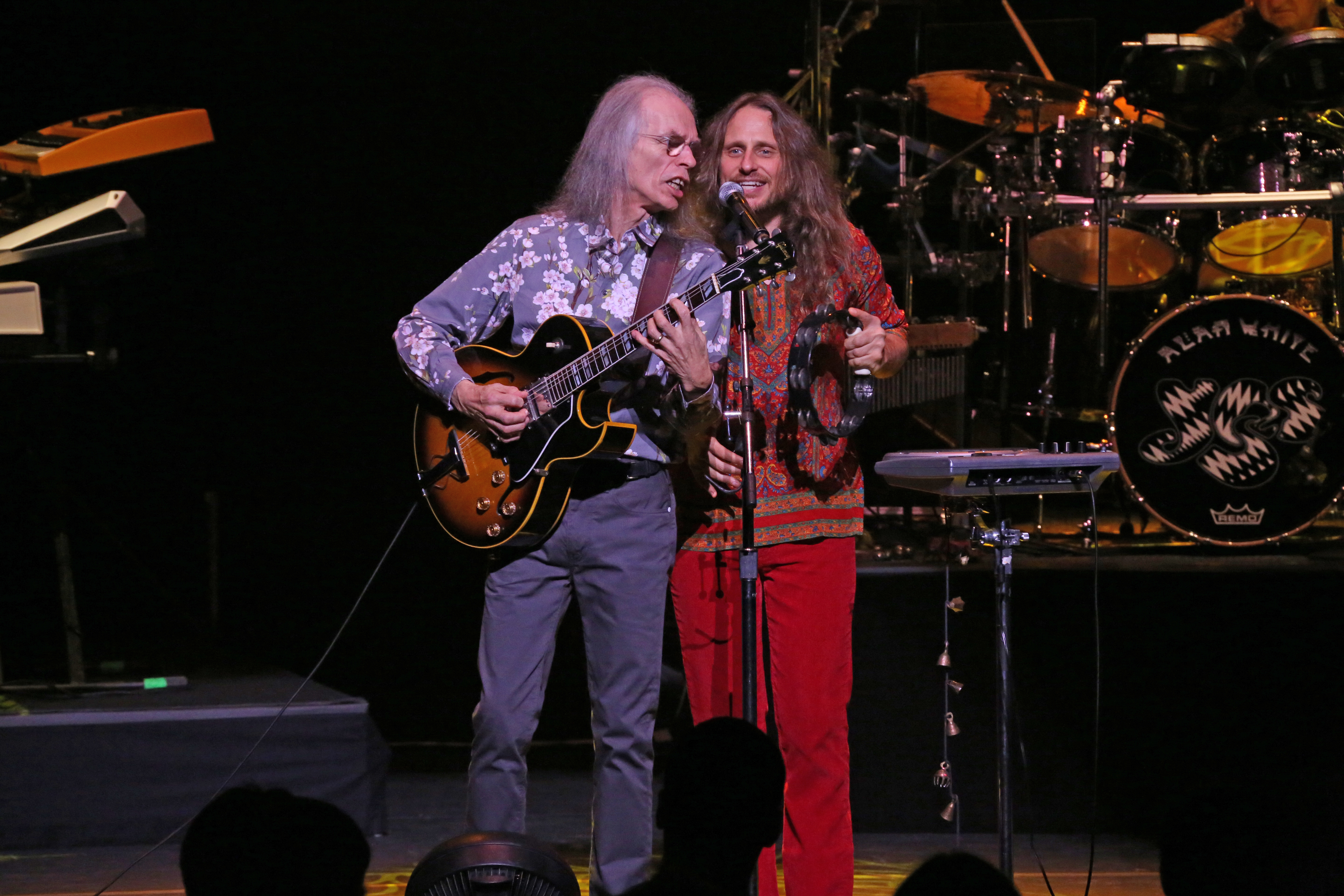
Prog Princes: Yes in 2016. from the left - Billy Sherwood, Jon Davison, Steve Howe, Alan White, Geoff Downes (Photo: Glenn Gottlieb)

Prog Princes: Yes today. from left – Billy Sherwood, Jon Davison, Steve Howe, Alan White, Geoff Downes (Photo: Glenn Gottlieb)

This coming summer, drummer and songwriter Alan White will have been in the band Yes for a staggering 44 years – give or take one worked gap-year.

That equates to two-thirds of his 66 years and counting, so I guess this multi-talented County Durham lad still enjoys playing with one of the most revered progressive rock outfits.

“Well, it’s been my whole life for a lot of years, so I guess I have to.”

You wouldn’t do it if you weren’t interested, surely.

“No, definitely not”.

While based in the United States these days, Alan is returning to his roots as Yes embark on a 10-date UK tour, playing two more albums in their entirety, 1971’s Fragile and 1980’s Drama, as well as various Yes classics.

The tour starts at Glasgow’s Royal Concert Hall on April 27 and ends at London’s Royal Albert Hall on May 10, the band hoping for a similar reception to their 2014 sell-out itinerary. And it will be the first time Yes have performed in the UK since bass player and founder member Chris Squire died last June, after a battle with leukaemia.

Chris, from North West London, was the one constant member over 47 years, having co-founded the band in 1968 with vocalist Jon Anderson, from Accrington, Lancashire, the latter leaving in 2008 after his third stint.

White Noise: Longest-serving Yes member Alan White in live action (Photo: Glenn Gottlieb).

White Noise: Longest-serving Yes member Alan White in live action (Photo: Glenn Gottlieb).

Alan is joined in the current line-up by Billy Sherwood, who took over bass duties last year and previously featured from 1997 to 2000 on guitar; guitarist Steve Howe, involved from 1970–1981, 1990–1992, and since 1995; Geoff Downes on keyboards, who first featured in 1980 between spells in The Buggles and Asia, rejoining in 2011; and lead singer Jon Davison, who joined in 2012.

And the long-serving drummer agreed there’s something of a commemorative feel to this next tour, with fans and band alike getting to remember Chris Squire.

“Chris and I played together for 43 years. We were the two guys who stayed together the longest out of everybody. He hadn’t been that well for a while, a couple of health problems building up to that. But when I got an email from him explaining he’d been diagnosed with leukaemia, I thought, ‘Oh, my God!’ I guess he fought it real well though, and believe in the end he’d almost beaten the leukaemia but his heart gave out.”

Even during the early ‘80’s band hiatus, Alan was working with Chris on his Cinema band project.

“We were left calling each other asking, ‘What’ll we do now?’ We wanted to keep with Yes, and that’s how we carried the band on really. We ran into Trevor Rabin and that turned into 90125, which was a really great period for the band.”

“That was the first album after Drama. It was a bit of a risk, but Trevor Rabin (who stayed for 12 years) was a really fantastic musician all-round and wrote great songs too. And that album (90125) was the best as far as sales go of all the Yes albums.”

Even before that, the band’s dynamics were shifting, Jon Anderson and Rick Wakeman – after the second of his five stints with the band – leaving and Geoff Downes and Trevor Horn from The Buggles joining, not long after their worldwide hit with Video Killed the Radio Star.

That particular Yes had a heavier, harder sound, the album – the band’s 10th – reaching No.2 in the UK and the US top-20. But after the tour, it was all change again. Reconvening in England, they dismissed their manager. Then Trevor Horn left to pursue a career in music production, with Alan and Chris next to depart. Sole remaining members Geoff Downes and Steve Howe then went their own separate ways in December.

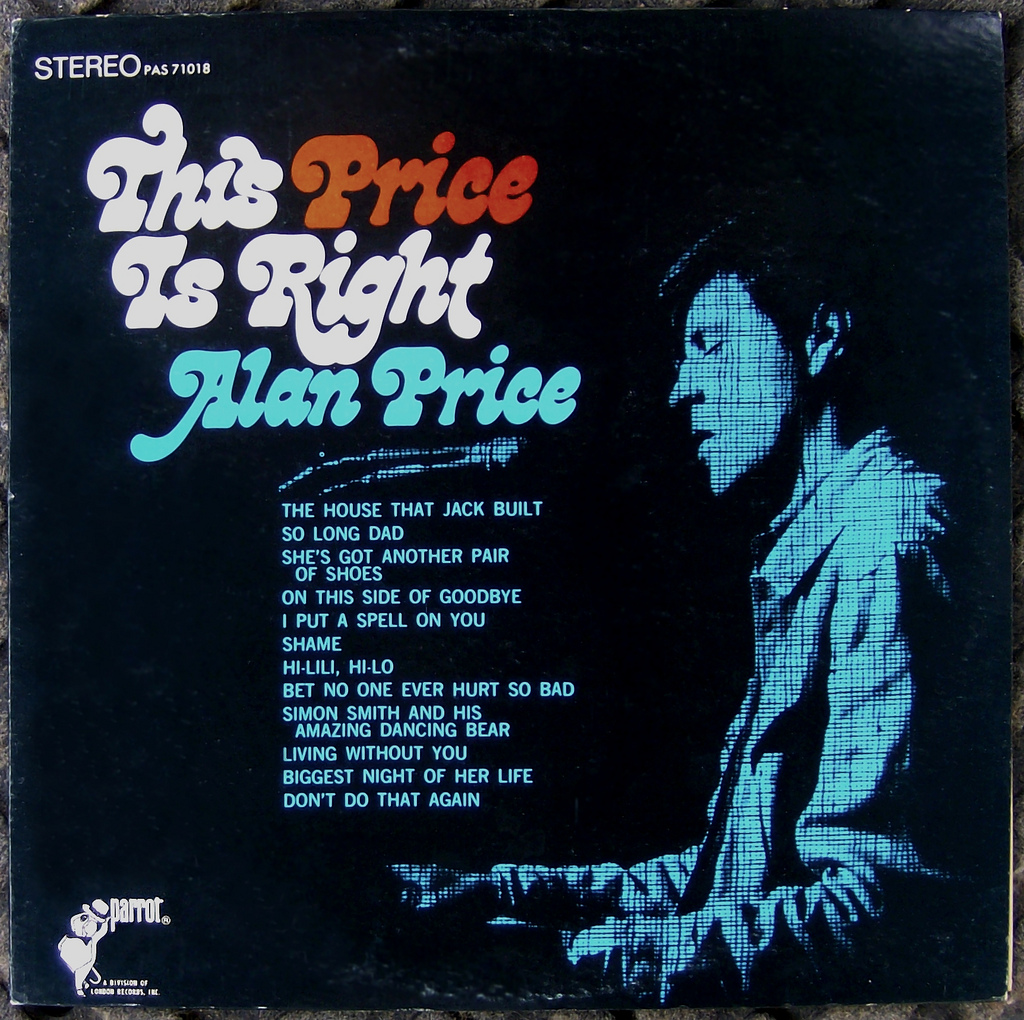
Early Break: It was while playing for the Alan Price Set that Alan White got a call from John Lennon

Early Break: It was while playing for the Alan Price Set that Alan White got a call from John Lennon

It’s fair to say that Alan wouldn’t go near Drama for a long time. I asked if he’d rediscovered an appreciation of it all while re-learning songs for this tour. He wasn’t to be drawn though, and we soon moved on, on safer ground talking about the forthcoming dates, including those in the North West.

“I’m really happy we’re playing Liverpool again. We played Manchester a few times, but haven’t got over to Liverpool, despite playing great gigs there in the past. Until a couple of years ago I was going quite regularly for a Beatles festival, with five or six days there. I really enjoyed that, and the people who put it on are friends of mine. They wanted me to do this year, but I’ll be on the road with Yes. I wish I could do that as well though.”

At this point Alan broke off to confirm the dates of International Beatleweek, which runs from August 24, its guests including The Monkees’ singer/drummer Micky Dolenz and Billy J. Kramer. And then he changed tack, thinking it might be a possibility after all.

“I might be able to do that. The tour will be over in mid-August, in Rome. I’ll look into that.”

The tour also includes Newcastle City Hall (April 29), not far from Alan’s North East roots. And as it turns out he does lives in Newcastle – albeit a city of the same name in Washington.

“I just did an interview with a guy writing for the Chronicle in Newcastle, going on about the old days, schools and all sorts. Actually, the band I started with was called the Downbeats, and one guy recently sent me an email saying he wanted to get the band back together. But I’m not sure who’s still alive! When I was in that band I was the youngest, and that was a long time ago!”

Alan was 13 when he joined the Downbeats, having started his musical education learning piano at the age of six, in time switching to drums. He went on to feature with a number of bands, his career taking off after joining fellow County Durham lad Alan Price, a spell with the former Animals keyboard player in 1967 and 1968 including two LPs and an EP.

Despite being proud of his heritage, Alan loves life in America. Married to Gigi for 33 years, his two children are now in their early 30s, becoming a grandfather two years ago (and excited about an impending visit from his grandson when I called, all the way from Denver, Colorado). So what were the chances of this North East lad ending up in the mid-1990s in Newcastle, Washington rather than its Tyne and Wear namesake?

“The district I live in is Bellevue, then there’s Renton nearby, and the two joined together to form a new city three months after I bought this house. I always tell people that because I know the mayor very well I made a phone call to change the name of the city!

“Actually, the real reason is we’re on the side of a big hill where there was a coal mine, with a lot of the people who worked there originally from Newcastle.”

24283013061_cb99213e43Alan also holds a charity event every summer for the Mayor, his local band among those playing an outdoor event.

“They’ve even given me my own day here – September 12th is Alan White Day in Newcastle, which means I have the key to the city and keep bars open when they’re supposed to close!

“However, I don’t stay up that late anymore, and I tried doing it in Philadelphia too, as I have a key for that city, but a guy kicked me out of one bar because he thought I was drunk!”

Switching back from local history to the Yesstory again, we get on to Fragile, the other LP featured on the tour – with 10 UK dates followed by 15 more in mainland Europe – was he aware of the band when that came out?

“I’d heard them on the radio, as that’s when they started to get airplay. And I believe the first song I heard was Roundabout, from that album. I was playing with Terry Reid’s band (Alan features with the band in Nicolas Roeg’s 1972 documentary Glastonbury Fayre), and we were setting up equipment in Bournemouth when they were playing the radio in this club.

“I heard them come on, and said, ‘Who’s this band? They sound good!’ I went to see them when they played Wembley, supporting someone. That was when Chris wore his furry boots and all that.”

Well, I suppose by that point he had to keep up with the sartorially-flamboyant Rick Wakeman (as interviewed on this blog in September 2015, with a link here).

“Yeah, I think Rick had just joined when I saw them.”

Alan joined Yes in late July, 1972, taking over from King Crimson-bound drummer Bill Bruford for the Close to the Edge tour, after just one full rehearsal with the band. They went on to play 95 shows in the US, Canada, the UK, Japan and Australia, through until April 1973, having given each other three months to see if Alan fitted in.

He’s appeared on every Yes album since, from 1973 live offering Yessongs and sixth studio LP Tales from Topographic Oceans to 2014’s Heaven and Earth, the 21st studio release.

Long before all that, Alan’s career reached a whole new level while with the Alan Price Set when he received a call from a certain John Lennon. At first he thought it was a wind-up, but quickly took up an offer to join the Plastic Ono Band, his first contributions recorded for prosperity on hit album Live Peace in Toronto 1969.

Imagine That: Alan White played on John Lennon's Imagine as well as George Harrison's All Things Must Pass

Imagine That: Alan White played on John Lennon’s Imagine as well as George Harrison’s All Things Must Pass

Does he have good memories of his days with the former Beatle?

“They were fantastic. I spent a lot of time round at John’s house, and we just worked on music all the time. And that’s where Imagine came from.”

Alan played drums on six tracks on classic 1971 album Imagine as well as additional Tibetan cymbals on Oh My Love and vibraphone on Jealous Guy. He also played drums, piano and added vocals to early 1970 single Instant Karma! and was ’Dallas White’ on the Live Jam issued with Some Time in New York City the following year.

And when John introduced Alan to George Harrison, he was asked to perform on the critically-acclaimed All Things Must Pass album in late 1970.

“George used to come down for those sessions at John’s, and we’d sit and have dinner in the evening, all round the big table, with John, Paul, George, even Ringo occasionally. We’d  sit and eat something then go back in the studio and keep working on stuff.”

Having spoken to Alan just after the death of Sir George Martin, I asked if he got to meet the legendary producer too.

“I did, a couple of times. He came down for the Imagine sessions for a while. I met him another time recording an album with George for Doris Troy (on You Tore Me Up Inside). George Harrison was the producer and had George Martin in for advice on mixing and recording.”

Alan went on to join Ginger Baker’s Air Force, also featuring Steve Winwood, in late 1971, and the following year while touring with Joe Cocker, received his invitation to join Yes.

Over the years he’s also featured with Billy Preston, Paul Kossoff, Denny Laine, Sky, Donovan and Yes alumni Rick Wakeman and Steve Howe, among others.

Having mentioned Sir George Martin, Alan’s clearly worked with several top producers. Was Trevor Horn’s time with Yes an eye-opener into innovative production techniques?

“Definitely. Eddy Offord too. Let me tell you, Eddy was bloody innovative! He’d try quadraphonic mixing, and built a quadraphonic desk before anyone ever thought of that.”

Oceans Apart: Roger Dean's revered cover from the 1973 Yes album Tales from Topographic Oceans, one of many he designed for the band, including the above examples, Drama and Fragile.

Oceans Apart: Roger Dean’s cover from the 1973 Yes album Tales from Topographic Oceans, one of many he designed for the band, including the examples shown below, Drama and Fragile.

Eddy produced every LP from 1971’s The Yes Album through to 1974’s Relayer, the band taking the credits themselves for a while before Eddy returned for Drama.

Meanwhile, Alan’s always been far more than just a drummer, and has played piano and written music for several Yes albums. Not as if he’ll praise his contributions.

“Unfortunately I’ve written some songs at the wrong time. Like Machine Messiah on Drama. We play it on stage and I listen and think, ‘What the hell was I thinking when I wrote that?’

He also released a solo LP in 1976, Ramshackled, and more recently has played for several bands around Seattle, his guests including bandmates Billy Sherwood and Geoff Downes.

Did the band’s recent US tour also involve the same sets?

“No, the last show we did was more a hits show, rather than two albums in their entirety as we’re doing this time. Of course, two years ago we were doing three albums a time! That turned out to be one hell of a long set!”

When it came to the rehearsals, did the songs come back to you soon enough?

“Well, some songs on Drama we haven’t played for 35 years – since the original album tour. So there are songs that are big challenges, but I’m rehearsing on a daily basis in my studio.”

Yes Show: Steve Howe and Jon Davison out front for the 2016 carnation of Yes, with longest-serving member Alan White keeping time (Photo: Glenn Gottlieb)

Yes Show: Steve Howe and Jon Davison out front for the 2016 Yes (Photo: Glenn Gottlieb)

Do you work from home a lot these days between tours?

“I have my own studio here, although it’s not a full-blown set-up. It’s more a home studio.”

With no neighbours to complain?

He laughs. “Well, I’ve got some people who are relatively close, but they don’t complain!”

We mentioned how this tour ends in Rome. It’s not a bad life really, is it?

“Well, yeah, I think the last four gigs are in Italy. You know what though? I’ve been there a million times before. It’s nice to go back, but I’ve travelled the world before.

“I like to get back home and walk the dogs in the park. I have three Jack Russells. Actually, I misquoted myself – I don’t walk the dogs, they walk me these days.”
yesfragileUK dates (all 7.30pm): Wed April 27th – Glasgow Royal Concert Hall, 0141 353 8000; Fri April 29th – Newcastle City Hall, 0191 277 8030; Sat April 30th – Manchester Apollo, 08444 777 677; Mon May 2nd – Liverpool Philharmonic, 0151 709 3789; Tue May 3rd – Sheffield City Hall, 0114 2789 789; Wed May 4th – Bristol Colston Hall, 0844 887 1500; Fri May 6th – Birmingham Symphony Hall, 0121 345 0602; Sat May 7th – Brighton Centre, 0844 847 1515; Mon May 9th – Oxford New Theatre, 0844 871 3020; Tue May 10th – London Royal Albert Hall, 0207 589 8212.

European dates: Fri May 13th – Paris Olympia; Sat May 14th – Brussels Ancienne Belgique; Sun May 15th Yes_DramaUtrecht Tivolivredenburg; Tue May 17th – Hamburg Mehr Theater; Thu May 19th – Frankfurt Alte Oper; Fri May 20th – Leipzig Haus Avensee; Sat May 21st – Berlin Admiralspalast; Mon May 23rd – Bonn Beethovenhalle; Tue May 24th – Stuttgart Hegelsaal; Wed May 25th – Munich Cirkus Krone; Fri May 27th – Zurich Volkshaus; Sat May 28th – Milan Teatro Nazionale; Sun May 29th – Padova Gran Teatro Geox; Tue May 31st – Florence Obihall; Wed June 1st – Rome Teatro Olimpico.

UK tickets £39 except London (£55 boxes, £48.50, £45, £38) and Oxford (£39 + £1.25 venue restoration levy) via 24-hour ticket hotline 0844 338 0000 or BookingsDirect.com. For ticket/VIP upgrades follow this link

For all the latest from the band, check out yesworld.com or follow them via Facebook and Twitter

Posted in Music | Tagged , , , , , , , , , , , , , , , , , , , , , , | 6 Comments

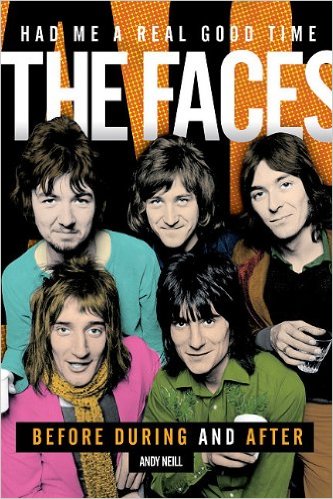
Faces Before During and After – Had Me A Real Good Time by Andy Neill (Omnibus Press)

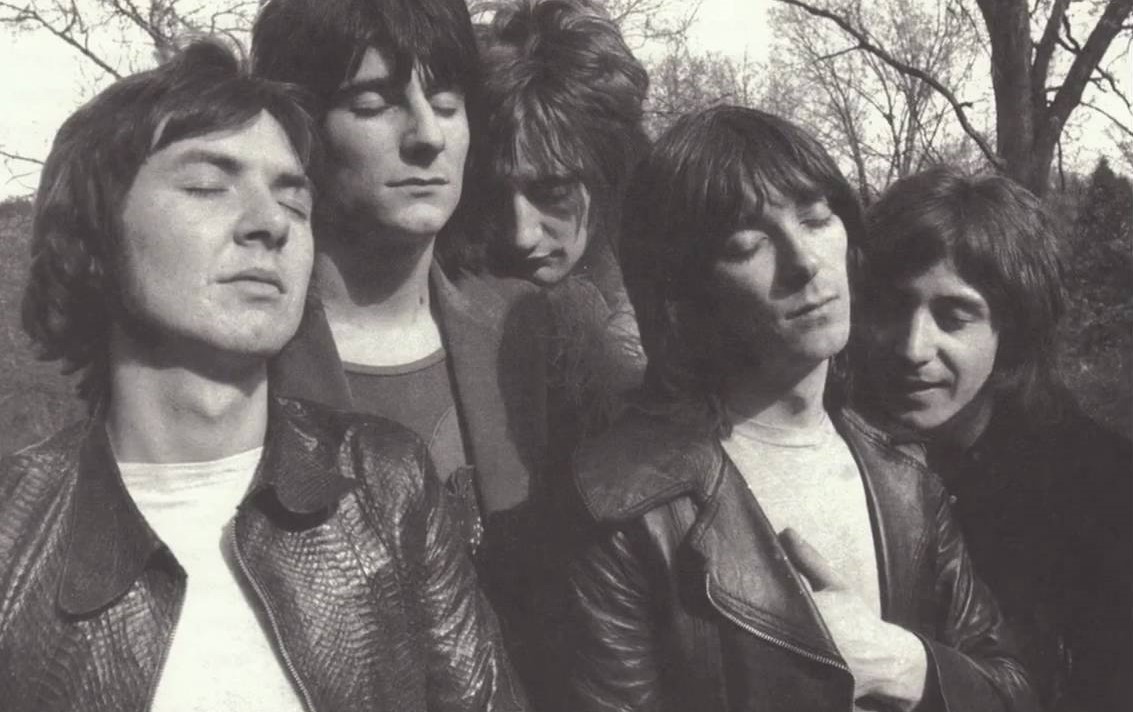
Sleep Deprivation: The band caught in a rare moment of respite (Photo copyright: Tom Wright)

Sleep Deprivation: The infamous five in a rare moment of respite (Photo copyright: Tom Wright)

This book’s heavy. Not in a deep way – it’s a weight thing. Ever tried reading such a colossal tome late at night, propped up in bed? Of course, the Faces in their pomp would probably have suggested that bedtime – if to be observed at all – was not for reading. But the fact is that Andy Neill worked hard on this 500-plus page epic, making it difficult to pick up last thing. And all for a band that barely lasted six years. But what a six years they turned in though.

Neill’s Faces Before During and After – Had Me A Real Good Time, updated here from the 2011 edition to cover the loss of Ian McLagen and ongoing part-reunion rumours – is so much more than a timeline between the band’s first gig on a Cambridgeshire USAF base at the tail end of the ‘60s and their late 1975 finale at the Labor Temple, Minneapolis, four albums and a live offering later. At first I was surprised the Small Faces section wasn’t longer, that band key to the whole story, surely? But within a hundred pages I understood – the author had much more on his plate. On reflection there’s enough on the Steve Marriott era. Once you add in the band they became and all those side-projects it makes sense. Besides, as that philosophical fella Aristotle said, ‘The whole is greater than the sum of its parts’.

Neill certainly goes into detail regarding many of the bit-players in the Faces story – from family and love interests to ex-bandmates, contemporaries, roadies, studio personnel … you name it. And without those archive and first-hand interviews you wouldn’t get the full picture. But at the heart of it, we have Rod Stewart, Ron Wood and three Small Faces – Ronnie ‘Plonk’ Lane, Ian ‘Mac’ McLagan and Kenney Jones. And this is anything but a clichéd portrayal of some ‘super-annuated, blonde-chasing irrelevance’ and his mates.

The author writes, ‘In and age of bland collectivism the Faces had a comedic quality that Ron Wood once described as ‘the Marx Brothers on the road’. On the other hand, DJ Jeff Dexter reckoned, ‘This was more like a pub brawl than a soul band’, and this is a story of five young musicians having the time of their lives seeing the world, 1970s’ style, carrying off obligatory rock star excess to apocalyptic perfection. These lads could be tiresome, taking decadence to a new level, but thankfully the music was great, arguably excusing their worst qualities.

Ah yes, the music. Confession time – I actually prefer the early Rod albums to those of the Faces. I like a lot of Plonk’s moments with Slim Chance and I’ve already hinted at a love of the Small Faces, but while there were many great Faces moments and I’d have loved to see them live, I’m not convinced the LPs hold up so much in their entirety. It wasn’t just about the albums though, and while the Small Faces were as much about style as music to some, the band that followed were first and foremost about a live passion that inspired fans’ fervour, in a similar way to Mott the Hoople and Slade in that respect. And roadie Russ Schlagbaum says, ‘On a good night – and with the Faces you had a 50-50 chance of catching them on a good night – they were absolutely spectacular’.

Detailed Analysis: Andy Neill's updated faces biography

Detailed Analysis: Andy Neill’s updated Faces biography

Of course, drink played a part – on and off stage, in and out of the studio. As Neill put it, their ‘inclusive brand of boozy blues and soused soul extended beyond the spotlight, and along with bands like The Who and Led Zeppelin they perfected the on-the-road practise of annihilating hotel rooms down to a fine art, while indulging in all the typical trappings of the ‘70s rock star’. There were the women too. All perfect subjects for a ‘70s rock biog really, but while Neill adds many of those great stories, he’s hardly coasting here.

In time it all went up a couple of levels, the by-product of Rod’s success – Maggie May the first of six UK No.1 singles (and 26 top-10s) and Every Picture Tells a Story the first of eight No.1 albums (and 34 top-10s) – leading to complications, not least simmering resentment as venue billboards announced ‘The Faces featuring Rod Stewart’, ‘Rod Stewart & the Faces’ or even ‘Rod Stewart & the Small Faces’. But while the singer had the best of both worlds in having such a quality backing band, it stands to reason that the others made capital of his success.

You could argue that the underlining tension played a part in Lane leaving. And as Stewart admitted, ‘When Ronnie left the band the spirit of the Faces left’. Yet Plonk chose to strip things back to basics after all those years in the spotlight, even if ‘his single-mindedness cost him dearly both financially and in health’. His departure wasn’t the end of the story either, and while the Faces virtually ceased to function in the studio, ‘Teacher’s toting Tetsu Yamauchi’ brought a new dimension to the chaos before the curtain finally came down after Woody joined The Rolling Stones. Yet four decades on their legacy thrives, an inspiration to so many bands over the years, many unworthy of the comparison.

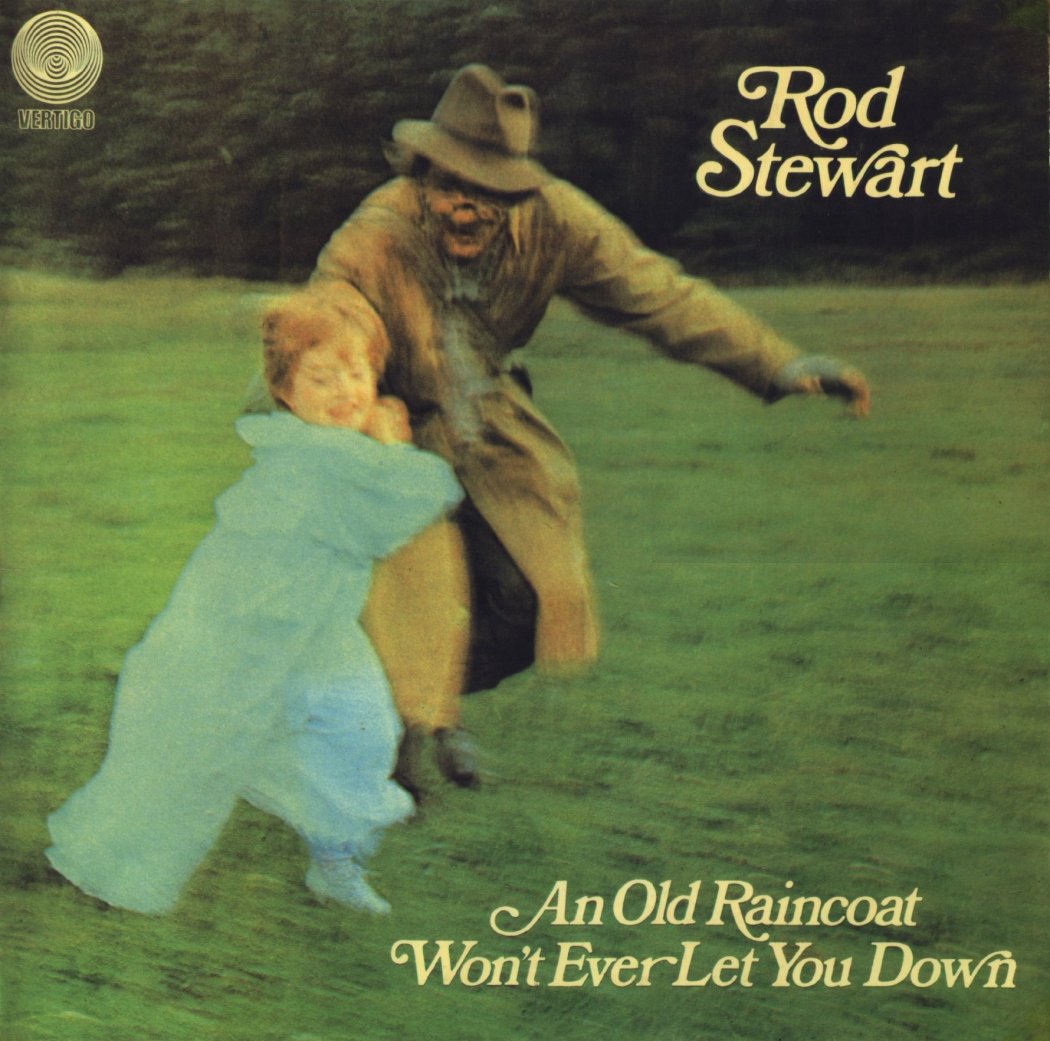
Neill tells us his inspiration for taking on this mammoth project stemmed from an initial love of Rod’s early solo albums, then the Faces’ own. I’m with him on that. For me it was the vinyl capture of Never a Dull Moment then Every Picture Tells a Story, albeit in the mid-80s. I went back to An Old Raincoat … and Gasoline Alley from there, rediscovering all that had been somewhat sullied by the Do You Think I’m Sexy? period.

Not one for the purists maybe, but I like 1974’s Smiler too. Save for a few orchestrated strings there were no great surprises (despite that dodgy album cover), but the formula till largely worked, like the almost-obligatory Dylan song, a stonking duet with Elton John on Let Me Be Your Car and slightly-awkward altered covers (You Make Me Feel Like) A Natural Man and Bring It On Home To Me/ You Send Me (and anything shining further light on Aretha Franklin and Sam Cooke was alright by me).

That should have been the end for me, but mid-’70s nostalgia means I have a soft spot for his later I Don’t Want to Talk About It  and First Cut is the Deepest covers too, and even Sailing takes me back to perfect summers. But I prefer to think of an earlier Rod with a cracking band (two cracking bands actually). In time, I also understood where the Small Faces gave rise to the Faces, like those unfinished 1862 tracks, imagining both Marriott and Stewart on Collibosher and hearing the join listening to Marriott/Lane number My Way of Thinking on Gasoline Alley.

Content-wise, Neill starts with a portrait of the Small Faces’ East End contingent, early ‘60s Mod culture, the link-up with ‘Al Capone of pop’ Don Arden, and Middlesex mucker Mac’s arrival. And conflicting versions of stories from interviews with the band, family and contemporaries highlight just how difficult it was to chronicle those years.

rainfrBy ’67 they were sharing bills with the Jeff Beck Group, whose vocalist later recalled popping into the dressing room to say hello to Marriott but added that he ‘didn’t have a clue who the rest of them were’. Neill’s early Rod the Mod portrait includes stories now part of Stewart folklore, like those of a cherry-taking buxom belle at Beaulieu Jazz Festival, a brief stint with The Ray Davies Quartet, beatnik days travelling Europe, his Twickenham railway station discovery by Long John Baldry, and the relationship leading to his first child. Meanwhile, Mac recalls Rod at Eel Pie Island in the Hoochie Coochie Men, with ‘big bird’s nest hairdo, back-combed, a big nose, very sure of himself, a Jack the lad’. And there are the first mentions of Rod’s ‘short hands and long pockets’, a reputation following him well beyond Steampacket and Shotgun Express days.

We meet Woody during a three-year apprenticeship travelling the land with the Birds, including a retelling of that historic first meet with his North London mate at the Intrepid Fox on Wardour Street in late ’64, two distinguished spiky-barnets sussing each other out before Rod supposedly asks, ‘Hello face, how are you?’ If they made a biopic you might groan and exclaim, ‘As if!’ Either way, a friendship was forged, the duo soon joining the Jeff Beck Group.

Neill also tells of Andrew Loog Oldham, Immediate Records, Ogdens’ Nut Gone Flake, Marriott’s friendship with Peter Frampton (ultimately leading to the end of the Small Faces) and the lack of money coming the band’s way. At one stage he asks Mac if ‘much of the group’s last earnings might have been legitimately swallowed up in expenditure on clothes, transport, studio costs and high living’, prompting a vociferous response that, ‘In the time we were together we never received any record royalties. We must have lost in the region of at least a million quid, so you do the math, buying a few shirts ain’t gonna cover it!’ There’s a telling line from Kenney’s ex-bro-in-law Gary Osborne too, saying, ‘You find out later that the cars were leased and he didn’t have a pot to piss in. I remember asking, ‘Where’s all the money? And Ken said, ‘Don’s looking after it.”

Yet while round-the-clock studio time was ‘costly and recoupable against royalties’ and ‘attention to detail when it comes to accounts was never Oldham’s concern,’ Neill stresses that ‘without either manager the Small Faces’ career might have been a lot shorter than it already was’. And this was a band that were exceptionally short.

When Marriott left, Neill relates how Pete Townshend encouraged the others to use his Twickenham studio, showing a strong link between two legendary Mod bands. Descriptions of the financial position then also paints a picture, not least the keyboard player and his partner moving from his mum’s council house in Kensal Green – a baby on the way – to an £8 a week two-room cold water flat in Earl’s Court, their belongings packed into Mac’s Mini. Meanwhile, Plonk got by with the help of PRS cheques and Kenney stayed afloat with session work and his other half’s pay-cheques.

Woody soon arrives on the scene from Beck’s band, a ‘bubbly and light-hearted’ character, just what they need. As he put it, ‘They had a very similar approach and were into things I was digging at the time – like Booker T’.  A series of jams follow, some in a basement belonging to The Stones, with Rod – set to start his debut solo LP with Woody, Mac, drummer Mickey Waller and guitarists Martin Pugh and Martin Quittenton – dropping in to see how things are shaping. As Plonk put it, ‘We’d get well pissed, shout and make a lot of noise’. Rod eventually joined in, despite Mac and Lane’s reluctance, fearing another Marriott situation. And despite Rod and Woody’s worries that ‘this isn’t going to work’, a worldwide Warner Bros deal followed, Billy Gaff managing, and Rod allowed to record with them in return for honouring his Mercury deal.

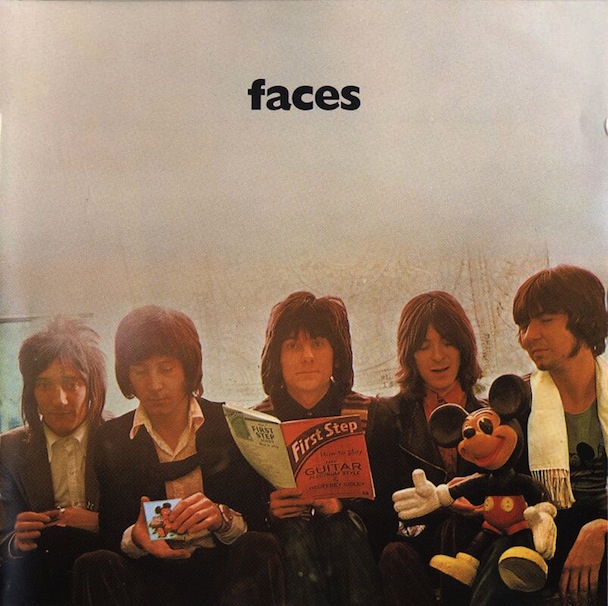
Faces-First-StepSo in the final month of the ‘60s they start on First Step at a defining time for the band and music in general, the new decade on the horizon. Touring soon proved key, a gruelling schedule seeing them ‘diving into the carnal pool’ en route, irrespective of domestic situations. Positive reception in the US was followed by a UK breakthrough for this ‘bunch of drunken East End yobs’, sales increasing via interest in Rod’s Gasoline Alley, all the Faces contributing this time – also the case for the next two LPs.

Meanwhile, a band itching to consolidate stateside appeal (maybe down to STDs) were soon back in the studio for Long Player, the lead singer’s earnings prompting the latest in a series of moves, this time to a mock Tudor home, a new Lamborghini on the drive. Top of the Pops and Disco 2 appearances and support from DJ John Peel helped spread the word, that big break just around the corner – Every Picture Tells a Story’s second single in August ’71 sending everything viral.

By then they were already well versed in on-the-road antics, a reputation preceding them, such as a penchant for emptying hotel rooms and rearranging contents on the corridor, a ‘hapless hotel manager’ emerging from the lift to be ‘confronted with the band casually sitting in their ‘room’ – chairs, cabinet and bed with bedside light on’. By then a suite was put aside as a party room, so ‘festivities could continue unchecked for as long as desired while allowing any band member to discreetly slip away, either alone or with that night’s catch’. Different times.

While the author takes a well-researched chronological approach, you can also keep track by working out which partner Rod’s bedding, where he’s living, or who’s left which Face for whom. Tensions clearly remain too, however well the band play and however strong the material – and it was very strong – although nights filling hotel lifts with empty bottles sometimes relieved angst. As Billy Gaff told Neill, ‘The audiences got bigger, the money got bigger and the band became more important’.

There’s plenty of humour here, such as record company exec Martin Wyatt’s anecdote about the Faces’ girlfriends sweet-talking him into getting a lift to a gig in Brighton – to the consternation of the partying band ahead of their scheduled ‘relaxation’, during a period in which Rod and Woody had lead roles in questionable ‘doctor’s surgery’ routines. That said, Lane was drifting from this ungentlemanly club, work on a film soundtrack project pre-empting his Slim Chance adventure.

Neill neatly explains the band’s allure to their audience too, comparing the Faces and superstar peers like Marc Bolan, David Bowie and Elton John, this outfit more about ‘street level accessibility’. He also reminds of us the political climate, and how as ‘the royalties and concert proceeds poured in, the band spent lavishly on home comforts while much of the country was adversely affected the Heath Government’s austerity measures’. By then, even Woody had splashed out on a 20-room four-storey Georgian mansion on Richmond Hill, previously owned by John Mills and originally 18th century portrait artist Joshua Reynolds, helped out on the £140,000 price tag by Lane buying a three-bed coach-house at the bottom of the garden.

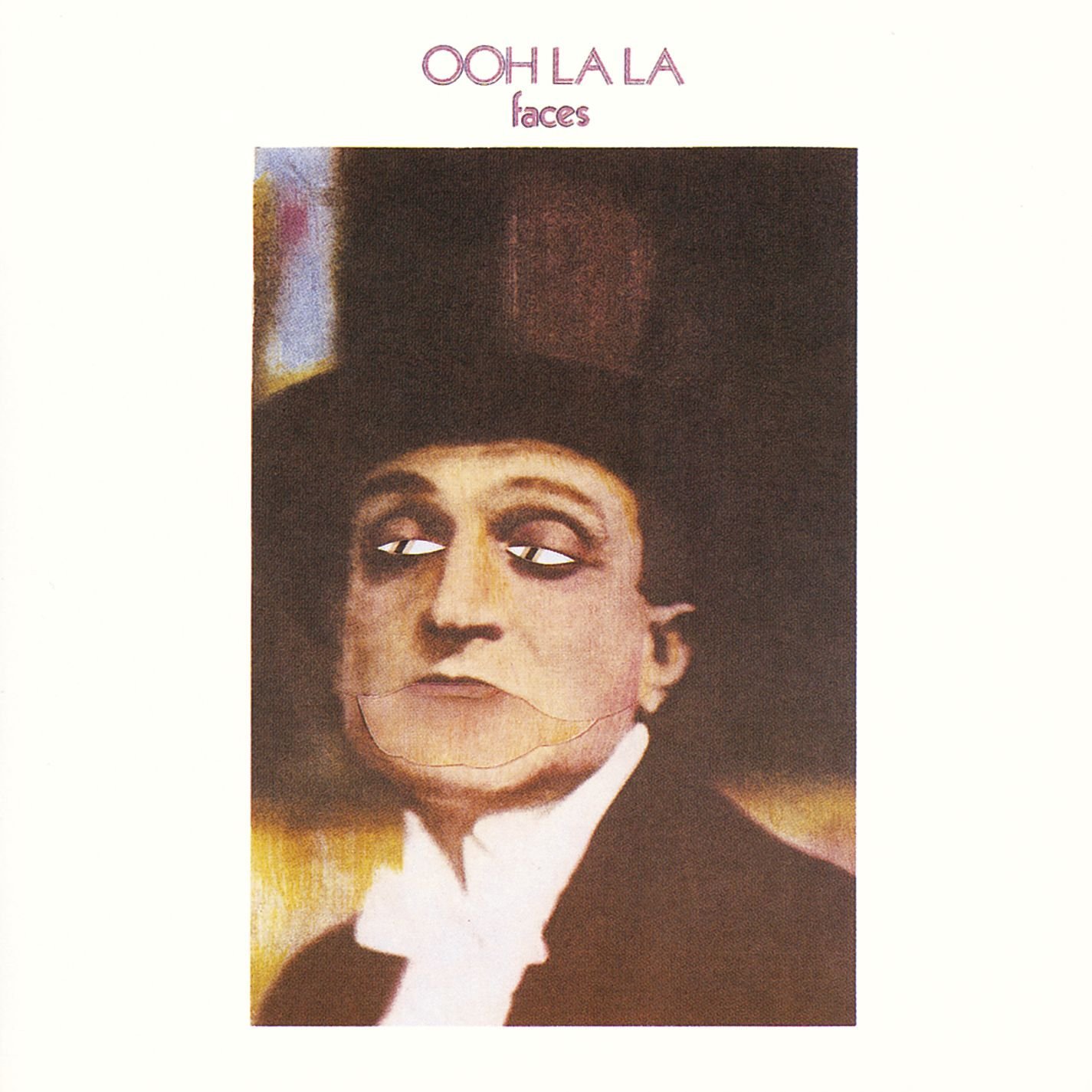
00602537890675-cover-zoomLane also invested in a mobile recording studio, while Mac crept down the hedonism line, mixing booze and cocaine after his marriage break-up, and Stewart had just finished next mega-seller, Never a Dull Moment, so accordingly the Faces started what became Ooh La La on their own, taking six months amid many reworks and a ’laissez-faire attitude’ towards ‘punctuality and sobriety’ (opposed to the more disciplined Rod and Kenney).

Plonk soon fled to Ireland, in turn pairing up with friend of the band and graphic artist Mike McInnerney’s wife, the bass player pre-empting Dexy’s Too Rye Ay Romany look by several years on his return, his new partner seen as a Yoko-type figure as the old dynamic suffered. Yet by April the Faces had a UK No.1 LP with Ooh La La, arguably their finest, although neither Rod nor the critics were so sure. Tensions ran high too, as seen during a Long Island on-stage spat between Lane and Mac and soon after as Plonk supposedly told Rod – after a cutting remark about fashion – he’d ‘rather look like a fucking Teddy boy than an old tart who’s going through the change’. Taking that further, Neill adds that ‘Lane later acidly remarked he knew it was time to move on when Rod started buying his clothes from Miss Selfridge’. Like I say, different times.

Lane’s replacement Tetsu, ‘a challenge for any biographer due to the language barrier and the new bass player’s media reticence’, added fresh colour, Mac reckoning he ‘brought a bottle of Teacher’s in with him at the first rehearsal, drinking the whole bottle himself’. What’s more, ‘Rod swears blind one time on tour he saw Tetsu’s breakfast tray being delivered with a bottle of Teacher’s on it’.

By now the lead singer was heavily into his tartan period, as replicated in the audience, while this easily-recognisable band’s ploy of booking in as Fleetwood Mac on US tours no longer working. They still managed to trash a few rooms though, the National Guard called out on at least one occasion. For his part, Mac specialised in flooding toilets, unscrewing doorknobs and phone receivers and disabling beds, his band often taking a private jet to gigs, shuttled via Cadillac and Mercedes limos between airstrip and venue.

All a world away from Lane, working on a dream of playing big top shows with dancers and various acts, a dry run on Clapham Common involving a 2,500 capacity Chipperfield’s circus tent, the front-man at home on the Welsh border while his old band toured Down Under and Japan. Meanwhile, rumours circulated about Woody joining the Stones or forming a backing band for Smiler-era Rod. He went on to record two solo LPs with high-profile cameos, but the next Faces tour soon saw the usual all-night party vibe remain, a ‘perpetually-grinning Tetsu … down to just one bottle of Teacher’s a day’, the band somewhat tighter.

While the Faces put on the biggest grossing UK tour of ’74, Lane’s Passing Show further illustrated Plonk’s disinterest in the business side, leading to dodgy contracts and transport problems in a tour characterised by breakdowns, Russ Schlagbaum reckoning the trucks he bought ‘belonged in the London Transport Museum’. Yet Ronnie remained determined to see his vision through, deaf to advice.

716rGZASCKL._SL1425_Back in the big time, new acquisition Britt Ekland caused further resentment among the crew at a time of ‘the worst of Rod’s lothario behaviour’, the superstar lead singer soon a tax exile, saying he was ‘forced out of Britain thanks to Chancellor Denis Healey’s crippling tax laws’. Times were changing though, punk rock about to ‘tear at the barricades of the smug complacency and spiritually bankrupt world represented by dinosaur behemoths like ELP, Pink Floyd and Led Zeppelin and superstar tax exile sell-outs like Mick Jagger and … Rod Stewart’.

The latter was based in Hollywood by then, his worldwide Warner Bros deal including his Riva Records imprint, the next solo LP the first not involving any Faces, Woody by then a Stones loanee. Atlantic Crossing was certainly an oddity, produced by Tom Dowd but with little of the Muscle Shoals charm it might have had, despite some good songs and contributions from Booker T & the MGs and the Memphis Horns. The first of his two-sided affairs (fast and slow sides) Neill gets it spot on, saying it was ‘staggeringly successful yet creatively moribund’ and ‘set the template for Rod’s tenure with the label’.

Only one of those songs – Three Time Loser – featured on the final Faces tour, the last gig on November 1st, 1975. Rumours of a farewell UK tour followed, but Rod said, “When we do break up there’ll be no bloody farewell tour. It’ll end with a punch-up. Our last concert will be a televised show of us kicking the shit out of each other.” Disappointingly, that never happened, although Neill details what followed, right up to Mac’s late 2014 passing, 23 years after Steve Marriott’s and 17 years after Ronnie Lane’s.

There are other books out there telling the story from different angles, but think of this as the deluxe compendium, complete with more than 60 pages of additional notes, release timelines etc. And detail is something Neill has in abundance. As he put it, ‘Little did I realise to what gargantuan lengths it would grow in doing the subject adequate justice. With the possible exception of Crosby Stills Nash and Young, no other group presents the biographer with such a considerable challenge of unravelling the individuals’ various backgrounds, previous musical journeys and subsequent careers’. Whether or not he had ‘a real good time’ writing it, somehow he pulled it off. Andy Neill can be proud of the finished product too, a worthy addition to any rock biog collection.

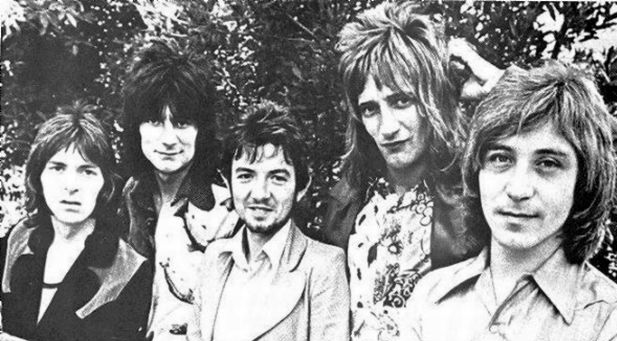
Eyes Open: From the left - the distinctive, distinguished Ian McLagen, Ron Wood, Ronnie Lane, Rod Stewart, Kenney Jones (Photo copyright: Tom Wright)

Eyes Open: From the left – the distinctive, distinguished Ian McLagen, Ron Wood, Ronnie Lane, Rod Stewart, Kenney Jones (Photo copyright: Tom Wright)

Faces Before During and After – Had Me A Real Good Time by Andy Neill is available from all good bookshops and several online outlets right now, published by Omnibus Press and priced £18.99 in the UK.


Posted in Books Films, TV & Radio, Music | Tagged , , , , , , , , , , , , , , , | 1 Comment

The Path Master- in conversation with Graham Nash

Southbound Cab: Graham Nash's latest visit takes in visits to Manchester, Birmingham, Islington and Guildford

Southbound Cab: Graham Nash’s latest visit takes in visits to Manchester, Birmingham, Islington and Guildford

I couldn’t help but feel nervous listening to singer-songwriting legend Graham Nash’s recent guest spot on Simon Mayo’s Radio 2 show.

The Crosby Stills Nash and Young and Hollies star came over a little direct … abrupt maybe … and I got a distinct feeling his experienced host was working hard for his wonga. So where would that leave me when it was my turn the following morning?

Here was a two-time Rock and Roll Hall of Fame inductee, Grammy Award winner, best-selling author and Officer of the Order of the British Empire with an enviable back-catalogue across the years. What’s more, his publicity people ominously insisted interviewers shouldn’t dwell on his past, not least I’m guessing because of his recent publicised feud with a certain David Crosby. Instead, we were asked to listen to his latest LP and build questions around that.

I shouldn’t have worried though. This Path Tonight – 10 brand new songs on an album of ‘reflection and transition’ – is a winner. And while this 74-year-old Salfordian clearly doesn’t suffer fools gladly, he proved great company during our 15-minute telephone chat.

Graham was briefly over from America to publicise dates to promote his new LP, including one at Manchester’s Albert Hall on Saturday, May 21, and a personal appearance two days later – ‘A conversation with Graham Nash’ – celebrating an exhibition of his photography back in his native Salford.

And the man who gave us such classics as Carrie Anne, Marrakesh Express, Our House and Teach Your Children – and that wondrous voice on so many more great songs – was fired up about his latest album, truly impassioned talking about his new material.

“Well, I’m really proud of this record!”

Path Finder: Graham Nash's new album, This Path Tonight

Path Finder: Graham Nash’s new album, This Path Tonight

It’s not just a Graham Nash album either. There’s a proper band feel to it.

“Isn’t it great!”

That prompted Graham to go into detail about what he initially asked of his producer (and guitarist) Shayne Fontayne, who is also playing on his forthcoming UK, European and US tour. But I was slightly distracted, having realised the cable had come out of my recorder, quickly plugging back in just as he added, “I knew it was going to be a great session, because Myself at Last was the first attempt at the first song we tried.”

It turns out that he wrote 20 songs in a month with former Bruce Springsteen and Maria McKee collaborator Shane, recording them in eight days. And as he puts it, “The music has a different feel to my earlier albums, although I hear echoes of each one. This journey was one of self-discovery, of intense creation, of absolute passion.”

Suitably recovered from my technical trauma, I told him the sparse version of the title track he played live on Radio 2 further proved the strength of the song, bringing to mind Johnny Cash’s work with Rick Rubin.

“Well … how fantastic. What a compliment – thanks!”

Ever contemplate recording something as raw as those albums?

“It’s very possible. That happened late in Johnny’s life, and Johnny was a dear friend. I have an incredible amount of respect for what he did in his life. He was a true American.”

The opener, title track This Path Tonight is very much a statement of intent, an inspirational call to arms, suggesting, ‘We’re not done yet, I still have plenty to offer’.

“That’s right, we’re not done yet, kid! I know, I’m 74 years old so how much longer can this go on? But I’ll be rocking until the very end, I hope.”

Despite his American tones – he’s been a US citizen since 1978 and lives between California, Hawaii and New York – Graham’s pronunciation of ‘path’ somewhat underlines his North West English roots.

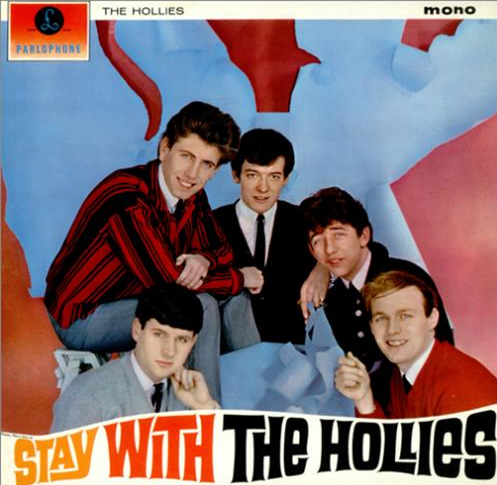
Starting Point: The debut album from The Hollies, from 1964

Starting Point: The debut album from The Hollies, from 1964

“You can’t take the Salford out of me, I’m afraid! Don’t forget though, I’ve been in America for almost 50 years now, and all my family think I talk like a Yank.”

Do you consider yourself a Lancastrian, Salfordian, or a world citizen first and foremost?

“I’m a Salfordian, and proud of it.”

Back to the album, and the reflective, near-perfect Myself at Last leads me to chance my arm, suggesting it carries elements of a certain Neil Young at his melodic best.

“Well, I’ll take that as a compliment! I have great, great respect for Neil. I think he’s an incredible musician.”

It’s not just when the harmonica comes in either. It’s there throughout, not least in his voice.

“Well, I’m like Neil – I love those first takes.”

Meanwhile, Cracks in the City crept up on me around the second listen, its late ‘60s/early ‘70s feel perhaps the closest we get to Crosby Stills Nash and Young, America, or The Eagles.

“I think Cracks in the City sounds very much like Paul Simon.”

I can see that, although the lyrics suggest something less transatlantic, about being back on home soil maybe.

“I wrote that about New York City, but it applies to every single city. Every city I go to in the world is slowly rebuilding itself.”

Beneath the Waves follows that lead, Graham’s vocals as gloriously-recognisable as ever. How does he think his voice has changed over the years?

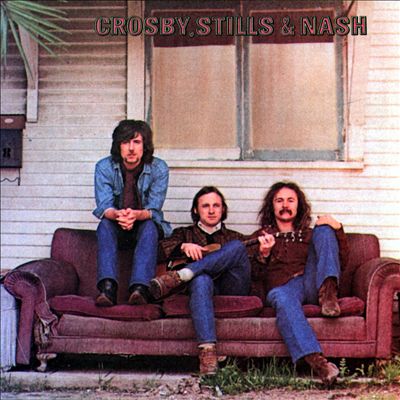
Three's Company: Graham Nash's first album with David Crosby and Stephen Stills, from 1969

Three’s Company: Graham Nash’s first album with David Crosby and Stephen Stills, from 1969

“I don’t think it’s changed at all … not since I was a kid.”

Do you have to work hard to keep it in good shape?

“Not at all. Not one thing. I don’t have a vocal coach and don’t have exercises to do. I warm up five minutes before I go on stage. Other than that I don’t do anything to prepare my voice.”

The stirring Fire Down Below is another song that might belong to any of the last few decades, yet again it’s fresh and somehow contemporary.

“Well, this woman I’m in love with right now has set me back on fire!”

It turns out that Graham’s currently in the process of a divorce, after 38 years of marriage to his second wife. And his sixth solo album in the 45 years that have lapsed since his impressive 1971 debut solo LP, Songs for Beginners, certainly seems to cover a few personal issues.

“Very much so. Having said that, I think a lot of people are going through similar changes to me in my life right now.

“You get to the age of 74 and look around and you’ve lost Bowie and Glenn Frey and Paul Kantner, and all of a sudden you start to think about your own longevity and your own life. I keep getting back to the same simple thing – utilise every second you can the best way you can.”

Along those lines, there’s a heartfelt tribute to The Band drummer/vocalist Levon Helm, Back Home, on this album.

“Indeed, and that’s my demo from the bus!”

I believe he’s referring there to an impromptu writing session with Shayne four years ago after they heard about Levon’s passing while touring.

Songwriting has clearly been important to Graham’s career development over the last five decades. In fact, I understand he was the first to encourage his Hollies co-founder and old schoolfriend Allan Clarke and the band’s guitarist Tony Hicks to write their own material (at first under the collective pseudonym L. Ransford) rather than rely on outsiders.

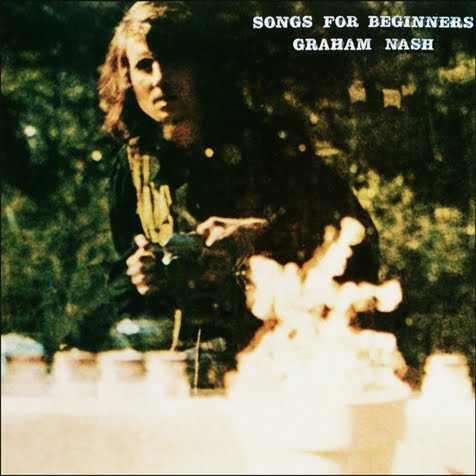
Solo Debut: Graham's Songs for Beginners, from 1971

Solo Debut: Graham’s Songs for Beginners, from 1971

It’s not just about the lyrics though, and on Another Broken Heart I hear elements of George Harrison and several others who followed Graham’s path to some extent, like Tom Petty and Mark Knopfler maybe. Do those artists mean a lot to him?

“Indeed, and especially people like David Gilmour. I love singing with Gilmour, man. He’s an incredible musician.”

I mentioned former relationships, and the evocative Target’s riff invites comparisons to past love interest Joni Mitchell’s A Case of You, albeit with shades of Peter Gabriel’s Solsbury Hill and Young-esque harmonica again.

And finally, the closing three songs – the reflective Golden Days, the afore-mentioned dream-like Back Home and the questioning, rather apt Encore – provide a perfect ending.

“I think so, especially Encore. I mean, who are you when the last show’s over? Are you a decent person? Do you want the best for everybody? Who are you when the lights go out? That’s a question I’m asking myself.”

With all those songs, you’re wistful without being too melancholy, pensive without being over-sentimental. Is that part of your Manchester upbringing?

“Absolutely. When I was born, World War Two still had three years to go. You never knew whether your house was going to be there tomorrow or if your friends were going to be alive.

“Once you’ve overcome that, there aren’t really too many problems. Just because your coffee’s too cold, you can’t complain. It’s like, ‘Come on – it’s not the atom bomb!”

Talking of roots, Graham was born at Blackpool’s Kimberley Hotel in early 1942 – as brought into Military Madness on Song for Beginners – his Mum an evacuee escaping Salford at the time. Not as if he remembers his brief spell on the Fylde coast.

“My first memory is of being back home in Salford. I was about a year and a half, looking at a Beano comic which was upside down, seeing my mother drawing the blackout curtains.”

Graham has just four dates here this time, as part of a larger world tour, but he’s looking forward to playing those new songs. Others in hiss position might find it all a bit of a bind these days – the travelling between, the sound-checking and so on …

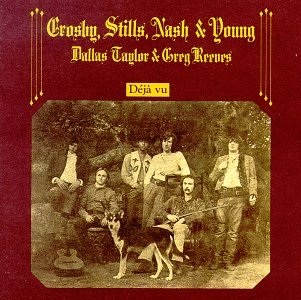
Quartet Quality: Deja Vu brought Neil Young into Crosby Stills and Nash's studio ranks

Quartet Quality: Deja Vu brought Neil Young into Crosby Stills and Nash’s studio ranks

“I don’t find any of it a bind. If I did, I wouldn’t do it.”

So what is it about Graham and Shane working together on this latest project?

“When you strip a song down to its very essence, you either have a song worth singing… or you don’t. Playing music with Shane Fontayne is and always will be very satisfying. He has an innate sense of performance and of arrangement. He never loses sight of the fact that the song must come alive, must have a reason for being sung in the first place. We want to look in the eyes of our audience, we want to know that we are connecting on a very real level. What a pleasure this tour will be for me.”

Graham confesses he knows very little about his Manchester stop-off, Peter Street’s grade two-listed Albert Hall, a Wesleyan chapel resurrected by those also behind The Gorilla and Deaf Institute venues.

The same goes for the location of his May 24th London sell-out at the Union Chapel in Islington, on a brief UK stint that also includes dates at Birmingham Town Hall on May 22nd and G Live in Guildford on May 25th.

But there’s an extra appearance in more familiar territory, with Graham talking about his photography at Salford Museum and Art Gallery on May 23rd, helping publicise the My Life Through My Lens exhibition, which runs from April 23 to July 3.

He’s garnered a lot of praise for his photographs. Is that an extension of Graham’s work in song? Or does it involve a different approach?

“No, no … it’s all the same. It’s just a column of energy. Where do I want to plug in today? I’ll plug in here because that’s music and I’m thinking of a song. Or if no songs are coming to me I’m just going to take pictures … or collect … or paint.”

All part of that storytelling gene?

“All part of it … yeah.”

The exhibition includes shots of friends such as David Crosby, Joni Mitchell, Jerry Garcia and Johnny Cash. Did his closeness to those artists allow him to capture something others might not have seen?

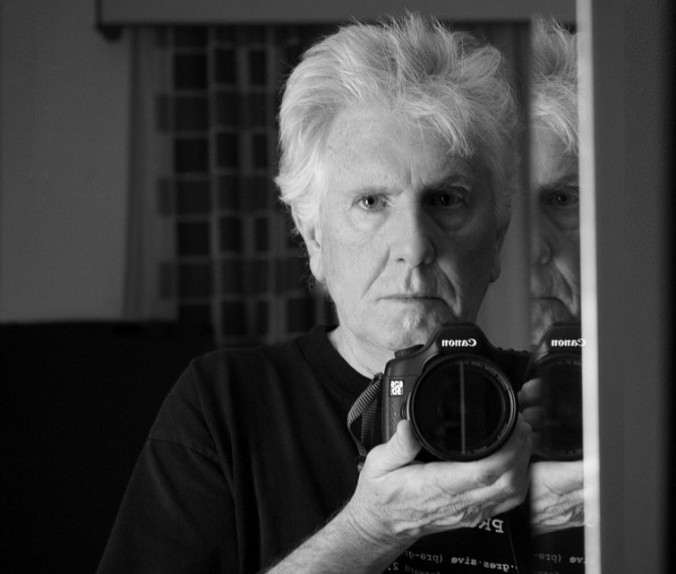
On Reflection: Graham Nash, also a respected photographer

On Reflection: Graham Nash, also a respected photographer

“Absolutely. I want to be invisible when I’m taking your picture – I don’t want you to know I did that.”

Is there anyone from the old days to call in on when he visits Salford?

“I think most of my friends have moved on, but I see Pete MacLaine a lot. I’ve been a dear friend of his so long. In fact, when I married (first wife) Rose Eccles in ’64 we spent the night on Pete’s floor!”

The story of Pete, or ‘Jam Side Down’ as he’s known in certain circles on account of his many near-misses during a run at fame on the 60s’ Manchester beat scene, deserves to be heard.

This was, after all, the guy who partied with The Beatles, toured with The Rolling Stones, had his band The Dakotas poached by Brian Epstein for Billy J. Kramer, turned down a compensatory offer by friends John Lennon and Paul McCartney to write for him, and saw a Decca Records plant holiday closure end his best hopes of a hit single and was pipped by the Swinging Blue Jeans to a hit with a follow-up cover of Good Golly Miss Molly.

Incidentally, Pete’s career is properly chronicled – along with that of The Hollies and many more on that scene via the http://www.manchesterbeat.com/ archive.

And it seems that Pete’s still out there, laughing about his past endeavours and keeping on rocking with the latest incarnation of The Clan, five decades after rubbing shoulders with The Beatles, The Stones and The Hollies.

Ah yes … The Hollies, the band that helped launch Graham’s stellar career, from whom he moved on after six years in 1968, the increasingly-disillusioned guitarist/vocalist joining forces with The Byrds’ David Crosby and Buffalo Springfield’s Stephen Stills.

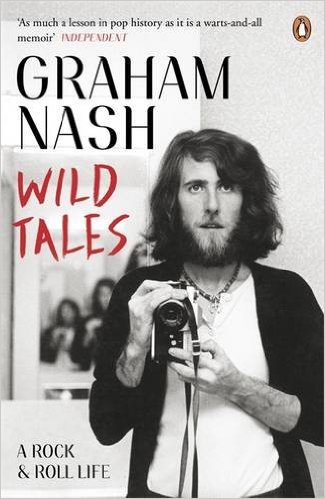
Wild Tales: Graham Nash's 2013 autobiography

Wild Tales: Graham Nash’s 2013 autobiography

That ground-breaking folk-rock trio with the rich harmonies became friends during a 1966 Hollies’ US tour, later becoming a quartet with the addition of further Buffalo Springfield recruit, Neil Young.

But that’s not what Graham’s here to talk about. So was the Salford he remembers more that of Ewan MacColl’s Dirty Old Town than the modern-day quays re-development?

“Absolutely! Actually, I only found out yesterday Ewan MacColl came from Salford. I never knew that!”

And do accolades like his honorary doctorate from Salford University and his OBE tug him back to this side of the pond, at least emotionally?

“Absolutely. When I was standing in front of Her Majesty the Queen and she was asking me about The Hollies, that blew my mind! I had no idea she even knew who The Hollies were.”

What would your folks have made of that?

“They’d have been so proud. That’s what I was thinking when I was speaking to Queen Elizabeth – how incredibly proud my mother and father would be.

“There are a lot of people who feel the royalty is a thing of the past and shouldn’t exist, but when you’re standing in front of the Queen and you realise she represents a thousand years of English kings and queens – that’s impressive, I don’t care who you are!”

You must have so many people tell you about certain songs you wrote or sang on, and their story around it. Is there a song or album you feel deserves a re-appraisal and that you’re surprised no one tends to bring up?

“Not really. People who love us and love our music know most things about us.”

By the time Graham reached California in the late ‘60s, he seemed more politically-minded, and that continues, as seen recently through support of the Occupy Wall Street movement and Bernie Sanders’ presidency campaign. So what rattles Graham Nash today?

“We get asked to do benefits a lot, and you have to prioritise your time so you figure out the two or three things that are most important to you, and concentrate on that.

Bare Footing: Graham Nash, coming back to a few of his old UK haunts

Bare Footing: Graham Nash, all set to head back to a few of his old UK haunts

“Right now, it’s our children and how we’re feeding them and how we’re educating them. And I think the biggest problem facing humanity is climate change. All these people who have been paid to deny the fact that human beings are creating this climate change – they’re just awful, awful people that are incredibly misinformed.”

Finally, on the strength of this LP we’ll be wanting another soon. Do you remain a prolific songwriter?

“Absolutely. I’m writing all the time. There’s so much stuff out there to write about. As a creative artist I need to reflect the times I live in and try and be as honest as possible.”

I’d like to have asked a lot more, but time was against me, the next interviewer waiting patiently for their allocated slot. So I bade farewell, Graham responding with a cheery Lancastrian, “All the best, lad!”

For further details about Graham Nash’s forthcoming tour and new album, head to www.grahamnash.com. Meanwhile, This Path Tonight is available for pre-order via iTunes and Amazon in deluxe and standard editions.


Posted in Books Films, TV & Radio, Music | Tagged , , , , , , , , , , , , , , , , , , | 8 Comments

Reimagining The Blow Monkeys – the Dr. Robert interview

Monkeys Business: Dr Robert, out front with The Blow Monkeys, 35 years on

Monkeys Business: Dr. Robert, out front with The Blow Monkeys, 35 years on

Robert Howard, aka Dr. Robert, lead singer, guitarist and main songwriter with The Blow Monkeys, spends a fair amount of time visiting Andalucia, Spain these days. Born in Scotland, he’s certainly got around, having initially formed a band on returning to the UK after a teenage spell in Australia, joining forces with Mick Anker (bass), Tony Kiley (drums) and Neville Henry (saxophone) in 1981. And three and a half decades on, it’s the same four-piece involved, his band having released four studio albums since their return in late 2007.

First time around, it took them four years to make a major impact, their promising indie debut single Live Today, Love Tomorrow among six gathering interest but failing to set the charts alight. Yet the band were soon building a live following and attracting further attention, a subsequent deal with RCA leading to rightly-acclaimed 1984 debut LP, Limping for a Generation.

Around then, I’d say they had the feel of Orange Juice and The Higsons in places, ABC, The Smiths and The Style Council in others, playing their own particular brand of ‘jazz-punk’, as the good Doctor put it. Meanwhile, Robert’s vocal delivery and lyrical approach arguably brought to mind another artist breaking through around then, going by the name of Morrissey.

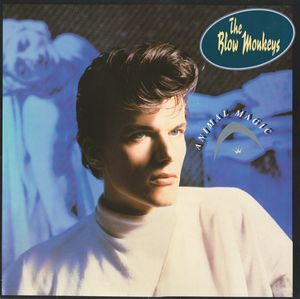
While commercial success was eluding them, a breakthrough soon arrived, the poppier, more soulful second LP Animal Magic making its mark when second 45 Digging Your Scene became a hit. And that great track – still as fresh to this day – just happened to be my introduction to the band as an 18-year-old – one that was just outside the top-10 singles chart 30 years ago this month.

In time, more hits followed, most notably It Doesn’t Have to Be This Way and Choice? as the band evolved seemingly seamlessly from indie to dance over the course of the She Was Only a Grocer’s Daughter (1987), Whoops! There Goes the Neighbourhood (1989) and Springtime for the World (1990) albums. But the latter proved to be the last for 18 years, the lead singer soon concentrating on a busy solo career.

Robert certainly remained a regular on the live scene, including a date a few miles from me at the Adelphi in Preston, Lancashire, in the late ’90s, promoting hi comparatively-sparse fourth solo album Flatlands. Clearly, he’d stepped away from the Balaeric beats and returned to basics. He was out on the road – just one bloke and a guitar, yet packing a proper punch, his new songs somewhat fitting considering his stark rural Lincolnshire surroundings at the time he made that album.

Fast forward to 2008 and The Blow Monkeys were back with Devil’s Tavern, with three more great LPs and a live collection following since, up to last year’s celebrated If Not Now, When? And you only have to check out the single OK! Have It Your Way – arguably a re-imagining of Prince’s Cream done in a David Bowie style – to see this band remain as fresh as ever.

You can judge that for yourself soon, The Blow Monkeys’ new tour starting at Liverpool’s St George’s Hall on Thursday, April 21st, with sporadic dates from there right up until an appearance at The Grand, Lancaster, on Sunday, July 24th. There are also a couple of outdoor dates lined up too, including one not far off my old patch at Weyfest, near Farnham, Surrey, in late August.

First Footing: The Blow Monkeys' 1984 debut LP, Limping for a Generation

First Footing: The Blow Monkeys’ 1984 debut LP, Limping for a Generation

“Those festivals are good fun. We never used to do any of those back in the ’80s. I like those smaller ones in particular. And the size of Weyfest is perfect.”

While we’re on the subject of geography, and seeing as Robert’s near Granada when I speak to him (and I don’t mean some motorway services chain or North West TV studio complex), how about that move to Spain? All a bit different from The Fens, I guess.

“Yeah … but not really. There are a few differences, I suppose. There aren’t as many eels here.”

The morning we spoke, I told Robert I’d just been playing a track by the Buzzcocks, as it was 35 years ago to the day that the influential Mancunian punk and new wave outfit split … which just happened to be the year The Blow Monkeys got together.

“I loved the Buzzcocks. A real seminal band to me growing up. If you were learning guitar they were good to play along to – they played easy chords. They also did love songs, something not so many punk bands were doing.”

Moving right on to the end of that following decade, another mightily-busy one for Robert, and the afore-mentioned late-’90s date at The Adelphi, I’m guessing a lot of water’s passed under the bridge since.

“We’ve all passed a lot of water since. Put it that way.”

Powerful songs like Hanging on to the Hurt (later revived for The Blow Monkeys’ Staring at the Sea album in 2011) from that era seemed to redefine Robert in my eyes, an artist I’d previously seen in a far more pop setting. But maybe it’s never been too clear-cut whether Robert was a pop, dance or rock artist – solo or with The Blow Monkeys.

“Yeah, probably to our detriment. We’ve never been that easy to pigeon-hole or categorise. At the height of our success, pop fans would turn up and be quite surprised. But if you traced before then you’d have seen we came from a different scene.”

That was where I came in. I was late to the party maybe, only discovering Limping for a Generation later, but Digging Your Scene and it barber-shop style b-side I Backed A Winner in You proved a perfect introduction. Soon, I’d snapped up the Animal Magic album, a love for the band truly kindled.

“Well, thank you for your support.”

Now Then: The Blow Monkeys' 2015 offering, If Not Now, When?

Now Then: The Blow Monkeys’ 2015 offering, If Not Now, When?

That was all a staggering 30 years ago though. It’s not just a nostalgia thing, although that LP conjures up great memories. Yet I soon lost touch. Did he find that was the case with part of his old fan-base?

“Yes, my solo stuff was pretty much under the radar. I jumped from small label to small label and did a lot of small gigs like the sort you’re talking about. I was just putting the acoustic guitar in the boot, with no big deal. It was a case of reconnecting with my roots, and I’ve just carried on doing that. Sometimes I get lucky and people hear them, other times it’s just hardcore fans. It’s been a continual process for me.”

Robert, who turns 55 this year, remained a fairly prolific songwriter, as a solo artist and with the band. Have there been lean times?

“That’s never been a problem for me, writing – that’s what I do. I don’t have a proper job, so have plenty of time to do that! I never stop writing and trying to improve, as a musician and a writer. A lot of people wouldn’t know a lot of the stuff I’ve done, but that’s fine. I‘ve been lucky, and I’ve never had a fallow period in terms of inspiration.

“I’ve always written about what’s around me – landscape, people. I’m not really a storyteller. I’m more an impressionistic writer. As long as you’ve got your eyes open – seeing good and bad – you can keep expressing that.”

There’s clearly the appetite out there for the band since their return, unsurprisingly judging by the quality of the new material, with 2011’s Staring at the Sea and 2013’s Feels Like A New Morning also definitely worth finding if you missed out. So, getting the band back together again – was it a case of making up for lost time, unfinished business, or a natural progression of what you were doing?

“For me, it was a natural progression. I reached a point where I fancied being in a band again, and I think all the guys did as well. We had this shared history and we all still got on. We also had this back-catalogue and it was the four original members, so it felt like the right thing to do. And we’ve made four new albums in that time, so it’s not like we’re putting ourselves out there as a nostalgia act.

“Okay, we’ve done a lot of Rewind-type festivals, but I think we’re the only band that turns up and say those scary words, ‘And this is a new song’. That really matters to me.”

Last year’s If Not Now, When? was self-released. The industry’s clearly changed a bit since the band’s 1990 RCA swansong Springtime for the World.

“Well, that’s a wonderful thing, because now we don’t have to rely on record companies and getting play-listed on national radio. You can follow your own course and get fans on board. Even the process of recording is far easier, and cheaper. It’s much more a level playing field. That’s great for a band like us, especially when you have that fan-base and history. It can really work as long as you’re prepared to work hard. We have to get out there and play live, but I love that anyway. That’s no hardship.”

Solo Act: Dr Robert's debut LP under his own steam, 1994's Realms of Gold

Solo Act: Dr Robert’s debut LP under his own steam, 1994’s Realms of Gold

You always went down well as a live outfit though, didn’t you?

“Well … mostly. When we started we got supports with bands like The Sisters of Mercy, and I don’t think their fan-base took particularly to us! But it was a challenge and helped me create a little stagecraft – how to deal with audiences who don’t like you!”

When I mentioned the ‘new’ album, I confused Robert somewhat, as he was about to release a further solo album – another stripped-down acoustic affair, Out There. So it seems he’s still treading a line between solo artist and band member.

That take me back to how Flatlands inspired me to catch up with his solo back-catalogue, wondering how I’d missed 1984’s Realms of Gold and all that followed, songs like The Coming of Grace and Circular Quay stopping me in my tracks. That’s all history though, so let’s get back to The Blow Monkeys circa 2016. Not many bands reform – and stay together – with all four original members. I take it they all get on well.

“We do. We’re very different people, and don’t really mix outside the group, but that’s always been the case, and that’s probably why we do get on. Everyone has their own lives outside the group, musically as well. But it just works. I don’t really know why, and don’t really want to analyse it unless it falls apart.

“There’s a family feel too, and it’s interesting that the four of us are still with the same partners as we were 30 years ago. That probably tell you something of the nature of the band, and the loyalty we have.”

So are there new generations of Blow Monkeys coming through then?

“Well, my son’s making his own thing in electronic music, running a label and DJ-ing. But you have to be in Peckham, South London, to know what’s going on, basically …”

For some reason I see Howard Jnr. as a bit of a Rodney Trotter character now. But I’m sure Robert’s son is no plonker, and he’s still talking anyway, so I let it go.

“… and my daughter’s into film. You can’t help but influence them though. They probably don’t understand the notion of someone getting a proper job. After all, I’ve managed to avoid it thus far!”

While their musical styles adapted over the years, there was always a political edge to The Blow Monkeys beneath the beat. Does Robert still find plenty to get mad about to this day (he asks knowingly)?

Neighbourhood Watch: The Blow Monkeys' 1989 hit album, Whoops! There Goes the Neighbourhood

Neighbourhood Watch: The Blow Monkeys’ 1989 hit album, Whoops! There Goes the Neighbourhood

“I do, and write about what affects me in my life. Just thinking about now – this migrant crisis, the idea of leaving the European Union, borders … you can just get so involved. I’ve always been a socialist at heart, so to see someone like Jeremy Corbyn ascend to the leadership of the Labour Party was an amazing thing. I never thought anyone like him would get there. Whether or not he lasts is another thing, but to see how popular he is with young people especially gives you hope. That’s the future.”

That sentiment resonated neatly with the words of a certain song written by the next interviewee I had lined up that day, a certain Graham Nash: ‘Teach your children well … And feed them on your dreams’.

“Exactly! That’s what you do. You just try and make the world a better place, and the old divides of left and right politically are less important than what you’re like as a person in the end. As you get older you realise that. I could even say I’ve met some nice Tories in my life … although I can’t remember any right now … but I’m sure there are!

“When I was 25 I would have been far more black and white about things. Yet there’s still an awful lot more to fight against.”

Robert’s ticked off a few ambitions over the years, and has worked with everyone from PP Arnold to Dee C. Lee, and from Curtis Mayfield to Paul Weller. Not a bad job for someone who’s never had a job, eh?

“Yeah, although I didn’t set out with that in mind. Those things just sort of happen, and I was very lucky. And people like Paul and Curtis taught me a lot. I’m very grateful for that. It’s not a bad life.”

The fact that his old friend Mr Weller is still doing it at his age must also be inspirational.

“Yeah, although he’s only a couple of years older than me – he’s not that old! But he’s always been fantastic. He’s just such a force of nature. He keeps pushing. What I love most about him is that he likes to confound his audience, always pushing those boundaries. When I worked with him it was a thrill. I learned an awful lot … not just about being brave.”

Breakthrough Album: The 1986 LP Animal Magic provided a commercial turning point

Breakthrough Album: The 1986 LP Animal Magic provided a commercial turning point

Like Weller, the light clearly still burns bright for The Blow Monkeys, judging by the new material. And as their press has it, they’re a sight to behold live, ‘invigorated, charged and on a roll’. There’s Mick with his ‘intricate bass lines of funk and grace’, Neville with ‘achingly beautiful tenor sax lines and stylish suits’, and Tony the ‘powerhouse from the valleys of South Wales, who can explode like Buddy Rich and swing like Gene Krupa’. And then there’s Robert, ‘spouting opinions and poses in equal measure, with a canny sense of knowing and a suitcase full of killer songs’.

Incidentally, that same press release includes a quote from the Doctor saying he was ‘really only just beginning to get the hang of all this’. Is that right?

“In a funny sort of way, yeah. I just feel at the moment I’m going through a good period in terms of the writing and playing … and enjoying it. When you’re young sometimes your ego is fragile when you push yourself out there. But the best times are normally when the music’s just flowing through you.

“It’s not about you so much. It’s about the atmosphere you create in the room. I’ve a feeling that’s happening more often and that makes for better music and better gigs.”

Touring Again: The Blow Monkeys, featuring the same line-up now as way back then

Touring Again: The Blow Monkeys, featuring the same line-up now as way back then

For full details of The Blow Monkeys’ forthcoming tour dates, seek out the band’s official website here and keep in touch with Dr. Robert and co. via their Facebook and Twitter links.

Posted in Music | Tagged , , , , , , , , , , , , , , , , , , , | 3 Comments

The Human Love story – in conversation with Newton Faulkner

Shadow Play: Newton Faulkner, back out on tour again from next week, promoting Human Love (Photo: Pip for BMG)

Shadow Play: Newton Faulkner, out on tour again from next week, promoting Human Love (Photo: Pip for BMG)

It seems that Newton Faulkner has something of an affinity with the inventive cover version.

On his chart-topping double-platinum 2007 debut album, Hand Built By Robots, there was a fresh twist on Massive Attack’s Teardrop, with several more inspired covers following before Newton’s fresh take on Major Lazer’s Get Free last November.

You may have seen the accompanying video for the latter, this distinctive crossover folk-rock artist cutting off his trademark red dreadlocks while singing, suggesting a new chapter in an already-stellar career.

That was the lead single on the 31-year-old’s fifth album, Human Love, and while so far it hasn’t reached the dizzy heights of debut top-10 hit Dream Catch Me eight years before, there’s plenty of love out there for this singer-songwriter and percussive guitarist.

And similarly, while Human Love is yet to have the impact of his previous four LPs – all of which made the top-10, with two topping the charts – this artist is more than happy with the early reaction, not least live.

Album opener Get Free showcases what his publicists called ‘an evolution in sound’ for Newton, and across the tracks the album that followed features several high-profile credits in the pop world. It’s mixed by Cenzo Townshend (The Maccabees, Jungle and George Ezra), while Step in the Right Direction was produced by Cam Blackwood (George Ezra, London Grammar, Florence and the Machine), Far to Fall was co-written by Ed Drewett (One Direction, The Wanted, Olly Murs) and Shadow Boxing was produced by Australian duo Empire Of The Sun.

Human Love is certainly a grower. More commercial than my listening would normally involve, maybe, but think of a harder-edged, more soulful Ezra and Sheeran with a few Florence and the Machine-type touches and that afore-mentioned Faulkner invention. The catchy Up, Up and Away is another fine example, while Passing Planes and Far to Fall have all the hallmarks of big pop hits, and my particular favourite is Newton’s collaboration with Tessa Rose Jackson on mighty crossover dance track Stay and Take.

Then there’s the radio-friendly Shadow Boxing, with its Seal-like feel, and the album’s quirky title-track finale, with echoes of Neil and son Liam Finn for me. In fact, there’s not a duff track on there. Let’s face it, as an album it should be riding the charts, and Newton should have his third No.1 album.

Newton headed out on the first part of a UK album tour in November, including a Liverpool Academy date, with a second leg getting underway next Wednesday, March 30, at Manchester’s Albert Hall.

Newton Faulkner - LPWhen we caught up on the phone it was barely days after the death of David Bowie, an apt place to start, not least as Newton covered Life on Mars at a Sunflower Jam charity do at the Royal Albert Hall in 2011, accompanied by Rick Wakeman, the prog legend who played piano on Bowie’s original 1973 hit.

“That was just insane, and Rick was lovely.”

So what did David Bowie mean to Newton?

“He was a massive musical inspiration. Undeniably awesome – lyrically, musically, creatively … across the board. Amazing.”

In a similar way to how it took Bowie time to make an impact, it’s clear that this artist has also worked hard to break through.

“There were loads of gigs before things took off, and that’s the centre of everything I do. I think that’s partly why this album sounds like it does. We wrote it to be played live.

“We had a really good festival season the year before last, with an incredible crowd reaction, thousands and thousands jumping. But that had to be the end. I had nowhere to go. So I wrote an album that was basically everything that could happen after that.”

Floored Genius: Newton Faulkner (Photo: Pip for BMG)

Floored Genius: Newton Faulkner, from the floorboards up (Photo: Pip for BMG)

Is Human Love a good indication of where you’re at now?

“Yeah, just going out for festivals! We have a European tour then a UK tour, then straight after that we have the festival season.”

What was the thinking behind splitting this tour, with shows before Christmas then the rest this Spring?

“We needed a bit of time to get our heads around how we were going to do it. Before this, I’ve always been out of synch. I had a band when I started promoting Hand Built By Robots, but then for the second album – considerably bigger sounding – I went completely solo, which was a massive challenge.

“When we were towards the end of making that album with Mike Spencer (who worked on his first three LPs and whose past credits range from Kylie Minogue and Jamiroquai to Ellie Goulding, Emeli Sande, John Newman and Rudimental), I had rehearsal rooms with loads of gear in there, and had a key. I was working all day recording then listening back, sat in this chair, to this massively built-up album, thinking, ‘Sh**! How am I going to do this live!’

Debut Album: The 2007 long player that heralded Newton's arrival

Debut Album: The 2007 long player that heralded Newton’s arrival

“This time I wanted to move everything closer together and I think it’s the closest I’ve come to matching the sound of the records live.

“I’m also using some of those sounds. Technology has moved forward so much it’s easy to attach sounds now. I’ve even got a guitar I attach samples to.”

Has Newton’s custom-built guitar become part of him, like BB King’s Lucille?

“Not quite yet. It’s complicated. It’s not the programming. The guitar’s amazing to play but it does a lot so it’s a case of working out best how to do the other stuff.”

What inspired you to explore that percussive style of playing guitar?

“It was pretty early on. It was like a lazy epiphany. I realised if you want to get noticed playing guitar normally you have to be so insanely good to rise through the ranks.

“But if you do something really f***ing weird, it’s much more instant! I had a week where I thought I’d invented what I was doing. But then someone said, ‘Have you heard this guy?’”

“They played me (Austrian fingerstyle guitarist) Thomas Leeb, who’s amazing. Thomas was really good friends with (late great Irish guitarist) Eric Roche, and they played together.

“I was taught by Eric for a couple of years, and it’s just a really innovative area of playing, with a lot of people pushing the boundaries.”

When I saw Paul Carrack play Preston Guild Hall in late 2014, he had another inventive percussive guitarist supporting – Elliott Morris, who seemed a kindred spirit in that respect.

“I’ve known Elliott for years, and love seeing other people doing it. There have always been pockets in America and here. And it’s really exploded these last couple of years.”

Fourth Album: Write In On Your Skin was Newton's second No.1 album, at the fourth time of asking

Fourth Album: Write In On Your Skin was Newton’s second No.1 album, at the fourth time of asking

You’ve toured with the likes of James Morrison, Paolo Nutini and John Mayer. I’m guessing you’ve learn a bit from all three?

“Yes, and I also toured with John Butler, another amazing player, an Australian artist.”

When I interviewed Colin Blunstone, we talked about The Zombies’ first single She’s Not There being a big hit that they never really topped for a few years. Does that seem familiar?

“I kind of hit the ground running, but was caught off guard a little. First time I ever played Dream Catch Me from start to finish was on Scottish television. That was a bit of a shock.

“I’d been doing I Need Something for all the promos, because it’s a better visual song.

Dream Catch Me worked spectacularly well for radio, but I felt I needed something that had more impact if you saw me playing it. What I didn’t realise was that people really wanted the single instead!”

Despite the success of the albums that followed, it must have been satisfying to see hi fourth album, Write In on Your Skin, also top the charts.

“That was amazing. It took everyone by surprise … definitely me. But I just want to keep doing this until I die, pretty much. It’s a simple plan! And with a studio in my house it helps.

“We worked with some amazing people too. Sam Farrar’s an official member of Maroon 5 now, then there’s Empire of the Sun and Tessa Rose Jackson – an awesome Dutch artist.”

What does Newton feel Cenzo Townshend, Cam Blackwood, Empire of the Sun and his co-writers brought to this album?

Dread Zone: Newton Faulkner (Photo: Pip for BMG)

Dread Zone: Newton Faulkner (Photo: Pip for BMG)

“It’s a really powerful team, and we had a lot of fun, going back and forth. Sam’s in LA, with Empire of the Sun there too. It was fascinating, the polar opposite of me and my purely acoustic approach.”

For all the studio craft there, Newton also mentioned two tracks recorded chiefly as demos which ended up on the album, ‘surviving that whole process’. So perhaps it doesn’t always pay to over-tinker.

“Well, yes, and something like Carole King’s Tapestry was all done within a week, maybe even three days. We’ve got much slower!”

So where does his home recording take place?

“East London … in an old dog biscuit factory, near Bow and Canary Wharf.”

Newton has strong links to Surrey too, having been born and bred in Reigate and studying at my hometown Guildford’s Academy of Contemporary Music.

“I spent a huge amount of time in Guildford, doing a contemporary guitar course, a higher diploma. That was amazing.”

In fact, there’s a return trip to G-Live on this tour on April 12th, while Newton’s also played Guilfest a couple of times in the past.

Festival Fetish: Newton Faulkner, heading to a field near you, given the chance (Photo: Pip for BMG)

Festival Fetish: Newton Faulkner, heading to a field near you, given the chance (Photo: Pip for BMG)

There have been many other big festivals on both sides of the Atlantic, not least Glastonbury, the Isle of Wight, Beautiful Days, Connect, Latitude, Lollapalooza, Radio 1’s Big Weekend, South by South West, T in the Park, V, and one of his personal favourites, County Kildare’s Oxegen.

And you only have to listen to the highly-likeable Newton’s live recordings to see how much fun he has playing to audiences. In fact, at times he must pinch himself in this dream job.

“Yeah – most days! And the festival season’s mental. Everyone – band and crew – worked towards T in the Park and Oxegen, which was absolute carnage.”

In a good way, I’m guessing.

“In a really good way! One year involved Party Boy (from the Jackass TV series), always slightly odd. There was also Mumford and Sons. They’d just got going. It may have been their first festival season.

“I remember we decided to move this 30ft inflatable frog across the whole site and re-inflate it the other side.  Yeah – the festival season is a bit of a crazy time. And there are so many. I can’t keep up any more.”

If the record sales ever dry up, could he survive on that circuit and out on the road?

“I have kind of reached a point – possibly even before this album – where I could just tour and do festivals for the rest of my life.

Golden Greats: Newton Faulkner shares a little Human Love via the power of vinyl (Photo: Newton Faulkner's Facebook page)

Golden Greats: Sharing a little Human Love via the power of vinyl (Photo: Newton Faulkner’s Facebook page)

“It’s a nice reassuring thought – reaching a point of stability. In the world of music that’s very rare, and a very beautiful thing.”

There’s no danger of you going back to playing in a Green Day covers band then?

“No! I might squeeze in a cover now and again though.”

What’s the set-up for your forthcoming tour dates?

“A three-piece – me, my brother (Toby Faulkner)) and an incredible drummer (Toby Couling), all of us really working hard, doing lots of stuff. I can make my guitar sound like a couple of parts but also do things with my feet, like a one-man band, pushing things to the absolute limit.

“A couple of tours ago I realised how unbelievably technically challenging it was. I don’t think anyone actually knew what I was doing. It went so far that to understand it you had to stand next to me to see what my feet were doing. If you need to do that, it’s time to try something else.

“But this is ridiculously fun for me, and reports back from the last tour were amazing. People find it really fun to watch.”

Band Substance: From the left - Toby Couling, Newton Faulkner and big brother Toby Faulkner (Photo: Newton Faulkner's Facebook page)

Band Substance: From the left – Toby Couling, Newton Faulkner and big brother Toby Faulkner (Photo: Newton Faulkner’s Facebook page)

There’s certainly something about a three-piece band dynamic (possibly all the more so when you have Toby times two on board). You all have to contribute.

“Yeah, and at the moment, my brother’s playing maybe 10 instruments, while at one point the drummer’s playing keyboard and drums – his right hand on the drum, his left on the keys.”

I mentioned Newton’s initial Green Day covers band, and there was a little funk rock too. Was that all part of his apprenticeship?

“Definitely, and when you’re learning an instrument it’s good to do as much as possible. I’m still trying to expand. I even did my first proper guitar solo on the last tour, the scariest thing I’ve ever done. It’s just not what I do!”

You do realise you’re talking to someone who thinks a proper guitar solo is a one-note affair, like on an early Buzzcocks track.

“Well, I’m a massive Dave Davies fan. His solos are brilliant. It sounds like they were dangling a guitar outside a cage and just opened the cage door. Such aggression. Awesome.”

If Newton and big brother Toby write together and live together, ‘driving each other completely mad’, are they also prone to a few Dave and Ray Davies type fall-outs?

“No, we’re too chilled out … too lazy to argue. We’ve got too much to do anyway.”

Summer Daze: Newton Faulkner will be heading for Eridge Park, Tunbridge Wells, in early August

Summer Daze: Newton Faulkner will be heading for Eridge Park, Tunbridge Wells, in early August

Talking about family, what about the Battenberg link to the Faulkner clan (his full name is Sam Newton Battenberg Faulkner)? Are you related to royalty down the line somewhere?

“It’s very vague. I’m not quite sure how many people would have to die to make me the Queen. But there’s a lot. It would involve a sex change too!

“We did try to find out recently. I think it involved a Prince who got his chamber-maid pregnant, really far back on my Mum’s side. If anyone can let us know, I’d love to know.”

Have you a liking for the pink and yellow check sponge cake of the same name?

“Yeah, I’m a big marzipan fan!”

When not performing or eating cake, it appears that Newton has a modelling sideline too, having recently been spotted sporting ponchos for an international magazine.

“That was a strange day for me. It was a massive magazine too, an Italian style magazine.”

Staying with fashion matters, how about the dreadlocks he shed on the Get Free promo video. Was that his take on Bowie killing off Ziggy Stardust, a statement about moving forward?

“Kind of. I didn’t cut them all off though, or shave my head – although that was talked about.”

That would have made for a very long video if you had.

Poncho Power: Newton Faulkner, Italian style mag cover guy

Poncho Power: Newton Faulkner, Italian style mag cover guy

“It was slightly more of a risk than I was prepared to take! I had no idea what my head would look like. And in a video, it’s completely irreversible – probably not the time to experiment!”

Those dreads had been part of you for at least half of your life.

“More than half. I’ve had them longer than I didn’t have them!”

Girlie question, but did it feel weird without them?

“Round the sides, yeah – being able to feel the back of my head. The first time I was out in the wind and it touched the back of my head I juddered for about half an hour.”

Finally, with a little time elapsing since Human Love’s release, let’s talk about the concept behind the album.

“I really like Human Love, the track. Such a weird groove. We gave the guy a challenge, asking if he could make it sound like a giant bug on a robotic horse … and he did!”

What came first, the title or the words?

“The lyrics. We usually work backwards, but I always try to experiment. It doesn’t always work out, but I’ll try anything – random chords, just playing bass, any starting point. Always worth a try!”

Did you decide at that point that was your theme and that was where you were going?

“We’d written most of the album by then.”

It certainly carries a positive message that seems to sum the feel of this album up neatly. In Newton’s words:

‘When I’m with you, I feel like taking on the weather
Me and you, taking on the world together.’

“Well, there are enough horrible things happening in the world. It’s subtly-heavy though, content-wise. Even the happiest song, Far Too Fall, is probably the darkest if you look into it.”

Newton Faulkner’s tour starts on Wednesday, March 30 at Manchester Albert Hall, and runs through to Saturday, April 23 at Bexhill-on-Sea’s De La Warr Pavilion. 

There are already four festival dates confirmed for 2016, with two shows on Chipping Norton’s Great Tew Estate in July and then Tunbridge Wells’ Forgotten Fields and Ledbury’s Lakefest in August.

For further information about Newton Faulkner and more dates, head to www.newtonfaulkner.com.

1914908_10154222779603287_714756838224081176_n

Posted in Music | Tagged , , , , , , , , , , , , , , , , , , , , , , | 2 Comments

Shout? Let it all out – the Lulu interview

Soulful Leanings: An Evening with Lulu, around and about the UK

Soulful Leanings: An Evening with Lulu, around and about the UK

It was a long time coming, but Lulu’s been fully in charge of her career for at least a quarter of a century now, making up for lost years after at least two decades letting others make her big decisions.

By her own past admission, one of the lowest ebbs in that long career of commercial, creative and personal highs and lows involved a decision to re-record her debut hit Shout as a single in 1986, more than 20 years after it first charted.

It cracked the top-10 again, so it made at least some sense, but also to some extent served as the catalyst that sparked a fresh ambition to finally start taking control. And by the 1990s the Scottish songstress had done just that, turning away from a semi-career of TV turns, pantos and musicals, her old partnership with original mentor Marion Massey by then behind her.

In time, she started to write her own songs too, for the first time, while reintroducing some of the tracks that inspired her in the ‘60s into her live set – re-establishing the more soulful credentials she started out with.

The fact that she’s still out there today, playing the music she loves and recording new material, seems to prove that she got it right, and she’s certainly loving it all. Part-way through her latest big tour, I’m guessing she retains her passion for live work too. Besides, we wait all these years for a new Lulu show then get two big tours in a row.

“It’s been fabulous. We’ve been tearing the house down every night, and I hope that continues. It’s kind of crazy, and everyday I think, ‘How lucky am I?’ I’ve always thought I was lucky, but you work as hard as possible, and I love what I do.”

I put to her on the phone that she’s clearly doing what she wants to now, rather than being at the whim of others pointing her towards a treadmill of variety and light entertainment engagements. Is there an element of making the most of everything now she’s got the chance to choose for herself?

“You’re absolutely right. I’m doing a tiny gig that I want to do. And I can’t wait to get on! Everyone in the band is the same. The prerequisite today before I get a band together is that everyone has to be a good singer in their own right, so we can all sing together. Three of us have been suffering with terrible colds lately, but as soon as we get on they disappear. I think it’s down to the adrenaline. You get on there and you just fly!”

1280x1280I’m not sure that I could imagine Lulu Kennedy-Cairns (the Grammy-nominated singer taking her mother’s maiden name these days) putting in a half-hearted performance anyway.

“That’s very perceptive of you! A lot of the time I think has been leading up to now … as is the case for all of us. Everything we’ve done leads to this very moment.

“The difference between now and the past is that I’m living more in the present and I’m more aware of what I’ve got. I’m not searching anymore. It’s the awareness – my consciousness and perception have shifted, because I’m getting older. I’m finally growing up, I think.”

Those who get along to see her forthcoming dates will also hear the story behind several of Lulu’s song choices. Billed as An Evening with Lulu, the Lennoxtown-born songstress performs her hits and other track that have influenced her life, having added several more dates due to public demand.

The new dates come on the back of an exceptionally-successful 2015, which included the release of her first self-penned album, Making Life Rhyme, a well-received Glastonbury Festival appearance, and a UK tour playing solo with her band for the first time in 10 years.

And she decided she had so much fun last time that it was only right to get back out there again this March and April. Is talking to her audience something that comes naturally these days?

“It does now. When I was very, very young, I admired American artists who came on and told stories. I felt us Brits were not like that. But when you’re young, how many stories do you have anyway? Now I have so many stories, and they change every night. I even realise different things about the songs. A lot are my own now.

“Even those that are not I have a personal relationship with or a story about why I’m playing them, where it first came from, where I heard it, where I wrote it … all that.”

The former Marie McDonald McLaughlin Lawrie – the eldest of four children, brought up in Dennistoun, just North of the Clyde – already had two years’ experience under her belt, singing in a band on Saturday nights in Glasgow, when she left for London with her band The Luvvers. She struck a deal with Decca Records in 1964, not least thanks to her mentor Marion Massey.

lulu-something_to_shout_about_a_1Her cover of The Isley Brothers’ Shout, released when she was just 15, proved to be the song that broke her, the first of several fine 45s showcasing that mighty voice. A promising 1965 debut LP followed, Something to Shout About including next top-10 hit Leave A Little Love, as later appreciated by Northern Soul aficionados.

By 1967 she had already moved on and was under the wing of producer Mickie Most at Columbia Records, the highlights of her second LP, Love Loves to Love, including next big hit The Boat That I Row, a great version of Morning Dew, and the US chart-topping theme to To Sir With Love, the film in which she starred alongside Sidney Poitier, who remains a close friend to this day.

In time the singles became arguably more throwaway yet no less successful, including 1969 Eurovision winner Boom a Bang-Bang. And a disillusioned Lulu soon ditched Most to sign for Atlantic Records, the resultant 1970 LP New Routes, recorded in Muscle Shoals, Alabama, reintroducing Little Miss Dynamite to her soulful roots. It wasn’t a commercial success though, and she moved on after another LP, her career progression ultimately frustrating Lulu’s ambitions of proving her worth.

Still managed by Marion Massey, she was being increasingly channelled towards the light entertainment market, having her own BBC1 series from 1968 – when she had a 20 million audience – until 1975.

She scored a dozen top-40 hits over her first two decades in the business – including a David Bowie-backed 1974 cover of The Man Who Sold the World. Not everything was a hit though, with her James Bond song The Man with the Golden Gun the only theme failing to chart on both sides of the Atlantic. More to the point, there was definitely a feeling that Lulu’s creative talents weren’t being optimised.

In fact, I put it to her that – as a child in the ‘70s – I saw her chiefly as a Freeman’s catalogue cover star and Saturday night variety show host who just happened to have had a few old hits under her belt.  It was only later that I properly realised what a great voice she had.

“That’s really interesting. Gosh, you’ve got a really good insight into it. It’s a career and it’s a long career and I’ve no regrets … even about those things I cried over and didn’t want to do. You’re never forced into it, but you’re influenced by people who are older and you think they know better. They say what’s going to be a hit and it’s going to be a success. Well, 90 per cent of the stuff was, but when I really look back I see the songs that have the brevity are the ones I brought to the table.

“I’ve also lived the life and I’ve had up and downs, like most people in their lives. I’ve had tears, I’ve had pain, I’ve had struggles and disappointments … and fantastic success. All of that’s in the bag and I’m grateful that now I can do what I want to do and can still kick ass. I’m lucky, very fortunate … and I’m savouring it!”

I mentioned Lulu’s on-going love for rhythm and blues and soul, and listening to her now it makes perfect sense when I hear she was a big Aretha Franklin and Otis Redding fan, with at least a couple of the latter’s songs still in her set.

“That’s what I loved. I never cared for British music, which was always copies of and not so good. But that changed when The Beatles came along. Then there was The (Rolling) Stones. They didn’t sound like a white band. They were more blues, and most of us ‘60s kids were influenced by the same things. I loved them and they were very generous about me and we all felt connected.”

Double Act: Lulu and Jools Holland performing I'm Sorry, as made famous by Brenda Lee (BBC clip: http://www.bbc.co.uk/programmes/p00l4ql5)

Double Act: Lulu and Jools Holland performing I’m Sorry, as made famous by Brenda Lee (BBC clip: http://www.bbc.co.uk/programmes/p00l4ql5)

In more recent times she’s worked with Jools Holland too, someone else who truly recognises her vocal ability, comparing Lulu to Ray Charles and Brenda Lee among others.

“Yes – Jools gets it! And all my peers know where I’m coming from. The first time I met James Brown he said, ‘Lulu – you and I come from the same pond!’ I think it was a muddy pond, but you get the most beautiful flowers from those muddy ponds!”

I get what you’re saying about having no regrets. But I do wonder whether you could have carried on where you started out on New Routes, seeing more of the soulful Lulu back then.

“I did an album called Back on Track (2004) which never saw the light of day. Someone put it on in the car the other day and I went, ‘Oh, my God, that was a great song!’ then, ‘Oh my God, that’s a great song’ …

“I do one song live off that album, and it has a story. There’s a song off that I do with Bryan Adams that I’m thinking of including too. And there’s another that sounds like Led Zeppelin. Yet the record company were just disinterested. Those who gave me the deal moved on midway though. But who gives a f***? Know what I mean? It happens more often than not.”

I get the impression you’re still discovering tracks you missed out on recording a few years ago. For example, you played Duffy’s Mercy live for a while, and wasn’t there a version of Angel?

“My backing singers weren’t aware of that song. I said we need an anthem to finish the first half. I said if we try this, we’d have everyone standing and singing. One of my backing singers never learns any of the words but just has this thing where she can wail, shout and scream. She did that and just blew everyone’s mind.”

It’s at this point that I realise Lulu’s talking about Robbie Williams’ 1997 Guy Chambers’ co-penned hit Angels rather than Rod Stewart’s 1972 Jimi Hendrix-penned track Angel. So I try again.

“Ah, I don’t think we did that song justice. That album was done on a very low budget. It was a case of recording a song then moving on to the next. We gave it the best we could but I’m not sure that track was anywhere near as good as Jimi or Rod’s versions. I think Rod’s is absolutely brilliant. He was flying at that time.”

downloadTalking of early ’70s covers, late greats David Bowie and Mick Ronson both contributed to Lulu’s version of The Man Who Sold the World. I’m guessing David’s shock death and all the others who have followed this year inspire you to keep performing while you can.

“It does sharpen your game. You’re absolutely right. It sharpens your game about life … and his death was an absolute tragedy.”

Speaking of celebrity friendships, re-watching a 2011 BBC documentary about Lulu, her good pal Elton John reckoned she was ‘forever young’ with an ‘incredible zest for life’. So has this former Strictly Come Dancing contestant kept up the street dance skills she learned on Let’s Dance for Comic Relief in 2011, covering Soulja Boy?

“I actually don’t do any dancing anymore. I used to go to hip-hop classes, but gave them up last year. I’ll have to find something else. I’m a bit of a slouch at the moment.”

But she clearly continues to appeal to wider and younger audiences, as seen at Glastonbury Festival last summer.

“That was unbelievable! Having never done the festival before … doing it when you’re 67 or whatever I was. I was amazed at the reaction. They come to see everybody, but the people in that tent … I was very moved by the reaction – as were my band, also not realising what kind of reaction we would get.”

That happens a lot with seasoned performers there. In fact, it’s what Otis Redding might have called a ‘love crowd’.

“A love crowd … absolutely! You’re so right.”

Does it take a lot of hard work to retain that great voice?

“It takes a lot of discipline, and when I’m on a tour like this I don’t speak before 12. I cut our dairy, sugar and gluten, I warm up my voice intermittently through the afternoon, doing very gentle exercises.”

Sixties Icon: Lulu in action back in the day

Rad Education: Lulu (as Babs) pays tribute to Mr Thackeray in To Sir With Love

Well, we’ve seen you smoking those ciggies in comedy sketches with Dawn French and Jennifer Saunders back in the ‘90s.

“I gave up them a long time ago! Actually, talking on the phone’s the worst thing. This is the only time I’ll speak on here today. I’ll not say another word.”

Well, I’m clearly honoured to be your sole caller then. So, these days you’re Lulu Kennedy-Cairns. Does anyone still know you as Marie?

“A few people … not many. There’s a part of that little girl within me, but I’m just constantly evolving and changing.”

As I suggested before, there have been many high-points and low-points since Lulu’s big break as a young teen, including talk of romances with Davy Jones of The Monkees and the afore-mentioned David Bowie, a four-year marriage to Maurice Gibb of The Bee Gees, and a 14-year marriage to hairdresser John Frieda, with their son Jordan born in 1977.

Does she think her own experiences were enough to put actor-turned-restaurateur Jordan off following her lead into showbusiness?

“I don’t know. He just didn’t want to. He didn’t want to do anything his parents did. But he’s in the restaurant business and he’s doing really well … and is really happy.”

It’s now five decades since her debut hit. Did she ever hear word back from The Isley Brothers about her take on Shout?

“I never did. Not once. And I never had word back from Tina Turner either about her cover of I Don’t Wanna Fight.”

41GMGGG1ZALLulu wrote the latter with her brother, Billy Lawrie, and Steve DuBerry, the song offered to singer Sade, who sent it on to Tina, a major international hit following. That was in 1993, the year Lulu had her first UK No.1 alongside Take That, covering Dan Hartman’s Relight My Fire, her star certainly shining again.

She hasn’t looked back since, and in 2000 Lulu received an OBE in recognition of her career. And two years later, she made her duets LP, Together, featuring among others Elton John, Ronan Keating, Paul McCartney, Cliff Richard and Bobby Womack.

The highpoints continue, not just the live and studio work but also her charity work, her film roles, TV and radio. She also opened the closing ceremony of the 2014 Commonwealth Games back in Glasgow, singing a certain song she helped make famous.

And that takes me back full circle, Lulu having first encountered London during the height of the Swinging ‘60s. Was she old enough to make the most of all that?

“Only in retrospect could I really appreciate that. It was a whirlwind.”

But you’re clearly making up for it now.

“I am! And I’m appreciating every minute.”

10942499_736322096465888_8688809978945539288_nLulu is at Manchester Academy on Saturday, March 26 (7pm, tickets £27.50 via the box office on 0161 832 1111 or via this link) and Preston’s Charter Theatre on Friday, April 8 (7.30pm, tickets £36.50 including booking fee, via the box office on 01772 80 44 44 or www.prestonguildhall.com)

For further tour dates and more information head to Lulu’s official website here


Posted in Books Films, TV & Radio, Comedy & Theatre, Music | Tagged , , , , , , , , , , , , , , | 5 Comments

Beyond the ceiling with Blancmange – the Neil Arthur interview

Commuter 23: Neil Arthur, discovering another platform with Blancmange in 2016

Commuter 23: Neil Arthur, discovering another platform with Blancmange in 2016

As those who read these pages regularly (and I thank you all most sincerely, of course) may already realise, I’m prone to flashbacks these days. I should add though that it’s not some chemically-induced reaction to past demeanours in the interests of maintaining a rock’n’roll lifestyle. Honest.

In my case, it’s normally music-related, harking back to the days when the charts were still genuinely exciting (at least they were for me) and various hits provided the soundtrack to my life. And today’s slice of nostalgia involves yet another helping from the early 1980s, this time involving Blancmange.

I recall the first time I caught this unlikely outfit – sorry, but they were – performing the colossal Living on the Ceiling on Top of the Pops in late 1982, when I’d just turned 15, those Indian textures alone making me sit up and take notice. By the time of follow-up Waves the following February – another great cut from Happy Families – I knew these were no one-hit wonders, this impressionable teen enthusing about the sheer ‘Walker Brothers do electronic disco’ might of that epic single. Then, a year later, we had the neatly-titled Mange Tout LP (geddit?), this boy feeling the need to hit the floor (long before I’d have been allowed into any nightclub) for the more progressive dance of Don’t Tell Me. This certainly wasn’t tinny synth-pop.

As it turned out, the band bowed out after three albums – including seven top 40 hits and, having had to make do with borrowing their albums from my local library on cassette before, all I had to show for it were a few singles and my vinyl copy of the later Second Helpings best of collection. I’d long since moved on by then, but they remained in the background for me, and now and again I would sing their praises.

This was after all the band that jolted me (long before witnessing Elvis Costello’s heartfelt cover of Knowing Me Knowing You at Glastonbury ’87) into re-evaluating the songwriting of Abba, finally realising that (a) those Swedes wrote perfect pop and (b) that was no bad thing. Yes, Blancmange’s 1984 version of The Day Before You Came was gloriously melancholy and slightly jarring – just like the original.

There was far more to the Blancmange story (part one) of course, this new wave, alternative dance combo having been around since 1979. But it was only later that I became aware of the full tale, by which time I was based not so far from lead singer Neil Arthur’s old patch in Lancashire. Not as if he was still around. As for his band, they wouldn’t return to the scene until 2006. But it was well worth the wait.

Neil lives in Gloucestershire these days and is the sole surviving member, his fellow-founder and comrade-in-arms Stephen Luscombe (originally the main singer, and working as a printer when the band formed) stepping aside in 2011 after the release of an assured comeback album, Blanc Burn. What’s more, the days when Neil and Stephen were being chased by teenage girls appear to have long since gone.

The voice behind all those ‘80s hits (described by Stephen as ‘Cash meets Presley in cyber-space’) left Lancashire when he was around 19, living in London for 30-plus years, moving to the Cotswolds a decade ago. So why Gloucestershire?

New Album: Blancmange's Commuter 23

New Album: Blancmange’s Commuter 23

“Well, the family were growing up and we were looking for a slightly slower pace of life but somewhere within easy reach of London, where we’ve got friends and relatives, and also where it’s easy for getting up North. This ticked a lot of boxes, and we had mates here, we liked the area and decided it was time.”

You don’t have to speak to Neil for long to realise that despite being away from his native Darwen for 40-plus years he retains a broad East Lancashire accent. You only have to hear him say ‘where’ (‘whir’ to you Southerners). There’s plenty of evidence in his recordings too, from ramshackle early track Concentration Baby right through to sublime Blanc Burn opener By the Bus Stop At Woolies.

“Oh yeah, I’m very proud of that … although my mates in Darwen would say, ‘He sounds like a cockney!’”

Do you find you go back to talking even more broad East Lancashire when you’re back among them?

“Oh, I’m sure! Without a doubt, that’s true.”

At the time we spoke, I was only around half a dozen tracks into the latest Blancmange helping, Commuter 23, speed-listening amid my Dad Taxi Services duties. It wasn’t quite so easy to get your head around at first, but I was already enjoying it. And while for me there’s not enough of Neil’s great voice on this album – which seems to straddle the line between 2015’s Nil By Mouth instrumental offering and the same year’s fantastic Semi-Detached – there’s plenty to savour. And as I put to Neil, there’s always been a humour in his work, even when the subject matter and song textures are harder.

“Even if it is dark. That’s it, and it helps you cope with certain things in life, doesn’t it.”

Even the name of your record company these days – Blanc Check Records – makes me smile. I’m guessing there aren’t so many blank cheques coming your way the way the industry’s gone in recent years.

“It certainly has changed. It’s almost gone full circle to when I started, around the time of punk, with the explosion and the splintering of everything after that, and setting up of independent labels. Now here we are again – I’ve got my own little label and we get a distribution deal, and it’s like releasing Irene and Mavis again.”

Debut EP: Blancmange's Irene & Mavis

Debut EP: Blancmange’s Irene & Mavis

For the uninitiated, Irene and Mavis was the debut EP, dating back to 1980, Neil having joined forces with Hillingdon instrumentalist Stephen and (briefly) Laurence Stevens the year before, while Neil was studying art in Harrow. They continued as a duo, their first real exposure coming via a track on the seminal Some Bizarre Album, appearing alongside the likes of Depeche Mode and Soft Cell, leading to a contract with London Records. There was more to it than that, and he’ll give his thoughts on that shortly. But I suppose – I put to Neil – those of you who came from that post-punk independent era found it easier to get your heads around this current era of crowd-funding, pledges and so on.

“Yeah … it’s just a slightly different model.”

Of all the quotes to put on the band’s latest press release, there’s one by Moby that jumps out at me, the acclaimed New York singer-songwriter, musician and DJ  saying, ‘I listen to Blancmange obsessively; probably the most underrated electronic act of all time.’ Not a bad accolade. Has Neil got to know the man himself?

“No, no.”

I reckon I can hear your influence in Moby, and maybe there’s a feeling of Moby in your recordings in places. I’m guessing you’re not one to schmooze with big names though.

“Not really. If you meet someone and you get on with them you can develop a friendship, but not just because of what they do or have done. I’ve never been interested. It’s very kind when anybody says something complimentary about your work though … something constructive. I suppose those are the quotes people will pick up on too … as opposed to something my sister might have said.”

That’s true. I don’t know your sister, but I’m guessing what she’d say might be even more profound though.

“Oh bloody hell, yeah!”

I should add that there’s a lot of laughter in this interview. Mostly deadpan. Neil comes over very well, with a really good sense of humour. Not as if this is some kind of dating agency. His other half probably wouldn’t appreciate that. But – getting back to the music – there have been further complimentary quotes from Mojo, Q and various other revered publications. Is there an element when you see those of thinking, ‘Where were you before?’

“Well, I very rarely read a review. They’re not really for me to read!”

Two Sides: 2015's Semi Detached

Two Sides: 2015’s Semi Detached

A fair point. You don’t need to have your eyes opened to your work – you already know how good it is.

“Well, I don’t know about that. We all have egos and we all need lifting sometimes. But, for example, when I finish an album I don’t sit there listening to it. I listen to other stuff.”

So what’s been on Neil Arthur’s decks of late?

“I don’t think it would be a surprise to say I’m a huge Bowie fan and there’s been a lot of David Bowie played in our house recently. We play him a lot anyway, but I’ve just opened Spotify and he comes up straight away. Not just me either – it’s the house. There’s been a lot of that going on.

“I listen to lots of different types of music. I really like LCD Soundsystem – I have a lot of time for him (James Murphy). I like Matthew Dear and I’m still a big fan of Fats Waller. There’s an interesting band called Digital Arpeggio, a beautiful piece. And someone told me about a Japanese artist, Anchorsong, which I was listening to last week.”

You mentioned LCD Soundsystem in the singular, as ‘him’, which fits in with Blancmange now, seeing as it’s really just you – in the same way Leftfield is just Neil Barnes these days. Was there ever a thought that you should go out under your own name these days?

“Erm … I don’t know really. It may happen! But when Blanc Burn was put together we were working together, then the next stage I was re-recording our first album, Happy Families, and unfortunately Stephen wasn’t able to get involved. His physical condition didn’t allow him to do that. It got to a point where his well-being and his health were far more important than him coming around the country with me, doing live gigs. We still keep in touch though and he certainly passes comment on some of the music … in his own inimitable way!”

You come across – not least hearing the way you talk about your talent – as reluctant to hog the limelight. But in your position there can be no smokescreen and no one to hide behind. Are you comfortable with that?

Ceiling Emotion: Blancmange's breakthrough single, Living on the Ceiling

Ceiling Emotion: Blancmange’s breakthrough single, Living on the Ceiling

“As comfortable as I ever was. I have a choice – I don’t have to do it. I want to do it. You’ve just got to get on with it, and I’m lucky enough to still have the opportunity to do it. But it’s a very different world to what it was in the early ‘80s. The record companies don’t exist in the same way, and the only association I have with all that is when we’re dealing with our back catalogue. I’m very happy to be in this more independent structure.”

Does that occasionally involve the 1980s Rewind circuit?

“We’ve done a couple of them and it’ quite surprising – not least for them as we actually play new songs! But when you have a new album out, why wouldn’t you? I’m still releasing new material, because I’m interested in the future, so the whole ‘legacy’ thing sits a little uncomfortably with me. Yet that’s what people want to hear as well so I’m happy to play those songs. I can step into that world, but then step into that other world, which takes me down a slightly more leftfield route into the future.”

When we come and see you on this forthcoming tour, is the set based around Commuter 23 but with tracks from right across the Blancmange back catalogue?

“Yep, there will be a few songs from Commuter 23, there might even be a song from Irene and Mavis and certainly something from the first two or three albums. There’ll be something from Semi-Detached and Blanc Burn and maybe something from Nil By Mouth. You never know!

“And it will be me and David Rhodes, who has played guitar with us for decades and has also played with Peter Gabriel and who featured on Kate Bush’s series of gigs in London last year. He’s also worked with Talk Talk and lots and lots of people.”

At that point, Neil went on to mention his friend ‘Animal’ doing the sound, but ‘out front this time rather than on stage, so he’s not taking his Eno robe’. He also mentioned that ‘Oogoo (Maia) would be performing miracles on uncontrollable synth’. At least I think that’s what he said. I could just put it all down to those flashbacks I mentioned at the outset. Fact is that we’re in for a great night either way.

Seeing as those live dates include the Library Theatre in your old hometown, I should ask what Darwen makes of its favourite son and his band these days?

“You’ll have to wait and see! They seemed to enjoy it last time we came along. It was nerve-racking first time, but we’ve been a few times now, so I know my way in. Actually, my old school was next door. Our English teacher used to say, ‘You’ve got no excuse for not reading books, with Darwen Library three spits away!’

Is that library, like many more in Lancashire, under threat from these draconic county council cuts being proposed at present?

Debut LP: Blancmange's Happy Families

Debut LP: Blancmange’s Happy Families

“I’m not totally sure, but there are certainly problems on that front. It’s just ridiculous – it really is. Where they make cuts … my God!”

Neil’s not one to sit on the fence on such issues, and on a similar front I lead him towards another political hot potato, seeing as there’s a song on the new album called NHS which talks of a ‘system being stretched beyond breaking point’. Is that track (he asks, leadingly) in danger of being split into several parts and then sold off, like its subject matter?

“Mmmm. It needs protecting at all costs … and supporting, as do the people who work within the NHS. We all seem to know that apart from certain people in charge. I think you’ve got it quite clear there – I’m not a supporter of the Conservatives. I don’t particularly like them.”

Commuter 23 is described as ‘14 tracks of electronic minimalism, sharp lyrics and wintry romanticism’. And while the sense of freedom and experimentation of Nil By Mouth is still there – that instrumental album having a lighter, ambient feel – the textures are rougher, more aggressive, and as the press release puts it, ‘ripped out of imagery that flickers between the surreal and the mundane; a sense of humour that is so dry it’s almost bleak and then at times sounds like it’s rising into a crazy, maniacal laugh’.

We mentioned Bowie before but I’m guessing Brian Eno was an influence too. The opener, Red Shift (Blame Thrower) and a few others have brooding qualities which make sense bearing in mind Neil’s love of krautrock and electronica, whereas the more ambient moments suggest Eno, including the mostly instrumental end to the album.

“He was a massive influence. The second album I bought was Here Come the Warm Jets, with the first being Roxy Music. Eno was a huge influence … without a doubt. You mention krautrock too, and I’m a big fan of Neu and Can. I also have a lot of time for Kraftwerk. And some of the more atmospheric pieces are probably influenced by that, and my love of films and documentaries.”

There are a few of you on the fringes of music – in very different areas – influenced by those German bands. Quite a legacy.

“Absolutely. I really like Can, so much so that when I did Semi-Detached I got the lads in to help with parts on a cover of I Want More. I worked with Malcolm Ross, playing a lot of football with him too. When we met he was in Orange Juice. and I became good mates with him and David McClymont (both in Josef K) and ended up in a project in the ’80s, Saturn 5, working with (Orange Juice producer) Dennis Bovell.

“I’ve still got a recording of a cover we did of a Can song then, although it took a couple of decades to do my version and get it on an album. Yes, my influences don’t always come from the pop world.”

Last Night (I Dreamt I Had A Job) on the new album is intriguing. Was that a nod to the life you somehow avoided through all this?

Mange Tout: The second Blancmange LP

Mange Tout: The second Blancmange LP

“It’s nothing to do with that. Some of it comes from personal experience, some of it from things I hear other people talk about, and observations, about the mess the world’s in. I’m really grateful to have got the chance to do what I do, but don’t be under any illusion – doing all this is very up and down and very hard work. It’s not like it was in the ’80s. It’s a job. But I don’t like to go into too much detail about the songs. It’s more important that people make their own minds up – as you would with a play or a book.”

Fair enough, but I have to mention the song Judge Mental, with its, ‘I Googled you, then I Googled myself too’ line – another that jumped out at me.

“I just find all that very funny. How desperate are you when you end up Googling yourself? And how many people must have done that? I’m also interested in the ridiculousness of words. And we all have to stop and think about what we do sometimes.”

Looking back, while you came through with bands like The Human League, Soft Cell, Depeche Mode, Yazoo and OMD, I always felt you had more in common with groups like The The and were always more Peel than Pop. I suppose that went back to your more avant-garde independent roots.

“Well, we were fortunate enough to have been championed by John Peel. And I had the pleasure of meeting him several times and do sessions for him. His passing was a very sad loss. What an amazing man. He opened so many people’s eyes to different types of music. It was fantastic, that programme of his. We would all tune it at 10 o’clock, with our tape recorders ready!”

Then one day you found yourselves on there.

“What happened was that Mark E. Smith had been at a gig down at the Nashville. I thought it was when we went to see The Human League, but it might not have been. I gave Mark a copy of Irene and Mavis and we ended up writing to each other. He sent me a great letter, very funny, very articulate, and gave us some very good advice.

“Our music wasn’t exactly up his stratum but he really encouraged us to send it off to John Peel, and we did. John then played a couple of tracks off the record, and I don’t know if that helped out the process, but when we got our deal and God’s Kitchen came out Peel played us and got us in early doors for a session.”

So you could say … ahem … your rise was down to The Fall?

Blanc Pairing: Shadowy figures Neil Arthur and Stephen Luscombe

Blanc Pairing: Shadowy figures Neil Arthur and Stephen Luscombe

Neil laughs. “I do like The Fall though. I’ve a lot of time for them. Incredible lyrics.”

That’s pretty evident already, not least from the opening, inspired song of last year’s Semi-Detached. But back to those formative days – why did Neil choose Harrow School of Art for his studies? Was that just his excuse to get closer to London?

“It was where I was offered a place. I did my A-levels in Darwen at the Tech and before that was at Moorland (High School), where we were the guinea pigs of the comprehensive system. Then I did a year at art college in a Victorian building near Avenham Park, Preston, an absolutely beautiful setting.

“Actually, I remember the head of the course took me to one side one day and said, ‘I see you’ve applied to London and wonder if you’d consider modifying your accent’. I couldn’t believe he said to me! I’m very proud I’ve still got a little bit of my Lancashire accent. So I certainly did not take his advice. I’m very proud of where I come from.

“I also had a look at somewhere in Manchester, but then went to see about this illustration course and did something about the history of art as well. I was very interested in all that. And it was just the right time – 1976-77. Music was really happening and I had a great time … being chased by Teddy boys and beaten up by skinheads … just because I had green hair … having just left Darwen, where one of my mates said, ‘He’s the only punk in town’!

“Mind you, I talked about Roxy Music and David Bowie, but don’t get me wrong, I also loved Leo Sayer’s first album, Silver Bird, which was great. I saw him play Preston actually. But the kind of thing I was getting into wasn’t what you would hear at Barbary Coast in Blackburn on the jukebox.

“I really enjoyed doing that though – there was a really good soul scene in Blackburn, and I loved soul. A lot would go and get the late bus to Wigan and dance around the handbags, with talcum powder on the floor, whereas I’d go to the Golden Palms, then the rest would go off while I bailed out. That was enough for me. I wasn’t much of a dancer, although I loved the music.

“Then I started going out with a girl who had a cousin who’d been to the Lodestar in Ribchester. We started going down there and met the infamous Margo and went along for their Bowie and Roxy nights on Saturdays. That opened up this whole new world … then of course punk started to happen and I was off to London. But we saw some great bands at the Lodestar.”

I was oblivious to all that when I spoke to Neil, but have since discovered the story of landlady Margo Grimshaw, supposedly the ‘undisputed Queen of Clubs’, who established that particular Ribble Valley nightspot, and has since had her memoirs published. Whether Neil features in that book I don’t know, but he was soon off for his own taste of fame anyway. so was it fate that brought you and this lad from Hillingdon, Stephen Luscombe, together?

Double Act: Neil and Stephen, back in the day

Double Act: Neil and Stephen, back in the day

He laughs. “I don’t know about that. No. I’m not a believer in fate.”

Either way, when it did happen it all seemed to escalate fairly quickly for the band that became Blancmange, not least after a number of support dates with Grace Jones in late 1981. The duo soon bought some suits, ditched their scruffy northern student chic and joined the synth-pop party, to be embraced by the London club scene and the Blitz crowd, not least Steve Strange and early fan Rusty Egan.

Fast forward a bit, and I’ll never tire of hearing those big hits that soon followed. But I’m guessing there were times when Neil didn’t want to play those songs.

“Well … I didn’t play them for 26 years, which was great! I was doing other stuff and just trying to make a living … like everybody else does. Not everybody’s The Beatles, Elton John, Beyonce or Coldplay. You just get on and do your work, and that was a long time ago. But now I’m very happy to be able to play those songs again and thoroughly enjoy playing them live – those songs from that era. And they’ll get a good blast on this tour too.”

There’s plenty more to the Neil Arthur story that we didn’t get on to, including those missing years between Blancmange incarnations. That included his part in an artist-exchange project in Russia between the days of Glasnost and Perestroika, in which he supposedly dodged Hell’s Angels on a secret underground highway and appeared on the panel of a Russian talent show. Then there was the TV soundtrack work, including a few award-winning scores, and two bandss – Delirious and The Bhutan Philharmonic, the latter remixing Morcheeba and Texas. There was even a solo album, Suitcase. And that’s without going into band partner Stephen’s many side-projects before the pair returned as Blancmange.

As it turns out, Neil and Stephen resisted several offers to reform, despite regular communication and tentative work on new material. But finally, in 2010, perhaps encouraged by the use of Living on the Ceiling on a TV advert, the Faithless remix of Feel Me and the regular citing of Blancmange as an influence by the new wave of electro acts – from Hot Chip to La Roux – they began working on their first album for a quarter of a century.

The result was Blanc Burn, ‘an album of creeping atmospherics, crunching electronics, chart-friendly melodies and lyrics that explored the darker recesses of the human condition’. It was certainly worth the wait, and that album began a second age of creativity. Seek it out if you haven’t already – start with the wondrous The Western – kind of Living on the Ceiling pt. 2 – and take it from there. Then progress from there to lasst year’s equally-impressive Semi-Detached. Then there’s Nil By Mouth, and now we have Commuter 23. But I have at least one more thing to ask about Living on the Ceiling, which I believe was written about Neil’s relationship at the time …

“Is that right?”

Well, I guess it was more about that whole feeling of being hemmed in – about claustrophobia. But you’ve already told me you don’t like to explain your songs, so …

“Well, you end up there when you’re writing them, but I think if they were meant to be explained, I’d probably add sleeve-notes.”

Comeback Album: 2011's Blanc Burn

Comeback Album: 2011’s Blanc Burn

Fair enough. And where are you up to now on the domestic front, all these years on?

“I’ve got a partner and two children, growing up and taller than me, aged 21 and 15.”

Have you put them off from following your career route?

“One of them’s very active, although I’ve tried to put him off. I’ve enough bloody competition as it is – I don’t need any more. It’s hard enough without him writing as well!”

No chance of him joining the band then?

“No, our lad goes under the name of Apple Bottom and seems to be doing alright on his own. I was looking at one of his pieces on YouTube the other day and it’s got 2.5 million hits. He does a lot of DJ-ing and all that.”

Well, I won’t need to give him too much of a plug here then.

“I’m very proud really, he just gets on with it. It’s the same with my daughter really, you want them to enjoy things but sometimes can put people off by encouraging them too much. You’ve got to wait until they come to it. My son also went down the art route first of all, and he still does a lot of drawing.”

Was he asked to modify his accent too?

“Oh, bloody hell! Well, he doesn’t sound like a Lancastrian. More like a Londoner, I suppose. And my daughter sang on Semi-Detached, doing backing vocals. She’s got a lovely voice. I am a bit biased though!”

When did she first become aware of your secret pop chart past?

“We tried to keep it a secret from her for a long time, but she discovered YouTube! I told you before we made some mistakes in public! But it was probably when we came back and played Koko in London in 2011, I think that was the first time.”

By which time the world was finally ready for a Blancmange return.

“Oh, I don’t know about that! But we give it a shot.”

Ringing Endorsement: Neil Arthur waiting patiently for writewyattuk's call

Ringing Endorsement: Neil Arthur waiting patiently for writewyattuk’s call

Blancmange’s eight-date tour starts next week, with support from Bernholz, starting at The Brook, Southampton on Thursday, March 17th. They then play London The Garage (Friday, March 18th), Brighton Concorde 2 (Saturday, March 19th), Milton Keynes Stables (Monday, March 21st), Glasgow Audio (Wednesday, March 23rd), Darwen Library Theatre (Thursday, March 24th), Hebden Bridge Trades Club (Friday, March 25th) and Manchester Club Academy (Saturday, March 26th).

Meanwhile, Commuter 23 is out today (Friday, March 11th) on Blanc Check Records, with further details via this link, and the band’s website  and Facebook page. 

Posted in Books Films, TV & Radio, Music | Tagged , , , , , , , , , , , , , , | 3 Comments

Taking the low road to success – the Thea Gilmore interview

Hat's Entertainment: The esteemed Thea Gilmore remains on the up, commercially and creatively

Hat’s Entertainment: The esteemed Thea Gilmore remains on the up, commercially and creatively

It’s been a long time coming, but Thea Gilmore is finally getting true recognition, with her fan-base ever-growing and each album outselling the last – 17 years after her debut.

She has admirers in high places too – Joan Baez and Bruce Springsteen springing to mind – and while her loyal fans have dug deep for some time now to buy her recordings and catch her live, the sales figures have become all the more impressive in recent times.

The Cheshire-based singer-songwriter’s most recent release, last year’s Ghosts and Graffiti, is a fine example – a retrospective with a difference, a 20-track double LP in which Thea looks both forward and back.

It included the 36-year-old’s best-known tracks on one record, plus four new ones, with six re-recorded versions of songs from the back catalogue, including duets with Joan Baez and Billy Bragg, collaborations with Joan as Policewoman, John Bramwell (I Am Kloot), King Creosote and The Waterboys. She also had John Cooper Clarke reading one of her poems and celebrated fantasy novelist Neil Gaiman contributing sleeve-notes, with all of the above signing up pretty sharpish when Thea started planning the project – further testimony to a healthy reputation among her peers.

Meanwhile, Bruce Springsteen regularly uses her material as walk-on music, Thea has also duetted with Sting and Martha Wainwright, and her better-known fans also include Richard Thompson, Steve Earle, David Baddiel, Stephen Mangan, William Boyd and David Morrissey.

Should I carry on? Okay, not so long ago Thea was chosen by Sandy Denny’s estate to adapt some of the late great’s unfinished lyrics, leading to a hit LP, with the track London adopted as a theme for the 2012 Olympics. And she also won admirers for her reimagining of the John Wesley Harding album, helping mark Bob Dylan’s 70th birthday, offering further examples of many great TG covers featuring a range of diverse artists.

And all this from a singer-songwriter admired for her socially-conscious narrative, her past subject matter including many resonant issues – from the Stephen Lawrence murder and the wars on terror, racism and sexism to pre-Iraq War jingoism, the dumbing down of mainstream TV, and political apathy.

We’ll leave the gushing introduction there though, because I get the impression Thea’s something of a reluctant star and certainly not one to go over the top, as I found out when I caught her between live engagements back home in her adopted Nantwich, where she lives with her husband, producer and sometime co-songwriter, Nigel Stonier, and their two sons, aged nine and four. Although she’s originally from Oxfordshire, Thea’s been in the North West for around two decades now, and based near Nigel’s old patch in Cheshire for around the same amount of time as she’s been recording albums.

81qjPa-dJGL._SL1417_The first of those was 1998’s Burning Dorothy, with 15 albums following since, including 12 more studio albums, the last of which was 2013’s celebrated Regardless. There’s the live work too, and the day we spoke Thea was all set for that following evening’s show at a venue not far up the road from her, a sell-out in Alderley Edge. She also had a few more on the horizon, including a visit to Leeds’ City Varieties Music Hall and two in Lancashire – my excuse for phoning her.

Of all those albums I mentioned, the last two have made the top 40, so she’s clearly still moving – slowly but surely – in the right direction … or at least a more commercial direction.

“Absolutely, and I’ve had the most lucky career really. I started out in the late ‘90s, before the technological revolution was in full force, so had the opportunity to build a grass-roots following in the old fashioned way. Then technology caught up and made it much easier to keep me in touch with everyone, I’ve had the best of both worlds. Every album sells more than the last … and there aren’t many people who can say that!”

You’ve steadily built up the critical acclaim too. The world’s been slow to wake up to your talents, but I get the feeling that’s the way you like it.

“That is the way I like it. I think it’s a much more natural way of doing things. Boom or bust is exactly that – if you boom one day you’re going to bust the next. That’s jut how it works. I’m really happy to connect with audience members, the people who put their hands in their pockets and use their hard-earned cash to come and see your show or buy an album. They are my career so I want to look after them.”

I’m guessing Bruce Springsteen and Joan Baez’s endorsements opened a few doors too, or at least gave you new platforms to share your craft?

“I feel really lucky! Joan’s been very supportive. I toured with her, and she’s an absolutely fantastic woman. She sang one of my songs and I sang hers – wonderful. Bruce had me for one of his walk-on music playlists, and those who’ve been to his gigs will know what a big deal that is. I’ve got a few connections with Bruce and now know him a bit. When you meet a legend you worry they’re going to be idiots, but Bruce is unbelievable and as much the man as you see off-stage as on it. He’s extraordinary – a lovely, lovely guy.”

When you think how huge Bruce was commercially as an artist in the 1980s, it’s good to hear that he’s come out the other side okay.

Studio Tan: Thea and friends recording Ghosts and Graffiti, including Billy Bragg, John Cooper Clarke and Mike Scott

Studio Tan: Thea and friends recording Ghosts and Graffiti, including Billy Bragg, John Cooper Clarke and Mike Scott

“He’s a walking legend and I’ve never known anybody – whatever age – with as much energy as that man. I remember him doing a three and a half or maybe four-hour show, and while all the other bands were getting golf buggies from the stage back to the dressing room at these stadium gigs, he just threw his guitar at someone and ran back. I’ve never seen anything like it!”

People like to categorise in music, and your debut album was labelled as indie-folk-rock, while folk-rock gets mentioned a few times in the music press. But you seem to transcend all that in a sense. I like the fact that there’s nothing clear-cut. For example, tracks like Coming Back to You suggest the indie pop of Ian Broudie and the Lightning Seeds (as does Start As You Mean To Go On from Regardless) …

“Wow!”

… then the supreme Love Came Looking for Me has a classic Fleetwood Mac feel, and earlier singles like Juliet put me in mind of Aimee Mann. What I guess I’m struggling to say is that you’re not easily put in a box, are you?

“No, well that’s the story of my life really. It makes it easier to sell something, I guess, if you can give it a label. But there’s something about songwriting, creativity and making music that I don’t think you should put in a box. It makes life very boring, not just for the artist, but for the audience as well. It does mean you don’t sell millions, because no one can label you as a folk artist or rock artist, but I’m quite happy with that.

“Creativity is more important, and it’s as important for me to write a beautifully-crafted pop song as it to write a dark folk ballad. I love to be able to do both, and I’m lucky to be able to do both.”

So is this all down to that eclectic taste you were subjected to through family in your formative years?

“Without a doubt! I don’t stop listening to music and I don’t have any prejudice against any kind of music. I’m not wild about gangsta rap, but there’s some amazing rap out there that I absolutely love, although I don’t like misogyny in music. Beyond that, I just try and take influence and inspiration from pretty much everything I listen to.

“I was brought up listening to classic songwriters like Joni Mitchell, The Beatles, then Tom Waits and Leonard Cohen. But that’s not all I love. I love the epic sound-scapes of artists like Lana Del Ray and Lorde, and I’m always listening and always gathering ideas and inspiration.”

Celtic Connections: Thea Gilmore's Irish heritage has played its part in her apprenticeship

Celtic Connections: Thea Gilmore’s Irish heritage has played its part in her apprenticeship

There was clearly good taste in the family. Was there musical ability too?

“My sister’s very musical and my Dad is exceptionally so and taught me how to play guitar to a greater or lesser extent. And I was always singing. My Mum loved music, although she would say she’s not musical. We were a wordy family, I suppose, more than anything. We listened to a lot of music but played a lot with words and that combination of music and lyrical ideas was always there. Also, I lived in a tiny village with not much else to do, so had time on my hands to play about with songs and various different ideas.”

I believe you were scribbling down words as a teenager. When did you realise you had a great voice, or at least have the confidence to share it with others?

“I always loved singing and did some work experience when I was 16 in a recording studio, and remember watching these musicians and thinking that was the life and being in music must be fantastic, not knowing how hard it would be. I never really rated my voice and sometimes I still don’t. I always think it’s a bit English and a bit middle of the road. Yet you can’t change the voice you were born with, without being untruthful.

“I just loved singing and the producer who was there in that studio when I was 16 is now my producer. He seemed to think it was okay, so I thought I must have something – it must be alright.”

That was Nigel of course, who went on not only to be Thea’s producer of choice but also her hubby of choice – the pair marrying in 2005, and the father of her children.

So, thinking back on the teenage Thea writing in her notebooks, was it a goose-bump moment hearing the legendary John Cooper Clarke read one of your poems for Ghosts and Graffiti all those years on?

“That was mental! The only thing I’m less happy with than my singing voice is my speaking voice, and when I wrote that poem and performed it on an EP in 2001, it never felt right. It was a gritty poem about prejudice and how people see each other from different angles, and it never felt right with my Oxfordshire accent. When I had an opportunity to ask John if he would read it, I felt he was perfect for it. I knew his voice would work really well. He doesn’t read other people’s poetry very often, but I sweet-talked him into it and I’m so glad he did it. I hope he’s glad he did it too!”

The Producer: Thea's other half, Nigel Stonier

The Producer: Thea’s other half, Nigel Stonier

The Waterboys also featured on the last LP, on a track produced and co-sung by Mike Scott. Were you a big fan growing up?

“I slightly missed them first time around. I was a little too young when they were at their absolute peak, but my sister loved them. Then as I got more into my music in my late teens I absolutely fell in love with that music, especially Mike Scott’s Bring ‘Em All solo album, which I adored. We toured with them in 2006 and had the best time. Mike’s an incredible person and such a total force of nature, a man to be seriously reckoned with. I loved everything and watching The Waterboys on stage is a real revelation. I’ve never seen anyone – with the possible exception of Bruce Springsteen – put so much into a performance. He lives it, he breathes it … every pore within him is in the moment, delivering that music – it’s an extraordinary thing to watch.”

With The Waterboys’ Fisherman’s Blues and Room to Roam springing to mind, is there a bit of your own Celtic heritage in your music?

“Yes, both of my parents are Irish, with my Mum properly brought up there and my Dad moving over when he was around eight. I spent a lot of time there as a kid. Music’s everywhere and the way it was viewed when I was growing up was so different. It was more a part of everyday life. It’s as normal over there for people to sing or grab an instrument and play in the living room as watch TV. That definitely rubbed off on me.”

I had a similar discussion with The Feeling’s Dan Gillespie Sells just last week. He felt his own Irish roots led to him insisting songs need to be as good stripped down, played around a campfire.

“I totally buy into that. To be able to strip a song back to its bones and play it on an acoustic guitar is the mark of a great song. We do that a lot when we cover something, stripping it right down to a guitar and a voice. For example, Sweet Child o’ Mine. You’d be amazed how well that works – such a great piece of writing.”

That’s a fair point. I hated that song with a vengeance … until I heard Thea’s version. And back on the subject of Irish flavour, I can hear that in songs like Coming Back to You. There’s a bit of a Delores O’Riordan vibe there for me.

“Well, you’re talking about something I listened to when I was growing up – The Cranberries. And there are definite folk elements to a lot of what I do. I’m one of those people who straddles so many different genres, but have the kind of voice that lends itself to something quite melodic – something from the folk idiom, I guess, working with that rather than against it.”

You remain pretty busy out on the road, despite motherhood and everything else. Any idea how many dates you’ve totted up over the years? Ever kept count?

“I never have. I guess I really should, although my gigging in earnest only started really in around 2006 or 2007, just after I had my first child.”

Layout 2Thea’s eldest son is nine now, while the youngest is four. Is your younger lad old enough to understand what Mum and Dad do for work?

“He loves it. The thing he likes most is being able to sit in the audience and when everyone claps he’ll turn around and tell them, ‘I don’t have to clap – she’s my mother!’”

You’ve clearly proven yourself as a singer-songwriter, but you’re not averse to occasional inspired covers too, such as those heard on 2004’s Loft Music and – seeing as this feature was published just a day or so after the death of Sir George Martin – your beautiful version of The Beatles’ All You Need Is Love on the special edition of Regardless. So – from Bob Dylan, Buzzcocks, Creedence Clearwater Revival and Dead or Alive to Harold Melvin, Ramones and Sandy Denny – what’s the secret of a successful cover version?

“More than anything it’s bringing something completely different to a song. I keep getting asked to do Dylan covers, but shy away from them more than anything because I can’t figure out what else I can bring to those. But with something like the Buzzcocks or Dead or Alive you can hear really how you can get inside those tracks and bring something new. You’ve got to reinvent or re-imagine songs, look at them in a different way, otherwise there’s just no point.”

Talking of the Sandy Denny project, 2011’s revered Don’t Stop Singing, talk me through the process behind London, for example. Was that just words on a piece of paper, in a similar way to Billy Bragg and Wilco’s two-album project utilising Woody Guthrie’s lyrics?

“Sandy’s estate was originally looking for a few people to make the album, putting tunes to lyrics that were already out there. They gathered up lyrics and sent them to me, and London wasn’t even in order, but scraps and ideas I kind of put together and built a tune around. Some of the songs on that album were more formed and read off the page as I sang them, but others were gathered scraps on the same page I almost rebuilt from the ground up. London was a bit of a mix of the two. Some verses were whole, others I just stuck together and tried to work out what she was trying to say.”

There’s been a great response to Ghosts and Graffiti, a fresh spin on the retrospective album that seems to fit your way of doing things – not wanting to shout about what you’ve done before, just subtly redress some of those songs. Was that part of the thinking?

“It was, there were an awful lot of people who came on board to my music around the time of the Sandy Denny album, and I wanted to introduce them to songs I did earlier. Some I didn’t think I nailed first time around, while some spoke to me as an adult that I wrote as a kid. But I can’t stand ‘best of’ records, asking those who’ve already done me the honour of buying records to buy them again in a different format. That didn’t sound very fair. It made me think about my back-catalogue though, and songs I wanted to re-record. I decided to give people something new while acknowledging what I’d done in my past.”

And that album just happens to be your best-selling album, hot on the tails of the success of Regardless. Not bad for some ‘mad-eyed tall bird’ (as Thea decribes herself on her Twitter page), eh?

“Absolutely!”

Purple Patch: Thea Gilmore has slowly but surely made her mark, with a back catalogue to savour

Purple Patch: Thea Gilmore has slowly but surely made her mark, with a back catalogue to savour

Thea Gilmore is at Burnley Mechanics tonight (Thursday, March 10th, box office 01282 664400 or online here) and Southport’s Atkinson Theatre tomorrow (Friday, March 11th, box office 01704 533 333 or online here).

For future dates and further information, head to Thea’s website and keep in touch via her Facebook and Twitter links.

Posted in Books Films, TV & Radio, Music | Tagged , , , , , , , , , , , , , , , , , , | 1 Comment

The Puppini Sisters/Hollie Stephenson – Lowther Pavilion, Lytham

Signing Sirens: Emma, Marcella and Kate play up to the camera post-Pavilion show. Next time I might even put the flash on. (Photo: Malcolm Wyatt)

Signing Sirens: Emma, Marcella and Kate play up to the camera post-Pavilion show. Next time I might even put the flash on. (Photo: Malcolm Wyatt)

Never mind the pom-poms … here’s The Puppini Sisters. And they want to talk to you about living The High Life.

On the back of a brand new album – their fifth, and most independent yet – the London-based trio were on fine form within Lowther Gardens on Friday, overcoming a few technical glitches on night two of a far-reaching UK tour.

There was also plenty of promise from support Hollie Stephenson, barely 18 and with a bright future judging by her opening spot in this memorable Fylde coast encounter.

Hollie only had time for a handful of songs but exuded real star quality, quickly winning over this Lancashire venue’s clientele with her jazzy, soulful phrasing.

If the North London teen was out of her comfort zone in front of a – let’s face it – more mature audience, it didn’t put this talented young singer-songwriter off.

The obvious vocal comparison would be Amy Winehouse, but Hollie’s no tribute act and certainly doesn’t come over as the latest off the BRIT school talent conveyer belt.

She’s very much her own artist, albeit one who appears mightily thankful of being given her opportunity to shine.

Decked out in black, hugging her guitar, with just a bass player and drummer for company, Hollie has a similar gutsy approach to the headliners, and will go far.

Bright Future: Hollie Stephenson (Photo from her Facebook page)

Bright Future: Hollie Stephenson (Photo from her Facebook page)

I’m not sure how much of an impact ex-Eurythmics and Tourists guitarist Dave Stewart has had over his protégé, but understand fully what he heard and saw in her.

For all her potential it was the nervous edge that won me over, less assured between-song small talk characterising a genuine nature, making her all the more likeable.

No words appeared to pass between Hollie and her band, but they seemed intuitive, used sparingly but to good effect while she charmed the crowd.

I’m sure the Puppinis wouldn’t have minded, but she even asked us the time at one point, worried about over-running for a second consecutive night.

Many a lesser act (and certainly a few ‘box office’ turns) might have had girlie strops about some of the sound and lighting issues on the night. Not the Puppinis though.

This assured vocal trio and their three-piece band thrived in the face of gremlins on a cold winter’s night by the Ribble estuary.

First, it seemed that the Sisters’ subtle hand movements to raise or drop levels were part of the choreography, but the soundman was working hard to steady the ship.

12829222_1267951749885394_3519975311592091077_oAnd while opening song and new single Is This the High Life? was more a soundcheck in places, the girls soon had us eating from their collective palms.

From 1950s’ standard Mr Sandman onwards we had a real sense of vocal and visual prowess, while the banter with the crowd and among themselves was highly entertaining.

As well as those luscious harmonies – strong throughout, the timing impeccable – our trio were certainly easy on the eye, if you don’t mind me saying.

To our left, redhead Emma Smith; in the centre, dark-haired Marcella Puppini (occasionally with accordion); to our right blonde bombshell Kate Mullins (now and again tooting on her melodica, so to speak).

And behind them we had a top-note jazz combo of guitar (Martin), double bass (Henrik) and drums (Peter) – highly dependable but never out to steal the limelight.

The Sisters’ inventiveness was showcased neatly on a glorious mash-up of The Sugarhill Gang’s Rappers’ Delight and Sia’s Chandelier.

And if anyone was struggling to match personnel with voices, help was at hand via the first solo spot, Kate’s deeper tones used to great effect on a sultry run through Elvis Presley’s Love Me Tender, aided by Martin’s six-string licks.

We were asked – as if we needed to be – to look beyond the band’s pom-pom-adorned dresses as Marcella and Emma rejoined for an inspired It Ain’t What You Do, somewhere between the Ella Fitzgerald and Bananarama versions.

Lytham Night: Outside the Pavilion. Gremlins not pictured (Photo: Malcolm Wyatt).

Lytham Night: Beyond the Pavilion. Gremlins not pictured (Photo: Malcolm Wyatt).

Swinging Lytham (their words, not mine) was invited to guess how many songs featured in a mighty swinging medley that followed, the Puppinis’ tongue-in-cheek take on empowerment going down a storm.

So not to spoil it for future nights, I’ll just get you started, mentioning a Destiny’s Child song recently covered by They Might Be Giants and one by Meghan Trainor, as pointed out by my eldest daughter. And in a certain light you can see Kate as a big sister to Meghan.

Next, perhaps my personal highlight, was a heart-tugging three-part, heartfelt arrangement of Tennessee Waltz. Much as I like Patti Page’s 1950 hit, the Sisters make it all the more up close and personal. Thrice improved you could say.

Marcella highlighted her own talent on a self-penned Everything is Beautiful, further hiccups with those sound gremlins unable to unnerve her, the high notes hit with comparative ease.

We were soon asked to play Name That Tune, an inventive arrangement and Emma’s playful twist on the intro not deterring someone up front (a second before my 16-year-old) from quickly guessing a memorable take on a 1980s floorfiller. Again, I’ll leave that under wraps.

We Love to Bebop showcased this Sisters’ jazzy ‘vocalese’, while a neat twist on Changes, recorded not long before David Bowie’s death, further proved the strength of the original.

Then we swapped Carmen Miranda’s bananas for Emma, Kate and Marcella’s pom-poms on a three-part Tico Tico, bringing a little Latino light to Lytham.

Soon, Emma was alone with cool-as-you-like Henrik Jensen on ‘giant violin’ for a further highlight, a Fred and Ginger-inspired Cheek to Cheek.

How much humour was planned I can’t say, but our playful Sister proved a comic tour de force as the gremlins re-took control.

First, the houselights threatened to blind us when they were meant to be dimmed to create the feel of a smoky French club (Emma reckoning we had the most disturbing jazz setting instead).

Ooh Lala: The Puppini Sisters, 2016

Ooh Lala: The Puppini Sisters, 2016

Then the dry ice took hold, our chanteuse close to choking, ‘I’m in heaven’ traded for ‘I’m in hell’. But she fought gamely on, Henrik further contending with her close attention, his slicked hair ruffled.

The full Sisters’ act returned for an assured Diamonds are a Girl’s Best Friend and a majestic Accentuate the Positive.

And there was still time for Supercalifragilisticexpialidocious, the girls again defying limits, fitting all those words in while trading tri-perfect vocals, further proof that it’s a jolly ‘oliday with Marcella, Emma and Kate.

What’s that? What were they wearing? Not my department, I’m afraid. Didn’t I mention the pom-poms? I did say they’re good on the eye … and ears. Go see for yourselves. Buy the new LP, learn the songs, live The High Life.

For the latest feature/interview with The Puppini Sisters on this blog, starring Kate Mullins, head here.

The Puppini Sisters and Hollie Stephenson play Liverpool’s Epstein Theatre on Tuesday, March 8 (0844 888 4411 or online) and Sale’s Waterside Theatre on Wednesday, March 9 (www.watersideartscentre.co.uk).

For more dates and to find out how to get a copy of The High Life, try the Sisters’ website here or keep in touch via their Facebook and Twitter pages.   

And for further information about Hollie Stephenson, try her Facebook page here.

Posted in Comedy & Theatre, Music | Tagged , , , , , , , , , , , , , , | Leave a comment