Rock’n’roll royalty – In conversation with The Subways’ Billy Lunn

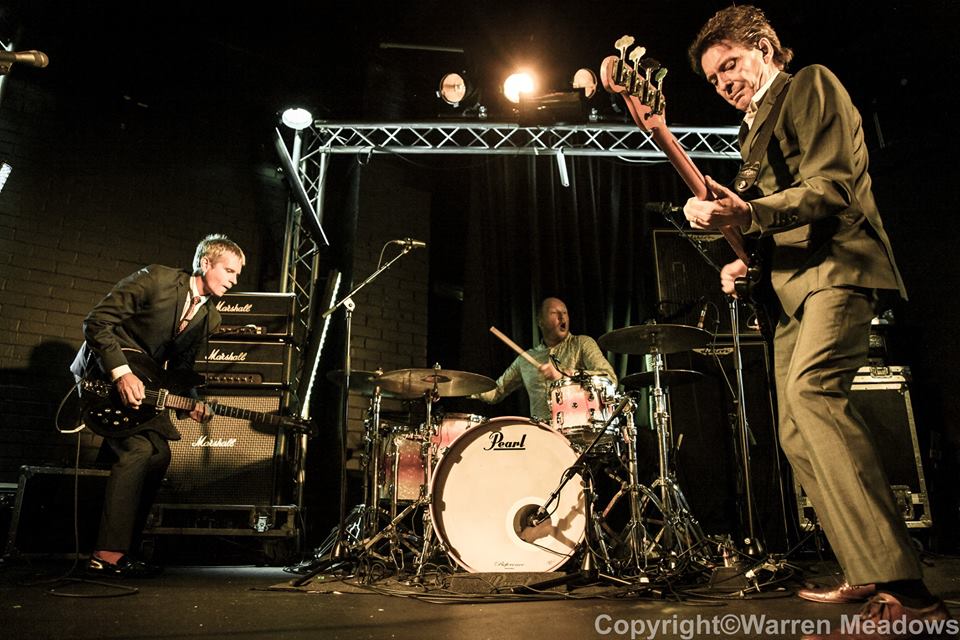
Underground Overground: The Subways. From the left: Billy Lunn, Charlotte Cooper, Josh Morgan

Underground Overground: The Subways. From the left: Billy Lunn, Charlotte Cooper, Josh Morgan

The words exciting, explosive and thrilling get used a lot when The Subways are brought up in conversation.

A lot of exclamation marks are used too, especially when you’re in conference with the band’s front-man Billy Lunn via an email Q&A.

I’d have much preferred a face-to-face one-to-one or even a phone call, but he’s been a busy lad and our schedules didn’t match. And while I might have sneaked a few more questions in here and there, Billy came up trumps all the same.

Space ruled out using all his added punctuation, but hopefully you get the gist all the same. Sometimes the words tell their own story.

And anyone who’s witnessed the band live, enjoyed their first three albums and hits like Rock’n’Roll Queen and Kiss Kiss Bang Bang, will know exactly what they’re all about.

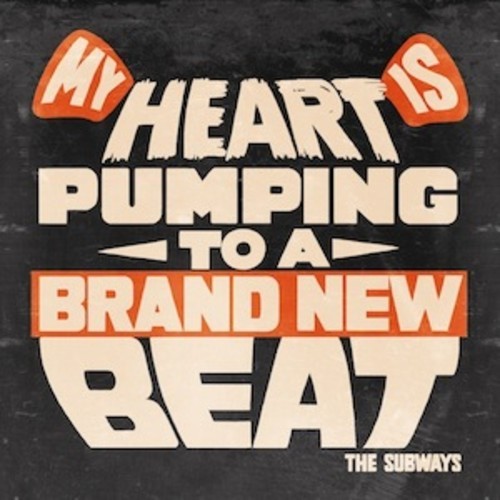
You can even tell that energy from the song names, including 2011’s life-affirming It’s a Party! and We Don’t Need Money To Have A Good Time or most recent single My Heart Is Pumping to a Brand New Beat.

And right now the Welwyn Garden City trio are testing their fan-base’s adulation with a fresh approach for their new album launch.

With the old days of big-money record company advances long gone, the band are running a pre-order campaign for their upcoming release.

On the back of the success of Young for Eternity, All or Nothing and Money and Celebrity, the new album – simply The Subways – is out in two segments, albeit as a less-than imaginatively-titled Part 1 and Part 2.

artworks-000080636682-l38hv7-t500x500And in what they believe to be a first, if you pre-order in any format via PledgeMusic or iTunes, you receive six-track Part 1 as a download straight away.

They have also commissioned comic-style artwork, although details of Part 2 remain a secret until closer to February’s official release.

But those heading to see them on their latest UK tour will get to hear a few of those new tracks, prompting me to put to guitarist/lead singer Billy that these remain exciting times for his band.

“Very! This album has been in the pipeline for a while now, and we’re all just excited to get out there and play these songs for everybody.”

The first fruits of the new material were unearthed with My Heart Is Pumping … What’s the fans’ reaction been like?

“As always, the reaction has been amazing. Our fans are the best. We just can’t wait for them to hear the whole album now.”

Anyone who knows this tight-knit band recognises Billy as the frantic one out front, with similarly-infectious input from bass player and co-vocalist Charlotte Cooper and drummer Josh Morgan.

So how do they best sum up the new album? Is it frenetic in places? Or is there a new maturity to the band?

“I’ve been reading the canon of English and foreign literature, so you may notice there are some references secretly peppered in places. But mostly it’s us rocking out, having fun and spreading the love!”

It’s been a typically-busy summer for The Subways, with trips to the Czech Republic and Germany following appearances at Glastonbury, Frequency, Hurricane and Southside to name but four festivals. All that, plus new recordings too.

476716804_640“I think you may have nearly covered it all there, but we have had a really great time at all the festivals so far.

“The album was recorded in a studio near to where I live. I engineered, produced and mixed the album, so it’s 100% our record this time!”

When I saw The Subways at the Ritz in Manchester in May 2012 – in the company of old workmate Bryan Walker, who’d been raving about them for some time – I found them pretty intoxicating to say the least. Does Billy remain as excitable as ever up on stage?

“I just feel so lucky to be doing what I do every single day. It’s hard not to wake up and get excited at what the day holds – life is amazing!”

While no less ‘on a high’ on stage, The Subways’ front-man quit the booze a while back, something he reckons gave him a new outlook on life.

“I haven’t touched a drop before going onstage for a good few years now, but I’m fully teetotal when off tour too.

“I find that the high comes from the audience, and from the joy of getting to play music with my two best friends onstage.”

41MTGKQ8VZLAlmost unbelievably, next July will mark a decade since the band’s explosive debut LP, Young for Eternity. Have you been proved wrong yet? Any sign of grey hairs yet?

“More than I’m willing to count!”

This time it’s a self-produced album. What made the band want to go down that road?

“We’ve learned a lot, having worked on the last three albums with three world-class producers, so it was hard not to become interested in the process and want to eventually give it a go ourselves.

“I’ve also personally recorded and mixed all our demos before each album, and on our latest set of demos, Stephen Street was quite impressed. I decided that, yeah, I’d like to give it a go from now on.”

The Subways have certainly had some high-profile help so far, from Lightning Seeds supremo Ian Broudie to Garbage drummer and Nirvana-producer Butch Vig and the afore-mentioned ex-Blur and The Smiths producer Stephen Street.

Did they take something different from the individual experiences of working with each of those producers?

“Definitely. A lot of what I learned in the live room was from Ian, a lot of what goes on in the control room was from Butch, and how I dealt with the structure of the songs and the album itself comes from Stephen.

“I’m very lucky to have had these incredibly talented guys to learn from.”

The band are currently part-way through a month of dates up to November 1’s visit to Norwich, their first full tour in a couple of years. Did the size of the schedule fill them with dread, or at least make them feel a little nervous?

“We recently looked over the schedule and all of us nearly peed with excitement! We always find it strange that some bands don’t like going on tour. It’s the best thing in the world.”

the-subways-all-or-nothingThere are still just the three of them, but like a few notable trios over the decades – I’d mention The Jam, and no doubt they would include Green Day – they seem to have all the power (and more) they could possibly need.

“Thank you! We find that with only three of us, each part is essential. That always keeps us thinking, always keeps things exciting, and is way more punk that way too. Minimal and powerful is our philosophy.”

It’s an interesting set-up within the band, with Billy and Josh being brothers – yeah, I know, despite the names – and Billy and Charlotte … erm, ‘no longer in a relationship’, as the Facebook generation might put it.

I’m guessing they still get on well though, despite a fair amount of living in each other’s pockets this past decade. Do the sibling and ex-partner links help or hinder?

“If anything, after all that we’ve been through together, the fights and the tears and the arguing, we love and respect each other so much more. We feel lucky that we are so close.”

Do they still have recordings from their teen days, playing Green Day and Nirvana covers as Mustardseed back in 2002? And how do they sound to less green ears now?

“I haven’t listened to our really old stuff recently. Maybe I had a few sessions a while ago of going back and reminiscing and reworking old ideas, but maybe I should give them a new go. It’ll be funny … and embarrassing!”

Is Hertfordshire still home to the band?

“I still live in the town next to where I went to school, close to all my friends and family. Josh and Charlotte have sold out and moved far away though! Ha ha!”

1315845918_the_subways_-_money_and_celebrity__2011_The band’s big break followed Michael Eavis’s support after they sent the veteran Glastonbury promoter a demo.  How crucial was that initial 2004 booking in helping build a following?

“It was huge for us. Without that Glastonbury competition, we wouldn’t have been able to book our first UK tour later that year or sign with Warner on the last date of that tour. I can’t stress how amazing that gig was for us!”

The late Radio 1 legend John Peel – sadly lost a full decade ago now – gave the band their first national radio airing. Is there anyone out there offering similar service to up and coming bands today?

“Zane Lowe does a really good job on Radio 1, but I think XFM is where it’s at for the new alternative bands. Those guys are always shaking up their playlist, and giving bands a shot when they really need it!”

What can we expect on this tour? Will it mostly be the new album being aired, with a few old favourites thrown in?

“It’ll be a big mix – there will be probably half of the new album, plus lots of old favourites! Maybe we’ll even take requests. Ha ha!”

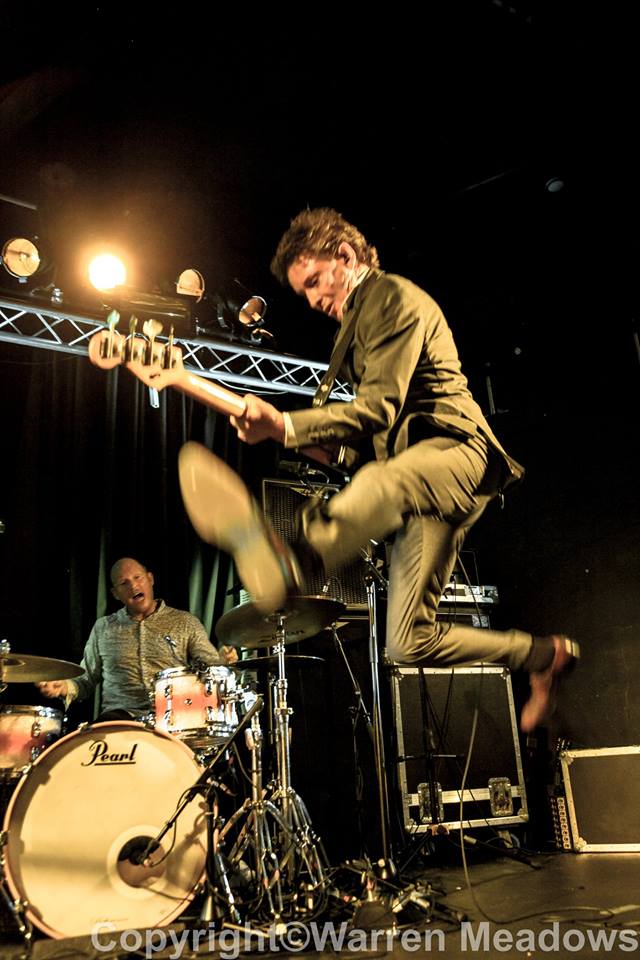
Finally, I’m still getting palpitations thinking about Billy jumping off a high balcony with his guitar at The Ritz last time I saw them live. Does he still enjoy a little crowd-surfing at gigs?

“My mum always tells me off still, but if I look around and spot a good place to jump from, I still get that urge to satisfy my thrill-seeking quality. I just can’t help it!”

Skies Above: The Subways (Photo: Steve Gullick)

Skies Above: The Subways (Photo: Steve Gullick)

For the writewyattuk verdict on The Subways at The Ritz in Manchester in May, 2012, head here.

The Subways are at Aberdeen Tunnels on Friday, October 24, Preston’s 53 Degrees on Saturday, October 25, and Derby Venue on Monday, October 27.

They then head to Peterborough Met Lounge (October 28), Cambridge The Portland Arms (October 29), Oxford 02 Academy (October 31) and Norwich Owl Sanctuary (November 1).

Grandmunster Slam follows in Germany on December 13, with more dates in mainland Europe in February and March before a return to the UK and further dates.

For full tour details and how to go about pre-ordering the new album, head to the band’s website here.

This is a revised and expanded version of a Malcolm Wyatt feature for the Lancashire Evening Post, published on October 23rd, 2014. For the original online version, try here

Posted in Music | Tagged , , , , , , , , , , , | 2 Comments

Really Glad You Came – a re-appraisal of the Ian Dury record collection

IanDury_Vinyl_2DI finally got around to seeing 2010 Ian Dury bio-pic Sex & Drugs & Rock & Roll a couple of weeks ago.

I’d resisted before, having read Richard Balls’ 2000 excellent Sex & Drugs & Rock & Roll: The Life of Ian Dury biography of the man himself, and not being too keen on revisiting some of the more sordid ins-and-outs.

Needless to say, it was a great film though, Paul Viragh’s script and intricate touches like the graphics by Ian’s esteemed art tutor Peter Blake ensuring a creative take on a tale I knew pretty well.

Andy Serkis was a natural in the lead role, and the same went for many of those around him, not least Bill Milner as Ian’s son Baxter Dury, Tom Hughes as Chaz Jankel, Olivia Williams as Ian’s first wife Betty, and Naomie Harris as his girlfriend Denise Roudette.

I took a similar stance when it came to reviewing Ian’s back catalogue, feeling the same reluctance about rediscovering those eight LPs or the Kilburn and the High Roads records that preceded them.

Besides, surely the 2005 double-CD Reasons to be Cheerful compilation told the story just as well

I loved Ian’s 1977 debut LP, New Boots and Panties, and a few tracks here and there from those that followed, and held 1997’s Mr Love Pants in high esteem, the latter showing Ian in the best possible light after a number of near-misses and not-so-special moments.

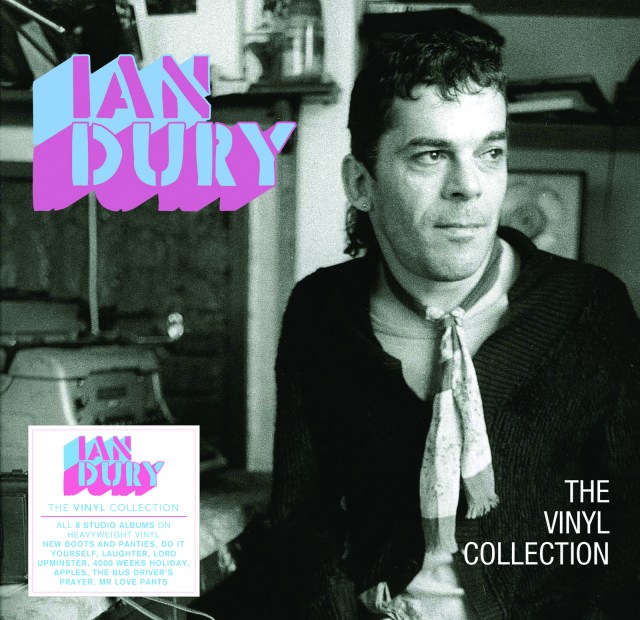
I hadn’t properly listened to any of those recordings for a while, and took Edsel Records’ Ian Dury: The Vinyl Collection, featuring all eight studio LPs on 180g vinyl (with an added bonus disc in the CD version, Ian Dury: The Studio Collection) with a degree of scepticism.

But I was wrong, and in the same way that this legendary Harrow-born artist once revealed he was Really Glad You Came, I’m pleased I went back and properly listened again, from start to finish.

Ian Dury.03As the sleeve-notes remind us, Ian was ‘a rock’n’roll vagabond with the wit and intelligence of Noël Coward and Oscar Wilde’. And there’s no denying that.

Furthermore, it points to his ‘verbal dexterity as an entertainer and a lyric writer’ and talks about a ‘true Renaissance man – a talented painter, musician and actor who left behind a body of work that continues to amuse, impress and delight to this day’. Right again.

I felt you could surmise that much from the singles alone, though. And only a few of those actually ended up on the albums.

But as it turns out, the long players perhaps give us more clues as to the full story of this enigmatic and often-troubled entertainer.

I was lucky enough to see him live a couple of times, at a benefit for cancer victim Charley Charles in September ’90 – barely three weeks after the drummer’s death – at Kentish Town’s Town and Country Club, and later supporting Madness at nearby Finsbury Park in August ’92.

I’ve since seen The Blockheads live too, with Ian’s former helper Derek the Draw up front these days, a fair proportion of that talented band that helped ensure his success enjoying a fresh lease of life, and as shit-hot today as all those years ago.

While Ian and Charley are no longer with us, and Wilko Johnson’s a star in his own right, you still get to see Chas Jankel, Norman Watt-Roy, Johnny Turnbull, Mickey Gallagher and Davey Payne – to name but five Blockhead legends – on the same stage, still at the top of their game.

So what of the albums themselves? Well, I thought it was time to pin back the Britneys and try and listen afresh. And while there were a fair few lows en route, there are some proper corkers too, and maybe no true fan can rightly be without this collection.

My task of re-evaluating Ian’s 1977-98 track record was never going to be easy, and turned out to be a mightier project than I might even have envisaged.

As a disclaimer, I might add that other reviews are available. I’m bound to miss out some key facts or get history slightly upside down at times, but I’ve given it a good go, and hope I’ve done Ian and his band-mates over the years some credit.

In short, I’m really glad I came back to this back-catalogue, appreciating the good, the bad and the downright groovy recorded moments of a lost genius.

95ad52e2cdc61f06f3021cb1677a4f11New Boots and Panties!! (1977)

From that memorable Chaz Jankel piano intro and unmistakable Norman Watt-Roy bass line to that naughty Dury vocal, Wake Up And Make Love With Me is the perfect opener to ID canon.

I had the Live Stiffs version on cassette once, and that had a similar effect. Back then – and I was too young to discover it first time around, I might add – New Boots was an album to play when the folks were out. But times change – and now it’s one to play when my own children are out.

Next is the glorious Sweet Gene Vincent, in turns poignant and celebratory, a fitting tribute to a rock’n’roll legend by one who soon became one himself, Ian’s quick-fire but measured word rap never sounding tired.

His wordsmithery was there from day one, that highly-effective London lyrical lingo ensuring we’d always be Partial To Your Abracadabra, and like the album’s opener he lands just on the right side of obscene in a song with a true ’70s feel.

My Old Man is something of a hymn or elegy to working class roots, yet reveals something of a complicated character behind the more obvious caricature. And that in turn explains some of Ian’s own verve.

Died before we’d done too much talking’ is a line that always gets me, yet it’s never over-sentimental and is all the stronger for that. And all the time he’s backed up by that glorious life-affirming sax and hypnotically-off-centre bass.

From the famous spoken opening, Billericay Dickie is a fantastic introduction to Ian’s special world of well-drawn misfit characters, those charming rhyming couplets leading a modern take on a music hall meets dirty postcard world view.

Chaz’s glorious swirling keyboard and that chop guitar is a backdrop to Ian’s uncomplicated yet sublime monotone performance poetry on Clevor Trever. He’d have been a star just with a mic in his hand, but it turned out that he had those wonderful musicians behind him. And, ‘Also, it takes much longer to get up north … the slow way.”

On the face of it If I Was With A Woman is Wake Up part two, something of an alternative disco anthem of its age. Yet it also points to the more unseemly side of a complex character. Supposedly written on the rebound from a relationship, it’s pretty unpalatable and perhaps the only filler on an amazing debut LP.
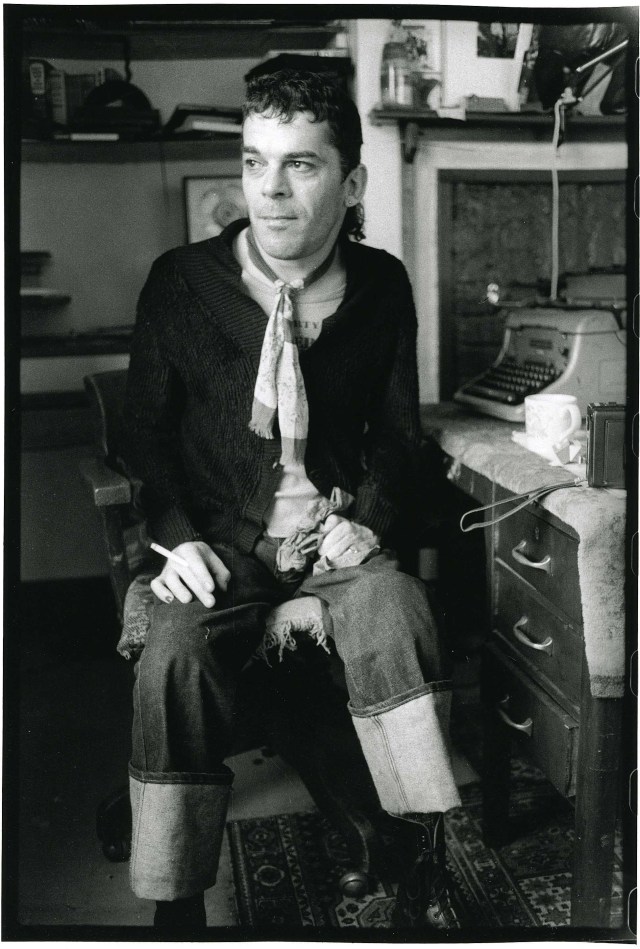
Sitting DownWe’re back on track with pub rock’n’roll anthem Blockheads though, shouty and gloriously shambolic. And what appears to be out-and-out shaming of the misfit and mob mentality, turns out to be a celebration of an under-class – observational, not judgemental.

Then again, ‘Imagine finding one in your laundry basket’.

Plaistow Patricia was never one for the faint-hearted, and I wonder how many of us fell foul of playing this on the family stereo. Reckon you can get the intro as a ringtone? But while this ‘lawless brat from a council flat’ was a great reason for keeping well away from the Mile End Road, Ian paints her in a more positive light by the end.

The album’s darker side climaxes with the punk noise of Blackmail Man. Yet for all its anger and railing against the nasties, it carries another fine display of Cockney slang, Ian getting a load off his bird’s nest. Maybe that sums him up – even when he was on great form, you wanted to look away sometimes.

I’d have gladly had Sex & Drugs & Rock’n’Roll on here instead of a couple of tracks.

But Ian wasn’t one for including singles. That said, at least seven tracks on this often-raucous debut stand the test of time and this remained one of his finest creations, a portfolio he’d been working towards since those formative High Roads days.

And there aren’t that many artists from that era – despite all the dewy-eyed nostalgia – that managed such a strong first album.
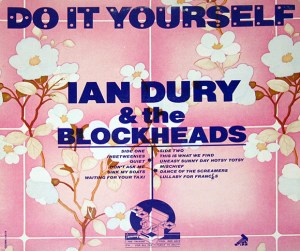
ian-dury-yourself-73Do It Yourself (1979)

It’s what’s missing from this album that’s striking, not least the defining 1978 singles that ensured Ian’s fame – the wondrous What a Waste and Hit Me With Your Rhythm Stick – and masterful b-side There Ain’t Half Been Some Clever Bastards.

But The Blockheads had well and truly arrived. While Chaz Jankel, Norman Watt-Roy, Charley Charles and Davey Payne were there before, this time the band’s new name appeared on the cover.

Inbetweenies was a promising start for an album on which Ian and Chaz were again the chief architects, the latter steering his paymaster towards a laid-back part-jazzy part-Steely Dan feel, aided by new Blockheads John Turnbull (guitar) and Mickey Gallagher (keyboards).

There are shortcomings, and at first you might think we’re working with New Boots and Panties leftovers. By all accounts Ian was proving hard work in the studio, to the point where it was suggested he just came in to do his vocals. Band dynamics would remain troublesome, with sax player Davey a further loose canon. But that tension sometimes added to the mix.

Despite the disquiet, the album sold 200,000 copies and was only kept off the top of the charts by Abba’s Voulez Vous, and Quiet and Don’t Ask Me suggest a great band with a distinctive feel behind an often inventive and witty lyric.

Sink My Boats has a very ‘70s sound, but it was ambitious, and Ian was at his more melodic, while The Blockheads proved inventive enough. They were more radio-friendly too, although perhaps not as explosive.

Waiting For Your Taxi is more of a b-side but allows the band to flex their musical muscles, with Davey on fine form, while This Is What We Find showcases Ian’s word-heavy poetic side, not least in the verse about DIY advocate Harold Hill of Harold Hill.

The argumentative Uneasy Sunny Day Hotsy Totsy and Mischief suggest a genealogical link with Stiff stable-mates Madness, and although Ian seems low in the mix on the latter, it works.

The band are back in off-centre dancefloor mode for Dance For The Screamers, maybe a pre-cursor of Spasticus, although I think you can tell there are two elements at play – Ian doing his thing and The Blockheads their own.

But Lullaby for Francies shows Ian and his band at their best, and is a song The Blockheads play to this day. I also recall them signing off with this back in 1990, with a big photo of the sadly-departed Charley as the stage backdrop.

Think Ian tackling the pensive part of Sweet Gene Vincent to a Trojan Records era Ken Boothe or John Holt feel. Dreamy, and quite perfect.

As great a closer as that was though, the best was yet to be recorded, Reasons to be Cheerful Pt. 3 following behind, the band’s place in the history of pop assured.

They were at the top of their game in many respects, with high hopes of that continuing when April 1980 saw Ian and Mickey’s statement of intent I Wanna Be Straight released.

With former Dr Feelgood inspiration Wilko Johnson now on board, the future looked bright, in spite of Chaz’s departure. But it turned out that good times weren’t necessarily around the corner.
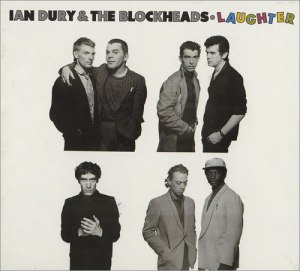
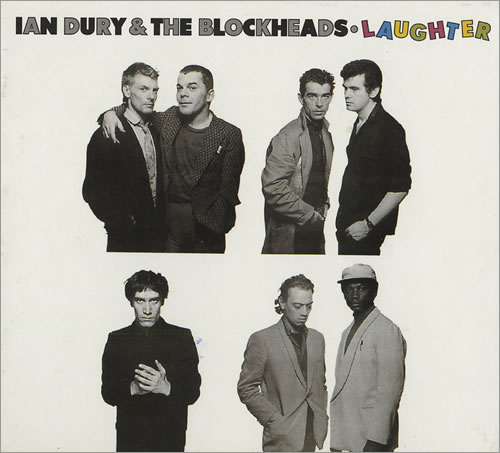
Ian-Dury-Laughter-445497Laughter (1980)

It’s fair to say there’s no obvious sign of the hits or much in the way of the funny stuff alluded to in the title here.

Ian and Wilko’s string-backed Sueperman’s Big Sister – a rare example of an ID single on an album – is an oddity. That’s not to say it doesn’t work, just that so much better had come before. It did have a delightful b-side though, You’ll See Glimpses giving us a peak into a better world drawn by one of life’s fringe characters.

Maybe it’s because Chaz’s touch was missing, with Pardon and Delusions Of Grandeur good examples, shadows of songs they’d done better before, despite some trademark Wilko chop guitar on the latter.

Yes & No (Paula) is more inventive, Ian’s poetic delivery working in parts and the band firing on all jazz dance cylinders, with a little help from Don Cherry’s trumpet.

Dance Of The Crackpots is largely just a mess for these ears, but it at least sounds like the band are having a good time.

There’s something of an express train version of You’ll See Glimpses on the lyrically-lovely Over the Points, Ian’s fresh perspective on trainspotting and the good old iron horse.

You’d like to think there’s a little humour at play on (Take Your Elbow Out Of The Soup You’re Sitting On The Chicken) too, although it’s largely forgettable.

Ian and Charley’s Uncoolohol is better, bolstered by Wilko’s bluesy guitar, while the uncomfortable Hey, Hey, Take Me Away is more introspective but neither one thing nor another.

Ian denied there was much in the way of autobiographical content, but there are plenty of signs of a performer on something of a downer, and not necessarily just on Manic Depression (Jimi).

The stories were still all there from this gifted writer, but maybe just harder to get at, and Oh Mr Peanut shows a songwriter seemingly running low on inspiration.

But if the first part of the band story was soon to be over, closing track Fucking Ada suggested they were looking to go out on an uncompromising high.

There was more than an element of Ian seeing just how far he could push the envelope, but the result – despite the gloomy lyric – has a glorious Scott Walker feel amid a mutant celebration with Andy Mackay-style sax.

Perhaps it reflected all that had quirkily come before with this outfit. It didn’t get much radio airplay though, he adds, unnecessarily.

Either way, it proved to be Ian’s farewell for Stiff Records, where favoured nephews Madness were the big stars now, the reaction to Laughter understandably lukewarm.

But in August ’81 came a new single that ensured Ian stayed under the spotlight, an angry spin on a believed hypocrisy in The Year of the Disabled leading to Spasticus Autisticus, which would also appear on the first post-Blockheads album three months later.

salvocd056-500x500Lord Upminster (1981)

Ian’s first album for Polydor offered something of a commercial dub reggae feel on various tracks, very much of its time, Sly and Robbie’s playing and production often to the fore, not least on openers Funky Disco Pops and Red Letter.

And while the climax was the controversial Spasticus, on the surface it’s a far more relaxed Dury, the change of gear suggesting a re-invention, although he was on safe ground in that all bar one of the songs were written with the returning Chaz.

Girls Watching keeps up that theme, a nice light toasting from Ian, who certainly sounds like he might be having fun in that studio. His vocal on the laid-back Wait For Me brings to mind John Sullivan on the Only Fools and Horses theme tune though.

There’s a little Booker T type organ on The Body Song, which is at least a little more recognisable as a Dury song, and perhaps the strongest track so far.

Lonely Town is also far more promising, perhaps borne out of a low ebb, but all the stronger for it. Meanwhile, Trust Is A Must could be UB40’s Red Red Wine toaster Astro gruffly delivering This is Radio Clash.

But while Ian and his band were no doubt having fun with a new experimental direction, there’s no real big statement until we finally get to the finale.

If Spasticus Autisticus was somehow lost among the gnashing of teeth and tut-tutting as Ian took his own stance on disabled rights, in retrospect you can appreciate its power.

And beneath Ian’s rigid digit approach, this call to arms is a great song, although perhaps one that might have sounded even better with The Blockheads in tow.

102-07564,000 Weeks Holiday (1984)

It was another three years before Ian’s next recorded output for Polydor, and this time it was with The Music Students in tow, the 40-year-old turning down a chance to get back with his old muckers, instead teaming up with Michael McEvoy and a younger band.

The first sign of the new material was November 1983’s slap-bass-happy single Really Glad You Came, a curious Nile Rodgers soul production proving a good indication of what was to come, and also serving as the album’s closer.

In places, if you take Ian’s vocal away, it could almost be Simply Red backing him, and opening track (You’re My) Inspiration follows that theme. There are elements of smoochy George Benson-like silky soul, the brass and general groove a departure from all that came before.

The album was unsurprisingly passed over on the whole, not least by Dury himself, and by way of example, Friends is lame in places, of its time with regard to the soon-dated synth. But its saving grace is that trombone from Special AKA collaborator Rico, adding soul and depth where the production largely failed Ian.

You could say the same about Tell Your Daddy, a Madness b-side at best, but there’s a step-up in a tribute to Ian’s old tutor Mr Blake, Peter the Painter another track that you can only wonder how good it might have sounded with the old band.

The same goes for Ban The Bomb, a subtly-powerful lyric and general feel enough to form the basis of a Blockheads winner. The bass and guitar work this time, but it’s still tricky to zone out that tinny synthetic sound.

The jam continues with Percy the Poet, which could be Reasons to be Cheerful Pt 4 in places, while Ian’s Lee Marvin-like vocal on Very Personal shepherds in some trademark aural love-making, bringing to mind the inflammatory line from Noel Clarke’s Desmond on the film, comparing Ian to Barry White.

Take Me To The Cleaners suggests nothing more than a filler, one in which you can clearly see the cracks, but The Man with no Face is far more inventive, a drug story that reminds me of an Essex variation on those splendid Sir John Betjeman recordings with Jim Parker.

That sets us up nicely for Really Glad You Came, our companion piece to (You’re My) Inspiration. But we could only hope that better was to come.
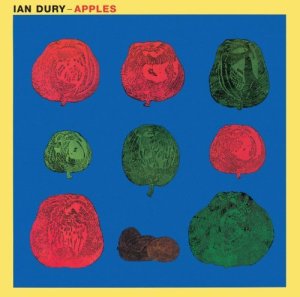
1989 Ian Dury -Apples-Apples (1989)

It was five years before we had Ian’s next solo effort, and it was far more promising, the WEA soundtrack to his short-lived stage-play Apples – featuring 12 of its 20 songs – showing the main man on the way back to his best lyrical form.

Still, the production’s a bit too clean, and slightly dated now, but we were definitely getting there.

Title track and opener Apples suggests a pastiche of all those cockney rhyming games Ian so enjoyed. ‘It looks like a good ‘un, it’ll do for my pudding’ is my favourite, and there are signs of lyrical sharpness throughout.

Love Is All, the first duet with Frances Rufelle, sees the pair vocally duel in a song that must have had the West End luvvie set running. Elaine off the Page, I’d say.

Byline Browne is a fine little damning of the gutter press spoiled by Mickey’s weedy keyboards, undoing all the good work of Davey’s sax.

It’s a similar tale for the sartorially-elegant Bit Of Kit, another poetic delight, this time with Davey’s blowing and Ian’s words just about winning out.

Frances and Ian gel on Game On in a lovely display of phrasing and word battles, one which almost makes you forget that tinny synth.

Think Lloyd-Webber with attitude as Frances sails alone on Looking For Harry, while England’s Glory – which first surfaced back in 1977 – is sort of Reasons to be Clever Bastards, although arguably without the class of either original.

Bus Drivers’ Prayer is nothing short of a masterpiece, but could do with better company than the accompanying PC Honey, which is hardly Ian’s old Stuff label-mate Wreckless Eric’s finest moment.

That game show synth is back on companion piece The Right People, making me wonder if I’ve chanced upon an off-cut from a Minder soundtrack. It’s chirpy enough, but it’s difficult to see beyond the butt-end of the ’80s production.

All Those Who Say Okay is far more like it, its lop-sided spoken word philosophy including lovely one-liners like ‘I see you’re reading a book, are you on page one yet? ‘Can you spell your name forwards?’ ‘Can you tell me the way straight on, please?’ and ‘I resemble that remark’.

But if you didn’t know where it fitted into the catalogue, I’d suggest the flipside of I Wanna be Straight. And soon we’re away on show-stopper Riding The Outskirts Of Fantasy, with the curtain not opening again for another three years.
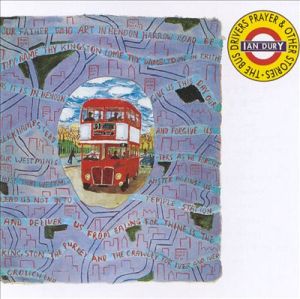
MI0002468219The Bus Driver’s Prayer & Other Stories (1992) 

That’s Enough Of That gets us off to a promising start on Ian’s penultimate album, his second for Demon after the Warts’n’Audience live LP, the sax vying with the front-man in a frankly cool little number.

This time, The Blockheads – bar Norman – are back at one stage or another, with Mickey and Merlin Rhys-Jones, on his third straight album with Ian, out front.

It’s difficult to put a name on it all though, with little in common between many of the songs here. It’s a collection in a loose sense.

Bill Haley’s Last Words is a not-quite-right rocking oddity, Ian’s American phrasing in the sung bits not a patch on his Sweet Gene Vincent vocal.

The word oddity also springs to mind for Poor Joey, part-music hall/part lover’s rock reggae for a budgie, while Quick Quick Slow has a pleasant-enough almost French or Spanish dusky afternoon feel, and Fly In The Ointment offers more than a dash of wah wah pedal whimsy.

But I like Ian’s tack on O’ Donegal, a veritable love letter to Ireland, and there’s a spirit of trademark Dury lyrical wonder on good old Joanna-based Poo-Poo In The Prawn.

London Talking is a glorious companion for the album’s title track, a funny little number in the best sense – carrying more than a hint of over the garden wall humour, the master of geezer rhymery back at his best.

There’s an early-hours feel to the wistful Have A Word, another song suggesting a more mellow side to an artist seemingly now more in tune with his inner self.

D’Orine The Cow has us back at odds though, and again I don’t think we know what to think. But this might well have made an alternative kids’ poem.

Your Horoscope carries elements of You’ll See Glimpses, and that can only be a good thing, while No Such Thing As Love offers a nicely-reasoned pensive take on life, Dury style.

By that stage, I think there’s enough here to suggest Ian was moving closer to his best, and Two Old Dogs Without A Name sets us up nicely for the title track itself, The Bus Driver’s Prayer another simply-conceived masterpiece taking us to the LP’s Crouch End.

mu3zeqdn.zyb_Mr Love Pants (1997) 

Then, five years later, we reached the high point, with Ian’s best all-round album since his debut released on his own label, and proving to be a fitting memorial to his talent.

There was a full Blockheads turnout this time, and we were off with a winner on the wondrous Jack Shit George, a modern twist on Clevor Trever and worthy of the comparison.

Norman’s bass comes in at around the minute mark on The Passing Show, a celebration in music and lyrics of how far this band had come and just what they’d gone through en route.

You’re My Baby is more reflective, with the feel of an Anglicised version of a cut from Lou Reed’s New York. It was written about Ian’s youngest son but – like My Old Man all those years before – it never over-does the sentiment.

Despite that, there’s an emotional feel right across the tracks, and not just because we now know what happened next. Honeysuckle Highway is a great example, a song that might have been written any time during that century.

A mention of Havana has me thinking about another lost great, and Mr Love Pants has much in common with Kirsty MacColl’s Tropical Brainstorm. In the same way Kirsty left us with a sparkling finale, Ian did the same.

IanDury_Vinyl_3D-ExplodedThe fantastic Itinerant Child has that extra-special vibe, a proper road song with a gripping tale behind it, The Blockheads on top form and even carrying a touch of the name-checked Steely Dan en route.

Geraldine is a delight, full of double-entendre, sharp wit and warmth. And who could resist Ian’s saucy, ‘When she’s buttering my baguette, my blood runs hot and cold’?

Cacka Boom is a further example of where The Blockheads were maybe heading all those years ago. It took a long time to get there, but we made it in the end.

Again, there’s a little comforting home-baked philosophy, Ian showing further signs of finally being at ease with himself and now happy to share his alternative, refreshing spin on the meaning of life.

That reflective approach is also taken on Bed O’ Roses No. 9. Here’s Ian as chief muse and home-spun philosopher, and it suits him. A lot had happened in his life, not least since his previous album’s release. And it showed.

There’s further self-analysis with Heavy Living above the guitar and brass, and unlike past fruitless efforts to rock out and recreate Sweet Gene Vincent, this time he was firing on all cylinders.

Then we have the final offering, and again there’s a sense of celebration among the retrospective sense of poignancy. Like the character in Mash It Up Harry, on the surface you get warts’n’all with Ian, sometimes making for uncomfortable truths. But – again like Ian – we warm to Harry and end up singing along on a delightful Madness-like jaunt.

Besides, sometimes we all need a bit of Wembley up our Ponders End.

As it turns out, our alternative national anthem is over too soon, but wasn’t that the case with Ian’s story too? Just when he was finally warming to his task again.
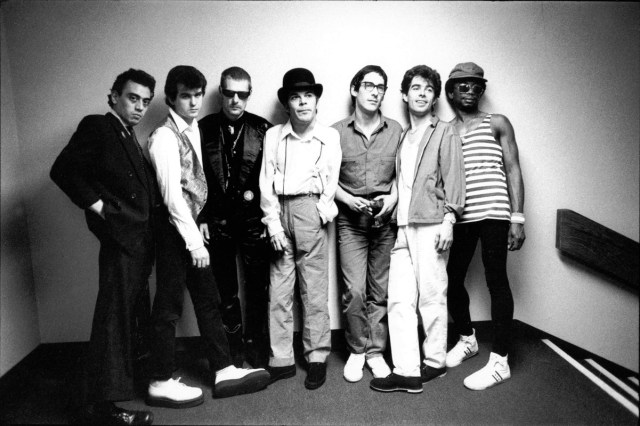
Band Substance: Ian Dury and The Blockheads in 1981, Brighton (Photo copyright: David Corio)

Band Substance: Ian Dury and The Blockheads in 1981, Brighton (Photo copyright: David Corio)

Bonus Disc (CD box set only)

There’s more on the CD collection, and we get to find those tracks Ian left off the albums, with some corkers too of course.

We have defining moment Sex & Drugs & Rock & Roll, a song I first got to appreciate on my Live Stiffs cassette, accompanied by a full starring entourage of label-mates.

Next is Ian’s Romford shop-lifting tale Razzle In My Pocket, as featured on my first ID greatest hits collection. But although the sublime Sweet Gene Vincent follows, Ian then swaps rock’n’roll for risqué reggae on an unpalatable You’re More Than Fair.

The next five selections are pure nostalgia central for me, What A Waste, Wake Up And Make Love To Me, Hit Me With Your Rhythm Stick, Clever Bastards and Reasons To Be Cheerful Pt. 3 unsullied by age or life experience.

Common As Muck was another great example of a classy b-side, while I Want To Be Straight is arguably the last great single before the plot was lost for a while, and carries that most memorable of intros.

Anything is likely to be a filler from there, with Straight b-side That’s Not All fitting those criteria.

And while 1980 single Sueperman’s Big Sister – for all its promiseproved a false dawn in certain respects, we finish on that poignant note with its emotional b-side You’ll See Glimpses.

It’s a track that never fails to bring a lump to the throat, Ian introducing to us another great misfit character, his band’s contributory soundtrack proving just perfect.
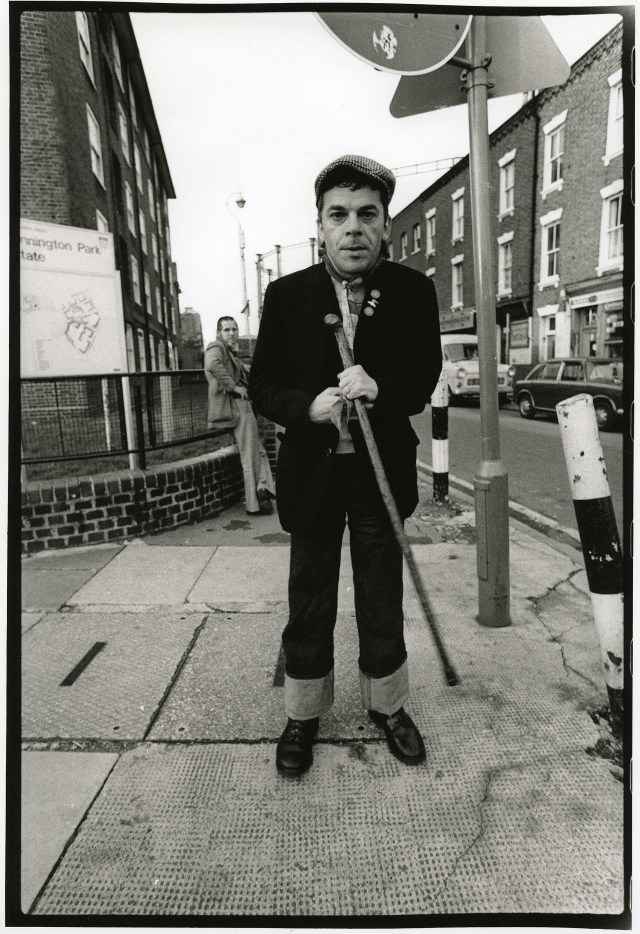
Ian Dury.02There are a few cuts missing, but maybe we can live without High Roads survivors like Billy Bentley or Adrian Mole TV theme Profoundly in Love with Pandora.

I could mention the collaborative pieces elsewhere, not least Ian’s contributions to Carter USM’s Sky West and Crooked and Madness’ Drip Fed Fred. But this is not the place.

And while there’s a case for including 1999 single Dance Little Rude Boy, it sits better on the posthumous Ten More Turnips from the Tip, waiting – like much of Ian’s back-catalogue – to be rediscovered.

We miss you, Ian, but thankfully your music and lyrical genius lives on. You were a complicated character, but gave us some mighty fine moments over the years.

Thanks for looking in on us. We’re really glad you came. For Iver and Iver, Crouch End.

IanDury_Vinyl_3D* Ian Dury – The Vinyl Collection (LP box set) will be available from December 8th, while Ian Dury – The Studio Albums Collection (CD box set) will be available from November 3rd on Edsel Records, with pre-orders already being taken via MyPlay.com (fan bundle vinyl offer)Amazon (CD) or Amazon (vinyl).

* For more details about Ian Dury and his work, head here. And for all the latest from The Blockheads try here.

* To see a writewyattuk review of The Blockheads at Preston’s 53 Degrees in March, 2013, head here.

* With thanks to Dave Clarke of Planet Earth Publicity.

Posted in Books Films, TV & Radio, Comedy & Theatre, Music | Tagged , , , , , , , , , , , , , , , , , | 6 Comments

Open season for the trunk of funk – the Craig Charles interview

maxresdefault

Six Sensi: Craig Charles manning the decks

According to your spheres of interest, you may know him best as Coronation Street’s Lloyd Mullaney or Red Dwarf’s Dave Lister, or just as that cheeky Scouse lad off Robot Wars or Takeshi’s Castle.

But many more of us know him as the performance poet who went on to carve out his own niche behind the turntables, on radio and in clubland.

I’m talking about actor, DJ and presenter Craig Charles, who appears to have the erm … sole power to offer us a little spinage a trois and talcum time while unleashing that trunk of funk every weekend.

He also happens to be the fella with perhaps the longest Wikipedia entry I’ve chanced upon. So how do we address the man himself?

“I don’t know really. I’m just very lucky I get to be able to do all of it really, and on a regular basis.

“I really like acting, so Coronation Street is great for me as I get to act on a daily basis. That keeps your hand in and makes you a better actor … I hope so, anyway!

“Plus – every weekend, on Friday, Saturday and sometimes Sunday nights, we get to go and DJ – all over the world!

“We’ve played Australia, Ibiza, Corfu, Croatia, and all over Britain, from the tip of the east coast to the tip of the west, north and south coast, and everywhere between.

craigcharles“And it’s getting to a stage now where we’re selling out everywhere we go. People are having a fantastic time, and it’s good time music, y’know!

“It’s party music that appeals to all ages and everyone. We do this thing, The Secret Soul Boy, and I reckon everyone in the world has a favourite soul record.

“It’s just one of those genres that appeals to all age groups. You get a great cross-mix of society at the gigs, and it’s just a pleasure to bring that music alive.

“A lot of the music I play is from the golden era of American music, but it’s played and recorded by bands now. It’s not just a history lesson.

“And it’s a vibe that’s really started to grow, thanks to people like Amy Winehouse, Adele, Duffy and Mark Ronson.”

That seems to be the case with Northern Soul too, another of Craig’s loves, re-kindled interest via artists like Duffy and John Newman more recently followed by positive publicity for the new film borrowing that name.

“Definitely. It’s not a dead genre, it’s growing, and being listened to by young people. And you’ll be surprised how young some of the crowd are at my gigs.”

10404367_10152281782821249_9113737293754646905_nMy excuse for catching up was the Craig Charles Funk and Soul Club’s return to Preston on Saturday (October 18), for what could be the DJ’s final gig at the doomed 53 Degrees venue.

“We did it a few months ago, now we’re about to do it again. It’s always a wicked gig. Honestly, it’s all good!”

He’s then set to return to my patch on Saturday, December 13, manning the decks for ‘Britain’s biggest, funkiest Christmas Party’, a Band on the Wall fund-raiser at Blackpool’s Empress Ballroom, also featuring Soul II Soul.

“We did the Winter Gardens as well last year with The Brand New Heavies, and this year it’s Soul II Soul, flying Caron Wheeler in from America, with Jazzie B too.

“It’s going to be absolutely stonking. I’m really excited about it already. And what a building!”

When he’s not on the road or on TV, Craig’s on the airwaves, having been at 6 Music since the digital radio station’s 2002 opening, give or take a little time off for bad behaviour in 2006.

“I’m the longest-serving DJ there. I was there on the first Friday night, and have been doing it ever since. And it’s grown and grown.

“But back in the day, when we started, I would have had a bigger audience listening to my music if I’d just put the cassette in the car and drove around London with the window down.”

His 6 Music show has also proved a great soundtrack to Saturday night cooking shifts, in my case while my girls are in the back room watching Strictly Come Dancing.

“It’s our Saturday night kitchen disco. We’re the great alternative to the X Factor, y’know! If you want to hear the real thing, just go in the kitchen and turn the radio on.

“We get a lot of texts and emails from people saying, ‘The wife’s watching The X-Factor in the other room and I’m dancing in the kitchen like a drunken uncle!’”

Besides his 6 Music shows, those for older sister station Radio 2, plus club and festival appearances, there’s a new CD compilation coming out too.

fsrcd107And Craig Charles Funk & Soul Club Volume 3 is apparently just part of his ongoing mission to spread the sound of good grooves right around the world.

“Yeah! And Volume 2 was No.1 in the r’n’b and hip-hop charts and Juno Download charts and No.8 overall in the Amazon download charts. It did really well.

“When you think of it … when the BBC first came to me they asked what I wanted to do, and they wanted me to do an archive show. I said I wanted to do a funk and soul show, and they looked at me a bit weird.

“But what we thought was going to be this little niche kind of show has grown to have the biggest audience share on the network.”

He wasn’t new to it all back then, having started out with Kiss FM in its pirate station days, and – when they got their licence – did the breakfast show for a couple of years back in the late ‘80s and early ‘90s.

“I was always running the DJ-ing alongside Red Dwarf and Robot Wars, sort of undercover. I’m not one for the big celebrity DJ thing.

“Because you’re on the telly doesn’t mean you know how to play music. I never really promoted it that well, but that worked well for me.

“People have actually found me rather than me forcing myself down their throats.

“A good testament, one that makes me kind of proud, is that all the top DJs don’t see me as an interloper. I’m good friends with DJs like The Reflex, and I’m seen as one of them.”

Dwarf Days: Craig with fellow Red Dwarf cast members (Photo: BBC)

Dwarf Days: Craig with fellow Red Dwarf cast members (Photo: BBC)

It was a very different DJ who gave Craig a big break in the early 1980s, Radio 1 legend John Peel giving him two sessions in his performance poetry days.

It’s 10 years since we lost John Peel this month. Was he an important influence on you?

“He was. You could listen to his show and there would be about four or five records you just had to go out and buy.

“You had to listen to a lot of punk and stuff I found inaccessible, but every now and again there were a few gems and I thought, ‘that’s where my pocket money’s going!’”

Craig, now aged 50, has many musical heroes, but likes to mix everything up and offer an alternative slant.

There’s certainly a broad church within his radio shows, from Northern Soul to funk and so on.

James Brown often gets a good airing, but can he name his favourite artists or top five grooves at any point in time?

“It depends what day it is! I mentioned The Reflex, who gets hold of original stems of recordings from the studio and remixes them for the modern dance floor, such as his version of The Jackson 5’s ABC.

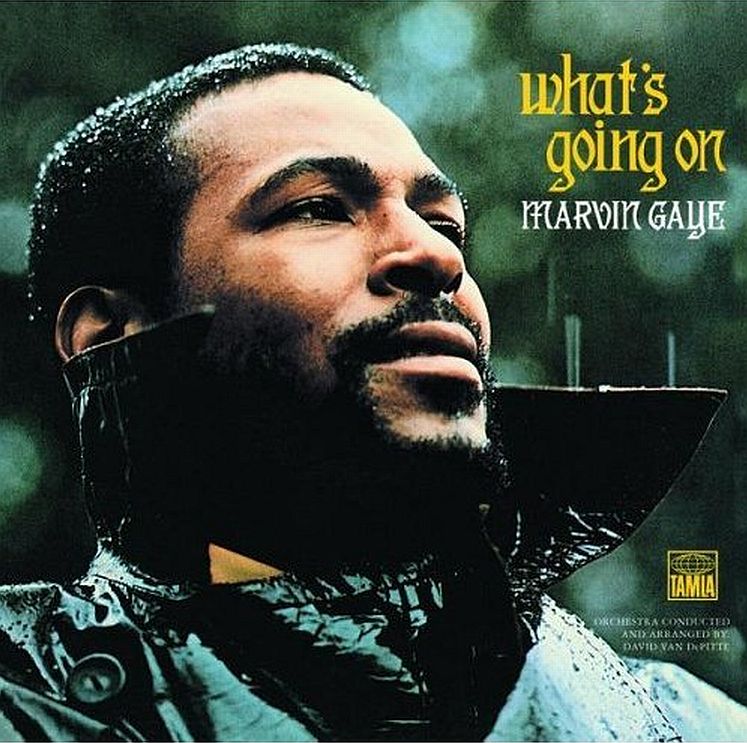
“You’ve got Stevie Wonder, Otis Redding, Marvin Gaye, and although a lot of that is just too slow or too retro for a modern dancefloor, what I like to do is get it remixed.”

Sound Wave: Craig gets to meet his public

Sound Wave: Craig gets to meet his public

That’s certainly apparent in some of the live clips I’ve seen, including one in which he fuses Tom Jones’ take on Venus, Jimi Hendrix’s Crosstown Traffic and Sylvester’s (You Make Me Feel) Mighty Real. And that takes some thought.

“That’s it – it’s all about mixing it all up! I like to play music people think they know and deliver it to them in a way they’ve never heard before. And that inspires people.”

What was the first band or song this Liverpool-born son of a Guyanan dad and Irish mum heard and fell in love with?

“My earliest memories of are of my mum and dad dancing around the kitchen to Ray Charles’ I Got a Woman. By the time that song finished I was in love with soul!

“Dad came to England in the late ‘50s or early ‘60s with a pocketful of change and a bag of records.

“When the rest of Liverpool was listening to The Beatles we were listening to Harry Belafonte, Ray Charles, Otis Redding, Aretha Franklin, Sam Cooke, that kind of stuff.Funkadelic-Maggot-Br

“I grew up listening to this golden era of Black American music, then later – when punk was kicking off – I was into P-Funk, Parliament, Funkadelic’s Maggot Brain – that album was the most psychedelic, and more hardcore than punk!”

Could he ever have imagined while growing up that he might one day be making programmes for Radio 2?

“No. I never thought I’d ever be doing Radio 2! Now I do six ’til nine on 6 Music then channel-hop on to Radio 2 and do until 10. That’s my Saturday nights sorted. Then we go off and do a gig!”

For the past decade – again with a brief break while facing drug allegations and charges in 2006 – Craig has become a well-known figure on Coronation Street.

And he’s become established enough to help mould his character, philandering taxicab driver Lloyd Mullaney, who also happens to be a funk and soul fan and DJ.

“It’s great to be able to work all that stuff in, with Lloyd playing a bit of Northern Soul and collecting records!

“And every now and again they allow me to choose some records in the background, and Twitter goes crazy, saying, ‘Craig’s playing Dobie Gray in the background!’”

How does his live show differ from the radio version? Is there a fair bit of interaction?

“Yeah. I get on the mic a bit, but it’s more dance-oriented. We do drop the beat down and all that, but while you can get away with playing slower tunes and chuggers on the radio, on a live show it’s about trying to keep the floor full.

“It’s about showing off too. We get a lot of people really into their dance and they get up the front and work on all their spins and that. It’s a great feeling!”

Swift One: Craig Charles aka Lloyd Mullaney on the Corrie set (Photo: ITV)

Swift One: Craig Charles aka Lloyd Mullaney on the Corrie set (Photo: ITV)

Craig has written an autobiographical work, but it certainly sounds as if it won’t be ready for the Christmas market this year.

“I can’t bring that out for a while yet, especially when things are going so well. There’s too many bodies in it!”

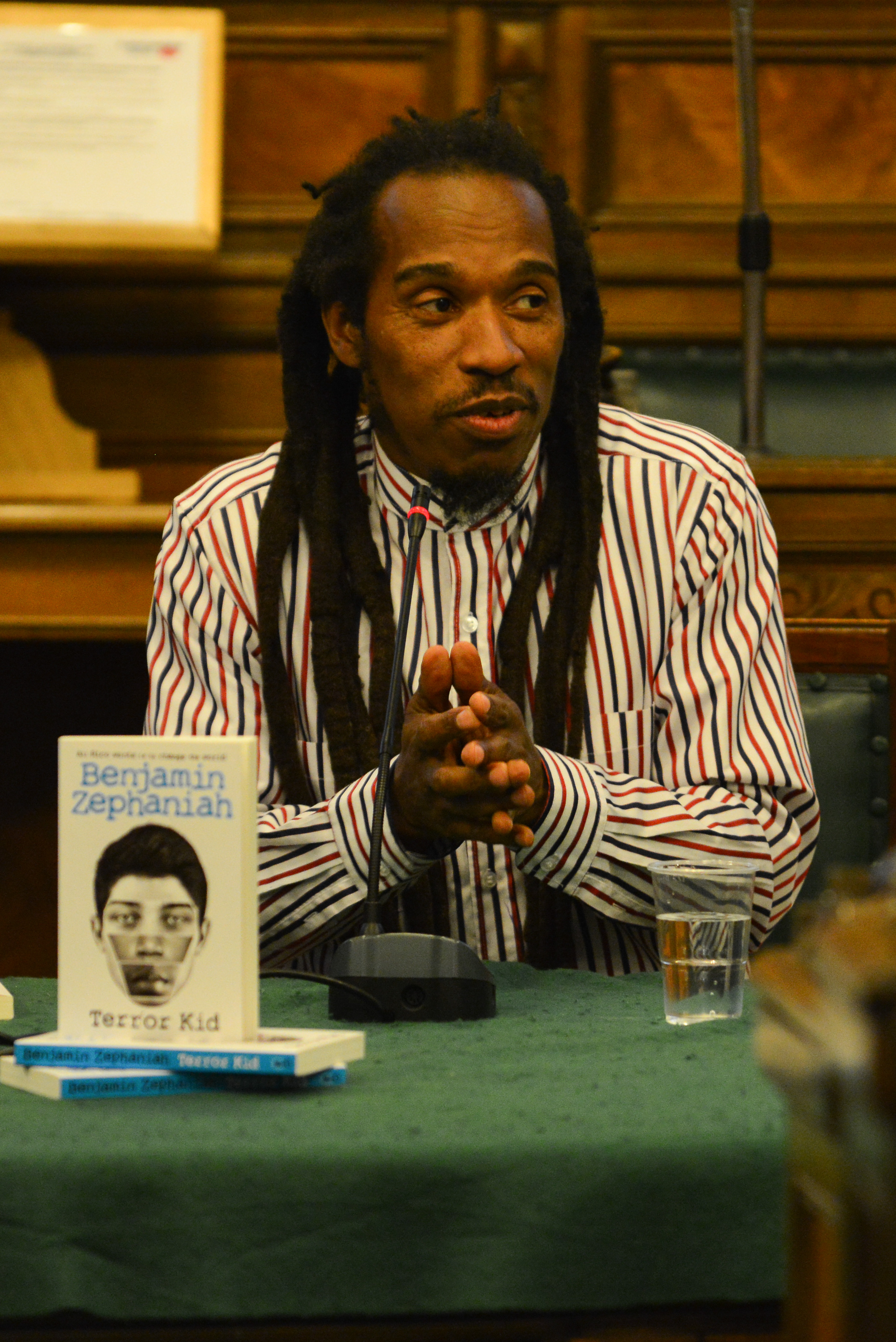
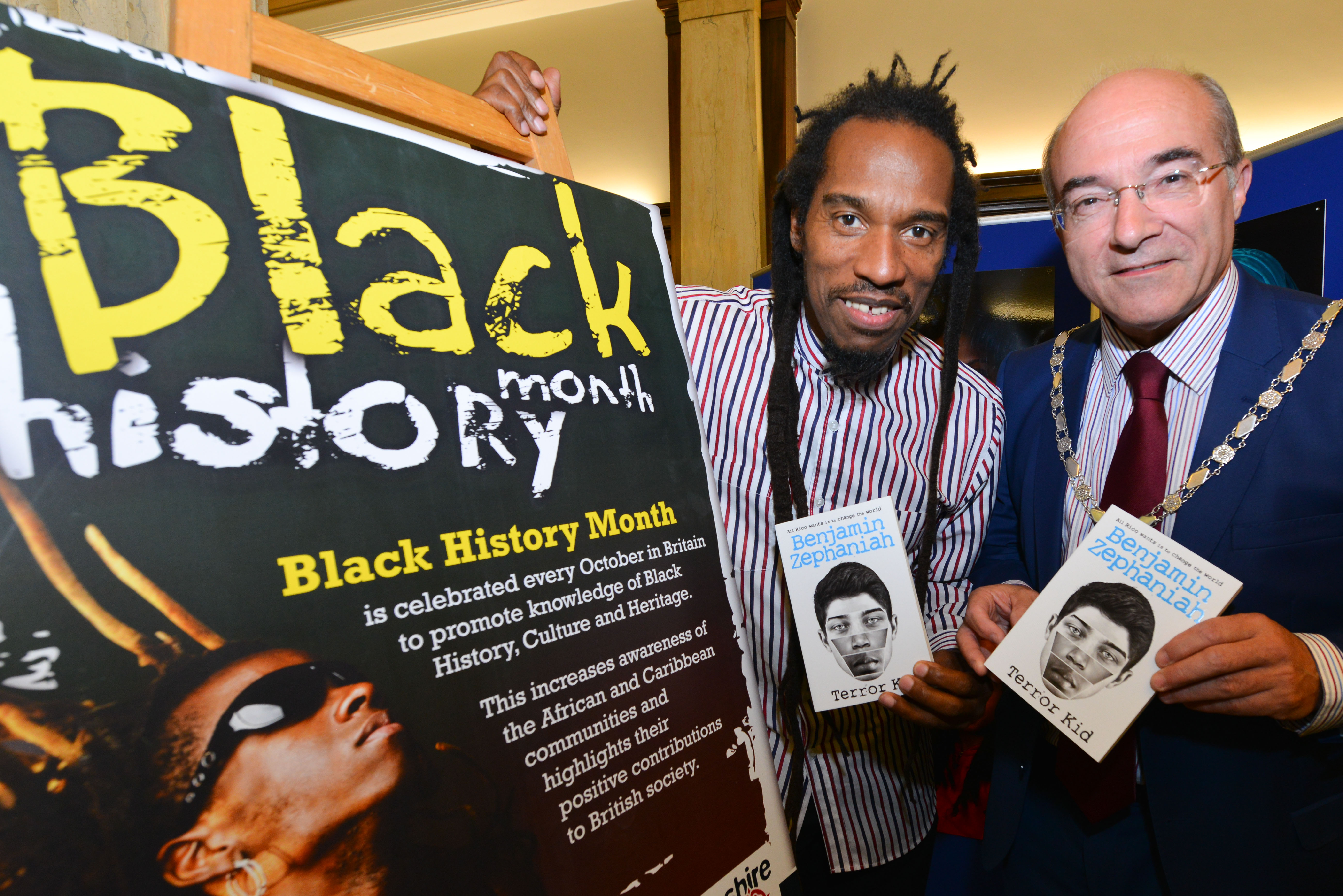
His performance poetry came first, and having recently met Benjamin Zephaniah in Preston for the launch of Black History Month, it occurred to me how their paths seemed to cross a little in the early ‘80s, not least with both appearing on Channel 4’s Black on Black and the BBC’s Pebble Mill at One.

“Me and Benjamin are friends, and started out doing poetry tours and lots of stuff together. He kept with the poetry while I took my foot off that.

“But I’ve just written a series of books, Scary Fairy and the Tales of the Dark Woods, nursery rhymes with all the blood and gore put back in! So I’m hoping that will get published next year.

“I’d love to do an album of it too, a bit like Peter and the Wolf, with the BBC Philharmonic Orchestra – me reciting, and each character with their own theme tune.”

Are you not tempted to have some Funkadelic in the background then?

st034

Vinyl Inspiration: Prokofiev’s Peter and the Wolf

“D’you know what? One of the characters is going to have a really funky, hip groove going on, but I remember Peter and the Wolf when I was a kid, so it would be nice to have a bit of Prokofiev or something in a modern setting.

“The music will be a bit more hip and trendy, but it would be lovely if we could get the BBC Phil involved. And things are looking positive on that front.”

Do you still get asked about your Red Dwarf character, Dave Lister, in public?

“I don’t think Lister will ever die. He’s something of an anti-hero, and it’s such a pleasure to play him. In fact, a lot of the time I wish I was him!

“I get a lot of talk about Robot Wars too, because those viewers are at university now. And I get a lot of mentions of Takeshi’s Castle.”

That’s understandable. There seemed to be a time when you couldn’t go a day or so without hearing his voice on radio or TV.

“Well, it’s been a crazy ride, and I’m just trying to hang on. And it’s just getting better, because Corrie’s going well, the radio’s going well, the DJing’s going well …”

Is there a worry that you might get written out of Coronation Street some day soon?

“Well, it’s not Game of Thrones. I’d hate to be involved in that! If you read a script you’d wonder if you’re going to be alive by the end of an episode.”

“Lloyd’s in this new relationship with Andrea now and that storyline’s just reached its peak, so it’s quiet for Lloyd at the moment, having had six months non-stop on that.

“We’re on the back-burner right now. It’s a bit feast or famine on Coronation Street.”

Talking of back-burners, is that where Dave Lister is too while you’re on Corrie?

Space Traveller: Craig Charles as Dave Lister in Red Dwarf (Photo: BBC)

Space Traveller: Craig Charles as Dave Lister in Red Dwarf (Photo: BBC)

“Well, we did Red Dwarf 10 a couple of years ago, and that was absolutely massive. It smashed all sorts of records, not just here but worldwide.

“And I know the lads are keen on doing more, so watch this space!”

How about your stand-up show? Any of that coming our way?

“Oh, I don’t know. I find DJ-ing so much easier than stand-up, which was such a nerve-racking thing. That said, I got out of it just at the wrong time.

“Now you can do a tour and you’re a multi-millionaire. So I might go back to it just for the money!”

You shone from an early age, academically and artistically. You seemed to be driven. Was that largely down to your upbringing?

“Yeah. I grew up on a housing estate called Cantril Farm where there were like 1,000 white families and our family. And Liverpool in the mid and late ‘60s was quite a racist place to be.

“My mum always said, ‘Craig, if you go for a job and you’ve got exactly the same qualifications as the white guy next to you, he’s going to get the job’.

“So it kind of instilled in me this need to attain and achieve. I never really lost that.”

There’s a contentious council move in Liverpool at the moment to close 11 public libraries, inspiring lots of public support for keeping them open. Were you a library regular and avid reader growing up?

“Completely! Even now I’m never without my Kindle. I love books too, and have a library, but with this little tiny gadget I’ve got around 10,000 books on it.

“I take that everywhere I go and that’s where all my down-time goes. Plus it’s a great way of not getting hassle when you’re sat in the corner of a pub reading.

“It stops a flood of people asking, ‘Can I have a picture?’

Metal Mates: Craig on the set of Robot Wars (Photo:  BBC)

Metal Mates: Craig on the set of Robot Wars (Photo: BBC)

“We were always members of the library, although it’s a measure of my irredeemable soul that I was looking through my library the other day that I found some books that I had not returned when I was around 12 or 13.”

I believe you’re a fair keyboard player too.

“Yeah, and a mean piano player! I played keyboards in a lot of bands when I was growing up.”

It was during a 1981 gig by fellow Liverpudlian band The Teardrop Explodes, that Craig climbed on stage and recited a rather risqué poem about the singer, Julian Cope.

Does he remember the poem? The answer’s yes, and not only does he remember it, but he recites it to me on the spot.

Not as if I can repeat it all here, I’m afraid, good as it is.

As it was, The Teardrop Explodes liked it, and invited him to be their support act, with performances at the Larks in the Park festival at Sefton Park and the Everyman Theatre following, alongside the likes of Roger McGough and Adrian Henri.

The rest was history, but he’d always had a talent for writing, and at the age of 12 won The Guardian Poetry Prize, his runner-up 20 years older.

And now he has family of his own with his second wife, Jackie, his youngest daughter 11 and his eldest 17, the latter having recently passed her GCSE results, amassing seven As and two Bs according to her proud dad.

“They talk about dumbing down in education, but they’re not at all. I couldn’t even look at her homework. I don’t know what it’s about, to be honest.”

15274_1_review-craig-charles-xmas-funk-and-soul-show-53-degrees-preston_banSo are your daughters likely to follow in your footsteps?

“Well, Anna-Jo goes to Manchester High School for Girls, a very academic school, yet she wants to be an actress. What can I say? Know what I mean? If I say anything, all I get is ‘It works for you, Dad’.”

Maybe they can learn from your mistakes, at least.

“I hope so! And you can’t get away from my mistakes now. All you’ve got to do is go on the internet!”

Talking of which, that’s a mighty long wiki entry he’s got there, so to speak. Craig’s TV credits fill several pages on their own. So what’s the worst show he’s ever done?

“Oh, there’s been lots! Fortunately, people only seem to remember the hits though.

“I did a show, Cyberzone, which would have been really good if the technology was up to it.

“It was a virtual reality game show where you walked on a treadmill and the character on the screen walked with you, having to go through all these rooms and so forth.”

It sounds like it would probably work now.

“It would look like a proper hi-tech video game now! I’m always being asked if we’re going to bring back Robot Wars or do more Takeshi’s Castle, but maybe we should do more Cyberzone instead, and this time do it properly!”

craig-charles-funk-and-soul-blackpool-christmas-ballFor details of how to get hold of Craig Charles Funk & Soul Club Volume 3 – ‘19 personally selected, party-starting slices of full fat’ – try this Freestyle Records link here.

To find out more and snap up tickets for Craig’s final Preston 53 Degrees try here and for more about the Blackpool Christmas Ball with Soul II Soul try this Band on the Wall link.

This is a revised and expanded version of a Malcolm Wyatt feature for the Lancashire Evening Post, first published on October 16, 2014.


Posted in Books Films, TV & Radio, Music | Tagged , , , , , , , , , , , | Leave a comment

Guitar-wielding visiting author proves a hit – the John Dougherty interview

dougherty, john

Visiting Author: John Dougherty, no doubt pondering on the badness of badgers

Children’s author, poet and songwriter John Dougherty is a regular on the school visit circuit, and was in Lancashire recently, helping promote the Fantastic Book Awards.

You might have spotted a few of his books, like Zeus on the Loose, Zeus to the Rescue, Zeus Sorts It Out, Niteracy Hour, Jack Slater Monster Investigator, Jack Slater and the Whisper of Doom, Bansi O’Hara and the Bloodline Prophecy, Bansi O’Hara and the Edges of Hallowe’en, and Finn MacCool and the Giant’s Causeway.

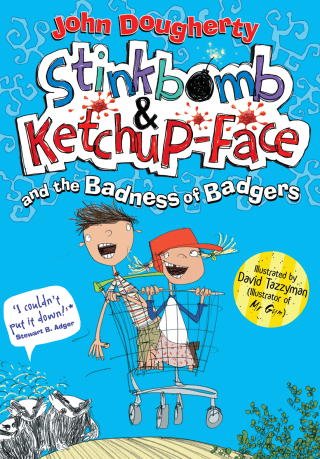
Then there’s his latest Oxford University Press series, set on the little island of Great Kerfuffle and illustrated by Mr Gum‘s David Tazzyman.

It’s fair to say that Stinkbomb and Ketchup-Face and the Badness of Badgers and its recent follow-up Stinkbomb and Ketchup-Face and the Quest for the Magic Porcupine are proving a hit.

Despite all that, John’s only been writing full-time this past decade, but meeting him in person and seeing him win over a school hall-full of year sevens, you can see why he’s a rising star.

He also has a neat line in colourful shirts. But that’s probably another story.

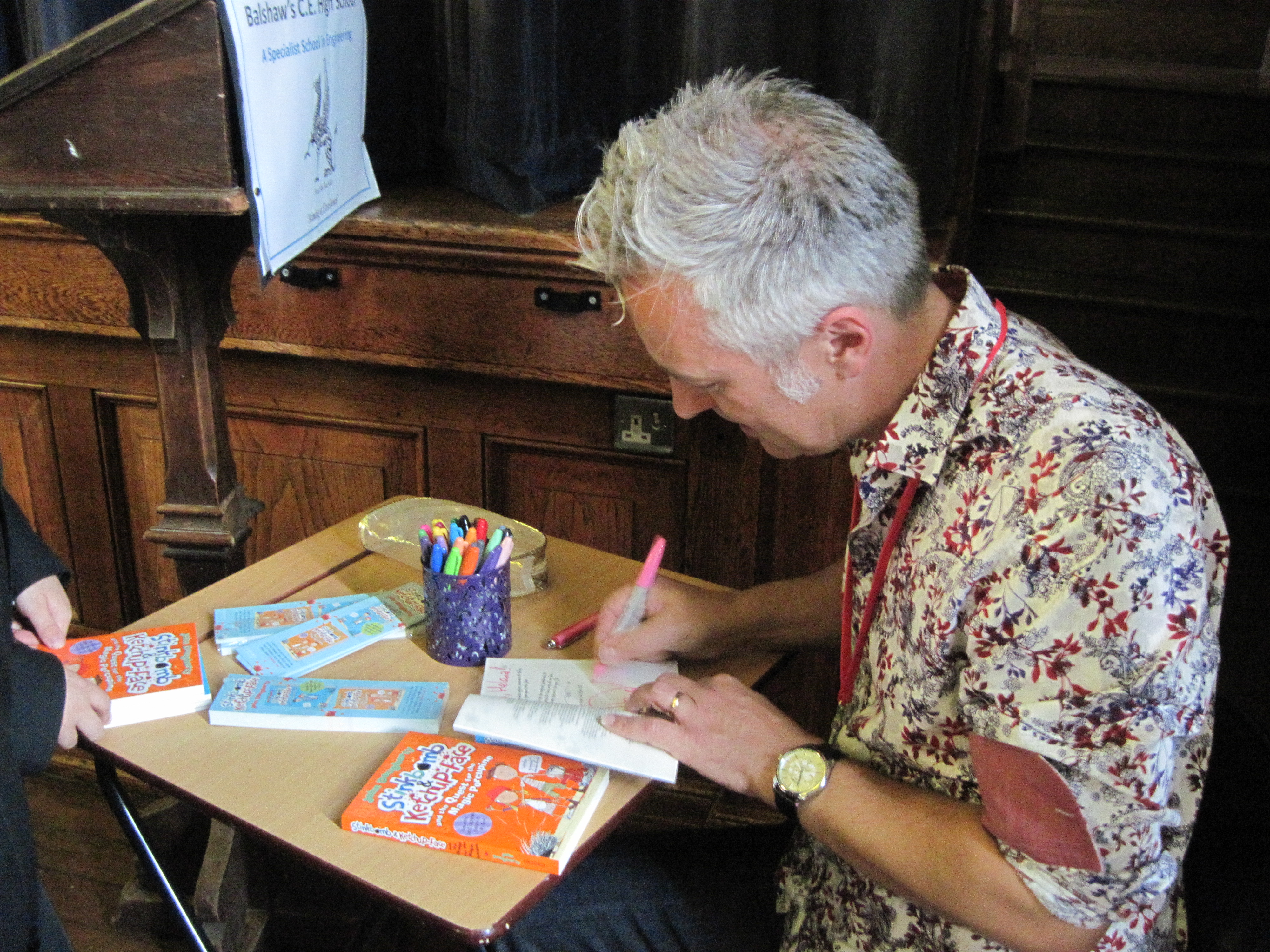
Within half an hour of his talk at Balshaw’s High School in Leyland, he’d made a lot of new fans and signed several copies of his latest comic adventure, one of those precious children’s books that should appeal to all ages.

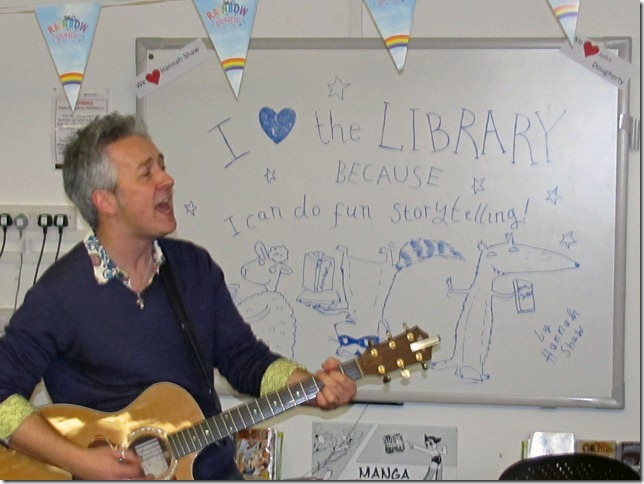
He’d even led the school’s newest intake in a sing-along about his book characters, and finished with another about clock-watching during lessons – something I’m sure we’ve all related to at some point in our lives.

At least I’ll say it was about clock-watching, because I don’t want to spoil the surprise for others who might get to meet John in the near future.

Let’s just say what started out akin to a Tracy Chapman ballad became something else, leading to sniggers from not only the pupils but the staff too.

But as a former teacher himself, John has learned a fair bit about engaging kids of all ages. And for him the guitar is a necessary prop.

Strings Attached: John Dougherty wins over his young audience at Balshaw's High School (Photo: Catherine Sinclair)

Strings Attached: John Dougherty wins over his young audience at Balshaw’s High School (Photo: Catherine Sinclair)

He’s originally from Larne, but now settled in Gloucestershire with his wife and two children, aged 14 and 12, already proving perfect sounding-boards for his work.

John left Northern Ireland after his psychology studies at Queen’s University, Belfast, but it was a long time before he turned his hand to full-time writing.

There was a spell volunteering for Barnardo’s, and even time in a band, as I learned in our post-event conversation.

“When I was a kid I didn’t know what I wanted to be when I grew up, and that was the case even when I did grow up.

“As a young adult I wouldn’t really have dreamed I could make my living as a writer. I didn’t really have the confidence to think that could happen with someone like me.

“Then I got to a point where I was writing songs and thought they were pretty good, and it would be great to have a crack at that.

“I was in a band for about a decade, performing my songs, always getting to a certain level then something stopping us, never getting those breaks.

“And while in the band I trained as a teacher, in those days training courses still considering children’s literature an important part of primary education.

“I rediscovered children’s books and my love of them, and wondered if I could do this.”

His band started off as The Whole World, later becoming Calvin. John also proudly mentions jamming sessions with ex-Fairground Attraction singer-songwriter Eddi Reader. So was he mixing with a few people who went on to bigger things?

Dougherty“We were the level below all that, doing The Mean Fiddler, The Marquee, all those venues. But we did support The Four of Us once, where the second band was Cast.

“We supported one or two name artists, including Bad Manners. That was really interesting – their audience weren’t our audience. But I think we did pretty well.

“I don’t know how much we got them on our side, but at least they didn’t bottle us off!”

John’s also released an album under his own name, Songs from the Water’s Edge Part One. He does however add on his website, ‘I never made part two. Maybe one day’.

He did his teacher-training at Roehampton, going on to teach in Tooting before supply teaching around South-West London.

Schools clearly remain important to him, long after his career switch. It was a brave move too, not least with writing hardly the well-paid occupation most would think.

“I’m only just at the point – 10 years in – of honestly being able to say I’m making enough of a living to support myself.

“Between the writing and the school visits I bring in enough of an income now, but it’s still on that edge.

“With a bit of good fortune I’d be earning quite nicely, but with a bit of bad fortune I could be ‘on the breadline’.”

John mentioned Dr Who writer Stephen Moffatt in his talk, saying how the best TV writers make great stories out of the seemingly-mundane, such as statues coming alive, or cracks in the walls.

Is that something he’d like to try out, writing for the small and big screen?

“That would be great. I’d love to expand my writing. Every writer has strengths and weaknesses, but I think dialogue is one of my strengths. TV and radio is something I could have fun with.”

John seemed slightly nervous ahead of his talk. But he worked his audience well.

“Having been a teacher helps enormously. And being a supply teacher helped enormously.

“Having had three classes of my own, then going into a situation where every day I could be meeting a new bunch of kids, I had to build a relationship with them very quickly to be able to get any work done. Most days I did that and did it well.

“There’s always the odd time when you meet a class completely resistant to somebody new or something you do gets you off on the wrong foot.

“But the vast majority of days I think the kids had a good time while I was in the classroom…and learned something.”

Did he ever take in his guitar?

“I always took the guitar! I made a point of doing some singing with them.”

On his website, he mentions how one of the first – and best – pieces of advice he received during training was from a deputy head in Tooting, Mr Millington, who said: ‘If you’re going to teach children, you need to read children’s books.’

John certainly did that, and even before he was published he was giving talks as an author at schools, after a mutual friend inviting him in for World Book Day.

“I was timetabled for around 20 minutes for each class. I was thinking I had no idea what I was going to do, so decided to take the guitar.

“I linked the fact that I’ve written a book with the fact I wrote songs, and how there are different ways of telling stories.

“I read a bit of my book, and asked if they had any questions. I was amazed straight away when all these hands went up.

“They had questions in every class, and questions I could answer. I built up from that until I was telling them what I could do, suggesting an hour with one group, 40 minutes with another, most of it structured around a Q&A.”

w535188 (1)Time didn’t allow a Q&A during his Balshaw’s session, but John still proved a big hit, even though he feels it’s extremely difficult to win over year sevens.

”They’re already getting into a different way of being, so some of the things that work with primary school just don’t work.

“It’s a case of waiting for others to react first, seeing what the appropriate response is, which you don’t get in primaries.”

I’ve seen that myself from work in junior schools. They come up with great questions.

“Some really interesting ones. In a school in Birmingham last year a kid asked how being a writer had affected my personal life. From a 10-year-old that was amazing!

“Whereas in a secondary school they’re more likely to ask something a bit more normal or not ask anything at all. They’re far more self-conscious by that stage.”

John suggests on his website his own school days weren’t the best. Did he have inspirational teachers?

“I had some perfectly nice teachers, but the only really inspirational one was Ian Maxwell, who took me for maths in the first couple of years of secondary school.

“He was one of these charismatic guys with a great sense of humour who hardly ever had to get cross. Everybody liked him. He was very fair and very funny.

“His lessons were engaging, and he made you think about stuff. So he didn’t last very long under our headteacher before deciding to move!”

Zeus on the Loose proved to be John’s breakthrough, and was shortlisted for the Branford Boase Award in 2004.

But it wasn’t the first publication for an author who started out as a songwriter and poet and only occasionally wrote stories initially.

“The first time I decided to write a story and finish it, see if I could write something publishable, it was a very bleak story.

stinkbomb-and-ketchupface“They say everyone’s got a story inside them, and I think sometimes you’ve a book inside that you have to get out before you can do anything else. This was mine.

“In terms of structure and so on it wasn’t terrific, but it was something I needed to express, and really just start creating.

“Most of my stuff is on computer, but I’m not even sure if I have a copy. I probably have a printed one in a box in the deep recess of the attic.

“I’d certainly like to read it again and remind myself. Also around that time or maybe earlier I wrote a couple of graphic novel scripts I’d like to go back to.

“But the first I sent to a publisher was a series of slightly surreal stories, including one about a boy whose brain was too big to fit into his head and a girl with a pig stuck up her nose!

“I sent them off and got lots of rejections but got one email back from Sue Cook, an editor at Random House, who said I can’t publish these but like the way you write and would like to see anything else you write.

“Everything else I wrote I sent to her, and she took the time to guide me and give me advice until I got to the point where I was writing something she wanted to publish.

“And of those first four stories, this year I had a contract for one – 18 years on – the one about the girl with the pig stuck up her nose, to be published by Egmont in 2016.”

Can John describe the big moment when he was finally published?

“I always imagined it would be one big ‘wahoo!’ moment, but it actually wasn’t. It was a series of small happy moments.

“First you get this indication that they like this story and they’re going to look at it again, then you get the indication they’d like to talk to you about it and wondered if you could change it a bit.

Signing On: John Dougherty  dedicates a book to a new fan (Photo: Catherine Sinclair)

Signing On: John Dougherty dedicates a book to a new fan (Photo: Catherine Sinclair)

“Every time it’s encouraging but you don’t want to get too excited. It might all come to nothing.

“By the time it finally does get to being offered a deal you’ve a lot of that excitement and it’s great, but it’s not like you imagined.

“Then you get the signing of the contract, then all the editing, and finally the book comes out. They all feel great, but none are ‘dancing on the tables’ moments.”

Just before his closing song that morning, John made a point to his young audience that there’s no wrong age for reading a book – stressing that you’re never too old or too young, and not to let anyone tell you otherwise.

So does he have a reader in mind when he’s writing? Is it John Dougherty the 12 or 13-year-old, perhaps?

“It could well be me – now! I really don’t know. I don’t think I have anyone particular in mind. I’m thinking about the story rather than the person who’s going to read it.

“At school we’re often taught to think about an audience, but I don’t think I really do.”

That said, he does admit to trying chapters out on his children.

“I do these days, although they were a bit too young when I started. With Stinkbomb and Ketchup-Face I write one, then take it in and read it to them.

“They’re very encouraging, When I wrote the first, their reaction was what made me think I had something that would really work.

“There have been times when they’ve said ‘this is the bit I like best’, or ‘that wasn’t so funny’. That’s helped me focus and sharpen up a bit.”

John’s past publications include a retelling of the Irish legend, Finn McCool. Was that folklore important to him growing up?

“It wasn’t really. In Northern Ireland, sadly, to become immersed in Irish culture was to make a political statement, or it certainly was when I was growing up.

“It still is in a lot of places. I went to a state school rather than a church school, and didn’t really get that much of a grounding in all that.

“I do remember being told the story of Finn McCool, but it was kind of unusual for us to get any kind of Irish culture.

“And it was only really when I was at university that I started listening to Irish folk music. Until then I hadn’t really been exposed to it.”

John is also a keen contributor to the An Awfully Big Blog Adventure website, and has also proved fairly outspoken on a number of hot issues.

That has included fighting NHS cuts and threatened hospital closures, and coming out against budgetary constraints that have seen libraries axed.

With the latter in mind – knowing he’d always been an avid reader – I asked if he was a regular book buyer or library user as a child.

“My parents weren’t the sort who would buy a treat every time you went out, but one thing I could be fairly sure of was if we went into a bookshop I’d be bought a book.

“I’ve quite a clear memory of being age seven and getting a Famous Five book, going home and holding it, being so eager to read it.

Library Love: John Dougherty adds his voice to the 'save the libraries' campaign

Library Love: John Dougherty adds his voice to the ‘save the libraries’ campaign

“But I used the library all the time. Most Saturday afternoons I’d be down there, borrowing a book, or browsing the shelves as a teenager. I still love libraries, and think they are incredibly important.

“In the second Stinkbomb and Ketchup-Face book I make a point of referring to the library as the most important building in Great Kerfuffle.

“Libraries are hugely important and it’s very sad we seem to have a lot of people in education or in power who don’t seem to understand that.

“If you’re rich enough to be able to afford your own library at home, you don’t necessarily see a free public library being of any use.

“I also think a lot of people in positions of authority really are philistines. Was it a Mayor of Doncaster a few years back quoted as saying ‘why do we need libraries when people can buy books at Tesco?’

To which I can only reply ‘why do we need idiots in local government when we’ve got enough in Westminster!”

Back on the subject of Stinkbomb and Ketchup-Face, it appears that John has an almost-unhealthy dislike for badgers. Is it really a good time to be saying this, amid the current cull?

“I’m absolutely opposed to the cull. Culling badgers is a very bad idea. They actually need putting in prison. That’s what I think – they should be taught to mend their ways instead!

“I do think badgers are amazing animals, but find it funny that they’re characterised the way they are in fiction. Maybe it’s down to Wind in the Willows. A lot of people think that’s what they should be like in children’s books as a result.

“The first time I met a badger who wasn’t like that was in Watership Down, one of my favourite books. That badger is kind of a threat and there’s something brutal about it.

Defining Moment: Watership Down, by Richard Adams - the 1978 edition this blogger owns

Defining Moment: Watership Down, by Richard Adams – the 1978 edition this blogger owns

“Actually, for The Guardian I recently did a top-10 badgers piece, and both the Wind in the Willows and Watership Down badgers are in there.”

There’s a real skill to writing children’s books with great animal characters. Yet one of my favourite authors, AA Milne, was criticised by some (heathens!) for jokes above the child’s head.

“With Winnie the Pooh and The House at Pooh Corner there’s a lot of stuff that can be appreciated on different levels. And I appreciate pieces now that I wouldn’t have thought about as a child.

“I don’t think that’s talking above children’s heads though. It’s simply about writing something good and something of value that can be appreciated by people of all ages.

“That’s what I like to think I do, and I’ve certainly had a lot of good feedback from adult readers.

“Some of my favourite reviews are ones saying they read my books to their kids and laughed as much as they did. That’s what I’m aiming for.

“Books are very much pigeon-holed into children’s or adults’ books, whereas at the same time we have family films, pitched at all of us.

“There are books the whole family can enjoy, so why restrict them to one age?”

Feline Groovy: The questionably-named Malcolm the Cat joins John's heroes

Feline Groovy: The questionably-named Malcolm the Cat joins John’s heroes

There is something else I feel I should broach with John, and that’s him calling one of his characters Malcolm? What kind of name is that for a cat?

“He was actually named after a cat called Malcolm. I just thought that was such a terrific name for a cat. It’s the same with my badgers really.”

OK, I concede that, not least as it reminds me of once over-hearing someone in a pub garden addressing their dog as John, oddly enough.

I share this information, and John is at once inspired to share another family story.

“My wife was planning on bee-keeping at one stage, and one morning at breakfast one of the kids said, ‘If we do get bees, I want to call one of them Stuart’.

I thought that was fantastic – Stuart the Bee! So when I came to naming my badgers I knew one of them had to be Stuart the Badger.”

So are there any current authors he would hold up as an example to us all?

tumblr_inline_mqtpdhUpBw1qz4rgp“Loads! In some ways it’s a little unfair to pick out a few, but someone whose work I consistently enjoy is Philip Reeve. I think he’s brilliant and has a great imagination.

“Then I’d say Jonathan Stroud. I’m looking forward to Lockwood & Co, and like the Bartimaeus trilogy.

“There’s Frances Hardinge. I’ve only read A Face Like Glass, but all her other books are on my to-read list. A marvellous book, the best I read last year. I could go on!”

But time is against us, with John expected at another high school up the road, Brownedge St Mary’s in Bamber Bridge.

I ended by complimenting him on his closing song to the Balshaw’s year sevens, not least it’s mid-song change of direction.

“Well, thank you! One of the thing I love doing with writing is playing with people’s expectations.

“I love those moments where they think you’re leading them down one road, but then you take a turn off somewhere else!”

And now – a Fantastic Footnote …

Fantastic Day: Emma Barnes and John Dougherty at the Fantastic Book Awards launch

Fantastic Day: Emma Barnes and John Dougherty at the Lancashire FBA launch

John Dougherty took time out while visiting Lancashire to help launch of the latest Fantastic Book Awards, part of the scheme’s 10th anniversary celebrations.

He joined fellow children’s author – and 2014 FBA winner – Emma Barnes and teachers from 120 primary schools across the county at a conference to launch the awards, run by Lancashire County Council’s School Library Service.

The awards were established in 2005 following the success of the Lancashire Book of the Year award for secondary age students.

The idea is to encourage reading for pleasure and enjoyment for nine to 11-year-olds, introducing them to newly-published fiction titles.

A selection of six books, from a list of 30, goes to participating schools at the start of the autumn term, together with an introductory pack and promotional materials.

thumbnailThe books are usually read in the form of a book club, with titles discussed and opinions shared, fostering enthusiasm for reading as a social activity.

Pupils in school years five and six from all over Lancashire read and discuss the titles throughout the autumn and spring terms.

Voting takes place at the end of the spring term and then schools await the results and the announcement of the eventual winners.

OMB Wolfie coverThe winning authors receive high-quality fountain pens as prizes, and each school and all participating pupils receive certificates celebrating their achievements.

Books are divided into five groups of six titles, with each school receiving two copies of the titles on the shortlist, with all the titles first published in the UK between April 1st and March 31st in the previous 12 months.

Emma Barnes’ Wolfie was among five winners for 2014, with Adam Perrott’s The Odds, Sally Gardner’s Operation Bunny, Eleanor Hawken’s Sammy Feral’s Diaries of Weird, and Jennifer Gray’s Atticus Claw Breaks the Law.

To find out more about John Dougherty, his books and school visit programme, head to his website here

 * With thanks to independent children’s books promoter Jake Hope and Balshaw’s High School learning resources co-ordinator Catherine Sinclair 

Posted in Books Films, TV & Radio | Tagged , , , , , , , , , , | 3 Comments

From The Jam / Deadwood Dog – Preston 53 Degrees

Friday's Boys: Russ and Bruce in action at 53 Degrees (Photo: Warren Meadows)

Friday’s Boys: Russ and Bruce in action at 53 Degrees (Photo: Warren Meadows)

After a winning set by locals Deadwood Dog and a stirring late ‘70s/early ’80s soundtrack between, there was more than a frisson of excitement around 53 Degrees as The Gift’s upbeat instrumental Circus signalled the arrival of the main act.

Bass hero Bruce Foxton, guitarist/lead vocalist Russell Hastings and drummer Steve Barnard soon took to the stage, and above a background ring-tone, Russ asked, ‘Shall we answer that phone?’

We were off, with Setting Sons side one, track one, Girl on the Phone, 35 years on, and it was pretty much non-stop from there, transported back in time to a revered Jam LP.

The band were soon augmented by Monroze’s Tom Heel on keyboards, a regular Paul Weller associate, and never gave less than the proverbial 100 per cent all night, despite battling bugs and a nightmare journey north.

Up-Front_The-Jam_Setting-SoWeller’s often-sublime lyrics are perhaps all the better appreciated all these years on, the band giving the songs the respect they deserved.

Bruce had said he was slightly worried about a click-track on Wasteland – a rare bit of live FTJ technology – but Tom was in charge and the song was seamless.

That track was just one that proved as special as I’d hoped, while Thick as Thieves, Private Hell, Little Boy Soldiers and Burning Sky were delivered with the right mix of angst and colour.

Bruce positively shone on Smithers-Jones, a live staple for so long, while Russ – still under the weather – pleaded for help on the evocative Saturday’s Kids and got it in spades from an audience where a fair proportion were surely too young to appreciate it all first time.

Again you always expect to hear The Eton Rifles from this much-loved collective, but they exceeded expectations on an extended mix.

Finally, Heatwave was just amazing, Martha Reeves’ classic floor-filler delivered at pace with the extra fire the original band intended.

Flying Again: From the Jam at 53 Degrees.  From left - Russell, Smiley and Bruce (Photo: Warren Meadows)

Flying Again: From the Jam at 53 Degrees. From left – Russell, Smiley and Bruce (Photo: Warren Meadows)

You can see why Steve has that Smiley nickname, the latest percussionist’s facial expressions nigh on infectious as he led the band from the rear.

So where to go from that high point? Well, you’re never more than a couple of minutes from the next hit, and Going Underground, When You’re Young and Strange Town had this punter in raptures.

It didn’t stop there, a version of Larry William’s Slow Down, first borrowed for In the City, proving a real barn-stormer.

Russ mentioned that song’s rebirth in Liverpool from a certain four-piece while discussing the recent evocative Cilla Black TV bio-pic.

And talking of great ’60s bands, Bruce was soon leading us into The Kinks’ David Watts, at least a couple of generations of Mods clearly impressed.

The mood changed for the poignant Butterfly Collector, before the set’s thrilling climax with Start and a thrilling run through That’s Entertainment.

The love between this band and the fans is something special, and Bruce voiced appreciation for the threatened venue itself, while Russ told us how their reception had more than made up for his nine-hour trip from the South Coast.

A couple of minutes later, the band saw us off with the first of three more high points, All Mod ConsTo Be Someone and Down in the Tube Station at Midnight followed by A Town Called Malice, every word seemingly echoing around the room as well as down the tracks.

It wouldn’t be enough to just offer nostalgia. It has to be fresh too, and on that count From the Jam have got it nailed on. Long may they shine.

* For a recent Bruce Foxton interview based around the 35th anniversary of Setting Sons, head here.

Think Pink: Deadwood Dog vie for space at 53 Degrees on Friday (Photo: Deadwood Dog)

Think Pink: Deadwood Dog vie for space at 53 Degrees on Friday (Photo: Deadwood Dog)

It can’t be easy playing second-fiddle to any band, and local boys Deadwood Dog had their work cut out earlier, winning over a big crowd at this Setting Sons anniversary show.

Yet this assured six-piece did commendably, despite having less space on stage than ever before. It’s a good job they can’t dance as well as they play.

Kraftwerk cover The Model always goes down well, and you can see why this treasured combo – their Eastern European influences worn on their sleeves – are becoming established on the festival circuit.

Many of the songs from debut CD United Colours of Bigotry were well received, not least the more commercial Out in the Rain and You Brighten Up My Day.

This also turned out to be a launch party for new single Divided Kingdom, and front-man Mick’s between-song banter, Daeve’s bouzouki fretwork and the band’s overall pride at being involved showed.

10610489_847198265312775_6766747187939789599_nHaving supported From the Jam at the same venue last year, Deadwood Dog again won some new friends and indicated just why they’ve become such an integral part of Lancashire’s live scene.

To get hold of the Divided Kingdom three-track CD single – also featuring The Beast of Bamber Bridge and Uglyhead – plus Deadwood Dog’s debut CD, and find out where to catch the band live, head to their Facebook page here or try via Dumbdown Records hereAlternatively, you can download the new EP via Bandcamp here. 

And for a writewyattuk feature on Deadwood Dog from July, 2014, head here.

* With thanks to Mark Charlesworth at 53 Degrees and esteemed photographer Warren Meadows. 

Posted in Music | Tagged , , , , , , , , , , , | 2 Comments

Big Country show their Steeltown mettle – the Bruce Watson interview

10009315_714201701961679_1233763750436338762_nBe honest. What do you think of if someone mentions Big Country?

The band that is, not the 1958 Gregory Peck and Jean Simmons film success based on Donald Hamilton’s novel, with that fantastically-evocative and stirring musical score.

Do you think 1980s’ stadium rock, gingham shirts and a strong Scottish identity?

Well, surviving member Bruce Watson can put us right on a bit of that, and it’s worth noting that while they made four albums in the ’80s, they made another four in the decade that followed.

What’s more, since the tragic passing of original front-man and former Skids guitarist Stuart Adamson in late 2001, they’ve been playing regularly these last four years and released a ninth studio album.

Perhaps most startlingly, it’s the Scottish identity bit that Bruce takes me to task on, albeit in a friendly manner.

You see, Bruce – while he had moved to Fife by his third birthday – was born in Ontario, Canada.

Furthermore, of the original quartet, drummer and fellow stalwart Mark Brzezicki was born in Berkshire, Stuart was from Manchester, and bassist Tony Butler from London.

So if nothing else, I might have provided you with some good ammunition for a future pub quiz there.

As Bruce puts it, “We didn’t just see ourselves as a Scottish band, and none of us were born there anyway. We were just a band.

“It was more a press angle. You wouldn’t say Mott the Hoople or Def Leppard were English bands. We’re just a rock band.”

10406458_661158467266003_3005931025864662636_nBruce moved to Dunfermline in 1963, leaving on the Queen Mary the same day John F. Kennedy was shot.

Seeing as his band had a reputation for evoking the spirit of bagpipes, fiddles and other traditional Caledonian instruments though, I asked if he grew up with Scottish folk music.

“Not really, more rock music, mostly The Beatles and The Rolling Stones.”

As it turns out, Bruce only started playing guitar when he was around 14, and it took a while to come together.

“I wanted to be a football player, but when I discovered I was no good I wanted to learn guitar after seeing films like Tommy, Stardust and all that.

“That’s what made me want to do it, seeing David Essex eyeing up that red guitar in the window. It was like, ’I want that!’

That was the iconic scene that bridged the gap between 1973’s That’ll Be the Day and 1974’s Stardust, but did the reality turn out more like the more gritty 1975 Slade film Flame?

“Well, that was a good movie as well, and I thought Don Powell was excellent in that.”

Was it always inevitable from there that playing guitar would lead to something?

“It was just something I wanted to do so badly.”

Dunfermline Days: The Skids, with Stuart Adamson second from the right

Dunfermline Days: Skids, with Stuart Adamson second from the right

Stuart Adamson was three years older than Bruce, and saw success first with Richard Jobson in new wave outfit Skids, another Dunfermline-based band.

“I met Stuart in around 1977 when I started putting my band together. My best friend, Raymond, who I’d known since primary school, had an older sister who was going out with Stuart at the time, and they later married.”

Was there a healthy scene in Dunfermline back then?

“Dunfermline was a hot bed for music! In the street I lived, next door was Manny Charlton from Nazareth, and next street down was Skids drummer Mike Baillie.

“You had two options for work. You worked down the pit or down the dockyard. I worked in the dockyard and there must have been 10 bands that came out of there.

“I was there about three and a half years, working on submarines, before I went full-time with the band.”

Did that job sharpen your resolve to get away?

“Not really. It was just part of your upbringing. My father worked in the pit, and they had so many accidents down there, he said, ‘You don’t want to go there’. The docks were a better option.”

Thankfully, Bruce soon carved out his own career, and fast forward to 2014, Big Country are back, touring with their latest line-up, celebrating the 30th anniversary of their second album, Steeltown, playing it in its entirety each night.

Big_Country_-_SteeltownDoes it seem like it’s been 30 years since Steeltown?

“No, it doesn’t. Funnily enough, we did a gig last night, playing Steeltown for the first time since, a free warm-up show at Keystreet, Clitheroe, a music bar where we’d rehearsed the past couple of days.

“We invited fans along, playing as Men of Steel, and around 200 people turned up!”

Hang on, did he say Clitheroe? Yes, the band may be forever identified with Scotland the Brave, but their current base is in Lancashire.

So, just a few weeks after the ‘no’ vote tipped the Scottish referendum, Big Country are based in an area which remains at the geographical heart of the United Kingdom.

“We don’t live in Clitheroe, but we’re here most of the time working, the most central point in the UK. Get a map of Britain and you’ll see for yourself!”

Of course, it helps that the band’s manager, Pete Barton, lives in the town, and with band members in London and north of the border, it’s proved a perfect base.

Steeltown marked a happy time for the band, coming after the success of debut album The Crossing and their third top-10 hit, Wonderland.

The title track was written about Corby, the Northamptonshire town which attracted a significant influx of Scottish workers when its steelworks opened in the mid-1930s, but was facing major unemployment issues by the early ‘80s.

Steeltown proved to be Big Country’s sole No.1, and spawned three more top-30 singles, and was – like their debut LP – produced by Steve Lillywhite.

“It was very strange, because Steve was working with so many bands at the time, and took a year out for tax purposes. So we went to Stockholm to record at Abba’s Polar Studios.

“That was absolutely amazing, and we got to see Benny and Bjorn, who were there planning their musical, Chess.

Apart from alphabetically, I don’t suppose too many people would have put Abba and Big Country too close to each other.

“Not really, but it was an interesting time, albeit in an expensive city. You wouldn’t want to go there for a party, that’s for sure.”

Wonder Days: The original line-up, from  left - Tony Butler, Bruce Watson, Mark Brzezicki and Stuart Adamson

Wonder Days: The original line-up, from left – Tony Butler, Bruce Watson, Mark Brzezicki and Stuart Adamson

The album went straight to the top of the charts, and it seemed like Big Country were at the top of their game.

“True. And you don’t expect things like that. But when it happens it is quite nice, and it’s life-changing.”

They even played a part in the original Band Aid project, soon after the album came out, although a busy European touring schedule limited them to recording a message for the b-side.

Has Bruce a favourite Big Country recording after all these years?

“I’m still drawn towards the Wonderland 12”, which came after The Crossing and before Steeltown. That kind of worked.

“We had to go away to tour America after recording the song, and Steve Lillywhite mixed it without the band being present.”

You’ve quite a long tour up to Christmas. I’m guessing you still get a buzz out of playing live.

“Definitely. This is our second lease of life. We didn’t do it for a lot of years. After Stuart passed away, nothing happened. Now, we’re out there doing it, and it’s good.”

By the late ‘90s, the album sales were suffering and Stuart was suffering with alcoholism and depression.

The band had a Final Fling farewell tour in 2000, but remained adamant they would return.

1972304_625680920813758_1070099452_nAs it turned out, they played later that year in Kuala Lumpur, but Stuart’s problems continued and in December 2001 he was found dead in a hotel room in Hawaii.

Was there ever a sense of foreboding about what was to happen?

“Not really. The band used to break up every year or so. Like any band, where you’ve had enough and just want to take a break from it.

“We broke up at that stage, but as it turned out we got back together about a month later to do some gigs in Malaysia. And we were intending to carry on.”

Were you still in touch with Stuart at the end?

“Oh yeah. He was out in Nashville, but we’d phone each other and talk a lot.”

I guess that devastating loss must have made you re-evaluate just what was important.

“Kind of. You just don’t know what’s around the corner, and make every day count.”

The current Big Country line-up consists of Bruce (guitar/vocals) and his 25-year-old son Jamie Watson (guitar), founder member Mark Brzezicki on drums, former Simple Minds and Propaganda bass player Derek Forbes, and vocalist Simon Hough.

Is it nice to be playing with your lad?

“It’s great, and Jimmy’s been in the band since we started back up in 2007, initially when I got a call from Richard Jobson putting the Skids back together.

“U2 and Green Day got to together to record The Saints Are Coming. I think that was the catalyst for Richard to call me.

“Jamie was involved as well, and we felt if we could get the Skids back together we could do the same with Big Country.”

Did Jamie grow up hearing a lot of his dad’s band?

“He knew all that stuff. I’ve two sons, and while my oldest isn’t interested in music, which is great, with Jamie, from the moment he was born he fell in love it all, and it seems he’s always had a guitar around his neck.”

Family Way: Bruce and Jamie in live action with Big Country

Family Way: guitar duo Bruce Watson and his son Jamie Watson in live action with Big Country

Does he play like you?

“He’s totally different from me. He’s more a technical player. Like myself, he was heavily into the Beatles, but also all the contemporary stuff from over the years.”

Can his old man still embarrass him on the road?

“Oh … easily!”

On the band’s last tour, The Alarm’s front-man Mike Peters was the lead singer. Is it a little different with Simon Hough now?

“Simon’s done a lot of session work in the past, with the likes of Denny Laine. When we were working with Mike, we changed the key of the songs to suit his voice.

“He also brought his own thing to the table. With Simon it’s very much doing the songs exactly as they were done back in the day, and how it sounded on the record.

“It’s going to happen in any occupation where you’ve got one guy doing two things. It’s going to come to a head at some point.

“And last year, Mike told us he was going to have to take a year away from Big Country to do his own 30th anniversary albums!

“That was fine, but we couldn’t just sit on our bums for a year, so had to go out and find another vocalist. There’s certainly not been any fall-out though.”

Between commitments, Mark has played drums for Bruce Foxton and From the Jam. But I always got the feeling, despite his full commitment, that Big Country remained his top priority.

In fact, the drumming on Senses of Summer, the last song on Bruce Foxton’s comeback album, Back in the Room, seems to suggest something of an amalgam of Big Country and The Jam.

“Really? I’ll have to have a listen.”

10295736_658547474193769_8726595812681789272_n

Stepping Up: The new line-up. From the left: Simon Hough, Derek Forbes, Mark Brzezicki, Jamie Watson, Bruce Watson

And then there’s Derek Forbes on bass, replacing founder member Tony Butler.

“Tony retired from music around a year and a half ago, and teaches music in a college in Cornwall …”

I was aware of that, actually, as my Bude-based nephew, Dexter Wyatt, has enjoyed the benefits of Tony’s tutorial experience at Petroc College.

“Ah, brilliant! Well, when Tony left, I’d worked with Derek previously, so he was our first port of call. He was working with his ex-band members from Simple Minds but looking to do something else.

”We’d always kept in touch, so he came on board. So even though Mark and I are original members, we’ve three more guys in the band now, and it’s fresh.”

While the band’s commercial success dwindled throughout the 80s, they retained a loyal fan-base, paving the way for their later reformation.

What can we expect when we come along to The Muni Theatre in Colne (this Friday, October 10) or any of the dates that follow?

“The set will be split into two 45-minute halves, just like a game of football, with the Steeltown album followed by songs from the back-catalogue.

“Back then of course, we were limited to vinyl or cassette formats, and because of that we were limited to around 40 minutes or so.”

Personally, I prefer those days, when you’d have a fifth or sixth track that would sign you off before the second side of the record.

“And then you turn over – exactly! That’s what we did last night. After five songs I said that.

“All you really need is the sound of a needle going on to the vinyl, then you can go on to side two!”

1908072_704943299554186_3988669027947201360_nFor full details of Big Country’s Steeltown 30th anniversary tour, the newly-released deluxe edition of the album, and all the latest from the band, head here.

This is a revised and expanded version of a Malcolm Wyatt feature for the Lancashire Evening Post, first published on October 9th, 2014. For the original online version, head here

Posted in Music | Tagged , , , , , , , , , , , , , , | 4 Comments

Preston’s Got Soul: Judy Street – 53 Degrees

Casino Royalty: Judy Street with Russ Winstanley in Wigan during her UK visit (Photo: Judy Street)

Casino Royalty: Judy Street with Russ Winstanley in Wigan during her UK visit (Photo: Judy Street)

In case you didn’t realise, there’s something of a Northern Soul revival going on at the moment, no doubt stoked by the likes of Duffy and John Newman on the mainstream scene.

And the forthcoming, much-anticipated film that takes this music and dance movement for its title suggests it’s far more than just a fad.

There were enough young faces busting moves at Preston’s 53 Degrees on Friday night to suggest there’s plenty of truth in the old ‘keep the faith’ maxim and underline the notion that classic soul’s here to stay.

Those who first filled the floor to Judy Street’s rediscovered What in the early ’70s have grown a little longer in the tooth since. But that 1967 flip-side has proved to have something of a life of its own.

Judy herself has been astounded by an on-going love for the song and the perennial teen who sang it, and this was part of her way to say thank you for all the support she’s discovered this side of the Atlantic in recent years.

After getting Russ Winstanley’s call to return to the UK – a few months later than originally planned – this Northern Soul icon finally got to experience Preston’s soulful credentials first-hand.

Fresh from a well-received visit to Skegness’s Northern Soul Survivors Weekender, Tennessee-based Judy Street headed for the North-West, and clearly relished her big moment in front of an adoring in-crowd.

If there were nerves ahead of this solo performance, Judy used them to positive effect, an infectious smile suggesting she was having the time of her life out there.

Cult 45: You Turn Me On/What, the original 1968 pressing

Cult 45: You Turn Me On/What, the original 1968 pressing

It’s been a long time coming, with What – later covered by Soft Cell – recorded 46 years ago.

Yet the star attraction of Preston’s Got Soul’s penultimate show at this seemingly-doomed uni venue peeled back the decades and gave it her all.

It was a brave choice of set, with Judy – turned back by customs officials in May, lacking the necessary work permit – airing tracks from her new Cover Girl CD, including a number of revered dancefloor favourites.

I say brave because I’m aware of the past snobbery that seems to have gone hand-in-glove with an otherwise friendly scene. So many belting tunes are off-limits for the aficionados.

Yet Judy has crafted a collection of respectful nods to some of those classics, and to good effect.

I would have much preferred a full band behind her, but she did commendably, with the two scooters on the stage helping set the tone.

Her backing tracks were constructed with great care, and though it wasn’t seamless – and couldn’t be in the circumstances – Judy’s charm and great vocal saw her through.

She was a teenager when she recorded for HB Barnum in LA, and clearly the voice has changed over the years.

But if you can imagine a vocal talent like Cher tackling classic ’60s soul rather than her late ’80s mainstream soft rock, you’ll not be too far off.

There’s a Dusty Springfield feel on some tracks too, and this is clearly a performer with a deep appreciation of a scene she only truly learned about in later years.

From Tainted Love and Hit and Run to Do I Love You (Indeed I Do), Sunny and Wigan’s adopted anthem Long After Tonight Is All Over, she proved her worth.

And among the hip hits and standards there was even a song penned by Judy’s hubby, What Are You Waiting For serving as a fine tribute to that whole scene.

Stage Presence: Judy Street gave it her all at 53 Degrees (Photo: Judy Street)

Stage Presence: Judy Street gave it her all at 53 Degrees (Photo: Judy Street)

Judy was clearly at home with the mic. and talked briefly about her sightseeing trips to Liverpool and Wigan – the latter getting the biggest cheer, I might add.

And while the Casino’s long gone, there was plenty of life and passion in the assembled faithful, also inspired by spot-on contributions on the decks by DJs Dave Evison and Glenn Walker-Foster.

GWF for one bopped and shimmied enthusiastically behind his turntables, and proved to be the perfect MC for Judy, ensuring the floor remained busy before and after her two sets.

And as you might expect, Judy finished both sets with the song that started it all – the much-loved What proving nothing less that a crowd favourite.

I gather more tickets sold in May, and there was plenty of room to manoeuvre out there. PGS’s organisers could certainly do with a few more punters for star guest Eddie Holman at December 5’s 53 Degrees finale.

But those who showed up were rewarded, and Judy – who later signed CDs and merchandise with the great charm you might expect from this positively-personable performer – justifiably returned home on a high.

Judy cover yellow FINAL (1)Judy Street – Cover Girl – a review

Cover Girl is dedicated to ’40 years of Northern Soul’, and certainly provides a worthy tribute to a scene that continues to thrive all these years on.

There’s an element of ‘catch-up’ in parts, and now and again you wonder just what we might have missed out on from this artist during her lost years … or at least the years lost to us.

But I guess that’s part of the magic of Northern Soul. It’s not about success stories as much as great music. And nostalgia plays a big part in all that.

We’ll never get back the teenage girl who delivered What in ’68, but we at least get to hear what a talent she was … and remains.

Produced by Judy’s other half Tom Stewart and engineered by Mike O’Neil, Cover Girl was recorded at Serenity Hill Studios in Nashville, Tennessee, and carries a flavour of all those classic recordings that turned us on to ’60s soul on this side of the pond.

It features a number of standards and carefully-chosen covers, and where else could we start but Ed Cobb’s unmistakable Tainted Love, 50 years on from Gloria Jones’ original.

There’s something of an acknowledgement as well to Marc Almond, whose version with Soft Cell revived the song in the UK in a similar way he later did with What after its earlier Northern Soul revival.

1653834_546586415440701_1297279066_nIt’ll Never Be Over For Me is the song that first brings Cher to mind, and seems just right for Judy, although it will always remain associated with Timi Yuro.

Hit & Run brings a more Motor City feel to the party, Michael Grando’s drums and Tom’s keys providing a good old chugging backdrop for Judy’s mighty vocal, again moving away from but retaining the spirit of Rose Batiste’s favourite.

Apples, Peaches, Pumpkin Pie is more classic Northern territory, and there was a time when Judy might have scored a hit here with this alternative spin on Jay & the Techniques’ floor-filler.

Again, you’re left wondering how this artist missed out on the big time. If her HB Barnum-penned hit had been a hit … well, who knows.

But it’s not about what might have been as What Are You Waiting For, Tom’s own revival song, and something of a tribute to Judy’s cult hit. Lovingly honed in the spirit of the ’60s, and a track you have to check the date on to see if it was really penned five decades ago.

There’s no mistaking the next cut, and for many Frank Wilson’s Do I Love You (Indeed I Do) is a song that sums up all that’s so good about this scene.

Judy’s version is fairly faithful. And while you might think on the surface you can’t go wrong with this classic, I beg to differ. You could quite easily, but she avoids the pitfalls.

Soul Icon: Judy Street

Soul Icon: Judy Street

It’s a personal thing, but for me the mix is a bit too low on Spiral Starecase’s More Today Than Yesterday. I need to hear Judy competing with that brass, and a more live feel. But like the next track, Laura Greene’s Moonlight, Music & You, it’s another great showcase for Judy’s voice, the latter’s violin intro tugging the heart-strings.

Bobby Hebb’s Sunny has been covered many times before, and I’ll always have a soft spot for the original and Georgie Fame’s cover. But again Judy delivers, and this time provides a heartfelt tribute to her days learning at the foot of her father’s piano.

And Jimmy Radcliffe’s Long After Tonight Is All Over offers a grand and rather poignant finale, delivered with the nostalgic feel you might expect from a song that conveys so many emotions for Northern Soul lovers.

It’s unlikely that Cover Girl will be your introduction to all these songs, and it’s not designed to be.

It’s not about replacing the originals, and thankfully they remain with us because of the archiving we now have in place and the efforts of those who kept the faith and ensured this great music would never die.

But what we have here is a sincere, respectful tribute to just a handful of the songs that make this scene work, and a reminder of just what we’ve missed out on from Judy for all these years.

Yet we’ve got her now, and long may she deliver.

Personally-autographed CDs are available from the artist’s www.JudyStreetWhat.com website.

Alternatively, copies can be obtained via Preston’s Got Soul’s Andrew Kirkham, who can be contacted on 0788 5077638.

For a link to my original Judy Street feature and interview, from May 2014, head here.

Posted in Music | Tagged , , , , , , , , , , | 2 Comments

When Setting Sons rise again – the Bruce Foxton and From the Jam update

Second Setting: Bruce Foxton, in action at Chester Live rooms (Photo: Warren Meadows)

Second Setting: Bruce Foxton in action at Chester Live Rooms (Photo: Warren Meadows)

Thirty-five years ago next month, The Jam released their fourth long player, Setting Sons, a further high point in an already stellar career.

After their explosive debut, In The City, in 1977, the Woking three-piece gave us the not-quite fully-baked follow-up This is the Modern World.

But if there was a fear that they were about to burn out, it was dispelled by the masterpiece that was 1978’s ground-breaking All Mod Cons, properly showcasing Paul Weller’s songwriting prowess and the creative contributions of band-mates Rick Buckler and Bruce Foxton.

And it soon became apparent that this trio were unwilling to stand still, their next album that following year pushing them on again, further enhancing the band’s capabilities.

The rest of the story has been told many times, with All Mod Cons, Setting Sons and fifth platter Sound Affects rightly lauded as classics at the time and all these years on.

While there was no ambition to look back at the time, their bass player and backing vocalist has had good reason to dig out Setting Sons again recently.

That’s because Bruce is show-casing that long player again, alongside long-time musical partner Russell Hastings under the guise of From The Jam, the band they formed along with Rick Buckler in 2007.

Seven years after their first gigs, From The Jam remain a feted live phenomenon, and while Rick has since moved on and Paul Weller never contemplated rejoining, their reputation remains.

That spell has included several retrospective album tours, while Bruce and Russell proved the doubters wrong with their collaborations on the former’s 2012 comeback album Back in the Room.

Bass Instinct: Bruce lets loose at Chester Live Rooms (Photo: Warren Meadows)

Bass Instinct: Bruce lets loose at Chester Live Rooms (Photo: Warren Meadows)

And it just so happens that those occasional anniversary tours have now moved on to the album that first gave us classics like Paul’s The Eton Rifles and Bruce’s Smithers-Jones.

Those two songs have long been staples of From The Jam’s live set, but there are many more great tracks on Setting Sons that have not seen the light of day for some time …. until now.

Bruce and guitarist/vocalist Russell – joined by drummer Steve ‘Smiley’ Barnard these days – are currently performing the album in its entirety, for a tour in which that set is followed by other classics from the back catalogue and a few from Back in the Room.

Setting Sons was released in 1979 to critical acclaim, Melody Maker declaring ‘The Jam have never sounded better’ and Record Mirror celebrating ‘The last great album of the ’70s’.

And it’s fair to say that Bruce is as fired up as former fan Russell when it comes to this tour. But first he has something important to attend to in his Surrey office.

“I’ve just finished speaking to someone else, and I’m feeding my cat at the moment. I might get some peace and quiet then.”

That achieved, I reminded Bruce that last time we spoke last May, he told me ‘don’t leave it another 25 years’, seeing as our previous interview was in the mid-80s, not long after the release of his debut solo LP, Touch Sensitive.

So this time it’s been about 17 months. That’s a bit better, isn’t it?

“Well yeah, that was talking about Back in the Room, which came so long after the first solo album. But it won’t be that long until the next one, which we’ll be hoping to release around next October.”

That’s good news for a start then. So, moving on, you’ve been pretty busy for much of the year, and now you’ve got the Setting Sons tour taking you up to Christmas.

Angry Boys: Russ and Bruce at Chester Live Rooms (Photo: Warren Meadows)

Angry Boys: Russ and Bruce at Chester Live Rooms (Photo: Warren Meadows)

Then there are a few gigs beyond that with Nine Below Zero, and later an Australian tour, set for March. It’s all go, isn’t it?

“Yeah. It’s good. It’s better than twiddling your thumbs, phoning your agent and asking what’s happening. It’s just been getting bigger and bigger.

“We’ve had a lot of really good festivals this year, and I think that’s down to how hard we’ve grafted.

“It sounds big-headed, conceited, whatever, but the quality of what we do – giving it 100 per cent and cherishing all those songs – comes over.

“It’s a big machine, really, the agent does a great job and really fights our corner, the PR company is pretty good, and all that comes together.

“Furthermore, Back in the Room raised our profile again, and you can see that at the shows. The whole thing is still building, which is brilliant.”

Does it keep you young, Bruce?

“It does mentally. Physically it’s a bit hard. Certain things have been wearing out after 35 or so years of leaping around like an idiot.”

I was going to say, there are a few photographers following you around for that ultimate ‘Bruce in full flight leap’ these days.

“Yeah. They miss one now and again though! The older you get, things do start aching the next morning. Other than that though, I think music does keep you young.”

Band Substance: From the Jam, live in Chester, from the left, Russ, Steve and Bruce (Photo: Warren Meadows)

Band Substance: From the Jam, live in Chester, from the left, Russ, Steve and Bruce (Photo: Warren Meadows)

Do you dread all the travelling? The Stranglers’ Jean-Jacques Burnel recently told me how flying had become such a drag, no longer in any way romantic (not least as he has to remove his belt and his DMs before boarding).

“It’s just part of it, unfortunately. You’ve got to get there. It is a chore sometimes, on the road, stuck in traffic. But hey, I’m really grateful to still be able to do this, and that the demand is there.

“If that’s the worse I’ve got to whinge about, what am I moaning about? It can wear you down, being on the road, but we’ve got it pretty well paced out in terms of how many shows we do.

“Generally we do two or three then come home for a couple of days for a quick recharge, then out again. It’s not like we’re doing six months solid, back-to-back shows.

“I don’t think I could do that. I wouldn’t want to be away from home that long.  But I think we’ve a good balance now with the schedule.”

So much happened over The Jam years, it’s a wonder you can remember much of it in detail. How about when Setting Sons was written, recorded and toured – was that a good time?

“It was hard work. A lot of it was written in the studio, the Townhouse in Goldhawk Road, Shepherd’s Bush.

“Certainly, some of the songs were just sketched ideas where Paul would lay down the bones of it during the day, then Rick and myself would stay up in the studio rooms – where you could crash out – and where we would work out what we thought would work on a track overnight.

“Then we’d all crack on, kick it around the next day and record it. There wasn’t as much pre-production, like going into rehearsals and knocking them all into shape before you recorded songs.

“It wasn’t a cheap way of doing it, but I think we came out with a good record.”

The-Jam-All-Mod-Cons-325581You certainly did. I think when All Mod Cons came out it was a case of ‘where are they going next?’ Was it the success of that bold move that gave you the self-belief to push on again?

“Yeah. It was a very exciting time, and I don’t think we ever sat back on our laurels. We always looked to push on rather than stick with a proven formula.

“All three of us challenged ourselves in respect of what we did and what we played. With every record we tried something new, something experimental, to see how it would turn out.”

Was this – as some of the reviews suggested – your first conceptual album? There does seem to be something of a theme running through a few of the songs.

“Well, no. I can understand why certain people would say it was a concept album, but I wasn’t really that aware of that at the time.

“Three or four songs link together, but I don’t recall anything more. Maybe Paul mentioned it, but if he did I’ve forgotten it.

“I certainly can’t hear him saying, ‘OK, we’re going to do a concept album!’ But I might be wrong, it was all a long time ago.

“What has really hit me, having been in rehearsals for this tour these last few days, is – and again this sounds conceited – what a great album that was or in fact is.

“I hadn’t played that record in its entirety for quite a while, although we’ve played a few songs quite a lot, like The Eton Rifles and a band version of Smithers-Jones.”

I agree. There’s so much depth to that album. It was about far more than just the big hit. And when I think how young you all were at the time…

“I know! The lyrics are incredible. That’s really hit home – how talented Paul was then. He’s still going from strength to strength now, but the lyrics there are incredible for such a young man.

“Brilliant! We’ve been playing, for example, Wasteland …”

Up-Front_The-Jam_Setting-SoI was coming on to that – one of the less-feted masterpieces from that album …

“Well, we didn’t play that at all in The Jam days. That recorder is the lead line and we never ventured into doing it live.

“But we’re going for it this time around, although it’s going to be quite challenging. And it’s been good in rehearsal.”

So is that with Russell on recorder?

“Actually, it’s the one and only song where we’ll be using a click-track, so we’ve got to get the arrangement right. If we don’t, the recorder or piccolo’s going to come in at the right place and show us all up!

“We like to keep it all to the bare bones, in case there’s a technology screw-up, but we’ve been running it with the click-track, and it works great and sounds like it’s supposed to sound. So – fingers crossed!”

Saturday’s Kids is another great example of the strength of the tracks on that album. For me, it’s something of a window on that end of the ’70s world, yet one that somehow sounds so contemporary and fresh all these years on.

“Yeah – don’t it just! Maybe because we haven’t played the bulk of those songs for so long, but in rehearsals we were really fired up.

“It was like playing a new song again, with all the excitement and enthusiasm, with all three of us back in the studio rehearsing. It was fantastic.

“We’re going to be very nervous (the first show was just a week ago when we spoke), but at the same time, I can’t wait. I might not be saying that on the first night though!”

I take it those first-night nerves don’t go away.

“No, because we cherish those songs and want to perform them to the best of our capability. Mistakes happen in any band, but we want to be able to perform 100 per cent, and will always do our best.”

I gather via Russ you’ve a great memory for what happened in the studio, and have given a few hints and secrets he’d never been able to suss before he met you properly.

“Yeah, but it’s very much a spur of the moment thing, where it triggers something in the old grey cells.

“It’s 35 years ago, so remembering how you recorded something and how the vibe was then, it’s hard. Not least as I was trying to concentrate on what I was playing rather than what Paul or Rick were playing.”

Aerial Automatic:  Brice in flight in Chester (Photo: Warren Meadows)

Aerial Automatic: Bruce in flight and Smiley in awe at Chester (Photo: Warren Meadows)

For me, Setting Sons would be up there just behind All Mod Cons and Sound Affects. Have you a favourite Jam album, or is it always the last one you’ve rediscovered?

“A bit of both really. All Mod Cons was a crucial turning point for us, and in terms of with the record company it was ‘make or break’ really.

“If they didn’t rate that or the sales weren’t very good, we’d have been out on our ear, so that was quite a pivotal moment.

“But like you say, you get excited about the latest song, and we’re midway through working on the latest album too. If you’d asked me a couple of months ago I’d have said it was one of those tracks. It’s whatever’s most fresh in your mind.”

Can you remember the circumstances in which you wrote Smithers-Jones?

“Yeah, that was just seeing how my dad was treated by the company he was so loyal to for many years.

“That’s just life, and happens to this day, where the boss deems them no use anymore, You’re out, and all that past service doesn’t seem to matter.

“At the time, he didn’t even get a golden handshake. It was disgusting the way he was treated, but that happens to a lot of people.”

It was a few years later that I discovered The Kinks’ Every Mother’s Son and heard more than a little influence on Paul’s added piece at the climax of the song. Were you aware of that at the time?

“No.”

But you did like The Kinks, didn’t you.

“Yeah., absolutely, and I think we helped relaunch their career with David Watts. That revitalised them, at least briefly.”

Going Live: Russ Hastings in live action (Photo: Warren Meadows)

Going Live: Russ Hastings in live action (Photo: Warren Meadows)

Then of course there’s the stonking finale Heatwave. I love the Martha Reeves and the Vandellas’ version, but this was kind of a high-speed Northern Soul meets In the City fire version. And there’s even a little Madness-style sax there to make it sound very much of its own era.

“We looked at that yesterday, having listening to it on my way over in the car to the rehearsal room. In fact, I was wondering if my iPod was running fast!

“But we re-ran it in the studio, maybe not quite so fast, and that’s working well and should be fun to play again.

“We have played a version in our acoustic show too, with Tom van Heel, and it’s worked really well as two acoustic guitars and a piano. The band thing’s great as well – trucking along!

“It’ll be great, although I’ll feel a bit more comfortable once we’ve done a couple of shows. And it’s really exciting to be back playing that album.”

How’s Smiley (Steve Barnard) adapting to being the third member of From the Jam? He’s been around you for a while now, hasn’t he?

“He’s really fitted in so well. He’s been with us a year or so, maybe longer, and like anything, it takes a while to get to know each other.

“Musically there was never a problem, but sometimes it takes a while to come together. But he’s a nice guy and we have a real laugh.

“That’s a big part of being a band, when you’re on the road and in each other’s pockets a lot of time each day it’s hard work if you don’t get on and you’re in the same car for five hours.

“But it works. We’ve a great team, with our sound guy and backline tech guy really nice too, working their arses off for us. It’s a good time with us and has been for a while.

“Then there’s Russ and I at the helm. I love Russ to death. It all works so well, and I’m very lucky.”

Russell was making me laugh with the story of your Caribbean holiday, and the ‘where did it all go wrong’ moment (if that’s new to you follow the link at the end of this interview).

“Well, you do have to keep pinching yourself now and again. You get out of life what you put in, we work hard, and you reap the benefits – not least with such a fantastic holiday!”

Flying Again: Bruce takes to the air in Chester while Smiley gets down to it (Photo: Warren Meadows)

Flying Again: Bruce takes to the air in Chester while Smiley gets down to it (Photo: Warren Meadows)

I know you should never analyse humour or why something  is funny, but for me I think maybe it’s the fact that all these years on – and after so much success – you’re clearly not ‘up yourself’.

I’m guessing you’re still just that lad from Woking who can’t quite believe where he’s got to.

“Yeah, well, you just don’t take things for granted. As I say, we’ve worked hard for all that, but nevertheless it’s still bloody great! You have to enjoy every moment.”

You mentioned the follow-up to Back in the Room earlier. Have you written many new songs together lately?

“Yeah, I think we’ve got seven or eight or maybe more ideas that may need formulating and put into some kind of structure.

“We’ve been so busy, it’s more a case of fitting in that bit of recording time, and that’s what we’ll be doing in January – going into the studio and starting work on it.

“Like the last album, we’ll be doing it in batches, doing two or three songs then going away and coming back to do some more.”

At that point, Bruce is briefly away again, having remembered there was a workman outside who he promised a cuppa about an hour before, ‘dying of thirst out there’!

bruce back inWhen he returns, I ask if he would take the PledgeMusic route again, after the success of the last campaign with Back in the Room?

“Yeah, we’re going to. It worked so well last time, and they’re up for working with us again. It’s a great way of involving the fans as well, and enables us to start the recording.”

It’s funny how things have changed, and it seems that you have to be truly independent in the music business to break through if you’re not on the TV talent circuit these days.

It seems that the days of the big advances are gone.

“Exactly. You’ve hit the nail on the head. If you want to keep going, that’s the route. It’s an age thing too. I’m convinced, for example, that if some of the Back in the Room tracks were given to a younger performer now, they’d have been played to death on the radio.

“It’s the same with record labels, and so many have been amalgamated and put under one umbrella. That side has totally changed from The Jam’s days.”

It must get difficult, not least when you’re already committed to playing 10 tracks from Setting Sons, to work out what songs to leave out these days, not least when you’ve written so many great new ones in recent times.

“Well, it’s a nice problem, isn’t it. We played a festival recently, Reload, where we were opening the show, and it was only like a half-hour set, so we couldn’t even play all our hits!

“That was hard, deciding which ones to leave off. But this time we’ll have the Setting Sons set followed by around another 45 minutes.

“And that’s a great position to be in. A bit of a headache, but we’ll be chopping and changing the set as we go along.”

Sonik Driver: Paul Weller

Sonik Driver: Paul Weller

Have you seen Paul lately? And have you heard any of his new material – I gather the next album’s taking shape.

“No. I haven’t actually. I know Paul’s roped Tom (van Heel) in to play on a track or two, and I think he’s on the next single, set for the new year, playing drums.

“I’ll have to ask him if he’s got a copy! Apparently, it’s awesome though, so I look forward to hearing it … like you!”

Dare I ask if Rick Buckler’s resurfaced?

“Well, nothing’s changed, unfortunately. I don’t know anything else since last time we spoke.”

This will be the third time I’ve seen you at Preston 53 Degrees (Friday, October 10), but the last, I gather, after an announcement a couple of months ago that the venue is no longer viable as far as the university is concerned.

In fact, we seem to be losing a few venues across the UK in this current financial climate and amid these changing times in the music business?

“It’s a shame if it closing, and in the interview I did before – about a show we’re doing in Bridport – we were talking about how we’re using a local band there, because we know how hard it is to get gigs.

“Rewind all those years to when The Jam were trying to get shows, and it was really tough then too. It hasn’t really changed, but it’s very sad if another music venue is going to the wall.”

“That said, I’m really excited about getting out there. It’s a challenge, but we always try and play to the best of our capabilities and perform those songs well.

“And with this Setting Sons material seeming so new and fresh again, it’s really exciting. I can’t wait to get out there!”

This is a revised and expanded version of a Malcolm Wyatt feature for the Lancashire Evening Post, published on Thursday October 2, 2014. 

To see where From the Jam are playing on their current Setting Sons retrospective tour, head to their Facebook page here.

Finally, to find the writewyattuk  interview/feature with Bruce Foxton from May 2013, head here. And for this blog’s Russell Hastings interview/feature, from May 2014, try here.

With extra thanks to Mark Charlesworth at Preston’s 53 Degrees, and – again – to Warren Meadows for use of his fantastic photographs.

Posted in Music | Tagged , , , , , , , , , , | 3 Comments

Legendary poet redefines Black History Month – the Benjamin Zephaniah feature

History Maker: Benjamin Zephaniah at County Hall (Photo: Denis Oates Photography)

History Maker: Benjamin Zephaniah at County Hall (Photo: Denis Oates Photography)

It made perfect sense to invite legendary dub poet and writer Benjamin Zephaniah to launch Lancashire’s Black History Month celebrations.

But somehow there was no real surprise that the star attraction was soon questioning the validity of the event he was booked for.

That said, in so doing, this 56-year-old from the West Midlands made the message behind the ethnic awareness initiative all the stronger.

“Although this may sound like a contradiction, I want this country to reach a place where we don’t need a Black History Month.

“The history of black people should be integral. We’re not there yet, but that’s what we should be working to.

“I’m fed up of going to people with an idea and being told we can’t do something now, but may do it in Black History Month.

“It becomes a little ghetto for black people. The history of black people is not just important for black people.

“When I was younger I wanted to read Marcus Garvey, Malcolm X and all these writers. But there was something missing.

“I wanted to know the real history of white people too, of the working white people’s struggles, fighting for what we now take for granted.

“It’s about the history of all of us, getting to a place where we don’t need a Women’s History or Black History Month, just a good rounded history of everybody.”

Question Time: John Gillmore and Benjamin Zephaniah (Photo: Denis Oates Photography)

Question Time: John Gillmore and Benjamin Zephaniah (Photo: Denis Oates Photography)

Answering a further question from a young woman from East London about how far things had moved on in the last few decades, the star guest took a similar stand.

“Two years ago I understand there were more black people in prison than there were in higher education, which is very sad.

“The other day I got stopped by a policeman. I had a hat on, and he opened the door and said, ‘You were on a mobile phone’.

“I said, ‘Are you sure?’ OK, here’s the deal. I am inviting you to search me and this car. You see if you can find a mobile phone’.

“He blamed my hat, said it was the way it bulged out. Then his friend joined us, saying,‘I’ve seen you on the television! Can I have your autograph?’

“Now if I was a young black man, 18 or 19, just hanging out, the end of that could have been very different.

“It’s hard for a lot of people to understand. They don’t know our reality. Things have changed since the 70s and 80s, but not enough.

“We need to do more in terms of campaigning, organising ourselves, and education is so important.

“Racism is so deep-rooted in the culture here. Sometimes you can see it in the way people celebrate Empire, you can hear it in the language, you can see it in the media.

“There really is institutional racism, and it’s going to take years and years to dig it out.

“How did Barclays Bank start? Slave money! Where did the Queen get most of the jewels in her crown? How are you going to deal with that stuff?

“That’s why the history of black people is for everybody. Once you start to realise that, you can start to really attack the racism we have today.”

Council Chamber: Benjamin Zephaniah faces his audience at County Hall (Photo: Denis Oates Photography)

Council Chamber: Benjamin Zephaniah faces his audience at County Hall (Photo: Denis Oates Photography)

The County Hall guest, who famously turned down an OBE in 2003, certainly proved a natural with the microphone, responding candidly to questions from his Q&A session host, BBC Radio Lancashire presenter John Gillmore.

And the same applied when he was quizzed by the audience, which included lots of local schoolchildren, and members of Preston’s ethnic communities.

Benjamin has worn many labels over the years, from dub poet and writer to musician, playwright, political activist, animal rights campaigner, and even rasta folkie.

He prefers trouble-maker though, and told a packed Council Chamber, “My mum still says I’m just a naughty boy!”

Yet while his birth name suggests he’d make a perfect ambassador for the world’s conflicts, he’s not so sure.

“My full name is Benjamin Obadiah Iqbal Zephaniah, which is Christian, Moslem and Jewish. So people think I should be head of the United Nations.

“But it just means I get stopped at every airport in the world – someone’s always got a reason to stop me!”

While raised in Birmingham and making his name in London, Benjamin divides his time between rural Lincolnshire and Beijing these days, the latter location where he has written most of his novels.

His Lancashire drop-by also involved a number of school sessions, part of an on-going bid to inspire children into the kind of reading this dyslexic Brummie never managed as a youth.

getimage_195_300_c1_center_center_0_0_1He was also publicising his latest novel, Terror Kid, and there was certainly a long queue for the book-signing session after this event.

The new book – dedicated to the late Tony Benn – follows a teenage computer whizz-kid of Romany extraction.

In rallying against the injustice of foreign wars, famine and political corruption, Benjamin’s protagonist somehow gets embroiled in a terrorist plot, then has to deal with the aftermath of those actions.

“One of the inspirations behind this was a kid in New Zealand whose parents thought he was upstairs in his bedroom playing on his computer, when he was really robbing banks all over the world.

“It fascinated me how much kids often know more about computers than their parents.

“Sometimes young people are enthusiastic, but that enthusiasm can be abused by adults in lots of different ways.

“It’s partly about the power of the internet, but also about an enthusiastic young person with nowhere to go who gets himself in trouble then has to consider if he’s guilty or innocent.”

There was a personal link to the issue too, something further discussed by the author on the night.

“I left London around seven years ago, when a friend of mine there was around 13 at the time. I called his parents the other day and they told me he’d gone to Syria.

“I asked if they’d heard from him and they said they’d only had one message. This was just a kid I used to play football with. He was very passionate about things, but not particularly religious.

“His mother said one of the main inspirations for going there wasn’t jihadist, it was the British Government saying ‘We must fight Assad’.

“He then got caught up in something else. We think he went to Syria to fight Assad but realised he’d just be killing other Muslims.”

Think On: Benjamin Zephaniah (Photo: Denis Oates Photography)

Think On: Benjamin Zephaniah (Photo: Denis Oates Photography)

So how did this established author and performance poet end up where he is today, not least when you take into account his own troubled teenage years.

“I’m just a creative being, so any way I can express myself … I wasn’t trained or educated in literature. I’ve been really lucky to meet people.

“And as it’s Black History Month, it would be hypocritical to come here and not talk about what I’ve come through to get here.

“Driving down today, I remembered in the ’70s and ’80s – as a black man driving in England – three or four times a night being stopped by the police, sometimes stopped and beaten up.

“If you weren’t stopped by the police it would be the National Front. We had no black politicians speaking for us, and I remember one television programme where an academic came on and his title was ‘an expert in black people’.

“I wanted to use my art to express my feelings and my experience, and it just so happened that experience was also common with lots of other young black people.

“It really was as simple as that. Sometimes people say my poetry and my work is political, but I consider it anti-political.

“A great Jamaican poet, Elean Thomas, said ‘I am not one of those people that say I don’t deal with politics. Because if I don’t deal with politics, poli-tricks will deal with me’. And that’s so, so true.

“And using my art was necessary, otherwise I could have gone down a different route.”

Benjamin went on – with John Gillman’s encouragement – to share a few examples of that journey to fame.

Heavens Above: BZ searches for answers as John Gillmore looks on (Photo: Denis Oates Photography)

Heavens Above: BZ searches for answers as John Gillmore looks on (Photo: Denis Oates Photography)

That started with his formative days, the son of a Barbadian postman and Jamaican nurse in Handworth, which he has dubbed ‘the Jamaican capital of Europe’.

“My mother says as soon as I was using language I was using it poetically. Apparently the first word I learned was Mummy, the second was Daddy, and the third word was money!

“I used to love rhyme. I didn’t call it poetry. I was playing with words. I loved the way you say something and depending on the way you say it, it could have a different meaning.

“My first performance was in church, in someone’s home in Aston. The priest would invite members of the congregation up, and one day my Mum invited me to speak.

“I’ve a very good memory for words, and I learned the Bible the same way people learn the Koran – by heart.

“So I went through the books of the Bible … Genesis, Exodus, Leviticus, Numbers … And when I finished, they said ‘Praise the Lord – we have a prophet among us!”

That love of rhyme ensured he soon made a name for himself in his community, and in time word spread.

“I knew what I wanted to do. I wanted to be a poet. I knew that deep down.

“I got involved with sound systems, illegal dances and raps over instrumental music, Jamaican-style.

“What was very different was that I started speaking about what was happening in England, and what was happening in Handsworth.

“If something was in the news last night, I’d be free-styling about it. I made a name for myself because I was doing something very Jamaican but making it very British.

“My hero was Big Youth, but most of the stuff we were singing along to, we didn’t really know about.”

County Call: Benjamin Zephaniah with Lancashire County Council chairman Kevin Ellard (Photo: Denis Oates Photography)

County Call: Benjamin Zephaniah with Lancashire County Council chairman Kevin Ellard (Photo: Denis Oates Photography)

It probably helped that he UK was in the depths of recession and industrial strife at the time.

“Some of you may remember the electricity strikes, and I remember being in a party where they were playing music and then there was a black-out.

“If that happened, people would walk out and they’d lose money, but I’d say, ‘Stop! I can do this without music’. I’d do my poetry, and impersonations as well.”

It wasn’t as simple as that though, and Benjamin admitted that he ‘got lost’ along the way. A long spell on the wrong side of the law followed.

“When I got kicked out of school, my teacher said ‘you’re going to end up dead, or doing a life sentence. And she was almost right.”

His turning point came later. But before then he spent a spell in prison, and struggled to stay away from crime on his release.

John Gillman asked what kind of crime he was talking about, and this time he seemed a little more reticent to elaborate.

“I don’t want to go into too much detail – there’s still people looking for me, man! It was petty crime, then it was burglary, then it got more serious.

“We started to do robberies, although I never really hurt anybody forcibly. It got to a stage where I went onto a managerial role, managing a gang of kids who would go out, open the boots of cars and take out the tools. Then I’d sell them on.

“My gang went onto the territory of another gang and one got shot. And then one of them shot somebody else. And so on. That was the turning point.

whatsgoing“One night I was lying in bed, with a guy at the door protecting us armed, while I was in bed with a gun beneath my pillow, listening to Marvin Gaye’s What’s Going On, thinking about what that teacher said.

“I was no expert statistician, but the law of averages said if my life carried on like this, it’s going to happen. What’s so special about me?

“That next morning I told everybody, ‘That’s it – I’m finishing. I’m out of here!’ They begged me to stay, but I said no, got in my car – or somebody’s car, a Ford Escort, part-way through being re-sprayed – and drove to London.

“And I was really fortunate I met some other people who were being creative.”

That group just happened to include performers coming through on the alternative comedy circuit, including Rik Mayall, Alexei Sayle, Dawn French and Jennifer Saunders.

“I was really lucky. Within a year, Channel 4 had started, Margaret Thatcher was in power, and there was such a feeling in the community.

“I went on a programme called Black on Black and did a poem, Dis Policeman Keeps On Kicking Me To Death, and all over the country the black community identified with it.

“The next day I was walking through Piccadilly and people kept stopping me. One guy actually stopped his bus to talk to me.

“I was very good at organising, making a plan, even when I was on the other side of the law, I was always on time! I had confidence in myself.”

1554996Fame followed, and in 1982 he became the first person to record with The Wailers after the death of Bob Marley, with a musical tribute to Nelson Mandela on his Rasta album.

“Family Man, the bass player, had heard my tribute to Nelson Mandela, who was still in prison at the time. I wanted to record one song again in a more Jamaican style.

“When Bob Marley died, his band went to war with each other, because Bob never did contracts with them, with counter-claims over who helped write which song.

“But they looked at the words of this song and decided to come together ‘to do this for Mandela’.

“It was almost like they called a truce, made the recording, then went back to war.

“It was a real honour though, and the reason why was because I wasn’t trying to be a Bob Marley impersonator, I had a message, and they really respected Mandela.”

Asked about some of the poets that inspired him, Benjamin cited Jamaican poet Michael Smith and the late Maya Angelou, ‘a dear friend whose poetry was great’.

He went on to tell us about her legendary night owl reputation, recalling a past meeting in a hotel they were staying in during the Hay Festival, when the author was in her 70s.

“She’d lean on the bar and sink whiskey after whisky. That night we took over the lobby of a hotel and got talking until it got to around four in the morning.

“I went to bed, but forget something and went back at seven, and she was still talking!”

Asked about his most meaningful piece of writing, Benjamin seemed to be stumped at first, but then illustrated how it’s all important to him.

“I was making a film with Beryl Reid once, and this big tall Nigerian came back with a book of mine, the only one I don’t really like.

“I said as I was signing it, ‘This book is not my best’, and he went crazy, saying, ‘I love this book – this book saved my life and brought me back from the dead!’

“It may mean something to you, but something else to others once it’s in the public domain.

“Imagine you’ve a beautiful girlfriend and you go to her Dad to say you’d like to take her hand in marriage, and he says, ‘She’s alright, but I’ve got a better one here’.

“All my books and all my poems are my children, and I love them all equally.”

Signing On: Benjamin Zephaniah poses with the blogger and his youngest daughter (Photo: Malcolm Wyatt)

Signing On: Benjamin Zephaniah poses with the blogger and his youngest daughter (Photo: Malcolm Wyatt)

So what was the first poem he had published? Apparently it was Fight Dem Not Me, printed in a local newspaper, and he gave us a rendition.

He added: “This group of racists called the National Front would go around the country beating up black people. And I couldn’t understand why they would attack us.

“They said we were taking their jobs and their houses. I wrote this poem, saying us people, we live in bad housing and live in bad conditions. You’re the same.

“So stop fighting with each other and let’s go and deal with the politicians who cause all these problems. Black and white, unite and fight!”

There was another answer too, with Benjamin moving on to the first poem of his aired on TV, in the days when an announcer would read a poem before closedown.

“I wrote one and sent it in. I was living in Birmingham, but told them I was Wilbert Smith and lived in rural Evesham, just wanting to prove a point.

“It was a load of rubbish, but it was read out on the BBC!”

And before Black on Black, it appears that Benjamin had an earlier appearance on the small screen, albeit in bizarre circumstances.

bbc1_1982_still_pebble_millAmid giggles from himself and the audience, he recalled the day he was taken – while in custody – to the Pebble Mill at One studios in Birmingham to receive a prize for a design competition from none other than Cliff Richard.

Evidently, the officers released him from his handcuffs just before his big moment. What’s more, he revealed how he was heavily influenced by Angela Davis and the Black Power movement at the time, with his civilian clothes matching that look.

So who influenced Benjamin’s love of literature?

“I didn’t really read much. I was dyslexic. But one of the reasons I do school visits is that I think it’s really important that young people get into the habit of reading at a young age.

“I didn’t really have that habit. The poems I liked were the ones I heard, like those by a poet called Louise Bennett from Jamaica. I started to collect poetry and make poems, but struggled to read.

“One of my favourite poets is Spike Milligan. I loved him because he wasn’t writing for money, or for an audience, but for his children. On the other hand, he did some very serious war poetry.

“But when I was growing up there weren’t many poets to look up to, so I had to create my own style.”

Did he have a book that changed his life?

“I have two, for completely different reasons. The first was The Philosophy and Opinions of Marcus Garvey.

“That is important for any Rastafarian or any person of colour, especially back then when we were struggling with identity and black history, coming out of the slavery of chains and going into the slavery of the brain.

Mighty Influence: Marcus Garvey

Mighty Influence: Marcus Garvey

“Marcus Garvey liberated us from all that. That was very important to me. That’s when I realised as a black person I could have dignity, walk proud, accomplish all kinds of things, and that I come from a people who have accomplished all kinds of things.

“The other book is A Book of Nonsense by Mervyn Peake, which is absolutely brilliant. It was crazy, but what I loved about it was the rhyming. He was a serious poet but he could rhyme all over the place.

“So one of those books was about taking my place in the world and pride itself, and the other was the love of rhyme and the love of language.”

But Benjamin was at his most open when further quizzed on past gang membership by one youngster, using that question to further press home his belief in following your own path.

“It was just pressure. I wanted to be a poet, I wanted to be an intellectual, think about life and question society, but around me people wanted to rob and fight.

“I didn’t really know anybody with the love of poetry and literature I had. So it was just peer pressure that made me join a gang.

“If you weren’t in a gang you wouldn’t have people to back you up and you’d be on your own.

“But once I liberated myself from the gang and was able to get away, I could be who I wanted to be.

“That’s my message to young people. Never deny yourself. If you really want to be somebody who’s different from everybody else, then be different.

“It’s the different people that change the world. Blessed are the cracked, for they let in the light!”

Terror Kid is published by Hot Key Books, priced £6.99 and available from all good bookships and online.

With thanks to event organisers Jake Hope, SilverDell of Kirkham and Lancashire Libraries, plus Lancashire County Council media officer Greg Bowen and Denis Oates Photography for use of some of the photographs used here.

And for more detail about Benjamin Zephaniah and his work, head here.

Posted in Books Films, TV & Radio, Music | Tagged , , , , , , , , , , , , , , , | 1 Comment

Consequentially speaking – the Fish interview

Fish-close-crop-bwRemember Marillion’s 1980s heydays, with the band led by a compelling Caledonian performer and singer-songwriter going by the name of Fish?

While his old band remain a thriving concern – with 17 albums to the name – their former vocalist has since enjoyed a solo career spanning more than quarter of a century.

Fish now has 10 of his own studio albums behind him, feeling the latest, A Feast of Consequences, is his best yet.

And there’s a chance to witness his five-piece band in the UK and across Europe from now until Christmas.

My excuse for speaking to Fish was his return to Preston, Lancashire, for a show at the 53 Degrees university venue own he first frequented in the 1960s.

“It’s very strange to come back. My uncle came from Preston. I used to come every year when I was a kid, in the late ‘60s and the ’70s.

“I remember the very first service stations, thinking, ‘Wow – there’s a bridge over the motorway!’ It was the first time I’d ever been on a motorway.

“My uncle worked at a power station just the other side of the Ribble, and I remember walking across a rickety old bridge. That used to scare me!

“There were holes, with the planks rotten, and at seven years old, that was a big river!

“I remember buying shoes and going to the market to buy Supertramp’s Crime of the Century, paying £1.99 for the vinyl!

“My uncle, married to my mother’s sister, was a regimental sergeant major in the Highland Fusiliers. He was English, but served in a Scottish regiment.”

While you can date the 56-year-old’s love of music back to the 1960s, there was a defining ground-shift in April 1974, just days before his 16th birthday.

And for a singer whose voice has often been compared to Peter Gabriel, there’s no  surprise that it involved that inspirational artist’s first band, Genesis.

genesisusher742

Defining Moment: It was a big week for Fish (Photo: http://www.edinburghgigarchive.com/)

“I saw Yes and Genesis within 48 hours at Edinburgh’s Usher Hall in 1975. Yes were on the Relayer tour and Genesis were on The Lamb tour.

“Those were the first gigs I was ever at, with tickets £1.25!”

I checked up on that after our chat, and found each band played two nights at that venue, right after each other, The Lamb Lies Down on Broadway dates for Genesis having been rescheduled from the previous November after a hand injury for Steve Hackett.

Edinburgh-born Fish joined Marillion in 1981, the Aylesbury-based outfit hitting the big time with top-10 debut album Script for a Jester’s Tear two years later.

Major success followed, with top-10 hits in 1985 with Kayleigh and Lavender, then again in 1987 with Incommunicado. But a year later Fish went solo.

He’s followed his own path since, and although there was a six-year gap between 2007’s acclaimed 13th Star and his latest release, that wasn’t helped by a six-month enforced break after throat surgery.

But now the 56-year-old is back, enjoying a fair amount of critical acclaim, and more proud of A Feast of Consequences than perhaps anything else he’s brought out.

Fish-13th-Star-Front“I really enjoyed making the album. There was a lot of pressure on us and on me, six years after 13th Star, which set such a high benchmark.

“There were the two notorious vocal operations, then disappearing on the road for 170 shows with the Fishheads Club tour, with questions over whether I could manage to do it again – put something together up there with the previous album.

“But we did it, and I think it’s up there with Vigil in a Wilderness of Mirrors, one of my best solo albums.

“I think as well that when you’re 56 and have come through a career with all its ups and downs – some quite extreme – to be able to deliver an album comparable to your first solo album is a nice feeling.

“There have been positive reviews across the board, especially in Europe. It’s been really gratifying to see.

“It was a very difficult period in 2008/09 with the vocal thing, and social media’s got its ups and downs.

“It’s great when you’re on a high and everyone’s saying how wonderful it is, but when you’re taking hits and after gigs there are comments about my voice not being the same, it can get quite depressing.”

Can you tell me more about those voice complications?

“The first vocal operation I had was at the end of 2008, after they discovered a cyst that had been there for more than two years while I’d been singing.

“It was the equivalent of a footballer playing with a stone in his boot, not knowing it’s there. The breath of relief after that blew down the house, you know!”

fishThat’s had a major impact, and those thinking of the Fish of yore and his Marillion era may be surprised by his voice on the new album, not least on the beguiling Blind to the Beautiful, which brings to mind Del Amitri’s Justin Currie.

“It’s more that I’m singing in a range suited to my voice now. Back in the old days, on the first two Marillion albums especially, it was an untrained voice and I was singing in a falsetto that was not a natural part of my range.

“That’s why I developed so many problems by the late ‘80s. Even on this tour, there’s two or three songs we’re playing from 1983. And your voice changes a hell of a lot in that period.

“But we’ve sunk it down and it sounds better, so you’re able to find the richness and find the soul in it all.

“This isn’t the high jump. You try to express yourself and find the delivery from your voice and emotion in the song. And I’m lucky that the writers I’m working with these days appreciate that, and we gauge the keys.”

There are also the more rocking numbers on the latest album, and those which would clearly appeal to the Marillion fan-base – perhaps more what we might think trademark Fish. But he’s clearly moved on.

“Yes, a wee bit.”

A Feast of Consequences was a long time in the making. Will there be a similar gap before the next album follows?

“No, I’m planning to write my last album at the beginning of next year.”

Last album? Yes, we’ll come on to that. But for now, has he got anything pencilled in?

“Not at all. I’ve got ideas, but that’s the way I work on an album. I don’t get together with a bunch of guys in a room and say ‘OK, let’s write an album’.

“I say, ‘Right, this is what I’m kind of aiming for, this is the direction’, then I start to assimilate ideas.

“When I’m out on the road I’m thinking, taking photographs, reading, observing.

“I get a feel for things and know kind of roughly where the core idea is, and already know where that is for the next album.

fish (1)“Once I’ve got that done, it starts to build, forever taking notes, then you get an idea. I know the textures I want to work on for this album.

“With A Feast of Consequences I remember sitting there in a Parisian café with Frank Usher and Foss Patterson way back in 2011.

“I said to them it’s an acoustic album, so we write everything from an acoustic perspective rather than relying on technology and cut, copying and pasting in the studio. We write songs, then we embellish them.

“That was even before Steve Vantsis came in the door. So when he came up, it was like ‘Don’t bring your computers. Bring your keyboard, bring your guitar, and this is where we start.

“And I think that’s why A Feast of Consequences is so special.”

The resultant album was released alongside a hardback book chock-full of artwork, a DVD, live footage, and more – somewhat typical of Fish’s attitude to recent changes in the music industry.

“This is a different era. Everybody talks downloads, but the bulk of my fan-base came with me through the ‘80s, and like that tangible product in their hand and the idea of opening up a sleeve, reading the lyrics, looking at the illustrations.

Art Class: Mark Wilkinson (Photo: http://www.metal-archives.com/)

Art Class: Mark Wilkinson (Photo: http://www.metal-archives.com/)

“You’ve got to give them room to play, and it was our artist, Mark Wilkinson, that came up with the idea of a 90-page hardback book with a deluxe version.

“It grew from there and it made sense. Yeah, we sell downloads, but if you look at that percentage compared to the deluxe version of this album it’s obvious the fans still want the physical version.

“I hate jewel cases. They’re cheaper, and they’re better than downloads, but at the end of the day, for those who can afford it, deluxe is the way they want to go forward.”

Is the collaboration with Mark and Julie Wilkinson your answer to those old glory days of vinyl gatefold cover art?

“Yes. We do vinyl as well, but again the model I use these days is very different.

“But this isn’t the ’80s anymore. You don’t have the box of fireworks that coincides with every release.

“I’m now going out on a 60-date tour of the UK and across Europe, promoting an album released a year ago. It’s still active, not a catalogue item by any means.

“We’ve got major radio stations in Holland, with a single out there and active in Germany, Denmark, Norway, and already a top-20 single in Poland. This is how you work it. It’s a slow burn.

“I like to compare independent artists like myself to Sioux Indians. The corporations are the big-time hunters coming out of the cities, shooting hundreds of buffaloes, taking away the carcasses lying in the field.

“We take them out one at a time, and when we take a beast down we make sure we use everything before we move on.

”Too many albums just go missing. If they don’t spark the firework box in the first instance, it’s like ‘Next!’

“That’s why I got tired of dealing with corporate labels. Because a lot of work goes into an album.

“When you’ve been working six years on one you don’t work it for six months, you keep it active as long as you can before it becomes a catalogue item.”

Revered Work: Calum Malcolm (Photo: http://www.recordproduction.com/)

Revered Work: Calum Malcolm (Photo: http://www.recordproduction.com/)

A Feast of Consequences was produced by Calum Malcolm, who has past links to The Blue Nile, Deacon Blue, The Go-Betweens, Orange Juice and Prefab Sprout, among others.

“Calum’s a brilliant producer, and understands how to get the best out of me. He also stands there between myself and the writers and balances all that out.

“It was his work with The Blue Nile that made me wake up to what he was doing.

“He’s been mixing material for me a while but it’s only the last two albums he’s produced. And the next album.”

As hinted at before, that next album will be his last one. At that point he plans to swap music for writing, most likely moving with his family to Germany.

But until then, he has plenty to do, and is still extensively touring, with the next shows at Durham Gala Theatre (September 29), Preston 53 Degrees (September 30) and Southampton The Brook (October 1).

Then there will be four shows in the Netherlands, the first of more than 40 dates in mainland Europe, then 13 more in the UK up to Christmas, ending on home soil on December 21 at Glasgow 02 ABC.

“Some of those were cancelled last time. My guitarist, Robin Boult, was ill with chicken pox for more than six weeks. So all the UK tour dates were moved towards the European dates.

“That’s why it’s such a long run at the end, but it’s something I’m looking forward to. It works really well and we’re all ready to go.”

“And there’s a good balance from the Marillion era to the solo material. I’m very aware that people want to be entertained. They don’t just want to hear a brand new album.

“Anyway, we’ve tried the set out, and there were no complaints.”

Script_for_a_Jester's_TearDoes it seem like more than 30 years since that first Marillion album, Script for a Jester’s Tear?

“No, but when I go out on the road and get up on stage, I know it is. I took Ibuprofen to keep my voice in order, but now take it to keep my knees in order!”

There’s been a wealth of material from those Marillion days right through to a very long solo career.

I take it there’s been a loyal fan-base there to see you through the more lean years?

“Yeah.”

I note the last album was available exclusively through your website. That seems to fit into your independent spirit.

“This is the thing. It’s a completely different industry. When I started there were no CDs. It was vinyl, and you sold a lot of vinyl.

“Then you had people with the ability to record the vinyl albums and suddenly those sales dropped, and the recording media sales went up.

“Then you had the ridiculous situation where the Sony corporation was saying ‘home taping is killing music’, yet at the same time were selling ferro-chrome cassettes.

“Those weren’t made to send a message to your grandmother in Australia. So as far as I’m concerned there was a lot of hypocrisy in all that.

“It’s all evolved, and a think a lot of the major record companies were hoisted by their own petard, becoming victims of their own greed.

“I think that’s why our model works. We’re small, we’re independent, and we make the most of what we’ve got.

“You’ve got to make the budgets balance, you can’t afford to be over-flamboyant, but at the same time you’ve got to be brave.

fish-vigil-in-a-wilderness-of-mirrors

Solo Debut: Fish’s Vigil in a Wilderness of Mirrors

“You’ve got to be sure that what you’re doing is right, keeping the quality base up and ensuring you’re not abusing the fan-base by selling them not only shit, but expensive shit.

“I think that’s one of the reason why we’re here. You’ve got to respect your fan-base, and having social media at my disposal – especially Facebook – is a very important part of my armoury as far as promotion goes.”

Thinking of that fan-base, and getting back on to the forthcoming tour, are there a few hits you can’t bring yourself to perform these days?

“I don’t play Kayleigh, and haven’t for quite a while, although it’s seen as a greatest hit.

“When we were doing acoustic gigs, we asked, ‘Do you want to hear the pop song or the rock song? Nine times out of 10, they’d go for the rock.

“It’s a great song, I’m very proud of it, but I’m not really keen on playing it, not least because the person I wrote it about died of cancer a couple of years ago.”

It’s been more than a quarter of century since Fish left Marillion, but clearly us media types still hark back to that seven-year era. Not as if it bothers him too much.

“It’s a proud seven years, and I’m the same guy that was in that band. There wasn’t a metamorphosis that occurred in 1988.

“People can listen to the latest album and see the links, even though it’s more mature songwriting now.

cover_29362117102008“But next year is the 30th anniversary of Misplaced Childhood and I’m taking it out on the road for the very last time, doing open-air shows next summer.”

So how long has your current band been with you?

“Months! It evolves all the time. The keyboard player, John Beck, joined from It Bites in May after Voss Patterson decided on a sabbatical.

“That said, we all still get on really well, and Voss is popping in for coffee tomorrow.

“As well as John Beck on keyboards and Robin Boult – who came back a couple of years ago – on guitar, there’s Steve Vantsis on bass, and Gavin Griffiths on drums. So we’re a five-piece these days.”

There were several day-jobs before Fish, real name Derek Dick, made his mark in the music business, from petrol pump attendant to gardener and forester.

That’s when he gained his nickname, supposedly spending so long wallowing in bathtubs. Is that still the case? Only it must be good for acoustics in there.

“Put it this way, when I’m on a big tour, one of my favourite things is to get a hot tub and a steam room on a day off. That for me is heaven.”

Bar Collective: The Clutching at Straws cover

Bar Collective: The Clutching at Straws cover

Fish has a reputation as a voracious reader too, and you may recall from way back the sleeve of Marillion’s Clutching at Straws depicted several of his favourite writers of the time, from Robert Burns and Dylan Thomas to Jack Kerouac and Truman Capote.

“I love words. That’s why I’m retiring in two years. I’m going to be writing books.”

A whole different chapter, so to speak.

There was also the legendary ‘Fish out of Marillion’ status in Viz, the man himself joining Billy the Fish at Fulchester United – as I was reminded by my former regional sports journalism colleague and rock fan Dave Seddon. But I don’t go on to that.

And of course there’s the acting, from playing himself in The Comic Strip Presents More Bad News in 1988 onwards.

Those roles have included The Bill, Rebus, Taggart and Snoddy for TV, and films such as Chasing the Deer, Quite Ugly One Morning, 9 Dead Gay Guys, and The Jacket. So is Fish still actively seeking acting work?

“Not as much. I don’t have the time. And as I always put myself forward for action stuff, with my knees those days as an action hero are numbered!

“I’d love to do more, but more for the experience of working on a film set.

“And in 2016, in all probability I’ll be calling it a day as a musician to become a writer and screenplay writer – something I’ve always wanted to do.

“I’ve a lot of ideas, but because of my commitments in the last 20 years I’ve never had time to sit down and put my mind to other stuff.

“That’s my next move, but I don’t think I’ll ever completely give up music. I love the stage and I think there will always be the call of the stage, but it’d be more going out to do acoustic stuff and maybe a weekend here and a weekend there.

“And again, in all probability, within two years I’m going to be moving to Germany.”

Market Days:  Fish during his time with Marillion

Market Days: Fish during his time with Marillion

His planned move to Germany was mentioned during the Scottish referendum debate, with Fish – a major supporter of independence and a card-carrying member of the SNP in the past – declining to campaign, saying it would be ‘hypocritical’ in the circumstances.

But this Edinburgh-born, Dalkeith-raised performer, who’s lived all bar eight of his 56 years in his home nation, was still drawn in when I mentioned it.

“I do believe it’s important and it’s exciting in this day and age after general elections in the UK with 60 per cent turn-outs and less, to be looking at around an 85 per cent turn-out.

“What really excites me – forgetting the issue of the ‘yes or no’ – is that people in pubs, cafes, colleges and the street are engaging in politics.

“Whichever side you‘re on, I find that really invigorating. What really got to me in recent years was the apathy and ‘what’s the point’ attitude.

Aye Level: Not to be confused with the band that brought us Relayer

Aye Level: Not to be confused with the band that brought us Relayer

“There is a point to what’s going to happen. And I’ve watched the debates on telly and found them extremely interesting.”

Is there a correlation between that and the independent movement in music we were discussing before?

“Yeah. That’s what we’re looking at. There’s so much wastage. Not just in Scotland either.

“I remember Preston way back, when the mills were there, and it was a bustling town.

“I’ve been to the North-West and the North-East. You go to places like Hull and Stockton-on-Tees, then look at Preston and Blackburn. It’s sad the way they’ve been run down.

“Yet I’ve a friend who’s a record producer in London telling me he’s going to have to move out as he can’t afford to live down there.

“We need a redistribution of wealth. It’s all very well talking about high-speed rail lines, but we need something else.

“A lot of communities in the North of England need serious Government investment to get re-invigorated. Give people hope – treat them like people again!”

Finally, we get on to football (so if you don’t want to know all about that, look away now), neatly side-stepping Fulchester United and getting on to his beloved Hibernian.

download (1)Is 2014/15 promising to be a good season for Hibs?

“Oh … don’t go there!”

Are you still a regular at Easter Road?

“I used to be a regular, but I’ve seen Karlsruher SC more lately, and I’m quite pleased with how they’re doing in the Bundesliga 2 at the moment.

“It’s just the whole British football thing. I was watching England last night and they were bad.

“You’ve got the same problem – too many foreign players coming into the game. As for the Scotland team, I don’t know anyone who’s in that team now. They all play in the Championship or whatever.

“When you see the money that’s getting spent on players in this day and age it really sticks in my craw. How can a single individual be worth that much money?

“I love football and still enjoy watching it. And I’ll always be a Hibs fan, but I’ve just become a bit despondent with the way it’s been managed. And the Scottish game as a whole is …ugh.”

I confess to Fish that I can’t get my head around Scottish football at the moment. It’s only early days, but when we spoke Inverness Caledonian Thistle and Hamilton Academical were topping the Premier, with Hearts, Hibs and Rangers in the second-flight. That can’t be right, can it?

“Again, it’s the money and financial management of these places. Hearts were £20 odd million in debt and then suddenly had no debt and have a happening team again.

“Meanwhile, Hibs looked after their money and now sit in the same division. Then you have Rangers looking for a £5m investment or they’re going to go bust, and you just think, this is all screwed up!

Bundesliga Boys: The Karlsruher SC badge

Bundesliga Boys: The Karlsruher SC badge

“When I was a kid and used to go and see Hibs, everyone came from Leith, the players went to school together and were brought up together.

“We brought in our first foreign player from Norway, and it was like, ‘Wow!’ That’s what it’s lost. That sense of community and working class.

“And it’s so expensive to go to a game now. How can a father take two children to a game now when they end up playing £70 with a pizza and a Bovril, the car parking charges and all the rest of it.

“Then you see players not playing for the crest. It’s just a wage packet.

“I’ll be watching Scotland against Germany this weekend though, although I’m caught between a rock and a hard place with a German partner and a German daughter!”

This is a revised and expanded version of a Malcolm Wyatt feature first published in the Lancashire Evening Post on Thursday, September 25, 2014. For the original online version, head here.

And for more details about Fish and his forthcoming tour, head here.


Posted in Music | Tagged , , , , , , , , , , , , , | 4 Comments