A whole lot of Everlasting Yeah! The Raymond Gorman interview – part three

OK, so it’s time for the last instalment of this blog’s epic Raymond Gorman interview, in which The Everlasting Yeah guitarist, vocalist and co-writer talks about new album Anima Rising, the Wavewalkers era and full story since That Petrol Emotion’s initial split, TPE’s reunion, the joy of communal singing, and his Derry musical roots.

Oh, and if you’ve just walked into this room, you might first want to sneak back down the corridor and look at part one and part two. Right, that’s the housekeeping down, now fasten your seatbelts and we’ll be away again …
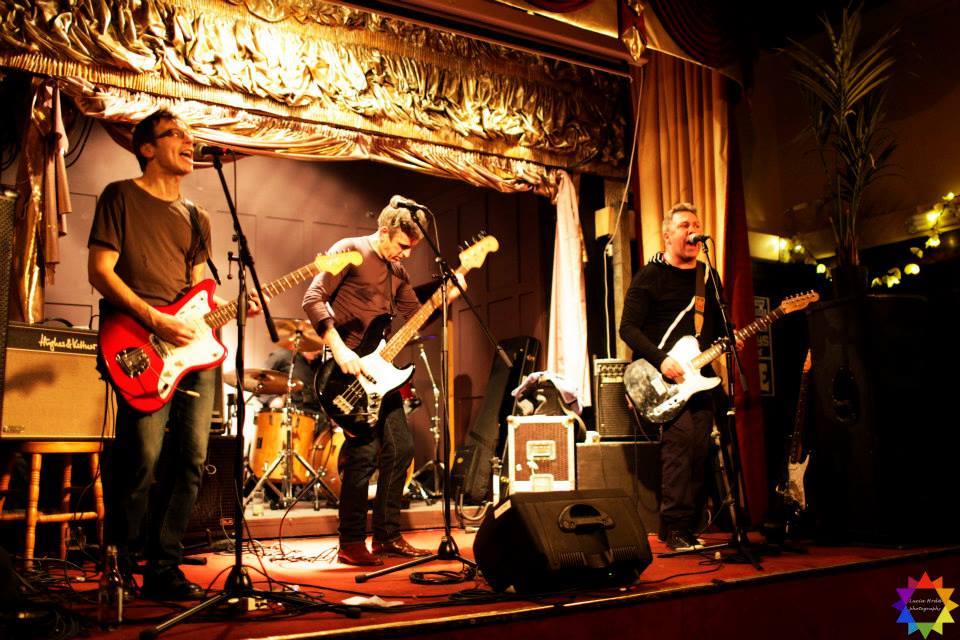
Uh Huh: From the left, Damian O'Neill, Brendan Kelly and Raymond Gorman get down to partially-obscured Ciaran McLaughlin's beat

Uh Huh: From the left, Damian O’Neill, Brendan Kelly and Raymond Gorman get down to partially-obscured Ciaran McLaughlin’s beat (Photo: Lucia Hrda/ http://www.luciahrda.com)

As I’ve mentioned before, it was only early days with The Everlasting Yeah’s debut album when I first interviewed Raymond, and I’ve still only heard a few minutes here and there. But so far … so good! There’s a little more about that at the foot of this piece, and I’ll start this final section of our three-part feature by putting to the man himself that I can imagine plenty of long drives ahead listening to Anima Rising.

As well as that good old-fashioned guitar rock and joyous waves of vocals, it seems perfect soundtrack material, even if they do stray over the three-minute pop mark now and again.

“Well, when we were first told the timing of the songs we were really shocked, because I thought it was about half that! But there’s no fat on there.

“We’re so self-critical, so if anything seems to be going on someone will say ‘Cut that bit out’ and there will be endless to-ings and fro’ings about it.

“There’s one song, The Grind, which was a jam that came out of something else. I kept playing and everybody kept following me, then I just started singing.

“We didn’t even think anything of it. In fact, the night we did it the first time we were in this horrible rehearsal room that we hated, and we weren’t in the best of moods.

“When we first listened back we couldn’t believe it. I remember thinking my guitar sounded shit at the time. It was a Tuesday night and we just wanted to get home.

Latest Flame: Elvis has a hunk of love for Anima Rising, apparently

Latest Flame: Elvis has a hunk of love for Anima Rising, apparently

“Yet it was just magical. I’ll put that version up eventually, so everyone can hear it. The more we played, we came up with this other section. It really flowed together so well and everyone was getting really excited.

“So getting back to your question ….”

(which out of interest I’d forgotten by that point!)

“… the reason why we never really had those longer songs with the Petrols was because there was more tension there.

“When you’re not thinking about stuff, that’s when you start pushing the boat out a bit more. And there’s no pressure this time to have a hit single.

“In fact, I think we’ll probably get something a bit more commercial because of that. And we don’t write difficult music.”

So who’s penning the new material?

“We all work on stuff and everybody’s going to get credited, but it’s mainly me and Ciaran. I had around 25 songs, and so did he, so between us we had loads of material.

“When we started this band Ciaran said we’ve got to start from scratch again, because some of those songs are quite old. He said it has to be about now.

“I was tearing my hair out about that, having thought we’d have this treasure trove and not have to worry about all that. But he was absolutely right. It was the right aesthetic.”

So there’s nothing surviving from the Petrols’ unrecorded catalogue?

“Correct. I have to say as well that I wrote my best-ever Petrols song after the band broke up, Radio Free Derry. I have a very rough demo of that on myspace. It’s very lo-fi, but you’ll get it.

I’ve got all these songs. I might even have to put out a solo album. I don’t want them to lie around too long.”

2ylahogThat brings me on to my next question, having missed the Wavewalkers project first time around. So Raymond, you better fill me in on the gap after TPE’s split in 1994.

“Well, first me and Ciaran worked a three-month contract for the dole office, some ridiculously mundane role supposed to take that long, but didn’t! The money was atrocious, but it was just something to do.

“I then ended up going to work for my best friend’s wife, who had a radio PR company, working on these snappy slogans. I was quite good at it but after six months in an office environment I found it quite poisonous. There was a lot of office politics.

“So in December ’94, Damian said ‘what about getting a band together?’ He said I should be writing again, and inspired me to start doing that.

“We started doing stuff with samples, and I found it very liberating. We did this spoken word thing, White Trash Saturday Night, with a Sun Ra sample. People either love it or hate it.

Guitar Hero: Damian O'Neill at the Dirty Water (Photo: Kate Greaves)

Guitar Hero: Damian O’Neill at the Dirty Water (Photo: Kate Greaves)

“That was ’95, and we also got Brendan back into the fold. He was at a bit of a loose end, travelling between France and here.

“I really wanted Ciaran involved, but he was adamant he wouldn’t. He was playing with this jazz band for a while.

“I think he took the split harder than anyone else – the fact that we were still doing great stuff but less and less people were interested.

“But the three of us got together and were using a drum machine, then a guy called Kevin Sharkey, also from Derry and a bit younger than us, joined us.”

Sharkey? Surely you’ll never get anywhere with a band with a guy called Sharkey involved. I didn’t bother putting this to Raymond though.

“The first Wavewalkers gig was in Paris, playing to 500 people, in this beautiful theatre, and I thought ‘this is it!’

“But it turned out that we only did six gigs. Nude Records were very interested, but then everything went ‘tits up’.

“I think the record company was having problems, and so was Damian, who was going through a divorce at the time. It was all so difficult.

“I was the only one actually working, for a few days a week for BT. The rest of the time I was in the band – all my spare time. I’d just got married, but had a very understanding wife.

“I got a bit burned out by it, and we weren’t really sure which direction to go. We were getting more dance-oriented. It wasn’t really us. I wanted to just record again.
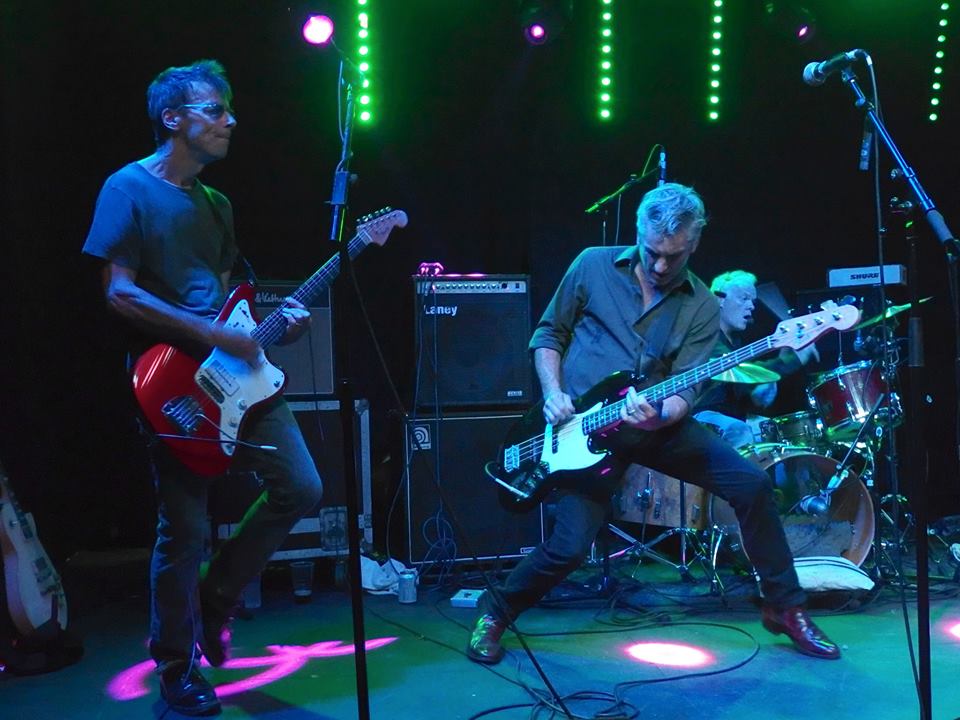
Low Down: Damian and Brendan in action at the Dirty Water (Photo: Kate Greaves)

Low Down: Damian, Brendan and Ciaran in action at the Dirty Water (Photo: Kate Greaves)

“We did a single and it wasn’t bad but it wasn’t going to get everyone’s attention. We stalled on putting it out, then never did.

“We did that one gig in France then a couple here, supporting Arthur Lee and Love, but didn’t have our own sound man, and while on stage the sound was great our friends were saying it was shite. Maybe it was sabotage.

“We also played a couple of times in Ireland, which was good, but it was difficult communicating with Damian at the time. He was trying to get himself sorted.

“I just felt I was putting all this work in but nobody was taking it too seriously. Ciaran was saying ‘keep going’ – he thought it was great, and thought we were expecting too much too soon.”

Time marched on, and still it wasn’t properly coming together, by all accounts, and a further hiatus followed. And it appeared that it was Ciaran’s solo work that inspired the next incarnation of the band.

“When it all fell apart I didn’t really do anything for about a year and a half and hardly even picked up a guitar. I got really into football again, going to lots of (Manchester) United away games.
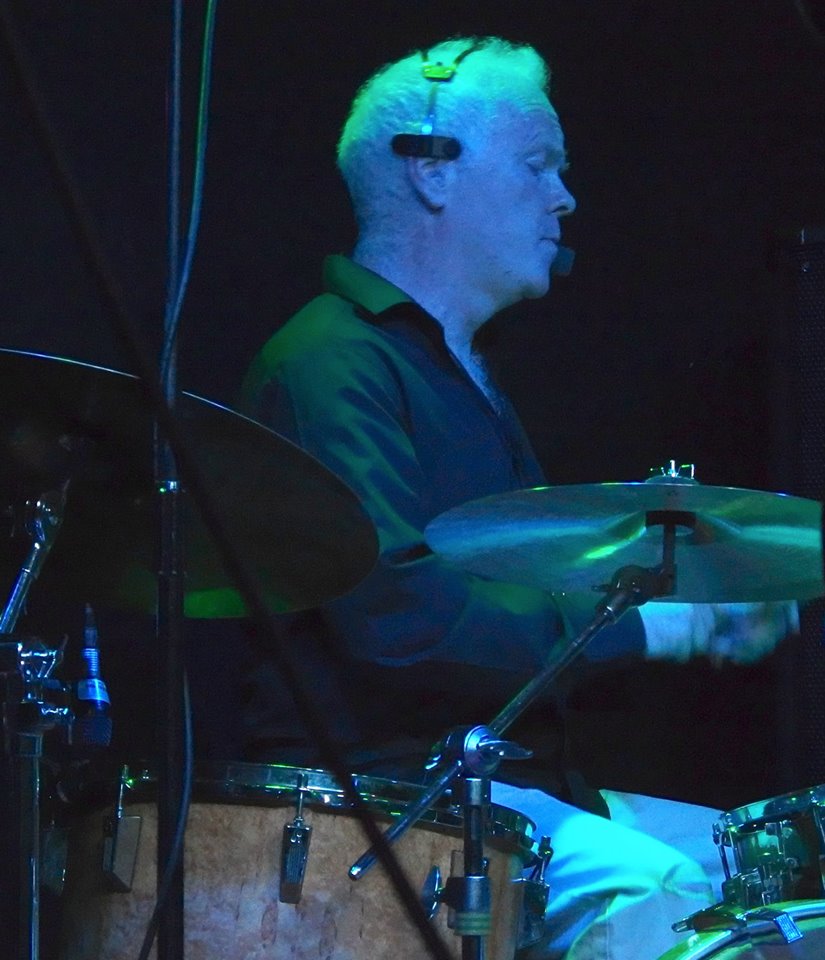
Mic'd Up: Ciaran McLaughlin at the Dirty Water (Photo: Kate Greaves)

Mic’d Up: Ciaran McLaughlin at the Dirty Water (Photo: Kate Greaves)

“At that point, Ciaran had started doing a few acoustic things, and one night I saw him play this place The Blue Posts, just off Oxford Street, and it was just fantastic.

“He played about 10 songs, and every one of them was great. It was another lightbulb moment for me!

“Ciaran really inspired me to write again. Just naturally, we gravitated to work together again, and we would go to these acoustic gigs.

“That’s okay when you’re 22, but when you’re working all day then come out, play songs and find people aren’t really listening, with everyone talking, it’s a bit disheartening.

“But we ended up doing a run of solo acoustic gigs at the Blue Posts, off Oxford St in London, playing solo and some songs together, including a Ramones medley.

“I’ve a nice recording actually, which again could see the light of day at some stage. It was very low-key but friends would come along and it was great fun.

“I was just happy to keep doing it, and the fact that it was every two weeks or so would force me to write so I always had new material.

“But it was just the same people coming all the time, and Ciaran started getting disillusioned. He wanted to move on to the next level, but we weren’t really sure how or what to do.”  

That was around the year 2000, the same year that Raymond was involved with Damian O’Neill’s curious A Quiet Revolution experimental album. Anyway, on with the tale.

“The following year we got together for a gig to mark my 40th, in this pub in Brixton, and I asked if they’d back me on my new songs.

“We also got these other guys I knew to do some covers, and in the second half it was the four of us back together for the first time, doing a few of my new songs and a different version of Abandon, which is now out there on YouTube.

“That was great, and again I was fired up, thinking ‘we’re back!’ Don’t ask me why, but it all kind of fell apart again then, and we never really got it together.

“We talked about it every other six months or so, but it never happened. My daughter was born in 2002, Brendan had two girls, Damian had a child as well, so everyone had a family, and I was working as well.”

That wasn’t the end of the TPE tale though, in fact it was the point when a certain Seattle singer returned to the fore.
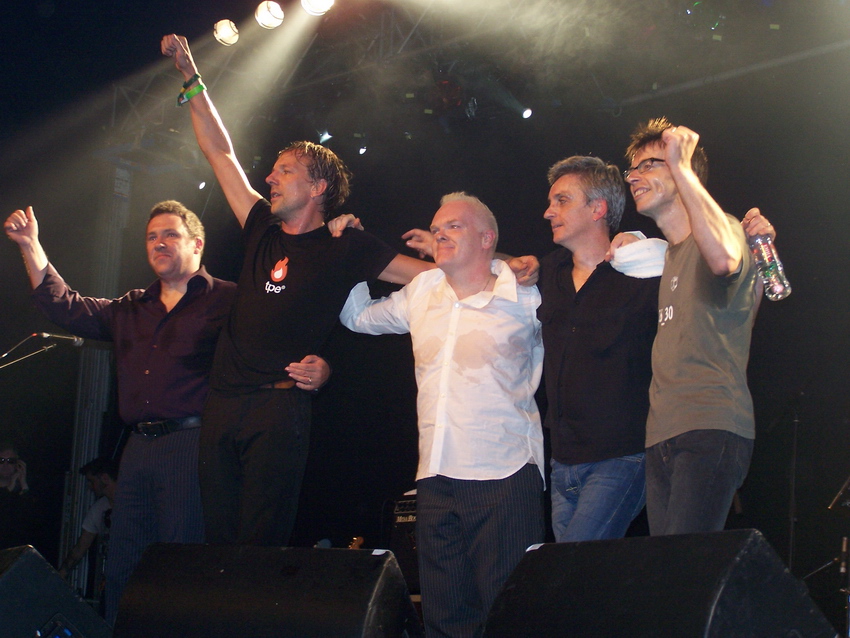
Fond Farewell: That Petrol Emotion say goodbye. From the left, Raymond Gorman, Steve Mack, Ciaran McLaughlin, Brendan Kelly, Damian O'Neill

Fond Farewell: That Petrol Emotion say goodbye. From the left, Raymond Gorman, Steve Mack, Ciaran McLaughlin, Brendan Kelly, Damian O’Neill (Photo: Dave Walsh)

“Steve Mack came back on the scene in around 2006 or so and wanted us to reform for South by Southwest in Texas, but a couple of people stalled and said they’d think about it and the moment passed.

“Then everyone decided that they wanted to do it after all. Steve got excited, came over from America and we decided let’s see how it goes – do some gigs!

“We went over for South by South-West in 2008, and that was fantastic, playing this little liberal enclave in Austin, Texas in the middle of this redneck state.

“It was magical for me – just to get away and play again and see all these other bands.”

So that That Petrol Emotion reunion was largely driven by Steve?

“Definitely. The years before I wouldn’t really have been too interested, but that year I’d been thinking very fondly about the band again.

“As it was, if we’d reformed a few years before it might have been different, but by the time we did it was just like ‘oh God, here’s another band reforming’.

“Steve seemed to be up for it, but then his wife became pregnant and he didn’t really want to travel.

“It was understandable, but it was him that got everyone up for it in the first place!

“That’s why the rest of us kept going really, because we really enjoyed it, and all the reformation gigs were brilliant except for the last one, in New York.”
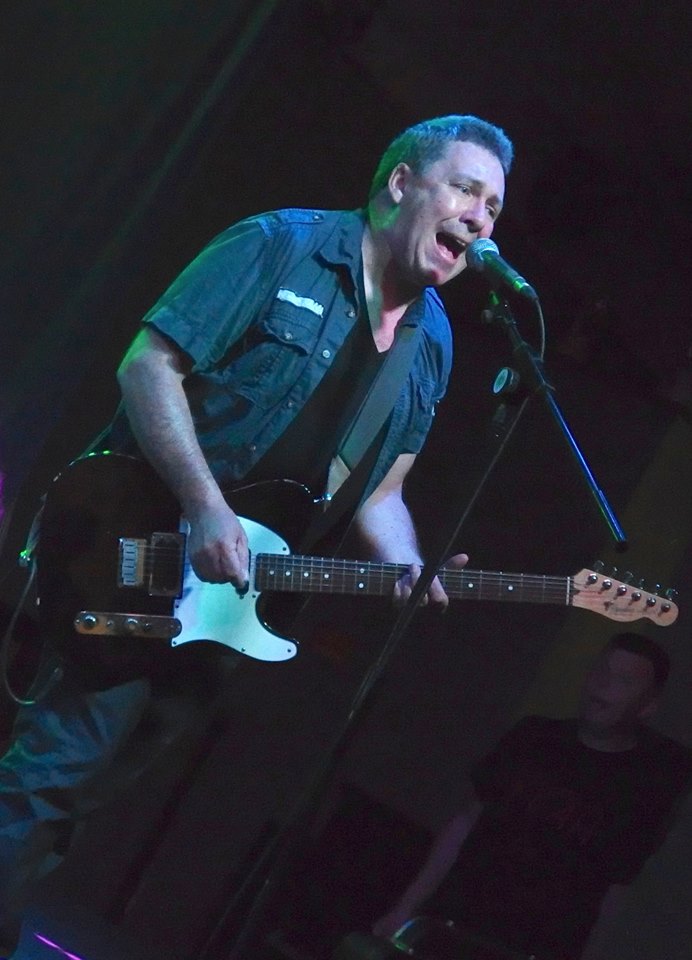
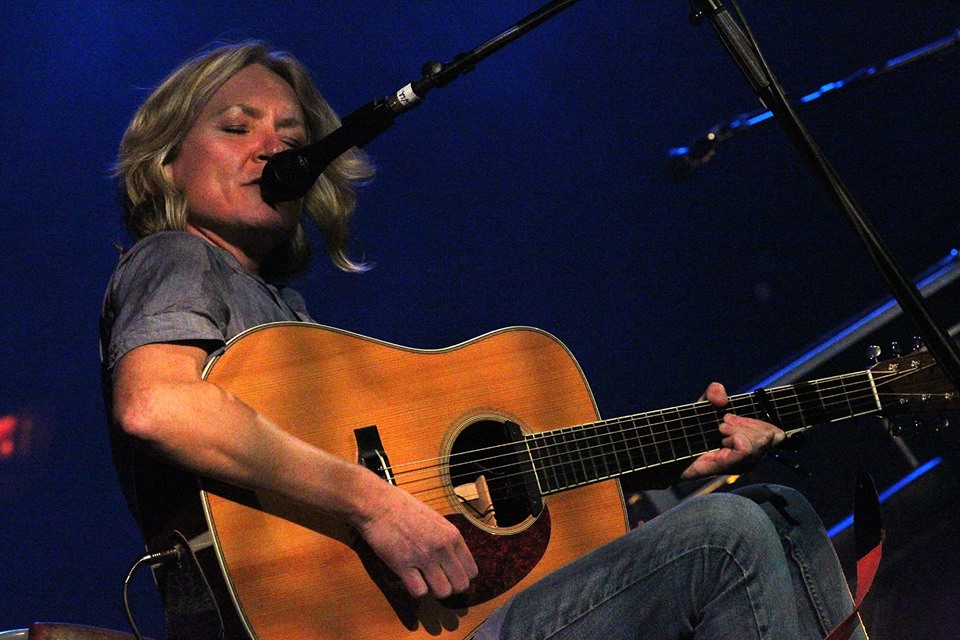
Ray's Return: The Everlasting Yeah's Raymond Gorman at the Dirty Water (Photo: Kate Greaves)

Ray’s Return: The Everlasting Yeah’s Raymond Gorman at the Dirty Water (Photo: Kate Greaves)

It appeared that that the New York episode finished off the band as a five-piece, as Raymond explained.

 “The next day we were set to have a meeting about what we were going to do next, but Steve had just heard about the pregnancy. He had a champagne breakfast and was somewhat overly refreshed, shall we say.

“That same day I was reading a newspaper in Brooklyn and read that a girl I knew from back in London who moved out to be a DJ had been killed in an accident in Williamsburg. She was only in her early 30s.

“It was just one of those days, and I remember I’d never seen rain like it. The sky was completely black all day.

“I was disappointed with the way things ended, and just thought next time I won’t be listening quite so intently when there’s talk of any reunion.”

Raymond later recalled the final part of the between-bands jigsaw connecting the Petrols, Wavewalkers and The Everlasting Yeah. And again it seems like fate played a heavy part.

“In 2010, after Steve had departed, when the four of us were working on new material, Ciaran put his back out. He couldn’t play anything for another 10 months, which was again incredibly frustrating.”

It seems like for one reason or other perhaps it just wasn’t meant to be until now – be that down to fate or whatever you’d choose to call it.

“Absolutely, I think so, and I am very fatalistic. That’s why I think the time is right now.

“When we did our first gig at The Roundhouse we were a little apprehensive, as this was the first proper London show. We’d obviously done all the preparation, but I was very nervous, the most nervous I’d been for a very long time.

“Then we walked on stage and there was just such a great reception we got. It was so warm-hearted, and something really special.

“I’ll remember it until the day I die. It lifted us up, and immediately gave us confidence, even though people didn’t really know the songs.

“It was a fantastic feeling, you know, and we really want to keep that going. There was a great communal atmosphere as well.

“We always had a real rapport with our audience, but even more so now, and I think people can sing along more with these songs as well.” 
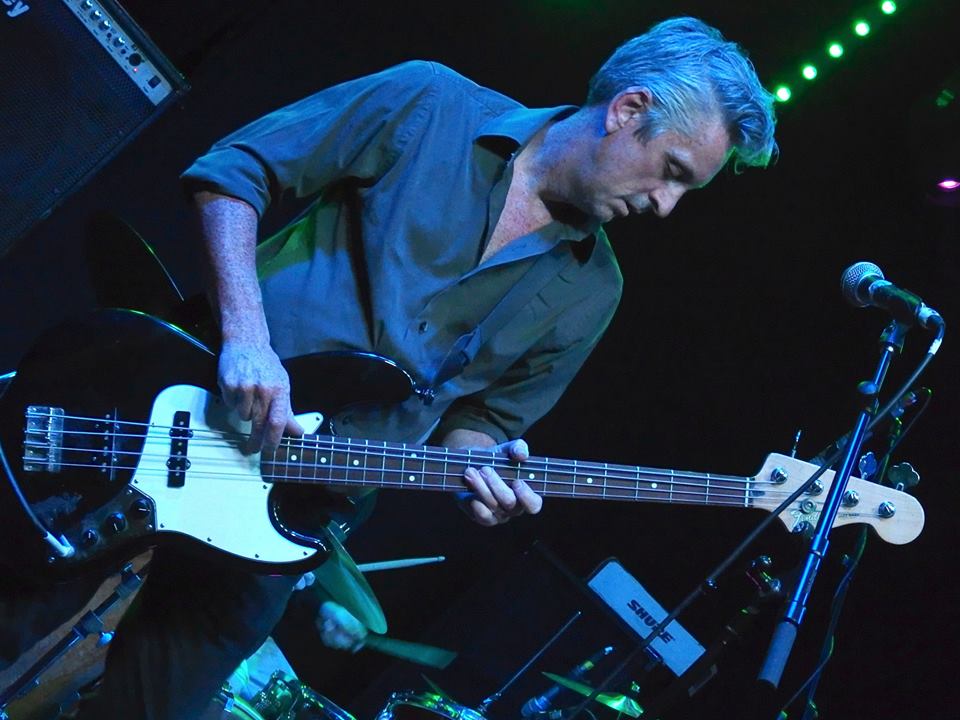
Bass Instinct: Brendan Kelly at the Dirty Water (Kate Greaves)

Bass Instinct: Brendan Kelly at the Dirty Water (Kate Greaves)

So this time it’s just yourself, Ciaran, Damian and Brendan. What if someone did come along to add vocals at a later stage?

“If someone was to come in now, they’d have to be really great and we’d really have to like them. It’s the dynamic of the four of us. I kind of like it as it is.

“It’s a bit like with Bernard from New Order – he’s not a brilliant singer, but he’s got soul. It’s the same with us. You can pick holes but …

“Sometimes you hear your voice on tape and you’re not sure, but you just have to get used to that. It’s about personality.

“And the songs are really good and strong, so I don’t have to be a brilliant singer to pull it off.”

It’s about harmonies too, I venture. Going right through – from The Undertones to That Petrol Emotion and now again with The Everlasting Yeah, those complementary voices have always shone.

“Yeah, we’ve got that harmony thing, for sure! And on a couple of slow songs I’ve got a rehearsal tape of our singing, and I have to say, it’s absolutely beautiful.”

Dare I add – here he goes again, I can hear you say – that it was a similar story with Eleven, with the booming baritone of US front-man David Drumgold backed by those characteristic harmonies from Mickey Bradley and Damian O’Neill.

“Well, those backing vocals were important in The Undertones and they were important in the Petrols, and are perhaps even more important now everyone’s chipping in!

“It’s just kind of … I don’t know, a choirboy thing perhaps. Old punk choirboys, you know!”
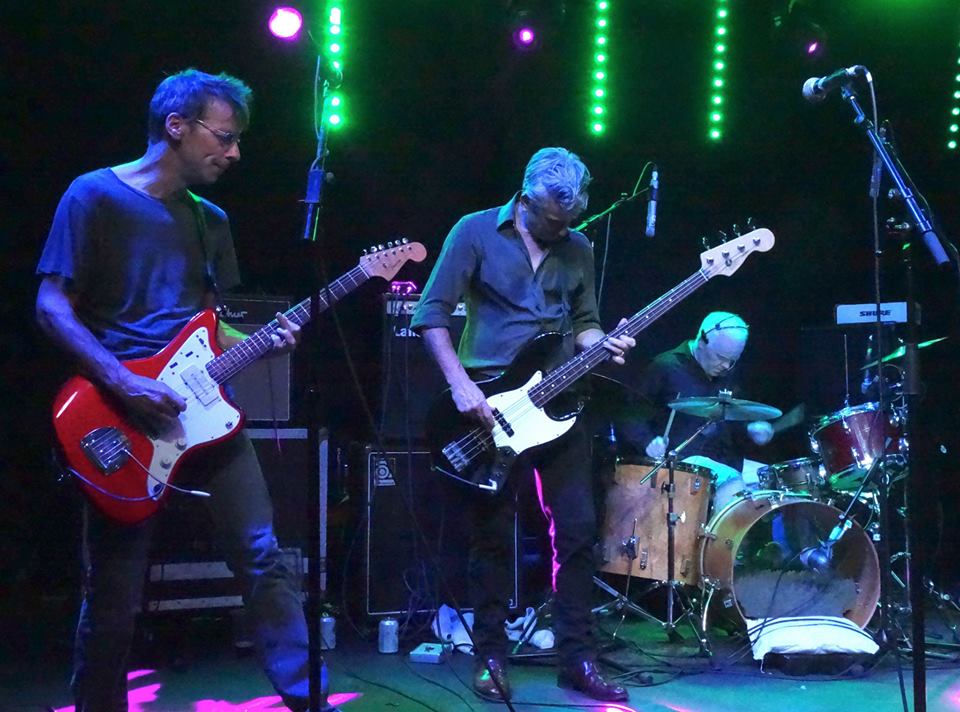
Everlasting Appeal: Damian, Brendan and Ciaran at the Dirty Water (Kate Greaves)

Everlasting Appeal: Damian, Brendan and Ciaran at the Dirty Water (Kate Greaves)

I can feel Raymond going off subject again, but (not least as a former chorister myself) it’s all part of the story …

“Me and Damian were in the choir at school, and were both in the orchestra as well. We played clarinet, but I hardly remember it. It was only for about a year. If you put one in my hand now, I wouldn’t have a clue.

“This was all part of our musical training all the same. I was classically trained originally as well, playing piano. But my teacher was epileptic and fell over me one day when I was playing. I thought he was dead. I ran away and wouldn’t go back.

“My parents gave me such a hard time when I left the piano. I remember asking for a guitar about a year later and getting told ‘no’ for that very reason.

“Damian was lucky – when he wanted to play, John helped pay for his first axe!”

Again, Raymond veers wildly off at that point, and we tackle Irish heritage, Neil and Tim Finn and much more before we’re on to how he finally got his guitar.

“I don’t remember much music before 1970, when I was nine, although I do remember The Beatles and being confused by them having two singers.
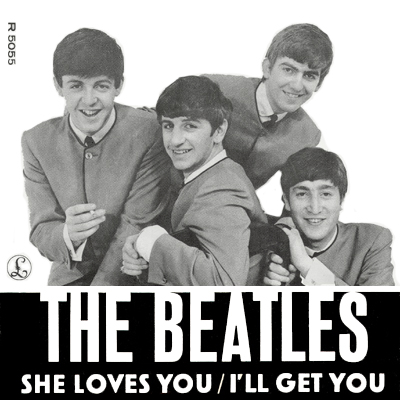
Beatles_-_She_Loves_You“The first song I really remember hearing was She Loves You. I remember that very vividly. It just sounded very exciting.

“But we didn’t get a record player until 1972, and it was mostly me who bought all the records.

“My mum used to do the Kay’s catalogue and that’s how I got my first guitar and amplifier. It was a hundred quid for this really crap electric guitar.

“I had a paper round, but it was 100 weeks at £1 a week for a six watt amp and this horrible guitar called a Satellite.

“Actually, it wasn’t that bad, but I play it now and wonder how I ever learned to play.”

Thankfully he did though, and to great effect, not just through his playing and song-writing but also the inspirational air he seems to add to the proceedings, one that has helped those gifted musicians around him produce the goods over the years.

Having heard a bit more of the background story I now feel I understand more about That Petrol Emotion from start to finish. And now I’m equally fired up about their natural successors, The Everlasting Yeah.

Take for instance the snippets I’ve heard, starting with The Grind, with those glorious harmonies and raunchy guitars, Ramones-esque rocker All Around the World, and the Beach Boys meets Super Furry Animals wistful splendour of Everything is Beautiful.
1467246_338630006279108_205534109_nThen there’s truly super-catchy part-contagious band anthem A Little Bit of Uh-Huh …,  the Stones-like New Beat on Shakin’ Street – something Bobby Gillespie will be pissed off isn’t in his own set – and fellow (to appropriate a fitting Undertones phrase) rocking humdinger Takin’ That Damn Train, plus the guitar and falsetto funk of Whatever Happened To

To find out more about The Everlasting Yeah and the PledgeMusic campaign, click right here. And who knows, maybe you’ll feel the need to make a pledge there and then to help ensure the release of Anima Rising.

* With big thanks over these three instalments to Raymond Gorman, and also to those whose photos I borrowed, not least Kate Greaves, Lucia Hrda, Simon Bradley and Dave Walsh.

Posted in Music | Tagged , , , , , , , , , , , | 3 Comments

Genius moves and sonic grooves – the Raymond Gorman interview, part two

Yeah Yeah: From the left, Brendan Kelly, Ciaran McLaughlin  and Raymond Gorman get down and get with it at the Dirty Water Club.

Yeah Yeah: From the left, Brendan Kelly, Ciaran McLaughlin and Raymond Gorman get down and get with it at the Dirty Water Club (Photo: Kate Greaves).

In which the blogger delves further into his recorded exchanges with Raymond Gorman, the former That Petrol Emotion guitarist, backing vocalist and songwriter about to release debut album Anima Rising with The Everlasting Yeah, a happening new combo comprising four-fifths of that final TPE line-up.

You possibly got here after tackling yesterday’s part one epic. If not, perhaps try that first, with a link here. Either way, here’s part two for your reading pleasure.

Where were we when we were so rudely interrupted? Ah, I remember. We’d just got on to talk of front-man Steve Mack’s energy levels at the That Petrol Emotion reunion gigs in 2009. And that brings me nicely on to another singer with plenty of fire about him, a certain Paul McLoone, giving me my next question to Raymond Gorman in this mighty – even if I say so myself – three-part interview.

Getting back on track, Raymond, do you ever see The Undertones now, with Paul McLoone fronting them?

“I went to see them the first time they reformed, at the Mean Fiddler …”

So I recall. That was the last time I nodded at you – I might even have been brazen enough to said hello, actually!

“When they came on it felt a bit weird, not being up there on stage with John and Damian. But when they started Teenage Kicks the hairs on the back of my neck all stood up. It was just like the first time I ever heard them play it.

“It took me back to this little horrible place they used to play in Derry, the Casbah, this little Portacabin.

First Footing: The Undertones - the debut LP

First Footing: The Undertones – the debut LP

“I looked really young back then, so could never get in and had to wait outside, with my friend inside. But because it was a cabin you could hear perfectly outside. I probably had a better sound out there.

“The first time I ever saw them was at The Rock Club, one of the sleaziest places I’ve ever been. This was the late ’70s, and prostitutes and openly gay people used to hang out there too. It felt like real forbidden fruit. As a 16-year-old sat there having a drink I felt like I was breaking all the rules!

“The Undertones came on, and they were just amazing. They were so loud as well. I always felt their sound got tamed too quickly. The early Undertones were much more like the Petrols, with rough edges that later got smoothed out.”

That must all seem a long time ago now. Besides, you’ve been here in London for the best part of your life now.

“It’ll be 30 years this October.”

Could you ever see yourself moving back?

“At the minute I just couldn’t. I could maybe live back in Derry a couple of months at a time, but not full-time. When I go back it’s all too small. I visit my sister and walk over the bridge and around the town and after about an hour I find there’s nothing to do.

“With my parents getting older, I would love to be going back more often, and it’s a question of money. But not to live. Even when I got my degree I couldn’t find a job there, and I’ve never been able to. And yet all those summers I went to France I got work.

“The year my daughter was born, 2002, I was struggling to get work in London, and Malcolm (Eden), the lead singer of McCarthy, who lives in France, offered a chance to go and teach out there if I wanted it.

“When I first came over here, I had a real chip on my shoulder about being Irish, but this country has given me a home and a living over the last 30 years, and I’m very grateful for that.”

There was a nice quote in a recent interview from you from The Quietus, where you said ‘TPE was like the Undertones after discovering drugs, literature and politics, with a lot more girls in the audience dancing’.

“Yeah – the perfect description. Even Damian agreed with me on that one!”

That+Petrol+Emotion+-+Genius+Move+-+12-+RECORD-MAXI+SINGLE-455318That said, I wonder if England was ready for you. I took on board all you were saying about rubber bullets, civil rights, discrimination and so on, but wonder if it was that outspoken approach that ensured you didn’t get as big as – for example – Blur.

“I think it definitely was. When we thought about it after, we wondered if we should have shut our mouth until we were in a stronger position. It was a bad time to be saying anything. People just weren’t listening. And because we were speaking out against all that, we were automatically tarred with the same brush as the extremist republicans, although we went out of our way to distance ourselves from all that.

“Ciaran said to me recently we were right about everything, and we were. But people don’t want to keep hearing how bad things are, and we were a bit guilty of that.

“And we slept in a bit. I was usually the one who kept up with everything, but when I got sick I was out of whack for a few months, and it was around then that all that acid house stuff started – and it was at the end of the road where I lived in around 1988!

 “It was between Borough and London Bridge, in Tooley Street – that’s where all the clubs were and also the Stone Roses were coming through. If we hadn’t been quite as pre-occupied with our own troubles we’d have caught that vibe.

 “We didn’t have to pretend we were Curtis Mayfield’s backing band, because we were white kids, but the Stone Roses when they came along were such a breath of fresh air. I think Ciaran to this day is very jealous and thought they stole our thunder, and maybe they did. But I think they deserved it.

“People were fed up, but you don’t need to be told everything’s shit! We weren’t doing that with our music, but …”

You made some good points through your soundbites, but perhaps there wasn’t the appetite. We just wanted shut of a Tory Government.

“Maybe. The media certainly never engaged with us. I remember Ciaran and I did an interview with an NME guy, a South African guy – one we’d never heard about before or after – who knew nothing about us and hadn’t heard more than three of our songs from Babble.

 “I remember getting a bit angry and after a few drinks all that resentment came out. And it doesn’t look good when it’s written down in print.”

Was there also a danger that these London journalists were being told all about the Troubles by an American ex-pat – Steve Mack, knowledgeable as he was?

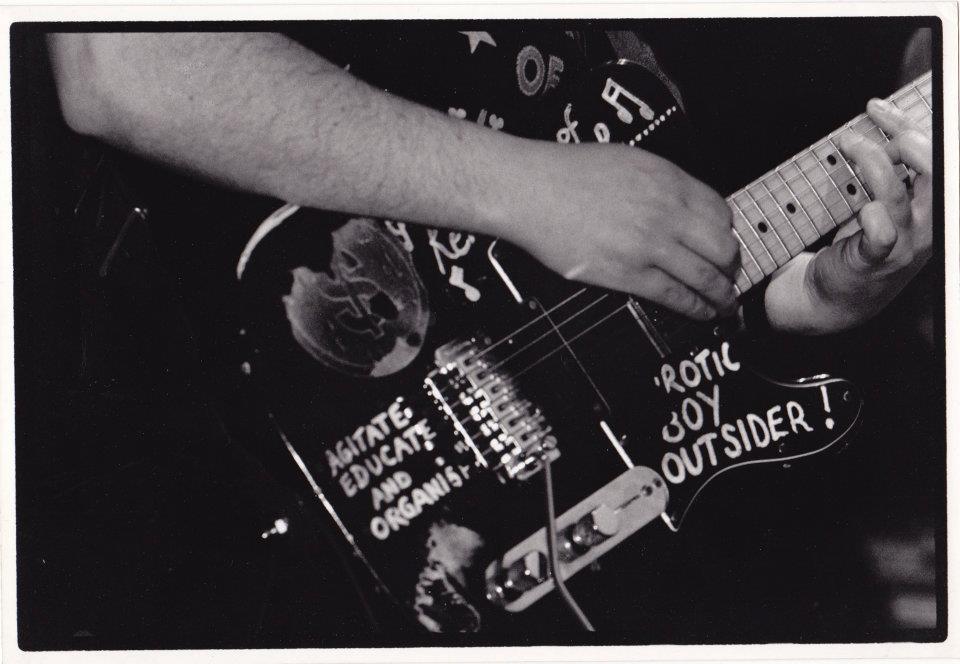
This Guitar: Raymond spells it out with his trusty  six-string

This Guitar: Raymond spells it out with his trusty six-string

“Well, Steve had to get hold of the facts himself and did a lot of reading and became very knowledgeable about it all, so probably knew more than they did. I also think Steve tried to lighten things. If it was coming across from a fella from Derry, it might have been even heavier!

“We were very much a united front, and while Steve could talk a lot of shite, it was kind of refreshing! And you need a break from all the politics sometimes.” 

When I caught up with Raymond, his new band The Everlasting Yeah – also featuring fellow ex-TPE personnel Brendan Kelly (bass), Ciaran McLaughlin (drums) and Damian O’Neill (guitar) – had recorded six songs for their debut album, at that point unnamed. In fact, they were just ahead of another four days in the studio, then set to mix everything.

There will be more about that PledgeMusic campaign in part three of this interview, although I’ve added a link right at the end if you bear with me. But at that stage they weren’t even sure if they going down that ‘pledge’ line, wondering how easy it might be to reach their release target.

“Our problem seems to be that while we’ve got quite a large fan-base, they don’t seem to know much about what we’re up to. They didn’t even seem to know That Petrol Emotion had reformed last time around.

“Admittedly, there wasn’t too much in the way of press, but we had a bit in Mojo and would have thought they might have seen that. Our promoters at the time didn’t appear to do any work whatsoever when we did that tour, so it was all down to social media. 

“But if Manic Pop Thrill sold about 30,000 copies, that’s about our constituency – our level of interest. If we could get that amount of people to pledge I could probably leave my job. It’s just reaching that figure. At present I’m only reaching about 1,000 people.”

Incidentally, that day-job is as a translator, with Raymond working for a friend for the last six years or so.

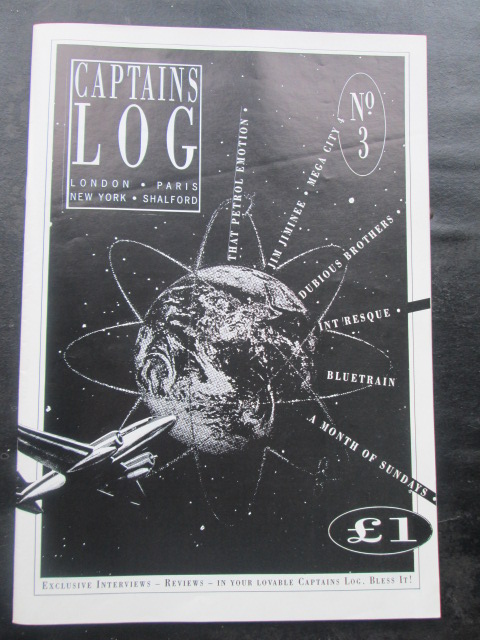
Star Date: The front cover of this blogger's Captain Log issue three (Photo: Malcolm Wyatt)

Star Date: The front cover of this blogger’s Captain Log issue three (Photo: Malcolm Wyatt)

Anyway, as you’ll recall from part one, we were discussing my 1988 interview with Damian’s brother John O’Neill, one of my songwriting and guitar heroes, and now got on to how I’d called it More Songs about Factories and Girls, as there were so many JJ songs seeming to touch upon the factory theme at that time.

“Funnily enough, we had a song called Blatant Factory around that time too.”

Indeed, and John mentioned that. So did that ever see the light of day?

“I don’t think so, but I have it on a tape somewhere. I actually liked the song.”

So did he, I recall.

“Course he did! I don’t think Ciaran and Steve did though, and I can see why. It was kind of … he was trying to write a lot of songs like that. That was part of the problem. We’d be talking in interviews about our influences and all these left-field artists, and then he’d go and right these bloody Al Stewart ballads, you know!

“I was starting to get a bit fed up, and I know Ciaran was too. I think that’s why he wrote Creeping to the Cross. We were talking about artists like Foetus, yet didn’t have any songs like that.

“It was the same for me, writing For What It’s Worth, my go at doing something a bit like Sonic Youth. Me and Ciaran were taking on board all the things John was saying but didn’t appear to be influencing his own songs!

“But although we didn’t do Blatant Factory, he stuck some of the words into something that went on Millennium.”

That+Petrol+Emotion+-+Cellophane+-+5-+CD+SINGLE-163890Raymond’s referring to that album’s sublime opener Sooner or Later – part of a superb introductory salvo of JJ songs that also included Cellophane. But while I stand by the strength of those compositions, Raymond clearly still has a couple of issues here.

“When John got home he sent us a home demo of six songs, but on a point of principle – even if they had been brilliant – we wouldn’t have done them! At the time I thought that was the final insult.

“He wrote me a very apologetic letter years later though, and came to see me. That really cleared the air, but we were never going to be as close again.

“It’s a shame, because when I first came over to England, me and him were really tight. That said, it’s always very nice when we do see each other today, although it’s not very often. There’s no hard feelings, and he remained a big fan of TPE ’til the end.”

And from my point of view, he’ll always be a hero.

“True, although I think the last great song he wrote was Cellophane. I think having me and Ciaran around helped him up his game a bit at the time.”

That was where our first conversation ended, with this blogger having to run off to an appointment at his daughters’ high school. But we re-convened a few nights later, just after Raymond’s own 12-year-old lass had been put to bed. So after a brief chat about the joys of parenthood, poorly-paid jobs and the dreaded property ladder, we got back on to the Petrols.

By that point, Raymond had read my ’88 interview with John, declaring his quotes ‘very pessimistic’. I’ve since re-read it and don’t think they were. Again, I’d prefer the ‘under-stated’ label. It might have been difficult for Raymond to gee himself up in John’s company at that stage, but I’d say that was part of his charm. He’s not convinced though.

“I remember John having a bet with me once about V2, our second single, saying it would only sell about 2,000 copies. I remember thinking, ‘Great! Who am I in a band with here?’

“Damian’s a lot more out-going, and very friendly, but has that pessimistic streak as well. I’ll get very enthusiastic about how I feel, and Ciaran will as well. But then Damian will say, ‘Yeah, but what about this?’

“Sometimes you really have to raise your expectations, otherwise it can be a fait accompli.”

I suggest that maybe you need that dynamic sometimes – someone there to keep it real.

“Yeah, but the whole point of this band is about taking everybody out of their comfort zone!”

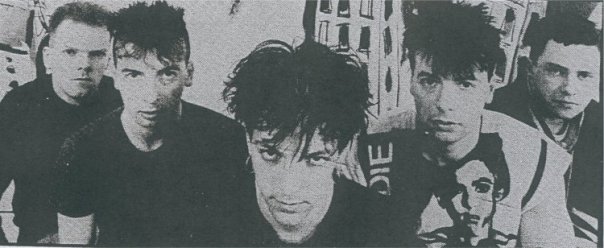
Early Days: That Petrol  Emotion, with Raymond in the centre

Early Days: That Petrol Emotion, with Raymond in the centre

Back in that ’88 interview I’d mentioned how the Petrols – in Raymond’s absence at that stage – were doing an encore with support band Hugo Largo, covering Can epic Mother Sky.

“Yeah, I was quite jealous of that really. I would have loved to have done that and indeed did so a year later on in New York, but there’s no recording of it. And Hahn from Hugo Largo ended up playing electric violin on Chemicrazy.”

Indeed – ‘extreme noise terror violin’ according to the sleeve-notes. And you were going a bit Can-like at that stage, with longer songs like the sublime Under the Sky.

Under the Sky was one of the few songs I really liked on that album. It was just done live, basically, other than a background crowd sample recorded at a cafe.

 “I also think that was perhaps the best guitar playing I’ve done on a record. Ciaran wrote the first half, and I wrote the second, and you can tell when it speeds up.”

I also love Steve’s voice on that track, something that continued across the next two albums as well.

“Yeah. I think it really suited him.”

That+Petrol+Emotion+-+Chemicrazy+-+LP+RECORD-253338I explain at that point how while I never lost faith in TPE, I’d move slightly away from the band, my own personal circumstances changing. That Final Flame era passed me by in a sense, but I can listen to it all with fresh ears now, and can definitely say Chemicrazy and Fireproof were great albums.

“I think we got better and better. Maybe the production could have been better by the end. We had one go to do it and kind of blew it. When we were still on Virgin, maybe we just took too much time doing over-dubs and all that. 

“It was all a bit too polite, but we salvaged about six of those songs and re-did the others. The second time it worked much better and we captured the energy on songs like Catch a Fire.” 

You mention Virgin, and there were earlier issues voiced, like the level of support over Cellophane. Had you reached a stage where you were pissed off with what you were getting from them?

“My experience with Virgin was always very good. The only error they made was to give us too much rope to hang ourselves with!

“With Millennium we had this studio with a swimming pool, and it was the kind of place where if you were younger you could let off steam. I think we’d have been better with more Spartan surroundings – rough and ready, so you just got it done as quick as possible.”

Which brings me nicely on to that in-house spirit – something I can hear from the early demos of the new project.

“I think with the Everlasting Yeah the energy we have is even more than on Manic Pop Thrill. We’ve really managed to capture it. It’s astounding.

“In the first three days we went into the studio everybody was like ready to explode, with a real willingness to get it right. We were enjoying ourselves too, and all these things coalesced.”

10356271_443905479084893_7042240423428139554_n (1)At the time we spoke, I’d only heard A Little Bit of Uh Huh A Whole Lot of Oh Yeah, That Damn Train, and Hurricane Nation, but each showed a band with energy-a-plenty. That said, there were some very long tracks there. Was this how things were initially with the Petrols?

“Not really. It was only at the very end that the Petrols started to stretch out. Even then, Damian would be moaning – ha ha!

“There were a couple of long versions of the song Chemicrazy. We recorded that three times, and I still can’t quite understand why we didn’t put it on the original record. I suppose we liked that idea at the time – a title song being left off an album. It had become something of a tradition – like Elvis Costello did with Almost Blue.

As it was, a superb six and three-quarter minute version of Chemicrazy appears on the Final Flame live album, one that truly captures the band’s late might.

And while I’m on the subject of that live offering, I’m pleased to say John O’Neill put in a guest appearance for those last live shows, as caught on record. But back to the point …

There are those trademark Sympathy for the Devil type backing vocals with The Everlasting Yeah too, taking me back to The Undertones and early days of TPE. ‘Communal singing’, is that how you put it?

“Well, if there’s anyone who sings more than anyone else, it’s probably me. But that’s just the way it’s happened. Everyone’s singing, and I really want that to happen, really get into it and get more into it.

“Brendan’s a good singer, as is Damian. It can only get better. In the Petrols, I don’t think I was ever given a proper go at it. With Steve, it’s almost like he willed himself to be good.”

Big Influence: Tom Verlaine made a big impression on Raymond

Big Influence: Tom Verlaine made a big impression on Raymond

I also feel there’s a bit of Television in there as well, although perhaps that’s the case with most guitar bands worth their salt.

“Well, every band with me in it’s going to have some of that! I think it’s my playing rather than Damian’s. There’s a good fit between our styles. Mine’s more an angular Television thing, quite melodic, whereas his is more a smooth style. Sometimes he can play things with a real economy of notes as well.

“The two of us really play well together. I played well with John as well. The thing about the two of us was that our sounds were quite similar, a kind of spiky Telecaster sound, so nobody really knew sometimes who played what.

“It’s a bit like Brian Jones and Keith Richards, something much more defined when Mick Taylor came into the Stones. I think Damian has a lot of Mick Taylor in his playing. He’s a big Stones fan. There’s some Johnny Thunders and maybe a bit of Paul Kossoff there as well.”  

At this mention of Free, I suggest Raymond’s a bit of a hippy on the quiet. And with that, he’s off again.

“You know, I’ve been investigating Free recently. I only really knew the singles before, but I’ve been listening to some of their ballads, and they’re more like a soul band.

“There’s very little going on in their songs, but it pays. The drumming’s great, playing behind the beat, while the bass is very funky and melodic, and Paul Kossoff always plays the right thing. It’s really good.”

I suggest that sometimes you need to re-evaluate, get past the pre-conceptions or hype. I mention how that was the case with me and Van Morrison – admitting it took me a while to realise he was a soul singer.

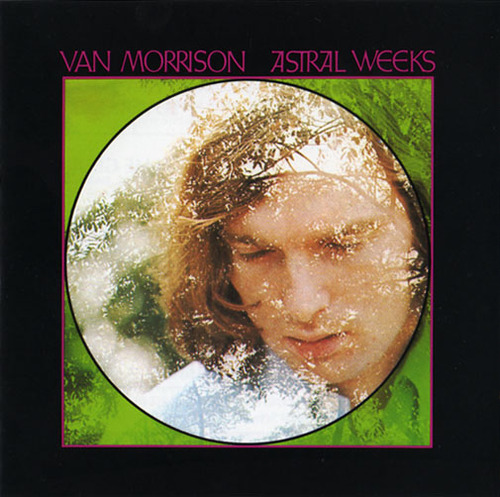
Van Pursuit: Rumour has it that Belfast legend Van Morrison's Astral Weeks is still lodged in the Gorman glovebox

Van Pursuit: Rumour has it that Belfast legend Van Morrison’s Astral Weeks is still lodged in the Gorman glovebox

“Aye. He’s a genius! I grew up listening to him, but when I went to college in ’79 I tended to dismiss Van Morrison as a hippy because I was in a punk mode.

“Yet when I went to university two of my flatmates had all his stuff and there was this song of his, Gypsy on St Dominic’s Preview. That was the one for me – like a lightning rod from God! I ended up going back and buying everything! 

“I used to change my music in the car quite regularly, but remember once having a cassette with Astral Weeks and Veedon Fleece on it. I think I listened to that for six months. Nothing else matched up to it.”

Which brings me neatly back to The Everlasting Yeah, and how from what I’d heard at the time, we may well have a perfect album to get down to in the car, and maybe one you’d be happy to carry around with you for the next six months.

But for more of that, and the third and final part of this interview, check out this blog again tomorrow, when Raymond and myself get on to the recording process, his account of the missing years between the initial split of That Petrol Emotion and the emergence of the new band – via Wavewalkers and the TPE reunion gigs – plus the first public appearance of  The Everlasting Yeah and the joy of communal singing.

download (7)Then there’s a little about those delightful Derry harmonies, Raymond’s first Kay’s catalogue guitar, and much more besides. And while you’re waiting for all that, you might want to check out The Everlasting Yeah’s PledgeMusic campaign – with a link here.     

Posted in Music | Tagged , , , , , , , , , , , , , , | 2 Comments

Such a good thing we do – in conversation with The Everlasting Yeah’s Raymond Gorman, part one

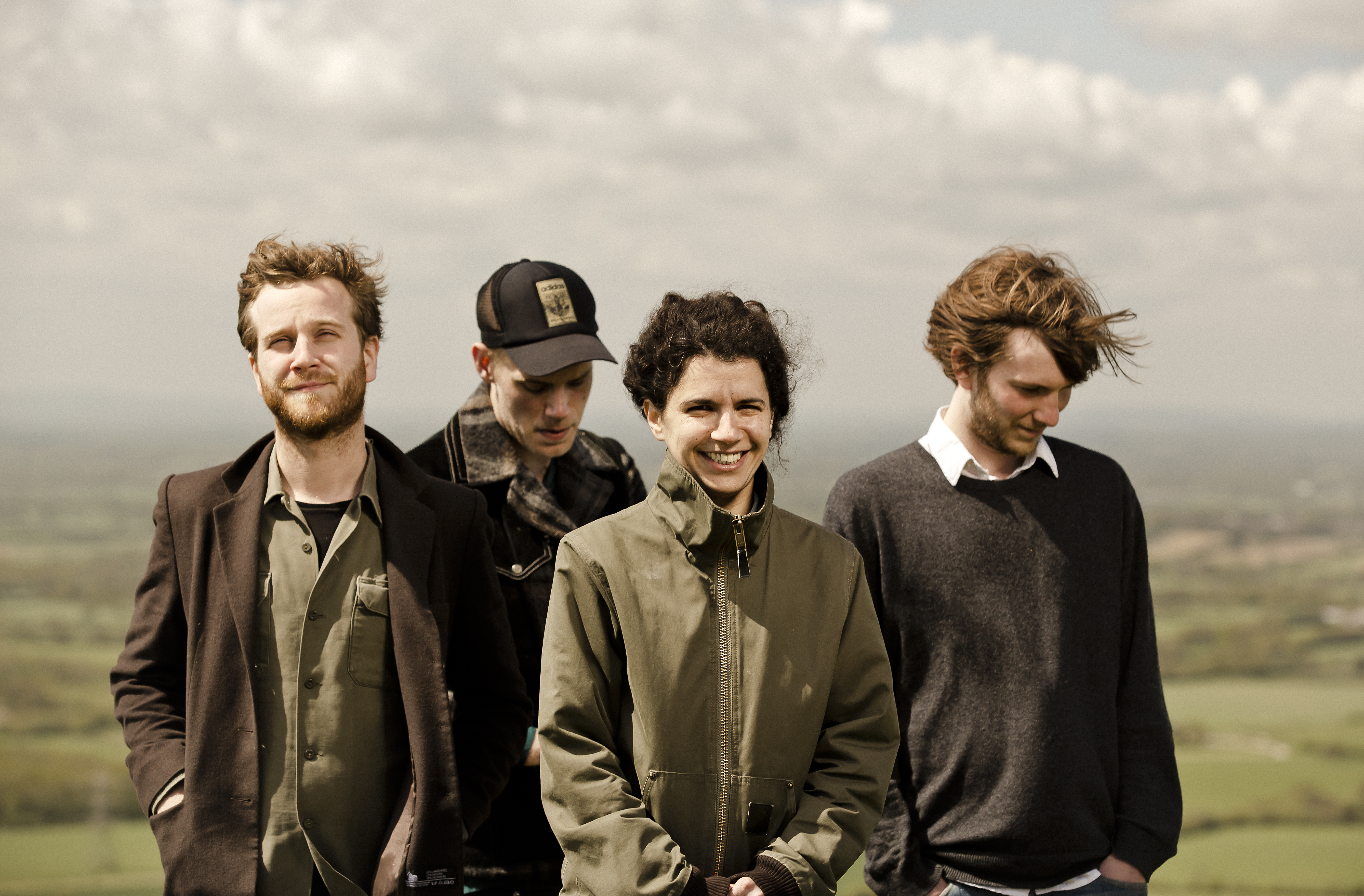
Rising Rapidly: The Everlasting Yeah, from the left, Damian O'Neill, Brendan Kelly, Ciaran McLaughlin, Raymond Gorman

Rising Rapidly: The Everlasting Yeah, from the left, Damian O’Neill, Brendan Kelly, Ciaran McLaughlin, Raymond Gorman (Photo: Simon Bradley)

A few weeks back, this blogger got in touch with Raymond Gorman and tackled the London-based guitarist on his That Petrol Emotion days and their latest incarnation, The Everlasting Yeah.

It would serve two purposes – so I could wax lyrical about a band that proved a major inspiration in my teenage years and beyond, and also help spread the word about an exciting new venture to help ensure it sees the light of day.

What followed went on to take up more than two hours of digi voice recorder memory, involved two long conversations between Lancashire and London, and took an age to transcribe between paying jobs.

But it was well worth the effort, even when I realised I had to add a lot of back story to fill in the gaps, turning it into an epic read I felt would be best split into three – the first section of which hopefully you’re about to start reading now.

What’s more, it gave me a chance to set down something of the inside story of an outfit that deserve their place in any hall of fame as well as the genesis of an emerging band with similar in-built spirit, comprising four-fifths of that final TPE line-up, while plugging their highly-anticipated first album, Anima Rising. But first …

I feel I should start this feature with a bit of a historic pre-amble, first turning the clock back to June 1985.

As I wrote in my fanzine of the time, Captains Log, it was one night that month in Kings Cross that I ‘found life after The Undertones’, having travelled up from Guildford to see a new band featuring my Northern Irish song-writing heroes John and Damian O’Neill.

That night proved a seminal moment for this starry-eyed 17-year-old, and if anything That Petrol Emotion were even better when I caught them upstairs at the Enterprise in Chalk Farm soon after, caught in awe just behind a front row linking arms to try and keep the rest of us off a stage barely 12 inches high.

A few TPE gigs later, on St Valentine’s Night, 1986, having by then snapped up their first two singles, Keen and V2, and devoured two John Peel radio sessions,  I was at the Hammersmith Clarendon for their last date before they headed to South Wales to record debut LP, Manic Pop Thrill.

By then we’d sought out a fair few off-the-beaten-track venues across London and felt we knew American vocalist Steve Mack, guitarist Raymond Gorman and drummer Ciaran McLaughlin almost as well as we did the O’Neill brothers.

R-3547951-1334795879.jpeg

Again quoting Captains Log, I added: “The rest should be history, but we’ll never forget the early days’. It’s fair to say I’d become somewhat obsessed.

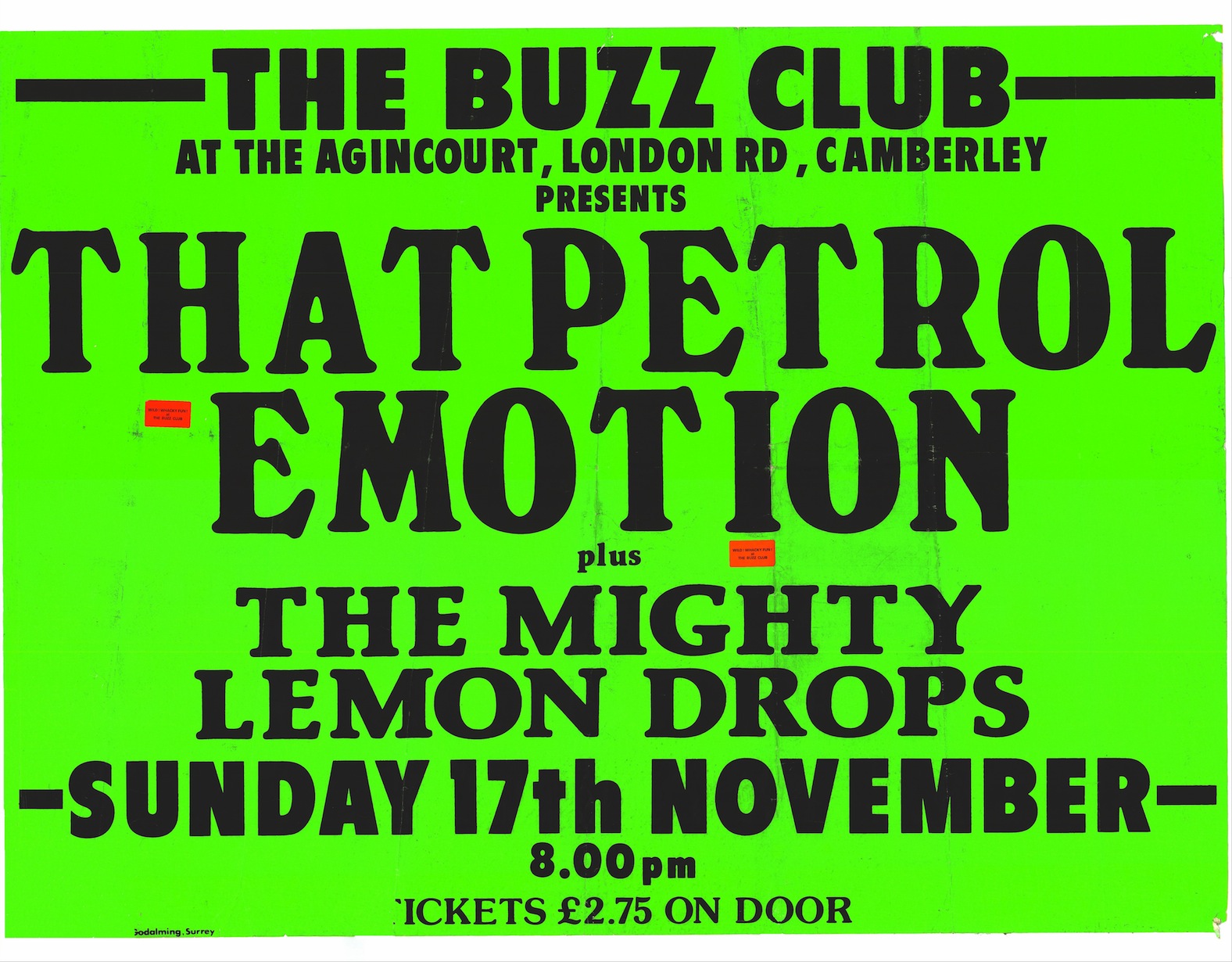
I’ve hinted at some of this in previous pieces, not least my recent Jo Bartlett feature, her first band Go! Service having supported TPE at the Enterprise and hosted the band the first time I caught them outside London, with The Mighty Lemon Drops in November ’85 at Camberley’s Agincourt.

There had also been my brother’s drunken conversation with Andy Kershaw at the Pindar, up there in our own peculiar folklore with the night our Al turned from the bar and spilled beer on Feargal Sharkey’s suit at the Marquee a year before, while watching Damian’s pre-TPE band Eleven. In fact, I seem to recall Feargal wearing that same whistle on Top of the Pops while performing Listen To Your Father with Madness soon after. Heady days.

From Bay 63, Tufnell Park’s Boston Arms and Camden’s Electric Ballroom to Kennington’s Cricketers and Finsbury Park’s Sir George Robey, we were there. It was a special time, and we’d pogo dementedly to The Deadbeat, V2, It’s A Good Thing, Fleshprint, Can’t Stop, Lifeblood and Tightlipped, then flip out to Cheapskate and inspired covers like Pere Ubu’s Non-Alignment Pact and Captain Beefheart’s Zig-Zag Wanderer.

When Manic Pop Thrill came out, this A-level student lived and breathed the album, and while we felt at the time it never quite captured the essence of those early gigs, in retrospect it wasn’t too far off at all.

I’ve tackled my love for The Undertones elsewhere on this blog, so will leave that to one side for the most part this time, instead quickly trying to summarise the story from there. And I mentioned Eleven before, and think they’re part of this wider tale, so I’ll briefly relay how I twice caught Damian and fellow ex-Undertone Mickey Bradley plus US pair David Drumgold and Fred Ravel at the Marquee in the summer of ‘84.

I was 15 then, and it was just a year after I witnessed The Undertones’ last UK gig at Selhurst Park. They also did a mighty Peel session before giving up the ghost. At least I thought it was. As it turned out Mickey went back home to study then became a Radio Foyle DJ, not far from where his old band-mate John O’Neill – who had already brought so many fantastic songs into my life – was supposedly sticking tails on to sweet mice. John later said: “It was only when I got back there that I really grasped how grim it was and how I just had to get away.”

As it turned out John met up with old friends Mickey Rooney and Raymond Gorman, and they pooled their record collections and started the legendary Left Banke Club. John and Raymond (they were using the gaelicised form of their names, but I’ll stick with these versions, if that’s okay) began writing songs, and with a girl singer and a drum machine they played a couple of local gigs. Ciaran McLaughlin, fresh from college, then took over on drums (history doesn’t relate how the drum machine reacted), and in September 1984 the band relocated to London.

High Octane: That Petrol Emotion, the first London line-up, from the left,  Ciaran McLaughlin, John O'Neill, Steve Mack, Damian O'Neill, Raymond Gorman

High Octane: That Petrol Emotion, the early London line-up, from the left, Ciaran McLaughlin, John O’Neill, Steve Mack, Damian O’Neill, Raymond Gorman

Within a couple of months Damian joined on bass, having turned down a chance to join Dexy’s Midnight Runners, and after a little more experimentation they recruited vocalist Steve Mack, at the time set on earning enough to get home to Seattle.

The name they chose told you much about the band, and was described by John as indicative of the ‘frustration you feel when you’re living there (Derry), an anger and frustration about the whole thing’. And while The Undertones tended to steer away or at least tackle more subtly the politics of their homeland, this band were more likely to take on the issues at full throttle.

It wasn’t party-political, but more a willingness to spread the word about day-to-day struggles against discrimination and second-class citizenship, trying to explain – if not condone – what might have driven the extremists to take up arms. If anything, their own world view was socialist, an idealist vision of uniting warring communities behind a common goal of self-governance.

Whether the London-based music press and everyone else was ready for that message was another matter, but this was a band with plenty of passion and lots to say, and it came over in the music. And what a live band they were too. One NME journalist described how the guitarists ‘crouched like road-sweepers’ mid-song, and I could see that. They were a sight to see and hear.

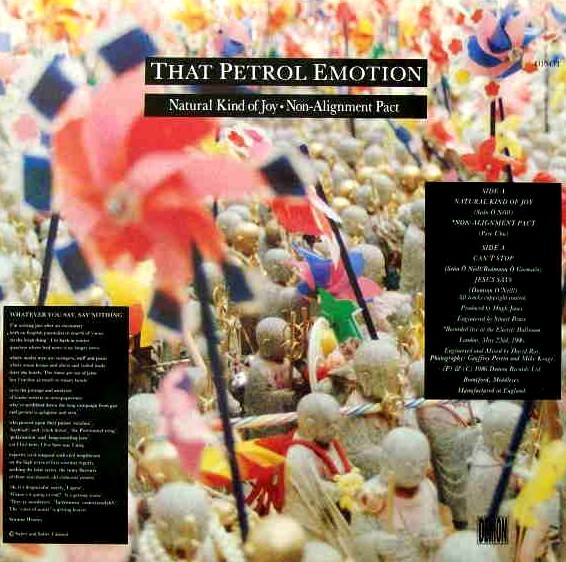
That Petrol Emotion - Natural Kind Of Joy EPYet, among the more abrasive and impassioned songs or more off-the-wall moments, there were unadulterated love songs like A Natural Kind of Joy. These were my people, and made up for the fact that I only got to see The Undertones live a handful of times.

That first album went on to sell 30,000 copies, with the band increasingly eager to push further. Steve Mack said: “We’re very ambitious. We want to see the world. We want to play, play, play – we’re not content living on £10 a week and eating chips.’

The beginning of that dream came as these former Pink Label artists – whose former stable-mates included good friends The June Brides, McCarthy and The Wolfhounds – signed to Polydor. Some of the songs on resultant second LP Babble slipped slightly below the bar, but maybe I was just feeling aggrieved that I had to share my band with a growing audience – those earlier gigs giving way to bigger ones like those at the Town & Country Club and Kilburn National.

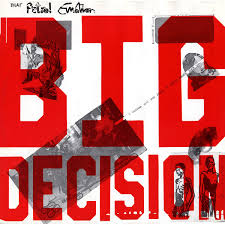
On the other hand, stand-out tracks like that pop exclamation mark Big Decision or the surging Swamp and Creeping to the Cross ensured appearances on The Tube, and I followed them to Glastonbury ’87 too. They still hadn’t reached the Top of the Pops studio, but success appeared to be around the corner, and that year we were left disappointed by at least one wasted journey, with a ‘sold out’ sign outside the Mean Fiddler.

For all those face-to-face encounters though, we had some peculiar notion that these lads wouldn’t want to talk to us, and kept our distance if we saw them in a bar before. We didn’t want to learn they were arseholes. We’d occasionally nod, but it never came to much more. However, I finally broke away from all that and shared a few words with John as he walked around Glasto with his young child. As I should have expected, he was nothing less than friendly and engaging.

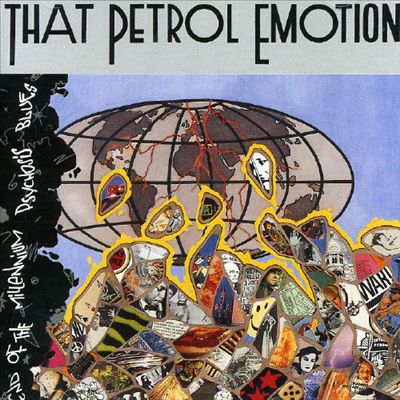
MI0002088846Furthermore, I interviewed the man himself at Guildford Civic Hall in 1988 during the tour for the End of the Millennium Psychosis Blues album, for a feature that appeared in the third issue of my fanzine, Captains Log.

As it turned out, that was John’s penultimate gig with the band before returning home, and while a little tired, pensive and under-stated, he couldn’t have been more helpful. I’d properly met one of my heroes, and while sad at him leaving, I could at least understand his reasons.

What I didn’t pick up on at the time was a major sub-text. I’d stumbled across the band at a far from happy time. And judging by Raymond’s spin on it all, John’s decision to quit – or at least the timing – went down pretty badly within the Petrols camp.

Despite all those underlying problems, I still think Millennium was a cracking album, one that certainly stands the test of time. There was plenty of maturity in those compositions, and the strength of the song-writing is plain to see. It wasn’t just the John O’Neill show either, with Raymond notably chipping in, Ciaran having truly arrived on that front, and Steve and Damian also commendably credited.

The band re-grouped from there, Damian taking on John’s guitar role while John Marchini was drafted in on bass, before Brendan Kelly took his place for the last album. Those final two albums were splendid affairs too, albeit with the last released on their own label after Virgin dropped them.

In fact, the quality of the music was strong right up to the end, the standard continuing to soar. And if anything Steve’s voice was better than ever before. There are some truly searing moments on there.

That+Petrol+Emotion+-+Fireproof+-+LP+RECORD-504035Yet the appetite didn’t seem to be there outside the camp. The indie market had moved on, and for whatever reason TPE didn’t seem to be in vogue in an era in which the music media seemed obsessed with everything Britpop instead.

Theirs just wasn’t the right vibe for the times, and again luck seemed to be against a band somewhat ahead of their time.

They folded amicably in 1994, after emotional Clapham and Dublin send-offs, fittingly captured on the live splendour of Final Flame, the band seemingly deciding they could no longer afford to take a chance in such a fickle industry.

I still had great affection for them and each album stands up to this day, but I’d moved on in my own life, and my London days were behind me. And while I love the later albums as much as the earlier ones these days, those early gigs remain among my most revered.

I got a sense of all that again with the first Undertones reunion gigs in 2000, particularly at the Mean Fiddler the night before the Fleadh – seeing four of my schoolboy heroes together again, including in their set a wealth of songs I’d only truly experienced on record before.

In the meantime, John had been busy back in Derry with Rare and various community projects, but I missed out big chunks of the other members of the band’s story back in London. Until now.

And where better to start than where I finally caught up with Raymond one weekday morning, strolling around the London borough of … erm, Borough trying to find a quiet place to talk, the area where the TPE story on this side of the Irish Sea properly started.

The reception on Raymond’s mobile phone drifted in and out somewhat, and by his own later admission the fact that he’d had two big cups of coffee that morning made it hard work getting the conversation all down. Add to that the fact that after two decades living in the capital, he still has a pretty strong Slash City accent. But those are just excuses, and this is largely how it all unfolded (with Raymond’s responses in bold) …

“I’ve been walking for a bit trying to find somewhere, and I seem to have come across our old stomping ground of 20 years ago, in Borough.

“I lived here for 21 years and it was our band headquarters as well. I remember doing a photo session where I am now.”

You weren’t wearing that infamous John Francome-style jockey jersey I remember from live shows and press shots, were you?

“My girlfriend at the time bought me that and it was pure silk – it cost a fortune! It was one of those things that when you see it in the flesh it looks different to when you see a photograph of it.

“It didn’t photograph well at all. It looks like a jumper, but was actually a really light shirt. Someone was saying you really have to watch what you wear when you’re in a band, because it might just haunt you for the rest of your life.

Stable Mate: Pete Wylie's ribbing of Raymond was sinful at times

Stable Mate: Pete Wylie’s ribbing of Raymond was sinful at times

“Pete Wylie took the piss out of me mercilessly, and used to call me a jump jockey. Around that time we shared the same manager, and he was always hanging around backstage. When we played Liverpool he was there as well.

“He was great fun. I was drinking quite a lot around then, so although I’ve had all these nights with him I just remember laughing my head off but nothing about what actually happened. I’ve got a few stories like that, unfortunately!”

Raymond and I were on nodding terms back in those early days, but I don’t think we ever really came and said hello. There was this fear that your heroes might not turn out how you expected, and that included Damian and John. I wish I had now.

“Well, I think you should have, because the O’Neill brothers were always very approachable. I never really had that problem, having known them so long.”

In fact, Raymond was at school with Damian, and their paths crossed regularly in short trousers.

“There’s a picture somewhere and me and Damian on our first communion day. We were at primary school together for the first four years, this fantastic mixed boys and girls primary school.

“We then got put into different all-boys schools and we really suffered. That first school was kind of special and really encouraged creativity. I loved music and loved everything about going to school back then.

“When I went to this new all-boys school I found it very tough, got bullied on the first day, and it took me a while to acclimatise. But we always talk about this idyllic time we had before.”

Close Ties: Damian O'Neill's friendship with Raymond goes way back

Close Ties: Damian O’Neill’s friendship with Raymond goes way back

But Raymond’s friendship with Damian survived, and they kept in touch in later years too, when The Undertones were enjoying success.

“They’d be off to do their thing before coming home again, and Damian was always very frustrated, and realised they should all be living in London really, taking advantage of being in a band.

“But the rest of them were such home-birds, and he couldn’t persuade them. I’d see quite a lot of them around the pubs, and whenever I talked to Damian he was always telling me great stories about their adventures. He really fired up my imagination.

“I’d been travelling as well, and couldn’t wait to get out of Derry. I’d been to France and he was keen to hear about my adventures too.

“Back home if you told people about going away they’d think you were getting a bit uppity and above your station and try and cut you down to size. But that wasn’t the case with the O’Neills. In fact, all The Undertones were refreshingly down to earth.”

That seems to sum up the boys-next-door appeal of The Undertones and why I could equate with them more than Stiff Little Fingers, who seemed more ‘in your face’ than the more subtle approach of The Undertones. Unlikely as it might seem to some, I got the feeling these five lads might as easily have lived on my council estate in rural Surrey.

“Well, for a start, Stiff Little Fingers had their lyrics written by a journalist, Gordon Ogilvie, and he trotted out every cliché under the sun in Barbed Wire Love and stuff like that.

Derry Finery: The Undertones, first time around (Photo courtesy of BBC)

Derry Finery: The Undertones, first time around (Photo courtesy of BBC)

“And I think if The Undertones had talked about politics to the level of That Petrol Emotion, people would have just told them to shut up.

“We needed a release at that time, and wanted to forget about all that shite. If you see any photos of Derry around that time it looks like Warsaw in 1946. I am shocked now, looking back.

“At the time I’d walk through the Bogside to go to school. It was so dangerous. I remember walking to school one day and a policeman had been killed, yet I walked right past, thinking he probably deserved it. That’s so cold-hearted! But that was the environment at the time.”

I guess you created a bit of a shell around you to deal with all those horrors.

“Our school was just overlooking the Bogside, and there was a primary school below it. One time the IRA put a bomb in the grounds of the primary school and it went off, a 200lb bomb, and I was in a classroom 300 yards away.

“It was the most massive explosion I’d ever heard. We were around 12 or 13 and all going crazy, yet the teacher just turned around and said, ‘shut up, calm down, it’s only a bomb”. The caretaker of the school was killed in that explosion.

“If that was to happen now, people would be getting therapy for years after. So I think all of us have got psychic scars, and I know I couldn’t wait to get out.

“I still have a lot of love for the place, but think the problems are still there. Everybody pretends everything’s better, but the things that are wrong keep bubbling up again.

“There are two sets of extreme views and no middle ground at all anymore. I’ve no time for any of the politicians there.

557589_10151295517547308_1310266587_n“I was watching Good Vibrations the other day, and there’s a brilliant sequence where you see all these explosions and stuff that was going on at the time. I just started crying, thinking about how all those people died for absolutely nothing.

If you’d said that to me at the time I would have disagreed, but when you look back with the benefit of age, wisdom and hindsight, it was such a waste … and it’s still going on.”

Moving forward to your arrival in London, do you remember the Pindar of Wakefield gig in Kings Cross, in what was my first TPE live experience?

“I do, and it was actually a very good venue.”

I got dewy-eyed mentioning the gigs that followed then, not least the Enterprise, Kennington Cricketers and The Clarendon in Hammersmith, before the band recorded Manic Pop Thrill.

“I think we played The Clarendon a few times. It was a bit more of a goth crowd there. We did get that kind of crowd for a while, not least because Steve’s voice on those first two singles was quite deep and seemed to suit that sound. Some of that crowd stayed on for Manic Pop Thrill, but not so many.”

I’m not sure if Manic Pop Thrill ever really reached the height of that live era for us – but maybe it wasn’t too far off.

“The thing about Manic Pop Thrill is that it’s never been remastered, and I’m sure it could sound a lot better. I remember being disappointed by the vinyl version, with quite a significant loss between the master tape and the vinyl.

“There was a CD version a year or so later and I was speaking to Damian about that the other day, saying we should have held back a few of those songs, because at the time of Babble we didn’t really have that many.

images (2)“I find Babble quite hard work. There’s a couple of songs there I’m ashamed of now, that just shouldn’t be there. They’re not good enough. But we didn’t have anything else. We had two or three of the most well-known songs we ever had, but there’s some stinkers on there too. I can’t understand why some people love Babble so much.

“I couldn’t listen to Millennium for quite a long time, but when I could I thought it had better songs on it, even though the making of that album was completely disastrous. It’s a miracle it even sounds as good as it does.”

That gets us on to the touchy subject of the recording of End of the Millennium Psychosis Blues, a period in which John threw a spanner into the works, announcing he was leaving, with Raymond – already in something of a state after a long spell of party excess – taking it all very badly and ending up hospitalised.

“The engineer was caught in the middle of all the stuff that was going on, and told me he used to go in each morning and would just do some kind of primal scream at the roof, to try and get rid of some of the tension.

“There was so much tension, you could cut it with a knife. We were staying in this fancy residential place, while John was holed up with his wife and his child. We only saw him when he came in to do his parts. It was a strange time, and lasted for ages.

“It became very toxic, and that happened on tour as well. We should never have let that happen. But we were young, and we didn’t really talk among ourselves. We do now and wonder how we let that happen.

“It took me years to forgive John for telling us he was leaving when he did. He could have waited until we had everything recorded, and then told us. I don’t know why he did it like that. It killed the vibe and made it very uncomfortable for everybody.”

Just John: The blogger's   interview with John O'Neill in his Captains Log days (Photo copyright: Malcolm Wyatt)

Just John: The blogger’s interview with JJ O’Neill in Captains Log (Photo copyright: Malcolm Wyatt)

At this point I recall my interview with John at October 1988 at Guildford Civic, and how the circumstances all make a bit more sense now in retrospect. At the time the official line was that Raymond had a really bad bug, so John Marchini – set to replace John O’Neill at the end of the tour – came in a few weeks earlier than expected, with a few swapped roles within the band accordingly.

The former Undertone was expecting his second child at that time and was set for his final gig the next night, at Cardiff, with gigs ahead of that planned for mainland Europe, Russia, then America.

“Well, we had to cancel a lot of that. I was supposed to go to New York to do some press and was looking forward to it, but then couldn’t go, so I was gutted. But I needed the rest. I was in a very bad way.

“I was gone by then. I was in a really bad state. I remember Ciaran was really frightened. He could see I was going down very quickly. I’d been medicating for some time, but was very fragile.”

So this ‘bug’ was drugs, booze, and a bit of everything, was it?

“Yeah it was. I’d been feeling it for a long time, and it just kind of caught up with me. I was very emotionally fragile and really worried about what was going to happen, thinking we were going to break up, instead of thinking about it positively.

“By that time, Ciaran was really coming into his own as a song-writer, and I was as well, so I should have been pretty positive, thinking we wouldn’t miss John. But because we weren’t talking I wasn’t aware of how anyone felt about anything. Classic sort of men stuff, you know.”

You shouldn’t have been too worried. That was, after all, the album when we realised Ciaran could write great songs too.

“Yeah, and it made me up my game too. I wrote a few songs for the first album but then got a little complacent. I should maybe have had a couple more credits on Babble, ones I didn’t contest, but I don’t think that was anyone‘s fault.

download (9)“When they were set to re-release Babble, I was on the phone to John about Big Decision, saying I should get some kind of credit on that this time and he agreed. But it never happened as it was just an iTunes-only release.”

Despite having heard all that and seeing Raymond’s point of view entirely, I can still understand John’s thinking – he wanted to get home and do the best for his family. He wasn’t enjoying it and just wanted out.

“Well yeah, but it was him who wanted us to come to London in the first place. So I just thought it was really weird that he lasted about two years before deciding he wanted to go home again.

“I hadn’t wanted to come over in the first place. It’s funny how your life pans out though. I had a great girlfriend in Derry and was really happy there and thought we should at least try and record something there before coming to England. But he was adamant we needed to go over and was probably right actually.

“That decision chanced my life forever. I hated it that first year. It was pretty miserable. We had no money and we didn’t know anybody. And before playing with John I was in another band and DJ-ing, having one of the best years in my life.”

Was that the Left Banke era?

“Yeah. that was responsible for kicking John up the backside and getting him back into song-writing. He was really adamant he wasn’t going to do anything to do with music. I had bags of enthusiasm and energy and was gee-ing him up, not necessarily to start a band, but getting him back into music.

“Those days were fantastic. There were maybe only 50 people who ever went. We kept the prices really low and were told we needed to charge more and encourage more people to come. But we didn’t want that.

“These were people who didn’t really have a lot. But talk to those who were there and they talk about it like it was a religious experience! It was amazing and I even wrote a manifesto for it!

“Can you believe that? It was basically slagging off all these horrible DJs of the time with their fake American accents, playing shite music. I mean bloody hell – a manifesto for a disco? That’s a bit intense, you know!

“We would meet up on a Tuesday night and come up with a set-list of what we were going to play – the three of us, including my friend Mickey Rooney – all taking turns to play some tunes.

“Sometimes I would do the lights as well. We’d go out and have a dance ourselves too. It was just such a brilliant time, and so creative.”

download (10)You had a good time before that with Bam Bam and The Calling too.

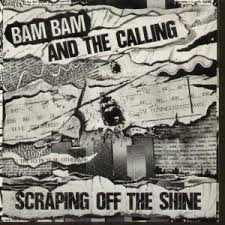
“Well, that was my first band, I was about 22, just out of university. I’d always wanted to be in a band, but it had never really happened until then. I think I under-estimated my abilities. It was brilliant when I look back now. We were really fresh, and didn’t really sound like anyone else.

“After I left their sound changed, with one less percussionist and the guitar not so loud. We were more like Echo and the Bunnymen or Adam and The Ants. The guitar was much heavier, with me being a loud bastard!

“It was more poppy after I left, more like REM. That came to the fore with the two singles. But with the first, they used all our equipment, and John produced it as well, so there was a bit of a Petrols vibe about it.”

And I believe Bam Bam had a song around that time called That Petrol Emotion.

“We did. They had it when I joined, but never did it. I changed the whole feel of it. I was into John McGeoch at the time and added a really heavy reverby sound.

“John O’Neill obviously saw all this. I was seeing plenty of him as a friend, and we were listening to records all the time. Our focus was all music. It was a great time. We had no responsibilities, no kids, everyone just enjoying themselves.”

Petrols Days: Well, you didn't think I could resist a shot of Raymond's jump-jockey top, did you?

Petrols Days: Well, you didn’t think I could resist a shot of Raymond’s jump-jockey top, did you?

Getting a brief word in, I asked if Raymond ever came to England before his move, aiming to ask if he ever saw Eleven. But I only got as far as asking the first part.

“I only came through London once, on the way back from France. I was a real Francophile and was very snobby about England. I had no time for the place.

“I was the same with America, funnily enough. Everybody at our college said about going to America, but I was going to France, working there, going over for three months with £40 and coming back with £40. I was smitten with the place.”

Undeterred, I tried again. Did he ever see Eleven play?

“John and I had just started playing together at that point, and to be honest when we heard their John Peel session we were deeply unimpressed, thinking they’d got it completely wrong!”

I finally got to my point, how Eleven did a song called Love’s a Perpetual Emotion, and how I always wondered if it was that track – rather than the Bam Bam song – that inspired the name – a mis-heard lyric and in-joke that sowed the seed.

Raymond laughs at that, but insists that wasn’t the case.

“No, for the record it was definitely from a Bam Bam song. We tried all these different names. I can’t remember them all now.”

Before you relocated to London, I believe That Petrol Emotion had a girl singer.

“That first singer was actually my girlfriend in Derry. She looked great. She was great looking and really lovely … but she couldn’t sing. But John was convinced at the time she was the next Debbie Harry!

“I remember doing A Natural Kind of Joy with her, but she could never quite come in at the right place. I think maybe I put her under pressure a bit as well.

“After that it was me singing for a while, and then we did a gig over here at the Fire Station, where the Jesus and Mary Chain had their riot.

“We did one there and one in Derry that Christmas with me as the singer, and then we did one at the Mean Fiddler, where Damian sang a couple of songs that I couldn’t sing while playing guitar.

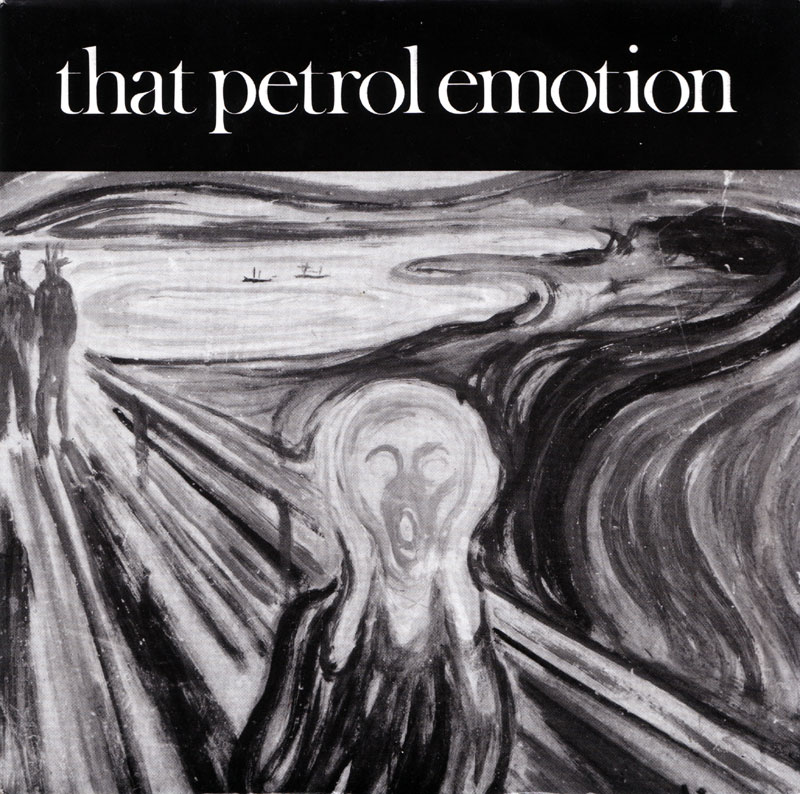
Scream Art: That Petrol Emotion's first single, Keen

Scream Art: That Petrol Emotion’s first single, Keen

“I remember playing with the June Brides and Jon Hunter said, ‘You’ve got too many songs! We were playing for about 50 minutes, everything we had, and it all lacked cohesion – there was too much for people to take in the first time.

“Around that time Steve came in. He was John’s choice, whereas at the time I felt we should have held on. But it was taking time finding somebody. Every last one was absolutely useless!

“I remember one Scottish guy, dressed head to toe in leather. He had a copy of the Melody Maker and the NME, which he then put down on the floor, as if to say, ‘Here I am, I look good, and I’ve got all the music press’. Yet he couldn’t sing to save his life. I couldn’t quite work out why he’d bothered!

“Perhaps a lot of those who might have been up for the job might have lacked the confidence, but all those turning up hadn’t got a clue.

“And to be honest, I think it took Steve about a year to come good.”

Well, from the first moment we saw you, we were amazed … and Steve did seem to be the perfect front-man.

“I think he definitely became that. When we reformed, we had a gig at Hop Farm where we were on at midday, and I’ve never seen anyone work quite so hard to get the audience going.

“We were in our late 40s by then, yet his energy levels were phenomenal.”

IMG_20190607_125106232I’ll wrap it up there for now. With part two of this three-parter following tomorrow, starting with Raymond on The Undertones reformation, his memories of that seminal band’s Casbah days, his relocation to London, TPE’s political stance, and the Pledge Music campaign for The Everlasting Yeah debut LP Anima Rising.
In the meantime, to find out more about the new album and how you can play your part in ensuring its release, check out this link.


Posted in Music | Tagged , , , , , , , , , , , , | 9 Comments

Hunger for the big time – the alt-J interview

Alt-J - New 1There’s a real buzz about alt-J at present, with a band that met barely seven years ago set to release their second album, after major success with their debut.

But keyboard player/vocalist Gus Unger-Hamilton seems fairly level-headed about the experience.

Despite a Mercury Prize win in 2012, alt-J remain fairly unrecognisable to the general public. That said, more of us have heard them than we might realise.

In fact, two of their songs will be familiar to anyone who’s switched on BBC 2 this past year or so, and as well as being used for the channel’s idents, there have been several plays on TV series, films and commercials.

If word hasn’t reached you yet, it will soon, and there are plenty out there in the know, judging by the fact that they recently sold all 10,000 tickets for September 24’s London’s Alexandra Palace appearance in just 10 minutes.

Furthermore, debut LP An Awesome Wave was BBC Radio 6’s album of the year in 2012, with tracks like Breezeblocks, Fitzpleasure and Tessellate – the latter also covered by Ellie Goulding – widely aired.

A tour with Wild Beasts and several festivals helped increase their profile, that success not just confined to this nation, with major interest across Europe, America and Australia.

A momentous year ended with UK and US headline tours, the international dates continuing in 2013.

And while this year opened with guitar/bass player Gwil Sainsbury leaving, the remaining trio quickly adapted, with their second album set to follow next month.

Now, the band – formed at Leeds University in 2007 – are set to push on again, the release of This Is All Yours tied in with an eight-date UK tour – including two nights at Manchester Apollo – then 21 shows in North America.

Mercury Win: alt-J, then a four-piece, after success with debut album An Awesome Wave

Mercury Win: alt-J, then a four-piece, after success with debut album An Awesome Wave

The Mercury Prize is sometimes perceived as an albatross, with much-vaunted acts seemingly stalling after trumpeted arrivals, as discussed on these very pages recently with another winner, Damon Gough, of Badly Drawn boy fame.

But Gus – joined in alt-J by Joe Newman (guitar/lead vocals) and Thom Green (drums) – doesn’t see it like that.

“I think it’s too early to tell. Lots of successful bands won it, such as Arctic Monkeys. And I know it was just a really nice thing to happen for us. We’re not too concerned about how it affects our career. It was more something that we were really excited about at the time.”

But it’s the new album that’s on his mind at present, with the band eager to get out there and showcase it live.

“We just can’t wait for it to be out now, having finished it at the end of May. It feels like a long time ago, especially as we haven’t been out on tour in the meantime.”

Is the first single from the LP, Hunger of the Pines, a good example of what’s we’re in for?

“I don’t think it sounds like much else on the album, but it’s a good indication of the fact that we’ve matured as a band.

“Maybe our third album will sound more like that. But we thought it had to be the first thing we put out, because it was so new to us.

“We wanted something that would make people sit up and pay attention – making a statement about coming back with a new album.”

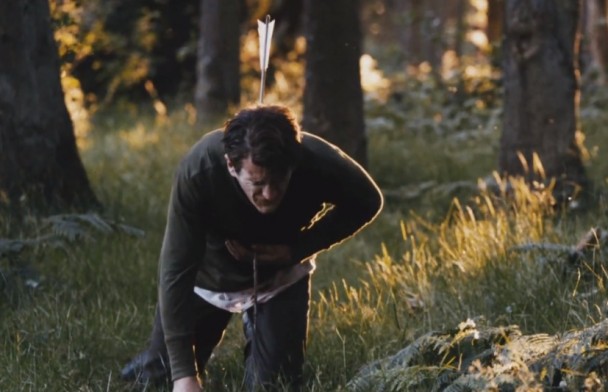
Video Still: From the Hunger of the Pines promo

Video Still: From the Hunger of the Pines promo

I have to ask – not least as my eldest daughter is something of an obsessive in that respect – is there a Hunger Games link to the single, what with the title, accompanying video with the arrow attack and the lyric. Might you be featured on either of the coming two films?

“Interesting! I hadn’t really thought about that. I haven’t actually read or watched any Hunger Games books or films, other than a couple of trailers. I think it might more be a coincidence.

“We just like that kind of imagery, of death and violence mixed with a romantic idea of it. It’s more half a metaphor for whatever you want and half the literal idea of some guy being shot with loads of arrows!”

Is there a theme running through the album? There seem to be three songs about the Japanese city of Nara for example.

“That’s more a triptych of songs – Arrival in Nara, Nara and Leaving Nara. We were going to put them back-to-back, but the last piece sounded more of a reprise, one which worked nicely at the end.

“There’s not an intentional theme, but the strongest idea is of journeying to far-away lands, invented places or real places like Nara.

“I suppose it’s about travel and being in unfamiliar spaces, but I think we only realised that once we’d finished the album.”

cover_largeThere’s a more rootsy feel on another track already getting airplay, Left Hand Free, like Alabama Shakes meets Beck. Is that more indicative of where you’re at?

“Again, I don’t think that’s a song that sounds very much like the rest of the album. It was a song we wrote very quickly, just having fun.

“None of us expected to write a song like that. The fact it didn’t sound like us didn’t worry us though. We knew it was a good song, one we wanted our fans to hear.

“We quite like to mess around with people’s perceptions and expectations!

“But it’s funny that the album doesn’t sound much like the only songs most people have heard.”

I find you hard to categorise, which might not be a bad thing. You’ve been labelled experimental, electronic or art rock, even folk-infected dub-pop. Fair descriptions?

“We don’t really like any of those. Someone recently called us post-hip-hop, which we all quite liked – like hop-hop without the rapping!

“In an age in which we have an ease in finding new bands, you don’t have to convince people to buy an album without having heard it all.

“You can listen to a whole album on Spotify or wherever before making your mind up.

“The need to put bands in pigeon-holes has diminished, as you no longer have to go into a record shop and go through the indie section or whatever to find new music.”

Perhaps it’s just us writers that struggle to categorise you …

“I think it might be, yeah.”

Mercury Past: Gomez

Mercury Past: Gomez

The closest band I can equate you to is Southport’s Gomez. Were they an influence?

“I can honestly say they weren’t, and I’m pretty sure that’s the case with Thom and Joe too. But we’ve heard that before, so that’s interesting. Maybe I should check them out.

“Am I right in thinking they won the Mercury Prize too?”

They did, in 1999 with debut Bring It On, something I’d forgotten until Gus mentioned it.

So which influences did you share when you started the band at Leeds University?

“It’s been said many times, but I think Radiohead are probably one of the only bands all three of us really like.

Major Influence: Radiohead

Major Influence: Radiohead

“They’re a band whose career we watched very closely. If we emulate anybody’s career path, it would probably be Radiohead.”

You seem ideally suited for extra exposure through incidental music and film and TV soundtracks, not least the BBC 2 link – to the point where there will be many people out there saying ‘Ah, did they do that?’

“Yes! We were on the BBC 2 ident a whole year, and although I was on tour much of that time, when I came home, I put on the telly and heard our music.

“I reckon everyone in the country must have heard our music by now – yet the man in the street and so many people still haven’t heard of us!”

Are you still amazed by the public reaction to An Awesome Wave? I believe it’s sold a million copies and been streamed 200 million times on Spotify alone.

“It’s kind of mental really, with an incredible reaction. On one hand we’re kind of amazed, on the other we think, ‘well, we did work pretty hard’.

“We’re just very grateful, and hope people like our new album too.”

download (6)Not a bad result for a bunch of lads who only met while at university seven years ago.

“I know …. exactly!”

I understand your sound’s largely attributable to your days living in student halls.

“Definitely, it was partly down to the fact that we couldn’t make too much noise and partly down to the restrictions in place because of the instruments we had.

“Joe didn’t have an electric guitar, just an acoustic that belonged to his dad, while I had some basic secondary school keyboard, and Tom couldn’t use a full drum kit because of the noise.

“So we developed this quiet, intricate sound where you had to strain to not miss anything. We were musically whispering, so to speak.

“Now we like to make more noise with some of our songs, but I think that approach to song-writing will always be with us.”

After uni came a move to Cambridge, closer to Gus’ family base in Ely, with a spell on the dole while honing the alt-J sound.

“I went to sixth form in Cambridge and knew it pretty well. We wanted to be nearer to London, because by that stage we had a manager, a booking agent and a lawyer all based there, and had to go down quite a lot.

“Leeds was a long way off, not least when we couldn’t afford a train so had to get a coach.

“We thought about Brighton, but picked Cambridge because we perceived it as somewhere which didn’t really have much of a music scene.

“We also thought it would be good for us to get our heads down and work hard. And it proved to be a really good place to be for that year.”

Four Play: The original alt-J line-up

Four Play: The original alt-J line-up

It certainly did, leading in time to a deal with Infectious Records, and that major breakthrough.

Now they’re a three-piece, following Gwil’s departure. What was the story there?

“Gwil wasn’t very happy with the lifestyle of being in a band. He didn’t really like going on tour and didn’t particularly enjoy being part of the music industry.

“He was quite cynical about everything – fair enough, but I think sometimes you just have to suspend that cynicism, be more diplomatic.

“You also want to keep your fans happy by giving them what they want. If that involves big shows, so be it.

“It wasn’t that much of a surprise really. We knew he felt like that for a while. But we didn’t really find it a hard transition into a three-piece.

“Our roles in the bands aren’t too strictly defined. It wasn’t like a string quartet losing a cellist. We found we could cover all the bases just through the three of us.”

I take it you salvaged your friendship accordingly?

“Absolutely. If he’d stayed in the band things would have deteriorated, but luckily he left at a point where we were all still really good friends.

“In fact, we all saw him last week. We hung out, and it was nice.”

Alt-J - New 2Are you disappointed you’re only doing eight UK dates next month?

“It’s a bit of a shame we’re not doing more, but we don’t really have any say, unfortunately. Unless we throw our toys out of the pram and insist on more!

“We’re just one puppet on the string, and it all has to be choreographed. But there will definitely be a more extensive tour next year.”

I guess that added to the buzz about you, as seen with the Alexandra Palace sell-out. Did that seem unreal to you?

“It did really. I was really pleased, not least as it’s our first London headline show in a year and a half and we hadn’t put any UK tickets on sale in that time.

“It was gratifying to know we still had eager fans waiting to buy tickets the minute they were announced.”

Is there a big secret to building that profile and fan-base? Not many bands can do that.

“If there is, I don’t think we know it! I don’t know how it’s happened, but we’re extremely grateful.

“When we knew the ‘Ally Pally’ tickets were going on sale I was waiting to be told it wasn’t going well and we might have to scale back, do Brixton Academy again instead.”

Alt-J - New 3A big North American tour follows, and you’ve already got in a lot of world travel. It’s a good way to see the world.

“It is, although it’s a funny way to see the world. You go to some places and don’t really see a thing other than the dressing room, the stage and a hotel.

“But we tend to do a lot of exploring and touristy stuff when we want to – getting days off built in when we want them.

“It’s amazing really, I’ve been to almost all the states in America. And I must admit I probably never would have gone to Australia if I hadn’t gone there on tour, yet now I’ve been a few times and love it.”

For tour details of alt-J, release dates and their forthcoming tour, head here


Posted in Music | Tagged , , , , , , , , , , , , , | 2 Comments

Lynott’s legacy lives on – introducing the Black Star Riders

slider_new-band-940x470A band formed out of the ashes of Thin Lizzy are currently rocking the UK, with the Black Star Riders on the crest of a wave after the success of their first album.

And according to guitarist Damon Johnson, new and old fans alike are guaranteed a relentless pursuit of 90-minute live perfection and appreciation of the four-minute rock song.

When Phil Lynott died in 1986, it seemed to mark a definite end to Thin Lizzy, arguably one of the most influential hard rock bands of all time.

In barely a dozen years they steadily evolved into world-beaters, splitting three years before the charismatic Dubliner’s death, the 36-year-old by then a solo artist.

But the band re-emerged in 1996, marketed as a tribute to Lynott, that five-piece still including founder member Brian Downey and 1974 recruit Scott Gorham.

That was 22 years after Gorham replaced original member Eric Bell, the Californian immediately proven integral to Thin Lizzy’s guitar sound.

A watershed followed at the end of 2012 as drummer Downey left while Gorham went ahead with a new incarnation of the band, ditching the old name and launching the Black Star Riders.

1st-June-PART-2-Black-Star-Riders-All-Hell-Breaks-Loose-ArtworkThe new band’s debut album All Hell Breaks Loose was something of a statement of intent, with those off to see the Black Star Riders on their current tour promised a big night from ‘the next step in the evolution of the Thin Lizzy story’.

Gorham is partnered these days by vocalist Ricky Warwick, guitarist Damon Johnson, bass player Robbie Crane and former Megadeth drummer Jimmy DeGrasso.

And while treating with reverence all that came before, the Black Star Riders have plenty of belief in their new direction, as Damon stressed over the phone from a tour date in Leicester.

The 50-year-old Alabama guitarist and song-writer, previously with Brother Cane, Alice Cooper and Whiskey Falls, said: “We’ve been fortunate enough to step out of the shadow of Phil a little bit, and knew we had to if we were to continue to perform.

I’m guessing the name-change reflected the decision to carry on yet remain respectful of that past.

“I think that description is very accurate. We were in a unique situation, having played a part of Thin Lizzy. It was an honour to be asked to participate, and they were a tremendous influence on us.

“We knew the band was very strong, but Scott wanted to write new songs and create new music, yet felt shackled by a split decision by the other band-mates, the fan-base and everyone.

“Some were excited by the thought of new music under the Thin Lizzy name, but some were like ‘no, that wouldn’t be right’. So common sense said it wouldn’t be.

True Legacy: Phi Lynott

True Legacy: Phi Lynott

“Not only was Phil the front-man and the voice of the band, but he wrote all that stuff.

“It’s certainly hard – I won’t kid you. It was a leap of faith to step out of that security blanket. And it’s much easier to get promoters to book you if it’s a name that has history and a fan-base.

“But that brings me full circle and to the fact that we are so appreciative to the Thin Lizzy faithful – they’ve embraced the Black Star Riders in a way we could never have dreamed.

“That reinforced that we did the right thing to change the name, and we also delivered a pretty spectacular debut album that we’re proud of, and the fans are.”

Damon’s impressive CV before being recruited included tours with Van Halen, Aerosmith, Robert Plant and Lynyrd Skynyrd. Were those wild days?

“If you could sit all my kids down and say ‘OK, this is how your Dad lived for five or six years, they would say ‘yeah – that’s pretty wild!’

“They were great days, and I certainly learned a lot about the business, about song-writing and performance, and learned a lot about life.

“I’m very respectful of those times and feel pretty lucky, man, that I got to go through a lot of that stuff.”

Was December 2012’s re-brand an exciting time for this guitarist, who also wrote for Sammy Hagar and Stevie Nicks and worked with Ted Nugent, John Waite, Carlos Santana and Steven Tyler?

“It was incredibly exciting, mainly because we knew we had some great material. We knew we were sitting on some great songs, another thing that made the decision a lot easier.

“To finally get the album released and get out and book dates in the UK as Black Star Riders – that’s something we’ll never forget.

“We’re sat on the back of well over a dozen new songs, so we’re full steam ahead in the process of getting this second album ready.

“In fact, there’s no sitting about here, man – we’re pressing on, excited about the future!”

Nifty Fifty: Damon Johnson (Photo: MIM)

Nifty Fifty: Damon Johnson (Photo: MIM)

You’ve just turned 50 now, if I did my maths right …

“You’re a math genius, my friend!”

So when did you first hear Thin Lizzy?

“July 16th, 1979, when I made my way into a Ted Nugent concert at the Von Braun Civic Center in Huntsville, Alabama, with some band called Thin Lizzy opening the show.

“I knew the name and I’d heard The Boys Are Back in Town on the radio a couple of times. You can use whatever adjectives you like, but it changed my life.

“I hit the streets the next day looking for as much Thin Lizzy as I could get my hands on.

“That started a steady 10-year study, starting with the guitar players and those great parts, and getting up close and personal with Phil’s writing, his phrasing and story-telling.

Thin_Lizzy_-_Live_and_Dangerous“So, rolling the clock forward to 2011 when I got a phone call saying the guys were interested in having me come and fill the guitar spot, that’s just crazy!

“It’s the stuff of dreams, and would make for a great movie.”

Although brought up in Alabama, Damon was born in Macon, Georgia, a city with plenty of musical heritage, not least its part in the Otis Redding story.

“I equate it with that myself, my friend. I’m really proud to be from there and it’s always nice to speak with people who appreciate the contribution that city made.

“And you certainly have to include Capricorn Records and Phil Walden, The Allman Brothers Band, The Marshall Tucker Band, and Wet Willie.

“I was there about five years. I’ve pretty much lived in Alabama my whole life, but Dad’s family was from Macon, where he and my Mom lived after they married.

“Huntsville, where I first saw Thin Lizzy, is known for its contribution to the space programme. As a younger kid we’d go up there because I was fascinated by all that.

“It was about an hour from where I grew up on a small farm, so anytime there was a concert I was there – for Kiss, Aerosmith, Sammy Hagar, Van Halen, who I saw three times.”

I put it to Damon that his band-mate Ricky Warwick – like Thin Lizzy founder member Eric Bell from Northern Ireland – perhaps has the hardest job as the Black Star Riders’ front-man, and therefore perceived in some circles as a substitute for Lynott, clearly a hard act to follow.

Front Man: Ricky Warwick

Front Man: Ricky Warwick

But Ricky is hardly a trainee, having also had a busy apprenticeship, fronting Scottish hard rock band The Almighty and also playing key roles with New Model Army, (briefly) Stiff Little Fingers and alongside The Cult’s Billy Duffy in Circus Diablo.

“Ricky is a proper artist in his own right, and an incredible song-writer. And for a guy so influenced by punk and the spirit and essence of everything that stood for, he also studied Phil’s writing.

“I just can’t imagine Scott could have found a better guy to sing those Thin Lizzy songs, giving it more integrity and respectful allegiance.

“I joined Thin Lizzy because I wanted to play those great songs with Scott Gorham and Brian Downey. But let me be clear about this – I’m in the Black Star Riders because of Ricky Warwick.

“I’m honoured and very happy to be in a band with that guy as one of my song-writing partners.

“He’s a great spiritual leader – with his commitment not just to his band but to his family, to putting in a great performance, to staying healthy, and all that.

“He’s a powerful role model for us, and I really don’t know how else to tell you – that’s why I’m here!

“It restored my faith in the belief of starting a new band too. Trust me, man, after all the bands I’ve been in, my initial reaction to starting again was ‘ugh – it’s so hard!’”

First Cut: Where it all started - 1971's Thin Lizzy

First Cut: Where it all started – 1971’s Thin Lizzy

There’s a clear Celtic influence on certain tracks on the first album. I get the impression that while America may be home, there’s plenty of Irish passion and original Lynott spirit.

“Ricky makes it authentic. Everyone has a lot of love and respect for that music in this band, but it wouldn’t be nearly as authentic if it was just a bunch of American guys borrowing from that Celtic musical library. Ricky’s the real thing, man!”

There’s a harder edge to you, musically. Do you think that was the way Thin Lizzy were going before Phil left?

“We’ve planted our flag firmly in the hard rock camp, and the pop music of the day when Phil was still around had more in common with guitars.

“Pop’s completely different now and we’d never even pretend to try to associate ourselves with that.

“Our roots are definitely in classic old school rock music, and we’re proud to carry that flag.”

Does having a former Megadeth drummer involved add to that ‘harder’ aspect?

“You know, some days it’s great and others it drives me crazy! But I love Jimmy DeGrasso so much and he’s absolutely brought the thunder to this band, certainly in the live set but in the studio as well.”

10450312_624510787648261_9153808989025047475_o-700x457The Black Star Riders name suggests homage to Wild West roots too, not least with four of you coming from the States.

“Yes it does. I think it’s a great name. Coming up with band names is really a drag, but we just kept telling ourselves the music is going to define the name.

“If the music is great, the name will be great. So we’re definitely proud of it.”

One year on from the release of All Hell Breaks Loose, it’s seen a positive reaction. Are you proud of those first recordings?

“Yes, and yes! We made absolutely the right record, have learned so much and certainly had an opportunity to grow as a band.

“It didn’t do anything but help our confidence and let us know we were making the right decision. We’ll always be proud of that record – it’s a great place to start.”

And tracks like Bound for Glory seem to be pure Thin Lizzy.

“Absolutely. It was a lot of fun, but we’re just trying to write great songs. Scott certainly brings that Thin Lizzy guitar sound to the table, but if you strip the song down to just acoustic guitar it’s simple a really good song.

“The fact that our fan-base feels like it’s carrying on the Thin Lizzy spirit – that’s wonderful, and we’re proud of that.

“And we’re excited now to have an opportunity to follow all that up with a second album.”

Is there ever a chance of first Lizzy guitarist Eric Bell guesting one day, or – who knows – maybe even Midge Ure?

“Anytime we could have a chance to see those guys would be fantastic, and they would certainly be welcome.

“They were a part of that story, and it would be great to have a hang, sit down, have a coffee and talk about the old days.”

Drum Major: Brian Downey, way back then

Drum Major: Brian Downey, way back then

Is Brian Downey still in the loop? Might he join you again at some point?

“We haven’t had a lot of communication with Brian, but it was certainly an honour to be able to play with him.

“And as my sister so fondly tells all our friends and family, you can go to Wikipedia and see my name on the Thin Lizzy page underneath Brian Downey!

“You never know what the future holds. But if it doesn’t happen, the success of the Black Star Riders is a good thing, whatever happens from here with the Thin Lizzy name.”

What do you think Phil Lynott or late Thin Lizzy guitar legend Gary Moore would have made of it all if they came down to see you play?

“I think they would see it and hear it and it would be impossible for them not to recognise the quality. That’s what they would be proud of.

“However this came together and wherever it sprang from, they couldn’t deny the fact that it’s quality stuff.”

Are the Riders properly wild between gigs? Is the candle still burning at both ends? Or have you caught Scott in a relatively ‘pipe and slippers’ era?

“He’s somewhere in between! Let me tell you something, and Ricky and I talk about it often, to go on that stage with that guy every night – he still carries himself with so much swagger and style.

Great Scott: Thin Lizzy veteran rocker Scott Gorham

Great Scott: Thin Lizzy veteran rocker Scott Gorham

“It definitely defies his early 60s age. You need look no further than all the females in the front three rows. You know what I’m saying? It’s pretty cool, man – they’re all watching the master do his thing!”

I take it you enjoy the buzz of the live work. Is there a good vibe backstage and on the bus?

“It’s funny you bring that up. I was talking to one of our road crew the other day about that. We had a couple of those positions we needed to fill and he said, ‘Damon, you do know everyone wants to work with the Black Star Riders?’

“I asked him what he meant and he said, ‘The word is out that it’s such a good hang and such a great bunch of guys. There’s no drama, and the band storms it every night on stage’.

“I said, ‘Wow, that’s a tremendous compliment!’ We’re all serious about our business, but at the same time we go to movies together, eat dinners together, and all that.”

Thin_Lizzy_-_Black_Rose_A_Rock_LegendAt this point I’ll point out that the 1979 Thin Lizzy album, Black Rose – A Rock Legend, was my favourite of the band’s LPs.

As well as the fantastic musicianship and trademark dual guitars – in this case involving Gorham and Moore – there’s Lynott’s lyrical phrasing on tracks like Do Anything You Want To and the retrospectively-poignant Got to Give It Up.

Then there’s Waiting For An Alibi and so much more, right up to a spectacular seven-minute Roisin Dubh finale.

Hardly ‘new man’ material on dodgier numbers like S & M maybe, but along with the previous year’s Live and Dangerous it’s probably the closest this punk and new wave lover got to appreciating hard rock.

So is Damon still playing any of those songs or any other Thin Lizzy tracks live? I’d love to see you tackling Rosin Dubh for a start.

“We do a majority of Black Star Riders material, and the Thin Lizzy catalogue is so vast, but we do play Waiting For An Alibi sometimes.

“Hopefully in the coming years we could kick the tyres on playing the title song. It’s such a great guitar tour de force. We played that for the year and a half I was in Thin Lizzy and it’s an epic, to be sure.

“Again, that’s the cool thing about the place we find ourselves. I just love the fact that our fan-base is very pleased we are playing some of the Thin Lizzy catalogue.

“As we continue it will be great to continue to delve into that. But it’s going to be tough when we finish this second album and have two albums of Black Star Riders songs to choose from and have to decide which songs not to add to the set-list.”

Wild Days: Damon Johnson rocks out with Alice Cooper (Photo: sitorisonics)

Wild Days: Damon Johnson rocks out with Alice Cooper (Photo: sitorisonics)

Are you close to finishing that second album then?

“The writing’s just marching along, and the plan is to be in pre-production, working all this stuff out in the first week of September, then charge ahead from there.”

Are you all family men away from this?

“Everybody’s husbands and fathers, and that’s probably why our internet connection is so crappy here, Malcolm, because everybody wants to call home and talk to the kids, because in America everyone’s just waking up there.”

It was a poor connection too, to the point that I – not having realised they’d started the UK leg of their tour – thought Damon was talking to be from Alabama rather than Leicester! But that’s another story. Carry on, Damon …

“I think it’s another thing that unites us. We’re always showing each other pictures of our kids and talking about the plans we have when we’re home.”

slider_VIP2-940x470And what kind of show can we expect from you on this tour?

“I think with anyone who comes, there’s one word those who come are going to say when they leave – ‘relentless’.

“We basically drop the first note and it’s unwavering for the next 90 minutes, man!

“We’re very proud of our performance as a band. It’s not a jam or loose ‘oh hey, let’s stretch this out, man’ thing.

“We’re fans of the four-minute rock song. It started with The Beatles and it was certainly carried on by Thin Lizzy.

“That’s certainly what Scott’s always been passionate about. We experienced that with him in Thin Lizzy and now with the Black Star Riders as well.

“And we’re going to cram 20 songs into that 90 minutes, so just be ready!”

The Black Star Riders are next in action at Tivoli, Helsingborg, Sweden (August 3), Preston’s 53 Degrees (August 5), Buckley’s The Tivoli (August 6), Birmingham’s The Asylum (August 7), and Norway’s Back in the Fields Festival, Alesund (August 9), returning to Europe for the Rock Cruise in Stockholm, Sweden (October 10) and an appearance at Great Yarmouth’s Vauxhall Holiday Park (October 19).

Those are followed by a 14-date UK tour in March, 2015. For further details of all those shows and more about the band, head to their website here.

If you enjoyed this feature, you might want to read this blog’s piece with Saxon’s Biff Byford – A Life in Denim, Leather and Spandex – from February, 2014, with a link here

Posted in Music | Tagged , , , , , , , , , , , , | Leave a comment

From Ultravox and Underpass to overground success – the John Foxx interview

The Doctor: John Foxx (Photo: Edge Hill University)

The Doctor: John Foxx (Photo: Edge Hill University)

John Foxx has become something of a cult hero in discerning circles over the last four decades, making a big noise in the art and music world.

He has strong associations with the new wave of electronic music that saw us into the 1980s, and oversaw the recording of various happening bands in the following years.

He’s also  been cited as a major influence on a diverse range of acts, including Gary Numan, Moby, Depeche Mode and Blur.

Having made his name as the initial front-man of Ultravox – succeeded by Midge Ure – he threw caution to the wind and went solo, a hit with Underpass paving the way for a critically-recognised career.

At one stage John turned his back on the music industry in favour of his first love, art, but later returned with a vengeance, with plenty of peer acknowledgement along the way.

Just one of the latest accolades to come his way arrived from unexpected quarters very recently, as a Lancashire university acknowledged the 65-year-old’s working journey with an honorary doctorate, in recognition of a somewhat pioneering career.

And that gave me the chance to catch up with the man himself – born Dennis Leigh in Chorley, Lancashire, in 1948 – and mull over that impressive CV and music and art career.

After three ground-breaking years and the same number of LPs with Ultravox, John signed as a solo artist with Virgin Records in 1979.

john_foxx-metamaticHis albums Metamatic (1980), The Garden (1981) and The Golden Section (1983) helped define him, and in 1982 he set up his own recording studio in East London, its more famous clients ranging from Brian Eno and The Cure to Depeche Mode and Tina Turner.

Between 1985 and 1997, John withdrew from music and earned a successful living as a graphic artist under his real name.

He also became a visiting lecturer at the Royal College of Art, a position he retains. But in 1997 he returned to music performance.

In 2006 he released an album to accompany a sequence of films, Tiny Colour Movies, and the following year a showcase of his artwork and music was presented at the Institute of Contemporary Arts.

He went on to tour Europe with his new band John Foxx and The Maths in 2011, and recently with Orchestral Manoeuvres in the Dark.

That work continues, and in October, John is set to release a new album alongside Steve D’Agostino, Evidence of Time Travel.

john_foxx_virgin_yearsMeanwhile, a new box set – The Virgin Years – is now out there, including those four ground-breaking albums released between 1980 and 1985 – from Metamatic through to In Mysterious Ways.

But first, that honorary doctorate in philosophy from Edge Hill University, awarded in the same week the Ormskirk seat of learning also bestowed a similar accolade on past writewyattuk subject Michael Pennington, best known for comic alter ego Johnny Vegas.

So, congratulations, John. I’m guessing you’re very proud of that acknowledgement. Have you had links with Edge Hill for a while?

Very pleased. There was no link at all. Came out of the blue. But we seem to be planning some interesting projects now…

You’ve travelled a fair bit with your work. Do you consider yourself a Lancashire lad all these years on?

You can take the lad out of Lancashire but you can’t take Lancashire out of the lad.

What do you see yourself as, first and foremost – musician, artist, photographer, teacher?

An artist – everything else came from that.  

I worked in Chorley for several years, and you were one of the few names recognised as being part of this proud Lancashire market town’s cultural history. Do you keep in touch with your home-town roots? And do you recognise the Chorley of your youth in today’s town?

Chorley seems to have suffered some terrible planning – who decided to put that speedway straight through the centre of town? What happened to Duxbury? How come all the main streets are empty of shoppers and filled with trash shops? What happened to the market? The town has gone from one of the North’s best – a lively interesting place full of good shops, markets and pubs – to exhausted confusion. It can still be rescued, but it urgently needs a sensible rethink.

Cool Contemporary: Foxx's fellow Chorleian Phil Cool

Cool Contemporary: Foxx’s fellow Chorleian Phil Cool

I believe the comic and impressionist Phil Cool was in the year above you at St Augustine’s (which has now been knocked down, having been incorporated into the present Holy Cross High School). Did you know each other?

We knew each other very well at school and after. He broke my nose on St Mary’s Rec and says it’s one of his greatest achievements! Later on, I sometimes used to go with him to club gigs at Horwich Loco and Wigan Labour Club. He did about 20 years of that. No wonder he’s good.

It sounds like you had a pretty typical North-West working class background. I believe your Dad was a miner and a boxer. Where did he fight?

All over. He had around 110 fights and even fought on fairgrounds for his summer holidays, taking on all-comers. He said it was no trouble at all.

Was there a sense of Catholic identity in those early years, or a religious divide in the town? And was faith important to you or something to break away from?

There was absolutely no religious divide, the kids then never thought about that. I got a lot from Catholicism – a decent education, a love of ancient music from the sung masses in Latin and an intro to Renaissance painting – as well as the usual guilt and shame stuff. But that evaporated quickly, leaving all the rest.

You went on to art college in Preston. Were those important days for you?

Absolutely the best thing I ever did was go to art school – it changed everything. Beautiful women, great friends and a future. Psychedelia was happening, the 1960s were happening all around and it all seemed to be coming from art schools – that was where you went if you didn’t quite know what you wanted to do. Then you met your generation and realised that everyone else wanted to make things happen too.

What was your first band, Woolly Fish, like, and where did you play?

Good on a good day. We only lasted a few gigs. One was at Preston Top Rank. It had a circular stage, so all the guitar leads came out as it turned around. You could only hear the drummer.

The other gig was at a cricket club. We borrowed an early but powerful smoke machine. Couldn’t see a thing. Then this fireman in full respirator kit appeared through the fog looking like Darth Vader. Everybody else had gone home. That was the last gig.

You got a scholarship to the Royal College of Art – did getting to London change the way you saw the world?

Completely. 

Tiger Lily: The short-lived glam band that gave rise to Ultravox

Tiger Lily: The short-lived glam rock band that gave rise to Ultravox, with John Foxx in the middle

Did punk make a big impression, not least as you were among that whole scene?

Well – I think we made an impression on punk – we were in at the beginning and the only band with a synthesizer – but we could make it scream like nothing you’d ever heard before – and it delivered trouser-flapping bass too. Altogether we could make a beautifully filthy noise. Nobody else was doing that sort of thing.

What was it that clicked about electronic music and experimentation for you – and was there a defining moment?

Hearing Tony Bassett’s homemade Theremin – he made it from a trannie radio in Chorley 1966. It howled like hell when you came near it. Great fun. I realised electronics could make sounds you’d never heard before.

Exclamation Era: That first Ultravox album, from 1977

Exclamation Era: That first Ultravox album, from 1977

You quickly carved your own reputation as a solo artist, but did you ever regret stepping away from Ultravox as their biggest success followed?

No – I signed with Virgin when it was a tiny company in a backyard off Portobello Road. (Richard) Branson was brilliant. This meant I was free to do what I wanted, had the first drum machines and synths and knew how to use them – then I got my own studio. It was all much more fun than being in a band.

You had a lot of success with the recording studio in Shoreditch, with lots of great artists passing through. Were those good years initially?

Very exciting. A great band in every week, making seminal singles and albums by the truckload – Depeche Mode, Heaven 17, The The, Eno, Siouxsie and the Banshees, Nick Cave, Boy George, The Cure, Yazoo, and dozens of others. Plus, we could experiment with new sounds and methods and carry on all night. What more could you want?

You said you felt increasingly removed from the music scene though, hence the decision to sell up and return to graphic art – moving away from this John Foxx character you’d created.

Things change, scenes fade – the energy went by the mid-’80s so I legged it for a while to get back to art. I was lucky again, because that also succeeded. Then Acid happened about 1987/8, so I was right back into it all again, as a video-maker and part of Bomb the Bass and Nation 12. Then I started putting out my own records again.

ultravox! backBy the late ‘90s you were back on the music scene again, and have remained busy since, with lots of acclaimed output and collaborative work. What changed?

Everything got interesting again – The acid scene happened in London, then Warp kicked off in Sheffield, and Manchester happened. Imaginative music was back again. We had a studio just by Tony Wilson’s headquarters in the Sankeys building. Very lively.

It must be nice to hear other artists acknowledge your influence on their work?

That’s the best, most satisfying thing, moving into other generations. It’s hard enough to be successful in one generation, but if you can move beyond that, you live a lot longer.

Finally, what advice might 65-year-old Dennis Leigh offer his teenage name-sake, 50 years younger, bound for art college in Preston in 1964?

Go for it, my son. This is a very good time.

With thanks to Jennifer Morgan at Edge Hill University for arranging this interview, and John Foxx for his time and thoughts and giving such great answers.

This is a revised edition of a Malcolm Wyatt interview initially published in the Lancashire Evening Post on Thursday, July 31, 2014. For the original online version, head here.

For all the latest on John Foxx, head to his official website here.  

And there’s also Phil Cool’s version of the broken nose incident here.


Posted in Books Films, TV & Radio, Music | Tagged , , , , , , , , , , , , | 8 Comments

The Wedding Present / The Treated – Hebden Bridge – July 26, 2014

Valley Venue: Hebden Bridge's Trades Club (Photo: Malcolm Wyatt)

Valley Venue: Hebden Bridge’s Trades Club (Photo: Malcolm Wyatt)

What a night. One of those memorable summer gigs at an intimate venue where you’re sweating like hell and being jolted around anyway, so might as well dance.

Did I mention how hot it was? David Gedge certainly did, and loanee guitarist Sam – in for Patrick – was staring at his tortured fingers, seemingly in shock, by the end. Playing guitar so passionately can’t be good for your health.

Yet bass player Katharine’s approach suggested it was all just par for the course. Imagine the girls in the Robert Palmer videos actually being able to play, and you’re not far off. Cool, seemingly effortless at times, yet shit-hot. Yep, back to that heat again.

As for Charlie on drums, well, there was no respite all night, but he was clearly up for the cause.

There was a fifth member too, Danielle quietly sneaking on and off to add keyboard and sublime harmonies, looking embarrassed as she returned from behind the curtain to take the applause at the end.

Hot Spot: Hebden Bridge's Trades Club (Photo: Malcolm Wyatt)

Hot Spot: Hebden Bridge’s Trades Club (Photo: Malcolm Wyatt)

The Man Gedge might have employed more than 20 gigging members of his troupe over the years, but The Wedding Present have never been anything less than a proper band. And here was the proof.

Earlier on, we were treated to erm … The Treated, another band with Leeds roots, not far from home in this relatively small yet pretty much perfect venue.

The trio’s main strength was female bassist Stephanie’s counter-vocals to the main-man, while their infectious drummer couldn’t sit down for the excitement of it all.

I was going to say they reminded me of The Pixies, and that was before they gave us a fine rendition of Doolittle’s Tame.

They played us single Platinum and Pearl and plenty more, while raving about their first airplay that night, via the BBC Introducing service.

Meanwhile, the light show and noise levels suggested the walls were actually throbbing visually as well as sonically. Just the right side of heavy, I’d say.

The Weddoes struggled with the sound as well as the heat early on, the levels a little out on El Rey’s The Thing I Like Best About Him is His Girlfriend.

But a little tweaking does wonders, and we were properly away for Nobody’s Twisting Your Arm, the first time I’d heard that old Salowka-era favourite live for many moons.

10391378_10152248907426935_1126364326631379508_nIt was something of an alternative hits package from there, Seamonsters’ blistering Suck followed by 2012’s Meet Cute, David and Danielle’s vocals complementing that sheer guitar power.

Those searing six-strings shone on Two Bridges, complete with hand-claps, and then came Take Fountain’s Ringway to SeaTac and Valentina’s 524 Fidelio, the harmonies again spot-on.

There was a hint of what was to come later this year with the Watusi 20th anniversary tour on Gedge’s hymn to optimism Yeah Yeah Yeah Yeah Yeah, and a glimpse of what I was going to miss the next night at the same venue with Mini’s Convertible.

I’d been singing along to Click Click on the way over the Pennines, and a few hours later got the real live deal, one of many TWP moments that have provided a living soundtrack for this boy.

The Watusi theme continued with Swimming Pools and Movie Stars, before 1990’s hypnotic Crawl and crowd favourite Brassneck, a few further technical glitches seeing the song properly split in two.

Big Rat and Let Him Have It were further reminders if needed as to what a fine album Watusi was, and then came the Fall-esque genius move that was 1995’s Sucker, the penultimate 7” Weddoes vinyl I shelled out for, bringing back memories of days running for the train after the last song at Manchester’s Hop and Grape.

Talking of classic singles, we were motoring now, the sublime Blue Eyes from three years before, then – never sullied by age – My Favourite Dress taking nostalgia to the extreme.

The sweat was pouring as we moved on to Bizarro’s Granadaland and Bewitched, before being sent home on a further high with one from the mists of time, the pre-social-messaging era anthem You Should Always Keep in Touch with Your Friends.

1977314_10152248907521935_117473624359800657_nSo another night of Wedded bliss came to a close, transporting me back home in one piece after a perfect night in Yorkshire’s Happy Valley.

* With thanks to Mal Campbell and Mike Middleton, always in the know at Hebden Bridge Trades Club.

* Look out for an interview with David Gedge, from Saturday’s Hebden Bridge visit, on this blog very soon.

* For the writewyattuk verdict on 2012’s Valentina and all things Weddoes, head here


Posted in Music | Tagged , , , , , , , , , | 2 Comments

Kick it like Dick, Kerr’s – the story behind No Man’s Land

History Makers: The Dick, Kerr's Ladies in 1921

History Makers: The Dick, Kerr’s Ladies in 1921

In a year of widespread First World War centenary commemorations, a Lancashire theatre company is focusing on another aspect of that defining era – the rise of women’s football.

And Northern Irish actor/playwright Stephanie McKervill is just the latest to tackle the Dick, Kerr Ladies FC story in her new production, No Man’s Land.

Preston, Lancashire, played a major role in the development of professional football, as anyone who knows the timeline of the Beautiful Game will tell you.

What’s more, the history of the women’s game also had key links with this North-West heartland.

Dick, Kerr’s Ladies FC was one of the earliest women’s football teams, founded in 1917 and soon attracting huge crowds in their home town.

This isn’t the place to read that story in detail, but thankfully there are plenty of publications and online spaces dedicated to this remarkable tale.

For now I’ll just add something of a potted history, revealing that within three years, what started as a works team ended up representing England in the first of four internationals on home soil against a French side, played in front of 25,000 people at Preston North End’s Deepdale home.

A French tour followed, but despite widespread fame and popularity, the Football Association banned the club from using its pitches in 1921, in what turned out to be a 50-year ruling.

411C7FWWSGL._SY300_However, the Dick, Kerr’s Ladies’ continued, with Canadian and US visits following. And their legacy lives on, not least thanks to writers like Gail Newsham and Barbara Jacobs, a number of theatrical productions, and a BBC documentary.

It was the latter that first turned Clitheroe-based Steph on to the story. So what was it about the Dick, Kerr’s Ladies story that appealed to her?

“I first heard the story on a TV programme in 2011, and it was something that just stuck with me. As a writer I’m very interested in true stories.

“It’s those interesting snippets of information about people you can really draw on, trying to find out what those characters were like and what their individual stories might be.

“With this team of women at that time, I just thought ‘my goodness, what kind of lives did they lead, and how does nobody seem to know about this?’”

The initial Dick, Kerr’s team comprised of female workers at the Preston loco and tram manufacturer in 1914, taking time out from producing munitions for the war effort.

It was felt that such organised sporting activity would be good for morale and ultimately aid production.

And what started as informal matches during breaks led to much more thanks to Dick, Kerr’s office worker Alfred Frankland, who organised public matches.

That venture soon proved a major success, and one early clash on Christmas Day in 1917 pulled in 10,000 spectators to Deepdale.

Three Christmases later, a Boxing Day clash with a French tourist side drew 53,000 spectators to Everton’s Goodison Park.

Furthermore, regular Pathe News footage shown at UK cinemas ensured drafted-in talents like Lily Parr and Alice Woods – both originally from St Helens – became big names.

Those two leading lights are at the heart of Stephanie’s play, but No Man’s Land doesn’t just try to interpret their roles in the Dick, Kerr’s success story.

In-a-League-of-their-Own-e1403387431858“It’s a mixture of truth and fiction. There were three books I read, but the main one for me was Gail Newsham’s In A League of their Own!

“There are characters I know lots about thanks to research from people like Gail, such as Lily and Alice.

“Their stories were really interesting to read about, as it was to hear about the other characters. But there’s still not that much available about some of the others.

“I’ve used real names in there, and all the surnames who played are there, but for a lot the only thing we know is that they were in the starting team.

“That allowed me to use a little artistic licence, putting them in situations I believed they would have been in at that time.”

An FA ban at the end of 1921 largely curtailed the team’s success, the game’s authorities feeling – at least privately – that the Dick, Kerr’s Ladies’ popularity threatened the men’s game.

That too was something that made an impression on Stephanie.

“I personally connected with this as I once played cricket for Ulster. So while I wasn’t a footballer, I had a hard time at school training with the boys, getting bullied a little.

“As it turned out I gave that up, because I had more love for theatre than sport.

“But hearing this story and learning that women had gone through all this 100 years before, I wondered why we were still going through it all. That resonated with me.

Football Legacy: Stephanie  McKervill

Football Legacy: Stephanie McKervill

No Man’s Land is about the journey of the Dick, Kerr’s Ladies from creation until the FA banned women’s teams from playing in their stadia.

“It’s a journey over four years, from the mid-point of the war to when the men returned home, looking at how life changed and how the team grew and became more and more popular.

“In effect they became the England national team, and we follow the story until the time when the FA turned around and told them they didn’t want them anymore.

“These women were playing at an important time, around a year before women got the vote, so it’s all hand-in-hand with the suffrage movement.”

It seems somewhat ironic that in a period which opened up the world to women, and at least led to them gaining the vote, the FA seemed to be swimming against the tide.

“Very much so. I think at first it was felt we needed the entertainment, the chance to have something light-hearted and sporting going on while the men were away.

“But later they wanted women back to where they were. One other problem was that the women’s league was set up for charitable causes and was raising money for hospitals and returning soldiers. The FA wasn’t making money in the way they were with the men’s game.”

The poster publicising No Man’s Land depicts two actors recreating an evocative 1920 photograph of opposing international captains shaking hands and kissing before a match at Preston, one that might suggest a gay sub-plot.

“Well … society now looks at that and might think it suggests a lesbian story, and there is a hint of that within the play, which includes a lesbian character.”

In fact, I could add at this point that Lily Parr, who settled in Goosnargh and nursed at Whittingham Hospital after the FA ban, was openly lesbian.

“It was an iconic photo from that period, and again maybe shows a difference between then and now.

“There’s something very different from today’s men’s game – not least the relationship between the teams and camaraderie of the game.”

1781260_581295465294196_2039720015_o (1)For her part, Steph’s early interest in drama led to stage management roles with the National Youth Theatre in London as a teenager.

After studying a BA in acting in Carmarthen, a six-month exchange at California State University and work all over, including a year in Germany, she re-settled in the North-West.

So how did this Ballymena girl become a creative director with the rural Lancashire-based Ribcaged Productions theatre company?

“Ribcaged was started by Owen Phillips in Ribchester in 2005, and I became involved in 2010, having met Owen at the National Youth Theatre.”

Company Founder: Ribcaged Productions' artistic director Owen Phillips

Company Founder: Ribcaged Productions’ artistic director Owen Phillips

Steph ended up getting called up to Edinburgh to help Owen with a few shows, and after that moved to Manchester, then to Clitheroe.

“The company’s really pushing forward now, and we’re becoming quite successful, which is fantastic. It’s been a real adventure.”

Ribcaged has so far been commissioned for six performances of No Man’s Land, starting at the Cloudspotting Festival in Gisburn Forest on August 2.

That’s followed by further Lancashire shows at Lowther Pavilion, Lytham on August 14, at Blackburn Empire on September 25, 26 and 27, then The Grand at Clitheroe on November 11.

“There’s a cast of 13, and it’s very much an ensemble show. There are leading characters, but hopefully when people come and watch it they’ll see every person has a deep and interesting story.

“The reason I fell in love with this story and doing this as a play was related to my own story as a struggling actress, trying to find work and interesting roles.

“There wasn’t really anything for women, so I wanted to write something that was meaty and had something interesting for women to get their teeth into.

“We have 11 women in this show, and they’re all really excited about performing, which is fantastic.

“We start with Cloudspotting in Stephen Park, Slaidburn, where the organisers are really keen to get theatre involved as well as music.”

Fellow Creative: Ribcaged creative director Richard Hoyle is one of just two ,ales in the 13-strong cast

Fellow Creative: Ribcaged creative director Richard Hoyle is one of just two ,ales in the 13-strong cast

You held auditions in Clitheroe at the end of May – did many locals come forward to try out for roles?

“We had a really good response, and the majority of the actors are local, which is fantastic, because everyone in acting thinks that if they’re going to be taken seriously they need to head down to London.

“We’ve got actors from Blackpool and Manchester as well. Above all, they’re all from Lancashire!”

“It’s really nice to be able to help create jobs and have locally-based actors ready to work.”

Through her involvement with Ribcaged, Stephanie has clearly clicked with her new surroundings.

“I stayed in Manchester a few years, but never ended up getting a lot of acting work there – it was always down in London or elsewhere.

“When a full-time opportunity arose to push Ribcaged further, that brought me here. I’m from a town where the theatre scene isn’t great, and I’m very interested in rural touring.

“It’s about trying to engage with people who wouldn’t normally come to the theatre – trying to reach out to those people.

“This is a historical play, with a sporting theme, so hopefully will engage more people than a Shakespeare play might. It’s just something a bit different to come and see.”

Ballymena Girl: Steph McKervill

Ballymena Belle: Steph McKervill

For performance details of No Man’s Land and Ribcaged Productions, head to the company’s Facebook page here.

This is a revised version of a Malcolm Wyatt feature first published in the Lancashire Evening Post on July 24, 2014. For the original online version, head here.

Posted in Books Films, TV & Radio, Comedy & Theatre | Tagged , , , , , , , , , , | Leave a comment

A truly independent spirit – the Badly Drawn Boy interview

Ahead of appearances at the Beat-Herder Festival in Lancashire’s Ribble Valley and Portmeirion’s Festival No.6 in North Wales, writewyattuk tackled Damon Gough – aka Badly Drawn Boy – on everything from Beck to Boney M and Bruce Springsteen. 

badly drawn boy

Pensive Mode: Damon Gough, aka Badly Drawn Boy

Before I get going, I need to make a confession. This interview almost never happened, and it was all down to sheer incompetence on this blogger’s part.

I’d clearly got quite complacent with my digital voice recorder in recent times, but a couple of weeks back I somehow got two input jacks mixed up and produced a perfect half-hour tape of me asking questions and no responses from my interviewee.

What’s more, that Friday afternoon piece was my last that week, determined to enjoy a couple of World Cup matches and a little family time and get back to it all the following Monday.

On finishing my call with Damon Gough, better known as Badly Drawn Boy, I told my better half what a lovely bloke he was, coming over as friendly, open, pensive and candid. It was bound to make a great feature.

The following Monday morning I had a great phone interview with Mick Stokes, lead singer of Lancashire bouzouki-wielding folk-rockers Deadwood Dog, and then uploaded both … only to find acres of empty audio in response to my questions. Cue panic.

Thankfully, Mick was cool about it and we reconvened a couple of hours later, but for the next week and a half or so I was sweating on trying to get hold of Damon again.

I wouldn’t have blamed him if he’d told me to ‘do one’, but with a bit of hard work from Emma at his PR company, we finally got there 12 days later, and thankfully Damon was again in (forgiving) fine form.

With all that in mind, I had a different opening question second time around for a 44-year-old, who has carved something of a reputation over the years as one of the UK’s finest independent singer-songwriters.

Have you ever recorded something you considered truly fantastic only to find it’s not been there when you’ve listened back?

“I’m sure it must have happened … in the studio, all the time. The worst thing is thinking you’ll remember a song in your head if you go out to the shops and don’t have the time to jot it down or put it on a dictaphone, then suddenly it’s lost.

“Duke Ellington famously said if an idea’s good you’ll always remember it, but I’m not sure he was right.

“You hear about people having a notebook by the bed, but I don’t bother. I often dream songs, waking up with an idea in the head.”

Do you tend to take something around with you these days, with that in mind?

“Not as much as I should. I have something close by in the house, but not so much when I’m out and about. I should do though. I’m kind of lazy.”

Damon was born in Bedfordshire but moved to Bolton at an early age, and retains a love for his adopted Lancashire.

And this Chorlton-based Manchester City fan will be close to his old home territory this weekend, when he heads for the Ribble Valley for the Beat-herder Festival.

Badly+Drawn+Boy+-+EP1+-+7-+RECORD-332788He started recording in 1997, with the self-released EP1, the first of five such extended plays, his reputation steadily growing, his big break coming three years later with the release of The Hour of Bewilderbeast.

A £20,000 Mercury Prize win and mainstream success followed, that album going on to sell 300,000 copies.

The multi-instrumentalist has released seven albums since, including the soundtracks for Paul and Chris Weitz films About A Boy (2002) and Being Flynn (2012).

While Damon may not be gathering quite so many column inches these days, you get the feeling he will again soon, the critical acclaim remaining for this trail-blazing indie artist.

Oh yeah, and he’s penned some bloody good songs along the way as well, as no doubt those who see him at the Beat-Herder (incidentally, a sell-out) this weekend will witness.

So what kind of set can we expect from him?

BeatHerder_Festival-1-200-200-100-crop“As it’s just one of a few gigs I’m doing this year and because I’ve never played Beat-Herder before, it’s probably going to be more a broad selection across the albums.

“Stuff people know, together with a couple of new songs and a couple of covers. Mainly hits, I suppose.”

Damon is also set to appear at Festival No. 6 in early September, a three-dayer in the surrounds of William Clough-Ellis’ stunning Portmeirion neo-Italianate village in North Wales, perhaps best known as the home of cult ’60s TV series The Prisoner.

On that occasion, the bill is topped by The Pet Shop Boys and Beck, and also includes The Undertones, Paul Heaton and Jacqui Abbott, Peter Hook and The Light, London Grammar, Martha and the Vandellas and Neneh Cherry. And that’s just the music.

Damon featured on last year’s No.6 bill too, so I’m guessing he enjoys the woodland vibe.

Woodland Vibe: Badly Drawn Boy at Festival No.6 last summer

Woodland Vibe: Badly Drawn Boy at Festival No.6 last summer

“Yeah. And I think doing a solo set gives me a freedom to play songs in any order I feel like. If I’m with a band I sometimes have to play a song or set a certain way, but playing on my own I can vary that, pulling something off the cuff or merging songs together – playing the way I feel really.”

You’ve had a fair few band-mates down the years, but you’ve not been particularly allied to any in recent times.

“People just come and go and in your life. People move on. I’ve still got friends that played with me around the time I was touring the first album. They’ve gone on to do other things, but sometimes come back into the frame.

“I recently bumped into friends that played on my first album and could feasibly do things with them. There are several people who live around the corner who I play with on a regular basis at local gigs. But I haven’t got a fixed band as such.

“I only really come to that if I’m doing a lengthy tour. A while ago I did a tour with a drummer, bass player and two backing singers, but just for a handful of gigs. Sometimes I feel it just works for those gigs, then you want to try something different.”

One of the artists you’re looking forward to catching at Portmeirion is Beck, on the Saturday night. What is it that resonates with him?

An Inspiration: Beck

An Inspiration: Beck

“Beck for me is one of the most influential artists of our generation. In 1994, when he emerged, he had all those different albums on different small labels, which had never been done before. He set a new benchmark there.

“I was in my early 20s then, working on a four-track recorder in my bedroom and feeling like there was no possibility of having a record deal. I didn’t even try, but someone like Beck made me feel it was possible.

“When I first got chance to meet him, out in Australia, I thanked him for his inspiration and he was very flattered, surprisingly saying not many people say such nice things to him.

“We’ve seen each other a few times since, and this could be a good chance to meet again, at least to shake his hand and see how he’s getting on.”

Any chance of the two of you joining forces at No.6?

“I’m not sure if he’s around on Friday, when I’m on, but I’ll be around the next day to see him and would love to introduce him, perhaps – give him a ‘big up’ in front of the crowd. I’d like to just say hello anyway. He’s a good bloke.”

I was going to ask who you’d like to play live with or collaborate in the studio with, and I’m guessing Beck’s pretty high on that list.

“He’s definitely one, although I do find it hard to answer that question. There are a few artists out there. I always though I could write as good song for Bruce Springsteen – not that he struggles himself, but …”

Your appreciation of Springsteen is mentioned by another fan, Nick Hornby, in his 31 Songs. Were you aware of Bruce’s music pretty early on?

born2run“Yeah, although it’s always a weird one because people don’t always understand Bruce. I was 14 in the mid-80s when I caught Thunder Road, the first of his songs I heard.

“Similarly I’d heard of Bob Dylan but didn’t really know who he was or what he represented.

Thunder Road was my in-road to Bruce’s world, but unfortunately around that time all most of my mates saw or heard was Born in the USA, and that put most people off.

“It alienated a hell of a lot of people – quite ironic in that it also made him a global star. But throughout my teenage years I stuck with Springsteen.

“It’s fascinating really – there’s a only a period of about six years between this guy on stage looking more like Roy Orbison with a suit jacket on, before The River, and this muscle-bound Born in the USA guy.

“If you think of that in terms of a career, mine’s already spanned 15 years – when you’re 12 or 13, that’s half of your life.

“But Bruce was massively important to me, and when I first met Nick Hornby that was one of our main talking points.”

download (4)In 31 Songs, Hornby draws on his love of A Minor Incident, from the About a Boy soundtrack, and relates how the author related it to his own son’s autism and its effect.

He also describes Damon as ‘un-English’ in his music, in that he wouldn’t appeal ‘to Ibizan clubbers or boozed-up football hooligans’.

“Well … when I first read his essay on A Minor Incident, it really moved me because of the angle he takes on it.

“I knew he liked the song, but didn’t know the detail about his own home life and how he applied that song to how his son is. It takes someone like Nick to explain that.

“When I met him he was in awe of the ability to write the three-minute song and felt inferior that he had to write things in long form, in the form of a novel.

“He’s such a fan of songs. I told him I didn’t think I could write a novel, which sounds like hard work to me, but can write a three-minute song. So we both decided to stick to what we can do!

“Nick made the lyric feel even more poignant than I’d intended it by applying some of the lines to something real.

“A lot of people have come to up to me and said something similar about those lines – they had children, and felt the same.

“When you write songs like that on one level and then when it’s out there it becomes something completely different, that’s where the magic begins.

“And music’s worth nothing unless somebody is listening to it.”

Caught Live: Badly Drawn Boy on stage in Cardiff

Caught Live: Badly Drawn Boy on stage in Cardiff

You were a Dad yourself by the time you wrote that soundtrack. Did having children make you re-evaluate?

“Definitely. You think differently. I should get back to thinking more like that. Actually, it’s quite therapeutic this chat, in a way, to talk about such things.”

Damon’s children are now approaching 14 and 12, and while I can’t imagine him without his feet on the ground, it must help.

“Yeah. I can still trail-blaze my way through a few bars on a Friday night, but I’ve become a bit more sensible as I’ve got older. And I do look after them.”

BadlyoneisoneboydrawnDamon’s homesickness during a long US spell in 2003 led to him recording fourth LP One Plus One is One closer to home, in Stockport. Does that remain an issue?

“It’s very much part of who you are. I’ve always been very attached to my home roots, and I’m not the greatest traveller.

“I would love to see more of the world though, including these past few weeks watching the World Cup – seeing how beautiful and fascinating Brazil looks, despite all its problems.

“I am quite rooted, although I’m very lucky to have travelled because of all this. It’s been forced on me though, otherwise I’d just be sat lazily in my own back garden.

“The job’s taken me all over the place, so while it’s sometimes tough it’s given me a good view of the world, as a bonus.”

You were born in Dunstable, but soon moved to the North-West. Where is home for you these days?

“Chorlton, just three miles from Manchester’s town centre. I’ve been here since the mid-’90s in various houses.

“I grew up in Bolton with my mum and dad, a brother and two sisters, but every Sunday we’d come across to this part of Manchester, where my grandmother lived and made the best Sunday roast.

“We lived in Breightmet first off, but my mum and dad wanted us to move to a nicer part of town, even though we had good times there, growing up on a housing estate.

“We had lots of mates, and although it was rough and ready it was brilliant. I didn’t want to leave. But we moved to Belmont when I was 13 and I left in my mid-20s, having been to Leeds’ College of Music in between and had a few jobs.”

bdbDid those years inform where you started out with your music? And do you feel there’s a sense of that Lancashire setting in the early EPs and the first album?

“In some ways the isolation of living in a village made me veer towards being a solo artist, in a strange way, because I was used to being on my own.

“I was in a couple of bands, but always had the mentality of being a solo artist, perhaps because of that village isolation.

“That definitely had some influence on the route I took, and my mum and dad being self-employed – running their own small business – probably gave me that attitude of doing it for myself, starting my own record label.

“When I moved to Chorlton I met Andy Votel and we started Twisted Nerve, because I didn’t really expect to get a record deal any other way.

“The combination of those few things made me become this Badly Drawn Boy. I wanted to make a record and Andy wanted to start a label.”

From the start Damon seemed to tackle the artistic marketing side of the business well.

His was a truly independent spirit, no doubt something that helps him out in the current market, with the record industry so different now to how it was when he started out.

“Yes. I think everybody’s been forced to have a certain attitude to getting music out, and it can only be good that people have to think outside the box and not worry about other people liking them or not.

“You’ve got to believe in yourself in any kind of creative world, and not be reliant on people like Simon Cowell to tell you that you’re good, which is what I always hate about things like The X-Factor.

“It is what it is and will never go away, but I think people should have belief in themselves and do things for themselves, like I did. People are forced to do that these days.

“God knows what the state of the record companies is at the moment though. I’ve not actually dealt with anyone in those circles these last few years.”

Similarly, if Damon hadn’t got that Mercury Prize award in 2000 I don’t think it would have made that much of a difference to his approach. Perhaps it just gave him a financial breathing space.

“Possibly, yeah. It was very exciting and I will always be grateful for it starting my career. People talk about it being an Achilles heel or an albatross, but I think it’s just a coincidence that the acts that receive it are not the kind of artists who tend to stay in the charts. They make records in their own time and space.

“I’ve not been in the charts for years, but I still make records and music. I’ve had a couple of years off and I really need to get back to it now.

“People keep asking what I’m doing, so I better get cracking!”

I’m guessing you’ve been working on a lot of new songs.

“Slowly, but surely, with lots of ideas cooking.”

When will that next album be out there?

“Last year I was saying this year, and this year I’m saying next year. But this time I’ve got to stick to that.

C_71_article_1416694_image_list_image_list_item_0_image“It’s the 15th anniversary of the first album next year, so it’ll be nice to release something new as well as perhaps remind people of that.

“Maybe we can re-release it as a new package. There would be some good stuff to include, such as extra tracks and other takes.”

A deluxe edition?

“Yeah. It would make a really good package. That alongside a new record.”

And live dates too?

“It would be great to do a proper UK tour again, like theatre dates, especially for a new album and re-release of old stuff.

“That would make for a nice all-round year. That’s something to aim for. That’s a loose plan!”

51lTEc-6kpLThe About A Boy soundtrack work seemed to push you in a new direction, and there was Being Flynn more recently. Are the film soundtrack offers still coming in?

“Not since Being Flynn, which criminally didn’t seem to get a proper release. I’m not sure if they mis-marketed it or aimed it too high.

“It should have been for smaller theatres, with the type of film it was. Far be it for me to criticise, but that’s how I saw it. Perhaps because they spent so much money on it that they needed to claw it back.

“It’s a shame because it was really decent. I spent some time on it, but just feel sorry for Chris Weitz in that it didn’t come to much.

“Other than that … there’s a Zach Braff film just coming out, Wish I Was Here, which has used one of my songs on the soundtrack (The Shining).”

So what are you most looking forward to at the Beat-herder other than your own Saturday afternoon set?

“I’d like to see James Lavelle, who I’ve worked with before, and I think we’re all intrigued by Boney M, aren’t we?

Guest spot: Boney M, with Damon just out of shot

Guest spot: Boney M back in the day, with Damon just out of shot

“I remember a statistic, for 1978 I think, how they still hold the record for the number of singles sold in the UK in one calendar year, including the Christmas No.1, Mary’s Boy Child.

“This is the thing about nostalgia. Everyone will love singing along to Brown Girl in the Ring. I’m not sure if it’ll be a full band though.”

You could always join them and offer instrumental help. I can just see you in the trademark woolly hat getting down to Daddy Cool, Rasputin and Rivers of Babylon.

“I’d love to get on stage and have a little dance with them, if possible. I’d love to get to see them!”

With thanks to Damon and also to Emma Bosworth at Carousel PR for ensuring I got a second go at this interview.

For all the latest from Badly Drawn Boy, head to his official facebook page here.

This is a revised and expanded version of a Malcolm Wyatt feature for the Lancashire Evening Post, published on July 17, 2014. For the original online version, head here.

Posted in Books Films, TV & Radio, Music | Tagged , , , , , , , , , , , | 2 Comments

Highways, Islands and Magic Moments – the Jo Bartlett interview

1514978_240985939412716_1515549345_n

Acoustic Power: Jo Bartlett on stage at the Union Chapel in 2010 (Photo: Justin Thomas)

Now and again a song tugs the heart-strings, and for me it’s more likely to be because of an under-stated beauty rather than a claw-hammer approach.

A case in point is Highway Found, the title track of Jo Bartlett’s latest EP. And it’s not the first time this Sandhurst-based songstress has managed that.

Take for instance her most successful studio project down the years, It’s Jo and Danny, the critically-acclaimed pairing with hubby Danny Hagan.

At this point I’ll mention that it was – frighteningly – nearly 30 years ago that I first became aware of Jo as an artist.

By the time we properly met she’d moved on from indie outfit Go! Service – recently featured on the remastered, expanded C86 collection – to Bluetrain, with both acts recording for TV Personalities main-man Dan Treacy’s Dreamworld Records.

Even then she had a side-line, organising regular Buzz Club gigs and happenings at Aldershot’s West End Centre.

that-petrolAs it turns out, I was at the very first Buzz Club, at Camberley’s Agincourt pub in November 1985, catching That Petrol Emotion – and support The Mighty Lemon Drops – outside London for the first time.

The Buzz Club story is something I’ll tackle in its own right soon, but at this point I was pretty much unaware of her presence.

Incidentally, I only recently realised Go! Service were at an earlier TPE gig I saw a few months earlier, at the Enterprise in Chalk Farm.

We were no doubt supping at the bar during their set, though (and this blog will carry a special feature on That Petrol Emotion very soon, he adds tantalisingly).

tumblr_m60s4uaiao1rpvebro1_500Over the next eight years, the Buzz Club’s guests included a who’s who of happening artists of that era, including Blur, Bradford, The Charlatans, Cornershop, Dodgy, Elastica, Flowered Up, Happy Mondays, Manic Street Preachers, McCarthy, Mega City Four, The Milltown Brothers, The Pale Fountains, Primal Scream, Shed 7, Spiritualised, The Stone Roses, Suede, Sultans of Ping, and The Verve.

And in the next few years, as head honcho of Captains Log fanzine, our paths regularly crossed, through Jo’s club and my appreciation of Bluetrain.

Not much of the latter’s promise was caught on vinyl, although I loved Parade, boasting plenty of jangly guitar and augmented by June Brides trumpet talent Jon Hunter (someone else with a Petrols link).

I still proudly covert my four-track Land of Gold 12” from 1987 though, and later interviewed the band at Jo’s parents’ home.

On Location: "It all used to be docks round here" - Bluetrain between takes in London for the Land of Gold video (Photo: Jo Bartlett)

On Location: “It all used to be docks round here” – Bluetrain between takes in London for the Land of Gold video (Photo: Jo Bartlett)

Actually, I only learned during this interview that there was a posthumous 12-track Bluetrain best of CD, released on a Peruvian indie label.

Peru? Yes, forget Big in Japan – South America’s where it’s at, apparently (although Jo did point out that there was a Bluetrain tribute act doing the rounds in Japan – while denying my suggestion that they were called Bullet Train, I might add).

Jo and Danny also penned an article for my fanzine during their first US travels, set for the legendary fourth issue in the Captains Log trilogy – the one that never saw publication.

Time moved on, and as the sassy blonde and her affable bass-playing beau moved uptown and I moved upcountry, we lost touch for a while.

The following years passed in a blur of family-building, careers and much more for both of us. And by the time I caught up again, I‘d missed big chunks.

So while I was around at the start of Here Comes Jordan – their next incarnation, one that largely failed to take root, other than a few live gigs in Singapore – I was playing catch-up a few years later.

Consequently, I had to shell out in retrospect for the four It’s Jo and Danny CD releases, starting with the self-released end of millennium Lank Haired Girl to Bearded Boy.

MI0002482381At that point, they’d both given up their London jobs to go about another crack at the big time, and with a fair bit of success this time.

“Jo Whiley played some tracks on her Radio 1 lunchtime show, and we got amazing reviews everywhere. We got signed by RCA at that point.”

While that first album retains pride of place in Jo’s affection, for me it’s the second that really resonated, 2001’s Thug’s Lounge.

“Really? That’s the one that got us dropped! It never got properly released after they decided that, so they did it all a bit half-hearted – not doing it justice.

“That was despite some nice reviews in The Times, and Radio 1 playing Driven Away, the single.

“It got deleted the same week it was released, but I always thought there were a couple of songs on there that got criminally over-looked.”

I agree. In fact, of all It’s Jo and Danny’s produce, I felt there were far more ‘stop in your tracks’ moments on that album.

download (2)While parts of those 1999–2005 albums were a little experimental, there were plenty of sparkling indie-pop-folk moments too.

For me, Driven Away, Dying Kiss, Real Thing and In the Here and Now were perhaps their finest moments.

And while Jo might not necessarily agree, she did re-record two of those tracks for 2005’s The Quickening in a bid to get them properly heard.

After It’s Jo and Danny, the pair formed the more psychedelic, instrumental Yellow Moon Band, releasing a couple of singles and the album Travels Into Several Remote Nations Of The World.

Further critical acclaim followed, but with little commercial success. Then again, I’m not totally sure Jo would be comfortable being a big success if stardom finally came knocking anyway. She certainly has the talent though.

51sXoEQpZeL._SL500_AA280_There’s plenty of evidence of that on 2010’s nine-track solo album Upheaval, even if Jo plays that down as ‘just me and an acoustic guitar, recorded in an afternoon’.

I’d say it was a return to form, but I’m not sure she ever slipped below the bar. It’s just that it’s recorded in its simplest form, and refreshingly honest and all the more emotive for it.

In short, it includes several sweet songs laid bare, perfect examples of what Jo can pull out of the bag. And some of those songs have been getting an airing lately, given the band treatment while helping launch her latest EP.

So, back to that most-recent four-track release, and for me, title track Highway Found falls neatly into that earlier category of ‘hit in the making’.

It’s gorgeously but lightly layered, the subtle strings giving a wistful feel that brings to mind Catch by The Cure.

The original video footage used, shot around her beloved Outer Hebridean holiday island of Barra, seemed particularly apt.

And Jason Glenister’s subsequent video plays nicely on the song’s sense of nostalgia, following a little girl as she plays by the mudflats and estuary at Hollow Shore, Kent.

10389510_288456904665619_1798062989572763383_nThe other three tracks add to that, and again I’m mindful of The Cure on second track, Measure of the Storm, unable to place the riff until Caterpillar sprang to mind

I put this to Jo, who said: “No one in my long, illustrious career has ever compared me with Robert Smith of The Cure, but I’m delighted to have opened a new page.”

There’s a Go Betweens album track guitar feel there too – like a Robert Forster song sung by Grant McLennan.

Meanwhile, the harmonies – Jo backed by Jo – suggest another of my favourite bands, fellow South-East outfit The Sundays.

Rising to the Bait offers another reference point, one I know was special to Jo when I first interviewed her – its guitar suggesting Lloyd Cole’s Are you Ready to be Heartbroken?

While flattered by that, Jo was quick to pass that off as being down to a bizarre method of guitar tuning. I won’t go into the details. She lost me, to be honest.

And then there’s Suitable Drama, with a pensive ‘castaway on a remote island’ touch back to the fore again.

The instrumental break and strings suggest Nick Drake or Mike Scott and The Waterboys, influences probably always there just below the surface in recent years.

Incidentally, she put part of that down to tuning the guitars the classic folk way, citing Martin Carthy’s part in that.

Again, she went into more detail, telling me how many guitars she has around the house tuned different ways, and how it depends on her mood as to which she chooses.

But this isn’t Classic Guitar Bloggers’ Monthly, so I’ll leave it there if that’s okay.

None of the last three tracks grabbed me at first, but slowly got under the skin, the latter probably closer to It’s Jo and Danny as it gathers space.

Yet even that EP now seems to be back-catalogue, Jo having moved on to her new band, with a current bout of recording and mixing leading towards an October release.

Kodiak Island: Jo's latest band performing at the Cellar Bar in Bracknell (Photo: Jo Bartlett)

Kodiak Island: Jo’s latest band performing at the Cellar Bar in Bracknell (Photo: Jo Bartlett)

There’s a fine online example of that new ‘guitars, bass and cajon’ sound in video footage of Upheaval’s finale Take Me To Water, shot at a bar in Bracknell recently.

On top of all that, Jo’s recorded a few inspired covers, most notably a heart-felt version of the TV Personalities’ fantastic If I Could Write Poetry, and alternative renditions of Kate Bush’s Wuthering Heights and The Rolling Stones’ You Can’t Always Get What You Want.

But she has more than enough of her own material to lay down too, something she was quick to enthuse about when we caught up.

So Jo – and because of the 200-plus miles between us, we were on the phone this time – what’s the reaction to Highway Found been like?

“Really good, thanks. Lots of nice comments via email and at gigs.

“All the tracks from the EP were written after we stopped doing the Green Man Festival, in the lull between then and now.”

new-green-man1Hang on. Did I forget to mention the Green Man Festival? Well, Jo’s Buzz Club experience and past role at Covent Garden’s Rock Garden in time led to her and Danny helping set up an annual event in South Wales.

At that point they’d left London for Brecon, founding what was soon regarded as one of the highlights of the UK’s festival calendar.

The first, in 2003, attracted around 350 people, with the organisers £9.10 down but the reviews favourable. And in time a number of big-name acts featured, from Bon Iver, Donovan, The Flaming lips, Gruff Rhys, John Grant and Laura Marling to Martha Wainwright, Mumford & Sons, The National and Robert Plant.

Jo and Danny’s last Green Man Festival, in 2011, attracted a 15,000 crowd and Fleet Foxes headlined. But that’s all by the by, so let’s get back to the new EP …

“That whole session took ages to complete. Danny wrote the lyrics, and I’d go into the studio every now and again, but there was a lot of organisation involved.

“You’ll hear a string quartet on there, so I was taking the recordings to a certain level, living with them for a while, then thinking it needed other musicians on there.

“I was approaching them, then getting them on there. The whole process up to the mixing took about two years. I turned into Fleetwood Mac!”

I’d heard rumours.

So, has the release of the EP been well-timed? Only you seem to have a lot going on.

“Well, the emotions I was caught up in for those songs aren’t quite where I’m at now, but that’s how it often is.

“Richard Handyside, who plays electric guitar with my band now, played on those tracks, but not the others in the band. So I want to get recording with them now.”


Studio Fix: Richard Handyside at work during a recent recording session (Photo: Jo Bartlett)

Studio Fix: Richard Handyside at work during a recent recording session with Jo (Photo: Jo Bartlett)

In fact, Richard was also with Bluetrain in their latter days, and was present when I interviewed them back in the early ‘90s.

The band also includes bassist Mike Muggeridge and cajon player Gareth Palmer, with Danny out of the picture for now, having started a new lecturing role in music at a London university.

Not as if he can escape the band though, as they practise in his front room (although Jo stressed that he draws the line at offers to accompany them up to gigs in the van).

It’s fair to say Jo’s fairly buzzing about the new band though, and looking forward to a ‘new phase of songwriting’ with Richard.

“I’ve got a new batch of songs I can’t do justice to, so the two of us are going to get together. Again, that will be in the vibe of this new band.

“The best thing about this band is that they can just come and rehearse at my house, just like in the old days with Bluetrain.

“There’s no drum kit, as we have the cajon, so that helps. I have a little vocal PA, we’ve all got little amps, and it makes it all potently do-able!

“As you get older in life and keep doing the things in life you want to keep doing, they have to be do-able! Otherwise other things take priority.

“We’ve only been together since February this year, when Gareth joined, but it’s all coming on nicely.”

Multi Tasking: Jo lets loose at the keyboard, live (Photo: Jo Bartlett)

Multi Tasking: Jo lets loose at the keyboard, live (Photo: Jo Bartlett)

Despite the recent acoustic album and small-scale live set-up, Jo is still prone to flirt outrageously with electronica, so I can’t believe she won’t with this new project too.

“Actually, I was trying to get some synthesiser in there as well. But I don’t really have enough hands to pull that off live.”

Jo reckoned she already had an album’s worth of material before she started on the new songs, contemplating bringing that out under her name before switching tack.

“I feel a bit guilty about calling this new thing ‘Jo Bartlett’, so I think there will be a band name for the songs written with Richard.”

As it turns out, within a minute or so, Jo seems to have decided on a name, choosing Kodiak Island, ‘which we’ve been flirting with for a while’.

The name was inspired by Werner Herzog’s 2005 documentary Grizzly Man, with its Richard Thompson soundtrack.

“The soundtrack was fantastic, and I found the whole thing so inspiring.”

So what’s likely to be released first?

“I don’t know, because we’ve also got an unreleased psychedelic album, with lots of lovely old ’70s synthesisers. You can imagine – I had a field day there!”

At that point, we got on to the Third Rail Festival, organised by Jo and Danny and set to happen on July 5 along the banks of the Thames, close to the Reading Festival site.

trf_flyer_2It was all supposedly on track (sorry) at that stage, but this ambitious one-dayer fell through ‘late doors’.

The festival was set to include several up and coming bands over two stages – showcasing everything from electronica and experimental jazz to guitar pop.

The idea was to create something combining ‘the variety of a festival, with the intimacy of a gig’, and included a cinema tent and talk events among other attractions.

There was even a discussion featuring indie cult Johnny Dee, NME C86 compiler Neil Taylor, Orange Juice legend Edwyn Collins and Weather Prophets/Loft frontman Pete Astor.

But it clearly wasn’t meant to be this time, although the idea may resurface next year.

In an explanatory note on her website, she added: “We had tried something different, it was just harder than we imagined it would be to get that idea across.”

Meanwhile, Jo and Danny keep themselves busy with their Third Rail music management enterprise, helping out behind the scenes with various acts.

Wonderful Copenhagen: Pinkunoizu

Wonderful Copenhagen: Pinkunoizu

Clients include Danish psychedelic four-piece Pinkunoizu, Bristol alternative jazz combo The Lund Quartet, and 18-year-old rising talent The Cartoonist – aka James Munro.

Not as if it’s easy to lump those last three together, but that wide church seems to characterise just what Jo’s musical philosophy is all about.

“It’s just for the love of it all really, helping out others through our experience – giving a helping hand to those trying to do something original musically.”

But while that work goes on behind the scenes, Jo’s focus has now returned to her own recordings. And the signs are extremely promising.

As she puts it: “They’re just great songs, played really well, and we’re all really enjoying what we’re doing.

“The magic is there. And if you’ve got that magic … yeah!”

Fringe Note: As our conversation was a few weeks ago, I caught up with Jo again on the day of publication to check on a couple of queries, and it appears that things really have moved on.

She added: “I’m actually putting the finishing touches – and we’re about 99% done -to the next Jo Bartlett album.

“It will contain the four EP tracks plus five other songs. This is actually the album I’m now intending to release in October, on the Strikeback label.

“It’s getting finished at Bark Studio in East London, where I’ve recorded most of my recordings from the It’s Jo and Danny days through to my solo stuff.

“We’ve also started recording the first Kodiak Island songs too, but those might not materialise until 2015!”

10489649_307904726054170_5059103859298010393_nNot only that, but Jo also has her debut radio show, called Fringe on Top (the same as her blog, the title inspired by Edwyn Collins, Roger McGuinn, and all that), broadcast on US station ChestnutRadio.com every Tuesday at 11am in New York and 5pm in the UK, starting on Tuesday, July 15.

Jo added: “The opportunity came about as the guy who runs this station in New Jersey is a fan of my music and is doing an hour and a half special on me – from Go! Service right up to the new solo recordings.

“We did an interview on the phone and I said I’d love to present my own show – so I’m delighted to say that will now be happening.
“Doing a radio show is perfect for me right now. I can record it at home and send it over to Chestnut.”

I best stop there, before Jo passes on details of her next venture. But to keep up to date with her musical projects and follow links to downloads and all that, check out her Fringe on Top website.

Posted in Music | Tagged , , , , , , , , , , , , , , , | 9 Comments