Caster in limelight for Joe’s Ghost Prison launch

Ghostly Setting: Lancaster Castle, the inspiration for Joseph Delaney's latest novella (Photo copyright: writewyattuk)

Ghostly Setting: Lancaster Castle, the inspiration for Joseph Delaney’s latest novella (Photo copyright: writewyattuk)

BOOK launches are strange animals, and these days you might expect something more akin to an evangelical Apple-type extravaganza, with plenty of hype, free booze and canapes on offer.

While the food and drink were certainly there at the Shire Hall in Lancaster Castle on Thursday night, this was far more low-key. But somehow it fitted the bill perfectly.

As I would have to contend with a nonchalant drizzle that quickly turned to driving rain on the way back down the M6, I was thankful there was no ligging for this scribe anyway. But that’s beside the point.

For the fact that Andersen Press went with North Lancs rather than the South Bank Centre on this occasion was only right seeing as the main attraction was the somewhat laid-back writer Joseph Delaney.

delaney ghost prisonThe name should ring a bell, Joe having carved out a major publishing name for himself this past decade on both sides of the Atlantic and further afield with his Spooks trilogy.

Hang on … trilogy? Well, okay, that seems to have stretched to more than a dozen books already, with more expected. But Spooks fans clearly can’t get enough of a good thing.

I was there among a county collective of arts, cultural and library types, and a few junior fans, for the launch of The Ghost Prison, a gripping novella aimed at the middle school age range, with an only-slightly fictionalised Lancaster Castle at its heart (in that city Joe dubbed Caster in the Spooks books).

The blurb? Try this: “Night falls, the portcullis rises in the moonlight, and young Billy starts his first night as a prison guard. But this is no ordinary prison. There are haunted cells that can’t be used, whispers and cries in the night . . . and the dreaded Witch Well. Billy is warned to stay away from the prisoner down in the Witch Well. But who could it be? What prisoner could be so frightening? Billy is about to find out . . .”

Young Billy’s first night-shift as a prison guard certainly proves to be a hair-raising experience, but you know even without opening the pages you’re in safe hands with Joe’s prose, the former English teacher and Lancashire lad (now 67, incidentally) having proved his worth in recent days after many years looking to break through.

Joe had been to the castle on a few occasions before of course, including visits to speak to inmates in its until-quite-recent HMP days, visits which ultimately inspired his latest tale.

The Spooksman: Joseph Delaney

The Spooksman: Joseph Delaney

It’s a good thing the book didn’t really need selling, though, for the star attraction seemed happy enough just giving a few swift words, talking to his fans, signing a few books and enjoying the odd glass or two.

He said he could talk for an hour or an hour and a half, but instead decided on about 15 minutes tops, and with the acoustics in the hall (grand as it was) pretty poor, that was about right.

Jake Hope, as ever putting a lot of legwork into the event to make it run smoothly, was in charge of a few slides to illustrate Joe’s words, but it was mainly just about visual prompts.

You got the feeling – and don’t get me wrong, I think many of us would be the same – he was eager to just get past his night in the spotlight, talking a little about his inspiration, giving a brief reading, answering questions from the floor, then finally relaxing.

When that Q&A came, we struggled to hear both aspects, but there were plenty about believing in ghosts, favourites books, future plans and such-like, Joe’s promotion team on hand for a few of the more technical enquiries.

He also spoke of that curious period between sleeping and waking that inspired so many supernatural moments, as well as the smell of a spirit (and I don’t mean gin), and plenty more besides in a short space of time.

That said, after you’ve been to a few of these events, you get to second-guess the answers, not least the proviso that the author’s favourite book is always the one in his hand – the new one – usually with a quick nostalgic mention for the writer’s debut too.

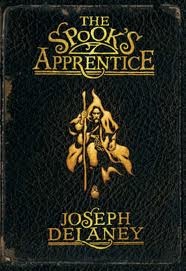
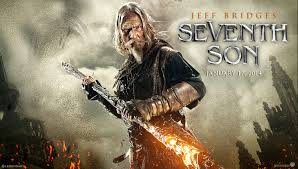
spooks apprenticeI have to confess I’m quite new to Joe’s work, but I’m currently enjoying his 2004 breakthrough, The Spook’s Apprentice, although wondering just what the hell Hollywood is about to do with it, judging by their ground-shaking all-action trailer for The Seventh Son, due out in January.

Joe remains supportive of the film, though. For one thing, I’m sure it’s an effective pension plan, and, however close to the original, it must give you a warm feeling knowing something you wrote is now being given a little cinematic treatment courtesy of Jeff Bridges, Ben Barnes and Julianne Moore (and who can resist the latter as a witchy temptress?).

Besides, however good that film proves, there’ll always be the written word too, an army of fans having devoured each and every turn of that Spooks series.

But on Thursday night, The Ghost Prison took centre-stage, and – as with the Spooks tales  – Lancashire plays a leading role.

As it turned out, after an evocative reading from the book by Janet from the heritage learning team, we were given a tour of the castle. And while we didn’t get to see the witch’s well that figures so prominently in Joe’s story, there was plenty to savour.

Our guide, Victoria, spoke with great knowledge and plenty of stage presence in a swift but no less illuminating turn around the old cells, the crown court, Hadrian’s Tower, and the Drop Room, with history brought alive in highly-fitting surroundings.

The inevitable but nonetheless stirring tale of the Pendle Witches was well covered too, and surely it’s not many book launches where you get to be locked in a cell with your fellow guests while the staff switch the lights out.

seventh sonThe wet walk back to my car was of my own doing, having been momentarily confused by the city’s one-way system. But it really was – to paraphrase Peter Kay – that fine kind of rain that wets you through.

And I felt somewhat like Old Gregory’s apprentice as I shambled along, not fully knowing where I was headed as the rain increased, and yet with not so much as a lump of cheese tucked away to help me through.

* With thanks to Andersen Press and Jake Hope for the invite, and the team at Lancaster Castle (for tour details head here) for the walkabout.  

* A previous writewyattuk blog, Not Just Any Old Witch Way, also involved Lancaster Castle – if you missed it, follow this link.

Posted in Books Films, TV & Radio | Tagged , , , , , , , , , , | Leave a comment

Still hip after all these years: Deacon Blue – Preston Guild Hall

Preston Pride: Deacon Blue in full flow at the Guild Hall (Photo courtesy of the band's official Facebook page)

Preston Pride: Deacon Blue in full flow at the Guild Hall (Photo courtesy of the band’s official Facebook page)

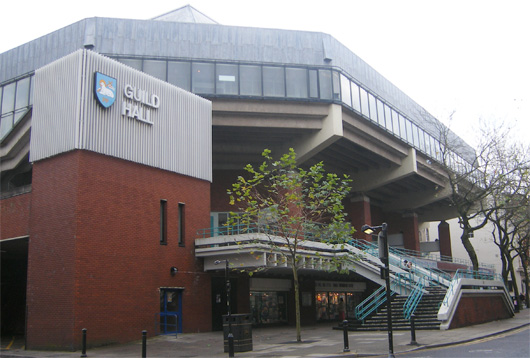
THERE’S something about seated gigs that unnerves me, and I instinctively felt uneasy pulling up a pew at Deacon Blue’s official tour opener at Preston Guild Hall.

Granted, this was a more senior audience than when Ricky Ross and co first pitched up in Lancs in the late ’80s, with babysitting issues a-plenty out there. Even so …

I wonder if the band felt the same at first. There must have been a few nerves jangling when they strolled out, knowing – after all the warm-ups – this was for real.

They certainly hit the ground running though, nonchalantly moving into gear with slow-building, Crowded House-like Laura from Memory from superb 2012 comeback The Hipsters.

Then there was the less-feted but truly worthy Bound To Love, which never saw the light of day until the 1994 Our Town compilation.

Despite warmth from band to audience and largely vice versa, there were concerns from those just here for the old hits as another fine cut from The Hipsters kicked in.

But the pace was lifting, and The Rest’s Blue Oyster Cult-type riff took the band to a higher plane.

Worship Hall: Preston Guild Hall was upgraded ... at least for one night

Worship Hall: Preston Guild Hall received religious significance … at least for one night

I mentioned pulling up a pew earlier for good reason, this being something of a religious experience, under-lined by Ricky’s rousing oratory mid-song.

The showman was coming through, his talk of turning this municipal building into a tabernacle, a temple, a cathedral striking many a chord.

Pretty soon, a large part of the floor was on its feet, the song’s climax zipping neatly into old favourite Queen of the New Year.

It never struck me until then how much of a country song that was, but I guess Ricky’s love of Americana was always there. And the lack of space in front of us ensured an uneasy but no less enjoyable rocking foray into line dancing.

The audience now in the palms of their hands, they changed down for the wondrous Chocolate Girl, with smiles all around. And 1991’s Your Swaying Arms kept that vibe alive.

The audience stayed on their feet as we moved on to The Outsiders, another example of Ross’ continuing songcraft, almost Go-Betweens-ish on the album version.

Swaying Arms: Deacon Blue at the Guild Hall (Photo courtesy of the band's official Facebook page)

Swaying Arms: Deacon Blue at the Guild Hall (Photo courtesy of the band’s official Facebook page)

We saw Ricky as social commentator next, the message behind 1992’s powerful Your Town clearly no less relevant 20 years on, fitting perfectly as it led into the following year’s Peace and Jobs and Freedom.

And with the audience hungry for a hit, Real Gone Kid went down an absolute storm.

If I had any problem with the Deacon Blue of old, it was perhaps that ‘80s production, with too much of-its-time keyboard, and Lorraine a tad too high in the mix in places.

But if anyone had any doubt over her part in this success story, it was easily dismissed by the shared vocal on Stars off The Hipsters, a Daniel Lanois/U2 feel leading to a gutsy bout of vocal duelling between husband and wife.

And Ms McIntosh was on scintillating form when she took over lead vocal duties for Fellow HoodlumsCover From The Sky.

Mr & Mrs: Ross and McIntosh get down to it at Preston Guild Hall (Photo courtesy of the band's official Facebook page)

Mr & Mrs: Ross and McIntosh get down to it at Preston Guild Hall (Photo courtesy of the band’s official Facebook page)

My better half sensed a Steve Earle feel, and I could hear positive parallels with Maria McKee, Iris DeMent and Emmylou Harris to name but three more.

That followed a sparkling Love and Regret, taking me back to countless late-night bedroom listens to the evocative Raintown in 1987 and beyond.

Yet Ricky never stopped writing great songs, a case in point given on their latest somehow not-quite top 10 hit The Hipsters.

They were really firing now, founder-member James Prime off to the side but his piano work central, and more recent additions Gregor Philp (lead guitar) and Lewis Gordon (bass) clearly having fun too.

Loaded was a true high point, not least as the main-man married it – musically and lyrically – with Woody Guthrie’s I Ain’t Got No Home, written 50 years earlier but no less relevant.

Then we had the unofficial Scottish national anthem Fergus Sings the Blues, Ricky’s range again proof that this white man can sing the blues.

All those years on, he’s energy personified out there, playing the audience like James Brown in his pomp and with more than a hint of his old hero Bruce Springsteen.

Those Christian Brethren roots shine through too, although Ricky discards that old time religion for a love of sweet soul music.

The band were away on That’s What We Can Do from the last album, something of a snapshot of where these hipster survivors are in 2013, original drummer Dougie Vipond again on top form, even when he slipped from his stool.

There was more to come of course, a nostalgic crowd joyously singing along to Bacharach & David cover I’ll Never Fall In Love Again.

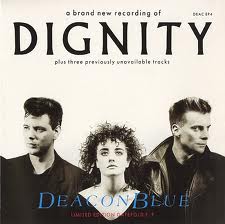
deacon dignityIt’s the mark of a success of a song when it just takes a chord (a note even) for an audience to guess what’s next, and Ricky stood back as Preston sang every word of that first verse and chorus of Dignity, an anthem for hope and belief if ever there was one.

That might have been a great point to bow out, but Ricky toyed with his adoring audience as he led us a further dance, Bruce Channel’s Hey Baby just the first part of a dance with a rock’n’roll medley gearing up to 1991’s Talking Heads-type show-stopper Twist and Shout.

It didn’t end there either, with something of a leftfield surprise to end the show, although if you’re heading off to another Deacon Blue date further down the line, look away now …. 

Have they gone now? Right. Well, as someone who has Abbey Road up there among his all-time top 10 LPs, the band’s respectful cover of The Beatles’ Golden Slumbers / Carry That Weight / The End was a triumph, if not a gamble for the wider audience.

I’m not fully sure that this Guild Hall crowd fully appreciated it, but it was a near-perfect way to finish. And on this form, I quite envy those of you out there taking in the remaining dates of this tour.  

* With special thanks to Andy Kettle and CMP Entertainment

* For Malcolm Wyatt’s interview with Ricky Ross ahead of the Preston Guild Hall show, head here

Posted in Music | Tagged , , , , , , , , , , , | 12 Comments

Dignity still key for Ricky’s Raintown collective

Deacon Blue 2013WHEN I finally moved in with my better half in 1994, there were very few LPs we had doubles of, but one was Deacon Blue’s Raintown.

It was quietly acknowledged as part of our personal soundtrack by then – five years after we met – and perhaps told us something about each other before.

While that 1987 album unmistakeably had its roots in Glasgow, my big-hearted girl from the North Country and I could relate to the wider themes – love and hope, heartbreak, fears and frustrations, ambitions and dreams. And it was just as much about our own townscapes, at opposite ends of England.

Last year, Deacon Blue undertook a sell-out tour celebrating the 25th anniversary of that debut and their return to form with The Hipsters, in what proved to be their biggest tour in more than a decade.

When Ricky Ross and his band-mates take to the stage at Glasgow King Tut’s this Friday, September 6, they’ll be at the start of a 26-date tour that will culminate back in their adopted home city (this time at the Hydro) a few days before Christmas.

That also includes a prestigious appearance at London’s Royal Albert Hall later this month and dates across England and Scotland as well as in Belfast, Cardiff and Dublin.

With six million album sales, 12 UK top 40 singles and two No.1 albums to their credit, the Scottish outfit might have had good reason to stick with their back catalogue.

But as Ricky stressed – on the phone from his Glasgow home – it’s not just about the old chart hits like Real Gone KidDignity and Chocolate Girl these days.

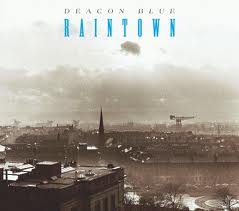
Debut Release: 1987's Raintown

Debut Release: 1987’s Raintown

Raintown was the first of a string of best-selling albums, with When the World Knows Your Name (1989), Fellow Hoodlums (1991), Whatever You Say, Say Nothing (1993) and the double-platinum Our Town – The Greatest Hits (1994) compilation following.

The band then went their separate ways, Ricky building his career as a songwriter and solo act while also leading Deacon Blue’s more low-key period, including Walking Back Home (1999) and Homesick (2001).

But last year proved something of a revelation for the band, a series of tours between other projects leading to The Hipsters, with plenty of fresh radio airplay following.

It’s clear that the flame still burns brightly for Ricky and his band-mates, somewhat re-invigorated today and retaining a love for live shows.

He said: “I imagined I could do without it. I enjoy being in the studio, but last time around it was a good experience and such fun.

“The thing was that the demand was out there. That always increases your enjoyment about the whole process of touring.

“It’s great to have old stuff recognised and people loving it, but it makes a nice change when people tell you they’ve heard you on the radio, and it’s not something from 25 years ago.

“I’m always at pains to say how grateful I am for that recognition of the old songs, and there’s no doubt about that.

“But it just gives the band a bit of life, and gives everything we’re doing a bit of urgency when there’s a chance to include new material, playing different shows on different nights.”

I’m guessing you wouldn’t be happy just playing the ’80s retro circuit?

“We get plagued all the time to do these shows and we’ve resisted them.

“No disrespect to people that do them, and have good fun doing them. Our audience say ‘why don’t you do this sort of ‘Rewind’ thing? That’s fine, but when you’ve your own show you want to do …”

Ricky stresses that the band took a different route to the top than many bands from that era, slowly building up an audience, not least in the North-West.

“When we started we didn’t really do support gigs. We just built our audience, at places near you like the Boardwalk in Manchester. You grow that audience, that’s the kind of show you want to do.”

So are you still producing a lot of new material?

“New material always comes. Whether it’s any good or not is another thing! But I had a nice moment with a solo album before the Deacon Blue album and that gave me a chance to go out and do that, then put that aside.

“Then I was ready to start writing stuff for the new album. I’m starting doing that now. It’s a long process and we’ll see how that gets on.”

Do you tire of playing the old hits?

“We definitely used to. I think back towards the middle of the ‘90s, when we were thinking, ‘I don’t want to do that’.

“But I think we’ve totally got over that now, to such an extent that I look forward to the moment when we do a show to do Dignity, as that’s what our fans have asked for and bought.

“It’s important to respect that. To see people just delighted and happy, you’ve got to pay respect to that.”

Last year’s Raintown 25th anniversary tour certainly proved a success, and Ricky added: “To have an album like that which people still treasure after all that time was lovely.”

I pointed out that Raintown was one of the few LPs my partner and I both possessed when we merged our album collections in the mid-90s.

“That’s a real compliment, and it’s now gone full circle with it coming out on vinyl again!”

That’s because Raintown, along with follow-up When the World Knows Your Name and most recent offering The Hipsters were re-released by Demon Records on limited edition heavyweight, coloured vinyl, each one individually numbered, re-mastered from the originals especially. So I take it you like your vinyl?

“I do, but not to the extent that I’m one of these people who has to insist on vinyl. I really enjoy it but equally don’t over-care too much.

“I’ve said to a few people, we all listened to pop coming out of tranny radios, scratchy 45 records and cassettes, and various other things that didn’t even run on time, and I think we have to be realistic. How will a kid know the difference?

“Also, I’ve been in a band for 25 years, I’ve been stood in front of amps, so how good is my hearing?!

“So I’m not entirely convinced we’re as sensitive to the thing as we like to think we are. But I do like the warmth of vinyl, and also the visual impact of the cover, and so on.”
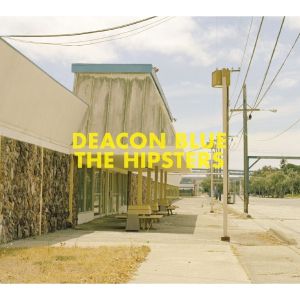
The Hipsters: Deacon Blue's return to form

The Hipsters: Deacon Blue’s return to form

After 25 years together, do you all still get on well?

“I think we get on better. When you have your first phase of a band, you get all your angsty stuff out.

“You go through different phases, and if I’m really honest, we’re a bit like a family.

“The closest analogy is that we don’t all go out together, we go out now and again, go on tour and kind of enjoy the fact that when we come off we don’t necessarily see each other for a few months.

“But we’ve a great respect for each other and two relatively new session players that have come in these last couple of years and made a big difference, gelling everyone. We’re grateful to them too.”

The band was rocked in 2004 by the loss of founding member and guitarist Graeme Kelling, who died of pancreatic cancer, aged just 47. But his memory lives on.

“We got used to him not being there. He’d been ill for around five years and did very well to have that five years from that strain of cancer.

“We miss him. He was a big, big character. He was around for all these times we still reminisce about. You’re constantly looking at the photographs, listening to his guitar parts.

“Yesterday I did a lot of radio shows, and they were playing a lot of old stuff, so I was trying to put myself back into that room. It’s funny, it’s so alive, but he’s not. Yeah, we miss him.”

Ricky has another family too, enjoying a domestic life often over-spilling from his professional life, not least as his wife is Lorraine McIntosh, fellow Deacon Blue vocalist, songwriter and one-half of husband-and-wife side project McIntosh Ross.

“We’ve three children, and I’ve an older daughter. They never really used to know much about the gigs, then suddenly because we started playing again, the girls who hadn’t really grown up with it at all started coming to gigs.

“Lorraine and I’s eldest daughter has just turned 21 and their friends are re-discovering us, while Georgia is now 18 and working in a bar, where she says they finish Saturday night discos with Dignity!”

Americana Champion: Ricky Ross (Photo: BBC Scotland)

Americana Champion: Ricky Ross (Photo: BBC Scotland)

I’m guessing after all these years he’s got used to the Glasgow rain – a recurring theme on the band’s debut LP – having moved to the city not long before after growing up in Dundee.

“We never get over that. You kind of still live in hope that the weather’s going to change, but we know it won’t!

“I’m just back from London, and someone there said, ‘have you ever thought of moving down?’ We had, occasionally, but for family and various other reasons – probably rightly – we’ve stayed.

“I like Glasgow, I like living here, and lots of good people I’m fond of live here, so we’ve never moved.”

That doesn’t mean he’s switched football teams though, continuing his love for Dundee United.

“I’ve now inflicted that particular illness on my young son, who for his soul is also a now a Dundee United fan.

“We tend to go to more away games, but we were at the opening game of this new season, travelling hopefully, it was a 0-0 draw, but let’s see what happens.” 

I’ll gloss over a full update there since our interview, but at time of going to press Ricky’s beloved Terrors were mid-table in the SPL, with just one win from five so far.

Moving on, aside from his Deacon Blue work, Ricky has released five solo albums and written for or with artists such as James Blunt, Ronan Keating, Jamie Culllum and Nanci Griffith, among others.

So does he decide which project his newly-written songs are going to?

“I wish it was that simple. It would be great. It’s a hard graft, and you’ve really got to be in the groove for all that.

“I’m a bit out of that loop at the moment, because I’ve been so busy doing my own things. 

“But I’m having a meeting with an artist next week, keeping my toes in the water if someone’s looking for a song. I like to do that, and take on lots of writing projects.

“It keeps you fresh. You go off to write a song, thinking it’s for someone else, and it might end up for yourself.

“That’s how we ended up with Turn on the last record. It was a song-writing session I did for someone, then felt, wait a minute … I like this.”
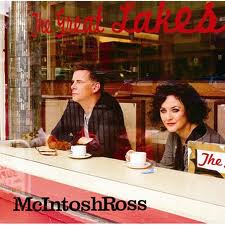
Great Lakes: Ricky's 2009  collaboration with Mrs Ross

Great Lakes: Ricky’s 2009 collaboration with Mrs Ross

Those other projects included 2009’s The Great Lakes, the much-admired McIntosh Ross debut LP with Lorraine, and Ricky added: “We’re still talking about trying to follow that up.

“That’s on the long list of what we’d like to do. There are different things in the pipeline, different projects, and I like doing that.

“But occasionally –like with Deacon Blue – it’s a great big machine and you need to really work hard to get touring and everything. You need time spent on all that.

“That’s our priority at the moment. These are the things hopefully, if we’re all spared, if nothing else happens, we’ll get around to them.”

Ricky also presents his own radio show, Another Country with Ricky Ross on BBC Radio Scotland, and recently presented a TV show tracing the history of his hometown Dundee.

“I really love that, I’m going off to do my Sunday morning radio show. I pre-record that, then get back to my regular Friday night show next week.

“That’s old country, Americana, and a really enjoyable two hours on my week. It keeps me in touch with a lot of music as well. I discover great things.”

Does he get out to see bands?

“I go to a lot more than I used to. It’s a bit of a busman’s holiday. A lot of musicians don’t do it, and don’t listen to a lot because they’re so involved.

“But because I do the radio show very often there are people I’m interviewing I want to see. There are also older artists I like to see at least once and younger artists I’ve not seen before.”

He name-checked Tift Merritt and the Alabama Shakes as examples, and added: “Hopefully once or twice a month I nip down to King Tut’s or one of these places and go see a gig. I keep my nose to the ground and see what’s happening.”

Hipsters Shoot: Deacon Blue, 25 years on from their breakthrough

Hipsters Shoot: Deacon Blue, 25 years on from the band’s breakthrough

So how does he get away from it all? “If we can, we walk. Living in Glasgow we’re 40 minutes away from some beautiful parts of the world.

“You can be up in the Highlands very quickly. We’ve a new pup now and he needs a lot of walking, so he’s a hobby at the moment. Lorraine and I run too, which keeps me much fitter.”

When Ricky moved to Glasgow in Deacon Blue’s formative days, he was teaching. Now he’s 55, I put it to him that he might be retiring from that profession if he’d carried on.

“I taught English and Latin. I was working with kids a bit disaffected with the school system, and it was quite rewarding in that I got time to spend one-on-one.

“I’ve no regrets at not carrying on, but like working with younger people and kids. If there was a way of combining it in a creative way I’d love to, if I had the time.

“You always get a lot back. I occasionally do talks to kids, I love all that.

* This is a longer, revised version of an article the blogger wrote for the Lancashire Evening Post, published on August 22nd, 2013. For the original, head here

* For more details of Deacon Blue’s forthcoming shows, head to their website here

Posted in Music | Tagged , , , , , , , | 1 Comment

Blogging Like Wire

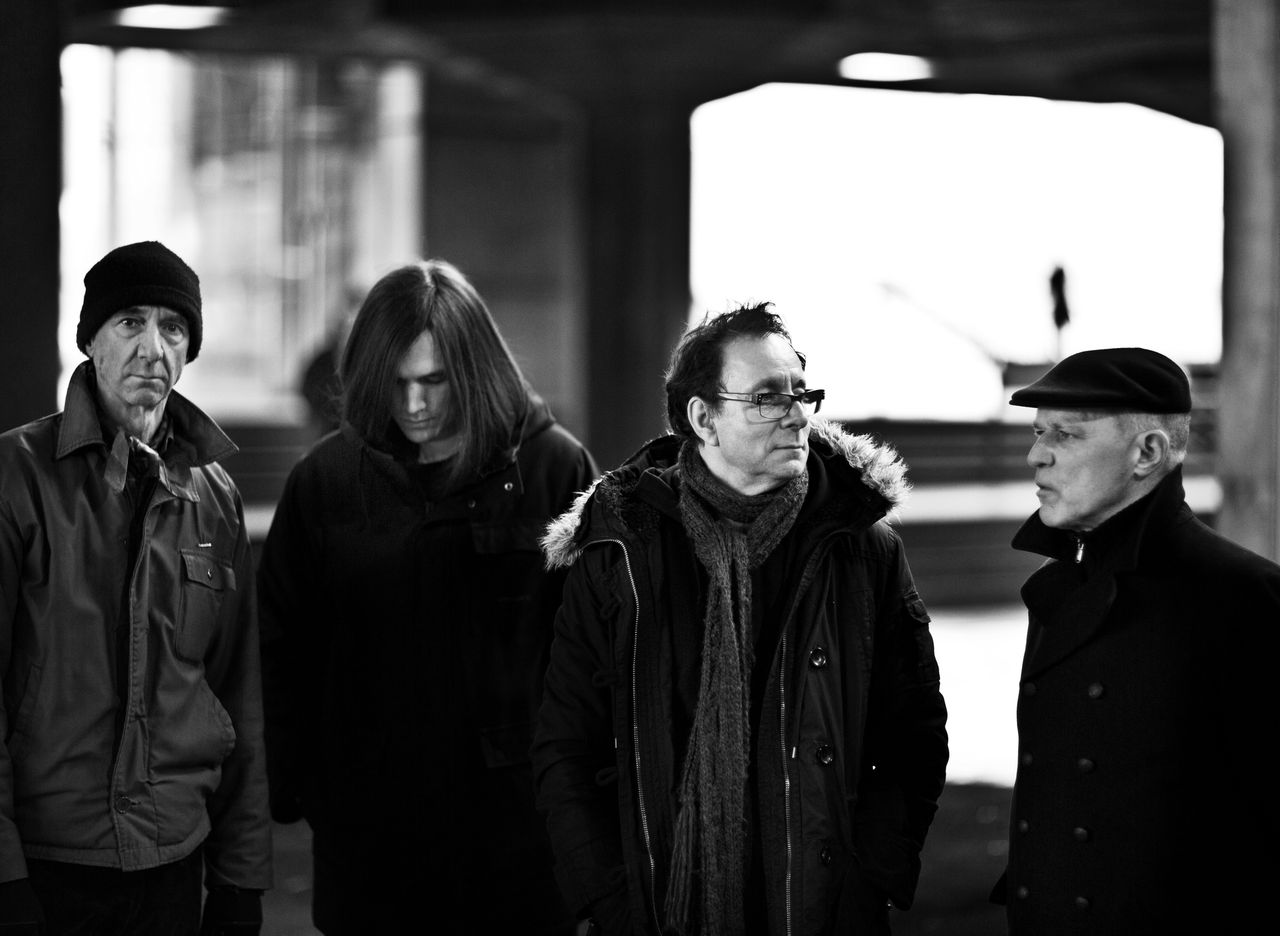
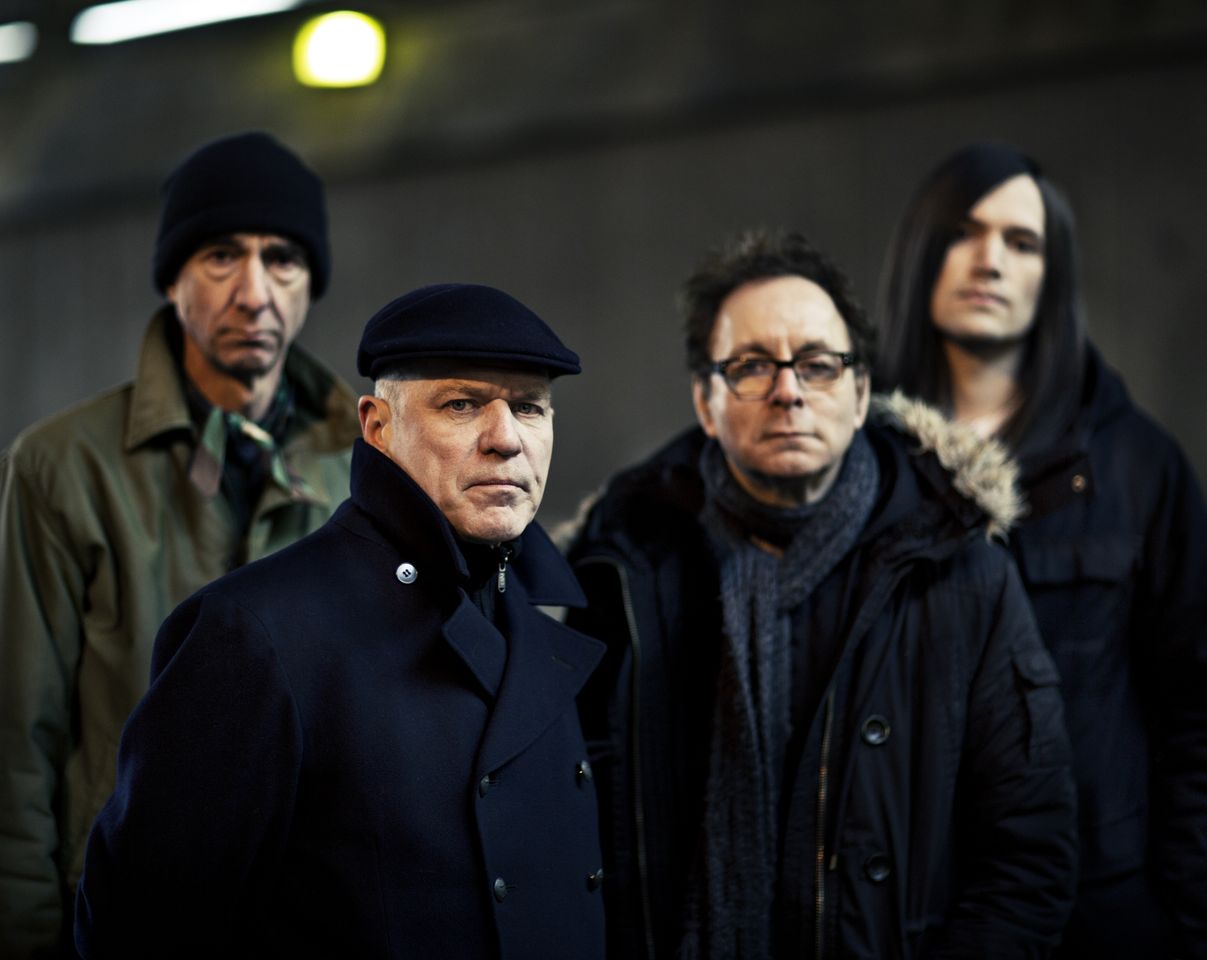
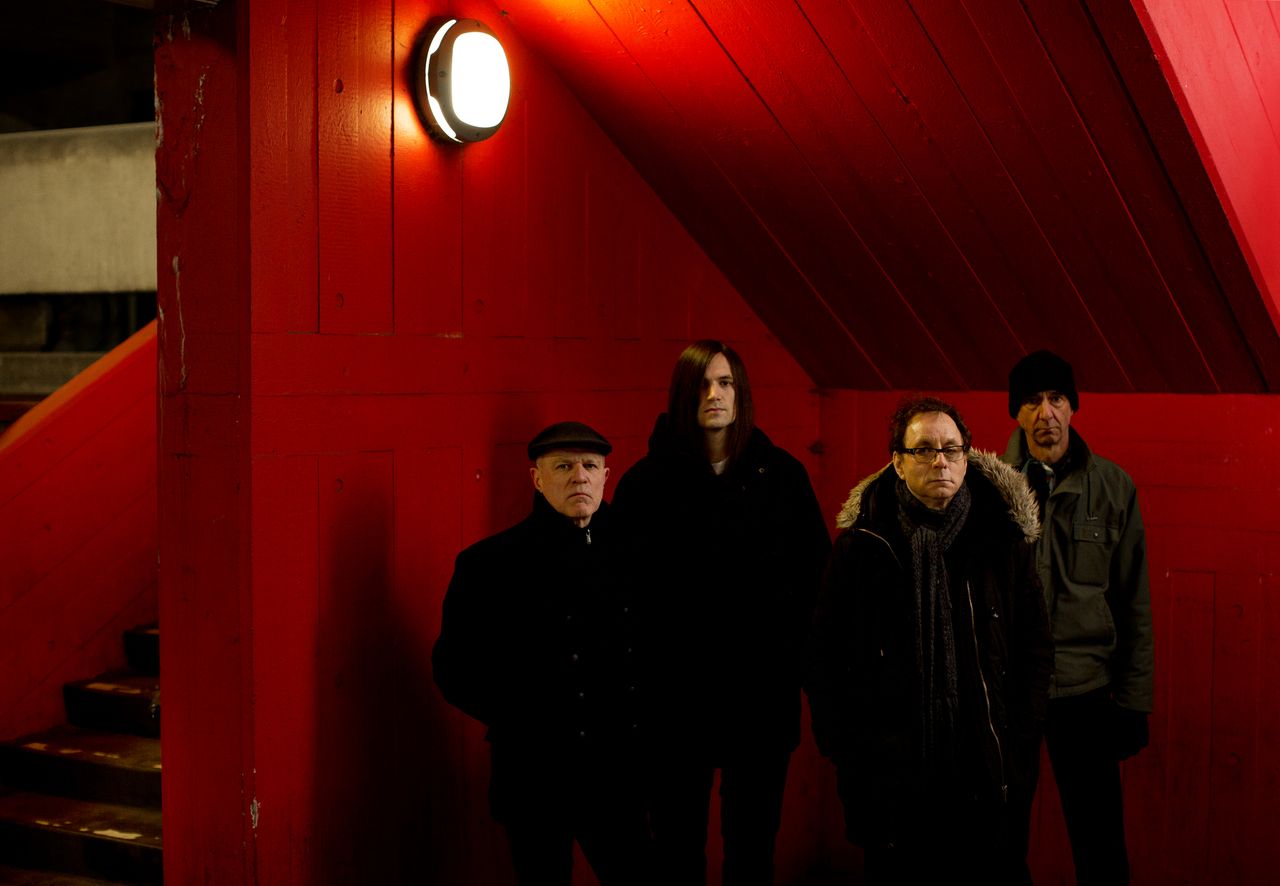
Outdoor Seniors: Wire (Photo courtesy of Phil Sharp)

Outdoor Seniors: The highly-influential Wire (Photo courtesy of Phil Sharp)

I’M NOT quite old enough to remember Wire’s first incarnation, their fabled 1976/80 period.

They came to light a few years later for me, when I was about to turn 16 and – thanks to John Peel’s patronage – discovered Serious Drinking on the lead-up to their 1983 debut LP The Revolution Starts At Closing Time.

Some other time I really must talk a bit about the Drinkers and their fellow bands on that quite-legendary Norwich Sound scene – long before we became aware of a certain Alan Partridge.

But one of the many stand-outs for me on that album was a 1 minute 10 seconds cover that preceded cult single Bobby Moore Was Innocent.

They amended the lyrics to name-check a little celeb-spotting involving the England ’66 legend, but their version of 12XU was also clearly a tribute to the band featuring that song on their first LP, Pink Flag.

I knew a few more songs by the time the NME released its Pogo A Go Go compilation cassette in 1986 (the one with the fish on it), Dot Dash alongside other notables like the TV Personalities’ Part Time Punks.

That was the same year as the NME’s much-mentioned C86 compilation tape, and there was a lot of shared ground between those indie newcomers and already-established bands like Wire.

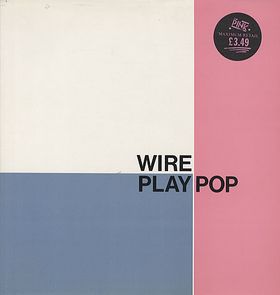
R-430118-1232575065But there was an even more important release for me back then, a seven-track slice of vinyl called Wire Play Pop, released on the Pink Label (which I got to know about through my love of That Petrol Emotion and The June Brides) and collecting some of the finer moments thus far for this treasured London four-piece.

I can’t pretend I followed their every move from there, having weened myself off my vinyl junkie status by the mid-90s, at which point I hadn’t bought anything by the band since 1989’s wondrous Eardrum Buzz.

But I’m back on board now, and wondering just how I missed out on those years in between as I savour the more recent output and marvel at their latest long player.

Words like experimental, influential, innovative and seminal are used a lot when the music press name-check Wire.

That also suggests, perhaps rightly, sales have been lacking over the years, despite all that critical acclaim.

But crucially, 37 years after their formation, Wire are still producing great songs and scratching a living from their art.

Visitors to Preston’s New Continental saw and heard that for themselves last weekend, and I caught up with chief songwriter, lead guitarist and singer Colin Newman ahead of their sell-out show.

Fly Guys: Wire (Photo courtesy of Phil Sharp)

Fly Guys: Wire are still on a creative high (Photo courtesy of Phil Sharp)

Wire formed in London in October 1976, with Colin joined by Graham Lewis (bass, vocals), Bruce Gilbert (guitar), and Robert Gotobed (now Gray, drums).

They were originally associated with the punk scene, not least through their appearance on The Roxy London WC2 album, and later deemed central to the development of post-punk.

The first three albums were seen by critic Stewart Mason as ‘expanding the sonic boundaries of not just punk, but rock music in general.’

Wire are now seen as the definitive art punk or post-punk ensemble, steadily developing from the raucous punk style of 1977’s Pink Flag to a more complex, structured sound involving increased use of guitar effects and synthesizers on 1978’s Chairs Missing and 1979’s 154.

Along the way, they gained a reputation for experimenting, something that continues to this day, with Matthew Simms now established in Bruce Gilbert’s guitar role.

Wire visited Preston a day before an appearance at Skipton’s Beacons Festival, with 11 dates to follow in England, Glasgow and Dublin in September before 12 mainland Europe dates then the second part of their US tour, this time on the West Coast.

Colin said: “The first part was themed around the Pitchfork Festival in Chicago, playing to a big audience. They loved it.

“We did rather better than we thought, in terms of audience numbers and the general effect of the tour.

“Without blowing one’s trumpet, I think we’ve been on a roll over the last two or three years in terms of what we’ve released and the reception we’ve received playing live.

“We’re definitely attracting more of an audience, and it’s quite a diverse audience.”

It’s been a special 2013 for the legendary art combo, the March release of their 13th studio album Change Becomes Us leading to the latest ecstatic reviews for a much-loved underground band.

Changes Becoming: Wire (Photo courtesy of Phil Sharp)

Changes Becoming: Wire’s new album is a revelation (Photo courtesy of Phil Sharp)

They launched the new LP with a series of unique events, Drill: London – Wire, culminating in a headline show at London’s Heaven, playing Change Becomes Us in its entirety.

Colin added: “The festival was quite an intense thing to put on and went incredibly well, performing the album for the first time live with a sell-out at Heaven.

“It’s a very Wire like thing to do, but there’s a kind of irrefutable logic about what you should be doing, showcasing your new songs rather than a greatest hits show.

“You either believe in what you’re doing or you don’t.

“We’ve got to that situation and those who support us think ‘they must be doing this for a reason, and their reasons must be quite good. So let’s stick with it, and see what they’re doing.’

“You need to be constantly reviewing what you do, and this year alone we’ve had two album launches which were very innovative.

“We had the Bowie LP announced the day before it came out of nowhere, with a similar but more underground approach from My Bloody Valentine, both creating a lot of attention in a very short time with fairly minimal effort, rather than working an album for four months before it comes out.”

So were you pleased with the reaction to Change Becomes Us? “Absolutely. Mojo did a ‘how to buy Wire’ feature one month after the album came out, and while the first two places were fairly obvious, Red Barked Tree nearly pipped 154 for third place, and the new album came in sixth.

“That puts incredible pressure on us, knowing we’ve done two classic albums in a row – if we come up with a third we’re in territory where not many bands of our vintage have been.

“You’re not expected to be producing work as good as you did when you were younger. But we’ve no great respect of such conventions.

“We don’t really give a stuff, we’re just going to do what the hell we want and we’re ambitious for it to be good.”

The new album has been dubbed Wire’s ‘missing fourth album’, as it involves previously unreleased recordings from the tail end of the band’s first phase.

But Colin said that’s only part of the story. “That’s only half true. Not even that. The material itself, while having its roots in that period, underwent some pretty radical changes in the general process of working on it, as Wire do.

“Some were fairly well worked out, some weren’t. We saw it as a project, ‘wouldn’t that be interesting to do’, because you’ve got this start and can take it more or less where you want.

“But towards the end of the mixing, a few people who heard it said ‘you know this is really strong?’ and realised most who didn’t know the back story would think it was just the new Wire album.

“That kind of made sense, so we decided that was the case and we shouldn’t really be making any bones about it.

“Although it has this element of a former period which gives it almost like the grit in the oyster shell, forcing a certain kind of aesthetic and that’s more at the level of the writing than the playing.”

Colin said the project helped get him back into the mindset he was in as a songwriter at the turn of the ’80s, that challenge helping push him on towards the next Wire album.

After their initial disbandment, Wire reformed in 1985, splitting again in 1992 and reforming for a second time in 2000, those sabbaticals serving to sharpen the group’s edge and focus.

The resignation of founder member Bruce Gilbert in 2004 allowed the group a similar pause for thought and reconfiguration.

Yet Colin added: “Wire has never stopped working, and since 2008 the band have been moving forward all the time.

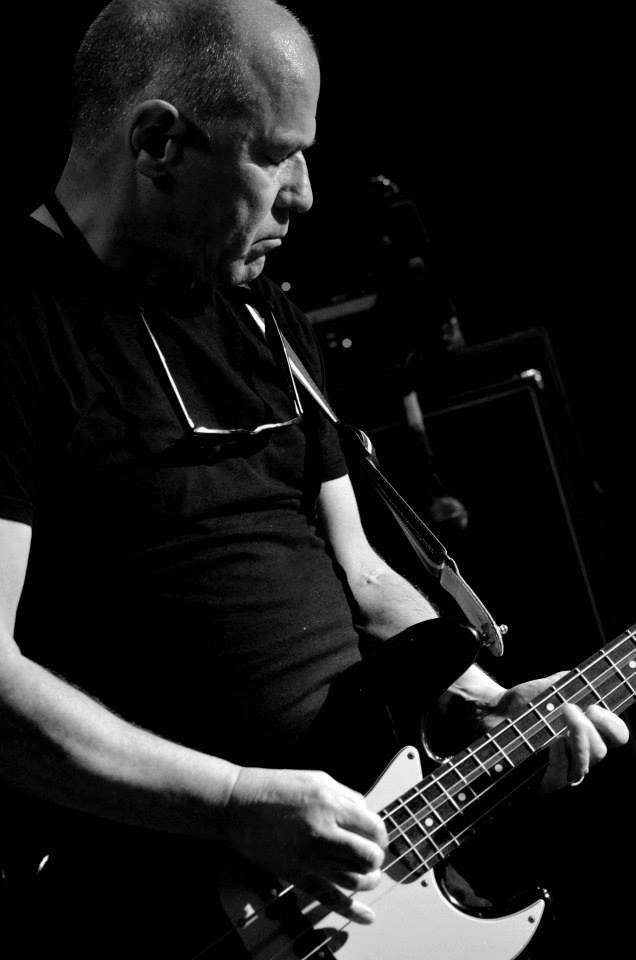
Bass Instinct: Graham Lewis in action at Preston's New Continental (Photo courtesy of Richard Nixon)

Bass Instinct: Graham Lewis in action at Preston’s New Continental (Photo courtesy of Richard Nixon)

“And people are very excited to move forward with the band, as the band itself becomes more and more like an unstoppable force.”

Wire formed in 1976, among the original punk and new wave scene. But they didn’t feel they were truly part of that.

Colin said: “There was no such thing as post-punk then as a concept, and similarly we’ve never tagged ourselves as experimental. If anything, we’ve been flirting with the concept that we’re a psychedelic pop group.

“There is something about the attitude of the late ’60s, when people thought anything was possible in music, and there’s still a strong element of that in Wire.

“We don’t feel we need this kind of guitar sound, this kind of drum sound … there’s a real limitation about that.”

I argue that XTC have taken a similar path, another outfit admired by other acclaimed bands. But they’ve seen more commercial success, whereas Wire have just had that influential tag.

Colin added: “Yeah. You don’t want to be completely that! It’s fantastic to be admired by your peers, which is always good, but …”

He added the example of his accountant’s spin on the band, saying: “She’s a young lady who’s a real music fan. She knew about Wire but never really knew the music.

“She came to see us at a show and came backstage after, completely gushing, saying ‘you’re the band that stands behind every band that I’ve ever loved’.

“Wire is that band. I don’t think we have the broadest possible appeal, we’re not aiming for that. But if you’re seriously into music and you’ve never actually heard Wire, I think it’s a band you’ll find something good in.

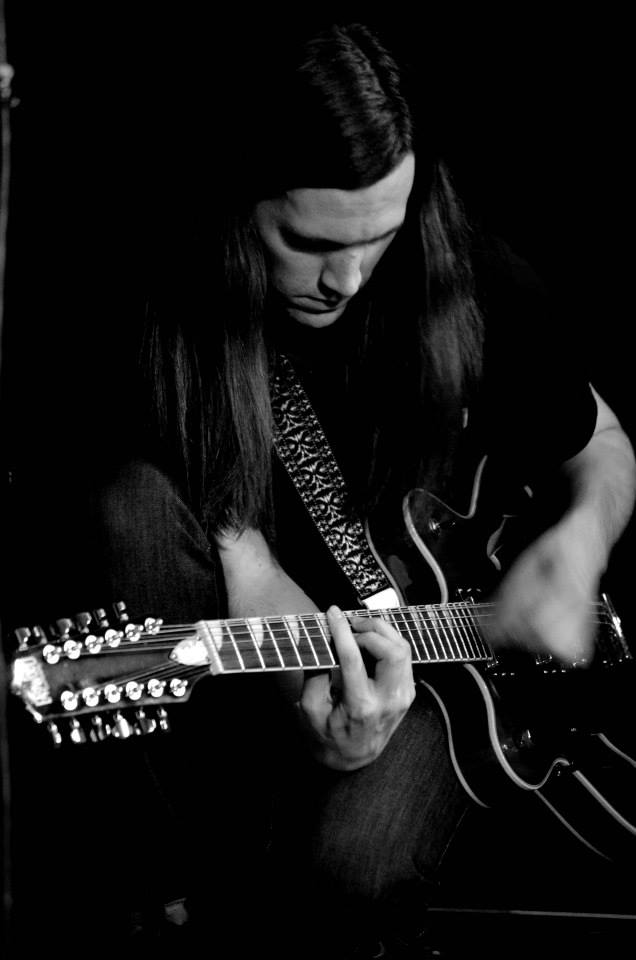
On Board: Matthew Simms in action at Preston's New Continental (Photo courtesy of Richard Nixon)

On Board: Matthew Simms in action at Preston’s New Continental (Photo courtesy of Richard Nixon)

Colin is now 58, but insists he’s still 25, telling me, ‘I wasn’t even born when the first Wire album came out’!

He has some advice for the new breed coming through too, adding: “A young band who’ve just started might not choose self-releasing.

“But it might still be a good idea if you’re able to create enough of a noise around you by playing some gigs or whatever way you can find to promote yourself.

“You have to be clever. This isn’t the day and age when anyone can be passive. If you’re creative you can’t sit around and expect anyone else to do it.

“And if you expect anyone else to do it, the price is going to be way too high.

“Do you really want to do one album that you really don’t like, pushed in a direction you really don’t want to be in, then get dropped?

“Is that what you want for that amazing feeling you had the first time you played and it was like ‘wow, this is the best thing since sliced bread’?

“It’s a tougher period in a way but it doesn’t mean there aren’t opportunities to figure out the way to do it. You can be as intelligent as you want to be.”

Colin is not one to write on the road, instead waiting for co-writer Graham Lewis to give him a set of lyrics, then writing up to three songs a day.

He added: “I tend to write quite fast, the ideas come quickly, and I don’t spend any time practising guitar. That’s my approach, I do other things. When I need to write, I do it.”

Those other projects include work with other bands at his South-West London studio and for his own label, as well as performances with Githead, formed with his wife, Malka Spigel, a critically-acclaimed artist in her own right.

He added: “I don’t think I’ve ever worked as hard as I do now in my entire life.”

So what can those who show up at the forthcoming Wire gigs expect? “A band that’s pretty hot right now. We won’t have played for a couple of weeks, but we won’t be too rusty.

“We’re in a good place, we have a lot of the energy of the American tour, by the end of which we were fearsomely efficient. It should be a good night.”

* For the writewyattuk take on Wire’s recent sell-out show at Preston’s New Continental, head here

* Article adapted from the original Malcolm Wyatt interview produced for the Lancashire Evening Post, with thanks also to Colin Newman and Adam Cotton  

Posted in Music | Tagged , , , , , , , , , , , , | 2 Comments

Eardrums buzzing on a sweltering Preston night

Wire/Stranger Son – The New Continental, Preston

Colin Calls: Wire's Colin Newman in action at the New Continental (Photo courtesy of Richard Nixon)

Colin Calls: Wire’s Colin Newman in action at the New Continental (Photo courtesy of Richard Nixon)

THERE was a sense of life in the early 1980s on Friday night at happening Preston pub venue the New Continental.

I’m not talking about some lame chart-busting tribute night, but the underground alternative, thanks to the latest sell-out Tuff Life Boogie night to remember.

First off we had a very-Manchester band, Stranger Son, offering the best aspects of everything from later Joy Division to a little Kraut-rock inspired electronica.

Guitar and synth-driven in equal measure, built around a hard-working drummer, and always just the right side of art-house and morose. John Peel would have adored them.

And then we had band’s band Wire, showcasing a new album which just happens to have its roots in previously-unreleased recordings from the tail end of their initial ’76/’80 period.

On such a sweaty night at this atmospheric venue, the big fans (and I don’t just mean the stalwart supporters growing a little more portly by the year) and heat of the night had the head-liners wondering just which Continent they had landed upon.

Main-man Colin Newman (guitar, mandola, vocals) and side-kick Graham Lewis (bass, backing vocals) wiped their brows and wondered aloud about the tropical conditions, suggesting they encountered altogether less-sweltering conditions on the first leg of their US tour a few weeks before.

But that didn’t stop them from delivering a blistering set, with plenty of surprises and proof – if it were needed – that Wire are still on top of their game 36 years after Pink Flag was first flown.

How best to sum up this much-admired four-piece and influence on generations of great bands? Well, they’ll make you think forming a band would be futile, but prove inspirational all the same.

If you’ve never caught them live before (and I have to admit – shame on me – this was my first sighting after all those years), take the opportunity where you can.

Maybe start with Change Becomes Us and work backwards if that helps. And the wealth of the songs from that album show-cased here proved that nicely.

While I would have loved to hear old classics like 12XU, Mannequin and Outdoor Miner, I at least got to hear the sublime Map Ref. 41oN 93oW.

There was plenty of that old post-punk charge too, and not just from bygone songs. Besides, this isn’t a band you can easily compartmentalise.

Tracks like the wonderful Adore Your Island off new LP Change Becomes Us veer between later more reflective Wire and good old shouty Wire.

And how could you have been left feeling cheated by this fine set, with so many superb songs from those last four decades getting the modern Wire treatment.

There was evidence in new compositions like Blogging (like Jesus) that they’ve plenty more to offer too, Lewis’ Adamson-style bass and Newman’s Devoto-esque delivery taking me back to Magazine’s songs from under the floorboards.

Hyypnotic Beats: Robert Grey in action as Wire hit Preston (Photo courtesy of Richard Nixon)

Hyypnotic Beats: Robert Grey in action as Wire hit Preston (Photo courtesy of Richard Nixon)

They got going with slow-building Marooned from Chairs Missing then the hypnotic Drill from The Ideal Copy era, both nicely showcasing drummer Robert Grey and almost new boy on the block Matt Simms’ powerful input.

But it was the new songs at the heart of the set, starting with Doubles and Trebles and Re-invent Your Second Wheel (the latter, dare I say it, almost Floyd-esque), with Newman’s fret work just awesome.

Those tracks included my particular favourite (this week) Love Bends, but there was no clear distinction between the eras as we built towards perfect show-stopper Boiling Boy, 25 years on from its release.

You could argue that they saved their more raucous numbers for the finale, the joyously-frenetic Comet and Spent from Send leading to Pink Flag, closed out with a wealth of disreputable feedback.

Which just goes to show that Wire are growing older with plenty of attitude as well as wisdom.

Out of interest, while my hearing rang on my return, my earworm the following day was a track not even aired on the night, Eardrum Buzz. Make of that what you will.

* With thanks to Enrico La Rocca, Tufflife Boogie, and Richard Nixon for use of his splendid pics from the night

* For an interview with Wire’s Colin Newman (adapted from one by this blogger for the Lancashire Evening Post) head here

Posted in Music | Tagged , , , , , , , | 2 Comments

Rec recollections as Shots ring out again

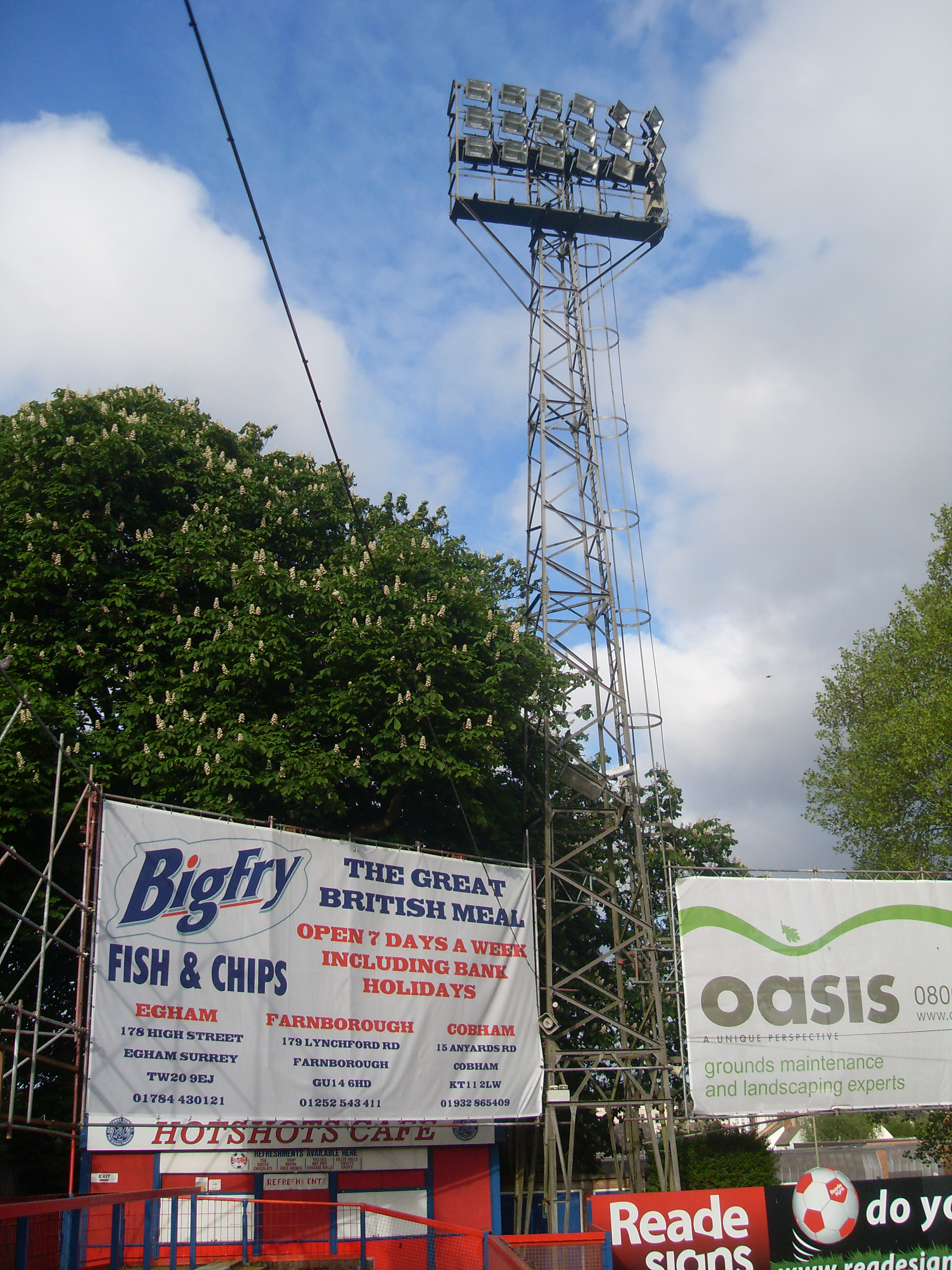
Recreation Station: Aldershot Town FC, Summer 2013 (Photo: writewyattuk)

Recreation Station: Aldershot Town FC, Summer 2013 (Photo: writewyattuk)

HARDLY a few days go by at present without updates from troubled Aldershot Town FC. And it’s not just diehard Shots fans drawn by these worrying developments.

A shadow still appeared to hang over Andy Scott’s side as July ended, just the latest uncertainty in a harrowing few months for the cash-strapped League Two wooden spoon holders of 2012/13.

If they do get the go-ahead, one of the first visitors to the Recreation Ground – over the August bank holiday – will be my club Woking, in what should be another impassioned Conference Premier derby between these local rivals.

In an era of financial austerity for clubs below the bank-rolled upper tiers, Woking had to be more than satisfied with a creditable upper-half finish and top-three status among the Conference part-timers last season.

It might have been so different, the Cards’ 1990s’ era of three FA Trophy wins in four years, headline-grabbing FA Cup runs and top-three non-league finishes followed by increasing mediocrity and a financial crisis threatening to finish us a few years ago.

Thankfully, former publishing magnate Chris Ingram stepped up to strengthen our foundations when many potential saviours might instead have made a few quick bucks then walked away on realising the extent of the problem.

Furthermore, he stuck around – at a far-from-safe distance – to ensure the club continued to run within its means, while showing no great desire to have his face splashed all over the papers for his part in our survival and revival. He comes over as a genuine fan who just happened to have a few bob to do something positive about our plight. 

aldtownphoenixThat’s not been the case at the Rec though, and 21 years after Aldershot FC went bust, there have been a few worrying parallels for fans of a North Hampshire club who remember only too well those dark days. And it’s certainly been an anxious summer for all associated with the ‘phoenix club’ that rose in their place.

Those who regularly read this blog know my allegiances, but local rivalries apart, I’ve a lot of sentiment for a club where I first learned to love the game up close and personal, having followed Aldershot regularly for at least a decade up until their original demise.

Like my Grandad and older brother, I grew up a Tottenham fan, won over by ever-dependable Pat Jennings and Steve Perryman and true talents like Glenn Hoddle, Ricardo Villa and Osvaldo Ardiles. Maybe an appreciation of the underdog played a part, Spurs’ 1961 double and further FA, League and UEFA Cup glory already in the past by then.

I loved QPR too, lured by the skills of Stan Bowles and co. But as my folks and siblings didn’t drive and with little money around, day-trips to North and West London were pretty much ruled out.

Similarly, I followed the fortunes of Reading, Mum’s hometown team. But even the Berkshire border was a long train ride away for someone only earning paper-round wages. 

And while there was a strong family link to Woking – part of the Wyatt heritage since the 1890s – there was little incentive to seek out Kingfield at that stage.

Instead, I had my sister Jackie’s boyfriend Ian to thank for my introduction to the Beautiful Game. And don’t laugh, it really was for this impressionable 11-year-old from the Far East (Guildford, that is, 12 miles away, a town robbed of its own team in ’74). He was a Rec regular then, and when he couldn’t make it, family friend Uncle Charlie was happy for me to tag along with him and his brother.

My first visit was in the 1978-79 season, during a Division Four campaign the ‘strayshots’ pages of the http://www.aldershottown-mad.co.uk website remind me was heralded by great optimism around Rushmoor. That following decade I took in many visits to the Rec, and was hooked from the start, happily recalling to this day my old route to the High Street entrance from around Newport Road.

Rock On: Tommy McAnearney (Photo: http://www.mselliott.plus.com/)

Rock On: Tommy McAnearney (Photo: http://www.mselliott.plus.com/)

The Shots were never fashionable in the wider world, but for me the thrill of going to the match, hearing that terrace noise and banter on the sidelines was unrivalled. There were feisty derbies against promotion contenders Portsmouth, Reading and Wimbledon, but also glimpses into an unknown world for me against opponents from exotic locations I knew so little about, like Bradford, Hartlepool, Huddersfield, Port Vale, Preston, Scunthorpe, Walsall and Wigan. Who’d have guessed then that North End would be my nearest League club 15 years on?

I loved that moment all home Shots fans of a certain age recall – clicking through those turnstiles then climbing the terrace steps on the open side, the Rec vista steadily opening up to me. The football wasn’t so bad either, and I soon had my favourites among Tommy McAnearney’s squad.

It was the established names that first grabbed me, from follicly-challenged keeper Glen Johnson to moustachioed Cossack-hairspray fan Joe Jopling – the Shots’ answer to dentally-challenged Leeds, Man U and Scotland legend Joe Jordan – and Glasgow-born striker Murray Brodie.

Formative Hero: Alex McGregor (Photo: http://www.mselliott.plus.com/)

Formative Hero: Alex McGregor (Photo: http://www.mselliott.plus.com/)

The fans’ idol then was free-scoring John Dungworth. What a name, what a player. And while I never got to see my namesake Malcolm ‘Supermac’ Macdonald in action, the Shots had a Malc of their own – future Sunderland boss Crosby – and that was good enough for me. I soon had my own favourite too, another Glaswegian, Alex McGregor, not least as for half a game he’d track up and down my wing. The fact that he looked a bit like a Bay City Roller would have endeared him to my sister too.

My first match, with Ian and Jackie, was on March 10, 1979, shortly after a mighty FA Cup run in which Tommy Mac’s side came within a replay of the quarter-finals, going out to a Shrewsbury Town side who had already humbled Man City. The opponents were Crewe Alexandra, rock-bottom that season and resigned to the old re-election lottery.

The Shots won 3-0 to stretch their undefeated league run to eight matches in a season where only a surfeit of draws ruled out promotion to Division Three, finishing one place above new boys Wigan in fifth.

Dung Ho: John Dungworth nets on my Rec debut in March 1979 (Photo: http://www.mselliott.plus.com/)

Dung Ho: John Dungworth nets during my Rec debut against Crewe in March 1979 (Photo: http://www.mselliott.plus.com/)

Many more visits followed, and that might have been the whole story for me, but within a couple of years Charlie took to Brighton to watch top-flight football with his son-in-law, while Ian and Jackie moved deep into Hampshire and a new mortgage ruled out too many Hog’s Back to and fro’s. In time, I returned with my mate Al, and a promising spell followed. But the quality soon waned, and by the time the club went out of business I had a more compatible love.

That switch of allegiance didn’t happen overnight, an FA Cup visit in late ’86 only slowly leading to more fevered allegiance to Woking. I was a Kingfield regular by the late ’80s, but still turned out to support the ailing Shots in their hour of need. And that first love never fully left me.

Prog Rec: A programme from my first Shots season (Photo: http://www.mselliott.plus.com/)

Prog Rec: A programme from my first Shots season (Photo: http://www.mselliott.plus.com/)

Most of my earlier Shots memories are shady, but I vaguely recall an early taste of footie violence from some visiting Bournemouth fans. It was a humbling lesson for two bewildered young Cherries idiots not quick enough to run away, falling foul of a confrontational squaddie in the home seats. I’m guessing those lads didn’t sit comfortably for a few weeks.

There were a few great cup nights too. Remember those Milk Cup ties when Unigate floats paraded around the perimeter before kick-off? Or how about that November ’84 evening when eventual winners Norwich – held 0-0 at Carrow Road – won 4-0 in fog so thick it’s a wonder the score ever stood? There was an eerie atmosphere that night, and I recall Wiltshire-born England star Mick Channon being greeted by a plethora of copycat yokel accents after shouting ‘over ‘ere!’ to a Canaries team-mate. 

From our vantage point we could barely see the half-way line, but at one point the Shots were within a whisker of a goal at the High Street end. Celebrations followed, and by the time it became clear the ref had ruled it out, the cheering had spread to the East Stand. By then, Norwich were attacking again, so we assumed they’d scored on the break. That kind of confusion continued all night. But there was no fog to blame on the night in early October ’89 when the Shots got stuffed 8-0 at home to Sheffield Wednesday, after another 0-0 draw in the same competition (then dubbed the Rumbelows Cup).

Some of the best moments came during the ’87/’88 campaign that secured Third Division football again after a decade in the bottom flight, the rank outsiders – sixth that season – beating famed Wanderers Bolton and Wolves in the very first league play-offs.

I mentioned in Captains Log fanzine at the time how a patronising Daily Telegraph reporter suggested the Shots were ‘one of the worst supported teams in the League’. But that kind of dismissal only served to inspire this battling band.

This was a club that usually threw away promising promotion charges in the last few games or only started playing once elevation was ruled out. But that season was different. First, chairman Reg Driver was ousted in a takeover and Chelsea legend Ron ‘Chopper’ Harris took charge of the team. Heads rolled, goals were scored, and crowds returned, only for the new board rebels to be outvoted. It appeared that safe obscurity would return with the re-appointment of boss Len Walker, but something went terribly awry, and no one could stop the Shots as they went on the promotion rampage.

Leg End: Garry Johnson gets the Shots' vital first-leg winner against Bolton (Photo: http://www.mselliott.plus.com/)

Leg End: Garry Johnson gets the Shots’ vital first-leg winner against Bolton (Photo: http://www.mselliott.plus.com/)

Having somehow reached the play-offs, there followed a nervy yet highly-charged semi-final first leg 1-0 home win over Bolton, settled by a Garry Johnson strike. Then came a 2-2 second-leg extra-time draw at Burnden Park against a Trotters side that finished fourth-bottom in Division Three.

By then, the Shots were daring to dream, ready to dance with Wolves in a two-legged final. And as I wrote at the time, ‘that next hour and a half saw the most exciting thing in Aldershot this side of a nuclear war’. Lenny’s Shots took a 2-0 lead up to Molineux after a fever-pitched night at the Rec, then won 1-0 in the Black Country, jerry-curled ex-West Ham hero Bobby Barnes scoring the winner seven minutes from time on a night that ended with the travelling fans greeted by a barrage of bottles and bricks from the local thugs.

I took in a fair few Division Three games that next season, starting with a belated August bank holiday home opener, a 2-1 win over Doncaster. My diary that year reminds me of  visiting Brighton fans singing ‘you’re worse than Crystal Palace’ after their 4-1 win at the Rec, but the Shots soon bounced back, not least with a 3-2 home win over Wigan that prevented the Latics from going top.

Team Shot: The 1986/87 Aldershot squad, with Bobby Barnes proudly sat in the middle of the front row (Photo: http://www.mselliott.plus.com/)

Team Shot: The 1986/87 Aldershot squad, with Bobby Barnes proudly sat in the middle of the front row (Photo: http://www.mselliott.plus.com/)

There was also a 4-4 draw with Northampton Town in which Al missed at least four goals while queueing for a burger, and a few more home wins witnessed before a 2-0 defeat to Bury in which dense fog struck again and we both missed the goals that time.

I even travelled away that term, albeit for an ill-fated late 1987 afternoon at Gander Green Lane as the Shots exited the FA Cup against Sutton United (a year before their heroics against Coventry).

It wasn’t always the obvious games that struck a chord, and I recall a cracking atmosphere for a 1-0 win over Bristol City in the Freight Rover Trophy (Camper Van Beethoven Trophy as we knew it). Then there was the day Sunderland visited and I was made up at hearing the Roker Roar at the Rec within a minute, following a throw-in down the Redan Hill side. This was more than mere alliteration. This was almost poetry.

The Shots stayed up by the skin of their teeth that season, a 0-0 draw with Preston in the last home game followed by a final-day 1-1 draw at Grimsby. But by then, a heavy schedule of gigs, a girlfriend who didn’t appreciate cold afternoons at the match, and a growing love for non-league neighbours Woking was taking its toll. And as the ‘Walker Out’ chants grew louder that following season and the football failed to grip me, I started to drift away, even testing the home ends at Elm Park and Fratton Park.

wfcSlowly, I realised it was Kingfield where I truly belonged, enjoying Isthmian League football far more than third-tier League action. I still took in a lot of games at the Rec, but much preferred Geoff Chapple’s style of football and the general atmosphere at Woking – the Cards securing promotion to the Diadora League top-flight as the Shots dropped back to Division Four after just eight wins and 37 points that term.

It was only guilt that ensured I kept the faith, the whispers about financial woe growing louder. On July 31, 1990, AFC were wound up in the High Court, condemned as ‘financially insolvent’, with debts of £495,000. A false dawn followed, a certain teenager by the name of Spencer Trethewy stepping in. But within three months he’d been found out and the accounts grew ever more grim.

There were even fund-raisers at Woking for the Shots’ survival fund, and while January 1991’s FA Cup pay-day at West Ham helped in the short term, Aldershot’s problems continued as they finished in the bottom-three of the league twice in a row while Woking went from strength to strength.

I was in Australia by then, a year backpacking around the world seeing me miss the Cards’ own FA Cup exploits at West Brom and Everton but at least missing the Rec’s bleakest days. That next season I made up for lost time and took in home and away Woking games as the Cards secured Conference status, while the Shots’ demise continued apace.

On March 25, 1992, Aldershot FC finally went out of business and had to resign from the Football League. But a new supporters-led club quickly emerged from the ashes, Aldershot Town steadily climbing the non-league ladder from the bottom Isthmian League rung – five levels down from where the original club ended.

As it was, I never returned to the Rec until a much-hyped FA Trophy fourth-round replay against Woking in early 2000, although I was pleased to see their steady progress for the long-suffering fans’ sake. By the time the Shots had joined us in the Conference, they were definitely a club on the rise, with our record against them this century poor to say the least.

Shedding Light: The Recreation Ground in 2013 (Photo: writewyattuk)

Shedding Light: The Recreation Ground in 2013 (Photo: writewyattuk)

A Football League return followed by April 2008, but lasted just five years this time around. And now they’re back in the doldrums, with worrying echoes of that last nadir.

I won’t go into all the legal ramifications of where the Shots are at right now. It’ll probably change within a few days anyway. But ATFC entered administration on May 2 with debts of £1m and £300,000 owed to creditors, director Tony Knights admitting the club had been “haemorrhaging money”. Needless to say, the rest of the news these past weeks has involved the usual key points regarding released contract players, shortfalls, CVAs, 10-point deductions, restructures, consortia, conditional sale and purchase agreements, and promises of long-term security.

The Shots Trust supporters’ group has stated its intention to take community ownership of the club from here, and there are a few working models out there to prove that can work – not least those that have borne fruit at Chester and Wrexham in recent times.

Meanwhile, Andy Scott has had to get his act together in trying circumstances before the mid-August Conference Premier kick-off – or at least in time for their key clash with the mighty Woking. This time I’ll miss the occasion, family commitments and geographical challenges thrown up by this writer moving to Lancashire in 1994.

But I can’t forget my formative days at the Rec, and the Shots will remain an important part of my personal football heritage. And I’ll be at least hoping they’ll do enough to bounce back to some extent and North Hants retains its premier footballing outfit. We need a good derby again for a start.

* Memories stoked with thanks to Jackie Kemp’s old diaries, http://www.aldershottown-mad.co.uk and http://www.mselliott.plus.com

Posted in Football, sport | Tagged , , , , , , , , , , , , , | 1 Comment

Hugh Cornwell – Preston 53 Degrees

Premier Pedigree: Hugh Cornwell in live action

Premier Pedigree: Hugh Cornwell in live action

HE’s still got it, you know, and more than 20 years after leaving the band with whom he made his name, there’s still plenty of fire in Hugh Cornwell.

The former Stranglers front-man doesn’t look any older than when Golden Brown was riding high in the charts thirty-odd years ago either.

And on a sultry night on Brook Street, Preston, Hugh and band-mates Caroline Campbell and Chris Bell put further life into a great set of old and new songs.

There were teething problems at times, but the brief was simple yet ultimately effective, with Hugh’s trio playing songs from his most recent album, Totem and Taboo, in the right running order, each track followed by a classic Stranglers hit.

I was a little surprised about the small turn-out at first, but I’m guessing local boozer The Mad Ferret had a mass exodus at around nine-ish as Cornwell’s faithful nipped over the road for 53 Degrees.

There were an awful lot of balding, middle-age blokes in, but plenty of evergreen passion, and a fair bit of banter between Hugh and his audience too.

His trio came on to a near-cabaret version of the title track of the new LP, with Hugh soon trading one-liners with his Preston assembly – including visitors from as far afield as the East Riding of Yorkshire, who told him they travel ‘Hull over’ to see him.

Having lived with his latest release these last few weeks, I can vouch for the power of that new material too, and the old songs were a joy to hear, fitting the set just perfectly.

The new album’s self-titled track got us in the groove, before we segued neatly into 1978’s Nice’n’Sleazy, sounding sensuous rather than menacing thanks to Caz’s bass-ic instinct.

No disrespect to Jean-Jacques Burnel intended there. He’ll always be the man, along with fellow Stranglers Dave Greenfield and Jet Black. But this was a different approach.

The three-piece set-up means Hugh has to labour that little bit harder with his guitar in Greenfield’s absence, and the 63-year-old certainly does that. As it is, perhaps he doesn’t need to though, for us die-hards can still hear that memorable keyboard accompaniment in our heads.

Meanwhile, drummer and long time HC cohort Chris Bell is the engine room around which this trio gel, and then there’s the luscious Caroline, adding a youthful touch that helped ensure a night to remember.

The new songs sounded supreme, not least the sumptuous God Is a Woman, while the re-arranged ‘oldies but goldies’, as Hugh put it, were spot-on, with a few surprises in the delivery too. And for a prime example, it was great to hear Nuclear Device after so many years.

A-list hits like (Get A) Grip (On Yourself), Hanging Around and Duchess were also warmly welcomed, but the old songs weren’t always delivered as you expected them, not least Golden Brown, this version more a free jazz experiment, yet no less compelling for that.

The tracks that really surprised me were Skin Deep, far edgier than i ever recalled, and Always The Sun, which pre-empted a few sing-along moments and also proved the lasting value of Cornwell’s skills as a songwriter.

totemFrom there, Hugh saw out Totem & Taboo as A Street Called Carroll fed into brooding closing number In The Dead Of Night, again with that rumbling bass high in the mix, a  perfect ending to the main set.

On their return, Hugh was pretty faithful to his old band’s version of Bacharach & David classic Walk On By, with that trademark bass growl and searing guitar parts.

Then came a crowd-pleasing old favourite to finish. And it couldn’t really have been anything other than No More Heroes, could it.

* For an in-depth interview and feature on Hugh Cornwell, head here, and for the writewyattuk appraisal of Totem & Taboo, head here

Posted in Music | Tagged , , , , , , , , , , , | Leave a comment

From Kentish Town to Chicago, via Shalford – the Hugh Cornwell interview

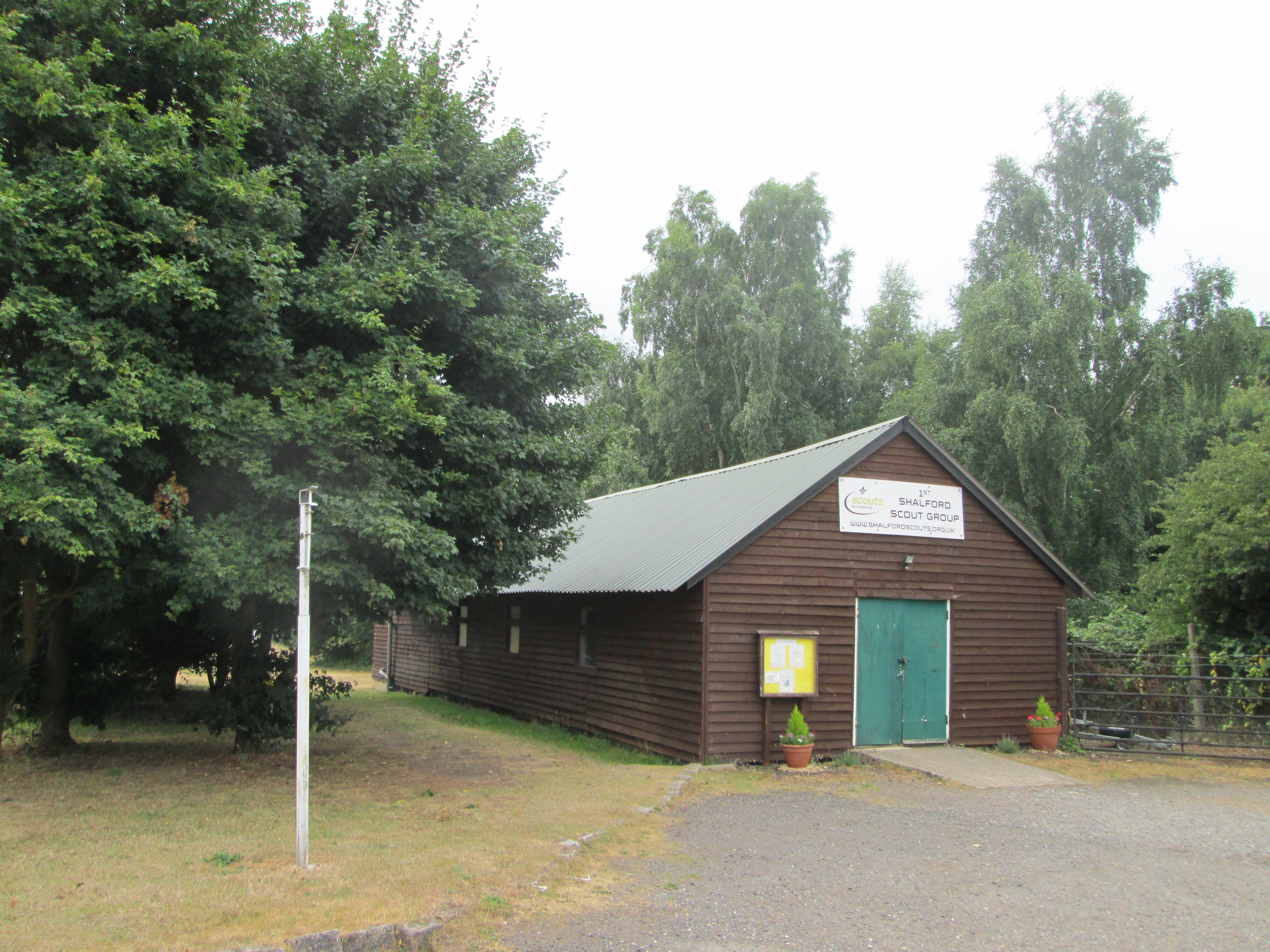
Scouting Talent: The legendary hut that played host to The Stranglers and a Shalford boy made quite good (Photo copyright: writewyattuk)

Scouting Talent: The legendary hut that played host to The Stranglers and a Shalford boy made quite good (Photo copyright: writewyattuk)

THEY’RE the stuff of legend in my old neck of the woods – the days The Stranglers rehearsed in our village scout hut.

I was there myself within a couple of years with my first band – the 1st Shalford Cubs. But even at that impressionable age I didn’t really see the value of dib-dobbing in my woggle (not a euphemism), sticking my head in giant vats of flour to bite on manky apples, or having ‘murderballs’ propelled my way by the bigger lads.

It was only in later years that I became aware of the wider significance of that creaking wooden structure alongside the main Reading to Redhill railway line, and I’d long since forgotten my cub scout promise by the time The Stranglers were riding high in the charts and it seemed like the whole of Surrey was pretending they’d followed them from the start.

Debut Album: 1977's Rattus Norvegicus

Debut Album: 1977’s Rattus Norvegicus

I have my older brother to thank for an early appreciation of The Stranglers, getting into the ground-breaking Rattus Norvegicus and No More Heroes albums and later The Raven while most kids of my age preferred Grease and Star Wars. When I was 14 I saw them live for the first time at Guildford Civic Hall in early 1982, although I probably played that down at school. They were after all riding high in the charts with Golden Brown at the time.

Thirty years later, those songs still hold strong, even though at first I sang ‘lays me down, with my mancherums’ instead of ‘in my mind she runs’ on the latter hit – convinced Hugh was name-checking some exotic herbal cigarette. Although I probably wasn’t too far off there.

While managing swivel rock near-legends His Wooden Fish in the late ’80s, I remember a sell-out gig at our local, The Star in Guildford, when fire regulations ensured there were only around 100 paying customers.

That made me laugh, thinking back to that late-January night in 1982 as The Stranglers played a packed Guildford Civic Hall and singer/guitarist Hugh Cornwell asked if anyone there had been at their early shows at The Star. Needless to say, around 2,000 people shouted out in the affirmative. Even then – despite only knowing that Quarry Street local from regular shopping trips to town – I wondered how the floor had held out.

Second Album: No More Heroes, also from 1977

Second Album: No More Heroes, also from 1977

They were the Guildford Stranglers when they debuted at The Star in September ’74, with Cornwell having previously fronted a band called Johnny Sox, formed by the biochemist student while he was a post-graduate in Sweden.

Hugh takes up the story of how he ended up in my hometown: “That was a long time ago. It’s all a bit hazy. You go to Guildford now and it doesn’t look anything like it did then. I’ve got fond memories of Guildford though.”

So why Guildford? Hugh was after all a Kentish town lad. He recalled: “The band I had from Sweden – Johnny Sox – were in London when President Carter issued an amnesty for all American ‘draft dodgers’ to return home, without fear of imprisonment. Our drummer wanted to go back to Chicago to see his family, so we needed a new drummer.

“Brian Duffy, aka Jet Black, came to meet us in Camden Town, where we were staying, and said, ‘I really like what you do, why don’t you come down and stay with me? I’ve got an off-licence in Guildford, with spare rooms upstairs – we can rehearse up there and work on songs’. We said, ‘Great, why not!'”

That base was Jackpot, an off-licence and ice cream business run from Woodbridge Road, Guildford, former jazz drummer Jet – who even by the late ’70s seemed an older statesman of punk – buying a new kit from nearby Anderton’s (where I bought my two bass guitars), and setting up with his new cohorts.

Big Influence: The Stranglers' 1979 LP The Raven

Big Influence: The Stranglers’ 1979 LP The Raven

Those band-mates also included Godalming-based former Royal Grammar School pupil Jean-Jacques Burnel, Swede Hans Warmling, and a sax player dubiously named Igor Saxophonich, who lasted two days before being kicked out. 

As Steve Gibbs put it after interviewing 74-year-old Wiltshire-based Jet last year for Surrey Life, they ‘devoted as much of their time as possible to songwriting and rehearsals, in his shop basement, and Jet even sent Cornwell and JJ out in his fleet of vans to earn their keep.’

Those early gigs also included a short-lived lunchtime residency at the Royal Hotel in Stoughton, later owned by wrestling legend Mick McManus. By then, keyboardist Dave Greenfield was on board, further defining that classic Stranglers sound, Jet soon selling his businesses and moving his dysfunctional family to the village of Chiddingfold in 1975. And those rehearsals at Bramley Village Hall and Shalford Scout Hut proved even more important after they were thrown out of their cottage for rent arrears.

In time they gravitated towards London, having by then fallen out with their adopted hometown, the local council more or less ruling out a triumphant return in those early days. They did however infamously storm off stage in 1978 at the University of Surrey during a BBC Rock Goes To College transmission, after a row over ticket distribution.

By then, they’d made it, the success of Rattus Norvegicus setting the standard for 25 years of hits and so much more. And you can forgive Hugh for not remembering too much about those days, not least with The Stranglers estimated to have played 350 gigs alone in the year up to their signing for United Artists in late 1976.

Great Form: Hugh Cornwell's previous solo album, Hooverdam

Great Form: Hugh Cornwell’s previous solo album, Hooverdam

But while Hugh turns 64 at the end of next month, he remains as focused as ever, and still eager to test himself judging by his most recent solo releases, 2008’s Hooverdam and his latest LP, Totem & Taboo.

The Stranglers were the most commercially successful group to emerge from the punk and new wave scene, boasting more than 20 top 40 hits between 1977 and 1990, when Hugh left the band. Seven reached the top 10, with 1982’s Golden Brown only kept off the top spot by The Jam’s A Town Called Malice, and Cornwell acknowledged as one of the UK’s finest songwriting talents and accomplished live performers.

The Stranglers enjoyed 10 hit albums in his time, the early fire of singles like No More Heroes, Peaches and (Get A) Grip (On Yourself) gradually giving rise to a more sensitive period and successes like Always the Sun and Skin Deep.

But if that suggests a more mellow Hugh these days – having left his old band-mates more than 20 years ago, releasing a wealth of solo albums since – think again.

For the most recent album is far more stripped-down, a raw three-piece band completed by Steve Fishman (bass, backing vocals) and Chris Bell (drums) combining to great effect with Chicago-based engineer Steve Albini, best known for his past work with Nirvana, Pixies, PJ Harvey, Manic Street Preachers and The Wedding Present.

Still Firing: Hugh Cornwell remains on top of his game, judging by his latest recordings

High Quality: Hugh Cornwell remains on top of his game, judging by his latest recordings

Hugh said: “Steve did a wonderful job. I’d recorded very high quality demos of all the songs and we spent a lot of time demoing, with Steve (Fishman) and Chris (Bell) able to embellish and put their mark on. The three of us then went into the studio in London and improved on those numbers for a few weeks. We did a live show then got on a plane to see Steve. He had the demos up front so was in the picture and familiar with the songs. His brief was then to translate those songs to recordings with his special skills as an engineer.

“He does say he doesn’t like to be called a producer – he likes to be an engineer, and loves working with people who have a clear idea of what they want. He will then facilitate getting those ideas recorded. He loved it when we turned up and everything had been decided. We just sat down for the first day and worked out how many tracks we were going to need for each song, determining if we recorded it on 24-track or 16-track.

“We ended up managing to get it all on 16-track, which we preferred, as it means there’s more tape per track – a third more recording film giving a richer recording. We recorded the album in 10 days, went away, listened to it for two weeks, went back and mixed it in four days, because there was so little on it, and eight of the 10 mixes were great.

“It’s just recording in a big room, and for about three-quarters of the albums we recorded the drums in a big room, so there’s such a great ambience.”

Totem and Taboo has enjoyed rave reviews on both sides of the Atlantic, and is currently being performed in full on the road, alongside some classic Stranglers material.

Hugh said: “I’m playing the whole of Totem and Taboo as you hear it, but every second song is a Stranglers song, slotting in a few of the hits as we go through the album. And they sit very well together.”

Does he still enjoy playing live, after all these years? “Yes, I do, but it’s very hard work, especially when I recently went to Crete to do a festival but was there less than 24 hours. It was fabulous, but a hard trek for the timescale.”

hughcornwell04-hr

Face Value: Hugh Cornwell carries his musical influences with him

And does Hugh get the old Stranglers albums out these days? “The only time I do is when I’m going to do a version of one live and try and remember how it goes. I’ve done quite a few now. I tried Men in Black the other day, to do an acoustic version of one song. I ended up doing Thrown Away. The others were almost impossible.”

A lot of key influences can be heard on the new album, from The Beatles, The Kinks and The Who to Cream, David Bowie, Lou Reed and T-Rex. And there’s a few Stranglers moments too.

Hugh said: “When you write and record songs you tend to look back at the things you love and try to recreate those you hold in esteem in your own way. A prime example is Paul McCartney, who was quoted as saying Back in the USSR was The Beatles trying to write a Beach Boys song.

“You’re bound to hear some Stranglers influence too – I was part of that and haven’t tried drastically to change what I do. I still write songs and sing, and the lyrical content will be very similar to Stranglers, the voice and guitar, and a lot of the song-writing. So it’s not really a surprise.”

One such song is the quirky I Want One of Those, while on God Is A Woman he appears to make up for the feminist-unfriendly hit PeachesCornwell fans will recognise the trademark wordplay in places, not least on Bad Vibrations and the quintessentially-English  Stuck in Daily Mail Land. Then there are the story-songs, one of which, The Face, name-checks not only the main subject – a certain international star with the surname Ciccone – but also Paul Roberts, who replaced Hugh in The Stranglers in 1990.

He explained: “I’d been to this party, invited along to release of one of Madonna’s albums in the 1990s, at the ICA in The Mall, a great venue and a great place to have a party. It was full of great people, with limitless booze and food going around on trays. It was brilliant and this girl I know who worked for a record company introduced me at some stage to the Stranglers’ new lead singer, Paul, which was very odd. We shook hands, but didn’t really know what to say to each other, so eventually wandered off in different directions.

“I got quite drunk and wanted to go to the bathroom. I saw this queue and joined it. It wasn’t moving for about 15 minutes, and so I asked the bloke in front of me if he knew what was happening, and he said ‘she’s spending at least 10 minutes with each person’. I suddenly realised I’d joined the queue to meet Madonna in the bathroom, where she was doing one-to-ones with her fans. So I rushed out of the queue and hoped no one had seen me.”

Still Firing: Hugh Cornwell remains on fine form, 35 years after his first hits

Still Firing: Hugh Cornwell remains on fine form, 35 years after his first hits

A couple of the songs on the album were written in Los Angeles, it was recorded in Chicago, and Hugh has a number of gigs coming up in America. So is the USA a home-from-home these days? “I did an album a few years ago, 2005’s Beyond Elysian Fields, recorded in New Orleans and New York, but it was nice to do this one just in one place. As for it being a second home, only by the necessity of going there so often to play. You get more familiar with places and get to know people there. I much prefer Spain. But I’ve got a lot of time for America, and I’m very fond of it.”

I suggest there’s a real filmic feel to epic closing track, In The Dead of Night, and Hugh answers: “Well, let’s hope someone uses it in a film. Actually, I’m making films to go with all the songs. It will take another year to finish that, but when it’s all done we’re linking them all together, putting it out as a DVD.”

Away from the recording and live shows, Hugh is a keen writer too, with his latest novel, Arnold Drive, due to be published in September, set in Somerset. He added: “There’s nothing like a change – it’s as good as a rest. I like writing while I’m away. I can escape into it. The book starts off in Corsham, which I know well. I’ve got a cottage down there. And if you’re writing something you should always write about what you’re familiar with.”

So where is home these days? “I’m in central London, but all over the place, and not quite sure where home is.” And is Hugh a family man? “I’m not. I wouldn’t be able to get away with all this if I was!”

Does the former Bristol University student ever wonder what life might have been like if he hadn’t chosen music as his career path? Perhaps he might have carried on being a bio-chemist? “Well, I wasn’t very good at it. I loved doing it, but you have to be good at something or you’ll have a very frustrating, unfulfilled life. You’ve got to pick something in life that you feel you’ve a chance to do well, otherwise you’re on a downer.”

After all these years he clearly remains in love with his music, even if he doesn’t want to share too much talk about the business. The keen cricket fan added: “I’ve a lot of friends in music, but the last thing you want to do when you’re relaxing is talk about the business. The way I relax is to get completely away from it. And I’d rather talk about cricket.”

totem* Thanks as ever to Mark Charlesworth at Preston’s 53 Degrees, plus Hugh’s manager David Fagence, and Steve Gibbs for his excellent October 2012 article in Surrey Life, cataloguing the finer details of those Guildford Stranglers days (reproduced here

* For details of Hugh Cornwell’s forthcoming dates, starting with his July 5 visit to Preston 53 Degrees, and other news, head to his website here

* And for the writewyattuk lowdown on Hugh’s excellent Totem & Taboo album, head here 

Posted in Books Films, TV & Radio, Music | Tagged , , , , , , , , , , , | 8 Comments

More books about chocolate and girls – the Cathy Cassidy feature

WHEN best-selling children’s author Cathy Cassidy called at the University of Central Lancashire recently, writewyattuk’s chief blogger was there to meet her – albeit hiding behind his eldest daughter (who adds her own footnote).

Write On: Cathy Cassidy signs a book for a fan at the  University of Central Lancashire

Write On: Cathy Cassidy signs a book for a fan at the University of Central Lancashire

I FELT a bit of an outsider, to be honest. As I walked into the foyer of the Foster Building at the University of Central Lancashire, it was clearly a no-boy zone – you only had to clock the rather fetching display of perfectly pink balloons, the cupcakes bearing edible pictures of the guest author, Cathy Cassidy, and all those girl-themed books laid out.

It was nothing I couldn’t cope with though, and at least I could hide behind my 13-year-old daughter if things got too intense. Besides, before now I’d managed to survive promo events featuring Lauren Kate and Jacqueline Wilson unscathed. It’s just about keeping your focus and engaging with the subject.

By the time I was inside the impressive Mitchell & Kenyon Cinema, there was a new concern. How many of us would actually show up? As a fellow writer who empathises with authors’ fears that no one will turn out to their book events, I felt a few butterflies on Cathy’s behalf.

cassidy coco

Choc Lit: The latest Cathy Cassidy sweet success story

I shouldn’t have worried though. While not a sell-out, there was a steady flow of arrivals from there, many still in school uniform, most brandishing copies of Cathy’s latest hardback, Coco Caramel, or others in the Chocolate Box series.

Helen Day, UCLan’s senior lecturer in children’s literature, introduced the special guest, encouraging the younger audience members to share a few of their reasons for loving Cathy’s books and characters. You could tell Helen was a fan too – genuinely admiring her craft as well as subscribing to the ‘chocolate and young romance – what’s not to love?’ school of thinking.

By that stage, I’d even spotted – gasp – more specimens of the male sex, even trading a nod with one. Our body language clearly suggested ‘I’m only here because of my daughter … honest’. It was more than that for me, mind. In fact, I was already half-way through the first Chocolate Box book  – Cherry Crush (albeit three years too late), and could see this was no half-baked junior chick lit cash-in. Cathy was clearly a valued writer and illustrator, and one with plenty of story craft.

She soon made her entrance, her fans enjoying a few shared confidences, not least about Cathy’s own school-days. She explained that – contrary to expectations – her favourite subject wasn’t English. As she put it, “I loved all the bits of the English lesson where the teachers said ‘write a story, free choice, anything you like’. That was perfect. But all the bits to do with spelling and grammar and all those rules were not quite so perfect.”

So was it art that most inspired her at school? After all, she ended up training to be an illustrator, going on to work as an art teacher in primary and secondary schools, and still illustrated her books. But no. Apparently not, as “unfortunately we had an art teacher at my secondary school from just about the time of the dinosaurs, and his favourite thing was to get us to do endless still-life drawings of very cobwebby old wine bottles.”

It turned out that her favourite subject wasn’t even on the timetable – day-dreaming. In revealing this, Cathy soon determined she wasn’t alone, a quick show of hands suggesting it had caused plenty more girls out there (and a couple of grown-up lads) problems at school.

Cathy said: “My very first ambition in life, way ahead of anything to do with being an author or an illustrator, was how I could manage to not get caught day-dreaming.” But just as she was about to run through her top three tips for getting away with day-dreaming in class (despite having identified at least one teacher in the audience) the university gremlins struck and her microphone cut out, our guest having to rely on the theatre’s acoustics from then on.

Happy Reader: The blogger's daughter meets her favourite writer, Cathy Cassidy

Happy Reader: The blogger’s daughter meets her favourite writer, Cathy Cassidy

Instead she promised that those who got in touch with her after the visit would receive those tips by email. My eldest daughter did just that, and was made up by Cathy’s swift response. She still won’t let me in on the secret though. Pesky kids.
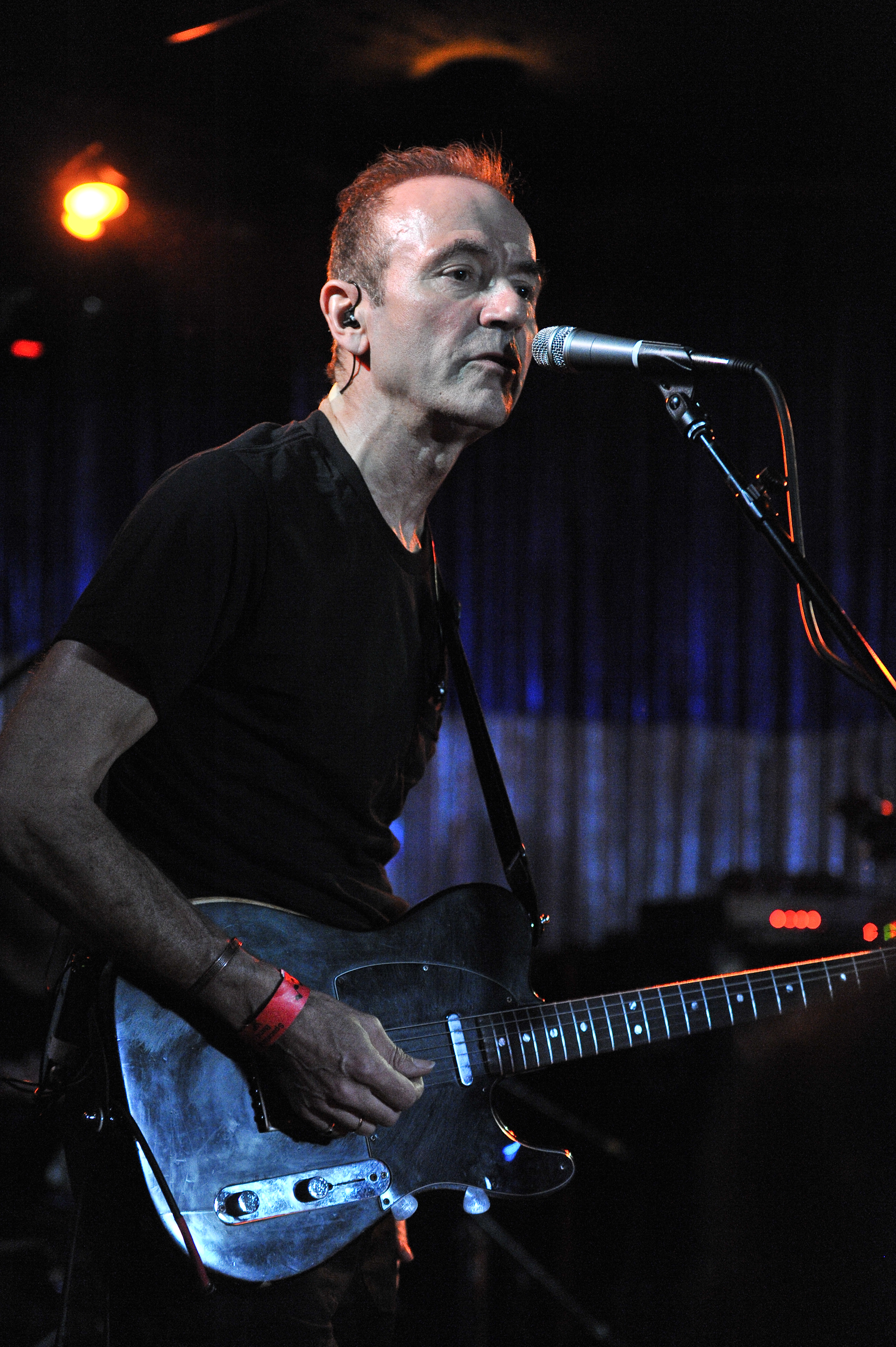
If there was a moral to her story, it was the fact that Cathy’s day-dreaming eventually worked for her. As she added: “Day-dreaming time is never wasted. I know that for a fact, because I get paid to do it these days. And if you get published, you get to share your day-dreams with readers all around the world.”

Cathy’s talk moved on with the help of images from her website to her recent move – like the star of Cherry Crush – down from Scotland, in her case to a Victorian house in Merseyside after ‘decades in the wild’, and ‘finally a room I got to call my own writing room’.

That said, a string of recent launch events and various festivals mean she’s still at the unpacked box stage. And after regaling us with stories of book festival appearances in China, Australia, New Zealand, Singapore and across the UK, she re-inforced her earlier point, adding: “If teachers ever try to tell say to you day-dreaming won’t get you anywhere in life, you now know that’s not true. It can take you to all kinds of places.” 

Cherry Crush: The book that opened the Chocolate Box series

Cherry Crush: The book that opened the Chocolate Box series

Cathy’s rural Galloway Hills retreat certainly looked inspiring, this scribe for one jealous of her blue wooden writing shed in the back garden, while others swooned over the tepee in the grounds, one that has also proved a hit for visiting schoolchildren. She tried to tell us she needed her hut to escape her teenage children, their friends and frequent parties (complete with electric guitars, drums and lots of noise). But it didn’t quite wash – the photos suggested she was having far too much of a good time for any sympathy.

There was mention of Somerset too, where Cherry Costello relocated and where Cathy herself was an art student and part-time waitress, explaining the hybrid locations she used for the Chocolate Box series as examples of the writer’s excuse for a holiday – the research break. She also shared with us character sketches, mood-boards, story plans and talk of scribbled notes on location. And at that point you could tell there were a fair few audience members – adults and children alike – thinking, ‘I want that life’.

But as the Coventry-born author, illustrator, former teenage agony aunt and art teacher stressed to her impressionable gathering, it didn’t all happen overnight.

Cathy went on to mention the characters she invented and tales she shared as a child in the ’60s, those early self-drawn comics and picture books leading to her  send stories to her favourite teen magazine, Jackie.

Big Break: Cathy Cassidy finally made the grade at her favourite teen mag Jackie

Big Break: Cathy Cassidy finally made the grade at her favourite teen mag Jackie

She explained: “Over the next few years I sent hundreds and hundreds of stories to the fiction editor, and received countless, if very polite rejection letters. Yet that tiny sliver of hope always grabbed me and I would run off and the whole process would start over again. Eventually, the persistence paid off, because you kind of train yourself and get a little better each time. When I was 16, a different magazine paid for and published a story I wrote.”

Cathy paused to throw that inspirational tale out to her audience, telling them about her ‘magazine girls’, three Scottish fans who told her they wanted to write their own mag. She suggested they wait for September then approach their school magazine. But her eager trio ignored that and organised their own publication – taking care of everything from content and design to writing – with ‘kind of legendary’ local success. 

As it was, it was her art that took Cathy closer to her dream job, although she feels art and writing are always “two sides of the same coin – you can paint your picture with words and you can tell a story with pictures too.” After attending art college in Liverpool she looked around for jobs, but the country was in the grip of a recession and nothing came up, until a reply from … wait for it … Jackie. 

After a couple of interviews she was hired, ‘starting my way up from the bottom to the position of fiction editor’, a key position which played to her strengths as she got to buy and edit stories and artwork, something that ‘taught me a lot about the job I do these days, how to make sure a story’s structured properly, and so on’.

She added: “It was great training, with interviews with dodgy boy bands of the time, and much more. It was hard work, but rewarding too.”   

With Coco Caramel now out, Cathy’s working on the fifth book in the series (not including World Book Day 2013 spin-off, Bittersweet), due to be published next summer, following the story of the difficult elder Tanberry sister, Honey. And on the evidence of her UCLan audience and favourable reception elsewhere, it will be another best-seller.

For those who haven’t got past the girlie branding, Cathy is perhaps seen as just the latest Jacqueline Wilson wannabe, not least as her books cover similar rite-of-passage subjects such as feelings, friendship, boys, modern families, confidence … But she’s worth much more than that, and I feel this generation and future ones will identify more with Cathy’s cleverly-drawn characters and story-telling.

First Footing: Cathy Cassidy's premier publication, 2004's Dizzy

First Footing: Cathy Cassidy’s premier publication, 2004’s Dizzy

While it’s the Chocolate Box books centre-stage at present, Cathy has published more than 20 books in barely a decade, starting out with 2004’s Dizzy and also including the Daizy Star series for younger readers.

I asked Cathy as she signed books from a camper van parked outside the uni if she’d been approached by any TV people about her Chocolate Box series, in the wake of Jacqueline Wilson’s Tracy Beaker success. She suggested not, but you get the feeling it won’t be long. And there’s evidence in the success of her website’s CCTV project and its regular video diaries that it would work.

Cathy carried out a little market research of her own on the day, a multiple-choice quiz designed to lead you to the character you felt closest to. There was a boys’ one too, but as there were so few of us she quite rightly glossed over that. 

There was a ringing endorsement for the library service on the day too, Cathy explaining how as a child she was a serial borrower, and only in later years had she scoured second-hand shops for the books and vintage toys that helped her through childhood.

That included a rare plug for Richard Adams’ Watership Down, a book she said she coveted more than others as a child, and proved the adage about judging a book by its cover – this was no cosy book about fluffy bunnies. Furthermore, she explained that a chance conversation about that book with a boy led to a friendship and realisation that reading was cool after all, and not something to feel embarrassed about.

Garden Idyll: Cathy Cassidy with her lurcher, Kelpie, outside her writing hut in the Galloway Hills (Photo courtesy of http://www.cathycassidy.com/)

Garden Idyll: Cathy Cassidy with her lurcher, Kelpie, outside her writing hut in the Galloway Hills (Photo courtesy of http://www.cathycassidy.com/)

Sometimes public appearance Q&A sessions can go awry, and there was an awkward moment as one fan asked a question relating to the end of Coco Caramel. But Cathy quickly diverted her ‘spoiler alert’ and answered the question without answering it (if you get my drift). 

She also explained how in the beginning she’d take around three to four months to write a book, whereas now – despite no longer teaching and with her children out from under her feet – it was somehow taking her six months.

Then Cathy was wrapping up, ready for a swift break before facing the queues at her signing session, promising those who still had questions that she’d do her best to answer from the back of her van, or later via email.

And overall it’s fair to say that Cathy came over extremely well, convincing not only her young fans, but also a few cynical older blokes too. 

To learn more about Cathy, her books and inspirations, forthcoming events, watch the Chocolate Box video diaries, and much more, head to http://www.cathycassidy.com/

My Hero: A rubbish picture taken by Dad, although he was holding my balloons at the time

My Hero: A rubbish pic of Cathy and me, taken by Dad. He was holding my balloons at the time though

A Daughter’s Footnote

Hi, well, this is a first – he’s actually allowed me to write something on his blog! 

So, here goes. When we went in, there was pink bunting and balloons everywhere, and cakes and sweets on tables with more pink covers on. After some words by someone Dad knows, Cathy came out and talked about her life – from sending letters to the person in charge of putting stories in Jackie to having that job herself.

Her latest series – about the Chocolate Box girls – is amazing, and about five sisters (Honey, twins Skye and Summer, Coco and step-sister Cherry). All the characters are really believable and interesting. Also, their house, Tanglewood, is like my ideal house. Personally, I don’t think Cherry Crush is the best in the series, but even if you agree with me on that, you should still read the others. They get better.

Cathy Cassidy is great! Last year, when I went to see Lauren Kate (really good, although I didn’t know who she was when Dad first mentioned the event, and nor did he), one of the women selling her books asked which writers I liked. When I said Cathy, she said she didn’t know any teenage girls she wouldn’t recommend her to. And she was an expert!

I can’t put Cathy’s day-dreaming tips on here, as Dad will read them. But I’m sure if you ask her via her website, she’ll let you know. And while you’re on there, you can also look at the weekly ‘CCTV’ vlogs by the Chocolate Box girls, which give different views on the book’s main events.

P.S. While I was queueing to get my books signed, the organisers let me have three of the pink balloons. Misery-guts did make me give one to my little sister though. 
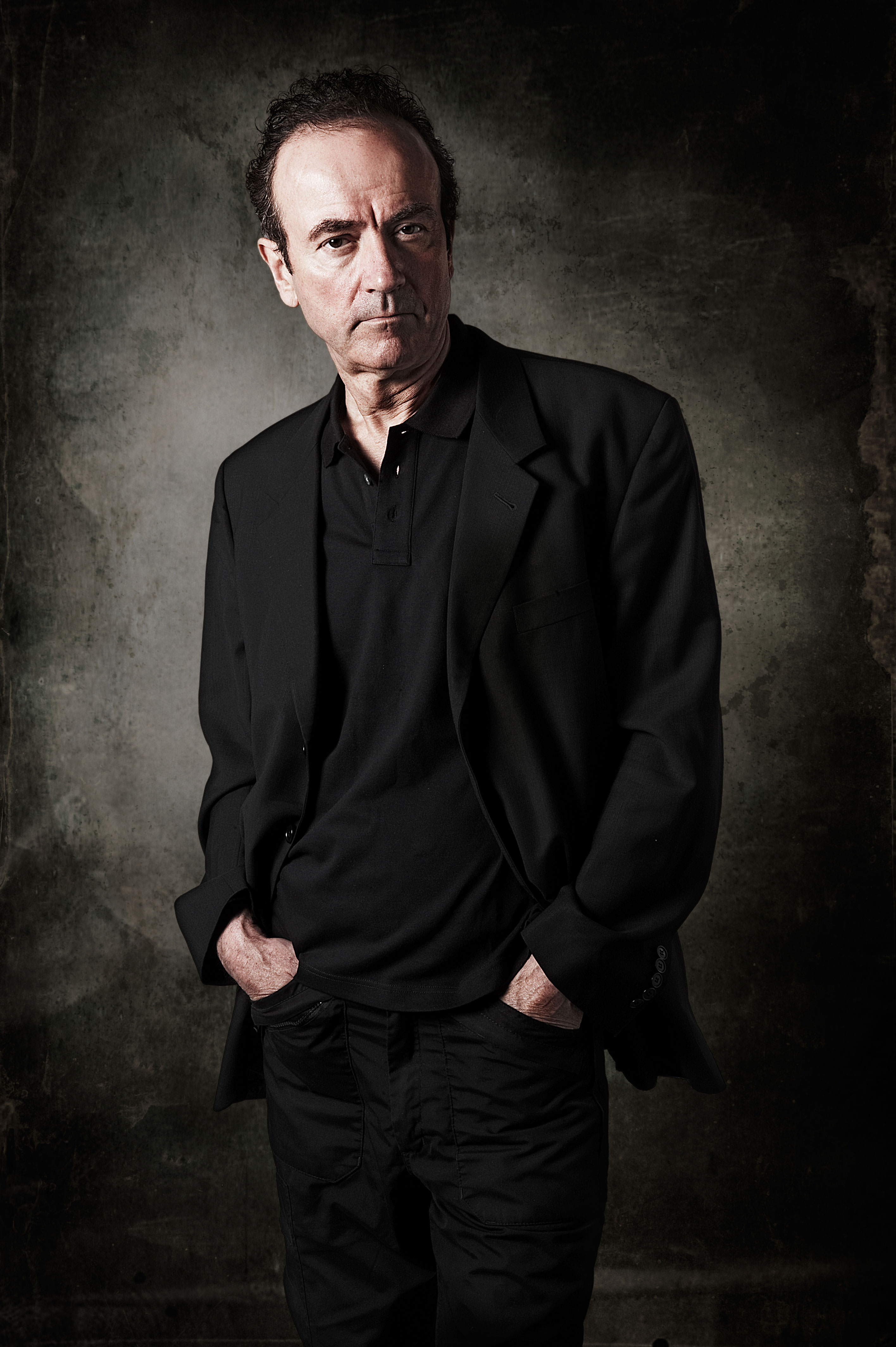
Posted in Books Films, TV & Radio | Tagged , , , , , , , , , , | 3 Comments

Hugh Cornwell – Totem and Taboo

In which Malcolm Wyatt swaps notes with Hugh Cornwell on the former Stranglers frontman’s latest album, Totem and Taboo, a surefire winner as far as both are concerned.

totemFollowing rave reviews in the UK, Hugh Cornwell’s new studio album Totem and Taboo was released in the US this week, having already proved a major both-sides-of-the-Atlantic project – demoed in London then recorded in Chicago, where it was engineered and mixed by the legendary Steve Albini.

And after a few listens I totally concur with those fine reviews, as Hugh – alongside bassist and backing vocalist Steve Fishman and drummer and percussionist Chris Bell – builds on where he left off with Hooverdam, one of several recent HC albums aided by Chris Goulstone, who mastered this winning 10-song long player too.  

From the moment Hugh Cornwell’s raunchy guitar and trademark vocal rock growl comes to the fore on the title track kicking off Totem and Taboo, it’s as if the years have been rolled back.

Here for all intents and purposes is an established artist on a creative high, and as fresh in outlook as in those ’70s and ’80s heydays. And while the voice brings Lou Reed to mind at key points, there are parallels with David Bowie’s 2013 successful return The Next Day and its own self-titled intro. Interestingly, Hugh also acknowledges that Bowie influence.

HCStrangely enough this was the last track I wrote for the album, but it’s become one of my favourites. A hint of ‘Rebel, Rebel’ with some Marc Bolan glam thrown in. I’ve always liked songs with the marching 4’s on the snare, and that’s what it is supposed to be, a rallying call for like-minded souls. I was playing this live most of last year so it went down easily enough in the studio.

After that triumphant start, there’s a clear Steve Albini influence behind Hugh’s story-song  observation on a certain global celeb on The Face, the master engineer’s stark treatment of Bell’s background drum sound and Cornwell’s searing guitar break further in something those of us who appreciate the musical worth of The Wedding Present and more inspired moments of grunge will appreciate.

The chorus then takes us off into more traditional Stranglers territory, one of several songs here that led to me humming Duchess these past couple of weeks. Cornwell’s wordplay also suggests that old mirth and menace remain, unsullied by (whisper it) late middle-age.

HCMy favourite guitar bits on the album. I was stretched a bit to keep the solo going for that long, but Steve Albini liked it, which is praise indeed. Based on a funny story about Madonna (NB: for more details about that, stick with this blog for our forthcoming Hugh Cornwell big interview).

There’s a proper Stranglers feel to the sublime I Want One of Those, the harmonies with Fishman strangely sweet, and the layers multiplying as the song gathers pace. It’s a real grower, with Bell’s drums piloting the whole guitar-driven splendour along, while a gloriously-quirky solo stretching Hugh to wonderful effect. Perhaps that’s Albini’s major strength – creating far-from-obvious gems with the aid of simple clarity.

HCI was very excited when I wrote this. After the melody came together I went for a walk in the country and wrote the lyric whilst I was walking in my head. Had to rush back to write it all down before I forgot it! We’ve all become slaves to a consumer society and its spread into all aspects of our lives unfortunately.

Stuck in Daily Mail Land takes us into more classic pop territory, with a real ’60s as well as ’70s sound suggesting to me the kind of early Kinks track that brought cult status for Cornwell’s old chart rivals The Jam. As it turns out, Hugh reckons it’s more like The Who, and he’s right of course. Quintessentially English, but with that Albini influence giving it a Stateside hard edge.

HCConceived in a hotel in the Midlands about 5 years ago, over breakfast, alone, over a copy of – of course – the Daily Mail. Not that it’s an attack on it; some of my best friends read it.

There’s a lot of Hugh’s influences on show on this album, and that continues with the storming Bad Vibrations, a good old rock’n’roller taking a nod – in the title at least – to a certain Beach Boys classic. It would certainly be interesting to hear Brian Wilson and his band harmonise on this. Again, the chief engineer’s influence suggests I might be listening to David Gedge in the closing stages, as those guitars get turned up to 11.

HCPeople who are familiar with what I’ve done over the years will be familiar with a habit I have of appropriating titles and changing them perversely to my own evil ends. ‘Good Vibrations’ is a classic pop song from the 60’s that needed to be backdoored.

Micah Hi Res ElectricThe next influence is clearer, with God Is a Woman built around the bass riff of Eric Clapton’s Cream classic Badge. But there’s more to this song than that, with – dare I say it – Hugh perhaps improving on that classic, in what he (with tongue no doubt firmly in cheek) sees as an updating of less-feminist-friendly ’70s anthem Peaches. It’s payback time, and Hugh delivers it in style. Interestingly enough, as well as Badge I hear traces of The Beatles’ Glass Onion from 1968, making me wonder if this is Hugh’s Black Album, 45 years after the Fab Four’s White Album and 35 years on from The Stranglers’ Black and White LP.

HCProbably my favourite track on the album. First few notes may remind some people of ‘Badge’, but I think this is an improvement. The voice is unusually very dry and in your ear, in contrast to the bass and guitar. Hopefully people will consider, as I do, that this is a modern day ‘Peaches’.

The Lou Reed influence rides high in the mix again in the echo-laden Love Me Slender, a tight band feel bringing to mind his acclaimed, stark New York album, with what I perceived (arguably wrongly), as a further withering Madonna reference in the Justify My Life hook, before the guitar returns to the fore. Splendid stuff.

HCAnother one of my favourites. It would take too long to go into what it’s about. But it is another misappropriation, this time from Presley’s  ‘Love Me Tender’ of course.

There’s a more melodic intro to Gods Guns and Gays, and I’m thinking of Hugh’s old band and their not-so-angelic choirboy video image again. In short, this is good old-fashioned raunchy pop with plenty of edge, the social commentary adding a downtown US feel to proceedings.

HCA song about the United States of America and the obsessions you find there. The word ‘gays’ is only meant to represent the power of Freedom Of Speech they enjoy in that wonderful country of contradictions. No wonder so many of the Surrealists flocked there in the 1930’s. Another one of my tributes to Arthur Lee and his band Love, God rest his soul. Amen.

We’re heading towards the climax now, with an almost filmic quality to the fast-paced A Street Called Carroll, including elements of everything from Hawkwind’s Silver Machine to The Stranglers at their most rocking as Fishman’s rumbling bass and Bell’s energetic percussion provide the backdrop to Cornwell’s American imagery.

HC: Los Angeles. Silverlake. Overlooking downtown. A street called Carroll. The most unusual wooden houses. It’s where they shot the ‘Thriller’ video. Quite enigmatic. Not at all what you’d expect in LA. On a hill. Old style street lamps. Not quite sure what it’s got to do with Totem & Taboo, but it was the time when the whole idea of the album became clear to me.

Then we’re away with the brooding, almost lumbering In The Dead of Night, that on-screen story feel again on show. Again, Albini’s influence is everywhere – the atmospheric night sounds gradually giving rise to a more basement-dwelling, gravelly feel. Stark to a tee, but with so much power and soundscape hidden between the notes.

And like Totem and Taboo throughout, this is a real grower and prime example of – I’ll say it again – a trumphant return from an old but somehow forever-young master.

HCI thought it was about time to write a long epic track, rather like we used to do when I was in The Stranglers. It had to be at the end of the album, and I wanted it to feature an extra instrument, rather like ‘Banging On At The Same Old Beat’ did on ‘Hooverdam’, my last album. Steve (bass & keyboards) obliged perfectly, bless him. Bass riff came to me in the middle of the night and sat around for a while before I realised what was going on.

* Watch this space for the writewyattuk big interview with Hugh Cornwell in the next few days.

* In the meantime, find out more about Hugh’s forthcoming shows – starting this Friday, July 5th at Preston’s 53 Degrees – and past and present solo recordings here

Posted in Music | Tagged , , , , , , , , , , | 2 Comments