In which author/writer Malcolm Wyatt jealously guards his own corner of web hyperspace, regular feature-interviews, reviews and rants involving big names from across the world of music, comedy, literature, film, TV, the arts, and sport.
“Sink back into time, I’ve been hypnotised; and meanwhile my time’s not my own.”
Thirty years ago today, one of the bands that provided a key component of the soundtrack of my 20s stepped on stage at Berlin’s Quartier Latin as part of a cross-city live event celebrating the first anniversary of Germany’s reunification, for a show also starring LA alternative rock outfit Hole and cult London post-punk group The Monochrome Set.
Three decades later, BOB’s set – broadcast live on national radio in Germany that day, 21/10/91 – is commemorated by Berlin Independence Days, which was due to be out in June as a limited-edition 10-track vinyl-only LP before a backlog in vinyl manufacture saw the release date put back, the delay leading to a decision to reward those who pre-ordered with a subscriber-only exclusive CD version.
As co-frontman Richard Blackborow put it earlier this year, “We’re proud of this record. We were on great form and, luckily, we were professionally recorded on the night by clever German recording technicians who broadcast the show live on Berlin radio. No one has heard it since, and we were lucky enough to escape with the multi-track tape of the show. Simon (Armstrong) and I mixed it during lockdown last year and we’re chuffed to bits with the results.”
I spoke to BOB drummer Dean Leggett, who first appeared on these pages in late 2019, to ask for his memories of that Berlin show.
“We played in London, either the night before or the previous one. There’s bit of a disagreement, but we were at The Underworld in Camden, which received a fairly good review in the NME, and we played the same set in Berlin. I think ‘Nothing for Something’ was about to come out as a single.
“As I recall, we packed up the gear after the gig in Camden but couldn’t leave till late as there was a club at the venue and you had to load out through the back doors. You couldn’t load out while there was dancing. We were really knackered, but still had to load the van, drive to Dover, smoke all the weed we’d got before we got there, then get on the ferry and drive all the next day.
“We got to Berlin in the afternoon. I think we checked into the hotel, had a kip, then pretty much went straight there. That’s my recollection, but Simon thinks we left the following day. Either way, we more or less went straight there.”
The North London based indie outfit’s visit came just four months after the Bundestag switched from Bonn to Berlin, honouring an earlier stipulation of the Unification Treaty to make this born-again city the capital of the Federal Republic of Germany.
Last Time: BOB, 1991. From left – Simon Armstrong, ‘Henry’ Hersom, Richard Blackborow, Dean Leggett
“We’d already played in Berlin, on the East side, a castle on an island, and played a small club on the West side around six months earlier to about 60 people. We went through Checkpoint Charlie, even though the Wall had come down, either 1990 or earlier in 1991. The (previous) gig in East Berlin was absolutely packed, sold out, around 200 in. But this one was more a showcase.”
Dean met Courtney Love, playing with Hole, at an after-show party that night. In fact, he reckons he met Kurt Cobain too, although it seems the Nirvana frontman and bandmates Krist Novoselic and Dave Grohl were playing in Austin, Texas that day, on their Nevermind tour.
“Our agent, Rob, came with us. He had loads of bands, including Babes in Toyland, but was trying to get Hole as well. We were staying in the same hotel and had a party with them upstairs in their room, where Courtney was. She was snogging some guy with blond hair. I recall her being quite bossy. There were around 30 or 40 in this smoky room, and she was making him take boxes of beer around to give out. Henry (Hersom), our bass player, was with me. Simon was watching The Monochrome Set and Richard was struggling with a cold and didn’t come out. Me and Henry always said it was Kurt. We didn’t have a camera though.”
While I missed Nirvana, I did see BOB three months earlier at Reading’s After Dark Club – my seventh sighting since April ’88 – but that late night set is a little sketchy in my mind now, and as it turned out, I had to wait 28 years for my next live fix, at Leeds’ Wharf Chambers in late 2019. But this Berlin performance helps fill in a few gaps.
“The reason we did the gig was to try and get a European agent, and we were looking for funding for the next album, which would have been You Can Stop That for a Start. When we came back, we started writing, then went on another tour of Europe, playing nearly all the songs on that record, to learn them. We’ve footage of us playing those songs in Germany, which we hope to put out at some point. When we recorded them, we did it all in five days in Harlow then in Bristol for a few days.”
The story of that and the subsequent 28-year wait for the LP to be released is told in my interview last year with Richard Blackborow. And, as I said to Dean, it seems a trademark BOB move that this live album – also including ‘Round’, which finally appeared on that delayed second long player – features a song called ‘You Can Stop That for a Start’, which – as it turned out – didn’t even make it on to the record of the same name.
“Yeah, exactly! Ha!”
It’s not the only song that missed out, this fan loving ‘Another Crow’ too, originally dubbed ‘Tour Song’, as included on 2014’s deluxe version of Leave the Straight Life Behind in pared-back but spot on demo form. But I certainly can’t argue with the final track listing on You Can Stop That for a Start, and the live record is also a winner.
Studio Tan: BOB, 1992. Their second album, You Can Stop That For a Start, took 28 years to land
“We had a very basic soundcheck, about three in the afternoon. There were other things happening around the city, all being recorded for German radio, and we had to be there at half four to go on at five or half five on the dot. We weren’t allowed to drink or swear or take too long talking between songs. Everything was mic’d up, it would go straight to a sound deck, mixed by our engineer, Chris, with a cable going out the back of the building to a van with a huge dish on top, fired to the radio tower on the front of the record sleeve (Berliner Fernsehturm, aka Berlin TV Tower).
“We were all on form, and played really well, so Richard said to Chris, ‘I want you to go out there and get the tape, and I don’t want you to come back until you’ve got it’. Ha! Two hours later, he came back with the reel-to-reel tape. The radio guy said, ‘You can have these, but we want them back’. I don’t know how he persuaded him. Then, 29 years later, Richard gets the tape, bakes it in an oven – as you have to – put it in his computer and up pop the tracks, tweaked a bit where necessary, and when I sent it to Ian (Allcock) at Optic Nerve, who initially wasn’t sure about putting out a live album, he listened and said, ‘Let’s put it out – it’s great!’ The quality’s that good.”
The band come on to Miles Davis’ ‘Milestones’, in a recording mixed from the original ½” digital multitrack tape in 2020. And from incendiary opener ‘Skylark III’ through to fellow Leave the Straight Life Behind prime cut Skylark II, it’s something of a time capsule treat, like the two records that preceded it.
We also get ‘Tired’, apt in the circumstances according to Dean’s back-story, released as a single the previous year, before a return to the prior album for ’95 Tears’, BOB stepping up through the gears again, the set continuing with the first two numbers from early 1990’s Stride Up EP, kicking off our shoes for the splendid ‘Flagpole’ (I’d love to have heard Nancy Sinatra and Lee Hazlewood cover this gem, not as bizarre a suggestion as you might think when you know the story behind it) and of its time Madchester/Screamadelic-tinged Bible Belt America mash-up, ‘My Blood is Drink’.
The title track of the LP that didn’t come our way for a near-eternity (the one that didn’t make the final XIII, as it turned out) starts side two in style, before ‘Nothing for Something’, which seemed destined to be BOB’s final single until their welcome return and the release of ‘Queen of Sheba’ last year. And listening back now, this should well have taken the band on again, bringing in the wider audience they deserved, as ‘Convenience’ should have before.
As for ‘Round’, here was a Teenage Fanclub-esque (maybe even Status Quo-like) guitar romp that suggested the power of what was coming our way next. Given a year or so, perhaps it could have been a nailed-on set opener, but on this occasion it instead leads to the big finish, the band back in Leave the Straight Life Behind territory, the Smiths-like collage of ‘Take Take Take’ – and the irony was just how long that stop was before they started again – followed by inevitable show-stopping finale ‘Skylark II’, in typically more live than live form.
Seconds and years, icebergs and tears; this time I’m not on my own.”
And all in all, this Berlin Independence Days set provides a timely reminder – if we should ever need one – of the live might of BOB, showcasing what a great outfit they were on their day, something only now truly realised in some circles. But enough hyperbole. I’m clearly tired and emotional as I write this, so I’ll stop that for a start. As Richard himself put it, ‘I’ve had a lovely evening, please close the door behind you’.
Plastered Cast: BOB in Paris in 1990, on the lead-up to the release of first LP, Leave the Straight Life Behind
What Happens: Jim Shaw and Han Mee, co-founders of Manchester four-piece Hot Milk, ready to rock
It would be easy to surmise that power punk four-piece Hot Milk are on a high right now, main stage appearances at Leeds and Reading Festivals later this month being followed by the release of second EP, ‘I Just Wanna Know What Happens When I’m Dead’, and a first UK headline tour next month.
Their 2019 debut EP, ‘Are You Feeling Alive?’, landed amid a whirlwind year that also saw them tour with Foo Fighters, Deaf Havana and You Me at Six, and play some of the biggest festival stages. Some going for a band that only formed in 2018.
And following mid-June’s pilot Download Festival, the Manchester-based outfit get another chance to air new material when they return to Leeds Festival and Reading Festivals later this month, this time playing the main stage, before those headline shows – including a Manchester Academy 2 homecoming on September 10th.
But after such a testing last year and a half, while eager to get back out there again now, vocal and guitar duo and co-founders Han Mee and Jim Shaw – who met working behind the scenes on their adopted city’s music scene, both yearning for a shot of their own at the big time – are holding back on expectations right now.
Han was making her way back from her family home in Longton, near Preston – “I was born at Sharoe Green, in the shadow of Deepdale,” she told me – to her city centre flat in Manchester when I called her, on the day the title track from the new EP was released as a single.
Now in her mid-20s, her roots in the industry were as a promoter, putting on gigs for ‘all the bands who came to town’, working with various venues. But while Manchester’s been home for some time, she told me her adopted base took on a different feel during the lockdown, becoming ‘an empty city’.
“The summer of the first lockdown was just weird, sunny days with nobody about … apocalyptic. Hard to believe that was the reality. Hopefully it won’t go back to that.”
While she said it’s good to be on the verge of getting out and playing again, Han’s not building her hopes up yet.
“At first, we were hoping it’d be over by the end of the year. Nearly two years later … I’ve learned not to get too excited – I don’t think I could take the fall.”
We talked some more about how it’s been for this generation coming through, missing out on defining moments in pubs, clubs and in venues.
Point Made: Han Mee, ever closer to a triumphant return to live action with Hot Milk this month
“Yeah, that’s what makes you who you are. That’s where you learn and meet people. Think of all the people who will never be born now because two people have never met. There’s been a massive change in people’s futures, and I feel sorry for people who are 18, just going to uni. Imagine the first year of uni without being able to experience and live it. At least I got that.
“And we toured as a band for 11 months before we had to go into lockdown.”
Han and Jim quit steady jobs to put their energies into the music industry, Han plying in bands initially in Preston and her co-founding bandmate in York, the pair meeting in Manchester when they moved there, ‘signed off the back of four songs, essentially’.
But their year and a half gap between EPs was put down to a lack of opportunities to push a new record amid the pandemic, having to be reliant on social media alone – as hands-on as they are in that respect.
“Some people write songs because they like being in a studio, I write because I like being on stage. At the moment, I don’t really feel like I’m in a band. We’re in the studio, but not getting that other side of it – the reason we wanted to be in a band in the first place.
“The live set is so irreplaceable. We sold out all our first headline shows on the day first time, but they never happened, so we ended up merging them together into one 1,000-capacity show in September.”
Looking at Hot Milk’s videos and live clips, they clearly have fun on stage and making those promo films. I have to ask though – albeit tongue in cheek – was that a choreographed slip by Han on stage I caught on footage of their Download festival appearance?
“Ha! No! Course not. I came out, giving it the big dick … but the universe was saying, ‘Don’t get too cocky!’. I had these new boots on, with no grip, and it was raining, soaking wet. But you know what … screw it!
“Of course, that would happen to me! Classic me, to be honest. I’ve not got a bee in my bonnet about it though. It’s mad that we even stand on two legs anyway! I’m gonna fall over some point, it just happens to have been the first gig out of the gate after 18 months or so, and I’m on my arse!”
There’s a neat blend between Han and Jim’s voices, I suggest. Was that a natural thing?
Club Nightlife: Han Mee and Jim Shaw on the decks at Dynamo in Eindhoven, Netherlands, February 2020
“I guess it kind of happened, really. We’ve known each other years, then wrote a song together when we were drunk one night, and felt, ‘That didn’t sound that bad, did it, shall we do it again?’
“We were together three years before the band happened, and the band kept us together, our reason we’re as close together as we are. When you’re in a band with someone you’re in a relationship and write music with, you’ve got to be able to be unfiltered, and being together as long as we were and going through all the stuff we’d gone through together made that a lot easier.”
Based in Manchester’s Northern quarter at the time, they still hang out there most nights – ‘making up for lost time’ – although Jim is now further out in Eccles. And how did bandmates Harry Deller (drums) and Tom Paton (bass) get involved?
“Tom was in a band with James. If we were going to do this live, among other people, it had to be with people we cared about, having been surrounded by people we didn’t really like for quite a while. Tom was a mutual friend, and we knew he was good.
“With Harry, we needed a drummer who was good and nice, and couldn’t find one, but Tom was like, ‘I know this guy, but he’s a bit weird.’ We met him, and he was weird, but beautifully weird, and we were like, ‘Sick! Let’s have him!”
Are you good at rehearsing? I get the impression it might end up being a bit full-on judging by your stage show.
“Well, we’re doing that for the next two days. We tend to do it in big blocks after practising on our own. We’ve got Reading and Leeds in four weeks, so need to rehearse two weeks straight before. It needs to be perfect …”
Give or take the odd slip on stage.
“Yeah … we won’t do that again … or maybe I’ll make it my thing, start doing that.”
Where do those rehearsals take place?
Saintly Sin: Jim Shaw and Han Mee, taking contradictory approaches with Manchester’s Hot Milk
“Ancoats in Manchester … basically a crack den, the worst place ever … but it’s ours, the cheapest we can afford at the moment, we can walk there and keep our gear there. A bit of a headquarters.”
Halfway through my next question, with Han back at hers now, she’s in fits of laughter, telling me her ‘little corona cat’ won’t get out of the bag it’s been transported in, despite the bag being turned upside down.
She’s soon composed again though, and I mention how there’s plenty to write about right now, from dealing with mental health issues to questioning those in charge in this post-Brexit administration at a time of deep divisions all over. But, I say, I get the impression that at least the younger generation are waking up to the reality.
“Well, you say there’s lots to write about, but there was added pressure lately, feeling you have to write. We kind of ran out of a bit of gusto towards the end of the pandemic. That’s why we’ve just been to Brighton for a week.”
The first EP’s title track, ‘Are You Feeling Alive?’, was about the pair’s determination to refuse to settle for second best in life, that sense of not letting life slip through their fingers at the core of Hot Milk’s punk-indebted ethos. And having taken a leap of faith to grasp their platform, they’re not about to let it go to waste.
Similarly, the new EP’s title track, ‘I Just Wanna Know What Happens When I’m Dead’, produced by Jim, is another call to arms, full of huge hooks and catchy choruses, encouraging ‘everyone, everywhere, to follow their dreams’.
Their lyrics are very personal in places, the band bottling the anxieties and frustrations of everyday lives. ‘Woozy’ tackles depression, ‘Good Life’ takes on societal corruption and distribution of wealth, and elsewhere they address the pursuit of happiness in a modern world. Yet for all their expressions of angst, I suspect an underlying optimism, all about inspiring positivity, with community and shared values important to their band ethos.
“I’m kind of optimistic, but naturally a pessimist. My mum’s nodding at me! I’ll say I’m a realist. I’ve seen the worst of people the last five years or so, generally jaded about humans. We’re innately selfish to a degree. But then I see kids coming through that have such liberal minds and are so optimistic about the future, and think, ‘I used to be like that!’. That does give you a bit of faith. They’re not jaded like I am.”
She goes further in the press release for the new EP, adding, “These songs are honest. I have nothing to hide. Everyone’s on antidepressants these days. It’s the world we live in, it makes people sad. Capitalism. Is it broken? One hundred per cent. I’m angry that we’re sold a world that actually doesn’t make your inner peace happy. Humans need love and community and a lot of the time, there is no love and the community has dissolved.
“We’re angry, both politically and existentially in terms of the system we now live in. But also, we’re angry at the fact that we’re sad quite a lot. But we’re trying to not just sit there and take it. We’re trying to fix it, by building a family through this band.
“You can’t take things with you, but you can make the best memories. That’s the most important thing in life. Your currency is your memory. What you can take with you is something that absolutely makes the blood pump round your veins and gives you goosebumps. That’s what this band is to us. It’s our passion. That’s what this EP is about.”
Band Substance: Han Mee with her Hot Male company, and closer than ever to a full live return right now
Live, Hot Milk aim to create an ‘aggressively space safe’ where fans are empowered to be themselves, ‘authentically and unapologetically’. It needs to be about the music too of course, and Hot Milk love their rousing choruses, my favourite on the new EP perhaps ‘I Think I Hate Myself’. But what comes first, the words or riffs and hooks?
“It’s different every time. That one … me and James were drinking a bottle of wine, watching David Attenborough. We hang out all the time. He’s my favourite person in the world. We’ll sit there with a guitar, mulling over the pandemic and why we exist, and what’s the point if we’re not doing what we want to do, and how we’ve got no money. And I hate myself like that.
“So that came pretty naturally – just acoustic guitar and vocals. But sometimes it’ll be a synth-line first, and I constantly have notes and lyrics on my phone.”
Is there an album just around the corner?
“I think there’s another EP first. I think the idea of an album right now … we need to know where we’re at, after all this time.”
No one really likes labels, but power punk, emo-pop? What’s the description you tend to go for?
“Oh God, labels! I don’t know. We’ve called it power pop before, but we’re such a varied band, with so many influences. We kind of just write what comes out. This EP is so varied. We like to take it any direction we want. And as we get older, our tastes will change, and I don’t want people to think we’ve just changed genres.”
What do you reckon you took from those live shows with the likes of the Foo Fighters?
“Well, the Foos for me … they are at the top of their game, legends …”
I hear that coming through in a few of your songs, not least that energy.
“Ah, that’s good! And once you’ve toured with a band like that it’s hard not to absorb their way of doing things. And those guys have been so, so nice to us. They didn’t have to be nice to a couple of people from Manchester. It’s a bit random. But we’ve just confirmed a few more dates with them for next year.”
Soon there’s Leeds (August 27) and Reading (August 29), this time playing the main stage, then that headline UK tour in September. Pandemics aside, is this you living the dream here?
“Hopefully … though like I say, I don’t want to get too carried away. I’m scared of that being taken away.
“There’s other life pressures going on as well. But as long as those are solved before, it will be more enjoyable. It’s not nice knowing we can do all this but then come back and still be on the dole. Being in a band is bloody expensive. We’ve still got bills to pay.”
In this day and age, without the record company advances I used to hear about, I guess you’ve got to truly love this struggle to be able to do it full-time.
“Exactly. On paper, this is insane really! Trying to justify this to your Mum and Dad is constantly an uphill struggle.”
Have there been plenty of jobs along the way?
“Definitely, especially the last year or so, lots of freelance bits, trying to stay creative and doing arty bits. For me, if I had to go back and get a proper job … I was offered one in PR a bit ago, but I think that would take all my energy away from what I actually want.
“You end up getting in this cycle of doing something else, and before you know it you’ve got too used to that. If I take the focus off the band and go down another road, I’d put all my energy into that.
“But me and James are still very much in control of this band and work on it every single day. We’ve got a label involved and whatever, but they don’t really have much say in what we do.
“That’s why we signed with the label we did – to keep that creative control. In terms of our history, working locally in the scene, we know what’s what. And hopefully we can get back on it soon. We’re wishing the days away at the moment.”
Sofa Away: Hot Milk are ready to return to the big stages … barring any further pandemic shutdowns
Hot Milk’s five-track ‘I Just Wanna Know What Happens When I’m Dead’ EP, out on September 10thvia Music for Nations, includes exclusive merchandise, CDs and limited edition heavyweight purple opaque vinyl pressings. For pre-order release options, head to https://store.hotmilk.co.uk/. And to keep in touch with the band, you can check them out via Facebook, Instagram and Twitter.
Inner Light: Hannah Peel is coming to terms with her Mercury Prize nomination. Photo: Peter Marley
Mercury Prize shortlist nominee Hannah Peel was taking a brief rest from scoring when I called her. And I don’t mean she was watching the cricket from the pavilion at Old Trafford, notebook in hand. Had the phone rung off the hook for this gifted composer, string arranger and singer-songwriter that week, in light of her first Mercury Prize shortlist nomination?
“I’ve been managing it pretty well … but obviously it was totally unexpected. I was already really flat out anyway, so I’ve had to set a rule of only talking in the morning or late at night, so I get the day to do stuff. But yeah, it’s all good. It’s amazing, I’m not complaining at all!”
Was the nomination for Fir Wave, her re-interpretation of the original music of 1972 KPM 1000 series: Electrosonic – the Music of Delia Derbyshire and the Radiophonic Workshop, really out of the blue, or – be honest – is it something you think about every year, wondering if this will be the time?
“I’ve always dreamed of having a record Mercury-nominated. Anybody who releases records that have an aspiring feel to it … I think every record I’ve ever worked on has probably been submitted. But you kind of get used to, ‘Ach, no, I’m not on a big label, I don’t have a lot of press money and I can’t push a lot of things’, which is ultimately what happens – it gets attention, gets listened to, and that’s what influences the judges as well.
“The fact that it’s a little self-release and they’ve listened and taken note is just amazing. I’m so thankful.”
Richly deserved, of course, not just for this LP but everything this Northern Ireland-born, South Yorkshire-raised, former Liverpool Institute of the Performing Arts (LIPA) student, now based in Donegal in the north west of the Irish Republic, has done up until now.
Hannah released her debut album a decade ago, following 2011’s The Broken Wave – her stock soon rising – with several more solo works and collaborations, including the two great LPs with The Magnetic North – also featuring Erland Cooper and Simon Tong – that led me to her work.
Then there were her live and studio outings with electronica pioneer John Foxx‘s band, with Laura Marling and Mike Lindsay’s LUMP project, plus OMD, Nitin Sawhney, and of course Paul Weller, arranging and conducting the latter’s strings and orchestral arrangements on his last four records, and notably heard and seen on his Live at the Royal Festival Hall album/DVD.
You can add several other rising stars featured on these pages in recent times to Hannah’s collaborative CV, plus her acclaimed theatre, dance and film scores, including the soundtrack music for BBC 2 documentary Lee Miller: Life on the Frontline, Game of Thrones documentary The Last Watch, and Channel 5 drama The Deceived.
Fir Wave: Hannah Peel has found herself up for the Mercury Prize with her latest acclaimed album
That said, it must be odd, knowing so many other artists – not least those she works with – who haven’t got nominations this time or before. I’m sure it’s not about competition though. I suggest, Hannah’s realm not so much about competitiveness, unless it concerns her fellow artists and peers inspiring each other on to ever greater heights.
“Yeah, but I would say this year above most recent years, it’s the most alternative (Mercury Prize) list, and I think that’s the strength in that they’ve released a list of records that need album sales. When you’ve had Ed Sheeran or Florence and the Machine nominated, okay, they’ve deserved it because they were great records, but they didn’t need to boost album sales.
“They already had that attention. The fact they chose smaller produced records, and also that a third are instrumental and it’s very much female/male balanced and wide-ranging, it’s really impressive and puts hope back into the Mercurys. I think a lot of people had given up, thinking it was an award unable to find new music, which was the whole point … or it always felt that was the point of them.”
There are some amazing quotes on her website from critics regarding Fir Wave, all pretty much spot-on. And it’s an album I’ve been playing a lot lately, and one I reckon sits comfortably with so many great 2021 releases.
What’s more, I tell her, barely a week goes by when I’ll interview someone who’s just worked with her and has lovely things to say about her and her work. More know about the Weller link, but in recent times I’ve also talked about her with Dot Allison, Andy Crofts, Erland Cooper, William Doyle, and LUMP’s Laura Marling and Mike Lindsay. In fact, I seem to have a Hannah Peel question lined up every week.
“Ha! That’s so funny!”
If nothing else, I reckon I could be your unpaid press agent.
“Ah, thanks, Malc!”
The only problem is that I’m wondering now if I’ll ever get to hear a third long player by The Magnetic North, its artists being kept so busy.
“Yeah, we’ve all kind of gone on our own trajectory! But I kind of always imagined that the third record might be one that was done in years to come, in hindsight of what we’ve all been through. I mean, we definitely have a third record there. It’s just that it’s never been finished and completed and fully satisfied with everybody.”
I recall Erland (Cooper) and Simon (Tong) visited you in Ireland to sketch out ideas for that album a while ago (as was the case with previous Magnetic North LPs – the first taking creative inspiration from Erland’s Orkney roots, the second from Simon’s Skelmersdale years, this next one from Hannah’s Irish links).
“Yes, they came over to Donegal and to Northern Ireland and we met up with Bill Drummond, who played a bit on it. It was an amazing trip … but then … life took over!”
So what are these scores you’re working on right now?
Extraordinary Life: Hannah Peel wrote the soundtrack for the BBC’s Lee Miller documentary film
“I’m working on a dance show, I’m working on a film, and I’m working on a TV show, all at the same time. Lots of scoring work, including my first feature film and a wonderful eight-part series for Sky.”
So many of your projects have made a wider impression of late. There are also presenting spots for BBC Radio 3 and occasional opportunities to stand in on BBC 6 Music. I was going to ask if you’re getting out and about again, post-lockdowns, but maybe you’ve just not got the time, instead locked into a room composing and what have you.
“Ha! Yeah, totally! I am grabbing time away though. I went to Oxford and worked with Philip Selway (Radiohead) on some of his new music the weekend before last. It was so lovely to be in a studio and with people, and he’s the nicest man I’ve ever met. He’s brilliant, I loved working with him – he treated us to an evening punting on an Oxford river, then we went for food. It felt like I was on holiday, which I don’t get that often!”
Last time we spoke, home was still East London. Have you properly relocated across the Irish Sea now?
“I moved to Northern Ireland around the end of the Mary Casio era. I bought a house here, and was half and half travelling, then the lockdown hit, so I’ve been here mostly.”
Seems like you were in the right place at the right time, as it turned out, pandemic-wise.
“Yeah, I’m so glad I did. Being by the sea and not in a flat in Hackney was definitely beneficial for my mind and mental health, for sure.”
Is there a social life over there between studio sessions?
“Definitely. My parents have a caravan in Donegal we’ve been going to for the last 30-odd years, and now it’s summer and you can travel into the south of Ireland, I’ve been able to go there. But I do see my little trips to London, working there, as little holidays too!”
Are there live dates coming, or was that never in the offing for this record?
Soundtrack Albums: Hannah has recently worked on several high-profile television soundtrack LPs
“Fir Wave was never meant to be played live, but I will be performing at the Mercurys. My God – even saying that makes me shudder! I’ll be putting something together for that, but that’s it for that record.
“I do have a record out with the Paraorchestra in Spring next year though, an incredible disabled/non-disabled integrated orchestra, phenomenal, based in Bristol, where we’re doing a show on October 1st. Tickets went on sale last Friday. It’s a pretty small, socially-distanced show, but it will be really beautiful.”
Back to Fir Wave, and although Hannah only turned 16 eight weeks after Delia Derbyshire died at the age of 64 in 2001, these two icons of electronica seem to be at one. When did my interviewee first chance upon Delia’s sonic world and the wonders of the BBC’s Radiophonic Workshop?
“Like a lot of people I didn’t know of her at all growing up, and never heard her name. It wasn’t until I started working with John Foxx, which would have been 2011, that I started to hear about people and noticed certain artists and composers, especially in the electronic world.
“That’s when I first heard about the Radiophonic Workshop. I think at the time they were setting up a new Radiophonic Workshop. I never saw that transpire, but it highlighted everything, as did the sharing of her archives – the finding of them and all that.”
Am I right in thinking most of that work remained unpublished and largely unfound until that point?
“Yeah, it’s that kind of Lee Miller vibe – until she died, when they found everything in the attic (the US photographer and photojournalist, born in 1907, did little to promote her work, her son discovering and preserving 60,000 or so photographs, negatives, journals, letters and documents after her death in1977). And I do wonder how many stories there are like that, that we’ve never heard of. I think that’s generally what people did – putting them away, thinking nobody’s ever going to notice this … and sadly those are the women.”
I guess it was a similar tale with fellow pioneering composer and electronic musician Daphne Oram (1925/2003), another largely unsung influence on your work.
“Totally. And the CD version of the album we’re bringing out on August 6th includes an interview with Delia (Derbyshire) from 2000, first done as a 7-inch for Electronic Sound this year, an interview that’d never been heard before I got the chance to edit and underscore, and put on the record. And that was really amazing – hearing her voice coming through the ghostly effects.”
Heavens Above: The cover art for Hannah Peel’s amazing Mary Casio: Journey to Cassiopeia, from 2017
At a time when – thanks to the sterling efforts of NHS staff and scientists responsible for successful vaccine programmes – we’re hopefully closer to turning a corner on this pandemic, we seem to be stumbling towards another issue coming back at us with a vengeance – climate change, where something needs to be done, and fast – there’s an important ecological theme to this record too, Hannah looking to make ‘connections and new patterns that mirror the Earth’s ecological cycles through music’.
As she put it, “I’m drawn to the patterns around us and the cycles in life that will keep on evolving and transforming forever. Fir Wave is defined by its continuous environmental changes and there are so many connections to those patterns echoed in electronic music – it’s always an organic discovery of old and new.
“This was originally a record written for KPM. It wasn’t intended to come out as an album – it was written as production music – but I was given permission to use this 1972 record, so took that, sampled it, put that into the music.
“I guess it was because of lockdown and everything that happened that it was allowed, and I had time to look at it and decide this could make a really good record, got it mixed again and reproduced a couple of the tracks.
“The original record was very much of its era. It would have been used as background in scientific labs, and that whole period really echoes that industrial period of the ‘70s. So when I was looking at the titles, thinking what I wanted to put into a record – something for right now – it was really important to use that ecological side, so it felt like a record for the present day.
“It might be retrospective in its sound palette, but its essence is very much about what we are aware of – our cycles in life, the delicacy of the carbon cycle, music and connecting those waveforms with the patterns in nature.”
Well, it’s been amazing watching your career so far, and I look forward to the next interview where someone else tells me they’ve just worked with you, and what an amazing experience that proved.
“Ha! Thank you. Yeah … and I’m definitely a music lover!”
Well, that was never in doubt. And with that I let Hannah finished her lunchbreak and get back to her next impending half-dozen deadlines.
Monochrome Set: Hannah Peel has been kept busy these past years with various projects. Photo: Peter Marley
To link to WriteWyattUK‘s November 2016 feature/interview with Hannah Peel, head here, and for our September 2017 catch-up with Hannah, head here.For a full list of Mercury Prize 2021 shortlist nominations, try here. And for more about Fir Wave, Hannah Peel’s backcatalogue and forthcoming projects, head to her website.
Amber Lights: (L to R)- Tony Cornwell, Mick Shepherd, Simon Dewhurst, Tim Kelly. Photo: Rob Talbot
Martin Stephenson / The Hellfire Preachers – Preston, The Continental
The Amber List/Ivan Campo/Resonate – Preston, The Continental
My Twitter feed last weekend was dominated by those having their first taste of live music for Lorde knows how long. As was the case with me, enjoying my first return to The Continental, Preston, in my adopted Lancashire, 16 months / 73 weeks / 510 nights after the last, in what also proved to be my first live show in 494 nights – the longest break between gigs since catching Blank Expression on my live debut 41 years earlier at Wonersh Memorial Hall in rural Surrey.
Only two more gigs followed that last Conti visit – on Leap Day 2020 to see The Amber List, West on Colfax, and Cornelius Crane – before the shutters came down, first for I Am Kloot’s John Bramwell at The Venue, Penwortham, then King Creosote at the Bridgewater Hall, Manchester, reprising and soundtracking the award-winning From Scotland With Love album/film.
Talking of cross-border visitors, first up – for the venue’s first non-socially-distanced live music night since that March shutdown – was North West Scotland-based, County Durham singer-songwriter and Daintees frontman Martin Stephenson, on a night when The Boatyard’s air conditioning kept us cool on a hot summer evening on the Ribble Delta (as opposed to the Delta/Johnson variant). In fact, it was the first time I felt a chill in a couple of weeks or so, thankfully not multiplying in Travolta-esque fashion.
Preach Boys: The Hellfire Preachers’ Charlie and Matt Wells flank Dave Gardner. Photo: Rob Talbot
All a tad bizarre during this mask/no mask/alarming rise limbo period we find ourselves in, but this double-jabbed punter’s lateral flow-test came up negative, so there we all were, on what turned out to be a full house. And The Hellfire Preachers set proceedings off in style, this tight three-piece Lancy folk combo – and BBC Radio Merseyside veterans – priding themselves on their ‘old timey bluegrass’ and ‘Gothic Americana’, Dave Gardner (vocals/guitar), Matt Wells (mandolin/banjo and such-like), and relative young ‘un Charlie Wells (double bass) on it from the opening song, the highlight for me a brooding, atmospheric number on which Matt took a bow (so to speak) to his banjo, the sinister lighting making him look every bit the villain in a stylish ‘60s spy film.
The main attraction needed no band behind him. Martin Stephenson can do things to his guitar that few could pull off. I get the impression The Daintees could have been as big as label-mates Prefab Sprout, but the big time didn’t sit right with a frontman who seemed to emerge in the wrong era, one not so geared up for singular acts who get by on the loyal support of the kind of committed fanbase he has now. Always a free spirit though, fair play to him for never conforming to lofty music industry expectations.
He was in his element here, having fun from the off. At least I think he was. Was that nervous energy built on fear rather than some cock-eyed notion of confidence? Whatever it was, when he first appeared I thought a sartorially-challenged guitar tech was tweaking the sound before Martin stepped up. But no, he was already up there, the following half-inaudible introduction and back-story before the first song going on longer than the number itself. In fact, that casual Half Song Half Tale presentation carried on for much of the evening, the songs often split by asides from the main man, breaking off at will to offer punchlines or share observations with the audience, his grin and giggles plain for all to see and hear.
Those who’d seen him far more seemed occasionally wearied by this approach, an air of ‘just play the bloody song’ apparent in places. But God bless him, he’s a one-off, and long may he confound and amaze in equal measure. Along the way, he joshed with the support band – lurking ominously in the shadows – and laughed at a member of the bar staff crouching low to avoid getting in the way while collecting glasses, dubbing him Toulouse-Lautrec.
Daintee Playing: Martin Stephenson, back in live action at last, at The Continental. Photo: Rob Talbot
He wasn’t strictly on his own, his other half – fellow recording artiste Anna Lavigne (check out her Angels in Sandshoes when you get a chance – stepping out of the audience a couple of times for duets, his pride in her as apparent as her awkwardness hanging around behind him while he told us loving anecdotes from her past.
And while for me a loud couple at the bar talking through the set – surely they’d had 16 months to talk, why decide now to have a full-on catch-up? – spoiled poignant moments, that’s not Martin’s fault. This was as much a victory for him as the promoters and staff who ensured a winning return to live music on our patch. And while I earlier picked up on the main guest’s casual t-shirt, shorts and socks ‘Brit on a beach’ combo, as he pointed out, up until recently he’s only performed online, where he was able to just wander off to the fridge afterwards. So in that respect we should be thankful he was wearing any shorts at all. Besides, we got the wonders of ‘Coleen’ and ‘Rain’ from the first Daintees LP, with ‘Salutation Road’ also among the night’s highlights, his playing and vocal range still beyond question. Cheers Martin, that was a blast.
While it was all tables and banter from the bar on Friday night, it was a proper half-and-half job the following night – another warm one – for The Amber List’s The Ache of Being debut LP launch in the same room, and I’d venture to say there were a few more in to mark the occasion.
First up, again setting the scene perfectly, were young guitar duo Ike and Harry, aka Resonate, a couple of covers complementing a finely-crafted set, the vocals and bridgework impressive. I expect to hear more from them soon … in fact, Harry guested on a couple of numbers with the headliners later, so I guess I already have.
Campo Combo: A pared-down Ivan Campo – namely Adam Shaw and Ben Atha – in action. Photo: Rob Talbot
They were followed by Ivan Campo, the San Sebastian centre-back who prompted the name of the main support in turn inspiring one punter to heckle ‘Bolton Wanderers’ at one stage. On this occasion they were (like the Trotters in recent seasons, you could argue) one down before we knew it, playing as a duo, and at first sight I expected singer and guitarist Adam Shaw to sound like John Otway. He looked the part, even if his bandmate was as far removed from Wild Willy Barratt as could possibly be. But Adam delivers a far less frenetic delivery, his voice reminiscent of a more chilled Alex Turner, and together with sticksman Ben Atha was a revelation, the latter all about percussion, sweet harmonies and whistling … and hats off to anyone who can pull all that off live.
In short, here’s a cultured outfit – and veterans of Spanish live TV, no doubt – who could add something to any bill, their brand of intelligent indie folk (or folk-infused pop, as they put it) capable of ensuring many a festival could be complemented by their presence.
Then came the headliners to complete a top night’s entertainment and ensure a cracking return for the Conti, post-Covid restrictions (at least for now). Admittedly, I’d had a head start, listening to The Ache of Being on repeat these last few weeks, but one of my 2021 LP highlights was given a great live outing on this occasion. It seemed to take a while for this accomplished four-piece – Mick Shepherd (vocals/guitar/bass), Tim Kelly (guitar/bass/vocals), Tony Cornwell (lead guitar), Simon Dewhurst (drums) – to truly settle, a shame when the record pulls off so emphatically, having produced a flawless side one and not far off perfect second side too. But they’d shifted up the gears in time for track three, ‘Appointments’, and there was no let-up from there. What’s more, you could tell by looking around that those who may have needed convincing grew more and more convinced as the set unfolded.
The seamless switch to and fro’ Mick and Tim on lead vocals – and this from a band with a penchant for passing the bass around too – adds another winning element, and all four pitch in with complementary harmonies, with Tony’s guitar antics also to be admired, while Simon holds it all together from the rear. A proper collaborative band, with plenty of joined-up thinking and delivery, the added guitar from super-sub Harry supplying a welcome extra layer.
All that was missing was an invitation from the stage to turn over before ‘Wrong Side of the Truth’ saw us away again. And while the spirit of Mick’s late-‘80s breakthrough band lingers within (as confirmed by Big Red Bus’ label boss, Action Records’ Gordon Gibson, on the night), here’s a band that clearly wear their influences on their sleeves, and on this occasion the spirit of early REM and perhaps Gene and The La’s shone through. But they get that extra dimension when Tim steps forward, taking them into more ‘60s-infused psychedelic territory, the back-screen house graphics adding to that feel. Furthermore, this punter at least is also reminded in places of Dublin’s The Stars of Heaven and South-East trio The Deep Season, among others.
Duo Guests: Ike and Harry – who returned later – aka Resonate, in live action at The Conti. Photo: Rob Talbot
In short, quality will always out, and many of the highlights on the album were given a good account here. While time was against them to get through the LP in full, there was still a chance for further crowd favourite, ‘Cold Callers’ from the first EP as an encore, and although I’m unsure how many CDs were shifted on the night, they won over many new fans … and rightly so.
All in all, this was just two nights, but on that evidence alone, it’s fair to say we’re back up and running. It was good to see a few regulars after so long away, and praise too for all those at this venue and countless others around the UK who have worked tirelessly behind the scenes this last year and a half to make sure it could happen when the opportunity finally arose. And I reckon we’re indebted to all those who ensured there are still places out there willing to take a chance on quality live music … against all odds. And as The Amber List’s closing number on The Ache of Being puts it, “I see the sun begins to rise; let it shine on, a new day is calling.”
For the most recent WriteWyattUK feature/interview with The Amber List, head here, and for our recent feature/interview with Martin Stephenson, head here.
To keep up to date with The Amber List, find out where you can catch them live and snap up their first album, head here. You can also keep tabs on Ivan Campo here, Resonate here, and The Hellfire Preachers here. And for all the latest from Martin Stephenson, including details of new LP, Howdy Honcho, try here.
Meanwhile, check out what’s coming next at The Continental here, and – wherever you are – make sure you support your local venues. They need you right now more than ever, I reckon.
Don’t Stop: Perennial pop icon Kim Wilde has been given the career boxset treatment (Photo: Sean J Vincent)
Four decades after her breakthrough hits, Kim Wilde’s stellar pop career is being celebrated through the release of a comprehensive new hits collection, available in special collectors’ five-CD and double-DVD boxset as well as double-CD format.
The Cherry Pop boxset includes additional singles, B-sides and an eclectic selection of remixes, several making their CD debut, plus a deluxe booklet with lyrics and a DVD collection featuring close to 50 tracks. And the two-CD edition features radio edits of many of Kim’s classic hits, including ‘Kids In America’, ‘You Keep Me Hangin’ On’ and ‘You Came’, as well as a couple of new tracks, her recent duet with fellow early ‘80s pop survivor Boy George, ‘Shine On’, among them.
And after 20 UK top-40 singles and seven top-40 LPs, with more than 30 million records sales amassed globally for the most charted British female solo act of the ’80s, a Brit Award winner (in BPI-branded days) and two-time Smash Hits most fanciable female … well, those stats are none too shabby, are they, Kim?
“Erm … yeah, it’s pretty … I appreciate it all a lot more now. Those numbers I didn’t truly appreciate until recent years, and when I look at this latest Greatest Hits and see what we’ve achieved, there’s some great stuff in there I haven’t heard for years. And the fact that Cherry Red took so much time getting all the licences sorted …
“And this in my 60th year. That’s pretty overwhelming. I haven’t actually sat down and listened to it, but only because I haven’t got a copy myself yet!”
That’s been remedied since we spoke. In fact, only yesterday I spotted a pic of her proudly thumbing through. These days of course, we don’t just know her as a pop icon, but also an author, gardener, DJ, TV presenter … and proud mum. And how about that amazing career? Does Chiswick-born Kim still get those ‘pinch me’ moments where she’s doing something and it suddenly hits her – how a couple of head-turning top-five hits with her first two singles as a 20-year-old in 1981 led to so much more?
“It’s strange, ‘cos over the years there were so many times when we thought, ‘Maybe this is the last time we’re gonna do this,’ especially if an album didn’t do well. And there were many albums that didn’t do so well. So yeah, there were many moments on the rollercoaster of my career when I thought we’d reached the end of the ride … only for it to go back up again and for something else to come along.
“It took a lot of getting used to … emotionally. It took a lot of disappointments and lot s of sucking it up, overcoming all that, and then getting used to more success again. It really has chewed around with my emotions.”
Now, eight months after reaching the big six-oh, Kim, whose family moved from their London roots to Hertfordshire – where she’s still based – when she was nine, is finally getting the career anthology treatment. Of all those hits, I asked, is there one in particular she feels deserved much more? Or did the public pretty much get it right in her case?
“I think they absolutely did. To have a career over four decades and still get played on national radio … like we did in 2018 with our Here Come the Aliens album, and ‘Pop Don’t Stop’ and ‘Kandy Krush’. That was just amazing. I think I enjoyed the success of that just as much as I did with our very first album and ‘Kids in America’. I remember going across a field and having (BBC) Radio 2 on my iPhone, playing it while I walked the dog and hearing ‘Pop Don’t Stop’ come on the Breakfast Show. And it made me feel fantastic. These were different times. Back in 1981 there was one day when ‘Kids in America’ sold 60,000 copies, and that don’t happen anymore! But the thrill of hearing your record on national radio, that’s still a great feeling.”
I was looking at that piece you did, talking about the ‘Kids in America’ promo, seeing your reaction to the images on the screen – that’s something in itself, gauging your reaction to you all those years ago. You’ve probably heard a thousand stories from fans, telling you what that and other songs meant to them. Mine’s just another, a 13-year-old watching Top of the Pops in Mum and Dad’s council house in a little village outside Guildford, Surrey, where four older siblings gave me a wide grounding encompassing various tastes and genres, but big brother’s influence ensured I was already into punk and new wave. Yet this was something new and fresh … and remains so. A lot of songs from that era sound dated, but somehow that Minimoog sound on your early hits still stands the test of time for me.
“Oh, it really has! It’s a magnificent record, and (brother/bandmate) Ricky’s talent at that time was so precocious. He was only 18 or 19 years old but he was listening to Ultravox and Gary Numan, the Skids, the Sex Pistols, Kraftwerk, and The Stranglers – all of those great bands. And we were brought up with rock’n’roll. And somehow all of it came together. There’s even a bit of Abba in there, y’know.”
Funny you should say that. It’s very much of its time but still fresh. In fact, it’s almost like you’re backed by The Attractions, and I know Elvis Costello tipped his hat to classic pop, specifically Abba a few times, as heard on ‘Oliver’s Army’, with its ‘Dancing Queen’ motif. So maybe it all makes more sense in retrospect.
“It does, yeah. I mean, pop music was influenced by Elvis Costello’s ‘Pump It Up’, and I’m a huge Elvis Costello fan. I had all his albums in my collection, and still have. I used to love the diversity and loved it when he moved into country music and introduced me to all the country artists I’d never heard before, like George Jones. And I fell in love with that music. Yeah, he was a really important inspiration for me personally and for Ricky, and I really enjoyed that amazing book he wrote, that tome.”
As a young lad with NHS specs at the time of those early Attractions hits, part of me shied away from professing an appreciation of Costello too soon, but he very quickly snared me with all those great songs. How could I not be swayed? As for you, you certainly held this boy’s interest. And that’s before we even get on to Brian Grant’s shower scene in the ‘Chequered Love’ shower scene. What’s more, those songs hold their power today, like all the great singles of those classic chart years. And again, that makes sense, coming from a family who understood pop down the years.
But I did say that some sounds – synths in particular – date quickly, and dare I say it – fast-forwarding to late 1986 – there’s some big ‘of its time’ synth on your version of Holland/Dozier/Holland ’60s soul classic ‘You Keep Me Hangin’ On’, for example, that definitely places it in that particular timeframe. However, the energy you put into your vocal sees you through. I’m not a fan of covers for covers’ sake, but you added something to the original, and subsequently carried that off.
“Yeah, we made it our own, and we had an amazing message from Lamont Dozier, which I keep on my desk. I’m just having a look at it now. It was sent on the second of June 1987, and he said he loved this exciting version of the song and thanked us for making him look good again. He said it had been No.1 three times (in the US) – I guess it was Diana Ross (and The Supremes) then Vanilla Fudge – and that (third time) was a moment that changed the course of my career.”
“I think the diversity and the build-up of the singles that came out, first with ‘Hey Mister Heartache’ and then ‘You Came’, which I felt was one of the finest crafted pop songs in my career. Then there was ’Never Trust a Stranger’, one of my all-time favourites, and we finished it off with some ballads, ‘Love in a Natural Way’ and ‘Four Letter Word’, which was a huge hit. So it’s one of those complete albums. I think it showed everyone who thought of Kim Wilde as a singles artist … they realised I was actually crafting albums … and if that’s what they were into, that’s what they would get.”
Talking of career highlights, you said in Marcel Rijs’ newly-published, Kim Wilde – Pop Don’t Stop: A Biography, that 1988’s ‘You Came’ video was another big favourite, as ‘it captures a moment in my career when everything was just perfect’. That was around the time you were supporting Michael Jackson on his Bad tour. What was it about that whole Close album era that resonated with you?
On a personal note, I should add that when I first thumbed through my better half’s record collection when we first got to know each other in 1989, Close was there … and still is.
“Nice!”
I should also reveal that alongside my features and interviews I’m a music book editor, with one of my more recent assignments editing and revising Marcel Rijs’ book. Were you pleased with the outcome?
“Yeah, and there’s been amazing feedback, and fantastic reviews! I really wasn’t expecting that … simply because it was completely free of gossip. I thought these days people expect a bit of that … but there was none of it! It was just packed full of information and facts, and I helped edit it myself …”
Yes, you got there before me!
“Yeah … and I enjoyed that. I wouldn’t have had the time if it wasn’t for the pandemic and being at home. The timing was perfect, and I spent some time on each chapter. There were some things I didn’t feel needed to be out there, so I’m glad Marcel gave me a first look-in, and I’m really pleased to have my story told without any … what’s the word?”
Salaciousness?
“Yes, salacious gossip!”
I gather from speaking to This Day in Music Books leading light Neil Cossar that 1,200 of 1,500 copies have already flown off the shelf. And that’s clearly a big shelf.
“Yeah!”
That also says something about the love the fans have for you and all involved at Wilde HQ.
“Yeah, yeah, yeah! I’ve got a hardcore following … and bless them, they would have all got that book! And I’m really glad it’s Marcel’s book – it’s not mine, it’s his in its entirety. He owns it, he remunerates from it, and it’s all his. And I really love that. He’s a great fan and a great worker of my website, and I knew he would tell the story brilliantly. There was only one person who could good it, and he did it perfectly.”
Not least when you consider English is not his first language, Marcel having first chanced upon Kim at the age of nine, an older brother and sister having introduced him to Dutch show Toppop, where he caught ‘Kids in America’, soon falling in love with ‘each and every song’, buying all her singles and albums, ultimately creating a website about her in 1998, a personal passion becoming so much more, leading to a friendship with his music hero and her father.
That love Marcel has for Kim and her work is clearly replicated by so many diehard fans. And what’s always come over is the lack of pretence from the artist herself. As the daughter of UK rock’n’roll legend Marty Wilde and The Vernon Girls’ Joyce Baker, and the sister of gifted player and songwriter Ricky, who seems to have been wary – at least initially – of taking his own place in the limelight, it seems that family’s always been extremely important to the story. Time and again people talk about the Wilde bunch’s down to earth qualities. Maybe, I suggested, Dad – Marty Wilde, now 82, who clocked up six top-10s and 11 top-40 singles between 1958/61 and has gone on to secure the rare feat of eight consecutive decades of official chart success as a performer and a songwriter – saw all those egos and big star trappings around him in his early days and was determined to shield his own children from the worst excesses.
“Yeah … well, bless my Dad and bless my Mum. That’s how they were. We lived in a lovely house in the countryside and we went to the village school, we hung out with the locals, and Dad played a bit of golf and spent most of his time at home playing great albums. He had the most amazing record collection, he would get down his guitar or get us to listen to Tchaikovsky or sit down to listen to Elvis Presley or Bookends by Simon & Garfunkel,or Ladies of the Canyon by Joni Mitchell, or Tapestry by Carole King, or Dusty in Memphis. I mean, it just went on and on.
“It was an amazing collection and we were just inspired, y’know. Pet Sounds – The Beach Boys, and obviously all The Beatles’ albums, then all their solo albums, like Imagine and Ram, and so it goes on … endlessly, and we were fed this solid diet of pop – and I call it pop because that’s the umbrella word for all of it.”
Meanwhile, the Wilde family is very much a family firm, although not in a ‘horses’ heads on pillows’ sense, as far as I can tell. And now the next generation’s stepped up, younger sister Roxanne having bridged the gap, age-wise, and these days Ricky’s daughter Scarlett is firmly established in the band. You clearly get on as a family unit.
“Yep – absolutely, and I worked on Dad’s lockdown album, Running Together, recording with him and making videos with him, ending up as his video director because there was no one else! And that was fun.
“We still talk about pop music, and I had dinner with them last week, and we’re still talking about what’s great and what’s not great. He’s still a huge fan, talking about very contemporary artists, and he knows more about a lot of them than I do. He says, ‘You know that girl – Olivia Rodrigo?’. We still have those contemporary conversations.”
It’s been very hard this past year and a half for all of us. How do you think your folks have coped?
“Well, right at the beginning of it all, Dad ended up being rushed to hospital. The NHS were brilliant though, and the paramedics came and saved his life. He’s been back and forwards from there a little, but he’s also been doing gigs. And each time he’s bounced back stronger than before – his will to live and his will to get out there and gig as strong as ever. So yeah, their lust for life is undiminished.”
Was the last live gig for you the one guesting with Roxanne at your Dad’s LP launch show in Chard, Somerset, last October?
“That probably was the last one. I don’t even remember – it was such a long time ago!”
It’s been odd, hasn’t it. On one hand we’ve written off this last year or so as not happening, but at the same time it definitely did … and seemed to last around five years.
Wilde Life: Kim Wilde at 60, living life to the max, itching to be out performing again. Photo: Sean J Vincent
“Yes, and we’ve now got some gigs lined up for the end of the month and from August through to October, a few here and there, including a couple of festivals. I think they’re going to go ahead, and Dad’s got a few he’s thinking of doing. And I guess it will be a bit like riding a bike, and I really should start singing again, but … well, I’m sure it will be fine.”
Also a published author and a DJ – for digital station Magic Radio – There’s also the gardening career, Kim’s first pregnancy seeing an old interest resurface and a place taken up at college in North London to learn about horticulture, aiming to create a garden for her children. Then she was asked by Channel 4 to act as a designer for Better Gardens, leading to two series of Garden Invaders for the BBC.
By 2001 she’d co-created a Best Show Garden award-winner for the Tatton Flower Show, four years later winning a Gold award for a courtyard garden at the Chelsea Flower Show, going on to design and create numerous gardens through her TV roles, commissioned by individuals and organisations. But dare I ask how good her own garden looks today? Is it a case of putting heart and soul into her professional commissions while letting her own slip? Or is it in good nick?
“Mine is looking amazing! I did realise pretty quickly when the pandemic began that this wasn’t going to go away very quickly. I had a sinking feeling that we were in this for the long haul, so I thought, if I’m going to be stuck at home, I’m gonna make home count, and sorted out all my rubbish in my office, all my photographs and memorabilia, all the stuff next door, got rid of a load, then went straight into the garden and started growing vegetables, weeding the whole place … and it’s never looked more beautiful.”
There have been many personal milestones along the way, including – when Kim turned 30 – a 16th century barn conversion project at the home she’d bought in the Hertfordshire countryside, a big step for her towards setting up on her own, away from the safety blanket of the family. Then five years later came a successful audition for what turned out to be an 11-month stage adaptation of Pete Townshend’s rock musical Tommy, fresh from Broadway, at the Shaftesbury Theatre in London’s West End, playing Mrs Walker. And it was there that she just happened to meet the love of her life, Hal Fowler, the pair soon marrying and starting their own family.
And now she’s reached that next big birthday, has that changed anything? Are there fresh career goals, burning ambitions, and things she still feels the need to get ticked off her bucket-list?
“Well, I’m extremely ambitious about this particular album and going out and touring it next year, the Greatest Hits tour, celebrating 40 fantastic years. How blessed I’ve been, especially to be able to get to work throughout that time, working with my brother, even today. So yeah, to be able to get up, sing that song and see the looks on people’s faces … it’s such a privilege and such an amazing experience.”
For the first three years, Kim was signed to record producer and hit-maker Mickie Most’s RAK Records label, and it’s 40 years this summer since her debut self-titled LP landed. When did she last return to RAK Studios in St John’s Wood, and does she have clear memories of those first visits?
Horticultural Hit: Kim Wilde feels truly at home back in her garden at her long-term Hertfordshire base
“Oh yeah, and it hasn’t changed at all there. Everything’s the same – the décor, the paintings on the wall, a signed picture of Elvis Costello – ’Never work with you again’, it says! Even a poster of The Most Brothers (Mickie’s brief late-50s act with Alex Murray/Wharton) with Marty Wilde. And I recorded the whole of my Christmas album there (2013’s Wilde Winter Songbook), so I spent a lot of time there again, and it was very moving a lot of the time. A lump would often come in my throat, wandering through the halls and talking to people there – because even the staff are the same.”
Talking of precious memories, how about that BPI/Brit Award win as Best British Female Solo Artist in 1983 at London’s Grosvenor House Hotel, getting to meet the likes of Paul and Linda McCartney, while holding hands under the table with your brother for courage? Is that still pretty clear to you?
“Oh, it really is. And I realised how lucky I was to be sitting only a few feet away from Paul and Linda. Weirdly, one of my lockdown albums – again, walking the dog through the fields – has been Ram, newly reissued after 50 years. I just love that album so much and particularly love Linda McCartney. She was the reason I went and had my hair cut into a mullet style. She was a massive style icon who influenced me, and I love all the backing vocals and her voice. I remember at the time she got a lot of flak – they were really mean to her, mostly her but Yoko too, for splitting The Beatles up. But she made that amazing album with PauI, and I think it stands today as one of his finest.”
And finally, your son and daughter are now in their early 20s, if I’ve got my maths right. Are they following in your footsteps, or Hal’s, or both of you?
“Rose is 21 and she’s soon to study psychology at university, and Harry’s 23, a singer-songwriter and an amazing musician – a great guitarist and piano player – in the process of putting an album together and launching his career as we come out of the pandemic.”
So the next generation is coming through.
“Yep, they are!”
Excellent, and long may the pop not stop, so to speak.
For more on how to order a copy of Kim Wilde’s Pop Don’t Stop: Greatest Hits – 5CD/2DVD deluxe expanded collectors’ and double-CD editions – and Pop Don’t Stop: A Biography, plus details of live dates, including her summer 2021 dates and those lined up for 2022, head here.
Retracing Steps: Keeley Moss, on the trail of German tourist Inga Maria Hauser at Preston railway station
It’s fair to say that prolific Dublin singer-songwriter and blogger Keeley Moss is loving the amount of international airplay she’s getting right now, not least on national radio in Britain and in her Irish homeland, and on influential online stations in America.
While that’s in no small part down to her sheer will-power, determination and charm, her growing reputation for songcraft cannot be overlooked, her Brave Warrior EP (out digitally for now, with a physical release planned for autumn) lead track ‘The Glitter and the Glue’ described as a ‘blistering buffet of psychedelic rock, post-punk and the more frantic end of the dreampop spectrum’.
What’s more, for Keeley, the latest signing to Dimple Discs – the London label founded by Undertones guitarist Damian O’Neill – the subject matter is unique, all four songs on that EP and the LP set to follow next year all concerning the harrowing unsolved murder of Inga Maria Hauser, a German tourist who went missing in Northern Ireland in 1988, aged just 18.
And alongside her music, for the past five years my interviewee has published a blog with a devoted global following, The Keeley Chronicles, documenting the many facets of a mystifying, sad case, while determined to correct falsely published details of the teenage victim’s life and piece together what really happened in her final days.
Working in close quarters with Northern Irish police, senior politicians and legal representatives in concerted efforts to advance and resolve a notorious case, Keeley remains determined to keep Inga Maria’s memory alive. And as she put it, “Inga is the subject of everything I write. From the moment I first read about her, her cause became a burning obsession. Since that day I haven’t written a song about anyone or anything else. I consider myself a concept artist, and my purpose is to give Inga a voice.”
Performing and recording under her first name, that side of the story commenced last October, debut single ‘Last Words’ topping Dublin’s Newstalk FM airplay chart and playlisted by RTE Radio 1 and 8Radio, going on to attract radio support in multiple countries and ending up in various end of year best of polls. What’s more, this eloquent frontwoman was also the subject of full-page articles in the Belfast Telegraph and Derry Post newspapers, unheard of for an indie artist after a first release.
And that interest has continued with her latest release, as was plain on checking her online updates and catching the vocalist and guitarist at home in Dublin, first mentioning ongoing airplay on BBC 6 Music’s Steve Lamacq show, this rising star getting good traction on both sides of the Irish Sea.
“Ah yeah – traction is not in short supply!”
I get the impression you’re a great one for all things social media.
“That’s right, I’m a Gemini and a very communicative person, so social media is tailor-made for a kind of motormouth like myself! With most musicians – and I’ve spent my life studying musicians, bands and various aspects of music and the music business – one common feature I’ve noted has been their taciturnity, their reluctance to interviews, generally. But I love interviews! And they’re getting longer and longer. That’s advance warning!”
A discussion followed about the bane of my interviewing life – transcription. But I’d already sussed this was likely to be another epic conversation requiring lots of time to get the words on the screen. And it turns out it’s a problem for Keeley too, having spent most of her time spent ‘on the other side of the microphone’, not least working on a book about Inga Maria’s Hauser’s case.
But first, how did she you end up on the radar of Damian O’Neill’s recently-established London label?
“Well … prior to the pandemic, a previous band had broken up and I had a whole new batch of songs and this very distinct vision of what I wanted to do, sonically and in terms of the concept behind the subject matter. I set about trying to find collaborators, found my producer, Alan Maguire, gradually found my bandmates, and by January 2020 had the nascent line-up in place.
“We rehearsed up until March, played the first of six gigs booked, then … boom! The pandemic struck, and four days after our first gig, Ireland was plunged into lockdown. And we’ve had the most severe lockdown in all of Europe. I’d prepared the video for the first single, ‘Last Words’, had the song ready to go, but didn’t feel I could release it when I couldn’t play live. So I paused for six months, waiting for the pandemic to lapse.
“Of course, it has never stopped wreaking havoc though, and I eventually decided I was just going to go for it, releasing this material without any recourse as to playing live. That was quite daunting, having never been in that position before. I released that in October 2020, really unsure of the response I’d receive. It’s a very unusual song, everything about it unprecedented. But the response was instantaneous at radio level in Ireland, and it received four solid months of airplay.
“During that time, I was running an entire press campaign from my basement flat, effectively acting as my own record company, radio plugging and designing videos, writing the songs, the only band member in the studio. I found myself flat out working seven days a week, 18 hours a day.
“Then in February the time came to release follow-up single, ‘The Glitter and the Glue’, and the same happened – loads of airplay and a really positive reaction, including airplay overseas, even though I didn’t have time to service those stations.
“I’m rather foolish in that I insist on writing emails to each person from scratch – no cutting and pasting. A nice, honourable thing to do that people appreciate, but made me even more wrecked. By springtime, I really needed help, but was so busy working that I was a bit myopic, losing sight while lasering in on a goal. Fortunately, help was at hand, my efforts alerting Dimple Discs, (Damian’s namesake and label co-founder) Brian O’Neill making contact on a very natural level, a lovely way for a bond to be built. We had rapport on a mutual music-lover level long before anything else came into the fray.
“I hadn’t sent the material I was working on for two years to any label, and when Brian and Dimple Discs made a formal approach at the end of April, I knew in my heart this was the only label I wanted to sign to, because of the calibre of artists they work with and the fact that the people involved are steeped in music industry experience but more importantly for me steeped in real indie values. I knew this was going to be the right home for me. It was very natural, very organic. They contacted me, but it was something that came about as the result of me hurtling about the internet in a sort of Wile E. Coyote fashion.”
While ‘The Glitter and the Glue’ has got most of the recent airplay, it’s interesting you mention ‘Last Words’, which I hadn’t realised was the first single. I think I like that the most of the four songs on the EP, clawed in by those subtle hooks. There’s a bit of a Blondie feel there, and some Johnny Marr-like guitar, but there’s nothing formulaic about it. Similarly, ‘Never Here, Always There’ also impresses. I could hear Neil Arthur tackling that with Blancmange in more recent years.
Is it right that these tracks were put together at Darklands Audio, where fellow Dublin outfit Fontaines DC started out recording the songs that would end up on their debut LP?
“Actually, these songs were recorded at Alan Maguire’s studio, but I’ve been recording a second EP at Darklands Audio. Actually, I’m currently recording simultaneously two sets of recordings at different studios – working on two albums of material at one and an EP at the other!”
Keeley was Dublin born and bred, telling me, “I’ve lived here pretty much all my life, all over Dublin – I’ve had a very nomadic lifestyle, but within the city. I’ve moved 28 times!”. And yet, I put it to her, she seems far too young for that eclectic taste she has in all things indie and beyond. How’s that?
UK Visitor: Munich’s Inga Maria Hauser, the 18-year-old’s tragic murder still unsolved, 33 years later
“When I was growing up, I didn’t have any guiding hand in terms of a figure that would point the way to the good stuff. I was really adrift until a chance encounter at a thing called the Gaeltacht, like a summer camp for learning the Irish language. I could speak no more of the language after leaving than when I arrived but ended up having one of the two most significant experiences of my life – through a boy a good bit older than me, I discovered The Smiths.
“That was my year zero. From that starting point I set upon devouring everything in relation to them musically and in terms of books, with one specific book really influential – Johnny Rogan’s Morrissey & Marr: The Severed Alliance. Through reading that I learned about many bands, like Joy Division – who I’d never heard of – and through them, New Order. It was a wonderful way for the entire history of independent music to unfold before my eyes and ears.
“Suddenly, I was let loose in this sonic supermarket where I could roam the aisles and purloin all manner of wondrous sounds. From there, a lot of it came from mainlining books – I’ve always been obsessed with music, with bands, and the music industry. And around the time I started to get into music I had that real enthusiasm, probably more so than any musician I’ve ever known. For others, more or less, their interest begins and ends with the music. For me it runs deeper.
“I was probably the only 14-year-old who would be rivetted reading about Richard Boon, Geoff Travis and Alan McGee! I was really interested in the culture behind the labels and the bands I loved. And there was something I was attracted to in the outsider bands and awkward, difficult artists – people like New Order as they were under the tutelage of Rob Gretton, The Smiths, the Sex Pistols …”
And on your side of the Irish Sea, Microdisney.
“Absolutely, Microdisney are my favourite Irish band of all time. I was a huge fan from the moment I bought a compilation album, Big Sleeping House, taking a punt on a band of whom I hadn’t heard any of their music. I saw it in a record shop, thought, ‘I’m having that!’, bought it, brought it home and fell in love with it. I think what really appealed was the fact that here were songwriters in Sean (O’Hagan) and Cathal (Coughlan) who dared to write outside the realm of conventional, mainstream topics and subject matter. And that’s something very much so with Morrissey and Marr, and something I believe I’ve continued in my own songwriting.
“For example, if you look at ‘Last Words’, for a debut single it’s a real mission statement. There’s a psychedelic fuzz guitar break in the middle and a Smithsian arpeggio towards the end, and it’s a really odd kind of krautrockesque kind of lurching, grooving motoric rhythm. Then there’s the lyrics, which … when I sat down to write these songs, all I had on my mind was one person, the same person and the same theme and the same topic I’ve had on my mind every day and every night for the last five years. That is Inga Maria Hauser.”
At this point we got on to Inga’s link with my adopted Lancashire patch, where it turns out Keeley has visited as part of her research.
“I’ve visited Preston twice as part of my mission to retrace Inga’s steps, and spent time at the train station, specifically because it was where Inga began the last day of her life in Preston train station, catching a connecting train to take her to Inverness in the early hours of April 6th, 1988.
“Ever since coming upon Inga’s case back in 2016 I became totally fascinated by the circumstances of the case and my two key interests in life had always been music and true crime, ever since I was a child. And I felt so moved and inspired by Inga and her story, I felt such an urge to get involved and try and do all I could.
“The case had been dormant for a number of years prior to commencing the writing of The Keeley Chronicles, and I wasn’t in any way deterred by that. I thought this is the most important thing I’ve ever read about, so just give it gusto and approach it with pride and passion, and after researching Inga’s case, I published part one of the blog, which to my amazement went viral on the first day in 2016.
“To me it was a logical step to want to bring Inga and her story into my sonic field and start to write about her. It was all I was thinking about, so it was all I wanted to write about. To pool and fuse the fields of music and true crime together, something I believe has never been done before. No one has made an album about a murder victim, certainly never composed an entire body of work in honour of and about a murder victim and a murder case. But that’s what I’m determined to do, that’s what I’m doing, and that’s what I’m going to do.”
Will any of the tracks on this EP also feature on the LP?
Inspirational Reading: Johnny Rogan’s biography opened doors for Keeley, defining the book as her ‘year zero’
“That’s a really good question. The thing is, I write so many songs. I don’t know how, because I have no time, but I’m incredibly prolific. The EP I’ve recorded at Darklands involves four stand-alone tracks, then there’s two albums of material I’ve recorded at Alan’s studio, again stand-alone, and there’s the Brave Warrior EP. So to assemble a cohesive album out of this and omit so many songs is going to be incredibly difficult. Some difficult decisions are going to have to be made.
“Record companies are always keen to include songs that are effectively the bedrock of an artist’s popularity, so it would make sense to include songs from Brave Warrior. However, the sheer amount of songs I have and the quality of the unreleased material I’m working on makes it very difficult.
“I very much have a storyline and an arc I’m trying to work towards, so the songs that convey the story in as linear a fashion as possible are probably going to be the ones. But it’s a question of how to assemble it … a happy headache to have. It reminds me in the football world when managers talk about an embarrassment of riches!”
What was it that made you sit up and take notice when you heard Inga’s heart-breaking story?
“In one sense I’ve spent the last five years trying to get to the bottom of that – my own obsession, passion and devotion for this cause. There are a number of reasons I can point to. At the time I was drawn to this case, I was in an emotional space in my life where I had no faith in giving my heart to anyone in the outside world in terms of the romantic realm or at a loving level. So I think I had that drive and desire in an underlying way that I could try to devote to a cause. And something about Inga and her case just screamed at me from the moment I read about her.
“It’s such a singular case and unique situation, the only incident of a sexually-motivated murder of a tourist in Northern Ireland ever. It was the first case of its kind, and there’s not been any other – fortunately – sexually-motivated murder of a tourist in Northern Ireland since.
“I was struck by that and the fact that Northern Ireland at that time was in the grip of a vicious conflict that had raged for 20 years and acted as a deterrent to any would-be holidaymaker or tourist that would consider visiting, yet Inga had the bravery and some might say defiant courage to actually travel on her own to this war-torn region at the age of 18, when she’d never been away from home without her parents before. I found that incredibly brave and incredibly valiant.
“And the fact that she sailed there. To me, that’s an almost romantic element – here’s someone, almost a discoverer or explorer, daring to dream. So there was something about the idealism I identified in Inga that really moved me and appealed to me and that I identified with as a very singular, determined person.
“And the time that it happened – there’s something about that time I find fascinating. Reading about Inga’s story and singing about her and immersing myself in it, particularly that last week of her life when she was travelling all over the UK. It almost felt like it belonged to a world that is gone, this fenced-off space getting ever more distant the further we move into the future. There’s just something on an emotional level I find bittersweetly beautiful and heartrending. The past is getting more and more distant, and the moment inga had during that last week of her life, the happiest of her life. I’m absolutely fascinated by and determined to try and preserve and reclaim as many of those moments from the dustbin of history as possible.
“That’s why over the last five years I’ve tried to track down – and have succeeded – all sorts of people. For example, one person I managed to track down after many months – I wanted to speak to someone with an intimate knowledge of the Scottish railway network so I could establish and map Inga’s exact journey to the minute – was the man who actually programmed the train schedules on the day Inga was in Scotland, on April 6th 1988.”
Inga Maria packed a lot into her UK visit, making her way from the family home in Munich to sail over from the Hook of Holland to Harwich on the last day of March 1988, making her way to London on Good Friday, April 1st, sight-seeing in the capital before moving on to Oxford that Bank Holiday Monday, leaving the following day, stopping at Cambridge and Liverpool before reaching Preston and taking the sleeper to Inverness, arriving in time for breakfast. Further stops followed in Glasgow then Ayr for a connection to Stranraer, catching a 7pm ferry to Northern Ireland, docking at Larne at 9.40pm.
Lancashire Links: Keeley Moss during her visit to Preston, where Inga set out on her Scottish adventure
I totally relate to her busy timetable, this post office worker and fanzine writer that week embarking on his own debut overseas experience (give or take a school trip to Boulogne), joining the band I ‘mismanaged’ on holiday in the Algarve, Portugal. According to my diary, the night Inga Maria – a school year older – sailed to England, I made my live bow of sorts, singing backing vocals on covers of Violent Femmes’ ‘Sweet Misery Blues’ and The Kinks’ ‘Sunny Afternoon’ at Harry’s Bar, Albufeira, lots of free drinks coming our way from the clientele, a resident Scots singer only too happy to let us play during his breaks.
We left Faro late the next morning and were back in Guildford by 3pm, reaching my village local a tad too late that evening to catch two friends’ farewell drinks before they left for Sydney and a working holiday as jackaroos on an Aussie outback ranch, my own world travels still two and a half years and lots of saving ahead.
Saturday night involved Milford’s Red Lion, my band supporting the Piccadilly Mudmen, missing out on Brighton bands Blow Up and 14 Iced Bears at Aldershot’s Buzz Club. And a heavy weekend continued at the Brit in Guildford on Sunday night, then suffering Aldershot’s ‘appalling’ Monday afternoon 1-0 Division Three home defeat to Southend United before an Easter family do at home, my Nan and Aunt and lots of siblings visiting, bailing out early eve to see ‘50s rock’n’rollers The Hog Valley Stompers at Pew’s Wine Bar on another memorable night.
Inevitable ‘back to work blues’ followed on Tuesday, but I was focused on our Wednesday night gig at The Star in Guildford, where The Stranglers made their live debut 14 years earlier, a sell-out crowd of 99 raising £135 for charity on the second night that week I passed the milkman on his rounds as I sneaked back home in the early hours.
By then, I desperately needed – and got – a night in ahead of the next punishing weekend, that Saturday involving the Grand National (won by Rhyme’n’Reason), FA Cup semi-finals (Wimbledon beating Luton at White Hart Lane, Liverpool beating Nottingham Forest at Hillsborough) and a top night at Hampton Court’s Jolly Boatman, the bass pumping as I peered through the sweet-smelling fug at quality Handsworth reggae outfit Israel Movements. And in my case – a third of the way through the 67 gigs I reckon I saw that year – I had nothing but hangovers and depleted bank balances to worry about, stacking up life memories, as opposed to the hell Inga Maria encountered across the water, 475 miles away, as Keeley explained.
“Immediately on docking, Inga disappeared, among the most mystifying aspects of the case. Larne ferry terminal is a very small place, somewhere I’ve visited many times in the course of my research and has the same design and layout as it had in 1988, having opened in 1985. There are only two ways in and out – and only one for foot passengers disembarking – out of the front door or towards the railway station at the harbour, which is within the ferry building.
“It’s not as if she had to go for a lengthy walk or cross the town. She was there, within this building, and the walk from where the foot passengers alight is less than one minute. It’s approximately 40 seconds from there to the train. Now, there was a train due, Inga had a valid rail ticket – her InterRail pass – and she loved to travel by train, and was planning to get the train to Belfast, then on to Dublin.
“Now, the police are adamant that Inga never made it as far as the railway platform, so she has to have gone out of the front door. But no witnesses saw Inga getting off the ferry, no witnesses have ever been able to place her in Larne, and there are no reports of the vehicle that has to have transported Inga. She has to have left the ferry as a foot passenger and boarded some vehicle to have left Larne in order to make it to Ballypatrick Forest, one hour’s drive away, a very distant and remote place in the exact opposite direction to where she intended to travel.
“So there are lots of strange features about this in terms of why Inga took a lift when she had no reason to do so, and why she ended up so far in the opposite direction from that to which she had intended to travel.
“On a purely personal level, I find it incredibly sad and tragic and harrowing that this beautiful, artistic, vibrant young woman – just setting off on her journey through life – would find herself upon arriving in what was the land of her dreams and the country she most wanted to visit according to her Mum and Inga’s own diary entries, that within an hour of arrival she would end up murdered, and murdered in such a way that displayed all the callousness of her killers, subjected to such an horrendous ordeal and such a degree of overkill, then left out in the elements, completely uncared for, unattended to, not covered up in any way whatsoever, left with a broken neck and a brain haemorrhage, all her belongings strewn around her in such a deviously disrespectful, horrendous manner. It’s the saddest and the scariest story I’ve ever known.”
How old would you have been then?
39 Minutes: Microdisney’s fourth LP, its cover shot at Paddington, is among Keeley’s 1988 sonic highlights
“I wasn’t conscious of anything in terms of the world and of life, I was just a babe in arms. But when I look back at the past, I’m always trying to gain more of an insight into how things were back then, and I’m fascinated by that time, maybe because I didn’t live through it and wasn’t able to see the world through adult eyes.”
I get that. I’m the same with 1967 and the world I arrived in, discussion following about all the great records that landed that year and my own fascination and interest with that era. Is there a day-job running alongside all this research, writing and composing for Keeley?
“Well, what I do is make music and write on behalf of Inga in terms of the Chronicles. That’s what I do. I’ve had all sorts of jobs in the past – I’ve worked in libraries and bookstores and record shops, done all sorts of things. But these are the two things I’m solidly …”
All-consuming passions?
“Yes! Absolutely.”
With such a great response to her debut recordings, there are also live shows at post-pandemic restrictions planning stages, notably a first Dublin headline gig on October 13th in the main room in Whelan’s, with the support act label-mate Dragon Welding, the well-received side-project of Wolfhounds guitarist Andy Golding, and WriteWyattUK interviewee Eileen Gogan as DJ on the night.
Keeley’s band are also booked to play Dublin Quays Festival in August and are set to make their UK bow on December 9th at The Lexington, Islington, North London, on a Dimple Discs showcase bill, something she’s also looking forward to. There’s the hope of regional shows elsewhere in the UK too.
“The live set is a very emotional and immersive experience, with all the songs about Inga, trying to conjure up an effect. And to play those songs in places like Preston, Inverness and Stranraer would give an extra resonance, definitely.”
By that point, time was against us both, Keeley telling me, “I could talk the legs off a horse, so thank you for rolling with my verbal voyage!”.
I added that hopefully something will come of all her efforts though, someone out there with that tiny piece of information or background detail needed to finally bring justice and closure for Inga Maria Hauser and her family.
“I’m so glad you said that. Back in 2018, the Police Service of Northern Ireland (PSNI) had a targeted campaign, and part of their strategy was to target Scotland. Inga had encounters there that have not been learned about to the extent that would be helpful. There are people out there, perhaps unbeknown to themselves, who had encounters with Inga on her travels through England and Scotland who have not ever come forward.
“It would be of huge significance to the investigation were those people to come forward. I’m aware this is very much a needle in a haystack, but Inga’s case has taken so many twists and turns over the last three decades, and anything is possible. There is always the potential for a Eureka moment, involving people who genuinely encountered her in England and Scotland. It would be wonderful if through all the publicity generated, one of those people were willing or could come forward and approach the PSNI.
“Also, there were 422 people on board the Galloway Princess the night Inga arrived in Larne, and only two people claim to have seen her, those witness reports verified. So we have a situation where we have a strikingly beautiful, very distinctive-looking young woman on her own, wandering around a ferry, and it’s a fact that inga was walking around – as the witnesses reported – yet no one else has claimed to have seen her. All very strange, and questions still need to be asked.”
Final Frame: Inga’s last photo. Greig Street Bridge, Inverness, April 6th 1988. Copyright: Inga Maria Hauser
For more about the Inga Maria Hauser case, check out The Keeley Chronicles website. And to check out and purchase Keeley’s debut EP, Brave Warrior, head here, ‘The Glitter and The Glue’ available for immediate download with all orders.
Long Exposure: Dot Allison is back, 30 years after One Dove fledged, with the LP, Heart-Shaped Scars
‘I don’t know why I’m telling you any of this,’ as the opening line of mesmeric debut One Dove single ‘Fallen’ – first released 30 years ago – had it, but I revisited Morning Dove White before a final read-through of this interview, tripping head-first back into an early ‘90s world, that much-delayed LP out around the time I finally moved my record collection north (involving several trips between Surrey and Lancashire), committing to a new chapter with my better half.
After several punishing years living the life around London and the South-East, catching more than 250 lives shows plus countless club and pub nights out and a few festivals that previous decade while sneaking more and more vinyl back to the family council house, the time came to move on, never truly settled after a year of world travels, most weekends spent away, up and down the home nations and wider Europe.
As Sam Cooke put it 30 years earlier and Otis Redding regularly minded me on my turntable, ‘A Change is Gonna Come’. And the same could be said for the scene around then. It’s difficult to get a real grasp on where I was musically now, but the landscape was changing, so many acts I loved attempting ‘of the moment’ remixes, delving into new directions, the house scene opening all that up.
Trippy follow-up ‘Transient Truth’ and the wondrous ‘White Love’ – as if Kate Bush was guesting with Johnny Marr and Barney Sumner’s Electronic – followed, One Dove soon grazing the UK top-30 with ‘Breakdown’, ‘Why Don’t You Take Me’ and their sole LP, Morning Dove White. Things by then had shifted immeasurably, the influence of acid house alumnus DJ/remixer Andrew Weatherall and co. apparent all over. Soon, Bristol acts Massive Attack and Portishead were getting regular spins on my deck, and of the new music around I zig-zagged between guitar bands and more dance-infused elements, Manchester’s scene evolving and adapted, the more experimental Moonshake and John Peel favourites Stereolab on one side, dance scenesters One Dove and St Etienne on the other, all surfing this new wave their own sweet way.
And yet … by the year 2000 I had my own family and had taken my eye off the ball. I had other commitments and missed out on various developments, not least One Dove vocalist Dot Allison’s solo career, the previous year’s Afterglow and much of what followed passing me by until recently. It’s clearly time to catch up now though. Better late than never, eh. And what better way back in than her latest long-playing offering.
Thankfully, others were paying attention. And as it turns out, Dot continues to strive to ‘keep the listener on a journey – and myself too.’ From ethereal house roots to Afterglow’s broad church of trip-hop, Tim Buckley-esque ballads and chilled psychedelia and the electro-inspired synth-pop of We Are Science (2002), then the baroque Exaltation of Larks (2007) and roots drama of Room 7½ (2009), including guest appearances by Pete Doherty and Paul Weller, she’s forever evolved, working with an extraordinary roll-call of talent en route.
But then she took time out to raise a family, until now, returning with arguably her most realised, illuminating and personal album yet, lead single/opening track ‘Long Exposure’ indicative of its fragile beauty. Tender and raw in equal measure, Heart-Shaped Scars is a project she wanted ‘to be comforting like a familiar in-utero heartbeat, a pure kind of album that musically imbues a return to nature’.
The club mix days are seemingly behind her, but the same haunting qualities that made us sit up and take notice first time around come through loud and clear. And I can’t help but feel a lineage with the journey of fellow folktronica converts, Goldfrapp.
I won’t go through song by song, but I’ll mention the album’s climax, first examining the journey from ‘White Love’, way back then, to ‘One Love’ on this latest LP, owning all the intoxification of that can’t-believe-it-wasn’t-a-hit classic, supplemented by a steady build and subtle strings, as if ‘Dear Prudence’ had been re-imagined for an intimate folk gathering, its textures layered with heart-felt harmonies.
Perhaps the closest we get to Dot’s past is on penultimate number ‘Love Died in our Arms’. It’s all too easy to use the word haunting when talking about this record, but it is. A James Bond theme that never was, I’d loved to have known what Andrew Weatherall would have done with it, given the chance. Actually, I’d like to think he’d have just raised his hands, saying nothing need be added. And from there, we’re away in the manner in which we arrived, on ‘Goodbye’. The empty space between verse and chorus, if I can call it that, is stunning. And when she comes in with ‘Somewhere in the heart of the day, there’s an answer …’, I’m gone. You feel cleansed by the end. It’s easy to imagine this as a huge number, pumped out in a Whitney does Dolly style. But in Dot’s hands it’s all the more powerful for its understated beauty.
‘Until then, I wish you love; goodbye.’
In short, be prepared to be sent, hooked ever deeper on every spin. I’ve fallen in love with a fair few records in this intoxicating year, and this is among the very best of them. Did this gorgeous set of songs – framed by sparse, intoxicating dream-folk – take long to come together?
“The actual recording and pulling it together probably took about two years, but there are ideas and concepts in there that are quite ancient that never left me or I never found a place to put them.
“‘The Church of Snow’ was a poem I wrote in 2003 which has changed a bit (now the basis of ‘Ghost Orchid’), then ‘Forever’s Not Much Time’, I came up with that title but it didn’t end up on any of my songs, and ‘Heart-Shaped Scars’ was the title of a song about 2015, and it’s actually been a few songs but I never found the right home for that title. And while it’s become the album title, there is a song called that which didn’t make it on to the album!”
That seems to be something artists often do – coming up with an LP title that later inspires a song of the same name. Although in this case it seems it came before and after.
“Yes, the song title came first, while the ultimate song didn’t even make it on! It’s just a journey of ideas though – you can’t predict where they’re going to end up sometimes.”
Is this your most personal LP to date?
“I think all my albums are as personal as I can make them at the time. It probably is, but only because I’ve written it at this point, if you know what I mean.”
In a nod to her more folky side, a few of the songs were written on ukulele, including ‘Long Exposure’, those tracks composed ‘purely by ear, constructing my own chord clusters’. Was that a lockdown skill for Dot?
“Well, I’ve looked at it before, thinking perhaps I really ought to be playing it. But because I play piano and a bit of guitar, I normally go here first, but I did make a conscious decision to sit down after home-schooling my kids with a cup of tea and play that ukulele!
“It forced a certain type of discipline. I’m quite good at being a bit butterfly-ish – having plans, then they change. So it’s quite nice to have that enforced structure. And those songs were the first I wrote on it, and I thought, Oh, my God, I should have been writing on this ages ago! And these were quite musical compositions – there’s something quite freeing in the melody. Playing something so tiny as well – it becomes more part of you. I’ve a Martin 12-string and it’s like playing … well, a lot of these things are designed for guys. One of those guitars, I can barely get my arm around it. There’s something quite nice about the uke though.”
Has this pandemic-driven last year and a quarter given you a chance to concentrate on writing and recording, or is that something of a luxury with a young family around? Would you have been out on the road, given the opportunity?
“No, I wouldn’t have. I still couldn’t go on tour and leave my kids. I wouldn’t want to. They come first, and I fit my music around being a mum – not the other way around. I’m totally attached to people I love. I don’t go anywhere. That’s it – I’m in! To me, those bonds are the most important things in life.”
Dot, married to film music composer Christian Henson, with children aged nine and 10 and ‘an amazing stepdaughter’, 13, loves her life in her home city of Edinburgh, where the LP was recorded, but gets away when she can to the Hebrides, a love going back to childhood holidays and friendship with folk musician Sarah Campbell – also featured on the new record – and involving occasional house parties and live jams.
“We go up there a few times a year. We’ve some very old friendships and contacts there, and a cottage to escape to from time to time.”
Fiona Cruickshank was important to this record too, co-producing with Dot at Castlesound Studios. Have they known each other a while?
“We’ve known each other a few years. I knew through the grapevine Fi was brilliant at what she does and met her a few times and knew she was lovely as well. Then purely by chance she was working with Paul Weller and recording his strings with Hannah Peel, and I’d written a song with Paul many years ago. He mentioned to me, ‘That’s funny, your name came up,’ which was mad!
“Fiona was just coming through the ranks, and she’s absolutely brilliant. There’s a real elegance and something sort of pristine but not select – she gets that really real sound. I kept banging on about depth of field to her, and she totally got it! I don’t want sausage-meat mix, you know what I mean?’ I really want you to feel like you could skim a stone across, with real depth of field, and sculpting the image of the sound so it’s 3D. You know what I mean?”
I think I do, but more importantly Fiona did. And as you mentioned Hannah Peel – who added string arrangements to four songs, courtesy of a Scottish folk quintet – what with her solo work, soundtrack commissions and duties with Paul Weller, and a similar heavy workload for Orkney singer-songwriter and composer and fellow WriteWyattUK regular Erland Cooper, I’m wondering if we’ll ever hear a third album from their side-project with Simon Tong, The Magnetic North. Their diaries must be pretty rammed at present.
“Yeah, and she’s winning awards with scores. She’s just brilliant, isn’t she. And again, really lovely to work with. I sent her the bare bones of the uke tracks. A few of the songs are quite sparse anyway once they’re finished – quite intimate tracks – but I sent them to her, and she sent a lovely message back about how she liked them.”
There are collaborations too with singer-songwriters Amy Bowman on ‘The Haunted’ and Zoe Bestel on ‘Can You Hear Nature Sing?’. Then there’s the afore-mentioned Sarah Campbell. Is it just coincidence that I’ve mentioned five female talents working with you on this record?
“Well, it is … and it isn’t! I was conscious of the fact that coming out of the ‘90s there just weren’t as many women working in this sphere. And I think it’s so important to have role models as a woman. This is almost an all-lady album, but it’s not, and there’s no political statement about that – it was more about seeing how it would sound like for a change.
“I was wondering if this would even be notable. But it is! How many of those records are all guys, yet no one would ever comment on that? Even so, this has the phenomenal Stuart Hamilton on it. He’s absolutely brilliant. But this was just me wanting to write with friends, and they just happen to be ladies. But it’s quite nice to balance that out a bit, having worked with lots of guys, to get a different vibe to things I’ve done before.”
Field recordings of birdsong, rivers and the ambience of the Hebrides also feature, while friends there share ideas, ‘passing instruments between us all, amongst friends and the island community’. Is that somewhere Dot’s been visiting a long while?
“Yeah, my childhood holidays from a very young age were up on the west coast of Scotland. Our family would go up to Mallaig and up to Ullapool, and Skye, Gairloch, Gruinard Bay and all that. Then, when I was in my teens, my friend Sarah had a cottage up on the island – her family had a cottage on the island where we’ve now got one. From 12 onwards, we’d go there, camping and staying with her, so that island’s part of my history, I suppose.”
It’s also where she first sang ‘Long Exposure’ in public, at a folk house-concert, me asking if the feel of the BBC’s Transatlantic Sessions shows is something of a reality for Dot when she’s there – attending those house parties, informal live jams, and so on.
“It is, I guess, mainly through Sarah – her whole family are very plugged into that scene, with sisters who are professional musicians, and her kids in that scene. And because she’s my childhood friend, I’m in that scene a bit too, part of the network. And what’s lovely about being on the island is the lack of TVs! We don’t have a TV, Sarah doesn’t have a TV, and people get together for music night quite regularly. When we’re up, there’s usually one happening somewhere, maybe on the tip of the island or somewhere. Everyone brings an instrument and it’s so spontaneous and life-affirming! I’ve always got a stupid smile, people connecting through something that’s maybe a wee bit more … internal? There’s something really nice about it.”
I’d not given this much thought before, but your fellow countryman, Mike Scott, also from Edinburgh, found his way back to more traditional folk on a commercal scale with The Waterboys on the west coast of Ireland rather than closer to home.
“Yeah, there’s a wee bit of that in my DNA, yet at the same time I’ve come out of the dance scene and have that sort of eclectic taste. I’m not on the trad scene at all, and I’ve not really got into that more pop side, like The Waterboys or whatever. They’re not in my record collection, but if it’s part of your country’s musical culture, it’s gonna be in there a bit.”
Among the many influences noted – including Karen Dalton, Gene Clark, Neil Young, Joni Mitchell, Carole King, Nick Drake, and Brian Wilson – the afore-mentioned Andrew Weatherall, who died last February, proved pivotal, career-wise, producing One Dove from the first single in 1991, the resultant Morning Dove White LP truly launching Dot’s career (the similarly-influential Stephen Hague also involved).
As she put it, Andrew ‘championed, signed and mentored’ her, adding, ‘I hear his influence throughout all of my albums’. As it turned out, another good friend, revered singer Denise Johnson, best known for her work with Primal Scream and several Manchester acts – from A Certain Ratio and The Charlatans to Johnny Marr and New Order – who also worked with the influential remixer and producer, died the same year, both gone far too soon at the age of 56. Did Dot remain in touch over the years?
“To a degree. Everyone moved on with their own lives, but we were friends and colleagues, we did the One Dove album, and I’d see Andrew around, go to his (club) nights in East London, then when I recorded We Are Science, Andrew let me go into the room where he worked, allowed me to work with Keith Tenniswood for a few weeks. I’d see him every day then, which was really nice – in the lounge bit, this hive of activity. We’d have a cup of tea and a giggle while we were having lunch, then I’d be back in with Keith. So I felt like I’d touched base with him again in the ’00s.
“And I thanked him many, many times for the compilations he made me in the ‘90s. He probably gave me five or six cassettes, suggesting, ‘You should listen to this!’. Then in the ‘00s down at the Rotters Golf Club (Studios) he made me some CDs as well, putting songs on he thought I would like, and I’d always tell him I’d really, really appreciated that.
“Then in 2019 he was up in Edinburgh at Neu! Reekie! (a spoken-word, music and experimental film shindig) with Denise, so I met them both that year. I’d had a poem published in a book that Denise had too, and was backstage with Andy, Nina (Walsh) and Denise, with Denise and me chatting about our poems.
“Andrew was asking if I was making music, and I said, ‘Funnily enough, I am! I’ll send you something … and thank you again for those cassettes!’. But within a few months he was gone … and Denise, and I cannot get my head around that. Absolutely shocking, and devastating.”
And because of when it happened, in both cases, we were unable to properly mark those events publicly.
“That’s right. There was going to be a memorial and that, but obviously that just couldn’t be.”
Talking to Brix Smith recently, there’s another artist who cites Andrew as a major inspiration in what she’s doing.
“Yeah, it was all that scene – she had her shop, Start, just around the corner from Rotters Golf Club, and I think Andrew’s wife worked with Brix.”
Well, Brix felt Andrew was one of the main reasons she had the confidence to get back out there as a musical artist again, through his encouragement and appreciation of her work with The Fall.
“Yes, and I actually saw The Fall in the ’80s, playing the King’s Theatre in Edinburgh in 1988. I went to see Michael Clark when I was 15 at the ballet and went to see him again with The Fall on the I Am Kurious Oranj tour. So yeah, I saw Brix sitting on a burger bun once! Ha! And I’ve a friend who played acid violin for The Fall as well.”
Expect more on those stories when a Brix-curated appreciation of The Fall lands on bookshop shelves later this year, more about which you can learn via this website. Moving on, though, does Dot remain in touch with Ian Carmichael and Jim McKinven from One Dove?
“No, not really. There was a bit of acrimony. I personally haven’t fallen out with anyone, but I’m just backing away …”
Were you an Altered Images fan before you worked with Jim?
“Yes, I was, although that’s not why we worked together.”
There have been so many ’pinch me’ moments in your career, not least working with Scott Walker, Paul Weller, Kevin Shields, Massive Attack, and so on. Ever find yourself in a position where you’re wondering, ‘I’m living the life here!’?
“Definitely, I’ve always felt very … I guess gratitude. I appreciate the things that have happened. It’s been a privilege. And I wrote two songs with Hal David …”
That was someone else I was set to mention.
“Yeah, when I got that call, I was … ‘what the …!’. So there are those moments. And what’s not known is that Paul Weller asked me to write a song with him. He said, ‘I’m with Bobby Gillespie, he says you’re good, do you fancy writing a song together? He’s given me your number’. I was like, ‘What! Is this a wind-up?’. Then Pete Doherty also asked me to write with him. I did ask to write with Hal David though.”
On Heart-Shaped Scars, Dot talks about ‘love, loss and a universal longing for union that seems to go with the human condition’, telling us, ‘To me, music is a sort of tonic or an antidote to a kind of longing, for a while at least’. Will she try to catch us out with her next record, or does she feel she’s found her true path now?
“I will remain … what’s the word … it’ll be an evolution again of some description, I reckon. I’ve got plans! Ha!”
Edinburgh Bloom: Dot Allison, back with us in 2021, and in the shops soon with Heart-Shaped Scars
To pre-order Dot Allison’s Heart-Shaped Scars, out on July 30th on SA Recordings, head here. And for details of Dot’s work and back-catalogue, check out her website.
Amber Gamblers: From the left, Mick Shepherd, Simon Dewhurst, Tony Cornwell, Tim Kelly are ready
I wouldn’t recommend it in every interview situation, but seeing as this Surrey ex-pat was outnumbered three to one on this occasion by a Lancashire outfit priding itself on its ‘indie, folky alternative stuff’, I went on the attack (being the best form of defence perhaps) for my first question.
You do realise, I put to them, that I hold you responsible for live music being in a coma right now? The Amber List topped the bill at two of my most recent of 450-plus shows in 40 years, and I’ve not got to see any more these past 15 months.
Mick: “Ha! Blame The Amber List! Actually, someone asked on Twitter the other day if this was the first ever band named after a covid restriction.”
To which they replied, for the record, ‘Thanks for asking, we’ve been around a lot longer than Covid restrictions (plus you don’t have to isolate for two weeks after coming to one of our gigs)’.
That’s Mick Shepherd (vocals, guitar, bass) talking, joined on this occasion by Tim Kelly (guitar, vocals, bass) and Simon Dewhurst (drums, percussion, vocals). Alas, there was no Tony Cornwell (guitars, bass, atmospheres, vocals, racket) this time. I’ve yet to receive his note of absence.
In fact, The Amber List story goes back to Spring 2017. But I guess they’re getting plenty of social media traffic lately on account of the Government’s red, amber and green watchlist rules for entering England, amid ongoing pandemic restrictions.
Simon: “Yeah, but our Google search is not doing so well at the minute. We used to be the first on everything, and now …”
It’s been two years since the release of their debut physical release, five-track EP ‘The Ever Present Elephant’. Before that, there were several others via digital platforms. And now there’s an LP on its way, The Ache of Being … and after several listens (my advance copy has had lots of traction at mine and in my car so far, and is already among my favourite LPs of the year) I can confirm it’s definitely been worth the wait.
That said, with the Johnson/delta variant (you decide) still causing concern regionally and nationwide, it’s not cast in stone that the band’s July 24th official album launch event in Preston will happen.
Live Presence: From left – Tony Cornwell, Mick Shepherd, Simon Dewhurst (hidden in plain sight). Tim Kelly
Mick: “We’re keeping our fingers crossed. We’re just pleased it can still go ahead as things stand. When we’ve been able to, we’ve been getting together acoustically, and the last couple of weeks or so we’ve been able to get back in the studio and plug the guitars in, which has been great.
“We tried rehearsing this way (via online video conferencing), but it just didn’t work. We then started sending each other bits of track backwards and forwards, but we’re better in a room together. That’s one thing we’ve learned. Technology’s great, but that first rehearsal again together as a band, we thought, ‘God, we’ve missed this!’.
They originally planned on a vinyl release, but as they chiefly rely on selling those recordings at live shows, they decided on a CD instead, its sleeve artwork designed by Nick Rhodes (Arctic Monkeys, Elbow, Fleet Foxes, The National, Queens of the Stone Age, The Flaming Lips).
The Ache of Being is a cracking album with several standout tracks, the subject matter ranging from global issues to those closer to home, from the murder of Jo Cox to fracking and mental fragility and vulnerability. And their determination to seek out different sound textures and ‘find the right instrumentation for each piece, exploring harmonies and rhythms’ along the way pays dividends.
But what’s not changed is how they chiefly sound, a technically adept four-piece ‘high on melodies and harmonies against a backdrop of driving guitars and rhythms’, suggesting shades of so many bands I love – from early REM and The Stars of Heaven to The Deep Season, Gene, The La’s and Shack, with some corking fretwork en route, reminiscent in places of, for instance, The Blue Aeroplanes and West coast outfits (that’s California rather than Lancashire) like The Byrds and The Long Ryders, recorded, as was the previous EP, at producer John Kettle’s TMP Studios in Pemberton, Wigan.
Mick: “John’s really beginning to get an understanding of our sound and everything, and is hugely experienced and great to be around in the studio. He doesn’t sit back and agree everything’s great. He’ll tell us when it’s not! He’s really been instrumental in the production side of this.”
That followed initial recording sessions with Matt Pennington at Yaeger Studios in Chorley, where The Amber List currently rehearse, having been based on Aqueduct Street, Preston, when I first interviewed Mick in 2019.
Mick: “Matt’s really good to work with as well. They’ve got a good set-up there. Our first rehearsal space was a more dilapidated building in Chorley, not a million miles from where we are now. But we did a gig at Yaeger for Chorley Live, met Sophie (Yaeger) and Matt there and hit it off, starting rehearsing and recording there for the ‘Dreams and Ideas’ single (released January 2020).”
Appointments Necessary: The Amber List await their safe return to live action (Photo: Catherine Caton)
Simon: “They approached us after the gig, said they really liked what we did, having had lots of cover bands on otherwise, telling us they were building this studio and did we want to come in and record. And it was a win-win for both of us.”
I know something of Mick’s background from our last interview, in August 2019 (linked here), including his formative days with John Peel session band Big Red Bus (also covered on this website by an interview with Costa Rica-based Dave Spence in September 2015, linked here), who put out releases through Preston’s Action Records label. But who or what are Longhatpins?
Tim: “Yeah, that’s me – a solo project.”
With such a long name I expected more members.
Tim: “That’s just a rumour. All identities are mine.”
Mick: “Tim is the Long, the Hat and the Pins!”
You two had known each other a long time, I gather.
Tim: “Our parents lived very close in Penwortham, and we got to know each other through local bands really, in that post-punk era.
Mick: “It was a burgeoning scene them days in Penwortham – it seemed everyone was in a band. We must have all gone to a Velvet Underground gig or something … probably a youth club gig!”
How did Simon get involved?
Simon: “Well, bizarrely … I was in Big Red Bus with Mick, back in the day. I was the reserve goalie! The second drummer. My loveable cousin, Scrub (Roland Jones) was the original drummer but had some commitment thing going on and knew I was drumming with bands in Preston, so (asked) would I like to move into (or get on to, more likely) Big Red Bus? I knew Mick – he was teaching at the college where I was a student. A young teacher, I should add! I was involved for a couple of years.”
Mick: “Simon had a baptism of fire with Big Red Bus. He joined and the first thing we did was go to France, wasn’t it?”
Studio Tan: The Amber List,. file under ‘Post-Brexit urban folk indie blues’ (Photo: Catherine Caton)
Simon: “No, the first gig – in 1991 – was supporting The Saw Doctors at the Town and Country Club (Kentish Town, North London, rebranded The Forum soon after) over two sold-out nights, with a 2,500 capacity … after four days of rehearsals!”
Ah, there was a band with a committed following of homesick, ex-pat Irish fans. I recall the first time I saw them at the Fleadh in North London in June ’92, wondering if my mate and I were the only ones who didn’t know every line of every song.
Simon: “I also played the same venue about 15 years after in a band from London. Can’t remember who we supported now.”
Who was that band?
Simon: “Well, we got signed through one of these weird pre-production contracts, around the same time as Coldplay and Turin Brakes. All that was happening. It was good, but we never really made it out of the studio. We did two albums’ worth of material, and none of it saw the light of day. We got passed from one production company to another. We went to Island Records, they sold us to Atlantic … then it all fell apart. It was a horrible rock’n’roll story, very depressing at the time.”
You seem to have amassed a few similar ‘almost made it’ between you. Big Red Bus certainly had brushes with fame, stuck in the wings while bands they appeared on the same bills together – most notably The Stone Roses and The Boo Radleys (also signed to Action Records) – found fame. A case of always the bridesmaid …
Mick: “There was The Real People too. They were great. And The Saw Doctors were also a great bunch – good to hang around with. Anyway, after Simon’s first nights supporting them, we were off to Norway!”
Simon: “It was good fun. I was straight into it. I don’t know why Scrub decided not to go at the time. They were just riding the waves at that point.”
Tim: “And then, nearly 30 years later, history repeated itself!”
Simon: “Yeah, he phoned me up while I was at work, said, ‘Do you remember this conversation we had about 20 or so years ago, about me thinking of leaving a band? I’m thinking of doing it again’. It was exactly the same!”
Has this band provided you all with a new Iggy-like lust for life, or Tim Hardin-esque reason to believe? It certainly seems like you’re fired up, judging by this LP. And even on songs where it seems one of you wrote the song initially, I get the feeling you’re all very much involved – they’re true group compositions. You seem a proper band in that sense.
Tim: “Yeah, there’s very few that don’t become band collaborations.”
Mick: “Yeah, they definitely go through the mangle. Tim’s absolutely right. One of us will come up with an idea, and it then gets The Amber List treatment. And I’m really pleased you say it sounds like a proper band – that’s exactly what we want.”
Tim: “Better than a fake band!”
Mick: “And we’re doing it for the love of the music. There’s no pretence. We’ve been around long enough to get past all the fads and fashions in music. It’s beyond all that. It’s about creating something that’s lasting … and good.”
Simon: “I think the beauty is that we’ve all dabbled and been there before. We’re a bit more ‘eyes open’. When I joined, we sat down and discussed our aims and what we were trying to do with this. And we all came with the same viewpoint. We weren’t looking to get signed or become the biggest band in the world. It was always about the music and the songs, communicating that.”
At the same time, I get the impression that perceived lack of big-time ambition doesn’t mean for one minute you’d ever be happy just playing the pub circuit. I could never see you just doing covers.
Tim: “Oddly, that’s what people seem to want though. They want the familiar … or the appearance of the familiar. I remember an early pub gig in Chorley, a guy in front screaming, ‘Play something we know!’”
You’re not averse to the odd cover, mind. I remember a cracking take on Echo & the Bunnymen’s ‘Seven Seas’ when I saw you at The Venue in Penwortham at Christmas 2019.
Mick: “Yeah, we did a Buzzcocks cover too, as Pete Shelley had just died – our little tribute, and did a radio session in the Lakes where they asked us to do a cover, and we did ‘Seven Seas’.”
Yet you made both of those sound like your own songs.
Mick: “And to be honest, we’re not short of songs. I think we’ve at least another album tucked away already. We’re prolific, and because we all write and bring ideas down to work on, it’s been a joy to get back together working, realising how important it is to us.
Monochrome Set: Mick Shepherd, Tim Kelly and Tony Cornwell wonder where Simon Dewhurst has scarpered
“Also though, there’s a frustration there. We’ve an album to promote, which is great, but at the same time we want to get back in the recording studio, work on the next one.”
I get that. Has it been more about individual songs than group collaborations this time for that reason?
Tim: “It’s had to be, hasn’t it, with practises really sporadic, having to use the time we had to practise songs off the album rather than work on new material. But that’s fair enough – it’s all on the back-burner, waiting.”
Simon: “It’s all waiting in the wings for when we can get back in, play live again, get collaborating again. Someone asked today, about being in a band, do I write the songs. I said, ‘I’m in a band with three fantastic songwriters. I contribute – I don’t write the songs. Having four fantastic songwriters in a band is not going to happen – three’s plenty!”
It may have worked well for you, as things stand, the LP launch happening barely a few days after the (delayed) proposed easing of social restrictions.
Mick: “It has worked out well for us. We’re looking forward to playing to people who know us, but it could also be an opportunity for those who just want to get out and see live music.”
Maybe even that fella in Chorley who wanted you to ‘play something we know’ will show up.
Mick: “And we’ll say, ‘What – off the EP?’”
Initially, we were told, with regard to The Amber List, ‘file under post-Brexit urban folk indie blues, brought to you from the melting pot of the North West with an average age above most England cricket scores’. Is that still the case? Or have you moved on from there?
Tim: “Well … the scores have!”
The Shadows: The four-midable Kelly, Shepherd, Dewhurst and Cornwell hold out for The Amber List
Simon: “I was just going to say, the age has gone up!”
So you’re now out-performing England’s cricket team?
Tim: “Oh, aye!”
Mick: “Joking aside, the songs are about society and what’s happening out there, and if you like your folk – which me and Tim certainly do – a lot of those artists write about the here and now, and that for us is what The Ache of Being is all about. There are songs on there about Jo Cox, fracking and other things that have affected us all in recent times.”
Tim: “And interestingly, we were actually post-Brexit, pre-Brexit, weren’t we?”
Mick: “Yes! We could change that to ‘post-lockdown urban folk indie blues’ now!”
With all the uncertainty at present, there are only a few dates in the diary at present, the LP launch set to be followed by a show at The Doghouse Music Bar in Ramsbottom (Friday, July 30th). There’s also a return to The Venue in Penwortham lined up in September, with plans for a few acoustic dates too, the band eager to get going again.
Mick: “We’re delighted at the prospect of getting back out there, playing again. And even just rehearsing again is a delight, getting together in a room and making some noise!”
The Amber List’s The Ache of Being LP launch show – pandemic surges dependent –takes place at The Boatyard venue at The Continental, Preston, Lancashire, on Saturday July 24th (doors 8pm), with tickets available via here. And for more details about the band, their physical and digital releases, and other live shows, head here and check out the band’s Bandcamp, Facebook, Instagram and Twitter pages.
Eggy Pop: The Lovely Eggs’ David Blackwell and Holly Ross, dealing with whatever life throws at them
Just as The Lovely Eggs were set to release landmark sixth album, I Am Moron, in early 2020, came national realisation that we were headed for a pandemic.
The Lancaster-based psychedelic punk duo – Holly Ross (voice/guitar) and David Blackwell (drums) – ploughed on all the same, the LP coming out to critical acclaim, declared ‘album of the day’ by BBC 6 Music, ‘album of the month’ by Classic Rock, ‘a triumph’ by The Sunday Times, ‘much cleverer than it would have you believe’ by The Telegraph, ‘an act of fine calibration of noise and sweetness’ by Q, and ‘packed with observations of modern culture and the utter madness of the current world’ by the Sunday Mirror.
While they quickly topped the indie chart, plans to tour the record far and wide were well and truly scuppered. At first, those shows were rescheduled for two months later, but Holly was soon forced to cross those dates out and come up with more, that schedule changing five more times after that, most recently last week.
All these months on, they’re yet to play I Am Moron live. But every cloud and all that, the band having made a new fan along the way in Iggy Pop, regularly playing The Lovely Eggs on his BBC 6 Music show. And now the band are releasing a collaboration with the Godfather of Punk, their new single, ‘I, Moron’.
Released on July 9th via their Egg Records label, I’d venture to say that until you’ve heard Iggy say the word ‘moron’ over and over on top of the track, you haven’t lived. And he’s clearly on the same wavelength. In fact, as Holly put it, “He just got it. We are all morons. In a world of moronic things. In a world of moronic ideas. You are moron. I am moron. We are moron.”
As I told Holly when she picked up the phone, I’ve been thrilling to the sound of the new single since first hearing an advance copy, and – let’s face it – you can’t beat a bit of Iggy and the Eggs in your ears. Incidentally though, where exactly had I got through to her that morning?
“Well, we’re in our secret studio at the moment, up to no good as usual.”
Is this because of ongoing problems I’ve read about regarding the pair’s established Lancaster Musicians’ Co-Operative premises in her home city?
“Yeah, we’re part of the Music Co-Op and usually practise there, but unfortunately the council has been extremely slow in doing repairs to the building, which they promised us three years ago.”
Last time we spoke – in early 2018 (with a link here) – you were already talking about that. Are you no further advanced?
“Yeah, it’s a bit insane really, and we’re still trying to get that through, and still haven’t got a long-term lease on the building, which again they promised us. So basically, we had to move out as the building is so grotty. We shut down during Covid, and couldn’t reopen again because it’s in such a bad state.
“But me and David started digging and we’ve got our own secret bunker now, which we operate from. That’s our HQ, where we hatch all our evil plans.”
Is it located somewhere deep beneath the River Lune?
“I couldn’t possibly tell you … or I’d have to kill you, I’m afraid. But it’s a mad psychedelic place … just as we like it.”
Last time we spoke, you were talking about your own ‘alternative reality’. I imagine that’s served you well, the way things have gone ever since.
“It kind of has, but I think you need something to brush up against – you need normal life to be going on to create your own alternative to normal life. And if normal life isn’t going on, it is a bit weird. It’s a bit weird for us, and I think everyone’s kind of realised how much they need other people.
“We were going on about moving to Mars, shit like that, and how we don’t give a shit about anyone – ‘Let’s just move off this planet, it’s absolutely fucked!’. But actually, this is a bit mad, not being able to see people. And we don’t like it.”
If you’re familiar with the past works of The Lovely Eggs – and let’s face it, you ought to be by now – there’s no way you could have read that last sentence without hearing Holly’s delivery. In fact, it was the fantastic ‘Don’t Look at Me (I Don’t Like It)’, with John Shuttleworth guesting on the promo video, that first made me sit up and take notice. And somehow it’s been a decade since that came out now.
Breggsit Bonus: Holly Ross and David Blackwell model their new Apple eyepatches (Photo: Darren Andrews)
Anyway, I get what you mean, Holly. There you both are in Lancaster, your ‘Twin Peaks of Northern England’, always having craved the chance to at least share your experiences with the like-minded in pubs, clubs and music venues. But that’s can’t quite happen on the scale we’ve become accustomed to … yet. Has this past year put a strain on you in ways you might not have expected it would?
“Well, I think one of the important things at the core of The Lovely Eggs’ ethos is just riding with whatever shit is thrown at you. And we’re quite used to surfing that wave. Whatever it’s been in the past – whether our van’s broken down and we can’t make a gig, we’re stranded or whatever happens, good or bad – we just ride that wave. That’s what we choose to do.
“We haven’t been able to gig for over a year, and at first it was pretty shocking when we had to cancel our tour. We never cancel gigs – if we say we’ll do it, we will. We’ll not let you down. But once we got used to the idea it’s not going to happen, we realised we just had to go with it, and that’s what we’ve done.
“We’ve just been up to no good doing other stuff these last 12 months … like making a single with Iggy Pop. Stuff like that.”
There’s a smile on her face as she adds that, I can tell. But we’ll get on to that pinch-me collaboration in a bit. First, I gather a fair bit of lockdown time was also spent making ‘claymation’ models, leading to the splendid DIY promo video for LP opener, ‘Long Stem Carnations’ (inspired by the space programme aiming to establish a permanent human settlement on Mars, drawing parallels between that mission and the band’s own isolation and what they call ‘a funeral march for society’s outcasts and freaks … an existential voyage in cosmic form’).
“Well, I think it’s always good in hindsight to say that was great, but at the time … It’s hard, because we’re doing everything ourselves. So to embark on making a stop-frame animation video which in our heads is gonna look like Peter Gabriel’s ‘Sledgehammer’ video, but the actual end-result is a very twisted, warped, tongue-in-cheek version of that … But it’s always good fun. It’s the process, innit!”
Well, some people made a big deal about learning how to make banana bread during lockdowns, so I think you win hands down there, making claymation promo videos instead.
“Yeah, we didn’t do anything as banal as that! We just kind of got our head into art and making stuff. And for The Lovely Eggs, it’s never just purely the music anyway. We always take great pride in getting the art right. All our album covers are thought out, and it represents how we want it to look. It’s the same with music videos and our merchandise – t-shirts and everything – is all thought out from an art perspective. So it’s great for us to be able to concentrate on that side of the band.”
Casey Raymond comes into that, the new single the latest to include his artwork – featuring a three-headed Iggy/Eggy beast, with an initial pressing of 1,000 yellow vinyl 7”s.
“That’s it, yeah. He’s our little mate. He’s our collaborator and partner-in-crime.”
Do you tend to think, ‘That’s it – he’s nailed it; that’s what we were thinking of!’?
“He never disappoints us. It’s never exactly what we’ve got in our heads, but it’s never exactly what he’s got in his head either! That’s the beauty and magic of the creative process – it is what it is. But we’re definitely on the same wavelength as him. And it’s great working with like-minded people.”
Holly and David have their young son to think about as well. Did this last 18 months involve a little home schooling between recording sessions and juggling everything else?
“Yeah, we had to do the whole home-schooling thing. But you just have to get on with it. Again, we’re quite flexible, quite adaptable. That’s how we’ve evolved as a band. We’ve had to be. Two piss-head partygoers, literally driven by punk rock touring, seeing the world and meeting new people, then having a baby? You’ve got to be extremely flexible – adaptable to any situation.
“That’s what happened with us in lockdown, and that’s what’s happened with us in home-schooling. It can be frustrating when you think. ‘We should be filming a music video today,’ but you can’t, because you’ve got to teach maths. You just suck it up and get on with it.”
As for their collaboration with stalwart punk rock idol and esteemed latter-day broadcaster Iggy Pop, when the single comes out, it should be heading straight to No.1 … at least in an ideal world. And for me it’s a song that seems to sum up the spirit of Kraftwerk, Devo, Can, and The Stooges, all in barely three minutes. You must be doing something right.
Morecambe Mud: Holly and David use readily available local Bay products to keep such youthful complexions
“Oh, great! All great bands that we love, so that’s nice to hear.”
As for the B-side …. and that’s the term I’ll use …
“Well, it’s true! It is a B-side. It’s on the B-side of our record. We actually release records outside of Record Store Day!”
Quite right too. And you’ve always been about vinyl, haven’t you?
“We have!”
Well, I was inspired to go back to Iggy’s seminal 1977 LP The Idiot after hearing their take on ‘Dum Dum Boys’, from an album I understand David had on cassette, one of the first records he got really into and then, in recent periods of lockdown restrictions and the like, again struck a chord, ‘kind of missing the old days and the old gang we used to hang out with’.
Regarding their version, if a track was ever ripe for a dancefloor hit mashed up with Tubeway Army’s ‘Are Friends Electric?’, there it is. It’s just a shame the clubs aren’t open yet.
“I know, but they’re going to be soon, yeah?”
Speaking of the passage of time, I bet it seems a lifetime ago that this LP came out, let alone the previous one.
“It does! And we don’t quite feel ready to move on yet with the whole creative process. We’re kind of ready-ish to write and record a new album, in September, but feel this one’s not over until we’ve played it live. That’s why I was on a mission yesterday to re-book a whole tour – for the seventh time – in less than 24 hours.”
Am I right in thinking the sold-out Gorilla show in Manchester on July 23rd, set to be the ninth date of the tour, will now be the first, following the four-week Government delay to their so-called ‘Freedom Day’ plans?
“It will be, yeah! We were just unlucky we were the wrong side of that date.”
But first, we have the new single. Remind me how it all came about with Iggy. He’s been playing The Lovely Eggs for some time, hasn’t he?
“Yeah, quite a while, which we’re still astounded by, and very much thrilled by. He’s a big hero of ours and of everyone for what he represents with his punk rock, couldn’t-give-a-fuck attitude, and the fact he’s still doing it in his 70s. He’s just inspirational.
“So yeah, for him to agree to work with us … we’re very grounded and very normal, we live up in Lancaster still … you know, it just feels a bit surreal to work with someone who has this rock star stature. But to collaborate with him is great.”
I was going to say – and you’ve just used the word – ‘surreal’ seems to pop up a lot in Lovely Eggs interviews, including our last one. But Iggy’s support of the band and ultimate collaboration must have provided a real shock factor moment.
“Yeah. You kind of struggle to think of other people or weird things that could happen or top it. I’m struggling to think of a scenario that would. Having said that, we’re always up for weird situations and will always throw ourselves at the mercy of odd things, weird stuff and surreal situations. So it’s not over for us yet – we’re totally willing to do more surreal, odd stuff with people. It is pretty mind-blowing though!”
These last few years, watching news programme, I keep hearing ‘unprecedented’ being used. But ‘surreal’ remains the right term for your world. And hopefully surrealism will help pull us through.
“Yeah, it’s really important to us, surrealism, because the world is so … it’s almost that the real normal world is madder, more odd, more ridiculous than ours could ever be!
“If you take that seriously or follow that, that’s quite frightening. So we prefer to live in our own mad world, where things are a bit odd and weird, because we find that the real world is far more weird!”
You mentioned new songs set to be recorded in September. While you were making claymation promo videos, the prolific Paul Weller probably wrote another three albums. I’m guessing you’ve got new songs and riffs ready to go though.
“Well no, we haven’t! Paul Weller probably has the luxury of not having to look after his kids or home-school his kids, doesn’t have to make his own music videos, and doesn’t have to do his own tour booking. Not that I’m complaining about any of that – we love that element of independence we’ve got.
“What we’ve done though is block time off in September to start thinking about a new album writing process. But at the moment, in The Lovely Eggs’ world, it’s very chaotic, very much about fighting fires. We booked a UK summer tour yesterday, we’ve got the new single to concentrate on, and we’ve been sending out hundreds of t-shirts from our website.
“Basically, we can only concentrate on the matter in hand! We will be writing new songs, but that won’t be until autumn. We’ll carry on fighting fires!”
Do you think Dave Fridmann will be involved next time (the last two LPs recorded by The Lovely Eggs in Lancaster but mixed by Dave at Tarbox Road Studios, New York)?
“Oh yeah, I think he’s a kind of friend for life now.”
Well, if it works, why change?
“Yeah, and we really enjoy working with him.”
Meanwhile, the LP’s ‘You Can Go Now’ seems to be your latest anthem – one of several great singalongs the band have created, almost a ‘Reasons to No Longer Be Miserable’. Is there anyone or anything since the release you’d like to add to that list, after so long cooped up inside the Eggbox?
“I always leave that to the Eggheads out there. I feel like we laid it down and we’ll pass the baton over to them to do that now. But sure, there’s stuff all the time that crops up.”
And what’s The Lovely Eggs’ recipe for surviving the pandemic and moving into new territory?
“Ooh, gosh! Surviving the pandemic? I think just creating your own world, trying to be as happy and content in that world as you can be. And don’t look outside to what other people are doing, just try and be thankful for what you’ve got and what you can do.”
The Lovely Eggs are set to play live – pandemic surges dependent – in the late summer and again from spring, starting with a sell-out at Gorilla, Manchester (Fri, July 23), then newly-rearranged shows at The Brudenell, Leeds (Sat, July 24); the O2 Academy, Sheffield (Thu, July 29); The Garage, London (sold out, Fri, July 30), and SWX, Bristol (venue upgrade, original tickets valid, Sat, July 31).
Further rearranged shows follow in August at The Bullingdon, Oxford (Sun 1); The Joiners, Southampton (venue change, original tickets valid, sold out, Mon 2); Concorde 2, Brighton (venue change, original tickets valid, Tue 3); Metronome, Nottingham (Wed 4); and District, Liverpool (venue change, original tickets valid, Thu 5).
Then, in 2022, there’s: Thu Apr 7 Castle and Falcon, Birmingham (sold out); Fri Apr 8, Heaven, London; Mon Apr 11 Junction 2, Cambridge; Sat Apr 16, The Brudenell, Leeds (sold out); Thu May 26 The Cluny, Newcastle; Fri May 27 Stereo, Glasgow; Sat May 28 The Mash House, Edinburgh (sold out); Sun May 29 The Crescent, York; Mon May 30 Sub Rooms, Stroud; Tue May 31 Clwb Ivor Bach, Cardiff; Wed Jun 1 Face Bar, Reading; Fri Jun 3 02 Ritz, Manchester.
Guitar Man: Martin Stephenson in live action, and he’s all set to return to the live scene as soon as he can
While Martin Stephenson formed the first line-up of The Daintees as a young teen, busking by the age of 15 and plying his trade with guitar in hand for various bands in the North East over those formative years, he was a worldly-wise 25 by the time Newcastle-upon-Tyne independent label Kitchenware Records released acclaimed debut LP Boat to Bolivia in 1986.
Learning his trade as he went, developing his playing technique from a Spanish guitar book then doing the same to master jazz, blues, country, skiffle and reggae styles, Martin was soon marked out for his songcraft, voice and writing too. Signed to Kitchenware around the same time as Prefab Sprout and Hurrah!, with early Daintees tours supporting Aztec Camera, The Bluebells, John Martyn, and backing Roy Buchanan, critical acclaim followed that first long player, similar positive reviews ensuing for 1988’s Gladsome, Humour and Blue, the live shows always going down well, the band sharing bills with Hothouse Flowers and Janis Ian too.
By 1990 there was also the much-lauded Salutation Road, and then 1992’s The Boy’s Heart. And yet, Martin’s anti-material thinking sat uncomfortably with the mainstream record industry, soon shunning the populist route, ploughing a far more humble, low-key furrow, and happily so.
In time, sales dipped, but the acclaim continued, Martin gradually moving towards a mail-order cottage industry existence, continuing to record solo and as part of a group, remaining a draw on the live circuit, albeit more at home on ‘the B-roads of music, free from the shackles of expectation’.
In 2018, his profile increased again through appearing alongside Billy Connolly in a two-part biographical documentary about the Glaswegian actor/comic/musician. And over the years, Martin’s work increasingly drew on folk and traditional roots music, his live shows continuing to impress, characterised by entertaining tales between songs from a master guitarist, singer-songwriter and storyteller out to provide ‘folk and Americana with a dash of Northern flair’.
The Daintees returned to the studio in 2008 for the first time in 16 years, the resulting Western Eagle receiving glowing reviews, leading to subsequent albums California Star (2012), Haunted Highway (2015), Bayswater Road (2017) and Chi Chi And The Jaguar (2019), running alongside various solo and collaborative albums for the main-man.
Then there were the re-recorded, re-imagined 30th anniversary releases of classic early period Daintees albums, and new LP Howdy Honcho, Martin having long since relocated to the Scottish Highlands, where I tracked him down.
“I’m just working away, helping other people complete their projects. It’s nice just doing somebody else’s stuff.”
I can’t imagine you getting emotionally involved when you’re working on someone else’s record.
Monochrome Set: Martin laying down his songcraft at The Sage, Gateshead. Photo: Juan Fitzgerald
“Funny really, I still think like a table tennis player, where the first thing we were taught was to coach each other and encourage. When I went into the music business it was very competitive. It was quite shocking actually.”
I’m forever talking to people who broke through around the same era as you, at a time when there was big money record company backing and artists were forced to compete with each other, chasing chart positions and record sales.
“Absolutely, and I never felt comfortable with all that. Music was always the spiritual thing to me. You’ll find different coaches have a better perception of that. Industry is industry, and I’ve always had a fascination with factory workers. My mam was a factory girl, my Dad also worked in that environment, and I do enjoy producing things. But when it costs friendships I don’t think it’s worth it.”
When you mentioned your parents, was that back in County Durham?
“Yeah, my mum worked at a little electrical factory – she was one of those girls sitting on the production line. She had these wire-cutters and when I started maintaining my guitar, I got them off her and carried them for years.
“My Dad started down the pit and was an ambulance driver for a while, then got a job at Dunlop in the ‘70s. They had quite a community, including a little club with a bit of entertainment. I retired at table tennis at 15, but came out of retirement to play for Dunlop for a year. I was the skinny kid with the Adidas top and long hair up against 30-somethings.”
Could you have taken table tennis further as a career?
“I don’t think I could. I met my coach when I was 11 and he was 27, and his skill was working with rough kids – underprivileged or over-privileged, he had a real talent for bringing people together, giving them confidence. He was a great teacher, but I’d go over on a Sunday afternoon and we’d be listening to Santana and The Doors – this was around 1971 – and he was an amazing guy, like George Harrison but with a table tennis bat! But he taught me the beauty of losing.
“Even at that age it was like a Buddhist programme about the futility of competitiveness. It was almost like someone taking a detonator out of you, taking away the anger. I think he was a bit of an angel, that guy. I didn’t realise I’d been on a programme, so when I went into the music industry at 19 or 20, it was my second subject. I was a really open kind of person from another planet – it was an alien place for me.”
Home for Martin is Invergordon these days, in Ross-shire in the Scottish Highlands.
“I came up here in the ‘90s, but I played Findhorn in 1988 – the hippie commune. I took my old tour manager with me – he was a Birmingham mafia, Hells Angels type, and it was the only time I saw him terrified! It’s a bit like The Prisoner. You know hippies, man, they’ve got long hair, but they break all the rules for themselves. There’s this military base next door – Kinloss Barracks – so it’s like Yin and Yang. But you meet some of the most spiritual people you’ll ever meet in the military, and vice versa in the commune.
“My Dad’s family were Scottish. When I was about 11, he said, ‘I’m going away for the weekend, I want you to come with us,’ and we went to Lennoxtown, quite a rough area. We had these two uncles who ran a pub but were teetotal. They were Celtic fans, and the day I got there they were burning a St Mirren scarf in the fire! They were mad, but they were quite big music fans. They had a piano, and I didn’t even know my Dad played piano until then – he became another person when he got up there. I was fascinated about Scotland. I always wanted to go there if we went on holiday.
“I also did this thing, ‘stepping into the loincloth’. I realised I was cocooned in the industry and the people around me – like my manager – the things other people wanted I realised I had to disconnect completely, spiritually. This was about giving everything away, probably inspired by my heroes being people like Peter Green – I was born to fail! – and Jonathan Richman.
“I had to let go of everything and disconnect from this cocoon of people around us. I mean, My VAT bills were thirty grand a year when I was 21! So I stepped into the loincloth, said, ‘Right, who’s with me?’ And it’s like having mumps or chickenpox – they give you a wide berth and the earth opens up! I had my wilderness years, trying to reconnect, carrying and stringing my own guitar, playing to five people, trying to make sense of why I’m here, starting right from the beginning, this time without the machine.”
I worked out the first time I saw Martin play live was at Glastonbury Festival in 1989.
“Ah, I’ve got fond memories of being with the Hothouse Flowers there. They were lovely people and I’d been in America for three months just before, working with them, travelling all over in a bus.”
I always had a soft spot for them, remembering them at Glastonbury that year and also seeing them play Sydney in February 1991 during my round the world backpacking travels. I also loved Liam O’Maonlai’s ALT side-project with Andy White and Tim Finn.
“Liam is such a lovely human being, and they were all very giving. They were in the industry, but they weren’t like that. And Liam’s attitude towards women … he never abused his position. He could have been an arsehole, but he wasn’t!”
You’ve probably met a few of those in your time.
“Oh, they were out there, you know. But I liked them lads. They didn’t have that agenda thing going on. You just want people to be genuine, don’t you.”
The next time I saw Martin live was at the Fleadh in Finsbury Park, North London, in 1992, part-way down the bill, with The Pogues – featuring Joe Strummer – headlining.
“Ah yeah, we liked going on first! That suited us, going on at seven then buggering off. Being on last is the worst part of the night!”
Martin’s own roots were in Washington, now classed as Tyne and Wear, but County Durham when he was born there, the ancestral home of the family of US founding father George Washington and the town where Bryan Ferry hailed from. Does Martin enjoy getting back to the North East?
“Oh, aye! You see, I was brought up in Brady Square, this tiny … oh, you’d have to be from there to understand. There was Old Washington and New Washington, where I lived. My Granda lived in Old Washington. The village was in the centre, and when I walked to school, where the Smithy Café was, I’d pass George Washington’s house on the right side, and Dame Margaret’s Hall, and on the left side I’d pass the Washington pit.
“Up until the lockdown I was doing a gig in the garden at Washington Old Hall, and we’d have around 200 people coming along, bringing a chair and sitting in the garden. Really lovely, seeing people I haven’t seen since I was seven or eight years old.
“There was a guy who’d chase me when I was a kid. Same age as me but massive – Lenny Ingram. About two years ago I wrote this little story about him. When I was about six or seven, I was on a swing on this field in front of my grandparents’ house, the houses circling this field, and in the middle was a park. But because I was at my Gran’s, I was out of my zone, about four miles from home. I didn’t know the kids. They were all Protestant, I was Catholic. Sometimes I’d be there when I was off school, but you had to watch your back.
“I was on the swing and happened to turn around when I heard this heavy breathing – Richie Beresford shooting across the grass trying to catch me. This big psychopath. I managed to get away, like deer on the Serengeti keeping an eye out for the lions. But one day I heard this noise, realised it was the Ingrams, and it was too late.
“They circled me, but I had the swing going really high, so they couldn’t stop me. I thought I’d keep the momentum going. Lenny was saying, ‘Are you out?’ – meaning I’ll have you out, I’ll fight you – but he had a speech impediment, so I said, ‘I’m sorry, I don’t understand, mate’. He was getting angrier and angrier, this kid who was about 5 foot 11 when he was eight years old. So I wasn’t gonna stop!
“I jumped at the height of the swing, landed and just belted for my Nana’s, about 150 yards away, with the Ingrams – these brothers, Alan and Tosh – chasing us. I got under the hole under the fence where the dog used to get under, scraped all my back and ran past my Granda, standing on the step with his pipe, saying, ‘What’s going on here?’. I said, ‘The Ingrams are after me!’. So he chased them.
“I told this story, and it happened that Lenny was sleeping on the couch – he’d come home from work and was sprawled out, his wife sitting next to him with a laptop reading this story I wrote. She turned round, gave him a whack! He woke up, saying, ‘What’s going on?’ She said, ‘Ya big bully, ya!’.
“Anyway, last time I played Washington Old Hall, he was in the audience, in the front row. I said, ‘Oh Lenny, sorry about that!’. And his wife was sat next to him and whacked him one! We became friends later on in life, but at that time you had to keep away from him!”
Have you still got family in that area?
“My daughters live in Tynemouth, and my sister’s moved down to Darlington. Both my Mum and Dad have passed. You lose touch with people, but Facebook’s great – kids I was in football teams with, I’m suddenly in touch with, where they might have moved to Durham or out of the village. It’s a wonderful thing.”
Have your daughters followed you into music, or did you put them off for life?
“I would have if I could, like! My youngest daughter is really musical, but she loves drama, she’s really into Spanish, has learned to speak it, and wants to go to Spain. But my older daughter, another lovely kid, is more leftfield indie. Last thing she wanted to hear when she was growing up was my records … which is a good thing!
“But she got into bluegrass, and next thing I know she’s doing Doc Watson rags and playing the Delmore Brothers’ ‘Deep River Blues’, and the Carter Family. We’ve got so much in common, yet we don’t really play together. She’s just done an album sleeve for us. She’s a good artist. They’re lovely people and as long as they’re happy I wouldn’t want them to go through what I went through.”
Your biography suggests ‘an eclectic range of musical styles from pop and folk through to bluegrass and punk’. That range has always been part of the story, as illustrated by the BBC Radio 1 session you did for Andy Kershaw in June ’86, 35 years and a few days ago …
“Bloody hell – ha!”
I listened back to that set before speaking to Martin, and it seemed to sum him up well. Here was a fella whose debut album’s title track was a reggae number, yet that session truly showcased the broad range of material – starting with the Mickey Dolenz-like ‘Louis’ …
“Ah, I used to write these songs for my friends. The Daintees was born out of … the first members were really Anthony Dunn, who was 18 probably, and his sister Claire, the singer, who was about 10 and the dominant in the band! She’d tell me my songs were shite and I’d need to brush my act up a bit, y’know. She’d say, ‘Nice titles, shame about the songs’ – at 10 years old! I used to really listen to her – she was so straight. She’s a grandmother now. She did backing vocals on ‘Coleen’ (from Boat to Bolivia) when she was a little older.”
Howdy Honcho: The new Martin Stephenson LP features artwork from his daughter, Phoebe Stephenson
Then there’s the Paul Simon-esque ‘Roll on Summertime’, while ‘Crocodile Cryer’ – the opening track on his debut album – has that ‘80s white soul feel, like someone paying their dues to Van Morrison …
“Oh well, I always would. I’m 59 now and I’m still paying them. He’s a beautiful talent.”
True. He’s been talking some rubbish this past year, mind. But musically, you can’t fault him.
“Well, he’s a grumpy old git, isn’t he! There’s a lot of Alf Garnett in him. But some of the things that man’s done … I love his limitations and his vulnerabilities as well. He just goes for it. Some of those vocals he did, like ‘Crazy Love’ – fantastic!”
And then there’s my personal favourite, the penultimate track on Boat to Bolivia, ‘Rain’. We could be talking about the son of Lee Hazlewood there. I wouldn’t be surprised if Nancy Sinatra came in to sing a verse or two.
“Ha! It sounds mad, but I was a new wave guitarist by the time I was 15, and then I was in a couple of great bands. There was one, Strange Relations, where the singer was 21, into The Monochrome Set. He was cool, he was bisexual, and he developed his own photographs. I was his little sidekick guitarist, into the early Cure and anything really, but I had a great musical education and was into Captain Beefheart by the time I was 11.
“But when punk came along, I did what Joe Strummer did – I denounced the whole fucking lot and rebirthed, pretending I’d never listened to Steve Hillage. Ha!”
Were you watching North East punk bands like Penetration around then?
“Oh, I love Pauline (Murray), and she’s a good friend of mine. And Rob (Blamire). They’re very sweet people and they’ve done so much for others.”
They have a studio just down from the Byker Wall, haven’t they?
“That’s right – Polestar! I was there with Lenny Kaye when I brought him up to Newcastle to do my album in 1991. I’d first seen him in 1978, when I was 17. I went with a 14-year-old, Stephen Corrigan, and at the end of the night Lenny was on stage with guitar hanging down, Patty pretending she was taking heroin, Lenny throwing all these plectrums out, my mate going right down into the mosh-pit to get this plectrum for us. I still thank him to this day for this triangular Lenny Kaye plectrum I put in this little wooden box at home.
“Years later, when I was about 20, we’d stay at the Columbia Hotel in London, and there’s Lenny having his breakfast, me salivating, frightened to speak to him. I went home for a few days then came back, and he was still there! I brought his plectrum back, he was coming out one morning near Hyde Park – Lancastergate – and had these red flares on, still this New York cool, skinny kind of Tom Petty guy. I plucked the courage up, said, ‘Excuse me’. He had an early Walkman, pulled the headphones off, said, ‘Yeah, can I help you?’. I said, ‘Are you Lenny?’. ‘Yeah, man’. I said, ‘Lenny, I’ve got your plectrum!’. He just looked at me, thinking I was some fucking stalker!
“I never saw him for ages, but I was in Liverpool when we were doing the Boat to Bolivia album, and our producer, Gil Norton said, ‘We’re gonna have some dinner with James tonight’. They were working with Lenny, and we all sat in a curry house, a bit shy with each other, and Lenny kept looking across the table, thinking, ‘I’ve seen that kid before’. If he knew it was the kid who’s given him the plectrum, he’d have thought, ‘I’m getting outta here!’. But I plucked the courage up to ask him to produce my last album for the majors, The Boy’s Heart.”
That LP is the most recent The Daintees have re-recorded as part of a 30th anniversary of their first four albums project. Around that period, I told Martin, I saw the band – among their contemporaries – somewhere between The Bible, Deacon Blue and Prefab Sprout, but all these years on I realise now that The Bible’s Boo Hewerdine‘s career path has possibly been the closest to Martin’s, even if Boo is more about complementing his modest earnings through writing for others, notably Chris Difford and Eddi Reader.
“Yes, but I would say I trust the soul of that man more than the others. He’s a nicer lad for me, and I’ve been fortunate enough to do a couple of gigs with Boo. He has a beautiful introverted energy, and that shows how great introverts can be as performers. You don’t have to be song or dance people. It’s all internalised, like the difference between the Queen and Princess Margaret … who would have been the worst fucking Queen ever!”
Not sure if Boo’s ever been compared to HRH the Queen, but he’s a bit of a gentle giant, and like Martin a great singer/songwriter, something they both always had in their armoury.
“We did (BBC) Sight and Sound in Concert together, recorded in London somewhere. A lovely hall somewhere, with a mobile recording unit. I remember thinking The Bible were a great band. They had this lovely vibe. They weren’t like anybody, and showcased the good, modest side of British music, without the competitiveness. I like that about Boo.”
Do you remain in touch with anyone from your Kitchenware days?
“Do you know what’s really funny? On Kitchenware, the council house bands were The Daintees and Hurrah!, and the middle class or aspiring middle-class bands were the Sprouts and The Kane Gang. All funny and eccentric, not bad people, but I was always quite close and became very close to Paul Handyside, the Hurrah! guitarist, in our 30s, helping each other a lot.
“Also his co-writer, (David) Taffy Hughes, was like the Will Sergeant of Hurrah!, into psychedelia and all that. I remember meeting Taffy when I’d moved to Scotland and was back down seeing my kids, and there’s Taffy walking along with a pram and this baby. He said, ‘Meet Rupert’. I said, ‘Cool’. Then, 17 years later, I’m doing this gig in Hartlepool and there’s this young bluegrass band on. I said to my friend, ‘That kid has got it – you can’t learn that’. He was charming but humble and funny. Like Edwyn (Collins, presumably) when he was young. And it turned out it was Rupert!
“Then, another four years later, my daughter’s in this psychedelic band, El Cid, a brilliant band, like the 13th Floor Elevators. Young kids will put together something fantastic, and old goats like me will try and manage them, but they’ll just go and do something else, with you saying, ‘You can’t – you’ve got the best band in the world!’. They were together about a year, I helped them with some LCR recordings, but then the singer buggered off. But Rupert was in the band with Phoebe, I took them on tour, and they played the City Hall, Newcastle, and to Liverpool to play that famous venue The Beatles played.”
Ah, The Cavern, which I see is on your next tour.
“Aye! And recently our guitarist Gary, a full-time teacher, said there’s three dates he can’t do, can we find someone to cover. So I phoned Rupert. He’s been brought up on Kitchenware, he’ll know all the songs. And it’s really nice that our younger generation are also musicians.”
On a similar note, listening back to Salutation Road this week, I hear so much more than I would have first time around, not least ‘In the Heat of the Night’, somewhere between Fairport Convention and someone more contemporary like Seth Lakeman, not least with the fiddle. Do you tend to get younger acts telling you how important you were to them?
“Every now and again. There’s a young kid who moved up here, Nicky Murray, who came up here when he was 17. He’d been in all the gangs in Glasgow, then became this phenomenal Thai boxer. I picked him up at the station, took him to this big mansion where there’s a guy called Chippy from a band called The Gurus, legendary up here. When I picked him up, he had a bandana on, and I’m like, ‘Oh, fucking hell, it’s Kris Kristofferson!’.
“He’s now 24 and after a really hard beginning he got through college, studied cello, and he’s a multi-instrumentalist and songwriter … and not just a songwriter – more of a pollinator. He learns other people’s things as well, including all the songs of his elders up here. He can play ‘Rain’ better than I can. He’s different, you know. If anyone will carry your name on, it’s him. He remembers his elders where most kids his age are still up their own arseholes. They haven’t got that expanded consciousness. I’ve met one or two like that – you could have dropped them off at Laurel Canyon at the height of all that and they’d have fitted straight in.”
On a similar line, we mentioned Kitchenware, and there were several labels after that before you set up your own, Barbaraville Records. Is there a remit there of what you really want to do?
“Yeah, when I rebooted … One of my oldest friends lives next door, Jimmy – in fact, I can hear him tinkering with his car right now! – tour-managed Billy Bragg at one point, taking people around the Highlands. He’s retired now, and I’ve spent most of my musical life here now, and I’ve this little cottage – my rent’s £210 a month and I live really simply. It’s a kind of a studio in that I’ve a Mac computer and more technology than The Beatles had to make Sgt Pepper. I’ve a few decent mics.
“But I’ve been doing this a long time and what I really enjoy is finding artists who haven’t been supported. They haven’t had coaching, someone to say, ‘Hey, try this!’. There’s a local lad, Davy Cowan, who’s had to play a lot of harsh gigs to survive. He’s had to up the keys and push it. Before the lockdown I said, ‘You’re gonna have to stop doing these pub gigs. It’s killing you, man. You’ve got more class.’ I’ve produced a bit of music for him and you can see he needed that support, someone to tell him he’s special. I love doing things like that.”
Another of Barbaraville’s artists is Martin’s partner, Anna Lavigne, her Angels in Sandshoes well worth checking out. Think Marianne Faithfull with folk undertones creating a soundscape for a European road movie, the blend with Martin’s voice on several tracks a major draw, an array of musical styles explored. Originally from Sheffield, Anna was spotted with a drama group at The Crucible, ending up through a management company linked to Griff Rhys Jones performing with The Young Ones’ Rik Mayall, Ade Edmondson and Nigel Planer, and the likes of Rowland Rivron and Tilda Swinton, in the early ‘80s Comic Strip days in London, before embarking on a very different path, touring internationally as a dancer with the revered Lindsay Kemp – a mentor to David Bowie and Kate Bush – after a successful audition in Barcelona, coming off the road when her sons were born and working as a voice artist and tour manager.
“Anna’s got this quality. She’s just got this attitude. When she works with you, you feel so supported. I love working with her. She doesn’t think she’s too good for anything. She’ll get the pizzas, next thing she’ll be the leading lady. She’s so cool, does my t-shirts, drives the car, doesn’t think she’s too good for anybody. And the people she knows is unbelievable.
“We bumped into each other five years ago by chance at a funeral. She was with her ex-husband, also a dancer for Lindsay. I was walking around the church playing songs at my friend’s mum’s funeral. I started singing to them, and at the end of the service we sat on a table together and talked and talked. We just connected. About three months later I went to Lossiemouth to play a gig and there she was, and straight away I couldn’t work this mic stand and she was over, fixing it!
“She thought she was done with relationships. So did I. We ended up friends and just slipped into being a couple. I also noticed she wrote lyrics and poetry. I’d get her to proof-read anything I was doing, and one day turned one of her poems into a song, ‘Paris in the Rain’, which she wrote for us when we were there.”
Bringing the story right up to date, Martin has recently released LP Howdy Honcho as a pre-order.
“I was looking for a title and decided to use my daughter Phoebe’s pieces of art, featuring this really shifty fiddler with a cowboy hat. It’s a hand-carved etching, beautiful. I thought, ‘Ah, yeah, that’s Howdy Honcho!”
That follows Pink Tank, a re-recording of 2004’s Airdrie.
“I was walking along the beach with Anna, saw a little plastic grey tank on a mound, washed up. I said I’m gonna paint that pink, call it Pink Tank, and it’s gonna be Airdrie re-recorded. Anything that’s good about me creatively comes from the collective consciousness. There’s no ownership in that perception. That’s where my high perception is. My master puppeteer is plumbed into that. It’s the puppet you’ve got to watch. That’s why I meditate and sometimes reflect before I make moves.”
Anna, along with Angie McLaughlin, provides backing vocals on new LP, Howdy Honcho, also featuring long-time associates Anth and Gaz Dunn, Chris Mordey, drummer Charlie Smith, and harmonica man Spider McKenzie, the latter with a song named in his honour. And for someone based so long in the Scottish Highlands, those North-East tones are as strong as ever, I suggested.
“Ah, great!”
In fact, ‘Witches Ride’ would have made – with alternative lyrics – a perfect Likely Lads theme tune. If Dick Clement and Ian La Frenais were to write a ‘where’s Terry Collier now’ one-off with James Bolam, maybe Whatever Happened to Whatever Happened to the Likely Lads?, they need look no further.
“Ha! That’s funny. It’s actually about a supernatural experience at Tomar in Portugal.”
When I spoke to Martin, his first date back on the road was set for mid-July in Sheffield, a sell-out at the Dorothy Pax. That has since been moved back to late September though, and I recommend double-checking dates va the link at the foot of this feature following the Government decision regarding on-going pandemic restrictions.
There were 21 dates on the list I saw, including Leaf and The Cavern in Liverpool; The Half Moon, Putney and The 100 Club in London; and two nights not far off Martin’s old patch at the Old Cinema Launderette, Durham. And my excuse for getting in touch was his scheduled visit to The Continental in Preston, Lancashire, on July 23rd, at time of going to press still happening.
“Ah, I love Preston. I used to do The Adelphi.”
Those shows go up to November 20th at the Sage, Gateshead, and I also see Martin’s down for Butlin’s Skegness and the Great British Folk Festival, alongside the likes of Kate Rusby, Lindisfarne, Steve Harley and Judie Tzuke.
“I think we do three gigs, then we go for our Ventolin inhalers, have a week off and do another three!”
You strike me as a fella who’d be lost without the joy of performing live. Has this last 18 months proved a major trial?
“It’s funny really. I’ve got used to it. My last gig was in March – almost a year and a half ago. It was weird at first, and I wasn’t going to do an online gig, but the spirit was so good, and the nice thing was, we started lighting a candle for everybody who was really struggling. We’ve got that working for others vibe, and once you step into that, you don’t wanna go back into being selfish. And through being that way somehow we’ve been blessed.
“I’ve been publicly funded for years now. I stepped into poverty to escape the trappings of short-sighted wank. Through doing that you start seeing the real thing. I feel I’ve learned to be a spiritual businessman. I’m the worst businessman – I give stuff away – but it comes back because of that.
“For Salutation Road the budget was £150,000 in 1990, mixed in LA, recorded in all the top studios, with Pete Anderson twenty grand before he got out of bed! We were all on 60 quid a week, and I’m thinking, ‘Who’s paying for this?’. I did one more album, modest compared to that, where the budget was 20 grand, Lenny Kaye got a Harley Davidson out of it but deserved it, a great man who did a great job, a decent hard-working person, us still on £60.
“I got out of the industry after that. I felt I was done. That was 1992. I didn’t think I’d make any more records but was probably addicted to the creative cycle, like an elephant goes on a journey feeding around the circumference of the wood. I kept manifesting one way or another through addictive behaviour and made this album, The Incredible Shrinking Band, where the budget was £9. I recorded it live, even took a phone call on the recording, then sold one copy at £10 so I made a pound!
“I looked at that, thought about Salutation Road … ‘I get this now. I have to make things really small’. So when I re-recorded the album … I’ve two types of budget; one where I’m really careful and mix at home, but sometimes I like to give people work so go in the studio, but the players are so sharp we’re in and out before the ink dries on the bill. I say to the engineer how much would they charge. If they say £250 a track, I’m putting the guitar in the case by the time he says ‘track’. ‘Right, we’ll just take the masters, thanks!’.
“There’s a really good engineer, Mark Lough in Stirling, I gave him Salutation Road, spent about£1,200 recording it in a really good studio. The recording bill was about £700, I paid the musicians the rest, gave it to Mark to mix and master, paid him £500. I’m not flush, but he deserved it. That’s a big budget album for me, as opposed to £150,000 in 1990. I put it out as a pre-order, sold 300 on vinyl and 300 CDs. That was it.
“I could proudly sit in front of Alan Sugar with that, or have coffee with Bob Dylan and say, ‘It makes sense, Bob!’. I don’t wanna sell any more. I’m done putting them in the envelopes by then. I’m a factory girl by nature but need a holiday before I do another. To me, that’s good practise. And now I realise The Daintees’ biggest power was good will – that was the currency we were carrying in the ‘80s on our little ship, and that’s why we didn’t fit in. We weren’t Prefab Sprout or The Kane Gang. We were more like a spiritual council house band. We shouldn’t have been there in the ‘80s.”
Going back to the stand-alone single later added to the re-released debut album of the same name, and that line, ‘You can’t catch a boat to Bolivia …’, did anyone ever try to prove you wrong, sending a postcard about their trip across Lake Titicaca?
“Oh, everybody! Back in the day, students would get you in a corner, say, ‘Hey, I studied this, and …’.
I often wondered if the likes of Aswad or Gregory Isaacs had covered that and had a hit, whether you’d have been made for life, financially.
“Yeah, that’s the real deal! That’s why I say to audiences, ‘Do you really want me to sing this song?’ and they’ll say, ‘Why not?’. I say, ‘Well, I sound like Julian Clary on a good day’. But that’s the beauty of a different perception. It’s not about being the best, it’s about love.”
While I’m there with flippant questions, I should ask how many hats there are in your wardrobe.
“I tell you what, I’ve got three or four trilby-like hats and a couple of caps, but I used to get them nicked – students would nick my bloody hats all the time. First thing I did in the morning when I was leaving town was find another in Oxfam. I remember taking Janis Ian to Oxfam in Liverpool. She was doing a soundcheck and I spotted Oxfam on the corner. It was around quarter to five and I was leaving. I heard this voice at the Royal Court. She said, ‘Where you going?’ over the microphone. The guy doing the sound looked really upset. I said, ‘Oxfam, around the corner. I’ll not be bothering with the soundcheck’. She said, ‘Wait for me!’. She put her guitar down, skipped down the side, and went to Oxfam. I said, ‘You’re a multi-millionaire, what are you doing here?’. She said, ‘There’s nothing wrong with hunting!’.
Martin has a big birthday coming in late July, his 60th. Will that change anything for him?
“Nah, it’s just a number. I feel sad there’s people leaving the earth, but there’s people coming in, and we’re lucky if we’ve got this far. You just gotta try and be healthy, respect the gift we’re given.
“I’m thankful to be 60. It’s been a canny journey. I’ve always loved older people and had loads of respect for my elders … and now I’m one of them! When you get to this age, I thought I’d have a white beard, be like Confucius, giving all my advice. But I still fucking know nothing!”
Martin Stephenson is set to play a solo show – pandemic restrictions dependent – at The Continental, Preston, on Friday, July 23rd. For more details of Martin’s solo and Daintees dates, Barbaraville Records’ releases and merchandise, head here.





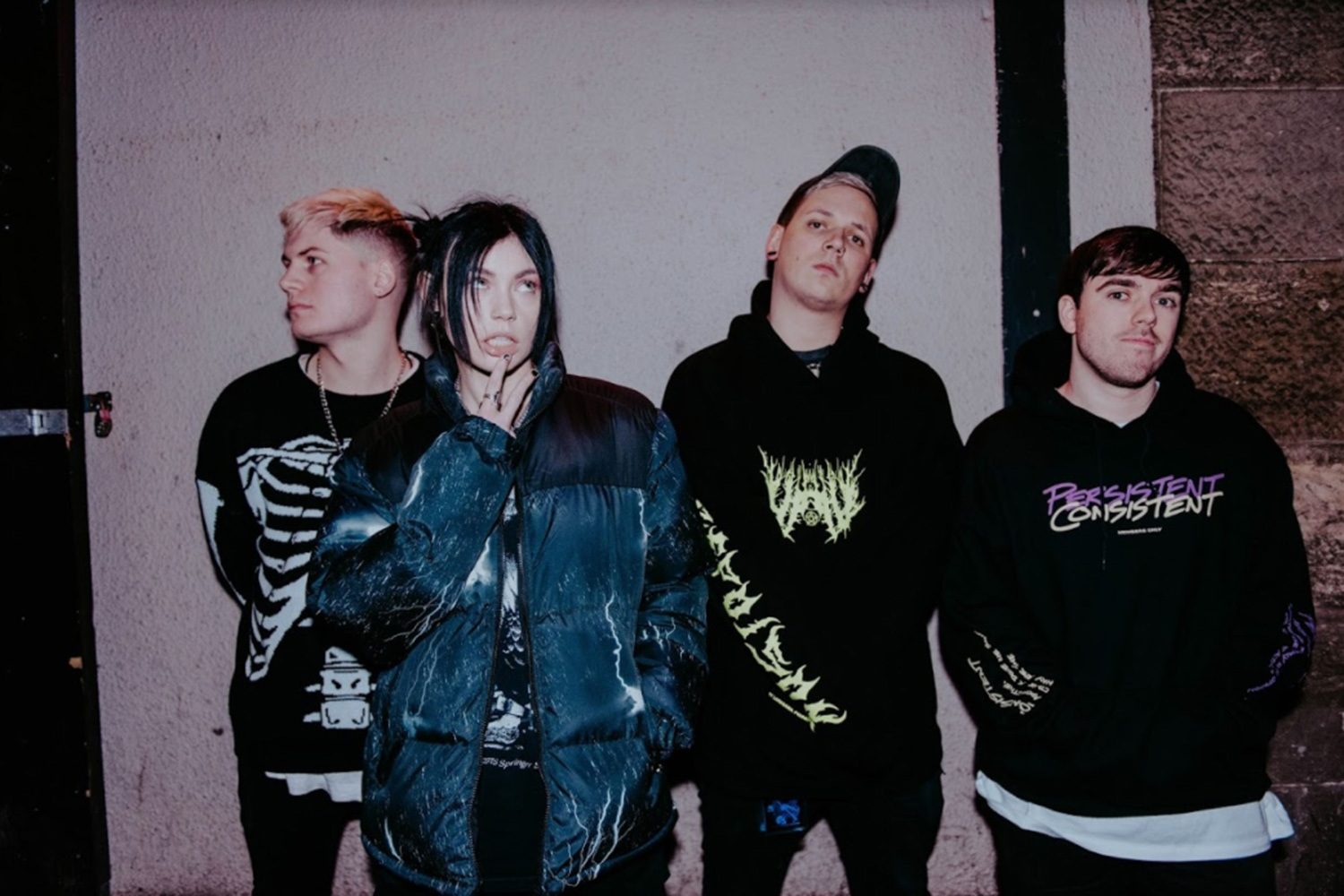
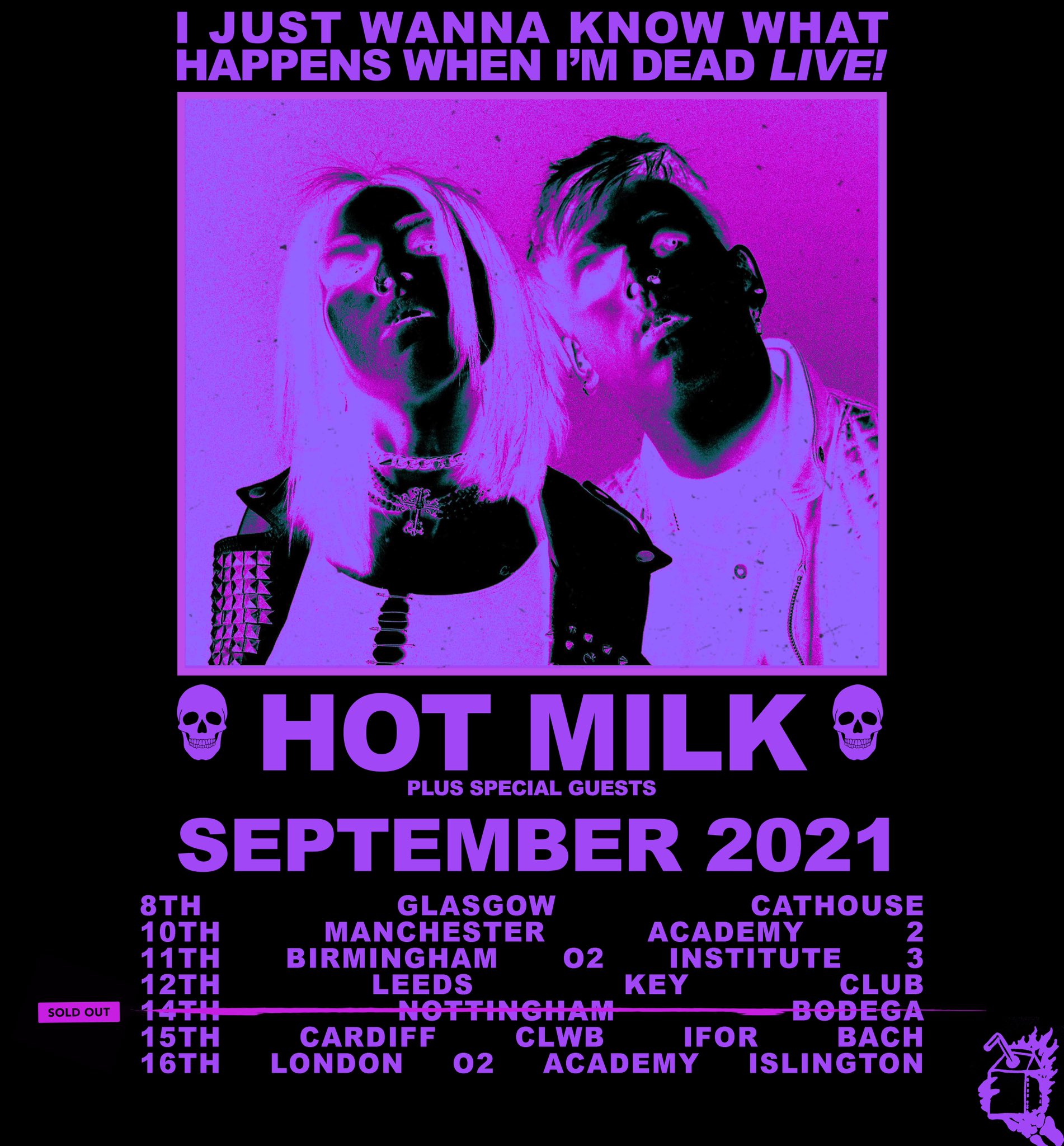




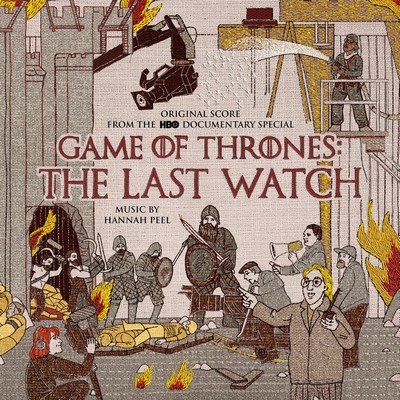


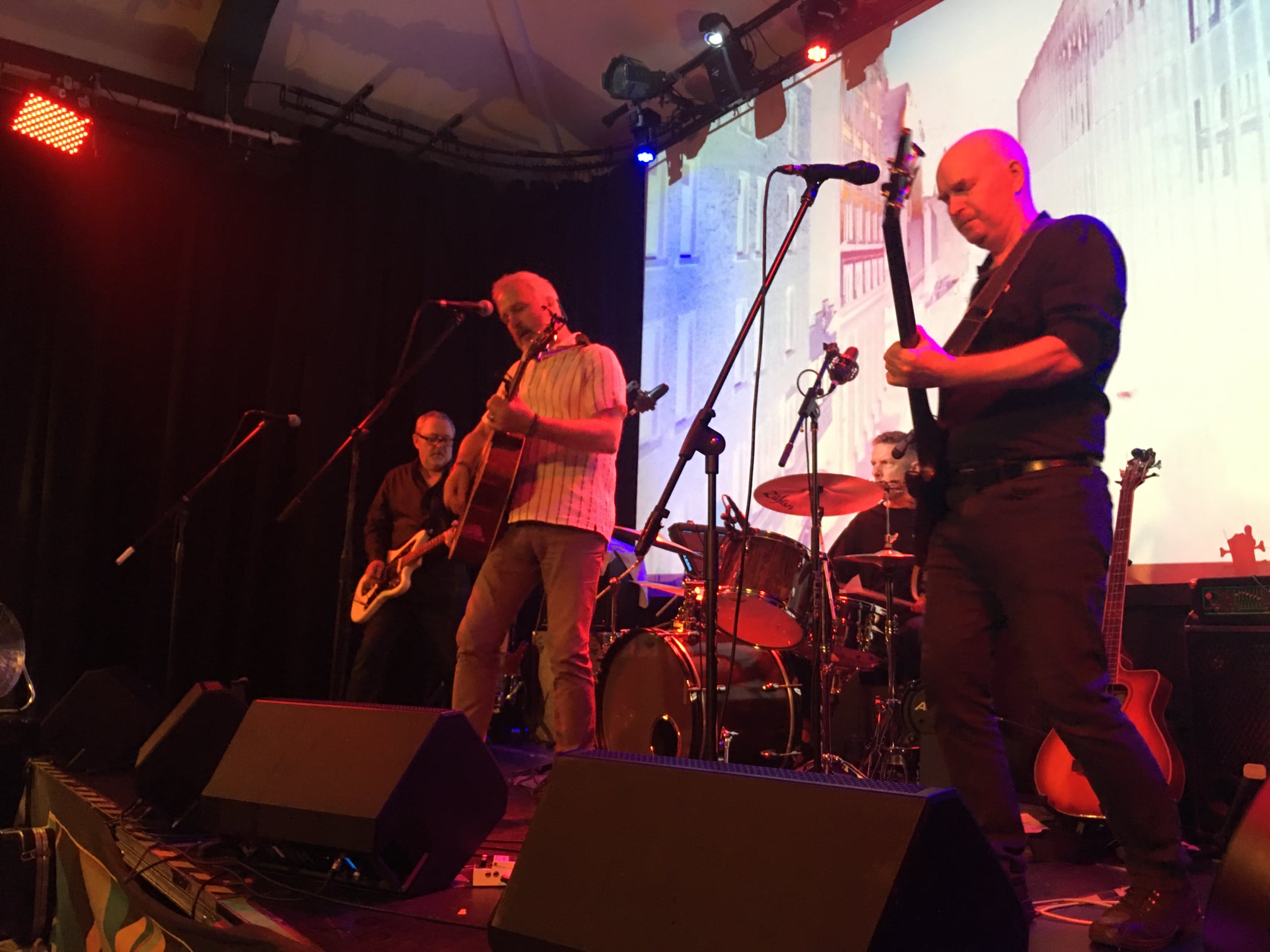

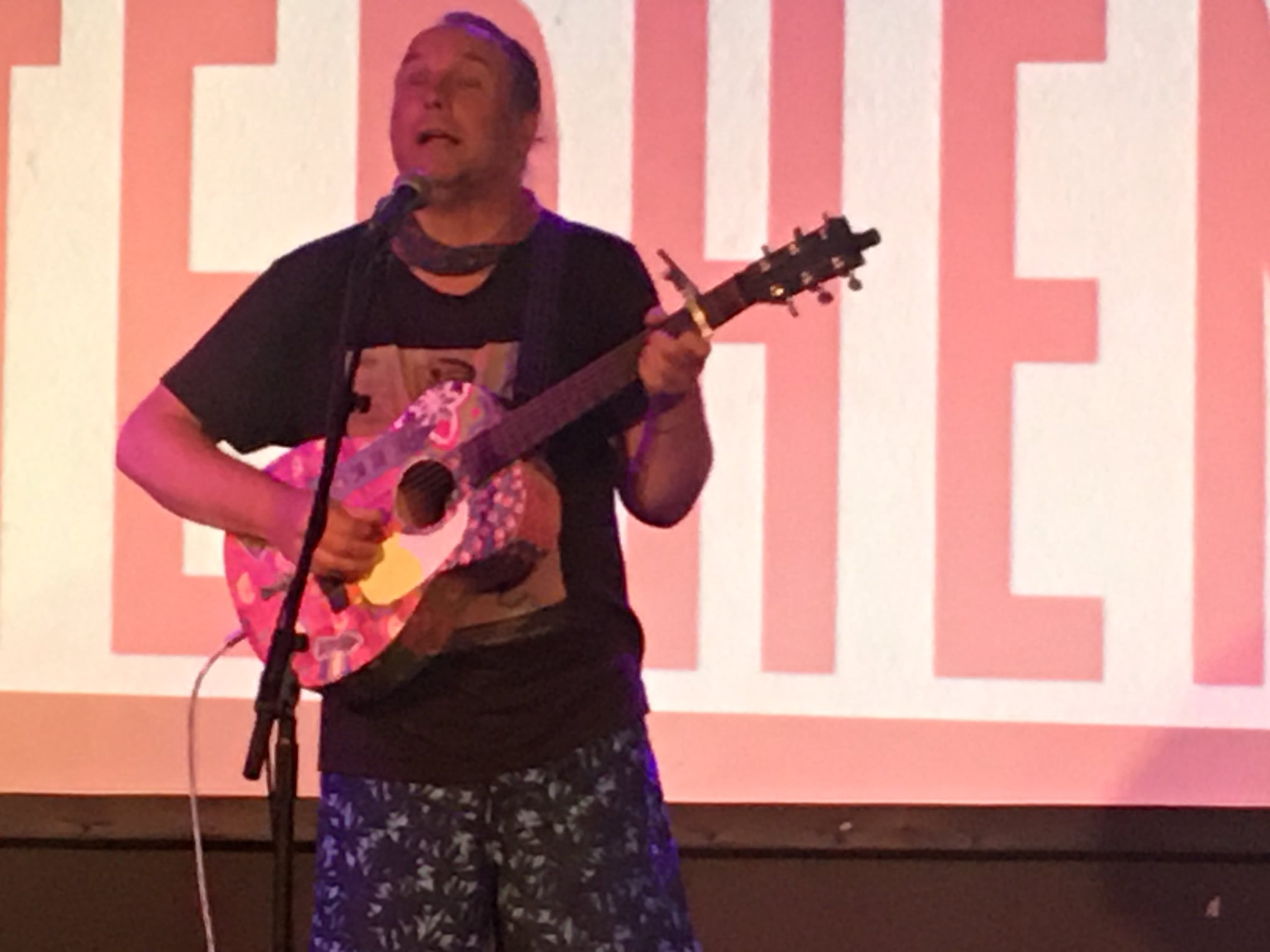
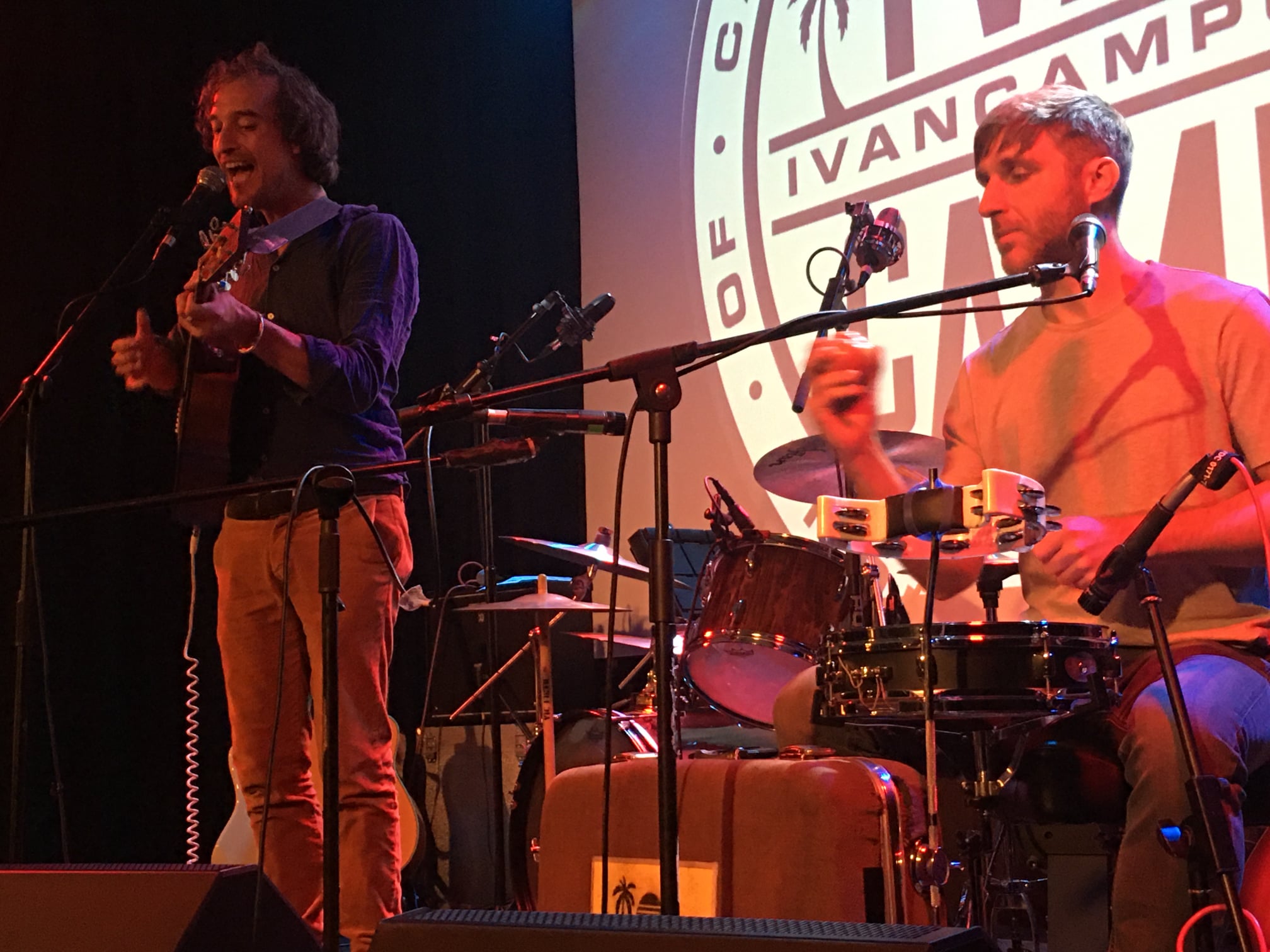


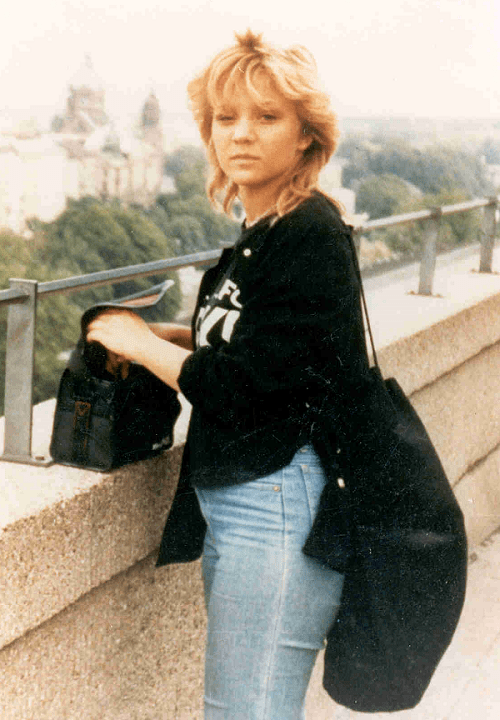


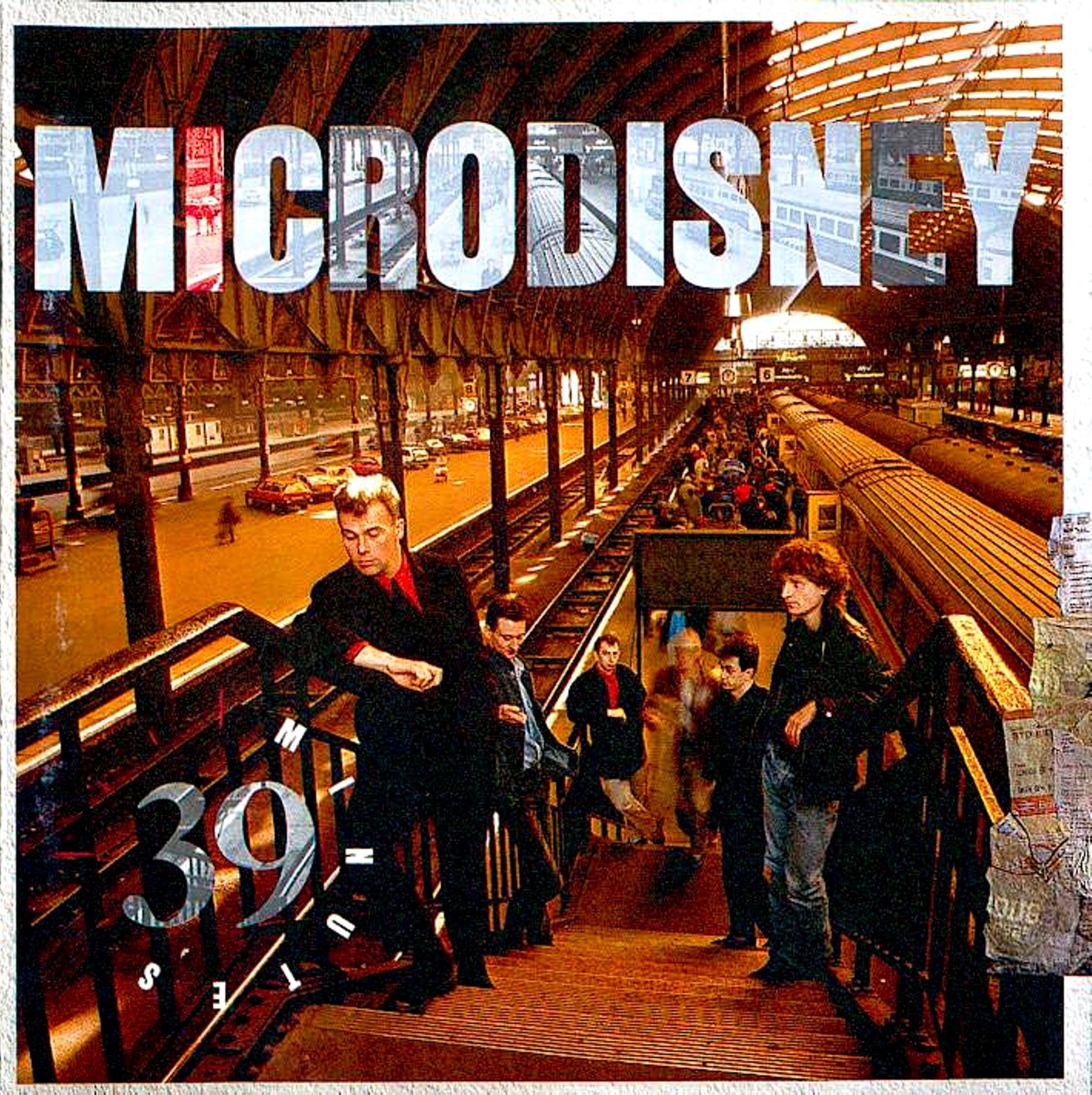

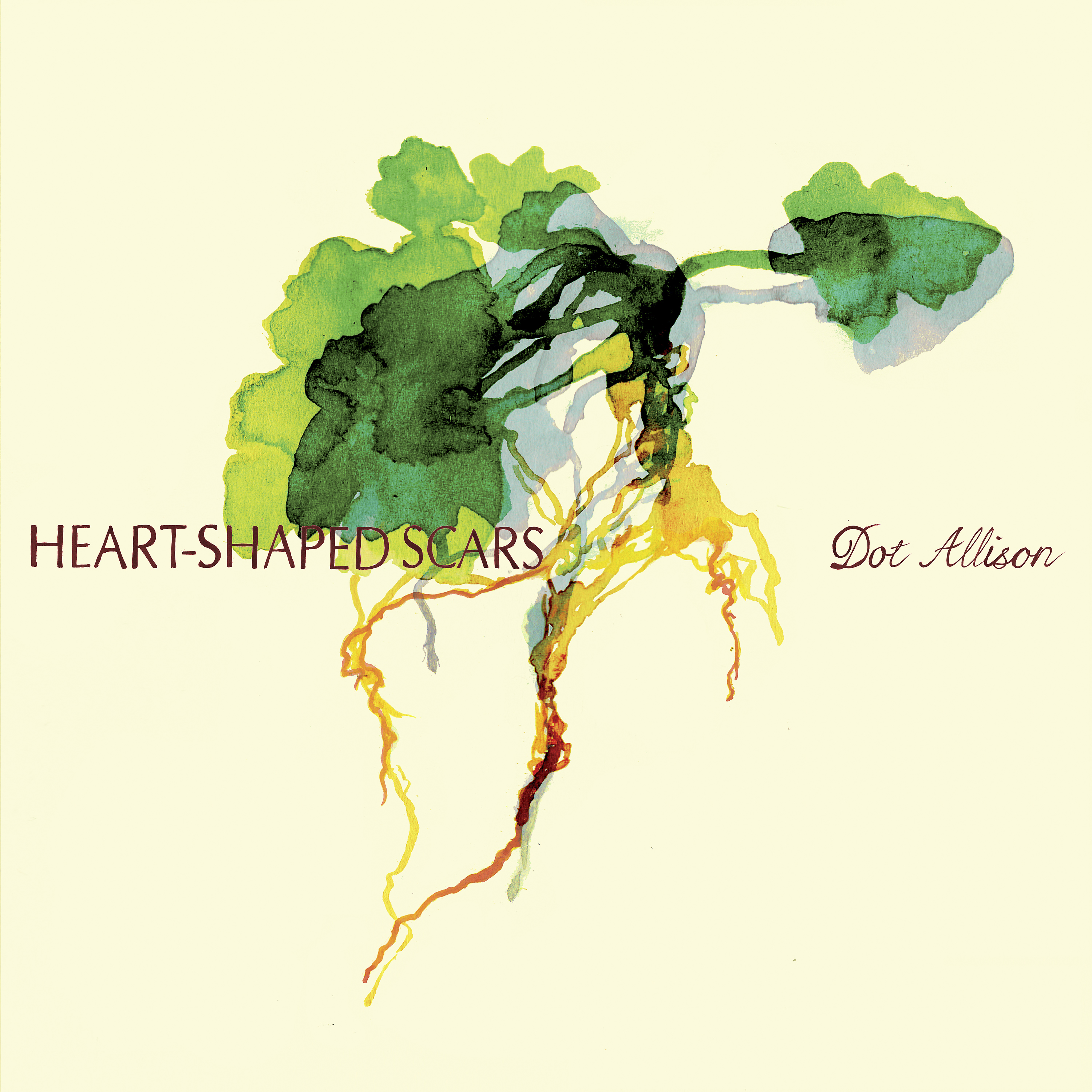


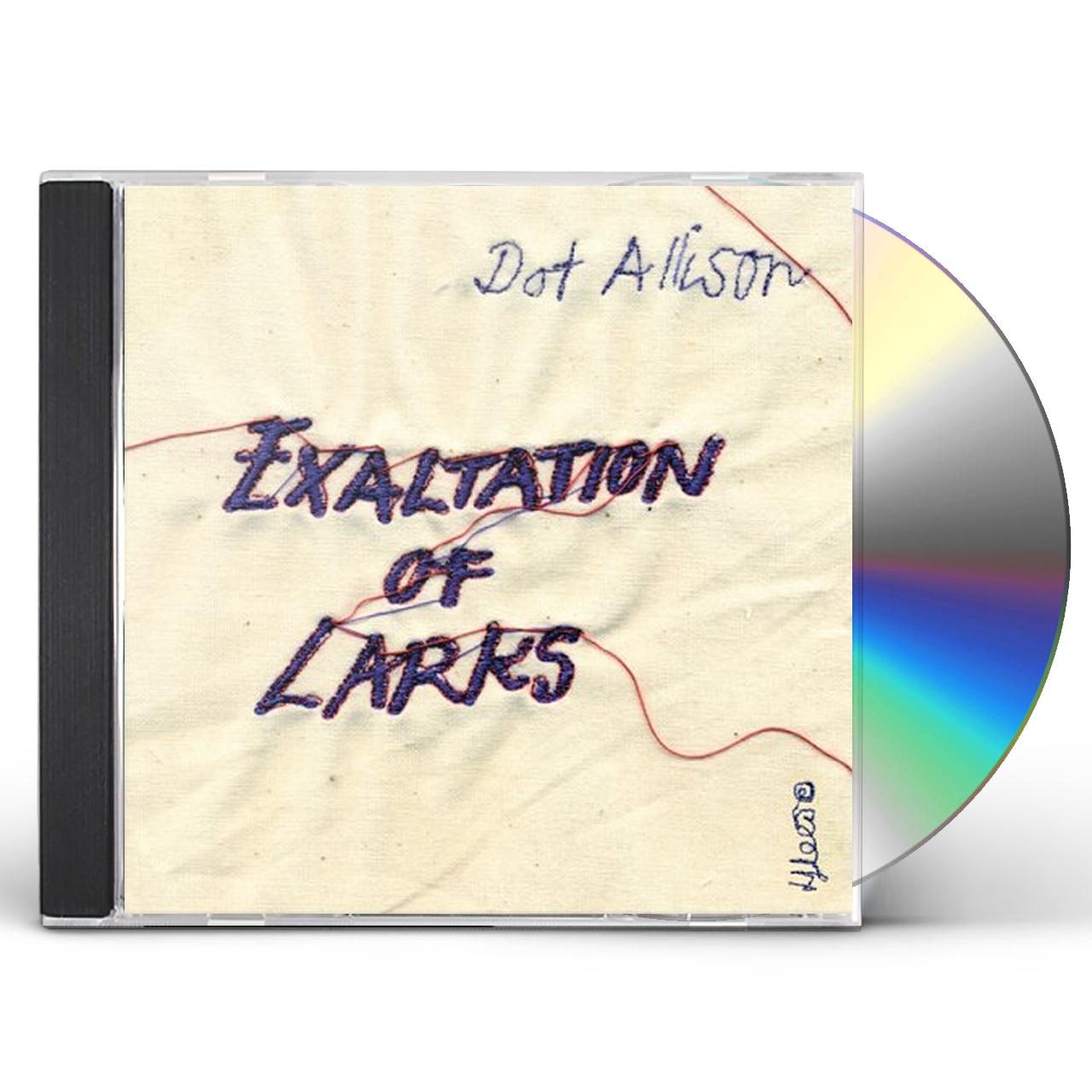


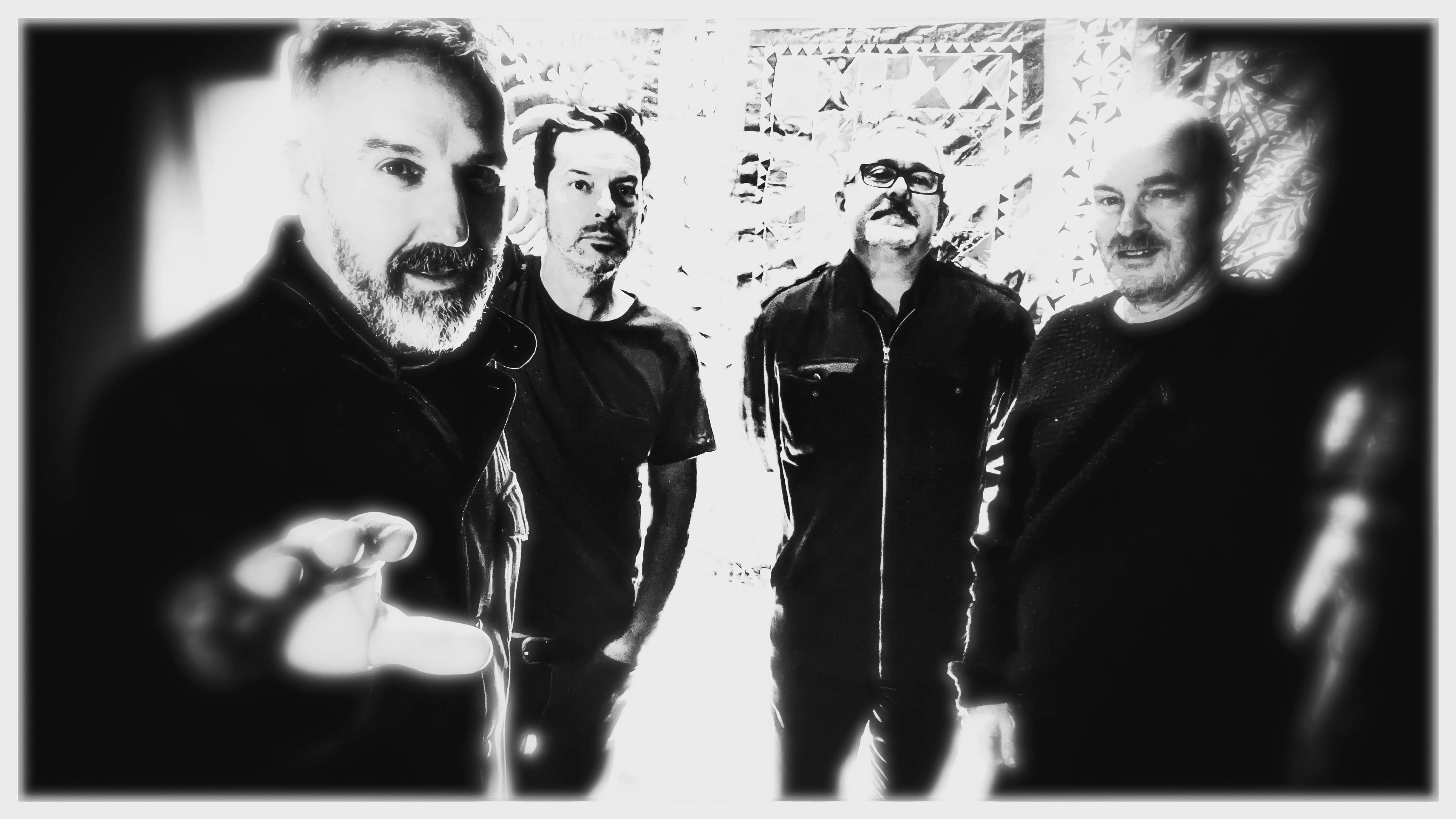

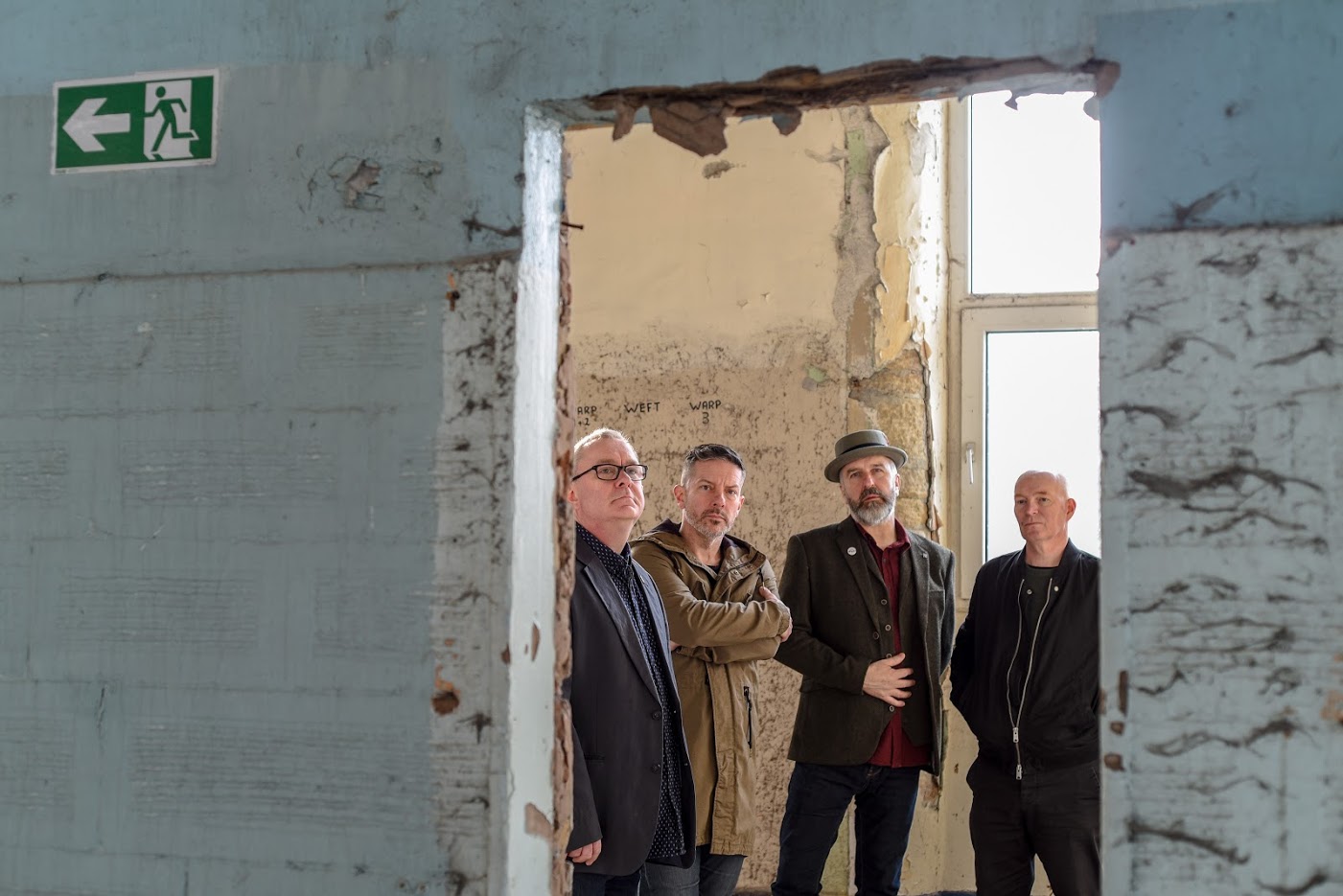


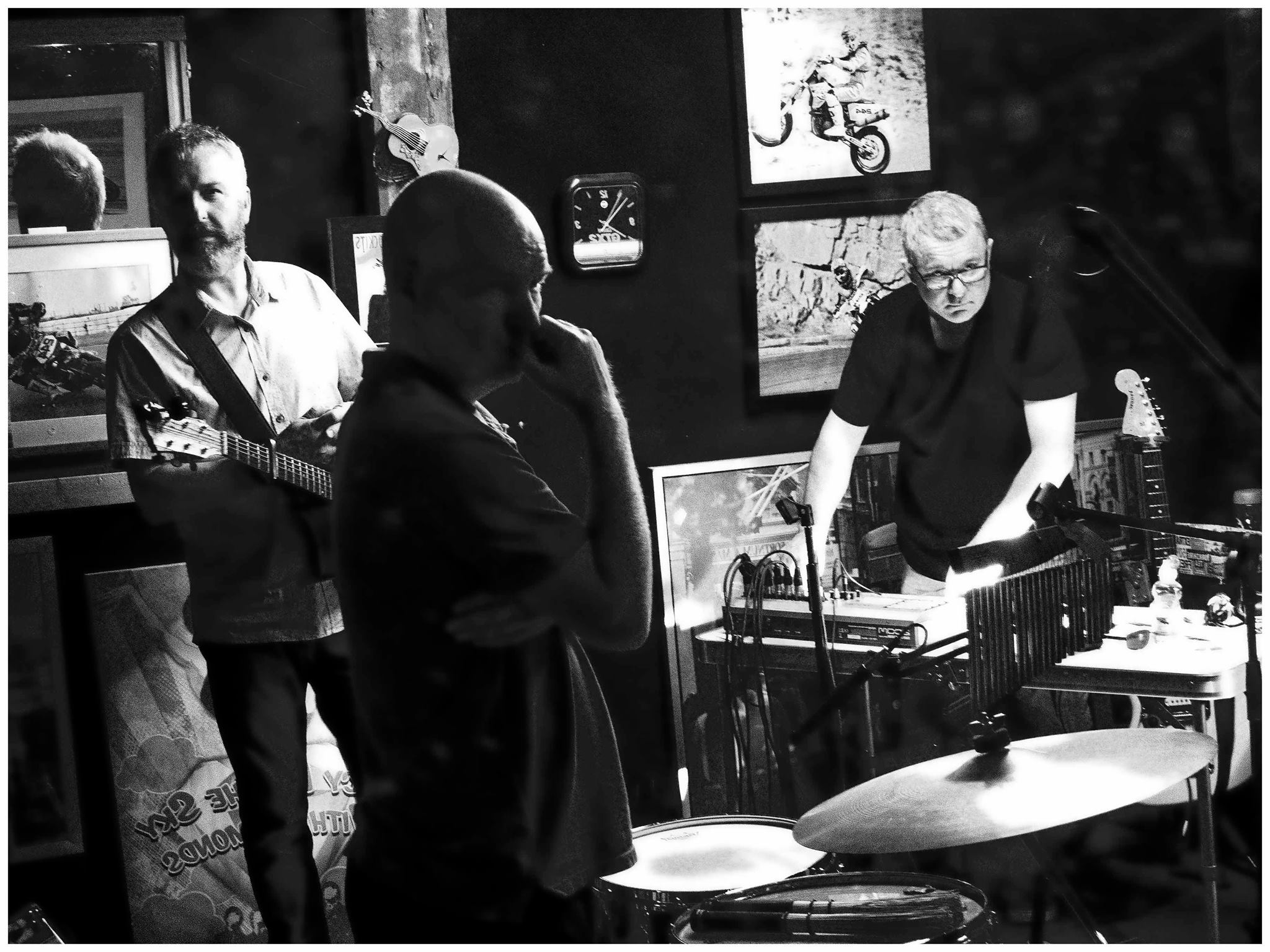

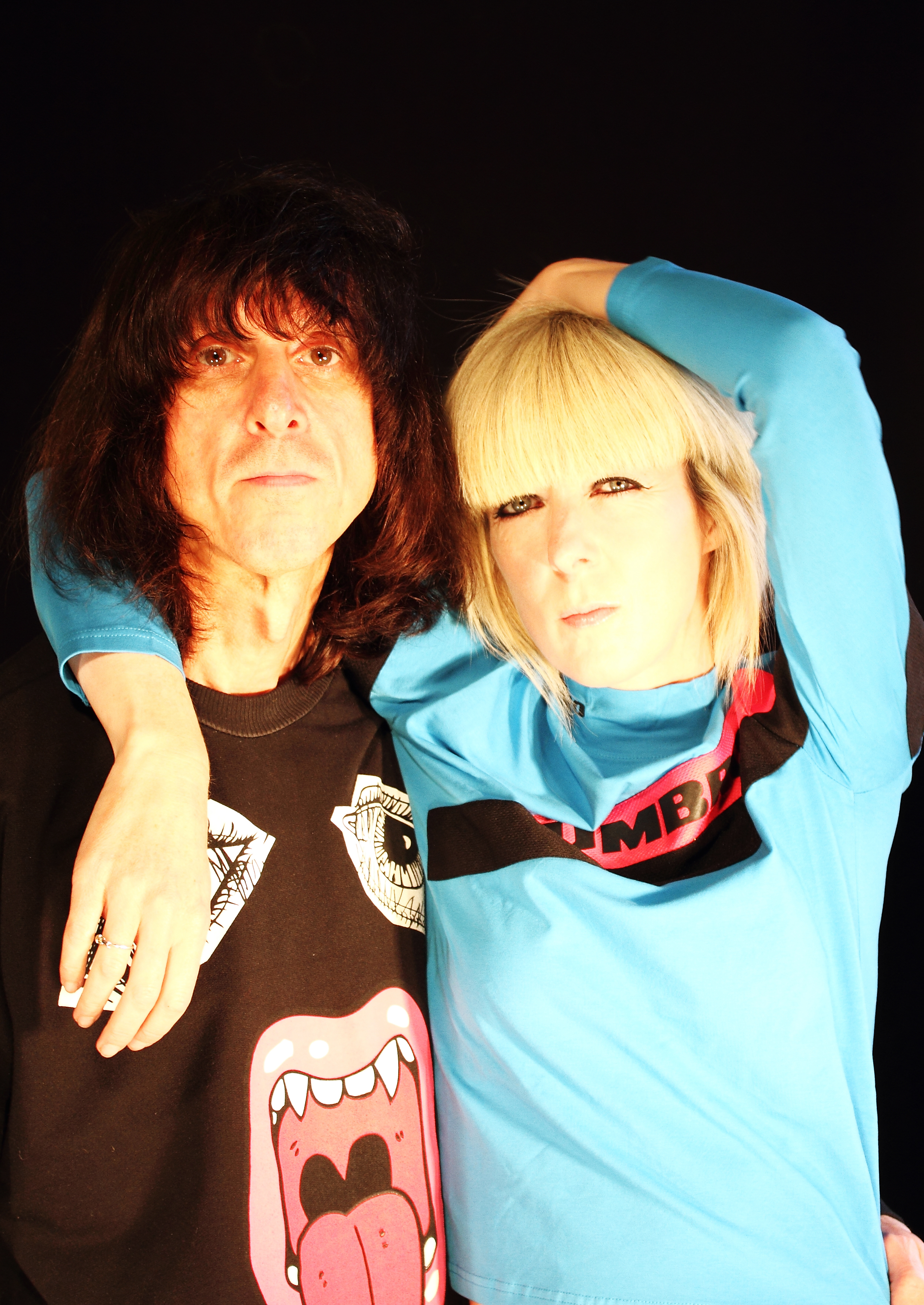

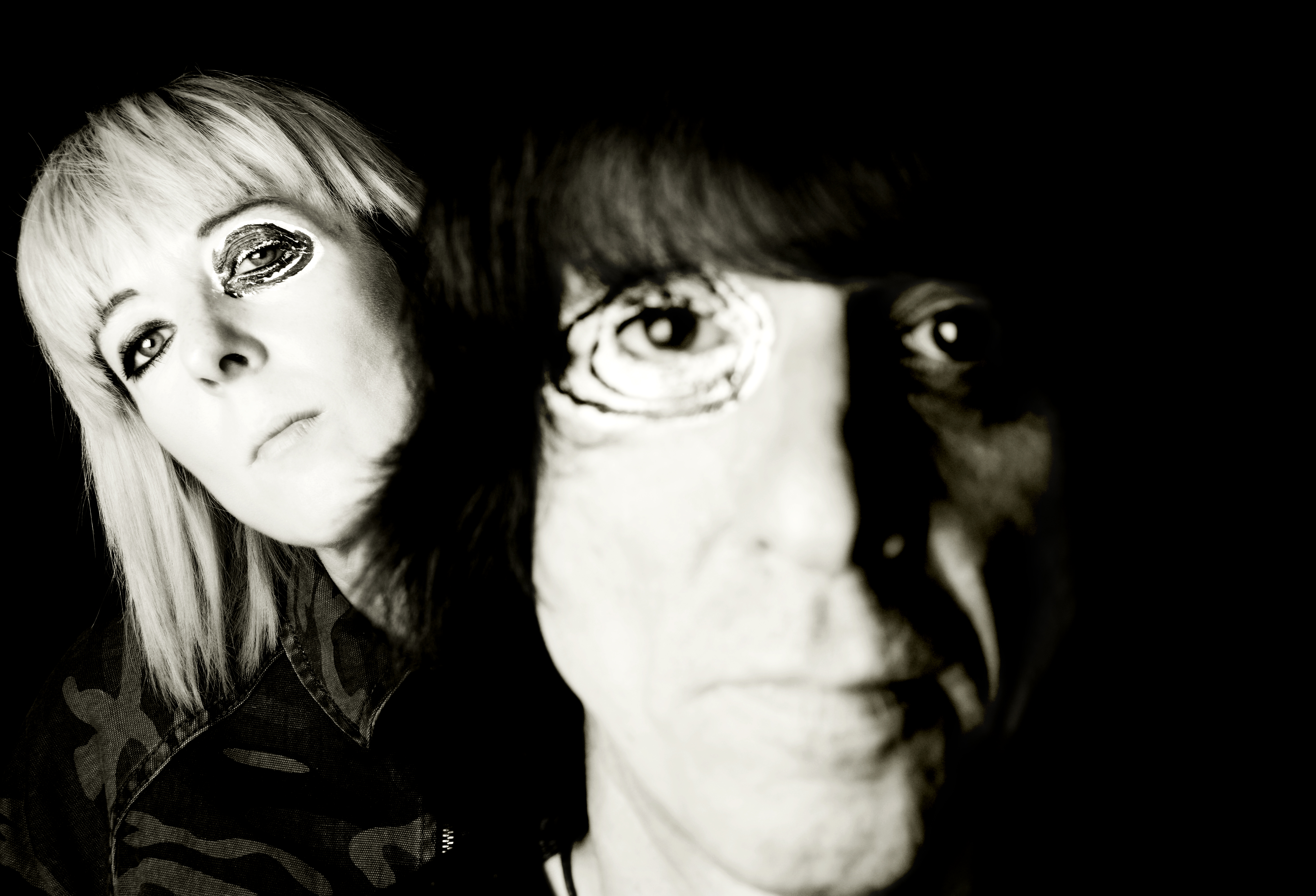
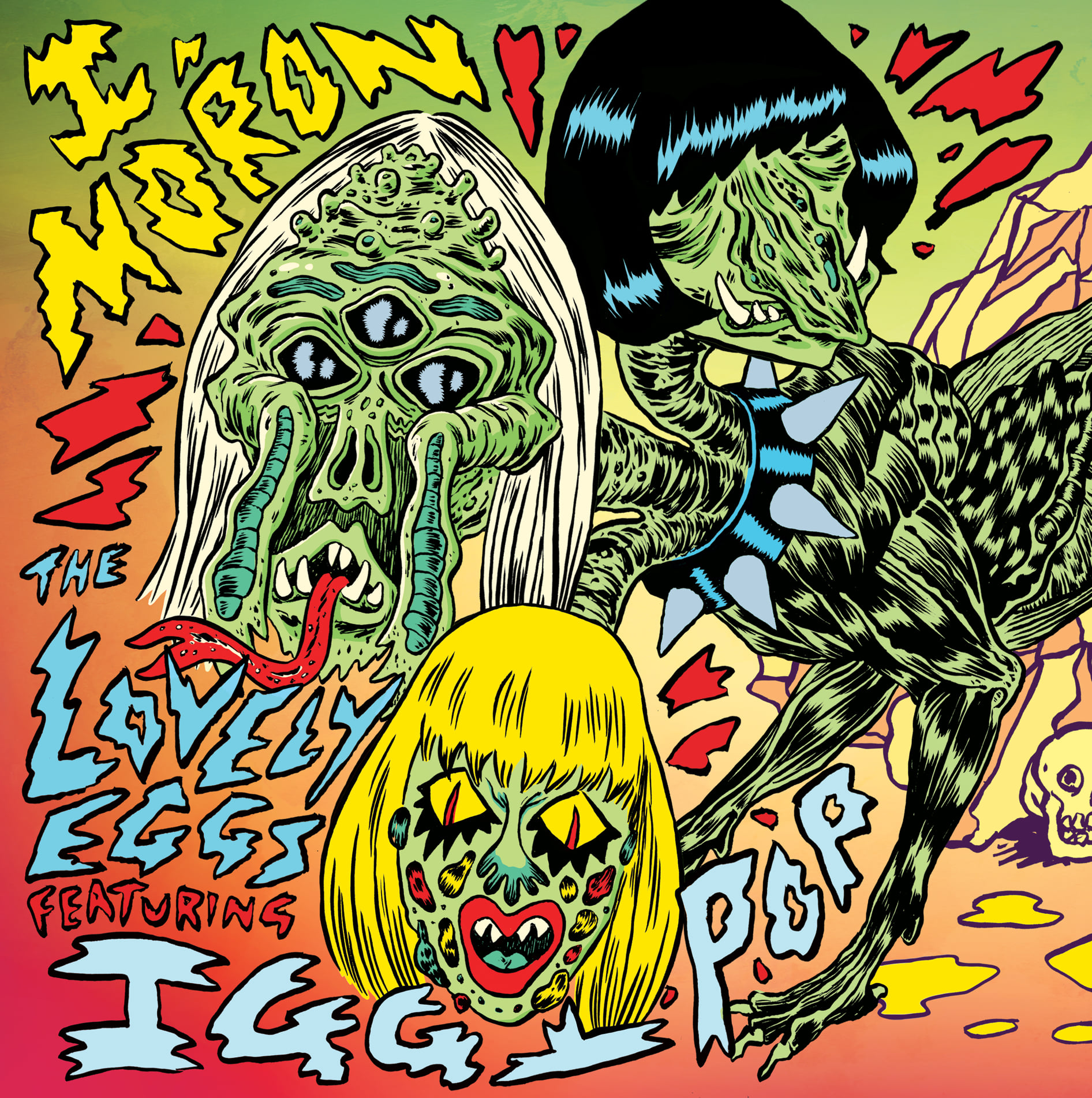

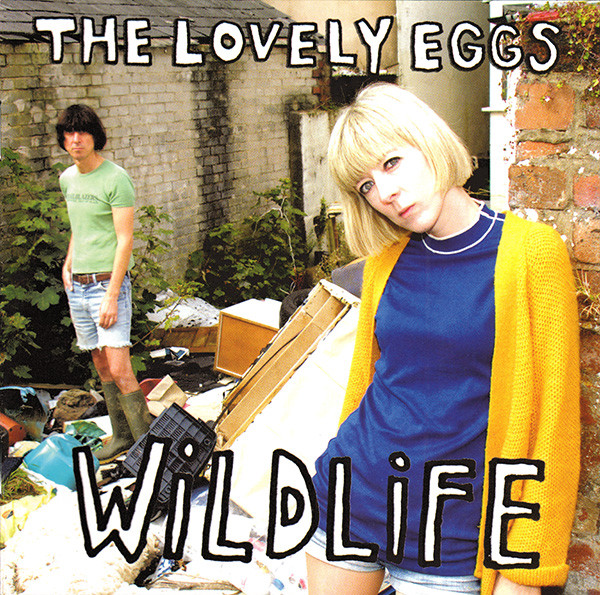
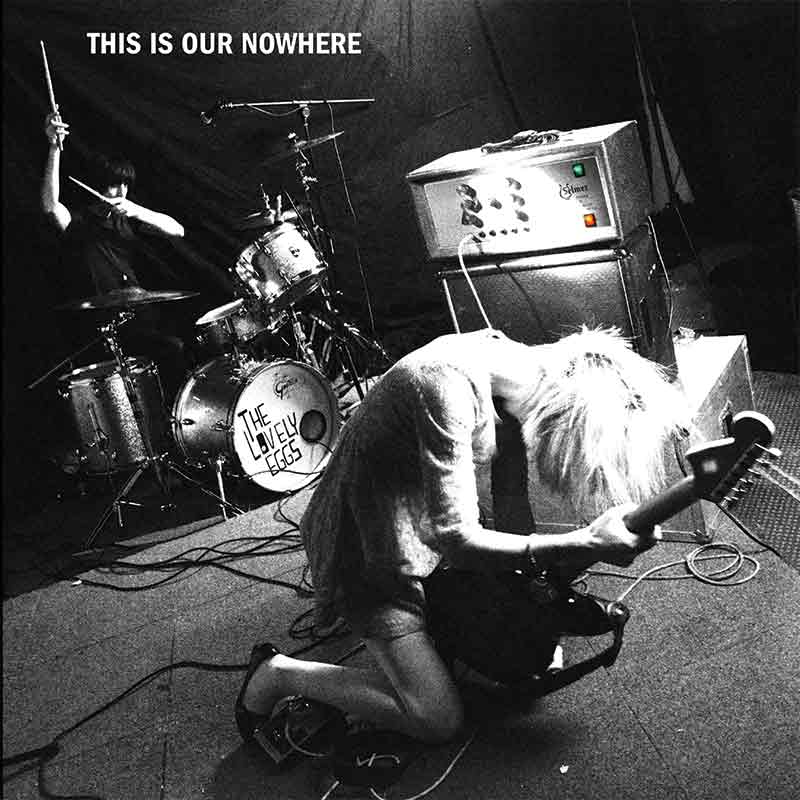


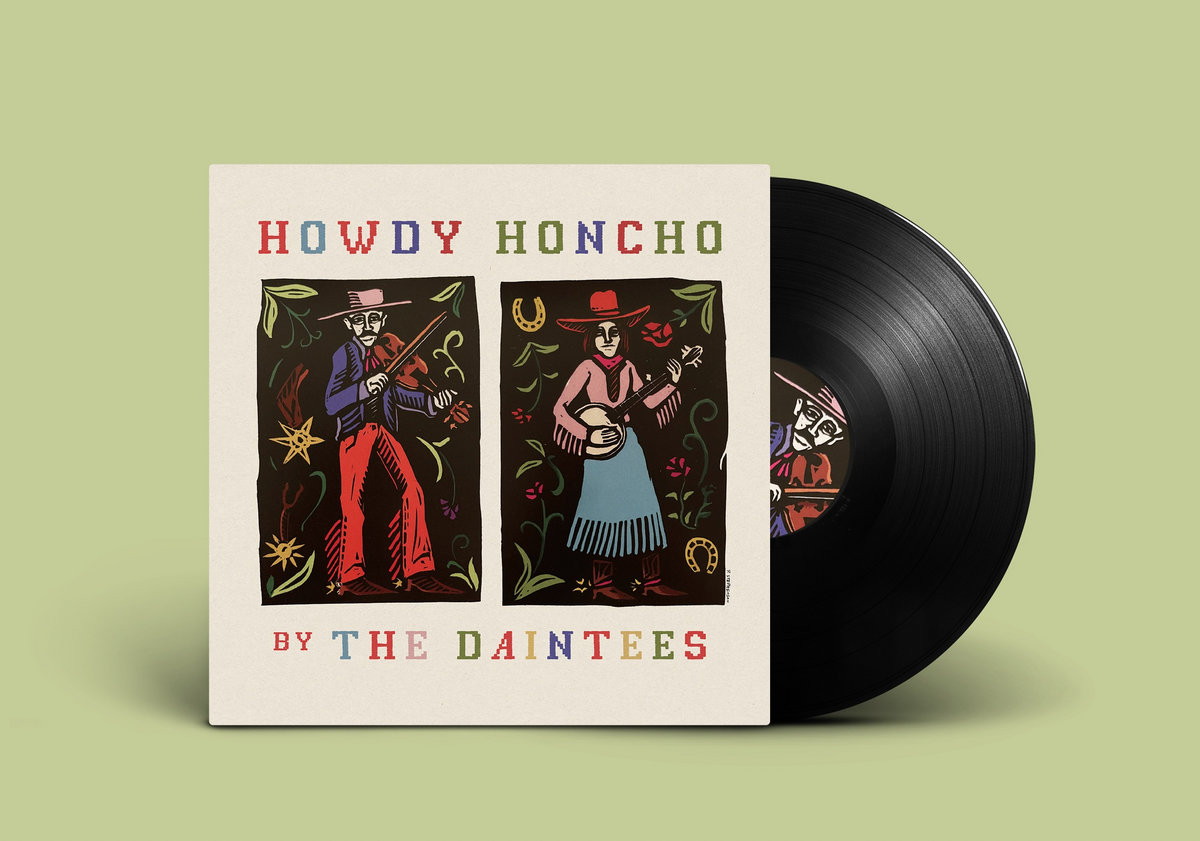

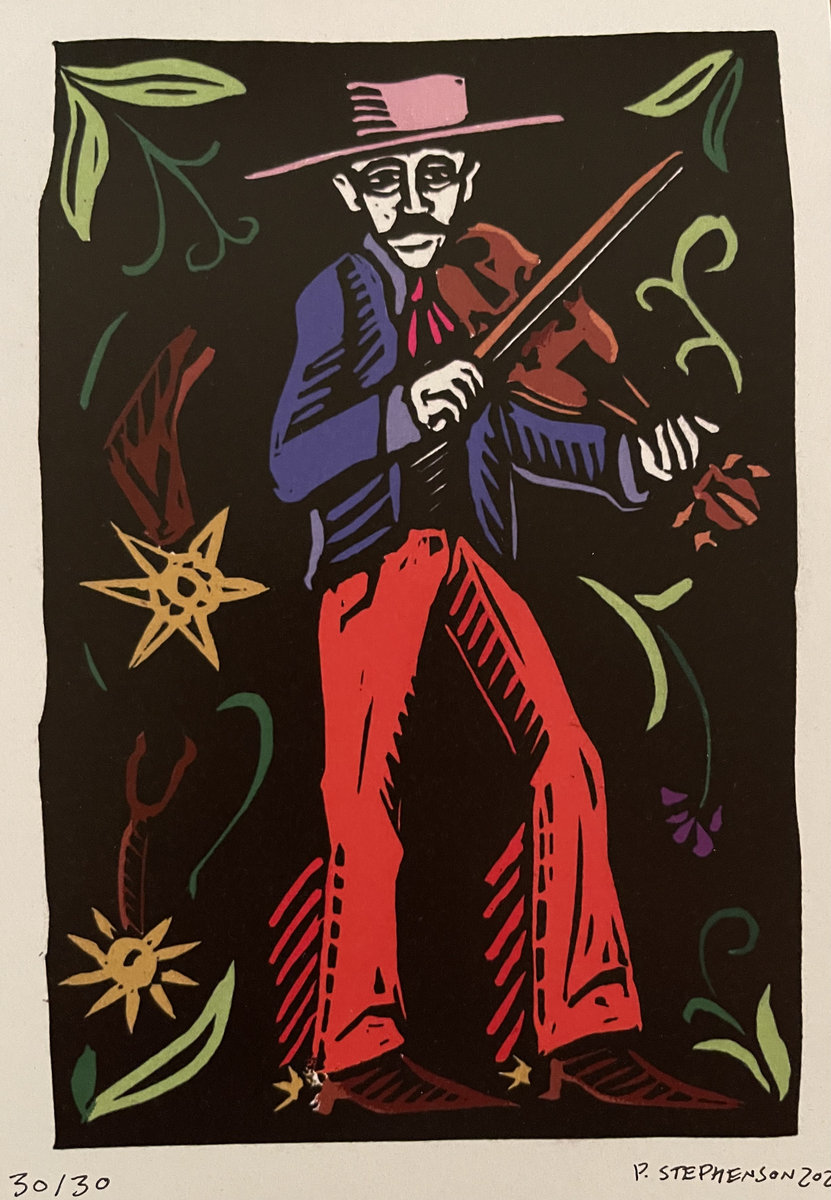



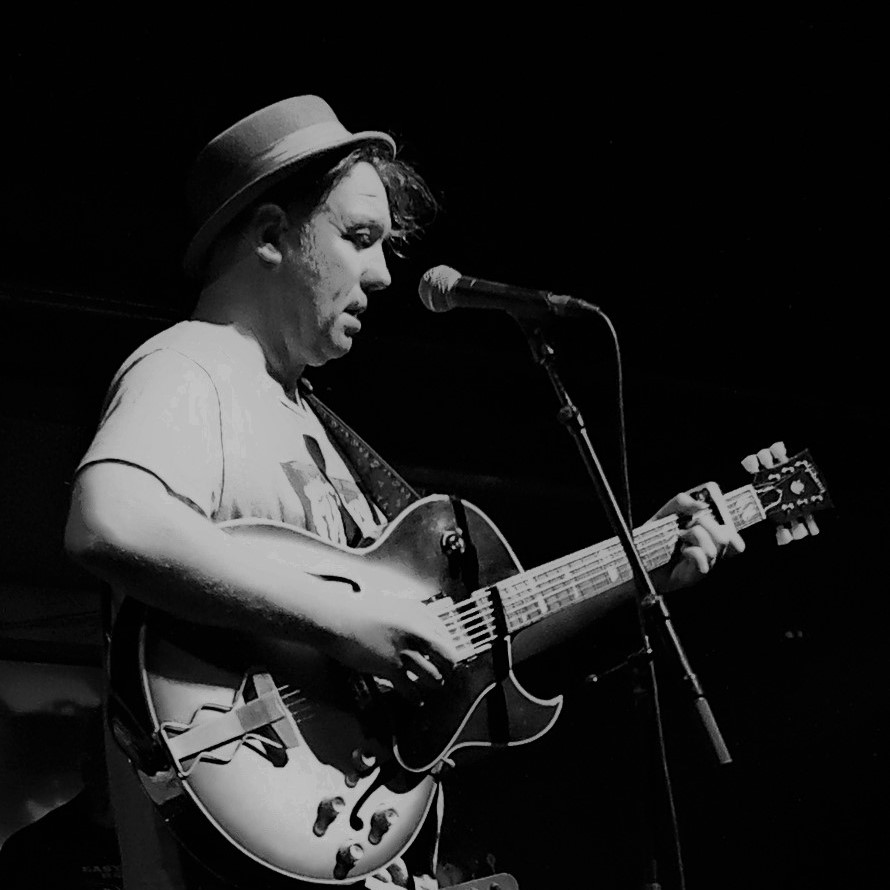

 writewyattuk