What to expect in January in the Premier League

On the verge of the New Year, writewyattuk takes a look at the sporting crystal ball to see what the first month of 2013 will hold for the English top flight, club by club.

Arsenal 

Theo Walcott is switched to goalkeeper by Arsene Wenger, and his manager’s gambit pays off, the 23-year-old England star finally agreeing to a new five-year-deal. The Gunners are beaten 6-0 at the Emirates by West Ham, with two of those coming off the back of Alex Oxlade-Chamberlain’s head. But Wenger, in Napoleonesque mood after the game, told the press, “We have lost the battle, but have won the war.”

Aston Villa

There are scenes of jubilation and street parties throughout Birmingham, with Blues fans also joining the party as Paul Lambert is held aloft on a sea of Villans’ shoulders after his side secure a point in a 0-0 draw at home to Southampton, breaking a long line of heavy defeats, with much talk of ‘corners being turned’ by the under-fire Scottish manager.

Chelsea

A drunken rendition of Blue is the Colour by Rafael Benitez in a West End tapas bar is secretly filmed and becomes an internet hit, finally endearing the Spanish boss to Chelsea fans. Unfortunately though, Rafa falls off a table at one point and breaks Fernando Torres’ big toe, leading to a six-week lay-off for the improving striker.

Everton

Marouane Fellaini is the subject of an FA inquiry after appearing with the reformed Shalamar while serving a ban following an off-the ball incident with Swansea mascot Cyril the Swan. It is later confirmed that he was not in contravention of any club rules, with the latter offence also dismissed after a donation to the Wildfowl and Wetlands Trust and promise of a 50% royalty from a planned duet with Jeffrey Daniel on I Can Make You Feel Good.

Fulham

Martin Jol stuns the football world by re-signing Jimmy Bullard after three months of retirement, his team-mates celebrating with half-time fish and chips during a Craven Cottage clash with Wigan Athletic. The game peters out in the second half and remains 3-3, but Roberto Martinez is impressed enough to offer Bullard a DW Stadium return when his current contract expires in April, with a year’s supply of pies believed to have swung the negotiations.

Liverpool

A storming performance by Steven Gerrard and two goals for the England star in a 3-1 home win over Norwich City leads to Brendan Rogers securing the England star up to the end of the 2019/20 season, up to his 40th birthday, with an option thrown in by the club’s owners to feature as a National Association for Stock Car Auto Racing driver beyond that.

Manchester City

Village rivals Manchester United are appalled after it emerges that despite their 10-point Premier League lead, the Old Trafford club are wasting their time as their Etihad Stadium foes have actually bought the title, and with it a new Super League style clause in which the league winners will be dubbed ‘Results Toppers’ but then enter a series of extra play-offs (which carry on until City retain the title).

Manchester United

Sir Alex Ferguson’s brand new watch, snapped up as a late present by Jonny Evans in the Boxing Day sales, leads to memorable scenes at Old Trafford, as the veteran United boss asks the fourth official and referee to blow for time, despite his side trailing  2-1 at Tottenham in a stoppage-riddled Premier League clash. The officials are so stunned that they blow up for time there and then, to wild applause and post-match media praise from the veteran Scots manager.

Newcastle United

Demba Ba puts pen to paper on a new contract at St James’ Park, after a last-minute deal negotiated with boss Alan Pardew. A newspaper report two days later reveals that the clincher was a bizarre clause involving a link-up with Magpies fans which will see all Newcastle season-ticket holders given free passage to fly out to Africa and support Senegal during their forthcoming matches with Angola, Liberia and Uganda.

Norwich City

A tremendously-potent opening minute Bradley Johnson own goal sets the Canaries on their way to a defeat against Liverpool, bringing to an end a New Year winning run which saw Chris Hughton’s back into the top half of the table, the midfielder later admitting that a continued run would have upset his side’s hope of remaining unfancied Europa Cup hopes and may have an adverse effect on the roll-out of Delia Smith’s new Colman’s and Underhotdog food range.

Queens Park Rangers

Further investigations by Harry Redknapp into the wages bill at Loftus Road find that not only are Stan Bowles, Gerry Francis and Rodney Marsh still on the payroll at Rangers, but also the entire troupe of Chipperfield’s Circus. The forthright QPR boss said: “I should have known when four of my inherited players got out at the training ground on my first day there and their car collapsed around them.”

Reading

Brian McDermott adds his backing to a controversial plan by Reading owner Anton Zingarevich to sell off the Madejski Stadium and move back to Elm Park in a bid to stimulate the club into better results. Plans for the new Thames Sports Investments Stadium reveal it will have old-fashioned crumbling terraces, open to the elements for home and away fans, with new housing on the site set to be bull-dozed as part of the ambitious scheme.

Southampton

A 0-0 draw at Aston Villa leads to the Premier League’s latest casualty, with Nigel Adkins making way for Darren Mouatt. Adkins famously made the ‘implausible leap’ from Scunthorpe physiotherapist to Scunthorpe manager and on to the Saints, and now the club’s visionary owners have cut out the middle man and installed the current Iron physio as their next boss. Mouatt’s appointment was seen as a body blow for Iron boss Brian Laws, the ex-Nottingham Forest player feeling it was his turn next at St Mary’s, then possibly Mouatt after him.

Stoke City

Tony Pulis is in line for further media plaudits after a January of glorious football for the Potters, and much talk of their dazzling one-touch style, short throw-ins and precise passing game. However, the results were not on Stoke’s side, with several defeats ruling out Pulis’ chance of the manager of the month award.

Sunderland

Black Cats manager Martin O’Neill has surprised the football world after strengthening his squad during the January transfer window, bringing in six former Nottingham Forest team-mates he won the European Cup alongside. O’Neill has seen sparkling performances from new recruits Peter Shilton, Viv Anderson, Kenny Burns, Larry Lloyd, Ian Bowyer and John Robertson, but ruled out his own return to playing as ‘ridiculous’.

Swansea City

Leading figures in the world of entertainment have backed Sir Alex Ferguson’s criticism of Swansea’s Ashley Williams after the incident in which United’s Robin van Persie was deemed ‘lucky to be alive’ after being hit in the head by a ball struck by the defender before Christmas. When Williams kicked the ball into the crowd during a 2-1 win over Stoke, it was revealed that the watching Robbie Williams ‘might have died’ if he’d been just two inches to his left. And in the light of that revelation it was revealed that Williams came close to a similar injury while tripping over impressario Bill Kenwright as he laced his boot in the directors’ lounge after a defeat at Everton.

Tottenham Hotspur

Spurs suffer a controversial exit from the FA Cup following a virtual goal from Keith Houchen, following  a free-kick from Cyrille Regis, with the FA looking into the matter right up to the eve of the fourth round. Meanwhile, Gareth Bale takes advantage of a gap in the fixtures to score a first-half hat-trick for Juventus against Genoa in Serie A then Barcelona against Osasuna in La Liga following the discovery of a loophole in the UEFA loan system.

West Bromwich Albion

While Baggies boss Steve Clarke continues to win plaudits at the Hawthorns, further evidence emerges of previous roles as right-hand man. While the football world knew about him deputising for Roy Hodgson at West Brom, Ruud Gullit at Newcastle, Gianfranco Zola at West Ham, Kenny Dalglish at Liverpool and Jose Mourinho at Chelsea, the 49-year-old Scot revealed after a 3-0 win over Midlands rivals Aston Villa that he was also No.2 to the Weinstein brothers at Miramax Pictures and Gary Barlow at Take That.

West Ham United

The Hammers were looking a little stunned at New Year, after boss Sam Allardyce’s family confused his Christmas list with his injury list, Big Sam’s scruffy handwriting leading to – among others – Mohamed Diame receiving  a hamster, Gary O’Neil some grain and an Elvis CD, and Ricardo Vaz Te a toy soldier. Meanwhile, Andy Carroll received Donkey Kong for his X-box following a further mix-up. Yet his gambit ultimately proved successful, wins following at Sunderland and Arsenal.

Wigan Athletic

Dave Whelan is no stranger to controversy, but no one expected his decision to force Roberto Martinez’s players into an innovative bonding exercise to make successful ‘apprentices’ at the DW Stadium. After a damaging FA Cup exit against Bournemouth, Whelan announced he would only start re-paying the players’ wages if they successfully got through his business sessions, the Latics sent out to former JJB Sports premises across the North-West to make a living selling sportswear bought back from the firm’s administrators.

This Malcolm Wyatt article first featured on the sportnw.co.uk website and re-appears here with the permission of the author and its original home.
Posted in Football, sport | Tagged , , , , , , , , , | 4 Comments

Slade are for life – not just for Christmas

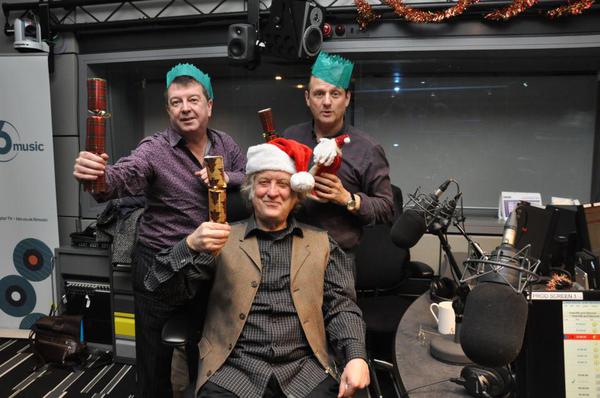
It's Christmas: Noddy Holder with BBC 6's Stuart Maconie and Mark Radcliffe

Keep Rocking: Noddy Holder gets into the festive spirit with BBC 6’s Stuart Maconie and Mark Radcliffe (Photo: BBC)

On the weekend BBC4 rightly celebrated the festive glory that is Slade – with a dusted-off documentary, songs from the Beeb archive songs, and the first terrestrial screening of the wondrous Flame for many moons – writewyattuk decided it was time to bang Don Powell’s bass drum again for Wolverhampton’s finest …

My daughters have already learned a valuable lesson in life. It’s not officially the festive season until you’ve heard Noddy Holder shout ‘It’s Christmas’ at the top of his lungs at the climax of Merry Xmas Everybody. For my seasonal blog this weekend I’ll happily shout from the rooftops that ‘Tis the season to hear Slade songs. And thankfully I’m not alone in that sentiment.

As I was only born in 1967 – the year Noddy and the Memphis Cut-Outs met ‘N Betweens Don, Dave and Jim on a slow boat to Germany – I can’t pretend I’ve been a Slade fan right from the off. I can’t say I shelled out for the Ambrose Slade album first time around, can’t remember where I was when Coz I Luv You topped the charts, can’t kid you I turned up for the press preview of Slade Alive at Ronnie Scott’s, and can’t hoodwink you into believing I was at Earls Court for that momentous gig so many fans get dewy-eyed about.

Glammed Up: Slade in their pomp (Photo: BBC)

Glammed Up: Slade in their pomp (Photo: BBC)

I did work with someone who went to the Sheffield premiere of Flame, but personally my love for the band has been largely unrequited. Yet Slade have always been important to me, as well as an almighty influence on many of the bands I went on to follow in later years.

I had a wide grounding in music from my older sisters – from Buddy Holly to David Essex and from Rod Stewart to Mud and Pilot (you won’t mind if I leave my appreciation for the Glitter Band in brackets). Young as I was, I knew the difference between street credibility and Showaddywaddy, and certainly didn’t appreciate Abba’s musical worth until I saw Elvis Costello’s blinding version of Knowing Me Knowing You at Glastonbury in the late ’80s.

Yet while my sisters’ tastes alternated, my brother – seven years older – was more focused. And with him it was Slade first and foremost. He also honed an appreciation for the likes of The Beatles, T Rex, Wizzard, Steve Harley and Wings, but at the time seemed to have little time for anyone but Slade. Then again, you didn’t really need anyone else with the Black Country Four.

In later years I discovered – albeit 15 years too late – the power of Mott the Hoople and early Roxy Music. But there was only one Slade. And no matter how many times my bro tells his tale of listening on the school field on a transistor radio to Johnny Walker one lunchtime when Slade went straight in at No.1 for the first time, their appeal will not fade.

Fashion Icons: Don, Noddy, Jim and Dave (Photo: BBC)

Fashion Icons: Don, Noddy, Jim and Dave (Photo: BBC)

I was only six when Merry Xmas Everybody was first released, but I’ll always equate the first half of the 1970s with climbing trees, endless summer days, The Big Match and Slade. I only remember the odd Top of the Pops performance and cuttings from the teen mags lovingly glued into his scrapbook. But between trips into the girls’ bedroom to listen to Hold Me Close, The Bump and Oh Boy, I would return to ours to hear Mama Weer All Crazee Now and Cum on Feel The Noize, or Everyday, Far Far Away and How Does It Feel at more reflective moments. And all those songs sound just as relevant today.

Slade were first and foremost about stonking live shows but then hit singles, and in the case of the latter few came close until The Jam, Squeeze, Buzzcocks and The Undertones’ own top-notch 45s some two years after In For A Penny, after which came an inevitable burn-out. But there were hidden gems too, not least anthemic b-side She Did It To Me. And what pre-pubescent kid could have resisted Noddy’s live belch on Darling Be Home Soon? More to the point, their influence was still rubbing off a quarter of a century later, as reflected in the ’90s by fellow working-class inspirations Oasis.

The appeal of their film, Slade in Flame, also seems to have grown over the years, and to this day esteemed critic Mark Kermode raves about it as ‘the Citizen Kane of pop films’, despite the fact that this grittier, downbeat vision of the glam rock era was largely perceived as a failure at the time. And the soundtrack itself is spot-on, not least the wonderful singles it featured.

It’s always dangerous to analyse, but I suppose in retrospect Slade had that unmistakable council house feel that Bolan, Bowie and Ferry couldn’t quite pull off. Like many punk and new wave bands that followed, they showed you didn’t need an art college place or electronics degree to make it in a band. If you had enough talent and were committed enough to do something about it, you were halfway there. And you didn’t need a doctorate in sociology to realise Slade were just four ordinary lads from Britain’s industrial heartland.

I got to see them eventually, albeit not until mid-December, 1982 – exactly 30 years ago –  during the heavy metal phase they were flirting with. But they never pretended to be anything they weren’t, and I was proud to be there with my brother and another close mate for their festive show at Hammersmith Odeon, a year after We’ll Bring the House Down rocked the charts. That night passed into our own folklore history, not least as it was the first time I got slightly rat-arsed, albeit only aged 15, courtesy of the Britannia pub over the road from the venue itself. What really went on that night is a bit cloudy, but it certainly involved a heady mix of hippies, rockers, skins, punks and new wave fans.

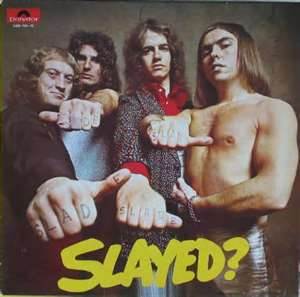
Thumbs Up: Nod, Don, Jim and Dave spell it out

Thumbs Up: Nod, Don, Jim and Dave spell it out

I remember a ginger-haired guy leading the singing in the pub, his voice strong enough to offer him the chance of a stand-in if he ever wanted to take Noddy’s place. I also recall a biker pouring beer over a complete stranger’s head 50ft below him and getting nothing more than a few swear-words. Then there was the skinhead who said: “Oi hippie – buy me a pint!” and afore-mentioned long-haired dreamer doing just that in a scene straight out of The Young Ones, the anarchic comedy series first aired that year. I threw up on the tube home and distinctly remember people changing carriages at the next stop. But it was a cracking night and all part of growing up and being British, I guess.

As far as I know, Don and Dave still tour in a tribute band, and unlikely as it is I’d still like to see the whole band back together again one day. Jim Lea gave us a glimpse of how good that would be in a recorded 2002 live show in Wolverhampton (available on 2009 release Therapy). Age will not sully them, and it would be so good to see Don chewing a 40-year-old piece of gum, hear the power of Nod’s voice used for something more constructive than advertising, and see if Jim is still embarrassed by Dave’s sartorial elegance and stage antics all these years on.

In the meantime, I’ll just have to make do with the records – thanks to some rather splendid re-issues from Salvo in recent years – and the odd TV re-run, plus occasional Neville Holder appearances, memorably in The Grimleys with Alvin Stardust a few years ago, and in more recent years on BBC 6’s Radcliffe and Maconie Show – always a blast. In fact, this week Noddy seems to have been popping up everywhere on the radio,  not least alongside Nicky Campbell on Radio Five Live’s Breakfast Show and playing the ‘sausage sandwich game’ with Danny Baker (with a seasonal twist, of course).

And there’s always Christmas. In fact, it wouldn’t be the same without them. I love a lot of festive songs, from Bing Crosby’s White Christmas and his duet with David Bowie on Peace on Earth/Little Drummer Boy to Freddie King’s mournful blues number Christmas Tears and The Greedies’ Merry Jingle. I also love the Phil Spector Christmas Album, and of course The Pogues with Kirsty MacColl on Fairytale of New York. But I still love Merry Xmas Everybody, however many times I’ve heard it before. And it still seems hard to believe that first came out 39 years ago.

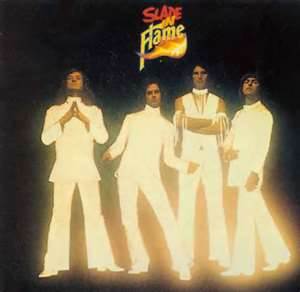
Classic Cinema: Slade In Flame

Classic Cinema: Slade In Flame

The flag-waving, swaying days of My Oh My passed me by (cracking anthem, mind, and I love Noddy’s solo swing version), but there’s still some sort of seasonal pull the boys have on me which brings a lump to the throat when I hear it on a pub jukebox or on the radio.

There were some less than great singles in later days, but Slade made perfect pop for a few years and left an indelible impression on me and many others. That legacy should never be forgotten.

While in this mood, I’ll take this opportunity to wish all this blog’s readers – not just from myself, but from the festive spirits of Neville, James, David and Donald too – a very merry Nodmas and a rockin’ new year. And remember … It’s Christmas!

Posted in Books Films, TV & Radio, Music | Tagged , , , , , , , , , | 6 Comments

Sharing In Another Man’s Glory

County Cream: Ian Rankin promoting Standing in Another Man's Grave at Preston's County Hall (Photo courtesy of Angela McMahon)

County Cream: Ian Rankin talks about Standing in Another Man’s Grave at Preston’s County Hall (Photo courtesy of Angela McMahon)

WHAT an end of year it’s been for Ian Rankin, the best-selling crime novelist securing a No.1 slot in the last hardback chart of the year, taking top spot from a certain JK Rowling.

His chart success shows the value of a literary tour in the run-up to Christmas, a huge swathe of venues lined up and duly visited by the Scottish writer best known for his Rebus novels, not least through their TV dramatisations.

A couple of months ago, a superb Alan Yentob documentary followed Rankin penning the latest Rebus novel, Standing in Another Man’s Grave – which Tony Parsons dubbed ‘the best thing on the writing life I have seen on TV since…ever’. That was followed by the tour, and on Boxing Day we’ll see Stephen Fry centre-stage in ITV one-off drama Doors Open, adapted from a Rankin novel.

Every documentary or feature I’ve seen on the Fife wordsmith suggests a truly grounded, likeable bloke. What’s more, I’m impressed by any author putting in regular leg work to meet and greet readers, as was the case on Rankin’s appearance at County Hall, Preston, an hour with the mic. in the council chamber followed by a signing session and more questions and answers from his adoring North-West public.

Like the BBC documentary, Rankin’s Preston appearance proved fascinating, the writer quickly at ease with his sell-out audience, chatting away about his books, craft, characters, inspirations and love of music, with a fair few amusing tangents thrown in.

Following a brief plug for ITV’s Doors Open (ITV, Boxing Day, 9pm), he told the back story to Standing in Another Man’s Grave and his decision to bring John Rebus out of retirement, explaining his publisher’s initial worry when he realised he was pensioning him off, after a call from one of Rankin’s police contacts explaining how he had to go at age 60.

Grave Consequences: The latest Rebus novel by Ian Rankin

Grave Consequences: The latest Rebus novel by Ian Rankin

He said: “He was absolutely horrified, suggesting instead I just stop the clock. No one will notice. Right – no one notices PD James’ Adam Dalgliesh is 102 now. Or that Ruth Rendell’s Wexford is about 85. I said no, I can’t stop the clock. These books are written in real time and I’ve made a virtue of the fact that they take place over a real span of time and Rebus ages and changes during the process.”

But that police contact later suggested a way back for Rebus, with the retirement age being reviewed. He added: “That was a great release for me. His head is the easiest place for me to be. I did lots of other things after Exit Music (the previous Rebus novel), including screenplays and the Malcolm Fox novels. But then my friend the cop told me they were thinking of changing the retirement ages for cops to 65 or 67. I asked if they might let Rebus back in, and if he applied would he be vetted by Internal Affairs. I thought there’s space here for a Rebus novel, and one with Fox in it.”

In the resultant Standing in Another Man’s Grave, Rankin takes Rebus ‘out of his comfort zone’, away from Edinburgh, up and down the A9 to investigate a murder with a possible ‘cold case’ link. He added: “I mentioned in Exit Music he would probably apply to join this small unit in Edinburgh with the unfortunate acronym SCRU – the Serious Crime Review Unit – and it was soon all clicking into place. That’s why Rebus came back – the real world made it possible for him to come back.

Pensive Mode: Ian Rankin

Pensive Mode: Ian Rankin

“Problem is I made him too old in book one (Noughts and Crosses). I should have made him 25 or 30, having decided to write a series in real time. Then I discovered with Malcolm Fox you don’t go into internal affairs forever, certainly not in Scotland, so I’d created yet another character with in-built decrepitude. This keeps happening to me, and now they’re in the course of changing the structure to a Scotland-wide constabulary, which means SCRU is screwed! There’s going to be one unit taking on all cold cases. So I keep screwing up again and again.

“It’s quite frustrating when you’re writing about the real world, because the real world has a way of kicking you in the pants now and again. It’s happened to me too many times. But it’s important to me, because cops have become fans of the books and useful contacts. I’m making a living telling lies, so should probably try and get the details of the job right as far as I can.

“In this book, I decided I’d take Rebus out of the city. I’d started using the A9 a lot, which starts in Stirling, taking in Perth, Inverness, all the way to the North coast. I was seeing there’s more to this small country than the central belt, Glasgow and Edinburgh. If I take Rebus up there he can start to get a sense of it. He’s been a bit lazy in his judgements of his country”.

Rankin added in a mumble how it might also have something to do with claiming petrol as a taxable deduction, but then dismissed this, adding, “I wish that was true, but it’s not!” But then he revealed, “Private Eye magazine suggests the only reason I mention music so much is so I can put all my albums down as taxable expenses. And that is true!”

He was going to call his latest novel, A9, but was dissuaded. Rankin explained: “It was punchy, dynamic, but my publisher said it sounds like a brand of socks or barbecue sauce, saying, ‘Think of something else.”

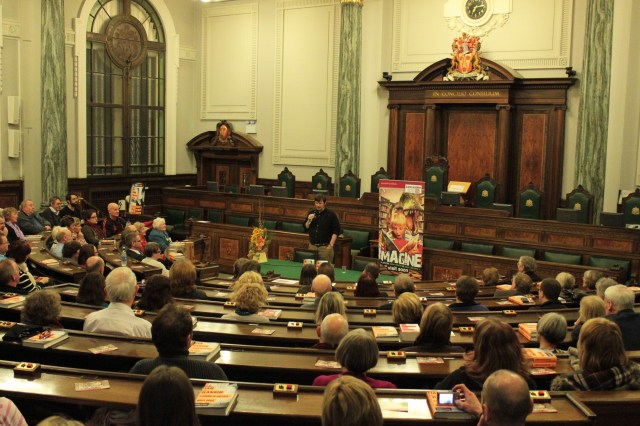
Vantage Point: The view from above as Ian Rankin held court at Preston (Photo courtesy of Angela McMahon)

Vantage Point: The view from above as Ian Rankin held court at Preston (Photo courtesy of Angela McMahon)

A typical Rankin tangent followed, going on to his collaboration with late Scottish singer-songwriter Jackie Leven, to whom the book is dedicated, someone he mentioned in an earlier novel, leading to a friendship and the pair touring to promote an album featuring Leven’s songs and Rankin’s words, an illuminating period for the author. He described Leven as a  ‘great bear of a guy with a wonderful voice and terrific guitar technique, doing very muscular lyrics about hard men and an inability to communicate or show their feelings’. He added: “I thought Rebus would be a big fan.”

Dynamic Duo: The Jackie Leven Said recording

Dynamic Duo: The Jackie Leven Said recording

Rankin went on to tell a story about Leven putting a cooked haggis on his backstage ‘rider’, passing it off as Rankin’s request, leading to a ‘huge, burly, skin-headed’ chef at London’s Royal Festival Hall demanding to know who ordered the haggis, and asking how to cook his Fortnum & Masons purchase. Rankin added: “Like most crime writers, I’m a frustrated rock star, and would much rather be in a successful rock band. And through Jackie, I got as close to the music business as possible.”

Yet Leven died soon after, diagnoses late with cancer. He added: “When he got the news he just basically stuck a bottle of whisky in his jacket and went for a long walk.  That was his way of dealing with it.  And when I started writing this book I was listening to a lot of his albums.” One song in particular struck him, a mis-heard lyric ( ‘Standing in another man’s rain’) leading to the title of his book. And soon he was back to his publisher.

He added: “I told him: “OK, you don’t like A9, so this is the title. This is a killer, Standing in Another Man’s Grave. But he said it was too long and would take up the whole of the front cover. He told me to think of something else. I was a little annoyed, so did some research  and went back. I said ‘OK, here’s the deal – that title has the exact same number of letters as The Girl With The Dragon Tattoo. So eventually he reneged, the reason being he was one of the many publishers who turned that down.”

Then came the writing process, with initial fears after bringing Rebus back after five years. He said: “Could I still see the world through his jaundiced, cynical eyes? The first page was quite worrying, until he reached for his cigarettes. Yes! He was back.” Rankin added that he’d never smoked, yet people often tell him Rebus is a ‘very realistic smoker’. What’s more, this time he takes his detective ‘the furthest he’s ever been from a pub in his life’. He added: “This is a guy who I’m guessing doesn’t have a passport. His idea of a holiday is to go to the Oxford Bar for an extra-long session.”

That took him on to the main bars he uses in his books, how they eventually became real ones after toying with a fictional city. He said: “While I was writing about Edinburgh, it had fictional streets, police stations, pubs. But then people were guessing which was which, so I thought why make it difficult, burning down his fictional police station, moving him to a real one, using a street where I lived as a student and a bar where I drank. And the Oxford Bar is something of a metaphor for the hidden Edinburgh – if you don’t know it’s there, you can never find it.”

Rankin’s next tangent involved Scottish First Minister Alex Salmond (whose official residence is very close to the Oxford Bar) and his predecessor, the late Donald Dewar (eavesdropping on him and his team on a sleeper train back from London, and a subsequent friendly chat). Then he was back on track again, telling how a Canadian fan refused to believe he was Rankin in the Oxford Bar one night, as ‘you looks nothing like Rebus’. He added: I had to show her my ID to try and persuade her. People are looking for a complex, dark, brooding guy. Then they find me.”

The author added that he had ‘no idea’ what Rebus looks like, going on to explain how – while having a shelf of the DVDs at home, he’s never seen the TV dramatisations. He explained how Leslie Grantham, then of Dirty Den in EastEnders fame, wanted to buy the rights to his debut, Noughts and Crosses, and move him to London, with him in the lead role. He added: “Thank God my agent disappeared in mysterious circumstances during the negotiations, and it fell through.” The next option involved the BBC, who  – despite Rebus’ SAS and Para’s back ground, had Robbie Coltrane in mind. “I told them, well, the flashbacks to his army careers are going to be just superb!” While Coltrane moved on to success with Cracker, John Hannah was cast instead, followed in time by Ken Stott.

Brooding Presence: Ken Stott as Rebus (Photo courtesy of  ITV)

Brooding Presence: Ken Stott as Rebus (Photo courtesy of ITV)

Rankin gave two main reasons why he’s chosen not to watch the TV versions. One being that a female author told him she coudn’t even write about one of her characters after an adaptation. The other involved Colin Dexter, who told him he had a ‘terrific experience’  but had changed the character of Morse to be more like John Thaw, the actor. Rankin added: “I didn’t want that to happen. I didn’t want Rebus to change and didn’t want actors’ voices and faces to interfere with the voices and faces  in my head.”

Next came an illuminating insight  regarding Doors Open, his art heist story originally written as a screenplay with an old university friend, the two of them thinking, “Wouldn’t it be great if we had an Oceans 11 set in Scotland, with the cream of Scottish acting talent. We could have Sean Connery as the criminal mastermind, Ewan McGregor as his lieutenant, then James McEvoy …” Yet the pitch came to nothing, with no interest shown and the script going into the ‘bottom drawer’ until the New York Times wanted a story serial for a Sunday magazine and Rankin offered it as a 15-part tale. Interest followed from the UK, but they wanted it restructured as a novel, and it was duly published.

Early Doors: Stephen Fry, Kenneth Collard, Lenora Crichlow and Dougie Henshall in Doors Open

Early Doors: Stephen Fry, Kenneth Collard, Lenora Crichlow and Dougie Henshall in Doors Open (Publicity shot courtesy of ITV)

Then, “One day, Stephen Fry’s running for a plane, grabs a book from the book store, sits on the plane reading it and says ‘this will make a really good film.'” Talks with production teams followed and when they asked Rankin about a script, he suggested his friend. Full circle! And Rankin’s moral? “Never throw anything away. Nothing is lost to the writer. It doesn’t happen very often, but it’s lovely when it does.”

Time was getting on by now, but Rankin was happy to field lots of questions, and after batting away a suggestion about being a rock journalist, added: “Being a novelist is the best job in the world. I get to play God. You’ve got the complete power of destiny. If I leave here tonight and a boy racer tries to run me over, I’ll just go home and kill them. He made it to the junction, looked to turn left at the main road … Us writers still play with our imaginary friends, and it keeps us young. It’s quite child-like, open to play games and use puns. We’re Peter Pan figures, children who refuse to grow up. That’s why crime writers in particular are so nice. The romantic fiction writers are the ones to watch out for!”

Asked about his police contact network, Rankin talked about his first visit to a CID office in Edinburgh, where he unwittingly became a suspect in a murder investigation, its profile too close to comfort to Noughts and Crosses, only realising his naivety when his Dad called him ‘a silly bugger’ and enlightened him soon after. He added: “I learned a valuable lesson. Don’t do any research!” Yet he has kept in touch with various police contacts, who keep him in line from time to time on certain issues and procedures.

On the back of the success of recent Scandinavian police TV dramas, he was asked if he’d considered going ‘darker’, to which he admitted jealousy for the amount of time allowed for those series. He said: “Things like The Killing get 20 hours per series. I would kill for that! By the end of the Rebus TV series, it was 45 minutes per book. I did get darker around book three, but was told it was a bit graphic. I was influenced by Thomas Harris’ Hannibal Lecter books. But I was persuaded I didn’t need to show all that stuff. Trust the reader, their image is far more graphic than I can write. And I think that’s been proved. I trust you to do the work, making it as graphic as you want.”

He hadn’t finished yet, moving on to Ken Stott, the Hearts fan set up by the producers of the TV series as Rebus is portrayed as a Hibs fan. Rankin said: “Rebus is from Fife. He’ll probably support Dunfermline or Raith Rovers Nil, as they’re known. I’ve seen that clip of Ken walking out at Easter Road (Hibernian FC) and looking really happy to be there. He said in an interview in Radio Times it was the hardest thing he’d ever had to do as an actor, wearing a green and white scarf and walking out at that stadium. Which is fine, except he has also played Hitler!”

The questions kept coming, Rankin holding forth about his famous cuttings file containing  ideas for future books (featured in the Yentob documentary) and how he has ‘no idea’ what book he’ll start writing in January, or who’s involved. He said: “I don’t know if it’s a Rebus book, a Fox book, Doors Open II, or something completely different. No idea!”

Dedication Time: Ian Rankin signs a copy of Standing in Anorther Man's Grave at Preston

Dedication Time: Ian Rankin signs a copy of Standing in Another Man’s Grave at Preston

Then there was a brief segue on to the Scottish independence referendum, to which he replies, “Rebus will vote no to independence. He’s a conservative at heart, with a small C. He doesn’t like change and doesn’t trust politicians. I think Siobhan (Clarke) would vote yes. She’s younger, more liberal, open to change. And I think I’m squarely in between, but just can’t see it happening.”

There was still time to mention the writers he most admires, name-checking Ruth Rendell and PD James again, as well as US crime writers Michael Connelly and Lawrence Block, plus Edinburgh’s Muriel Spark and his love of Robert Louis Stevenson’s novella Strange Case of Dr Jekyll and Mr Hyde, which he reads ‘every year’, adding: “All my crime novels come down to this basic question central to Jekyll and Hide – why do people do bad things to each other in our society?

Then, on the back of a bleak question about Rebus’ future without the police, (“He’s not going to open a B’n’B or drive a taxi. He’s not going to be going overseas. He’s just going to sit in the Oxford Bar and drink himself to death. So hopefully he’s going back into the police.”) and one more tangent about whisky and cigarettes, Rankin was away.

Well, when I say away, I mean outside for a two-minute break before a marathon signing session. But throughout the event, he remained chipper, happy to talk and share his secrets. A top man all round.

Holding Court: Ian Rankin takes the mic. at Preston (Photo courtesy of Angela McMahon)

Holding Court: Ian Rankin takes the mic. at Preston (Photo courtesy of Angela McMahon)

Article produced with a respectful nod to Preston County Hall event co-organisers Elaine Silverwood, of Silverdell of Kirkham (www.silverdellbooks.com) and Lancashire County Council reading development guru Jake Hope and his team, plus Orion Books publicist Angela McMahon.

Posted in Books Films, TV & Radio | Tagged , , , , , , , , , , | Leave a comment

Bradley plays the game to perfection

Trophy Guy: Brad Wiggins picks up the night's main prize at the ExCel Arena (Photo: BBC TV)

Trophy Guy: Brad Wiggins picks up the night’s main prize at the ExCel Arena (Photo: BBC TV)

What? No Mo? No Ellie? Well, the 2012 BBC Sports Personality of the Year vote was always going to be something of a lottery after such a cracking year. But Bradley Wiggins was the right recipient in the end.

I wasn’t impressed when I tuned in. It was all a bit too X-Factor, and surely we didn’t  need the feel of some big-budget (trite) talent show. With 16,000 packed into the ExCel Arena, all that was missing was Dermot O’Leary asking inane questions.

Or perhaps we needed Mick Fleetwood and Samantha Fox presenting – for there was a worry that we might be on for a modern-day twist on that disastrous first big-production Brits awards ceremony in 1989. That wasn’t helped when I saw David Weir wheeling himself out to the strains of Michael Jackson’s Thriller. Yeah, we get it. His nickname’s the Weir Wolf. Very droll. But somehow national treasures Clare Balding, Sue Barker and Gary Lineker survived the evening in tact. No mean feat in the circumstances.

So much has happened in the world of sport these past few months that I had to remind myself Didier Drogba’s heroics in Munich helping corporate giants Chelsea to a Champions League win (can’t bring myself to call it a European Cup win – for starters, they never actually won the league the previous season) were only seven months ago. The same goes for moneybags Manchester City’s Premier League title.

After that came Euro 2012, and a plucky effort from Roy Hodgson’s unfancied England before we were undone by Pirlo and co, the Italians eventually finished off by the mighty Spain. But the biggest highlights of the year were still to come, as the Olympic and Paralympic story started to unfold. So it’s hardly surprising that of the 12 nominations for this year’s SPOTY final, only one took no active part in London 2012.

That didn’t seem to worry great golfing hope Rory McIlroy, the Hollywood hero seemingly happy to punch above his weight with the likes of fellow nominee Nicola Adams, Anthony Joshua and so on. There was also the outside chance that any anti-Olympic types might cast a few rebellious votes the Irishman’s way to make their point. It never quite happened though.

Any other year, you get the feeling Andy Murray might have nailed it – it would have been him pitted against McIlroy and the Tour de France star (occasionally) based just around the corner from me in Lancashire. I still think Wiggo might have shaded it, but even with Murray’s Olympic glory aside, there was a Grand Slam victory (finally) at the US Open to shout about, and his closest attempt yet to Wimbledon singles’ glory. What was most impressive about that final showdown though was his reaction after Roger Federer’s victory. Murray showed true humility, and maybe for the first time won over the hearts and minds of the British public accordingly. He also showed the world he had personality too, not as if that’s always been a prerequisite for winning this BBC honour.

There was a good shout for Ben Ainslie too, after such a glittering competitive career on the water and a dingy-full of Olympic medals. He might have another chance in 2013 after his assault on the America’s Cup, but either way, this Cornish sailing legend showed with his post-event ‘passion’ after an angry outburst against his Finn class rivals just how much he wants it, even if the less-cultured of us can never work out what the hell’s happening most of the time. Maybe sailing needs a re-branding exercise, with comedy noises every time a boat hits a buoy. Or something like that.

I did think Jess Ennis might stand an outside chance of beating Wiggo. For many, she was the face of London 2012, and her determination on the track (and field) left us in no doubt of her talent. still, second place is no bad thing in such a competitive year. The same goes for Ellie Simmonds, our Paralympic poster girl and aquatic supremo.

Then of course there was Mo Farah, who somehow didn’t even make the top three. Brad said he felt Farah had actually won it when David Beckham announced Ennis and Murray for second and third. As it turned out, he was fourth. Maybe the fact that he didn’t make the last three had something to do with his decision to do most of his training across the pond in America. We’r e a little insular like that. But while he didn’t win, Mo was a true inspiration, and who can forget his 5k and 10k heroics, the wall of sound he helped create, and his great reaction over the line at the Olympic Stadium. Furthermore, it provided a kick in the ‘nads for every racist ready to rail against lax immigration laws.

There’s no doubting the hard work that preceded eventual golden glory for rowing colossus Katherine Grainger, just one of the many who put themselves through the pain barrier on the water. But this time around I got the feeling Chris Hoy wasn’t in the running, despite another master show at the Velodrome – not least with Brad up against him. It was a similar dilemma for Paralympic cycling star Sarah Storey. But she also had every reason to feel proud of a top-12 nomination, as was the case for the afore-mentioned Weir.

But in the same way that Team GB got the team award – no real surprise there – it was totally fitting that Seb Coe – now officially the nation’s favourite delivery man – was saluted for his overall vision for London 2012 and so much more in his lifetime achievement award, while Dave Brailsford rightly won the coaching honour. In a year of major cheating allegations, condemnations and recriminations in cycling, DB and his team – in fact everyone involved in London 2012 – proved you can win clean, and that there remains a future for honesty in sport.

Proof if needed that sport isn’t just about high-paid sportsmen came as Fabrice Muamba presented the unsung hero award to husband and wife Sue and Jim Houghton for their work at a community sport centre in Leicestershire, while Paralympic volleyball gold medallist Martine Wright received the Helen Rollason award for outstanding achievement in the face of adversity, having lost her legs in the London 7/7 bombings.

Golden Duo: Brad Wiggins and Jess Ennis at the BBC Sports Personality of the Year awards ceremony (Photo: BBC)

Golden Duo: Brad Wiggins and Jess Ennis at the BBC Sports Personality of the Year awards ceremony (Photo: BBC)

And the earlier interview with ‘Susan’ Barker and eventual acceptance speech by Wiggo, every bit the cool customer on the night (not least with his blue suede double-breasted clobber) proved that all the hyperbole and over-the-top big production were somehow out of place. For here was a more down-to-earth sports star who looked a little embarrassed by the whole spectacle, yet played the game to perfection – taking the rise out of the hosts, giving due credit to all those who made London 2012 a winner, and thanking all those who voted, including his Nan, while at the same time subtly letting everyone know what he felt about all that public voting nonsense.

What’s more, he totally deserved his latest accolade, and I guess 492,000 public votes tells its own story. A true original, a real personality, and a sportsman to the core. Cheers Brad. You worked hard for all that, mate.

Posted in Books Films, TV & Radio, sport | Tagged , , , , , , , , , | Leave a comment

Arctic adventures, time travel and family secrets

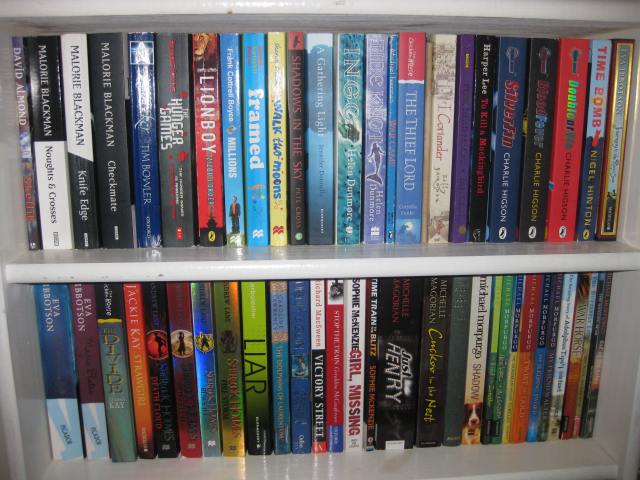
Shelf Control: A glance along the writewyattuk children's book shelves

In which writewyattuk gets on the festive bandwagon and selects three great 2012 reads  for junior/middle school age children (nine to twelve-ish) – all possible last-minute Christmas buying conundrum solutions.

While we’re into the last days of the year, no way is this meant as a ‘best of’ selection. There’s only one of me, and only so many books I can get through between other commitments. But the three I’ve chosen here are among the best aimed at pre-high school children published in the past few months.

Those who know me will not be surprised I’ve chosen the latest titles from Frank Cottrell Boyce and Michael Morpurgo, for me among the very best writers we have (and forget the snobbery factor – children’s fiction is every bit as important as adult fiction in the right hands, and so much better for its lack of pretension). My third choice is perhaps more of a surprise, but maybe counter-proof that you really can choose a book by its cover!

Regular readers of this blog will know this scribe as a great advocate (champion, even) of using public libraries, and all three books are available via our nearby community establishments if money is an issue. And the more we all use our libraries, the less excuse those faceless national and local Government pen-pushers have to close them down. Political point made. Now, on with the reviews.

Chitty Chitty Bang Bang and the Race Against Time by Frank Cottrell Boyce (Macmillan Children’s Books)

In the latest fast-paced story featuring an altogether magical car first introduced to the reading public in 1964 by James Bond creator Ian Fleming, there’s an emphasis on reverse as GEN 11 leads the Tooting clan into another whistle-stop series of adventures, its ‘chronojuster’ seemingly stuck and hurtling the family back into the Jurassic era.

Racing Certainty: The latest Chitty Chitty Bang Bang adventure

Racing Certainty: The latest Chitty Chitty Bang Bang adventure

This follow-up to Chitty Chitty Bang Bang Flies Again, FCB’s first modern spin on Fleming’s children’s classic, also splendidly illustrated by Joe Berger, finds the adventurous quintet out to master a further dimension to their perfectly-restored, altogether unique 1921 Paragon Panther, an ebony handle that works its time-travel mechanism – ‘fitted as standard’ and allowing the family to head back and forth through the centuries.

First, youngest son Harry gets his dream of spending time with dinosaurs, the Tootings transported head-on into drama as they’re chased by some very confused Tyrannosaurus rex. Again, brooding teen turned walking encyclopedia Lucy and her brother Jem – who instinctively knows where the car is coming from, if not always where it’s going – help the family navigate their alien landscapes.

I don’t think it’s giving anything away to mention the Tootings finally leave the Cretaceous period behind, yet – as Lucy has to point out – they’re still 66 million years from a return to  Basildon. And however far they travel, they can’t seem to ward off incoming calls on Lucy’s mobile from arch-nemesis Tiny Jack and his evil Nanny, who – not content with trying to steal Chitty and feed the children to piranhas last time – are now hanging out at their home base, making a few alterations that have the worried five-piece eager to return to throw them out. But not until they’ve enjoyed a few more adventures.

A plan is hatched to visit the inventive Commander Pott and his family, the heroes of the original Fleming tale. Before that though, the family have to tackle fresh crises in 1920s New York  and the US Mid-West, meet the car’s original owner and a new set of villains,  while a detour involving South American rain forest and the lost paradise of El Dorado leaves the Tootings up the Orinoco without a paddle, so to speak.

In the hands of FCB, it’s a winner, his prose and inventive style as humorous, sharp and beguiling as ever, and a perfect testing ground for all those boys seemingly uninterested in reading. And who knows, new converts to this treasured author and screenwriter may then go on to discover his holy trinity of children’s fiction – Millions, Framed and Cosmic.

The Snow Bear by Holly Webb (Stripes Publishing, 2012)

A beautifully vivid tale of a little girl, Sara, spending the Christmas holidays with her Grandad while her Mum and Dad await the arrival of her new sibling, staying at the old man’s characterful clifftop stone cottage, complete with a huge fireplace, deep windows (‘perfect for sitting in’) and plenty of hidey-holes.

Snow Way: Holly Webb's arctic success story

Snow Way: Holly Webb’s arctic success story

Sara loves her Grandad’s stories, not least those covering his days in the far north of Canada with his father, studying a traditional Inuit way of life. And as snow starts to settle around the cottage, Grandad breaks off from writing a book on Inuit folk tales to entertain his young charge.

Her favourite story is that of a lost polar bear cub he found one spring while out fishing,  coaxing him back to his friend’s home, to the dismay of the elders. Yet over time he grew too powerful to stay, the young boy and his Inuit friend teaching him to hunt before reintroducing him to the Arctic wilderness.

Soon, there’s enough snow to build Sara’s own  snowbear and small igloo, with Grandad helping, the old man’s sea glass used for the bear’s eyes and his special walrus-tusk snow knife to shape the bricks for their makeshift camp.

Yet for all the fun, Sara misses her parents and is desperate to share this winter wonderland with them. And late that night, when she can’t sleep, she wraps up and heads out to the igloo with her equally-restless Grandad, to enjoy hot drinks, prawn sarnies and more stories under the stars, snuggled in her sleeping bag, drifting off to sleep and waking up in a magical world where she finds her snow bear really does exist, embarking on an adventure to help track down the cub’s mother.

I should admit at this point I hadn’t expected this to be such a great story, expecting a cute animal yarn but nothing more. Yet Holly writes with great passion and story-telling craft, giving plenty for the reader to marvel at, be inspired by, and ultimately learn from.

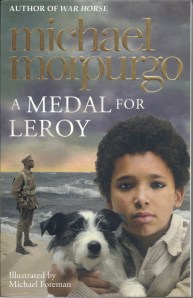
A Medal For Leroy by Michael Morpurgo (Harper Collins, 2012)

Well, you didn’t think I could do a review of great ‘junior’ reads without mentioning the master story-teller, did you? And in a year book-ended by cinematic versions of War Horse and Private Peaceful, their author clearly remains as prolific as ever, his success with Little Manfred, another tale of discovery with a wartime background, followed by the wonderfully warm A Medal for Leroy.

Wartime Secrets: Michael Morpurgo's latest best-seller is another triumph

Wartime Secrets: Michael Morpurgo’s latest best-seller is another triumph

Where Little Manfred‘s back story involved German prisoners of war from World War Two, Morpurgo’s latest publication has a foot in the previous conflict and is dedicated to Lieutenant Walter Tull, the only black officer serving in the British Army during World War One.

A Medal for Leroy is not a fictionalised version of Tull’s amazing story, but there are elements within, and he was the inspiration, the author cleverly weaving in elements of his own post-war family background too, touching on both world wars but reflecting on so much more, not least racism and public attitudes towards mixed-race marriages over the years.

The story darts between key points in an extended  family’s hidden history, from a strict upbringing in Scotland before the Great War to behind-the-lines Belgium, then from Cornwall to London and the Kent coast between the wars, and onto a young boy in the post-war capital learning more than he bargains for about the secrets that have laid tucked just out of reach during those previous generations.

The focal point is Michael, a young lad growing up in London shortly after World War Two with his widowed French mother, and never having known his RAF pilot father, lost on active service. But when the boy’s Aunt ‘Snowdrop’ gives him a medal and a photograph, his secret family history is revealed and his life changes forever.

The subject matter could be confusing, but in the hands of Morpurgo we’re cleverly steered through, and our former Children’s Laureate and national treasure – as ever – makes it all so easy to follow, his highly-effective style using simple language to ensure the story as good as tells itself, navigating carefully through a minefield of flashbacks, reminiscences and switches between the eras.

As has so often been the case, Morpurgo’s thoughtful yet economical and measured prose is beautifully complemented by Michael Foreman’s fittingly in-tune art, something you tend to take for granted after such a winning partnership between the two Michaels over the years.

And while many more writers will struggle to get beyond a fourth or fifth book, Morpurgo – with more than 100 to his name, and counting – seamlessly produces best-seller after best-seller. Supreme, as his elder characters would say.

Posted in Books Films, TV & Radio | Tagged , , , , , , , , , | Leave a comment

Spare us the Santa’s sack cliches

THERE was an almost inevitable sideshow at this week’s Premier League clash between Sunderland and Reading, with the football media waiting to see which manager would go first. Would it be Martin O’Neill, a year to the day since his appointment at the Stadium of Light? Or Brian McDermott, after a poor start to the 2012/13 season for the Royals? Thankfully neither, with O’Neill giving himself a little time after a 3-0 win for the Rokerites (sorry, can’t bring myself to use the more corporate Black Cats nickname), and Reading’s owners keeping their powder dry despite a fifth straight league defeat. Yet it still seems likely that the Premier League merry-go-round is ready to throw off another victim soon – with the usual rumour-mill about all those waiting in the wings too. Bookies Stan James are still offering good odds on Martin O’Neill getting the bullet (13/8 to 5/1 after his midweek win), with McDermott now 13/8, Arsene Wenger 6/1 at Arsenal, and Manchester City’s Roberto Mancini and Rafael Benitez at Chelsea at 8/1 on Saturday morning. All fundamentally ludicrous of course, but more than likely worth a dabble if that’s your bag. Mancini screams out at me for starters. I’ve no real feelings either way, but didn’t his team win some pretty respectable trophy or other just a few months ago? Did I just dream about some last-day excitement, Sergio Aguero’s late wonder goal and something about a 44-year wait being over? Well, I guess you can’t expect people to remember as far back as May in football circles. Wenger’s not had too tardy a spell at Highbury and the Emirates these past 16 years either, with 11 trophies amassed en route. It’s also interesting that the McDermott rumours increased after his club’s slim weekend defeat to Southampton, a club where you just get the feeling that Nigel Adkins has been on borrowed time for a long spell, with – as at Reading – bigger names always expected to step in. Adkins’ odds are 16/1 at the moment, by the way. I’m probably adding to the speculation about all these sitting ducks by writing this. But no. I’ll get back to Reading (my Mum was brought up just a couple of streets away from Elm Park after all) and suggest that here lies a real opportunity for Royals chairman Sir John Madejski to buck this pathetic trend and not just back his manager in the light of media interest only to sack him within a few days, but properly stand by him. When will the top-flight football world actually get it that change is rarely a good thing? Now may be the time for the former Arsenal player to sharpen his resolve and see what needs changing himself, rather than for some old stager outside the club to come in and ‘do a job’ in a bid to keep the mighty Biscuitmen up and please a few businessmen. So far Madejski has said all the right things, not least suggesting McDermott being sacked would be ‘absurd’, despite just one win in the league this season and a second-bottom placing with just nine points from 16 games. As the chairman himself has suggested, the fact that Reading are even competing at that level is an ‘amazing achievement, on a limited budget’. McDermott has one of his hardest tasks ahead of him maybe, but judge him by the way he reacts to that rather than the 16 results so far. I remember Brian dipping his toes into club management, and while he hardly set the world on fire at my club, Woking, he earned a fair bit of respect and clearly further built on that in his time at Reading – from his appointment as chief scout in 2000 onwards. I was surprised he got the nod from Madejski in late 2009 (although I was probably more surprised that he’d lost all his hair by that stage, which at least ruled out it going grey in the following years), but applauded the Royals for standing by him from there on in after his gradual rise up the ranks from within, just as we once saw at ultra-successful clubs like Liverpool back in the old days. He went on to pay that compliment back too, and long might that continue. And now is the time to see what sway the chairman actually holds at Reading, as opposed to the Berkshire club’s new owner and money-man Anton Zingarevich. While a lot of our clubs would kill for the kind of budget even Reading ‘survive’ on, I think we all realise the club is truly punching above its weight at present and are struggling to compete with all around them. But Madejski and Zingarevich (who truth be told sound like one of the detectives in The Fast Show’s ‘Unpronounceables’ sketches) can garner a lot of respect if they’re to ignore the dissenting calls and properly stand by their man now. Out of interest, going back to the Stan James odds, I see you can get a punt on the next Premiership casualty being David Moyes leaving Everton at 80/1, or Alex Ferguson exiting Man United, Michael Laudrup departing Swansea or Tony Pulis leaving Stoke at 100/1. I’m not suggesting for one moment those bets are good value and worth a shout, but perhaps those clubs are doing something right at present to keep faith in their respective bosses. We see it so often, and rarely does it make sense. And yet all the time we also know of the amazing success Fergie has enjoyed at Old Trafford since overcoming a few early wobbles in his 26-year reign. Roberto Di Matteo and Mark Hughes were potted within two days of each other last month, and now the national news hounds will be looking to dust down their Santa’s sack clichés in the coming fortnight. Don’t let them have that satisfaction. It’s all too much of a cliché. A version of this Malcolm Wyatt article first appeared on the http://www.sportnw.co.uk website, and is reproduced her with the site’s and the author’s permission.

Posted in Football, sport | Tagged , , , , , , , , , , | Leave a comment

A poor return and the not so magnificent seven

Hyde Away: The view from the lonely away end at Ewen Fields

Hyde Away: The blogger’s view from the lonely away end at Ewen Fields, December 1st, 2012

Did that really happen? It wasn’t supposed to. I was only at Ewen Fields, Hyde, to stretch my impressive unbeaten run watching Woking FC to 16 matches.

Despite still perceiving myself as some sort of Jonah, I’d not actually seen my team (I am after all based 240 miles from their Surrey base) lose since a 2-0 home humbling by the mighty Maidenhead United in Blue Square South in August, 2010. Even then, the hosts had WFC legend Dereck ‘God’ Brown as assistant manager, so you could argue it would have been sacrilegious to win. Besides, since then I’d witnessed 13 wins and two draws (eight away from home), scoring 37 times and conceding just 13.

All the signs were good this time too, with a victory not so long before at nearby Stockport County, and the Cards having humbled Farnborough in the FA Trophy 7-0 that previous weekend. It wasn’t likely to be another septhrashing (I might have made that word up), as those are pretty rare of course. That said, we’d already scored a hatful this season, and Hyde were in the bottom three before kick-off.

I’d also seen us pick up plenty of points at Hyde’s neighbours Droylsden and Stalybridge in the past, and more often than not had something to savour from matches on the outskirts of Greater Manchester, either as a reporter at rock’n’roll venues such as Abbey Hey, Ashton United, Bury, Cheadle Town, Flixton, Mossley, Radcliffe Borough, Trafford and Woodley Sports, or with the Cards at not-so-far-off Altrincham and Macclesfield Town.

Admittedly, my first visit to Stalybridge (which I always equate with Stoneybridge from cult Scottish comedy sketch show, Absolutely) ended in defeat, and it took a few visits before we got the hang of Bower Fold. But we eventually started winning there, the highlights including hat-tricks from Clive Walker in 1995 and Darren Hay in 1998.

But then came last Saturday’s Tameside Terror, a right proper Hydeing and Saturday roll-over in this weekly lottery we call football. And who knows, if our cave-in had started any earlier it might even have inspired the hosts to finally avenge the club’s 26-0 record league defeat to Preston North End – the oft-mentioned, heaviest competitive defeat in English football, dating back to a mid-October 1887 FA Cup tie at Deepdale, when the visitors were just two years old and Woking were just a week and a half away from a first general meeting (our team just a twinkle in the eye of first club president Alfred Wright).

I have to say I was surprised this Conference Premier clash was even on, with a few Evo-Stik League ties that same day called off due to frozen pitches before I left Leyland for the 45-minute drive around the M60 and beyond. But word had it that the referee donned his boots at 1pm to run across the pitch and declare this embarrassing day in Woking’s history open.

In the early stages I remained confident. We weren’t going great shakes, but while experienced home hands like Chris Sedgwick (ex-Rotherham, Preston, Sheffield Wednesday) and Phil Jevons  (ex-Everton, Grimsby, Yeovil , Bristol City, Huddersfield and Morecambe) posed a threat, Aaron Howe seemed to have it all under control in our net.

But then came a key moment, a seemingly-innocuous challenge just outside the penalty area from Brett Johnson catching England C cap Scott Spencer (ex-Rochdale, Southend and Lincoln), who made a meal of it on a stodgy pudding of a pitch, the ref eventually catching up and brandishing his red card as he reached our incredulous defender.

Key Moment: Brett Johnson receives a straight red card, and Woking's game plan is rocked (Photo courtesy of David Holmes)

Key Moment: Brett Johnson receives a straight red, with WFC’s game plan rocked (Photo: David Holmes)

Much shouting and partisan haranguing followed from aggrieved Cards fans, and Spencer certainly looked happy with his work as he dusted himself down. We survived the resultant free-kick and almost made it to half time on level terms following a substitution and change of formation. But this is Woking after all, and Jevons slotted home just before the break.

Even when a second went in courtesy of Spencer on 51 minutes, I still felt we had a chance of a draw against this relegation-threatened Greater Manchester outfit. But when Jevons struck again just before the hour it was as good as game over, Howe’s cartoon-like rage against defensive ineptitude at the other end almost comical. Tragi-comic as it turned out.

I’ll gloss over the rest, save for mentioning (it feels better to share it – it’s a bit like rubber-necking the aftermath of an accident in the opposite motorway carriageway) that at one point it seemed like every half-hearted Hyde foray forward led to another goal, while an increasingly-bewildered home crowd cheered and laughed. You could as good as see the smiles and disbelief from our end, despite a murky December dusk.

Star Fish: Cards keeper Aaron Howe makes himself 'big' - but Hyde were not easily fooled (Photo courtesy of David Holmes)

Star Fish: Cards keeper Aaron Howe makes himself ‘big’, but Hyde weren’t to be fooled (Photo: David Holmes)

When the fourth official’s board went up near the end I half-expected to hear on the PA system, ‘the referee has indicated three additional goals for the home side’. As it was, they only managed one more though – the seventh of the day. We all dutifully stayed to the death (or perhaps the post-mortem), because that’s what real fans do. But there was no ovation for the embarrassed visiting side. There was precious little to ovate or even ovulate about, let alone dish out a case of the clap to. In fact, the only hands I saw raised in tribute were from the fella in front of me, applauding the shell-shocked Tigers fans who’d just about managed to stand up again after laughing so hard.

Those supporters were certainly having a ball (and four-goal Jevons already had his own) in the little stand to our left, and I don’t think they could believe their luck. Even when they were singing – in homage to Mancunian icons Joy Division – ‘Hyde … Hyde will tear you apart … again!” earlier, I don’t think they really believed it. Maybe ‘We’ve Lost Control’ would have been a fitting response from our boys. Or perhaps ‘Atrocity Exhibition’. Either way, Garry Hill would have gladly reprogrammed his team to Factory setting (or ‘I Remember Nothing’) to erase the memory of this horror show, and at least take us back to the Farnborough thrashing.

Still Smiling: Woking fans put a brave face on Saturday's events (Photo courtesy of David Holmes)

Still Smiling: Woking fans put a brave face on Saturday’s events (Photo courtesy of David Holmes)

It was an afternoon to forget for sure, in a region which has given us ups and downs since that first defeat at Stalybridge in August 1992. I’d gladly trade recollections of this one for that great night of Mickey Mouse cup glory when we won the GLS Conference League Cup at Bower Fold at the end of April 2005 thanks to a lone Karl Murray wonder strike, having being forced to travel away on a Wednesday night on the toss of a coin.

There was a similar size away contingent that night too, the difference being that seven and a half years ago we were a little more eager to cram on to the official photos as Shwan Jalal, Adriano Basso and co hoisted our silverware.

Trophy Joy: Happier days on Tameside for Woking - celebrating the 2005 GLS Cup win (including jubilant blogger)

Trophy Joy: Happier days on Tameside for Woking – celebrating the 2005 GLS Cup win, including jubilant blogger (Photo: KIPAX Photography – http://www.kipax.com)

I could add a few less memorable encounters in East Manchester, including a late season April 2008 date at The Butchers Arms, Droylsden, when a meagre 301 crowd saw our 1-1 mid-week draw against the Bloods. Not even Lou Reed would have relished a walk on the Tameside that night. I’d like to add something that proved I was there, but the entire match has evaded my memory, including Matt Pattison’s goal. We were already safe by then, while Droylsden were doomed to relegation. Totally meaningless.

What I’d have given to see our trip to Hyde becoming just as unmemorable. It doesn’t work like that though. It’s all just part and parcel of what makes a true football fan. And I only wish I was there with the loyal Woking fans who – despite many of them suffering at Ewen Fields – returned north (to Lincoln City this time) just three days later to see us overcome the odds and win 2-0 in the league at Sincil Bank. Which just goes to show that we can still run with it, even if we can’t always Hyde.

Bouncing Back: Bradley Bubb adds to Kevin Betsy's earlier penalty to secure a win at Lincoln City to help banish the memory of Hyde (Photo courtesy of David Holmes)

Bouncing Back: Bradley Bubb adds to Kevin Betsy’s earlier penalty to secure a win at Lincoln City and help banish the memory of Hyde (Photo: David Holmes)

Posted in Football, sport | Tagged , , , , , , , , , | 2 Comments

Not just any old Witch Way

IMG_1420

Castle Backdrop: The Malkin Child (aka Alice Nutter) about to leave Clitheroe for Garstang

NO offence intended to East Lancastrians reading this, but it feels like you’re reaching the end of the world when the M65 becomes the A6068 at Colne, and on a miserable late November morning amid a national epidemic of rain, rain and more rain (with a lot of flooding thrown in), the borderlands with Yorkshire didn’t look at their best as I negotiated the roundabouts and pointed my trusty motor towards town.

However, and not for the first time, I was surprised at how grand this proud Lancashire town is on the quiet, a near-secret known only to those who make it this far into seemingly-uncharted Red Rose territory.

Having parked up for the day (another great boon for Colne – it still offers free parking, where others have copped out in recent years), I made my way towards the heart of it all, with its library positively buzzing that dark and dingy morning.

Why was I there? Because of the Witch Way. The which what? No, the Witch Way, a historic route between Colne and Lancaster based on that taken by the alleged Pendle Witches as they were taken for trial in 1612. And I was there as a guest for an event marking the culmination of the county council-backed Lancashire Reads campaign, on  Lancashire Day (Tuesday, November 27).

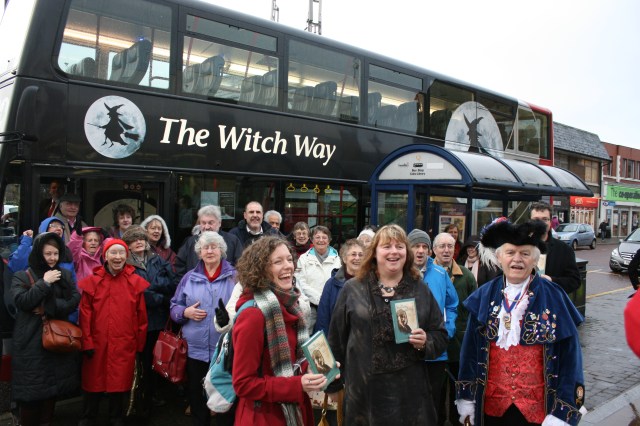
Welcoming as it was in the library, I was about to leave the warmth of this social hub to board a specially-commissioned, extremely smart double-decker bus due to depart at 9.15am, with stops at Clitheroe and Garstang before an event and themed lunch at Lancaster and a wander up to the castle to see where the ‘witches’ met their sorry end.

Malkin Party: The Lancashire Day revellers about to set out from Colne (Pic: Michelle Scott/Transdev)

Malkin Party: The Lancashire Day revellers, with Livi Michael, front, about to set off from Colne (Pic: Michelle Scott/Transdev)

I did have concerns about the wisdom of the venture after entering the foyer and negotiating my way through a mass of … erm … senior visitors, togged up to the eyeballs against the cold. Was there a Pendle autumn club outing the same day? Or was it just an embarrassing double-booking? No, but it was a working day, so I shouldn’t really have been surprised by the average age of the assembled travellers.

Besides, this was at least a crowd of like-minded punters, intrigued by the sad tale of the Pendle Witches and justifiably proud of their local heritage and Red Rose roots. And although the vast majority were past fighting age, I felt it best to keep my Surrey tones to myself at first, and at least avoid the usual cliche about Northerners being so much friendlier than anyone else.

I think I sensed a similar sense of trepidation (not for the same reason, mind) from the event’s special guest, Manchester-based author Livi Michael, who less than a year ago was approached with an invitation to rewrite the Pendle Witches story in a short, accessible way, aimed primarily at younger readers. After a lot of thought, she decided to tell the tale from the viewpoint of Jennet Device, the young girl who innocently shopped her family, her anecdotal evidence proving enough to see them hang, in what proved not only a harrowing chapter in our rich history, but also a major milestone in the development of our law under the reign of demon-fearing monarch James I.

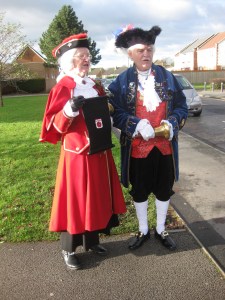
Colne Dynamo: The admirable Nelson town-crier reads out his Lancashire Day proclamation outside Colne Library

Colne Dynamo: The admirable Nelson town-crier reads out his Lancashire Day proclamation outside Colne Library

The result of Livi’s labours was the novella Malkin Child – so named as the chief witness’s family home was Malkin Tower – and it proved a big success, acclaimed by readers of all ages, not least thanks to support from the county council reading development team and local library staff. And so here we were a few months later, with Livi back on the patch where her story was set, paying back the county’s faith in her with a whistle-stop tour of libraries on a special day for the Red Rose county.

We knew we were finally up and running when we were shaken out of our early morning slumber by the resonant, projected tones of the town-crier of nearby Nelson, reading his Lancashire Day proclamation before we all jumped on to a splendid beast of a coach supplied by public transport operator Transdev. The livery alone is stunning, and could only have been improved by having Leyland written on the badge rather than Volvo. No offence to any Swedish readers, but Lanky folks do prefer things done their own way.

We were soon on the way, our sleek mode of transport turning heads on the pavements for the first time that day as we left Market Street and headed for those brooding hills beyond. On any other occasion you might have been praying for better weather, but dark and miserable somehow fitted the bill for this commemorative event, and you at least got something of a feel for what all those families must have felt as they left their home at the foot of imposing Pendle Hill on a similar route 400 years before.

Roughlee Tribute: The statue to Alice Nutter, unveiled this year (Pic: http://www.oneguyfrombarlick.co.uk)

Roughlee Tribute: The statue to Alice Nutter, unveiled this year (Pic: http://www.oneguyfrombarlick.co.uk)

En route was the new statue of Alice Nutter in Roughlee, one of the doomed ‘witches’ in that infamous trial, hers just one of the poignant case histories retold many times over the years. Unfortunately, we didn’t get a chance to stop, with time against us already and two groups of primary school children waiting to meet Livi. If you do get a chance though, seek it out. Interestingly, our charter bus was fittingly named Alice Nutter, one of several Witch Way buses operated by Transdev, all named after the original victims.

If it’s a history of the case of the Pendle Witches you’re after, there’s much better out there on the web, but for those who don’t know, Alice was one of the group tried for murder, accused of using witchcraft, at a two-day trial in August, 1612, at Lancaster Castle, one of 10 hanged at nearby Gallows Hill – on moorland now dominated by the wondrous Ashton Memorial and Williamson Park – after being found guilty of causing death or harm.

In total, 11 locals – men included -were charged with murder by witchcraft, with an additional alleged Pendle ‘witch’ tried at York Castle. Of those, 10 were found guilty and hanged, one died while awaiting trial, and one was found not guilty, the first documentation of those trials – long before America’s Salem Witch Trials – recorded in The Wonderfull Discoverie of Witches in the Countie of Lancaster by clerk of the court Thomas Potts.

Back on board, co-organisers Jake Hope and Janet Swan and their team flitted up and down the aisles as we pressed on for Clitheroe, with a low winter sun finally out by the time we spotted the stunning castle watching over this celebrated Lancashire town. And within a few minutes we were piling into our second library, where I followed Livi downstairs to meet 37 year six children from Pendle Primary School.

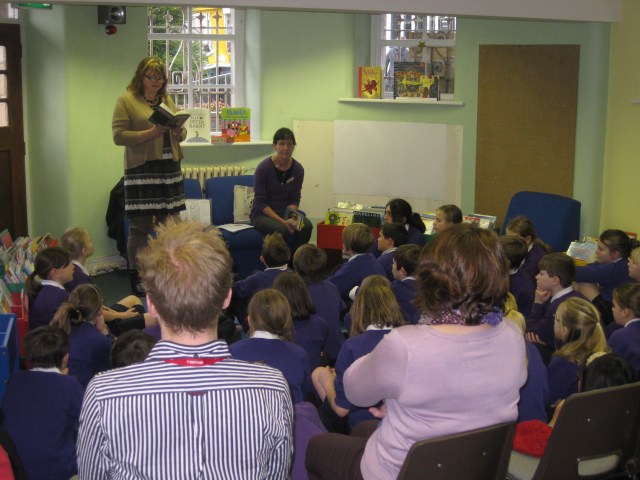
Pupil Power: Livi Michael reading to the year sixes of Pendle Primary School

Pupil Power: Livi Michael reading to the year sixes of Pendle Primary School

She was in her element there, reading from Malkin Child then being bombarded by questions from pupils and teachers alike, revealing her inspiration and a little of the history of the book and the case itself, details about her past and present projects, her writing secrets and more, responding warmly to some great questions from her young audience.

Livi Likeness: A pencil drawing by Noreen Lobo, sketched during her reading at Lancaster Library

Livi Likeness: A pencil drawing by Noreen Lobo, sketched during her reading at Lancaster Library

Livi also impressed on her listeners how her grandmother, while of strong Christian faith, might too have been carted off to Lancaster Castle if she’d been born 300 years earlier for her use of herbal mixes and remedies, a factor that inspired her to ensure the story of this early miscarriage of justice remained in the public conscience.

No doubt she would have happily stayed to field further questions, but the bus driver was ready to set off again, with another 35 pupils waiting at Garstang Community School and a few miles between us and them. So we got back on our merry Witch Way, Janet leading a couple of renditions of traditional folk song Old Pendle before the stark backdrop of Pendle Hill and the West Pennines grew ever more distant, replaced by the Trough of Bowland.

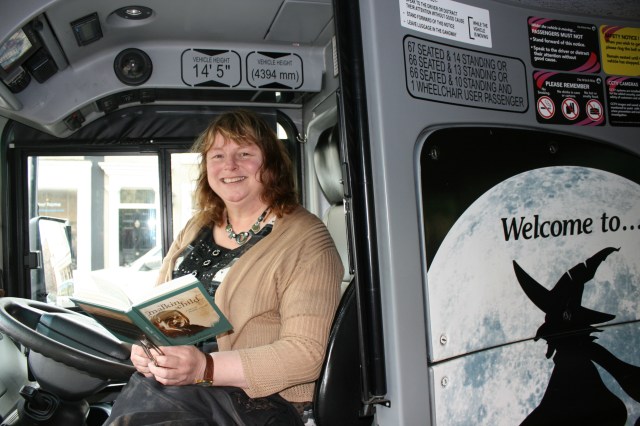
Driving Lesson: Livi Michael takes control of the Alice Nutter (Pic: Michell Scott/Transdev)

Driving Lesson: Livi Michael takes control of the Alice Nutter (Pic: Michelle Scott/Transdev)

When I got back on the bus at Clitheroe, Livi was being enticed into the cab of the coach for a publicity shot, and I was wondering if she was still at the wheel when we briefly took the wrong turning in Garstang, the locals a little bewildered at the sight of Alice Nutter‘s perfect three-point manouevre by the Lancaster Canal. Mind you, they didn’t have that new-fangled satellite navigational technology in 1612, so it’s understandable.

At our next stop I sensed trouble when I spotted Nelson’s town-crier in conference with Garstang’s female equivalent. Is that where the term ‘cry-off’ comes from, I wonder? Meanwhile, Livi was answering more probing questions from youngsters at the library on Windsor Road, before the bandwagon moved further north.

Crying Game: The respective town-criers of Garstang and Nelson discuss tactics

Crying Game: The respective town-criers of Garstang and Nelson discuss tactics on Windsor Road

Next stop was Lancaster itself, and this time Livi was joined upstairs at the Market Square library by Martin Domleo, who read three of his fine poems – including poignant Dickens 200 Writing Competition winner Sunderland Point – before a special platter of Malkin Pie, supplied by Sanwitches of Sabden – involving a heady mix of layered lamb, veg, beef steak and bacon with suet shortcrust topping, herbs, spices … you name it. This being Lancashire there was pickled cabbage in abundance too, and a cheese and onion alternative.

With that to walk off, the party moved up to the castle and around the outer walls for our finale, with distant Pendle Hill just about visible through a gap, and an official guide taking us through a quick but detailed history of the background to the trials, while pointing out Gallows Hill and conveying at least something of the hardships endured by those Pendle folk in the dungeons at the base of the tower where we stood.

A guided tour within the castle would have been welcomed, the best of the day’s weather now behind us, and I know from a past tour of the courthouse and dungeons something of that. But time remained against us and the road back to Clitheroe and Colne beckoned. Besides, many of us will return. And 400 years on we still owe those martyred in James’ name our respect, and the lesson learned by this original witch-hunt should not be forgotten.

Journey's End: Lancaster Castle, where the Pendle Witches met their fate

Journey’s End: Lancaster Castle, where the Pendle Witches met their fate

Malkin Child – A Story of Pendle’s Witches by Livi Michael is published by Foxtail, an imprint of Litfest Publications, in a special hard cover at £8.99, and is available from all good booksellers. For the writewyattuk review, click here.

And for further details about the trials, try http://www.lancashirewitches.com

Posted in Adventure & Travel, Books Films, TV & Radio | Tagged , , , , , , , , , | 1 Comment

From horror and history to witches and YA fiction – the James Dawson interview

Lancashire Visitor: James Dawson (Photo courtesy of Runshaw College)

When London-based teen/YA author James Dawson hit Lancashire for a whistle-stop tour of three South Ribble teaching establishments to mark the 400th anniversary of the Pendle Witch Trials, writewyattuk was there to meet him.

The Yorkshire-born and bred writer was promoting debut novel, Hollow Pike, supported by Lancashire County Council reading development officer Jake Hope and independent retailer Silverdell Books, meeting around 300 students at Balshaw’s High School and Runshaw College in Leyland and nearby Lostock Hall High School.

And it’s fair to say James proved a big success – giving readings, discussing literary and big and small screen influences and that infamous 1612 Lancaster Castle court case, then  signing books for already-devoted and newly-found fans alike.

The engaging author and former teacher – specialising in PSHCE – proved a natural in front of three young audiences, early concerns with technology batted away as he swiftly got into his stride, sharing memories and encouraging involvement, discussing everything from his tattoos to MR James – ‘the godfather of ghost stories’ – and from Philip Pullman to, erm, Nightmare on Elm Street‘s Freddy Krueger (explaining how his mum decided he could watch the  horror flick aged just 12 as it was on Channel Four so should be okay – something he now deems a seriously-flawed decision).

And despite Wes Cravens’ influence, this son of West Yorkshire clearly retains a child-like innocence, his engagingly camp teen-style oration (with Northern undertones) helping him spark with his students, talk of being ‘properly traumatised’ but always up for a bit of horror clearly striking a chord, not least his description of all those dark shadows and silhouettes on bedroom walls at night.

Yet James also defined a distinction between scary stories and real-life horror, and stressed that at least with a book – just like Joey in Friends – you can always put it in the freezer if it gets too scary. Besides, in JD’s world, genuine fear is ‘walking through Stockwell at two in the morning’.

There’s a serious side to this bubbly author, talking frankly about the bullying he endured at school, getting in with a group of friends who proved not very nice, becoming the butt of their jokes, not being invited to key events etc. But he explained how a decision to swap A-level chemistry for sociology changed his world as he got to know three girls that remain closes friends, discovering a mutual love of certain films, TV, music, books and magazines that made him what he is today.

It was returning to those themes and cultural influences in later years, while working as a teacher and when writing a weekly column for a Brighton newspaper – penning the Kemptown Chronicles – that he finally realised there was a market for his style of writing.

Recommended Read: James Dawson’s Hollow Pike

You never stop becoming a teacher of course, and James soon launched into his appraisal of the Pendle Witch Trials and the background to that sorry episode, stressing how he viewed that original witch-hunt a hate crime against a minority group, one to be commemorated rather than celebrated, an atrocity where 12 people were killed for nothing, scapegoated to appease King James. He also drew parallels with modern persecution of ethnic, religious and social minorities and general intolerance of everyone from gays to goths or those with physical or mental handicaps.

James only started writing seriously in 2008, aged 28, having been teaching year sixes for around six years, inspired by a new generations of books like Suzanne Collins’ The Hunger Games, while in his youth there was comparatively little to choose from, heading straight for the likes of James Herbert and Stephen King instead, books he felt in hindsight ‘way too explicit for a 13-year-old’.

There was also a spell as a writer for Smash Hits and Top of the Pops magazine, but it was his newspaper column that gave him the confidence to strike out alone as a novelist, the first fruits of that literary labour seen in Hollow Pike, set to be followed next August by Cruel Summer (another nod to old school pop maybe?), set in Spain and described as a compelling psychological thriller with a dash of romance, or as he put it, ‘a murder mystery in a cabin’. And its author candidly revealed ‘I sometimes think I’m a teenage girl on the inside’ as he talked of that and a current project – a ghost story, I believe – involving a spell of research in an all-girls boarding school (something The Fast Show‘s 13th Duke of Wybourne would have loved, no doubt!).

Full Flow: James Dawson talks about Hollow Pike, tattoos and much more at Balshaw’s High School (Pic courtesy of Catherine Brown)

In answer to questions about his craft, we learned of a love of listening in to conversations on public transport, before James made some reading recommendations, not least Jeanette Winterson’s The Daylight Gate, Michelle Paver’s Dark Matter, Philip Pullman’s Clockwork and His Dark Materials trilogy, and Malorie Blackman’s Nought and Crosses – ‘page-turners’ all. But he was quick to encourage his audience to ‘read anything, good and bad’ – identifying what you like and dislike and learning from that.

Teen Idol: James Dawson

James was also quick to dismiss the concept of writers’ block to one student, suggesting writers using that old line ‘spank their inner muppet’ instead. Indeed. He did admit ‘days when you find yourself emptying and reloading the dishwasher’, but put any procrastination 0f his own  – not least watching films or working on mood boards – down to research.

If you haven’t read Hollow Pike yet, I recommend it for (less impressionable) year eights and way upwards, not least for its valuable insight into modern high school life and pressures surrounding young adults struggling to find a path in life, exploring that desire to fit in rather than stand out among the crowd, and ultimately survive school.

For all its scary and dramatic twists and turns, it’s a book about the power of friendship, and as much about growing up, individuality and self-confidence as a murder mystery, macabre adventure and allegorical spin on the age-old witch-hunt concept.

In a nutshell, key character Lis London leaves Mum in North Wales to join her grown-up sister in the Yorkshire Dales, hoping to escape a culture of bullying. But her fresh start is not all it seems, and there’s something familiar in this remote setting, Lis soon facing new friendship issues and ever-more elaborate nightmares relating to her new surroundings, as she becomes embroiled in a murder investigation while perhaps inevitably being drawn towards her school’s own circle of outsiders.

I won’t go any further (my review is here), but will move straight on to our interview over a (non-witches’) brew at Runshaw College:

MW: You certainly proved a hit with the youth of Lancashire today. Do you picture a key age or target audience and write specifically for them?

JD: As a teacher you’re very aware of the convention of young adult writing, what flies and what doesn’t. You have to think about what to say to a group of 16-year-olds, for example, and I avoid the f-word. But in broader terms all you can write is a book you would enjoy. How can you possibly know how others will interpret it? The only person I really write for is myself.

MW: You’ve documented your own trials at school with bullying and friendship issues, with elements of that in Hollow Pike. I picture you as Jack (one of the main characters), but wonder now if you identify more with the heroine, Lis.

JD: In the early drafts, Lis was probably more like Beth (a close friend since later school days) because I wasn’t at that stage of confidence then. But as you get on you realise this isn’t Beth, this is Lis, a lot cuddlier, and less certain of herself – that’s more like me. Certainly the relationship Lis has with (school hunk) Danny has to be from my experiences of dating! I think Jack’s more the boy I wish I had been at school. He fits the dynamic in the group, but has much more in common with Xander in Buffy The Vampire Slayer than me. He’s the clown and comedian. Not sure if that was me at school. But Jack is fulfilling a narrative role as well.

MW: You mention locations that inspired Hollow Pike, not least old haunts in Bingley, Haworth, and I guess Pendle too.

JD: I was taken on a Witch  Tour with my Dad as a teenager and the Pendle Hill Museum was brilliant in its slightly ropiness. I love things like that and Whitby’s Dracula Experience, all those schlocky horror museums. When you grow up in Yorkshire it’s part of your identity too. We’re particularly famous for the Brontes, but it would have been much cooler if it was famous for witches. But the Pendle Witch Trials were an atrocity, not something to be proud of. I was drawn into the supernatural side, but you can’t forget these were just people.

MW: You’re in Lancashire today, so have to keep your White Rose links to yourself of course, but do you still have strong links with West Yorkshire?

JD: There’s a similar kinship with all these Northern counties, and a definite north-south divide. We are after all bred from miners, hardy people. I lived in Brighton for 10 years, and it was dead soft there. It’s colder up here anyway, so you’ve got to be tougher!

MW: How does London life suit you? And do you think you’ll ever head back North?

JD: It’s the right place to be for me and my career now, and also when you’re used to living in a 24-hour city …. I love Leeds and recently revisited Manchester and it’s looking fantastic, but my next step is probably New York. I’m getting bigger and bigger as I go!

MW: You mention a love of MR James’ Ghost Stories of an Antiquary collection. But I understand it was James Herbert and Stephen King for you as a teenager.

JD: I was in my 20s when I first read MR James, and when I recently tried Chris Priestley and his Tales of Terror, which is like a junior version, it revived my love of his stories. Teenagers will still read Stephen King and James Herbert, but perhaps they need safety wheels on. Those kind of books can be sexually explicit, and I wasn’t ready for that back then. In a weird way, I got a lot of my sex education from those books, which is not ideal.

MW: Was it being a teacher that inspired you to start writing for a teen audience?

JD: It was the pupils that intrigued me, but all UK writers of young adult fiction owe a lot to Philip Pullman. He changed the game, before JK Rowling’s  impact, with a book outwardly aimed at children but read by adults too. Between Harry Potter and His Dark Materials the industry changed, cottoning on to the fact that there was a market there. There is absolutely still a place for To Kill A Mockingbird, an amazing book, but nowadays you’ve got to come up with something from the last 10 years too – books for teenagers about teenagers.

MW: I’m sure Hollow Pike will help many teen readers adjust to school pressures, not least questions over fitting in. Did you set out to do that?

JD: How can you possibly write a book without agenda? As a professional I would have called it ‘protective friendships’. As a human you just say having the right friends is the best defence against bullying. People aren’t thrilled with the message that bullying is inevitable, but I think it is. In Lis’s case it’s just a case of she hadn’t made the right friends yet, rather than she is tainted by it all.

MW: You’re clearly a big horror fan, just like Lis. And it seems to me that you enjoy that notion of being scared. I notice Lis and Danny’s first date involves a horror movie. Is that your experience?

JD: Even before Nightmare on Elm Street my favourite book from childhood was ‘Vampires’, from a series about werewolves, witches, and so on. It was a cartoony series, written by Colin someone. I can’t recall his surname. Not very fashionable, but an influence all the same. As for dating at the cinema, there’s that whole feigning thing, hiding behind someone’s arm at it all. Weirdly, horror films would be a prerequisite in partners for me. I have to ask, ‘what are we going to do if we can’t watch horror films all the time?’

MW: After spells as a teacher and as a journalist, you’re now a writer first and foremost. Was that always the intention?

JD: I didn’t really think I could make any money from writing and was led by teachers to believe I wasn’t particularly good at English, when what I really wasn’t good at was reading comprehension. The biggest failing of our education system is that we judge ability in English by comprehension. I wasn’t very good at giving the answers required, and know as a teacher I was guilty of drilling year sixes on how to answer SAT questions. I just wasn’t very good at exams. With creative writing I got good grades, but only a small amount of English is creative writing. I always say just write loads, don’t worry about your results. My English teacher was very well meaning and really encouraged me to do drama and  creative writing, but sadly due to the constraints of the curriculum we spent half our time doing meaningless comprehension tests.

MW: Do you find yourself working on future characters for books when you visit schools and colleges?

JD: Certain characters you see emerging. I went into a school recently where there was a character straight out of my third book – the glasses, the hair, the attitude. It was almost uncanny.

MW: One of the key literary nods in Hollow Pike is to Arthur Miller’s 1953 play The Crucible. Why do you think that still resonates?

JD: I have to say I got into it via the Winona Ryder film (1996), and didn’t read it until I was writing Hollow Pike, which is really terrible! But there are five to six really big cultural touchpoints regarding witchcraft – from Malleus Maleficarum and The Crucible down to films like The Craft and Hocus Pocus. The concept of the witch has been with us hundreds of years, and Pendle got there well before the Salem Witch Trials, which was more like a sequel! It was important, but Pendle was what I had my eye on, and Arthur Miller had already used the idea allegorically about the communist witch-hunts, so the precedent was there to use witchcraft as a metaphor.

MW: Away from your love of horror (depending on your viewpoint!), you have a passion for pop music, interviewing such notables as Atomic Kitten and Steps in your journalism days.

JD: It was all because of Kylie! When Kylie Minogue released her first album I was sold on pop music, and I’ve always championed it. Very few writers do, but if you’re a journalist who doesn’t want to write about dreary guitar bands and David Bowie, you can make a career of it. A friend of mine, Peter Robinson, is now the authority on pop, but if he ever retires there will be a gap in the market.

MW: Finally, if that doesn’t come off, there’s always your love of a certain TV timelord. Will we ever see James Dawson’s name as a scriptwriter for Doctor Who?

JD: That was a really big part of my childhood. When everyone else was going out and getting drink as a teenager I was inside watching Doctor Who videos, which I’m really quite grateful for. It kept me on the straight and narrow. Genuinely, when I look at programmes like Skins where there’s all these 15-year-olds out of their faces on meth … I was just just watching Doctor Who! And I guess writing for it would be my dream job. I have an idea for a script, but the BBC is quite insular. I do have friends who have worked on it though, so maybe I’ve got a better shot.

Sign Time: James Dawson personalises a copy of Hollow Pike for one of his new fans at Balshaw’s High School (Pic courtesy of Catherine Brown)

Hollow Pike is published by Indigo, part of the Orion Publishing Group, and available from all good booksellers, priced £8.99 in paperback.

For more about the author, head to http://www.jamesdawsonbooks.com

Posted in Books Films, TV & Radio | Tagged , , , , , , , , , | 1 Comment

Kenny’s death put bitter rivalries into context

Fame Game: Newport County historian Andrew Taylor inducts Ken Morgan, as he was better known back in Wales, into the club’s Hall of Fame

WE ALL know the sad tale about the world-beating football team making their way back home after a European Cup match against Red Star Belgrade in early February, 1958, refuelling in Southern Germany before heavy snow and engine problems combined with catastrophic effect.

Even those of us not born for another decade – irrespective of club colours – can name many of those who died, not least the eight Manchester United players among the 23 who lost their lives on board BEA Flight 609.

But what of the 19 who somehow survived that awful winter’s night? We all know Bobby Charlton’s story and those of a few others and what they must have gone through. The story of the team’s rebuild is one of legend and will forever be retold, with good reason. Yet there were others too, including Kenny Morgans, who died at the weekend at the age of 73.

Morgans – or Ken Morgan as he was known everywhere other than Old Trafford, rather confusingly – played on the right flank in the 3-3 draw against Red Star, and has been asked to retell his tale many times over the years, a harrowing first-hand account about the repeated failed take-offs, the air of foreboding, the changing of seats, and concern as the pilot tried again. He remembered hitting the fence at the end of the runway, then blacked out.

Six hours after the crash, two German photographers at the scene discovered the unconscious Morgans in the remains of the fuselage, the search for survivors having been called off for the night. He was the last retrieved from the wreckage, pushed into the luggage hold at the back by the force of the crash and cut out of his new Italian suit by rescuers, having suffered head injuries.

It was three days before he regained consciousness in hospital. He woke up  alongside Albert Scanlon, Bobby Charlton and Ray Wood, thinking the other players would be in the next ward. Soon after, he learned the truth. He returned home by train in the end, along with fellow United star Dennis Viollet, spending a week at home before returning to training and match action.

Morgans played several games in that year’s FA Cup run but was over-looked for the final by stand-in boss Jimmy Murphy, who felt he’d done too much too soon after the disaster, despite having planned to ‘play my heart out for the players that died’. It was a decision that broke his heart, but he did however play a fortnight later in the European Cup semi-final home leg victory over AC Milan at Old Trafford, and hailed man of the match.

Newport Legend: Ken Morgan refound his form at Somertons Park (Pic courtesy of Andrew Taylor)

Swansea-born Kenny, a Welsh schoolboy and Under-23 international, was just shy of his 19th birthday when he took his seat on that ill-fated flight, having been signed by United on leaving school in 1955. This highly promising right-winger was appointed captain of the youth team and made his first team debut barely three months before, brought in by Matt Busby in an effort to freshen up his side.

Understandably, Morgans appeared to lose his way after the crash, losing the passion for the game, missing his team-mates who had died. Despite the encouragement of assistant manager and fellow Welshman Murphy, he was allowed to leave Old Trafford in 1961, having made just 23 appearances.

He returned home to South Wales for a fresh start, going on to play for Swansea Town (now City) and Newport County, finally enjoying his football again by then under Billy Lucas, scoring 46 goals in 141 appearances.

Former Manchester Evening News reporter David Meek felt Morgans shouldn’t have returned so quickly after the crash. He said: “Given that eight of his team-mates had died in the crash, and two others were so badly injured that they’d never play again, I think Kenny must have felt some pressure to get back playing for them as soon as possible.

“Even though physically Kenny made an almost instant recovery, psychologically you could see he’d lost his spark and his hunger. Back then terms such as post-traumatic stress hadn’t been invented; though that’s clearly what he’d been suffering from.

Peter Stead, historian and Swansea City fan, added: “I’m not sure if it was injury, or simply struggling to cope with the attention of being the main man in the team. Kenny always struck me as a very magical yet frail character, both as a man and a player.”

Morgans made 54 appearances in three seasons for the Swans, scoring eight times, including an FA Cup semi-final in 1964, his side losing 2-1 to Preston North End at Villa Park.

He moved on again after just three years, finishing his professional career with three years at Newport, seen as ‘up there with the very best of them’ at Somertons Park by long-term County fan Ron Jones.

He said: “He was too good for Newport. He’d stand around for 88 minutes admiring his looks, and then whoosh! Someone would pass him the ball and you couldn’t see him any more – he was that fast!

“He had all the talent in the world, but I honestly don’t think his heart was in football after Munich. He scored hatfuls of goals for us, but I don’t think he was even 30 when he decided to jack it in.”

After retiring from the pro game in 1967, Morgans – who Peter Stead described as ‘charming and eloquent as ever’ after attending a recent Swansea centenary dinner – spent a spell as a publican, initially running a hostelry in Pontypool while player-boss of Cwmbran Town. He later became a trader in supplies for merchant shipping.

Morgans was the very epitome of what the game was about then, yet I wonder just what horrors he must have replayed in his mind for all those years. And while Duncan Edwards and co have remained (rightly) revered in higher circles, Morgans was just trying to get on with his life.

Nowadays of course, we talk of bitter rivalries between United and … well, just about every other team really. At times, it seems to be all about pettiness, inflamed passions and too often over-hyped contempt for those on the pitch with their over-inflated wages and out of all proportion squabblings.

But Morgans and his Old Trafford team-mates belonged to a different era, and we can learn a lot about the best aspects of the game from them. This Busby Babe was just one of many young lads who had a taste of the big time before tragedy struck and everything changed. However, his passing should bring into context all that is good about football and sport in general. And Morgans should never be forgotten.

With thanks to Andrew Taylor, historian at Newport County and author of Look Back in Amber: Memories of Newport County AFC.

This Malcolm Wyatt article first appeared on the http://www.sportnw.co.uk website, and appears here by kind permission.

Posted in Football, sport | Tagged , , , , , , , , , | Leave a comment