Weather or not you’re winning

Sundance Kid: Eric Bartholomew contemplated changing his stage name to Eric Woking, apparently

Bring me sunshine, as a certain Lancashire comic said as he waved goodbye to the coastal resort which provided his stage name. And after a few years in Lancashire I think I realise what Eric was driving at.

We may only be in October, but sheer persistence in the rain department earlier this month left us regular match-goers already wondering whether we were wasting our time heading to games – in fear of early-season postponements. It wasn’t just in the precipitous North-West either.

In some cases, council pitches playing host to amateur and junior sport were designated no-go zones, and in another week of heavy showers we saw several games lost to water-logging.

While the more optimistic of us hoped to be part-way through an Indian summer, it turned out more monsoon-like, that glorious summer of Euro 2012 and the London Olympics ever more distant.

I hate to be a pessimist (although it goes with the territory, I guess) but winter’s already on the mind, and I recall a fellow press box reporter at Victory Park, Chorley, one freezing cold, miserable afternoon a few years back (no doubt during a turgid UniBond League lower-division non-spectacle) announce, “I’ll be glad when this bloody global warming everyone’s pratting on about finally kicks in.”

Something that never seemed to go away during my years covering matches all over the North – from Gretna to Willenhall Town and from Workington to Spalding – were those weather stories.

It’s not as if we had a balmy summer this year. It wasn’t without reason that I upgraded from tent to family caravan late doors on a late-August break to Dumfries and Galloway, after a site owner enquired how I expected to get my car on to his camping field.

And now, with one of Britain’s wettest summers on record behind us, we’re left with the legacy, the pitches already knackered and a downpour of postponements surely on the horizon.

That got me thinking just how many wasted journeys we’ve all experienced over the years. And I don’t just mean because your team has come away empty-handed.

I’m talking about bizarre reasons for call-offs, and I’ll start the ball rolling (so to speak) with mention of a Conference match a few years back being abandoned after legendary Woking defender Kevan Brown fell down a hole that suddenly appeared in his own half, later put down to underground improvements works. A club official worked heroically with a bucket of sand, but to no avail. The sight of his fellow players looking down into the abyss still haunts several fans.

Then there’s those nights where you travel more than 150 miles only to be told by some goon of a club official that the ref’s just called it off, because of a little frost on one side of the pitch. That happened to me at Coventry City one midweek in the ’90s, after an early dart from work from Leyland for an FA Cup clash. Gutting. And I’m sure you’ve got similar tales of woe.

The season’s barely started of course, and most of us still have seven miserable months ahead before we are relegated,  reach a point of mid-table mediocre safety, or blow the play-offs.

But I wonder just how many of you will find yourself walking away in despair this year after a deluge at Stormy Corner, Skelmersdale, freak conditions leave you on the rocks at Seel Park, Mossley, near-marooned at Marine FC, victim to a  tidal wave at Seamer Road, Scarborough, or when a sudden squall collapses the drawbridge at the Moat Ground, Gresley.

Like This: The blogger shares a few showbusiness secrets with his mate Eric on Morecambe Bay

It doesn’t matter how far up the tree your team are. I recall shards of ice hanging from the terraces ruling out a game at The Stadium of Light, and at the same ground Reading fans had to turn back barely an hour before kick-off because of a late postponement for a waterlogged pitch … this August!

But whatever you encounter this season, remember it’s all good character-building, and ultimately what makes you British and a true sports fan.

“A little bit or rain/snow/ice/tornado? Hah! Didn’t stop us when we did that topless conga the day we were beat 5-0 at Brunton Park, Carlisle. Get your coat on, lad, or we’ll never find a parking spot.”

A version of this Malcolm Wyatt article first appeared on the http://www.sportnw.co.uk website on October 2nd, 2012.

Posted in Football, sport | Tagged , , , , , , , , | Leave a comment

A tribute to a true sports fan, cancer battler and charity campaigner

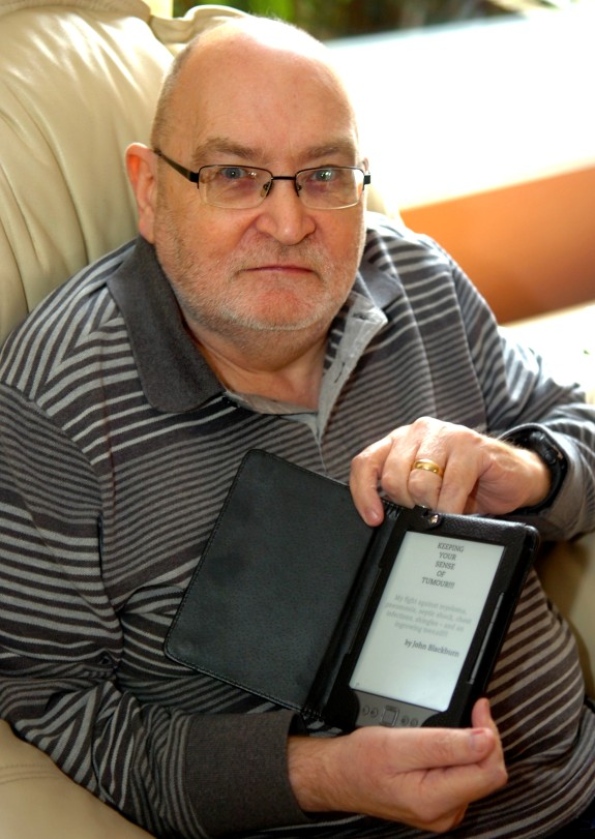
Charity battler: John Blackburn at work on his laptop

So many of us go through life aiming to commit our life stories to print, yet so few manage to get past the hurdles involved before publication.

Yet that changed somewhat with the advent of the e-book and recent strides in self-publishing, and one of those who made the most of that open door was an old friend who died at the end of September after a long battle against cancer.

I knew John Blackburn through his love of Chorley FC, a club he invested so many hours in and whom I reported on for several years while working on local papers in Lancashire.

It was no surprise manager Garry Flitcroft, chairman Ken Wright, and a large number of Magpies fans were there to pay tribute at John’s memorial services, the sheer numbers of mourners suggesting the high esteem for the 64-year-old, also a keen cricket fan. And the weight of messages on fans’ website Magpies in Space told its own story.

‘JB’ was clearly respected by all those who came into contact with him, not just at his clubs, but also after 43 years as a librarian in Lancashire, for an ordinary guy who battled so hard to ensure returns to the terraces and boundary rope after diagnosis of an incurable cancer in late 2008.

Fans observed a minute’s silence in his honour ahead of a recent FA Trophy clash at Chorley, where John had in recent years – while confined to a wheelchair – handed the Jack Kirkland Trophy to the winning captain at a pre-season game with Preston North End.

During his recuperation he contributed to club programmes and his local daily and weekly papers. But he also published an account of his illness as a charity fund-raiser in the book Keeping your Sense of Tumour!

Trophy Guy: John, right, presents the Jack Kirkland Trophy to PNE skipper Chris Brown

That title summed him up well, as JB always loved a good pun (and plenty of bad ones!), as anyone who met him at a match or read his football reports knew.

But Keeping your Sense of Tumour was much more, serving as an inspirational tale aimed at those undergoing similar woes, John stressing that being diagnosed with cancer – even an incurable form – ‘isn’t necessarily the end of the world’.

He proved that in a four-year battle with multiple myeloma – a cancer of the bone marrow – including an operation to remove a tumour from his spine, radiotherapy and chemotherapy treatment, pneumonia, toxic shock and even the ‘shingle tingle’, as he dubbed the after-effects of all that.

That covered his brave journey from the twinges in his back he felt in late 2008, just as he was set to retire – the pain gradually worsening and John’s leg seizing up, with medical  investigations revealing he had a tumour on his spine, leading to his diagnosis.

The resultant book charts his up and down progress from hospital to nursing home and a return to his own home in those first three years of illness, showing how a positive attitude and the right support helped him cope and enjoy life again despite trying circumstances.

It was also written as a thank you to wife Su, his main carer in later times, and family, close friends and health workers of all grades who helped him. And the subject matter followed his journey from first signs and diagnosis onwards, told with plenty of light-hearted moments and above all extremely positive.

Along the way, John talks about his being ‘a hypochondriac by profession, but a devout coward by religion’, and many more almost tragi-comic JB-esque nuggets.

One fine example reads, ‘It had become my oft-repeated claim while in hospital that I hadn’t had a ‘drink’ since Christmas but had been legless since New Year.’

He adds of one doctor: ‘He made me walk up and down the ward, then stuck his finger up my bum and sent me home. Well, I think he was a doctor, he was wearing a white coat and carrying a clipboard, but sometimes when I think about it I wonder.’

It wasn’t John’s only publication, having also written Ave Maria – the first few steps on the way to becoming a Latin lover – maybe as an e-book, a light-hearted introduction to the Latin language. And who knows how many more books he might have produced in his retirement years if not for his illness.

John was always a pleasure to deal with. He’d often appear near the press box or wherever I sat with my pen and pad and grilled me on my last report for missing a key incident or my personal spin on an incident. He also gave me the odd précis of early drama if I showed up late, and I always knew to trust his version of the action.

With that in mind, I could almost hear that trademark JB chuckle the day before his funeral, having showed up at his crematorium send-off a day too soon. He’d have been impressed by that – not only showing up in good time, but 24 hours in advance.

Kindle King: JB gets to grip with new technology

John always treated me with respect and kindness (and a little gentle ribbing), and often asked about my family too. And that interest in others summed him up. He was a true gent, a good man, and a proper friend.

He’ll be sadly missed, and my thoughts remain with his family and close friends. But the rest of us have a permanent reminder of him too through his book, with Keeping your Sense of Tumour! available direct from sublackburn01@yahoo.co.uk and Ave Maria via Amazon.

A version of this Malcolm Wyatt tribute was first published on the http://www.sportnw.co.uk website on October 5th, 2012.

Posted in Books Films, TV & Radio, Football, sport | Tagged , , , , , , , | Leave a comment

True Deceivers – Hell Or High Water

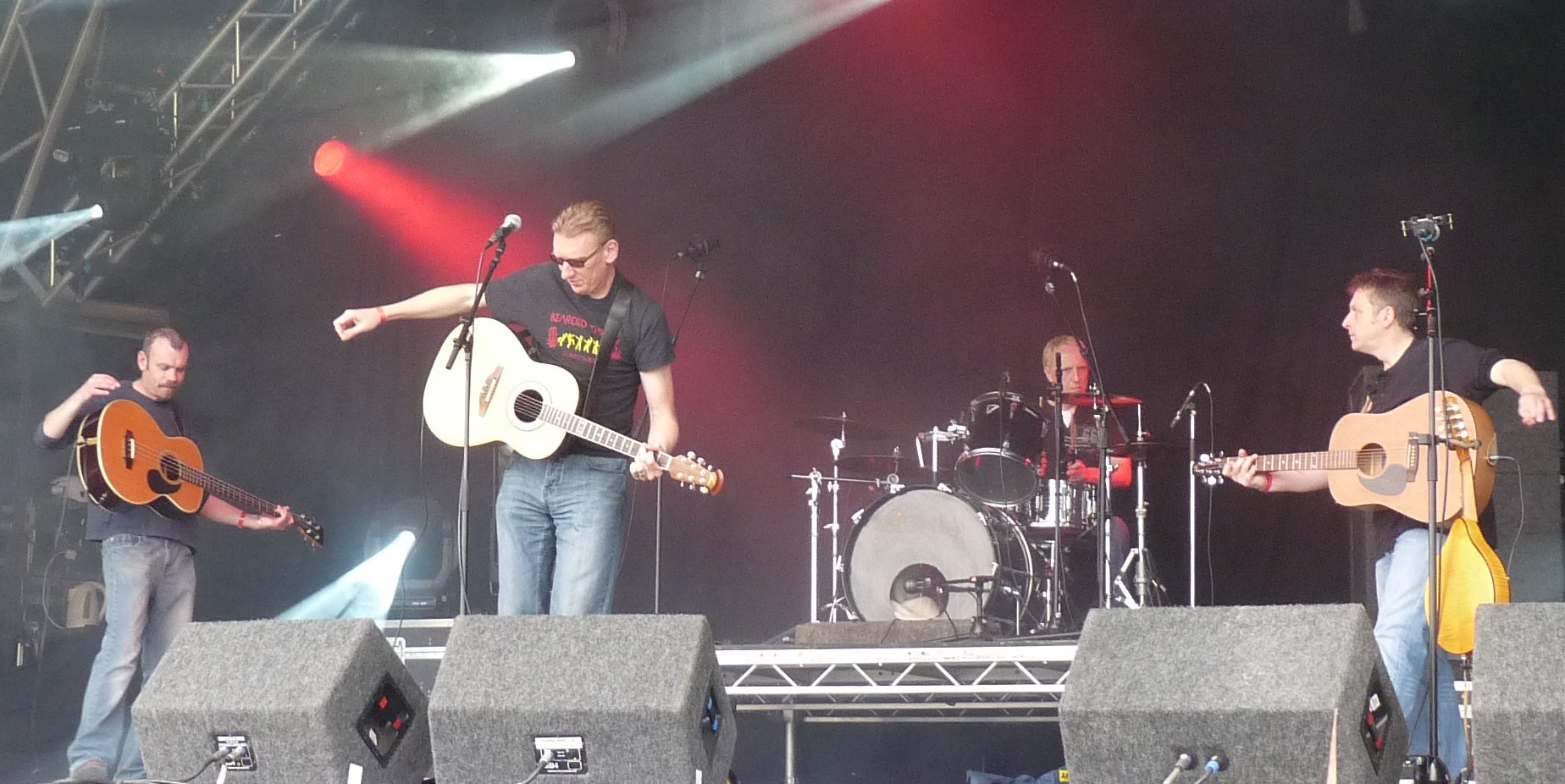
Almost True: Backline Live, Guildford (2011): From left – Nick Bliss, Graham Firth, Jamie Legg, Dee Coley

FIVE years on from their last release, Lies We Have Told, there’s been a lot going on for the True Deceivers, the band’s usual array of back-to-back live shows and festivals rocked by the premature passing of fiddle player Mark Mitchell.

Hell Or High Water is dedicated to the memory of Mark, ‘our friend and bandmate’, and it’s a fitting tribute too, his spirit a key component of the recording vibe.

It’s a reflective album, for sure, but there’s plenty to look forward to and celebrate as well, and you get the feeling this band have become all the stronger – thrust together in a bid to do him justice.

The song-craft of Nick Bliss and Graham Firth shines throughout and helps set this Surrey-based four-piece (augmented here by Rupert Lewis on fiddle) apart from many contemporaries.

They’ve certainly done their apprenticeship on the pub, club and festival scene, with Firth’s voice and Bliss’ harmonies all the more effective now, and a solid-as-ever engine-room stoked by Dee Coley on bass and Jamie Legg on drums.

Bliss’ craft was honed at the heart of the Blazing Homesteads, and at times I wonder if the True Deceivers might benefit from occasional vocal contributions by their chanteuse Chris Franey, or even a little Steve Earle-style true grit.

That’s no criticism of Firth, who certainly impresses here, but sometimes maybe he just needs a foil, something The Men They Couldn’t Hang and lesser-known but no less impressive indie outfit Bob benefitted from, bands with singers reminiscent of the True Deceivers mainstay.

Yet whereas Bob, superb live, under-impressed in the studio, the True Deceivers are mastering that art, judging by this collaboration with engineer Guy Davies at Guildford’s Empire Studios.

And while there’s an over-reliance on Firth’s lead vocal, Bliss’ harmonies and regular switches in tempo and style keep the band fresh, helped by the strength of the songs.

Riverside Roots: True Deceivers in live action at the Bearded Theory Festival, Derbyshire (2010)

Opening track Time To Mend A Broken Heart is a great example, an upbeat track that is perhaps as close to new wave folk as the band get. I’ve never been one for labels, but I mention the genre in its wider sense, easily seeing the True Deceivers on the same bill as acts as diverse as Seth Lakeman and 6 Day Riot.

The Sun Always Shines On Me sees an early gear change, Firth’s lyric and style more reflective in his answer to Richard Ashcroft’s Lucky Man, showing his own verve and belief in the simple pleasures of this world. And if you look really closely, you can see the sun appear from behind the clouds at that stage.

If that all sounds saccharine-rich, Bliss’ guitar keeps you on your toes, and then we’re on to title track Hell or High Water, still a stand-out track after a few listens. Bliss’ mandolin brings to mind a slower tilt at Paul McCartney’s Dance Tonight, its slow-build quality augmented nicely by Dee’s plodding bass in a song of intent and inspiration.

If Nick’s words can seem a bit join-the-dots at times – never too far from cliche – the music pulls them through, and it works – a few timely chord changes ensuring more edge.

On Still Living There we have a Bliss/Firth mood change, five-string guitar nicely complemented by Lewis’ wistful fiddle.

There’s a more melodic country feel on another fine Bliss song, Wishing My Life Away, a suitable soul-mate for their live favourite You Ain’t Going Nowhere, the Bob Dylan song they tackle with such Byrds-like grace.

While that may sound reminiscent, they somehow make it their own – adding a Songs From the Wey Delta* feel, if you like, something perhaps borne out of all that mud and sunshine on the festival scene these past few years.

That’s definitely the case with the next song, borrowed from ex-bandmate Allan Broad, his What Scares You perfect for those warm summer nights by the river’s edge, yet saved from being too introspective by a sense of urgency supplied by Coley and Legg.

A festival band always needs good covers, and we get that on a storming version of The Jayhawks’ Tailspin – another highlight – then the Gin Blossoms’ Cajun Song, both revealing further the band’s often-gorgeous influences.

The latter is sandwiched neatly between two more quality Bliss compositions, Bridges and final track You Don’t Want to Start From Here, and the former serves as the title track part two, while each showcases the band’s alternative country and rock roots, bringing to mind for this scribe ’90s US acts Counting Crows and Hootie & the Blowfish.

By that design, perhaps the True Deceivers have a future across the pond too, but they execute it all with a Home Counties touch, and like Bruce Foxton guesting with The Mavericks during Cajun Song.

But until that American break, we’re more than happy to keep them here on home soil – bringing a little more sunshine and playing and recording songs a former band-mate would be proud of.

* Before I’m marked down for my geography homework, I know there’s no delta on the River Wey, but it just sounds right … okay?

True Deceivers – Hell or High Water (TTDCD01) will be available through the usual channels (iTunes,  Amazon etc) from December 1st, 2012.

In the meantime the album and its 2007 predecessor Lies We Have Told (ANDCD105) are available through the band’s own website at  www.thetruedeceivers.com

Posted in Music | Tagged , , , , , , , , , | 2 Comments

“There’s a storm coming up!”

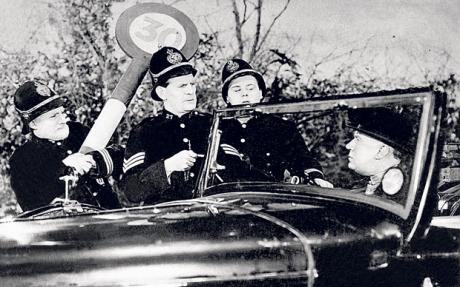
PCs Harbottle (Moore Marriott) and Brown (Graham Moffatt) flank Sgt Dudfoot (Will Hay) at a roadblock during the wonderful Ask a Policeman (1939)

As I’m writing this, the wind’s howling, the rain’s swirling, leaves are taking flight and making paths treacherous, and the homemade wooden contraption in the front-room chimney breast – designed to avoid sudden downfalls on the hearth – is clunking away in harmony with my typing, as autumn meets winter in squally downtown Lancashire.

I’ve just had that dreaded call – and parents will understand this – revealing that my youngest daughter has forgotten her lunchbox. That means that despite my earlier smugness about working from home on a day like this, I’m going to have to be out there among the sodden dog-walkers after all. But it’s only a bit of weather, and – as us old gits tend to say – “Call this bad weather? Why, back in 1987 ….”

Yes, it’s 25 years since that fateful day that Mother Nature dealt us The Great Storm, which ripped up Southern England and tossed it back at us in a different form, from which at best it took us a few days to recover.

I’m thinking of a scene from 1939 classic Will Hay film, Ask A Policeman, set in the village without crime – Turnbotham Round, a gale blowing as high-pitched oil-skinned fisherman Seth Monroe calls in with a keg of brandy, telling hapless Sergeant Dudfoot, “There’s a storm coming up, I can tell ‘ee!” Well, it was a bit like that, I suppose.

Yet this Great Storm – although portrayed in a few dramatic scenes on TV since – including Our Friends In The North – was no fictional tale, but the kind of severe weather pattern we tend to hear about whipping across the US eastern seaboard instead. And on the night of October 15th/16th, 1987, it just happened to tear through my old neck of the woods in rural Surrey.

Everyone recalls Michael Fish’s weather forecast that previous night, the poor man later pilloried and hung out to dry, so to speak – and wrongly so (see note at end). The rest is history of course. What was expected to be something ‘a little breezy up the channel’ (and that was no euphemism) turned out to be very different.

The pictures that came in over that next day or so let us know just what had happened that night – with countless scenes of devastation, caravan sites crushed, vehicles tossed aside, roofs ripped off, houses wrecked beyond repair and not safe to go near, once-mighty trees sprawled across main thoroughfares, and lots of casualties and fatalities, on a night in which it was estimated that  the emergency services received the equivalent of four months’ worth of calls.

It proved to be a busy night at the London Weather Centre as operations to redress the damage – metaphorical and physical – kicked in and forecasters did their best to get the message out. But of course it was all too late. The storm was heading the way of the capital, brushing aside those southern counties on the way, with London soon powerless and sporadic looting already being reported. Sometimes it’s as if  the scum of this land have an in-built alarm system that tips them off.

Meanwhile, the storm ripped the roots off age-old trees, sucking them out of the ground and hurling them around like angry giants, with every major road blocked and no respite until the storm petered out somewhere across the North Sea later that morning.

By then we’d lost around 15 million trees – whereas Dutch Elm disease had accounted for a mere 10 million. It was also estimated that 90% of forestation in the south-east had been destroyed, and it took many more days before our telephone lines and power were back on, let alone until every road was opened again.

I’ve just looked at an old diary, and was reminded I’d planned to see my mates’ band A Month of Sundays at the Greyhound in Fulham that Thursday night. I only decided against it at the last minute, not least as I was off to see The Wedding Present at the University of London on Friday night, and there was certainly plenty to gaze at in horrified wonder at on the way up the A3 on that occasion.

I also noted that the telly still wasn’t working by that Sunday, the Hog’s Back transmitter down. I probably did some taping instead. That’s what I tended to do in those days on a rare night in. Tell the kids of today that ….

Strangely enough, I did make it to the Fulham Greyhound three weeks later, this time to see the Dubious Brothers, and on that occasion freak weather conditions hit the south-east again, this time with it taking us more than two hours to get home to Guildford because of the thickest fog I’d ever encountered, the A3 closed by the police for safety reasons and us forced to use the old London Road instead. I remember at one point going three times around a roundabout before I could see enough of my exit to head off towards it. Scary stuff.

Yet on that occasion I got home and told my tale – full of it – only to be verbally slapped down by my Mum, who was quick to let me know that The Great Fog of 1987 (everything was great in those days, eh daddio!) had nothing on the old pea-soupers she was brought up with in the ’30, ’40s and ’50s. And here I am now, 25 years on, letting my own children know they ain’t seen nothing yet compared to what I encountered back in my day.

Not true of course. Freak conditions remain with us, and I was, after all, the bloke who slept through The Great Storm of ’87. Surely not? I hear you say. Well, that’s something to tell my grandchildren one day.

This is where I should add a story of derring-do, rescuing calves trapped by fallen trees, stopping traffic from driving towards ravines and fallen electricity pylons, delivering a baby in the back of a beaten-up Ford Escort Mk II. That kind of thing. But the truth of it was a little more mundane.

That night, I was knackered after another punishing week, and when I woke up in the middle of the night – with the wind howling into my bedroom – my 19-year-old self just about stumbled out of bed, reached up to the top window and slammed it shut, quickly falling back into a deep sleep, only waking up when the alarm went off around seven the next morning.

Even then, when I heard my Mum listening to local radio (an oddity in itself, I seem to recall) I wasn’t fully aware of what had gone on. Despite her advice about reporters telling of trees blocking roads and local roads being impassable, I was soon on my way, taking no more precautions other than deciding against taking my trusty racer the three miles to the other side of Guildford. Might be safer in my car, I compromised. Besides, these local journalists do tend to exaggerate (something I’d find out for myself a few years later).

Yet within a mile of the house I was fully aware of what I’d slept through and wondered just how I’d managed that, with the mightiest oaks felled and straddled across roads, saws buzzing as sections were cut up around me, forced to take a fair few diversions in post-apocalyptic scenes before I could even reach work. Needless to say, I was one of the few who showed up that day.

As in all these dramatic weather situations, I was pleased to see the good old Spirit of the Blitz alive and well. This was illustrated nicely by the wideboy postman driver who called on us each morning at work. He was the spitting image of James Beck’s spiv Private Walker in Dad’s Army, not just in looks either, able to deliver whatever you requested within days, however bizarre. In my case it was usually just VHS and C90 cassettes, but for others I dread to recall what they asked for. That morning, he was later than usual, but battled his way through the security doors of our office, coolly sucked on his ciggie then announced, “Anyone wanna hire a chainsaw? Competitive rates assured.”

What a night that was. For those who don’t know the full story, it was billed as the worst storm on these shores in 300 years, four times the size of a hurricane, with winds of up to 110mph recorded. It killed 19 people, including two firemen out on a rescue, and changed the face of Britain forever, not least as Sevenoaks in Kent became for all intents and purposes Oak.

It took a few days to get back to normal, and some of those I worked with used the excuse to have at least a couple of days off, as was often the case – just like on the rare occasions when snow hit us in mid-winter.

Anyway, I must deliver that lunchbox now. Wish me luck. And remember, “There’s a storm coming up!”

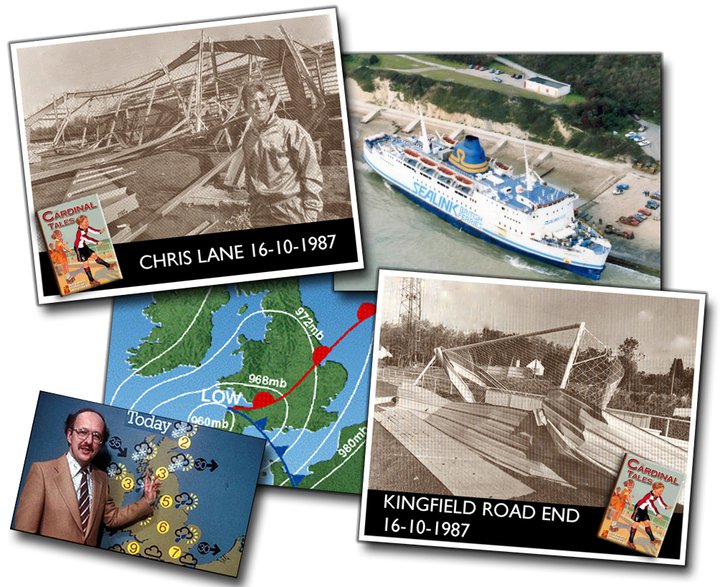
Damage Done: A few post-storm scenes, reproduced with the permission of Mark Doyle/Cardinal Tales

Mark Doyle, a good friend of this blog who supplied the above image collage, put together in 2007 an article centred on Woking FC’s home game with Billericay Town the day after The Great Storm. For the record, the Cards won 3-1. But here’s a few more relevant details:
Newly promoted Woking had to contend with more than just a few downed trees and battered buildings at Kingfield just thirty-six hours after the “Great Storm of 1987”. Over £500,000 worth of damage had been caused back in March to the dome of the adjacent Chris Lane tennis centre by an 80 mile an hour gust of wind, but another £350,000 was added to this bill during the early hours of 16 October 1987. As the people of Surrey tentatively rose from their slumbers, they found that the hurricane force winds had transformed the face of southern England in the worst night of storms in living memory. As dawn broke over Kingfield we were greeted with the unusual sight of a large portion of the Chris Lane’s corrugated roof in-bedded into the Kingfield Road End goal, after it had broken free during the night, raced down the field and smashed into the net with the power of a deadly Eddie Saunders back pass!”

Mark added that Vauxhall Opel Division One games at Lewes, Wembley, Basildon and Southwick didn’t survive the historic weather conditions that day, in a year when we’d already had to cope with the success of Rick Astley’s debut single “Never Gonna Give You Up”. His article continues:

“By the time most people went to bed on 15 October 1987, exceptionally strong winds had not even been mentioned in media broadcasts. By morning, an estimated 15 million trees were uprooted, and with roads and railways blocked, most people found it impossible to travel to work the following day. During the storm a tornado touched down near Admirals Walk just outside of Pirbright and cut a swathe of trees, a hundred yards across and half a mile long, the century old Shanklin Pier was reduced to driftwood and the Sealink ferry MV Mengist was blown ashore at Folkestone. The storm was reportedly responsible for the deaths of twenty-three people. Five died in Kent including two seamen in Dover Harbour and in Dorset two firemen were killed as they answered an emergency call. One in six households in the south east of England, submitted an estimated £2 billion in insurance claims. The last storm of similar magnitude in England occurred in 1703, so the storm was a “one in 300 year event”, but another storm swept across England 27 months later!

“BBC meteorologist Michael Fish was heavily criticised for reporting several hours before the storm hit, in seemingly flippant fashion: “Earlier on today, apparently, a woman rang the BBC and said she’d heard there’s a hurricane on the way . . . well, if you’re watching, don’t worry, there isn’t”. In fact his comments about a hurricane had nothing to do with the UK; they referred to Florida, but have been so widely misreported that the British public remain convinced they referred to the approaching storm. Fish went on to warn viewers to “batten down the hatches”, saying it would be “very windy” across the south of England, but predicted that the storm would move further south along the English Channel and the UK mainland would escape the worst effects. The remainder of his warning is frequently left out of re-runs, which adds to the public’s misrepresentation of his forecasting that evening.”

Posted in Adventure & Travel, Books Films, TV & Radio | Tagged , , , , , , , , , | Leave a comment

Pedalling away from Lance Armstrong’s legacy

IT HAD been such a great summer for cycling, from an amazing one-two in the Tour de France to an avalanche of London 2012 medals. And to see the full impact, you only had to head out on the country lanes around this island nation to see how many of us had taken to our trusty two-wheelers again.

While the majority of the success came at the Olympic Velodrome, it was the road races that inspired so many of us to grease our chains, wipe down our spokes and ride off into the sunset. The sale of new bikes or at least the re-appearance of many from garages and sheds, told its own tale.

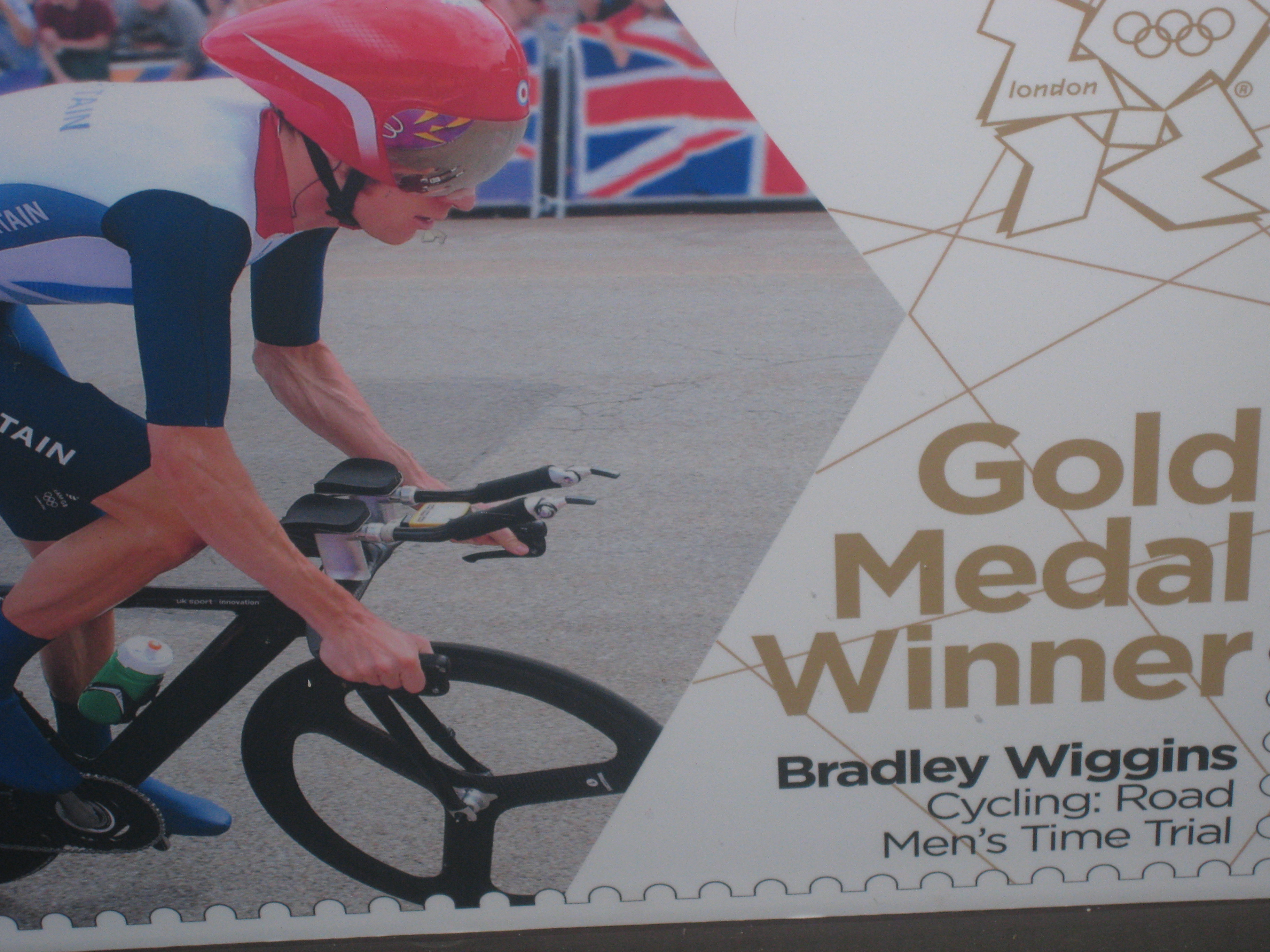
While we’d achieved comparatively little in other sports, it worked out that you never forget how to ride a bike. And the summer night I headed out with my family to see Bradley Wiggins’ golden postbox in Eccleston near Chorley was a case in point, seeing a succession of pedal-happy cyclists of all ages traversing rural Lancashire en route.

Some ill-advisedly dress for the part (all that figure-hugging lycra still makes me feel nauseous), thinking Team Sky tops and space-age helmets will give them extra edge. Yet whether it’s an organised event or just a family ride, it’s fair to say Wiggins, Liz Armitstead and co showed us the way.

But however strong the feelgood factor this summer, there’s always been that niggling question about doping in the background, and cycling’s dark past came back with a vengeance this week in the light of the Lance Armstrong affair.

The British Cycling organisation was extremely quick to distance itself from it all, clearly drawing a line under the whole episode and letting us know how much that sordid world is all in the past.

We saw that in France on the Tour, Wiggins going a little mental when mention of drugs came up, feeling his incredible achievements in the saddle were being undermined.

If you don’t know the background, he has good reason to get angry, not least after all those stories about his absentee dad, the Australian pro road racer who competed on the European circuit and made a name for himself in shady circumstances – a sad tale of cheating, drugs, booze and family desertion.

Bradley worked hard from the start to distance himself from all that and has proven himself to wonderful effect. But the mud of his chosen sport’s dark past still sticks to all those riding today.

The 1,000-page report from the US Anti-Doping Agency certainly leaves us in no doubt that speed wasn’t an issue when it came to the US Postal Service cycling team. Delivering well ahead of time, every time.

Armstrong’s squad were described as running “the most sophisticated, professionalised and successful doping programme that sport has ever seen,” the report setting out its case against Armstrong with damning clarity, depicting the former cycling hero, US national icon and cancer-campaigning champion as a bully who coerced his team-mates into using drugs and a cheat who paid hundreds of thousands of dollars for doping programmes.

It concludes, “His goal [of winning the Tour de France] led him to depend on EPO, testosterone and blood transfusions but also, more ruthlessly, to expect and to require that his team-mates would likewise use drugs to support his goals if not their own. It was not enough that his team-mates give maximum effort on the bike, he also required that they adhere to the doping programme outlined for them or be replaced.”

Armstrong’s lawyers attacked it all as “a one-sided hatchet job, a taxpayer-funded tabloid piece rehashing old, disproved, unreliable allegations based largely on axe-grinders, serial perjurers, coerced testimony, sweetheart deals and threat-induced stories”.

Yet the sheer weight of anecdotes and testimonies that have come out will leave him needing far more than just that old King of the Mountain guile and cunning to rise above it all and clear his name.

Money comes into it all of course, the report claiming to have evidence that Armstrong paid over a million dollars out amid all the lab blood test results and shady goings on, the team professionally masking its devious actions, evading detection and ensuring secrecy in order to ‘ultimately gain an unfair competitive advantage through superior doping practice.”

Then there’s that damning line which states that “20 of the 21 podium finishers in the Tour de France from 1999 through 2005 have been directly tied to likely doping through admissions, sanctions, public investigations or exceeding the UCI hematocrit threshold. Of the 45 podium finishes during the time period between 1996 and 2010, 36 were by riders similarly tainted by doping.”

Dave Brailsford and his ultimately victorious British Cycling team have done wonders these last few years to turn around our own fortunes and show the world how to ‘win clean’ on two wheels, not least through their high-profile zero tolerance anti-doping policy.

The body’s performance director described the agency report as ‘jaw dropping’, but insisted, “Everybody has recalibrated and several teams like ourselves are hell-bent on doing it the right way and doing it clean”.

But all that’s been revealed this week ensures the sport has a long way to go to see its good reputation remain intact and prove all these findings belong to a different age.

* A version of this article first appeared on the http://www.sportnw.co.uk website,  and is reproduced here with permission

Posted in sport | Tagged , , , , , , , , | Leave a comment

Some Fantastic Praise

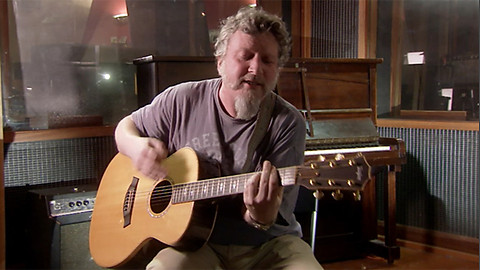
ZZ Top: Glenn complete with guitar and goatee (pic courtesy of BBC)

I was a little alarmed at first. I tuned into watch the BBC 4 Squeeze documentary, Take Me I’m Yours, only to find an acoustic tribute act comprising a lesser-known member of ZZ Top jamming with a geography teacher.

I need not have worried, as somewhere behind that vast goatee was one of my guitar heroes, possessing one of the finest voices that has graced the charts these past three and a bit decades. And the slightly-more rotund partner was his octave-lower mate, a master wordsmith who at an early age redefined poetry as cool for this scribe.

I’m talking of course about Glenn Tilbrook and Chris Difford, one of the greatest songwriting partnerships of all time. That’s not over-exaggeration. I see them up there alongside Lennon and McCartney, Ray Davies and the very best of those that followed in their wake.

It was nice to see a documentary that finally got to the heart of this sometimes-troubled duo, telling a more complete version of a tale that for many seemingly ended around the time of Annie Get Your Gun, a lesser single on the 1982 Singles – 45’s and under compilation LP, some of their finest works following between 1985 and 1995.

Dynamic Duo: the wonderful Chris Difford and Glenn Tilbrook, a songwriting partnership to be proud of (pic courtesy of BBC)

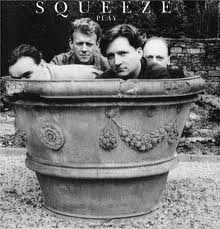
I was also pleased to hear a little airtime for the largely unappreciated 1991 album Play, always a winter warmer for me (even though I was reminded it was made in California), taking me back to a cold December day at Greenwich Market, its songs in my head and repeated in the warm later on, with my loved one at my side. Great music has that ability to take you to another place, and in Squeeze’s case it’s often Some Fantastic Place.

It’s a similar tale with that aforementioned follow-up, in many respects their finest album, not least the title track – one that still bring tears to the eyes. I recall Danny Baker almost loving it to death (to paraphrase Difford’s later Heaven Knows), and this time I’m transported back to a week holidaying in Northern France, Squeeze again providing an essential soundtrack.

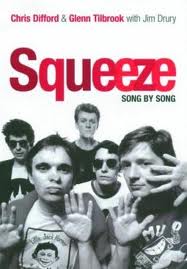
Booked Up: The superb 2004 Jim Drury Squeeze biog

Much of what was covered in the latest documentary was superbly catalogued in Jim Drury’s superb 2004 interview biog Song By Song, his insight book-ending the retrospective thoughts of Chris and Glenn as we followed the band story from a brazen ad in a Blackheath sweet shop through to 1998’s Domino swansong and an inevitable break-up.

Yet the band finally re-surfaced, their solo projects finally put aside in 2007 with a succession of live gigs, tours, one-offs and re-recordings of old hits leading to the promise of new material next year. And hurrah for that.

The documentary filled in a few of the gaps, taking us from early-day influences to the most recent realignment. In many ways it’s a standard story of a band learning their craft, getting the breaks and reaching initial goals (in some style), then losing their way, in turn falling out and making up throughout.

But the difference for me is that with Squeeze I always cared about the outcome. While drink, drugs and petty arguments often got out of hand and threatened to spoil the ride, there was always an easy charm about these South London boys. You somehow knew they were never going to fall out for too long, however much living in each other’s pockets scarred them. Jools Holland, an integral part of six Squeeze LPs, said, “The more success there is, the less of a laugh there is”. But while diplomatic drummer Gilson Lavis felt the band’s ‘strong personalities’ had an impact, these were above all good, honest blokes, and that was always going to pull them through and keep them grounded.

Along the way, we were reminded about Chris and Glenn’s roots, their initial bonding strengthened by the addition of boogie woogie piano man Jools and treasured Gilson. A succession of bit-part players also added invaluable contributions, not least Harry Kakoulli, John Bentley, all-round good guy Paul Carrack, and later arrival Keith Wilkinson.

From their timely emergence in the punk era to Miles Copeland’s steering and an A&M deal to the first album tragi-comic production by The Velvet Underground’s John Cale, the scene was set. Few bands would have survived that, but Squeeze always had the strength of their own songwriting to fall back on. Chris’ words and Glenn’s sculpting of those lines into classic songs ensured longevity, and quality always shines through given the right breaks and backing.

It was the late addition of Take Me I’m Yours (after Cale’s exit) that saved them the first time, and tracks of the quality of Goodbye Girl, Cool for Cats and the stupendous Up The Junction assured their survival from there. In fact, you have to go a long way to find an opening verse of a song as good as the latter.

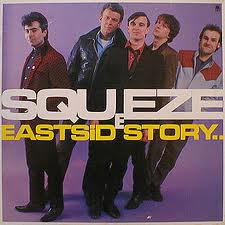
Costello Music: Squeeze’s East Side Story LP was a revelation

So many more great singles followed, yet they never really showed their worth as an albums band until Elvis Costello’s production of the East Side Story project, the band stepping outside the bounds of three-minute new wave to great effect, somehow rising to the challenge after the blow of Jools’ departure, unearthing another nugget of a contributor in former Ace and Roxy Music keyboard player Carrack.

It was never going to be easy though, the personnel continuing to change around Chris and Glenn as the drugs, the drink and the fall-outs left their mark. Yet for all the animosity on board from time to time, Chris clearly needed Glenn, and Glenn needed Chris – that bumpy, up and down career path often leading to creative highs.

Shell Shock: Frank was the last Squeeze LP Jools Holland featured on

The initial break didn’t last long, and despite the fact that the dynamic duo refused to speak to each other between songs during the Difford and Tilbrook album, they soon got the band together again, Jools rejoining for Cosi Fan Tutti Frutti, Babylon and On and the mighty fine Frank during what proved an increasingly frustrating period for the band as the corporate power of the record company left these artisans of the pop song out in the cold.

A further Jools exit led to another difficult phase and wake-up call, yet out of despair often comes triumph, and Chris’ acceptance of his drug problem (beautifully illustrated by The Truth) led to those creative high-points of Play and Some Fantastic Place, although the industry missed the point, flagging sales ultimately scuppering matters after the commercial failures of the partly-superb Ridiculous and disappointing Domino.

The story is far from finished though, and last week Chris and Glenn announced on BBC Radio 6’s Radcliffe and Maconie Show details of their next tour complete with innovative ‘pop-up shop’, while debuting Tommy from an as-yet untitled new studio album.

But whatever happens next, there is already so much of worth in the Squeeze locker. While much of their latter material largely failed to rise above the masses’ radar, Chris and Glenn and all those who have contributed to their success over the years have a lot to be proud of.

And this particular South London (East Side) story deserves to be continued. Because as that breakthrough single duly noted, dreams are made of this.

25 Great Tracks To Remind You Why Squeeze Are On The Top Table

The following list is in rough chronological order, but -let’s face it – it’s subject to alteration, as the blogger reserves the right to change his mind at least twice a day:

1. Take Me I’m Yours

2. Goodbye Girl

3. Cool for Cats

4. Up The Junction

5. Another Nail In My Heart

6. Pulling Mussels (From The Shell)

Potted Up: But Play was not the commercial success it should have been

7. Tempted

8. Black Coffee In Bed

9. Last Time Forever

10. Hourglass

11. Footprints

12. If It’s Love

13. Rose I Said

14. Slaughtered, Gutted & Heartbroken

High Point: Some Fantastic Place was a winner all-round

15. Satisfied

16. The Day I Get Home

17. The Truth

18. Gone To the Dogs

19. Some Fantastic Place

20. Third Rail

21. Loving You Tonight

Days Numbered: But Ridiculous deserved a lot more

22. It’s Over

23. Electric Trains

24. Heaven Knows

25. This Summer

Posted in Music | Tagged , , , , , , , | 7 Comments

Love Me (Still) Do – the Fab Four 50 years on

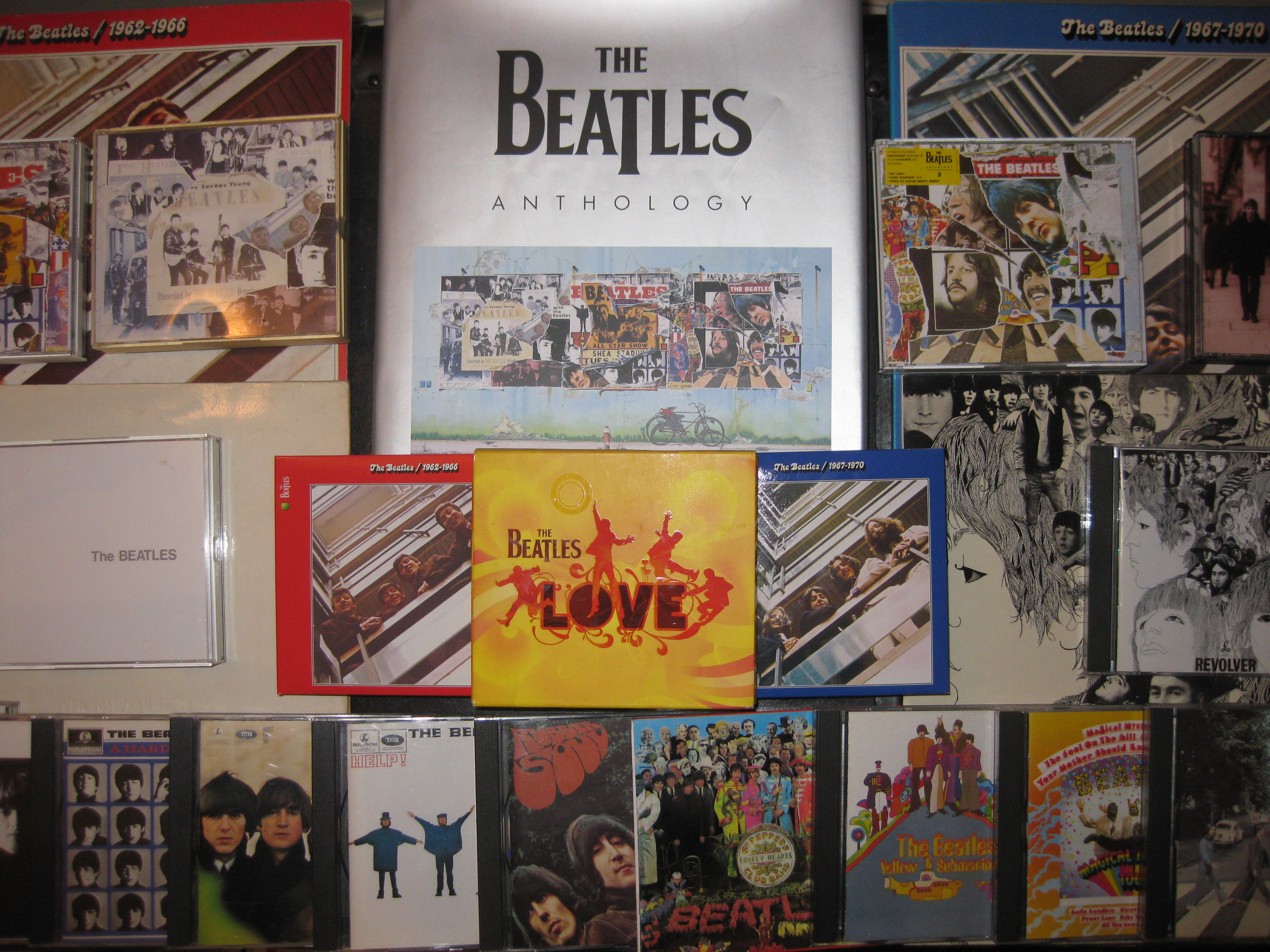
Fab Relics: A selection of writewyattuk Beatles goodies

Pop music will never last. At least that was always the contention, an age-old debate that  returned with some resonance in October, 2012, when it was duly noted that it had been 50 years since The Beatles first burst on to the charts with Love Me Do.

What tended to follow were the inevitable, tired arguments about whether you preferred The Beatles or The Stones. But I never quite saw it like that.

The Rolling Stones packed a great punch, and if I was around at the time I would surely have loved their seemingly-more rebellious, less clean-cut image. But then I think of that John Lennon snarl and attitude, the early-years black leather Hamburg apprenticeship, sheer quality of song-writing, and know how little that mop-top be-suited image really had to do with it all. No, it was always The Beatles for me.

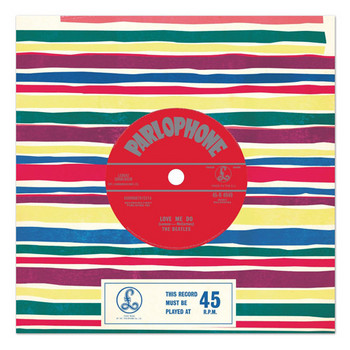
Debut 45: The Beatles’ Love Me Do

There’s been a fair bit of old footage shown these past couple of days of the Fab Four in late 1962, and most fits in nicely with that image, perhaps personified by Paul McCartney’s innocence on camera (something Eric Idle played perfectly with The Rutles). But there was always more to it than that, and for every Love Me Do there was always something far more raw to behold.

That difference of opinion over Macca continues to this day, not helped this year as the 70-year-old living legend was wheeled out for every major UK celebration. But why the public image might be of Mr Thumbs Aloft and those raised eyebrows leading the ‘na-na-na-nahs’ of Hey Jude, remember he also chose The End for his London 2012 Opening Ceremony finale.

And if you’re still in denial about Sir Paul’s relevance today, I suggest you forget The Frog Chorus and Wonderful Christmastime and look at all the fine albums he’s released these past 15 years, checking out Flaming Pie, Run Devil Run, Driving Rain, Chaos and Creation In The Backyard, and Memory Almost Full.

But let’s not get side-tracked, for the main issue here is that when Lennon and McCartney came together, music changed – and for the better. And while The Beatles only properly recorded as a unit for less than seven years, what a legacy they left us.

Somehow they made a huge impression on this boy – who wasn’t even born until four months after the release of Sgt. Pepper’s Lonely Hearts Club Band – and every other music wannabe over these past five decades.

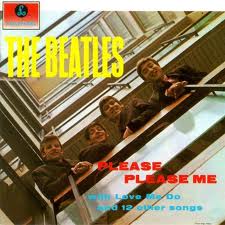
First Footing: The Beatles’ Please Please Me

Sometimes it appears that everyone’s got their view on those four lads who shook the world. While wearing my Abbey Road t-shirt the other day, a neighbour told me he’d been to see the band at Preston Public Hall (September, 1963, as it turned out). Inevitably, I asked what he thought. “Haven’t got a clue,” he replied. “Couldn’t hear a bloody word. All that screaming. Now and again I’d make out a slight snatch of a song I  recognised, then the screams would start again.”

Meanwhile, a 10-year-old classmate of my youngest daughter looked in wonder at that same t-shirt, but left me with mixed emotions as he proudly announced, “The Beatles! My Grandad loves them!”

I was never a great fan of Love Me Do, and it works out that George Martin felt similarly. Yet when he heard Please, Please Me he knew they were on to something, and it is in no small part due to his influence and innate skill that the first Beatles long player was a winner, and one that would go on to enjoy such an extraordinary shelf-life.

Love Me Do reached No. 17 in the UK charts, follow-up Please Please Me in January 1963 made it to No. 2, and within two months the album of the same name – recorded in September, November and February – was rush-released. I think you know the rest.

I’ve got that 1963 debut album playing in the background as I thrash out these words, and there’s no denying the power therein. That’s not just the benefit of hindsight talking. What they had was never easy to define, but for me the energy and songcraft is there from the start in two sparkling opening tracks from the pen of Lennon and McCartney – I Saw Her Standing There and Misery.

Then we have the first three of six covers – Anna (Go To Him), Chains and Boys – giving at least a flavour of that craft they honed during those legendary appearances at The Cavern, those down-to-earth Liverpudlian tones and interpretations making those songs their own.

There are no George Harrison or Ringo Starr compositions yet, but both make their vocal mark, George on Chains and Do You Want To Know A Secret, and Ringo leading a perfect Mersey rock-shoo-wop on Boys. Furthermore, George even manages to coax a Scouse nuance to the odd Chuck Berry-style guitar chop and lick.

In Ask Me Why, Love Me Do and PS I Love You, we find a band not quite at their best, but offering occasional tell-tale peeks that this is a band here to stay. You can almost taste the bubble gum pop that initially left George Martin non-committal. But he somehow managed to infuse some of that Hamburg swagger and rough-edged charm too, keeping it all real.

Besides, they were never going to fail, always having the image, the looks and determined vision to back it all up and ensure this was no one-off stab at success.

By the time we get to Do You Want To Know A Secret, we have yet another sub-two minute classic under the belt, and like the others cleverly begging and borrowing from all that inspired the band, and adding their own sweet guile and endearing youthful arrogance.

While Baby It’s You works, A Taste of Honey is perhaps a cover too far, not least after we’ve learned just how good their own songs are. There’s a further case in point in the wondrous harmonies and chord changes of There’s A Place, before one of the ultimate show-stoppers, Twist and Shout tops it all off, matching the intensity of The Isley Brothers’ cover yet making this r’n’b hit sound like it was conceived in Merseyside.

Before we know it – and less than 33 minutes later – they’re gone again, leaving us hungry for more. All fab four of them were still finding their feet, maybe, but Please Please Me must have done wonders for The Beatles’ confidence, proving an important statement of intent. They didn’t retain that innocence for long, but as a result neither did British music. Like Elvis Presley’s influence on Lennon in the first place, everything changed – those post-war years soon way behind us all.

Far better was to come of course, the catalogue peaked with 1966’s Revolver, a fair amount of 1968’s The Beatles (The White Album), which would have made one hell of a fantastic single album (we could always have just kept the rest back for a later deluxe edition), and glorious 1969 finale Abbey Road.

Back to Love Me Do though, and while it’s fair to say it’s simple but effective pop, it would still kick most of the crap in today’s charts down the stairs, to the accompaniment of Ringo’s resounding snare drum and cymbal – heading off in One Direction, you could say.

Posted in Music | Tagged , , , , , , , , , | 2 Comments

Return to the big time (kind of)

Another ground ticked off, after all these years. A former Football League club as well –  Stockport County, the closest to the River Mersey apparently.

Very nice too, flanked by period housing and on this occasion evidence of friendly locals, late summer sunshine and three points for Woking (my only Woking).

It seems quite rare these days to find such a traditional setting for a football club. So many  grounds are now out of town on same faceless industrial estate, next door to the generic bolted-on facades of Argos, B&Q, Mothercare, Next et al. You’re more likely to find the Golden Arches across the road rather than a spit and sawdust pub.

Sturdy Defence: The Woking faithful (including squinting blogger) look on as Stockport are thwarted at Edgeley Park (pic courtesy of David Holmes)

Yet Edgeley Park has a bit of charm, a pleasant parkside location, a couple of welcoming hostelries and a few shops nearby. On a sunny Saturday afternoon in September, there was also something of a positive vibe about the place, a sense of economic survival amid  the financial doom and gloom.

A lot of football fans wouldn’t see that. It’s often just a case of boarding a supporters’ coach at sparrow’s fart, driving around the motorway network for a few hours, jumping off by the ground, grabbing a pie and pint, watching a match then back off home, hopefully in time for a swift jar at the end of the day. But there are a few of us who at least like to pretend we’re getting a sense of the area we’re visiting. And you’re unlikely to get that if the ground’s out of town and time is at a premium.

The fact that Stockport County ground-shared with rugby union outfit Sale Sharks for a few years (until the latter’s move to Salford City Stadium this year) no doubt helped pay their bills for a while, and Edgeley Park was in pretty good nick. Footie fans around the country will visit a lot less salubrious venues this season.

From what I can suss from some old notes cobbled together a couple of years ago (here’s the bit where I try and dispel any notion of being a trainspotter … and fail) and have stutteringly kept up to date since, that makes at least 167 grounds I’ve visited now. Incidentally, very few have involved a Premier League fixture.

Level Pegging: Woking players mob Gavin McCallum after his equaliser at Edgeley Park ( pic courtesy of David Holmes)

As previously mentioned in this blog, for reasons best known to myself I undergo a 450-mile round trip just to see my beloved Cardinals play at home. So I should really be excited at the thought of our return to the national scene after a three-season hiatus. Yet while our Blue Square Bet Football Conference return can only be good news for the club and a major geographical boost for me, I haven’t got quite as excited as I did last time we reached this level two decades ago.

That’s no reflection on our current standing or the club itself. It’s a great set-up, owned and run by good people who love the town, live locally and understand a fair bit about the best qualities of the game and what’s important to us fans. We’ve also got a fine squad of players and a great manager who knows his way around these reaches, just the sort who’ll take us on from here. What’s more, Garry Hill – a geezer of the highest order and thus forgiven by the locals for his Essex heritage – favours a heady mix of pleasing-on-the-eye football and the kind of professional belligerence needed to compete at such a level.

I guess it was that ethos of quality passing football and steel that attracted me to the team in the first place back in the mid-80s, when FA Cup and FA Trophy colossus Geoff Chapple was in charge. Happy days. And I’m pleased to say he’s still around today, a director these days. But it’s all changed a bit since the BFG took us into the Conference in 1992, when there was no guaranteed promotion or play-off back door into the League. We finished in the top 10 for the first seven seasons, including two runners-up spots and two third places. We were that close to the Football League, but it never quite happened.

What followed was a general dip, carrying on in the wrong half of the table for several terms before an almost inevitable relegation to the Conference South after 17 seasons. But while that drop involved a lot more grey-hair miles for a Cards fan based in Lancashire, it was just what was needed for the club to get back on track. I like to think we at least got a chance to re-evaluate what enticed us in the first place at supposedly-lesser locations like Eastleigh, Lewes and Maidenhead.

Now it’s all a bit more serious again, and while I can’t get too fired up about further trips to Kidderminster, Mansfield and Tamworth, the club will relish its pay-days from better supported teams like Luton and Wrexham. There seems to have been a big step-up in quality since 2009, let alone 1992, the Conference gravitating even closer to the parallel world of what those faceless re-branding football administrators now insist is League One and Two (but will always be Division Three and Four to this old timer).

Personally, the home games mean more to me these days, back among old friends and faces in the town where my Dad and grandparents grew up and has always been a part of me. Finances rule out too many trips to Woking this season, but there will at least be some away days to savour on my patch.

Come Again: Loick Pires, on barely a minute, seems to have gone a bit mutton after Woking’s second goal, with Kevin Betsy celebrating and a Hatters defender crest-fallen (pic courtesy of David Holmes)

That started with our 2-1 win at Stockport (thanks to Gavin McCallum and super sub Loick Pires’ goals, for the record), and will also include trips to Southport (17 miles away), Hyde (38) and early high-fliers Macclesfield (49). And while it will take me more than a hour and a half to complete the 74-mile journey to Barrow, that’s better than most fans will have to endure getting to Holker Street this year.

What’s more, the next generation seem to have the bug now. Both of my girls always liked the idea of an afternoon eating burgers in strange locations, even if it did mean sharing that special moment with sweaty, farting blokes using coarse language. But there seems to be a bit more to it now. And not only because my eldest has got wise to what those lads are singing about during the game.

“I think I’ve got it now, Dad. Are they calling that man a wiper?”

Saturday’s win meant we’ve seen three games this season and enjoyed three wins, so it makes sense to at least pop a couple of season tickets in the post to us. And it should only take a few good wins on the bounce (and a good cup run or two) to see those crowds rise again. While it’s hardly Old Trafford proportions, we’re already boasting pretty healthy 1,600 home gates, bucking the economic trends. We also took more than 100 away for that trip to Stockport – for what for most Woking fans a 400-plus mile and eight hour round-trip to see what was effectively fifth-flight English footie. Not to be sneezed at.

Last time around, my nearest fixture was at St Albans City, close to 200 miles from my Lancashire base. As for Dover Athletic, I was talking a 592-mile epic return trip. It might have been quicker to fly to Borussia Dortmund. All a bit odd when you consider I live just a short trek from Premier League giants Manchester City, Manchester United, Everton and Liverpool – all involving a comparatively healthy 60-mile round trip from mine.

Wigan Athletic are even closer (13 miles away), then there’s strife-torn Championship pace-setters Blackburn Rovers (12) and Blackpool (25), Bolton Wanderers (12) and Burnley (24). There’s plenty more Football League fare on my doorstep too, the closest being League One’s Preston North End (9) down to Woking’s old adversaries Accrington Stanley (17), Fleetwood Town (30) and Morecambe (35).

There’s also plenty of entertaining Conference North and Evo-Stik League football in abundance on my patch, not least at Bamber Bridge (7) and Chorley (10), the sides I covered as a journalist. I’ve visited all these grounds and many more over the years and  treated well at Brig, Chorley and almost every ground I visited as a reporter – from Gretna to Colwyn Bay and from Spalding to Workington.

Yet despite all that, Woking remains the only club for me, 18 years after leaving Surrey. Illogical as it may sound when you consider the rather unfortunate carbon footprint I create, I’ve only ever felt I truly belonged in a football sense at Kingfield, despite teenage kicks from my many visits to Aldershot in my formative years, and seeing international stars at various bigger grounds over the years – starting with a halcyon afternoon at White Hart Lane in 1978 as Spurs’ Ardiles, Villa, Hoddle and co. saw off Brian Clough’s fantastic Nottingham Forest.

But it was only when I was introduced to Kingfield that it felt like the real thing, and not just because of my genealogical link to the town. How I wish now I could speak to my Grandad about his visits to the Kingfield Sportsground. My dad was working on the steam locos when the 1958 FA Amateur Cup specials returned from Wembley, with Grandad among the countless merry men and women among a recorded 71,000 crowd returning from a glorious 3-0 victory over Ilford.

Despite that, it was more out of curiosity that I made my first appearance at Kingfield in  1986 for an FA Cup clash with Chelmsford City, but my chief memory was a running battle between two sets of supporters in those bad old days. It wasn’t until the late ’80s that I classed myself a regular, and it wasn’t until my 1991 return from my world travels that I started taking in more away-days – among the highlights a 7-1 win at Wivenhoe in which our keeper Laurence Batty scored with a huge punt upfield.

The rest is history, and while the memories were a little lacking for a while, I’ve seen enough these last few seasons to know we’re finally back on track. Stretched finances suggest there won’t be too many matches for me this season, but I’ve already pencilled in a few. And all the time internet-friendly Radio Surrey and my family’s texting service from the grounds remains in operation, I won’t miss out on too much.

Posted in Football, sport | Tagged , , , , , , , , , | 3 Comments

Paralympic party proves perfect finale

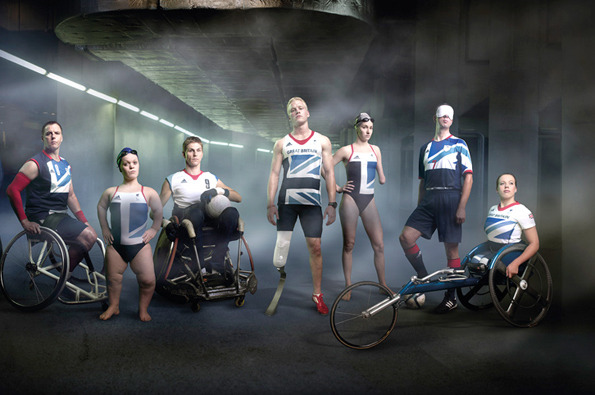
Awesome Line-up: Channel 4’s thought-provoking advert for the 2012 Paralympic Games

You know that feeling when a party’s still going strong but you’re contemplating sloping off while things are still on a high? That was London 2012 for me. I couldn’t get too enthused ahead of part two of the proceedings – the Paralympics. I even suggested on these pages that maybe it should have been held before the Olympics.

Yet while the start coincided with a family holiday and it took me a while to be hooked this time, I’m glad I stuck around. And as the tongue-in-cheek Channel 4 advert said, ‘Thanks for the warm-up’. For the final fortnight provided a perfect end to a superb summer of sport. At a time when the sun seemed reticent to show across the UK, we still had something special to savour.

After the great job the BBC did at the Olympics, part two of London 2012 appeared a  thankless task for Channel Four, and wall-to-wall, largely uninspired advertising didn’t help. But the production team rose to the challenge and delivered in style, not least after the clever behind-the-scenes poaching of BBC leading light Clare Balding and several others.

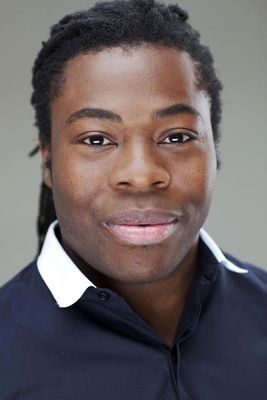
Class Act: Channel 4 Paralympian presenter Ade Adepitan

For all of his enthusiasm, Ade Adepitan struggled at first but improved by the day, in what must have been a baptism of fire for the former wheelchair basketball star. His pure eagerness alone got him through, but by the end he was every bit the professional presenter. That can be said for many of the team around the ever-earnest but always impassioned Balding, not least Iwan Thomas, a natural as a studio summariser. And fair play to anyone who in the heat of the moment says ‘bollocks’ on air when he quite clearly means ‘balance.’ What was going through his mind at the time I really don’t know, but it showed a human quality that illustrated so well an altogether real televisual success.

An honorary mention for Danny Crates too, just one of the many co-commentators and summarisers who helped bring the Games’ atmosphere into our living rooms, his often-hyperbolic excitement perfectly conveying all that was unfolding before him.

Last Leg: Channel 4’s on-loan Australian comic Adam Hills proved disability and comedy can work

And then there was Aussie comic Adam Hills and his late night sofa buddies Alex Brooker and Josh Widdicombe, proving on a nightly basis that disability and comedy can work. It wasn’t just about laughs either, but a fitting celebration of the day’s action that proved educational too, not least the off-beat ‘is it ok?’ section. Why, the show even helped give tax-loophole lover Jimmy Carr a chance to part-redeem himself after a tricky PR summer – JC just one of the many celebs who found themselves in awe as they visited the Olympic Village and saw for themselves the sporting wonders on offer.

After a few days, I got beyond that difficult stage of spotting the disabilities ahead of each race. It became far more than that, and in the best moments this was first and foremost a celebration of great sport, national and international identity, inclusivity and comradeship. The fact that there were so many great – and often very touching – stories behind the athletes’ bids to even get there in the first place, made that all the more awesome.

I’ve mentioned this before, but when I think of cameraderie I recall Trigger’s great line on Only Fools And Horses, wondering if that was the name of that Italian bloke who used to play five-a-side with Del Boy and co. Well, there was certainly plenty on show at the Paralympics, and it certainly wasn’t all just about Team GB posturing.

He’s Off: London 2012 mascot Mandeville

While the crowds certainly upped the decibel rate when it came to the appearance of our competitors in the Olympic Stadium, the Aquatic Centre, Velodrome and elsewhere, there was plenty of noise for the other competing nations too. And not just for the superstars like South Africa’s Oscar Pistorius and Natalie Du Toit. Adam Hills’ mob got behind the four-strong Team Ghana, for instance, and there was plenty of love for every other country’s leading lights. And rightly so. The majority of these athletes had come a long way to get to London 2012 – metaphorically as well as geographically. And just to prove this was a human crowd, it wasn’t all blind adulation – there was the odd resounding boo for visiting Tory ministers too.

It’s difficult to pick out just a handful of highlights here, but from a sporting perspective I’ll start with just some of the many quality acts on the track that served to inspire us – GB’s Hannah Cockcroft, Jonnie Peacock and David Weir, South Africa’s Pistorius, and Ireland’s double sprint gold medallist Jason Smyth, who like Pistorius could well be on his way to the Olympics as well as the Paralympics in Brazil in four years.

Then I’ll throw in (get it?) characters like discus dynamo Aled Davies, cycling’s quadruple-gold medallist Sarah Storey, equestrian multiple golden girls Natasha Baker and Sophie Christiansen, and swimming’s Paralympic poster girl Ellie Simmonds.

High Five: London 2012 mascot Wenlock

Add to that a wealth of other archery, athletics, cycling, equestrian, rowing, sailing and swimming gold medallists from these shores, and all the others who made this Paralympics such a huge success. As with the Olympics, it wasn’t just about the winners and medallists – there were so many other great highlights to choose from, not least those in the wheelchair tennis, rugby and fencing events.

On a personal front it was nice to see two of the Paralympians I interviewed in a spell writing for newspapers in Lancashire come good again, namely 100m sprint T36 silver medallist Graeme Ballard and 200m individual medley SM6 swimmer Natalie Jones, who claimed bronze in the pool. Both lovely people who have overcome so much, in their case despite cerebral palsy.

Jones went even further in my view with her post-race interview and podium celebrations in deference to GB team-mate Simmonds, providing a fitting example of the respect these fine athletes afford each other.

At one point, it seemed like all the technical details about running blades and the like would overshadow the Games, not least with Pistorius’ ill-timed outburst following his T44 200m final defeat to Brazil’s superb Inspector Gadget impersonator Alan Oliveira. But in the end the athletes’ achievements put that all in the shade.

IPC president and former Paralympian Sir Philip Craven got it spot on at the closing ceremony, his Boltonian accent a breath of fresh air during the official speeches as he told us, in something of a Spinal Tap tribute, he was “above the landscape, floating on cloud nine or sometimes 10 and 11” following the success of this year’s event.

That’s how it got some of us, not least proud Mayor of London, Boris Johnson, who told the athletes and games-makers at the final day parade, “You routed the doubters and you scattered the gloomsters and for the first time in living memory you caused Tube train passengers to break into spontaneous conversation with their neighbours about subjects other than their trod-on toes.

“And, speaking as a spectator, you produced such paroxysms of tears and joy on the sofas of Britain that you probably not only inspired a generation, but helped to create one as well.”

I mentioned in my last Olympic piece how important it was now that we took on that legacy Seb Coe and his co-organisers trumpeted, to ensure this is no one-off party. That work has to continue at every level as we look to a bright future for Team GB and world sport.

But for now let’s just bask in the glory of these past few weeks and applaud a job well done, while thanking all those who made it happen. You did a great job, London. Now it’s over to you, Rio.

Posted in Books Films, TV & Radio, sport | Tagged , , , , , , , , , | 2 Comments

Why I still love The Undertones

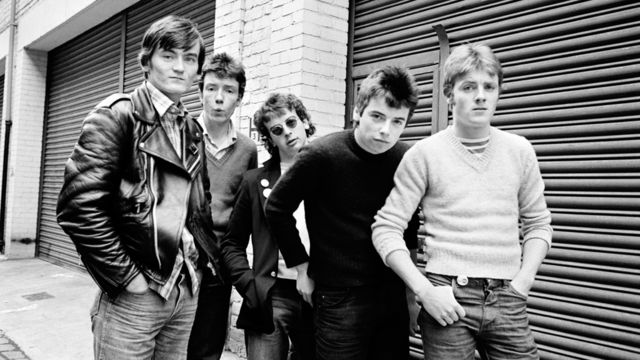
Derry’s Finest: The Undertones in their prime (pic courtesy of BBC)

I’ve always liked that James Nesbitt, from early roles in films like Waking Ned through to leads in TV successes like Colin Bateman’s Murphy’s Law, and ever onwards.

But he’ll be forever remembered for his big break in the brilliant ITV series Cold Feet, where among the many emotional scenes that made his name, one which left me close to tears was perhaps one of the more unlikely.
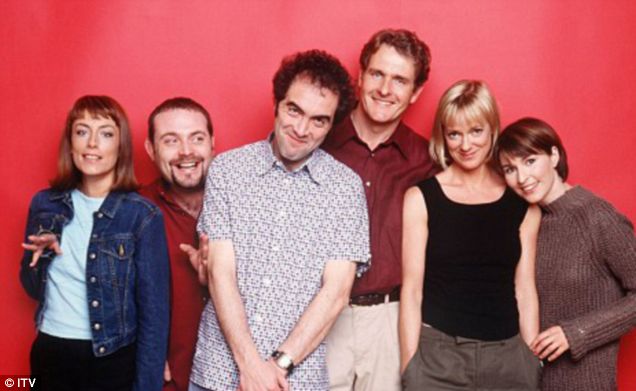
Jimmy Jimmy: James Nesbitt with the Cold Feet cast (pic courtesy of ITV)

I always got the feeling it wasn’t scripted, and must just have been Jimmy caught on camera in something of a rant during filming, more himself than his character Adam Williams, as he enthused about his love of The Undertones and the fact that the band were built – contrary to popular belief – around the might of John O’Neill’s song-writing rather than the warbling voice of Feargal Sharkey, wondrous as that was.

So there was no great surprise it was that particular Jimmy Jimmy narrating BBC Northern Ireland’s documentary Here Comes The Summer: The Undertones Story, first broadcast on BBC 4 on Friday September 7th, with Nesbitt voicing some of the best lines written about a band that has had such an impact over the years.

I wasn’t even 11 when legendary Radio 1 DJ John Peel first played Teenage Kicks and the band seemingly took off overnight, but within a year I was marvelling too – thanks to my older brother and his mates’ love for the band – at this five-piece from Londonderry. And things were never quite the same from then on.

Why The Undertones? Well, it’s never been easy to explain, but I think the team behind this BBC/Alleycat Films documentary – produced, directed and edited by Chris Wilson – came as close as possible to explaining the band’s pull as anyone before, with the help of insight from Nesbitt and broadcasters/journalists Eamonn McCann, Waldemar Januszczak and Paul Morley.

It was a shame Feargal Sharkey declined the offer to be involved, and there was only a brief strap at the end mentioning how the band re-formed in 1999 without him. At least a short interview with current frontman Paul McLoone and his thoughts on the whole phenomenon might have added something. But you can’t have it all.
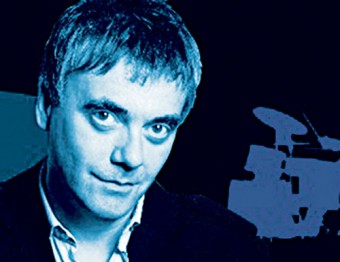
Front Man: Today FM DJ and Undertones singer Paul McLoone (pic courtesy of the Galway Advertiser)

I should qualify that. There will be purists who see that reformation as just another variation on the endless stream of bands past their best back out on the road with new members in key roles. But that was never the case with The Undertones. It was never about a karaoke approach and half-hearted stroll through the hits catalogue. McLoone has a great voice and strong stage presence too, yet never looked to mimic Feargal or replace him. He just adds a new dimsension to all those great songs, as Seattle’s Steve Mack had to That Petrol Emotion, John and Damian O’Neill’s other success.

I was only 13 when I first caught the band – at Guildford Civic Hall on the Positive Touch tour, but within two years I was seeing The Undertones with Feargal for the last time on The Sin Of Pride tour at Guildford, then for their final UK gigs at London’s Lyceum and supporting Peter Gabriel and the Thompson Twins at Crystal Palace FC. In some kind of solidarity with the boys, we bemused the gate staff that sad day by leaving after their set.

I was there from the start for next contenders Eleven (featuring Undertones’ Mickey Bradley and Damian O’Neill) then That Petrol Emotion from their opening London pub gigs onwards, and have great memories from those days. We’d all moved on in the years that followed, but that premier sighting of the band with McLoone in the summer of 2000 at the Mean Fiddler in Harlesden – their first outside Derry – remains a cherished night. The same goes for the first time I heard John Peel play comeback single Thrill Me, as good a song as John O’Neill ever wrote. And The Undertones remain my favourite ever live band.

To fully understand the impact The Undertones had on me and so many others, perhaps you need to understand something of the band’s background and situation. More to the point, how a teenager from a semi-rural council estate in the heart of suburban, leafy Surrey could relate to a group of lads from such a different UK background, brought up in a divided city at the epicentre of The Troubles.
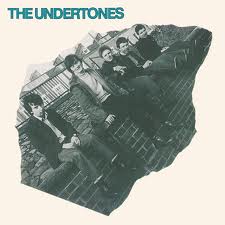
First Footing: The Undertones – the debut LP

Yet while I entered my teenage years inspired by the message of The Sex Pistols, The Clash and The Jam, I retained a love for good, honest pop – one that made me susceptible to bands like the Buzzcocks, Squeeze and in particular The Undertones. And you don’t need to have dodged bombs, police and army raids and rubber bullets to understand the latter quintet’s appeal.

Other mates (past and present) were more into Stiff Litle Fingers, and while I admired them and understood their stand, it was always The ‘Tones who did it for me. Their vision of an alternative Ulster was far more grounded, I felt. In later years, the O’Neill brothers realised they could actually write more political (although always subtle) songs, but as teenagers they just got on with tackling what they knew best – more songs about chocolate and girls. And the results have certainly stood the test of time.

As Nesbitt said at the beginning of this fine documentary, “Their adolescent anthems were revolutionary nonetheless: startlingly positive protest songs that demanded a life more ordinary.” Paul Morley echoed that, pointing out how the band came up ‘with these great pop songs was the most wonderful form of protest’.
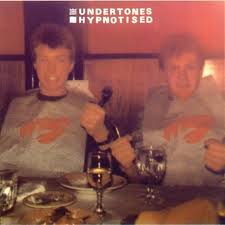
H-Y-P: Hypnotised – The Undertones’ second LP

In an industry characterised by rock’n’roll excess and superstar status, often putting its heroes on a pedestal somewhere just out of reach, I always felt more in common with The Undertones. It’s a cliche, but these really could have been the boys next door, down to earth and never full of their own self-importance or taking themselves too seriously, despite their musical edge and pristine song-writing.

You only have to enjoy the contributions of bassist Mickey Bradley, drummer Billy Doherty and guitarists Damian and John O’Neill in this documentary to see that charm, a wealth of  anecdotes – with plenty of humour – covering those early days forming the band, the first  Top Of The Pops appearances, the amateur ‘hard-ball’ contract negotiations with Sire founder Seymour Stein, and eventual half-hearted decision to disband and let Feargal do his own thing.

While the band were never at ease with their rock star status – as proved in the stories about their US tour with The Clash – it was more about loyalty to their home fan-base and Derry girlfriends. They never lost sight of what was most important to them and those who helped get them there in the first place. Again, that’s something I always admired about this very special five-piece.
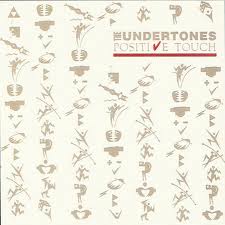
Positive Touch: The Undertones’ third LP

But for all their ‘Derryness’, as McCann puts it, time and again they gave us perfect three-minute pop, with heart-felt guitars and harmonies beautifully complemented by Sharkey’s exquisite vocals. And they always wore their musical influences on their sleeves, in a new wave hybrid that initially borrowed elements of earlier glam rock, and seminal influences like the Ramones, blues, rock’n’roll and arthouse American bands.

The fact that they made the grade was perhaps all the more remarkable considering all that was going on in their home city, the band offering an altogether more healthy vision to cut through the daily grim news we heard from across the Irish Sea.

I knew so little of that world – despite my interest from afar – and while The Clash wrote about white riots and sten guns in Knightsbridge, The Undertones were living that life but wanted something else. Something more normal. As Bradley put it, “The Clash would have killed to have come from Derry.” And on that same subject of those daily police and army checkpoints, hassle and bombs, he added a more pensive, “Even then we kind of knew they didn’t have that in … Manchester.”
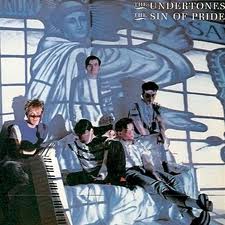
Swan Songs: The Sin Of Pride, the band’s last LP with Feargal Sharkey

Morley put it in a more highbrow style, talking about “17 and 18-year-olds in a very radical, absurd stressful situation still managing to capture the almost abstract universal exquisiteness of a great pop song”. Which is kind of what I was trying to say, I guess.

Eamonn McCann was more succinct, adding, “The Undertones were ‘the most improbable pop stars from the most unexpected place.” And as Nesbitt summed up, “Other punks may have seemed more radical, but what made The Undertones ‘ music genuinely subversive is that it came from a place where bombs and guns were part of the walk to school; a city where an ordinary life was something that dreams were made of.”

Yet this documentary wasn’t just about journalistic reflection and uncovered hidden meanings, and nor should it have been. In the tradition of the superb The Story of The Undertones: Teenage Kicks documentary that came before, the band ensured that. One great example comes early on, the ever-affable Bradley – over a cuppa and a slice of toast – sticking pins into a Derry street map, demonstrating how everyone lived within 10 minutes  of the O’Neill house – ‘Undertones HQ’ – and contemplating how none of what followed would have happened if Sharkey was born across the Foyle in the Protestant part of town.

That’s not political or pro-sectarian, just pure geography and social history. He explained how the band’s singer was more lower middle class than the rest of them, but “to an outsider we’d all be working class. There were no leafy suburbs here. There were no Volvos parked outside.”

One thing becomes clear early on, as explained by John O’Neill and his brother Vincent, who played his part until panic over his O-levels led to the band asking kid brother Damian to step in. There was no master plan for success, and no U2-style ambition to be the biggest band in the world. Being in a group was – as Doherty pointed out – just what you moved on to after realising you weren’t going to make it as a professional footballer.
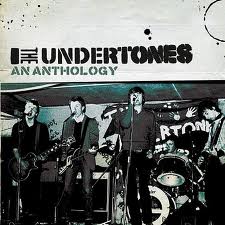
Lasting Legacy: The Undertones – An Anthology, the 2008 Salvo release

The fact that the band were too young for pubs and clubs might have helped, instead swapping records, stories and guitar riffs at the O’Neill house, and in time rocking The Casbah, a downbeat Derry club where sectarianism thankfully played little part.

It was all a bit of a head-rush from there, John blossoming into a fine songwriter (as Bradley and  Dee O’Neill would in time), approaches being made to Belfast punk impressario Terri Hooley, the Teenage Kicks EP being played and loved by legendary Radio 1 DJ John Peel, that deal with Sire Records, and so on.

The sum result was a brief but glorious five-year, four-album and 13-single career, and those four great LPs chart their musical progress (for better or worse, depending on your viewpoint). Again, this documentary picked out key points, not least the story of their biggest hit, My Perfect Cousin, an under-stated dalliance with more political messages in It’s Going To Happen, and charted the band’s fortunes right up to the day Sharkey finally announced his intention to leave (and his fellow band members’ sense of relief).

Bradley, summing up that eventual implosion in typically tongue-in-cheek fashion, added: “Then again, that’s what’s good about being in a band. You look at The Beatles – they fell apart spectacularly too.” And for this fan at least, this Derry five piece were right up there with the Fab Four, however limited their success by comparison.

I’ll quote Nesbitt’s closing lines here to finish off, explaining, “At a time when the charts began to open up to even more shocking and extravagant acts, what was most remarkable about The Undertones was that the band and their songs were so down to earth they seemed positively exotic.

“Coming from the darkest of places and situations their enduring achievement is to have created timeless music of startling positivity that touched teenagers all over the globe, while daring a generation at home to dream of a life more ordinary.”

Here Comes The Summer: The Undertones Story will be on the BBC iPlayer for a few more days, and is set to be repeated on BBC Four late on Sunday, September 9th.

Posted in Books Films, TV & Radio, Music | Tagged , , , , , , , , , | 8 Comments