
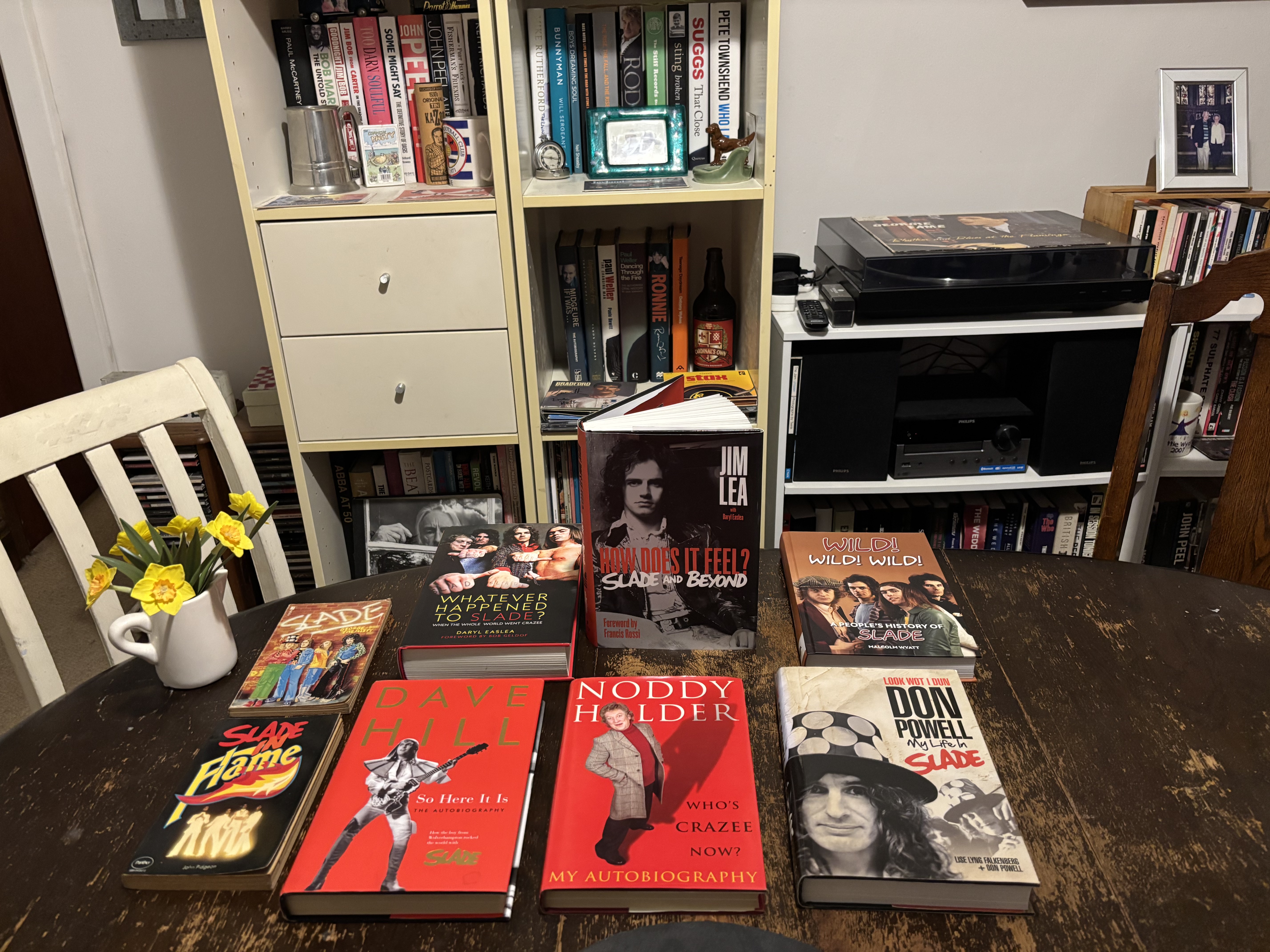
It’s rather fitting that Jim Lea is the last member of Slade to step up and provide an account of the rise, fall and rise again of the Black Country’s finest fourpiece. He was after all the quiet one in the band, right?
Some of us doubted it would ’appen again… albeit not for want of trying. Many of us down the years offered to help get a book over the line, but when I was lucky enough to interview Jim in 2018 (And I Thought You Might Like to Know – the Jim Lea interview) he seemed more interested in tackling the prospect by way of a video documentary telling his story, something else that finally fell by the wayside. Maybe it just wasn’t the right time, but six years later he finally felt it was, a face down fall in the lane near his Staffordshire home and his slow recovery the impetus needed to finally resolve to get those tales down and shared, initial arm’s length involvement with Daryl Easlea’s 2023 Slade biography Whatever Happened to Slade? – coming along for the ride while Daryl was interviewing Jim’s brother, Frank Lea – ultimately leading to this moment.
As it turns out, Jim had started writing a biography, The Disappearing Man, in the early 2000s, although Daryl informs us only a 13-page manuscript survived. And while the majority of this book comes from fresh interviews conducted in person and online between Daryl and Jim over the last two years, part of that original biog attempt is incorporated, along with content from that video doc put together with brother Frank (the subject of a forthcoming feature/interview on this site, and for whom many will recall from a two-show stint on drums for Slade while Don Powell was on life support in 1973, Frank also later featuring in Jim’s side-project The Dummies).
To quote Daryl in his introduction, Jim is ‘shy to the point of being abrupt’ but also ‘fantastically musically gifted,’ having ‘little time for the fripperies and trappings of rock ‘n’ roll. He had a job to do, and he did it – co-writing and arranging all of Slade’s output.’ And as the man himself adds, ‘No matter what I achieved, or the chart positions we hit, the quantities of records we sold or the halls we filled, I just wanted to be at home with my wife, Lou, and family. Right from the start I was never comfortable with the limelight.’
However private an individual he remains, one thing that’s become clear over the decades is James Whild Lea’s enigmatic nature. It was a surprise when he agreed to those interviews promoting his Lost In Space solo recordings eight years ago… yet he seemed to enjoy it. You could say the same about a super-rare live date down the road from his rural retreat at the Robin 2, Bilston in 2002. On the expanded release of 2007 solo LP, Therapy, you get a proper flavour of that on an accompanying live CD. Some night.
Yes, the mirror-hatted, sideburn-sporting Noddy Holder was the ultimate showman with the loud apparel to go with that amazing voice and cheeky turn of phrase, and fellow guitarist Dave Hill was the Super Yob-wielding clothes-horse with the goofy smile and ultra-recognisable fringe. But I’d argue that you could learn just as much about this iconic act by checking out Slade’s engine room, be-waistcoated Don Powell – the gum-chewing drumming colossus with the laidback temperament – and his rhythm partner, bassist Jim, just getting on with the job. Or so it seemed.
The in-your-face expressiveness of the front two certainly ensured Jim could do his own thing without so much distraction. But I contest here that his stage charisma was as essential as that beamed out by his bandmates… and in stark contrast to that reserved, shy, somewhat private persona. As the acknowledged musical genius behind the mega success of Slade, with those peacocks around him some may not have clocked his own flourishes and those moments he raised those boots up on the amp stacks. And if I’ve learned anything about the chemistry (alchemy, even) of this amazing band, it’s that Jim could be the life and soul of the party if his heart was in it.
He told me on the subject of 1974’s ‘When the Lights Are Out’ – on which he sings lead – that legendary Slade manager Chas Chandler (and the ex-Animals’ bass player and Jimi Hendrix Experience manager knew his stuff in that respect) overruled Jim’s wish that it should become the fourth UK single from Old, New, Borrowed and Blue, fearing it may become a hit and break the illusion of Jim’s ‘happy in the background’ image, feeling that extra level of fame would not sit well with him. However, let’s not forget Jim was also that vision in yellow that gave us electric violin on Slade’s first UK No.1, ‘Coz I Luv You’. Like I say, he’s a complex character, as this memoir confirms.
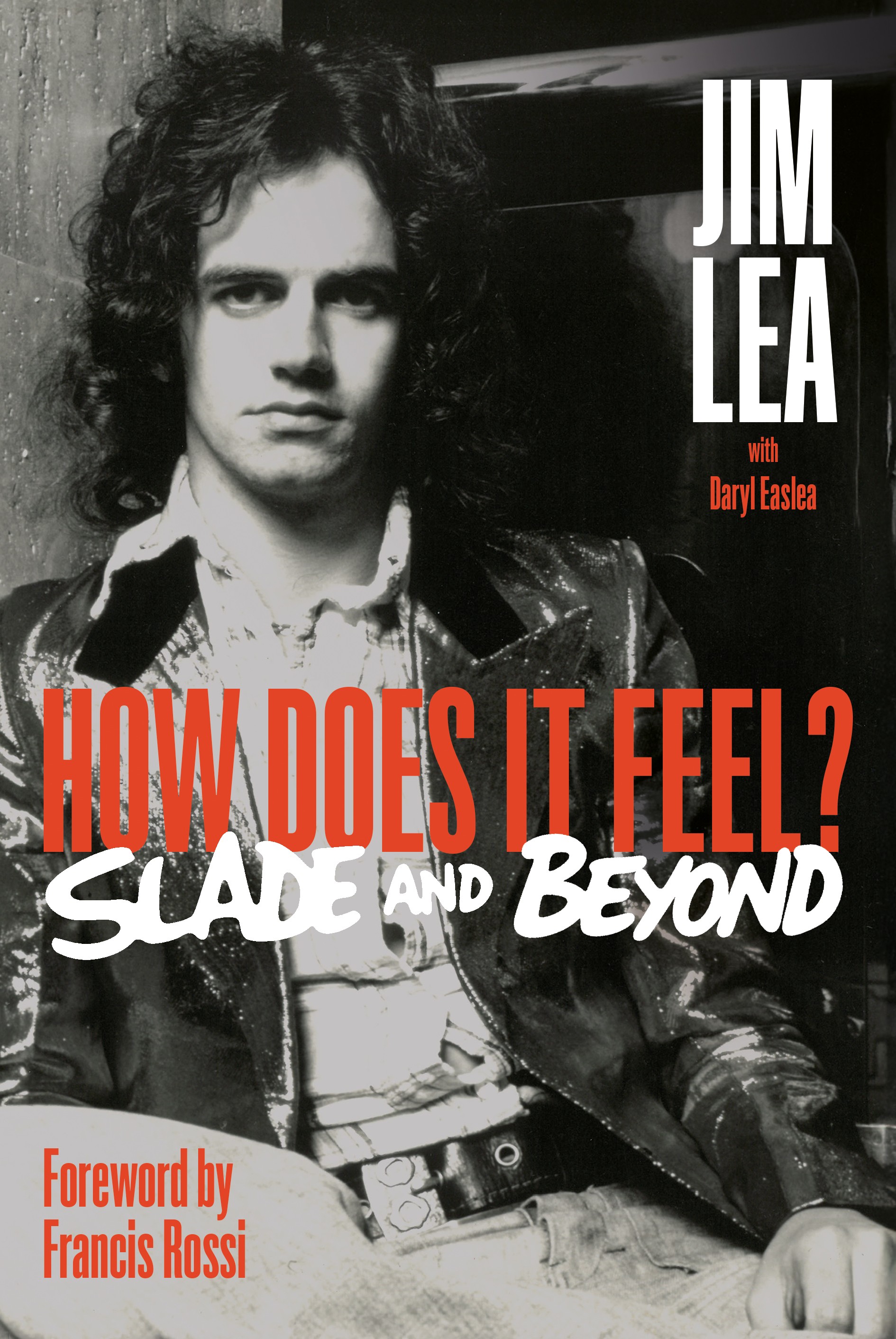
On the subject of complexities, you could argue Slade themselves were an enigma. All too easily pigeonholed in turn as glam megastars, heavy rockers then ultimate r’n’r survivors (and they were all those things to a degree), none of that would have come to pass without the quality songs, expert musicianship and overall sense of brotherhood within their close quarters. And yet there’s another side to that, for theirs was no ordinary inter-band relation. As brother Frank put it in Whatever Happened to Slade? he was initially astounded at how little interaction there was between the four of them while traveling to and from live engagements, and certainly no ‘best mate’ long goodbyes when they reached each other’s pads. Small talk was in short supply from day one. Jim himself says, ‘It’s true to say the four of us are not bosom buddies, but sometimes I wonder if we ever were – we were four very different individuals who came together because we loved music and loved to make music. We may not have been best pals, but we were certainly brothers; we all had each other’s backs, and we had a telepathy at our peak about what we needed to do to make our records as amazing as possible.’
Even then there’s a dichotomy at work, for there was clearly a solid bond and true respect for each other’s part in the success of this phenomenal outfit, and there must have been an invisible stitch grafting them together, no doubt melded by mutual experiences – on stage, in the van and in the studio – from the moment they joined forces in the mid-Sixties, strengthened by the down times, such as their early residency in the Bahamas when they were ‘Wonderin’ Y’ they’d let themselves in for this life.
I should stress that for best results Jim’s book shouldn’t be read in isolation. As Daryl describes it, this is ‘Jim’s story within the group’. If you want to know Slade’s full story, check out not only this fine book but also his bandmates’ memoirs and Daryl’s biography… and why you’re at it (ahem) Wild! Wild! Wild! A People’s History of Slade and Chris Selby & Ian Edmundson’s The Noize two-part forensic study of the records they made. Oh yeah… and that amazing back catalogue in audio and visual form. Then you get the full picture.
By way of example, here and there he mentions big moments in How Does It Feel? Slade and Beyond but doesn’t go into detail, assuming we already know and accordingly feeling no compulsion to let on. Instead, what we have is a companion piece and more a study of how the band story unfolded for Jim and how it affected him – his behind the scenes love for Lou and family, his battle with prostate cancer, his psychotherapy studies, it’s all here.
As with all music biogs, the early years content most appeals to me, and there’s plenty to savour on that front, not least previously unpublished photos and gen on his first band with Nick Holloway and co., the Axemen (with various variations on that name) and their successors, the Stalkers, both captured on camera by Mick Evans (who played harmonica for the latter). But first there’s detail of the Lea and Whild components of Jim’s family, not least lead violinist Grandad Whild’s role as leader of the orchestra at the Hippodrome, Wolverhampton, the last variety theatre in town, his remit including accompany silent films, joined by his brother, a cellist, and their father (Jim’s great-grandfather), a trombonist.
As it was, Jim inherited his grandad’s violin, going on to show remarkable talent as a youngster, his music studies leading to him joining the Staffordshire Youth Orchestra. But he turned down a later offer to join the National Youth Orchestra, big brother Ray – two years older – to blame/thank in part, his record collection turning Jim’s head, an initial awakening via The Shadows leading to a compulsion to delve further into the Blues, beat, pop and R ‘n’ B scene, to the disappointment of his mother. Soon, it was a guitar he sought, and by process of elimination then realised there’d be fewer eyes on him if he migrated to bass. Thankfully, his violin would get further memorable airings though.
It was Ray and bandmate Mick Evans from whom he first heard talk of a buzz around Black Country outfit the ‘N Betweens, spotted supporting Alexis Korner at the Ship and Rainbow, Wolverhampton. This frustrated slip of a lad with the baby face had little chance of getting past the doormen to catch any of these beat scene groups on his patch though, until an opportunity emerged to get into the earlier of two shows in January ‘65 as Georgie Fame and the Blue Flames, Zoot Money’s Big Roll Band (including future Police guitarist Andy Summers), Alexis Korner’s Blues Incorporated, The Spencer Davis Group, and the Soul Seekers played Wolverhampton Civic Hall, all those outfits making a winning impression… as did earlier turn the ‘N Betweens, in what Jim saw as ‘a major event for me.’
It was a venue he’d played with the youth orchestra, tackling Dvorak’s New World Symphony, but this was where his head was at now, those local luminaries for his ears incorporating elements of The Kinks and Rolling Stones (he later told me he was reminded of that performance some 13 years later when he first heard the raw power of The Undertones on ‘Teenage Kicks’, something else mentioned here). Jim adds that Dave Hill was already something of a local figure by then, in a year when our man also found inspiration in John Mayall and his Klooks Kleek live recordings, local lads made good The Move, and the likes of Small Faces and The Who, who informed the direction of his own band (although he seemed more a devotee of Donovan and the Downliners Sect than the Mod scene going by his Breton top and headcoat in those Stalkers pics).
What turned out to be a seismic opportunity followed a year later, bass player Dave ‘Cass’ Jones deciding to quit the ’N Betweens in favour of a career in the wholesale fruit business, Jim subsequently heading along to the Blue Flame in Thornley Street, Wolverhampton (later pivotal to the local scene as Club Lafayette) on 12th February 1966 for a drop-in that ultimately transformed the fate of him and three other Black Country musicians, having left the venue that day to Don telling him they’d let him know, the next passage of the book carrying Jim’s colourful description of his introduction on home ground in Codsall to Neville ‘Noddy’ Holder (although I should add that Jim first thought his future bandmate and writing partner had introduced himself as ‘Knob’, on account of adenoid problems).
‘The next thing I knew, two weeks later, I was sitting at home revising for a mock music GCE exam when a battle-worn Austin van (which I was later to know as Betsy) drew up outside my house. It had lipsticked messages written in German scrawled all over it. You knew this was a band that had been on the road, and I looked at it and thought, wow, that’s it, that’s it.
‘God, it did look cool. Dave, Don and an odd-looking guy with short hair walked into my house. The third guy looked even odder because he was wearing black bell-bottom jeans, which I’d never seen before. Anxiously in need of finding conversation, I asked where he bought them. His voice sounded as though he needed a dose of nasal spray. He sniffed, and in a broad Walsall accent said, ‘Germany.’ He’d obviously played a German club. Like The Beatles. So I thought I better show him some respect, in spite of his oddness.’
Jim’s successful audition and subsequent meeting with fellow new arrival Noddy, previously with Steve Brett & the Mavericks (and before that the Rockin’ Phantoms) was part of something of a putsch on Dave Hill’s part to recalibrate the band, an unsettling period which led to singer Johnny Howells and guitarist Mick Marson departing and Nod stepping up. But that formation change was yet to happen when Jim made his ‘N Betweens playing debut in a Nod-free fivepiece on 6th March at the West End Social Club in Nottinghamshire mining town Coalville, the chain of events that followed seeing him hit the road, encounter Swinging Sixties London, and ultimately climb to the very toppermost peaks, albeit with many a false start en route.
On the day I’m publishing this (20th October 2026), Chris Selby’s fantastic online Slade Live! concertography reminds me that 60 years ago to the day, the ‘N Betweens were supporting not long since assembled high-profile trio Cream (or The Cream… you decide), promoting debut single ‘Wrapping Paper’ a couple of months before first LP Fresh Cream landed (with ‘I Feel Free’ also already recorded) at Willenhall Baths. Also appearing that night were East Manchester close-harmony beat quartet The Factotums, the Andrew Loog Oldham-managed outfit plugging falsetto single ‘I Can’t Give You Anything But Love’, and West Midlands act Listen, a four-piece fronted by Noddy’s mate Robert Plant, both Midlands back-up acts releasing debut singles six weeks later, two very different takes on US group The Young Rascals’ ‘You Better Run’.
I won’t go much deeper into the story, but feel I should emphasise that Jim, barely 14 when he first played with the Axemen and 15 and a half when he first saw the ‘N Betweens, was a sixth former at the time of that Blue Flame audition, plenty of live shows with his new bandmates following before his 17th birthday, by which time he was 10 nights into a 16-date West Country tour, playing a fourth straight night at the Blue Lagoon on the Harbourside at Torquay after six nights at the nearby 400 Club, with two dates at the Park Ballroom, Drake Circus, Plymouth to come either side of a church hall gig across the Cornish border at St Merryn (not so far from where I’m writing this), by which time Mick Marson had departed and Johnny was as good as gone, Dave, Don, Jim and Nod already blooded as a four-piece. And a fortnight later the classic quartet as we’d know them were playing the Star Palast, Kiel, northern Germany, where no doubt Nod, Dave and Don’s prior knowledge of the intricacies of the German language and culture helped see them through (the band sharing a bill with Paul Raven, aka Gary Glitter… but we’ll not go there).
Jim – three years younger than his bandmates – was just 19 when the band had that defining residency in the Bahamas, and just 22 when they had their first UK No.1, his electric violin very much part of the equation. Conversely, I’ll also note here that Jim was only 34 when Slade played their final full-length UK live show (Liverpool’s Royal Court Theatre, December 1983) and 41 when they stepped on stage for the last time together for a brief performance at a fan club convention (Walsall Town Hall, April 1991), a quarter of a century after this iconic quartet joined forces and yet now somehow (count them) 35 years in the distance. But boy, did they pack a lot into those years, as How Does It Feel? Slade and Beyond emphasises.
When this book project was finally announced, some felt it could well be a rollercoaster of a read. All these years on there’s clearly some needle remaining. But kudos to Daryl and Jim himself for this not turning into some slanging match in print – Daryl’s too much of a fan of these four fellas to allow that to happen, and maybe Jim and his beloved soulmate, Lou, feel the same way. I expected a few home truths and some are tucked away within, but they’ve been committed to print with due care and affection, more subtle than we may have imagined. By way of example, I get the clear impression Dave flicked Jim‘s switches from the moment he and Don recruited him for the ‘N Betweens in 1966, just 15 but already clearly something of a musical genius. But while Jim weaves some of that frustration into his book, he’s quick to laud ‘H’ for his vision amid the ruthlessness of (arguably) engineering a break-up of that original band in a bid to make it big, helping create what became Slade.
Regarding Noddy, Jim’s clearly taken umbrage at some of his revisions of Slade’s better known tales, but it seems little of that genuinely upsets him, that old adage of not letting the truth get in the way of a good story brought to mind. And while they may contest memories of how a few key Slade moments unfolded and how songs were created, there’s nothing but respect here for Nod‘s amazing voice and those added twists on Jim’s songwriting that helped take them to greater heights.
As for Don, there’s seemingly no sign of any long-harboured niggle or frustration, and anyone who’s had the pleasure of getting to know Don in recent years won’t be surprised by that – he’s clearly had his demons, not least thanks to past battles with the drink and far more than his fair share of traumas and lows, but you can’t help but love the fella, and he remains as honest and loyal as the day is long (far longer if we’re talking Danish and UK winters). Who knows though, the fact that Jim and Don appeared together on a stage at Wolverhampton Art Gallery for 2022’s Black Country Beats exhibition – their first pairing in public in two decades – possibly helped iron out any remaining rough spots after a 30-plus year working relationship and plenty of seismic moments en route.
It was Daryl Easlea‘s sterling work on Whatever Happened to Slade? that led to Jim’s eventual realisation (and enough trust on his part to entrust his co-author with the process) that an autobiography could work and kickstart this project to get it ‘dun’ and out there. As he puts it, ‘I’d always let others tell the story, and sometimes it’s been recounted by complete strangers who ran with a misremembered anecdote and wrote a whole book out of it.’ And with this publication I feel I now have the full story… at least as much of the tale that’s likely to come out. That’s not to say Jim‘s story negates the rest, but if you put together Dave’s, Don‘s, Nod’s and Jim‘s accounts, it’s all pretty much covered, with more gaps filled.
I enjoyed Noddy’s Who’s Crazee Now? (written with Lisa Verrico, Ebury Press, 2010), and I’ve been lucky enough to see him expand on that live (with Mark Radcliffe and also Tom Seals) and hear him many a time on the radio or see him on telly with those ‘rent-a-Slade’ anecdotes we love, better understanding where he’s come from and – crucially – retain genuine warmth for this outwardly larger than life but altogether charming character.
As for Don’s Look Wot I Dun: My Life In Slade (with Lise Lyng Falkenberg, Omnibus Press, 2013), I felt a whole lotta love for the fella at its heart in his first-hand accounts of those aforementioned highs and lows, the band’s amazing working class hero antics and subsequent career. And Dave’s So Here It Is: The Autobiography (Unbound, 2019) was also a revelation, his background information similarly priceless. I got a proper sense of the somewhat unassuming bloke and committed family man behind that cartoonish rock ‘n’ roll character. I didn’t expect to love it as much as I did and came away from it with added respect for this genial fella.
All three books gave the reader a real sense of what it was like to be part of that amazing adventure. And now we have the complete set, Jim’s short-sharp chapter approach working well, the added detail about the songwriting and studio experience essential to full understanding of what made this band tick and where their true creativity lied.
Jim’s memoir also helps reassess Flame, the fictional late-Sixties band Slade portrayed in their 1975 feature film, that key line from Jim’s character Paul – his assertion that he’s ‘not a bloody fish finger’ when confronted on the thorny subject of pop music as a money-making commodity for the masses – springing to mind in his real life reluctance to play the fame game. But there’s complexity there too – this rather complicated genius being the musical brains behind so many great songs that ensured Slade’s amazing legacy amid that corporate world of commercial expectation.
And it’s not just about the music and the band. You also get a sense of Jim’s unconditional love for Lou. The book is a testimony to their enduring love story, and she’s key to the tale from the start, keeping him on the straight and narrow when he most needed that grounding. And there’s also plenty of love for his parents, brothers, children, and closest family and friends who stuck by him. Inclusion of a fair few of the letters written to Lou – Jim’s childhood sweetheart turned wife of 53 years and counting – from around the world back in Slade days are a neat example of that (even if they’re sometimes difficult to read, and then you realise they’re part of the script too).
Above all else, you get the impression he’s been good enough to let us into his house and into his heart, but there are still areas clearly deemed private and roped off accordingly, something I further respect him for.
Keep watching this website for an interview with Jim’s brother – Slade’s 1973 drumming stand-in – Frank Lea, set to land on these pages very soon.
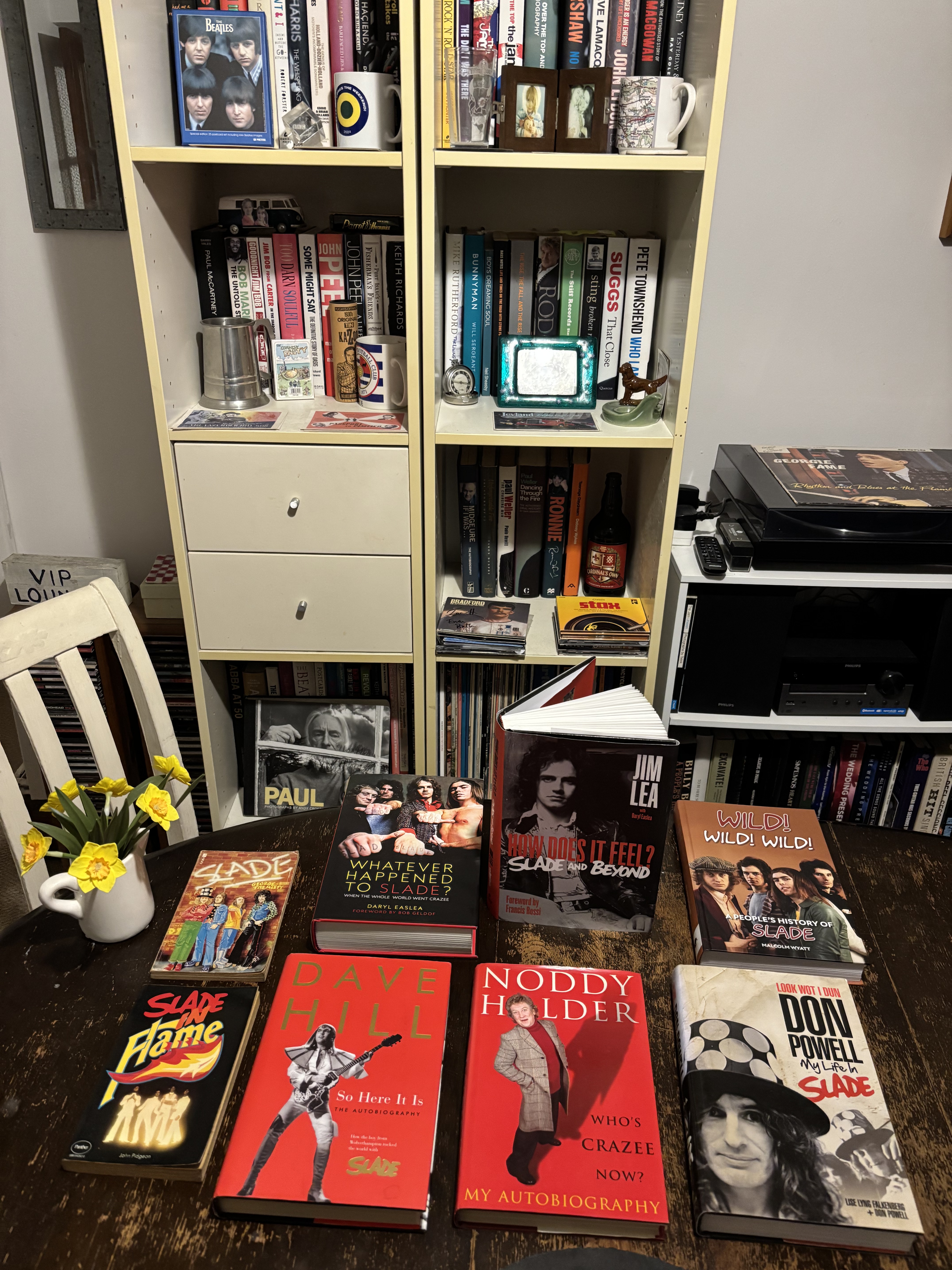
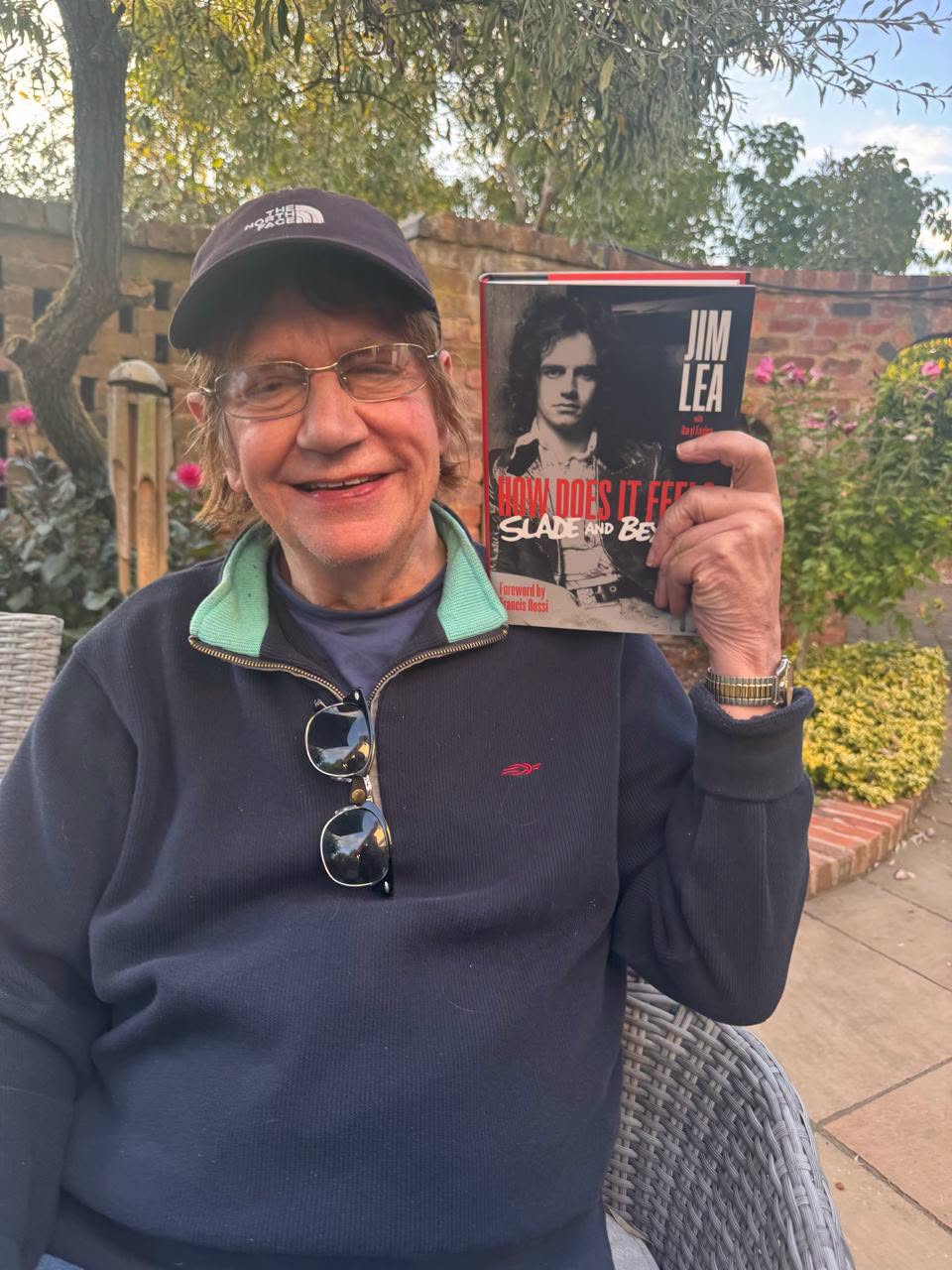
How Does It Feel? Slade and Beyond by Jim Lea with Daryl Easlea is out now, published by Omnibus Press, with fore and afterwords by Francis Rossi, Roy Wood and Paul Weller, including previously unseen material from Jim’s personal collection, from letters to Lou and archive family photographs to school exercise books and behind-the-scene snaps from before, during and after the Slade years.
With extra nods of respect to Chris Selby’s Slade Live! website, and also the Brum Beat and Manchester Beat websites for extra info.


