Feeding The Ferret …. and the grassroots music and arts scene

While Danny Morris’ day-job is with a Bristol-based music promoter, he’s never lost touch with his Lancashire roots, in recent times giving over his spare hours to the independent music and arts venue in Preston where he gained his first experience in events promotion.

The 29-year-old returned late last year to The Ferret, just across the road from the University of Central Lancashire’s sadly-mothballed 53 Degrees venue, to help fairly recent arrival Sue Culshaw’s new chapter for the pub, instigating a number of higher-profile bookings and helping draw up plans to get the venue back in the game. But matters moved on in another direction recently of course, with Danny now helping front her crowdfunding campaign to save this grassroots live music spot amid the COVID-19 crisis.

In one respect, this is very much a local story, but it’s pretty much a national one at that – The Ferret just one of many UK venues with an uncertain future right now amid the lockdown. But the team behind it are determined to see their way through and their campaign is already proving a success.

This week they passed the £6,000 mark in their ambitious £7,000 fundraising initiative, with a couple of weeks to run. And Danny – who initially became The Ferret’s events manager in 2014, now working as an international concert promoter for TEG MJR – is pleased with that but keen to crack on.

“We’ve also got two benefit shows we’ve sold out, so there’s an extra three and a bit grand added to that total. There’s still £3,000 to find, but there are more ideas and more shows in the pipeline which should sell out in quick succession, T-shirt sales, and that sort of thing.”

As well as fundraising events, involving back-to-back sell-out shows by Preston turned national phenomenon and 2014 WriteWyattUK interviewees Evil Blizzard, Danny is promoting other high-profile events, such as the latest sell-outs at the venue for returning Manchester-based Doncaster three-piece The Blinders, and a Britpop acoustic night featuring Nigel Clark, frontman of Dodgy, Mark Morriss, from The Bluetones, and Chris Helme, from The Seahorses, that trio also selling out last time they visited. And just as I was going to press, he told me that the latest to confirm future bookings were former WriteWyattUK interviewees A Certain Ratio, plus Louis Berry and Tide Lines.

Eye Contact: Girls in Synthesis’ Jim and John thrill The Ferret, so to speak (Copyright: Gary M Hough Photography)

For those Evil Blizzard shows, the 200 capacity (100 seated) is reduced to 150 over two nights to ‘help give it that intimate feel and keep that demand up’. And as Danny pointed out, ‘That’s three grand straight into the fund’. Of course, with changing situations week to week, those dates can only be pencilled in at present, but the special guests remain committed to the cause and Danny remains hopeful that smaller venues like The Ferret will be allowed to open before bigger venues around the country when restrictions are finally eased.

“Those shows will go ahead, at the moment scheduled for November, and there are more I’m trying to get over the line. And the back end of this year – if we’re allowed to open again by then – is looking very healthy.”

Danny also mentioned how local artists and illustrators had pitched in with the campaign, providing designed art prints of the venue, being sold to help the fund, while bands are releasing live sets, with ‘100% of their profits towards the crowdfund’.

And what was it about this venue that inspired Danny – formerly part of local bands Vox Population and also The Youth Anxiety, who after his first spell at The Ferret went on to book acts for the Live venue operating across the city at Preston Guild Hall – to return?

“Growing up in Preston, when I was in bands there were more venues, such as 53 Degrees – downstairs and upstairs – and three venues at the Guild Hall. But now everything’s shut down, and there’s really just The Ferret, The Continental and a couple more that sometimes put gigs on.

“The Ferret’s the heartbeat of the city as far as I’m concerned. It’s more than a venue. It’s where bands cut their teeth and where you find bands. A lot of my favourites I listen to now were discovered there. While I don’t work in Preston anymore, I still try to put shows on there.

Hay Festival: The Ferret during its annual transformation for Glastonferret. Alas, it’s not to be this year, unfortunately.

“It’s important to me that the city still has that output and the potential to put those bands on the map. And it’s important for the fans. You can tell by how people have come together for this, donating money and their time and hard-designed artwork. Its personal to people. It’s important.”

Like city neighbours The Continental (as featured on this website via an interview with Rob Talbot in mid-January), it’s certainly a venue with a reputation for nurturing talent, keen to support local young musicians starting out, while attracting emerging touring artists, showcasing new acts on the alternative music scene as well as in world of performance art, spoken word, plus experimental sound and art. Many of its diverse events are free to attend too, The Ferret keen to offer an alternative approach among other pub venues hosting bands.

Their main aim is to offer young talent a place to develop on a stage with professional PA, lighting and a talented sound engineer, to responsive audiences, whether that be about hip-hop, indie, blues, jazz … you name it. And The Ferret has hosted up to 200 shows a year, past name acts including Ed Sheeran (you’ve heard of him, right?), Blossoms, Royal Blood, Wheatus, Rae Morris, Catfish and the Bottlemen, Idles, Working Men’s Club, Girls in Synthesis, The Orielles, She Drew the Gun, as well as the afore-mentioned Evil Blizzard and fellow past WriteWyattUK interviewees Jeffrey Lewis and The Lovely Eggs.

In fact, word has it that when Ed Sheeran played in 2011, his audience included One Direction frontman Harry Styles, who then referenced the venue as ‘The Stinky Ferret’ live at The Brits. But that’s probably another story.

It’s also a venue for the annual Preston Arts Festival, and works with the University across the road and nearby arts groups to host events during the annual UCLan-improvised Jazz and Music Festival, and more recently working with arts promoter – and former workmate of this scribe – Garry Cook to host monthly performance and spoken-word events.

What’s more, UCLan music students showcase their bands at The Ferret each term, the venue also working closely with the uni’s graphics arts department, offering wall space to students and hosting social events for its graphics and music department, while supporting arts graduates with photography and music tech students using the space. So as you can imagine, the shutdown of the uni too has had a big effect on the place, irrespective of everything else.

Live Action: Just another night at independent music and arts venue The Ferret on Fylde Road, pre-coronavirus. In this case the band are Working Men’s Club, including Preston bassist Liam Ogburn (Photo: Mic Connor Photography)

Then there are regular events such as quiz nights, open mic. and open deck nights, its Last Band Standing competitions and its annual three-day music and performance festival, Glastonferret (see what they do there?), during which the venue is cloaked in real turf and straw bales. Meanwhile, The Ferret offers space to recycled clothes markets and a regular charity evening raising money for Cuban musicians and a Cuban medical charity, one of many charity events throughout the year.

But the past few months have provided major headaches, the venue struggling before the coronavirus restrictions. Sue, on board at The Ferret since April 2019, told me that enthusiasm for live shows had ‘fallen off somewhat since Danny moved on, petering down really to just local gigs, the venue on the verge of going bankrupt’. That was something she was keen to address, reinvestment and refinancing initiatives following, Danny soon returning in his new booking role, Sue and her team – including manager Ian Cauwood – determined to continue ‘helping promote emerging talent’, often drawing in acts also playing in Liverpool and Manchester, enticing them in from those bigger cities.

“Between us we’ve been trying to get it back where it should be. We were making a lot of progress, but then came the Adelphi regeneration work (involving extensive road closures around The Ferret) – which will be great when it’s finished but has caused a hell of a lot of problems in the meantime. Then we had the wettest February on record, after a traditionally quiet January, bands not tending to tour in that first month. We were looking forward to all the plans we had for the year, through Dan and ourselves, including art and spoken word, poetry and comedy, building a wider brief really.”

Those acts have included revered performance poet Mike Garry, who has regularly toured with John Cooper Clarke and who I first caught live at 53 Degrees in 2013 (with my review here), and recent WriteWyattUK interviewee Lee Mark Jones, his show – after a Ferret performance at last year’s Preston Fringe Festival – among the first cancelled as coronavirus restrictions kicked in.

“UCLan uses us a lot, for tech shows and graphic art students, and all that’s gone too, as well as all the graduation parties and end of term shows we usually cater for. That’s been quite a substantial loss really.”

As Sue put it on her fundraising page, “The Ferret adds so much to the city’s arts and culture scene, its loss would be a tragedy to the community that love it. We really need to be able to support our sound techs, retain our staff and promoters and keep The Ferret operational, even if only at the media level when the inevitable happens and we close our doors, so we can ensure we rebound from this with a functioning venue and a dynamic programme.”

She adds, “The intention is to put most of the fund towards providing paid employment to musicians and artists to give The Ferret a much-needed lift, through painting, murals and a general upgrade while it’s closed. If more money is raised, it would aid upgrading of the outdated sound equipment.

“The worst thing for us having worked so hard over the last 12 months would be for the Ferret to decline and be unable to reopen. We welcome the Government’s help, but it is not enough as the future and timescales are so uncertain. We need The Ferret to stick around and will do everything we can to try and ensure this, but we can’t do it alone and need help. We promise to match any money raised in order to provide an even better resource for Preston.”

It seems that the campaign has hit a nerve too, and it’s become apparent how much The Ferret is valued as a community venture.

“Absolutely. It’s never going to make money. It’s not about that. We’re about keeping financially solvent and being able to put great stuff on … because we love it. It’s a passion.”

Were you doing something similar before all this?

“Not really. I’ve retired, but we’ve always been interested in the arts, and my husband Gary is a professional, freelance jazz musician, working in music since he was about 12. His Dad ran dance bands, so he’d be out at weekends, took it from there really. He‘s also known for Free Parking, which he started in 1984.

“And it’s a musical family, with my brother-in-law’s Paul Birchall playing keyboard in M People and with Heather Small over the years. I’ve always been involved in music, and helped my son, who had The Continental. And this grew embryonically really. I got involved because no one else was doing it and have a lot of ideas. It’s just grown and now it’s like an addiction. And Preston can’t lose this place. It’s too important. Too many people go there.

“I don’t want to be rude. Lots of other places put on gigs, but The Ferret’s different, with a reputation for finding emerging talent and supporting lots of arts and creative people. The Conti has to provide a much broader spectrum, including cover bands, but The Ferret is what The Ferret is.”

Being from outside town, I initially saw The Ferret more as a venue to grab a pint before heading to 53 Degrees across the road. And that’s something else you’ve lost, traffic-wise.

“Absolutely. That’s a good point. That was a nail in the coffin a couple of years ago when that stopped being a regular venue.”

I’m guessing you’ve been touched by the response to this campaign. You’ve got a fair way to go, but it’s been a real eye-opener as to the strength of feeling for this venue.

“To be honest, it’s almost become more about the response than the money. It’s been utterly amazing to hear the messages people have been putting out there. I’ve cried a few times. This place matters. That’s really been the theme.”

Ed Banger: 2011’s Ferret visit from a certain Ed Sheeran, when the audience included One Direction’s Harry Styles

For more details about The Ferret’s crowdfunding campaign and how to get involved, head here. You can also keep in touch on social media via Facebook, Instagram and Twitter


Posted in Books Films, TV & Radio, Comedy & Theatre, Music | Tagged , , , , , , , , , , , , , , , , | Leave a comment

Chance would be a fine thing – the Baxter Dury interview

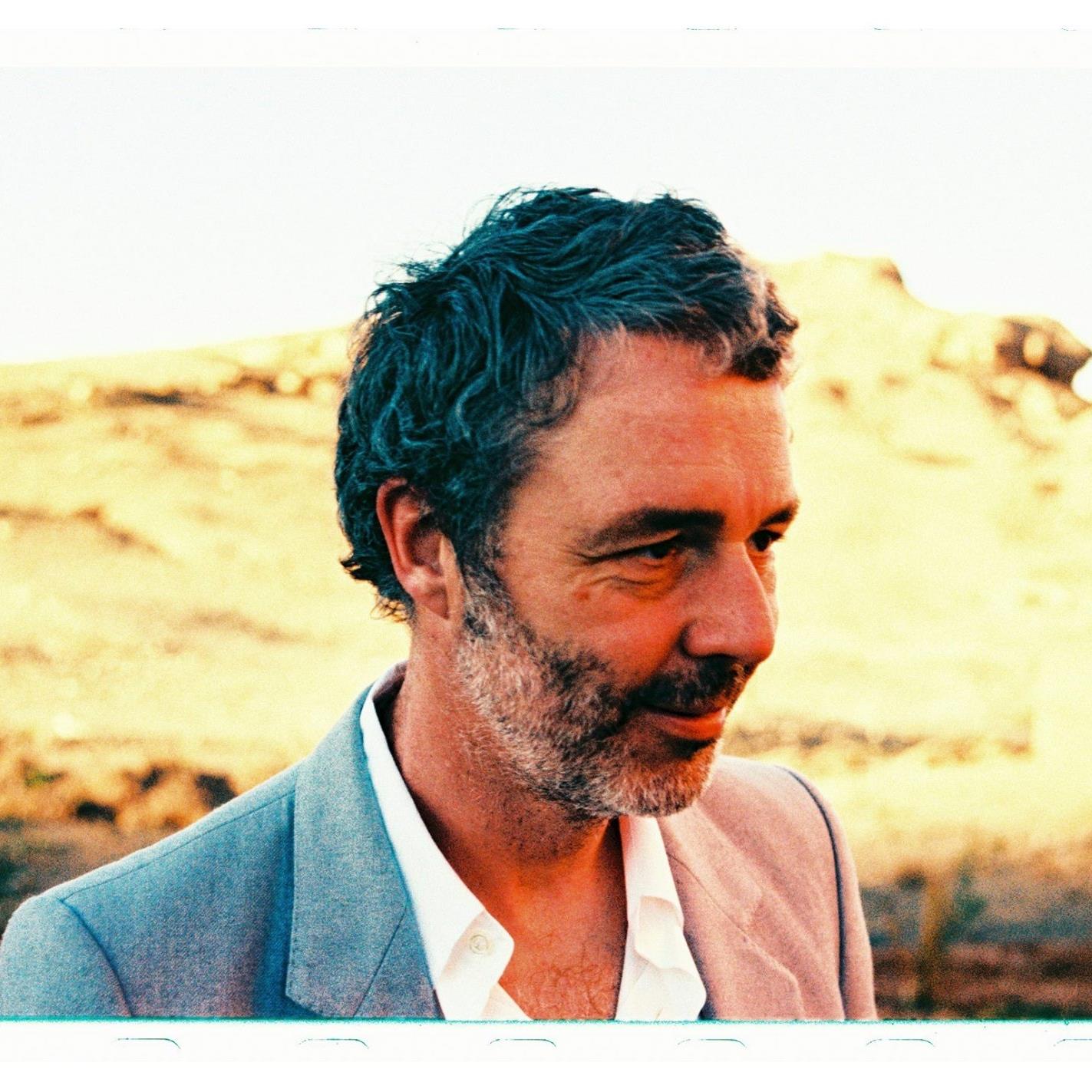
Dury Service: Baxter Dury, self-isolated with his son Kosmo in London right now, but with his new album tour lined up.

“I went for a walk this morning and found this incredible deli that was open, serving food outside, and couldn’t resist buying some ridiculously-overpriced pizza pie. So my son and I could eat this delicious kind of apocalypse meal. We’ve been living on my cooking for three weeks.

“It was so incredible. I got my timing wrong, but I couldn’t eat the pie and talk to you at the same time.”

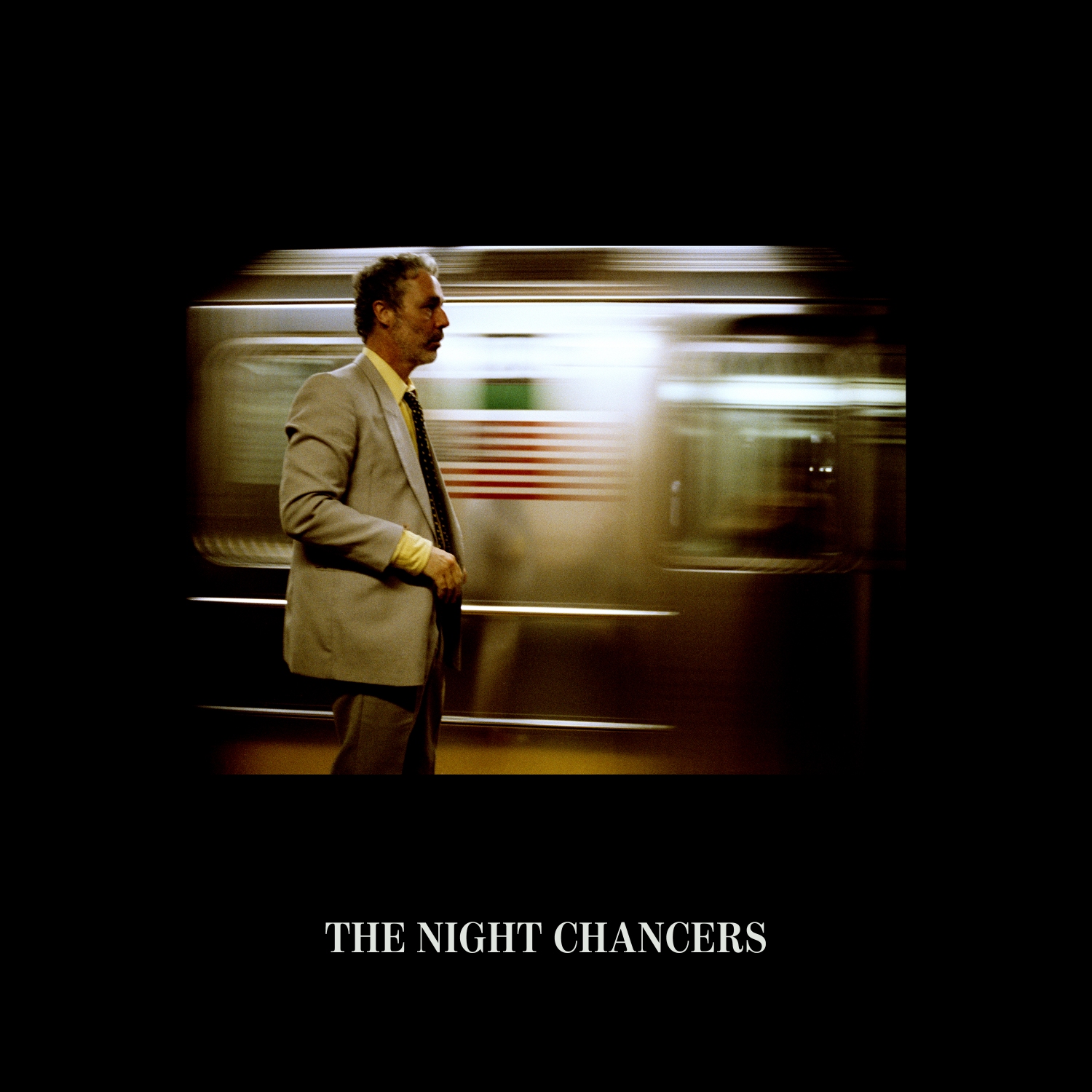
That’s Baxter Dury apologising – after a fashion – for telling me to try him again in half an hour when I initially called him bang on two o’clock, as per our arrangement, just as he was tucking into his dinner. It wasn’t a problem though. I got another chance to listen to a new LP called The Night Chancers, one I’d barely stopped playing in a week. Sound familiar?

“I’ve heard about that, yeah. By an interesting character.”

The Night Chancers is West London-based Baxter’s sixth album in 18 years, and it’s a cracking record, building nicely on the last released under his own name, 2017’s acclaimed Prince of Tears. Is he pleased with the early reaction?

“Yeah, I am. It’s been a strange time, but the feedback seems mostly positive. I’ve had a lot of time to actually read my reviews, thinking, ‘Fuck it, I will!’ this time. And luckily they’ve mostly been good.”

The new LP was released on March 20th through Heavenly Recordings, co-produced by Baxter and long-time collaborator Craig Silvey (Arcade Fire, John Grant, Arctic Monkeys), recorded at not so far away Hoxa studios in West Hampstead last May.

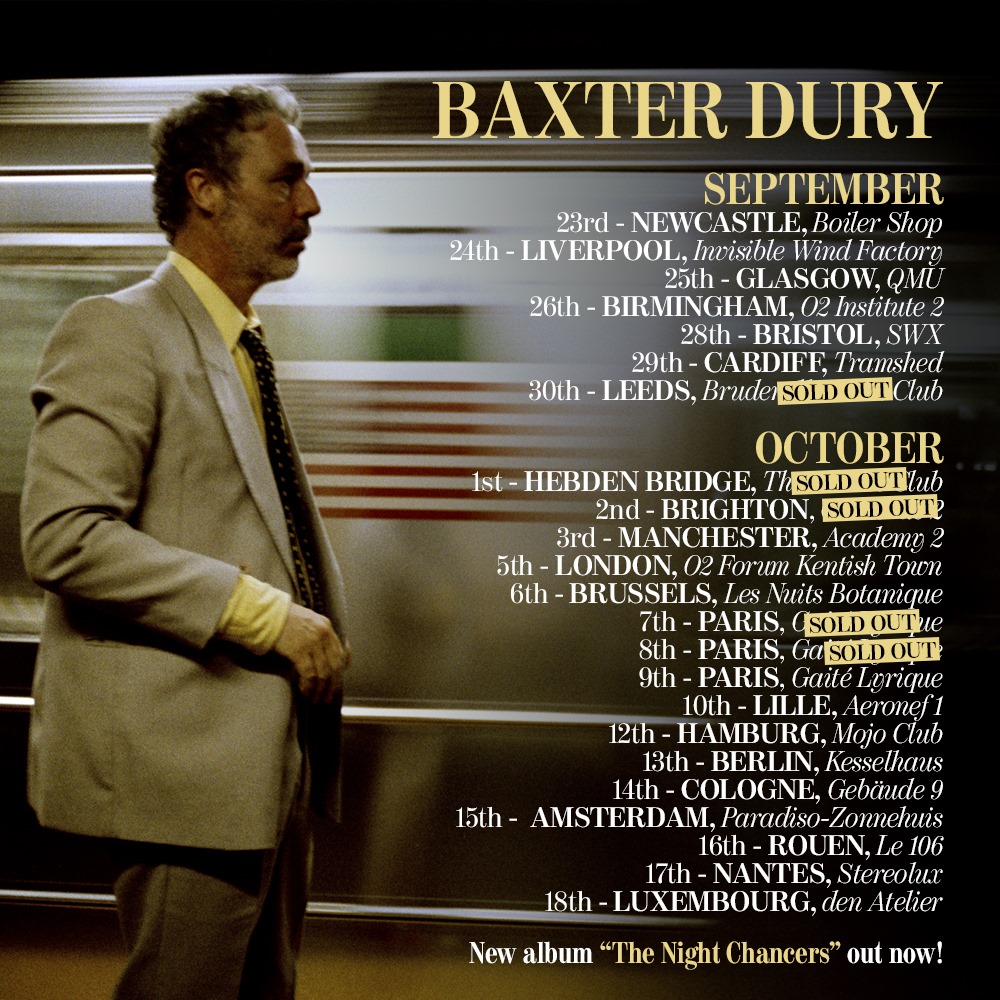
I’m guessing he’d have been deep into rehearsals by then for what was shaping up to be his biggest UK tour so far, now postponed until – in theory – autumn.

“Yeah, all that sort of stuff. But that’s just the way it is. I’m quite philosophical about it. I just volunteered actually – I signed up. When they asked me my skillset, I realised I had absolutely zero! I could talk about having a famous father, tell them I’m really good at interview techniques, or I could teach old people how to Instagram. Ha! Bleedin’ useless.”

Is that Chiswick way, where you’re based?

“Yeah, around the corner.”

That took us on to an interview I did a short while before with Paul Cook, the drummer of the Sex Pistols and the band that followed in their wake, The Professionals, letting on to Baxter how Paul was an apprentice electrician at the Mortlake Brewery site of Watney’s (home of the dreaded Red Barrel) before he gave it all up to try his luck with a certain infamous punk band. Which I guess if Paul was to sign up to volunteer right now would give him a slightly different skillset to Baxter. Anyway, how’s Baxter’s neighbourhood coping right now, with all that’s going on?

“Well, I live on the river, so you’ve got a point of convergence where everybody who wants to go for their daily walk comes here, so you’d never notice there was any difference – there’s so many people around.”

Less traffic though, I guess?

“Well, there’s less traffic ‘cos the bridge is closed. I guess there’s less air noise … and there’s not a lot of toffs rowing in the river. They’re quite loud, usually. But that’s about it. We’re quite lucky to live here really.”

Back to The Night Chancers, and it’s a very accomplished record, and somewhat multi-faceted, with opening track, ‘I’m Not Your Dog’ seemingly carrying on where he left off with the European disco vibe heard on tracks like ‘Tais Toi’ on the BED (Baxter alongside Étienne de Crécy and Delilah Holliday, who also features for London punks Skinny Girl Diet) collaboration. Was that where you were at when you came to this album?

“Sort of, but that collaboration was done not really thinking about much. There wasn’t too much effort put into that. But I guess so. I’m always more into soul music and dance. I’m more that way orientated than indie music. There’s always that thread going through.”

I see Delilah provides one of those voices on this record too, along with (a more prominent) Madeline Hart and Rose Elinor Dougall. When did that link come along? There’s a French theme in places here too. Do you spend a lot of time between London and Paris, pandemics aside?

“The B.E.D. thing is not that relevant. I spent a week doing it, and to be honest it wasn’t that enjoyable – everyone argued. So I kind of forget about that.”

I got the impression you wanted to push on from Prince of Tears though, building on its success rather than just trying to copy its winning formula. And you’ve certainly achieved that.

“Yeah, it’s a continuation, but you try and do something different.”

Comparing his celebrated last LP with this, we’re told Prince Of Tears was ‘a cinematic confessional trying to stay afloat on the seas of relationship failure,’ while The Night Chancers ‘finds the songwriter adopting a more directorial approach to his tracks, sketching out people and situations as he initially dives deep into the darkness before reaching an emotional dawn’.

The man himself adds of the conscious progression across the album, “It’s meant to be a bit Kubrick-y, a psychological journey through the maze bit in The Shining. So they’re not all confessional, it’s more of a feeling projected into a filmic narrative. On some of the tracks different characters appear.”

And if Baxter isn’t always coming from a personal point of view on every song – and there are still plenty of moments where he lays his life out lyrically – he is speaking from candid, first-hand experience. From thrilling affairs that dissolve into sweaty desperation (‘The Night Chancers’) to the absurd bloggers fruitlessly clinging to the fag ends of the fashion set (‘Sleep People’), via soiled real life (‘Slumlord’), social media-enable stalkers (‘I’m Not Your Dog’) and new day, sleep-deprived optimism (‘Daylight’), its finely-drawn vignettes are supposedly ‘all based on the corners of a world Dury has visited’.

“They are things I’ve experienced or seen. That explorative period after being in a long relationship – you find yourself in situations where your bravado about what’s happened and the reality are two different things.”

The title track and centrepiece defines that spirit, a brutal self-satire on an evening spent in a Paris hotel. He explains, “‘The Night Chancers‘ is about being caught out in your attempt at being free. It’s about someone leaving a hotel room at three in the morning. You’re in a posh room with big Roman taps and all that, but after they go suddenly all you can hear is the taps dripping and all you can see the debris of the night is all around you. Then suddenly a massive party erupts in the room next door. This happened to me and all I could hear was the night chancers, the hotel ravers.

“Nothing compounds your loneliness more than then you’ve got crumbs stuck to your face, the girl’s left and there’s a party next door. What do you do? You try to bring the person back and you lose all of your dignity by showing your vulnerability. It’s all a bit of a theatrical scream into the night. There are these moments and characters across the album – it’s quite a diss-y record, but most of the disses are inspired by insecurities. The characters are very flawed. It’s cocky but it’s really vulnerable.”

Night Chancer: Baxter Dury, set to tour as soon as he’s helped fight off the COVID-19 pandemic

The result is impressive, Baxter writing a soundtrack infused with classic disco, Italian pop, ’80s hip-hop beats and strings, each micro-narrative key to a wider mood across the album.

“Musically I’ve pushed on,” he suggests, its 10 tracks written over four months in the first half of 2019, then recorded over three weeks. “I had a formula for the previous records but now that’s done. Everything was leading up to the full sound I had on Prince Of Tears, so I don’t need to do another one of those. I’ve done something different, something new, with this one, and it’s been fun – although the orchestra was fucking expensive!”

Those differences include his vocal contributions, his charming yet brutal monologues underpinning the uniqueness, but with different inflections and voices – veering from his usual dispassionate cool, through rage, foppish injury and twisted documentarian.

“I recorded all the vocals alone. It’s what I call faux Chiswick Urban. It always goes back to Chiswick, because it’s a stable reference point for me. I wasn’t brought up there, but it represents the insulated safety of middle-class London yet has a sort of real undercurrent to it, it’s quite tough. So I did these faux accents on the record, inspired by a lot of real people who I’ll never namecheck.”

And with a different take on that earlier mention of skillsets, he tells us, “The only skill I’ve got is being honest. I’ve got a tiny bit of melody and a lot of honesty, and the latter is really my only facet. I’m not even sure it’s a skill, it’s more like being in a freak-show. I’m honest about my successes and failures, which sometimes can sound arrogant while other times I’m alarmingly, disarmingly honest.”

You describe the new LP as ‘a 10-song gaze into the black hours and characters and behaviours that swirl around within them’. It’s a dark and gritty LP, but you pull it off. It’s almost a 21st century take on Frank Sinatra’s In the Wee Small Hours in that sense.

“Yeah, that’s good. I like that, totally! But it’s just what it is. Information sourced locally from what I’m experiencing at the time. It’s not a concept album. It’s just micro-details about one’s life.”

He’s described the period after Prince Of Tears as ‘halfway between heartbreak and getting back on your feet, when you’re rebuilding – not necessarily successfully – your outlook on life’ and ‘trying to fit into the modern world, avoiding the barbed wire between youth and maturity’. And I don’t think it’s just the case that Jason Williamson guested on that last LP that makes me think track two on this one, ‘Slumlord’, carries an air of his work with Sleaford Mods, or at least that coupled with a Blockheads vibe.

“Oh, maybe, yeah. It’s good if people’s imaginations respond in such a way. It wasn’t intentional.”

I guess a lot of these influences are there anyway, whether you’re pulling on them or not.

“Completely, yeah. Absolutely.”

Who’s in the band on this record? And will it be the same live when you finally get out there?

“I can’t remember who we played with, but there’s a slight difference with some personnel shared between. Who knows with the live one, particularly as we don’t know when it will happen. Musicians are scrabbling to confirm any dates they can with any band they can, so it’s very hard, although we’ve put some theoretical dates in.“

I spotted those, aiming for the last week of September and into October. Although as you say, it’s theoretical for now. Besides, it seems that the world and his wife will be out on tour around then.

“There’ll be a big traffic jam of all the tour buses!”

You clearly work well with Craig Silvey.

“Yeah, we’re really good mates. The best of mates, and we have been for years and years.”

How did that partnership come about?

“I really can’t remember, but the very first album he worked on. And there was no real point not to work with him ever since. Consequently, he’s one of the biggest mixers in the world now, and we’ve just got good vibes.”

Guitarist and writing partner Shaun Paterson is a more recent addition though.

“Yeah, he joined the band about a year or two ago.  He’s been great though.”

Early Years: Baxter with his Dad, Ian Dury, on the front of the rightly-celebrated 1977 LP, New Boots and Panties

The previous weekend marked the 20th anniversary of Baxter’s father Ian Dury’s passing, far too young at 57. And I’m intrigued that the tour finale at The Forum in Kentish Town is now pencilled in for October 5th, 30 years – give or take 10 days- after I first caught Ian Dury and The Blockheads live, at the very same Kentish Town venue, then trading as the Town and Country Club. That was a benefit show – bass legend Norman Watt-Roy featuring for Wilko Johnson’s support band too – for Blockheads drummer Charley Charles, less than three weeks after he passed away.

“Oh, right. Weird, yeah. OK, that’ll be good. Charley was a good guy.”

I’m guessing you knew The Blockheads well, even around then.

“Yeah, especially Charley. He was one of my favourites, to be honest, very friendly if you were a young person. He was great.”

It’s all too easy to make comparisons between Baxter and his Dad, not least when they clearly share that love for words and wordplay and crafting them. There are many great examples on this record, not least ‘Carla’s Got a New Boyfriend’, part poetic, part-funny, yet somewhat chilling. Something his old man could definitely do. I tried my best not to talk too much about Ian though, realising all too well he’s his own man, as proved throughout his impressive career so far. How would he say his own work has progressed – album by album – since 2002 debut, Les Parrot’s Memorial Lift?

“I’m not sure. I just try and do something different. I’m not sure if you progress. Music’s inherently in people from the point you start wanting to do it. It doesn’t always get better or worse, it just changes. You can play the guitar a bit quicker, maybe, but that’s about it. You learn lots of unnecessary skills. But it’s all quite natural – lying there within people, and just has to be reared out.”

You mentioned your lad, Kosmo, who arrived on the scene around the time of your debut LP (and I am after all talking to an artist who appeared alongside his own father on the front cover of wondrous first album, New Boots and Panties). Has he followed your lead and got involved in music too?

“He has, yeah, and that’s how he’s surviving this apocalypse – writing songs. He’s good. He’s brilliant.”

Joining the family trade, yeah?

“Well, I’m trying to dis-encourage him from emulating it, doing his own thing instead, standing on his own feet.”

By rights, you should be just a fortnight from hitting the UK circuit again, touring the new record, starting with a first night in Leeds. But that’s not happening now, and I guess we’ve all got to just pull together to get through this now.

“You feel what you feel. You’ve got to work out another agenda really. Otherwise you’ll eat yourself up. There’s no point fighting it. It’s not like it’s just you and your street – it’s the whole world. You’ve got to sit back on this one, let it have its day. It’s pretty grotesquely massive, and I think if you’re in good health, credit yourself for that and be as positive as you can really.”

Not a bad philosophy for life itself.

You started out at the turn of the century with Rough Trade, but these days you’re on board with Heavenly Recordings. Did that mean a big change for you, dependent on who’s putting your records out?

“Well, I’ve been through a few labels, and it depends how good the people are. And Heavenly are really nice, so I can’t complain, y’know. They’re all owned by more darker, cynical people in the background, and you need a few of those in the business, but Heavenly themselves are an amazing label, and they’re my friends, so it seems appropriate.”

Time was running out on me now,  so I decided to go for a harder-hitting question – whose dog is that barking on the title track?

“Ah … the first one I could find on a Google search.”

Ah, he spoiled the image now. I wanted to hear that it was his, it belonged to someone at the studio, or was the son or grandson of the boxer dog on the front of his Dad’s final LP, the terrific Mr Love Pants.

“Nah, I just liked it and nicked it! I typed in ‘dog sounds’ and that was literally the first I found. I taped it randomly and whacked it on there!”

Ah well. And if there’s an over-riding message to this album, is it that ‘Baxter loves you’, as we hear from the girls on the play-out of album finale, ‘Say Nothing’? And is that your modern take on Clive Dunn’s iconic late 1970 UK No.1, ‘Grandad’?

“Well, it’s sort of an answer to the beginning of the record, where I’m a bit more dismissive. It’s a bit like The Shining. It’s sort of, ‘Baxter loves you … but I might stick an axe in your neck’.”

Fair enough. and with that I felt I better leave him to it. So he could get back to his riverside self-isolation with Kosmo.

Deli Ally: Baxter Dury knows how to track down a right good outdoor establishment when he gets the chance.

For more about Baxter Dury’s new LP, his back-catalogue and rescheduled tour dates, visit www.baxterdury.tv and check out his Facebook, Instagram and Twitter links. 

Meanwhile, to check out Really Glad You Came – this website’s re-appraisal of the Ian Dury record collection, from late October 2014, head here.

You can also check out February 2019’s interview with Blockheads and Wilko Johnson’s bass-playing legend Norman Watt-Roy, and a WriteWyattUK review of The Blockheads at Preston’s 53 Degrees in March 2013 here.

Then there’s Still Stiff After All These Years, a November 2014 interview with Richard Balls, author of Sex and Drugs and Rock and Roll – the Life of Ian Dury, and Be Stiff – The Stiff Records Story, via this link

Posted in Books Films, TV & Radio, Music | Tagged , , , , , , , , , , , , , , , , , | 1 Comment

Perilous Beauty – from Vampish past to touching presence and future intent – the Wendy James interview

Wendy House: Former Transvision Vamp frontwoman Wendy James, hoping to be out and about later this year

As another week of UK lockdown against the coronavirus pandemic gets underway, I’m certainly not the only one reflecting on just how much there was about our old everyday lives that we took for granted. And high on my own list was live music.

I’ve already struck lines through various scheduled nights out around Preston, Liverpool, Manchester and thereabouts, including chances to catch Wendy James and her band next month at Manchester’s Deaf Institute or Blackpool’s Waterloo Music Bar, part of a full-on 19-date schedule promoting new LP, Queen High Straight, due to start in Tunbridge Wells on May 5th but now pushed back until – or at least pencilled in for – September. And when we spoke, Wendy was already extremely concerned about how things were back here as the pandemic started to inch its way towards her home nation.

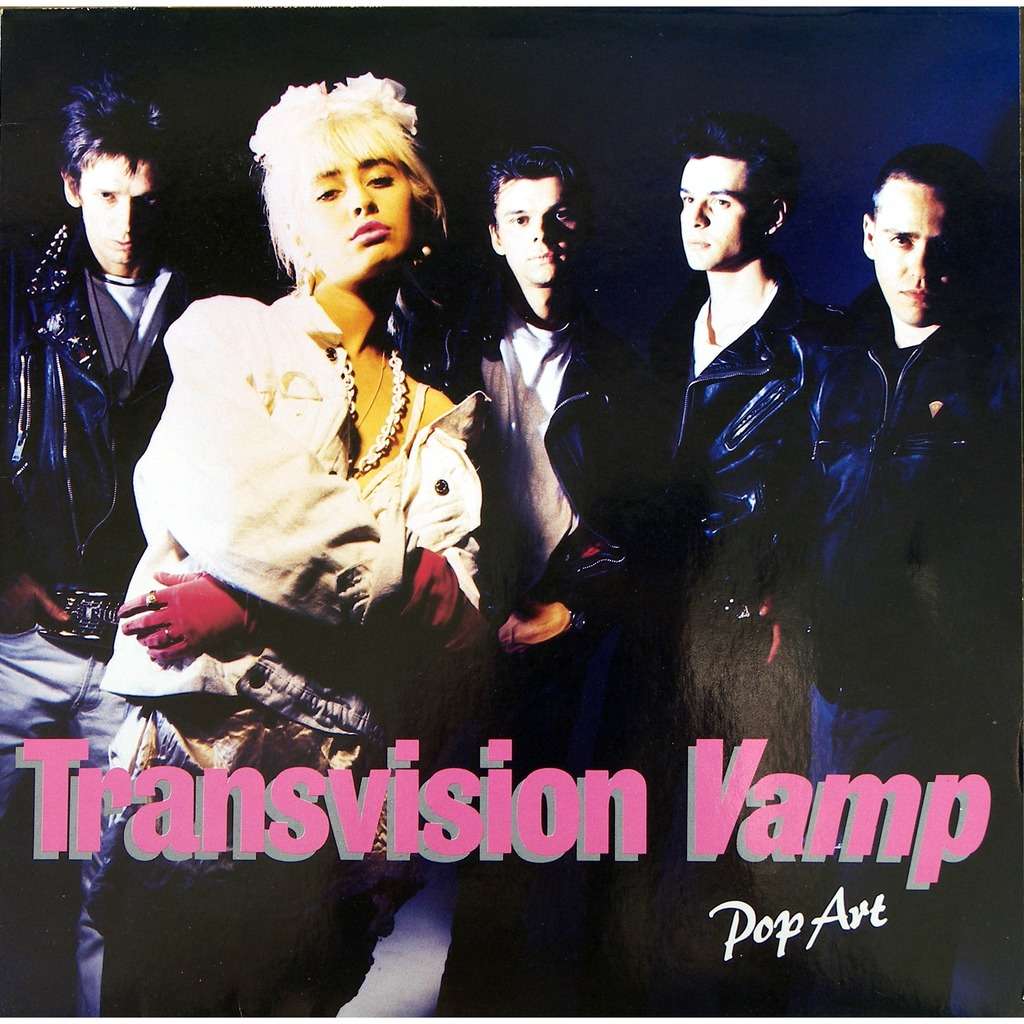
The London-born singer-songwriter first made her mark in the late ‘80s, fronting alt-rockers Transvision Vamp, whose second LP, Velveteen topped the UK charts, while also  managing top-five hits with debut album Pop Art and the ‘I Want Your Love’ and ‘Baby I Don’t Care’ singles.

She went on to collaborate with Elvis Costello, James Williamson (Iggy and the Stooges), Lenny Kaye (The Patti Smith Group) and James Sclavunos (Nick Cave and The Bad Seeds), the latter joining her on drums and percussion on the new record, along with James Sedwards (lead guitar), Harry Bohay (bass), Alex J. Ward and Terry Edwards (horns) plus Louis Vause (accordion). And judging by the advance tracks I’ve heard, it’s a corker, as the quality of the personnel involved would suggest.

When I got in touch, she was already self-isolating, in her case in the south of France, while eager to know what was happening back in her native UK, pre-tour rehearsals with her band up in the air and more draconian restrictions ever more likely. And within a week or so, the situation moved on considerably, Wendy making a decision so many more touring musicians were being forced into, her shows shelved for now.

A statement followed, telling us, Doing simple maths, it was easy for me to see that in one month’s time when I’d be due to begin rehearsals in London, it was just not going to happen, nor an all-clear of COVID-19 by May 5th, when my tour was scheduled to begin. Making a calculation as best as possible, I’ve postponed all the dates until September.”

She’s still very much looking forward to those engagements though, with the original ‘ticket links still valid and working’. And Wendy’s also excited by the prospect of her new solo LP landing early next month, carrying on where she left off with 2016’s The Price Of The Ticket, the follow-up to 2011 comeback LP, I Came Here To Blow Minds.

It’s not an easy album to categorise, the title track a fine example, its ‘jazzy type of chords’ lending a ‘gentle lilt’, Wendy – who also fronted indie rock band Racine in the early 2000s – documenting on record her appreication of Bacharach and David and early years listening to Sergio Mendes ‘Brazil ’66’.

“Overall, my taste and style have not changed with time. The music that excites me now, ultimately, is the same as when I was starting out songwriting and back through my days in Transvision Vamp.

“I continue to marvel at Lou Reed and The Velvet Underground, I continue to be blown away by The Stooges, I continue to be everlastingly enthralled by Bob Dylan, but the older one gets the more one discovers, and I am now informed more cohesively and fully by all the music, new and old, which settles into my consciousness.”

And from celebrations of Motown and ‘60s girl groups to ‘guitar guttural filth and sex’ on splendid first single ‘Perilous Beauty’, some ‘Django Reinhardt whimsy’ and a little speed punk, there’s plenty to savour.

But we started out by talking about her surrounds, Wendy ‘in the countryside, pretty much away from people’, in a country that had already seen a lot of cases confirmed. We were soon on to the home country though, at a time when America had announced it was stopping flights from Europe. Inevitably the conversation drifted on to Trump, Johnson, and co., my interviewee largely thinking along the same lines as me, although ultimately, as she put it, ‘It’s a subject we could explore for hours and hours … and reach no conclusion’.

“But tell me something though,” she added, ‘Out on the street, are people concerned? Are people wearing masks and stuff?”

Something of a pen-pic followed as to the view from the UK, albeit from someone admittedly in his own social media bubble, happier mixing in circles of like-minded souls, away from the nutters out there at the time, clearing supermarket shelves and swarming like ants on beaches and in parks. She soon carried on.

“I’ve a friend who lives in Rome, and he’s on lockdown, telling me this morning police are arresting people on the street if they don’t have a permit to be going somewhere. I’ve seen video footage from his window and sure enough, police patrols are on the street, speaking through loud hailers. Denmark’s on lockdown now too, and my friend who works for the embassy in Rome seems to think the UK is going to a lockdown. I live in America as well, and even though France has cases here, I feel so much safer with a European Government manning the station rather than that fucking Trump administration.”

Yes, home is also New York City for Wendy, although she told me, “One can’t really classify that as America. It’s at least the very best of America.”

I should point out here – the ‘one’ was the giveaway – that I was slightly taken aback early in our conversation. Having recently seen Wendy in her late ’80s days via the wonders of BBC Four’s Top of the Pops revisits, I half-expected a somewhat breathy, sultry punk pop star at the other end of the line. She was always far more than that, I realise, but I found it intriguing to think that a contemporary of mine – I’m two school years younger, leading her to quip, ‘Ah, so you’re in your early 30s too?’ – who dated The Clash’s Mick Jones had such well-heeled tones. I reckon my Mum would have been impressed by that frankly posh brogue, and would have adapted her telephone voice accordingly, in true Irene Handl style.

Touring aside, does she still return to England from time to time?

“Really only for occasional get-togethers with friends or parties, or if I’m working. I no longer have anywhere to live in London. I have to crash on people’s sofas. I was in London quite a lot last year, making the album in the UK, and providence providing I’ll be travelling over in a month’s time to begin rehearsals for the tour. I’ve no idea how it’s going to pan out. I’m just monitoring the situation like everyone else. But I have no reason to think I’m not coming.

“The gigs are selling well, and Manchester is doing exceptionally well. I’m planning to shoot a video as well in Swansea, a whole gig but potentially concentrating on a couple of songs. We’ll be playing a cinema there, a massive screen behind us, so I put together an amazing shot-list of all the stuff that tickles my fancy, culturally and musically, in movies and everything, the cinema putting together this compilation of footage to play behind us. So I had to step up a gear to make sure I had video directors there to get the footage.”

When she does think of the UK these days, where’s home? Would that be Brighton?

“I was only there for two years of my life. Wikipedia is not all it’s cracked up to be … certainly not in my case. I was born in London, raised in London, then met Nick Sayer while doing some schooling down in the south of England. Transvision Vamp formed in Brighton, but I only ever lived there two years. My home, England-wise? I’m happier now in Soho, London, but grew up in Portobello Road, West London.”

There’s certainly some heritage there, not least with its links to The Clash.

“Yeah, exactly. All of that.”

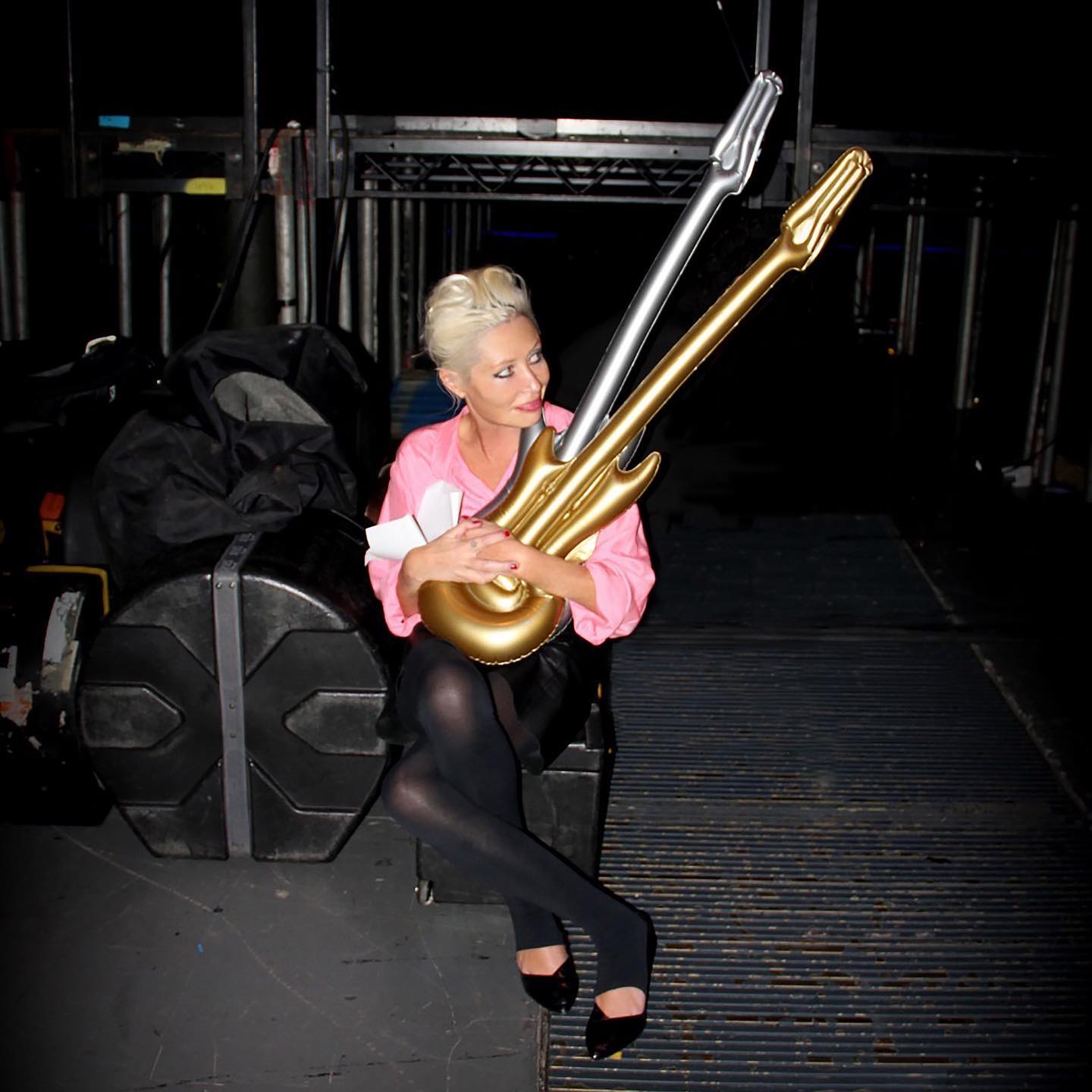
Guitar Heroine: Wendy James lets loose on her inflatable six-string, in readiness for her rescheduled 2020 tour.

Discussing my own South-East roots, we got on to her scheduled date at The Boileroom in Guildford, me swapping tips on my hometown and Wendy keen to praise Lydia at the venue for her work in helping set up that visit.

“There are quite a few dates on this tour which have been on my bucket list of venues I’ve seen my friends play, like Leeds Brudenell, which crazily I’ve never played there. And I’m desperate to play Glasgow King Tut’s. Those places are iconic in my mind.”

So many music venues are on the edge right now. We’ve lost a lot in recent years, so it’s good to support those still functioning. It must be a very different circuit to the one you played in the late ‘80s.

“The thing about Transvision Vamp was that our first ever tour was a uni tour, and by the time we’d finished that we were playing the Marquee club on Wardour Street and were at No.5 in the chart.

“We never had that schooling – doing the pub circuit and building our way up. The NME, Melody Maker and Sounds were all covering us as the band to watch, and Transvision Vamp became mega really quickly. But I’ve gone back and paid my dues since, I can assure you.”

Do you think you’ve always had more to prove in the sense that the music media, like their counterparts on the tabloids, would find it hard to look past the sexy image and everything else? You played that part well, of course, as had Debbie Harry and so many others down the years.

“I wouldn’t call it playing a part. I guess some women play a part, but whether it’s Debbie Harry or me, that’s the way we looked and that’s the life we led. We were being completely authentic. It’s not like we put on a costume then afterwards went home and did some knitting. We were those people, and we are those people.”

I get that, but still there’s that tabloid mentality …

“You mean sexist mentality. I don’t give a fuck about the tabloid approach to cheapening values. It’s hard for me to remember, because I was always very insulated in as much as that I was in a gang of boys and we were successful quickly. And my friends remained exactly the same – from being on the dole through to becoming a successful band.

“My scene was also the same, the pub I drank in on Portobello Road, so while a whirlwind of tabloid frenzy did start to pick up, and I knew they were saying this stuff, it didn’t reach me emotionally. But I’m sure if one was to go back in a time machine, it was far more sexist then than it is now … and it’s incredibly sexist now.

“It’s also ageist, the music business. If you make it – unless you’re Bob Dylan, Mick Jagger or one of the properly established old rockers; or Debbie Harry or Grace Jones, who are both still out there – on the whole they like you to remain in your box; the one thing that you were.

“And in the broadest sense of people’s knowledge of me – although of course fans know what I’ve done – the general public will still think of me as a late–‘80s/early-‘90s pop idol, right?  I mean, you don’t want to be thought of as what you were 30 years ago, do you? What’s that film where Brad Pitt gets younger? It would be a scientific challenge to ask someone to remain that person they were.”

Did you mean David Fincher’s 2008 film, The Curious Case of Benjamin Button?

“Yes, that’s right. They’re Benjamin Buttoning me! Ha ha! The truth is that I even think I look better, although I can see I was pretty in those days. And I’ve definitely enhanced my talent and creativity over the years. I’ve just become a more substantive human being. And I still think I look fucking hot, so what’s the problem?”

You’ve popped up a couple of times lately on BBC 4 re-runs of Top of the Pops for ‘I Want Your Love’ (1988) then ‘Baby I Don’t Care’ and ‘The Only One’ (1989). Have you relived those appearances lately?

“I have, because wonderfully I started getting messages last Friday night saying I was trending on Twitter in the UK. One of the ‘Baby I Don’t Care’ performances was on. I watched it and was, ‘Whoah!’ I can see why we were successful. It really was great.”

Is it like watching you in a different life?

“No, some of it I remember like it was yesterday. traipsing into the Top of the Pops studios. Some stuff I’ve forgotten completely, and you’d have to remind me, but some is so vivid it was like it was yesterday.”

Riding Tack: Wendy James puts in the hours at home, ready to promote her new LP, post-self-isolation period

Finishing what we were saying about your geographical roots, have you still got strong links to your Norwegian roots?

“Oh God! Where are you picking up this information?”

Well, I always read as wide as I can before interviews.

“Right … well, I was somewhat naïve to discuss being adopted when I was young. When you’re young you don’t realise you have to keep your private life private if you want it to remain so. Having said that, I don’t know who my parents are, but I do know I have a Norwegian birth mother.

“I’ve never wanted to find her or whoever the man is, but once the Brexit thing happened, as a person living and working in Europe quite a lot … the Norwegian passport is recognised in Europe although they’re not a full member state, so I went to their embassy in Paris to ask if I could finally become Norwegian, or have dual citizenship. And the sad truth is that apparently, up until the age of 21 I could have had dual citizenship at any time, but if you haven’t applied before, they strike you off – you’re no longer a Norwegian. I spoke to a couple of people in the embassy and there was no way of wangling that. So my Norwegian roots are gone, sadly. It was not to be.”

It’s been a manic couple of weeks with interviews and other bits and bobs to help keep a roof over my head, so I’ve not had chance to delve too deep into the new LP yet – that’s coming next. But I love the new single, both sides (I’ve since heard the horn-laden, soulful ‘Little Melvin’ too, and like that as well). I’m not sure how charts work these days, but these songs should be all over the place. ‘Perilous Beauty’ has true pop class and raunch in equal measure, taking me back to the likes of The Primitives back in the day, but also maybe Iggy Pop, while ‘Chicken Street’ has the charm of ‘60s girl bands with the added verve of The Cardigans. I love them both.

“Thank you!”

Are those both indicative of the delights of the album?

“Well, ‘Perilous Beauty’ is track two and ‘Chicken Street’ is track nine of the 20 tracks on the album, and the running order is literally the order in which I wrote them …”

Vampish Past: Wendy James, who followed three Transvision Vamp LPs with two for Racine now four under her name

So I gather. That in itself is an interesting approach, one I‘m surprised not many artists take.

“I don’t know why they don’t. It seems like the most organic tracking order you could possibly come up with. It’s the order in which they were birthed.

“With ‘Perilous Beauty’ I remember having a Eureka moment – I think it’s even on my Facebook video clips – where I was playing the demo three years ago, thinking, ‘Bloody hell – I’ve come up with a good one!’ And I was only two songs in.

“You’ll hear when you listen to the whole album, it’s a mixed bag. But you’re gonna freak, because I range from kind of Bacharach and David – with smooth, wonderful chord changes – through to hardcore speed punk. There are also a couple of really soulful ballads and there are so many Motown moments. As a white person I always want to try and get groove into my music, rather than just 4/4 white rock rhythm.

“This is what I mean about the evolution of a person as a musician. I was listening more and more to the basslines of James Jameson, the session bassist for Motown, and it was Glen Matlock who turned me on to him. Even though you’ll think of Glen as a punk, he’s a James Jameson nut.

“All the people I worked with on the last album – Lenny Kaye from the Patti Smith Group, James Williamson from The Stooges, my old boyfriend Mick Jones from The Clash, all of these men and James Sclavunos, my drummer from Nick Cave and the Bad Seeds – have got 15 years on me or whatever, but they’re fucking encyclopaedic about music.

“I’ve been educated through all this … starting with Nick Sayer with Transvision Vamp … always surrounded by male musicians who, if they weren’t musicians, they’d be working in a record shop. They’re fanatical nerds, and it’s glorious – they can tell you the RPM of something, an obscure B-side, or where and when a gig happened. One always wants to make money and all that stuff, but the joy of being in a band or being a musician is the collaborative camaraderie with fellow musicians.

“And if we’re lucky enough to live to ripe old ages, our musical knowledge will be even more. You spread into country, bluegrass, South American music, reggae … there’s so much, and everything cross-pollinates. That’s why Britain in particular is a rather special island for music – because historically it’s an island of ports where sailors came through – or even through the slave trade – with their culture and their music. If it was just left to white English music, you’d just have fucking marching bands! Ha ha! You need some of that culture coming through.”

Is your studio band also your live band?

“Bits and pieces. Some are attached to very successful bands, but I’ve a handful of musicians now that are my permanent musicians, with the exception of James Sclavunos. When Nick Cave says it’s time for a tour, I lose Jim and gain Jordan.

“When we opened for The Psychedelic Furs last October, much as I love Transvision Vamp and the other iterations I’ve been through, for the first time in my life I now have a perfect band. I love them, they look great, they play well, and are incredible musicians. They’re funny, they’re intelligent, hard-working, humble, they pull their weight, they perform like motherfuckers, and I love them. They make me laugh, they make me feel safe, they make me feel secure.”

Do you keep in touch with Elvis Costello and Cait O’Riordan, having collaborated with them on your first solo album (1993’s Now Ain’t the Time For Your Tears)?

“Elvis, I’ve spoken to a bit in my life, and I’ve had one Facebook message with Cait, but that came about because Transvision Vamp played with Elvis Costello and the Attractions, and it was facilitated by the drummer, Pete Thomas, who oversaw the project, even though Elvis and Cait wrote the songs.

“I can’t lay claim to becoming great friends with him, but he did cause me to become great friends with Van Morrison, in a roundabout way. I spent a lot of time in Ireland and Van became my Dublin buddy for a while and used to stay at my house in London.”

That’s pretty cool in itself … even if he’s a bit of a grouch at times by various accounts.

“I’ve seen him be an horrific grouch to poor fans who come up and interrupt him. Ha ha! But he’s a lovely, cantankerous man. And he’s lived in the fast lane … drink and drugs, all that stuff. I can also lay claim that James Williamson, Lenny Kaye and all these people are genuine friends.”

I detected something of an Iggy Pop influence on the new single, so it makes sense in that respect.

“Well, The Stooges, the Stones, the Sex Pistols, The Velvet Underground … you know, that’s my comfort zone.”

There’s been success, but there were lows too, not least being dropped from the big label in 1993. Did that hurt you?

“Not really, because I had enough money in the bank to survive and retrospectively it was the very best thing that could have happened. After the Elvis Costello album – whatever other people think of it – it gave me a very clear understanding from there on in. I wasn’t going to perform other people’s versions of me (from there). I was going to perform my own stuff.

“It was absolutely necessary that I went back to the bedroom and learned how to play guitar and how to write my own songs. And one could never have done that on a contract with a major label. They would have been hustling to put something similar to Transvision Vamp out and keep going. In order to evolve into what we now know as me, it was necessary. And on a human level, I hadn’t stopped working since I was 16, so just had to fucking step back.”

That tale of going back to the bedroom, learning how to play guitar and write songs got me thinking about Mick Jones again, long before The Clash, being kicked out of the band Little Queenie, a hammer blow that ultimately inspired him to rethink matters and start again, as memorably tackled in ‘Stay Free’. But I move on, asking Wendy how touring with The Psychedelic Furs was last autumn. Did she have a good time on the road?

“Yeah, I knew Richard a little from America, sometimes go to his art exhibitions, and the whole thing was a dream from top to bottom. I can’t thank the promoters, AEG, enough for putting us on that tour. Not only were the band playing great, but we had so many laughs and the audiences received us well. And to a man and a woman, the new songs – four or five on this album – went down like crazy, people coming up, genuinely saying, ‘I really like it when you play ‘blah’, but your new songs are amazing’.”

And you seem to be in a good place right now, as a performer and a recording artist.

“Yeah … I really am. Ha ha! I’ve got no complaints. It’s a lot of hard work, and it took three years to make this album, but when you hear the whole album, your socks will get knocked off.”

And seeing as you mentioned him first, are you still in touch with Mick Jones?

“Yeah, I’ll always be super top friends with him. He’s one of my confidants in life.”

I’d love to interview him someday, and would like to think he’s seen my book on The Clash by now … and liked it. Maybe one day.

“Ah well, good luck with that – he’s the worst communicator in the world! He’s never sent a text in his life. You have to phone him about 10 times in a row to get one answer. And he doesn’t do emails either.”

Perhaps I’d stand a better chance getting a season ticket for the next block to him at Queens Park Rangers.

“I would say so … actually, literally, yes!”

Anywhere. It was lovely to talk with you. Hope you’re not in quarantine for a long while from here.

“I’m self-isolating, darling! But I always have done.”

Wendy James’ rescheduled dates: September 3rd – Bristol Fleece; September 4th – Swansea Cinema & Co.; September 5th- Cardiff Clwb Ifor Bach; September 6th – Brighton Concorde 2; September 9th – Cambridge Junction; September 10th – Birmingham Institute 3; September 11th – Stoke Sugarmill; September 12th – Portsmouth Wedgewood Rooms; September 15th – Nottingham Bodega; September 16th – Manchester Deaf Institute; September 17th – Leeds Brudenell; September 18th – Blackpool Waterloo Music Bar; September 19th – Newcastle Cluny; September 21st – Guildford Boileroom; September 22nd – Tunbridge Wells Forum; September 23rd – London Islington O2; September 26th – Glasgow King Tut’s; September 27th – Edinburgh Bannerman’s; September 29th – Norwich Arts Centre.

Queen High Straight is available for pre-order as in 20-track deluxe gatefold double vinyl, gatefold deluxe CD, regular CD and digital download/streaming formats via this link, where you can also find details of all previous recordings and associated art, t-shirts, and ‘all things Wendy’.  You can slo keep in touch via her main website address, Facebook, Instagram and Twitter.

Posted in Books Films, TV & Radio, Music | Tagged , , , , , , , , , , , , , , , , , , | 2 Comments

Down from The Loft and virtually coming your way – the Pete Astor interview

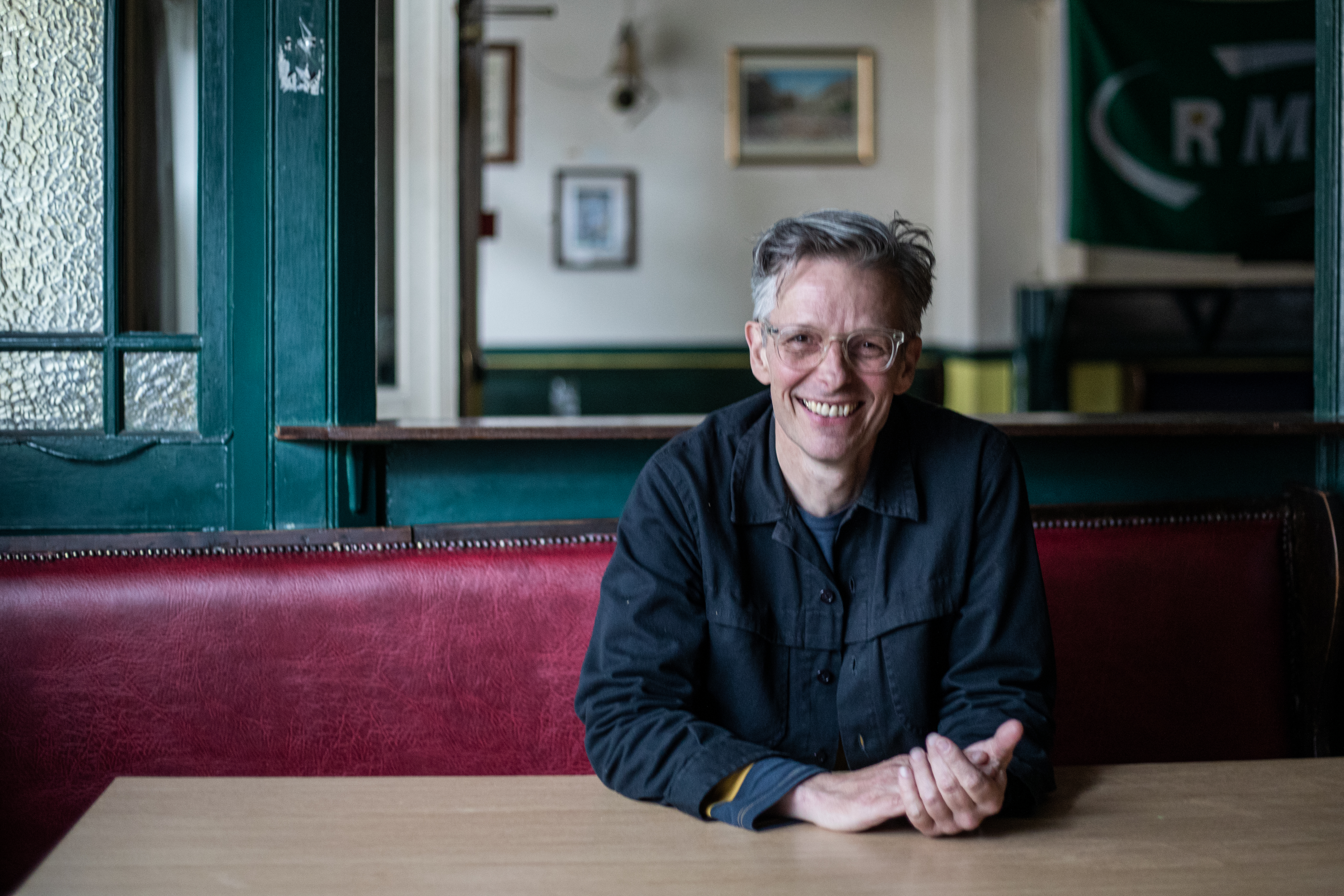
Social Distance: Pete Astor exhibits pristine table manners ahead of his live from home webcasts (Photo: Jeff Pitcher)

Three weeks after our initial chat, my latest interviewee was updating me on recent developments while publicising two live shows direct from his place this weekend – in lieu of a cancelled tour – and organising online seminars and lectures for his university day job.

Lockdown or not, it seems that Pete Astor’s life remains hectic, striking a balance between family and home life, work, record promotions, and more besides.

When we first spoke on March 10th (and how long ago that seems now), he proved that blokes can multi-task if they put their minds to it, letting a random stranger into his flat as we got going, hoping they really did have a parcel for him to sign for while I teed up my questions.

I’m usually more prepared, but his schedule suggested – 23 hours 55 minutes before our agreed interview slot – we drag it all a day forward, the piece of paper with my questions on it as good as blank. We got by though, not least as I’d already managed a couple of spins of his cracking new solo LP and had plenty from his revered indie pop past to mull over.

You Made Me, out a few days before, is in effect a long-playing spin on a concept David Bowie and Bryan Ferry tried out in 1973 with respective classics Pin Ups and These Foolish Things, Pete compiling an album of other people’s songs that helped define his own career.

There were live dates to plug too, as a guest of both The Catenary Wires and The Nightingales, but you’ll guess what happened next – Pete, like all the others set to go on the road over March, April and at least a couple more months from here, seeing his plans pulled for now.

You can still grab the album though, via Faux-Lux/ Gare du Nord in LP, CD and digital download format, and he did manage a launch at Servant Jazz Quarters, Dalston, North London, backed by the record’s producer Ian Button (drums), Andy Lewis (Paul Weller, Spearmint, Soho Radio, bass), and an array of special guests performing their own covers that ‘made them’.

That was before the COVID-19 pandemic lockdown kicked in and everything went a little ‘Ghost Town’, where ‘all the clubs are being closed down’. The first casualty was a March date in Hastings, followed by April visits to Rainham, Coventry, Bedford, Manchester, Edinburgh, Glasgow, Hebden Bridge, Middlesbrough, Birmingham and a return to North London to play The Lexington, Islington (the scene of a 2015 triumph for a re-formed The Loft), and an early May show in Lewes.

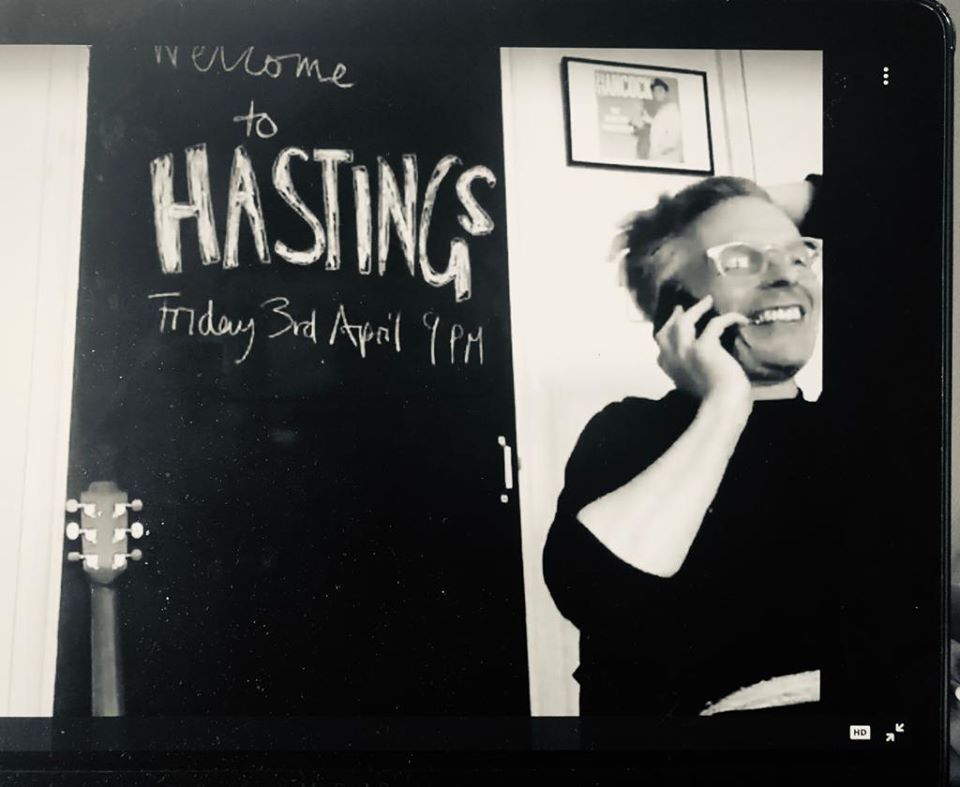
Battle Front: Pete Astor, making final arrangements before a virtual trip to East Sussex to open his reimagined tour.

But he’s making up for that to some extent, organising exclusive ticket-only webcast shows for each venue, albeit as a virtual experience, the first coming from ‘Hastings’ at 9pm tomorrow (Friday, April 3rd) then ‘Rainham’ at the same time on Saturday, April 4th, in effect performing from his London home, rather apt considering that his first group was The Living Room, the band that moved up a floor and became indie darlings The Loft (both names in tribute to early-‘80s Rough Trade/Creation night-time hangouts presided over by Alan McGee).

While it’ll solely be social distancing champion Pete this time, the LP’s launch involved the likes of Amelia Fletcher and Rob Pursey (ex-Tallulah Gosh, now with Pete’s tour-mates The Catenary Wires, who impressed me supporting The Wedding Present on my Preston patch in 2017), Darren Hayman, Dave Tattersall (The Wave Pictures), Alison Cotton (The Left Outsides), David Westlake (The Servants), Luke Haines (Auteurs), Sean Read and Alan Tyler (The Rockingbirds), and Shanaz Dorsett (Benin City).

There was an early public airing of a couple of songs from the new record when Pete – accompanied by Neil Scott (aka Wilson N. Scott), Andy Lewis and Ian Button – did a session for Marc Riley on his BBC 6 Music radio show, playing an interpretation of Elvis Presley’s ‘Black Star’ and the only Astor original on the LP, ‘Chained to an Idiot (1974)’, wryly described by the man himself on air as being ‘a tribute to libido’. And those two were accompanied by his early ’90s composition, ‘Love, Full On’, a gorgeous ditty that sounds as if it’s stepped off a Robert Forster album.

Several of those already mentioned also feature on the LP, Pete joined by Dave Tattersall (electric and acoustic guitar), Andy Lewis (bass and synth), Ian Button (drums and percussion), and Neil Scott adding electric guitar on ‘Suffering Jukebox’, with Sean Read (also previously with The Pretenders) as well as Pam Berry (Black Tambourine, Withered Hand) and Nina Walsh (Woodleigh Research Facility, Fireflies) contributing extra vocals.

And from the pop mastery of 1980 opener, Generation X’s ‘Dancing with Myself’ onwards there are several surprises en route. After the afore-mentioned ‘Black Star’, for these ears carrying more a Bowie than a Presley feel, and ‘Chained to an Idiot (1974)’, with its Wreckless Eric meets Television feel and T-Rex-like guitar, we get respectful but inventive interpretations of Cat Power’s 2012 dance-crossover classic ‘Manhattan’ and Joe Strummer‘s Mescaleros-era wistful 1999 number ‘Nitcomb’ before the first side plays out with a take on Richard Thompson’s powerful 1991 biker drama, ‘1952 Vincent Black Lightning’, two minutes shorter but no less an epic tale.

From there, Pete turns to John Martyn’s ‘Solid Air’, echo-filled and somewhere between Richard Hawley and Mark Knopfler, with Pete Frampton-like guitar late doors. Paul Westerberg’s ‘Can’t Hardly Wait’ is next off the block, our man turning his hand to The Replacements, electric guitar flourishes replacing the original brass but the result no less top-down summertime driving material. And then we’re back in 21st-century territory, our man proving he remains on the pulsebeat, reimagining Villagers’ gorgeous ‘Courage’ – with almost ‘Is She Really Going Out with Him?’ backing – and the late David Berman’s Silver Jews’ final LP offering ‘Suffering Jukebox’, Neil Scott adding electric guitar flourishes. And that penultimate number sounds as much a Weather Prophets original as the finale, a reflective take on John Peel favourite Loudon Wainwright III’s 1985 ‘One Man Guy’, today’s subject taking full ownership of all 11 songs.

You Made Me marks – as Pete put it – ‘some of the way stations of a life in music, songs to make sense of time passing and what that passing time can mean’. And of the premise of the LP, he told Marc Riley during his radio session, ‘It’s just really good to revisit stuff you love, and maybe you learn something as well when you sing amazing songs’.

We talked a bit about that opportunity to pay his dues while he signed for his package, Pete giving me his full, undivided attention from there as I asked about some of those involved on the record, starting with Sean Read, who I saw last year with regular collaborator Edwyn Collins and his band.

“I produced the first Rockingbirds single and I’ve known Sean since they all lived on a squat on Camden Road. I’ve also known Andy (Lewis) on and off, from Blow Up (the club night with roots in Camden before heading to The Wag) and lots of things, but this is the first album where he’s played with me. Yeah, it’s all various, like a family tree with a lattice design, Sean also playing with Edwyn Collins, and so on. I’m not sure if you’ve ever seen the Creation family tree …”

Yes, that must take some designing. The same goes with your own lineage, via The Loft, The Weather Prophets and more stops en route.

“Exactly, and it’s all those kind of mad connections, as with Amelia and Rob, who also sang on the launch show. Then there’s Luke Haines, who I’ve known on and off forever, and Dave Tattersall, who’s on this album and (his band) The Wave Pictures played on my last album. I should probably do a really bad family tree of this record!”

With You Made Me something of a personal album through the influences it celebrates, how do you think you’ve changed as a person and a performer since those early days as The Living Room alongside Bill Prince, Andy Strickland and Dave Morgan?

“Well, that’s interesting, as I also re-released the Paradise album (under the name Pete Astor & The Holy Road), which I did in 1991, and I’m still friends with all the people involved. I mean, Neil (Scott) plays on the new album, and the original band played some shows to support that.

“I went up to see Neil a couple of weeks ago to rehearse for the (Marc) Riley session, as he’d never played before with Andy (Lewis) and Ian (Button). We did one of the songs we recorded for Riley, ‘Love, Full On’ (from the Paradise LP), and I was talking to this guy after, who was lovely, saying it was a great song and how it was one of those you have to be a bit older to write. I didn’t want to disavow him, but actually I wrote that 30 years ago!

“But I think when you get older you just calm down a bit. You’re slightly more diplomatic. I’m definitely more diplomatic than I was – that’s absolutely true. Luke (Haines) laughs about it, but various people who have played with him have said, ‘God, he seems such a nice guy, (but) I was terrified!”

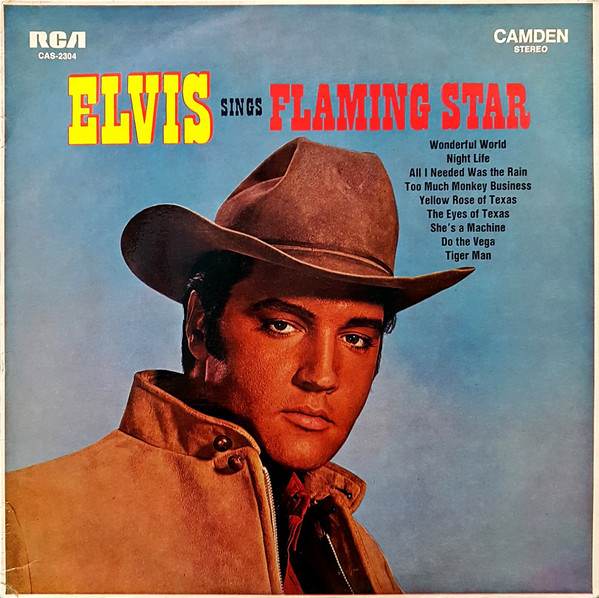
Back to the new LP, and there are a wide range of artistes covered. But let’s start with track two, and Elvis Presley’s ‘Black Star’. What was the thinking about tackling that RCA rarity (re-recorded as ‘Flaming Star’ when the accompanying 1960 Western changed its name)?

“It was one of those things that came up when Bowie died, with his own ‘Black Star’, bringing that back to the fore in a way that was kind of elegiac and beautiful, thinking of that song again because of the Bowie connection, knowing that he was also born on the same day as Elvis, something that was probably on his (Bowie’s) mind in his final year. And for me it was good to rediscover the Elvis song.”

I’m guessing both artists had a big impact on you.

“Absolutely, although truthfully my favourite band when I was 12 or 13 was Slade, not Bowie! But I adored him and loved Hunky Dory, I bought that from a record shop and about a year later realised the lyric sheet was missing. I went back to the shop and told them, and they went round the shop and found it.”

That was Mann’s Music, still going strong after 160 years on High Street, Colchester, where Pete moved with his family after spending his early years in London, and of which he described as ‘one of those marvellous shops that sold the entire package – including the instruments and the stuff you made the music on, which made a weird kind of logical sense really’. Colchester was the hometown of broadcaster and indie champion Steve Lamacq, wasn’t it?

“Yeah, we were set to be going to see Colchester United together at some point. He’s a real football supporter and while I’m not, I have an affection for Colchester United … because of how rubbish they are!”

Hey, you’ll not only be upsetting Lammo there, but you’re talking to a Woking fan. What we’d give to be at the heady heights afforded the U’s.

“Well, I guess it’s not too dissimilar to the music world in that respect.”

Absolutely, particularly when there are fellow fans of my club for whom the dream would involve reaching the Premier League within 10 years. I’m not sure that would suit me. We can already bring in quality players and get sizeable crowds but don’t have to worry about snapping up tickets. Maybe the same applies with my favourite bands. I don’t tend to enjoy it as much when they get too big.

“Well, yeah, although I think in our minds, we are in the Premier League … although we clearly aren’t!”

You mentioned a mega-successful band that I retain a love for all these years on though, and getting interviews with Slade’s Don Powell, Dave Hill and Jim Lea proved such a blast for me. Do you still get your old Slade records out now and again?

“I still listen to them now and again. Jim Lea became a psychoanalyst, didn’t he? And he was, I guess, the person I visually looked up to when I was 12 or 13. He struck me as the cool one. Noddy was always a bit of a clown. That’s not criticising, but he didn’t have the vibe, whereas when you’re growing up you need role models, and Jim was super-cool. I was also a fan of (legendary NME/The Face writer/musician) Nick Kent, and they were probably peas in a pod really, the way they looked.”

We spoke of Slade’s flamboyance, and you open proceedings on this LP with Generation X’s ‘Dancing With Myself’, which I guess most of us thought was originally recorded by their frontman Billy Idol as a solo artist. I liked early Gen X but was put off somewhat by Billy’s posturing. But through your cover I’d say you’ve proved the worth of his songwriting with Tony James.

“Yeah, they were one of those bands … I hadn’t realised it was a Gen X B-side, I think … To tell you the truth, I didn’t realise that until I’d done that myself! It’s a beautiful song, and reminds me that many years ago The Weather Prophets did a show for our bass player Dave Goulding’s brother’s wedding – we’d never done anything like that before, and haven’t since! – and we did ‘I’m a Believer’ and ‘White Wedding’. And in the playing of it, I realised, ‘What an amazing song!’ It’s weirdly simple but a weirdly complex song, the same three chords all the way through but in a different order!”

Well, you’re making me re-evaluate him now. Perhaps I need to look back beyond the cartoon sneer and peroxide pantomime punk spikes.

“Absolutely. He was not cool. He was by then some sort of desperate ‘80s pop star, but it’s often good to rediscover people, and ‘Dancing with Myself’ is a beautiful, sad song. I love it.”

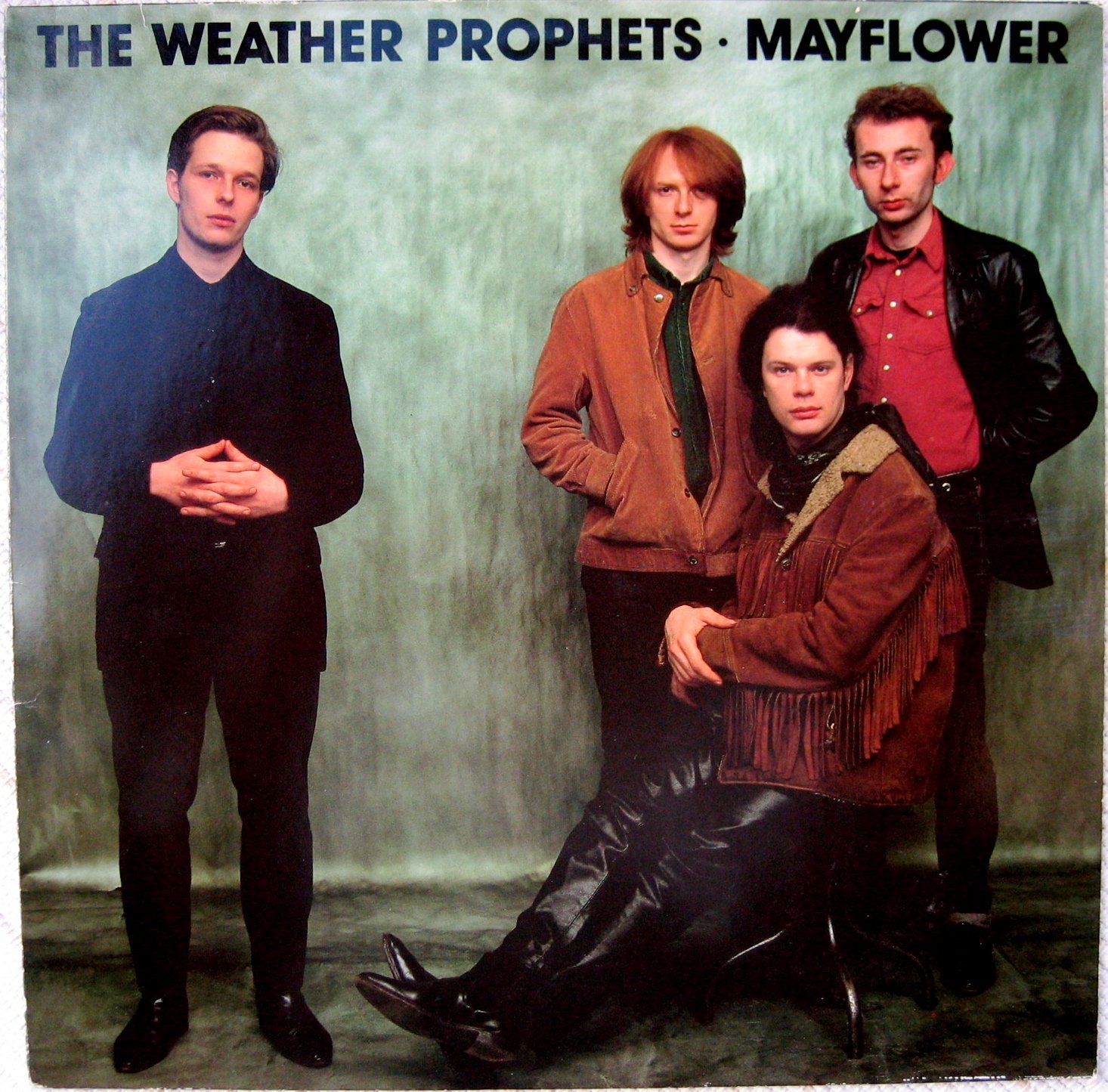
Talking of the ’80s, that was the decade where you ran from The Living Room to The Loft, then formed The Weather Prophets, and that’s where I came in, falling in love with the Mayflower LP, checking out your career progression before and since from there. I loved that first album, but I’ve struggled to find a CD version for a sensible price in recent years. And even when you put out the Blue Skies and Free-rides compilation, you chose different versions of songs from that record. Was that a conscious decision or to do with licensing?

“The honest answer is that you didn’t have a hope in hell of doing a song that was signed to Warner Brothers. It’s changed now, I think, but in those days, you would just go into a wormhole and could spend decades trying to get a yay or nay out of them. It was kind of pointless asking.

“But it’s nice revisiting songs anyway. It’s fun doing them slightly differently. And with ‘She Comes From the Rain’ I’m really fond of the version on there.”

I get that. But sometimes the versions you fall in love with first resonate more deeply.

“Yeah, it’s an interesting thing. I think that’s changing in music, such as the way Kanye West was still changing songs when it’s already out. Bob Dylan gets it quite right in that for him the recordings are often less important than the songs themselves. I quite enjoy how a song lives as a song, not just as a recording. When I play live now, I’ll mostly play new songs, but I’ll play old songs too and like to see how they evolve and how they work years later. I like the idea of a song existing separately from the recording of that song. And in the millennial history of music, we grew up in a time where we were in this really weird blip where recorded music was valuable … in a way it isn’t now and it wasn’t before.

“That thing about Robert Johnson giving away his songs for nothing was because he made a lot of money playing live. He wasn’t some guy that lived on a plantation. That was a sort of myth John Hammond put about. He was a touring musician and also played in Canada, and was smart enough during the Depression to do that when there was no money in recorded music. That’s why he gave them away – not because he was stupid or ignorant.”

That‘s where we are now, I guess. So many artists I appreciate these days know full well they’ll not get rich off recording albums, but they still do, because they want to put something out there and love what they’re doing. It’s a labour of love really.

“Oh, completely, and I’m very lucky I’ve got a job completely related to music. It’s something I love doing, teaching the creative practise of making music, and thinking about music. It’s a common thing for younger musicians that you have to have a portfolio-career now. The position I was in would give me a small but significant income, whereas now it gives me a small income. But luckily, because I’ve got a job, it’s brilliant, and it’s a job that supports the fact that I do this.

“It’s completely a labour of love, but when you get to a certain age you have this gift of knowing you’re not going to be on this planet for as long again as you’ve been on this planet, so every moment you get is a gift. You get to prioritise what actually matters, and for me being creative and making music is one of the most important things. I can’t recall who said it, but they described themselves as a ‘lifer’. I really like that. That’s what it feels like to me.”

Pete’s day-job these days is as a senior lecturer at the University of Westminster. But there must be times after lectures or seminars where students ask him what he actually did in music, I venture.

“Yeah, but it’s just a lovely thing and a real privilege to be able to engage with different generations. I think it does change how I see the world. You see the larger picture. Sometimes it feels like your world only involves your contemporaries. Whereas in my world there’s also those who are 30 years younger than me. That reminds me how old I am … but in a good way. And it reminds me how insignificant I am … in a good way. It gives you really good perspective, rather than being in a position where your world seems terribly important, because that’s the only world you know.”

I suppose social media opens you up to your past existence though – with people like me getting in touch, wanting to talk about a record made 30-plus years ago. It’s as if we’re still in a bubble, primarily equating you with that person who did ‘Naked as the Day You Were Born’ and so on. Whereas clearly a lot has happened in your life since.

“Yeah, but I suppose you establish yourself as a human in your early 20s. I’ve changed, but I haven’t changed that much. I’m pleased and proud of the fact that I can sing a song I wrote 30 years ago and I’m completely happy with it. It’s also nice to be a musician with a history which gives me reason to be trusted. You can’t buy that. You can only get that from doing this as long as I’ve done it and proving I’m not stupid enough to sell my soul.”

Astor Vista: Pete Astor, back with You Made Me, his ninth solo LP by this scribe’s reckoning (Photo: Jeff Pitcher)

Was there a career progression in getting to this point?

“It was more a lifestyle change around the age of 40. I hate it when people say, ‘I drifted into this’. I got some teaching work, thought it was interesting, did it, and it developed from there. I started teaching a songwriting course at Goldsmith’s (part of the University of London), which I really enjoyed, then started teaching at Westminster, where I am still, and it just kind of evolved.

“It was something I wanted to do, and I enjoyed doing. It felt the right thing to do and kind of fitted with my friends at art college when I was a teenage student – that world of artists who made stuff, even if they didn’t make a living out of it. I’m so lucky now that I’m in a position where I make stuff and get to give students perspective on that, facilitating them doing what they do.”

It’s 40 years since you co-formed The Living Room, the beginning of this story. How soon was it before you got to know Creation co-founder and past WriteWyattUK interviewee Alan McGee (who played bass in the initial Weather Prophets line-up), what were your first impressions, and do you think he’s changed much?

“I still talk to him. When we started playing at The Living Room, it was quite simply a taste thing. We read the NME every week, and I saw this tiny thing about this new Rough Trade Club at the Adams Arms.

“I’d already played (Rough Trade founder) Geoff Travis my music before that and he liked it, took me into his office, listening to the whole tape while I was sitting there. I knocked on the door at Blenheim Road and he let me in. It was bizarre. He listened to the whole thing, then said, ‘I like it. I like it quite a lot … not enough to put it out but come back here in a year’s time’.

“So we went down to this club, liked the vibe, and it might have been The Nightingales playing. It’s all very well documented. We went for the first few nights – me, Bill (Price) and Andy (Strickland) – and Alan (McGee) was at the door, so we just asked him if we could play. My main memory of that was that while I knew lots and lots of Scottish people, he tended to speak very fast, and after asking, I went back to Bill and Andy and said, ‘I think he said yes, but I didn’t quite understand what he said.’ So we didn’t know if we had a show or not!

“But it was just brilliant, (fellow Creation co-founder) Dick Green really liked us, it developed, then we rehearsed and played, ‘Why Does the Rain?’ in rehearsal, and I thought, ‘This is a good one,’ and we thought when we played that, he (Alan McGee) was gonna like it, say, ‘That’s the one!’ And sure enough, he did, saying, ‘I wanna do a single of that!’

Lofty Pretensions: Pete Astor with The Loft and friends at The Lexington, Islington, 2015 (Photo: Susanne Ballhausen)

“He was very smart, an incredibly quick learner, whereas a lot of people who had similar opportunities weren’t smart enough to ride it. What was really striking about McGee to me, was that while I was a Londoner and we all lived in London, (went to) art college and that, there was a world we came from – people living in squats in the ‘80s, kind of urban, cosmopolitan or metropolitan – and he came from outside all that – his parents did not live in Muswell Hill – but learned incredibly quickly, a testament to how incredibly smart and intelligent he is … although he plays that all down.”

Go on then, tell me what happened at Hammersmith Palais that led to the end of The Loft and led to you and Dave Morgan starting again, forming The Weather Prophets with Oisin Little (guitar) and Dave Greenwood Goulding (bass). And are you back on speaking terms now?

“Yes, we are. That was the foolishness of youth. That was me being a bit of a hothead, not communicating things properly and clearly for people, and it all exploding in the way that those things do.”

I’ve seen Andy Strickland a couple of times with a rebuilt version of WriteWyattUK favourites The Chesterfields in recent years but haven’t managed to ask him about all that. Was that friction just between you two?

“It was mainly me and him, but we’re really good friends now. I played at his 50th birthday, he played on some of my solo stuff, and I think one of my favourite live appearances these last few years was at The Lexington (in Islington, with a re-formed The Loft). It was lovely, so much fun. Actually, I remember Andy saying it was the first time he ever played drunk. I’m usually the one who turns up, goes, ‘How do I switch this on?’. I couldn’t care what amp I use, and don’t have a spare guitar. He’s always the guy with two spare guitars and has to have his own amp. But he was a bit sloshed when he went on and didn’t care too much what he was playing, and I think that relaxed him a lot. That was a great night.”

Time deserted us at this point, both of us called away to our next engagements. And while I had more to ask about some of the other songs covered on the new LP and those classic indie singles in his past, from ‘Why does the Rain?’ and ‘Up the Hill and Down the Slope’ to ‘Almost Prayed’, ‘She Comes From the Rain’ and beyond, it’s probably a good thing we stopped where we did … for now. Maybe next time, eh.

Side Order: Pete Astor looks to the future, 40 years after his first appearances in The Living Room (Photo: Jeff Pitcher)

For all the latest from Pete Astor and more about his online shows, You Made Me, and how to track down a copy, head to www.peteastor.com

Posted in Books Films, TV & Radio, Music | Tagged , , , , , , , , , , , , , , , , , , , , , , , , , , , , , | 1 Comment

Perfecting The Professionals’ approach – in conversation with Paul Cook

Professionals’ Approach: Chris McCormack, Paul Cook, Tom Spencer, and Toshi JC Ogawa in pre-self-isolation days

Paul Cook was at home in West London when I called, ‘gearing up, getting ready for the tour’. As it turned out though, The Professionals managed just three of 13 dates supporting Northern Irish punk legends Stiff Little Fingers before coronavirus restrictions truly kicked in.

My friend Bob happened to see them on the opening night at Bristol Academy, where they were already wondering if their first gig on the tour would be the last. Those dates were set to tie in with the release of three new EPs, from January through to this month, each featuring two new tracks plus two live recordings of older material. And the new EPs are available individually via Transistor Music on CD, limited-edition vinyl, super-limited-edition colour vinyl, or as various bundles with exclusive T- shirts and signed posters.

They’re also contenders for a planned album, the follow-up to acclaimed comeback LP, What in the World, studio time having been booked around the slated tour and further US dates, with plans to put down further fresh material.

That’s now all on hold, but when I got in touch, the first date was three days away, and it was apt that they opened in Bristol, having played a warm-up across half a mile away at The Fleece when they first returned in 2015, ahead of a 100 Club show in London.

I joked at the time with Paul after seeing photos of audience members on the Australian leg of the tour for Jake Burns’ headliners, asking if he knew what he was letting himself in for, my esteemed interviewee admitting that a few ‘people of a certain age’ might be turning out.

Going back to that Fleece date three years ago, was this just set to be a brief return, or did they already have plans for a new LP?

“That’s what it was really. I was toying with the idea for a while, because I’ve always been in touch with Ray McVeigh (rhythm guitar, 1980/2, 2015/6) and Paul Myers (bass, 1980/2, 2015/18), the other two originals. Steve (Jones) is in LA and wasn’t going to be a part of it, whatever happened, but then Tom Spencer (guitar, vocals, since 2015) popped up, just came into our lives somewhere along the way.

“We said, ‘Why don’t you come down, we’ll have a bit of fun, play the old songs, see what happens’. It sounded great, and we said, ‘This is good, y’know, we haven’t played these songs for such a long time, and they’re all good songs. Why don’t we do a couple of gigs and see where it goes?’ And here we are, three years later!”

Twenty20 Vision: The Professionals’ Toshi Ogawa, Paul Cook. Tom Spencer, Chris McCormack (Photo: Anabel Moller)

There’s definitely a distinctive sound you’ve carried through, even though the personnel have changed (the band now completed bt Toshi JC Ogawa on bass/backing vocals). Maybe it’s something going back to all those early ‘70s glam bands then the Faces, and even Eddie and the Hot Rods, but along the way becoming trademark Professionals.

“Yeah, well, it comes from the Pistols, from me and Steve Jones (guitar, lead vocals, 1979/82) really. The actual punk sound, if you like. That carried on into The Professionals first time around, and it’s influenced a hell of a lot of people over the years. And now by chance we’ve got Chris McCormack (guitar, since 2017) in the band, a big Steve Jones fan, so the sound continues.”

I was too young to pinpoint it at the time, but recall early plays of The Professionals on night-time BBC Radio One, listening at around 13, my radio under the pillow, and listening back now it seems that ‘Silly Thing’ was in effect your debut single, although still under that Sex Pistols name.

“Yeah, that was the tail end of the Pistols, and The (Greatest) Rock’n’Roll Swindle, when we were sort of evolving into The Professionals really. And nothing changed that much – it was still me and Steve playing power pop and rock music with catchy songs and choruses, which is what the Pistols were really. We carried that over into The Professionals and we’ve still got that element of it today. I’ve got a lot to do it with it, I’m the last remaining link. But it’s still the same sound, the same dynamic, and carried on with the Where in the World album, which I’m really proud of. It sounds great and got a lot of good reviews. So here we are today, with three new EPs out.”

Indeed, and a real blast they are too, with January’s ‘Kingdom Come’ the first to grab me, and plenty to savour from February’s ‘Curl Up and Cry’ and the latest addition, ‘Twenty 20 Vision’ too. What’s more, I tell Paul, I get the impression from those releases and the previous record that they’re enjoying themselves playing those new songs.

“Yeah. I wouldn’t be doing it otherwise, really. You’ve got to have a bit of fun along the way. I work really well with Tom Spencer, the new singer and guitarist, and we write together in much the same way as I did with Steve Jones. We bounce off each other and it ends up around 50/50.

“Tom’s great and brings a lot of energy to the table, we’ve been writing some good songs, and the idea is to just keep on moving forward really, get new stuff out, and not too trapped by that retro ‘play all the old stuff’ like revival.”

There were a lot of cult punk and new wave names involved with that last LP, from The Clash’s Mick Jones to The Cult’s Billy Duffy and Adam and the Ants’ Marco Pirroni. There are some impressive contacts in that black book of yours, Paul.

“Oh yeah, definitely – the old punk rock address book! Yeah, Ray was in the band when we got back together, but that didn’t work out for various reasons, so he split, and as a three-piece, making this album, I thought there was an opportunity to invite all my mates along, see if they were up for it. And they all were – including Steve Jones. They were all willing and able to do it, which was great. And it was quite exciting really, having different people involved, them bringing their little bits of different flavour guitar in. It worked out really well. They all enjoyed doing it, which was fantastic.”

Are you still in regular touch with Steve Jones?

“I am, and I was in LA in early January with him. He’s good. He’d had some health issues last year, which have been well documented. A bit of heart trouble. But he’s getting over that, is in good form and slowly recovering, which is great news. He’s the only one of the Pistols I keep in touch with.”

Does that include Glen Matlock? Because I recall The Professionals co-headlined with the Rich Kids in London four years ago.  

“Yeah, we did one gig with them, and Glen does his own gigs.”

Indeed. I see he’s been doing the rounds with Earl Slick of late.

“That’s right. He doesn’t seem to stop, Glen. He’s out there every six months. I don’t know how he does it. I couldn’t do it that often. But he seems to enjoy it. I only speak with Steve these days though. We’ve got business stuff to deal with, and keep in touch that way, but we’re not bosom buddies anymore. We never were.”

I guess that’s something Malcolm McLaren liked the idea of – putting these outspoken individuals together, seeing what happened, loving the idea that you might be at each other’s throats.

“Yeah, up to a point, although a lot of that was sort of playing up to the public a bit. We got on well enough at the time. But these days there’s a lot of baggage involved. People often ask if we’ll ever do some shows again, but I don’t think that’s going to happen.”

Well, that’s good to know … not least because it saves me having to ask you. I’ll put my questions about 2016 WriteWyattUK interviewee John Lydon to one side on this occasion. Because you know in every interview all of that is going to be mentioned at some stage.

“Yeah, that’s gonna come up!”

I mentioned Mick Jones before, another who loves his football. And Paul featured with Hollywood United in Los Angeles at one stage, that team founded in the late-1980s by a group of British expatriates who drank at the Cat & Fiddle, an English-style pub on Sunset Boulevard, the original team also including Steve Jones, The Cult’s Billy Duffy and Ian Astbury, and Def Leppard’s Vivian Campbell. But while Glen Matlock and Mick Jones are QPR fans, it’s Chelsea all the way for Steve Jones and Paul, isn’t it?

“Yeah, that’s right.”

Stories of The Clash’s competitive kickabouts between recording sessions are fairly legendary. So who does Paul reckon was the best player among all that first-wave of UK punk bands?

“Ah me, without a doubt! By far! I think I took playing football a lot more serious than all the rest of the musicians did. I couldn’t stop playing. I don’t know how good they are, but they’d have to be pretty good to catch me, I tell you! And I don’t mind saying so myself.

“It’s in the blood really. We was all working-class boys who grew up with a love of music and football, the two staples of our diet. That’s what made our world tick. And while none of us were going to be good enough to play football (professionally), we ended up in music, which turned out to be quite a good move.”

Paul was born in July 1956 in Shepherd’s Bush, raised in Hammersmith and attended Christopher Wren School on the White City estate, where he met Steve Jones (not as if he was there much). And it was in 1972/73 that the pair, along with schoolfriend Wally Nightingale, formed their first band, The Strand, who within three years would evolve into the Sex Pistols. So how good were The Strand?

“Ooh, God, now you’re talking! I don’t know. It’d probably be a bit of an embarrassment. That was when we were just learning our trade really. We used to play a lot of covers, but then had a few of our own numbers. I think we realised early on this wasn’t going to happen. Until … well, you probably know the story … you seem quite well up on the situation.  We got rid of a guy called Wally in the band, put Steve on guitar, got John Lydon … and the rest is history.

“Going back to your question though, if I listened back now, I’d probably think, ‘Oh God, what was that?’ But I wouldn’t be too embarrassed about it, because we were just kids learning how to play, playing the songs we loved to play and listen to.”

You probably know the next part of the story, but I’ll fill in a few gaps. The Sex Pistols broke up after a gig in San Francisco on January 14th, 1978, after which Paul and Steve Jones initially worked on the soundtrack to Julien Temple’s film, The Great Rock’n’Roll Swindle, and recorded a few songs using the Sex Pistols name, with Paul singing lead on the album version of the song ‘Silly Thing’.

They then formed The Professionals with Andy Allan (bass, 1979/80), whose addition subsequently led to legal and contractual problems, neither being credited nor paid. Paul and Steve also played together on Johnny Thunders’ LP, So Alone, around then, and then released four singles as The Professionals, and while a self-titled LP was shelved until 1990, follow-up I Didn’t See it Coming came out in late 1981. But their US tour to promote the album was cut short when Paul and bandmates Paul Myers and Ray McVeigh were injured in a car accident.

The Professionals did return in the Spring of 1982 after recovery, but Steve Jones and Paul Myers’ drug problems further hampered matters, the band declining an offer of an opening spot on tour for The Clash, and soon breaking up.

There was of course a Sex Pistols reunion, the band getting together in 1996 for the Filthy Lucre world tour. They also marked the 30th anniversary of their classic Never Mind the Bollocks LP at Brixton Academy in November 2007, adding two further gigs then four more dates. And in 2008, they appeared at the Isle of Wight Festival, headlining on Saturday night, as well as Sweden’s Peace and Love Festival, Scotland’s Live at Loch Lomond Festival, and Spain’s Summercase Festival.

Meanwhile, Paul, having also featured with Man-Raze alongside Def Leppard’s Phil Collen (releasing an LP in 2008 and touring the UK in late 2009) joined Vic Godard and Subway Sect in 2011, then renewed his collaborations with Paul Myers. In fact, he’s worked with Vic Godard on and off for the past two decades, touring throughout 2012, the pair also recording 1978 Now with Edwyn Collins.

Product-wise, Universal released three-disc set The Complete Professionals in October 2015, and with Tom Spencer filling in for Steve Jones, the band reunited for that 100 Club show then three more in March 2016, a joint-headline show with Glen Matlock’s Rich Kids following on their old patch  at Shepherd’s Bush Empire.

These days, Paul lives in Hammersmith with his wife, Jeni, formerly a backing singer with Culture Club, with their daughter Hollie also following them into the music business, an acclaimed solo artist with three LPs to her name, having also been part of the re-formed Slits (with Hollie’s website here).

Talking of home roots, having nattered with Paul about West London earlier, I got on to my interview this time last year with broadcaster Gary Crowley, who mentioned the fanzine he set up while still at school, making the most of the opportunities on his patch, big-name interviewees from the world of punk and new wave including Joe Strummer, Paul Weller, and a certain Paul Cook and Steve Jones.

He told me, ‘Steve and Paul did an interview for us, and I have a vivid memory of coming out of school with a pal, walking slowly up past them. We knew they lived there so we’d change our way home. I found out later that this was the day – Paul told me – the Sex Pistols signed to A&M Records. They were given a black limousine for the day to carry them around, and I remember this limo pulled up outside their flat, all four of them inside. It was like a cartoon, they fell out of this limo, looking very merry. It was like, ‘Bloody hell – it’s all four of them!’”

Gary also told me he was the apple who hasn’t fallen far from the tree, these days based fairly close to his Lisson Green estate roots in Maida Vale. And for all Paul’s world travels, he’s another who hasn’t strayed so far.

“That’s true. This apple hasn’t fallen very far either. I’ve ended up back around the area where I was brought up after living all around London. I’ve spent a lot of time in Los Angeles and Spain but ended up back local. I feel comfortable around here, I like it. I like London and like living in West London. It’s great – it’s my roots and makes me feel grounded, if you like.”

You could never have been tempted to up those roots and relocate to Scotland‘s far reaches with past WriteWyattUK interviewee Edwyn Collins in Helmsdale after he left London? Only you seemed to have a good vibe as a band before he relocated.

“That’s right, I played with Edwyn for a long time, from the Gorgeous George album, touring around the world for three years, and on and off over the years I’ve played with Edwyn a lot, which has been a really great experience. I never fancied moving out anywhere remote though. This is as far out of London as I’ll ever get! I’m very much an urban creature.

“I do need to go up there and see his studio though. I must go! It’s just never worked out, time-wise. I did pop around and see him play Shepherd’s Bush Empire though. I saw them all then and we had a catch -up, which was great.”

He’s certainly an inspiration to us all, the way he’s fought back.

“Yeah, totally! What he’s done is amazing really … miraculous. His recovery and how he’s learned to paint again with his left hand, write again, write songs and make albums, do live gigs. It’s astounding really. It’s fantastic.”

That link came via an introduction through Paul’s close friend, Vic Godard, although I got the impression that Edwyn was a little shy of making an approach in the first place, ‘a little bit in awe,’ as he put it. Do you get that a lot – the feeling that, ‘He’s a Sex Pistol, he’s probably hard to deal with’?

“Erm, yeah, you do get that sometimes, unless it’s late at night after a gig, everyone’s really pissed, and they get over-friendly! Generally, people are alright though, quite respectful. I don’t mind as long as they’re not being aggressive or sarcastic and that. Most people know to come up and say hi, and might say, ‘Do you mind if I have a picture?’ I usually say no, but they’ll have a little chat and then they’re off and they’re happy. Yeah, they’re usually generally alright.”

Whisper it, but you’re set to reach that fabled ‘when I get older, losing my hair, many years from now’ fabled Paul McCartney age in a few months. Is it any different for you these days? Has your lifestyle had to change over the years?

“Yeah, of course. You slow down. I’m quite fit, as we touched on earlier. I’ve always played football, and I’ve always gone to the gym to stay in shape. I have to really, when I’m playing the drums. Our stuff is not Abba or lightweight poppy stuff, although there’s nothing wrong with them, of course. It’s not laidback, so I have to keep in shape. I’ve had to change my drumming style slightly, because it’s pretty relentless what we play. I have to kick back a little bit, use the drums a bit more rather than just getting up there, going crazy for an hour or so, like I used to.”

While the car crash seemed to signal the end for The Professionals first time around, I think I’m right in saying there were drug issues too among the personnel. You’ve been amongst it, shall we say.

“Yeah, when we imploded first time. The Pistols didn’t last too long … just a few years, then The Professionals about the same. It all imploded after the car crash, and there were drug issues, again well documented – it’s not a secret. Usually bands don’t last much longer once that gets involved.

“So it was unfinished business really – getting the Profs back together, playing those songs again, it was great. Even though Steve isn’t there now, the guys in the band are all good players. They enjoy it, we have fun and there’s no negative energy about it.”

Do you remember anything about the car crash in 1982? Or was it blocked from your memory?

“I don’t think about it that much, but it was very serious. I nearly lost my life, that’s for sure. I do remember crawling from the wreckage. It was in Minnesota – Minneapolis-Saint Paul – a head-on collision. It was pretty serious stuff and knocked me for six for a long time. I just happened to walk away from it.”

Moments like that must make you re-evaluate where you’re headed, making you decide to make the most of your life from there on.

“Yeah, although I didn’t at the time, funnily enough. You just get up and carry on, thinking, ‘God, that was lucky’. But the older you get, you do reflect on things a bit, and Christ almighty – every day’s been a bonus since. I know a lot of people who haven’t walked out of those situations.”

No doubt it was a similar story with some of the drug casualties around you over the years too.

“Yeah, all that. You do wake up feeling blessed sometimes, trying to be positive – a bit of positive energy, saying, ‘Let’s get on with it’.”

If you’d carried on the day job as an apprentice electrician, you may well have retired by now.

“Yeah, I’d be getting my pension soon, wouldn’t I?”

Unless Ian Duncan Smith could get you to work for another 20 years. Which brewery were you based at?

“That was Watney’s Brewery in Mortlake, right by the river there, for a few years. And I’ve still got the skills. I actually put a couple of lights up for my daughter, Hollie, the other day. So they do call me in when they want some stuff done.”

Well, it’s good that you took something from the situation. Let’s face it, I tend to think of the delights of Watney’s Red Barrel when I think of that brew, which is probably best forgotten.

“Yeah … with good reason as well!”

I was going to mention Hollie. You’re obviously very proud of her, as a daughter and a musical artist, performing and recording.

“Yeah, she’s done really well, and I’m really proud of her. She’s made three great albums, and done it all off her own back, hasn’t asked for anything. I don’t get involved in her musical endeavours though. She’s quite capable of getting on with it herself, she knows what she wants to do and where’s she‘s going. That’s all really good.”

You’re credited with aiding Bananarama’s breakthrough in the early 1980s, helping them record their 1981 debut single, ‘Aie a Mwana’, and producing their 1983 first LP, Deep Sea Skiving. Could you have done a bit more of that, do you think? Or did you prefer the idea of remaining on that drum-stool, doing your own thing, playing in bands rather than overseeing them?

“Yeah, like you say, I did help them out. They were originally girls around town (hence the track of the similar name on Deep Sea Skiving, I guess) wanting to be in a band and I helped them get their first single out and got them going, so they got a record deal off the back of that. But I’ve never been one for being in the studio, sitting behind a desk all day. I like playing live really. I don’t really like the studio that much, even recording. Playing live is what we do and where it’s at, really. And I’m looking forward to doing this tour.”

And long may that continue … once we’ve got past COVID-19. Before I let Paul go though, I asked him to shed light on a modern punk folk tale that’s grown legs somewhat in my old manor over the years, about the night the Sham Pistols, a short-lived, ill-fated outfit involving Paul, Steve Jones and Sham 69 frontman Jimmy Pursey stage-invaded a late May 1979 show by WriteWyattUK favourites The Undertones at Guildford Civic Hall, with Jimmy managing support band The Chords at that point … their association soon broken. Whatever became of the Sham Pistols then, Paul?

“Well, I think the name says everything there! I think we can leave it at that.”

Fair enough … but I’ll ask more. Do you remember that night?

“Well, it was true. I don’t think I jumped up on stage, I would never do that … being such a great guy! I think Pursey and maybe Jonesy stormed the stage, not me though. Yeah, it wasn’t a great episode. I must admit. But yeah, it happened, and probably there’s the reasons why we never got it together.”

Kingdom Come: The Professionals, on their way back around the UK as soon as the coronavirus is banished

Keep an eye out via both Stiff Little Fingers and The Professionals’ social media outlets for rescheduled dates on the postponed Spring 2020 tour. And for details of the three latest Professionals EP releases, their most recent LP and how to buy them, check out the band’s website link and Facebook, Instagram and Twitter pages.  


Posted in Books Films, TV & Radio, Music | Tagged , , , , , , , , , , , , , , , , , , , , , , , , , , , | Leave a comment

King Creosote / Fence Collective – Manchester Bridgewater Hall

Writer’s note: It’s almost taken me a week to get this review together, but you’ll maybe understand why. Some things are far more important. It’s been a trying seven days, the situation changing from day to day. But this might have well been my last live outing for quite some time, so I came back to it. We’ll get through this, all being well. And hopefully we’ll be all the stronger for the experience, people realising what’s truly important in life. Live music is a key part of that equation for many of us. But not right now. In the meantime, if you have a guaranteed wage and can get by, perhaps do what you can to support those scraping a living. In fact, that goes for anyone feeling the pinch right now. Let’s all look out for each other, right?  

On Board: Kenny Anderson, 25 years and counting sailing under the King Creosote mast (Photo: Sean Dooley)

‘We’re happy to be here, for one night only’

I wouldn’t say the streets were deserted in central Manchester last Monday night, but it was as quiet as I’ve known it after 7pm, your reviewer and his youngest daughter not convinced we’d be headed straight back on arrival on Lower Mosley Street.

There was certainly plenty of over-thinking in approaching those sharing our space, extra care taken not to brush shoulders, cough, sneeze, blow noses, shake hands or inadvertently snog venue staff and fellow punters.

In a year which for one reason or another I’d only managed two live music outings – cracking nights in the company of recent WriteWyattUK interviewees The Amber List and West on Colfax at The Continental in Preston, then the ever-entertaining (and my August 2018 interviewee) John Bramwell at nearby Penwortham’s The Venue, I was certainly ready for my next fix. But concerns were there long before, and we sort of hoped an announcement of postponement was coming, taking any decision out of our hands.

It wasn’t to be though, and I understand why, with little in the way of leadership offered by Captain De Pfeffel, the Butlin’s Churchill (copyright Louder Than War’s John Robb, I believe) on his opening COVID-19 TV address that night, by which time we were on our way out of the door anyway. It was the venue staff getting it in the neck as a result, frustration also directed King Creosote main-man Kenny Anderson’s way, by accounts. He doesn’t do social media, but there was still plenty of online flak.

Jason Manford spoke in general terms on the subject as a musical he was appearing in continued to be staged, talking about ‘forceful‘ messages, theatre-goers patronising him about the seriousness of the pandemic. The bottom line, here as there, was that with contracts to honour, musicians and backroom staff to pay and others potentially adversely affected at the venue, any cancellation without the Government’s say-so would leave insurance terms null and void, with knock-on effects. Clearly not ultimately fatal, but certainly financially challenging.

So the show went on, and as it was the last date of the tour, that made sense. And King Creosote might as well show up and entertain us seeing as they were en route between London’s Barbican Centre and a return home, north of the border. As long as we didn’t have symptoms, acted responsibly, kept the right distances, and washed our hands like we’d unwittingly shaken them with Britain First, Brexit Party or UKIP candidates, perhaps we’d be okay.

It was oddly quiet in the main auditorium from the moment a friendly staff member held the door open to the left stalls and pointed us towards our seats. Back of fag packet maths calculations suggested about four-fifths of 1,350 tickets sold, yet only around a third of those who shelled out showed up in light of a fast-developing story. And I couldn’t argue with those figures judging by how many of us were around at the start of the opening set. Looking around at the end I noticed more though, so maybe a few hadn’t done their homework and sussed that support act Fence Collective was also Kenny’s band, the same ensemble appearing later.

The man himself, leading that nine-piece outfit, was quick to thank us for coming out, joking that we’d probably be safer here – self-isolation wise – bearing in mind chasm-like gaps between audience members, suggesting we were the ‘cool ones’ for turning up. And he introduced his band more or less straight away, as if half-expecting an edict to get off stage part-way in, with martial law imposed. Or maybe it was just pride at having this impressive set of multi-instrumentalists in tow, each playing a key part in an entertaining if tentative opening six-song set.

Either side of Kenny were accordion/pipes player Mairearad Green and violinist Hannah Fisher, both adding vocal contributions and leading here and there, the bandleader seemingly happy enough blending in, strumming guitar and enjoying the collaborative approach. In fact, several bandmates pitched in with vocals, Mairearad opening with ‘Pibrock’ before Hannah led on ‘This Town’, Kenny’s role more about directing operations, part-saving his own pipes for later.

‘By the Way, By the Way’ kept us enthralled, before guitarist Lomond Campbell took centre-stage on ‘The Lengths’, from his debut LP, Black River Promise. I say centre-stage, but he was nestling at the back really, another fine song choice perfectly delivered, as was the case for Sorren Maclean on ‘Watch’. All too soon, they were away, but not before a rather apt closing statement, Mairearad’s 2016 track ‘Star of Hope’ just the ticket in these trying times, looking to the future and better days to come.

After a week of self-imposed self-isolation – not for any detrimental health reasons, just that I work from home most days anyway – I risked all that by venturing towards the bar for a pint then grabbing a coffee for my daughter, sensing concern all around but a sense of calm all the same, bar and café staff pulling together, chipper despite any worries. We’re not talking supermarket sweeps for bog roll and chicken nuggets here, but community spirit, as soon accentuated by the band.

Soon enough, I was back in seat G16 and they were back, this punter quickly immersed in a very different visual and sonic landscape, courtesy of Kenny’s songs and one of the most engaging archive documentary films of recent times, skilfully put together by director Virginia Heath and producer Grant Keir.

While my closest Caledonian attribute probably involves my first name, something about From Scotland With Love truly resonates, and while I have no personal links to the majority of the people and landscapes featured, it’s a film touching on our collective pasts, and easy to identify with. What’s more, aren’t these moments always better on the big screen?

I missed out first time around, in 2014, so was determined to get along to savour a rare opportunity of witnessing Kenny and co. live-scoring. And again, as per the support set, there was no ‘look at me’ posturing – it was about playing a collaborative role rather than any notion of puffed-up importance. It’s the faces on the screens – unknown to the majority of us – that are the stars; everyday folk from across the 20th century going about their work and play, these priceless images respectfully retrieved from decades of preserved film.

Of the footage, I’m not familiar with many, the main exception – used to great effect – John Eldridge’s wonderful 1948 study of Edinburgh life, Waverley Steps.  In fact, I was gone within barely a minute and a half of the opening credits, the moment the A4 loco, Union of South Africa thunders towards its terminus and the piano and bass came in.

The soundtrack is sublime on its own, let alone when married to the accompanying images. And while there were surely artistic headaches a plenty in achieving the feat of the seamless fusing together of those elements, there were no outward signs of panic over potential glitches and mistakes, the job professionally executed from the opening bars of ‘Something to Believe In’ right through to its reprise, ‘A Prairie Tale’, some 70 minutes later.

Hat’s Entertainment: Kenny Anderson, the artist performing and recording as King Creosote (Photo: Sean Dooley)

‘Two to sing, two to pray, two to carry my soul away’

We were hooked long before ‘Bluebell Cockleshell 1-2-3’ and ‘6-7-8’, small details like the footage of the boys playing on the tenement stairs and the wee girl uneasily tottering in a grown-up’s high-heeled shoes truly evocative, while social history unfolded on screen via poignant slum clearance and workers’ parade footage.

By the time of ‘For One Night Only’ – with its Blue Aeroplanes meets Can vibe over further eye-catching sequences, the black and white footage occasionally complemented by splashes of colour – the viewer is heavily invested and truly mesmerised as the dancing, drinking and fairground riding provides true snapshots in time.

‘So who cares if nothing comes out of this morning
But an earful of sea and a neck-full of sun
And a deckchair always broken when sunbathed upon’

Throughout, scenes of love and loss rub shoulders with those of resistance, migration and heavy industry in pre-health and safety at work days, audience smiles building by the time we reach the beach scenes on ‘Largs’, generations hard at their labours and at play. And from there to the farming and fishing scenes, we’re left in no doubt as to how hard life was, but see how this nation made the most of its situation. It makes for difficult viewing at times, but the humour and loving spirit is never far below the surface, as expressed in Kenny’s line on ‘Cargill’, his character revealing, ‘I’m the finest catch that you’ll land’.

Stirring throughout, there’s a sense of swelling pride as we mentally join marches against inequality and poor conditions on ‘Pauper’s Dough’, Kenny leading from the front, proclaiming, ‘We’ll fight for what is right, and we’ll strive for what is rightfully ours’, the audience as one rising above the gutter with those standing up and striki8ng out for their futures on the screen. Yet Virginia and Grant’s skill – like Kenny’s – is in not preaching. This isn’t some vague exercise in rhetoric and polemic. The characters are richly drawn, as on ‘Favourite Girl’, where social history – not least telling scenes of women assembling guns their loved ones will fire in anger – is skilfully interspersed with human stories and traits.

Harrowing and harsh amid the humour and bonhomie, Virginia pulls no punches in her depiction of the evils of war, the scenes of returned one-legged Great War servicemen on remembrance parades just as powerful a century later, as in their own manner are those balletic ice skating and curling scenes amid glorious scenic backdrops, suggesting the freedom those men felt they were fighting to retain.

The peat-cutting and harvesting scenes also perfectly catch the mood of the music on ‘Leaf Piece’, Kenny arguably at his most personal, confessing, ‘Until the sun it melts on the horizon, that’s when I clap eyes upon my lass, and I find I’m singing like a lark’.

Kwaing Creasite: East Neuk’s prime beef export, aka King Creosote, was on the road in March. (Photo: Ross Trevail)

‘At the back of my mind I was always hoping I might just get back’

‘Miserable Strangers’ certainly tugs at the heart-strings, images of sad farewells – from the leaving of St Kilda to the mainland, to those heading for new lives in New York – begging plenty of questions and suggesting many a sad story, Kenny’s character professing a need to ‘try to raise a hearty cheer’. At a time when we’re being told, almost matter of fact, about the inevitably of losing many of our more senior generation, it’s hard not to replicate the tears in the eyes of the assembled on the quayside and on board those outgoing vessels.

Alternatively, ’One Floor Down’ offers a more optimistic vision of fresh opportunities in a modern Scotland, moods brightened by the smile of the young lass watching a Punch and Judy show and in following a female bus driver about her city route, before another memorable scene from Waverley Steps sees us closer to the finishing line.

And there I was, so wrapped up in what I was seeing that I’d forget myself now and again then look down from the big screen and catch the band right before me, realising what a treat and privilege it was to be there.

‘Dreaming without sleeping; It’s morning, are you leaving?
But our story it has only begun, and are you willing it to end?’

I checked the next day and the Bridgewater Hall, like many more venues up and down the country, had closed its doors. But what a way to go out … for now. And while we’re confined to home, if you’re not yet familiar with From Scotland With Love I’d highly recommend grabbing a copy on DVD, hunkering down and making the best of enforced self-isolation. Besides, we all need something to believe in right now.

For this website’s recent feature/interview with King Creosote’s Kenny Anderson, head hereWith thanks to Lomond Campbell for the opening setlist, and Rob Kerford for word back on King Creosote’s visit.

This review is dedicated to NHS and emergency workers up, down and across the UK, and artists and venue staff here and around the world struggling to make ends meet. Stay safe.

Posted in Books Films, TV & Radio, Comedy & Theatre, Music | Tagged , , , , , , , , , , , , , , , , | 2 Comments

Still alive and nearly famous – the Lee Mark Jones interview


Live Presence: Lee Mark Jones, eager to get back out there, pandemics willing, in the summer (Photo: Garry Cook)

As Lee Mark Jones delights in telling me, few stage performers manage to get an across-the-board mix of one, two, three, four and five-star reviews for their live shows. But that’s what the critics said at Edinburgh Fringe Festival when this self-proclaimed ‘nearly rock star’ trod the boards last year, A Rock’n’Roll Suicide described as ‘Marmite with crack on it’ and opinions well and truly split.

This in-your-face brutal telling of his life story includes entertaining anecdotes involving Lemmy, Slash, Axl Rose, Blondie, Joey Ramone, Joan Jett and many more scene luminaries, and is by turns glamorous, punky, anarchic and tragic, certainly pulling no punches.

The show was recently rewritten, redeveloped and reworked by Lee alongside award-winning playwright Chris Thorpe, with thanks to Arts Council England funding, and is produced by Lee’s Theatre of the Wild, Beautiful and Damned company, which specialises in chaotic and surreal contemporary theatre and performance, with dramaturgy by Dan Coleman (Dawn State Theatre).

His Still Alive 2020 leg was set to tour the UK from this month, taking in festivals, nightclubs, pubs, social clubs and community centres, but as the Coronavirus pandemic took hold of the UK this week, dates were rescheduled for October. However, Lee is raring to go all the same, with an over-riding notion to ‘take things back to the real grass-roots, to real people who may not have the chance to see live theatre’.

A Rock ‘N’ Roll Suicide sees Lee retrace his career journey against a backdrop of videos and scenes from his early life, while belting out songs from his punk, glam and rock career, from the council estates of Kidderminster to Beverley Hills and back. And it’s also the story of a man coming to terms with himself after a late diagnosis of attention deficit hyperactivity disorder (ADHD), something he feels on reflection has clearly defined his life.

“There is deep soul-searching, self-questioning, recriminations, rage and confusion but also hope and clarity, and understanding unfolds. Triumph over tragedy? You decide!

“I intend to attract a new kind of audience which doesn’t usually go to the theatre; an audience craving strange journeys of darkness, horror, suspense, and wonder. All these thrills we provoke into life, in the flesh, breathing and bleeding on stage, right in your face.”

The afore-mentioned Chris Thorpe said of the man himself, ‘I love Lee, he’s dangerous and doesn’t give a fuck,’ and after 25 minutes on the phone to him, I get that. Born in Worcestershire in 1962, Lee began singing in local punk group Regular Wretches at the age of 15, leading to a wild and crazy career progression involving various bands on the hazy edgeS of the punk, indie, goth and hard rock scene.

Ziggy Pop: Lee Mark Jones in Bowie-esque garb, his guitar largely a prop, for his A Rock’n’Roll Suicide show

He’ll enthusiastically tell you he toured the world with the Ramones, Motorhead, U2, Black Sabbath, and many more, and as lead singer of The Gypsy Pistoleros released multiple albums and played sell-out international tours.

But these days it’s all about his new stage and screen career, and since 2014 his credits have included roles in Selene Kapsaski’s Spidarlings, five films by North Bank Entertainment, a Spaghetti Western TV series currently in pre-production, Miss Harper with Susan George, an ‘epic vampire trilogy’, and Mycho ‘slasher’ movie Pandamonium, which is newly out on DVD and ‘available in Asda and HMV’.

He’s certainly been busy since obtaining his Master’s degree in touring theatre at the University of Worcester, and remains a member of their award-winning Shenanigans theatre company. And what does he make of the reaction to A Rock’n’Roll Suicide so far?

“The reaction in Edinburgh was amazing. This was never made for your elitist theatregoers but loads of them loved it and loads hated it, and you don’t want people walking out saying, ‘Well, that was alright’. It’s the old Malcolm McLaren way – they’ve got to love it or hate it!”

‘Brilliantly shocking rock theatre’ – is that a fair description?

“I’d say so. I got a grant from the Arts Council, due to the reaction in Edinburgh, which meant I could bring Chris Thorpe on board, one of the biggest theatre-makers in Britain now. He honed it a bit but knows he can’t really change what I do. He tried to make it a bit more PC … which has sort of gone out of the window!

“It is what it is, and it’s all true. We’ve hidden a few names now, because at least one doesn’t come out of it very well, All of it happened, but I don’t want to destroy people. And Lemmy comes out of it a legend, which of course he was, so there’s nothing new in that.”

We’ll get on to the late Motorhead frontman, but let’s go back in time a bit first and his first band, Regular Wretches. How good were they?

“Ah mate, we were awful. We had five chords …”

Bare Essentials: Lee Mark Jones gets into the swing of it during his live show, tackling his almost-legendary life story

As many as that? That’s not very punk rock.

“Well, we grew up at our Irish club (in Kidderminster), where we were all members, under-age drinking, and all the punk bands came through, and we thought some were fricking awful. So we just got up and did it, and our first gig was supporting Neon Hearts, who were a great band. That was the only place we could get in. We also supported The Damned in Birmingham (at the Odeon), and (drummer) Rat Scabies was cool, inviting us to use his kit. That wouldn’t happen nowadays.”

You only have to see the trailer for Lee’s show to know there was another important figure in his musical awakening, that being David Bowie. In fact, there’s a cardboard cut-out of the Thin White Duke on stage with him each night. I’m guessing Bowie and glam rock was majorly important to you?

“Yeah, I was into The Sweet and even Showaddywaddy! It was rock’n’roll, so at least we were on the right way. I’d hate to be a kid nowadays. I was never a Bowie fan, but I was a Ziggy Stardust fan. That was the one that changed it all for me, that period. I was fascinated by all that. The ultimate rock star that went out at the top. I can’t believe it was only one and a half years, and I know lots of people who were at that final gig when he announced that was the last time. To do that then … what! Imagine the record label’s response.”

The fact that you were so affected by that suggests the theatrical side of rock was always important to you.

“Yeah, I never held with the idea of wanting to look exactly like the audience. I thought audiences wanted escapism, something to take them away from the shit of normal life for an hour or so, give them something different to watch. That’s what I always took from it, which punk did to an extent – dressing and looking different.”

We spoke a little at this point about some of the clubs in the Worcestershire he played in the late ‘70s and early ‘80s, with ‘around 250 people crammed into them places’, Lee insisting that’s why he’s now ‘taking theatre back into the rock clubs’.

“They always told me it was great to get 25 people to a show at Edinburgh, but if you were in a band in that situation you’d seriously question what the hell you were doing if that was all you could attract. The great thing about the tour I’m going on now is that most of these places hold 200/300 people. These are the bastions of rock, and that’s where I wrote this show for. I’ve no idea about most of them, The Ferret in Preston is the only one I’ve played before, and even then I got loads of theatre-goers going along.”

Huge Influence: David Bowie’s Ziggy Stardust LP

That previous work-in-progress style version of the show formed part of the Lancashire Fringe Festival last May, leading to Preston-based promoter Garry Cook getting on board. Meanwhile, Lee was more than happy to have been confirmed for a return to the Edinburgh Fringe.

“The weird thing is that Love/Hate are playing one of the dates, and Jizzy Pearl, who I know from our days supporting LA Guns, when he sang with them, is with them. It’s a small pond.”

And talking of ponds, how did he end up crossing the big one and hanging out in the Hollywood Hills of California?

“I was going out with Jane Dickinson, who was just divorcing Bruce (Dickinson). She was quite a player and set him up, getting him into Iron Maiden from Samson, and was part of Sanctuary. Actually, I tell some stories about all that too. We stayed for three months with Chris Squire, the bass player from Yes, a friend of Jayne, in Beverly Hills.

“There’s also a tale about a fight with (Guns’n’Roses guitarist) Slash at The Rainbow and a story about Axl Rose, but that’ll be in another show, how he called me into a listening pod before the release of the Use Your Illusion album.

“When he called me up, I wondered what I’d done, having only just arrived. But I was soon in a room with Axl, being asked to give my thoughts on that record. I told him it would make one brilliant album (rather than a double). He went berserk, and said, ‘I fucking knew it!’. The only reason he asked me was because he didn’t know me. I was outside of his bubble. He didn’t feel he could trust anyone to tell him the truth. When they become that big …”

The album was eventually released as two separate LPs on the same day in September 1991, going on to sell more than 11 million copies in the US alone within its first 20 years. Ah well. No accounting for taste. Anyway, Lee, where do the Ramones fit into all this?

“We supported them in 1993 on their Spanish tour (for Mondo Bizarro) and signed to their management company, Red Eye, who also managed Blondie and Talking Heads. But we fucked it up … most brilliantly. The guy who wore the gorilla mask and carried the ‘Gabba Gabba Hey!’ sign …”

I’ll miss the next bit out, but it’s fair to say Lee wasn’t a fan of tour manager and ‘fifth Ramone’ Monte A. Melnick.

“We were playing ‘Anarchy in the UK’ live, the Sex Pistols never played Spain, and it was going down amazingly. But he then asked, ‘Can you lose it? I don’t want you playing it tomorrow night.’ So we played ‘Pretty Vacant’ instead, throwing him vees on the stage as we did. He was their manager and was going to be ours …

“We got chucked off the rest of their European tour and the American tour and lost out on a deal with Sire Records.  And I really wanted that fricking deal. We recorded an album as well, with John Walls, an engineer who worked on Never Mind the Bollocks. But that was ditched and we couldn’t get it back, because they’d paid for it.”

Chairman Now: Nearly rock star Lee Mark Jones takes the seated approach to his autobiographical stagecraft

That was da brudders’ first tour with CJ Ramone on bass/co-lead vocals, replacing departed Dee Dee Ramone, Lee adding, ‘CJ, we loved, he played with us onstage for ‘Anarchy in the UK’.”

At the time, Lee was based in Zaragoza, Spain, with The Last Gang, who online sources suggest released a single in 1987 and an EP three years later. That led to Spanish engagements supporting not only the Ramones, but also Motorhead, Nazareth, The Cramps, UFO, Black Sabbath – with Dio singing – and Sepultura.

It’s rather confusing trying to piece together Lee’s band timeline, but I’ll give it a go, his initial spell in Regular Wretches followed by that singing with new wave/ goth rock outfit Cry of the Innocent (aka The Cry), managed by Chapter 22 label founder Craig Jennings (acts including The Mission, Pop Will Eat Itself, Ned’s Atomic Dustbin, The Pastels), their claim to fame including support slots with The Alarm, Big Country, Spear of Destiny, and U2, the latter at Kidderminster Town Hall. Release-wise, there was a 1982 single and the Susan’s Story EP the following year, and Lee tells me their support band, Luv from Eden, included future members of the afore-mentioned Pop will Eat Itself and The Wonder Stuff.

Then came The Ice Babies, a period which included a deal with Sony, after initial success with their Someday Remember EP (more on that shortly) for French label La Stillette Disques. Having listened back in retrospect, I’d say they were somewhere between Killing Joke, U2 and some dodgy soft metal outfit, with lots of hair products involved as per that era. Lee also told me that Adrian Mills from Beggars Banquet drank his pint while offering his band a £15,000 deal in 1983, adding, ‘The Cult took that deal’. And that’s not a spelling mistake.

White Trash Soho were next, more down the thrash/hard rock line, I gather, followed by the Gypsy Pistoleros. That’s not quite the lot though, a further spell in a rebranded White Trash UK – who issued a retrospective ’greatest hits’ record (it says here) in 2010 – before further time served with the Gypsy Pistoleros, their product including 2012’s The Good, The Mad and the Beautiful LP, Lee also releasing solo material under his GP moniker in more recent times. Away from the acting, is he still recording or playing live as Gypsy Lee Pistolero?

“No, I own the name, and release stuff now under that, but after a four-year Master’s in theatre – finished last year – and a few horror films that have gone down really well, there’s this show, which is also going to be filmed this July by Mycho and made into a film. We’re filming in Shell Island in Wales (Mochras, Gwynedd), with Lemmy my spirit guide as I trek through a desert while telling this whole biographical story, all these scenes played out.”

And what do we learn about Lemmy that we perhaps didn’t know already?

“Erm … there was one night after a show, on the tour bus, where he’d just done his interviews and a signing session, had sex with his lovely groupie, as every night, showered, then came in and immediately put on a recording of that night’s show, saying it was his pension plan. He must have had around 8,000 live albums! He then starts polishing his bass (not a euphemism), chops four lines of speed coke and pours two pints of this Fuzzy Navel, basically snakebite with eight shots of Bourbon, Wild Turkey, JD, whatever. He was great. You could chat to him about anything, and I found the real legends were really approachable. The twats were the wannabes and people who think they’re something or think they have to appear or act that way.

Laid Back: Lee Mark Jones is temporarily floored during a gruelling live performance with the Gypsy Pistoleros

“Anyway, I looked back and said, ‘Hey, Lems, is this all it is?’ And he looked straight back and went, ‘What else do you fucking want?’ So in the film I answer that in the end. At that time, we just wanted to be rock stars, and sometimes weren’t even bothered about that. We just wanted to get pissed for free and get free drugs.

“But it runs through the story that I’ve had ADHD and a borderline personality disorder all my life, only finding out a year or so ago.”

Was it important to get that diagnosis, put things into perspective and come to terms with all that?

“Yeah, thinking about some of the stupid things I did for no rhyme or reason, where there was no logic. But I wish I had known – I could have used that rather than it using me on occasions. That’s the regret, I suppose.”

You call this the Still Alive tour. Were there moments where you felt there might not be a tomorrow, with that lifestyle you were living on that scene?

“Oh yeah! There have been times when I’ve woken up and felt that. I woke up in a skip once. No idea how the frick I got there. That was just outside the old Astoria. Gods knows what I was doing.”

Is the show fairly settled now, or are you still changing things each night?

“It sort of changes every night, but it’s all linked to video clips and tracks I sing along to. It’s a real mix, and we finish with ‘Wild is the Wind’, which ties up with the Bowie stuff, because of my big stab at commerciality with The Ice Babies. We had this deal with Sony on the cards and were on the (BBC) Radio 1 rotation airplay list. But then they fricking banned it, due to a line about sex and drugs and meeting the pretty boys. Just one line!”

Past Tense: Lee Mark Jones, back in the day with the Gypsy Pistoleros. Another hair colour in a different setting.

Hence the term nearly rock star, I guess. Were you happier in retrospect being on the fringes of it all?

“I think if we’d made it and got a big deal, we’d be dead. Two of my first band are dead and a load of other people I know. Those days, you didn’t just pretend … apart from the clever ones like Bon Jovi. The idiots like us wanted to be Motley Crue or the Sex Pistols. That was a complete way of life, and not a healthy one.”

While he talked about his first band knowing five chords, it’s worth mentioning that Lee never played, and still doesn’t, classing himself as ‘just a singer’. Although he did recently have a guitar endorsement.

“That’s with JHS. I just put it on, play a few chords, then admit I can’t actually play. I just pose with it instead. They found out about that, and they’ve sent me a fricking bill. But they sent it to Gypsy Lee Pistolero, and they’re welcome to take him to court – he doesn’t actually exist.”

Finally, your CV also points out that your first acting tuition involved a drunken London weekend masterclass with a certain stage and screen acting legend. Is that right?

“Yes! My gran was Trudie Styler’s godmother, who was born next door to my Dad in Stoke Prior (near Bromsgrove), and when I first went down to London I didn’t have anywhere to stay, and she told me to come around. I did, and she left me with her friend Peter, who I just knew from Lawrence of Arabia. I wasn’t into acting then. He was doing Jeffrey Bernard Is Unwell, gave me his script and asked if we could go through some lines. I got completely wasted on a bottle of port with Peter O’Toole … which is cool as shit, now I’m into all that! So the first time I ever did lines was with Peter O’Toole.”

I asked him at that point who was the last person he did lines with, and although he did tell me, he added, ‘We won’t go there, ‘cos I fell out with him’, so I’ll leave that out.

”That remained my only acting claim to fame until around the age of 53. But seeing as I was such a fricking success as a rock star …”

Incidentally, Trudie met husband-to-be Sting while at  the Old Vic and dating Peter O’Toole, the pair marrying in 1992. But Lee’s not quite finished yet.

“I wanted to be a footballer before that, and got to the heights of playing for Kidderminster Harriers. I was in the reserves at 17, under the lights at Aggborough. I played a few games in the first team and in the FA Cup, but then they disbanded the youth and reserve team, and I was moving to London anyway, so that was that.

“Although I did play for Hendon for a bit. We were wasted on a Friday night though, and I had a few games on Saturdays where I didn’t even know I’d played.”

Who’s Masking: Lee Mark Jones, back in action on the live front this August, and again in October, as things stand

Lee Mark Jones is set to perform A Rock ‘n’ Roll Suicide! from Saturday, August 8th through to Sunday, August 30th at Bannerman’s Rock Venue for the Edinburgh Festival Fringe (12.15am onstage), then plays The Ferret in Preston on Thursday, October 1st, rescheduled from March 26th.

That’s followed by appearances at the Waterside Arts Centre, Sale (Friday, October 16th); the Subside Rock Bar, Birmingham (Sunday, October 18th); The Purple Turtle, Reading (Thursday, October 22nd); and Trillian’s Rock Venue, Newcastle-Upon-Tyne (Wednesday, October 28th). For more about those dates, any others on his Still Alive tour, and information about his theatre company, try here. You can also follow Lee via Twitter. And for more about Garry Cook’s Enjoy the Show production company, head here.
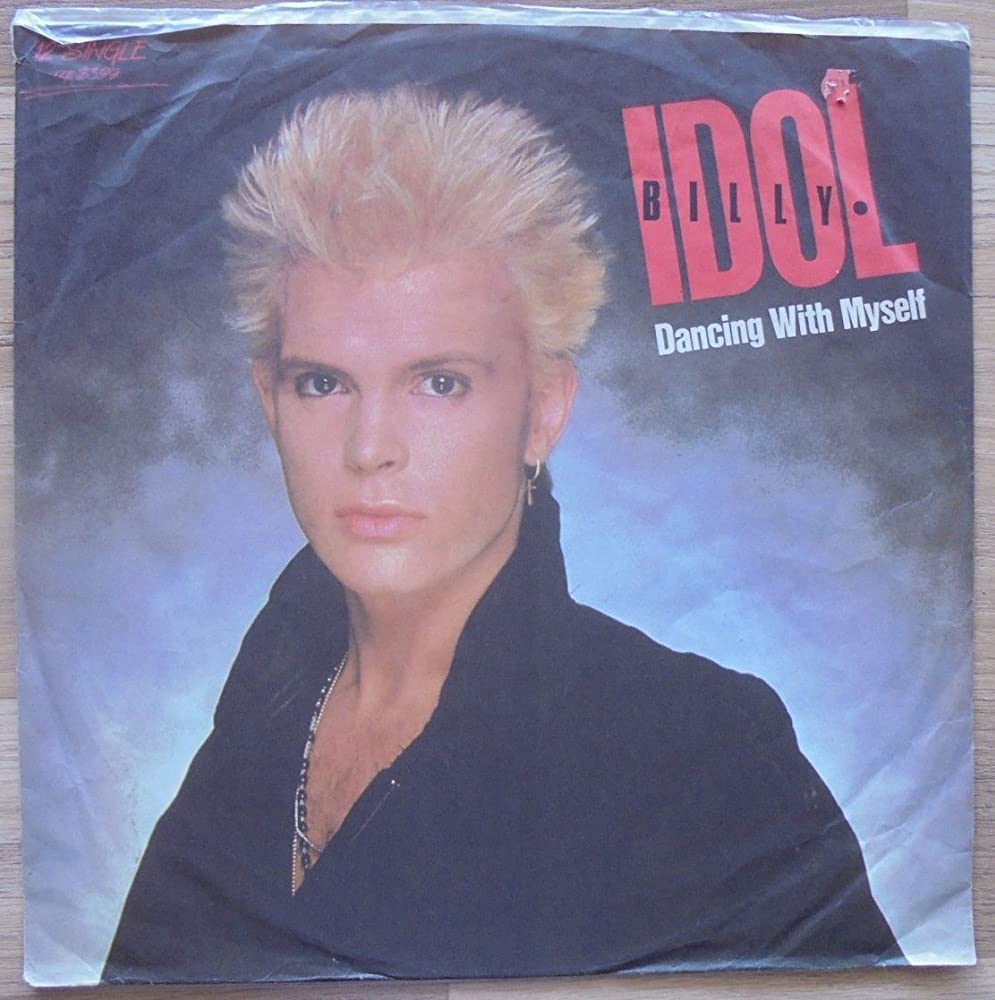
 

Posted in Comedy & Theatre, Football, Music | Tagged , , , , , , , , , , , , , , , , , , , , , , , , , , , , | Leave a comment

Pete Sounds and The Wah! Ahead – the Pete Wylie interview

All Mighty: Pete Wylie still believes in love, soul and rock’n’roll (Photo: Robert Farnan, enhanced by Ivan Sestan)

Pete Wylie’s heart may be as big as Liverpool, but he’s a right pain in the derriere when it comes to nailing down an interview. But in this case perseverance finally paid off, with no ‘Getting Out Of It’ for this ever-entertaining ‘part-time rock star, full-time legend’.

“Hello, unknown caller,’ came the voice at the other end of the line at Disgraceland, his home base, not so far from the Mersey (closer to that fabled river than Anfield and Goodison Park, for starters). A few traded excuses followed regarding recent and historical missed calls, Pete coughing up to forgetting his charger while away that weekend playing Bedford and Worthing, his moby dead after a busy few days, getting home to ‘a cavalcade of messages’. Not all from me, I should add.

This does seem to be the interview on my books the longest, I point out. I first looked to track him down not long after an entertaining chat with a fella he used to run around with called Julian Cope.

“I remember him … vaguely.”

That was five years ago, and granted, my timing wasn’t great. It was shortly after we lost Josie Jones, Pete’s former partner – professionally and personally – and that great voice behind ‘Come Back’, ‘Sinful!’, Big Hard Excellent Fish’s ‘Imperfect List’ (updated in 2013’s similarly-powerful ‘And the Question Remains’), and many more classic Wah!-related tracks. I was hoping at the time he might want to talk a little about her impact on his life and career. It was a little too soon though, perhaps.

“You know what, the trouble with timing … there’s always something like that. In the last two weeks I’ve lost Andrew Weatherall, one of my best mates, someone I was going to work with. I’ve been doing a tribute to him on tour. And I’m wearing an Andrew Weatherall t-shirt that I got made. Then the other big one was Pete Fulwell, my friend who ran Eric’s with Roger (Eagle) and then was my manager. He was the single person who was most responsible for what I do. He was the quiet one …”

I got the impression he was happier in the background at Eric’s, and with you.

“Yeah, he always was. He called himself an eminence gris, almost a ghost, and was happy with that. Anytime we did anything he kind of felt uncomfortable to be there in places when things were good. While we were all having a great time, he didn’t feel like he wanted to be there. But he was there all the time and was the person who said, ‘If you don’t record any new songs, I’m going to ban you from Eric’s’. And Eric’s was my whole life.

“Pete was the one who then paid for the demos I did, he put out ‘Better Scream’ and ‘Seven Minutes to Midnight’, my first two singles, and kind of automatically became my manager. And right through from there, ‘The Story of the Blues’, everything, it was Pete who helped make those records, y’know.”

Were you a difficult man to deal with back then?

“I think I’m less challenging now, probably, some ways, because I’ve learned to listen … but maybe I’ve learned to listen too much. I think I was great to be around a lot of the time, but the difficulty came not with Pete, but with record companies. He’d bridge the gap, because he knew what I felt, and knew I had principles and had ideas I wasn’t willing to compromise.

“Record companies don’t just expect compromise – they expect total domination, and Pete would have to find a way. They’d say, ‘This is a great record and we could make it a hit,’ but there would have to be conditions, and I realise in retrospect that Pete took the flak. They’d say, ‘If he doesn’t do this telly show, we’re not going to back you,’ almost like blackmail. I understand their thing now, but I’d have big rows with Pete, say, ‘I’m not doing this shit!’

“Only once did he actually cave in, and I remember it so clearly. He took the brunt of the blame, saying he agreed to it, when he’d kind of been forced to agree. It was the worst show ever, kids’ television, teatime, and genuinely, I’d stayed up all night crying. I did it with Josie, and for once never said a word. Josie had to do the interview because I was furious and so upset. I felt it was the end of the dream. I’ve still got everything I wrote at the time. It was for ‘Sinful!’ as well. I won’t go into the story of the show – it’s too cringeworthy.

“That was 1986, and it wasn’t long after that I stopped making records for a few years. I was working in the studio, but didn’t play live for five years. So whether I’m difficult or not, all the people who could tell you are dead, so I’m okay now – I can tell you anything.

“Pete was a friend as well, and when we parted company, just after my accident, basically because there was nothing for him to do. I took that badly and was very unhappy with him. But when we did see each other, walking down a street, we were back being mates again, and in the last six months he was really helpful to me with something going on.

“But it’s an odd thing – having to get used to so many of us disappearing – from Pete Burns to Josie and … y’know.”

The accident he mentions was his late 1991 near-fatal fall when a railing gave way in Upper Parliament Street, Liverpool, fracturing his spine and sternum, a long period of rehabilitation following. We’ll go further into that period later, but there’s something he touched on there, about that chance meeting with his namesake on the street, and it’s always struck me that while Liverpool’s a big city, it has a small-town feel in certain respects. That’s not meant to sound patronising either.

“Yeah, I’ve always said it’s a big city with a big heart, but a tiny centre. And one of the only good things about Pete Fulwell going is I’ve had really good talks with Henry Priestman from the Christians, who I’d not chatted to for ages, and a whole bunch of friends.”

The reason I brought that up was that I got that impression about scene icons around town from talking to Echo and the Bunnymen guitar hero Will Sergeant, also five years ago, saying he’d often bump into you and others.

“Yeah, for lots of reasons, the small nature of the creative bit and clubland at the centre, you can walk from one end of it to the other, and there aren’t other bits. In other cities, clubs are all over, but if you start at Hope Street, the south end, up to Dale Street, it’s a 10-minute walk at best. So if one club isn’t any good or none of your mates are in one place, you can easily go to another. And I still see Gaz (Gary Dwyer) from The Teardrop Explodes and people from all the bands.

“I played in Leeds last week, some people stayed behind to get things signed, and this fella said, ‘You won’t know me, but my band was called Dead Trout’. And I said, ‘I remember Dead Trout!’ I’d only looked at a poster of one of their gigs on an archive site the day before. So even Dead Trout are still around, y’know! Kind of weird, but I love that. I know some of the younger guys too.”

Talking of which, I was only born in 1967, so …

“Baby.”

Ha! And it struck me in more recent times how short a gap it was between The Beatles’ split (irrespective of the fact they left so early) and the next wave of Merseyside success, be that through The Real Thing or that emerging Eric’s scene. Did you ever feel you might miss out on your city’s big moment, with Merseybeat a distant memory and similar opportunities unlikely to come along?

“God, no! Absolutely not. The opposite in fact. Much as I love music and I’ve always been interested in rock history … I’m reading about The Clash at the moment, re-learning … although I’m annoyed I’m not in it …”

Seeing as he’s already wandered off-topic, I butt in there, asking if he means my Clash book.

“I haven’t got it yet – I’m waiting for one through the post. I’ve heard good things though.”

Sound Vision: Pete Wylie among esteemed company in a collage from Martin Carr, of The Boo Radleys fame

OK. That’s on my to-do list this week. Actually, it’s Pat Gilbert’s splendid Passion is a Fashion he was reading, and we get on to the subject of how things Joe Strummer might have said may have been misconstrued, something Pete himself has fallen victim to. He uses the example of slagging someone off on tape while joking, and how any humour in a statement isn’t always conveyed in the cold light of print. And let’s face it, Pete knew and felt he understood Joe well.

We’re soon back on track though, Pete returning to my question, regarding past doubts about making it.

“I’ve had downers, I have anxiety at times, and depression, and wrote about it last year, how because I have my heart on my sleeve and I’m excitable – as Julian (Cope) said in Head On, I was the ‘most enthusiastic person’ he’d ever met – that’s me. As soon as any other person is there, I’m Wah! In a way. But when I come home, I’m just Pete, and that’s a more challenging thing for me.

“I’ve had doubts, and I’ve had challenges, but one of the things I’m loving at the moment – and I said this Saturday night – when I go and play now, it’s with a freedom and it’s all for me and the audience. I don’t owe anyone anything. It’s like a great night out with people who like me. I play my famous songs and a couple of new ones from Pete Sounds. Did I send you a copy?

He didn’t, but I pledged for it, bought myself a copy … and love it. Even the title’s great, right? It’s a life-affirming 65 golden minutes of classic Wah! 21st century style. From the slow-building, stirring ‘70s soul of six-plus-minute opener ‘Make Your Mind Up (Time For Love Today)’, with its modest guitar licks and subtly-layered instrumentation, to the glam-surfing Beach Boys covered by Roy Wood splendour of ‘People (The Rise of Dunning-Kruger)’ and fist-pumping Neil Young rocker ‘Is That What Love Is All About?’ – near-neighbour Ian McNabb and his band would love this, I reckon – onwards, several contenders carry the very essence of the finest Wylie and Wah! moments down the years.

This is, after all, the sailor-capped Elvis-esque alternative preacher who first dented the UK charts in early 1983 with ‘The Story of the Blues’, a No.3 hit, and returned four times: follow-up ‘Hope (I Wish You’d Believe Me)’ reaching No.37 in 1983 and ‘Come Back (The Story of the Reds)’ making No.20 in 1984, before ‘Sinful!’ rose to No.13 in 1986 then No.28 on the back of a revamp with The Farm in 1991. Yep, Pete knows a fair bit about pop craft, and there should have been more hits, not least his gorgeous ‘Heart as Big as Liverpool’ love letter to his home city in 1998. The fact that missed out says more about the butterfly minds and lack of taste among the greater record-buying public than it does about Peter James Wylie.

On those lines, ‘People (The Rise of Dunning-Kruger)’ conveys the very zeitgeist of where we’re at now, with Trump’s America and our own clowns this side of the pond, determined to make us ‘great again’ by ripping away so much of value about us. But it’s not all about finger-pointing politics, and ‘Hey Hey (It’s a Beautiful Day)’, with its slightly off-kilter vocal, takes a Mick Head-like melody and sweet after-the-storm sentiment into Billy Mackenzie and Bobby Gillespie territory, while ‘You + Me (And the Power of Love) is a straightforward love song, reflective yet empowering. And I like to think there’s a next-generation Wylie out there right now with trademark quiff and a badge boldly proclaiming the simple message expressed in that song.

Even though ‘Free Falling’ isn’t a cover, it serves as a respectful tribute to Tom Petty over a ‘My Sweet Lord’ meets ‘Fool (If You Think It’s Over)’ like ’70s summer melody, Aztec Camera reimagined in dreamy CSNY meets Harry Nilsson style. And talking of surefire parallel universe hits – at least 20-plus years ago, when that was still a possibility – the celebratory ‘Can’t Stop Loving You’ is another number I defy you not to sing along, its late-doors Teenage Fanclub-like searing guitar affording this power-pop belter a classily woven-in climax.

I’m in danger of over-using the ‘i’ word, but the piano-led ‘The Whole of My Heart’ offers up a further inspirational soundscape – and weighs in at another seven gorgeous minutes – before ‘Your Mother Must Be Very Proud’ sees Pete at his most bitter but channeled in providing a further state-of-the-nation proclamation amid building, epic orchestration, leading us neatly towards the climactic final pairing, the eight-and-a-half-minute wonder, ‘The Spell is Broken’ – his personal spin on ‘A Day in the Life’ perhaps – and majestic closer ‘I Still Believe (Love and Soul and Rock and Roll)’, with its air of Mott the Hoople and a Springsteen-esque climax, seeing us out on a maximum high, the spirit of Roddy Frame teamed up with Mick Jones also there. Hell, there’s even a little timpani as well as some good old punk rock guitar. And these are show tunes in the true sense of the term.

I mention the length of those songs, all bar three over the five-minute mark, yet nothing’s over-blown here, and all in all Pete Sounds is a cast-iron winner. Commendably, a percentage of sales aided the Hillsborough Justice Campaign too. But how did that crowd-funding campaign work out for its creator in the long run? A lot of artists had their fingers burned when Pledge Music went to the wall. Did Pete manage to avoid losses?

“I lost money on it, but at least I made a record, and probably one of the last records anyone will ever make. That’s how I treated it. I’ve always liked just doing one track at a time, and I’ve never thought about them as albums really, until Pete Sounds.”

It certainly carries the air of a proper, flowing album, and one that fits seamlessly together.

“Yes, and I just knew I might not make another. To be honest though, some people got way worse outcomes – losing lots of money. Six figures in some cases, in America and here. I was nowhere near that – I didn’t have that kind of following. My fans are mean … luckily!”

In light of what he said earlier, I should point out that he laughed as he said that. Just in case you take umbrage. If you dipped your hand in your pocket, he loves you, I reckon.

“I found it hard, because I was out of practise. I saw Ian Broudie of the Lightning Seeds one Saturday on the Kop, and he mentioned me making an album, saying, ‘It’s hard, isn’t it?’ And I said, ‘Yeah, I hadn’t realised how hard’. And this is someone who’s never stopped making records and with – presumably – comparatively vast wealth. That helped, making me realise it wasn’t unusual to feel that way. I didn’t know any people who could do the stuff I wanted to do, but in the end I did it, and it helped me focus. It’s also given me reason to go and play live. In a coordinated way. People keep saying at shows, ‘Please don’t stop again’. I used to always do that, but… time is running out for all of us. The bottom of the egg timer, y’know.”

True. Before you know it, you’re going to far too many funerals.

“Yeah, that’s happened, and I’d rather do gigs than funerals … although they’re thin on catering, obviously.”

Having failed to get you for an interview five years ago, I tried again two years ago, using Pete Sounds and your 60th birthday as my excuse. But I failed again.

“For that birthday I got someone to drive me to the Wirral to get my buss pass, because their office closed half an hour later than Liverpool’s. And I’ve loved it – it’s changed me. I don’t drive, can’t drive, and don’t want to drive, so suddenly I’ve a degree of freedom I never had before. Sometimes I’ll get on the wrong bus deliberately, to see where I go. At one point I’d go to the hospital in Fazakerley in the north end of town – I’m in the south end these days – and my Dad used to live there, so I was familiar with it. I just jumped on a bus, knowing it wasn’t going to get me home directly or quickly, but it was like a tour of my life. It went past where my Dad lived, where Gary Dwyer lived and where I grew up, went past where I’d get a bus and where I bought my first record. And it was incredible, exciting!”

Did I read somewhere that you fancied the idea of running alternative home city tours, an alternative spin on Gerry Marsden’s Mersey ferry trips? I’d certainly be up for that magical mystery tour – sort of a Wah! Ahead tour of Liverpool.

“Y’know what? It’s something I’ve talked about, even this morning, I did a version for Pledge, but the day it came it was absolutely freezing, and a lot of the places I’d have shown have disappeared. Halfway round, one woman in particular was freezing cold, so I said, ‘Look, let’s just go to the pub’. So we did, and I was just telling stories. We never left the pub, and it gave more of an insight. Everyone was really happy with it, and I did a secret show for them upstairs in a bar in town, just for them, which was brilliant. I drank far too much, and it was fabulous.”

Now you’re about to hit 62, what’s the big difference between you now and when you were half your age, around the time of Big Hard Excellent Fish and your Justified Ancients of Mu Mu contribution, post-‘Sinful!’ and that whole difficult period you mentioned (later compounded by his November 1991 accident)?

“The difference is physical – like the pain in my back when I finish a show, although I’m now doing fitness things like stretching, and there’s no reason I can’t be as fit as I was again, to a point. It is strenuous though – I put a lot of energy in, and they’re still long shows.

“Mentally, I’m slightly more reasonable. Someone said after the show on Saturday, ‘How can you still be like a child?’ But it’s not something I try, although I have hinted about my arrested development! but the fact I’ve never actually matured is all part of being a creative person.”

I’d use the word infectious, but maybe that’s not a good one to use in public right now.

“No – ha! I was really ill before Christmas and had to cancel a few shows. I was told I was being sent to hospital. I said I wasn’t going to go, but I’d love to have a disease named after me. And he didn’t laugh. But Christmas morning I woke up and I was fine. So now the difference is that I can do things I want to when I want, there’s a backlog of things I haven’t done that have held me up, and my politics are maybe even more radical than they were.”

Well, we need that kind of fire at the moment.

“Sure. It feels like that. And live, I do talk about some aspects of politics. I also have a motto – ‘give a shit or be a shit’. I’ll never get it through a bar of rock, but it’s a way of saying, care about each other, as was the case with Hillsborough in this city – that sense of caring about each other and a sense of community and solidarity.”

I find it difficult even watching the news on telly at the moment.

“A friend was here last week and said, ‘You do know you’re shouting at the TV?’ But there’s more sense in one of my songs about Thatcher than there is sensible debate on Question Time right now.”

With no dodgy audience members either. Meanwhile, Pete’s back to my question about the difference between the 31 and 62-year-old Wylie.

“I’m heavier, and I’ve got slightly less hair. These are the things … if I could change anything, I’d have more hair. I don’t mind being chunky, but I miss my quiff.

“Politically, I’m at least along the same lines, my attitude to almost everything is the same, and I love a lot of the same music. But there are songs on Pete Sounds I probably wouldn’t have recorded before, because I was listening to different music then. And I wanted to be honest. I didn’t want to create a Wah! tribute band, y’know.”

On that front, the strand running throughout Pete’s music is that big sound. He won’t like me saying this, maybe, but last time I listened back to my Handy Wah! Whole CD, it grabbed me that it took a while to get there, the early material more like the Teardrops and that whole scene. But it quickly evolved. Was there a lightbulb moment en route when he found that anthemic, big sound, I wondered. There are certainly plenty of moments on the latest LP, not least on afore-mentioned rousing closing numbers, ‘The Spell is Broken’ and ‘I Still Believe (Love and Soul and Rock and Roll), where he exudes all manner of Mott the Hoople spirit, as he has in the past.

“Well, I always loved Mott the Hoople, and still do. I went to see them last year in Manchester…”

As did I (with my review here). Great night. Normally far too big a venue for me, but it really worked.

“Yeah, and I always loved them, back to hearing the Island singles ‘Midnight Lady’ and their cover of ‘Downtown’ (both 1971) on Radio Luxembourg. I was also a mad Bowie fan, and ‘All the young Dudes’ was the first record I ever bought without hearing it first. Because I knew it was a band I loved and someone else I loved. And I still play that a lot.

“I’ve tried to rationalise (about that sound), and people say it’s like (Phil) Spector, but it’s not. I understand the comparison, but it’s almost bigger than Spector!

Sometimes, that lack of confidence … when I hear myself sing, I can’t tell if I’m doing a good job and how it will affect your or anyone else. I just have to do what I can do. But what I try to do is make records that sound … let me get this right – I’ve never made this into a sentence before … make records that sound like my favourite records make me feel, when I hear ‘All the Young Dudes’ or Bowie or The Clash or Bob Dylan.

“The way they sound to me, sometimes I’m surprised when I then play those records. I wanna get every ounce of everything into those songs. That’s also my personality. It’s not a con. I’m loud and I’m over the top, and stupid, and funny, and clever, and a political beast. I don’t try to make those records sound like that. And of course, I’ve done a lot of acoustic gigs in the past with the same songs and they’re just as effective – which came as a surprise to me when I first did those things about 25 years ago.

“And songwriting was always important to me when I was a kid. I knew I was writing songs that were memorable for some reason. And I always loved big choruses. However, the way I work now is that I re-record songs like ‘The Story of the Blues’ at home, with Anders (Johnsen) who mixes for me, and I play guitar and sing them live, with the laptop as my band.

“I was fed of up of getting bands together and not being able to afford a band the size it would take to do the shows. Even when I did – when I did a tour three years ago – the guys were all really good, but didn’t have time to learn all the detail in the songs … like the ‘diddle-diddle-duh’ in ‘Come Back’ or whatever. And I thought, ‘I don’t want to do it that way and don’t have to do it that way.’ So I’ve re-recorded everything, and the only people you hear at the shows are me and Mersey, my daughter, who sings with me.”

Mersey’s got a lovely voice.

“She’s a killer, y’know! She’s such a goodie. And I’ve never enjoyed playing guitar as much as I do now. It’s almost like discovering it … like I’ve lost my guitar virginity!”

Similarly, because we mentioned The Clash (not least as Pete has said before now, ‘No Clash, no Wah!’), it was like with Mick Jones. He wasn’t consciously copying all his influences, it was like osmosis. It was all there within, finding an outlet via his playing.

“Yeah, exactly, and people would have a jibe at him, saying he was trying to be Keith Richards, but everyone sounds like someone, even if they don’t know it. I listen back to things I’ve done and go, ‘Fucking hell – that’s such a cop off something else!’ But at the time you don’t realise.

“And Mick (Jones) is the other person who significantly changed my life. He saw something in me before I was in bands. He said I was going to be famous, and gave me that guitar. And we need more Mick.”

Would you be able to drag Mick out again? I understand he does the odd quiet gig down the pub.

“I don’t think so, but when he did the Hillsborough tour with us, I did some Clash songs, and he was such a lovely man to be around. But touring’s really hard for people who aren’t young. It’s hard enough when you’re young … physically. I’m not as flexible as I was. And no matter how good the guy driving me is, I know this sounds petty and smug, but it’s not the shows that are tiring, it’s the travelling and having to live with whatever’s available. I’m not in a position to have big showbiz riders and roadies. Of the people who come on tour with me, none are professional, they all have other jobs. They’re not musicians. I have people I like around me. I don’t have a retinue or an entourage.”

It’s a whole different conversation, but my thoughts go out to new and old bands out there  trying to work out what’s happening now the barriers are coming down between the UK and Europe, shamefully.

“Yeah, that’s shocking – the fact that’s changed and it’s going to be so costly. I gave up a few years ago the idea of going back to America. For me to get a visa … last time I went a record company paid and it cost thousands of pounds. And it’s got to be even worse now.

“There’s another difference. I made a joke once which Paul Morley stole the week after on Channel 4, saying a kid goes to his Mum and says, ‘Mum, I want to be a lawyer’, and she says, ‘Listen, get in a band first so you’ve got something to fall back on.” And that’s how it feels to me – the exact opposite of the way it was growing up.

“Someone who works with Anders went to LIPA (Liverpool Institute for Performing Arts) and there’s a simple way for him and his friends to learn a living from music, whereas for me and my contemporaries, it was a risk, a gamble, all the way through. Some say, ‘What did you ever do? You don’t deserve it’. Some bands that never made it say that. But I took the risks, and we were happy to play in pubs for £50. I’ve never had a royalty cheque and money coming in, I’ve signed on … and do you know what? It doesn’t matter to me. Because of that’s what it takes, that’s what I do. If II want to do my music and not deal with lunatics and compromises … y’know.”

Last time I visited the Museum of Liverpool I was pleased to see you there .., if only in a display case.

“Oh yeah!”

Do things like that seem unreal at times – realising you’re part of history?

“It’s odd … and I like it. I just wish I was more a part of it. We were talking about people who were important to me, and (John) Peel was another who helped me, and we became mates, y’know. But I’m not in any of the biographies. I’ve got recordings and things he’s written about me, where he talks about how much he loves me – not just the band, me personally. Nobody’s ever asked me.

“Whereas, I’m in Pete Townshend’s autobiography, and he says how he loves my songs. And next to my bookcase, there’s a picture of me with my sailor cap on, ‘Story of the Blues’ era, a painting of me by Pete Townshend. I learned to play guitar by listening to Pete, and he was my guitar hero before punk … and still is. I still do things I kind of inherited from him. And I became friends with him. I’ve called him and met up a few times. And he’s great. So y’know, being part of history ain’t bad, but … I’ve had loads of luck, but some of it’s good and some of it’s bad. From breaking my back, or whatever, to all those fantastic things and the people I’ve met. And the fact I’m still here, y’know … I love it!”

There must be those great moments, like hearing ’Heart as Big as Liverpool’ ring out over the PA system at Anfield on matchdays.

“Oh, again that’s a part of being history which you can’t plan or buy. And I didn’t write the song with that thought. It’s one of the most amazing things. Last season, when Liverpool came back from 3-0 down to beat Barcelona 4-0, they were interviewing Pat Nevin on the radio, Big George at Anfield was playing that, and Pat went, ‘There’s Wylie, singing about heart – that’s how they did it!’. And recently, when the young lads won (the club’s youngest-ever side beating Shrewsbury Town in an FA Cup fourth-round replay in early February), ‘Heart’ was playing, and last year it was playing on the bus tour of Liverpool, and I’m really hopeful this year it happens again.”

And while his team had just slipped up for the first time this season when we spoke – losing at Watford in a game he watched on telly during his Worthing soundcheck – he remains positive, their Premier League title two wins away at time of going to press. That said, his schedule means he’s only seen them twice in person this season. But I told him that’s nothing, seeing as I face 500-mile round-trips to see my beloved Woking’s home games from my Lancashire base.

“Wow, that’s a big chunk … whereas here, it’s £500 to get a ticket!”

Discussion followed about his own recent trip to Woking, paying homage to Paul Weller and The Jam ahead of a show even closer to my old Surrey patch at Farncombe’s St John’s Church, ‘an amazing place where this guy Julian (Lewry) puts things on’, on a trip he also recalls buying himself ‘a good coat at a charity shop in Leatherhead’.

“That’s the side of things I like now. I don’t have to worry about anything. I love the soundcheck, know how to set up, and we have our own stage-set, my Disgraceland Wasteland, our little gang pulling it all together so it’s not the same venue it was the night before or the night after. We’re on a budget – no budget really – and just find stuff around the house, like these masks of me through the years.

Our mutual friend Raymond Gorman mentioned in our 2014 interview how you shared the same manager during his That Petrol Emotion days, and would often be ‘hanging around backstage’. He told me, ‘He was great fun. I was drinking quite a lot around then, so although I’ve had all these nights with him, I just remember laughing my head off but nothing about what actually happened’. Are you still that larger-than-life character?

“Well, I’m working with someone, Clare, who says she’s never laughed so much. Her and another mate have been known to pull up the car while driving, as we’re having such a laugh. It’s like comedy Tourette’s or something. I love all that.”

I mentioned Julian Cope, and in his Head On autobiography he describes with flair the night he met Pete and Ian McCulloch (on his 18th birthday) for the first time, at Eric’s for The Clash’s May 5th ’77 appearance on the ‘White Riot’ tour. Of fellow Crucial Three legend Pete, he recalls ‘a bit of a loudmouth’ he’d noticed in Probe Records, ‘so animated’, wearing ‘a black leather jacket and black combat pants’ with ‘a Clash t-shirt under the jacket which was zipped halfway,’ his hair ‘natural black and gelled into a boyish quiff’, the ‘most enthusiastic person I had ever seen’ … and on his leather was a homemade badge, it said ‘Rebel Without a Degree’.’ Does Pete still have that badge?

“Course I have! I’ve got all those badges, including a big three-inch badge from Eric’s from when Johnny Thunders and the Heartbreakers were supported by The Police, when they were a four-piece (March 1977, when Henry Padovani was lead guitarist, before Andy Summers stepped up and the band reverted to being a trio). And I’ve got all my Ramones and Clash things, because they still mean so much to me. There’s a plan hopefully for an archive, with photos of everything for people to see, like Bob Dylan’s autograph, my hat from ‘The Story of the Blues’. All kinds of mad stuff from over the years.”

Did you get along to the Cunard Building for the About the Young Idea exhibition featuring The Jam memorabilia? That was great.

“Yep, I did. It was good, yeah.”

By the sound of it, you could fill a room that size with your own artefacts.

“Probably … but I wouldn’t want to dust it. There’s just too much. Clare says it’s like one of those Channel 5 documentaries – she’s scared of coming round and I’ll be under a pile of comics. I said it depends who the comics are. But I’m fine with all that, and there’s a plan to properly organise it over the next couple of years, while I’ve still got some energy, y’know.”

On the back of a Wah!tobiography maybe?

“A memwah! That’s the future, and this is the way of kick-starting those memories. But every time I’ve sat down it takes too long, ‘cos I digress away all the time. I’m going to talk to Clare about it and she can transpose it. Is it transpose?”

Erm, transcribe … unless you’re writing it back to front.

“Well, that’s probably true … that’s the way I talk sometimes. But I’ve got plenty of adventures to mention, and talk about a few in the show. Some of the great things and the not so great.  That’s the nature of it.”

We’ve already been talking for an age by this point, but I ask one more question – does Pete still truly believe, as per his inspirational closing statement on Pete Sounds, in the power of song, the power of soul, the power of love, and does he still believe in rock’n’roll?

“I absolutely do. In fact, I believe in it all the more now. Because I’m living proof that those things work … there you go!”

Pete’s Point: The man himself, on the road and likely to be coming to a town near you soon (Photo: Brian Roberts)

The Pete Wylie Show heads next to Newcastle The Cluny (Friday, March 13th), Selby Town Hall (Saturday, March 14th), Edinburgh Bannerman’s (Thursday, March 26th), Stockton-on-Tees Georgian Theatre (Friday, March 27th), Wigan Old Courts (Friday, April 3rd), Ashton-under-Lyne The Witchwood (Saturday, April 4th), Blackpool The Waterloo (Thursday, April 9th), and Cardiff The Globe (Saturday, May 2nd). For further details and to track down Pete Sounds and the back-catalogue, head to his website.

Posted in Books Films, TV & Radio, Football, Music | Tagged , , , , , , , , , , , , , , , , | 2 Comments

From Circular Quay to Monks Road and onwards – back in touch with Dr Robert about The Blow Monkeys

Scene Stealers: The Blow Monkeys have a handful of UK dates, with more set for their 40th anniversary in 2021

While sleet, high winds and plenty of rain battered my adopted Lancashire and Spanish intruder Storm Jorge followed in the wake of his pals Brendan, Ciara and Dennis, I found Robert Howard, aka Dr Robert, at home near Granada, enjoying ‘another boring sunny day’.

He’s not due back to the UK until April, but there are plans for a new Monks Road Social album, a third in 18 months (also due next month), in an ongoing project brought to life by Richard Clarke and curated by Robert, having already seen contributions from the likes of Mick Talbot and Steve White (The Style Council), Matt Deighton (Mother Earth) and Neil Jones (Stone Foundation), following its founder’s vision of creating an environment where musicians, poets and artisans can celebrate and be celebrated for their craft.

“At the start, when Richard asked me to put something together, I turned to a few people I know like Crispin (Taylor) and Ernie (McKone) from Galliano, and Mick Talbot, and it grew from there really. It started as a vehicle for my songs then expanded, with everyone bringing their songs in and getting involved. It’s just about doing something for the sake of music really. But you need somebody to oversee and organise it, and that fell to me, and I was happy to do that. Yeah, we’re pushing on, I’m really enjoying it and it feeds into everything else I do.”

That’s a point in itself, because listening to some of those recordings and back to the most recent Blow Monkeys LP, The Wild River – the band’s 10th album, and their fifth since returning in 2007 after a 17-year lay-off – you can tell you’re enjoying your music and you’ve rediscovered that early soulful fire you had back in the day.  There’s certainly a great vibe to both that and the side-project.

“Yeah, I guess so. It was the first album where I’ve fully gone back to our soul thing, and while these moves aren’t really calculated I’m really happy with that album – it seems to have done quite well and it’s translated well live. We’ve put quite a few of those songs into the set and enjoy doing them.

“And I’m currently writing the new one, which will hopefully be ready early next year, in what will be our 40th anniversary year … which is kind of mad! We plan to have a new album and do a proper tour then. But yes, I’ve been writing a lot, and I guess it’s from a good place.”

With Robert (guitar, vocals) still aided by fellow originals Mick Anker (bass guitar, him of the bowler hat back in the day) and Neville Henry (Saxophone) plus afore-mentioned more recent recruit Crispin Taylor (drums, percussion) there are a handful of dates in the coming months, including those on my patch in the North West. Will they involve a mix across the albums?

“Yeah, that’s kind of what we always do, but we are playing quite a lot of new stuff and we play the old stuff in a way that’s comfortable now. I haven’t put together a set-list yet, but it’s certainly not just about nostalgia.”

That doesn’t surprise me. I can’t see you going out as a tribute act to yourself.

“Well no … although we’d probably do better if we were – that’s how people seem to work these days. But I can’t seem to get the motivation to just go out there and do old stuff. There needs to be something new going on. We need to keep it fresh for ourselves.”

You’ve always looked to moving things on,  which reminds me how I was watching a BBC Four re-run of Top of the Pops the other night and saw you and Kym Mazelle performing ‘Wait’, in itself a big departure, reflecting your love at the time of house music and all that.

“Yeah, in some ways we were moving too fast for our audience, to be honest, just three years after ’Digging Your Scene’. People knew where we were then, but by the time we got to 1989 … and ‘Springtime for the World’ the following year was almost Balaeric. And that mind of ostracised a few people. But that’s what I was going through, living in London, sharing a flat for some of that time with a DJ and exposed to all sorts of things that were going on, and I wanted to reflect that in our music.”

Thinking of that collaboration with Kym, I was wondering how it must have been for you to get into the studio with one of your heroes, Curtis Mayfield, pinching yourself that you were really there with him.

“Yeah, I definitely thought that. When we sang that song, we did it together in the studio, I was facing him and doing my Curtis Mayfield impression, and there was the real man right there! But he made me feel really relaxed and was everything you expected someone like Curtis to be. He was a lovely man. You do get those ‘pinch me’ moments, but then you find out that they’re all just flawed human beings like everyone else, and usually the talented ones are the most modest.

“Curtis taught me a lot, and I’d grown up with his music, which was so informative to my life.”

It’s clearly an influence that stays with you. You only have to listen to the wonderful ‘Fortune’s Wheel’ on The Wild River to hear that, both Curtis and his previous band The Impressions springing to mind.

“Well, The Impressions was the one for me. I soaked up everything they ever did, buying all the singles and so on, retrospectively, as I was obviously too young at the time. I remember talking to Curtis backstage about the Impressions, getting out my guitar and playing rare B-sides to him, asking him about them. He’d forgotten half of them. He was just churning them out and was so busy at the time, producing albums and all sorts in Chicago. He was a one-man factory. Yeah, I love The Impressions, those three-part harmonies and the simplicity of the songs. Just the purity of it all. It’s lovely.”

As you mentioned that 40th anniversary not far around the corner, when you go back and listen to really early Blow Monkeys tracks like debut single ‘Live Today, Love Tomorrow’, what do you think now, with added perspective?

“I haven’t listened to that particular song for a long time, but I just hear someone who was very young and wanting to be heard, trying to break out and find his way. I wasn’t particularly schooled in songwriting and didn’t come from any tradition of that. I was learning on the job. I was keen. You’re not really sure what those songs are about at the time, but in retrospect I see a little bit more … without getting too deeply psychological. I was just trying things out, and still am really. I think the biggest fear for me would be the fear of just repeating myself. But I hope I would be honest enough to stop at that point.”

Backed Winners: The Blow Monkeys in 2020, from the left – Neville Henry, Dr Robert, Crispin Taylor, Mick Anker.

It’s good enough for many artists from that era.

“Sure, and that’s fine. I could stop writing and just play those songs, but I don’t want to do that. The biggest thrill is still starting off with a little pearl of an idea and seeing it evolve into a song, then listening back to it, and with other people hearing it if you’re lucky enough.”

What would you say was the first song you wrote of which you felt, ‘Bloody hell, this is good!’?

“One of the early songs we did was ‘Man From Russia’, a rare co-write between the bass player, Mick (Anker) and me. He had this little riff and I felt, ‘This is good’. And people started to react to that live, way before we were signed and way before we recorded a version of that on (debut LP) Limping for a Generation.

“And I guess for me I’d go way back to when I started busking, when I was a teenager and lived in Australia. I could never remember the words to people’s songs, so started ad-libbing my own songs. You’re standing there all day, and if just one person stops and listens to you for a while … that’s when I got hooked, I guess, and decided that’s what I wanted to do.”

That was in Sydney, I seem to recall … at Circular Quay, as reflected in the song of the same name on your splendid 1994 debut solo LP, Realms of Gold. I have great memories of that place myself from my own travels at the turn of the ’90s, but wasn’t there quite as long as you.

“Well, I was only there four years, but they were my teenage years and were four very informative years.”

Robert moved to Australia with his Mum after his father died, following his sister out there, having lived in King’s Lynn in Norfolk from around the age of six.

“King’s Lynn was where I went to school, where I grew up and where I first listened to music. Yeah, a funny old place, the Fenlands.”

Float On: The Blow Monkeys, a new album is on the cards for next year, four while decades after their arrival

Absolutely, and an area you paid tribute to on your Flatlands solo album in 1999 on the tour where I finally first caught you live. And you convey that feeling of landscape very well.

“Well, that was a challenge. I wanted to write about the landscape and the area and the place where I grew up. As a kid I wanted to get away, but when I went back in later life, I saw it for what it really was. That was the starting point. And I’m quite fond of that album. I really did it on my own on an eight-track, and it was the first time I’d not gone into a studio, not had a record company and not had any other musicians. And I think that gave it a certain something.”

I agree, and it’s an album I was thinking about again recently when fellow WriteWyattUK double-interviewee Neil Sheasby, a core partner of the afore-mentioned Neil Jones in Stone Foundation, wrote online about the importance to him of Realms of Gold.

“Ah, yeah, he does a great blog, and they’re doing really well and deserve that. They’re pushing on, aren’t they.”

True, and you’ve played a part in that story, one of many big-name contributors guesting with them live and in the studio.”

“Well, a little bit, but of course Paul Weller’s helped an awful lot. He’s been very generous, and they deserve it. And the two Neils are true believers, y’know.”

Agreed, and talking of Paul, have you done anything with Mr Weller of late?

“No, but I bumped into him at a Stone Foundation gig a couple of years ago, it was great to see him, and we WhatsApp a bit here and there. He’s been listening to the Monks Road and I always listen to whatever he does.”

I guess he’s the sort of fella who’ll keep you on your toes, musically, inspiring you to try out new material and push on, like you say.

“Sure, Paul’s always moving, and you’ve got to respect him for that. He doesn’t play it safe and never gives his audience what they think they want. He always goes where he wants to go, and I think that’s real integrity.”

Before we wrap up for now, I’ll return to Blow Monkeys territory, and your North London early days with Mick Anker (bass) and Neville Henry (sax). Remind me how you got to know each other.

“When I came back from Australia I answered an ad in the back of Melody Maker, then went up to Jacksons Lane Community Centre in Highgate, and there was Nev with a couple of others. And within a week we’d pretty much sacked off the rest of the band and decided that we wanted to form our own band. So we got Mick in, and there was a young kid hanging around playing drums, called Angus, who became our original drummer. And from that point on we just went for it.

“This was 1981 and we decided everyone was going to give up their jobs, we were going to rehearse five days a week, and it was full on. Those were the days when we were on the dole and you could live on the dole, it was like a safety net. A lot of bands couldn’t have existed without that, we didn’t get a deal for another four years and gigs were hard to get. We didn’t know anyone. It’s about starting right at the bottom, but we got a strong bond because of that.”

Well, we could quite easily get on from that to what this current generation of emerging bands face now, with changes afoot with regard to crossing borders following the dreaded B-word, throwing away our EU membership and the like. But we’ll save that for next time, right?

“Yeah, yeah, that’s another discussion!”

For the previous WriteWyattUK feature/interview with Dr Robert, from March 2016, head here.

Springtime Beckons: Crispin, Robert, Neville, Mick, aka The Blow Monkeys, on a creative, soulful high again right now

The Blow Monkeys play Altrincham’s Cinnamon Club on Friday, April 3rd, Lytham St Annes’ Lowther Pavilion on Sunday, April 12th (01253 794221), the Robin 2 in Bilston on Thursday, July 9th, Wigan The Old Courts on Saturday, July 11th, and The Atrium at Tower House, Douglas on the Isle of Man on Friday, July 24th. To keep up to date with the band’s plans, you can find out more via their website and Facebook, Instagram and Twitter platforms. And for more about Monks Road Social, including a Monday, May 11th live date at Camden’s Jazz Cafe in London, head here.


Posted in Books Films, TV & Radio, Music | Tagged , , , , , , , , , , , , , , , , , | 1 Comment

Here of their own free will – talking to Graham Firth about The True Deceivers

Studio Tan: The True Deceivers chill out between the tracks at Fairport Convention’s Woodworm Studios in Oxfordshire. From the left – Nick Bliss, Jamie Legg, Rupert Lewis, Dee Coley, Graham Firth (Photo: Rob Blackham)

I feel I need a disclaimer when writing about a few bands I love, not least when I’ve known them so long. And in the case of two members of folk roots stalwarts The True Deceivers, I even had a hand in (mis)managing one of their previous outfits.

I’m talking in this instance about today’s interviewee, Graham Firth (vocals, acoustic guitar) and bandmate Dee Coley (bass guitar), two-thirds of His Wooden Fish in the late ‘80s, a group I traversed the South-East pub circuit with, gate-crashing early rehearsals and even guesting with – my sole live band performance – in Harry’s Bar, Albufeira during a memorable Algarve tour in 1988, harmonising on The Kinks’ ‘Sunny Afternoon’.

Over the years, several incarnations of outfits followed for Graham (including Plenty) and Dee (Blazing Homesteads and Eat the Sofa), and while we’re many miles apart these days (me in Lancashire, Graham on the edge of the New Forest, Dee in Wiltshire), it never takes long to get back in the swing of the banter on rare occasions we meet again.

The day I caught up with Graham to talk about The True Deceivers’ third LP, My Own Highway, he was in a hotel in Swindon, a regular stopover while working away from home (he’s a finance director for a Banbury-based internet service provider, if you must know). And despite the Wiltshire railway town’s link to XTC, I’m pretty sure this wasn’t the touring life he envisaged three decades ago.

“I’ve been using the same hotel for over two years, and I’ve been through the menu so many times. When you start, you’re like, ‘This is alright’. You go down the bar, have a few beers, but soon realise that, actually, drinking Monday and Tuesday nights in your hotel isn’t really the best future.’

Do all the band have full-time jobs these days?

“Nick hasn’t. He’s full-time retired. That’s how he managed to write all the songs on the last album. He’s got more time on his hands … ha ha!”

Alt Country: Graham Firth (vocals/guitar) takes it easy between takes at Woodworm Studios. (Photo: Rob Blackham)

That’s Nick Bliss (electric/acoustic guitars, mandolin, banjo, harmonica, vocals), who penned the nine band originals on My Own Highway. All quality contributions too. In fact, I suggest to Graham that Nick’s writing has got stronger down the years.

“I think so, and there’s maybe more variety this time than with some of the previous stuff. I also think me and Nick were more fussy this time. What tends to happen is that he’ll bring an idea to me, we’ll bat it around as a duo, knock off the rough edges then record it and send it to the rest of the band, take it from there. Some of them didn’t make it past the duo stage this time, while others took a bit more work. One song, ‘Drinking to Forget’, was completely different. We just couldn’t get it to work, but knew there was something in it. Nick took it away and pretty much completely rewrote it.”

That’s the track that finishes the album, the only one on which Nick provides lead vocals. And it’s a great choice to end on. So what’s his background? He was with Dee in the Blazing Homesteads, wasn’t he?

“Yeah, him and Mark (Mitchell) started that band, I think around the early ‘90s, with Chrissie (Franey) on vocals, Charlie May on drums, and Marcus Drewelus (guitar). Dee joined after Eat the Sofa split up, the bones of that band joining me in Plenty when Allan Broad went abroad.”

Ah, yes, Allan Broad. Abroad being apt given his name. Another quality songwriter, based in the Netherlands and on the list of potential WriteWyattUK interviewees longer than I’d care to imagine. It will happen though. Honest. Meanwhile, True Deceivers’ Jamie Legg (drums, percussion) was also part of the Broad-fronted (so to speak) Eat the Sofa, briefly featured with Plenty, and also rightly-feted indie rockers Mega City 4.

Anyway, sorry Graham. Where were you?

“I did a few solo support slots for the Blazing Homesteads, and when they split, we got together, with Dee joining us later.”

It’s fair to say The True Deceivers have been around the scene quite some time now. All in their 50s, Graham proudly told me he’s the youngest, adding, “I get them moaning a bit these days if I try and book too many gigs or make the sets too long. I’m notorious for bolting a few on the end. Recently we did two in one day, and they were moaning. They just need to get fitter!”

True Spirit: The inspirational Mark Mitchell (1957-2009) in live action with The True Deceivers at Weyfest in 2007

As good a place as any to tell those who don’t know so much about the band and their roots more about afore-mentioned co-founder Mark Mitchell. As with the last LP, there’s a dedication to Mark on My Own Highway, the multi-instrumentalist having died more than a decade ago, but still seen as a key component of the band. His spirit is certainly writ large all over this album, as it was on the first two.

A larger than life character in many ways, Mark died suddenly at the age of 51 on March 19th, 2009, his fiddle seen as the signature sound to The True Deceivers and predecessors the Blazing Homesteads. Based in Woodham, a Surrey village not far from Woking, he spent a lot of time in Ireland too, a loving husband and father of two having learned classical violin at an early age but giving that up to play guitar in various ska and punk bands in the early ‘80s.

It was with the Homesteads that he got to experience Cambridge Folk Festival and Fairport Convention’s Cropredy Festival, his distinctive playing soon in demand, guest appearances including those on Bap Kennedy’s Hillbilly Shakespeare album.

Between engagements he spent a long time working on a second home in Ireland, described by Graham in his tribute at the time of Mark’s death as ‘a seemingly endless project that was going to be completed one day’. And between DIY sessions there were stints with the fiddle down the local pub, including many after-hours jams. As Graham put it, ‘A naturally talented musician with a fabulous ear for melody, Mark could pick up a tune within seconds and always added his own unique touch to lift it to another level’.

Now I’ve added that, it’s confession time. I set up this interview with Graham an age ago, but what with my current hand-to-mouth existence as a freelance writer – struggling to keep a roof over my head, chasing deadlines one by one and barely finding time to reflect on where I’m headed next – it’s taken me a shameful six months to get this review-come-feature-interview together.

When we were originally chatting – and it was a chat, two old mates catching up and talking music, just as they did the first time they met 32 years ago, when I was barely 20, Graham a year older – we were talking about remaining 2019 festivals and the best time to get this feature out there. I decided to aim for the run-up to their most recent appearance at Weyfest, in mid-August. But I seem to have missed that by six months.

As a result, I’ll instead plug a Leap Day engagement in our old hometown, the band playing The Star in Guildford, where The Stranglers played their debut gig in 1974 (there’s a plaque outside these days) and where His Wooden Fish played a sold-out 99-ticket charity gig in April ’88, raising the princely sum of £135, my diary tells me. Details of the latest date follow at the end, so stick with us, please. But first, Graham and I will talk us through My Own Highway, for which a digital release is now imminent, while physical copies can still be snapped up from the band during live engagements and from the shop on their website.

Just for one moment, can we drop the attitude? Everybody deserves a bit of latitude.’

Opening number ‘Tell Me Something I Don’t Already Know’ is my personal highpoint of the album, and kicks off with a great straight to the nub of the matter line, ’When I want your opinion, I’ll be sure to ask; your pearls of wisdom seem to come thick and fast.’ Nick’s lyrics throughout impress, as does the vocal blend between you. But there’s something else – Rupert Lewis’ fiddle is no add-on. It’s pretty much as important as the rhythm section, and takes me back to The Waterboys’ Spiddal era. What’s more, the song clocks in at bang on three minutes, pretty much perfect for single material. Our top-40 dreams may be behind us, but If those glorious 7” disc opportunities still existed …

“I’m not sure they do really – but I guess there is and there isn’t. There’s so much stuff out there that people only listen to one track instead of a whole album, but then you have people releasing an album and the first five tracks from it become the top-five singles on the chart. Which is nonsense.

Do Nick’s songs come to you pretty much complete?

“It varies. Sometimes it’ll be pretty much fully formed in as much as. There were times on the last album where I’d play along and change the melody a bit in the way I was singing it, because we’ve got different singing styles, and generally speaking he’s happy just to go with how I want to sing it. But this time there were a couple where he wanted me to phrase something a particular way. But all the guys will have an influence. We won’t have anything particular in mind for fiddle, bass and drum parts, although Nick’s probably got a time signature in mind.”

Again, you can hear that. Yes, all the new songs here end with Bliss in brackets, but you can tell there’s a band dynamic at play too. The same goes with your distinctive vocal blend.

“Yeah, he’s always been easy to sing with. He harmonises with me pretty well. And it’s always worked, even though I’m rubbish if it’s the other way around!”

Rupert’s fiddle is certainly integral to the sound, as was the case with that provided by the band’s co-founder, Mark.

“Well, Rupert did play fiddle on the last album too, although he wasn’t playing live with us very much then. He was filling in for Spud (Edwards) when he couldn’t make gigs. He was familiar with the songs but came into the studio when Spud couldn’t make it. We didn’t have a fiddle player for the first couple of years after Mark died, but Spud was with us for a good five or so years live.  But Rupert would dep. for him as Spud was in the Royal Marines’ band and got posted further down the West Country. He was also playing a lot with them, providing clarinet at venues like the Millennium Stadium and the Royal Albert Hall. But sometimes that clashed and took precedence over gigs with us, and he was unavailable to record last time. So Rupert turned up and pretty much wrote and played all the fiddle parts on the last album in a day. And this time he’s had much more of a chance to put his own stamp on the record. Without a doubt we worked a lot harder to integrate the fiddle on this album, and although there is a lot, we cut a lot of it out too!”

Strings Attached: Fiddle player Rupert Lewis is integral to the sound on My Own Highway (Photo: Rob Blackham)

Well, I reckon you’ve got it about right. At no stage do I find it superfluous.

“He wrote some great stuff, and on ‘Drinking to Forget’ he wrote three or four fiddle parts, with a cello part underneath. Everything apart from the lead fiddle part was written there and then in the studio, and they all sync together really nicely.”

‘I will cross my Rubicon and I if I meet you further on, I’ll shake your hand.’

Moving on to the title track, ‘My Own Highway’, it’s more on the country fringes, a thin line exposed between UK and Americana – there are no borders, but it’s just the right side of rootsy.

“Yeah, I think we felt this had a more Americana meets Cajun feel than the last album, and that’s pretty deliberate. It’s not out-and-out country, but I think people into country would want to listen to it. There’s certainly no pedal steel in there, but it certainly has tinges of it in places.”

That said, I’m not sure if the sort of venues in mid-America featured in The Blues Brothers, chicken-wire mesh protecting the bands, where they play both kinds of music – country and western – would have you.

“Well, why not? We were talking recently about Dumpy’s Rusty Nuts and his 70th birthday, how we’d played a Welsh international motorbike show with Dumpy at the National Showground in Builth Wells. A less likely match-up I can’t quite imagine, going out in front of 500 hairy Welsh bikers, thinking they were going to kill us! But they were a great crowd and it works if you’re playing good music that’s lively … especially if they’ve had a few beers.”

Beat Master: Jamie Legg, on fine form on drums for The True Deceivers’ My Own Highway (Photo: Rob Blackham)

On each True Deceivers LP the band include a couple of covers, from Green Day and Steve Earle on the first record to The Jayhawks and the Gin Blossoms on the last. And this is no exception, starting with ‘Sweet Mental Revenge’, a nod to The Long Ryders covering Mel Tillis. Did Graham know the mid-‘70s original, or was it solely down to hearing it on Native Sons in 1984?

“It was always a nod to The Long Ryders, to be honest. I don’t think when I first heard it played by them that it was by anyone other than The Long Ryders. But we’ve been playing that quite a few years – almost since we began – and on every album we tend to throw a couple of covers in … either because I’m too lazy to write songs or because we like to put something reasonably obscure on there. And we didn’t listen to any other version until we recorded it – we had our way of playing it, and while it’s probably similar to The Long Ryders’ version, after recording it I did listen back and while it’s closer to that than Mel Tillis’ version, we do sound quite a bit different. It’s probably more fiddle-driven than the guitar-driven Long Ryders’ version.”

Incidentally, I did pick him up on that ‘reasonably obscure’ cover line, disputing that seeing as they tackled ‘Good Riddance (Time of Your Life)’ on the first album. But in Graham’s defence, it was a little less well known then, and a far way from Green Day’s 1997 original (which took a decade to go anywhere near our charts).

“Yeah, it’s almost a Cajun song, the way we did it.”

That first album also features Steve Earle’s ‘Galway Girl’, which also ‘wasn’t particularly obscure’, he admitted, but they get away with that, as it sounds like they’re playing it for all the right reasons. It’s a proper party song.

“Oh completely, and it’s one Mark sang and one we really wanted him to have on that album, as he had such a great voice. It felt natural to put it on there.”

No doubt they were pretty glad it was included too, bearing in mind that we lost him within a couple of years.

“Yeah, and those two songs are definitely our biggest earners in America. Not that we get thousands of dollars for them each month, but in royalty terms those two always come top when I get the monthly statement through.

Mister Songwriter: Nick Bliss wrote nine tracks on The True Deceivers’ My Own Highway (Photo: Rob Blackham)

“For us, it’s always more of a celebration of songs we love, as is also the case with the Tom Petty cover on this album. We’ve been playing that a long time, it’s not such a well-known song of his but it’s one we always enjoy playing, and when he passed away it felt more natural time to bring it in and release it as part of the album.”

Accordingly, I’d best fast-forward to track nine to mention that Tom Petty cover, having written in my notes that their stonking take on 1978 Heartbreakers’ powerhouse ‘Listen to Her Heart’ is to these ears a mere Rickenbacker 12-string away from The Searchers’ classic, ‘When You Walk in the Room’.

“Ha ha! Well, that’s nice. I really like playing that song. It’s punchy and really straight-forward. What is it? Three chords, I think. And it’s a song you can really attack. It’s great to play live as well. You can really give it some bollocks, without damaging the way it sounds.”

‘Take a good long look and tell me that I’m going wrong.’

Back to side one, and track four, ‘That Ship Has Sailed’, impresses with its fiddle lines. What’s more, for me it has the charm of Jim Lea’s electric violin with Slade, not least on the mighty ‘Coz I Luv U’.

“I see what you mean. I’d never really thought about that. That’s probably the oldest song of ours on the album. We’ve been playing that a while now. And as soon as we first played it live it went down really well, immediately. It really needed the fiddle line to lift it, but … It’s also a very long song – it’s over five minutes. I can’t think of any other song we’ve done that long.”

‘If I plan to keep my hands on all the things that I hold dear, there’s gonna be changes round here’.

Stage Presence: The True Deceivers get down to some live action at Weyfest in 2018 (Photo: Dave Pullinger)

While making notes, when it came to ‘Changes Round Here’ I scribbled down Hootie and the Blowfish, their ‘90s take on indie springing to mind. Them and Counting Crows from that same era. I get no response from Graham to that, but he does chip in.

“That’s probably my favourite track on the album. And again, it’s a really nice one to sing.”

‘We could leave them all for dead, if I could only think ahead.’

‘If I Could Only’ is perhaps the simplest song here to the untrained ear, yet it’s spot-on. And this time Nick switches to banjo to keep pace with Rupert’s fiddle.

“Yeah, it’s funny but sometimes the simplest ones prove the hardest to get down, partly in this case because Nick really wanted to play banjo, and we don’t often use that – we never use it live other than at this album launch. So yeah, it’s a simple song, but trying to get the right arrangement and right timing for it took quite a bit of work. You go into a studio thinking one’s gonna be easy and another’s gonna be hard, but sometimes you just knock out the latter. Not this one though!”
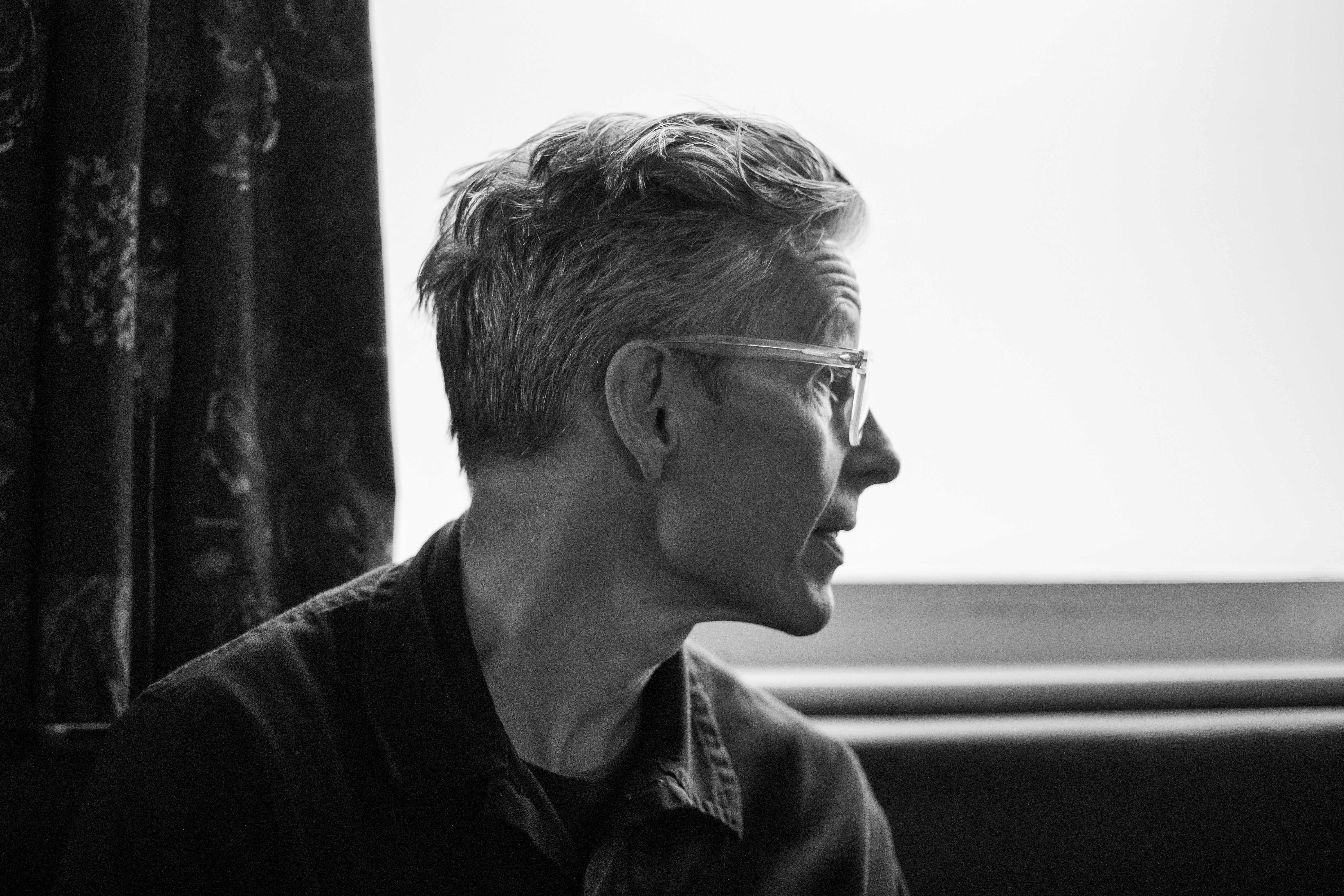
It’s a sweet lament, bringing to mind Steve Earle at his most poppy, and even carrying traces of Lindisfarne and McGuinness Flint.

“Yeah, again it’s a nice melody and very straight-forward – it doesn’t mess around with a middle-eight. You can get a bit hung up on that. The amount of times we’ve struggled to do that! But we’ve got to a point now where we don’t think that formulaic anymore.”

Vocal Blend: Graham Firth plays to the audience at Weyfest in 2018 with The True Deceivers (Photo: Dave Pullinger)

I’d have it up there with the opening track as another album highlight. It’s also perfect soundtrack music, to a film where you take your first jaunt across America perhaps.

“That sounds good to me … if we can sell the idea to anyone. Ha!”

Seeing as I mentioned Lindisfarne, this is a good place to include another snippet of our conversation, regarding The True Deceivers being booked alongside the veteran crossover folk act at Kenney Jones’ Secret Widget Festival at Hurtwood Park last summer. A big moment for the Firth clan, it seems.
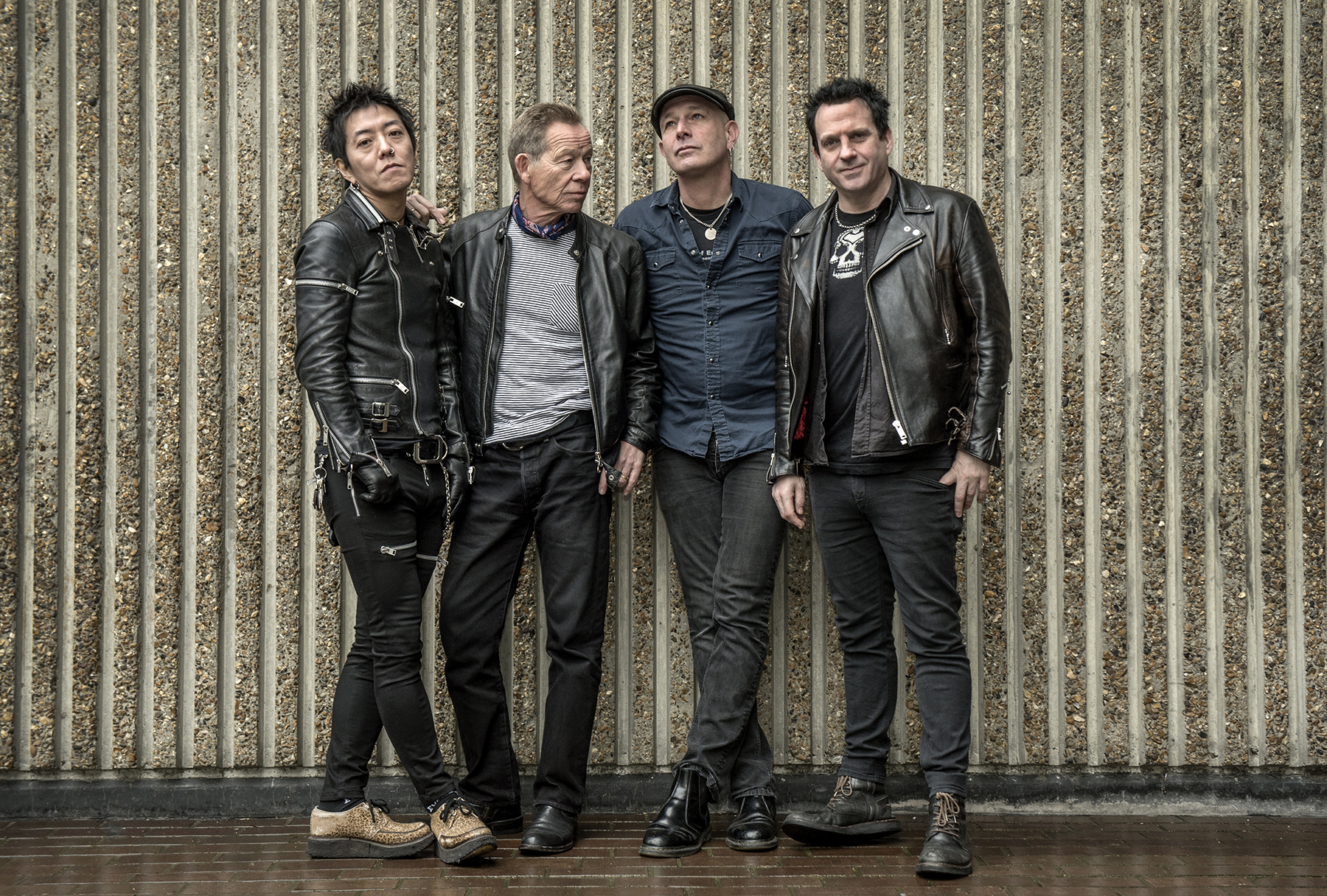
“That’s the one my Mum and Dad are most proud of, playing with Lindisfarne there. My folks are from the North East – they left in their 20s – so as far as they’re concerned Lindisfarne are gods. I said, ‘I don’t think it’s all the original band,’ but my Mum said, “That doesn’t matter – we know you’ve made it now, if you’re playing with Lindisfarne!’

‘Everything’s as permanent as footprints in the sand.’

On ‘Somewhere Safe to Land’, I get the impression we have Nick’s most political moment on the LP – a song of hope among the shift towards the rise of the populist movement and frightening lurch to the right in these days of disinformation and open hatred.

“Well, I didn’t write the lyrics, and Nick’s notoriously cagey about what his songs mean! I think that’s fair comment though. It’s a mixture between an angry song and a hopeful song. Actually, angry’s maybe the wrong word. There’s a quite a bit of anger and angst on this album, not least on ‘Tell Me Something I Don’t Already Know’ and ‘Changes Round Here’. I don’t think we were quite sure that song was gonna quite work when we first started with it. For me, that’s also got a bit of a feel of a Steve Earle song, in its delivery as much as anything else. In some ways we weren’t sure if it would go on the album, but yeah, it’s got something to say.”

Mandolin Wind: Nick Bliss switches instruments at Weyfest with The True Deceivers in 2018 (Photo: Dave Pullinger)

I think it definitely has its place there, not least as it follows that ‘My Own Highway’ theme. Meanwhile, Nick’s harmonica adds Irish folk traces.

“Yeah, we started with a bit more fiddle on that, but while that starts it off, the harmonica takes over in the breaks, and Nick loves playing that live. It’s not easy to play that rhythm guitar and the harmonica at the same time!”

‘I have ideas above my station, they’re not so easy to attain. It’s more in hope than expectation, but it still works out the same’.

For me, ‘You’re My Reason’ is an out-and-out love song, and a tribute to belief and pulling together. It works on several levels, like all the best songs.

“Yeah, for me I’d say that’s pretty much a love song, in the same way as perhaps ‘Unsung Heroine’ on the first album. Yeah, that’s Nick at his soft best really, and a really nice song.”

And Dee’s trademark plodding bassline makes me think of The Waterboys again, this time on ‘A Bang on the Ear’, which I love.

“He’s great, but he’s still lying back on that bassline and it’s never forcing anything ahead. He’s an easy guy to play with.”

No Hiding: Dee Coley takes time out from his bass guitar duties during the recording process (Photo: Rob Blackham)

‘I’ve reached the point of no return, no more bridges left to burn.’

Dee’s also possibly the nicest bloke in music, but let’s not give him too much credit, and move on to ‘Bloody But Unbowed’, a perfect showstopper, the band cranking it all up for one last push, the guitars finally coming through in the mix, letting loose. I reckon you should end your sets with this from now on.

“Well, it is very late in the set. We do still tend to finish with a track from the last album, but it’s gone down well, and the funny thing is that we used to play that song a lot more gently. But then we were thinking about the lyrics, and it’s a song when I sing it live that I really have to get in character for – it’s about spitting the words out and it’s a case of, ‘It doesn’t really matter what you’ve done to me – I’m still here!’

“Nick was just messing about with heavy guitar on it and we thought it really worked, although it’s not the sound we’d normally go for. Originally, all the breaks had fiddle running through them, but because we added the heavy guitar, Nick started playing along with lead guitar lines, and we ended up sticking with that, which sort of book-ended with the fiddle. It goes down well live, and again it’s a song we’ve had a while.”

You all seem to raise your game here, with Jamie on fine form at the back, dependable as ever. Again, we see the melding of various styles, and – this will make you laugh – I wrote, ‘sort of Charlie Daniels meets The Levellers’.

“Ah, that’s fair enough! And you’re right about the drums. They’re spot-on for that song, with some really good fills. Jamie really went for it. A lot of the drums and Dee’s bass on this album were pretty much live. We wanted to get a less manufactured feel. You can get a bit tied on up on redoing all the drums and basslines. We pretty much recorded all that live and then – if anything – overdubbed on the vocals, guitar and fiddle. It was more about that being played live than Jamie sat in a room with a guide track, and that worked better for us, I think.”

True, and there’s a similar feel to what you achieved with one of your covers on the previous album, ‘Tailspin’.

‘Well, I don’t know how I got here, but I got here just the same.’

Lining Up: The True Deceivers nervously await the online verdict from WriteWyattUK (Photo: Rob Blackham)

And if ‘Bloody but Unbowed’ is a track to finish your main set on from now on, I guess closing number, ‘Drinking to Forget’ is first encore territory.

“Yeah, although we haven’t played that live much yet, to be honest. It’s difficult to know where you’d fit it into a set. And because we’re pretty much playing all festivals at the moment, when you’ve got 40 to 60 minutes you tend to go for something a bit more upbeat. But I’m sure when we get back into venues indoors in the autumn, it’ll come into its own in the set, I imagine.”

Ooh, that quote dates this interview, doesn’t it? Anyway, ‘Drinking to Forget’ for me is maybe George Jones done more reflective, more delicately delivered. Nick’s out front this time too, and rightly so. And as the man himself says, ‘If you hear self-pity, well it doesn’t come from me; I suppose I should be on my way, if I could only find my key’.

“Well, do you know – the one regret for me about that song is that I’m not singing it! That’s not to say Nick’s not singing it well – because he does – but it’s got such a nice melody that I’ve picked up the guitar at home and sung it. But we always wanted to get Nick singing one of the songs and we weren’t sure if it was going to be that or another. I’d loved to have sung that though! I’m not saying I’d have done it any more justice, it’s just that it’s a really nice song to sing.”

To be honest, with the emotions laid bare like that, I feel it’s important that it is him singing. His slightly less assured vocal approach makes it all the more raw.

“I think from the album point of view, definitely. It certainly wasn’t a difficult decision where to put it on the album either. It just felt like the end of the album.”

Reckon you’re right, although I stand by what I say about ‘Bloody but Unbowed’ providing the proper climax.

“Yeah, it almost felt like we should have that, then have a big gap, so it’s almost like a secret track.”

First Footing: The True Deceivers’ 2007 debut album, Lies We Have Told, including Mark Mitchell on fiddle

I agree. Bands like The Thrills did that to perfection not so long ago.

“But then we thought that might be a bit corny, and besides, secret tracks don’t really work these days, do they!”

True enough. And all in all, I’d say this is your most accomplished album to date. Your 2007 debut appeared to be more of a live recording, and there’s a maturity in your voice now that maybe you didn’t have then, or that the recording process you used couldn’t quite capture 12 years ago.

“Possibly, although in some ways we’ve probably gone for a more untouched vocal than in the past. We’ve never been a band for lots of reverb and all that, but with this record we were even more straight with it. I liked the first recording (Lies We Have Told, from 2007) more than the second (Hell or High Water, 2012), which had good songs on it and I’m not unhappy with, but I think we got a bit too involved in the process. It was almost over-produced, and too slick.

Lies We Have Told was a lot rawer and that had a lot to do with the guy who engineered and helped produce it, Nev (Dean), who got very involved in the process. Mark especially got on very well with him. He had a lot of ideas and input, and I think that came through. The second was slicker all round, but maybe too much at times.”

I think he’s being a little harsh on Hell or High Water there, but who am I to criticise – my own review here pulled no punches either, suggesting areas where it would have benefitted from being a little more raw. But the songcraft certainly comes through, and there are many corkers on that long player. This time around though, it was Stuart Jones recording, mixing and co-producing, at Woodworm Studios in Oxfordshire. And it’s a definite all-round winner. So how did that work – was Stuart fairly involved?

“He was, and he was great, very good at telling you when something wasn’t good enough, which is really necessary. Sometimes you need someone independent to say, ‘That was alright, but do you want to do it again?’ He asked at the start how much involvement we wanted, and we told him we had a good idea of how we wanted it to sound, but if he had any thoughts and ideas that might improve it, we’re open to it. He let us get on with it, but if there were areas where we could improve things …”

And you did this LP in two chunks of recording?

“Yeah, with the previous two albums it involved lots of weekends, so lots of two-day chunks, and that can get quite tiring. You don’t get a good run at it, and we weren’t always there at the same time. But this time we went residential at Woodworm, and it’s a fantastic studio. It’s Fairport Convention’s old studio and has a lot of history. I think it was Dave Pegg’s, and they still rehearse and record there. The woman in the B&B across the road where I stayed one night with my wife, said that before Cropredy, Fairport will rehearse in there with the doors open, so the whole village can hear them.

“Richard Thompson and Jethro Tull have recorded there too, and we were there for two five-day blocks, so took time off work and had another three days to mix it. That makes for a much more relaxed way of doing it, giving you time to work on stuff in the evenings and mornings before you start recording. And it gave us a chance to hang out with each other and swap ideas rather than record then just piss off home.”

Second Sitting: True Deceivers' follow-up album Hell or High Water, from 2012

Second Sitting: True Deceivers’ follow-up album Hell or High Water, from 2012, recorded in Guildford

All in all, while Lies We Have Told was the sound of a band finding their feet – and it sounds just as good now – and the second LP had its merits too, this third recording has captured something that arguably wasn’t there before. By rights it should be the album that pulls in new admirers, who can then go back and discover all that came before. But that’s my opinion, and as I said at the outset, it could be argued that I’ve got a vested interest. So why not get along and catch the band live, judge for yourselves.

All reproduced lyrics are from the pen of Nick Bliss and the copyright of Five String Music 2019.

The True Deceivers’ My Own Highway is available from the band at live shows and from their website. You can also follow them via Facebook, Instagram and Twitter

2020 Vision: The True Deceivers, out and about this year, next up on my old Guildford patch (Photo: Rob Blackham)

The True Deceivers play The Star in Guildford, Surrey, on Saturday, February 29th, with support from The Nefarious Picaroons. For more detail, follow this link. And many more 2020 dates and festival appearances will follow, so keep in touch with the band to find out the details.

Posted in Books Films, TV & Radio, Music | Tagged , , , , , , , , , , , , , , , , , , , , , , , , , , , | Leave a comment