Fylde under nature – talking The Membranes’ new record and much more with John Robb

Nature Lovers: Peter Byrchmore, Nick Brown, John Robb and Rob Haynes, causing a stir with their new double album

It’s 35 years since music writer, Louder Than War founder and Membranes/Goldblade bass player/vocalist John Robb left the ‘Tatty Seaside Town’ later celebrated on 1988’s Kiss Ass … Godhead! LP. But he clearly still has plenty of time for his old patch.

One of the first songs to be publicly aired from acclaimed new Membranes double LP, What Nature Gives … Nature Takes Away is the evocative ‘A Murmuration of Starlings on Blackpool Pier’. And it just so happens that John is currently working on a new arts project in the resort, helping chronicle the history of the Fylde coast’s musical legacy (with more details about that project here).

What’s more, The Membranes are set to play Blackpool pub venue The Waterloo on July 5th, and return again for the Rebellion Festival at the nearby Winter Gardens in early August.

Born just up the coast in Fleetwood, John grew up in Anchorsholme, barely four miles from Blackpool Tower, the iconic location from the top of which The Membranes launched 2015 LP Dark Matter/Dark Energy (becoming the first band to play there). And he played a key part in the Fylde resort’s more recent story, forming his band in 1977 – aged 16 – while at Blackpool Sixth Form College. But he knows full well the area’s cultural heritage goes way back before punk rock inspired this Tangerines fan to get involved.

“Blackpool’s got a really interesting musical history. People tend to forget what came out of there – like Jethro Tull, (elements of) The Pet Shops Boys, Soft Cell, and a great post-punk scene. We were around then, and Section 25.

“And there are lots of other interesting stories, such as the Jimi Hendrix gig you see clips from, setting fire to his guitar on stage at the Opera House, when he was touring with Syd Barrett’s Pink Floyd.”

I understand there was a Gene Vincent link to Blackpool too (the feted rock’n’roller based on the North Shore while appearing there in the mid-‘60s, by all accounts).

“I think he was living there a bit, and Johnny Kidd and the Pirates had a club there. It was a showbiz town then. George Formby was the biggest pop star before rock’n’roll, but chose not to move to London but Blackpool, because that was the epicentre of showbusiness, which you can’t imagine now. What Manchester has now would be the equivalent now.”

Incidentally, North Londoner Johnny Kidd, died aged just 30 in a road accident near Bolton in October 1966. He’d been a regular visitor to Blackpool, including a summer spell with The Pirates in the summer of ’64 at the Rainbow Theatre, on a Larry Parnes bill topped by Joe Brown and his Bruvvers and The Tornados. It was around then that he bought into The Picador club (strip joint, say some) near the railway station. But that’s another story (and brilliantly told on Adie Barrett’s website).

Getting on to Manchester, that’s where John Robb’s at these days, having moved there in 1983. And this Saturday, June 8th, he’s hosting the third annual Membranes and Friends Festival there, a five-hour multi-band event – nap-handed, in fact – also acting as the official launch party for his band’s new record, taking place just across the road from Oxford Road station at the Ritz on Whitworth Street West. But how would John compare his adopted city’s scene in the early ‘80s with how it is now?

“It’s massively different now. There are more venues, with 30 or 40 in the city. It too has become an acknowledged musical epicentre. In the post-punk era it had key game-changing bands, but you have to remember Joy Division weren’t that big.

“Now if there was an Ian Curtis hologram or something, he could play stadiums and be bigger than U2. I’ll go to Russia and every kid there loves Joy Division. But before Ian died, they were playing clubs to 100/200 people a night. It was a brilliant scene, but for not that many people.”

Joy Division famously supported fellow Manchester outfit Buzzcocks on their Autumn ’79 UK tour, and I seem to recall my brother and friends missing them in favour of the usual pre-show pint at the nearby Angel Hotel. That was probably the case for a fair few support bands over the years. Is that why we need to get down by four o’clock for this joint-Membranes and Friends and LP launch event at the Ritz?

“I think so. I know for a lot of tours the support band are by and large just an afterthought, but we don’t even use the term ‘support band’. They’re just bands sharing a space. Every band’s equal. It’s not a case of padding the bill out. There’s a reason why everything is there.

“Each band on that bill is a band I’m really into. I don’t know if that’s a measure of anything, but they’re there because we really like them. We could quite easily flip the bill round the other way. It wouldn’t make any odds to me.”

Of his hand-picked guests, John describes Henge as ‘Hawkwind on acid … more acid, if you can imagine that!’, Queen Zee as ‘pretty amazing, sort of warped sex-punk’, and Glove, who have put out releases on his label, as ‘amazing, sort of Slits crossed with Patti Smith’.

He was also full of praise for late additions Liines, back for a second straight year, late replacements for Lawrence from Felt’s Go-Kart Mozart.

Breaking Through: Liines have come a long way since their last Membranes and Friends show

“Last year, from the first band all the way through people were discovering stuff they’d never heard before, and the big breakthrough was Liines. They were amazing, and (subsequently) a Sleaford Mods tour got them out around the country. It was great to see the rest of the country catch on.”

The same goes for recently-reformed The Pack, the pre-Theatre of Hate and Spear of Destiny punk band of past WriteWyattUK interviewee Kirk Brandon.

“Yeah, great. In a weird way he’s become one of the undiscovered talents. He has a cult following but really should be doing things like Stiff Little Fingers do every year at the Academy.

“He’s one of the greatest singers, he’s operatic, he’s like nothing else. He’s on our new album, and just did that in one take. You hear elements of punk in there, a bit of Johnny Rotten, but Pavarotti at the same time. I don’t think there’s many people in that corner! Ha!”

I enjoy talking to John Robb. his best quotes often followed by a laugh that those who know him well will hear as they read this. A true entertainer.

As well as added strings, the new Membranes LP also features a Manchester-based British and Irish Modern Music Institute (BIMM) choir, who are also set to feature this weekend, their latest appearance with the band.

“Because it’s local we can make this one work. It’s a pretty epic set and the Ritz is fantastic for doing this. It perfectly frames what we’re trying to do. It’s my favourite venue in Manchester.”

I agree. It’s fairly big but somehow retains its intimate vibe.

“Yeah, big and intimate at the same time. A contradiction, but right in this case. And in a weird way a lot of rock music suits the old music hall type places.

I recall The Subways’ lead singer, Billy Lunn, jumping off the balcony there for a spot of crowd-surfing. That great leap forward still haunts me. You have to have a lot of faith in your fans to try that.

“Ha ha! It’s amazing how often that doesn’t go wrong!”

Hanging Around: 21st century boys (from left) John Robb, Rob Haynes, Peter Byrchmore, Nick Brown

When I called John, I’d only got as far into the new album as the splendid ‘Strange Perfume’ promo video and a brief taster of the ‘Murmuration of Starlings’ track, so asked him to tell me more about the record.

“It’s a double album about the beauty and violence of nature, and it’s been getting pretty amazing reviews. Every time I look at my emails something else has pinged up.

“You never know when you make a record whether it’s gonna just shoot across everybody’s heads. You just try and make the record you want to make yourself, but this time it’s ‘Oh fucking hell, people actually understand what we’re trying to do here!’ Ha ha!”

And that builds nicely on the positive reception you got for the last record (also released via Cherry Red Records).

“Yeah, and with the nature of The Membranes we always try to move forward. No point in repeating ourselves. This album’s more about the choir and the amazing harmony of the human voice. When you get 20 people sing the part at the same time, it’s a transcendental experience … quite beyond … at the highest level of sound as possible … pure harmony. And in these discordant times we’re living in, pure harmony is an interesting concept.”

When Public Service Broadcasting released their Race for Space album in 2015, I asked J.Willgoose Esq. where they could possibly head next after tackling the moon, stars and planets. As it turned out, they chose deep underground and the Welsh coalfields for 2017’s Every Valley. And you too seem to have come back down to earth this time after exploring the outer universe last time – channelling the world of nature.

“Yeah, we’ve brought it back down to earth, but in a sense it’s just another corner of the universe. We all talk about the universe being somewhere else, but we’re in the universe. The chair you’re sat in now is actually part of the universe.

“It’s the same with nature. You think it’s outside your window, but you are nature. We’re just animals who build caves and wear clothes. We’re not above or below. We’re just part of the whole thing. And it’s quite good to grab yourself back in with that reality.”

Environmental Troublemaker: Chris Packham, an honorary Membrane band member as of 2019 (Photo: BBC)

Quite right too. And while they didn’t manage to get Sir David Attenborough on this record, they did entice self-styled ‘Environmental troublemaker’, BBC nature presenter, music fan and all-round good egg Chris Packham along. The next big thing, yeah?

“In the context of what we’re doing he is the best thing, because Chris is a massive fan of punk and post-punk, and that’s how I met him. I interviewed him about his 10 favourite punk gigs for the website. It worked out we were both born on the same day. We’re also both massively into nature, so you can see there’s an inevitability that this was going to happen at some point.

“He didn’t really want to do it first. He said, ‘I’ll leave making records to the professionals.’ He’s such a worrier, such a perfectionist, but sent me the part, and I said, ‘That’s amazing’. He got the gist of the album in one paragraph. We spliced it into a track, and it sounds ace.”

There’s a great recent video clip of him, introducing his (and my) favourites The Undertones recently at Southampton’s Engine Rooms, while plugging socio-political movement Extinction Rebellion. He seemed fairly nervous in that stage announcement, but I guess it was nervous energy.

“I think for him those punk bands were so iconic in his life that he would be nervous in that situation. I don’t think he would be nervous in any other situation. That thing that affects you when you’re 16 affects you your whole life. It’s such a big deal.”

It’s a double album this time. Had you set out for that to be the case?

“No. but there were just so many songs that actually worked. In an order as well, so we kind of trapped ourselves into it having to be a double album. It would be far easier to make a single album with two instruments, but somehow this set its own course really.”

Does that mean – as a big Clash fan – you’ll be carrying on down the ‘40 years on’ line, moving on from a double album to a triple album, Sandinista! style – next year?

“You can only let the music dictate really. Sandinista! was flawed in parts, but kind of works and has to be what it is, y’know. And the idea of doing a triple album in the middle of punk was great as well. – when there were rules as to what you were allowed to do and not so.”

These days, co-founder John – his distinctive bass a cornerstop driving their distinctive ‘dark matter post-punk’ sound – is joined in The Membranes by long-time bandmate and fellow Blackpool lad Nick Brown (guitar, on board since 1982), plus Peter Byrchmore (guitar) and Rob Haynes (drums, both ex-Goldblade, from Birmingham and Manchester respectively), the latter pair joining in time for a My Bloody Valentine-led 2009 All Tomorrow’s Parties reunion.

We’ll also get the BIMM choir on Saturday, but what about Kirk Brandon – will he be joining them for an on-stage cameo?

“I’m gonna try and talk him into it.”

Last time I bumped into John was after a spectacular Mott the Hoople Class of ‘74 show at Manchester Academy, Ian Hunter’s Rant Band joined by 70-something legends Luther ‘Ariel Bender’ Grosvenor on guitar and Morgan Fisher on keyboards. And it just so happens that Ian turned 80 this week. He’s a lesson to us all about living life to the full as long as you can, right?

“He’s amazing, isn’t he. I interviewed him before that gig, and there’s no sign of slowing down. For many 80-year-olds, just getting out of a chair is difficult. The way he talks too. Some people pause because they lose track, but he’s not like that. It’s like talking it to someone who’s 40.

“He seemed totally on it. And at the gig, he was stood up nearly two hours. It’s quite intense doing a gig, and that’s physically powerful. And that gig was fucking amazing for what it was. I don’t care if he was 80 or 40, that was great! A proper rock’n’roll show with songs he did really passionately.”

Was there an element of you – like many others – reliving your youth in there? I recall you talking about Mott’s influence in our last conversation, not least getting to meet bass guitar hero Pete Overend Watts, who died shortly after, aged 69.

“A little. I was in the moment, and even though they were old songs it didn’t feel like a nostalgia thing. You can see a new band about for three months or you can see an old band playing 50-year-old songs and they’re just gigs. If a band plays in the moment with a passion, that’s what it is. You can’t get around that.”

It’s about doing it for all the right reasons, I guess, like a lot of the early punk and new wave bands still doing the rounds. The Undertones – who in recent years have engaged The Membranes as a support act – are just one great example of that.

“I think that generation of bands finally learned how to deal with their legacy. And ‘Teenage Kicks’ is a great song, so why not play it, y’know? Whereas with what I do, we just play one old song, changing that around. But we’re not lumbered with any hits! We don’t have 10 hits that people want to hear.

Choral Treat: The Membranes with the BIMM choir and BBC 6 Music’s Marc Riley in January 2016 (Photo: BIMM)

“It’s a disadvantage in that it makes life harder, but it’s an advantage because it gives us the freedom to do what we want. For bands like us and our ilk it’s all about the quest to move forward. But I don’t think either has got any moral higher ground. It just depends what works for your band.”

Finally, at a time when regional newspapers and the music press seem to be really struggling, your own Louder than War website and magazine provides a positive indicator that there really could be a future for independent sub-cultural writing after all. As a fellow writer who came from the fanzine world (Rox in his case) originally, I take something from that. It’s far from rosy surviving as a freelance writer, but you seem to do just that, bucking the trend.

“Yeah, but it’s not easy. You don’t make money out of websites. They’re a passion really, like instant fanzines in a sense, with larger, worldwide readership. But that doesn’t mean you can survive off the back of it. The passion is trying to get those ideas out to as many people as possible. We’re living in an odd time where people don’t get paid for working. The fuckers won, didn’t they!”

I’ve seen that in sports journalism too, for writers and photographers. People with good enough cameras and a desire to scribble off match reports are often just happy enough getting a byline on a story or photograph. As a knock-on effect, the chances of getting paid for those services are far slimmer.

“And as with music, once people don’t pay for something, they’re not going to start paying for it afterwards. Sustaining any kind of creativity in the 21st century is difficult. You feel for people who come into all this from less privileged backgrounds. How do they start?”

That seems a dispiriting line to end on, but all the time there are impassioned ‘doers’ on the scene like John – TV and radio’s go-to cultural talking head, author and musician – I reckon we’ll be okay. The DIY punk spirit lives on, against all odds.

Album Launch: The Membranes, on the door at The Ritz this weekend, hoping you’re down early enough

For December 2016’s feature/interview with John Robb on this website, head here. The Membranes, Henge, Queen Zee, Liines, The Pack, and Glove, play The Ritz, Whitworth Street West, Manchester, on Saturday, June 8th (4pm-10pm). For details try The Membranes website or the event’s Facebook page. And for tickets try SeeTickets or Skiddle.  

Posted in Books Films, TV & Radio, Music | Tagged , , , , , , , , , , , , , , , , , , , , , , , , , | 2 Comments

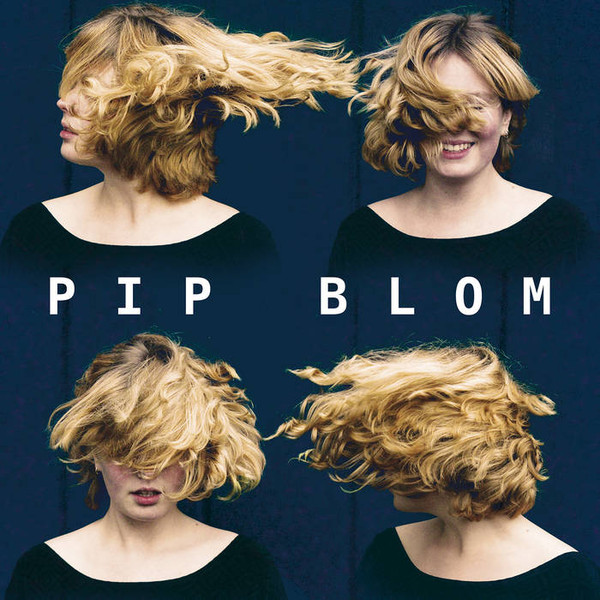
Pip Blom / Talk Show / Jacob Slater – Band on the Wall, Manchester

The Venue: The Band on the Wall, Swan Street, in Manchester’s Northern Quarter (Photo: https://bandonthewall.org)

Champions League Final? Well, there was no way that could ever live up to either semi, and perhaps this was my show of support for Ajax, nipping down to Manchester, erm, City to catch another Amsterdam outfit with youth on their side and the promise of great things to come.

In fact, they’re already there on this showing, Pip Blom on stonking form on Saturday night in the intimate setting of the Northern Quarter’s Band on the Wall. What’s more, they mentioned mid-set how they’ve now played Manchester more than Amsterdam and London … the venues getting that little bit bigger each time.

I’m not sure if it was because there was a big match going on in Madrid, those who couldn’t make it there watching it elsewhere, but I somehow reached Swan Street within 45 minutes and was thus early for a gig for the first time in an eternity, with time to spare before the first support. And we youngest daughter and I were truly treated for our loyalty, by all three bands.

First Up: Hertfordshire’s Jacob Slater and his band impressed (Photo: lilylytton_photography)

We hadn’t realised there were two guest acts, but each impressed. There weren’t so many in for Jacob Slater, but the frontman enticed us to move closer, seizing the moment, a mighty seven-song, half-hour salvo showing true range and future promise, with plenty of big, wide soundscapes provided.

The first of three two-guitar acts, Hertfordshire-based Jacob and his band were good ’n’ loud, the throbbing bass and Thom Yorke-like lead vocal leaving a big impression on early song ‘Butterflies’. They carried a passion found in early U2, but with more catchy tunes for these ears, closer to The Stars of Heaven or Grant McLennan, voice-wise, with a few Cure-esque chord progressions thrown in, and real maturity in those melodies. And you couldn’t fault Jacob’s full-on passion throughout.

Not having checked stage times, I assumed the first support were actually the second. But next we got Talk Show, and they too impressed, the floor busier as we were treated to a South-East London outfit offering something different again but no less enthralling, stand-outs like the single ‘Fast and Loud’ carrying early Stranglers menace.

Think Happy Mondays with Flowered Up-like vocals, built on a Stone Roses-like rhythm section with plenty of raucous guitar. Frontman Harrison Swann certainly has stage presence, in our faces from the start, his bleached cropped tresses just visible in the front row as he jumped down with his highly-strapped guitar.

Second Service: Talk Show also went down a storm

His prancing struts with the bass player also entertained, the latter mooching around like Shaggy from Scooby Doo, while the lead guitarist preferred the moody approach and the first of the night’s eye-catching female drummers wore a smile as wide as the stage at times, loving every moment yet as good as collapsing on her kit after their most frenetic number. Another band to watch.

After those dynamic sets, Pip and her band had something to live up to, but did so in style, on a night that underlined that they’re a band on the cusp of big things. When they do hit those heights, we risk it not being half as intimate, but that’s not the point. It’s about the moment, and this show was perfect, not least in its occasional imperfections.

I get the impression Pip’s a reluctant or at least slightly self-conscious frontwoman, even if her band do take her name. And that’s neatly illustrated by her lining up on one flank while her brother, fellow guitarist and backing vocalist Tender, takes a mirror position. Yep, back to those football analogies. These are no wingless wonders.

Meanwhile, in the middle is the beating heart of this band, with Darek Mercks out front – in baseball cap and Beatles t-shirt – and Gini Cameron keeping it all together from the rear, Pip’s bass and drum duo giving the Blom siblings room for those Cruyff turns. And on that foundation comes not just raw guitar to make the heart surge, but also distinctive vocals, the blend of the pair often spot on.

At times they remind me of Blur, at others The Primitives, and occasionally The Breeders, Girls at our Best, The Sugarcubes, or even Elastica or Lush somewhere. But this is no retrogressive outfit. It’s more about an infusion of quality influences given a fresh twist, and thankfully all still rather raw.

Besides, perhaps I only bring to mind such acts because Pip Blom make me feel like I’m in my early 20s again, their music and presence with the power to pull that off. And it’s not just the Dutch roots setting them apart. There’s more to it than that, the love and excitement they inspire out on the floor working both ways, the band raising their game throughout.

They started without drama, just getting down to it, the wire flamingos on each side of the stage lit up in pink as the Wedding Present-like slow-build of Boat’s side two opener ‘Tinfoil’ took hold, pathing the way for one of my early favourites from that long player, ‘Don’t Make It Difficult’, then angular wonder ‘Tired’, with barely a half-beat lapsing before Pip strummed out the intro of lo-fi larrikin ‘School’ and they were off again, Darek’s chugging bass and Gini’s drum patterns laying down the foundation upon which the Bloms could carve out that gloriously scratchy guitar and vocal blend.

Ragged early single ‘Babies Are A Lie’ charmed next, the band fully warmed up, ready to tackle the wondrous ‘Ruby’, which grows on me with every play, bringing to mind early Catatonia or The Sundays.

Live Presence: Tender, Darek, Pip and Gini, proving a big hit on this side of the North Sea (Photo: Phil Smithies)

Harmonies remained a factor, Tender’s lower register perfectly complementing his sister’s lead vocal again on ‘Sorry’ -her personal favourite from Boat right now, she suggested – before familiar off-kilter bendy guitar ushered in playground bruiser ‘Come Home’, the band stoking up for a big finish.

Pip’s beaming smile at the crowd interaction was a joy to see, performance levels still rising, the band nothing short of electric as they tore into ‘I Think I’m In Love’, their first great pop indie pop exclamation mark – playing in my head on the lead-up to the LP’s release – followed by their next, the similarly-mighty ’Daddy Issues’.

For me the highpoint followed, our Dutch masters paring down, just Gini’s percussion and Pip and Tender’s harmonies there at the business end before they all stormed back in for a final no-holds barred chorus. Sublime.

And where from there? I kind of hoped for at least a couple more Boat selections, maybe with the splendid ‘Set of Stairs’ followed by the brooding ‘Aha’. But instead themoggy-licious ‘Pussycat’ served that same ‘big canvas’ purpose, providing a gloriously-grand, rip-roaring finish. All power to their fretboards, and here’s to the next visit, which can’t come soon enough.

Boat People: From the left, Darek Mercks, Pip Blom, Gini Cameron, Tender Blom (Photo: Raymond Van Mill)

To catch up with WriteWyattUK’s recent interview with Pip Blom, head here.  And for more about the band, new album Boat, remaining early summer dates, festival appearances and newly-revealed details of autumn European (and yes, the UK is still part of all that, he adds huffily) and US tours,  try their official website and follow the band via Facebook, Instagram, and Twitter.  

You can also check out Jacob Slater via his Facebook and Soundcloud pages and find out more about Talk Show here.

Posted in Music | Tagged , , , , , , , , , , | Leave a comment

The Rutles – The Continental, Preston

At the risk of patronising several accomplished acts, there have been some quality Beatles copyists treading the boards or taking to the studio to emulate the Fab Four over the past five decades, and I’ve a lot of respect for many carrying on that missionary work.

From The Byrds and The Monkees to Badfinger and the Electric Light Orchestra, and from Squeeze and XTC to Crowded House then Oasis and Ocean Colour Scene, all added extra colour from the original palette.

We don’t even need to talk tribute acts here, gifted as past WriteWyattUK interviewees The Bootleg Beatles have proved to be. Because for me just one act truly honoured Lennon, McCartney, Harrison and Starr’s creative legacy then took that premise on, even if their co-creator, Neil Innes, suggests the whole concept was merely ‘a good idea at the time’.

If you’ve seen The Rutles live you’ll know they still have that ‘Something’ about them, 44 years after initial small screen retrospective recognition in a Rutland Weekend Television sketch. And while that link goes back to 1975, the band’s history suggests it all really began 60 years ago at 43 Egg Lane, Liverpool, when Ron Nasty and Dirk McQuickly first bumped into each other, Ron inviting Dirk to help him up, the pair soon joined by ‘guitarist of no fixed hairstyle’ Stig O’Hara and drummer Barrington Womble, the others persuading the latter to shorten his name to save time and his haircut to save Brylcreem.

It can get a tad confusing with so many overlapping moments in the timeline, not least as Bonzo Dog Doo-Dah Band maestro Innes, aka Ron Nasty in this guise, pays tribute to legendary fifth Rutle, George Harrison, during their live show, recalling how the youngest Beatle was so impressed with their work that he formed his own Rutles tribute act, the Traveling Wilburys.

But he repaid that compliment by covering ‘Handle With Care’, and we later experienced an emotional take on Harrison’s gorgerous ‘All Things Must Pass’, the original band pastiche long since replaced by something far more durable and inspired.

Neil Desperandum: Ron Nasty’s alter-ego, Bonzo Dog Doo-Dah legend and genius songsmith, Neil Innes

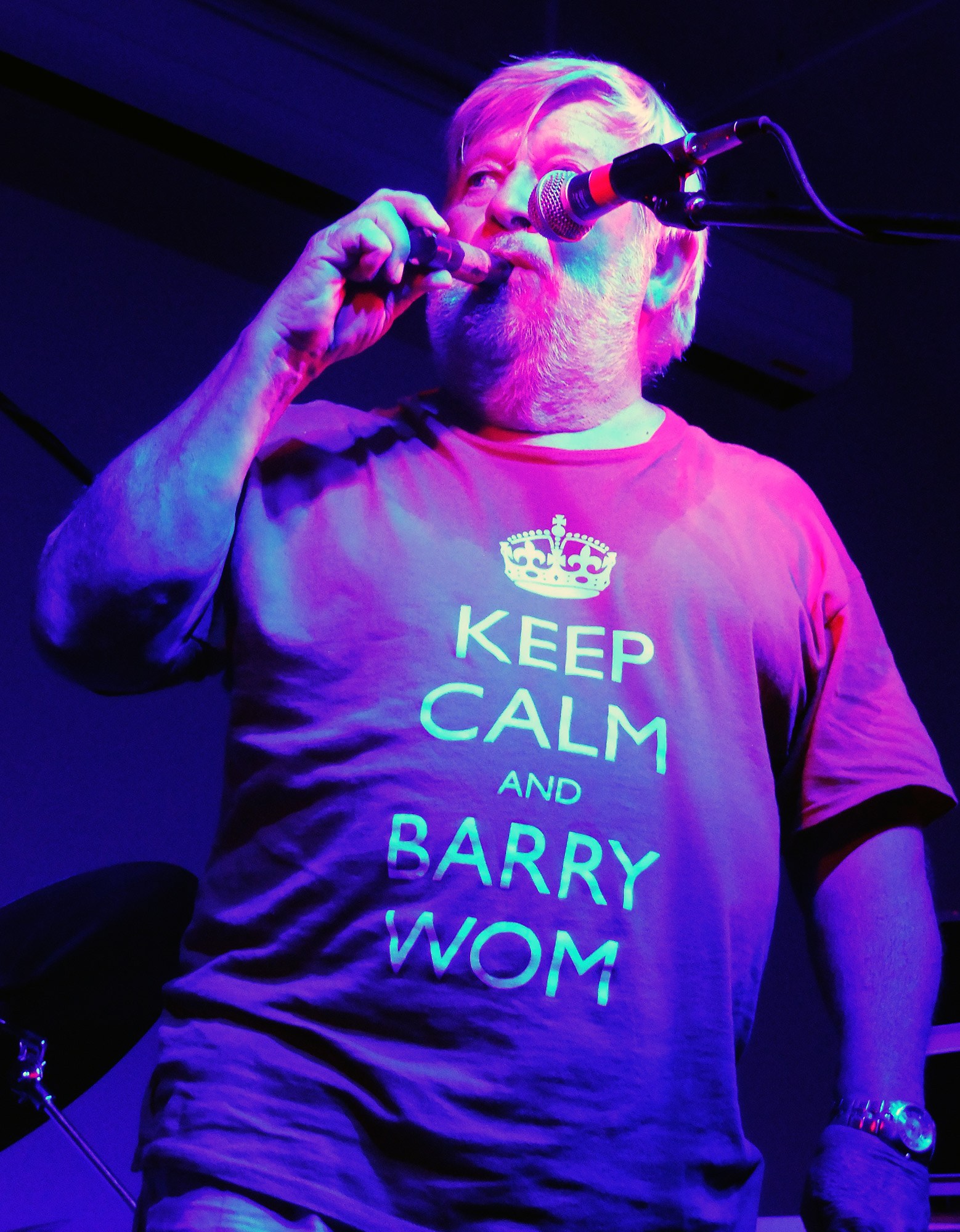
Innes’ own Beatles links go back some distance, Paul McCartney producing ‘I’m an Urban Spaceman’ and the Bonzos guesting on Magical Mystery Tour. Meanwhile, newest recruit David Catlin-Birch, once with World Party, was the original Paul in The Bootleg Beatles and also featured with the Bonzos (as well as with WriteWyattUK Slade hero Jim Lea), while John Halsey, aka Barry Wom, has his own impressive history, drumming credits including Lou Reed’s Transformer and past tour credits including those with Joe Cocker (as was the case with Catlin-Birch) and The Scaffold (yep, both with Beatles links).

I won’t go too deep into the back-story, but apparently the first album was made in 20 minutes and the second took even longer. You probably know that already though. And if not, read up or sit back and marvel at 1978’s All You Need is Cash, for whom George was executive producer, wondering why you’ve not seen it before. For me, it leaves This Is Spinal Tap standing there (whoo).

While Monty Python’s Eric Idle, who played Dirk, wasn’t part of the touring band, Innes (vocals, guitar, banjo, ukulele, keyboards) and Halsey (drums, vocals) were from day one, and with Catlin-Birch (bass/vocals), Rutling Ken Thornton (guitar, vocals), and Phil Jackson (keyboards, vocals), there’s amazing musical pedigree here.

This ‘occasional supergroup’ of sorts were certainly on toppermost of the toppermost form for this Get Up and Go Again tour outing, the Prefab Four launching straight into the hits, classic Parlourphone single ’I Must Be in Love’ – the song most of us knew first – just as fresh all those decades on.

‘It’s Looking Good’, memorably part of the Che Stadium set and a cornerstone of the influential Rutle Soul album, and the Twist and Rut EP’s ‘Baby Let Me Be’ saw the band step up a gear, while ‘Major Happy’s Up and Coming Once Upon a Good Time Band’ gave us a first taste of the benchmark Sergeant Rutter’s One and Only Darts Club Band, Bob Dylan having by then introduced them to a substance that would have a huge impact on their work, tea, that track neatly segueing into ‘Rendezvous’, Barry leading from the rear.

‘Questionnaire’ and ‘Piggy in the Middle’ reminded us of the jewels within the major flop that was  Tragical History Tour, the music outshining the critically-slammed concept of four Oxford history professors on a walking tour of English tea shops, while ‘Ouch!’ saw the band revisit happier cinematic times, the follow-up to A Hard Day’s Rut – this time shot in colour – another hit for zany Rutland director Dick Leicestershire.

Wom Direction: John Halsey, aka Barry Wom, the Rutles drumming legend who famously once took to his bed for a year as a tax dodge

Shabby Road’s ‘Eine Kleine Middle Klasse Musik’ saw Catlin-Birch take lead vocals, while ‘Nevertheless’ and ‘Joe Public’ again showed the true depth of this band’s influential Rutolver era, before Meet the Rutles’ ‘Between Us’ took us back to simpler days and ‘Living in Hope’ saw Barry back on lead vocals, that song playing in my head for the next couple of days, searching the house for my dog-eared copy of Rutles for Sale.

After Sergeant Rutter’s evocative ‘The Knicker Elastic King’ we were back to the early days via ‘Number One’ and ‘Hold My Hand’, reminders of a spell when Rutlemania was taking the world by storm. And while ‘Love Life’ perfectly encapsulated the band’s hippie era, ‘Let’s be Natural’ again proved the might of Innes’ songcraft beneath the parody. A classic in his own write, you could say.

After the first of two great sets, it seemed that many of the better-known numbers had already been ticked off. But there were many more highlights to come, the band returning with ‘Doubleback Alley’, ‘Good Times Roll’ and early ballad ‘A Girl Like You’ on the lead-up to Barry’s ‘Easy Listening’ (‘Why don’t we do it in the middle of the road?’), the Conti‘s main room soon awash in a sea of lit-up mobile phones for a modern twist on the anthemic ‘Shangri-La’. Altogether now, ‘Lah-de-doo-dah, lah-de-dah, here we are in Shangri-La’.

Talking of anthemic … do I have to spell it out? Yep, ‘Cheese and Onions’ made me wonder if I’d supped too much tea on the build-up, the iconic Yellow Submarine Sandwich honoured. And they were building momentum again, later Innes masterpiece, ‘Imitation Song’ painting that bigger picture, the main-man admitting pride at his own wordplay with ‘Blue Suede Schubert’, a number I seem to recall they were belting out in those seminal Rat Keller days in Hamburg (when Leppo was still in the band, before Bolton retail chemist Leggy Mountbatten took them on, attracted by the tight trousers).

Next came a timely dedication to newly-homeless Theresa May on ‘Goose-step Mama’, a track first laid down on the Silver Rutles’ demos, and soon the set reached its dramatic finale, Rutles Corps-era rooftop wonder ‘Get up and Go’, melding into Lennon/McCartney masterpiece ‘The End’, Barry once more taking a tour around his kit, while Catlin-Birch, Thornton and Jackson took their own instrumental lap of honour.

And there was none of this shuffling off stage and back on again business. Instead they hung around, Halsey leaning on his stick and heading to the side of the stage to accompany fellow 74-year-old Innes and their bandmates on ‘Back in ’64’, a lower-key, contemplative end to another special night in The Rutles’ company. Pure genius.

With respect to Rob Talbot, for managing to book The Rutles, who next turn up at the Brudenell Club, Leeds (Saturday, June 1st), The Gorilla, Manchester (Sunday, June 2nd), Robin 2 ,Bilston (Tuesday, June 4th), The Lemon Grove, Exeter (Thursday, June 6th), Komedia, Bath (Friday, June 7th), The Assembly, Leamington Spa (Saturday, June 8th), Norwich Arts Centre (Sunday, June 9th), and Colchester Arts Centre (Monday, June 10th). For tickets and details of all those shows and more Rutles happenings, head to their Facebook events page. And for further info about the band, head to this website.

Posted in Books Films, TV & Radio, Comedy & Theatre, Music | Tagged , , , , , , , , , , , | 4 Comments

Whatever floats your Boat – the Pip Blom interview

Band Substance: Pip Blom are heading our way again, this time with their debut album tucked under their arms. From left – Darek Mercks, Pip Blom, Gini Cameron, Tender Blom.  (Photo: Raymond Van Mill)

In a sense, perhaps it was almost inevitable that Pip Blom would follow her parents into the alternative music market.

It’s now three years since this Amsterdam-based singer-songwriter first shared her somewhat raw, lo-fi brand of indie guitar pop with us, the voice and her style leading to arguably lazy comparisons with Australian singer-songwriter Courtney Barnett, as well as established US alt-rock outfit The Breeders, with whom they later toured.

But this is not a band just happy to follow. They’re more about finding their own distinct shipping lane, as Pip and her brother/bandmate Tender’s father, Erwin Blom did with his band, post-punk John Peel favourites Eton Crop, back in the ’80s. And the band that share Pip’s name certainly remain as fresh and exciting now as on day one, judging by my initial listen to debut album Boat, which is out tomorrow (Friday, May 31st).

These days, they’re recognised as being at the forefront of a number of emerging outfits from the Netherlands turning heads on this side of the North Sea, including friends Canshaker Pi and The Homesick. And it just so happens that Pip and Tender’s Dad and Mum – Leonieke Daalder, the ex-Eton Crop sound engineer who set up a successful alternative music blog with Erwin – have in recent years pitched in to help get the band off the ground.

And right now, Pip, fellow guitarist/vocalist Tender and bandmates Gini Cameron (drums) and Darek Mercks (bass) are on this side of the water, part-way through their latest UK tour, your scribe tracking them down in Milton Keynes on Monday – ‘day five’ – after their Sheffield debut the previous evening. So how was The Leadmill?

“It was so much fun. We’d never played in Sheffield before, so weren’t really sure what to expect. But it was very busy and full of enthusiastic people. It was amazing.”

After dates in Milton Keynes then a sell-out at Cambridge, tonight they’re at Reading’s South Street Arts Centre (Thursday, May 30th, also now sold out), with an official album launch date at Rough Trade East in Brick Lane, London E1 (Friday, May 31st) following, before they come closer to my patch the following evening, giving me Champions League final complications as they pitch up at Band on the Wall in Manchester’s Northern Quarter (Saturday, June 1st). Remember that episode of Whatever Happened to the Likely Lads? where they try to avoid seeing how the match panned out? That could well be me late on Saturday night.

Anyway, I digress. You’ve played Manchester a few times before, haven’t you?

“Quite a few times. We’ve played The Castle, The Night and Day (Café), and the Soup Kitchen.”

And now we’re awaiting the release of the debut LP, Boat, largely recorded on this side of the water, at Big Jelly Studios, Ramsgate, Kent.

“Yeah, released this Friday! Really exciting!”

Indeed. Tell me why it’s called Boat.

“Now that’s a good question. It hasn’t got anything to do with the songs. I just really like the word. It’s a cool word, it suits us, it’s not too difficult or too fancy. We came up with the name before we made the record. With my boyfriend we always talk about cool names for bands or records, and I loved it as a name. deciding our first record had to be called Boat.”

And hopefully it will turn out to be a ferry good vehicle for you (sorry, I couldn’t resist that).

“Yeah, and we use it quite often when we come over to the UK.”

As well as the album launch at Rough Trade East, could we persuade you to do a northern launch too? Either at Action Records in Preston, who recently successfully hosted Fontaines D.C., or perhaps even Preston Docks would be perfect.

“Well, first we planned to do launch parties on boats, but it was very difficult and very expensive. Maybe when we get a bit bigger. Ha! Then maybe we can afford it.”

Your Manchester show signals a tour mid-point, with great reaction so far on this side of the North Sea, by all accounts … including a few sell-outs.

“Yeah, it’s amazing, and the ones that don’t sell out are also very busy. I think that’s a good sign, isn’t it?”

Park Life: Pip Blom and the band that take her name modle their boating apparel: (Photo: Phil Smithies)

Park Life: Pip Blom and the band that take her name model their boating apparel. From left – Tender Blom, Darek Mercks, Pip Blom, Gini Cameron (Photo: Phil Smithies)

Absolutely, and having seen Robert Forster at the Band on the Wall recently, it should prove a winning venue for pip too, I’d say. Getting back to Boat though, how long would you say this album’s been in the making? It seems that most of the songs are unreleased in any other format.

“We’ve got two singles out – ‘Daddy Issues’ and ‘Ruby’ and finished the album at the end of October. I think I’d been writing for half a year to a year max. We then practised the songs together over a month and recorded it in 16 days.”

I understand you made your first recordings at home.

“Yeah, and I still do that with demos, for example ‘School’ was a home recording. It’s something I really like doing, and we used lots of the tracks I recorded – like guitar or vocal parts – for the album, so it’s a combination of both.”

Her first two bandmates were schoolfriends, adding bass and drums, but they didn’t stick around long, the band evolving into what Pip has now, interest and support from BBC 6 Music helping spread the word. And home is still – between numerous live shows – central Amsterdam?

“It is. We call it Watergraafsmeer, but that’s a difficult name for you guys to pronounce!”

Indeed. You put us to shame when it comes to language. Of course, it’s your name on the records, but clearly there’s a team, band vibe to everything you do.

“Definitely. It’s really nice. We are four people and one is my brother, which is nice. I really like being in a band with him. It’s so much fun. Then we have Gini and Darek, the new bass player, although we did record the album with him so it’s our album – the four of us, and it’s such an amazing asset to the band.”

Out of interest, Pip is 22, with her brother turning 21 two days after the Manchester show. And who would Pip consider major influences on this side of the water?

“I think Micachu and the Shapes are my biggest influence. They’re London-based, I don’t think they exist anymore, but Mica Levi is the brains behind them and makes music for movies. They’re so cool. At the minute I’m also really into Sorry, although I started listening to them after writing the songs on this album. There are so many really cool bands.”

In fact, Sorry were one of the London outfits featuring on a Holly Whitaker-directed video for the band’s ‘Babies Are A Lie’ release, also involving cameos for Shame and past WriteWyattUK interviewees Goat Girl.

And there’s been a strong UK link from the start, the band only having played three shows in the Netherlands before three more over here, publicising an initial Spotify release Pip put together at home, at which point there was no band, initial social media interest stepping things up. Apparently, they toured here seven times in 2017 alone, starting to build a following. I’m guessing it’s now their second home, having spent so long here.

“Yeah, we’re here almost once a month, so you could say that!”

Were you aware of what your Dad was up to with his band when you were growing up, or did Eton Crop’s cult following and support from legendary DJ John Peel only really become apparent later?

“Well, I did know what he did with the band, because he always told stories about that, but it was really nice recently playing with them at the John Peel Centre (for Creative Arts, Stowmarket, Suffolk).

“That was so much fun, our two bands together and lots of people who knew each other. A very special moment. I really like seeing them touring as well, and playing gigs in the UK. He’s showed us lots of videos and pictures, all that kind of stuff. I thought it was so cool.”

That shared bill was organised for 2019’s Independent Venue Week, and came just a few short years after Pip made her own live solo debut supporting … Eton Crop, actually.

The latest appearance was the idea of Peel’s widow and close family friend Sheila Ravenscroft, Eton Crop having recorded five sessions for BBC Radio 1’s John Peel Show from 1985/88, becoming close.

Crop Tops: Eton Crop’s Corne Bros, Erwin Blom and Ingmar van Wijnsberge lead from the front in the snug at the Conti for Un-Peeled 2016 (Photo: Erika Gyökér)

And I was certainly impressed with Eton Crop when they played Tuff Life Boogie’s UnPeeled celebration at the Continental, Preston in late October 2016, I told Pip.

“Ah, that’s cool!”

Your Mum was a big influence on you too, I believe.

“Yes, she was sound engineer for Eton Crop, my Dad’s band, and also started a Dutch music platform with my Dad about alternative music, both Dutch and international, working there for around 15 years. She’s always been very passionate about music.”

There have been notable shared bills along the way, such as you supporting The Breeders.

“Yeah, we did. That was a dream come true. If we’re talking about influences, Kim Deal was definitely one of the coolest people on earth, so to play 14 shows with them, being able to see them play every night, that was really cool.”

Pip’s first live experience came playing her Dad’s three-string guitar in a songwriting competition in Amsterdam. On progressing to the semi-final stage, she realised she had to write more songs to fill a half-hour set, the die cast for a career of her own in music. So did Pip, who has also expressed an appreciation of fellow late ‘80s and ‘90s successes Blur and Pavement, come straight into all this from student days?

“I finished high school, but none of us studied after that … except for Darek, who studied music, so he’s the one who knows what he’s doing – the rest of us are just kind of fiddling around!”

And does this feel like a full-time job yet, or is that pinning too much on it?

“No, it definitely is. We’re not getting paid like it’s a full-time, but we invest our time in it like it is, and that’s all fine because it takes us to places we otherwise would never have seen. I think it’s one of the most fun things to do. It’s really cool.“

After these dates, it’s summer festival season, including the Deer Shed, Leeds and Reading appearances, the latter in particular a big name over the years.

“Yeah, definitely, and also we are set to play Mad Cool in Spain and Nos Alive in Portugal (both early July), travelling all over, not just the UK. All fun, we can hope!”

Are there more UK dates later this year?

“Yeah, with one really big tour planned, to be announced after this tour is done, and quite a few festival dates that haven’t been announced yet.”

She was being a little Secret Squirrel there, I might add, the following day announcing that they were in fact the opening act on the John Peel stage at Glastonbury Festival at the end of June. Very apt considering the band’s and the family’s history.

And while that promises to be another dream come true, I guess there have been venues they’ve already played where it’s suddenly struck Pip and her band that this is what they appear to be doing for a living now.

“Mmm. Well, when we got to support The Breeders we got to play huge venues, and when we played the Roundhouse it was really weird. But it’s not about size of venue. The most important thing is that there are people. You can play a 600-cap. venue, but if there’s no one there …”

I don’t reckon that will be an issue now. This band are clearly on the up. And rightly so.

Frequent Visitors: Pip Blom, back in the UK and bringing their own Boat this time. From left – Pip and Tender Blom, Gini Cameron, Darek Mercks (Photo: Phil Smithies)

Pip Blom’s debut album, Boat, is out this Friday, May 31, with pre-orders available here. For full details of the remaining dates on this tour, festival appearances, and more, try their official website, and follow the band via Facebook, Instagram, and Twitter.  

Posted in Music | Tagged , , , , , , , , , , , | 1 Comment

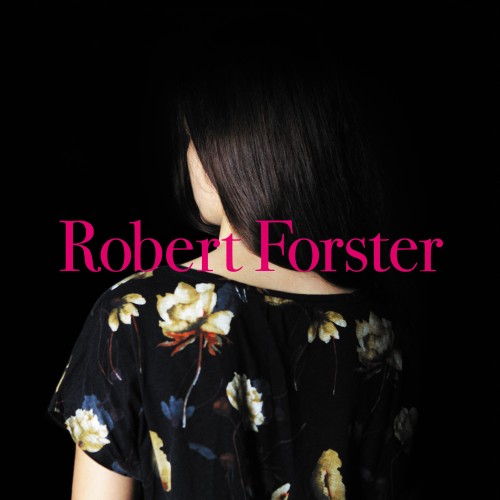
Robert Forster – Band on the Wall, Manchester

I missed out on The Go-Betweens live during their defining 1978/90 spell and the 2000/6 second coming, that latter period providing three LPs now nestling among my favourites of all time.

But I had the pleasure of witnessing Robert Foster in the unlikely setting of Lancaster Library in late 2008, and – a decade and a bit later – he remains an iconic live performer as well as a master songwriter judging by latest album, Inferno, and this intimate Manchester appearance.

When I say performer, he’s still the somewhat gauche artist I expected, seemingly apologetic to be up there at times, yet truly engaging and personable, all the more likeable for that slightly off-kilter demeanour, understated presence and low-key small talk.

Like last time, the quirky setting was rather apt, and I say that despite having snuck in too late to muscle through to the front, making do behind a pillar with a shelf on which I could balance my Cheshire Cat. I don’t mean that in a ‘not enough room to swing a cat’ way. That was my pint of choice on a pleasant early summer evening, and from my location I could gaze upon the star guest and his Swedish rhythm section (Jonas Thorell on bass guitar, Magnus Olsson on drums),  occasional cocking my head around to catch Karin Baeumler (violin, vocals) and Robert’s fellow Queenslander, Scott Bromiley (lead guitar).

The Band on the Wall has been at the heart of Manchester’s Northern Quarter scene for nine decades, yet this was my first visit. I’ll certainly return though, making a mental note to get in earlier next time (hopefully starting with Pip Blom’s forthcoming visit).

Northern Quarter: Robert Forster in live action at Band on the Wall in Swan Street, Manchester (Photo: Phil Reece)

The depth of the new LP Inferno only properly struck me the week or so approaching Robert’s visit, my preferred ploy of playing albums the first few times in the background – letting them soak in – paying off, our visitors easing  in via ‘The Morning’ – Robert and partner Karin’s harmonies assured – and ‘Crazy Jane on the Day of Judgement’ – his ‘William Butler Yeats co-write’ – those numbers already every inch established parts of the set, the band at one with each other.

At that point, Karin left the others to it for the sublime ‘Born to a Family’ from The Go-Betweens’ final – best ‘til last, I’d venture – record, Oceans Apart, cranking up a notch or two. Well, I say that, but technical glitches surfaced, Robert a laid-back guiding presence as the lead guitar cut out, suggesting to a fretting Scott (sorry) that their friendly clientele had plenty of patience and understanding. We were all rock’n’roll friends after all, and after a couple of false starts they were up and running again.

On a roll, from previous LP, Songs to Play, we got an all-empowering, head-strong ‘I Love Myself (And I Always Have)’, Robert marching to his own beat, before the first of three choices from 1986’s Liberty Belle and Black Diamond Express, a dynamic ‘In the Core of the Flame’. Karin took to violin for 2017’s the building almost early Waterboys-esque ‘A Poet Walks’, while the poignant ’Dive For Your Memory’, from the 16 Lovers Lane album – 31 years young – that first turned me on to The Go-Betweens and prompted me to dart back and forth through the catalogue from there, sounded as good as I dared hope.

This was always going to be about more than mere nostalgia though, ‘Life Has Turned a Page’ carries on that great story-song tradition, reminding me of my turn-of-‘90s Aussie adventures, a woman near the front whooping at the mention of Noosa, Byron Bay and Wurtulla, on a night when Robert told us his brother was catching him live for the first time in the UK. The band also shimmered and shimmied on fellow new LP cut ‘Remain’, while the mighty ‘Inferno (Brisbane in Summer)’ ramped it up further, the latest ‘why is this not a hit?’ from an artist it’s fair to say Joe Public never truly understood.

Before we knew it, we were treated to a five-piece Velvet Underground-like treatment of 1983 single ‘Man O’ Sand to Girl O’ Sea’, Scott riffing to his heart’s content, memories rekindled throughout the room, the mood music swiftly taking a major turn, and I swear you could have heard a badge drop during The Evangelist’s heart-rending ‘Demon Days’, Grant McLennan’s haunting lyric and melody still piercing – again Velvetesque – and with no explanation offered nor required from the singer, his intuitive treatment of the song enough. And talking of understated power, new album closer ‘One Bird in the Sky’ further showcases Robert’s continued songcraft.

Back we went to the Liberty Belle for the angular, expressive ‘Twin Layers of Lightning’, Robert’s guitar cast aside, before a delightful D minor riff signalled rapture throughout, ‘Spring Rain’, our star guest’s hymn to mid-‘80s London living, never so refreshing to these ears. I think they were set to head off for a breather then, but our ownership of the moment was mirrored on stage, Robert telling us, ‘This is feeling so good!’ and ploughing on into Oceans Apart’s chugging introductory masterpiece, ‘Here Comes a City’.

On returning, he expressed concerns about nights when he might not get called back, but wasn’t fooling anyone, 16 Lovers Lane’s emotive ‘Love is a Sign’ including his sole guitar solo, a song with its roots in Oslo in ’88 still possessing the subtle power to captivate.

The highlights continued, with hardly a dry eye in the house during an upbeat yet naturally wistful delivery of Grant’s ‘Finding You’, Robert then changing the mood again, shedding his Bob Dylan, Lou Reed and Tom Verlaine skin, treating us to something more Talking Heads-like for Songs to Play’s ‘Learn to Burn’, his dance moves enthusiastically received, channelling his inner Iggy Pop with added mic. swirling.

When they returned for a final time, the strings were heart-searing and the spirit of early Bowie was worn with pride on Tallulah‘s ever-atmpospheric ‘The Clarke Sisters’, before a trip back to 1979 – yep, 40 years, count them – for ‘Don’t Let Him Come Back’, the semi-ragged B-side of the mighty ‘People Say’ another treat for The Go-Betweens purists, Robert even pitching in with a little gob-iron solo.

And where to finish but the life-affirming ‘Surfing Magazines’ from triumphant Go-Betweens 2000 comeback LP The Friends of Rachel Worth, an inevitable crowd singalong bringing matters to a joyous conclusion. A final characterising moment followed, Robert referencing surf hotspots at the climax, losing his thread while trying to recall a few apt UK locations, Fistral, Sennen and the Vortex lost on the tip of the tongue, our esteemed visitor instead offering ‘Cornwall’, somehow perfectly illustrating what he’s all about. Nothing over-waxed here.

He wasn’t likely to disappear to a private function backstage, promising to return shortly to sign anything, even Pavement records. And he did, your scribe there with his already well-thumbed copy of Inferno. So how did that conversation go? Well, anyone who’s been in that situation possibly already knows, questions evaporating in the air as the moment arrives.

Finding myself at the right end of the queue when a familiar accent piped up behind as I headed towards the bar seemed to throw me. I switched direction – nonchalantly of course – towards the merch stall, my friend Jim’s ‘Want a pint, fella?’ ignored, prising my copy of the CD from a back pocket. And soon we were eye to eye, my blurting, ‘Great show tonight … loved it!’ suggesting I might as well have been requesting a song on Steve Wright’s Radio 2 show. Yet his response was genuine.

“Thank you! Who should I sign it to?’

“Erm … Malc …that’d be great!”

Still gushing, somewhat lost, Robert looking blank too, leading to a needless explanation.

“Malc … as in Malcolm McLaren.”

Malcolm McLaren? Why him, I thought? He looked me square in the eyes, searchingly.

“But you’re nicer than him … right?”

“Oh God, yeah!”

Borderline self-congratulatory this time. Over-thinking it, as if I was being interviewed for a job I didn’t really want. I tried a weak smile. He smiled back, our conversation as good as dead, neither of us more enlightened for the experience. I thanked him, shook hands again and moved on so the next punter could take my place, doing my best not to smudge the signature.

All the subjects I could have brought up soon flooded back. Something about his writing partnership with Grant, how he manages to split his time between Australia and Germany, how much those last three albums meant to me, how I loved Grant and I, or maybe how entertaining he was in conversation with Marc Riley – as always – during his latest BBC 6 Music live session. I might also have mentioned my 1990/91 travels Down Under, The Go-Betweens a key part of the soundtrack in my head, those lyrics all the more real in those settings. And as I couldn’t see Scott, I wanted to mention how I too had family around Wynnum, and that it was in Brisbane that a mate and I bought a VW Kombi in which we clocked up 10,000 miles in a few months. That’s why when I first heard it I almost mistook ‘Surfing Magazines’ for a self-addressed, late-arriving postcard (see what I did there) I must have sent a decade earlier. But no, instead I mentioned Malcolm McFuckingClaren. Even mention of Malcolm McDowell or Malcolm Turnbull might have made for more interesting discourse. Nothing though … till next time.

The Venue: The Band on the Wall, Swan Street, in Manchester’s Northern Quarter (Photo: https://bandonthewall.org)

For more about Robert Forster, his live schedule (including dates in Australia in July, then the USA and Europe from November, including shows in Dublin and Birmingham) and new album Inferno, head to his Facebook page here. 


Posted in Music, Uncategorized | Tagged , , , , , , , , , , , , | Leave a comment

Out of the shadow of Carter the Unstoppable Sex Machine – the Jim Bob interview

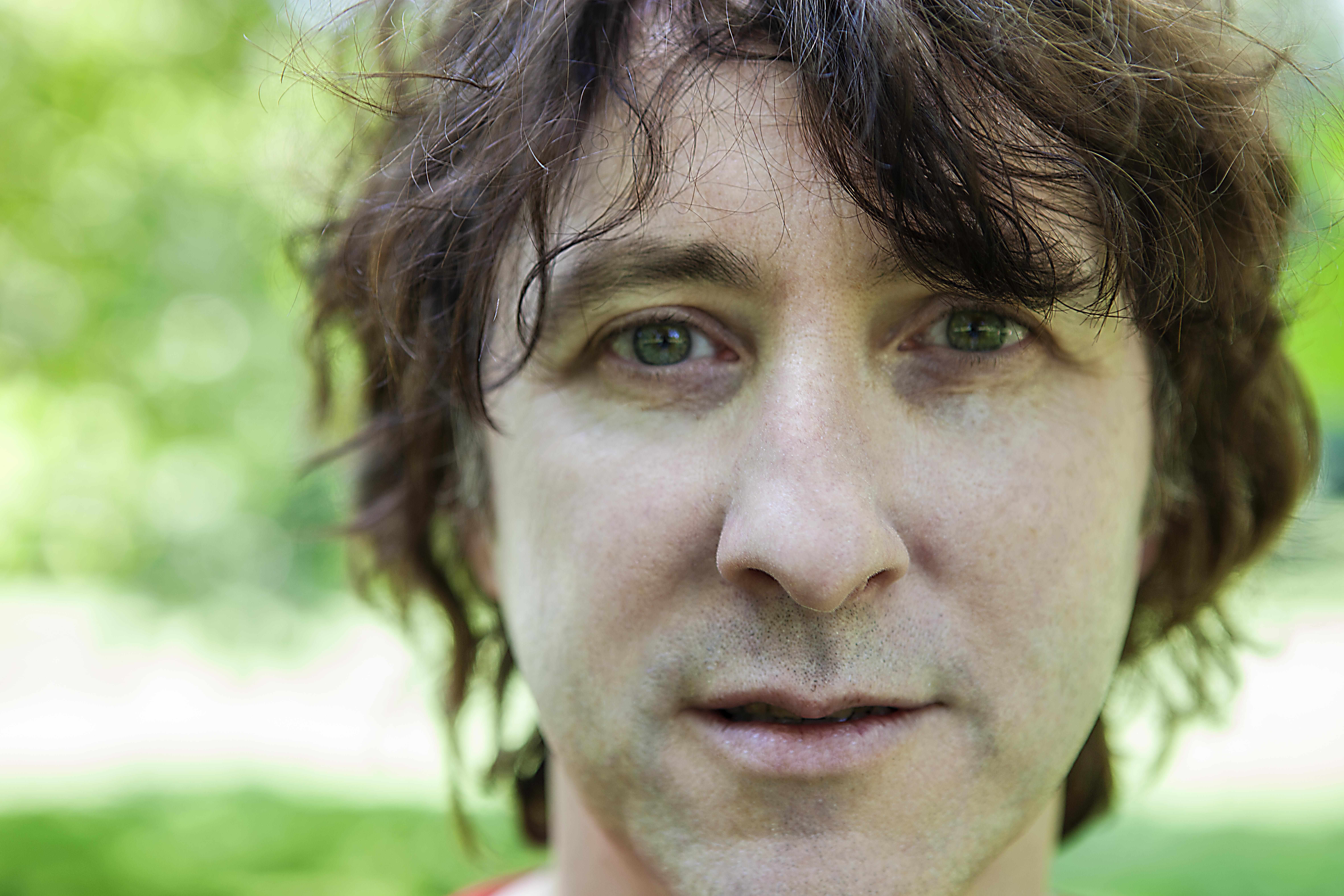
Wild Wood: Jim ‘Jim Bob’ Morrison, takes to and talks to the trees (Photo: Paul Heneker)

Don’t expect hyperbole when talking to Jim Morrison. Despite that rock star name, this was never an artist seemingly at ease at being on pop’s top table. In fact, he’s been known throughout his career as plain Jim Bob; not even the best known of the Waltons.

He made his name, after a spell with indie also-rans Jamie Wednesday, as half of Carter the Unstoppable Sex Machine, alongside Les ‘Fruitbat’ Carter’, the pair breaking through in the late ‘80s, garnering a few tabloid headlines and music press front pages en route.

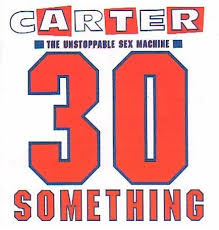
But amid the wider media interest, raucous guitar, of-the-moment samples, drum and bass sequencing, the deeper quality of the songs was often overlooked, not least Jim’s evocative lyrics, a barometer of those troubled times. These were vivid illustrations of life on the edge, exposing the not so far beneath the surface underbelly of Thatcher’s Britain, as best conveyed on first three albums, 101 Damnations (1990), 30 Something (1991) and 1992: The Love Album (1992).

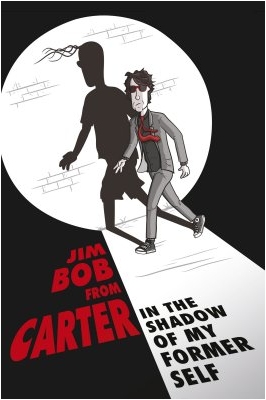
With that in mind, it makes sense that Jim Bob has more recently been able to prove his worth as an author. For starters there’s recently-reprinted band autobiography Goodnight Jim Bob: On The Road With Carter The Unstoppable Sex Machine, and newly-published sequel, Jim Bob from Carter: In the Shadow of my Former Self, both via Cherry Red Records, which is also responsible for a number of impressive Carter USM retrospective releases. There are also three novels from Jim Bob. Accordingly, however, his live outings are more limited now. Does he have a busy summer ahead?

“Not really … not by anyone’s standards! I’ve not done that many gigs at all these past few years. I haven’t toured for two years. I find myself doing quite a few of these odd all-dayers though.”

The ‘odd all-dayer’ he’s alluding to is Gigantic Vol. 5, running from 1pm to 11.30pm this Saturday, May 25th, at the Academy, Oxford Road, Manchester, slotting in on a bill – headlined by Echo & the Bunnymen – just below contemporaries The Wonder Stuff and The Bluetones.

This South Londoner hasn’t strayed far from his old patch over the years. Born in Streatham, he’s lived no further from there than Mitcham, and is these days based in Crystal Palace.

“I’ve been here quite a long time, and it’s changed radically. In terms of poshness. I remember it when it was a shithole, and now it’s on those things they do – y’know, ‘the 10 most desirable places to live’.”

It’s nice to still hear a healthy dose of cynicism from him. And he always did seem a little removed from many of his contemporaries. Then again, when Carter USM broke through with first hit ‘Sheriff Fatman’ (1989, possibly one of the last cassette singles I bought) and the 101 Damnations album that followed, they were older than many of the acts around them.

“Yeah, if we made one mistake it was naming a famous album 30 Something! But you can’t really go back on that. I remember around then a meeting with a lawyer or accountant type, advising us to get pensions, saying nobody in the music business would work beyond 50. That’s massively untrue now. But at the time the idea of anyone being in a rock band beyond that age …

“I had little to do with the financial side. I’m the same now. I switch off when anybody’s talking about all that. My manager now seems obsessed with spreadsheets, but there could be anything on them. I have to pretend I read them!”

I recently rediscovered two Stephen Dalton interviews with Carter the Unstoppable Sex Machine in back copies of former NME offshoot monthly magazine Vox, from September 1991 and April 1992, the latter revealing how Les bought a house in London with part of his Chrysalis advance, while Jim stayed put in his council flat. That suggests contrasting  outlooks.

“Yeah, we still do. He’s not a planner, I’d say. If he had money, he’d spend it and not really worry about it, whereas I’d probably be more wary of it running out. I’m still like that now, wondering what’ll happen if there’s no money coming in. . His approach probably made more sense though. I don’t know.”

You got a bit of a backlash from the tabloid press, journalists suggesting you were raking it in. But those who understood the way the industry works would have realised you were ultimately borrowing from yourselves.

“When we signed to Chrysalis, that was bought by EMI, and it’s been through various ownerships over the years and is now owned by someone else, who just licenses stuff out. We had a statement a week or two ago and we still owe them, I think, almost £900,000.” We wouldn’t have to pay it, but …”

They made a big thing about you being a millionaires at the time.

“Yeah, and certainly by the way things are going today I’m sure people in bands would love to have the money we got when we signed a record deal. They’ll say someone’s been signed by Simon Cowell for a million pounds, but they don’t get any of that money, do they? Whereas we got the money.”

I recall a decision you took to turn down an impressive advertising deal … only for former support act EMF to take up the option.

“Yeah, maybe they did. We were very principled in a way you couldn’t really be today. That was for either ‘Sheriff Fatman’ or ‘Shoppers Paradise’. It didn’t make any sense in terms of the song. I think they just wanted to be attached to us while they were at that level.

“We turned it down because the company that owned them were testing on animals.  We did an advert for KP Peanuts though. That was for ‘Shoppers Paradise’. Even then, they came to us with storyboards to check we approved. It would be harder to turn the money down than it was then.

“I suppose when everything‘s going well, you don’t necessarily see an end to it. You just think you can afford to turned that kind of money down, £60,000 to do nothing. But if someone said that to us now, it would be, ‘Oh no, what a dilemma!’

My diaries suggest I first saw Carter USM live on October 24th, 1991, at hometown venue, Guildford Civic Hall, then two weeks later saw them at Kilburn National with Mega City 4, then the following year at Preston Guild Hall on the 1992: The Love Album tour, supported by the Band of Holy Joy.

“Ah, that was one of the bands that were a big influence on us when we started as Carter.”

But what surprises me is that I somehow missed out on seeing Jamie Wednesday, his previous outfit. I was a regular gig-goer at most of the pubs and small venues they played, probably just a few days before or after their appearances. I was definitely aware of them, but somehow missed them. In my fanzine, Captains Log, days, I interviewed a few of their contemporaries, including Mega City 4, was in touch with the Senseless Things and followed others on The Pink Label, like The June Brides, That Patrol Emotion, Wire, McCarthy and The Wolfhounds.

I’m guessing you just got – after that initial hard slog – too big, too quick for me.

“Yeah, once it got to that point, I suppose it was kind of quick. But even for the first year or two of Carter there were a lot of false starts. We put a single out and nothing happened. It came out in the middle of a postal strike and so we couldn’t get it to press and so on. Well … that was out excuse for it not doing well. Then our first label weren’t pleased that we wanted to leave more or less straight away. We’d signed a contract to make an album with them, so that kind of stalled. It felt like a long time that we couldn’t really do anything.”

But then, around the time of ‘Sheriff Fatman’, the stars seemed to align for you.

“Yeah, although I don’t really know why. We used to do quite a lot of gigs before anybody knew who we were. But we tended to get asked to go back to places, so built up this following at specific places like Harlow and Bolton. Every time we went back there’d be another 10 people there. We also made a decision not to play London anymore, playing the same pub gigs to the same people we knew.”

That came over in one of those Vox interviews, being quite dismissive of some of those London watering holes, keen to move on from all that.

“Yeah, and it’s a shame now, because they’re probably all gone! But I think you can almost get into a routine.”

Fulham Greyhound was one such regular venue that springs to mind.

“Yeah, although that was one we did come back to when we finally did play London again, and it sold out. That was when things started to come together. I think it was then that Steve Lamacq couldn’t get in to report for the NME. That was perfect in a way. They had to write about how busy it was instead.”

There were several moments like that in your career that suggest you were capable of pulling off masterstrokes of marketing. I’m not sure they weren’t accidents, to be honest, but they worked.

“Yeah, semi-accidental really. Our manager at the time, Adrian (Boss), liked mild controversies, like putting condoms on the posters for The Only Living Boy in New Cross single. He wanted someone to complain.”

Those big moments notably including Les’ headline-grabbing rugby tackle on Phillip Schofield at the live BBC-aired October 1991 Smash Hits Poll Winners Party, the moment Jim reckoned the band became pop stars – ‘known by milkmen and postmen’. As Stephen Dalton put it, ’17 million viewers witnessed a highly intoxicated Fruitbat assault Britain’s favourite children’s TV presenter’. Les had taken exception at the host’s on-air remarks, later reflecting, ‘It occurred to me we were just playing the game, and being treated like shit. Even Dannii (Minogue) and the New Kids (on the Block) were being treated like shit, just like another product’.

Squeaky-clean Phillip hadn’t helped himself, introducing the band miming ‘After the Watershed’ with a string of insults, telling his young audience, ‘With bad teeth, naff shoes, a really weird hairdo and your own very individual style, you too can be a pop star’. What followed was a performance faded early ‘to allow time for more patronising banter’. At which point Jim stormed offstage, while furious Les overturned his amps, provoking the presenter to add, ‘Blimey, that was original. Jimbob and The Fruitbat, pushing back the frontiers of music …’ As Stephen Dalton put it, ‘Five seconds later ‘The Fruitbat’ was knocking him sideways, with cameras panning wildly into space as the Dockands Arena crowd erupted into the day’s loudest cheer.’

“Yeah, but that was never deliberate, although that was the one everyone thought was deliberate. I didn’t enjoy that at all, any of that experience.”

Ever get a chance to talk to Philip Schofield about that in later years?

“Not directly, but there has been interaction. Even when we were still going. We met someone doing the lights for Joseph and the Amazing Technicolour Dreamcoat, when he was in it, and he wished us luck for a gig. And years later when we reformed, we were on BBC 6 Music about to do our last gig, when we got a message. I kind of feel sorry for him, as people on Twitter seems to constantly reference it. So I should imagine that’s worse for him than me.

I suppose. He was a bit of a prat, but I suppose you could argue Les was too at times back then.

“God, yeah! At the time he was very much the villain as far as I was concerned.”

Do you and Les move in the same circles now and again today?

“Well, I’m still in London and he’s in Folkestone, so I don’t see him much. And he’s off permanently on tour with various bands. But every now and again we meet up and go to the pub, and e-mail each other now and again.”

I seem to recall you already had a daughter by the time you broke through.

“Yeah, she was born in ’86.”

Has she followed you into music?

“She’s a teacher … which is better! She went to the Brit School, doing theatre for two years or so. She wanted to act at the time, then got a bit disillusioned with it all and ended up via a series of accidents working in a school,and is now a qualified teacher. And I prefer that to her being a singer or something like that.”

I seem to recall back in the day a rather adulatory Carter USM fan-base. I knew a fair few of the words, but so many more clearly know every line. That’s something I’m sure that left you feeling proud.

“That can be pretty extraordinary. When I played Shepherd’s Bush Empire last year, just me and a guitar and a few songs with a piano, they more or less sang along with every song. And they were crowd-surfing as well, which I think freaked out the security at the venue. I wasn’t prepared for that!

“I’m doing a couple of gigs this year where there might be a few who don’t know me, though, so that might be where it all comes unstuck! But I did Gigantic before and that was brilliant.”

Next Chapter: The live outings are comparatively rare these days for Jim Bob (Photo: Paiul Heneker)

There have been some memorable moments in the past, not least playing to huge crowds at Reading Festival, touring America with EMF, being taken to court by the Rolling Stones, and appearing in the former Yugoslavia just as the civil war was about to come to a head.

“We went there twice, playing Zagreb, and also Croatia and Bosnia. For a while it was sort of calming down, but there was still tension. It’s a terrible thing to say, but it was quite exciting at the time. We also played in Eastern Europe pretty much just as the Berlin Wall came down, playing in East Germany for a few weeks, and the Czech Republic. Interesting times.”

Now, 30 years on, it seems that everything’s breaking down again, politically. You still have plenty to write about. Or is that down to the next generation of musical artistes?

“To be honest, I haven’t written a new song for quite some time.”

Because you’re concentrating on your books?

“I suppose it’s that, but if I write songs it would be to record and release them, and I find all that quite depressing – it’s all about what format, how you’re going to sell it, and will it be on vinyl or just on Spotify. That stops me doing it. You’ve really got to want to do it. If it involves a proper recording studio with other musicians you’re instantly going to lose money. I’ve never done the kick-tarter type thing. I never wanted to. And even that’s gone all tits up. It was bound to happen, I suppose. People set up a business that was a good idea, doing really well, but then it’s a case of ‘how can we make this bigger for us? Let’s invest the money’.”

And what will we get at Manchester Academy for Gigantic – a greatest hits show?

“Yeah, that will just be Carter songs. But I played London last month, and it was about 60% Carter songs and the rest solo work. At these all-day events I don’t think there’s room to be clever. And I’m quite happy playing either.”

For those who have missed out on your post-Carter USM recording career, is there a record in particular you’re most proud of that you’d point them towards?

“Quite a few to be honest. The album I did before the last one, What I Think About When I Think About You, which I recorded with an orchestra. That was some people I’d met rather than the Royal Philharmonic, but sounds great to me. I think that’s another reason why I’ve struggled to make records since. Once you’ve played with an orchestra …”

I don’t suppose you could have afforded to take them out on the road with you.

“No. we did one gig. For the last gig I did in London we had a five-piece band for about 40 minutes, and as a result I’m doing four gigs in October, again with a mix of solo and Carter songs. It was an exciting thing to do, but financially it was a mistake!”

Going back to pre-Jamie Wednesday days, did your band, The Ballpoints, get what they deserved, or was that all just part of getting to where you eventually found success?

“Yeah, I don’t think The Ballpoints were ever that great. I suppose it was heading towards something, changing band members. When Les joined that was us heading towards Carter. There was a band before that, Jeepster, who did just one gig, musically totally inept, but … I’ve got some recordings that very few people have ever heard, and there’s …. I dunno … something legendary about that band.”

Where was that gig?

“I can’t remember what it was called, but it was in Southgate. A youth club or something. It was the first proper gig I got, and I left my job before, thinking, ‘This is it … here we go! I’m going to be a pop star!’ I was working at an advertising company in the West End. I was a messenger. I think that was 1978.”

Who was the first band you saw that made you think, ‘This is what I want to do with my life’?

“The first band I ever saw was Queen. By that point, around 14, I was really into music, but it changed a lot, into what my older sister’s boyfriends brought into the house. But I always think of David Essex in Stardust. That’s kind of what I aspired to, even though it’s got a sad ending, I kind of wanted to be David Essex. I was into him and Buddy Holly, then got into Queen and Bad Company. Then punk came along, and I genuinely hated them all of a sudden, overnight. I don’t think that was fake. But then time passes, and you think maybe I do like them again. The Jam and Elvis Costello were my favourites around that time.“

Carter Days: Jim ‘Jim Bob’ Morrison and Les ‘Fruitbat’ Carter, in demand from 1988-98 and 2007-14

I’m guessing that’s the songwriter in you.

“I suppose so, yeah. And I saw The Jam and Elvis Costello quite a lot, and saw The Clash a couple of times. There was sort of a connection between me and Les and The Clash. We used to hang around in a rehearsal studio in South London, full of inter-changing band members. One was Paul Simonon’s brother Nicky, on drums, and Les went to school with Mick Jones. Also, Joe Strummer once said to me – I would say quite early on – how brilliant Carter was. That blew my mind at the time. Even more so now, in a way.”

I can see that there was a similar spirit there, having seen you live. There was definitely an energy to your sets.

Am I right in thinking Jamie Wednesday were booked to play with The Men They Couldn’t Hang, and while you then split up you honoured the gig with Les in your new format, for what turned out to be Carter USM’s debut gig?

“Yeah, we’d sort of had enough of the band but were too pathetic to tell the rest of the band. We did eventually, but decided not to tell the promoter. We still wanted to do the gig. So we started out of necessity really. We wrote a few songs then decided to just do them with a drum machine.”

Did any of those songs make it to the first album, 101 Damnations?

“Yeah, although some of them were slightly rewritten. I think we had around seven songs, including ‘A cPerfect Day to Drop the Bomb’, ‘Everytime a Churchbell Rings’, ‘The Taking of Peckham 123’, and  Wire song, ‘Mannequin’.

“Jamie Wednesday were more cowpunk, as they called us, with acoustic guitars and a horn section. So the people who came to see us … I don’t think they liked it. But we did loads of gigs with The Men They Couldn’t Hang. In a way we didn’t really fit in, but for some reason ended up with them quite a lot. And The Boothill Foot-Tappers, and we did quite a few gigs with The Pogues. Yet we were also connected to the twee indie scene, maybe through The Pink Label link – otherwise it doesn’t really make sense.”

I also remember seeing (and interviewing) International Resque (later just Resque), another band you were linked with, not least when Wez joined on drums in 1994.

“Yeah, they did a lot of gigs with Carter in the early days. It was a very diverse scene, I suppose. Interchanging bands who didn’t all sound the same.”

What did the ousted members of Jamie Wednesday make of your breakaway?

“Erm … I’m not sure at the time, to be honest with you. But I know Dean (Leggett) quite well, the drummer.”

I knew him first from Bob, another band I loved. So I guess it worked out pretty well for him after all.

“Yeah, and in more recent years Simon (Henry) and Lindsey (Lowe) – our horn section – have played on my solo stuff after we reconnected. But at the time they probably weren’t too pleased.”

That story will make for a good film, perhaps.

“Yes, although there’s no documentary evidence of anything we ever did. Hardly anything. Nobody ever filmed us!”

Well, you say that, but you’ve got the books out there.

“Well, that’s true.”

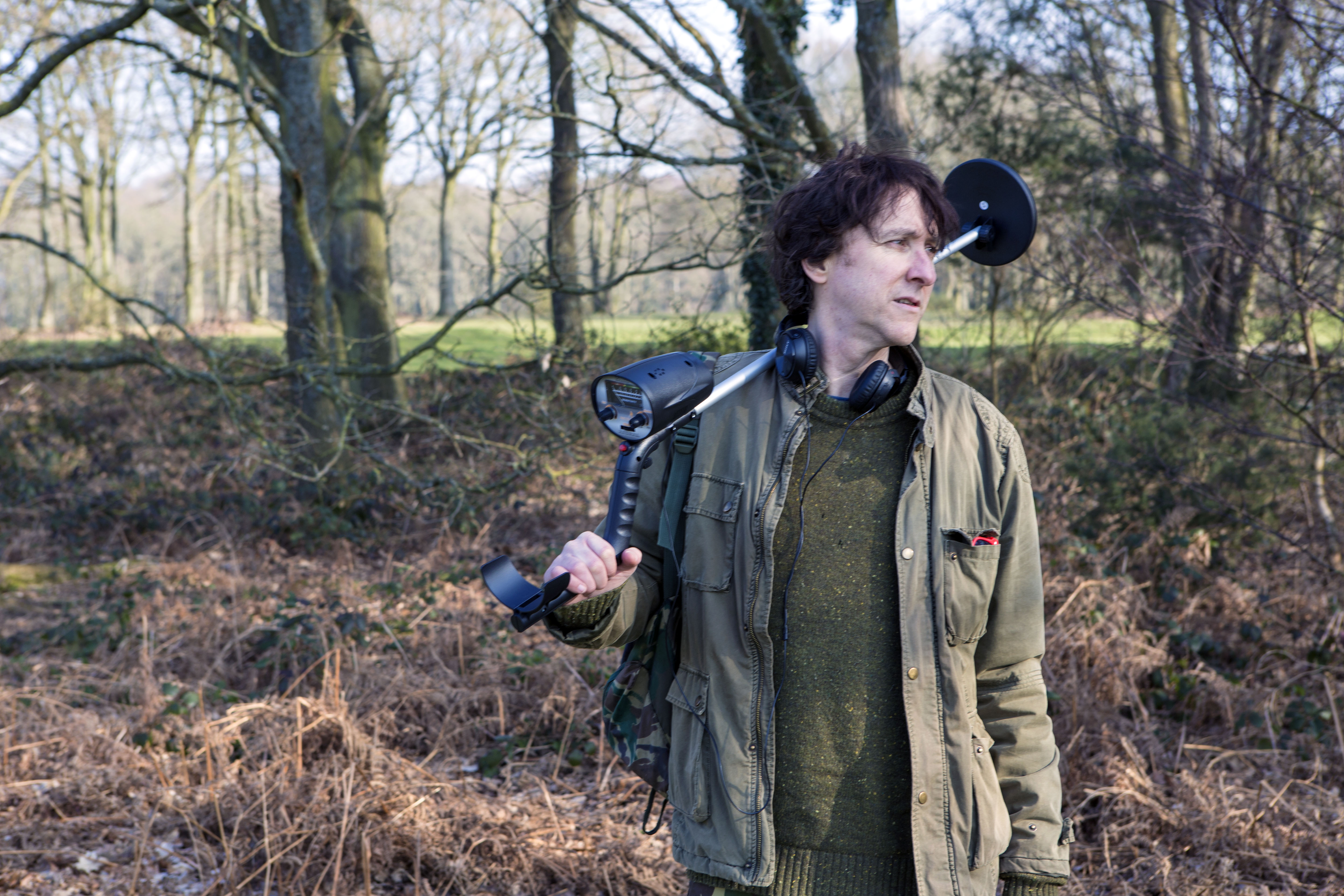
Metal Detector: Jim Bob, still searching for true value, all these years on (Photo: Paul Heneker)

Jim Bob plays Manchester Academy on Saturday, May 25th (1pm-11.30pm) for Gigantic Vol. 5, the bill also featuring headliners Echo & the Bunnymen, plus The Wonder Stuff, The Bluetones, The Juliana Hatfield Three, Jesus Jones, and Crazyhead, with Graham Crabb (Pop Will Eat Itself) as DJ/MC. For more details and tickets try the event’s Facebook page or the venue website. Jim Bob is also set to play the Darwen Live free festival on Sunday, May 26th (on stage 6.45pm). For more about his shows, books and records, visit Jim bob’s website or head to the relevant Cherry Red Records artist page, where you can also find details of a deluxe Carter the Unstoppable Sex Machine: The Studio Recordings 1988-1998 collector’s edition vinyl boxset and the Hello, Good Evening, Welcome, and Goodbye 2014 live recording on CD, vinyl and download.


Posted in Books Films, TV & Radio, Music | Tagged , , , , , , , , , , , , , , , , , , , , | Leave a comment

All Night Party People – in conversation with A Certain Ratio’s Jez Kerr

It promises to be a busy year for industrial punk-funk pioneers and indie-dance survivors A Certain Ratio, currently playing a series of UK dates to coincide with new Mute collection, ACR:BOX.

After 2018’s acr:set compilation and their LP reissue campaign, the new boxset – remastered by the band’s Martin Moscrop at Abbey Road Studios and including A and B-sides, alternative versions and more than 20 previously-unreleased tracks, available in 7 x coloured vinyl, 4CD and digital formats – follows the band’s delve into their vaults, with various hidden gems unearthed, among them tapes from a session recorded for a shelved collaboration with Grace Jones.

The new release coincides with the 40th anniversary of ACR’s Martin Hannett-produced debut single, ‘All Night Party’, Factory Records’ first single artist 7”, in later days described by Record Collector as ‘a statement of future intentions: to set funk off against nervous angst’.

That single – FAC 5, followed by Orchestral Manoeuvres’ ‘Electricity’, FAC 6 – was released in September 1979, with 5,000 copies pressed, soon selling out, the band recording their first session for influential BBC Radio 1 DJ John Peel within a few weeks.

As it turned out though, it was their next single, a 1980 cover of Banbarra’s ‘Shack Up’, that opened things up, not least after its early ‘81 US Billboard Dance chart breakthrough. Not bad for something that cost £50 to record, that song represented on the new boxset through a radio edit by Electronic, featuring New Order frontman Bernard Sumner and Smiths guitar legend Johnny Marr.

By the time of that initial stateside success, they’d already scored their first UK indie top-10 hit with next single ‘Flight’, a band in more recent times described as ‘cult punk funkateers’ (Uncut) and ‘mould-breakers’ (Mojo) soon expanding to a six-piece.

While embracing the ethic and culture of late ‘70s post-punk from the start, it’s fair to say ACR sounded like little else, yet went on to influence a diverse number of acts down the years, from LCD Soundsystem to Happy Mondays, managing nine UK indie chart top-30 hits from 1980/86 on Factory, including seven top-10s.

They made five albums for Factory, initial cassette-only compilation The Graveyard and the Ballroom followed by May 1981 debut studio album To Each…, featuring the expanded line-up and recorded in New Jersey, Martin Hannett again producing. That was their first UK indie chart-topper, and by June that year they’d recorded a second John Peel session. And before 1981 was over next single ‘Waterline’ had provided another top-10 indie hit.

Although early influences included Funkadelic, Parliament and Earth, Wind and Fire, their bass-heavy industrial/funk sound was not easily pigeon-holed, in time introducing more avant-garde elements of funk, jazz, electronics, tape loops and technology to pop, ‘wrapping it in a post-punk aesthetic, adding great clothes and the coolest haircuts’.

But let’s go back a bit here, their story with its roots in 1977 in Flixton, Greater Manchester, the band name taken from a 1974 Brian Eno song.

Initially a duo, comprising singer Simon Topping and guitar/electronics player Peter Terrell, they were then joined by bass guitarist/vocalist Jez, then guitarist/trumpeter Martin, the band without a drummer initially, Donald Johnson there in time for that first Peel session though. But while things hadn’t truly started to come together until Jez joined earlier that year, he had little musical grounding at the time, having taken a very different career path.

“My life had come to a bit of a crossroads. I was a footballer from a very early age. My uncle – my mum’s twin – played in the ‘50s, so I was following in his footsteps. He played for Everton, his main club, for about 11 years, then Derby County, Swansea (still Town at that stage) and Leyton Orient. A really good player, who scored lots of goals for Everton.”

That was Eddie Thomas, his Mum’s twin, Jez following his lead, playing in Manchester United’s youth team, his contemporaries including future England international Mike Duxbury.

“Football was my life really. All I wanted to do was play for United and play for England. And I was lucky enough to play for United until I was 17, signing schoolboy terms at 15, becoming a ball-boy. But at 17 I broke my ankle badly, was at a loose end, and finally found myself in A Certain Ratio.”

There are inevitably comparisons drawn between your band and fellow Factory act, New Order, who also happen to be stablemates these days at Mute. Also, Bernard Sumner hadn’t started out as the front-man of his band, albeit down to different circumstances.

“That’s true. I was the bass player. But I got the job … unfortunately!”

What inspired you to get involved in music?

“My Mum did a bit of acting and I joined Manchester Youth Theatre. That’s where I met up with Gordon the Moron (Jilted John’s arch-nemesis, real name Bernard Kelly). I left home at 17 and shared a house in Rusholme with him. I was actually there when he (Graham Fellows, aka Jilted John) wrote that tune on my sofa.

“I was asked to play bass on Top of the Pops with them, but I was so shit I couldn’t mime! I’d bought myself an amp and bass guitar, but couldn’t play and wasn’t in a band. At this house in Rusholme, John Cooper Clarke was always coming ‘round, and The Freshies, people like that.

“I didn’t know anything about it. It was only through Gordon the Moron and the Youth Theatre that I met up with these people, finding out about Rabid Records. And when they had a hit … ‘Fucking hell – people I know are on Top of the Pops!”

That memorable number reached No. 4 on the UK charts in the late summer of ’78, re-released via EMI after a Rabid release a month earlier, the self-titled hit originally lurking on the B-side of ‘Going Steady’. Readers of this website may recall me talking about that late ‘70s Manchester scene in January with C.P. Lee, reliving his Alberto Y Los Trios Paranoias days. And there’s a link for Jez there too.

“The Albertos were the first band I saw – after Status Quo, then David Bowie at the Hard Rock. That must have been one of the first nights at the Russell Club.”

if online records are right (try this great link), the Albertos headlined at the Russell Club, aka The Factory, in Royce Road, Hulme, in August and September 1978, with A Certain Ratio going on to play there at least three times in 1979 as a support band – on April 6th third on the bill to The Teardrop Explodes and Orchestral Manoeuvres in the Dark; on May 11th to third on the bill to Joy Division and Orchestral Manoeuvres in the Dark; and on June 18th second on the bill to Public Image Ltd. They then featured twice more as headliners, in September ’79 and then April 1980, on the latter occasion with support acts including The Durutti Column and Section 25.

“I didn’t see myself as a musician, but all this was going on. I used to go to Pip’s a lot, seeing A Certain Ratio there – just Pete and Simon – and chatting afterwards. Nothing came of it, but I told them I knew people at Rabid Records.”

Ah, Pips, according to the Manchester Evening News’ Matthew Cooper a four-room club in a basement under Fennel Street (behind the cathedral, now concreted over, with the Corn Exchange on top), which opened in 1972 – 10 years before Factory opened FAC 51, the Hacienda – and hosted Joy Division’s first gig, the night they changed their name from Warsaw.

Anyway, carry on Jez.

“Then about three months later I bumped into Simon in the street. I was waiting for this girl called Lisa, and they ended up going out together. He mentioned they had a gig at Band on the Wall and were looking for a bass player. I said, ‘I’ve got a bass’. So I basically joined the band that minute. We had a rehearsal at my place, playing the gig the next day. And that was it.”

Ah, the Band on the Wall, Swan Street, in Manchester’s Northern Quarter, first used as a jazz venue in the 1930s, this scribe writing this just a couple of days after seeing Robert Forster’s sell-out show there, having only learned before via Marc Riley that he played his first show with The Fall there, the venue also hosting Buzzcocks and Joy Division. Historic, geographic links, I’ve got ‘em, pop kids.

Sorry, back to Jez. They obviously thought you looked the part.

“Yeah … well, you know … I had a bass!

That line was almost delivered Spinal Tap style, I might add.

“Actually, I’ve got a cassette of that first rehearsal, and we did ‘All Night Party’, ‘The Thin Boys’, ‘Genotype Phenotype’, and a track called ‘Intro Talking’ which we never recorded, but I made into a tune called ‘Terry’ for the album Mind Made Up (2008). Neither Pete not Simon could remember who wrote it, but from that cassette I deciphered the lyrics, using a verse from that that and one from another tune.

“We started the set with that for the first six months … although we only had about six tunes. Anyway, the reason the band were playing Band on the Wall was that the Arts Council used to fund a night there, through Manchester Musicians Collective, run by a guy called Frank, an old hippie who lived in Didsbury, and his mate. He booked the night, with six or seven bands playing, a Monday night. They had meetings on King Street, and if you went along you got a gig.

“The Fall, Joy Division, all the bands really started there, the ones trying to make their name. And we played there three or four times and were very fortunate to do so. It was Rob Gretton (New Order manager and Factory director) who spotted us there, telling Tony (Wilson) about us, They’d just opened the Factory in Hulme – the Russell Club – and Rob got Tony to ask us to play there. So it was Rob who really discovered us, if you like.”

And Tony Wilson famously labelled you ‘the new Sex Pistols’.

“That was Tony gobbing off! After playing the Russell Club, he asked us to do a single. We did that at Cargo with Martin Hannett, just carrying on from there, Tony sort of managing the band really. He was a great talker. You didn’t actually believe most of what he said, but punk opened up so much. We thought, ‘We can run a club, we could be a record label, we don’t need a proper manager – our mate will be our manager!”

When you go back and listen to tracks like ‘All Night Party’, does it take you back to a certain place and time?

“Yeah, that’s exactly it. When I joined, they had that tune, and I just put some bass on it, y’know.”

I suspect that’s a little under-statement. Either way, dad-of-three Jez – his daughters aged 14 to 24 -kept his job, and now the modern A Certain Ratio line-up – completed by Martin, Donald, fellow bandmates Denise Johnson, Tony Quigley and most recent addition, Matt Steele – continue their 2019 UK tour on Thursday, May 23rd at Jacaranda Records, Phase One, Seel Street, Liverpool, before a two-day festival at Yes, Charles Street, Manchester, on Friday May 24th and Saturday May 25th, special guests such as Section 25, Shadowparty, and The Orielles joining the band for a celebratory takeover of all four floors of the venue, marking the 40th anniversary of all that.

“Yeah, that and the subsequent 40 years, working with people and making music.”

You’ve already played a few shows, including shows in Islington, North London, Wolverhampton and Belfast, the first ACR visit to the latter. And Barrow-in-Furness was an interesting starting point for these dates.

“It was really good. It was like someone’s front room. Really nice people, and we’ve got quite a few gigs at places we haven’t played before, something I really enjoy. And it’s a conscious decision. We always used to play Manchester, London, Glasgow, Edinburgh … for a while now we haven’t gone around the places we used to play. So we’re playing Cardiff, Nottingham, Leamington Spa …”

You always had a loyal underground following. Was this part of the reason to reach further out to those fans?

“Well, people think we’ve just got together for this 40th thing, but while we had a break from 1994 to 2002, I don’t think we ever had the intention of never doing it again. But real life intervenes, takes over – kids, etc.”

Going back a bit again, there were many chops and changes before ACR’s final Factory LP, Force, surfaced in 1986. A move to A&M then followed for Good Together (1989) and acr:mcr (1990). How was the latter experience different?

“Ha ha! Completely different! “

Those were the latter days of big money being thrown at bands by major labels.

“Ha! Yeah, we were witnessing the very death of the music industry. I felt sorry for all the geezers who were there, set to lose their jobs, with a mortgage in London they’d been paying 10 years, or whatever. The gravy train was coming to an end.”

No doubt you learned from that experience, in time becoming truly independent again.

“I think we’ve always been slightly outside it all, yet fairly insular. In the early days, After a while Tony was more the director of Factory, so we were managing ourselves really. Then when we left Factory, we were on our own. We’ve been sort of self-sufficient for a long time. Even at A&M we felt this wasn’t going to last. But we made quite a bit of money out of them, and with that bought a studio and rehearsal space in Manchester where we could carry on making music. So when we did leave, after only about a year, we made two more albums for Rob’s Records.”

Those albums were Up In Downsville (1992) and Change the Station (1997), Rob’s Records set up by Rob Gretton. Speaking of whom, did you ever feel slightly aggrieved that the likes of New Order proved the bigger band?

“You’re going to feel a bit aggrieved, but we knew what we were doing was good, and business-wise, while we’ve always lived in their shadow a bit, fair enough. They’ve sold more records than us. It would be great not having to worry about money, but then again I think that brings its own problems.”

Indeed. They don’t seem to get on at all now, as opposed to your situation.

“I think that’s really unfortunate. I don’t know the ins and outs, and haven’t read any of the books, but it’s the same in our band. We’ve had big fallings out, but luckily we managed to plough through and come out the other side.”

I guess there’s always a danger at that level if you end up communicating entirely through lawyers and reading each other’s interviews and social media, rather than have face-to-face arguments that would possibly clear the air.

“Well, we don’t really see each other outside the music. We don’t socialise, particularly. But I think we realise we all need each other. All of us have got a part to play. Why bands split up is often about ego and money. We’ve come close quite a few times, but …”

You’re hanging on in there.

“Yeah, I’m really enjoying it. It’s better now than it’s ever been. There’s no pressure on us. The only pressure we’ve got is through writing new stuff – making that as good as all the other stuff.”

I love the string version of ‘Won’t Stop Loving You’. Does this signal a fresh direction, or is it something that’s always potentially been in your arsenal?

“A friend of ours, Jason Brown, has a partner in a string quartet (Parent’s Sarah Brandwood-Spencer) who did this arrangement and played it to Donald. It sounded great, so we thought we’d do it as a special for this acr:box. We have done acoustic versions before, but not a string arrangement. And if someone’s passionate enough to come up with something, we’re not going to turn around and say no.

The boxset looks impressive. Is this like your life flashing in front of your eyes when you first set eyes on the finished product?

“It’s funny. I’ve not listened to it in its entirety yet, but I’m going to. Our tour manager, Pete, says that with all the different styles that are there you get a real sense of 40 years.”

Was this latest collection more down to Martin?

“Martin did a lot of work on it, but we all got together to listen to stuff. The first part – the B-sides and singles – was easy. They hadn’t been on the albums. But the second half was where we … all the stuff from the SoundStation, our studio, we were looking at DATs, and a lot were deteriorating and unplayable. It took us about three days to go through those. But we found (Talking Heads cover) ‘Houses in Motion’, which we didn’t think we had, a tune called ‘force’ which was suppose dot be on that album which we’d all forgotten about.

“There’s a lot stuff we missed. For one, virtually a complete album that we never recorded. We were in New York and played a gig at the Ritz, possibly the second time we went to New York. A guy called Tyrone Downey, the keyboard player in The Wailers, leant us loads of equipment as we had a lot of gear missing from our flight.

“We did a soundcheck at the Ritz and it was our worse one ever. There was a lot of pressure – it was our gig and a 3,000 capacity, our first big gig in New York. After the soundcheck Michael Schomberg, tour managing us and a friend of Tyrone, said ‘Let’s go back to Tyrone’s’.

“We went to Brownstone and this studio, and Tyrone was standing outside. I was handed a big bag of grass and Donald a big bottle of Southern Comfort. We walked in this room with this backing track going on. There was a drum kit, a bass, two guitars, keyboards and loads of percussion, and this Tom Tom Club-like backing tape of claps and so on. He said, ‘There you go – enjoy yourself’.

“We spent the next three hours jamming, and no one fucking recorded it! I tell you, there was a complete album there of new stuff. If someone had just turned the tape on, we’d have had at least four or five tunes from that three-hour jam!”

Great story. And what about that proposed collaboration you had with Grace Jones?

“We recorded the tunes with a view to her singing on it, but Chris Blackwell got wind of it, thinking, ‘No, I’m not having this’. It would have sounded great. There’s two versions – the one we brought out was our version, us learning the tune, and the other version is Martin Hannett’s, ready for Grace’s vocals to be put on.”

Taking of female vocalists and different approaches, I like Nouvelle Vague’s version of ‘Shack Up’.

“Yeah, I quite like that, but prefer their version of ‘Love Will Tear Us Apart‘. That’s my favourite. There you go again, see – we’re always being compared to them!”

And you just happen to have Bernard Sumner and Johnny Marr – as Electronic – doing a version of ‘Shack Up’ on this boxset.

“Yeah, I quite like that.”

And what’s next after this tour – is there a new LP on its way?

“Yeah, there’s still more to come on Mute – a live album, then there will be a remix album. And hopefully after that we’ll be ready with the new album. We’ve already got six or seven tunes together. And we want to make it a really good one, in between gigging and all that.”

And there are lots of gigs coming.

“There’s quite a few, yeah. Last year we did maybe 20, but prior to that we’d only been doing about 10 a year.”

I seem to recall you doing a solo set at the Continental in Preston a couple of years back too.

“Yeah, I did a solo thing for a few years. I really enjoyed doing that, but I’m busy with doing this now.”

And long may that continue.

Celebration Ratio: A Certain Ratio, celebrating four decades of pioneering recorded material (Photo: Kevin Cummins)

ACR’s next UK dates: May 23rd – Jacaranda Records, Phase One, Liverpool; May 24th/25th – Yes, Manchester; May 30th – Sheffield, The Leadmill (Steel Bar); May 31st – Newcastle, Riverside; June 1st – Edinburgh, The Voodoo Rooms; June 2nd – Leamington Spa, Zephyr Lounge; August 16th – We Out Here Festival; Cambridgeshire; August 17th – Green Man Festival; August 18th – County Durham, Hardwick Live Festival; November 2nd – Dublin, The Sugar Club; November 8th – Cardiff, Clwb Ifor Bach; November 9th – Birmingham, The Crossing; November 15th – Stoke-on-Trent, The Sugarmill; November 16th – Glasgow, King Tut’s Wah Wah Hut; November 17th – Huddersfield, The Parish; December 6th – Stockton on Tees, The Georgian Theatre; December 7th – Nottingham, Rescue Rooms.

For more about the band, keep in touch via their Facebook, Instagram and Twitter links, their website, or Mute Records.

Posted in Books Films, TV & Radio, Music | Tagged , , , , , , , , , , , , , , , , , , , , , | 1 Comment

The Undertones / The Neville Staple Band – The Ritz, Manchester

Ritz Cracker: The view from the stage at the Ritz, Manchester, as snapped by the singing one (Photo: Paul McLoone)

An early start caught me out, my train arriving after seven, The Neville Staple Band already in charge by the time I’d made it from nearby Oxford Road station. And to channel ska inspiration Prince Buster and fellow 1979 breakthroughs Madness, even if I kept on running, I’d never have crossed Whitworth Street West in time.

By the time I’d wandered through the foyer into the main hall – stopping only to shake hands with Mickey Bradley – this dynamic octet (Mr and Mrs Staple accompanied by bass, guitar, drums, keyboards and two-man brass) had already revisited May ’79 debut Special AKA single ‘Gangsters’ and The Slickers’ ‘Johnny Too Bad’, and were part-way through ’Monkey Man’, Nev’s missus Sugary’s smile infectious as she gave us the knees-up treatment on a Toots Hibbert number as good as adopted by her hubby after all these years.

Next was a splendid take on Bananarama and Fun Boy Three adapted ‘60s soul staple (so to speak) ‘Really Saying Something’, Sugary out front, then the mighty ‘A Message to You Rudy’, Dandy Livingstone’s dancefloor smash hitting the spot. And another Specials’ debut LP highlight, Rufus Thomas’ ‘Do the Dog’, kept the place moving. Yep, the Spirit of ’79 was truly captured, the line drawn in the sand for tonight’s headliners.

Another Fun Boy Three excursion followed, ‘The Lunatics Have Taken Over the Asylum’ increasingly apt given the current UK and US political climate. Then, after a plug for the band’s charity rewrite of ‘Rudy’, ‘Put Away Your Knives’, Sugary led on a ska-licious ‘Rude Girl’, her other half toasting at her side.

The jukebox kept cranking out hits, The Pioneers’ Long Shot Kick the Bucket’ showcasing late ‘60s Trojan gold and the roots of the ska revival a decade later, while a multi-speed take on Symarip’s ‘Skinhead Moonstomp’ from even earlier kept the groove going, the joint jumping.

Time was always going to be against this accomplished band, but an extended ‘Ghost Town’ took us all back to a place and time, the musicianship never in doubt, the brass supreme. Alas, there’s only so much you can shoehorn into a support slot, and – individual introductions done – we got a further delve back with Lynval Golding’s ‘Do Nothing’, more a celebration on this occasion, before a glorious closing run through The Skatalites’ version of ‘Guns of Navarone’.

All Together: The Undertones and The Neville Staple Band join forces, the Spirit of ’79 well and truly intact.

Few will have left the Ritz not wishing to catch Nev and his band again sometime soon. Satisfaction guaranteed. And it was a perfect bill – a punky-reggae party of sorts, both sets of fans with ears wide open and hearts responding. A later show of hands from the headliners suggested several punters hadn’t seen them before, and that worked the other way too. New fans won over by each set.

I’m not sure whether I could fail to be cheered by the sight of The Undertones either, and this proved another perfect venue to catch Derry’s finest. What’s more, 38 years after my Positive Touch debut, 36 years after my final sightings of the Feargal Sharkey-fronted band , and 19 years after first clapping eyes on the refurbished Paul McLoone-led five-piece at the Mean Fiddler, the revival party continues apace. And as John O’Neill recently put it, they’re, ‘definitely getting better. I don’t know how or why’.

That wasn’t in doubt as they took to the Ritz stage with an introductory treble from their eponymous first LP, released 40 years ago that week, ‘Family Entertainment’, ‘I Gotta Getta’ and ‘Jump Boys’ ensuring the sprung dancefloor was properly utilised from the off, old-time punk and new wave values writ large.

While they had every right to turn this into a show solely about celebrating ‘the greatest record of all time’ (© Neil Waite, Rocking Humdingers Club), this was never an outfit to sit back and crow on past achievements, and 1981’s ‘It’s Going To Happen’ sounded fresher than ever … even if I’d have loved to hear Neville’s brass duo let loose on that middle section.

Similarly, the gorgeous ‘Tearproof’ never falls short of the mark, while 2009’s ‘I’m Recommending Me’ gets better with every outing, now fully appreciated by the faithful, one of several Mk. II classics penned by Mickey (‘using a really nice crayon’ , as he put it).

The better-known songs always go down a treat of course, and ‘Jimmy Jimmy’ was afforded a rousing crowd singalong. And this being weekend Manchester on the eve of the Premier League season finale, ‘When Saturday Comes’ was inevitable, Mickey doing his bit for diplomacy with a shout-out for local heroes Bury FC.

Sound Check: The Undertones’ Paul McLoone, Billy Doherty and Mickey Bradley limbering up before their Newcastle’s Boiler Room show, clearly saving their excitement for later (Photo: Kate Greaves)

‘Girls That Don’t Talk’ from 1980 was next, Dee and John’s guitars still tugging this boy’s heartstrings all these years on. Also inevitable was the tribute to Pete Shelley, Paul dedicating mighty comeback single ‘Thrill Me’ to his memory, recalling the band’s chat with him in Sunderland last summer.

‘Love Parade’ is another song reborn in recent years, and here – as it on Damian O’Neill’s stunning Refit Revise Reprise LP – it was more as it was intended from Dee and Mickey’s Wesleys’ side-project days.

And ‘Male Model’? What can I say? Still the perfect tongue-in-cheek punk exclamation mark, the band’s enthusiasm for their own material neatly encapsulated by Mr Bradley’s ‘I love that one’ pronouncement.

Again, we felt the strength in depth of the more recent material with Monkees-esque 125-second neo-classic ‘Here Comes the Rain’, succinct and to the point, further proof that John never forgot how to craft a perfect song.

Speaking of which, you’ll have heard of ‘Teenage Kicks’, kids, that nugget preceded by the raw original version of ‘True Confessions’, as explosive today as in ‘78. And the hits kept coming, ‘Here Comes the Summer’ similarly crowd-pleasing before ‘Dig Yourself Deep’ again showed the depth of the 21st Century ‘Tones.

From the first long player we got ‘I Know a Girl’ and from the second ‘Nine Times Out of Ten’, Mickey admitting to another Buzzcocks steal on the outro, then paying tribute to fellow Manc Paul Hanley, praising his splendid Leave the Capital book, the Fall legend and current Brix & the Extricated drummer there with bass-playing brother and bandmate Steve on the night.

The last of the McLoone-era selections was 2003’s ‘Oh Please’, and who could resist those backing vocals and melodious riffs? There was still plenty of credit in the jukebox too, with two of the finest singles ever made next, ‘You Got My Number (Why Don’t You Use it?) and ‘Wednesday Week’, the latter something of a breather before ‘79’s ‘Girls Don’t Like It’, ‘(She’s a) Runaround’ and second single ‘Get Over You’ closed the main set. Every song a classic.

A 10 o’clock curfew was nearly upon us, my last train closer to departure, but they still managed to squeeze in five more glorious numbers, the encore kicking in with Doherty the drummer’s esteemed ‘Billy’s Third’, a storming ‘There Goes Norman’, the wall-to-wall fervour of final debut LP choice ‘Listening In’, and second record title track ‘Hypnotised’, another track exuding evergreen status.

And then the floor was sprung once more, our treasured quintet going out on ‘My Perfect Cousin’, penned 40 summers previously and never failing to please.

Yes, 30 songs all told, and each bringing sunshine, smiles, nostalgia and inspiration, The Undertones carrying on where Neville had started the evening, the Spirit of ’79 refitted, revised, reprised, revitalised, and revved up good and proper.

For this website’s recent interviews with The Undertones’ Damian and John O’Neill (where you’ll also find links to plenty more Undertones-themed interviews, features and reviews), and with Neville Staple, follow the links.

Post Sharkey: The Undertones. From left: Billy Doherty, John O’Neill, Paul McLoone, Mickey Bradley, Damian O’Neill

The Undertones and Neville Staple Band’s UK tour concludes this weekend (doors 7pm, tickets £25 advance) at Bexhill De La Warr Pavilion (Friday, May 17th, 01424 229111) and Southampton Engine Rooms (Saturday, May 18th, 0800 688 9311 ). For more details of The Undertones’ 2019 schedule, including US tour, UK and Irish festival appearances, head here, try their website and keep in touch via Facebook, Twitter and Instagram.

Posted in Music | Tagged , , , , , , , , , , , , , , , , , , , | 1 Comment

Top of the world, looking back on Creation – the Alan McGee interview


Bearded Theory: Alan McGee, out on the road and telling tales throughout 2019

When I got through to Alan McGee, it sounded like he was having his flat trashed by Dr Who monsters, possibly in the process of drowning him in a bubble bath. Either that or it was just another day of me dealing with poor mobile phone reception.

The first thing I could make out was his rather worrying, “I’ll go to the window, man.” Don’t jump, Alan. Not on my account. But things improved a little from there, at least sporadically. Not as if I’d have had enough time to hear half of his stories if I was on for four hours and the reception was perfect from his base in the capital, not so far from Tower Bridge.

How best to describe this 58-year-old East Kilbride-born maverick? The press release accompanying his An Evening with Alan McGee shows suggests ‘Scottish businessman, music industry executive, record label owner, musician, manager, and The Guardian music blogger’. But I guess he’s best known for co-founding independent label Creation Records (which he ran from 1983 to 1999) and as the man who discovered and signed Oasis.

There’s so much more to his story than that though, as those popping along this Friday night to Warrington’s Pyramid Arts Centre or anywhere else on his current talking tour will hear. Top entertainment guaranteed, I reckon.

Maybe he’ll touch on how in 1997, Tony Blair’s revitalised Labour Party took note of his track record with Creation and got him to spearhead a pre-General Election media campaign to reach out to Britain’s youth. Consequently, he was largely responsible for changing Government legislation regarding musicians being given three years to develop their craft – state-funded – instead of having to take other jobs to survive. That ranks as one of his proudest achievements.

He’ll also likely be discussing his career, his inside and outside take on the music industry and his relationship with bands such as Oasis and Primal Scream (he met their frontman, Bobby Gillespie at school). And his days with Creation provided big moments for so many bands, also including The Boo Radleys, My Bloody Valentine, Teenage Fanclub, Saint Etienne, Super Furry Animals, The Jesus and Mary Chain (putting out their first single in 1994), The House of Love, Ride, Bernard Butler, Bob Mould, Echobelly, The Cramps, Felt, The Pastels, The Loft, The Weather Prophets … the list goes on.

He’s also managed Happy Mondays, Black Grape, Shaun Ryder, Cast, Glasvegas, and The Bluetones, and has many a gruesome tale to tell about rock luminaries like The Libertines.  In fact, days after our chat he told BBC 5 Live’s Danny Baker (on what would perhaps turn out to be his last show on the station, but not because of Alan) a particularly horrendous yarn about Pete Doherty’s bandmate, Carl Barât, involving a headbutt, a sink, an eyeball, a handkerchief, and a trip to A&E. Not for the squeamish.

And if the right anecdotes don’t come up for you when you see him, you can always ask a question yourself. What’s more, he told me, ‘They’ve got me DJ-ing after the show’.

Pow Wow: Alan McGee, right, in Biff Bang Pow! days

I kicked off by suggesting I wasn’t sure where to start, as he has one of the most impressive, heaviest CVs I’ve trawled through over the years.

“Oh aye, it’s because I’m old and I’ve been around a bit, y’know!”

So how would he describe yourself?

“I’m just a music fan.”

I would suggest that shows in more or less everything he’s set out to achieve.

“I think so.”

There have been good decisions and not so good decisions, but that’s all part and parcel of it, surely.

“To be fair though, compared to most, I’ve probably got it right more times than I ever got it wrong. But I agree, you learn more from failure. And I was never an overnight success. People might think I was, but I was doing Creation for 10 years before Oasis, y’know.”

For many in indie circles, Alan first emerged as lead singer and guitarist of the band Biff Bang Pow! (1983-91) But he’d been in London for a while by then, previously seeing service with Glasgow punk band The Drains, then co-forming The Laughing Apple on reaching the capital.

“Yeah man, I headed down in 1980. I was 19.”

With a suitcase or a backpack and not much else?

“It was actually nothing. I had five quid in my pocket, and I was effectively, technically homeless. But I managed to squat. These were the days when you didn’t need to be homeless, back in the ’80s – you could squat.”

That whole squatting scene in London was so important for many musicians and other creatives coming through, perhaps with Joe Strummer the most high-profile musician, back in his 101’ers days.

“Yeah, Portobello Road, Elgin Avenue and all that. I was in Clapham, squatting in St Alphonsus Road, Clapham Common.”

Ah, many a time I would have passed by quite close on the A3, en route from Guildford to the capital for gigs.

“I was there for about six months, then got a little bedsit. If I couldn’t have done that, I couldn’t have made it in London. I look back now and wonder how the fuck I done it really. I came with no money but actually made it work. Unbelievable really. I’m not saying I’m really talented. I have got talent. I’m not denying that, but the truth is that even if you’re the most talented person in the world, the odds would still not be fantastic. I really did it because of the tenacity, I suppose … that tenacity I got from Glasgow.”

After quitting a job with Royal Mail (something else we have in common), he started Creation Records with Dick Green and Joe Foster, their label a nod to cult ’60s outfit The Creation and also Paul Weller via The Jam’s All Mod Cons. Did Alan have confidence from day one?

“I don’t think I did from day one, but I had that tenacity that I didn’t know how to lose. I could lose battles but could never lose wars. I just kept going, and because I kept going – dealing with everything, even when everybody’s saying you’re defeated – I still kept going.”

I love the fact that Creation wasn’t just about those names that became so big. You were also championing favourites of mine like Teenage Fanclub, and others who weren’t obviously going to be huge-draw rock’n’roll stars.

“I did that because I loved the music. I never worried about sales and whether something’s going to sell or not. I just put it out.”

I know there were many more outfits given a leg up too at key stages, not least in your Poptones days (the label he set up in 2000, as Sony Music took control of Creation, and was in charge of until 2007), for instance putting out Undertones guitarist Damian O’Neill’s A Quiet Revolution album in 2001. Then there are those you’ve put your hand in your pocket for in the arts around music, like Matteo Sedazzari with his online fanzine, Zani and his own print publications (with a link to a past interview with Alan by Matteo here). And it’s that ‘out of the headlines’ work that appeals to me.

“Yeah, but the truth is – and you’ll know this as someone’s who’s written a book about The Clash – we come from the underground, and why I’m strange is that I’ve absolutely had blue-chip success. That’s why the underground still love me, because ultimately even the underground needs a few success stories. I suppose that’s why my story is very interesting. I don’t really know you, but I don’t really sound that much different to you, talking to you for five minutes.”

Talking Shop: Alan McGee on one of his talking dates, with plenty more in the diary in 2019

So how’s it going to work with these talk dates of yours?

“Well, I did one for the British Music Experience (he actually said ‘Liverpool Music Explosion’, which I quite like too), and had no intention of doing a tour … but this is the story of my fucking life! It sold out and they put it on the internet, and from that I got two dates in Scotland. “And because they sold out, I got an agent, who said, ‘I can book you 50 of these’. I think the guy’s a bit fucking mad, but I’m always up for a bit of graft, and so far the guy’s booked 37 shows.”

I remember seeing Noddy Holder doing a similar show with Mark Radcliffe, and that worked well as Mark pulled him back in line when he went off topic, as was the case when Johnny Vegas was chaperoned live by fellow comic Steve Royle. Is that how it works with you and your host, author and broadcaster Rob Fiddaman?

“Not really. Rob got pissed in Scotland so I had to kick him off the tour. Ha ha! I’ll just find a local journalist. Who knows.”

When we spoke, Alan was between media interviews for the tour before that Friday’s gig in Chesterfield and the same weekend’s DJ-ing commitments in Japan. Some life, eh.

“Yeah, it’s no’ bad!”

Famously, you walked away from the beast that Creation became …

“I’ve still got Creation, but it’s a 7” label now. Creation 23 (started in August 2018). And I manage the (Happy) Mondays and Glasvegas and Cast, and the Bluetones … I still take music pretty seriously, but I couldn’t work for the Sony version of Creation.”

I liked The Boo Radleys’ 1995 LP, Wake Up! Was that a band you heard (their first album, Ichobod & I, came out via cult Preston label Action Records) and decided you had to have them on your label?

“If you really want the truth, I really got them to piss off Kevin Shields (My Bloody Valentine) and put them at No.1! Because I knew I could do it. I love Kevin, but at the time I’d fallen out with him, and thought that if I could sign the Boo Radleys and put them to No.1 it would really piss him off! Ha ha!”

That’s fantastic, and who was the easiest act to deal with on the label, and who was the most difficult?

“Oasis were pretty easy, to be honest, as a band. And now I’ve calmed down, but when I was doing the My Bloody Valentine records I was out of my mind. so I was probably a bigger problem than Kevin, because of my own seedy behaviour, y’know what I mean?”

How about your spell working with Dexy’s Midnight Runners’ supremo Kevin Rowland, putting out 1999’s My Beauty? You obviously did that as a fan.

“Yeah, I did. And it was a great record. It’s just a pity the world couldn’t deal with him dressed as a woman (on the cover). But there you go. It happened.”

I’m guessing you were a big Dexy’s fan.

“Massive, yeah. In fact, I DJ’d last night and played ‘There There, My Dear’.”

When you initially stepped away from the Sony-owned version of Creation, you said you would be concentrating on being a proper Dad. How’s your daughter doing now?

“Oh, she’s great, man. Dead cool. She’s 18 now, and brilliant.”

Is she following your lead, learning from your own ups and downs?

“No, she’s really into music but I think she’s going to art school, insisting she’s gonna be an artist … a little Bohemian on the go, y’know!”

And I gather Danny Boyle and Irvine Welsh are now set to work together on the cinematic version of your life story.

“Yeah,man. Can’t wait. I’ll have nothing to do with it. I’ll just check it at the end of the film, make sure everything’s okay and it’s reasonably representative of what happened.”

Are you envisaging something along the lines of Frank Cottrell-Boyce and Michael Winterbottom’s splendid Steve Coogan-fronted 24 Hour Party People film?

“Yeah, I didn’t know we’d get Danny until we did, but the truth is it could really blow up now … and maybe it will. I didn’t think before it would be a hit. Everybody said, ‘This could be big, McGee!’ And I said, ‘It won’t be big, it’ll be in and out of the cinemas in fucking two days!’ But with Danny and Irvine together, it’s got the chemistry that could work, know what I mean? I’m looking forward to it.”

Tokyo Skyline: Alan McGee at the controls for a DJ-ing engagement in Japan recently

The next An Evening With Alan McGee date is this Friday, 10th May at Pyramid Arts Centre, Warrington (8pm, tickets £15 plus booking & restoration levy online or via 01925 442345, with support from The K’s).

That will be followed (at time of going to press) by: 11th May – The Mansefield, Rugeley; 25th May – Square Chapel, Halifax; 31st May – The Thunderbolt, Bristol; 6th June – Corran Halls, Oban; 7th June – Queens Hall, Dunoon; 11th June – Phoenix, Exeter; 21st June – St Paul’s, Worthing; 22nd June – Guildhall, Cambridge; 28th June – Old Dr Bell’s Baths, Edinburgh; 29th June – Café Drummond, Aberdeen; 23rd August – The Venue, Derby.

Then in November, Alan has Glee Club shows booked at: 3rd November – Cardiff; 4th November – Birmingham; 5th November – Nottingham; and 7th November – Glasgow. For more details head to each venue’s website.

Posted in Books Films, TV & Radio, Comedy & Theatre, Music | Tagged , , , , , , , , , , , , , , , , , | 3 Comments

Family Entertainment – celebrating The Undertones, part two – back in touch with Damian O’Neill

With the 40th anniversary of the self-named LP by The Undertones just a few days away, here’s part two of a special WriteWyattUK feature celebrating a momentous 1979 album, this time tackling guitarist Damian O’Neill about that fantastic debut, amid a clutch of UK dates for Derry’s finest.

Damian O’Neill was barely 15 when he replaced older brother Vincent – who quit to concentrate on his exams – in The Undertones, and still only 17 when the band recorded their brother John’s ‘Teenage Kicks’, the track that arguably defines them to this day.

We probably all know that part of the story, legendary BBC Radio 1 DJ John Peel’s love of that single and the five working-class lads behind it leading to so much more, the band signing to Sire Records on October 2nd, ’78 on a five-year deal, recording their first Peel Session a fortnight later, and on October 26th performing their re-released debut 45 on Top of the Pops, the song peaking at No. 31 on the UK singles chart that November.

That month – until December 16th – they were out on their first UK tour, supporting The Rezillos and John Otway as well as headlining three concerts in Belfast and Derry. And then came second single ‘Get Over You’, recorded that December, their first for Roger Bechirian at Eden Studios, West London.

And recently I got to reminisce with Dee – who also plays guitar for That Petrol Emotion offshoot The Everlasting Yeah and last year released the wondrous Refit Revise Reprise album as Damian O’Neill and the Monotones – about those recordings, recalling a few treasured photographs from the first two LP sessions at those studios, one taken on his 19th birthday (while the band were completing second album, Hypnotised).

“We liked the studio and Roger, booking to do the first album in January ’79. And (the following year) Roger’s mother made a guitar-shaped cake, and (Stiff Records co-founder) Jake Riviera was there. He was managing Elvis Costello, who Roger also worked with. I remember champagne … and wearing a Clash t-shirt.”

Still got that Take the Fifth t-shirt?

“I don’t! God … if only!” All those great t-shirts I was wearing back in those days … I don’t have any of them.”

Tier Proof: The cake Roger Bechirian’s Mum made for Dee’s birthday, sweet-toothed Mickey Bradley first in line for a slice (Photo from Roger Bechirian’s collection via Pete Weiss for https://tapeop.com)

That’s a shame. I expected the cake to have gone, but …

“Ha! The cake was devoured there and then!”

While the ‘Teenage Kicks’ EP was recorded at Wizard Studios in what’s now known as Belfast’s Cathedral district, ‘bang-slap in the centre of town’ according to Dee, London soon beckoned, their first Top of the Pops appearance proving key to the tale.

By the time that was transmitted, the band were already back home, playing a hometown gig in Derry at The Rocking Chair. But the previous day they’d taken advice from fellow punk and new wave stars.

As I understand it, Elvis Costello and the Attractions recorded both This Year’s Model and Armed Forces at Eden.

“That’s right, and both classics!”

Then there was Nick Lowe’s The Jesus of Cool before that …

“Yeah, we never met Nick, although Roger knew him really well, having worked with him and Dave Edmunds at Eden. But in the foyer and sitting room, where you’d sit, relax and watch TV, it had all the albums they made on the walls. I’ve got pictures of us messing about there, and you can see them in the background. There was also Joe Jackson …”

Stiff Competition: Rare pic of Jake Riviera visiting to wish Damian a happy birthday at Eden Studios in early 1980 (Photo from Roger Bechirian’s collection via Pete Weiss for the https://tapeop.com website)

Look Sharp. I was going to mention that, and the fact that Graham Parker also recorded there.

“Yeah, and Lene Lovich. ‘Lucky Number’ and all that … plus Rockpile.”

Later that same year there was also Buzzcocks’ A Different Kind of Tension, their first recordings outside Manchester. And there was some link with Madness’ One Step Beyond, if only for a couple of tracks, while Joy Division also briefly recorded there, as did Squeeze, who made East Side Story there with Roger and Elvis in 1981.

“Great studios. Just a shame that’s gone. Mickey Bradley (bass) would probably tell you exactly what it looked like. He’s got a great memory, outside and inside (the studio, not Mickey’s memory, I’m guessing). But yeah, it was on a residential street, possibly converted. I know Roger helped build it, the console and all that.

“I’m still in touch, although I haven’t seen him for a couple of years. We went for a meal a few years ago – me, John (O’Neill), Roger and our wives. It was really good to see him again.”

Did Dee – these days around a dozen miles from Eden Studios, not so far from Trotter family base Nelson Mandela House in South East London – and the band know Roger before they went in to record ‘Get Over You’?

“No, he was recommended. When we did Top of the Pops the first time, Elvis Costello and the Attractions were on as well, doing ‘Radio Radio’. We were chatting – we were big fans – and their drummer, Pete Thomas, mentioned Roger, saying, ‘He engineered our album, but is actually a great producer.’ So it was down to his recommendation that we sought him out.

“Funny thing was that we did ‘Get Over You’ with him first, probably one of our best songs, but were never really happy with it. We were desperate to get a hit, because ‘Teenage Kicks’ wasn’t really a hit. Roger always thought he kind of ruined it.

Roger That: Undertones producer Roger Bechirian at the controls at Eden Studios, West London (Photo from Roger Bechirian’s collection via Pete Weiss for the https://tapeop.com website)

“He over-‘popified’ it. It’s too smooth. And those backing vocals … we wanted to sound like the New York Dolls, and didn’t. So it’s kind of funny that after that experience we went back to him for the first album. But that turned out OK!”

Another touch of O’Neill understatement there, as I got with older brother John in yesterday’s part one feature. It is of course one of the finest albums ever made.  No arguments required. I probably mentioned that to Damian too, but he most likely shrugged it off.

“As you know, we got Kevin Shields (of My Bloody Valentine fame) to remix it a few years ago, and it’s the exact same performance, but he gave it a rougher mix … and it’s much better – the way it should have been, y’know.”

You stuck with Roger to deliver the second album, but this time starting in Holland, at Wisseloord Studios, Hilversum, a place we perhaps only previously knew from the station display on the old radio sets (in fact, they returned there in January and February 1981 to record Positive Touch).

“Yeah, and he did some great stuff on those songs. He really brought them out.”

So what was Roger like to work with?

“He was very amenable. He wasn’t a taskmaster at all. He’d suddenly suggest things, and he got good takes out of you, which is very important, made me feel more comfortable. Actually, I think me and John were at the controls a lot more than the others. We’d always hang back, try and be there for the mixing, whereas Billy (Doherty, drums) would always go home the moment he’d recorded his parts. Mickey was there sometimes, and Feargal (Sharkey, vocals), but me and John were the main ones around the studio.”

Perhaps you were both destined for all that, as subsequent years proved.

“Yeah, I think so. I think you’re right.”

Seafood Diet: Mickey Bradley and Billy Doherty tuck in for the second Undertones album cover, the photo snapped by Damian in downtown Manhattan

And who was the sequencing of the albums down to?

“That was all of us. We always made sure it was a democratic decision, over whose songs came first. And we got the sequencing right most of the time.”

Definitely, and was there a particular thrill at kicking off that debut album with a song of yours, ‘Family Entertainment’?

“For me, personally, that was wonderful. It’s a great opener. ‘Casbah Rock’ at the end was my idea as well, using the tape of that. I don’t think Roger was so keen on that at the time, being such a hissy demo tape. But it worked perfectly, fading out after 30 seconds or whatever.”

Was that the part of the album credited as recorded in ‘Mrs Simms’ Shed, Derry’?

“Yeah. Also, Roger got Lene Lovich to do the talking bit at the beginning of ‘The Way Girls Talk’. No, hang on … we had so many titles with girls in them! Erm … ‘Girls Don’t Like It’! The ‘Hey, wasn’t Eddie driving that car?’ bit. That’s Lene and an American friend.”

Wow. I never knew that. Funnily enough, I was going to ask who that was.

“Yeah, I wasn’t there for that recording. I think Roger did it when he was doing some work with her. We’d asked him, saying it would be really nice to get an American voice on there. I had her album too, so got Roger to sign it … I’ve still got that. Typical me – two birds with one stone!”

How about the cover photography – was ‘Laurence O. Doherty’ a friend of the band?

“Laurie was a very well-known Derry photographer, normally taking pictures of rioters or buildings or local singing competitions and showbands. The session was done by Bull Park, famous in Undertones folklore, near our headquarters – O’Neill’s, Beechwood Avenue – and where we always played football.

“We did a few corny showband poses, deliberately, and he wanted us to go a bit further, put our hands out. John especially wasn’t having that! But we picked what we liked, and I really like that cover. I especially like the front cover, it shows us as we were. There’s no thrills. We were a pretty ugly-looking band! And it’s very punk. No pretence.”

Well, let’s for a moment consider Mickey on the back cover, with that toothy grin. What the hell?

“I know! Ha! He could have objected, but he didn’t. Mickey didn’t care. It’s very punk rock.”

Third Offering: Positive Touch was the last Undertones LP Roger Bechirian produced, from 1981

You at least had a semblance of cool about you.

“Yeah. It had to be black and white too, like the Ramones (first LP cover). We just wanted a picture like the Ramones.”

On the inside cover, there’s a photo of a cinema billboard, showing The Swarm … and The Undertones.

“That was a Rialto cinema that became a venue as well. We played there a few times. It’s now Primark … unfortunately.

“And on the other side (of the inner sleeve), I typed out the stupid nonsense about stealing cans of Mr Sheen and guitar strings and stuff. We’d done that tour with The Rezillos, and there was some reference to that as well.”

There was the later (October) sleeve with different photos, this time shot in colour, also including ‘Teenage Kicks’ and ‘Get Over You’, with that cover shot by Jill Furmanovsky.

“That was taken at Top of the Pops, at the BBC Studios upstairs. The bar opened out and you got this sort of garden area. That’s a good picture as well. I really like that.”

True. It’s a good ‘un. But the first one was the iconic photograph.

“Yeah, the first was the best. The dodgy thing about when that album with the new cover was that there was a new catalogue number too, so although we nearly sold 100,000 albums for the black and white cover, that was deleted and there was a new one … so we never reached that mark, never got a disc.”

Outrageous. I might write to my MP or Damian’s MP, or perhaps Derry’s MLA about that. Anyway, you were initially at Eden Studios for the ‘Get over You’ session, then returned for the first LP for around four weeks of recording?

“Yeah, I’d say about four weeks.”

Park Life: The Undertones line up for the first album sessions. From left – John O’Neill, Damian O’Neill, Feargal Sharkey, Billy Doherty, Mickey Bradley.

And the wondrous ‘You’ve Got My Number (Why Don’t You Use It!)’ was next.

“Yeah, that came after. We’d exhausted all our songs and needed to come up with some new ones. And when John came up with that, it was like, ‘Yes! We’re going to be fine!’”

Fantastic, and maybe still my favourite of all your singles.

“Yeah, it’s Mickey’s favourite, and I do love it. Good memories too. Recording that was great. Things were on the up for us.”

And what a year that was. That summer, 40 years ago, I gather that you and Mickey also wrote ‘My Perfect Cousin’.

“Yes, it would have been, because we recorded it in January 1980. Yeah, late summer maybe.”

So the bulk of the Hypnotised album would have been written that year, with a few more added around Christmas.

“Yeah, we went to Holland, recorded around seven or eight songs, then kind of ran out, and were under pressure to come up with five or six songs. Luckily, we just about did it, even though we used ‘Under the Boardwalk’, which was never supposed to be on the album.”

I see that as more of a B-side, but these were the days when I loved B-sides too. As for the later tracks, this was hardly writing to order, lacking as a result – songs like ‘Wednesday Week’ and ‘Tearproof’ showed real maturity, even a jump within that year.

“Absolutely. I still love ‘Tearproof’. That’s John, and I think Mickey did a little. And ‘Wednesday Week’ was just another level altogether, wasn’t it? We were listening to different influences, and I guess for that it was more The Beatles or The Velvet Underground.”

I’d agree. Maybe Rubber Soul era.

“Yeah, that’s a good example. Even the cover – the kind of psychedelic mid-’60s kind of cover.”

And you kicked off with your own self-pastiche of sorts, ‘More Songs About Chocolate and Girls’. I love it, but that also suggests someone putting the squeeze on you, asking for more songs.

“Yeah, it was kind of tongue-in-cheek. The lyrics aren’t great, but …. funnily enough, I’d opened up the album with one of my songs again. Surprising, maybe, but it seemed to work.”

It certainly did. And what was it like to be at Wisseloord that time? Was that a completely different set-up, or more like a Dutch Chiswick, not least with Roger back at the controls.

“Yeah, a bigger studio, more expensive, a beautiful set-up actually, with an incredible control room. Roger really liked it, that’s why he went over. And we loved it. It was January 1980, pretty cold, about 30 miles from Amsterdam, the middle of nowhere really. So you just got on with it. The accommodation was next door, with beautiful little rooms, and everything was just warm, with amazing breakfasts, fresh orange juice and the most amazing breaded rolls we’d ever seen. It was luxury compared to where we lived! And just being warm in winter for a few weeks was … ha!”

I gather that shot of your bandmates with lobster bibs that graced the cover of Hypnotised was – according to Mickey’s autobiography – taken at a seafood restaurant in The Bowery, Manhattan, NYC.

“(Sire Records MD) Seymour Stein took us out for a meal. I just thought it was funny, Mickey and Billy wearing bibs, so took this stupid photo. When it came to doing the cover, we had this fella, Bush Hollywood, involved, doing our singles as well, and I think Mickey and I met him in Newcastle, gave him this Polaroid, and said, ‘Here’s the cover.’ He said, ‘Very funny, now what’s your idea?’ And we said, ‘That is the idea!’ He was aghast but had to do what we told him. We had complete artistic licence. They didn’t dictate to us.”

Going back to the first album again, am I right in thinking that for the most part you’d honed the songs live, not least at Derry venue The Casbah?

“Oh yeah – we did the bulk of those songs there, so knew them inside out. That’s why it was such a breeze to record those songs at Eden in January ’79.”

Are you marking the 40TH anniversary of the debut LP this year with a special event, or are you just celebrating via this tour? And will that fella currently helping clean up our rivers be joining you somewhere to help mark the occasion?

“I would be very surprised! We lost touch many years ago. But his rivers work is admirable. I’m very much into the environment myself, so that’s great – good on him.”

Derry’s Finest: The Undertones soundcheck at Manchester Academy on a past tour (Photo copyright: Kate Greaves)

And you have the Neville Staple Band as support, something Neville was very much looking forward to when we talked recently. In a sense, you’ve a shared history, not least him in his Specials days having also supported The Clash back in the day, with your respective, rightly-acclaimed eponymous debut albums both out in 1979.

“Yeah, and they came to see us when we played Coventry or Birmingham, I seem to recall. I remember three or four coming to talk to us. They mentioned they were in a band. I can’t recall if they gave us a name.”

Interesting. I wonder if they were The Specials or The Coventry Automatics then.

“Maybe. I remember they struck us as being really nice. We must have found out who they were pretty soon. That was on the first album tour, around April ’79.”

And I see you met up with your old That Petrol Emotion pals recently.

“Yes, Steve Mack happened to be over from America, and our John was over that weekend to see his kids with his wife, so everyone was just there. That’s why I brought my camera. Just a couple of hours in a pub. Who knows if this will ever happen again. Purely a social thing.
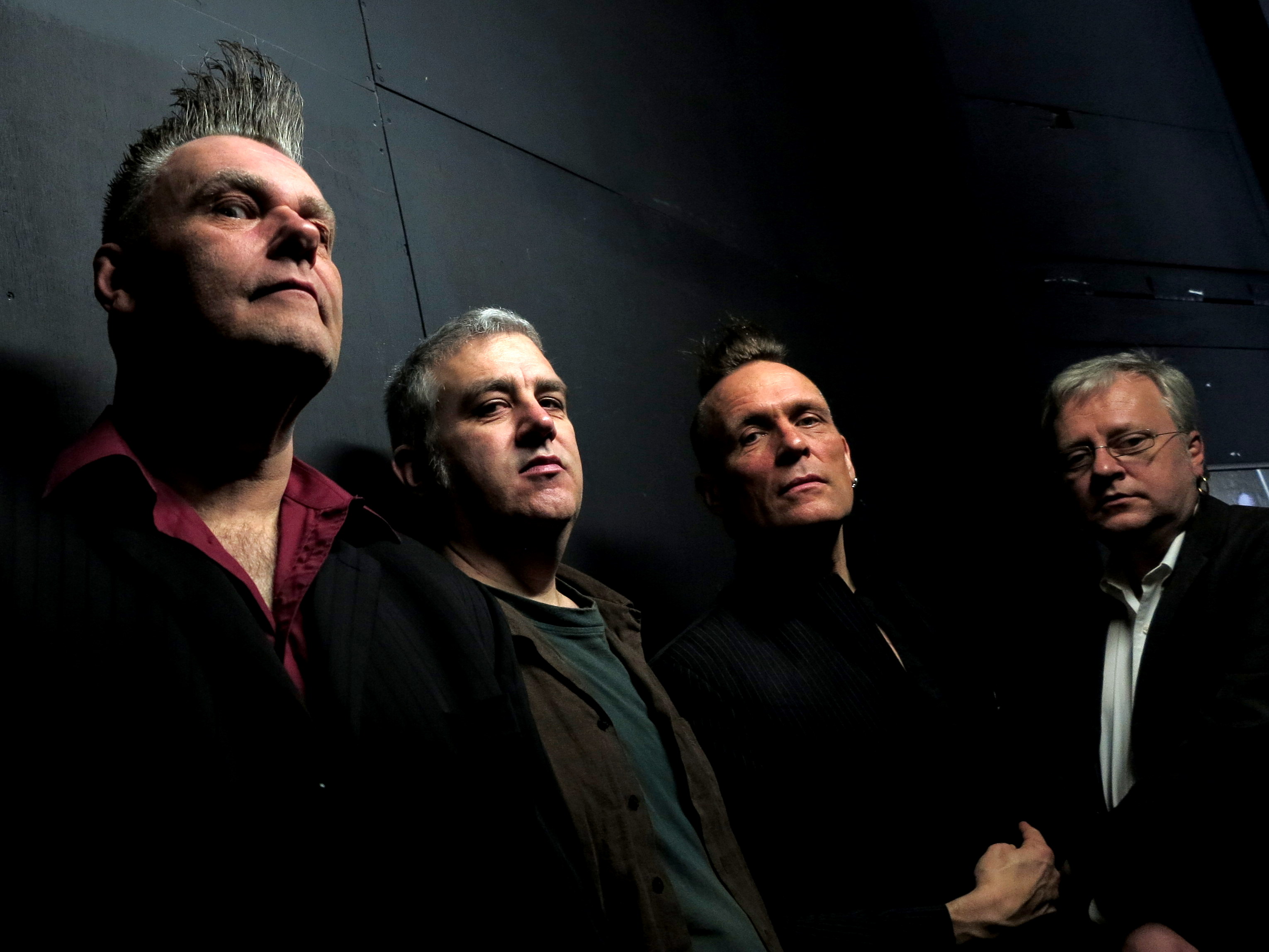
“Steve’s still involved with Stag (back in Seattle), and we’re playing America in May and June, so he’s coming over to Vegas to see us, and was thinking of bringing the rest of the band, hoping to support us.”

Wow, what a bill that would be. And maybe you’ll stay and do a residency there for a few years, Elvis Presley style. I can see it now … The Undertones – the Vegas years.

“Ha. The Lost Vegas years! Yeah.”

Chips Again: The Undertones’ second coming. From the left – John O’Neill, Paul McLoone, Damian O’Neill, Billy Doherty, Mickey Bradley

Will you be playing anywhere over there that you played with The Clash in late ’79?

“Well, we’re playing New York … not the Palladium though! We’re doing two shows there, and Boston, then (Las) Vegas and California (San Diego, Santa Ana and Los Angeles) … where we never made it with The Clash of course … much to my chagrin. We had frickin’ girlfriends! But I can’t complain, can I.”

Clearly that still rankles a little with Damian. Ah well.

“We’re also doing a few sporadic shows, including a few festivals, but then it’s kind of winding down again. Billy’s not been in great health recently, having had heart problems over the last year, so it’s been decided not to do as many as in the past. But we should be playing with Madness at their House of Fun Weekender at Butlin’s in Minehead.”

That event runs from November 29th to December 2nd, with details here, while those other appearances include festivals in Stanhope, County Durham (June 29th), Liverpool (July 6th), Perth (July 20th), Macclesfield, Cheshire (August 3rd), Cork (August 4th), and Henley-on-Thames, Oxfordshire (August 17th).

Finally, while The Undertones remain a band on the up all these years on, revitalised since 1999 when hometown lad Paul McLoone joined as frontman, there are new kids on the block too, winning the plaudits. Has Dee been enjoying the second series of Lisa McGee’s acclaimed sitcom Derry Girls?

“It’s very good. It’s gone down a treat as well. It’s put Derry on the map, which is brilliant. I was thinking, ‘Fuck, they’ve usurped The Undertones! Derry is now synonymous with Derry Girls, and not The Undertones.”

Male Models: The Undertones, still causing audience excitement 40 years after releasing their debut album

The Undertones and the Neville Staple Band tour continues this week (all shows doors 7pm,with tickets £25 advance) at: Thursday 9 May – Newcastle Boiler Shop; Friday 10  May – Leeds O2 Academy (0113 389 1555); Saturday 11 May – Manchester O2 Ritz (0161 714 4140); Thursday 16 May – Norwich Open (01603 763111); Friday 17  May – Bexhill De La Warr Pavilion (01424 229111); Saturday 18 May – Southampton Engine Rooms (0800 688 9311 ).

For an April 2018 feature/interview with Damian O’Neill, head here, and for a Mickey Bradley feature/interview from November 2017, including links to past Undertones-related interviews on this site, head here. Meanwhile, for more details of The Undertones’ 2019 schedule, including US tour, UK and Irish festival appearances, head here, try their website and keep in touch via Facebook, Twitter and Instagram.

Three of the photographs used in this feature were sourced from a special feature/interview on Roger Bechirian by Pete Weiss for the TapeOp website, with a link to his informative piece here.


Posted in Books Films, TV & Radio, Comedy & Theatre, Music | Tagged , , , , , , , , , , , , , , , , , , , , , , | 5 Comments