On Tour: Not the bike race – the David Baddiel interview

Family Man: David Baddiel, out on tour across the nation, right through to early July

After a sold-out run at the Menier Chocolate Factory and in London’s West End, comedian, novelist and TV presenter David Baddiel is taking his Olivier-nominated one-man show to theatres nationwide, with four dates already in the bag when we caught up.

My Family: Not the Sitcom is the follow up to 2013’s Fame: Not the Musical, David’s return to stand-up after several years. And as much as he enjoyed the previous tour, the new show is taking him into new areas, and he’s loving the reaction.

As his press release put it, ‘It’s a show about memory, ageing, infidelity, dysfunctional relatives, moral policing on social media, golf, and gay cats.’ Not your average stand-up show then. It’s also, ‘A massively disrespectful celebration of the lives of David Baddiel’s late sex-mad mother, Sarah, and dementia-ridden father, Colin,’ so we need to, ‘Come and be offended on David’s behalf.’

The 53-year-old Londoner is perhaps still best known for early ‘90s radio and TV comedy, The Mary Whitehouse Experience, alongside Rob Newman, Hugh Dennis and Steve Punt, and fellow BBC hit Fantasy Football League in the mid-’90s, with Frank Skinner. These days though, the father-of-two, married to fellow comedian Morwenna Banks, has seen his writing take precedence, both his adult and children’s novels. But right now, it’s his take on his parents grabbing the attention, following on from an autobiographical peek into his family through last year’s powerful Channel 4 documentary The Trouble With Dad, a very personal insight into dealing with a loved one’s dementia.

But don’t expect him to portray his folks – his mother died in 2014 – as saints. As he explains, “When family members die, or are lost to dementia, all we tend to say about them is that they were wonderful. But if that’s all you can say about them, you may as well say nothing. To truly remember our loved ones, you have to call up their weirdnesses, their madnesses, their flaws. Because the dead, despite what we may think, are not angels.”

The critical reaction to his latest show has been quite something, not least the reviews in the Evening Standard, The Guardian, The Telegraph and The Times. Then there’s all that social media praise, from the likes of JK Rowling, Russell Brand, Ricky Gervais, Hugh Laurie, Lily Allen, Graham Norton, Rob Brydon, Jack Dee, Sue Perkins, David Mitchell, David Walliams, Matt Lucas, Ross Noble, Katherine Ryan, Bill Bailey, George Ezra, David Morrissey, Chris Evans, Alan Carr … What’s more, as I suggest to him, it doesn’t seem like the average rent-a-quote West End back-patting.

“Well, that’s nice for you to say. It’s been really great, the reaction. I think because the show is very personal, and authentic, people respond to that. And every word is true. Despite being very personal to me, it also seems to speak to people about their own family experience. I think that’s what happens.”

His next date is on Friday, February 23rd, a sell-out at Chester’s Storyhouse, followed by a visit to Birmingham Alexandra on Wednesday, February 28th, then – my excuse for talking to David – a two-night run at Lancaster Grand on Thursday, March 1st and Friday, March 2nd. And when we spoke he was extremely pleased with the response to the first regional shows.

“Yes, I’ve done four already – Aberdeen, Bath, Truro and Cheltenham – and they’ve all gone really well, as is often the case. While I had a lovely time in the West End, out of London it’s really brilliant. There’s a real sense of joy at these gigs.”

It’s a truly personal show, as you say, and a different form of stand-up to that which perhaps we might have expected from you back in the ’90s. Is it good to be back out there playing live again? Because, let’s face it, you’re not exactly a regular gigging comedian these days.

“Well, I did a show in 2013, Fame: Not the Musical, the first time I came back to stand up after having not done it for a while, with a new type of stand-up, much more storytelling, including a screen, using clips, and very autobiographical. So it was a different type of stand-up, although not a million miles from what I did. It felt a bit more mature, for want of a better word.

“I hadn’t done it for a bit, but partly because I was having children and all sorts of things. It wasn’t because I didn’t want to perform. But I performed so much in the ‘90s, touring and doing all this for such a long time. It’s very all-consuming, stand-up comedy, so I think I needed time away from it. I wasn’t sure how it would feel to come back to it. But it felt really great.

“This show particularly has touched a chord with people, and that’s different to how it was. I used to enjoy getting laughs but didn’t get the sense I get with this – that people think it’s spoken to them and they want to tell me about their family and all that. It’s really lovely.”

Stand-up comedy can be a lonely profession, not least as you’re out there on your own most nights, even away from mates doing the same job in other towns.

“Well, you do bump into people quite a lot, and one of the things about having done this for a long time is that you do feel part of a little community. It’s a funny old thing, that.

“Actually, to say something rather bleak, when Sean Hughes died, I went to his funeral and part of going was seeing like 40 comedians from my generation, all feeling sad but also part of a real community. We were mourning one of our own, who came up in the same generation, and there’s something really nice about that. It’s not very competitive or anything. It’s very comradely.

“Funnily enough, Rob Newman is playing Salford Lowry the same night as me. And without going on about it, he’s in the smaller room! So it’s the first time Newman and Baddiel will be performing in the same theatre on the same night in … ”

Well at the end of this year it will be 25 years since those huge Wembley gigs you did together, won’t it?

“Yeah, and actually they offered us a gig … but it’s not going to be happening. Wembley did offer a big 25th anniversary gig. I was sort of interested. I think Rob wasn’t. I wasn’t sure either, because I didn’t quite know what we were going to do. But we wouldn’t have to dress up as History Today people, because we already look like them.”

Baddiel Sprit: David Baddiel and his Dad, Colin, putting the world to rights.

At the same time, is this you trying to redress the balance. I mean, was there a danger of you just becoming known as that bloke married to Mummy Pig and Dr Hamster from Peppa Pig.

“Well, that’s alright. I don’t mind that. I can only be proud. Actually, of that younger generation, a lot are now into the kids’ books. The other day I was in a shop and this woman told me her daughter was a massive fan. She was around 10. Then she said, ‘Can I have your autograph, because I used to come and see you.’ So that’s nice.

At this point, David seems to have a go at me for suggesting – and I wasn’t, by the way – that his beloved Morwenna might just be the mother of his teenage children plus TV favourites Peppa and George, letting me know about her recent writing with Jo Brand for Channel 4 sitcom, Damned, set in the children’s services department office of a local council, starring its writers plus former writewyattuk interviewee Alan Davies, Kevin Eldon, Himesh Patel, Isy Suttie, Georgie Glen, and Aisling Bea. If you’ve not caught up on last autumn’s first series, you best hurry as they’re now running the second one, which began last week.

Anyway, I soon re-dress the balance, talking about Morwenna’s West Country roots and our mutual love of Cornwall.

“We’ve just come back from there, because my second or third night of the tour was in Truro. We decided after that gig to spend some time doing a whistle-stop tour of her family, who are mainly still there. We normally go there two or three times a year, and one thing I’ve noticed about Cornish people is that wherever they are, they have a yearning to return, in a way that I don’t have a particular yearning to return to Cricklewood. We spend a lot of time there. And it’s especially nice now, opposed to in the summer when it’s mental. Now there’s hardly anyone there, so it’s really nice.”

You mentioned Rob Newman before, and I see that next year marks the 30th anniversary of the radio pilot of The Mary Whitehouse Experience.

“Really? I saw Rob’s show recently, the stand-up show he’s doing now, and we had a long chat after, and we get on really well now, me and him. Frank (Skinner) and me are mates and he lives in my road, and while I don’t see him every day I see him a lot and we’re still very close. Me and Rob aren’t, but we’ve become more friendly in the last year or so.

“He came to see my show in the West End. He tweeted, asking for tickets, not realising that was a public message! It was all very nice though. There’s no animosity anymore, which is nice, but I doubt we’re going to work together any more. What Rob does and what I do now don’t really link together in the same way.”

Sleeping Partners: The Mary Whitehouse's (from the left) Steve Punt, Rob Newman, David Baddiel and Hugh Dennis get to grips with their inspiration. (Photo copyright: BBC)

Sleeping Partners: The Mary Whitehouse’s (from the left) Steve Punt, Rob Newman, David Baddiel and Hugh Dennis get to grips with their inspiration. (Photo copyright: BBC)

I see at one point The Mary Whitehouse Experience might have been named The William Rees-Mogg Experience. Might we see a new spin on that now, as The Jacob Rees-Mogg Experience perhaps?

‘I’m very happy for someone else to do The Jacob Rees-Mogg Experience. And he could do it himself, because he is basically a comedy character. We have this situation now where politicians are like comedy characters – Boris Johnson, Nigel Farage, Jacob Rees-Mogg … You can imagine them being played by Harry Enfield.

“It’s almost as if a politician can’t get noticed anymore unless he or she has big, stupid, grotesque characters. I don’t know why. But I suppose John Major managed to be Prime Minister for eight years and no one even noticed him.”

While we’re on politics, talking to Mark Steel recently about Trump’s America and Brexit Britain, he was of the opinion that – as per his latest live show – ‘Everything’s Gonna Be Alright’ and the tide is turning. Do you share that optimism?

“I don’t really know. I’d like to think so. Things are getting more extreme, and I think that’s driven mainly by technology. We have technology that allows very quick mass communication, all the time, and It suggests in theory there’s going to be this lovely communication between all people at all times.

“But what’s really happening is that those who shout loudest are the ones most heard. So you end up essentially with an internet troll being President of the United States. That has happened very quickly. I don’t think anyone could have imagined Donald Trump or someone like him being President 10 years ago. And that’s not for any other reason than because of the internet.

“That’s a man who built his image and brand on Twitter, and as we know you can build your image and brand there by just saying very brash, loud, mad things. That is a worry, but I don’t think it necessarily means everything will be terrible, because things go in cycles, and maybe there will be a calming down.”
You’re wrapped up with your tour at the moment, I’m sure, but are there any more novels on their way?

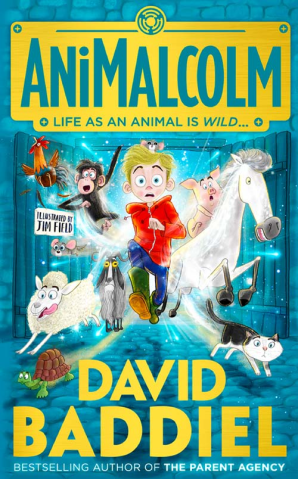
“Not adult books, but the children’s novels have done so well that I’ve become someone who thinks I should keep writing these, and they’re a joy to write and it’s a joy the way kids interact with them. I have another of those coming in October, which is going well, and I’m also written a film of the first one, The Parent’s Agency, which Is currently being thrashed out by the studio. We’re looking for a director at the moment. Then there’s AniMalcolm, my fourth children’s book, which is being made into a theatre show by Story Pocket Theatre, a puppet theatre company, and that will be touring in your area too.”

A year ago, David returned to our screens, with his brother Ivor in a moving documentary about their father, Colin Baddiel, filmed over the course of a year, charting their attempts to care for the 82-year-old, living with a form of frontotemporal dementia, known as Pick’s disease, that has affected the part of his brain that controls personality and behaviour.

You clearly got a good reaction to Channel 4’s The Trouble With Dad, which I’m guessing was the route for this show, in a sense.

“I was already doing this. In fact, it’s got footage in it of me doing this in the Menier Chocolate Factory when I started. The show’s changed quite a lot but it’s the same basic show. Then, because I was doing the show, the company who made that documentary got in touch, wondering if there was more to be said specifically about my Dad and this type of dementia.

“I wasn’t sure at first, but in the end they gave me and my brother a lot of control over it, and I felt very happy with that. And it seemed to touch a lot of people, that documentary. I was very glad to do it.”

You made a nice point recently about a perceived betrayal, letting on to others that a loved one has dementia when you haven’t had permission from them to say so. I’m sure a lot of us have encountered similar feelings of guilt.

“At the end of the day, I’d say that when one’s parents, either through death or dementia, aren’t able to tell their own stories, you have to accept that their children are the ones going to tell the story. You have a choice of going to silence or a very bland memory of them being a lovely person, or the true story, which will be more complicated. I consider it to be a bigger act of love to tell the true story. That’s the choice you have, and you’ll always be slightly conflicted about that. But I think the conflict is all part of it.”

You mentioned Frank Skinner before. Will you be off to Russia for the World Cup with him this June?

“We’re not planning anything. I’m still on tour for the first part. I’ve tried to carve out the England games, although for the big one against Belgium I think I’m in Stoke, so I’ve asked for it to be put back.

“The trouble with doing stuff around the World Cup is that you’re always dependent on what England do, and you don’t want to put too much store on that and build a whole show around England getting to the World Cup Final and winning it. I think that would be a mistake.”

Sofa so Good: Baddiel and Skinner catch up on the telly for Fantasy Football League. (Photo copyright: BBC)

When I spoke to Frank four years ago (with a link here), just before the World Cup in Brazil, he was of the opinion that he’d probably be happier watching it all at home rather than heading out there.

“Well, we’ve gone to quite a few, going to Germany in 2006 and South Africa in 2010, and had a brilliant time. Those podcasts were really fun. But it’s also nice to watch it at home, so I agree with him.”

You previously shared something of your family history on Who Do You Think You Are? In 2004, not least your Jewish heritage and details of the Government’s internment policy for refugees from Nazi Germany during the Second World War. That also proved to be powerful viewing.

“Well, I wrote a book about that, a novel called The Secret Purposes, based very loosely on my Grandfather’s experiences on the Isle of Man. I felt it wasn’t very well known, like a secret part of British history. And for me it remains so. I think most people still don’t know that refugees were interned on the Isle of Man, in the case of my Grandfather for around two years. But it’s good if it’s opened up something.”

Finally, it’s too late for our own parents, but dementia is a ticking timebomb for our futures. What, in your view, needs to be done? Is it about throwing money at scientific research, care improvements, or both?

“I don’t know. Sorry! All the things it involves with me talking about dementia in my show, people tend to come to me for answers. A woman wrote to me saying her Dad had got the same type of frontal lobe dementia that my Dad had and was getting no help from her local NHS authority, and did I have any advice. And I don’t.

“All I am is a comedian and a storyteller. I can only tell my own story. I can’t fix stuff like that. I wished her all the best, but I’m afraid I don’t know what should be done.”

Well, I’m sure just by talking about it so openly, you’re making a big difference, helping open up the debate.

“Well, I hope so. Thank you.”

Talking Family: David Baddiel, coming to a theatre near you at some stage over the next four months.

David Baddiel’s My Family: Not the Sitcom is out and about around the UK between now and July 2nd’s finale at Bristol Hippodrome. For a full list of dates and ticket information, head to his website.  
Posted in Books Films, TV & Radio, Comedy & Theatre, Football | Tagged , , , , , , , , , , , , , , | 3 Comments

Getting by in time – back in touch with Rick Buckler

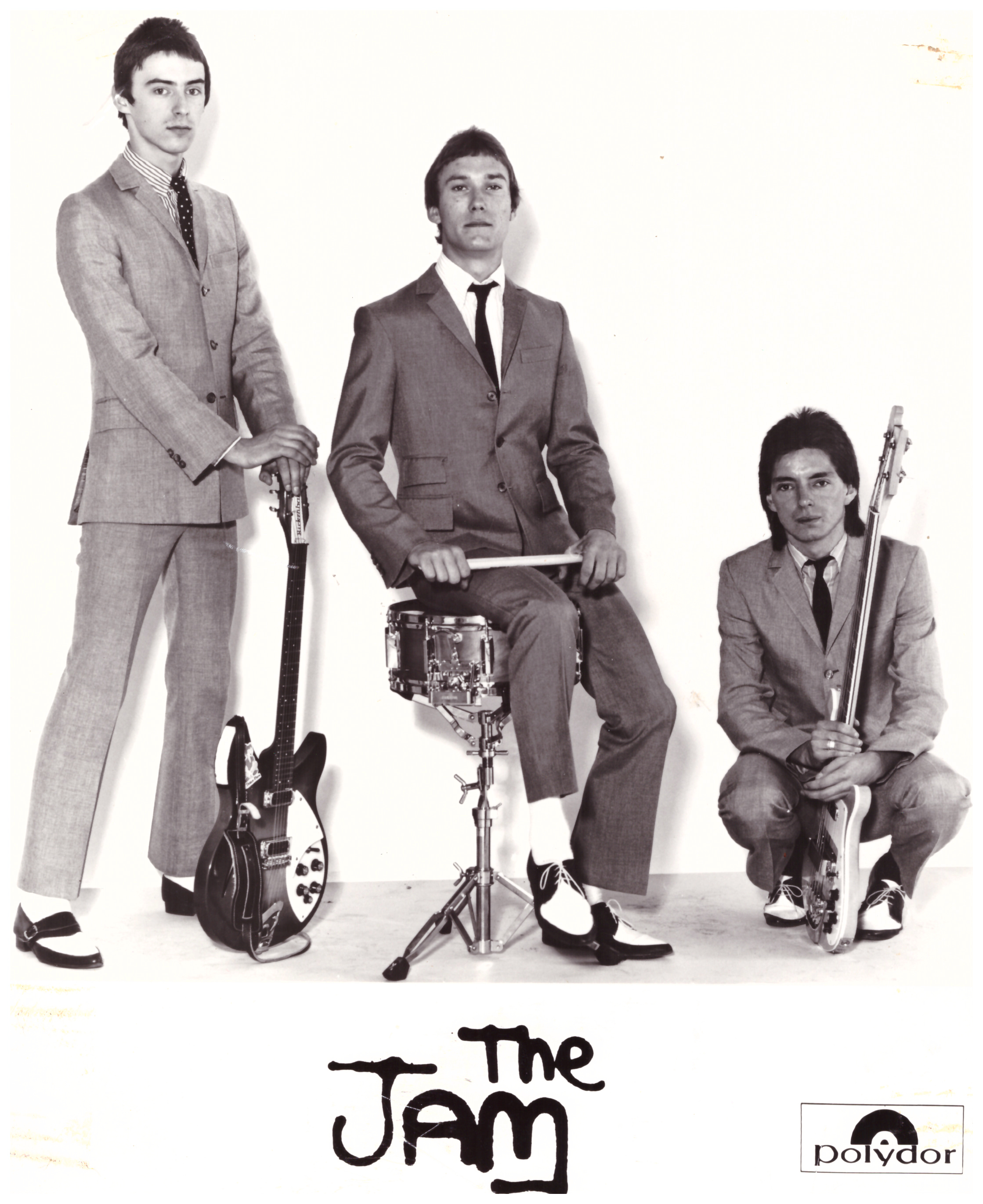
Stage Presence: The Jam back in the early days (Photo: The Jam/Rick Buckler)

To misquote A Town Called Malice, I’ll start by apologising for the things I’ve never done. On a family taxi duty the Sunday before last, I cut my eldest daughter short as she told me what she’d been up to that afternoon, so I could hear the radio. Then, 10 minutes later, my better half’s mum got similar short shrift on the next shuttle service, all social enquiries met with monosyllabic responses. But it’s Rick Buckler’s fault. Honest.

Rick was on BBC Radio 2, chatting to Johnnie Walker on Sounds of the 70s about his new book and halcyon days with The Jam, between some cracking selections from such a rich era for music. It was on the iPlayer later (still is, if you’re quick enough, via this BBC link), so I couldn’t really moan, but I just wanted to listen in live, hear one of my musical heroes.

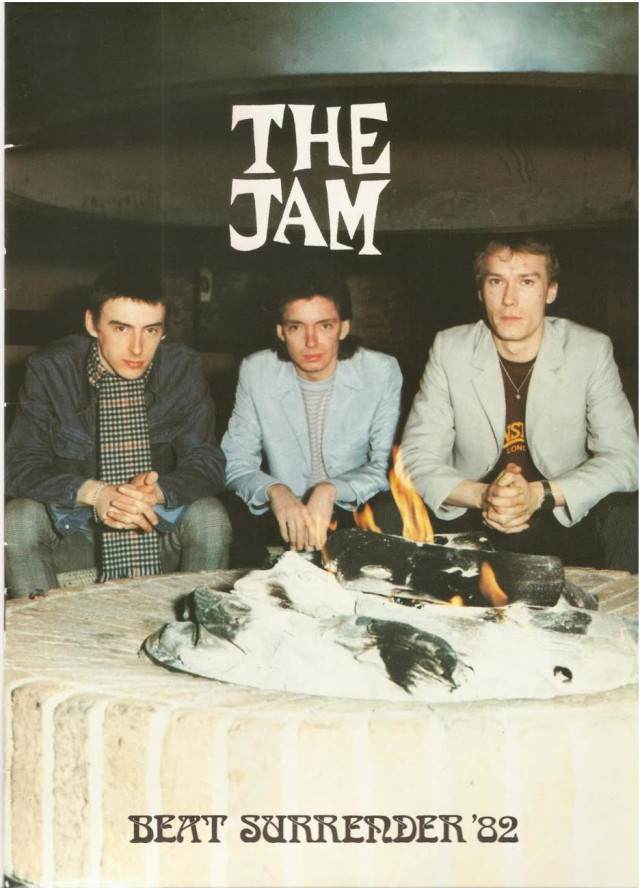
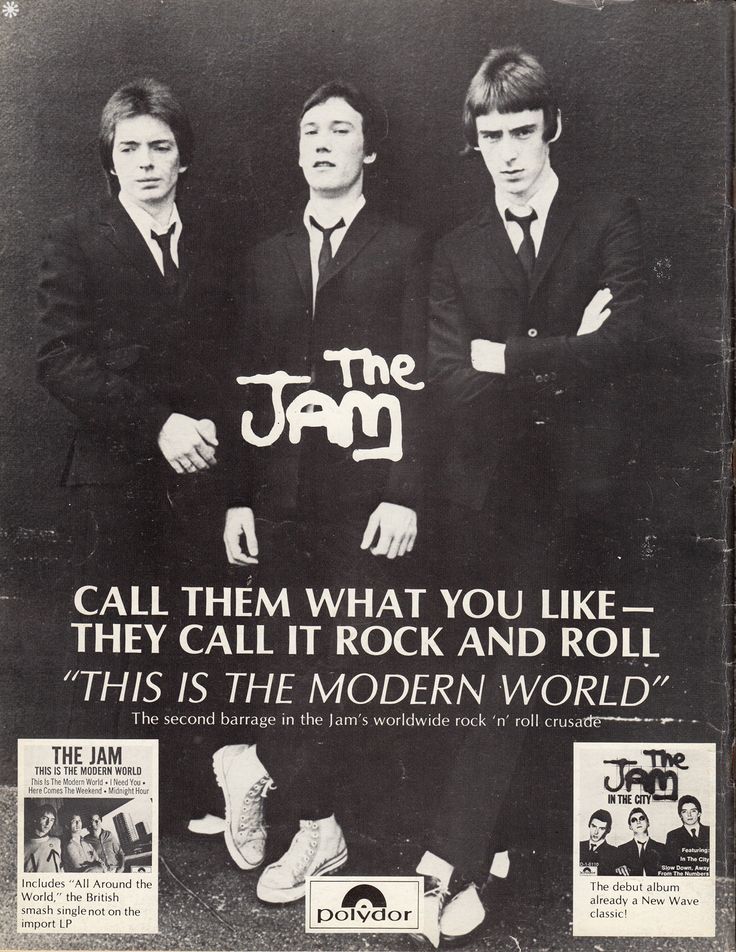
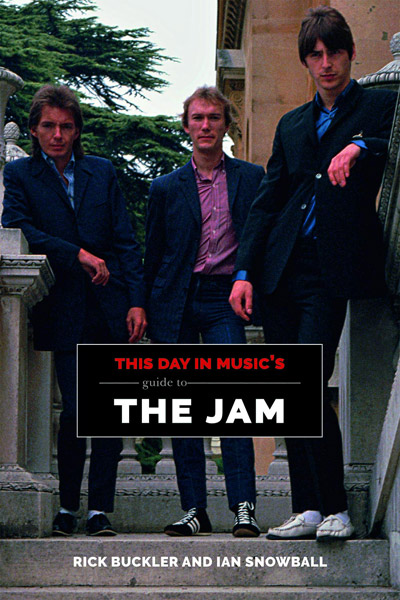
The Jam were a big influence on me in the late ’70s and early ’80s, and remain so 35 years after front-man Paul pulled the plug. I’m not alone in that thinking. So many of us grew up with the band and other great acts from those punk, new wave and post-punk years, including Rick’s co-writer and previous writewyattuk interviewee Ian Snowball, who previously helped the legendary drummer with 2015’s That’s Entertainment: My Life in The Jam. There was crowd-funded 2017 illustrated novel, The Jam: The Start to ’77 too, and now a further great read, The Dead Straight Guide to The Jam. And Rick’s rightly proud of it.

The morning after his radio appearance, I told Rick (who previously featured on these pages in April 2015, with a link here) I enjoyed his radio guest slot, and it was nice to hear a presenter play less obvious choices, like 1977’s Batman Theme and Non-Stop Dancing and 1979’s The Butterfly Collector.

“I’m of the same mind. I very much like A Town Called Malice and all those tracks, but it’s great to hear others like Liza Radley, Ghosts, The Butterfly Collector … still fabulous. Of course, I would say that though, wouldn’t I!”

They’re just so evocative of that whole era.

“Yeah, to me they’re almost like old friends. You think, ‘Crikey, I haven’t heard this in such a long time!’ Like the Batman Theme.”

It was nice to hear your own choices too – Ian Dury, T-Rex, and XTC, who I’ve recently started listening to again, both them and psychedelic offshoot, The Dukes of Stratosphear. I always got the feeling that, as with bands like Wire, they were seen as too clever for that initial punk scene.

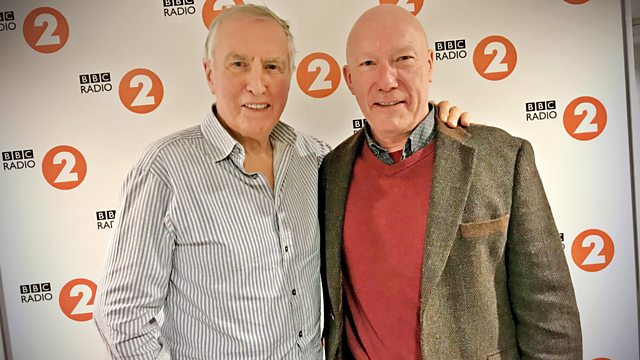
Seventies Icons: Johnnie Walker receives a visit from Rick Buckler, February 2018 (Photo: BBC)

“I was in a van one say and on the radio they were asking, ‘Do you know who this band is, and I’m going, ‘I know! I know!’ It was The Dukes of Stratophear. But it was one of those phone-in competitions, and by the time I’d had chance to phone it was too late. But that was a very strange offshoot for them.

“But yeah, I always felt an affinity with XTC. They weren’t really punk but were a great talent and some of the things they did were very innovative, very creative. They wrote for themselves.  I thought that was a fabulous stance, especially where record companies were pushing everybody towards chart music, where the money is. I got on with them really well. They were from Swindon, and I’ve got family from there. My wife’s sister lives down there. I got into them with Drums and Wires, their third album, and met them on a couple of occasions, at Townhouse Studios.”

Of course, where The Jam recorded Setting Sons (1979) and Sound Affects (1980), just two of their four consecutive top-10 LPs, th last one, The Gift, a UK No.1. Then there were the 18 straight top-40 singles, including four No.1s, and so much more. And that’s just part of the story told by Rick and ‘Snowy’ in the new book – from the band’s Woking roots right through, including an 80-plus page ‘Jamology’.

But hang on. Another Jam book? Even before Paolo Hewitt’s A Beat Concerto in 1983, there was a lot written about The Jam. Is this Rick’s chance to set the record straight on a few of those, from someone who was actually there? Don’t get me wroing, it’s certainly a worthy accompaniment to Rick’s 2015 memoir, That’s Entertainment – My Life in The Jam.

“I know from experience there are some bad books about The Jam, written by people just doing it so they can make a fast buck, and it comes across like that when you read some of them. I know one guy who wrote one who never went to a Jam show yet writes about us as if he was there. It’s infuriating, because if people don’t know these things then pick up the book they think some of it’s true. I suppose I shouldn’t get annoyed, but I do, and I’m sure it annoys a lot of other people when things are said and written about that get proliferated, like Chinese whispers.

“One of the reasons I thought this would be nice to do was because the autobiography was about my story from the inside, so I didn’t get into facts and figures, why things were recorded, dates, tours, and all that. It was really more of a personal experience, an inside story of The Jam. So to be given the chance to put some of the stuff right from some of the other books that have come out … We did have some information put forward to include, lifted from Wikipedia, and we were like, ‘hang on, are you really suggesting that?”

There’s also an element of mythology about The Jam and other key bands from that era, which seems to have become accepted over the years as truth.

“There are a couple of dangers I come across, and one is people rewriting history to suit their situation now rather than talking about what was actually happening at the time. One thing that people who would like to read about this would like to see is stuff they feel is correct and not too much of an opinion, but not so wide of the mark.”

Was it a relief to get your version out and set the record straight on a fair bit?

“Well, yeah. That wasn’t the main reason, but it’s in the back of your mind when you’ve heard a story over and over again. Even the silly one about why The Jam got their name, this silly story about it coming from a pot of jam one morning, which is ridiculously wrong but often bandied about.

“We’ve tried very hard to get things factually right as much as we possibly can, even though it’s all a long time ago. I also don’t think it’s a good idea to put a political or personal agenda for the righting of any wrongs. It’s just a matter of trying to get it right. That was the main agenda, and Snowy was great in checking a lot of the facts.”

I have to give you full credit for, in That’s Entertainment (which I hadn’t had a chance to read before my last feature/interview with Rick), trying to avoid anything too detrimental about your relationship with (fellow ex-bandmates) Paul (Weller) and Bruce (Foxton). It’s as if the music press is out to goad the three of you sometimes, feeding an appetite for a perceived, public war of words.

“Well, you could rub your hands together, think, ‘Now’s me chance!’ But I have to tap myself on the shoulder, have a word with myself, say, ‘Come on!’ The relationship might not be really close with Paul and might not be really close with Bruce, but back in the day it was very close, and I think the fans like to hear it without any encumbrances, shall we say.

“I look back with very fond memories, how we managed to do really good things, achieve a great deal. All the bickering and court cases, that sort of stuff happened after. It was a real shame it did, but it had nothing to do with what people actually remember about The Jam or what actually put us on the road to where we are. So I try and stay away from all that.”

You see it a lot with successful bands, with people cut out from someone’s past, and it often takes a long time for old wounds to heal. You seem to have remained fairly grounded though. On the kiss-and-make-up front, we haven’t quite got there with The Jam, but maybe Paul’s never been the sort to publicly acknowledge all aspects of his past. He’s always appears to be more about looking forward, not dwelling on what’s gone.

“Well, that’s always been his attitude, and it’s a real shame, talking to the fans. I think a lot of them don’t like the idea that he was in denial about The Jam for a long time, and when he was with The Style Council he wouldn’t play the songs, he wouldn’t talk about it. It was almost as if it didn’t exist and it wasn’t the reason why he was where he was. A lot of Jam fans don’t like that attitude.

“I think fame has its pressures though, which sometimes people don’t realise unless you’re in that situation. It’s easy to isolate yourself from the world – that’s the easy way out. This may sound a bit crazy, but from a very early age I never liked pop stars, and I mean that in the most derogatory term! People who might think, ‘Don’t you know who I am?’ It turns me off completely.”

Perhaps that’s why the initial punk scene appealed to you, Paul and Bruce – that whole ‘year zero’ mentality, starting on an equal plane.

“Yeah, it was something that brought everything together – that attitude of not needing big record companies and this mega-arena rock attitude. That was very strong. People starting fanzines, saying they could do all this themselves – create our own audiences, make our own magazines. There was that ethos, which was fabulous.”

At that point, we went off-subject, reminiscing about our mutual Surrey history, not least respective links to Woking, our fathers and their days as postmen and working on the railway before that, plus links to the town’s James Walker factory, where both my Grandad Wyatt and Paul’s dad John Weller (who managed The Jam) worked. Rick lives on the outskirts of his hometown these days. Does he ever wander around town? His namesake, Status Quo guitar legend Rick Parfitt, let on that he’d often sit in a car outside key locations around Woking and reminisce about his youth. How about this Rick?

“I do go into Woking. There isn’t very much of it left though! Even as we speak, they’ve knocked down another part, putting something else up. Some of the bits I remember as a child are simply not there anymore. The place is a different town altogether.”

As I’m transcribing all this, Weller’s lines, ‘The Place I Love is a million miles away’ and ‘Found myself in a Strange Town’ spring to mind. Then again, I’ve plenty of great Jam quotes floating around my head most days.

“It is a shame. But on the other hand, there’s a lot of housing, and Church Street (where his first family home was) was a very long road. I don’t know how the Germans managed to miss it! It should have been demolished a long time ago. When we were living there, they were absolutely dreadful, those houses. So I don’t really hanker after those days in that respect.

“My Mum’s still alive. She’s 97 and doesn’t talk much about the war, but it became such a big part of everybody’s lives, with no say-so in it. A real life-changer for everybody. Of course, that James  Walker factory’s all gone now.”

At this point, Rick recounts a story told in That’s Entertainment about the day John Weller, in his Teddy Boy days, ran out of Brylcreem so applied butter to his DA quiff with his comb to keep it in place, then fell asleep on the factory roof one sunny day after working on some repairs, waking up to the smell of burning popcorn in his hair.

We soon get on to the subject of great bands from that era doing the rounds again, not least friends of The Jam like The Vapors (with interviews with Dave Fenton and Ed Bazalgette elsewhere on this site, plus a late 2016 review from Liverpool Arts Club). Then of course, there’s From the Jam, Rick having left after four years in 2009, but with founder members Bruce Foxton and Russell Hastings still out there, and recording too. Those two bands, and fellow Surrey lads The Stranglers have proved it doesn’t just have to be a heritage nostalgia thing.

“I think so. I’m in two minds about some bands getting back together. I did it because I wanted to revisit the songs. Which we did, and I thought that was absolutely fabulous.”

And you didn’t really get that chance before, with the band splitting when they did in late ’82. I get the feeling Bruce has really enjoyed revisiting all those songs live. As you did … to to an extent.

“Yeah. In the same way, a lot of the Modern World songs got passed over, for all sorts of reasons. But after a while it is very disheartening to just keep playing the same old stuff. A band mustn’t become boring. Once you get into that state of doing it over and over again … It’s nice to do it for the fans, but it can be soul-destroying.”

I did get that vibe from your That’s Entertainment book, but that’s something Bruce and Russell seem to have moved on from. Which is a kind of a shame from your point of view, because I know you wanted to go down that road – writing songs again, something they’ve done since. Very good ones too.

“Yeah, it’s a shame Bruce didn’t pick up on that at the time, because … It was a dilemma, because people came to see us to hear Jam songs, and Dave Moore (with From The Jam at the beginning, but leaving in the same year as Rick) had written songs. Bruce wasn’t a prolific writer. That’s not really his thing, so we had some new material, but it just wasn’t going to be entertained.

“It was a bit of a choice – do we bite the hand that feeds us by not playing so much Jam stuff and trying to move on? Bruce wasn’t really into that, at all. But he must have come around to it since.”

Away from the writing, and with your band days seemingly behind you, are you still involved with band management and consultancy?

“I’m not doing anything with anyone at the moment. The last thing I did was with a young band. Most of the time I got involved because I’ve liked what I’ve seen in them and I’ve thought I could help, getting them shows. But it’s very frustrating that you can’t approach record companies, because they’re simply not interested these days. It’s all so media-driven. It’s not quite the same, but from a ground level it’s nice to give a band a hand.

“The Brompton Mix were the band I last had something to do with. They found it very difficult to get gigs outside Woking, and were running out of places to play in that area. I at least got them supports with The UK Subs and The Blockheads and Stiff Little Fingers, and as far afield as Southampton and going up North. That was good, but it was the usual problems with bands – keeping it all together with girlfriends, jobs, peer pressure … Unfortunately, they fell apart at the seams eventually – an old story as far as bands are concerned.”

Thinking back to your own formative days with The Jam, did Chris Parry (who signed them to Polydor) look after the three of you?

“He did, yeah. He was a good man to have on your side. He was obviously a conduit to the record company, but was a drummer himself, a New Zealander who’d come over to make his way in the world, in the industry. He had a lot of empathy with what we were doing and I think he was genuinely excited about the band and what was happening in London.

“At that time, I remember mostly that we’d like seeing him because he’d take us out to spend record company money on a free lunch! You were expected to work all day and most of the night in a recording studio, so to have somebody there who could take you out and know where some of these restaurants and burger bars were … well, it made us feel that there was somebody on our side.”

Have your children followed you into the music industry?

“Not at all. They’re doing okay though. My son works in online credit card security, and is good with computers. He’s doing well for himself, while my daughter’s in events management. She worked at the Ritz until recently and now works for another London company. Well, I keep calling them children, but my son’s 32 and my daughter’s 25!”

Time flies. And am I right in saying it’s 40 years with your better half, Lesley, this year? That’s a long stretch, something to be proud of.

“Yes! We were living together a long time before we married. You get less for murder. Ha! No, I shouldn’t say things like that. It’s amazing and I suppose in this day and age that (amount of time) seems unusual.”

Getting back to the book, it includes a ‘top 50’ of Jam tracks compiled by you and Snowy, with in-depth detail. That’s no easy task, surely – trying to choose which to include.

“It wasn’t really. We had to go for more obvious choices, then look at other singles, key album tracks, then found we had a few left and could think about songs I felt were under-heard, take that route.

“I enjoyed going through the process of why songs were recorded, how they came about. There’s this school of thought that Paul wrote everything. I’m not taking anything away from Paul. He did write a lot of lyrics and come in with a lot of ideas, but so did we.

“Start, for instance, was from a bassline that Bruce was playing around with, so you could argue that he wrote that and Paul added lyrics. But that’s not the way it’s credited, and there’s a lot of that.”

Well, I think of Funeral Pyre, which seemed to be was built around your drumming.

“Well, yeah, and I think by that time someone had to have a word. By that time it was blatantly unfair. But the point I’m making is … we worked together, put songs together, rehearsed together. How we were going to play and present and how they were written was very much a band process.”

Talking of which, and you touched on this with Johnnie Walker, it was such an impressive noise you made, despite only being a three-piece. I get the impression there’s nowhere to hide as a trio.

“There is no place to hide, and we learned that quite early on. I think we were struggling to be a four-piece, so really felt we had to work hard, and that alone justified what the band were about. I think that’s why we were so powerful on stage – the fact that everybody’s pulling their weight and filling all those gaps with interesting things. We were big fans of cutting out the rubbish. If we thought it was getting boring or irrelevant, we’d drop it straight away – cut straight to the chase.”

This Day in Music’s Guide to The Jam by Rick Buckler & Ian Snowball is available now, revised and republished from its original edition, linked here.

Furthermore, my conversation with Rick included his recollections and thoughts on The Jam’s relationship with late ’70s / early ’80s rivals, The Clash, later incorporated in This Day in Music’s Guide to The Clash, which is linked here. 

Meanwhile, Ian Snowball has just completed The Last Black Angel (New Haven Publishing) with co-writer Pete McKenna, set around the New York punk scene. For more details check out Snowy’s Facebook writer’s page.

Posted in Books Films, TV & Radio, Music | Tagged , , , , , , , , , , , , , , | 1 Comment

Don’t worry ’bout a thing – back in conversation with Mark Steel

Bench Mark: Comedian, broadcaster and writer Mark Steel is heading for your town, again (Photo: Idil Sukan)

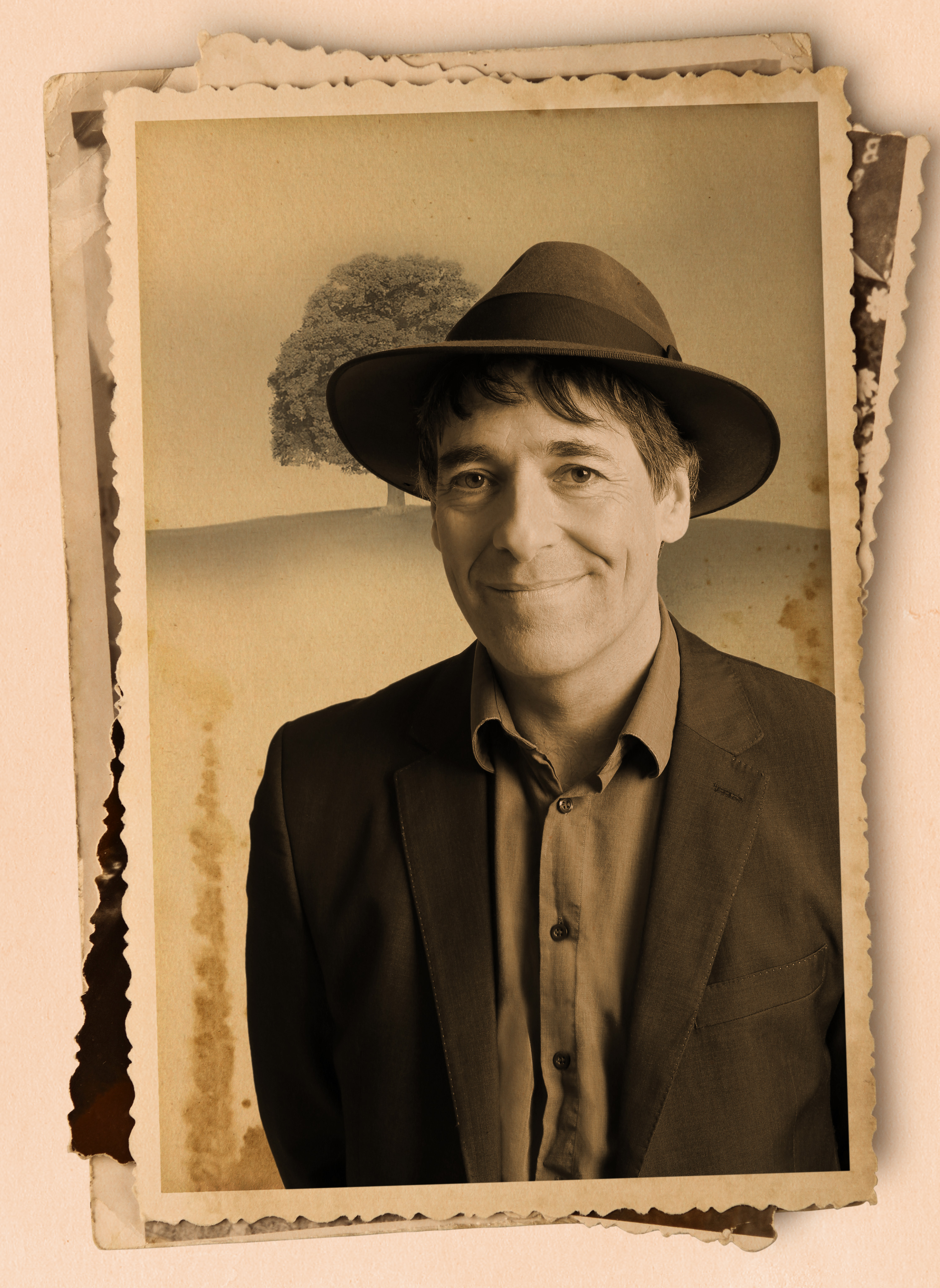
Have a chat with stand-up comic Mark Steel and it won’t be long before cricket, football or politics come up in conversation. And in my case all three, with geography and history thrown in.

The 57-year-old Kentish comedian, broadcaster, writer and political activist was at home in South London when I called, or ‘Crystal Palace, as ever’, as he put it. But he’s back on tour now. Does he, like Brighton fan Attila the Stockbroker, try to fit gigs around fixtures for his beloved football team?

“Well, every now and again one pops up on a midweek night in the Premier League, shifted for Phantasmagoric Tuesday, or something.”

We’re quickly off on a tangent, on to the subject of my own team, Woking, Mark becoming the interviewer, asking where we are in the league and all manner of questions, not least how tough it is at present for those teams without the ready finance to compete against so many ex-Football League sides trying to get back there. Yet, I tell him, I’d prefer that than having to deal with the prospect of some fly-by-night financial backer coming in, bankrupting the club then buggering off, potentially losing a club’s community-like vibe.

He understands that logic and starts talking about the up-and-down fortunes in recent seasons of everyone from Truro City to Wigan Athletic, and we eventually get back to our main subject, not least talk of how his BBC Radio 4 show, Mark Steel’s in Town – eight series into a run that started in 2009 – gives him an insight into pride of place issues.

“Doing my In Town series, I very much get a sense of that faux-nostalgic belief that community is something we had in the ‘60s and has now gone. But that over-plays what it was like then, and under-plays what it’s like now. I don’t think that series would work if there wasn’t a strong sense of community in all these towns … whatever that means.

“I suppose it’s about whether people in a town can all identify with the same thing and feel a sense of belonging to their one place, if I was to be like some twaddly academic about it.  But some nights I can say something about a place, and everyone will tell you they know that person, that place, that accent, that something.”

Before we spoke, I revisited that hit series’ spin-off book, and the opening chapter about his 2010 visit to Penzance, Cornwall, reminding him how a woman in the audience had an interesting definition of the word ‘posh’, telling him of nearby resort St Ives, where, ‘It’s posh alright, they’ve got a dentist!’

“Oh God, yeah. That was brilliant. I remember that very well.”

Wigan Peer: Mark Steel, in his Palace scarf naturally, takes in the Northern air on a visit to the Leeds and Liverpool Canal during a previous visit to Wigan.

I’m guessing moments like that must make live gigs unpredictable and fun to do, making up for the longer journeys.

“Well, Carl (Cooper), my producer, is really enthusiastic, and we’ll fetch up at a place and excitedly wonder what’s going to happen. It’s like a little adventure every time. We’ve already worked out six places for the next series. And at some point I’ll get round to writing it – God knows when!”

Anywhere in the North West on that list?

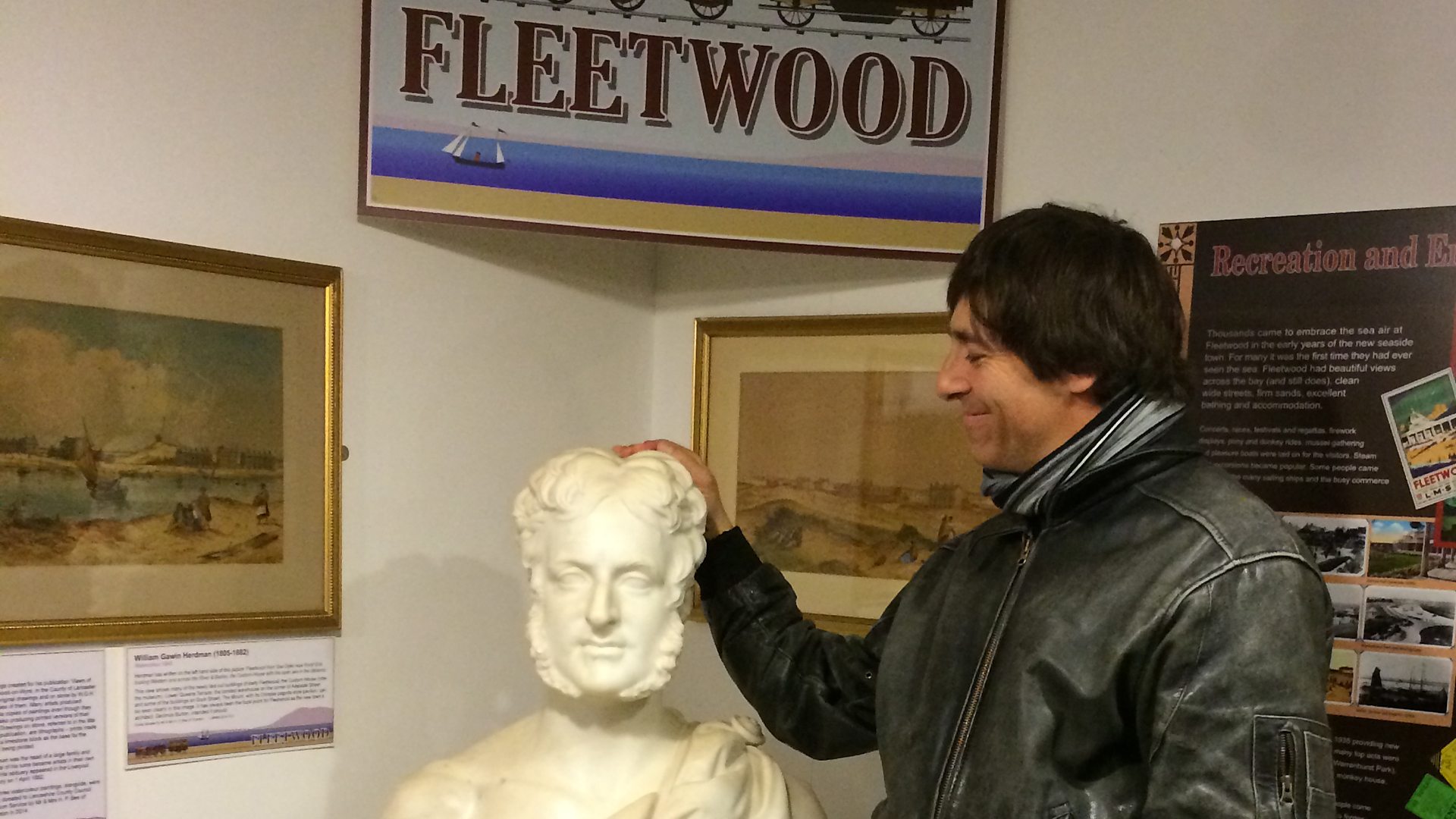
“Erm … well, I’ve already done Wigan, Birkenhead, Stockport, Wilmslow … oh, and Fleetwood.”

Ah, the ancestral home of the throat lozenge.

“Yeah, brilliant. We actually had a tour of the Fisherman’s Friend factory.”

Excellent. I can see you in your white coat and hygienic hairnet now.

“Yeah, I was in the white coat when we got shown around. Of course, the perfect joke was that the woman who was supposed to be showing us round hadn’t come in because she had a cold.”

Splendid. On your Twitter profile page, there’s a picture of you at The Garlic Farm. That’s on the Isle of Wight, isn’t it?

“Yeah, we were playing Ventnor that day, just after Edinburgh.”

You’re clearly still putting in the miles, and on this tour started (last weekend) in land-locked Loughborough, Leicestershire, before a trek to the South coast the following night to play Poole, Dorset.

“God knows where we’re going. To be honest with you, I don’t look until three days before. Otherwise you’d just go mad. When I was doing a live version for the In Town series, I had to pay more attention, because I was doing loads of stuff about each town, having to look about three weeks in advance, get a book off the internet about each place.”

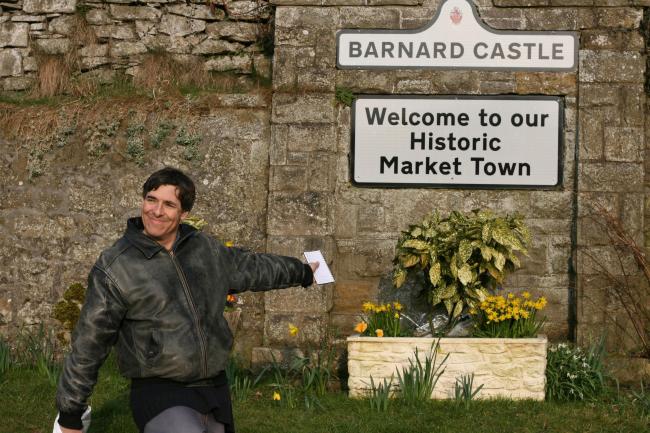
Mileage Man: If it Thursday, it must be Barnard Castle (Photo: BBC / Mark Steel’s in Town)

Seeing as you return to Chorley Little Theatre next month (Wednesday, March 21st, 01257 264362), last time we spoke, four years ago, you said  you must be the only outsider who’s read Jim Heyes’ A History of Chorley twice.

“Yeah, I must be … I can’t remember any of it, though.”

So might he have to read it a third time, I asked him. He wasn’t to be drawn on that though.

“Mmm … it’s lovely though, isn’t it, the Little Theatre.”

It is indeed, and then in mid-May, you’re in East Lancashire, at Darwen’s Library Theatre, which I’m led to believe is already sold out.

“Oh right, is it? Great!”

And there’s another visit to my patch two days later, to the Lancaster Grand Theatre (Thursday, May 17th, 01524 64695).

“Yeah, that’s great, that theatre. In fact, there are two lovely theatres in Lancaster, with the Dukes as well. And I’ve a lovely little story about that for the show.”

Sounds intriguing. Now I’m not expecting a succinct answer here, but – stirring the hornet’s nest – I ask Mark how the hell we ended up with Donald Trump winning the US election and what’s going on with all this Brexit nonsense. Every day seems to bring another political embarrassment.

“Well, I just think they’re all so funny, these people at the moment, the way things are at the moment. Every week they seem to oblige by doing something. Like that Presidents’ Club thing, where they all start saying how appalling it was, and how they had no idea. At the same time they’re saying that, they suggest the women going along would surely know what was going on there.

“So, the women who’d never been before must have known what to expect, but the blokes who were there couldn’t possibly have known what was going on, even though it was them doing it? You’re supposed to be appalled by these things, but I find it all quite funny, really.”

Lozenge Locale: Mark Steel, a Fisherman’s Friend, apparently (Photo: BBC / Mark Steel’s in Town)

It’s certainly a rich area for comedy, but maybe too rich at times – unbelievable at times.

“On the other hand, think back to a year ago, it’s an extraordinary transformation in British society. I don’t know if it’s a British thing or a human thing, but we almost love being miserable, thinking everything’s shit and that nothing ever changes, when there’s just about been the biggest change in British society since the end of the Second World War this last year.

“Someone for whom it was deemed impossible for him to be even vaguely near elected – because he was scruffy and didn’t sing the national anthem and had links to the IRA and all these things – to have got that close, is absolutely astonishing.

“It reminds me of when I’m down the Palace and Zaha beats four players then doesn’t quite get a cross in, and people come away saying, ‘Ah, he wasn’t that good that day’.  You’ve got to forget that! We’re not meant to have players like that. It’s extraordinary that we’ve got one of the best players in the country, and every week he bamboozles people. You just get used to it.

“It’s a bit like that with the idea that the Tories are bumbling. It’s staggering. They’re completely fucked. I think it’s hilarious, from a pure comedy point of view … never mind the politics.

“Every day, they’re just funny! Just watching them is funny, stumbling about, turning up in Brussels, having brought the wrong papers, or Ian Duncan Smith more or less telling you not to take any notice of their latest report, because they’re always wrong. It’s kind of, ‘Don’t listen to us, we’re idiots’.”

And yet, according to the title of your new show, ‘Every Thing’s Gonna Be Alright.’

“I think so, yeah.”

Golden Delivery: Mark Steel on Andy Murray’s trail in Dunblane (Photo: BBC / Mark Steel’s in Town)

Does this new-found philosophy involve some kind of Bob Marley-esque connection with Jah?

“Yeah, very much a Bob Marley-esque connection with Jah! Actually, I do most of the show in Rastafarian, if people can follow that. I had a Rastafarian character I did, and it went down really well in London and Birmingham, but elsewhere people would look at me, completely bemused.”

At this point we got on to a mutual respect for Lincolnshire-based Brummie performance poet, Benjamin Zephaniah, Mark telling me a funny tale his fellow political activist and author related to him about Communards keyboard player turned celebrity clergyman Richard Coles’ spell with the church in nearby Boston (his first ecclesiastical role was as a curate at St Botolph’s, better known as ‘Boston Stump’). I’ll not repeat it here, but ask him at a show. It’s a winning anecdote.

As well as his radio show, his books (also including Reasons To Be Cheerful and What’s Going On) and his tours, there was the BAFTA-nominated Mark Steel Lectures for BBC2.  He’s also a regular on BBC1’s Have I Got News For You and Radio 4’s Newsquiz, has appeared on BBC2’s QI and Room 101 and writes a weekly column for The Independent, winning Columnist of the Year at 2015’s Press Awards.

His most recent TV appearance saw him through to the final of BBC1’s Pointless quiz, alongside fellow comic Marcus Brigstocke on a celebrity special, just missing out on a jackpot. Keen cricket fan Mark was desperately unlucky with his answers – asked to name three batsmen who had scored more than 5,000 runs for Australia, his choices scoring 1, 1 and 2.

“That’s why it’s such a brilliant game though – it’s not enough to know the answer. You’ve got to get the answer no one else knows! I was thinking, ‘Who’s going to know these?’ I chose Ian Chappell, Mark Taylor and Justin Langer. I even thought Matthew Hayden was too obvious. But Taylor scored two and the others one. There must have been one Australian person on the survey. And if I ever catch the bastard …”

A while back I was talking to fellow recent Pointless winner Robin Ince (alongside TV historian Kate Williams) and another of Mark’s friends from the comedy circuit, Phill Jupitus, both of whom have also put in the comedy circuit miles over the years. Does he get to meet any of his colleagues on the road? I imagine they’re more often than not booked into hotel rooms in different towns.

“That’s one of the reasons I love the Edinburgh Festival – then you get to see other comics, at last. You go months without seeing them. I don’t think I’ve seen Phill since August.”

Finally, it’s been getting on for 36 years since his stand-up debut, and Mark mentions on his website, ‘I’ve spoken at lots of demonstrations and union meetings and protests, and appeared at quite a few benefits, and yet capitalism still seems to rule the world. Maybe I’m a jinx.’ I put this quote to him, and he laughed, then proclaimed, “Yeah … things are funny though, aren’t they.”

Hat’s Entertainment: Mark Steel reckons ‘Everythng’s Gonna Be Alright’.

For the previous Mark Steel feature/interview on these pages, from May 2014, head here.

This interview also included Mark and I talking about his love of The Clash, the inspirational Rock Against Racism movement, and his own story from the night Mick Jones joined Joe Strummer and the Mescaleros in November 2012, in what turned out to be Strummer’s final London gig. But for all that, you’ll have to wait for The Dead Straight Guide to The Clash, due to be published by Red Planet this coming Spring.

In the meantime, Mark Steel’s tour continues this weekend, including February and March dates at: Saturday February 17 – Hertford Theatre (01992 531500), Monday February 19th – Newcastle-under-Lyme New Vic Theatre (01782 717962), Thursday February 22nd – Chesham Elgiva (01494 582900), Friday February 23rd (Newbury Corn Exchange (0845 5218 218), Saturday February 24th – Bangor Pontio (01248 382828), Sunday February 25th – Kettering Lighthouse Theatre (01536 414141), Thursday March 1st – Swindon Wyvern Theatre (01793 524481), Friday March 2nd – Nottingham Playhouse (0115 941 9419), Thursday March 8th – Andover The Lights (01264 368368), Saturday March 10th – Oxford  Playhouse (01865 305305),  Thursday March 15th – Bury St Edmunds The Apex (01284 758000), Friday March 16th – Westcliff-on-Sea Palace Theatre (01702 351135), Sunday March 18th – Southampton NST Campus (023 8067 1771), Wednesday March 21st – Chorley Little Theatre (01257 264362), Thursday March 22nd – Glasgow Citizens Theatre (0141 429 0022), Friday March 23rd – Stockton ARC (01642 525199), Wednesday March 28th – Northampton Royal & Derngate (01604 624811), Thursday March 29th – Dorchester Arts / Corn Exchange (01305 266 926).

The tour continues in April and May, right through to May 25th’s Margate Theatre Royal finale. For all the details and ticket information head to www.offthekerb.co.uk or www.marksteelinfo.co.uk.

Posted in Books Films, TV & Radio, Comedy & Theatre, Football, Music | Tagged , , , , , , , , , , , , | 3 Comments

The Levellers, for folk’s sake – the Mark Chadwick interview

Out There: The Levellers, back on the open road – acoustic style – in February and March (Photo: Steve Gullick)

Three decades ago, a conversation in a pub in a busy South coast resort led to the newly-introduced Mark Chadwick and Jeremy Cunningham discovering they had plenty in common, not least their political world-view and taste in music.

As guitarist and lead vocalist Mark put it, “At that time, in 1988, there wasn’t really a lot of lyrical content in music. Brighton had a thriving music scene, with a few indie bands and rock acts, but it was all leather trousers and big hair. We were both into The Clash, wanting to do something in that vein, where something was actually being said. That was the basic germ of the idea – get together, create music that had lyrical content.”

They soon formed the Levellers, Mark and Jeremy (bass) recruiting Charlie Heather (drums), Jon Sevink (fiddle) and Alan Miles (harmonica, guitar, mandolin), with two self-released EPs – Carry Me and Outside/Inside – following the next year.

“We didn’t know what the sound was going to be. That came around accidentally, adding fiddle. That brought a folk element in. It lends itself to that direction but could have been added to anything. That wasn’t always the intention. As long as the songwriting was good, that’s what mattered.”

I seem to be forever talking anniversaries with artists of ‘yore’ these days. And somehow, Mark and Jeremy’s initial meeting in The Eagle appears to have been 30 years ago. Have those years snuck up on Mark?

“Yeah, like a bolt from the blue!”

Mark was at home when I called, handy for the band’s HQ, The Metway, in a resort he knows very well. Are they all from Brighton originally?

“I think we all gravitated towards Brighton, and some of us are from here. My family are.”

Three Decades: The Levellers have been on the go since 1988, so to speak (Photo: Steve gullick)

The Metway was originally a clock manufacturer’s factory, bought by the Levellers in 1994 while derelict and now housing offices, rehearsal areas, a bar, and a recently-refurbished recording studio. It’s an important part of the area’s cultural scene these days, as I put it to Mark.

“It is. A lot of artists have been through and have rented spaces. It’s well used.”

They remain strong supporters of Brighton’s music scene, giving upcoming bands use of the studio and rehearsal facilities, the likes of Orbital, Nick Cave and Electric Soft Parade also having recorded there.

Their new LP, however, We the Collective, due out on March 9th, was recorded straight to tape at London’s famed Abbey Road Studios with legendary producer John Leckie, whose impressive CV includes input on early ’70s George Harrison, John Lennon and Paul McCartney solo albums, through to Magazine and XTC later that decade, then The Stone Roses, Radiohead …

“Everybody! He’s done loads.”

How did they get to know him?

“He’s come to our festival, with his kids, for a number of years. And he was up for it.”

What was the first of his records that made you sit up and take notice?

“Probably those with Radiohead, and The Stone Roses.”

We the Collective involves a reworking of eight of the band’s singles, plus two new tracks,  developing special acoustic arrangements. And the band are returning to the road to promote it with a two-part  acoustic tour, playing those new arrangements with guest musicians, the initial dates including festival appearances at Glasgow’s Celtic Connections and London’s Roundhouse for In The Round. And their shows in Preston, Milton Keynes and Winchester – the latter at the Cathedral, marking the UK leg’s finale – quickly sold out. Have they played the cathedral there before?

“Not Winchester, but we’ve played Exeter, Rochester and Salisbury’s cathedrals, all great to play.”

The acoustics must be something.

“Yeah, and it’s the history of those places. Great.”

As there are ‘strings attached’ to this new album, can we describe it as an orchestral take on your hits?

“It’s not really orchestral, to be honest. It’s much more unusual than that. It’s not like we’ve got a 30-piece orchestra and have given them arrangements, with us banging around on top of it. It’s much more integrated, and totally arranged with the strings. They came up with a lot of arrangements themselves … and with no dots. They just played it as they heard it. It was really good.”

Well, strings have been part of the band’s sound from the start, after all, thanks to Jon’s fiddle.

“Exactly, it’s just augmenting that, really.”

Seeing as I mentioned Preston, I should note that the Levellers’ past Lancashire links include an early ’96 Blackpool Empress Ballroom gig recorded for their first live video and tie-in LP. And they’ve clearly retained a big Red Rose following.

“Without a doubt, in Manchester particularly … Morecambe too.”

Has Mark ever computed how many miles the band might have travelled over 30 years?

“Ha! No – it would be preposterous.”

And have they kept in touch with the ‘happy hitchers’ who followed them from town to town early on?

“They occasionally show up, but don’t travel so far these days. But if we play their hometowns, they might just pop in.”

You’ve been an important part of their lives, and vice versa. You’ve a long, shared history.

“We have a very close relationship with our fanbase, always have, although it changes throughout the years. I’m not sure you can be that obsessive about a band for 30 years. If you do, you’re a bit weird!”

The fact that they sold out those venues so quickly suggests plenty of love still out there though. Is that just nostalgia, or a suggestion that further generations have also discovered the band?

“Definitely, and people get what we’re on about. It’s very much people’s music – not pop, not indie, it speaks a little bit more about people’s lives than most music does.”

Note that he didn’t use the F-word there. For this post-punk lad, folk was perhaps seen as something of a dirty word until the likes of The Pogues, The Men They Couldn’t Hang and Billy Bragg came on the scene. But I see now that it shouldn’t have been. And, let’s face it, it is folk that the Levellers play, in the true sense of the word.

“It is, in the proper sense – telling stories, with a conscience. Information, in a poetic way. And I always listened to folk music, right back, even Led Zeppelin in the ‘70s –Led Zeppelin III put me on to folk, Roy Harper, all that sort of thing.”

Am I right in thinking Harper was also produced by John Leckie?

“He was!”

And going back to the Levellers’ early tracks, songs like Carry Me suggest to me that The Men They Couldn’t Hang were an influence.

“They were actually.”

They were certainly coming from the same place, musically and politically.

“Absolutely. And they’ve just recorded their latest album at our studio, actually.”

I was also going to mention The Waterboys, but I’m not sure they’d crossed over from rock to Mike Scott’s more raggle-taggle direction by then.

“No. they were headed that way, but at the same time as us. When Fisherman’s Blues came out, we were already going.”

On the other hand, I hear Jon’s fiddle sound in more contemporary artists like Seth Lakeman (whose brother Sean has produced two Levellers LPs in recent years), another artist who found inspiration from tellnig stories of the past, and too a less conventional route from folk music.

“Yeah, you wouldn’t really call Seth’s music traditional folk, at all. There’s something edgy about it, something different, which we really like.”

In fact, amid all their accomplishments so far, the band received a ‘Roots Award’ at BBC Radio 2’s Folk Awards in 2011, host Jeremy Vine labelling them a band that ‘stays true to folk and where it came from’. The presenter added, ‘Only the strong survive, and the Levellers have done it by staying true to their roots.’

The band are also set to head to Belgium, Germany and the Netherlands in early June, before more UK dates that month in Margate, Boston and Caerphilly, followed by their self-styled A Beautiful Day Out at Cornwall’s Eden Project (June 23rd) and Manchester’s Castlefield Bowl (July 1st), their Beautiful Days festival at Escot Park, near Ottery St Mary, Devon (August 16th/20th), and August 31st’s appearance at Lindisfarne Festival. And that’s just the next seven months accounted for.

Back to the early days, and the first Levellers album, A Weapon Called the Word, came out on French label MusiDisc in 1990, that debut LP eventually going gold, despite never charting. And while Miles soon quit, Simon Friend joined, that line-up – Mark, Jeremy, Jon, Simon and Charlie – still together today (with Matt Savage added on keyboards in the early 2000’s), the band soon signed to China Records by Derek Green, who was also responsible for snapping up the Sex Pistols. Was there always a belief that Mark and his band would make it big?

“From the outset. We were very serious. We formed quickly, and started playing live really quickly as well, when we had just seven songs. For the first gig we had to play those twice. But it was a really good gig, and people loved it, some following us from that point.”

It was the band’s second album, 1991’s Levelling the Land, that truly saw them break through, commercially, entering the UK charts at No.14, eventually going platinum. Did that LP’s success and those that followed – some selling even better – surprise Mark? Or was there always an underlying belief in your ability and potential?

“I think we did have that underlying belief, but it was a gradual but steep climb, so we didn’t really notice that until quite a while afterwards.”

I was surprised to be reminded that live favourite One Way – one of the singles reworked on the new album, and the lead track on Levelling the Land – wasn’t one of the hits, failing to make the Top 40. It sounded like it should have been though.

“It really should have, but I think we released it the wrong time. We did re-release it, but not until about 10 years after.”

Listening back, I hear something of the Manchester sound early on – hints of The Stone Roses. Even The Charlatans maybe. So I guess I’m not surprised at their involvement with John Leckie.

Was there an element of learning on the spot in those early days? The musicianship across the band seemed to come together fairly quickly.

“It did, and I think we’re better now than we’ve ever been. Our level of musicianship’s quite good now. We always were a bit raw, but that was really the point. If we were giving the right amount of energy, we were happy.”

Beyond Levelling the Land, there were sell-out tours in ’92 and promotion from their earlier Travellers’ Field slots to Glastonbury Festival’s Pyramid stage by 1994, leading to the event’s biggest ever stage-front crowd at that time. It turns out that the band and their friends had been busy that morning handing out flyers, their finale that night with One Way still seen as a career high-point.

And from gold-selling album Zeitgeist – a UK No.1 in 1995 and one of 10 top-40 LPs – the single Just the One – one of 14 top-40 singles – led to a first Top of The Pops appearance, the tongue-in-cheek drinking anthem played in tuxedos, the song hasving been specially re-recorded with The Clash’s legendary frontman and long-time Levellers hero, Joe Strummer on honky-tonk piano. Was it a real buzz having Joe involved?

“Absolutely. A really nice guy. The Clash were a gregarious bunch, and so was Joe. He was instantly relaxed in our studio, totally cool, did what we wanted, had a laugh, stuck around a few hours, then went, and we saw him around a few festivals from there, saying hello again.”

He was coming out of a rather dark period around then, trying to re-find his way.

“Yeah, he’d been fairly quiet for a while. I think he was quite remorseful about the way The Clash ended.”

The link came via mutual friend, Simon Moran, the concert promoter having also worked with Joe. I get the impression that Strummer wasn’t one to commit if not interested fully. But when he did get involved, he’d throw himself into something whole-heartedly.

“He really did. We got this boogie-woogie piano in, so he could play it, and he had a go!”

He was also inspired by the concept of campfire music gatherings, somewhere you were coming from.

“Exactly – we’d been doing that years!”

The Levellers also featured in 2006’s Glastonbury film, directed by Strummer film biographer, Julien Temple. Are the band still regulars at that festival (he asks, in something of a leading question)?

“No. It’s too much now – it’s not the same festival for me. There’s too much television. I don’t like that. I find that a bit glitzy … it pats itself on the back a bit too much.”

Was that part of the reason you set about creating your own Beautiful Days festival?

“It was, seeing the gradual commercialisation of festivals. There are a few more now that aren’t like that, and that’s a good thing, but back in 2002 there weren’t that many. It was a new way of doing it.”

Yet, there are some big names involved at your festival now.

“Yeah, but not too big. People like it for what it is, not necessarily for the artists playing there.”

Originally called Green Blade Fayre, the event has been based at Escot Park for 15 years, consistently selling out in advance. Featured acts during that time have included the band themselves, plus The Pogues, James, Frank Turner, Seth Lakeman, and Public Image Ltd, with several awards accumulated along the way.

When the Levellers broke through, it was the era of Stonehenge protests and Government conflict with travellers. Was that a lifestyle you identified with and felt you were part of?

“We were, and we’d been living like that for a few years. It was a natural extension, when that happened … I didn’t personally live on the road, but Jeremy did.”

The new LP is for On the Fiddle Recordings, their own label, initially set up in the early ‘90s to distribute limited-edition albums to fan-club members. So they were fairly early, I put it to Mark, moving away from the major label approach, and when free of contractual obligations resurrected the label in 2008.

“By the time 2000 had come along, we were tired of the industry as it was, and you could see the writing on the wall. Our independent record company was bought out by Warner’s, and we hated that – we didn’t like being owned by Bugs Bunny … at all. So we got out.”

Many more acts have followed down that road since.

“I think so – some out of necessity, some out of choice.”

How was it working at Abbey Road with John Leckie? Did you get a bit of a tingle there?

“More than a bit! Amazing. It’s where John did his training and a lot of his recording. When we said we wanted an acoustic record, he said, ‘Why don’t you do it at Abbey Road, Studio Two?’ And we were like, ‘Really?’”

The new songs on We the Collective are The Shame and Drug Bust McGee, the latter of which you can hear on the band’s website. Actually, I wrote ‘Busty McGee’ on my notes, giving a rather different ‘70s Carry On slant. Maybe they could adopt that for a remix, I suggested, to Mark’s amusement. So have those tracks been around a while, waiting for a home, or are they just two of many they’ve written lately?
“We have plenty more – more than enough for a new album. We haven’t recorded it, but we’ve been working on songs for a couple of years, writing together. We’ve had a really busy year, so it’s a case of finding time to sit down and record it.”

Four years ago, the story of the band – concentrating on their first decade together – was told in documentary, ‘A Curious Life’, the film directed by former Chumbawamba frontman Dunstan Bruce, another Metway-based artist. But while that film focused on their most-successful 10 years, it’s clear that they’re still finding plenty to get fired up by and write about.

“Oh yeah! Absolutely, the subjects are still there, probably more so than ever before.”

Well, if you can’t find something to rail against in this political landscape, you might as well chuck it in.

“Exactly!”

And 21 years after What a Beautiful Day was a hit, how many times does Mark reckon he’s witnessed special festival sunsets while playing that particular crowd favourite?

“Ha! Every time we play it, it rains … literally every time!”

Acoustic Tour: There’s a chance to get re-acquainted with the Levellers again in 2018 (Photo: Steve Gullick)

The Levellers’ 2018 acoustic tour dates, with support from Ginger Wildheart on all dates except Glasgow and London: Thu, February 1st – Glasgow Old Fruitmarket (Celtic Connections), Fri, February 2nd – Wrexham William Aston Hall, Sat, February 3rd – Preston Charter Theatre (sold out), Sun, February 4th – London Chalk Farm Roundhouse (In the Round); Tue, March March 13th – Buxton Opera House, Wed March 14th – Cheltenham Town Hall, Thu March 15th – Yeovil Westlands, Fri March 16th – York Barbican, Sat March 17th – Milton Keynes The Stables (sold out), Sun March 18th – Liverpool Philharmonic, Tue March 20th – Basingstoke The Anvil, Wed March 21st – Cambridge Corn Exchange, Thu March 22nd – Leicester De Montfort Hall, Fri March 23rd – Bexhill De La Warr Pavilion, Sat March 24th – Winchester Cathedral (sold out). For more information, contact the venues direct, or go to www.levellers.co.uk and follow the band via Facebook and Twitter. 


Posted in Books Films, TV & Radio, Comedy & Theatre, Music | Tagged , , , , , , , , , , , , , , , , | 1 Comment

From the sound of sirens to Larks in Transit – back in touch with Bill Bailey

Home Comforts: But Bill Bailey will be out on the road again from next week (Photo: Andy Hollingworth)

As I was thinking of questions for Bill Bailey the morning he called, I heard a proper ‘nee-nah’ pass the front of my house. And for once I thought not of Eric Morecambe’s classic ‘They’ll never sell ice cream travelling at that speed’ line, but Bill musing on the difference between traditional UK and European emergency vehicle sirens.

That was just one of the highlights of his turn of the century Bewilderness show. Come to think of it, it was from one of the very last tapes I ever bought, played a fair bit in the car over the next couple of years. Tony Wilson may well have had New Order’s Substance released so he could play it on his in-car CD player in 1987, but 15 years later I was still a cassette man.

More to the point, Bill, last interviewed for these pages in October 2015 (with a link here), was more than happy to reminisce about the days when we could still tell whether it was an ambulance, fire engine or police car coming our way.

“As you say, they’re increasingly rare, the old ‘nee-nah’ sirens. I remember reading – in some of my rather obsessive research for these things – an article about acoustic improvements to sirens, and some theory that the ’nee-nah’ was somehow not effective and didn’t penetrate enough, so the ‘woo-woo’ whistle was introduced.

“But I have to say, the sound they recreate is louder, but initially it’s harder to pin-point where it’s coming from. It cuts through a lot of ambient noise, but there’s something about the acoustic nature of it which somehow seems to be defused. When you hear a ‘nee-nah’ and it goes ‘Nnnyer’ as it passes, you get that doppler effect, which you don’t get with the whistle.”

There’s brief pause there, then, “Anyway, that’s something for your readers to discuss.”

I’m not ready to get off the subject yet though, and at this point throw in a variation on the theme, a Spaniard in the works perhaps, telling Bill I’ve had many an argument with my better half over the years as to that ’nee-nah sound’. She always insisted it was actually a ‘bee-bah’. Only later did we come to the conclusion that maybe this was because she was brought up on an army base and may have been more used to hearing Green Goddesses.

“Ah, in which case, it would have been … it’s a slightly courser acoustic sound. Oh well, there you go. These are the conversations I tend to have, actually, so you’ve come to the right place!”

While I’m still on the subject, I tell him my first band was called They’ll Never Sell Ice Cream Travelling at That Speed, in honour of the Morecambe and Wise line. Surprisingly, I add, we rarely left my mate’s garage though. And the spirit of The Clash was kind of lost on us, as we sounded a bit too close to Joy Division for our jaunty name.

“I like it, yeah. A tricky one to print off though. You’d have to have some kind of acronymic title.”

It did cross our minds, hence switching to Captains Don’t Play Chess, referencing a line from the Marx Brothers’ A Night at the Opera (as remade by Queen, but not quite so funny). Anyway, I digress. I’ve only got Bill for 15 minutes, so decide to crack on.

Last time I saw him live was in November, 2015, in Limboland, so to speak – a cracking night at Preston Guild Hall. Although, looking at my review (with a link here), I’m reminded it was just after the Bataclan terror attack in Paris.

“It was. An extraordinary time. The news came in as I came off stage the first night. And by the second night we’d been digesting the news and impact of it. The chap who died – the merch. guy – some of the crew knew him. It’s quite a small industry really. Everyone knows everyone. So that brought the whole thing home, making it very personal.

“I remember going on and there was this real tension and atmosphere. You have to meet these things head on sometimes, You have to say, ‘Look, this happened, and we know it happened, but we’re all here to have fun and enjoy ourselves and we’re not going to let that stop us.’ It almost feels like you have to break the tension. Otherwise it becomes … well, it hangs there.”

I tell him how, similarly, in late May 2017, I saw Ron Sexsmith play the Royal Northern College of Music the weekend after the Manchester Arena bombing (review here), with that same sense of shock apparent, not least from the Canadian headliner, who seemed grateful we’d even ventured out to see him in the circumstances. Yet for us it was more about, ‘Don’t let them win’.

“I think that’s true, and there’s an act of defiance in it. There’s a choice not to go too though, very much so. I’ve spoken to a lot of people over the last year, certainly since the London attacks at Westminster Bridge and Southwark, who’ve consciously not gone into the West End for shows, particularly people with kids. I very much acknowledge that and recognise it, and do feel it myself. I’ve lived in London a long time and lived through IRA attacks all through to nutters driving cars at people. There’s always that element in a public place.

“I’m there with my son and we’re looking around, almost half-joking but half-serious, thinking what we’d do if something happened, thinking where the exits are. Unfortunately, that’s become almost like the new normal.”

True, but soon enough that night in Preston in late 2015, we’d rallied against terrorism, then cheered on Bill as he battered IDS and the Government then praised the NHS, before turning a typically-surreal corner, chillingly reminding us in song form of The Day the Chickens Marched on Kiev, and also the joy of the 4-4-2 formation haiku.

“Well exactly, and there’s always a bit of poetry. And there will be some heavy songs … a lot of that.”

What’s the latest song to go through Bill’s head while he’s walking down the street?

“Oh … I’ve been re-listening to some old Talking Heads actually, so it’s Burning Down the House pounding in my head at the moment.”

Top choice. One of my part-time jobs to pay the mortgage, I tell him, involves school exam invigilation, and one fella there reminds me of a Chigley or Camberwick Green character – when he walks around the exam hall, I hear a drum-roll march in my head.

“Oh, good. Well, there you go, I’m pleased about that. I’m glad that’s sort of inserted some ear-worm or theme.”

Another thing that came up on Bill’s last visit was a discussion about the Danish concept of ‘hygge’, something of an alien concept to many in Lancashire at the time, but now something of a thriving ‘brand’, with countless home accessories and self-help books related to it available for sale. I’m hoping he’s getting a percentage of profits.

“I know. I can’t believe it. I’d talk about it in shows and no one would know what I was on about, looking at me as if to say, ‘What the hell are you talking about?’ Now there’s The Little Book of Hygge, hygge this, hygge that, a whole bloody industry. I feel I unleashed this on an unwilling nation. I think it was already ripe for a bit of ribbing, but I’m sure there’ll be more of that.”

It’s now 14 years since we last had a browse around Black Books, the bookshop that featured in the comedy series Bill appeared in alongside Irish comic Dylan Moran and Tamsin Greig. Last time we spoke, he told me Dylan was busy in Scotland, but hadn’t rule out the possibility of getting something together again. Any advance on that?

“No, but I’ll probably see him when I’m up in Scotland, and I’m in contact with Tamsin all the time. She actually sent me some photographs of one of the last episodes, which she just found in her house. In one, like a prop for a scene where I’m dressed as a shepherdess, I’ve got a goat. She said, ‘You better have these. Otherwise, if they fall into the wrong hands …”

Booked Up: Bill Bailey, Dylan Moran and Tamsin Greig, the stars of Black Books (Photo: Nick Briggs/Channel 4)

Incidentally, any idea what Manny Bianco might be up to these days?

“I did think about this, and he’s probably in IT or something like that, running some kind of hipster hangout in Peru. Yeah, I feel he may have ended up in South America.”

I told Bill last time about seeing Dylan Moran and Matt Lucas (in his Marjorie Dawes get-up) at a near-empty Amulet Theatre in Shepton Mallet in the mid-’90s. Me and about 20 others, the compere that night suggesting we moved the gig to a local pub, so the comics could play pool and deliver their acts while we sat around the table. It was around that time that era that Bill went solo too, after his Rubber Bishops days and an ealry venture with Sean Lock. Where was his first gig as a lone act?

“In Edinburgh, but I did some previews of my first solo show, Cosmic Jam, at Battersea Arts Centre, and (he’s laughing at the memory) the last preview I did before I went to Edinburgh was a total disaster. There were about three or four people there, and two of them were friends, and in the middle of the show something broke, and then … it didn’t augur very well. I was just clinging on to that saying, ‘A bad rehearsal gives a good performance’. The first few shows were a bit chaotic, but I think I got into a rhythm after a few.”

Absolutely, and the rest is history, performing at the Edinburgh Festival almost every year since, the following year’s Bill Bailey Live earning him a nomination for the prestigious Perrier Award, just one of many accolades afforded him over the next couple of decades. And the success story continues, with an extra 41 dates announced and 50,000 more seats recently released for new tour, Larks in Transit, which kicks off in Coventry next week, touring the length and breadth of the UK and finishing in High Wycombe in mid-June.

Described as ‘a compendium of travellers’ tales and the general shenanigans of 20 years as a travelling comedian,’ the latest show involves a typical mix of musical virtuosity, surreal tangents and trademark intelligence, plus ‘politics, philosophy and the pursuit of happiness’. So, ‘Larks in Transit’? Is that how you’re getting around this time? In an old Ford van?

“I came up with this idea for a show, then realised there’s loads of different interpretations of what it’s about, which I always like. The main one is just having fun in life and the journey we’re on, just making the most of every day – ‘larks’ in the Dickensian sense.”

I was going to say, I wouldn’t have put you down for transporting songbirds in the back of a hire van.

“Exactly, although there’s that element as well, the literal translation. But the ’in transit’ bit refers to the years and years going up and down the M1, and the ’larks’ is a kind of nodding acquaintance to my bird book. But it’s a show I’ve wanted to do for many years. It’s very much a personal show, with more personal recollections.”

Back to those recent stats, and his last tour saw him perform to more than 230,000 fans, across 170 sell-out dates in the UK alone, including six weeks in the West End, after touring in Hong Kong, Singapore, Australia and New Zealand. Where did it all go wrong, Bill?

“I don’t know. One of these days I’ll get a proper job.”

What do you think that might be, out of interest?

“Do you know what, I did actually have a job … very briefly. My first job was working in a pub, but then I moved to London, and living in Hammersmith for the first few years, to supplement my gigs, I worked for the local education authority, teaching kids recording techniques and how to make their own demos.

“I really enjoyed that and was just getting into it, then suddenly got very busy and couldn’t do the job anymore. But it was one of those things of which I thought, ‘Yeah, I love doing this.’

“That educational element to things remains one of my themes. It’s become something I need in anything I do, whether it’s a documentary on wildlife, or whatever. Even in stand-up. If there’s something you can take away from it, for me that’s a win.”

He’s compiled a mighty CV too, from his Never Mind The Buzzcocks, Black Books and Spaced days onwards, as listed in my previous Bill Bailey feature/interview. He also found time to write and illustrate Bill Bailey’s Remarkable Guide to British Birds in 2016, and recent accolades include an honorary doctorate from Australia’s University of the Sunshine Coast in Queensland for contributions to the environment on a global scale.

Then there’s his on-going charity work and charity walks, the first held in memory of his mother, who he lost to bowel cancer in 2005, walking The Ridgeway Walk in support of Stand Up To Cancer, joined by a number of close friends – trekking 100 miles from Bedfordshire to Wiltshire in just over six days, raising more than £9,000. Any more planned?

“Yes. My first was a couple of years ago, really put together as a fun thing to do, then turning into this fundraiser, and was such a great experience. I couldn’t do it the next year, because I was away, but this year just gone I did another, and we had a huge response, so I think it might become a regular thing. It’s great fun, a good cause, and …”

Will Louie (one of the four-legged stars of Channel 4 travel show Walking With Your Dog) be joining you?

“Oh, absolutely … you try and stop her!”

Finally, I see you’re celebrating 20 years of marriage with Kristin this year. So is the secret of a happy and successful marriage being on the road for most of the time?

“I think you just have to try and … it seems like an old cliché, but you just have to work at it and not take things for granted. That’s the thing. And stay grounded as well. One of the great things about being in this sort of set-up and being in a relationship and having a family life is the fact that it’s inevitable that if you’re a single man living a bachelor lifestyle it might all go to your head and you might start believing your own hype. But I played Sonisphere, to 60,000 people at Knebworth, and the next day ended up taking the bins out. I think that’s what keeps you going really.”

Transit Man: Bill Bailey is back out on the road (Ford van to get around in not pictured)

Bill Bailey’s Larks in Transit UK tour: January 29/30 – Coventry Warwick Arts (024 7652 4524), January 31/February 1 – York Barbican (0844 854 2757), February 2/3 Newcastle City Hall (0191 277 8030). February 5/6 – Southend Cliffs Pavilion (01702 351135), February 7/8 Stoke Victoria Halls (0844 871 7649), February 9/10 Sheffield City Hall (0114 278 9789), February 12/13 Wimbledon Theatre (0844 871 7646), February 14/15 – Llandudno Venue Cymru (01492 872 000), February 16 – Carlisle Sands Centre (01228 633 766), February 17 – Glasgow SECC (0844 395 3000), February 19/20/21/22 – Truro Hall for Cornwall (01872 262466), February 23/24 Plymouth Pavilions (0845 146 1460), February 26/27 – Leicester De Montfort Hall (0116 233 3111), February 28/March 1 – 2018 Nottingham Royal Concert Hall (0115 989 5555), March 2/3 – Manchester Apollo (0844 477 7677), March 5/6 – Cheltenham Town Hall (0844 576 2210), March 7/8 – Basingstoke Anvil (01256 844 244), March 9 – Warrington Parr Hall (01925 442 345), March 10/03/2018 Liverpool Philharmonic (0151 709 3789), March 12/13/14 – Reading Hexagon (0118 960 6060), March 15/16/17 – Watford Colosseum (01923 571 102), March 19/20 – Blackburn King George’s Hall (0844 847 1664), March 21 – Preston Guildhall (0844 844 7710), April 18/19 – Northampton Derngate (01604 624 811), April 20 – Brighton Centre (0844 847 1515), April 21 – Margate Winter Gardens (01843 292 795), April 22 – Southampton Mayflower (023 8071 1811), April 24 – Cheltenham Town Hall (0844 576 2210), April 25/26 –  Hull City Hall (01482 300 300), April 27/28 – Southport Theatre (0844 871 3021), May 1/2 – Chatham Central Theatre (01634 338 338), May 3/4 – Tunbridge Wells Assembly Hall (01892 530 613), May 5 – Hammersmith Apollo (020 8563 3800), May 6 – Southampton Mayflower (023 8071 1811), May 8/9/10 – Swansea Grand (01792 475 715), May 11/12 – Bristol Hippodrome (0844 871 3012), May 14/15 – Hastings White Rock Theatre (01424 422 240), May 16/17 – Stevenage Gordon Craig (01438 362 200), May 18/19 – Oxford New Theatre (0844 871 3020), May 21/22/23 – Guildford G Live (0844 770 1797), May 24/25 – Portsmouth Guildhall (0844 847 2362), May 26 – Bournemouth BIC (0844 576 3000), May 28/29 – Reading Hexagon (0118 960 6060), May 30/31 – Aylesbury Waterside (0844 871 7627), June 1 – Cardiff Arena (029 2022 4488), June 2 – Birmingham Arena (0121 780 4141), June 4/5 – Ipswich Regent (01473 433 100), June 6/7 – Hammersmith Apollo (020 8563 3800), June 8 – Leeds Arena (0844 248 1585), June 9 – Peterborough Arena (01733 363 500), June 12 – Liverpool Philharmonic (0151 709 3789), June 13/14 – Warrington Parr Hall (01925 442 345), June 15/16 – High Wycombe Swan (01494 512 000).

All shows start 8pm, with tickets £27.50 (plus venue administration fees), available via http://www.TicketMaster.co.uk and 0844 844 0444. For full information head to http://www.BillBailey.co.uk

Posted in Books Films, TV & Radio, Comedy & Theatre, Music | Tagged , , , , , , , , , , , , , , | 1 Comment

Eggland expects – The Lovely Eggs interview

Forever Eggland: Holly Ross and David Blackwell, aka The Lovely Eggs, all dressed up and 10 places to go.

If you’re passing through Lancaster late at night, wondering where that glorious racket’s coming from, it could be Holly Ross (vocals/guitar, ex-Angelica) and David Blackwell working on new songs at their place, while their four-year-old lad sleeps through.

Don’t get me wrong. It’s a mighty fine noise, arguably a psych-indie, kraut-rock take on The White Stripes, with the humour of John Cooper-Clarke and Sultans of Ping FC, and the punk spirit of Buzzcocks and The Fall.

And while it clearly says LA on their postcode, that’s not the closest they get to a US link, the band not so long ago enjoying a holiday in upstate New York working with Flaming Lips/Mercury Rev producer David Fridmann, who helped them out with their fifth album, This is Eggland, due on February 23rd.

I saw The Lovely Eggs headline unlikely Salford setting St Phillip’s Church at Sounds from the Other City last April. That was some night, and once seen, they can’t be unseen. In fact, it’ll take me a long time to forget the image of an adoring scarf-waving congregation singing along to irreverent crowd-pleasers like Fuck It and People are Twats. It’s fair to say The Lovely Eggs put plenty of red wine and grapefruit beer smiles on faces that evening.

If you’re yet to discover this special pairing, you can catch them live next month. And by way of back-catalogue catch-up in the meantime, you could do far worse than start online with wondrous band ‘oldies’ like Don’t Look at Me (I Don’t Like It) – think of The Clash’s Janie Jones covered by Jilted John; and Graham Fellows’ alter-ego John Shuttleworth (with sausage roll thumb) has a cameo in the video – plus Allergies – melodic psychedelia with a nod to Girls at Our Best maybe; its producer, Gruff Rhys, of Super Furry Animals fame, appearing in the promo – and the similarly quirky I Just Want Someone to Fall In Love With.

This tour comes on the heels of a ‘rammed and raucous’ autumn jaunt, the band keen to spread the word about their new record, Holly reckoning, “It’s pretty relentless. It kind of sounds like a chip shop on fire. We still write about everyday life and the stuff that goes on in our world, it’s just the new album is more fierce, and really tells it like it is.”

While they made their debut in New York City in 2006 and made an impression at 2010’s SXSW in Houston, Texas, home’s ‘always been Lancaster’ for Holly, who previously led John Peel favourites Angelica. Isn’t there a Morecambe link too?

Holly: “Oh yeah, David’s from Morecambe.”

You met across the big divide, right?

David: “That’s right … across the river.”

Holly: “We bought the houses of Morecambe and Lancaster together.”

Bringing an end to the War of the Red Roses, no doubt. In fact, us based in such parts will  spot a few shots over Morecambe Bay from their publicity shots and promo videos.

Yet they’re more than willing to travel, and when I saw them adding a little irreverence to the proceedings at St Phillip’s Church, they told the audience they were enjoying a rare night away from their little ‘un.

David: “Ah, we travelled down to that gig on our own, and normally he comes with us. We take someone along to look after him while we play. But that night we got to have a night out, someone driving us back after.”

Their son’s now four and at ‘big school’. Is that right that he can sleep through all that crashing around (no offence intended) when you’re playing and recording at home?

Holly: “Pretty much, when we were recording the new album, we’d bring it home at night, work on it. Basically, from birth, we trained him to sleep through everything. He was born to be a child of a drummer and guitar player. We taught him, ‘This is the level of noise you’re going to have to put up with’. He doesn’t know any different, and sleeps through most things.”

Dare I ask if there are Lovely Eggboxes on your house walls – a little sound protection for the neighbours?

Holly: “We live next door to students, so they give it to us, and we give it good back.”

Now This is Eggland is lined up for wider consumption, via Egg Records, at the remaining record shops of North Lancashire and beyond.

Holly: “It’s coming out globally! In America, in record shops, in Europe … everywhere.”

Psyched Up: The Lovely Eggs, coming to a town near you in February, probably (Photo: Darren Andrews)

I kind of realised that. I was just trying to retain a bit of ‘local’ flavour. On vinyl as well?

Holly: “We’ve never not vinyl’d!”

David: “We love the vinyl. We’ve got a big record collection.”

So is This is Eggland your declaration of independence from austere Brexit Britain?

Holly: “Pretty much.”

A call for an ‘Eggsit’ from all that Little England mentality?

Holly: “We pretty much feel like cosmonauts who’ve landed on an alien planet, and the insanity of life on this planet is crazy. So we’ve made our own alternative reality, and everyone’s welcome to join in. That’s the only way the world’s going to change, if people start to say, ‘This is enough of insane living. I’m not going to keep jumping on the bandwagon and do what other people do … it’s fucking insane!

“When we first had our baby, most people were like, ‘That’s it for the band, you can’t tour anymore.’ But why can’t we? That’s insane, all these rules. If it’s down to the health or well-being of the kid, fair enough, but it’s nothing to do with that.

“People get a takeaway on a Saturday night, sit in front of the telly and watch The X-Factor. Is that what you should do? We’re of the mindset, ‘Fuck all that. Make your own planet. We’ve made one. Come and live on it!”

And your new songs are described as ‘heavier and more in-your-face’ than anything before.

David: “Yeah, not necessarily intentionally, that’s just what came out when we were writing the album.”

Just Saying: David and Holly tell it like it is.

For me, there’s definitely a Fall vibe to most recent single, I Shouldn’t Have Said That. Is that – with its video, as usual, directed by Casey Redmond – indicative of where you’re at?

Holly: “I don’t know. There are quite a few songs that sound different to that, but yeah, I think that’s a good representation of where we’re going.”

The video for I Shouldn’t Have Said That, like the record itself, was recorded at Lancaster Music Co-Op, the long-running, non-profit-making recording studio and rehearsal rooms where the pair met and where David works.

David: “I’ve worked there for years, and that’s where we started writing and recording. It’s a kind of DIY place, pretty low-fi, a small studio. And it’s worked for us, writing and recording our own albums there, with total control over everything, putting the records out ourselves. But with this one we got Dave Fridmann on board.”

Indeed – a big-name producer, with lots of admired records under his belt. Was there any release in particular that made you think of him?

David: “I guess the main thing was The Soft Bulletin by The Flaming Lips (1999), but a lot of his stuff brings a modern sort of edge to psychedelic stuff really. We’re big fans of that.  It’s a long story how he got involved, but it’s something totally new to us to work with somebody else. We’ve never done anything like that. We’ve recorded and produced everything ourselves.”

Holly: “I don’t think we’d heard of anyone else we wanted to work with. Sometimes you hear a record, and it’s just a record, and we’d think, ’We’ll just keep doing what we’ve always done.’ ut after hearing the stuff he’s done, it made us think, ‘This is cool! I wish we could do that. Let’s get him!’”

Initially it was more of a correspondence course, the pair sending over their demos, with working progress back and forth between Tarbox Road, Buffalo, and Lodge Street, Lancaster before they flew over to help mix it.

Lovely Merchandise: The band have a scarf for every occasion.

Holly: “The whole way it came about was a bit of a joke really – a dare between me and David to find a contact for his studio. Producers like Dave Fridmann generally don’t put their contact details online … not for bands like us, contacting him and asking him to produce our record.

“We managed after a bit of detective work to find a phone number for the studio and I left a message on their answerphone after getting two wrong numbers – getting through to a garage and a Chinese takeaway. But one year later he replied.

“We actually wanted him to produce our last album, This is Our Nowhere. He was so late replying that by the time he got back the album was out the following week. So he said, ‘Let’s do the next one.’”

Was this album pretty much fully-formed when you got to the stage where you got him involved?

Holly: “We started writing as soon as we knew he was up for doing it, wanting to just crack on with it. We wrote it as one big thing really. All the songs were kind of inter-related and were all written within a couple of months, in one big batch.”

Does that make it a concept album?

Holly: “I think it’s a bit of a concept album. Like I say, it’s all about our life really, and how we choose to live it.”

Fridmann’s past credits also include work with (deep breath) Weezer, Keane, The Vaccines, 10,000 Maniacs, Mogwai, Ed Harcourt, The Delgados, Clap Your Hands Say Yeah, The Cribs, MGMT and Tame Impala. And I was rather partial, I tell them, to Neil Finn’s Dizzy Heights and his son, Liam Finn’s The Nihilist.

David: “He’s done a lot of stuff really.”

Thumb’s Up: John Shuttleworth. “Look at him, look at him!”

Holly: “What we liked about Dave and why we wanted to work with him, is that he’s not afraid to experiment. David read up on him and the way he records, using tape recorders and so on. A lot of producers would say, ‘Oh my God, the quality – we can’t use old tape recorders,’ but we really liked the way he was prepared to experiment and break through boundaries. That’s what we’re about. All we’ve got is old gear and trying things out, seeing what works.”

David: “It kind of fits in with our mindset, and how we work. It’s not about following any rules, it’s about what we like and what sounds right for us. So it seemed the right thing to do.”

Sometimes, I suggest, it’s all about getting back to your roots, stripping back to see what really works for you.

David: “Yeah, that’s all good. Limiting yourself is a good way to work sometimes, anything that you get something new out of is good.”

As I mentioned before, the band’s links with New York go way back, holding their very first shows in NYC in 2006. Why there and not in North Lancs?

David: “We did maybe four or five in a week when we first started. That was our dream place to play.”

Was that in case you split up within a year, thinking you’d best get some careers highs in straight away?

David: “Yeah, rather than thinking about playing at home, which is what you kind of do when you’re forming a band, we thought we’d do something totally different.”

Essex Symbol: Phill Jupitus will be with you shortly, supporting The Lovely Eggs

Holly: “Again, rather than doing what everyone else does, without questioning it, we questioned why it had to be done like that. Why can’t you fly out to New York? Why can’t you just send out your music to venues over there, see if they like you and book you? That’s what we’d prefer to do, rather than being like sheep, taking the route everyone else does.”

And you ended up going out there this time as well, with your lad in tow.

David: “We went out to mix it, yeah. We thought it was important to spend some time in the studio and feel part of that. And that was great.”

You’re out on the road to promote the new LP next month, starting on home ground at Lancaster’s Yorkshire House. Is that a regular stop-off?

Holly: “That’s like the venue in Lancaster where bands play. We’ve played it lots in the past. We have one annual hometown gig a year, and it’s usually there. And that’s already sold out, actually.”

For those in the North West who’ve left it too late to get to the opener, there’s also Manchester’s Band on the Wall on February 17th closing this 10-date tour, which also takes in London’s legendary 100 Club on the 16th, with support from recent writewyattuk interviewee Phill Jupitus and friend of the band, in his guise as Porky The Poet. But again, you’d best get in quick, as the band have a loyal travelling fan-base.

Holly: “We’re always surprised by the amount of people who come out to see us, considering we’re a DIY band, doing it all ourselves really. It’s been really humbling seeing all these people come and get behind us, and say, ‘Do you know what? We think that too!’”

As long as you don’t expect a fake encore. Because they’re not into that idea, and they’ll happily tell you why not.

The Yorkshire House also hosted Angelica’s final gig in 2002, the cult Lancaster four-piece having formed at school and going on to make a name for themselves on the indie circuit, making a mini-album, a full album and four singles, becoming BBC Radio 1 evening show regulars with Steve Lamacq and recording a session for John Peel. But what was David up to before The Lovely Eggs?

In Captivity: Behind the scenes at North Lancashire Safari Park, as featured on the third Lovely Eggs long player (Photo: Darren Andrews)

In Captivity: Behind the scenes at North Lancashire Safari Park, as featured on the third Lovely Eggs long player (Photo: Darren Andrews)

David: “I played guitar in a psych-rock band called Three Dimensional Tanx (actually, I thought he said ‘The Greedy Tanks’. It took me a while to find out the real name, as in 3D Tanx, and I think I prefer the one I made up), but when me and Holly decided to form a band we didn’t want two guitarists, so I said, ‘I’ll play drums then’. We didn’t really want a drum machine. I’d never played drums before, but …”

Was there a bit of a model there with pairings like The White Stripes and Salford’s own, The Ting Tings?

David: “Not really, it’s just that we didn’t really want to get a lot of people involved, because we wanted to travel, and it’s so much easier to make decisions when there’s two of you. This way, we don’t have to ask others what we can do. And we wanted it to be loud, with real drums, so that was the form it took. We just did it, not thinking too much about it.”

What do you make of that ‘surreal husband and wife duo’ label? Or is that of your own doing?

Holly: “That’s not of our doing! It’s all true though – we are pretty surreal, we are husband and wife …  and we are a musical duo, so …”

Three-thirds right then. Is the description ‘Northern psychedelic punks’ better?

Holly: “Well, we are from the North, over time it’s got more psychedelic, and I think the spirit of us is definitely punk rock. It’s not 1977 punk, music-wise, but we’ve never defined punk by music but as an attitude, and I think a lot of punk music has got an attitude. So that’s pretty accurate too.”

My own introductory description of you was Buzzcocks and The Fall meet Hole, with a nod to the Sultans of Ping FC. Was I close?

Mud Reunion: Holly and David enjoy a day out in Morecambe Bay (Photo: Darren Andrews)

Holly: “Erm … I don’t think Hole really, because I can’t really scream like Courtney Love.”

You’re too melodic for that, maybe.

Holly: “A bit … I don’t know.”

David: “People see different things. There’s lots of influences there, but we don’t really wear them on our sleeves. It’s whatever comes out. It’s just what we do. We don’t try to sound like anything in particular.”

You’ve had great support along the way from the likes of Steve Lamacq, and also John Peel in Holly’s Angelica days.

Holly: “John Peel was a massive supporter of Angelica, but it’s been Marc Riley with The Lovely Eggs. He really championed us, him and Jon Kennedy on XFM and people like Gideon Coe and Chris Hawkins. Before we even had a record out, Marc Riley played our stuff on his show, and that was just from us sending him a CDR in the post.”

And now it’s 11 years coming up since the Fried Egg CD, and nine years this summer since debut LP, If You Were Fruit. Time flies, eh?

Holly: “Oh my God … wow!”

David: “I guess so. We’ve put out quite a lot of stuff really. This is our fifth album, and it’s passed fairly quickly.”

And are you still in touch with Gruff Rhys and that man with the sausage roll thumb, also known as John Shuttleworth?

Holly: “We are. We’re still in touch with them and still send the odd text and email, stuff like that. And it’s always nice to meet when they come up to Lancaster or play locally.”

Supper’s Ready: The Lovely Eggs dine out in style. What tour rider could come close?  (Photo: Darren Andrews)

The Lovely Eggs’ February tour, with support on all dates from Phill Jupitus, in his guise as Porky The Poet, visits The Yorkshire House, Lancaster (Thu 8); The Brudenell Social Club, Leeds (Fri 9); The Cluny, Newcastle (Sat 10); The Mash House, Edinburgh (Sun 11); Stereo, Glasgow (Mon 12); The Adelphi, Hull (Tue 13); Clwb Ifor Bach, Cardiff (Wed 14); The Cellar, Oxford (Thu 15); The 100 Club, London (Fri 16), and Band on the Wall, Manchester (Sat 17).

Meanwhile, the new LP’s lead single, I Shouldn’t Have Said That, is out now in both digital and vinyl 7″ format. For more on the band and how to get hold of This is Eggland and the back-catalogue, head to their official website. You can also keep in touch via Facebook and Twitter. 

With thanks to North Lancashire-based photographer Darren Andrews for the use of his images (all those marked and maybe even more). 

Posted in Books Films, TV & Radio, Comedy & Theatre, Music | Tagged , , , , , , , , , , , , , , , , , | 5 Comments

Skankin’ and rockin’ to a Skabilly beat – the Roddy ‘Radiation’ Byers interview

Hot Rod: Roddy ‘Radiation’ Byers in live action with his band, the Skabilly Rebels.

While no one could reasonably argue against the notion that Jerry Dammers was the architect and conceptual mastermind behind The Specials and the 2 Tone movement, his bandmates Roddy ‘Radiation’ Byers and Lynval Golding played a big part in establishing the guitar sound that brought ‘60s ska into the next decade … and beyond.

Nearly four decades after The Specials’ highly-influential self-titled first album, both are still out there playing, with Lynval last heard of biding his time between live performances with US-based Gigantor and occasionally The Specials, while Roddy remains in his native Coventry or performing far and wide with his Skabilly Rebels.

What’s more, it’s clear that Roddy, the writer of Rat Race, Concrete Jungle and Hey Little Rich Girl (as memorably covered by the late Amy Winehouse) and his brand of ska-punk and skabilly are still attracting new fans, and he’s not content just peddling nostalgia.

These days the 62-year-old fronts a band he describes as ‘the next phase of an audio formula’ he’s been working to perfect since the day he first stepped into a recording studio with The Specials in 1979, ‘fusing the driving rhythm of ska and the gritty, hard edge of rockabilly’.

And while it appears there may be a little animosity between various factions within the original Specials camp these days, I was with recent writewyattuk interviewee Pauline Black  when she said, ‘I’ve always had a very healthy respect for him, because essentially he’s a local working-class poet, who isn’t afraid to let people know that he sings what he means’.

I caught up with Roddy while he was at home in West Midlands, gearing up for his next live engagements with his band, starting by mentioning how (rather scarily) it will be 40 years this year since he joined The Coventry Automatics, who would soon be renamed The Special AKA, and then The Specials. Does it feel like it’s been that long?

“Well, I’ve been playing guitar in bands since I was 13 years old … and yes it does!”

The Specials have reformed twice since the original band regrouped in 1981 and Roddy first went his own way, with many of the original members still out there playing, in one form or another. I can’t imagine any of them taking it easy, mind, even though only vocalist Terry Hall is still in his 50s (and only just). Does Roddy – who left the band four years ago – feel his age coming off stage some nights?

“Most of my heroes who are still alive – The Rolling Stones, The Kinks, The Who, and so on, are still performing, so I guess I shall carry on for as long as I can … into my 70s and beyond. It does hurt more now, but I still do the moves I’ve always done on stage.”

Early Days: The Specials in their late ’70s breakthrough days, with Roddy ‘Radiation’ Byers second right

Roddy comes over as fairly shy, at least compared to some of his old bandmates. Does that make it harder for him to go out as a frontman? Or does he just let his songs and playing do the talking?

“I’ve been the front vocalist in bands before the Specials and in between our different reformations. I am a quiet sort of guy and don’t do long introductions, but I’m not the only singer/songwriter who lets his music speak for him. Lou Reed and Van Morrison are good examples.”

Are the Skabilly Rebels good company out on the road? And is he enjoying this as much (or maybe even more than) his days with The Specials and the other bands he played with?

“The new line-up are great guys, good company, and the best musicians I’ve had back me in this band. And in The Specials we didn’t socialise unless we had to.”

He’s fairly close to home ground this weekend when his band play the Hare and Hounds, Birmingham (Saturday, January 13th), and the following weekend has dates closer to my patch at The Old Courts, Wigan (Friday, January 19th) and Blackpool’s Waterloo Music Bar (Saturday, January 20th). I see he’s also at a couple of old haunts of mine, London’s 100 Club (Monday, January 29th) and the Holroyd Arms, Guildford (Saturday, March 10th), then closer still to me now at the end of the year at The Continental, Preston (Saturday, November 3rd).

Roddy certainly still gets around a bit. Does he have any particular past memories of those North West towns he’s about to visit?

“My father was actually from the North East – Whitley Bay – so I always have a great deal of affection and good friends from around those parts of England. But I’ve played so many places around the UK and abroad that I don’t always remember until I see the venue!”

So what can we expect on this tour? A mix of Skabilly Rebels and Specials songs, and a few covers, maybe?

“We play the songs I wrote for The Specials and my favourites from the first two albums, plus the songs I wrote for the Specials Mk. II in the mid-‘90s line-up. I’ve written so many songs over the years that it’s sometimes hard wondering what to leave out, so we change the set from show to show. But my skabilly stuff is basically what I’ve always done, in The Specials and with my own ventures, and Hey Little Rich Girl is a rockabilly song played in a ska way.”

Debut Offering: The first LP from The Specials, from 1979, remains a favourite on the writewyattuk sound system

Are you touring with The Beat vocalist Dave Wakeling this year too?

“Not this year. I’m concentrating on my own band nowadays, and not guesting. But I’ve done shows with Dave in California and the UK though – a lovely bloke … for a Brummie!”

There was that initial spell in the capital with The Specials, and plenty of touring – all over – but I’m guessing the Coventry area has always been home to you.

“I lived in London for a short while, and some of the band based themselves there after the band took off, but I’m a country boy at heart. I moved back to where I grew up recently, just outside Coventry, and I find my roots keep me sane. I’m a grandfather now, and my grandsons and family are the most important thing in life to me.”

I make it seven years since your last album of original songs, Blues Attack. Any new recordings lined up?

“I’m rehearsing material for a new album at the moment, and hopefully we’ll have a release ready later this year.”

front edit 1

Angelic Upstart: Roddy Byers, spreading his wings with the Skabilly Rebels

Your more recent songs seems to have a more bluesy and sometimes even a country feel alongside what we might expect first and foremost. Does that reflect what you tend to listen to?

“As a youngster I listened to a lot of early blues music – John Lee Hooker, Lightning Hopkins, Jimmy Reed, and so on. Blues has always been a part of what I do. I started listening to early country in 1980 – Hank Williams, Johnny Cash, Jimmie Rogers, when I was on tour. White man’s blues, I suppose you could call it. I guess it was a soundtrack for all those lonely hotel rooms away from home.”

The ska spirit remains strong, with further generations turned on since that initial late ‘70s-/early ‘80s period when you helped define the scene. That must be very satisfying.

“Ska seems to have made a comeback again recently, all over the world, and it’s nice that young people have discovered some of the best dance music there is around. And we played our own version in The Specials, mixing punk and all sorts to create what has become the 2 Tone sound.”

The Selecter and The Beat are also still out there too (albeit each in two parts), while The Specials are split between factions, and Madness are more or less a British institution today. Do you still feel part of a wider Two Tone movement?

“It’s great that The Selecter and The Beat are doing new albums of new songs, I wasn’t happy when The Specials reformed in 2009 and most of the band didn’t want to record new material. Even though I know people want to relive their youth, music should progress, not become a nostalgic knees-up.”

It’s coming up for four years since you announced you’d left The Specials. Do you keep in touch with any of the original line-up?

“Sadly, when me and Neville (Staple) left, we were not on good terms with the other guys. But The Specials were always very different people with different musical tastes, and getting an agreement on what and how we should play things was always difficult.”

Were you close to John Bradbury (the late Specials drummer was 62 when he died in December 2015)? He seemed pretty fired up about playing with the band again towards the end. It must have been a shock.

“I’m sorry to say we were never close. I was deeply shocked when he died though. And he was the best drummer I’ve ever worked with.”

Thankfully, fellow Specials associate and all-round ska legend Rico Rodriguez got to reach a grand age (He was 80 when he died, just a couple of months before Brad), and seemed as prolific as ever in his later years.

“I worked with Rico a couple of times after the original band split, and he was like a grandfather to all of us. A true legend.”

Is there any animosity between the surviving members? Or is it just a case of lads who met when they were young having moved on? You were, after all, in separate bands beforehand.

“Pass!”

Fair enough. So what had changed by the ‘90s to entice you back on board? Were you all easier to work with by then?

“I think we thought as we were older and wiser we could make it work again, but after several years the disagreements started again. I suppose it was the old story of ‘too many chiefs, not enough Indians’ – as always!”

I’ve been re-living The Clash years a lot in recent times, a band you were inspired by and got to know pretty well, also touring with them. Did you keep in touch?

“Well, I’ve said before – I always wanted Mick Jones’ job! Actually, Paul (Simonon) came to see the Skabilly Rebels recently, and we had a nice chat about the old days. And Joe (Strummer) always asked me how my own bands were doing when I saw him, and always knew what the current band was called. And The Specials’ first UK Tour was supporting the Clash, so we drew inspiration from them in many ways.”

Live Wire: Roddy ‘Radiation’ Byers, still giving it the big six-string moves in 2018

How important was their manager, Bernie Rhodes, to you? You’ve said before that he helped The Specials build an image. Was that his biggest contribution?

“He never actually managed us, but it nearly happened. Jerry Dammers, our leader, had a plan, so I don’t think Bernie was needed. Bernie did make us realise we had to conform to a certain image and sound to succeed though.”

How about the band’s time being managed by Pete Waterman and then Rick Rogers? It seems like each brought something different to the party.

“We had several people helping Jerry get the band off the ground, and Peter was a friend of Neville’s and helped us a bit in the very early days, until Rick became our proper manager. But Jerry was the man behind everything, and Rick took his ideas and made them work.”

I’ve read the horror stories of The Clash and their crew kipping down at Rehearsal Rehearsals in Camden Town. I’m guessing things weren’t any better by the time you were bedding down in that former railway depot. What’s more, The Specials on the road often involved sleeping in your own tour van. Were those good times though?

“Yes, as Horace (Panter) says in his book – working with Bernie and supporting the Clash was like rock’n’roll boot camp! But when you’re young it all seems like fun, even if we didn’t always eat or have a bed for the night.”

I’m guessing your days and nights on the road with The Go-Gos and The Bodysnatchers were also quite something. Was it all a blur in retrospect?

“The Seaside tour with The Go-Gos and The Bodysnatchers was the last major tour The Specials did. By that time we were not a happy band, but there were a few good times … and a coach full of girls made it interesting and fun!”

Ska Boom: Coventry’s The Specials, back in the day, with Roddy, rear right, tucking into the rider

Is that right that your father played trumpet in a soul band? And if so, what made you pick up a guitar?

“My father and grandfather were both musicians, so I guess it’s in my blood. I played trombone and my brother Chris played trumpet, but I fancied playing guitar and singing, so swapped my trombone for a guitar.”

Your early band, The Wild Boys, seemed to embrace that whole early glam-rock ethos. Did a love of Jamaican music follow when you discovered punk rock? Or was it always there?

“l’d been a Bolan and Bowie fan and formed the Wild Boys in 1975, doing glam rock and some rock’n’roll covers. I also started writing my own songs. But a friend of mine moved to London and told me about these bands he thought I would like. So I went down and he introduced me to Joe Strummer, and I got to see the Sex Pistols, The Clash and The Damned in 1976. I was going to move and join a punk band, but stayed in Coventry and eventually joined what became The Specials.”

How old were you when you wrote Concrete Jungle? To me, it’s still rather chilling, truly conveying the horror of a night out amid inner city violence. Yet if you look at the internet comments about it, it seems a lot of people miss the point, getting nostalgic about those dark days.

“It was 1976, so I was about 20. I’d moved to a flat in town and sometimes it was a little rough around there, so I wrote a song a song about it. And there are still unsafe places in most major cities.”

That song, plus your other credited songs on the first two Specials albums, Rat Race and Hey Little Rich Girl, still have real resonance all these years on, evocative of that era for working-class city kids. If you didn’t have music, what do you think you’d have done for work?

“I had a place at art school but decided l’d rather get a job so I could buy a new guitar and amp. I worked as a painter and decorator for the council from school until I left to go pro with the Specials. I’ve gone back to the brushes on and off in lean times. And Rich Girl was about a girlfriend I went out with in the early ‘70s.”

Radiation Therapy: The Clash, a big influence

How important was punk for you in breaking away?

“The music scene at the time was in general about older musicians who looked down on the up’n’coming young players, but when punk came along it didn’t matter if we were not great players. In fact, image and being young and not caring what people thought was more important.”

Were you particularly aware of multi-cultural influences around you, growing up? There was a lot of National Front bigotry, but I’m guessing you had mates of all cultures from early on.

“I had a Pakistani mate at school, and never bought into the racist crap! I didn’t get into ska and reggae until I discovered Bob Marley, which got me into Jamaican music and led me to join the early Specials.”

The 2 Tone movement proved a positive catalyst for change in a wider sense, not least the anti-fascist/anti-racist message. You must feel proud to have been part of that.

“Yes, The Specials and 2 Tone saved a lot of people from getting involved with right-wing organisations. I’m proud of that.”

You’ve amassed many great memories as a musician over the years. If you had to mention just a couple of  career moments, what would they be?

“Top of the Pops was a surreal moment after watching the show for years as a kid, and performing Gangsters the first time felt great! Also, Saturday Night Live in New York, performing on that in 1980 was brilliant, with Keith Richards turning up to meet and watch us.”

So is there truth in the rumour that you helped usher in punk-ska, as well as the skabilly you play now?

“Well, it’s been said I invented ska-punk, but really I just played the only way I knew how, and let Lynval Golding – the other guitarist – handle the ska and reggae. Skabilly? If you go back to the 1950s and early rock’n’roll, ska and country had a lot in common and there are songs from those genres that have that same offbeat dance feel … so I rest my case!”

Rebel Rouser: Roddy ‘Radiation’ Byers, coming to a town near you, with a rockabilly skank

For a link to Roddy Radiation and the Skabilly Rebels’ Facebook page, head here, where you’ll also find full details of the band’s forthcoming dates. 

Posted in Books Films, TV & Radio, Music | Tagged , , , , , , , , , , , , , , , , , , , , , , , | 3 Comments

July to December 2017 – the writewyattuk review: the second six months

Frantic Revival: John Coghlan at the rear, with Rick Parfitt, left, and Francis Rossi, live in Stuttgart in 2014

Former Status Quo ‘frantic four’ drummer John Coghlan on the key moments that will always stay with him: “Those six weeks at Butlin’s were an eye-opener, doing it – in a sense – professionally, getting to play to people and them coming up saying how much they enjoyed it. Then you think back to that stage in ’68 with our first hit record, Pictures of Matchstick Men, and playing places like the Royal Albert Hall, Glasgow Apollo, doing the live album there, Hammersmith Odeon, Manchester Apollo …”

Pop Impresario: Pete Waterman at the controls at BBC Coventry and Warwickshire (Photo: BBC)

Pete Waterman sings the praises of his old Coventry associates, The Specials, and their evocative 1981 No.1, Ghost Town: “Absolutely perfect. Jerry (Dammers) for me was the best songwriter in that period. For all the youngsters who want to know what the ’70s were really like, go and listen to Jerry’s records. He summed that period up perfectly.”

Woodland Wonder: Nick Heyward takes it easy, and waits for the plaudits (Photo: https://nickheyward.com/)

Ex-Haircut 100 front-man Nick Heyward on how his love of The Jam inspired his breakthrough band’s debut hit: “Fantastic Day was written when I was pogoing to The Jam! I’d go home inspired by them and others around that time, ending up buying a practice amp and guitar. I locked myself in my bedroom and kept playing D major, C major and G. I had to sing something over those chords, which just happened to be, ‘It’s a fantastic day’. I then thought, ‘Actually, that sounds like a song. I should write one of those other things you have in songs – a verse’. But I didn’t know any other chords, so just played C and G. Later, I learned another chord – F, so put that in just before the chorus. I then had this song I played in various bands, although it didn’t pop out until it was suggested in a rehearsal to play to a record company. So we did, and they decided to sign us.”

Jackson Four: From the left, Tito, Jackie, Marlon and Jermaine are still shaking it down to the ground

Tito Jackson on how he likes to remember his brother Michael, eight years after his death: “The first thing I think of is of him being my brother and the love we had for each other as brothers. That’s what I miss more than anything. Then I think of how brilliant he was as an entertainer, one of the greatest entertainers that ever held a microphone and hit a stage. I can’t deny him that just because he was my brother. I have to recognise he was a great. I tell people Michael would have been a leader in anybody’s band, even if he was in The Beatles or The Rolling Stones. He will definitely be missed. He was magical and different and very brilliant, he was a genius and I miss him tremendously. And the whole world misses Michael Jackson.”

Going Underground: Ian Snowball with Rick Buckler at Bond Street tube station (Photo: Tony Briggs)

Jam biographer Ian Snowball on the first recording he splashed out on: “The first I bought with my own money was That’s Entertainment, when I turned 11 in 1981. The record hadn’t been long out and I bought it with some birthday money. I marched off down to Woolworth’s in Maidstone. It was a picture sleeve, and I remember getting home, realising – as with many 7” singles around then – there wasn’t a middle bit. I can almost picture myself racing back down there to get an adapter so I could play the record. I’d have then played it over and over, as you did. The kids of today are missing out, aren’t they?”

Happy Holidays: Rowetta in Lake Garda (Photo: Angie Wynne)

Happy Holidays: Rowetta takes some time out in Lake Garda (Photo: Angie Wynne)

Rowetta on her enduring relationship with Happy Mondays: “I watched (Tony Wilson’s) programme on Granada, and remember him saying in 1976 about the Sex Pistols being the greatest band in the world. Then he was saying the same about the Mondays in 1989. I decided I had to see this band. When I did I just went, ‘Oh my God, I can see myself on stage with these!’ It took me about six months to persuade everybody else though. I sat in the office all the time. I was managed by Elliot Rashman, and his office was opposite Nathan McGough’s. I’d see mine, then pop in to see theirs. Eventually I persuaded them they needed me! I could see myself doing a T-Rex type of thing, when Gloria Jones was involved. I wanted to be in a punk band but didn’t have the right voice. This was the closest I was going to get, apart from working with Hooky on Colony. That’s where I’m really at home, it’s just finding the opportunity to do things like that. As a kid I could never see how I could be in a punk band, but the Mondays found that role for me.”

Rich Pickings: Richard Houghton stands proudly with his latest publication, The Who – I Was There

Richard Houghton on the basic concept behind his The Who – I Was There book: “I’m trying to tell the story of the band in the words of the people who were there and in the process, give a different take on a story that has been told many times before. I’m hopefully capturing memories that might otherwise be lost and preserving something that is part social history, part pop history. Seeing a band live isn’t just about the band – it’s also about the people, the venue, how the crowd interacts. I’m trying to take the reader back to what it was like to see The Who at the Railway in Wealdstone or the Trade in Watford during the height of Mod.”

Travelling Man: Andrew Roachford was out and about and visiting a town near you in 2017

Andrew Roachford on how he ended up being a pop frontman, despite initial, nervous reluctance: “I started as a piano player, and it was down to people like my uncle, Bill Roachford, who brought the rest out of me. He was a saxophone player who played a lot of clubs from the late ‘50s through to the ’80s, known well by the likes of Ronnie Scott, a bit of a legend in muso circles and rightly so – a truly amazing musician. He heard me singing in a bedroom and was the one who said, ‘Right, we’ve got to get you singing out there’. For me, singing was something very personal. It was like being naked. Doing that in front of an audience was an absolute nightmare. But he pushed me and pushed me, eventually settling the nerves a little. That said, I remember when I got signed how the record company came to the first gig and were horrified because I was surrounded by keyboards and you couldn’t see me! They said, ‘We want you to be a pop star! Can you at least take away one keyboard?’ They had to literally wean me off these keyboards I hid behind.”

Commuter 23: Neil Arthur, looking back and forward and discovering new platforms with Blancmange

Neil Arthur on compiling Blancmange’s 2017 boxset collection, The Blanc Tapes: “It took a lot of persuasion, but I decided if we were going to do this it would have to be done properly. I really wanted to get locked into it. What was difficult at times was listening to all those cassettes. That’s all we could record on in the beginning – all those demos on quarter-inch tape, reel to reel. And the first time I listened back it wasn’t the music that got me – it was the air just before the first sound. As soon as I heard it, I knew where it was. Whoa – that’s a proper big memory, that! There’s a really early demo of Waves, where we were trying to get the synth going, because Stephen was doing the organ bit. The mic. was open and I coughed. Normally you‘d edit that out, but I decided to leave that on. There’s also chatting at the end of one track. We hoped those sort of touches would draw people in. You see the journey we took – this experimental band who then started forming slightly more structured songs, then the more polished end results that came out. It was a relatively short period – from around ’78 to ’86 – and It’s a long time ago now, but there’s still a hardcore of fans who enjoy all that, and they’re absolutely wonderful.”

Band Substance: Cabbage at The Ferret, Preston, Lancashire, 2016 (Photo copyright: Richard Nixon / rich pictures)

Cabbage’s Joe Martin on his debut festival experience, at Leeds: “I first went when I was 16, with Ian Brown playing. I’d never taken ecstasy before but felt this would be an appropriate time. I was at the front with identikit Manchester look and bucket hat. He said after in an interview it was great and there was this bunch of 17-year-old kids at the front, digging the tunes. Years later I ended up on BBC North West Tonight being interviewed after a Stone Roses show. I have no recollection, but it was quite a stern interview actually. I’d like to dig it out of the archives.”

Casio Royale: Hannah Peel as her alter-ego, Mary Casio (Photo: Stormy@ Rebel and Romance)

Hannah Peel explaining the concept behind Mary Casio: Journey to Cassiopeia, another 2017 highlight: “Mary is a character that encompasses how we look at life and view mortality and time, and how at any age we can have dreams and still achieve those dreams. In my mind over time I developed this lady, who lived in Yorkshire, probably worked in a post office all her life, who in her back garden had a shed full of inventions and things she created that nobody knew about – kind of like a Delia Derbyshire or Daphne Oram.”

Guitar Man: Singer-songwriting legend Graham Gouldman was taking the long way round with a Heart Full of Songs

Graham Gouldman on writing songs with Eric Stewart for 10cc, and their almost-telepathic relationship: “I’d play guitar and Eric would play keyboards, and the sound of the keyboards and instrumentation you use can affect the song you write. Pretty much every song we wrote together was done that way. Definitely we had it. It’s something you can’t manufacture or buy. You’ve either got it or you haven’t. I’ve written with many other songwriters, and most of the time we’re on the same page. But sometimes you can be writing with someone and it’s driving you mad that you should be writing the greatest song ever … but you’re not. That takes nothing away from the other writer, but you’re just not gelling. It’s like with people. It’s like love.”

Wilder Still: Belinda Carlisle under the spots, having her command met – those lights left on again

Belinda Carlisle, asked which of today’s bands are worthy of The Go-Go’s Rolling Stone ‘best female rock band’ crown: “There’s nobody worthy of that crown today. I can’t think of anyone who did the exact same thing. Maybe I’m not really that much in touch with the music going on now, but you’d think I’d know about one … but I haven’t seen one. I don’t understand why there haven’t been a lot of girls’ bands that haven’t been doing that, other than The Bangles, L7 and a few of them, but not really that many. Especially nowadays, things are pretty much homogenized and not really that authentic. It’s a different ball game now, for sure.”

Dave Rave: Jason Byrne taking to the streets for Don’t Say It, Bring It for the Dave Channel

Jason Byrne on his ‘fictional wife’ and how the real version is often way off: “Basically, I have a fictional wife and my real wife, and they kind of cross over. A lot of the stories definitely come out of my wife for a start, and I just fucking jazz it up. People who have met my wife will say, ‘Oh, she doesn’t look like your wife’. I say, ‘What are you talking about?’ and they’ll say, ‘I always imagined this very stout woman with really bad hair, waving her fingers’. My wife’s a very attractive, skinny lady, who does a lot of training. But she does come out with some cracking lines. I recently got a new show on Dave (Don’t Say It, Bring It), which was recorded and ready to go, and I was launching it, and the day after I got a phone call asking me to do Ireland’s Got Talent. Well, I got loads of congratulations from family, friends and colleagues. Then I got a text from my wife, and all it said was, ‘You could have put that fucking bin out before you left’.”

Team Selecter: Pauline Black and Gaps Hendrickson, back to back by design (Photo: Dean Chalkley)

Pauline Black on what she gets up to when The Selecter aren’t recording or playing live: “I’ve always performed in multiple ways, either TV, radio presentation, writing or theatre acting. I like to practise a lot of different disciplines when it comes to performance. Each then complements and helps develop the others. That way I’ve managed to constantly move forward and not get stuck in a rut. Writing Black By Design was a defining moment in my life and took me 18 months to complete. I’m very proud of the story I told and hope some of my insights might help other adopted people who had to come to terms with the inherent racism in our society. And if all goes as planned, it looks as though a film about 2 Tone based on my book will soon go into production.”

Live Presence: Tom Robinson was back with TRB for the Power in the Darkness 40th anniversary tour in 2017

Tom Robinson on memorable meetings with PIL and ex-Sex Pistols front-man John Lydon: “Lydon was alright. I don’t think the other Sex Pistols liked me very much, but he took me off down the Speakeasy. We then met at the Music Machine, and he said, ‘Tom Robinson – don’t give up! Don’t ever give up! Don’t give in to the bastards!’ Then he was sick on my shoes! About 10 years later I bumped into him at the Britannia HoteI, Manchester, wearing a Mambo suit that must have cost the best part of a thousand quid, his hair in knots on his head, dyed orange, with a pair of Woolworth’s sunglasses. He said, ‘Tom Robinson! You’re with that Red Wedge, ain’t ya!’ I said ‘Yeah’, and he said, ‘Fackin’ champagne socialists!’ He always managed to annoy everybody. He never conformed to one viewpoint or doctrine. He went his own sweet way. And I love him for it.”

Tour Mates: Robin Ince, Professor Brian Cox, and a monkey, yesterday … ish

Comedian Robin Ince explaining the difference between sharing a stage with Professor Brian Cox and fellow comic Josie Long: “Well, I don’t have to interrupt Josie because I think the audience are no longer understanding her. That’s one of the things. There’s Josie, my friend Michael Legge, and Brian, and that strange mix where I have a very solitary performing and creating system, but also various different adventures, impromptu double acts. You don’t even realise they’re double acts until others tell you. People talk about the relationship Brian and me have, but it’s something I’ve not really thought about. As long as all of you have your ego under control, it seems to me it’s down to naturalism. It’s the antithesis of the Mick Fleetwood/Samantha Fox Brits relationship, or any award ceremony where Tom Selleck would come on with Heather Locklear and compliment each other. As long as you can get away with impromptu and you’re united by different fascinations – artistic or political. Brian’s far smarter than me, but we’re united by certain kinds of philosophical ideas about how the earth should be.”

Strings Attached: Grace Chatto says hello with cello (Photo: https://www.facebook.com/cleanbandit/)

Grace Chatto on how she sees herself primarily, and whether she could one day go back to just being part of a string quartet: “A cellist probably, and also a music video director. That takes up most of my time. A producer as well. Jack (Patterson)’s the primary songwriter and writes for piano and voice, then we produce together, think about all the sounds. Going back to a string quartet? Yeah, maybe. That would be lovely. I want to try and start doing more string quartet stuff now, try and integrate that back into the band. It kind of worked quite well, and I think now the strings are a bit more of an afterthought, because we’re so focused on everything else. It would be good to get that back into the core of what we’re doing.”

Essex Symbol: Phill Jupitus will be heading to a town near you again in 2018 … probably


Phill Jupitus on his mid-‘80s involvement with the Red Wedge musicians’ political collective, which he said he got into ‘20% because he believed in the cause, 30% because he loved Billy Bragg, and 50% because he wanted to meet Paul Weller’: “The ideology pulls you in, but having worked at close quarters with the day-to-day functioning of politics, you realise you need so much commitment. I also found that everyone who works for a political party has an agenda they’re pursuing. When people talk to you or interact with you, they’re looking at you not for your views, what you’re saying or your hopes and dreams, but how much you as a commodity will help their agenda. That’s why I don’t really get on with politics. There are so few people who do it with a good heart, and you have to interact with people where you’ve got to really tip-toe around them. It’s just exhausting.”

Tour Party: Wolf Alice were back on form on the road and in the studio in 2017

Wolf Alice’s Ellie Rowsell on encouraging young people to register to vote, and fronting a Labour Party video: “I think you slowly come to terms with your power of influence as someone who has a small to medium-sized following online. It’s a scary thing to speak out, because there are always people you’re going to offend. But once you realise that’s never going to change and you can never satisfy or please everybody, you can start to move past that and do what you think is potentially helpful and what is right. You have to do everything you can to stay hopeful. Nothing will get better if you’re without hope.”

Live Wires: The Undertones, back out there for your humming, leaping and erm, listening pleasure. From the left – Billy Doherty, Paul McLoone, John O’Neill, Damian O’Neill, Mickey Bradley.

Mickey Bradley on getting back in the same room with his fellow Undertones: “It’s a good craic, and whenever we play again for the first time, it’s usually good. It‘s not like you have to crank up an engine or something. Then you do it a couple of times and it’s slightly better. For the physical songs, Billy always feels it and thinks he should practise more. Damian and John as well, with quite fast guitar. But the bass is never a problem … it‘s very sedate. It‘s a sedentary musical occupation, playing the bass guitar. As long as Paul can remember all the words …”

Lining Up: Jeffrey Daniel, Carolyn Griffey and Howard Hewett, in perfectly soulful synchronicity

Howard Hewett on seeing bandmates Jeffrey Daniel and Jody Watley perform live on TV, not realising he’d later feature alongside them in Shalamar: “Ah man, when Soul Train first came on, I was about 14, and had done music since I was around 10. By then I had a little r’n’b group in Akron, and on Saturdays at noon, like the rest of the country, we’d be in front of the TV watching it. It’s crazy – I’d watch Jeffrey and Jody, not knowing who they were nor that we were going to hook up years later, be in a group together. There was a club where all the Soul Train people used to come down on a weekend. Looking out at the audience, you’d see Lionel Ritchie, Richard Pryor, Chaka Khan – everyone used to hang at Maverick’s. It never had a liquor license, either because the area was so crazy or (owner) John Daniels was a little too cheap to get one! They used to make fruit smoothie drinks in the back. That didn’t deter people from coming to the club though. It was good times! A couple months after I first got down there, I met John Daniels. I helped him put together this group called Beverly Hills. Every time we had a show we wanted to try out, we’d play at Maverick’s Flat. That’s when I met Jeff. I was a fan of his and he says he was a fan of mine. It still took a couple of years, as I went overseas with the group first. I was over here for a little less than a year and a half. It was cool, but it was definitely meant to be.”

Youthful Vibe: Richie Malone added fresh vigour to Status Quo in 2017 (Photo: Christie Goodwin)

Francis Rossi, coming to terms with the death of fellow Status Quo veteran Rick Parfitt, and where the band goes from here: “It reminds oneself of one’s own mortality. But it’s interesting that some years ago when Richie used to come and see us with his dad, we met him at a soundcheck somewhere in Ireland, looked at him, and Rick said, ‘If I die, we should get him in’. We laughed, and he said, ‘No, I’ve got a better idea. We find a lookalike for you too, put them two out there, and we can stay at home and watch telly!’ That was Rick’s humour, something not everyone understands. People think we’re being irreverent or whatever. (On stage) we’d laugh about that, say how one of us might keel over. And it’s still possible. I’m at that age. My generation are dropping like fucking flies! But we burn the candle at both ends, and Rick had one burning in the middle as well!”

Seasonal Gift: Roland Gift, looking back and forward in 2017 and into 2018

Former Fine Young Cannibals front-man Roland Gift on how The Clash inspired him to get involved in music, initially through first band Acrylic Victims (later Akrylykz): “We supported The Clash at Bridlington, around 1980. Me and some mates went hitch-hiking, following them, then I got a job doing back-drops for them, down at the Music Machine. This fella I knew, Roger Hudson, knew tour manager, Johnny Green, and we’d turn up at gigs and get free passes. I was more of a fan than a contemporary. They were kind of the biggest of the bunch really. But I just liked being around it. You’d see gigs and people you’d seen at other gigs. You felt some sort of camaraderie. Also, The Clash played reggae as well. When punk started, people weren’t so sure, because of the swastikas and that, with the National Front on the rise. So something like The Clash playing reggae was a good invitation for someone like me to be a part of it.”

Band Substance: The Bootleg Beatles in live action, taking us back to 1967, with Steve ‘Bootleg Paul’ White, left

Bootleg Beatles bass player Steve White on swapping from right to left-hand playing to emulate his hero, Paul McCartney: “I was a right-handed rhythm guitar player in a John Lennon type role, but we’d turn up at venues and people would say, ‘You’ve got to be Paul, yeah?’ I wouldn’t say I look too much like him, but there’s a nod to that. So me and the bass player decided to swap over, leading to months of restructuring, learning harmonies and basslines. Then the audiences would ask if I was left-handed. So I thought I’d best have a go at that, teaching myself left-handed. For a while it was difficult, but over time it’s got easier. I can play left-handed now, and you’d never know I wasn’t, but it‘s always nice to go back. When I’m at home, playing for leisure, I’ll pick up a right-handed guitar and … well, the only way I can describe it is that it’s like putting on a comfy pair of slippers, as opposed to your work shoes.”

Bass Instinct: Peter Hook in live action (Photos by http://www.fb.com/connorgriffinphotography)

Peter Hook on the wild days of punk in Manchester, going to see the Sex Pistols: “We went to the Electric Circus, and it was bedlam! All hell had let loose. It was full of people outside, and they weren’t fans. They were just there because they’d seen the furore about Grundy. I remember all the punks queuing outside, and in the flats opposite these yobs were on the roof, throwing things over. It was absolutely bizarre. There was a set of railings, and they were removing spikes from them, throwing them like javelins. When we came out afterwards, it was the same, like a football crowd waiting. I remember the police were called. All the punks were saying, ‘Listen, we can’t get to our cars, up the road, can you help us?’ The police said, ‘Alright, run behind the van and we’ll escort you back.’ We all started running, and then the van just drove off and left us all to the mercy of all these football fans! Luckily, my mate’s car was pretty close. That was Terry Mason, who became our tour manager, so we managed to scramble in and get to safety. Then they came back about two weeks later and there was a sizeable crowd then – 600 to 800, something like that. The football supporters had come in by then, I suppose you’d say!”

Nobody’s Fools: 21st Century Slade. From left – Mal McNulty, Don Powell, Dave Hill and John Berry

Slade drummer Don Powell on the point when he realised it was time to finally give up the booze: “I haven’t (drunk) for 32 years now. I know, it’s incredible. I stopped drinking when Sharon Osbourne came after me and Ozzy with a shotgun. And she actually fired it at us. We just managed to get out of the way. You can imagine, can’t you, when your drinking partner is Ozzy Osbourne, it’s like … say no more.”

Reading Matter: On the shelf with writewyattuk.com in 2017 and beyond (Photo: Malcolm Wyatt)

That’ll do for this year then. Happy New Year to all our readers from the team at writewyattuk.com (yeah, I know, just me then), with far more fun and frolics to follow in what promises to be a happening 2018. Stick around, one and all, and thanks for your on-going support.  


Posted in Books Films, TV & Radio, Comedy & Theatre, Music | Tagged , , , , , , , , , , , , , , , , , , , , , , , , , , , , , , , , , , , , , , , , , , , , , , , , , , , , , , , , , , | Leave a comment

January to June 2017 – the writewyattuk review: the first six months …

Welcome Strangers: The Blue Aeroplanes, touring in January 2017 around the UK

Blue Aeroplanes frontman Gerard Langley on the band’s early days: “When we started out, we got out of Bristol as much as we could, but would often be third on the bill, playing without a soundcheck. We thought we’d just run around a lot and make plenty of noise. You couldn’t hear yourself anyway. That’s kind of how all that started. Then there was having lots of guitarists on the last song – the most we had was 16 on Breaking in My Heart.”

Looking Up: James Taylor, still out there, striving to move the room in 2017

James Taylor on John Peel’s support for the James Taylor Quartet and their 1987 breakthrough: “It was a good time, wasn’t it? It was nowhere near as saccharine and fascist as it is now. As long as you were doing something interesting and exciting, that was enough. These days it’s about kids coming out of college with PHDs in writing pop songs, which completely misses the point. Peelie was amazing, and got us started … completely.”

Band Substance: Rose McDowall gives her all at The Continental in Preston (Photo copyright: John Middleham)

Rose McDowall, on a tricky work/life balance relocation dilemma, leaving Glasgow in 1983: “It was Orange Juice who said, ‘Look out for Strawberry Switchblade’, and everything happened really fast. It was pretty exciting. We were very young, but I was married with a child, which meant a wee bit of extra work, as opposed to being a footloose, fancy-free teenager. When you’ve a child who’s already started school, it’s way more of an upheaval. But it was all good. I moved to London about two months before my daughter and husband moved down for definite, until we’d found a place to live.”

Tunnel Vision: Den Davis with Paul and Nicky Weller, About the Young Idea, Liverpool (Photo: Den Davis).

About the Young idea exhibition co-organiser and Jam fan Den Davis, on his most treasured item of memorabilia: “I find it hard to part with anything; I’ve kept it all so long, in such great condition. There’s so many items, but my autographed Skegness train ticket from 1981 is a fave. There will be a time I let it go though, as my kids don’t want to inherit it from me. They’re just not into collecting and nostalgia.”

Strictly Glamour: Brendan Cole, out on the floor, in mixed company in 2017

Strictly Come Dancing star Brendan Cole on swapping roofing and the building profession for ballroom dancing in his formative days in New Zealand: “I left (school) at 16, knowing I probably wasn’t going to follow an academic career – all I really wanted to do was get out there and look after myself. I didn’t want to have to ask Mum for $8 a week for my scooter petrol money. I wanted to earn my way up. I was always driven in that respect. I probably would have gone on to be a builder, have a building firm, run my own business. Instead I decided to try the dancing dream. That sounds weird, but I played lots of sport and was into everything. But the dancing was consistent.”

City Slickers: The Chesterfields tick off New York City … then contemplate Preston – Helen, Andy, Rob, Simon.

Simon Barber on the ‘magical mystery tour’ that set Somerset band the Chesterfields on their way to indie success: “We’d never played outside Yeovil, but a friend of ours was running a fanzine called Screed in the area and putting gigs on, bringing Bogshed and others down. He was asked by the Big Twang Club and Especially Yellow fanzine, run by Johnny Dee in Brighton, to organise a gig in a pub in the middle of nowhere. That was The Railway Inn, Templecombe, with two coachloads of indie kids from Brighton taken on a ‘magical mystery tour’ one Saturday. They didn’t have a clue where they were going, but visited Stonehenge and the Cerne Abbas Giant, then arrived for this gig featuring The June Brides, The Shop Assistants and us. Nobody had heard of us, but Johnny Dee and Martin were there, and I think Phill Jupitus was in the bar doing his Porky the Poet thing. We had the whole Brighton scene in this pub, plus all our mates. It was a fantastic night, and we were great. Davey was really on form, everyone loved him and us, and Martin pretty much signed us to Subway straight away.”

Truck’n’Roll: Doug Perkins and the Spectaculars take it easy (Photo: Dave Brown)

Jose Jacobs, aka Slim Spectacular, on how Doug Perkins & The Spectaculars got their name: “The original name was going to be The Spectacles, but we decided we needed something more ‘50s, and for some reason looked up who was the CEO of Specsavers, learning about Doug and Mary Perkins. We felt we couldn’t get a more rock’n’roll name than Doug Perkins. In fact, Doug became a big fan, the band having played the high street optician chain’s annual party at his Guernsey HQ before now, even writing the track, Love is Blind to mark the occasion. And talking of high-profile backing, BBC radio presenter Mark Radcliffe said on his Radio 2 folk show, ‘If you saw that name outside a pub, you’d probably go in, wouldn’t you?’”

Cole Deliveries: William and Lloyd Cole in liaison at Preston Guild Hall (Photo: Michael Porter)

Lloyd Cole on discovering punk as a sixth former at Runshaw College, Leyland, Lancashire: “I remember the day Never Mind the Bollocks came out. Two of us played hooky to get to the record shop first thing to buy it on the day of release. We both paraded our copies around college. Trevor Morris, however, ripped his up, then taped it back together first. That was how we met, and he pretty much taught me to play guitar. Our band, Vile Bodies, threatened to perform several times, but never did. We rehearsed in the front room of the Chorley two-up two-down I stayed in, gratis, courtesy of the lady who ran a funeral home across the street. She was a member at the golf club my parents worked at, and when they moved to Glasgow, I needed somewhere to stay to finish my A-levels.”

Wild Wood: Trembling Bells, still out there … in the big outdoors in 2017

The Trembling Bells’ Alex Neilson on how his older brother turned him on to underground acts like Captain Beefheart and The Magic Band: “I hated that music and pounded on the bathroom door when he was playing Trout Mask Replica, thinking he’d completely lost the plot. But then I grew to love it, and it kind of ruined other types of music for me. There’s no real going back to bands like Pavement from there.”

Stage Craft: Howard Jones gets stuck in, keyboard style (Photo: Jose Francisco Salgado)

Howard Jones on his recipe for surviving recent UK and US political shifts: “Whatever form it takes, we need to work together if we’re going to solve the global problems we have. Really, we have no choice other than to work together. That can take many forms and I believe people feel they need a say in what goes on all over the world. I totally respect that and think that’s a good thing. Above all that, we really need to collaborate and work together, and that’s hard to do if we’re separated, putting up walls and all that stuff. Philosophically, that’s where I’m coming from, but feel there are many ways of doing that. We have to find them though, otherwise we’re kind of doomed.”

Telecaster Strut: Katrina Leskanich, Wave-free, in live action (Photo: Sara L Petty)

Katrina Leskanich, on shooting 1985’s Walking on Sunshine video on a winter’s day by Tower Bridge: “It was bloody freezing! It was February 3. We had £1,000 to make this video with Chris Tookey, who’d previously directed a TV show called Revolver. It was the first we ever made and we didn’t have a clue. They told us, ‘We’re going down to the docks’. I didn’t know where that was. At the time I was living in Norfolk, near the military bases by the Suffolk border. We came down to London and were walking around what’s now an area of luxury condos and flats. At the time it was dilapidated, and I don’t know how we got permission to jump around in that warehouse. I remember people saying, ‘Mind when you jump, the floor’s really rotten and you could fall through’. They also kept saying, ‘Act like it’s really hot, but there was steam pouring out of my mouth, so I was told to sing but don’t breathe! It was crazy, but we filmed the whole thing in about an hour then did the inside shoot. I don’t even know where that was. I think by then the Jack Daniels had come out, and we didn’t really care. I was frozen to the bone. I just wanted it to be over. Of course, the boys are in big army surplus overcoats. They always had it so easy. I had to do all the dirty work, freezing my ass off!”

Guitar Man: Denny Walley in action, way back. And still a live force to be reckoned with.

Denny Walley, of The Muffin Men, on Frank Zappa suggesting he joined Captain Beefheart: “At the end of the tour, Frank suggested I played with Beefheart, trying to get him to get a band together again. Frank gave me the Trout Mask Replica album to listen to, which I’d never heard before. I went home, put it on, listened, and I’m going, ‘What the hell? Frank must be pissed off at me or something, man! Why’s he doing this to me? We’re friends! I think it took me until around the third time, when I really started to hear how deep the blues influence was. The most difficult thing for me was trying to find out where my guitar part was. What am I playing? Which way was up!”

Valley High: Public Service Broadcasting’s Messrs Wrigglesworth, Willgoose and Abraham in South Wales

J. Willgoose Esq. on the Manic Street Preachers’ support for his band, Public Service Broadcasting, and how that led to James Dean Bradfield guesting on Turn No More: “They’re such an incredible band and have been for so long. It kept getting more and more unreal. First, Sean (Moore) spoke very nicely about us in the NME, then we got asked to play with them a couple of times, then again at Swansea last year, when I’d already started thinking about this album. I decided to ask, thinking he can only say ‘No’. Even when he said, ‘Yes’ I thought he was being polite at first. I gave him ample opportunities to tell me ‘No’ for real, but he kept answering the phone!”

Song Craft: Russell Hastings, still in awe in 2017 (Photo: Warren Meadows)

Russell Hastings on mixing with the stars, and how From The Jam bandmate Bruce Foxton remains awe-struck by it all: “You sort of get used to weird things happening. We played a festival last year where Leo Sayer was on the bill, and he came and chatted to us. Then two months later we’re in Sydney, played this amazing gig, came off stage and after about five minutes the dressing room door burst open and Leo ran in. We had photos with him, then when he went, Bruce was asking, ‘Did that just happen?’ He has no concept of stardom! He doesn’t really get it, and is always quite surprised when he gets stopped. We’ve been all over the world and sometimes when you get stopped by people you have to take a second look and think, ‘Are they talking to me?’ Walking down the street in Perth, Western Australia, 9,000 miles from home, you think, ‘How can anyone possibly know me here?’ But it’s a joy really, a pleasure.”

Ritual Confrontation: Neil Sheasby, left, and co-founder Neil Jones, up close and personal with Stone Foundation

Neil Sheasby on Paul Weller’s support, input, and words of advice for Stone Foundation: “A lot of the time the tracks we recorded came together very quickly. And what you’re hearing, a lot of it is probably two or three takes. The five of us played together and added horns and strings after. Sometimes Neil (Jones) and I look at each other, thinking, ‘Was that right? Maybe we should do it again, fix this bit or that bit’. But with Paul it was like, ‘If it sounds good, it probably is, you’ve probably got it there’. I think what we learned was to trust our instincts a little more, and it was akin to the old soul records we like. We had a couple of days a week with a session booked, and we’d record the first batch of four tunes then go down again and do another two days, more or less live. He brought that feel to the project.”

Lining Up: Blondie 2017 style., four decades after their self-titled debut album

Blondie guitarist Chris Stein’s reaction to being described as the band’s ‘conceptual mastermind’ and to whether the New York outfit ever had a big plan: “I don’t know! I just try to put in my two pence here and there. I was always very optimistic and always felt things were going to work out. There never was a grand plan, but I think people liked the do-it-yourself aspects of Blondie. That was part of the appeal.”

The Author: Carl Magnus Palm, having delivered his latest mighty ABBA tome.

Abba fan and biographer Carl Magnus Palm on the moment Benny Andersson realised he had a bright future in music: “Benny tells this story of sitting alone in this dressing room before a Hep Stars concert, in some Swedish town, coming to terms with having this No.1 song. Apparently not only was he able to play the keyboards but was actually able to write songs that communicate with people and go into people’s hearts. He was only 19 and decided that if he could write one of those songs, he could probably write more. That’s the moment he decided that whatever happens with The Hep Stars, however many years that goes on, he’s going to continue in music. That’s going to be his career.”

Dream Rider: Ron Sexsmith, all the way from St Catharines, Ontario, and back in the UK in 2017.

Ron Sexsmith on how handy occasional royalties are from the likes of Rod Stewart, Katie Melua and Michael Buble covering his songs: “Yeah, it’s almost a living. I just bought a house. I never owned anything like that in my life, so that’s pretty huge. I have a lot of financial stress, and some records have done better than others. But every now and then you get something like Buble doing a song. I hope to get a few more of those! In my situation I’m living off publishing advances, but haven’t got one in a few years. I’m ‘unrecouped’, you know. I’m ready for another Buble cover!”

Anniversary Return: The Skids’ 2017 incarnation, with Richard Jobson centre (Photo: Stephen Gunn Photography)

Richard Jobson on an October 1977 visit by punk pioneers The Clash to his Scottish hometown, with The Skids supporting them at the Kinema Ballroom: “An amazing night! The Clash in Dunfermline? Come on! They were one of the few bands that came from the London scene that actually stood by some of the principles of punk and played places like Dunfermline. Others were a bit more aloof. I think we established a scene here, playing here a few times, with a cult following. All of those things together made it a viable place to come and play, and that was one of the great nights. (Joe Strummer) was a good guy, and never changed. I saw him not long before he died, had a coffee. He was always very generous with his time, and always very supportive of what I was trying to do. He was a hero! Yes, that was an amazing evening. And the idea that we managed to convince The Clash to come to Dunfermline, and were their opening act … although we were on stage before the doors opened!”

Live Wire: Justin Currie, out on the road with The Pallbearers in 2017

Del Amitri front-man Justin Currie on how Orange Juice and indie label Postcard inspired him to form a band: “I don’t think I would have formed a band without Orange Juice happening in Glasgow. That changed everything, and almost overnight Glasgow went from being this pub-rock backwater no one in the music press or record industry had any interest in, to being this place perceived as being incredibly cool. That was really just down to the four people in Orange Juice and Alan Horne of Postcard Records.”

Tour Masters: The Searchers, still out there. From left – John McNally, Scott Allaway, Frank Allen, Spencer James.

John McNally on how The Searchers missed out on being signed by Beatles manager Brian Epstein, but soon made the big time: “Brian later called us the ‘band that got away’. When he came to see us, we were all ‘pizzicatoed’, having been in The Grapes all night when he came to see us at The Cavern. We were on last and weren’t very good, acting the goat with a few drinks down us. We didn’t make the impression he wanted, so he passed on us. It was Les (Attley) who pointed out that everyone was being signed up and we didn’t want to miss the boat. He asked if we wanted to make a demo at the Iron Door, organising a company to nip in with all the gear. We did 11 tracks and he sent them around the companies, and luckily Tony Hatch at Pye Records picked up on it. We were on our way back to the Star-Club to do another stint when he asked us to come and record Sweets for my Sweet, which we did ahead of the ferry!”

Innovative Offerings: Alt-J pondering the writewyattuk verdict on mighty 2017 LP Relaxer.

Gus Unger-Hamilton on how Alt-J won’t be blinded by hype, despite more than two million sales from their first two LPs alone: “I think it does add expectation, once you’ve got to that level. You become nervous about maintaining it. Ultimately though, we’ve cultivated a large fan-base who enjoy our expertise and eclecticness … and they get it. That in itself gives us a freedom to do whatever we want and feel free to experiment.”

Rock & Rant: Ian Hunter, back out there with The Rant Band in 2017 (Photo: Ross Halfin)

Ian Hunter on what it was about Mott the Hoople that inspired the likes of Clash guitarist Mick Jones and Def Leppard singer Joe Elliott to love his band so much: “(Tony) DeFries managed us and David Bowie and wanted us to be like them – like we were from another planet, very distant, not speaking between songs. That’s what he wanted but that’s not what he got! We didn’t feel any different from the people watching us. And if someone was a bit short of money we got them in the back door. That’s what happened with Joe Elliott, and Mick Jones, and a few people like that. They had no money and would maybe jump off a train before it came into a station. The least you could do was let them in.”

Heading Off: Erasure’s Andy Bell, left, and Vince Clarke, in the driving seat (Photo: Doron Gild).

Former Depeche Mode and Yazoo synth star Vince Clarke on forging a successful working relationship with Andy Bell in Erasure: “We’d been auditioning people all weekend and when he came along his voice just shone. With regards to his personality we had no idea. It took us a while to get to know each other. But it turned out we are pretty similar, with similar political views for one thing. He’s an incredibly laid-back person and super-easy to work with. The other good thing is he’s totally not interested in computers, while I’m not so interested in recording vocals. We have our own little corners, and it’s a match made in heaven.”

Mirror Men: Ron and Russell Mael reflecting on their longevity in 2017

Ron Mael on how Sparks differed from so many other American bands in the early ‘70s, inspired by a number of ‘60s ‘British Explosion’ groups: “It was a dream. We always pretended in our own minds we were a British band, and really didn’t go along with the whole American sensibility of it only being about music. We thought that flash element was tied in, really loving bands like The Who and The Move. We were kind of aware of what we were trying to do. They aren’t traditional songs but in general we’re working in song structures. As strong as we want the music, it all came back to what the song is, and we’ve never lost sight of that.”

The writewyattuk review of 2017, part two, will follow very soon. Don’t touch that dial-up. Bet you can’t wait.

Posted in Books Films, TV & Radio, Comedy & Theatre, Music | Tagged , , , , , , , , , , , , , , , , , , , , , , , , , , , , , , , , , , , , , , , , , , , , , , , , , , , , , , , , , , , , | Leave a comment

Takin’ Me Bak ‘Ome – talking Slade with Don Powell

Nobody’s Fools: 21st Century Slade. From the left – Mal McNulty, Don Powell, Dave Hill, John Berry. Clearly, Dave hasn’t quite pulled off The Clash’s late-’70s Rauschenberg-inspired paint-splash look.

Christmas was way into the distance when I tracked Don Powell down in Denmark, but the legendary drummer – on a rare break from the live circuit – soon brought the subject up.

As I properly introduced myself and mentioned interviewing long-time Slade bandmate Dave Hill around the same time of year in 2015, he butted in, asking, “You mean about that song?”

What could this genial 71-year-old drumming legend possibly mean? Surely not a certain seasonal ditty that became the legendary Black Country outfit’s third No.1 of 1973. I’m surprised anyone even remembers that track. It’s hardly got any airplay since.

“That’s what we call it – ‘that song’. It’s amazing, y’know, Malcolm. We’ve had something like 24 hits, but people only remember that one! Don’t get me wrong. I’m not putting it down. It’s just so funny.

“I don’t know if you know the story, but when we recorded that in 1973, we were on a world tour, in New York in a heatwave, around 100 degrees. Yet there we were, recording that song.”

I understand it started life as one of Noddy Holder’s more hippy numbers, Buy Me a Rocking Chair.

“It was, and it’s amazing how these things come about. I love stories like that, but never knew that until a few months after we recorded it.”

At that point, Don – a big Beatles fan – got on to how Lennon and McCartney often helped each other out with songs, sometimes fusing them together, giving the example of 1964’s A Hard Day’s Night, with John stuck part-way through and Paul suggesting a tune he’d been working on as the bridge. And with that, I suggested there were clear Beatles influences on 1969’s Beginnings, when his band were called Ambrose Slade.

The Genesis: Ambrose Slade's Beginnings, from 1969

The Genesis: Ambrose Slade’s Beginnings, 1969

“Yeah, especially with the harmonies. But I don’t know anyone who hasn’t been influenced by The Beatles. Recently I was re-watching the Anthology DVDs, and talking a while ago to Gerry Marsden at a charity show, he was saying how people didn’t realise all that incredible worldwide success came in such a relatively short space of time. What they did in seven years was unbelievable!”

There’s another parallel between The Beatles and Slade – you both had those amazing ‘apprenticeships’ in Germany.

“Yeah, it happened to us twice. The first time with a group Dave and myself were in, doing a month in Dortmund, playing eight hours a night – 45 minutes on, 15 off, starting about eight o’clock, going on ‘til four in the morning. But that’s the way it was in those days.”

The second stint was in Kiel in early ’67, by then with Noddy and Jim Lea also involved. That whole experience must have sharpened them up as a musical unit, I suggested.

“I think so, but the biggest thing for Nod, Jim, Dave and myself was when we got stuck in the Bahamas. That really brought us together – our four personalities. We were stuck with an incredible hotel bill, which we didn’t realise we were going to pay for, and no money. All we had were our return flights, and our equipment as excess baggage. We were still paying for it. We couldn’t leave that. It was on HP. We had to get that back.”

I should fill a gap there, explaining how Don and Dave were with club circuit blues band the Vendors, later renamed the ’N Betweens, while Noddy with The Memphis Cutouts then Steve Brett and the Mavericks. But the trio met on a ferry to Germany en route to separate engagements in November 1965 (Dave and Don to Dortmund, Noddy to Cologne and Frankfurt), and not long after their return to Wolverhampton, a chance meeting led to Nod deciding to take up Don and Dave’s offer – at the second time of asking – to join them.

Bass player and classically-trained multi-instrumentalist Jim Lea, three years younger, was already on board by then, with history in the making, the band soon down to a four-piece, in time becoming Ambrose Slade, then – with ex-Animals bassist and Jimi Hendrix manager Chas Chandler in charge – simply Slade, going on to enjoy stratospheric success.

While we’re talking history, the ’N Betweens actually saw chart-topping success five years before Slade, albeit on a local level, with December ‘66 single, You Better Run a No.1 for six weeks in Wolverhampton, keeping Tom Jones’ Green, Green Grass of Home off the top. But it’s clear that they worked hard to reach the top.

“Yeah, but that’s how it was in those days. We were just playing anywhere and everywhere, just to play, basically. When we first started we were doing birthday parties and weddings, youth clubs, and that just carried on really.”

By the end of 1971 they’d truly broken the UK and much of Europe and Australia, their summer cover of Bobby Marchan’s Get Down and Get With It cracking the top-20 and followed by first UK and Irish chart-topper Coz I Luv You that autumn. Usually, I’d go into a potted biography there, but it seems pointless with Slade. Surely you’ll know all that. I’ll add a few more UK chart facts though, because they speak volumes.

That Song: Because it's the time that every Santa has a ball

That Song: It’s the time that every Santa has a ball

In just over 20 years, Slade amassed six UK No.1 singles, the last of which was ‘that song’, straight in at the top this week in 1973 and staying there five weeks. In fact it was in the top-40 come February, and has returned many times since. As I finish this piece, it’s No.62 in the charts, 44 years on.

That was their third single entering at No.1 that year, and on their own shores they’ve had 16 top-10 singles and 24 separate top-40 hits, managing 20 weeks at the top and 213 in the top-40. You can add a few LP stats too, with three No.1 LPs and 12 top-40 hits and a total of 153 weeks on the chart.

The original Slade story ended in 1992, chief songwriters Nod and Jim moving on to other projects. But Dave and Don were soon touring again, initially as Slade II and since 2002 back under the old name. And they haven’t stopped rocking up at venues all over the world since. It’s now been 25 years in this format, the pair joined by Mal McNulty (vocals, guitar, ex-Rockin’ Horse, Paddy Goes To Holyhead, Sweet) since 2005, and John Berry (bass, vocals, violin, ex-Mud) since 2003.

But let’s go back to the early ‘60s. Am I right in thinking Don, who started out playing drums with the scouts in the late ‘50s, was 15 when he first sat in with The Vendors?

“Yeah. I was a member of this youth club, and Johnny and Mick from The Vendors came down, asking me to join. I hadn’t a clue about anything, but borrowed some drums off a schoolmate, Dave Madeley. I don’t think he had them back for about five years! Come to think of it, Malcolm, I don’t know what happened to those.”

Don’t say that. Someone’ll have them on EBay as soon as this goes out.

“Maybe. I’ve got a picture of me playing them, probably when we were doing a wedding.”

You were at school with Swinn (long-time Slade associate and road manager, Graham Swinnerton, who inspired 1974’s The Bangin’ Man, and died in 2015 after battling cancer), weren’t you?

“Yeah, in the same class. We went through together. I met him when we were 11, at secondary modern school. Many years later, when Slade came off the road, he went on to tour-manage Saxon and a few American bands, and occasionally we’d bump into each other. That loyal thing between us never waned. We always had that. We were the best of mates.

“Apparently (when he grew ill) he didn’t want to see anybody, but I said to his wife, ‘I don’t care what he says, I’m going to see him.’ And we had a laugh. It wasn’t long after that. He was poorly. It was the worst thing I ever experienced when the doctor at the hospice said, ‘Will you help me put him back to bed?’ I never thought I’d be doing that. It was only about two days later that his wife called and said he’d gone.”

Early Biog: George Tremlett’s 1975 Futura band biography

At least you got to see him.

“That’s the thing, and my wife instigated that. His spirit was fine but he was very poorly, and my wife said, ‘Why don’t you go and see him one more time?’ He was a different person that time, and was gone within the space of a week, but I’m really glad I went.”

Talking of key components of your success, I was thinking of another who’s been gone since 1996,  Slade manager, Chas Chandler.

“That was another sad case. I went to see him too, not long before he went, and he also looked pretty poorly. But we’ve a lot of lovely memories with Chas, and he was so integral in what happened to us. He really believed in us, even though it took a few years before it happened. He kept on slogging away.”

I’m guessing his experience with The Animals taught him a few lessons about the industry.

“And with (Jimi) Hendrix as well. He’d been there, done it, got a t-shirt.”

Don’s been based in Denmark for around 12 years, which on the face of it seems at odds with his long-term dream – as  shared with music writer George Tremlett in 1975’s Futura band biography The Slade Story – saying one day he wanted to run a small farm in the Staffordshire countryside, not so far from his Bilston roots.

“It almost did. I found a small place, on the outskirts of Wolverhampton, perfect for what I wanted, but basically got ‘gazumped’. I went back to sort a few things out and there was this guy there with a big sheepskin coat on and a Range Rover. I could tell by the people who lived there, he’d probably offered a little more than me. I’ve seen it since and there’s a new house, but it’s still got all the land.

“As it was, after that we were touring non-stop and never at home, so I just bought myself a flat in Wolverhampton. I could just lock it up and forget it, as we were away around nine months of the year.”

So where’s home now?

“Just on the outskirts of Silkeborg, quite central. It’s a beautiful place, near Aarhus, with two airports close by. I can go more or less anywhere in the world. The world’s become a small place today, with four or five flights available from here to the UK every day. It’s become so open now, with travel.”

Slade always went down a treat in Scandinavia while touring.

“It was great. Also, and not a lot of people know this, our very first hit was in Europe – in Holland with Get Down and Get With It, before the UK.”

Time Out: QSP, the side project featuring ’70s glam stars Andy Scott, Suzi Quatro and Don Powell

It’s clearly a rarity to be home for Don, whose busy 2017 included a spell touring Australia and recording with side-project QSP, alongside fellow ’70s glam stars Suzi Quatro and The Sweet’s Andy Scott (with loads of details of that on Don’s website) to be home. Can he describe his surroundings there in Silkeborg?

“I’m right on the lake, with a forest behind me and the lake in front. And (Don’s wife) Hanne bought me a lovely motorboat for my 70th birthday, so we spend a lot of time up and down the lake. It’s wonderful, I tell you. Beautiful.”

Remind me how you got to meet Hanne, and ended up moving to that part of the world.

“It was actually when we played Silkeborg. She came up to me to get some things signed and said, ‘I got one of your drumsticks when I was 14 years old.’ And we just hit it off.

“She has three children from a previous marriage, two girls who were teenagers when we got together, and a son who was seven. They were willing to move to England, but Andreas didn’t know any English then and I thought it would be easier to move here.

“And when she can, Hanne comes with me a lot when we’re traveling in Europe, getting the overnight train or driving down.

Do you ever get back to Bilston?

“Yeah, my two sisters are still there, and my parents are buried there. Every time I get back, I see old schoolmates and all the others, have a walk round, see if I can find Mick, who was in the band when I first started. In those days it was me, Mick Marson and Johnny Howells. We’d keep our equipment in the hallway at Johnny’s place, shared with his father. Across the road from there was a chicken bar, always open late.

“We were playing pubs and clubs, and as we were getting back they’d be getting ready to throw stuff away, so we’d buy it all for pennies, with loads of chips. And it’s still there! When we played The Robin last year I went across and got myself pie and chips, and that brought back a lot of memories.”

Word has it that Don, Dave and Nod visited Jim Lea at home in Codsall on March 12th, 1966, to invite him to join their quest, going on to the Three Men in a Boat pub in Walsall to seal the deal, his official debut following a week later at Walsall Town Hall. Meanwhile, Mick Marson had left by mid-March ’66, and three months later Johnny Howells was also out, ahead of that following month’s booking at the Star Palast, Kiel, where the newly-slimmed band shared the bill with a certain Paul Raven (if I put his later stage name, Gary Glitter, in brackets, will that be more acceptable?).

Early Days: The Vendors. From the left – Cass Jones, Dave Hill, Mick Marson, Don Powell and Johnny Howells (Photo: http://www.donpowellofficial.com)

Don has a great archive of his live performances through the years, and much more, on his website, his information also suggesting Dave and Don’s first gig together was also at the Three Men in a Boat, in early January ’64, and that the band first went out under the name The ‘N Betweens at the Ship and Rainbow, Wolverhampton, that November. I’m always fascinated, I tell him, by the Pete Best type characters who just missed out on the big time, and Johnny – as the last man out – was perhaps the closest Slade had to that.

“He was, and it was very sad when Dave and myself decided to make the break. It was very hard, because I’d started with Johnny and Mick, to break away. But while I haven’t seen Johnny for a few years, me and Mick often see each other and have a laugh. I understand Johnny looks after a school for under-privileged children in that same area.”

Incidentally, for far more detail of Don’s amazing career, I recommend his excellent Look Wot I Dun autobiography (Omnibus Press, 2013), lovingly put together with help from his Danish friend and established writer, Lise Lyng Falkenberg.

“Ah, Lise did a great job there!”

I mentioned George Tremlett’s earlier biography of the band, and his dates don’t always tally up. For one thing the party line was that you were born in 1950, four years later. Were you all pretending to be younger?

“I think that was the case in those days, for things like Jackie magazine. The usual things – we didn’t have girlfriends and we didn’t smoke or drink!”

Dun Thing: Don Powell’s 2013 version of events, with a little help from Lise Lyng Falkenberg

Which was true, of course.

“Oh, of course!”

Then there’s confusion over the date you met Noddy on that boat to Germany. He suggested 1967, while I got the impression it was October ‘64, outside a snack bar somewhere between Ostend and Dortmund …

“I think it was November ’65, and we’d got our old van, when Nod was with Steve Brett. They were going to Frankfurt and we were going to Dortmund. We were driving overnight from Ostend, all the way through Belgium to Germany. And no SatNav in those days!”

I’m guessing you already knew each other by then.

“We would have known each other, but were on the same boat. Probably had a cup of tea together, know what I mean? But we did bump into each other again in Wolverhampton in early ’66, when his band were breaking up and Dave and myself were disillusioned. We headed to this coffee shop and started talking about getting together. But we had to continue with Johnny as lead singer. We still had quite a lot of bookings for the band.”

You’ve been in bands with Dave for nearly 54 years now. Did you hit it off right away?

“I tell you what, we used to rehearse in Johnny’s front room, and it was Dave who reminded me of this – I don’t think we even spoke to each other for a few weeks! It’s strange when you think back.

“But we did hit it off, wanted the same thing, and were getting a bit disillusioned with what was going on. That’s when we decided to break away. I remember Nod in the Memphis Cut-Outs, then with Steve Brett, and it worked out he was disillusioned too. Soon we were auditioning for a bass player. That’s when Jim (Lea) came along.”

Was that the audition at the Blue Flame Club?

“That’s it! It became the Lafayette Club after, a late-night drinking place. The Blue Flame was more like a village hall.”

I understand Jim was already a fan, and guess you were already big news as a local band by that stage.

“Well yeah, apparently Jim would come and watch us at different places. We’d play quite a lot of blues in those days, and he was a big blues fan.”

House Mates: 1982’s Christmas tour was this scribe’s first trip to see Slade in person, at the age of 15

While I was only six the year that song first topped the charts, my older brother loved Slade and got me interested at a very young age. I finally got to see you – aged 15 – in December 1982 at Hammersmith Odeon on the We’ll Bring the House Down tour. And what a night that was.

“Wow!”

Yet somehow 35 years have passed since, while it’s been 25 years since Jim and Nod went their own way.

“I know, it’s frightening. I can’t believe how quick the time’s gone. Unbelievable.”

And I see Dave’s followed you down the autobiography road now, having published So Here It Is in time for Christmas.

“Yeah, he’s taking a different tack to mine. I don’t really understand that pledge situation.”

I look forward to reading that.

“Yeah, so do I!”

And you’ll be able to get a copy of that on Slade’s ‘Christmas Shindig’ tour as well as online, talk of which prompted Don and I to talk about their North West dates – at Manchester Academy 2 and Liverpool’s Hangar 34.

“Actually, I was in Manchester a few weeks ago, for a big drum event. You can imagine what that was like, with drums bashing around all over the place! It was deafening! I was just showing my face and saying thanks to a few of my sponsors. But I met a few nice people I hadn’t seen for long time, like Paul (Burgess) from 10cc.”

We talked about your work ethic before, and I was thinking how taking that chance of being with a band professionally must have been a big decision. You could easily have given up that dream and settled for the 9-5 world.

“Well, I was scared. Dad had to sign the papers, because I couldn’t afford to take on the HP payments and was too young. But I told him, ‘I tell you what, Dad. I’ll give you my first gold record.’ He just laughed, but I kept the promise – giving him that first gold in 1973.”

Fine Tuning: The pared-down ‘N Betweens in ’67. From the left – Dave Hill, Don Powell, Jim Lea, Noddy Holder (Photo: http://www.donpowellofficial.com)

And when it mattered your parents supported your dream. That counts for something. Dad was a steelworker, wasn’t he?

“Yes, he was on the factory floor, working there all his life, basically.”

If you’d stuck with your job at the local iron foundry, you’d be retired by now, or most likely laid off many years before.

“Yeah, and I’d probably have about 20 grandkids by now! Then again, if you’d have told me even 20 years ago I’d still be doing this, I’d have laughed in your face. And the thing is, over those last 20 years we’ve been able to go to places like the old Eastern bloc. We’d never been to Russia in the original years, but have quite a few times since.

“It’s been fantastic. It makes you realise how big that place is. We flew from Moscow to Vladivostok on the east coast and it took us 13 hours. That’ just one country! That’s like flying from London to Los Angeles.”

Of course, a lot of column inches have been devoted to Dave Hill over the years and his fashion sense …

“Ha! Now, if I said to you he was colour-blind, would that make more sense to you?”

Well, I was going to bring up your own natty dressing. There was a lot of velvet in that wardrobe of yours, for a start.

“Oh yeah – a lot of velvet and satin trousers, y’know!”

But there just happened to be someone stood in front of you, who the cameras went to first. You were a couple of peacocks, really.

“That’s it!”

When was the last time you watched 1975’s Slade in Flame? (which included starring roles for all four band members as the fictional band in the title).

“Erm, that’ll be some time ago now.”

Super Yob: Dave Hill’s newly-published autobiography, available online and at Slade’s December 2017 Christmas Shindig shows

It’s stood the test of time for me, its appeal growing over the years, despite its gritty take on the glam rock era largely being seen as a failure at the time.

“I’ll tell you what – it has, and it’s had a lot of great reviews, especially from the Barry Normans and people like that.”

Indeed, including fellow film critic, Mark Kermode. Who called it ‘the Citizen Kane of pop films’.

“Yes, at first we thought it would go against us, with how true it was. But you’re right, it has stood the test of time.”

While clearly fictional, there were a few stories in there pretty close to things that happened to you.

“Oh yeah, like with the management situation and being manipulated, all that sort of thing.”

You certainly came over as a natural on camera (although it would be 25 years before his next role, a small cameo in a BBC TV adaptation of Lorna Doone).

“I really enjoyed it. I loved every minute, and didn’t mind the early mornings or anything like that.”

There must have been a lot of hours standing round, getting cold, waiting for filming to start around Sheffield.

“It’s amazing. About two minutes’ shooting takes about five hours, what with the setting up and all that. I was okay with that though. The only thing is that it spoils you for going to see a film, seeing how things were done and hearing stories from the crew about previous films they’d been involved with. It completely shatters the illusion.”

Lots of great stories tend to have two-thirds points where everything briefly goes awry, and for Slade that twist came at the height of their fame, three days after a show at Earl’s Court on July 1st 1973, just after Skweeze Me Pleeze Me became their second single to go straight into the UK charts at No.1 (becoming the first band to achieve such a feat since The Beatles in 1969).

On July 4th, Don was in an accident in his white Bentley S3 in Wolverhampton, with his 20-year-old girlfriend Angela Morris killed and the Slade drummer in a coma, serious multiple injuries leading to a long stay in intensive care, finally coming round to major short-term memory and sensory issues, which remain with him to this day.

Later that month, Jim Lea’s brother Frank filled in on drums as the band played two pre-arranged shows they didn’t want to cancel on the Isle of Man, and by the end of the summer Don was back, first having to be lifted on to his kit, playing dates in America and recording that Christmas single out there.

As it was, the diaries his doctors suggested he wrote to aid his memory would provide a rich archive when it came to his autobiography and website. And the interest generated by that tragic story proved how much love there was out there for Don, the world eagerly following his recovery. Is that whole period still a blank?

True Grit: Slade In Flame, the 1975 film soundtrack

“Do you know, that concert (Earl’s Court) means nothing to me, Malcolm. It was actually filmed, and I still want to see if I can get a copy of it … just so I can see what it was like.”

How’s the memory these days?

“It’s still sort of the same. I mean, I still have to keep the diary. That’ll be for the rest of my life, I’m afraid. But it’s part of my life now. It’s like my bible, if you like.”

Those diaries must have proved a great help for Lise when she was working on your book. Few people in your position have such meticulous records of that period.

“Great for her, and for me as well. We were sat down for about a month before, and she said, ‘You’ve got to open up for me, Don, otherwise people who know you will know there’s things you‘re missing out. So I said, ‘I’ll tell you what, Lise, I’ll give you all my diaries. Take them all, and everything’s in there, and that’s the way it was.”

There were plenty more painful memories to come, alongside the many further highs in the years that followed, not least Don’s battle with the bottle. Does he drink at all these days?

“I haven’t for 32 years now. I know, it’s incredible. I stopped drinking when Sharon Osbourne came after me and Ozzy with a shotgun. And she actually fired it at us. We just managed to get out of the way. You can imagine, can’t you, when your drinking partner is Ozzy Osbourne, it’s like … say no more.”

I’ve said it before on these pages, but for me you had a boys-next-door feel that Bolan, Bowie and Ferry – much as I loved them – couldn’t quite pull off. You were far removed from the art school acts and the more self-important songwriters of that era.

“I think we were. We couldn’t be anything else, Malcolm. Our manager, Chas, tried to make us a little bit like Rod Stewart and the Faces. But we ain’t like that. We couldn’t do it. It wasn’t in us. We were just who we are and that’s it. We were always first to a party and last to leave.”

So has Don still got the best job in the world?

“What? Traveling the world? I always say I’m doing what I always loved doing, playing drums. It’s incredible. I’ve been round the world four times, especially over these last 20 years with the amount of times we’ve been to Russia, Poland, the Czech Republic and places like that where we couldn’t go in the ’70s. It’s been an amazing rollercoaster ride. and it still shows no sign of waning.”

Slade’s December 2017 tour continues tonight on Saturday, December 16th at Wrexham William Aston Hall (0844 888 9991), then moves onto  Manchester Academy 2 (Sunday 17th, 0161 832 1111), Oxford 02 Academy (Thursday 21st, 0844 477 1000), Liverpool Hangar 34 (Friday 22nd, 0844 477 1000) and Hull Welly (Saturday 23rd, 0844 477 1000). For more details head to http://www.slade.uk.com/ or follow the band via Facebook. And for more about QSP, try here.

Posted in Books Films, TV & Radio, Music | Tagged , , , , , , , , , , , , , , , | 6 Comments