Remembering Rick and Status Quo – the John Coghlan interview

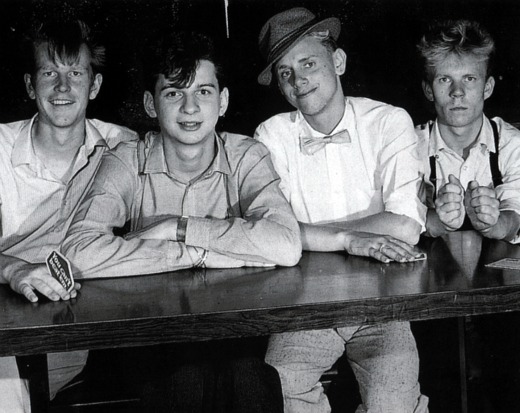
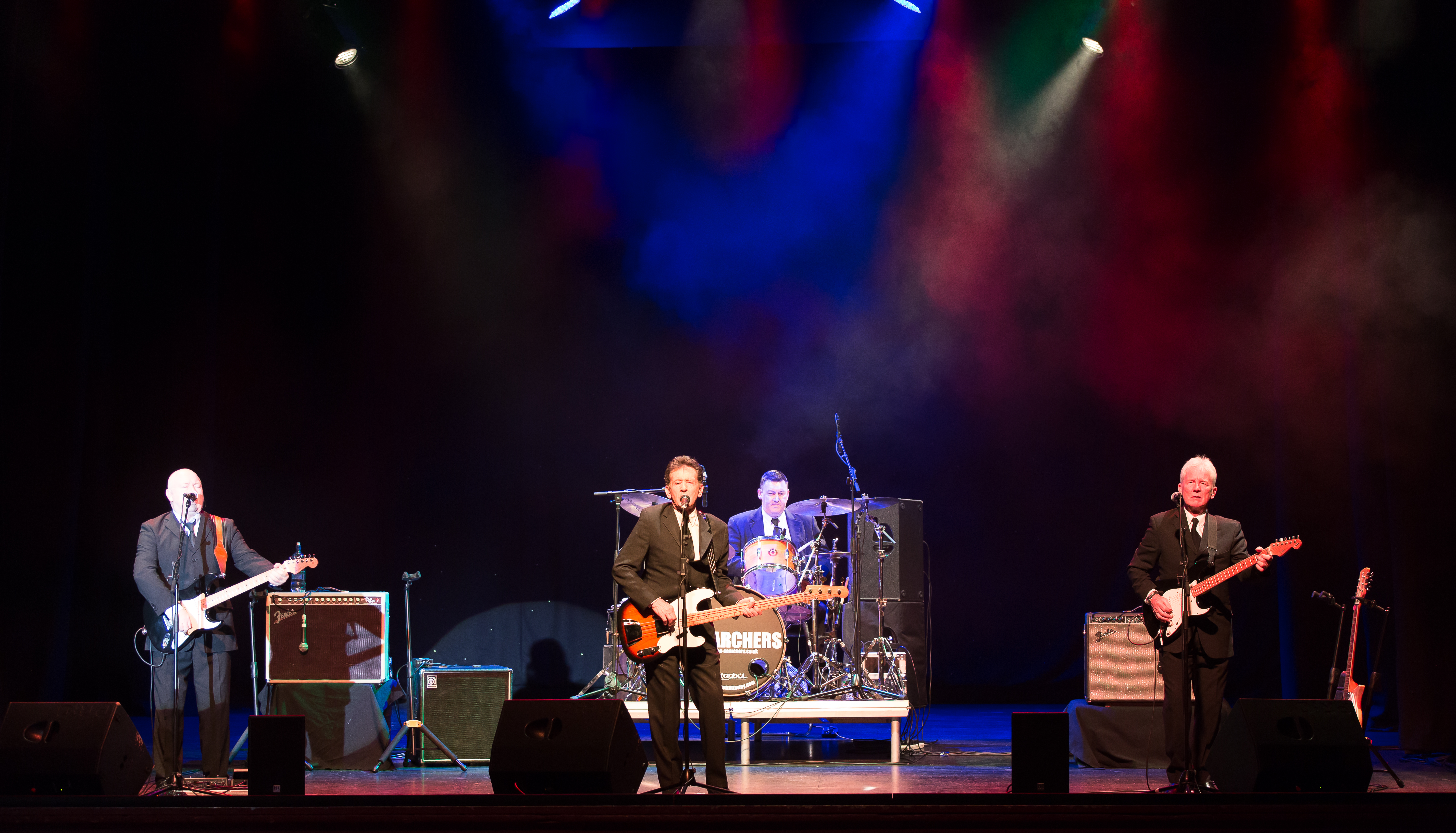
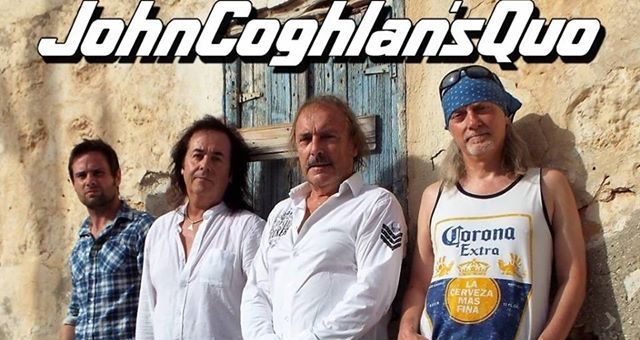
Classic Revival: JCQ, coming to a town near you. From left – Rick Abbs, Rick Chase, John Coghlan, Mick Hughes.

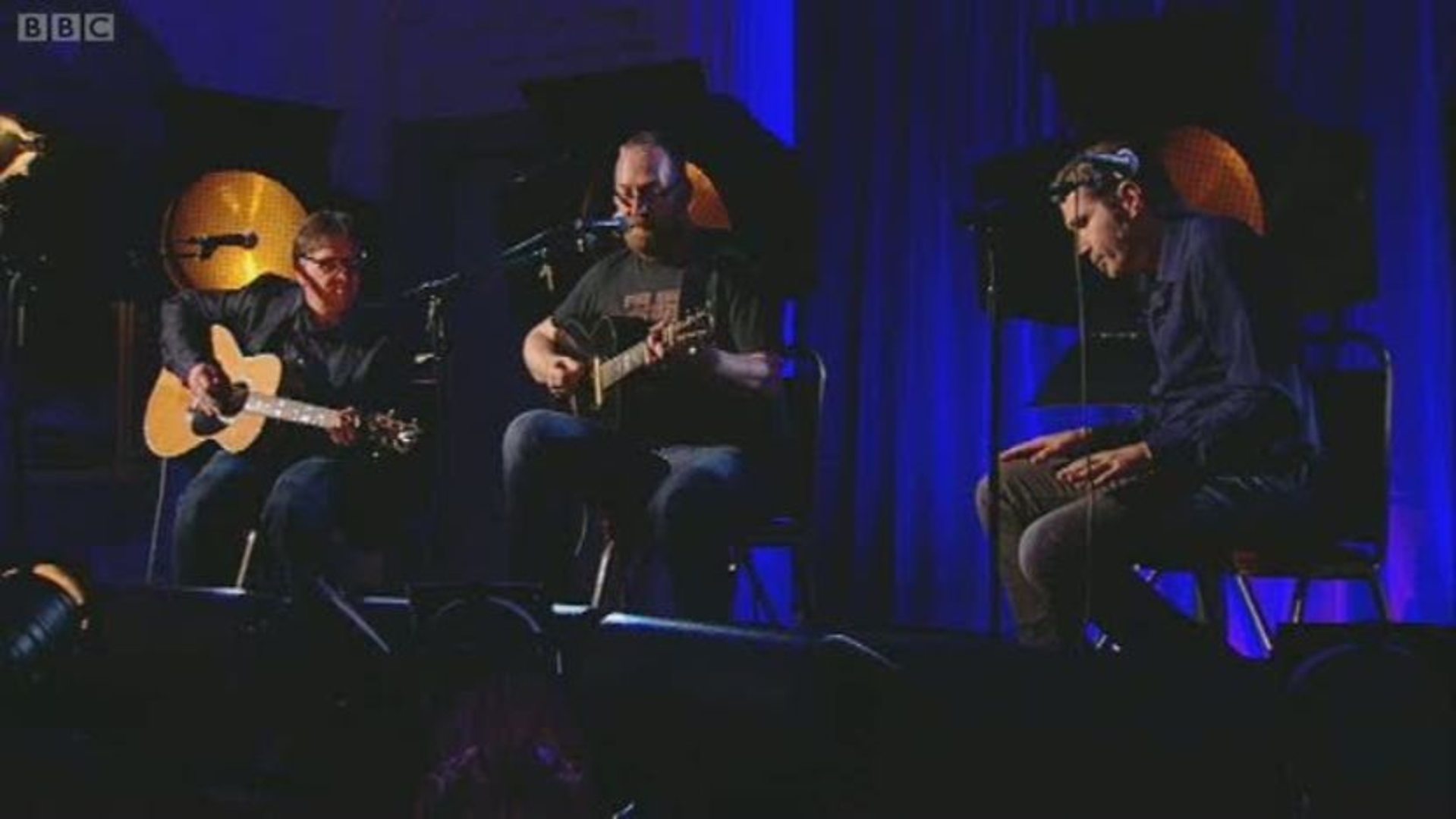
In the BBC documentary Hello Quo, there’s revealing footage of a jam session at Shepperton Studios featuring the original members of Status Quo, for the first time since drummer John Coghlan left 31 years earlier.

That 2012 meeting led to two reunion tours for Coghlan, old pal Alan Lancaster (bass) and Quo ever-presents Rick Parfitt (rhythm guitar/vocals) and Francis Rossi (lead guitar/vocals). And recriminations and tensions surrounding Coghlan’s initial departure were finally put aside for what proved to be one last hurrah of the ‘classic’ line-up, deemed all the more important bearing in mind Parfitt’s death last Christmas.

And while Rossi remains busy on the international circuit under the old Status Quo banner – alongside long-time associates Andy Bown (keyboards), John ‘Rhino’ Edwards (bass) and Leon Cave (drums) plus Rick’s recent replacement Richie Malone (guitar) – the original drummer is also still out there, leading John Coghlan’s Quo from the rear.

Coghlan first worked with Rossi and Lancaster in The Spectres in 1963, that band becoming Traffic Jam then Status Quo in 1967, by which time Parfitt was also on board, a five-piece honed down to the ’Frantic Four’ in 1970 and lasting until the drummer’s 1981 departure. But after a year kicking his heels he was back behind a kit, and 35 years later the gigs continue for this amiable 70-year-old, who brings his band to The Continental in Preston, Lancashire. on Saturday, August 12th.

That’s not the next show though, and I asked my interviewee about the Party in the Park in Woking, Surrey, on Saturday, July 8th, dedicated to Parfitt, who grew up within walking distance of that open-air location. What’s more, we talked about an impromptu tribute in South-West London at what turned out be an emotional end of year JCQ show at the Half Moon in Putney, following Parfitt’s death in Marbella on Christmas Eve, 2016.

“It was, and I also had an email on my phone from a friend in Holland who wrote a poem about Rick. I read that out and it was very moving. We miss Rick. He was a great guitarist, great singer, great guy, and just a really lovely bloke.”

Coghlan’s doesn’t come over as a big talker, at least not on the phone. Just humble, I guess. There’s nothing showy about him. My interview with the more in-your-face Francis Rossi – and I mean that in a good way – a couple of years ago was very different. But I told the original Quo sticksman I’d just watched that Shepperton Studios footage from 2012 again, and felt Alan G. Parker’s film perfectly captured the sense of awkwardness as the ‘Frantic Four’ resumed for the first time since 1981.

There are several versions of the story behind Coghlan leaving, the most dramatic involving him sat down to do a session take, tapping around then getting up, kicking the whole kit apart and storming out. He denies that in the Hello Quo documentary, suggesting – a little tongue-in-cheek, perhaps – he loves his kit too much to damage it. But the drink and the drugs were clearly taking their toll on the dynamics and there were obvious in-band tensions. It seems he didn’t feel part of the inner circle, Rossi tuning his drums before he came in to that particular session supposedly proving the last straw.

A decision was made – to Lancaster’s surprise, the original bassist the next to move on four years later – to let Coghlan go, Pete Kircher replacing him. Coghlan recalls tour manager Ian Jones telling him the day after the kit incident that the band were thinking of replacing him with a drum machine. His response, he recalled in 2012, was, ‘Bollocks. I’ll get on the plane.’

Frantic Revival: John Coghlan at the rear, with Rick Parfitt, left, and Francis Rossi, live in Stuttgart in 2014

We don’t go into all that though. Instead, I asked if it was a relief, particularly in light of Parfitt’s passing, to finally get back together after all those years.

“Well yeah. We all did it for the fans. That’s the way I look at it. Because there’s nothing better than the Status Quo fan. They look after our band really well and follow us everywhere. It’s really appreciated. And if it wasn’t for those fans none of would still be doing these gigs.”

And as a result, the classic four-piece ended up playing two reunion tours together.

“Yeah, we did a UK tour in 2013 and then the following year started in Berlin and did dates in Germany, Belgium and Holland, then back to England, finishing in Dublin.”

Was that a bit of ‘closure’ for you and the band? And was it nice to be back with the old crew, rather than dwelling on all the problems and arguments that ultimately pulled you apart?

“Yeah. It was good fun, but Francis didn’t want to do a third tour. I think Rick, me and Alan would have done another, planning to get together with someone else for a PLC (Parfitt/Lancaster/Coghlan) line-up. That never came to light of course, but there was talk about it, and I think it probably would have happened.”

Looking back on that 1981 departure – irrespective of the decision and the aftermath – I suggest to my interviewee that he got out at the right time, even though he probably didn’t feel that way at the time.

“Yes.”

Let’s face it – the years that followed weren’t the band’s best, creatively. And to be part of the band for so long was something to be proud of. He was on board for 20 years and 14 albums, after all.

“I think I was.”

It was rarely the same again from 1981 until more recent returns to form, at least not in the studio.

“No.”

I tried my best there, but he wasn’t for enlarging on all that, opening old wounds. You can’t  blame him either, and I’m sure Parfitt’s passing help put all those old tensions in perspective. Instead, I moved on, right up to date, asking about the fact that he’s still out there playing and to shed light on JCQ and JCB (the John Coghlan Band).

“JCB doesn’t exist anymore, but JCQ is basically me playing with my band – Rick Abbs (guitar/vocals), Mick Hughes (guitar, previously with Predatür) and Rick Chase (bass/vocals). We play all ‘70s stuff, including songs from the early Quo albums that we never really played on stage. We have a great following, and we’re looking forward to playing in Preston and elsewhere.”

The prime aim – according to JCQ’s press release – is ‘to recreate an authentic ‘70s Quo sound’, in keeping with John’s time with the band. And the diary remains pretty full.

“Yes, most weekends we’re away, and we did two gigs in Belgium and two in Holland, then others at The Northcourt, Abingdon, and The Brook, Southampton, then Queen’s Hall in Nuneaton, and we’re looking forward to the Party in the Park, Woking, and beyond.”

Did you always enjoy the travelling, including all that down-time?

“It’s a part of your life when you’re playing in a band. You have to accept you do a lot of travelling. We try and do it as comfortably as we can, and if we’re playing in Europe we fly out the night or day before. Days of getting up early in the morning, catching a flight don’t exist anymore for us. If they want us out there, they fly us out the day before. We’re not teenagers anymore!”

Seeing as he mentioned age, I asked if it’s harder to get up on stage these days, or does his rock’n’roll vocation keep him young?

“Well yeah. It doesn’t make any difference really. It’s still the same. We’re all quite fit and look after ourselves, and I’ve learned to relax while I’m playing to save energy. It works, and it’s great.”

Originally from South London, he’s been based in Oxfordshire for more than 30 years, on the edge of the Cotswolds, having spent around a decade on the Isle of Man before that. Is there enough room on the drive for his collection of vintage military vehicles?

“Well, I used to be a collector. I’ve only got one now, and that’s somewhere else. Yeah … it’s a hobby, I suppose.”
Going back to his roots, his father was from Glasgow and his London-born mother was half-French, on her mother’s side. Were his family always supportive of his music career?

“Oh yeah. They supported me and loved it, although nobody in the family on either side was a musician before,”

You had that early break with The Spectres, getting a call to play Butlin’s in Minehead. Was it then that you had a little extra tuition from Lloyd Ryan (as Phil Collins would later)?

“Yeah, Lloyd was playing in the orchestra in the theatre, We got together and he taught me a few things. That’s where we met Rick Parfitt as well.”

By his own admission, your future bandmate Mr Parfitt was more on the cabaret side of the business at that stage.

“That’s right.”

Coghlan grew up in Dulwich, leaving school at 15 to begin an apprenticeship as a mechanic. Could that ever have worked out, or was the pull of music too strong?

“Yeah, I got a job but hated it. It wasn’t really my scene and I wasn’t happy. But I learned to play drums and realised I could make a living out of it. I’m lucky in the sense that my hobby is also my job and I enjoy doing it. I love walking on stage and playing with the band. And I’m lucky I don’t have to get up at six in the morning to go to work.”

It helps that you’re very good at your job too.

“Well, yeah. I guess I’m lucky that what I do I can do well.”

Was there the belief when you joined The Spectres 54 years ago that you could ever reach the top?

“Not really. I think in those days if you were in a band that was enough – there weren’t that many of us. We loved the excitement of playing to an audience and being able to make everyone happy, playing good music.”

Looking back at all those years, from the holiday camps until you left Quo, could you pick out a few key moments that will always stay with you, confirming this was what you wanted to do in life?

“I suppose those six weeks at Butlin’s were an eye-opener, doing it – in a sense – professionally, getting to play to people and them coming up saying how much they enjoyed it. Then you think back to that stage with Quo in ’68 with our first hit record, Pictures of Matchstick Men, and playing places like the Royal Albert Hall, Glasgow Apollo, doing the live album there (October ’76), Hammersmith Odeon, Manchester Apollo …”

After you left, you had around a year away from it all, but already had side-project Diesel in the background, making your live debut at the Marquee in ’77.

“Yeah, that was just a bit of fun. Jackie Lynton, our singer, thought of the name, with me, Micky Moody, John Gustafson and various others playing with us. It was really good fun. I guess we could have made a career out of it, but we were all in other bands.”

I’m also intrigued by your one-off 1983 project The Rockers, with Roy Wood, Phil Lynott and Chas Hodges.

“Yeah, that was a strange thing!”

That’s some line-up though.

“Yeah, but it was just put together by this character who had this idea. But there was no plan to go on the road with it, which I thought was a shame. That would have been fun.”

Did you keep in touch with your fellow Rockers?

“Not since we did that recording. Our paths haven’t crossed. But it was fun.”

One of those involved with Diesel was Andy Bown, part of the Quo set-up since 73 but not a full-time member until after Coghlan left.

“He played keyboards but wanted to play bass with us, and did … well. I haven’t seen Andy since Rick Parfitt’s funeral.”

Drumming Legend: John Coghlan caught in a classic portrait in 1977 (Photo copyright: Terry O’Neill)

I’m guessing you met a lot of old mates at Woking Crematorium that day, albeit in difficult circumstances.

“That’s right. We went on somewhere after the event and had a chat with Matt Letley, who was also with Quo for a while, and loads of girlfriends of friends too, but it was a sad occasion.”

When you think of Rick now, is there a particular moment that springs to mind, or was it just all those shared memories?

“Well, he was just a lovely guy, one of the best rhythm guitarists in the world, he wrote great songs, sang extremely well, and all the fans loved him.”

I suppose the business gets in the way sometimes and it’s easy to forget the good times and shared memories you had.

“Exactly.”

During those years on the Isle of Man and in Oxfordshire ever since you’ve been with your beloved, Gillie. Does she deserve a medal for sticking by you all those years?

“I think anyone deserves a medal for sticking with me that long!”

He also has a daughter, from his first marriage, based in Hertfordshire, Is he a grandfather these days?

“Yeah, we have a granddaughter. She’s lovely, and doing well at school.”

But Grandad John’s still out on the road. Could he ever have envisaged that scenario all those years ago?

“No!”

You’ve worked with many big names. Anyone in particular still on the list, at least to jam with?

“I don’t know. Maybe Eric Clapton. I like the blues and I think he’d be a great guy to play the blues with.”

You suggested on the Hello Quo documentary that after your success with Pictures of Matchstick Men, you still didn’t know which direction to take until the band heard The Doors’ Roadhouse Blues.

“Yeah, Bob Young suggested we get rid of the pop image for heads-down boogie blues. That’s what we did, and it paid off.”

And of course Young was another Quo contributor who ended up with you in Diesel.

“Yes, he sang and played harmonica for us.”

Finally, of which Quo tracks would you say you’re most proud of all these years on?

“We made so many albums and recorded so many songs I think it’s difficult to pick one out as the best. I always felt if you ask a Status Quo fan they’ll tell you which they think is the best. They take it from a different outlook, not being part of the recording process.”

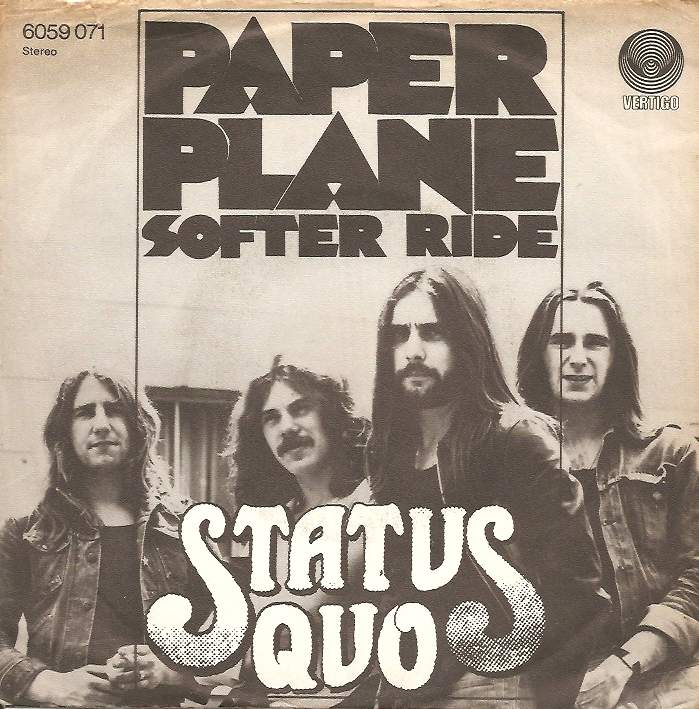
Okay then, if you put me on the spot, I’d have to say Paper Plane, or maybe Down Down … or Caroline …

“Oh yeah – good stuff!”

Operation JCQ: John Coghlan’s Quo are coming for you this summer, promising heads-down boogie blues

Tickets for John Coghlan’s Quo at The Continental on Saturday, August 12 are £18 in advance from WeGotTickets or in person from The Continental (01772 499 425) and Action Records (01772 884 772).

For details of Woking’s Party in the Park on Saturday, July 8th, try here. The band are set to go on at 5pm, and later the same day play the Rose Theatre in Kingston, stepping on stage at 9.30pm. For more gig news and all the latest from John Coghlan’s Quo, check out the official website. You can also keep in touch with John’s happenings via Facebook and Twitter.

To look back on this site’s interview with Francis Rossi from July 2015, follow this link. And for the writewyattuk verdict on Status Quo live at Hoghton Tower later that month, head here.


Posted in Books Films, TV & Radio, Music | Tagged , , , , , , , , , , , , , , , , , , , , , | 2 Comments

In praise of Paddington’s world – a tribute to Michael Bond

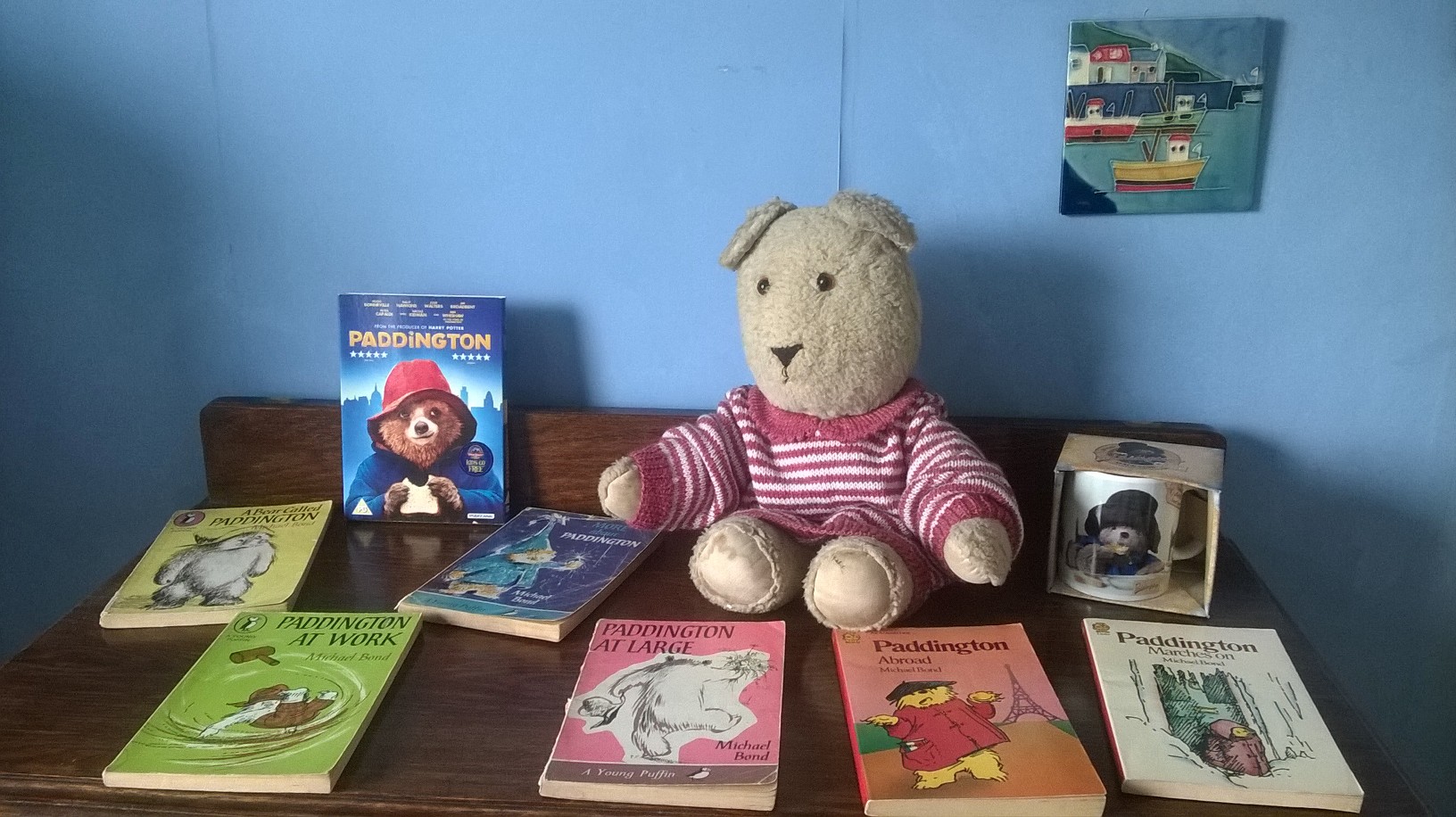
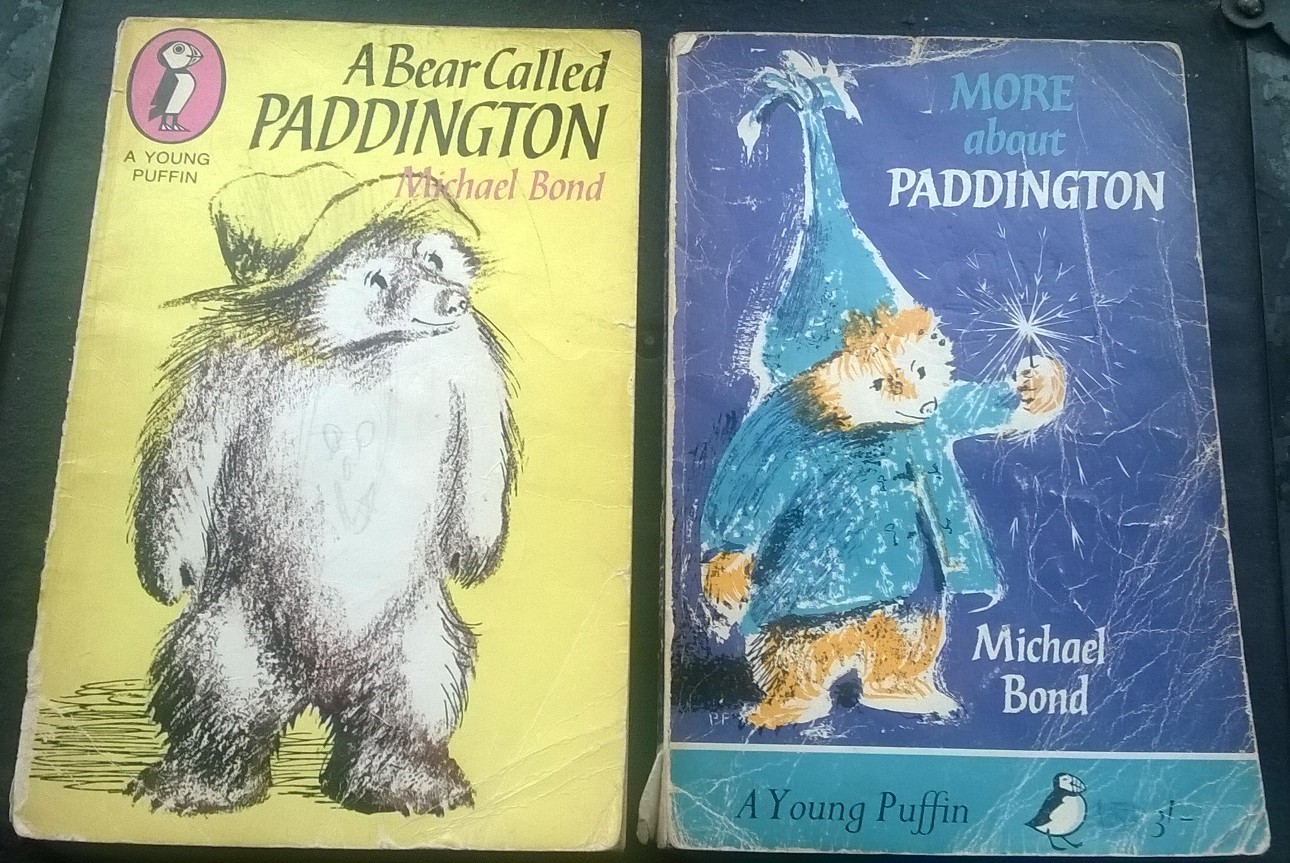
The Beginning: Michael Bond’s first Paddington story books in my ‘Young Puffin’ editions (Photo: Malcolm Wyatt)

In a short piece penned for children’s author Cathy Cassidy’s Dreamcatcher blog in January to mark Michael Bond’s 91st birthday, I talked about my friend Paddy, who came into my life 40 years ago last Christmas. Something of a consolation prize at the time, he quickly became the bear I treasured most and all these years on he’s still with me, 240 miles north of his Surrey birthplace, having moved to Lancashire in 1994. He’s now largely consigned to a bedroom alcove, but is still very much loved. And a few days ago I raised a glass to his creator, who died after a short illness in his beloved London.

Consolation prize? I should explain. Most summers from around 1973 Mum and Dad took us to St Ives, Cornwall, my special place, where for as long as I recall while holidaying there, a Paddington Bear sat in a shop window on The Terrace, along our walk into town from the railway station, probably one of the endorsed replicas by Gabrielle Designs, a firm run by Jeremy Clarkson’s Mum. Each summer I looked longingly in, but always understood he was out of our price range.

Dad was a postman and Mum did every job under the sun – mostly cleaning – to help pay rent on our council house outside Guildford, so we were just grateful that they somehow managed to put away enough each year to pay for that annual West Country visit. Besides, the price-tag for the bear with the distinctive toggle-loop duffle coat, rubber wellies, felt hat and luggage label seemed to increase each year.

I’m not sure when I first clapped eyes on that official Paddington, but I was familiar with Michael Bond’s stories about this loveable Peruvian stowaway brown bear long before the BBC children’s TV cartoon, The Adventures of Paddington, was first aired in 1975. I didn’t own many books at the time (most were borrowed from the library) but he was up there with A.A. Milne’s Winnie-the-Pooh for me, and I’d caught up with them all before I turned 10 in late 1977. What’s more, I still have my copies, some more dog-eared than others.

I don’t remember being disappointed that I never got to own a ‘proper’ Paddington. I got the best possible alternative. I’ve no idea how Mum sought out the bear that became known as Paddy, and it’s too late to ask her now, but he arrived on Christmas Day ‘76, sporting hand-made red felt coat with buttons, black felt boots and hat. These days he sports a jumper Mum originally knitted for one of her nine grandchildren, the clothes he arrived in long since gone. After all, he travelled thousands of miles to reach Darkest Surrey. And Paddy turned out to be the perfect Christmas present.

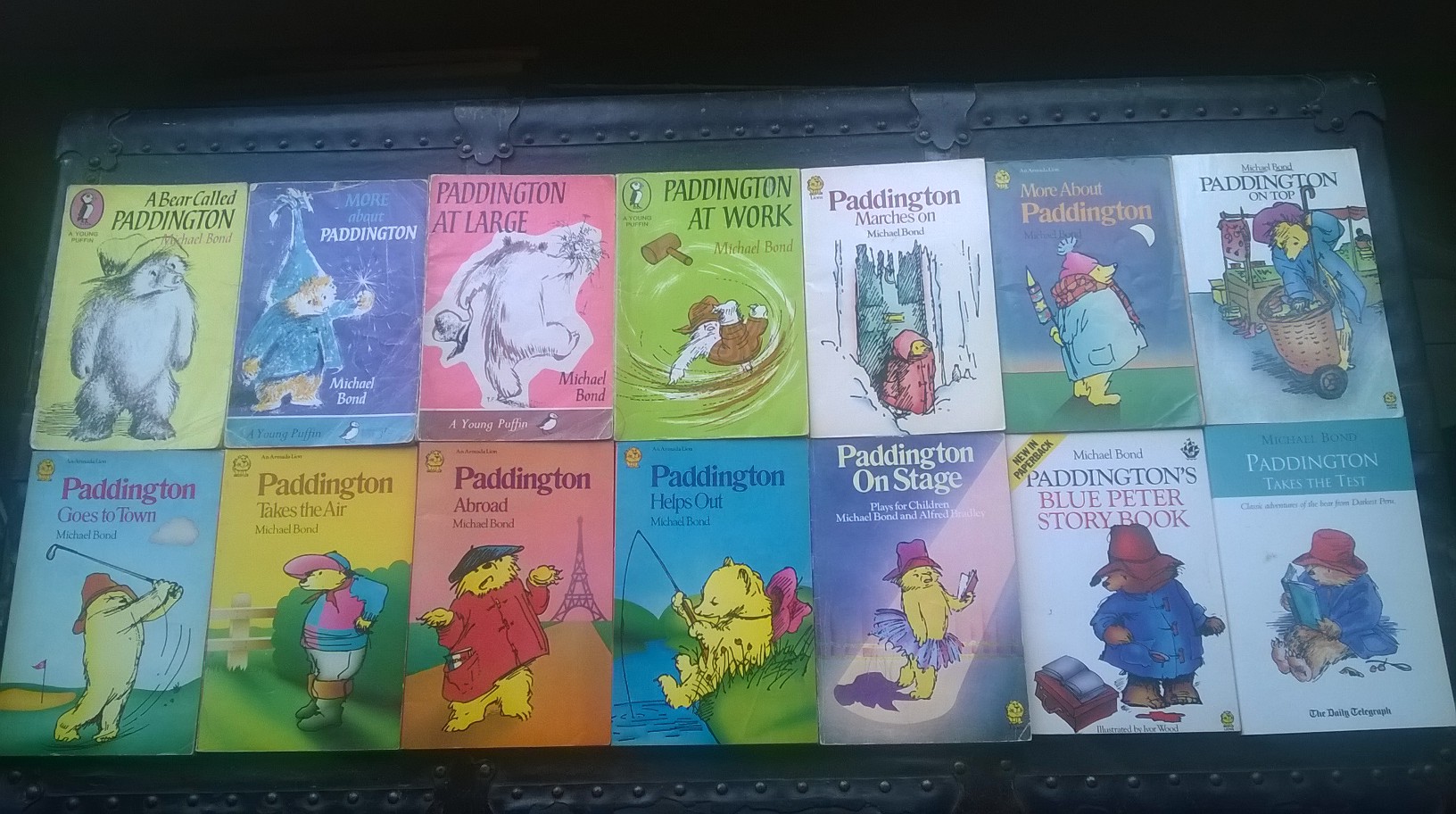
Paddington Paperbacks: The blogger’s Paddington book collection (Photo: Malcolm Wyatt)

But what of his inspiration? Thomas Michael Bond was born in Newbury, Berkshire, on January 13th, 1926, five days before A.A. Milne’s 44th birthday and nine months before Winnie-the-Pooh first saw the light of day. Michael would go on to sell more than 35 million books around the world in his lifetime, with the Paddington series published in more than 40 languages, this much-loved author becoming a CBE two years ago.

That first book, A Bear Called Paddington, was published in October 1958, with Michael 32 then, his breakthrough coming two and three-quarter years after Pooh’s creator died. And nearly six decades later he remained proud of his creation in a way Alan Milne – who felt his own loveable character overshadowed his other work – never truly was.

Like my Mum, Michael was brought up in Reading, Berkshire, where early visits to the main railway station – where my Grandad Thomas worked in the signals department and Mum was later in the telegraph office – to see the Cornish Riviera Express steam through en route from Paddington to Penzance (and even direct to St Ives) inspired a lifelong love of trains. His family home was on Winser Drive (Windsor Gardens in the books was an amalgam of that address and a later base in Arundel Gardens, W11, not far from the rail terminus he named his bear after), barely a mile from my Mum’s Cranbury Road roots.

While my Mum passed her 11-plus but had a difficult time at Kendrick School, singled out for her working-class roots among more monied pupils, Michael – also from a C of E background, but seven years her senior – had a hard time at the strict, fee-paying Catholic boys’ Presentation College, insisting his mother only chose that school because she liked the purple blazers. It wasn’t a happy time, Michael remembering with disgust the masters who disciplined their young charges with rubber straps, not least one particularly vicious member of staff, and often endured long cycle rides home to avoid the boys from the local state school, lying in wait.

This son of a post office manager subsequently gave up on the education system, starting work at 14, joining a solicitor’s practice as a mail-boy in the early days of the war. He soon switched employers, becoming an engineer’s assistant at the BBC in nearby Caversham, ‘switching the radio transmitters on in the morning and off at night’, as he told the Telegraph’s Anna Tyzack in 2012, an earlier interest in building amplifiers and radio sets helping him get the job.

Bomb Damage: Reading Town Hall Square after the 10 February, 1943 bombing (Photo: Reading Museum/BBC)

Of that period, a harrowing Wednesday afternoon in February 1943 cast a dark shadow, Michael working in an office at the top of a building in central Reading when it collapsed under him after a direct hit from a Dornier 217, during a raid that killed 41 people and injured many more. The bomber was one of two following the GWR line west from London, one wreaking havoc on Newbury and the other dropping four 1,000lb bombs on Reading, many of the victims trapped below Michael’s office. He told BBC Berkshire, “The bombs blew everything away from beneath you. People on the bottom floor in a restaurant just disappeared into the basement.”

My Mum often talk about the same raid, and that afternoon went with her step-mum and sister by bus to see Bambi at a cinema on Friar Street, getting as far as nearby St Mary’s Butts before an air raid warning was quickly followed by the attack, the passengers forced to lay where they were, Mum recalling a man holding her glasses in case they smashed. After the blasts and eventual all-clear, badly shaken up, they walked home, to be met at the end of their road by my relieved Grandad, who that evening cycled into town to help the rescue operation.

A short spell in the RAF followed for Michael, acute air sickness leading to a switch to the Army’s Middlesex Regiment, staying on until 1947, the year he sold his first short story while stationed in Cairo. The London Opinion magazine paid seven guineas for that, but he later said he ‘could have papered the walls of our one-room flat near Holland Park with rejection slips’ before his literary breakthrough. On demob, he joined the BBC monitoring service, which translated radio programmes from around the world, switching to the children’s television department in 1956, rising through the ranks to cameraman on the first series of Blue Peter.

Writing for Radio Times in 2014, Michael recalled, “There are some avenues in life that feel as though they are meant, and there are others that are simply a matter of chance. Occasionally, very occasionally, there is a happy combination of the two. For example, although I didn’t realise it at the time, my coming across a small bear when I took shelter in Selfridges’ toy department one snowy Christmas Eve was just such a million-to-one chance. Had there been two bears, I might have given them a passing glance, but I could hardly ignore one bear all by itself, with Christmas coming on. He looked so forlorn that I bought him as a stocking-filler for my wife, and called him Paddington after our nearest railway terminus because it has a masculine ring to it; important but not overbearing, with nice, safe, West Country overtones.”

He continues, “My writing had to be squeezed into days when I was off-duty. One such day found me sitting with a blank sheet of paper in my typewriter and not an idea in my head, only too well aware that the ball was in my court. Nobody else was going to put any words down for me. Glancing round in search of inspiration my gaze came to rest on Paddington, who gave me a hard stare from the mantelpiece, and the muse struck, along with what was destined to become the equivalent of a literary catchphrase. Suppose a real live bear ended up at Paddington station? Where might it have sprung from, and why? If it had any sense it would find a quiet spot near the Lost Property Office and hope for the best.

“I knew exactly how my own parents would react if they saw it, particularly if it had a label round its neck, like a refugee in the last war. There are few things sadder in life than a refugee. My mother wouldn’t have hesitated to give it a home, while my father, who was a civil servant to his fingertips, would have been less enthusiastic in case he was doing something against the law.”

His daughter, Karen Jankel, born the year the first book was published, says that Selfridges visit was on December 24th, 1956, with the writing happening just after Christmas and completed within 10 days. It was never intended as anything other than a writing exercise, but such was his first wife’s enthusiasm for the tale that Michael was inspired to try to get the book published.

Mane Attraction: Parsley the Lion, one of the stars of The Herbs (Photo: BBC/FilmFair)

It seems apt that it’s my sister Jackie’s name in the front of my copy of A Bear Called Paddington, as she was born the same year as Karen – now managing director of Paddington & Company – and the book’s initial publication. My version is a mere seventh ‘young Puffin’ reprint, from 1969, while my copy of 1959 follow-up More About Paddington is from 1967, the year I was born, long after Aunty Lucy’s move to the Home for Retired Bears in Lima.

I also have a 1968 reprint of Paddington at Large, youngest sister Tracy’s name in the front, followed by ‘Class 4, Shalford School’, a full home address and ‘Telephone number is have not got one. Ha ha.’ Comedy ain’t what it used to be. More to the point, on the title page she added, ‘Great book’, further proof that it wasn’t all just about James Bond in our house in the ‘60s and ‘70s.

There’s one more Young Puffin edition in my collection, a 1970 reprint of Paddington at Work. All of those carry drawings by Peggy Fortnum, who remained Michael’s illustrator during the Armada Lions reprint years which make up the bulk of my collection, dating between 1972 and 1978. I bought most with birthday or holiday money, and never truly grew out of the series, my Paddington on Stage ‘plays for children’ 1976 edition used for home productions of the stories (no doubt with Paddy in the lead role), just as it would be around 30 years later by my daughters.

By 1965 Michael had given up the day-job behind the camera to concentrate on full-time writing, and us of a certain age fondly recall TV animation The Herbs, the first FilmFair success he created and wrote, working alongside animator Ivor Wood. Using innovative 3D stop-motion model animation, the first show was transmitted in February 1968 in the BBC’s Watch With Mother slot, its regulars including Parsley the Lion, Dill the Dog, Sage the Owl, Sir Basil, Lady Rosemary, Constable Knapweed and Bayleaf the Gardener soon national treasures. And from 1975 onwards The Adventures of Paddington became an after-school staple for this impressionable lad. In fact, to this day Michael Hordern’s voice and Herbert Chappell’s theme tune conjure up home comforts on cold evenings, watching our black and white set (colour TV in the UK may be celebrating its 50th birthday, but my days in front of the box were strictly monochrome).

Michael adapted 56 stories for that series, again directed by Ivor Wood (also associated with The Magic Roundabout and another of my favourites, The Wombles) for FilmFair, bringing Paddington to an even wider and somewhat younger audience. And this was stop-motion fare of the highest order, its largely black and white 2D backdrops not hampering its appeal. They were ahead of their time, producing quality television in a golden era.

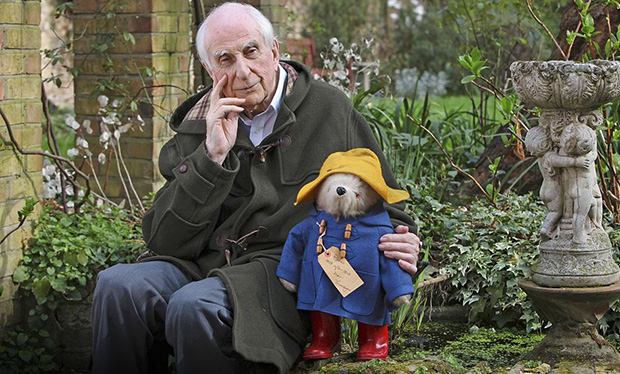
Old Pals: Michael Bond and Paddington Bear at home in Maida Vale in 2012 (Photo copyright: Rebecca Reid / Eyevine, as published in Radio Times)

We all move on, and soon I felt I had little in common with private school boarders Jonathan and Judy Brown. Mine was hardly a 32, Windsor Gardens type middle class upbringing. In that respect, Pooh Bear stayed with me longer, and while Christopher Robin also went off to private school at the end of those stories, it always seemed more about making the most of your youth before grown-up adventures inevitably took over. But although I began to value more the complexities of the relationships, understanding a deeper humour in the Hundred Acre Wood while relating more to the ‘great outdoor’ aspects of Milne’s work, his woodland setting comparable to my own semi-rural existence in the Tillingbourne Valley, that in no way denigrates Michael’s stories and the underlining human values in his books.

For one thing, Mr and Mrs Brown are loosely based on his own parents, and so many friends of Michael mention the author’s own Paddington attributes. Michael told Anna Tyzack about his father, “He was a polite man who always tipped his hat and never wore a bathing costume in the sea; he’d just roll his trousers up. But if he came against something he thought was wrong he did stick his feet in, just like Paddington.” And as Karen Jankel put it, “There was nothing slapstick about Paddington, the books are much subtler than that. Paddington is quite a serious-minded bear but he has an innocence which children share and so they can relate to him.”

While I was getting to be the wrong age to fully appreciate the qualities that first hooked me and could most relate to with Paddington – not least that polite, understated manner and accident-prone nature – I always loved his cosy relationship with Mr Gruber, feeling at home when he was dropping in for elevenses on Portobello Road, talking all manner of subjects with a gentleman who had great stories of his own – in the same way I loved my 1970s’ conversations with my Grandad Wyatt and the old boy next door, Jack Grant.

That relationship between the two immigrants is something that endeared both characters to many of us, and Michael told Anna Tyzack, “I based Mr Gruber on my literary agent, Harvey Unna, who fled Germany before the war. He used to tell me people never recognise themselves in books, and he was right; he never realised he was Mr Gruber.” He also told Michelle Pauli of The Guardian the first Paddington book was partly inspired by memories of the evacuee children he saw pass through Reading station from London, saying, “They all had a label round their neck with their name and address on and a little case or package containing all their treasured possessions. So Paddington, in a sense, was a refugee, and I do think that there’s no sadder sight than refugees.”

With that in mind, I was pleased David Heyman’s Paul King-directed 2014 film version of the stories, Paddington, picked up on that. It makes for great viewing, not just because of the stunning CGI effects (for a start, Paddington himself was somewhat life-like, and gorgeous). It seemed that the film-makers fully respected Michael’s vision, and definitely understanding the importance of the camaraderie between two firm friends. Samuel Gruber is wonderfully played by Jim Broadbent, while the choice of Hugh Bonneville and Sally Hawkins as Henry and Mary Brown was equally inspired, with the children, plus Julie Walters as Mrs Bird and Peter Capaldi as Mr Curry – both just the right (believable) side of batty – also nicely cast.

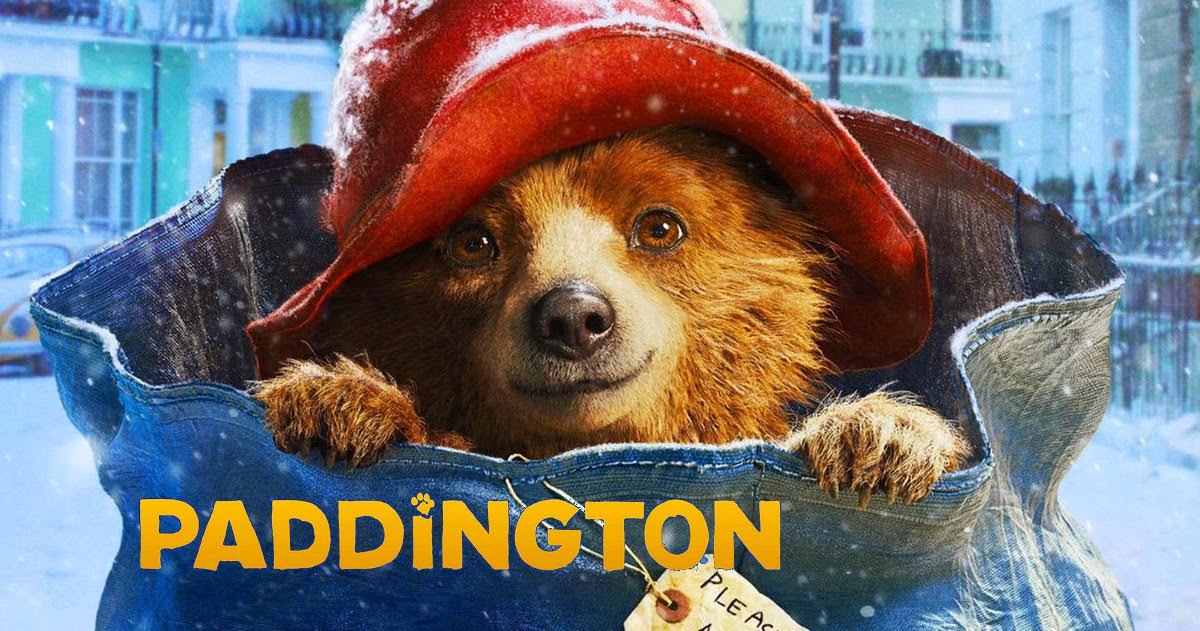
Movie Star: Paddington in the 2014 David Heyman film adaptation

Maybe we don’t tend to see so many people around London raising a hat or being quite as polite in the modern era, and there are elements of an idealistic Mary Poppins-type London in the film, but perhaps we should revert to the ‘Paddington Way’ of doing things, issuing hard stares to those who go against our far more refined new world order. A marmalade sandwich in a hat could defuse the most difficult of situations. I also love the fact that the film put its star at the heart of a buzzing city with a calypso soundtrack, in tribute to the Windrush generation arriving on Michael’s West London patch from the late ’50s onwards.

Actually, I’m due a visit to the capital, and it’s about time I had a proper look around the principal railway termini. Most of my commuting in the past involved Waterloo and Euston, but I’ve a yearning to finally see the John Betjeman sculpture at St Pancras and a certain bronze sculpture of a bear sat on a suitcase under the clock on platform one at Paddington, where the Brown family first found him with that ’please look after this bear’ label around his neck.

That’s not so far from Michael’s own patch, the author sticking around West London, seeing out his days in Little Venice. He’s also one of three popular subjects picked out in sculptures alongside a new pathway and cycle route between St Mary’s Terrace and Paddington Station, two-dimensional steel artworks depicting famous nurse Mary Seacole, computer pioneer Alan Turing and Michael himself – clutching his famous bear – part of the Portrait Bench series by transport charity Sustrans, the subjects voted for by residents.

When my daughters were a little younger, I not only introduced them to Paddington, but also Michael’s much-loved guinea pig Olga da Polga. Others may recall his adult culinary mysteries based around Monsieur Pamplemousse and faithful bloodhound Pommes Frites. But it will be for that Peruvian stowaway that the alternative Mr Bond will forever be associated, and he continued to write throughout the decades, his last title Paddington’s Finest Hour published as recently as April.

As Karen Jankel put it in The Guardian, “The whole world is lucky to have had him. Paddington is so real to all of us. He’s still a part of our family and we’re very lucky. For me, he was the most wonderful father you can imagine, so our loss is personal. But it’s wonderful that he’s left the legacy of his books and Paddington will live on forever. Because Paddington and his other characters were so real to him, he became alive to everybody else. You can tell just by reading his books what a lovely person he was. I never came across anybody who disliked my father. He was one of those people that people instinctively warmed to and he was as funny as a person and delightful as he was in his writing and as a father.”

Of course, the author made a cameo in the 2014 film, a lovely touch that will ensure this ‘kindly gentleman’ (as he was credited) remains with us in another form. As a result, this fan will always picture him raising a glass to his special creation, welcoming a foreign stranger to the big city. Yes, you’ll be missed, Michael, but thanks for the memories. I not only raise a glass but also a metaphorical hat to you.

Bear Essentials: Paddington and Paddy, Lancashire, July 2017 (Photo: Malcolm Wyatt)

With thanks to The Guardian, Radio Times and The Telegraph for the quotes from past interviews with Michael Bond and Karen Jankel replicated in this feature.  

Along similar lines, for this website’s interview with award-winning illustrator and author Michael Foreman, from October 2016, head here. For a June 2015 150th anniversary appreciation of Lewis Carroll’s Alice in Wonderland books, try this link. From March 2015, there are interviews with leading children’s authors Cathy Cassidy and Frank Cottrell-Boyce, and from March 2014 there’s a personal appreciation of Seven Stories national centre for children’s books in Newcastle-upon-Tyne.

Posted in Books Films, TV & Radio, Comedy & Theatre | Tagged , , , , , , , , , , , , , , , , , , , , , | Leave a comment

The enduring appeal of Sparks – in conversation with Ron Mael


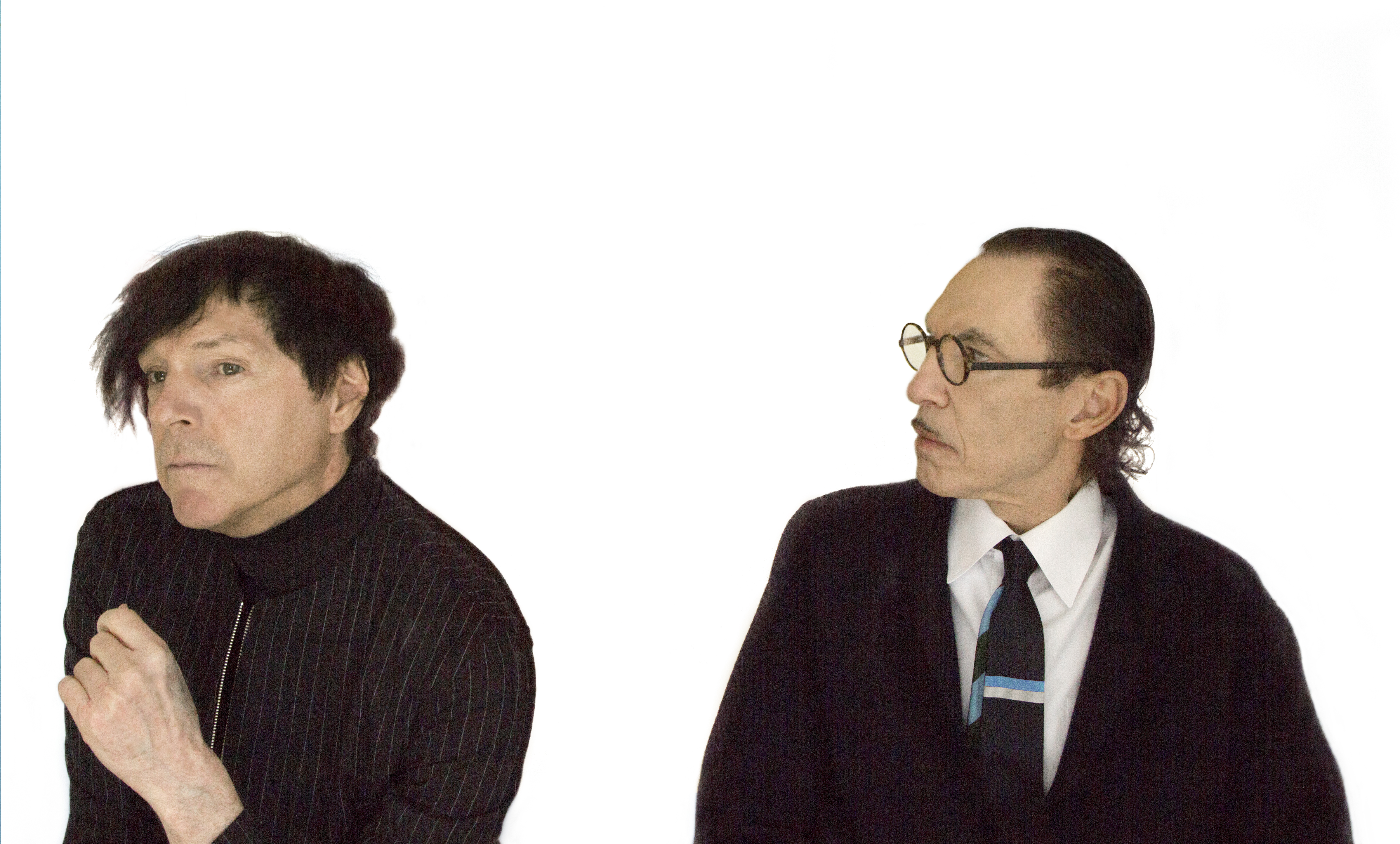
Mael Bonding: A pensive Russell, left, tries to avoid older brother Ron’s questioning look.

Many of us of a certain age will recall the first time we heard American art-pop-rockers Sparks, a band that properly appeared on the UK chart radar around the time of the glam movement, sitting pretty comfortably amid an air of flamboyance. Yet they were an outfit that always seemed so ahead of their time and never easily categorised – an enigma for sure, in the best sense of the word.

I was barely seven when This Town Ain’t Big Enough For The Both Of Us and Amateur Hour first stopped Britain in its tracks, struggling to make out be-flared singer Russell and altogether less-animated keyboard player Ron, on Top of the Pops and other notable TV music shows of the day. The fact that they were even brothers seemed bewildering enough. What a band too, not least the delightfully-named Dinky Diamond on drums. That’s if you could see beyond Russell’s wondrous falsetto, flowing curls, flowing scarf, and even more flowing trousers, or Ron’s menacing stare and ‘tache panache.

Where they quite fitted in, I wasn’t sure then, and I’m not so certain I know now. But they certainly impressed. As my friend Niall Brannigan put it recently, talking about that first hit single – kept off the top spot by The Rubettes’ Sugar Baby Love for two weeks – It seemed like aliens had taken over my radio. Nothing else sounded like it. It was exhilarating, plugged into the mains, overdosed on adrenaline. And then you saw them on Top of the Pops ….’

That year’s Kimono My House certainly proved an influential album, and some 40-plus years later you’ll still find plenty of acts who cite the Mael brothers as inspirations, these trail-blazing innovators regularly picking up new generations of devotees through high-profile appearances, big-name collaborations and so many great songs.

From those breakthrough singles to tackling crossover disco – with Giorgio Moroder on hand – five years later on songs like Tryouts for the Human Race, Beat the Clock and No.1 Song in Heaven, they remained a few steps ahead of the competition. And while in time the grand-scale commercial success tailed off, there’s been so much to savour since. Take for example, 1982’s Angst in my Pants (think Can doing Pop) and a wealth of material right through to their last big project, FFS, alongside Franz Ferdinand, soon to be followed by an album we finally get to hear in full later this summer, Hippopotamus.

In fact, right across the board, what’s not to love? They’re clever but fun – take 2006’s heavy metal pastiche Dick Around and 2008’s Lighten Up, Morrissey for example – and quirky, yet always understood the power of the pop hook, the first singles from their forthcoming LP proving Sparks remain on a long-time creative high.

I tell Ron Mael a bit of that down the phoneline, the 71-year-old sat at home in Los Angeles between UK visits, working on a set-list for a forthcoming tour while putting finishing touches to his band’s latest promo video, his band having not long before proved a big success at BBC 6 Music’s festival in Glasgow. And what a joy to make contact. He was everything I could have hoped for, those deep tones and an understated manner equating him all the more in my mind with the late, great Leonard Nimoy – to whom there’s been more than a passing resemblance in recent years as far as I’m concerned.

I started properly by telling him that while I feel title track Hippopotamus is super-catchy, clever and funny by turns, its rather splendid follow-up, What the Hell is it This Time? reminds me more of one of the band’s earlier contemporaries, Roxy Music.

“Ah … yeah, I guess so. That was an exciting period in Britain, with healthy competition between the two bands. They’d come out with songs, we’d hear them, be jealous and try and do that sort of thing.”

Big Splash: Russell and Ron Mael mull over their swimming pool dilemma

Big Splash: Russell and Ron Mael mull over their swimming pool dilemma

In the same way as it was for The Beatles and The Beach Boys a few years previously, pushing each other on?

“Yeah, and I think those kind of situations are really healthy.”

While the title song of the new LP had been around for a while by then, I told Ron I was still loving Hippopotamus, to the point where I could replace every song I’ve hated over the years with it – an earworm to end all earworms.

“Oh …. okay.”

I guess what I’m rather clumsily trying to say is that it has such a powerful hook, nothing can compete with it.

“Well, that’s good. We apologise for any kind of seeping into your brain, but in the end that’s what we’re trying to do anyway. So perhaps we shouldn’t really apologise!”

There’s even a brilliant fans’ version on the worldwide web, Sparks lovers filmed taking on a line or two for the camera (the fact that I know one of those featured – alongside his daughter – has nothing to do with my opinion on this, of course).

“Oh yeah, that turned out really amazing, with the scope of the people involved and the enthusiasm … fantastic.”

Breakthrough Album: Sparks’ 1974 classic, Kimono My House

You seem to have always had that cult following, and such a committed fan-base, several generations loving your work.

“It’s really amazing, and makes our shows so enjoyable for us. And we really don’t take it for granted. It also inspires us when we’re working on albums to do something we think has real substance and is special, because we know those people really do care and it wouldn’t be right to not do something that has something to it.”

While I find it hard to categorise Sparks, I can see key components in several other acts. And one enjoying similar degrees of love from their audience is fellow US art-pop-rock outfit, They Might Be Giants. When I saw them – finally – early last year, I was of the opinion they could well be Sparks for another generation. But I’ve since realised I was wrong – in fact Sparks are Sparks for another generation, having never lost that vitality.

Ron laughs at this, then adds, ‘Well, we really try. There is our past and legacy, but we really try to fight the thing of being one of those kind of bands. It gets harder and harder, but we’re aware of that situation and want to try to avoid that as much as we can.”

At the time of the interview, I’d only heard four of the new songs, the two mentioned plus Edith Piaf (Said It Better than Me), typically surging and stirring in equal measures, and Missionary Position, again so strong. But that was enough to back up the accompanying PR description about the band and how they take ‘the pop form, shake it up, and create an album that is adventurous, fresh and idiosyncratically Sparks’.

Besides, who could resist a record which includes the inspiringly-titled, ‘So Tell Me Mrs Lincoln, Aside From That How Was the Play?’ What’s more, this is – their PR adds – ‘the smartest, most consistently evolving band in the history of rock’, a combo once memorably described by BBC presenter Bob Harris as a cross between Frank Zappa’s Mothers of Invention and The Monkees.

I tell Ron next that I feel Edith Piaf (Said It Better than Me) is possibly the best song the Pet Shop Boys have released in years (come to think of it, I could have said the same about When Do I Get To Sing ‘My Way’ in 1994).

“Oh, well that’s okay then … yeah!”

Meanwhile, Missionary Position. carries traces of early Queen to me, another band Sparks have played with in the past.

“Yeah, a long time ago, at The Marquee club. They were setting up their own equipment at that time, which shows you how long ago it was!”

Board Masters: Russell and Ron spell it out, ahead of their September album release

You did a residency there, didn’t you?

“Yeah, we came over, having been playing in Los Angeles before, at places like the Whisky a Go Go, to no reaction. Then we came to London and did things like The Marquee, and the reaction was totally different.”

That must have been special for someone who loved so many of the bands who played there in the ‘60s, including a few acts your countrymen dubbed the ‘British Explosion’ groups.

“It was a dream. We always pretended in our own minds we were a British band, and really didn’t go along with the whole American sensibility of it only being about music. We thought that flash element was tied in, really loving bands like The Who and The Move.”

Arguably, music lost its way a little during that following era, but Sparks never seemed to fall into the trap of the overblown theme and the whole prog movement. You must have been doing something right, I put to Ron, and always seemed quite grounded.

“Yeah, we were kind of aware of what we were trying to do. They aren’t traditional songs but in general we’re working in song structures. As strong as we want the music, it all came back to what the song is, and we’ve never lost sight of that.”

All these years on, that remains the case, as seen from their performance and resultant critical reaction to their BBC 6 Music festival appearance in Glasgow. Did they enjoy that?

“Oh, it was beyond what we expected. It was a little nerve-racking because it was the first show with the present band, doing four new songs, but it really went well and inspired us for doing the tour – we have confidence that it’s going to work.”

Incidentally, do you still own the BBC, as you first informed us back in the mid-90s?

“Ah … as a matter of fact, yes! Paid for – lock, stock and barrel.”

Has that resultant power gone to your respective heads?

“Just slightly, yeah. Hee hee!”

With the next live dates in mind, are you a good traveler after all these years, or is the whole touring thing a bit testing?

“I love being in cities and around, and love playing. But the traveling part has got worse and worse. And airports now are not my idea of a good time. But once you’re on stage, you kind of forget about all that. I love traveling as far as seeing other places, and we always try to be real tourists and get out in the mornings. It seems a shame just to be going on stage, when that stage could be anywhere.”

So we get to see you over here in September, with lots of dates in the UK and mainland Europe. Will you get to sing My Way?

“Err … yeah, actually!”

I hate to point it out, but the years are advancing though. Does that mean the end of the touring Sparks show is on the horizon? Or do you aim to keep doing this as long as you can?

“Well, we haven’t really thought about it one way or another. We’re at a point where it’s all kind of surreal to be doing this now and in a way that doesn’t kind of look back, as much as we can stay in the present. But things just kind of happen. We haven’t really got a grand plan. We’ll see … I mean, who knows?”

Keyboard Wizard: Ron Mael gets down to it at the Barbican in London

That’s the thing. I take my eye off the ball for a while and suddenly realise Ron Mael is 72 and his little brother Russell is 68. Time flies. Does Ron feel any different to the fella who wrote and performed This Town Ain’t Big Enough and Amateur Hour when I first heard him on the radio as a seven-year-old?

“I don’t know. Maybe it’s self-delusion, but I really don’t feel any different when we’re doing shows. It just feels the same. The exciting thing to us is that so many new people are coming in to be Sparks fans, the same kind of age that were discovering us a long time ago. That really is inspiring, when you can see you’re doing something where chronologically you’re older than somebody but in attitude they’re able to pick up something that seems for them.”

I was thinking of that recently. I loved the 2015 set-up with Franz Ferdinand, and you’re forever finding new audiences. I was only recently reminded of the band’s cameo on Gilmore Girls, performing a short section of Perfume in 2006. In short, it seems that every once in a while something else comes along and a new generation asks who Sparks are.

“Yeah, just being rediscovered along the way by new people is exciting, and knowing what you’re doing at the present time has some kind of relevance – although I don’t like that word – for a new set of people.”

It’s now been 45 years since the marvellously-quirky Wonder Girl single was released (initially in the US, proving a hit in Alabama at least, then later in the year in the UK), taken from the reissued album Sparks, which was previously released under the band’s initial name. In fact, as I put it to Ron, that whole album bore a strong relationship to one released by a group called Halfnelson. What became of them, and did they ever try to sue?

“Ha! Not really, the similarities are too close, I know, but … yeah. It was one of those things – we had that name, and Albert Grossman, who was with Todd Rundgren, thought the reason the Halfnelson album didn’t sell was because of the name, so we felt we should change that.”

They’d call it a re-brand these days.

“Exactly … although it didn’t really have the right effect at that time.”

First Footing: The debut 1971 LP, Halfnelson, later reissued under the new name, Sparks

Looking back at those formative years, were Mr and Mrs Mael very encouraging of their sons’ early forays into music?

“I think like all parents of musicians, when you first start off, they’re warning you that you should get a real job and not mess around with this. But when you do have some success, they become your No.1 fans. It was one of those things. In general they were always really supportive, and my mother had me take piano lessons when I was really young, which in the end was a smart move!”

Was there a lot of music in the Mael household?

“As far as records, yeah. It was odd, looking back, but I was really exposed to popular music, yet not so much any other form. Things like Elvis and Little Richard, which at the time was a little more forbidden to be listening to. It was pretty daring at the time, but our whole musical education came from records and the radio. It wasn’t so much from any special training.”

Judging by your UCLA days (Ron studied cinema and graphic arts in 1963 while Russell studied theatre arts and filmmaking between 1966 and 1968), it seems that you might have followed in your father’s footprints as a graphic artist. But I guess music got in the way and you expressed yourself in a different art-form.

“It’s really odd, because that was my intention – to be some sort of graphic or industrial designer. But then we made a record, sent it to everybody, and it was rejected by everyone apart from Todd Rundgren. So we had an offer we couldn’t refuse!”

In time, you got to be an influence on so many acts (including the afore-mentioned Morrissey) and have worked with a lot of big names over the years, not least on 1997’s Plagiarism, with last week’s writewyattuk interviewees Erasure, plus Jimi Somerville and Faith No More. Is there anyone out there you still want to work with?

“Well, there was always the thought of doing something, not electronic, but we did a festival where Public Enemy were there, and talked with Chuck D a little, so that would be a dream for us – some kind of collaboration with them. I’m not even sure where that would go, but we’ve always been huge fans of theirs.”

Intriguing! And finally, I make Hippopotamus your 24th studio album, if you count the FFS collaboration. Have you a favourite of the less celebrated ones?

“I don’t know. It’s so hard to know. I really think that what we’re doing now is as strong as we’ve ever done. But looking at our recent past I think the Lil’ Beethoven album (2002) was something really special for us. We were searching for a way to do something that was true to Sparks but where the formation was different from what we had done before. And I think in some ways we succeeded with that album. So that’s one that stands out for us.”

Well said, that man. Well worth checking out, but then again that goes for pretty much every other Sparks album. And let’s just hope there are still many more fine moments still to come, starting with this September’s long-playing offering.

Mirror Men: Ron and Russell Mael reflect on their longevity

Sparks’ new LP Hippopotamus is released on September 8 on BMG, with a number of UK and mainland European dates around that, starting in Denmark, Norway, Sweden and Finland in August, before the following month’s shows in Slovakia, the Czech Republic, Germany, the Netherlands, Luxembourg, Belgium and nine UK dates, right through to two Shepherd’s Bush Empire appearances in London and a Paris finale at La Gaîté Lyrique on October 1st. Check out the band’s official website for full details. You can also keep in touch with Ron and Russell via their Facebook and Twitter links. 

Posted in Books Films, TV & Radio, Music | Tagged , , , , , , , , , , , , , , , , , , , | 1 Comment

Championing a little respect, to the sky and back – the Vince Clarke interview

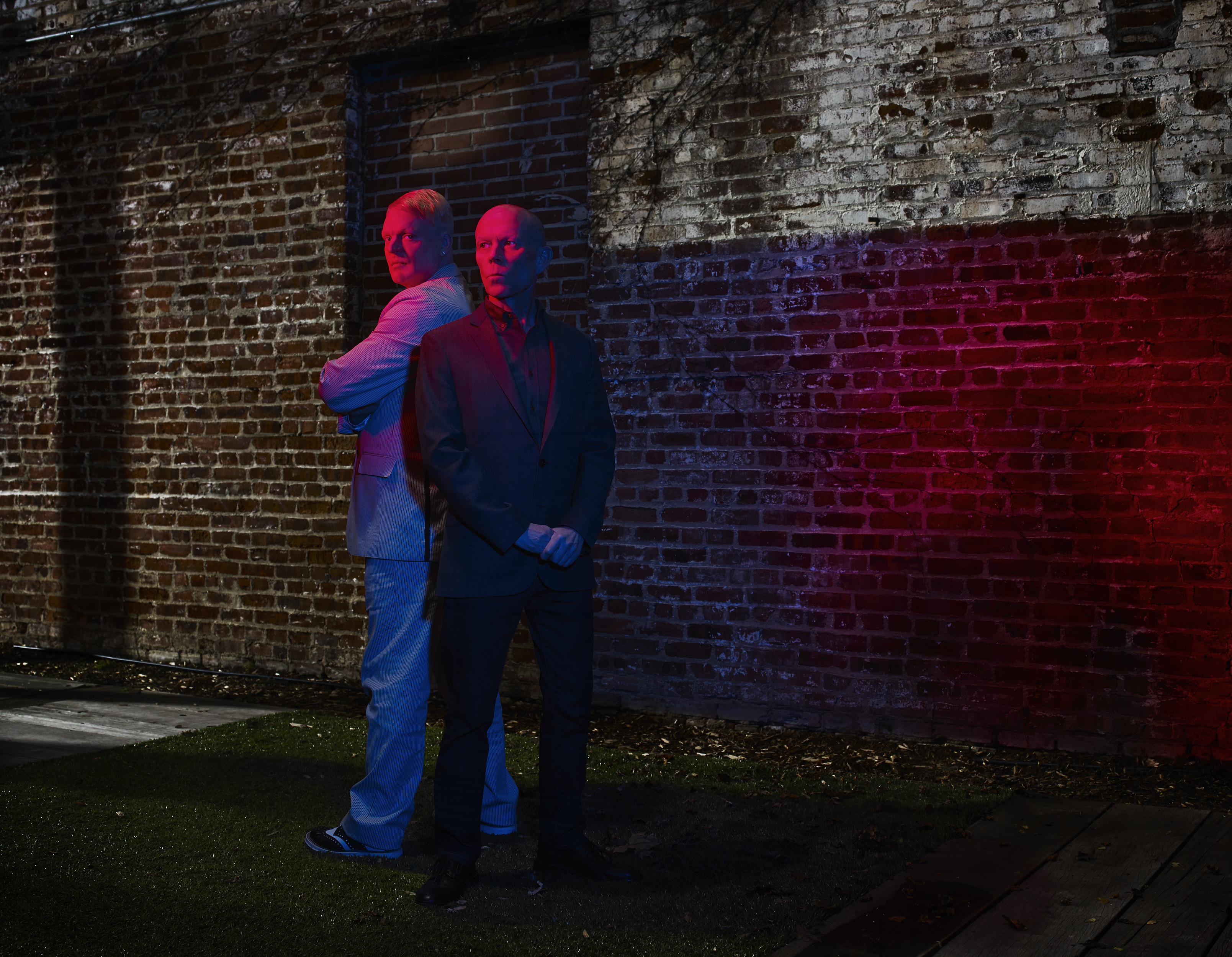
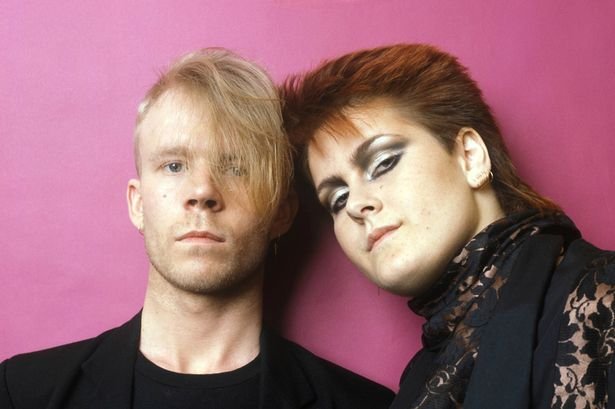
Little Respect: Erasure’s Andy Bell (left) and Vince Clarke try to keep a low profile (Photo: Doron Gild)

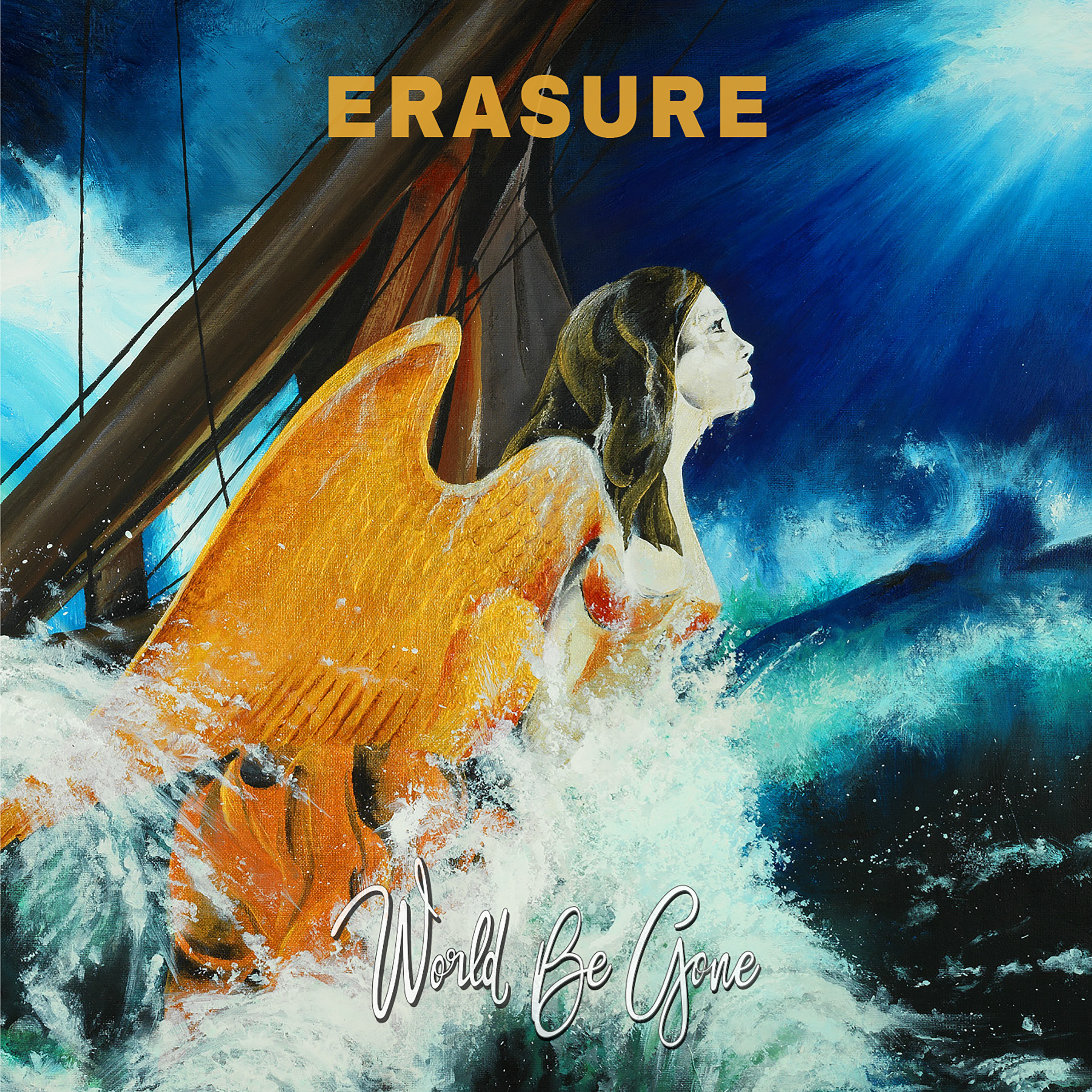
When World Be Gone, the 17th studio album from Erasure, crashed into the UK album chart at No. 6 this month, it proved to be this established synth-pop duo’s highest new entry since 1994’s I Say I Say I Say, which went on to be their fifth straight No.1 LP in six years.

The new album was released – as with all Erasure’s recordings – on Mute, a record label synonymous with the work of keyboard maestro and band founder Vince Clarke since his first successful studio venture as chief songwriter of the fledgling Depeche Mode in 1981.

After a pivotal role with that Essex synth-pop combo on their Speak and Spell debut LP, Vince walked away on the eve of their first US tour, but quickly proved he had retained the Midas touch after forming Yazoo with Alison Moyet, two more hit albums following before another early disbandment in early ’83.

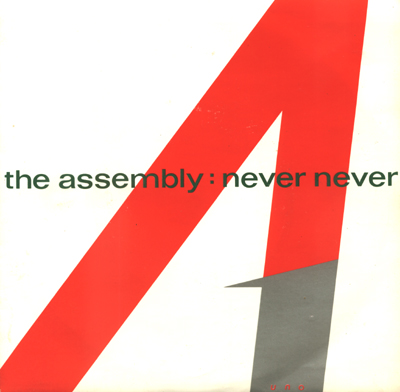
At that stage Vince envisioned a new project alongside his studio engineer, Eric Radcliffe, this time involving a variety of vocalists, the first recruit former Undertones singer Feargal Sharkey, the powerfully-emotive 1983 top-five hit single Never Never following, credited to The Assembly. Later came a collaboration with Edwyn Collins’ old schoolmate Paul Quinn, previously with Bourgie Bourgie, on One Day. But this time they failed to chart, and an alternative vision was floated, a subsequent advert in Melody Maker bringing Andy Bell to his door, this 20-year-old from Peterborough – selling women’s shoes and performing in a band called The Void at the time – impressing at his audition, leading to a winning partnership that has now endured for 32 years … and counting.

In fact, Erasure have amassed 17 UK top-10 singles along the way, not least Sometimes, A Little Respect, StopDrama!, Blue Savannah, Chorus, Love To Hate You, and the Abba-esque EP that topped the charts for five weeks, 25 years ago this month. And while that chart presence inevitably fell off a little over the last two decades, this is an outfit still very much on top of its game, with their latest offering, World Be Gone, the follow-up to 2014’s The Violet Flame, seeing them in more reflective mode, tackling world issues and recent political upheavals.

Don’t get the wrong idea. These seasoned dancefloor fillers haven’t turned their back on synth-pop, and have hardly become po-faced, as highlighted by the first release from the album, the celebratory and super-catchy Love You to the Sky, just the latest fine example of Bell and Clarke’s pop craft. What’s more, the new LP artwork shows a ships’ masthead rising from stormy waters, and as Andy put it, ‘I think there’s an under-swell of opinion, and people are slowly waking up. I’m hoping people will take the album in a positive way, as optimistic rabble-rousing music’.

But on this occasion it was Vince I was speaking to, via the wonders of Skype from my place to his home in Brooklyn, New York, before he set out on Erasure’s next batch of live shows. He’s lived in the US for more than a dozen years now, including a spell in Maine. I guess it’s a good life out there, I put to him.

“Erm …. It’s alright.”

It’s hardly Basildon though.

“No, it’s not quite Basildon.”

That introductory exchange seemed to sum my interviewee up. Don’t expect hyperbole, just understated honesty. His band may carry an air of flamboyance, but that’s mostly down to an outwardly more-showy frontman, with Vince far happier in Andy’s shadow. Watch a couple of Erasure’s ‘80s and ‘90s videos and you’ll see that. And they’re still putting on great shows today, as anyone who catches their latest live outings as special guests of Robbie Williams will tell you. Not as if Vince will shout that from the rooftops.

“The touring always tends to be great in the beginning, then not so great … like with anything – the grass is always greener. I think Andy’s always more the showman and really enjoys the touring, despite all the pressure he’s under, whereas I enjoy being in the studio more, recording.”

I guess he’s someone good to hide behind on stage. That must take the spotlight off you.

“Well, if there were two Andys on stage it’d just be ridiculous, y’know. It’d be mayhem! So I’m really happy. He’s an amazing showman … and you really don’t want to see me dance.”

Silly question maybe, but are they proud of the latest batch of songs?

“Yeah, we’re really pleased. We had a lot longer to record this record than we normally get so had the chance to write more songs than we needed, and that’s a real luxury. The process went really smoothly, the songwriting seeming to come quite easy this time round. And while the last two albums were more dance-y, it was nice to do something completely different.”

And lyrically, as heard on the more mellow Be Careful What You Wish For and the title track, this is Erasure reflecting on what’s going on in the world, isn’t it?

“Well, I think with all the weird stuff going on we thought we had to say something. Having said that, I don’t want people to get the impression it’s all doom and gloom. Hopefully there are a few positive notes within the record.”

There certainly are, but 32 years after their first 45, Who Needs Love Like That, I wonder if Vince could ever have imagined he’d be in this position, a North-East London lad who made his name with a few mates from Basildon still travelling the world, having shifted huge amounts of records, and now long since established in America. Was there ever a clear dream of where this might all take him?

“I had no idea. I couldn’t have imagined two weeks in advance. Even with Erasure, when I look back I can’t believe it’s been 30-plus years we’ve been together. In the beginning all we cared about was the next week – the next gig you were playing or perhaps the next single you were writing or album you were releasing. And I’m not one to reminisce. The only time I listen to old Erasure records is while preparing for a tour.”

After those short but successful stints with Depeche Mode and Yazoo, then The Assembly project that never really got off the ground, those three decades with Andy have certainly bucked a personal trend.

“Well, yeah. The Assembly thing was meant to last a little longer than it did, but just proved impractical really. And it was at that point that the producer I was working with suggested getting someone permanent as the singer.”

Hence that Melody Maker ad.

“Exactly, yes.”

When you met him, was there an affinity straight away that made you realise ‘this is it’?

“Well, there was as far as the sound of his voice was concerned. We’d been auditioning people all weekend and when he came along his voice just shone. With regards to his personality we had no idea. It took us a while to get to know each other. But it turned out that we are pretty similar, with similar political views for one thing.

“He’s just an incredibly laid-back person and super-easy to work with. The other good thing is that he’s totally not interested in computers, while I’m not so interested in recording vocals. We have our own little corners, and it’s a match made in heaven.”

And yet, with the miles between the duo these days – with Andy dividing his time off between homes in Miami and London – I guess they spend a lot of time (as Vince and I were on this occasion) talking and swapping ideas via a computer link.

It’s interesting, I tell Vince, seeing his early career in bullet point via all the Top of the Pops repeats on BBC4 – first with Depeche Mode, then with Alison Moyet in Yazoo, then Eric and Feargal in The Assembly. And while Erasure followed, there have been lots of other collaborations for Vince over the years, from Paul Quinn to West India Company – also including Blancmange’s Stephen Luscombe – through to Heaven 17’s Martyn Ware (The Clarke and Ware Experiment), past Depeche Mode bandmate Martin Gore (VCMG), and even Jean Michel Jarre. Then there are the countless remixes since the late ’80s for other high-profile acts, from Happy Mondays, Betty Boo and Sparks through to The Saturdays, Blancmange, Dido, Franz Ferdinand and Goldfrapp.

“Recently I’ve been collaborating more and more. As I’ve got older I enjoy it much more. When you have your own studio in your own house it can be a bit lonesome, so there have been more collaborations and remixes for people.”

I might be giving your record company an idea here, but any chance of a compilation of some of those collaborations from over the years?

“Well, I wouldn’t put it past Mute! There’ll be someone planning something, somewhere!”

When Vince left Depeche Mode he was taking a big career chance, as he was when he walked away from Yazoo. Word was that he didn’t enjoy the public aspects of success, not least touring and interviews. Did that get easier over the years?

“Well, I keep in the background pretty much anyway, so just learn how to do that. I don’t like going to public events and reward shows. That just doesn’t interest me. And I have a pretty anonymous lifestyle here in New York.”

Basildon Boys: Depeche Mode in the early days, with Vince Clarke, right, playing a key role.

He says that, but he did collect his ‘outstanding song collection’ gong at the 2009 Ivor Novello awards ceremony, in recognition of 30 years in the industry.

“Weird. I wouldn’t say I was glad I did it, I kind of wished I hadn’t. Maybe it reaffirmed my belief that I’m not into that sh**!”

While he suggests he tends to avoid the nostalgia circuit, there was also 2008’s 25th anniversary reunion with Yazoo. So, any plans for a 35-year celebration with Alf next year?

He snorts a little at that, then adds, ‘No – no plans. We’re just thinking about the upcoming tour, the tour with Robbie (Williams) and our own 2018 tour, starting in the UK early next year. That’s as far as I’m looking ahead.”

So far this year the band have already played late-May headline dates at Glasgow’s 02 Academy, Manchester’s Albert Hall and London’s Roundhouse. And then came their seven-date UK stadium run as special guests of Robbie Williams, reaching London’s Olympic Park on Friday, June 23rd. A 22-date European leg follows with the former Take That star, starting in Dusseldorf (June 28th) and ending in Moscow (September 10th).

And then the band are set to return for that headline tour next year, starting with three dates in Dublin in late January, the UK leg including visits to Liverpool Philharmonic (February 6th) and Manchester Apollo (February 8th), culminating in a return to London’s Hammersmith Apollo (February 23rd) then seven German dates, with full details here.

Of course, a lot of those audiences will want to hear the old songs too. And yet you tell me you’re not a nostalgic.

“I think that’s true of most artists, really. In our case it’s about that search for that elusive, perfect pop song.  And I love writing with Andy. It still amazes me how we go into a room with nothing and come out maybe a couple of hours later with a song. That’s one of the huge reasons why Andy and I are still together, I think. And there are still surprises out there.”

So many hits too. That shouldn’t automatically define the success of a working relationship, but there have been so many good tunes. And I’m not sure you get your fair share or even just – sorry – a little respect for that.

“I don’t know …  we’re still looking for that perfect song. When we do that I’ll Skype you and let you know – a bit of an exclusive!”

Odd Couple: Vince Clarke with Alison Moyet in Yazoo, his second success story.

I loved the 13 albums project he talked about in The Quietus in late 2013, where the likes of the Sex Pistols and T-Rex sat alongside Pink Floyd, Simon & Garfunkel, Michael Jackson, Philip Glass, Genesis and The Eagles. With that in mind, going back, what was the biggest influence on Vince – the thrill of punk or later electronic outfits like The Human League and OMD taking on Kraftwerk’s legacy?

“I wasn’t a huge fan of punk music, personally.”

Maybe not, but surely the DIY aspect of it all and the independent approach resonated with you, judging by your work ever since.

“Yeah, but at that time I was getting into trying to improve my acoustic guitar playing. I was more of a folkie.”

You were playing violin early on, weren’t you?

“Yeah, I played violin, although thankfully there are no recordings of my performances.”

It’s not like a Sherlock Holmes thing then – it doesn’t come out when you’re looking to solve some dilemma or other?

“No. Mum sent all of us to music school on Saturdays. I took up violin, my sister did piano, my brother did flute and my other brother did trumpet, I think. I don’t know why I chose violin.”

V for violin, V for Vincent, maybe?

“Something like that. But the moment we worked out how we could bunk, we used to do that.”

Live Wires: Erasure’s summer line-up. With Andy and Vince are (left) Emma Whittle and Valerie Chalmers.

Do you tend to write with piano or with keyboard these days?

“In the past, the majority of what we recorded was written on guitar or piano. But with this record I worked out some kind of atmospheric backing tracks before joining up with Andy, writing lots so we had lots of choices. We then worked out the songs around those tracks.”

While not on the road, Vince is based in Brooklyn with wife Tracy and their 11-year-old son, Oscar, having relocated his Cabin studio and synthesizers collection from their previous home in Maine. Tracy is the co-founder of the nearby Morbid Anatomy Museum and the twin sister of New York author Tonya Hurley, who is married to Erasure manager Michael Pagnotta.

Is Oscar following in Dad’s footsteps?

“He’s a real Logic guy, the same program I use. He was having lessons for a while but got bored as the teacher wasn’t fast enough! I’ve had a piano for about 20 years, which I had moved here, and he’s been tipping those keys now. Yeah, he’s definitely got a musical sensibility. He’ll come down to the studio and tell me I’m doing it all wrong! I can’t impress him.”

Does he not realise how much of a synth-pop idol you are? If I was you, I’d probably be sat watching TV and announcing to those with me, ‘I worked with him’ and ‘I worked with her’.

“Ha! Not really. I don’t think he really knows or appreciates … I don’t think he really understands what I do. He just thinks I mess about … which is kind of what I do really! As far as he’s concerned, he has to go to school while I just stay here, fiddling with synthesisers all day.”

Whatever Oscar might think, it’s a mightily-impressive back-catalogue – from 1981’s Speak and Spell with Depeche Mode right through. And which past album would he say he’s most proud of?

“One of my favourite records is Chorus, just because it was … I don’t know … the songs kind of wrote themselves and we were being quite experimental with the keyboards and synthesisers. I just think it’s got a really nice, semi-dark feel, which I really enjoy.”

Although you may not be the kind of guy to hang out with a few showbiz mates, do you keep in touch with the likes of the two Martins (Gore and Ware), Alison Moyet, or even Feargal Sharkey?

“I don’t tend to, but when we do bump into each other, that’s the only time I do a bit of reminiscing.”

And I guess you’ve got plenty to reminisce about with Andy Bell these days anyway, after all these years.

“Oh, I’ve got some stories you wouldn’t believe!”

Intriguing. Are you willing to drop in a juicy fact or two here before we finish?

“No.”

Ah well, I tried.

Heading Off: Erasure’s Andy Bell, left, and Vince Clarke, in the driving seat and coming to a town near you (Photo: Doron Gild).

World Be Gone, written, performed and produced by Erasure and mixed by Matty Green, is available on CD, limited-edition orange vinyl, regular vinyl and cassette. For details head here. And to keep in touch with all things Erasure, including live details (not least with a lot of those early 2018 shows already sold out) check out their Facebook and Twitter links. 

Posted in Books Films, TV & Radio, Music | Tagged , , , , , , , , , , , , , , | 5 Comments

Fingers Crossed for top night with Mott legend – the Ian Hunter interview

Hunter Gatherer: Ian Hunter, with trademark shades (Photo: Ross Halfin)

Ian Hunter was at home in Connecticut when I called, having a few days to himself before returning to the UK with The Rant Band for the latest run of shows to promote last year’s acclaimed Fingers Crossed album.

He’s around an hour and a half north of New York, having moved to that part of the US around 20 years ago following a spell in NYC. And although I wasn’t brave enough to ask so early in the conversation, I kind of assumed he was wearing his trademark shades.

As frontman of ‘70’s legends Mott The Hoople and a hugely influential solo artist, Ian’s rightly revered as one of rock ‘n’ roll’s most compelling performers, and for 1973’s Mott and 1974’s The Hoople alone deserves major plaudits as a songwriter too. But while this Shropshire lad remains as busy now as when he started out in music in the 1950s, it seems that at the age of 78 he’s happy to be back in the sticks between engagements.

“I grew up in the country, and cities are annoying these days – too much traffic and you can’t breathe. And I don’t really have to be in town.”

Has he still got family and friends around Shropshire?

“Yeah, my oldest son lives there, and I have three grandkids there, plus my daughter’s in London.”

He was certainly looking forward to catching up with the Hunter clan and many more of us, a 14-date live run continuing at The Waterfront in Norwich on Friday, June 16th, and ending at The Playhouse, Whitley Bay, on Monday, July 3rd. Then, after three Californian dates in September, there’s a further run of seven shows in Germany, others in Switzerland and Italy, and three in Spain in October.

“I was over last year when the record came out. That went down great and we felt we wanted to come back, do some more, tied in with Europe. I love travelling round England, and on the coast. I was only ever popular straight down the middle first time. Now we’re trying to branch out sideways!”

With that in mind, I put it to him that there can’t be too many rock stars who moved to Northampton to try and reach the big time. And he laughed at that, perhaps recalling his formative days with The Apex Group and parallel outfit Hurricane Henry and The Shriekers.

“Yeah, I don’t know. I’ve never checked. I’ll have to Google that one up.”

If you don’t know that part of the story, I should point out that the future Mott the Hoople frontman’s entry into the business came after a chance encounter with two Colins – York and Broom – at a Butlin’s holiday camp, the trio winning a talent contest performing Blue Moon on acoustic guitars.  The others were part of Northampton-based The Apex Group, fronted by bass player Frank Short, Ian soon leaving home in Shrewsbury to join them on rhythm guitar, transferring apprenticeship from Sentinel/Rolls Royce to British Timken, Northampton.

Thankfully, that didn’t turn out to be the apex of his music career, although it took a while to hit the big time, and gets slightly confusing in the re-telling. In a nutshell (almost), that dual-spell with The Shriekers, formed by Ian in 1963, led to a further apprenticeship – a rock’n’roll one this time – in Hamburg, Beatles-style, then further twists and turns, moving to London in 1966 and joining a band called The Scenery, getting to know Mick Ronson on the Flamingo Club scene around then. What’s more, he played with various other artists, including The Young Idea, Billy Fury and David McWilliams, and in 1968 was hired by Mickie Most to play in The New Yardbirds, not to be confused with the band that became Led Zeppelin.

To make up his wages, he also worked as a journalist and staff songwriter for the firm Francis, Day & Hunter, was a road-digger for a local council, and a newspaper reporter. Then in 1969 things took a fateful turn for this 30-year-old father-of-two, answering an ad (‘singer wanted, must be image-minded and hungry’) and auditioning successfully for a band put together by Guy Stevens, featuring guitarist Mick Ralphs, organist Verden Allen, vocalist Stan Tippins (who became the road manager), bassist Overend Watts and drummer Dale Griffin. Initially known as Silence, they were renamed after a 1966 Willard Manus novel, with their self-titled debut LP recorded in a week and proving a cult success. You probably know the rest.

Actually, a later check by yours truly revealed that Des O’Connor, born in the East End and seven years Ian’s senior, also had a spell in Northampton on his way to success, after being evacuated there in the Second World War, even having a spell as a professional footballer with Northampton Town (‘Cobblers’, I hear you say). That town’s also associated with electronica pioneer Delia Derbyshire, but few others of musical note, so to speak, until Bauhaus, The Communards’ Richard Coles and Radiohead’s Thom Yorke came along. Now what a super-group that would make, eh.

So does Ian make the most these days of all those dead hours between gigs, getting to properly see the places he visits rather than just travel, set up, play and move on?

“I have to soundcheck, one thing I never stop doing, but the band get there around two in the afternoon and I won’t usually get there until five, so I miss all the grind.”

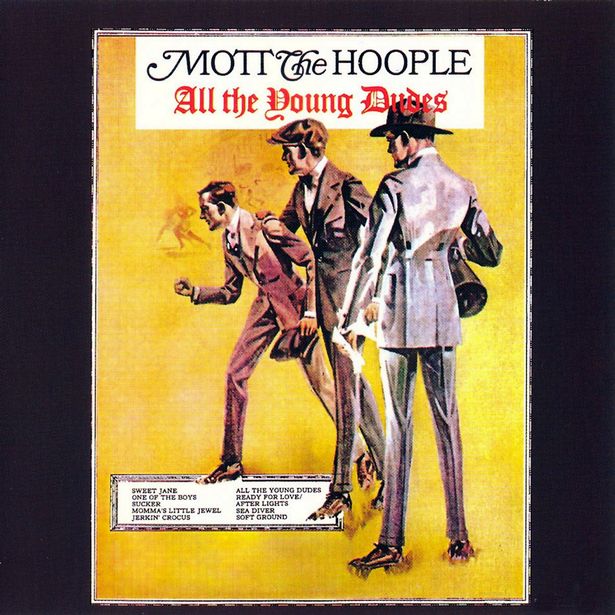
I hesitate there for a moment, struggling to shake the enduring image of Ian as a glam-rock grandad, then tell him how much I love Dandy, his tribute to David Bowie, the lead single on 2016’s Fingers Crossed. It’s a slice of instant nostalgia and a fitting way to remember the iconic, influential star who gave Mott the Hoople their proper first hit, donating All the Young Dudes to them 45 years ago next month, just when they were on the verge of parting company after three years, four albums, and precious little commercial success, scoring the first of five top-20 singles.

In answer to my enquiry, Ian tells me he didn’t stay in touch with Bowie in recent years, but together we work out the last time they met was for the Wembley Stadium tribute to Freddie Mercury, also involving Mick Ronson and Queen, 25 years ago.

“Of course, he got down on his knees and did the Lord’s Prayer on that occasion. That was fun. Queen wanted to do Dudes last, of three songs, and there was quite a tense confrontation between David and Roger Taylor. I just said, ‘Look. It doesn’t matter’ – there’s this couple of multi-millionaires looking at each other rather sharply! But David already had it in mind what he was going to do.”

What about Ghosts, the second single from Fingers Crossed, all the way from Memphis in a sense, albeit via a New Jersey recording session, inspired by the band’s visit to Sam Phillips’ legendary Sun Studio in Tennessee.

“I’d been there once before, and we met the son of one of the original Jordanaires, who asked if we wanted to go around again. It’s kind of like that Disney ballroom scene where you see ghostly holograms dancing. That’s what it feels like in there. My band all picked up instruments and started playing, and I could see it was getting them like it was me. And they’re a lot younger. There was definitely something about that room.”

Ian mentioned on BBC 4’s cracking 2013 documentary, The Ballad of Mott the Hoople, the pull of Jerry Lee Lewis and Little Richard, but I’m guessing Elvis Presley – who the afore-mentioned Jordanaires backed for 16 years from 1956 – was a major influence too.

“Actually it was Little Richard, Jerry Lee, Chuck Berry, the Everly Brothers, The Platters, another great vocal band. Elvis was a bit too poppy. We were a bunch of Teds, and liked the hard stuff, y’know.”

I was thinking more of the earlier Elvis, when he was backed by Scotty Moore and Bill Black.

“Well yeah, and Jerry Lee’s piano is still there, as are the cigar stubs where they told them to stop smoking in the studio. Johnny Cash was there too, and The Prisonaires, coming off the chain gang for a day to record. Those early days were really something. There was a nice documentary about it all on the Country Music Channel recently.”

There’s rightly been plenty of praise for Fingers Crossed. Are these still Ian’s golden years, creatively, as Classic Rock suggested in their review?

“It’s quality control really. You hang about until you have the feel acceptable to yourself. I’ve had this band a long time now, they know my modus operandi. I know what will work with a band, and try and keep it as simple as possible. And either you get it or you don’t.”

This tour with The Rant Band will involve a mix of Mott and solo work, centred around Fingers Crossed. Will Ian have his famous Maltese Cross guitar with him?

“No, I sold that to a guy in Folkestone. He took the pickguard off and there was $5 in there and the address of the bloke that made it! When I turned 70, (Def Leppard frontman) Joe Elliott had two made, replicas but with an amazing sound. I used those when Mott got back together. An amazing sound, better than the Les Paul Juniors. The only problem I have with this band is that I have two guitar players already, so it gets complicated. So I use an acoustic.”

Remind me where that original Maltese Cross guitar came from. Was that one of your US purchases?

“Yeah, I was with Mick Ralphs in San Francisco. He saw it hanging on the wall, and the bloke wouldn’t take it down. He thought we were a pair of ne’er-do-wells. We told him we wanted a look and he said if I take it down you have to buy it. It was around $100. I said we’d buy it if we liked it. I don’t think there was even a truss rod. It was pretty crappy, but it looked good, which was most important! I got it for $75 and sold it for £160.”

As he was on the verge of his 78th birthday when we spoke, I asked if Ian planned to record and tour forever, health willing. He’s clearly still on top of his game.

“I’m not really good at hanging about. I love it for a while but get the urge to make a move again. That’s what I do. It’s not just as a means to make money … as long as someone turns up!”

You’ve had a few run-ins with ill health and disillusionment with the business and success you’ve had over the years. Does that get easier to cope with?

“Well yeah, and what we try to do is hover on the periphery. I hate the business. I don’t like anything to do with it. But somehow we’ve found ourselves a little niche on the side, and it works financially.”

Maltese Cross: Ian Hunter with a rather distinctive ‘six-string razor’ (Photo: Ross Halfin)

I tell him I’ve been reading a great book about The Clash, Pat Gilbert’s 2004 epic Passion is a Fashion, where he relates in detail the importance of Mott the Hoople on a certain Mick Jones, not least the ethos of not having that distance from the fans who pay to see you. They weren’t untouchables, I put to him, like some of the big bands of the time.

“Yeah, well (Tony) DeFries managed us and David Bowie and wanted us to be like them – like we were from another planet, very distant, not speaking between songs. That’s what he wanted but that’s not what he got! We didn’t feel any different from the people watching us. And if someone was a bit short of money we got them in the back door.

“That’s what happened with Joe Elliott, and Mick Jones, and a few people like that. They had no money and would maybe jump off a train before it came into a station. The least you could do was let them in.”

I ask him next who was the last band he saw who genuinely excited him in a similar way that Mott fans reckoned his band did … and a long silence follows.

“I don’t know. I really don’t get involved anymore. Not for some considerable time. I just do what I do. If someone bowled me over at a gig it was The Who at The Roundhouse, London, with Elton John opening. Normally you’ll have a discussion after a gig about what you thought, but nobody spoke after that.

“Halfway through, Pete Townshend turned around to Keith Moon and said, ‘Is it full?’ And Moony said, ‘Yeah, it’s jam-packed’, to which Pete said, ‘Is he reliable on the door?’ It took him back to the church halls! They weren’t on all the time, but when you saw them on one of those nights they were scary.”

After all the big names he’s played with over the years, is there anyone missing from that list who Ian would still like to record with?

“There’s a few. I’d have loved to have worked with Leon Russell, and nearly did at one point. Unfortunately it didn’t happen. Also, I’ve never worked with Bob Dylan, although I’ve met him a few times. That’s something I would like to do if I ever get the opportunity.”

Well, we heard it here first.

Listening back this last few weeks to solo work like his 1975 hit Once Bitten Twice Shy, I suggest there’s no great leap from that to some of the punk and new wave bands I loved a couple of years later. He was a trail-blazer in that respect.

“Well, we were partly glam – we were, but we weren’t! – so when the punk thing came in, the press turned on us, but then the punks started saying, ‘No, no, no – they’re alright!’ They had to do a U-turn. They thought they were being cool, but they weren’t! I remember going to the Roxy in London with Mick, and he got chased out of there. But I was alright. They accepted me, but not poor Mick!”

I’m not sure if he meant Ralphs or Ronson there, but I’m guessing it wasn’t Jones. Taking his point on though, I suggest maybe part of that was that he didn’t lose sight of the importance of the three and four-minute single. He didn’t go down the ‘prog rock’ road. He stuck to his guns.

“Well, I just came up with original rock’n’roll – fast, medium and slow songs. Soul was about, but I wasn’t very good at that and it didn’t turn me on like Little Richard, Chuck Berry and Jerry Lee Lewis. It all got fragmented, but I just stuck with the original idea from the ‘30s, the’40s and the ’50s.”

It’s more than 50 years now since he first met Mick Ronson. I’m intrigued by that Flamingo scene in London, and all the great acts there. Was London truly swinging for this Shropshire lad?

“Err … I tried a few times, like everybody else. I was always dead jealous of London chaps. They were born there, while we had to get there … and it was a fucking long way, y’know!

“I remember going to the 2i’s Coffee Bar on Old Compton Street. I saw a guy called Lance Fortune, with Brian Bennett on drums and (Brian) ‘Licorice’ Locking on bass.  They both wound up with Cliff Richard in The Shadows. I saw those guys playing and went straight back to Northampton. They were so much better than we were. I thought we didn’t stand a chance. But you go down a couple of times and eventually wind up sticking down there.”

Did your time in Hamburg help you move up a few notches?

“It taught you how to play. You’re out seven hours a night and as much as 12 or 13 at the weekend. That was fantastic.”

I get the feeling that even if that advertisement to join Mott the Hoople hadn’t gone Ian’s way he might still have made the big time. He seemed to have the inner belief that it was going to happen, determined to make it one way or another.

“Yeah, I guess so. There wasn’t any desperation. I was bright enough to know there were only two ways for someone like me – it was football or music. Premium bonds were not going to happen. I put five bob in the Post Office and got that and just thought there’s got to be a better life than this.

“I’d been in factories around eight or nine years, and it didn’t appeal. But because of that I had lyrics. A lot of kids left school and joined bands, so didn’t have those lyrics. You just kept going and kept going, like a writer with a book or anything creative. You get rejected, but it only takes a phone call.”

For all his success with Mott, it was only a five-year ride initially. Since then, his solo career’s lasted 40 years, Ian having released a 30-CD box set last year alongside Fingers Crossed. That’s something to be proud of, isn’t it?

“Erm … yeah? I don’t know. I don’t look at it like that. It’s just what I love doing, y’know.”

Rock & Rant: Ian Hunter, heading to a town near you, with The Rant Band (Photo: Ross Halfin)

Ian Hunter and The Rant Band’s latest UK tour includes a visit to Preston’s Charter Theatre on Monday, June 26th, with tickets available via 01772 80 44 44 or this link. For more information and tour details check out Ian’s website here. You can also keep in touch via Facebook and Twitter.

Posted in Books Films, TV & Radio, Music | Tagged , , , , , , , , , , , , , , , , , , | 4 Comments

To the power of 3WW – back in touch with Alt-J’s Gus Unger-Hamilton

Orange Crush: Alt-J (namely from the left - Gus Unger-Hamilton, Thom Green, Joe Newman) are taking Relaxer out on the road

Orange Deadcrush: Alt-J (from the left – Gus Unger-Hamilton, Thom Green, Joe Newman) are taking new LP Relaxer out on the road and to a town, city or festival near you this summer and autumn

This week saw the release of the brand new Alt-J LP, Relaxer, coming on the tail of this inventive trio’s Mercury Prize and Ivor Novello Award-winning 2012 debut An Awesome Wave and 2014’s No.1, Grammy and Brit Award-nominated This Is All Yours.

Those factors alone suggest the pressure should have been mounting for an unassuming group of friends who first met and played together while at Leeds University, Joe Newman (guitar, lead vocals), Thom Green (drums) and Gus Unger-Hamilton (keyboards, backing vocals) having already sold in excess of two million records, with their songs streamed more than one billion times apparently, while headlining festivals across the globe.

They also sold out London’s O2 Arena and New York’s Madison Square Garden on their last tour, and next Friday, June 16th, are set to return to the former as part of the venue’s 10th birthday celebrations. But any resultant weight of expectation seems not to have affected Gus, who remains as likeable now as he was when we last caught up three summers ago. And I started our conversation this time around by mentioning that interview in August 2014 (see link below), conducted at a time when Gus was busy explaining to the world about a line-up change following Gwil Sainsbury’s departure.

“Yes, I remember that … that and questions about Miley Cyrus – two big ones I was fielding a lot!”

I stumble a little at that response, briefly wondering if Gus was having a (rather unlikely) Benny Hill moment. He doesn’t seem the sort. But then I recalled that the US pop icon mentioned – back in the news since our chat after her starring role in Ariana Grande’s Old Trafford fund-raising tribute concert following the Manchester Arena tragedy – is a big Alt-J fan. In fact, not only is she sampled on 2014’s Hunger of the Pines, but she also shot her own video accompaniment to stunning early hit Fitzpleasure.

I didn’t press him on Miley’s love for the band though. He’s been asked that far too much. Instead, we got on to this Cambridgeshire lad’s adopted home city, seeing as he was striding through Hackney towards his flat after a day of rehearsals with his band. So, I put it to him, it seems that Relaxer is very much a London-made album.

“Exactly. And we haven’t changed our approach at all since album one. We enjoy hanging out together, doing the writing then going to Charlie’s place in Brixton or sometimes in this case to Shoreditch and getting the recording done.”

There’s obviously a good rapport with your producer, Charlie Andrew being at the helm for a third successive time.

“Yeah, all we can say is that it comes down to, ‘If it ain’t broke, don’t try and fix it’. We’ve never really recorded with anyone else and we’re probably 10% superstitious, worried if we record with someone else it might not work. Fundamentally we like him, we get on well and we’ve always done well when we’ve worked with him.”

Fair enough, and how many interviews have we read where artistes tell us they’ve gone down a slightly different route this time, getting back to their beginnings after departing from the formula that led to their breakthrough? It seems in this case that Alt-J are cutting out the middle man though … or middle album, maybe.

“Yep! We’ve come back without going there!”

The first single from the new LP, 3WW, was the first sign that we had a very special album coming our way, something that wouldn’t be out of place on a film soundtrack, I suggested, coming to that conclusion before seeing its accompanying promo video, ‘a story of love and loss in Mexico’, as they put it, directed by Los Angeles-based Young Replicant, who also worked with Lorde. And what made the band turn to Wolf Alice’s Ellie Rowsell as guest vocalist?

“We got to know Ellie through her band supporting us in the past. We thought that would work well with a female role, if you think of the song as a kind of script. We discussed who we knew, and Ellie was someone of whom we immediately thought, ‘That could work’. Wolf Alice were in a studio in Shoreditch working on their second album, we sent her a text, and she came around that afternoon.”

It’s a wonderful introduction, and one the band reckoned at the time of its release ‘could be the best thing we’ve done to date’. I won’t argue with that, the use of the three very distinctive voices – Gus first, then Joe, then Ellie – perfectly setting the tone for Relaxer as a whole. As for that line, ‘I just want to love you in my own language’, perhaps we have the philosophical platform for the LP right there.

Like much of their work, there’a modern-day folk feel there too, as accentuated by Gus with his vocal part, along with an out west, sleeping beneath the stars vibe, and a laid-back tender feel that brings to mind Blur (and it was only after a few plays that I could see traces of that outfit’s Tender). Imagine Can jamming in your house, playing low so they don’t wake up the sleeping child in the next room.

As for the song’s theme, I was geographically wrong about the location, the band revealing it ‘traces the adventures of a wayward lad on England’s North-East coast’, involving a declaration of those ‘three worn words’ capitalised in the title – as in ‘I love you’. And we need those words more than ever right now, don’t we, Gus?

“Yeah, exactly … although we were not unaware of the appearance of the notion of World War Three in there too, leaving that open, and a little ambiguous.”

Moving on to the second single from the new LP, and track two, In Cold Blood, a promo video had just been released when we spoke, shot in a forest near Copenhagen by Danish film-maker and photographer Casper Balslev, featuring the legendary Iggy Pop as narrator, depicting how ‘a day in the life of a wood mouse can be unexpectedly dangerous’, as the band put it. Think of The Gruffalo, Scandi-noir style. So what was the reaction from Gus and his bandmates on first seeing Casper’s treatment of that track?

“I think it was one thing just to see the mouse doing the trick! We were promised they could teach that mouse to do anything, and we were like, ‘Really? I want to see this!’ Sometimes when you read a video treatment you just have this desire, wondering what that would look like. And we’re always interested in having videos which are not too literal an interpretation of the song’s lyric.

“In this case, while there is blood in the video, beyond that it’s very much its own thing. And this idea sounded cool! We’re all fans of the Coen brothers and that sort of thing – violent, but almost comically violent, with all these different things going on.”

Strange as the concept might seem, it certainly fits well with your music too.

“I think so. I think the songs are kind of dream-like and very much down to the imagination, so when the videos are larger than life and lurid it works well.”

It must be rather satisfying seeing what others come up with to go with your songs. What was the spec you gave Casper?

“It was more about finding cool directors who were up for pitching and seeing what they thought. We didn’t give them any kind of brief. It was purely up to them.”

Whose idea was it to get Iggy Pop involved?

“I think it was Casper’s. We were in the middle of a promo tour in America, getting odd emails in the middle of the night, waking up the next morning to find they could get Iggy. Next thing we knew, there was the video with him on it!”

And there’s so much living in that rich and resonant voice, isn’t there.

“There really is, and I’m a big fan of his BBC Radio 6 Music show. I love that. It’s amazing.”

As for the song itself, its title half-inched from the Truman Capote novel – its mighty injection of brass brings the album fully to life, while the keyboard touches by Gus – put together on a Casiotone model that cost £1.05 on eBay, apparently – add a retro feel not dissimilar to the more dancefloor-friendly material of The Feeling, of all bands. More to the point, and as we’ve perhaps come to expect from Alt-J, those first two singles are very different from each other. Are they indicative of Relaxer as a whole (I asked, before having heard the rest of the album)?

“I think so. They almost span the breadth of the album, where there’s a good balance of up-tempo and more kind of thoughtful. I do think that for this more than any of our previous albums, and all of them were very different from each other of course. And that makes it all the more exciting for us.”

And would Gus say there’s a defined thread running through Relaxer?

“I don’t think so, other than they fit and we were enjoying being together after a break, hanging out and playing our instruments together – the thing we love doing the most.”

A few weeks on, having played the album back-to-back a few times now and loving every moment, I concur with that. And here’s as good a place as anywhere to put in print my verdict, track by track, continuing with song three, the band’s innovative re-imagining of House of the Rising Sun. It’s so much more than a cover too, and has little in common with The Animals version, Alt-J instead taking this standard back to its folk roots – yes, once you can spot the folk influences, there’s no getting away from them on this album –  and coming up with something more in tune with a Noah and the Whale release – more Charlie Fink than Eric Burdon – floating on a sea of glorious classical guitar.

In contrast we see the band at their seedy best on Hit Me Like That Snare, an ‘atypically filthy psychedelic grind’ telling the X-rated story of a visit to a ‘sex hotel’, this number unlikely to get too much BBC Radio 2 airplay, I’d venture.  On first listening I felt elements of a Japanese tribute band to the Pixies, while the song goes all a bit Radiohead at times, as you might expect from big fans of Thom Yorke and co.

Talking of Pixies, Deadcrush brings to mind Monkey Gone to Heaven for me, with shades of The White Stripes peeping through and even a little Macy Gray soulfulness in places via Joe’s distinctive falsetto style. Word has it that the song started life as a jam, and tackles the band’s in-house professing of love for long-lost, less obvious sex symbols, in this case centred on Joe’s obsession for New York model turned war correspondent and photographer Lee Miller and Gus having the hots for Anne Boleyn. Naturally.

There’s another album highlight in Adeline, an alternative tale of unrequited love that I’ll return to the term ‘filmic’ for, a slow-building masterpiece, its ‘I wish you well’ line bringing to mind Dolly Parton’s superior version of I Will Always Love You. And its theme? Well, it’s the tale of a Tasmanian devil who falls in love with a woman as he watches her swim, our bathing beauty Adeline singing The Auld Triangle as she moves through the water. And when you think about it, that’s not so far removed from the more traditional folk tale of the mermaid and the lover she lures into the deep.

The penultimate song sees the band turn the screw again, this time for an emotional yet subtle hymn to suicidal tendencies, somewhat reminiscent of old school Jesus and Mary Chain, with Joe in his lower register as he talks us through his character’s Last Year, before the talented Marika Hackman pays her tribute in song at his funeral, adding something of the quality of Laura Marling to the proceedings, the latter’s Semper Femina an album Gus professes his love for, and one that should be vying for top spot with Relaxer at the end of year album award ceremonies.

And then we peak on Pleader, partly recorded at Ely Cathedral, where Gus was a chorister, and inspired by Richard Llewellyn’s How Green Is My Valley, an orchestrated, stirring song of brooding beauty that heads towards a mighty choral climax. The Welsh mining theme of the original inspiration brings Public Service Broadcasting’s soon-to-be-revealed Every Valley to mind, while the big sound concept has me harking back to further favourites The Magnetic North. And on its own strengths I can say for sure we have another contender for best ever Alt-J moment here, from what amounts to their most inspired album so far, despite that stiff back-catalogue competition, this trio carrying on where they left off in the studio in 2014.

So, Gus, that line about you being one of the most successful British bands of this millennium, with more than two million sales so far – does that add expectation? Or do you just – as I suspect – thrive on that anyway?

“I think it does add expectation, once you’ve got to that level. You become nervous about maintaining it. Ultimately though, we’ve cultivated a large fan-base of people who enjoy our expertise and eclecticness … and they get it. And that in itself gives us a freedom to do whatever we want and feel free to experiment.”

The statistics suggest the songs have had more than one billion streams. It must be difficult to get your head around something of that magnitude.

“I think it’s best not to dwell on that. It’s such a huge number, you can’t even look at it directly. You have to step back and shield your eyes! We just get on with the job in hand.”

A busy summer awaits Alt-J, on the back of their recent appearance at BBC Radio 1’s Big Weekend in Hull, which Gus was very much looking forward to when we spoke. A timely visit to the current UK City of Culture, I suggested.

“Indeed! My girlfriend Franny is from Hull, and we only played there once before, years ago, before we were signed.”

Next up are shows in Rouen, France (Saturday, June 10th), Kortrijk, Belgium (Sunday, June 11th), Tilburg, Netherlands (Monday, June 12th) and a sell-out in Berlin, Germany (Tuesday, June 13th), followed by that latest headline show at Greenwich’s O2 Arena, then several festival dates and the first of two North American jaunts.

With those dates in mind, has Gus been back through the catalogue to familiarise himself with the songs so far in a bid to re-learn them?

“Yes, I’ve just come from a rehearsal today, and we’ve set ourselves the homework of watching the live DVD we made on the last tour. It’s amazing how much you forget.”

Is that a bit of an exercise in ‘what went well’ in a bid to carry on the good work?

“It’s more a case of remembering who plays what where! It’s all muscle memory. Trying to consciously remember it is quite difficult. It’s not often I listen to the old albums, but when I do I really enjoy them. The other night I was cooking and put on the first album, not having heard it for a long time … and I really enjoyed it.”

Any advance on yourself, Joe and Thom for the live dates?

“No … just the three of us. We might have strings and brass for some shows, but as regards the core people on stage, it’s just us three, stripping it back to the band, seeing how that goes. And I love festival season, and it’s going to be such a fun way to start this album tour. Those summer shows are going to be sweet.”

Those appearances include a Glastonbury Festival return (Saturday, June 24th), a show in Dublin’s Trinity College Park (Tuesday, July 11th), and headline slots at the Blue Dot (Jodrell Bank, Cheshire, Sunday, July 9th) and Boardmasters (Newquay, Cornwall, Sunday, August 13th) festivals.

The band’s European commitments include further visits to Croatia, Germany, Italy, Switzerland, Belgium, Portugal, Slovakia, Spain, Luxembourg, Romania, Latvia, the Czech Republic, Austria and France, then the first 12 US dates and that Newquay visit. And then there are trips to Hungary, Norway, Poland, the Netherlands, Russia and Sweden.

Which all goes to show that Gus, Joe and Thom are living the high life. But there’s a slightly less rock’n’roll big moment for Gus to live on in the memory banks too, having played a key role for the University of Leeds in a celebrity series of University Challenge aired at the tail end of 2016, reaching the final.

“Ah, that was great fun!”

3WW’s Company: Alt-J have just released their third long-playing masterpiece in five years.

His fellow alumni on those occasions were novelist Louise Doughty, BBC economics editor Kamal Ahmed, and political cartoonist Steve Bell. So what’s been the most nerve-racking experience then – that or playing live with Alt-J?

“Erm … going down the lift from the green room for University Challenge! I was extremely nervous. You’ve no idea how you’re going to perform under the pressure of the cameras and the lights … and (Jeremy) Paxman’s steely gaze! But it was a dream come true. I grew up watching that show with my Dad, and for some reason was never given the opportunity to apply when I was at university. I must have missed the poster on the Students’ Union notice board. So finally, getting asked to do that it was like, ‘F*ck, yeah!’”

And you got a chance to confer with the likes of Steve Bell.

“Oh God, yeah! What a hero. A really amazing guy. So cool to meet him.”

Was there even more pressure when the music round came along and everyone looked to you?

“Yeah, somewhat! We were all fairly artsy, but I definitely had to prop up the team on that one. And I did okay until the final. What a great experience!”

Since our interview, Alt-J have added more dates – their five-date UK seaside tour visiting Brighton Centre (Monday, September 4th), Margate Dreamland (Tuesday, September 5th), Bournemouth Academy (Wednesday, September 6th), Weston-Super Mare Grand Pier (Friday, September 8th), and Blackpool Empress Ballroom (Saturday, September 9th), before a show at The Hippodrome, Kingston-upon-Thames (Monday, September 11th).

Those engagements are then followed by 18 more US dates, seven in Canada and another in Mexico City in the autumn, before the year is wrapped up with four appearances in Australia and two in New Zealand in December.

Innovative Offerings: Thom, Joe and Gus ponder the writewyattuk verdict on the mighty new Alt-J LP, Relaxer.

For full details of all the band’s forthcoming shows and all the latest from Alt-J, including more live details and how to get hold of the new album, head to www.altjband.com. And for a look back at the last writewyattuk feature/interview with Gus Unger-Hamilton, from August 2014, head here


Posted in Books Films, TV & Radio, Music | Tagged , , , , , , , , , , , , , , , , , , , , , , , , , , , , , , , , , | 4 Comments

Still acting nonchalant with The Searchers – the John McNally interview

Stepping Up: The Searchers, 2017 style, with co-founder John McNally middle right; Spencer James, middle left; Frank Allen, front; and Scott Ottaway, rear.

John McNally was back home in Crosby when I called this week, barely five miles from his Kirkdale roots. It seems like he’s rarely there though, thanks to a punishing tour schedule for his band, The Searchers, one of the leading lights of the 1960s’ Merseybeat scene and still busy all these years on. But for all his world travels, John’s remained loyal to his beloved Liverpool.

“As a kid I came down here on my bike, play in the sandhills, later playing gigs at venues in Crosby like those at St Luke’s and the Comrades Club, and Waterloo.”

Was moving that way later a sign of having made it?

“Sort of. A lot of the lads moved to London, and I did for a while, sharing an apartment belonging to Bill Kenwright, but I missed the five-a-side with the lads and decided to go home.”

Yes, he may have reached the grand age of 75, but apparently John’s still playing football when he can, and right now he’s also three-quarters of the way through a major UK tour that started in mid-March at Redditch Palace and resumes at Basildon’s Towngate venue this Saturday, June 3rd.

John and fellow Searchers survivor Frank Allen (bass, on board since 1964), plus Spencer James (vocals, guitar, since 1986) and Scott Ottaway (drums, since 2010) reach my patch for a show at Preston’s Charter Theatre (01772 80 44 44) on General Election day next Thursday, June 8, the tour ending at Bishops Cleeve’s  Tithe Barn on Sunday, June 25th, but with plenty more summer dates already in the diary. And there’s rarely been a year to take stock since the band first burst on to the national scene in the summer of ’63 with debut hit Sweets for My Sweet.

We started by talking about John’s late-1950s skiffle roots and an early-’60s stint at the Star-Club, Hamburg, an apprenticeship familiar to those who know the story of a certain Fab Four from the same home city.

There’s a nice piece about the band in Paul Du Noyer’s excellent Liverpool: Wondrous Place. As the author puts it, ‘The Searchers are in many ways the connoisseur’s Merseyside band, and in their prime made music that sparkles like champagne’. But John’s wary of such praise for an outfit best known for saccharine early hits like Sugar and Spice and Sweets for my Sweet as well as far more influential songs like Needles and Pins and the wonderful When You Walk in the Room.

Discussing his roots in a 2008 Daily Telegraph interview with travel writer Christopher Somerville, John suggested, Liverpool music is ‘raw music, seamen’s music — I think that’s the special ingredient’. Can he enlarge on that?

“Yeah, the influx of all those American records was great for us and The Beatles. We had a great catalogue to nick from.”

John grew up near the docks, his older brother Frank, a seaman, bringing back records from US trips.

“First of all he’d bring country stuff like Eddy Arnold and Hank Williams, the next minute it was Johnny Cash, then Gene Vincent, Elvis, and Eddie Cochran … bloody hell – superb!”

It seems like you were in the right place at the right time.

“We all were, us post-war babies! All doing our own thing, playing skiffle in the area, but unknown to us on the northside of Liverpool, bands like The Beatles were doing it in the south end. We didn’t really know that was going on until we came on the Star-Club scene. The Beatles made such a good impression there that the bosses came to Liverpool and went round the clubs. There was Derry and the Seniors, Howard Casey, The Beatles, then us, The Undertakers, Gerry and the Pacemakers … and we all had a good time!”

Talking of Derry Wilkie, there’s a rumour mentioned by Paul Du Noyer that the Iron Door Club in Temple Street, where the band frequented, got its name after the previous wooden door was ‘smashed in by axe-wielders’ chasing him one night.

“Probably! Les Attley owned the Iron Door and was our manager, so all that was going on. But we didn’t really take that much notice of Les, other than one good thing he did for us, when Brian Epstein was signing up bands and we missed out. Brian later called us the ‘band that got away’. When he came to see us we were all ‘pizzicatoed’, having been in The Grapes all night when he came to see us at The Cavern. We were on last and weren’t very good, acting the goat with a few drinks down us. We didn’t make the impression he wanted, so he passed on us.

“It was Les who pointed out that everyone was being signed up and we didn’t want to miss the boat. He asked if we wanted to make a demo at the Iron Door, organising a company to nip in with all the gear. So we did 11 tracks and he sent them all around the companies, and luckily Tony Hatch at Pye Records picked up on it. We were on our way back to the Star-Club to do another stint when he asked us to come and record Sweets for my Sweet, which we did ahead of the ferry!”

It was a fortuitous move, that June ’63 single the first of The Searchers’ three UK No.1s – along with Needles and Pins and Don’t Throw You Love Away – and 10 top-20 singles between then and the autumn of 1966.

Going further back again, who taught John his first chords on the guitar?

“That was Georgie McGee, a mate of my brother, who played the Glendower pub, where I lived on St John’s Road, our Frank having brought over a few guitars from Japan. They were rubbish, really, but Georgie showed me some chords and I got the Bert Weedon play-in-a-day book. George is gone now, but his daughter came to say hello to us in New Zealand, not long back, which was nice.”

Meanwhile, John tells me his brother Frank, now in his late 70s, is still working as a rigger. They clearly breed them robust in that family.

John had a few jobs before turning pro, working for the Blue Funnel line at the India Buildings, before ‘sea school’ in Aberdovey and Birkenhead, trips to Glasgow, London, and other ports following.

“I was working for the same company as my brother, Alfred Holt’s Blue Funnel line, at the Gladstone dock, doing office work and going around the ships delivering mail. Then they sent me to Aberdovey, an outward-bound school, and the Odyssey Buildings, Birkenhead, to learn about seamanship, with my first ‘coastal’ trips before going ‘deep sea’. But before going ‘deep sea’ you took another medical, and fortunately – as it turned out – I had a lazy eye, so was ruled out. And a bit like Ringo (Starr) I also had TB and was off for another six months.

“I got a job in Bootle, but wasn’t there long because of the Star-Club, and in that time had learned guitar and improved. A lot of my friends played guitar and were far superior. I started as part of a nucleus of lads playing on a corner, but was the only one serious about starting a band, along with a fella called Tony West, who had a skiffle group in the Army, and went on to play bass with us. He was also in the motor trade so drove us all around to gigs.”

It seemed like it was all meant to happen.

“Yeah. That said, there are certain things you regret, and when we made it, all the lads changed, if you know what I mean – the normal thing with bands. Egos appear, mates become nasty and demanding, and you don’t notice until it’s too late.”

Accordingly, that initial late-’50s five-piece also involving Tony West made way for a 1960 line-up featuring McNally (rhythm guitar, vocals), Johnny Sandon (lead vocals), Mike Pender (lead guitar, vocals), Tony Jackson (bass, vocals) and Chris Curtis (drums, vocals), Sandon leaving in early ’62 and the band becoming a four-piece.

Guitar Men : The Searchers give us that trademark jangle.

On the sleevenotes of the first LP, Meet the Searchers, I put it to John, he mentions a dislike of ‘conceited people’. It seems like the cracks were already appearing.

“I think so. When we first picked songs for albums it was a combined effort, but when the powers that be – the likes of Tony Hatch and Tito Burns, our manager at that time – started telling us who was most important, you’re not a band anymore.”

Does he regret not getting to sit down with Chris – like Lennon and McCartney – and writing their own songs? The Beatles moved away from covers fairly early, while The Searchers’ major hits were all penned by others.

“Totally! There are lots of regrets. Also, our management sold us to Tito Burns for God knows how much. All the management cared about was earning money, putting us on the road, with a certain amount of hours to record singles in between. We were soon exhausted. That’s when I decided I was going home. It was ridiculous.

“We didn’t have the time to put our own stuff down apart from the odd b-side, barely spending an hour on that. The Beatles might spend weeks on one song, giving them the chance to move on. Frustration kicks in and poor old Chris was very frustrated and left, going off to Wales in the end. The pressure was unbelievable.”

Chris Curtis was a key part of the band’s live act early on, not least with his stand-up drumming style.

“He was a great showman, absolutely superb, and I hate it when people come along who I know were influenced by him in those days. I’m tempted to have a go … but it’s all in the past now.”

If there was anything positive to come out of all that, it was the work ethic that never seems to have left the band.

“Most of the other ‘60s bands are quite jealous of the work we have now. It’s easy enough to play, but it’s the driving that’s the pain. But around 15 years ago we saw the club circuit dying, all those chicken-in-a-basket venues we hated, places liked Batley Varieties, and wondered about going into civic theatres.

“We had so much catalogue material, from the albums, so took a chance to book a few shows. For the first five or six we were about £10,000 down, but then did Bedford and somewhere else and it was fantastic. Now we always do a spring tour, and it does very well.”

For me, born in ’67, it was probably the Ramones covering Needles and Pins that made me look at The Searchers again. Then I got into The Byrds and realised over time how they were also influenced by this Liverpool outfit. I can also hear their sound in everyone from Tom Petty through to later Merseyside bands like The La’s then Cast, The Coral, and The Zutons.

“Yeah, but again I ignore all those compliments. We know what the Ramones said, and The Byrds, Marshall Crenshaw, even Bruce Springsteen, who invited me to his gig at Old Trafford a couple of years ago. We were a bit embarrassed really, being asked how we made Needles and Pins and got that sound on When You Walk in the Room, by people like Steven van Zandt and Nils Lofgren, in awe!”

I think that’s part of why we like John. He doesn’t appear to have been spoiled by fame and hasn’t forgotten his working-class roots. He’s still the lad next door.

“Well, I don’t like all that sort of pontification, and also find it embarrassing when you get lots of tribute bands who actually think they’re a band these days. That’s stupid. Okay, we were basically a tribute band in the early days, but did those songs in a different way, rather than copying them.”

Going back to that very first album there’s an early example of that, The Everly Brothers’ Since you Broke my Heart, a song I feel they made their own, and my favourite track on there.

“Well, we loved the Everlys then and worked with Don and Phil quite a lot. Luckily we’ve played with most of the acts we loved, other than Buddy Holly, who I never got to see. He was at the Philharmonic on the 29th of March, 1958, a Thursday night, but I was working until seven. Mike (Pender) went, but couldn’t remember much about it.”

Talking of iconic Liverpool venues, last week I saw From The Jam at the rebuilt Cavern Club, and can vouch for the fact that there’s still a special vibe about that place. Yet while The Searchers played there too, it seems that their own live HQ of sorts was the Iron Door.

“Well, that was all built up by Merseybeat magazine as a competition between the Iron Door and the Cavern. But we played there as much as the Iron Door and all the other venues. On an all-night session, we’d pass The Beatles up and down the stairs at venues, each carrying our gear.”

Did you stay in touch?

“Not really. Last time I saw Paul (McCartney) was when the Sgt. Pepper album was given the digital treatment. He invited the lads down to Abbey Road, and we had a chat. Linda was there as well.”

You mentioned early country influences, but I understand seeing Fats Domino at the Star-Club helped change the band’s direction. Were you on the same bill?

“Yeah, Fats Domino, and also Gene Vincent, Ray Charles, the Everly Brothers, Joey Dee and the Starlighters …“

Was that the moment you decided on a more r’n’b approach?

“Yeah, but that’s what I meant about a combined effort. Tony Jackson loved John Lennon and wanted to do all the stuff he did, and sounded like Lonnie Donegan as well, while Chris was into more melodic stuff like Ruby and the Romantics, The Coasters and Dionne Warwick. Then Mike was into Buddy Holly, and then there was me and country and western. You know those Beatles sessions where Paul’s showing George what to play? There was none of that. You played what you felt. And it worked.”

We talked about that early camaraderie, but there were later splits in the ranks, most notably a rift with Mike Pender that led to mid-‘80s litigation, the band splitting into two factions playing the same songs.

“Well, that was sad. I don’t think too much about it now, but the way he went about it was very odd. If he wanted to go solo, by all means, we’d have wished him well.”

Have you spoken since?

“No, last time was at Chris’ funeral. He came over but I felt it was wrong to shake hands. What he did wasn’t nice. He still goes on about it now. I just feel, ‘Forget it! It was your decision!’ He wanted to leave, but wanted to take the name with him. I started the band, I owned the name.”

One change in personnel that went down far better with John came in the summer of 1964, London-based Frank Allen joining from Cliff Bennett and The Rebel Rousers, replacing Tony Jackson, the two now in tow in the Searchers for 53 years.

“We’d known Frank for years, and Cliff appeared in our history quite a lot. We were sat watching them one night and one of the songs was Needles and Pins. We thought, ‘That’s unusual’. We didn’t like the arrangement, because they had a brass section, but they did that and There She Goes, again with a good sound. Cliff told us later that night Needles was a Jackie DeShannon song. We got home, got the record, then did our version.”

And I’d say that was the band’s first great single.

“Oh yeah! But the fight we had with the record company over that release was unbelievable. They didn’t see it at all. They wanted us to follow Sweets with another Drifters song. We said no and told them Needles was a great song. And then Jackie wrote When You Walk in the Room for us … which was like ‘bang!’

Ah, now you’re talking. All these years on, I still adore that single – just another love song maybe, yet one that encapsulates that thrill of getting to know that special someone. It doesn’t outstay its welcome either – we’re talking 139 seconds of uncomplicated pop perfection, complete with those trademark chiming, jangling guitars and rich harmonies. Besides, any song which uses the line, ‘Meanwhile I try to act so nonchalant’, is alright by me.

And talking of those guitars, did John feel his playing had improved by then?

“I think so. I was mostly playing rhythm, but occasionally live I’d play lead. But when Mike wasn’t interested I’d end up playing everything – the rhythm and the riffs.”

There have been so many highlights over the last five and a half decades. Any particular performances stand out?

“Well, playing with the likes of the Everlys, having studied them and grown up with their records, listening to Radio Luxembourg and so on. Gene Vincent was great, but a bit of an odd person, Fats Domino was great, Ray Charles was superb, and we were rehearsing once at the Star-Club and in walks Jerry Lee Lewis, who got on the piano and played with us. Great! Those things are more important to me. You get great nights and don’t really get duff nights. That’s very rare.”

John won’t need reminding, but he’s hit the grand age of 75 now. Yet he’s still on the road, and this tour seems particularly exhausting. Has the routine had to change in recent years?

“Frank and I discussed this over the last couple of days and when we got back from Australia. We were annoyed with the promoter there as we normally go for six weeks and do 26 shows, with two days off for travelling, But when we got over there, we had 31 shows, which was ridiculous. That schedule was madness. We were absolutely shattered when we got back, so Frank and I sat down and had a chat and agreed we should maybe pick and choose better, and not take our eyes off the ball.

“When we’ve finished this tour we’ll maybe slow down a bit. The market’s there, but you can overdo it, overcook the whole thing. But we’ve just had Scotland, which was superb, as was New Brighton the other day, playing to 700 people.”

Stage Presence: The Searchers, back on the road, and coming to a town near you.

And this is your 60th year making your way as a musician?

“Yeah, and Frank and I employ six lads now, and have had our soundman Phil for 30 years and young John – actually, he’s 40-odd now – as our backline lad for 25 years.”

Clearly you and Frank get on well. Do you finish each other’s sentences now?

“Yeah, we do that on stage! The good thing is I’m up north and he’s down South between times. I like playing five-a-side and he likes the shows and the theatre – that’s his bag, that and mixing with Pete Townshend and Bruce Welch. He likes all that, while I enjoy playing football.”

So you’re still playing after all these years?

“Yeah, although I haven’t played since getting back from Australia with pneumonia. I’m just getting over that. But hopefully I’ll be playing again within 10 days or so.”

Well, there you go – John McNally, an example to us all.

Tour Masters: The Searchers, part-way through their latest major UK tour. From left – John McNally, Scott Ottaway, Frank Allen, Spencer James.

For full tour details head to The Searchers’ website via this link.


Posted in Books Films, TV & Radio, Music | Tagged , , , , , , , , , , , , , , , , , , | 1 Comment

Ron Sexsmith / Lori Cullen – Royal Northern College of Music, Manchester

Six nights after a horrified world faced the aftermath of the Manchester Arena bombing, there was proof of live music’s healing power when Ron Sexsmith and Lori Cullen visited nearby Oxford Road.

Barely a mile and a half from the sight of that tragedy, and close enough for a pilgrimage to St Ann’s Square to pay our respects, my youngest daughter – on the eve of her 15th birthday – and I were truly entertained by an impressive all-Canadian bill.

While getting her first live taste of a singer-songwriter Dad’s played round the house and in the car longer than she’s been around, it was his second viewing, and far removed from the first at a jam-packed Adelphi pub in Preston 18 years earlier.

But as crisp and modern a venue as the RNCM is, those performances had a lot in common. However large the auditorium, it seems Ron can personalise the experience, giving it an intimate feel.

Three's Company: Lori's latest LP, with songs by Ron Sexsmith and Kurt Swinghammer

Three’s Company: Lori’s latest LP, with songs by Ron Sexsmith and Kurt Swinghammer

First time around, the wider world was only just waking up to this cherubic, shy guy from St Catharines, Ontario, with a little help from his famous fan, Elvis Costello. Much water’s passed down Twelve Mile Creek and the River Irwell since, yet Ronald Eldon Sexsmith still has that special air about him, coming over every bit the polite guest, so chuffed that we’ve come to see him.

That was particularly the case in the light of Monday’s grim happenings, although Ron conceded, ‘I guess that’s what we do – we have to get on with it’.

There was certainly a two-way outpouring of love between audience and performers off Oxford Road on Sunday, in a week when we needed just that, Lori respectfully talking of her own uptown visit to see the floral tributes.

She was half-way through a short set when we arrived, having stuck around the square until the church bells rang at 7pm. It didn’t help that we burst into the wrong recital room first, the pianist below us a little shocked at our presence. But we still had time to hear enough from Lori to suggest another Ontarian gem on the way to wider acclaim.

There’s due reverence for performers from the RNCM staff, and we casually waited until she’d finished a song before being escorted in the dark to our seats, Lori some distance away but introducing herself all the same with a breezy, ‘Hi I’m Support Band!’

Like Ron, she seemed nervous, but relaid a tale of having walked into another room within the RNCM and seeing a virtuoso pianist in action, making her realise the pressure was all on him, not her. She was ‘just a folk singer’, and no one was going to grade her that night. I wonder if it was the same fella we snooked in on.

Anyway, three songs later – with fitting accompaniment from Ron’s band – she was gone too soon, but we heard enough to invest in her seventh LP, 2016’s Sexsmith Swinghammer Songs, a set of fine tunes co-written by Our Ron and fellow Canadian singer-songwriter Kurt Swinghammer.

After two coffees and two Nutella muffins – yep, this was a rather sophisticated affair – we were back in our seats for the main-man, who launched straight into new LP The Last Rider’s opener, It Won’t Last For Long then the title track of his best-selling album to date, 2011’s Long Player Late Bloomer. And as I’d hoped, the songs from the latter sounded far less polished live, while the songs from the new one carried a little more meat, Ron’s complementary four-piece (and probably complimentary – they are friendly Canadians after all) band working well with him, the arrangements kept fresh throughout.

Other Songs: Ron Sexsmith's second major label album is 20 years old, but as fresh as ever.

Other Songs: Ron Sexsmith’s second major label album is 20 years old, but as fresh as ever.

A quirky yet majestic Breakfast Ethereal saw them truly warmed up before a contemplative but rootsy choice from Other Songs, Thinking Out Loud, now 20 years old, Ron his typical laidback but soulful self.

The Idiot Boy from 1999’s Whereabouts brought to mind a certain incompetent presidential kid in a candy store across his home border, and then came the first single from the new record, Ron proudly telling us Evergreen reached No.2 in the Irish charts.

Secret Heart was as chillingly good as I’d hoped, the first hairs-on-the-back-of-the-neck moment, followed by a gorgeously-evocative If Only Avenue from the criminally under-sold Forever Endeavour. And from the same LP, our man’s best friend, St Bernard, told of an imaginary mate who also passes for his ‘spirit animal’. And I should point out at that stage that my daughter – unaware of that song’s sentiment – told me on the way home Ron reminded her of a dog, so willing was he to please an audience continually shouting requests, as if encouraging him to do tricks. We’d love a dog in our house, but if Ron reckons he wouldn’t have the space and time to keep a St Bernard, I’m not sure we could afford to keep him either.

We got a further flavour of his more excitable nature when he turned round before the next song and caught the slideshow, telling us, ‘I drew that!’ Then we were back to The Last Rider, reminiscing about the golden age ‘when the whole world was my Radio.’

At that point, Don Kerr (drums), Jason Mercer (bass), Dave Matheson (keyboards) and Kevin Lacroix (guitar) headed off, Ron joking that the next couple of songs were ‘too complex for them’, before playing a poignant Strawberry Blonde from ’97 and the equally thought-provoking new song Man at the Gate (1913).

Lori Cullen returned, Ron raising his game vocally to match her on Autumn Light, then staying at the piano for Tomorrow in Her Eyes, his heartfelt love song to wife Colleen. At one point he lost his way and got a little stressed out, but I’m sure we love him all the more for those moments. Besides, note-perfect is over-rated.

Last Rider: Ron and band backstage at the RNCM, Manchester. Surprisingly lush, eh.

Last Rider: Ron and band backstage at the RNCM, Manchester. Surprisingly lush, eh.

He was still apologising for ‘messing up’ while introducing a timely Worried Song from his latest LP, and part-way through that the band returned and we got my all-time Sexsmith fave, Lebanon, Tennessee, two decades old now but no less fresh and stirring.

There’s Gold in Them Hills answered another request, while between Late Bloomer’s Whatever It Takes and Get In Line there was pride as Ron told us his daughter loved new track Who We Are Right Now. He also told us he’d offered it to One Direction. I prefer Ron Direction personally, but think Rumer would do that justice. Maybe his people should meet her people.

Not About To Lose from 2004’s Retriever (yep, another dog-related opus) again showed Ron at his melodic best, the main set then ending with a wonderfully-nostalgic Deepens With Time from Forever Endeavour.

He returned though, starting his Feist co-write Brandy Alexander on his own, his band then reappearing for a Hall and Oates style handclap and backing vocal session before a philosophically-upbeat Dreams are Bigger (the yang to his Worried Song’s yin?) and 2001’s delightfully-wistful Tell Me Again saw the night complete.

Our special guests took a collective bow then headed off then, Terry the Mod no doubt having already faced the bus towards the North-East. But when Ron told us he’d see us soon I like to think The Next Rider tour’s not so far off after all. And I’m already looking forward to that.

Dream Rider: Ron Sexsmith, hopefully back to these shores with his band again sometime soon

Dream Rider: Ron Sexsmith, hopefully back to these shores with his band again sometime soon

For this website’s recent feature/interview with Ron Sexsmith, head here.
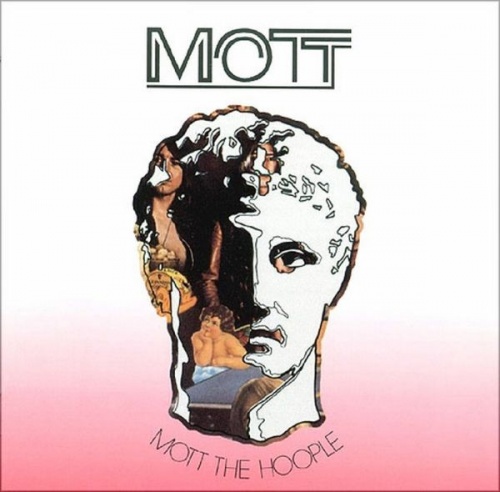
Posted in Music | Tagged , , , , , , , , , , , , | 1 Comment

From The Jam – The Cavern Club Live Lounge, Liverpool

The hottest night of the year so far, and I was Going Underground. Not as a safe haven from the Sounds From the Street, but to hunker down and resolutely celebrate cultural values increasingly under attack.

This was the first of two gigs I had in the week following Ariana Grande’s ill-fated North-West visit, each re-instilling hope for the future through the power of live music, the first at a club synonymous with pop’s sparkling past.

And while Paul Weller was talking about London when he wrote, ‘My heart’s in the city, where it belongs’ four decades ago, it could easily stand for Liverpool or Manchester on this day, which just so happened to mark his 59th birthday.

This first date was at a sweaty club below the streets of Liverpool rather than some corporate enormo-dome, but was every bit as much about commemorating the May 22nd, 2017 tragedy, giving a middle finger to the small-minded bigots who prey on the troubled and misguided in a bid to turn us back to the Dark Ages.

From The Jam’s acoustic show isn’t a million miles from the live wonder of their full electric show, the main difference the lack of a drummer and the fact that Russell Hastings and Bruce Foxton are perched on stools throughout.

While the original Cavern closed in early 1973 and was filled in during construction work on Merseyrail’s underground rail loop, on the evidence I saw and felt on Thursday, fair play to all those involved in this nearby rebuild, the spirit of that famous venue intact, a sense of history retained. And the artwork around us inspired me to promise a return when it isn’t quite so packed, this time with a proper camera.

Lennon Legacy: The Cavern’s support act framed on the Live Lounge big screen (Photo: Malcolm Wyatt)

In the aftermath of a difficult week, there were always going to be shadows, but there was a grim determination to get on with it, and it’s difficult to think of more compelling performances delivered from a seated position.

It was standing room only beyond the Live Lounge stage, with a battle to get an unencumbered view, my mate Jim feeling he was transported back to some dodgy nightspot in Blackburn in the late ‘70s, caught between a couple of canoodling couples as he was. At 6ft 4ins I can block out most distractions, but the pillar to my left meant I had to crane my neck to see what Hammond organ supremo Andy Fairclough was up to.

I say about an acoustic but electric performance, and part of that was down to a large section of the audience knowing every word. In the unlikely event that Russell might freeze and forgot his lines, his understudies were on hand.

There’s always something magical about this part of Liverpool for a music fan, and even our short walk from the car involved a few landmarks, including the Cunard Building which last summer hosted the marvellous About the Young Idea exhibition, the Eleanor Rigby sculpture, then on Mathew Street itself a chance to pose with bronze depictions of John Lennon and recent arrival Cilla Black.

As Russell put it, this was the band’s ‘second hometown’, and after descending the steps to the venue, you can’t help but be impressed by those Mount Rushmore-like Fab Four carvings.

Elsewhere, The Rolling Stones look on in an illustration in the far bar, while on stage the in-house support was more than a run-of-the-mill Lennon lookalike, adding character to his chosen covers, from The Word through to Stand By Me and all points between.

Liverpool Tourists: The blogger and his compadre outside the Cavern Club, Mathew Street

Soon, the PA blared out Circus and our special guests arrived. And while this was no sonic triumph – the sound weaving in and out and only really resonating for the last few songs – the technical team did their best, the quality of the songs and our trio’s delivery seeing us through.

The Jam spirit was there from the off, as if spurred on by an electric charge trapped within these famous walls, tonight’s in-crowd playing their part from the opening chop-chords of Saturday’s Kids and bass throb intro of When You’re Young right through.

There was certainly joy in the songcraft and the performance of Foxton, Hastings and Fairclough, and while slightly obscured I could see a look of animation every time I caught sight of the latter, facial expressions adding to that sense of urgency.

David Watts seemed apt in the surroundings, Ray Davies’ 60s vibe nailed by Bruce and his cohorts, while the poignant Liza Radley and Butterfly Collector were a real bonus, showing the strength in depth of Weller’s songwriting.

Between those b-sides, Down in the Tube Station at Midnight’s introductory Underground rumble initially made hearts flutter after Monday. But here was a powerful story touching on the evils of extremism and ignorance, its message truly resonating.

There was Bruce’s signature tune Smithers-Jones of course, while if one song underlined a sense of history it was Larry Williams’ Slow Down, afforded an early-rock-n’roll feel in this setting, road-tested at The Cavern by The Beatles 15 years before Woking’s finest took it to a new audience.

Step Inside: Cilla Black, a study in bronze, outside the original Cavern Club (Photo: Malcolm Wyatt)

Russell asked we join the band in a minute’s silence to the victims of the Manchester Arena atrocities, suggesting 60 seconds of hush then a resounding ‘fuck off’ to its perpetrators’ philosophy. We were up for that, but talking at the bar – having not heard the message rather than being ignorant, I’d like to think – continued for most of it. Yet while it didn’t go quite to script, the point was made.

When they resumed, Strange Town seemed a perfect barn-storming choice, while English Rose neatly encapsulated fundamental values that bring us together, irrespective of creed, colour or nationality. ‘Choose love’, as Manchester poet Tony Walsh put it so evocatively the day before.

A horticultural theme continued with the poignant Carnation, another welcome surprise from a catalogue of delights following in Life From a Window before Foxton and Hastings’ Now the Time Has Come from Smash the Clock, now a year old, solid proof that this is so much more than a heritage band.

But there was always a karaoke feel, and so the massed voices accompanied on That’s Entertainment and Start, before Thick as Thieves and In the Crowd reminded us this was no obvious hits package.

And what else but Going Underground to finish, not just for our subterranean location but also an in-built reminder to make use of a forthcoming snap election, hopefully to change things for the better.

They returned for three more songs, In The City – 40 years after its incendiary release – followed by further hymn to class struggle The Eton Rifles and the ever-evocative A Town Called Malice, Weller’s early-80s vision of Anytown or Anycity UK every bit as relevant 35 years on.

And as Weller put it, and Hastings delivered on the night’s finale, ‘Time is short and life is cruel, but it’s up to us to change this town called malice’.

Heads Up: The Fab Four look on at the new Cavern Club on Mathew Street (Photo: Malcolm Wyatt)

For a link to this site’s most recent interview with Russell – Spirit of ’77 – All Around the World with Russell Hastings and From The Jam – and links to many more Jam-related features and reviews, head here.
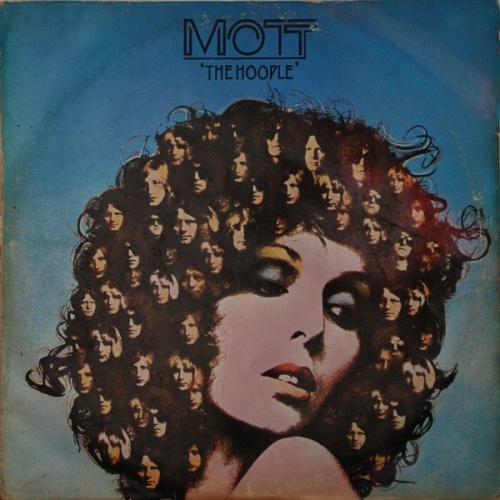
Posted in Books Films, TV & Radio, Music | Tagged , , , , , , , , , , , , , | 2 Comments

Kingdom come, beyond Del Amitri – the Justin Currie interview

Justin Time: Del Amitri frontman Justin Currie is back on the road, this time with his band The Pallbearers.

Chances are that you probably still know Justin Currie best for Del Amitri, the Scottish alternative/crossover outfit who enjoyed a dozen top-40 hits over a decade in the wake of 1990’s classic breakthrough single, Nothing Ever Happens.

But this Glaswegian singer-songwriter went it alone in 2003, by his own admission spending the next four years ‘fannying about writing, drinking and doing any weird non-rock gig’ he was invited along to before releasing his first ‘masterpiece of maudlin’, What Is Love For.

Now, a few years on, he’s promoting his fourth LP, This Is My Kingdom Now, released on his own Endless Shipwreck Records, following 2010’s The Great War and 2013’s Lower Reaches, the songs of old replaced by a tone he describes as ‘suicide in a saucy shirt’, his output rightly continuing to strike a chord, the 52-year-old about to step out for a headline tour with his backing band, The Pallbearers to promote the new record. And from the tracks I’ve heard so far, it’s another winner.

So, I ask him down the line, was recording his latest record an enjoyable experience?

“More enjoyable than the last one, which was quite tough. I started recording at home the year before last, and my idea was to do it all myself, sat at a piano. But a couple of weeks in, the offices outside decided to renovate the building, so for six months I had to down tools because of the racket.”

A tad too much percussion, eh?

“Exactly.”

The new LP’s a self-release. Does that create more work, or is it worth that for creative control alone?

“Erm … this is my fourth solo record and I don’t ever recall feeling not having creative control. It’s more work to the extent that I’m now the marketing manager though. As well as making it, I’m selling it … and I’m a terrible salesman!”

You seem quite proficient with social media though, from what I’ve seen.

”Everybody’s supposed to be, but it’s something I’d rather not do. I find the whole thing deeply vulgar! The problem with ‘direct to the audience’ internet selling is that the artistes who end up the most successful are those who are best at selling themselves, not necessarily those who make the best music.

“When I was 15, me and my band were quite good at making little leaflets and posters, pasting them up on lampposts. But at 52 I find all that incredibly dull.”

While receiving plenty of praise for his last long player, 2013’s Lower Reaches, recorded in Austen, Texas, with Mike McCarthy, this one appears to be more of a homegrown entity.

“That was the only one where we hired a producer, with me handing all the songs to Mike and letting him choose the songs and arrange them as he saw fit. This album is more back to what I did on the first and second albums, playing a lot of the instruments myself and picking and choosing them myself. I feel more in touch with this and that it’s more my record than the last one.”

The first thing we heard from the new record was the delightful Failing to See, which I tell him serves as a fine advertisement for what he might have in store for us, and should by rights be all over the radio airwaves.

“Well, for that to happen you’d have to hire someone to take your records to those stations, which I can’t afford to do anymore.”

Spaced Out: Justin Currie's new LP, This is My Kingdom Now

Spaced Out: Justin Currie’s new LP, This is My Kingdom Now, has gravitational pulling power.

Is that track pretty much indicative of what we have coming our way?

“No, but I don’t think I could choose one song that would be indicative of the rest. I don’t think one song is like the next.”

Tell me about Sydney Harbour Bridge, for example.

“Erm … it’s a bridge that goes over Sydney Harbour.”

I asked for that, didn’t I. ‘Thanks,’ I respond, deadpan, and he laughs, I like to think guiltily. I try another way. It seems from the track-listing that there are quite a few songs about travel on this album.

“Yes, a lot mention or use the sea as a metaphor. That came about after I was offered a gig at the Scottish Maritime Museum in Irvine, coming up with a few songs that mentioned the sea or some maritime theme, a couple especially for that gig, realising I could have a thematic link. A couple didn’t quite make it, but there’s a vague theme echoing in the background.”

Incidentally, at time of going to press I’ve given Sydney Harbour Bridge a few spins, and like the new album’s title track it’s something of a brooding masterpiece. I can report good things about Crybabies and Hey Polly too, with Justin’s rich tones and inventive hooks all over this record from what I’ve heard so far. Again, as you might expect from this talented songsmith.

Anyway, on with the interview, and talking of travelling, when he’s on the road with The Pallbearers these days, does he properly take in his surroundings, rather than just turn up, set up, play, move on?

“I still really love touring, and part of the joy is it’s endlessly stimulating, looking out of a van or hotel room window on a completely different environment every day. I always assumed when we did a lot of touring in the ‘90s that it must have some kind of impact on what you wrote and how you wrote, but I don’t really do enough of that to be able to claim an impact. Nearly everything I write is written in Glasgow, where it’s the same view every day!”

Talk of his home city – according to his own press, ‘Currie lives and breathes in Glasgow, collects beer mats and makes his own cushions’ – leads to a discussion about other bands from the area, coming on to the subject of the early ‘80s Postcard Records scene, and one mutual influence in particular.

“I don’t think I would have formed a band without Orange Juice happening in Glasgow. That changed everything, and almost overnight Glasgow went from being this pub-rock backwater that no one in the music press or the record industry had any interest in, to being this place that was perceived as being incredibly cool. That was really just down to the four people in Orange Juice and Alan Horne of Postcard Records.”

And have you had a chance to get to know Edwyn Collins over the years?

“No. He quite rightly despised every other band in Glasgow, unless he took a particular shine to them, and I’m quite happy to know Del Amitri were despised by Edwyn! But I regard him as a great genius, and one of the greatest poets Scotland ever produced.”

How about the wondrous Teenage Fanclub? Ever on your radar?

“I adore them and buy all their records. They were more out of Belshill and its own special scene, which started a bit later than the postcard bands. Of course, Norman (Blake) was with a few other groups and conceptual projects before he put Teenage Fanclub together. I always thought he was a genius and was really pleased when he got together with Raymond and started making records with them. I was always worried he might just slip between the tracks.”

And what’s on Justin Currie’s turntable right now? What are you enjoying listening to?

“I’m a big fan of Sun Kil Moon, wading my way through his latest opus, which is pretty fascinating. I’m also wading my way through Kendrick Lamar’s latest records.”

Ever get fed up playing those old Del Amitri songs that part of the audience no doubt insist on hearing above all else? I mean, I love Nothing Ever Happens, but it’s a song I first heard in the depths of winter and I tend to equate that with short nights and commuter gloom. For that reason alone, I’m not sure I’d want to play it every night.

“That’s a fair question, but no, partly because there are enough of them that I can pick and choose. I don’t have to play particular songs every night. And there are songs I’ve played every night as a solo artist and with Del Amitri too. It doesn’t particularly bother me. I don’t have a massive problem with that. Maybe that’s sheer vanity.”

Three’s Company: Chris Difford, Boo Hewerdine and Justin Currie form the BBC’s Songwriters’ Circle (Photo: BBC)

I particularly enjoyed your BBC Songwriters Circle appearance in 2010. Have you worked with and kept in touch with your fellow artistes that night, Chris Difford and Boo Hewerdine?

“Yeah, kind of vaguely. We send each other acerbic texts and emails every now and then – old bald men complaining about the state of the climate!”

What comes first writing songs these days – strumming your guitar or tinkling away at the piano?

“I’d say 75 per cent are worked out at the piano, although I try and discipline myself to writing more on guitar. But with the piano it’s a lot more productive, largely because a lot more of the notes are laid out in front of you. It feels like the world’s your oyster.

“I have to add though, I cannot play either! That’s kind of an advantage as you don’t know what you’re doing. But if you hear something in your head it’s quite hard to achieve it.

“Because I was a punk most of the music I was listening to was achievable on a four-string bass, the first thing I started playing. With punk rock you never felt the need to study. Just learning those songs, playing them with one finger on one string, was enough to get you to the point where you could form a band and play gigs.”

There were four top-10 albums with Iain Harvie and co. in Del Amitri, 1989’s Waking Hours alone selling more than a million UK copies. Does that all seem a lifetime away now?

“It should be. It’s that deep philosophical question – ‘at the age of 52 are you the same person you were when you were 22?’ And you obviously aren’t. I recognise that person and identify with them really strongly, so it feels like I’m on some kind of continuum … but I’m probably not.”

You insist you’re still a member of Del Amitri, but you’ve been a solo artist for a long time now. Any regrets about going it alone?

“Loads. I never wanted Del Amitri to stop, but it became fairly obvious we’d be on a rapid downhill spiral in terms of amount of people we’d play to, so we took a break. I was writing fairly frequently, and needed an outlet for those songs. Writing and not releasing songs is pretty painful, so it became pretty obvious that was the only way to go if I was writing songs and Del Amitri weren’t active.”

How about the prospect of a Waking Hours 30th anniversary tour in 2018 then?

“I’m sure we’ll do more gigs some stage in the future. Not this year, but maybe next year or the year after. We’d like to do more. It just depends on whether the gigs themselves are worth doing.”
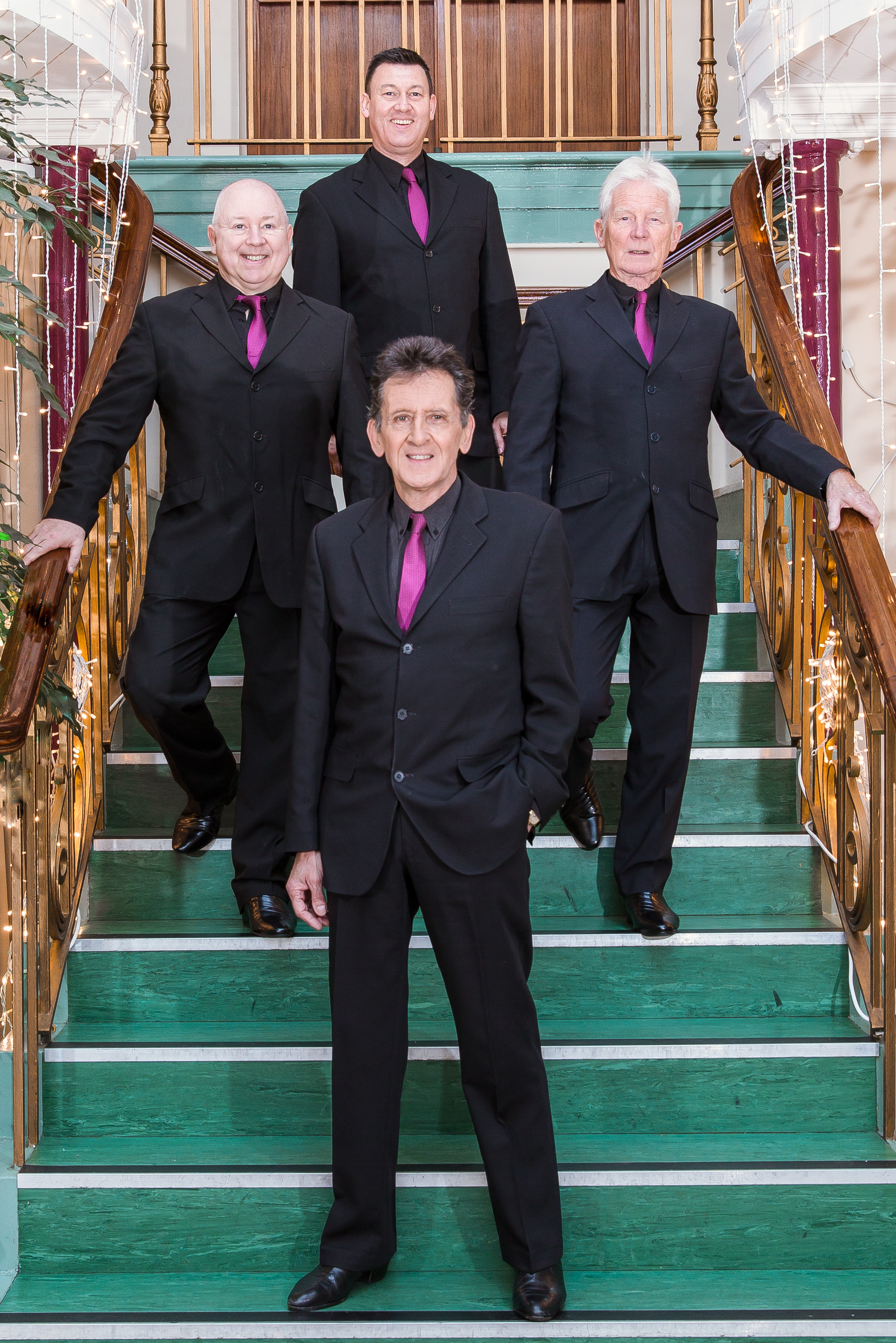
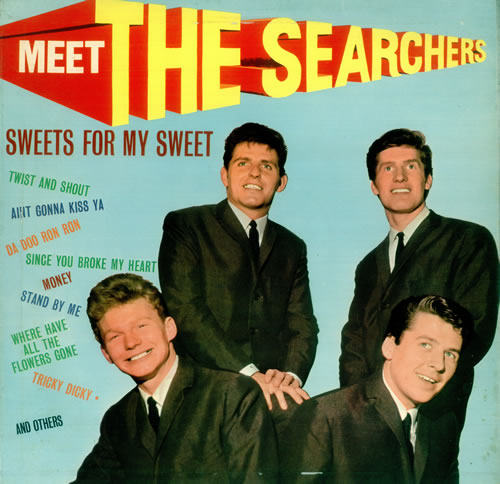
Live Wire: Justin Currie, out on the road with The Pallbearers right now, and again in the autumn

Justin Currie’s tour with The Pallbearers – after an opening night at Perth’s Concert Hall on Friday, May 26th – continues at Holmfirth Picturedrome (Sunday, May 28th), Pocklington Arts Centre (Monday, May 29th), Wolverhampton’s Slade Rooms (Tuesday, May 30th), Liverpool’s Hangar 34 (Wednesday, May 31st, 0844 8000 410 or via this link), Cambridge Junction (Wednesday, May 31st), Islington Assembly Hall (Saturday, June 3rd) and then back north of the border at the Northern Roots Festival, Bogbain Farm, Inverness (Saturday, June 24th). 
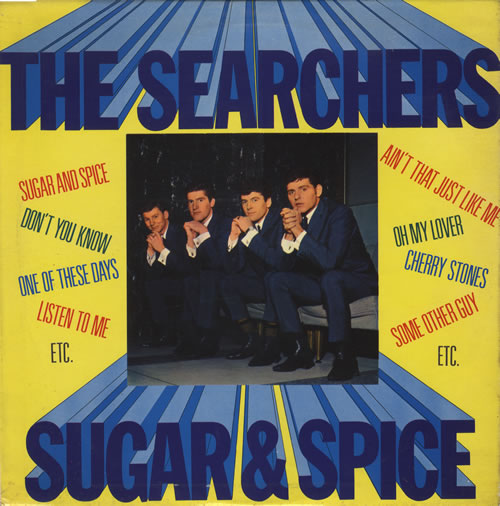
There are also a dozen live dates this autumn, running from Friday, October 13th at Manchester Academy 3 through to Tuesday, October 31st at Colchester Arts Centre, including one on my patch at Preston Guild Hall’s Live venue on Friday, October 27th (see link). For further information, including full tour details, head to his website. You can also follow Justin via Facebook and Twitter.

Posted in Books Films, TV & Radio, Music | Tagged , , , , , , , , , , , , , , , | 1 Comment