Renewable Power in the Darkness – back in touch with Tom Robinson

As I may have mentioned on these pages before, few TV shows of yore hold as much magic as Top of the Pops re-runs for this nostalgic, and recently I was digging among the online archives for the October 1977 debut appearance of the Tom Robinson Band.

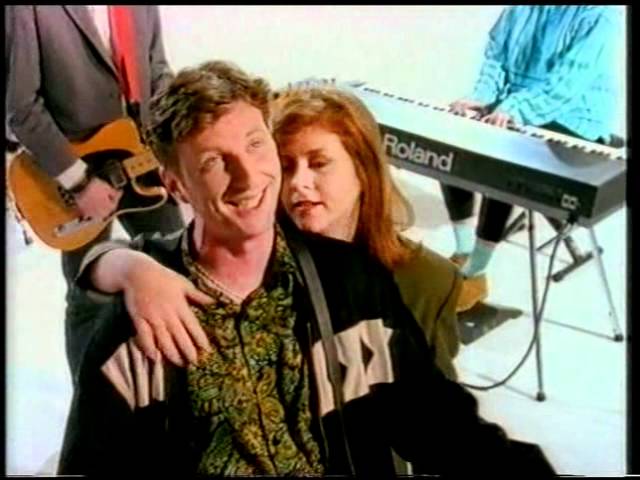
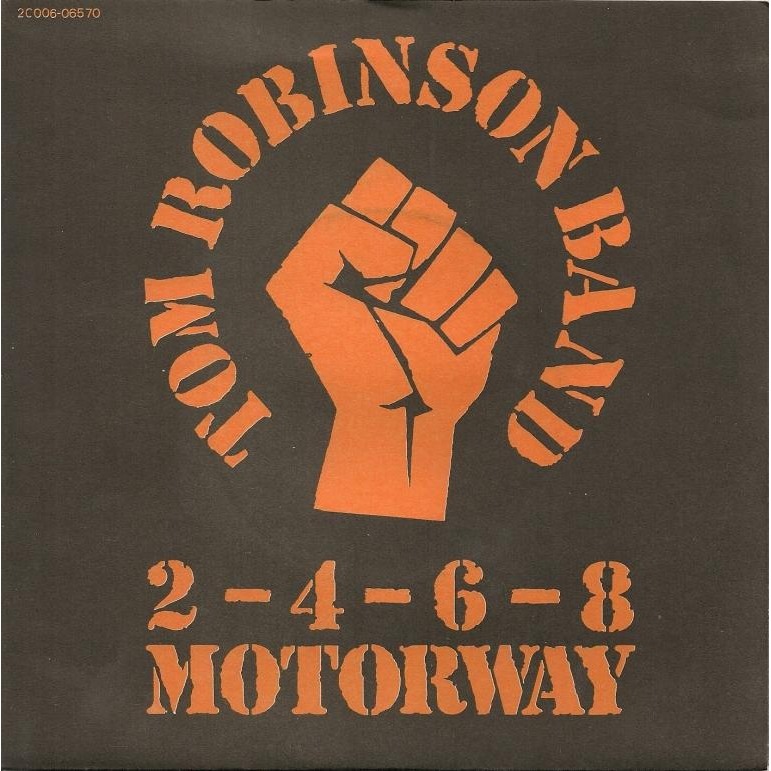
It’s difficult in this era of endless channel hops to explain to later generations the pull of such a seminal BBC Thursday night show. But when there were just three buttons to press, TOTP was king. And you can see just how important it was to today’s interviewee, checking out that lop-sided grin of his as he tries to catch guitarist Danny Kustow’s eye while they belt out debut hit, 2-4-6-8 Motorway.

“I was over-acting outrageously. I cringe a bit looking at it, I’m just so fucking pleased with myself!”

Mind you, it seems that Mark Ambler on keyboards didn’t get the school uniform dress code memo.

“Ha! That was much too close for comfort for him. He’d only just left school, so didn’t want to dress up as a schoolboy again. He was actually thrown out of the pub where he came to play his first gig with us, for being under-age. Thankfully he got back in, saying he was in the band.”

Mark looks somewhat downcast actually, at least in comparison, as if he’d already heard that track too many times.

“That was his habitual manner. He was taught piano by Stan Tracey and was a jazz-wiz on the keyboards, so I think he felt he was seriously slumming it with our three-chord songs. Actually, in many cases they were two-chord songs. I always thought, ‘Three chords good, two chords better’.”

And can punk rock’s foremost gay activist turned successful solo artist and esteemed radio broadcaster Tom recall what that triangular badge was he was wearing?

“That’s my ‘Gays against Fascism’ badge. It was before the Anti-Nazi League, but at that time a reminder of the death camp triangles. I thought even on Top of the Pops there would be a few people out there who knew what it meant and would pick up on it.”

Truckin’ On: TRB on TOTP, late ’77. From the left –
Mark Ambler, Danny Kustow, Tom Robinson, with Dolphin Taylor beyond (Copyright: BBC)

As a snapshot of time, Abba, Queen, Quo and Baccara were above TRB in the charts when that single made the top five in the UK, with fellow punk scene acts the Sex Pistols (Holidays in the Sun), The Jam (Modern World) and The Stranglers (No More Heroes) all below. Wings were just around the corner too, Mull of Kintyre about to crash the charts and hang around for what seemed like an age. What I guess I’m saying there is that in the month I turned 10, the charts at that time truly resonated with me.

2-4-6-8 Motorway was produced by Vic Maile, chiefly known around then for his work on the first two Dr. Feelgood albums. But apparently he wasn’t the first choice.

“Vic got us out of a hole. We had this song that was going down really well and we were closing the set with it each night, and it was an obvious choice for the first single. We’d had two cracks at recording it, with the producer of our choice, John Miller, then with the Who’s live soundman, but neither of them really worked. Then EMI had this idea that Vic would do a quick and dirty job, because of his work with Dr. Feelgood, and would take that song right down to its essence. And so he did.

“We recorded it in one morning. The only thing he changed was the bassline, and suddenly the whole thing just kind of pulled into place. Up until then it was done like a country song, which gave the guitar part a swing to it. All Vic did was get me to play one to the bar, like Free, from which Danny did his part, and we did it in just two takes. The only overdub was to double-track the rhythm guitar and put some hand-claps on there.”

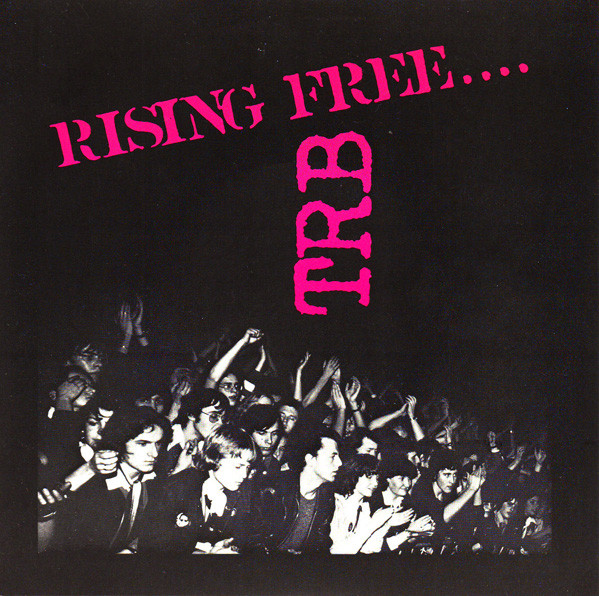
The next Tom Robinson Band single, February ’78’s four-song Rising Free EP – recorded live at London’s Lyceum Theatre in November 1977 – was also a UK top-20 hit, but was always unlikely to get such prime-time coverage on account of the subject matter of track two, (Sing If You’re) Glad to be Gay. Yet Granada TV came up with the goods via the Tony Wilson-fronted So It Goes three months earlier, featuring a live rendition of that and fellow TRB crowd favourite Martin, filmed at Middleton’s Queen Elizabeth Hall, north Manchester. And with total understatement, I tell Tom that was a brave move getting that song out there, perhaps one of the greatest examples of kicking against the machine, punk-style. Away from all the posturing of many of his new wave contemporaries, you could argue that he had something to properly rebel against in those testing times.

“It’s funny, it was the time of punk but I was too old to actually pull off the punk look even then, but it’s odd that the song I had that was my flag of rebellion was actually a jazzy cabaret style late-night smoochy singalong! Some people hated it, but with any worthwhile song some people are going to hate it.”

But you hit the nail on the head there – it’s eminently sing-able. In fact, let’s face it, it’s probably harder to not join in.

“That was the funny thing. After it was a hit you could always spot the closet gays in the audience. All the heterosexuals would be singing along at the tops of their voice, having nothing to prove. But you’d always see people with very firmly zipped lips! ‘Nothing queer about me!’ A dead giveaway.”

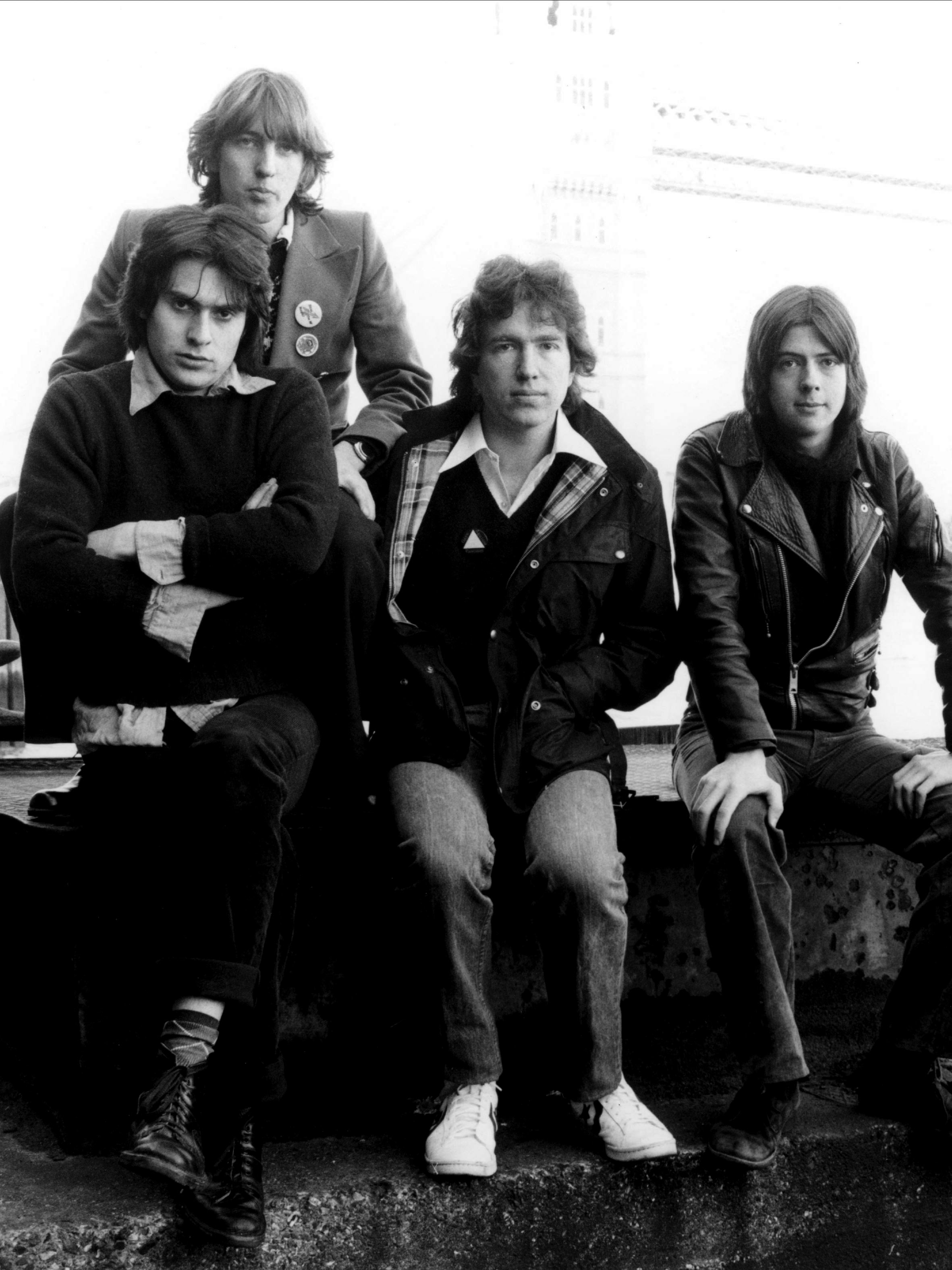
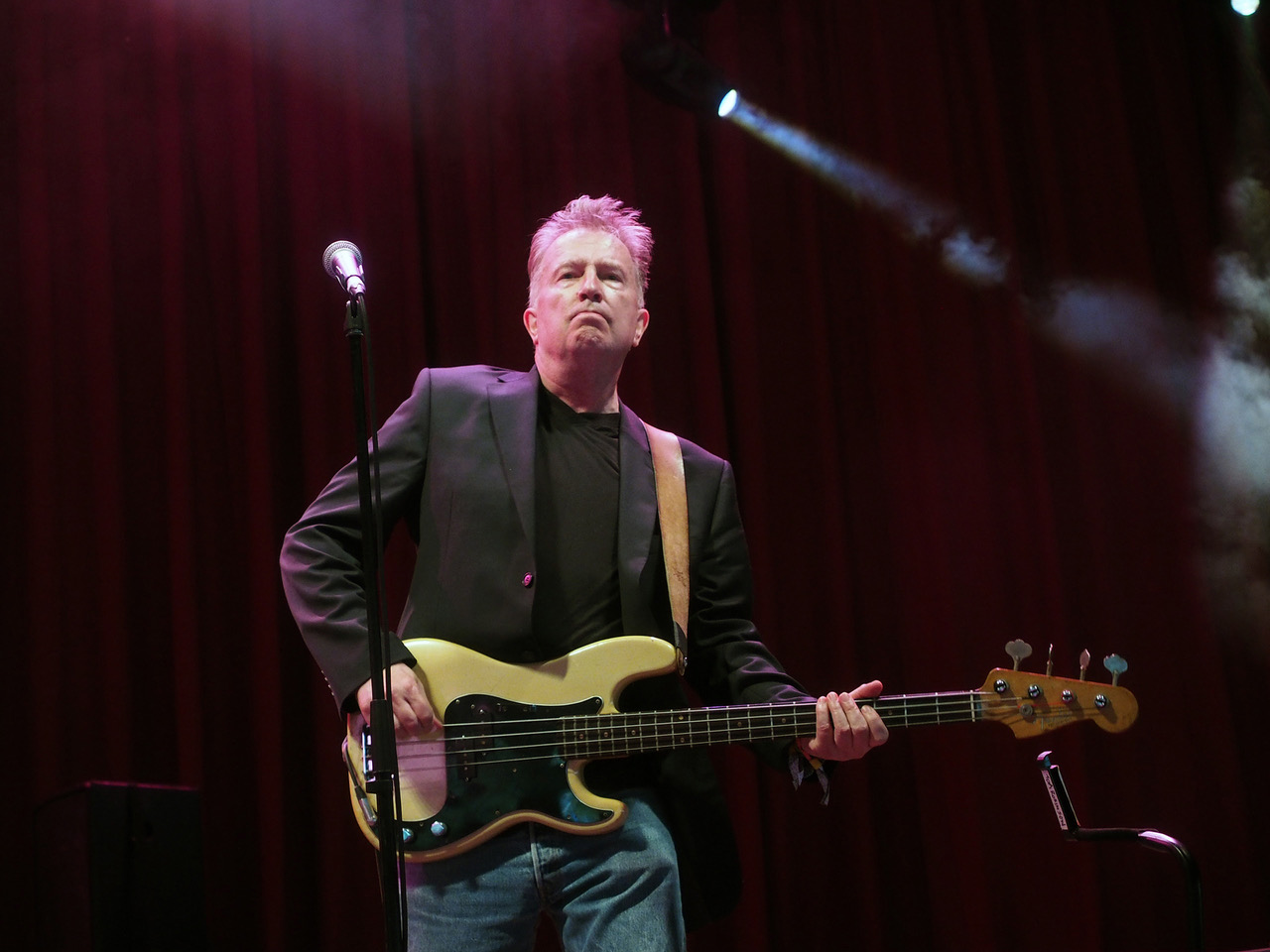
Past Masters: The Tom Robinson Band, at Tower Bridge, back in the day

An earlier version of shoe-gazing, maybe. Now, I hate to be rude, but you more or less said it yourself then – surely at 27 you were considered an old fart by the likes of John Lydon.

“Lydon was alright. I don’t think the other Sex Pistols liked me very much, but he took me off down to the Speakeasy.”

A rather accurate version of the artist formerly known as Johnny Rotten follows from Tom.

“We met at the Music Machine, and he said, ‘Tom Robinson – don’t give up! Don’t ever give up! Don’t give in to the bastards!’ And then he was sick on my shoes!

“About 10 years later I bumped into him at the Britannia HoteI, Manchester, wearing a Mambo suit that must have cost the best part of a thousand quid, his hair in knots on his head, dyed orange, with a pair of Woolworth’s sunglasses. He said, ‘Tom Robinson! You’re with that Red Wedge, ain’t ya!’ I said ‘Yeah’, and he said, ‘Fackin’ champagne socialists!’

“He always managed to annoy everybody. He never conformed to one viewpoint or doctrine. He went his own sweet way. And I love him for it.”

I guess he appreciated the fact that you had something to rock against.

“Yeah, and age-wise, Joe Strummer wasn’t much younger than me. And Jet Black of The Stranglers was about 10 years older than me. Charlie Harper of the UK Subs too. But I didn’t think I could pull it off and be believable, so had this kind of older brother prefect vibe which I felt I could pull off better.”

Yet with a little irony perhaps, here you are now, out on the road playing Power in the Darkness again, 40 years on.

“Yeah, that’s interesting. For many years I’ve fought the whole nostalgia thing, and I’ve never played those ’80s festivals. Towards the end of the ’90s I was grinding out the same six songs to a dwindling audience of people just vaguely remembering the dim and distant past. There was no dignity to it. So it was good to get into radio and move into helping other people get heard and appreciating the wealth of music that was coming out.

“For 15 years I’ve been immersed in that, then two years ago decided I’d make an album of my own after playing the English Folk Expo in Bury, meeting producer Gerry Diver there. He made me a killer album, and once I’d done that and established I could do songs that people who’d never heard of me would like. I felt comfortable enough to be able to go back and say, ‘Right! Let’s honour the past,’ without feeling it compromised me.”

To mark the 40th anniversary of 2-4-6-8 Motorway and the album that followed, Tom (bass and vocals) has put together a new band for a celebratory 15-date UK tour, namely Faithless drummer Andy Treacey, Richard Ashcroft guitarist Adam Phillips, and Jim Simmons (keyboards).

After a less successful toe-dip into the music business with Café Society in 1975 – under the wing of The Kinks’ Ray Davies at Konk – punk changed everything for Cambridge lad Tom, who was soon charged up and making his name for real, starting to gig in London in 1976 and by the end of the year deciding on a permanent band, with old friend Danny Kustow his first recruit.

“I’d known him since he was 15. He came to Finchden Manor, where I spent my formative teen years, arriving the same night Alexis Korner came to visit.”

I should add a few lines there, Tom having suffered a nervous breakdown and attempted suicide at 16, hence a move to a centre for teens with emotional difficulties in Kent, where he spent the next six years. And that was the setting where Tom got hooked by John Peel on pirate station Radio London, that afore-mentioned visit by blues legend and  broadcaster Alexis Korner helping him realise where he might be heading from there. As was the case for Danny Kustow, it seems.

“He was so impressed with Alexis that he wanted to become a guitarist. All that time Danny was going around pestering people, saying ’show me an A-chord’, and stuff like that. So I knew him as a younger person and a bit of a guitar bore. When punk came along and I came to form a band I needed someone who could play guitar, and he was calling, saying, ‘Can I be in your band?’ I relented and it was only when the band started playing that I realised, ‘Bloody hell! He’s really good!’ It suddenly dawned on me how great Danny was and what he brought to the party.”

Running small ads in the music papers looking for a bass player and drummer, he then found drummer Brian ‘Dolphin’ Taylor then Mark Ambler, the latter only revealing after his audition his keyboard prowess, Tom – on hearing him play Hammond – deciding he’d have to play bass himself. Pretty soon the four-piece’s live shows were receiving favourable reviews and A&R interest, the band-leader going in nine months from signing on to Radio One, Top of the Pops, an EMI Records deal, and the front cover of the NME.

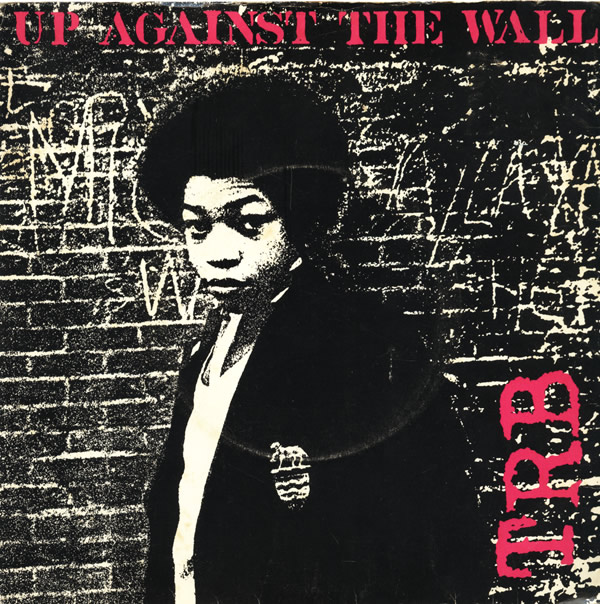
Those first two singles were followed by next 45 Up Against the Wall, the first release from Power In The Darkness, that debut LP released in early 1978 and reaching No.4 in the UK chart, in time going gold at home and in Japan.

As it was, Mark Ambler quit after the first long player, session player Nick Plytas drafted in before Ian Parker became a permanent replacement. A second album, TRB Two, recorded in late ’78 at Rockfield Studios, South Wales, with Todd Rundgren producing, followed in the spring of ’79, further personnel changes following as Dolphin Taylor made way for Preston Heyman before Charlie Morgan took over on drums. And by the time of the second album tour, in-fighting had taken its toll, Danny Kustow’s decision to leave marking a fairly premature end to the initial story.

“Danny got the punk thing and the Rock Against Racism thing straight away, and we’d go on anti-National Front demos at Wood Green and Lewisham – he was a real supportive soulmate. But because we’d both came from a place we’d been sent because of our emotional fragility, shall we say, the band contained the seeds of its own destruction.”

He continued to feature at various points with you in the solo years that followed though, didn’t he?

“Yes, he played on War Baby (Tom’s memorable top-10 single in the summer of  ’83), but again the emotional edge to the whole thing was just so destructive. We reformed the band 10 years after the break-up, by which point I’d been through 10 years of psychotherapy, so was in a different space and I’d sorted myself out a bit.

“I’d also found the person I wanted to spend the rest of my life with … which astonishingly turned out to be the wrong sex! So I thought, ‘Let’s go back and see if we can do it properly this time, make good and achieve the potential we should have achieved at that time.

“I was approaching it in the mood of reconciliation, but neither Mark Ambler nor Danny Kustow had been through 10 years of psychotherapy and were approaching it in the spirit of vengeance – they wanted to get their own back on me! And they did.

“It was the worst year in my entire working life. A horrible experience, and it so dented me. It took me two years before I could write any more songs. I was completely wiped out by the emotional side of it. It wasn’t about playing music but about some unspoken battle going on. If I said ‘black’, they said ‘white’. If I said ‘yes’, they said ‘no’. So destructive.

“I had a 24-track studio at the time but we didn’t manage to complete a single master recording in the whole year we were back together, because we couldn’t even agree on paying an engineer to come in and do the recording. God, what a waste of energy that was. And it took me ages to realise what was going on. It was all going on behind the scenes. We were going out and playing these gigs and yet it didn’t feel very good.

“I always came home feeling slightly in the wrong. And every move I made to move us forward somehow turned us back. Yep, never have a picnic in the same place twice.”

Have you been back in touch since?

“Oh yeah, socially, but I swore to myself I would never take to a stage with them ever again. But now I’ve got a really good line-up and we’ll do our best to honour what the four of us achieved and pay tribute to them.”

By the end of the old century, Tom was seeking a new direction, and soon re-established himself as a broadcaster, working on shows to this day with BBC 6 Music, where he hosts up to three shows a week. He’s also a member of the Ivor Novello Awards committee, and last year was awarded LIPA fellowship in recognition of support for new music artists through BBC Introducing’s talent initiative.

Two years ago he returned to live performances too, in support of celebrated 14th studio album Only the Now, featuring guests such as Billy Bragg, John Grant and Ian McKellen.  And now he’s out there again, but not before looking back on his TRB breakthrough moment with me, four decades on.

“It’s anniversaries all the bloody time these days. The whole world’s looking backwards!”

I tell him that my brother’s Power in the Darkness cassette ended up with me when he left home in Surrey in the early ’80s, and it’s now somewhere tucked away in the eaves of my house 240 miles north, a tape I played many times over the next few years. And listening again in recent weeks I can confirm that while it’s a snapshot of that era, it’s definitely stood the test of time, with plenty of stand-out tracks.

“Oh good! The hardest thing about putting these shows together with a bunch of modern, really good musicians who can play anything, was getting up to the tempo we recorded that album at. At 67, playing that fast really takes a bit of practise!”

That first TRB album was recorded at Wessex Studios, North London, by Chris Thomas, who’d already turned heads with the Sex Pistols’ debut LP. Seeing footage from around then, Tom’s outfit were truly a happening live band. Does he think his producer got the essence of that live feel in the studio?

“Well, we made two albums with TRB and the Chris Thomas album took three months, a really torturous grind. He’s such a perfectionist and took everything down to the nth degree of detail to get it right. On Up Against the Wall I think there’s 10 guitars on there, to make it sound like one. It was the same with the Sex Pistols, where he put a guitar on straight away, did most of the album with Paul Cook in about an afternoon, but then the overdubs make it sound like it would out of the speakers as you’d experience it at a live gig.

“That was what took the time. And people said, ‘It sounds just like you’re live!’ We then made another album with Todd Rundgren in six days, and that was live. We went in the studio and played it, then he took it away and mixed it, yet everyone said it was really over-produced!”

Maybe it was just more about the feeling of that first album.

“I think the songs are just better on the first album. We had four years to write the songs on that album and four months to write the songs on the second album.”

History tends to repeat, and at the time we seem to have a minority Government on the way out, their propping-up pact with the Liberals behind them. Then again, in that example darker shadows were forming, with Thatcher on her way in. So how close were you to the truth in the winter of 79?

“Nowhere near. The SAS only came and took people’s names in Northern Ireland. But on that front, there are two things I’m still really proud of after all these years of what we did achieve back then. One was that we played the Rock Against Racism card in Victoria Park, Hackney, and helped make an important statement that helped mobilise people against the National Front. And the other is that I’m really proud we went and played Belfast so early on, and went back to Derry several times too.”

When you see the history of visiting punk bands in Northern Ireland, the popular misconception seems to be that The Clash visited first.

“They didn’t play. They turned up and used it as a photo opportunity in front of all the graffiti and barbed wire and soldiers in uniform, then went back to London. We were there in ’77 and went back and played the Ulster Hall, then got Stiff Little Fingers to support us in the UK, the first band to get them over.

“I’m really proud of that, because there was a lot of attitude, posing and posturing about the politics of Northern Ireland, but … it was lovely how the kids from both sides of the divide would turn up to gigs, the punks hated by both sides!

“And there was another really proud moment for me, going down the Falls Road and seeing a Power in the Darkness stencil among the graffiti.”

Was that from the stencil included with the album, which memorably contained the warning, ‘This stencil is not meant for spraying on public property’?

“Yes! We had some replicas made actually, and we’ve still got a few. But going back to all that, The Clash got to write the history, as they did in the carnival against the Nazis, where they were on before us and fuming that they weren’t topping the bill. But the organisers said TRB have played lots of shows for us and their songs are about what we’re about and we want them to close it. They’ll have the right vibe, rather than be about the greater glory.

“As it was, The Clash over-played and wouldn’t come off. After they’d over-played by 10 minutes and we could see our set-time dwindling away because of the curfew, my manager got the roadies to pull the plugs. But in the revisionist history version, we got jealous of them and pulled the plugs, almost provoking a riot.”

Fast forward four decades, and you’re back at the 100 Club on this tour – for a three-night run, and two of those already sold out. I’m guessing you featured there early on too.

“Oh, absolutely we did, just as that first single was breaking. Good memories. We did go back and play there with the reformed band for a 10th anniversary show, so I can’t see why we can’t go back with a different band for the 40th anniversary.”

And have you got the school tie ready, for old time’s sake?

“No. Absolutely not. I’m 67 years old, for fuck’s sake! I’m going to wear a Paul Smith suit and a t-shirt.”

Just wondered. The perennial schoolboy image never seemed to do AC/DC’s record sales any harm, after all.

“Ah, I’m no Angus Young.”

Live Presence: Tom Robinson has his latest TRB line-up all set for the Power in the Darkness 40th anniversary tour

For a look back at a previous Tom Robinson feature/interview on this site, two years ago, celebrating the release of the Only the Now album, head here.

last TRB’s October tour dates: Cardiff, The Globe (10th); Milton Keynes, The Stables (11th);  Cambridge, The Portland (12th); Bewdley Festival (13th); Nantwich, Words & Music (14th); Wakefield, Unity Works (17th); York, The Crescent (18th); Nottingham Rescue Rooms (19th); Sheffield, Leadmill (20th); Manchester Home (21st); London 100 Club (24th/25th/26th); Newcastle, Riverside (28th); Glasgow, King Tut’s (29th). The Manchester Home date is followed by a Glad to be Grey ‘in conversation’ show the next day (22nd), all part of Manchester Folk Festival. Try 0161 200 1500 or this link for more information. For tour ticket details and more, check out Tom’s website. You can also follow him via Facebook, Instagram and Twitter.


Posted in Books Films, TV & Radio, Music | Tagged , , , , , , , , , , , , , , , , , , , , , , , , | 3 Comments

Stepping back into Daylight – the Pauline Black interview

You need only take a couple of listens to the new album by influential ska favourites The Selecter to be convinced this is not a band content to sit back on past endeavours.

What’s more, vocalist Pauline Black doesn’t do things half-heartedly, and latest offering Daylight – out this Friday, November 6th – suggests there’s still plenty of life yet in an outfit that formed an integral part of that initial late ‘70s 2 Tone explosion.

Reunited around the nucleus of Pauline, fellow original Arthur ‘Gaps’ Hendrickson, and producer-writer-arranger Neil Pyzer (formerly with Howard Devoto and Spear of Destiny), The Selecter are firing on all cylinders, and you can believe the hype when you hear they’re offering ‘their most urgent, politically engaged and purely uplifting music’ since their early ’80s long-playing statements of intent, Too Much Pressure and Celebrate the Bullet.

The new album was recorded in London against a familiar backdrop of political foment, anger at austerity policies and the emergence of a revitalised left wing vying for Government, the time seemingly ripe for the return of a band led by one of the first British female pop stars to shake up gender and racial stereotypes. As their latest press release has it, ‘Cropped and cool, Pauline was the girl who looked and moved like the sharpest rude boy. She flipped the Tonic suit and porkpie hat into a feminist statement.’

Many faces have moved through the line-up since The Selecter’s emergence in Coventry in 1979, the current mix of ‘four white and four black’ deemed ‘very 2 Tone’. And when I got in touch, the band were amid a successful Stateside tour with US punk bands Rancid and The Dropkick Murphys, with Pauline ‘fulfilling a bit of a dream’ at the Greek Theatre in Berkeley, California, the band playing to a sell-out crowd, their best-known member on a high in a ‘fantastic outdoor amphitheatre with a marvellous acoustic’.

That was the band’s 14th date of an American visit taking in various West Coast venues, going on to complete 19 shows in 21 days. Time constraints and other deadlines meant that I didn’t get chance to share her response – you’ll probably suss from some of the responses that this is a rare example of a writewyattuk email questionnaire rather than a face-to-face or at least a phone-to-phone encounter – straight away. But hopefully it all still makes sense (with the help of a handful of post-dated tweaks).

And now they’re all set to start again this side of the Atlantic, their ‘co-headline tour with our labelmates and good friends The Beat’ opening on the day of the LP’s launch at a sold-out London Roundhouse. So are their fellow 2 Tone veterans good company on the road? I guess Pauline (and Gaps) go back with them a fair bit.

“I first met Ranking Roger on the doorstep of Jerry Dammers’ house in 1979.  I think he was about 15 then. So yes, you could say that we go back a long way.”

Ska Walker: Pauline Black, out with The Selecter again (Photo: Dean Chalkley)

Could you have imagined all those years ago, first getting the band together, that there would still be such a big appetite for The Selecter around the world?

“In 1979, we didn’t even imagine that we would have a hit single and appear on Top of the Pops. When you’re young, you don’t spend most of your time imagining what you will be doing in 40 years’ time. But it’s an absolute honour that so many people worldwide still find the message of 2 Tone worthwhile, particularly in these troubled and divided times.”

The UK tour starts in style with that sell-out show at The Roundhouse in Chalk Farm, London. Ever play there back in the day?

“The Selecter have never played The Roundhouse before, but we did shoot a video for our single Celebrate The Bullet in the tunnels underneath the building in 1981.”

You’ll also be visiting Manchester Ritz (October 13) and finish at Liverpool Olympia (Dec 23), my excuse for speaking to you. Have you got good memories of past visits to the North West of England?

“We love the North West and have a lot of fans in Manchester and Liverpool.”

Where’s home when you’re not on the road these days? Do you get back to Coventry often? And what were you missing most about home while in America?

“Gaps Hendrickson, my fellow lead singer and I both still live in Coventry, the home of 2 Tone. And after a few weeks on a tour bus, albeit a very comfortable one, I probably missed my bed the most!”

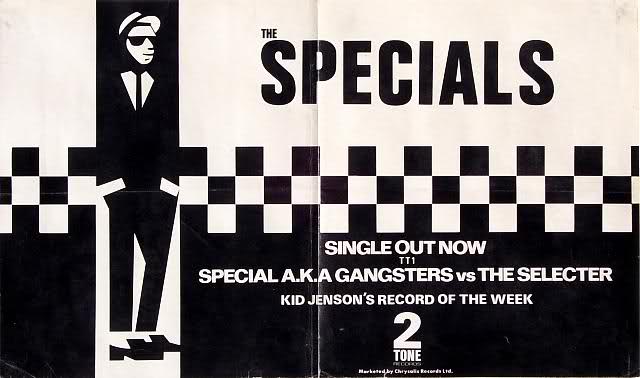
Have you still got a pristine copy of the Gangsters vs The Selecter on 7” tucked away somewhere safe?

“No. I’m not a desperate completist. I feel no nostalgia for what is past. The future always beckons more brightly.”

The band may have dropped the tempo a couple of notches, but judging by the latest live reviews, you remain a sight to see, and the audiences haven’t slowed down much either, have they?

“You haven’t been to a show recently then, if you think we’ve dropped the tempo a couple of notches! Live shows are our natural habitat.”

When did you first meet ‘Gaps’, and could you have ever imagined you’d still be out there playing live with him all these years on?

“I met Gaps in 1979. We have never had a cross word with each other and each of us thoroughly respects the unique artistic capabilities of the other.”

Has the current line-up given you fresh momentum then? And do the younger members of the band tend to keep the rest of you on your toes, or does it work the other way around?

“We all keep each other on our toes. Everybody in the band loves the music we perform and more importantly like each other. That is often a rare combination in bands. And our mainstay is our producer/tenor saxophonist/MD Neil Pyzer, whose musical expertise in the studio makes everything possible.”

Have you kept in touch with many of your original bandmates … and members of The Specials?

“Funny you should ask that, as Lynval Golding from The Specials joined us on stage at the Greek Theatre for a rendition of Too Much Pressure.”

Are you still in touch with The Selecter co-founder Neol Davies (who has had his own version of The Selecter out there since 2011, having served in the first two spells for the band) after the issues over the use of the band name?

“There were no ‘issues’.”

While you’ll still get old favourites like Too Much Pressure and their biggest hits, On My Radio, Three Minute Hero and Missing Words, The Selecter are no ‘heritage act’, their message as key today as it was in ‘79, in this similarly turbulent era. And with the way things have gone these last few years, it seems that they have as many issues to write about now as in the early years.

After just a couple of listens, I was already loving Daylight. Both Frontline and the title track deserve to be hits, and there’s plenty more to love, not least The Big Badoof and Mayhem, among the other tracks that jump straight out. As a whole, I’d say it’s a politically-engaged statement of intent, but one carrying an upbeat message of hope for a brighter future, preaching positivity and empowerment. Am I right, Pauline?

“Of course you are right! The Selecter has shone daylight on to the thorny subjects of racism and sexism for nearly four decades, but still so many choose to remain in the dark, perpetuating the same old hoary aphorisms and tropes. The Frontline is now the internet. It’s where people interact for good or ill.”

In America, the band dedicated a live rendition of Frontline to Heather Heyer, after the 32-year-old civil rights activist was killed while protesting at a white supremacist rally in Charlottesville, Virginia. We live in scary times. I put it to Pauline, taking on the LP’s uplifting vibe – not least with the few months we’ve had with Trump in the White House – that I hope she was still seeing cause for optimism and ‘daylight’, both there and back in the UK.

“We were spreading our Daylight message wherever we went in the USA, and many fans and newcomers to our music were responding very positively. Heather Heyer paid the ultimate price for raising awareness of the emboldened fascist threat which is taking to our streets. She was brave enough to stand wholeheartedly on the Frontline, which is what many people continue to do on a daily basis all over the world, in order to keep some semblance of humanity among us all.”

The Selecter’s initial spell was explosively short, lasting barely a couple of years. After a decade doing their own thing, what had changed by 1991 to bring about the band’s re-emergence?

“The third wave ska movement in the early ‘90s in the USA gave some much needed impetus to 2 Tone music, and we decided to jump back into the fray.”

Then, 15 years on, you stepped away again, this time chiefly to write your Black by Design autobiography. Did that prove a cathartic experience?

“I’ve always performed in multiple ways, either TV, radio presentation, writing or theatre acting. I like to practise a lot of different disciplines when it comes to performance. Each then complements and helps develop the others. That way I’ve managed to constantly move forward and not get stuck in a rut.

“Writing Black By Design was a defining moment in my life and took me 18 months to complete. I’m very proud of the story I told and I hope that some of my insights might help other adopted people who had to come to terms with the inherent racism in our society. And if all goes as planned, it looks as though a film about 2 Tone based on my book will soon go into production with Molifilms.”

In 2001, Pauline got together with fellow writewyattuk interviewee Jean-Jacques Burnel (The Stranglers), Jake Burns (Stuff Little Fingers) and Nicky Welsh (with The Selecter from 1991-2006 and also Bad Manners) to create 3 Men & Black, doing acoustic versions of various songs they were famous for, and talking a little about how they came to write those tracks. The line-up changed now and again, at times involving another writewyattuk regular, Bruce Foxton (The Jam, Stiff Little Fingers, and these days From the Jam), Eric Faulkner (Bay City Rollers) and Dave Wakeling (The Beat). An album, 3 Men + Black, Acoustic, featuring Black, Burnel, Burns, Foxton and Welsh followed in 2004. So, any plans to tour again with a version of that combo, Pauline?

“No, although I did very much enjoy working and recording with Jake Burns and JJ Burnel.”

Are the TV and acting offers still coming your way? Or do you plan to keep this all going a while longer?

“I have no other interests other than The Selecter at the moment. It’s a full-time job.”

If you could name just one highlight from your time with the band, what might that be?

“Our first performance on Top Of The Pops with our first single On My Radio is always a defining moment in my mind.”

Bands like yourself and The Specials had the finger on the pulse from the start, politically and culturally. Are you seeing any evidence of a new breed of bands following your example?

“Many young bands are starting to talk about what’s going on in the world, both socially and politically.  The only problem is that most of them don’t make the playlists on the radio stations. That is a pity, but I fully expect that to change given time.”

Finally, you’re seen as one of the first British female stars to shake up gender and racial stereotypes. And the 2 Tone movement as a whole seemed to carry that torch, extolling the values and virtues of multiculturalism and equality. That’s something to be proud of, isn’t it, as far as the band’s, the label’s and your own legacy go?

“If my contribution to the 2 Tone movement has done anything to improve perceptions of race and gender equality, then of course I am proud of that. And it always feels very rewarding when I meet young women at the merch stand after a performance. who tell me that our music was an empowering influence on their lives.”

For tickets for the tour, contact the venues or head to The Selecter’s Facebook page, where you can also find out more about getting hold of new album Daylight.

Team Selecter: Pauline Black and Gaps Hendrickson, coming to a town near you (Photo: Dean Chalkley)

UK dates for The Selecter and The Beat: Friday, October 6th – London Roundhouse; Saturday, October 7th – Leamington Spa The Assembly; Sunday, October 8th – Southend Cliffs Pavilion; Friday, October 13th – Manchester 02 Ritz; Saturday, October 14th – Tunbridge Wells Assembly Hall Theatre; Thursday, October 19th – Bury St Edmunds The Apex; Friday, October 20th – Worthing Pavilion Theatre; Saturday, October 21st – Lincoln The Engine Shed; Friday, November 10th – Leicester De Montfort Hall; Saturday, November 11th – Exeter Great Hall; Thursday, November 16th – Inverness The Ironworks; Friday, November 17th – Glasgow 02 ABC; Saturday, November 18th – Newcastle 02 Academy; Friday, November 24th – Bournemouth 02; Saturday, November 25th – Wrexham William Aston Hall; Friday, December 22nd – Guildford G Live; Saturday, December 23rd – Liverpool Olympia.

Posted in Books Films, TV & Radio, Music | Tagged , , , , , , , , , , , , , , , , , | 4 Comments

Revealing the Byrne identity – the Jason Byrne interview

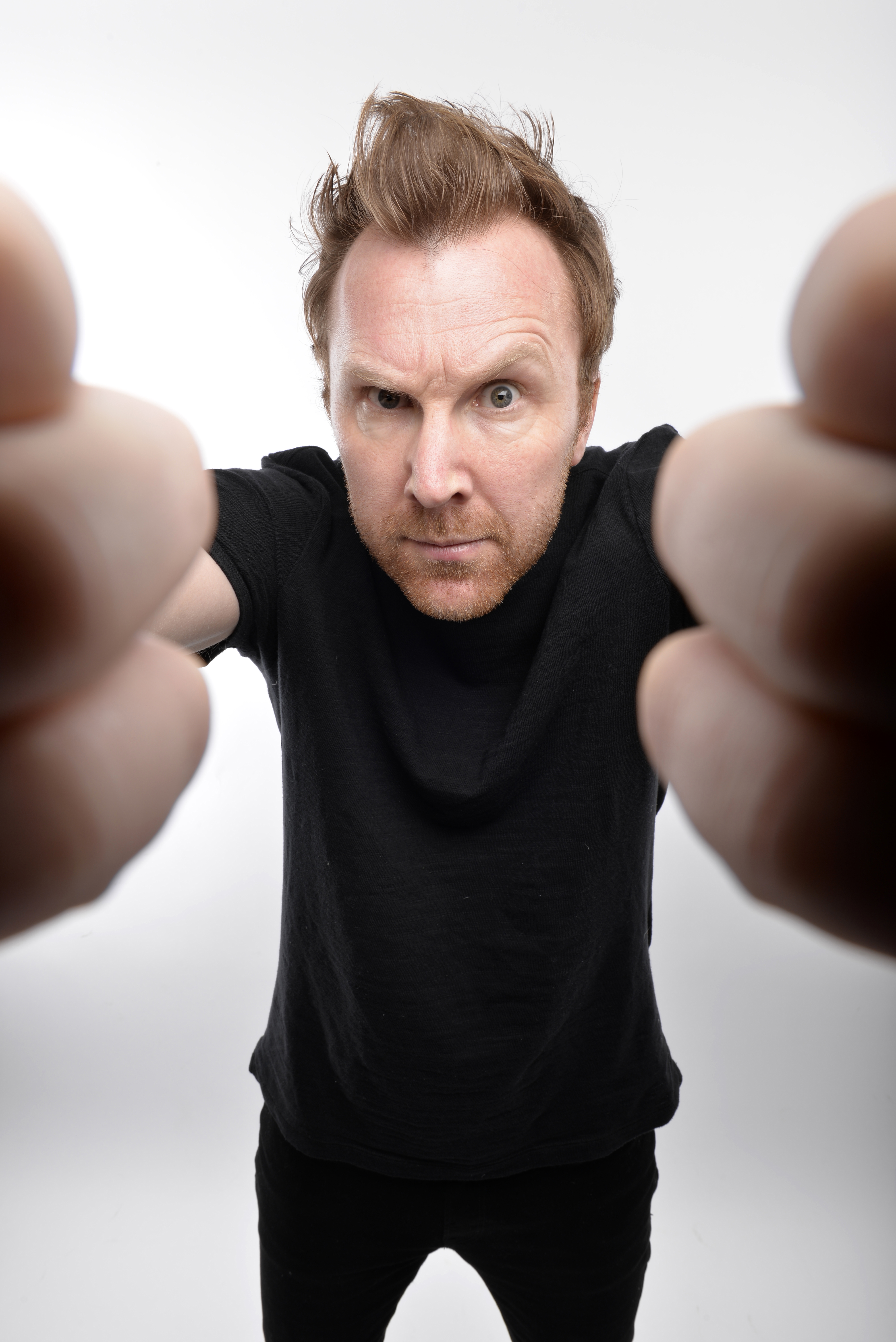
Brain Man: Jason Byrne, coming your way this next couple of months (Photo: Steve Ullathorne)

It’s been a mad-busy few years for Jason Byrne, the Irish comic currently heading back around the UK in his guise as The Man With Three Brains show.

In addition to extensive worldwide touring, you may know him from appearances on shows such as Live at the Apollo (BBC1), The Royal Variety Show (ITV1), The John Bishop Show (BBC1), Father Figure (BBC1), of which he is creator and star, Just a Minute (BBC Radio 4), and a self-titled BBC Radio 2 show now up to three series and awarded the UK radio industry’s Sony Radio Gold Award for ‘best new comedy ‘ in 2011.

Then there’s his studio-based comedy chat show, Jason Byrne’s Snaptastic Show, for TV3 in Ireland, and his co-hosting of Sky 1’s popular entertainment programme Wild Things, while past credits have also included more than a decade of Edinburgh Festival shows, scooping a Forth One Fringe Award there in 2004, his Phantom FM and RTE Two comedy panel show The Byrne Ultimatum roles, being a finalist on So You Think You’re Funny as far back as 1996, with a Perrier Best Newcomer Award nomination two years later, and another Perrier Award nomination in 2001. Oh, and Father Ted in 1998.

Recently, the 45-year-old from Ballinteer, Dublin, also launched a new series for the Dave channel, Don’t Say It, Bring It, an on-location game show filmed around the UK, loosely based on a scavenger hunt, and described by Jason as, ‘the best indoor, outdoor gameshow I’ve ever worked on’. What’s more, he’s just landed a role as a judge on Ireland’s Got Talent, more of which we’ll get on to later.

All in all, I guess I was lucky to track him down, but it may seem like I’m underselling this interview when I tell you I missed out a few bits because of the quality of line between Lancashire and the Irish border.

I’m not sure that was down to the distance between myself and Jason – on the road between Belfast and Dublin – so much as the fact that he was ‘patched through’ by an agency in London. My intermediary down South could hear us perfectly and Jason reckons he could hear me, but after two attempts I was still struggling. Yet I persevered and strained my ears later, trying to listen back.

And now I’ve got my excuses out of the way, I’ll press on, having first ascertained my interviewee’s whereabouts.

“We were in Belfast. North of Ireland … sorry, Northern Ireland. You can’t say North of Ireland, that’s Donegal and all. You have to say, ‘I’ve just left Northern Ireland and we’re in the Republic of Ireland right now’. You’re basically listening to a little bit of history there – you’re interviewing me in two countries.”

Maybe that’s why the line’s not so good.

“No, the line’s not so good because the British Army are listening in.”

Stood Up: Jason Byrne checks the copy for swear words.

I winced and waited for a response at that, at least a cut line, but there was none, so I cracked on. Where’s home for Jason these days?

“North of Dublin, out in a little village, an hour and half away from Belfast. Also, I travel over to Britain a lot. It doesn’t really matter where the fuck we live, it’s just that I decided to stay in Ireland with my family and kids. I could have lived in Britain. I could have lived in Scotland. I could have lived in fucking France. There are comics who actually live in France and fly in at the weekend to do the Comedy Store, then fuck off back to France. How good is that? We’re fools, Malcolm. Fools!”

Jason swears a lot. Thought I’d better just mention that, in case it’s not already apparent. I may have left out a few swear-words here and there (mostly the same ones, to be honest), but you’ll get the idea. Of course, I could add that if that offends you, you know what you can do.

Anyway, Jason, I believe you were at Croke Park recently, for Gaelic football’s All-Ireland final?

“Croke Park? Oh yes, though hang on – this is a little bit of a sore point. I was at Croke Park, but before the fucking All-Ireland. I was doing a corporate, charity gig for Temple Street Children’s Hospital. That’s why I was there, wearing my Dublin jersey the night before the match. But that night I had to fly out and go and do Sunday Bloody Brunch on Channel 4, the day of the fucking final!”

Sunday Bloody Brunch? The Channel Bloody 4 show with Tim Bloody Lovejoy and Simon Bloody Rimmer? Can’t believe I missed that. I’m normally tuned in. A sickener for Jason all-round.

“I know. I’m flying over, and who’s going the other way? Fucking John Bishop! I’m going, ‘John, you don’t even know fucking GAA.”

So you had to make do – like me – watching the TV highlights (for the uninitiated, Dublin clinched a slim victory over Mayo, their third successive All-Ireland win)?

Brunch Time: Jason Byrne missed out on Dublin’s latest Gaelic football triumph

“Yeah, I went home. The plane landed in Dublin and I could just hear everyone around me going, ‘Fucking yeah!’ and I was going home to watch the highlights. They absolutely fucking battered each other – a great game to watch. I was trying to explain the game on Sunday Brunch, how you could punch the guys in the head, as long as the ref doesn’t see it, it’s totally legal. And they’re going, ‘What?’”

It certainly seemed an exciting match, from what I saw. And while we’re on the subject of your home city, how close to the truth was Roddy Doyle with his Barrytown trilogy (The Commitments and so on)?

“Oh, that’s something he did absolutely bang on!”

Was that the Dublin you grew up with?

“No way. I didn’t grow up in that Dublin. That Dublin was fucking dog-rough, that was fucking horses put into lifts and that. That’s a real thing. Very rough areas of Dublin. Not right now though. They’ve been totally redone and refurbed, but you’re talking the ‘80s and ‘90s.

“I grew up in – as in Adventures of the Wonky-Eyed Boy – a working-class area, but we weren’t poor. A lot of people near me were definitely poor, but I didn’t grow up like that. I was in an everyday housing estate where all the Dads had jobs and the mothers ran the household, with all those funny fucking stories. A lot of my stand-up comes from there.

“Bath-time in our house was very funny. My Mum would only half-fill the bath with water, then fill it with children, then the water would come up to the full level. For ages there was me and my two little sisters in front of me, and my bigger brother behind me with his fucking cock on my shoulder, asking what I was looking at. Yes, I lived in a very small house.”

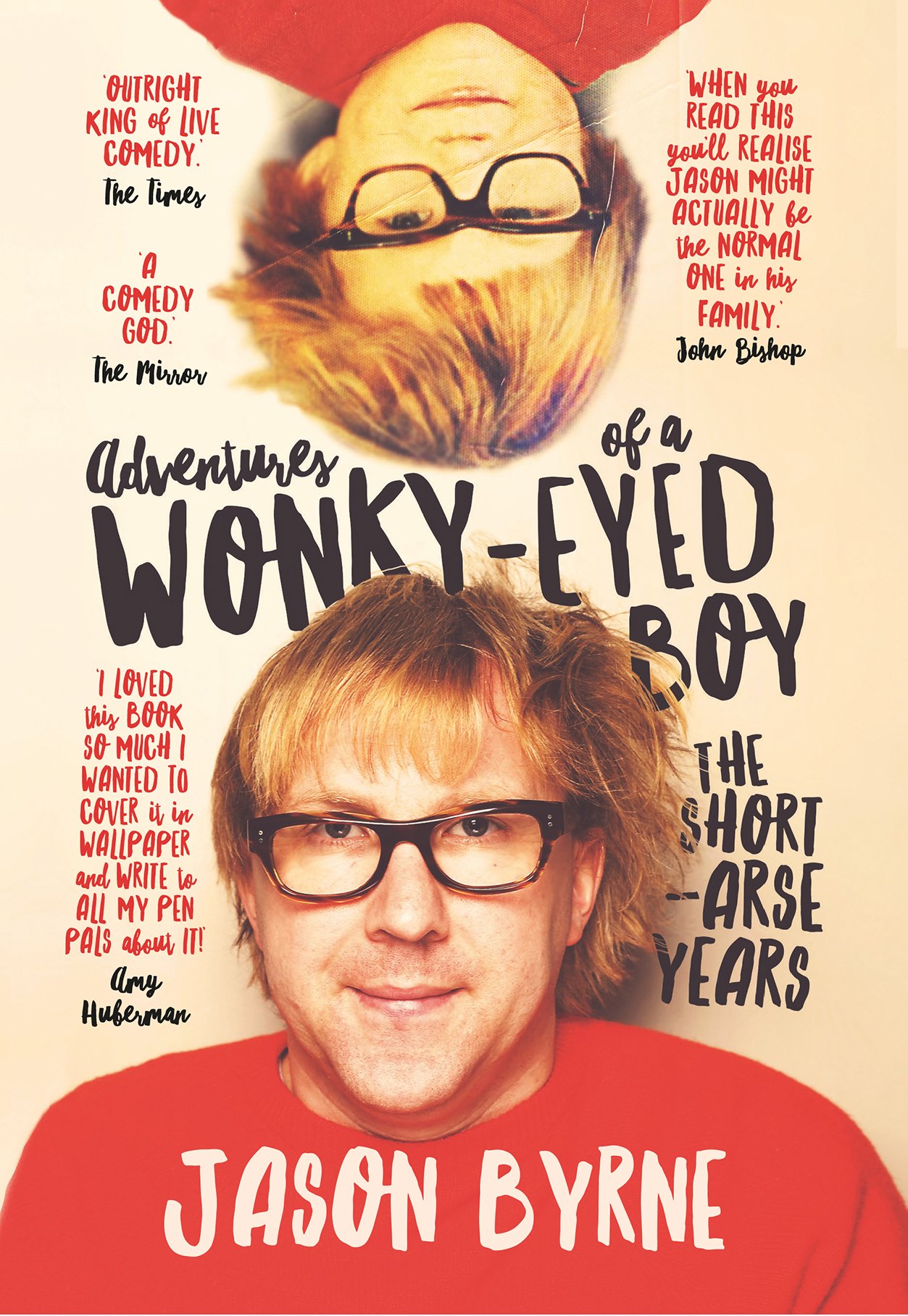
By the way, Adventures of a Wonky-Eyed Boy is his 2016 publication for Gill Books, a comic but highly evocative memoir of what it was like to grow up in a working-class Dublin suburb in the ‘70s and early ‘80s, its title making sense to anyone who’s seen him open up on stage about his ‘lazy eye’ as a kid. And when it comes to words, he can certainly paint a picture, can Jason.

That brings me to his current domestic arrangements, starting to ask about his wife putting up with being brought into his live routine. But at that point we lose each other. The last I hear is him shouting, ‘Malcolm!’ in the distance – which I’m guessing was directed at me rather than some Gaelic insult you shout at other drivers using the N1. Consequently, I had to be connected again, my interviewee returning a minute or so later, muttering something related to that earlier concern about military organisations listening in.

In a low, slow voice, he tells me, “Do not tease the fucking British Army. They totally disconnected us that time.”

You’d think they already had a good enough file on you.

“Ah yeah. I go through borders and airports … Do you know what, I do a lot of shows in Australia, and I arrive there now and get, ‘Ah, Jason. How are ya?’’

Getting back to family, before we’re cut off again, I can’t help but think of your poor wife getting a few run-outs in your material. He mentioned during one TV appearance how he’d best make sure he wasn’t sat on the sofa with his beloved when it was aired. I get the feeling he was only half-joking too. Are there elements of truth in all that?

“In the stuff about my wife? No, basically I have a fictional wife and my real wife, and they kind of cross over. A lot of the stories definitely come out of my wife for a start, and I just fucking jazz it up. People who have met my wife will say, ‘Oh, she doesn’t look like your wife’. I say, ‘What are you talking about?’ and they’ll say, ‘I always imagined this very stout woman with really bad hair, waving her fingers’.

“My wife’s a very attractive, skinny lady, who does a lot of training. But she does come out with some cracking lines. I recently got a new show on Dave (Don’t Say It, Bring It), which was recorded and ready to go, and I was launching it, and the day after I got a phone call asking me to do Ireland’s Got Talent. Well, I got loads of congratulations from family, friends and colleagues, and then I got a text from my wife, and all it said was, ‘You could have put that fucking bin out before you left’.”

At least she’s keeping your feet on the ground. You should be thankful. How old are your lads now?

“They’re 17 and 10, a great pair of lads.”

Dave Rave: Jason Byrne takes to the streets for Dave TV’s Don’t Say It, Bring It

Will you get to see them a bit over this tour? You have a lot of live dates ahead of you (37, I understand).

“It’s all managed very carefully, mostly runs of three days, occasionally four days in a row, with the others spent in Dublin, bringing them training and dropping them off here, there and everywhere, and going out with them. After two days they get the idea, and remember how much of a jerk I am. They have their friends and school, and they’re very busy. My 17-year-old is highly mature and totally understands. He’s only seen that kind of life, me going in and out all the time. And they have each other.

“When I spoke to the headmaster, he said, ‘Actually, on paper you’re here more than any Dad’, because a lot of them work nine ‘til five, don’t get to bring their kids to school and can’t collect them or do after-school stuff because they’re travelling home. It actually works out better for me … although I’d like my wife to comment on what I’ve just said. ‘Oh yeah, that works out really well for you, the way you fuck off out of here ….”

My main excuse for speaking to Jason was his forthcoming double-appearance at the seventh annual Southport Comedy Festival, having been crowned ‘The King of The Festival’. It’s his fourth visit, and he’s built up a massive following there. This time he turns out on Wednesday, October 18th, and Thursday, October 19th, with tickets still available at time of going to press, and festival organiser Val Brady told me she was particularly looking forward to his appearance.

“That gig’s a great craic. A lot of time I’ll head around and I’ll have the show in my head, and I’ll think I’ve got to do that and I’ve got to do this. At Southport you might as well get the whole gig and fuck it out of the window, because you’re not going to be able to do it. It’s too much fun talking to them. They tell you the maddest shit, and they heckle you … in a nice way. There’s no nastiness. Yeah, I know what Val is talking about – she may be looking forward to watching the crowd, but I’m not sure if I am!

“But it’s one of those gigs I don’t have to worry about. I look forward to that. It’s in a comedy club rather than a theatre. It’s very much like, ‘Off you go, Jason, let’s see what happens for the next two hours’, you know.”

The show’s called The Man With Three Brains, apparently because his left brain scans the audience and room looking for improv. moments, while his right brain collates stand-up material and stunts, poised to ‘dish out the funnies at speed’, and the centre brain is Jason’s coach, pushing him to the limit. I think that makes sense, although I had to wade through some typical comedy press release clichés about how ‘hilarious’ and ‘extremely funny’ he is, and mentioning his ‘famous warm and generous stagecraft’, which sounds like one of those things people my age thought we’d all be riding around on now we’re in the 21st century.

“Well, you have to name your show in January, one that’s not even written, so they can put it in the brochure at Edinburgh. But it’s connected to the fact that someone said it looks like I’ve got three different heads on my shoulders when I’m up there, because I do a lot of improv. – it’s like I’ve got three brains on the go.”

Surely, Mrs Byrne would just suggest that was mild multi-tasking in her world.

“Well yeah, and someone said, ‘You don’t have three brains, just different streams of consciousness’. And I said, ‘I’m not putting that on a fucking poster! No one will go!’ Only Derren Brown.”

Last time you were doing the rounds was for 2016’s Propped Up tour, strangely enough involving lots of props, like giant ducks, rubber hands, owls, and big wooden pegs. That kind of reminds me of Tommy Cooper back in the day, going out of his way to walk through a gate in the middle of the stage for no apparent reason during a live show. I don’t really know why, but that was funny.

“Ah, do you remember that? My parents saw him do that in a cabaret set here in Dublin. He had a white picket fence, and … did you see this yourself?”

I didn’t, but my big sister and brother mentioned it after a performance in Surrey many moons ago. My sister was in pain from the laughter by the end, Tommy making it worse every time he looked at.

“Yeah, all he did was … he couldn’t get through the gate, because he was supposed to push rather than pull, or something.”

And he never mentioned it all night.

“I know! That is brilliant! Except I remember Eric Sykes saying that kind of annoyed Tommy when he was out, being himself. He’d ask for a drink at the bar and the barman would just laugh at him. He’d get annoyed and say, ‘What are you laughing about?’ Eric would have to explain, ‘You just sound funny, Tom’. I think that just tortured him.

Father Figures: Jason in his guise as football ref, with Father Ted Crilly (Dermot Morgan) and Father Dougal McGuire (Ardal O’Hanlon) in 1998 (Image: Channel 4)

“I don’t really have that. I certainly have funny bones and I like messing about, and I do bring an air of funniness on to the stage with me, but I would never walk on with a picket fucking fence. Can you imagine? ‘What are you fucking doing, Jason?’”

It’s 20 years that you started performing, and it’ll be 20 years next year since your Father Ted appearance as a football referee. Did you think you’d made it there and then, or is that something that became more special in hindsight?

“Well, Graham (Linehan) and Arthur (Mathews), the writers, are good friends of mine now, and I felt I’d made it. But then I did a gig with Simon Pegg and they came along, asking, ‘Who’s that guy?’ I said, ‘Who?’ and said I didn’t know him, although I did. But they sat down with Simon and a couple of months later he was doing Hippies, and he did Big Train, then he did Spaced, and then … and then … and then. So yes, in answer to your question, when I did Father Ted, I definitely knew Simon Pegg was going to do well!”

Finally, I see the team at Ireland’s Got Talent were on the hunt for performing priests and nuns recently. Is that the prime difference between that show and Britain’s Got Talent?

“The difference between Britain’s Got Talent and Ireland’s Got Talent is that everybody in Ireland thinks they’ve got talent. So you’ve got a vast amount of that coming, everybody thinking they can sing or dance, and there’ll definitely be singing priests and dancing nuns and parrots reciting fucking ballads and all sorts. My friend, the producer, texts me now and again, going, ‘You won’t believe what I have coming towards you!’”

Jason’s latest The Man With Three Brains run opened in Aberdeen on October 1st, and runs through to a date at Southen’s Cliffs Pavilion Palace Theatre on Sunday, December 3rd. Ticket prices for all venues are £19.50, and £22 for London shows. For tickets head to www.ticketmaster.co.uk or his www.jasonbyrne.ie website. You can also follow him via Facebook and Twitter. 

Brain Teaser: Jason Byrne gets into character ahead of his latest UK tour.

This year’s Southport Comedy Festival is billed as the ‘biggest and best yet’, extended to 18 days and involving more TV names, more venues and more events. It includes the return of the festival’s somewhat unique comedy pub crawls and its Children’s Comedy Festival, plus a star-studded line-up.

As well as Jason Byrne, there are new shows from Paul Sinha from ITV’s The Chase, Jo Caulfield, Rich Hall, Gary Delaney, Robin Ince (with an interview to follow here within a couple of days), Tom Binns (aka Ivan Brackenbury), Tom Stade, Patrick Monahan, Andy Askins, Mike Gunn and Britain’s Got Talent finalist, Daliso Chaponda. There’s also something of a scoop as long-time friend of the festival, Jason Manford, plays – like Jason Byrne – two nights, closing the festival with a ‘work in progress’ show as he prepares for a 2018 national tour.

From shows in restaurants (meals included) to those in marquees, comedy workshops, comedy bingo, family and children’s events, there’s plenty to savour, also including the Nando’s New Comedian of the Year heats and grand final. And many good causes benefit, the organisers raising money for Community Link Foundation, When You Wish Upon a Star, Friends of Bridge Inn and Duchenne UK.

For full line-ups, more details and tickets visit the Southport Comedy Festival website and follow the action via Facebook and Twitter.


Posted in Books Films, TV & Radio, Comedy & Theatre | Tagged , , , , , , , , , , , , , , , | 3 Comments

Returning to Heaven on Earth – the Belinda Carlisle interview

Wilder Still: Belinda Carlisle, back on stage, her command met – with those lights left on again

I already had a decade and more than 200 live shows under my belt by the summer of 1990, yet never got to see a headline gig in the North West until that June at Manchester Apollo, out with my better half during a weekend visit from Surrey for Belinda Carlisle’s Runaway Horses tour.

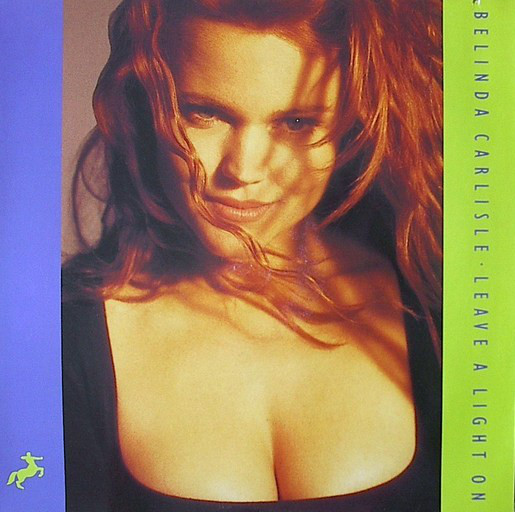
For a post-punk indie kid more at home in smaller London venues, this was something of a mainstream power pop departure, yet made sense for a lad somewhat enamoured with the former Go-Go’s lead singer. And as I told the star of the show 27 years later, the lead single on that album, Leave a Light On, still manages to transport me. It should be just another hit record, but something reels me in. Maybe it’s association, taking me back to when it came out, but when she goes into that chorus I still get a chill.

“Well, that’s great, and I’m lucky I have a lot of good songs that transcend being songs and become moments in people’s lives. That’s a really nice feeling to be able to give that to somebody.”

There’s even a little George Harrison slide-guitar on that Rick Nowels and Ellen Shipley-penned track. What more could I ask? More to the point, how was it having a Beatle in the room?

“I think he was my favourite Beatle, and an amazing songwriter. We thought he’d be perfect, so asked – that’s all you can do. And that lead’s unmistakable!”

I can’t recall when I first latched on to the Go-Go’s. I’d like to say it was seeing them support Madness in the spring of 1980 or on the back of their We Got the Beat single for Stiff Records that May, but I was barely 12 then. The Old Grey Whistle Test and The Tube appearances in 1982 are more likely, and I certainly knew of them by the time the Fun Boy Three recorded the Terry Hall and Jane Wiedlin-penned Our Lips Are Sealed in 1983.

That was two years after the same track appeared on the band’s debut LP, itself five years after they formed. David Keeps, in the sleevenotes of 1994 IRS compilation Return to the Valley of the Go-Go’s, informs us that Belinda and Jane were sat on a kerb (or bearing in mind where it was, a curb, I suppose) at a party in Venice, California, with fellow punk fan Margot Olivarria when they decided everyone they knew was in a band at the time, so why shouldn’t they be?

Belinda sang, Margot played bass, Jane painted numbers on a guitar fretboard to learn some basic chords, and Elissa Bello was drafted in as drummer, the new band soon rehearsing a block away from where they were living, practising ‘in the basement of a porno theatre’, also home to punk hangout The Masque, sharing space with the likes of  X and The Motels, interested visitors helping them out.

It was at that club that they made their live debut in July ’78, Belinda recalling, ‘Everyone in the audience was either horrified or laughing hysterically’. Two months later, Charlotte Caffey was recruited, having lied when she told them she played lead guitar, but according to Jane, ‘She knew all these cool things, like the names of chords and how to plug guitars into amps’.

The personnel changed and the next year drummer Gina Schock left Baltimore for Los Angeles, met Jane at a party and became a Go-Go,  the band by now beginning ‘to write and play music with a strong pop sensibility’. As David Keeps put it, ‘Punk pundits called them sell-outs, but they didn’t care.’ A five-song demo followed, and after opening LA shows for ska invaders Madness, the Nutty Boys – getting on rather famously with the band by all accounts – invited them back to London for further dates, so to speak, the girls pawning their possessions then spending six months touring England ‘on an allowance of £2 a day’, according to Jane.

One of their demo songs was then given that Stiff release, and they were away, We Got the Beat becoming an underground US dance hit and leading to the band – Kathy Valentine drafted in to replace an unwell Margot – signing to IRS Records in 1981, going on to sell seven million albums.

They’d parted company by 1985, but were never far from the public eye, the lead singer’s gold-certified debut solo LP Belinda out within a year, her bid for a fresh challenge proving to be a winning decision. Was that always her intention?

“I’ve always been that way where I take things as they come. I didn’t leave the band to pursue that. I knew that it was always an opportunity but it was never like a given. When the band broke up the only thing I knew how to do was sing, and I had the opportunity of having a record deal, I had one great song, Mad About You, then decided that was what I probably should do, at least give it a shot.”

Charlotte and Jane were involved to some extent on your first solo LP. Were you on pretty good terms when you split?

“Erm … well … no, not … you know … the Go-Go’s relationship is very complicated, but we might have been okay at that time. Jane left the band a year before the split, and there were different camps when we split. But at that time I think Jane and I were okay. And Charlotte and I did work together a lot through the years.”

It did seem rather complicated at times. Was writing 2010’s Lips Unsealed autobiography a cathartic experience, going back over some of that more contentious old ground?

“Yeah, that was like a therapy session. I never want to do that again – that was a lot of hard work. But I’m glad I did it.”

I mentioned Rick Nowels and Ellen Shipley before, who seem to have played a big part in your back story, notably writing 1987’s Heaven is a Place on Earth as well as 1989’s Leave a Light On, Runaway Horses, and (We Want) The Same Thing, plus 1991’s Live Your Life Be Free. Are you still in touch?

“I haven’t spoken to them for a long time, but Ellen had co-writing credit on a song I had out a few years ago called Goodbye Disco, and Rick’s really busy yet I see him occasionally. But I’m very grateful to both of them for the songs they wrote for me.”

While first single Mad About You became a big US hit, it was second album Heaven on Earth that broke Belinda here, going on to become one of the most successful female artists of the decade. And now she’s back, celebrating the 30th anniversary of that album and its lead single Heaven is a Place on Earth, which topped both the UK and US charts and was a No.1 single in eight countries, Belinda also earning a Grammy nomination for best pop female vocalist.

And the song that inspired that second album title remains with her, an acoustic version appearing on new LP Wilder Shores, her suite of Buddhist chants in song form, Hollywood-born and bred Belinda having practised Kundalini yoga for more than 25 years and more recently building a practice routine, studying mantras used in classes.

While penned by Nowels and Shipley, that track quickly became her own, and seems to be Belinda’s hymn to the world, coming at just the right time in her life and career, although she was still battling her addictions at that point. It stuck with her though, as proved by her latest treatment.

“Well, thanks. That song – when you break it down – first of all it’s a good pop song, and I thought lyrically it was appropriate for the new album. I’ve performed that song as it is on the new album for different events, and people love it as a yoga song. So it is appropriate, and it all works!

“It is and always has been a song of hope, and I’ve had many people coming up to me to say they didn’t realise the lyrics were so in keeping with yogic philosophy until they heard it stripped of all its production. I thought it would be great to include it in acoustic form on Wilder Shores and, to me, it fits perfectly.”

I guess we shouldn’t have been too surprised by Belinda’s latest direction, album-wise. She did after all release Voila in 2007, a collection of French chansons and pop standard covers. Now 10 years on there’s this, and listening back there’s something of a correlation to her treatment of Cream’s I Feel Free 30 years previously.

“This project came completely from the heart and from the experience I’ve had with chanting. I wanted to share with my fans what I feel can be a life-changing practice for anyone. I know first-hand just how powerful they are, and chanting was one of the tools I used to help me in the early days of my sobriety.

“On the roof of our mouth there are 84 energy meridian points which are activated by chanting – it stimulates our glandular system, balances our chakras and is an amazing way to achieve peace of mind, optimum health and the ability to shift our perspective on life as needed.

“I’ve always wanted to do an album like this but never felt I was ready until recently. It’s not just music, it’s a proven science and there’s no question that it’s a powerful method for dealing with everyday life. It requires an element in the voice called the naad – almost a transference of energy through the voice and not easy for me to learn.

“That said, I’m a pop singer so could never be a traditional chant or kirtan artist as it would not be true to who I am. Wilder Shores is still a pop album with the same structure of verse, bridge and chorus as my previous records, but done with repetitive chanting.

“I’ve chosen seven mantras – there were thousands to choose from – that have been really effective for me and put them into the pop song format. If you were to put it on in the next room or in the background you would think they are pop songs, but when you listen you can hear it’s not in English but in the language of the Gurus, Gurmukhi.”

Now based in Bangkok, she left LA in 1994 with husband Morgan Mason – whom you may recall from the Mad About You and Heaven is a Place on Earth promo videos, and happens to be the son of actor James Mason –  and their son James, now 25, first settling in the South of France.

Incidentally, somewhat ironically perhaps, Belinda was riding high in the UK charts with (We Want) the Same Thing when I was last in Bangkok in late 1990, traveling the world, somehow keeping my own relationship going from distance. But that’s another story.

Does she miss California?

“No. Definitely no. We tried to go back, and it didn’t really work. As an ex-pat, no place is really home, but I think Asia feels like home now, as France did for 24 years. But I’m happy here, especially with the conditions now.”

Live Presence: Belinda Carlisle, heading back to a town near you this autumn

That’s a Trump-related response if I ever heard one, this animal rights/LGBT rights activist a fierce critic of the US clown president. But we’ve only got 15 minutes, so don’t go over that. Besides, if we’re on the verge of nuclear annihilation, I’m not wasting my time on the likes of him. What was it about Thailand that drew her?

“I don’t know. It’s a whole different energy than in the West, and I love that it’s a big city without all the aggression, and I love the mix of the third world and first world. And it’s really exciting. Anybody who’s ever lived in Asia will tell you that after living here, nothing else really compares.”

Heaven is a Place on Earth was the first of her 10 top-20 solo UK hits. How does Belinda view that whole period of mega-success now? It must have been mad busy.

“Well, it went really fast, and once you’re on that treadmill … I was pretty much on it until age 40, with an album out every two years. That’s what record companies did to you back then. It was pretty much non-stop. You go to the studio, you make an album, you do press, you go on tour, then back to the studio … That’s how it was for me for the period from the first album, my Belinda album, through to Live Your Life Be Free … pretty much.”

Seeing as we’re talking anniversaries, let’s go back another decade, as it’s now 40 years since Belinda’s first brush with fame in 1977 as ‘Dottie Danger’ with LA punk band The Germs, recruited by fellow high school art student Lorna Doom. How would she best describe that band, looking back?

“We had amazing lyrics, but I was the drummer that never played. It was one of the first punk bands. I got sick with mononucleosis and had to go back to my parents. They continued, then I came back. They were really hardcore, one of the first, really funny, really brilliant, and the guitarist – Pat Smear, went on to the Foo Fighters. It was a lot different from The Go-Go’s and from what I’m doing now!”

While she missed out there, she can be heard introducing the band at a 1977 show at the Whisky a Go Go on live album Germicide, and clearly got a taste for it all, also guesting for fellow LA punks Black Randy and the Metrosquad.

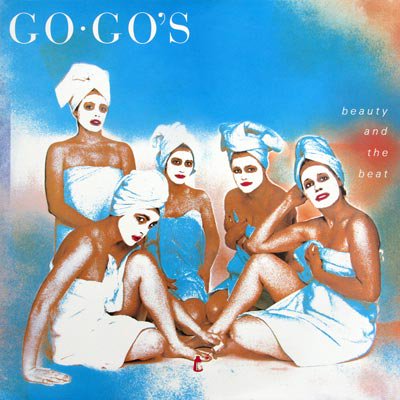
And then she co-founded The Misfits – soon renamed the Go-Go’s, becoming a key component of one of the most successful US ‘80s new wave outfits. More to the point, they were the first all-female band who wrote their own songs and played their own instruments to achieve a US No.1 LP, initial 1981 IRS offering Beauty and the Beat  followed by two more albums. So is that right that the lightbulb moment involved seeing fellow LA outfit The Runaways and thinking, ‘I can do that’?

“Well, yeah, but I always wanted to see the world and I felt that being in a band would be the best possible way, combining my wanderlust and love of music.”

There was a healthy early punk scene in America then and before, US bands like the Ramones and the Heartbreakers inspiring bands in the UK first time around, including one you had a lot of time for, The Clash.

“Oh my God! You kidding? They were, and I saw them live a few times. One of The Go-Go’s influences and favourite bands for sure. A really, really great band, and Joe Strummer was one of a kind.”

While the Go-Go’s split in ’85, the classic lineup reunited for a Californian environmental benefit in 1990, leading to more dates and a new hits compilation. Four years later they returned for another retrospective, including new recordings, single The Whole World Lost Its Head becoming their sole UK top-30 hit, the band touring again with ex-Bangle Vicki Peterson in for pregnant Charlotte Caffey.

Litigation followed as Gina Schock sued her bandmates in the late ’90s over money issues, but the band reunited for a brief tour and in 2001 released a new LP, including a single co-written with Green Day’s Billie Joe Armstrong, also playing a star-studded Brian Wilson tribute at Radio City Music Hall. Then in February 2010 they announced a Farewell Tour, but that was cancelled when Jane Wiedlin injured her knee while hiking. Instead, in 2011 they were back for a Ladies Gone Wild tour marking the 30th anniversary of Beauty and the Beat, coinciding with the band receiving a star on the Hollywood Walk of Fame, just outside The Masque.

“Amazing! Right on the corner of (North) Las Palmas (Avenue) and Hollywood Boulevard. Weird how that worked out!”

A further US tour followed in 2012, but without Kathy Valentine later on, the band announcing the following March ‘irreconcilable differences’ had led to the bassist’s departure. That May, she sued her bandmates – settling out of court in 2014 – and the Go-Go’s officially became a quartet – Caffey, Carlisle, Schock and Wiedlin – but joined by Abby Travis on bass. Further tour dates followed, including double-bills with The B-52’s, the postponed Farewell Tour finally happening last August. But that’s still not necessarily the end of it. Is that right you’re playing Hollywood Bowl with the Go-Go’s next year?

“Possibly, yeah. That’s probably going to happen next year. We don’t tour anymore. But if something comes up that’s really, really special we might consider doing it. And that’s definitely special.”

Do you feel you received kudos for actually playing your own instruments and writing your own songs? I mean, Rolling Stone called The Go-Go’s ‘the world’s best female rock band’. Who’s worthy of that crown today?

“There’s nobody worthy of that crown today. I can’t think of anyone who did the exact same thing. Maybe I’m not really that much in touch with the music going on now, but you’d think I’d know about one … but I haven’t seen one.

“I don’t understand why there haven’t been a lot of girls’ bands that haven’t been doing that, other than The Bangles, L7 and a few of them, but not really that many. Especially now days, things are pretty much homogenized and not really that authentic. It’s a different ball game now, for sure.”

Actually, I thought of fellow LA outfit Haim after our conversation, although there’s a band that wouldn’t take too kindly to being described as a ‘girl band’ anyway. Either way, the Go-Go’s were seen as trail-blazers for ‘girl power’, for want of a better phrase, and feminism in rock. Or were they in fact just women out on the road doing all the stuff fellas had got away with all those years (and outdoing them by most accounts)?

“That’s exactly it. We didn’t think about being feminists. We just did things our way, didn’t compromise, so I guess in that respect we were, but we never thought about it. It was more like a party.”

Speaking of which, in a recent BBC Sound of the ’80s interview with Sara Cox, you made me laugh when you mentioned those days of trashing dressing rooms, then tidying up, and inviting potential groupies back, then hiding.

“Exactly! Everyone thinks The Go-Go’s were so wild in that way, but we were just more mischievous. Of course there was the alcohol and the drugs, but as far as the behaviour, it was more mischievous than anything else.”

Wilder Shores is out this week, as is Demon Music Group’s 30th anniversary deluxe boxset edition of Heaven On Earth – four vinyl LPs plus CD presented in a lift-off lid box, comprising the original album, single versions of the hits, versions from 1988’s Belinda Live! and additional remixes. The CD version features the album plus three new tracks – the acoustic version of Heaven Is A Place On Earth, new song Why, and a cover of The Carpenters’ Superstar.  For more details head to www.belindacarlisle.tv 

Belinda Carlisle’s Heaven On Earth 30th anniversary tour calls at Salisbury City Hall (Sunday, October 1st), Brighton Dome (Monday, October 2nd), Norwich UEA (Wednesday, October 4th), Manchester Academy (Friday, October 6th, 0161 832 1111), Liverpool Olympia (Saturday, October 7th, 0844 8000 410), Glasgow Royal Concert Hall (Monday, October 9th), Gateshead Sage (Tuesday, October 10th), Leamington Spa The Assembly (Thursday, October 12th), and London Indigo at the O2 (Friday, October 13th). 

Thai Pride: Belinda Carlisle takes to the water in Bangkok (Photo: Lisa Borgnes Giramonti)

Posted in Books Films, TV & Radio, Music | Tagged , , , , , , , , , , , , , | 1 Comment

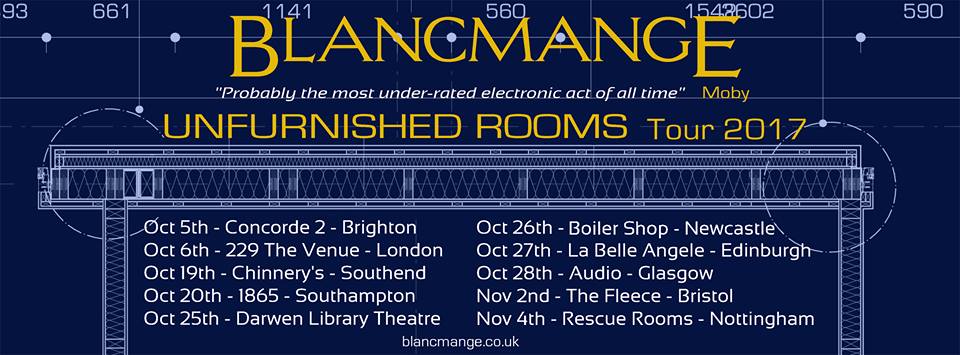
Blancmange: Unfurnished Rooms – a writewyattuk review

While Blancmange will always remain a two-man entity in the hearts of much of their loyal fanbase, it’s worth noting it’s now been six years since Neil Arthur was largely left to his own devices in the engine room.

Carrying on under the band name after Stephen Luscombe’s illness sadly necessitated a change wouldn’t have been a decision Neil took lightly, but was every bit the right thing to do judging by the four Blancmange LPs released over the past two and a half years. He’s said himself from time to time he has no interest in replicating the past, and that’s plain to see on this latest album, in certain respects perhaps the most accomplished yet.

The kind of luscious Eastern rhythms that resurfaced on 2011’s Blanc Burn – 21st century dancefloor classic The Western springing to mind – may not be so much in evidence, but this is still very much a Blancmange album. It also offers progression and suggests there’s plenty of life in the classic model yet. Blancmange Mk.II might well have a few more miles on the clock, but that reconditioned engine and Neil’s enthusiasm for the journey ahead ensures we have a reliable but adventurous runner … with the same first-named driver on the log book. No need to kick the tyres either.

The moment we hear that trademark part-spoken, deep timbre over the analogue buzz of Unfurnished Rooms‘ intro, we’re drawn into a brooding, atmospheric title track that sets the bar high. There’s no doubt it’s our man either, those East Lancs’ tones unmistakable amid his search of unfurnished rooms and unfinished works – a search for something that always feels just out of reach and incomplete. Like many tracks here there’s a feeling of being lost in a dream, doors leading to private, empty flats, images flickering. And as our narrator puts it, ‘No amount of online shopping will cover for the loss.’ Meanwhile, the higher-register harmony on the chorus and David Rhodes’ subtle electric guitar towards the back end suggests David Bowie, an influence writ large in the background throughout.

There’s a taste of Neil’s regional identity on track two as well, a narrative about a ‘chemical spillage on a trading estate in Altrincham’ on We Are The Chemicals giving an air of mystery and threat, that Cheshire happenstance seemingly not an isolated incident, something similar occurring ‘in a garden shed 80 miles due south as the crow does fly’ and ‘in the boot of a hire car.’ I make that around Stourbridge – how about you? Geographical plotting aside, we have a sparse, slow-building powerhouse, Neil’s hired help proving so much more, Benge adding layers of glorious synth, the rich vocal perfectly matched by even richer imagery on an early highlight. There’s a touch of familiarity in that analogue backing, and it would make sense to cite something fundamentally electronic by way of comparison. Yet I’m getting Neil Finn’s 2001 mastermind Rest of the Day Off, suitably left-field. That’s just my take though. Play it loud, let it grow and nurture you, decide for yourself.

Despite that mention of progression, there’s clear lineage between Blancmange’s back-catalogue and this latest suite, and also between that classic ’80s electro-pop and a more modern vibe, despite this being very much a different album to what’s come before, as is Neil’s wont. Take Share It Out for example, where I hear Scott Walker amid the intriguing layers of percussive keyboard, but also something else in that sonorous delivery I couldn’t quite place. Elements of Ultravox? Understandable given the singer’s respect for fellow Lancastrian electronica exile John Foxx, but this chimes more of Midge Ure guesting with Yello. Then I realised – was it the original band’s Waves I was hearing deep down, or was that just auto-suggestion on account of that ‘Share out your burden, give it up for me, I could be your ocean wave’ line? Either way, it’s another winner.

The accent’s not so obvious on the wonderfully-quirky spoken-word piece that comes next, the splendid What’s the Time taking up to some extent where he left off on By The Bus Stop @Woolies, yet perhaps with a flamboyant glam-rock underbelly and maybe even a nod to Sleaford Mods. Mesmeric. I can see it becoming a live favourite, deservedly so.

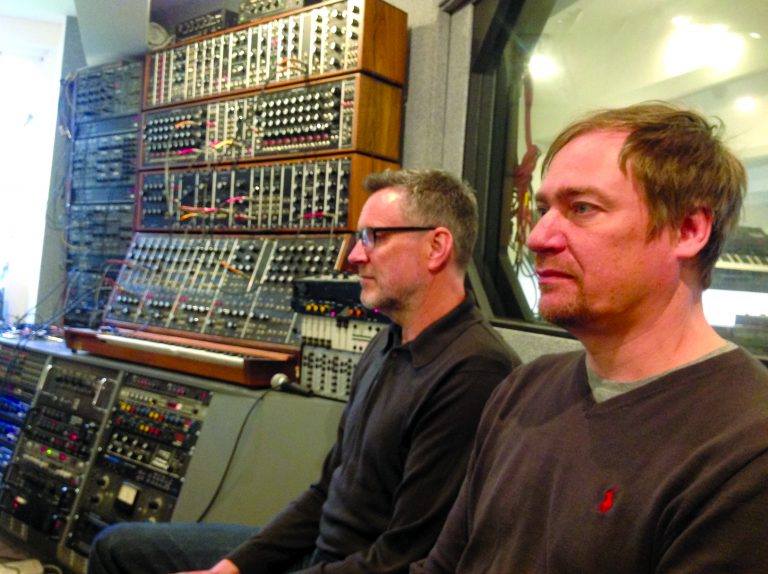
Listening In: Neil Arthur and Benge contemplate the writewyattuk verdict on Unfurnished Rooms

In stark contrast, if it were needed, Wiping the Chairs is further proof that Neil’s no one-trick pony. Revisiting a familiar Blancmange theme about friends meeting again after a long absence, the lyrics are passionate and lonesome, and typically it’s the small details that paint the most vivid pictures. Beautifully observed, perfectly voiced. I could see Alison Moyet (or dare I say it, Adele) incorporating it into her own set, claiming it as her own, guesting with New Order and – sorry, Neil, but you probably see that – having a bigger hit. And again, it’s a track that wouldn’t have been out of place on the last two Bowie albums.

Similarly I could hear Alf on Anna Dine too, another relatively-scant yet rousing electronic moment in time. If you had to put a label on that era in question, without doubt I’d suggest Mute, positively ’80s yet more early Depeche Mode or Yazoo (hats off to writewyattuk interviewee Vince Clarke as inspiration then, perhaps) than Blancmange. A big thumbs-up for the downcast wordplay too as Neil sings, ‘Anna dine with me’.

There’s certainly an ethereal feel with In December, a work of art no doubt set to be deeply ingrained in my sub-conscience come the winter months. Think of those searing Eno and Fripp lines on Heroes, crossed somewhere down the way with an electronic landscape echoing Vangelis. Gorgeous. And who couldn’t love that line, ‘January don’t piss me off – you’re just June in a mask.’

From In December to intensification on Old Friends, giving rise to a sea of guitar and keyboard, again arguably with someone looking down from their Black Star. Think of a power ballad somewhat reined in, high on emotion. A duelling live duet with Marc Almond on this number wouldn’t go amiss. Just saying. Either way, from the three and a half minute mark the gloves are off in what becomes something of a sonic maelstrom. Again, I gesticulate towards the volume button.

That heady nod to roots electronica is back in the driving seat on Gratitude, and this time I’m getting Being Boiled era Human League, with an undercurrent of Blind Vision or Feel Me maybe, his Fader friend’s synth additions compelling as the track takes shape and Neil’s vocals get a little Lydon-esque, angrier and more perturbed, confused, slightly distant. And as he sings ‘a part of me feels I should be grateful . . . tell me why?’ Rhodes lets loose on guitar and electro gets a manic pop thrill.

Then we’re away with another melancholic, pensive moment on Don’t Get Me Wrong. Again the Starman watches from the skies, Benge adding perfectly in-synth analogue detail and bringing to mind Blancmange fan Moby circa 18 as we build to a multi-layered but never over-cooked finale. An eight minute-plus deftly-subtle epic, John Grant – a fellow fully-paid up member of the Mange FC – adding piano flourishes and distinctive vocal as the over-riding themes return to the fore, including that dry wit and succinct imagery as Neil sings, ‘You look so well . . . in your online profile.’ Brilliant.

In short, another Blancmange high, restrained in places yet nothing less than heartfelt and fairly personal, and getting its message across loud and clear. Less is more and all that, the music speaking volumes. I say it from a place of love that I think it unlikely Neil looked at what he had in front of him and wondered where the hits were among this collection of finely-crafted songs. Let’s just be thankful that the days of fickle record companies making demands and getting in the way of the art of the album are way behind him. Then again, I’d love to be proven wrong and celebrating another hit 33 years after the last (says him, writing this the morning after The Day Before you Came turned up on a Top of the Pops ’84 re-run).

I asked before I heard the LP where Neil felt it might fit into the Blancmange canon. He seemed a little vague answering, and I see why now. Why repeat what’s been done before? Some 35 years after Happy Families, I’m pleased to say he’s still seeking out uncharted territories. The crew has changed, but there’s still that creative spark, sense of teamwork, eye for detail, and ear for something special.

For the most recent writewyattuk interview with Neil Arthur, a link to the previous feature, full tour details and other Blancmange-related content, head here.

Posted in Books Films, TV & Radio, Music | Tagged , , , , , , , , , , | 1 Comment

Wind and Rain and Shine – the Graham Gouldman interview

Guitar Man: Graham Gouldman, coming to a town near you, with a Heart Full of Songs.

Perhaps I should open with a few stats, seeing as today’s interviewee is associated with plenty that make for impressive reading.

For starters, 10cc, the band Graham Gouldman formed with Eric Stewart, Kevin Godley and Lol Crème in 1972, have sold more than 30 million albums worldwide, with their biggest hit, the Stewart/Gouldman-penned I’m Not In Love, played more than five million times on US radio alone, its online videos viewed an estimated 30 million-plus times.

But it’s not just about his part in an impressive run of 11 top-10 10cc hits stretching from the quirky Godley/Crème No.2 Donna – released 45 years ago this week – and the following summer’s first No.1 Rubber Bullets (Godley/Crème/Gouldman) through to 1978’s UK chart-topper Dreadlock Holiday (Stewart/Gouldman). In fact, my subject’s catalogue of successes goes back to the first half of the 1960s, involving various acts he was either a part of, guested with, or wrote for.

You’ll know a lot of those songs, including The Yardbirds’ For Your Love, Evil Hearted You and Heart Full of Soul, The Hollies’ Bus Stop and Look Through Any Window, and Herman’s Hermits’ No Milk Today and East West, not so long ago covered by Morrissey.

Add to that tracks he wrote for, with or had covered by the likes of Cher, Wayne Fontana, Tony Christie, Shirley Bassey, Chris Isaak, The Monkees, The Pretenders, Fun Lovin’ Criminals, The Four Tops, Pixies, Kirsty MacColl, Tori Amos, The Flaming Lips, Blondie, Boney M, Morrissey, Dana, Scorpions, Paul Carrack, Gary Barlow, and McFly.

He also produced albums in the early ‘80s for the Ramones (Pleasant Dreams) and Gilbert O’Sullivan (Life & Rhymes), as well as his buddies Godley and Crème, contributed to film soundtracks, and issued solo material. And then there was his partnership with the late Andrew Gold in Wax, singles like Bridge to Your Heart leading to another two million worldwide sales.

While occasionally back on the road with 10cc, Graham takes his own band out from time to time, still insisting ‘a good song can always be performed acoustically’, as he aims to prove when his latest Heart Full of Songs tour gets underway, a 23-date tour starting on Thursday, September 21st at Peterborough’s Key Theatre and threading through to Friday, October 20th at London’s Shaw Theatre. And as well as engagements in Scotland and Wales en route, his itinerary includes a return to his old home ground, visiting Salford Quays Theatre this Sunday, September 24th.

Gouldman was at home in North West London when we spoke, his home for ‘many, many years’, telling me, ‘I’ve moved around a bit, but this is where I like to be’. Yet North West England also remains special to him, having been brought up in Broughton, so to speak. Does he still have friends and family there?

“I have got friends around. All my family have moved down, but I always love going back up, as I get to see my old mates and I love being in Manchester.”

Bass Instinct: Graham Gouldman, performing live, this time with Iain Hornal, Ciaran Jeremiah and Dave Cobby.

Does that mean a swift pint at the old local?

“I wish there was time, but there never is. The only time I get to see them is after the gig. We have a drink together then.”

Which Salford would he recognise most – that of the modern quays or the Dirty Old Town that Ewan MacColl wrote about?

“Dirty old town.”

That was your Salford, yeah?

“It was, and the city’s changed dramatically. It’s lost a bit of its character, but if character means dirt and muck, then forget it.”

I seem to recall, I tell him, that one of my past interviewees, a certain Elaine Bookbinder, better known as Elkie Brooks, is around the same age, and also hails from Broughton.

“And on the same road! I’m not sure if we ever met but I knew her brother, Tony, who played drums in the Dakotas with Billy J. Kramer. Actually, last time we played at the Bridgewater Hall with 10cc a few months ago, Tony came along, and that was very nice.”

Of course, The Hollies’ Allan Clarke and another former writewyattuk subject, Graham Nash weren’t so far away either.

“Well, the North West produced some fantastic bands and artists.”

Wordsmith Junior: Graham Gouldman has an impressive back-catalogue of songs, 50-plus years in the making.

Indeed, and that includes revered film director Mike Leigh, and John Cooper Clarke, who while three years younger than Graham, I suggested looks a little older.

“We all look a bit older … because we are!”

Then the next generation of Salfordians included The Fall’s Mark E. Smith and New Order’s Bernard Sumner. It’s quite a breeding ground really. How much does that local identity shape you all?

“Oh, dramatically. And it has to. It’s all part of what you are, and so many things influence what we do musically. But of course those are shaped by your upbringing, where you live and what’s around you.”

Graham’s Heart Full of Songs live shows started around six years ago, initially backed by 10cc band members, opening their shows by performing a selection of his hits written for other artistes. And it quickly proved a successful venture, Graham going on to undertake his first stand-alone tour in Spring 2013, and another the following year.

10cc’s renewed success over the past three years has been such that this is his first chance to revive the idea, now with Iain Hornal (guitar), Ciaran Jeremiah (best known for his keyboard work with The Feeling) and Dave Cobby (percussion) in his band. And this time he’ll not only be playing and talking about some of his old songs and explaining their origin, but also showcasing new material he’s equally proud of.

Now aged 71, it’s been 60 years since Graham got his first guitar. Having made his live debut in primary school with a skiffle band, he was playing with local bands by the time he was 15, with plenty of encouragement from parents Betty and Hymie Gouldman.

“Dad was a writer in his own right and helped with lyrics and came up with song titles. He was kind of like a wordsmith. His name was Hymie, and we’d call him Hyme the rhyme!”

Graham was barely a teenager when he saw his first concert, one that would inspire his future direction – catching Cliff Richard and The Shadows at Manchester’s Free Trade Hall. Was that a defining moment?

“Yeah, Dad got me tickets for that. It was absolutely a defining moment … one of the major defining moments.”

So what was first for you as an artist looking to make your way in music – the voice, the guitar, or some of that handed-down writing ability – your father’s turn of phrase?

“The guitar, I would say. I was bought a guitar when I was 11 years old, and that day … that was it. I’d been interested in music and aware of music from being around seven. I loved drumming and the drums and still do, but I was not destined to be a drummer, as I found out quite quickly. But the guitar is one of the loves of my life. I have quite a nice collection, and I love them all.”

And as it turned out, you soon got to work with a local fella by the name of Kevin Godley who knew how to hit the skins a fair bit.

“Oh yes – a very, very fine drummer!”

Graham played in a number of Manchester bands from 1963, including the High Spots, the Crevattes, the Planets and the Whirlwinds, a house band at his local Jewish Lads’ Brigade, also including writer Howard Jacobsen’s brother Stephen on guitar and bongos, and future 10cc bandmate Godley on drums. Having secured a recording contract with HMV, they released a take on Buddy Holly’s Look At Me in June 1964, backed with Lol Crème’s Baby Not Like You. But soon the Whirlwinds has passed, by February 1965 reborn as the Mockingbirds, signing with Columbia.

While that label issued two singles, Columbia’s rejection of Graham’s first single for the band turned out to be a personal turning point, For Your Love instead becoming a hit for The Yardbirds. Around then his band also began a regular warm-up spot for BBC TV’s Top of the Pops, broadcast from Manchester. And as Graham told George Tremlett in The 10cc Story (Futura, 1976), “There was one strange moment when the Yardbirds appeared on the show doing For Your Love. Everyone clamoured around them – and there I was just part of an anonymous group. I felt strange that night, hearing them play my song.”

The Mockingbirds made five singles, those Columbia 45s followed by one on Immediate and two on Decca, taking them up to the summer of ’66, during which period Graham worked in a men’s outfitters shop by day. He’d signed a management deal in 1965, writing a string of hits, many becoming million-sellers, and in ’66–’67 recorded singles with two other bands, High Society and the Manchester Mob, both featuring singer Peter Cowap. Then in March ’68 he stepped in on bass for The Mindbenders, writing two of their final singles. He also wrote for producer Mickie Most in 1967, before a spell at the Kennedy Street Enterprises show business management offices in Manchester, staying four years.

In time Graham was working on solo material, 1968 debut LP The Graham Gouldman Thing helping attract the attention of Jerry Kasenetz and Jeff Katz, who invited him to New York to write formula bubblegum pop, a period that included his writing and singing lead vocals for Ohio Express. By the end of 1969 he was burned out and at a ‘creative lowpoint’, but convinced his employers he could carry on back at Strawberry Studios in Stockport at a fraction of the price  – without hiring outside session players – with his old pals Godley, Crème and fellow Mindbender Eric Stewart. Kasenetz and Katz took the bait, booking the studio for three months, the quartet’s partnership reconvened in late 1970 after a further spell for Graham in New York, by which time his pals had scored an international hit with Neanderthal Man under the name Hotlegs.

Meanwhile, work continued in Stockport, a number of one-off singles for various labels following before the band were signed in the summer of 1972 by Jonathan King and renamed 10cc. And you probably recall the rest of the story. So, with such an amazing back-catalogue, what would Graham say was the first great song he wrote?

“Erm … well, any song that you write you think is pretty good, otherwise it wouldn’t get finished. Of course, whether it is pretty good or not is another matter. The first record we (the Mockingbirds) ever made was a song I wrote called That’s How (It’s Gonna Stay). I wouldn’t say that’s my finest work, but I have affection for it because it kind of started things off for me.”

And at the heart of it all, as you’ve suggested, a great song is one you can pick up and play on a battered old acoustic guitar, yeah?

“Exactly. That’s the mark of a good song – that it works without the production. Some songs are still good songs but rely on the production. I’m Not in Love is a very good example of a song that had a massive production, but if you play it on an acoustic guitar, it’s still a good song.”

As I seem to recall from your rendition on stage with Neil Finn and Roddy Frame in the late ‘90s for the BBC’s Songwriters’ Circle. In fact, Graham returned for another fine show broadcast by the BBC in early 2011, alongside Travis front-man Fran Healy and recent writewyattuk interviewee Ron Sexsmith.

“Yeah, and I loved that, because I met Ron, who I was a fan of. I was delighted to meet him and we kept in touch. And I love his work. A lovely guy too.”

I’m guessing that the Songwriters’ Circle partly inspired Graham’s current Heart Full of Songs format, although the prototype was that pre-show spot with the reformed 10cc.

“Yeah, I really liked doing that, and that led on to doing this. But there are so many songs we could do with the 10cc catalogue that I felt I was infringing on that part of the show, so I dropped myself as our support act, so to speak! I decided I wanted to do this show independently of 10cc, so much so that on the first tour I did, two of the boys from the band were with me. But second time one wasn’t available, so I decided I should do it as a completely separate entity. I’ve got Iain Hornal, an amazing singer-songwriter and guitarist in his own right, and Ciaran Jeremiah – and ditto for him. We did that a couple of years ago and it worked really, really well, so I thought I should carry on.”

You talk about a few of the better-known songs in the show, so I won’t ask about all that. But for me Bus Stop is a perfect story song, this tale of a daydreamer going about his 9-5 life, one so many of us who have been in that working environment would recognise. You could say something similar about Look Through Any Window (written with Charles Silverman). Let’s face it, they’re not the sort of songs you’d write while coked up in a hotel in LA, are they?

“Ha! I think I was the opposite of being coked up in a hotel in LA – I was sober in Salford, M7! But you’re right. Those songs have a kind of domesticity about them, an ordinariness about them, which gives them a charm.”

And something we can all relate to.

“Yes, I think that’s true. Even though it’s part-fantasy in Bus Stop, many songs have that bit of fantasy involved.”

I think of something like Rod Argent’s She’s Not There and Chris White’s This Will Be Our Year for The Zombies around the same era. Many of us at some stage of our lives would think those tracks were written specifically about us and our day-to-day experiences.

“Absolutely. We identify with it, and even if we don’t always understand lyrically what’s going on, there’s some connection. The power of music is so amazing – I can hear two notes of some songs and I’ve gone!”

I wasn’t old enough to remember Bus Stop, No Milk Today, Heart Full of Soul or For Your Love first time around, but it wasn’t long before they seeped into my conscience. And it’s fair to say that Graham and his 10cc bandmates punctuated my ‘70s youth with a number of songs, most notably I’m Not In Love, taking me back to long hot summers. That’s a powerful emotion he untapped there.

“Yeah, it’s like smells as well. They have a similar effect, and such an immediate effect as well.”

We all think of the myriad of voices and effects on that track, but did that also start with Eric, you and an acoustic guitar?

“I’d play guitar and Eric would play keyboards, and the sound of the keyboards – the instrumentation you use can affect the song you write. And pretty much every song we wrote together was done that way.”

There’s often a telepathy of sorts between songwriting partnerships. And you two seemed to have that.

“Definitely we had it. It’s something you can’t manufacture or buy. You’ve either got it or you haven’t. I’ve written with many other songwriters, and most of the time we’re on the same page. But sometimes you can be writing with someone and it’s driving you mad that you should be writing the greatest song ever … but you’re not. That takes nothing away from the other writer, but you’re just not gelling. It’s like with people … it’s like love.”

Speaking of special working partnerships, you said recently you’d still like to write with Paul McCartney or Mark Knopfler maybe.

“Yeah, but it’s a difficult question to answer. There could be billions of people. But I did refuse to answer the question, ‘What’s your favourite song?’ Such a stupid question.”

Actually, I’d put I’m Not in Love somewhere up there with The Beach Boys’ God Only Knows as a perfect ‘in denial’ love song, perhaps even the antithesis of a love song. That opening line, I’m not in love, so don’t forget it’ carries a similar punch to Tony Asher’s ‘I may not always love you’ introduction.

“Definitely! Ha! Well, it’s up to you …it’s ambiguous. I always like the idea of someone interpreting for themselves a non-specific lyric.”

Of all the songs you’ve written, is there one in particular where it irks you somewhat that it didn’t get the success – be that commercial, critical, or both – it deserved?

“Yeah, a song I wrote with Andrew Gold, called Ready to Go Home. I love that song, and it has a similar quality to it – although it’s a different type of song – to I’m Not in Love. When we play it, there’s a kind of a something that happens to the air. It just has this effect on an audience, and mainly it has an effect on me. It’s quite emotional really. It was written a few years after my Dad passed away, and Andrew had lost his Dad, and we were talking about the legacies – what we’re left with, what we’re going to do and where we’re going to go, and how we have to be accepting.

“Some of the lyric is ambiguous and was kind of stream of consciousness writing. You sort of look at the words and think, ‘I don’t know what that means, yet I understand what it means!’ It’s like looking at an abstract painting. It might just be a series of squares and yet I’m feeling this. It’s the same sort of experience.”

Graham’s status as one of the world’s leading songwriters was publicly acknowledged with his induction into the Songwriter’s Hall of Fame – an arm of America’s National Academy of Music – at a special ceremony in New York in 2014. Previous inductees include Noel Coward, Irving Berlin, Burt Bacharach, Neil Sedaka, John Lennon, Paul McCartney, Bob Dylan, Bruce Springsteen, Elton John and Leonard Cohen. Hallowed company, I suggest. Furthermore, America’s Broadcast Music Incorporated followed suit, Graham awarded Icon of the Industry status at an event in London, where he performed an acoustic rendition of I’m Not In Love, accompanied by Lisa Stansfield. Such accolades must make him proud, I put to him.

“Well, that was a great honour. I’ll tell you something funny though. One of the greatest accolades I ever had came from my seven-year-old grandson, Max. I have a new six-track CD coming out and I played it to him, asking what he thought. And he said, “Grandpa, it’s almost as good as The Beatles!’ Now that’s an accolade!”

Tour Mates: Graham Gouldman with fellow Heart Full of Songs tourists Iain Hornal, centre, and Ciaran Jeremiah, right

Graham Gouldman’s Heart Full of Songs UK tour dates: September 21 Peterborough Key Theatre, September 22 – Buxton Pavilion Arts Centre, September 23 – Colwyn Theatr Colwyn, September 24 – Salford Quays Theatre, September 25 – Leeds City Varieties, September 27 – Aberdeen The Lemon Tree, September 28 – Dundee Cardyne Theatre, September 29 – Glasgow New Auditorium, September 30 – Oswaldtwistle Arts Centre, October 1 – Gateshead Sage 2, October 3 – Liverpool The Epstein Theatre, October 4 – Bury St Edmunds The Apex, October 6 – Pontardawe Arts Centre, October 7 – Cardiff The Gate Arts Centre, October 8 – Bewdley Bewdley Festival, October 9 – Gloucester Guildhall, October 10 – Harpenden Public Halls, October 11 – Horsham The Capitol, October 15 – Worthing Connaught Theatre, October 16 – Milton Keynes The Stables, October 17 – Winchester Theatre Royal, October 18 – Bristol  St George’s, October 20 – London The Shaw Theatre. Tickets are available from all venues and from www.grahamgouldman.info

Posted in Books Films, TV & Radio, Music | Tagged , , , , , , , , , , , , , , , , , | 5 Comments

Mary Casio’s 2017 space odyssey – checking in with Hannah Peel

Tubular Belle: Hannah Peel in concert with Tubular Brass (Photo: York Tillyer)

Space – the final frontier. But in this case we’re talking the voyage of Mary Casio rather than Star Trek’s Captain James T. Kirk, boldly going where no woman has gone before – via a garden shed in Yorkshire.

Last time I interviewed Hannah Peel for these pages, in November 2016, our conversation concentrated on acclaimed solo LP Awake But Always Dreaming and ongoing antics with esteemed sonic trio The Magnetic North in light of the Prospect of Skelmersdale album.  But we also touched on a side-project she was involved with, and next week that rocket-boosted venture gets an independent launch. What’s more, Mary Casio: Journey to Cassiopeia – like the last offering released on her My Own Pleasure imprint – has already proved a critical and live success story.

I guess the close relationship between popular music, classical music, astronomy and space travel has always been there. Take Gustav Holst or David Bowie for example, just two of the many stellar musical influences on Hannah.

And carrying on where she left off on Awake But Always Dreaming – intrinsically linked to her trying to make sense through sound of her grandmother’s battle with dementia – I should let Ms Peel try and explain the concept behind her latest release, which takes on the notion that a character who loves watching the night sky – just like Hannah’s grandmother, she tells me – ends up making an end of life deep space odyssey in a bid to find that afore-mentioned final frontier.

“I wanted to do something that wasn’t just songs and using my voice, and have this collection of keyboards and early synths, including Casio keyboards you can record your voice into. And just for fun sometimes I’d play people a song as this Mary Casio character.

“Then I got approached to score for the Tubular Brass band. They were playing the second half of Mike Oldfield’s Tubular Bells live, and wanted a new composition for the opening half. I researched around then the constellation Cassiopeia, so thought Mary should go into space, on a journey, like my grandma and great-aunt, who never left Yorkshire but had always been stargazers.

“So in the final years of her life Mary gets in a spaceship and goes to Cassiopeia. I wrote it with that in mind, that journey and the planets, nebulas and different stars visited along the way. And it ends with a visit to the planet of past souls, including a 1927 recording of my grandfather performing at Manchester Cathedral, aged 13, one of the first recordings of a choirboy.”

While she has strong links to Lancashire and Yorkshire, Northern Ireland-born Hannah is based in East London these days, a short commute away from her studio base near Hoxton Square. Yet her new LP’s launch sees her return to the city where she studied, another career highlight expected as she starts a Tubular Brass and Synths meets Mary Casio tour at Liverpool Philharmonic Hall on Saturday, September 23rd.

Hannah started out playing fiddle in her father’s band, but had discovered a love of the trombone by the time her family relocated to the Barnsley area from Craigavon, playing in brass bands. Then at 18 she developed her violin, trombone, and piano skills at Paul McCartney’s Liverpool Institute of Performing Arts. Around then, she was also a regular at the nearby Phil, but never got to perform there … until now.

“I worked in the bar there, from around 2004 to 2006. That way I got to see lots of concerts either side of the interval. I must have seen more than 100 shows there, so to be able to finally perform there is incredible. And it’s the day after the album is released!”

There will also be something of a ‘homecoming’ in Barnsley the following month. What’s more, it’s at the Civic Theatre, where a 29-strong Tubular Brass and Synths ensemble recorded the Mary Casio LP.

“I feel really honoured to have been asked to do all this. You don’t get the opportunity every day to write for that many people, and so many of my records are played solely by me and recorded just by me. The experience of playing a form of music I grew up with, having played trombone with brass bands – it’s a really lovely opportunity.”

Hannah became involved with Tubular Brass after visiting Oldham and Saddleworth’s Whit Friday marches a couple of summers ago with support band, East India Youth, on a day off from touring. Having posted a photo from that event on Instagram, suggesting ‘brass bands meets electronica’, she was invited to write a piece of music combining the two, something she described as ‘a wonderful departure’, a chance to fuse her brass roots with the synth direction she’s taken since. And that commission allowed her to develop her alter-ego.

“Mary Casio is a character that encompasses how we look at life and view mortality and time, and how at any age we can have dreams and still achieve those dreams. In my mind over time I developed this lady, who lived in Yorkshire, probably worked in a post office all her life, who in her back garden had a shed full of inventions and things she created that nobody knew about – kind of like a Delia Derbyshire or Daphne Oram.”

Those female pioneers of electronica, key innovators in the BBC Radiophonic Workshop sounds effect unit at Maida Vale, had long since resonated with Hannah, herself described as a modern-day Delia Derbyshire in some quarters.

Sound Pioneer: Delia Derbyshire in action at the BBC Radiophonic Workshop (Photo copyright: BBC)

Having recorded a suite of pieces in her studio and written brass parts, Hannah got Sandy Smith’s Tubular Brass ensemble on board, a team from Peter Gabriel’s Real World Studios taking a mixing console to a theatre in Barnsley to capture a performance involving players drawn from various championship section bands around the UK.

“That’s when the magic started to happen. As a trombone player it was about the power, richness and the unity of the breath. For me it was always the experience of the low, melancholy richness of the euphoniums, trombones and tubas. That was in my mind from the beginning, with the analogue synths and the way they breathe and have nuances. You hear where things go wrong, and when you switch something off sometimes it crackles.

“When we recorded the brass band you can hear the breath, the page turns of the conductor and sometimes even the squeak of a foot on the floor. We weren’t getting rid of those – we were keeping every single part. I think that blend of the breathing really made it feel like they were a kind of ethereal alien voice. And essentially they are – it’s a sound through a brass instrument, not straight from the voice.”

Hannah’s remained busy since her first break, work with Sandi Thom leading to backing and collaborations with and for the likes of The Unthanks, John Foxx and the Maths, and the Duke Special. She’d soon released ’80s covers EP, Rebox, and garnered interest from BBC 6 Music, going on to have 2011 solo debut LP The Broken Wave produced by Tunng’s Mike Lindsay, with strings arranged by Nitin Sawhney.

That led to interest from former Verve guitarist Simon Tong and writing partner Erland Cooper, working as The Magnetic North, inviting Hannah to join them on wondrous 2012 debut, Orkney: Symphony of The Magnetic North, adding string and brass arrangements.  Erland (who also helped mix the Mary Casio album) went on to co-produce 2013 EP  Nailhouse, while the following year’s Fabricstate EP included Royal Television Society award-winner Chloe, as featured in Channel 4 TV series Dates.

More critically-acclaimed works followed, The Magnetic North again on top form with 2016’s Prospect of Skelmersdale before Hannah’s revered solo album, Awake But Always Dreaming. And now we have Mary Casio on record, further industry and music media acclaim including support from radio presenters Cerys Matthews, of Catatonia fame, and Mary Anne Hobbs.

“It’s been so fabulous. I never expected that. When you do an obscure record, you think even if it comes out and is not picked up by that many people I’m proud of it and loved the feeling of making it. It was such a delight and took such a short time compared to the last record – really refreshing.”

We briefly mentioned Mary Casio last time we spoke, but I got the idea it was more a fun side-project. I’m guessing events overtook.

“It really has. It’s been beautiful, and in the climate we’re in – I read this morning there’s 80 per cent contamination of plastic in our tap water – there’s so much going on in the world that you need a break from it all. And this is about escapism. On Radio 3 they’ve started ‘slow radio’, featuring longer production pieces, whether it’s music or talking. It seems the more digital we get, the more we need that. In South Korea a few months ago I was told they had loads of ‘slow TV’ there. I suppose it’s like a Big Brother concept – people sat around doing nothing for hours. Then I read about the idea of slow radio here.”

New Religion: Daisy Palmer, left, and Hannah Peel in action at St Philip’s Church (Photo: Molly Wyatt)

There have already been several dates for Hannah with Sandy Smith’s brass ensemble, the most recent at St Cuthbert’s, Edinburgh, during the city’s world-renowned festival.

“That was amazing, not least the power of the reverb around the room. A very special environment, together with the buzz of the Edinburgh Festival.”

Hannah has past form for playing church settings, not least seeing as last time I saw her was at St Philip’s, Salford, in early summer for Sounds From the Other City, overcoming a few early technical gremlins in the process.

“Oh, I was such a mess!”

She’s being modest there, as suggested by the writewyattuk view on her performance here. That was more about Awake But Always Dreaming, but since then Hannah’s concentrated largely on her Tubular Brass and Mary Casio sets, including dates at Cheshire’s Bluedot Festival and the European Capital of Culture, Hull. Is that how it’ll be at the Liverpool Phil and the other dates with the brass ensemble on this autumn tour?

“Yeah, the concerts are fronted by the Tubular Bells show, so you get this amazing array of audiences maybe not so much into the idea of a brass band as much as electronic music. It makes for a really interesting dynamic, with people blown away by the brass band. The power when you’re in the room is unbelievable – it hits your chest. A lot of people say they cry. It’s so overwhelming and really magical … and mixed with the synths you get this outer space vibe!”

What was this multi-instrumentalist’s musical speciality as a student?

“Piano was number one, then trombone, and violin always came last, although I now get a lot of work playing violin. When I moved to Liverpool I didn’t play trombone so much though, having lost that connection to brass bands.”

She’s clearly making up for that now though. Does Hannah know all her bandmates’ names yet?

“No!”

Is it like being a teacher in a new school year? Can you get them to wear name badges maybe?

“Mmm, well, it’s never the exact same players – some will have done three concerts, others two, and so on. I’ll recognise faces but often have no idea about names. Also at concerts they only have one instrument to pack down, so they’ll go to the bar and celebrate while I’m still on stage packing down all my equipment, so never get to see anyone!”

Concerning the Tubular Bells segment of the show, has Mike Oldfield got to hear about the show (and a tie-in album, released on Tubular Brass Recordings in June)?

“Apparently he has … and loves it, and has been sharing lots online!”

Back in July there was also a PRS Composers New Music Biennial Award for Mary Casio: Journey to Cassiopeia! in a collaboration with BBC Radio 3.

“Yeah, that’s how we ended up performing in Hull and at the Southbank Centre, the show recorded on Radio 3, another amazing opportunity.”

Radio 3 – that’s a bit highbrow, isn’t it? I thought you were a pop star?

“I know!”

But I guess the classical world’s all part of your musical background. It’s not always been about a love of ‘80s synth-pop.

“It’s definitely always been there and when I listen to radio in the car I’ll put on Radio 3 or 4. Classical and composition is the heart of my life, but I never had the opportunity to fully explore it and never trained in that.”

Last year I described Hannah’s debut with Mary (her middle name apparently) as ‘an artist transmogrifying as synth-based, space-age alter-ego, combining analogue electronics and a 33-piece colliery brass band to great effect, debuting to a sell-out Manchester audience’. And she told me then it was the most recent Magnetic North LP that gave her confidence to tap into childhood again. But looking at her CV, she’s been involved in film scoring and the like before. The first female recipient of the Arts Council of England’s Momentum Music Fund grant has also written scores for stage productions for London’s Sadler’s Wells Theatre, and contributed to the score of the movie Anna Karenina and TV series American Horror Story.

Magnetic Presence: The Magnetic North, live at Liverpool Central Library. From the left – Erland Cooper, Hannah Peel, Simon Tong (Photo copyright: McCoy Wynne)

“Maybe it’s just my attention span! I’ve never been one to have one project. I’ve always sought to learn more – if an opportunity for something else comes up I’ll take that as well. I love exploring and collaborating. I’ve always found that very exciting.”

It’s not just you playing with your vast collection of keyboards and early synths then? Let’s face it, you’re a bit of a geek on the quiet.

“Oh my God! Love it!”

Seeing a video clip of her explaining the concept of the Mary Casio project for the Southbank Centre reminded me of the lyrics to Moby’s We are all Made of Stars:

‘People they come together, people they fall apart,

No one can stop us now, ’cause we’re all made of stars’

Perhaps that’s the key to all this. Has stargazing had a hold on Hannah as well as her grandmother?

“When I go to Donegal for my holidays and see my family, there’s hardly any light pollution. As a kid we’d go to the top of sand dunes, lie in the dark and watch shooting stars. When I was really small I remember a huge meteorite in the sky for weeks, and most nights I’d watch it. Maybe it hasn’t played a part in my life for a long time, because I’ve lived in a city – whenever something happens you can’t see it. But when I go back, I look at the stars … and wow! And it just feels like there are lots more people exploring places out of reach or further away these days, looking to find something else.”

On the sonic side of the project, I told Hannah I felt slightly out of my depth offering any classical critique. But I hear elements of Vangelis and maybe even Rick Wakeman-era Yes in there, and guess there’s nothing new in the link between science, astronomy and classical composition. Think of Stanley Kubrick’s use of Richard Strauss on the soundtrack for 2001: A Space Odyssey in 1968, for example. And there are hints of that on opening track, Goodbye Earth.

“Definitely, and while you don’t realise it until it’s done, I had an image in my head for the photos that would look to take in the Greek view of Cassiopeia. We found somewhere for a photograph then looked back at them and saw how close it was to the last scene of A Space Odyssey where’s the main character’s laid in the bed, with similar decor and Grecian styling in his room.”

There’s something else with an indirect link to cinematic sci-fi too, the brass on Sunrise through the Dusty Nebula taking me back to future Alien director Ridley Scott’s much-loved 1973 Hovis commercial, a young baker’s assistant struggling up Shaftesbury Hill, Dorset, as Dvorak’s New World Symphony plays. Am I right?

“I would say so, but more leaning towards Holst’s The Planets perhaps. It’s funny though – no matter what a brass band plays it has this melancholy that just touches you, bringing back this Englishness. You don’t find that anywhere else in the world. It’s a special sound. Even my manager told me he hated brass bands, reminded of being a kid in his hometown with some rubbish band. But when he saw the very first Mary Casio concert he was in tears, telling me he’d never heard anything like it before.”

There’s certainly an adventurous feel about the LP, one that works so well, and I don’t think it’s until track three, Deep Space Cluster, that Hannah puts a more recognisable personal stamp on it, adding a flavour of her past work – her signature synth, if you like – with The Magnetic North. Meanwhile, Andromeda M31 puts me in mind of Public Service Broadcasting’s The Race for Space. But what are we listening to in those disembodied voices? Are those radio signals in a foreign language?

“Erm, not really! It comes across as this arty voice through the airwaves. In my mind Mary’s going through the heart of dark matter, hearing frequencies from years ago that we’ve transmitted. Actually, no one asked me before, but it’s from an old birthday card for the Virgo star-sign that someone bought me years ago. It has a vinyl inside with a pin you put on top, turning with your finger to create sound, this voice saying, ‘You are particular!’ ‘You are very perfectionist, critical of yourself!’”

Pipe Dreams: Dickie Bird, the BBC Radiophonic Workshop’s first engineer, records as Daphne Oram plays an Arabic reed pipe at Maida Vale (Photo copyright: BBC)

That use of at-hand technology fits nicely with Hannah’s trademark ethos and use of self-made music boxes for recording, while also championing those two female pioneers from the world of electronica she mentioned earlier.

“I suppose that kind of element reminds me of the BBC Radiophonic Workshop. When I started looking into the lives of Delia Derbyshire and Daphne Oram, I found it deeply upsetting that at the end of their lives they weren’t recognised in the same way they are now. Delia had this massive amount of tapes and recordings in her attic and I suppose Mary Casio became this similar person – unknown, unheard of, but in her garden shed having all these inventions and equipment, telescopes, scientific notes and drawings. And it felt like the recording I had of the sampled voice was something that came from there.”

On next track, Life is on the Horizon, I suggest the brass again suggests Mary going through all manner of emotions and deep thought.

“That’s a flugelhorn, and has this melancholy beauty to it. On the recording she plays along with synthesizers and at that point in the journey I imagine you’d look back and contemplate how small you could possibly be in that amount of space – that vast loneliness as the only person out there.”

I’m guessing there’s a bit of closure here after Awake But Always Dreaming, tackling again your personal experiences and feelings over your grandma’s battle with dementia.

“Yeah, it’s definitely gone as far as it possibly could go now though. You’ve hit the nail on the head there. I don’t know what will come next – it’s hard to come back from a place like that.”

Archid Orange Dwarf is another lovely piece, and I can see why that was the track premiered on radio. And that leads nicely to wonderfully poignant, epic yet subtle finale, Planet of Passed Souls, and that Manchester Cathedral recording of her grandfather, the husband of the grandmother she paid tribute to.

“That was recorded in 1927 and released the following year. He was 13 at the time, and it was one of the first recordings of a choirboy, by Columbia Records. Unfortunately the wax hadn’t set properly so they came back to re-record but his voice broke the day before, so they had to use that version, which is a little crackly.”

Ah, but that adds to it, surely.

“Yeah, and I really used that effect!”

Skem Surfing: The Magnetic North’s Simon Tong, Hannah Peel and Erland Cooper getting around Skelmersdale, (Photo copyright: McCoy Wynne)

Finally, there’s the matter of the next album by The Magnetic North. The first was set in Orkney, on Erland’s home ground, while the second reflected Simon’s formative days in the Lancashire new town of Skelmersdale. So if I’ve got the format right, this time it’s a case of Erland and Simon visiting Hannah’s patch, her giving them an introduction then seeing what they come up with. Am I right?

“Yeah, but whoever’s place it’s about, the fear kicks in. That’s happened every time. We went over to Ireland last year, had a week together, travelled about, and I was fine. But when I got back I didn’t want them to do anything! Before now, the chosen place has been about that person’s past, somewhere they were in childhood before they left, whereas the place I’m most fond of is very much present, somewhere I still go.”

Are you worried you might not be invited back there when the record comes out?

“Ha! No, I think I’ve found a way to present it to them with a different angle. But that also happens every time – you present it one way and it turns out another way!”

Last time we spoke you weren’t letting on whether the album theme would cover your Northern Irish or Yorkshire roots.

“Well … let’s just say North West Ireland! But I’m working on solo material at the moment and have been concentrating on Mary Casio, so it’s been quite difficult. But I’d say by 2018 we’ll have something ready for the world.”

For this site’s interview with Hannah Peel from November 2016, follow this link, and for April 2016’s interview with Simon Tong, head here.  

Mary Casio: Journey to Cassiopeia is out on Friday, September 22nd, in vinyl (500 metallic limited-edition LPs, designed by Barnbrook, also responsible for David Bowie’s Blackstar), CD and digital formats. For detail head here. 

Casio Royale: Hannah Peel, all set to hit the road again with Mary Casio (Photo: Stormy@ Rebel and Romance)

You can catch Hannah Peel’s Mary Casio: Journey to Cassiopeia tour at Liverpool’s Philharmonic Hall on Saturday, September 23rd; Stockton-on-Tees’ The Arc on Saturday, September 30th; Barnsley’s Civic Theatre on Saturday, October 21st; and Basingstoke’s Anvil Arts on Saturday, October 28th, all four shows also featuring Tubular Brass and Synths playing Mike Oldfield’s Tubular Bells. More solo shows are planned at Sheffield’s Sensoria Music/Film/Digital Festival on Saturday, October 7th, and Bury’s Enlighten Bury Festival of Sound and Light on Friday, October 20th. For ticket details of all six, try this link.

The Tubular Brass project involves players drawn from elite brass band and orchestral fields, led by Sandy Smith, its ensemble performing contemporary and classic prog rock, working with artists from across the musical spectrum, aiming to bring brass music to a new audience through unique projects and collaborations. For more information, try here.

The BBC Radiophonic Workshop shots used above are from an excellent photographic piece on the Maida Vale unit from March 2016, linked here.

Posted in Books Films, TV & Radio, Music | Tagged , , , , , , , , , , , , , , , , , , | 6 Comments

Regarde le chou: getting a taste for Cabbage with Joe Martin

Band Substance: Cabbage in live action at The Ferret in Preston, Lancashire, October 2016, and set to return soon (Photo copyright: Richard Nixon / rich pictures)

Performance poet turned guitarist/singer Joe Martin was between a band rehearsal and a couple of train rides that would take him over the North Yorkshire border when I called him. But when I let on that a version of our interview would end up in The Lancashire Post, he was more than happy to talk, not least on account of his own Red Rose links.

“I was born in Lancashire, so felt quite obliged to do the interview. I’m from Settle, but on a border patrol on a ferry the other day I was asked where I was born. I don’t often get asked that, so very proudly responded ‘Burnley!’ I then lived in Clitheroe for a bit, until my Dad got a job as head chef at Giggleswick School. Years later, I ended up being canteen staff there … that’s where the song Dinner Lady comes from.”

You may know the track in question. It was the band’s first proper release, a 7” single on Charlatans frontman Tim Burgess’s O Genesis Recordings label. But I quickly assure him I’m unlikely to ask about quiche ingredients.

“No comment.”

I’m pleased to hear that, instead intimating that it’s all a bit ‘cross-border’ in Settle, while unsuccessfully trying to avoid mention of the ’Y’ word lest he should offend any Lancastrian readers.

“I went to school in Yorkshire … but I was born in Lancashire. I didn’t stretch too far. I’m very proud to be from the North of England, and we rehearse in the glorious Northern province of Mossley.”

Cabbage’s spiritual base is itself traditionally Lancashire, but with confusing links to Cheshire and Yorkshire’s West Riding and now deemed part of Greater Manchester. But it’s all academic anyway, and as soon becomes apparent, while Joe and bandmates Lee Broadbent (lead vocals), Eoghan Clifford (guitar), Stephen Evans (bass) and Asa Morley (drums) stick close to their roots they aren’t too interested in the notion of geographical division. Besides, I told him all I really knew about Mossley came from my days reporting on non-league football, covering Chorley FC there.

“Oh, you’re familiar with Seel Park? That’s home to a quite famous incident where a footballer got caught with his trousers down, I believe. Don’t know if you’re familiar with that story. I think that epitomises the Wild West nature of Mossley.”

It rang a bell, so to speak. But changing the subject fairly sharply, I changed tack and asked Joe if Cabbage enjoyed their recent Reading and Leeds festival appearances?

“Yeah, fantastic! Depending which part of the country you’re from, Reading or Leeds is a rite of passage for teenagers, quite often a first experience of a festival, realising you can drink constantly, everyone in the same boat. With me it was Leeds, with a strong sense of humour and lots of fancy dress. I think that dwindled slightly, but there’s always time to bring it back.

“I first went when I was 16, with Ian Brown playing. I’d never taken ecstasy before but felt this would be an appropriate time. I was at the front with identikit Manchester look and bucket hat. He said after in an interview it was great and there was this bunch of 17-year-old kids at the front, digging the tunes. And years later I ended up on BBC North West Tonight being interviewed after a Stone Roses show. I have no recollection, but it was quite a stern interview actually. I’d like to dig it out of the archives.”

Fast forward a few years, and 2017 has proved another winner for Cabbage, their self-proclaimed ‘apocalyptic sprautrock’ going down a treat live, not least at a Manchester Academy sell-out, and big shows at Dingwalls in Camden, Glastonbury …

“And the Scala in London. That was good. Glastonbury was quite special to us. We were very lucky to be invited to play Billy Bragg’s Leftfield Stage, just after a band called Shame that we like. It’s a very noble cause, supporting good ethical charities and encouraging in a really positive way, spreading a message of political change. The following day we played the John Peel tent too. I’ve a lovely cheesy picture of me standing next to a big sign saying, ‘Teenage dreams, so hard to beat’ – true in many ways.

Well, anyone quoting The Undertones is alright by me. Besides, I’d struggle to think of anyone else who used ‘cabbage’ in a song (My Perfect Cousin, of course, which just happens to be about an O’Neill relative by the name of Kevin, written nearly four decades before Cabbage’s own Kevin made it on to vinyl).

“In terms of myself and Cabbage, we were conceived at Glastonbury, pretty much. We’d just begun recording (debut EP) Le Chou in 2015 then had the most amazing time watching The Fall at Glastonbury. It was quite a spiritual moment. I think the stars aligned and what-not, feeling even more inspired than we already did to do it ourselves. It was an awe-inspiring Fall set, with Mark (E.Smith) on fine form, having previously been banned from Glastonbury. Utterly brilliant.

“They released the album Sub-Lingual Tablet on May 25th – my birthday, with bizarre synchronicity – and played the album in its entirety in a late afternoon slot. Very few people knew the songs, despite the band having 40 years’ worth of music, yet they somehow won the crowd round. A real spectacle.”

Brassica Neck: Joe Martin live with Cabbage at The Ferret, Preston, October 2016, across the road from 53 Degrees (Photo copyright: Richard Nixon / rich pictures)

I was set to read Joe a list of Manchester acts I presume inspired his band. He’d already confirmed an appreciation of The Fall and The Stone Roses, and I briefly mentioned Buzzcocks, John Cooper Clarke, The Smiths, Happy Mondays, Inspiral Carpets, and Oasis, seeing as there seem to be elements of a few of those in Cabbage’s musical inventory.

“I guess so … as well as bands from other cities. I guess there are sometimes expectations with bands from Manchester, but it’s kind of irrelevant really. We feel more part of a scene of young political bands, such as Idles and Shame. And in the current political climate, especially with communication being so instant and news stories being shared and the way young people can galvanise themselves for political change, it’s more relevant for us to be in a positive group of bands coming through.

”It’s no coincidence that the music’s relatively angry. We live in horrendous, austere times, which create a lot of angst, and hopefully gigs give them somewhere to channel their anger and give us a good outlet.”

The fact that The Coral’s James Skelly, who runs Liverpool label Skeleton Key – the original base of Blossoms and also home to She Drew the Gun – has supported them so far seems to underline Joe’s point that it’s not just about allying yourself to one particular city.

“Yeah, for sure, and we’ll be making an album with him soon.”

How are things going on that front so far?

“I don’t know what I’m allowed to say, which sounds like a diva-ish thing to say, but I can say we’ve got a couple of brand new songs that are really coming into their own – with a fervent blend of rage but more directed approach … I guess more refined is the way to describe it.

“If you can come up with comparisons from bands of yesterday, like obscure late jazz musicians, and say it sounds like a cross between such and such, I think you’re barking up the wrong path though. Music can be interpreted in various different ways. That’s what makes it so great. But I’m too emotionally involved to be able to describe it from an outsider’s perspective.”

You’re not the kind of band that seem to make the same record twice, judging on what I’ve heard so far.

“Definitely not. We’d get bored.”

For instance, I’d suggest Celebration of a Disease might be The Clash’s Mick Jones fronting Black Grape, while Uber Capitalist Death Trade is more like The Dead Kennedys, PiL and The Membranes melded together, and Terrorist Synthesizer has a little of a Mott the Hoople feel for me. And I could go on.

“Yeah … why not.”

If you’re yet to be turned on to the punk thrill of Cabbage, I’d recommend an introductory stint on the internet, getting a taste of their sheer enthusiasm and live presence amid adoring fans. They’re an exciting prospect to say the least. The music press certainly seem to love the band too, not least after The Sun name-checked them as one of their top tips for 2017 and the band unloaded a biting tirade of anti-Rupert Murdoch venom in response.

The band themselves describe themselves as a ‘five-piece Politburo, serving up an idiosyncratic, satirical attack in the form of discordant neo post-punk’. Fair enough. Meanwhile, NME called their debut EP as ‘five twisted post-punk slinkers stuffed with explicit lyrics and Jack White levels of rage’ and The Guardian suggested ‘they’re hell-bent on filling the current vacancy for rock’n’roll commentator on Brexit Britain.’

You can judge that for yourself, with a few EPs already out there, Play & Record release Le Chou (Kevin/Dinner Lady/Contactless Payment/Austerity Languish/White Noise) followed by Uber Capitalist Death Trade (backed by Fickle/Tell Me Lies About Manchester/Free Steven Avery (Wrong America)), Necroflat in the Palace (backed by Indispensable Pencil/It’s Grim Up North Korea/Dissonance) and Terrorist Synthesizer (backed by The Road to Wigan Pier/These Boots Were Made For Walking/Because You’re Worth It) on Skeleton Key Records.

Then there was this April’s Young, Free and Full Of … compilation, including 12 of those songs, and last month’s latest EP, The Extended Play of Cruelty, featuring Celebration of a Disease/Fraudulent Artist/A Network Betrayal/Ertrinken/Asa Morley. Who knows, maybe there are more out there – finding out the details online proved a little tricky for this scribe. Maybe go see them live and find out for yourself. Cabbage play the Grand Pavilion at Portmeirion’s Festival No.6 on Saturday, September 9th, Buxworth’s Rec Rock on Friday, September 15th, and a disused church in Blackburn for Confessional 2017 on Saturday, September 16th.

And then there’s the Healing Brexit Towns Experiment tour, starting at Holmfirth’s Picturedrome on Wednesday, September 27th, calling at Preston’s 53 Degrees the following night (my excuses for calling Joe) and threading right through to Buckley’s The Tivoli on Saturday, October 21st, before a 10-date European stint beginning and ending in Germany. So is there an irony that they’ll be heading slowly towards Europe while David Davis plays at trying to negotiate the UK’s way out of Europe?

“Yeah, and I think the tour’s going to be heavily inspired by a cross between Phoenix Nights episodes and the Bullseye set. That’s what you can expect. Actually, I think 18 of the 20 towns we’re playing voted to leave. Not that that reflects the entire population of those towns. But we feel strongly that bands should go out of their way to travel more and go to towns no one tends to play. Everyone should be able to watch a band in their own town, no matter where you’re from.”

How important was Joe’s previous stint as a performance poet around Manchester in the band’s make-up?

“Personally, it gave me huge amounts of confidence. You’ve nothing to hide behind. When it’s just poetry it’s you and your words and if you forget them, it’s game over. And when it became backed by a band it was a huge rush of euphoria and excitement.”

Was that interest part of your inspiration to study at Salford in the first place, being the city which gave us the likes of John Cooper Clarke and Mike Garry.

“Yeah, Mike Garry’s a big inspiration, as of course is Dr John Cooper Clarke. But I got a job roadie-ing for a band called Twisted Wheel and moved to Salford through becoming mates with friends who taught me how to play guitar better and simply to be around music. I got to know that band through writing reviews. I studied journalism at university, but my main intention was to get to Manchester and start playing music and writing poetry.”

Yet somehow you ended up around the other side of Manchester with these lads in Mossley.

“Well, indeed, yeah.”

The band kind of got in the way, I guess.

“Yeah, my first friend in Manchester was Eoghan, shortly followed by Lee. And now I’m in a band with them, so I can’t complain.”

Joe wasn’t the only band member with a presence out there before the band got together. Lee was a drummer with Where’s Strutter? and Brahma-Loka, while Eoghan was the  drummer in Mossley outfit The Fayre, a member of the afore-mentioned Twisted Wheel, and worked with singer-songwriter Danny Mahon. Meanwhile, Asa was with Storytellers and Stephen fronted Stephen Evans and the Planets as well as playing bass with Twisted Wheel and playing guitar in electro-inspired trio Mary Joanna with his then-fiancee and her brother, who just happen to be the niece and nephew of Steve Coogan. He also plays with journalist/singer/bass player and past writewyattuk interviewee John Robb (of Membranes and Goldblade fame) in Push Drucken.

So now we’ve got all that sorted, we can carry on. Was there a Cabbage game plan from day one? Or did you make it up as you went along?

“We didn’t have any set intentions or political message. You can only write what’s truly natural to you, otherwise it becomes contrived. Lee and I were getting involved with the Reality Party, meeting Bez (of Happy Mondays fame) in Salford, sussing things out, marching in Manchester, getting involved politically, regardless. We just made music that was natural to us. It was just a very natural progression.”

As he mentioned Bez, we briefly got on to anti-fracking protests west of Preston, seeing as the band were set to play nearby UCLan venue 53 Degrees on their autumn tour.

“Actually, Lee and I went to a huge anti-fracking meeting and demonstration in Manchester. I’d forgotten about that. It’s bizarre – we don’t have any time these days to hang out as friends. We’re constantly working.”

By this stage his mobile phone reception was breaking up a little, Joe skirting the Pennines en route to Settle as I asked about difficulties he might encounter if he was to try and get a US working visa, in light of the song Free Steven Amery (Wrong America), and its defiant anti-Trump message.

“Oh, I’ve no idea. I’d very much like to, but we’ll have to see. I’m unable to offer an apology to Donald Trump, but if he let’s us in the country I’m sure we could come to some sort of arrangement.”

You read it here first. Finally, his band talks of ‘a collective desire to express themselves creatively, artistically, and in a semi-rebellious but ultimately meaningful nature’, while suggesting ‘Cabbage are here to fight for all that’s good’. That kind of suggests they’re more politically switched on than most bands. What say, Joe?

“Rebellion is an effective way to protest, coming together for political change, against the state, and it’s very important to channel your angst and energy into a productive thing. It’s too easy to aim it at the wrong people. We’ve a new song about that, Preach to the Converted. Someone was saying how we slag off The Sun but then go on Soccer AM in Murdoch’s back yard. But if we spend all our time preaching to those at our gigs, it’s a waste of time. Why not get on to one of Murdoch’s many programmes and start spreading the message instead?”

Cabbage, with guests The Blinders plus Queen Zee and the Susstones, start their Healing Brexit Towns Experiment tour at Holmfirth’s Picturedrome (7.30pm, £13) on Wednesday, September 27th, and Preston’s 53 Degrees the following night (7.30pm doors, £14.30/£13). For ticket details of those shows and the rest of the tour, head here.  

Healing Power: Apocalyptic sprautrock collective Cabbage, on their way to a town near you

The Young, Dumb and Full of … compilation album is available via this Amazon link while the Extended Play of Cruelty EP can be tracked down here.  You can also check out Cabbage via Bandcamp and learn more about Skeleton Key Records here.

Posted in Books Films, TV & Radio, Music | Tagged , , , , , , , , , , , , , , , | 2 Comments

Believe Me Him – back in touch with Blancmange’s Neil Arthur

Mange Huit: Neil Arthur is back with Blancmange’s eight original studio album, Unfurnished Rooms

Based in Gloucestershire since leaving London a dozen years ago, Blancmange mastermind Neil Arthur continues to divide his time between the Cotswolds and old haunts in the capital.

“I really enjoy it, including walks when I finish work or early morning with my dog, who can never get enough exercise. My eldest’s in London, but the rest of the family’s here and I’ve good friends around. It’s in striking distance of London, and I get there quite a lot, seeing mates. But I love the countryside, as I did when I was up in Lancashire.”

This is where I add a bit of history. Most of you reading this will know the score, but synth-pop pioneers Blancmange formed in 1979 and were soon down to a pivotal core of two – Neil (vocals, guitar, electronics) and Londoner Stephen Luscombe (keyboards, synths). Seven hits followed, including top-20 singles Living on the Ceiling, Blind Vision, Waves and Don’t Tell Me, releasing albums Happy Families (1982), Mange Tout (1985) and Believe You Me (1986).

That looked like being the end of it, both drifting off into other projects. But the fans’ clamour (wasn’t he an Austrian ski legend?) remained, with plenty of love for the band, and they reformed 25 years later, releasing LP Blanc Burn in 2011. And while Stephen – suffering with his health in recent years – then left, Neil has continued under the band name ever since, releasing four more albums since 2015, including Unfurnished Rooms, set for release on September 29th.

Neil has fewer excuses to drop by his old base in Darwen these days, but can’t resist occasional visits to the Lancashire town he left at 19, and plays the Library Theatre (Wednesday, October 25th, 0844 847 1664) on his latest album tour.

“When I do get up there and we play Darwen, there are always a load of mates, and we always look forward to that. I try and get a walk on the moors too. Mum and Dad have a bench up there in their memory. I have a ‘nosey’ around, look back down over Darwen. It’s bizarre – it never leaves you, and I’m very, very proud of where I come from. Sometimes people say, ‘Where are you from up north? Are you from Yorkshire?’ I’m very much not from Yorkshire! I’m very much from Lancashire! And there’ll be songs on this album where that accent will come out … I’m sure.”
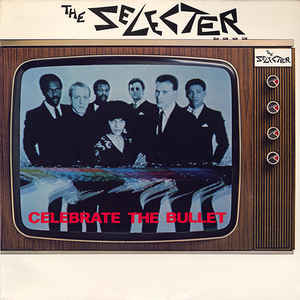
That accent’s undeniable, and it’s there to hear as early as the brooding, atmospheric title track that ushers in the new LP, those East Lancastrian tones in evidence as he conducts a ‘search’ of unfurnished rooms and unfinished works, more of which I’ll address in a separate review on this site very soon. But let’s just say for now that Blancmange fans should be extremely impressed, as suggested by the early online feedback to tracks Anna Dine, Share It Out and What’s the Time.

There’s a taste of the North West on track two as well, Neil’s narrative about a ‘chemical spillage on a trading estate in Altrincham’ on We Are The Chemicals giving us an air of mystery and threat, that Cheshire happening seemingly not an isolated incident, something similar occurring ‘in a garden shed 80 miles due south as the crow does fly’ and ‘in the boot of a hire car.’ Sparse and atmospheric with a rich vocal, slowly building, it’s an early highlight on an album of many more.

So is that a song about international terrorism or environmental pollution maybe, Neil?

“If I was to try and explain the meaning of the songs it would be like taking the last page out of a book. It’s better people make up their own minds, leave a certain amount of ambiguity. I’m always intrigued by what people think though!”

At that point I decide not to quiz him any deeper on the lyrical content, instead beginning my own advanced aural journey through Unfurnished Rooms a couple of days later. And I won’t be giving away too much by saying that I see clear lineage between Blancmange’s back-catalogue and the new material, and also between their early ’80s heyday and a more modern vibe, despite this being very much a different album to what’s come before, as is Neil’s wont.

While we’re on the subject of explanations, when Neil mentioned a reticence to explain any of his songs, that’s not to say he’s averse to extensive liner notes, as is evident by his hands-on involvement with this year’s other Blancmange release, The Blanc Tapes. It’s a major project in box-set form, grouping together digitalised versions of the bands early years’ demos right through to their last recordings first time around, an exhaustive three-CD media books in a slipcase, comprising the first three LPs, 12″ mixes, non album B-sides, previously unreleased demos and rehearsals from Neil’s private collection, along with previously unreleased BBC Radio 1 sessions and live concerts recorded by the Beeb, plus photos and lyrics. What say, Neil?

“This tour is about the new album, but also for the last couple of years I’ve been working on this huge boxset project with the record company, the BBC and my manager, going through a mass of archives I had of demo tapes and rehearsals I kept.”

And it’s not called The Blanc Tapes for nothing – we’re talking cassettes in many instances, aren’t we?

“Exactly. It’s every single thing we recorded, and every piece of music on there came off a tape. now digitalised. When I was going through demos I was running them past Stephen, who’s not well these days, and for whom the most important thing is he looks after his health. But I’ve kept him informed all the way along. We talk a lot. He agreed to do three interviews as part of all this, and I think that did him the world of good. But generally he just said, ‘Get on with it!’ to me.”

You’re not usually one to revisit past works, but I get the impression that you enjoyed the experience.

“Some of it was quite emotive. I hadn’t listened to much of it since it was recorded. I’m a musician – I don’t want to listen to my own music!”

You’ve said that in the past, so I guessed you must have felt you were in the right place at this particular time to tackle it now.

“It took a lot of persuasion, but I decided if we were going to do this it would have to be done properly. I really wanted to get locked into it. And I think the record company and the graphic designer were absolutely amazing.

“Putting the boxset together was hard work without a doubt, but the liner notes were relatively straight-forward, having run them all past Stephen, who told me what he thought. What was difficult at times was listening to all those cassettes. That’s all we could record on in the beginning – all those demos on quarter-inch tape, reel to reel. And the first time I listened back it wasn’t the music that got me – it was the air just before the first sound. As soon as I heard it, I knew where it was. Whoa – that’s a proper big memory, that!

“There’s a really early demo of Waves, where I think we were trying to get the synth going, because Stephen was doing the organ bit …”

Winding it up?

“Yeah, practically! Steam-powered! We borrowed a Wasp synthesiser. The mic. was open and I coughed. Normally you‘d edit that out, but I decided to leave that on. There’s also chatting at the end of one track. And we hoped those sort of touches would draw people in. You see the journey we took – this experimental band who then started forming slightly more structured songs, and then the more polished end results that came out. It was a relatively short period – taking us from around ’78 to ’86 – and It’s a long time ago now, but there’s still a hardcore of fans who enjoy all that, and they’re absolutely wonderful.”

I love that recent publicity shot of you and Stephen sat in a launderette, sharing an old joke no doubt.

“Yeah, that was taken when we did something for Classic Pop. We did an interview the day before at Stephen’s flat. He didn’t really want to do another photo session, and wasn’t up to walking too far. I asked, ‘Is there a launderette near here?’ We always had this joke when we did Irene & Mavis (1980), featuring these two old dears who did avant-garde music, having met in a launderette. This launderette was just around the corner, so we did that instead!”

Now and again, I tell Neil, I’ll revisit the old songs, and while travelling back from my Cornish holidays recently, Don’t Tell Me came on one of my compilations, myself and my better half proceeding to embarrass our teenage daughters with our in-car dancing. I felt sure they secretly loved it though.

“My daughter’s a similar age and her and her mates, when they have parties, will put on Living on the Ceiling and another track and really enjoy it – which is lovely! And I’m flattered by that.”

Of course, your daughter appeared on some of Blancmange’s recordings, I recall.

“Yes, with some backing vocals on Semi-Detached and when we re-recorded some of the Happy Families Too album, doing a re-imagining of that.”

How about your lad, Joe? Is he still causing a stir in his particular musical field?

“Yeah, he’s got a few releases out at the moment on different labels and compilations. He’s now working under the name Kincaid rather than Applebottom, getting very good reaction for a joint venture (with Sinal), Longhaul Flight Bathroom Romance Scene, and sonically it’s very exciting! Yep, I’m very proud of him.”

I’ve since checked out a recent Pirate Studios live set recorded in London, and concur. In fact, there are inherent international influences that bring to mind some of the innovations Blancmange sprang upon the mainstream market all those years ago. Well worth checking out (and you can start here via the Kincaid – UK Facebook page).

Talking of collaborations, while Stephen is sitting things out these days Neil has another sonic partner he’s working wonders with, involving occasional trips to a studio in Cornwall run by a musician and producer best known in the industry simply as Benge, revered in electronica circles for several of his own projects, not least with further Lancashire synth innovator John Foxx and his band The Maths.

In his current abode, Neil tells me he ‘has a small workroom’ rather than a studio, as before, adding, ‘I tend to mix in another studio so have the bare minimum – basically just a laptop computer, then take it to that next stage in the studio’. And that’s where the trips to East Cornwall follow.

“Yes, I did the new Blancmange LP with Benge down there, and he added some amazing touches. Some of the analogue sounds are absolutely sensational. They’re unique, some of the synths we used. It’s been an absolute delight, Benge and I got to know each other doing the Fader project.”

Listening In: Neil Arthur and Benge got their ears around the Fader project, and then the latest Blancmange album.

The latter album, followed an introduction through the pair’s shared management, Neil aware of Benge’s work with fellow Lancastrian, John Foxx, plus Gazelle Twin and Wrangler.

“We only met once before starting working together, but we certainly got to know each other, and sometimes music speaks louder than words, finding common ground and bonding on that.”

At that point we talk briefly about Benge’s new manor, and I mention how past writewyattuk interviewee Will Young is also a regular visitor to the Bodmin area. And his deadpan response?

“I didn’t see him whilst I was down. I had my head down. I didn’t even see King Arthur, and I’m an Arthur myself! I’ve been to Cornwall many times, but hadn’t been to Tintagel since I was very young, and it was absolutely peeing it down. I was the only person there. I had the whole place to myself. It was brilliant.”

So how does your super-sonic relationship with Benge work?

“With the Fader album, he was living in LA at that time with a view to moving there. He got a studio together and started writing all these instrumentals. At some point my manager told him he thought I’d like these, and when he did I absolutely locked in. It was meant to be. I had a load of lyrics and loads of it just seemed to fit. In a relatively short period of time we had an album’s worth, just sending files back and forth, working in our separate studios then got together for the mixing – the nuts and bolts of it.”

The resultant album, First Light,  came out in June, and pretty soon the pair were working again on the final sessions for what would become the latest Blancmange album. While all the songs on Unfurnished Rooms were written by Neil, his co-producer added percussion and layers of analogue synth, the pair then mixing the record in the latter’s Memetune studios. Does Neil instinctively know the difference between what becomes a Blancmange song and those that become Fader tracks?

“Yeah, the origins of all the Fader pieces came from Benge, him sending more developed or embryonic versions of instrumentals, with me adding the odd melody line, a vocal, and so on. With Blancmange I start it, writing songs and lyrics, and this time exchanging files. And his knowledge of those analogue instrumentation is far beyond mine. I’d write, and even if it was written on guitar I’d transfer that pretty soon to that electronic world I’m used to.

“There won’t be a guitar on a Fader album. That’s always going to be analog sound, but on a Blancmange album you could have anything, including the kitchen sink, or as we did back in the late ‘70s and ‘80s when we were using Indian instrumentation, Tupperware, guitar, synthesizer or synthesized drums, and what-have-you.”

Seeing as I hadn’t had a chance to listen to the new album when we spoke, I asked Neil to explain where he felt Unfurnished Rooms fitted among the Blancmange canon.

“Well … whereas Nil by Mouth was instrumental – as I thought it was about time we had a break from my gob! – and Semi-Detached had an instrumental on it too, then the last album Commuter 23 included several instrumentals, this is all structured songs with lyrics. That’s the way I decided I wanted to do it.

“There are 11 songs on the CD, and on the vinyl there are 10, but purely to ensure the quality of the cut wasn’t compromised, with the other track given away by those ordering the vinyl as a download. To answer your question though, we’re talking structured songs with lyrics and storylines.”

If he sounds a little vague there, I can understand that after my first few listens to the album. But that’s no bad thing, believe you me (sorry, I couldn’t resist adding those last three words). At the time though, I tried to ask a bit more. Prior to talking to Neil, I put on The Western from Blanc Burn, inspiring me to go right through that fine album again. Does that surmising put this latest album more in line with Blanc Burn?

“Yeah, although it doesn’t sound anything like that album. I’m not trying to do anything I’ve done before. That’s the only way I’d carry on. I’d have gone back to working in graphics otherwise, or tried to get another job.”

Last time we heard from you, it was on the back of the instrumental Nil by Mouth and partly-voiced Commuter 23. Was there a block, lyrically, at that stage, or were the notebooks still filling, with you just waiting on the right moment?

“The idea of the instrumental album really came from the fact that I’d spent more or less 20-odd years doing film music, giving me another insight into music production and writing. So I decided I’d explore that angle and have a break from the vocal approach.”

Who’ll be joining you on the road this time around? Is guitarist David Rhodes – on board in at least some capacity since the very first album 35 years ago – with you again?

“Absolutely. He’ll be playing guitar and doing vocals, while Oogoo Maia will be playing synthesisers and vocoder (I think that’s what he said, anyway), and Adam Fuest will be mixing and sorting out visuals, controlling sequencers, and God know’s what else!”

Will Blancmange super-fan John Grant – who appears on the new album’s epic finale Don’t Get Me Wrong – be making an appearance too?

“My goodness, wouldn’t that be lovely? I was so pleased when I heard he really liked our music. I asked him to take part via my manager. I had a song I said I’d really like him to play on. Not only did he play on it but he also ended up singing on it as well. And I couldn’t quite believe it!”

Blancmange also have dates with Heaven 17 later this year, and have already played with The Human League in 2017. Has Neil got to know Martyn Ware and Phil Oakey over the years?

“I was speaking to Phil last Sunday morning. We did a festival together, and last year did a handful of dates around bigger arenas as guests of theirs. I didn’t know him back in the day. I knew the girls, and Stephen was particularly friendly with them, but I knew Martyn quite well, as he helped us do one of our first demos. We go back a long way and he was a massive help to us, and we toured with them the other year. Him and Glenn (Gregory) and the rest of the team are just fantastic. So we’ll enjoy the Unfurnished Rooms tour and all those dates, without a doubt, promoting the album, and once we’ve done those we’ll be enjoying ourselves on tour with Heaven 17 as well, doing old and new songs.”

In the meantime, it’s now been 35 years since Happy Families. That must seem a lifetime away. As we’ve discussed, you’re not generally one to dwell on past successes, but I get the impression you’d left it just long enough to appreciate it all with hindsight through The Blanc Tapes project. And I’m guessing you ended up feeling very proud of that back-catalogue.

“Without sounding conceited, yeah I am actually! And I’d do it all again. I’d probably do it all exactly the same … and stop it at the same time as well. Fortunately we were able to return to it, and then I’ve been able to carry on from there … and I thoroughly enjoy it.”

With that Neil was away on another call, but not before I’d mentioned how I was looking forward to getting along and seeing him live.

“It would be lovely to see you there. Please make yourself know … either by throwing a rotten tomato or saying hello in a conventional way!”

Unfinished Roadworks: Neil Arthur’s Blancmange are heading to a town near you … very soon.

To revisit or catch up with the March 2016 writewyattuk interview/feature with Neil Arthur, head here.  

Blancmange’s Unfurnished Rooms UK tour dates: October 5th – Brighton Concorde 2; October 6th – London 229; October 19th – Southend Chinnery’s; October 20th  – Southampton 1865; October 25th – Darwen Library; October 26th – Newcastle Boiler Shop; October 27th – Edinburgh La Belle Angele; October 28th – Glasgow Audio; November 2nd – Bristol The Fleece; November 4th – Nottingham Rescue Rooms. For full tour information, details of how to order the new LP and early years’ boxset, and all the latest from the band, head to their official website or keep in touch via Facebook and Twitter.

You can also catch Blancmange supporting Heaven 17 on The Tour of Synthetic Delights around the UK, taking in: November 10th – Sheffield Foundry (Students’ Union); November 11th – Liverpool Hangar 34;  November 17th – Hull Welly; November 18th – Manchester Academy 2; November 24th – Coventry Copper Rooms; November 25th – Norwich Waterfront. For more information check out the Heaven 17 website, or try the band’s own Facebook and Twitter pages.


Posted in Books Films, TV & Radio, Music | Tagged , , , , , , , , , , , , , , , , , , | 3 Comments

Reprising the Roachford Files – the Andrew Roachford interview

Soul Solutions: Andrew Roachford, hardly ever off the road, from the 1980s onwards

After his latest successful tour with Mike + The Mechanics, Andrew Roachford is back on the road with his band this autumn.

Know the name but struggling to place the back-catalogue? Well, his biggest hits came with his first collective in the ‘80s and ‘90s, going out under the name Roachford, their big UK hit Cuddly Toy a top-five smash when reissued in early 1989 and seven more top-40 singles following.

He’s remained busy ever since with his band, as a solo artist, and as a guest for the afore-mentioned outfit led by Genesis guitarist Mike Rutherford, impressing audiences with his own take on Mechanics and Genesis classics and a few of his own numbers.

To catch him live is to be convinced by his stage presence. Yet as he revealed to me, there was a time when he was reluctant to show his face on a stage, still seeing himself primarily as a musician rather than singer, despite that wonderful soulful voice.

So what came first as a performer? The voice, the keyboards or his percussion skills?

“I started as a piano player, and it was down to people like my uncle, Bill Roachford, who brought the rest out of me. He was a saxophone player who played a lot of clubs from the late ‘50s through to the ’80s, known well by the likes of Ronnie Scott, a bit of a legend in muso circles and rightly so – a truly amazing musician. He heard me singing in a bedroom and was the one who said, ‘Right, we’ve got to get you singing out there’.

“For me, singing was something very personal. It was like being naked. Doing that in front of an audience was an absolute nightmare for me. But he pushed me and pushed me, eventually settling the nerves a little. That said, I remember when I got signed how the record company came to the first gig and were horrified because I was surrounded by keyboards and you couldn’t see me! They said, ‘We want you to be a pop star! Can you at least take away one keyboard?’ They had to literally wean me off these keyboards I hid behind.”

At least when Howard Jones did that around that era, his hair was poking out over the top.

“Yeah, exactly! Eventually I got used to the idea of singing, yet never really defined myself as a singer. To this day I’d still say I’m a musician with the singing just part of it, an extension of the music.”

The past few years have seen Andrew co-writing and touring with Mike + the Mechanics, and even enjoying a little cinematic success through Cuddly Toy being included on the soundtrack of the film Alpha Papa. And the 52-year-old seems remains a fixture on the road, having been around the music business all his life, including a teenage stint with The Clash – which we’ll get on to later – and that commercial breakthrough with his first band at the close of the ’80s, having formed Roachford two years earlier.

That four-piece were soon building a reputation for live and studio work, and by 1988 Roachford were supporting Terence Trent D’Arby and The Christians. A seven-album deal with Columbia followed, the band becoming the label’s biggest-selling UK act for 10 years.

Andrew’s first solo LP, Heart of the Matter, saw the light of day in 2003, before follow-up Word of Mouth in June 2005 back under the band name. Then in 2010 he joined Mike + the Mechanics, sharing lead vocals with Tim Howar on the following year’s album The Road, the start of a happy alliance.

I caught up with him at home in Balham – that Gateway to the South immortalised by Peter Sellers – having been based in South and South West London for most of his days. Is he between dates at the moment?

“Exactly, although I think I’m always between dates! I’m constantly between dates and recording, and I’m also starting to write another album.”

Let’s start with current release, Encore, though, an emotive, soulful album showcasing Andrew’s unique interpretation of classic tracks, all given something of a fresh Roachford twist.

“There’s an original track on there, but it’s more my take on songs I’ve always loved and I thought it would be interesting to put a twist on.”

That seems to be your general approach – making songs your own.

“I guess that’s because I’m a musician, not just someone who sings. I play piano and was bought up with an improvisation culture that my family taught me. I like to move things around. I don’t think I’ve ever done two gigs exactly the same.”

The Encore album sees Andrew with a full live band, capturing the kind of powerful performance he’s gained a reputation for, explaining, ‘Simplicity is the key’. Stand-out tracks include Sly and the Family Stone’s Family Affair, and Bill Withers’ Grammas’ Hands, both showcasing an artist on top of his game.

“This album showcases some of the songs that have fired me up over the years to become a performer and to look, to bring the magic in every show I play. I once read that a sign of a good singer wasn’t just about ability but more importantly about someone that when they sang you believe every word.”

He told me he switches between workbases, often working from home when starting out writing, but also at various studios, ‘depending on what vibe I want’. And what vibe is he heading towards with the next album?

“I think it’s going to be quite stripped down, all about the songs and the feel. When I listen to the great music I grew up with like Al Green’s Let’s Stay Together, I listen to the simplicity in the set and what it does to you, how it moves you. It’s important that music should have an emotional impact. That’s what I’m going for. It’s essentially soul.”

I love the albums Al Green did with Willie Mitchell, I tell him, not least Let’s Stay Together, Call Me and Still in Love With You, around that early ‘70s era.

“You know your stuff! I know that inside out and can’t get enough of that. It’s an education to someone like me when you hear the way they put the music together. It always feels so joyful, so effortless and yet so powerful.”

Al Green was another artist who reinterpreted songs, taking tracks by the likes of Barry Gibb, Willie Nelson and Kris Kristofferson, making them his own. You do a bit of that too.

“Definitely, and with Encore that was what it was all about. The originals are so perfect, classic songs like Bill Withers’ Ain’t No Sunshine, so you have to take that somewhere. It’s my nature to explore where things can go.

“With some of Al Green’s songs I thought his were originals but then found out they weren’t. First time I heard Jimi Hendrix doing Hey Joe I assumed it was his song because he put that spin on it. When Marvin Gaye sang I Heard it Through the Grapevine it was the same. I guess what they have in common is that they’re musical, so they can do that.”

He mentions a love of performing live, and is fired up about his forthcoming autumn tour.

“I love to be out on the road. I see myself as a working, gigging musician. That’s kind of what I’ve always done, no matter what’s happening as far as records are concerned. And it’s a great buzz you get when you connect with a crowd. There’s nothing like it.”

And you’ve just toured with Mike + the Mechanics too. You’re clearly enjoying that too.

“Yeah, I think we’re on year six or seven now, and it’s going from strength to strength. We’re also out next month around Europe for quite an extensive tour, then I come back to do my UK tour. At the moment the Mechanics have a new album out, Let Me Fly, and it’s going down really well, getting lots of airplay, well received. So there’s a lot going on.”

A few years ago Mike Rutherford had Paul Carrack and Paul Young (of Sad Café fame, rather than the former Q-Tips singer) as co-vocalists, and I guess it’s a similar dynamic with yourself and Tim Howar.

“It’s very similar and I think Mike had that plan. When he was working with the two Pauls, Paul Carrack was more the soul, r’n’b voice, while Paul Young had more of a rock edge, even though he was quite soulful too.

“Sadly, Paul Young then passed away, and they carried on with just Paul Carrack, but then after a while the energy had gone, Mike wanted to take a break, and Paul wanted to pursue more of a solo career, having been with the band a long time. Years later, when Mike started writing again, he wanted someone to co-write, finish songs and actually sing them. But who? That was the big question … and my name came up.”

Did you already know each other?

“Yeah, we’d bumped into each other over the years at Top of the Pops and things like that. I knew Paul Carrack too. I wasn’t sure it would work, and don’t think Mike was. But then we got in the studio, jamming, and within 10 minutes it just started to happen. There was something there.”

Did you know Tim Howar?

“No, Mike introduced us in the studio. But we clicked straight away. We’ve got a great synergy together and Tim had this amazing ‘full of rock’ voice, whereas mine’s more old school r’n’b. That’s where I’m coming from. But I love guitar too, harking back to when soul music used guitars and had more edge to it. That’s what I love.”

No disrespect intended, but it would be easy to suggest that being with Mike + The Mechanics offers a more Radio 2 friendly approach – a bit safe, maybe. But that’s not necessarily the case, is it?

“Yeah, Paul Carrack has an amazing voice and is an amazing singer, but I think we’re quite different. And I think that difference works. The Mechanics needed to move on. With the first tour we did, people didn’t really know what to expect, having known the old line-up so long. You could kind of feel that in the audience, wondering how this was going to work.

“In the beginning ticket sales were okay but not great, but then people started to get their heads around the fact that it’s a different thing. And when we do songs like The Living Years people are just in tears. It’s a great song and I think I sing from a place people really relate to. It’s an amazing song and it’s an honour to sing. When I really relate to a message, it’s a lot easier to put myself into it, make it my own.”

Mechanics Mates: Tim Howar, Mike Rutherford and Andrew Roachford back in 2011

It worked very well for Paul Carrack, serving as a bridge between his time with Squeeze and being his own man. I’m guessing this has helped you reach a wider audience too.

“It definitely has. And a lot of people have come to gigs not knowing much about me, but now I see a cross-section of people at my shows, and some of that has something to do with my work with the Mechanics. Sometimes you have to bring the mountain to Muhammad, so to speak! When they come along I don’t think they know what to expect. But after I generally get, ‘We didn’t expect that!’”

There must come a time when you’re having to explain to people – or shout at the radio – it’s not just about Cuddly Toy though. Don;t get me wrong – it’s a great song, but there’s much more in your armoury.

“Yeah, it’s one of those things.”

Do you think you get tarred with that one big hit brush?

“You can be. Take Rick Astley, who has a really lovely voice, and writes material, but came on the scene with Stock Aitken Waterman – it was almost impossible for him for so many years to get taken seriously. And I can really understand that frustration.
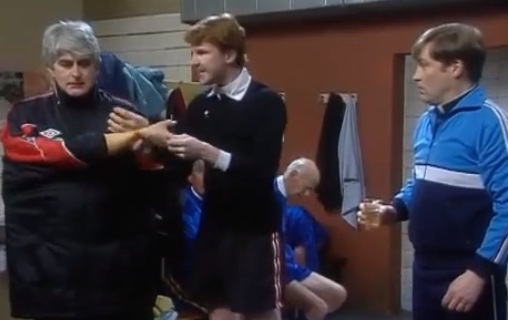
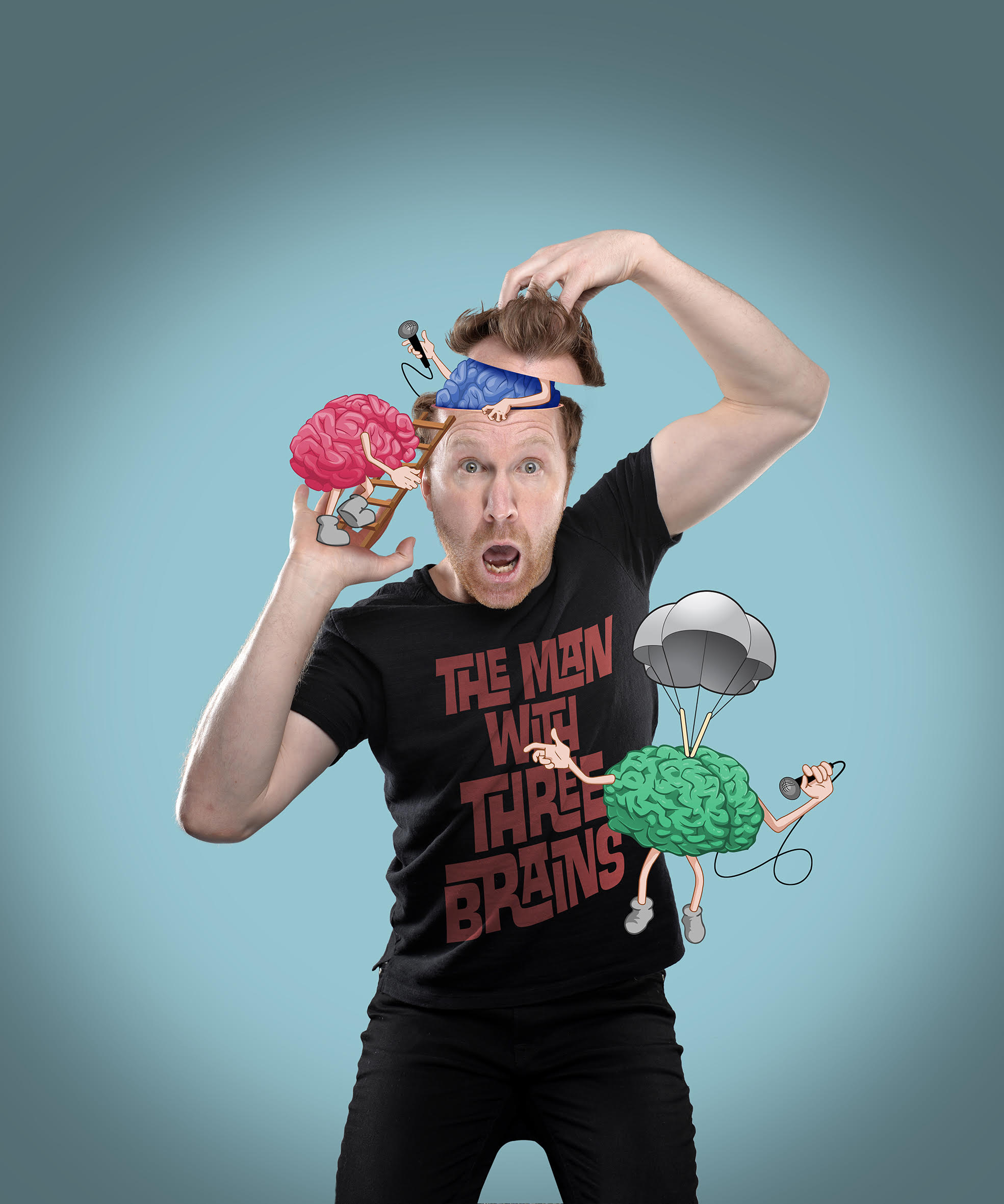
“It’s different for me – I’ve never seen myself as a pop star, but a musician out there rocking and rolling. And people who have come to my gigs over the last 15 or 20 years don’t really come just for Cuddly Toy. But when it gets played again or is on a film soundtrack, the old crowd come back, trying to work out what I’m going to do as well as Cuddly Toy and Family Man. Then they realise they’ve missed so much.

“When I tour Europe, Mike likes me playing my own songs too, and at first they said, ‘Well, we’ve got to include Cuddly Toy. But outside the UK that song is not my big tune. I was discovered there later.”

There’s a fine example online, a cracking live version of This Generation (from 1994’s Permanent Shade of Blue album) played in front of a studio audience in Liechtenstein in 2014. That’s just one song that seemed to be missed by the wider public.

“Yes, at some point I feel I should revisit and maybe re-record some of the old songs. My core fans want more people to hear those songs, getting frustrated on my behalf. I believe in that music, and feel sometimes it’s about timing.”

It’s not as if Cuddly Toy was a novelty song. At least you can be proud of it.

“Yeah, I guess what resonates about that song is that musically it had something going on. It wasn’t just manufactured pop. And people can tell the difference.”

You mentioned Bill Withers covers. What else is featured on Encore?

“Well, I love Sly and the Family Stone and bands from that era that weren’t in a particular pocket, and couldn’t be that narrowly categorised. And Family Affair is probably one of my favourite songs on this album. I also did a Red Hot Chili Peppers song, Under the Bridge, in a more soulful style.”

I guess the soul’s there in the original somewhere too.

“It is! But people don’t always hear it in that way until you do it in that way. It’s the same with Elton John. He was well into soul music, and although not obvious, that was at the root of what he was doing.”

I agree, and while you’ll probably laugh at me for this I’ll add that it was only really in the last five years or so that I truly realised Van Morrison was a soul singer.

“I’m the same! And it seems so obvious, once you know. It’s the same hearing the band Free, the singer – Paul Rodgers – saying he was trying to be Otis Redding. Now you think ‘of course!’

Soul Ambassador: The late, great Otis Redding, sorely missed

“Otis is another of my favourites. Again, he kind of cut through all the genres of the time. He was so powerful, so emotionally strong. I don’t think there’s a lot of that around now. There are a lot of people who are great technicians vocally, but who don’t allow themselves to be vulnerable or open up in that way.”

You mentioned never playing the same way two nights in a row, and Otis Redding was a master of that, to the point where he must have frustrated those recording him trying to get those previous performances down on tape.

“Yeah! And I guess the greats of our time include Amy Winehouse, yet you hear the producer Mark Ronson say how recording her was a nightmare as she did a completely different vocal every take.

“With Mike and the Mechanics I’ve had to rein it in a bit, as I’m pretty much free with my style, singing how I feel in that moment. But you have to respect the nature of the material and curb the movement a little.”

You mentioned earlier your uncle, Bill Roachford, being a musician. Was he a first generation UK arrival?

“Yeah, on my Mum’s side (Andrew’s surname is his mother’s) there were seven of them, but Bill came over on his own, around 18, quite a big deal coming to a country he’d never been to, and so different from the Caribbean. It may have looked glamorous watching snow scenes back in Barbados. but with no notion of how cold it must feel, and that damp British thing. It was kind of a shock.

“But then my Mum came over and they ended up living in the UK. The plan was never to stay but they ended up here longer than they were in the Caribbean, although my mother and uncle ended up moving back to Barbados.”

Guitar Man: Andrew Roachford tries a different approach

Andrew adds that the Roachford family were better known as teachers than musicians in Barbados.

“I wasn’t the first though, my mother and great-grandparents were in music. And I was very happy I could show my grandma before she died a massive poster for one of my gigs, marked ‘sold out’. That was lovely. She’d never been to England, but she was the one who insisted we learn to play piano.”

Andrew reckons he grew up ‘surrounded with jazz and soul’. Was there a lot of music around the house growing up?

“We’re talking literally bands rehearsing in the living room, so I heard a great level of musicianship. My mother would go to clubs, and my father played drums and is now a conductor. When my mother was pregnant with me she was going round all the gigs they were playing. So I was hearing music before I was born, and I think that makes a difference – it has an effect.”

Looking at the music you’ve played over the years, I guess you’re no music snob and you’re not one to lazily label bands and songs, categorising everything you hear.

“No, I really like Prince’s music, for example – there are influences of Sly and the Family Stone, James Brown and Curtis Mayfield, but he makes it his. He started through the r’n’b route, but was also into David Bowie and all sorts.

“People expect your tastes to be narrow, and reflect who they think you are culturally and socially, but I can fit quite comfortably with all kinds of people, and my music is a reflection of what I listen to. If you see my CD collection or my playlist, it’s very eclectic, but what it has in common is that is has some kind of soul and real grit to it. I love artists that move me, no matter what genre.”

There was the seven-album deal with Columbia. Yet you then made that solo move, and had the best of both worlds in that respect.

“I really enjoyed my time at Columbia. As it was so long I saw so many come and go, and when you’re in the music business the people who sign you are the ones that really believe in you. So when they leave the company you’re at the mercy of the new guys that come in, who might not have the same vision or passion, or it takes them a while to get it. That was happening for a bit and while the time I spent with Sony was great, by then it was time to move on. And there’s always going to be that struggle between art and commerce, so often contradicting each other.”

Band Substance: Andy Roachford and Derrick Taylor out front with Roachford in the late ’80s   (Photo: Flat Eric’s Bass & Guitar Collection blogsite)

Any other original Roachford members in your current band?

“No, the guys from the original band all have their own projects these days. For years the bass player (Derrick Taylor) was working as a musical director for Gabrielle, Hawi (Gondwe) the guitarist was with Amy Winehouse for a while. And the drummer, Chris (Taylor), who lives in Brighton, is more into world music and percussion.

“I think people seem to think it’s going to last forever when you have a group, but I don’t look at it like that. It lasts as long as it lasts, then something else happens. And I really love where I’m at now. I still see some of the guys and have a lot of respect for them, and was really lucky to work with them, but it was like a marriage and when we went our separate ways it was amazing to see other people and find so many other influences out there I had no idea about.”

With that in mind, excuse the pun but away from the studio and the road, are you a family man?

“Ha! Well, they call me the king of puns, so I may have heard that one before! But do you know what? I’ve spent so much of my life on the road I haven’t really had time. I kind of missed that one. I don’t really have a family in that sense but I’m on the road with my brother, and my cousins are around all the time. I’ve always had family around.”

Also on that rich Roachford CV was a stint working in the studio with The Clash as a teenager, something he felt helped give him ‘an incredible grounding in music’. How did that link come about?

“It’s a crazy one really. When I started music college, Clash manager Bernie Rhodes was trying to start a record label, and needed to get some people into the studio to help with that, and one thing they wanted was an in-house keyboard player.

“They found me, and I didn’t really know anything about The Clash and definitely wasn’t a fan. When I started at the studio they were away in America, touring with David Bowie I think, so I didn’t see anyone from the band for six months. Then one day they turned up, just after they’d got rid of two members. I was basically there every day for a year or maybe more while they put that album together.”

Clash Mates: Paul Simonon and Joe Strummer around the time of the Clash LP Andrew Roachford played on (Photo found on The Clash Blog)

So we’re talking about the final album, 1985’s Cut the Crap. Did you get to know Joe Strummer?

“Yes, very well. He was a lovely guy, a very intelligent guy and big-hearted, and that educated me about The Clash. He really felt what he was singing about and really meant it. Even though maybe he came from a nice background, he really was a working-class hero. He’d travel on the tube every day to the studio in Camden, and never went for all that pop star status.

“The last time I saw him was at Glastonbury Festival, with his band The Mescaleros. He was living in that area and found me, telling me he’d recorded all these jam sessions I was involved with, and had all the master tapes but couldn’t find a machine to play them on! It was an old eight-track two-inch tape.”

Have those sessions seen the light of day since?

“No, I haven’t heard anything about them. I need to talk to his family about that. But he invited me over. He was into his rave culture and invited me to this campfire gathering where they were going to be jamming. But I turned it down – I was getting a bit cold. It was the end of the evening. I wish I’d gone though. Instead, I went off-site, and that was the last time I saw him. He had a heart attack that following winter.

“But we really connected and I really liked him as a person. He also helped when I was still finding myself as a singer, telling me, ‘You’re great. If I sang like you I wouldn’t be in this band! That was his sense of humour. He was also into the whole soul scene and reggae thing. He was great.”

I was expecting you to say your link was through Mick Jones rather than Joe Strummer, through his time with Big Audio Dynamite.

“I met Mick afterwards. We were both on Columbia, although of course he knew my Clash connection. And of course you couldn’t help but notice Bernie Rhodes. He was so prominent, and had this strong connection with Sony and Columbia. Malcolm McLaren was connected with that whole thing as well.”

Did you get to know Mick Jones pretty well too?

“Yes, he’s a lovely guy as well. And it was great through Gorillaz seeing Mick and Paul Simonon back together again all those years later.”

Finally, you talk about a connection when you play live, and I guess that’s irrespective of the size of the crowd or venue on certain nights. There seem to be a few intimate venues on this autumn tour. Yet I get the impression audiences will get nothing less than a full-felt Roachford performance.

“Oh definitely! You have to honour the music and honour the people who bought a ticket, and whether it’s 65 people or 65,000 you’re going to get 100 per cent!”

Travelling Man: Andrew Roachford, out and about and visiting a town near you in late 2017

Andrew Roachford’s UK tour visits Southport’s Atkinson Theatre (October 13th), Leicester The Musician (October 14th), Birmingham Academy (October 20th), Sheffield Academy (October 21st),  Southampton The Brook (October 27th), Seaton The Gateway (October 28th), Chester Live Rooms (November 2nd), Darwen Library Theatre (November 3rd), Selby The Venue (November 4th), Newcastle Academy (November 10th), Glasgow Oran Mor (November 11th), Aberdeen The Assembly (November 12th), Hull Fruit (November 17th), Norwich Waterfront Studio (November 18th), Lewes Con Club (November 19th), Farncombe St John’s Church (November 24th), Islington Academy (November 25th), Manchester Academy 3 (December 1st), Bedford Esquires (December 2nd), Douglas Villa Marina Prom Suite (December 7th). 

For more tour information and the latest from Roachford, head to his website and Facebook page. 

Posted in Books Films, TV & Radio, Music | Tagged , , , , , , , , , , , , , , , , , | 1 Comment