Teenage Kicks: My Life as an Undertone by Michael Bradley – a writewyattuk review

True Confessions: Michael Bradley at Derry's Central Library book launch (Photo: Vinny Cunningham)

True Confessions: Michael Bradley at Derry’s Central Library book launch (Photo: Vinny Cunningham)

I’ve waited a long time for Michael Bradley’s band memoirs. Sometimes anticipation leads to disappointment, but I shouldn’t have worried – it’s everything I hoped for.

I don’t know how long Mickey – bass player and backing vocalist for The Undertones, for those not quite up to speed – has contemplated a first-hand biog of Derry’s Famous Five, but there was certainly an earlier audio version, which I have tucked away on a rotting cassette somewhere. And while this is far more in-depth, it won’t trouble late-night readers who struggle to lift heavy tomes (that’ll be me then). At 220 pages it’s succinct and to the point, and like the band it chronicles there’s no mincing with words.

Think of this as the print equivalent of those classic three-minute pop tunes The Undertones regularly presented. Mickey gets to the point fairly sharpish and largely sticks with that principle. That’s not to belittle the finished product either. It’s great prose, and if ever a book carried the voice of its writer, this is it. It’s funny. Very funny in places. But Michael also dishes out a little poignancy and plenty of colour, not least in describing his surroundings. It’s not dewy-eyed nostalgia for greater days though, and rarely does he go into flights of fancy. If he senses himself getting into pretentious territory he knocks himself back into line.

At times I feel he might have gone into more detail and got more emotional here and there, but I’m not so sure that would have worked. Less is often more, and it’s what’s not spelled out that makes a bigger impact. That includes the undertone here (sorry) – a feeling of life in Derry during the dark days of the Troubles. We all tend to adapt to circumstances, but now and again we’re subtly reminded that the backdrop isn’t Cheltenham or Harrogate. Then there are the more personal details hinted at, Mickey voicing the frustrations we all experience – regrets at not taking more time out to talk with loved ones when we have the chance.

While he often holds back, Mickey’s clearly not the quiet man – he’s neither Sean Thornton nor George Harrison, and readily hints in print he was a pain in the Derry Air at times during the lifespan of the band’s first coming. But those of us who feel we know him from his on-stage banter and radiogram broadcasts over the years prefer to see him as that chirpy ‘Tone with a sharp tongue, rather than someone who never knows when to shut up.

There’s another thing. For me The Undertones were always the boys next door, despite the many miles between their Northern Irish roots and my semi-rural Surrey upbringing. They doubtless had it a lot harder than kids I grew up with, but this is no Four Yorkshiremen-style tale of poverty amid a civil war-torn backdrop. Many of his experiences are our experiences, and I don’t just mean seeing them live or hearing the records.
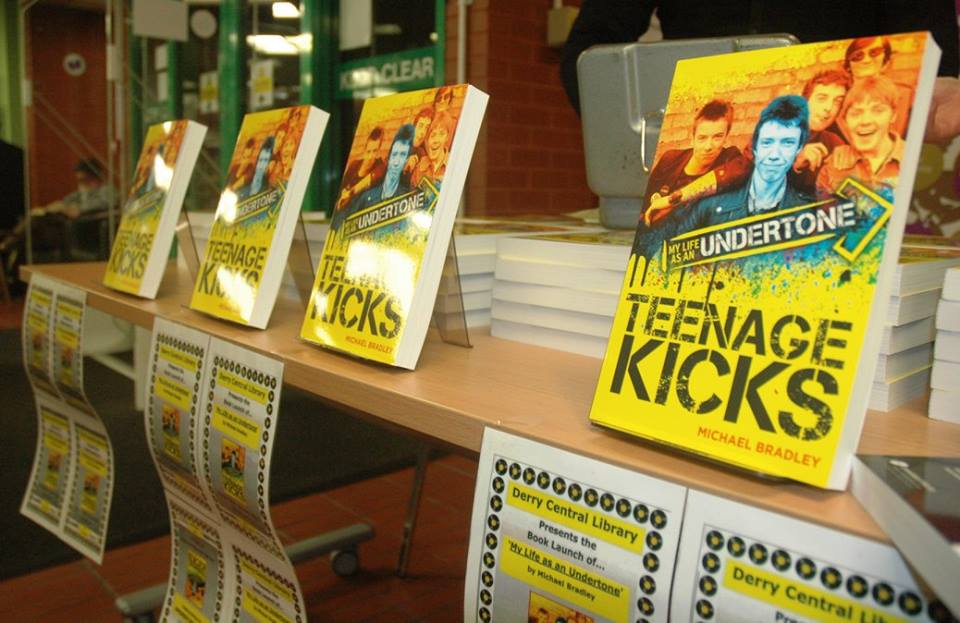
Kicks Conspiracy: A display at the Derry launch of Mickey's band memoir (Photo: Vinny Cunningham)

Kicks Conspiracy: A display at the Derry launch of Mickey’s band memoir (Photo: Vinny Cunningham)

I was mightily excited when my postie knocked twice to hand over Michael’s book. I had plenty of nagging deadlines hanging over me, but couldn’t help an occasional glance, dipping in at will, checking out the words and often-evocative photographs within. But great as the outside is (including early portraits by Paddy Simms), cherished author, screenwriter and long-time fan Frank Cottrell Boyce gets it right on the back, writing, “The cover is only there to keep it in the right shape”.

Why now? Well, Michael argues he had to get it all down before he forgot any more, his conversations with fellow band members reminding him of moments he’d either forgotten or been unaware of. And while the band remain a healthily-functioning unit to this day (with Dublin-based DJ Paul McLoone in Feargal’s centre-forward berth), MB sticks to the period between his half-hearted invite to join in 1974 (during a camping holiday with the O’Neill brothers and drummer Billy Doherty in Donegal) and the last gigs in France and Ireland in 1983. And from that underwhelming rock’n’roll moment in Bundoran and early days leafing through a Freeman’s catalogue looking for guitars onwards, our narrator talks us neatly through everything that made The Undertones such a revered quintet.

Finance plays a key part in this alternative punk rock odyssey, Michael smartly explaining the workings of everything from initial repayments to the Provident man for equipment to the biting clauses tucked away in the deal with Seymour Stein at Sire Records and the many wrong turns and re-thinks that followed, not least main songwriter John O’Neill’s selfless act to share royalties while the band remained together.

Then there’s Mickey’s literary walk about the band’s Beechwood Avenue HQ, not just putting the spotlight on John, fellow founder member Vinnie and his teenage replacement Damian but also the O’Neill parents overseeing the operation, in a house featured in Julien Temple’s My Perfect Cousin video, his team forced to feed 50p pieces into the meter to keep the action rolling.

While four of the group seemed unlikely rock’n’roll stars, the other exuded star status from day one, having already amassed trophies for those amazing vocals as a nipper (later shown on the cover of Jimmy Jimmy). And while I maybe considered Feargal guilty for the break-up, I must say he comes out of this in a better light, Mickey highlighting what a character he was, whether clandestinely changing the TV channel at O’Neill’s with his secreted remote control or announcing on a loud speaker in his works car to householders that the water was being cut off and they should fill kettles and pans straight away.

It was also down to Sharkey that the band became The Hot Rods at first, delivering Rolling Stones, Dr Feelgood, Cream and Fleetwood Mac covers. And while O’Neill’s remained integral, Feargal’s tech know-how helped the switch to a soundproofed Simms’s Shed, Radio Rentals’ employee and his supply of moulded expanded polystyrene packaging proving key as the band’s lone driver and gear-shifter (so to speak). Incidentally, by the time they played again the singer had renamed the group Little Feat, Mickey adding, “Feargal still hadn’t grasped the subtleties of the Plagiarism (Band Names) Act of 1973”.

51D1i3B1XsLPretty soon they were commanding £10 then £25 at a local youth club, throwing in Ramones covers while John started introducing his own songs, the influences expanding via a slavish devotion to the NME, the John Peel Show, and records borrowed from their friend ‘Wombat’ McDermott. And by the time they were playing The Casbah – ”where Derry’s hippies went to drink” – in early 1977 they were The Undertones, Dee still at school and the rest – bar Sharkey – at tech but now commanding £30 fees. They even got a couple of gigs … sorry Mickey, concerts south of the border, supporting future Pogue Phil Chevron’s Radiators from Space, although they could have done without the second gig, where a stabbing in the venue led to an uncomfortable night.

The non-aligned (religiously and politically) Casbah remained their live home as they built their set. As Mickey puts it, “We operated in our own bubble that stretched from Beechwood Avenue to Simms’s Shed to the Casbah, like a lost tribe in the Amazon jungle that has yet to be ruined by TV and sausage rolls. I would have been happy in that bubble but my chums had plans”.

The covers were soon squeezed out, and apparently “John was probably telling the truth when he said he started to write songs because it was easier than learning someone else’s chords”. Again, it’s the added details that make this so compelling, like a portrait of Feargal singing the Flake advert on William Street: “In 1977 it still had the wide open spaces caused by years of riots, arson and bombs, which gave it a great echoing reverb”. Michael goes on to describe his lead singer sounding ‘like Tom Jones produced by Phil Spector. Singing about confectionery”.

I should hold back at this stage, not wanting to be accused of putting too much detail here. Suffice to say, there are many great lines I’ve skipped over, Mickey detailing – without conceit – what marked them out from the other bands they shared the boards with, the Casbah sessions a “perfect testing ground for John’s efforts”, most ending up on the first LP.

And while tales of the Terri Hooley and Good Vibrations link, John Peel’s mentoring and the Sire and later EMI deals have been told many times, Mickey’s fresh and personal spin adds meat to the bones, success never going to their heads thanks to those around them – not least their families.

That initial Teenage Kicks EP might have been their epitaph – and a somewhat perfect one – and Mickey reminds us how every band member bar Dee threatened to quit or actually left at some stage. There was certainly no overnight success though, the Derry dates continuing, complete with football on Bull Park and chips on the way home, even after Peel’s patronage and Stein’s signing moved things on, day-jobs as civil servants (Billy, Dee and John), TV repair man (Feargal) and builder’s merchant (Mickey) ditched in favour of a rock’n’roll career more or less on the same wage, but with Top of the Pops thrown in.

The descriptions of the trips between Derry and London certainly suggest a distinct lack of glamour, even if the bass player was living out his Big Mac, fries and Coke fantasy, plus all the sweets the boys could manage between venues. “To hell with poverty,” as he puts it. There were meetings with fellow stars too, not least the Ramones, Paul Weller and later The Rezillos, The Clash and The Talking Heads. Yet you get the idea Mickey regrets not making the most of those encounters, and feels embarrassed at the attitude in meeting the likes of fellow homeland successes Jake Burns and Phil Lynott.
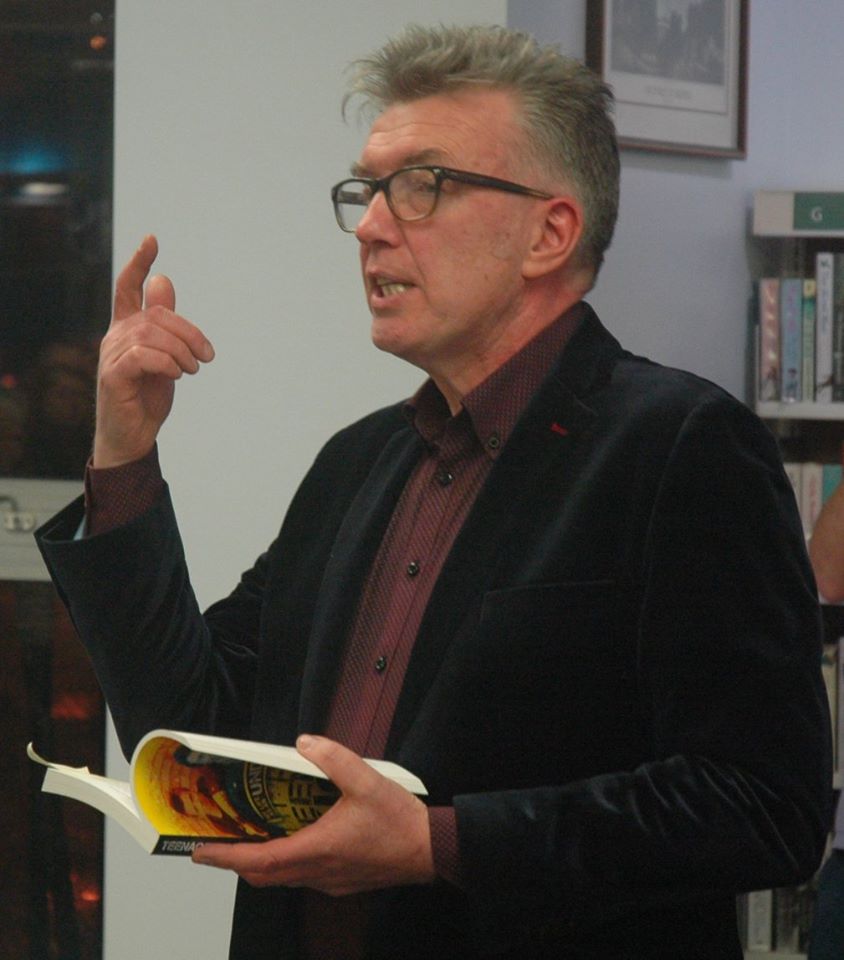
Listening In: Michael Bradley tells it as it is at Derry's Central Library (Photo: Vinny Cunningham)

Listening In: Michael Bradley tells it as it is at Derry’s Central Library (Photo: Vinny Cunningham)

This is no tale of rock’n’roll Babylon. Regular trips home to parents, friends and girlfriends that became wives continued between live dates and recording engagements with the BBC and Roger Bechirian in London, introducing Derry humour to mainland Britain. Michael “very quickly learned to love England”, describing a nation with “characteristics of an Alan Sillitoe novel” where “people had jobs, making things and digging stuff out of the ground. Buildings were shops, not shells”. En route a soundtrack was supplied by daytime Radio 1 (275 and 285 medium wave), the music making up for the daytime jocks in an era before the ’homogenised high street’ and ‘closed down high street’.

Michael paints a picture of something of a false life, the band on a permanent holiday between trips home, having the time of their lives. He adds, “A year earlier we were either working or at school. Being in a band was far better. Every day was a day off, every day was seeing somewhere new with your best friends with you. I also became aware that we were actually good and people who came to see us thought we were great.”

I should stop soon. We’re hardly even up to the second LP. It’s all there though – good and bad times, embarrassing and fun times, senses of achievement and despondency, big plans coming to nothing, a lack of a plan coming to something special, fall-outs, complications, hits, misses and regrets, a new direction, triumphs and tribulations, the recording process, travel beyond the wildest dreams, questionable fashion and commendable punk ideals.

By 1981 things started to unravel, Mickey talking us through their (Positive Touch era) final TOTP appearance, in not-quite matching jumpers: “The Top of the Pops director felt so sorry for us that he decided to film some of the performance through a fish tank, presumably to distract the viewer from the fashion horror on the screen. Or maybe it was a reference to Julie Ocean. Ocean? Fish? Sharkey? Record going belly up? We got a glimpse of the future as we stood on the stage. Four of us stood, Feargal sat on a stool. Maybe the jumper made him feel like Val Doonican”. There’s also a poignant line about Duran Duran performing Girls on Film nearby. That single stalled at No. 41 and led him to conclude, “Undertones records were not going to be a big part of the New Romantic revolution”.

One more album followed, one I learned to love and still appreciate, not least the quality of the songwriting and Feargal’s vocals. But a more soulful direction seemed to be a death knell, that lingering death ended by Sharkey’s big decision. As a 15-year-old, I was there for two of those 1983 farewells, at the Lyceum then Crystal Palace FC, when Mickey got lost backstage and walked in on headliner Peter Gabriel, make-up applied (Peter’s, not Mickey’s).

I wasn’t ready to see them go, but it was the right decision, and without that I wouldn’t have had the days that followed, watching Eleven (the short-lived Dee and Mickey outfit both now draw a veil over) and That Petrol Emotion (including the O’Neills). And if they hadn’t split I’d have been robbed of the joy of a post-Sharkey Undertones reformation.
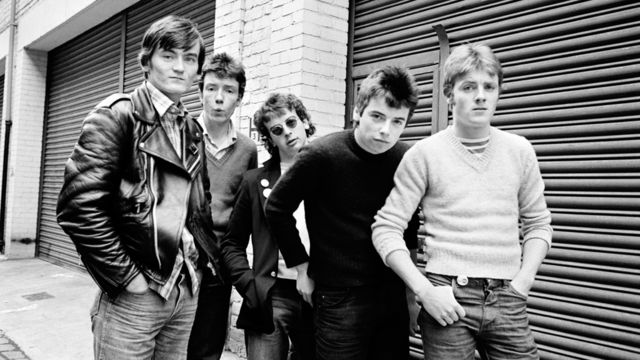
Boy Wonders: The Undertones in their prime. From the left - Feargal Sharkey, Mickey Bradley (biding his time before getting it all down in print), John and Damian O'Neill, and Billy Doherty (Photo: BBC)

Boy Wonders: The Undertones in their prime. From the left – Feargal Sharkey, Mickey Bradley (biding his time before getting it all down in print), John and Damian O’Neill, and Billy Doherty (Photo: BBC)

Before I opened Michael’s book, I felt I knew most of what was worth knowing about the band from old press stories, two great documentaries and all those fantastic songs and sleeve notes. But he adds so much more, without entering trainspotter territory.

Having labelled this book a perfectly succinct rock’n’roll tale, I’m in danger of having gone over the top here. And that would be frowned upon by The Undertones. So I’ll stop now, before – as Feargal put it on the play-out of Here Comes the Summer – ‘my record’s stuck’.

  • With thanks to Vinny Cunningham for use of the Derry Central Library book launch photographs.

Teenage Kicks: My Life as an Undertone by Michael Bradley is published by Omnibus Press, priced £16.99 and worth every penny.

For a past appreciation of The Undertones on this blog, from September 12, head here. You can also find rocking humdingers of interviews with Damian O’Neill (from November 2014) and Paul McLoone (from April 2015) on this site.
Posted in Books Films, TV & Radio, Music | 5 Comments

Ever get The Feeling? Eponymous tales with Dan Gillespie Sells

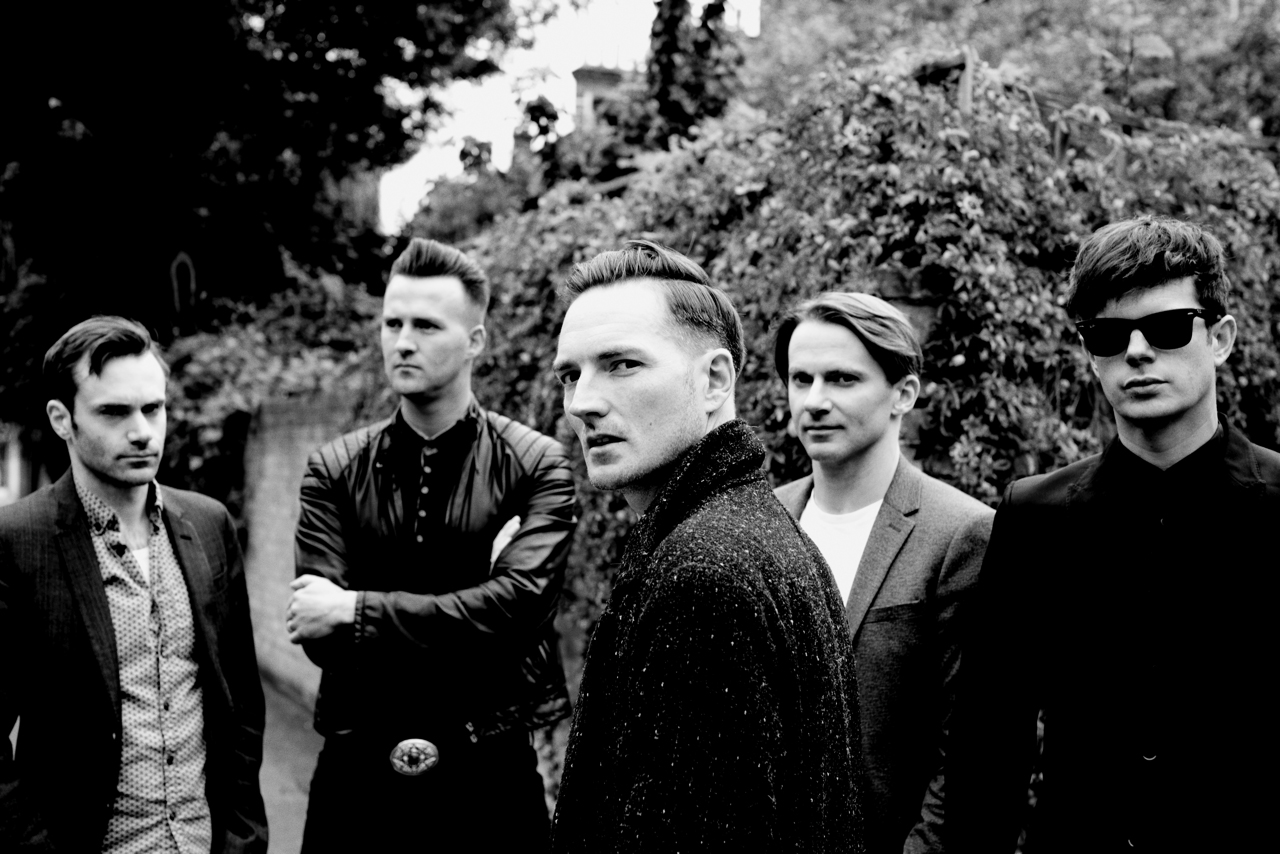
Feeling Good: The Feeling wait for your reaction to the new LP, with Dan Gillespie Sells in the centre

Feeling Good: The Feeling wait for your reaction to the new LP, with Dan Gillespie Sells in the centre

Cool is a word that comes up a lot when you speak to Dan Gillespie Sells, frontman of The Feeling. But he only tends to use it disparagingly.

Cards on the table first. Cool or not, his band have always been hard to categorise for me, despite the fact that they rarely shy away from good old-fashioned pop and rock. They write great hooks and riffs too, so I’m not quite sure why I would hang back in professing my appreciation for this clearly-talented five-piece.

In fact, their debut LP, Twelve Stops and Home, was possibly the last new album I bought on spec, after hearing it played in full in a record store in early June 2006. I already knew two singles – Sewn (released 10 years ago this week) and Fill My Little World – but liked everything else I heard that day, and felt compelled to snap it up. It wasn’t just a ‘front-loaded’ album either – the quality kept coming. There seemed to be a surfeit of potential singles, many of which wouldn’t even be released in that respect.

I put all this to Dan down the phone a few days ago, the 37-year-old multi-instrumentalist and the band’s chief lyricist sat at home in Hackney, East London, doing a few interviews before his bandmates Richard Jones (bass), Kevin Jeremiah (guitar), Ciaran Jeremiah (keyboards) and Paul Stewart (drums) dropped in at the Dog House studio downstairs.

“Well, we ran out of time rather than running out of singles. We just wanted to get on with the next record by that stage! We had the whole record written before we signed a deal. It needed mixing, but it was all done as far as the writing and most of the recording was concerned. By the time we got to releasing the fourth single we were pretty much three years on.”

From the opening, rocky I Want You Now and more daytime radio-friendly Never Be Lonely, that debut LP veered between ‘80s pop and something a bit more ‘street’, albeit ‘70s street. The next track, Same Old Stuff, even reminded me of John Miles’ Music, while there were elements elsewhere across that LP of 10cc, Wings, Supertramp … basically, everything I shied away from but appreciated on the quiet.

What I guess I’m saying – in the nicest possible way – is I couldn’t quite get a handle on The Feeling then, and I’m not sure I can now. They transcended what I felt was alright to like. And rightly or wrongly, they remain something of a guilty pop and rock secret tucked away amid my indie and new wave, and ‘60s r’n’b and soul diet. What’s more, Dan has cited Karen Carpenter, Freddie Mercury and Neil Young as major influences – not an obvious triumvirate in musical inspiration, yet somehow fitting.

I put all this to the man himself, and he at least had the good grace to laugh when I asked if it was considered alright to love The Feeling.

970397_10153917160208825_5439347810610157_n“Basically, we didn’t buy into any aesthetic of cool … in sound or anything! Why limit yourelf? I’ve actually changed my mind a bit on what cool is now, but in those days I was anti-cool. I thought everyone was just faking it. Rather than being fake, growing a beard, fitting into skinny jeans, being like a Strokes soundalike, I decided I liked all this pretty music and wasn’t ashamed of it – I love all those harmonies on Beach Boys and Fleetwood Mac records.”

All the same, it was genuinely surprising when The Feeling went from that first LP to follow-up Join With Us. I don’t know what I expected, but the stonking lead track and single I Thought It Was Over  – like Van Halen doing hi-energy disco – threw me. Yet I loved that too.

“Well, we never wanted to be predictable! We’ve never known what we’re doing. My big influence was always Queen, and with their albums you never knew what the hell they were going to do next and where they were coming from. There was something surprising about the choices. They didn’t give a sh** and there was something I liked about that. Besides, I’m too much of a magpie, too much of a collector. I’m like an archaeologist of musical styles and want to try a bit of everything … probably to our detriment.

“Because we were all over the radio at that time, I just felt everyone would be sick of us. But the truth is that our fourth album, Boy Cried Wolf, was our most critically-accepted record since Twelve Stops and the one that probably sounds most like it. I spent so long running away from that sound, but then thought, ‘Just relax, be yourself!’

“At that point I also started writing outside the band, finding different outlets for my magpie tendencies. And writing for theatre, TV and all that helped me focus on what The Feeling was really all about.”

When I called Dan, I’d only heard the epic Wicked Heart and new single Spiralling from the new record, but have since caught up and can confirm we have another winner, one that neatly follows on from last year’s Boy Cried Wolf. And while there’s no magic formula in the make-up of the tracks, those two recordings I mention proved a great place to start, and Dan’s work on Spiralling reminds me of another accomplished songwriter/musician, New Zealand’s prime export Neil Finn. And it appears that he’s quite taken with the comparison.

“I remember playing a show with Crowded House years ago, thinking those guys know how to write hits and have so many beautiful songs. If I’m put in a bracket with someone like that I’m very happy, because it’s about songwriting for me first and foremost.

“Production and style are important, but always has to be in order to aid a song rather than take it over. If you’ve got good foundations you can go where you want, but a song’s structure can be a beautiful thing and for me it’s the ultimate challenge to write in that genre.”

That doesn’t surprise me. The Feeling may be associated with studio flair, but their songs will always work well stripped down too. That said, their latest long player showcases a proper band sound too, as you might expect from an album recorded in just a few days, largely as a live experience. That approach is most evident on tracks like Raw Deal, a cleverly-constructed colossus of a song driven by Richard’s mighty bass-line. Then there’s the Bowie-esque stomp of Non-Stop American and downright-stonking alt. dance of Alien.

But those who appreciate the band’s more delicate moments have plenty to savour too, tracks like the sparse but haunting piano-led Let It Be Gone, the beguiling Shadow Boxer and slow-build finale Sleep Tight hitting the spot every time. And there’s still that basic ethical principle belying it all.

“When I write a song the process normally involves me and a piano or guitar, and I always feel if a song wouldn’t sound particularly good at a campfire, I need to carry on working on it. That’s not to say all music has to sound good on an acoustic guitar, but I came from an Irish family who travelled around a lot as a kid, encountering a lot of storytelling and people singing songs and parties where people brought instruments and would play and sing.

12SAH_International_Cover“It’s all very well now we’re in the record business trying to sound modern, but the fundamental thing is to be able to sit down and play a song you’ve just written and entertain a roomful of people, even if it’s just you and your guitar.”

As I pointed out before, The Feeling aren’t easily categorised, veering between styles from track to track as far as I can tell.

“We do veer between styles, but it still sounds like a Feeling album because of the guys in the band, and always will – even if we were to try and sound different, as we often do. When we do try to veer away, we’re brought back because we’re these five musicians with an unchanged line-up who’ve always produced and engineered everything ourselves.

“I suppose the one departure we’ve made on this record is not using the piano so much. This time we’ve concentrated on guitar, Hammond organ and Wurlitzer piano rather than my Bechstein I normally write everything on. It was a case of putting the lid on the piano, pushing it into the corner of the studio and seeing what came out of the guitars.

“Also, the influences are more from those ‘90s guitar bands I loved, a sound I don’t think has been done to death. I loved these bands when I was a teenager, seeing them all play. I was lucky enough to live in London, going to the Brixton Academy and The Forum and an indie nightclub at The Dome, Tufnell Park, with my older brother, who got me into all that. That sound’s still there somewhere in my deepest, darkest corner, resonating, and I felt I hadn’t been there for a while, so decided to get the guitar out, be a bit more jangly with it!”

Can’t beat a good bit of jangliness, Dan. So what bands are we talking about here?

“I absolutely loved Blur, and Pulp and Suede. I also liked Shed 7 and girl bands like Echobelly. I loved Elastica and PJ Harvey. There’s something really cool about all that. When The Feeling started out, there was a question of whether we wanted to be a bit more indie. But the indie of 2006 was very different. For me, ‘90s indie was much more melodic and song-based, very much influenced by The Smiths. That’s where I was coming from.”

You mentioned Blur, whose fifth album was called … Blur. So what is it about bands leaving it so late to have a self-titled album?

“Well, we made that decision and only then realised that had become a bit of a tradition – not just us and Blur, but quite a lot of others too.”

I was looking into that actually, but struggled to find other examples beyond the fifth Echo & the Bunnymen album in 1987 (although one friend suggested Metallica’s Black album). Even The Beatles waited until their ninth album before going down the eponymous road.

“Well, some people discount some of those albums, like the early covers album, and reckon it’s really their fifth!”

1287146578_292v38yI can’t see that, but let it go. Besides, I’m not sure Dan has any great conviction in that respect, and he soon moves on.

“For us there was something about getting to our fifth album, figuring out we were being ourselves more than ever. For your first album you’re not very self-aware – you do what you do and it’s all very organic. It takes a while to get back to that, that sense of knowing who you are. I suppose the way we recorded this album, the five of us in a room, was more of an honest portrayal of who we are than anything we’ve done for years.”

This is a half-baked theory, but listening again to the fourth LP, Boy Cried Wolf, the track Rescue has a repeated section echoing Never Be Lonely from the first LP. Was that you coming full circle, setting yourself up for this self-titled album?

“A little. Boy Cried Wolf was definitely a re-emergence for us, having almost broken up at the end of the third album, which really killed us. Our relationship with a major record label was waning and we didn’t enjoy being A&R’d any more. That wasn’t the case with our first album so we couldn’t figure out why we had to be for our second and third.

“Coming to that conclusion allowed us to make that fourth album, getting back to the music we loved for the sake of it again – letting go of the pressure. That was like a reboot for us, and it feels like this album was an experiment in being more truthful to ourselves, not allowing ourselves to multi-track. We kept the over-dubs to a complete minimum other than brass and backing vocals. The rest was recorded live in a room, testing ourselves in the playing and producing.

“When you self-produce you also self-edit. When you’re multi-tracking you can be a little too pernickety at times, without that outside set of ears – making it too perfect. But then people see us live and like the rougher edges, so we wanted to capture that on record. The only way to do that without editing the hell out of it was to ensure we didn’t play on a click, making sure all the instruments spilled on to each other.

“It’s the old-fashioned way of recording! You have a band in a room and put enough microphones out there, making sure they balance nicely. That’s your album! It should be that simple sometimes. And after 10 years with The Feeling and 20 years altogether we thought we might be ready for that!”

Getting back to public perceptions of The Feeling, the fact that this five-piece started out doing session work and individual BAs in commercial music at Westminster gives me the feeling (sorry) that they had a while to ruminate on what would work and what wouldn’t. So why not just go down the time-honoured fashion of growing up in public, making mistakes en route?

“Well, I didn’t do that BA or the session work – that was the lads just getting by. I was broke throughout that 10 years before, getting only a few gigs. There’s nothing wrong with that approach though – for one thing it allowed them to get to London in the first place.”

Taking you back to your schooling (Dan met Richard Jones at the BRIT School in Croydon in 1995), not everyone can name-drop Amy Winehouse and Rachel Stevens (at Ashmole School) and The Kooks (BRIT School) as fellow alumni. How well did he know Amy?

“I didn’t actually. My friend’s brother was friends with her, but we had the same music teachers. I kept in touch with them and they talked about her. She only lived around the corner, and was first at my secondary school then at the BRIT school. But I was about two years before, when the BRIT School started out. All these young whippersnappers came up after us!”

On a personal note, Dan’s campaigning work for gay rights led to Stonewall awards in 2007 as Entertainer of the Year and in 2015 at the final ceremony as Entertainer of the Decade. How was the reaction when he first spoke out on such issues and came out (at least in public)?

MI0003689647“Well, I wish now I’d just enjoyed it all more and not worried about it. Perhaps it made me a little bit paranoid, all the success – having set my stall out as deliberately uncool, hating all the bullsh** and just wanting everything to be honest and open.

“What with that whole smoke and mirrors of showbusiness, when I went to that ceremony I didn’t think they’d pick me, but rather choose someone cool. When I won it, it was like, ‘Bloody hell!’ But this year they gave me another award for my campaigning work, and I was like, ‘I get it! I get it!’ It’s not just about what’s cool.

“When you get outside the music industry, especially outside trendy London and into the real world, you find most people don’t give a shit – they either like it or they don’t. I’ve learned that now, whereas before I was surrounded in this world by desperately cool-for-school human beings with only one judgement value – whether it’s cool or not.”

And now his band are back with a new LP and an intimate six-date UK run to promote it, heading from Glasgow to London, including a sell-out at Manchester’s Ruby Lounge on March 14.

“Yes! I haven’t played there in years!”

It must be nice to be able to play venues that size again rather than just concentrate on the bigger places.

“It made sense. We didn’t want the pressure of a big production show, especially with the way we made this album and recorded it in that grass roots, back-to-basics way. We decided the first, introductory tour would be more like a series of album launches, like the one we did at Oslo, this great little venue close to us in Hackney, road-testing the songs.

“That went so well that we decided we had to do the same in other cities. We’ll still end up playing the hits as well, because that’s what we do, even though there’s less pressure to do a more commercial show. We wanted something more intimate for our fans, who are really keen to hear the new album, seeing us in more of a spit and sawdust setting, seeing how we sound in a smaller room. And that’s exciting for us as well.”

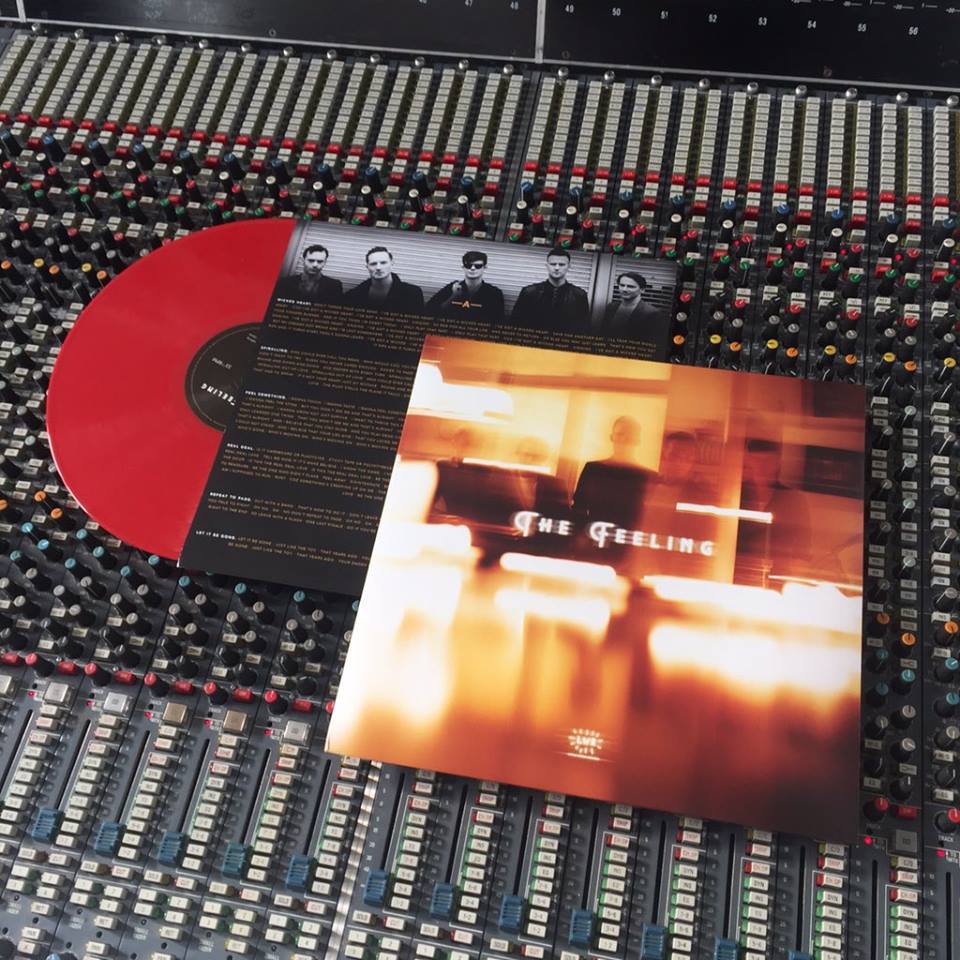
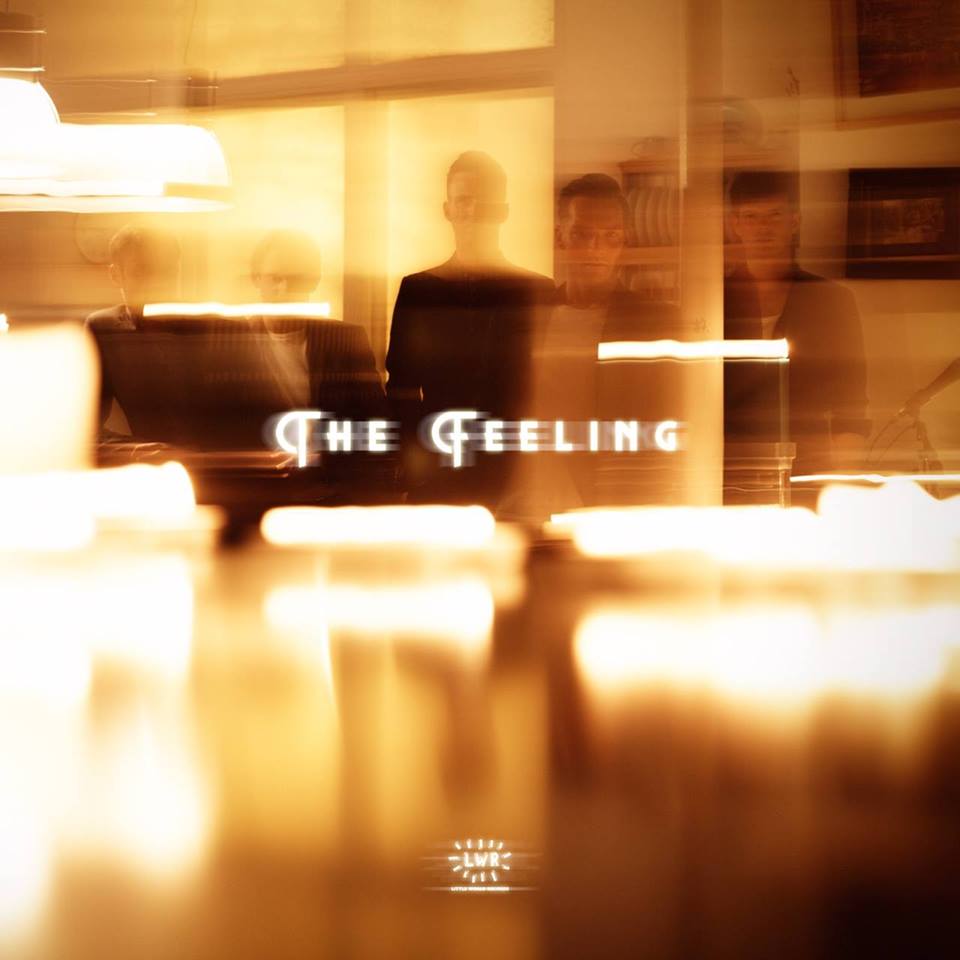
Vinyl Cut: The Feeling's eponymous album, out on March 4th (Photo: The Feeling's Facebook page)

Vinyl Cut: The Feeling’s eponymous album, out on March 4th (Photo: The Feeling’s Facebook page)

For the forthcoming UK tour dates and all the latest from The Feeling, head to their official website, and keep in touch via their Facebook and Twitter pages, including detail of how to get hold of the new album, out on March 4th.

Posted in Books Films, TV & Radio, Music | Tagged , , , , , , , , , , , , , , , , , , | 6 Comments

Singing the praises of Reef’s return – the Gary Stringer interview

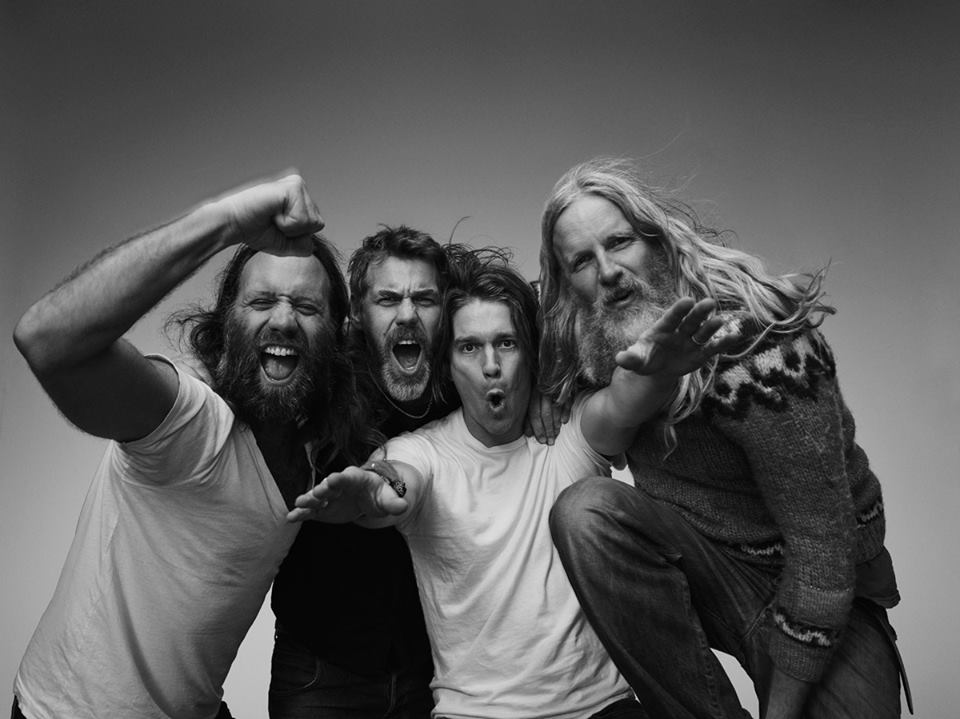
Reef 2016: An eight-legged groove machine heading your way. From left - Jesse Wood, Dom Greensmith, Jack Bessant and Gary Stringer.

Reef 2016: An eight-legged groove machine heading your way. From left – Jesse Wood, Dom Greensmith, Jack Bessant and Gary Stringer.

Gary Stringer was at home in Somerset earlier this week, making last-minute preparations ahead of Reef’s latest UK and Irish tour, which commences tonight (February 25th) at The Hub in Plymouth.

The 42-year-old vocalist is joined by Jack Bessant (bass), Jesse Wood (lead guitar) and Dominic Greensmith (drums) in the band, who formed in London in 1993 and went on to release four studio albums in their first coming, the best-known being 1996’s million-selling No.1 Glow.

Reef, whose current tour takes them all the way through to a Glasgow ABC finale in mid-April, initially disbanded in 2003 but were back again within seven years, their first reunion tour quickly selling out and giving them the belief to keep going.

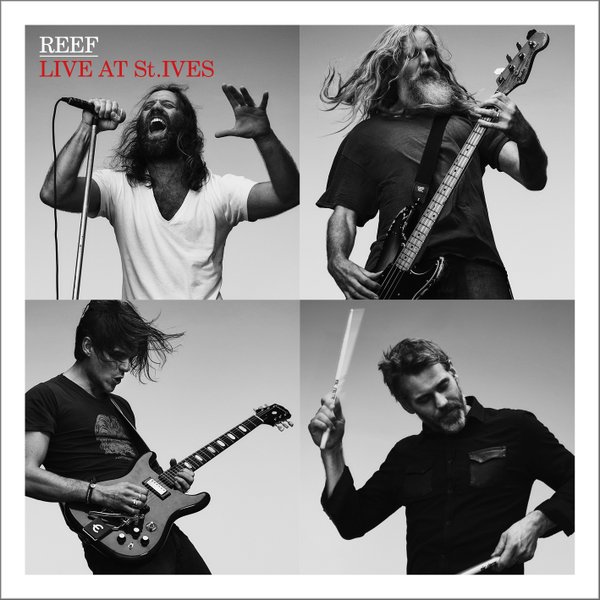
Playing their biggest hit, Place your Hands, on the resurrected Channel 4 show TFI Friday last year sparked further interest, the same single also inspiring a feature with Carrie Grant on BBC 1’s The One Show last October, part of a busy week that also included a two-night stint in Cornwall, captured for posterity on forthcoming LP Live at St Ives. And that album is set for release on March 11th along with a new single, the band’s cover of Clara Ward’s 1951 inspirational gospel hymn How I Got Over.

Born in the West Midlands, dad-of-five Gary – whose children are aged three to 16 – moved to Somerset when he was around five, settling in Glastonbury. He left home at 16 to go ‘chasing around after being in a rock band’, but for all his travels, he’s only around 10 miles from his old patch now.

“I was probably around 13 or 14 when I started singing. I had a group of friends around my age in Glastonbury who I hung out with and one day I remember going round to this house opposite The Riflemans Arms, and there was a drum kit and an amp set up. We were into rock music and metal but never really talked about having a band. But I just started hollering over these guys making a racket – and that’s it, I was hooked!”

When Gary says ‘hollering’, he sells himself short bearing in mind his distinctively-bluesy, soulful, powerful voice. Living on the doorstep of a world-famous multi-arts event proved handy too, having played Glastonbury Festival three times with Reef and twice with his bandmate and long-time buddy Jack as Stringer Bessant, as well as featuring at the legendary Pilton Party pre-event warm-up.

CZ0-IxDW0AA8ILMTalk of all that took us on to discussing several West Country acts, although I surprised myself by not mentioning The Wurzels, instead enlightening Gary regarding former Pilton lad Rodney Allen, the indie singer-songwriter I championed in my fanzine days who went on to join rightly-revered Bristol collective The Blue Aeroplanes.

Meanwhile, for his part Gary brought up his teenage days pogoing along down the front to Somerset-based Cajun/electro-folk specialists K-Passa. But while this was clearly the life for him, it turns out that his initial rock’n’roll dream was not nearly as ambitious as you might expect.

“I remember driving somewhere with my Mum, telling her if I ended up being a musician I’d probably go to bed really late and get to lie-in. As a teenager I was more excited about that!”

You can hear a lot of Gary’s early influences in Reef’s recordings, not least Robert Plant and R’n’B re-interpreters like The Rolling Stones for these ears. Was that what he was listening to back then?

“It was pop first, but I was into the Stones and The Beatles from Mum and Dad’s record collection. Dad was also into The Who, then there was Carole King … all sorts. There was also Adam & the Ants and Madness, going up to Wells market and buying a Harrington.

“But the first music that really hit home was AC/DC. I loved the guitar sound on High Voltage, the first cassette I owned. Rock’n’Roll Singer became like a road map – I wanted to do all the things Bon Scott was singing about! Then I got into Iron Maiden, Black Sabbath …”

It’s funny you should mention Bon Scott, as tracks like Comfort on the first Reef album were kind of what I hoped AC/DC would have been about if they’d taken a more bluesy direction, reminiscent of songs like Ride On.

Reef-Replenish“Bon Scott was definitely my first musical hero – no doubt.”

It wasn’t all about metal though, and other influences soon emerged, not least thanks to his first day-job, aged 16.

“After one term at college I was off. I remember looking out of a window, supposedly doing my homework, going downstairs, telling Mum and Dad there and then, ‘That’s it – I want to be a singer. There’s nothing else for it’.

“I started working at this newsagent’s in Street that had a record section. Reps came in with records, a good way of learning about new music. I remember Massive Attack’s Unfinished Sympathy on 12”. It wasn’t necessarily music I was into, other than going to the odd rave,  but really connected with me. I also discovered blues and soul, from Howling Wolf to Aretha Franklin, realising these guys could sing!”

As it was, Aretha did a blinding version of Reef’s new single, How I Got Over with the Southern California Community Choir back in 1972.

“Credit to our management there, who said the best thing about us was our live show, encouraging us to record these shows in St Ives, getting George Drakoulias – having recorded three of our five records – over from America.

“He flew over on Monday, on Tuesday we did a piece for The One Show and on Thursday went to Cornwall, surfing surfing Porthmeor in the morning before a sold-out show in the evening. We did the same on Friday, surfing Gwithian this time then rocking out again, George introducing us, our friend Bruno Ellingham as engineer, getting two great gigs down. We then travelled all the way up to London, and on Sunday went to State of the Ark Studios, Richmond.

“We wanted to cut this track, and George sent a few cover suggestions. A lot of our new material is guitar-driven and heavy, but he wanted to try something from a different angle. He loved our new songs but felt if we just threw out a four-minute rock song it might not get the traction beyond hardcore fans. This would be a way to let people know we’re back – a stepping stone. Of all the songs suggested, the one that really worked was How I Got Over. We listened to various versions and really enjoyed Aretha Franklin’s version, touched up the arrangement, and away we went!”

Will the live LP and new single be followed by a new studio album?

“There will be, but we haven’t started yet. Hopefully the single will prick everybody’s ears up, and includes two new tracks giving a flavour of what’s to come. We’re set to tour until the first week of April, then have a five-week gap before festival appearances and other shows, giving an opportunity to get these new songs down.”

I’ve already touched on that West Country identity playing a part in the Reef story, and will now take that even further – to Cornwall, with the debut LP recorded at Sawmill Studios on the River Fowey, the band’s 2003 finale happening at Falmouth Regatta, Gary and Jack’s Them is Me offshoot launched at Gwithian, and now that live LP recorded at St Ives Guildhall.

True Growth: Gary Stringer takes a little time out to grow that beard and give bandmate Jack Bessant a run for his money

True Growth: Gary Stringer takes a little time out to grow that beard and give bandmate Jack Bessant a run for his money

“Exactly right! And when I left home at 16 that’s where I went – down to Newquay, although I only lasted about four months, coming back with dysentery and my tail between my legs! But we’d started a band, actually got paid for a residency at the Bowgie, Crantock, and it gave me the idea we might not make a fortune but could at least pay the rent doing music.

“Back then we were chamber-maiding, fruit-picking, surfing, having a great time, but there were four of us in one room and the first day the drummer got a job in a hotel and came back with some Australian dude, so then there were five – it was never going to end well! But I love Cornwall, and it’s been really good to us.”

That certainly seemed to strengthen Gary’s belief that there was a life to be had in music, and pretty soon he was on the road again.

“I’d initially moved to Cornwall around 1991, and when I came back I went travelling for a while, staying in Morocco three months, surfing out there and starting to write properly. I soon had the melody and lyrics for Good Feeling, our first single. When I came back, Jack – who I’d known since I was 16 and had moved to Newquay with us, was off to London to join a music college, so I tagged along.

“That was when we decided to get a band together, and he came up with a riff for Mellow, about my experiences in Morocco, kick-starting the whole thing. We then met Dom, this Devon lad up in London – and Kenwyn was also at the college, although whether he ever turned up I’m not sure!  But we got him in the band and it all clicked.

“Within six months, living together in Isleworth, Middlesex, we put a tape and photos the way of a friend’s sister going out with a guy who worked at a record company. We soon got plenty of rejection letters, from Island, U2’s management and all sorts. Funny thing was that once we got Lincoln Elias at Sony’s S2 interested, taking us to Muff Winwood, all those that had written saying they weren’t interested decided they actually were! But we had a good time with Lincoln and Muff, did a tour and they looked after us. And when we made that first single, Paul Weller heard us and invited us on his Wild Wood tour.”

That included memorable nights for Gary and the band at Manchester’s GMEX Centre, Aston Villa Leisure Centre, and two nights at the Royal Albert Hall … just down the A4 from the band’s Isleworth base.

“Paul was brilliant, coming to see us soundcheck pretty much every night. Behind the fog of smoke you could see him watching. Imagine how that made you feel, this dude you know all about, loving his songwriting and attitude, and there he is – really taking an interest in you. Makes you feel like King Kong!”

MI0000134705Good Feeling was the first of three top-30 singles from Replenish in 1995, followed by four more from second LP Glow, not least top-10 hits Place Your Hands and Come Back Brighter. In fact, that album – also including the anthemic Consideration, just happened to be one of the first CDs this reluctant late convert from vinyl snapped up on release in early 1997.

And while 1999’s Rides (recorded in Los Angeles) and the next year’s Getaway didn’t reach the same sales heights, it was all good grounding as far as Gary is concerned.

“Sure, you want No.1s every time and want people to hear your record and connect with them, but we’d come a long way from playing Bath Moles. We started Glow at Abbey Road, George Drakoulias flying in to cut four tracks with Richard Digby-Smith, who engineered a lot of Free songs and Island artists, including Bob Marley.

“You’re meeting these guys – watching, learning, soaking it all up. You’re not thinking at that point Replenish had gone top-10 so we now needed a No.1. I remember Good Feeling reaching No.24, the record company being a bit down and me saying, ‘You’re joking – we just made the top 30! Put that on my headstone!’ With Glow it went nuts, but I wasn’t thinking about the next career move. We’re just not that sort of band.”

Reef were back to their roots with a harder sound for a fifth album, but as it turned out, that never saw the light of day other than the few tracks that made it on to Together – The Best Of Reef in early 2003. Looking back, was it the right decision to stop later that year, re-emerging somewhat re-energised a few years later?

“Yeah, we could have stayed out touring America for two years after Glow, having already been around the world three times, Europe three times, Australia and Japan twice. But on the third run around America we had the choice of staying or working on a third record, and no one wanted to carry on touring.

“We kicked in to make Rides, holed up in LA for three months, having a great time. After that we went more pop with Getaway, working with Al Clay – a great guy and clever producer. The record company said they’d get us back to LA with George and we signed for a fifth record, doing around seven songs. But that Christmas, 2001, Dom told us he’d had enough. I remember George at the airport, saying, ‘Come back after Christmas and finish the record. But it never happened.”

So what had changed by 2010 to convince you to return?

“We sat and had a curry with our old manager, Tank (Chris Gilks), who told us he’d been contacted by Live Nation. He told us the details, we looked at each other and went, ‘Why not!’ We hadn’t done a Reef gig in six or seven years, but we were ready to go back. Even three months earlier I’d have hummed and harred about it, but at that point in my life it jut felt right. So suddenly, after all we’d done between times, we were back at the party with Reef.”

Even so, it must have been a pleasant surprise that the initial tour was a sell-out.

“You can imagine! The first hurdle was that first rehearsal, but when we got together it was obvious it was going to work. That was a relief. Then that first week of sales made us think, ‘Really? Wow! People actually give a shit!’ But when we stopped it was just on the cusp of all the digital stuff coming in, so we didn’t even have a Facebook page, and certainly didn’t know about Twitter. It had all changed.”

Hirsute Quartet: Reef, 2016 style, live and direct

Hirsute Quartet: Reef, 2016 style, live and direct

Since then Kenwyn has moved on to concentrate on his band, Goldray, replaced by Jesse Wood on guitar. Are you still in touch with your former guitarist?

“Yeah, I haven’t spoken to him this year, but last year we were all together, working on a publishing deal for our back-catalogue. It’s cool, and there are no bad vibes there. After the 2010 reunion we did another tour in 2013 and I decided that if we were going to continue I wanted it to be a creative experience, rather than just playing the old songs. Kenwyn didn’t mind doing the gigs, but wanted to concentrate on his new band, Goldray. But he suggested moving out and letting someone in. And bless him, he told us he’d mentor and help the new guy in.”

That ‘new guy’, Jesse, just happens to be the son of Faces and Rolling Stones legend Ron Wood, which seems to make sense for a band who like to play the same kind of gutsy r’n’b.

“We did auditions, and it was obvious Jesse was the guy. He was perfect. All of those who auditioned were good, but what was special about Jesse was (a) he sang and his style was beautiful, and (b) we even wrote a song with him during the audition. We didn’t do that with any of the others – that was rad!

“It was easy and has been ever since, like a new ball of energy. We’re all sponges, and his musical sponge is full – he’s an encyclopedia of different styles. And when he put a part down for How I Got Over, it was bang on. He sat down, played it, job done!”

As well as his playing style, Jesse – married to TV presenter Fearne Cotton – has also turned heads with his modelling work, bringing me on to the subject of the more hirsute look of Reef circa 2016 – with a fair bit of facial hair judging by the recent photographs and film footage.

“Yeah! Me and Jack are the beardiest. I can’t remember the last time Jack shaved his beard, but every now and again I shave mine off. I’ll roll over in the middle of the night and get it caught under my armpit or something. Jesse gave it a stab too, but Dom never really goes beyond stubbly!”

Reef’s Spring 2016 UK tour: 25th February – The Hub, Plymouth; 26th February – Mr Kyps, Poole; 3rd March – Electric Ballroom, London; 4th March – Factory, Barnstaple; 5th March – Academy 1, Oxford; 10th March – O2 Academy, Bristol; 11th March – O2 Institute, Birmingham; 12th March – UEA, Norwich; 16th March – Rescue Rooms, Nottingham; 17th March – O2 Academy 2, Manchester; 18th March – Fibbers, York; 19th March – Plug, Sheffield; 24th March – Lemon Grove, Exeter; 25th March – Tramshed, Cardiff; 26th March – Engine Rooms, Southampton; 27th March – The Hole In The Roof, Deal; 13th April – Cyprus Avenue, Cork; 14th April – Dublin Academy; 15th April – Belfast Limelight; 16th April – Glasgow ABC

For all the latest from the band, visit their website and keep in touch through social media via their Facebook and Twitter links.

Posted in Books Films, TV & Radio, Music | Tagged , , , , , , , , , , , , , , , , , , , , , | 2 Comments

High Life, high fidelity – back in touch with The Puppini Sisters

Sister Act: The Puppini Siters - from the left, Emma Smith, Marcella Puppini. Kate Mullins

Sister Act: The Puppini Sisters – from the left, Emma Smith, Marcella Puppini. Kate Mullins

The past decade has proved a blast for The Puppini Sisters, this close harmony trio amassing gold and multi-platinum discs, and enjoying famous collaborations with everyone from Cyndi Lauper and Michael Bublé to The Manhattan Transfer.

There have been lots of big nights out too, from Shepherd’s Bush Empire in London to L’Olympia, Paris, The Great Hall of Moscow Conservatory, The Greek in Los Angeles, B.B. King’s, New York, and Glastonbury Festival.

They’ve also experienced a fair amount of TV coverage en route, appearing on The Graham Norton Show, Strictly Come Dancing, Loose Women, This Morning, Big Brother’s Little Brother, Hell’s Kitchen and even Jonathan Creek, as well as a few stateside appearances via the ABC and NBC networks. And now they’re on the cusp of releasing their fifth album (their most independent recording to date) and heading out on their next UK tour.

Last time I caught up with The Puppini Sisters was at the end of 2014, with the girls about to make a festive appearance at The Dukes in Lancaster. They were sat in founder Marcella Puppini’s front room back then, the Bologna-born chanteuse and long-time sidekick Kate Mullins taking turns to respond, sound echoing around the high ceilings to confuse me.

This time I have Kate on her own, so to speak, and start by asking how life with the fairy godmothers of swing pop (the trio completed by 2012 addition Emma Smith after earlier stints in the band from Rosana Schura in 2004, Stephanie O’Brien from 2004-2012 and Terrianne Passsingham in 2012) has changed since our last conversation. And it appears that for the girls have been kept busy behind the scenes of late, having gone down the hands-on crowd-funding line.

“Yes, we just wanted to own our music really, and do what we wanted to, so we’re doing this all ourselves this time, via Pledge Music. We had four very happy albums with Universal but just felt times were changing and felt our fans were really keen to get involved with the project. It’s just such a nice way of doing it, whether there are tunes they want to hear and which songs they prefer, while giving them the opportunity to come and see us and sing with us on the album, live, to help with the campaign.”

And you’re all very social media savvy anyway?

“Something like that – Marcella more than me! I can do Facebook, but that’s pretty much it. But we’ve got a team on that!”

Tre Sorelle: Emma, Marcella and Kate, coming to a town near you, real soon

Tre Sorelle: Emma, Marcella and Kate, coming to a town near you, real soon

While the band has been ‘all guns blazing’ of late to complete the latest LP, which is poised for delivery next month, Kate had just managed to snap up a few days of ‘me time’ in Paris. The French capital has a special place in the heart for the Puppinis, and the band – who just this weekend played a theatre further south, in Agen – have played several Parisian venues in their time, including one which was very much in the international spotlight late last year.

“I went to stay with a friend, who was at the Bataclan when the terrorist attack happened. He was very lucky to get out. I was talking to him about when we played the same venue. There’s a picture of us on stage there. And one of the last shows we played in Paris, marking our 10th anniversary, was also very dear to us, playing La Cigale.”

I wonder how things are at the Bataclan and The City of Light itself, three months on.

“In my friend’s case, he’s been given therapy to try and get through it all. He’s fine – he’s come out of it with a massive sense of positivity, saying how everyone just opened their hearts to him. He did a lot of interviews for the BBC and all over, and people from around the world texted him and emailed him and told him they’d heard him. He’s a lovely man.”

Taking us back a bit, while touching on a French theme again, The Puppini Sisters’ story started in 2004, with Marcella – who met Kate at Greenwich’s Trinity College of Music – taking inspiration from the previous year’s animated cult film, Belleville Rendez-Vous (also known as Les Triplettes de Belleville).

“Have you seen it? It’s really good, quite abstract, with the music incredible, an amazing piece of work, and the man behind that (Canadian composer Benoît Charest) produced our first album.”

That film proved something of a ‘lightbulb moment’ for you, didn’t it?

“I think it was for Marcella … and it got me on board!”

Live Presence: Kate Mullins on stage with The Puppini Sisters (Photo: Yaffa Phillips)

Live Presence: Kate Mullins on stage with The Puppini Sisters (Photo: Yaffa Phillips)

In 2005, the Sisters signed for Universal Classics and Jazz, and the rest is history, or at least a decade’s worth. So to quote the girls’ new single, Is This the High Life for the three of you?

“It definitely is! The addition of Emma to the band had taken us in a whole new dimension to our show. She’s upped our game and is a fantastic musician … and I hope you’re coming to see us! I think also – because we’re in charge of this album – it’s got a very different feel. It all came together very easily, when you haven’t got too many people involved. So it definitely feels like the high point for us.”

So is the new single about that journey? Only there seems to be a little doubt in the lyric.

“It’s a Marcella Puppini special, sort of ‘I can’t believe I’m a millionaire’, but questioning everything. But in the end, actually the high life is everything you have in life, all the wonderful people you have, all these wonderful experiences.”

Along the way, the Puppinis have attracted an impassioned fan-base of all ages – from jazz lovers to nostalgics and retro aesthetes, and equally those drawn in by the style, vivacity and colour (in the girls’ voices and costumes alike). They’ve also been known to take on a few hits and give them a Puppini makeover too, from The Smiths’ Panic to Kate Bush’s Wuthering Heights, Beyonce and beyond.

For me, there’s a feel of the wondrous Kirsty MacColl’s In These Shoes? (from her Tropical Brainstorm album in 2000) to the new single. Maybe that’s a song you could incorporate into your live show.

“I love that song, and it always crops up in my life just when I really need it!”

The new album was produced by Fred DeFaye, with musical arrangements and original compositions by the girls themselves.

“We’ve worked on a few originals between us on this album, and between the three of us share the arranging. Fred’s on our last two albums, and is our engineer. After the first album we felt we knew how to do all this, but what’s good about Fred is he knows us well enough to suggest that wasn’t quite our best, ‘Non! Encore! Do it again!’ He’s fantastic at that.”

Reception Committee: The Puppini Sisters back in 2014. From the left - Emma, Marcella and Kate

Reception Committee: The Puppini Sisters back in 2014. From the left – Emma, Marcella and Kate

The Highlife is out on March 11th (on Millionaire Records, distributed by Absolute), with a typical Puppini Sisters combination of the band’s arrangements of self-penned originals plus classics from the ‘30s to the ‘50s (from Ac-Cent-Tchu-Ate the Positive to Tico Tico) and jazzy reinventions of mainstream hits, including David Bowie’s Changes.

“Yes, we did all these arrangements seven or eight months ago, and Changes is something Marcella’s wanted to do for years. It seems like rather cynical timing, but really isn’t.”

Was Bowie a big influence on you all?

“Huge! Particularly on Marcella.”

Then there’s Cyndi Lauper’s Girls Just Wanna Have Fun? And Cyndi’s a fan, isn’t she?

“Yes, we supported her on the True Colors tour in 2008. She said she’d really like us to be on board. There was also Joan Jett and the Blackhearts, Andy Bell from Erasure, and The B-52’s.

“We all had a 45-minute slot before Cyndi, then we’d all come on for an encore of True Colors. It was brilliant! It was a rolling tour, with bands joining as she went along. We did around eight dates in the USA, and finished at The Greek in LA, a dream come true for me. She’s just an amazing performer and her vocals live are outstanding. Cyndi’s like this possessed little imp running around the stage – a real hero of mine.

“Do you know what, though? She didn’t write Girls Just Wanna Have Fun, and I hadn’t realised that.”

Wasn’t it written by a fella?

“That would bring a whole different meaning to it! But it’s a fabulous arrangement, and I can’t wait for everyone to hear it. I think it’s our best yet.

“Actually, I’ve just checked and it was written by Robert Hazard … so you’re right!”

Buble Rap: The Puppini Sisters harmonise live with a certain Michael Buble

Buble Rap: The Puppini Sisters harmonise live with a certain Michael Buble

Harmonising with Michale Buble on his December 2011 NBC Christmas Special didn’t do the girls any harm, either. And, remind me, isn’t HRH Prince Charles something of a Puppinis’ groupie?

“He sure is! We met him at the Royal Variety Show in 2006 and he was terribly sweet, and had got our debut album, Betcha Bottom Dollar, for his birthday. As he was coming down the line to meet everyone, he had someone whisper in his ear, ‘This is Jim, and he breeds ferrets, and this is Kate, Steph and Marcella, The Puppini Sisters.

“He said (Kate does her impression), “Oh, it’s you! Wonderful that you’re here.  I was given your album for my birthday and I think it’s terrific!’

“There’s a fantastic photo someone sent, taken from behind him. All you can see is Prince Charles’s bald spot and us in front of him with our décolletage out, the light reflecting! But he was terribly nice, and Camilla was lovely too.”

Part of that Puppini charm that turned on the heir to the throne and many more – other than the luscious harmonies, looks and ‘impeccable retro-futuristic fashion sense’, of course – is the girls’ ability to put a swing-spin on songs you wouldn’t expect to hear from a band in their canon – take for instance the Missy Elliot, Sia and Sugarhill Gang covers on the new album.

“It’s been real fun. We’ve been doing this a long time now – coming up to 11 years – and back then it was still underground. Things like post-modern jukebox that are now very current. It’s really nice to see other people enjoying it too. We stuck to our guns and still enjoy it.”

As you hint there, a few close-harmony swing outfits followed in your wake. Do you enjoy the competition?

“We enjoy the compliment – put it that way! I think we’re definitely considered to be the pioneers, and that’s really nice. But it’s so infectious, we’re just chuffed to bits that others are enjoying doing it too.

“And we’re really looking forward to doing a thorough UK tour. It’s been a while since we searched out all the nooks and crannies of the country!”

The tour starts at Gateshead’s The Sage on Thursday, March 3, followed not far off my patch at Lytham’s Lowther Pavilion on Friday, March 4.

The rest of the tour includes – for the North West fans – Liverpool’s Epstein Theatre (Tuesday, March 8) and Sale’s Waterside Theatre (Wednesday, March 9), heading on towards a finale at Dartford’s Orchard Theatre (Monday, March 21), before a later show at Shepherd’s Bush Empire (Thursday, May 18).

Class Act: Kate singing Luck Be a Lady with bandmate Blake Wilner at a garden party in 2010 (video link: https://www.youtube.com/watch?v=_MG41h3Ny1E)

Class Act: Kate singing Luck Be a Lady with bandmate Blake Wilner at a garden party in 2010 (video link: https://www.youtube.com/watch?v=_MG41h3Ny1E)

So what’s the format on this tour? You’ve had some big bands and traditional orchestras behind you over the years. Is your own band travelling with you this time?

“Yes – guitar, double bass and drums, with some solo turns, so you get to hear the individual voices. We all get to play instruments as well – a mini-Puppini orchestra!”

Out of interest, the trio behind the girls are Henrik Jensen (double bass), Blake Wilner (guitar) and Peter Ibbetson (drums). And great value they are too.

The Sisters’ latest press release says, ‘When you start out retro, you don’t expect to become true originals’. But this has never just been about nostalgia, with plenty of originality employed en route.

It was Marcella and Kate at first, with a couple of line-up changes before Emma came along. Does it surprise Kate that suddenly the Sisters are up to album number five? There must have been moments where she doubted that, between that first show at The Amersham Arms in New Cross and now.

“Actually, I don’t think I’ve ever had doubts. I never expected any of this to happen, but always kind of assumed it might, although that sounds weird. When I was at school I always felt I’d get a record deal and I’d go on and do this as a career, and when you’ve got that petulance of youth you think, ‘I’m just going to do it!’

“I don’t think I’ve ever really thought beyond that. We’ve kept rolling, we’ve kept loving it, we’ve re-invented ourselves, and that’s always kept it fresh. We’ve added more people to the Puppini family and taken in more influences. It keeps it entertaining for the fans as well!”


High Life: The Puppini Sisters, enjoying life to the full in 2016

High Life: The Puppini Sisters, enjoying life to the full in 2016

The fairy godmothers of swing-pop drop by, a December 2015 writewyattuk feature/interview with Marcella and Kate of The Puppini Sisters, can be found here.

The Puppini Sisters are at Lowther Pavilion, Lytham, on Friday, March 4, with ticket details from www.lowtherpavilion.co.uk/, the Epstein Theatre, Liverpool, on Tuesday, March 8 (via the box office on 0844 888 4411 or http://www.epsteinliverpool.co.uk/whats-on/the-puppini-sisters–the-highlife-tour.aspx) and the Waterside Theatre, Sale, on Wednesday, March 9 (www.watersideartscentre.co.uk).

For the rest of their dates and all the latest from The Puppini Sisters, head to their website here and keep in touch via their Facebook and Twitter links or their YouTube channel. And for details about their Pledge Music campaign and how to get involved, try this link


Posted in Books Films, TV & Radio, Comedy & Theatre, Music | Tagged , , , , , , , , , , , , , , , , , , , | 2 Comments

The Everlasting Yeah – The Lexington, Islington

Hoodlum Angels: The Everlasting Yeah, live at The Lexington. From the left - Brendan Kelly, Damian O'Neill, Raymond Gorman (Photo copyright: Kate Greaves)

Hoodlum Angels: The Everlasting Yeah, live at The Lexington. From the left – Brendan Kelly, Damian O’Neill, Raymond Gorman (Photo copyright: Kate Greaves)

I’d waited two and a half long years to catch The Everlasting Yeah (four-fifths of That Petrol Emotion, for those out of the loop) live, but there was a worry at one stage last weekend that I wouldn’t even get to North London in time for their latest, fairly rare appearance.

I was certainly up for the trip, down for the weekend from Lancashire, and suitably buoyed by a Saturday afternoon FA Trophy win for my beloved Woking FC, with my fellow former London gig regular Alan in the driving seat as we headed up to the capital, all set to relive old times.

If anything the evening traffic ‘up town’ seemed worse than ever, but having moved away from the South East in 1994, there was a nostalgic feel to a journey once so familiar, even if several London landmarks have since changed or been substituted. First, up the A3 from Al’s gaff in Guildford, beyond the Kingston bypass to the Robin Hood roundabout (not a roundabout for 20 years now, I gather) and in and out of Wandsworth, the sound of Squeeze’s Cool for Cats playing in my head. With benefit of hindsight, we might have headed off via Roehampton and Barnes to cross Hammersmith Bridge. But never mind, our chosen route at least allowed this passenger a chance to see what they’ve done to the big city in my absence.

We ploughed on until we joined the South Circular, joining York Road towards Battersea, wondering what became of the old Chopper perched on a pub. By now you could almost smell Old Father Thames, Clapham Junction not far off to our right and Squeeze still serving as my earworm. On we went, past Pink Floyd’s power station to Nine Elms Lane, close to the long-gone railway shed where my Dad worked the shovel to as a steam loco fireman six decades before.

Many a time in the past we’d have headed to nearby Brixton or, closer still, Kennington Cricketers, that long-lost venue in the shadow of the mighty gasometer overlooking The Oval, seeing everyone from Wilko Johnson and Geno Washington to That Petrol Emotion themselves back in the day. But on this occasion we held our nerve, taking the Embankment, not tempted by the Vauxhall, Lambeth or Westminster crossings, comparing Britain’s busiest railway station then and now while thinking of Ray Davies’ Terry and Julie on this not so chilly, chilly evening as we headed over Waterloo Bridge, across that dirty old river.

From, the south side to the north side (The Yeah’s New Beat On Shakin’ Street now on the mind) we somehow missed the Strand underpass but quickly found Holborn, a diversion around Bedford Place not deterring us from our goal, although time was ticking on, furtive glances at the time display on my phone becoming less subtle. But pretty soon we’d hit Euston Road, taking in Kings Cross and St Pancras, albeit with no time for a respectful nod to Betjeman. Pentonville Road was now in sight, and for all the changes I was thankful we could still park off-road after dark in these parts, as we legged it to The Lexington.

I could have been hurt by the fact that the burly bouncers outside saw me as no threat, but I was pleased to get straight in, wandering past a busy cloakroom attendant and up an  ominous staircase. Again, I might have been irked that no one seemed to want to know if I had a ticket. I didn’t actually, but I did have a booking reference to share. No one was bothered either way and we were soon necking bottles of real ale in a packed room (and it’s somewhat ironic that two days after narrowly missing the Flying Scotsman in Lancashire, I was quaffing a beer named in its honour, 200-plus miles south).

En route, I worked out that the last time I saw a band up in town was more than a decade ago, a trip to The Garage, Highbury Corner – barely a mile away – to see reformed idols The Undertones, one of many such pilgrimages over the years to see Derry’s finest and the related bands that followed, most during a golden 10-year period before my move North. And as it turned out it was seeing ‘Tones guitar idol Damian O’Neill on stage on this occasion when I knew for sure I was in the right room.

Night Lights: The Lexington (Photo copyright: http://www.thelexington.co.uk/)

Night Lights: The Lexington (Photo: http://www.thelexington.co.uk/)

I’d seen mention of a 9pm ‘prompt’ start, but Dee and fellow six-string supremo Raymond Gorman were still doing technical things with gaffer tape alongside June Brides trumpet legend and TPE/TEY man-mountain roadie Big Jon. We didn’t have long to wait though, and from show opener Myself When I Am Real – a new offering – it was like old times, comparing favourably to so many halcyonic early TPE nights out in the capital, from the nearby Pindar of Wakefield to the Enterprise, Chalk Farm, the Boston Arms, the Sir George Robey, Bay 63 … before word spread and less intimate experiences followed.

How long the band were with us last Saturday I can’t say, but from A Little Bit of Uh-Huh & A Whole Lotta Oh Yeah and (Whatever Happened To the) Hoodlum Angels onwards we were treated to every solid gold nugget from debut LP Anima Rising plus three more new tracks, only one semi-familiar, Hurricane Nation, reworked here to great effect. There was also an inspirational Whatever You Do, Say Nothing and life-affirming penultimate number Dylan 65, all teasing indications that part two of The Everlasting Yeah story will be every bit as thrilling.

I don’t think I’d be over-cooking it to say that for each song I could sense the nerves emanating from the stage, Raymond bearing his soul among friends, at times suggesting his front-of-stage craft doesn’t come easy – as if addressing the class for the first time. But the passion was never questioned and confidence increased across the board from all four band members as the evening built, leaving us in no doubt that they were enjoying the ride as much as we were.

The casual observer might find it difficult to see how Damian – for all his six-string flair – is just one-quarter of the equation. Knowing his history, they’d expect him to lead at this stage of the game, nearly 40 years after his prime employers so memorably burst upon the scene. Instead we find him seemingly content, chipping in with occasional backing vocals and that esteemed fretwork. Don’t get me wrong though – that’s not playing down his role. This is a true collective, the embodiment of Aristotle’s line about the whole, the sum and its parts. What’s more, here’s a four-piece clearly easy in each other’s company and not obviously missing Steve Mack. It’d be nice to see him return, but I quite like things as they are. Besides, it‘s a good thing (such a good thing) they do.

Final note on Damian – he gives me hope. He’s got a few years on me, but looks as young and vital as ever, not subject to the added pounds of many of us out in the congregation, every bit the cool bloke who helped turn me on to bass and guitar in my teens. And long may that continue.

Harking back to that team ethic, I tend to see Brendan Kelly and Ciaran McLaughlin as the midfield powerhouse, providing the engine room fuel that allows those neat touches on the flanks from both Dee on the Yeah right (yeah, right) and Raymond on the left wing. And all four were in fine voice, those old Derry choirboy harmonies to the fore.

I mentioned Dee’s sense of cool, and there’s seemingly-effortless vitality from Brendan too at inside-right (yes, I changed the formation, but this is no static set-up), and a playing pose that defies swagger. He’s never cocky though, particularly when voicing fears that he was playing one song while his team-mates had moved on to another. We certainly never noticed. I can’t put a finger on his bass demeanour, but it’s somewhere between (the far less mobile) Bill Wyman and low-slung behemoth Peter Hook. Put simply, he owns that bass, that stage and that audience at times, while expertly trading those close harmonies with the other three.

Assured Harmonies: Raymond Gorman and Ciaran McLaughlin in action at The Lexington (Photo copyright: Kate Greaves)

Assured Harmonies: Raymond Gorman and Ciaran McLaughlin at The Lexington (Photo copyright: Kate Greaves)

That leaves Ciaran, the key to it all really, giving everything from behind his drum kit yet somehow finding more, not least through that impassioned falsetto in support of his left-hand man Raymond. And just when it all gets to a point of being emotionally over-wrought, in this case in the light of a storming All Around The World, he gives us an assured lead vocal on the heart-searingly wondrous Everything’s Beautiful when you’d expect him to be away for a quick lie-down. Glorious.

I like The Lexington. It’s got character and a touch of ramshackle quality and smallness that ensures a feeling of intimacy, even if there was at least one abusive idiot at the bar – nothing to do with the band’s clientele – out to darken the mood. The sound was great too, the only blemish via the monitors on stage, judging by a couple of slight off-key moments between guitars and vocals. It made it all the more raw though, any slight gremlins quickly ironed out.

I’ve said it before in relation to this band, but while I’ve long since championed the succinct three-minute song, I can’t for the life of me think where I’d cut back on any Yeah track, even though you’d need a shoehorn to get most of the songs on to a 12” single. I guess this is director’s cut rock’n’roll, complete with added unseen scenes. Perhaps I should hold Can responsible.

One thing’s for certain, The Yeah to a man seemed to relish this opportunity to share their rehearsal space. Again, that’s not being patronising – think of it more as our unique chance to be in on the next creative, collaborative period of this outfit’s existence. Mind you, while we knew at least seven of the songs well, I’d be hard pushed to work out which to drop as the repertoire grows, show closers Taking That Damn Train Again and The Grind proving a perfect finale.

For all the anticipation of finally seeing The Everlasting Yeah, I wasn’t quite sure what to expect, after living off the fruits of their stunning album for at least 15 months. But the new songs suggest a fresh helping’s on its way. There was no brash statement of intent as to what comes next, and no talk of major breakthroughs or wider critical acclaim, but as Raymond put it – proffered as half-question, half-statement – it all seemed to go pretty well this time, didn’t it? Yes, it did, and I’m looking forward to the next chapter.

Soon enough, we were away, heading towards the Westway out of town. Well, if it’s good enough for The Clash … A detour followed through leafy Barnes and beyond, our latest great night in The Smoke over and this punter fired up and all set for his next visit – hopefully not too far ahead.

997047_471064599702314_4521807066013059699_n-1For the writewyattuk verdict on Anima Rising, head here. For a November 2014 interview with Damian O’Neill try here. And for the first instalment of a three-part August 2014 interview with Raymond Gorman, head here.

Meanwhile, to snap up a copy of Anima Rising, follow this link

Posted in Music | Tagged , , , , , , , , , , | 5 Comments

Meeting Himself, coming back – the Gilbert O’Sullivan interview

Matador Able: Gilbert tries to convince us three is allowed on the cover of his latest album

Matador Able: Gilbert tries to convince us three is allowed on the cover of his latest album

According to my battered copy of British Record Charts 1955-1979, Gilbert O’Sullivan sold more UK singles than any other solo male artist in 1972, seeing off the likes of fellow top-10 acts Michael Jackson, Elvis Presley, Donny Osmond, David Cassidy and Elton John.

In fact, he saw off all bar one of those artists the following year too. And when it came to albums, Cat Stevens and Rod Stewart were the only solo blokes who sold more in 1972, while only David Bowie outsold him in 1973.

While those sales started to fall off by the mid-’70s, this Irish-born singer-songwriter – real name Raymond Edward O’Sullivan – never lost the ability to write great songs and snappy lyrics. And some 45 years after stop-you-in-your-tracks debut single Nothing Rhymed cracked the UK top 10 in late 1970, he’s getting plenty of airplay with his latest single, No Way. What’s more, on February 19th, he’s also the star of Radio 2’s Friday Night Is Music Night, performing many of his hits and songs from 2015’s Latin ala G! with the BBC Concert Orchestra.

He may never have been hip, but Gilbert, who has two grown-up daughters and has been based in Jersey since the mid-1980s, continues to be regarded with tremendous affection, his songs loved around the world. The 69-year-old’s not one to stick in a musical rut either, with 2015’s Latin ala G! a prime example, his latest album recorded in Madrid with Spanish musicians.

“We spent three weeks in a studio there, and had a great time. It made sense to give it that Latin flavour, working that way.”

Have those Latino rhythms always had a hold on you and encouraged you to Get Down?

“Well, for want of a better word I write pop songs, so if I write a ballad it will be approached recording-wise in a certain way. You pick the songs you’ve written which sort of work in a rhythmic way, knuckle down and do it. In this particular aspect, I wanted to do an album based on my love of two albums Peggy Lee made in 1960.”

It’s almost 25 years ago since Gilbert worked with the iconic US jazz singer, who died in 2002, recording the quirky Can’t Think Straight together. Was that a major career highlight?

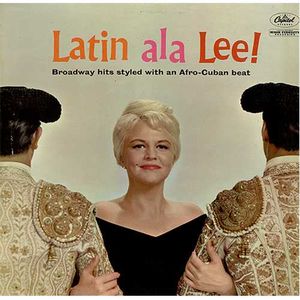
Iconic Figure: Peggy Lee's 1960 album inspired Gilbert's 2015 cover art tribute

Iconic Figure: Peggy Lee’s 1960 album inspired Gilbert’s 2015 cover art tribute

“Yes, it was the first duet I’d ever done and at the time we approached her, I didn’t want to duet with a contemporary artist. I liked the idea of approaching such an iconic figure. She liked the song, and we went to New York and I had it filmed. In fact, on recent tours we’ve shown that video. You have her singing on screen and I sing my part live.”

And in typical – if there is such a thing – O‘Sullivan style, it’s not the obvious high-profile duet – it’s a bit off-the-wall.

“Yeah, it’s unique. I’ve always considered that as a songwriter you learn your craft by listening to great songs, and the greatest female interpreters for me are Peggy Lee and Ella Fitzgerald, and arguably the greatest male interpreter is Frank Sinatra.

“Among all my Beatles, Stones and Searchers records in the 1960s, I had albums by Ella singing Cole Porter and Peggy singing the great standards, plus her two Latin albums, Latin a ala Lee and Ole a la Lee. The nice thing about Latin a la G is that we were able to reproduce her album cover, but with me in the middle of two female matadors, a nice tribute.”

Gilbert’s initial break came late in the ’60s, when he sent a demo tape to Tom Jones’ manager Gordon Mills, his first hits and a successful debut LP, Himself, following and 1972’s Alone Again (Naturally) sealing his fame. That memorable 45 topped the US charts for six weeks, bringing three Grammy nominations, and its artist soon had his first three UK No.1s, Clair, Get Down and LP Back to Front. 

Major sell-out UK and US tours followed, and in 1974 there was a third Ivor Novello award, going on to sell millions and win various other awards. So what’s most important – the Ivor Novellos, the gold discs or the fact that the radio airplay for the new material’s still there all these years on?

“It’s always nice to be awarded accolades, but the key to your future is pretty much how your music today is accepted. When you get extensive radio airplay for a new track when people assume you’re either dead or retired, rejuvenates you. You get people writing to you, calling radio stations, DJs saying, ‘I didn’t realise this guy was still around!’ But primarily my whole thing with success is around the writing of a song. The time I take to come up with a melody then a lyric – if I achieve that I’m happy, that for me is what I consider real success.”

You drew on something there that I wanted to bring up, somehow. There must be a feeling that you can’t assume there will be lots more albums to come, particularly after the January we’ve had, losing so many great artists, all your kind of age.

“I don’t look upon it that way. You accept the age you’re at, but what it did bring to mind was the song I wrote after John Lennon’s death, Lost a Friend. I wrote that about Lennon and Elvis Presley, and what I found interesting with Terry Wogan as much as with David Bowie, was hearing people saying it feels like we’ve lost a friend.

“We did a concert in Dublin’s Church of Ireland cathedral, and I sang that in view of the deaths of Bowie, Glenn Frey and Terry Wogan. The song kind of captures that. But in general terms, you’ve just got to get on with it. People are dying all the time. It’s just that the ones who are celebrities get in the newspapers.”

Debut Album: Gilbert O'Sullivan's 1971 album, Himself

Debut LP: Gilbert O’Sullivan’s 1971 album, Himself

There have been many cover versions of your songs, most recently by Neil Diamond, Diana Krall and Michael Buble. And I was reminding myself of Rumer’s We Will yesterday. Have you a favourite?

“Every cover! My current favourite is actually by a heavy metal band in Japan, a 100mph version of Alone Again Naturally – the most ridiculous thing you’ve ever heard! But it’s an honour when people cover your songs, even if it veers way off!

“Rumer’s version of We Will was very interesting, as it’s a very English Catholic song. Actually, Andy Williams in the mid-‘70s rang me and said he wanted to record We Will, but needed to change a line because he didn’t understand what it meant, the line, ‘I bagsy being in goal’. That’s a very English expression, so I allowed him to!

“That’s the thing about being an English songwriter. I’m Irish by birth but in the tradition of Paul McCartney and Ray Davies. That’s where all my background stems from, having grown up in Swindon.”

You’ve previously mentioned The Beatles and Bob Dylan as major influences, so it makes sense that Ray Davies had an impact too.

“And he was extremely prolific. You learn from everyone, and he was a great songwriter. Arguably the stuff he was doing in the ‘80s and ‘90s less so, but in termsin terms of Waterloo Sunset and all that …

“He even wrote a song for Peggy Lee, I Go To Sleep, and it was very unusual in the mid-‘60s, even with The Kinks’ success, to get songs covered by people like Peggy. It was the same when Ella Fitzgerald did Can’t Buy Me Love, which kind of made it into a standard.”

I’m reading a great biography of the Small Faces at the moment, while I interviewed Mick Avory from The Kinks last week, and Colin Blunstone of The Zombies a few weeks before. And it’s struck me that all those artists are around your age, yet you had to wait longer for your breakthrough.

“Well, I was around! In 1967 I was hustling, going to Denmark Street to Don Arden’s office like the Small Faces, looking for my first recording contract, 19 or 20, getting my mother to sign my first contract as I was under-age.

“I had three years of apprenticeship, writing after work, creating this image, hiring a Charlie Chaplin jacket from Berman’s, the theatrical costume house. So none of that bypassed me. The difference between me and everybody else was they had long hair, image was a dirty word and there was this guy with a pudding-basin haircut, breaking the mould!

Following On: Gilbert's 1972 best-selling LP, Back to Front

Follow On: Gilbert’s ’72 best-selling LP, Back to Front

“It would have happened earlier if I was prepared to compromise and look like a ’67 artist, embracing flower power and all that. I was right in the middle of that. Every record company person and management figure involved with me didn’t like how I looked. But I had this bee in my bonnet. I knew I could write good songs, and that was the backup to just push on with this image.

“Cat Stevens is a barometer for me. His first success was with Mike Hurst, who I went to see with an early demo. He wanted to do something very quickly. I panicked, and walked away. It took me until 1969, meeting Gordon Mills – who also didn’t like how I looked – to get that break. If I’d looked the way students looked then, I’d have probably sold far more records. Mind you, I’m not sure if you’d have wanted to walk around a campus with a Gilbert O’Sullivan album rather than one by James Taylor! But I’ve no regrets, whereas I would if I had compromised.”

Despite a vast catalogue of songs and huge sales across the decades, does it irk you that you’re seen first and foremost as a 1970s’ artist? You’ve made some great records since. Take for example 2003’s Barking up the Wrong Tree or What’s It all Supposed to Mean?

“Well, it’s all about songwriting, and you mention two songs that are very close to my heart, and What’s It All Supposed to Mean covers areas we all deal with. That goes back to what I was saying about having finished those records, without recording them, that to me is the success, because that’s the only thing I have control over. Once it goes to a record company then the marketplace and it’s decided whether you’re going to get any airplay – that’s something you’ve no control over, and neither should you.

“So I don’t mind being categorised, but if we go from the ‘70s through to where we are now, having material that seems to get through to people, I’m really happy.”

Early singles like Nothing Rhymed and Alone Again Naturally remain as powerful to this day. You must have heard many personal stories about the impact they had on others. The latter, for instance, immediately takes me back to my Dad’s funeral, having somehow held it all in for a couple of days only to hear that on the radio as I drove home, knowing full well before a certain verse came that it was going to send me over.

“I never get tired of playing those songs, and once you’ve played them, they’re no longer yours. They belong to people like yourself. You can’t be dismissive of that and go through the motions. However many times I perform those songs I put my heart and soul into them.

“Actually, most people assume Alone Again Naturally was based on a real situation, but a good lyricist has to have a good understanding of those situations, and that allows me to go into an area and write about it in a genuine way.

“It astonishes me when I get people remarking on those songs though, and get letters to that effect. It goes to show the power of music.”

On a similar note, I was wondering how many women called Clair, born in the early 70s, have since introduced themselves and told you their story.

“Absolutely! And when that happens I find it fascinating.”

Swindon Original: Raymond O'Sullivan's mentor, Supertramp-bound Rick Davies

Swindon Original: Raymond O’Sullivan’s mentor, Supertramp-bound Rick Davies

In your Swindon Art College days, you worked with Rick Davies (who went on to form the mega-successful Supertramp). Were you confident you’d both make it?

“Rick was four years ahead, so when I finished my first year he’d just left, but he’s a brilliant musician and we got on so well together. His mother owned a hairdressing salon and he had the attic, with a drum kit and keyboards up there. We got on straight away when he formed Rick’s Blues.

“He was an original, and was into things I wasn’t. As a populist, I’d take him up a Beatles album and play him Roll over Beethoven and he’d say, ‘That’s okay, but listen to the original!’ He’d play me Bill Doggett and really weird American stuff. He was an absolutely brilliant drummer too, and I went on to play drums as well as sing in his band.

“We went to London to record my songs, and did a talent show in Swindon, again with my songs. I was the one coming up with songs that could move us forward, whereas he was writing songs very similar to those he did for Supertramp, where Roger Hodgson wrote the commercial songs while Rick wrote the album tracks.

“Both of us felt the band could go professional, but the others had apprenticeships and were worried about stepping out. That’s when Rick decided to go his way. He needed to be in a band, while I decided I needed to go on my own.”

Could your graphic design work at the time ever have become the main career?

“I don’t think so. I went to a few interviews for agencies, moving to London, but I was going for jobs just to pay rent to allow me to write songs and was determined that would happen.”

Do you think your musical heritage came from your Irish roots in Waterford?

“Again, I don’t think so. We left Ireland when I was seven so I have no memories of that period. All my musical learning stemmed from growing up with Radio Luxembourg and the BBC Light Programme while living in Swindon.”

Do you remember your first year in this country, in Battersea, South West London?

“I remember it slightly. It was just one year. Dad was in Swindon, going on the housing list, while my mother worked in Hanwell Court as a waitress, where the rich people stayed. She just had a bedsit and my sister and I had a few months there until Dad got our council house. I remember Mum coming back at 10 at night with some amazing food left over.”

Himself Again: Gilbert O'Sullivan, all these years on, sans piano (Photo: Jon Stewart)

Himself Again: Gilbert O’Sullivan, all these years on, sans piano (Photo: Jon Stewart)

Let’s move on to the mid-70s and the law suit against Gordon Mills that more or less put your career on hold until the mid-‘80s. It must have been a frustrating period for you, but that action and the 1991 litigation against rapper Biz Markie (for sampling Alone Again (Naturally) without permission, Gilbert’s victory setting a new benchmark for protection against copyright infringement) led to major test-case wins for artists’ rights, which is something else you can be proud of.

“Well, it wasn’t what I set out to do. I never took Gordon Mills to court for money, but he promised me an interest in my songs in 1970. At that time writers were being offered their own little companies within major companies, giving them interest in publishing, as opposed to just the writer’s share. That was a new phenomenon, offered to me by April Music, my publishers from 1967 through to 1972.

“When I told Gordon this, he said, ‘If you’re successful, I’ll give it to you’. Throughout the early ‘70s with all the success I was having I would remind him and he’d say, ‘Don’t worry, you’re going to get it’. I think he might have meant it, but it kept slipping his mind. So when we broke up, acrimonious as it might have appeared, I just felt it was a gentlemanly thing.

“I wanted to work with other producers and felt that could lead to more success, working with people like Tom Dowd, who produced Rod Stewart. Because he wouldn’t agree with that, I had to decide either to leave things as they were or move on. So we shook hands and as I left I asked, ‘Do I still get the interest in my company?’ and he said, ‘Yes, of course, go and see the managing director of the company on Monday’. I did, but by then news had got out and they basically told me to ‘f-off’! I left the building, not knowing any lawyers, but I knew someone, Gary Davidson, who put me in touch with his father’s lawyers. But when you take on a court case, you open a whole can of worms.

“I wasn’t trying to set a precedent, but I guess if something good comes out of it for other people, it’s worth it.”

That lawsuit finally ended in O’Sullivan’s favour in 1982, the court describing him as a ‘patently honest and decent man’ who had not received a just proportion of the vast income his songs had generated, after prolonged argument over how much money his songs had earned and how much of that money he actually received. He was awarded £7m in damages, but the court battle had put his recording career on hold. In 1980 he returned to his old label, CBS, but released no new material between 1983 and 1986. However, he kept on working away at the piano behind the scenes.

“Yes, I never stopped writing during that whole period of litigation, although there were songs like You Don’t Own Me that could have reflected on my relationship with Gordon and all that.”

Naturally Alone: Gilbert O'Sullivan proves that one can be company too

Naturally Alone: Gilbert O’Sullivan proves that one can be company too

Bringing us up to date, singles like No Way and the quality of the Latin a la G! LP suggest this artist remains as inventive as ever, other album highlights including his duet with London-based, Dublin-born artist Ayala on ‘I Guess I’ll Always Love You. And there are many of those sharp O’Sullivan lines and hooks peppered throughout to suggest he’s still on top of his game. So is it fair to suggest he remains prolific?

“I’ve never been unprolific! It’s all about discipline, that mentality of sitting in a room. It was a big room to start with, but then I got my stepfather to put a wall in, so it’s just big enough to hold a piano. That’s where I do all my writing, and it remains a fascinating process. Although I’m now 69 years of age and – touch wood – in reasonably good health, as a songwriter I’m still that 21-year-old, hustling.”

You clearly still have that hunger.

“Yes, and as long as I have that, I’ll continue and put out albums, and get out there and perform.”

So is the next album on its way?

“I think next year. This year is primarily promotion for this album, and will take us to Japan, American and Europe and the UK.”

Then there’s the forthcoming show with the BBC Radio Concert Orchestra at London’s Mermaid Theatre.

“Yes – a 60-piece orchestra – that’ll be interesting! For the first time I’ll be able to do two songs from 1995’s Every Song Has Its Play and Bobby Davro will be playing Showbiz with me. It’s very theatrical and I’ve never done those on stage before. They require those big orchestras to work.”

You’re also taking your regular touring band on a string of UK dates, including – my excuse for talking to Gilbert – Preston Guild Hall next Sunday (February 21).

“Yes, we now do Ooh Wakka Doo, and I like to change the words. For instance, ‘Up in Bradford a chap called Radford’ becomes ‘Here in Dublin a chap named Rudman’ So who knows who will turn up in Preston and make himself known!”

For all those records you’ve sold over the years, is there a specific album or track you think never got the kudos it deserved?

“I’d never say that. If I finish a song, record and release it, I’m really happy with it. But there are songs with a life of their own. Go back to 1970 to arguably my most popular song – almost like a signature tune for me – Matrimony. That was never a hit. How unusual is that? That puts it into perspective.”

Finally, any advice for younger singer-songwriters trying to make their way into the industry today?

12341564_778804072224009_7378803488827624440_n“You have to be really determined, and don’t come to be telling me you’ve written hundreds of songs. That doesn’t impress me at all. Come to me and say you’ve got one song out of the many you’ve written which might be good. And make sure you’re doing it for the right reason.”

Gilbert O’Sullivan is at Darlington Civic (February 15th, 01325 486555), Buxton Opera House (February 16th, 01298 72190), Dartford Orchard Theatre (February 18th, 01322 220000), Liverpool Philharmonic (February 20th, 0151 709 3789), Preston Guild Hall (February 21st, 01772 804444), St Albans Alban Arena (February 24th, 01727 844488), Cheltenham Town Hall (February 25th, 0844 576 2210), Huddersfield Town Hall (February 28th, 01484 221900), and Birmingham Town Hall (February 29th, 0121 345 0600). For more tour dates and all the latest from Gilbert, visit his website here


Posted in Books Films, TV & Radio, Comedy & Theatre, Music | Tagged , , , , , , , , , , | 6 Comments

Reliving The Kinks’ golden years – the Mick Avory interview

Out There: The Kast Off Kinks. From the left - Mick Avory, Ian Gibbons, John Dalton, Dave Clarke.

Out There: The Kast Off Kinks. From the left – Mick Avory, Ian Gibbons, John Dalton, Dave Clarke.

He may have been outside The Kinks for three decades now, but Mick Avory was there when it mattered, overseeing a happening 20-year period with this most quintessential English outfit.

While it was his difficult relationship with guitarist Dave Davies that led to Mick’s 1984 departure, he‘s remained in touch with both Davies brothers and for the last two decades has played with offshoot band The Kast Off Kinks.

He’s in good company there too, fellow personnel including John Dalton (bass/vocals, with The Kinks in 1966 and 1969-76), Ian Gibbons (keyboards/vocals, with The Kinks 1979-96, still with Ray Davies) and Dave Clarke (guitar/vocals, formerly with The Beach Boys, Noel Redding and Tim Rose).

What’s more, the band resumes its on-going UK tour tomorrow night at Preston’s Charter Theatre (Thursday, February 11th), where you can expect many of the big hits, from All Day And All Of The Night and You Really Got Me through to Dedicated Follower of Fashion, Days, Sunny Afternoon, Waterloo Sunset, Lola and later hit Come Dancing.

Born in Hampton Court and now based in Kew, Mick’s remained true to his South West London roots. In fact, for all his travels over the years, he’s less than 10 miles from where he started in East Molesey.

“Yeah well, I’ve remained attached to The Kinks too, even though I’m not working with them. When I first joined the band I lived in North London with them, then came back when my Dad was ill, then moved to W2, and after 20 years of that moved here.”

The 71-year-old, who has a 37-year-old daughter, added: “These are my roots and I live more or less in the hub of London, which is convenient. Being out in the country sounds nice, but I get bored stiff and have to drive for an hour just to get somewhere.”

It helped that Mick went straight from the band with whom he made his name to a day job at his former band’s Konk Studios in North London.

51AcnSJcHyL._SL500_“Yeah, not that I particularly wanted to be a businessman, but after I fell out with the group that was the obvious thing, a little administration up there.”

I bet you saw a lot of good bands coming through those studios.

“There have been quite a few, although I’ve lost track with it all since, other than being a signee with some of the companies. “

Mick’s actually been with The Kast Off Kinks longer than the original band now, with more or less the same line-up.

“Yeah, although we weren’t always that active, it gradually gathered momentum. We initially did a show with John Dalton in Shepperton, a one-off really, but then occasionally did others and did The Kinks Konvention every year, raising funds for a leukaemia charity, something that’s continued.

“We started with John Gosling on keyboards, but now it’s Ian Gibbons, while things were getting on top of Nobby (John D), who was also working, so Jim Rodford came in. But now Jim’s very busy with The Zombies, so Nobby’s doing them all now.”

Funnily enough, I was talking to fellow Zombie Colin Blunstone just a couple of weeks ago, and he’s till going strong too.

“Yes, he’s trodden the boards for many years and he’s still singing well, not least considering his age.”

Furthermore, last weekend I went to see From The Jam playing in Lancashire, and I believe you were involved with them at one stage.

“I didn’t actually play with them in the end. I listened to them and saw their DVDs, but it was all a bit frantic for me!”

They still do a cracking version of David Watts.

“Yes, we did a show with Bruce Foxton and Russell Hastings for Ray Davies at the smaller hall of the Royal Festival Hall and they did David Watts with us – it’s a bit faster and louder than our version!”

4120T2eagaL._SL500_SX380_BO1,204,203,200_In Jon Savage’s official Kinks biography from 1984, there’s a questionnaire printed from the NME from 20 years before, giving a nice snapshot of how things were with you at the time, this relatively new boy in the band. It mentions you were previously a draughtsman, carpenter and sheet metal worker. Could you have stuck with any of those jobs?

“I was fairly practical so it was natural to go into trades, but I didn’t really have it in my heart. I did painting and decorating as well.”

Still keep your hand in with any of those skills?

“I wouldn’t mind it if it was a case, taking the carpentry for instance, of being a furniture-maker with my own business, designing it, seeing it all the way through. But it wasn’t about that. The jobs I had were a bit ‘hammer and nails’, with people who didn’t really want to teach you. I got disillusioned.”

He soon got a far better job anyway, eight years after his live debut, which just happens to have been 60 years ago at Molesey Carnival.

“You know more than I do! Yeah, it was Cigarette Island, Hampton Court, and they wanted music for this big band, with the drummer a friend of my brother. I got this skiffle group together with the scouts and this drummer invited me to have a go on his kit. It seemed like there were hundreds of drums, a Carlton kit with blue and silver stars all over. I was completely lost. I didn’t know what to hit next!”

He soon got his head around the drums though, and by 1964 had his big break – after a false start.

“At that time I was doing lots of gigs for different people, and one was for this drummer, who was around 60 at the time. He advertised in the Melody Maker, and after one call felt I should ring this guy called Mick Jagger, as his band were about my age. He said he was too old and it wasn’t really his scene.  They were set to do a gig at The Marquee.

“They wanted a regular drummer, but I had a blow with them, doing Chuck Berry stuff. I went back and said I’d do the gig but didn’t really want to join. I didn’t know them from Adam, and couldn’t see myself doing it for a living.”

Did that decision not to take up The Rolling Stones’ offer sit uneasily as they quickly made their name?

“Well, yeah, and I soon advertised myself. All the work I had really dried up and I had no one to play with. I felt I’d give it a go and it might just lead to something I liked, and I thought The Stones were my sort of style.

img00071“They were famous by then, but I got this call from Robert Wace, one of The Kinks’ managers, and was summonsed to The Camden Head, Islington. It’s all a bit prosperous around there now, but that pub was a bit down and out then.”

Have you got clear memories of that first Ready Steady Go appearance, when your management hired in some ‘fans’ to go mad about you?

“I haven’t got a clear recollection, but it all happened overnight really. They’d previously made a couple of records, Ray’s You Still Want Me and before that a rhythm and blues version of Long Tall Sally, the one I went on Ready Steady Go doing. And it was certainly more exciting than going to work!”

What were your first impressions of this camp trio – Ray and Dave Davies plus bass player Pete Quaife – you were about to get on board with?

“They struck me as being arty people. I think I said something like, ‘I think I better go back to my girlfriend’ at the end of the audition!”

Ray and Dave Davies and bass player Pete Quaife, who died in 2010, certainly seemed to play up to that ‘kinky’ image.

“Yeah, they weren’t great players, but they were unique. I hadn’t really met anyone like those three!”

Mick laughs and I take the opportunity to get on to the legendary spats between the Davies brothers and himself. They weren’t alone in that though, and Mick recalls friction between The Dave Clark Five and The Hollies on his first package tour.

“Oh yeah! Dave Clark would get half way through his act and the sound and lights would go off, someone cutting the cables.”

And I understand that they never quite proved who it was.

51-uNPUblhL“No … we all knew who it was though.”

Can you exclusively reveal that now, all these years on?

Mick laughs, but isn’t any more forthcoming.

“They knew who it was!”

You mentioned in that September 1964 NME interview that the big ambition was to go to America to learn about drumming ‘thoroughly’ and meet most of the jazz giants.

“I didn’t know much about everything. It was all in its infancy and all the records you heard, the early rock’n’roll, involved be-bop players anyway.”

But you did get to meet some of your early influences, didn’t you?

“I met Shelly Manne, going to his club. I think he was on the same label. I was told when I was in Los Angeles I should take this note along and meet him, and got to see him play. That was great, and I had a chat. He was a nice bloke.

“I also met Joe Morello from the Dave Brubeck Quartet, and I enjoyed all that, but it was after my fight with Dave (Davies) so it wasn’t really a good atmosphere, I must say. Ray wasn’t very happy either.”

Your other ambition in 1964 was for The Kinks to be recognised in their own right. How soon do you think that happened? Was there a moment when you realised you’d truly made it?

“From the start, playing You Really Got Me. We had a good image and all the fans liked it, even if they did scream their heads off! There was mass hysteria everywhere, so I don’t know if they really listened to what we were doing or not for those first couple of years.”

Is that why – like The Beatles and The Stones – you spent more and more time in the studio? Because that showed from Face to Face and the albums that followed.

“Yeah, although we were always serious about what we were doing, Ray was starting to write prolifically, taking us away from You Really Got Me and All Day and All of the Night.

51yRIueteeL“They had a great impact, but it got more involved, the lyrics and meaning of the songs more subtle. It took on a different feel. That said, You Really Got Me was different, with Dave’s guitar and all that, but in time Ray’s writing took a turn. He realised he couldn’t stay with one thing for ever, and he found something long-lasting he could write about – those English nostalgic themes the Americans lapped up and really took to.”

However, what was so good about the dynamic also almost tore The Kinks apart, with Mick stuck in the middle of the warring brothers.

“Well, they used me in that sense. Even if it wasn’t intended in the first place, it worked out that way.”

It all famously came to a head in 1965 with fights between Mick and Dave in Taunton (when a row about an earlier stand-off between the brothers ended with a fed-up Mick taking a swing at the fiery guitarist) and the following day in Cardiff (when a still-mad Dave kicked out at Mick’s kit, leading to the drummer smacking him with part of it). So that brings me on to that infamous incident with the hi-hat pedal …

“Oh yeah?” says Mick, ominously wondering what’s coming next.

Word has it that he went in hiding after that, fearing an arrest for assault. Where did he get to?

He laughs.

“Initially to a café down the road, then I got a train home to Molesey. We then got committed to this US tour, the managers getting worried. I met with Dave, had a talk, and we all got back together. They said it’s not the time to get out if you want to, although I wasn’t really interested in carrying on at that point.”

Thankfully he did though, considering the big American tour and all that followed, including their first UK No.1, Sunny Afternoon, knocking The Beatles off the top of the charts. But soon after that there was Pete Quaife’s crash, coming back from a gig at Morecambe Pier.

“We’d all travel in the car and sometimes Pete would go with the roadie in the van. The driver fell asleep and they went into the back of this big truck.”

img00737Thankfully, Pete pulled through, but was replaced for a while by John Dalton, in what proved a long-lasting working relationship with the band’s stand-in bassist. What were Mick’s first impressions of John?

“Well, Foxy Fowler, who worked for our agency, put John our way, and he came over as a regular bloke, really, down to earth, with no hidden agenda.”

Which is perhaps why you’ve lasted so long together.

“Yeah, you need people like that … without any delusions!”

I mentioned the Face to Face album in 1966, and then came the wonderful Something Else (1967), the even better Village Green Preservation Society (1968), and my personal favourite, Arthur (1969), the latter also happening to be Mick’s favourite.

“Yeah, I liked Arthur because it was the first time we did different parts to songs rather than just verse, chorus, middle eight, taking on different structures and rhythms – more interesting. The sound wasn’t as good as it is nowadays, but it suited the times.”

On to Mick’s 1984 departure, not long after Come Dancing was a hit (by which time fellow Kast Off Kinks bandmate Ian Gibbons had been on board for five years), in retrospect it seemed a good time to go (difficult as it must have been for him at the time).

“Yeah, that hit gave us a nice boost, and actually got higher in the charts in America than any other Kinks single.”

I believe your departure became official after a head-to-head with Ray over ‘five pints of strong scrumpy’ in a pub after a gig at the Civic Hall in my hometown, Guildford.

“Well, he doesn’t like rejection … not that it was rejection – I left. Dave and I weren’t getting on, and it was getting on my nerves. Dave obviously wanted someone else. It was usually about money. We’d go to America and do all these big places, and didn’t just share the money out. There were bonuses at the end of the tour, but really in relation with what we’d earned … You never quite knew where you were with it all.”

MI0001801403Mick goes a bit deeper on all that between those quotes, but this blog hasn’t got a hotshot lawyer representing us, so I’ll leave it there and get back on with the story.

A Rock’n’Roll Hall of Fame induction followed six years later, in 1990 at the Waldorf-Astoria, with lots of famous faces on hand.

“Yeah, that was a bit of a gee-up. I still saw Ray a bit and Dave to a lesser extent. But Pete I hadn’t seen – he took himself away after he left, and lived in Denmark for many years, and Canada.

“There was also Diana Ross and Phil Spector’s band, and we got up and played along with everyone, doing each other’s numbers. There was Stevie Wonder too, with me behind them all, thinking, ‘My singers are doing quite well tonight!”

The Kast Off Kinks play Preston’s Charter Theatre on Thursday, February 11 (doors: 7.30pm and tickets £20/£18 from the box office on 01772 80 44 44).

And for all the other dates lined up for 2016 – starting with Scottish shows in Glenrothes (February 12), Livingston (February 13) and Langholm (February 14) – and the latest news from The Kast Off Kinks, head to their website here

Posted in Books Films, TV & Radio, Music | Tagged , , , , , , , , , , , , , , , , , | 2 Comments

Me and Mr Jones – the Howard Jones interview

Life Story: Howard Jones, set to tour the UK with his piano

Life Story: Howard Jones, all set to tour the UK, just with his piano this time

Can it really be more than 30 years since Howard Jones first arrived on our TV screens, with that cutaway t-shirt and distinctive split-level dyed-blond spiky hair, amid a bank of synthesisers performing New Song on Top of the Pops?

You may have been distracted by his face-painted and chained dancing buddy, mime artist Jed Hoile, who was also worrying commuters at Holborn tube station in the accompanying promo video (and who was rubbish with a broom in the school corridor scene before his mate instigated a rather unlikely pupils’ mutiny).

Either way, Howard more or less set out his manifesto in that debut single, calling on us to challenge our pre-conceived ideas, see both sides, and throw off our mental chains. Not that the music press were impressed, seeing this Hampshire-born lad of Welsh parentage as just the latest 15-minute pop fame sensation.

I confess that I probably felt the same way. The synth-heavy feel of those records was not what this post-punk teen was about at the time. Listening back though, I realise the songs are there beneath the often-dated production. And there’s no doubting Howard’s musical ability, with Hide and Seek a prime example. Just watch him perform that on Freddie Mercury’s Steinway at Wembley Stadium for Live Aid in 1985 and feel the goosebumps when the chorus comes in.

But Howard was no overnight success, having devoted half of his 28 years then to his music. And as it turns out he had true staying power, this master of his art still out there, still performing, still recording. What’s more, having spoken to him I can reveal – maybe not exclusively – that he’s an all-round nice bloke too.

New Song brought Howard a top-three UK hit at the first time of asking, one of 10 top-40 singles, six making the top 10. Tree decades on that track was used in a pivotal scene in Breaking Bad, as Aaron Paul’s character Jessie Pinkman questions if he wants to ‘play by the rules’. And that suggests he somehow surpassed his allotted quarter-hour shelf-life.

He might not have been a music press darling, but Howard’s first three albums, Humans Lib (1984), Dream into Action, (1985) and One to One (1986) were all top-10 hits, the first going double-platinum and the other two gold in the UK. In fact, he saw major commercial success all over the world (the second LP going platinum in Canada, the US and Japan, among other markets).

Howard+Jones+New+Song+550366From New Song, What is Love? and Hide and Seek to Pearl In The Shell, Like to Get To Know You Well onwards, Howard proved his pop craft, going on to sell more than eight million albums across the globe, and becoming one of the select group of British artists who comprehensively ‘broke America’.

Fast forward a bit and last year he introduced us to his Engage project via a Pledge Music campaign, a CD/DVD/HD/HJ experience incorporating many of his on-going passions – from a love of classical music, electronica and pop to cinematic sound and vision, providing a platform for contemporary dance and ballet, all under-pinned by his own brand of philosophy and regard for elements of the works of Einstein, Ikeda (not to be confused with the Scandinavian furnisher), Kierkegaard, Thoreau and Tolstoy.

This committed Buddhist’s message then wasn’t so far off that initial call to arms either – encouraging respect for all, to live in the moment, defeat cynicism and promote universal brotherhood and sisterhood. Right on. If it sounds like I’m not being totally straight-faced when I write that, I should add that there’s nothing not to like there. Perhaps I just want to get over that Howard’s got a nice sense of humour about him too – this isn’t po-faced, homespun rhetoric. As I suggested before, he’s one of life’s good guys.

Now, all these years after launching Human’s Lib, he’s out there again with his latest solo show – An Evening with Howard Jones (The Songs, The Piano & The Stories), offering an intimate trip through his 30-year career. What’s more, many of his best-known songs were composed on the piano, and in his acoustic show he shares behind-the-scenes tales and reveals the inspiration behind many of those hits.

Howard may be tucked away in Somerset when he’s off the road these days, but – three weeks away from his 61st birthday – he’s certainly not gone down the retirement route, as I found out when I caught him on the phone at his country pad near Taunton, where he moved around a decade ago. And it turns out that life’s pretty good for a man who looks out on the Somerset Levels from his home studio between live engagements.

“It’s certainly a beautiful place to live. A bit far from Heathrow, that’s the only thing – it takes me about two and a half hours. But it’s always great when you get back.”

Married for more than 30 years to Jan, who he met while teaching piano, he’s clearly a devoted family man too.

“Family is really important to me. We’ve got three children, and they’re all in their 20s now, off doing their own thing.”

Any of them following your lead into music?

“No, but they’re all involved in creative industries.”

Are your brothers (Howard’s the oldest of four, with the younger three in their own band, Red Beat, back in the day) still playing?

“Well, they don’t make their living from music. They have other things they do.”

MI0003559887Have you looked back into your family history to see where this affinity with music came from?

“Oh yes. I think it’s quite clear through the Welsh heritage. My grandparents used to sing and members of their family would play piano and were organists at the local chapel. It’s absolutely embedded in the family culture.”

Talking of which, Howard – whose family headed to the Cardiff area not long after his birth, with a later move to Buckinghamshire then a spell in Canada – has toured with Swansea’s Morriston Orpheus Choir before now.

“That’s right. One of my uncles was in that choir, and I went down to ask if they’d be happy to sing along with my songs, giving a bit of a sales pitch in front of all these amazing Welshmen. It was a real moment – fantastic!”

You can’t beat the sound of a good male voice choir, not least a Welsh or a Cornish one.

“That’s true. It stirs the heart, especially men singing – it’s so powerful.”

When you started playing piano did you have something at home to practise on?

“I did. My parents bought an old piano. I think it was 20 quid, a bit rough. But there was a point where we came back from Canada and didn’t, and I told them we needed one. They were really hard up at the time but I made them go to a second-hand shop in Oxford to buy one, kind of giving them an ultimatum. I feel really bad about it now, but I suppose it paid off in the end.”

Was that family move to Canada band work-related?

“It was. My Dad got a job out there and we all emigrated, came back, then emigrated again, but then came back again!”

All good practise for the travelling you were about to embark on in your professional career, I guess.

“It was!”

The Nice: Keith Emerson, Lee Jackson, Brian Davison, David O'List (Photo from the private collection of Davy O'List, courtesy of http://www.slate.com/)

The Nice: Keith Emerson, Lee Jackson, Brian Davison, David O’List (Photo from the private collection of Davy O’List, courtesy of http://www.slate.com/)

The music was always there, and I believe your first band played a bit of prog rock. Who were you listening to around then?

“My first proper band was called Warrior, and I was very influenced by Keith Emerson’s first band, The Nice. That whole idea of combining classical music with rock was right up my street. I absolutely adored those albums. Emerson was a huge influence – he made keyboard playing exciting. He didn’t just sit there at the back, he was the front-man. That was crucial for me. He was like the Hendrix of the keyboard!”

Howard, who started to learn piano at the age of seven, enrolled at the Royal Northern College of Music in Manchester in 1974, aged 19. Did he enjoy his time there?

“I did. I didn’t stay the distance though. It was a four-year course and I stayed two and a half years, wanting to get on and do my own music. But I was a crazy student who used to practise nine hours a day!

“I have a lot of fond memories of going up Oxford Road, going to the Eighth Day cafe to eat, when it had just started. I lived in Whalley Range in a caravan and walked back through Moss Side when I went to gigs in town. And I’d be on Piccadilly Radio in the middle of the night, doing a song every 20 minutes. Yeah, a huge amount of memories.”

Howard soon began performing as a solo artist in the clubs and pubs of High Wycombe. And at one such show he noticed Jed Hoile dancing and performing mime to his songs, in what proved to be the start of a visual partnership that continued until 1987.

But he’s back at his old Manchester (piano) seat of learning on February 18th. So what will that and the other 11 dates on this tour involve? Is it Storytime with Howard Jones?

“Well, yes. It’s the complete opposite of when I go out with the band, really focusing on the song and getting to play things I don’t normally get to, going back through the career and giving a bit of background as to where the songs came from and the stories. It’s a nice experience for me. I get to tell people about where it all started and what happened.”

And it’s just you and a piano?

“Yeah. I do toy with the idea of using these new Roland synths that are emulations of the old Jupiter-8s, and would like to play a bit with those, but thought it more important to just make it as straight-forward as possible. This is about the core of what I do to write songs and sing, so I’m not going to complicate it. That said, the piano’s being generated from my laptop, so there is a little bit of technology!”

R-1944864-1254141257You were something of a pioneer for the synthesiser (something he started experimenting with in 1979), so I guess that could be construed as a little surprising.

“Yeah, I was the first to do the one-man electronic band, and don’t think many people have ever done that, other than Tom Dolby. It was a real case of ‘this is what this technology can do, so you can form a one-man orchestra with the sequencers and drum machines and synths all around you’. And I know that had a big impact on a lot of young artists who were keyboard-orientated”.

Further breaking down those electronic pre-conceptions we might have, you’ve got Elise Yuill guesting, a Devon-based singer-songwriter making waves on the folk circuit, about to release her debut album, with several successful shows in 2015, including a slot at Glastonbury Festival.

“I’ve always tried to support young artists and help them get going, and I’ve known Elise since the first time she ever performed in front of an audience. I encouraged her to bite the bullet and do it and helped her make her first EP, producing that. But lots of people really helped me when I was starting out and I think it’s important that I support young artists where I can.”

I’m guessing your dancer, Jed Hoile, isn’t involved in any of these acoustic shows (he adds, with tongue firmly in cheek).

“Actually, I’ve just had an invite to his 60th birthday, and I’m still in touch. What he does is bring African musicians over and organise workshops, such as drumming, so he’s still involved in music.”

It’s difficult for the current teens out there to understand, but your run of success in the mid-‘80s was quite something. Those were big days for the music industry.

“I suppose I feel really grateful that I had that decade of being high-profile. That really set me up for the rest of my career. I don’t think it would have been right for me to be in that spotlight my whole life though, because that’s not really me.

“In the position I’m in now, I can go out and do my own work without all the other stuff following me around. It’s really privileged position and I appreciate that. I’ve got my own label and can fund my own recordings and be in the driving seat, which is great.”

ENGAGE_snip-e1421168125796I’m guessing that, as opposed to the horror stories we hear about a lot of artists from the ‘50s, ‘60s and ‘70s, you were well looked after. Did you have an eye to business too?

“I had a good manager, who was brilliant business-wise and would treat people well. That was always a priority with me. We’ve got to be nice to everyone. That’s important, and I had great people around me. When I formed my own labels I took much more control of all those things myself. I quite enjoy that side of it … making sure I don’t go bankrupt with too many artistic ideas, production and all that!”

Can you remember what you were doing when you first heard Human’s Lib had topped the album charts?

“Yeah. The week before I did this crazy tour around the whole country, going to record shops everywhere the week it was released. Everywhere I went the whole town ground to a halt! There were so many people trying to get there. It was brilliant, and I got to meet all the fans – thousands of people – and sign their vinyl. It was released on CD as well, but that was just a small part of the sales.”

I put to Howard that I love the image of him watching the October ’83 Top of The Pops’ pre-recorded New Song on a TV perched on an ironing board before a gig at the University of Kent. That seems to makes it all a bit more real. He laughs when I tell him this.

But for all his ‘80s success, there was still that snobbery around the music industry, and he wasn’t truly appreciated outside the record-buying public. In fact, he told The Telegraph’s Marc Lee in 2006, ‘I wasn’t fashionable. I never got good reviews. But I’m proud of the fact that I wasn’t liked by the media… Pop music is so reactionary and bigoted. And I found that what’s ‘cool’ is often very shallow and transient.’

There were clearly a few life lessons for you along the road.

“Absolutely, and people didn’t know the back-story of me being bands since I was 14. It had taken me 14 years to get a record deal – it was no overnight success. But I realised very quickly that you shouldn’t listen to the good reviews and you shouldn’t listen to the bad reviews. You know whether you’ve delivered a good gig – just look out in the audience and see how they’re feeling. Just go on that.

Head On: Howard's over-riding philosophy is to get 'stuck in'

Head On: Howard’s over-riding philosophy is to get ‘stuck in’

“If people want to throw stuff at you, just use it to make you even more determined. I’m still here. I’m still doing it and I’m thinking that a lot of those journalists are probably not!”

All pretty ironic bearing in mind your call to arms in New Song, challenging us to throw off those mental chains, I add, and Howard starts to answer this, but then the image sinks in and he laughs again.

“Yes, but I honestly feel a sense of gratitude that I wasn’t embraced, because it just gives you that fight – I’m not going to change what I do. I’m going to be who I am regardless. And it’s funny that now nearly all the interviews I do are really very pleasant and I have great conversations with journalists. Maybe I’ve overcome that sense of thinking journalists are the enemy!”

Would you say your faith has helped you? Buddhism has been an important part of your life for a long time.

“I’ve been practising for 22 years, so it’s really embedded in my life. Buddhism for me is really about getting stuck in rather than removing oneself from life. It’s about facing the difficult stuff head on, not turning away from it. That’s really stood me in good stead, because if you don’t confront the difficult stuff it just gets worse and mounts up.

“It’s given me a really positive approach to even disastrous things happening if there’s  something I can learn from it and create value from it. There’s also a side of it that’s not just about you, but everyone in your environment. Their happiness is just as important. Buddhism has helped remind me of that every day, and I chant every day.”

Have you made some lasting relationships through your music, and do you keep in touch with many of those ’80s artists, from China Crisis onwards?

“I have quite a few long-term friends, and certainly the China Crisis boys. I love them to bits. Probably my closest friend is Midge Ure, who lives just up the road in Bath. Then there’s (US singer-songwriter) Duncan Sheik, who I work with, and I see others when I do the ’80s festivals, which is also great.”

Top Mate: Midge Ure

Top Mate: Midge Ure

I interviewed Midge Ure for this blog a few months ago (with a link here). He came over very well, with some great tales.

“Yes, and he’s a very humble man, considering his massive achievements. I really like Midge.”

On that front, last summer marked the 30th anniversary of Live Aid. In retrospect, how was the experience for you? Was it a bit of a blur?

“No, it’s crystal clear! The amount of adrenaline that was pumping around my body that day I think helps to embed the memories very deeply. I played just one song, but it was on my own. So it was just me and a piano, and the world out there, and I don’t think anyone would deny it was the biggest gig anyone there was going to do.

“I was very nervous but went out there and started a bit fast, but got to the chorus and the whole of Wembley joined in. It was just like being lifted up – an incredible experience. From then on I started to enjoy the day.

“I was actually going to do another song, and my backing singers, Afrodiziak, came over from America with me and were dead excited to be playing. Then word came that it had all run over and we weren’t going to be able to do the song, but backstage we were rehearsing – a capella, the four of us – and David Bowie and Pete Townshend came out of their dressing rooms and listened to us perform. So for the girls, who were so disappointed, in the end it might have been better to say that was the audience we played to!”

Howard told me this tale just a few days after news of Bowie’s death broke, and he shared his thoughts.

Utterly Fearless: David Bowie (Image: New York Theatre Workshop)

Utterly Fearless: David Bowie (Image: New York Theatre Workshop)

“Very sad. I was hugely influenced by Bowie, but it was more of an ideological thing and his utter fearlessness. If you’re going to be a pop star, then go for it. Don’t be part-time about it. Show people that it’s great to be who you are to express yourself fully, and don’t be afraid. And when you get the sh*t thrown at you, keep going!”

I have to say, you made me feel old when I realised you hit 60 last year. You seem to be doing very well on it though.

“Hitting 60 was a big moment for me, because I realised there’s probably a limited amount of time where I’m going to be on top of my game, and I’m not going to go on beyond that. So now, while I can really do it well, I’m really going for it. I’m doing more shows than ever, like in America last year. While you can still do it, just do it! There will come a time when you can’t.”

While we’re more familiar with Howard’s first three albums, there have been several more since, right up to last year’s Engage. So where might we start if we’re catching up?

“It’s difficult for me to answer that, but those first five albums I did for Warner Brothers showed the progression in writing, and since –in the detox years – I’ve experimented and each album has its own character. Some are very acoustic, some are very electronic, and Engage was a multi-media experiment for me.

“I’ve also just done songs for the Eddie the Eagle film, working with Gary Barlow. He asked me to write a couple of songs that were of the time, with the film set in the ’80s. He wanted songs with the language of the ‘80s but new, and I’ve incorporated the story of Eddie into those. And it’s quite nice to do an album – including those songs – using the ’80s theme, just for fun, before I do the next ambitious thing.

“It was kind of liberating, because I know that language so well. I’m not trying to break new ground, particularly, but to capture a time. It felt very natural and like a really good excuse to be a bit retro!”

Howard’s played his part in the whole ‘80s festival circuit, to great success. But that doesn’t seem to be his way, I put to him – just dwelling on the past.

“I love doing all those festivals where you just do half an hour or so, and it’s such a great atmosphere. People really enjoy it. At the same time, I have to be doing new things, otherwise I’ll go crazy as an artist.”

Light Entertainment: Howard Jones

Light Entertainment: Howard Jones

There have been other side-projects. For example, you were running a vegetarian restaurant at one stage, I believe.

“I hardly ran it! I financed it.  I was there about four times. That was in New York.”

Was there ever a chance of the proverbial ‘proper job’, or did you always have it in mind where you were going with your life?

“There was never any question. It was always going to be music. I was pretty strong-willed as a child and drove everyone mad in the house. I mean, imagine – at 7.30 in the morning I’d be thrashing around at the piano in a tiny house. What they had to put up with! I am very grateful.”

It’s certainly been a dream career, doing all your own work and writing and performing with everyone from Ringo Starr and Sandie Shaw to Midge Ure. Are you still recording in The Shed? Only that sounds like every bloke’s dream, isn’t it?

“That was when I was in Maidenhead, and while it was called The Shed, it did have an SSL (mixing) desk in it at one point – so it was a bit more than that! Now I have a room in the house that looks out on the Somerset Levels, with all my synths and my Steinway. It’s a songwriter’s heaven really – a great room to work in. And that’s important, I think, to be inspired and have lots of light.”

For readers in the North West, An Evening with Howard Jones (The Songs, The Piano & The Stories) calls at Liverpool’s Epstein Theatre on Friday, February 12th (tickets £23 via 0844 888 4411 or online here) and Manchester’s Royal Northern College of Music on Thursday, February 18th (tickets £22.50 via 0161 907 5200 or online here).

Further UK dates: London Union Chapel (February 5th), Winchester Theatre Royal (February 6th), Exeter Phoenix (February 7th), Glasgow Oran Mor (February 10th), Gateshead The Sage (February 11th), Worcester Huntingdon Hall (February 13th), Sheffield City Hall (February 14th), Leeds City Varieties (February 19th), Lincoln Drill Hall (February 20th), and Bury St Edmunds Apex Arts Centre (February 21st).

And for further information on Howard Jones, head to his website, while keeping track of him via his Facebook and Twitter links.  

Posted in Books Films, TV & Radio, Comedy & Theatre, Music | Tagged , , , , , , , , , , , , , , , , , , , , , , , | 4 Comments

They Might be Giants – Manchester Academy 2

High Five: They Might Be Giants, disappointing folk all over, apparently (Photo: http://www.theymightbegiants.com/)

High Five: They Might Be Giants, disappointing folk all over, apparently (Photo: http://www.theymightbegiants.com/)

Ever tried explaining They Might Be Giants to anyone not in the know? I have, and strongly advise that you shouldn’t bother. Just give people links to a few tracks and let them work it out for themselves.

I’m guessing all those packed into Manchester Academy 2 on Monday night got this wondrous band though, and this was something of a celebration for our returning, conquering heroes.

These days TMBG involve Brooklyn-based founding Johns – Flansburgh (guitar, vocals) and Linnell (keyboards, vocals, all sorts) – plus Marty Beller (drums), Dan Miller (guitar, keys) and Danny Weinkauf (bass, keys). Yet this might well have been our last UK sighting for at least a while, with a live break after their current UK and following US tours imminent.

The key word should still be celebration rather than disappointment though, not least for those of us who have seen this long-established, inventive, alternative outfit in person. It turns out that there was no get-out clause at Manchester’s Academy 2 anyway, with Flansy pointing out that they had a lot of material to get through, the doors were locked, and there would be ‘no refunds’. Extreme housekeeping notices, I think you’d call those.

They started as they meant to go on, a stratospheric The Statue Got Me High one of many ‘near-hits’ here, leading to a similarly-airborne Can’t Keep Johnny Down, the two Johns – whose banter all night was special, the in-between songs sections as entertaining as the tunes themselves – revealing by way of a further introduction that they played the same venue 24 years ago to the day, Flansy explaining how he felt it was an impossibly-large place to fill back then (while admitting to maybe putting on ‘7lb’ since).

There were no gaps that I could spot on the night, but while much has changed in the intervening years, it’s fair to say TMBG remain vital, as shown on a brooding Musical Jail Pts. 1 & 2 from 2015’s Glean before they wound back to Don’t Let’s Start, the mid-‘80s single that first snared me, courtesy of a little late night Radio 1 airplay. They remain innovative too, having launched an ambitious 52-track week-by-week Dial-a-Song project in 2015, with a neat example of that aired in I Love You For Psychological Reasons.

Apollo_18_album_coverMeanwhile, Flansy apologised for the band ‘staring at their hands’ a lot while they were concentrating on the newer songs, some of which this punter probably missed out in this review, my usual method of a few scribbled lines every few songs catching me out. But I had no reason to forget or misplace memory of Apollo 18 cut Turn Around, dedicated to all the short people struggling to see past the 6ft-plus fans, leading to a huge cheer from the woman behind me, the likes of this blogger accused from the stage of taking the band’s name too literally.

Taking my earlier point about explanations, I’ll not try and categorise here, but how could I anyway when songs like Authenticity Trip remind me in equal doses of both The Scissor Sisters and The The? There was certainly a wide range of eras covered here too, across the albums, the band heading back 30 years, for example, for Nothing’s Gonna Change My Clothes, then returning for the chirpy We Live In A Dump, recent wonder Answer (if ever a song deserved chart success, it was this fine ditty) and hi-energy disco stomp Man, It’s So Loud in Here.

For all their time in the business, the two Johns reckon they’re still regularly asked by family if there’s a Plan B, and accordingly revealed details of their new cover band if the moment should come, Destiny’s Child’s Child, giving us a taster with Bills, Bills, Bills – Linnell as Beyonce, Flansy as Kelly Rowland, the other three taking the role of the third member. Visualise all that?

We also had the super-catchy Older – with John L interrupted by a phonecall from ‘The Ghost of Manchester Academy Past’ mid-song – and a mightily-quirky Trouble Awful Devil Evil, the afore-mentioned songsmith taking to bass clarinet for a stirring Cloisonne while Flansy stepped up to the main mic. In fact, this was very much an interchangeable feast all evening, everyone bar the industrious sticksman Marty swapping roles from time to time, and to great effect.

Further near-hit Meet James Ensor proved a big crowd-pleaser and led to quirky country humdinger Number Three, the band then quickly upping gears for The Famous Polka. They also delved into 1988’s Lincoln for Where Your Eyes Don’t Go and treated us to Careful What You Pack, which we’re led to believe was turned down for a film for being ’too beautiful’.

In these worrying times of Trump and co, we had a lesson from US history in James K. Polk, before indulging Flansy for a flighty Let Me Tell You About My Operation. As you probably know, in recent years TMBG have built a reputation for ‘kid’s albums’ too (and the day before had played to a young audience in Glasgow) and we were treated to the awesome Alphabet of Nations before Flood’s rock-n-roller Twisting and fave rave Dr Worm (’I’m not a real doctor, but I am a real worm’) saw us out for the first time.

Three encores followed, starting with a thumping cover of Jonathan Richman’s I Was Dancing in the Lesbian Bar and the ever-sublime Particle Man, John L delightfully segueing into Dolly Parton’s Here You Come Again en route. Then came a jig-crazy Damn Good Times, the band complaining it was too cold backstage as they swiftly returned for debut album perennial She’s an Angel (anyone who can get the word nonchalant into a song is alright by me) and an equally-loveable Robot Parade, proffering a glimpse into a future where Faith No More seem to have gone electronic.

Sky Scrapers: Messrs Flansburgh and Linnell work out their tour strategy

Sky Scrapers: Messrs Flansburgh and Linnell work out their tour strategy

Despite Mr Linnell protesting (and pretending) that they had run out of songs, they still managed to come up with those 1990 pop exclamation marks, Birdhouse in Your Soul and Istanbul, the latter’s extended instrumental finale just the perfect climax.

Incidentally, at one stage we were requested to share photographs of ourselves via social media to let everyone know how disappointed we were by the night’s entertainment. You may even have spotted a few examples. At the risk of going back on my word and trying to explain the TMBG experience, I guess that’s the kind of band we’re dealing with here.

Given free rein I might have chosen half a dozen other great songs on the night, but I’m sure a few of them will be aired elsewhere on this tour. Besides, something had to give and people had last trains and buses to contemplate. Similarly, I’ve probably missed a few songs in this review, and maybe got a couple out of order. I tried to keep up, but was clearly having too much fun. I’m not sure it really matters anyway.

Thanks for sharing something special though, fellas. It’s been surreal … but somehow real.

For the recent writewyattuk feature/interview with John Flansburgh, head here.  And for further tour dates, ticket details and all the latest news from the band, head to their Facebook and Twitter pages or the official TMBG website.
Posted in Books Films, TV & Radio, Comedy & Theatre, Music | Tagged , , , , , , , , , , , , , , , , , , | 2 Comments

From The Jam / Nine Below Zero – Colne, The Muni

Jam Session: Russell and Bruce in action at Cardiff Tramshed, December 2015 (Photo: Warren Meadows)

Jam Session: Russell and Bruce in action at Cardiff Tramshed, December 2015 (Photo: Warren Meadows)

Any musician worth their salt will have learned a great deal by getting along to the mystical East at the weekend (well, East Lancashire, any road), for a masterclass in maximum r’n’b and impassioned post-punk.

While The Jam material played by the band’s latest incarnation was more familiar to this packed-out crowd, there was plenty to warm to from specially-chilled guests Nine Below Zero, on a night when a cold wind blew down Albert Road and snow was forecast.

I’d hate to guess the average age out there, but reckon I helped bring it down (says he, in his late 40s). Yet there was enough adulation from young and old alike to suggest there’s no best-before date on great music.

Dennis Greaves’ openers have certainly been around the block a few times, this respected South London quartet soon causing a live stir with a set chock-full of rhythm’n’blues standards, including many of their own making.

There was a proper Dr Feelgood vibe too, a great influence on each band (in fact, Wilko Johnson’s 20 Yards Behind got a welcome airing), and by evening’s end we were left in no doubt as to the enduring attraction of both outfits.

Much of the crowd were outside the main hall at this characterful venue early on – at the bar or in a nearby local – but the whole building throbbed from the outset.

Soundcheck Blues: Nine Below Zero look to acclimatise to East Lancs (Photo from the band's Facebook page)

Soundcheck Blues: Nine Below Zero acclimatise to East Lancs (Photo from the band’s Facebook page)

Perhaps we got used to the volume, or the larger numbers soaked up some of that, but by the fourth number there was movement out on the floor as the band gave their own spin on classic blues and soul, alongside their own revered numbers.

From I Can’t Help Myself, Hoochie Coochie Coo, Boom Boom Boom, Can I Get a Witness? and Got My Mojo Working onwards, we were a captive audience.

All were given a Greaves twist too, the frontman’s gruff delivery and esteemed fretwork neatly aided by Mark Feltham’s heart-felt harmonica (the respected session musician featuring on Bruce Foxton’s new album, I believe) and a rigorous engine room stoked by Brian Bethell (bass) and Brendan O’Neill (drums).
Don’t Point Your Finger at the Guitar Man, Three Times Enough and Treat Her Right kept the groove going, all three featured on the 1981 album that featured on the band’s backdrop cover art – helping give us a ‘then and now’ outlook.

I can’t say I expected Area Code 615’s theme from The Old Grey Whistle Test when I set off, but I was far from disappointed. And we also pondered on Dennis’ delivery of Rockin’ Robin against little Michael Jackson’s version, before Wooly Bully and Eleven by Eleven (the volume level of the amps, maybe) saw them out in style.

Bruce-Foxton-Smash-the-Clock-cover-jpgThe floor was packed by the time Bruce Foxton and Russell Hastings stepped on stage, with assured backing from Paul Weller session player Tom van Heel (keyboards and occasional guitar) and drummer Mike Randon.

The audience were eating out of their hand from the opening bars of A Town Called Malice, and the joint rarely stopped rocking from there.

From Bruce’s take on The Kinks’ David Watts to fellow All Mod Cons rave To Be Someone, there was no doubting this was the real deal, Weller and Rick Buckler’s absence not an issue.

The next section, from Man in the Corner Shop, Pretty Green and But I’m Different Now to The Gift reminded us – as if we really needed reminding – of the depth of those final two albums and young Weller’s songwriting, all respectfully delivered by Russell.

Bruce – restricting himself to just a few trademark leaps these days – was back to the fore again with the ever-poignant Smithers-Jones, before the evergreen Boy About Town, a song that never fails to set up an evening out for this perennial teen.

When You’re Young and Saturday’s Kids fall into that same hallowed territory, while 1982’s Ghosts gave us a chance to reflect, and Pictures and Diamonds proferred an intriguing glimpse of what’s to come with the eagerly-awaited new Bruce Foxton album, Smash the Clock.

Colne Dynamo: The Muni (Photo: http://www.themuni.co.uk/)

Colne Dynamo: The Muni (Photo: http://www.themuni.co.uk/)

But while much of the newer material would deserve a place in this set, Foxton and Hastings never deny the average crowd what they really came for, and as The Public Gets What The Public Wants show title suggested, from there on it was it was all tried and tested, classic Jam.

A sing-along That’s Entertainment and Start followed, then a storming run through the debut LP’s Larry Williams cover Slow Down and modern anthem for disaffected youth The Eton Rifles.

The band finally got their collective breaths back and returned, Down in the Tube Station at Midnight rattling powerfully down the tracks before frenetic debut single In the City and the inevitable Going Underground saw us home, our revision session in great live music complete, and this punter pleased to get back down the M65 without having to use a snow shovel.

For this blog’s recent interview with Bruce Foxton, head here. And for all the latest from each band, try the Nine Below Zero and From The Jam Facebook links.  

Posted in Music | Tagged , , , , , , , , , , , , , , | 5 Comments