The Adventures of the Crumpsall Kid – A Memoir by Mike Harding – a writewyattuk review

Crumpsall Kid: Mike Harding takes us back to his youth

Crumpsall Kid: Mike Harding takes us back to his youth

When you get to know and like an author or performer, there’s a concern when you get a chance to review their latest work that you won’t be able to give an honest appraisal. But within a couple of pages of Mike Harding’s early years memoir, I realised that wouldn’t be an issue.

I already knew this Manchester-born singer-songwriter, comedian, dramatist, poet, broadcaster and multi-instrumentalist was a born storyteller, but he proves here he’s capable of turning anecdotes into entertaining prose too. And while highly lyrical in places, it’s never pretentious.

There’s plenty of honesty and humour too, this Yorkshire-based jack of all arts not out to over-egg his working class roots either. And it’s so much stronger for not being some kind of ‘By ‘eck, we had it hard …’ chronicle, Mike steering away from being portrayed as a victim, despite a potentially-scarring post-war Catholic education.

On the other hand, neither does he pretend that the latter did him no harm, the section relating to his later school days leaving this reader outraged on Mike’s behalf. Yet you get the feeling that – thankfully – his grounded family background and plenty of community spirit carried him through the darker moments.

Mike certainly tells his tale with plenty of colour, and over 250 pages provides valuable glimpses into a lost world of terraced red-brick houses and long-since sacrificed open spaces, in a highly-likeable portrait of a working-class nipper from the back streets of Manchester who went on to successfully find his feet.

There are parallels with Danny’s Baker’s Going to Sea in a Sieve, recently adapted into the BBC Two hit, Cradle to Grave, and to that end the TV companies would do well to take an option on this memoir. And like Danny, Mike is almost apologetic in stressing from the start how his was largely a happy childhood, despite his later school woes and losing his Dad before he was even born.

As he puts it, ‘I tried my best to write this as a work of miserabilia, part of that staple of today’s literature that my local Waterstones has titled ‘Unfortunate Lives’. But I failed. I wasn’t kept in a cupboard with nothing but a sponge to pee in. I wasn’t sent down the treacle mines at the age of six months, and I didn’t spend my days on my hands and knees fighting the dogs for their Spratt’s Ovals. I don’t want to make light of the terrible lives that some people have led, but mine, while far from being being that of Little Lord Fauntleroy, wasn’t all that bad. We were poor – but not as poor as the starving children in Africa (as my mother reminded me when I said I didn’t want to eat my stewed tripe and onions).’

We certainly get a valuable insight into austere post-war Britain, North Country style, and a nation looking to ‘rebuild itself, physically and emotionally‘. But it’s every bit as much about ‘childhood days consisting of sunshine and lemonade and leapfrog‘ too, and Mike paints a vivid picture about home life with his widowed Mum, her sister, his great-grandma, and two uncles not long out of the Army.
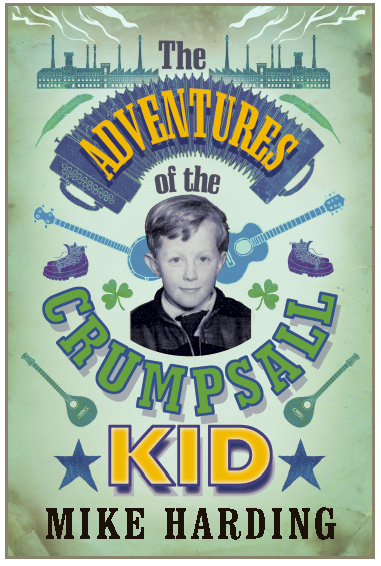
CoverOf those, the stand-out character is 80-year-odd Dubliner Nanna, one of the key female rocks that helped raise Mike while his Mum looked to earn a crust to top up a war widow’s pension. And Nanna – who many moons before rescued Mike’s mum and her siblings from a Nun-led home in Dublin – is a formidable woman, washing her hair in paraffin in front of the fire in winter, cooking Mike bubble’n’squeak and sitting him on her knee teaching him nursery rhymes, music hall songs and Irish street ballads, while firing his imagination with tales of tinkers’ curses, the banshee, saints, blessed martyrs, and rebellion.

Conversely, Mike’s male peers flit in and out, not least the Grandad who appears at Christmas and Easter while seeking out old drinking pals around Manchester. Yet they play a part too, the author acknowledging how his Grandad’s stories and jokes were responsible more than anything else for his future career choice.

As well as his uncles’ war tales from India and North Africa, there’s an unseen male character who clearly left a huge impression – Mike’s Dad, the Devon boy killed returning from a Lancaster bombing raid in late September 1944, a month before his birth, leaving the love of his life ‘a bride, a widow and a mother within a year’. Fans of the 71-year-old may already know that sad tale from the poignant Bombers’ Moon, and while only part of that story is retold, you can see just how much ‘Curly’ Harding meant to the family.

There’s another male influence too, one Mike – like most wayward lads – didn’t seem to truly appreciate at the time. But it becomes clear that his stepdad, Polish ex-serviceman Lou – ‘a kind and good man‘ – who valiantly fought Hitler only for Stalin to take his place, made many sacrifices to help his new family get by. And while Mike tells us, ‘there are no skeletons in our family cupboard; they’re all out there in the street dancing the double jig‘, there’s no warmth when it comes to ‘Mad Uncle Len‘, the severe teetotal Methodist, bigot and General Strike-breaker who marries his Aunt Julia. There’s even humour there though, in the tale of the Christmas trifle his aunt secretly pours a bottle and a half of sherry in to get around Len’s alcohol ban.

I mention a glimpse into a lost world, and Mike fills us in on the days the rag and bone man, the milkman and the ice cream man cometh by horse, including daily battles to reach the fresh shit first to help cultivate Nanna’s rosebush. And just past the doorways where the donkey-stoning women on hands and knees we reach the sweet shop and relive Mike’s first school days, not least his horror on realising the latter wasn’t ‘an optional, one-day event, like going to the park or the zoo‘. Instead we witness Mike ‘moaning and wailing‘, being ‘dragged through the Crumpsall streets, howling my grief at my mother’s treachery to the chimney pots and the heavens beyond‘.

Then there’s the author running away from home, aged six, planning to board a ship at Salford Docks to ‘sail away to make my fortune‘, aiming for ‘Nover Scosher‘, Canada, but ‘getting no further than Barney’s Croft‘. Other characters shine through too, not least his pal Wharfie, who sets himself ‘up as a barber with his mother’s scissors and an upturned bucket, inviting all the girls from the streets around up‘, female customers soon queuing, ready to sacrifice their long hair in favour of ‘Wharfie’s convict chic‘.

Away from the public trauma of Mike’s first communion and priestly insistence that all roads lead to heaven, hell or purgatory (with ‘limbo’ and the Holy Ghost to explain the trickier stuff), we witness Mike’s Green Hand Gang roaming the streets, climbing trees, kicking balls, seeing ‘who could pee the furthest’ and generally getting up to mischief. And on the days when he’s found out, there’s Nanna sat ‘by the fire shaking her head‘, muttering ‘something about how it was all because I was playing with Protestants‘.

There are also the secret playgrounds where he spends school holidays, weekends and long summer evenings in the era before public health and safety legislation, prevalent diseases still stalking, when ‘everybody knew some kid who had died, or knew somebody who knew somebody‘. And all are told with humour but also sympathetically in the case of Uncle Bernard, losing his little girl in one such tragic accident.
$_35While Mike credits his Mum for reading him Robert Louis Stevenson’s A Child’s Garden of Verse, there’s praise too for the BBC’s Singing Together radio show, name-checking ‘well-known leftie‘ Bert Lloyd’s influence as a folk singer and song collector as well as a writer and broadcaster – qualities it’s fair to say the author himself has since achieved.

Mike doesn’t see everything with rose-tinted NHS specs, as seen in sections about the meals he was raised on, the lack of clean air that led to ‘the Manchester chest’ and descriptions of the harsh winters of his youth. But there are still idyllic spots nearby, not least the country around Besses o’th’ Barn where he visits relatives, further retreating from a world of Catholic guilt, masses, benediction and plenty of holy water (‘Nanna’s WD40‘).

There’s nostalgia for a spell in the Scouts too – camping in the wilds of Whittle-le-Woods – and days scrumping, carol singing, visiting his local cinema and swimming baths and charabanc day-trips to Blackpool, Southport and Llandudno, all happy substitutes for family holidays. But puberty is catching up with Mike, and with it a successful 11-plus that essentially catapults him into a whole new chapter at Manchester’s St Bede’s College.

And this will be no Tom Brown’s Schooldays drama. As he writes, ‘Anybody who was slightly different or had a little spirit, particularly those boys who came from poorer, working-class families, found the college a very different place. the collective experience of many of the men I meet now who were at St Bede’s in the ’50s and ’60s is that it was a grim place run mostly on the principle that boys were elementally evil and had to have the evil beat out of them. It was a school ruled over by a number of damaged men who went on to damage a number of the children in their care … the only women to be seen anywhere near the place was a legion of whiskery nuns who cleaned and cooked and did the laundry‘. And then there was Matron, ‘a large lady of indeterminate sex who gave you aspirin and yellow ointment for everything from earache to leprosy‘.

As with tales of public school beatings, I can’t help but feel sad for the little boy within as Mike recalls sadistic masters and physical and sexual abuse from so-called men of God. Thankfully though, a few inspirational teachers help him through, as do key outside factors like Lonnie Donegan’s music, Bert Weedon’s play-in-a-day guitar handbook and his stepdad shelling out for that first guitar. And then there’s education elsewhere, not least from the North Manchester Girls’ School pupils he meets and a revealing film at The Globe, plus summer days and evenings cycling as far from Crumpsall as he can get, a love of travelling aided by the YHA.

Music-wise, an initial love of skiffle is replaced by rock’n’roll – his NHS specs given a Buddy Holly makeover – and Mike’s first paid gigs follow, his early days with The Stylos including a residency at the Dover Castle, ‘close enough to the Salford border to be in bandit country‘. He also paints a portrait of that era’s Working Men’s Club circuit, ‘dark, damp places with glitzy stages, cold dressing rooms and outside toilets‘ that ‘stank of chicken in the basket (the Matterhorn of sophistication in them there days) stale cigarette smoke and even staler beer‘.

Meanwhile, Mike revises for his O-levels while his bandmates fit carpets, sell cotton or make specs, his education elsewhere further improved by the local girls watching the band. And beyond his exams and a summer job packing ball-bearings, we oversee his switch – as a sixth former – to The Manchester Rainmakers, by which point a discovery of Jack Kerouac – with hitchhiking to London soon on the agenda – and The Beatles – instinctively knowing ‘the three-chord trick, drainpipe trousers and Teddy Boy sneers were not going to cut it now‘ – changes the rules again, this young beat further distanced from his college environment at such a happening time for musicians and writers.

We also witness Mike’s drift from home, ready to move away from his parents and their growing family in search of his own destiny, his midnight rambles around town making for compulsive reading, on nights when ‘Manchester was dead as Dixie’s dog, the pubs (apart from any late night drinking dens where curtains were drawn and lights and voices were low) were all shut, the clubs had finished and the butty van on Cannon Street, where you could get a sausage sandwich and a mug of tea for a bob, had shut up shop‘.
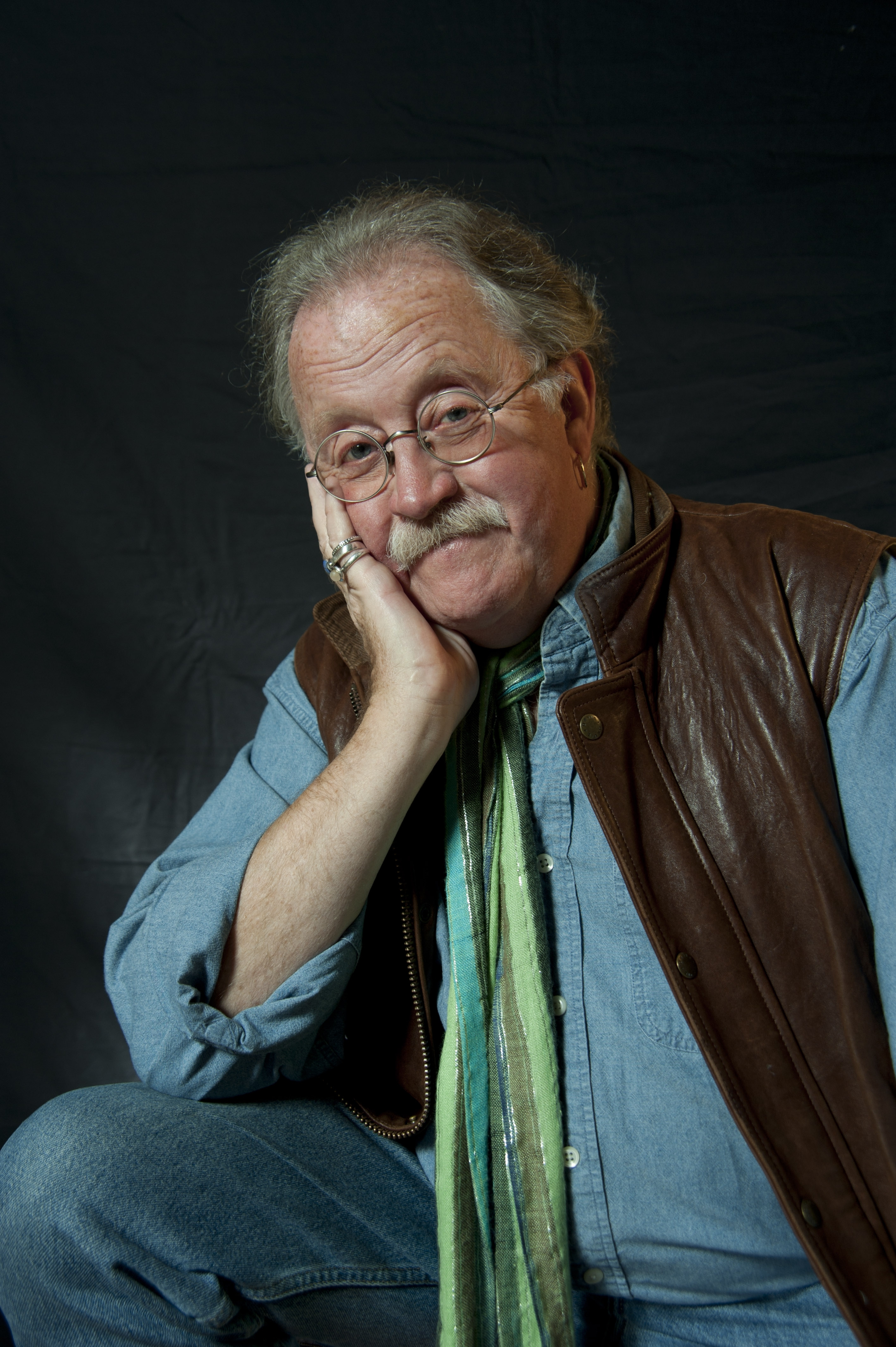
Evocative Descriptions: Mike Harding

Evocative Descriptions: Mike Harding

At times those descriptions are nothing short of evocative, whether he’s talking about ‘Nick the Greek’s‘ (The Oxford Snack Bar on Oxford Road) and its colourful clientele, the old Manchester before the developers got at it (‘The town hall did more damage than the Luftwaffe‘), or a sense of being part of a world changing in such a ‘wild and interesting time to be a teenager‘ for that ‘first generation of Welfare State kids‘, when ‘there was full employment and free education and unlike our parents we didn’t have to leave school and get a job in a non-unionised sweatshop.’

But life is about to change for Mike again, and we soon get the hook that sets us up nicely for book two. And I for one can’t wait.

The Adventures of the Crumpsall Kid – A Memoir by Mike Harding  (Michael O’Mara Books, £18.99), is available now.

For a writewyattuk interview/feature with Mike Harding, from April 2015, head here.

And for more details about Mike, his internet folk show and forthcoming dates and engagements, head to his website here.


Posted in Books Films, TV & Radio, Comedy & Theatre, Music | Tagged , , , , , , , , , , | Leave a comment

Instant karma, Chameleons Vox style – the Mark Burgess interview

Vox Pop: The Chameleons and Chameleons Vox front-man Mark Burgess in live action

Vox Pop: The Chameleons and Chameleons Vox front-man Mark Burgess in live action

It’s difficult to get over to the younger indie kids how important BBC Radio 1’s John Peel Show was during the latter decades of the 20th Century.

But I was hoping Mark Burgess could help, the front-man and bass player of The Chameleons – enjoying a fair amount of fan-base interest all these years on – having told me his band’s sole ambition on forming in 1981 was just to get played by Peely.

He wasn’t alone in that thinking either (a similar conversation with fellow Manc, Inspiral Carpets and Rainkings front-man Stephen Holt a while ago springs to mind), yet Mark also struggles to explain just how influential the late broadcaster – who died 11 years ago – was.

“I suppose you had two polarising drives. On one hand you had the wannabe pop stars who had that thing about Top of the Pops, then on the other there were those of us whose drive was to get on to the John Peel programme.”

As it turned out, The Chameleons’ over-riding ambition was soon achieved, this four-piece from Middleton, Greater Manchester, getting their first Peel Session within months of starting out (not returning for their next until exactly two years later).

At that stage the band comprised of Mark, guitarists Reg Smithies (also responsible for the majority of the band’s distinctive sleeve artwork) and Dave Fielding (along with Reg previously with Years, and before that with writewyattuk favourite David Gedge of The Wedding Present in his first band, Sen), and drummer Brian Schofield (who also has a Gedge link), the latter ‘gun for hire’ in time making way for John Lever.

And according to Mark, that initial radio session on June 8, 1981 – first broadcast nine evenings later – worked out to be be just what they needed.

“It all happened very fast, in fact the day after our session for John Peel went out. And our lives completely changed. We were really surprised how incredulous people were when we later explained how we got on there. We didn’t realise the length others went to get his attention. All we did was go down and hang around outside the BBC, waiting, giving him our tape and talking to John for about 10 minutes.

R-386310-1293642161.jpeg“That was on the Friday, then on Monday morning he phoned me at our house. I thought someone was winding me up, doing an impression. He had to convince me. I think he was really impressed, but when we approached him, I think he thought he was being attacked!

“I only met him two or three times altogether, but Peel was such a cool bloke and just to be on his show … well, we weren’t thinking beyond that … at all.”

Shortly after, a deal was done with CBS/Epic Records, and it seemed like the band had truly hit the big time, with the powerful debut single In Shreds (which went on to make that year’s Festive 50 on the Peel Show) the first fruit of their subsequent studio time with respected producer Steve Lillywhite. But from that promising beginning, The Chameleons’ machine seemed to grind to a halt, in what proved to be a frustrating period for the Mancunian quartet.

I’ll start before all that though, revisiting Mark’s first outfit, having reminded myself this last week of a few recordings he made with The Cliches, like 1980’s Leaving Town and Whole Wide World, which carry more of the spirit of The Clash and fellow Manc outfit Buzzcocks than the sound of his next band. Were they big influences?

“Massive, yeah! But The Cliches were kind of tongue-in-cheek with it, sending up what punk had become. We only did a few gigs, and I’m not sure that people got that. The songs were quite strong, but we were looking at each other a bit bemused that the send-up aspect wasn’t really coming across.”

There also seems to be a Teardrop Explodes influence with both The Cliches and the early Chameleons, something those who might mistakenly tar the band with a more Goth-like brush seem not to hear.

“Yeah, and in the immediate wake of punk, out of all the Liverpool bands, the best of the crop were The Teardrop Explodes and The Wild Swans.”

For me, that first Chameleons single and those early recordings offer elements of Echo and the Bunnymen, The Cure and The Psychedelic Furs too, while that distinctive guitar sound was arguably something later associated on a larger commercial scale with The Cult, a band formed over the other side of the Pennines (in Bradford) at around the same time (first as Southern Death Cult). How soon does Mark reckon The Chameleons had what they were looking for, sound-wise?

“That was relatively quick as well, in terms of the guitars. Reg was always there with it really. His sound is in his playing. Most of the evolution came from Dave, I’d say, and we benefitted from working with Steve Lillywhite really early. We learned a lot in that period.”

41z-4jwj0JLBut then came the frustration at how slowly the whole machine was turning, as Epic froze on that first album.

“It became obvious how our opinion of what constituted a great recording was very different from the more commercial interests CBS and even Steve Lillywhite had.

“When we recorded our first session it was so obvious what a great recording it was, so we were perplexed as to why they didn’t feel the same way. We were naïve and not thinking about chart placing and all that.

“For me it was a fantastic debut record and I had no doubt people would have been excited by it. We wanted to be a band to be discovered, not sold to people.”

Instead, the first two albums came out on Statik Records (although the fact that Virgin dealt with the label’s distribution ruled out any indie chart placings, and therefore arguably a little critical kudos). Were you free agents by then?

“Steve Lillywhite decided to pass on the album and do the third U2 album, so we needed a new producer and were introduced to various options which we weren’t impressed by. In the end we said we’d much rather do it ourselves with our regular engineer at Cargo Studios in Rochdale.

“After six months dancing around we were eager to record our songs and make our LP, and the next day we were off the label. They compensated us quite handsomely though, so we then had the luxury – and the arrogance, if you like – to do it ourselves.

“The Statik link came about because the very first thing we ever had released was on a compilation album a journalist put together for that label. A couple of the guys went to see them and were reasonably impressed. They gave us complete freedom to put out whatever we wanted, so that’s the direction we went in.

The first sign that the band were up and running was the stirring Up the Down Escalator single at the beginning of 1983, followed a month later by As High As You Can Go and that June’s A Person Isn’t Safe Anywhere These Days, the latter two with hints of Julian Cope for this scribe (that’s a good thing, by the way, as far as I’m concerned). And then two months later we had the eventual release of defining debut album Script of the Bridge.

The Chameleons were truly up and running now, and were at Maida Vale for their third (and final) Peel Session in May 1984. And they were back in the studio again, this time north of the border, in Inverness at the beginning of 1985 for their second album, pre-empted by the mighty Singing Rule Britannia single – including its run-off tribute to The Beatles’ She Said She Said – in August 1985.

What Does Everything Mean? Basically then saw the light of day two months later, and was also largely well-received. And – skipping forward a little – then came the move to Geffen Records for the third album. So I’m guessing Mark felt they’d learned a lot from all those experiences by then.

“We had learned a lot, but it had been tough. The first album did well abroad – especially in the United States – but the label did a few naughty things we weren’t happy about. So financially we’d struggled. We were in that quagmire, shall we say, for six to eight months, but then switched management and got clear of all that, and got word that Geffen wanted to sign us. We met them and decided to go with that.”

MI0001776168Again we got a taster first, this time through the beguiling single Tears, followed – on the same day as second single, fans’ favourite Swamp Thing – by the release of the Strange Times album at the beginning of September, 1986. And it’s an LP that Mark remains particularly proud of.

“I am, and personally – based on my contributions – it’s the best work I’d done by far. Creatively I was very happy with it. It was a very strong record and the writing of the band was evolving, and maturing. Yes, I was extremely proud of it.”

In time, Tony Fletcher – widely seen as a calming influence on the band at a time when differing opinions were coming to the fore – agreed to manage the outfit, but it was a short-lived affair, the new boss’s sudden death after a heart attack ultimately leading to 1987’s split.

“Tony worked for the management company, coming in at their behest to help us, and we developed a very close relationship from there. We wanted him to be our official manager, but for ethical reasons he couldn’t do it, as he was employed by the company managing us. In the end he decided that was what he was going to do, and we were very excited about that, not least as there were a lot of acts he had said no to. He was very much admired in the business.

“But about three weeks after that, he died. That knocked us completely for six. I think it was more things coming to a head, tensions within the group he held in check. Without his influence it kind of erupted. I was very keen to get us back to America, where we were more respected, and Tony was of the opinion we should go out there for a couple of years.

“I was pushing for that, even without Tony, but they were probably right in resisting. Dave, in particular, said without Tony he wasn’t going. It ended up with me and John on one side and Dave on the other, with Reg backing him. It was actually John who left first.”

As it turned out, Mark worked with the band’s drummer soon after, on The Sun and The Moon album project, released on Geffen in 1988.

“Yes, that was a bit strange. He started phoning me up in the weeks after that, saying, ‘Let’s put something new together’. I was very unsure, but when I met with John and the guys he was working with the idea became attractive – getting together with a few mates and writing tunes. It was all very uncomplicated, something I hadn’t enjoyed for a long time.”

Meanwhile, the other two band-mates recorded two albums as The Reegs, and – skipping ahead again – Mark recorded his debut solo LP in 1993 and worked with three other bands before The Chameleons reconvened in early 2000, by which time Mark was based in Hamburg, where he remained between tours until 2010. So what had changed by then to bring about that band reformation?

“As you get older you get a little less extreme and intense, and I knew the popularity of the band was still growing through being in touch with the fan-base directly via the internet. I was weighing all that up against losing these friendships I’d had for so long, when I got a message from Dave asking to meet him, which was surprising.

“We had a few pints, and agreed it would be really great if we could put all that behind us and play some shows. I was quite amazed, because it had all been so bitter and vitriolic.”

716nHGrm+mL._SY355_First came the album Strip (2000), featuring older material reworked in an acoustic format, then the band’s final studio album Why Call It Anything (2001), and further acoustic album, This Never Ending Now (2002), as well as a reunion tour taking in Europe and America. So how does Mark sum up The Chameleons Pt. II?

“I couldn’t really. Initially it was quite amazing, for that first year though. It was first mooted that we did this show at the Witchwood in Ashton-under-Lyne, to which I was incredulous. I said, ‘You’ve got to me joking!’

“Their idea was to announce it, then arrange a second night. Even then, Reg was saying, ‘Do you think it will really go to two nights?’ They had no idea – it became six nights! Then we did the (Manchester) Academy in June 2000, and I can’t describe how I felt walking out of there. It gave me one of the proudest moments I’d ever experienced with The Chameleons.  The massive attendance and rapturous response after 10 years away was an unforgettable moment I’ll always cherish.

“But before long all the old gripes began to come back and I became concerned we were doing things we never would have done before for the pay cheque. Things came to a head. Dave and I are chalk and cheese and I guess it will never be any different. It was all a bit bitter-sweet. Perhaps we should have just come back, done a few shows and left it at that. It was a mistake taking it any further.”

That wasn’t the end of the story though, and in 2009 Mark and John Lever reformed to play back-catalogue material under the name Chameleons Vox. And while John is now back with Dave Fielding, performing and recording as The Red-Sided Garter Snakes, Mark continues to front a five-piece outfit under the Chameleons Vox handle, playing that original material.

And next weekend (December 18/19), Mark and his band are back on old ground at the Manchester Academy 2 for a two-night filmed residency, Home is Where the Heart Is 2015, carrying on from where they left off last year – having played the second and third albums over two nights – as part of the venue’s on-going 25th anniversary celebrations.

On the Friday night, The Fan & The Bellows & Early Recordings will see the band ‘revisit a lost gem in the back-catalogue’, playing their 1986 compilation in its entirety, along with a selection of choice cuts from the earliest days, the set including songs ‘that very rarely if ever have been performed before a wide audience’.

Then on the Saturday night, taking its name from a track from What Does Anything Mean? Basically, they conclude their residency with P.S Goodbye, delivering a set made up entirely of fans’ favourites, attendees having been given the opportunity to vote for the songs they love best in ‘a farewell gesture of sorts’.

“The second night will be a Jukebox Jack, the audience picking three choices of songs they would like to see performed. Manchester shows are always special, and as this is likely to be our last Manchester performance for quite some time, we want to make it doubly so.”

Fans have also been able to snap up weekend passes at a reduced rate, accessing both shows and getting a limited edition Chameleons Vox laminate and lanyard, plus a free download link for an exclusive track recorded at last year’s Academy shows. And also on the bill are (on Friday) Evi Vine and From Carbon, then (on Saturday) old friends of the band Oskar’s Drum, a project by Patrick Fitzgerald and Yves Altana (Kitchens of Distinction/Chameleons Vox).

Band Substance: Mark Burgess puts his best foot forward with Chameleons Vox

Band Substance: Mark Burgess puts his best foot forward with Chameleons Vox

“We’ve done it the last couple of years, rounding the year off with shows. They’ve all been really great. And the tour we’ve done this year is the biggest we’ve ever done, including South America, where we’ve never been before.”

It’s clearly not just the first-timers coming out to these shows either, with lots of younger fans turned on to The Chameleons these days. Is that down to bands out there who acknowledge your influence, like The Killers and The Editors?

“We’ve always been a musicians’ band, so a lot of people come and see us play and have been influenced that way. Then there are a lot of kids whose fathers are huge fans.”

Has college radio in the US been important too?

“Historically, that’s how the band did get known out there, although I’m not sure how influential it is these days with the internet.”

Looking at your latest homecoming, Manchester Academy has been an important venue for you over the years, but The Chameleons have been around longer. So which Manchester venues were important to you back at the beginning?

“We started off playing the Gallery on Peter Street, with fantastic memories. I actually saw REM there (1984), The Church (possibly 1982), and a few others. That was a great little place. Then there was The Band on the Wall of course, and we played the Free Trade Hall, where my first ever show was, seeing T-Rex in ’73 or ’74.”

Moving away from music for a while, I understand you worked for Manchester City FC for a while (in the mid-’90s). Do you still follow City, or do you see them as just another big money club now?

“Oh, I’m a dyed-in-the-wool City fan, and have been for 40–odd years.”

Cold Comfort: The Chameleons, back in the day, during their Statik tenure

Cold Comfort: The Chameleons, back in the day, during their Statik tenure

But your Dad – Albert Burgess – played for Manchester United?

“Yes, around 1955/6. All his friends were on the plane, actually. But he came off a motorcycle on Queens Road and smashed his leg in the weeks leading up to that, and that was the end of it. My Dad played for Manchester Boys and was in the Army at the time, and like a lot of people augmented his Army pay by playing for factory teams around the region. A United scout picked him up and he became an apprentice there, meeting Matt Busby with my grandfather, signing as a full-time professional. He was a great footballer, my Dad.”

Did that skill pass on to you?

“No. I wasn’t interested … which frustrated the shit out of him! I was happy to play on a Sunday, have a kick-around with my mates, but at school I wasn’t interested really. They were encouraging me, but it was only music that really got me passionate.”

So where’s home these days? I’m guessing you’re living back in Manchester again.

“I’m only here when we’re working, when there are things to do with the band. I spend a lot of time – about half the year – in the United States, the last couple of years in Florida.”

It’s not a bad life then, is it?

“It’s beautiful there.”

But you need a bit of Manchester rain now and again just to remind you of your roots?

“I get plenty of rain there, but Manchester’s a magnet and I’ll never stop coming back here.”

I’m guessing it keeps you grounded.

“It does.”

Talking of grounded, that brings me back on to the original Chameleons line-up, and the question I have to ask. Is there still animosity with your old band-mates?

“There’s a couple of guys I don’t speak to or have anything to do with, but I don’t really want to talk about it. I’d prefer to focus on positive things. I’m about the music really – that’s all that matters to me.”

Manchester Roots: Mark Burgess, heading back to the Academy with his band

Manchester Roots: Mark Burgess, heading back to the Academy with his band

The official line is that your latest line-up, Chameleons Vox, is ‘a vehicle for the perpetual performance of Chameleons material by people who have a deep passion for the music and a desire to keep the music alive in the wake of the original band’s demise in 2003’, with yourself ‘backed by a loose collection of musicians currently spanning two continents’. Can you explain that a bit more?

“It’s been evolving for the last five years. A lot of people have come and gone, and initially we weren’t really so concerned with getting the sound of the band, but just wanted the spirit of the music. All those who have been involved were all very passionate about this music, so initially that was the thing.

“Then, as it grew, we were thinking that if we were going to do this we owe it to the music , the legacy of the music and the people coming to try and do it as well as we can. So the emphasis came on to trying to perfect it, and I think we’ve got to the point where the band I play with now play that music as well as it can be played outside the original line-up.

“But there have been a lot of people who have come along at one time or another, and they’ve all been fantastic. We’re more like a cooperative.”

In one interview I heard you suggesting Chamelons Vox was more like Star Trek – The Next Generation. So, as the Chameleons’ captain, would you say you’re more a Captain James T. Kirk or a Captain Jean-Luc Picard figure?

“Oh, I’m definitely a Jim Kirk.”

Finally, do you have any regrets about the fact that – despite all your loyal fans, the love for your music out there, and the influence you continue to have – it was U2 who ended up making it big time, rather than The Chameleons?

“Well, what does that mean, really? To have feelings like that you’ve got to be dissatisfied with your life, and I’m not at all. What The Chameleons had given me is the complete freedom to do what I want, when I want, where I want, and with whom I want.

“I’ve been free – and I mean free – I go to bed when I want, get up when I want, I don’t have to jump on the shovel when someone shouts ‘shit’, and I’ve never been in a situation where I’ve never been able to do what I want for lack of resources, and I can walk down the street and go anywhere I want without being mithered.”

For further details and tickets for Chameleons Vox: Home is Where The Heart Is at Manchester Academy 2 (Friday, December 18 and Saturday, December 19) head to the venue’s official website link, or the venue’s Facebook page.


Posted in Music | Tagged , , , , , , , , , , , , , , , , , , , , | 5 Comments

Beyond The Dubious Brothers – catching up with Monty (part two)

Photo copyright: Ashley Jones

Photo copyright: Ashley Jones

‘What became of the man who wanted so much more … than just grazing his knee on the ground?’                                                                                                           (The Man Who Jumped from the First Floor)

If you’re reading this in the hope of catching The Dubious Brothers live sometime soon … sorry. That’s something you’ll have to take up with Monty (and like Adele, Bjork, Donovan and Prince, we won’t bother with surnames here). But you only have to read a few recent social media threads to realise that this revered frontman is getting plenty of pressure to do it all again.

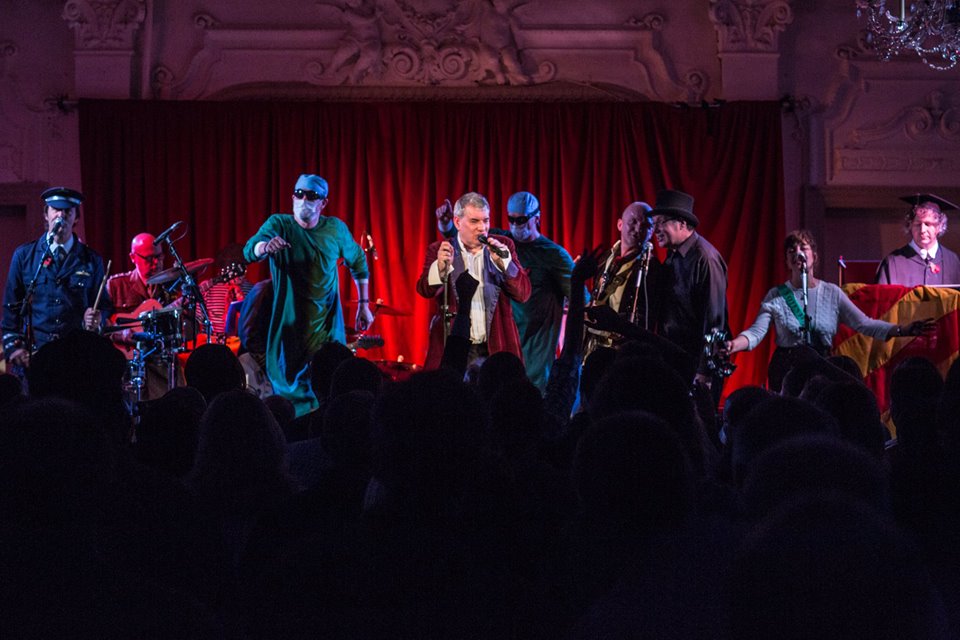
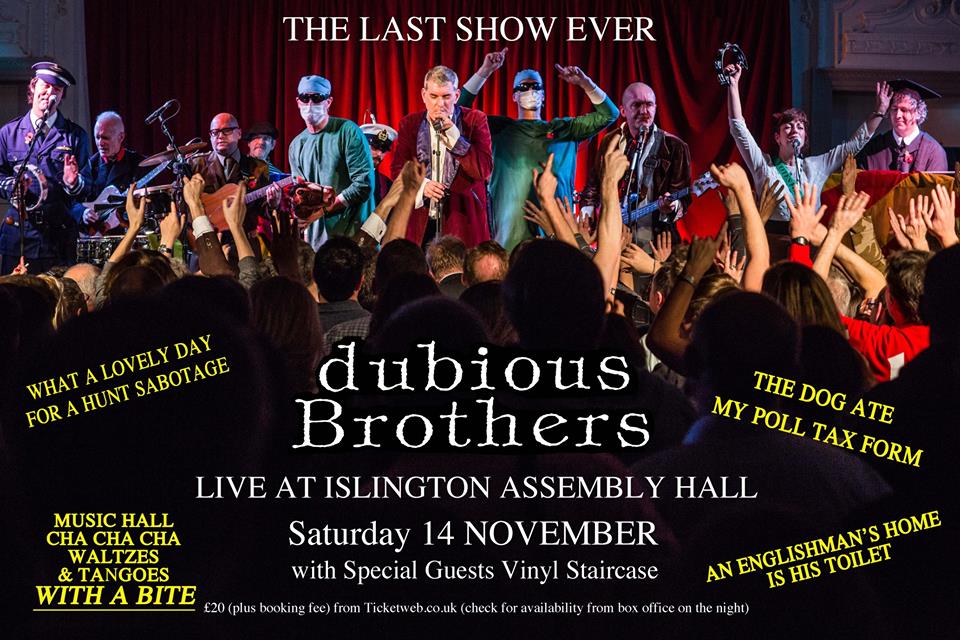
That’s in no short part due to the success of his pretty much unique collective’s most recent farewell in mid-November. ‘Most recent farewell’? Yes, apologies to Monty for that, but I think we’re all still in denial about it all being over … again. And he did shoot himself in the foot by making it so bloody good (adds a bloke who was 215 miles away at the time, unfortunately).

He’s even got a new Time Machine (the best ever by all accounts), so it seems a shame not to use that again. And then there’s The Dubious Brothers: The Next Generation – Monty’s new youth wing, the choir that introduced a memorable final show. We wouldn’t want them back out on the streets, doing urchin-like stuff, surely. No pressure though, Monty. It’s your call.

Anyway, I’m hoping you’ve come to this feature after reading the ‘part one’ feature that pre-empted (just about) that historic Islington Assembly Hall goodbye. That being the case, I shouldn’t have to do so much of an introduction for those who don’t already know The Dubious Brothers. You can just back-click and start there, because it doesn’t get any easier explaining the whole concept.

‘Dream a thousand dreams of censored scenes of Valentino in Baghdad. The night burns like a Turkish cigarette. I’ve lost my heart, now I’ve lost my appetite’.                                                                                                                                  (My Goodness! This Bazaar is Like a Jungle)

As I suggested in my last piece, this is a more personal nostalgic retrospective of the band, alongside a bit of a potted history of the life and times of Monty – before, during and after the DBs. And now we’ve got that housekeeping out of the way, let’s properly start ‘part two’, in which I carry on where I left off, having just cherry-picked the pre-Islington stuff from our conversation last time.

Tax Deduction: From the writewyattuk vaults

Tax Deduction: From the writewyattuk vaults

I will go over a little of that old ground first though, in reference to the 10 times I saw the band between mid-July 1987 and the end of March, 1990, as nostalgically shared over the phone with Monty. And the first and last of those dates were two of six DB gigs I saw at the Fulham Greyhound, along with one at the nearby King’s Head …

“That was a good gig. I remember that. I think we either did one or two at the King’s Head. That was a really good night, and we got signed that night by our management company.”

Then there was one at Guildford’s Lockwood Day Centre, the charity gig at which I interviewed you – 27 and a bit years ago, frighteningly – for my Captain’s Log fanzine. And I saw you supporting The Corn Dollies at the Marquee.

“Oh yeah, I remember that. Janice Long was there. She played our stuff on her show.”

‘He said, ‘You’re going to Christmas Island for your Country & your Queen, so get up & join the ranks & watch the Atom Bomb’. I tried to appeal to his gentler side, but he hadn’t got one – I’m sorry, I tried.’                                       (Britannia’s Grand Machine) 

My other Dubious Brothers happening in those early years was at midnight (or thereabouts) on the Saturday at Glastonbury Festival in the summer of 1989.

“Ah, you came to Glastonbury, did you?”

Absolutely. I can’t pretend it was just for you, but …

“Just a happy coincidence then.”

It was definitely one of the major draws for me that year. In fact, that was my second Glastonbury, and somehow I haven’t made it back since.

“Well, I’m actually looking at a poster for that as we speak, having managed to track one down recently.”

Photo copyright: Ashley Jones

Photo copyright: Ashley Jones

Yes, it appears that there’s quite a market out there for the band’s memorabilia all these years on, not least with the vinyl – their two albums – reaching big prices on certain internet auction sites. The good news though is that I still have my vinyl copies of debut album Absolute Bethlehem, follow-up The Foresight Saga (recently re-issued on vinyl by German company Fire Station Records, the initial batch of numbered copies quickly selling out) and the 12” of  The Dog Ate My Poll Tax Form.

‘Travel in time with me, Inspector Le Strade – from Whitehall 1212 to New Scotland Yard’.                                                                                                         (Inspector Le Strade)

There’s clearly plenty of call for cut-out features from the music press too, flogged online. Which is worth thinking about for all those scraps I still have at writewyattuk hq. But let’s go back a bit further, getting Monty to tell us a bit about his ‘80s alternative dance synth-pop disaster’ Promises Promises.

“Oh, did you never hear us? I’ll tell you what, someone put it on YouTube … and it’s definitely not bloody me!”

Mmm … I’ve since listened to Monty’s sole Promises Promises waxing from 1984, Can You Take the Risk? And despite the odd good line and nifty chord change, well … yeah, think of it all as half-baked electronic pop. Heaven Eight and a Half, maybe (and that’s quite a generous mark in the circumstances).

“Basically, we were just starting out, doing our thing, getting into bands, and three of us formed our own – myself, Dave Bird (a future Dubious Brother) and Rachel Flint. We had a single out – a-side pop, b-side dance … whatever. Just horrific. But you’ve got to learn, haven’t you.”

Photo copyright: Ashley Jones

Photo copyright: Ashley Jones

‘The padre he preaches, he does what he pleases. He thinks God’s an expert on nervous diseases.’                                                                                               (Absolute Bethlehem) 

You set up your own ‘bedroom label’ for that single and the first two DB singles and album, Fend For Yourself. Forget all this modern PledgeMusic palaver – you were a true indie spirit way before all that. Was this the ‘do it yourself’ message you took from the punk years?

“Well, at first we got distribution from Probe Plus up in Liverpool, the Half Man Half Biscuit people. They were fantastic and pressed all the vinyl for us.”

Yes, and in our last interview all those years ago you reminded me about the tale of a band practising in the next room when debut HMHB album, Back in the DHSS, was made – later asking for royalties, as you could hear them in the quieter bits. But that’s another story.

And between Promises Promises and The Dubious Brothers you had the Third Spiritual Foundation as well. I won’t even attempt to explain the concept behind the latter here, but Monty does on the sleevenotes to the band’s Antiques best of CD, so I suggest you just shell out for that and find out for yourself.

“That was my best idea ever … apart from the music, which was still a bit synth-poppy. This is my great failing – I want to go all weird, disturbing and mysterious, but couldn’t not have a catchy tune in there. Visually it was fantastic, complete with two shop dummies. But I missed a bit of a trick there.”

‘I’ve got a new car phone that goes with my vasectomy…’                         (Falling Masonry)

Those were different times, for sure. But in an era when the industry was seemingly seeking out more C86 type bands, you didn’t quite fit in with what the record companies were looking for. Your influences were a little more theatrical, shall we say.

“I remember talking to A&R men on the phone, them telling us our type of music was never going to make it, with one talking about trying to coerce this band to sign, The Mighty Lemon Drops, who he said everyone was desperate to sign. But every band I saw just seemed to be the same.”

I could take issue with Monty there, seeing as I particularly loved the first Droppies album and truly rated them live. I take his wider point though – there was room for bands far removed from that scene, not least his own inspirational collective, who he saw of as more in the spirit of more theatrical bands like Cardiacs and The Tubes. How did it come to all this though? Was there a lightbulb moment when he realised where he’d be heading next, forming The Dubious Brothers?

Photo copyright: Ashley Jones

Photo copyright: Ashley Jones

“Definitely – it was The Singing Detective. That pretty much changed my life, certainly musically. The way Dennis Potter juxtaposed the old music and made it darker. It was chirpy, sweet, 1930s’ and 1940s’ innocent music, yet he put it in a context of something that was much darker.

“That was one of the catalysts for what we eventually became. We were still synth-poppy, and didn’t really change until the first album. South America got a bit more swingy, but that darker old music hall, ‘decaying Britain’ thing didn’t really happen until that first album.”

‘But Lord, if you are up there, when no one else is looking – me, them, five minutes & an iron rod.’                                                                                          (Revenge)

I read somewhere that you never made a connection with The Doobie Brothers name thing though. I can’t believe that. And there was me thinking that was the one of the greatest-ever name puns in music.

“I didn’t make the connection at all. Do you know, there are about five bands called The Dubious Brothers now? That includes a hip-hop band in New Zealand and a covers band in Wiltshire. I know about them because when Michael Eavis was thinking about booking us for Glastonbury he noticed that The Dubious Brothers were on in some pub, so went to see them with his wife. But when he got there he realised it wasn’t the band he thought it was.”

Blimey. I bet they were getting a bit excited at the prospect, I add, prompting Monty’s … erm …  dubious Somerset accent, imagining the excitement of that band at realising Mr Eavis was out there in the audience.

“God knows how old they are now, but I think they’re still going. Then there’s some band in Singapore, another in America … there are around three or four Montys out there as well, so I’m not quite sure how I managed to get away without using a surname.”

Photo copyright: Ashley Jones

Photo copyright: Ashley Jones

‘And when we die we think that’s heaven’s like a golf club – all the undesirables will be left out. And special angels will administer the spankings – there’ll be queues to join without a doubt.’                                        (An Englishman’s Home is his Toilet)

Am I right that the very first gig – involving three DBs and a drum machine – was at the Riverside Club in Fetcham (not far from Monty’s Banstead and Epsom roots and one of my favourite venues of days gone by)? I saw some great bands there. Not you though.

“Well, there was one I did there by myself as The Dubious Brothers too, pre-dating even the Third Spiritual Foundation, if my memory serves me correct. And the Riverside Club was just such a part of growing up for me.”

At this point I digress and talk about bands I’d seen there, dusting off my anecdote about the night The Wedding Present turned up only to find they’d been double-booked. They decided to leave, leaving an apologetic note for their travelling fans, someone soon half-inching it (not me, unfortunately).

So was Monty nervous for those early shows, or was he a born showman?

“The fridge light comes on and I do 20 minutes (at this point Monty leaves just long enough for a comedy drum lick). Being on stage has never ever bothered me. I probably do get nervous but maybe it manifests itself in different ways, like getting ratty. But I don’t feel nervous when I’m there.”

Photo copyright: Ashley Jones

Photo copyright: Ashley Jones

‘Now you deal with Krugerrands, & your blood money drips through your bloody hands’.                                                                                                                  (South America Welcomes The Nazis)

“The only time I can think of is probably two minutes before we were due to go on in Wuppertal, as I suddenly realised where we were and that I was wearing a British Army outfit, Steve was wearing an RAF uniform, we had gas masks on, and I’m about to sing a song called South America Welcomes the Nazis. I just hadn’t twigged, because we were so excited about our first tour of Germany, but then suddenly realised this could all go horrendously wrong.”

But as it turned out, they loved you out there, I seem to recall.

“They absolutely loved us. A lot of those places were just fantastic. We would be going off after about 45 minutes in those days, and they’d be asking for ‘more, more, more’, expecting us to do two sets. We had five encores, because they just expected that.”

The other day I was checking something out about one of my favourite bands, The Blue Aeroplanes, and was astounded at the list of personnel involved over the years. That made me wonder how many people have played with The Dubious Brothers over the years. For example, how many surgeons have joined you on stage?

“Surgeons? Not that many – probably half a dozen. With surgeons it used to be a case of whoever’s available. They didn’t have to do massive rehearsals. They just had to be free that day … and tall.”

‘My Daddy, he bought me an electric guitar for my birthday … but I want to be a yes man!’                                                                                                                        (Yes Man)

While we’re playing the numbers game, you mentioned a gig in Nottingham where just two punters turned up, and this at a time when you’d always be hopeful someone in the crowd would offer the band accommodation that night to avoid a long drive home.

Photo copyright: Ashley Jones

Photo copyright: Ashley Jones

“Yeah, we used to wing it, just assuming someone would put us up for the night. That evening we were waiting and waiting for the audience to turn up, and eventually there were just two, who told us they only came because their friends had seen us in Colchester.

“The boys were saying, ‘Well, we can’t do the gig then’, but I said, ‘We have to – they’ve turned up and paid!’ So we did it, and at the end I asked, ‘Is there any chance we can stay with you tonight?’ The husband said, ‘Yeah, absolutely’. His wife was just looking at him, incredulous.

“So we piled back to their house. But the van we’d hired didn’t have a lock on the back door and we had all our gear in there, so we drew straws and I ended up sleeping in the van, waking up with the taste of oil in my mouth and with snow coming down. It was just horrific and I was wondering why we were doing this – we’d just driven all those miles to play to two people, there I was sleeping in the back of a van, and it was snowing.

“I went into the house the next morning and everyone was up, with the husband and wife waiting to go to work. And the husband said, ‘Alright lads, just let yourself out when you’re done,’ to which his wife said, ‘You’re kidding! Get out!’ And there was our guitarist asking, ‘Any chance of a cup of tea?’”

‘I haven’t seen a magistrate since I was 17. You must believe me, Constable, I’ve kept my nose clean.’                                                                                                 (Could Have Been)

“But that sort of stuff happened to us, and in our first gig at Warwick University – where we went on to have so much success – a stone went into the windscreen on the M25 and totally shattered the screen, at which point we decided to go home and go up in three different cars instead. And we were only getting paid around £50. So we went all the way back, loaded up our cars and tried again, turning up late but doing the show, going down well and being re-booked.

“It was similar at Colchester Arts Centre, where they told us we were brilliant and asked if they could persuade loads of people to come down if we would play there again. We said, ‘Yeah, what date?’ and they said, ‘No – do it now, a bit later tonight’. So we went on again at about 11, for about 50 or 60 people. And by the time we finished we were selling out there.”

Photo copyright: Ashley Jones

Photo copyright: Ashley Jones

You mention having to play balls at Oxford, big corporate shows and so on. Surely you hated those gigs, performing in front of the sons and daughters of those fox-hunting families you were singing about, those future freemasons …

“Well, yeah, because at any kind of ball you’re just the entertainment, so they haven’t come to see you but just be entertained by someone, and with some of these corporate dos we’d do a song like Inspector Le Strade, with a Latin beat they could dance to, probably not even knowing who we were. The money was good, but it was fairly demoralising.”

‘Soon you’ll high jump in our Olympic team, ‘cos we put Ex-Lax in your Bristol Cream.’                                                                                                                  (What a Lovely Day for a Hunt Sabotage)

In our first interview all those years before, you told me that outside your Dubious Brothers existence you were writing songs for El Records. Did that carry on for some time?

“I came in at the end of El Records, so I was never one of their artists, but I did write for their compilation albums, including Abracadabra – The Magnificent Triviality, for which I did Mr Inconsistent. I wrote about eight of those tracks, including two for a fantastic singer called Her, singing Imran Khan and Eligible Bachelor, plus a glam rock one, and various others. And after all that I wrote lots of songs for Mike Alway, who ran El Records, for his new label Exotica, writing a lot of football records.”

That should have been a good experience for a big Tottenham fan like yourself.

“Well, the best-selling one was Ryan Giggs We Love You.”

Photo copyright: Ashley Jones

Photo copyright: Ashley Jones

Since our conversation, I’ve found that on the net, recorded under the name of The Rainbow Choir. And it’s bloody awful, as I might have expected. Perhaps even as unsettling as the sight of the Wales and Manchester United maestro’s chest wig during that 1999 shirt-rotating run following his FA Cup semi-final replay wonder goal against Arsenal.

”I did refuse to do their Arsenal album, but did all the others. And I also did TV themes.”

‘She pursued me up the chimney & she chased me up the flue, & the sun doesn’t shine anymore!’                                                                                                          (Oh! Mother Borden)  

That brings me nicely on to the fact that I’m quite surprised you’ve never gone down the staged theatrical line with The Dubious Brothers. I could see you adapting those songs into some form of musical, one far removed from the hideous world of Andrew Lloyd Webber. Think Lionel Bart’s Oliver! mixed with the best elements of Mel Brooks, Noel Coward, Eric Idle and Neil Innes, maybe.

Dubious Brothers – The Musical? Well, I’d always quite fancied writing a musical, but I’d want to write something completely different. And then The Book of Mormon happened, and then Avenue Q … so that avenue is probably closed to me now. I would have wanted to take the piss out of the musical, but South Park: Bigger, Longer & Uncut is so good you can’t really do that now. They got Les Miserables so fantastically well, there are so few places to go with it now.

“Maybe we should go back to a traditional one now, doing a musical dead straight instead of taking the mick. It was something I thought about, but then came my three solo albums after the band ended, so that was that.”

Photo copyright: Ashley Jones

Photo copyright: Ashley Jones

‘And we can conclude that irony’s a funny old theatrical device when you become the first Aryan on Mars.’                                                                            (You’re Wernher von Braun & I Claim My Five Pounds) 

Speaking of which, there was talk about another Monty solo album to follow 1993’s A Typical Scorpio (which I had first time around, albeit taped by a mate), then 1996’s The Napoleon Complex and 2006’s The Judas Window (which I’m only just catching up on now, via Monty’s website). Have I missed that fourth album coming out?

“You haven’t missed it. I’ve been writing it for nearly 10 years. I have an idea, but it won’t be an album by me. Well, it will be by me, but no one will know it’s me. I said before that the Third Spiritual Foundation was the best idea I ever had, but this is probably just as good.”

He’s teasing us there, I reckon, and certainly being mysterious, but I’m sure we’ll learn more over time. So is this … erm … latest Dubious Brothers farewell gig just the end of another phase in the rather skewed career of Monty?

“Yeah, it’s not the end of me, but you can’t go on singing about the Poll Tax forever. We won that victory, you know! We released a 12” single about it and the Government abolished it the year after. The Dubious Brothers’ influence just extends beyond all musical boundaries!”

He’s got a point. Take that, Midge Ure and Bob Geldof – because we’ve still got poverty, haven’t we.

“Exactly.”

Photo copyright: Ashley Jones

Photo copyright: Ashley Jones

‘Now don’t get me wrong, I’m no sinner. Don’t think I’m reluctant to pay. But if you send the bailiffs round when this Bill goes through, my doggie is going to eat you.’                                                                                                                 (The Dog Ate My Poll Tax Form)

I was reminded from looking back at our last interview that Monty used to work for The Stranglers, which is rather apt seeing as I interviewed Hugh Cornwell the previous week. So what kind of phase was that?

“A kind of schoolboy phase! I was 16 or 17. It was a part-time job, and I got fired, I think. I used to be obsessed with The Stranglers, which is very strange listening back now. The music is fantastic, but some of the lyrics were unbelievably retrograde. No one would get away with doing what they did today.

“Lyrically, they were so childish, but when you are a child, you don’t think about all that. The combination of the bass and keyboards was so menacing, but then you get a song about Iran, and what they felt was going to happen there. ‘We shall see’. Mmm … such incredible insight.”

Talking of issue-led songs, I was a bit surprised that What a Lovely Day for a Hunt Sabotage was not on 2009 Dubious Brothers CD compilation Antiques. Was there some kind of problem there?

“Yeah, we just thought it might be a little dodgy. But it’s satire … it’s just me being slightly over-cautious, and it’s back in full force now.”

Photo copyright: Ashley Jones

Photo copyright: Ashley Jones

‘In the quagmire of your mind you call emotion, the harpoon in your heart will disappear. In the time it takes to walk the Blue Whale, the path is crystal clear’.                                                                                                                         (The Blue Whale)

How about further The Foresight Saga favourite The Blue Whale? That was also missing. I always loved the concept of that song, the idea that your life’s worries will be put into context and realised as being truly trivial in the scheme of things once you’ve seen the colossal plankton king ‘whose beguiling eye sees all’ in the Natural History Museum. A top tune’n’all.

“Well, people do love The Blue Whale. It’s not my favourite. It’s just a bit too Eric Idle for me. That said, I actually went to see it recently for the first time in years, with Joe actually.”

That’s his son, I should add, who as well as a cameo part in Oh! Mother Borden during the Islington send-off (as mentioned in part one) had further input in the last live gig, something I left out last time as I didn’t want to give too much away. But as Monty told me at the time, “He comes on at the end for a moment I’ve been waiting 28 years to hear. I say, ‘Joseph, have you got anything to ask your Dad?’ And he says, ‘Daddy?’ And I say ‘Yes, son?’ And he says, ‘Is that a Messerschmitt?’ And I say, ‘No son, that’s a Heinkel’.

A beautiful moment, as I’m sure all British fathers and sons of a certain age will agree.

Photo copyright: Ashley Jones

Photo copyright: Ashley Jones

‘I’m 10 years ahead of my time … must be Martin Peters.’                         (Martin Peters)

I could carry on a bit from there, and mention the first album’s synth-heavy Martin Peters too – something of a Carter USM prototype arguably – and how its general theme of being ‘ahead of your time’ sums up Monty so well, not least the fact that somehow he’s not a mainstream success … for all his creative genius.

But he probably won’t want to hear that, so instead I’ll leave it there and just finish with a respectful nod and a ‘God bless you, guv’nor. And please come back soon.’

‘Oh thank you very much for being such a bunch of kind & lovely men. Thank you very much, I’m glad you kept in touch, you drove us round the bend.’     (A Heck of a Dubious Day)

  • With an extra ‘thank you very much’ to Ashley Jones for the live shots from Islington Assembly Hall (with a Flickr link here), and Monty for permission (of sorts) for the reproduction of his wondrous lines.
  • And to catch up on the  back-catalogue and see where it all goes next, head to Monty’s webpages here.


Posted in Books Films, TV & Radio, Comedy & Theatre, Music | Tagged , , , , , , , , , , , , , , , , | 1 Comment

Listening in … with the Band on the Rum – the Mark Radcliffe interview

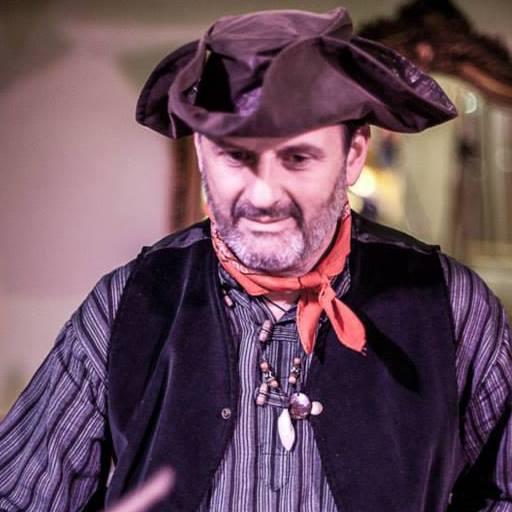
Me Hearties: Mark Radcliffe and his Galleon Blast shipmates, all set for Sheffield and Preston

Me Hearties: Mark Radcliffe and his Galleon Blast shipmates, all set for Sheffield and Preston

Attention landlubbers. It looks like there’ll be something in the water in Lancashire next weekend, with Galleon Blast all set to splice their collective mainbraces by the River Ribble in Preston, heading for The Continental on Saturday, December 12th.

They’ll be arriving en route from a visit to The Greystones, Sheffield, two days earlier. And as I was saying to the band’s drummer, Mark Radcliffe – during a brief break from putting together his BBC 6 Music afternoon show – if there’s one thing in the world we haven’t got enough of, it’s pirate-themed bands.

“Well, clearly.”

It was with that in mind that this Cheshire-based music aficionado expanded his five-piece outfit Mark Radcliffe and the Foes into a septet (one short of pieces of eight, you could say), aiming for a more raucous audience experience. And while his new-look band reckon they were ‘press-ganged into service by an unscrupulous gangmaster from the Spanish Main (well, Knutsford actually)’, they at least have a little shore leave ‘to ply their raggle-taggle trade’.

Punters who turn up at those afore-mentioned Red and White Rose venues can expect ‘a selection of rum-soaked songs and shanties’, including tunes previously appropriated by The Pogues, The Dubliners, The Waterboys, Fisherman’s Friends, and Ewan MacColl. But why are these banjo, whistle, accordion and fiddle-playing pirates calling themselves Galleon Blast? Is it ‘because they arrgghh’? Well, let’s ask Mark, aka ‘the Jack Sparrow (or Jack Duckworth) of the Radio 2 Folk Show’ to explain himself.

“We had a little band called Mark Radcliffe and The Foes, very kind of low-key, chatty and downbeat songs, and people kept saying, ‘Come and play our beer festival’ or ‘Come and play our folk festival’. But it was too miserable to do festivals with, so we thought, ‘What should we do about that?’

“When my wife, Bella, turned 40 we had a party on our garden, a little festival we called Glastonbella. And her brother, a trombone player, brought a brass quartet called Galleon Blast – an anagram of Glastonbella – which I thought was a superb name.

“Then, while on holiday in America, I saw a sailing ship on the Florida Keys and thought it looked great, and having this name stored in my mind thought, let’s do all that – then we can do songs like The Irish Rover, a lot of sea shanties, and so on. So I texted my wing-man, mandolin player Chris Lee, from Florida, saying, ‘I’m back a week on Saturday. Get all the others together – this is what we’re doing’. And when I’d come back it was sorted!”

1782174_772792492733202_7763325827650177429_nPersonnel-wise, are you more or less The Foes plus two then?

“Yes. With The Foes I sang and played guitar, but I’ve gone back on the drums now as well as singing, and we’ve a new vocalist/guitarist, Nick Mitchell, and a female fiddle player, Fluff. So there are seven of us, which is a brilliant plan – it guarantees we never make any money!”

I admit to Mark that it’s taken me a while to get the band name right, having gone with Galleon Drunk at first.

“Well, there’s already a band called Gallon Drunk”.

Exactly – so maybe Galleon Drunk could at least be the title of your first album.

“Ah, but our first album is called Band on the Rum.”

Inspired. So are Galleon Blast taking over from your Dr Feelgood tribute band, Mark Radcliffe and the Big Figures?

“The Big Figures is defunct. The last time I played at the Conti was with The Big Figures. Those are all my mates from the (nearby) Longton area, and they’ll all be coming this time too. They’re starting up again with a different singer, because I’m too busy, but that was great fun. They were a great band, so I’ll be delighted for them to be playing again. And I’m also starting to do a few shows on my own, involving some Foes songs … and a lot of talking.”

Sort of Mark Radcliffe Unplugged?

“Unhinged, more like. Yeah, I’m kind of feeling my way into all that, seeing how it goes.”

You’ll be going some to ever reach the meteoric heights you did with The Shirehorses though, surely (the band Mark he had with his radio rhythm buddy Marc Riley, best known for classic cuts like Why Is It Always Dairylea? (as ripped off by Travis), A Roll With It (as plagiarised by Oasis), and Feel Like Shite (which Supergrass famously put a happy spin on).

“I think that’s the only band I’ll ever do arenas with – when we played with Blur. That was really hilarious.”

I understand The Shirehorses turned down an appearance on Phoenix Nights, performing as folk band Half a Shilling, after concern over the script.

Rhythm Buddies: Mark Radcliffe and Marc Riley (Photo: BBC)

Rhythm Buddies: Mark Radcliffe and Marc Riley (Photo: BBC)

“We did. Tim Healy stepped in instead. It was probably a mistake, really. I can’t really remember how we came to that conclusion, but we made a lot of odd decisions back then, like doing a full tour and never having any t-shirts. I remember sitting in the pub, saying if we get these t-shirts done we’d have to go and see someone in Preston. But we decided we couldn’t be bothered, deciding to stay and have another couple of pints. That was how our decisions were made in those days. We weren’t exactly young businessmen of the year.”

It’s the kind of disregard for ambition I appreciate, a bit like the story of Half Man Half Biscuit turning down Channel 4’s The Tube – even with a helicopter offered to get them to the studio – because their beloved Tranmere Rovers playing that night.

“Well, I remember the time we didn’t go to The Brits because there was a pub quiz on in the Railway.”

Of course, I shouldn’t really be talking to Mark – seeing as I tend to refuse to go near tribute bands with a rock’n’roll style barge-pole. So how can I justify an interview with someone who’s been in a string of tribute acts (of sorts)?

“What? The Shirehorses? A tribute act? I think you’ve got that wrong, Malc. I think you’ll find a lot of people were a tribute to us. Let’s have it right.”

Fair point. In fact, while he’s in combative mode, I bring up a more controversial subject, that he was once with Skrewdriver, sitting in after an invite from his pal, Phil Walmsley. That was however during their non-political, non-racist punk days, before the band – without Mark and Phil – reinvented themselves as white supremacist, far right, neo-Nazis.

Actually, Mark explains all that in his hugely entertaining 1998 multi-band memoir, Showbusiness: The Diary of a Rock ‘N’ Roll Nobody, but I bring it up anyway.  Is that something he wishes he could just remove from his CV?

“Probably, but that’s why I wrote about it. It’s much worse for Phil – who was also in the Big Figures – as it was his band at school. They went through an amazing time playing in London in ’76 and ’77 when the punk thing exploded, yet it’s all been tarnished now. Such a shame.

“I’m pretty clear on who I am though, and what it was about when I was in it – very briefly. Suggs was their roadie early on too, so there were a lot of people connected. But then it all went in a different direction.

“You’re probably right – it’s best to have no association at all. There will always be people who think, ‘no smoke without fire’, but there’s not much I can do about that other than to be completely clear in my conscience and know exactly what it was about when I was in it. If people choose not to believe me, there’s not much I can do about that. But anyone who knows me, if asked whether Mark Radcliffe was a racist, would say, ‘Don’t be ridiculous!’”

With that cleared up, I move on to safer ground, reminding Mark he’s 57 now yet still happily spends his spare time on the pub and club trail.

“I don’t know what else I’d do really. I always thought it was a young man’s game, but perhaps The Rolling Stones thought that. I work on the radio, I look after my family, children and grandchildren, and my ‘me time’ involves going out, playing drums, drinking some beer and doing gigs. I still love it, so why would I stop?”

Stage Presence: Noddy Holder and Mark Radcliffe

Stage Presence: Noddy Holder and Mark Radcliffe

Last time I saw Mark in Preston was at the Charter Theatre, joining forces with his celebrity pal Noddy Holder and talking about his life in music, not least his days with the mighty Slade. They proved to be a great live double-act too, as publicised on this blog via this review at the time. Are they still doing a few shows?

“Not really. We just did one tour. I don’t really know what Nod wants to do. He’s really got to decide whether he wants to sing or not … but I think he doesn’t really, and I love him for that, especially when everyone else seems to be reforming. If he got Slade back together, he could make an absolute fortune. But he doesn’t really need it, and he’s happy with his life. I don’t think he wants to do it really. I still see him quite often though.”

Has Mark ever got over the thrill of being so close to the voice behind all those classic songs (and arguably the man who personifies Christmas more than any other living legend)?

“I think I have. He’s the only celebrity person who’s a proper friend. People like Guy Garvey and that are friends, but Nod’s the only kind of iconic person who’s a friend. But I am beyond that now really. You can’t go anywhere without Nod being recognised, and people are always so pleased to see him. But I just like his company – he’s just a nice fella.”

Having labelled Mark and Nod as a double-act, I move on to Radcliffe’s broadcasting collaborations, not just with Marc Riley (aka Lard) then Stuart Maconie, but also his Glastonbury Festival co-presenters, like fellow BBC 6 Music DJ Lauren Laverne and Jo Whiley. It’s hardly the worst job in the world, what with all this on-air doubling-up, is it?

“It seems to work in that way. Stuart’s off at the moment, so I’ve been doing a couple of weeks on my own, and like that too, but it’s nice to have someone to chat to and you get to places you wouldn’t on your own – the conversation leads to different places. I never really planned it that way, but it seems to work out okay.”

In my newspaper reporting days, I often interviewed golden or diamond wedding couples, leading to that inevitable question about their ‘secret of success’ in staying together so long. In radio terms, Mark’s 14 years with Marc Riley and around eight and a half with Stuart so far suggest a comparative parallel. So what’s the secret? Is it ‘give and take’, as those veteran pairs would often say?

Radio Understanding: Mark Radcliffe and Stuart Maconie

Radio Understanding: Mark Radcliffe and Stuart Maconie

“I suppose so. My relationship with Stuart is very different to that I had with Marc. When Marc and I started we were both learning how to do it and were best mates, together all the time. Stuart and I live separate lives and are at a different stage of life. He lives in Birmingham and sometimes in the Lake District, so we don’t see each other socially that much. But we make each other laugh.

“We’ve never sat down and worked out who does this and who does that. You do however develop a kind of understanding. If sometimes there’s a bit of needle, you know you can push a button and make that worse, or back off. You can’t work that close with someone and there never be a disagreement, but they’re only slight and fleeting moments.

“When I started with Marc, it was my show and he was just the sidekick. With Stuart we started on a much more equal footing. It’s hard to break it down really, but there’s often a nod, a wink and a look and we know what each of us is doing.”

Meanwhile, this Boltonian’s own radio career is now well into its fourth decade, going back to his formative broadcasting days on Manchester commercial station Piccadilly Radio.

“Yes, I started at Piccadilly in September 1979, just after university – as an assistant producer of drama and classical music, believe it or not. I stumbled into it. I wanted to be in a band, and didn’t take looking for a job or any career thoughts very seriously. Kids today are under a lot of pressure to decide what they want to do, whereas I had no idea when I left uni but thought anything to do with music would be okay.

“I kind of made a deal with myself – if I got some work I enjoyed I’d take that rather than chasing money. If I could get a semi-detached house and a reliable saloon car I thought that would be okay really. It’s turned out a bit better than that … but only because a series of happy accidents. I never really wanted to do any presenting, and never did student radio.

“But when I was at Piccadilly Radio and there were all those Factory Records around and Joy Division happening, I said to the people in charge, ‘We should be playing this stuff. It’s kind of an important part of our town now’. They said, ‘We haven’t got anybody who knows enough about it to do a programme’, and I said, ‘How hard can it be? I’ll do it!’ So they let me have Saturday afternoons during the football close season – and that’s where it began really.”

That show was Transmission. Has he listened back to the old reels in recent years?

Broadcasting Legend: John Peel

Broadcasting Legend: John Peel

“Yes, while writing one of my books I found an old cassette, and was quite surprised – I sounded like a manic depressive. I think I was trying to be Manchester’s John Peel, deliberately being as far away as I could from the other DJs, all very ‘Smashy and Nicey’. I think I was just marking my territory. I didn’t find it an easy listen, but I suppose it marked me out as different from everybody else there at the time.”

Pretty soon, Mark switched to the BBC, getting to know some of his broadcasting heroes along the way, not least through recording shifts at Maida Vale for those legendary Peel Sessions, Billy Bragg among those he produced.

“I went as a producer in 1983, and loved doing sessions for Billy, as you were finished after a couple of hours to go to the pub! There was only him and his guitar. Brilliant!

“I couldn’t believe it when I went to Radio 1. I remember sitting in my little office when there was a knock on the door and there was Anne Nightingale, who I’d listened to for years, asking if I was alright. It was an incredible time, getting to know Peel and all those people.

“Absolutely thrilling, even just walking up from the Tube and through the front doors of Broadcasting House – maybe the most famous building connected with broadcasting in the whole world. It just seemed extraordinary really. It was all going too well.”

In time came Radio 5’s Hit the North (1990) and a long spell with Marc Riley on Radio 1 from 1993, the pair proving a major success in the weekday evenings, before a short run in the coveted Breakfast Show spot then seven years in the afternoons, winning three Sony Gold Awards en route.

Then came the Radio 2 years, Mark in time joining forces with Stuart Maconie, the pair heading to 6 Music in early 2011. That said, Mark continues to present on Radio 2, where his duties include The Folk Show, having replaced Mike Harding.

With all that in mind, plus the TV voice-over work, I put it to Mark that it must worry him that we’re in danger of losing the BBC if certain Government factions get their way. We’re already heard about plans for BBC3 to become an internet-only channel. But Mark refuses to take my more pessimistic line.

“Well … the BBC 3 online thing seems pretty good if it’s aimed at young people. My kids tend to watch stuff online anyway. And I think the BBC will be here long after anyone who wants to get rid of it. There are things at the BBC that are a waste of money and where we could tighten our belts. But any Government will realise at a certain point there’s no vote in crushing the BBC.

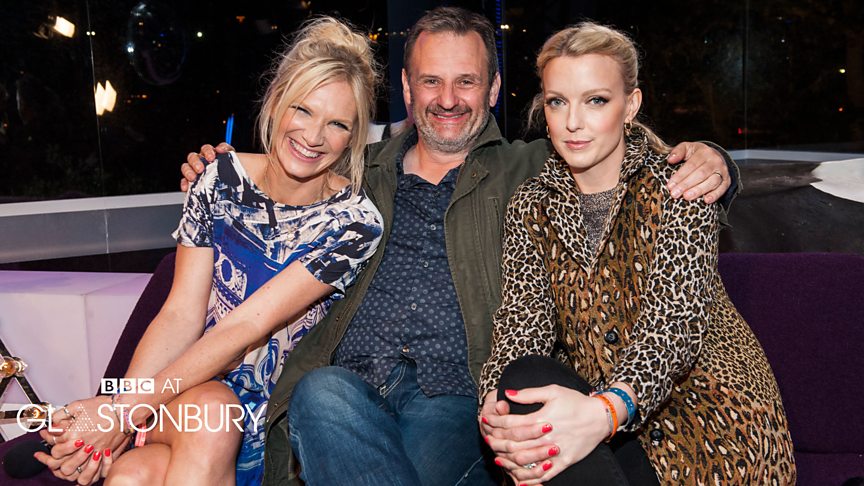
Glasto Stalwarts: Mark Radcliffe with Jo Whiley and Lauren Laverne during the BBC's Glastonbury Festival coverage (Photo: BBC)

Glasto Stalwarts: Mark Radcliffe with Jo Whiley and Lauren Laverne during the BBC’s Glastonbury Festival coverage (Photo: BBC)

“I’d like to see the BBC truly independent of political control. Maybe you could make it by subscription. If you could find a way of scrambling the signals then look at what you pay for. It’s not hard if you get Sky and all the sports packages and watch a lot of films to spend the licence fee in about a month and a half.

“Maybe they should stop everything on the BBC for a week. Let people see what that feels like – all the repeats, the documentaries, the things on other channels, the news – take everything the BBC does out of the equation. Then you could say, ‘Right, you’ve saved yourself four quid now!’”

Away from the day and night jobs, Mark has his writing too – with Showbusiness (1998) followed by his novel Northern Sky (2005), the anecdotal Thank you For The Days (2009) and further music memoir Reelin’ in the Years (2011).

Then there’s his family life on the ‘Knutsford City Limits’, with his daughters now aged 28, 16 and 13. He’s a grandparent too. So does he see himself as a legendary rock’n’roll grandad, or a barometer-tapping cardigan-wearer?

“I don’t know really. I try to be fun and active and do stuff with them rather than sat behind a newspaper, harrumphing – although I do that with my own kids, I imagine. I’m a comparatively-young grandad. It’s one of the very few things I’m comparatively young for. Half of the people I work with are a third of my age now, with many not even born when I started.”

Is there one band or act above any other you feel a sense of pride in helping to break?

“Probably Elbow. I was the first to play them. We played Newborn, and Guy (Garvey) says he always remembers them sitting at home listening to us play the full version on afternoon Radio 1, laughing their heads off, thinking, ‘We’re off! We’re on the way!’ I’ve always felt an affinity with those guys, and know they’ve always felt an affinity with me because they played at Glastonbella, on our garden. They don’t do that sort of thing very much.”

When was the last time someone put a radio playlist in front of you and expected you to work off it?

Pirate Radio: 'Unscrupulous gangmaster' Mark Radcliffe, of Galleon Blast infamy

Pirate Radio: ‘Unscrupulous gangmaster’ Mark Radcliffe, of Galleon Blast infamy

“Every day! We have a playlist At 6 Music. But the beauty of the station is that most of the things on there I’d happily play anyway. You don’t want to have to pick three hours of music every day. It would drive you insane. It would be like you putting a newspaper together on your own every day.

“The key is being somewhere where the playlist actually chimes and fits in with your taste. Then you’re not constantly battling with it. I’m quite happy to be told what to do as long as I respect the person telling me, and as long as they’re telling me what I know to be right.”

Finally, with Chris Evans currently doing the rounds with Don’t Forget It’s Friday (or whatever it is), is there a chance of you bringing back – 20 years on – The White Room to Channel 4?

“It’s not up to me, but if they wanted to bring it back and wanted me to do it, I would -happily. In fact, I’ll happily go anywhere people invite me these days, because I don’t get out much!

“I was sorry when that finished. It seemed to finish a bit too soon. I thought it was going to be like Later with Jools – a job for life. But I’ve learned to not think that about things. Things you think are going to last sometimes don’t, and things you think are just going to be temporary have a habit of drifting on forever. I’ve never made a plan and don’t intend to now. But even if that came back without me I’d be pleased to see it.”

Maybe if Jools Holland decides to call time on Later – providing that Gilson Lavis isn’t up to carrying it on – Mark could have a weekly drumming slot with happening guests for his own live music show.

“Yeah, perhaps so! That would be fun.”

Gallon Blast are at The Greystones, Sheffield , on Thursday, December 10th (with ticket details here) and at The Continental, Preston on Saturday, December 12 (with tickets details here).

Posted in Books Films, TV & Radio, Comedy & Theatre, Music | Tagged , , , , , , , , , , , , , , , , , | 3 Comments

Now I’ve Got a Witness – remembering The Rolling Stones’ 1960s roots with Richard Houghton

Stage Presence: The Rolling Stones giving it their all at Warrington Parr Hall in late November, 1963 (Photo: Martin Culleton)

Stage Presence: The Rolling Stones giving it their all at Warrington Parr Hall in late November, 1963 (Photo: Martin Culleton)

I’m not sure how old newly-published author Richard Houghton thought I was when we first spoke, but he was hoping I might fill him in with my memories of seeing The Rolling Stones at the Wooden Bridge in Guildford in March 1963.

As it was, I wasn’t set to make my world debut for another four and a half years after those particular appearances (I believe two more followed). In fact, I was only six weeks old when they released their overtly-psychedelic sixth album Their Satanic Majesties Request (one of my favourites in parts, although there may just be the odd hint of special sweetie intake during the recording process). And by the time of their fabled free concert in London’s Hyde Park in July 1969 – following inspirational guitarist Brian Jones’ death – I was barely 20 months old.

The confusion was down to me mentioning how I was always intrigued by the thought of the Stones at one of my past lunchtime watering holes, having worked nearby. I was talking about the late ’80s and early ’90s though. I soon put him right anyway, Richard responding: “Ah – the idea they were playing there of a lunchtime was a bit puzzling, quite apart from the fact it would make you at least as old as Mick.” There are days when – with apologies for going down the Maroon 5 route – I’ve been known to move like Jagger, and age catches up with us all eventually, but please.

As it turns out, Richard also missed out on seeing the Stones in the ’60s, despite catching them many times since (20 times, I understand). But he’s given us a valuable portrait of those halcyon days in You Had To Be There! The Rolling Stones Live 1962-69, a new book reliving those early days. He mentions within how he hopes he gives the reader a flavour of what it was like to be ‘there’. And it certainly does. He never set out to write a definite account of this seminal group’s first decade, but that doesn’t diminish or undervalue the sense of history recounted and set down here.

As Richard stresses, some accounts contradict each other, some are clearly embellished by the contributor, and the band themselves were somewhat complicit in helping blur the lines in the first place. But what we get is an often raw portrait of how it all was back then. Many of those responding suggest the PA was poor in the rare circumstances when you could hear the music above the screaming girls, yet you get the feeling that this really was a scene to experience first-hand. And while most of us never were there, this publication allows us to at least experience a sense of the spirit of the times.

I can’t go without a little criticism, and while I admire the fact that Richard has given his contributors free rein with their memories, I’d have taken the hatchet to a few accounts. Several go round in circles, more or less saying the same thing twice. But that’s a minor quibble for something that proves to be a valuable addition to the Rolling Stones literary canon, not least in the way it illustrates the band’s meteoric rise and swift progression alongside subtle shifts within the ranks as we go along.

The idea of catching the Stones in a huge stadium in later years never really appealed to me, but what I’d have given to see them in my hometown, in the capital or even The Ricky Ticky Club at the Star and Garter in Windsor in that first year, or in fact any number of shows mentioned here from those first seven years.

Many of the accounts jump off the page, and while there are far too many to name-check, I’ll at least give you a flavour of that first year, Richard starting with recollections of the band’s residency at Ken Colyer’s Jazz Club at Studio 51 in London’s West End in November, 1962, four months after the first Stones performance and around a dozen shows into what would prove such a mammoth rock’n’roll career. On one such night Brian Robinson, then 17 (and I’ll stick to the ‘then’ ages here), was clearly impressed by his namesake Mr Jones’ slide guitar skills and a chat with the man himself after their set, while Andrew Crisp recalls how his harmonica skills improved after a few tips from a certain Mick Jagger at the same venue.

We then have members of The Presidents talking about gigs on the same bill at Sutton’s Red Lion that same month, and while Bill Wyman and Charlie Watts weren’t yet on board, they were by mid-January ’63 for the first Ealing Club shows, where Trevor Baverstock remembers lots of Chuck Berry and Bo Diddley covers. Furthermore, Trevor still appears to be quietly fuming, having given up his place in the drinks queue one night to Keith Richards, only to be blanked for his kindness.

Early Date: A flyer from the Wooden Bridge at Guildford from 1963 (Photo: http://www.guildford-dragon.com/)

Early Date: A flyer from the Wooden Bridge, Guildford, for two more dates in 1963 (Photo: http://www.guildford-dragon.com/)

Adele Tinman, 16, was always impressed from her Studio 51 nights out at how Mick would always acknowledge the original artists they covered, encouraging her to go out and find those records herself. And then we have Stuart Farrow, 24, part of that Wooden Bridge audience at Guildford, telling us, ‘You had your good looking Billy Furys and people like that, but they were a scruffy group and a lot of people didn’t bother. I remember standing around, jigging around to the music. It wasn’t tremendously busy but the music was very loud.’ What’s more, Stuart recalls snippets of conversation with Brian between numbers, about where they were next and what he was playing.

On we go via shows at Eel Pie Island, Twickenham, more at Ealing Club and then the Crawdaddy Club in Richmond, with a couple of mentions of ‘sixth Stone’ Ian Stewart’s live contributions. And I empathise with Tony Donaldson, 20, when he says, ‘You went to dance as well. Unfortunately for spectators, once they started doing ‘proper’ concerts this exciting aspect of seeing live bands was lost’.

Jackie Hankins, 24, was at Eel Pie Island, saying how ‘They looked like they’d just got out of bed. They didn’t look like they’d washed for a month’, while Robin Mayhew, who saw them at the Red Lion in Sutton and the Ricky Tick Club in Windsor, reminisces about the early days and how he knew ‘Stu’ back in Scotland. And then we have the afore-mentioned Trevor Baverstock remembering an overheard bit of needle that summer of ’63 from Mick about Brian at London’s Scene Club, seemingly jealous of the attention given by the early punters to his band-mate.

At Middlesbrough’s Outlook Club – on a double-bill with The Hollies – Mike Gutteridge compliments Mick on his footwear and is told, ‘Yeah, man, these are Chelsea boots’. At Dunstable’s California Ballroom, David Arnold, 17, remembers chatting to ‘an affable Brian’ at the interval, while at Banbury Winter Gardens, Trevor Nevett, 22, reckons unimpressed owner Ethel Usher sent the band off to get haircuts before she let them on, while Ken Pratt, 15, tells how he went backstage and all the band managed to cadge one of his Senior Service ciggies off him. What’s more, Joe Freeman, 16, said the band ended with Shake, Rattle and Roll, Mick’s stage presence inspiring the audience into a chorus of ‘For He’s a Jolly Good Fellow’. Yep, different times.

Gay Jinks, was impressed at Northwich Memorial Hall by her conversation with Stones boss Andrew Loog Oldham, who went on to get her a signed photo, while back at the Ricky Tick at Windsor, Martin Osborn, 18 – who turns up again four days later at the Il Rondo Ballroom, Leicester – recalls a chat with Bill about the band’s new gear, courtesy of their deal with Decca. And then there’s Christine Murphy, 15, cycling into Manchester after school, getting changed at Kendals department store, meeting a friend and getting her autograph book signed by Mick, Keith and Brian before the Oasis Club gig.

Having been at the first gig outside England – Prestatyn Royal Lido – Trefor Jones regrets losing his autographs following his divorce, while – skipping forward to October – Susan McLaren, 13, recalls Brian throwing a photo out of a window at the Streatham Astoria, later that night signed by Keith. She did however have to eventually chuck the apple core Brian also threw out. She kept it in a tin in her shed until her Dad discovered it, complete with maggots.

At the Watford Gaumont, 22-year-old Diana Whitney’s mother-in-law’s neighbour Queenie (are you following this?) didn’t let the boys back in after they popped out of a rehearsal, as they were a ‘scruffy bunch’. Apparently, the manager was later phoned to let them in. And later that month a young diner at a Wimpy Bar in Poole obviously agreed, telling Margaret Gray, 17, ‘they are scruffy long-haired oiks and they will never last’. It didn’t deter her though – she was soon screaming ‘Keith!’ at the Bournemouth Gaumont.

Rolling+Stones+The+Rolling+Stones+-+Alta+Fide+52981Elsewhere, Peter Wood, 28, recalls the trip home from the Salisbury Gaumont in his mate Len’s A35 van, not least a sudden stop when they reached their destination, leading to an exchange with the guy behind the wheel behind them, a squeal of brakes followed by frantic reversing and quick acceleration, the irate driver – a certain bloke with the surname Jagger – stopping long enough to ask, ‘What f***ing clown is driving this f***ing van?’ before roaring off.

And before I roar on, I’ll mention Ray Hulme, 16, and how he reckoned he couldn’t understand Mick and Brian when they pulled up outside Crewe Town Hall on November 10th, 1963, but along with his mates helped them unload their gear, taking it upstairs to the venue. He also adds, ‘I’d never seen long hair like it’.

But that’s just a snapshot of this hugely-entertaining 288-page read. Instead, let’s get back to my chat with Richard. And then you can stop reading over my shoulder and work out how to get a copy of your own.

Richard, 55, works for a housing association in Chorley by day, writing in his spare time while based with his partner in Manchester. And while he admits his latest project has ‘taken up a fair chunk’ of his life, he reckons it‘s ‘a labour of love’.

As with many books covering 1960s’ pop culture, there are plenty of Beatles vs Stones comparisons from the contributors. So it’s worth noting here that the Fab Four were the first band Richard saw – albeit as a four-year-old.

Richard, whose 19-year-old son Bill has inherited his love of the Stones, said: “They played a string of shows at Hammersmith Odeon over Christmas 1964.  My recollection was going to see Santa Claus in a department store that afternoon and unwrapping the present he gave me when we got to the gig that evening.

“It was a set of wooden skittles and balls. I managed to drop one of the balls, which rolled away to the front of the theatre, never to be seen again. But my mother says we went to one of the early January shows, so I can’t in all honesty say they made a big impression.”

He certainly remembers his first taste of the Stones though, performing 1971’s Sticky Fingers’ lead single Brown Sugar on Top of the Pops.

“Mick was wearing a pink satin suit and a baseball cap, doing the moves he’s still famous for. I think that was a turning point – at the age of 11, he was as charismatic as Marc Bolan, Noddy Holder or the other pop stars I was aware of.”

Rolled_Gold_-_The_Very_Best_of_the_Rolling_Stones_(album_cover)It was Decca’s 1975 Rolled Gold greatest hits double LP that really got Richard hooked though.

“Growing up in a small town in Northamptonshire, my friends were more into Genesis, Pink Floyd and Yes. I was ‘the only Stones fan in the village’. They were viewed as being past their best and weren’t a singles band anymore so weren’t in the headlines, at least not for their music.”

As it was, Richard didn’t see his idols live until an open-air one at Feyenoord’s stadium in Rotterdam in 1982, alongside ‘40,000 rabid Dutch fans’.

“UK shows were rumoured but the European dates were announced first and I bought a coach package. I didn’t want to miss out. This was in the pre-internet and social media days, when the only source of information was the music weeklies.”

By then, the Stones were two decades into their stellar career, but now Richard has recreated something of the feeling of seeing the band in those early days, having collected eyewitness accounts from 500 fans who were ‘there’, the reader taken on a journey from the first London gigs in 1962 through to Hyde Park in 1969.

That includes plenty of revealing Lancashire anecdotes, and Richard – who devised his epic tome with the help of Cambridge-based husband and wife team Trevor and Julie Bounford, of GottaHaveBooks – certainly gives a flavour of the ‘60s Stones experience.

“I used to work with Julie, and Trevor said he liked the book so much he was prepared to set up his own publishing company to publish the book when discussions with another publisher appeared to be going nowhere.

“Trevor’s a graphic designer by trade and has worked on a variety of projects over the years, including designing other books about the Stones.  While this is the first book they have published they have ambitious plans.

“It’s really exciting to be associated with a start-up company that had the faith to invest in my book and I’m really pleased with the way the book has turned out. Feedback has been really positive.”

Can he pick out a favourite anecdote or early gig he wished he saw?

“I’d have loved to have been at one of the gigs at the Red Lion in Sutton, Surrey, when they were struggling to attract more than a dozen people. Imagine seeing the Stones playing in the back room of a pub and being able to go up and ask Mick to play a Chuck Berry song!”

Richard must have despaired at what he’d taken on at times though. As he mentions, they played more than 750 times between 1963 and 1966 alone, and memories do get hazy.

Rolling Richard: The author, Richard Houghton, with his Stones bookshelf

Rolling Richard: The author, Richard Houghton, with his Stones bookshelf

“I had to do a lot of triangulation of facts, as people remembered seeing them at Venue A with support band B on such and such a date. Sometimes the books suggest they never played that venue on that date or appeared with a different support.

“But I tried not to rewrite memories. I didn’t want to lose the spirit of what people told me.  I wanted it to be in their words as much as possible.

“There were two memories I didn’t include because I couldn’t authenticate them.  One was a lady from Hereford who claimed to have seen the Stones in Hereford supported by the Jimi Hendrix Experience and by Olivia Newton John.  As far as I know, those three acts have never performed together on the same bill in Hereford or anywhere else.

“And there’s another story from a guy who says he saw the Stones play a show in Bangor in Northern Ireland in front of a tiny crowd.  I couldn’t find any reference to it in any books or on any websites but the timescale fitted in with when they visited Northern Ireland in 1964.  In the end I contacted the Stones manager from the ’60s, Andrew Loog Oldham, to see if he could verify the story.  Andrew said they didn’t play there so without someone else to substantiate the facts I sadly had to leave out what was a very plausible story.”

Is ‘truth stranger than fiction’ in some cases?

“Absolutely. Some of the early encounters people relate are fascinating. Essentially, the Stones started out as a pub band playing music very few people wanted to hear, so audiences were often no more than a handful of enthusiasts.

“The band would just step off the stage and wander to the bar during the interval, and there are some great anecdotes – with Mick showing someone how to play the harmonica or Keith teaching someone a chord on his guitar.

“Once the vibe about how great a live act they were started to spread, and when they’d had a hit with Not Fade Away, things started to take off very quickly.”

Bill Wyman’s autobiography, A Stone Alone, proved a good reference point, a combination of the band’s original bassist’s diaries and research by journalist Ray Coleman using press reports of the time. But Richard’s favourite was Roy Carr’s Illustrated Record’, listing all the gigs and adding ‘great images’.

“I knew Roy was a former NME journalist. What I didn’t know was he was from Blackpool and his band was one of the Winter Gardens support acts on the night of the infamous Empress Ballroom riot (with that 1964 date covered in great detail within).

“Plus, Bill’s book is not infallible.  The Stones played a show in Sunderland at the town’s Odeon Theatre.  Bill lists it as the Rank Theatre when it was never known by that name.  The discrepancy came to light when a journalist on the local paper in Sunderland queried it with me.  So although it’s a bit ‘trainspottery’ I’ve played a very, very small part in ensuring the history of the Rolling Stones is accurately recorded.”

Young One: Richard Houghton, around the age he saw The Beatles

Young One: Richard Houghton, around the age he saw The Beatles

So much has gone into print about the band, but Richard clearly envisaged a gap in the market.

“I did. I’m a bit of a collector of books about the Stones, at the last count having more than 200. But as far as I know there’s never been a book trying to tell the early history in the words of the fans.

“I didn’t want to tell the story by rehashing old interviews, doing cut and paste jobs from books already out there. I wanted something I could step back from and say, ‘I’ve added a different perspective, and wanted people’s stories heard while they’re still around to tell them.

“I couldn’t have written this without the help of local newspapers, primarily as older people whose stories I wanted to collect are still avid readers of print media and won’t necessarily respond to internet appeals.

“Newspapers have been an invaluable resource. I particularly wanted to hear stories that perhaps hadn’t been told before outside of friends and family. And I had so many letters and emails which began, ‘I saw your letter in the paper and it brought the memories flooding back.’”

As hinted at before, it’s the earlier accounts really resonate – from fans who chanced upon the band at those smaller venues, some of which are long gone.

“It would be great to have a time machine and see them play I’m A King Bee or Walking The Dog. But hopefully this captures what it was like and inspires people to go out and listen to the early albums again or discover them for the first time.”

You make a good point about how so many of these concert halls, clubs and pubs mentioned are now either gone or going.

“Many venues they played are still standing but lots have gone, replaced by car parks or supermarkets. Others are in intensive care, awaiting a major injection of funds to restore them or a planning decision as to whether to demolish them.

“We don’t seem that interested in preserving our civic and musical heritage or recognising that without places to play there won’t be the opportunities for another Stones or Beatles to play live in a different town every night and break through to a wider audience.

“It’s a dispiriting thought to think we’ll have to rely on The X-Factor to break a new group.”

Points Made: The Stones in the '60s. From the left - Charlie Watts, Mick Jagger, Keith Richards, Bill Wyman, and Brian Jones

Points Made: The Stones in the ’60s. From the left – Charlie Watts, Mick Jagger, Keith Richards, Bill Wyman, and Brian Jones

There’s certainly a strong sense of nostalgia and even sadness in various anecdotes, not least those regarding Brian Jones or earlier ‘sixth’ member Ian ‘Stu’ Stewart.

“I tried to keep the commentary from myself to a minimum. I wanted the fans and others associated with the group to speak for themselves.

“Stu was an old friend of one contributor, and his role in getting the group work in the early days is reflected. Before (Stones manager) Andrew Loog Oldham came along he was their pianist, road manager and booking agent.

“He had an office job and ready access to a phone when Mick, Keith and Brian were slumming it in a flat in Chelsea, living off money they could get from taking empty beer bottles back to the off-licence.

“Brian’s role in founding the group and subsequent demise has been much documented. I think what’s really sad is that the tensions between Brian and Mick in particular seem to have been evident from very early on.

“People were aware that Brian was troubled but were unable to do anything about it. But I’m a firm believer that his life was back on track once he left and that he was murdered at Cotchford Farm. His death wasn’t an accident. Perhaps the truth will come out one day.”

I’m guessing this is a project that never really ends. Have you already had fresh responses?

“I’ve had quite a few more stories. It turns out my brother-in-law saw them at Eel Pie Island in 1963 and was miffed I hadn’t asked him! If I have enough new material I’d love to do a second book.

“I’ve only just come off the phone from a guy who went backstage to meet them when they played Exeter. He had a great story about Mick signing something while hanging upside down, telling him the autograph would be worth more as a result!”

Is that right you’re contemplating a Beatles book along the same lines?

“A lot of people who responded wanted to tell me about seeing or meeting The Beatles too, so it’s started to write itself.

“I’ve a great story about them staying in a small hotel in Wiltshire while filming scenes for Help on Salisbury Plain, marching through the lobby in a line to get to their rooms. Even at the height of their fame they didn’t have the tons of security modern bands seem to surround themselves with.

“I think it’s a sign of just how much affection there is for both groups that so many people want to tell their stories. And people with teenage memories to share are great story-tellers. Sometimes they’re just looking for an audience, and hopefully I can help them find one.”

5181I3hOY-L._SX337_BO1,204,203,200_For the writewyattuk interview with Stones legend Bill Wyman from October 2013, head here.

You Had To Be There! The Rolling Stones Live 1962-69 By Richard Houghton (GottaHaveBooks) is available from various independent retailers, including – on my patch – Chorley’s Ebb & Flo bookshop and Malcolm’s Musicland, or online via www.gottahavebooks.co.uk and Amazon.

And anyone with Rolling Stones memories stoked by Richard’s project can email him via stonesinthe60s@gmail.com or write to 7 Hartley Road, Manchester, M21 9NG.

Posted in Books Films, TV & Radio, Music | Tagged , , , , , , , , , , , , , , , , , , , , | 4 Comments

Highway to Hull (and back) – the Lucy Beaumont interview

Mamma Mia: Lucy Beaumont has just let her mother know she's arrived

Mamma Mia: Lucy Beaumont has just let her mother know she’s arrived

After a five-year apprenticeship on the comedy circuit, it’s fair to say Lucy Beaumont is making a name for herself.

Her ‘blend of surreal offbeat humour’ (as her press biog would have it) has led to several plaudits since becoming a finalist in 2011’s nationwide stand-up comedy competition So You Think You’re Funny? And BBC Radio New Comedy and Chortle Best Newcomer awards followed in 2012, while her Edinburgh Fringe show We Can Twerk It Out was nominated for the Foster’s Newcomer Award in 2014.

Lucy was originally mentored in 2008 by Jeremy Dyson as part of a BBC initiative to find new northern comedic voices, going on to write one-woman play Bananas are Blue, produced by Theatre by the Lake and previewed at the 2010 Manchester Theatre festival.

And seven years on, her BBC Radio 4 sitcom To Hull and Back – which you can catch up with via the BBC iPlayer – is making waves, Arthur Smith reckoning we have ‘the next Victoria Wood in the making’.

Johnny Vegas, who also features in Lucy’s sitcom – along with Norman Lovett and her ‘Mum’ Maureen Lipman – said, ‘She’s got the timing of Les Dawson… an absolute natural’, while her other credits include Crush, a 90-minute monologue that scooped a Sony Radio Award.

Add to all that appearances on Comedy Central’s Live at The Comedy Store and Dave’s As Yet Untitled with Alan Davies, and a stage background, Lucy performing in various premieres and touring with Hull Truck Theatre, York Theatre Royal and West Yorkshire Playhouse.

In fact, word has it that Lucy – on the back of a sell-out, critically-acclaimed run at the Soho Theatre, Edinburgh Festival and venues spanning the country – only switched to comedy in a bid to conquer stage fright in preparation for an acting career.

What’s more, it seems that she’s also a success in Norway, judging by her reception there last weekend. She was a little gutted at missing out on the Northern Lights while on stage though. Did she not have a retracting roof at the venue?

“No, I wish! It went surprisingly well though. They don’t even understand me in Scotland, let alone Norway … but their English is impeccable. Even little colloquialisms – they get it all, because they’ve grown up on British and American TV and film.”

My excuse for catching up is her forthcoming Funny Northern Women date at Chorley Little Theatre next Friday, November 27th, which just happens to mark Lancashire Day. So let’s go for the offensive and ask if this lass from the East Riding of Yorkshire (with her defining Humberside accent) is looking to infiltrate.

“Oh, is it Lancashire Day when we visit?”

It certainly is, the 720th anniversary of the Red Rose county sending its first representatives to Edward I’s Parliament, I understand. I’m not sure how many people know of the origins, but it certainly seems to be getting a little more coverage these days.

“That’s good. You need something to cling on to! No, I’m kidding, and anyway, the other two girls – Hayley and Katie – are Lancastrian. And we’re all Northern, aren’t we.”

Manchester Roots: Hayley Ellis is also on the bill at Chorley Little Theatre

Manchester Roots: Hayley Ellis is also on the bill at Chorley Little Theatre

That’s as good a place as anywhere to add brief biogs about those other two acts appearing, with Manchester-based Hayley Ellis, a former XFM breakfast show regular, began performing in 2009 and MCs at gigs around the country. She’s seen success in various UK new act contests, BBC Radio 2 DJ Steve Wright saying she was ‘fast becoming Manchester’s funniest female.’

Meanwhile, Katie Mulgrew has also played up and down the country, and is the daughter of James Mulgrew, aka North West-based Northern Irish veteran funnyman Jimmy Cricket. You can also hear Liverpool Hope Playwriting Prize winner Katie’s dulcet tones on BBC Radio 2 documentary series The History of British Comedy, while she hosts The FunnyGirl Podcast, discussing musicals with guest stand-ups.

Had Lucy worked with her fellow Funny Northern Women before this tour?

“Yeah, we seem to work well together actually. It should be a good night. And if there’s one of us you don’t like, you’ve got two others.”

Do you travel together? Is there a big tour bus?

“Oh no! Me and Hayley travel together though.”

What can you tell us about life on the road with Hayley then?

“It’s great. She drives and I talk to her … it works well.”

Junior Cricket: Katie Mulgrew, out for the day with the Funny Northern Women

Junior Cricket: Katie Mulgrew, out for the day with the Funny Northern Women

And Katie just shows up on the night?

“Yeah. She’s had a baby recently, so she’s just glad to get out of the house!”

We might as well get this out of the way – Lucy has a strong Lancashire link anyway, having married fellow comic and 8 out of 10 Cats star Jon Richardson back in April.

“Yeah, he’s from Lancaster.”

Does he take you to the north of the county now and again?

“I have been, yeah, a few times. It’s lovely. I’ve got some good friends there. I like it. Nice people.”

And what does Jon make of Kingston upon Hull? It’s hardly Kingston upon Thames, where he was previously based.

“He likes it, although he finds it a bit rowdy of a night.”

Be honest, what were you first thoughts when you heard your old neck of the woods had got the City of Culture status for 2017?

“Just over-joyed! It’s been a long time coming, and we need some recognition. You wouldn’t believe the amount of professional actors, writers, artists and musicians who come out of Hull. For such a small place, it’s incredible, and people need to know.”

Hull Raisers: Lucy and fellow To Hull and Back cast members, including Maureen Lipman, Norman Lovett and Jon Richardson to the right

Hull Raisers: Lucy and fellow To Hull and Back cast members, including Maureen Lipman, Norman Lovett and Jon Richardson to the right

Fair enough. If you search for famous Hullensians on the internet, you’ll find far more than you probably realised were from that way, including Lucy’s close family friend Roland Gift, of Fine Young Cannibals fame.

“Yeah. It’s had hard knocks has Hull, but deserves this. Let’s just hope people visit.”

What are the best things about Hull, on a personal level?

“Similar to Lancaster, really – it’s the people, and there’s community spirit. People care about each other. That’s so important, and you sense it.

“When you’re proud of where you’re from, it gives a place an atmosphere. You’re not living there because you have to work there, but because you’ve got roots there, and those bases are special.”

A friend at the Lancashire Evening Post told me just before I caught up with Lucy, ‘Ask her about chip salt’, going into a rant about how Hull got there long before any franchise chicken eateries. What’s all that about?

“Well, it’s an American chip spice, but made in Goole or somewhere, and just makes chips taste amazing.”

That’s at least one great export other than all those theatrical and musical links then.

Theatrical Links: Lucy Beaumont takes a seat (Photo: BBC)

Theatrical Links: Lucy Beaumont takes a seat (Photo: BBC)

“Definitely!”

Is Lucy, now 31, aware of a Northern-ness – for want of a better or at least a proper word – in her humour and in her act?

“Yeah.”

Can you define that?

“I don’t know, really. It goes down well in Norway too.”

Well that is the proper North, I guess.

“There are a few jokes that only go down well with a Northern audience. They’re the only ones who get it, including one I’ve got about taxi drivers being grumpy.”

It was only when I was watching a few live clips of Lucy that I realised ‘Mamma Mia’ is a phrase from Humberside rather than Italy. Not a lot of people know that. And what’s her toughest crowd been so far?

“You have a lot of tough crowds. I couldn’t pick one, but drunk crowds at Christmas are the worst. Or hen-dos and stag parties. They’re hard.”

All thinking they’re funnier than you after a few drinks?

“Yeah! Completely. And when a fight breaks out, that’s hard.”

What’s it like to have Hull-born Maureen Lipman play your Mum on the radio? Is she anything like your real mother?

“Oh no … she’s not, nothing like my Mum. I have to say that. But she’s just an incredible person is Maureen. You think you get to know her, then she surprises you.”

Husband Material: Jon Richardson

Husband Material: Jon Richardson

After all those years of proper elocution and voice coaching, did you need to give Maureen plenty of retraining to get her to remember her Humberside roots?

“No, she soon got back into it. She left when she was 18 to go to drama school, but the accent’s so infectious … it never quite leaves.”

Was she someone to look up to when you were growing up?

“Yeah, completely. She’s the one I always cited, having done a lot of drama.”

Did your time with the Hull Truck Theatre company help you on the way?

“Yeah, I’ve grown up with Hull Truck really, because my mum’s a writer, and the first professional stuff I did in theatre was with them.”

Actually, I see there’s another date in the diary for Lucy back on home ground early next year, playing Hull Truck on March 17th. So how did your Mum – Hull-based Gill Adams, a playwright whose TV writing credits include EastEnders and Doctors – get involved in the trade?

“She just had a passion for writing, really. It was meant to be.”

It turns out that there’s another Lancashire link with To Hull and Back – with Lancaster-based actor, writer and director Sue McCormick, originally from Preston, playing a part, having worked all over the country in theatre, film, TV and radio.

“Yeah, the radio show also involved Sue, who’s really well known in Lancashire and in the theatre. I worked with her at Hull Truck, so it was nice to get her involved.”

And how did you get Norman Lovett – perhaps best known as Holly from cult BBC TV space sitcom Red Dwarf – involved?

“I just asked him. I went to see him in Edinburgh a few years ago, and had tears running down my face. I thought it was the funniest thing I’d ever seen. I thought I just had to get him involved.”

Electric Dreams: Lucy Beaumont waits for a bus home

Electric Dreams: Lucy Beaumont waits for a bus home

Did you build the part around him?

“Yeah, he’s not an actor, but what he can do, he can do! Nobody else can … if you know what I mean. He’s a one-off.”

I’m only just catching up with To Hull and Back now. I’m well impressed though. Have you had a good reaction?

“Yeah! I’m hoping for a second series. That would be nice. You never know, but it would be lovely to write another one.”

Did you listen to a fair bit of radio comedy growing up?

“Oh, yeah. I was brought up on Steptoe and Son and Hancock’s Half Hour. All the old greats. I was obsessed with ‘70s BBC sitcoms. All my friends thought I was really weird. I watched them all, and it’s obviously stayed with me. My favourite was One Foot in the Grave. That’s the one I got most inspiration from.”

What’s it like working with Johnny Vegas (who has also guested in Lucy’s sitcom)? He’s another performer who said nice things about you.

“He’s lovely. He’s a good guy. I was too young when he was in his heyday in stand-up, before he started doing telly stuff. But from what I gather, when he was on form he was the most incredible performer. Him and Peter Kay lit up a stage. You never knew what was coming next. And he’s multi-talented is Johnny – he can act, he can write, he can direct.”

Have you ever suffered stage fright, like your radio character – hiding in a cupboard when it’s time to go on?

“Yes, basically! I used to shake like a leaf on stage. People would really worry about me.”

But there was never a moment when you couldn’t bring yourself to go on?

“No. There have been times when it’s been like an out-of-body experience though.”

Lancashire Visitor: Lucy Beaumont is all set to explore Chorley with her fellow Funny Northern Women

Lancashire Visitor: Lucy Beaumont is all set to explore Chorley with her fellow Funny Northern Women

Do the various awards and fellow professionals’ accolades make you more nervous, piling expectation on, or do they make you rise to the challenge?

“I dunno. I just try to knuckle down. I’m still learning, and I’m at the beginning of my career. You just like those quotes because they look good on posters! But at this stage it’s just about working with people you find funny.”

Can you see yourself doing more writing and less performing in time?

“I think so. I’d like to have a few years really honing the writing skills and trying to get a telly sitcom off the ground. But then I’m sure I’d miss doing shows. There’s nothing better than the feeling of doing a live performance. I think I’ll just alternate between the two.”

And when you get back to your South-West London base and you’re talking to Jon, can you switch off? Or is there plenty of comedy ‘shop talk’?

“Yeah, we have to stop ourselves!”

Noel Fielding recently told me about sharing a house up at Edinburgh with Lee Mack, and how difficult it was for Lee to shut off. Is that the case with you two?

“Well, Jon will be cracking jokes all the time. He doesn’t know any different and doesn’t miss a trick if you make any mistake or say anything wrong. But like Lee Mack, they’re just hilarious. You can tell they’re just as funny off the stage. I think it’s actually an infliction.”

Do you go off a in a huff then secretly write down what’s just been said?

“Well, that is a problem, because we share so much together. We have to ask, ‘Are you using that … or shall I?’”

So what can those who get along to Chorley next weekend expect from you and your fellow Funny Northern Women?

“A good night of comedy, really. It’s so rare that you see three women on a bill. Apart from charity nights, I don’t think it happens. And there’s something for everyone, you know.”

Funny Northern Women is at Chorley Little Theatre, Dole Lane, Chorley, on Friday, November 27 (8pm-10pm), with tickets (£12 or £10 for concessions) from Malcolm’s Musicland on 01257 264362.

To catch up with To Hull and Back, follow this BBC iPlayer link here. And for the latest from Lucy, try her website here.

Posted in Books Films, TV & Radio, Comedy & Theatre | Tagged , , , , , , , , , , | 3 Comments

Bill Bailey – Preston Guild Hall

Expecting Bill: Before curtain-up at Preston Guild Hall (Photo: writewyattuk)

Expecting Bill: Before curtain-up at Preston Guild Hall (Photo: writewyattuk)

With his Limboland tour continuing for some time yet – doing the rounds up and down the country until December’s switch to the capital – I should walk the line carefully here, not giving away too much for those yet to catch this Bath-born comic and musical genius.

But however well I phrase it, you’ll get it better first-hand judging by my night to remember in Lancashire.

With the horror of Friday night in Paris stamped on us all, Bill was quick to jump in and slam all those intent on attacking the age-old concept of fun and good times, breaking the ice in doing so.

From there he was up and running, tackling domestic politics in support of the NHS, railing against the PM and IDS, among others. This being Bill, there was plenty of veering off too, something he’s taken to art-form level, and he was soon treating us to his jarring new animal liberation anthem, The Day the Chickens Marched on Kiev.

From there we covered Bill’s failed attempts at Skype conversations with his Dad and the songs we play in our heads as we walk, leading to an examination of the effectiveness of the Star Wars theme and its Imperial March in such situations.

The Daily Mail was his next target, not least dwelling on how certain scandals are written off as youthful high jinks while others – far less inflammatory – are capitalised upon, not least a certain well-documented incident which in some press quarters received about as much interest ‘as a chord change at a One Direction concert’. He was on a roll now, that particular boy band getting a right pasting, Bill describing its remaining members as resembling ‘four blank Scrabble tiles’.

Limbo Lad: Bill Bailey processes another thought in his tombola mind

Limbo Lad: Bill Bailey processes another thought in his tombola mind

His switch between subjects and observations continued apace, coming at us pinball-style while gradually leading to his main theme, Limboland, that corridor of despair where life doesn’t quite match up to how we might have expected it to. That included a look at British definitions of pleasure, first explaining the Danish term hygge, loosely translated as cosiness. And believe it or not, there was even a visitor from Jutland in the crowd to help out with the pronunciation.

As Bill suggested, we have differing definitions – cue several examples of true happiness, British style, such as finding receipts for faulty electrical appliances, before a spot-on appraisal of the phrase, ‘Not too bad … all things considered’.

As he digressed again, I particularly enjoyed his alternative version of the haiku, a more football-oriented 4-4-2 formation poem, as given in the example:

I hold you close,

You look morose,

Dead wasp

Before the interval he even tackled Happy Birthday in a minor key on the grand piano, and then in Kurt Weill style (although neither are likely to lead to children’s party bookings if the day-job falls through).

The music theme continued when Bill returned with a brief examination of shoe-gazing indie, before an evaluation of the rock riff and acceptable facial accompaniments, not least advice to avoid the ‘concentrating’ look, which doesn’t quite carry the same kudos.

We also learned the ‘chord progression of Satan’, Death Metal style, as tested on several mainstream tunes, not least crowd suggestions Lady in Red and If You’re Happy and You Know It.

Vitamin Vision: Bill Bailey sees it as it is (Photo: https://www.facebook.com/BillBailey/)

Vitamin Vision: Bill Bailey sees it as it is (Photo: https://www.facebook.com/BillBailey/)

Returning to his main theme and that ‘true nature of happiness’, he regaled us with the rib-aching tale of his extended family trip to Tromso to see the Northern Lights. And then came his revelatory glimpse into the working of the male ‘tombola’ mind, including honest responses to the partner’s standard question, ‘What are you thinking of?’ which rang a bell for a fair few of us.

Bill’s climax followed, so to speak, as we helped him record his own take on a hit in the style of ‘vegan chancer’ Moby. And there was still time for another great tale illustrating his ‘life’s great disappointment’ theme, involving Bill and his mate getting tongue-tied while meeting Sir Paul McCartney, our comic master then leaving us with an inspired Jamaican ragga dub take on Downton Abbey.

On a dark and wet weekend when it seemed that the world was on a collective low, our special guest gave us plenty to smile about. Thanks for that, Bill. And come back soon.

For the recent writewyattuk interview with Bill Bailey, head here. And for details of the rest of the Limboland tour, head to his website here

Posted in Books Films, TV & Radio, Comedy & Theatre, Music | Tagged , , , , , , , , , , | 3 Comments

Farewell to The Dubious Brothers: reacquainting myself with Monty (part one)

Dubious Dancing: Monty, third left, and co. live in 2014 (Photo: Ashley Jones)

Dubious Dancing: Monty, third left, and co. live in 2014 (Photo: Ashley Jones)

Listen up. I realise it’s late notice if you didn’t already know, but this Saturday, November 14th, marks the end of an era, with the final show by The Dubious Brothers.

I’ll take part of the blame – not for the fact that this cult collective are calling it a day, more the case that I’m only mentioning it now. It’s been on my list for a while, but time overtook me, and I only finally got in touch with the band’s founder, leader and singer-songwriter, Monty, last night. The result was an entertaining three-quarters of an hour chat (some of it even relevant to what I planned to cover).

Time is against me now to transcribe all that in time, so I decided towards the end of our chinwag that I’d do this as a two-parter instead, with the first instalment flagging up the gig itself. Because I’d hate for anyone who can actually get there on the night to see this too late and miss out.

Part two will follow on this site very soon, and will involve more of a personal nostalgic retrospective of the band, and a bit of a potted history of the life and times of Monty – before, during and after The Dubious Brothers.

But first, the rudimentaries – the where, the when, the why and the how, including a little biog for those who might not have had the pleasure, first-time around, or those who need reminding. It might even inspire you to get to North London this Saturday night and see them in all their pomp and finery. Think of it as the last chance saloon.

Then, when you get back (and no doubt have something to tell your grandchildren), I’ll carry on and give you more, maybe even calling Monty back for a few words on the whole emotional experience this weekend.

Sigh. It’s only just sinking in that I won’t be there on the night to revel first-hand in all those great songs, the likes of classic DB tracks like South America Welcomes the Nazis, Falling Masonry, You’re Wernher Von Braun (And I Claim My Five Pounds), Britannia’s Grand Machine, Inspector Le Strade, My Goodness! This Bazaar Is like a Jumble, and A Heck of a Dubious Day.

So just who are this ‘cult ’80s’ anarchic music hall act back by popular demand to play for just the second time in 25 years, for one night only at the Assembly Hall in Islington’ (not my words, but about right, I suppose), formed around Banstead way in my native Surrey all those years ago? Well, let’s delve into their own official press release:

“The Dubious Brothers have to be seen to be believed. Between 1986 and 1990 they amazed and bewildered audiences all over Europe with their anarchic, satirical pre-War sound and spectacular theatrical stage show.

“Whilst the band played a heady mix of music hall foxtrots, tangos and waltzes, surreal Greek dancing surgeons flung themselves into the frenzied audience whilst ghostly Victorian gentlemen rode strange upside-down bicycle machines on stage. The set was reminiscent of both the misty docks of Victorian London and the inventing room of Chitty Chitty Bang Bang‘s Caractacus Potts.

“Although their dance music looked firmly backwards in time, the lyrics were rich in biting, modern political satire. The Dog Ate My Poll Tax Form and What A Lovely Day For A Hunt Sabotage were particular fan favourites, and The Dubious Brothers took particular delight in mocking the British Establishment.

Stage Presence: The Dubious Brothers, for your listening and viewing pleasure (Photo: Ashley Jones)

Stage Presence: The Dubious Brothers, for your listening and viewing pleasure (Photo: Ashley Jones)

“No judge or freemason was safe from their gaze. As a cult indie act, their vinyl releases are now collectors’ items, but the recent success of the album Antiques- The Best Of The Dubious Brothers has led to this one last glorious night of twisted dancing sing-a- longs and chaotic delight.”

Right, now we’ve got that out of the way (which is good, because they’re bloody hard to explain to people who haven’t chanced upon them before), did you make note of the bit that said, ‘second time in 25 years’? Well, yeah. I missed that last comeback gig, and as I’ve already mentioned, circumstances as they are (not least geographical ones) I won’t be able to make it this time either. Shame on me, and for me. But a few of my mates made it to last November’s packed-out show in the capital (which was supposed to be a one-off), and were full of it.

That included my namesake, Malcolm Smith, the esteemed graphic artist who was my right-hand man in the days of the Captains Log fanzine I wrote and self-published back in the late ’80s. In fact, it was my fellow Malc and his mates who first introduced me to the wonder that was The Dubious Brothers, and a scan through the diaries this week reminded me I went on to see them 10 times between mid-July 1987 and the end of March, 1990.

Those first and last outings were just two of six DB gigs I saw at the Fulham Greyhound, along with one at the nearby King’s Head, and one at Guildford’s Lockwood Day Centre, the charity gig at which I interviewed them 27 and a bit years ago. That leaves two others, one supporting The Corn Dollies at the Marquee, and the other at midnight (or thereabouts) on the Saturday at Glastonbury Festival in the summer of 1989. Heady days.

It was only looking through Monty’s sleeve notes and past interviews this week that it struck me that their previous last-ever gig at Warwick University in October 1990 was just a couple of weeks before I headed off on my world travels. It was the end of an era for both of us.

Yet they came back eventually, and now they’re doing it again – with a few promising tweaks by the sound of it. And from what Monty’s told me, it’s going to be a night to remember.

The first time we properly talked, the head honcho of The Dubious Brothers (on that occasion joined by band-mates Simon and Steve) came over all pretend-John Lydon-esque snarly when I showed him an earlier copy of Captain Log and he spotted a review in which our star rating at the time suggested they were a ‘good night out’.

You got the feeling that level of praise was beneath him. You can understand that too. They played their little hearts out night after night, and all they got was a ‘good night out’ rating. But – as I explained at the time – that was a positive review for our standards, and surely it was a very British way of doing things, something his band could surely appreciate.

They were bloody good though. They were clever, they were witty, they were musically adept, and they were of the now. In fact, all these years on, the edge they had then still shines through, and their songs seem somewhat timeless (despite some of that ’80s sound on the recorded output) – even the one about poll tax non-payment.

Tee Hee: The Dubious Brothers are back, and here's the proof

Tee Hee: The Dubious Brothers are back, and here’s the proof

But enough of that for now. Let’s just talk about this weekend’s big event. So, Monty, why now? You’ve had your farewell gig already … twice. Who do you think you are, Frank Sinatra?

“Well yeah. Last year was supposed to be the last one ever. When the Dubious Brothers Fans’ page on Facebook was set up, people started joining and talking about the band, and emailing or messaging me asking about a reunion and when we were going to do it all again.

“And the way people talk about it all suggested that the band meant a lot to people at the time, for various different reasons. For example, people going to university for the first time who might have come to see us, and we might have been the first band they ever saw.

“We appealed to them, and there was a social side to it … ‘a good night out’, as you would say! We kind of reminded people of that exciting time, of being young and going to see gigs. We said we’d just do one show – the one we did last year.

“But because of various factors like illness, and not all the original members being available to play, we drafted in Dominic Luckman from Cardiacs on drums. And because I didn’t want everyone to have to learn all 16 or 17 songs we had Jackie Carrera, formerly of Girlschool and The Flatmates, playing bass on a few tracks, and Des Burkinshaw from theghostorchestra, and various original members and other guests.

“We even had Tom Dolan, who started the fan page, on keyboards. So it was a family affair. And it was a great night, virtually sold out. Everyone had a fantastic time, but we weren’t really happy with the sound on stage as we were hearing it.

“It sounds fine on the DVD of the show, but we struggled on the night. The stage was quite cramped too, with it being such a big show. So although it was a fantastic night there were lots of things for me personally that didn’t quite hit the spot, professionally.

“I think we did put on a great show and had a great time, but I just kind of wanted a few other things, and it was a shame we didn’t have the Time Machine and that we didn’t have more room to muck around and dance.

“People ended up saying, ‘Do it again! Do it again!’ and I did a little straw poll in a bid to make sure that they would turn up. They promised they would, so we decided to do it, and as it turns out one of our people has rebuilt the time machine from new, and it looks absolutely incredible – far better than the original.”

Valuable Antiques: The Dubious Brothers, on the cover of the newly-repackaged Antiques compilation

Valuable Antiques: The Dubious Brothers, on the cover of the newly-repackaged Antiques compilation

So has there been a lot of hard work to get things ready in time for Saturday?

“Absolutely, and we have a children’s choir to kick off the show, which is mainly children of the band and others drafted in, all dressed as street urchins, basically lamenting why I sing about Nazis, and all that.”

Fantastic, and very Lionel Bart meets Monty Python, 21st century style. In fact, here are the actual words:

Why do you sing about Nazis? Why can’t you sing about love? 

Why don’t you sing about wonderful things like daisies and butterflies and doves?

Why can’t you be more like Coldplay? Then we’d be very rich. 

The way things are going, with record sales slowing, you’re sure to end up in a ditch.

Inspired, and apparently, with that, Monty comes on and asks if the choir would like him to sing a nice song instead. But to find out what happens next, you’ll have to pop along this Saturday night.

You mention family members. Any of those belong to you, Monty?

“Yes, my little boy is one of them. He comes on and sings during Oh! Mother Borden.”

Brilliant, one of my favourites, and it turns out that this particular Victorian urchin has the wondrous line, ‘God bless yer, guv’nor, d’you fancy a pie?’ What’s more, young Joseph also has another line later, but again I’ll leave that for those who are there to find out. And there won’t be a dry eye in the house, I’m guessing.

Word has it that there will be several more surprises and new highlights on the night, with some of the more obscure songs represented via a new extra medley.

12108181_10154431125211164_310946541293862547_nAnd will there be a live DVD this time?

“Not this time, no. It was very expensive, and the last one is great, so that will be our epitaph … testament, whatever you want to call it.”

I’ll stop there for now. Otherwise, no-one will get a chance to read this before the event itself. Stay tuned for part two, and in the meantime, if you can possibly make it to Islington on Saturday night but haven’t quite tracked down tickets yet, they’re available via this link here.

And for more about Monty and The Dubious Brothers – not least how to get your hands on the best of CD and his own solo material – try his website via this link


Posted in Books Films, TV & Radio, Comedy & Theatre, Music | Tagged , , , , , , , , , , , , | 1 Comment

Rise and Shine – the return of Hugh Cornwell

headercss8A quarter of a century after he left The Stranglers, Hugh Cornwell remains a regular on the live circuit – still in love with his back-catalogue, and still ticking off life ambitions.

In the scheme of things, he’s been outside the band with which he made his name for 50 years all told, yet the Men in Black’s material continues to feature heavily in his live set. That said, the 66-year-old Londoner’s latest tour celebrates his solo years too, on the back of a new compilation album and live DVD.

All these years on, Hugh remains a respected songwriting talent and accomplished performer, with seven solo studio albums (if I’ve counted right) behind him, as well as a couple of collaborations, several live recordings and a few collections.

His first solo album even pre-dated the departure from his old band. But he remains best known as the original guitarist, singer and main songwriter in The Stranglers, (largely) enjoying massive success, not least 10 hit albums and 21 top-40 singles. Along the way, the band etched themselves into the European and American musical psyche through classics such as Peaches, Something Better Change, No More Heroes, Duchess, Golden BrownStrange Little Girl and Always the Sun.

And while former bandmates Jean-Jacques Burnel, Jet Black and Dave Greenfield continue touring and recording under the old name – to a large and appreciative following, Baz Warne having led them for almost as long as Hugh and interim vocalist Paul Roberts now – the founding frontman is receiving his own accolades, not least on the back of his most recent album, 2013’s Totem and Taboo.

Hugh was between dates in Shrewsbury and Leeds when I caught up with him, not far off my patch and set to head over to Lancashire for dates in Morecambe (November 12) and Colne (November 13), before returning again for a show in Southport (November 28). And while he was only three nights into the latest leg of the tour at the time, it seemed that he’d made a bright start.

“I’ve got a few old numbers I’m playing that I’ve never played before, and they’re going down very well, so I’m quite happy with what’s going on.”

fall and rise front cover compressed353x359I should explain at this point that Hugh likes to go back to the back-catalogue and try out a few numbers from his past, giving them a fresh twist.

“Absolutely. I’ve taken an idea I had two years ago, last time I was on an acoustic tour, to go through the albums I’ve been involved in, both in and out of The Stranglers, pulling one off each album. And it went down so well before.

“I’ve managed to change the whole selection this time, which is great. And that’s what’s nice about going out acoustically – you’ve got a chance to experiment. It’s a bit more complicated when you’ve got a live band. With an acoustic guitar you can get away with murder!

“When you’re doing a band interpretation, you’ve a lot more original parts to try and arrange, whereas all anyone expects with an acoustic guitar is some chords … and a voice to go with it.”

Can you give me examples of a couple of songs you’re bringing into the set?

“I’ve gone back to The Gospel According to the Meninblack and found another song I can play, Second Coming. That works well and is really going down well. Then I found another from 10 which is working well, Man of the Earth, then I go forward in time, get to Totem and Taboo and a song from the next album which I’m quite happy with.”

The last time I caught up with Hugh was in June, 2013, just prior to your 53 Degrees date in Preston on the tour for that Totem and Taboo album. And that at least saved him from a grilling over the distant past with a band from my neighbourhood, once known as The Guildford Stranglers, and their practises at my old Surrey village scout hut in Shalford. So if you want to know all about those days, check out the link at the end of this feature. Because this time it’s more about the now … at least for a while.

Anyway, Hugh’s playing just short of 20 dates this month, followed by another in Paris on December 9th. Are they all venues he knows well?

“I can’t tell until I get there. I’ve done so many dates over the years, that’s it’s only when I get somewhere that I realise I’ve been there. That happened yesterday in Shrewsbury. I went to a venue and it looked like a couple of other places I’ve played. Then I went to the pub for a beer after and remembered the pub!”

Still Firing: Hugh Cornwell, after all these years

Still Firing: Hugh Cornwell, after all these years

Incidentally, a fellow Lancashire-based journalist – who shall remain nameless here – reminded me about the last HC visit to Morecambe, and asked me to put it to Hugh if he recalled an awestruck, wrecked reporter coming backstage with a mate to interview him 10 or so years ago. That same scribe also added ‘what a lovely, genial, cool bastard’ he was. I relate this to the man himself, and he laughs.

“Well, that’s very nice of him to say that. I have absolutely no recollection of that incident though, so he’s probably relieved.”

While Hugh’s never been one to mince his words, and was once part of a volatile band that appeared to court controversy, I’ve found that most of his peers have huge respect for him. In fact, he also came up in conversation during my recent interview with Rick Wakeman, when I noted how – despite the supposed ‘year zero’ approach to all that came before punk – The Stranglers carried traces of the prog legend’s past product in places, not least Dave Greenfield’s keyboard wizardry.

Rick mentioned how Hugh said Golden Brown was him trying to write a prog piece, adding, ‘I like Hugh a lot, a smashing fella, and he told me they never considered themselves a punk band, but just got put in that category, and because it suited they went with it.’ So is that true, Hugh?

“Absolutely. It was an opportunity, and no one can convince me The Police were a punk band, or Blondie were a punk band, or Elvis Costello was a punk. Yet it was an opportunity for us all, and we didn’t care what they called us. Who cares! It was an opportunity for us to break into the music business and gain an audience. And it’s funny, because all the people that were on the periphery were the ones that came through and went on to bigger things really.”

hooverdamGetting back to this tour, I can’t believe it’s more than two years since I caught Hugh at Preston’s 53 Degrees. That was a great night, with Caroline Campbell on bass and Chris Bell on drums. But this time it’s just Hugh.

“Yes, and there are a couple of reasons for this tour. It’s 25 years since I left The Stranglers, and that was pointed out to me by a record label that phoned up and told me they wanted to put together a compilation of my solo stuff for that reason. I was very flattered they’d even considered it, and that’s now out, The Fall and Rise of Hugh Cornwell, so on this tour I’ll play quite a few of the tracks from that collection.

“The other interesting thing is that two years ago – on that last acoustic tour – I was fortunate enough to film one of the shows – at the Lemon Tree in Aberdeen. And we’ve since put together, lovingly, a beautiful little DVD of the show, called Anthology, out as a limited edition in the UK.

“Each copy of the DVD will have a personally-numbered sticker. So those who buy a copy can photograph their number and scan it to my website. And at the end of the tour I’m going to hold a draw, and the one with the lucky number is going to get a great piece of memorabilia, probably unique – a 30” by 20” poster signed by me for the Stranglers and Friends versus the Media cricket match in 1979.”

What do you remember about that match?

“Alan Edwards, our publicist at the time, realised I was really big cricket fanatic, so suggested a charity match between the Stranglers and the media, because we had this on-going thing with them. So we wanted to take it on to the cricket pitch! We got all our equipment in black – hats, bats, pads and so on, while they were in white. It was a great spectacle.

“I designed the poster with a little cartoon, and we ran it off to fly-post around London, let people know it was on. I recently found a pristine copy of it in my attic, and doubt it that anyone else was one of these. So that’s going to be the prize.”

Full Toss: Hugh Cornwell faces a tricky delivery at Paddington Rec in '79 (Photo found on the http://auralsculptors.blogspot.co.uk/ site)

Full Toss: Hugh Cornwell faces a tricky delivery at Paddington Rec in ’79 (Photo found on the http://auralsculptors.blogspot.co.uk/ site)

Who was playing in your team that day? Were the roadies queuing up to join you (God forbid)?**

“Yeah …. I’m not sure if Dave Greenfield played, but Jet and Jean definitely did, and Captain Sensible and a few of our friends. Lemmy was going to play, but he had a verruca. He did show me a note from his Mum though, saying he couldn’t play. Kate Bush was going to play, but she chickened out in the end.

“And our fast bowler had the pleasure and delight of being able to clean-bowl Richard Williams with the first ball, which was great. Richard was the editor of Melody Maker, and went on to become a well-respected journalist in many fields, not just in music.”

Back to today, and when it came to the track listing of the Invisible Hands Music solo years’ compilation, The Fall and Rise of Hugh Cornwell (already out on CD and now released on vinyl too), was there as bit of head-scratching in selecting which tracks to include?

“There would have been if I’d been involved. Thankfully they made the choice before I even got involved, which was probably a good idea. If I’d have been doing it, it wouldn’t have come out. I’d still be scratching my head now.

“It’s a very melodic, almost romantic selection they’ve gone for. I’d probably have gone a bit darker and heavier, predictably. But a lot of the tracks are ones I would have put on there. I’m very pleased with it.”

The new compilation album covers Hugh’s first six solo albums, with the tracks remastered, and the CD/digital version including a new recording of Live It And Breathe It.

HC wolf frAs it is, Hugh’s first solo album, Wolf, even pre-dated him leaving the Stranglers, going back to 1988.

“That’s right, and there are a couple of great tracks from that included. And I was always a fan of Getting Involved.”

I note that Totem and Taboo is not represented. Was that a conscious decision, seeing as it’s not so long ago in the scheme of things?

“Well, it is, and I think I agree with them there. They felt it would have been a bit cheeky to put something so recent on.”

I was mightily impressed with that album, not least performed live alongside all those ‘oldies but goldies’, as you put it at the time. Have you been writing a few new songs of late?

“I have indeed. I have about half of the songs written and will continue, after this tour, writing and demoing songs. I’m making an album by default every four years, which takes me to next year. But I’m not sure if I’m going to have the time to get it all done by then. We’ll see.”

Would you work with Chicago-based Steve Albini (who engineered Totem and Taboo to great effect) again?

“I haven’t even discussed with the people I work with who we’d like to work with, or our dream team. But Steve is a great guy to work with, and so easy to work with. He suits my way of thinking. I went in with quite a strong idea of what I wanted to sound like, and he said, ‘It’s so easy working with you, because you’ve an idea of what you want’.

“He said, ‘The difficulty is when people come and they want to be produced – because I’m not a producer! I’ll help someone get the sound they want, but they need to tell me what they want.’ He’s very comfortable with that, and does make creative decisions within that sound. But he likes to have arrangements worked out, which is one of my fortes.”

When you’re not on the road, are you still hovering between bases in London and Wiltshire?

414TTGFVHFL._SY344_BO1,204,203,200_“I am indeed, and various other points on the globe. I’ve a lot of projects I’m in the midst of at the moment.

“Funnily enough, seeing as you mentioned Rick Wakeman and prog earlier, I’m just finishing an album with John Cooper Clarke singing. No one else is really aware of this, but he’s got a great baritone voice, and we’ve done versions of  a lot of old classic songs. Those include MacArthur Park, with the world’s chief prog flute player, Ian Anderson, playing on there.”

That must put a smile on your face, moments like that – meeting people who were such an important part of your musical heritage, and paying homage to songs and songwriters you rate.

“Absolutely, and I’m going to write a song about Jimmy Webb, because he’s one of my heroes. What a great writer, and a pillar of musical achievement.”

It must be good that all these years down the line you’re still ticking off major firsts and life’s ambitions.

“Yes, I’m still doing that. I had the pleasure of shaking hands with Ginger Baker a week ago, which ticked another box. That’s amazing, being able to do things like that.”

Away from the music, Hugh is an accomplished writer in another field, with five books behind him. His first dates back to 1980, Inside Information telling of his time in HMP Pentonville for drug possession. Then there was The Stranglers – Song by Song in 2001, followed three years later by his A Multitude of Sins autobiography. Since then, we’ve had two novels, Window on the World (2011) and Arnold Drive (2014), with the next on its way.

“Yeah, I’m halfway through another. This one’s taking a bit longer as it has a more complicated story, involving a lot of research. But it’s coming on.”

Since our last chat, I confess to Hugh, I’ve spoken to a certain fella called Jean-Jacques Burnel (the legendary Stranglers bass player), and we further reminisced about those halcyon days of his old band.

Taboo Subject: Hugh Cornwell

Taboo Subject: Hugh Cornwell

So, dare I ask if he’s re-opened the channels with his old band-mates these past couple of years after past fall-outs?

“No, I haven’t. They’re out there doing it, and the thing we have in common is that we both love the old catalogue. But the fact is that I didn’t want to continue playing it ad infinitum for the rest of my days, so I’ve created this alternative life, where I play some of it, a different way, and people also expect me to play a lot of new stuff.

“We do share the love of that old catalogue, and the longer it goes on and the longer the new line-up of The Stranglers keep playing reaffirms the strength of it. That can only do good for me and The Stranglers. It’s of mutual benefit. But I don’t really have anything in common with those guys anymore. It’s all a long time ago. Life moves on … and that’s it.”

Finally, the drummer who helped get the band together in the first place, Jet Black, has had a few health scrapes in recent times. When Hugh thinks back on everything they got up to over the past 40 or so years, it must make him wonder how the old band are all – thankfully – still alive and kicking.

“It’s remarkable, isn’t it. And if you look back, most of the old punks are still alive. Very odd, Very crazy.”

** ‘Roadies?’ you ask. Yes, I know. Last time I interviewed Hugh, I mentioned how in Golden Brown, I originally thought he was name-checking an obscure illegal cigarette when he sang, ‘Lays me down with my mancherums’, rather than ‘with my mind she runs’. So this time I’m bringing up another historically-misheard Cornwell lyric, having thought for many moons the line from Duchess was, ‘And the roadies are queuing up, God forbid’. It’s actually ‘Rodneys’ (meaning posh fellas, I presume). I still prefer ‘roadies’ though.

For the July 2013 writewyattuk interview with Hugh Cornwell, head here. For the July 2014 writewyattuk interview with Jean-Jacques Burnel, head here. And for the March 2015 writewyattuk interview with Baz Warne, head here.

Hugh is at Morecambe The Platform (01524 582803) on November 12 , Colne The Muni on November 13 (01524 582803), and Southport Atkinson Theatre on November 28 (01704 533333). For further tour dates and all the latest from Hugh, including details of the new compilation album, live DVD and poster competition, head to his official website here 

Posted in Books Films, TV & Radio, Music | Tagged , , , , , , , , , , , , , , , , , , | 2 Comments

Cast / The Sherlocks – Preston 53 Degrees

Fraggle Rock: Skin, JP and Jay tell it like it is (Photo: Jason Donegan)

Fraggle Rock: Skin, JP and Jay tell it like it is (Photo: Jason Donegan)

If ever there was a fear that it might just be about nostalgia with the 2015 line-up of Cast, this seminal four-piece quickly put that to bed during a stonking set in Preston.

While there was no doubting the power (sorry) of all those songs from their ’95 debut All Change and ’97 follow-up Mother Nature Calls, the post-reformation material suggests we’re on track for a sixth studio album that warrants comparison.

And a sell-out Friday night in the upstairs room at this mothballed university venue – opened specially for the night – proved a perfect occasion to celebrate the songwriting craft of John Power across the years, even without touching on his admirable solo work.

I missed the first act, Flight of Arrows, but can at least vouch for the quality of the next support. We could well be hearing a lot more from The Sherlocks. They’re young, of the now, look good, and while never arrogant have proper stage presence. I detect a bright future (sorry again).

At times this Sheffield quartet echoed the Arctic Monkeys (not least the accents and delivery), Babyshambles and fellow sibling-heavy Yorkshiremen The Cribs (in fact, there are two sets of brothers involved, so take that Jarman Bros!) but I could think of far worse ABC-approaches to songcraft. All wholesome influences.

Personally, I preferred their quirkier touches, but there are plenty of singalong ‘whoah’ choruses for the more commercially-minded, suggesting a couple of hits to get them going. I’ll watch their progress with interest.

Pretty soon, the main act were gracing the stage, and at least geographically I could say we had the Three Graces up front, with JP flanked by the hirsute Liam ‘Skin’ Tyson and Pete Wilkinson’s replacement Jay Lewis. In fact, hirsute is an understatement with wild man of rock Skin, while bass buddy Jay and drummer Keith O’Neill are – on Friday’s evidence – working on their own facial hairy peacenik presence, making me wonder at times if I’d chanced upon the set of Fraggle Rock.

Keith stoked up the Cast engine throughout, truly in his element. Come to think of it, the whole four-piece were in their element, genuinely pleased to still be out there, still coming up with the goods.

Power Ballad: John in acoustic mode at Preston's 53 Degrees (Photo: Jason Donegan)

Power Ballad: John in acoustic mode at Preston’s 53 Degrees (Photo: Jason Donegan)

They didn’t pander to the hits straight away, although La’s-like opener Time Bomb deserved to be one anyway. And while I was a little surprised they followed that with Not Afraid of the World from the same 2012 comeback album, that’s not because half of the audience didn’t know it, but because it seems more of a slow-burning, epic show closer.

Truly warmed up, we were treated to four straight tracks from All Change, the rousing exuberance of Tell It Like It Is (and yes, it gets better each time) and Promised Land leading to Sandstorm and Fine Time, this packed-out venue’s clientele elevated to cloud ’95.

As I said, it wasn’t just the crowd enjoying it. John, Liam and Keith must have played those songs a heap of times, but still seem genuinely inspired by their output. Meanwhile, the ever-present guitar tech hovered throughout, this non-playing fifth member offering sterling service and sharing occasional private smiling asides with the band.

See That Girl was next, the band back to Troubled Times with another timeless melody song suggesting a nod to JP’s first band, with Liam and Jay’s harmonies spot on and the frontman’s delivery never less than passionate, seemingly forever on the fringes of losing his voice.

From there we had the most recent song on offer, Baby Blue Eyes suggesting great things ahead, its creators on a songwriting high.

The gorgeous I’m so Lonely – which I really hope the band are rehearsing for an encore at the Royal Liverpool Phil – plus Guiding Star and the wistful Live the Dream reminded us of the strength of the second album, sandwiched around non-album single Flying, the general throng again floating on high.

Then we were back to that 20-year-old debut LP, every bit as fresh today, crowd favourite Walk Away leading into a guitar-heavy Free Me from ’97, that ravishing rocking riff ushering in the night’s highlight for this punter – a mountain of Who-some noise building towards a powerhouse percussive play-out, Keith in namesake Moon territory.

Funnily enough, despite his extra stint, it was the drummer who was back first to count his co-workers in for the encore, a laid-back Four Walls leading to a truly baggy History, Jay calling the rhythmic shots as the band built to a monumental finish, perfectly segued into anthemic finale Alright – seeing us flying on swift on our journey home.

Two decades after kick-starting the Cast story, John Power clearly still has it and fronts a revitalised outfit proving there’s still plenty of life in the old model. And I await the new album with genuine hope and expectation.

cast_logo2_no_text_zps24fda102If you missed this blog’s recent feature/interview with John Power, head here.

For the latest from Cast, visit their website here. And to be a part of the Pledge Music campaign for the new album, try here
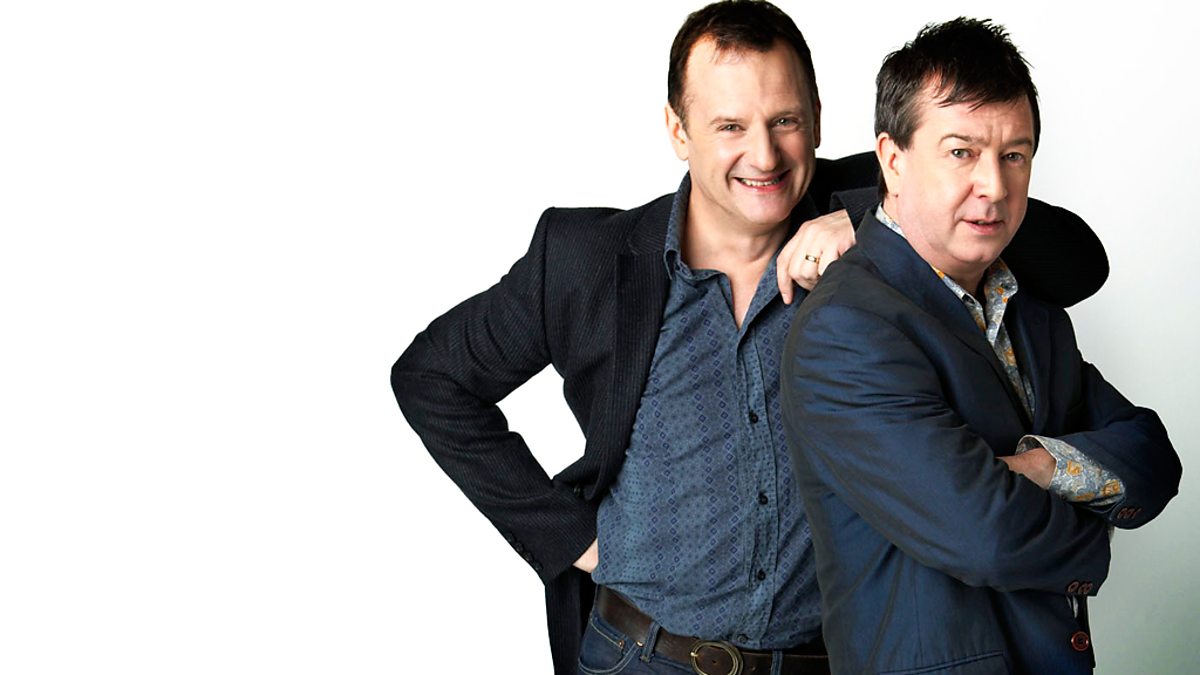
Posted in Music | Tagged , , , , , , , , , , | Leave a comment