Lancashire daytrippers’ Tower of strength – the New York Tourists interview

In the build-up to next week’s Symphony at the Tower concerts, the team at writewyattuk (OK, so that’s just me) follow this blog’s recent feature/ interview with Lucy Kay, a rising star on the classical crossover scene, by talking to an act enjoying accolades of their own on the North West indie rock scene and set to support Status Quo on Friday, July 3rd.

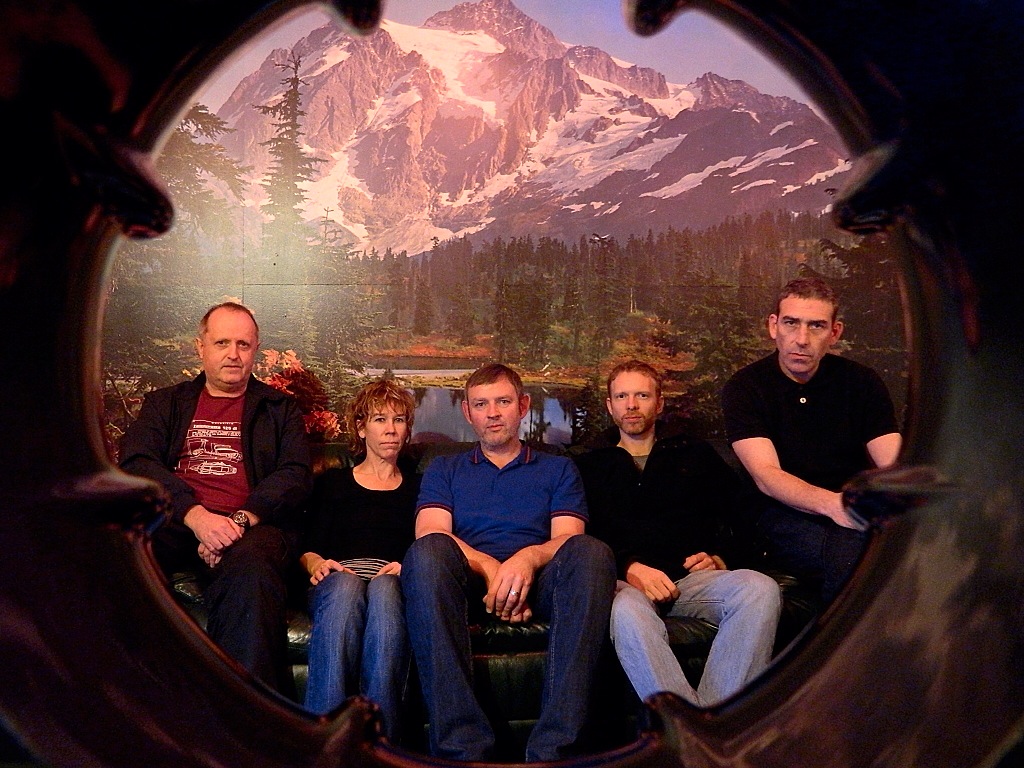
Tourist Trap: Blackburn's New York Tourists

Tourist Trap: Blackburn’s New York Tourists

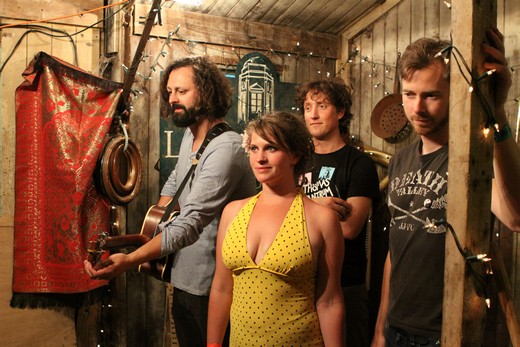
It was a perfect midsummer’s evening when I caught up with Gary Taylor, vocalist and guitarist of the Blackburn-based New York Tourists, and close enough to his band’s forthcoming appearance at Hoghton Tower to wish for more of the same on the actual night.

“We were just saying that. It will be absolutely superb if the weather’s like this. I’m not bothered if it rains all day, as long as it’s nice when we’re playing.”

This band of up-and-coming 20-somethings with ‘dirty rock’ roots are set to step on stage for St Catherine’s Hospice’s big fund-raiser on Friday, July 3, at 7.45pm, just before the mighty Status Quo and after a group they already know well from the local circuit, fellow East Lancs outfit Good Foxy, from Clitheroe.

“We’ve played a few times with them before. We suit being on the same bill. They’re more bluesy sounding than us, a bit more like The Doors.”

So when did Gary get the call about this prestigious support?

“Just a few weeks ago we got this message on our band page on Facebook asking if we’d like to support Status Quo. We thought it might have been a joke, and were making sure it wasn’t just a tribute band.”

Well, I guess after all these years, Rossi and Parfitt’s outfit are their own tribute band really. Was their heyday long before Gary’s time?

“My Dad was a big fan, and he’s always reminding me of them opening Live Aid.”

That particular Wembley Stadium fund-raiser just happens to have been more or less 30 years ago to the week. So will this be a chance for these two support bands to replicate that piece of music history?

“I’d like to think so!”

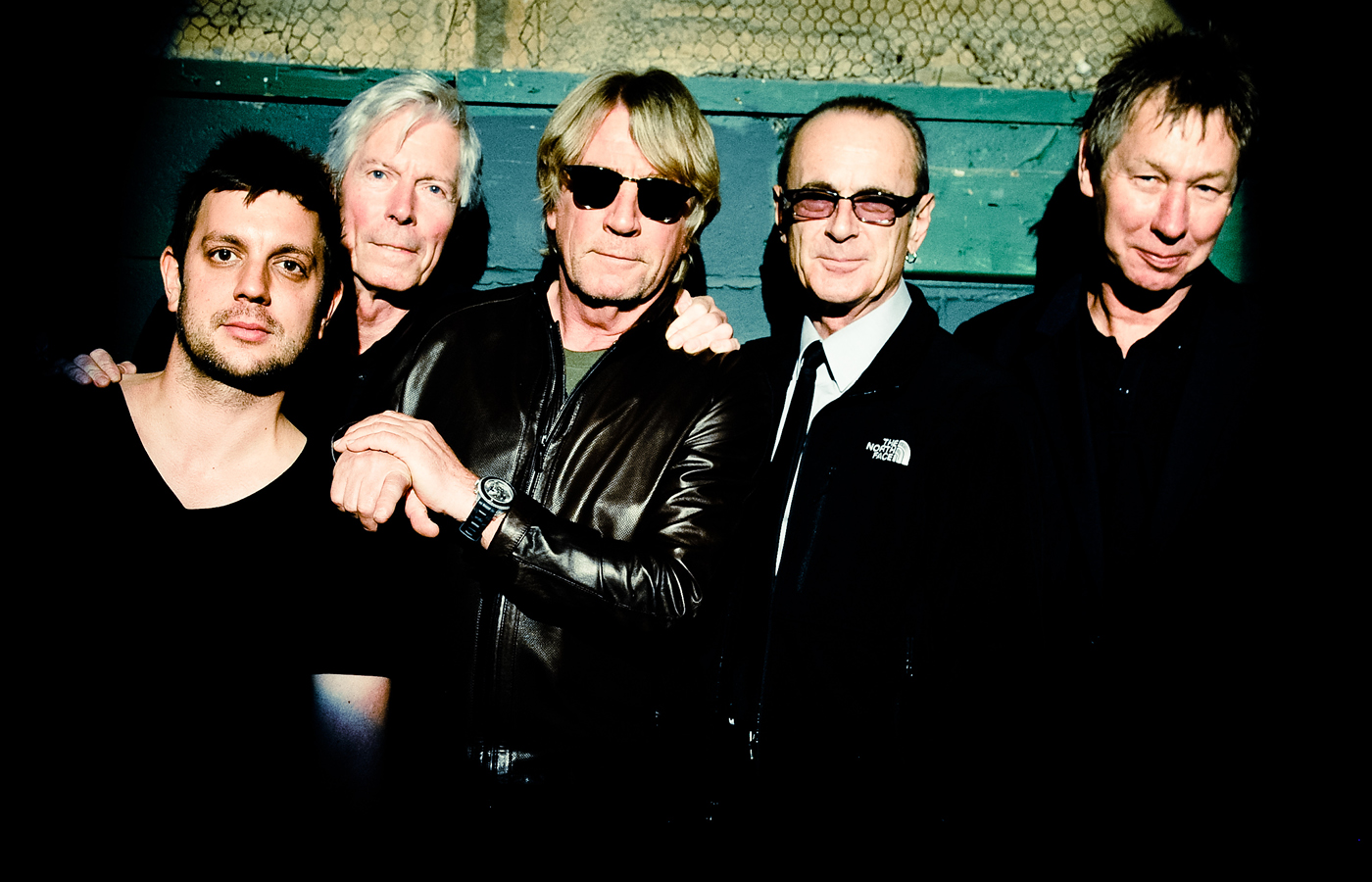
Top Dogs: Status Quo (Photo: Danny Clifford)

Top Dogs: Status Quo (Photo: Danny Clifford)

While maybe not in the same mega-league as the show’s headliners, New York Tourists have already had a few prestigious supports in their relatively-short spell together.

“We supported The Futureheads twice, with them, Doves and the likes of Calvin Harris at Kendal Calling.

“Then there was Buzzcocks, The View and We Are Scientists at King George’s Hall. We haven’t done too bad so far.”

Apparently, there was also a date with recent writewyattuk interviewees The Subways that didn’t quite happen, put down to the main act ‘being picky with their rider’ at Blackburn’s Live Lounge, leading to a late pull-out.

“That was a real shame. The tickets were printed and everything. And they’re such a superb band live.”

Incidentally, the band has another date not so far from Hoghton Tower this weekend, the band visiting Preston’s Brockholes wetlands and woodlands nature reserve on Saturday, June 27th, for a late night cantina event.

“It’s acoustic, and we don’t normally do that, but it’s part of a kick-starter campaign for our album.

“We had a £2,500 target and actually managed to hit £3,500, which was great, with certain pledges securing certain things. And one was for this half-hour acoustic slot, which Crafty Vintage donated £100 for.

“It might well become a regular event for us actually, maybe bringing in a new audience. These events involve street food, cocktails, different beers. It should be really good.

“In fact, I’d recommend it during the daytime too, with vintage clothing, home food, cheeses, chutney, and all that.”

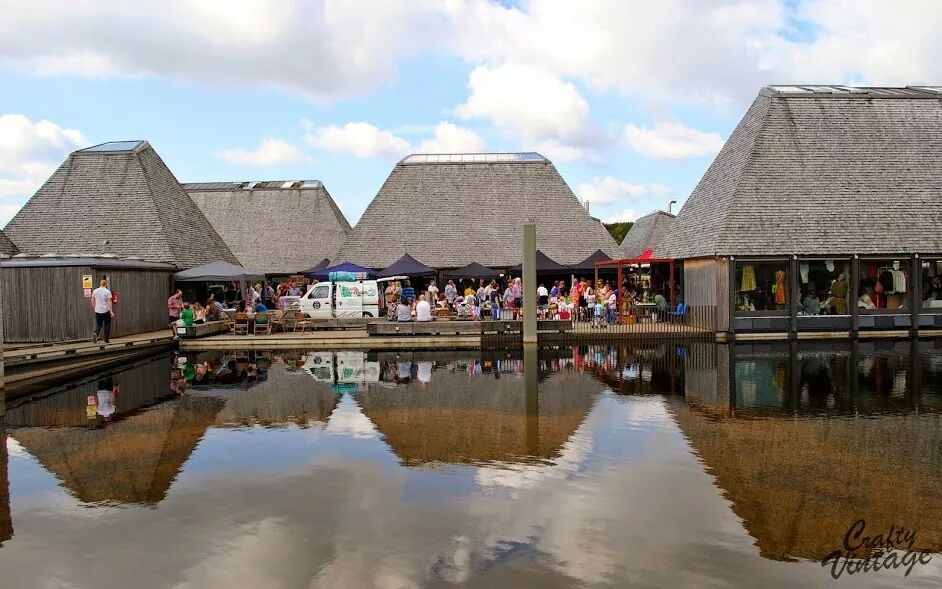
Vintage Setting: Brockholes will play host to New York Tourists, acoustic style

Vintage Setting: Brockholes will play host to New York Tourists, acoustic style

Gary could get a job with the Lancashire Tourist Board at this rate, let alone the New York Tourists. And it works out that straight after their big Hoghton Tower date, the band play the Glastonferret festival in Preston.

“Yes, we’re on at 9.30, so we’ve got an hour to hack down, get to The Ferret, and play again!”

That Preston venue, just across the road from UCLan’s 53 Degrees, is another favoured venue for the band, although of course it might cause a slight dilemma if Francis, Rick and co ask their support back on to join them on Caroline or Down Down.

“Yes, I think I’d have to pass on the gig after if I got offered that opportunity!”

New York Tourists are hardly strangers to the outdoor and marquee circuit, and as well as past Kendal Calling and the wonderfully-named Shrewsbury Fields Forever festival appearances, there was one in their hometown last year too.

“Yes, at Blackburn we were the main support to Toploader, which was brilliant. We’ve quite a local following, so there were around 1,500 to 2,000 watching us.

“That was probably the highlight of gigs so far for me personally … although I have a feeling that the third of July might top it!”

They’ve a few more dates lined up this summer too, and it appears that the NYT fan-base is steadily growing.

“Yes, and now we have an album finished and ready to release, waiting for a date, possibly in September or October.”

So I see. Is there anything from the band’s well-received early EPs on there, or is it all fresh material?

“We have older songs on there, including a fan favourite we always end the set on, A Kick in the Teeth, and another nine tracks.”

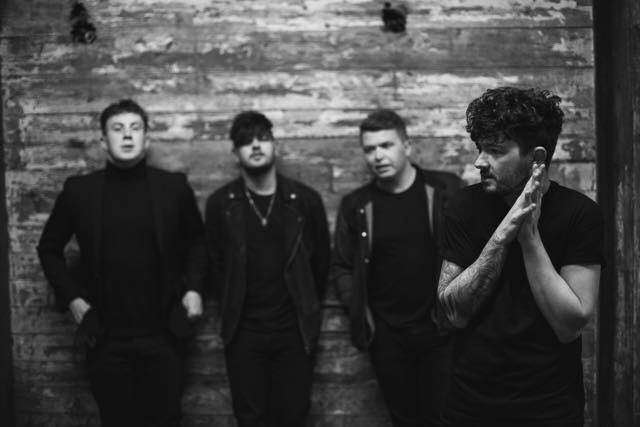
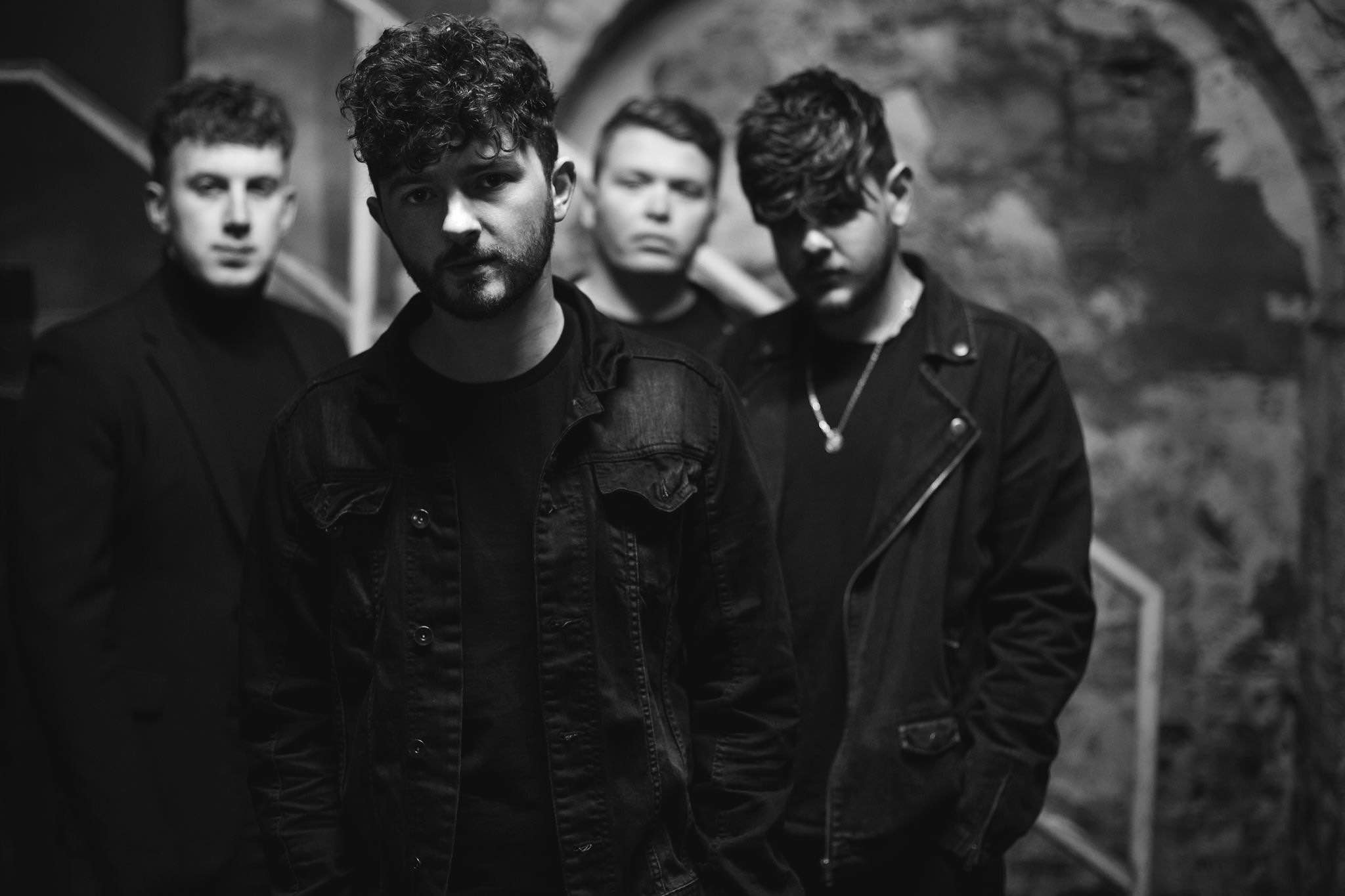
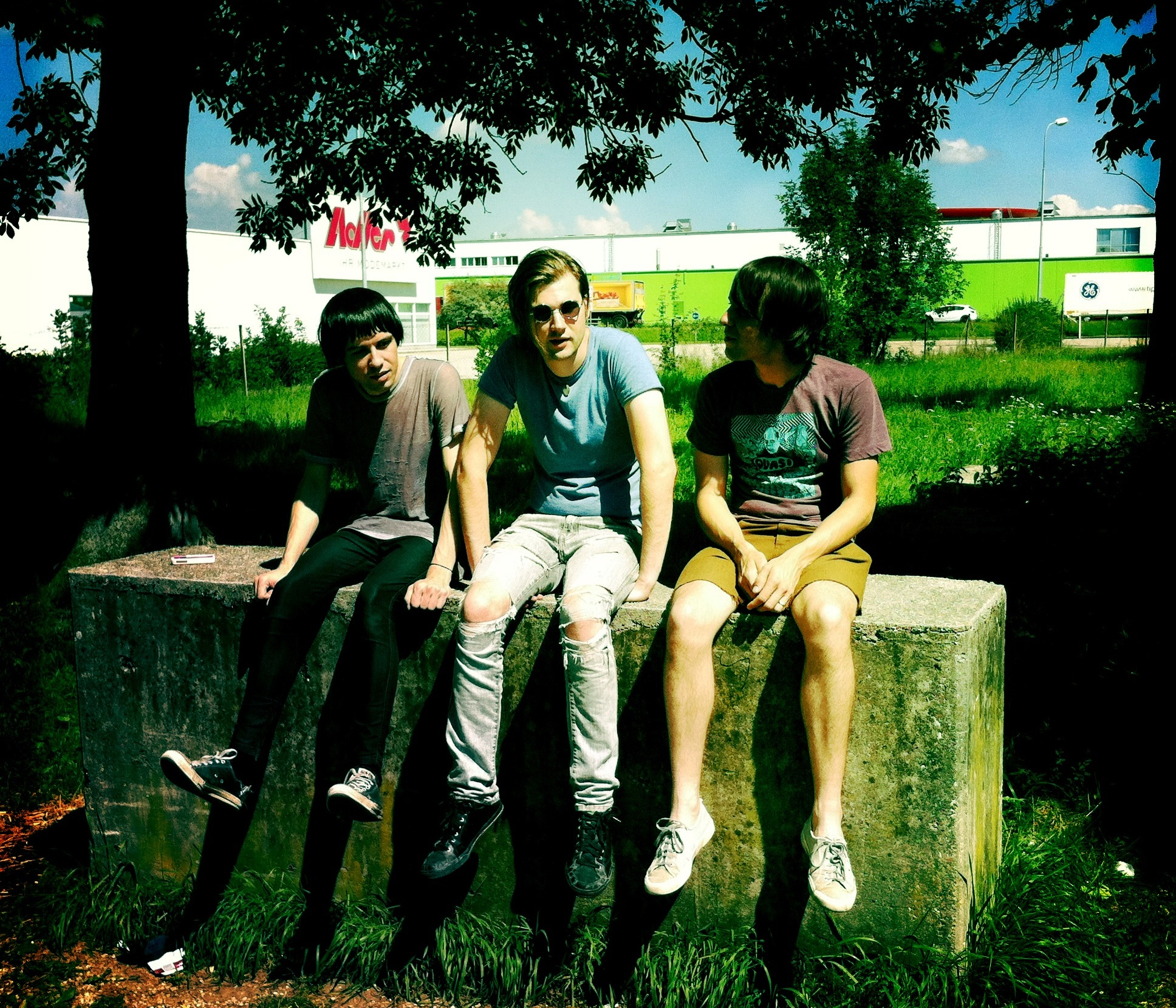
Blackburn Quartet: New York Tourists

Blackburn Quartet: New York Tourists

The album was recorded at Clitheroe Grand Studios, as per their first EPs, 2013’s Thank You and Goodnight and last year’s Dead Man’s Leather.

Those songs hadn’t gone unnoticed either, receiving promising reviews, not least Chew Me Up, Spit Me Out, which was listed on BBC Introducing’s top 10 tracks of 2013.

“We won’t really go anywhere else other than the Grand Studios. We’ve recorded with a guy called Tom Peters there. He’s absolutely superb.”

Gary, ‘born and bred in Chorley’, has been based in Blackburn for around three years now, having joined guitarist Carl Rutherford, his cousin Lewis Lovett on drums, and Graeme Anderson on bass in the first line-up, the latter two later making way for Adrian Mckenzie on bass and Joe Mooney on drums.

“I was looking for bands and scouring the internet and they messaged me off a website, leading to this nerve-racking audition, with all their mates in the room.

“There were no songs at that stage, so I sang The Kings of Leon’s Molly’s Chambers. That’s how it all sort of kicked off.”

It did indeed kick off, and Gary says the band’s material is a lot ‘more catchy’ and dance-oriented now, ‘more towards an indie sound’ than their ‘dirty rock’n’roll’ roots.

Early reviews suggest they were more Arctic Monkeys meet Led Zeppelin, but current comparisons suggest Queens of the Stone Age meets Foals, which I can concur from the band footage out there on the net.

They’re well worth checking out, and I can also recommend the AC/DC and White Stripes-like Jacqueline, no doubt helped by their distinctive guitar style and Gary’s bluesy vocals.

There’s not so much evidence of his appreciation of Johnny Cash yet, but maybe it will come out somewhere.

“Yeah, I was a big fan. The Cure are a massive influence too, especially with me and Carl. We’re huge fans.”

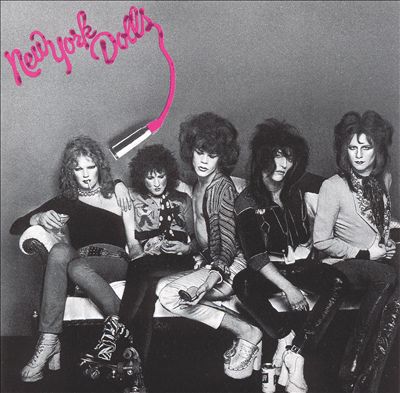
No Relation: New York Dolls

No Relation: New York Dolls

So go on then – devil’s advocate time. Why the name? You’re hardly the New York Dolls, and they at least came from New York.

“True. Actually, Carl went to New York and when he came back … well, that was it really.”

Mmm, I can see they might have to reinvent that anecdote to add more mystique. But now at least you know.

Besides, there seems to be a history of bands from Blackburn taking on the identity of other places, Morrissey’s former ’80s favourites Bradford springing to mind too.

Finally, any chance of a special Quo cover in your set at Hoghton Tower?

“Oh no, we won’t be doing that. We’ll just be trying to get our own material over to people.”

All the same, it might be a nice gesture, at least something unexpected in the band’s own style – checking first that the main act won’t be upset, of course.

“Upset, or upstaged? No, I’m only kidding!”

And with that Gary was back to the sunshine, dreaming of a further balmy summer evening on a local hillside … very soon.

This year’s Symphony at the Tower events, featuring two nights of live music at Hoghton Tower, end a month of celebrations marking the 30th anniversary of St Catherine’s Hospice in Lostock Hall, near Preston.

Tower Talent: Lucy Kay

Tower Talent: Lucy Kay

While Status Quo and co. perform on Friday July 3, the following night (Saturday, July 4) sees BRIT Award-winning classical vocal group Blake headline, supported by Britain’s Got Talent star Lucy Kay, a show closing with a firework finale set to the music of The Heart of England Orchestra. 

For tickets and further information, visit www.stcatherines.co.uk, ring the hospice on 01772 629171 or drop in at the hospice in Lostock Lane, Lostock Hall, PR5 5XU. There’s also a Facebook event information page here.

To find the New York Tourists Facebook page, head here, and for the latest from Good Foxy try here

Finally, find out more about Crafty Vintage at the Brockholes centre here.

Posted in Music | Tagged , , , , , , , , , , , , , | 2 Comments

Tripping the Alternative Light Fantastic – the Leftfield interview

Sixteen years after their last album topped the charts, Leftfield have a fresh top-10 hit, inspiring writewyattuk to talk long lay-offs, innovative electronica, dance music, deep space and excessive decibels with the band’s driving force Neil Barnes.

Leftfield - LPLike its Mercury Prize-nominated predecessors, 1995’s Leftism and 1999’s Rhythm and Stealth, the latest Leftfield album, Alternative Light Source, shows the London-based dance outfit on top form.

Yet there’s one fundamental difference – this time it’s solely a Neil Barnes-driven project, his Leftfield co-creator Paul Daley having decided against returning to the fold in 2010.

That doesn’t seem to have hampered Neil though, an array of expertise on both sides of the mic. in the studio and on the road helping take the Leftfield story on from where it initially left off in 2002.

This week the new album, in digital, CD and vinyl format via Infectious Music, entered the main charts at No.6, while second single, Bilocation, one of two tracks featuring Polica’s Channy Leaneagh, followed lung-busting first waxing, Universal Everything.

Alongside Minneapolis chanteuse Channy, the album includes collaborations with London’s ‘distorted soul and unearthly gospel’ exponent Ofei, Tunde Adebimpe of Brooklyn’s TV on the Radio, and quirky Nottingham post-punk hip-hop duo Sleaford Mods.

Meanwhile, the first live outings for the new set are underway, Neil and his guests having already taken their big sound authority to Bristol Academy and London’s Forum (for two nights), before a sell-out show at Manchester’s Albert Hall on Thursday (June 18th) then a trip to Glasgow’s Barrowland the following evening (Friday, June 19th).

What’s more, Leftfield have a few special headline shows this summer, including a return to Glastonbury Festival at the end of the month for what promises to be a spectacular Saturday night show-stopper on the Sonic stage.

But first I wished Neil, on the line from the capital, congratulations on another top-10 album, with a tongue-in-cheek suggestion that it’s easy, this long player lark.

“Yep … well, actually, it’s never easy, but it’s always good news … great news in fact.”

This latest collection of songs – at least officially – considers how we all look for different ways of doing things, while considering the band’s own heat-seeking hunt for inspiration.

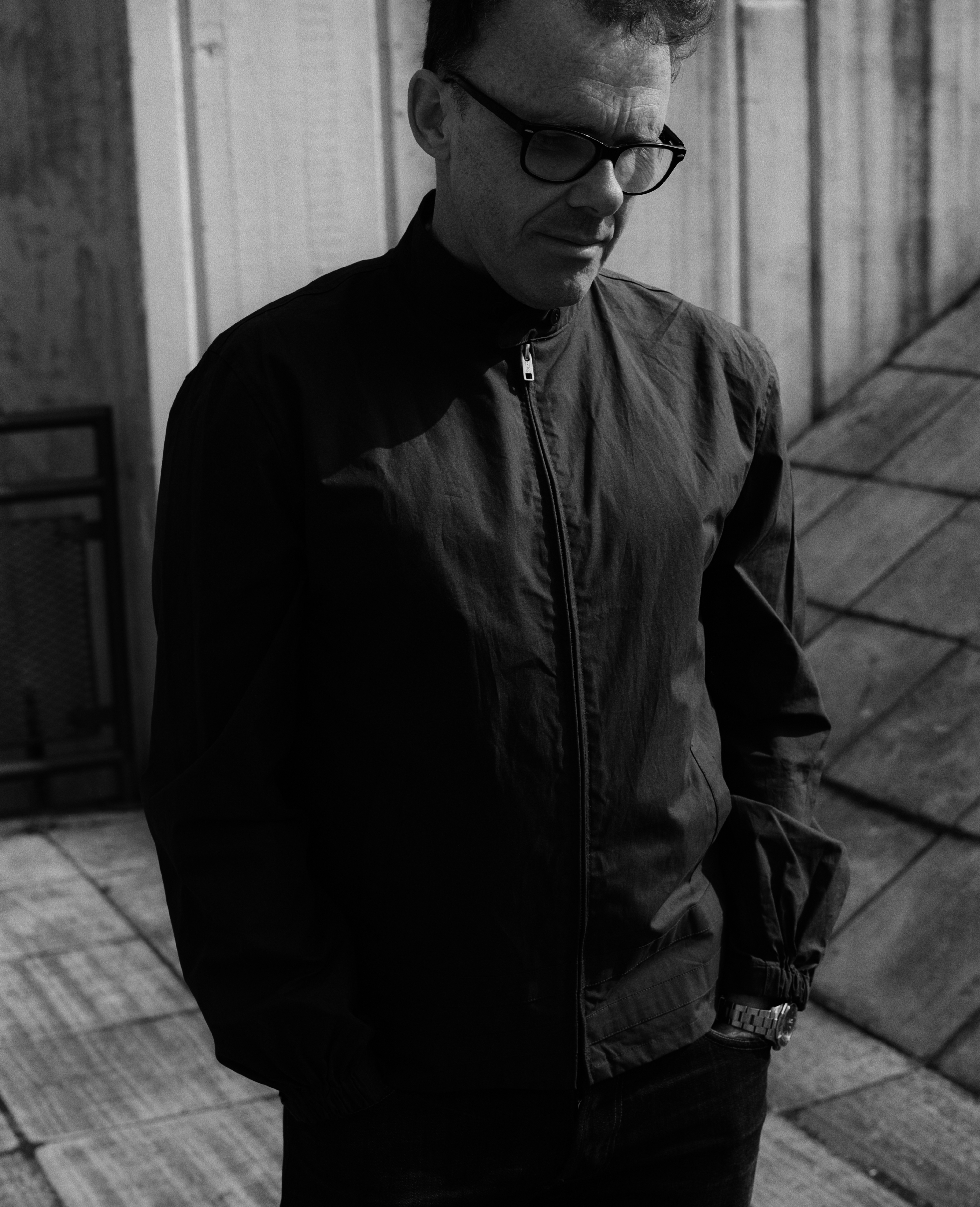
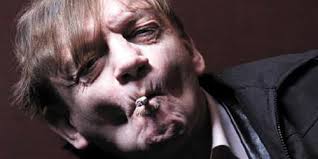
Creative Force: Neil Barnes, the main energy behind Leftfield today

Creative Force: Neil Barnes, the main energy behind Leftfield today

So, if the new album title, Alternative Light Source, is officially described as a metaphor for our unceasing search for answers, does Neil think he’s any closer to revelation than when he set out on this whole venture 25 years ago?

“No! I’m still learning as I go, learning every day. Maybe that revelation might hit me in the head, but perhaps there are no answers out there.

“Nothing’s occurred to me, apart from continuing along the path really.”

Well, it has been said that it’s often better to travel than to arrive anyway.

“Everyone expresses it in a different way – journey and arrival, light out of dark, it’s also about education and young people.

“And whenever I think about the music, I think about the cover and the amazing art.”

Talking of travelling, you’ve been busy touring since the return of Leftfield. Have these new songs been a long time in the making, honed as you went along?

“The album’s taken three years to make, we’ve been in the studio since we stopped touring in 2011, and first time we took these new songs out was in Bristol, just last week.

“It’s going really well. I’ve got Ofei doing vocals on Swords, which is amazing, a new drummer, Nick Rice, and Adam Wren on stage too.

“In fact, Ads was a major part in making the record. That should be mentioned.”

Leftfield Founders: Neil Barnes, right, with  Paul Daley at 2000's Mercury Music Awards event, when Rhythm and Stealth was among the nominations (Photo: Graham Jepson)

Leftfield Founders: Neil Barnes, right, with Paul Daley at 2000’s Mercury Music Awards event, when Rhythm and Stealth was among the nominations (Photo: Graham Jepson)

Yes, it’s easy to think that now Paul Daley’s moved on, Leftfield is just Neil’s baby. But that’s not strictly the case, is it?

“It’s a collaboration, and there’s a lot of collaborative work on this album. Ads has been there all the way through the process and with the live stuff as well. It’s very much me and him in the studio too.”

According to the record company handouts, Alternative Light Source is, at times, ‘both crushingly heavy and fantastically delicate’. Which is about right.

As Neil puts it, “There’s always an honesty to the music. It is genuine and it comes from a genuine place.

“There’s nothing cynical about it, I’d never just put on a breakbeat that everyone is familiar with.

“There’s an element of bravery too – after all this time I do feel like I’m jumping into the unknown a little.

“Some of the things that have happened in my life over the last two years have been very sad, and that’s reflected in the music. But it’s uplifting too.

“There’s a very emotional bedrock in everything I do, a genuine emotion that’s underneath it all. That’s precisely the feeling I’m trying to get across with this album.”

While Alternative Light Source is supposedly about knowledge and searching, Neil stresses that there’s a physics angle to it too – that Universal Everything, plus thoughts of black holes, alternative realities, a bit of mad dystopia, immense space and immense weight.

I’m only a few listens in so far, but straight away moments jumped out of the speakers at me, not least first single Universal Everything then Little Fish, the other track featuring Channy.

Light Show: Neil Barnes has got it just right with Alternative Light Source

Light Show: Neil Barnes has got it just right with Alternative Light Source

I put it to Neil that he seems to have got the mix spot on, with regards to guest appearances and so on.

“Yes, it’s just continuing the story really, what I started working on with Paul on the first two albums. I’m just trying to make a good record.

“As a vocalist I really like Channy, then there’s Jason from Sleaford Mods on Head and Shoulders.

“We did that ages ago, and it’s been sitting around. It’s a real pleasure to work with him.”

I remember in my formative London and South-East days, DJ Gary Crowley playing something on Capital Radio, then announcing, ‘If it’s too loud, you’re too old’. And it just so happens that Leftfield were once said to be recorded at a higher decibel level than Concorde.

So com eon then, Neil – have this band whose first gig led to the soundman in Amsterdam being arrested, then issues with refunds in Belgium after complaints about excessive sound levels, and whose thumping bass inspired falling plaster at Brixton Academy as recently as 2010, not quite – to misquote This Is Spinal Tap – ready to  turn it down to 10 yet?

“No! It’s still up there at 11! We travel with a quality system supplied by Britannia Row and put it in where we can.

“We try and make it as powerful, sonically, as we can – to match the music. In the end, that’s what our music’s about, hopefully losing yourself on the dancefloor, getting immersed in the sound. And you need power to do that.”

Interesting you should say that, as I associate 1995’s Leftism with getting told off by my other half for unwittingly getting faster and faster in the driving seat while playing that album in the car. In fact, I had to ban myself from doing so on the road.

“Singing down the motorway at dangerous levels, that’s a great image! I’ll think about that today.”

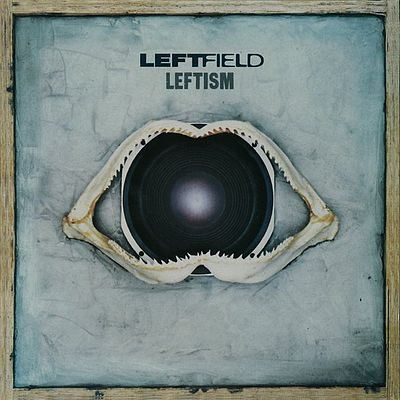
Speed King: Leftism, the debut Leftfield album

Speed King: Leftism, the debut Leftfield album

For all the freshness of the new album, there’s definitely a link back to that first album. But it still sounds very ‘now’. Is that just a reflection of how far ahead of the pack you were back then?

“That’s interesting. I don’t know. Someone mentioned the word ‘vintage’ regarding our sound, which I thought was something. It’s not meant to be.

“What I’m trying to do is something that keeps me interested, because I do listen to lots of music and there are certain things I continue to like, like bass-end.

“This album does the same thing most Leftfield albums do, it coaxes you and pulls you along and drops you into places you don’t expect.

“That’s sort of what Leftfield has all been about, doing things in a slightly different way. So maybe that’s the same as what me and Paul did.

“It’s a different sound this album, it’s not so much a reggae album and not such a dub-centred album.

“But maybe I’m not listening to as much reggae now. Dub-influenced music has been done so much … by Leftfield, particularly.”

Listening to Leftism again recently, I felt there was nothing there that had aged, as opposed to a few albums from that era. I’m not sure what it was they nailed there.

“I don’t know either. It’s difficult to say, but there’s definitely a link between that and electronic music. Styles changed, but maybe modern acts have heard it. I don’t know.”

In short, I’d say Leftfield have continued to stay ahead of the pack judging by this latest release.

And there’s clearly still a mighty appetite for the band judging by some of their big shows since Neil’s return, such as the Creamfields, Rockness and Electric Picnic headliners.

Leftfield also just happen to be one of those bands where more people know their songs than they might first realise, not least with tracks used on adverts, like Phat Planet (used by Guinness) and 6/8 War (used by Volkswagen).

That seems rather apt though, considering the fact that Neil and former Leftfield partner Paul started out more as underground record producers, working on remixes, steadily building their reputation.

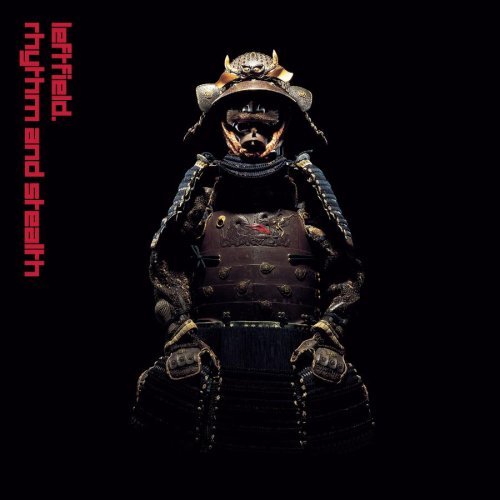
Second Sight: Rhythm and Stealth, the follow-up album by Leffield, from 1999

Second Sight: Rhythm and Stealth, the follow-up album by Leffield, from 1999

Neil’s journey to where he is now involved a complicated route, arguably starting when he ‘blew his mind’ hearing A Day In The Life as a nine-year-old in 1967, from his sister’s copy of The Beatles’ Sgt Pepper’s Lonely Hearts Club Band.

In his own formative club nights he enjoyed the disco scene and a bit of Giorgio Moroder before discovering punk, becoming a 100 Club regular alongside the likes of future Leftfield collaborator John Lydon.

He soon fell in love with reggae and live music in general, following the likes of Joy Division, Black Uhuru, The Fall, Gang of Four and Wire.

Then, inspired by Africa Bambaataa and his drum machine after seeing the innovative New Yorker live, Neil went down the dance route, later meeting Paul on the deep house warehouse scene.

At one stage Neil was playing hip American electro-funk outfits and similar homegrown talents at the Wag Club, while studying at the London School of Samba. And while playing congas at one London club he just happened to meet fellow congas and bongo player Paul, the pair hitting it off immediately.

To cut a long story short, Neil borrowed his brother’s Juno 106 keyboard, got a bank loan and bought a sampler, the Leftfield story properly starting in the kitchen of Neil’s tiny flat in Marylebone.

In fact, the pair worked together as a unit six years before that first album saw the light of day. Part of the reason for that stalling was out of their hands, down to contractual problems, while contemporaries like Massive Attack had more product out far earlier.

I put it to Neil that while in that sense it must have been a frustrating period, it turned out for the best.

“I think definitely. We weren’t ready at that stage and weren’t really interested in making an album then.

“But as we started to grow, that changed, and after Release the Pressure (featuring Earl 16), Space Shanty and Open Up (featuring John Lydon) it was starting to occur to us by then.

“We started out just doing remixes and very much as an underground unit, like a lot of young people today.

“The idea of doing an album wasn’t something that really struck us. But then we started to experiment with all these other areas. And that’s how it happened.”

And a quarter of a century after those first Leftfield recordings, Alternative Light Source suggests Neil and his associates are continuing to shine, lighting the way for progressive house and electronic music in general.

For the latest from Leftfield, head to their official website here.


Posted in Music | Tagged , , , , , , , , , , , , | 1 Comment

Testing the Big Band theory – the Jools Holland interview

Big Time: Jools Holland and his Rhythm and Blues Orchestra

Big Time: Jools Holland and his Rhythm and Blues Orchestra

It’s difficult to write about Jools Holland without going down the retro route. He is after all a man who carved out a career celebrating the best in popular music from the past century.

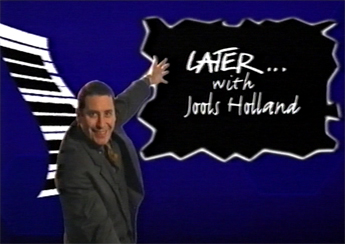
His long-running BBC television show Later With Jools Holland provides the best elements of old and new music, while his BBC Radio 2 show offers an eclectic mix of tunes from his own vast record collection.

There are also his Rhythm and Blues Orchestra live shows, a big band in every sense switching between blues and boogie-woogie. Jazz, ska, soul and country.

Then there’s his new wave past with Squeeze and the days he co-fronted Channel 4’s cult entertainment and music show The Tube.

That’s as good a place to start as any, so I put it to Jools that I find it hard to believe it’s now 30 years since he filmed with Paula Yates for The Tube at the Tower Ballroom, Blackpool.

As he put it in entertaining 2007 autobiography Bare-faced Lies and Boogie-Woogie Boasts, ‘We all, with the exception of Paula, thought there was something rather romantic about empty holiday seaside destinations off season’.

Tube Station: Paula Yates and Jools Holland on the set of Channel 4's The Tube

Tube Station: Paula Yates and Jools Holland on the set of Channel 4’s The Tube

It appears that’s still the case for Jools, three decades after his first Fylde coast filming stint.

“I’ve some lovely memories from then. Blackpool has changed since, but has a certain atmosphere, and is a magical place. It has a romance to it, and is one of the most iconic towns in Britain.

“When you have a place where people have gathered and enjoyed themselves over the years, even when they’re not there a certain resonance stays.

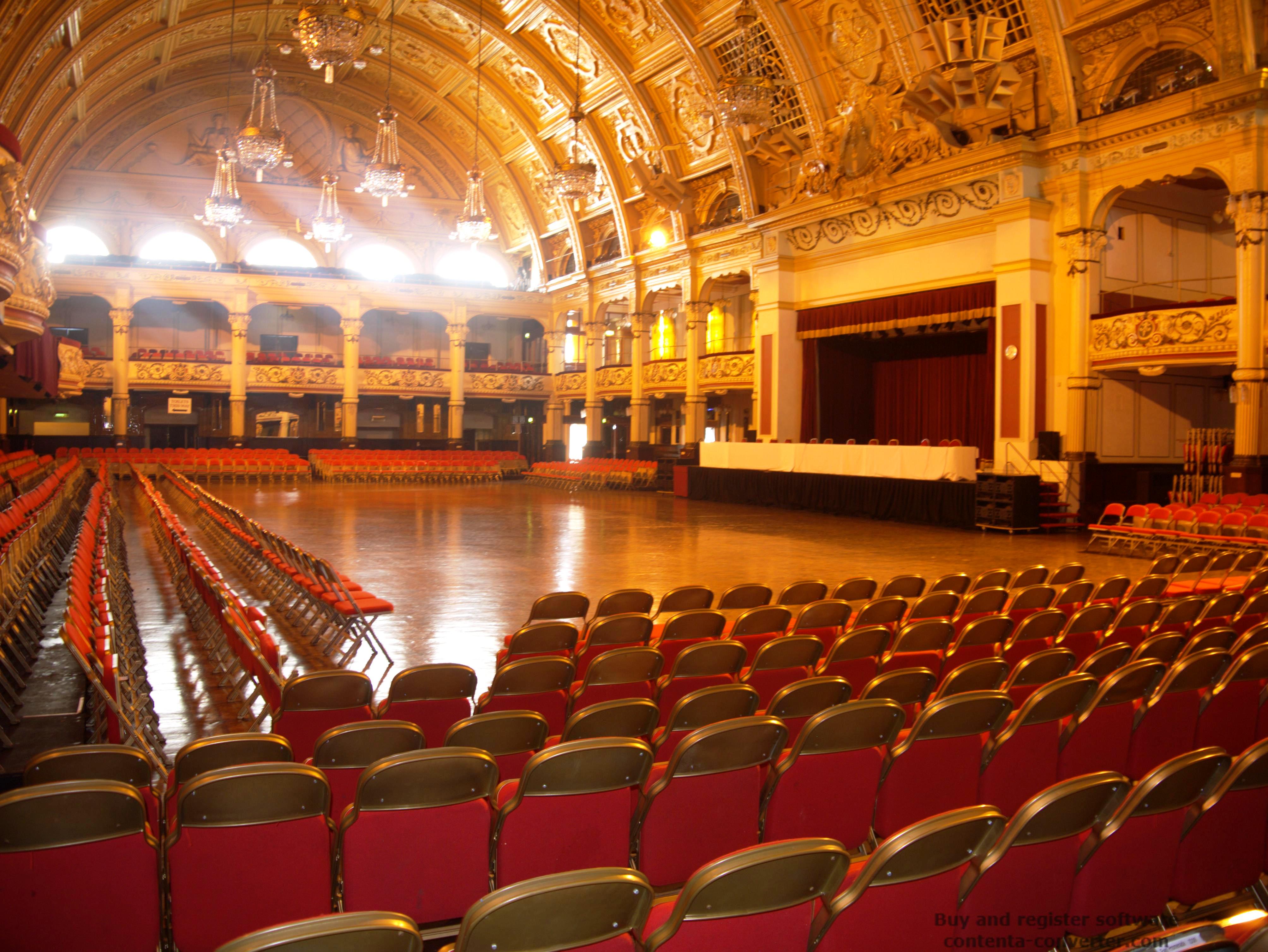
“I think that’s happened in Blackpool, particularly at the Empress Ballroom, where we are this time. All those that saw big bands there and enjoyed themselves – something of that stays in the room, even when all the people have gone.

“So it’s very nice to bring it all back and resurrect it. It will be great fun. We won’t sound like the big bands back then, but we’ll be paying tribute to a lot of those who came before, going through the history of big band music, from my point of view taking in a lot of the blues and swing.”

It would be something to be a fly on the wall during those golden years, wouldn’t it?

“Exactly … as long as I didn’t get squatted.”

The Empress Ballroom Big Band Special free show (details at the foot of this feature) is on Wednesday, June 24, and is set to be broadcast on BBC 4 in July.

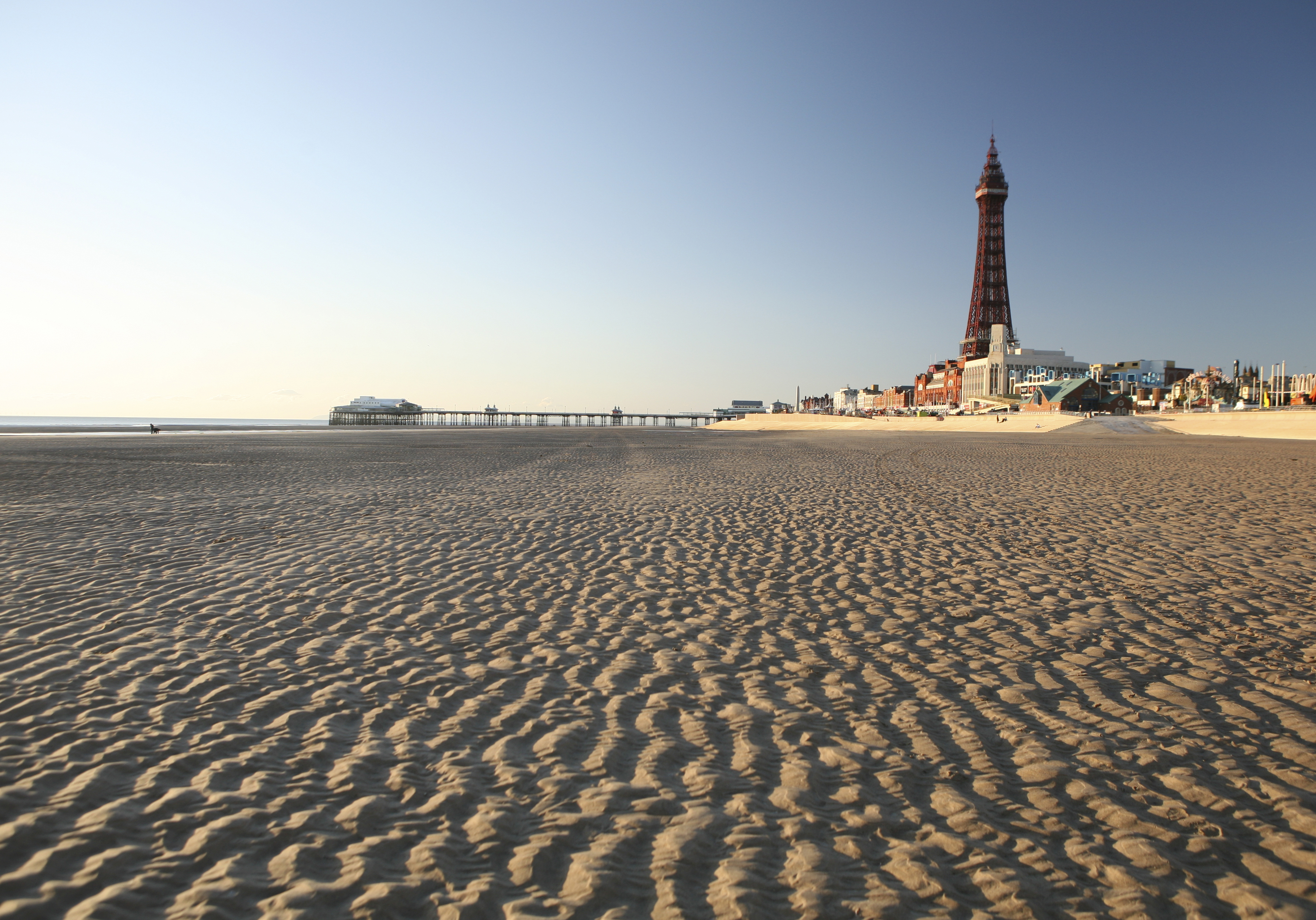
Ballroom Bliss: Blackpool's Empress Ballroom

Ballroom Bliss: Blackpool’s Empress Ballroom

On the night, Jools aims to give a personal view of the genre, with a little insight into Big Band greats such as Duke Ellington, Count Basie, Louis Armstrong and Lionel Hampton.

“I’ve always been a fan of Big Band music and think this is a great way to take the music genre to a wider audience.

“We are going to have one big party, and I’m looking forward to playing at an iconic venue steeped in music history.”

Furthermore, the charismatic Londoner will make Blackpool his home over the next month while filming a documentary to coincide with the performance.

In a separate BBC 2 documentary, Strictly Come Dancing’s Len Goodman and historian Lucy Worsley join Jools to explore how Big Band music helped keep the nation’s spirits up during World War Two, also delving into fashion and dance crazes.

What’s more, Jools also plays nearby Preston Guild Hall on Friday, July 24 with his 20-piece Rhythm and Blues Orchestra, including guest vocalists Ruby Turner and Louise Marshall.

And it was that date that got me thinking back to the first time I saw his big band – or at least an earlier, smaller line-up – in Avenham Park in 1992 at a free festival marking that year’s town Guild celebrations.

“I remember it! Once in a Preston Guild, as they say!”

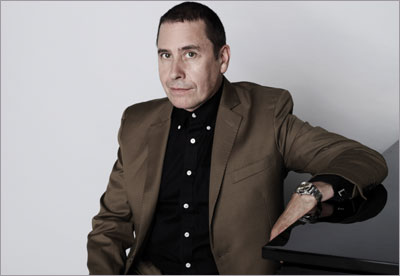
Just Jools: The bandleader himself enjoys a good blather

Just Jools: The bandleader himself enjoys a good blather

Well yes, although Jools did miss the last one. But he’s a busy man, and has barely sat still for the past two decades other than his stints at the piano.

I remember it well too, not least spotting him stood on the riverbank of the Ribble, taking a short break amid the event soundchecks, gazing towards the Victorian railway bridges that midsummer afternoon.

I wanted to speak to him, to talk music or even railways maybe, but felt he was having a reflective moment, so just nodded, smiled, said hello, and moved on.

I think I’ve regretted it ever since, the briefest of pleasantries somehow not enough considering all we have in common.

“Well, you can always get me talking on any of those subjects. I’ll blather on and on.”

That year proved a bit of a turning point for an artist carving out his post-Squeeze and The Tube solo career as well as filming interviews for The Beatles Anthology, his music show also just getting going.

“That’s right. Later had just started around that time.”

So had he – to paraphrase his Squeeze writing buddies Difford and Tilbrook – ever thought it could happen at that point, bearing in mind all he’s achieved in the two decades since?

“The strange this is that none of us can tell what’s around the corner. I heard a man on the radio the other day said he’s done this and that and was therefore a master of his own destiny. But I don’t think anybody is.

“You just never quite know what’s going to turn up. When I was first in Squeeze I wouldn’t have thought I’d have ended up presenting The Tube.

“Then, if somebody had said I’d be running a big band for as long as we have, I don’t think we would have – not least as most big bands died out around 70 years ago.

“And if you’d said Later would have kept going all this time, when most such shows last around five or six years, it seems rather unbelievable.

TV Set: The BBC's Later With Jools Holland has proved a long-running success

TV Set: The BBC’s Later With Jools has proved a long-running success

“So I’m delighted. I love what I do and I’m very fortunate I don’t really so much work as play.”

I think that shows, seeing Jools live on the box sat in with big-name artists or talking to his musical heroes.

Now and again there’s a look on his face across that piano lid suggesting he can’t quite believe his luck. He’s the proverbial kid in the sweet shop.

“Well I am! And the great thing about music is that you continue to surprise yourself. You think, ‘What’s going on here? This is great!’ Even though you’re trying to concentrate.

“The wonderful thing is that if you keep going you learn more. It never fails to move on again.”

A close friend once told me he’s got so much good music in his house that he’s unlikely to ever hear it all again in his lifetime, so there’s no real point seeking out new artists.

I can see his point, but that doesn’t seem to be the Jools Holland way of things.

“No, and I think I’m looking for music for different purposes. For the TV show there are producers and researchers looking for new music, and they pop up almost out of the ether.

“I’m also looking to write new things and maybe look for records around 70 years old to see if there’s a piece of music that’s got lost that I never knew about.

“You’re looking at both ends of it, really. New music could be a week old or 500 years old, but if it’s new to me, that’s great. It’s a bit like you’re looking for your next fix!”

There have been some amazing guest appearances on his show and records over the years, many since lost, like George Harrison, Amy Winehouse, Joe Strummer, Kirsty MacColl, and most recently BB King. That must have given him a different outlook on life.

“That’s right. You’ve got to be very thankful and very grateful – as I am – at having met such wonderful people.

Blues Legend: BB King with his beloved Lucille

Blues Legend: BB King with his beloved Lucille

“BB King was a good example of someone who just kept going. He enjoyed what he was doing, was a master of what he was doing, and just kept playing, and his records just got better.

“I loved to hear him and learn from him, and was so pleased to get to meet him. He was such a wonderful man.

“Also, the other night I went to see Eric Clapton at the Royal Albert Hall, and was walking to my seat when I suddenly had a moment and couldn’t quite believe I play there as well! It’s so hard to see outside of something when you’re in it.”

I reckon that proves my point. You’re clearly still in the right job if you’ve still got that passion for it all after all these years.

“I still have to pinch myself. It’s all so unbelievable.”

I remember seeing Jools’ star vocalist Ruby Turner at Avenham Park a couple of years after him, stepping in as a replacement headline act for Sister Sledge and stealing the show.

“Ruby is fantastic, and I think she’s so amazing because she goes back to the early stuff and can make the boogie come alive.

“She can do the same with the blues, and as a gospel singer has something different again – a delivery that is directed by true belief, that takes you somewhere else.

“We’ve been doing a lot of big band music ahead of Blackpool, but we’re also celebrating some of the less mainstream music – what was at the time underground music but went on to really inspire rock’n’roll.

“One such artist, Sister Rosetta Tharpe, played boogie-woogie guitar and gospel with the Lucky Millinder big band. All those greats like Jimi Hendrix, Little Richard and Johnny Cash mentioned her as an influence.

Star Turn: Ruby Turner has real stage presence

Star Turn: Ruby Turner has real stage presence

“Ruby can do that too, not least because we have a big band that likes to boogie. And I don’t think you hear that anywhere else.”

And then, behind the beat, Jools has his long-serving ex-Squeeze team-mate, his ‘Drum King’ Gilson Lavis, a big band ever-present. In fact, Jools’ first ‘big band’ comprised just the two of them.

“Exactly! He really is the nuclear reactor at the centre of what we do, and the pulse of everything.

“I think we have Marc Almond coming to join us for the Blackpool show too, maybe doing an Edith Piaf song from that era.

“That’s something we want to concentrate on. It won’t sound so much like Edith as it does us now, but that’s a good thing too.”

Time was running out at that point with our allotted slot, but I quickly steered the subject on to another mutual love – Clough Williams-Ellis’ innovative architectural designs at Portmeirion, North Wales.

In fact, he loved the innovative architecture of that Italianate-style village by the Afon Dwyryd so much, that he modelled features on his own land in a similar style.

He’s clearly a man of taste when it comes to such matters, so would Jools ever feel the need to get involved in town planning and vintage fairs like Lancastrian fashion designer (and recent writewyattuk interviewee) Wayne Hemingway?

“Well, I do love all that. I built something where my studio is, tiny by comparison. I don’t think you need to be an expert on town planning though.

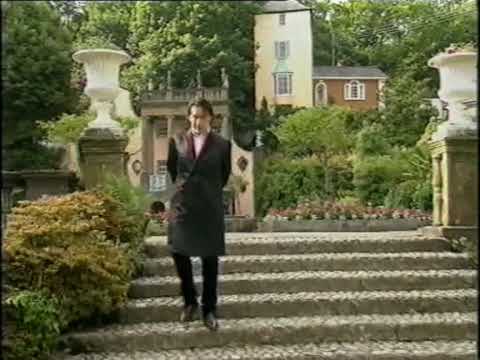
Released Prisoner: Jools filming at Portmeirion

Released Prisoner: Jools filming at Portmeirion

“When I go somewhere and realise it’s an agreeable place, I ask myself, ‘Why is that?’ Alternatively, there are places that aren’t so nice, and you think, ‘Why is that?’

“So I make a note of why we all rather like one place and not another. Not everyone likes the same thing, but generally I think small is beautiful.”

That probably goes against the philosophy of his band, but carry on, Jools …

“One of the worries now in London is that there are no scruffy corners left.  In the same way, you don’t want Hong Kong and Singapore to look like other cities in Britain.

“I think it’s important to protect what we have. That might involve that lovely colour of red brick you have in the North West, or the yellow stone in East Anglia. Everywhere should have its own style.

“I think that’s wonderful, and it’s great that people still think things through like that.”

Getting back to Portmeirion, isn’t it time they repeated The Laughing Prisoner, Jools’ 1987 The Tube spin-off spoof of The Prisoner? 

“Funny you should mention that. I’d like to see that again too!”

It had quite a cast too, from Chris Difford, Siouxsie and the Banshees and XTC to Stephen Fry and Hugh Laurie, Rowland Rivron, Stanley Unwin and John Peel.

The same goes for another film he made two years before, 1985’s Walking to New Orleans, involving Fats Domino, Lee Dorsey, Allen Toussaint, Dr John, The Neville Brothers, Rik Mayall, Robbie Coltrane and Sting, among others.

But there’s been so much since for the … erm, Groovy Fella, including his house band role in Don’t Forget Your Toothbrush, the Chris Evans-fronted precursor to newly-reprised Channel 4 show TFI Friday.

And then there’s the recorded material, with 19 original studio and live CDs in my collection alone from 1990’s World Of His Own right through to last year’s Sirens of Song. In fact, it’s not Christmas at mine without at least one new Jools album wrapped up – in the same way that we can’t make it into a New Year without switching on Jools’ Annual Hootenanny.

Band Substance: When Jools was with Squeeze

Band Substance: When Jools was with Squeeze

I think I already knew the answer to this next question, but is Jools ever likely to record with Squeeze again in the future (having served from the band’s formation in 1974 through to 1980 and then again from 1985 to 1990)?

“I wouldn’t have thought so. I was very happy and enjoyed everything we did together, but that was all then.”

Do you keep in touch still?

“Yeah. I saw them just the other day.”

Time was short now – I was already over-running by five minutes – so I (reluctantly) ditched a few more questions about Squeeze, Jools’ solo years, and burning questions such as whether his stolen custom-made piano suit ever turned up again and if Paul Young forgive him for stealing his Fabulous Wealthy Tarts and turning them into Millionaires.

I could have chatted happily about his other big band members too – past and present – too, not least his brothers, Louise Marshall, Sam Brown and ska trombone legend Rico, who has not long since turned 80.

Instead, I asked what he missed most about home when he was out on the road.

“I’m fortunate because I like being on tour, like travelling and looking at things. I suppose what I do miss though is playing the piano at home.

“But the longest I’m away now is maybe two or three weeks, whereas it used to be months on end. My children are all grown up, so time passes quicker anyway.”

With that, he was gone, leaving me with a courteous, “Great to talk to you, and thanks for reminding me about the Preston Guild!”

It was a pleasure, Jools.

Tower Tourist: Jools will be heading for the Fylde coast soon

Tower Tourist: Jools will be heading for the Fylde coast soon

For details of how to register for free tickets for Jools’ Big Band Special on June 24 at Blackpool’s Empress Ballroom (before 4pm on Friday, June 12), head here.  

Tickets for Jools Holland and his Rhythm and Blues Orchestra at Preston Guild Hall on July 24 are £34, from the box office on 01772 80 44 44 or via the venue website.

And for other Jools news and tour dates – including guest slots from Marc Almond, KT Tunstall and Melanie C, try his official website here.

Meanwhile, follow these links for past writewyattuk features involving Jools’ fellow Squeeze founder Glenn Tilbrook and his initial replacement Paul Carrack, plus a general appreciation of the band here.    

Posted in Books Films, TV & Radio, Music | Tagged , , , , , , , , , , , , | 5 Comments

Rediscovering Alice’s Wonderland – a 150th anniversary celebration

Riverside Wonderland: The bloggers' daughters meet the Liddell sisters in Guildford, 2010, with the rabbit just out of shot (Photo: Malcolm Wyatt)

Riverside Wonderland: The bloggers’ daughters meet the Liddell sisters in Guildford, 2010, with the rabbit just out of shot (Photo: Malcolm Wyatt)

To heed the King’s advice to the White Rabbit, I should begin at the beginning and go on till I come to the end, then stop. But I’m not so sure any appreciation of Lewis Carroll’s Alice in Wonderland books can be quite as straight-forward.

As the White Queen pointed out, it’s a poor sort of memory that only works backwards. And as Alice later told the Gryphon and the Mock Turtle, “It’s no use going back to yesterday, because I was a different person then.”

Already confused? Perhaps, but it comes to something when a ‘book of nonsense’, as the author described Alice’s Adventures in Wonderland, is still so widely loved and revered 150 years after its publishing debut. And with that in mind, a number of events are being held and tie-ins published to mark that grand 2015 anniversary.

I carried out my most recent pilgrimage of sorts in February in my hometown, Guildford, which has its own strong links with the Cheshire-born, Oxford-based writer – real name Charles Lutwidge Dodgson – who first came to Surrey’s county town in the summer of 1868, looking for a home for his six sisters, subsequently leasing The Chestnuts – built seven years earlier – on Castle Hill overlooking the historic Keep. There he wrote his 1871 Wonderland sequel, Through the Looking-Glass and What Alice Found There. But let’s go back to fill in a few gaps first.

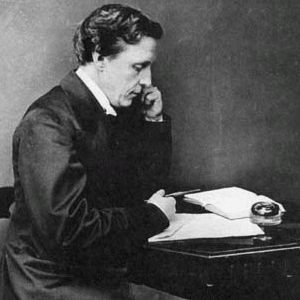
Creative Force: Lewis Carroll at work

Creative Force: Lewis Carroll at work

By all accounts a natural storyteller, Carroll regularly invented tales to entertain friends, this mathematics lecturer at Christ Church, Oxford, a keen photographer and poet who chiefly wrote about algebra, geometry and logic. And if it were not for a summer river outing with the Liddell family in 1862, when Carroll was 30, those might have been his only published works.

Instead, 10-year-old Alice Liddell – a daughter of his friend, the Dean of Christ Church – asked him to write down the story he told that day, and at Christmas 1864, he presented Alice with a handwritten copy bound in green leather, with other copies circulated to the author’s best friends, who persuaded him to seek out a publisher.

Alice wasn’t the only one on that trip immortalised in book form, the author himself represented by the Dodo (Dodgson), the Reverend Robinson Duckworth as the Duck, and Alice’s sisters Lorina and Edith as the Lory and the Eaglet respectively. The initial Alice’s Adventures Under Ground – now part of the British Library collection – came in at 90 pages and included 37 illustrations by the author. The Mad Hatter’s Tea Party was added later, with many episodes expanded and the title changed.

Carroll’s drawings portrayed Alice in a pre-Raphaelite/Dante Gabriel Rosetti style, with long, flowing hair and a serious expression. But by the time of that 1865 publication his words were accompanied by the black and white plate artwork of Sir John Tenniel, a Punch cartoonist who came to Carroll’s attention through illustrations for Aesop’s Fables.

By 1911, Tenniel’s failing eyesight led to Macmillan being granted permission to ask Harry G. Theaker – who illustrated fellow Macmillan hit The Water Babies by Charles Kingsley – to take over, and he completed 16 new colour plates, iconic images we now know so well. In fact, the commissioned artists that followed Tenniel’s lead as good as branded the look we now associate with Alice – not least that signature blue dress, blonde hair and Alice band, further enhancements in a similar style from John Macfarlane in 1927 and Diz Wallis in the 1990s continuing that legacy.
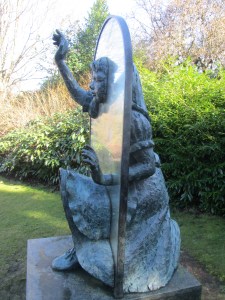
Bronze Tribute: Jeanne Argent's 1990 Alice sculpture in Guildford's Castle Grounds (Photo: Malcolm Wyatt)

Bronze Tribute: Jeanne Argent’s 1990 Alice sculpture in Guildford’s Castle Grounds (Photo: Malcolm Wyatt)

Talking of Wonderland-related art, there’s a striking bronze-cast sculpture depicting Alice looking through the looking glass in one of my favourite spots in Guildford, the Castle Grounds. And Jeanne Argent’s 1990 artwork is perfectly placed in a walled garden close to The Chestnuts’ sloping garden wall.

A short stroll away – on the banks of the River Wey at Millmead – is a second impressive bronze-cast sculpture marking Carroll’s Guildford legacy, Edwin Russell’s Alice and the White Rabbit, close to the Yvonne Arnaud Theatre, a rightly-popular feature for the town since 1984.

Meanwhile, Guildford Museum – also a short walk from The Chestnuts – houses a collection of items from the Dodgson family, including an impressive papier-mache cow, a family letter, wooden toys and a biscuit tin decorated with images from the second book, made by a close associate of the author, one of just a few such items he sent out to friends.

Carroll also lectured on maths at Abbot’s Hospital at the top of the town, and preached – in his role as an Anglican deacon – at St Mary’s, Guildford’s oldest church, again close to The Chestnuts. But on his last visit at Christmas, 1897, he caught influenza, dying of pneumonia on January 14th, 1898, shortly before his 66th birthday.

You’ll find his grave in a quiet spot under a plain memorial cross at The Mount Cemetery above the town, facing towards the family home on the other side of the river, his aunt and several sisters buried nearby. And by the time of his passing, his Alice books had already been published in nine different editions – revised English versions as well as French, German and Italian translations.

If this is all sounding a little close to an official history, I should add a less reverent note about an indirect family link with the Revd. Dodgson here. My Dad, rarely one to stand on ceremony as the saying goes, delivered letters up The Mount for a spell during three decades of GPO and Royal Mail service. While we were working on his memoirs, he told me, “I sometimes had letters addressed to ‘The Occupier, The Mount Cemetery, famous as the last resting place of Lewis Carroll. I would write ‘deceased’ on the letter and put it back in the box.”

Keep Looking: Guildford's Castle Grounds sculpture from Alice's corner, February 2015 (Photo: Malcolm Wyatt)

Keep Looking: Guildford’s Castle Grounds sculpture from Alice’s corner, February 2015 (Photo: Malcolm Wyatt)

In fact, I should confess that the Alice stories didn’t make as big an impression on me as a child – at least not consciously – as the works of AA Milne, Elizabeth Beresford and Michael Bond. What’s more, a fair bit I’ve read about the author suggests I wouldn’t have much liked him, and we wouldn’t have seen eye to eye on several issues. Like the Alice stories themselves, there are implied darker undercurrents, albeit ones I see no point in going into here.

I do however feel that 1865’s Alice’s Adventures in Wonderland and 1871’s Through the Looking-Glass and What Alice Found There deserve to be celebrated. And that’s exactly what initial publisher Macmillan and various other literary players are now doing. And having revisiting both books in recent times, I can genuinely say I’ve a new respect for Carroll’s historic texts.

I pointed out in a recent feature on this blog how there’s something of a Marmite factor to the Alice stories, and fully understand if others have been put off by any of the many adaptations over the last century and a half – be it through poorly-illustrated books, ill-conceived plays, or lack-lustre or frankly-disturbing films. But there’s no denying Carroll’s imaginative approach – one that inspired many writers over the following generations.

Much of the children’s lit I grew up with owed Carroll at least some debt of gratitude, and I feel I have a better understanding of what he set out to achieve now. I certainly love some of his wordplay, and the fact that you can find so many quotes out there from two relatively-short books tells its own story.

Despite having plumped for a pretty shabby 1993 reprint – the first that came to hand, one with several mistakes and missing the illustrations Carroll alludes to at key points – I still found the storytelling shone through.
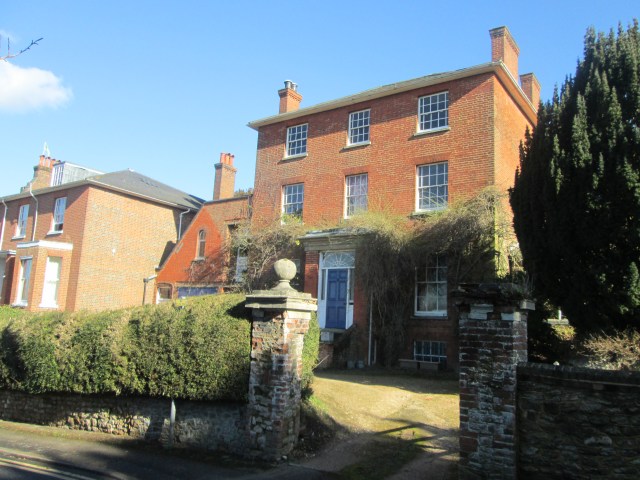
Dodgson HQ: The Chestnuts, Guildford, the house Lewis sought out for his sisters (Photo: Malcolm Wyatt)

Dodgson HQ: The Chestnuts, Guildford, the house Lewis sought out for his sisters (Photo: Malcolm Wyatt)

I could question the premise that Alice is supposedly seven and a half by the time of Through The Looking-Glass, a factor late 20th century and early 21st-century kids may feel just doesn’t wash in the way she talks or the accompanying artwork.

It’s also an early example of the ‘and then I woke up’ ending. But as that hadn’t been done to death at the time, I’ll let the author get away with that. And whatever quibbles I might have, the fact remains that without Alice there might not have been many of the following classic books I hold dear.

So why didn’t I appreciate Alice more before? Well, to use a music comparison, one problem I’ve had in evaluating the books equates to that I had judging The Beatles’ landmark Sgt Pepper’s Lonely Hearts Club Band, from the year I was born, 1967. That was an album I was led to believe was their big moment, yet I could name at least half a dozen Fab Four albums I prefer. I didn’t really appreciate the innovations on that LP though. By the time I was able to listen with critical ears, top Beatles copyists like Jeff Lynne’s ELO were making better albums than Sgt. Pepper, with much of what made it so impressive first time around taken for granted.

Similarly with Alice, it doesn’t come near several classic works more to my taste that followed in that supposed Golden Age of Children’s Literature up to the Great War. I preferred the storytelling of fellow Britons like JM Barrie, Rudyard Kipling, J Meade Falkner, Edith Nesbit and Robert Louis Stevenson. If you’re just comparing works of fantasy, Nesbit stands out again, and if I can go on to the 1920s, I’ll cite my all-time favourites from the Hundred Acre Wood. Yet I appreciate that we may not have got to enjoy Eeyore, Piglet, Pooh and Tigger or even Kenneth Grahame’s Toad if Carroll hadn’t tested the waters first.

New Edition: Macmillan's latest paperback to mark the 150th anniversary of the first book

New Edition: Macmillan’s latest paperback to mark the 150th anniversary of the first book

On that related subject, when I went back to Alice it struck me just how many of Carroll’s characters are now defined within our culture, be that down to the quality of the original text or the various film and cultural references that followed. And seeing as I made that late 1960s music analogy earlier, I’ll reference a few works from that period involving Wonderland imagery, either directly or indirectly.

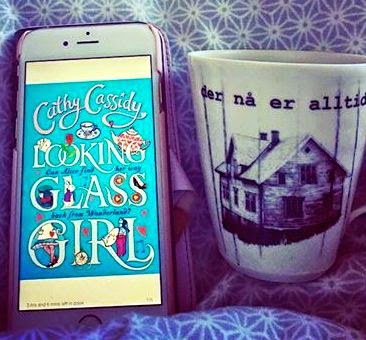
In her recent Looking Glass Girl reimagining of the stories, Cathy Cassidy – whose work sits fittingly next to Carroll’s on my children’s lit bookcases – mentions a few notable songs in a playlist for Alice, most relevantly three from 1967, Jefferson Airplane hit White Rabbit, The Velvet Underground’s All Tomorrow’s Parties (not quite so obvious, but it fits) and The Beatles’ Lucy in the Sky with Diamonds.

I’ll add another John Lennon-penned single from that year, I Am the Walrus (inspired by the second book’s The Walrus and the Carpenter verse). In fact, that mid-to-late ‘60s period – staggeringly, a century after publication – seemed to inspire a wealth of Alice-related material that went on to impact on me. And it could be down to The Beatles and The Airplane alone that this scribe equates Carroll’s stories with the hallucinatory effects of psychedelic drugs.

I’ll stick to that period and mention a few TV variations on the theme, not least two cult 1966 sci-fi series which dedicated episodes to Carroll’s Wonderland Lost in Space’s Penny Robinson going through a looking glass to discover another universe in The Magic Mirror, and Star Trek’s Shore Leave seeing the crew of the Enterprise visit a planet of dangerous illusions and meeting a large white rabbit and Alice herself.
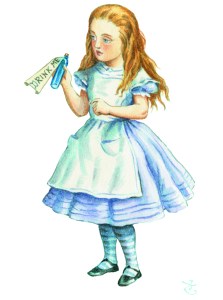
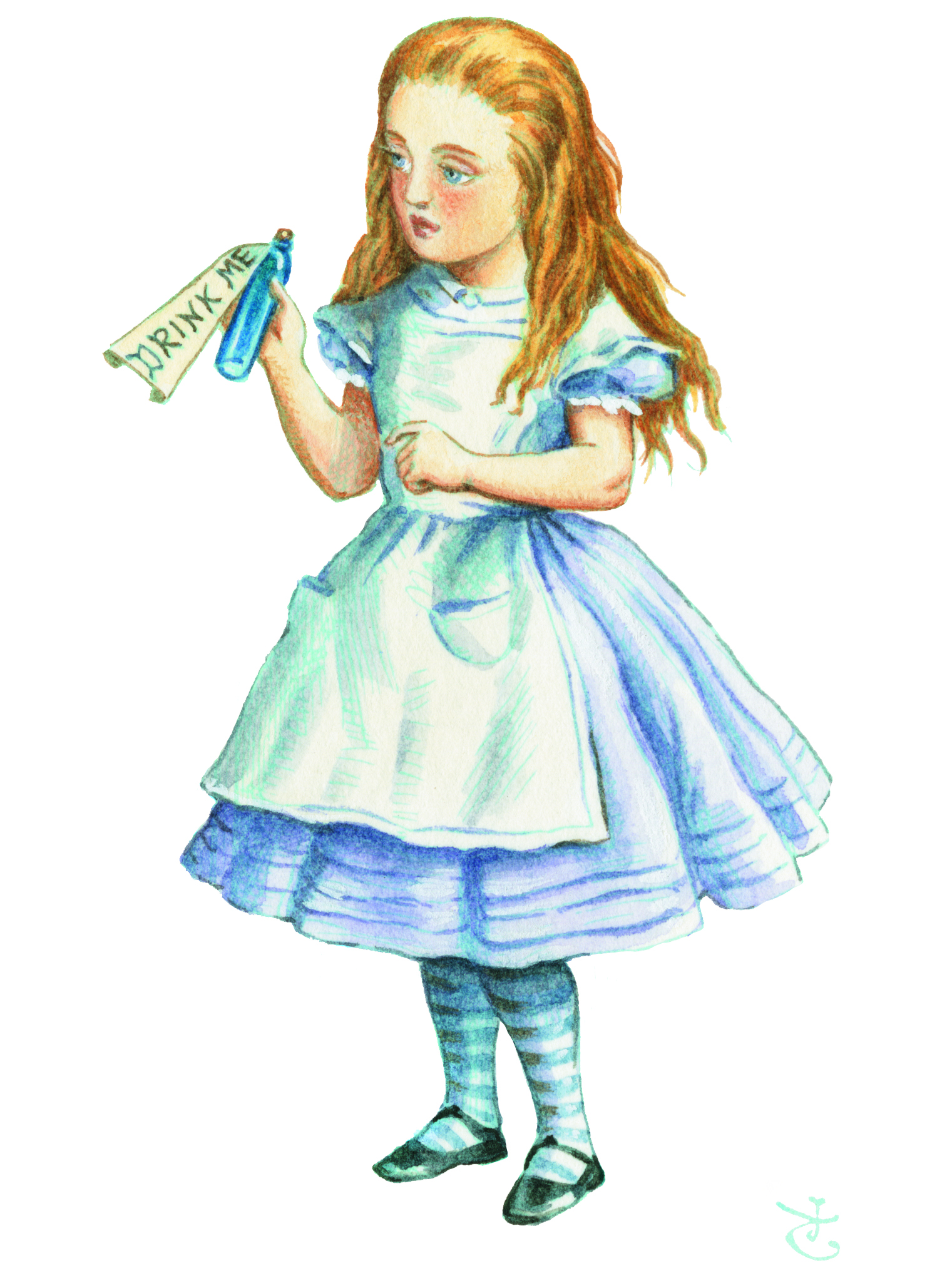
Liquid Refreshment: Alice contemplates a pick-me-up (Copyright: Alice’s Adventures in Wonderland: Illustrations © Macmillan 1995)

Liquid Refreshment: Alice contemplates a pick-me-up (Copyright: Alice’s Adventures in Wonderland: Illustrations © Macmillan 1995)

Of course, a few film adaptations left more of a mark, with Disney’s 1951 animation Alice in Wonderland arguably paving the way. Who, for instance, thinks of the White Rabbit without contemplating him being late for an important date?

Nearly 60 years later, a new generation were pulled in by Tim Burton’s Alice in Wonderland, Aussie-born Mia Wasikowska as a 19-year-old lead who has forgotten past visits to Underland, the land of her dreams, in a role opposite Johnny Depp’s Willy Wonka-like Mad Hatter.

That star-studded cast included Burton’s then-missus Helena Bonham Carter – in a near-parody of Miranda Richardson’s Queenie in Blackadder II – and Anne Hathaway playing the Red and White Queens, Stephen Fry the Cheshire Cat, Alan Rickman the Caterpillar, Barbara Windsor the Dormouse, Paul Whitehouse the March Hare, and Michael Sheen the White Rabbit. Incidentally, I’ve since learned there’s a follow-up due next year, Alice Through the Looking Glass, with the same key actors.

I also feel it’s worth mentioning 1972 film musical Alice’s Adventures in Wonderland, perhaps the most faithful to Carroll’s original, with a John Barry score and Fiona Fullerton a perfect Alice, getting across on screen a few of those growing-up issues, not just physically, but through general childish frustration at not having the ability to say the right things.

There’s a fair bit of the humour and quirkiness of Carroll’s work incorporated too, a fine cast overcoming what we would see as the somewhat-dated look of the film and costumes, including Michael Crawford as the White Rabbit, Ralph Richardson as the Caterpillar, Roy Kinnear as the Cheshire Cat, Spike Milligan as the Gryphon, Peter Sellers as the March Hare, Dudley Moore as The Dormouse, and Dennis Price and Flora Robson as the King and Queen of Hearts.

What’s more, it doesn’t go light on the ‘working on two levels’ angle, particularly when you picture Alice knocking back the intoxicating liquids, nibbling on magic mushrooms and trying a few colourful pills to help her reach the required size. Of course, as with all musicals (oddly enough) they tend to burst into song a bit too much for me, but it’s pretty much a commendable adaptation.

If Fullerton’s Alice seemed more believable as Carroll’s lines sounded more feasible coming from a 15-year-old, Kate Beckinsale was a similarly good choice as a mid-20s mum reading to her child before becoming Alice Through the Looking Glass in a 1998 Channel 4 adaptation, also starring Penelope Wilton and Geoffrey Palmer as the White Queen and King, Sian Phillips as the Red Queen, and even Steve Coogan as Gnat.
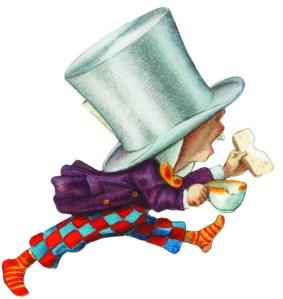
Hat's Entertainment: The Mad Hatter strides out (Copyright: Alice’s Adventures in Wonderland: Illustrations © Macmillan 1995)

Hat’s Entertainment: The Mad Hatter strides out (Copyright: Alice’s Adventures in Wonderland: Illustrations © Macmillan 1995)

I guess it’s a testament to Carroll’s stories that Alice continues to lend herself to reinvention, and while skater girl Avril Lavigne sang the title song for Burton in 2010, Taylor Swift is just one of the latest artists to pen her own Alice tribute song, Wonderland.

I’ll also namecheck Radiohead’s curiosity Pulk/Pull Revolving Doors from 2008’s Amnesiac, based on Alice’s ‘trying to find the right door’ dilemma, Tom Petty’s 1985 hit Don’t Come Around Here No More for its memorable promo video, Siouxsie and the Banshees for naming their label Wonderland and releasing their Through the Looking Glass LP in 1987, and Tom Waits for 2002 album Alice, written for a stage adaptation.

I’ll add one last musical note, so to speak, with Blur frontman Damon Albarn’s wonder.land, a new version of Carroll’s tale coming soon, scripted by British playwright Moira Buffini. Following Albarn’s Dr Dee: An English Opera, it promises to be another fresh and original take on the genre, and opening at Manchester International Festival (June 29th – July 12th) then transfers to London’s National Theatre (opening on November 27th) before moving to Paris next year. It follows the story of unhappy 12-year-old girl, Aly, who is bullied at school but grows in confidence online, where she meets a cast of familiar characters. They start appearing in real life in subtle and unexpected ways, Albarn relating the idea of ‘falling down a rabbit hole’ into the digital age.

While we’re getting arty, I’ll mention Salvador Dali’s 1969 Wonderland illustrations, Monty Python animator Terry Gilliam’s 1977 film romp Jabberwocky, and even the Wachiowski brothers’ The Matrix, from 1999, its Alice’s Adventures theme running throughout the trilogy. And on a more literary front, 60 years earlier James Joyce’s Finnegans Wake involved a Carroll-inspired dreamscape.

Curiouser and curiouser, you could say. In fact, to paraphrase the Queen, sometimes I believe there have been as many as six adaptations before breakfast.

As to the books themselves, there are definitely a few scenes unpalatable to this scribe, not least the nightmarish Pig and Pepper episode, also involving the fish and frog footmen, the Cheshire Cat, the Cook and the Duchess. Actually, it’s not a million miles from Peter Greenaway’s unsettling 1989 film The Cook, the Thief, His Wife and Her Lover. I can only really put it all down to a bad trip.

The quirkiness is at least more humorous if no less surreal at the Mad Hatter’s Tea Party, its comedy al fresco moves along the table and the butter-soaked watch that only tells the day of the month springing to mind. You certainly get the feeling this was stream of consciousness invention from the Dodgson lad. You never really know what’s coming next, let alone why a raven is like a writing desk.

Our introduction to the Queen is even odder, as if Lewis’ medication had truly kicked in. Off his head, you could say. The RSPCA would have a field day among all those abused hedgehogs and flamingos, as would the NSPCC over that baby that became a pig. Unfit guardians for sure.

I like the Mock Turtle and Gryphon scene for its wordplay and punnery, Carroll’s nonsense in full flow by the time of the trial finale. That said, you get the feeling Lewis had run out of time to reach his deadline, judging by the swift ending, Alice’s adventures more or less written off as a curious riverside dream. In fact, I’ll go as far to say I think I prefer Through the Looking-Glass in certain respects.
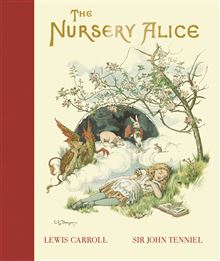
Younger Adaptation: The Nursery Alice

Younger Adaptation: The Nursery Alice

Two of Carroll’s finest characters only turn up in that follow-up, Tweedledum and Tweedledee (not to be confused with Cheryl Tweedie) memorably portrayed by Matt Lucas in the Burton flick. Their tiresome battle games seem particularly well observed in the books, spanning the generations nicely.

The legend of the Jabberwocky was likely a big influence on Roald Dahl’s BFG word creations a century later, and there’s a lot of verse in a book published the same year as Edward Lear’s The Owl and The Pussycat. The Walrus and The Carpenter inspired Donovan as much as it did fellow ‘60s experimental artist John Lennon.

Talking of the tripping quality of the story, the Queen wrapping herself up in wool and becoming a sheep in a shop is a case in point. And Alice also gets to meet Humpty Dumpty, the Lion and the Unicorn, plus a Knight in crimson armour with questionable riding skills and a penchant for bizarre and useless inventions.

As a rule, I prefer more realist texts from that Victorian era, but through falling down the rabbit hole and heading through the looking glass Carroll opened up a world of adventure and fantasy to us, and for that I feel we should be grateful.

Incidentally, the author talks in an Easter greeting to readers for an 1876 edition of his ‘book of nonsense’ of ‘that delicious dreamy feeling when one first wakes on a summer morning’ and a ‘pleasure very near to sadness, bringing tears to one’s eyes like a beautiful picture or poem’.  It’s his way of getting over how as a writer there’s no reason why he shouldn’t be ‘mixing together things grave and gay’. And that’s not a bad yardstick for any work of fiction.

Today, 150 years after Dodgson’s day on the river with the Liddell sisters, the Alice stories remain a major part of the history of children’s literature this world over.  What’s more, the original publishers can certainly feel proud of founder Alexander Macmillan’s initial belief in Carroll’s work and the illustrations that helped define these stories, helping create a publishing phenomenon that has been ‘sending readers to Wonderland since 1865’.

So which way ought we go from here? Well, that depends a good deal on where we want to get to. But I’ll finish by detailing how Macmillan plan to mark the 150th anniversary, publishing a series of collectible heritage editions plus new and re-imagined works in its Alice range, including:
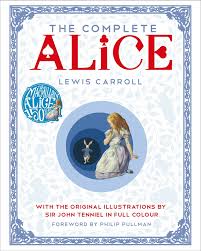
downloadThe Complete Alice: a new hardback gift edition (out in early July 2015), comprising the original books alongside archive material, with a new foreword by Philip Pullman, Tenniel’s illustrations coloured by Theaker and Wallis, a previously-deleted episode from the second book, Carroll’s poems and prefaces from four historic Victorian editions, and a new account of Alice‘s creation and first publication.

Then there’s The Little Folks Edition, a new small hardback format edition of 1907’s shorter version of the original tales; The Nursery Alice, a new edition of the very first colour Alice’s Adventures in Wonderland, adapted by Carroll and Tenniel for younger readers for publication in 1890; and collectible Macmillan Classics editions of Alice’s Adventures in Wonderland and Through the Looking-Glass with colour plates, alongside new attractive paperbacks with black and white illustrations.

For younger readers, there’s a range of titles too, not least a new picture book, Alice in Wonderland: Down the Rabbit Hole, complete with an audio version read by Joanne Froggatt, while Macmillan’s baby and toddler imprint Campbell celebrates the anniversary in its Busy series, with plenty of tabs to bring Wonderland to life.

Capital Letters: The Selected Letters of Lewis Carroll

Capital Letters: The Selected Letters of Lewis Carroll

For those seeking out more information about Charles L. Dodgson, his life as Lewis Carroll and his work, there’s a new paperback must-have for the Alice enthusiast, The Selected Letters of Lewis Carroll: Anniversary Edition, while Morton N. Cohen’s definitive biography of the author is out in hardback, and – celebrating the language and fun in the Alice books – September sees the publication of What Would Alice Do? Alice’s Guide to Life, featuring some of the most inspired and humorous quotes  from Carroll’s work.

Meanwhile, Alice Day is on Saturday, July 4th, with activity packs available for libraries, schools and bookshops, in a year in which you can expect an Alice presence at various major literature festivals, a BBC TV documentary presented by Radio 4’s Martha Kearney, and various partnership events (some still being finalised at time of going to press), as well as exclusive commercial tie-ins such as Sophie Allport’s limited edition Alice in Wonderland collection and the OXO Tower Afternoon tea service.

What’s more, there’s plenty of social media and web happenings to be found via the impressive www.aliceinweonderland150.com website and a special Facebook page.
image001

* Guildford Museum hosts a free Looking in Wonderland exhibition from November 28th, 2015, to January 23rd, 2016, with a selection of the best of Sir John Tenniel’s illustrations to Lewis Carroll’s Alice books on show. For more details, contact details and information about other exhibitions at the Castle Arch centre, head here.

* To book tickets for Damon Albarn and Moira Buffini’s wonder.land musical, head to the Manchester International Festival website or London’s National Theatre site.

* The Story Museum in Oxford, the town where the first story was created, Seven Stories in Newcastle-upon-Tyne may also be organising Wonderland-related activities this year, and are well worth checking out, while The Reading Agency and World Book Day may also be involved. 

* There’s also a comprehensive list of more Alice-themed events around the world to mark the 150th anniversary at the lewiscarrollresources.net website.

*With thanks to Alyx Price and Charlotte Copping at Macmillan for extra background material and official illustrations. 

Posted in Books Films, TV & Radio, Music | Tagged , , , , , , , , , , , , , , , | 2 Comments

Beyond Talent with the Classical Dark Angel – the Lucy Kay interview

What’s this? Talk of talent show contestants on the writewyattuk blog? Surely not. Well, yes actually, because there’s much more to the story of Lucy Kay than all that, as your humble scribe found out.

Lucy Kay: Enjoying life beyond the TV talent circuit  (Photo: Paul Monaghan)

Lucy Kay: Enjoying life beyond the TV talent circuit (Photo: Paul Monaghan)

Forget for a minute – if you possibly can – all talk of Belgium-based Blackpool dog-act Jules and Matisse, and cast your mind back to 2014’s Britain’s Got Talent final.

In that year’s hit ITV series climax, 10.7 million tuned in as five-piece musical theatre boy band Collabro won a showdown with Lucy Kay Allen.

And Lucy Kay – as she is known professionally – remains on a high 12 months later, while she prepares to showcase her classical vocal talent at Lancashire landmark Hoghton Tower next month.

The quirky soprano co-headlines Symphony at the Tower on Saturday, July 4, along with Brit Award-winning classical vocal group Blake, with esteemed backing from the Heart of England Philharmonic Orchestra.

It promises to be a spectacular affair too, closing with a firework finale, and it’s just the latest of several glittering career highs for the Glasgow-based 25-year-old.

But how did it come to all this for Lucy (who was incidentally still in her pyjamas when we caught up on the phone last week)? It must all have come as a bit of a shock.

”Absolutely! I’ve been watching the show when I can this year, and seeing the live semi-finals I was nervous. I know how it feels to be on that stage.

“I didn’t think I’d even get through to the semis, let alone the final. It’s been incredible.

“I realise it’s like Marmite – you either like Britain’s Got Talent or you don’t, and shows like that either help make your career or dream happen or have the adverse effect.

“But luckily for me, and quite a few others, we’ve managed to live out our dreams – and are still doing it.”

True Talent: Lucy Kay has found success beyond BGT  (Photo: Paul Monaghan)

True Talent: Lucy Kay has found success beyond BGT (Photo: Paul Monaghan)

I confess to Lucy that I steer clear of most TV talent shows – although my girls have enticed me into the room for The Voice from time to time  but from clips I’ve seen, it’s fair to say this gifted classical music lover with the big voice is clearly no novelty act or manufactured pop puppet. You only have to hear her rendition of Nessun Dorma to know that.

“Well, I can’t really say too much, but first and foremost it is a TV show, so they have to make it interesting, throw anything in they can to make it emotional.

“It was an emotional time for me too, but little did I know how they’d ‘dramatacise’ it.

“In the beginning, I think people were put off by my sob story and wanted me to just go on and sing. I’d love to have too! They do delve about a bit … yeah.”

More of that ‘sob story’, as she put it, shortly, but I bet it’s been a bit of a blur since, Lucy having gone straight into a multi-album deal with Sony as the series ended.

“I said to Collabro throughout that week, ‘You’re going to win!’ I could see how it was going, with a lot of older women into them.  Not so many men watch it.

“I was just so happy to come second. Then, soon as the show went off air, I was approached by my manager, who said we had a couple of record labels very interested.

“He said, ‘We’re going to choose which one we think is the best to go with’. I was just like, ‘What? No! As if!’

“I went for a meal with Liam Toner (Sony’s Head of Classics and Crossover), and he got the champagne out. I thought, ‘This is so weird!’ I’d never even had a champagne lunch before.”

There have been many more such ‘OMG’ moments for Lucy since, including her invite to perform at a birthday party for BGT creator and judge Simon Cowell just before her album came out.

Simon Says: Lucy Kay with BGT creator and judge Simon Cowell

Simon Says: Lucy Kay with BGT’s Simon Cowell

Is she still in touch with Simon and the other judges on the show?

“I’m in touch with Alesha Dixon’s manager, so find out what she’s up to. And when I’ve met Amanda (Holden), she’s just hilarious and one of the most down-to-earth people I’ve met.

“Then there’s Simon – love him or hate him.”

Well, I guess we just see the public side of these people. It’s all too easy to knock them, and I definitely have over the years. But Lucy stands up for him.

“When I sang for his birthday, he didn’t know I was going to sing Nessun Dorma. He told me it had made his night. He was so lovely.”

Had she a favourite act on BGT this year (preferably one that didn’t do doggy tricks)?

“There are so many, but I loved the older guy group, quite jazzy. Then there was Emma Jones, kind of like a younger SuBo (Susan Boyle), very shy. She’s incredible. I really hope they make the most of her.”

And is Lucy still in touch with the boys from Collabro, who she toured with after her series ended?

“Yes, it was great being with them, and I did a few pranks on them. I’m quite mischievous, and so far they’ve not been able to get me back!

“They’re on their second tour now, while I’m on my first this autumn – delving into more musical theatre, a bit of jazz, as well as a bit of classical and the big opera arias.

“I like to get lots of genres in there, see what people really like. I’m doing a lot of corporate gigs, then Sunday at the Musicals at the Hippodrome in London.

“Then there’s Symphony at the Tower. I’m really excited about that, not having done an outdoor show before.

“And I’ve worked with some of the Heart of England Philharmonic Orchestra before on the Collabro tour, which was incredible.”

It’s fair to say Lucy’s been pleased with the success of debut album Fantasia, which was recorded with the City of Prague Philharmonic Orchestra and carries interpretations of 12 well-known operatic favourites.

“It did very well, getting to No.1 in the classical charts and No.18 in the main charts. I was higher than Paloma Faith, and I was confused by that!

Chart Rival: But Lucy Kay is a big Paloma Faith fan

Chart Rival: But Lucy Kay is a big Paloma Faith fan

Are you a Paloma fan then?

“I am. I love her to bits. She’s crazy!”

At times like that, it must all be a bit ‘pinch me’.

“Yes! I remember looking at the computer, seeing I’d made it to No.1, then Classic FM did a piece on me and made it Record of the Week.

“It’s all a bit odd. This Lucy Kay always seems more like a character to me really. When I’m just Lucy Kay Allen at home, I’ve got my ‘jamas on – as I have now!”

Well, that certainly paints us a picture. So when she turns 26 next Tuesday (June 9), will Lucy get Simon Cowell to sing for her at a special party?

“That’s a good idea! I’m going to the Download Festival at Donington Park though – that’s my birthday present.”

Hang on – that’s classical crossover gone mad, surely. Does Lucy enjoy a bit of heavy metal on her days off then?

“I am a bit of a metal-head! I went to my boyfriend’s gig last night. David’s in a band called Centrilia. They’re incredible.”

Who does she want to see most at Download?

“Oh my gosh – Marilyn Manson! I’ve never seen him live. Then there’s Clutch, Slipknot … oh, all of them!”

This isn’t just a soft metal fixation then.

“No! Not at all!”

That said, I can’t really see Slipknot sharing a bill with SuBo (that’s Susan Boyle, in case you wondered), whereas Lucy appeared live with the 2009 BGT runner-up while studying at the Royal Conservatoire of Scotland.

“There was a Scottish tour she was doing and we had auditions to back her on I Dreamed a Dream and a couple of other songs. And I got through!

Fun Days: Lucy Kay was a backing singer for Susan Boyle

Fun Days: Lucy Kay was a backing singer for Susan Boyle

“She’s hilarious, so sweet, and has a really funny side. It was one of the most fun tours I’ve been on.”

Again, perhaps that’s not the SuBo some people might expect.

“She’s very vulnerable, and I think that’s what the audience saw. First time she met us she was quite frightened of singing in front of us, and doesn’t cope well with those situations.

“But we all made friends before and she opened up. Then you see that other side of her. I just hope people continue to look after her. She’s so lovely.”

Lucy knows all about struggling to fit in, as anyone who’s picked up a red-top tabloid in the past year and read a BGT story will probably know. In fact, quite a lot of those stories revolve around her troubled school days.

“Yes, it was bad, and I was badly bullied. And you have to be honest, because it will come out eventually, so I told them what happened.

“I’d moved from Leicester when I was four, to this new city, Nottingham, and didn’t really know anyone, and nor did my Mum.

“We had a different accent, and I just wasn’t very good at making friends. Also, Dad had left, and sometimes children need that stability. For me, my only rock was my Mum.

“I was bullied from around the age of seven upwards. It went on until my 20s, actually.

“When I joined the Cantamus girls choir, I was with them every Friday, Saturday and Sunday. That made me unpopular and uncool, singing ‘God music’, as certain people saw it.

“By the time I was 10 or 11, people were saying they’d seen me on Songs of Praise. Well, if I’d had any guts I’d have questioned why they were watching that in the first place!

“But at the time I was frightened, and just wanted to keep my head down. People do anything to fit in. Some of those that bullied me were just doing it because others were doing it, thinking that was the way to gain power.

“So I went through all that, and my Mum didn’t really know what to do. It was just so painful. The reason I decided to talk about all that is that my singing helped me through those bad times.

Debut Album: Lucy Kay's Fantasia

Debut Album: Lucy Kay’s Fantasia

“I think that’s important for young boys and girls in that situation – if you have a passion for music – or anything really – you’ve got to hold on to it.

“Whether you’re having a bad time at home, at school or anywhere, things like that can help. Music did it for me. I hate that it happened, but it makes you who you are.”

Is it right that your Dad’s been back in contact since your big TV break?

“Yes, but he’s always been there for a few minutes here and there. I think the loss of his Dad was a turning point – he realised what was important to him.

“He rings every couple of weeks and we have a natter. It’s nice. Obviously, he saw a lot of things written about him and that probably made him feel even worse.

“But I don’t think it’s anything to do with Britain’s Got Talent. We were coming into contact before. It’s just building bridges really.”

Lucy’s move to Glasgow came in 2010, and it’s been her happy home city ever since.

“I failed my GCSEs because I was hardly ever at school. I was either in the girls’ toilet or skipping school because I was too terrified to go in.

“Mum didn’t know that at the time, and was most upset I didn’t tell her about it. But I felt I couldn’t. I didn’t want to upset her any more.

“My singing teacher, Pamela Cook, who sadly passed away before she saw my success, knew there was something special there, and helped a lot with vocal lessons.

“Mum wasn’t in a position where she could pay a lot, so she helped out every now and again.

“There was also Elaine Guy, another singing teacher who lived around the corner and helped too. I re-sat my GCSEs in English and Maths then got my A-level in Music so I could actually move away and start a new life.

Cantamus Founder: The late Pamela Cook was a major inspiration for Lucy

Cantamus Founder: The late Pamela Cook was a major inspiration for Lucy

“She did that off her own back, spending every night of the week with me, never wanting anything for it. So credit to those ladies – they really helped me.”

She still had a big geographical decision to make though, with two other options available.

“It was either going to be Manchester, where I’d been a few times with the choir, or Scotland, which was more of a back-up.

“I wasn’t strong enough for London. I didn’t think I would have been nurtured a lot there, and I needed that support.

“But I went for an audition in Glasgow and fell in love with the city. They offered me a place on the day, saying, ‘You must come here!’ And I was like, ‘OK!’”

Has it always just been about the voice, or can Lucy play music as well?

“I can play piano a little, but I still need to work on that. I remember in one of my exams I had this big shiny ring on, and got distracted when the light hit it.

“I just got lost and had to restart and re-sit that year. So there’s a tip for others – never wear any rings when you’re playing for an exam!”

Five years on from her move north of the border, Lucy’s working on a second album, ‘a bit more classical crossover’, some of her fans wanting more ‘out there stuff’.

“There’s still another side of my fans I have to please as well, with more classical pieces, but others want a few covers and a few curveballs in there.

“I love Katherine Jenkins. She’s still my biggest idol, but she’s very girl-next-door. Image-wise I don’t think that’s me.

“I’m more into my rock, so I suppose I’m going down more of a darker angel side.”

What does your adopted home city make of your success? Are you accepted as a proper Glaswegian yet?

“Well, I’ve lived here about five years now, can vote here, and everything else. Everyone’s been so friendly.

Future Focus: Lucy Kay  (Photo: http://lucykaysoprano.com/)

Future Focus: Lucy Kay (Photo: http://lucykaysoprano.com/)

“From the first moment I came to this city – once I’d learned what people were actually saying – it’s been lovely!”

And what’s your other half’s take on it all?

“David’s very protective. He managed me on the Collabro tour. Because he works in that industry he’s used to it all … and my little tantrums!

“He supports me and watches out for me, if a few people get a bit too close on tour. He’s a bit more cautious, rather than just flattered like me!”

Among Lucy’s other recent highlights was an invite to Prince Harry’s WellChild Awards evening. Did she get to have a word with the main man?

“I didn’t. I did try to stalk him, but there were too many security guards! Maybe next time.”

Talking of charities, it appears that Lucy has already forged links with St Catherine’s Hospice, the Lancashire palliative care centre and charity for Preston, Chorley and South Ribble which is behind Symphony at the Tower.

“I’m very honoured to be a part of this event, and why not use your voice – if you’ve got a gift – for a good cause?

“I also plan to visit the hospice again. Last time I was there I sang in the chapel, during my tour with Collabro earlier this year.

“I also donated to a guy who had a purple Mohican, raising money for the hospice. His spirits were so high and he was so happy to see me.

Hospice Visit: Lucy during her first visit to St Catherine's Hospice in Lancashire

Hospice Visit: Lucy during her first visit to St Catherine’s Hospice in Lancashire

“I was just so overwhelmed with how bright everyone was there. It puts your own life into perspective.”

Will she perform with her Hoghton Tower co-stars Blake on the night?

“We were talking about doing Nessun Dorma together. They were already set to do it, and I said, ‘But that’s my party piece!

“We’re following each other on Twitter, and I’m looking forward to meeting them.”

So can we expect some of that Lucy Kay quirkiness you mention on the night?

“I think so. I like to have a laugh on stage. I’m very light-hearted, never taking anything too serious. I like to make people feel happy and believe in a real connection between the artist and the public.”

And will she be there to see Status Quo headline on Friday night at the same stunning location?

“Yes! I’m doing a gig in Ipswich on the day, but I’ll be there later. I’ve always wanted to see them live.”

So might she end up harmonising with Rick Parfitt and Francis Rossi on Caroline or Down Down maybe?

“Hey, perhaps I could jump on stage and join them!”

Remember, you heard it here first.

symphony-at-the-towerFor Symphony at the Tower tickets – including weekend and VIP packages – and more details, visit www.stcatherines.co.uk, or alternatively drop in at the Lostock Hall hospice or call them on 01772 629171.

And for more about Lucy and her forthcoming appearances, including live dates this year with Rhydian Roberts, try her official website here

Posted in Comedy & Theatre, Music | Tagged , , , , , , , , , , , , , , | 6 Comments

Living the genre non-specific rock dream with Polly and the Billets Doux

Van Go: Polly and the Billets Doux arrive at their next destination.

Van Go: Polly and the Billets Doux arrive at their next destination.

Polly Perry, lead singer of Polly and the Billets Doux,  is on a train somewhere between Devon and Hampshire, heading back from a weekend of fossil hunting.

Yes, fossil hunting. Not very rock’n’roll? Well, there’s plenty more of that deviant behaviour to be revealed as we carry on our conversation.

But while her band’s leisure-time pursuits hardly rival those of Led Zeppelin or The Rolling Stones in their prime, it’s just how this South Coast outfit like it.

As I was about to find out, you’re unlikely to read about the off-stage antics of Polly and the Billets Doux in the court listings or annals of Music Babylon.

The 31-year-old singer had just left Axminster, changing at Basingstoke before a return to Winchester after a weekend with a few girlfriends on England’s Jurassic Coast.

“I’m a big fan of fossils and geology. My friends and I have been camping at Charmouth, which is really good for fossils. We had a busy time, looking at rocks.”

Any success from her expedition?

“Oh yeah, a whole bucketful! We laid them out, picked out our favourites and put the rest back. That way they get washed in the sea ready for the next people to find them.”

Very considerate, if not the stuff of legendary rock anecdotes. But then why should it be? After all, Polly heads a band that prefers to do its performing on the stage.

Polly has no idea of the exact number of dates her quartet have performed, but lets on that last May alone they did a staggering 36 gigs.

Spring Spirit: Polly and the Billets Doux get in touch with a little nature

Spring Spirit: Polly and the Billets Doux get in touch with a little nature

Then came heavy schedules in Ireland and Germany, and you can factor in regular UK dates and several festivals.

Currently, things seem a little less frenetic, although they’re part-way into a 16-date tour that started in Wellingborough and ends with Middlewich’s Folk and Boat Festival on June 20.

This Friday (May 29) they’re sure to be charming a whole new clientele at Preston’s Continental, my excuse for catching up with her, and they’re back in the Red Rose county within four months for the Fylde Folk Festival in Fleetwood (Saturday, September 5).

I’ve been listening to their second album, 2014’s Money Tree, recently, and they certainly offer a whole swathe of musical genres over 12 impressive tracks.

That’s only part of the story though, the band having first charted at No.17 on the BBC Radio 1 indie chart with their Head of Steam EP back in 2008.

That was followed a year later by often-exquisite debut album, Fiction, Half-Truths & Downright Lies.

Then there were the mighty-catchy Follow My Feet, Cry Cry and Hold Fast singles, then Money Tree last year, with the band now set to release new single, Tourniquet, and a whole lot more material coming our way soon.

I put it to Polly – carrying on our conversation with a far better mobile signal on her arrival home in Winchester after several curtailed attempts – that there seems to be a marked difference between the albums.

“Both albums have very different sounds to them. We consider the first a bit lighter, and the earlier material slightly polite, whereas we wanted the second album to sound a bit more live and kind of gritty.

“But I still feel we need to go a little heavier and edgier, as with the new single, Tourniquet, which we’re in the process of releasing.”

Live Treatment: Dan, on double bass, and Polly out front

Live Treatment: Dan, on double bass, and Polly out front

And are you working on a third album to follow that forthcoming Genepool Records release?

“Well, we haven’t booked into the studio yet, but we’re working on material for the new album.”

So is the live set they’re bringing to Preston a trawl through both albums, the singles and the newer material?

“I’d say so. We start off with some of the singles, like Cry Cry and Follow My Feet, but our songs are so diverse and in so many different kinds of style.

“That keeps it quite dynamic really, ending in full-on electric guitars and solos.”

It’s certainly difficult to categorise Polly and the Billets Doux. They seem to veer from blues to country, from folk to soul, from gospel to rock’n’roll.

If you love good guitar and fantastic vocal performances, driven by quality stand-up bass and percussion, you’ll be made up. Just don’t try and stick a label on them.

They call their style genre-defiant. I’d go for genre non-specific. And it all comes with a quintessentially English twist.

For example, straight away on Money Tree they put me in mind of early Fleetwood Mac on bluesy opener Black Crow then Norah Jones on the more whimsical, dreamy Stories of our Own, amid a variety of guitar and percussive styles.

Then there are touches of others, even including Dido in places. Am I even close?

5343d5f41bf81-polly.nl.m“That’s good! You’ve named some people I really love and a few others have stated.

“I always get Norah Jones mentioned I think because of my voice, although I don’t think our music is like hers. And I love Fleetwood Mac.”

Calico Blankets was one of the first songs to jump off the deck at me – a bit of country noir in the tradition of Emmylou Harris and co, but definitely homegrown.

“Now you say that, I can see the fit. But rather than thinking, ‘Let’s write a country song’, we just start writing and they end up what they are.

“They’re what we like doing rather than being any specific genre – as they come.”

There’s even a very French feel, one you might associate with the band’s name, on the gorgeously laid-back closing track Old Virginia.

Meanwhile, The Fallow Road is a favourite, with more of a breathy blues crossover thing going on, and the band kind of laid-back funky, all in a South Downs setting.

I could even hear Faces-era Rod Stewart having a go at it. And in the same way Rod was a big Sam Cooke fan, it appears that Polly likes her gospel music.

“Yes, I’m a big fan of gospel. I’m not religious, but love the growling passion of some of the old gospel.”

You mention that growl, and there’s a bit of that on the recordings, not least on Money Tree‘s title track. In fact, it’s best you don’t hold your pint glass too hard while they’re playing that at the Conti or any other dates on this tour.

“Yeah, I do enjoy that – and it was done in one take!”

Polly certainly has an impressive voice on her, whether via more breathy treatments or the other end of the spectrum, often under-stated but perhaps all the more powerful for that when she does let it rip.

Are they getting closer to what they’re trying to convey, or do they remain a band of split personalities?

51IthlJfhKL._SX300_“I think we’ll always remain a band with split personalities! We all love so many different kinds of music, and I like it that we bring in so many genres.

“But I feel we want to be a bit edgier, a bit heavier, take more risks, and we’re interested in bringing other sounds and rhythms in.”

Apparently, the band debuted in a smoky Winchester venue backroom in 2006. That seems to age Polly and the Billets Doux’s story slightly, making me realise how long it’s been since the UK smoking ban came in.

“Yes, that first gig was in the back room of our local venue, The Railway, and we didn’t have any amplification.

“I booked the gig before having songs, but got that together for the gig and we just belted it out in the middle of this room, having not quite sorted out pick-ups.

“But it’s a nice thing to do it all acoustic and stripped down.”

Has it been the same foursome from the start?

“Yes, we’ve never been one of those bands who get another drummer or whatever. We lived together, and the other guys were in a rock band.

“We were just jamming in the evenings … and playing badminton together.”

Oh dear, she’s off again. That doesn’t sound very rock’n’roll either, Polly.

“Well, no, but we are so rock’n’roll! It’s just that we’re big fans of visiting train museums and art galleries, rather than throwing TVs out of hotel windows.”

Very wise. I should really introduce the rest of the band there, lead vocalist Polly, just about the youngest in the band, joined by Andrew ‘Steeny’ Steen (lead guitar, vocals) Dan Everett (double bass, guitar, vocals) and Ben Perry (drums/percussion).

“We all met in Winchester. Dan came here to go to art college, Steeny came down from Ulverston to study archaeology, ending up doing English literature and excelling.

Billet Quartet: Steeny, Polly, Ben and Dan during a Songs from the Shed session in North Somerset (Photo: http://www.songsfromtheshed.com/)

Billet Quartet: Steeny, Polly, Ben and Dan during a Songs from the Shed session in North Somerset (Photo: http://www.songsfromtheshed.com/)

“Ben and I both lived in Winchester, and you’d always bump into each other in Sainsbury’s. it’s a small city and everyone in music knows each other.”

Of course, she is opening herself up to misspellings from promoters with that band name too. Are they already turning up at venues to memorable misnomers?

“Oh, always! We’ve had Polly and the Billy Dux before, but it’s usually just missing the ‘x’.”

Bear that in mind, Continental staff. So is this your first gig in Preston?

“It is. We have been in the area, and my Nana – who lives in Doncaster – was from Lancashire originally. We’ve played the Lake District too, as Steeny’s from that region.”

Did Polly’s musical genes perhaps come from the Northern side of her family?

“Yes, my Nana was a singer during the war, and was always singing. When I was growing up she used to sing sentimental 1940s songs, so I did too.

“We still do when I visit, and when we’re doing the washing-up together!”

So what can your audiences on this tour expect from  Polly and the Billets Doux?

“Some songs are three-part harmonies, finger-picking folk with double bass and acoustic guitar, bit with a few lively numbers a little more like Bo Diddley, to which people like to have a dance. We tend to start lighter and go a bit heavier.”

Bass Instinct: Polly Perry gets up close and personal with Dan's double bass

Bass Instinct: Polly Perry gets up close and personal with her double bass

I can imagine you going down well at festivals too, and that’s proved to be the case so far, not least at Glastonbury, Loopallu, The Big Chill, Secret Garden Party, Larmer Tree, Wychwood and the Cambridge Folk Festival. Has Polly any particular highlights from that summertime circuit?

“Playing Glastonbury has been quite an amazing experience, and we’ve played there three times now.

“Then there’s the Loopallu Festival in Scotland, another of my favourites, where it was absolutely pelting down with rain and we had a caravan next to Mumford and Sons’ caravan.

“Each band, when it was their turn to play, had to just run for it on to the stage. You’d just see the caravan door opening and the next band running for the stage.

“On the main stage you look across to Stornaway, and during our slot the sun was setting and it was just stunning.”

En route, there’s been plenty of love for the band on the airwaves, including a fair few plays on BBC Radio 1, 2, 4 and 6.

And the band has earned plenty of support on those stations, not least from Whispering Bob Harris, Terry Wogan, Tom Robinson and Cerys Matthews, the latter perhaps another key influence on Polly.

“We did a live session for Cerys, and I’ve always really liked her as an artist and really love her show too. She plays some great stuff, so I was proud to be on there.

”She got me to record a jingle, and it’s so weird when you have someone with such a distinctive voice talking about you and your songs. It was the same with Terry Wogan.”

And with thoughts of Sir Terry, I leave Polly to it, safely home by now – the first part of our conversation curtailed by poor carriage mobile phone reception.

At that point, she was set to enjoy a couple of days off before her next batch of live dates, and closed by telling me how much she was looking forward to ‘getting back on the allotment’.

Rock’n’roll, indeed.

Ticket details of the Polly and the Billets Doux visit to The Continental in Preston (Friday, May 29) can be found here.

For more about the band and further dates on this tour and throughout the summer, head to their facebook page here,  or follow them on Twitter here

Finally, for a few examples of the band’s past output via YouTube, try here, and for more about Songs from the Shed, try here.

Posted in Music | Tagged , , , , , , , , , , , , , , , | 1 Comment

Band of brothers’ friendly fire – The Cribs interview

Wakefield Wonders: The Cribs, namely (from the left) Gary, Ross and Ryan Jarman

Wakefield Wonders: The Cribs, namely (from the left) Gary, Ross and Ryan Jarman

When it comes to loyalty, it’s an ethos built on brotherhood for indie favourites The Cribs.

While the West Yorkshire outfit complemented their sense of cool by recruiting Manchester guitar legend Johnny Marr between 2008 and 2011, the brothers Jarman remain at the heart of the band – twins Gary and Ryan plus younger sibling Ryan.

And while they continue to mix in revered company, that three-piece family dynamic still provides the band’s momentum.

The Jarman brothers were travelling up the east coast of Ireland when I caught them, between shows in Dublin and Belfast, the latest cities to show their appreciation for a band now in their 14th year performing.

Vocalist and bass player Gary, who along with Ryan (guitars and vocals) is aged 34 and four years the senior of Ross (drums), did the talking, his responses always considered but honest with it.

“Last night in Dublin was really fun, with a really enthusiastic audience. We haven’t been here for a couple of years, and there was definitely a good vibe.”

Have the band enjoyed the reaction to their sixth LP, For All My Sisters, since its March release?

“We’ve been really happy. We were so proud of the album when we made it, having gone away for around three years between records, the longest we’ve done that.

“Having switched labels, moving to Sony, we felt there was quite a lot of change around this record and worked really hard on this.

“It was nice to have the time away to do that, and in a lot of ways it felt like making our first record again.

Three's Company: Ross, Gary and Ryan get the joke

Three’s Company: Ross, Gary and Ryan get the joke

“When you first start you feel you’ve got all the time in the world to make a record. But in the past we’ve been busy the whole time, writing while we’ve been on the road, going from one record straight on to the next.

“By the time this album came out, we felt really passionate towards it, and I think most of our audience – and definitely the more old school element of the fan-base – have really embraced this record.

“In some ways it really is a return to the ideals of the earlier stuff.”

What’s the difference between working with Wichita Recordings, the indie label behind their first five albums, and now Sony Red?

“Not a massive difference. We were with Wichita from the start, but did a couple of records with Warner Brothers in America so already had the experience of working with a major label.

“We’ve been around long enough to see from the sidelines the small indie and big major set-ups, so knew what to expect.

“After establishing the band for over a decade, anyone who works with us has a pretty good idea of what to expect from us, and pretty much let us get on with what we want.

“The only time it feels odd being with a major would be if they have a pre-conceived idea of what they want to mould you into.

“With Warner Brothers in America it was slightly like that, but with Sony in the UK I think they understand what we’re about.”

In an era when it seems there is less chance of bands going down the major label path, instead working with smaller labels or going down the pledging route, you seem to get the best of both worlds – an independent ethic backed by a big company.

Sisters' Act: The release of The Cribs' For All My Sisters proved a proud moment for Gary and his brothers

Sisters’ Act: The release of The Cribs’ For All My Sisters proved a proud moment for Gary and his brothers

“We were always more suited to being on an indie label. From an idealistic point of view we really liked the idea of community and a close relationship with the label.

“At this stage we’re pretty dyed in the wool. I can understand if we’d made a completely different record and it had been overtly radio-friendly, but people now know us well enough to know what we want to do, and this record is still fundamentally a punk record.”

There are a couple of radio-friendly tracks on For All My Sisters to pull new fans in, but there’s also enough to feel you’re staying true to your ideals.

“It’s always been the same with us, throughout the years. We’ve always known which are the singles and like to write pop songs, although not in the conventional sense. We’re not trying to be part of that world.

“I consider a lot of my favourite bands to be pop bands, like Nirvana, Teenage Fan Club and Sebadoh. To me they write pop songs, even though it doesn’t fit the same classification as commercial pop.”

It’s interesting you say Teenage Fan Club. I’ve never really thought about them in respect of your music, but now you mention it, I can hear them in there too.

But the influence that comes across more than most for me on the new LP is Weezer, although perhaps that’s understandable with the LP being produced by Ric Ocasek, former frontman of US new wavers The Cars, who also worked with the LA outfit.

“A couple of people have said that, and while  we did work with Ric on this, I grew up listening to Weezer. They were accessible, and as a young teenager you need these gateway bands – where the more melodic songs turn you on to the experimental side.”

There’s an almost ‘70s pop feel to it all between the harder line, maybe attributable to Ric again. How much of that sound and feel was down to his influence?

“His influence was mainly was as a producer who we respect for what he’s done before. It makes it smoother, where everybody ends up on the same page.

Classic Car: Ric Ocasek, who produced the latest Cribs album

Classic Car: Ric Ocasek, who produced the latest Cribs album

“Between me and my brothers we produce ourselves, but it’s good to have someone there almost like an arbiter.

“Otherwise we can end up fixated on the details. Ric was good at telling us what felt good and what was a good take but also very focused on vocal performances.

“In the past I’ve been happy enough if it’s felt right. Ric didn’t care about us getting a perfect performance either, yet with the vocals he wanted me to push a lot harder to put in great performances.”

The album’s first single, Burning for No One, is a contender for a summer-long anthem for this scribe, and not just for the accompanying video, shot in the Bahamas, much as I feel there should be more stone-skimming in pop promos to my mind.

Was the fact that they chose the island of Exuma rather than Scarborough – where they recorded a track for their second LP on the beach – for the video a sign of them selling out?

“When we say it was in the Bahamas it makes it sound much grander than it was. But it was a cool experience.

“We knew there was this island inhabited by these feral pigs, but paid for some flights and took a friend along to film us.

“It was all done guerrilla style. It wasn’t like some big ‘80s production. It does seem like the classic cliché of signing for a major then going off to the Bahamas. But it wasn’t like that.”

Back in the Industrial North, how was your date in Leeds on May 2, in what must class more or less a home fixture for this Wakefield outfit?

“Leeds has almost always been like a home show, although we play Wakefield sometimes. Playing the Town Hall was like a celebratory show in grand surroundings on a really special night.”

This Sunday (May 24) The Cribs are at Liverpool Docklands’ Sound City festival, the same night as Gaz Coombes, Belle & Sebastian and Peace among others.

Is there anyone in particular on that bill that Gary wants to watch from the sidelines?

“I wanted to see Thurston Moore and also Flaming Lips, but they’re playing the day before, so I don’t know if I’ll be around.”

Sound Choice: Sonic Youth have proved a big influence on The Cribs

Sound Choice: Sonic Youth have proved a big influence on The Cribs

I take it from the past links that you’re big Sonic Youth fans.

“Definitely. They were really important to us, and we worked with Lee Ranaldo on the third record, a high watermark for us. And the song we made with him, Be Safe, has become a fan’s favourite.

“We’ve bumped into Thurston a few times, and to me he’s still a guitar hero, although that sounds a weird thing to say about such an iconoclastic anti-hero!”

The Cribs tend to be a four-piece live, with Russell Searle from fellow Wakefield band The Research helping out at present.

“We like to have someone fill in a couple of extra guitar parts and on keyboards, and that was Mike (Cummings) from the band Skaters in America, and now Russell over here.”

I’m guessing there’s still a bit of a rush down the front for crowd favourites like Hey Scenesters, Mirror Kissers and Men’s Needs.

“Well, we put out a compilation a couple of years ago, so our set-list is like a greatest hits, with certain songs people expect us to play.

“For us it’s more fun playing the new stuff, and at the moment we’re trying to find a balance. We had that fine balance in Dublin – about one-third new stuff, two-thirds hits.

“But when you’ve been touring for around 13 years, how many songs can you play? You know what works, and have a good idea what a crowd wants.”

From fellow triple-sibling bands The Beach Boys and The Bee Gees to more fiery brotherly combos like The Kinks’ Ray and Dave Davies and Oasis’ Liam and Noel Gallagher, where do the Jarman trio fit?

“We’re more like best friends really. As with most siblings, we argue a lot about petty things – but nothing major.

“With some artistic partnerships it’s usually about a clash of egos, but I like to think the three of us are pretty free of that. We’re all on the same team.

Jarman Karma: Twins Gary and Ryan and younger brother Ross are all on the same team

Jarman Karma: Twins Gary and Ryan and younger brother Ross are all on the same team

“The reason we started a band was because we had the same influences, feelings and intentions, and that’s been unwavering over the years.

“We couldn’t imagine being able to get on with anyone else. It’s best to be in a band with people you trust 100 per cent.”

So in your case it would seem that sibling dynamic has helped push you on to greater things, used in a positive way.

“Yes, totally.”

I’ve put this to a few bands before, most recently The Subways, but there’s something about that three-piece set-up that resonates, in my case not least with The Jam.

Yet The Cribs have drifted between that and a larger stage presence. So what’s the best working model?

“The three-piece is really streamlined, and that whole power trio thing has proved so effective over the years.

“For us, it means each of us feels really engaged. No one feels a marginal member. Each of us is an integral part.”

That said, it must have been something to have Johnny Marr in your ranks. What was the biggest learning experience from having the former Smiths star on board?

“The key difference is the fact that ever since he left, when we make records we still put extra guitar or keyboard on.

Honorary Brother: Johnny Marr (Photo: http://www.roland.co.uk/)

Honorary Brother: Johnny Marr (Photo: http://www.roland.co.uk/)

“Prior to Johnny, we never really did anything like that and were pretty hard-line about it. When Johnny joined we had that extra colour on the palette.

“Since he’s left we’ve still embraced that idea and been pretty liberal with using more, because we know live we’re going to have a fourth member. It’s actually quite freeing in that way.”

He’s still there in spirit by the sound of things.

“As a band of brothers it was always really defined as to who was in this band, so it was unusual to have someone from outside. We never thought that would happen, because we didn’t have any more siblings, so didn’t even think that was a possibility.

“When Johnny came along that was such an unexpected and rare opportunity. It was pretty surreal too.

“We’re still close with him and he’s still a great friend of ours, and we’ll always be inextricably linked in that way.”

Then there are the past links with several other notable artists, including Edwyn Collins, Bernard Butler and Alex Kapranos. Not a bad pedigree really, and they all brought something to The Cribs party.

“They’re all part of our history. We’re quite a closed unit. Being brothers we’re naturally less dependent on outsiders, because we’ve got each other. I remember being like that at school too.

“Anyone who became part of what we were doing was something we took a long time considering and they were all important to us in that way.”

What is certain is that after all those years on the circuit, the band’s cult status remains intact.

It may have taken them a while to carve out their own identity, rather than just being seen as another great band riding on the back of The Strokes, The Libertines and so on.

Q Tips: The Cribs on the red carpet for the Q awards at the Grosvenor House Hotel, London, in 2012

Q Tips: The Cribs on the red carpet for the Q awards at the Grosvenor House Hotel, London, in 2012

But in time they earned their spurs and wider recognition, having served their apprenticeship of sorts, accolades like the Q and NME awards in 2012 examples of that peer acceptance.

And now, 14 years after their initial Springtime Studios set-up, did Gary ever feel it could have come to all this? Did the Jarman brothers always have that strength of belief?

“We didn’t really. I think it’s one of the biggest myths and misconceptions about the band.

“We’ve always represented ourselves as being very staunch in our ethics and in some way that’s construed as being self-confident.

“But it was more that when we did end up in this position we felt a duty to try not to deviate from our original intention.

“That’s maybe read as being very sure of ourselves. In fact, it was more about trying to retain what we had in the first place.

“So no, we never expected all this. It’s been kind of crazy. When we first started we had pretty avant-garde intentions.
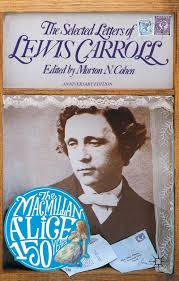
“We played a lot of gigs with twee kind of very indie pop type C86 bands, so we never expected to have top-10 records.

The_Cribs_Band“Our peer group were in a very different world to that we ended up occupying, so it’s all pretty surreal really.”

For tickets for Liverpool Docklands’ Sound City three-day event, head to http://www.liverpoolsoundcity.co.uk/

And to keep up to date with The Cribs, head to their website at http://www.thecribs.com/

Posted in Music | Tagged , , , , , , , , , , , , , , | 1 Comment

In from the rain again – doubling up with Inspiral Carpets and The Rainkings

Fiveways Factor: The Rainkings, with Stephen Holt in the middle

Fiveways Factor: The Rainkings, with Stephen Holt in the middle

It’s a busy life for Stephen Holt, his day job in North Manchester supplemented by roles as the singer in two acclaimed bands.

As well as Inspiral Carpets, the outfit he co-formed in 1983 and rejoined in 2011 after a 22-year absence, he’s back with the band he initially them left for, promoting The Rainkings’ new Fiveways EP.

By his own admission, Stephen’s side-project are hardly the most prolific ensemble, releasing just two singles first time around, although the Another Time (1989/94) compilation eventually followed in 2013.

Inspired by the public response to that release though, they decided to write some new songs, and the results are impressive.

Stephen and co-founder/guitarist Dave Swift – another former Inspirals member – rejoined John Rowland (drums, formerly with The Bodines), Cathy Brooks (bass, formerly with Dub Sex) and Chris Hutchison (keyboard/guitar).

Any real momentum was ruled out by Stephen’s commitments with the Inspirals that following year, but The Rainkings returned to the studio this February, and to good effect judging by that resultant EP.

That said, Stephen’s been back rehearsing with Clint Boon, Graham Lambert, Craig Gill and Martyn Walsh lately, ahead of Inspiral Carpets shows at Hebden Bridge Trades Club (Thursday, May 21), Carlisle Old Fire Station (Friday, May 22) and Manchester Academy’s Gigantic all-dayer (Saturday, May 23).

Dr Reliable: JCC patches things up with Inspiral Carpets

Dr Reliable: JCC patches things up with Inspiral Carpets

Those dates follow December’s successful tour promoting an acclaimed self-titled comeback album, which included their most recent single, Let You Down, featuring legendary punk poet John Cooper Clarke.

So – before we get too confused – which band is Stephen’s musical priority at present? Which is his busman’s holiday project – the Inspirals or The Rainkings?

“The Inspirals is my full-time role, but I love playing with both bands and I’m always brought back to The Rainkings.

“I formed both bands with my mates, and Swifty’s been my best mate for years. We grew up together, he used to live around the corner from me and was in the Inspirals with us as well.

“And there’s always something that drags me back and wanting to do more with The Rainkings. It’s the spirit of the underdog too, in some way.

“I don’t think we ever really proved ourselves as a band, live or on record, so I suppose I’m still trying to show people we’re a good band and deserve a bit of credit.”

Time for a potted history again, I reckon, explaining how Stephen – who helps run a drug and alcohol support service these days – quit the Inspirals alongside Dave Swift at a stage where the band had written half of the album, Life.

That album proved to be the Inspirals’ commercial breakthrough, the single This Is How It Feels soon scoring a top-20 hit, the first of 11 making the top-40 over the next five years.

But Stephen had already moved on, having felt the band had been overtaken by outside agents and the bigger music industry, losing sight of their original indie ethos.

Whether that was the case or not remains debatable, but Tom Hingley certainly went on to prove himself in Stephen’s place out front.

While The Rainkings failed to make anything like the same impact, Stephen and Swifty could live with that … at least to an extent.

Yet now they’re back, with the first fruits of the new-look Rainkings certainly impressing this scribe.

Vocal Volley: Stephen Holt at full throttle at 53 Degrees (Photo copyright: Ian Rook,  @ianphotoboy,  www.ianrook.com)

Vocal Volley: Stephen Holt at full throttle at 53 Degrees (Photo copyright: Ian Rook, @ianphotoboy, http://www.ianrook.com)

Back to this weekend first though. So what kind of set can we expect from Inspiral Carpets at Manchester Academy (with the band on at 8.30pm, the set before headliners Echo and the Bunnymen)?

“Gigantic wanted a greatest hits set when they booked us, although we’ll do a few tracks from the new album as well.

“But it’s not a million miles away, and we’re trying to drag out a couple of surprises we’ve not played for a while.”

No guest appearance from John Cooper Clarke lined up on the night?

“I don’t think so. We’d love to have him involved and tried for the tour in December to get him to a couple of dates, but it was just co-ordinating diaries.

“Besides, I think when he’s not busy he likes to become a bit of a recluse.”

I can see that diary co-ordination could be hard work, not least as Johnny Clarke has a bit of a reputation for late arrivals, as hinted at in his wondrous contribution in the guise of Dr Reliable on Let You Down.

“I believe it was more of a kickback against how he used to be, and how he does try to get places really early and is far more reliable than he used to be.

“He’s a great character. I was really pleased with our video with him. The Spitfire video was alright but not really what we were going for, but the vibe on Let You Down was just brilliant, and having John on there made it for us.”

Fag Break: Mark E Smith, whose appearance with Inspiral Carpets on I Want You lives on in the memory

Fag Break: Mark E Smith, whose appearance with Inspiral Carpets on I Want You lives on in the memory

John’s in good company too, following in the footsteps of The Fall legend Mark E. Smith, who appeared with the band’s previous incarnation on their fourth top-20 hit, I Want You, in 1994, even joining them for a memorable Top of the Pops performance.

“Exactly! And as a band we’ve been quite lucky with the links we’ve had. And it’s not tokenistic – they fit totally.”

So, after MES and JCC, who can you go to next?

“That’s a good question. I’ve not even thought of that!”

When I spoke to Stephen about the first Inspirals album in 20 years a few months back, we talked about a Teardrop Explodes and Mighty Lemon Drops feel on certain songs.

Now, moving on to The Rainkings’ Fiveways EP, I’m leaning more towards early REM, Sugar, and a more transatlantic vibe.

“Definitely, yeah. I think you’re right, and people have also mentioned Husker Du.”

Good point. I agree.

“Then there’s the Afghan Wigs, and all those bands have been a massive influence on us. That goes for Swifty, our chief songwriter, too, and I think that comes over on the EP.”

It certainly does, and I’d venture to say there’s not an inch of fat on that five-track extended play.

Swifty clearly has the knack for a great hook, as we’re aware from the off with Low Hit, its Stone Roses-like rousing chorus taking us to a height we barely dip from over the next 17 minutes. It’s perhaps as close to the Inspirals as we get here, with a few Mighty Lemon Drops touches, its guitar drive nicely augmented by a little defining organ, so to speak.

WI61ZUvZGetting Nowhere brings that classic US indie vibe to the fore, with elements of Michael Stipe in the verse and Bob Mould in the chorus, the backing vocals taking it closer to early REM territory on another eminently-catchy song, for all its alternative verve.

Nothing’s Set In Stone has a Stipe-like stirring chorus and provides a further 100 per cent all-guns-blazing feel, its reflective piano finish at least giving us a little breathing space before we’re off again.

Then comes the wondrous In From the Rain, a Sugar-coasted power surge with more delectable hooks, duetting guitars, and Stephen’s flavoursome vocals.

There’s no issue over the band outstaying their welcome either, playing out perfectly with the lean, just the right side of mean By My Side, coming in under the three-minute mark to complete a sub-1,000 second fuel-injected audio display of quality tunesmithery.

Phew. Bring on the LP, I say.  So, Stephen, you and your fellow Rainkings have definitely not mellowed over the years, at least on the strength of Fiveways.

“You’ve got to stick to your roots – none of this picking up an acoustic guitar and trying to go all soft! We stick to what we know best and what we do best.”

That’s true, but listening back – and bear in mind I’ve only really dipped in and out of the earlier Rainkings material – I think you’ve got it together more this time than maybe you did on record in the past.

“I agree, apart from the Get Ready single we did with Ian Broudie, where we were really pleased with the songs. And if Ian’s going to produce something for you, it’s going to be brilliant!

“Working on these newer tracks with Jim (Spencer), that’s certainly the case though. I also think our songwriting has matured as well. We’ve definitely got more of the sound we’ve always been looking for.”

So is this more indicative of where you were heading all those years ago?

“Yeah, and it’s only taken us 20-odd years! We’re getting closer to how we want to sound.”

It’s difficult to decide which track I like best on the EP. It might have been Low Hit at first, but now maybe it’s In From the Rain. Has Stephen got a favourite?

Raining Champions: The Rainkings

Raining Champions: The Rainkings

“It’s changed. As a band we probably first went with Nothing’s Set in Stone, that track really got to all of us. Since then it’s probably veered between that and Low Hit.

“But the more I listen now, when In From the Rain comes on, it shines out in a different way.”

“We recorded it in a weird way, with three songs put down in November 2013, but then – because I was so busy with the Inspirals, everything put on hold before we came back together at the start of this year with Low Hit and Getting Nowhere.

“But after letting them mature and hearing them again over time, I love the sound of the earlier ones too.”

And is it in the contract or just the local psyche to write about rainfall every now and again, being a Manchester band?

Stephen laughs.

“Well, Swifty writes our songs, and he’s quite a serious, straight man, but we were looking at that, and they’re not really the most upbeat titles, are they?

“Maybe we need to get more positive, start being a bit more upbeat!”

Negative Quality: The Wedding Present's Nobody's Twisting Your Arm's cover shot

Negative Quality: The Wedding Present’s Nobody’s Twisting Your Arm’s cover shot

That got me thinking about The Wedding Present’s 1988 release Nobody’s Twisting Your Arm, featuring alongside the title track Nothing Comes Easy, Don’t Laugh and I’m Not Always So Stupid.

So while The Rainkings come close, four out of four negatives just about beats that.

I add to the fact that there’s a similar but different effect with the first Noah and the Whale LP, the chirpiest of tunes met by pretty depressing lyrics.

“I do like that kind of juxtaposition!”

Getting back on course, I’d suggest the strength of the new EP suggests there could be a Rainkings album on its way at some point.

“We’d love to. There are no plans at the moment, but we’d love to do something again later in the year.

“And although we’re not the most productive of bands in output and gigs, we might do a couple of shows later this year.

“We’ve never been able to put across live what we’ve wanted to do either, so maybe that’s the next nut-cracker – to get happy with our live sound too.

“The thing is that Swifty is such a prolific songwriter. He never stops. He’s got hundreds of songs – we could probably do 10 albums of his songs!”

Has Swifty got a side-project as well?

The-Rainkings-Another-Time-2-300x298“No, he just loves writing songs and playing guitar, and although he’s done demos on his own, he’s never released anything.

“He does the majority of the songwriting, while I just chip in now and again with lyrics on a couple of songs.

“But there’s no plan, we just bring in whatever we’ve got to rehearsals, and might go on and record.”

“Was Dave an important influence on the earlier incarnation of the Inspirals?

“He came in just before we recorded Planecrash, so he’s on the first EP, and brought in Causeway on the Trainsurfing EP, So Far on our first Peel Session, and another couple of tracks.”

Is there a day job for Dave as well?

“Yes, he’s an IT man, but since we’ve been old enough we’ve gone to gigs together and had loads of garage bands, with a drum machine and a guitar. We were in a school band as well.”

Were you surprised at the public reaction to the Another Time compilation? Had you thought you were just another forgotten band?

“I still think we’re one of those forgotten bands, although there are loads of us out there. But we’ve definitely still got something to prove to people.

“That’s why we keep coming back to it. And we’ll keep trying, as long as it takes.”

And now seems to be a good time – with lots of old ‘80s and ‘90s indie bands seemingly reforming.

“I was talking about this down at the Vinyl Revival record shop in Manchester, this great record shop in Manchester.

“The Inspirals never really went away, but have made an impact again recently, as have The Rainkings. Then there’s Black Grape, The High, The Milltown Brothers. All these bands coming back – strange times!”

Yet it seems that very few labels are taking bands on today.

Inspiral Shades: The Carpets, 2014 (Photo: Ian Rook)

Inspiral Shades: The Carpets, 2014 (Photo: Ian Rook)

“There’s not, and we were quite lucky with the Inspirals to get picked up by Cherry Red. A lot of bands are either doing their own thing – like The Rainkings – or going down the pledging route. No one’s really signed anymore at a lower level.”

Moving on to your fellow Rainkings, did you know John Rowland in his Bodines days?

“Our first London show was supporting The Bodines, then we played a few around Manchester with them.

“I was a big fan anyway and we worked alongside them and seemed to get on really well.”

I loved the album, Played, a treasured piece of vinyl for me, which I only recently rediscovered on CD.

“It’s brilliant, and tracks like Therese and Heard it All are just great pop songs. Actually, Cherry Red are trying to get them back together at the moment to get a compilation of unreleased tracks together.”

Cathy and Chris were more recent auditions to The Rainkings. Had you known them for a while?

“With Cathy it’s a similar story, having played a lot of gigs with her band, Dub Sex, in those early days.

“They were a little ahead of us, but also on the rise as we were coming through. Graham from the Inspirals and myself were massive fans, going all over watching them. Again, we supported them in London and Manchester.

“As it was, I hadn’t seen Cathy for a while, but then she came to watch the Inspirals when we played Holmfirth for the first time.

Early Days: The Rainkings, way back then

Early Days: The Rainkings, way back then

“I always thought she was a great bass player, and she’s a really nice person to have around. She wasn’t doing anything at the time, so I told her I had another band going if she ever fancied doing something. And we took it from there.

“Meanwhile, Chris was brought in by John, but he’s now moved over to China. He got an opportunity to teach out there, and took that up.

“So we’re now a four-piece, but Wimmy (Paul Williams) – a mate of mine who recorded the last two tracks on the EP – plays keyboards and helps out when we need him. And he’s another good bloke to have around.”

Did you have anything in particular in mind for what you might get out of the experience when you started recording again in late 2013?

“After Another Time, I always wanted to do some new tunes. And when we recorded those first three songs they came out so well I felt we needed to do something again.

“After waiting a year and holding on to those, I felt they were too good not to be heard.

“Rather than chasing people trying to get them released, jumping through hoops and doing it on their terms … well, I’ve seen the mistakes some of the bigger labels can make and decided I can make those mistakes myself!

“With the Inspirals, there’s always been that get-up-and-do-it work ethic – making us think that if no one else is prepared to do it, we’ll do it ourselves. It’s the old punk ethos really.

“So now – as The Rainkings – we’ve decided to have a go ourselves and be in control that way.”

Probably a good thing if you’re right about Swifty – better that than finding a huge cache of undiscovered songs round at his place when he’s in his 90s.

“Totally! He’d just sit there, playing his guitar, riding his scooter, and going to work otherwise. And this stuff should be listened to. Definitely!”

If you missed this blog’s interview with Stephen Holt back in December 2014, focusing on Inspiral Carpets’ comeback, there’s a link here.

For an idea of what a night out watching the current Inspirals line-up entails, try this review from 53 Degrees in Preston.

To find out more about The Rainkings, check out their Facebook and Twitter links.

See what else the Inspiral Carpets are up to in 2015 – including summer dates in Holmfirth and York and in November in Somerset, via their website here

And for ticket details of Manchester Academy’s Gigantic all-dayer (1.30-11.30pm, Saturday, May 23, £29 in advance) call 0161 832 1111 or head here.

Posted in Music | Tagged , , , , , , , , , , , , | 1 Comment

Looking Glass Girl by Cathy Cassidy – a writewyattuk review

aliceIn the year Lewis Carroll’s Alice’s Adventures in Wonderland turns 150, we can expect a number of events set around that influential work and all it led to.

Alice is a little too Marmite for some tastes, and I totally understand if a certain film or stage adaptation or past edition of the book itself put you off for life.

But there’s no denying the impact Charles Lutwidge Dodgson’s ground-breaking 1865 children’s story made, inspiring generations of children and adults, including several authors.

You can add recent writewyattuk interviewee Cathy Cassidy to all three categories, the best-selling children’s writer revisiting Carroll’s tales again and again over the years.

So when she was asked by the team at Puffin to write her own Alice-themed children’s book to help mark that big anniversary, she jumped at the chance …. or down the rabbit hole perhaps.

Despite that leap, in some respects Cathy is on solid ground with Looking Glass Girl, tackling some of the staples of her past success – issues like fitting in, bullying and peer pressure, friendship and first-love. There’s even the odd foray into cake and chocolate. All part of CC’s winning recipe for young fiction.

But here she gets to do all that in a slightly darker setting, immersing herself into that labyrinth of wrong turns Carroll carved out all those years before. Yet despite the potential pitfalls, she manages to come through the other side of the mirror (okay, that’s enough throwaway Alice imagery now).      

This is no clumsy retelling, Cathy instead crafting the story of modern-day Alice Beech as she tries to make her way through the maze of adolescence, in a book chock-full of Wonderland imagery.

Cathy’s Alice is trying to come to terms with a change in the friends she got on so well with before high school, but who then dropped her like a stone to join the popular set.

Alice Spin: Cathy Cassidy has created her own twist on Carroll's classic (Photo: Louise Llewelyn)

Alice Spin: Cathy Cassidy has created her own twist on Carroll’s classic (Photo: Louise Llewelyn)

She’s also learning to stand on her own feet – waking up to her true self rather than just blindly fitting in, despite that reluctance to stand out from the crowd, something the majority of young readers can relate to.

Ms Beech’s love of drama has helped, a passion that led to her landing the key part of her namesake in her previous school’s Wonderland stage production.

That premise shouldn’t put off those who feel Alice isn’t for them though. And similarly it shouldn’t put off those who love the book and feel this might be a watered-down or unfaithful take on it all. Because it isn’t.

As we join the tale, our protagonist is unconscious and on her way to hospital after falling down stairs in suspect circumstances during an Alice-themed sleepover at ‘queen of the school’ Savannah’s house.

What follows is something of a reconstruction of what happened that night, piecing together Alice’s memory through flashbacks and Wonderland-related dream sequences as she battles back amid bedside vigils from family, friends and possible foes.

There’s no cheap moralising, and even the less-palatable characters are believable. And while the coma gives the story a darker edge, it’s no more sinister than the original text.

It appears effortless for all the carefully-constructed content, Cathy subtly inter-weaving various characters from the original text into her narrative, suggesting similarities between them and her own creations.

In the way the original stories are surreal and somewhat unsettling, there are elements of that too, not least the part-nightmare, part-fantasy world of Alice’s dreamlike state.

Drink Me: A compelling book deserves an inviting cuppa (Photo: Cathrine Linden Sea)

Drink Me: A compelling book deserves an inviting cuppa (Photo: Cathrine Linden Sea)

As Alice looks to understand her classmates’ motives, there’s that sense of danger too, her fellow teens pushing the boundaries, not least through their modern twist on the original ‘drink me’ sequence and their secretive invite for a group of boys to this girls-only party.

Alice’s blossoming relationship with Luke is also key, the lad who played the Mad Hatter in that school play still holding a candle for her, to the dismay of one of those old friends.

And throughout the coma sequences we get echoes of Carroll’s tales, Alice – so au fait with the story – meeting the White Rabbit, the Duchess, the Lory, Tweedledum, Tweedledee, and many others who seem to hold the key to her memory.

All play a part in that potential unlocking, the White Queen’s conundrum of living backwards or forwards just one dilemma translated to Alice’s amnesia and a determination to unravel this mystery.

Meanwhile, the confusion brought on by her cerebral bleed fits perfectly with the Queen of Hearts’ ‘off with her head’ command, Alice feverishly trying to comprehend exactly what happened to her and somehow get safely home.

In the same way that you can read Alice’s Adventures in Wonderland and Through the Looking-Glass and What Alice Found There from a child’s perspective and an older reader’s point of view, you can do that here too.

Of course, I won’t need to win over Cathy Cassidy fans. They’ve read enough to happily snap up anything with her name on it. All the same, Looking Glass Girl is a winning departure for her, and it’s worth noting the author’s respect for the original texts, doing Carroll’s rich legacy justice.
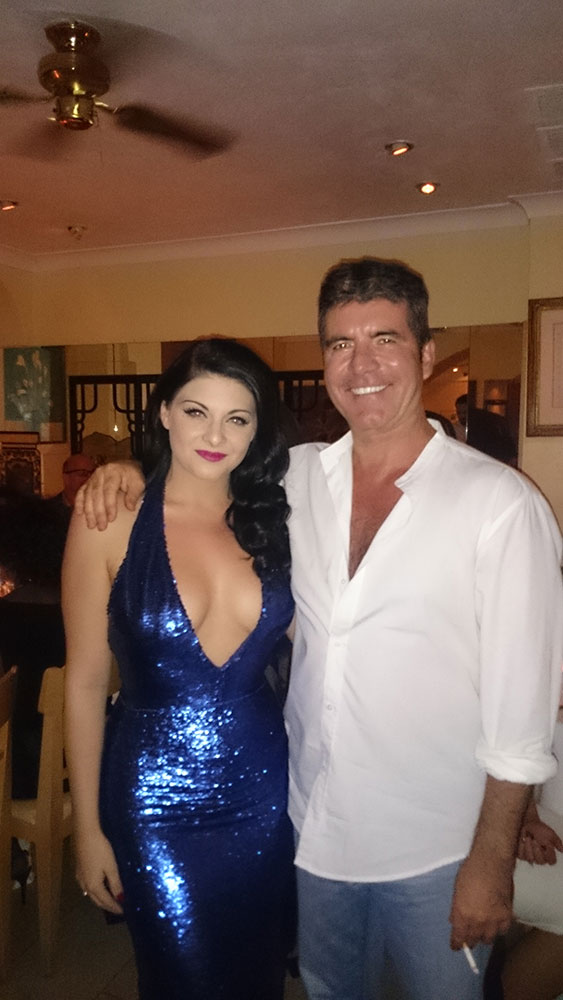
cathy-shot-for-chinaLooking Glass Girl by Cathy Cassidy (Puffin) is available in hardback, paperback and e-book and audio formats from all good independent booksellers, online, and through various other sources, not least your local library.

For a recent in-depth interview with Cathy Cassidy on this blog, head here. And for more about the author, her past work and forthcoming book events and visits, try her website.Alice 150 Logo

Meanwhile, check back on this blog shortly for a special feature marking the 150th anniversary of the original Macmillan publication of Lewis Carroll’s Alice’s Adventures in Wonderland.  

Posted in Books Films, TV & Radio | Tagged , , , , , , , , , | 6 Comments

Taking the Long Road home – the Milltown Brothers interview

Back Again: Milltown Brothers in Spain during the recording of the new album, Long Road, with Barney missing, presumed brewing up

Back Again: Milltown Brothers in Spain during the recording of the new album, Long Road, with Barney missing, presumed brewing up

Matt Nelson is on his way home from work to Burnley, having moved back to the North-West around a dozen years ago.

Milltown Brothers’ chief singer-songwriter is a family man these days, a dad-of-three who runs a visual effects film production company based at Media City, Salford.

But now and again he’s asked about his indie pop past, and it’s then that he reminds people his band have never really been too far away.

In fact, the original five-piece – Matt, older brother Simon Nelson (guitar), James Fraser (bass), Barney Williams (organ/piano) and Nian Brindle (drums) – are set to release a new album, Long Road.

And after a couple of listens, I can already report that here’s a band who still have plenty to offer, the resultant 11-track opus showing Matt’s songwriting in a whole new positive light.

A review of Long Road will follow on here soon, but first, let’s recap on what’s gone before and the band’s on and off stage past and present.

After the band’s initial flirting with success, a spell in film production – including time at Granada Studios – led to Matt setting up his own studio concern, Space Digital, now supplying various VFX graphics, animation and international film production services, including work on Dr Who.

Was that parallel career always in the background while he was enjoying chart success in the early ‘90s?

“I actually fell into it. A fan of the band was working in film production in London and I was at a loose end when the band finished, working on these strange TV commercials.”

Did his promo video work with the Milltown Brothers, not least on sole top-40 hit Which Way Should I Jump? and near-misses Here I Stand and Apple Green, pave the way for all that?

“Yeah, we did quite a few, and it’s worked out pretty well, one thing leading to another.”

Hit Vinyl: Milltown Brothers' 1991 debut LP, Slinky

Hit Vinyl: Milltown Brothers’ 1991 debut LP, Slinky

I should interject and suggest the Milltown Brothers deserved more from the single-buying public than five top-60 singles and one top-30 album, Slinky.

Maybe their second platter, Valve, didn’t quite match the first, and the scene seemed to have moved on and away.

But it could have been so different. And it appears that 1991’s Here I Stand – later the theme tune for BBC comedy drama Preston Front, set in fictional Lancashire town Roker Bridge – might have fared better but for some rum goings-on in the music industry at the time.

“That was another kick for us. Here I Stand was No.22 in the charts in mid-week and expected to go top-10, but somebody at A&M was putting dodgy sales through and we lost our position.

“If that had gone top-10 it could have been a different picture.”

Matt has 13 and 10-year-old sons and a four-year-old daughter these days, and says a lot of his recent songwriting is inspired by his family, as you’ll learn when Long Road sees the light of day.

Hopefully, that new album should see them properly recognised again soon. But even if commercial success doesn’t follow, I get the impression it won’t deter Matt and the rest of the band.

“We hadn’t done anything on the writing front for quite a while, and I wasn’t really missing it, I must admit.

“Then I started writing at home over a period of around two years, eventually playing those songs to a couple of band members.

“So far it’s been a nice experience, with no big decisions to make and no real pressure. And there’s no pretence anymore.

“We’re not young budding guys out to forge a career. It’s not about that. It’s about being together doing songs we really enjoy playing.

“We went to Spain to record a lot of the songs, with James living out there at the time, and a week away with your friends is not so bad. It’s taken about a year so far, and we’re enjoying it.”

It’s good to see they haven’t been forgotten in indie circles, and on Saturday, May 23, the band play the Gigantic all-dayer at Manchester Academy, starting the show on the Academy 2 stage with a greatest hits set, at an event involving many feted independent bands, with Echo and the Bunnymen headlining.

“The Bunnymen are one of my favourite bands. To be playing on the same bill as them is great.”

New Album: Milltown Brothers, 2015 style

New Album: Milltown Brothers, 2015 style

And will there be a few dates ahead to promote the new album this summer and beyond?

“We’d like to at least play around four or five dates and see how it goes, with help from a little promotion by Nian, who was previously involved with promoting The Heartbreaks.

“The record’s set to come out on Ditto Music, online, and we’ll see if there’s interest, with a view to do some more gigs.”

Going back to breakthrough 1991 album Slinky, Matt wrote most of the songs with his brother. Is that not still the case?

“Uniquely on this one, I’ve written them all, and it was quite a cathartic experience. There are always little nuances within the band about how things have been done in the past.

“James has also been very influential in all this, and he felt I should write the songs. But everyone’s played the parts they want to play, and I think my songs are stronger lyrically than in the past.

“We also wanted an album you could properly listen to. In the past we went bigger on the live shows. It was about filling that sound and looking to make it more exciting.

“Everything was more full-on in many ways. This time we want something a little more mellow, a little more acoustic, less over-driven by guitars.”

Don’t get the wrong impression from that, mind. My early listens to Long Road confirm this is no mere acoustic vehicle, with an array of styles on there, not least a West Coast and almost indie country feel, perhaps taking on their earlier nod to The Byrds.

And it appears that the band have already been giving their local fan-base a glimpse of the Milltown Brothers 2015-style.

“We did a gig a couple of weeks ago at Burnley Football Club, and enjoyed that. It was surprising how good the club was to us.

“But then I’ve got quite a bit of history there, including interviews with Granada Reports and the NME out on the pitch and so on. But it’s nice they remember that.”

Glossing right over the fact that his beloved Clarets are on their way back to the Championship, I see that Matt recently appealed via social media for video footage from that appearance at Turf Moor to go along with the camera angles covered by the band’s long-time associate Andy Devanney. Did they get a good response?

“We have, quite a lot, and we’re working on that with Stephen Rigg, a friend of ours and a local film-maker, cutting it all together.”

The Beginning: Milltown Brothers' first EP from 1989, with its LS Lowry cover.

The Beginning: Milltown Brothers’ first EP from 1989, with its LS Lowry cover.

Let’s go a bit further back now, and recall the Milltown Brothers’ rise, which seemed to start with their Coming from the Mill EP in 1989.

Well, not quite. Matt reminded me of the build-up to their NME single of the week accolade.

“It was our sixth gig, playing the Bull and Gate, by the Town and Country Club in North London.

“We were first on, at around six, with nobody in then apart from three other people and Steve Lamacq, who came up and asked if we had a tape.

“He then wrote a really great review – the luck you just don’t get. Within a couple of months we had a publishing deal then went to Strawberry Studios for our Coming From The Mill EP.

“We put out two or three independent singles, and Which Way Should I Jump? opened the door to major offers and it went on from there really.”

I’m guessing you hadn’t been playing long at that point.

“It was all very quick. Our first gig was at Manchester University’s halls of residence, with us at Manchester Poly at the time.

“Then we started playing The Boardwalk and those various little gigs in London.”

But not back on your own patch in East Lancashire?

“No, there were no real venues, other than The Mechanics in Burnley, and we didn’t play there in the early days.

“I think that was quite good for us in many ways though. It’s hard to get noticed just playing on a local scene. Like it or not, there are more chances in the big cities.”

And this time around, how far can you take it all?

“The big goal would be to try and get invited to play a couple of big festivals, but it’s a great thing to be asked to do the Gigantic show too.”

Past Days: Matt and co back in the early '90s

Past Days: Matt and co back in the early ’90s

I can see that, and there’s a real festival feel to a couple of the new songs, one which would fit nicely into a greatest hits set out there in the open air.

But I’m getting ahead of myself. Instead, let’s get back to the Manchester Academy, a venue that has played large in the life of the band.

“We played some great gigs there. I remember Oasis supporting us at the Academy 2. We also supported The La’s there, and loved that.”

Funny you should say that, as I was listening back to Slinky this week for the first time in ages, and it struck how much of a La’s vibe there was on a few of those songs, not least Here I Stand.

“We were a little in awe of The La’s, I have to say. It was great to be able to play with them. I don’t think we were trying to be like them though.

“We were well into The Byrds, REM and all that kind of American indie scene, and all that kind of poppy, jingly-jangly guitar.

“I liked that whole late-80s indie scene, and we toured quite a bit around that Manchester scene then Dingwall’s and that kind of place in London. That was all kind of new and exciting to us at the time.”

Was there a particular band you saw that made you sit up and take notice, thinking, ‘I can do this’?

“When I was growing up, I was very into The Waterboys, then it was REM, then The House of Love.”

For those who know the band’s native Lancashire, I’ll remind us that Matt and Simon hail from Colne, with Barney from nearby Padiham, while Nian and James are from the north of the county in Lancaster, having met the Nelson boys at Lancaster Grammar School.

Head Spin: The first time around

Head Spin: The first time around

I didn’t get the feeling there was a grammar school and poly background to the band first time around though. The common perception was more of a cool spin on a more industrial setting.

So, did he ever regret that band name? Only it proved a good excuse for lazy journalists, revelling in Northern clichés, referring to clogs and cloth caps, dark satanic mills and whippets.

“In hindsight, we were a bit naïve, but we’d barely turned 18 and 19 and just didn’t know what we were entering into really.

“A name we thought was quite clever at that age wasn’t really by the time we’d reached 21. It probably wasn’t the coolest decision.”

It did, however, help give them an identity though, and as I mentioned earlier, all the original band members remain, albeit with a few breaks between albums.

There’s a bit of symmetry there, incidentally, with the first two albums followed after an 11-year gap by 2004’s Rubberband, and a similar-sized delay following before the forthcoming fourth album.

I must admit I knew Slinky far better than anything else until this new album. that debut LP getting a fair few plays in my den back in the early ’90s, all part of a rich diet of jangly guitar bands and that earlier wave of post-Postcard bands.

From The Blue Aeroplanes to The Bodines and later to Bob, from The Chesterfields to The June Brides. Happy days.

And where did the Milltown Brothers fit in? Listening back to Roses, the lead track on the first Milltown Brothers EP, it was on the more commercial side I’d say.

What’s more, by the time of the A&M deal, the band seemed a little more stylised, with a bit more of that Inspiral Carpets, Stone Roses, Charlatans and whole ‘Madchester’ sound.

“I think that’s fair. We could have gone very folky or could have gone a bit more jingly-jangly. At the time everything was dominated by that whole Manchester scene.

“We had to play the game really. It wasn’t a million miles from what we were doing anyway. It’s not like we introduced things because of all that. We had Barney playing organ since the start.

“But yeah, we styled our haircuts and wore baggy trousers. Actually, my kids can barely watch the videos now.”

Box Set: Which Way Should I Jump, the 1991 UK limited edition package (Pic: http://eil.com/)

Box Set: Which Way Should I Jump, the 1991 UK limited edition package (Pic: http://eil.com/)

I must admit, that ‘pony tail and flares’ line from Here I Stand jumps out at me now. A great song though. Did you feel a proper part of any scene?

“I don’t think we did. We didn’t really know the in-people in Manchester. We weren’t privy to that circle, if there even was one.

“Burnley seemed a long way from Manchester when we talked about any scene.

“We probably felt closer to The La’s and the Liverpool scene, more about songwriting than just being a cool thing.”

Ever have moments when you looked at bands and thought, ‘We were better than them’, even if those bands got better over the years.

“Well, Blur and us were neck and neck for six months or so. I remember an NME front-cover story saying, ‘this band are clever’, suggesting we weren’t.

“They’d ridden it out, that Manchester scene replaced by the American grunge scene and a period when all that music was seen as dead, before the Brit Pop thing.

“By then we’d had enough after a few knocks and kicks. It was all getting a bit messy and it was time to bow out.

“I think if you can outstay all that you’ve got something extra about you, something which possibly we didn’t have.”

Was part of that down to a lack of support from A&M?

“That didn’t help. We had a really good offer from Atlantic Records, who had been chasing us for a while, and were talking about seven years and building us up.

“But we were pushed into a deal by our management to sign for A&M, who were a lot more about ‘now’.

“There are no guarantees, but after that first album we went to America and that didn’t go quite as well as they’d hoped. After that we never really had quite the same backing.”

Second Platter: Milltown Brother's follow-up album, Valve

Second Platter: Milltown Brother’s follow-up album, Valve

Does it rile you that people (like me) don’t tend to talk so much about the later albums, and may only have known about Slinky?

“At the time we thought we should have got a few more breaks, and it was all over very quickly after four years to get there.

“It was a great journey, but we could have done with at least another year of enjoying the good times.

“It was good for us to get out when we did though. It allowed us to get on and do other things. Sometimes it’s all a little one-dimensional. There’s a bit more to life than all that.

“Listening back to (second album) Valve, I don’t think we were very good at that point. We were standing up for what we thought was good, but the production was really odd on it.”

So was Barney, whose departure from the band at that point proved to be the catalyst for you splitting, ahead of you on thinking that?

“Well, we decided to continue, but we all knew it was kind of dying. Then we got dropped, then Nian got a job.

“When it’s going well, it’s great, but if you find yourself in your mid-20s on your own in London and everyone else is getting on with their lives, it can be a bit scary.”

It doesn’t seem fair for me to thrown in my sixpen’orth in some respects. I can’t say I even recall much about Valve other than the singles, Turn Off and It’s All Over Now Baby Blue, their Bob Dylan cover given a little Byrds treatment.

My life had moved on by then, and it’s somewhat ironic that when I left the London and South-East gig scene to resettle in the North-West, I moved further away from ownership of the Milltown Brothers.

Consequently, family commitments of my own meant Rubberband totally passed me by too. But on the strength of Long Road, I’ll definitely put that right now.

So is that why there’s the big gap between the albums – did you all have your own lives to live again after that?

“I think that’s it, although we all kept in touch.”

And was there ever any money in being in the band?

Last Time: The five-piece's previous offering, Rubberband

Last Time: The five-piece’s previous offering, Rubberband

“Erm … no, not really. We got a £100,000 advance from A&M when we signed, but 20% of that goes to management, then there were five of us drawing a wage off for two years.

“The royalties were never great. You certainly didn’t come away with anything.

“But it all gives you a lot of life experiences and it gets a lot out of your system at an early age.”

Tickets for Manchester Academy’s Gigantic all-dayer (1.30pm-11.30pm) are £29 in advance from the Oxford Road venue’s box office on 0161 832 1111 or via http://www.manchesteracademy.net.

For details of the new Milltown Brothers LP and their forthcoming dates, head to their facebook page, https://www.facebook.com/MilltownBrothers

Posted in Books Films, TV & Radio, Music | Tagged , , , , , , , , , , , , , | 5 Comments