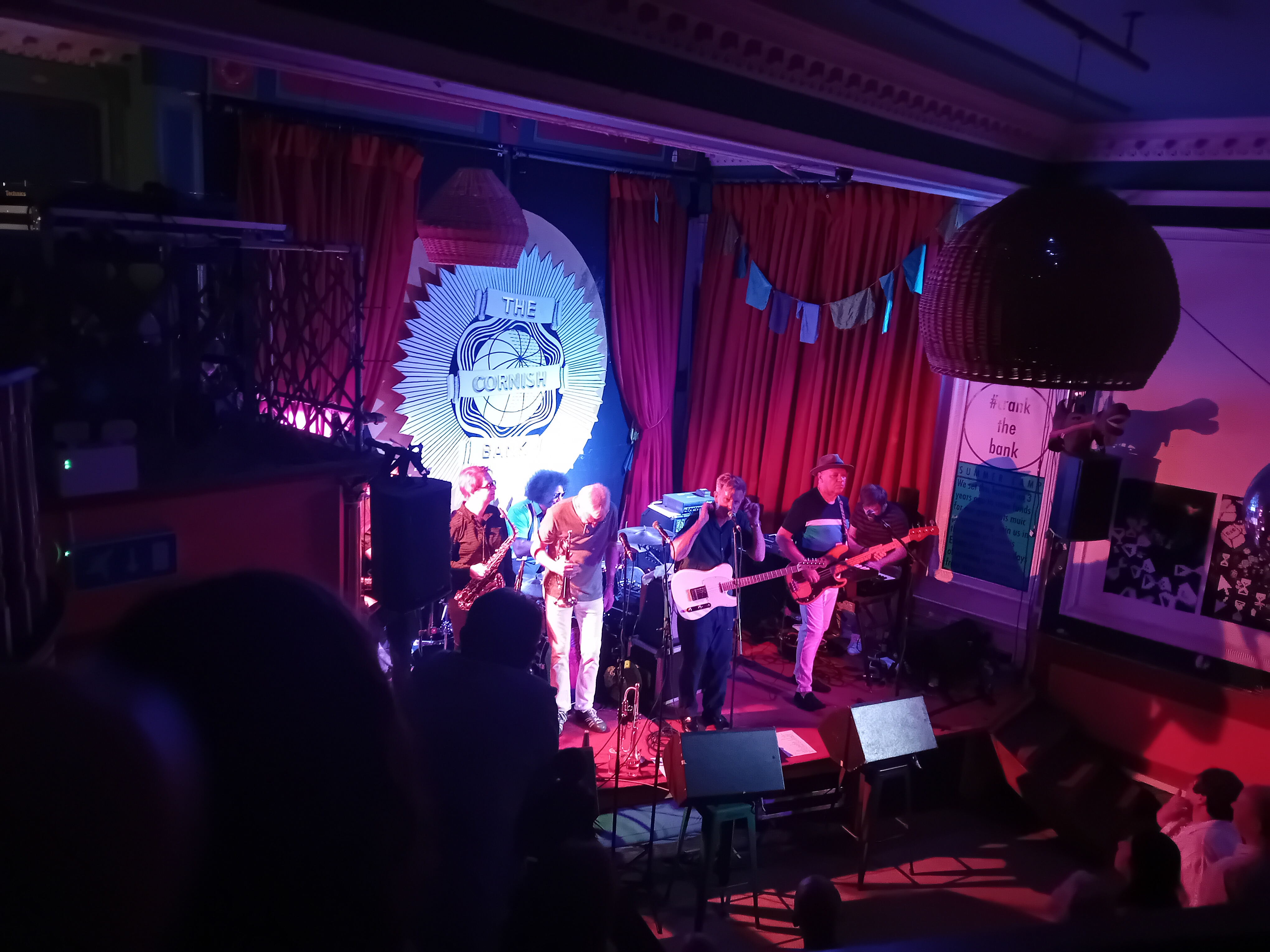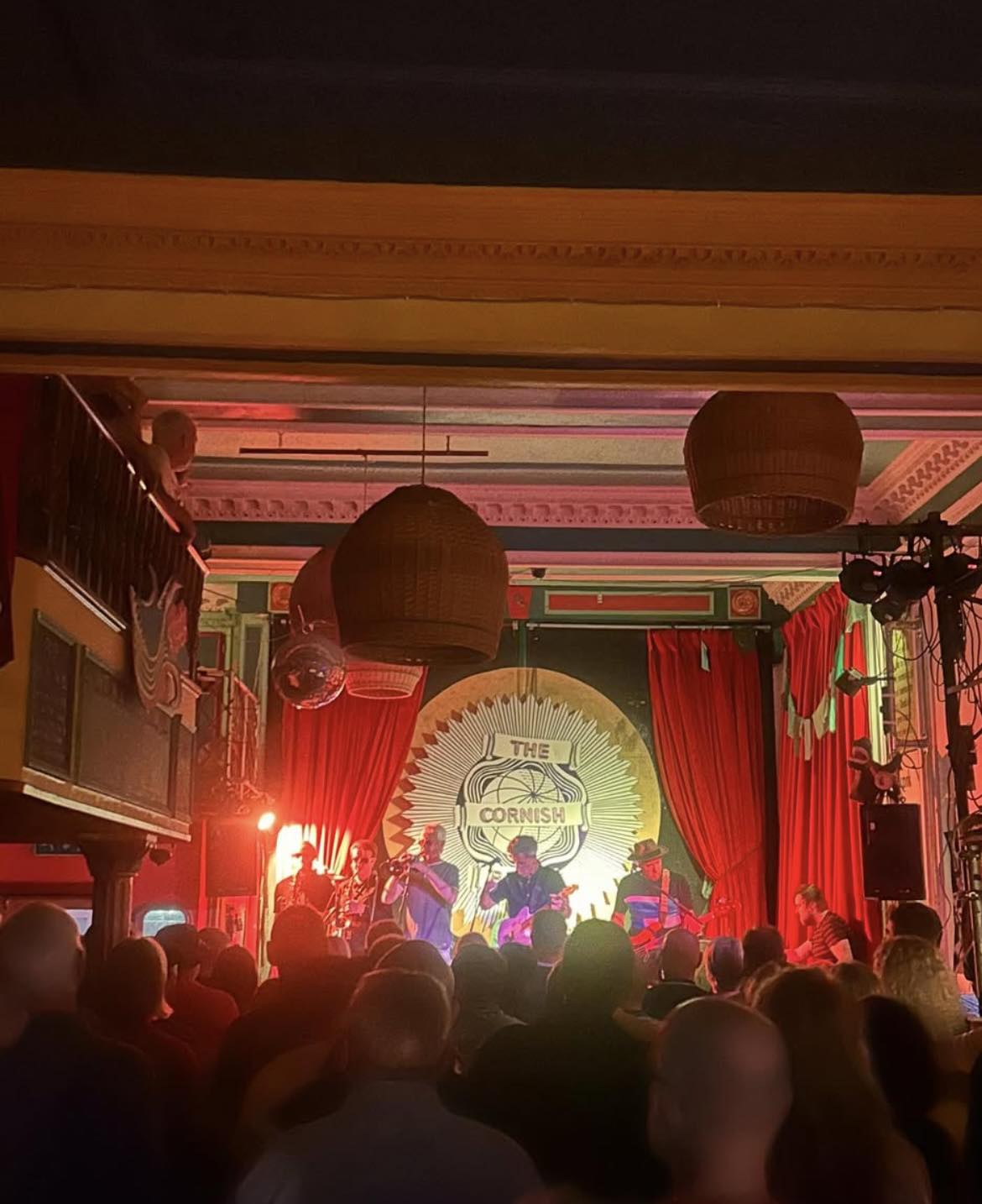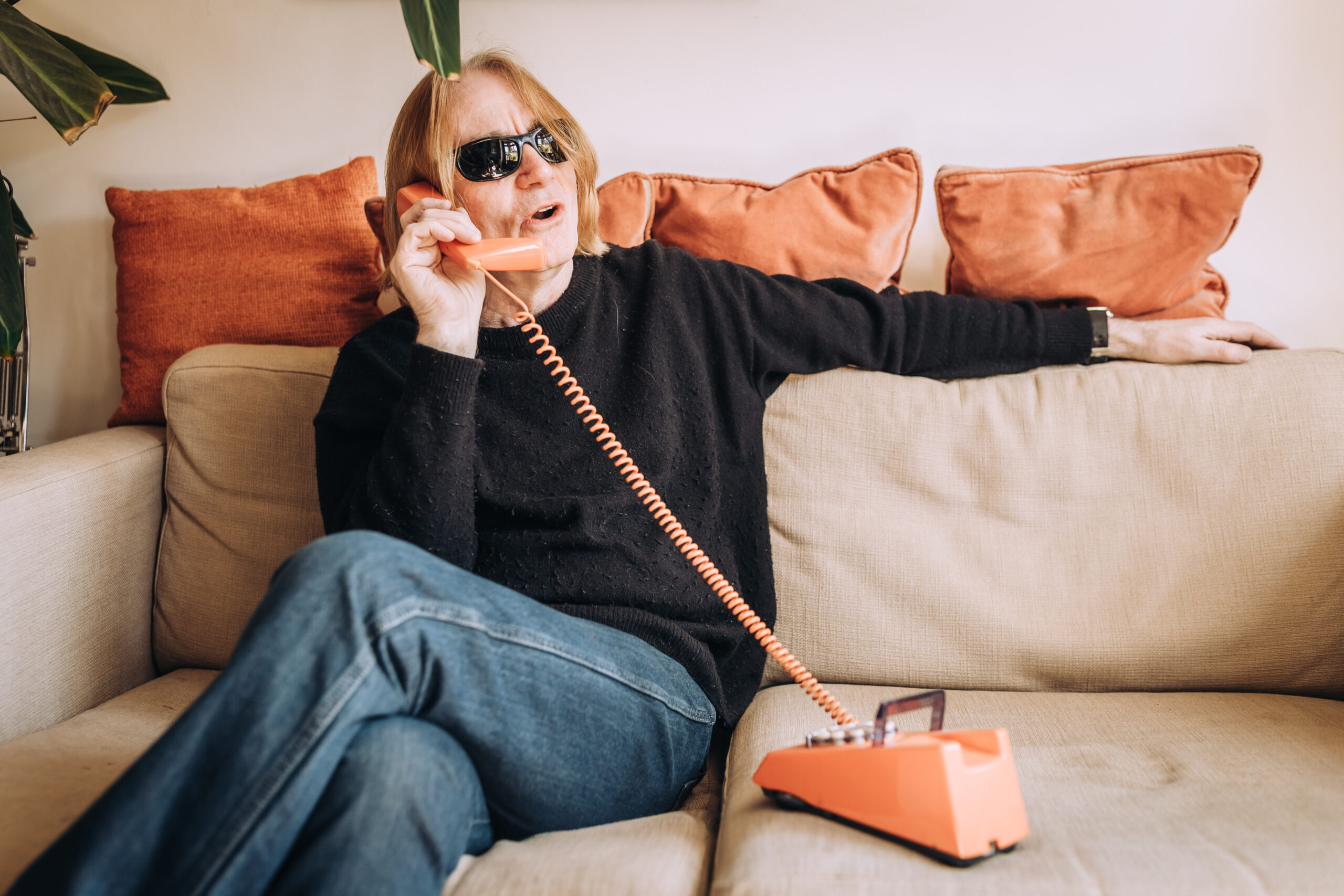
In which author/writer Malcolm Wyatt jealously guards his own corner of web hyperspace, regular feature-interviews, reviews and rants involving big names from across the world of music, comedy, literature, film, TV, the arts, and sport.
Career opportunities, the ones that eventually knock…
I’m bringing you a 1-2-3-4 with a difference today, my way of marking Billy Bragg’s 68th birthday with a few personal milestones featuring the man himself these past 40-plus years, in what I feel constitutes a neat finale for WriteWyattUK’s 2025 output. Because dreams really can come true, pop kids.
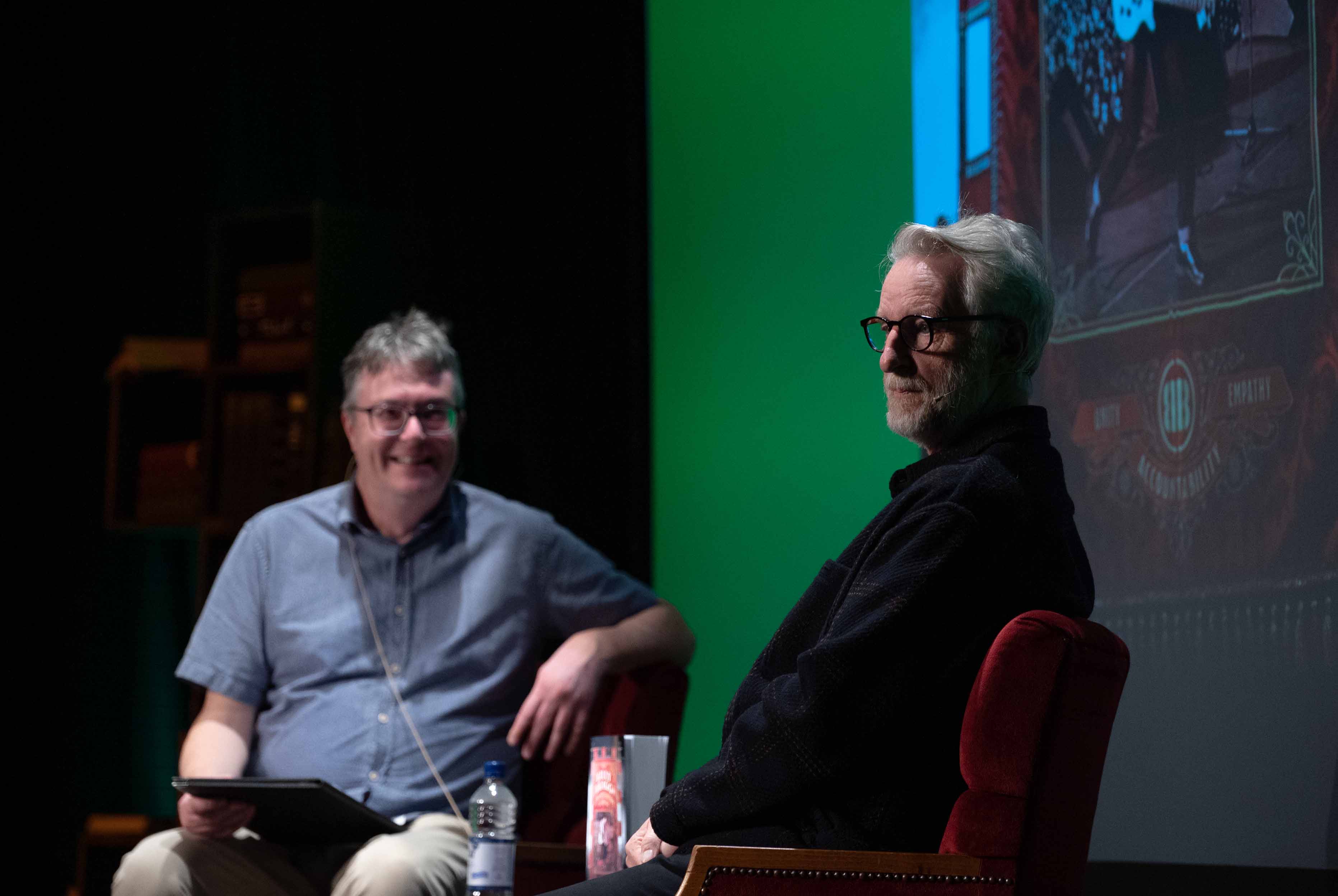
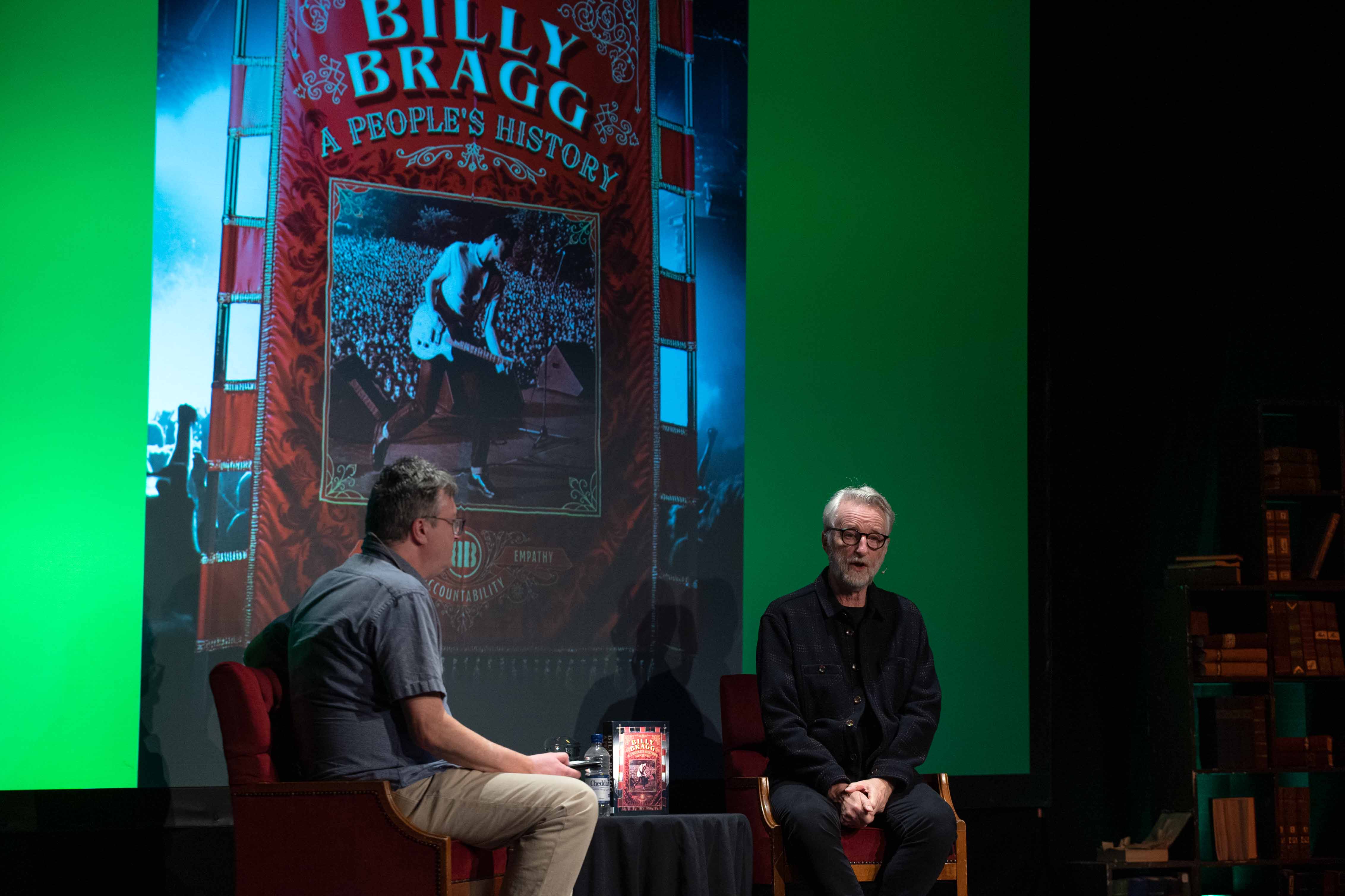
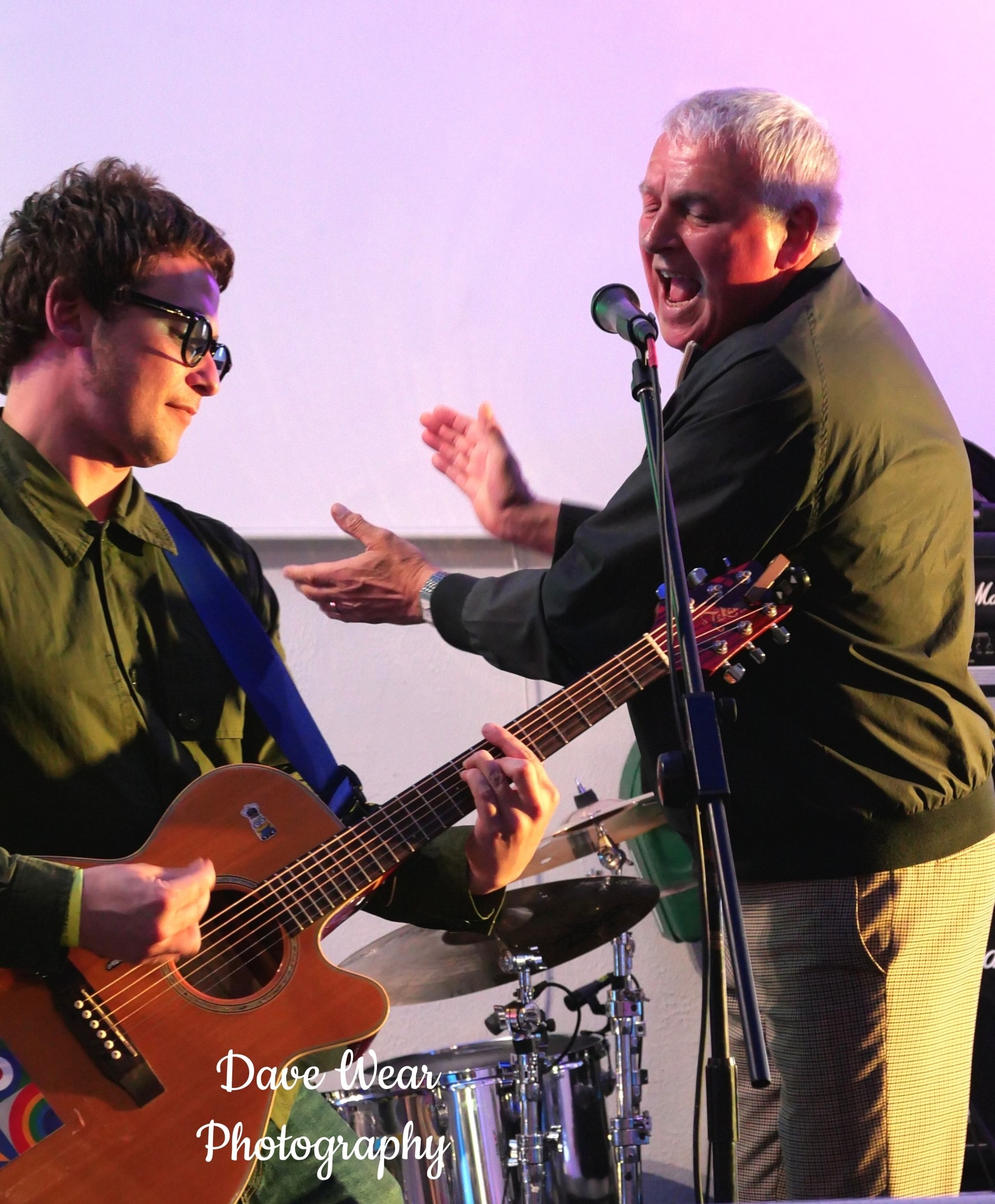
Pulling Shapes: Malcolm and Billy get into ill-advised dance-off territory (Photo: Yeovil Literary Festival)
Take one… HMV, Swan Lane, Guildford, Surrey, 19 March 1985
A landmark year was shaping up. Over those last three weeks I’d caught the mighty Ramones at the Lyceum up in town, feeling self-consciously overdressed without ripped jeans and leather, then three nights later I was back on home ground for The Smiths’ Meat is Murder LP tour at Guildford Civic Hall. And then there was Billy Bragg at my hometown venue.
Getting on for two years after he dropped a mushroom biryani off at Broadcasting House with a copy of Life’s a Riot With Spy Vs Spy for a grateful Peelie, I’d become a fan, this 17-year-old devouring his quotes in NME interviews, lapping up his three Peel sessions to date, and enamoured by his debut mini-LP and Brewing Up With. As it was, ‘Between The Wars’ never really chimed for me, though I loved the sentiments. I see it more now as his ‘Blowin’ In The Wind’. Either way, he had his first hit, and on the day of his Civic Hall performance I nipped down out from my sixth-form college to HMV in Swan Lane to see the Big-nosed Bard of Barking in person.
That was my first proper face-to-face meeting with a music hero, and like a few occasions since I had time to over-think what I was going to say. Reaching the counter, I smiled and asked, in what I perceived to be a Peel-esque manner, ‘So, wat’s it like to have a chart-bound sound, Billy?’ He hesitated then gave a rather earnest response, and all I could do was nod and smile. I knew full well that hitting the charts wouldn’t change him. He was far better than that. Yet there he was, pensively pointing out how fickle fame was, suggesting it was likely to blow over soon. And there was me, tongue-tied, wanting to say, ‘I know, I was being ironic,’ but fearing I might sound snotty. I thought of a hundred and one witty things to say as I left, Billy already shaking hands and signing for the next punters.
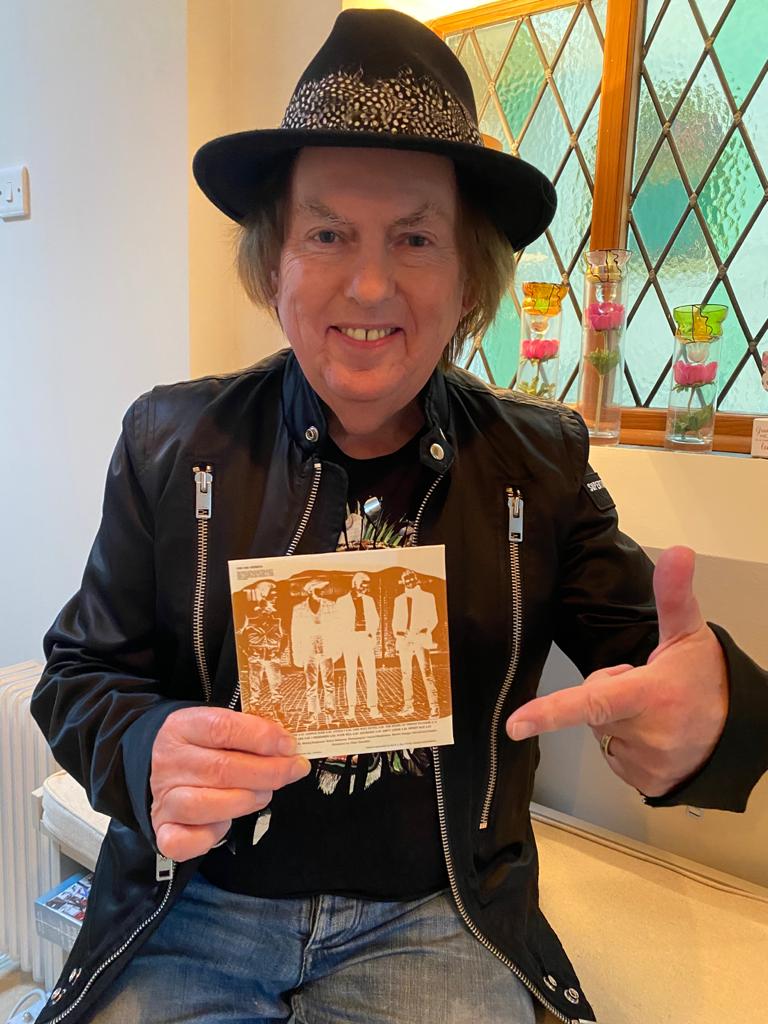
And why I decided to later swap my vinyl copies of those first two signed records for a signed version of Back To Basics, I really don’t know. That’s space-saving gone mad.
That night was part of the Labour Party Jobs and Industry tour, a precursor to the Red Wedge happenings later that year. And I was all for that, Thatcher having increased her majority two summers before, this teen desperate to help turn that tide when I got the vote… albeit in a constituency the Tories had held since 1910 and would retain until a brief Lib Dem return in 2001. But I was part of Guildford’s Labour Party Young Socialists, among some two dozen members (as the wonderful Serious Drinking put it, The Revolution Starts at Closing Time), my good mates Alex (his dad our prospective parliamentary candidate) and Rick (his mum among the camping at the gates Greenham Common protestors, if I remember correctly) handing out info on the merch desk that night.
Pensive Moment: Billy Bragg give sit some thought at the Westlands (Photo: Yeovil Literary Festival)
Knowing I was a fan, Alex was shocked when he heard the man himself, pre-show, say he was awaiting Wiggy’s arrival. That was my nickname (some mates still only know me as Wiggy), him thinking I’d played down my friendship… not knowing Bill’s right-hand roadie was all known by that handle. Well, we all crouch on the shoulders of giants, eh?
My other abiding memory that night involved ‘A New England’, our man tongue-in-cheek ribbing those he said were about to launch into the extra verse written for Kirsty MacColl, not long out of the chart with her wondrous version.
Take two…. Glastonbury Festival, Pilton, Somerset, 20 June 1987
Creatively, I felt Billy’s peak was still to come. I remained fully subscribed to his political outlook, but it was the less slogan-heavy material I loved, not least the bitter-sweet relationship songs. I loved the artwork and ‘pay no more than’ notes on all those records, and I could quote Bragg (like Weller) off the top of my head on many a social occasion. Tell-tale lines about bottles of pop being opened too early in a journey from this victim of geography. A true wordsmith, as proved on Talking To The Taxman About Poetry and Workers Playtime (I was 21 years when I heard those songs, I’m 58 now, but I haven’t been for long).
And between those releases I caught him at Glastonbury ’87, the last of many great performances that Saturday that stay with me, from opening teen act Rodney Allen (for me on first hearing surely Bill’s little brother) and fellow West County boys The Blue Aeroplanes onwards, via That Petrol Emotion, The Wedding Present, and The Woodentops, all bands I loved.
At that point, my tentmates – fellow gig and footie regular Steve, down from Cobham then, I think), and a ginger-haired fella from the other side of Guildford called Mark, who I’ve not so much as bumped into since) headed off to see fellow faves Real Sounds of Africa (I’d finally catch them in mid-September, putting on an impressive performance at The Maltings, just up the road from me in Farnham) while I made my way to the Pyramid for headliner Elvis Costello, planning to re-meet later for Misty in Roots’ Other Stage finale. A great night was had by all, a night in which our Dec’s highlights included his cover of ‘Knowing Me, Knowing You’, me realising for the first time what a great record that was. I wanted to see Misty in Roots too, my mate and fellow attendee Steve a big fan of their Live at the Counter Eurovision ’79 LP, but it wasn’t to be. Rather naively, I’d not expected such a massive audience, us failing to find each other among the darkness and pervading fug of special ciggies.
Similarly, our Plan B – catching Billy’s late-night marquee show, was flawed, word of his supposed ‘secret gig’ clearly getting out. I enjoyed his set though (don’t ask me what he played, I can’t recall, and others seem to have different ideas of what songs were included, unless of course – highly likely – he played more than one set that weekend), then wandered around aimlessly until around two in the morning, increasingly lost.
When I eventually found the right field, I couldn’t place the tent (in hindsight like many others), finally joining a campfire get-together, taking on the persona of the mysterious fella of no name and very few words (more knackered than stoned, probably), leaving it until it was light before trying again, eventually unzipping and crawling back in after 5am.
Another festival sighting followed two years later, in late August ’89, catching Billy at Reading Festival, Peelie compering and the Essex troubadour among the highlights, a proper soaking made up for on a day bookended by The Men They Couldn’t Hang and The Pogues.
Take three… The Fleadh, Finsbury Park, North London, 10 June 2000
Billy was rarely off my music centre in the final decade of the old century, popping up here and there, from a guest appearance with Norman Cook’s Beats International in early 1990 onwards. Somewhat aptly, I was travelling the world when The Internationale surfaced, but a love for his output never faded, my decision to carry a Union flag patch on my backpack as much down to him as The Jam, The Kinks and every other innately British act I loved. Billy’s outlook was largely mine, one of the golden generations for whom a proper Welfare State saw me at least able to part-compete. Why let our flag be hijacked by the right wing? This was my country, and I was quick to sing its praises – for all its flaws – in foreign climes, arguing against the perception of us portrayed by Thatcher and co. Who’d have thunk that flying the flag would remain an issue a quarter of a century on.
Soon came Don’t Try This At Home and that Marr-velous link-up with a Boy Called Johnny, as also heard on under-the-radar numbers like ‘Walk Away Renee (Version)’. And few singles in 1991 came anywhere close to the might of ‘Sexuality’. Having moved in with my better half in late ’93, swapping Surrey for Lancashire, William Bloke and the following outtakes LP received plenty of plays on my system. And my own growing appreciation of Americana was at least in part down to Bill’s own journey and the Mermaid Avenue albums with Wilco.
Point Made: Billy stresses that he won’t be singing tonight… maybe (Photo: Yeovil Literary Festival)
By the release of part two, I was a father, with proper responsibilities, my gig count much reduced, but I caught him on fine form at the Fleadh in Finsbury Park, North London, in June 2000, there primarily to catch the returned Undertones but also loving the sets by Bill, his old friend Kirsty MacColl, and Lonnie Donegan. And I have it in mind he was already playing the trail-blazing ‘England, Half English’, although that wouldn’t land on record until 2002.
When The Progressive Patriot landed in late 2006, I was quick to devour it, as good a nutshell study of what Englishmen meant to my generation and his as any. And 40 years after my first BB sighting, with so many of those lyrics still pertinent in our fragile ‘one leap forward, two leaps back’ world, I still regularly return to that winning catalogue. More power to his elbow.
Take four… Westlands Entertainment Venue, Yeovil, Somerset, 27 October 2025
So there I was on my 58th birthday, backstage with fashionably just about on time Billy, making small talk in a tiny dressing room, this rather nervous fan about to interview him on stage but soon put at relative ease, us swapping a couple of tales about various bands and inspirations while I half-craned to hear the venue’s PA on the final night of Yeovil Literary Festival 2025, an half-BB, half-BB influences playlist I cobbled together that day between autumnal wanders around lush Somerset countryside with my better half.
While Billy, not long back from the London launch of Billy Bragg: A People’s History (where he was interviewed by my fellow Spenwood Books author Iain Key), his wife picking him up at the station in Dorset ahead of a late-doors drive up the road, my beloved and I were in a neat little camping pod barely a mile out of town, close to the Yeovil Junction station The Chesterfields wrote about on cult 1988 B-side ‘Last Train to Yeovil’, with us the final campsite guests of the year, the weather kind to us on a day all leading to this career moment.
I’d had a brief chat with Billy on the phone a week earlier, and over the following days several pages of notes were whittled down to a couple of sides of A4 in big writing I could hopefully surreptitiously glance at, mid-answer. As it was, I barely needed them, with what I envisaged as 40 minutes of us chatting followed by 20 minutes of audience enquiries stretching to closer to a 45-25 split, barely a dozen of my questions landing… and all those mere prompts to set Billy off.
Brewing Up: Billy rolls with the punches at the Westlands (Photo: Yeovil Literary Festival)
And while I’d have liked to have got on to so much more, there was at least time for him to convey a message of hope from Trump’s America, following an inspirational chat he had with Woody Guthrie’s daughter Nora while in London.
He was great, of course, but two hours would have been better, us barely touching some of the territory I’d hoped to reach. All too soon, the lovely Yeovil Community Arts Association chair, Liz Pike, was anxiously hovering in the wings to present Billy with a paper rose for his efforts and try to whisk us away so the volunteers could go home… at which point the Sunday night headliner, who adamantly told the audience earlier he wasn’t going to sing that night, launched into an unexpected American folk song, leading a quick burst of ‘Happy Birthday’ directed at yours truly, his inquisitor rather embarrassed but somewhat made up.
An hour or so later, he was still in the venue, signing all and sundry for an adoring audience, taking the time and trouble we’ve come to expect and that I surely would have appreciated as that tongue-tied teenager 40 years earlier in the queue at HMV in my hometown.
And while one of the questions untouched at the end of our on-stage chat involved his future plans, it seems that our Billy is no closer to hanging up his guitar, plectrum and notebook, his recent Palestinian charity single, ‘Hundred Year Hunger’, one of my highlights of the year, the maturity in his voice and story and sentiments subtly expressed suggesting he still has plenty to offer as a performer as well as an on-point talking head regularly popping up on our television screens, in print and on stage. Keep on keeping on, Billy. The world still needs you.
Basics Instinct: Malc wonders why he parted with his first two signed BB LPs (Photo: Lottie Wyatt)
If you haven’t yet tracked down a copy of Billy Bragg: A People’s History, in large format paperback, hound your local book shop or order online via this link. It includes more than 50 contributions from Billy, who reminds us it’s ‘packed with photos from my personal archive, over 700 concert memories from fans and with contributions from a host of my friends and collaborators over the years, from Wiggy to Nora Guthrie,’ adding, ‘This is the Billy Bragg story in the words of the people!’
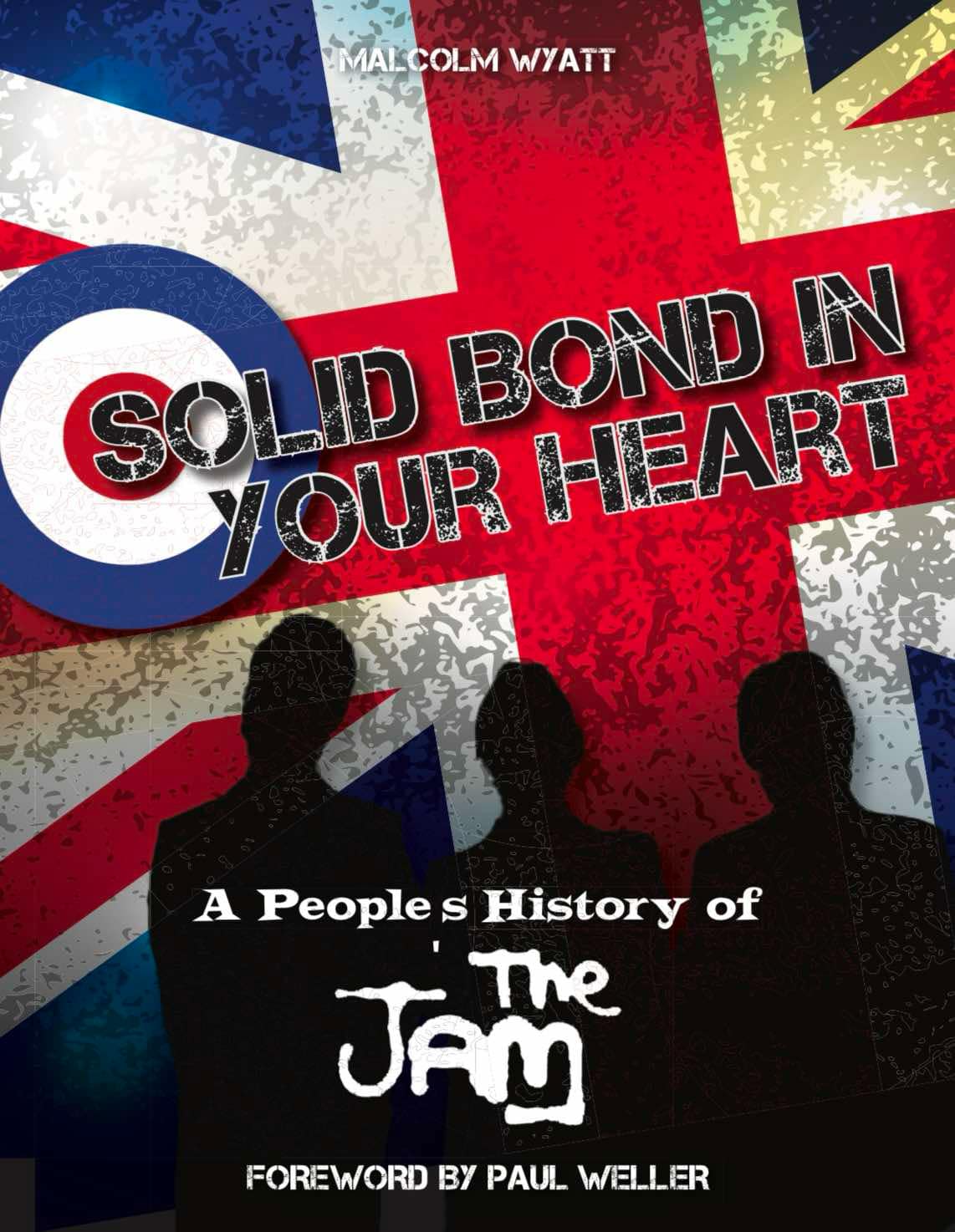
The same publisher, Spenwood Books, also brought us Malcolm Wyatt’s Solid Bond In Your Heart: A People’s History of The Jam in 2025, having previously published the same author’s Wild! Wild! Wild! A People’s History of Slade. I know, you’ve left it late to order in time for Christmas, but why not treat yourself to a New Year gift. via the same distributor, Burning Shed, by clicking on those links, or contact me for a personalised, signed copy.
Oh yeah, and Merry Christmas to you, thanking all those who have checked out WriteWyattUK this year. Here’s to a happy and peaceful 2026.
‘We flew on to Freeport, this island where Frank Sinatra goes, and there’s a posh hotel there, the Sheriton. Now, for a bunch of council house kids, this is a big deal! This guy, Ken, says, ‘I’ve put you in this hotel. It’s really good, just put the food on the bill. Nod was in one room that had an adjoining door with Jim, and I was with Don. And it’s overlooking the sea. It was very nice. We were all going, ‘Ooh, look ’ere – fillet steak!’
I said, ‘It’s a great place, innit. I went in the bathroom, and they’ve a thing in there where you can wash your feet.’
‘Have you got it yet? Ha! I said, ‘It’s bloody great, I put my feet in there!’ And he said, ‘It’s a bidet, Dave!’
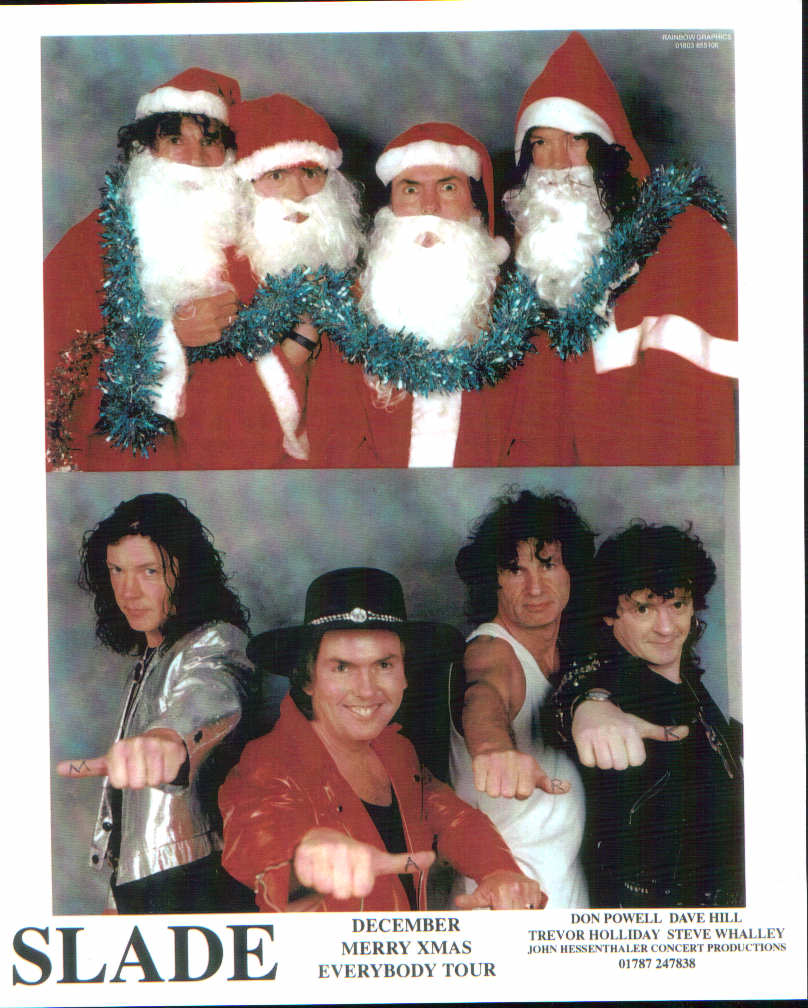
A staggering 54 years after Slade topped the UK singles chart for the first time with the wondrous ‘Coz I Luv You’, Dave Hill is there in all his rockin’ glory on my computer screen, chatting away on Zoom about his confusion at the bathroom arrangements in a swish hotel on the island of Grand Bahama, handy for Lucaya Beach, this council house lad from Wolverhampton (he was born in Devon, but always a Black Country lad at heart) transporting us back to 1968, having lost none of his boyish wonder when it comes to relaying tales about his adventures in music down the decades.
As well as his ’N Betweens bandmates Noddy Holder, Jim Lea and Don Powell – the group that became Slade – the other fella mentioned is Ken Mallin, a Willenhall lad who in 1968 lured the foursome out to the Bahamas, more than 4,000 miles from home. And Dave, 22 at the time and for whom holidays more likely involved trips to Rhyl, Tywyn or Skegness, was clearly in his element on his first trip to truly exotic climes, finding himself in what proved ‘too good to be true’ circumstances in the lap of luxury.
For despite what their Midlands agent might have told them about that dream booking (and bear in mind that the youngest, Jim, was barely 19), they were soon on for a major reality check, shifting circumstances ultimately bringing them together, setting them up for an amazing quarter-century working together.
This was even before Ambrose Slade came to be, guitar player Dave and drumming bandmate Don, who first joined forces with The Vendors, part of the ‘N Betweens by 1964, joined within two years by mighty-lunged singer/guitarist Noddy and gifted young all-rounder Jim on bass guitar, the new line-up soon bedded in, that classic Slade fourpiece remaining together (at least in the studio) until 1992. And by then they’d amassed 24 top 40, 16 top 10 and six No.1 singles as well as three No.1 LPs on the UK charts, quickly building a major international fanbase, the world’s love for the band still very much evident today… and not just at Christmas.
As for that early ‘90s split – main songwriters Nod and Jim having decided they were done – that wasn’t the end of it for Dave, old pal Don soon rejoining him as a new version of the band took shape. Initially known as Slade II, the pair in time allowed to drop the suffix, continuing to tour together for another quarter of a century or so before a fall-out ended that working partnership in 2020, Dave and John Berry (vocals, bass, violin, on board since 2003) these days joined on stage by Russell Keefe (vocals, keyboards) and Alex Bines (drums). And now that unit has announced its ‘final Xmas tour’… not as if that’s the end of the story, according to ‘H’.
In a couple of weeks’ time, it’ll be 52 years since Dave was seen prancing around on Top of the Pops in trademark eye-catching clobber miming along to ‘Merry Xmas Everybody’, the third Slade single in that momentous year of 1973 to go straight in at No.1 on the UK chart, something no act had ever achieved before. Elvis only managed it twice in his lifetime, and The Beatles once. Even when The Jam saw their third single go straight in at the summit, their December 1982 finale ‘Beat Surrender’, their feat was over the space of two years, with Slade’s three in a year not equalled until Take That in ’93… and they needed Lulu to get them over the line. Besides, charts meant bugger all by then. Not like in my day (says the old bugger).
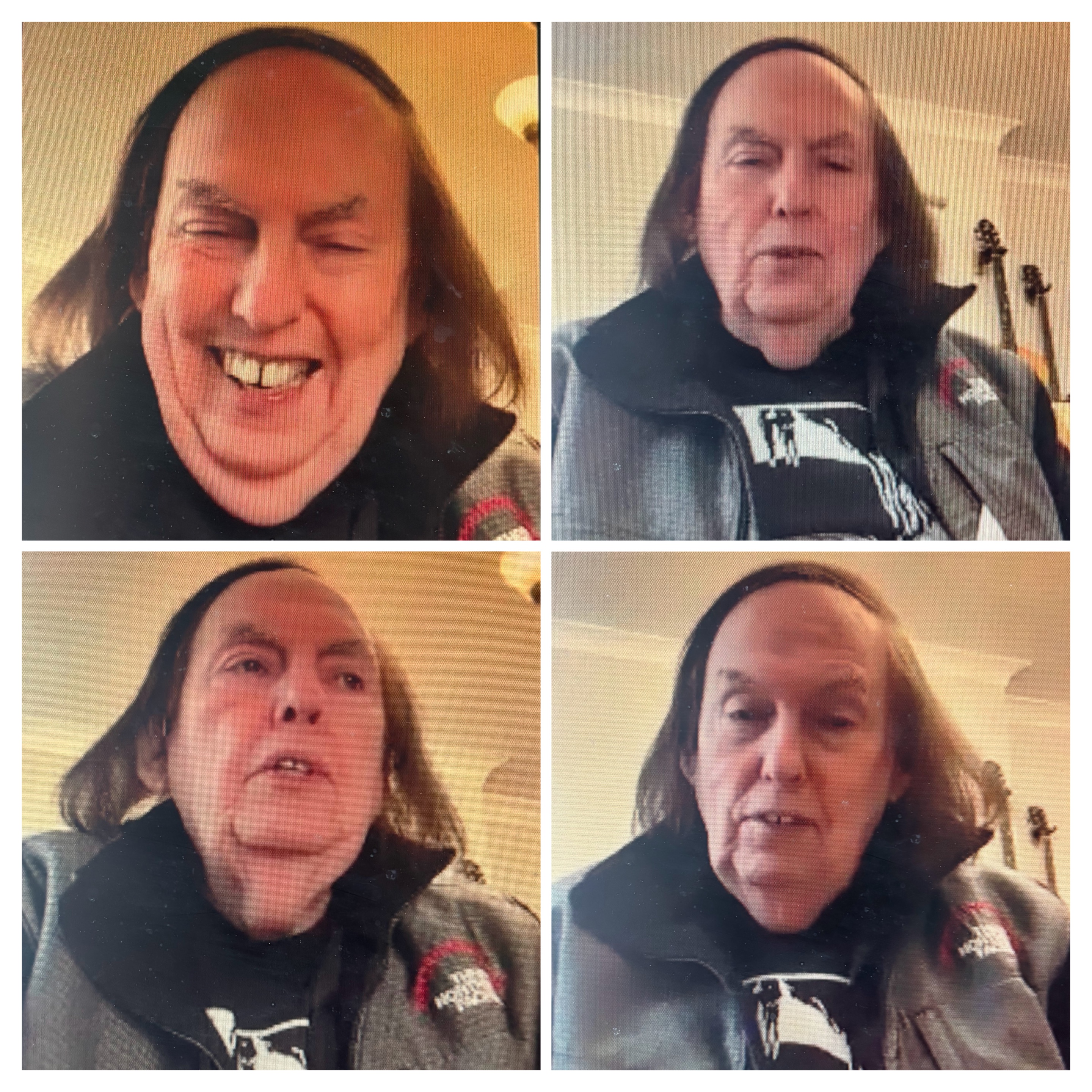
SuperYob Culture: Dave Hill on our Zoom call. Photo collage: Malcolm Wyatt
We’ll get back to the Bahamas again later, but first I’ll go back to the beginning of our online chat, my iconic interviewee asking ‘Can you hear me?’ as we stare blankly at each other… albeit Dave with more rock star poise, as if he’d just stepped out on stage at Castle Donington.
Loud and clear, H, loud and clear.
‘Can you see me?’ he added. I certainly could… catching sight too of some of his treasured six-string instrument collection behind him.
‘A little view of my guitars. Ha!’
Incidentally, I tell him, when I was at the Louder Than Words music book festival in Manchester recently, I chanced upon and had a brief chat with former Adam and the Ants guitarist Marco Pirroni. Were his ears burning? We got talking about a certain guitar he bought in Birmingham back in the day, the stuff of Slade legend.
‘Marco has got my guitar! He’s got the original Superyob! Apparently, he used to watch me on Top of the Pops and had a thing about that guitar. Which I understand. It’s a good story, y’ know, he goes into that shop in Brum and they don’t know who he is. ‘Who the ‘eck’s this guy?’ they’re saying, ‘It’s not for sale.’ But he got it, didn’t he!
‘The shop was run by a man called David Quill. He had Musical Exchanges, a very big shop on Broad Street by the indoor arena, on the main drag into the centre of Birmingham. They had a small shop at first, and I remember walking in, looking for something, and it transpired that I was going to part company with that guitar. I spoke to David, and he said, ‘I’d be glad to give you three really good guitars for that. We could use that as our calling card.’
‘There was a young guy called Gary Chapman hanging about, quite young then, he wasn’t working there at the time, but remembers me coming in. I had a semi-acoustic SG-shape, really good Gibson, I had a Fender, and I think there was another guitar. Basically a swap, he put the Superyob guitar in the window, and they made these cards with it on. People were looking in the window, saying, ‘I’ve seen that guitar before. Oh, that Slade, isn’t it!’
‘And then Pirroni comes in, because Adam and the Ants were playing in Brum, and they hadn’t got a clue who he was. They just thought it was somebody come off the street, having a go. They tell him it’s not for sale, and he said, ‘Everything’s for sale!’ I think he drummed up a funny figure and went for it. But he didn’t come back himself – he sent the roadie with the cash.
‘I met up with him in London with a guy working for Fender, and he relayed the story to me. And in the end Madness borrowed the guitar…’
Indeed they did, Chrissy Boy Foreman playing it on the ‘Shut Up’ promo video.
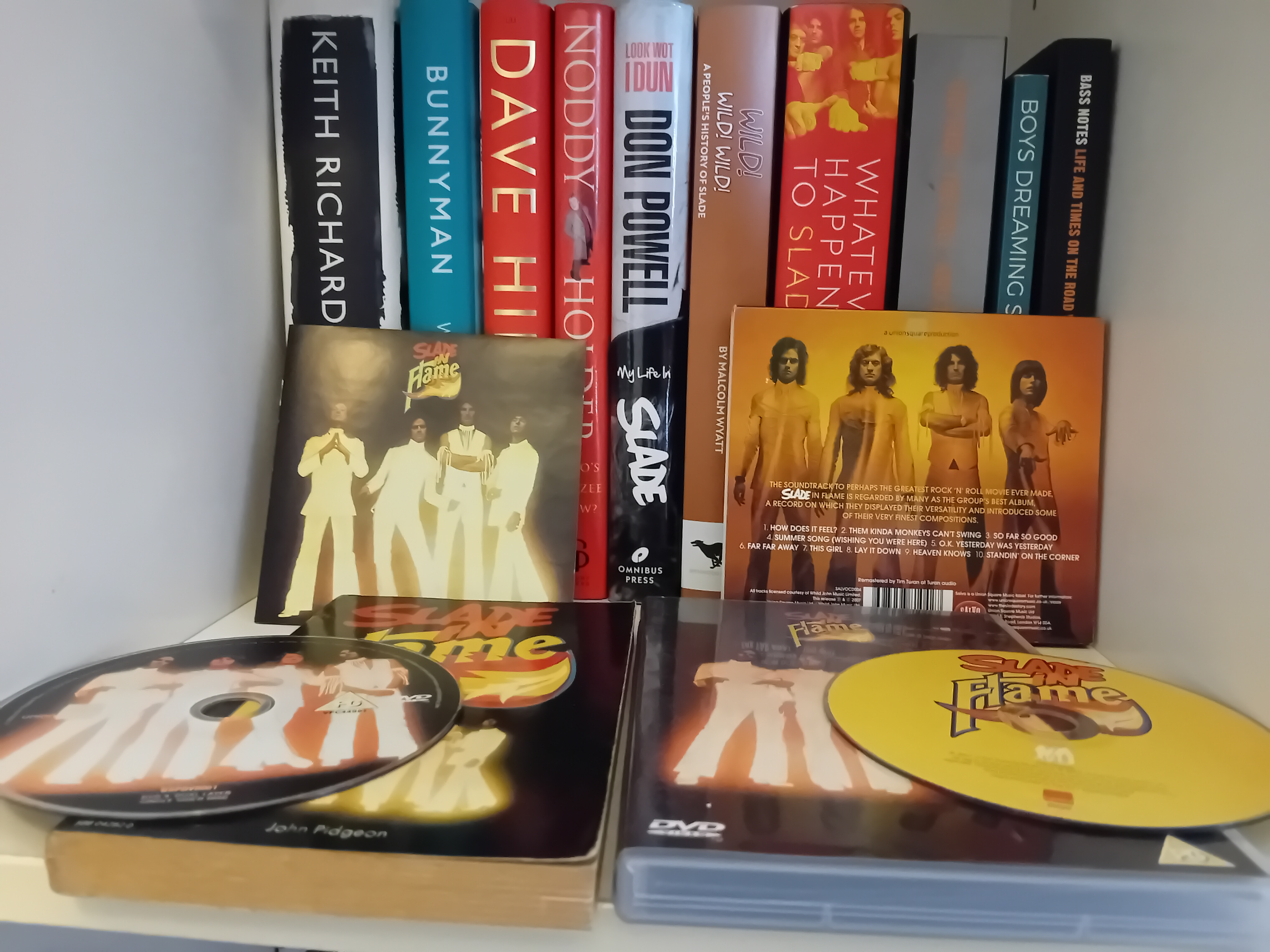
Flame Proof: From the WriteWyattUK collection
‘Correct! Then, next thing, this arena in London approached, wanting to do a memorabilia sale, various things, asking if he would loan the guitar. They put it in a big frame. I saw it there, you could press a button and it tells the story about it. They also got me to send some clothes. A bit like what the Beatles had in Liverpool {The Beatles Story}. I assume Marco’s got it back, because I never saw that again. I still think they’ve got my cape somewhere. They had memorabilia from Bolan and all sorts.
‘It’s certainly iconic. I also had YOB I on my Rolls-Royce. Mind you, I flogged that, and can you believe the number plate was a great deal more money than the car? Ha! I offered it to Sotheby’s. I thought they could put it in a memorabilia sale. They said, ‘No, we won’t do that. We’ll put it in a proper sale as a classic car,’ being the old Rolls-Royce shape. They said, ‘We’ll film it and advertise it.’ It was quite funny when I went down to deliver it – the bloody exhaust went! It was going all wrong, so I pulled up outside Sotheby’s. I’d come down from the Black Country in this gold car, walked in, there’s a bloke knocking about, and I said, ‘Can you help me? I’ve brought this car. It’s going to go into an auction with some very classic cars.’ He said, ‘Oh yes, I know where that is.’
‘It was RAF something or other, just outside London. I said, ‘There’s only one problem, the exhaust’s gone, and it’s making a noise.’ He said, ‘That’s not a problem. I used to work for KwikFit.’ So he got a suit on, and came in the car with me. It was all farting and blowing, and we went just outside London where he got some gunk, got under and started repairing it. And it was brilliant. So I took it to the event and left it. Three days later, I went down, and it went past the reserve. I’d had 13 years with that car, so it had paid me back, you know.’
Including your wedding hire sideline business at one point?
‘Yes, that was a going joke. I don’t know if you’ve seen it, but there’s Noel Gallagher talking to Ricky Gervais, who’s taking the piss out of me. Noel’s going, ‘Oh yeah, Dave Hill went to Australia, and they come off with some glittery hat or something, when they were out there with Quo…’ He tells this story, it’s quite funny, and Ricky asks if it’s true I had this wedding business. And he says, ‘Oh yeah! You could rent a pop star, and it was an extra few quid if he turns up for the wedding.’ Obviously, it was a little low period in my career at the time.’
Remind me, was that just before Slade’s famous rebirth at Reading Festival in 1980?
‘I think it was after that. We’d already done Reading. As the years rolled by, the records weren’t selling particularly, after a few big hits, and having three kids… this would lead to me reforming the band in the end. I rang Nod and said, ‘I think I’m going to flog the car. It’s doing nothing, it’s in the garage, I never take it out, and when I do, kids let the tyres down!
‘I’d moved to an area where having a Rolls Royce was a bit too showy. Nod said, ‘Well, you’ve had your mileage, you sell it.’ And it was a relief when I did, but as the years rolled on, towards the end of the ‘80s and into the 90s, we had a bit of a hit, ‘Wall of Sound’, our last hit, then in 1992 it was all over. I spoke to Nod, said, ‘I really need to do something.’ By then he’d finished with touring and making albums, didn’t want to do that anymore, and I understood his reasons but I kind of missed it… and I had a mortgage to pay.
‘So I spoke to Nod about the use of the name. I wanted to say what I felt about that. I’d been contacted by Suzi Quatro’s husband {her long-time guitarist, Len Tuckey, the pair divorcing in 1992} and he said to me, ‘You don’t want to form a new group, you need to go out as Dave Hill’s Slade or Slade. So I put it to Nod – there was just me then – and he really understood, which was great. I suggested Dave Hill’s Slade and Nod said, ‘Why don’t you call it Slade II? I thought that was a good start. I couldn’t control the ‘II’ though – sometimes promoters took that off – but that was in 1992 and I haven’t stopped playing since…
‘And now I play as Dave Hill’s Slade, everybody’s happy with it, and it doesn’t really matter, because everybody knows I’m doing it and I’ve kept the songs alive.’
In fact, he’s now been out there doing his thing without Nod and Jim for more than 30 years. And yet, as I put it to him, he’s still only 48, right?
‘Good one! Yes, my bass player says, ‘He looks really good for 40-odd, doesn’t he? Ha!’
I say that, but I do realise that next April you’re in line to hit the big ‘Eight-Oh’.
‘Yes, and that’s when I shall release a solo album, which has been worked on and I thoroughly enjoyed. I didn’t write in the hit years, but the more I wrote, the better I got. I’ve also got a voice now, which I didn’t have before, but primarily guitar playing remains important to me, and Nod’s encouraged me to step outside of Slade, do an album for myself. And it’s a true friend to advise me like that. I trust his opinion, and he was right. I went ahead, started to put it together, and I’m very happy with it.’
So will this be a whole new phase, the octogenarian Dave Hill stepping up to the plate?
‘Mmm, I suppose when I saw Rod Stewart on Glastonbury, it’s not remarkable to see that people you know… Being a guitar player is different, but I have two excellent singers, because that’s the only way you can cope with the tunes. They’re not Noddy Holder, they know that, but they’re really good singers, the band is very happy, and it’s been together quite a few years now. And my bass player {John Berry} has been with me for 23 years. The phase I feel that’s happening… there is something natural going on with me…’
I should point out that I wrote a few questions ahead of my chat with Dave, things I wanted to get on to. I shouldn’t have bothered. I think I’d managed two or three by this stage. It’s more about prompts really, H hardly drawing breath.
‘This year they re-released and remastered the movie we made in the Seventies, Slade in Flame, and we went to a premiere on the first of May in London at the British Film Institute, and I felt like Tom Cruise when I walked in. A new Tom Cruise, y’ know! Me and Nod had a really good time, met some of the actors in the film, and some of the people that worked on it. David Puttnam was the producer, Richard Loncraine was the director, who also became quite successful after Slade in Flame, and Tom Conti was a new actor who certainly got more work after our film. Then there was Johnny Shannon, who’s not with us now. He was in Performance, and there was my girlfriend in the film… although I seem to have several girlfriends in the film, while nobody has any girlfriends in the rest of the band…’
He’s about to go off on another tangent, so I’ll add that he was about to mention Sara Clee there. Anyway, carry on…
‘And that Mark Kermode (the film critic) said about me. ‘Dave Hill is either a really good actor or he’s just playing himself.’ And he was dead right!’
I’ll let you decipher that response, readers.
Nod’s Nod: Dave’s old pal Noddy Holder with his copy of Wild! Wild! Wild! A People’s History of Slade
‘But the decision to re-bring it out was remarkable, because it wouldn’t cost us any money for them to remaster it, to brighten it, and it looked so good when I sat there. I took my son down, Noddy took his down, his son met my son, and it was ever so nice, we stood there thinking we’ve done this all those years ago, and look at it now!’
When I first interviewed you, a decade ago, you were still a little unsure of the film, still thinking it was a miss-step. I’m guessing you’ve had a rethink since.
‘I think I saw it in a different light. I thought the fans wouldn’t be comfortable watching us arguing in a film, when we were still currently massive.’
I guess it was confusing for some, not least that it was set in the late Sixties in an era when we were more likely to get nostalgic about 1950s rock ’n’ roll days.
‘Yeah, the way I viewed it was like this. It made more sense now. And the decision (Slade manager) Chas Chandler made to have a serious film, not a silly film like A Hard Day’s Night, but a film that had truth in it… Because, you know, a lot of the stories in the film are true, although not necessarily things that happened to us. The film is a little Get Carter like, a bit tough, but acting-wise I thought the four of us did a really good job considering we had no experience of acting… although I’m not saying anybody rushed to get us again!’
Well, you were rather busy.
‘Well, yes, with commitments… I think that’s one of the words!’
Before I came on to you to this afternoon, I played something that was topping the charts 44 years ago, this point in 1971 having marked your second week at No.1, ‘Coz I Luv You’.’
‘Ooh!’
I know a few of the Top of the Pops performances were wiped, so this may have been one for European TV, but in the footage you’ve got a blue satin top on and the band are playing in the round, the audio improved with use of the studio version. And that song sounds as fresh today as it ever was.
Loud Hailer: Dave Hill with Play It Loud (Photo: John Barker / Slade Are For Life – Not Just for Christmas)
‘It’s a great record, that! But we were a little unsure. We had a hit with ‘Get Down and Get With It’, a rock song, and the DJs of the day were saying, ‘What’s your next one going to be? Another rock song?’ So we thought that’s what would happen. But they’d {Slade’s management} told us all to write a song, and Jim said, ‘We’ve got this song with a violin in it.’ Chas said, ‘Well, what’s it sound like?’ Nod had an acoustic guitar, they started to play it, and Chas said, ‘That’s great. That’s a hit. In fact, that’s a number one!’
‘He was adamant about that. And when we made the record, it sounded so fresh, with all the clapping, you know, the stomping, the violin. Jim’s a really good violinist, Nod’s voice was very commercial sounding, and it was a really good record. I played it to my sister, and she said the hairs on the back of her neck were tingling. She said, ‘That sounds fantastic!’
Carol was clearly a good judge too.
‘Well, she’s an entertainer, like me. A dancer, a singer, an actress, everything. She said the feeling of it was strong, and she was right. We didn’t know it’d be a No.1, but it didn’t take it long to get there!’
I often gaze back at Slade historian Chris Selby’s cracking Slade gigography (linked here), going right back to the days of the earlier bands you all featured in- in Dave’s case starting with the Sundowners – and I’m reminded that 60 years ago you were in Germany (two and a half years before that Bahamian residency), between dates with the ’N Betweens at the Habarena club, Dortmund, and New York City club, Witten. Heady days, eh?
‘Ah, the Habanera club was on our first trip abroad with the original band – not the band that became famous – and I remember it was the first time I’d ever gone out with a German girl. She was 17 and came to the gig. We were entertaining a lot of (British) servicemen staying in Germany that used to come along.
‘We also started to come across pomme frites {in fact, I’m sure he said ‘pomme fritz’} topped with what we thought was salad cream. I said, ‘They put salad cream on their chips!’ and they said, ‘It’s not salad cream, it’s mayonnaise!’ We got used to that and used to go for hühnchen – chicken – and pommes frites. There was a guy from Canada with a little eating place right by the Habanera. We used to call him Canada Pete and would go scoffing down there.
‘When we went back to England, we thought, well, we’ve been to Germany, and when The Beatles came back, they made it. But that wasn’t the case. It didn’t make any difference.’
While Hamburg arguably proved to be the making of The Beatles, for Slade it was more likely to have been their stint on the Bahamas, that highs and lows experience proving to be the bonding experience that truly brought the band together.
‘Yeah, the trip to the Bahamas, when we flew to Nassau. We didn’t think it was really going to happen. The guy who wanted us to come over was from our local area. There were a lot of strange things going on with this guy… not that we knew that at the time. The agent said, ‘The tickets have come through. He’s booked you on a plane from Gatwick. You’ve got to fly the gear over by cargo. So we flew to Nassau, which sounds a little James Bond, and when we got off the plane, me and Nod are going, ‘’Ruddy ‘ell, they got grass skirts on there!’ Then he says, ‘They’ve give us a drink with a bloody flower in it!’
‘You could make a film out of that story. The whole idea of us going there was always a little unusual. It was very warm, very humid, very nice, right? Not known to council house kids in Britain. But they took us down the club, and I saw cockroaches larking around in the dressing room. The very fact it was called the Tropicana {the venue they were booked at} sounded a little strange. The idea was that a British band would attract Americans coming over there. But it developed into a completely different ball game. We were there a couple of weeks playing this club, hardly anybody in, and the guy looking after it, Eric, was out of his box most days. He looked like a soul singer, but was slightly bonkers, with a dodgy eye.
First Footing: Don, Dave, Noddy and Jim on a freezing cold winter’s day on Pouk Hill for 1969’s Beginnings
‘Two weeks on, the boss of the Sheraton said, ‘Who’s paying this bill? It’s $2,000.’ We said, ‘Oh, Ken’s in charge. He’s managing the money, we’re just working the club.’ He said. ‘Well, I need to talk to him, someone’s got to pay this.’ I said, ‘Fine, we’ll get hold of him.’ But he wasn’t around. There’s a knock on the door later, and it got a bit rough. Two guys with dark shades, mafia, standing at the door. ‘Where’s Ken? We’re gonna kill him. He owes us money.’
‘I said, ‘What do you mean, who are you?’ He said, ‘We loaned him money to bring you over.’ I said, ‘It’s nothing to do with us, we don’t know anything about that.’ He said, ‘Well, we’re gonna get him!’ It was like Get Carter. The next thing, it turns out Ken disappeared, and he’d lied. We thought we’d met his sister, who had something to do with loaning the money. It wasn’t his sister at all, but we didn’t know until after. We said to this guy, ‘Go and see his sister.’ He said, ‘He hasn’t got a sister. That’s his Mum!’ We thought, ‘This looks a bit tricky.’
‘Then the people that run the club decided to flog it, and in came some Americans from Miami. The hotel got in contact with the new owners, said, ‘We spoke to the band. They owe us $2,000, we need to start taking part of their wages.’ And that’s what they did. They put us in a staff apartment then, four beds in one room, bog on one side, and a kitchen. But we learned to live with each other at that time.
‘There was an awful lot of substances going on around the island, y’ know. I didn’t go for it personally. I’d never get anywhere near any of that, but that was going on and there were all sorts of strange hippies knocking about, peace and love and all that – it was the late Sixties, with the flower power mob. We made a few friends though, and by the end we had to hide from each other so they didn’t notice we might be a group. I left the day before, slept on a beach… well, I tried… until the crabs come at me. I then went up to Nassau airport, slept in a bloke’s car until the others arrived. I owed 50 bucks to some bird I fancied on the island. She had a big brother – I didn’t want him to find me!’
They got back in one piece, thankfully, three months after flying out, the following autumn and winter spent honing their sharpened and more diverse live set on the UK circuit, mostly around the Midlands. Come the new year, they were recording the debut Ambrose Slade LP, Beginnings. They were still a couple of years away from true elevation to the big time, but were on their way.
As for that initial German tour in late ’65, I reminded Dave that 60 years ago, while Noddy was on the same circuit with Steve Brett and the Mavericks, some four months before he and 17-year-old Jim debuted with them – the ’N Betweens were supporting Generation plus Peter and the Wolves at the Pavilion on the seafront at Exmouth in South Devon on December 3rd, followed by shows far closer to home – at Wolverhampton Civic, Walsall Casino, the Golden Torch in Tunstall, and so on. And it was quite a circuit then, right?
‘Ooh, the Golden Torch. I forgot that one! That’s in the Potteries, innit?’
That’s it, and a bit of a special venue on the old Northern Soul circuit. And you upped your repertoire with a few soul records while in the Bahamas in ’68, I seem to recall.
‘That’s right, and there was another one, The Place, that was all soul music. That’s how we got into all that. We also learned ‘Born to be Wild’ when we were in the Bahamas, a Steppenwolf record. Nobody in England had heard it. And ‘Journey to the Centre of Your Mind’. Very cosmic, right!
‘When we came back from the Bahamas, we were a somewhat changed band. We actually played quieter, because we had a lot of problems with the female boss of the club. There was a guy that worked there, ‘The Iceman’. He was a real Mr. Cool! He used to come to the stage and say, ‘She doesn’t like you playing loud. She’s going to put a bulb above your head. If the light comes on, she’s going to switch you off, right?’ Anyway, she come down the front shouting at us, and we ignored her, so she goes back to the Iceman, saying, ‘They’re not listening to me. Go and cut his strings!’ So he takes a big pair of scissors, comes up to Nod and says, ‘I won’t do it, but she wants me to cut the strings off your guitar.’
Thumbs Aside: when Dave’s version of Slade saw him touring with Trevor Holliday, Don, and Steve Whalley, right, who also fronted Sad Cafe and the Don Powell Band and sadly passed away in September
Talking of which, at this point I let Dave know we’re likely to end up cut off soon, time running out on our online session. But he tells me, ‘You can always come back – you know that, don’t you. Problem is, there are so many stories. You could write a book just talking to me, y’know.’
True enough. And leading on from his cut strings tale, I relaid a story I was told for Wild! Wild! Wild! A People’s History of Slade about Nod, Jim, Dave and Don playing not far from my old Lancashire patch at a venue called Uncle Tom’s Cabin in Darwen on the last day of October ’71. Just 10 days after they completed the recording of the iconic Slade Alive! at Command Studios, Piccadilly, London. While ‘Coz I Luv You’ riding high in the charts, the band first promoting that momentous single with a performance on Top of the Pops on October 21st, Pat Fleck recalled that this was hardly a band being afforded any slack, for all their new-found success. Apparently, Noddy was warned by the venue’s manager to stop swearing or they’d cut the power. As Pat put it, ‘Of course, Noddy didn’t stop swearing, and the power was duly cut. It only came back on after Noddy promised to be a good boy.’
And that reminded me of a similar tale concerning a venue barely two miles from my door here in West Cornwall, Slade playing – with very little fanfare, judging by the West Briton that week – the Flamingo Ballroom in Pool, between Camborne and Redruth, on Thursday 5th October 1972, the site of the venue these days holding a Morrisons superstore we tend to visit for the weekly ‘big shop’.
‘I remember that place, yeah!’
At that point, ‘Mama Weer All Crazee Now’ was slipping down the charts after three weeks at the summit, the band’s third No.1 single, with Slademania building all the time… yet the band still honoured an earlier booking cancelled (I found one in July at the Corn Exchange, Penzance, 30 miles down the road, and there may well have been another set for early September) when they headed off on an US tour, joining Humble Pie, Sly and the Family Stone, Boz Scaggs, the J Geils Band, and Peter Frampton en route.
According to the venue’s adverts in the West Briton, it was £1.25 on the door or £1 in advance from The Garden, Penzance (aka the Winter Gardens or the Wints, a venue which attracted many of punk’s leading lights a few years later, including the Sex Pistols, Ramones, Talking Heads, The Damned, The Adverts, Elvis Costello’s first show with the Attractions, The Saints, The Police, Dexy’s Midnight Runners, UB40 and U2, as memorably honoured in Simon Parker’s wonderful PZ 77: A Town, A Time, A Tribe, which necessitates a feature of its own on this website, soon as the stars align), which seemed to be the co-promoter, with Strife supporting and the promise of ‘Lights and Disco’, provided by the Chris Warren Discotheque. Heady days.
And among those who saw Slade at the Flamingo was Kevin Lean, also featured in Wild! Wild! Wild! He told us, ‘That night they played all their hits and more. Tartan was the rage then, and skinhead was the rage, and us youngsters followed suit, with Doc Martens, braces, the lot – to think we used to dress like that! I was courting a girl when I had my hair exactly like Noddy’s (permed). At the same time my girlfriend sent a photo into a Women’s Own competition, ‘Copy a Star’, and lo and behold, I won it and was matched with Noddy! Good days!’
What’s more, I also read somewhere that night the Flamingo owner, Joy Hone, told them to turn the volume down or ‘I’ll pull the plug, my lovelies.’ And that’s something else I put to Dave.
‘That sounds like it could be a true story. More than once that happened, by the way! And I do remember something he said up north, and they said they wouldn’t have us back! Haha!’
Meanwhile, although Dave clearly deserves time off for good rockin’ behaviour after all these years on the road, I can’t imagine him not touring the world to the same extent from now on. He’s going to miss all that, surely. Or is he looking to the future now (it’s only just begun)?
‘With regards to dates here and abroad and all that, that will remain as long as I want to do it. And for me, I feel although I’m coming on 80, that makes no difference whatsoever. Look at Norman Wisdom, he was still jumping up and falling off bloody things when he was 90! My point is, why would I leave something that I love so much? If it wasn’t working for me, that might be different. But it is working for me.
‘The only thing I’m going to change is that the UK tour will be different next year. It will be cherry-picked, one or two shows, and bigger venues. The rest of the work in England remains the same – Butlins, and all those things I do. Also, working abroad is a lot easier, because they pick me up, the rest of the band too, and they organise the gear. I find it very pleasurable. I was in Holland last week and did two shows, and it really was excellent. And when I played with Alice Cooper and people like that this year, and Billy Idol, it was so much fun, because the crowds were big.
‘I just stood there one day, thinking there’s nothing quite like this. It’s everything I worked for. I stand there and I’m completely in control of it, because I’m somewhat the last man standing on that stage, right?’
And with that our link was lost and Dave was gone, probably with just about enough time for a quick cup of tea (maybe even a cup-a-soup) before his next call. Here’s to the future, Dave, it’s only just begun. Keep on rocking, into the next decade and beyond.
Dave Hill’s Slade are joined on their final Xmas UK tour by Oxfordshire four-piece Sons of the Seventies, playing covers of classics from the era. They open at the White Rock, Hastings (Fri 28 Nov) and Dreamland, Margate (Sat 29 Nov), then head for Holmfirth Picturedrome (Wed 10 Dec) before O2 drop-ins at Liverpool Academy (Fri 12 Dec), Bournemouth Academy (Sun 14 Dec), Oxford Academy (Tue 16 Dec), Shepherd’s Bush Empire (Wed 17 Dec), Newcastle City Hall (Thu 18 Dec), Birmingham Academy 2 (Sat 20 Dec) and the Ritz, Manchester (Mon 22 Dec), with tickets via here. For more information head to the website or head to Instagram or Facebook.
You can also order a copy of the hardback edition of Wild! Wild! Wild! A People’s History of Slade (Spenwood Books, 2023) via Burning Shed or direct from the author via this website for a signed and personalised copy… while stocks last.
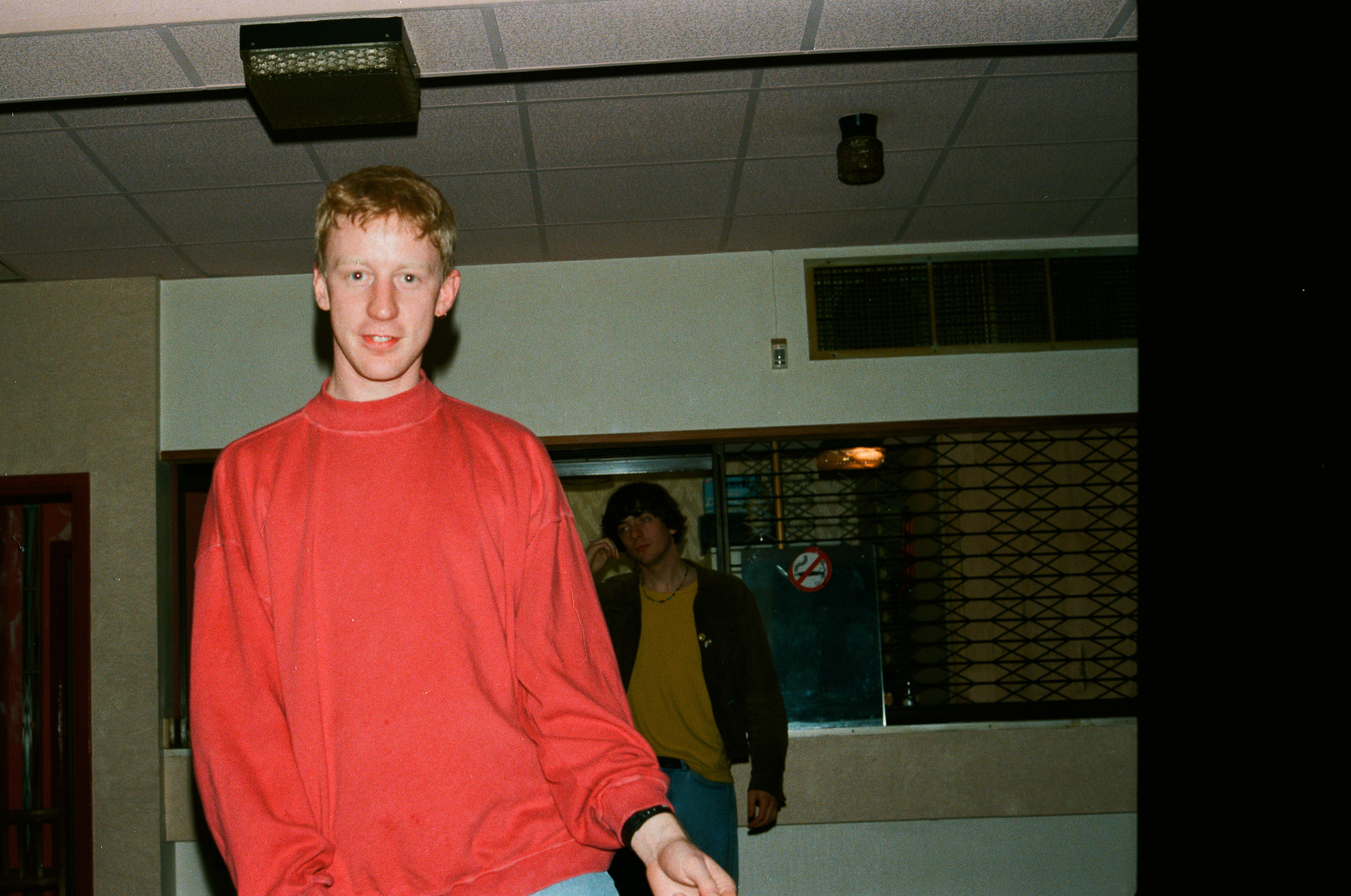
Band Substance: Damon Albarn and Graham Coxon, shot by Dave Rowntree all those years ago
At the risk of reigniting that phoney Battle of the Bands nonsense, the major hype (and then some) the mainstream press caught on to over a supposed Blur vs Oasis feud was never where I was at in the mid-1990s. Turning on the telly then – and again this summer with regard to the latter act – you’d think the entire nation was all-consumed by their respective labels’ tiresome Britpop shenanigans. I loved both bands’ output, buying up the records like millions more, but never truly felt a need to catch Blur at Glastonbury in ’94 or Mile End in ’95, nor Oasis at Knebworth in ’96. All a bit too big for me, like watching your favourite non-league sides scale the heights to the Premier League only to find you’d struggle for a season ticket from there because of increased demand.
I continued to splash out on the quality product in Blur’s case when the new LPs and side-projects rolled out, but I’d much rather have caught both acts when they were playing smaller clubs and weren’t being routinely touted as the biggest things since David Gates’ sliced outfit. However, when I saw the premise of a new book from musician, composer and political activist Dave Rowntree, best known as the drummer for Blur, it truly resonated, seeing as it concentrates on the early days… before Parklife took them to that next mega level. I loved that LP and many more that followed, continuing to follow the four-piece’s journeys in sound, but reading about the period up to ’93 was of more interest to this indie lad at heart.
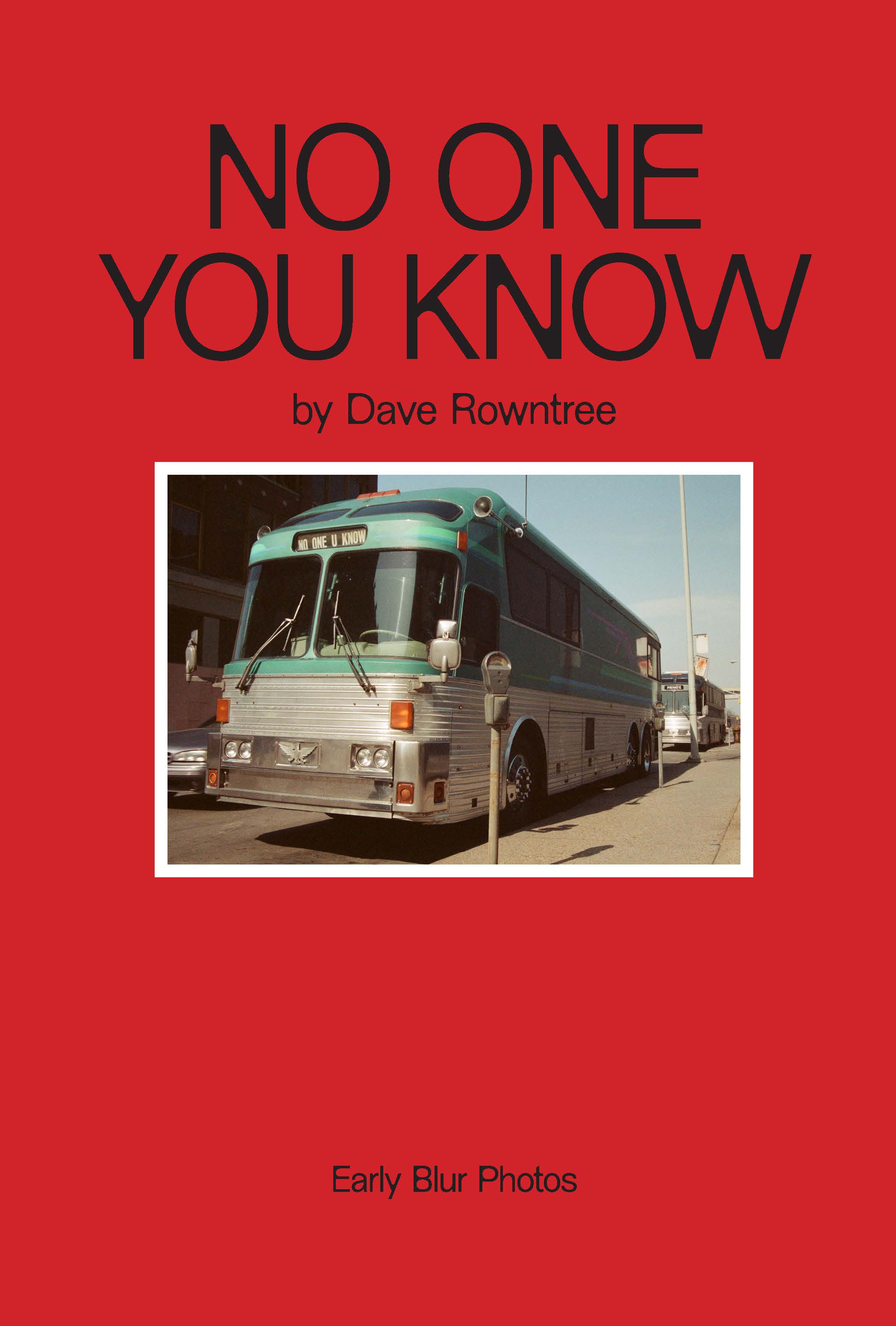
No One You Know: Dave Rowntree’s Early Blur Photos comprises a series of evocative images captured by their founder member and percussionist in those formative years, snapping away with a newly purchased Olympus OM10 35mm camera behind the scenes as Blur progressed from recording days at Maison Rouge in Fulham, West London, to debut overseas adventures in Japan, Canada, the USA and Mexico. Their first proper adventures, you could argue.
As Dave puts it in his introduction, ‘Outside the UK music press echo chamber very few people knew who we were and wouldn’t do until the release of our third album, Parklife, the four Brit Awards and the very public spat with Oasis. The pictures I took are of a band right at the start of their career. They’re of what we did between the gigs, interviews and photo sessions. They are of us hanging out, relaxing, travelling, eating and, especially in the early days, drinking. They are snapshots of what life in Blur was really like in the first few years when the TV cameras and tape recorders were turned off.’
En route, we get hundreds of previously unseen photographs, Dave capturing many an eye-catching insider moment, including close-up and personal pics of singer Damon Albarn, guitarist Graham Coxon, bassist Alex James and himself in those early stages of that rise to the top – from playing games on the tour bus to larking around backstage, messing about in hotel rooms, at video shoots, with fans and friends. And it serves as a neat document of what it’s like to be in a young band during those vital first few years, ‘when everything is new, romantic and fresh.’
There’s also a personal foreword and Dave’s memories attached to the images, No One You Know – its title taken from the sign on the front of the tour bus as they made their way across North America – providing a visual insight into the first few years of one of Britain’s most successful, well-loved bands, from one of only four people who knew what it was really like.
All a perfect excuse to track down Dave in the week he followed an interview with John Robb at the Louder Than Words music literature festival in Manchester with dates at the Cellar Arts Club in Worthing, West Sussex (Thursday, 20th November) and Waterstones in Yeovil, Somerset this weekend (Sunday, 23rd November, where he’ll be interviewed by self-confessed cardigan-wearing writer, apparently ‘one of the 20 most rebellious women in Bristol’, Jane Duffus).
Dave was on his way up to the capital when we spoke, the 61-year-old with the impressive CV spanning several genres these days based near my old patch around Guildford, Surrey, where I left for love in late 1993… around the time Blur were working with Stephen Street and Stephen Hague (they only tended to work in the studio with blokes called Stephen in those days) at the afore-mentioned Maison Rouge, across the road from Chelsea FC’s Stamford Bridge home, 30 miles from my old front door in Shalford.
‘Ah, I know Shalford – very nice! A small world, as they say.’
Did I ever mention that The Stranglers rehearsed in the scout hut at the end of my road, where I attended Cubs, that an early incarnation of The Vapors did the same at the village hall, and Phil Collins was a local in my mate’s parents’ pub, where he once jammed with a fella called Clapton one Christmas? Oh, apparently I did, so I best move on, telling Dave there and then his book provides a great little snapshot of Blur at a pivotal spell in their career. I also cut to the chase and asked whether his assertion that his ‘foggy memory of the early days is certainly the despair of those who know me well’ was down to classic rock ’n’ roll excess or just a poor memory.
‘I’ve always had a poor memory for certain things. I’m terrible at remembering names. I’ve always struggled to find words. Halfway through a sentence, I’ve realised I don’t actually know the name for the thing I’m about to need to name and have to divert the sentence elsewhere. I’ve always been like that.’
I know that feeling. He has my sympathy.
‘Being in a band is different every day, but fundamentally it’s quite a repetitive thing. You do thousands and thousands of shows and do an awful lot of days in the studio, and those tend to merge into one. I think that’s really what it is, so unless something remarkable happens at a show, it’s often quite hard – a month or so later – to remember which one that was. ‘What gig was it in Boston?’
I can imagine that. And I suppose you’ve been on, for want of as better description, something of a treadmill at times.
‘Well, treadmill is rather a pejorative word, isn’t it? I was doing what I always wanted to do. It was bloody hard work, but I wouldn’t have changed it for the world.’
Indeed. I can’t imagine you’d ever have been tempted to see out your initial role as a computer programmer for Colchester Council. And if you had, you’d surely have contemplated (at 61) retirement by now.
‘I’m not even sure they have computer programmers at local authorities anymore! That’s all a thing of the past. But yeah, I’d have been miserable had I not got to be in a successful band. That was my passion, what I desperately wanted to do. The reality is, most people who desperately want to do it don’t get to do it anyway. That’s kind of where we were at the start of the book.
‘In the first few years of the band it was far from clear that we were going to be able to go on to have a career, because we were a tiny little band, unknown everywhere really, but unknown especially in the places we were just starting to tour – in America, Japan, Europe – and the music we were playing was very unfashionable in those days. It wasn’t until the mid-’90s when suddenly the fashion changed and what we were doing became very fashionable. It then had to have its own chart, so you could be in a chart, because there was no hope of bands like ours grazing the main chart. In fact, that was quite a laughable idea.’
True, and there were so many bands on the cusp of it around then. It’s almost like those sliding doors moments where, while you worked hard from the very beginning, there were still elements of luck required at certain points to ensure it turned into the huge story it became.
‘Absolutely, there are a thousand of those moments, and things that seemed like a massive disaster at the time turned out to be fundamental to the making of the band. The classic thing of being ripped off by our first manager, that was nearly the end of the band. But as it turned out, that forced us to make some changes, one of which was touring America for several months. That made us re-evaluate where we came from, and that became the basis of the next few albums, us thinking about England and Englishness, what we liked about it and what we didn’t like, repeat the characters and all of that. And that was the birth of Britpop, to some extent. Things that seem awful can go on to be the fulcrums around which everything turn.’
Party Time: Dave Rowntree unwinds after a busy day at the Blur coalface, back in the early days
Looking back at the Blur gigography, especially your earlier London dates, I see a few venues I was frequenting in the second half of the 1980s. We must have rubbed shoulders on a few occasions without realising. I’m thinking of places like the Cricketers, Kennington, venues in Kilburn, Tufnell Park, Camden, plus the Mean Fiddler, the Sir George Robey, the Borderline, the Marquee, the Powerhaus… In my case it was seeing bands I also felt should have made it but didn’t quite have that luck. And, of course, everyone has those tales of nights when the A&R men or a label or publisher takes a shine to another band on the bill rather than your own. So near, yet so far.
‘Yeah, at the time we were starting out, I heard one estimate that there were 100,000 bands in the country. It’s not like the cream necessarily rises to the top. As you say, there’s an awful lot of luck involved. You have to be at the right place at the right time. You have to work hard and make good music, but lots and lots of bands were working hard and making good music. None of this is guaranteed.’
Absolutely, and I get the impression you never took it for granted. And with regard to memories of those years, we tend to find within bands that someone will have a great memory of how it all came to pass, while another member is more likely to collect all those old hand bills, take those snaps, or whatever, and between you all, you pull it all back together. I’m guessing you fit into that latter box, out of the four of you.
‘Actually, we all have a box of junk where we threw all the… ephemera – I’d hate to call it memorabilia, because we’re still going! – as it went. I’ve certainly got a box of stuff, and I know Alex has, and Graham has a house full of stuff – he’s got every t-shirt he’s ever worn! So if you want to write a book on Graham’s fashion, you’re spoiled for choice! Damon’s got some stuff as well. But it was never, certainly in my case, kept with any particular idea of using it later on. It was more a case of, ‘When it’s all over, it’d be nice to remember this.’
That aside, it was music that got you over the line. And I get the impression that from the start – much as I love the inspirational punk ideal of taking things from scratch – you came from extremely musical backgrounds.
‘Yeah, certainly Graham, Damon and I were classically trained musicians, we could read music and had a kind of formal music training background. But really, the thing that saved us – because we made some terrible decisions along the way that could have finished the band – was playing live. We were then, and I hope still are, excellent live. So no matter how terribly everything else was going, we could turn up, play a gig, and everyone would go, ‘Oh yeah, that’s them. That’s what it’s all about.’
On that front, I also get the impression that while there was clearly underlying boredom between gigs, on the tour bus, you made the most of that down time, not least listening back to the night before’s performance, trying to work out what worked and what didn’t, what could be improved upon.
‘Yeah, I took that on, because we recorded the show every night, first of all for my own peace of mind, making sure what I was doing was okay. Then I started listening more widely, picking out things and mentioning stuff at soundchecks that we might try and change. That became my role. I don’t do that anymore, but we don’t have those three-day bus journeys with nothing to do now! This was pre-mobile phones, pre-CDs even. You’d have five or six cassettes, swap them around with everybody else, two or three books, and once you’ve gone through that, that was that – that was your entertainment gone, and you were desperately looking for things to do.’
Rollercoaster Ride: Dave Rowntree catches his bandmates in the Blur box seat, all those years ago
You were fairly well travelled before all that, by the sound of it, with regular trips to France, for instance.
‘I definitely wasn’t well travelled… But yes, I’d gone to live in France for a couple of years. That was a great thing to do, and I retain that abiding love of France.’
There’s a description in the book of a ‘a ginger hippie with a predilection for playing gigs in his pyjamas.’ Discuss.
‘Yep, that was how I joined the band! It didn’t last long, because that made me a bit of an outlier on the stage. But that’s what signed up to Blur – a ginger hippie in his pyjamas!’
What became of that chocolate brown Ford Cortina you drove that did its service up and down the A12, into the capital and back for rehearsals and shows.
‘I scrapped it. I took it down the scrapyard and got 25 quid for it. And I think they were ripped off. I think it was worth half that.’
That’s a shame. I could see that at the heart of a Blur ephemera exhibition in years to come. Maybe we should lie, pretend it’s still out there, have a go at mocking up another one for that purpose. I won’t let on if you don’t.
‘Ha ha!’
You talk with some awe about that first rehearsal in Euston, and how you came together as a band that first time there. These are all important firsts, aren’t they?
‘Yeah, and that’s what the book is about, it turns out. I struggled for a long time to try and find out what it all meant, what I wanted to say with the book. And that was it, really – it was the firsts! It was that exciting time in the early days when the band was doing all these things for the first time. After a while, they became routine, but yeah – the first time in America, the first time in Japan, the first time in Canada, the first time in the studio with a proper producer… All these things felt like, and were to some extent, incredible milestones. And capturing that feeling of excitement and trepidation, that’s what I think the photos do, that’s what they show.’
Drum Major: Dave Rowntree, 20th century boy, holding on for tomorrow, but happy to look back
As someone who’s edited quite a few fans’ history books of popular acts, I always prefer those early day struggle tales over ‘biggest band in the world’ type antics in ‘enormodomes’. And there are only so many times you can read about VIP experiences in soulless stadia, as compared to first-night nerves in fleapit clubs or dodgy rehearsal rooms. Maybe I can just relate to that more, thinking perhaps it could have been me in that situation.
‘Yes, those years are the kind of missing years for most bands. By the time you’ve reached the public consciousness, you’ve already gone through that. It’s a growing process, usually. Not so in the case of boy bands, which is usually a downfall, but bands seem to arrive on the scene fully formed, with an image and something to say. But that’s taken years of trial and error, and it’s largely undocumented. That wasn’t the case for us as much, that we were evolving an image particularly, or a sound – that seemed to arrive fairly unbidden – but we were kind of figuring out what it was all about, who we were, what we wanted to sing about, all that kind of stuff. That was the thing that really kind of evolved over those first few years.’
Your purchase of a 35mm Olympus camera was timely, and you clearly have an eye for composition. There are many good images in the book. I guess it helps that you were part of a young band of annoyingly good-looking blokes, but it’s all pretty evocative and looks great.
‘Yeah, there’s something about film shooting on film, it makes things have a kind of classic feel that is completely missing with digital photography. You can superimpose film grain on it, but you haven’t solved any problems – you’ve just added some noise! Film grain isn’t actually noise at all. It’s something completely different, and all those defects with different kinds of film emulsions are actually what give it character now. You worked so hard in those days to get the kind of pristine photorealism you get with digital cameras, but we found when it arrived it’d taken the soul out of it and the struggle with the film was part of the art of it all. The chemistry is always part of the art. So we struggled in vain. When film cameras died and digital cameras took over, I lost interest, really.’
I had the pleasure this week of speaking to Dave Hill from Slade, and we got on to the subject of his band’s formative bonding moments in the Bahamas in the ’60s, down on their luck and paying off a huge debt in this seemingly ideal tropical setting, stuck in one room together. Similarly, The Beatles had their Hamburg years. How about Blur? I get the impression your greatest bonding moments came when you were travelling across North America on that tour bus, rethinking your direction after an earlier false start, Do you think that truly brought you together? You clearly had similar interests, with close cross-friendships between you, but you still had to learn to live with each other in close quarters and get on with each other. That’s quite a skill, really, isn’t it?
‘Yeah, that’s what splits most bands up. That and money. Having to live in each other’s pockets, seven days a week, 365 days a year. That’s what it was for decades, and that’s a very hard relationship to manage, no matter how much you like the people. But what I’ll come back to is that the thing that’s always saved us is the gigs. Whatever else is going on, when we go on stage and the first few notes of the first song are played, everything gets washed away and everything is renewed. Everything starts afresh.’
Back in the early days, the term the NME used – I’d read it from cover to cover in the ’80s – was ‘ligging’, and you seemed to do a right lot of that outside the nine to five recording existence. You clearly worked hard and were put through your paces by the likes of Stephen Street, but getting on to gig guestlists and all that – getting known and mixing with the right people – was all part of it. Did you see yourself as a party band? Or was it just letting the hair down after a busy day?
‘Erm… everybody was doing it. There were a bunch of us – all the current bands, all the current journalists, the young people in the record companies – we all went round together, all to the same things. Especially on a Thursday when it was Syndrome. But pretty much every night there’d be a good band on, so you’d ring round, figure out where we were going, and we’d turn up en masse and head for the bar. And the very journalists criticising bands for doing that were doing it themselves! Ha ha!’
Fan Fare: Damon taking newfound fame in his stride, on the first trip to Japan. Photo: Dave Rowntree
Were Food Records looking after you in that respect?
‘Yeah, we didn’t have any money, so weren’t partying that much, to be honest. You’d get a couple of drinks in, but hope there was somebody from the label to buy some drinks, or something through your publisher. You’d get a couple, then get one more or have enough money for the taxi home. It was pretty meagre times, to be honest. In the very early days we were living on five pounds a week each, relying on the generosity of the people we worked with, by and large.’
Incidentally, I lost touch with what became of keyboard player/vocalist Cara Tivey after her first spell with Billy Bragg (following her time with the Au Pairs, Fine Young Cannibals and Everything But the Girl). I either didn’t realise or forgot in the fog if time that she not only featured with you live during the Modern Life Is Rubbish and Parklife era, but also had an additional role as ‘the band mum for many years’, the one who ‘would make sure that people had presents on their birthdays and that restaurants had things that everybody could eat.’
‘Oh yes, she was a keyboard player for many years, she’d finished with Billy and was looking for a new adventure, and we were lucky enough to find her. She was great.’
You talk about a love affair with Japan from day one. And is Dave Mania, the fanzine put together by Japan’s toppermost Dave Rowntree fans, still in print, I wonder?
‘I think the Dave Maniacs are probably grandmothers now. They’ve probably got other things going on, and have certainly got their own families to worry about! But we still have a great reception in Japan. It’s still a fantastic place for us to play. And I hope all the Dave Maniacs are still involved!’
And what have you got planned for 2026? Will you be returning to politics in these troubled times – with the fascists at the gate – or are you channelling your energy into other projects?
‘My main job when I’m not doing Blur is writing and composing scores for films and TV shows. And the book promo tour will continue to next summer, probably. Politics-wise, we’ll just have to see. I’m an activist rather than a politician, and local elections are coming up in May. I’m not holding my breath, but I’ll get out there, knock on some doors, see what I can do.’
Will that be in the South-East then, or where you previously stood in East Anglia?
‘I left East Anglia about 10 years ago. I’ve lived in London most of my adult life anyway. I come from Colchester and I’ve lived around there and in Norwich and up by Cromer, but continue to live in distance of London for my film career.’
As a former Guildford lad who went to live in the North-West for three decades before heading to West Cornwall, I’m acutely aware of how people on the same wavelength in our towns and smaller cities are drawn together in such places – by music, the arts, whatever. I guess that was the case in your friendship with Graham and later Damon back in the day, in a town where you’d tend to get to know most of those on that same provincial scene.
‘Yep, in small towns everyone plays in bands with everyone else, the music community was a small one, and we knew each other very well. Bizarrely, I’d never met Damon, but pretty much everybody else.’
Until he stood you up in that pub when you were courting him as a singer for your previous band, yeah?
Young Dave: Blur’s ever-present beat man, Dave Rowntree, unwinding, back in the early days
‘He did! Anyway, it ended well! Ha ha!’
On the subject of suburban bands making it big, in my old manor I had The Jam, The Stranglers, then The Vapors on my patch to inspire, making me realise you could make it big from that patch after all. Who inspired this young percussionist with ambition on his own patch, when you were contemplating that move to the capital?
‘There weren’t that many celebrated people from Colchester. Sade had made it big, but… Colchester was one of those towns a bit too close to London. So if you have ambition, you probably go to London. A musical brain-drain, unfortunately.’
Finally, at the back end of 1990 – 35 years ago – there was the ‘She’s So High’ tour for the second single from the second LP. Was the belief firm at that point? Did you see the chart position you attained as a step-up, or did you consider yourselves still at the last saloon? As it turned out, the next single, ‘There’s No Other Way’, fared better, but I wonder how you felt, career-wise, before.
‘We were still, at that point and still are now, incredibly motivated, incredibly ambitious, but as I say, it was by no means guaranteed that anything was going to happen, and we were under no illusions that there was a mountain to climb, and we could fall off at any time.
‘I very much wanted the band to be successful and I certainly had ambition, but it would be an exaggeration to say I was sure it was going to be. I knew it was going to be difficult.’
American First: The bus Kenny used to transport the band across America after their first Atlantic crossing
No One You Know: Dave Rowntree’s Early Blur Photos by Dave Rowntree is out now, published by Hero and available from all good booksellers or online, with a few tickets still available for Dave’s appearance at Waterstones, Middle Street, Yeovil, at 4pm this Sunday, 23rd November, with further details via this link. You can also find out more about Dave’s interviewer, Jane Duffus, who has seven published books behind her, via her website here.
And while we’re plugging great reads, Malcolm Wyatt’sSolid Bond In Your Heart: A People’s History of The Jam(Spenwood Books, 2025), his follow-up to 2023’sWild! Wild! Wild! A People’s History of Slade for the same publisher, is available from Burning Shed. You can also order signed /personalised copies via the author himself, with both titles £25 plus p&p. Malcolm is also the author of 2018’s This Day in Music’s Guide to The Clash, with a handful of copies still available direct from the author.
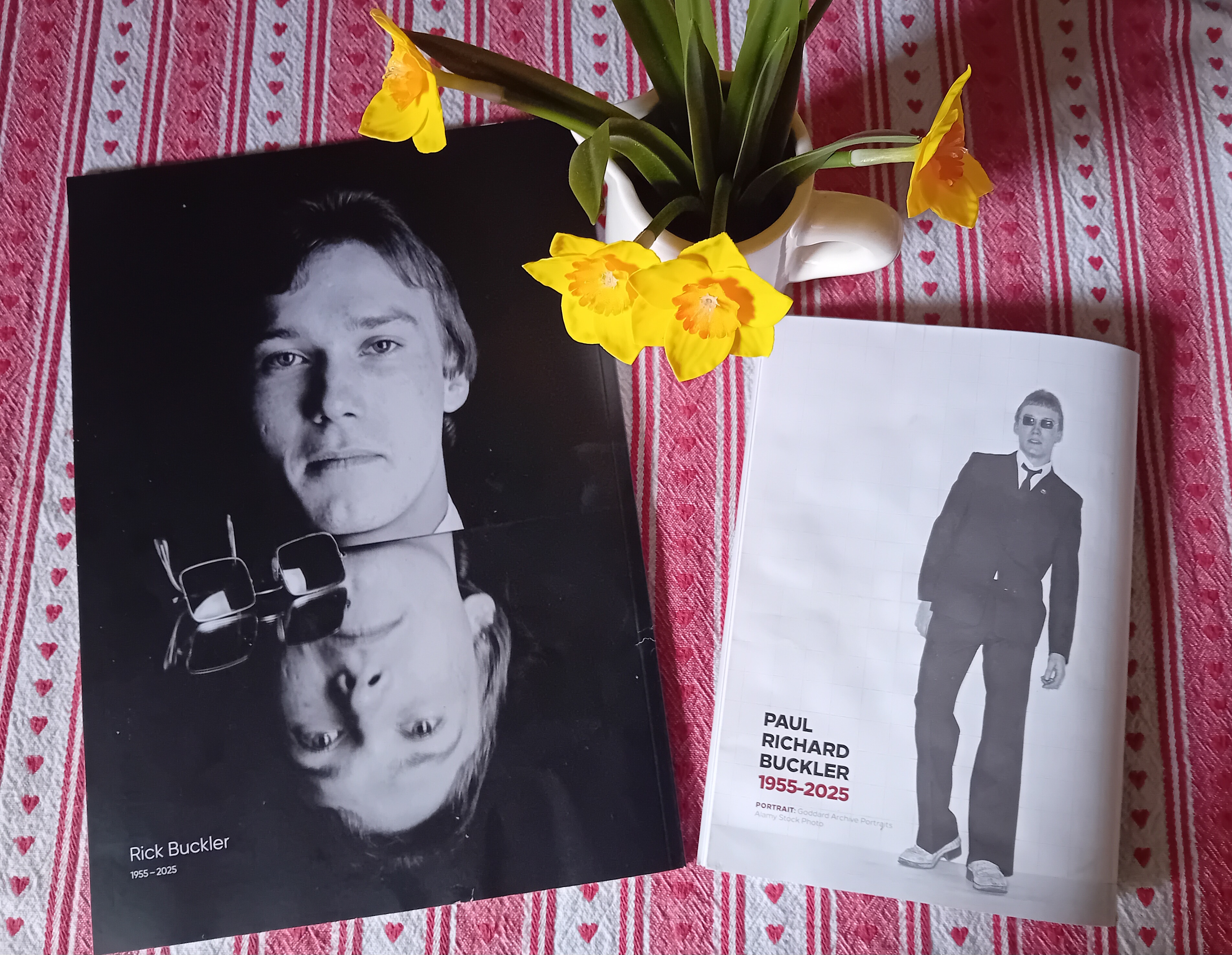
It’s been a vintage year for Paul Weller-related publications, and I can’t believe eight months have now passed since the release of my own love letter in print to Paul, Bruce Foxton and much-missed Rick Buckler, Solid Bond In Your Heart: A People’s History of The Jam (Spenwood Books).
With the (whisper it) Christmas market in mind, I should mention that there are still a few hardback copies available, and if you’re looking for further Weller-flavoured written product, if only to drop a couple of timely hints to loved ones, there are a few more impressive new books to be tracked down.
This week alone saw a copy of the heavily soulful, super-ambitious Sartorial 65: Paul Weller Style – Five Decades of Cool land at West Cornwall’s WriteWyattUK HQ, a true contender for the crème de la crème of coffee table books, lovingly assembled by Nick Keen alongside daughter Harriet, Alf Button and Jason Disley. And that weighty wonder, seemingly right out of Cafe Bleu or maybe Our Favourite Shop next door, arrived shortly after further word from Stuart Deabill, co-author (with Ian Snowball) of 2012’s Thick As Thieves: Personal Situations with The Jam and 2020’s Soul Deep: Adventures with The Style Council, regarding In the Shadow of the Sun: Paul Weller & the Nineties, penned with Steve Rowland (also involved with Soul Deep) and Paul’s sister, Nicky Weller, currently on pre-release and set to land in Spring 2026.
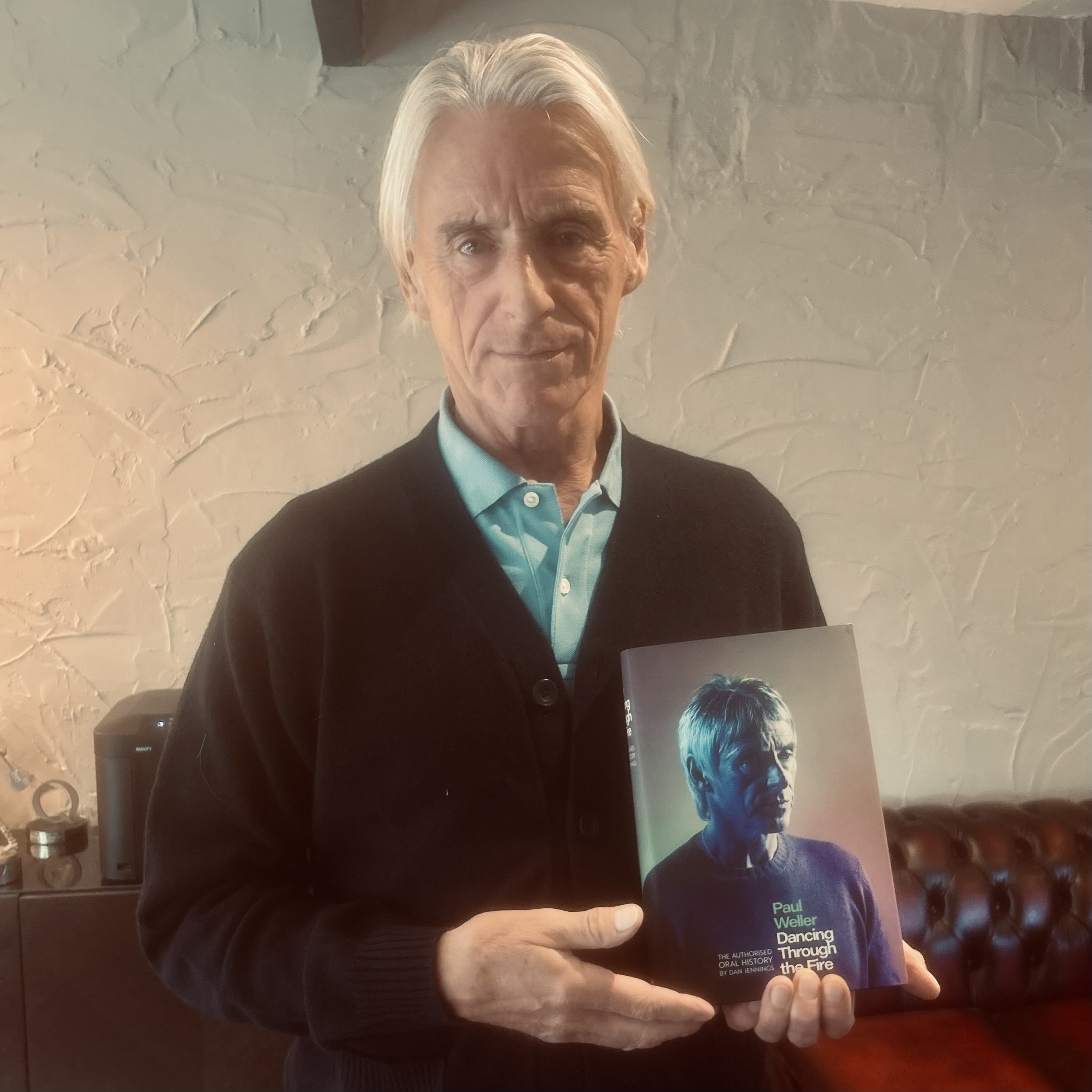
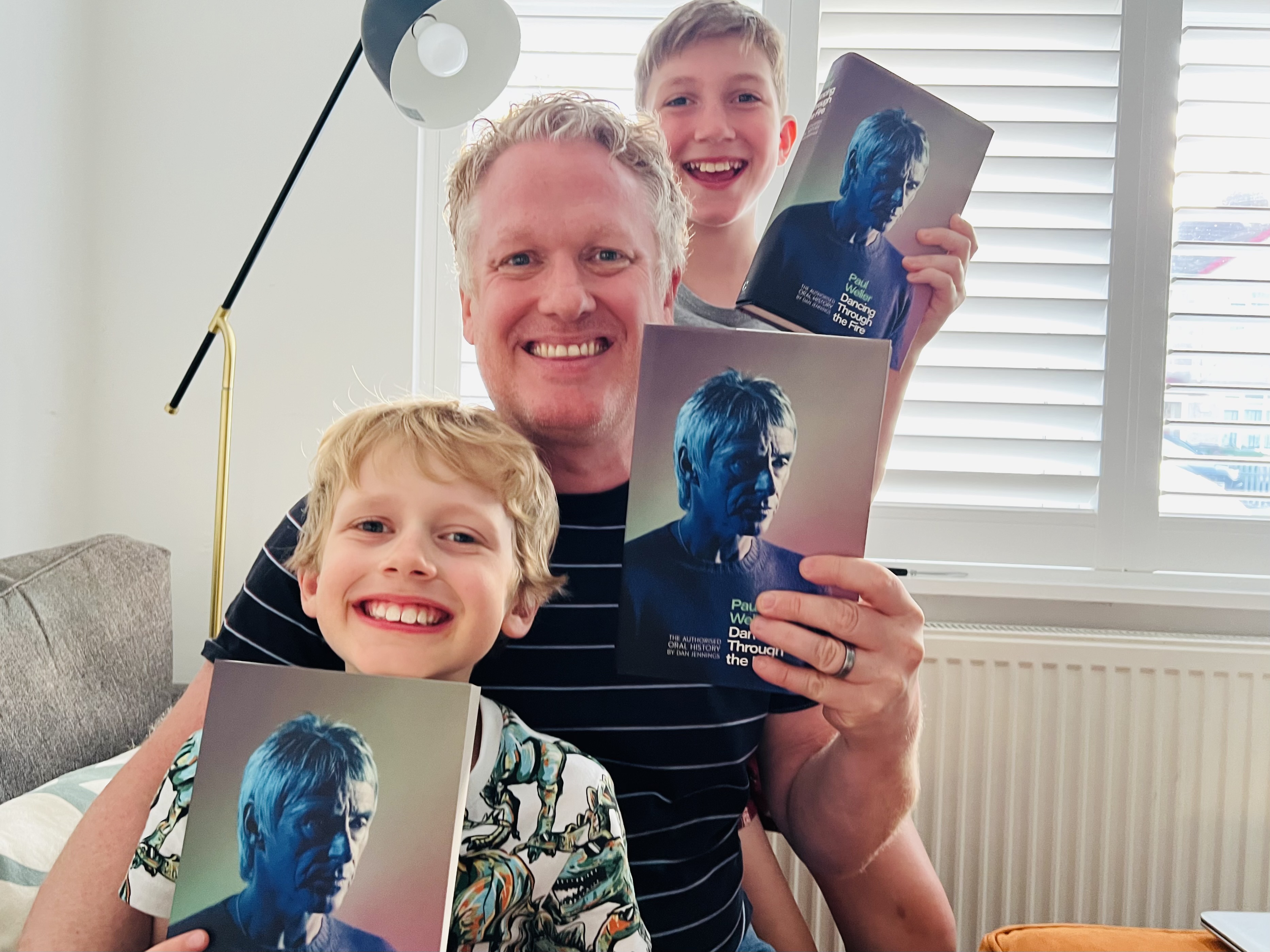
While it might appear odd for this scribe to help spread the word about rivals of sorts in an era where spare cash is somewhat hard to come by, what unifies us all is an overriding love for Weller’s many musical projects and vehicles down the years, from The Jam onwards. And I feel it would be churlish to do anything but highlight those publications and another receiving plenty of rightful acclaim lately, Dan Jennings’ rather splendid Paul Weller: Dancing Through the Fire – the Authorised Oral History.
As Weller himself put it, ‘Nearly 50 years in music? How is that possible? When Dan mentioned that he’d interviewed over 250 people for this, I didn’t even know that I knew that many people… but he’s done it in a way that shows that it’s more than just about me, it’s the story of everyone who was there along the way.’
I’m guessing Dan’s still glowing about that praise. I know how he feels too, after receiving my own personal correspondence with Paul earlier this year following Solid Bond’s publication. I still gaze at that hand-written letter occasionally, smiling, somewhat in awe. ‘Paul Weller? Writing to me?’ Yes, really.
From day one – in his case, December 2020 – I loved the concept of Dan’s Desperately Seeking Paul podcast, and while I tried to avoid listening to more than a handful of editions while working on Solid Bond (not least as many of the names interviewed were also in my contacts book), I can safely say it made for wonderful listening, his lockdown era project soon soaring in the ratings, with good reason.
Chances are you’ll already know the idea behind the Paul Weller Fan Podcast, but in short it featured 180 in-depth interviews which ultimately led to a two-hour conversation with Weller himself, and even Dan’s involvement in Paul’s official marketing. The initial premise? Dan tells us he gave up his radio broadcasting career with ‘one big regret – never getting to interview his hero’, Desperately Seeking Paul created chiefly to try solving that issue, soon becoming a celebration of Weller’s output from The Jam’s In the City onwards, the broadcaster ‘joined by fans, musicians, band members who have played with Paul or simply loved and been influenced by his music, the studio teams, producers, engineers, tea-boys and more, the video directors and documentary makers, the journalists, radio and TV presenters, photographers and authors who have interviewed him, taken photos of him, written about him, hung out with him or who simply dug his career, friends, family… and more!’
Dan hardly needs my words of approval, the product speaking for itself and word put around by many influential commentators in Weller World and across the music press in recent weeks, with backing from his team at Constable / Little, Brown. And he deserves the accolades – it’s a mighty tome, lovingly licked into shape, coming in at 760-plus pages, taking us right through that amazing career, featuring many entertaining behind-the-scene tales, insights and perspectives from the man himself and those who have proved integral to that remarkable journey, including many names within Paul’s inner circle, family and friends among them, the accounts carefully weaved together from more than 200 hours of conversation… with PW’s blessing and full cooperation, all tackled remarkably well, much that worked about the podcast now neatly translated into written form.
And I know just how much hard graft goes into such publications and how much of your life and that of those around you (it took a look and drowned us, you could say) is consumed in the process. So how best for me to cover all that? Well, I decided to have words with Dan, who was good enough to spare a little precious time the afternoon after his London book launch – presided over by esteemed broadcaster John Wilson – between various engagements with radio shows and the like, part of a busy fortnight of promotion for a fella admittedly rather shell-shocked by the public and critical response to his book and broadcasts. He was definitely on a high. Most likely he still is.
‘I said to somebody at the launch, it feels a bit like a weird kind of out-of-body experience. There are moments where you see something, somebody’s written something lovely or whatever, and you get a bit emotional, but it’s like it’s happening to somebody else. Very odd.’
Can we measure success by the comfiness of sofas on stage at a launch event?
‘Ha! I mean, they were quality sofas, true… but also by the guests. The fact John Wilson came along, then introduced me, was utterly ludicrous. Someone I’ve listened to on the radio for donkeys’ years.’
And he turned down another event to be there.
‘He was meant to be at the Bowie launch at the V&A. I think he got his nights confused, then realised he’d double-booked. Bless him, I’d have binned off me for Bowie!’
Quite a compliment. John comes over as a consummate pro. In fact, I’ve only recently caught up with his Mastertapes series via the wonders of BBC Sounds – Billy Bragg, Ray Davies, Wilko Johnson, The Zombies, so many more greats in conversation, including Paul Weller around the time of Sonik Kicks and the 30th anniversary of final Jam studio outing, The Gift.
‘Yes, and on that he plays ‘Gravity’, still six years away from being released.’
It’s coming up for two years since Desperately Seeking Paul podcast interview no. 180. Clearly, that chat with the man himself was always the game plan, but did you – five or six episodes in – always believe or allow yourself to think it was going to happen?
‘It was a bit of a rollercoaster if I’m completely honest. There were times where I thought maybe it would happen, but then you heard things where people would say, ‘Oh no, he doesn’t do that sort of thing.
Dan Dancing: The DJ behind the book, a proud moment for this broadcaster and Weller enthusiast
‘But bless Claire Moon, his manager, who quite early on heard about it, and we connected. She said, ‘Look, you know…’ Obviously, if I interviewed Paul, it would be the end of a story arc, and kills off the ending. But she was also like, ‘Let me know if you want me to have a chat with him about it.’ It wasn’t a case of ‘let me know when you want him to do it.’ It was never a given, and certainly five episodes in I wasn’t thinking ‘this is going to happen’. That seemed a ludicrous idea, really.’
I wonder if your opinion of Paul as an interviewee changed. As an avid NME reader in the Eighties who first saw interviews in print with him in late Seventies Smash Hits days, the thought of landing a proper chat with him initially scared me. I wanted to do it, but – be it down to shyness or whatever – he’d often come over as brusque, surly, rather challenging. He seems remarkably chilled by comparison these days… but maybe that was always the case if you knew your stuff and he could recognise a kindred spirit. Perhaps it was just a perceived public persona.
‘I think as a young man he couldn’t always articulate what he wanted to say, therefore came across a bit abrupt, a bit short. I think there were also times when you could tell the interviewer was asking questions he didn’t have a huge amount of time for. He didn’t seem to get asked about the art and the craft, which surprised me. And without wishing to slag off other presenters, it was always one of my frustrations as a fan – he’d be billed on radio shows, you’d listen in… and some were excellent, but others you’d hear and go, ‘Why was he on that show?’ Like he was having to just tick off a press rota. Terrible. So absolutely, I think he’s in a place where he’s more comfortable in his own skin and as an interviewee now, but also think it’s about asking the right questions. That sounds like a massive ego, but there is that as well.’
It does make a difference. I can think of many an interview I’ve done where I feel a need to get in the sort of questions early doors that suggest you do actually know what you’re on about and understand where an interviewee’s coming from.
‘Yeah, you have to do your groundwork, and sometimes he’s been interviewed by people who clearly didn’t know, properly, his back catalogue or would try to find an angle that would be ‘clickbaity’. And Paul said quite recently to Shindig! ‘Dan didn’t have any agenda.’ I’m genuinely interested in all the stories and craft, his upbringing and everything as a fan but also as somebody interested in interesting stories!’
What do you reckon was your first ‘pinch me’ moment on this 180-edition journey?
‘Nicky Weller was a real key point, obviously in his inner circle as his sister. We did it on Zoom and she was in Ripley at her mum’s house, Ann chipping in in the background. That felt like a kind of Weller stamp of approval, The Jam fan club link, all that. And people like Andy Lewis, where you were getting to band members as well as writers, documentary, film makers, whatever, to the kind of people who had been ‘in it’, on the road…’
The upper echelons of the Wellerati.
‘Absolutely!’
Before all this there was a radio career. Tell me more, and why it ended.
‘That was my first love. As a kid, all I ever did, really, was listen to music and the radio. This was in Essex, I was born in ’75, so this would have been early Eighties. Me and my mum would listen to this guy, Timbo, who’d do really interesting, fun content and music competitions, and we’d play along. I loved music and grew up in a household where we had a cartridge machine. My folks had these massive, bloody great big cartridges of The Beatles and things in the house. We also had them in the car, taking these huge cartridges out with us! They’d flip over and somehow in the internal mechanism they’d always get tangled up. I’d love to see those again.’
So you were the Eight Track Cartridge Family, right?
‘Ha! Yeah, my mum was into Motown, The Beatles, all that, my dad was into Bowie, Eurythmics, Kate Bush… some great music. But funnily enough, not The Jam. They were just a bit past that age group. I’d listen to two shows, Invicta Radio on a crackling transistor… I’d struggle to get to school the next morning because I’d been listening in all night long, a guy called Caesar the Boogieman, brilliant. Then I discovered GLR and Chris Evans, before TFI Friday, Big Breakfast, all that. This was just so bonkers and anarchic and wonderful. I thought, ‘I want to do that job!’
‘I did hospital radio at 15, in Taunton. By then my folks had split, me, my mum and brother moving down to West Somerset. I had to go around the wards, get requests, take them to the presenters. Then, when I was 16, I got my own show, the Sunday Roast Show. By then I was doing a communications GCSE in sixth form alongside A levels and got a work experience place at BBC Somerset. I’d go in every Wednesday, but also spent time in the studio whenever I could. I’d fuck around with reel-to-reel tapes, make my own jingles for my hospital radio show.
‘I’d spend ages making little Dan Jennings effects tapes, all that. Such fun, and I made loads of friends through it. There was a Saturday show – I’d go in and answer the phones for this guy called Simon White. He was great, embracing young talent who were really keen. He had this ‘crew’, us all answering the phones for him, and he’d get us on air and out in the radio car, reporting back from events.
‘I then got offered a job by the BBC when they were moving to computers. This sounds so ancient – they were moving away from reel-to-reel tape, and I was the only one who really knew how they worked! They gave me a job, and I moved to BBC Bristol, and from there trained me to be a journalist and producer. I was there about eight years, left to do commercial radio in 2000, breakfast shows in Somerset, then Crawley, and a drivetime show at 210 Reading – a great show, a huge privilege, a big old station, but the format was more music, less talk, and heavily playlisted – not so much songs I liked.
‘I did a link one day, in the show notes it said, ‘Speed link, 10 seconds.’ I did 13 seconds. The programme director said, ‘It’s too long. Why?’ I thought, ‘I can’t do this anymore. This is rubbish.’ It wasn’t what I thought radio should be. I fell out of love with it, left and worked behind the scenes. I was at Magic and Absolute quite a long time – branded content.’
Where were you at come the Covid lockdown at the start of the Desperately Seeking Paul podcast?
‘That previous year I left an amazing job at Bauer, with some great people, having been there nearly 10 years. It felt like it was time to move on, so I moved to an advertising agency, a mixture of project management and production, running content partnerships but lots of interesting things, like voice skills for Couch to 5K, and Alexa, all these weird and brilliant projects, away from radio completely. That was where that ‘deep regret’ thing came from.’
As for that regret – never having interviewed his hero – when did this love for Paul Weller’s music come about?
‘It was his solo material, so I feel a bit of a fraud in that my discovery was not through The Jam or The Style Council. At the launch, John Wilson did a lyrics quiz, including proper ‘ingrained in everybody’s heads’ Jam lyrics, and I was terrible – didn’t know any! But I love those songs, and when I’m in the mosh-pit singing back at Weller, on a lot of songs I’m singing my own lyrics to them. Then again, even Noel Gallagher’s said the same!
Paul’s Blessing: Paul Weller was supportive of Dan Jennings’ project from the very Start of the venture
‘My discovery was through ‘Uh Huh, Oh Yeah’. Pretty sure it was Top of the Pops, with Weller, Whitey, Jacko Peake, Camelle Hinds. They looked brilliant. It was a weird thing, Top of the Pops, so random, not like a flow of a TV show in the same way Later would be. You’d literally bounce from Mr Blobby to Peter Andre, then Paul Weller, and his performance really stuck out.
‘Somebody I went to school with found my 16th birthday invitation party invitation the other day, I was DJ-ing, and the ad said I’d be playing music from KLF, The Shamen, C+C Music Factory… My tastes must have changed overnight, and as we led up to Britpop, guitar music came back, so you’d have Nirvana, Lemonheads, then I was getting into Juliana Hatfield…
‘I thought I’d discovered this brand-new artist, because he wasn’t very old – 35 or so – but had this amazing sharp Mod haircut and looked great, stick-thin, and so cool in these white jeans. I went into sixth form raving about this ‘new’ artist, telling everybody about this song. And when that first album came out, I was raving about it. Then we had builders in at mum’s, decorating or something. I brought home this massive cardboard Weller from, HMV, which, funnily enough, I’ve got in this garden office I’m chatting to you from. He’s got a Lennon copy thing going on, wearing these cool sunglasses, piano keys reflected in them. I was raving about him, and these fellas are like, ‘Yeah, mate, we’ve heard of Paul Weller. Check out his good stuff – The Jam.’
The next day they brought in this cassette. I think it was Snap, all these great hits but also loads of really great B-sides. I felt an absolute idiot. Later, I also found out about The Style Council, so there was all this catalogue to discover!’
At this point, I mention how I stepped away from Weller’s output after The Style Council’s The Cost of Loving, (an LP I like again now) but got back on board from The Paul Weller Movement onwards. I also mention how through writing, compiling and editing Solid Bond In Your Heart: A People’s History of The Jam, I’m reminded that a fair few Jam fans never embraced anything in his song catalogue beyond 1982’s The Gift.
‘I think that’s fascinating, and it’s not massively uncommon that people have this period where the music they find has that power. I’ve got so many friends who have that five-year or so period locked in time.
‘There’s the music, but the other thing I really like, when you start to understand that story, is the interviewing – getting people on to talk to me. I always loved meaty interviews. That was always a passion. I wasn’t a pop and prattle DJ, and that story arc is great – these kids playing clubs in Woking, the singer’s dad as manager, and all that followed, then the split, people being furious – some remaining so – and then The Style Council. This constant rollercoaster of storytelling that goes with it.
‘With the podcast and the book, I didn’t want to get into a battle with them – that’s their opinion and they’re entitled to it, it’s their truth. What I’ve tried to do through the podcast is – assuming they listen, because obviously it’s not just a Jam podcast – ‘Yeah, you might think that… but why don’t you listen to this?’’
Looking back on your book launch, do your boys – along on the night – now realise how much of a thrill this has been for you? Or was that never in doubt?
‘Yeah, my wife as well, they’ve all been so proud of what I’ve done. When I did the Ann Weller piece, somebody made me a photo frame of a gold disc, and my wife got a ‘100 episodes and counting’ celebration placard made. Then, when I reached (edition) 180, the day that went out on air they got champagne, a cake, and all that. They’ve always been supportive… even though it must be hugely annoying that every time we get in the car, Weller’s playing, or when they walk in a room he’s playing on the Smart speaker… even though they’re not fans of the music. I don’t know why…’
Boys’ Own: Dan Jennings and his lads, extremely proud of their Dad and his writing and broadcast ventures
Give it 10 years. They’ll eventually get it.
‘Yeah, but they’re hugely proud. And now the book is this physical thing they can see… This morning they both took a copy into school, we had cake and champagne for breakfast, and our youngest has decided he’s going to World Book Day in March as me! I suggested instead he goes as Weller, but he wants to go as me.’
That’s fantastic. And three book titles in, I should add that sense of wonder rarely loses its sheen. And in my case, my girls insist on ‘buns for tea’ on publication day, as with the mother in E. Nesbit’s The Railway Children when she sold stories.
‘Ha! And before John Wilson started the event, I said, ‘First things first – every time there’s a swear word on stage, my kids will get a pound.’ If Kenny Wheeler and John Weller, bless them, had been on stage, my kids would have paid off that mortgage! I knew it’d be fruity, but by the end it got to the point where my eldest, Henry, cheered every time there was a swear word… they’re both about £50 better off now and can afford a Switch 2, so they’re delighted.’
At this point, we compared notes on Weller-related writing projects and got on to the subject of both books serving as timely tributes to Rick Buckler and Ann Weller.
‘In the acknowledgements, I said there were three people who passed away during the making of the book – Rick, that was a real shock, but also Chalky, Suggs’ best mate (Andy Chalk), who wrote the words to ‘Nothing’ (as featured on 66). Then of course, Ann Weller passed away the midweek before we hit send to the publisher. I’d already written about Ann and how grateful I was, but tweaked that a little. Yeah, you realise the fragility, people getting older, and some of these voices you capture that then aren’t around. So actually I’ve captured Ann in this book, and she’s not here, bless her, to tell those stories again. That’s quite a wake-up.’
You mention your lads hearing Paul’s music wherever they go. What’s the most recent Weller-related record on the deck at home or in the car?
‘I’ve been listening to the covers album (Find El Dorado), but also the Will of the People boxset. For the launch, I did a playlist – it’s funny how long you end up taking on that, as if anybody’s going to be paying attention to the background music in the bar! – and there are so many brilliant tracks on that. There are so many brilliant songs on that. I don’t know why I didn’t listen to it a huge amount at the time – maybe just because there was so much Weller stuff out around then.
‘Things like ‘Serafina’ and ‘Devotion’, a bonus track on Sonic Kicks that was on a TV show about football, and things from the Jawbone soundtrack, ‘Into the Sea’, a bonus track on Fat Pop, which is beautiful, and a demo called ‘Let Me In’, which Ollie Murs covered. I don’t know why Paul didn’t release it – it’s a brilliant song. And ‘Praise If You Wanna’, about a minute and half long, and the ‘Mother Ethiopia’ stuff. It’s really diverse, all over the place, but a really good boxset.’
And when you’re off to your next event, what’s in the car?
‘There are a couple of albums I always go back to – the Wild Wood album is phenomenal. I do listen to other stuff, I promise! But when I go back to that, it brings back so many memories. Doing work experience at BBC Somerset, they had a record library full of promo CDs from the record companies. Bizarre, really – this was like BBC local radio broadcasting to pensioners! But I remember, clear as day, going in and on this pile of CDs – you could take what you wanted – they had ‘Sunflower’ two or three weeks before it came out. I remember driving from West Somerset to Taunton in a Vauxhall Astra estate my mum gave me, listening to that CD over and over. Then when that album came out, again getting a copy through the record library. Such a brilliant album, and it still sounds so fresh.’
Such a great run of LPs, those first three solo LPs incredibly important to me too, as was – in its own way – 22 Dreams, and on from there, several others making a huge impression.
‘Yeah, and I bounce around between them all. I listen to lots. On Sunset and Fat Pop as well – absolute bangers.’
And where’s home these days?
‘South-West London. I moved to London in 2009 when I got a job at Magic and Q Radio. That was exciting… then the week I started, they closed Q Radio down! I lived in Balham for a while, but couldn’t afford to buy there, so we moved out to Carshalton.’
I know it fairly well, being Guildford born and bred.
‘Ah, I was at Eagle Radio there for ages!’
Well, there you go, I was on work experience as a sixth former, mid-Eighties, in its days by the Friary shopping centre and the bus station, County Sound Radio, going on to help out that summer on an evening show for Dave Fitzgerald, more recently on BBC Radio Devon, once – I seem to recall – the voice of ITV West Country legend Gus Honeybun.
‘Ha! I remember Gus Honeybun! At Eagle Radio, Dave Johns was running County Sound, and Peter Gordon was there, another massive Weller fan featured on the podcast. I lived in Cranleigh and worked in Guilford. I did marketing, and used to be the Fuel Phantom. We’d go out, pay for people’s petrol on forecourts, which was hilarious. I had a kind of Zorro mask. There was also a mascot, so I had this bloody great bird costume, dressing up as an eagle, going to ice hockey.’
Guildford Flames?
‘Yeah! Ha!’
You’ve a quote from Mr Weller on the podcast website, saying, ‘I’m always looking forward to what I’m doing now and what’s ahead.’ So how about yourself?
‘Good question. I’ve been doing interviews with a bunch of BBC radio stations, and one person suggested there hadn’t been a decent documentary for donkey’s years, and obviously there’s a heap of content and voices and people there to mine… so that’s interesting.
‘And on BBC Radio Cornwall they said, ‘What about a Weller musical?’ I thought, ‘Oh, wow!’ I need to ask Weller HQ – they must have been asked, when you think about all these jukebox musicals lately.’
Well, bearing in mind there’s just been a Wedding Present musical…’
‘Oh really? And there were Tina Turner and Bob Marley ones, Bowie – the Lazarus thing… There are so many great songs, and then there’s the oral history. I don’t know. People could now steal that idea. I should at least message Claire!’
Sometimes you only need put these ideas out there…
‘That was the thing with the book. On ITV News, they said, ‘What’s next?’ and I said Paul Weller suggested, ‘Turn it into a book’. Then off the back of that, all these publishers were getting in touch. It was mad. But yeah, putting it out to the atmosphere… maybe not. I think my wife would be furious that I’m spending less time with the kids yet again!’
I reckon half of our acknowledgements in these books comprise apologies to better halves.
‘Well, someone at the launch went up to my wife and said, ‘Thank you very much for letting him do it.’! The thing is, I didn’t transcribe the podcast as I went along, so when it turned out we had this book deal, I had to start transcribing 200 episodes. Thankfully, loads of people came forward, started helping, bless ‘em, which was amazing. I don’t even know if it was a final book at that point, but knew I wanted to do that. What I did then was chop all the different little bits of stories up, like a big jigsaw puzzle, so I could put them in the right place… and I ended up with 1.5 million words!
‘Gary Crowley mentioned to me the Mark Lewison book, The Beatles: Tune In…’
Ah, yes, still on my shelf waiting for a few quiet weeks to tackle. Looks bloody good though.
‘Yes! Well, Mark has a three-biography deal with my publisher, and part one only takes you up to 1963 or something. Somebody said last night, ‘You need to do an extended version.’ Well, technically speaking, I’ve done a 1.5-million-word version already!’
I seem to recall that’s the way I did my Clash biography. And you’ve reminded me that for many years I’d feel aggrieved at radio journalists in my sports reporting days, as once they’d finished a commentary and summary and maybe tracked down a manager and player, they could bugger off home, while I’d end up writing a second report, sometimes a third, that evening or the next day. So at least now you’ve seen it from both sides.
‘The thing is, though, something my book doesn’t do but maybe the original 1.5-million-word version does is truly capture that cultural aspect of The Jam you were talking about, and the power of all that – how everybody came together in that movement. the youth around that period feeling those bands connected everybody. If you were a teenager back then, that was the most important thing. You listened to the same charts, watched the same telly… and that’s never going to happen again.’
Similarly, I’ve edited lots of personal history music books, and always prefer the early days’ content most. For instance, first-hand accounts of Bruce Springsteen at the Stone Pony, Asbury Park, New Jersey, are far more interesting than countless tales of modern audiences queuing to see him after stadium soundchecks with the right wristband and VIP backstage passes. Nice a bloke as The Boss seems, that doesn’t make for such gripping reading.
‘Yeah, I understand that. It’s not the same as where people discover and experience music.’
And with that, he was away for his next call, still powering through, the praise (if you wanna) continuing, tackling it all with plenty of fire and skill, as you’d hope. Take a bow, Dan.
Dan Jennings features alongside Nicky Weller on day two – Saturday, 15 November – of the three-day Louder Than Words music literature festival in Manchester, the UK’s largest, the pair taking to the stage not long after Malcolm Wyatt and Louder Than Words writer/broadcaster Iain Key debate the continuing draw of The Jam and The Clash in a Battle of the Bands special refereed by Spenwood Books head honcho Richard Houghton. And both of those events are on a day when the LTW guests also include (deep breath) John Robb talking Oasis, Debsey Wykes, Stuart Maconie on The Beatles, Clare Grogan, Steve Diggle, James Nice on Factory Records, TV Smith, Justin Currie, Henry Normal, David Barbarossa, Dennis Bovell, The Lovely Eggs, Matt Johnson, Dave Rowntree, and Daniel Rachel. Quite a line-up, eh. For ticket details and more information, head to https://louderthanwordsfest.com/whats-on/
Malcolm Wyatt’s Solid Bond In Your Heart: A People’s History of The Jam (Spenwood Books, 2025) is available from the author, select book and record shops, various online sources, public libraries, and from Burning Shed via this link.
For more about Dan Jennings the Paul Weller Fan Podcast and Paul Weller: Dancing Through the Fire – the Authorised Oral History, head here.
And to pre-order In the Shadow of the Sun: Paul Weller & the Nineties, by Stuart Deabill, Nicky Weller and Steve Rowland, follow this Soul Deep Productions link.
Galleon View: Stone Foundation in Falmouth, the Lone Groover in the wings. Photo: Malcolm Wyatt
Appearances by nationally renowned bands this side of the Tamar are few and far between, it seems, so need to be properly celebrated and savoured… hence my ride over to Falmouth last weekend to catch acclaimed soul collective Stone Foundation.
My previous visit to the Cornish Bank was for the town’s International Sea Shanty Festival, a different vibe but similarly joyous, a cracking venue on the main drag this time swapping maritime-themed deepwater festival folk for Midlands-bred deep soul and revival funk, the visitors supplying the sunshine vibes on a damp midsummer night.
Stone Foundation’s most recent long player, The Revival of Survival, has proved essential summer listening for this scribe in 2025, and while there was no appearance at Falmouth from Style Council co-founder Mick Talbot, a more recent addition to the ranks, we were in no way short-changed, keyboard player Ian Arnold proving more than capable of filling the gaps in that luscious sound. Besides, there are only so many band members you can fit on that stage. And while this A30 run proved too far out for their esteemed bandmate, Merton Mick will be on hand at Cardiff Castle on 20th and 21st August when they support Tom Jones, clearly still up for the big ’uns, 40 years beyond Live Aid. This was my third SF live outing since 2019, first catching them at Gorilla in Manchester, then two years later at the Boileroom, Guildford.
And I reckon this might even have been the best yet, the sound quality and choice of set making for a special night, a septet version of the band neatly set up by a soulful session from the Easylife Sound Association, taking to the stage while the DJ played atmospheric LP opener ‘How Many Times?’, the faders eased down as the band took over and swiftly got into the groove, moving on from there to the positive energy of title track – by way of a killer bassline – ‘The Revival of Survival’ then ‘Everything & All I Want’, seamlessly shifting up the gears, lighting up the West in this case.
And what presence, as Edwyn Collins would put it, a three-piece brass section – on paper, hamstrung by the absence of Dave Boraston – on form throughout, deputising debutante Patsy Gamble (perhaps it should be ‘pasty gamble’ in honour of the Duchy setting) putting down her mark, following the lead of horn arranger/ all-round dependable Steve Trigg (trumpet) and rapidly in step with fellow sax player, Anthony Gaylard, who was out of my eyeline behind the speakers but made himself known from those first blasted notes.
Parrot Fashion: Queuing outside the Cornish Bank, Falmouth, pre-set, on the night. Photo: Malcolm Wyatt
I do love a good brass section, fellow Midlands wonders Dexys’ first LP and (past SF collaborator) Graham Parker’s The Rumour brought to mind, with a little of the joyous energy of Earth, Wind and Fire and Stevie Wonder’s horn sections thrown in the mix for good measure.
While the new LP formed the bulk of the set, there were selections from the previous four platters (all recorded at Paul Weller’s studio), starting with the upbeat, Andre Laville-less ‘The Light In Us’ from 2020’s Is Love Enough? And while the band were somewhat reliant on frontman/guitarist Neil Jones on the vocal front, he put in a great shift, band and audience alike floating on air for a Weller-free ‘Deeper Love’ and, later, clubland floor-filler ‘Reach Out’ (another delivered by Laville on record), keyboard wiz Arnie adding some lovely Ray Manzarek-like flourishes, the band building to a climax that was more Chicago House than Cornish Bank.
The laidback pop soul of ‘Fix You Up’ and ‘The Beat I Know’ from the new record also impressed live, Dominic Carr expertly taking on Phil Ford’s role on drums, the band totally in step, even if we didn’t have time to get our roller skates on, Jonesy remarking – looking in the direction of the balcony, where a fair few of us were hanging over – how he felt like he was playing on a galleon. In fact, his bass-playing co-conspirator, Neil Sheasby, felt it was more a mix of The Good Old Days and an audience in the Czech Republic. And while I’ve not been part of any such congregation, I kind of got where they were both coming from.
Wherever Stone Foundation play, the Style Council-like ode to joy that is ‘The Limit of a Man’ is always a highlight, with this night no exception, nine years after that song was first committed to vinyl on the Street Rituals album, the first SF LP to win me over… by which time they’d already put in a 17-year shift. And more than a quarter-century into their sonic journey, they continue to attract new followers… with good reason, new tracks like soulful dreamer ‘Close to Where You Are’ and the funkier ‘Cut Me Loose’ (Jonesy claiming JP Bimeni’s lead vocal here) proving they’re still capable of wearing grooves into dancefloors, the brass section working up a Pigbag-type sweat on the latter.
I reckon that would work as a theme for some retro 70s US cop show, and similarly, 2022’s ‘Stylin’ saw us back on that soul train, more Hill Street Superbad Blues than the band’s Tamworth and Atherstone foundations would suggest. At one point I was so locked in that I wasn’t surprised to catch sight of the Lone Groover (remember him from the NME, back in the day?) in the wings behind Ian Arnold, only to realise it was behatted co-founder/ever-present Sheas’ shadow.
We caught our breaths with the more spacy, slow-building old fave ‘Carry the News’, before a return to the latest release for ‘2 Die 4 U’, its naming convention suggesting a nod to Prince, that number fittingly followed by a Sly Stone tribute, Jonesy leading a chorus of ‘Thank You (Falettinme Be Mice Elf Agin) before his chop guitar heralded a launch into mirror ball spinner ‘Heaven Knows Why’ from 2022’s Outside Looking In, more Studio 54 than 34 Church Street, complete with Shadows-like steps from the two Neils.
The main set ended with the rather apt ‘Now That You Want Me Back’, Melba Moore’s vocal taken on by the in crowd on another where Sheas’ pounding rhythmic bassline paved the way, our visitors then staying put rather than facing a trip back through the audience to find the dressing room, duly milking the applause before launching into a three-song encore, this sentimental fool rather emotional on hearing their no-nonsense rendition of current single, ‘Starting From Zero’, my highlight of the night and a contender for single of the year, those luscious horns adding to its Bowie-esque vibe.
There was still time for one last deep cut from the new record, ‘When Worlds Collide’, including plenty more sax appeal, Stone Foundation style, before a return to 2018’s Everybody, Anyone for ‘Next Time Around’, a perfect celebratory conclusion to a stonking 19-song set, this punter giving the only song from the new record not featured on the night, the dreamy ‘Summer Song’, a quick blast on the way home… the night going on and on and on.
Floor Fillers: Stone Foundation on fine form at the Cornish Bank in Falmouth. Photo: Stone Foundation
Beyond their support with Tom Jones at Cardiff Castle next month, Stone Foundation are at Hemel Hempstead Old Town Hall on 13th September ahead of mainland European dates between 18th September in Basel, Switzerland, and 22nd September in Frankfurt, Germany, followed by dates across the Irish Sea on 26th September at Dublin’s Workman’s Club Cellar and 27th September at Belfast’s Oh Yeah Music Centre.They then set out for a run of UK dates, from The Bullingdon in Oxford on 23rd October through to 29th November at Shepherd’s Bush Empire in West London. For full details of all those dates and ticket links, head here.
For all the latest from Stone Foundation, including details of the band’s The Revival Of Survival acoustic session, featuring Neil Jones, Neil Sheasby, David Boraston and former Style Council pair Mick Talbot and Steve White, check out their website hereand Facebook and Instagram pages.
Worcester Calling: Alan Wilkes awaits WriteWyattUK’s verdict on the latest Shadrack & Duxbury Records LP
Has it really been a month since the official release of Vinny Peculiar’s latest long-playing work of art? Well, I never. And that’s rather spot on seeing as I had an advance copy long before that release date, but… ‘well, I never’ quite found the time to spread the word, until now. Still, there’s that old chestnut of an adage about the best things coming to those who wait… and it is rather apt that this belated review is for a record called Things Too Long Left Unsaid.
The LP, his 15th in total and out on his own Shadrack & Duxbury Records label, is described by Alan Wilkes, the talented singer-songwriter behind Vinny Peculiar, as ‘a retrospective collection of older, unreleased songs written over a ten-year period (2011 -2021) that never quite made it on to past albums,’ its 10 songs ‘re-made and re-imagined’ alongside Dave Draper (Dodgy, The Wildhearts), ‘recorded in an attic on Rainbow Hill, Worcester’ and at Mayfield Road Studios, Salford, and The Old Cider Press, Evesham (with its rather lovely LP artwork down to another long-term VP associate, Paul Cliff).
So without further ado (and there’s been a fair bit of positive ado about the record so far, from critics and fans alike), here’s my take on the latest batch of Wilkes-penned wonders, from ‘The End’ to the finish, so to speak.
This time, the main man (vocals, electric, acoustic, slide and bass guitar, piano, keys and drum programming) co-produces with Dave Draper (additional guitar, bass and drums, final edits), with backing vocals from Alan’s daughter Leah Wilkes and Seb Walch. And I’m still trying to work out if it’s genius that the reflective gem opening the record is called ‘The End’… not least as it could easily be a lighter-waving set finale.
‘Next time we’ll get it right, and we’ll hit the big time on a Saturday night.
But this is the end, this is the end, here’s to a new beginning,
Here’s to a brand-new innings, here’s to a new way of living.’
There’s a Richard Hawley-like quality here, and as for that song title, I wonder what Jim Morrison would make of it. And I don’t mean James Robert, of Carter the Unstoppable Sex Machine fame… although there’s a modern-day solo artist ploughing similar well-observed, skilfully executed songwriting furrows… if that’s not too mixed a metaphor (it clearly is, on reflection).
Disc Space: WriteWyattUK’s Vinny Peculiar CD collection in all its glory. Photo: Malcolm Wyatt
Talking of Saturday night fervour (I know, from furrows to fervour in barely a couple of lines, pop kids!), there are elements of ‘Saturday Night’s Alright for Fighting’ on ‘Shenstone College Disco’, my first contender for best song on the record. More accurately, it’s more a case of ‘Saturday Night’s Alright For Vinny’, and I reckon this glam rocker of a song would have fit rather seamlessly on 2023’s wonderful How I Learned To Love the Freaks LP.
On this occasion, our awkward hero gets off with an exotic arty type, the colourful detail in the words typically evocative and Vinny-esque.
‘And the girl, she slowly wakes up and says, ‘oh, I feel a bit rough,
There’s cat food in the pantry, you seem a little more alive than me.’
It comes with Pete Shelley-like delivery and Ray Davies-worthy storytelling, the listener transported back to days of yore when ‘Three Times a Lady’ inevitably vied for the last dance smooch spot and no discerning lover would have headed into the bedroom without protection – a copy of Astral Weeks on the stereo in this case.
There’s an almost-trademark VP twist in the tale too, and it’s one of those songs where I feel the need to ask its author, ‘Did that really happen?’ It certainly feels real. Perhaps we need Mr Wilkes as a regular panellist on a musicians’ version of Would I Lie to You? Perhaps I should pitch the idea to Zeppotron (which sounds like a line from a Vinny song, come to think of it).
And while Robert Forster memorably sang of Sydney musician and journalist Frank Brunetti in The Go-Betweens’ ‘Darlinghurst Nights’, Vinny namechecks US poet and painter Laurence Ferlinghetti with similar verve. As with a lot of his material there’s a little Pulp here too, and I love the way Vinny adds that grounded last line, ‘It’s in Bromsgrove’.
I mentioned a Reg Dwight rocker before, and soon the Pride of Pinner (he did do The Lion King soundtrack, after all) gets a mention in ‘Sentimental Music’, Vinny telling a Pulp-tastic tale of a woman who loves a bit of ‘guilty pleasure on the hi-fi, easy come and easy go…’
‘She loves sentimental music, listens to it all day long She’s got Elton on the stereo, and he’s playing her song.’
Yes, we’re back at Nostalgia Central, listening for pleasure, with another killer hook… this song definitely one for the festival set. I could hear Coldplay or Snow Patrol belting this out at Glasto in late afternoon sunshine. And I shouldn’t imagine Vinny would be too upset by that prospect. It may help pay for a new extension at Peculiar Towers.
Then we have the absolute delight that is ‘Love at the Garden Centre’, featuring so many great lines, in a Brel-liant ditty where it seems we have Jarvis Cocker appropriating Leonard Cohen and Scott Walker.
‘She takes hold of his hand and says, ‘Beware the hemlock.’
If that was the only line that grabbed me, I’d have been sold, but again we have another great romance that we’re invested in from the start… big time.
‘At the garden centre early in the morning, ghosts in the greenhouse float above the seed trays.
Wendy’s at the sprinkler, watering and tending, seedlings in transition welcoming the sunshine of their love.’
How about that for painting a picture, eh? And that’s before we even reach the last track on side one, ‘All I Want For Xmas is a Gibson Flying V’, the only one I knew as I split the cellophane on this mighty disc.
For those who missed out last December, what we get here is a ‘time-travelled Vinny Peculiar Christmas song set in the hallowed era of the guitar hero; a 1970s teenage lament celebrating the rock ‘n’ roll allure of Gibson’s most iconic guitar, seen through the dreams of a starstruck schoolboy.’ A Christmas song added to an album released the following summer? Yes, maybe, but it works so well here, the time that has elapsed since my last airing adding a freshness, aided by Leah’s sweet backing vocal.
‘Noddy tops the hit parade but the girls all love Jim Lea, I’ve a Levi’s denim jacket and I’ve just discovered Free’
He certainly gets away with including it. And while first time around it didn’t really get a chance to bother the charts, just be reminded that it took Wham! 37 years to top the UK charts with ‘Last Christmas’, so surely I can hold out hope that Vinny will finally get a festive hit with this gem. And that Glen Campbell-like guitar lick subtly woven within works so well here.
On to side two, track one, and we find ‘Fine Art’, my next contender for album highlight… in fact contender for album track of 2025, a good old-fashioned rocker in this case.
‘She studied for a fine art degree in a redbrick university, she said, ‘Oh wow, is that really me?’
I was working on a building site, I’d joined a band, we were doing alright, sessions on the local BBC.
She drew a picture of the Queen, naked in the bath for all to see – It’s hanging on my wall,
It remains a talking point when my friends come over to call.’
Is that Billy Gibbons I see stepping out of the wings to guest on this around the minute and a half mark, that Vinny Peculiar festival headline slot finally calling? And yet there it is, our dream bubble as good as popped by that telling last line, our hero clearly feeling out of his depth.
‘She was a well to do girl, same from a different world… I never stood a chance.’
This could have all gone a bit Crazy Horse in the end, and that would have been great. What we get instead though is… well, more cowbell… a whole load more cowbell. It must have been milking time as the band slowly (ahem) steered themselves away from that festival field. Lovely.
There’s a little more of that ol’ Smiths-like VP whimsy in the life-affirming ‘Songwriters of the World’, not least in the title itself, another perceptive song about, erm, songwriting. And Al’s penned a fair few of those down the years. Follow the link for details of his songwriting master classes… maybe.
‘Nailing the melody and honing the words.
Well, I think you really ought to know I’m the second greatest songwriter the world will ever know.’
As the man himself puts it, sometimes it seems, ‘All the good ideas have been used up,’ and yet he remains an optimist, grabbing inspiration where he can, adding, ‘But no one’s telling me a song can never change the world.’
I love a song where other acts get namechecks, and Mr Wilkes (I can’t write that without picturing Woolpack barman Amos Brearley and his boss… but that’s another story) has become rather adept at all that. I’ve said before The Grateful Dead seem to get a lot of mentions, and I may soon have to add fellow early AW influence Wishbone Ash to that. And where The Chesterfields pulled off namechecking so beautifully on 2022’s ‘Our Songbird Has Gone’ on the subject of indie royalty, it seems Vinny has taken another angle.
Paul Simon, David Bowie, Joni Mitchell and me,
Bill Nelson, Carole King, Paddy McAloon and me,
Ray Davies, David Byrne, Ian Hunter and me,
Roy Harper, Marc Bolan, Noddy, and Jimmy Lea!’
Wow, there you go, a second nod to the mighty Neville John Holder and James Whild Lea in the space of three songs (after ‘Gibson Flying V’). Respect.
I get the feeling that ‘Glam Rock Graveyard’ is another that could easily have slipped on to the Love Freaks LP. Perhaps it could still feature on the 10th anniversary deluxe edition in 2033. Or maybe it just slipped my mind that it was included on the B-side of ‘Hippie Kids’. Y’know, that one-off VP 12” on denim-coloured vinyl that came with a specially monogrammed phial of patchouli oil.
It’s the heaviest of the components here, the subject matter clearly fitting that concept, Alan looking on, wryly, at rock stars, politicos and what-have-you, delivering with the kind of ‘impassioned as I get’ fire Roddy Frame gave us on Aztec Camera’s ‘How It Is’.
Home Comforts: Alan Wilkes, the driving force behind Vinny Peculiar, takes some precious time out
‘Freedom is a construct rarely achieved Governments tell lies people are deceived Artists fight back but nobody cares And they sell out after a couple of years’
Then, conversely, we have ‘The Man Who Loved You’, and this one gets better and better with every listen, I’d say. It’s a shame the afore-mentioned Glen Campbell’s not around to cover it (having no doubt first heard Travis’ cover version, Fran Healey and co. taking this Peculiar ditty and doing their own thing on the reimagining front, ultimately landing their first top-five hit since 2001’s ‘Sing’. Or did I dream that as well?
Wistful is the word, the sun about to dip below the horizon, smiles on faces, the world somehow a far better place.
‘You can say hello to my goodbye song,
Like you saw it coming all day long, when I wrote it for you’
And then we’re away with ‘Fluffy Kitten’, sweeping David Bowie-like choruses over a Wolf Alice construct (the answer song to their own ‘Fluffy’, I’d suggest), for a rather chillingly perceptive number about the sad old world of social media, laid bare right there. The Loneliness of the Long Distance Viral Post, if you like, the dry ice clawing (rather apt, that) and choking at times.
‘Next day I posted video of a Dachshund in a waistcoat, behind the wheel of a toy car.,
And I’m sharing it with you now, hoping you do the same’
Fingers crossed everybody… fingers crossed this one goes properly insane.’
In a sense, he’s managed to lose the warmth of the previous number, but it’s a number to behold all the same, soundtracking the 21st century hyper (low on) reality cyber-world in a nutshell. Bravo, VP. Here’s to the next record… no pressure.
Alone Again: Alan Wilkes catches up on his reading while awaiting word from WriteWyattUK HQ
There are several past Vinny Peculiar-related feature-interviews and reviews on these pages, not least a Manchester Castle Hotel live review and WriteWyattUK lowdowns on the Love Freaks and Artists Only LPs, set around interviews with Alan Wilkes.
Things Too Long Left Unsaid is available in all digital formats and on CD and vinyl, with further details about the album and its predecessors, plus forthcoming live shows, via www.vinnypeculiar.com
Vinny adds, ‘I’ll be playing a few gigs in the coming months, some band shows and some solo/duo events, with full details on my gig page. If you’re thinking of coming along – and of course I’d really love you to – please book as early as possible. Every little helps.
‘I also have new songs ready for a pre-Christmas release, an EP of extra-terrestrial lullabies, including the next single, ‘Katy Perry in Space’, a song that compares and contrasts the vanity of space tourism with, well, real life…’
And it’s gone… tomorrow, it’s here and gone so fast’
The night I heard about Brian Wilson’s exit, I felt a compulsion to head to my back room for a timely spin of Pet Sounds, wrapping myself in the warmth of that ground-breaking 1966 recording by way of a tribute.
News of his passing emerged two days after we learned of the departure of fellow 83-year-old innovative force Sylvester Stewart, best known by his stage name, Sly Stone. And I was reminded of a time I would regularly slip on my turntable Epic’s 1970 Sly and the Family Stone Greatest Hits or EMI’s 1976 Beach Boys compilation 20 Golden Greats (the one with a surfer riding the waves as its cover), both capable of putting a spring in my step before a night out.
Give or take a few of the better-known singles, my conversion to San Francisco Bay’s Sly and his rich song catalogue was retrospective, while properly discovering the deep joy of ’60s and ’70s soul and funk in the second half of the ’80s. And the Family Stone gathered all I loved about those classic Motown, Atlantic and Stax outfits and took it further… took it higher, actually, melding pop, soul, rock and funk, paving the way for George Clinton, Prince, and all that. Sly pulled together a string of great records between 1967 and 1974, his band initially including sister Rose and brother Freddy (‘You see, it’s in the blood…’). And as Dary Easlea put it in the sleeve notes for Sony’s 2011 22-track Dynamite! The Collection, ‘Here was black and white, male and female, with women not simply as singers or eye-candy but as bona fide musicians.’
We’re talking a call to dance here, alongside social commentary through music, echoing the main themes of that troubled era. Again quoting Daryl Easlea, they were ‘pleading for unity and peace at a time of anxiety in the US inner cities,’ their music ‘tinder-dry, funky and claustrophobic,’ led by an artist seen as ‘one of the greatest innovators of African American music’. Praise, indeed, and rightly so. That word influential gets used a lot, but if you’re unfamiliar with his full body of work and deeper cuts, I reckon the fact that a lot of it sounds familiar on a first listen but you can’t quite place why, show’s the inspirational reach of the fella, his spirit in so much great soul music we’ve heard since.
While I admit being late to the party for Sly (and what a party!), I can’t recall a time when the lads from Hawthorne, California with the super-close harmonies – another quality Family Affair – weren’t key components of my formative years’ soundtrack. Seemingly, there was no such mystery for me in the late-’80s about knowledge of the Beach Boys’ own track record… but again I had much still to immerse myself in to get the full picture. And that’s probably still the case.
By the time I made my home debut in late 1967, Brian Wilson’s troubled Smile project had been abandoned (yet thankfully completed later) then watered down and released as Smiley Smile, Capitol winning a battle to include sonic masterpiece ‘Good Vibrations’, 18 months after Brian first committed it to tape as part of the Pet Sounds sessions. He came back to that, big time, the classic track Beatles publicist Derek Taylor dubbed a ‘pocket symphony’ released as a single the previous autumn, the first Beach Boys 45 to top both the UK and US charts. And by the time I was an avid wireless listener in the early ’70s, that’s what that band were to me, a classic singles band receiving regular radio airplay, closely associated with summertime and fun, fun, fun.
It’s not in doubt that they produced one of the finest ever runs of pop singles, hitting the jackpot from ‘Surfin’ USA’ in early ’63 – when Brian was 20 – onwards, amassing two UK No.1s among 28 top 40 hits. The album stats are equally impressive – with two more No.1s from 34 top 40 hits since 1965, albeit with their chart-toppers rather inevitably hits compilations, including that ’76 ‘best of’, which spent an amazing 10 weeks at the top that summer, amid the height of the drought. No wonder we associate this band with high summer.
And those 45s were everywhere in my youth, mostly on BBC Radio 1 or Capital Radio, on the air in rural Surrey or during West Country and Isle of Wight breaks. In fact, I associate Brian’s arrangement of traditional Bahamian folk song ‘Sloop John B’ with a well-known pub by the harbour slipway in St Ives, Cornwall, The Sloop, and just a couple of streets back from there Porthmeor Beach was where all those songs about surfing and beach life spoke to me… this boy happy watching waves break and surfers weave their way inshore, all those hits in mind.
As for ‘Help Me, Rhonda’, that was a nod to the Welsh valleys, right? I mean, The Byrds tackled Pete Seeger’s ‘The Bells of Rhymney’ around the same time. And ‘Barbara Ann’ surely carries the spirit of a cracking late night in the studio, like listening to the merry voices downstairs as a lad, not least after one too many sherries for the old ‘uns at Christmas. Great music makes the world a much smaller place.
It would be a few years until I got anywhere near ‘California Girls’ (we didn’t even meet any when we camped near the north Norfolk coast in ’88, by which time I probably equated that song more with poodle-haired David Lee Roth’s rocky cover), but the Beach Boys were certainly there for me by the time of my first brief West Coast US visit in 1991, or more precisely a week or so later as the infectiously-upbeat coach driver-cum-tour guide driving a busload of us backpackers around New Zealand’s South Island treated us to surf classics on loop, from the moment we stepped back on board, the morning after the night before. I’d envisaged Split Enz, maybe even The Chills, but instead got ‘I Get Around’, ‘Little Deuce Coupe’, ‘Surfin’ Safari’’ and ‘Fun, Fun, Fun’ at every turn, the international pull of Brian Wilson’s songcraft for all to hear.
That love was handed down to the next generation too. When my girls were young (but not so young that they didn’t see through the rather lazy adaptation that brought about ‘Little Saint Nick’, a festive season regular at our house), I’d smile as I put my head around the bedroom door to see them playing – in their own special way – with Barbie and Cindy dolls to a soundtrack of Wilson-penned classics… often with rather distinctive lyrical rewrites – more Central Lancs than US West Coast. I won’t even go into their take on ‘Do It Again’.
But it was Pet Sounds I needed to hear again this week, returning to that distinctive green, yellow and white framed cover, sort of Five Go Feeding at San Diego Zoo by George Jerman, an aural work of art there for me since that second half of the ‘80s. And while 20 Golden Greats was about the sound of summer, Pet Sounds added a melancholic, wistful air to that nostalgic framework, its sublime twists and turns making an increasing impression on me.
Competition between The Beatles and The Beach Boys at the time inspired both acts to greater and greater heights. And for Brian Wilson, it was the release of Rubber Soul – the US pressing, sans singles – that compelled him to head back into the studio, resulting in his finest album by far… and a contender for the best record of all time. I can’t truly remember the first time I listened all the way through, but I know it wasn’t a gamechanger for a while. Sure enough though, it soon worked its magic on me, perhaps making more sense to this teenager once I’d experience a little more life, love and loss.
As Brian put it in 1990, in the notes for that year’s remastered CD release, ‘ln December of 1965, I heard the album Rubber Soul by The Beatles. It was definitely a challenge for me. I saw that every cut was very artistically interesting and stimulating. I immediately went to work on the songs for Pet Sounds.’ You probably know the story from there, but I’ll cover some of that territory. In came advertising copywriter Tony Asher, the pair of them bouncing words, music and ideas off one another, Brian’s bandmates at that point touring, their creative bandleader having quit the road, enabling him to pour his efforts into his studio-based songcraft.
By January ’66, he was working on the first instrumental cuts, ‘each track a sound experience of its own’. He added, ‘I was obsessed with exploring, musically, how I felt inside.’ Twelve songs later, ‘totally exhausting some of my musical creativity,’ he shared those numbers with his bandmates, and ‘they all flipped,’ the true heart and soul nature of what he had created soon apparent.
With recording complete in April, the LP was released in May in the US ‘to a confused public,’ as biographer David Leaf put it. We seemed to get it on this side of the Atlantic though, and by early July it was on its way to a half-year stay in the UK top 10, peaking at No.2 (kept off the top by, yikes, The Sound of Music) in a 39-week top 40 stay. As with every musical genius, there was friction between the artist and the label, Capitol clearly not seeing its full potential. But Brian knew where it was at… and was ultimately proved right.
While it was the singles I knew first, much of the content and its themes initially passing me by, this ex-chorister understood harmonies, that amazing blend of voices between three brothers, a cousin and a high school friend recognised as something special. Clearly, technology had moved on by the time I was fully on board, but what they got down on tape that winter and spring in Hollywood was way ahead of its time. I guess Brian just wasn’t made for those times, the 23-year-old’s labours as chief writer, player, producer and all-round genius shining through. quickly finding his own innovative way.
This was no one-man band either. As he put it himself, ‘The boys filled out the album for me, and we had a classic on our hands.’ There’s an understatement if ever there was one, and the band’s input ran to much more than ensuring that wondrous vocal blend. This was an ensemble recording, for all Brian’s magic, its creator’s lead vocal duties augmented by those from Mike Love and Carl Wilson, the latter integral to ‘God Only Knows’.
There are certainly no fillers, Pet Sounds the epitome of the raised creative bar, as Paul McCartney quickly acknowledged, calling ‘God Only Knows’ the best song ever written, suggesting what he heard inspired his input for the Sgt Pepper’s LP that followed.
Brian’s own highlight was ‘Caroline, No’, but for me it could be so many of those songs. I think of that finale as the inspiration for many more frankly less dynamic songs heard on the radio in the ’70s, much of which I’d have seen as middle of the road fluff by the time punk and new wave had made an impression on me. But in his hands, it was anything but.
Looking at the credits and background info, I see that on ‘Wouldn’t It Be Nice’ he went for take 21, while for ‘You Still Believe Me’ it was take 23, ‘God Only Knows’ was take 20, and ‘Here Today’ saw takes 11 and 20 stitched together for the master. That says something about the hard graft put in, to great effect.
I like more recent find ‘Trombone Dixie’ too, an instrumental borne out of his earlier recording sessions that would have been a highpoint for many a band of that era. But I’m not suggesting Brian should have snuck it on there. He got everything spot on. The same has to be said for ‘Good Vibrations’, cut in mid-February but a song he decided to leave for later. A great call.
There’s not much I can write here about Brian Wilson and the Beach Boys that hasn’t been heard a thousand times, but the sheer perfection of ‘Wouldn’t It Be Nice’, ‘God Only Knows’, and so much more… well. I don’t mind admitting a few tears as I played the latter the night I heard the news… not for the first time. And there they were again on ‘Here Today’ in that moment the backing is all stripped back and Mike Love comes in with the first, ‘Love is here…’
Challenging times were ahead beyond Pet Sounds, but as Brian said in those remaster notes, ‘When you make a great album, it is good for your confidence and it tells you that you can continue to record in that same spirit. I really fulfilled a dream with this album.’ He certainly did that, for us too as it turned out. And maybe that was also Sly Stone’s message in the Family Stone’s Sixties sign-off of sorts, ‘Thank You (Falettinme Be Mice Elf Agin)’, a song I first knew best from Magazine’s wondrous Martin Hannett-produced cover version.
Time to head off and play that again, I reckon, maybe with a side-serving of that year’s ‘Everyday People’ (cited within, of course) and 1971’s ‘Family Affair’. Then tomorrow, perhaps I’ll return to the wonderful Dance to the Music LP. After all, every now and again we all need a little ‘Dance to the Medley’, right? Inspirational. Thank you, Sly.
And to finish back at Brian Wilson’s door, the man who created The Beach Boys’ 1966 masterpiece signed off those 1990 remaster sleeve notes with, ‘This album is personally from me to you.’ And Pet Sounds truly is the gift that keeps giving. Thank you, Brian.
Riders Return: Back at Woking FC, after Rick’s Rideout. Photo: Derek D’Souza
One of many highlights for me from the third annual Here Comes the Weekend celebration of all things Paul Weller and The Jam at Woking FC (with my review of the event linked here), was the sight of close to a hundred scooters briefly interrupting Tufty’s Tour of local landmarks, just as we stood outside Paul’s former home in Maybury, enraptured by our guide’s memories of days gone by on the outskirts of this Surrey town.
We’d spotted the riders – assembled for Rick’s Rideout, in tribute to Jam drummer Rick Buckler, who passed away in mid-February – as our coach passed the Lion Retail Park, the shopping outlet on the site of the former James Walker factory works which employed my Grandad Wyatt and many more Woking townsfolk down the years, Paul’s dad and Jam manager John Weller among them. And soon they were upon us, taking a slight detour to ride past 44 Balmoral Drive, my video of that touching moment running to nearly three minutes. And that was just one of many emotional happening on a weekend full of them, just three months after news initially reached us of Rick’s departure.
With that in mind, it seemed rather apt that there was a copy of All Mod Icon waiting for me on my return, Glaswegian writer and designer Drew Hipson having pulled together a heartfelt tribute to Rick in his long-established fanzine. And a few days later there was another delivery at WriteWyattUK‘s West Cornwall HQ, the good folk at Detail, ‘the magazine for modernists’, sending a copy of their Spring 2025 edition (issue 16), including a 10-page tribute ‘through the words of friends, fans and industry colleagues to the man and the musician who was the heartbeat of the best band in the f^&*ing world.’
When Solid Bond In Your Heart: A People’s History of The Jam went to print, I was unaware – as I think I’m right in saying was everyone outside the circles of his closest friends and family – of Rick’s illness. So after the shock of that sunk in, I was at least relieved that what we had on our hands was a fitting tribute to his memory. Accordingly, we took a backseat for a couple of weeks – it wasn’t the time to try and publicise our labour of love, it was a time for reflection and many emotions, a public outpouring of love following. But in time we carried on, and I’m pleased to say now that there are a couple of more specific print tributes out there to his memory, celebrating that wonderful legacy.
I’ll start with All Mod Icon‘s The Beat Has Not Surrendered special edition, a 48-page glossy A5 publication chock-full of poignant reminders as to why Rick was held in such high esteem by us all, more than 40 years after Paul Weller called time on The Jam. From the Gered Mankowitz image adorning its cover, part of the iconic photo session (I hesitate to type that over-used word, but it was iconic to so many of us) from which the cover image of The Jam’s difficult second album, This Is The Modern World was chosen, onwards, we get a classy tribute compiled with much thought and affection, a series of print testimonials led by Drew’s own eloquent take on the subject, including a description summing up what many of us took from our personal encounters with Rick, talk of a fella who was ‘warm and engaging with absolutely no hint of ego.’
It was in 2001 – a year into his All Mod Icon adventure – that Drew had his first audience with Rick, and he stresses how supportive the Jam drummer was from the start, describing a personal tour back then of Jam-related landmarks, the legendary drummer driving him around Woking ‘in his vintage Merc’, en route to his home nearby, where ‘he proudly showed me his Jam archive.’ Drew, a ‘one-time drummer’, also writes with some awe about Rick’s technique and ability behind the kit, adding, ‘Whenever I conjure an image of Rick in my mind, he is always smiling. Indeed, his sense of humour is mentioned many times in tributes.’ True, and as I’ve mentioned in conversation recently, I always felt that mischievous humour had a knock-on ability to upset some of those around him. I’ve found myself censoring my interviews as some of the words uttered in our chats, while said with a smile and often a huge dose of humour, were likely to ignite fresh wars of words… and I never wanted to be part of that whole tabloid/popular music press tit-for-tat slagging machine. It possibly never bothered Rick though.
For All Mod Icon‘s tribute, Drew enlisted journalists and authors Pat Gilbert, Dylan Jones, Daryl Easlea, Alan Butcher and Barry Cain. There are also fitting words from Chords drummer Brett ‘Buddy’ Ascott, DJ and broadcaster Gary Crowley, friend of the band/Jam insider Steve ‘Tufty’ Carver, Polydor’s Jam PR man Dennis Munday, and Derek D’Souza, whose talent with a camera led to an opportunity of a lifetime with the band he loved (and along with fellow celebrated photographer Lawrence Watson was photographing the riders from Rick’s Rideout on Sunday at Here Comes the Weekend). There are also quotes from Steve Nichol, who recorded and toured with the band, and Buzzcocks guitarist/Jam contemporary Steve Diggle, plus various fan tributes, and an amalgam of Q&As with the man himself. All in all, a lovely read, truly worthy of its subject.
Dennis Munday also pops up in Detail‘s tribute, which includes further poignant pieces from fellow drummer Andy Orr, authors (and friends) Eddie Piller, Ian Snowball (who helped with Rick’s autobiography) and Jason Brummell, in an issue that also carries a lovely piece on fellow Jam legend Bruce Foxton, marking his retirement from the live scene due to recent health struggles, that feature kind of overtaken by events regarding the news about Rick’s passing but perhaps all the more poignant as a result, not least thanks to a postscript in which Andy, formerly part of Paul Weller’s band, adds his tribute to Bruce’s ex-bandmate.
And that takes us back to where we started, Claire Mahoney in Detail’s editorial expressing the sense of shock so many of us felt around that departure, adding, ‘Rick Buckler’s untimely exit was a sharp reminder that youth is far too fleeting,’ going on to convey how that news prompted her return to the Woking trio’s back catalogue, ‘consumed again by The Jam’, as was the case with so many of us, the resultant contrasting emotions felt – shock, grief, anger – followed by a realisation that ‘despite the sadness, how lucky I was and how lucky all Jam fans are. We have a solid bond and it’s as solid as that eternal back- beat.’
Well said, Claire, and thank you, Rick. You remain sorely missed, but that catalogue of wonderful songs remains with us, and you were key to all that.
Issue 16 of Detail magazine also includes Claudia Elliott on Shel Talmy’s influential production and her interview with The Creation guitarist Eddie Phillips about a new Demon/Edsel boxset celebrating the band; editor Claire Mahoney’s chat with PP Arnold based around a boxset of her back catalogue; a profile of illustrator and graphic designer Matt Grainger; Patrick Uden on the story of lesser-feted scooter manufacturer Moto Rumi; Tim Vickery talking Thunderbirds and jazz pianist/ composer/ producer, Leonard Feather; and Mark Baxter on Decca’s Tubby Hayes compilation and talking to the aforementioned Gered Mankowitz about some of his most (that word again) iconic photography.
To purchase Detail magazine, head here, and for All Mod Icon magazine, head here. Meanwhile, there are lots of great tributes to Rick Buckler and his part in The Jam in Solid Bond In Your Heart: A People’s History of The Jam, which you can purchase direct from the publisher, Spenwood Books, via this link, or track down via your favourite bookshop or online.
Well, that was a blast, eh? Didn’t we have a nice time.
The Bill: Here Comes the Weekend #3 at Woking FC was a resounding success (Image: Matt Grainger)
As Otis Redding put it at Monterey in June 1967, ‘This is the love crowd, right?’ And there was plenty of evidence of that at the Home of Football (it’s my review, so my rules apply) as Woking FC played host to the third annual Here Comes the Weekend festival, a celebration of all things Weller, Buckler, Foxton, The Jam, The Style Council, and all that, attracting quality live acts, engaging talks and… well, bonhomie and camaraderie.
On stage on Saturday afternoon, interviewed by broadcaster and Jam fan Aaqil Ahmed, I was reminded of that exchange in Only Fools and Horses, Derek Trotter reminiscing while gazing wistfully at a photograph of his mates’ football team.
‘We had Denzil in goal, we had Monkey Harris at left back, we had… camaraderie!’
To which Trigger, about to head home, asks, ‘Was that the Italian boy?’
There was camaraderie on tap at Kingfield, my beloved football club out on loan to lovers of a movement that had its roots in Woking, what started as a Lennon and McCartney meets the Everly Brothers duo of Sheerwater schoolboys Steve Brookes and Paul Weller soon becoming so much more, not least after Rick Buckler then Bruce Foxton joined, The Jam truly born.
This event landed 50 years to the week the initial band played a ‘Rock & Roll Evening’ at the same Kingfield venue, supported by the Norman Hale Trio, in a week they also played Sheerwater Community Centre, Woking Working Men’s Club and their regular Michael’s nightclub residency across town, John Weller’s lads continuing to build a following.
Two years later, so much had changed, The Jam newly signed to Polydor – historic home of The Who and Slade – and on the road promoting debut single ‘In the City’ and the incendiary LP of the same name, the world their oyster, their future anything but a clam. And it will come as no surprise to many of you that I added that last line without contemplating where it came from, so deeply in my DNA is that wonderful catalogue of songs, ‘When You’re Young’ one of those I cited as a major influence in Saturday’s interview, that song ingrained in this lad’s psyche from around my 12th birthday… and never leaving.
I aimed to write a standard review here, but I’ve already drifted from that premise, so best get back on board and head to the first musical highlight of my two-day visit. Unfortunately, time and geography ruled out what I’m reliably informed was a storming Friday night headline set from The Hornets and support band The Special Guests, the latter with their own strong link to The Jam’s early days, lead singer Enzo Esposito with their town rivals Squire back in the day, going on to feature among the Mod revival scene’s foremost outfits.
Pistol Packin’: Here Comes the Weekend co-organiser Nicky Weller with the Stax Pistols at Woking FC
My own musical introduction to the festival came via the Stax Pistols. Imagine Booker T tackling punk and new wave, their cracking take on late ‘70s classics delivered in a Hammond organ-led Stax and Motown style. ‘Memphis surfs the New Wave’, as they put it. They admit there’s not a lead singer among them, but the instrumentation and vibe carries it all, the vocal moments they deliver occasionally bringing realisation on the floor for those struggling to place a song being given that twisted cover treatment.
Highlights included their take on X-Ray Spex’s ‘Oh Bondage Up Yours!’ (the guitarist revising Poly Styrene’s iconic intro to ‘Some people think gentlemen of a certain age should be seen and not heard, but I think…’) and encore, ‘Ça Plane Pour Moi’, frontman Toby proving himself a contender for King of the Divan with that glorious one-note organ solo. What’s more, their cover of ‘Pump It Up’ reminded me just how soulful the Attractions were, even in the punk era, long before Get Happy… which the smiles around me suggested was the case on this occasion too.
As for Saturday’s headline act, what was not to love? Daniel Ash from Teenage Waitress and his band – I met Daniel and his lead guitarist in the Green Room that afternoon and it’s fair to say the word ‘unassuming’ springs to mind, certainly with no pretentiousness, for all this gifted collective’s talent. Their set included a guest spot for Sunday evening support act Samuel Rogers and Dee C Lee’s Style Council predecessor, Jaye Ella-Ruth on ‘Walk on Gilded Splinters’, part of an engaging live session taking us from start to finish of a rightly-lauded LP, somehow now 30 years old but in reality 30 years young.
On an album that has no fillers, ‘Out of the Sinking’ – which they went on to play again as a second encore – was sublime, Jaye helping the band reach a spiritual high, an act of communion unfolding between band, fans and Lord knows Whom… above the clouds. Magical. As for ‘Whirlpool’s End’, it’s a song that never fails to grab me, this scribe ‘rolling down green Surrey hills in Spring’ in his memories. And again, it was beautifully pulled off here.
Daniel was a delight throughout, neatly complemented by his oh so professional band, and you could hear a pin drop as Jaye delivered heartfelt yet understated LP finale ‘Wings of Speed’, re-reaching the heights managed earlier on ‘You Do Something To Me’. Not a dry eye in the house.
Band Substance: Stanley Road All-Stars walk on gilded splinters (Video Still: Colin Cummings)
Two showstoppers followed by way of an encore, Beatles covers ‘Come Together’ and ‘Day Tripper’ proving perfect send-offs. Facing that crowd and mastering those songs was hardly ‘taking the easy way out’, but Daniel and co. managed it in style, the Love Crowd helping them on their way.
My Sunday started earlier than the previous day’s late night shenanigans called for, your scribe back from a night on a mate’s floor in Guildford, bleary-eyed but bushy-tailed all the same to tackle Tufty’s Tour’, Steve ‘Tufty’ Carver and sidekick Sam Molnar on fine form around and about town for a key component of a winning weekend’s entertainment, a coach-load of us taking in a variety of Jam and Weller-related landmarks, from the arguably rather underwhelming ‘The Space Between Us’ tree tributes to the trio (nicknamed ‘Pole, Spruce and Stick’, Rick apparently pointing out that as the drummer he must be the one at the back) and a wander around the setting for the ‘Funeral Pyre’ promo video and the Martians’ landing place in HG Wells’ The War of the Worlds on Horsell Common. We also had a trip to Stanley Road – less than a mile from my own family roots – and the nearby venues where the band initially played and practised, and even the alleyway from the ‘Uh Huh Oh Yeah’ video. As we walked, the songs piled up in my head, from the latter to the title track of that ’95 solo LP and even ‘Amongst Butterflies’ as we grabbed a moment of reflection in the beautiful setting of the Muslim burial garden and peace garden.
‘And in the woods was a soldier’s tomb The ghost of which looked over you And God was there amongst the trees We felt his whisper as the summer’s breeze’
Talking of poignancy, how about the sight of 90-plus scooters filing past the former Weller home in Maybury, Tufty breaking off from tales of neighbourhood and deep friendship outside No.44 Balmoral Grove as the procession passed, a touching tribute to the memory of the drumming legend who attended last year’s event, many of us still struggling to come to terms with his departure but Rick’s Rideout a fitting way to express our love.
More talks followed, Detail magazine’s Claire Mahoney discussing with HCTW co-organiser Stuart Deabill and that man Tufty again the mighty Setting Sons, 45 and a half years on, before filmmaker Lee Cogswell and producer/writer Mark Baxter’s chat with Joe Dwyer on their Mono Media CV, not least Stone Foundation documentary, Rise Above It, Johnny Harris-penned movie, Jawbone (with music by Weller), Pauline Boty: I Am The Sixties (still on the BBC iPlayer and definitely worth a look), music docs on Tubby Hayes and Danny Thompson (the latter newly finished), and plenty on Style Council documentary, Long Hot Summers.
Then came the evening entertainment, Birmingham singer-songwriter Samuel Rogers’ covers set – culminating in a duet with his dad on ‘My Generation’ – bringing further smiles to faces and setting the tone for the big finish, a post-tour appearance by From The Jam, the booking that persuaded me (despite the miles involved from West Cornwall and the time commitment) I had to be there, the head having ruled over the heart regarding attendance of the previous HCTWs.
As a Jam, Style Council and Weller fan with Woking family roots, and a regular at Kingfield for the footie and all around the town, so to speak, for 50-something years, it had to be, not least when word spread that Bruce was looking to hang up his bass guitar after this tour. I had to make the commitment, whatever the implications. The official word was that he was bowing out the previous night in Manchester after 18 years’ service. As has become increasingly clear, he’s struggled with his health lately, not least due to a recent knee op. However, part of me held out hope that Woking FC would host his unofficial farewell.
Bruce was on wonderful form the last time I caught the band in July 2024 at Barnoldswick Music & Art Centre in East Lancashire, on that occasion solely playing the second set – which seemed to have become the band MO. Hence, for this tour From The Jam consisted co-founder Russell Hastings (lead guitar/vocals), Gary Simons (bass/second guitar) and Mike Randon (drums), with Bruce joining them for a few songs later on. And it’s worked. But he wasn’t well enough for the final dates in Liverpool and Manchester, so an appearance at Woking was increasingly unlikely, much as he’d have loved to appear, in what would have been a proper ‘Full Circle’ moment (in the words of the 2016 Foxton & Hastings song), bearing in mind that Woking FC show in ’75.
However, we’re increasingly understanding all too well (Russell himself having words with his cardiologist before the final dates, to get the go-ahead to continue) that health comes first, and all we can do is wish Bruce the very best from here. So while there was a slight air of disappointment early on, Russell and co. soon brought us round, Gary in particular deserving all the credit we can shower at him for the way he’s dealt with that deflation on a nightly basis, the band rising to the challenge each time, winning over those audiences.
In this case, a salvo of the heavier trilogy from Setting Sons – ‘Little Boy Soldiers’, ‘Thick as Thieves’ and ‘Private Hell’ – settled the nerves, Russell then confirming a Bruce no-show before dedicating ‘Girl on the Phone’ to Rick (as his family looked on)… and we were away. A ‘fuck it, Woking, let’s have some fun’ type pronouncement from Russell followed, and boy, did we! While they could play the songs off the fourth album standing on their heads by now, they were keen to mix things up and invite requests, resulting in the most engaging of sets, the pure emotion of Bruce’s absence and Rick’s recent departure the backdrop, the setting to the songs (so to speak) adding extra poignancy, the band truly digging in to deliver.
Woking Class: Russell Hastings proved his worth with From The Jam at Woking FC (Photo: Dave Wear)
It seemed ironic that the intimacy of this venue and its comparatively low ceiling meant there wasn’t room for the huge image of Rick used as the backdrop that proved so iconic on the tour, not least with Derek D’Souza, the photographer responsible, on hand (as was fellow photography master Lawrence Watson), but as a Cards fan of some 40 years, I was more than happy with the in-house Woking FC scarves and banners behind the trio. Besides, every song played proved to be a tribute of the highest order to The Jam and that wonderful legacy.
I don’t mind admitting I was gone on several occasions. By way of example, at one point Paul’s sister, Here Comes the Weekend co-organiser Nicky Weller, down the front, requested All Mod Cons’ ‘In the Crowd’, and the band gave it a go. Correction… they absolutely nailed it, the fear on Gary’s s face at the outset replaced a few minutes later by elation and relief, a high-five from Russell one of many glorious moments.
I heard them soundcheck 2022’s ‘Lula’ from Woking Park earlier, earlier, a song that’s crept up on me in recent times, that and 2012’s ‘Window Shopping’, the only latter-day numbers in the set. And while it’s a Ray Davies song, ‘David Watts’ has as good as become Bruce’s song since 1978 and proved to be a celebration of the Jam bass legend’s legacy on this occasion.
Other highlights? Where do I start? It was during ‘Smithers Jones’ that I first properly lost it – that moment where you go to sing but your voice betrays you, emotions off the scale. ‘Wasteland’ was another gorgeous moment, such a quality song written by one so young, as agreed by the listening panel earlier. And if ‘Heatwave’ took the party vibe to a new height, the audience participation on ‘Saturday’s Kids’, ‘Man in the Corner Shop’ and ‘To Be Someone’ saw us soar into hyperspace.
There was also ‘Down in the Tube Station’, ‘The Eton Rifles’, ‘Pretty Green’, ‘Start!’… all anthemic here, while ‘In The City’ transported us back to ’77, ‘Ghosts’ a moment for further reflection’, and ‘Liza Radley’… well, I was gone again.
Bass Instinct: Gary Simons stepped up in lieu of Bruce at Here Comes the Weekend (Photo: Dave Wear)
And while I’m on that tack, ‘Town Called Malice’, Woking’s hymnal, was another high point, the Jam Family embracing the experience, while ‘Going Underground’ made this boy gulp, made this boy cry. As for ‘That’s Entertainment’ …. the moment Bruce’s bassline came in, courtesy of Gary, and we went into the first chorus… bloody hell, I was a mess.
Such a rich vein of classic songs, perfectly delivered. Praise be to Russell, Gary and Mike, and to the same extent to Paul, Bruce and Rick. A perfect finale for an amazing event. Meanwhile, tickets are on sale tomorrow for the next one, at Portmeirion (October 31st to November 2nd). You know what you have to do.
And if you’ve yet to receive a copy of Solid Bond In Your Heart: A People’s History of The Jam by Malcolm Wyatt, with a foreword from Paul Weller and an afterword from Gary Crowley, you can order direct from the publisher, Spenwood Books, your local book shop, or a number of trusted online outlets.
Bass Instinct: Rob, Amelia & Ian, rather protective of accidental poet Brian Bilston (Photo: Simon Robinson)
Once upon a time in an era seemingly rife with bands splitting ‘due to musical differences’, my own band started a rumour, then denied it, that we’d split up due to ‘t-shirt differences’. That was in the late ’80s, the idea no doubt fuelled by a few pints – as was the case with most of our creative gambits – and realisation that this could be the best way to end it, the previous idea of having a six-month sabbatical dashed when it emerged that none of us could agree when that should start. In an era of shambling indie outfits, we were arguably the most shambolic.
It wasn’t so much about tensions within the group as that we were a garage band seemingly fated never to leave the garage (at least until the lead guitarist’s homebrew was polished off). That’s where we started, and give or take a couple of practises in a bandmate’s cottage near Windsor and at my brother’s place on the outskirts of Woking, the rock ‘n’ roll dream stalled right there. We could have been huge, but decided to quit while we were ahead.
But in the creative partnership I’m about to tell you about, it was a t-shirt that brought this band project together, Swansea Sound’s ex-Pooh Sticks frontman Huw Williams (aka Hue Pooh) at a festival in Laugharne, Carmarthenshire when he saw ‘poet, philosopher and failure’ Brian Bilston deliver his set in a Heavenly top. Accordingly, news of that occurrence was shared with bandmates Amelia Fletcher and Rob Pursey, who happened to be among the leading lights of aforementioned ’90s indiepop outfit Heavenly… and also make music with The Catenary Wires these days.
You’ll know Brian. One of the UK’s most popular poets, he started out by sharing his poems online and now has over half a million followers on social media and a raft of bestselling books. After a succession of sell-out live shows in his (ahem) own write, he’s currently on tour with writer, poet, film and TV producer Henry Normal, and as of last week now has a collaborative LP with The Catenary Wires out there, with Brian, Amelia and Rob joined by Ian Button (drums) and Fay Hallam (keyboards), this latest release coming four years after the previous Catenary Wires long player, Birling Gap (featured in this 2021 feature-interview) since when they’ve focused on dates around the world with Heavenly and Swansea Sound.
It was a couple of years ago that word reached Rob and Amelia that Brian was a Heavenly fan, and given that they were fans of Brian’s poetry, introductions were made and friendships formed, the result of that link the rather marvellous Sounds Made by Humans. And we’re not talking a set of readings with musical backdrops. As the band put it, ‘It’s a collection of songs, where words and music have become completely intertwined. There are verses, and there are choruses. There is no ‘riffing’, no improvisation. In many ways, Brian’s poems are already like pop songs: brief, direct, and witty; sometimes poignant, sometimes biting and political; but always economical, and always accessible.’
It’s bloody good too, Rob taking 13 of Brian’s poems and creating melodies and arrangements which were then played by the full band. Sometimes the words are sung by Amelia or Rob, sometimes they are spoken by Brian, and sometimes both these things happen at once. As they put it, ‘This is a pop record where the poetry and the music are equal partners: sounds made by humans in perfect artistic alignment.’ All the better a reason to get hold of Brian and quiz him more while he’s back home in Oxford on a 48-hour pass after 15 shows in 17 days (‘very rock n’ roll’, as he put it) with Henry Normal. So how’s the tour going? Is this your biggest such venture so far?
‘It’s going very well. Always amazing to see how many people turn up for what is, at heart, an evening of poetry. We did a similar tour last Spring – although that was a little more spaced out, so more time in between shows to make progress with the laundry.’
Not only is Henry good company, but I gather he does the driving and you get free ‘what went well’ mentoring regarding nightly sets, from a fella with a rather impressive CV.
‘Yeah! It’s a huge privilege spending time with Henry. He’s so experienced and has real insights into what works on stage and what does not, particularly in terms of comedy. Throw in the driving, too, then I’m sure I’m getting more out of the experience than he is.’
Your itinerary included the Glee Club in Birmingham. Does this lad from Birmingham enjoy hometown gigs, or is there more pressure performing on your old doorstep?
‘It does feel different to perform in front of your nearest and dearest. I’ve got better at putting that to one side, but part of me still wonders what they must make of it all, not least as I was always the quiet, shy lad in the corner who went out of his way not to be in the spotlight.’
Seldom do those who don’t get along to your gigs see photos of you. Does the supposed secrecy around the identity of the ‘Banksy of Poetry’ make things trickier? (cue shouts of ‘I’ve seen you hanging out your Y-fronts, Brian Bilston!’ from Midlands audiences)
‘The whole secrecy thing has become increasingly hard to maintain, particularly now I’m touring. Most people who come to see me, though, are very good at not sharing pictures. I’m more laid back about it all now – I never really intended to be quite so mysterious originally, but after a while I started to like that no one knew who I was. Even now, I think I’ve only ever been spotted twice out in the wild.’
Your attempt at anonymity tells its own tale, but do you still feel you’re a rather shy, somewhat reticent poet rather than out-and-out performer?
‘I’m still shy but a lot more confident on stage these days. I feel I know what I’m doing – and if people don’t like it, it’s their problem not mine! I don’t think I’ll ever be a ‘performer’ as such, though; I simply don’t have the dance routines.’
Did you get your early live music grounding in Birmingham? And if so, what shows stood out?
‘I didn’t go to many gigs during my teenage years. Partly because I didn’t have many people around me who shared my taste in music; but also, because it used to be vaguely terrifying to leave the house at night. Two gigs stand out though: Lloyd Cole & the Commotions at the Odeon in about 1985 and a couple of years later The Wedding Present at the Irish Centre in Digbeth.’
I’ve also heard mention of The Smiths and a few more at the more jingly-jangly edges of the spectrum as influences.
‘Annoyingly I missed out on The Smiths; I’ve seen Morrissey live a few times but the less said about that, perhaps. I only saw Heavenly once before their reunion shows last year. I’ve seen The Wedding Present lots of times, possibly more than any other band. The Fall, the Blue Aeroplanes and Half Man Half Biscuit were all bands, though, I’d see pretty much every year.’
I see songwriters like Paul Weller, Chris Difford, Ian Dury, John O’Neill and Pete Shelley among our foremost poets, building on what came before through Ray Davies, Lennon & McCartney, Bob Dylan, and so on. Do you see a distinction between songwriters and poets?
Slim Shady: Ian, Rob and Amelia attempt another shot before the light fades (Photo: Simon Robinson)
‘I don’t really see a huge distinction. In both cases, it’s people doing things with words to make a point or present a world view or simply to express how they feel. It’s obviously easier in a pop song to get away without saying much if the tune is catchy enough, but I’ve always been drawn to songs with smart, articulate and funny lyrics; all those you mention above tick that box, as do Stephen Merritt, Lloyd Cole, Nigel Blackwell, Mark E. Smith, to name a handful.’
Are your poems chiefly written as poetry, or is there a dreamer within that sees them being performed by a band, preferably your own?
‘I’d never really thought of them in any other way than words on the page. That some of them ended up first being read by me on stage, then reinterpreted as proper songs, is a development that still makes me feel mildly astonished.’
Were there a few ‘pinch me’ moments in the studio, a realisation that it’d come to this – cult musicians putting your words to songs?
‘Definitely. Even now I’m not altogether sure I believe it. One of the poems I read on stage is a mock-inspirational poem called ‘Message to the 14-Year-Old Me’. I think if I was able to send a message to the 19-year-old me that I’d end up making music with Rob and Amelia, he would have dismissed my words as the ravings of a deranged old man.’
Did you instinctively have an idea of the poems you felt could be used?
‘I wasn’t completely confident in my choices. They were driven, though, partly by structure – poems with regular structures, often incorporating some element of rhyme – and partly by topic (love poems, poems involving music, poems about issues to do with getting ‘old’).’
Did you give Rob and Amelia a feel of what you like, or leave them to it, knowing their track record?
‘We tried to avoid conversations at the outset about what we liked, or examples of where poems had been put to music successfully before. It felt a little nerve-racking, to know what might be coming back at me once Rob had thought about the music: what if I didn’t like what he did. Fortunately, that was never an issue; I was bowled over by how he’d managed to capture the poems in his arrangements, particularly the mood of each one.’
Were the poems pretty much fully formed, or tinkered with in the studio?
‘Some songs just seemed to work first time and only needed minor tinkering; a few, though, needed a little more back and forth. From my end, sometimes I’d rewrite words – or write new lyrics so the song could have a chorus or a refrain. Rob, in turn, would try out different arrangements, occasionally starting over again; it was a very collaborative process.’
This wasn’t your first foray into a rock ‘n’ roll world. Tell me about Mad Cow, allegedly ‘Swansea’s answer to the Happy Mondays’. Was that in your uni days?
‘That’s right. We had a few of our songs but mainly did covers (Velvet Underground, Channel 4 News theme, etc). Whenever we played, one fan would join us on stage with maracas, first changing into a leotard and floral bathing cap. We were quite a shambles really… in a good way.’
At this point we get on to Sounds Made by Humans, side one, opener ‘Alexa, What is There to Know About Love?’ For all its perceived humour it’s rather deep, driven by a Cocteau Twins-like vibe, and I get the impression that’s your M.O. in poetry – mixing light and shade.
‘Yes, and this is a really good example of where Rob totally got the mood of the poem from the outset. It’s about loneliness more than anything, alongside a feeling of alienation caused by technology, and I think he really captures that in his arrangement. There’s a haunting quality which I really love.’
Regarding ‘The Interview’, I don’t think I could be bothered with the rigmarole of a standard job interviews these days. If it’s a case of working with someone on the same wavelength, fair enough, but that ‘what would you bring to this job?’ malarkey grates. Was that part of your motivation – ‘been there, done that, never again’?
‘This stems from having spent several decades working in an office, being on both ends of the interview process. I feel sorry for anyone who has to go to an interview; it’s so hard to show anyone the real you in that situation, and they can be very intimidating experiences. There’s also a falsity we often have to bring to our answers in order to give the replies that might give us the job, for example ‘where do you want to be in five years?’ Frankly, anywhere else but here.’
And how, as you ask here, do you prioritise your failures on a daily basis?
‘I start with the quick win failures – such as forgetting it’s bin day – before moving on to larger, existential failures.’
‘Every Song on the Radio Reminds Me of You’ is a lyrical masterpiece. I recall hearing ‘She’s Not There’ by The Zombies in my youth, thinking ‘That’s about my breakup!’ Hundreds of love songs followed that made me feel similarly. PD Heaton tackled the subject with a degree of cynicism on ‘Song for Whoever’, but this is more of a celebration, however tongue-in-cheek.
‘I thought I’d have fun with that trope we often see in movies and TV shows, where the radio (or sometimes TV) provides no escape from heartbreak and seems to be speaking to you directly. At the same time, it is a celebration; radio has always been very important to me in my life.‘
‘Might Have, Might Not Have’ is another oft-examined concept – looking at life’s sliding door moments – but again you do it so well, the listener’s grey matter properly mined. And it’s delivered Blue Aeroplanes style, another band I love. Gerard Langley had the likes of Rodney Allen to bolster his songcraft, and you have indie queen Amelia. What does the teenage you with several records featuring those sumptuous vocals make of that?
‘Total bemusement! I’ve always loved Amelia’s voice. The fact that I can now hear it alongside my own weirds me out (in a good way, of course).’
Tea Up: Ian, Amelia and Rob about to take a break from blocking out Brian (Photo: Simon Robinson)
‘To Do List’ seems to be about procrastination… something I know so well. Your Days Like These book – that idea of a poem for every day of the year – was a great success from where I’m sat. It’s struck me how high pressure that could be, however many poems you may already have half-written or stockpiled. A bit like – on record – The Wedding Present’s year of singles. Or daily cartoons in newspapers – only a few cartoonists pull that off with honour. Would you consider something of that ilk again? And was it a good discipline, having daily deadlines to help ward off the inevitable drying up?
‘Fortunately, I didn’t attempt to write Days Like These in real time; the whole project took a couple of years. A prompt can really help me sometimes. All those years working in an office have meant that I feel I need to be productive in some way every day. I have routines I stick to – and when I get completely bereft of ideas, I’ll take time out, go for a walk or a bike ride.’
There’s been a novel, talk of a follow-up, and you write for children. Do you have a ‘to do’ list?
‘I don’t have any longer-term plans, other than to keep writing, enjoy these moments when I can. All of this has been unplanned; If I’d ever proactively attempted to become a ‘poet’, write books, perform on stage, it wouldn’t have ended well. I’m not ambitious, beyond wanting the next poem to be a really good one.’
‘Compilation Cassette’ is another song of unrequited love, and one I certainly relate to, having spent many an hour in the past labouring on similar cassettes. And top marks for calling it that – back in our day there was none of this American ‘mixtape’ nonsense.
‘I found the whole mixtape terminology confusing when I first encountered it. All very suspicious.’
As for side one closer, ‘Out of the Rain’, there’s a Manchester feel for me. And not just because of the mention of rain. I’d mention the Blue Aeroplanes again, but also hear Morrissey-Marr owning this, the former’s melancholia neatly tempered by that guitar sound. I’m back in my late ’80s bubble again, looking for a job, then finding a job…
‘I’m reminded of Johnny Marr, too, with that guitar sound. Glorious.’
Before I turn over, when did you give up the day job? And was that decision foisted upon you, or was it just the right time to do your own thing?
‘It’s been about eight years, I think. I did enjoy my job, but it was losing its shine and I had the opportunity to get out at the moment I was finding an audience for my writing. I’d imagined that I’d be heading back to the world of offices and salaries after 18 months or so, but managed to make a go of it somehow.’
Swans Songs: Rob, Amelia and Ian with fellow Swansea Sound scenesters Huw and Bob, 2nd & 3rd left
Your background was in academic publishing but imagine amid all that there was always something on the boil. My writing started properly with self-published fanzines. Ever delve into that world?
‘I’d written little poems for a long time, but only for my own consumption. I also wrote things like spoof football match reports and had long harboured ambitions of writing a novel. I didn’t really have the confidence – or application – to think I could actually make a living out of it.’
Your elevation came via social media. Was that a good way of getting the name out there?
‘None of this would have happened without social media. I didn’t join Twitter, though, with the intention of sharing my poems; I was just curious as to what Twitter was and what people were doing on it. Even the adoption of the name Brian Bilston was somewhat unthought through. I thought that way people at work couldn’t see I was spending so much time on there.’
You’ve mentioned Twitter and how politics was an early driver – your anti-racist and anti-fascist sensibilities given air space, ‘passive aggressive’ poetic moments committed to notepads during works conference hotel stays and so on. I’m still guilty of some of that, despite realising I’m often sounding off in echo chambers of like-minded folk, and that there are only so many hours available each day to be properly creative. It can be a timewaster.
‘A few years back I realised the last ten poems I’d written were either about Brexit or Trump. That’s the thing about social media, it can whip you up into a frenzy. So I step back quite a lot from it nowadays, for balance and equilibrium. It’s easy to get embroiled, worked up by the news every day. I used to think it was helpful to write a poem in response, but there’s a limit to that – now I appreciate a little more distance from it all, for my mental health if nothing else.’
‘Accidental poet’ is a term I hear in relation to your performing and writing roots, but your track record so far suggests this was absolutely the right way to go. Do you still have early morning moments of doubt though, or a fear of walking on to a stage?
‘I think I’ll always have doubts. That’s just who I am: a doubting Brian.’
Brian Bilston continues to do very well in terms of kudos and appreciation. Does he still find time to write match reports for the Dudley Echo, or did he prefer the pad and pen days and ultimately feel pushed out by this modern era of ‘as it happens’ live reporting from the ground?
‘Alas, the Dudley Echo folded when the poetry took off. There’s part of Brian Bilston, though, who wishes he was there still there, commenting on changes to the Halesowen Town line-up.’
Cardie Call: Henry Normal tries to get through to Brian to remind him his 48-hours are almost up
Did Brian ever cross paths with Pat McGatt, the world-famous sports reporter immortalised in song by The Fall‘s Mark E. Smith?
‘No, but I do have hotdogs and seat for Mr Hogg.’
In an online conversation recently, a friend contemplated writing his life story and another suggested it was a great idea, as one of his mates did and made loads of money. That’s not the norm, far as I know. Do your books do okay, or would you have to think about a day job again if not for the live shows?
‘The two need to work in combination. Until the live shows, it was a rather precarious existence. My books have sold well, the caveat being that they’re books of poetry; so it’s all relative. The shows have made a difference, though, so I’m no longer on the treadmill of having to try to write a new book every year.’
You didn’t come down the modern route – via the performance poetry circuit – but you’ve been a regular gig-goer. Did you catch masters of that trade like John Cooper Clarke in the past, and take inspiration?
‘I’ve seen JCC a few times, but I’ve not been out to see many poets perform their stuff. More helpful for me is to look at comedians and how they put their sets together. Reading poems on stage is easy, what’s hard are the bits in between the poems.’
I was disappointed to hear he didn’t much enjoy the process of making LPs with the Invisible Girls. I felt they sounded even better on record, thanks to Martin Hannett and co. Were those records an influence on you?
‘Not really. I’m the other way around – I prefer him reading on stage, rather than listen to them accompanied by music. There’s such a force and rhythm behind those poems that I sometimes think the music just gets in the way.’
You’re also a fan of Spike Milligan. Aside from his wondrous redefining of TV comedy, I prefer his amazing war memoirs, but could probably recite more of his works than any established poet. What do you like most about his work?
‘I love Spike’s silliness, a much-underrated human quality. But I also love that he was a lot more than that: melancholy, thoughtful, often and profound.’
Wires Crossed: Catenary Wires, 2021 – Andy Lewis, Fay Hallam, Amelia Fletcher, Ian Button, Rob Pursey
Roger McGough also gets a respectful nod from you, and of the next generation, John Hegley. What appealed there?
‘I love the different ways humour can be injected into poetry. They were the first poets I encountered who were genuinely funny, in their own unique ways. It was also fun and experimental, and a kick in the teeth of those who took their poetry too seriously.’
Philip Larkin was something of a game changer for you, having studied him at A-level. What chimed with you there?
‘I love the mixture of bleakness and humour. Throw in some swearing and that’s a heady mix for a teenager from Brum growing up in the Thatcher years (ironically given Larkin’s love of Thatcher).’
I’ve also got a soft spot for the LPs John Betjeman made with Jim Parker. Partly nostalgia (my Dad loved them), but a guilty secret for me at first. Did Betjeman resound with you?
‘Not so much, but I think I’d appreciate him more now. I need to re-read him.’
On to side two then, with ‘31 Rules for Midlife Rebellion’ the first track I heard from this mighty collaboration, delivered with late-‘70s post-punk passion. Sheer genius, and my inner punk feels you can’t really beat a one-chord guitar solo.
‘I love that guitar solo, too.’
‘As I Grow Old I Will March not Shuffle’ is another winner, more angular, exploring aVictor Meldrew effect maybe, our hero hoping to live long enough to be a ‘nonagenarian non-conformist’.
‘The words of this are a little pompous, but deliberately so. This is our attempt to rock out on the album.’
Alternatively, ‘She’d Dance’ carries a Cinerama-like European feel. But there’s also something of the understanding warmth of The Jam’s ‘Liza Radley’ or Ian Dury’s ‘Razzle in my Pocket’ maybe. A thing of beauty, arguably the saddest song here, but rather heart-warming.
‘This is one of the few songs on the album I tend to read regularly at shows. It’s sad but I like light and shade in my music and poetry; if they’re all trying to be amusing, it can get rather wearing.’
‘My Heart is a Lump of Rock’ has a Swansea Sound feel but also a Blur vibe (arguably ironic considering Rob’s distrust of that Blur-Oasis battle rubbish still feeding the popular media). Perhaps I’ll suggest Teenage Fanclub instead. Either way, I love the idea of geologists arriving at your door for further studies of your heart.
‘Yes, let’s go for Teenage Fanclub. We’ll all settle for that!’
‘Thou Shalt Not Commit Adulting’ includes some of your finest lines and is encapsulated in a late-70s feel neatly conveyed by Amelia’s quirky punk-pop delivery and Buzzcocks guitars. Nice.
‘It’s a lovely upbeat, punk pop rendition of my poem. I love the riff coming in towards the end.’
And then we’re away on ‘Customers Who Bought This Record Also Bought…’ – another list song of distinction. Part The Generation Game conveyor belt, part modern-day interweb shopping channel. Perhaps a fresh career on QVC awaits. If so, put me down for a Penelope Keith’s Hidden Villages DVD set and an Angela Merkel facemask.
‘Ha! That’s an excellent description. It’s a lounge-style critique of runaway consumerism. I genuinely do despair at all the crap there is out there.’
Is the setlist going to be a challenge for your upcoming shows with The Catenary Wires, being rolled out later this year?
‘I don’t think so. The benefit of having one album comprising 13 songs is that the setlist just writes itself. I think the only thing we’ll need to figure out is whether we play the songs in album order, or move them around a bit.’
Finally, to further fire your interview panel questions back at you, where do you see yourself in 200 years’ time? And how was your journey to this point? Have you travelled far?
‘I’d struggle where to see myself in 200 minutes’ time. As for my journey, it’s been fun, unplanned and entirely unexpected: I’ve travelled so far, I can’t remember anymore quite where I started out from.’
Poetic Justice: Brian gets some cramming in before the Catenary Wires tour (Photo: Simon Robinson)
Brian Bilston and The Catenary Wires will be performing song-poems at selected UK venues in November 2025, with details to follow. Meanwhile, Brian Bilston’s current poetry-only appearance details can be found via this link. You can also keep up with Brian’s antics via social media, including his Facebook and Instagram pages and his website.
For the latest from The Catenary Wires, you can follow them on Facebook and Instagram.And for the latest from Amelia and Rob’s Skepwax Records stable, check out their Facebook, Instagram and BlueSky links or visit www.skepwax.bandcamp.com and www.skepwax.com