In which author/writer Malcolm Wyatt jealously guards his own corner of web hyperspace, regular feature-interviews, reviews and rants involving big names from across the world of music, comedy, literature, film, TV, the arts, and sport.
A sell-out audience enjoyed a special screening of remastered cult classic Slade in Flame in Manchester at the weekend, diehard fans of the Black Country’s Finest getting to rub shoulders and trade tales and memories with Slade legend Noddy Holder, interviewed on stage by revered broadcaster and long-time friend Mark Radcliffe.
Geography defeated your scribe’s attendance, but WriteWyattUK’s discerning spies reported a rapturous response, the latest British Film Institute (BFI)-backed event seeing the 1975 epic – dubbed ‘the Citizen Kane of British pop movies’ by foremost film critic Mark Kermode – shown at premier arts centre HOME on Tony Wilson Place, midway between the Deansgate and Oxford Road railway hubs.
Back out on limited release around the UK – the film cleaned up for a 50th anniversary re-issue campaign which also involves a first-time joint Blue-Ray and DVD release, as told in more detail in my February 2025 Slade in Flame anniversary feature – the screening was followed by a Q&A session, Mark and Nod proving to be on great form.
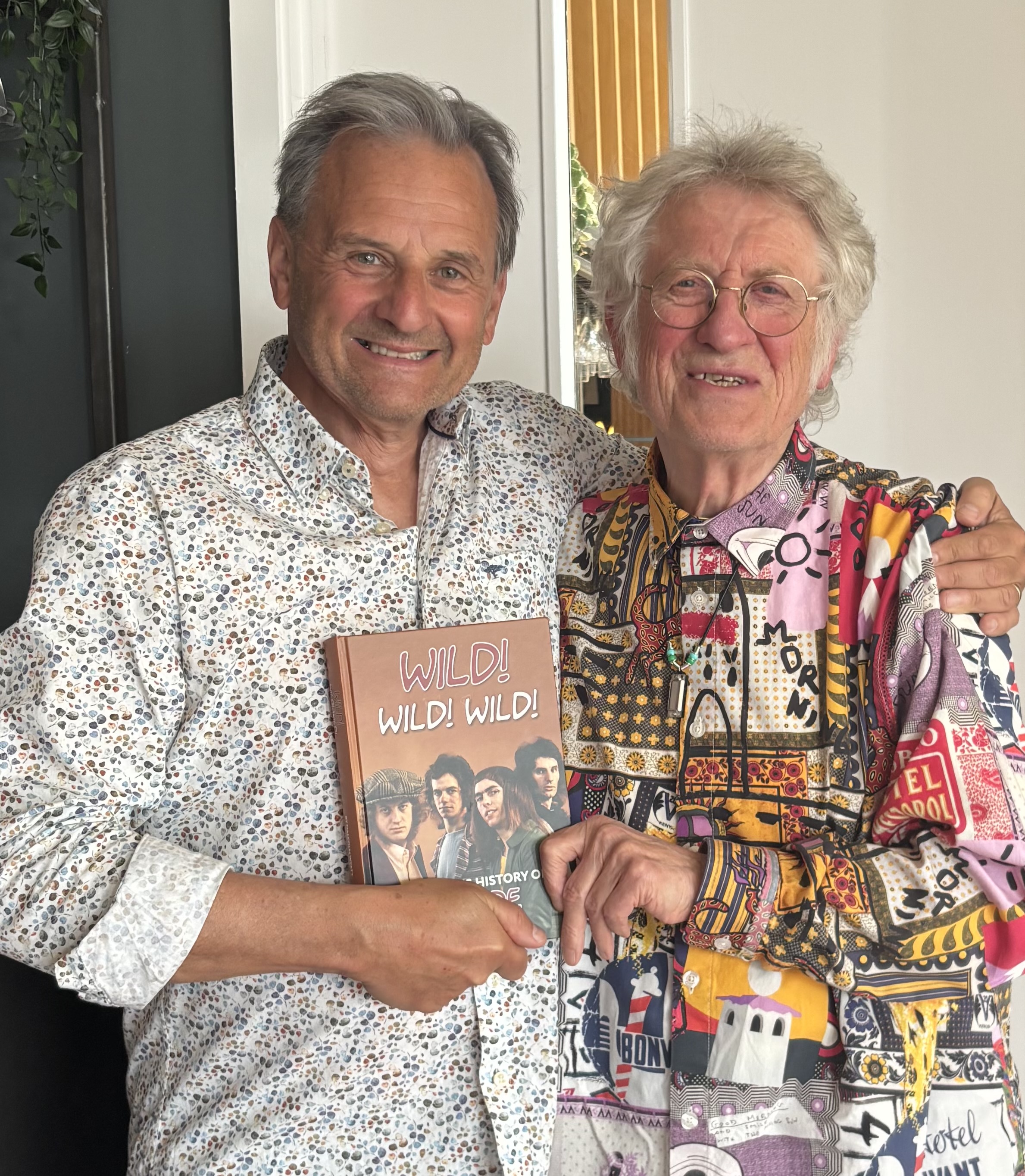
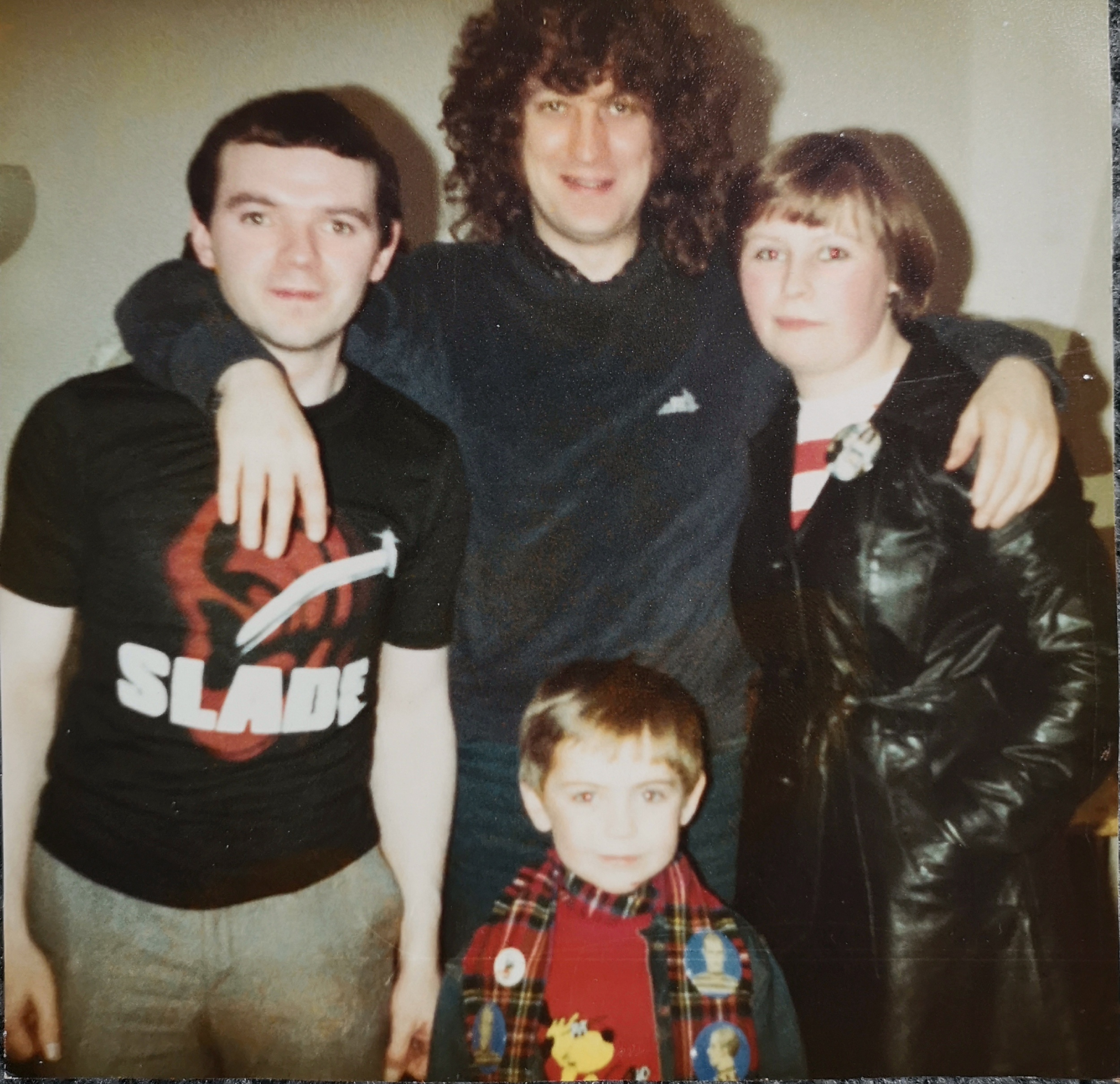
And I’m chuffed to hear that Mark, last featured on these pages in June 2019 after his touch and go battle with cancer (with that interview linked here) referred on stage to Wild! Wild! Wild! A People’s History of Slade, which both posed for photos with backstage (thanks there to the lovely Suzan Holder), as confirmed by Lancashire-born and bred, million-selling ‘poet, performer and average ukelele player’ Paul Cookson, who also happens to be Slade’s poet laureate as well as a member – alongside guitarist Les Glover, also on hand – of Don Powell’s Occasional Flames.
Les, featured in both my Slade and Jam books, told me, ‘Noddy did indeed mention the book, and how much he enjoyed it. Great afternoon, Mark Radcliffe was on top form too.’ And Paul, up from Nottinghamshire for the occasion, added, ‘The book was mentioned in more than passing as part of the introduction, Mark saying it was a great book written on behalf of the fans. I think he said something like ‘the people’s book for the people’s band’… and if he didn’t, I’m claiming the quote!’
I’m ‘avin’ that too, not least as it fits neatly with praise for the book from Noddy Holder in an online interview with Australian broadcaster Sandy Kaye last July, as a guest on her rather marvellous A Breath of Fresh Air podcast (linked here), on the subject of publications about Slade.
Noddy, who of course has also spoken in public about his own battles with cancer, with both hugely indebted to specialist nursing staff at Manchester’s Christie Hospital, told Sandy, ‘There’s one out that I was given that the guy’s put together of all fans’ recollections of gigs they were at, and the book’s called Wild! Wild! Wild! It’s great to read what certain fans thought about you, and it’s very interesting. On this one, I’m getting a whole new perspective on what happened. It did touch my heart, actually. One fan wrote how he came to see us in the later days of the band, before I left in the early Nineties. He’d come to one of the last shows we’d done and was saying we were still as good as ever, and gave us a fabulous review. And he said the thing that touched him now is that it just reminds him of his mates when they were growing up.
“They were at school together and they would listen to the chart every Tuesday lunchtime to see where our record was in the chart, then they’d maybe save all their money to buy the new record, and the sacrifices they made between them – a gang of chaps… or girls included – to actually go out and buy your records, go out to see a gig. And he said all those guys now are dying and it just makes him cry when one of our records comes on, because he remembers his mates. It brings back to him the camaraderie of his mates. And that’s far more important to me than how many records a certain record sold. That was really what we were all about. Us and the audience were as one. It was our thing. It was Slade’s thing.
“It just brings it home to you how important a part we were to people’s lives, especially how gigantic we were at the time. Reading this book, it does bring it all back, because we were in a bubble, don’t forget, me and Dave {Hill} particularly. We couldn’t go out to the cinema. We couldn’t go out to shops or anything like that in those days. We were just too big. It was impossible to live a normal life. We were in this bubble, and we didn’t know really what was going on in the outside world. We knew our records were going to No.1, we knew we were selling out gigs, but we didn’t know to what extent and how big we were. I mean, I didn’t realise it, but today we’re told by statistics we were the biggest-selling UK singles band in the whole of the Seventies – we sold more records than anybody else in the Seventies, apparently including Bowie, Marc Bolan, and everybody else that was around. So, it’s incredible, these facts that come back to you.”
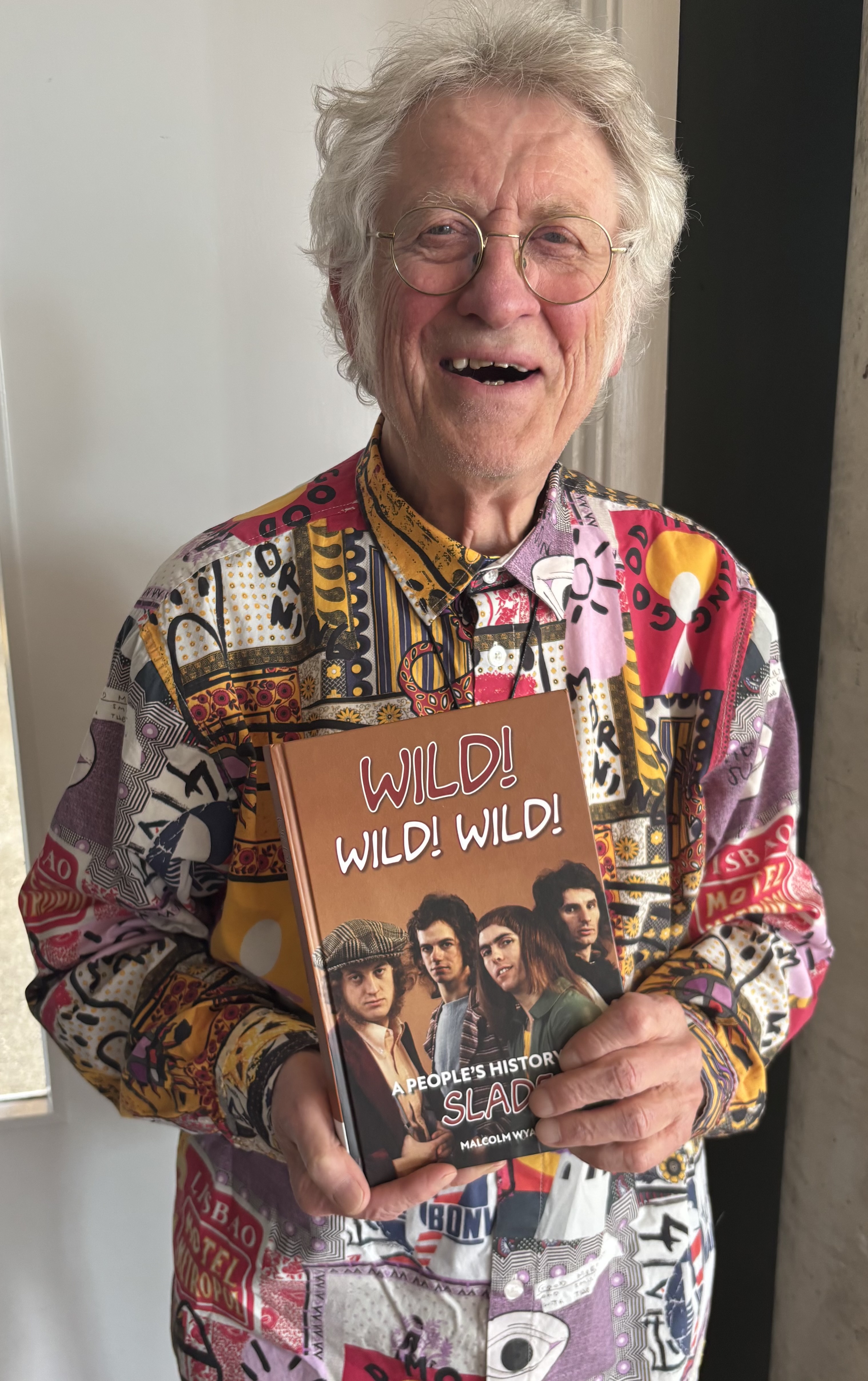
The Nod: The legend that is Mr Holder with his copy of Wild! Wild! Wild! A People’s History of Slade
It seems apt too that this post has gone online a dozen years to the day after I uploaded my take on the pair’s May 2013 live date at the Charter Theatre in Preston, with that review linked here.
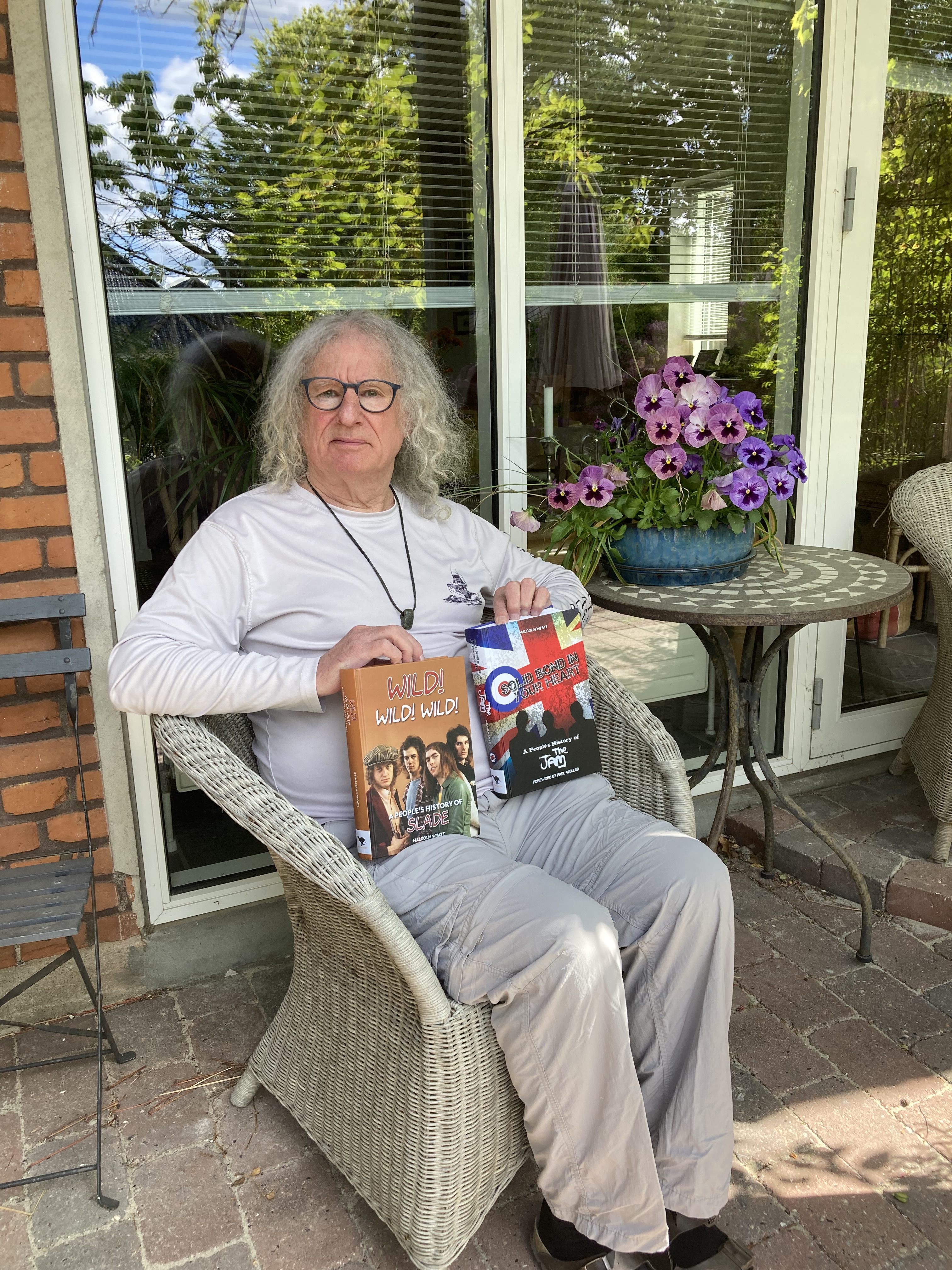
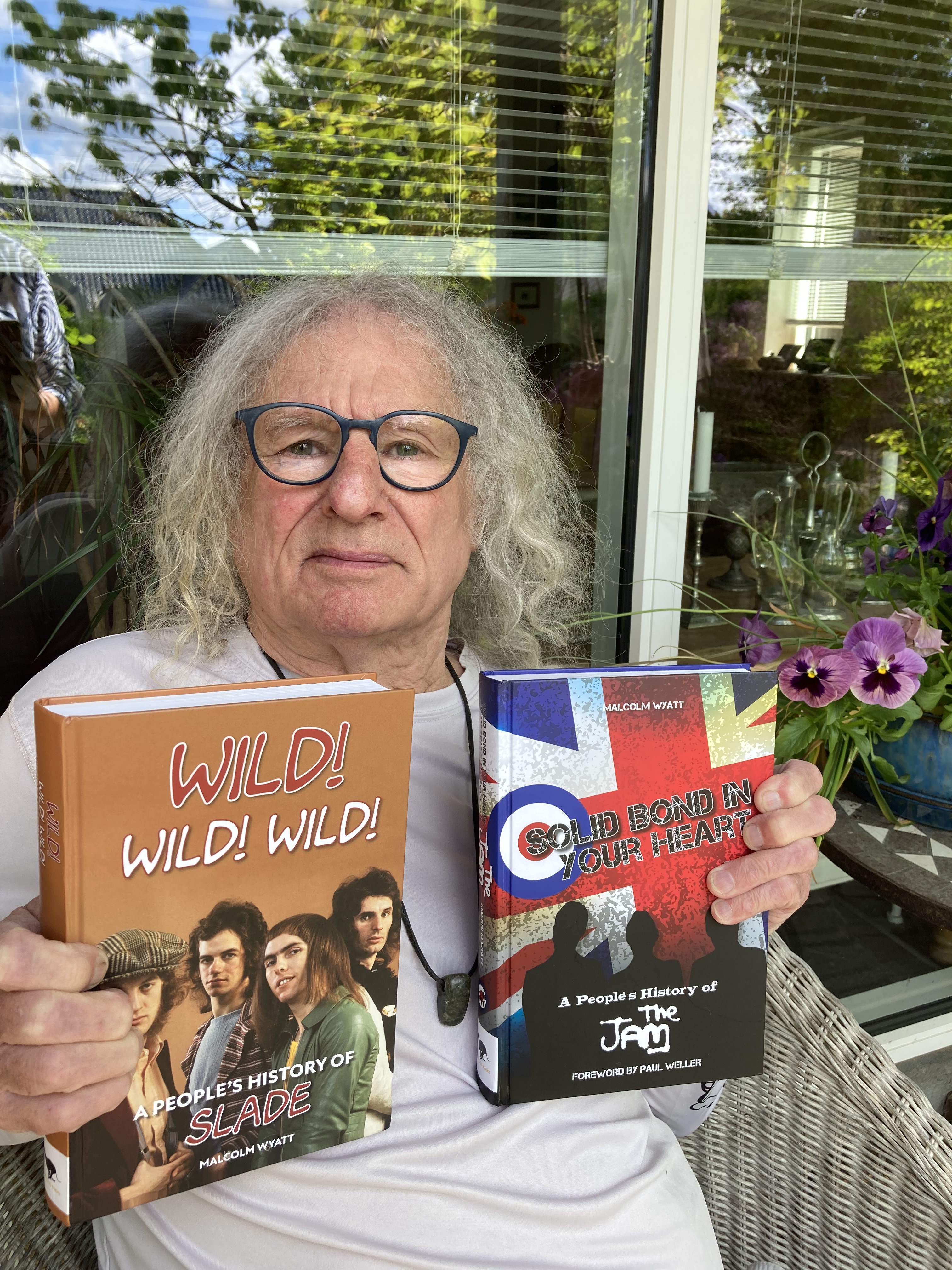
Furthermore, the day before Mark and Noddy’s event in Manchester, I had a brief catch-up with Slade’s legendary drummer Don Powell, at home in Denmark, after he sent me two lovely photographs of him with my Jam and Slade books.
Don features in both publications, not least supplying an afterword for Wild! Wild Wild! A People’s History of Slade (Spenwood Books, 2023, for which his occasional QSP bandmates and fellow glam legends Suzi Quatro and Andy Scott, of The Sweet, supply the foreword) and first-hand memories of two Jam live shows in Solid Bond In Your Heart: A People’s History of The Jam (Spenwood Books, 2025).
He was in London for the premiere of the newly remastered Slade in Flame at the BFI‘s South Bank base in central London on May 1st, where Noddy Holder joined the afore-mentioned Mark Kermode, Slade in Flame director Richard Loncraine and accomplished actor Tom Conti, who plays upper crust Flame manager Robert Seymour in the film, in what proved to be his breakthrough cinematic role.
And as well as Don, the audience included fellow Slade legend Dave Hill, who recently announced details of his version of the original band, Dave Hill’s Slade, going out on their final UK tour later this year (after several dates this summer and autumn in mainland Europe), a 10-date festive stint starting at the White Rock in Hastings on November 28th, Dave and co. bowing out on December 22nd at the Ritz in Manchester, a short distance from HOME.
While it was beyond the point of ‘waiting for the family to arrive’ when I spoke to Don, a celebration about to take place for his grandson’s 12th birthday near his home base in Silkeborg, he was his usual engaging self, although I got the impression that his beloved Hanne – the pair having met at a Slade II gig in her hometown a quarter of a century ago – was waiting patiently to start the car and get them on the road.
But the 78-year-old drumming legend still made time to ask about my recent move to West Cornwall, reminiscing about his childhood holidays in the area, then recalling what may have ended up in a disaster during a working holiday with old bandmate Dave Hill, touring with Slade II in 1993.
Don told me, re his childhood Cornish breaks, ‘I’ve a lot of good memories of all that. My schoolmate, who became our road manager, Swinn (Graham Swinnerton), his sister and her husband used to live in Hayle. I can still picture it, just on the outskirts. We used to spend our school holidays there.
‘I can’t remember which beach it was, but it was totally empty, no one there, and we’d go swimming… and the sea was freezing!’
The Don: Slade legend Don Powell features in both Wild! Wild! Wild! and Solid Bond In Your Heart
I agreed with Don that it can be cold but told him I’d braved it the day before in St Ives Bay, my first swim of the year, telling him how refreshing it was, the tide out far enough to wander across between two stunning beaches, two of many within half an hour or so from my door.
‘Oh, it’s wonderful, I know, but I couldn’t believe it, and the waves are so high as well. Incredible. That reminds me of the last time we were in Australia…’
I felt a Don Powell anecdote coming on, and I wasn’t going to be disappointed.
‘We were based in Perth, out there for nearly a month, and there were three incredible beaches all within a 10 to 15-minute bus ride from the centre. But that was like getting into a bath, Malcolm.’
Don first visited Australia in early 1973 with Slade, in what turned out to be their most successful year, the band taking to the road Down Under with Status Quo, Lindisfarne and Caravan, amazed to find they were also big names there too, Slade Alive! enjoying a mighty long stint at the top of the Australian LP charts.
Then, not long after Don rejoined Dave Hill a few months beyond the official split with chief songwriters Noddy Holder and Jim Lea, he found himself back in Australia, 20 years after that first tour.
‘On one beach, again totally empty, there was white sand as far as you can see, the Indian Ocean, waves incredibly high, and I went swimming but got caught by this wave. They did warn me, saying, ‘Be careful, the sea is very strong.’ But this wave took me, I was like a little rag doll on this wave, and it broke on my shoulder.
‘Luckily, we had a couple of weeks off. I went back to the hotel and said I might need to see a doctor, went to the pharmacy, and the pharmacist had a look, saying if it does need treatment, they could send me to the hospital. Thankfully there was nothing broken, it was just badly bruised. He gave me some cream, but said, ‘Where did you go swimming?’ I told him and he said, ‘Did no one tell you?’ Oh, shit, what? He told me the sharks come really close inshore, there’s poisonous snakes, and – worst of all – saltwater crocodiles. He told me, ‘If they get you, you don’t get away!’
And there was me thinking you were going to mention the dreaded stingers – the box jellyfish.
‘Yeah, probably them too… and at that point I thought, ‘So that’s why the beach was empty!’ But you know that saying about mad dogs and Englishmen… well, that was me.’
Danish Double: Slade legend Don Powell models two Spenwood Books classics bak ‘ome in Silkeborg
And for details of remaining UK screening and event dates relating to the BFI-remastered cut of Slade in Flame, and how to get hold of the newly released DVD and BluRay of the film, head here.
With extra thanks to Mark Radcliffe and a couple of mutual friends, to Nod and Suzan, and to Don, Hanne and Occasional Flames Les and Paul. Indebted to you all.
According to Chris Selby’s impressive Slade Live! online listings (linked here), 50 years ago yesterday, Noddy Holder, Jim Lea, Dave Hill and Don Powell were on the Continent, recording for Belgian TV show Chansons a la Carte.
Four days later, May 18th 1975, a day ahead of the Irish rollout of Slade in Flame, Noddy was among the special guests at a BBC Radio One fun day at the Mallory Park racetrack in Leicestershire, the day the Bay City Rollers proved to be the main attraction… and scarily so, as memorably recalled by legendary broadcaster John Peel in his posthumously-released Margrave of the Marshes memoir (Bantam Press, 2005) and more recently Daryl Easlea’s Whatever Happened to Slade?When the Whole World Went Crazee (Omnibus Press, 2023).
In both cases, it was chiefly about plugging new single ‘Thanks for the Memory (Wham Bam Thank You Mam)’, the band also (erm) memorably performing on the Rollers’ TV show, Shang a Lang, on June 2nd at Granada Studios, Manchester. By then that single, their 15th to chart in four busy years, had become their 13th top ten seven-inch hit, but it would prove to be their last until 1981. Soon they were headed back to America, the long spell away that followed (they wouldn’t return to the road on this side of the Atlantic until April 1977, by which time the homegrown live scene had changed immeasurably) starting in earnest with a show on June 12th at Kiel Auditorium in St Louis, Missouri, embarking upon a new decisive chapter in this iconic band’s quarter-century together.
Promotion for Slade in Flame was long behind them by then, but it was the film that never truly went away, ultimately proving more of a success than that sojourn in the United States… even if it took an age for the film to be properly recognised as anything resembling a classic of its genre. As Noddy Holder recently told Stephen Dalton in an interview for the British Film Institute (BFI) website, ‘It did dent our career, but it stands up strong now. After 50 years, people look on it in a totally different light. I don’t think our image any more overshadows the story, the script, and the music in the movie. It’s been looked on with fresh eyes in the last 10, 15 years or so.’
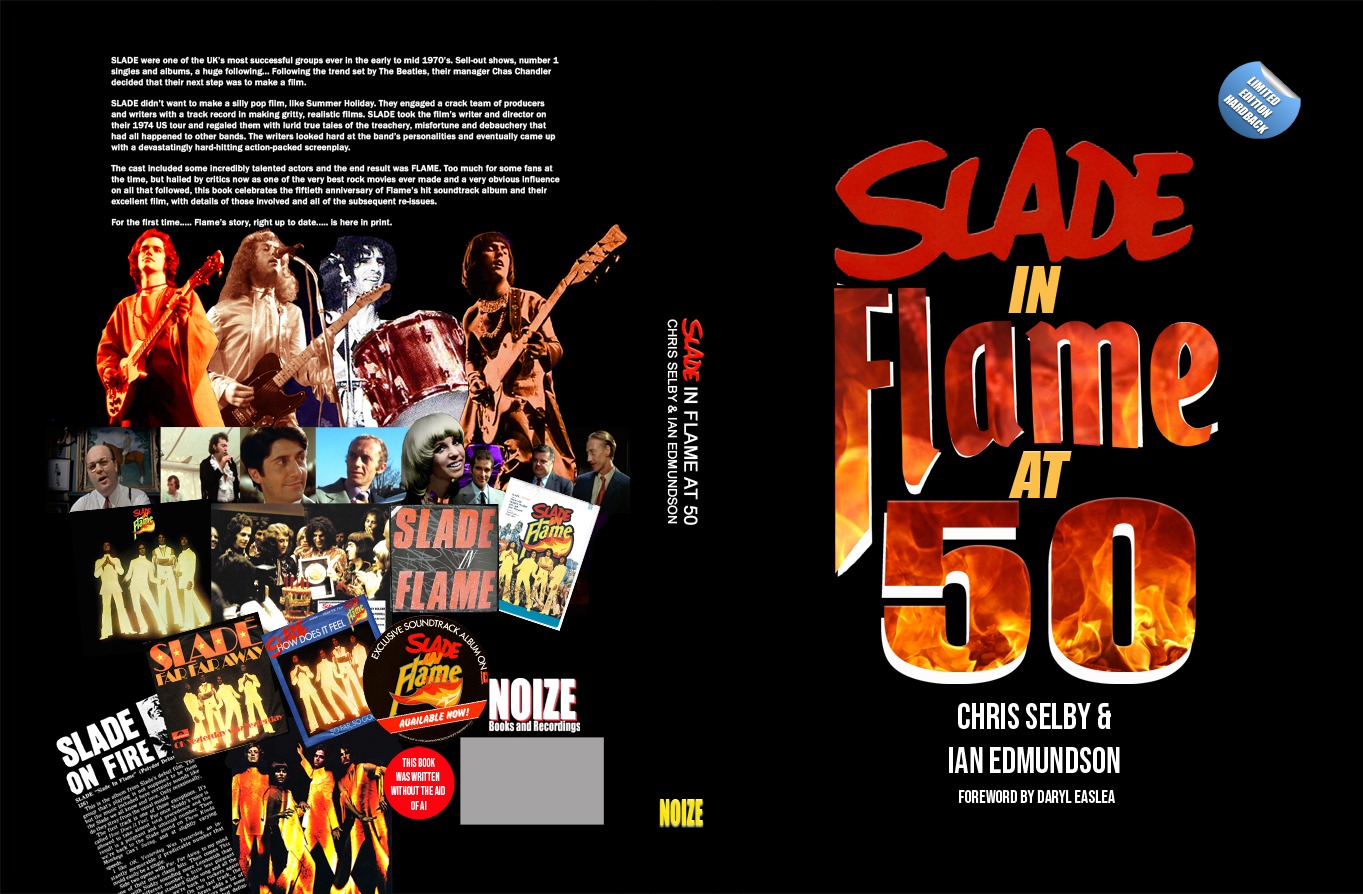
This year has certainly seen a major upturn in interest, the BFI’s remastering project giving Slade in Flame a fresh lease of life, leading to multiple events and screenings. And uber-fans Chris Selby and Ian Edmundson’s latest Noize Books and Recordings publication, Slade in Flame at 50, was out ahead of the pack and soon deemed an integral component of the golden anniversary celebrations.
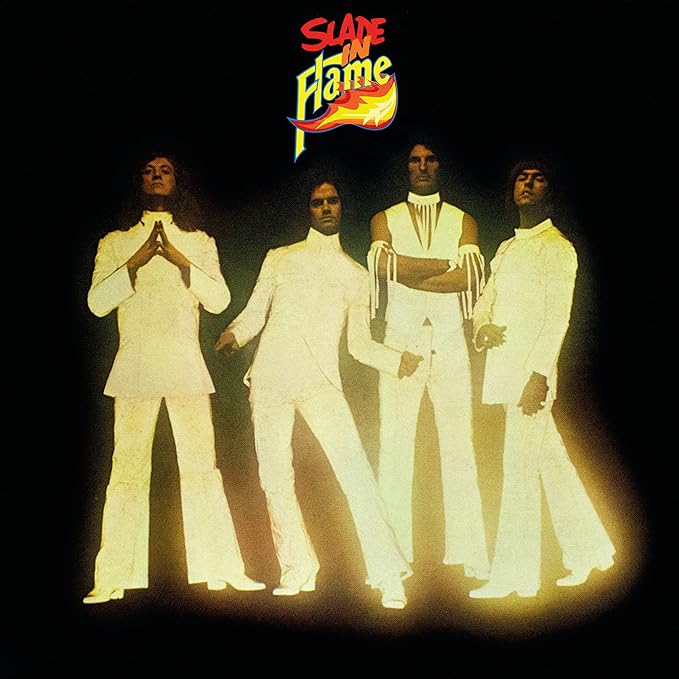
Coming in at 290-plus pages, many in full colour, it tackles in depth not only Richard Loncraine’s film but also the LP and its singles; John Pidgeon’s book, and Andrew Birkin’s film script. It carries cast and production crew profiles, tells in detail the story of the making of the film and looks at its locations, reprints original PR handouts and contemporary press reports, tells the tale of the London premiere and offers timelines of the LP, the film and the tour that followed, and provides detail of tour and film souvenirs and memorabilia, along with images from the film and more about the look (from the eye-catching guitars to the stage gear, including interviews with clothes designer Steve Megson and iconic photographer and long-time friend of the band Gered Mankowitz, who shot the sleeve art).
Then there are interviews with Tom Conti, reflecting on his breakthrough part as the band’s upmarket manager, Seymour, eight years before roles in Merry Christmas, Mister Lawrence and (in his first Oscar nomination for best actor) Reuben Reuben, his interview with Chris and Ian coming in the wake of his recent high-profile role, portraying Albert Einstein in Christopher Nolan’s acclaimed Oppenheimer.
There’s also an original press feature by reporter and long-time Slade fan Richard Cox (who first saw them in 1970, attended 1972’s landmark Great Western Festival show in Lincolnshire – the first time they properly shocked a neutral audience who may have written them off as pop lightweights – and got to know them well), who also reflects on his memories five decades on, as do many other fans. And then there’s a great first-hand piece with good friend of this site, Don Powell. Exhaustive is the word, I feel.
Chris, who like his musical heroes hails from the Black Country, and Ian, from Bolton, Lancashire (younger than Chris, but old enough for me to add that rather than Greater Manchester, those authority changes only coming into existence in 1974, while ‘Everyday’ was at its chart peak) have built up an impressive set of Slade-related publications in recent years, not least The Noize – the Slade Discography and Slade: Six Years on the Road. And it’s fair to say both glow with pride at the acclaim coming their way for the book, deemed ‘thoroughly researched’ and ‘a further reminder of the band’s brilliance’ by Paul Moody in Classic Rock and ‘forensically detailed’ by Stephen Dalton in a feature on the BFI’s own website. Meanwhile, Daryl Easlea adds in the book’s foreword, ‘Chris and Ian are two of the great Slade historians – cherish them and cherish this great book.’ Can’t say fairer than that.
All good enough reason for me to set up a three-way video interview, first off congratulating the pair on the latest Noize production.
Ian: ‘A shiny book!’
I’m impressed. It looks grand – a lovely job, fellas. I guess it took a while to pull together, or did you have lots of material ready to go?
Ian: ‘The thing with Chris and me, how we got into doing the books was that I’d seen Robert Lawson’s Cheap Trick book {Still Competition: The Listener’s Guide to Cheap Trick}, and thought, ‘We’ll do a Slade book,’ so we wound up doing The Noize, our big book. But with everything we’ve done… we’re the people who never throw anything away! We’ve the crap of centuries here. Chris has these underground catacombs beneath his house where he’s got Noddy Holder’s afterbirth and everything. He used to live not very far from where Nod grew up…’
Chris: ‘Literally the next housing estate along, the senior school slap-bang in the middle. When anything happened, such as Slade topping the charts, we’d be down outside his mum’s.’
I love Chris’ tales and those of others from that area there in the right place at the right time for Slade’s emergence, many of them told in my book, Wild! Wild! Wild!A People’s History of Slade (Spenwood Books, 2023), including several about those young fans hanging around in the hope of seeing their local heroes on their frequent Black Country returns, seeing who might turn up, whose Roller it would be that day…
Chris: ‘Or Dave Hill’s Jensen – he’d go past the pig farm, past the gypsy farm, past the school, on to Nod’s. All very working class. We’d get on the 33 {bus}, go down, see Nod… sorry… Neville. ‘His name is Neville!’ His mum got really upset if you asked for Nod. It’s just the way it was.
‘With regard to the books, I got on board doing all the bits and pieces, then something came out… it was Nod’s first book, where he mentioned how the first ever gig {the classic four-piece} was April 1st, 1966. I thought, ‘This is fantastic…’ I went in the library, got the Observers… but no!’
I know where you’re coming from. As a keen family historian alongside my day job, I’ll often end up going down rabbit holes, browsing through regional newspaper archives (thankfully online these days rather than having to scrawl through endless microfiche rolls underground, as it was a few years ago). And I find it rather illuminating revisiting those daily and weekly columns, not just for features and news but also small ads for gigs in the corner of entertainment pages.
Regarding Slade, I spotted one in a Scottish newspaper in late 1969 or early 1970 where a venue announced a Slade show but self-censored itself in its listing, as if they’d been told ‘the name is no longer Ambrose Slade’ but wanted to ensure everyone knew it was the same band, so as to not miss out on ticket sales. And I’ve discovered lots of conflicting information, be that regarding Slade or several other name bands. It’s a bit of a minefield.
Chris: ‘Yes, ‘Slade… formerly Ambrose Slade’… or ‘formerly the ‘N Betweens’… that sort of thing. But that’s what got me into it, that mention of 1st April 1966. Recently there was a claim that they started even earlier that year. Something on EBay, a letter with a promo recording claiming they started in February… so again that changes the story. But yes, Noddy’s line was that they started on April Fool’s Day, and ‘we’ve been playing the fool ever since…’
Ian: ‘Well, you never let the truth get in the way of a good story, do you.’
But this time around I want to concentrate on Flame and the tour that followed, 50 years ago, with your latest book in mind. Daryl Easlea, in his foreword to Slade in Flame at 50 sums up neatly the appeal and cultural importance of the film, while touching on how it became a cult classic in time but not a hit on release, and how a sizable proportion of Slade’s core teen audience didn’t really get it. That gives me a chance to ask about your Flame experiences. How old were you, where did you see it, and did you go back more than once?
Chris: ‘It wasn’t being shown in Walsall, so I had to go into Birmingham. I think the support film was something like Our Man Flintstone. I could be wrong. A cartoon, a bit weird. And it just seemed to disappear once it had done its initial run. I don’t think it was retained for a second week. Nothing like that.’
As it meant a trip to Birmingham, I’m guessing you didn’t catch it more than once.
Chris: ‘No, not at all. I’d have been coming up to 19 at the time.’
Ian: ‘I was born in ‘58 so was coming up to my 17th birthday. I saw it at Bolton ABC. We had about three big cinemas in the town centre. I can’t remember what was supporting it. I seem to think it was a Monty Python film. The thing was, when I saw the film, I didn’t have these daft expectations that it was the story of Slade in any way – a documentary or some fly on the wall thing – because I’d read the paperback.
‘I went along, sat down, watched it, and enjoyed it. I thought it held together very well. I wasn’t surprised, because I’d read the book… and it sold 200,000 copies, allegedly. It certainly sold a lot of copies. So how did all these people, Slade fans at the time, not realise the book is a story? It’s not the story of Slade. I just couldn’t get how they got themselves into so much trouble with it. That doesn’t compute.’
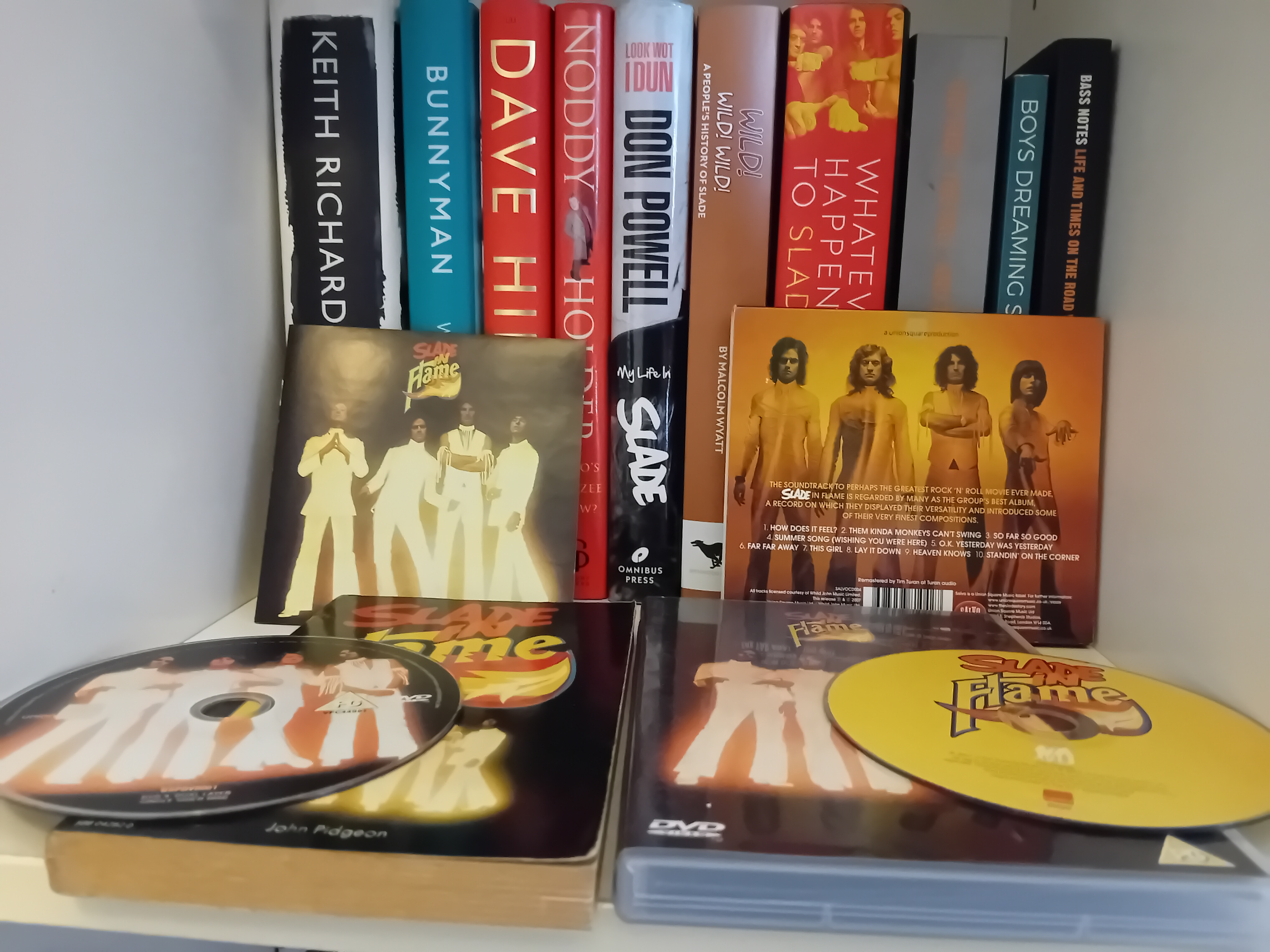
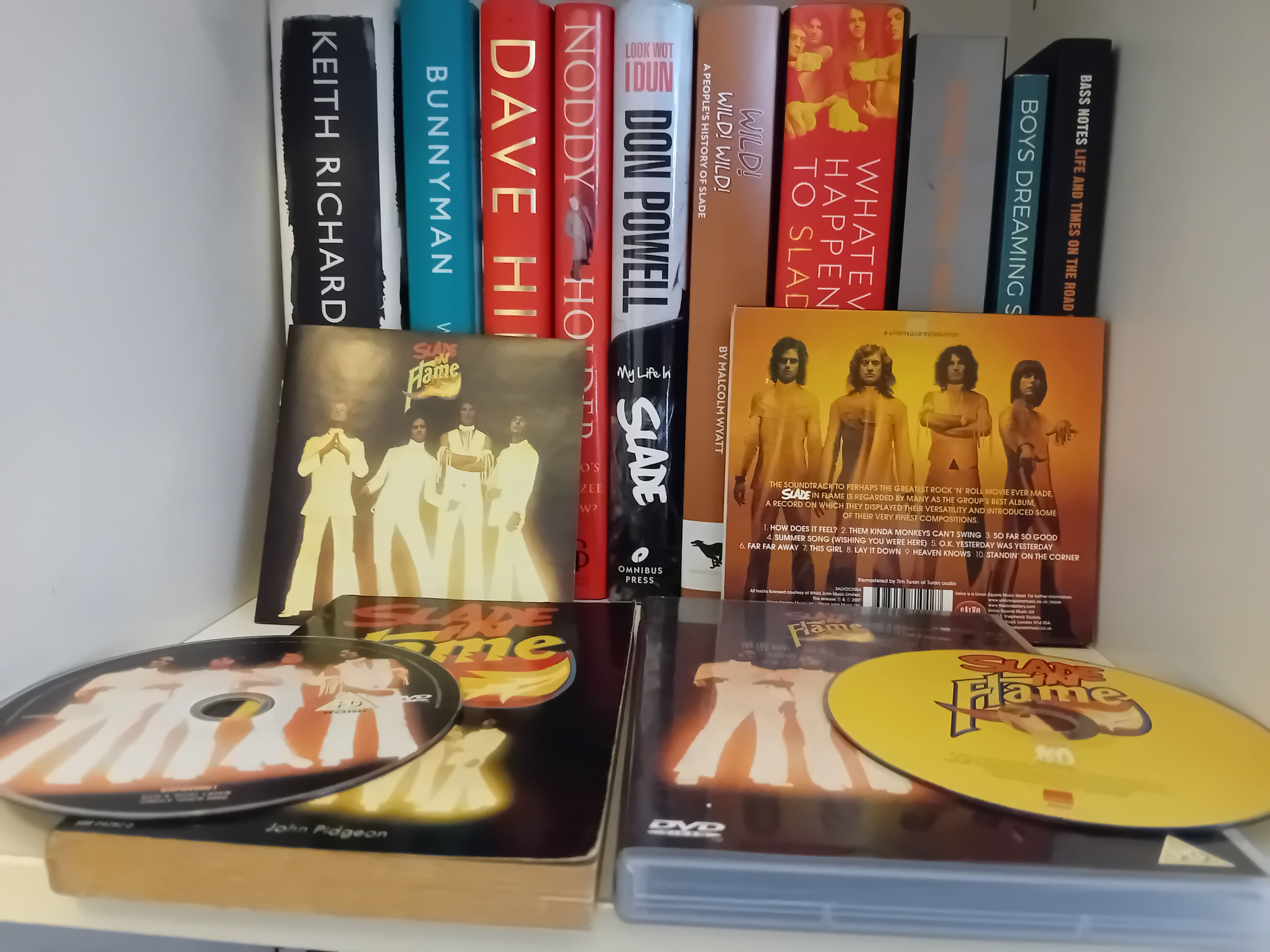
The 1975: John Pidgeon’s Slade in Flame and George Tremlett’s The Slade Story, Photo: WriteWyattUK
My copy of John Pidgeon’s Slade in Flame book (Panther, 1975) still sits proudly alongside George Tremlett’s The Slade Story (Futura, 1975) on a shelf. My brother, seven years older and a massive Slade fan, had both on release, but photos had been cut out and I ended up buying my own copies in more recent years. I knew The Slade Story well, but can’t recall going back to Pidgeon’s paperback so much beyond my teen years, when its fairly graphic nature (if I remember correctly) appealed more.
Ian: ‘The book tells the story properly, and everybody who read it thought the film was going to be exactly the same. What tickles me is that people think they filmed things like {the mobsters} cutting Jack Daniels’ toes off, then decided to cut it out. They knew what wouldn’t get past the censors and knew what would have got the film an X certificate… so didn’t bother filming that.’
You would have known the songs well by the time the film came out.
Ian: ‘Yeah, I was good with the soundtrack.’
I love that LP (as does Noddy, calling it ‘probably our best’, with ‘Far, Far Away’ his favourite Slade single, as is the case for Don), although I didn’t have the context of seeing it at the time to examine how the band had moved on from what came before, for instance since Old, New Borrowed and Blue.
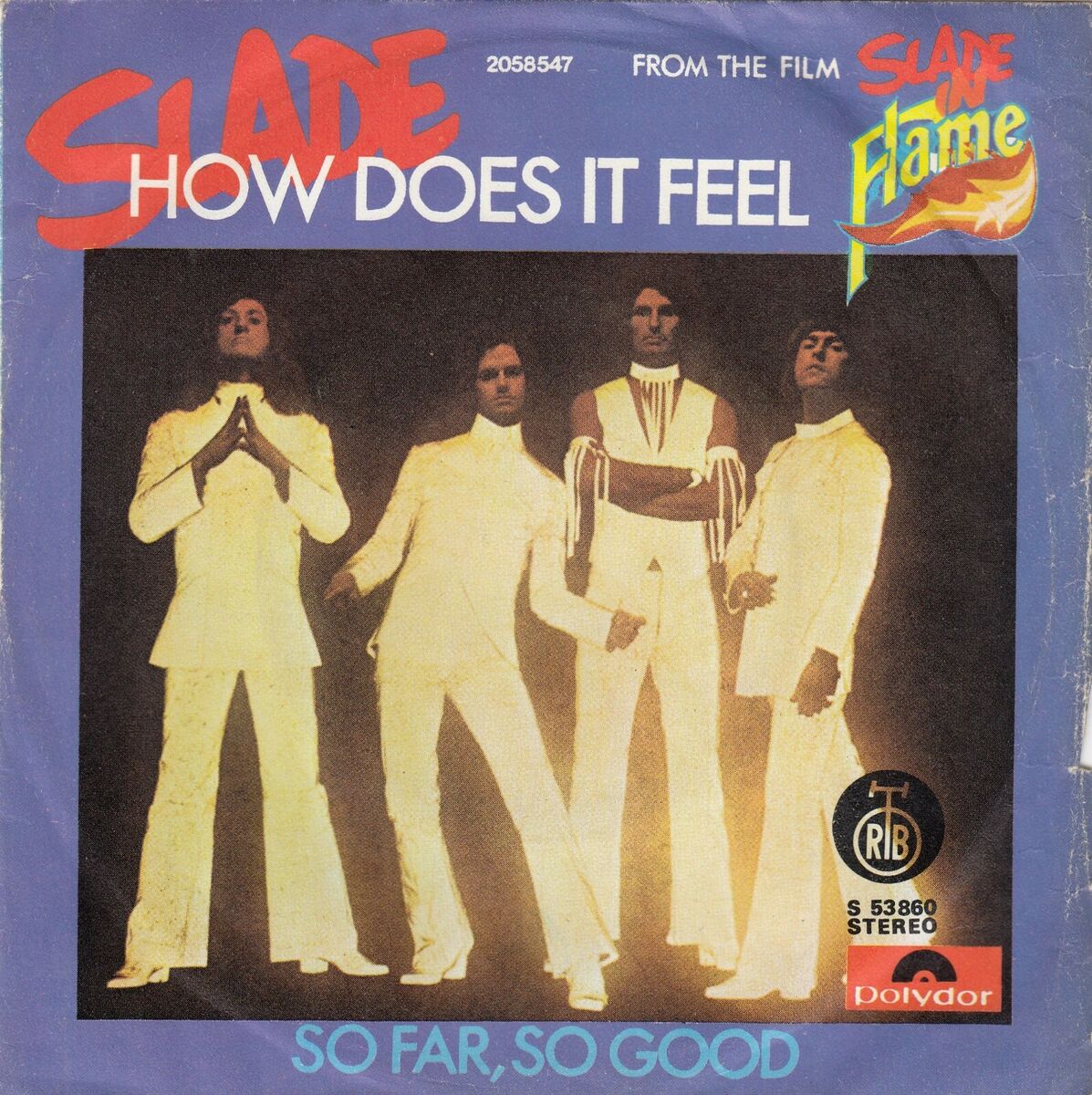
Ian: ‘It’s only really ‘How Does It Feel’ that is different. The added brass, the thing with Gonzalez. Apart from that, it’s not a lot different {from other Slade LPs}, except that Old New Borrowed and Blue was a patchwork quilt of leftover songs, because of Don’s accident.’
Daryl Easlea suggests in his Slade biography that if Led Zeppelin, Black Sabbath or David Bowie had made that film, it would have been far better received by their fan bases. Maybe the critics would have followed suit. It’s now seen as a cult success but was a slow burner on that front.
Ian: ‘Well, if you look at Slade, their relationship with the press was always pretty dreadful. Once they built them up, they spent the rest of their career knocking them down. So Slade making a film was like target practise for the press. They could have walked on water, brought Christ on in the cameo, and they would have still found fault with it.’
Thank God it wasn’t the dreadful, TheQuite a Mess Experiment film script they were originally set to go with. Quite frankly, that sounded awful.
Chris: ‘Well, it was a real thing. They weren’t making it up. It does sound dreadful. ‘Oh, I know what we’ll do, we’ll kill off the lead guitarist within the first 10 minutes.’ Mind you, Dave’s wasn’t the best of the four little cameos in Flame. Jim, Don and Nod acquitted themselves pretty well, but Dave was a little bit more ‘school play nuance’ sort of thing.’
True… but we love him for it (this scribe having had the pleasure of a couple of interviews with Dave, currently working on plans for his band’s final UK Christmas tour as Slade, the most recent linked here).
Chris: ‘And with Don they went for an A Hard Day’s Night sort of vibe with Ringo, on the train…’
Ian: ‘Well, he got his scene where he walked off on his own, doing ‘This Boy’, walking round with his old boss by the canal.’
I love that Ringo scene and Don’s a decade later. And as opening sequences go, the ‘How Does It Feel?’ introductory scene – from the steelworks footage to Don’s arrival back home at the Park Hall flats after his sidecar lift home – takes some beating.
In my case, there was a sense of wonder when it got its small screen debut a few years later, not least at seeing Don and Jim, the quiet ones as I perceived them, talking on camera. Admittedly though, as a story it took me longer to appreciate Flame. In fact, while Ian was 17 and Chris was 19 when they first saw it, I’d not long reached the age of 20 when I caught Channel 4’s late-night TV premiere screening after the pubs closed on Saturday 12th December 1987.
That landed on my folks’ black and white set five years to the week after my sole live Slade sighting at Hammersmith Odeon. My diary records very little about the experience (I’d probably had a few, it was my mate, fellow Slade fan Alan’s 28th birthday, him having seen the film in Guildford first time around with my brother, both of them 15 at the time), but further investigations recently informed me that it was up against Alain Delon and Nathalie Baye in Bertrand Blier’s absurdist 1984 flick, Notre Histoire (BBC2), indoor bowls from Bournemouth (BBC1), and snooker from Northampton (LWT) in those four-channel days.
I didn’t have a telly in my room then, so it would have been a case of toast and a cuppa to keep me awake before my late-night armchair viewing, Stoker, Paul, Barry and Charlie brought to life in my mum and dad’s council house living room. Then at half one I’d have crept upstairs, just before the opening credits of The Edgar Wallace Mysteries.
I didn’t see it as a cinematic triumph back then, but certain scenes stayed with me, and I was quick to snap it up on its first DVD release in 2003, also loving Gary Crowley’s interview with Nod. And despite the desperate subject matter in places, I enjoy it more each time I revisit the film. Also, while I never had the soundtrack LP on vinyl, I had it taped from Alan’s copy, later buying the 2007 Salvo reissue, which still stands up to muster, I feel. As for the film, it’s every bit as iconic as the best UK rock ‘n’ roll films of that decade or any other, not least 1973’s That’ll Be the Day and 1979’s Quadrophenia.
Easlea Tiger: Whatever Happened to Slade? author Daryl Easlea with this scribe’s own Slade book
Chris: ‘What was going on at the time was things like That’ll Be The Day, films with actors in that also included pop stars. David Essex was a musical theatre actor, and then they introduced Ringo Starr, Billy Fury, Keith Moon… just doing cameos. So for Flame to come along, a complete film with non-actors essentially, apart from the likes of Tom Conti and Alan Lake, was a huge thing to do – nobody else had done that. The Beatles just had their jumping up and down, running about, blah, blah, blah. Nobody else did anything like Flame. Go back to the Fifties and the rock ’n’ roll films were just that. But here you had non-actors taking the main roles.’
That’ll Be The Day was fairly dark as well.
Ian: ‘Yeah, and it was the same production company. They knew how to make a film.’
You also mention in the book Performance, chiefly because of Johnny Shannon’s hard man roles in both films, and that was another important film milestone, Mick Jagger playing a key role. That was something I saw for the first time around the same time as Flame, again on the box. And there are certainly correlations, not least that element of Get Carter type bleakness.
Chris: ‘There was also Led Zeppelin’s The Song Remains the Same in that era, a little later. I went to the pictures to see that, and it was the most boring film in the world, with 15-minute versions of something or other. The biggest band in the world, and they make this God-awful film, which nobody mentions… or they don’t seem to. That’s not a cult classic!’
Ian: ‘The thing with The Song Remains the Same, the music’s fabulous, but when you go poncing around in castles and climbing up cliff faces with druid outfits on, pop kids didn’t want that! And Peter Grant going round in his car pretending to be a gangster… If they’d done a straight concert film, that would have been perfect.’
Something else that strikes me and comes across in your book is that while glam rock was to some degree a rebirth of rock ‘n’ roll with spangly, sparkly clothes and make-up – I’m thinking of the likes of Mott the Hoople and Wizzard paying musical homage to those earlier days – it was perhaps a little early to reminisce about the Sixties. It was the Fifties being canonised elsewhere, We’d not long come out of that era, so maybe the premise of setting the film in the late Sixties backfired on Slade at the time.
Chris: ‘That was quite confusing. We knew it was supposed to be the late Sixties, but when you watch the film there’s nothing, really, that says, ‘this is 1968’ – nothing about the Apollo moon landings in the background, or anything like that. It could be any time. It could have been 1974. It could have been contemporary. Even the clothes weren’t particularly… Alan Lake in a velvet suit, that could have been 1970s.’
Yes, a very cabaret circuit / working men’s club look in his case. And talking of the look of the film, I’m pleased to see you gave valuable space in the book to Gered Mankowitz and Steve Megson. Because the look of the film is iconic.
Ian: ‘It is, and I like that they’ve managed on the remastered version to brighten it a bit, because everybody always said it’s a very dark film… literally. Too dark. But they’ve improved the picture quality, and I hope the BFI have managed that with what they’re doing. I imagine they’ll have made it absolutely pristine – the picture and the sound, which has never been good.’
I’m impressed with the pen pics of those involved, and not just the bigger names. And I enjoyed your interview with Tom Conti, although it struck me that you worked hard to get him to open up, prodding the memory banks.
Ian: ‘We planned our questions and put them in a logical order, but occasionally he went off on a bit of a tangent!’
True, but that’s how interviews tend to work.
Ian: ‘Yeah, and he said to us before we started, ‘I’m not going to be much use to you. I remember nothing about this. I was there but can hardly remember it.’ But he was great, and enthusiastic, and lovely to talk to. We asked about the BFI screening, and he said he’d been invited to the premiere, and told us he enjoyed our book, which was good. So, yeah, job well done there.’
It’s a fair assumption that making a movie was up there with cracking the US market for Slade, high on a list of priorities. Do you think that was mostly driven by Chas Chandler or the band?
Chris: ‘I’ve always thought they were following the {Brian} Epstein thing – have No.1s, make a film, do a stage thing – The Beatles did theirs, ’63-’64, basically a pantomime. They don’t talk about that often, but they were on stage somewhere in London for a couple of weeks, all dressed up. So there was a plan for Slade too – No.1 records, a No.1 album, then do a film, conquer America. Which they all did – Rolling Stones, everybody. But the American thing was a mistake, totally and utterly, and the film was a strange decision… but a good decision that they didn’t follow The Beatles with that idea of putting a show on or that sort of format. It’s a proper stand-alone film, and it’s not Help! or A Hard Day’s Night or That’ll Be the Day or Stardust.’
We get the impression – as Noddy has agreed – that if people wanted more of a biographical take on it all, they had to wait 20 years for Vic Reeves, Bob Mortimer, Pau Whitehouse and Mark Williams’ Slade in Residence for the BBC’s The Smell of Reeves and Mortimer.
Ian: ‘Ha!’
Chris: ‘Yes! But {as actors} they must have been very good, because we’ve all said this about Flame – there are no outtakes. Although I still think that pigeon was the greatest actor in it, because he crapped on Nod’s head the very first time. No retakes, no nothing. Fantastic! In any film, there would have been countless retakes. Chas must have been saying, ‘Right, that’s three quid we’ve spent, let the pigeon go!’
Yep, I never met Chas but fear he would have frightened me. Incidentally, I was surprised while researching Wild! Wild! Wild! To discover that the pigeon loft scene was filmed in Harlesden, North West London. Those look like iconic Northern shots to me, as many more were in the film.
Meanwhile, the introduction to your book steered me towards another rock ‘n’ roll movie of that era, Never Too Young To Rock, one I was far less aware of. And despite your less than rave review, I’m quite intrigued to see it. I watched the trailer and a promo video of the title track, that film starring various breakthrough mid-Seventies pop bands – from The Glitter Band to Mud.
Ian: ‘Never Too Young to Rock? I’m trying to remember it, confusing it with the dreadful Remember Me This Way. And all I remember of that is Gary Glitter smashing a coffee table up.’
Chris: ‘Yeah, I can see it now – The Rubettes and all that.’
Dig out the YouTube clip, and there’s a six-minute piece featuring the entire musical ensemble, together for the finale. I quite enjoyed it, but maybe because I was reminded of my love of ‘Remember You’re a Womble’ and all that as an impressionable lad.
Ian: ‘Nothing wrong with the Wombles. I’ve got their albums up there {pointing behind him on our video call}.’
Quite right too. Back to Flame though, and it strikes me now as odd that the LP (November 29th 1974) was out six weeks before the film’s Northern premiere at the Pavilion Theatre in Newcastle-upon-Tyne (January 12th 1975), with that a month before the London one at the Metropole in Victoria (February 13th), and the Scottish film rollout another month after that.
Ian: ‘They did a lot before the London premiere. They went round the regions first.’
I was delving in a bit more, not least in light of my better half’s cousin – whose dad was a press photographer – seeing the film in Cardiff, meeting the band at a BBC Radio Wales promo event (April 17th), where Slade were interviewed by (gulp) Jimmy Savile’s brother, Vince. It seems the band didn’t stick around for the film, but in the following print editions there were quotes from the band enticing fans to return for April 21st’s Capitol Theatre show, that just one of many promo events for the film and the following tour over a long period.
Chris: ‘Yes, they did the Glasgow one with the fire engine and all that, before the London one.’
Ian: ‘Glasgow was the one with the (horse-drawn) hearse.’
Chris: ‘There you go. So was London the one with the fire engine, where it was raining outside, the likes of The Sweet and everybody else inside, taking the mick out of them?’
It was, the guests also including Diana Dors with her husband, Alan Lake, who memorably portrayed Jack Daniels.
Returning to the music, I’m still in awe that Jim, who I felt privileged to chat to for an illuminating and open feature-interview in 2018 (linked here) was barely 13 when he wrote the bones of what became the film’s musical masterpiece, ‘How Does It Feel?’ I mean, we know what a fantastic musician he is, but that still impresses me. Genius.
Chris: ‘Yes, his family were musicians – his grandparents. I spoke to his mother about it, and she was absolutely appalled when he joined the ’N Betweens! God bless her. She told me ‘James’ was going to be a serious musician. He’d done all these exams and everything, then at the age of 16, he turns up {for the ’N Betweens audition}, gets the job. I’ve just had a text off him, by the way… he can just about use a phone!’
Marvellous. On a similar front, I assumed those iconic lines about the yellow lights down the Mississippi and all that on ‘Far, Far Away’ were down to Nod, as has often been repeated. Don Powell says it in this book too, while there’s a quote from a 2019 Louder Than Sound website interview in which Dave Hill also confirms that version. As you put it, ‘In the most widely heard version of how the song came to be, Noddy Holder was sat on the banks of the Mississippi with Chas Chandler and he has always said that he sang the first line of the song out loud, off the cuff. Chas stopped him from enjoying his drink and taking in the view, telling him he had the bare bones of a song, and to go and write the rest of the song down, before he forgot it. He would finish the song lyrics off, and, with Jim Lea adding a fantastic tune with some superb melodic touches, the group had yet another winner.’
However, you suggest there may be an alternative version of the truth, with this another song James Whild Lea lays claim to, Jim telling Planet Rock, also in 2019, ‘All I had was ‘I’ve seen the yellow lights go down the Mississippi, I’ve seen the bridges of the world and they’re for real’, so I said, ‘Go away and write something wistful, Nod’. And what did he come back with? ‘I’ve had a red light off me wrist without me even getting kissed’. I said ‘Nod, do you think they’ll play that on the radio?’ He went ‘Yeah, no-one’ll know’. And he was right. I was being cerebral and philosophical and Noddy brought the laddishness. That’s why the songs worked.’ Help me, lads. I’m confused now.
Chris: ‘When we were 12 and 13, we understood they wrote everything jointly, but… well, it’ll be interesting to see what Jim actually says in his book.’
Indeed. Something else that Daryl Easlea is currently involved with, working with Jim on his official (auto)biography. And with regard to the Flame LP, as I understand it, it was put together in the studio rather than on the road, arguably a glimpse of what was to come, post-1983, in the later days of the band when they were no longer touring – Jim crafting the songs on his own largely, having a far bigger part in making the record than on previous occasions, maybe?
Ian: ‘Of the 10 songs on the LP, three of them have brass, and a lot is made of that. But basically, it’s only ‘How Does It Feel?’ that is such a departure – it’s symphonic in parts, orchestral in parts. Apart from that, the album is almost pretty much a regular Slade album.’
As it turns out, one of the New Victoria Theatre shows in London was recorded for posterity, and both of you got to dates on that tour, not long before they headed to America.
Ian: ‘I saw them at Belle Vue in Manchester. They came out later for photographs, taken with all the trashed seats. We’d gone by then. I won’t pretend I can remember all the set. The thing for me, my overall impression, was, ‘Jesus, they were loud!’ That was my first, and it was everything I wanted them to be. They were fabulous. The Radio One show after that, the Insight thing, was marvellous. And the New Victoria Theatre gig was great, a lovely thing to have. It’s about time it came out.’
In fact, this scribe returned to that recording while putting finishing touches to this feature. Meanwhile, Ian writes in more depth on that landmark Belle Vue appearance in Wild! Wild! Wild!, a taster of which featured in my most recent Slade-related feature on these pages, linked here. And how about Chris (who first caught them live 55 years ago – in January 1970 at a Walsall community centre, as also recorded in my Slade book)?
‘It’d either be Birmingham or Wolverhampton. I saw them on every tour up until they finished. People will say, ‘I saw them 390 times’ and all that, but I saw them two or three times before ‘Get Down and Get With It’ got into the charts – community centres, baths, all that sort of thing. I love that all these people took the time to make notes of the setlists, take photographs, all that. But when I was old enough, I was off my head – I didn’t have a clue about the set! I was there, I enjoyed it, then had to get back home from wherever it was. That’s all I was worried about!’
Our web link dropped out at that point, so I didn’t get the chance to quiz Chris and Ian on last year’s novella, Whatever Happened to Flame? Based on the band Slade memorably played in the iconic 1975 film, the pair continue the story in a ‘fan fiction creation’ that makes for a lovely little read that makes you think exactly where the story may have gone from there. Unfortunately, if you didn’t get a copy, it was a limited-edition publication, so you may have to wait for the film rights to be sold and Slade in Flame 2 to go into production.
They are however working on a further edition of The Noize, and as Ian put it when we caught up this week, this one’s ‘the final version, out later this year’ and ‘will be spilt into two volumes, so that we can fit the kitchen sink in each one.’ Splendid. Can’t wait.
Shelf Life: Slade in Flame, never knowingly out of fashion with this scribe (Photo: WriteWyattUK)
Slade in Flame at 50 is available to purchase now, with more details via Chris and Ian’s website and the Facebook and Instagram links for Noize Books and Recordings.
That also remains the case for Wild! Wild! Wild! A People’s History of Slade, on sale via Manchester-based publisher Spenwood Books via this link.
And for details of the remaining UK screening and event dates relating to the BFI-remastered cut of Slade in Flame, head here.
I’ve said it before, but any day of the week’s When Saturday Comes if you’re catching The Undertones live. And these days it’s far more likely to be the case anyway, most of their live outings involving weekend jaunts up and down the country or on the Continent.
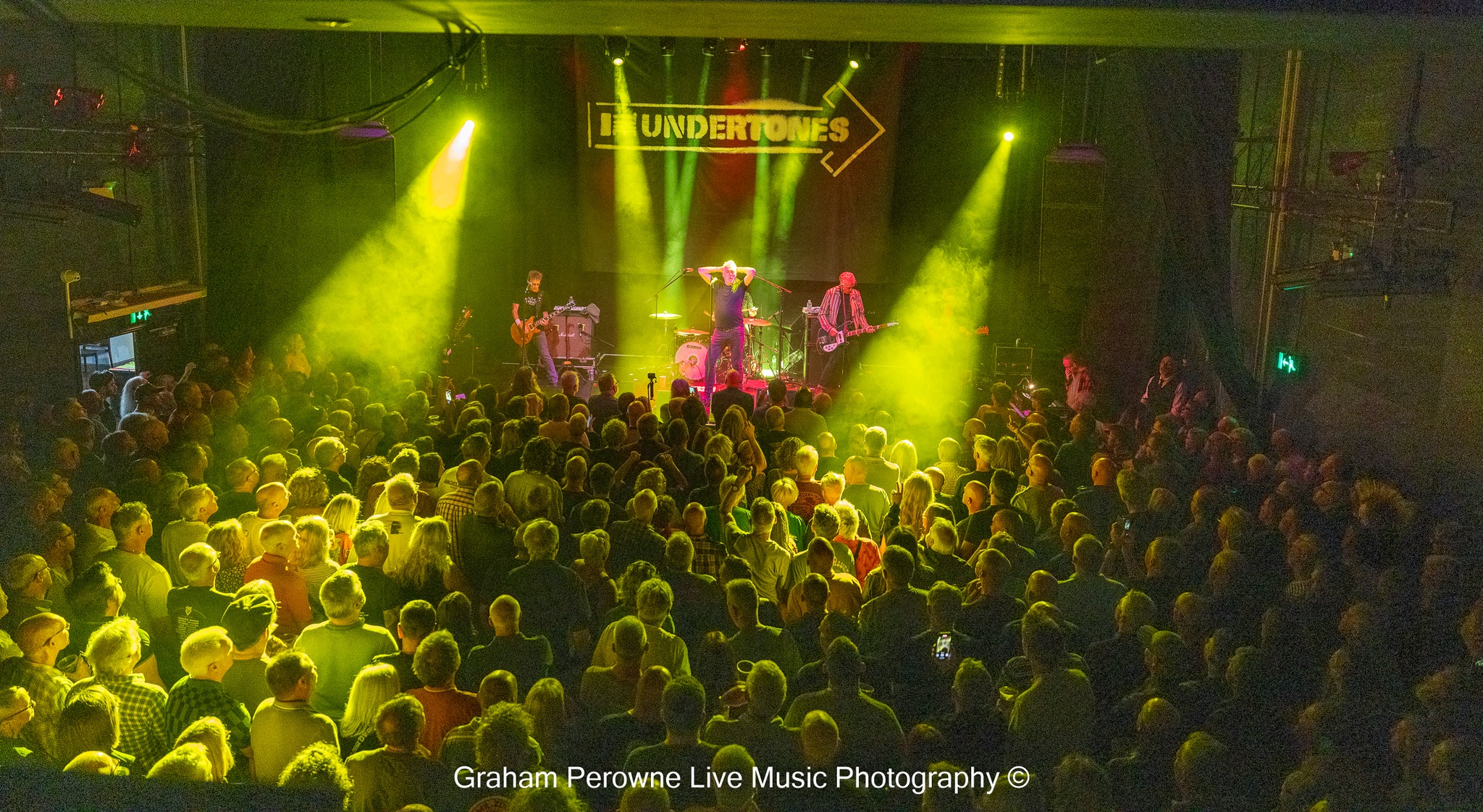
In this case my Love Parade Date Night arrived on the back of the band’s Friday night return to Cardiff’s Tramshed, Derry’s Finest Five having headed across the Severn estuary and made for South Devon to play a tidy venue in front of a sell-out crowd. The impressive Exeter Phoenix, tucked behind Queen Street, started life as a university building in 1909, surviving (just about) two world wars and even seeing service as a military hospital (with more about that history here), finally becoming a live venue in 1999… the year The Undertones had their own ‘from the ashes’ moment.
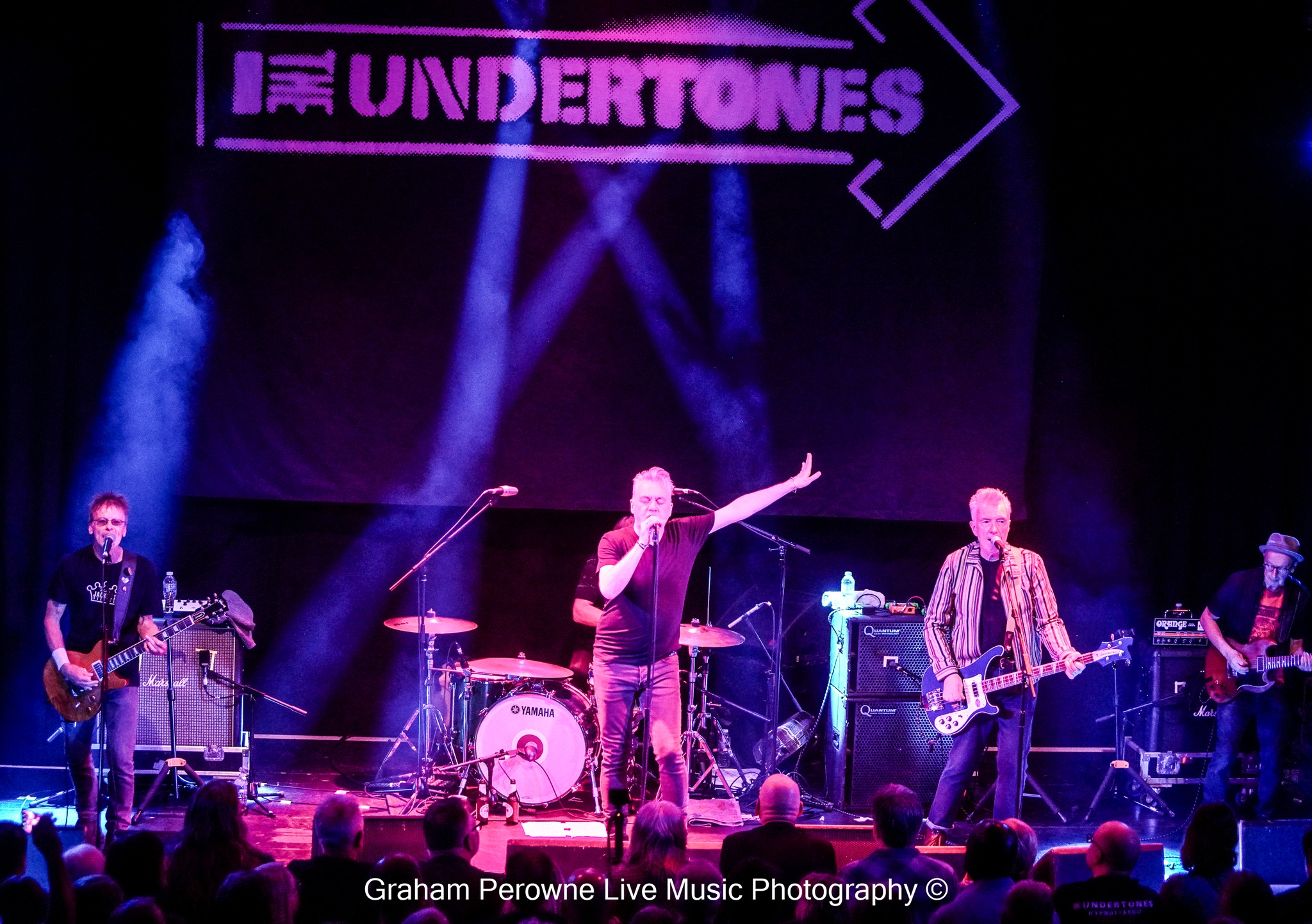
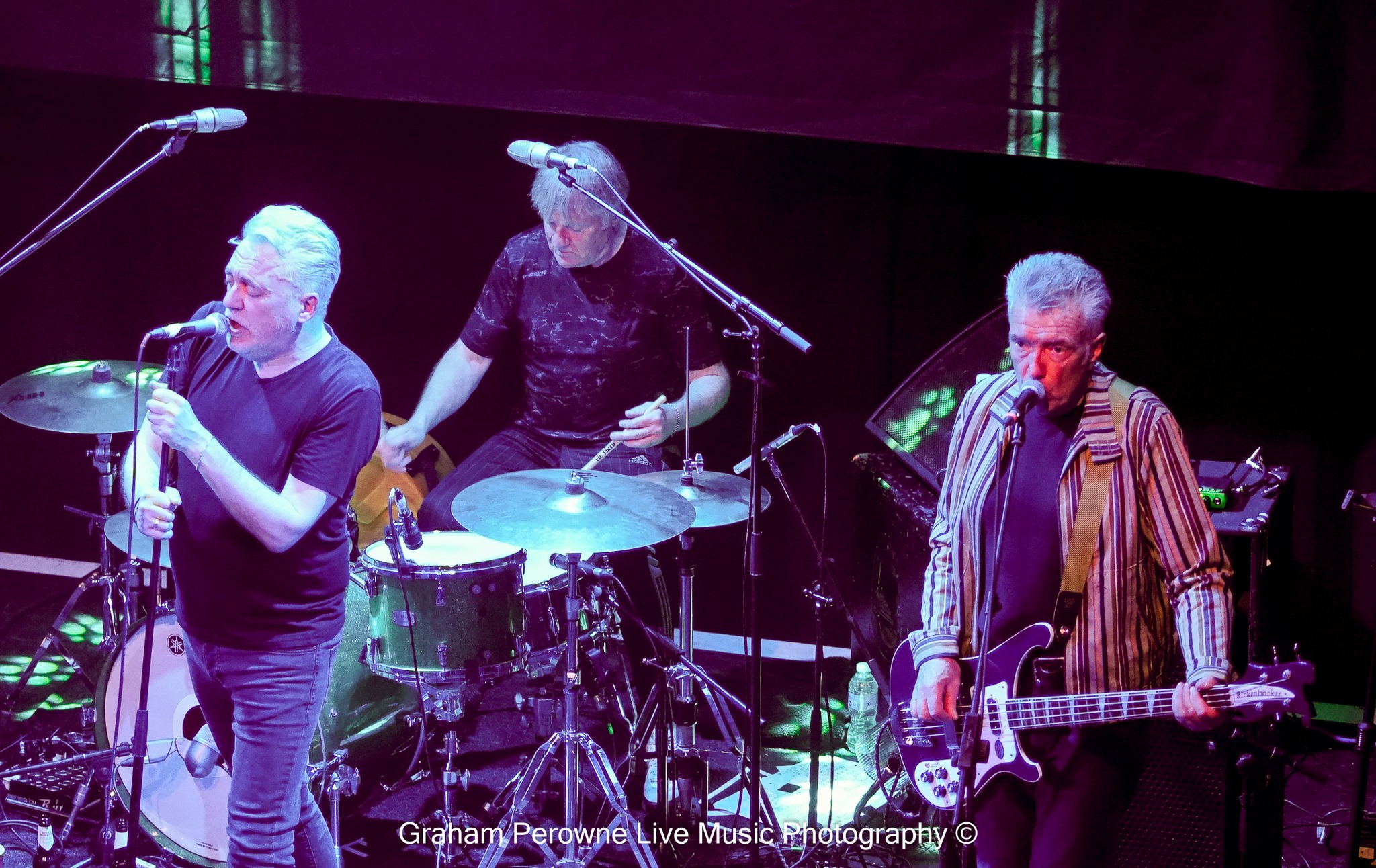
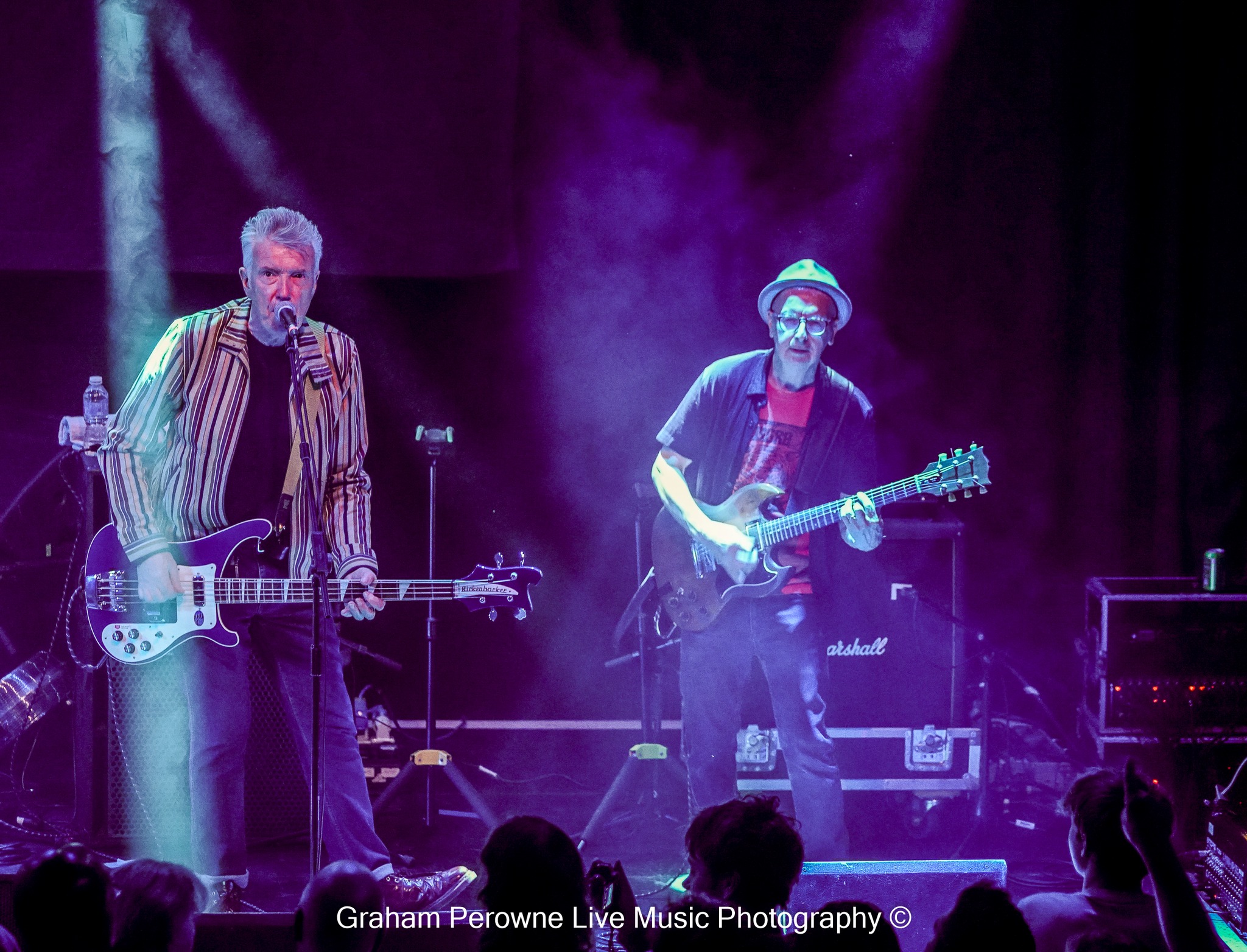
And there on Gandy Street I found brothers Damian and John O’Neill on fine form on the wings, playing a blinder while Billy Doherty and Mickey Bradley set a no-nonsense pace. I got the impression that Billy mischievously sped things up from time to time to keep them on their (heavy) mettle, but all of them remained resolutely in step to keep up a blistering tempo, with no hint of offside flags from errant linesmen, the clarity in those guitars (kudos to those mixing the sound) somewhat special.
It would all still crumble, of course, if Paul McLoone wasn’t up to the task, his antecedent Feargal Sharkey having set the bar extremely high. But while the ’Tones lead singer continues to act the maverick young frontman (younger than the others, anyway), finding plenty of opportunities for showboating, he remains on point, far more than just half of a double-act of ready wit and sharp banter alongside Mickey that always provides something to savour.
I think we’re beyond setlists now, right? There will always be songs we feel deserve outings that are missed out, but packing it all into an hour and a half or so means something must give, and the material they deliver – around 30-plus songs, perfectly executed, irrespective of that downplaying/understating of their own abilities and talents, and isn’t that attitude a breath of fresh air compared to some out there? – always impresses and has the power to take us back to our respective youths. Furthermore, I feel we’re seeing far younger converts in the crowd these days, many of whom probably first came along primarily to laugh/marvel (delete where applicable) at their old folks’ dancing or just to indulge their obsession… but stuck around, soon catching on.
Talking of youths, at one point Paul and Mickey latched on to a couple of lads out front, telling them they looked like they were in a band… and if they weren’t, they should be. As Mickey put it, gesturing towards himself and his bass guitar, ‘How hard can it be?’ Having ascertained they did in fact play, they asked the lads their band name, and while I couldn’t quite hear the response, I like to think they were, as it sounded, The Undecided – a grand name for a possible future support act.
Content-wise, we got a fairly typical array of hits and more, the band striding through cuts from all six LPs over two incarnations, with more than a smattering of the added extras we love. And the finest moment for me? ‘You’re Welcome’, positively awe-inspiring. Some 44 years beyond Positive Touch, I reckon I can truly hear what I’m guessing John initially wanted to convey there.
I won’t be the only one who’s heard ‘Teenage Kicks’ much too much for it to affect me the same way, but I’ve not tired of the other tracks from that EP, two of which featured on the night, that early material and belters like ‘Male Model’ perfect tributes to David Johansen, the last of the original New York Dolls, lost to the world in late February. Add that to the fact that no original Ramones remain among us, and this year alone we’ve also lost Pere Ubu’s David Thomas, Blondie’s Clem Burke, The Damned’s Brian James, and The Jam’s Rick Buckler, and I’m all the more thankful for what we still have… and The Undertones’ retention of their punk rock energy.
On that note, when the main set ended, Billy was the last to slip away. I’m not convinced he wasn’t heading the Wrong Way to get backstage – a Spinal Tap moment – but as he reached centre stage, he clutched his fist to that thankfully rewired heart in appreciation of the love crowd on a sell-out West Country evening. It was a poignant occasion too, the band with a heartfelt dedication to lost Devonian fan Roger Hawke, his family there to mark the occasion in his memory. And it was the first Undertones show I’ve been to where I wouldn’t get to swap notes after the event with Vinny Cunningham, the Derry City super-fan, Undertones diehard, dedicated family man and talented film-maker behind so much of the band’s recorded screen product since the 1999 rebirth.
I reckon in the 20 times I’ve caught The Undertones live across 44 years (16 of those involving the Mk. II lineup in the last quarter-century), I hear something fresh on each occasion. And as long as that’s the case, I’ll keep on attending, quality nights always guaranteed from these stalwart geniuses of punk rock pop.
What also jumps out at me (increasingly so) about the 21st Century ’Tones is their sonic nod to the UK glam scene that was always part of the band’s DNA, songs like ‘Hard Luck’ and ‘Top Twenty’ great examples aired on the night. Then, similarly, there’s that in-built love of the Sixties US underground, as heard on ‘The Love Parade’ and ‘When Saturday Comes’. And above all else there’s that ear and heart for perfect pop, with ‘Tearproof’, ‘Wednesday Week’ and simple wee tunes like ‘Really Really’ among this night’s prime examples.
They’ve never stood still, later era additions like ‘Thrill Me’ and ‘Dig Yourself Deep’ arguably now as essential as ‘Hypnotised’, ‘You Got My Number (Why Don’t You Use It!)’ and ‘Get Over You’. But the edginess remains, and while I’m not sure if it was just the heat getting to those guitars, I could hear (admittedly unexpected) echoes of the drone of early That Petrol Emotion live highlight ‘V2’ on ‘I Know a Girl’, of all songs. Maybe that’s just my aural wiring, mind.
Talking of heat, ‘Here Comes the Summer’ was suitably special on an evening when I reckon the fish were jumping in the Exe and a few wired locals in the park by the castle were certainly high. In fact, you could almost taste the hot bods in the throng, my tired dancing feet at least fireproof as I headed down the steps an hour or so later, back towards my car across town.
The five of them soon returned, a three-number send-off ending rather inevitably with ‘My Perfect Cousin’, that punk pop classic having started its three-week UK Top Twenty tenure 45 years ago this week, yet still as fresh as ever all these years on… just like the band.
A post-match pint in the bar followed with members of the fellow faithful – in this case the Taunton Twosome, one of whom was already fired up about the next date, with Sunday another Bath night for band and fans alike. I’d be back in West Cornwall by then though, and while I never take the possibility of further sightings for granted, I’m already looking forward to my next jolly boys and girls Undertones outing.
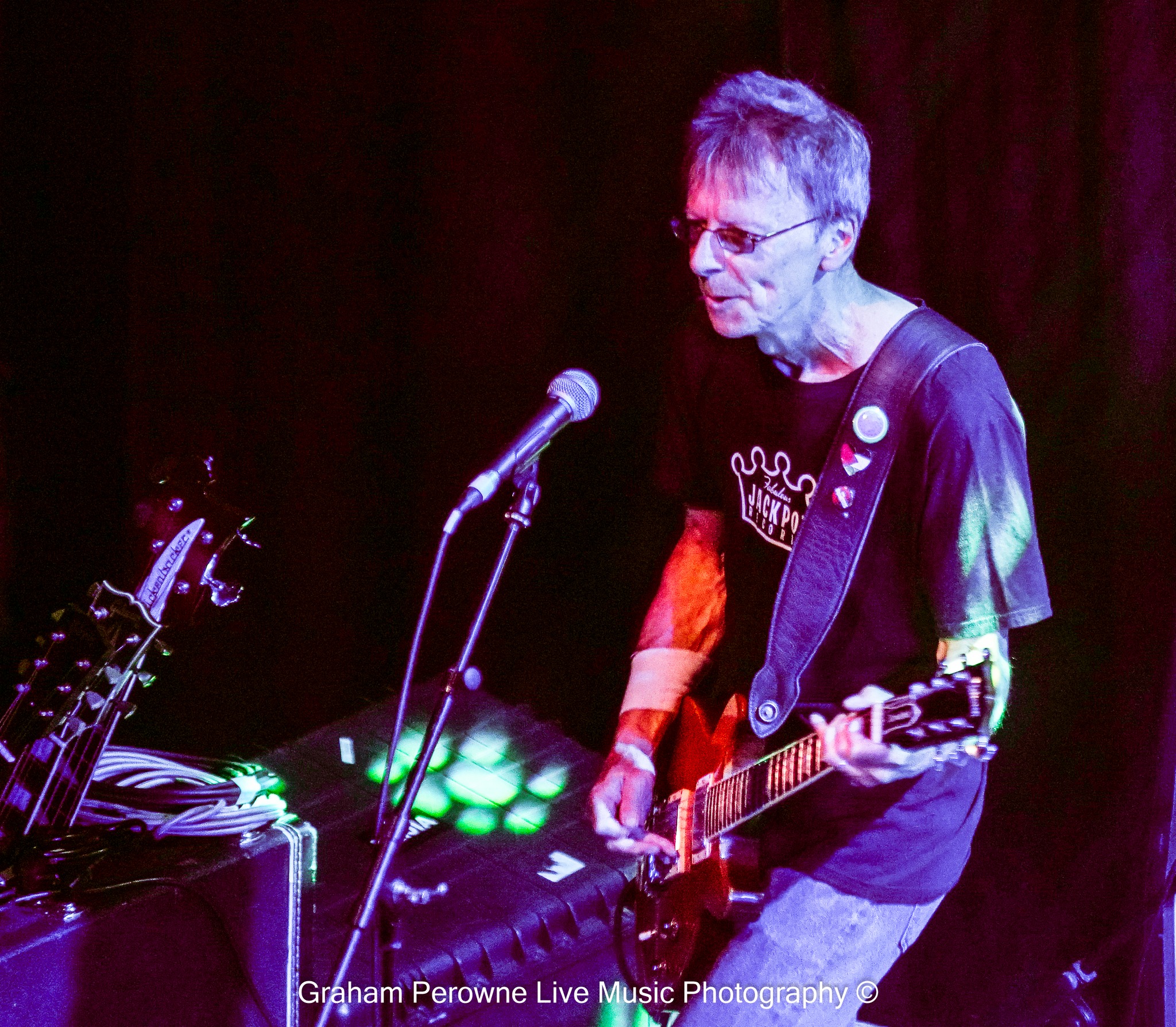
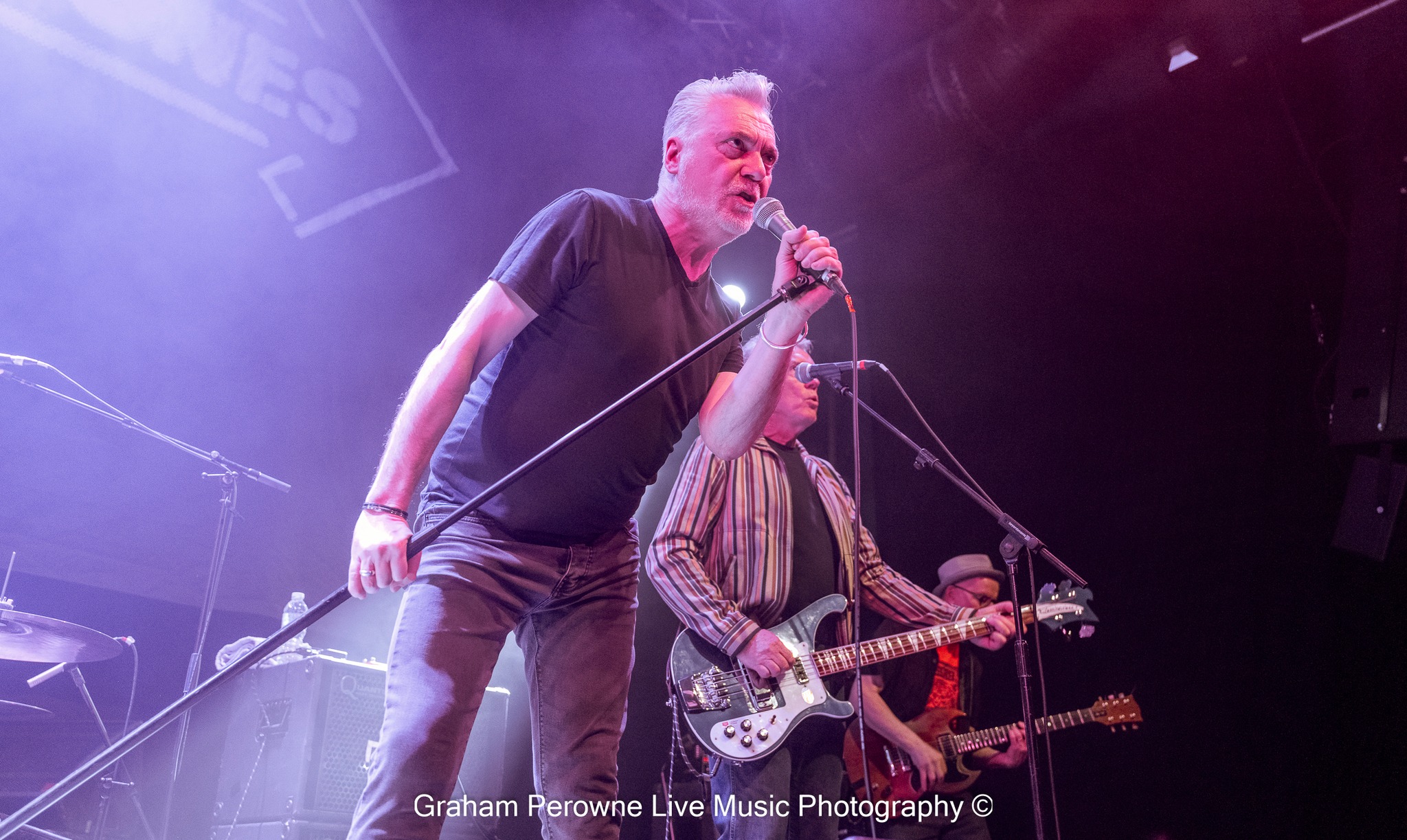
With extra thanks to Graham Perowne for the photographs.You’ll find plenty more of Papa Smurf’s splendid live music work via Facebook and Instagram.
For related past interviews, features, live reviews and what have you on this website, just click on the band members’ names higher up or type ‘Undertones’ into the search engine on the right towards the top of this page and listen as the cogs driving the inner doings Sigh and Explode.
And for all the latest from The Undertones, follow the band via their own website, Facebook and Instagram links. You’d also be wise to also catch the Rocking Humdingers pages on Facebook
Fifty years ago this week, Slade were deep into their ‘Thanks for the Memory’ tour, on the back of the release of Slade in Flame, the cult movie about to get the remaster treatment five decades later, back on the big screen in the UK and Ireland before a BFI Blu-ray/DVD release. In the latest feature celebrating that much anticipated new release, I bring you the first of two further Flame-related features on these pages in the next few days – providing another tempting taster of Wild! Wild! Wild! A People’s History of Slade, my 2023 publication for Spenwood Books, which is still very much available to purchase from the publisher and the author (with relevant links at the foot of this feature).
Here, I’m including seven pieces lifted from the book regarding five key dates on that tour, my chosen contributors celebrating the band’s final English shows on that latest British trek, providing their own heartfelt testimonies regarding key dates in London (recorded for posterity), Wolverhampton, Manchester, Newcastle-upon-Tyne and Liverpool.
By mid-June, Slade would already be two dates into an all-consuming North American sojourn, and they wouldn’t properly be back on the road in the UK for two more years. Things were about to change, big time. But for many, that final 1975 tour on home soil was either something of a game changer or further proof of the band’s live power, the group they’d grown up with still proving essential, even if their dominant rule of the UK charts was coming to an end.
New Victoria Theatre, London
26 April 1975
Simon Harvey
When Slade first hit the charts in June 1971 with ‘Get Down and Get With It’, I didn’t realise as an 11-year-old lad what an impact the band would have on my life. The band were just starting out on their chart career, their self-belief sending them on a journey to international fame. Hit single after hit single followed in rapid succession, with no less than six UK No.1s following. Thursday evenings were spent watching Top of the Pops in hope of Slade being on with their new record, and Tuesday lunchtimes listening to BBC Radio 1 on the 247 MW frequency as Johnnie Walker announced the new chart countdown to hear what position Slade’s new record had entered.
Then there were Friday evenings listening to Rosko’s Roundtable, the self-styled Emperor playing new releases, judged by an ‘expert’ panel as to the possibility of chart success. He loved Slade, having a cameo appearance in their 1975 cinematic film outing, Slade in Flame. There were also evenings spent listening to Radio Luxembourg 208 MW on a transistor radio with an earpiece under the bed covers after lights out at 9pm (I had to be up early to do my paper round before school).
In the words of 1976 Slade hit ‘Let’s Call It Quits’, I was ‘trapped hook, line and sinker’ and desperate to see Slade live. Having saved my wages from my paper round, I was able to afford to make my dream come true at London’s New Victoria Theatre, travelling in from Slough with school friend Kim Bryant on public transport. We arrived at the venue mid-afternoon to be greeted by the sight of hundreds of chanting Slade fans outside the theatre, the assembled throng demanding ‘we want Slade!’ to the amusement of the attending police, security staff and passers-by.
Fans were dressed in Noddy Holder mirrored top hats, glitter-encrusted outfits, Slade t-shirts and silver-studded stack-heeled boots. It was like walking on to the set of an apocalyptic film, with life’s most weird and wonderful people all gathered in one place.
Eventually access was allowed into the theatre, where I was in awe of the beautiful Victorian splendour. The largest entertainment establishment I had been inside prior to the New Vic being our local village hall. After watching support act Bunny and what then seemed like an eternity, Slade hit the stage to a barrage of amplified sound and lights, tearing into ‘Them Kinda Monkeys Can’t Swing’ with a ferocity that was incredible to behold – Holder in full, unstoppable flow.
I was mesmerised at being in the same room, seeing Slade in the flesh as opposed to on TV – a mind-blowing experience that changed the course of my life. The set that night consisted of some of Slade’s big-hitting tunes, including ‘Far Far Away’, ‘Gudbuy T’ Jane’, ‘Everyday’, ‘Thanks For The Memory’, ‘Mama Weer All Crazee Now’ and a stripped-back, haunting keyboard and guitar-led rendition of ‘How Does It Feel?’, spine-tinglingly beautiful.
The gig and tour were recorded by BBC Radio 1 and remain available to listen to online via the Six Days on the Road documentary, with commentary by Stuart Grundy. That day started my Slade live journey in style, the first of 98 such sightings between 1975 and 1983 up to their final gig together at the Royal Court Theatre, Liverpool, promoting No.2 chart hit ‘My Oh My’.
I saw Slade play to full concert halls, thousands at festivals, and near empty clubs, but that gig at the New Victoria Theatre will always hold a special place in my heart as the day I got SLAYED.
Civic Hall, Wolverhampton
27 April 1975
Ian Petko-Bunney
I discovered them around 1973, the time of ‘Cum On Feel The Noize’ and ‘Skweeze Me, Pleeze Me’, going on to buy ‘Merry Xmas Everybody’, ‘The Bangin’ Man’, and Old New Borrowed And Blue. Then I bought Sladest and Slade Alive! – as good a live album capturing a show as anything. They weren’t touring in the UK then. They made Slade in Flame, and they’d been touring a lot in the US. But to promote Flame they did a tour. I lived in mid-Wales and persuaded my dad to drive me and a buddy from school to Wolverhampton. That was something I’d never experienced.
I didn’t see them again until I was at Cardiff University in ’78, on a much smaller stage. It was all standing and we were all moshing. That was knockout. They hadn’t really had hits for the longest time. Then came Reading, and the revival. I’m pretty sure I saw them twice in one week in ’79. I went with a couple of buddies, notably including Russell Pierce, who I still talk to and who runs part of a radio station in Lyme Bay, Dorset. We hung around for the soundcheck but got kicked out pretty quickly.
After that, I saw them at Monsters of Rock at Donington and, on before Blue Öyster Cult, Slade killed it. I remember Noddy talking about AC/DC’s Back in Black and how they had the big bell on stage, complaining as the rain dripped down from the bell. It was just a sea of people and that was a great, great show.
King’s Hall, Belle Vue, Manchester
29 April 1975
Ian Edmundson
Slade’s Flame tour show at Belle Vue in Manchester was a very special gig for me. They were my idols. I bought their records on release from either Derek Guest or Javelin Records in Bolton. They rolled into town amidst some fanfare. There was quite a lot of radio station promotion in advance. Maybe that was a sign that they were beginning their downward slide and needed to shift some tickets, but we’d all have laughed out loud at that idea back then. As far as we knew they were still by far the country’s top band, though you have to remember that ‘How Does It Feel?’ hadn’t reached the top 10, a bit of a blip for them. The press leapt on that and sharpened their knives.
I travelled in from Bolton, and on reaching the King’s Hall I dived into the merch stall and came away with a Flame poster (I saw the film a couple of times on release), the tour programme, and a ‘Cum On Feel The Noize’ badge which some swine mugged me for on a train near Bristol a year or so later. I went and took up a place on a stairway off to the right side of the room, out of the crush with a really good view, where I could put my swag down without losing it. All the hall stewards were too busy in the carnage down at the front to be bothered with where we were standing.
The support act were Bunny, who I enjoyed. They were close to being booed off by the crowd. After what seemed like an age, Slade took to the stage. In fact, they didn’t just take to that stage, they seemed to explode onto it. I reckon it was the crowd that was exploding. The welcome was deafening. Then it was Slade’s turn to be deafening. In about 50 shows that I saw, they never showed much restraint as far as decibels went.
The sound at Belle Vue was always an utter mire. The hall was huge and cavernous, and the sound just echoed around and around. I’d also suffered through Roxy Music struggling with the acoustics there. But I shrugged off the terrible sound of the room and got on with enjoying the show. They started off with ‘Them Kinda Monkeys Can’t Swing’ from Flame – a great opener, high energy, just right.
Nod was wearing a white suit with dark spots, and the biggest tie you’ve ever seen. Dave was wearing a dark glittery suit with studs all over it. When I married fellow Slade fan Julie years later, she showed me one of the studs that she had managed to pull off it. I still have it somewhere. That suit must have just been in tatters by the end of the tour. Jim and Don dressed more conservatively, in white and white striped outfits.
While the stewards fought in vain to control the masses, Slade played ‘The Bangin’ Man’ and ‘Gudbuy T’ Jane’, familiar tunes that were greeted like heroes, then another from the film, ‘Far Far Away’. Nod told us that he and Jim hadn’t really fallen out like they had in the film. A lot of dim people seem to have thought the film was a documentary. Jim took to the Fender Rhodes piano, and they played the new single, ‘Thanks For The Memory’. That song was just too long and wrong for a single for me, but we all still loved it. Jim stayed on the piano for ‘How Does It Feel?’ and the mirror ball over the stage did its work as the crew put a spotlight on it.
Everyone reverted to their own instruments for ‘Just A Little Bit’. Slade showed everything that they knew about dynamics on this song. It went from quiet to deafening and back again several times. A singalong with ‘Everyday’ gave everyone a welcome breather, before two newer songs, ‘OK Yesterday Was Yesterday’ and ‘Raining In My Champagne’, baffled a lot of people who didn’t know them. The show closed with ‘Let the Good Times Roll’/‘Feel So Fine’ with that bass intro. Years later, I heard the Amen Corner version and was shocked to see where Slade had lifted it from. Not that it matters.
There isn’t a better show-closer than ‘Mama Weer All Crazee Now’, so that was a no-brainer. Slade hammered their last tune home and when the lights came up, the crowd began to slowly drift out of the hall. As the room cleared, we saw the seats, where we should have been, were wrecked – we had done the right thing in keeping out of the way. My ears rang for a few days after and the Slade gig was all we talked about for the next couple of days at school. We could just about hear each other.
The gig left quite a big impression on me. I was drifting towards taking up bass guitar, and Jim Lea was an obvious role model. When I later fronted bands, chatting to crowds – like Noddy Holder did – came in very useful. One of those nights that you just don’t forget.
Diane Rutter
Jacket Hangs: Diane Rutter’s jacket from that Belle Vue King’s Hall show, all these years on
Me and my best friend Angela spent weeks making Slade jackets for this Tuesday night gig. I still have mine, a bit worn for wear these days, and it definitely doesn’t fit me anymore. Tickets were £1.60, including a booking fee, and coloured blue.
Angela was lucky as her parents let her go to two previous gigs, in November 1972 at Manchester’s Free Trade Hall and February 1973 at The Hardrock in Stretford, the day ‘Cum On Feel The Noize’ went straight to No.1. But this was my first gig.
After obligatory boiled eggs and soldiers for tea, we started getting ready. At the time I had a Dave Hill-style haircut (a Slade in Flame look) and both of us were absolutely covered in silver glitter – faces and hair – and wearing our homemade Slade jackets and platform boots which we’d sprayed silver, and carrying our Slade scarves. At last, we were ready to go, with Angela’s dad taking us in their car. We arrived at Belle Vue and there was a huge queue of Slade fans. We joined the queue until the gates were opened, and everybody ran like mad to get in.
The King’s Hall was also used for the circus, so the auditorium was circular in shape. We had tickets very near the front, Row D. Support band, Bunny, came on stage, but all you could hear was, ‘We want Slade! We want Slade!’, chanted non-stop.
At last, Bunny departed and the roadies came on, sorting out bits of equipment and twiddling knobs on the amps. Then the moment arrived, the lights dimmed, shadowy figures could be seen, making their way onto the stage. And suddenly, in a flash of bright light, there they were… SLADE!
With the aid of gig info online, I can tell you the setlist was, ‘Them Kinda Monkeys Can’t Swing’, ‘The Bangin’ Man’, ‘Gudbuy T’ Jane’, ‘Far Far Away’, ‘Thanks For The Memory’, ‘How Does It Feel?’, ‘Just Want A Little Bit’, ‘Everyday’, ‘OK Yesterday Was Yesterday’, ‘It’s Raining In My Champagne’, ‘Let The Good Times Roll’ and ‘Mama Weer All Crazee Now’.
It didn’t matter in those days what seat number your ticket said, because everybody swarmed to the front. I was stood very near to the stage – about two or three rows back – and started the gig on Dave’s side, but by ‘Thanks For The Memory’, I’d managed to get over to Jim’s side. Gazing up at our heroes was fantastic for 15-year-old (me) and 16-year-old (Angie) schoolgirls. We sang along with every song. I’m also fairly certain Nod did a rendition of ‘The Banana Boat Song’ (‘Day-O’), years before Freddie Mercury, who nicked a lot of his stage ideas from Nod. At one point, all the stage lights were switched off. Then, in complete darkness, a strobe light flashed. It was like watching a silent movie, except it most certainly wasn’t silent!
All too soon, the show came to an end and everybody made their way to the exits. We were absolutely buzzing. What a brilliant night. A famous photo of the band appeared in the Manchester Evening News the next day, showing all the broken seats in the concert hall. I remember when the lights came up, I looked round the hall and about the first half-dozen to maybe ten rows of seats had been completely trashed. They looked more like piles of firewood than seats. It wasn’t done out of violence or wanton destruction though, just screaming excited fans (mainly teenage girls) dancing and having a good night.
There was also a photo in the next day’s Oldham Evening Chronicle, showing a lot of the audience, including me and Angie. BBC Radio 1 recorded a show, compiled from most of the gigs on this tour, called 6 Days on the Road, which was broadcast a few weeks later. It was two years until I saw them again, but the memories I have of that very first time will stay with me forever.
City Hall, Newcastle-upon-Tyne
30 April 1975
John Craven
I only saw them once, with my mate Paul. It being my first ever gig, I thought all concerts were going to be like that. But they weren’t, not even Bowie or Iggy or the Ramones. My first and my best, and I’ve seen everyone I want. Shame it all came to a messy end with Dave and Don. A bit like Flame really. I even met Noddy at a book shop, and he shook my hand. Nice bloke.
Peter Smith
In April 1975 I finally relented, saw sense, put ‘cool’ aside, and went along to see Slade again. This was my one and only experience of Slade and their audience during their glam rock, mega-pop, teen sensation period. When sold out, as it was for Slade that night, the City Hall holds 2,400 people; I swear there were 2,200 screaming girls, and me and 199 other guys. The guys were either with their girlfriends, feeling very out of place (like me) and looking around sheepishly (also like me), skinheads who had followed the band from the start, or full-on Slade fans (who stood out as they were the guys dressed as Nod or Dave). I swear every single girl was wearing a Slade scarf, tartan trousers or top (or both) or Slade badges. Or, even better, a Slade rosette, often home-made, with pictures of Noddy cut out of Jackie or Fab208. Of the 2,200 girls, I reckon 1,500 of them were wearing top hats or bowlers with mirrors stuck on them.
I was seated upstairs on a side balcony, looking down on the stage. Not the best position in the house, and it only added to me not feeling fully part of the event. I felt so out of place and self-conscious, but what the hell; I was at a Slade concert again, and I knew how hard these guys could rock on a good night.
‘WE WANT SLADE!’ When they stepped on stage the place went completely crazy. The truth is Slade’s popularity was starting to decline and their last single, ‘How Does It Feel?’, had only made No.15 in the UK charts. But as a live act, and in Newcastle that night, Slade remained massive.
Noddy was on top form. No one could work a crowd like him. And some of his banter with the crowd was pretty filthy in those days. ‘Hands up all those girls with red knickers on… Hands up all those girls with blue knickers on… Hands up all those girls with NO knickers on!’ Today, this feels dated (probably bordering on illegal), but back then the crowd screamed and screamed and screamed with excitement. They waved their scarves in the air, and everyone sang ‘Everyday’. I stood watching, taking it all in. Sometimes I felt I was part of it, but mostly it was as if I was outside looking in. I couldn’t quite relate to the madness and craziness of it all.
The set had changed completely from the early days. Slade no longer started with ‘Hear Me Calling’ or finished with ‘Born To Be Wild’. However, elements of the old Slade came through now and then; those old rockers hidden behind the glam pop teen swagger. After all, deep down I knew Nod was still the cheeky raucous rock singer, Dave was still the big kid who wanted to show off, Jim had always been a real musician, and Don remained unphased by it all, the solid rock rhythm holding it all together at the back. But I left with a strange feeling; it was as if I’d been to a kid’s party where I didn’t know anyone, no-one spoke to me, and the party went on in full swing, completely ignoring me.
This was Slade the pop band at their height. Happy days.
Empire Theatre, Liverpool
5 May 1975
Denise Southworth
I’ve always loved the radio, and my passion was always music and buying records. Growing up I shared a bedroom with my sister, a year older than me. It was the glam rock era and we’d listen to T.Rex – Electric Warrior, Tanx, all that – and Gary Glitter, Slade, Sweet, Mud and Alvin Stardust. My sister liked Sweet, but I liked Slade because the music was loud and rocky. I love a good beat, and I love the drumbeat in ‘Take Me Bak ’Ome’ and ‘Gudbuy T’ Jane’. I started following them in about 1973 and my first gig was at Belle Vue, Manchester. It was back in the days when you had to go and queue for tickets, and if T.Rex or Sweet were playing, all the kids from school would go and queue up to try and get tickets. When The Osmonds came, the school was half empty!
I remember being on the balcony at St George’s Hall in Blackburn. I just happened to wave to Dave Hill and he waved back. That made my day. Afterwards, all the fans were waiting outside, hoping to catch a glimpse of the band, and it was mayhem. My mum and stepdad had driven me and my sister up to Blackburn and were waiting outside for us. My sister wanted to wait behind as my stepdad’s car pulled out and he was saying, ‘Get in the car quickly!’. He was worried about the car getting crushed under the weight of these hysterical girls. I wagged off school on the day after their Manchester gig. They were stopping at the PostHouse Hotel, Manchester (now the Britannia Airport Hotel). That was the first time I met them. I got their autographs.
At the Liverpool Empire, right outside the train station, I was hanging about outside before the show. One of the roadies, possibly Swinn, gave me a pound to go across the road to WH Smiths in the train station and buy him some Sellotape or something. I brought him back the Sellotape and the change. It was only afterwards that I thought, ‘I could have run off with that pound.’
For a hardback copy of Wild! Wild! Wild! A People’s History of Slade, click on this link to the publisher, Spenwood Books, or get in touch with the author.
A further celebration of Slade in Flame, in light of the forthcoming BFI remastering project, will follow on these pages in the coming days. In the meantime, to revisit my previous feature celebrating the film’s golden anniversary through the pages of Wild! Wild! Wild! A People’s History of Slade, from February 2025, head here.
This feature is dedicated with much love to Lancashire-based Slade super-fan Diane Rutter, who is among the above contributors, and her husband, Stu, another who features heavily in the book, not least in light of Diane’s on-going health battles. Here’s wishing the both of them our very best.
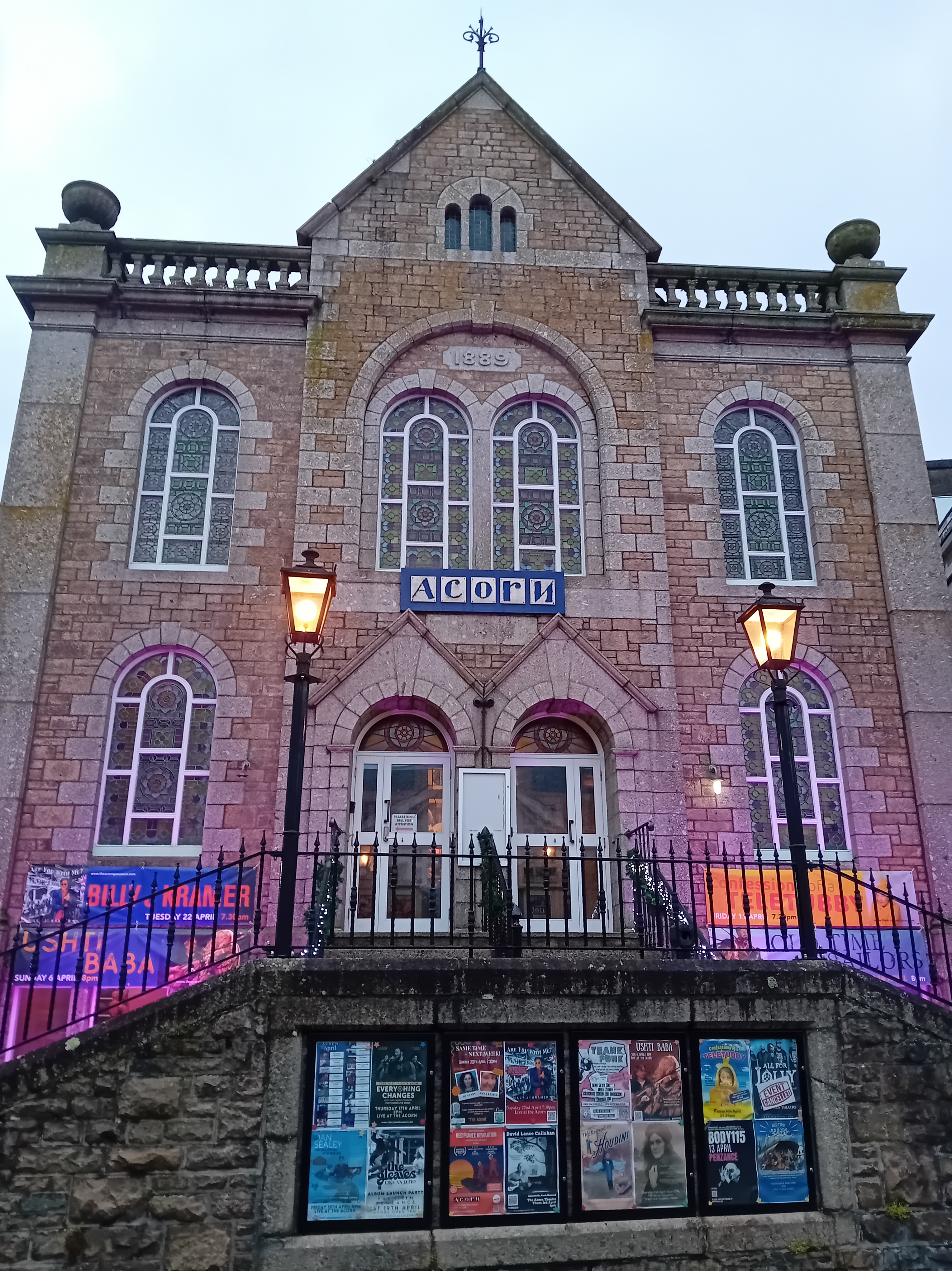
Intimate setting: The Acorn Theatre, Penzance, on the night in question (Photo: Malcolm Wyatt)
‘As your soul tumbles through its darkest night
As the lost ones fade in blinding light
As the road bends hard round to the right
I’ll be singing right outside’
Five months into my dream move to Cornwall, yet this was my first proper live music show in the vicinity, in an impressive intimate setting deep into Penwith, catching an artist I first saw take to a stage 39 years ago (yep, count them).
That first sighting of David Lance Callahan was on Valentine’s Night ’86 at the Clarendon in Hammersmith, West London, fronting NME C86 outfit The Wolfhounds. Yet, if I’m honest, that third on the bill appearance (preceding The Mighty Lemon Drops and headliners That Petrol Emotion) only served to put them on my radar. It was through John Peel’s championing, the following Unseen Ripples From A Pebble LP and the subsequent Wolfies’ shows I caught that I truly grew to admire a Romford collective that soon proved they had real staying power.
Within five years that ever-evolving, cultured outfit (always too important to be written off as ‘indie noise pop’) had gone, David moving on to new territory – ‘post-rock groove’, Simon Reynolds reckoned – with Margaret Fiedler in Moonshake. But by 2006 The Wolfhounds were back, part of a bill engineered by St Etienne’s Bob Stanley at the ICA in London, alongside Aztec Camera supremo Roddy Frame and June Brides frontman Phil Wilson, the latter (their bands initially paired on the short-lived Pink Label with the aforementioned Petrols, McCarthy and Carter USM forerunners Jamie Wednesday) just so happening to be in Penzance on Thursday night to check out David at the Acorn, his first date since a Flying Nun promo visit in Auckland, New Zealand.
Essex Troubadour: David Lance Callahan, live in Penzance. Photo: Andy ‘Wibble’ Whitehead
It’s now been five years since the last accomplished Wolfhounds LP, Electric Music, David ploughing his music writing, performing and recording energies into an acclaimed solo outing, proving himself once again with three mighty long players sporting his name. And at the Acorn we saw several of those songs somewhat stripped to the bone – just him, a couple of guitars and a clutch of quality songs underlining his craft.
As is his wont, he remains keen to help lend a leg up to emerging artists on the circuit, and introduced a fair few of us on the night to Kezia Warwood, similarly armed just with a guitar and her own wiles, a short but always engaging set showcasing a fine voice and sound songwriting acumen, your scribe hearing shades of Joni Mitchell and maybe Suzanne Vega (check out early single ’Sweet Freeloader’ for a taste of that), this Sinead O’Connor fan also voicing a love of Lankum, her stirring take on The Incredible String Band anti-war ballad, ‘The Cold Days of February’, just one of the night’s highlights.
Kezia’s own numbers impress, not least ‘Coronation Street’, dedicated to ‘the gays out there’, while her penultimate number, ’17 Again’, got me thinking of Billy Bragg’s appropriation and recalibration of Simon and Garfunkel’s ‘The Leaves That Are Green’… then lo and behold led straight into her closing cover of ‘A New England’, pitched somewhere between Billy and Kirsty Maccoll and worthy of both.
Supporting Chance: Kezia Warwood, coming to a venue near you soon, no doubt. Photo: Andy ‘Wibble’ Whitehead
David came to the Far West on his tod, ex-Fall drummer and regular co-conspirator Daren Garratt back home, the bulk of the set taken from most recent release, Down to the Marshes, his ‘more worldly standalone album’ after ‘the Romulan twins of English Primitive I and II… birthed via Caesarean section from their vixen mother,’ and while the LP itself – one his label, Tiny Global, reckon ‘will haunt your days and nights’ – carries the added joy of horns (step up, Terry Edwards, for one) and strings, the essence was here, David’s eclectic array of influences – from post-punk to folk, blues, Asian and West African – coming through loud and clear.
In a mighty advert for an album that ‘makes its own genres and rules’, David chose poetically pleasing closing number ‘Island State’ as his set opener, that followed by the LP’s own starting point, ‘The Spirit World’, as its ‘characters cribbed from Hilary Mantel walk around a Stepford park landscape, comfortable in their sparkling clean apathy’. More to the point for this listener, I have to wonder where he’s been hiding those rich vocals, David unleashing his inner Scott Walker meets Neil Hannon tonality.
Along the way we were treated to his (ahem) co-write with W.H. Auden, ‘Refugee Blues’, new song ‘Place Holder’ and ‘Down to the Marshes’ itself, his ‘walk through the lifetime of a couple measuring the stages of their relationship and family through the seasons on an imaginary suburban marsh, a Lea Valley of the mind’. And then there was ‘The Montgomery’, his haunting tale of a grounded US warship ‘lodged in a sandbank on the Thames estuary, and constantly threatening to explode with each rising and falling tide’. And if that ain’t a metaphor for our times, what is?
Time was always against us, with no time unfortunately for ‘Kiss Chase’ or ‘Father Thames and Mother London’ from the new platter, while there was just one Wolfhounds selection… even if in my case mean the latest LP title conjured up 1988’s ‘Son of Nothing’ opening line ‘Down where the river used to wind…’, which proved something of an earworm on my way to ’Zance. And while I couldn’t really picture old faves like ‘Cruelty’ or ‘Middle Aged Freak’ without bent-double guitar hero Andy Golding at his side, the more intimate setting suggested scope for a wander through the pensive ‘Lost But Happy’ and ‘Another Day on the Lazy A’, perhaps. That said, there are only so many quality songs you can fit in a set, and what was served up far from disappointed. And the oldest song he played? A slightly less wonky, raw take on Electric Music’s ‘Pointless Killing’, arguably akin to Kezia’s first choice of cover.
Other highlights included winning choices from his 2022 debut solo LP, ‘She’s the King of My Life’ and ‘Born of the Welfare State Was I’, the latter including its salutary nick from Bo Diddley’s ‘Pills’. And who knows, maybe next time he returns to the South-West, Kezia could accompany him on that.
And then came the wondrous ‘Robin Reliant’, its final verse quoted at the top, that fine song – ‘like William Blake brought up to date’ – certainly echoing down the street, remaining with me as I headed home, this seemingly rare bout of optimism from our neuvo-folk storyteller, its hero singing ‘above our trials and misfortunes’ and one that ‘will keep singing long after we’re gone,’ those sentiments amplified on a night when my wander back to the car coincided with a joyous glimpse of a clear night sky out West.
‘Seasons come and seasons go
Spring’s explosion and autumn’s glow
Summer blooms and winter blows
You can hear me singing’
For the latest from David Lance Callahan, including forthcoming dates (his next show is back on old ground at What’s Cookin’, Walthamstow, East London, on April 16th, with support from acclaimed Kentish singer-songwriter-pianist Marlody, and ticket details here)and release info, check out his Bandcamp, Facebook and Instagram pages.
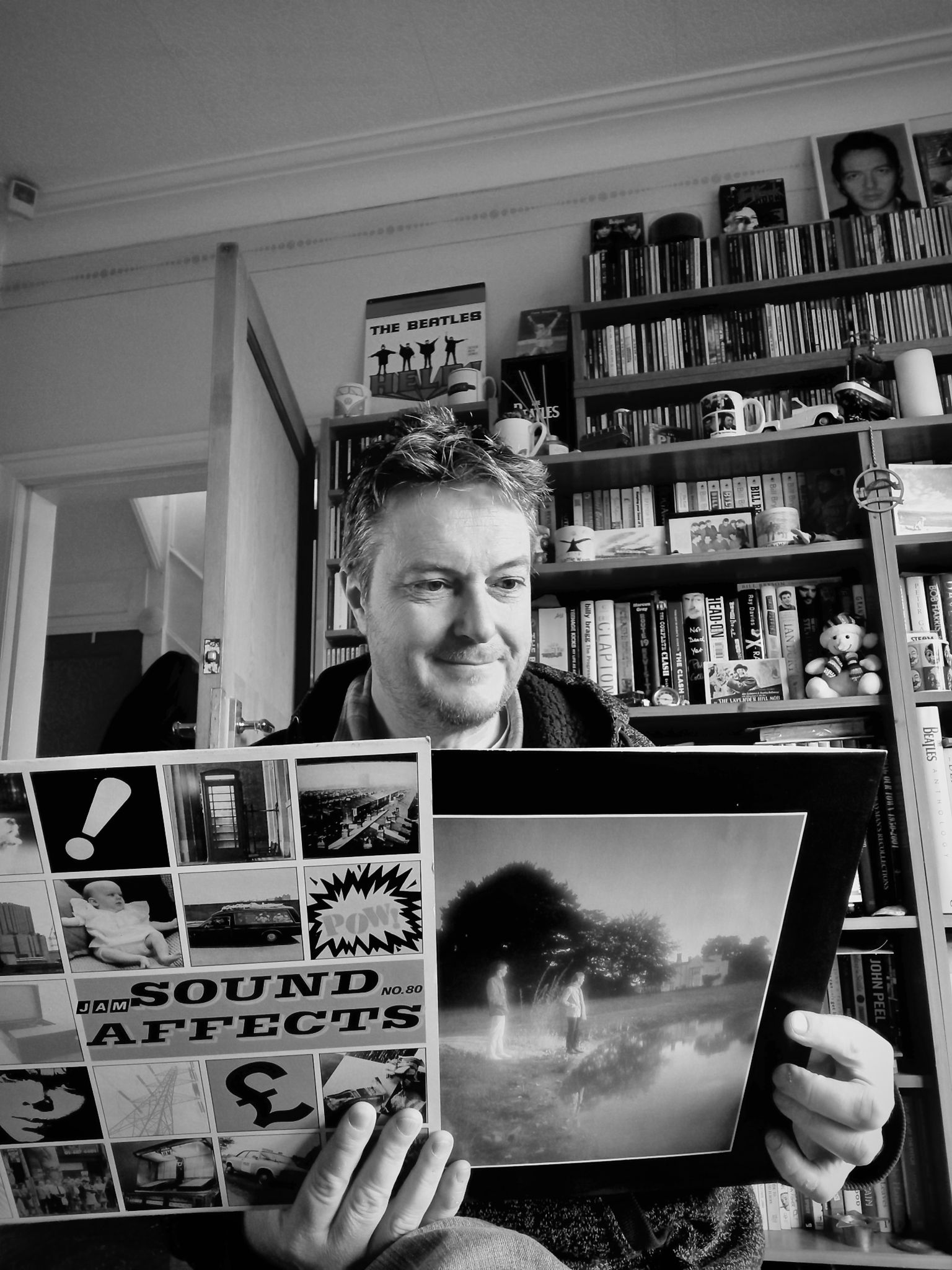
Sound Affection: The author at home in West Cornwall, in Dream Time (Photo: Lottie Wyatt)
I wanted to shout to the top and from the rooftops about all this last week… but then came Tuesday’s devastating breaking news about Rick Buckler, and everything (quite rightly) went on hold.
That all remains very much on my mind, as is the case with Jam fans everywhere. However, some things are worth celebrating, and I like to think – as confirmed by some of the lovely feedback already received – that the newly-published Solid Bond In Your Heart: A People’s History of The Jam (the premise of which was first introduced on these pages a little over a year ago, in January 2024, that feature copied here, and then again in late November 2024, with that linked here) does Rick proud, as it does his former bandmates, Bruce Foxton and Paul Weller.
Within the book there are many lovely tributes to all three members of that classic line-up, and more than one friend has already told me they revisited their own words on seeing the book after Rick’s departure with trepidation, but then realised their contributions stood up in the circumstances. In fact, what we find about Rick on those pages shows not only the love and respect so many of us had for his musicianship and creativity, but also shines light on his humour and personality. And there’s a few great stories within that spring to mind that made me roll up, with him in mind.
I was lucky enough to interview Rick a few times (with a link to our most recent feature-interview, from January 2023, here, with further links to two more at the end) and will always treasure in particular an in-depth chat we had backstage at Preston’s 53 Degrees not long after From The Jam came together in 2007. I always found him approachable and open, and nothing seemed to be off limits in our conversations. A thoroughly decent fella, and it was such a thrill to get to speak to him – this star-struck fan properly getting to channel his inner teen. Such a masterful drummer, part of a wondrous rhythm section with Bruce Foxton, and Paul Weller has said many times he was the right choice for The Jam, who were always a group in essence. Above all he always seemed a great bloke, down to earth, a proper family man, nothing like we assume a rock star to be. And yet he had such style.
Highly Respected: Rick Buckler at a signing session for The Jam – 1982 (Omnibus Press, 2022)
I’m sad that he never got to see the finished book, my last email still sat in Rick’s in-box, this scribe one of many who didn’t realise how understated that announcement from his promoter about postponed personal appearances was. But maybe that was the mark of the fella – no ego, just a lovely bloke who had time for so many of us. That’s certainly what I found in my own dealings with Rick, and my heart goes out to his family and close friends as they continue to get their heads around his departure.
Anyway, the night before that sad news broke, I received word via my publisher, fellow author Richard Houghton, that Paul Weller, who very kindly provided a foreword to the book – had now seen the finished product… and loved it. And his words?
‘Tell Malcolm I really love it! It’s a great, different perspective on it all. For me that says more than any biog bollox. Love it, thank you!’
So there I was, glowing. When Richard at Spenwood Books entrusted me – on the back of my Slade book (still available via this link) – with putting together this book for his People’s History series, I was hopeful of some sort of endorsement from those involved with the band, not least because of past dealings with Bruce and Rick, among others, But I really didn’t expect us to get a foreword from Paul, and I certainly couldn’t have dreamed of that winning review.
Precious Love: The author with Solid Bond In Your Heart, digging the new read (Photo: Lottie Wyatt)
Paul’s Mod sensibilities suggested to me that anything nostalgia-based in book form about his breakthrough band could be written off as well meaning but somewhat pointless wallowing in the past. But I was keen to somehow navigate those treacherous channels and steer my way between out-and-out nostalgia and something more forward-looking that properly celebrated The Jam’s wonderful legacy… and I like to think Paul’s review suggests we got that about right.
I reckon I now need to have serious words with that Boy About Village who recalls hearing Nicky Horne play ‘The Modern World’ on Capital Radio just after his 10th birthday, and also that 15-year-old trying to get his head around Paul’s thinking in that conversation with a Nationwide reporter in blustery Brighton in late ’82; see what they make of it all.
There is a tie-in part two publication coming, this one taking a slightly different path, with hints of that already dropped by myself (with more details to follow). But right now I’ll say I’m really proud of Solid Bond In Your Heart, and Paul’s words and those of all of you who have already kindly been in touch about the finished book are music to my ears. So thanks, Paul, and thanks to everyone else who’s got on board with the book. More to the point, perhaps, a big thank you to Rick, Bruce and Paul for all they gave us in their time together as The Jam. To paraphrase a certain classic hit, what they gave us ‘will always remain’.
Spenwood Books’Richard Houghton has been a busy lad this past couple of weeks, posting copies to all those who pre-ordered (the staff at his sub-post office in Chorlton, Manchester, must see him coming and try and lock the door as he struggles up the path), and a lot more were on their way this week. If you haven’t yet ordered, now would be a great time, with the Spenwood Books page link here. Cheers for your support, one and all.
In honour of the British Film Institute (BFI) marking 50 years of Slade in Flame with its return – newly remastered – to the big screen in the UK and Ireland, then a BFI Blu-ray/DVD release, WriteWyattUK presents the first of two features celebrating the golden anniversary of an acclaimed cinematic statement from the Black Country’s finest.
This week in 1975, Slade in Flame was playing to audiences all over London, part of a staged roll-out around the UK and Ireland, and what the Black Country’s finest saw as the next step in their bid for world super-stardom.
A week earlier, on February 13th 1975, Noddy Holder, Jim Lea, Dave Hill and Don Powell had arrived in a blaze of glory on a vintage fire engine ahead of the London premiere of the film at the Metropole Cinema, Victoria, handy for the nearby New Victoria Theatre, where they would put on two dates 10 weeks later on a tie-in UK tour, that set of dates the last before they quit the home circuit in an ultimately unsuccessful bid to crack America.
That London premiere came a month after the film was first rolled out at the Pavilion Theatre and Cinema in Newcastle-upon-Tyne, with a number of UK public appearances following, such as that on March 10th in Glasgow where Noddy turned up in a horse-drawn hearse (the rest of the band in a Rolls Royce behind, as per John Milne’s story below), a nod (ahem) to their frontman’s character, Stoker, who gravitates to the film’s star turn, Flame, after a spell with the funereal Roy Priest and the Undertakers.
And while the overall public reception to the Richard Loncraine-directed Slade in Flame was initially somewhat mixed – for an outfit riding the waves of success barely a year earlier – the film is now rightly recognised as something of a classic, and it’s set to return to the big screen on May 2nd courtesy of BFI Distribution, a tie-in BFI Blu-ray/DVD release 17 days later, including new extra features.
I won’t go into too much detail as to the premise of the film, but in a nutshell it charted the rise and fall of fictional pop group Flame in the late Sixties, from raw beginnings on the club circuit to superstardom, its darkly realistic take on that world veering someway from the pop movie expected, a ‘warts-and-all portrait of a band in freefall amidst the music-industry suits who want a piece of the pie’.
The common consensus is that it was the band’s manager, Chas Chandler (the Tyneside-raised Animals bass player who previously discovered and managed Jimi Hendrix), who decided a film should be Slade’s next step after a couple of years of huge chart success. That and finding fame in America. And despite the public image of the band during the glam era, Slade as a unit largely agreed that they didn’t want to do a ‘running and jumping around’ film in the fashion of The Beatles’ A Hard Day’s Night (much as they loved that, instead commissioning a script based on the real life adventures of many of their contemporaries and peers on that Sixties scene, The Animals among them.
The result was something closer to Nicolas Roeg’s Performance perhaps, and the previous year’s David Essex cinematic hit, That’ll Be the Day, Richard Loncraine (working on his first feature film) and screenwriter Andrew Birkin (sister of Jane) joining Slade on the road in America in a bid to soak up their experiences and hear their stories and those of other acts they worked with.
If you’ve yet to discover the film, or if it’s been a while since you caught it on the big or small screen, you’re in for a treat. Film critic Mark Kermode, a major fan, labelled it the Citizen Kane of British pop movies, one largely put together on location in London, Sheffield and Nottingham, the Black Country quartet – none of whom had properly acted before – supported by a cast including Tom Conti (the Oppenheimer actor’s first main film role) as manager Robert Seymour, Alan Lake as singer Jack Daniels (at one point fired from the set for disorderly behaviour, only reinstated thanks to his wife Diana Dors’ persuasion), Johnny Shannon (Performance) as manager Ron Harding, and DJs Emperor Rosko and Tommy Vance.
The tie-in soundtrack album, released in late November ’74, six weeks before the film premiered in Chas Chandler and fellow Animal turned co-manager John Steel’s home city, reached No.6 in the UK LP chart, preceded by lead single ‘Far Far Away’, which got to No.2 (kept off the top by Ken Boothe’s ‘Everything I Own’). As for the sublime ‘How Does It Feel?’, the second single, that stalled at No.15 in early March. No accounting for taste, but it seemed that Slade’s stellar chart reign was as good as done. And yet here we are, half a century later, that single (and the opening sequence of Slade in Flame in which it features) remaining among the finest ever moments in the history of pop and rock for this scribe, the tie-in long player one I still have to put on and savour every now and again.
The newly touched-up film – remastered by the BFI from the best available 35mm materials for its cinema release and its first ever release on Blu-ray – premieres at BFI Southbank on Thursday 1st May, and that’s as good an excuse as any to reproduce below five excerpts from Wild! Wild! Wild! A People’s History of Slade (still available to order from Spenwood Books via this link) in relation to the original release, the first from a certain James Robert Morrison, better known as Jim Bob, formerly of Carter the Unstoppable Sex Machine fame, who caught the film at his local South London fleapit on release in mid-February 1975.
ODEON CINEMA, STREATHAM, SOUTH LONDON
JIM BOB
Reaching Out: Jim Bob wanted to be Jim MacLaine, Jim Lea and Ray Stiles… rolled into one
It feels like Slade have always been there. One of my life’s constants. On all those Top of the Popses I watched as a kid and soundtracking my Christmases since forever. When I went to Streatham Odeon in 1975 to see Slade in Flame it was the time in my life I’d decided I was definitely going to be in a band. I was going to be the bass player. Like David Essex’s character in ‘Stardust’, Jim MacLaine, and like Ray Stiles from Mud, who lived on the same road as my old primary school. And Jim Lea in Slade. The bass players seemed like the coolest band members. Years later, in 2020, Jim Lea had seen the video for my song ‘Kidstrike!’, was getting a video made and wanted to know who made it. He’d apparently said he liked the song too. I don’t know if that’s true, but I still boast about it whenever the subject of Slade comes up.
In 1999, if it wasn’t for Slade, my band Jim’s Super Stereoworld’s second single ‘Could U B The 1 I Waited 4’ would have been called ‘Could You Be The One I Waited For’. Boring. Also, there’s a song on my new album {Thanks For Reaching Out, 2023} called ‘Bernadette (Hasn’t Found Anyone Yet)’. When we were recording it, it reminded me a bit of ‘Coz I Luv You’, so we added a military type snare drum and a violin to make it more like it. We even talked about putting a microphone in the dance studio upstairs to record the kids’ dance class stamping along with the bass drum. Yes, all those years after seeing Slade in Flame at the pictures, I still want to be in Slade.
ABC CINEMA, ENFIELD, NORTH LONDON
KEVIN ACOTT
Lang Way: Kevin Acott, en route to his Bay City Rollers audition, ‘displaying my usual sartorial flair’
This is your music.
You’re 13. The furthest, furthest away you’ve been is Lowestoft. You’ve (sort of) loved one girl in your life. And the only red light you’ve ever seen is the one upstairs in that boozer in Edmonton, the one with bullet holes in the front, the one they’ll knock down soon, right after punk.
Music has been there though, kissing and embracing you, every day of those 13 years. Your mum and your dad love music. They both sing, sometimes. Not often enough, but when they do, it’s a sign they’re happy.
They love their music. Though not your music: they say they don’t really like your music. They don’t like His hair, of course. Or His cockiness. Or His hat. Or The Other One’s teeth. Or Their trousers. They don’t like the way these so-called musicians talk. Northern. Rough. You realise right then, as mum tuts, that you want to be Jim. Or Don. And that it’s never going to happen.
They did quite like that Christmas song though, mum once said. But you don’t care what they think: this… this is your music. Yours. You don’t know how. Or why. But you go to watch Slade in Flame at the ABC on Southbury Road, Enfield, full of thrill and fear, and you sneak in – it’s a double A – and soon you don’t know what you’ve just seen but all the adult world’s sex and darkness and violence and harsh scrambling-for-joy starts to enter you, engulf you. And so does its sadness and its regret, its sweetness and laughter and melody and harmony, its sillinesses and seriousnesses, its out-of-timeness. Changed.
Ha! How does it feel? HOW DOES IT FEEL?! I don’t know, Noddy mate, I don’t know. I didn’t know then and I don’t really know now. But: when I listen to you these days, I miss my parents and I smile and I understand at least a little more than I did. And I realise the Flame you helped light in so many of us still burns. And that makes me feel good.
This was our music. And it’s still our music.
OK. Yesterday was yesterday. But this was our music. And it’s still our music.
STUDIO 1 CINEMA, SUNDERLAND
PETER SMITH
I began to lose faith in Slade during 1973 and 1974. I thought they’d become too much of a teen pop band and didn’t feel it was ‘cool’ to go and see them live. I felt I’d lost that fine loud raucous rock band to the teenage girls who would scream at Noddy and Dave and go to the concerts sporting top hats with silver circles stuck to them, Slade scarves and tartan baggies. So, while all the girls at school were going to see them at the City Hall, Newcastle, telling me how great they were, I resisted the urge to go along. I didn’t fancy standing in a hall full of screaming girls. And anyway, I told myself, I’ve seen them before they ‘sold out’ to celebrity status, when they were a proper rock band. Looking back, that was a mistake; it’s funny how important it was to appear ‘cool’ at the time. And all along I secretly wanted to go and see them again. Still, I consoled myself by spending my time going to see Deep Purple, Led Zeppelin, The Groundhogs, Uriah Heep and lots of other ‘proper’ rock and ‘underground’ bands.
The next time I (sort of) saw Slade was when they made a personal appearance at a local cinema to promote Slade in Flame (February). I went with a group of mates to see Slade introduce the film. We were cutting it fine, timewise, and as we arrived at the cinema, we saw a big silver Rolls Royce pull up outside. Noddy, Dave, Jim and Don jumped out, ran straight past us, and made their way into the cinema. We quickly paid our money to the cashier (probably £1 or so) and followed them in, just in time to hear them say a few words to introduce the film, then run out just as quickly as they came in. I think they told us they were off to another cinema in the region to do the same thing. Strangely, given the band were making a personal appearance, the cinema was nowhere near full. Or maybe their popularity was already starting to wane.
I finally relented from my Slade abstinence and went to see them in concert again (City Hall, Newcastle-upon-Tyne, April 30th).
APOLLO THEATRE / ALBANY HOTEL, GLASGOW
JOHN MILNE
Two Nods: John and Jessie Milne and son Noddy with his namesake, back at Glasgow Apollo, 1982
Me and my friends were Slade fans from when ‘Get Down And Get With It’ came out. When Play It Loud came out, they were dressed as skinheads and we dressed the same; that’s the way we were. My mum and dad used to get me Slade singles, and when I was 21, they bought me the American version of Play It Loud because I didn’t have a copy. Me and my pals would go to concerts together, and in 1974 I met Jessie, who I married later that year, and we started going to concerts together.
I missed seeing Slade perform ‘How Does It Feel?’ on Top of the Pops the first time because I had to go to hospital to see my wife and our new baby, Neville John Holder Milne. The next month (March 10th) Slade came to Glasgow to promote Flame. DJ Richard Parks was on top of a horse-drawn hearse with Noddy, who was dressed as an undertaker. The rest of them followed in a big black Rolls-Royce.
They started going down Bath Street, from where they were staying at the Albany Hotel, towards the Apollo, where the film was going to be shown. All the fans were running down the road with the hearse, including me. I had on white skinners and a Slade in Flame t-shirt and had a wee tartan gonk. As the hearse slowed down at the traffic lights I managed to jump up and I gave Noddy the gonk. My white denims got covered in oil because I was jumping up the wheels.
There’s a photo of me in the local paper running after the hearse. Me and Jessie kept running and running and running until we got to the Apollo. We decided to go home and get changed, then go to their hotel. We got there and the place was swarming with fans. We walked up to the main door and could see them walking about inside, so just walked in. We went to the lift, it opened, and Don Powell got out. We got a picture of him. He looked at us as if he got a fright. We said, ‘Where’s the rest of the band, Don?’ He said, ‘They’re in there getting something to eat.’ So we went to their table and who should be sitting there but Noddy, Jimmy and Dave Hill. I’ve got a picture of me sitting with Noddy, with Dave standing behind us. Fans were hitting the windows. They were so jealous.
When I showed Noddy my son’s birth certificate, he said, ‘Has your son got fair hair and blue eyes and long sideburns like me?’
CAPITOL THEATRE, CARDIFF
CHRIS HARRIS
Chain Male: Chris Harris in Paris, aged 16 in 1973, presumably already on the chain gang
Slade in Flame was out on general release in February 1975, and I was fortunate enough to attend the Welsh premiere, held at the Capitol Theatre, Queen Street, Cardiff, in April, a short distance from where I first saw the band live in June ’73.
This was thanks to my dad, a photographer for the Western Mail and South Wales Echo. How lucky was I? All four members of Slade were there in person. I managed to meet them briefly and have the album signed by each one of them. What a day that was, meeting the band, watching their film and tucking into a buffet! To my shame, I no longer have the signed album.
I also went to see Slade in concert at that same (a week later). Sadly, that fine building closed in January 1978 and was demolished in February 1983. What an absolute waste of an historic building. It was eventually turned into a faceless, half-empty indoor shopping centre. Shocking.
I remember fans en masse trying to pick up small pieces of Dave Hill’s discarded colourful face glitter that littered the stage and floor. All no doubt eager to take home a small souvenir of a fantastic evening.
I got to see Slade again in October 1979 at Cardiff Uni’s Students’ Union, then in December 1981 at Sophia Gardens, an indoor venue situated near Bute Park, a stone’s throw from Cardiff Castle.
Keep On Rocking back to this website and you’ll soon discover part two of my Slade in Flame special. And for a copy of the hardback of Wild! Wild! Wild! A People’s History of Slade and more details about the book, head here.
And to pre-order a copy of the BFI-remastered Blu-ray/DVD release of Slade in Flame, head here.
Chris Hewitt clearly remains on a mission… his calling to continue enlightening us with an in-depth working knowledge of what went on behind the scenes in the World of Rock back in the day. And I’m not talking encounters with Colombian marching powder or lurid recollections of Dances With Groupies. Chris’ areas of expertise involve sonic enlightenment, his serialisation of the Development of Large Rock Sound Systems now up to four volumes… and counting.
In Volume 4, Chris – last popping up on this website in May 2023, with a link here – shines further crazy diamond light on Pink Floyd’s sonic experimentations, this time concentrating on their Allen and Heath systems and telling the story of the innovative company behind all that. But he also returns to the winning subject of David Bowie, the onus on his 1973 sound system, in a 150-plus page paperback also taking in the IES (International Entertainers Services) story and looking at The Grateful Dead’s Wall of Sound, while featuring a wealth of cracking images across the (circuit) board, including those from a few less celebrated ’70s festivals.
Published under the Dandelion Records name (the link to that label and founder John Peel – dating back to Chris’ Tractor days – explained in my first chat with Chris seven years ago, and copied here), it’s another large format book, the fact that there have been so many volumes something of a surprise to the Cheshire-based ‘musical archaeologist’ (BBC Radio 6 Music) behind CH Vintage Audio.
As Chris puts it, ‘Back in 2020 when I started writing and compiling Volume 1, I never thought the interest from all of the world would lead to the creation of further volumes, as people’s memories and photographs came out of the woodwork.’ And they certainly have, much new info, insight and many an anecdote leading to another splendid read.
Palace Presence: From the crowd at Crystal Palace Bowl. Photo courtesy of Chris Hewitt
The section on Pink Floyd ‘s Allen and Heath system was put together with help from innovative electronic designer Andy Bereza, the Floyd first bringing in Allen and Heath at Pompeii in late ’71, with Andy there from the outset. He recalls, ‘The chief Pink Floyd roadie at the time of building the Pompeii mixer was a crazy guy called Peter Watts, who later died of a drugs overdose. I remember when he first came up with proposals for a mixer. He came to me with a huge A1 sheet of paper covered in fluorescent markers, with different coloured knobs for every manageable area of the mixer and the idea of coloured luminated push buttons in a variety of colours for routing on the desk.
‘Peter, like a lot of late ‘60s, early ‘70s people, was into psychedelics, and also wanted to see the mixing desk feature lots of bright coloured lights. I think we did what we could in satisfying his needs for visual stimulation, but in the end, he changed all the knobs constantly, all by himself.’
Much more is revealed about Floyd’s Allen and Heath partnership, the band’s drummer, Nick Mason initially revealing vague details about that hook-up while promoting the Atom Heart Mother LP in April 1971, work by then already underway on follow-up, Meddle. And in Volume 4, we’re soon in Dark Side of the Moon territory, with revelatory insider quotes and interviews – past and present – from the likes of aforementioned Peter Watts, Chris Michie, Mick Kluczynski, Alan Parsons, and Robbie Williams.
The Pink Floyd section spans much of the band’s’ 70s live shows – flying pigs and all – while the IES section sheds light elsewhere via some lovely stories about many more large scale outdoor productions, such as May 1970’s Hollywood Music Festival – not long before Jimi Hendrix, Free, The Who and co. stole the headlines on the Isle of Wight – at Ted Askey’s Pig Farm in Leycett, rural Staffordshire, with The Grateful Dead making their UK debut and John Peel compering ‘from DJ decks on the ground below the front of the very tightly-packed stage.’ And that festival certainly boasted a stellar lineup, also including Traffic, Family, Ginger Baker’s Air Force, Jose Feliciano, Black Sabbath, Free, Colosseum, Mungo Jerry, and Screaming Lord Sutch. Not bad for 50 shillings over that Whitsun Bank Holiday weekend.
Sound Systems: IES’ set-up across the water at Crystal Palace Bowl. Photo courtesy of Chris Hewitt
We also hear about IES’ involvement at three outdoor shows in July 1974: at Knebworth Park, featuring among others the Allman Brothers Band, the Van Morrison Show, The Doobie Brothers, the Mahavishnu Orchestra, The Sensational Alex Harvey Band, and Tim Buckley; the Crystal Palace Bowl Garden Party show, Rick Wakeman performing his Journey to the Centre of the Earth on a bill also featuring Leo Sayer, Procol Harum, and Gryphon; and Buxton Festival, starring The Faces, Humble Pie, Captain Beefheart, Mott the Hoople, Lindisfarne, and Man. Talk about spoiled for choice. We also hear of IES’ involvement in that era with Steve Harley and Cockney Rebel, and with The Beach Boys and The Eagles at Wembley Stadium.
Regarding Bowie’s Sound Secrets, 1973, ‘from the men who built and operated his sound system,’ as Chris puts it, ‘Ziggy Stardust and the Spiders usually sounded and were incredible. At one of the last concerts, attended by Elton John, the latter was heard to say that the piano sound – never an easy instrument to amplify – was the best he’d ever heard. Bowie’s sound secrets were many, and although much of the quality was due to the fact that there were large financial resources available for equipment, the design and construction of the PA system and the way it was used, were what made the Spiders’ sound so good.’
That PA system was built by Mike Turner, of Turner Electronic Industries, a relatively small outfit when they first approached Bowie, the initial demonstration taking place at Beckenham Rugby Club, South-East London, not far from where the Brixton-born, Bromley-raised icon had a flat. There’s insight too from Robin Mayhew, the sound engineer and road manager who was the instigator of that original demo and remains behind the Bowie and Tony Defries-sanctioned Ground Control, Robin having supervised the positioning and wiring back in the day while running the show from a mixer console.
Sound Control: Mick Ronson and David Bowie’s sound statement. Photo courtesy of Chris Hewitt
Some of the detail of Chris’ nuts and bolts take on his subject, as I’ve pointed out in previous appreciations, is perhaps lost on those of us who rather take their inspiration from the sheer energy of live music in all its guises without knowing too much about the technical what-the-fuckery of it all… but he always pulls it off, the stories included across these four volumes often very entertaining. And who better to guide you through such a process than someone who’s been there, staged it and splashed out on much of the gear he and his friends feverishly talk about on these pages.
My move late last year from just up the road from Chris’ Cheshire base to deepest Cornwall meant a delay in putting together this piece, but better late than never… although word has it that he’s already well and truly ensconced in Volume 5 while courting further contributions, as he continues to go about his bold sonic quest. In fact, at the time of going to press, he told me, he has ‘tons of material but a few side distractions,’ those including a project with Abbey Road Studios, who have asked him to take all his Abbey Road and Beatles gear back into Studio 2 for a photo shoot, adding that ‘some of it’s not been in there since 1967.’ Meanwhile, this year sees Pink Floyd’s Dark Side of the Moon 1973 quad system being used for live shows by a Floyd tribute act. So here’s to the next part of the story, and the author himself. Shine on, Chris.
The CH Vintage Audio collection and Chris Hewitt Museum of Rock – ‘the country’s best collection of rock ‘n’ roll sound equipment’ – is just half an hour from Manchester and available for viewing by personal appointment. And for more details on the four volumes (so far) of the Development of Large Rock Sound Systemsseries, Chris Hewitt’s 2022 50th anniversary book celebrating the Bickershaw Festival (as featured in this appreciation), and various other CH projects, check out his https://chvintageaudio.com/ website. You can also contact him via email at enquiries@chvintageaudio.co.uk, call 07970 219701, or order online via www.deeplyvale.com/wem-pa-book.
While you’re here, talking of Pink Floyd, those good people at Spenwood Books (OK, full disclosure, they have published my most recent books on Slade and The Jam… but I’m writing this merely because it contains another quality product from the same publisher) are currently offering at a bargain £10 plus p&p Richard Houghton’s wonderful large format, epic, fully illustrated 450-page appreciation of the band, published in late 2023, originally retailing at £35.
It’s a must for Floyd fans, written by those that were there. Richard Houghton writes, ‘Wish You Were Here – A People’s History of Pink Floyd takes the reader on a trip back in time (without the aid of acid) to the psychedelic Sixties, when London was tuning in, turning on and dropping out and when Pink Floyd were at the heart of what was happening in the music capital of the world. With concert memories going back to the earliest Floyd shows, in 1966, through to the last appearance of the band at Live 8 in London’s Hyde Park in 2005, this is the Pink Floyd story in the words of over 500 fans, with eyewitness accounts from around the globe of seeing in concert one of the most legendary bands of all time.
‘It’s the story of Syd Barrett’s founding of the band and of his genius and burnout; of the move by the band from the singles charts and into recording and performing the multi-million selling albums The Dark Side of the Moon, Wish You Were Here and The Wall; of the gruelling world tours and increasing tension between band members Roger Waters and David Gilmour that fuelled the creative genius of the band and which continues to spark to this day, nearly 20 years since the band last played live together.
‘More than 300 different gigs are recalled by fans who remember the music, the light show and the aural adventure of a Pink Floyd concert along with the wine, the magic mushrooms and the window pane acid.
‘Floyd concerts were not captured on smartphones. Concert memories were an aural and visual experience made in the mind’s eye. Now these stories, previously shared only with family and friends, are told anew.’
It’s been a pretty frantic time, a family move from Lancashire to a new base in deepest Cornwall this time last month compounded by further edits and late-door shenanigans regarding my latest publication, Solid Bond In Your Heart: A People’s History of The Jam.
A labour of love for much of this year, and the follow-up to my Slade tome for the same publisher, Spenwood Books, it’s finally come together… to a point where – victims of our success – a large chunk of material is being held back for a second volume I’m already working on, a more personalised and in-depth take on the story of Woking’s finest, of which I’ll let on more nearer the time.
In the meantime, the book I was initially commissioned to compile and edit alongside publisher and fellow author, Richard Houghton, is almost ready to roll off the presses, and includes – I can now proudly reveal – a foreword from a certain Paul Weller and an afterword from much-loved broadcaster, presenter and Jam fan Gary Crowley. That, plus more than 500 Jam fan memories, lots of great fan photos, and added words from notable insiders, including select quotes from Bruce Foxton and Rick Buckler plus the likes of Steve Brookes, Mick Talbot and Nicky Weller, all from my past feature-interviews. Fans and friends, musical peers, those they met on the road and joined the tours… they’re all in there.
If you’ve already pre-ordered Solid Bond in Your Heart, thank you. Your support is much appreciated. If you haven’t, you have until this Saturday, 30th November to place an order for the book if you want your name (or that of someone else) printed within as a sponsor. For more details, click on this link.
In short, it’s fair to say the finished product provides a gripping portrait of ‘the best f*cking band in the world’, as John Weller put it, concentrating on not only the music, but also the clothes, the legacy, the vibe and sheer(water) drama of those halcyon days, from the band’s pub and working men’s club days on the South-East scene to that elevation to London then national and international stardom, following the story up to the end of 1982 when this vital Surrey three-piece parted ways, going out at the very top of their game.
The book goes to print in early December, with publication set for mid-May, but those who pre-order should receive their copies by mid-February. This past couple of weeks I’ve scoured the current pdf version and can confirm it’s a winner. So many great tales and lots of wonderful added colour. I’m really excited about this book, and hope you’ll love it too.
Thrill Me: The Undertones in live action at Hangar 34, Liverpool. Photo: Steve Watson
It’s always so good to catch The Undertones live, with last Thursday night no exception… exceptional as they always are. What’s more, this marked my official North-West big show farewell before an impending move to Cornwall. And coming on the back of Carter, Cook, Jones and Matlock a fortnight earlier in Manchester (reviewed here), it seemed particularly poignant for this long-term fan to catch Derry’s finest again for my 501st live encounter since 1980.
It all unfolded at a new venue to me, involving a stroll up from the Albert Dock, along Jamaica Street towards the city’s Baltic Triangle, taking a more circuitous route than necessary up and down Greenland Street before spotting the spacious but somehow intimate Hangar 34. But while this was my 19th Undertones outing since 1981 and 15th live sighting of the Mk.II line-up since 2000, I’d somehow missed out until now on special guests and fellow punk survivors Ruts DC, the openers for this English leg of the tour and the following dates in Sunderland and Sheffield.
Formed in 1977 as The Ruts, they enjoyed a fair bit of post-punk limelight, revered debut LP The Crack spending its sole week in the UK top 20 this week 45 years ago, on the back of summer of ’79 top-10 classic 45, ‘Babylon’s Burning’. Sadly, a year later we lost frontman Malcolm Owen to heroin, the band having amassed two more hit singles by then, posthumous compilation Grin and Bear It following shortly after.
They soon returned, reconvening as Ruts DC, and while the post-Owen line-up disbanded after two more LPs, originals John ‘Segs’ Jennings (bass) and Dave Ruffy (drums) were back by 2011 and continue to impress, skilfully blending a potent mix of punk, dub, rock and reggae, ‘defying the norm for decades’ as they put it.
Overcoming Anxiety: Ruts DC live at Hangar 34, Liverpool. Photo: Steve Watson
The appetite was clearly there, an earlier show in 2007 seeing Henry Rollins in Malcolm’s place at a benefit for fellow founder member Paul Fox, following his diagnosis of lung cancer (he died later that year, aged 56), an event also involving Tom Robinson, The Damned, Misty in Roots, UK Subs, Max Splodge, and John Otway.
These days Leigh Heggarty provides guitar duties for a formidable three-piece that went down well with this Merseyside audience. Personally, I see them as something of a cousin to The Members, that mix of influences inspiring the original punk movement key to their sound, not least a love of reggae. And as with JC Carroll and co., their new material fits well, not least 2016’s ‘Kill the Pain’ and 2022’s ‘Faces in the Sky’, the opener of that year’s Counter Culture? (the title track also aired at Hangar 34, along with fellow winner ‘Born Innocent’) and this evening’s entertaining set.
Ruts tracks ‘Something That I Said’ (first time I’d heard that new wave blast for a while), ‘S.U.S.’ and ‘Jah War’ also impressed in a dozen-song offering, and their skank-happy ‘Mighty Soldier’ positively smouldered. I prefer not to listen to bands before gigs these days, making their set choices more of a revelation, not trying to second-guess what’s coming. And it worked a treat here, ‘Staring at the Rude Boy’ certainly taking me back, while ‘West One (Shine on Me)’ – the last single with Malcolm – suggested where they were headed, and glorious debut 45 ‘In A Rut’ sounded as vital now and prompted a crowd singalong. All in all, I got a lot of it (out of it, out of it, out of it…).
And while I expected ‘Babylon’s Burning’ to signal their departure, there was time for a storming ‘Psychic Attack’, the opener of Music Must Destroy fusing the spirit of Damned classic ‘New Rose’ encased in Sixties sci-fi guitar on a number I could see The Rezillos – the next special guests on this tour (starting in Lincoln’s Engine Shed on Thursday 17th – take to live. Storming set, fellas. Here’s to many more.
Backstage Shenanigans: The Undertones (sans Michael) and Ruts DC backstage
There’s not much I can write about the Undertones that I haven’t scribbled down before, but seeing them is always a joyous affair, and this adventure on Greenland Street was rather epic. It’s never enough in a live review to list a set then sit back… but I was tempted to. They started with ‘Jimmy Jimmy’ and ‘Girls That Don’t Talk’ and we barely drew breath from there.
Much as I love the first two long players, I’m pleased to see them give further gravitas to the latter-day fare too (from the first and second incarnations of the band), ‘The Love Parade’ there to savour in its purest form before modern ‘Tones classic ‘Thrill Me’ set us off again. ‘Nine Times out of Ten’ and ‘Tearproof’ then had us hurtling back to Hypnotised before exclamation mark punk classic ‘Male Model’ and one of the finest singles by any band, ‘You Got My Number (Why Don’t You Use It!) stopped us in our tracks, the latter released 45 years and one day ago, yet still flooring me.
Then there was Billy Doherty’s wondrous ‘Wrong Way’ and Positive Touch two-piece, ‘It’s Going to Happen’ and ’Crisis of Mine’. I’m always caught out by a couple of songs I don’t expect to pull at my heart-strings so much, and that was the first tonight. Sublime. Speaking of which, we then got the whole of the Teenage Kicks EP, the iconic title track followed by ‘True Confessions’, ‘Smarter Than You’ and ‘Emergency Cases’. At that point, I reckon I needed a lie-down, let alone Paul McLoone and his somehow no longer 21-year-old bandmates. But a rather bizarre intro to ‘Wednesday Week’ after confusion on Billy’s part (not as if Mickey Bradley mentioned it… much) led eventually to that and (as I understand it) fellow wonder ‘You’re Welcome’ being dropped. Ah, well, there’s always next time… not as if I take any of this for granted.
Accordingly, the handbrake was back off for John O’Neill‘s ‘Here Comes the Rain’, which somehow gets better with every airing, then – on a night when the temperature dropped and all the talk was of Northern Lights, ‘Here Comes the Summer’. We were revving up for a big finish by now, lost in the moment on ‘I Gotta Getta’ from the first LP and ‘Dig Yourself Deep’ from the most recent, ‘Family Entertainment’ (deeper in the set than I’d envisaged) and further eponymous elpee delight ‘(She’s a) Runaround’, then ‘When Saturday Comes’, the O’Neill brothers on top form with those searing guitar lines, Billy keeping up on drums and sometimes powering ahead, Mickey’s bass lines continuing to leave me sent, and the ever-theatrical Paul in his element among it all, his banter with Mickey always a bonus. Besides, as Damian O’Neill once put it so succinctly, ‘It’s never too late to enjoy dumb entertainment’.
Digging Deep: The Undertones live at Hangar 34, Liverpool. Photo: Steve Watson
‘Oh Please’ is another example of how Mickey can also still come up with classy songs, and from there we were firing towards a big finish, ‘Girls That Don’t Talk’, ‘Hypnotised’ and ‘I Know a Girl’ as great as ever, ‘Listening In’ another somehow nailing the experience for me, then ’Get Over You’ bringing us to our latest climax with the North of Ireland’s foremost Humming, Leaping and Minging fraternity.
Back they came, ‘Mars Bars’, ‘More Songs About Chocolate and Girls’, ‘Jump Boys’ and ‘’My Perfect Cousin’ a total joy. And okay, that ended up sounding like the list I suggested I wasn’t going to scribble down, but if you’ve read this far anyway, you’ll know you missed out if you weren’t there, and it might reflect what you saw if you were. Furthermore, it might inspire you – if you need that push – to book tickets for any of the remaining dates (see details on the poster below), with either The Rezillos or the Mighty Wah-nderful Pete Wylie in tow.
So, thank you, one and all, and adios for now, Liverpool. I’ll be back, I‘m pretty sure of it, but what a way to go out, three decades after moving to Lancashire. I’m still in a spot. Their spell isn’t broken.
For the latest from The Undertones, links for tickets and details of the band’s live LP, available exclusively at their remaining dates, head here. and for details of the next Ruts DC shows, try their Facebook link.