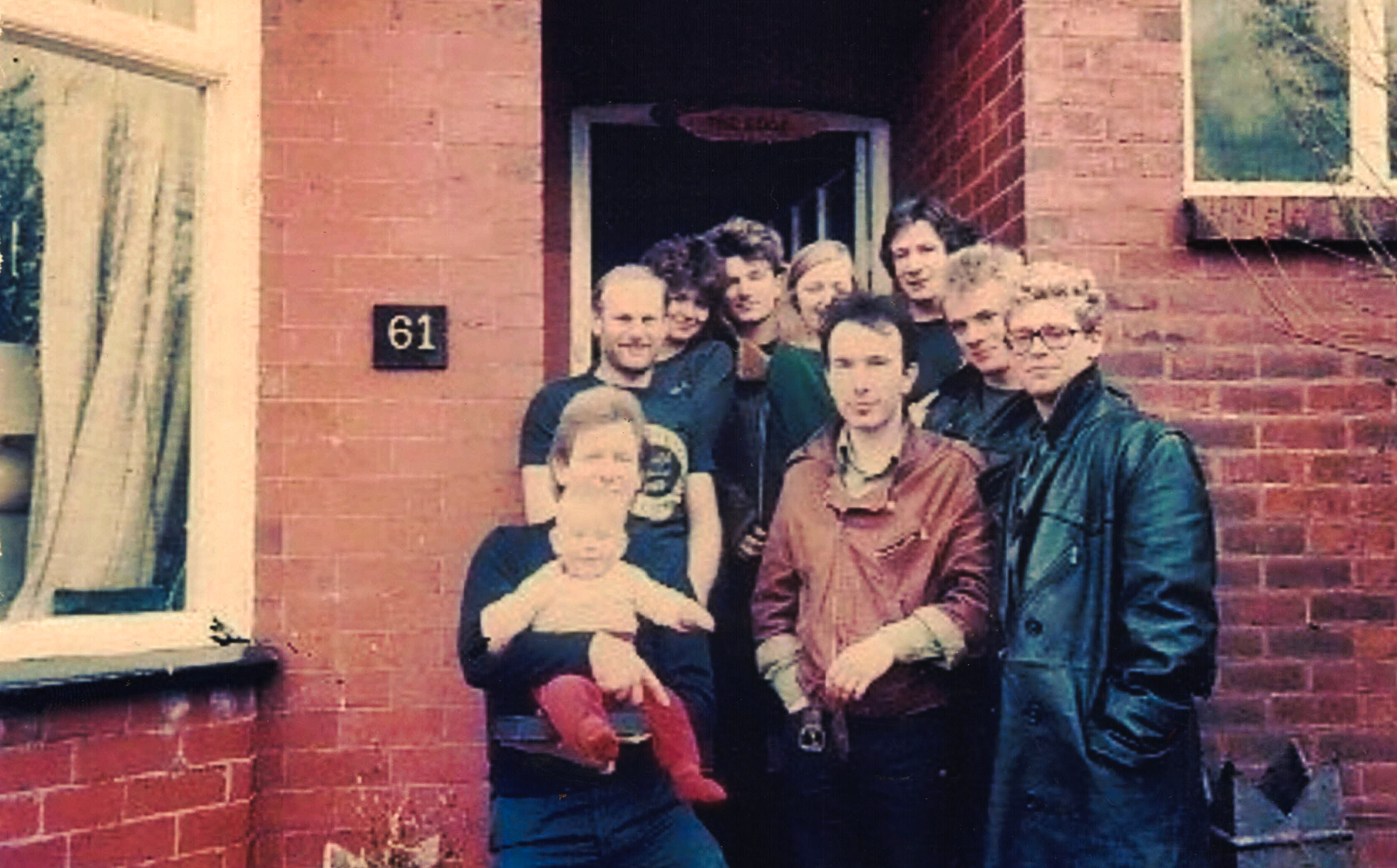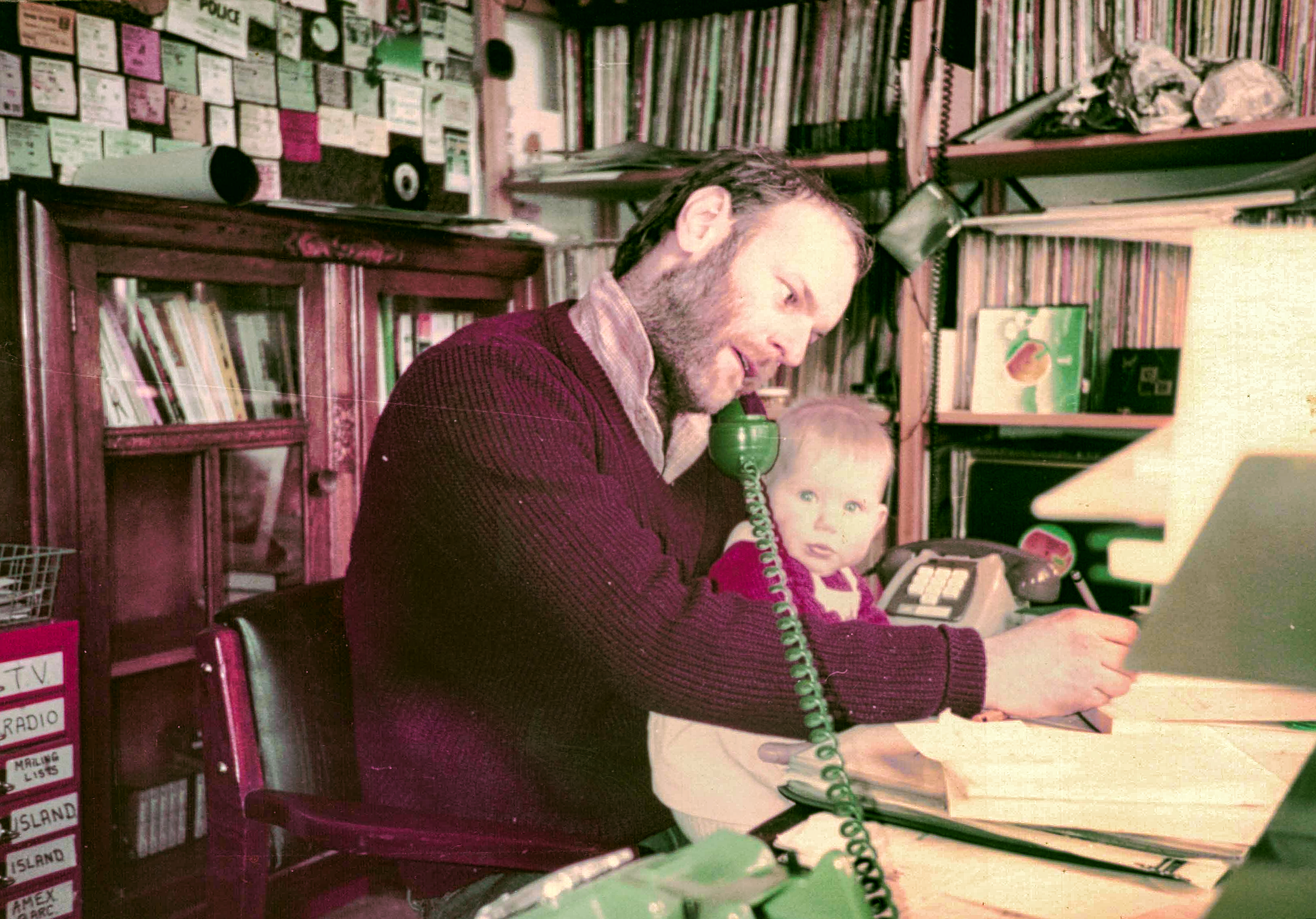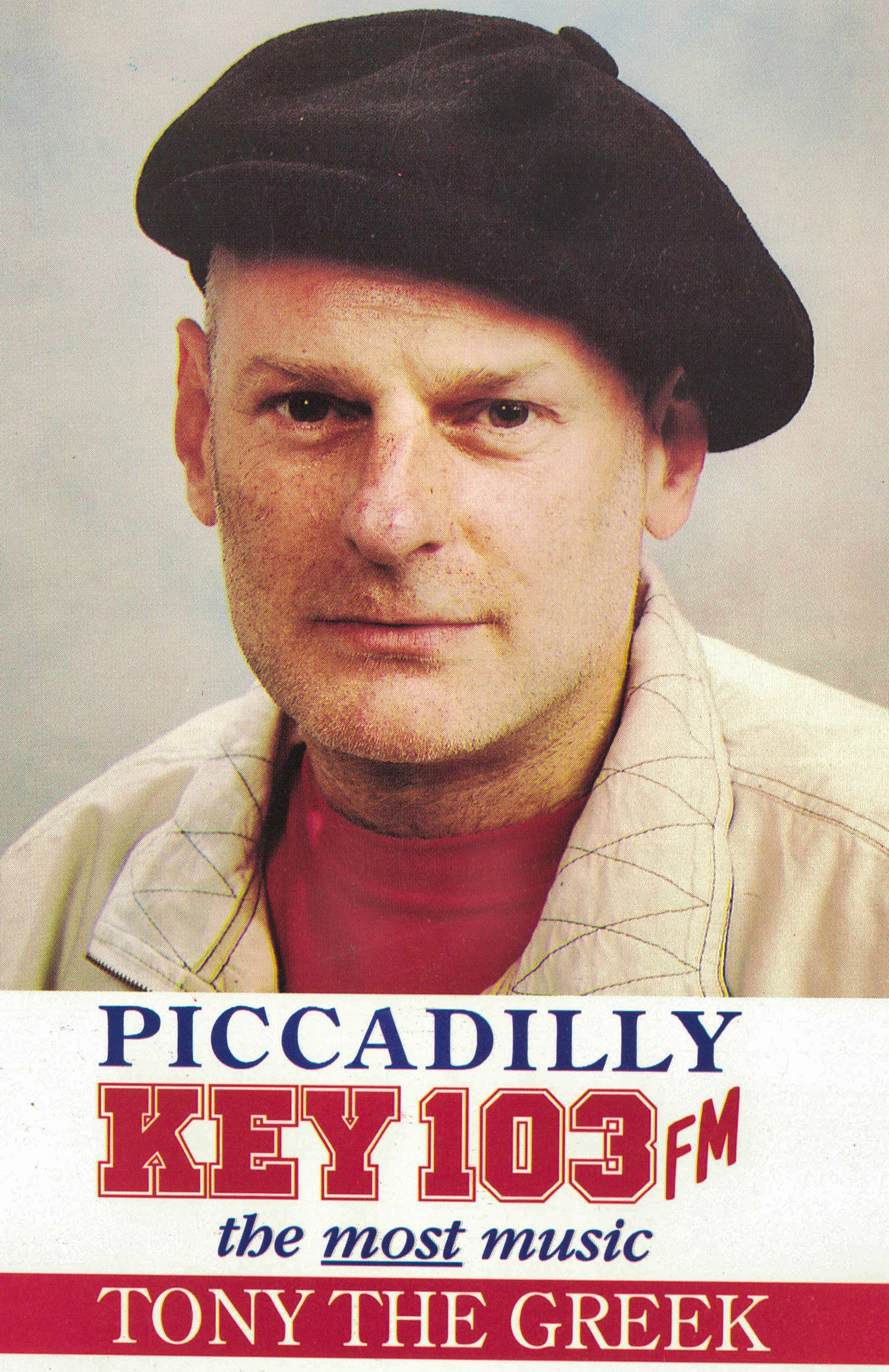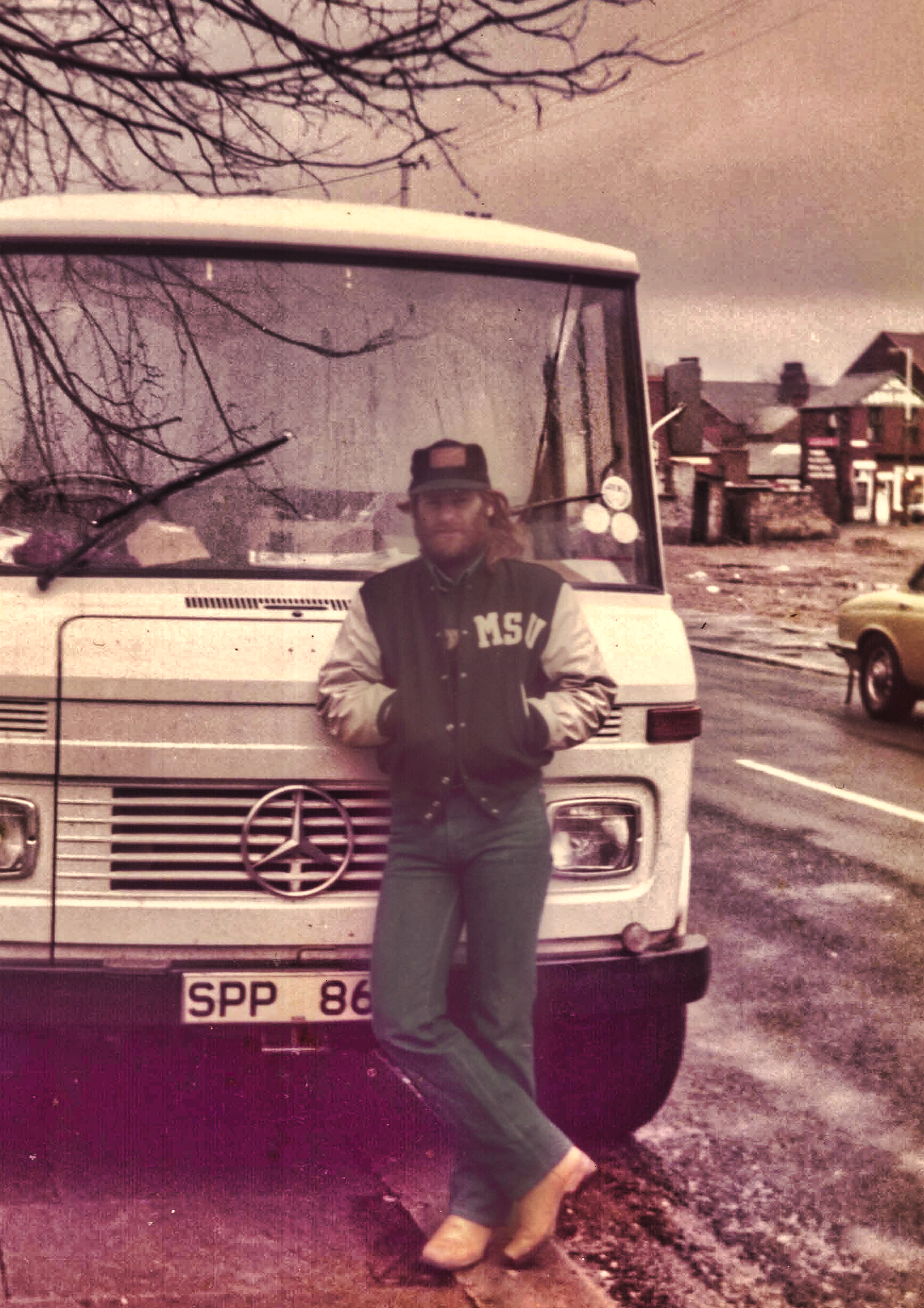
Examining the Pleasure principle – the enduring appeal of Girls at our Best!

‘We’re not looking forward and we are not looking back
We’ve lost the warranty, we’ll never get our money back
My baby’s buying me another life, getting nowhere fast.’

One of the most influential bands to emerge in the early 1980s, Girls at our Best! were part of that era’s fresh new wave of independent acts, and one championed by legendary BBC DJ John Peel … with good reason.

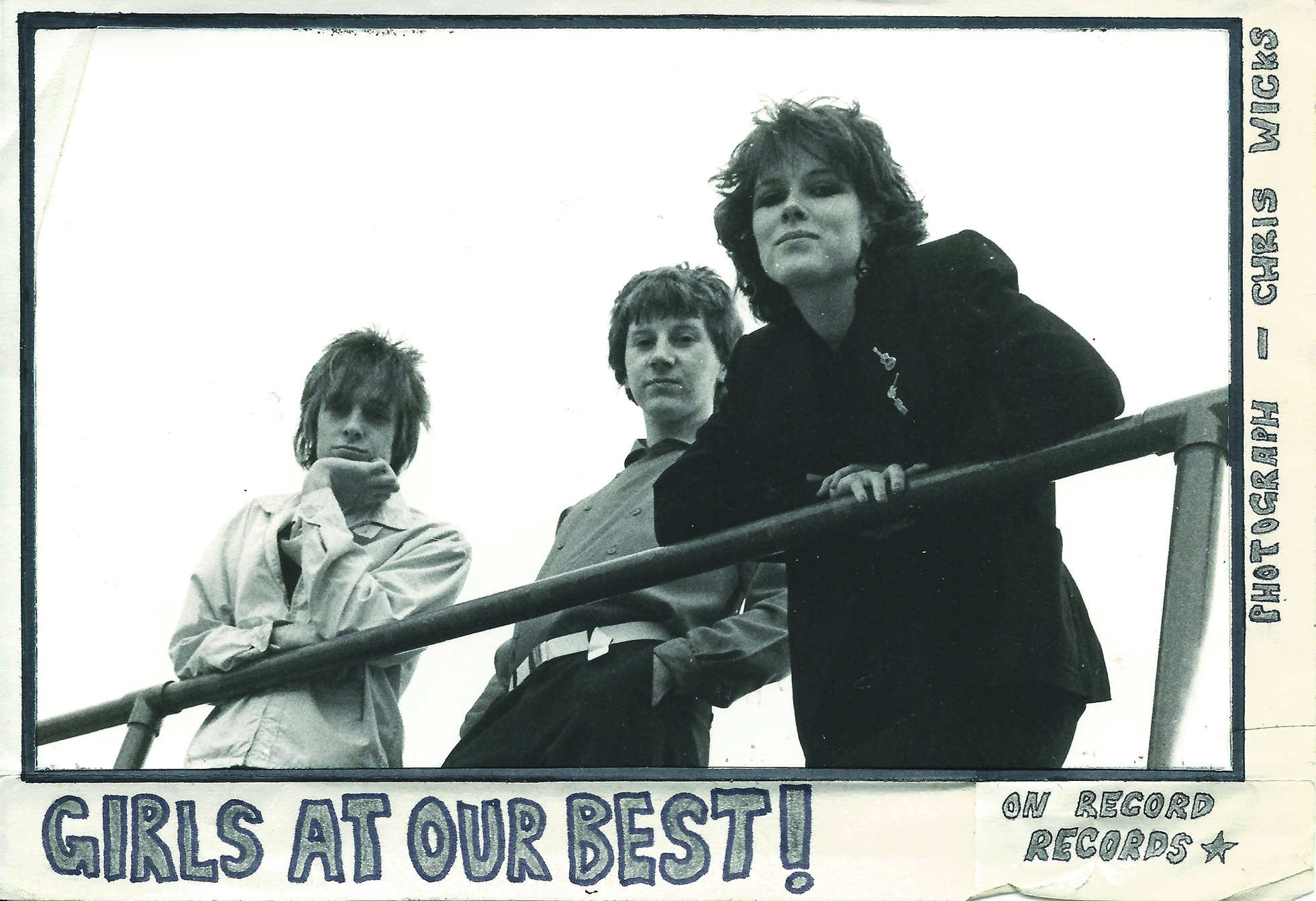
Yet this Leeds outfit very nearly parted company before even putting a record out, having felt over the course of their first year together they had come to a natural end. But then, self-styled James Alan – real name Jeremy ‘Jez’ Pritchatt – and Judy Evans – real name Jo Gaffney – decided to take advantage of a local recording studio’s cut-price session offer and leave some sort of legacy.

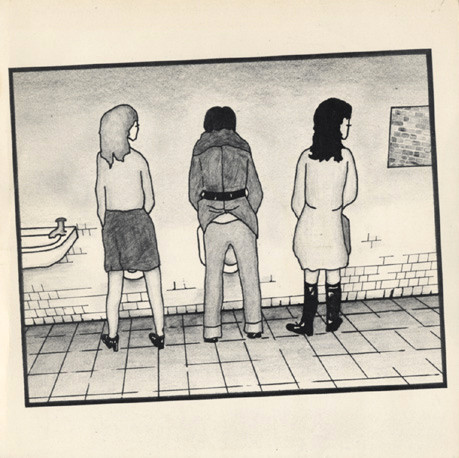
And what a legacy, the result a classic self-financed debut single, ‘Getting Nowhere Fast’, released on their own Record Records label, an indie chart hit covered by The Wedding Present seven years later, backed with ‘Warm Girls’, the Banshees-like B-side which gave them their name (originally the title of a number by pre-GAOB! outfit, The Butterflies).

In a 2013 interview with The Mouth Magazine, Jez said, ‘We knew it was a good song – and that ‘Warm Girls’ was as well. I think our expectations were just to get it out on a single and maybe sell a few copies. I don’t think we’d thought ahead much further than that. Our band had split up, so it was just Judy and I. We thought it’d be a waste not to leave behind some sort of legacy’.

‘Getting Nowhere Fast’ for me is a record that never seems to age. Those two killer layers of scratchy guitar, then that resonant, simple bassline and subtle but insistent, building tattoo-like drum pattern, before Judy’s rattled vocal arrives, characterised by her uncompromising hard northern ‘a’s. Coming in at less than two quality minutes, never showy, forthright post-punk angst, possessing a similar energy to that of Leeds neighbours and friends The Mekons’ ‘Where Were You?’, another song destined to drag you from the bar with every play. And from a West Yorkshire town that also gave us The Gang of Four, it’s no wonder The Wedding Present had the ground zero foundation needed when it came to their turn to shine a few years on.

As for the debut 45’s abrupt ending, Jez added, ‘It was a deliberate attempt to sound dramatic – like the end of ‘1977’ by The Clash – but more extreme! The sound engineer wanted to leave some room reverb after the cut-off – but we preferred it sounding like the tape ran out’.

It certainly worked, and they went on to make four great singles and one amazing LP, a Strange Fruit Peel Sessions 12-inch following in ’87, Peelie having played them many times down the years, their sole session for his show – like the one they did for fellow BBC night-time radio presenter Richard Skinner – first broadcast in February 1981.

I can’t say I recall those sessions first time around – I was 13, after all – but GAOB! came into my life not long after, this punter drawn in after a close friend (a big influence on my music taste down the years) taped the LP for my brother.

Seeing as it was all over by early ’82, barely two years after their first recordings, I never got to catch them live, but Pleasure soon had regular outings at mine, and by the time The Wedding Present recorded their version of ‘Getting Nowhere Fast’, I could nod knowingly at a fellow Leeds outfit’s inspired choice of cover. I guess I was puzzled in places by an LP that seemed to have no obvious signposts to influences for me back then, and Judy’s unique delivery – almost operatic at times – was enough to confuse me further. But perhaps it does you good to not quite place the lineage sometimes, instead going by your instincts, the LP’s opening number and title track ‘Pleasure’ another that never fails to grab and inspire.

‘This is heaven. We are good as gold,
We won’t grow old when we’re told.’

What the hell was in there across those 11 tracks and earlier singles? The Slits, Siouxsie and the Banshees, and The Shangri-Las meets the Buzzcocks, The Clash, The Undertones, Wilko Johnson, and … whoa, hang on, Hugo Montenegro? But above all else, this was Girls at our Best! They had political bite and nous, plenty of style, a pop sensibility and – I totally see it now – humour. I was hooked.

Their lone LP has hardly been short of reissues these past four decades, with my first CD version a 17-track Vinyl Japan pressing from 1994, while Cherry Red’s first CD reissue arrived in 2009, followed by Preston indie label Optic Nerve Recordings’ vinyl versions in 2014 and again in 2021 (the latter selling out in a matter of days, but with another pressing expected soon). What’s more, Optic Nerve also released their debut 45 last year as part of its Optic Sevens 3.0 series.

And now comes Cherry Red’s impressive triple-CD deluxe edition of Pleasure, the original album – which reached No.2 in the indie chart – joined by the singles (A and B-sides), those influential BBC radio sessions, a couple of demos (including a previously-unavailable Butterflies track), and Edinburgh and New York City live recordings from November ’81, the latter Peppermint Lounge bootleg from the ill-fated US tour that led to the band splitting. There’s also an NYC radio interview from between their Queens College and Peppermint Lounge dates, the presenter unwrapping his copy of the LP on air.

Jez was fully involved in the latest reissue project, stalwart fan Steve Flanagan – who calls him ‘one of the nicest and funniest blokes you could wish to meet’ – writing the sleeve-notes for a comprehensive booklet also including copies of the single sleeves, photographs and memorabilia.

Jez’s own story in music going back to 1977 and Leeds punk band, SOS! Yes, he clearly loved those exclamation marks. Yet with the proto-indie band they formed next they were keen to move away from traditional three-chord punk progressions, adding a little pop sweetness and much more. And what did Jez tell us about the origins of this three-quarters male outfit for whom ‘the exclamation mark was as integral as the origin of the name was puzzling’? ‘Bands like Gang of Four influenced us … to go in the opposite direction.’

He explained more to David Eastaugh in February 2019’s online interview for The C86 Show, telling the presenter, ‘I really liked punk, but what I liked about the Pistols, the Ramones and that was the humour in it, and the fun. That was one of the not so good thinks about the post-punk scene – the fun really went out of it. It was very serious. It was musically interesting, lots of good stuff happening, but it was a bit po-faced and miserable’.

They certainly seemed to swim against a darker tide favoured by some of the more prominent post-punk bands of the time. As for that first band, SOS!, Steve Flanaghan nostalgically recalls they were, ‘all scuffed DM AirWairs, torn jeans, garden shears DIY haircuts and slogan lyrics, but impossibly exciting to those of us in their growing fan club … affordable firepower, playing local venues for a next-to-nothing entrance fee, which was a good job because even in those 20p-a-pint days next-to-nothing was about all we had’.

He reckons they got better with every gig, but ‘one day while we weren’t looking, they were gone’, Jez disillusioned with the scene and calling a halt, telling the New Pose fanzine, ‘Johnny Rotten said he wanted 300 bands all going in different directions, but now there’s 300 all the same – it’s shit’.

Jez took his artistic frustrations to art college in Leeds (now restyled Leeds Arts University, past alumni also including Barbara Hepworth, Henry Moore, and Frankie Vaughan), where he met Jo on the same one-year foundation course, this ‘pre-Raphaelite artist’s muse level beauty with a cigarette dangling from her Baby Pink lipstick’ soon joining his latest band. He retrospectively told the Leeds Arts University alumni magazine, ‘I was a punk, and she didn’t really seem bothered about music … but she was really interesting, and she had attitude’. Meanwhile, Jo remembered Jez as ‘looking like an orphan’, this ‘convent schoolgirl from posh Wetherby’ also having told Smash Hits’ Mick Stand in October ’81, ‘I went to college to work hard and become a serious artist – until I met this punk rocker with a nervous rash’.

The streets are very bright
And it’s such a pretty sight.
I would love to live here all the time
The place where day is always night
.’

With the old group disbanded, they recruited non-playing fellow student Patrick Ford on bass guitar, and persuaded SOS! drummer Chris Oldroyd to join, The Butterflies out ‘to make some atonal noise in the name of art’, Jez hoping ‘such a soppy name’ would fly in the face of previous punk aggression. They went on to support, among others, John Foxx, Ludus, and afore-mentioned fellow townsfolk The Gang of Four.

Less than polished in the early days, Jez and Jo got the impression their gigs (mostly local, but also including Eric’s in Liverpool and London’s Nashville Rooms) attracted some people ‘just because they wanted to see if the band were as bad as they had been told’. In time, they became more cohesive though, especially when another SOS! old boy, Gerard Swift – or Terry Lean as he was in his punk days – took over on bass.

Then came that threatened finish, around a year in, before they decided to record that debut single on a whim and a shoestring, Jez and Jo consequently heading south for a day-trip with the finished product, taking a tape round various labels in London – Beggars Banquet among them – and refusing to leave it, feeling ‘if somebody had no time to listen in their presence, they had no time for that label’. As Jez told The Mouth Magazine 33 years later, ‘The arrogance of youth!’. Thankfully, Rough Trade’s Geoff Travis liked what he heard and offered a vinyl pressing service and distribution deal, the pair choosing the name Record Records for their label, a nod to The Clash’s Rehearsal Rehearsals’ practise space.

As it was, early supporter Adrian Thrills made ‘Getting Nowhere Fast’ the NME’ssingle of the week, going on to write a feature on them that October in which he reckoned their ‘tremendous range’ stretched ‘from the bubblegum swing of The Undertones to the structure of Magazine, taking in the raunch of the Au Pairs and the quirkiness of XTC’, while also citing Jez’s love of Sparks. As for John Peel, he told listeners, ‘I’m wildly enthusiastic for that … I know I don’t sound it, but I am’, a No.9 indie hit following in April 1980.

Chris having already departed, a certain Paul Simon joined on drums after a recommendation from Glen Matlock, Jez bumping into the ex-Sex Pistol at a Generation X gig in a Leeds pub. The similarly wonderful ‘Politics!’ single, backed with ‘It’s Fashion’, followed, recorded at Cargo Studios, Rochdale and released that November, reaching No.12 in the indie charts. Paul then made way for Carl ‘Titch’ Harper, the band by then practising on non-club nights at Leeds disco/gig venue The Warehouse, where Jo and Jez worked, ‘Politics!’ – inspired by the Reagan vs Carter US presidential election – getting regular spins on weekly Digital Disco electronic music nights, instigated by Marc Almond.

Those Peel and Skinner sessions followed, including (in the former case) an inspired cover of Sister Rosetta Tharpe’s gospel standard, ‘This Train’, one they made their own, and the ‘Getting Beautiful Warm Gold Fast From Nowhere’ medley in that Stars on 45 era.

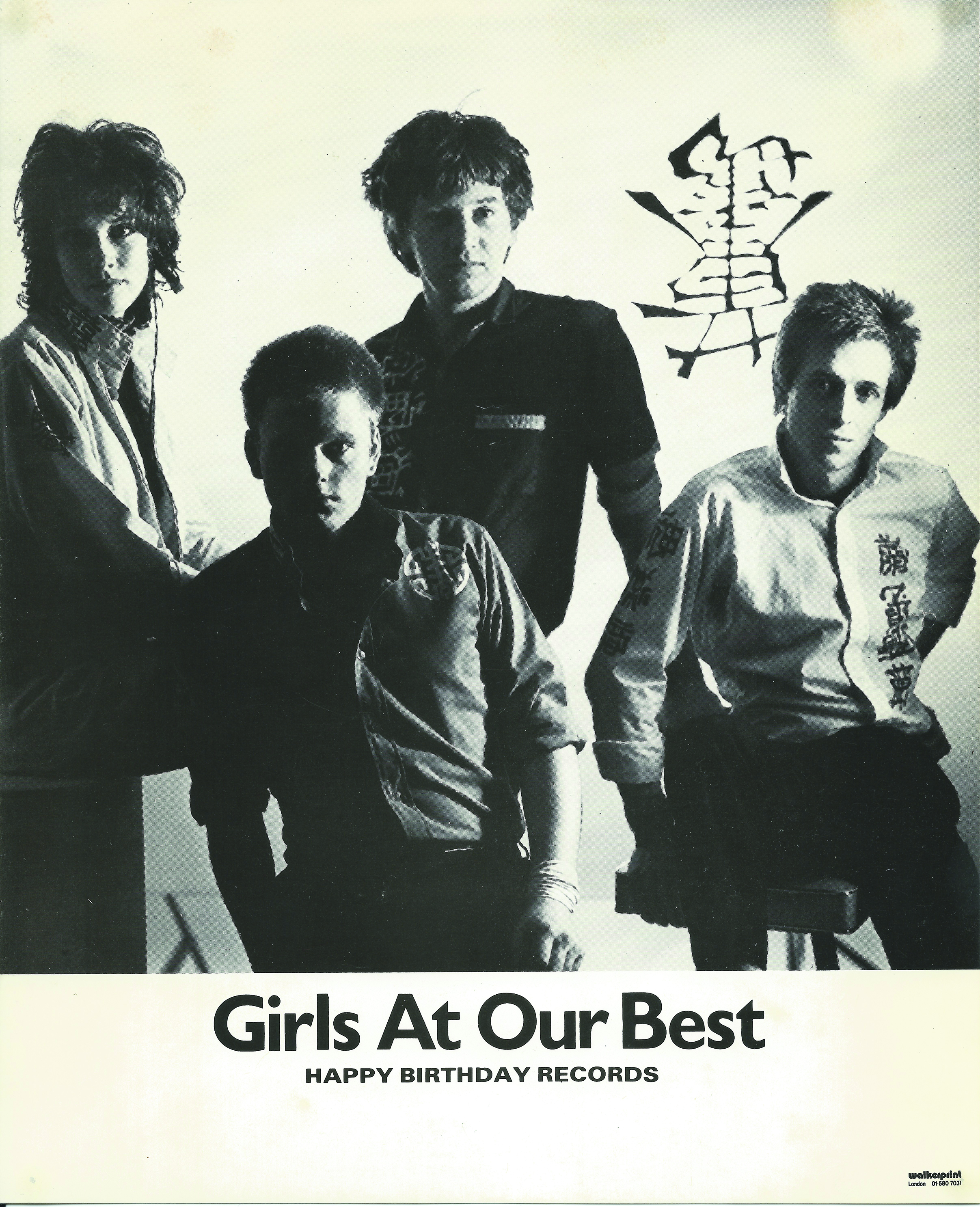
At that point they hadn’t even played live as Girls at our Best!, but their debut followed in York, the four-piece decked out in ‘a sort of Clash in the Orient stencil-fest’ uniform, leaving a big impression on those who were there for that and every subsequent outing this side of the Atlantic.

A deal followed via Happy Birthday Records, the proposed album set to be the label’s long-play debut, third single ‘Go for Gold’, backed with ‘I’m Beautiful Now’, released that May, helped along by further Peel praise, albeit more for the flipside, telling listeners, ‘I feel that’s destined to become one of my life’s favourites’.

This time they reached No.4 in the indie chart, the LP reaching No.2 on release in November, even gate-crashing the top 60 national chart, mostly recorded with drummer Rod Johnson as Titch’s arm had ‘either come off second-best in a confrontation with a plate-glass window, or been broken in a drunken fall from a water tower, depending on whose memory of the time is to be trusted’.

‘We don’t ever look the same,
Gotta keep up playing games,
It’s the only way we’re gonna make our names.’

Personnel along the way also included Alan Wakeman on clarinet, cousin of Yes legend Rick Wakeman, and Thomas Dolby on synthesisers, Jez and Jo going on to feature on his The Golden Age of Wireless LP after the band split.

A fourth single followed, ‘Fast Boyfriends’ coupled with a studio version of ‘This Train’, the non-album collectability of the latter helping it into the indie top-20 (respectable given that the A-side was on the LP), while the live dates continued, across the UK and Amsterdam too.

But it all fell apart on a winter 1981 US East Coast mini-tour of ‘sparsely attended but largely well-received’ gigs and ‘even more dishearteningly quiet record store appearances, where the sound of any tumbleweeds drifting by outside would have drowned out the clamour inside’.

Jez told The Mouth Magazine, ‘There was an in-store record signing session like the one in Spinal Tap. No-one knew or cared who we were. We didn’t get on with each other very well, it was a bit tense. I think we just needed a break from it. I think I became a bit of a tosser. Some people probably think I still am’.

Those divisions within – with Jez and Jo ‘an item’ at the time – didn’t help, what started as the band poking fun at music press obsession with Judy becoming ‘reasons to question how and why they found themselves not having much fun, thousands of miles from home’. It was hardly encouraged by the band – who refused to use images of themselves on the records – but somewhat inevitably, a music press keen to find another Debbie Harry or fellow contemporary Clare Grogan looked to Judy. However, Jez played that and (conversely) any pro-feminist agenda (despite the lyrical content of tracks like ‘Warm Girls’) down.

Talking about a perceived right-on nature of GAOB! and any pretensions regarding intelligence of so many bands on that scene to David Eastaugh for The C86 Show, he added, ‘We didn’t want to make a point out of the fact that we had a girl singer. That makes the statement itself. And we weren’t at all reading Nietzsche, or any of those things’.

Furthermore, he felt the main problem within the unit was merely that they were ‘not remotely ready’ for this part of their big adventure, telling The Mouth Magazine it was ‘too much, too soon’ and there was ‘confusion over what we were doing and why we were doing it’. So, instead of a ‘recoverable stumble while trying to run before they could walk, it signalled the start of a terminal fall’.

Accordingly, after barely eight months as a live concern – from the University of York’s Vanbrugh College in mid-May ’81 to The Mudd Club in Lower Manhattan, NYC, that mid-November – it was all over. Jez reflected on all that in his David Eastaugh interview, playing down the drama, feeling the band somewhat ‘fizzled out’ in the end, adding, ‘it ended with a whimper rather than a bang. There was no big row or argument or anything. Either Titch or Terry said, ‘I think I’ve had enough now’, the other one agreed, and we were like, ‘Yeah, okay then’. It was like pulling in different directions’.

‘We will all applaud when the final curtain falls,
Wave our little flags.
Standing up to pray to the soup of the day,
I say goodbye to that jazz.’

Post-GAOB!, Jez moved to London and was briefly in Bat Cave goth group Sexbeat, then ’60s garage rock/punk/rock’n’roll’ outfit The Tall Boys (including two members of The Meteors), while serving as booking manager at legendary Soho club, The Marquee. Later came SaDoDAda! (yep, another exclamation mark), a ‘techno-punk-glam-experience, complete with transvestite backing singers and a real Dalek’, Jez told The Mouth Magazine, ‘Boy George was a fan, which was cool’. Beyond that, The Tall Boys reconvened, returning to the European circuit. There was also talk of a solo LP, working title Grievous Bodily Charm, described to The Mouth Magazine as ‘classic glam-punk-rock’n’roll’.

He’s long since been back in Yorkshire, going back to college and working in a bar part-time to make ends meet around the time he heard The Wedding Present’s ‘Getting Nowhere Fast’ cover, chuffed but soon chasing his publishers for royalties, as he told David Eastaugh. And these days, Jez is on the staff at Leeds Conservatoire, running foundation degree courses of his own, in music production.

As for Jo, she left the music business in 1982 to work for a Leeds advertising agency, going on to be an ICA exhibitions administrator. The trail is a little unclear from there, and it seems she’s kept her distance from involvement with any of the reissues, adding a little mystery to the whole story. That’s rather refreshing in these days of instant click-of-a-mouse updates, more akin to the days when esteemed music journalists like the late Fred Dellar were tasked with digging around for ‘where are they now?’ features. I could have tried harder to find out more, but a mix-up in us getting in touch ruled out any input from the man himself this time, and I decided there was enough out there to tell the story alongside my appreciation of the band’s music, which is really where I’m coming from on all this.

And while their reign was short, they certainly left a big impression. As Steve Flanagan put it, ‘Beneath the icing sugar coating of their music there was a dark intelligence layered with a skewed view and modus operandi, but not in a studied way. There is little worse in pop or rock than bands who set out to be quirky … Girls at our Best! didn’t, they were just genuinely a bit odd, really’.

Jez told Smash Hits when Pleasure came out that the band had created a ‘collection of greatest hits which aren’t greatest hits yet’. I can’t disagree with that, and Happy Birthday Records were of the opinion they’d signed a potential chart outfit, although GAOB! were always going to be a spanner in the works on that front. Jez reflected to The Mouth Magazine, ‘we were very pleased with the amount of success we did have’, but also wondered if they might have been better served regarding their own ambitions if they’d stayed with Rough Trade.

The splendid fan-site dedicated to the band (linked below) called them ‘possibly the finest early ‘80s band never to have a chart single’ and felt their LP ‘was an album so different from the rest of the post-punk indie pack that you can still play it now and completely baffle new listeners’. Again, there’s something in that. And Pleasure is all ours.

For more details about the latest Cherry Red triple-CD package, head here. For the Optic Nerve Recordings website, head here. For the fan-site dedicated to the band, its comprehensive content including music press from the day, a full discography and gigography, and a GAOB! family tree, try here. As for The Mouth Magazine’s online content, try here, and for David Eastaugh’s C86 Show website and its vast archive of past interviews, including the one with Jez, try here.
Posted in Uncategorized | Tagged , , , , , , , , , , , , , , , , , , , , , , , , | Leave a comment

Raising the roof for refugees – with The Amber List, Red Moon Joe, West on Colfax … plus Jah Wobble and The Ukrainians

Three Lancashire bands offering their own individual twists on Americana are uniting for Ukrainian relief efforts two weekends from now, hosting a charity fundraiser at a Preston riverside music venue.

Meanwhile, across the Pennines, a stalwart Leeds post-punk outfit putting their own particular spin on Ukrainian folk for 30-plus years continue to pitch in with their own fundraising efforts.

The Preston event is the brainchild of newly-recalibrated indie trio The Amber List, taking place at The Continental’s Boatyard venue, frontman Mick Shepherd – once of Action Records’ late-‘80s/early ‘90s cult favourites Big Red Bus, and a regular on the solo singer-songwriter circuit – feeling it was time to do something positive in light of ongoing grim news from afar.

“Seeing all the suffering and pain this invasion is causing prompted us to act. We can barely imagine what the Ukrainian people are going through, and putting on this benefit not only shows our solidarity and support, but hopefully will raise money to help those most in need of assistance.”

Having set a date of Saturday, July 2nd, Mick and bandmates Tony Cornwell and Simon Dewhurst – who in four-piece days released debut LP, The Ache of Being to much acclaim last year; its launch party also held at the Conti – asked fellow Lancastrian outfits Red Moon Joe and West on Colfax to join them.

For the latter, bass player Scott Carey, formerly of Madchester indie favourites Paris Angels, said they were only too pleased to get involved.

“We’ve played with The Amber List and Red Moon Joe, featuring both groups on our Americana night at The Continental, so we were happy to help. Anything we can do to help raise funds and unite against this awful war of aggression, will make it feel like we’re trying to do something.”

The Amber list and West on Colfax last shared a bill on South Meadow Lane, Preston, on Leap Day 2020, barely a fortnight before the first coronavirus lockdown. As for their extra guests this time, frontman Mark Wilkinson and his Red Moon Joe bandmates are looking forward to doing their bit.

“We’re delighted to be asked to support such a great cause. It should be a superb night, with three excellent bands, at a fantastic venue.”

The Amber List came to prominence with 2019 debut EP, ‘The Ever Present Elephant’, and were last spotted by this fan across Preston at The Ferret, supporting ‘80s indie heroes The Woodentops, that show their last before Tim Kelly left to concentrate on solo project, Longhatpins.

And this weekend the trio reveal the first fruits of their new, leaner line-up, releasing new three-track digital-only EP, ‘Brick Walls and Hidden Beauty’, tomorrow (Friday, June 17th) via various streaming platforms.

Red Moon Joe, described by Americana UK as ‘up-to-date, relevant, British, Liverpool-produced Americana at its best’, first emerged in 1985, founder member Mark (vocals, electric and acoustic guitar, production) these days joined by Steve Conway (pedal steel, dobro, acoustic guitar), David A. Smith (bass), Dave Fitzpatrick (harmonica, banjo), and Paul Casey (drums).

West on Colfax, meanwhile, have bulked up, numbers-wise, since delivering debut LP Barfly Flew By in 2020 on their Greenhorse Records label, their most recent release, February’s ‘Arc Light’ EP, seeing Scott and fellow co-founders Alan Hay (lead vocals/rhythm guitar) and Pete Barnes (lead guitar) now joined by multi-instrumentalist Ian Aylward-Barton (who joined midway through the first LP sessions), Andy Walmsley (guitar/backing vocals, whose Preston design firm studio is where the band often write and rehearse), and most recent arrival Mark Beynon (drums), who according to Scott is ’adding new flavours to our writing, like calypso and mariachi vibes’. What’s more, they’re currently working on a second LP, hopefully arriving before the year is out.

Moving on from there … across the Pennines, and closer to home in another sense, The Ukrainians have been campaigning and raising funds through their own shows in support of displaced refugees in that war-torn country.

Co-formed by The Wedding Present guitarist Peter Solowka in 1991 and seen as the first prominent band to fuse Western rock with Ukrainian folk and roots music, The Ukrainians last year celebrated 30 years touring internationally. They were borne out of what was envisaged as a one-off project, The Wedding Present adding Len Liggins to their ranks – ‘because he sang, played a scratchy, authentic village-sounding violin and was a student of Slavonic languages’ – to record a session for legendary BBC Radio 1 DJ John Peel.

And The Ukrainians have certainly been busy this year, performing benefits to support refugees of the war in Ukraine, as Peter explained on a tie-in charity page.

“We know that many people want to support this cause but cannot attend the gigs, so we’ve set up this site for donations. We’ll add the money we get from the gigs to reach our total. Like many people born in the UK of Ukrainian decent, my parents were refugees from the Second World War. We know what pain this causes. These funds will go towards a suitable charity that will help refugees.”

The band’s first Peel session led to more, Ukrainian mandolinist Roman Remeynes recruited to play and sing occasional vocals. The first two sessions were then subsequently released by RCA as 10-inch vinyl LP Ukrainski Vistupi V Johna Peela, The Wedding Present then joined by Len and Roman for a UK tour promoting the LP.

That record went on to sell sold almost 70,000 copies worldwide and remains the only Ukrainian language LP to feature in the UK album charts, reaching No.22. And by 1991 the band proper had formed, releasing their self-titled debut LP.

The rest is history, and continues to unfold, a string of live shows in the last few months raising money and awareness – from dates in their beloved Yorkshire at Hebden Bridge Trades Club, Leeds’ Brudenell Social Club, Halifax’s Victoria Theatre and York’s The Crescent to benefits further afield at Birmingham’s Hare & Hounds, Cambridge Junction, and Salisbury Arts Centre. And then there’s the recent collaboration with original Public Image Limited (PiL) bass player Jah Wobble for their joint ‘Ukrainian National Anthem in Dub’ single, produced, arranged and mixed with former Siouxsie and The Banshees guitarist Jon Klein.

Born John Wardle in Stepney in London’s East End in 1958, Jah is seen as one of Britain’s most influential and distinct bass players, apparently given his nickname by Sid Vicious one drunken night; the late Pistol also gifting him his first bass guitar, over time building a reputation for trademark hypnotic, low-end bass riffs, combining world music, reggae, fusion and punk touches.

To this day, he remains as defiant as he is innovative, cutting his teeth during the early years of John Lydon’s post-Pistols legendary outfit, proving integral to the band’s first two LPs, Public Image: First Issue and Metal Box, going on to see his own band, the Invaders of the Heart, nominated for a Mercury Music Prize for debut LP, Rising Above Bedlam in the early ‘90s. He’s also created his own independent label, 30 Hertz Records, and worked with the likes of Primal Scream, Dolores O’Riordan, Sinead O’Connor, Chaka Demus & Pliers, Bill Laswell, and Holger Czukay.

Released through London-based record label Dimple Discs, co-run by Undertones guitarist Damian O’Neill, his collaboration with The Ukrainians continues to sell well, helping raise further funds, support and awareness for refugees fleeing the conflict.

A stirring, inspired version of the besieged country’s national anthem, all sales go towards funding the two main charities helping out millions of refugees forced to flee their homes – the DEC (Disasters Emergency Committee) Ukraine Humanitarian Appeal, and AUGB (Association of Ukrainians in Great Britain) Help Ukraine Emergency Appeal.  

The idea and collaboration for the track with The Ukrainians – in which Peter (acoustic guitar/backing vocals), is joined by the afore-mentioned Len Liggins (lead vocal/violin), Paul Weatherhead (backing vocals/mandolin) and Stephen Tymruk (accordion) – came about by pure chance, according to Jah.

“I was introduced to Len from The Ukrainians by Mark, my bass tech. I was very keen to help in any way I could. So I enlisted the help of Jon Klein and Anthony Hopkins, who I run ‘Tuned in’ with, a community music project based in the London Borough of Merton. We have built a recording studio there. Indeed, at the moment, Anthony is involved in the process of the settlement of Ukrainian refugees coming into the borough.

“It was a lot of fun putting the track together. And well done to Len and the rest of the band for initiating this.” 

And Jah’s sentiments were echoed by Len.

“We’d like to say a big thank you to Jah Wobble and Jon Klein for creating this fabulous track with us in order to raise much needed funds for Ukrainian refugees. Monies collected will buy provisions, medical aid and clothing for traumatised individuals and families whose situation is desperate beyond our understanding here in western Europe.

“It’s important for us all to keep in mind, too, that as reports of the invasion’s progress slip down the priority list on the national news, a great deal of support will still be needed by these refugees on an on-going basis. Please don’t forget them just because you see less of them on your screens. Please continue to support them. The mass murders, cruel rapes and wanton destruction of Ukraine will continue while the TV cameras are pointing somewhere else.”

Tickets for The Amber List, West on Colfax and Red Man Joe’s Ukraine charity event on Saturday, July 2nd (8pm) are £5 via the venue website, on the door, or via WeGotTickets.

You can listen to/buy Jah Wobble and The Ukrainians’ charity single via various digital platforms or via this Bandcamp link.

For more about The Ukrainians, head here, and to find Peter Solowka’s Ukrainian refugee fund, try this JustGiving link. You can also head direct to the Disasters Emergency Committee (DEC) Ukraine Humanitarian Appeal, and the Association of Ukrainians in Great Britain (AUGB) Help Ukraine Emergency Appeal.

Meanwhile, Jah Wobble and the Invaders of the Heart are on tour from August, with details via his website here.

Posted in Uncategorized | Leave a comment

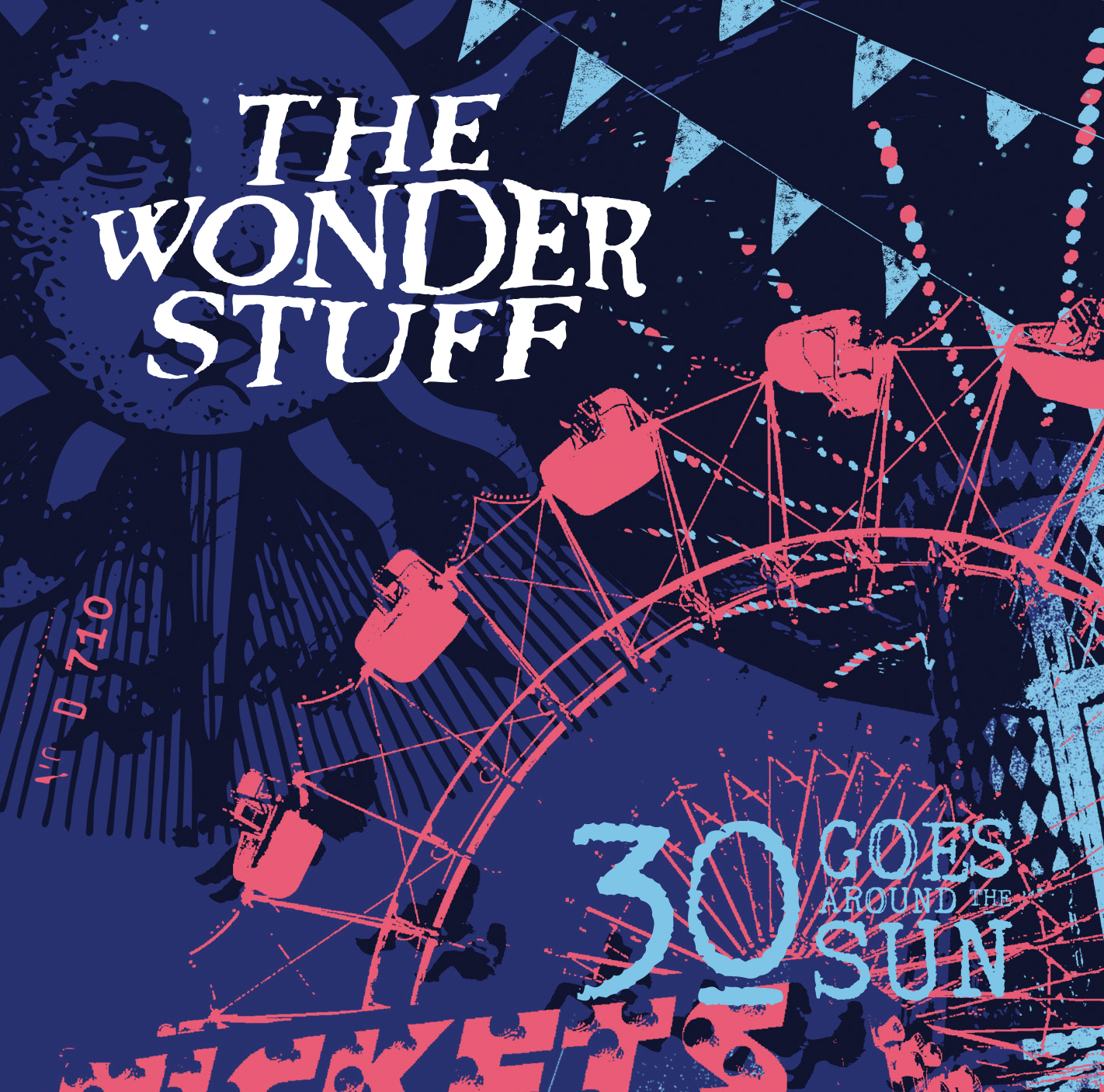
Learning new things with the passing of time – revisiting Never Loved Elvis and The Wonder Stuff with Miles Hunt

You can’t measure a band’s success on chart positions alone, but three decades ago The Wonder Stuff were still on the crest of a mighty wave that had been building since the release of their 1988 debut LP, The Eight-Legged Groove Machine.

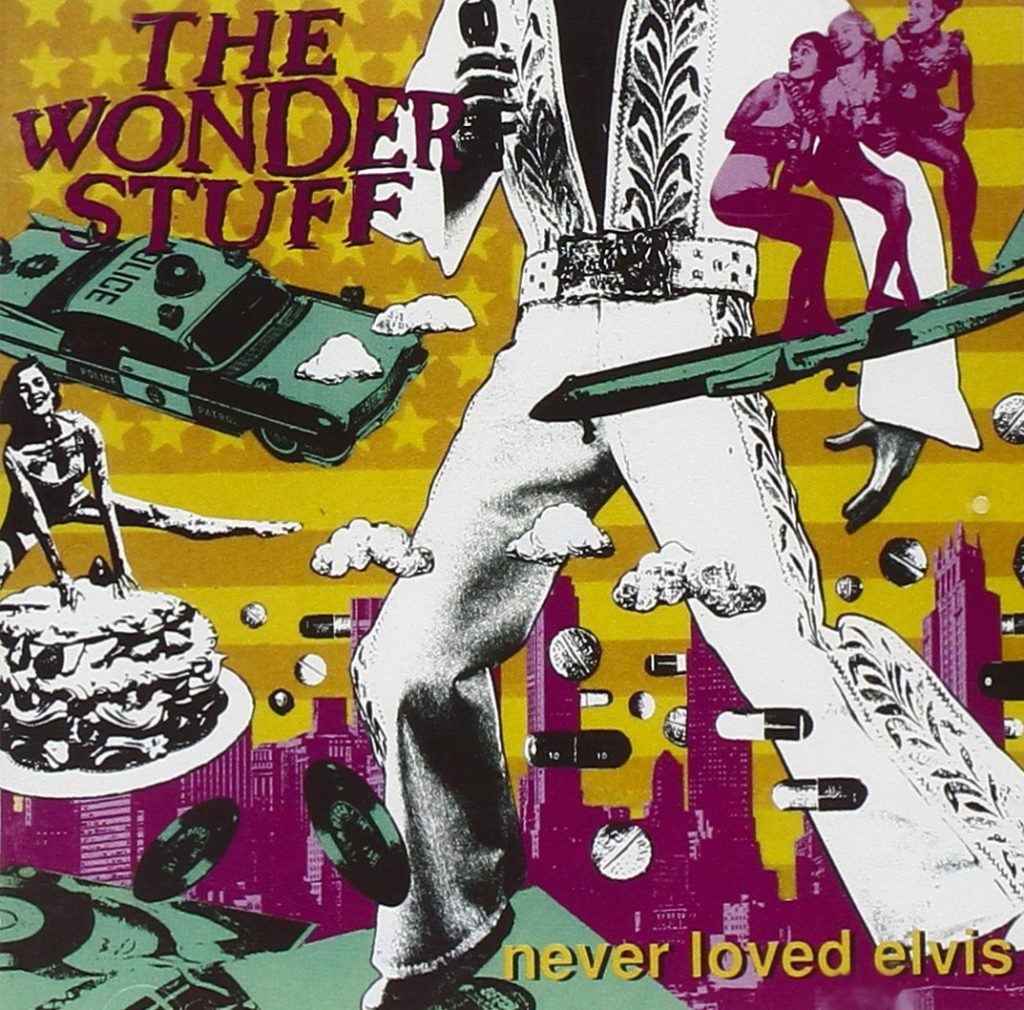
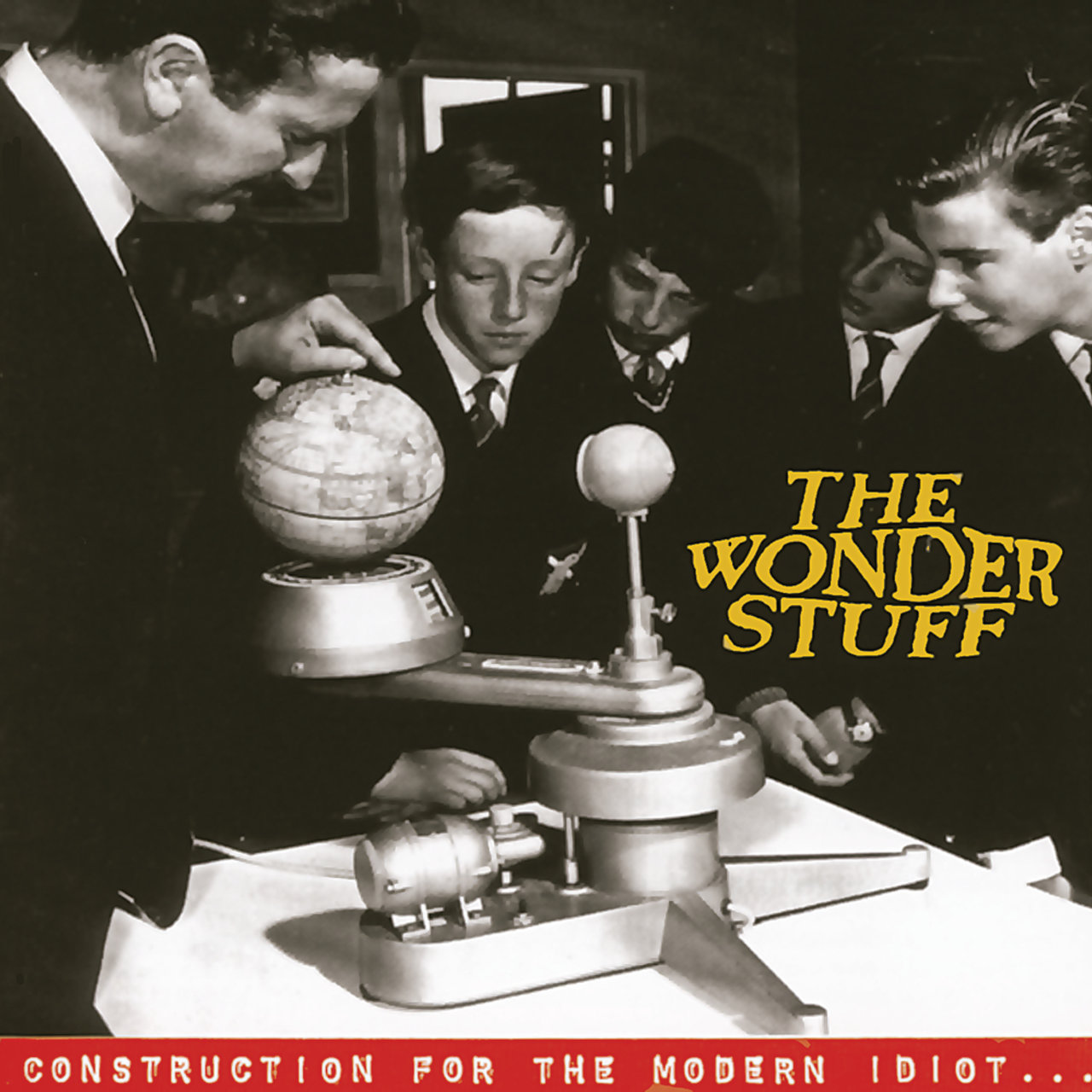
Four more top-20 albums followed before they called it a day in 1994 – 1989’s Hup (No.5) followed by their biggest, 1991’s Never Loved Elvis (No.3), with 1993’s Construction for the Modern Idiot (No.4) and footnote compilation If The Beatles Had Read Hunter…The Singles (No.8)also making the top 10.

As for those singles, Never Loved Elvis’ lead 45, ‘The Size of a Cow’ reached No.5 after five earlier top-40s, and six months later the band reached the chart summit in the company of comedian Vic Reeves, covering Tommy Roe’s late ‘60s hit ‘Dizzy’, at a time when it seemed neither Vic and sidekick Bob Mortimer nor the Stuffies could do any wrong, in arguably the last great wave of crossover homegrown indie rock before the world went Brit Pop.

It was 30 years ago, give or take a few months, that the ‘Welcome to the Cheap Seats’ EP also cracked the UK top-10, something the ‘On the Ropes’ EP the following autumn similarly achieved. For a while, this Midlands outfit took on the hit singles’ spirit of local-ish lads Slade for a while, not least at their commercial peak in ‘91 with Never Loved Elvis, recentlyreleased in multiple formats, this million-plus seller newly re-issued on vinyl by Universal Music as part of HMV’s centenary celebrations.

Due to the pandemic, The Wonder Stuff, formed in 1986 and going on to sell millions of albums worldwide before their initial break-up eight years later, then reconvening in 2000, have been unable to tour since a sell-out 2019 outing for the Better Being Lucky LP. 

However, this month, their current 12-legged groove machine is out on the road again, performing Never Loved Elvis in its entirety before a second set of other hits, classics, and rarities from an extensive 36-year catalogue.

Alongside frontman Miles Hunt on guitar and vocals these days is the only other original member on board, guitarist Malcolm Treece, plus long-standing fiddle player Erica Nockalls, fellow guitarist Mark Gemini-Thwaite (The Mission, Tricky, Theatre of Hate), Tim Sewell on bass (Eat), and Pete Howard on drums (The Clash).  

Miles was staying over at a friend’s house when I called. He’s based in Shropshire but was on the border with the Black Country when we spoke, his band rehearsing in Stourbridge, the town where The Wonder Stuff’s story came together. Does he get nostalgic, back on old ground?

“Not at all. I pull up at the studio and go into a windowless room for about 10 hours, then I get back in my van, and I don’t see it at all.”

Speaking to the likes of Slade drumming legend Don Powell, we’ll mention places like Bilston, and he’ll get a little dewy-eyed. But he does live in Denmark, so there’s a bit of distance there, in time and location.

“Yeah, I did live in London for about 17 years, but always stayed in contact with my friends from back home. I’ve never really lived far away for any significant amount of time, and I’m not from Stourbridge. I think there was one or two members that were from there. I’ve no real attachments to the place.”

Last time we spoke, six years ago (with a link to that feature/interview here), you had a different line-up, with Dan Donnelly, Mike McCarthy and Tony Arthy involved. What changed to entice Malc Treese’s return?

“Ah, let me think … much as I liked Dan, Mike and Tony, musically they weren’t really up to the job. I was asking a little too much of them, to be honest. That came to a head, I needed to move forward, needed a guitarist, and Malc and I hadn’t seen each other seven or eight years at that point, so I put in a call. I’d already asked Pete Howard to come and play drums. I’ve known Pete for years.”

From your post-Wonder Stuff days in Vent 414 in the mid- to late-90s?

“Even before that. He was in a band called Eat, that I really loved. And Malc had been playing in in a new line-up of Eat. I asked Pete if he wanted to play the drums in The Wonder Stuff, and he said a lovely thing. He was very good friends with Martin Gilks, and said, ‘It’d be an honour to play Martin’s beats,’ which I thought was a very sweet thing to say.”

I’ll throw in a little background there. Martin died aged 41 in 2006 after a motorbike accident in London, having been part of the original line-up alongside Miles, Malc, and Rob ‘The Bass Thing’ Jones, the latter having left after the Hup LP in late ’89. Rob, aka Bob, died in 1993, aged just 29. But I’ll let Miles carry on now.

“Then I said, ‘You see way more of Malc than I do. Fancy asking if he wants to talk to me?’. Haha! And he just looked at me and said, ‘I don’t have to ask that. Malc loves you, just give him a ring. So I did, and he was happy to hear from me, said it’d be lovely to see you, we were asking about each other’s families and all that, then I said, ‘Would you be interested in taking up your rightful position as Wonder Stuff lead guitarist again?’.

“He was a bit surprised at that, and said, ‘That, I’d have to think about,’ so he didn’t jump straight back in. But within a couple of months he said, ‘Let’s get together, have a chat’.

“Then we needed a new bass player, so why not ask Tim? Him and Pete have been playing together since they were in their teens. And it all came together really well, then of course, I’d written a bunch of songs with Mark Gemini-Thwaite, remotely. He was in California, this is all pre-pandemic. I was in Shropshire and we were just writing together for no particular purpose, then I felt these songs would really shape up nice to be a new Wonder Stuff album, of which I’d written a handful of songs for already.

“So I said, ‘Do you mind? Would you like to record these and stick them on a Wonder Stuff album?’, and he said, ‘I’d love that’. So we did the Better Being Lucky album, then it just seemed to fit in that Mark should play on these tracks in the live arena, so that’s how we’ve ended up being a six-piece.”

Mark’s got a fair pedigree as well. In fact, you’ve all been around the boards a bit, haven’t you?

“Haha! Yep, and it’s great in rehearsals now – everyone’s so great with their chosen instrument, and if anyone’s throwing ideas around in the room … We’ve been rehearsing Never Loved Elvis songs that I haven’t looked at – the original recordings – in years, and I’m spotting these like little string arrangements at the end. Like on ‘Welcome to the Cheap Seats’, an extra melody at the very end of the song. So I’m like, ‘Mark, could you play that?’. And he just went with it, and that’s never been in the song as a live arrangement – only on the record.

“So it’s really great, and those guys all ask each other things like, ‘Could you do this?’, and, ‘I spotted this on the record and …’. God, we’ve always been sort of cheating our way through the live versions, so it’s nice to have all these extra things going in.”

It was only when I was looking back at the Never Loved Elvis sleeve notes that I was reminded that not only did Kirsty MacColl contribute, but also James Taylor, of James Taylor Quartet and The Prisoners fame.

“Yeah, James had come in on Hup, actually. He plays on ‘Don’t Let Me Down Gently’ – and it’s quite a prominent part, the organ part.”

When was the last time you sat down and listened all the way through Never Loved Elvis?

“Last week! Just because of rehearsals. I was getting asked questions in emails by various members, like, ‘Do you want me to look at this bit?’ or ‘What are we going to do here?’. So I thought I better have a listen!”

Well, it’s a pretty good album, too. Definitely worth a listen.

“Ha! I don’t really know it that well … I know how to play every song, but can’t remember every little bit of recorded trickery and parts and arrangements, y’know. So yeah, I listened last week, quite loud, with a bottle of wine and my headphones on, and really enjoyed it.

“A lot of the songs, like ‘Caught in My Shadow’, ‘The Size of a Cow’ and ‘Mission Drive’ will be in the set quite regularly. But I haven’t played songs like ’38 Line Poem’, ‘Inertia’ and ‘Grotesque’ for exactly 10 years, when we did the 20th anniversary shows.”

I recall you headlining Cities in the Park, the Summer ’91 Martin Hannett tribute in Heaton Park, Manchester, and you were really firing, on a peak as a band. Any particular memories of that?

“I’ve a very specific memory of that gig. I was probably firing because I had to see the Rock Doc that morning. We’d been gigging in the States, and I’d spent my last night – two nights before Cities in the Park – on a friend’s balcony in Hollywood, California. I’d been sitting out there in shorts ‘til quite late at night, and didn’t realise I was getting bitten by loads of bugs.

“When I got up at six o’clock the next morning to get on the plane, I’d got all these bites all over my legs. When I got on the plane, my legs really swelled up, and by the time I got to Manchester, the night before the show, I could barely walk and was feeling quite feverish. So they got the Rock Doc to me, and he gave me all manner of jabs in my backside, so I was basically speeding my head off through whatever he’d given me.

“So I’m sat with all this cream on my leg in my hotel room in Manchester on the afternoon, with loads of interviews to do. Most were on the hotel phone, but one was face to face with Mark Radcliffe, the first time that we met. And every time I’ve seen Mark since, he always brings it up, saying, ‘The first time we met, you were sitting on your bed in your underpants’!”

It was a major bill, the likes of The Fall, Buzzcocks, and many more on before you. But it sounds like you might not recall much of that.

“No, I’ve a memory of John Cooper Clarke being backstage. I also think Nico was with him. And I remember the Buzzcocks being around, but because I wasn’t feeling well, I spent as much time as I could in the hotel. Somebody came and got me, shoved me on stage, and soon as I came offstage, I was taken back to the hotel. But that was the first time I saw Cooper Clarke in the flesh, as it were, although I’d seen him plenty of times on stage. I was like, wow, that guy’s fucking famous in my book!”

Indeed, and there you were with lots of iconic Manchester bands, yet still headlined. You’ve got to have plenty of belief to get out there in those circumstances.

“Ah, we had plenty of self-confidence back then. It’s all gone now! I used it all up in my younger days!”

The next time I saw you was at Preston Guild Hall on the Idiot Manoeuvres tour, and I suppose by then it was towards the end of that amazing run, late March ‘94.

“OK, I guess that was the Construction days.”

Yes, touring that album. You were still firing, but maybe behind the scenes, it wasn’t so great.

“Yeah, about halfway through the tour … Gloucester Guiildhall, I think … I had a conversation. I knew I’d had enough. I knew I didn’t want to do anything after that tour. So I called a little band meeting on the afternoon in Gloucester, and the mood in the band had been horrible all the way through that tour to that point. And I just said, ‘Look, this just doesn’t work anymore. I think when this tour is finished, I’m going to knock it on the head’.

“And everyone was like, ‘That sounds about right’. So we did the rest of the tour, all of us knowing that was it and we were going to keep that to ourselves. And actually, we really enjoyed the rest of the tour, because the pressure was off. It was really nice.

“Looking back on it now, it may have been an error. I think a year away from each other would have been a better idea.”

Actually, that Preston show was five days later (the Gloucester show actually at the Leisure Centre), which might explain how I felt it was business as usual regarding positive live presence.

Then again, you’d had a great run, albeit rather intense at times.

 “Well, eight years really, being in each other’s pockets. And I don’t care what walk of life you’re in – whether it’s friends you went to university with or you got your first job with, friends you first signed on the dole with, whatever … Almost every day for eight years, and we were a strange bunch to be thrown together.

“Malc and I would have been always good mates. But Bob Jones and I didn’t really gel. I loved him, I thought he was great, but I wasn’t his kind of person. I was a bit uptight. Well, I was very uptight! He just liked a good laugh and a beer, whereas I over-thought everything. There was kind of two camps really – him and Martin (Gilks) really got on well, and me and Malc got on well. But by the time we’re at’ 94, I’m not really getting on with anyone, Bob had gone, a bass player had come in with zero personality, a multi-instrumentalist fiddle player who wasn’t really from our world. That didn’t help either, although his musicianship was second to none.”

Miles wasn’t the first pop star in the family. His dad’s brother, Bill Hunt, featured on the first  Electric Light Orchestra and as a keyboard and French horn player was integral to Roy Wood’s post-Move and ELO outfit Wizzard. How’s Uncle Bill? I see he recently turned 75.

“Did he? Haha!?”

I believe so.

“Okay, well, I have seen him recently. He’s great. I can’t remember why we all got together, but I think Mum and Dad thought it was time we started seeing people, after the pandemic.”

That was certainly a period that made you re-think and revalue your friendships, inspiring us all to make the most of those links.

“Yeah, exactly, and he’s always got some little musical thing going on. He’s brilliant, Bill. A great musician as well.”

An inspiration in your formative days, no doubt. Someone who properly made it from your patch.

“That’s it, y’know. When we were little kids, like most little kids in the early ‘70s watching Top of the Pops, our uncle was on it quite regularly. And that just felt completely normal to me and my brother, having never known our uncle not to be on there … not as if I thought about it until years later, but yeah, of course, that would have had an effect.

“Although my goal was never to be on Top of the Pops. My goal was to be in a band and earn a living at music, just like my uncle had.

You mentioned your parents. Your dad was a union man. Was that key in your approach to your more outspoken side? I don’t know why I’m being careful with my words, mind, you did after all put in an advert in a bid to form your first band where you called yourself a ‘big-mouth drummer’.

“Haha! Yeah, he was a trades unionist … and before that, he was a drummer. His politics definitely had an effect on me. I think of myself as a socialist, and songs like ‘Give Give Give Me More More More’ and ‘It’s Yer Money I’m After, Baby’ were all tongue-in-cheek digs at the type of people obsessed with wealth. And the fact that he was a musician. When I was a very young teenager, he was teaching me how to play the drums.

“It was funny when I asked Malc Treese if I could have a bash at singing in his new band. My only worry was, ‘What if I don’t like the drummer? I wasn’t a particularly good drummer, but drums is where my ears go to. But then I got to hear Martin Gilks for the first time and thought, ‘Well, there’s no fucking problem here!’. That guy was amazing!”

After mega-success with The Wonder Stuff, first time round, there was the afore-mentioned Vent 414. In retrospect, were you (ahem) caught in your own shadow there? Was it all too soon, or was that just a welcome release from all that preceded it, something fresh to move on to?

“Yeah, it was so much looser than The Wonder Stuff. On that last tour as a six-piece, there was a keyboard player as well, and some songs we were playing with computers as backing tracks. It was just such a production, and playing those big venues like the G-Mex, we’d be having production meetings about stage sets and lighting effects, to which, really, I couldn’t have given a flying fuck about!

“It’s funny, me and my friend were flicking through the Jubilee thing and he’s saying, ‘the lighting is amazing’, as that’s an area of work he’s in, and, ‘those drones are impressive’. I’m like, ‘You know what, I don’t even notice them’. I’ve never been to a gig and gone, ‘Wow, the lights are good!’. I don’t notice them. I’m usually just listening to the drummer, y’know.”

And with you, it seems the song is king.

“Yeah, the song, and the musicianship. There’s kind of a golden rule that you don’t use yellow lights, because it just looks like you’re covered in piss, and you don’t use green lights, because it just makes you look like a baddie from a pantomime. But we were at an Iggy Pop gig and my mate said he was using a yellow light. And I said, ‘How have you even noticed? I’m looking at Iggy Pop!’”

Back on Vent 414, we mentioned Pete Howard earlier. Did he ever talk about days with The Clash back then?

“No, quite the opposite. Only in recent years is he more agreeable to talk about it. He didn’t like it when we went out to tour Germany, Holland, and Belgium. He’d recoil if we turned up at gigs and they would talk about ‘Ex-Wonder Stuff singer, MTV presenter, ex-Senseless Things, and ex-Clash. He’d be like, ‘I don’t want to talk about that’. And his reasoning was quite sound, like, ‘Look, I was in the worst version of The Clash’. That was the way he looked at it at the time. ‘I was in the version of The Clash where Joe Strummer sacked Mick Jones’.”

True enough. I seem to recall his first gig was Mick’s last, the Us Festival in California.

“Yeah, but he looks back at it more fondly now. And on that Joe Strummer 001 compilation, there was some … y’see, Pete didn’t play on Cut the Crap. He played some of those songs live, but that’s just programming on the record.”

Indeed, and the original demos sound a step up for sure.

“It’s really good to hear, isn’t it. So he’s allowed to have a bit of pride about it now. It might just be that he’s more relaxed about it.

“And to get rid of all that, to bring it back down to just three people with instruments and very loose arrangements (in Vent 414) … we certainly weren’t stuck to computer backing tracks. That was a great freedom, and then just to put it in 300-capacity clubs rather than 8,000-capacity rooms was really refreshing for me. I loved it. And it was only that Morgan got itchy feet, wanting to go and do something else, that it didn’t last as long as I would have liked it to.”

And because you mentioned Morgan Nicholls, who broke through with Senseless Things and later got to play for Muse, Gorillaz, Lily Allen, and The Streets, going back one step again, there seemed to be quite a kinship between The Wonder Stuff and the other bands you toured with and partied with, not least Ned’s Atomic Dustbin, Senseless Things, and Mega City 4. Not as if you weren’t competitive, of course.

“Yeah, I think we all helped each other out. There were bands around the year before – and no disrespect to these bands – like Then Jericho, very much influenced by the early ‘80s, with synthesisers, obviously heading towards stadiums, y’know – that’s what they wanted to do. Then we came in and everything seemed to change. Certainly, looking at the three music papers at the time, that those bands sort of got pushed aside and the focus came on these scruffy oiks you just mentioned, and we certainly didn’t look like we had our eye on the big prize and seemed to be quite happy just making a row in The Marquee.

“So things did change drastically. I guess those bands were always there, but it was once we were all given a bit of attention, then we were all on the same gigging circuit. The Poppies (Pop Will East Itself) were ahead of us, and basically said, ‘Do you want some support gigs?’. Then we were ahead of the Neds, commercially, and we could offer something to them. And that’s nice to hear you mention Mega City 4, us doing gigs with them and Senseless Things. I think we drove each other, because we’d be cynically watching each other all the time, even if they had a better t-shirt printing company, so, ‘Their t-shirts are better than ours, we better step up to their level!’.

“And with our generation of bands, once we were at Astoria level, our record company would have probably thought we should have sold our support slots, which was very much the way things worked for you. They were called buy-on tours. For someone like Ned’s Atomic Dustbin to get on a 30-day tour with a band like us, that would have cost their record label like fifty grand, if you were dealing with the old bunch of bands – Then Jericho, Diesel Park West, those kinds of band. But we thought that was fucking outrageous, principally because Big Country had given us our first tour for free. Then I think three months after that, we got a Zodiac Mindwarp tour for free as well. In our mind, it was like, ‘You can’t charge support bands to get on!’. In the early ‘80s that’s how it worked, but we threw that rule book away because it just didn’t seem fair.”

I suppose in a sense you were also brought up on stories of Mott the Hoople, Slade, and later The Clash, The Jam, and so on. Huge bands, but they never saw themselves above their fans. They had the grandeur, but they weren’t up themselves. There was very little conceit.

“That’s right, yeah.”

And as I mentioned Slade, there was real pride in them coming from not far off your patch, wasn’t there?

“Yeah, exactly. I was too young really, so don’t remember ever talking to Uncle Bill about him knowing Slade or anything, but it was pretty obvious to us that they did. And because we lived in an area of Birmingham, just south of the Black Country when we were growing up, we knew Slade just lived up the road. That was really exciting. And they were omnipresent back then, weren’t they? They were on the radio and on Top of the Pops all the time.

“So yeah, there was a bit of pride in that and like you just said, they weren’t up themselves. So I suppose the path was being laid for me. They were normal guys. Okay, there’s obviously something wrong with Dave Hill in the clothes he wears, ha! But they seemed like normal guys, we’d all seen the movie, Flame, and they could all act but came across so naturally, and it was like, well, they’ve done it, and there doesn’t seem to be anything in our way, does there …”

And you’ve done a fair few covers in the past drawing on those geographical roots, from The Move’s ‘Blackberry Way’ and Slade’s ‘Coz I Luv You’ to Dexy’s ‘There There, My Dear’ and The Beat’s ‘Save it for Later’. Even Duran Duran’s ‘Planet Earth’.

“Yeah, that was a conversation that me and Fuzz were having in the pub, y’know.”

That’s Fuzz Townshend, The Wonder Stuff’s drummer from 2010 to 2014, who also featured for Ranking Roger’s General Public, Pop Will Eat Itself, and Bentley Rhythm Ace, and these days with The Beat.

“There was a practical reason behind doing that. I’d started writing songs for Oh No It’s … The Wonder Stuff (2012), and because we’re constantly looking at trying to keep a tight budget when we make records, and Fuzz ended up living really near where I live, out in the sticks, he said, ‘Between the two of us we can record this album ourselves, we can produce it. I know how to mic. a drum kit up, I’ve various amounts of digital equipment, and you’ve got blah, blah, blah … why don’t we do it ourselves?’.

“Then it was like, ‘Okay, this looks like it’s do-able’, the conversation quickly moving on – just a pub conversation – to what were the best songs to come out of the Midlands. I think I went right in there with ‘Blackberry Way’, a list getting written down on a napkin or something, and I said, ‘You know what, why don’t we try and record a version of ‘Blackberry Way’ and use that as a test to see if we can make a record with the equipment we’ve got, without bringing in producers or going into actual studios?’.

“We were really pleased with that, then it was like, ‘Well, why don’t we record all those songs on that list?’. So that was really good fun, but really just a practice run for recording the Oh No album.”

And you’ve remained prolific down the years, from band to solo albums and collaborations with bandmate Erica, who’s also clearly integral to the more recent incarnations of The Wonder Stuff. Do you remain pretty much driven, with plenty of reasons to get out of bed most mornings?

“Yeah, I just finished a solo album that’s gonna come out sometime late in the summer, did some writing with MGT (Mark Gemini-Thwaite) and with Luke Johnson, the son of my first manager, Les. I’ve got Billy Duffy playing on it, Laura Kidd, Morgan (Nicholls). There’s a very Vent 414 sounding track on there that me, Morgan and Pete do together. So that’s out later in the year, called Things Can Change.

“And yeah, Erica joined in … what, 2005 … so she’s been in the band 17 years, which is a lot longer than the original. Ha!”

Yes, more than twice as long!

“It is! And we couldn’t do what we do without Erica. She’s absolutely part of it.”

Well, I hope to get along to one of these forthcoming shows. As I understand it, you’ll be doing Never Loved Elvis in its entirety, then another set which is a bit of a mix down the years, yeah?

“Yes, we’ll do Never Loved Elvis, take a 20-minute break, then come back to do another hour 15 … yeah!”

The Wonder Stuff’s June tour, which started with visits to Cardiff’s Tramshed, Leeds’ O2 Academy, and Bristol’s O2 Academy, continues tonight at Nottingham’s Rock City (11th), before calling at   Manchester’s O2 Ritz (15th), Liverpool’s O2 Academy (16th), Holmfirth’s Picturedrome (17th), Glasgow O2 Academy (18th), London, O2 Shepherd’s Bush Empire (23rd), and Birmingham O2 Academy (24th).  For more details, check out: Never Loved Elvis on Spotify, The Wonder Stuff Official Site, The Wonder Stuff Facebook, and The Wonder Stuff Instagram.

Posted in Uncategorized | Tagged , , , , , , , , , , , , , , , , , , , , , , , , , , , , | Leave a comment

Discovering Tresor – the Gwenno feature/interview

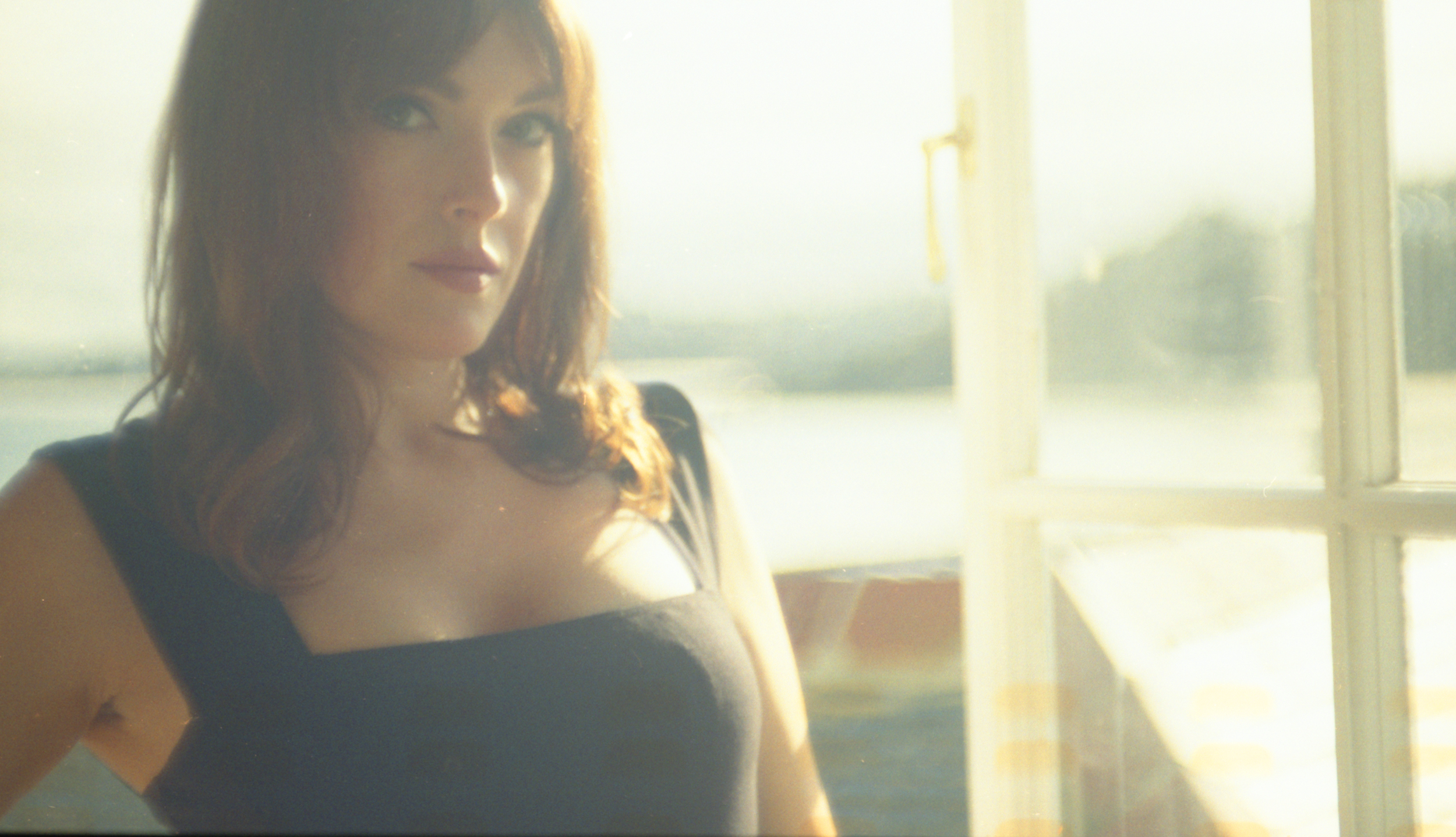
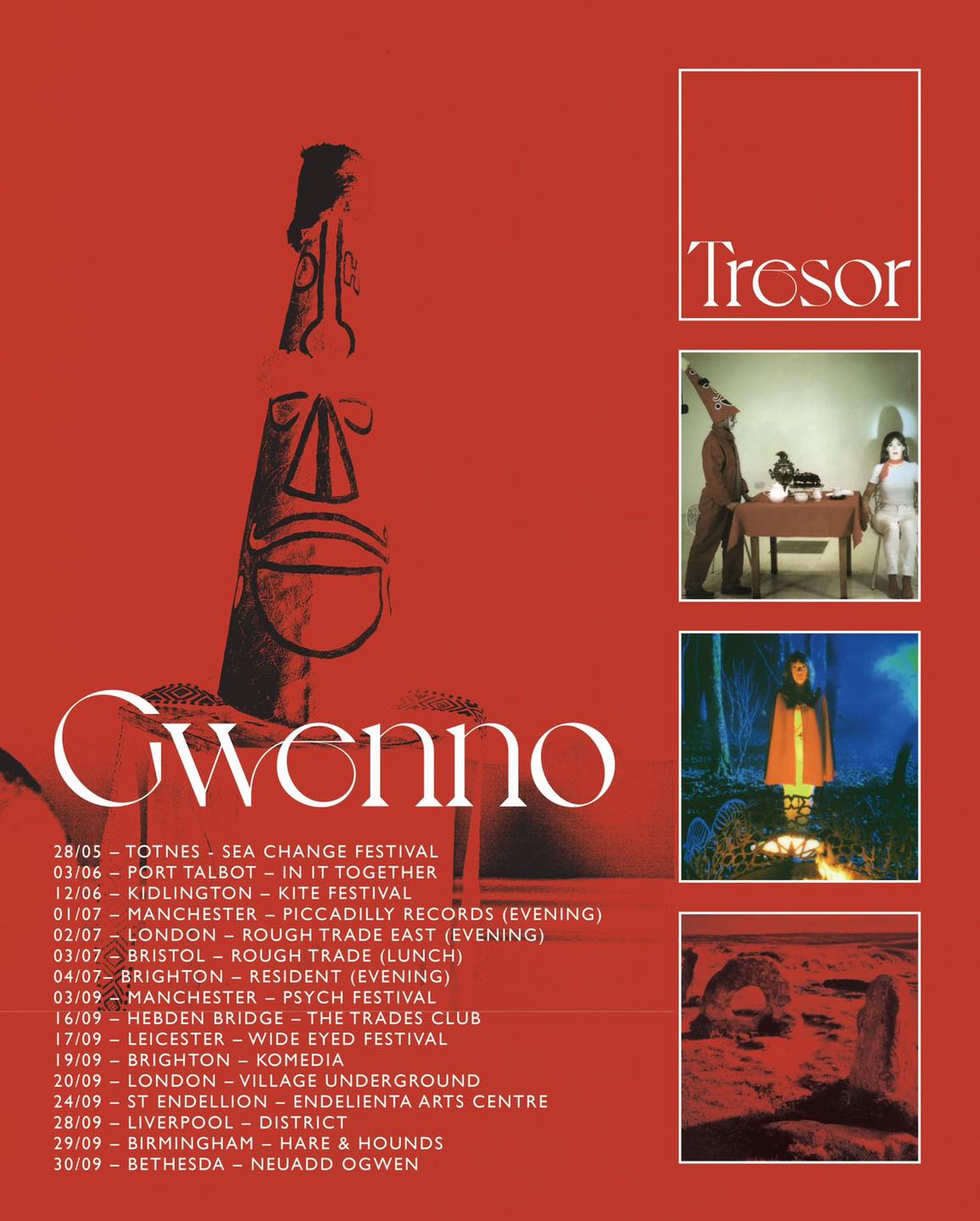
It was on the last day of February that I first caught the quirky promo video of ‘An Stevel Nowydh’, the lead single from Tresor, the third full-length solo LP by Cardiff-based Gwenno Saunders, an album finally set to reach the shops on Friday, July 1st.

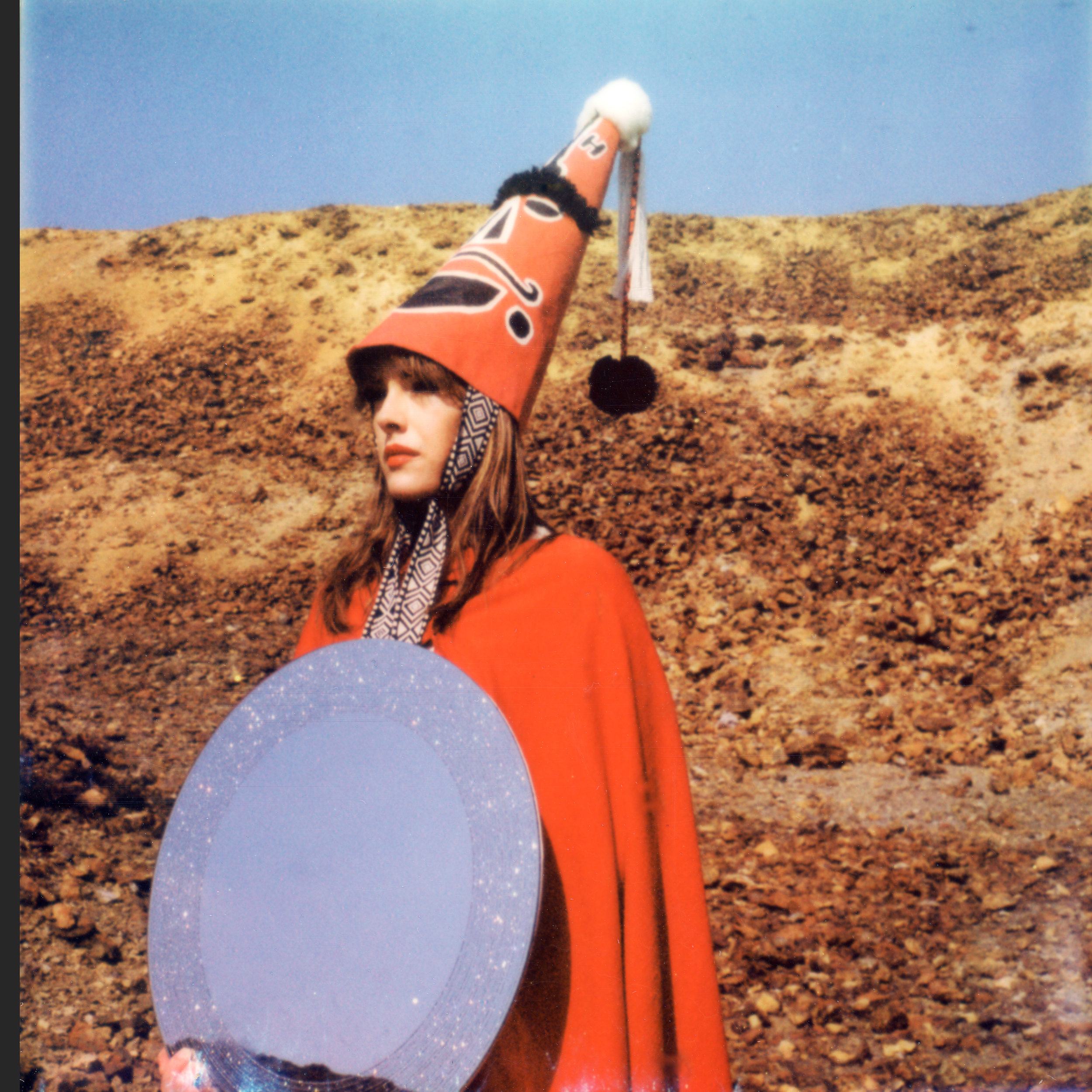
Here at last was a welcome early sign of the Spring to follow, the sight of this acclaimed electronica artist, producer and chanteuse in boilersuit and druid’s garb high-kicking her way around the back streets of Downalong St Ives, West Cornwall – breaking down those metaphorical barriers and doors, letting the light in, after a restorative tea party with a difference in a neolithic cave – certainly one to quicken my step.

Then, 10 weeks later, with Summer ever closer, came a promo video for ‘Tresor’, online a few hours before our long-planned conversation, the new single and title track of an album like 2018’s Le Kov recorded mainly in Cornish, as opposed to her 2015 Welsh language debut for Heavenly Recordings, Y Dydd Olaf.

Described as a ‘scrapbook of sorts’, the latest promo was collected from a week recording in St Ives in early 2020 and subsequent lockdown days back in Cardiff, including Super8 clips from Gwenno’s Tresor film, shot by Clare Marie Bailey, starring her friends Edward Rowe (Bait, The Witcher) and Pinar Ögün (Keeping Faith, Fflam) as Anima and Animus, taking a similar collage approach to that she uses writing with co-producer, musical collaborator and partner, Rhys Edwards.

“We record everything at home, without the time restrictions of studios and session musicians. It’s a very DIY approach and I think this video reflects that honestly.”

That promo also reflects her growing interest in film and ‘the intersection of music with visual components, evoking a dreamworld from another time, surreal and sensual, saturated with light and colour’.

There’s also a short film for instrumental ‘Men an Toll’, this time involving lots of Bronze Age stone hugging from Gwenno, giving me the impression I might be in for the sort of interview I enjoyed with Julian Cope in 2015, full of reference to fogous, ley lines and standing stones.

Besides, maybe it was the surrounding ancient scenery causing us reception issues as we abandoned a Skype call and hopped over to WhatsApp. Was she back in the Far West of England per chance?

“Ah, no, I wish, I’m in Cardiff at the moment – nowhere as mystical as that, unfortunately!”

While Y Dydd Olaf (The Final Day) tackled technological alienation, Le Kov (The Place of Memory) took on the idea of homeland and proved more international in outlook, presenting the Cornish language to the world and giving it an unprecedented platform as she toured Europe and Australia in her own right and as a support to Suede and Manic Street Preachers.

A performance of ‘Tir ha Mor’ on Later with Jools Holland helped spread the word, TV debates on the subject following with the likes of Michael Portillo, Jon Snow, and Nina Nannar, interest in learning Cornish (Kernewek) reportedly soon hitting an all-time high.

Gwenno, recently turned 41, was a solo artist singing in Cornish and Welsh long before her winning spell with The Pipettes, the indie-pop outfit best known for 2006 hits ‘Your Kisses Are Wasted On Me’ and ‘Pull Shapes’, and that year’s We Are The Pipettes LP.

Her formative years were spent as an Irish dancer, leading to tours with Michael Flatley’s Lord of the Dance and Feet of Flames productions, Gwenno later acting in Welsh language soap opera Pobol y Cwm, and even hosting her own S4C programme. She also toured as a synth player with Elton John in 2012.

But she was always keen on promoting the protection of minority languages, drawing on her upbringing as the daughter of Welsh and Cornish language activists. And while her first solo LP won the 2015 Welsh Music Prize and also the Best Welsh Album at Wales’s National Eisteddfod, it’s worth noting that the last of its 10 songs, ‘Amser’ (Time), was in Cornish.

In fact, Cardiff-born Gwenno – who also co-hosts and co-produces a radio show in her home city – grew up thinking Cornish was every bit as much a living language as Welsh. That wasn’t the case, but in time there would soon be a revival, and she saw it as important as a fluent speaker to help celebrate the survival of Britain’s lesser-known language in that divisive age of Brexit, keen to speak out on the importance of respecting and forging links with other cultures, no matter how small. 

In 2018 the Cornish Language Board claimed Le Kov contributed to a 15% increase in the number of people taking Cornish language exams that year, with Gwenno becoming a Bard of the Cornish Gorsedh the following year for ‘services to the Cornish language through music and the media’.

Now, with Tresor (Treasure), she’s shifted the focus on to her journey of rediscovery after becoming a mum, this time exploring domesticity and desire, reclaiming the body, working out how to exist as herself as well as care first and foremost for someone else … in her case a son, now six.

Musically, the influences on the new record span from Ryuichi Sakamoto to Eden Ahbez and William Basinski, on an LP as psychedelically tinged as her previous work, yet this time targetingthe unconsciouswhile exploring the power of the feminine voice, inspired by the Cornish landscape and how it asserts itself in ‘presenting a richly melodic counterpoint to a place and people known for rugged survival and jagged edges’.  

As for the title song, Gwenno sees the dreamy ‘Tresor’ as questioning what makes us human and our conscious choice to either have a positive or negative impact on our environment and everything around us.

“We live in a chaotic world and what impacts on our ability to make positive decisions is largely circumstantial. The song is about trying to connect with our ability to do the right thing at a point where everything is in flux, in crisis, and the foundation of our society is changing.

“How do we connect with our responsibilities and instinct to commit to the collective in a largely individualistic society? ‘Tresor’ is an homage to an older, analog world, the soundtracks to European cinema, and a final fair farewell to the 20th Century.”

While I was in Lancashire and Gwenno was in Glamorgan, we started our conversation in Cornwall, where the writing process for the new LP got underway, pre-lockdown.

“It was really strange, I’d gone down to St Ives in January 2020, and I’d been doing a lot of touring, a lot of collaborating, I’d just done a live score of Mark Jenkin’s Bait film, and I’d done a theatre production, so I really wanted to take stock, just go back into the unconscious a little.

“The last record I wrote, Le Kov, was entirely in Cornish, but based on a distant place, really, somewhere I learned about from my Dad. I’d grown up speaking the language, and it was my take on that experience. But when I went down to St Ives, over that period making that record, it introduced me to a lot of artists in Cornwall, and I got to know people much better.

“That was part of the reason I made it – I really wanted to make that connection, wanting to work out what that was. That opened up a whole new world, a community of artists, so I felt confident enough to maybe go to Cornwall itself, whereas Le Kov was written in Cardiff.

“I was like, ‘How would I feel if I went to Cornwall and wrote the record there?’. I thought I was going down for a week and wouldn’t see a soul – this was January, pre-pandemic. But when I got off the train, I bumped into a friend straightaway, ending up having this really warm and welcoming week, seeing quite a lot of people. That was really reassuring and fed into the record.

“It was about how that would make me feel, writing, and wasn’t the isolating experience I thought, because I’d got to know quite a few artists and people since writing Le Kov. And not wanting to repeat myself, I just wanted to be driven more by the unconscious, desires and frustrations rather than be too somatic with my songwriting, just letting the music lead the way.

“That was a big part of it, and I explored a lot of universal themes through the language, because I was interested in the emotion of first-hand experience of feeling something in Cornish, rather than writing a record about the language that was sort of pseudo-academic – less of an essay or presentation, more, ‘This is how it feels when it’s alive’.

“So there’s the frustrations and there’s the joy, and all those things, and it’s more of a day-to-day intimate album.”

You clearly had ideas beforehand, but I wondered if the melodies predated the words, or the other way round. Because you clearly have to explore different rhythms, writing in another language.

“Yeah, when you write, you’re working at it, then moments of inspiration come to you. And I was very conscious of … for example, I stayed in an artist’s studio in St Ives, in the last area of Cornwall where there were fluent Cornish speakers, and I’ve always felt quite connected to the place anyway. And because it was January 2020 and the dire situation with regards to (ermpty) second homes, I felt there were quite a lot of spirits involved in the process.

“I always feel like that, and with ‘Tresor’, the song, you’re very conscious that life and death are the same in terms of when people leave their traces. So many of the souls that are part of every album I make tend to be from other centuries, but I feel they’re completely alive. I was pondering that a lot because, for me, people that like – and it’s probably because they’re not close family to me – I don’t see the death, because they’re still there, and I think that fed into the spirit of the album. So it felt less conscious.”

There’s certainly lots of rich imagery in your videos, like the Celtic crosses and focus on past civilisations in that part of the world. Which brings me to Edward Rowe, the actor best known to some as his comic alter ego, Kernow King, now known too for his role in Bait. Was that the first time you met him?

“Ah, that was amazing, but I knew him before. He’d come to shows and we crossed paths a few times at festivals. It was him and a good friend of mine, Pinar (Ögün), from Turkey, and she’s a really special person. I created this short film, with that imagery part of the film. It was great to be able to be a casting director, and I definitely wanted those two to be together because of what they represent.”

As you put it yourself, you’ve taken that collage-like approach with the video in the same way you do with your music. And there are plenty of sound collages in your work.

“Yeah, that’s how I make records with Rhys (Edwards), and how things come together. Everything’s a scrapbook. It comes from everywhere. We don’t go into studios to record our music, so everything’s collected along the way, like this big bag of sound! It’s about piecing it all together, and I wanted to create a visual interpretation of the same thing, which is exactly how the record’s made.”

You mention a love of European film, and there’s definitely a ‘60s film feel on the title track, reminding me in parts of Jackie Lee’s ‘White Horses’ and John Barry’s Midnight Cowboy title music.

“Yeah, we were listening to a lot of Eden Ahbez. And it was strange that it just came out in the song, which is one of those where you feel it was already written. And it’s probably the most conventional song I’ve written in a really long time.

“We’ve also listened to a huge amount of Ennio Morricone, and with Fellini being part of it, and a lot of European cinema … because we’re really obsessed with Europe, desperate to be part of it still! That feeds into it, and, y’know, we feel European, so there’s piano from Vienna, soundscapes from Venice … We don’t explore our own culture because we want to be insular, we explore it because we want to be part of the world!”

It seems that you’ve always had that internationalist world view. You speak a few languages, not just English, Cornish and Welsh, but Spanish as well, and I understand your Dad speaks Breton too.

“Yeah, it’s always been about as many cultures as … y’know, being very aware of the diversity of culture and how exciting that is. Even within Britain, the amount of different cultures that feed into the experience and how joyful that is, and how brilliantly colourful that makes the world.”

You certainly seem to bring that joyfulness into your songs and accompanying videos, such as when you’re high-kicking your way around St Ives, as if breaking down doors and freeing those spirits. I was also interested by you writing about the Men-an-Tol standing stones, not least having sought those out on a walk before now, and being struck by their serene feel.

“Oh, it’s such a special place, and I was struck by how peaceful it was and a feeling of contemplation. And so much of the record is about where those spiritual foundations crossover into Christianity, and a lot of my film is to do with where that clash happens and them coming from a very similar place. And in Cornwall as well, because the Cornish language revival is a lot to do with Celtic Christianity, whereas there are huge other elements of Cornish culture that are very inspired by paganism and Neolithic elements.

“There’s a lot of different spiritual ideas happening, and I think they’re all part of the same pot – I don’t think it’s ‘either or’. But I find it very interesting that we’re trying to work out what our spirituality is. I think people are drawn to these things more and more. And it’s not just a passing trend, I think it’s because we’re searching for meaning, and we always will. We think we’re a secular society, but I don’t know if not having any spiritual meaning is possible for human beings, because we’ve always searched for it. So I was interested in those themes, how valid those ideas are, and how wonderful they are to give you that inner peace.”

When the world locked down, part-way through making Tresor, you headed back to Cardiff to carry on working, juggling that with family duties.

“Yeah, we were home-schooling and recording, and Rhys was playing drums, bass and guitar. So there were lots of elements. Obviously, everyone had very different lockdowns, so that’s kind of a reflection of it, but the point really is that I’d written this before lockdown, so was kind of anticipating something, a need to stop, a need to reflect … before anything was known about what was going to come next.”

Before I heard anything from this LP, I was surprised to see Gwenno chatting to Michael Portillo for his Coastal Devon and Cornwall walks series on Channel 5, on a windblown headland in Tintagel, talking about her music and the Cornish language, and how elements of her work fit those amazing landscapes. Not as if I’d ever have put money on seeing her have an amiable chinwag with a former Government minister who served under Margaret Thatcher.

“Neither would I! They do tend to be random events that happen, and I’m sort of open to it, because I have these opportunities to have conversations with people that I never thought I’d ever cross paths with!”

A discussion followed about us warming to Michael Portillo in more recent years, wondering if the current Government lurching so far to the right made him seem more centre-ground now … or perhaps he’s just mellowed with age. Gwenno put it down to the idea of people being better at one thing than another, a sign that we ‘don’t have the best society’, which brought us on to the current Government.

“The politicians we have now shouldn’t be in that job. They can’t do that job! Beyond them being hideous, they’re clearly not in the right job. That’s not what they should be doing.”

True. If Boris Johnson was just some dusty old academic, I might see humour in his bumbling rogue and eccentric character demeanor … his grandiose passion coming over …

“Yeah. He needs to be in a job with no authority … but not Prime Minister!”

In Robin Turner’s …Believe in Magic, the story of Heavenly Recordings, the label’s co-founder, Jeff Barrett, who first met Gwenno when she was supporting Gruff Rhys on his American Interior tour, wrote, ‘How many people are lucky enough in life to find themselves working with an artist who, when you say, ‘Have you started thinking about your second record yet?’ replies, ‘Yes, and it’s going to be in Cornish’. I count myself as a lucky bastard to have met Gwenno and to be working with someone who feels that they can work with our label and do that. When she told me she was making the record in Cornish it was a nice moment. My mother was Cornish and I’ve had a strong affinity with the county ever since I first went there.

‘I knew that we had a really good chance with Le Kov because, quality of the music aside, there was a story there. There’s an intelligence, a thought process and there’s a concept. All brought together by a highly articulate artist. Her concept was a unique thing. Nobody else had done it. I’m not saying nobody’s made a record in the Cornish language, but nobody has made a record in the Cornish language after making a record in the Welsh language after having been in an English language pop group.

‘I’ve got nothing but massive respect for Gwenno. She’s not a commercial artist. She’s an artist, and a successful one. She pushes herself and challenges herself every step of the way. She makes art. I’m properly in awe of her.’ Jeff Barrett

There can’t be too many record label bosses who would go with that notion, and see the bigger picture, the true worth of such a venture.

“Oh yeah, and what I’m really interested in with music, because of my background and probably my age as well, our musical experiences that impact us are partly in real life, partly from our community, and partly from records. And for me, music experience hasn’t just been about the records I listened to. It’s about the socialist choir my Mum was in, the hymns people have sung through the centuries that I’ve learned, it’s a live show experience, or it’s a folk song someone’s passing on. I’ve never seen recorded music as being the only musical outlet, but I’m very interested in how all that translates on to records.

“I see records as documentation of a time and place, like documentary making. I see albums as sound documenting. I’m always interested in that, and I think it’s an idea I’m trying to evolve into in terms of what gets drawn into that recorded music. For example, the reason I’m a huge fan of Enya is because she’s translated centuries of history of music into recorded sound. That’s where the progress is, and I find that concept really interesting.

“But it’s not just recording it as you would hear it. So much of music recording is to do with process. We don’t try and capture a recording of something that’s happened in the room – we’re interested in processing that music into something that’s recorded not just ‘as is’.

“Whereas folk music is documented as it’s sung – which is brilliant. I love all that – it’s about the music of a time and a place and how it’s processed into recorded sound, which is different to when you hear a choir singing ‘The Internationale’ on the street. It’s about different musical experiences.”

Was your childhood spent between South Wales and Cornwall?

“We didn’t have much money, growing up, so didn’t really go on holidays. I went to Cornwall a few times, but just to visit my parents’ friends who were Cornish speakers.

“I started Irish dancing when I was five – my Dad speaks Irish as well – and that was my opportunity to travel. I’d travel for competitions, so I’ve always travelled with something I’m doing. And I always quite liked that – you felt less of a tourist because you were going to do something that other people from that place were doing. That’s definitely had an influence on my motivations for travelling, and I feel that’s a driving factor for making music as well.”

On the first record, there was one song in Cornish, and on this one, there’s something of a Welsh call to arms on ‘NYCAW’, short for ‘Nid yw Cymru ar Werth (Wales is Not for Sale). Your Welsh roots are clearly important to you. Is this you and Rhys following Catatonia’s lead nearly a quarter of a century earlier on ‘International Velvet’?

“That was a slogan devised in the 1980s by the Welsh Language Society. There’s a tradition of artists using their slogans, taking another look at it. There was a band called Datblygu (Develop), led by David Edwards, who recently passed away, and they did a song called ‘Dimm Deddf, Dim Eiddo’, which is another slogan (No Act, No Property).

“The reason our song (‘NYCAW’) came together was because of a classic record label conversation. Jeff (Barrett) said to me, ‘I think you need another single’, and Rhys and I were so furious! We were like, ‘Our album is perfect, what are you talking about!’. We were so angry that we wrote and recorded it that weekend as a response, and were like, ‘If you want a single, we’ll give you a single about death to neoliberalism and capitalism, and the fact that if we’re thinking about any future country in the UK, it has to be a socialist one!’.

“So in a way, Jeff really contributed to that. We could have just gone, ‘You know, we’re not doing anymore,’ but we were so furious … The record in general is not a protest, but that’s definitely me getting back on my soapbox! And I can’t help that – that side is in me. I want to make observations, y’know!”

Conversation followed about afore-mentioned iconic Welsh language indie outfit, Datblygu – favourites of legendary DJ John Peel, the first Welsh language band he truly rated – and how I saw their first show outside Wales in 23 years in late 2016, an UnPeeled show at The Continental, Preston. And that led to Gwenno telling me about the April 2015 festival she helped put on in Cardiff, David and partner Patricia Morgan’s first show since 1993, a year ahead of the All Tomorrow Parties festival appearance in Prestatyn, North Wales, that preceded the pair’s Lancashire visit.  

“David thanked us after the gig, because he really enjoyed it. Because we’re artists and performers, we know what you need as an artist when you go and play – you need to have your soundcheck then you need people to leave you alone, stuff like that. You need that time, and it was so lovely to be the promoter and try and make that experience for Pat and David as easy as it possibly could be under the circumstances.

“I think they only played for 25 minutes, but it was brilliant! A band like Datblygu are so important to so many people. When you play shows, there’s an element of chaos, and particularly when they were touring during the ‘80s and ‘90s, their gigs were hard, as they are when you’re any sort of underground DIY artist, and that chaos has such an impact on your mental health and state of mind.

“But there they were on the main stage at the Wales Millennium Centre, where they should be! This was how elevated Datblygu have always been, and that’s where they should always be, in my mind. And the anticipation was incredible, as some people hadn’t seen them for 30 years. It was amazing, with people of all ages and all generations. And I’m just glad they had that run.”

Regarding your own indie-pop past, alongside your sister, Ani, in The Pipettes, you’ve clearly both moved on since, as have the rest of the band, but will there ever be another record or live shows?

“I dunno. Rose is doing stuff with Graham Coxon now, Becki’s a music teacher, in professional music development in Manchester, Bobby’s a writer … Everyone’s doing different things.

“It was such an interesting experience, and gave me a really good grounding in understanding Anglo-American culture, something I hadn’t been raised in. Everyone had such different tastes in the band, seven people where no one agreed on what they liked apart from maybe a good pop song. But it was also a reflection of a time and place, and I can’t imagine how you’d reimagine that for it to be progressive.

“And it’s about progress, isn’t it? You do things because they’re interesting. The Pipettes were interesting to me, and I was very curious about it. I was like, ‘This is fascinating, it’s so bold, so blatant, and I can’t believe the cheek of it!’.

“I’m a massive introvert, so it was like, ‘Oh my God!’. I think that’s why I struggled with it, because I wasn’t a natural entertainer. I always felt I was the miserable one and couldn’t quite be as fun as I should be. I just couldn’t do that.”

It’s interesting how you talk about your brief spell trying to understand Anglo-American culture, as if that’s some crazy sub-genre, minority path, or niche interest.

“Yeah, totally! It was just curiosity! But I learned a lot about bands I didn’t know about, playing catch-up in my early 20s. There are brilliant elements, clearly, musically as well, in terms of that canon. But I think the older I get, I feel my roots become more fully formed.

“I live in Wales, and that’s been home for a long time. My world is very Celtic. It’s that perspective on the world, and the more I dig into it, the more I get out of it, and the more I see the connections, you know, even people like William Morris … it all ties in. I think it’s always been about an alternative to the way this island evolves, and what the soul of it is, and I think we’re all looking for alternatives, because the world’s gone a bit mad.”

True. And if nothing else, Word has it you increased the take-up in Cornish language exams. That’s something to be proud of, surely.

“Well, I always say this, it’s nothing more than the hard work of everyone that’s been teaching Cornish for the past few decades. I only started making these albums because I felt there was somebody there. I was responding to the energy of a community growing, not trying to represent it in any way.

“All of a sudden I could feel and see and hear there were other Cornish speakers around. And everything I do feeds off a community really. Musically and culturally, everything I do is grounded in that.”

Are your parents still doing their thing, creatively?

“Yeah, my Dad never stops. He’s writing poems every day. He’s constantly writing and publishing work. And my Mumn’s still going in the choir …”

Will that be the case with you in a couple of decades?

“Definitely, I think it’s the curiosity and it’s about the journey, following your nose, seeing where that takes you. Having the Cornish language led me to very unexpected places, and that’s exactly where I want to go. And that’s what life’s about – when you’re sat there at the end of it, you kind of want to go, ‘Well, that was fun, and slightly ridiculous!’.”

Having your son most have been another learning curve.

“Well, it’s been a big part of this album, because in our society motherhood is very … the thing that struck me when I became a mum was how unfair society was being run. My inspiration generally comes from my family and my roots and all that early years’ experience. It really does. I draw from it constantly, because I’m interested in how that impacts you as a human being in positive and negative ways, culturally or emotionally. And those first few years are beyond important.

“If that’s not right … it all stems from that. That was always part of my work, and I think Tresor was me trying to get a grip on who I am again, remembering that, because you give yourself up physically as well, for children, happily and wilfully, but coming back to yourself takes a very long time. It certainly did for me. It was so much about that, going, ’Oh, yeah, I remember you!’”

Sorry, I interrupted. You were about to mention your Mum’s path.

“Oh, she’s still singing in the choir, and they’re going over to Catalonia to commemorate the people from Wales that went over to fight in the Spanish Civil War. A few members of the choir and family members were over there, a lot of people from the South Wales valleys going over to fight the fascists.”

It seems rude when this LP’s yet to land, but what about the next one? Perhaps that could take a flavour of the International Brigade struggle, your own Homage to Catalonia, or maybe it could be steeped in Breton history, or signal further returns to the Cornish or Welsh languages?

“I don’t know. My interest is in conveying the spiritual element of the collective unconscious. It’s something I’ve started on, and I think musically I would love to try more. I started it with ‘Men an Toll’, and I’m aspiring to find the spiritual element in music, because I think that’s the part I respond to the most in music myself. But I’m not sure what that is yet.

“It’s a journey, and you follow your nose. I’m maybe just trying to learn new ways of doing things, and I’m always open to try things.”

Following last weekend’s Sea Change Festival appearance in Totnes, Devon, Gwenno is set for further festival sets at Port Talbot’s In It Together tomorrow (Friday, June 3rd), and Kidlington’s Kite Festival (Sunday, June 12th), before July record shop dates to officially launch the new LP at Manchester’s Piccadilly Records (Friday 1st), London’s Rough Trade East (evening, Saturday 2nd), Bristol’s Rough Trade (lunch, Sunday 3rd), and Brighton’s Resident Music (evening, Monday 4th).

Then comes September’s UK headline tour, alongside more festival dates, starting at Manchester’s Psych Festival at The Ritz (Saturday 3rd), then at Hebden Bridge’s Trades Club (Friday 16th), the Wide Eyed Festival at Leicester Academy (Saturday 17th), Brighton’s Komedia (Monday 19th), Shoreditch, London’s Village Underground (Tuesday 20th), Endelienta Stone Barn Arts Centre in St Endellion, Cornwall (Saturday 24th), Liverpool’s District (Wednesday 28th), The Hare & Hounds in Birmingham (Thursday 29th), and Neuadd Ogwen in Bethesda, Gwynedd (Friday 30th).

For all dates and more information, head here. To pre-order Tresor, try here. And for th elastest from Gwenno, visit her Facebook, Instagram, and Twitter pages.

Posted in Uncategorized | Tagged , , , , , , , , , , , , , , , , , , , , , , , , , , , | Leave a comment

Shine on Mellow Moon – the Alfie Templeman interview

It promises to be a memorable summer for rising indie pop star Alfie Templeman, this talented North Bedfordshire teen’s debut LP hitting the shops this weekend, with various in-store and live dates marking the occasion.

The impressive Mellow Moon lands today (Friday, May 27th) via Chess Club Records/AWAL, and after a few listens I reckon there’s enough there to suggest he’s on his way to the big time. But don’t think for one moment this likeable multi-instrumentalist and singer-songwriter is taking any of this for granted. What’s more, he comes over as nothing but down to earth and humble.

It was only early days listening to the LP when we spoke, but I told him its quirkier moments suggested he’s anything but a passing pop fad, despite a canny knack for writing winning melodies and commercial hooks.

“Ah, cool! Thank you! I appreciate that.”

There are plenty of neat moments en route. Do his songs tend to be fully formed at the construction stage? Or does he noodle away with ideas and see them grow?

“Oh, I’m demoing stuff all the time. That’s my way of writing songs, just putting it together.”

He was demoing songs as early as the age of 13, and this 19-year-old is unlikely to forget his roots. He’s said before that his Carlton, Bedfordshire background has influenced his work. In what way? Is he one for driving around getting ideas for songs, or going for walks, thinking, ‘There’s an idea!’?

“All the time. I go on a lot of walks, take my phone, and if I have any ideas I memo stuff in my head, literally just hum it.”

Many of us would struggle to get down those moments, which often materialise at inopportune moments, such as killer melodies or lyrics, battling to store them internally then get home and work on them. It’s easier these days with phone technology, but it’s no doubt still a perilous situation.

“Oh, of course. That’s so true. You always get little ideas and can’t memo them, frustratingly thinking, ‘That would have been perfect’.”

Well, hopefully, in those situations there’ll at least always be the next ones to come along.

“Yeah, fingers crossed!”

Alfie released his first single and EP in 2018, recording in his bedroom after school back then, leaving a formal education after his GCSEs the following year to pursue a career in music, with two more EPs following that year.

In 2019, he supported Sundara Karma at Brixton Academy, going on to tour with Sports Team the year after, early supporters including influential BBC Radio 1 DJ, Annie Mac, with Alfie soon featuring on the daytime playlists and receiving ‘hottest record’ accolades on that national station, as well as further BBC plays on Radio 2 and 6 Music, plus Radio X, Virgin (where he’s performed in session on Chris Evans’ Breakfast Show), Absolute, and Apple Music 1.

In fact, Alfie’s already clocked up more than 140 million streams worldwide, his stock rising further through supporting Chloe Moriondo in North America. But when he started work on his debut album in early 2020, like so many of us he could never have imagined the turbulent path that lay ahead, for him personally and the rest of the world. However, it seems he’s reached the other side, in style, saying, “It feels like I’m on a different planet. I’ve gone somewhere new and I’m discovering fire for the first time.”

He began the pandemic shielding due to a respiratory issue first identified in childhood. Feeling ‘very low’, he sought help and started taking antidepressants to attempt to deal with anxiety. And while he’d not spoken out about his mental health before, he felt that to ignore such a significant moment in his life, having finally sought help, would be hiding something of himself.

“I think people assume I’m this easy, outgoing person, but there’s actually a lot more layers to me, and this record shows that. Writing songs like ‘Broken’, ‘Take Some Time Away’ and ‘Mellow Moon’ were like therapy.

“It was me asking ‘What’s wrong with me?’ and ‘How am I going to get better?’ and just figuring things out in real time. I had therapy but there were still things unresolved in my mind. So I turned to music for the answers.”

Across Mellow Moon’s 14 tracks, he aimed to close his eyes and imagine another world, one where he’s more at ease, not distracted by life’s many challenges, embracing honesty and moving past the fear of failure.

“I’m being really open for the first time about where I’m at mentally. Overcoming that felt life changing.”

Along the way he called on regular collaborators Tom McFarland (Jungle), Justin Young (The Vaccines), Will Bloomfield, and Rob Milton, the LP largely inspired by modern influences like Steve Lacy, Khruangbin and Leon Bridges, as well as Alfie’s ‘constant cosmic guide’, Todd Rundgren.

And he sees the finished product, his ‘most complete work to date’, as both ‘an intimate diary entry and a communal call to arms’.

It’s certainly a feelgood LP, full of smile-on-the-face quirks and upbeat hooks, with plenty of twists and turns en route, opening track ‘A Western’ getting us off to a breakbeat-drenched baggy, dream-pop start, at the same time setting the tone for the radio-friendly fare that follows. By contrast, ‘You’re a Liar’ is more bass-heavy and a steady builder, but again it provides a soundtrack for summer, Alfie’s voice sounding soulful.

From there we have the more outright pop-funk of ‘Broken’, while ‘Folding Mountains’ and ‘3D Feelings’ remind us that he loves to noodle away on guitar but is never in your face, the latter number another surefire heatwave hit and catchy as feck, complete with a big anthemic chorus.

‘Candyfloss’ and ‘Best Feeling’ are also insanely singalongable, and we’re still only halfway through, the wondrous single, ‘Colour Me Blue’ picking up where ‘Do It’ kick-started side two, a nailed-on hit, surely.

As for ‘Galaxy’, that’s more Prince-like, the shadows lengthening somewhat, his added Isley Brothers-like guitar again somewhat subtle in the mix. And then comes the sumptuous ‘Living Today’, somewhere between ’70s soul and early ’80s Respond fare.

Meanwhile, ‘Take Some Time Away’ hints at a ’60s film soundtrack and maybe a little Lenny Kravitz at his early career-best. Again, it’s super-soulful, but this time bluesy, and as mellow as the moon in the title track that follows. And what a track that penultimate number is, leading us neatly into a more Pink Floyd-flecked dreamy finale, ‘Just Below the Above’. Splendid work all round. Hats off to Alfie.

With all that in mind, what was the first act he saw live, or the first record he heard that made him think this was what he wanted to do with his life? Only it seems that it all happened at an impressionable age for Alfie.

“The first band I really got into were Rush, when I was a kid. I just really liked that kind of music.”

That’s interesting. It would seem at first that might be several light years from what you’re doing.

“Yeah, definitely.”

Is that still your ‘kick off the shoes and relax’ music, away from the day job?

“I think so. I still listen to that kind of stuff … all the time.”

Was that musical taste down to your Dad’s influence?

“I think the first time I heard Rush was because his friend was playing them. That’s what got me into it.”

Are we talking ‘Spirit of Radio’ time?

Hemispheres, man! That as well though – ‘Spirit of Radio’ is great.”

Are there specific artists you see and hear now and think that’s where you want to go next, providing that inspiration to propel yourself on?

“Yeah, I’ve been doing that with a lot of prog recently. Even Black Midi. I love listening to them. You never know what’s going to come next.”

Again, that doesn’t fit your label’s description of you as an ‘indie r&b’ artist, even though I feel that sums you up quite well. I’m more a ‘60s and ‘70s soul man, but there’s lots in that later field I enjoy, and for me there are winning elements of ‘80s and ‘90s soul meets electronica in your music. For instance, on ‘Leaving Today’, which might well be my favourite track on the album …

“Ah, cool, thank you!”

I get the impression it’s as if you felt, ‘Right, we’ve got the catchy, more radio-friendly singles out of the way, now the real me …’. You seem to stretch out more towards the back end of Mellow Moon. Am I anywhere near the truth?

“Yeah, mate, of course … for sure!”

Have I just blown your cover?

“Ha! There is a lot under the cover! And there are so many different songs – so many flavours going on – on this record, to be fair.”

Agreed, and maybe because of your voice, among the acts that sprang to mind for me were one you may not recall hearing, and clearly not first time around, The Questions, the early ‘80s band that Paul Weller signed for his Respond label in The Style Council days. And come to think of it, maybe you should try covering standout tracks like ‘Belief’ or ‘Tuesday Sunshine’.

“Ah, that’s interesting. I like The Style Council.”

I really like the title track, ‘Mellow Moon’, too.

“Thank you, that’s a highlight for me as well. That and ‘Just Below the Above’, the last song.”

I’m with you on that too. And is that right that you were surrounded by guitars, growing up?

“Yeah, a lot of guitars!”

And you learned to play upside down, as your Dad was a left-hander?

“Yeah. I had to get used to playing the other way around!”

As a leftie myself, I get that. I’m also reminded of past interviewee, guitarist Steve White, of The Bootleg Beatles, who to claim Paul McCartney’s role in that tribute act, dedicated himself to learning left-handed bass in Macca’s honour, but told me he loved to unwind playing right-handed guitar when not on tour. That kind of blew my mind.

“Wow, no way! That’s so interesting. So he actually got into a method of playing it backwards?”

Absolutely. That’s a hell of a discipline, isn’t it?

“Oh yeah!”

Talking of discipline, apparently Alfie can play 11 instruments, at the last count (recently taking up the flute), and contributes heavily with production and co-production duties on Mellow Moon, that full-length release coming after 2021 debut mini-LP Forever Isn’t Long Enough. All that and those boyish good looks too, like a young Neil Morrissey. And self-taught on everything but the drums, I gather. He’s clearly dedicated to the cause.

“Yeah, I mean, I was obsessed growing up with like, Frank Zappa, Todd Rundgren, and stuff. I listened to their guitar playing very closely, learning that way.”

I understand you were recording and demoing as early as 13.

“Yeah … although some of that stuff was pretty bad!”

Have you kept everything?

“I actually have. I’ve tried to, at least. There is a lot of it that I’ve still got.”

That could make for at least a bonus disc on a box-set one day.

“Oh, yeah. One day!”

Did your dad play in public before you?

“No, never! I don’t think he’s ever actually done that.”

Well, he clearly inspired Alfie, who had his own guitar by the time he was eight. His sister is also a talented musician, playing trumpet and piano. I’m guessing he grew up in a house where all that was positively encouraged.

“My Mum played a lot of music in the house, but the main influence really was my Dad for music.”

There have been several recommendations so far from sections of the industry and pop music press. For instance, The Sunday Times’ Culture section calling him, ‘one to watch closely’, and Vogue saying he was ‘a soon to be international rising star’. He was also included on a 2021 BBC Sound Of poll and subsequently the BBC’s Brit List initiative, while making further tip lists with Radio X, Vevo, Amazon, and MTV. But again, he’s taking that with a pinch of salt.

“Yeah, that’s pretty cool … but it’s just someone’s opinion at the end of the day, so it doesn’t really bother me.”

You’re clearly keeping your head on your shoulders.

“Well, it is just someone’s opinion. It’s the same as any review.”

I certainly get the impression you’re in a good place right now. You’ve mentioned personal battles with anxiety and depression before. Is it your music, your family, your friends, or all those things that see you through when the going’s tough?

“Yeah, just all of that. Family, friends, music … and relaxing. Everything like that is very therapeutic.”

It must be a real thrill to have the album on its way. Reaching that next landmark stage must count for something.

“Yeah, it’s a big one. It’s scary, but also really exciting.”

You’ve had some prestigious support slots so far. Has that proved a learning curve, picking up tips from those you’ve played with?

“Oh, definitely, just in pacing yourself on tour and taking care of your mental health, things like that. You learn so much every time you play a gig or go somewhere. There’s always something to take from.”

He’s already completed a UK headline tour, including sell-outs in Manchester, Bristol, Brighton, playing iconic venues like Shepherd’s Bush Empire, West London, along the way. That must have been a thrill as well.

“Oh, it was so surreal doing that. That was the biggest one … ever.”

There have been positive reactions in mainland Europe too, notably France, Germany, Holland, and Belgium. Do you tend to get nervous at times like that? Or does everything kick in after a couple of songs?

“I was pretty nervous! You definitely zone out sometimes though. But I feel every musician gets that.”

I probably shouldn’t say this to you, but I recall a chat with Glenn Tilbrook in 2013 when he was talking about being on stage one night, suddenly distracted, wondering if he’d left the grill on after making cheese on toast before leaving home, losing himself mid-song, during ‘Up the Junction’, of all tracks.

“Ha! Oh, my God, yeah, that is such an on-stage thought! You can’t focus properly, then you forget your lyrics, and … oh!”

You’ve certainly got a busy summer ahead, with in-store shows, festival dates, BBC Radio 1’s Big Weekend, and all that. Then there are those seven Australian dates supporting The Wombats (which seems rather apt, at least geographically speaking). A huge arena tour – that’s a big step again.

“Yeah, that’s gonna be … I mean, everything’s kicking off really, isn’t it? Crazy!”

Will that be your first time Down Under?

“The very first time! I’m really excited to go over there, have some fun.”

It seems like you’re building a bit of a reputation there, not least via plenty of airplay on Government-owned national radio station Triple J.

“Yeah. That’s like a dream in itself! I love that.”

And what do we get from you, live? Will you be fronting a full band?

“Yeah, it’s just us having fun on stage, basically. Amazing, just me and my mates.”

Is that the case with the LP? I mean, you seem to be capable of playing more or less everything we hear.

“That’s just me, but when we play live, it’s like, ‘Here you go. Here’s the song, do it however you want to.”

All in all, it’s not a bad life for a young North Beds lad, is it?

“I know, I’m so lucky!”

I think back to careers office visits at school, wondering what I could do, career-wise, perhaps not fully realising I could choose my own creative path at that stage. But you seem to have known where you felt you were headed from a young age. Did you always have that focus?

“It was always there. Then getting signed when I was 15 was like, yep, that’s kind of it, I’m a musician. I never really looked back … and I’m lucky to have that.”

Well, whatever happens next, you’ve made a cracking debut album, and I wish you well from here.”

“I really appreciate that. Thank you.”

But whatever you do, try not to dwell too much on what you may have left under the grill during a performance.

“Ha! I’ll try to avoid it!”

On the back of festival sets earlier this month at Liverpool’s Sound City Festival, Reading’s Are You Listening? and Brighton’s The Great Escape, Alfie Templeman is set for further May dates at: 26th – Banquet Records, London (in-store); 28th – HMV (in-store) and Dot To Dot, Bristol; 29th – Radio 1’s Big Weekend, Coventry, and Dot To Dot, Nottingham; 30th – Phase 1, Liverpool (in-store); and 31st – Crash Records, Leeds (signing only). Then in June he features at: 1st – Rough Trade East, London (instore); 2nd – Pie & Vinyl, Portsmouth (instore), and Vinilo Records, Southampton (instore); and 4th – Live At Leeds In The Park, Leeds. 
 
Dates follow supporting The Wombats in Australia, also in June, at: 9th – AEC Theatre, Adelaide; 10th – John Cain Arena, Melbourne; 11th – Hordern Pavilion, Sydney; 14th – Oxford Art Factory, Sydney; 15th – UC Refectory, Canberra; 16th – Howler, Melbourne; and 17th – Riverstage, Brisbane.
 
In July, Alfie moves on to: 2nd – Barn On The Farm, Gloucester; 6th – Mad Cool Festival, Madrid; 9th – Depot In The Castle Festival, Cardiff; 10th – TRNSMT, Glasgow; 16th – Community Festival, London; 23rd – Tramlines Festival, Sheffield; 24th – Truck Festival, Steventon; 28th – Kendal Calling Festival, Lowther Park, Lake District; 30th – Y Not Festival, Pikehall, Derbyshire. Then in August, Alfie reaches: 6th – Bingley Weekender, Bradford; 12th – Sziget Festival, Budapest; 14th 110 Above Festival, Atherstone; 26th – Big Festival, The Cotswolds; and 28th -Victorious Festival, Southsea.

For more details about those dates and Alfie Templeman’s debut LP, Mellow Moon, out this Friday, May 27th, visit his website. You can also follow him via Facebook, Instagram, and Twitter.

Posted in Uncategorized | Tagged , , , , , , , , , , , , , , , , , , , , , , , , , | Leave a comment

Still Crazy after all these years – on the Long, Long Road with Arthur Brown

“I am the God of Hellfire, and I bring you …”

If ever a first line of a song grabbed your attention, there was one.

Frightening kids since 1968, The Crazy World of Arthur Brown only had that one hit, ‘Fire’, but certainly made an impact, even if they took eight weeks to set the charts alight, in a manner of speaking.

They ultimately reached No.1 in late August ’68, briefly knocking Tommy James and the Shondells’ ‘Mony Mony’ off the summit before the same record returned to the top, ‘Fire’ also reaching No.2 on the US Billboard Hot 100 and No.1 in Canada that October, and the top-10 in Austria, France, Germany, Ireland, and the Netherlands.

That was it, hit-wise, even if that iconic track from 1968 album ‘The Crazy World of Arthur Brown’ still maintains its mesmerising power with audiences and peers today.

A genuine one-hit wonder, yes, but that self-titled debut LP, produced by Kit Lambert with input from The Who’s Pete Townshend, also reached No.2 in the UK, only kept off the top by Small Faces’ sublime Ogden’s Nut Gone Flake then Simon and Garfunkel’s era-defining Bookends.

Their trademark song was co-written with Vincent Crane, who played Hammond organ in Arthur’s band and later featured with Atomic Rooster, later contributing to Dexy’s Midnight Runners’ 1985 cult LP, Don’t Stand Me Down, dying way too young, aged just 45.

However, half a century and a bit later, shock rock pioneer Arthur is still very much with us, his new album, Long Long Road, out on Friday, June 24, which just happens to mark his 80th birthday.

What’s more, The Crazy World of Arthur Brown are set to promote their unique take on psychedelic blues rock at four special UK shows – including elements of dance, poetry and visuals – to help celebrate that landmark.

It seems like perfect timing, but those shows were rescheduled twice due to the pandemic, the iconic band-leader now eager to get out there, promising a full evening of ‘psychedelic individuality, ingenuity and madness’.

Clearly, he hasn’t changed his ways too dramatically, his new immersive multimedia show, ‘The Human Perspective’, featuring ‘great musicians, stunning visuals, iconic dance and sonic adventure’, this self-proclaimed ‘God of Hellfire’ showing us why he’s recognised as a true innovator of progressive rock and a significant influence on heavy metal.

Musically, his show involves a retrospective of a long, long career, featuring a heady mix of psychedelia, prog, blues and rock. And as he put it, “The Human Perspective concept is the exploration of our inner selves while trying to navigate the external world. The God of Hellfire meets The God of Purefire, if you will”.

As for the concept, it’s something Arthur reckons he’s been incubating for decades.

“This is the live show I always wanted to perform with Kingdom Come back in the 1970s, but the technology at the time meant it wasn’t possible. But now I’m able to fully realise my vision for the show. It’s something I’ve been looking forward to for a long time.”

The first of those take place next Thursday, May 26 at The Playhouse, Whitley Bay, followed by a visit to Waterside Arts Centre in Sale on Friday, May 27, with two more Saturday shows from there, at Leeds’ City Varieties on June 11, and London’s Bush Hall, Shepherd’s Bush, on June 25.

On the back of his 1968 worldwide million-selling smash hit, Arthur’s shared the bill with the likes of The Who, Jimi Hendrix, Frank Zappa and The Mothers of Invention, The Doors, the afore-mentioned Small Faces, and Joe Cocker.

And there are elements of both Cocker and Small Faces on the title track of the new record, an epic, poignant ballad that could as easily have come our way in the late ‘60s as now.

The same goes for many more numbers on Long Long Road, to the point where I can picture Keith Emerson attacking keyboards with knives on opening track, ‘Gas Tanks’, a Look at Yourself era Uriah Heep-like romp.

The LP then takes something of a Screaming Jay Hawkins meets Johnny Cash – another artist whose late career saw him afforded fresh critical acclaim – turn with ‘Coffin Confession’, before the organ revs up again and the brass arrives for the swirlingly soulful, late Beatles-esque, heavy metal thunder of ‘Going Down’, sort of namesake James Brown possessed by AB disciple Bruce Dickinson, with no guarantee of sleep ’til … well, Shepherd’s Bush at the very least.

‘Once I Had Illusions’, split into two parts, is more Nick Cave, another track including atmospheric prog keyboard from multi-instrumentalist/long-time collaborator/co-producer/arranger, mixer and engineer Rik Patten, who adds everything bar Arthur’s seasoned vocals, guitar and piano.

‘I Like Games’ has a John Lee Hooker fused with Led Zeppelin stomping dirty blues vibe, while ‘Shining Brightness’ conjures up The Doors and Tom Waits. As for ‘The Blues and Messing Around’, that’s a 12-bar blues number steeped with wild guitar licks, underpinning organ, tinkling piano, and Arthur’s life-well-lived vocals.

Then comes the majestic title song, before we’re away with ‘Once I Had Illusions (Pt.2)’, this time with added Daniel Lanois-ish production qualities, David Gilmour-like six-string dashes, lots of those touches that made Arthur who he is, and echoing plenty of those artists who ploughed on where he left off (I could hear Tom Jones giving that finale a great working-over, for example).

I can’t argue with the official line, this being a ‘wild and vibrant affair, crammed with rich musical textures … quintessentially Arthur Brown’ and an album that can ‘easily be construed as the apex and summary of a fascinating career that has spanned no fewer than seven decades’.
 
As long since became his way, Arthur shifts from prog and soul to blues rock, this veteran performer ‘summoning his full vocal range with a mature mastery that comes only with the experience of a lifetime’.  

Whitby-born Arthur attended grammar school in Leeds before university studies in London and Reading, forming his first band in that Berkshire town and involved with others in the capital before a spell in Paris working on his theatrical skills.

He returned in late 1966, featuring with R&B/soul/ska outfit The Ramong Sound before they became The Foundations, Arthur soon finding his own calling alongside Vincent Crane, Drachen Theaker (drums) and Nick Greenwood (bass).

That Crazy World of Arthur Brown quartet quickly built a reputation for outlandish performances, Arthur’s flaming headgear becoming his signature gimmick, not always health and safety-friendly.

As it turned out, personnel changes followed and only two albums were made, their shelved 1969 follow-up not seeing the light of day until 1988, Arthur going on – after further projects – to form an increasingly ‘out there’ Arthur Brown’s Kingdom Come, making three influential LPs, even dabbling in space rock.

But their multimedia approach to performance proved some way ahead of its time and arguably too much for mainstream audiences, several more unlikely projects following.  

There was always that sense of the theatrical with Arthur, so it wasn’t too much of a surprise when Ken Russell cast him in Pete Townshend’s rock opera, Tommy, his dramatic vocals kicking in where Eric Clapton left off in a frankly disturbing miracle-working communion scene.

By the early ‘80s Arthur was based in Austin, Texas, with a master’s degree in counselling, soon adding painting and carpentry to his CV.

Returning to England in 1996, many more meanders, recorded product and performances followed, working with afore-mentioned Pink Floyd guitarist David Gilmour and former Iron Maiden frontman Bruce Dickinson, plus Kula Shaker, Die Krupps, and fellow space rock pioneers Hawkwind en route, to name just a few. 

In later years he’d find himself sampled by The Prodigy and cited as a major influence on artists as diverse as Alice Cooper, David Bowie, Kiss, and George Clinton.

Cooper reckoned, “Without Arthur Brown there would be no Alice Cooper”, while Elton John added, “Now there’s a man who was ahead of his time”, and Bruce Dickinson said, “Arthur Brown was a big influence of mine … Arthur Brown has the voice of death.”

His work was also recognised as recently as 2019’s Prog Awards, Arthur receiving the Visionary Artist Award, other accolades including Classic Rock magazine’s Showman Award, all part of his latter-years renaissance.   

As for his wild stage persona, flamboyant theatrical performances, and charismatic multi-octave voice, he’s long been appreciated far and wide by musicians, writers and fans, far beyond the vast shadow cast by that huge hit.

And on Long Long Road, Arthur proves he remains as authentic, challenging, creative and as compelling as he was at his career’s fiery beginning. What’s more, as the team behind him insist, ‘This record is not a swansong, but the thrilling beginning of the final phase of an utterly singular career’. 

Long Long Road is available as a box set, including 48-page hardcover 2CD artbook, gatefold 180g orange marble vinyl LP, bonus 7″ vinyl single, art prints, and various other signed products. It’s also available on black 180g vinyl LP, transparent red 180g vinyl LP, and as a digipak CD. For more details and The Crazy World of Arthur Brown’s The Human Perspective 2022 live show tickets, try www.glasswerk.co.uk or www.thegodofhellfire.com.

Posted in Uncategorized | Tagged , , , , , , , , , , , , , , , , | Leave a comment

Right on track with The Goa Express – in conversation with James Douglas Clarke

Rising indie guitar band The Goa Express are the sort of outfit that give me hope for the future of live music.

The Manchester-based Burnley and Todmorden five-piece’s most recent single, ‘Everybody in the UK’, their ‘call-to-arms for togetherness in a world that increasingly looks to drive us apart’, was just the latest statement piece from a group that have been close friends since teen years, harbouring collective dreams of a rock’n’roll career, and determined to enjoy the ride.

That latest 45 came on the heels of the equally impressive ‘Be My Friend’ and ‘Second Time’ (the latter mixed by Ride’s Mark Gardener), all three songs making BBC 6 Music’s A-list, having already proven live favourites at numerous busy headline shows of late, those last two singles issued by happening London indie label Ra-Ra Rok Records.

They’ve also raised their profile through memorable support slots, including on the road stints with The Magic Gang and Shame; played to 1,500 or so punters at Latitude, their first mainstream festival performance; and put in the hours at a Zeitgeist club night at Manchester’s YES.

They’ve clearly come a long way since 2016 debut single, ‘Reincarnation of the Lizard Queen’, and 2017’s surf/psych-punk driven follow-up ‘Goa’/’Kiss Me’. But they retain the ‘play wherever we can’ spirit of their first two live shows – one involving three songs blasted out of a mate’s garage, the next above a vintage shop, the floor nearly caving in – their original maxim of ‘when there’s fuck all, you make do with what you’ve got’ still holding true.

Built around brothers James Douglas Clarke (guitar, vocals) and Joe Clarke (keyboards), Joey Stein (lead guitar), Naham Muzaffar (bass) and Sam Launder (drums, percussion), you only need seek out online footage of their live shows to see what they’re about. And it’s an intense arrangement, by accounts, but works on stage and in the studio, and while there have been occasional bust-ups, they reckon it all aadds to the burning chemistry.

Their stock rose somewhat in 2019 on the back of interest from Steve Lamacq, who gave them their first national radio session for BBC 6 Music in a BBC Introducing slot recorded at Abbey Road’s Gatehouse and Front Room studios. And it’s clear from talking to James that the band – who cite Spacemen 3, The Brian Jonestown Massacre, French existentialism and beat literature as key influences  – are having the time of their lives right now.

As their press biog points out, we’re talking ‘proud Northerners with a DIY foundation that aren’t afraid to look into the often-dim future and see themselves shining brightly in it, unforgiving and unpretentious’. And James came over as modest rather than bullish to me, not taking anything for granted, thankful for the breaks they’ve had so far.

They’ve also garnered interest from BBC Radio 1’s Jack Saunders, who had them on his ‘Next Wave’ segment. As for the tracks that have impressed me so far, I’ll point you towards the afore-mentioned singles and similarly essential B-sides, ‘The Day’ and ‘Overpass, first.

‘The Day’, a surging Teardrop Explodes meets Velvet Underground keyboard-flecked track that pulls out all the stops, was recorded in Sheffield with the Fat White Family’s Nathan Saoudi at his band’s studio, before they headed to another next door to make ‘Be My Friend’ with Ross Orton (Arctic Monkeys, Jarvis Cocker, The Fall). And the latter I see as their true debut 45, described as ‘a cheeky, snarling pop song, holding undertones of raw cynicism laden with psychedelic sunshine’, a high-octane belter reminding me of the fire of personal ‘80s indie favourites like Close Lobsters and The Mighty Lemon Drops.

As for ‘Overpass’, I’m getting Magazine, Wire and Jonathan Richman meet The Fall and Inspiral Carpets. And the fact that those latter two recorded singles with James’ near-namesake John Cooper Clarke has me hopeful that the lauded punk poet might be persuaded to join them for a couple of honed verses of his own on an alternative take one day. They describe that track as ‘a step away from those who’re always trying to get close to you. An avoidance of those that are always hanging round. A shout-out to individuality and an acceptance of rejection’. And like several of their tracks, it’s intense but also a singalong fans’ fave.

As for it’s a-side, ‘Second Time’ – a song that ‘unpicks the imperfections of youth, not dwelling on mistakes, letting them run their course’ – that’s where I started with James, telling him that’s my favourite, in awe at its infectious verve and passion. It’s a song you want to play time and again, capable of forcing the sun out from behind the clouds.

And then I added praise for more baggy-influenced follow-up, ‘Everybody in the UK’. Think Supergrass meet The Stone Roses. Another winner, and anthemic with it.

“Yeah, we hope so, and hope that as the summer months come rolling along, people will be singing it back to us.”

I could see that happening at Kendal Calling or any of the other outdoor events you have lined up. Have you played that South Lakes festival before?

“No, although it’s not too far from us. I don’t think any of us have even been there, but we all love the Lake District. It’s absolutely beautiful. We spent loads of time there as kids walking. And I know quite a few people from that end of the country. I don’t know what to expect from that, but we’re hoping for some nice scenery and sunny days.”

The latest single’s promo video was filmed not so far from Kendal, the band seen throwing pebbles by the water’s edge and also watching a stock car racing event.

“That was in Carnforth. That was great. Luckily, the rain held off. When we arrived, it was dead windy and it was absolutely bucketing it down, us thinking, ‘Not another music video where we’re stuck in the wind and the rain, all our hair getting messed around!’. But the weather turned the corner for us.”

Well, either way, it goes with your Northern territory.

“Absolutely. You never know what you’re going to get!”

You say the key message of that single is togetherness. And we all need a bit of that right now, don’t we?

“Yeah, togetherness, but also – with our more abrupt nature – if you’re not together, don’t stick around. If you’re not on the right side, do one!”

Well said, that man. You and your bandmates have stuck by each other for a long time though.

“Absolutely. We all met in year eight at school. In fact, the others met in year seven, when we were 13 … now we’re 24. So it’s been a good portion of our lives, pretty much half our lives.”

A certain Joe Clarke plays keyboards for the band. Are you the big brother?

“Erm … I think I have to adopt that role sometimes. But I’m not the sternest in the band … and I’m definitely not the most organised. I’m not the most ‘on it’ sort of person. But yeah, I guess so. I guess I maybe adopt that role sometimes.”

Are you more the frontman?

“Yeah, I do the singing and all that sort of stuff … and make sure everyone’s doing their job!”

You’ve had plenty of good support of late, in influential circles. Not least with Mark Gardener, of Ride fame, helping out. Is that a band you were into?

“Yeah, we all were. We all quite like that sort of shoe-gazey stuff. Yeah. We all sort of bonded over that when we were quite young, so that was pretty surreal. He had a nice set-up down in Oxford. I remember walking through the fields in the heat of summertime to record it. A nice few days. He’s got some mad guitars, some quite cool guitars. We stayed in some tiny, weird Airbnb farmhouse that had a farm shop and all that.”

At this point, I mentioned being at a one-day festival at Upton Court Park, Slough, not far from my old patch, in 1991, Ride topping the bill, with support from Curve, The Mock Turtles, Slowdive, 1,000 Yard Stare, and Ratcat, the headlinersd at the height of their success back then. And with that, James let on that he was hoping the band could get in to see them play Manchester Academy when they played there (that was in late April).

Steve Lamacq has also got behind the band, playing The Goa Express on his BBC 6 Music show.

“He has, and we did a session for him. We recorded ‘Second Time’ at Abbey Road, and he picked up on us. He’s been sound and he’s mates with a friend of ours, Paul. And there are other familiar faces around that sphere where we haven’t been introduced yet, but I’m sure we will as time goes on.”

Recording at Abbey Road must have been a big moment.

“Yeah, that was good fun. We recorded it, then were sat on it for a while, before Mark mixed it. And we enjoyed having a bit of time away, taking everything with open arms.”

You’ve also built up quite a live following.

“We have. The live shows are always dead fun to play. Some go really well. We’re on tour for a full month soon, then we’ve got the summer seasons and festivals to look forward to. So towards the end of the tour, we should be as close to being perfect as humanly possible.”

I hear you got a good turnout at Yes in Manchester a while ago.

“Yeah, we did the ZeitFest, and for some absurd reason played that festival three times on the same day, with our first show at noon, a second at six, then our final show at three in the morning. The second was the best, the third a bit of a write-off, but it took some balls to go and do it … and we had them.”

That’s true. No one really wants that slot, surely.

“No one wants to do three shows in the same day. That was the main problem!”

Think of it as your Hamburg years, all part of your apprenticeship towards the big time.

“Exactly. We were burnt out after that. Oh, my God!”

Is that right you’ve got Burnley roots? Is that where you all went to school?

“Yeah, spot on. Me and Joe, my brother, are from Todmorden, a small town just next to Burnley. And we all went to school in Burnley. That’s how we met everyone else.”

I’ve told people this before, but recall driving through your old neck of the woods en route to cover a football match once, playing Revolver on my car stereo, and it seemed like everyone I saw along that stretch of the road, and all the scenery I experienced as I came through neighbouring Portsmouth, fitted those psychedelic moments on that amazing LP so well, the imagery of ‘I’m Only Sleeping’ seemingly perfectly written for my surroundings.

“It is quite a weird little place. It’s hard through the winter, but as soon as the sky and the valley opens up, it’s absolutely stunning. But the winter months are tough.”

You were perhaps far too young first time around to have been influenced by some of the bands I hear in you when they first broke through. I also hear the likes of Fontaines DC, but then there are the ‘80s and ‘90s indie influences, with at least one of those bands from your part of the country, Colne’s Milltown Brothers.

“Ah yeah, and Naham (Muzaffar, bass guitar), his family live in Colne.”

You certainly have the potential to be the next biggest thing from that area.

“Yeah … if we ever make it properly.”

That’s not in doubt as far as I can tell … not as if I’m always right about such things, mind. But you’re Manchester-based now though.

“Yeah, basically we all moved to university in Manchester, which was quite remarkable considering we were doing all the band stuff on the side. I can’t believe all of us still managed to keep the two things going. And we’ve lived all over town. I’ve lived in Moss Side, I’ve lived in Hulme and Longsight, I’ve lived in Ancoats, lived around Oxford Road, lived all over Manchester for the last five years.”

When you play Manchester’s White Hotel this month, that will be the closest to a homecoming then.

“It’s definitely a bit of a homecoming show. It’s pretty wild playing in Manchester, as you’d imagine. All our friends are out all the time and just want to go partying soon as you put your guitar down, so yeah, we’ll see. We’ll try and keep it a little bit sensible until after the show, then we’ll let our hair down a little!”

You mentioned university studies. Did you all get through?

“We did, yeah. We all got through and all did quite well, sort of commendable for everyone to have done that. We’ve had our moments of stress, but also decided we were going to do this from a pretty young age, and we still love doing it.”

Was there a band you saw around then that made you think this was what you wanted to do with your life?

“Yeah, probably the Brian Jonestown Massacre. We all went and saw them when we were like … I don’t even know, we were definitely way under-age for going out in Manchester, going to parties all night! We were probably 16. We got the bus up, and it was just one of them coincidental moments where every single one of us had a ticket. We were already all into music, but after seeing them we were like, ‘This is what we should do!’.”

Did that sharpen the focus?

“Yeah, and to this day we still love that band. I think they’re on tour soon, and when they play in Manchester, I assume we’re all gonna be there again.”

It sounds like your own early gigs were special, like that first one in a mate’s garage and another above a vintage shop.

“Yeah, and we have a similar mentality now. We’ll play anywhere! But being in Burnley, unfortunately – for whatever reason – it was sort of limited. I can’t think of any actual venues in Burnley (we could play) when we were at college. It was a case of, ‘Who’s got space? Who’s got a room? Who’s got a garage? If you need something doing at the weekend, we’ll come and play for you.’”

At that point, James is interrupted by what I assumed was either an air-raid siren or a peacock. What on earth was that?

“Seagulls, that, man! I’m not in Manchester at the moment. I’m on Brighton Marina, looking out at loads of boats.”

He was visiting his Dad on the south coast, enjoying time away before the tour, ready to head back north the next day, the band’s Great Escape festival appearance in the East Sussex resort still some way off at the time. And what’s next for the band? Is there an LP on the way? There have been a few singles so far. Are you building up to that?

“I think in terms of material, there’s definitely an album there. We just keep writing, non-stop, taking away surplus stuff that doesn’t sort of make the cut, filling the gaps. We just keep going. We’re all big grafters, and we’ll carry on grafting, playing shows, writing, doing things on our own, and hopefully the time will come.”

Are there day-jobs? Or are you giving everything for this?

“There aren’t really any day jobs. That makes it dead tough, but we’ve just got to try and keep our heads above water for the next few months. We’ve put a lot of time into this, and it’s not really just about the band. We all hang out, go and do stuff together. It’s more about the sort of life that comes with it. So yeah, much as we could do with some money, none of us really want to work. We want to do this.”

I get the feeling you’ll get there, and soon. What would the dream be? Three years down the line, where do you reckon you could be? And is there a band manifesto?

“There’s never been a manifesto. We embrace everything with open arms. I think the one thing we all wanted to do, fundamentally, when we started, was go travelling, see new places and meet new people. It’s never really been like a goal – I don’t like using that term – but I guess we’d all like to play in America at some point, see some weird landscapes and weird people!”

We mentioned influences, talking about the Brian Jonestown Massacre, and you’ve mentioned Spaceman 3 before, while I hear Bizarro-era Wedding Present guitars here and there, but also the crossover indie pop of bands like the afore-mentioned Milltown Brothers, and Supergrass too. I guess the bottom line is that you seem to know how to write some cracking hooks and great songs.

“Yeah, we just try and write things that are pretty catchy. Then as soon as they get stuck in your head, you’re screwed, aren’t you!”

The Goa Express’ latest tour details are shown above, with further dates lined up this summer on June 10th at Syd For Solen Festival, Copenhagen; July 23rd at Truck Festival, Oxford; July 24th at Tramlines Festival, Sheffield; and July 31st at Kendal Calling Festival, Lowther Park. For more details try the band’s Bandcamp, Facebook, Instagram and Twitter pages.

Posted in Uncategorized | Tagged , , , , , , , , , , , , , , , , , , , , , , , , | Leave a comment

Seeking out parallel worlds and channeling rocket science with Simon and the Astronauts – the Simon Wells interview

A collaborative project between two UK musicians and a producer initially put in touch by an acclaimed singer-songwriter has led to a sparkling new LP recorded with a California-based singer, one spending plenty of time on my sound system at present.

I knew nothing about Simon and the Astronauts until a passing mention from former frontman of The Bible turned acclaimed solo artist and master songwriter Boo Hewerdine in a WriteWyattUK interview last April.

After that was published online, Simon Wells got in touch, and he recently tracked me down afresh to enthuse – quite rightly – about his band’s latest record, the neatly-crafted Simon and the Astronauts, featuring Rachel Haden.

It was Boo who originally put Simon in touch with his son, fellow songwriter Ben Hewerdine, and producer/musician Chris Pepper, the resultant trio initially more of a songwriting/recording collective than a proper band. But maybe that’s changed with the arrival of Los Angeles-based Rachel Haden.

The original threepiece had already involved various guest collaborators, their 2019 debut EP The Entertainment Suite quickly followed by a first self-titled album that year, a record also spawning viral TikTok hit ‘I’m Just A Cat’.

But as they set about recording their second full-length album, they felt they were missing something crucial, and after some soul-searching contacted Rachel with what they thought was a shot-in-the-dark request to a musician and singer they all hugely admired.

A founding member of That Dog and The Haden Triplets, and a respected solo artist – the daughter of jazz legend Charlie Haden – who’d also worked with Jimmy Eat World, Weezer, Anais Mitchell and Todd Rundgren, among others, reacted positively to their pitch, the lads subsequently setting about writing new songs with Rachel in mind.

Working remotely between Chris’ studio in Cambridge and Rachel in LA, they started out on what became a winning collection of 12 new songs, ambitious and sonically-varied, the resultant LP effortlessly shifting from the classic alt-rock of opening track ‘I Have A Name’ via the pop charm of tracks like ‘The Kiss That Landed’ and the crushing guitars and cinematic atmospherics of ‘10 League Boots’, towards under-stated, pensive closing number, ‘Lost In London’, a Simon Wells co-write with Boo Hewerdine.

The new record also involves Swedish multi-instrumentalist Gustaf Ljunggren, input from LA’s Sea Grass Studios and Spirit Kid Sound, and the blessing of Rivers Cuomo for an interpolation of Weezer’s ‘Surf Wax America’.

And as the grounded but ambitious Astronauts put it, ‘The album is a tribute to the possibilities of the global sharing of ideas, each track bouncing between countries and continents, heading to its next destination richer and more developed. Simon and The Astronauts is an unlikely cast of characters hailing from a wide variety of musical backgrounds and traditions – and all the better for it.’

There’s also the possibility of an imminent tour, but for now the emphasis is on the finished vinyl product that recently arrived at their Airlock imprint label office, much to Simon’s pride when we spoke.

As he put it on the accompanying press release, ‘The album has always been a pleasure for me. They can be a mystery that can start with the name of the band, a track on the radio or just the artwork. Dark Side of the Moon is an obvious example for me. Or Kid A, or Universal Human by Weezer. For this recording I wanted to capture the album mystery and for everyone involved to be part of the ride.

“It had to be about playing side A and turning the vinyl to hear the rest of the album and finish the journey / story. This all begins with the songwriting process, through to the mixing and mastering. People always make the difference and the joy of hearing Rachel sing with such emotion made the songs complete.”

While the Astronauts see their spiritual home – at least the grounded version – as Cambridge, it’s clear from talking to Simon, that there’s a London accent there. So where are his roots?

“Ah mate, it’d take me 20 odd years to tell you that! I was born in Somerset, ended up in London, I’ve been here 20-odd years, but I lived in Tokyo for three years, I’ve lived all over the Midlands, and my family originally are from Matlock and Yorkshire.”

So there you hasve it. And whereabouts in London are you now?

“Enfield, North London.”

How did Ben (who also goes out under the name The Entertainment) and dad, Boo, reach your orbit (so to speak)?

“I met Boo in a pub, and we just talked about music and songwriting. He said, ‘I’ve got a weekend of songwriting, come along’.

“For me, he’s one of the best singer-songwriters in the country. And over the years, I’ve got to know him, being on residential weeks with him and people like Darden Smith. And through all that, I met Ben one weekend. Boo said, ‘Let’s try and do one song together, see if it works out’. We met Chris Pepper, this recording engineer in Cambridge, Boo suggesting we just do one song at a time, as live as possible. We’d literally write something in the morning, then record it in the afternoon.

“We didn’t really know if it would work out as a project. And Boo can do that, drive that along. Originally, that project was going to be called Jason and the Argonauts, but I thought I could put a spin on that. When they said, ‘Your name’s got to be on it,’ we became Simon and the Astronauts, because of my love for sci-fi and cartoons and comic books, taking that imagery. And the first album has a booklet where everyone’s got a job title, and what they do on the spaceship.”

Simon tells me this second album is actually the third set of recordings they’ve put together. But, I asked (trying to gauge how old he is, for one thing), was he too young to go back to The Bible (the band, that is, not the Good Book … that would make him really old)?

“I came to the Bible quite late. But I’ve been listening to music for a ridiculous amount of time.”

Turns out he’s 58, but they’re not the sort of band who put that information out there. In fact, even before I realised that I kind of expected it, seeing their promo videos so far. They’re quite happy to have Rachel out front, but I get the feeling the rest are more comfortable hiding behind fictional aliases, more Gorillaz-like – cartoon-led, if you like.

Maybe that’s not a bad comparison, with this a group very much about song-craft, first and foremost, capable of more commercial moments but with plenty of elements of leftfield pop. And while talking cartoon alter-egos, I also mentioned garage-rock outfit Michael & the Angelos, the Liverpool band with a link to Echo and the Bunnymen guitar hero Will Sergeant, who put their own Hanna Barbera style stories online.

“I like that sort of stuff. And there was that element of, ‘Do we remain anonymous?’. People have bugged us for press photos, and yet we’re more interested in the music and writing than anything else. That’s where the focus of everything we’ve done is, and we take a lot more time over that than anything else. I did look into doing some animation, looking at the videos for the last Gorillaz album. But God knows how much money they spend on those.”

One thing that’s changed in recent years is how bands have realised – with improving computer technology, and so on – they don’t all have to be in the same room to write and record, with several winning examples of acts with musicians in more than one country or region, getting together just for tours or studio time. And that remote working world took a huge step forward during the pandemic, with lockdowns and so on.

“It did, but the weird thing is that Rachel was actually meant to be coming over for the Cambridge Folk Festival, so we booked two weeks with her in the summer, to fit in with her European tour, to do all the vocals. We had it all lined up, all the tracks written by that stage. Then of course, no one could travel.

“I like being in the same room with people, but the balance of it all changed. Chris drove it in terms of producing the tracks, sending us mixes or ideas to build on. We then sent those tracks over to Los Angeles for Rachel to do the vocals, soon as she could get into a recording studio. There was a spell when Los Angeles was shut down, of course.”

I’m guessing you’ve properly met since, face to face.

“No! But we’ve talked about doing some dates this year. We’re trying to make it happen. The wild card is that Gustaf (Ljunggren) lives in Sweden, and I’ve been working with him now for two years, yet I’ve never met him! But if we toured, he would do the tour. He’s a multi-instrumentalist, and could fill in the gaps we need.”

There are a lot of layers on these records, the songwriting and musicianship never in doubt. And we cross a fair few genres. For instance, opening track ‘I Have a Name’ carries a heavy metal/ grunge feel as well as something more radio-friendly. Dare I say, even a bit of Bryan Adams’ ‘Run to You’ or Blue Oyster Cult.

Then we’re into ‘The Kiss That Landed’, with its winning ‘70s radio vibe, somewhere between Boo Hewerdine’s Swimming in Mercury period and something more likely to feature in the higher reaches of the mainstream charts, The Feeling springing to mind. Also, maybe someone can tell me why that repeated ‘my friend’ line reminds me of wondrous Irish outfit The Thrills. That’s a sure-fire pop hit for me … at least in the days when that meant something.

“Yeah, it’s so hard. We spoke to people about what should be the singles, and it’s really quite weird. We recorded about 20-odd tracks until Chris and me said, ‘We’ve got to put an end to this!’. Originally, we agreed to do 10 or 11 tracks. I came up with a list of 11, Chris came up with his own list of 11, and 10 of them were the same. We had one difference. That’s how we got the 12 tracks. Then we spent a lot of time sequencing.

“There are also these NASA recordings on there, a few mixed in there, such as on ‘The Kiss That Landed’ and at the end. As for that first track, for us it was like Nirvana, whereas ‘The Kiss That Landed’ is more like me doing a ‘50s or ‘60s Hollywood song for a film.”

Strangely enough, there was another influence I was trying to place, then I looked down the tracklist and saw song three – perhaps my LP highlight after repeated listens – was called ‘Squeeze’, as if you were reading my thoughts. And of course, there’s another link, Boo having worked closely with Chris Difford. In fact, I see some of his lyrical bite and song-craft in a few songs.

“Well, he’s the man in a lot of ways. A very clever writer. I think if someone asked me, I’d have to say Elvis Costello. The way he writes … But Chris Difford is fantastic, so thank you for the compliment! I don’t know if he’s a hero as such, but I really admire the way he writes.”

On ‘Squeeze’, there’s even a ‘Strawberry Fields Forever’ Mellotron-like moment on the keys (be that down to Ben or Chris), albeit maybe more Dukes of Stratosphear psychedelia than Beatles.

“Ah, The Dukes of Stratosphear! That first album of theirs, I think it’s just incredible. Andy Partridge is a genius. I saw an interview with Steve Wilson recently, and he thought XTC were The Beatles of their generation. In their later work, I think that’s what they achieved. Their last three albums are just fantastic.”

With Costello, Difford and Glenn Tilbrook, Partridge and Colin Moulding, I get the feeling they could have written even more hits if they wanted to. But perhaps that pop world didn’t entice them at times. As for the Astronauts, with this LP, I hear key elements of you tapping into that crossover market. For instance, side two opener ‘Oxygen’ has an ELO thing going on, another space-influenced outfit.

We again come back to Boo, particularly on a record like Swimming in Mercury, hardly surprising considering that its title track tribute to David Bowie was co-written with Ben, mind.

“Yes, and I think that’s one of the better things Boo’s done in the last five to 10 years. The record Boo did with his band as a four-piece is my favourite recording of his, most probably, in that period. I went to see them play live three times, and that, potentially, is the basis of what our band would be if we toured. Chris Pepper was the drummer on that album and on that tour.”

I hear a little Kirsty MacColl in Rachel’s delivery on ‘All My Days’, while ‘Pay It Back’ is another song that deserves daytime national radio airplay (crossover folk meets Lightning Seeds, perhaps, its lyric inspired by Charlie Haden), before the crowdsurfing grungetronic surge of the mighty ’10 League Boots’ brings side one to a climax, the mighty ‘Oxygen’ and ‘Parallel World’ carrying on where we left off as we flip over.

For all its new wave charm, ‘Chess’ also has the air of a 21st century take on Janis Joplin’s take on ‘Me and Bobby McGee’, while the rousing, ultimately soaring ‘Athena’ is another epic hit in the making – the orchestration suggesting Kate Rusby should tackle this with a full brass band (perhaps that’s Simon’s Yorkshire roots coming through). I could so hear that bursting out of the radio to brighten your day, the clouds parting. Could even be a Christmas smash.

Thre’s still vinyl space though for the heartfelt ‘I Do’, Rachel between Sinead O’Connor and Delores O’Riordan. She at least deserves the O’ prefix. And then we’re away on ‘Lost in London’, its subtle piano accompaniment suggesting Bacharach and David meets McCartney, the Abbey Road imagery poignant, as is also the killer verse,

‘Now I am at Marble Arch, I know that they’ve all been here.

The Thin Duke, The Pirates, the Pistols, The Damned, Strummer, and Ray and Dave.’

It’s a hymn to better days, perhaps, neatly told, never over-egged, and while it’s over before you know it, maybe this record marks just the start of this working relationship. And seeing as Karen Carpenter comes to mind here, perhaps ‘it’s only just begun’. In short, they sound like a proper band rather than a trio hitched up with a guest vocalist. Rachel’s proved a great match. Whose idea was it to approach her?

“It was Chris’ idea. He’s a big Weezer fan and liked her vocal on one of their tracks. The weird thing is that I knew That Dog before. There’s a track on their first album about an imaginary friend, ‘She Looks at Me’. That was a song I remembered, the first time I heard her sing, having been aware of her dad. I thought that was very much a Beatles-y sort of thing. And because of all that, it just felt like a good fit.

“She did one vocal for us, on ‘Chess’, and we absolutely loved it. Then she did backing vocals for ‘The Kiss That Landed’, and we said, ‘Would you sing the lead on it?’ She did, and added some improvisation. All that stuff she sort of does naturally, and that’s very much what she brings.”

Maybe that’s where I’m getting the ‘70s radio feel. Rachel has the potential commercial appeal of someone like Rumer, giving that extra pop edge. That Karen Carpenter feel.

Incidentally, the LP is available on vinyl through a deal with an American label, and can also be snapped up digitally, while limited-edition CDs could be up for sale when the band play live.

And seeing as I mentioned The Beatles, Simon added that there are further nods to the Fabs with the LP artwork, one I missed until closer inspection, regarding not only Abbey Road but also ‘our interpretation of the Help sleeve, and A Hard Day’s Night‘. I’ll leave you to check that out for yourself on purchasing the finished product though.

But what happens next time around? Will that involve Rachel again? Have you thought that far ahead?

“We have, yeah. And in an ideal world, we’d all be in the same country, and we’d do maybe a week or two recording, then a week of rehearsal, then some shows. The idea would be to play most of this album, although ‘Athena’ would be really hard to play live, because it’s got so much orchestration. But we’d try and do that and some older stuff, and we’d cover some of Rachel’s earlier material, and Ben’s earlier material. We’ve enough between us to play for a couple of hours.”

For more about Simon and the Astronauts and how to get hold of the album on vinyl or digitally, head to their social media hang-outs on Facebook, Twitter and Instagram. And for a link back to my interview with Boo Hewerdine – and my first mention of the band – from April 2021, head here.

All design copyright Simply Marvellous Music, with illustrations by Chris Baldie.

Posted in Uncategorized | Tagged , , , , , , , , , , , | Leave a comment

Pip Blom / San Lorenz – Preston, The Ferret

We waited a long time for this, but it was definitely worth the delay, Amsterdam visitors Pip Blom on fine form at The Ferret in Preston, Lancashire, more than seven months after they were first scheduled to visit.

This four-piece Dutch outfit have increasingly filled larger Manchester venues on North-West trips, but on this occasion instead gave a performance at a more intimate Preston music hub fighting for survival, post Covid-19 lockdowns, part of a National Lottery-funded Revive Live tour originally arranged for last September, a Music Venue Trust initiative supporting grassroots venues.

This date had long since sold out, but illness first time around meant Pip and co. (lead singer / guitarist Pip Blom joined in the band of the same name by brother Tender Blom on guitar/backing vocals, Darek Mercks on bass, and Gini Cameron on drums) had to rearrange first for mid-November, then, when that failed to happen, switched again to late April.

Amid all that, the band moved a couple more rungs up the ladder on the back of second LP, Welcome Break, this latest UK trip also including their biggest headline show yet, at Islington Assembly Hall, North London, a winning Sounds From the Other City festival appearance in Salford, a further delayed Revive Live show at Independent, Sunderland, various in-store LP launch events and more evening shows, including dates at Liverpool’s Jacaranda Club (Wednesday, May 4th), Barrelhouse, Totnes (Thursday, May 5th), and festival sets at Focus Wales, Wrexham (Friday, May 6th) and Are You Listening?, Reading (Saturday, May 7th).

There were also prestigious European supports with Franz Ferdinand recently, with Bloc Party next, and just last night we had another entertaining session for long-time supporter Marc Riley’s BBC 6 Music show (Tuesday, May 3rd).

Last Thursday, The Ferret was certainly packed, but your scribe just about managed to get a Guinness in and carefully hoist it, using the limited space he had in front of his boat race while catching the back end of an inspired set by San Lorenz, Pete Harrison’s Merseyside four-piece another outfit with a highly-expressive female drummer, Bex Denton.

I certainly need to check them out again on the strength of this performance, the band recently changing name from SPQR to distance themselves from any white nationalist feckwits adopting that moniker. Instead, they’ve name-checking a fictional island in Kurt Vonnegut’s Cat’s Cradle, their Ferret set suggesting layered, intelligent pop craft on the respective edges of indie and electronica, somewhere between alt-J, Squeeze, XTC and Wire for my money (although that’s not a right lot of cash, to be fair).

The fact that I only saw a few songs will stop me from writing much more though, at least until next time, but their online product suggests they’re here to stay and are well worth checking out.

Then came the main attraction, offering a heady mix of tracks from 2019 debut LP Boat and afore-mentioned latest platter Welcome Break, a few great singles thrown in for good measure.

It’s been a strange time for the band, the latest album getting its CD and digital release in early October, but the vinyl version only just out. In fact, it was there on the merch stand, Pip and Tender’s mum tending shop, so to speak, while dad Erwin, of Peel favourites Eton Crop (fellow UK circuit regulars in days of yore) was in the throng of it all watching the band, his shock of white rock’n’roll quiff reminding me somewhat of late Jam manager John Weller. And while Erwin didn’t take his cue and step on stage to introduce the ‘best fucking band in the world’, he looked proud all the same … rightly so.

Set-wise, the headliners ordered anchors aweigh with Boat’s side two openers ‘Tinfoil’ and ‘Ruby’, stepping up the knot rate from brooding, intense and grungesome beginnings, Gini pumping away in steerage, the band’s road fitness there for all to savour, this punter allowing himself his first smile at around the minute-mark of song two as the chorus swept in, memories of early Catatonia rekindled.

From there, a giveaway wonky riff swept us into 2018 single ‘Come Home’ before a chance to breathe on the first of five tracks from the new record, the more dreamy Sundays-like open expanses of ‘Faces’ leading to the finely-crafted ‘12’, Pip’s assertion that they’d waited nine months to set their eyes on the vinyl version prompting Darek to chip in that it had been like waiting for a baby to arrive.

Rather aptly, with that in mind, we got 2017 lo-fi wonder singles ‘Babies Are a Lie’ and ‘I Think I’m in Love’ next, the latter’s insistent punk rock surge never failing to hit the spot.

The foot came back off the gas a little for ‘Holiday’ from the latest LP, perhaps more Wolf Alice than the rest of the set, but I guess this was more about pacing themselves towards a big finish, 2016’s rough and raw ‘Hours’ providing another bridge before the frenetic ‘School’ upped the ante – Courtney Barnett springing to mind – and along with the similarly wondrous ‘Easy’ showed they can still write those more off-kilter tracks we love.

By then, Tender was bare-chested, this quartet still giving everything, working towards a big finish, driving 2018 single ‘Pussycat’ (a more ballsy take on The Police’s ‘Spirits in the Material World’, maybe) followed by the sheer ecstasy of crowd-pleasing recent 45, ‘Keep It Together’ and inevitable show-stopper ‘Daddy Issues’, the might of this outfit and their songwriting flair again proven without doubt. And for the record, the last minute of the latter – the Blom siblings’ duelling vocals and false fade, then that big finish – never fails to grab by the tail and swing you around, regardless of available venue space.

On this occasion, there was no encore, but what more could we ask? Besides, I defy you to see Pip Blom and not leave with smiles on your faces. So good, every time. Here’s to a swift return to these shores. 

For last year’s interview with Pip, marking the release of Welcome Break, head here. And for our first chat, from 2019, head here. You can also check out this live review from Band on the Wall, Manchester from that year.
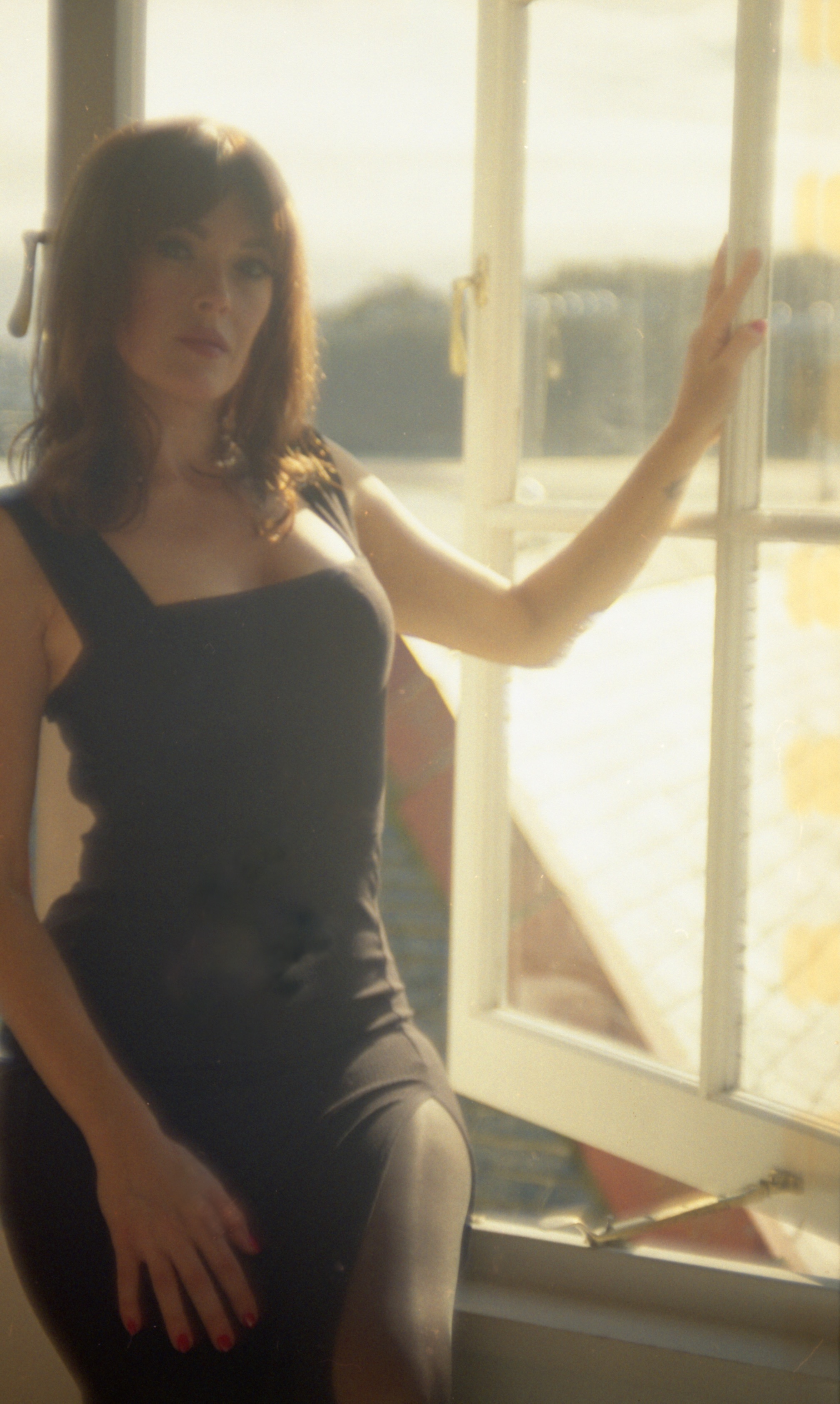
For all the latest from Pip Blom, including live shows, recorded product and other merchandise, try their official website, and follow the band via FacebookInstagram, and Twitter. And for more about San Lorenz, heads to their Soundcloud page and their Facebook page.

And for all the latest from The Ferret in Preston, Lancashire, including its ongoing fight for survival, head to its website and Facebook page.

Posted in Uncategorized | Tagged , , , , , , , , , , , , , , , , , , | Leave a comment

All the way from Detroit, destined for success – celebrating Duke Fakir’s I’ll Be There: My Life with The Four Tops

Picture the scene. It’s the second Sunday of November, 1966, barely three months after England’s World Cup triumph, The Four Tops riding high in the UK charts, their fourth hit on this side of the Atlantic rather fittingly retaining the top spot, ‘Reach Out I’ll Be There’ at No.1 for the second of a three-week run, their On Top LP set to start its 23-week top-40 run the following weekend.

That evening, Levi Stubbs, Abdul ‘Duke’ Fakir, Lawrence Payton and Renaldo ‘Obie’ Benson played two sets at the Saville Theatre in London’s West End, Cliff Bennett and the Rebel Rousers the main support act for an event promoted by Beatles manager Brian Epstein. They’d be back for a proper UK tour two months later, including two sold-out shows at the Royal Albert Hall, the Tops’ love affair with the UK and Europe well under way, as Duke Fakir recalls in his forthcoming autobiography.

‘The Tops had always aimed high, wanting to entertain in the top venues in the country, not imagining that one day we’d be in demand in Europe too. When Brian Epstein foretold that he’d make us as popular as the boys from Liverpool, who were an international phenomenon, we gladly put ourselves in his hands. Brian was a young man, just a little older than we were, a nice Jewish guy who was easy to talk to, free-spirited but also a savvy businessman, an expert in marketing. His first step was bringing us over to the UK for a promotional tour with various bookings and lots of television appearances. On the last day of the tour, we performed at a small London theatre, the Saville, an eight-or-nine-hundred-seater. It wasn’t concert-sized, more like the size of our usual nightclub venues. Brian sold out every ticket in the house and invited key media people and artists. Backstage before we went on, he reiterated his promise: “This could be great for you. You do the best show you can do, and I guarantee you will be front-page news.”

‘The people just went crazy, and when Brian came backstage to congratulate us, he was almost crying. After that he brought us back for a whole tour of the UK, which was a complete sell-out. And in 1967 that was big, really big. To cap it off he gave us an amazing going-away party at his three-storey brownstone on Chapel Street. At the party were The Beatles, the Rolling Stones, The Who, Small Faces, and every other group in the country who was on the charts or on their way up. It was a party to behold.

‘The first floor was for meeting and greeting, saying hello and thank you, and drinking a little bit, which we all did. Paul McCartney asked about ‘It’s the Same Old Song’, which he was a big fan of. He told us he thought it was unique, it had a very particular sound to it, and he loved the rhythm. He said something like, “That’s some bad mother-fucking music!”. All of the artists were very nice and open, and it felt a lot like any artistic community in America where musicians gravitate to each other and shake hands and talk music. The women at the party ran up and kissed us and told us how much they loved the Tops. The guys said how much they loved the Motown sound. The thing everyone was most impressed with was how all that music could ‘come out of just one building’. It was astonishing to them.

‘Moving upstairs at the party, on the second floor, folks were smoking hash and weed. Everybody started gravitating up there. England had always been a little bit more open about getting high. Judging by today’s standards it may seem like it was a big drug scene. But in the ‘60s and ‘70s it was all part of the culture, the way people partied and had mind-altering experiences. It wasn’t like we were drug addicts. It was all about spreading kindness, joy, love and happiness. I think I was having too much fun because I never made it up to the third floor of the party. I had the driver take me home.”

Not quite sure what was happening on that third floor, and records suggest there was also a fourth floor at that swish Belgravia address, one Duke was clearly not party to, so to speak. Either way, by the end of August, Brian was gone, Duke describing his accidental overdose of sleeping pills as ‘a huge, tragic loss’. He added, ‘Later we learned that he and (Motown boss) Berry (Gordy) had been in discussions about joining forces and putting together some kind of business deal that never came to pass.’

But this nation’s love affair with the Tops continued, with promotional support initially from Brian’s agency, his belief in them proven right, their positive relationship with the UK continuing to this day, Duke now the sole survivor from that classic line-up.

One of the interviewing highlights of the last dozen years for this website was my first opportunity to speak to Duke, exactly six years ago, reminiscing about so many moments involving his past, present and pre-Tops years, celebrating one of the finest vocal bands of all time (with a link to that interview here). What’s more, a few months later I got to speak to Otis Williams, last surviving ever-present of The Temptations (with a link to that interview here).

For a lad won over by ‘60s soul in the early ‘80s, buying my first Four Tops and Temptations compilations on vinyl two decades after those early hits, it was a big moment, Duke by then on the road with three younger Tops, including original bandmate Lawrence’s son Larry, aka Roquel Payton, as was Otis with the modern take on The Temptations. And still they tour, together in fact, with plans to return later to the UK later this year, Duke and Otis – 86 and 80 years young respectively – remaining very much at the centre of each outfit.

As for that autobiography, as Duke puts it in the foreword of I’ll Be There: My Life with The Four Tops, told with Detroit-raised TV and film writer, producer, playwright and poet Kathleen McGhee-Anderson: ‘Most singing groups didn’t stay together for a lifetime, but The Four Tops did. Not until Lawrence Payton, Obie Benson and Levi Stubbs sang their last notes did we change our line-up. Now I’m the last Top left alive to tell our story and I’ve asked myself, ‘why me?’ and ‘what kept us together for so long?’.

‘In my view, most of it was out of our hands. Something bigger was at play from the very beginning. In the middle of the 20th century worlds were colliding, times were changing, and people were ready for a message of love and togetherness – and they could get that from music.

‘The Four Tops were a part of that and maybe because of who we were – a band of brothers who stuck together, known for our melodious harmonies – we were ones to sing it.’

It’s a remarkable tale, not just about defining hit singles such as their afore-mentioned sole UK No.1 – among 11 top-10 singles here up to 1988’s ‘Loco in Acapulco’, and five top-10 LPs – but also of four bandmates who became tighter than brothers, touching on Duke’s marital ups and downs, struggles against drink and drugs, soured investment deals, over-riding religious faith, and the loss of those soul brothers, all told with honesty, humour and humility.

At its heart he draws on complicated relationships with his devout Christian mother, Rubyleon, and Muslim father, Nazim, plus the grandmother he credits with installing within his strong work ethic, and second wife Piper, ‘the love of my life’.

Religion plays a huge part throughout, but so does Detroit, Michigan, the Motor City where East India (Bangladesh) born Nazim settled after spells in London and Canada, a street singer and sitar maker who became a cook and chef before heading to his adopted home’s car factories, marrying a Georgia-born church choir director who later became a minister.

Abdul was the fourth of six children, his grandfather having set up the African Methodist Episcopal Church in the racially mixed North End of town, the church to which he would later devote himself, inspired by Piper to give up the hedonistic party lifestyle.

Duke, as he was known from a young age, was around seven when his parents separated, eight decades later remaining keen to advocate the peace and love message of each of their faiths, spirituality manifesting itself at various key events in his life, adamant regarding certain ‘special forces watching over me’.

Within, Duke and Kathleen paint a vivid picture of Detroit from the ‘40s to the ‘60s as he found his way towards his destiny, telling of a city where music culture rang out from assembly lines, shops and churches, ‘with a doo-wop group on every corner and talent shows every week of the year’.

At 13 he was blown away on seeing Jackie Wilson’s cousin, future bandmate Levi Stubbs, then 11, guesting with the Lucky Millinder Big Band, the pair later thrust together – as Pershing High School pupils – during a spell with a street gang they fell in with and were soon eager to distance themselves from, determined to make it their own way, seeking out a far more positive destiny.

Their first singing engagement was out west in Colorado, that particular quartet undone by an off-key fourth member, a learning experience that saw them vow to seek out a proper fit next time. And they soon met their fellow Four Aims (as they were known then), a wonderful moment of happenstance seeing Obi and Lawrence join them to perform at an invitation-only hometown graduation party in 1954, the chemistry and four-part harmonies there from the start, on a night involving Four Freshmen, Ray Charles and Orioles covers.

Lawrence’s instinctive arrangements quickly made an impact, each member bringing different qualities to the set-up, their first show proper following at a competition at the Warfield Theater, the biggest amateur show in town, subsequent interest leading to increasing numbers of bookings, far and wide.

On one occasion, their confidence took a knock on sharing a bill with James Brown and His Famous Flames in Atlanta, shocked by an outfit they knew nothing of before, stalling their own top-of-the-bill performance as long as they could that night, letting the crowd come back down to earth somewhat, Levi eventually suggesting, ‘We can’t out-funk him, we can’t out-dance him, we can’t out-holler him, but we can out-sing this mother-fucker, so we just going to go up there and sing!’. And sing they did, raising their game to new heights, on what proved to be another winning live appearance.

A first summer season at Daddy Bragg’s club in Idlewild, Michigan further raised their stock, Duke taking a particular interest in the business side that would serve him well over the years. And they also ended up winning over four of the dancing girls, a third of those liaisons ending in marriage, Duke hitching Inez, his first child following.

In time came their deal with the legendary Chess Records, leading to that name change on the Chicago label’s insistence, to avoid confusion with country act the Ames Brothers.

There were plenty more turns in the road, not least their unanimous decision to turn down a move to Berry Gordy’s fledgling Motown label back in their home city, concentrating on their R&B circuit labours, more prestigious bookings following, including various ‘top-of-the-line nightclubs out west’, inching closer to big-time venues in Las Vegas and Los Angeles.

As the ‘50s made way for the ‘60s, they recorded for Colombia then New York’s Riverside Records. Meanwhile, Berry Gordy’s firm continued to grow, the Tops in the audience at the Apollo Theatre in Harlem when the Motown Revue hit the town, Duke and co. marvelling at The Marvelettes, Martha and the Vandellas, Mary Wells and Marvin Gaye, wishing they were part of that bill but still retaining faith in their own destiny. But when a televised appearance on The Tonight Show in New York was caught back home in Detroit by Berry and his director of A&R, William ‘Mickey’ Stevenson, the latter accordingly reached out (I can use that particular turn of phrase in this case) and within weeks they were signing a deal at Hitsville, West Grand Boulevard, a few blocks down from General Motors’ HQ.

Their first Motown sessions, in 1963, led to an album of jazz standards, but Breaking Through would not be released for more than 35 years, Berry and Mickey already having other ideas, introducing them to in-house songwriters Eddy and David Holland and Lamont Dozier. And while the wages were modest at that stage, their studio education proved second to none, that first hit just around the corner, the Holland-Dozier-Holland penned ‘Baby I Need Your Loving’.

Their mighty rise followed, but Duke’s marriage was on the rocks, label-mates The Supremes’ Mary Wilson waiting in the wings, that romance cut short in an attempt to resuscitate his family unit for the sake of his children.

Soon, there was that first transatlantic trip, word spreading worldwide, but while things would never quite be the same beyond 1967, their take on ‘Walk Away Renee’ cracked the UK top-10 as the new year arrived, March ’68 single ‘If I Were a Carpenter’ also a success but proving to be their last big hit of the decade.

Changes were afoot, the landscape shifting, no better illustrated than by Duke’s inside story of how Marvin Gaye’s classic What’s Going On album came about, against the backdrop of the Civil Rights movement, escalation of the Vietnam War and ensuing protests and marches, picket lines, police brutality and overt racism, Duke and Obie on hand with Marvin and his brother Frankie, just back from ‘Nam, at the birth of the title song.

For Duke, those hometown riots of 1967 brought back memories of 1943’s racial tensions fuelled by the KKK, overcrowded housing and political suppression on Detroit’s East side. But while Motown took what followed as its cue to up and leave for Southern California, the Tops stayed put for now.

That sense of loyalty and brotherhood comes up time and again in this tale. While The Temptations, for instance, underwent personnel changes, and Diana Ross left The Supremes, Tops frontman Levi remained loyal to his bandmates as overtures were made by Gordy to take that solo path, seeing an opportunity for four hit acts where there were two. But while Levi said no, in a sense the writing was on the wall, their faces no longer fitting, leaving Motown in 1972.

There were still the occasional hits over the next quarter-century or so, and Duke has plenty more to tell, such as the story of the twist of fate (or faith, perhaps) that somehow saw them avoid the ill-fated Pan Am flight 103 just before Christmas 1988, following a festive Top of the Pops recording session. Then came 1990’s induction into the Rock and Roll Hall of Fame at the Waldorf Astoria, New York, marking a staggering 45 Billboard Hot 100 hits since 1964, including 24 top-40s and seven top-10s, the quartet introduced by Stevie Wonder.

Soon enough, Duke had swapped cocaine and weed in Vegas for a more pious hometown existence, Piper having introduced him to the church that just happened to be the one his grandfather set up 50 years before, now at its new address.  

In 1997 they lost Lawrence, aged 59, the other originals continuing until Levi bowed out in 2000 after a stroke, more changes following Obie’s death in 2005, Levi passing away three years later.

Duke carried on though, making it his mission to properly say goodbye and thank you to audiences on behalf of his soul brothers, a lifetime achievement Grammy in 2009 seen as the icing on the cake, 55 years after those first Four Aims engagements.

And he’s not looking to throw the towel in yet, Duke now behind a musical telling the Four Tops story, I’ll Be There set to open in Detroit later this year, while the current four-piece are set to join forces with fellow Motown legends The Temptations – Otis Williams among them – for their latest UK arena tour later this year.

Whatever happens next, we’ll always have those great records to savour. Before I started this piece, I revisited, online, the Tops’ spellbinding televised live show from Paris in 1967, their take on ‘I Can’t Help Myself’ on that occasion just as thrilling today as in the year I was born, the two drummers doing their level best to keep up. And the moment I post this, I’ll blast out ‘Bernadette’ on the record deck, savouring that heart-searing moment, around 2 minutes 39 seconds in, where the band cut away and Levi issues that emotionally charged call to the lady in question. Then, as I’m talking killer percussion, I’ll follow that with the super-charged ‘You Keep Running Away’, a favourite from my 45s box, and that very track Macca raved about way back then, ‘The Same Old Song’.

And now, not so far from treasured copies of Eddie and Brian Holland’s Come and Get These Memories: The Genius of Holland-Dozier-Holland and Gerri Hirshey’s Nowhere to Run, I have Duke’s own version of events to reach out for.

I’ll Be There: My Life with The Four Tops by Duke Fakir with Kathleen McGhee-Anderson, is published by Omnibus Press on Thursday, May 5th, pre-orders on offer including limited editions hand-signed by Duke. For more details, head here.

The Four Tops and The Temptations’ delayed UK arena dates are now set to happen this autumn, with late-‘70s soul-disco favourites Odyssey as special guests, calling at Manchester’s AO Arena (Friday, September 30th), Leeds’ First Direct Arena (Saturday, October 1st), Liverpool’s M&S Bank Arena (Sunday, October 2nd), Southend’s Cliffs Pavilion (Wednesday, October 5th), Nottingham’s Motorpoint Arena (Thursday, October 6th), Bournemouth’s International Centre (Friday, October 7th), Birmingham’s Utilita Arena (Sunday, October 9th), Cardiff’s Motorpoint Arena (Monday, October 10th), and London’s O2 Arena (Tuesday, October 11th), with tickets available via 24-hour hotline number, 0844 888 9991, www.ticketline.co.uk, or direct from the venues.
Posted in Uncategorized | Tagged , , , , , , , , , , , , , , , , , , , , , | Leave a comment