In which author/writer Malcolm Wyatt jealously guards his own corner of web hyperspace, regular feature-interviews, reviews and rants involving big names from across the world of music, comedy, literature, film, TV, the arts, and sport.
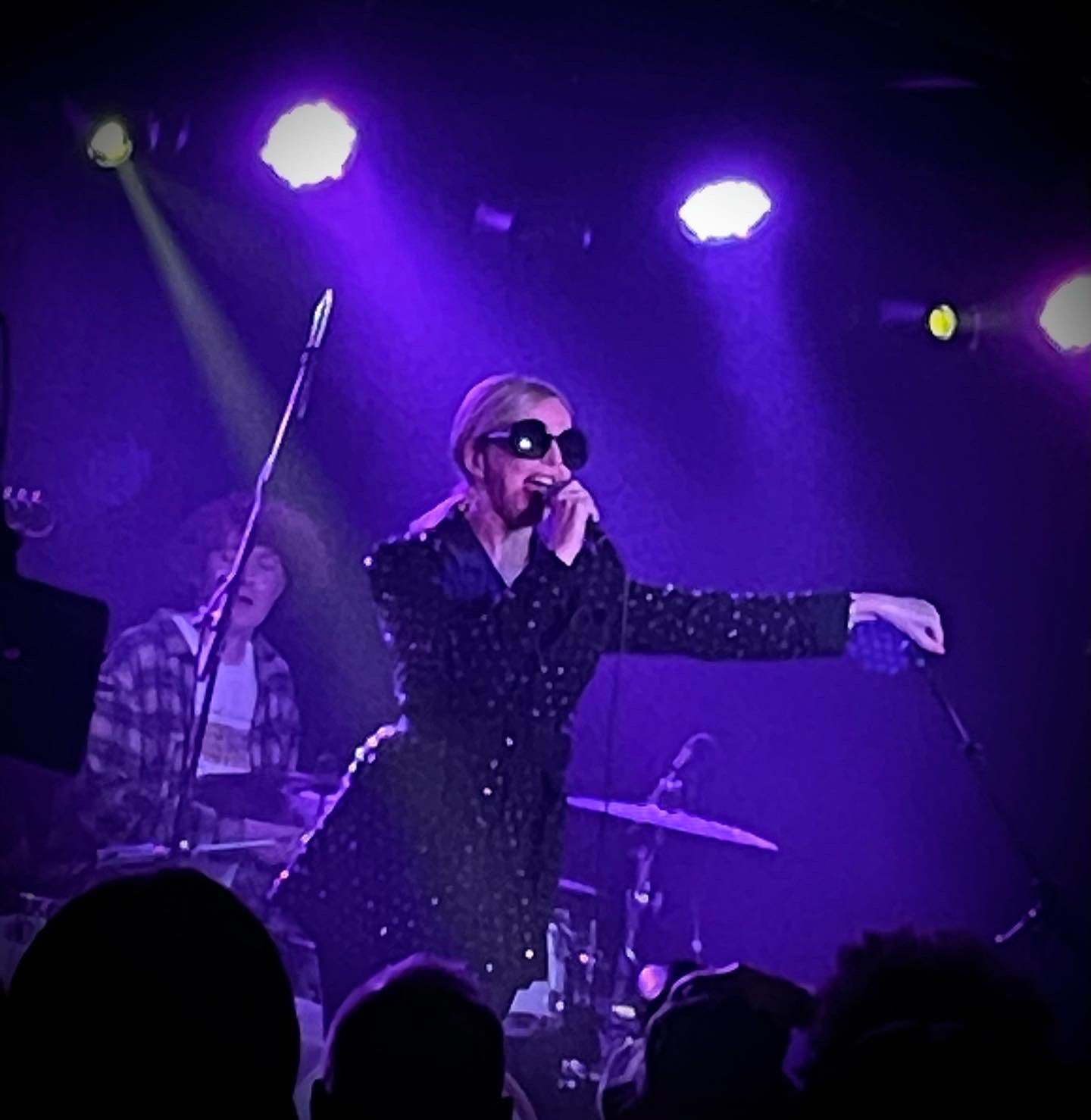
Lights Action: Clare and co. get into the groove at Manchester’s Academy 3. Photo: scarymary via Twitter
Four decades after Clare Grogan first came into my life, marking my 14th birthday with a personal greeting from north of the border (that week the first of the four their biggest hit spent in the UK top 10, with the next three at No.2), she’s back with a new band, interspersing Altered Images’ golden hits with their post-punk roots and a few new songs that bode well for a forthcoming fourth LP, 39 years beyond the gorgeous Bite.
Not as if ‘Happy Birthday’ is the song I think of first, at least not if I can help it. Yes, I cranked it up on the stereo to mark my daughters’ annual celebrations during their formative years, so may well be guilty of instilling in them the same mixed feelings about that biggie. But it had to be done, right?
The band on this occasion was not the one that joined her in the studio for the soon-to-be-released Mascara Streakz, which also involves Clare’s other half Stephen Lironi, long-time pal Robert ‘Bobby Bluebell’ Hodgens, and neighbour Bernard Butler. But that was no huge surprise, and I was certainly impressed with the five-piece that showed up at the university union on Oxford Road, Manchester.
After a full-on, committed performance from highly-likeable four-piece, female-fronted grunge/pop alt-rock openers Scarlet – who were on top form by the time we waltzed in, bringing plenty of power and glamour alike to metal credentials – I was a little concerned as the main act got going. They went straight into the amazing ‘I Could Be Happy’, but sounded way too quiet, as if the levels were there for one of those racetrack ‘80s nostalgia dates, so they didn’t spoil the on-going conversation around the grandstand. However, the quality of the song itself soon shone through, and I’m pleased to say that by the time we got on to the equally awesome ’See Those Eyes’ – Clare seemingly still hiding behind her sunglasses, rather ironically – the mixing desk bods had sorted the issue and we were properly away.
A fine band they were too, and I’ll start (rather aptly) at the back with guitarist Alan Longdon, who definitely looked the part. While the beard put me more in mind of Frank Lampard Sr. around the time Clare was breaking through (still pulling up trees on a weekly basis in defence for West Ham then, and simply known as Frank Lampard), there was enough of a Shoestring thing going on with his skinny tie over white shirt, and his cardie wouldn’t have looked out of place on an Orange Juice promo shoot.
Alongside Alan, drummer Martin Johnston – surely the youngest of the five – hadn’t bothered with that early ‘80s look (although my travelling mate reckoned he looked more like he was in The Frank & Walters at the end of that decade, no bad thing at all), there was no doubting his prowess on the kit, driving the pace all night with bass player Rosie McClune, who was also on great form in a band where the low-end parts always counted.
Shady Lady: Clare Grogan leads from the front, with Martin Johnston behind. Photo: Phil Booth via Twitter
And while I initially feared that co-vocalist Stefanie Black might be there chiefly to bolster things up, those concerns were soon allayed, her professional delivery not only helping Clare out of her shell, but the two of them spurring each other on all night.
As for Clare … ah, Clare. She was struggling a bit – she said so herself – confidence-wise at first, but it was soon apparent that she still has that star quality, with her voice definitely up to the task. What’s more, that winning smile is still capable of swimming a mile down the Nile. After she mentioned it recently (with an interview link to our conversation here), I could tell she was watching us as intently as we were her, revelling in the fact that so many of us were on a trip back to more carefree days. And that was certainly true, forgetting for at least a couple of hours the tragedies unfolding in Ukraine, the sadness of these last two pandemic-fuelled years, and the mess we’re in courtesy of Brexit and all that has been allowed to follow.
Yet here we got to lose ourselves in the Banshees-influenced ‘Insects’ and ‘Dead Pop Stars’, and a few encouraging selections from the new record, not least the title track. For me, on this showing, I’m thinking it could well carry on where the wonderful Bite left off. As for that Bernard Butler co-write, it could almost have been a lost track from his long-playing collaboration with David McAlmont.
Sound-wise, there was a little backing tape action going on, in lieu of keyboards (how I’d have loved to see Clare prancing off to give us those occasional one-note flourishes here and there, like in the olden days), but it worked well. There was also one cover thrown in, and while technical gremlins kicked in on The Ting Tings’ wondrous ‘That’s Not My Name’ (dedicated to all those who have misspelled Clare’s name with an ‘i’ down the years, something this writer can sympathise with), this quintet rode the storm perfectly, and it just added to my love for that song and the band themselves.
Then, from their ‘83 swansong we got the more polished but no less alluring, sensual pop masterpieces, ‘Bring Me Closer’, ‘Love to Stay’, and ‘I can’t believe it wasn’t a bigger hit’ 45, ‘Change of Heart’, which had already slipped out of the lower reaches of the top 100 by the time I’d hit 16, the story seemingly, prematurely, over.
And Clare’s shades were off by the time she got to the evergreen classic that is ‘Don’t Talk to Me About Love’, her first co-write with the hubby, she told us. Then they were gone. Surely not, we joked, I think they may have missed out at least one hit. And with that, back they came, ‘Happy Birthday’ having not sounded quite so fresh to these ears for many moons. They did it proud, Clare’s band did her proud, and Clare did us proud.
Of course, ideally, they could have come back for at least three more Pinky Blue classics to complete the circle – the title track, ‘Song Sung Blue’ and ’Goodnight and I Wish’. But no complaints from me. Maybe next time, eh, Clare?
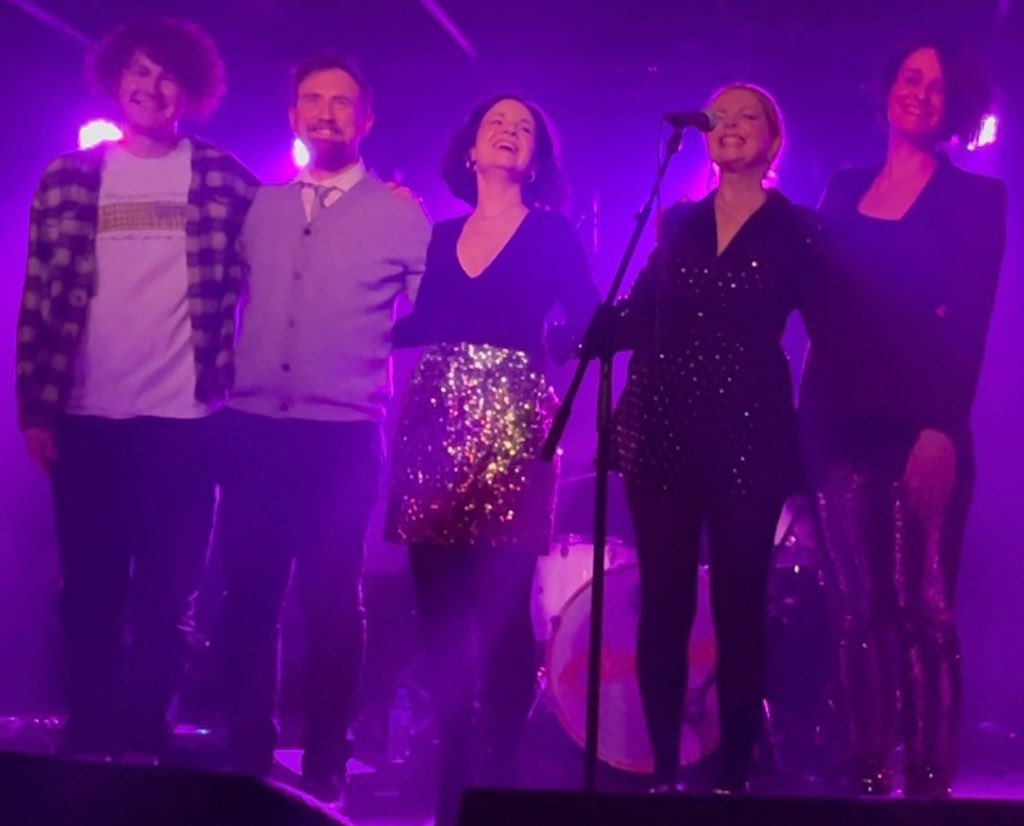
Job Done: Martin, Alan, Stefanie, Clare and Rosie take a bow at Manchester. Photo: @StreekyG via Twitter
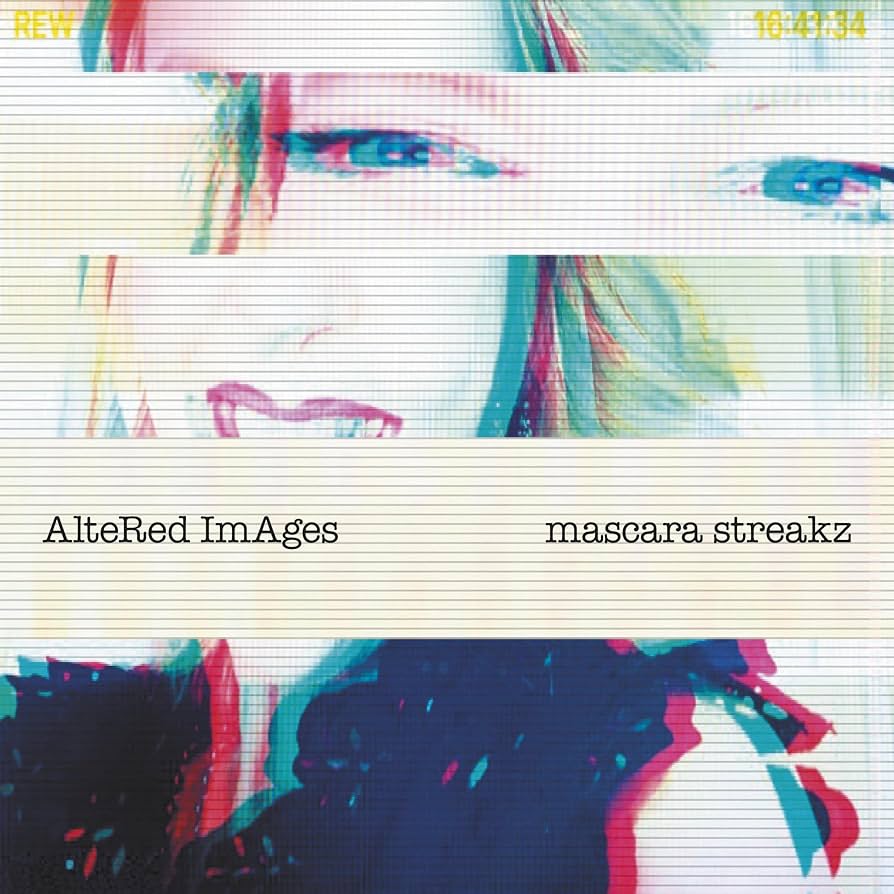
You can pre-order new Altered Images album, Mascara Streakz, via this link. Meanwhile, Altered Images’ 2022 dates continues this weekend in Stockton-on-Tees and Newcastle-upon-Tyne, with full tour details here. You can also keep in touch via Facebook, Instagramand Twitter.
For more about Scarlet, follow this Facebook link and their own website, catching for starters their NHS-dedicated lockdown video for ‘Friends’, including a cameo from WriteWyattUK interviewee Carol Decker, of T’Pau fame. You can also catch them live, supporting Greywind, at the Star and Garter in Manchester on Wednesday, April 6th, with a ticket link here.
Planet Clare: Clare Grogan, heading out on tour with a new-look Altered Images from this coming week
Early ‘80s new wave pioneers Altered Images are back, a number of headline shows about to commence, with a new album, Mascara Streakz, landing this summer.
Formed in 1979 as teenagers inspired by the punk scene, this Glaswegian outfit – fronted by Clare Grogan – swiftly reached the big time, selling millions of records, topping charts in several countries, recording three top-10 albums and securing six UK top-40 hits.
In 1981 they were voted the NME’s Best New Group and Smash Hits’ Most Promising New Act and invited to play a Royal Command Performance. Meanwhile, Clare’s parallel career took off after starring in Bill Forsyth’s rightly-revered coming-of-age romantic comedy, Gregory’s Girl with John Gordon Sinclair and Dee Hepburn that same year.
More recently a published children’s author too, Scottish Music Awards’ special recognition award-winner Clare’s love for music clearly continues, singing live again under the band’s name since 2002, even fronting an all-female version at Blackpool’s Rebellion Festival. There was also a BBC Scotland Quay Sessions show in late 2019, while last year a reformed line-up supported The Human League on their Dare 40th anniversary UK tour.
And now a fresh Altered Images line-up are taking to the stage again with a string of headline dates, their set including material from the new album, one my interviewee is extremely proud of. But first, I asked just where she was, that slight delay on the telephone line last Friday afternoon suggesting it wasn’t her adopted North London home base.
“I’m actually in Barbados. I’m so sorry! I’m sorry!”
I’m guessing Storm Dudley and Storm Eunice haven’t quite made it there yet.
“No, we’re basking in beautiful sunshine. I won’t go on though, or you’ll just fall out with me. What’s it like there?”
Well, I just went to retrieve my recycling box, to bring you down to earth a little. And I’m guessing you’re not watching the Winter Olympics’ men’s curling final in Beijing by the poolside right now.
“Yeah, I have to say I feel very, very lucky if life at the moment. I’m here with my husband, our daughter and our friends.”
Clare’s husband is Altered Images bandmate Stephen Lironi, who joined in 1983, the pair going on to form the short-lived Universal Love School. And now they’re at the heart of this new Altered Images LP, due out in August on Cooking Vinyl Records, also involving Robert Hodgens – aka Bobby Bluebell – and Bernard Butler, of Suede and McAlmont & Butler fame. And as I pointed out, we’ve only had to wait 39 years for this new record to be delivered.
“Ha! Yes, slightly rushing the whole thing!”
I was lucky enough to see Robert when The Bluebells – Clare having appeared in a video for their No.1 hit, ‘Young at Heart’, way back – came to headline the final night of the three-day Preston Pop Fest last August. They put on a storming set, so knowing he’s involved with this record and the tie-in tour bodes well.
“Yeah, Robert and I are really old friends, so it was great to actually finally get to work with him. It really was, and the whole thing just kind of came together in a very sort of casual, organic way. It just built and built and built. It started as a tiny wee speck, then I just kept going, ‘Let’s do another song … let’s do another song!’.
“And I’ve been saying to everybody that if it hadn’t been for that second lockdown, I’m not even sure if this album would have been written. In a really weird way, I just found the space in my head to do it, at such a weird time for people. It really was.”
I gather Altered Images’ co-founding guitarist Johnny McElhone (later of Hipway, before huge success with Sharleen Spiteri in Texas, Clare having not so long ago featured with them live at the Royal Albert Hall and also appearing on May 2021’s LP, Hi!, the band’s 10th studio album) was also involved on the songwriting front.
“Actually, we decided to put a sort of hold on them. We were finding it really difficult to be in the same spot at the same time with all his Texas commitments, but we’re definitely planning on doing it, because I’ve got a two-album deal with Cooking Vinyl, so you never know what will happen next. But it’s a shame we just couldn’t quite get the timings right.”
How did the link with Bernard Butler come about? Was he someone you knew quite well?
“Bernard’s my neighbour. Ha! He lives just around the corner from me, and I’ve always been a big fan of what he does. I just asked him one day if we should try to write something together. We did, and have co-written two really lovely songs. And I’m really excited about people hearing it.”
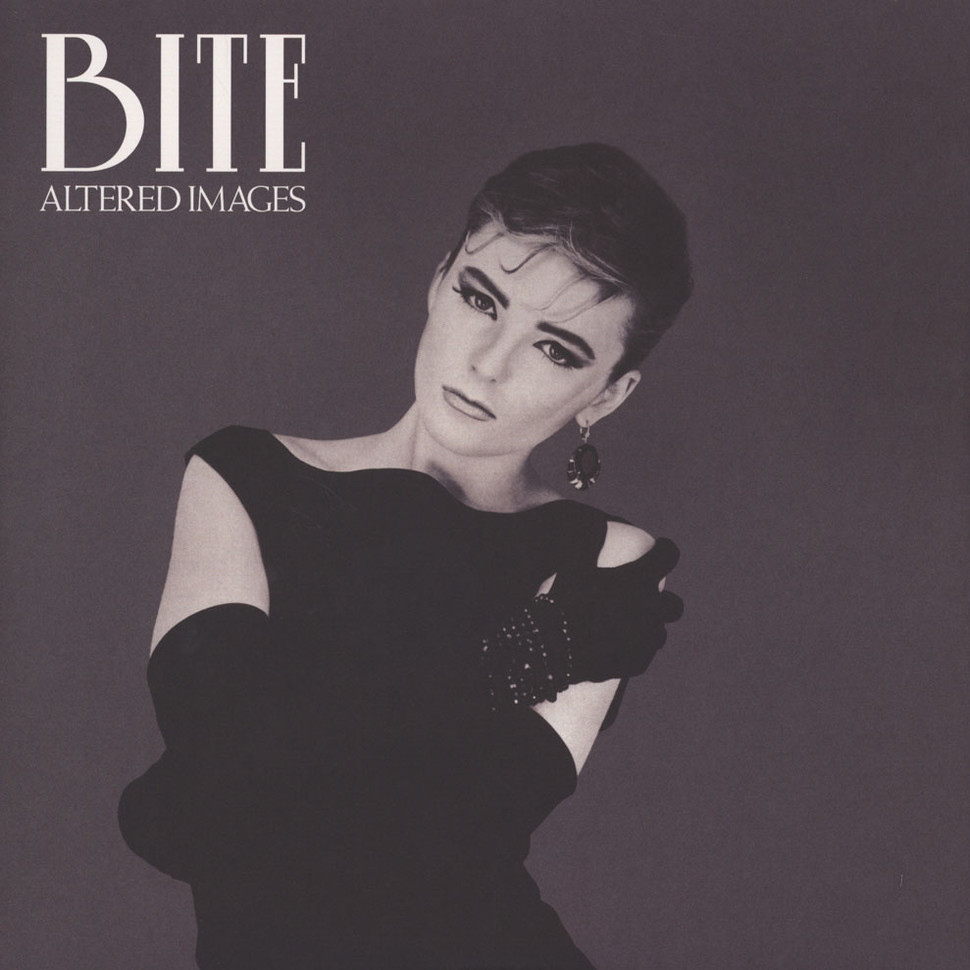
Me too. And in the meantime, you’ve inspired me to go back through the back-catalogue – although I never really need an excuse, to be honest – with Pinky Blue – its lurid cover one of many for the band by late Glaswegian artist David Band, whose CV also included key Aztec Camera and Spandau Ballet covers – and Bite still having that power to transport me back to my teenage years.
Live Wire: Clare Grogan on stage, and set to deliver a brand new album with a band she co-founded in 1979
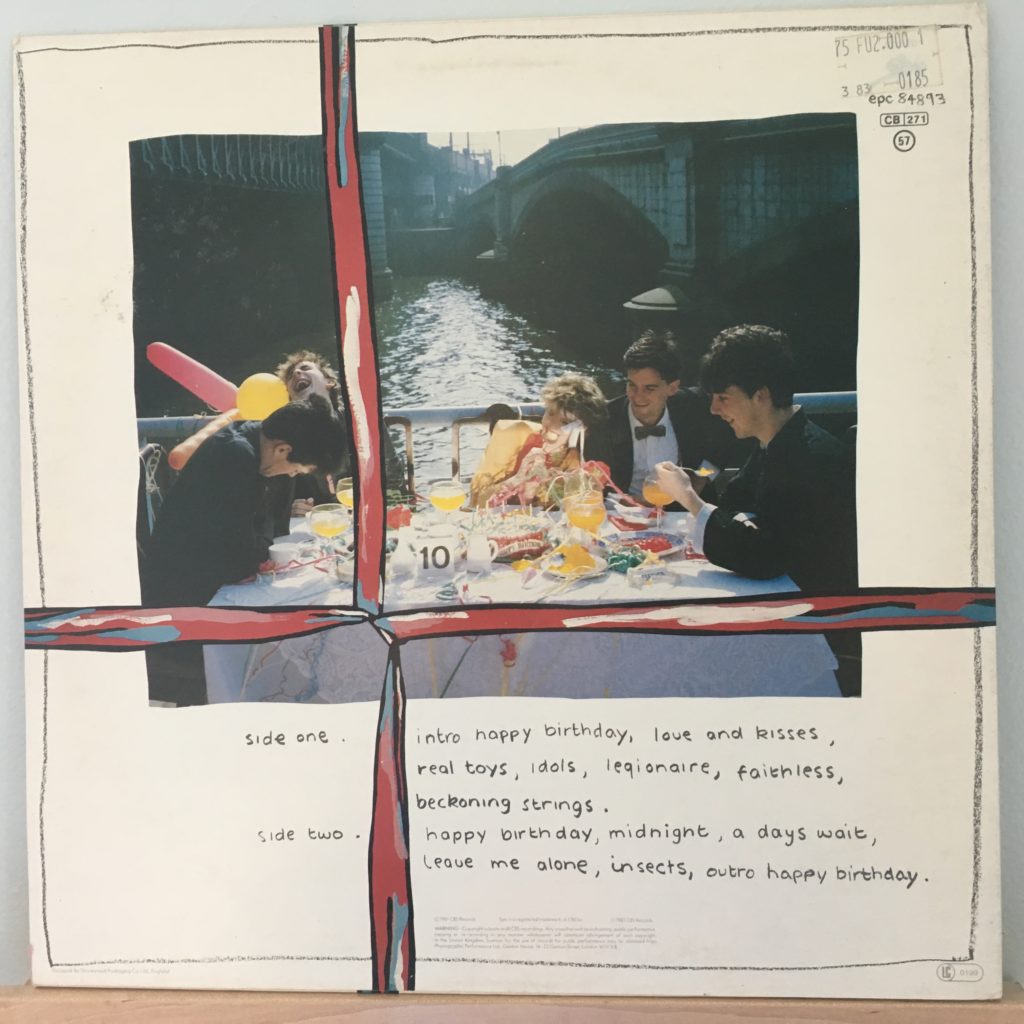
I didn’t get to experience the first two 45s, ‘Dead Pop Stars’ and ‘A Day’s Wait’, or debut LP, Happy Birthday, on release, although I knew well enough the title track that first cracked the UK top 10 the week I turned 14 in late October ’81 (that hit single going on to spend three weeks at No.2). But I reminded myself of that album the morning I called Clare, remarking on its classic post-punk vibe, hardly surprising considering the Siouxsie and the Banshees link (Altered Images toured with Siouxsie and co., having sent a demo tape to the official fan club asking if they could, landing a slot on 1980’s Kaleidoscope UK tour, guitarist Steve Severin going on to largely produce that late ’81 album).
What’s more, there’s a Buzzcocks feel with the guitars (not least on ‘Legionaire’, again perhaps not such a surprise seeing as their band name referred to a sleeve design on Buzzcocks hit ‘Promises’, inspired by Pete Shelley’s constant interfering with sleeve designs, apparently).
“Yeah, definitely!”
And songs like ‘Idols’ and ‘Leave Me Alone’ sound so powerful to this day. There’s also a touch of The Cure for me, another band in the Banshees’ orbit, of course. And l hear how later bands like Catatonia perhaps carried on where you left off.
“I think a lot of bands are influenced by the same musicians, so we all kind of merged together to a certain extent, just because they’re the influences you have. I loved the Buzzcocks and the Banshees, and when we started our band, the boys literally picked up their instruments for the first time, you know, so it was amazing that we very quickly progressed to the level we did.
“I’ll never quite understand it, but I don’t over-analyse it. I just think there’s no point. It happened, and it was great!”
Well, if you’ve got something special, you don’t want to look too deeply. Also, I know your bandmates were very much influenced by the Sex Pistols and The Clash. Did you also get to see all those classic bands when they came to Glasgow?
“Yeah, there really was a kind of group of what I describe as baby punks, and we all gravitated towards each other. Although none of us were at the same school, we became a little tribe of people that went to see all those acts, which we loved.
“Originally, when we heard Siouxsie and the Banshees were doing a Scottish tour, we got in touch with the fan club and asked if we could open for Siouxsie, support her on tour, and they said yes! And I’ll never quite understand why … but they did!”
Was your seminal date at Tiffany’s in Glasgow with them an audition of sorts? Or had they already signed you up for the full tour?
“I’m not sure … I think we’d already signed up. And yeah, it was magical. It really was, and they were really helpful towards us when we first started out and, although they seemed quite terrifying, they were really, really amazingly supportive to us.
“They also got us on the bill at Futurama, which was where of course John Peel saw us, so we got to do a John Peel session, and yeah, it was really quite incredible.”
Ah, Peelie, the band’s high-profile champion, the interest garnered by his initial BBC Radio 1 session with the band in October 1980 leading to a recording contract with Epic Records. That show she mentions was as part of the Futurama 2 festival in Leeds in September 1980, Peel impressed enough to invite the outfit to record a session for his programme, an offer taken up the following month. They went on to record two more for the show, in March and September 1981. What’s more, Peel and Pinky Blue’s producer Martin Rushent – more of whom shortly – contributed backing vocals and whistling to the group’s cover of Neil Diamond’s ‘Song Sung Blue’ for that second LP.
And rather perceptively, that iconic broadcaster said of the band in June 1996 during a BFBS broadcast (as recorded on this rather splendid webpage), “Hard to imagine a band less fashionable than Altered Images. When they first appeared, people said, ‘It’s like a Scottish Siouxsie & The Banshees’, except they were light where the Banshees were dark, really, and got lighter and eventually got darker… people did like ’em when they first came along, had a couple of hit records, and suddenly everybody turned on them, as they do, in a strange way. I’ll never understand how this process works, but it does go on all the time. They started to dislike them for the very things which they’d previously liked them for, like the fact that they were bright and a bit daft and colourful and leapt about and stuff, and suddenly these things became terribly uncool, whereas a week or so beforehand they’d been cool.”
Did you retain that friendship with John through the years?
“Well, you know, I didn’t see an awful lot of him, but when I did, I really relished it. And I was just so fond of him and liked being around him. That’s the only way I can describe it. He was just a really nice person to be around.”
You seem to have been blessed by knowing a few people like that. I recently caught footage of you being interviewed on camera with Martin Rushent (who first worked with them on breakthrough hit, ‘Happy Birthday’), and you clearly had a kinship there as well.
“Yeah, I really did. I’ve come to the conclusion over many, many years, that people liked being around us as much as we loved being around them. Maybe that’s all it was. I think when you’re young, you don’t really notice that stuff so much, you know. I think we just desperately wanted to fit in, in a world that was incredible. And the best way to do it really was just by being ourselves. And I’m so glad that we were.”
You were clearly infectious in that respect (in a positive way … and that’s pre-covid terminology). And as you mentioned being so young, the youngest of my three older sisters is barely a few weeks younger, which reminds me there’s a landmark coming your way soon, your – dare I say it – 60th birthday. Do you think that was part of your inspiration for doing this LP now? Thinking, ‘If not now, when’?
“Yeah, I think during that second lockdown, we got to be together as a family quite a lot more than normal, like all families, and I was with my teenage daughter a lot and it really just got me thinking about the fact that at her age I was already in the band and travelling and doing all this stuff.
“Actually, the thing that’s really inspired me the most is looking back at being 16 or 17 and the music that inspired me then. I re-listened to all those records I loved back then, you know, The Human League, Simple Minds, Kraftwerk, Grace Jones, the Tom Tom Club. I just started listening to all of that again, and that’s when … I just felt absolutely compelled to do it!
“I read recently that Robert Smith of The Cure said he suddenly felt overwhelmed by the need to create new music and I totally related to that. I’ve talked about it over the years and written with other people and have casually dipped in and out. But suddenly I really wanted to put something really, really personal out. And make it work, you know.”
Pinky Blue was an LP – in my case a cassette at first – I lived and breathed for some time, arriving at just the right time for me. And don’t take this the wrong way, but many a time you’d tell me ‘Good Night and I Wish’, last thing of an evening.
“Ha ha!”
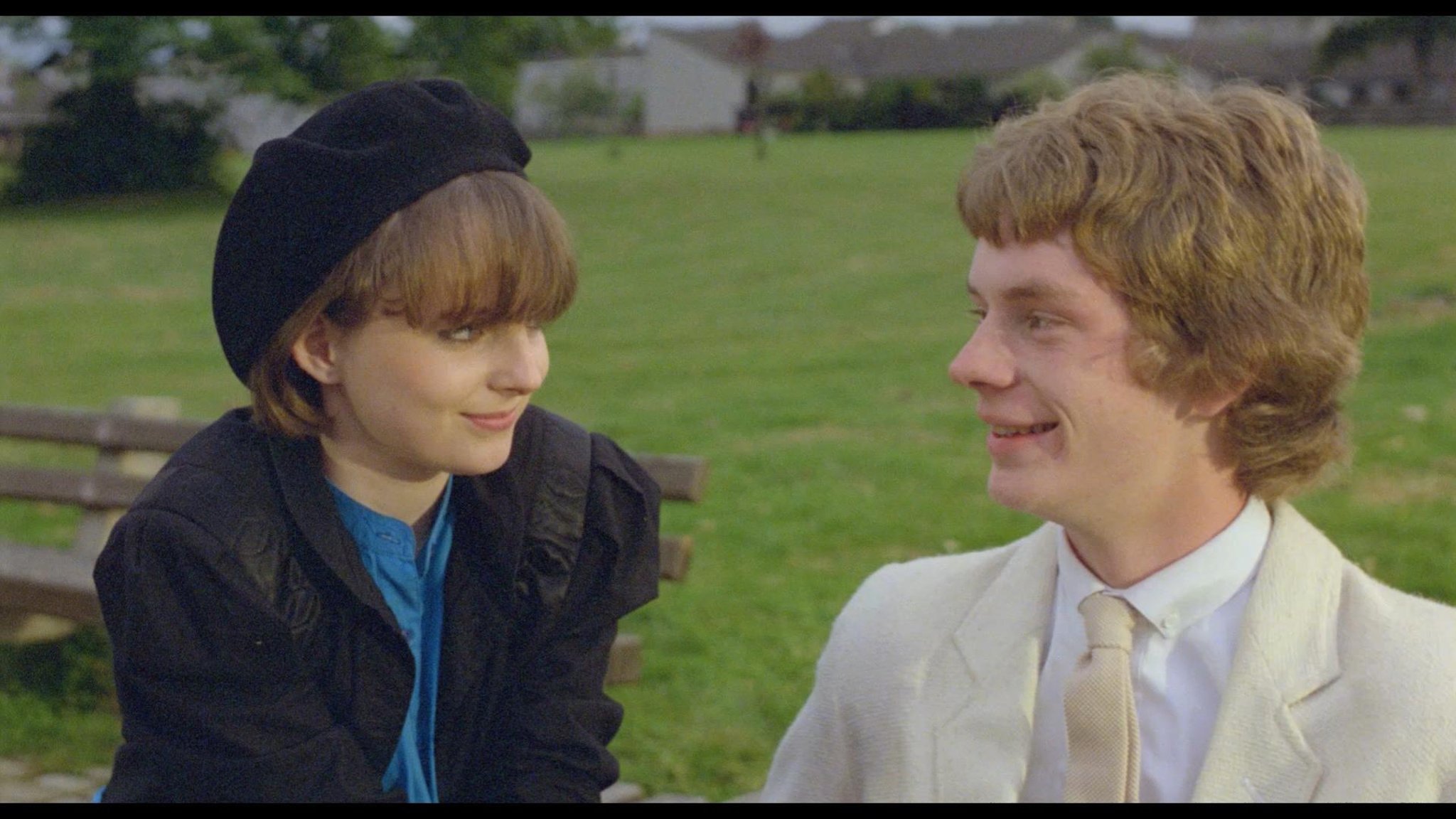
On Film: Clare with co-star John Gordon Sinclair in Bill Forsyth’s wondrous 1981 film, Gregory’s Girl
That second LP was released in May 1982, reaching the UK top 20 and providing three more top-40 hit singles – ‘I Could Be Happy’, ‘See Those Eyes’ and the title track. Yet it was largely perceived as a disappointment in UK music press circles, if not for 14-year-old me, and ‘I Could Be Happy’ (which reached No.7 on this side of the Atlantic, four places higher than follow-up, ‘See Those Eyes’) proved to be the group’s sole US chart success, peaking at No.45 on Billboard’s Dance chart.
Personnel changes followed, not for the first time. In fact, this was a band never afraid to mix things up. That rehearsal room door must have slammed a few times with the line-up changes en route. I guess it wasn’t always a happy ship. Do you get on well these days?
“Well, the only one I’m … well, obviously, I married Stephen. Ha! But sometimes we got on and sometimes not so much. Obviously, I see Johnny and hang out with him, but the others I really don’t see. I mean, I know it sounds a bit weird, but it was almost like people you went to school with, and I know we had those shared experiences together, but people do fall by the wayside. They just do.
“I don’t really keep in touch with them. I did a Tim’s {Twitter} Listening Party with Johnny, Stephen, and Tony {McDaid}, and that was really lovely. But a lot of the original members I literally haven’t seen since they were in the band, so it’s a weird one.”
When you put it like that, that makes sense. I guess some of us are guilty of remaining in a kind of early ‘80s bubble when it comes to thinking of you and the band. We’ve stopped the clock, while moving on in our own lives.
As it was, 1983’s follow-up long player, Bite was the more sophisticated album of the three – as suggested by Clare’s Holly Golightly-esque restyling on the cover – and for these ears, in retrospect, veered between dance pop (disco, I guess) and everything from Blondie (maybe that’s why Mike Chapman – who shared production duties with Tony Visconti – was called in) to New Order (‘Another Lost Look’) and The Temptations (‘Thinking About You’). Then again, the drums on ‘Now That You’re Here’ are pure ’Moving Away from the Pulsebeat’-era Buzzcocks.
I reckon it’s as cool today as first time I heard it too. It also provided a blueprint for pop-funksters I went on to admire like Shoot! Dispute (the Visconti-produced second single and LP opener ‘Bring Me Closer’ and ‘Stand so Quiet’ spring to mind), as did Peel, and the whole album drips with the vibe of so much from that era, not least ABC and Orange Juice. As for the Chapman-produced flavoured 45s, ‘Don’t Talk to Me About Love’, their third and final top-10 hit in spring 1983, and ‘Change of Heart’, which somehow only reached No.83, they remain as fresh today as then. However, while the LP, released that June, was their second to reach the UK top 20, it sold less than the previous pair, both awarded silver discs. No accounting for public taste, I guess.
Did you see that third LP as your last crack at the big time for the band? I mean, your star had already ascended as an actor by then. Did you just think, ‘Right, one more go at this’?
“Do you know, it really wasn’t. I often say to people now that at the time when I walked away from the band, I probably just needed a really long holiday. But you know, when you’re young, it’s kind of a bit all or nothing. I just thought I can’t. I’d been on the move for five years, literally, just non-stop, getting on planes … and, you know, I always say to people, it was great fun until it wasn’t.
“I just suddenly thought, ‘I can’t live my life like this. I have no control over it’. And having a say in what I did and where I was and who I was with suddenly became very important to me. You know, I think I’ve worked out that most bands last between four to seven years, even the successful ones.
“I just kind of think we had our moment, it was fantastic, and I get to more than relive that moment. I think I’ve created something quite different. And not really intentionally, just almost by accident. And I’m not just saying that.”
You probably answered my next question there, but I’ll crack on anyway. I was going to ask how you felt when you saw Johnny taking off, success-wise, with Sharleen and Texas. I know you’re close now, having appeared with them live and on record, but at the time did you secretly think, ‘That could have been us’. Or had you truly moved on by that point?
“I had completely moved on. My life was very different. And I never ever thought that at all. I mean, it’s been an absolute joy to get to go on stage with them and be on their album and stuff. That’s been an absolute joy. But he’s got his thing and I’ve got mine, and we just have a mutual respect for each other after all these years, which is really lovely.”
After the break-up, Clare went solo, signing to London Records in 1987, releasing a single, ‘Love Bomb’. Not the greatest, in retrospect. And when that failed to chart, follow-up single ‘Strawberry’ and an LP, Trash Mad, were shelved by the label. There was always the acting though. Which brings me on to her parallel career, that starring role in 1981’s Gregory’s Girl her big break, credits down the years going on to include roles as the original Kristine Kochanski in Red Dwarf, and those in East Enders, Father Ted and Skins.
In fact, she was only 17 when she first met Bill Forsyth, this Scottish Youth Theatre hopeful waitressing in Glasgow at the time. Has she been in touch with Bill lately, and is there still a kinship between her co-stars from that wondrous film?
“We’ve had a couple of really special anniversary screening moments over the years, which has been great. And Gordon’s married to one of my best friends, which is really lovely, Shauna McKeon. But I haven’t seen Bill in years. Our paths just haven’t crossed. I met him at the Baftas a few years ago though, and it’s always nice to say hello.”
Gregory’s Girl has certainly stood the test of time. When was the last time you watched it all the way through?
“Well, I saw it for the first and last time about five years ago, screening at the BFI, which was a really lovely moment. They were doing a special screening and I thought this could be my last chance to see it on a big screen with a big audience.”
Had you avoided the premieres at the time then?
“No, I went to all of them, but you watch the first five minutes and then you leave. You don’t want to criticise yourself! Because all you can ever see are your mistakes.”
Well, we didn’t. And of all your acting roles for film, TV, theatre and elsewhere, is there one you feel didn’t get the positive attention it deserved, or went under the radar?
“I think maybe Comfort and Joy, I was terrified of seeing as well. I remember having conversations with Bill Paterson and Alex Norton, who I see from time to time, and we really felt like we almost ruined Bill’s career! {Bill Forsyth, who was directing} But we got invited to a screening of it at a film festival, and afterwards the three of us were saying, ‘It’s really rather good!’.
“It came out just after Local Hero {Mark Knopfler provided the score for both}, and I think people were expecting a different kind of film. So maybe that would be the one, but honestly, I’m not just saying this, most of the things I’ve done had genuinely positive acting. And I feel so lucky and fortunate that things like Red Dwarf and Skins and all this stuff, people love.”
Storm Bru-ing: Bill Paterson with his co-star Clare Grogan in Bill Forsyth’s 1984 film, Comfort and Joy
And you’re a published author these days. Will there be an autobiography at some stage soon?
“Erm … no, definitely not. I mean, I consider this album to be the story of my life a wee bit, through songs. That’s what I’ve done, and it’s quite revealing.”
So is this holiday your break before getting back to rehearsals for the LP launch and live shows?
“Yeah, my year’s going to be really busy, so I just thought, ‘while I can’, during this half term, come away with my husband and my daughter, and chill out a bit.”
Have you put your daughter off a career on the stage?
“No, she loves hanging out at shows and she quite often helps at the merch stall. She’s part of the family business. She used to love coming on stage with me, but she’s at that stage now where she’d rather die than do that!”
Incidentally, I’ve never asked my girls – now 22 and 19 and at uni – if they were scarred from me playing a certain Altered Images song to them up the stairs for every birthday throughout their formative years.
“Ah! I love that!”
It had to be done. And I’m looking forward to the album and these live dates. I’m guessing it’ll be a set from across the three original LPs and the new one, yeah?
“Absolutely, and it’s gonna be really good fun. My shows are always great fun. They really are. And I just love looking at the audience, as I can see the songs taking them somewhere. It’s a bit like you were saying at the start of the conversation – I love seeing people going, ‘Oh, my God, I remember this! I remember where I was, I remember what I was doing!’ I just love that. It’s a really, really great moment to witness.
“And honestly, I say this on stage every time, but if somebody told me 40 years on that I’d still be doing this, I’d have thought, ‘That is just wrong!’”
Well, we’re glad you are. And it’s been lovely to catch up, but you best apply some more lotion now, or turn over or something. Don’t worry about me, I’ll go and get my wheelie bin back.
“Ha! I’m thinking of you all! Thank you so much. ‘Bye now!”
Happy Days: Clare Grogan reaches out on stage, with a brand new Altered Images tour schedule ahead of us
You can pre-order new Altered Images album, Mascara Streakz, via this link. Meanwhile, Altered Images’ 2022 dates commence at Manchester Academy 3 on Wednesday, March 2nd, with special guests Scarlet (tickets here), and include a Friday, March 18th show at 229, Great Portland Street, London, where the band will be joined by former WriteWyattUK interviewee Gary Crowley (with tickets here). For full tour details head here. You can also keep in touch with the band via Facebook, Instagramand Twitter.
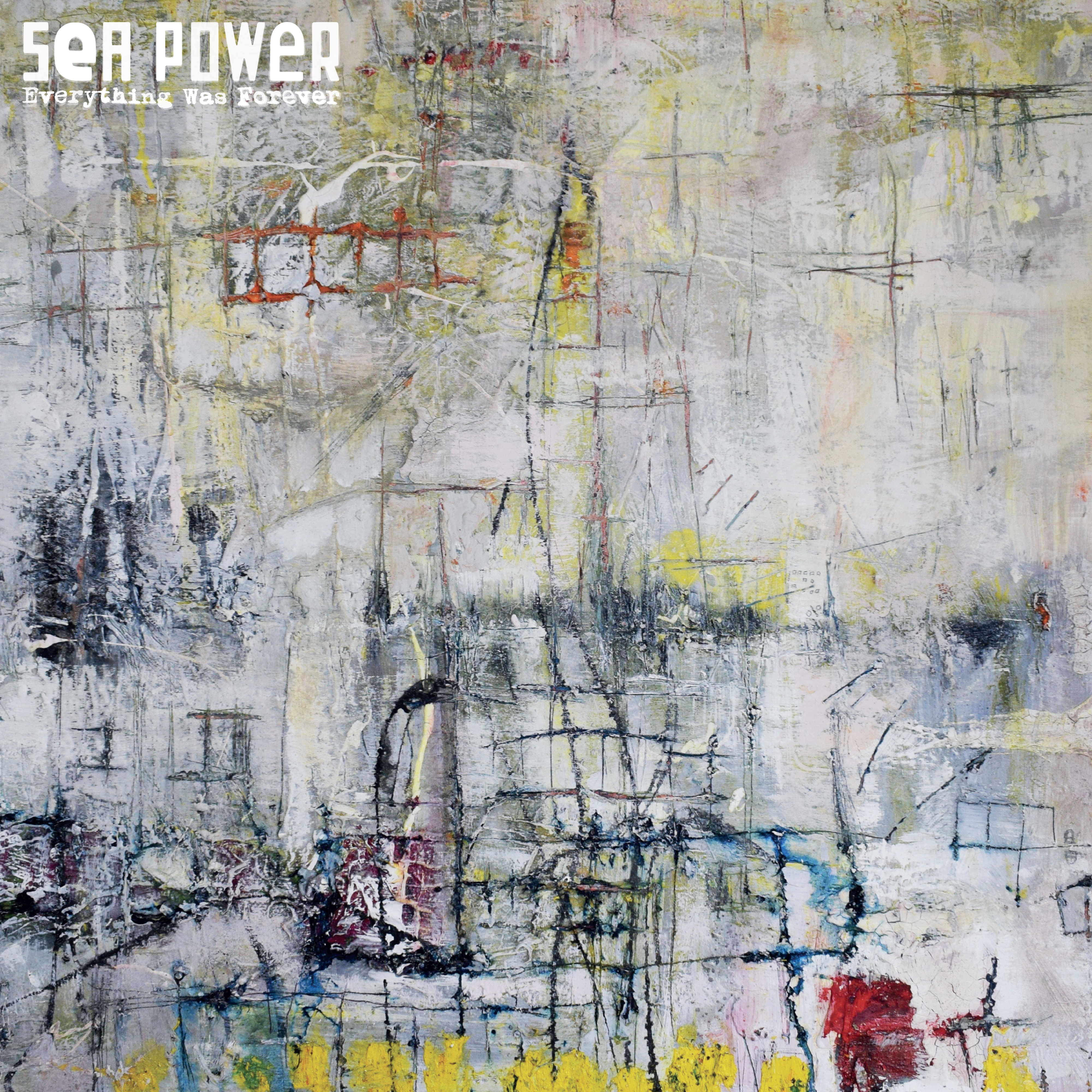
Lit Up: Sea Power, back with a brand new studio LP, Everything Was Forever, and heading out on tour
I often wonder when talking to musicians deemed to have ‘made it’ how much of a part fate played in their success. There’s more often than not plenty of toil and heartache en route before that perceived rise to a higher level, but still there are key moments in the band biog suggesting it could have gone another way entirely.
Take for example Martin Noble, or in the parlance of his bandmates in Sea Power – the band formerly known as British Sea Power – simply Noble. What were the chances of this Lancastrian guitarist heading 200 miles south to take up his university place in Reading, then getting to know a Lakeland lad by the name of Scott Wilkinson, aka Yan (vocals/guitar), his brother Neil Hamilton Wilkinson, aka Hamilton (bass/vocals, guitar), and their schoolmate Matthew Wood, aka Wood (drums)?
Noble was at home in Brighton when I called, the band’s base since 2000 after formative days in Berkshire. Is he a believer in fate? I mean, if he hadn’t chosen that uni course, perhaps he would never have met this trio from 70 miles up the road from him in Natland, Kendal.
“It’s one of those funny things. I think even before we got to university, me and Yan were probably thinking that we were going to go and join a band. But we didn’t know who or what.”
Did you take your guitar down to Reading?
“Yeah, I played keyboards in a school band. then I’d just started playing guitar. I had a couple of guitars at uni, thinking, ‘I’m moving away from keyboards now, I’m going to be a guitar man!’”
Were you fairly studious, or did the music quickly take over?
“The music took over too much, straight away! I failed the first year of exams. I was studying zoology and psychology. But I got stuck back into it, because I didn’t want to waste that. I finished my degree while Yan dropped out halfway through. He was doing typography and art.”
Ah well. It was meant to be.
“Yeah.”
Did the fact that you had that Northern identity give you something else in common at the beginning?
“I used to go out with friends to the Lakes. That was my kind of thing. And when we first played together, I spent a summer over there in Kendal. Yeah. And that kind of cemented the whole thing.”
I guess those big landscapes up there go with the kind of epic feel of the music you make together.
“Yeah, it’s weird how that’s sort of happened. It must be something to do with that.”
And was that move from Berkshire to the south coast a fairly natural progression? My mum’s side of the family hailed from Reading, so I have an emotional attachment, but I could imagine that Brighton would have seemed a far more happening place at the time.
“At the time in Reading, loads of venues were closing. There was barely anywhere to play. And Yan and Hamilton’s older brother, Roy, who went on to manage us for a couple of years, lived in Lewes, just outside Brighton, and was like, ‘Some of you can stay with me’. And Woody’s older brother lived in Brighton, so me and Woody went to stay with him, kind of on a whim. It was pretty crackers relocating like that.”
It’s been quite ride so far, the band Mercury-nominated (for 2008’s Do You Like Rock Music?), BAFTA-winning (for the 2019 soundtrack to million-selling, multi-award-winning computer game Disco Elysium, two tracks from which turn up in a new format on the new record), and having composed music for Football’s UEFA Champions League. And those singing their praises down the years have included late greats David Bowie and Lou Reed.
What’s more, their lyrics became part of a permanent installation at London’s National Maritime Museum, alongside Shakespeare and Coleridge, and when the band hosted their inaugural Krankenhaus festival in 2019, in a 12th-century castle in their native Lake District, they managed to attract a diverse bill that included poet laureate Simon Armitage, fellow Mercury nominee Hannah Peel, the upcoming Squid, Scafell Pike, Snapped Ankles, eagle owls, Bo Ningen, and Rozi Plain, snooker legend and prog rock lover Steve Davis, and New Order’s Stephen Morris and Gillian Gilbert.
Then, last August, the band announced – to much media debate and rather predictable furore in certain flag-hugging corners – they would henceforth be known as Sea Power rather than British Sea Power, due to ‘a rise in a certain kind of nationalism in this world – an isolationist, antagonistic nationalism that we don’t want to run any risk of being confused with’.
However, what was somewhat lost in the glorifying headlines that followed was the band also making clear their deep love the British Isles and pride and thankfulness at having been born and raised across these lands – in Cumbria, Yorkshire, London and Shropshire (the band members now living in Sussex, Cumbria and the Inner Hebrides).
All the same, I suggested to Noble, you might have saved yourself a bit of later soul searching, by going with either Club Sea Power, like your early club nights in Reading, or just Sea Power as a name back at the start.
“Yeah, but I’m glad we did it {now}. It’s something we’ve been thinking about for 10 years or so, and I think with things that have happened in the world, that sort of gave us that extra nudge. We always got to another album going, ‘Are we gonna change our name?’ but bottled it a couple of times.”
Incidentally, do you reckon I should catalogue all your LPs and CDs under S, or keep the earlier ones under B?
“Ha! We don’t look back at the name on all our albums and think it’s bad. It’s kind of part of our history. And especially the first record, that was the band name and the album, all part of one artistic vision. Then it was like, ‘It’d be good to just change our name with every album’, in a way.”
Four of you were there from the start in 2000, then came Phil Sumner (cornet, keyboards, since 2006) and Abi Fry (viola, since 2008, also known for her work with Bat for Lashes). How much do you think your remit’s changed over the years? Was there a clear vision or band manifesto of what you wanted in the first place?
“It wasn’t written down, but when we were doing our club nights, it kind of grew. We knew things that worked together. A song would come up and that would feed into it. It was like a machine that we weren’t fully in control of! We were wide-eyed and wanting to make some sort of impact.”
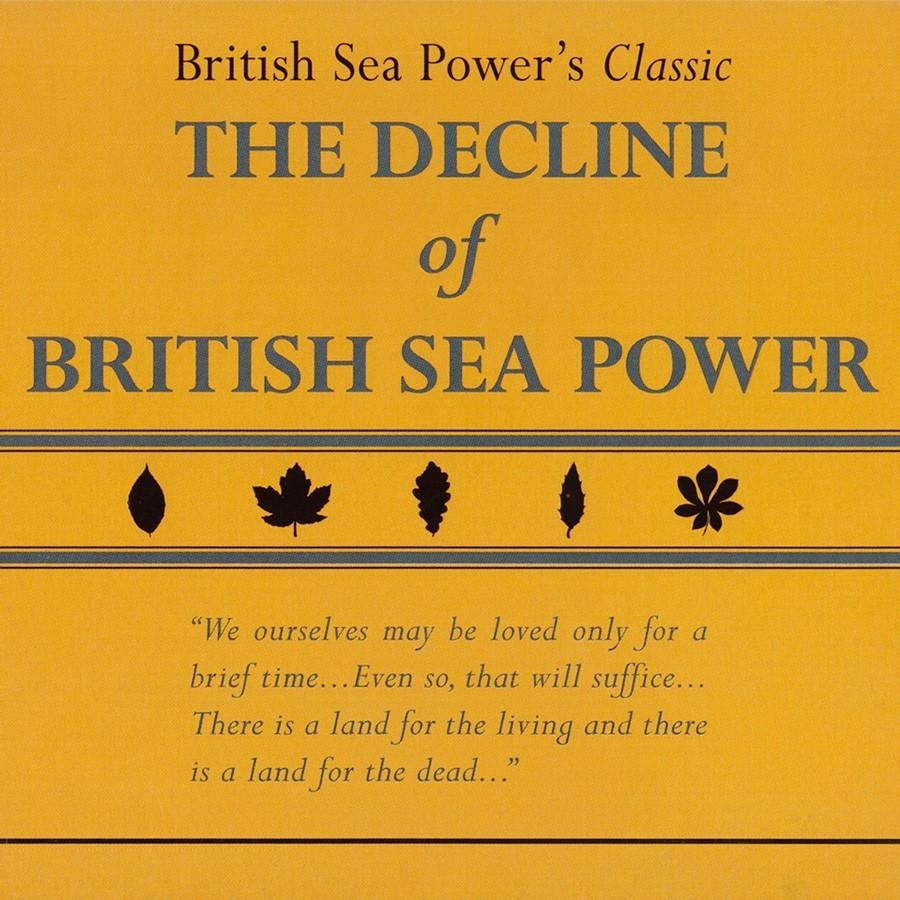
Well, you certainly have. I was listening back to first LP, The Decline of British Sea Power, this morning (having only heard four tracks off of the new LP when I got the chance to speak to Noble), and just concentrating on the opening songs, you could never be criticised for being one-trick ponies, wherever it was that kind of Weezer-like first single, ‘Fear of Drowning’, the other-worldly choral opening, the Pixies-like ‘Apologies to Insect Life’, the more Captain Beefheart-esque ‘Beetroot Fields’ … Need I go on? It’s all in there. But maybe the more mystic ‘Something Wicked’ was more a sign of where you were heading.
“Yeah.”
And the awesome, guitar-driven ‘Remember Me’ is the one that’s had the most listens by far online, it seems, and for me that’s something else again, like Bruce Springsteen fronting Dinosaur Jr. In short, you were pretty mixed up from the start.
“We had lots of things pulling us in different directions, that sort of post-punk thing. But we were big fans of certain atmospheric things like the basics of Galaxie 500, Twin Peaks, and I love the shoegaze stuff, so it was always going to be a mix of that. And Hamilton’s got quite an ethereal voice which kind of lends itself to that pastoral side.”
It was 2005’s Open Season where I properly came in. At least that was the first of your records I shelled out on, hence its chart success, of course …
“Yeah, thank you for that!”
No worries. And I can’t recall if it was hearing that LP’s opener and fellow UK top-20 single ‘It Ended on an Oily Stage’ or just the fact that a mate had been banging on about you in feverish whispers for a while already. But if there was a clincher that you were my kind of people, it would have been seeing your appearance on 2006’s Betjeman and Me documentary with Griff Rhys Jones.
“Ah, that was a good period, the John Betjeman centenary stuff. It took us a few places. We went to Cornwall and did an event there. We were off our heads a bit and made this giant human fruit machine where your arm was in Bacofoil and you had to pull that. Three of us were in the machine and we had loads of bananas and apples and stuff that we just put up randomly. Martin Clunes was walking through the car park, and we were like, ‘Martin! Come and have a go!’. It was 1p a go and he gave us a pound. He tried to get away after three goes, but we were like, ‘You’ve got another 97 goes!’ Oh, the horror on his face, my God!”
As the years advanced, my appreciation for Betjeman’s poetry and love of architecture (as well as the railways and his Cornish haunts, which were always a draw) increased. I could never admit loving the LPs he made with Jim Parker while growing up, my Dad playing them so much when I was younger. But now I do, and I think hearing you cover ‘The Licorice Fields at Pontefract’ was a defining moment in that respect, a track I always secretly loved, not least the electric guitar on there.
“Jim Parker’s music for that’s incredible. I was like, ‘This is like The Velvet Underground with a bit of brass on!’”
Next year marks the 20th anniversary of The Decline of British Sea Power. And later that year it will be a decade since From the Sea to the Land Beyond, another defining moment. That got its BBC Four premiere in late 2012, a few months after I first heard Public Service Broadcasting’s ‘The War Room’ EP, in time belatedly getting into King Creosote too, on hearing From Scotland with Love’s soundtrack. And there are three great examples of the creative marriage of quality archive footage with wondrous scores. Was that From the Sea to the Land Beyond soundtrack something you saw the vision of before writing the music?
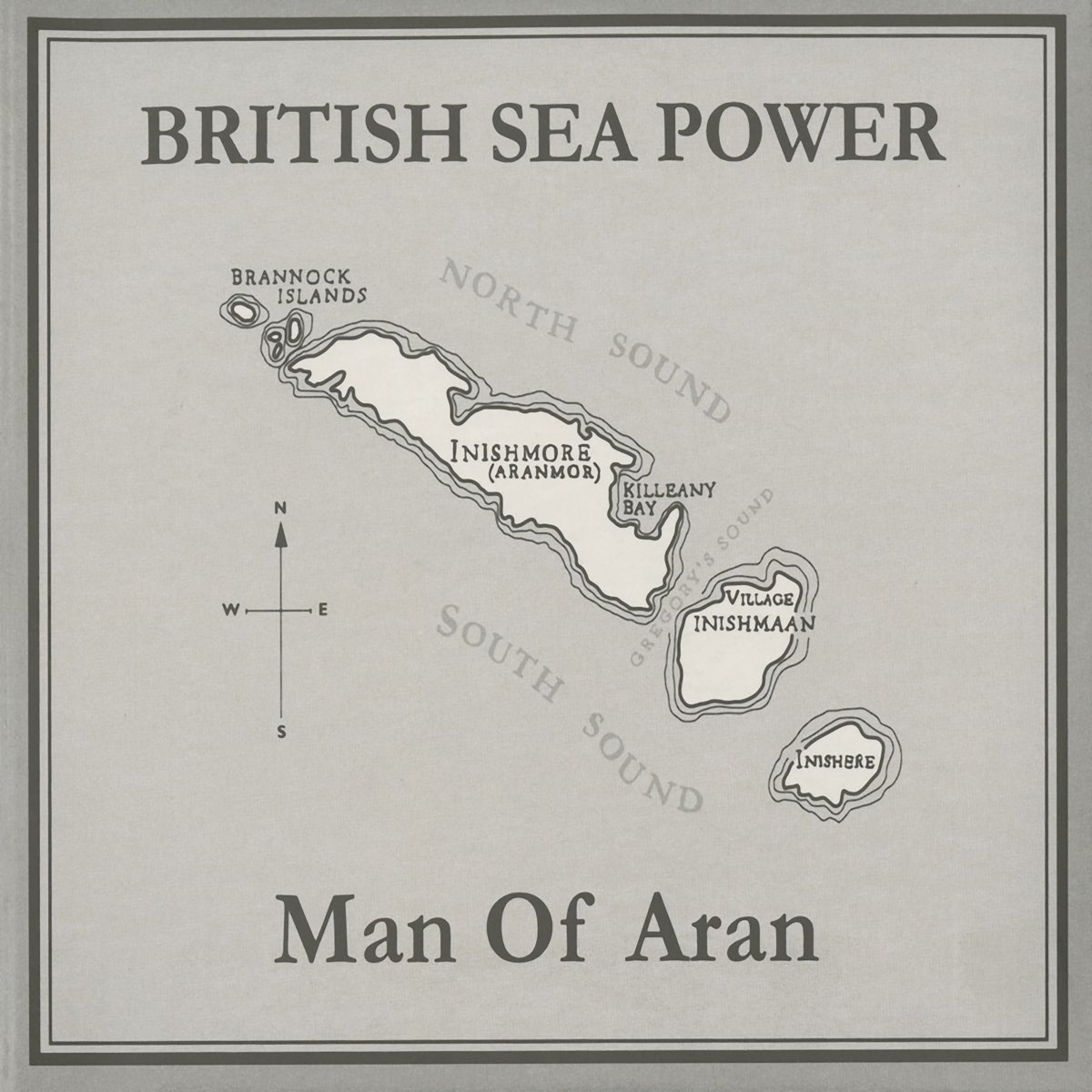
“I think it started with us doing the soundtrack to Man of Aran. The Edinburgh Film Festival got in touch with us as they’d heard ‘The Great Skua’ {2008} and felt we could do a soundtrack to a film for the festival. So we went around the houses and landed on Man of Aran. Even after that, we didn’t consider recording it. We just thought it was a one-off. But fans were saying, ‘Oh, you’ve got to record that’. We were just oblivious to the fact.
“Once we’d done that, we got a taste for it. And From the Sea to the Land Beyond was a commission from the Arts Council {England}. They got {director} Penny Woolcock to go through BFI footage and she picked some brilliant stuff. In other hands it could have been a completely different story. She got some wonderful stuff in.”
That certainly piqued my interest, and soon I was checking out – good timing again – Erland Cooper’s work with Simon Tong and Hannah Peel for The Magnetic North, something else that truly inspired. And while the initial project there concerned Erland’s Orkney roots, I suppose again we’re talking big landscapes and themes that maybe crop up in your work too.
“Definitely. And I think now Hamilton and Abi are up on the Isle of Skye, the pace of his songs has … it’s sort of got more expansive and weird. They get a lot of wind and rain up there. and it’s definitely got that in there!”
The way you say that, I get the feeling you’re maybe reeling him back in now and again.
“Yeah!”
‘Two Fingers’ was the first single to be aired from the new LP, a ‘potential anthem for these troubled times’, the words taking in ‘mortality, defiance, HP Lovecraft and V-signs’, its chorus centred on the gesticulation that can signal both contempt and resolution (V for victory), a ‘rock song that seems to send a righteous FU to sundry self-serving figureheads of this era – but which also rides forth with hope and oppositional vigour’.
Yan explained at the time, “The song is part inspired by our late dad. He was always giving a two-fingered salute to people on the telly – a kind of old-fashioned drinking term, toasting people or events: ‘I’ll drink two fingers to that’, to some news item or to memories of a childhood friend. In the song it’s a toast to everyone, remembering those in our lives and those sadly no longer here and to making the world a better place. The song is ‘Fuck me, fuck you, fuck everything.’ But it’s also ‘Love me, love you, love everything’ – exultation in the darkness. If you say ‘fuck you’ in the right way, it really can be cathartic, a new start.”
It was also the band’s first under their shortened name and hinted at the strength of their first new music in five years. And the first songs I heard from Everything Was Forever suggested a broad church, as ever, but I could also hear why, for example, ‘Green Goddess followed second single ‘Folly’ (tackling ‘a sleepwalking world of procrastinators with our eyes on the short-term’) on the LP’s running order. In a sense it turns it into a seven-and-a-half-minute epic, putting those tracks together. What’s more, after our chat I got to hear the majestic way the Revolver-era Beatles meets Can surge of the trememendous ‘Transmitter’ surges straight into ‘Two Fingers’. Is that the way the LP came together? Could it only have been sequenced the way you’ve done it, in your head?
“We tried a lot. It’s getting the balance right between Hamilton’s real slow-burners and … There are two duets on that I’m really pleased about. One called ‘Doppelgänger’ that the brothers both sing on, then my favourite, ‘We Only Want to Make You Happy’.”
That’s the last track. As for ‘Folly’, the Pet Shop Boys would kill for that, surely. Not as if they’re known for their murderous antics.
“Ha! That’s hilarious. Even my Dad said, first thing, ‘Oh, it sounds like the Pet Shop Boys’. I said, ‘Oh, that’s just my Dad being daft, with his old references!’. Then I heard it on 6 Music and was like, ‘He’s right! It really does.”
Meanwhile, ‘Lakeland Echo’, built upon a sea of 10cc’s ‘I’m Not in Love’-like atmospherics, is more pensive, deeper, dreamy.
“Yeah. I think ‘Fear Eats the Soul’ is another in that mould. Sort of claustrophobic but kind of epic. Like a softer ‘Cleaning out the Rooms’.
It’s also a track that grows on you with every play, and feeds neatly into the finale, ‘We Only Want to Make You Happy’, which even carries traces of Sigur Rós for these ears. Dare I use the word majestic again? In fact, Sea Power seem to be mining similar territory to the longer in the tooth James these days, each new album proving a revelation.
As I say, since our interview, I’ve had the chance to hear the LP right through, and I concur regarding Noble’s other observations too. There’s a subtle mix of those different styles, Yan in latter-day Neil Finn-like ethereal mode on a scene-setting ‘Scaring at the Sky’ and then ‘Fire Escape in the Sea’, as well as the afore-mentioned ‘Fear Eats the Soul’.
On the accompanying press release, Noble suggested: “’Folly’ is in the tradition of singalong Sea Power apocalyptic anthems – everyone ambling down the road to a multitude of catastrophes. Party on! You might find yourself standing up on the South Downs, up on the fells or the dales, looking down at the world, a world where we seem to avoid the decisions and changes to stop the rot. It’s all folly, but in this case set to some pretty life-affirming music – good stuff underpinning the donut vibes and maybe making you think it’s not all over, not quite, not yet.”
Over the years we’ve got to know that big sound and those sweeping, anthemic, often bass-driven epics. Was that what you were out to do from the start, or has your remit changed down the years?
“Erm … I don’t think so.”
It just naturally fell into place, perhaps.
“Yeah, we were in a good position where everyone is when they start off in a band, and every time a song comes around, it gets your full attention. There are no other distractions, and it’s one song at a time. They have a lot of time to sort of grow as well. So yeah … and we were younger and angrier.”
Well, we’ve all got plenty to be angry about at present, certainly politically.
“Yeah, and I would say there’s a lot of that in this new album, but we never like to make the music feel depressing as well. You don’t want to be dragged into that position.”
Has that been the story of the last couple of years for you? That frustration? Or did it work quite well, helping you regroup and have a clearer head regarding where you were headed next?
“Definitely. And we got Graham Sutton involved to produce. He did some tracks on Open Season, then he did Do You Like Rock Music?,Man of Aran, and Valhalla Dancehall. We sort of skipped him for a couple of albums, then found out he’d moved to the South East coast, set up a little mixing studio. And after the Tim’s Twitter listening parties we did, we got in touch. We gave him all the tracks we had, and he kind of had the final decision on what songs were going to be on and what he thought went together. We trusted him, and it’s good because it’s hard now. You can imagine, if Hamilton’s kind of slower paced, he’d want that kind of album, it’s really hard to find a balance.”
Now you finally have that chance to get back out on the road. And you always prided yourself on live performance. I see you start on the south coast and end up back in Manchester at the Albert Hall. Is that as good as a hometown gig for you?
“Yeah, I think the likes of Manchester and Leeds. I’ve spent a lot of time in Leeds, and Lancashire. It feels really good up there. You know, we’re northern lads!”
It must give you a thrill, being such a lover and student of great music, to play venues dripping in history, like The Roundhouse in London too.
“Yeah, we’ve done a lot of shows where we’ve done smaller clubs, like on the October tours. That was supposed to be about trying out new songs, and was supposed to be two years ago but got postponed. So it feels really good to get back to bigger venues too.
“And we’ve been putting our festival, Krankenhaus, together today. It’s going to be August bank holiday weekend this year, with tickets on sale from last month, us getting the line-up together now.”
I best hold back on some of that, until confirmation arrives, but it’s bound to be another cracking line-up, not least one involving a few re-bookings. And of course, I conclude, all this keeps you on your toes.
“Yeah, it keeps it all exciting.”
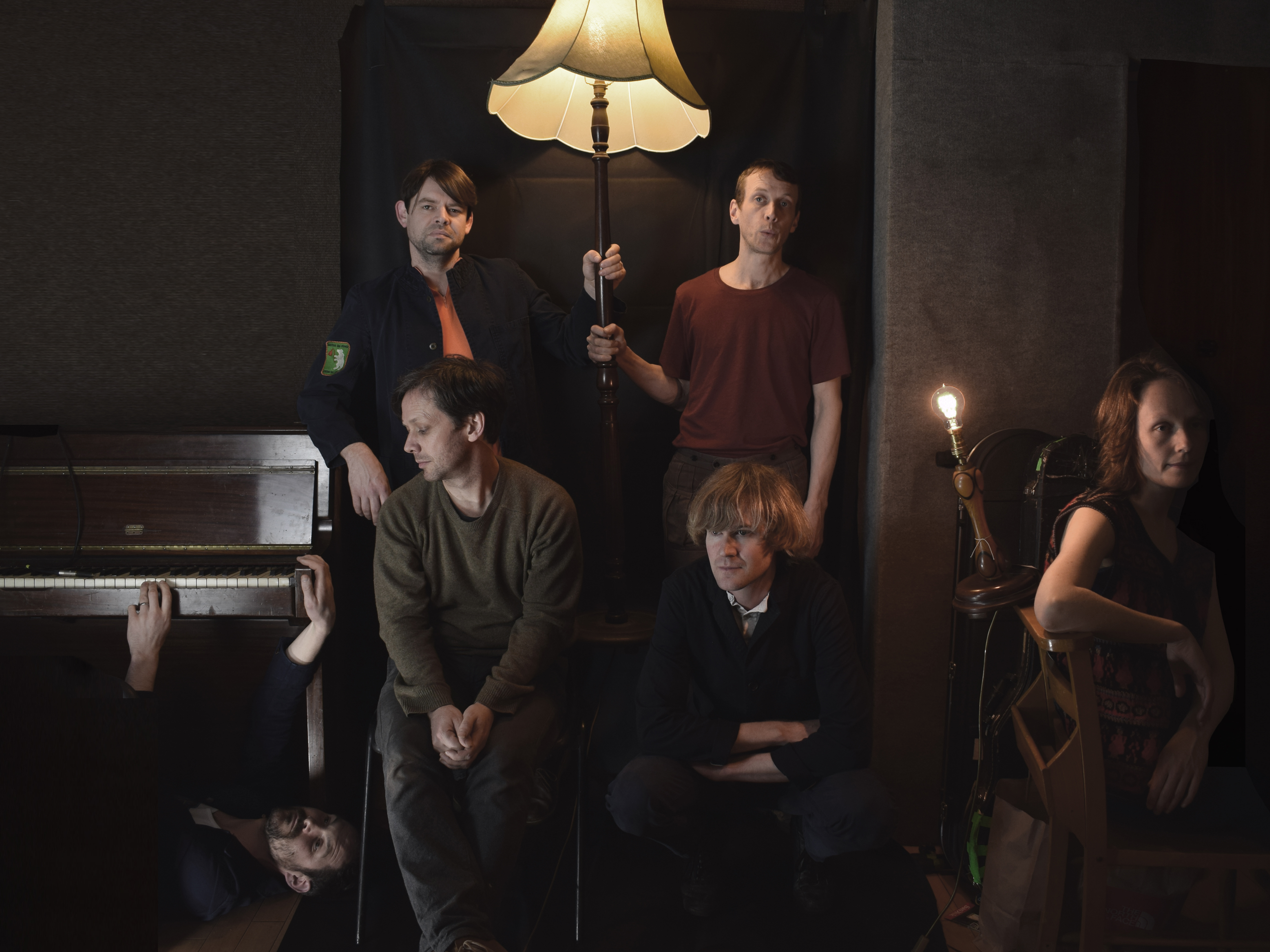
New Heights: Sea Power, one word shorter, but higher still with every new release
Everything Was Forever is out today, February 18th, with details here, Sea Power having also announced a run of headline UK tour dates in April (with ticket details here), calling at: Tuesday 12 – 1865, Southampton; Wednesday 13 – O2 Institute 2, Birmingham; Thursday 14 – Roundhouse, London; Tuesday 19 – O2 Academy, Bristol; Thursday 21 – Leadmill, Sheffield; Friday 22 – St Lukes, Glasgow; Saturday 23 – Albert Hall, Manchester. For all the latest from the band, including details of 2022’s Krankenhaus Festival when they land, you can also follow them via their website, Facebook, Twitter, and Instagram.
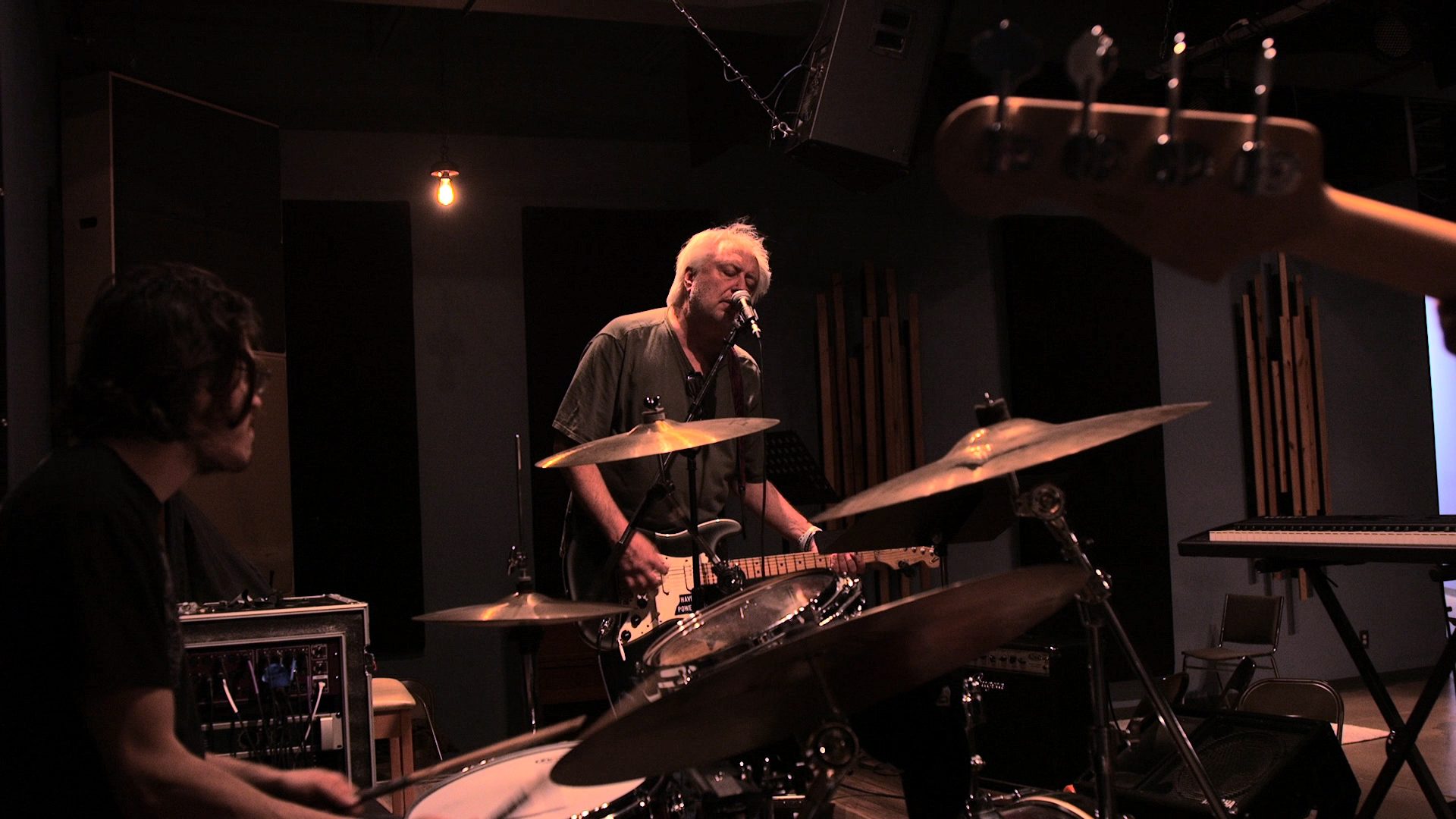
Three’s Company: Brick Briscoe, left, and bandmates The Skinny, aka Allen Clark III and Cory Folz (right)
When US singer-songwriter, filmmaker, TV and radio producer Brick Briscoe played a rooftop launch show for his latest LP in Indiana with his band last autumn, surely no one could have expected such a dramatic finale.
His shows tend to end on a high, but this – on September 11th of all dates – led to a major fall. Not from the roof, but on to his guitar. Thankfully however, bandmates Allen Clark III (drums) and Cory Folz (bass) were quickly to his aid, along with two medics in the audience. And he’s here to tell the tale.
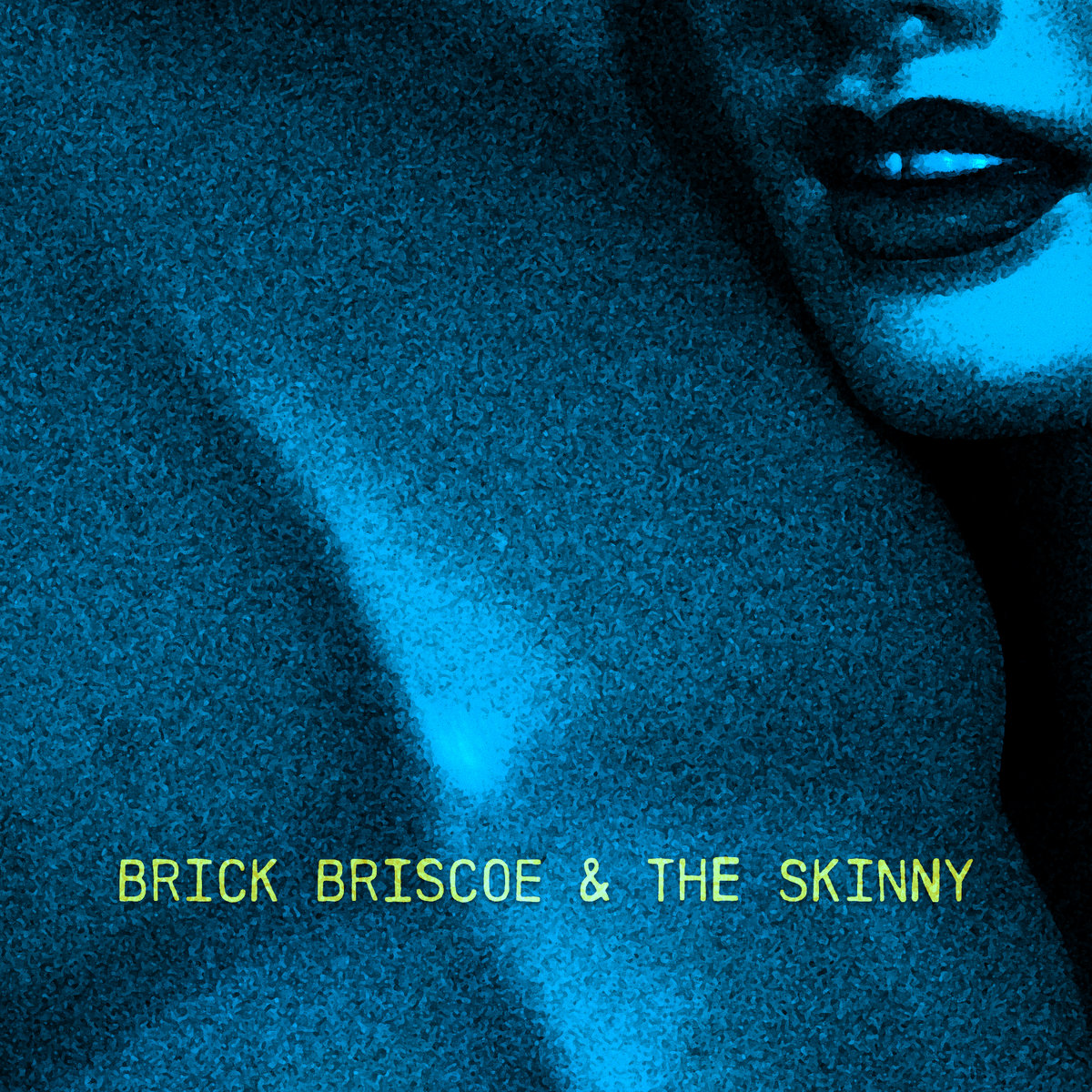
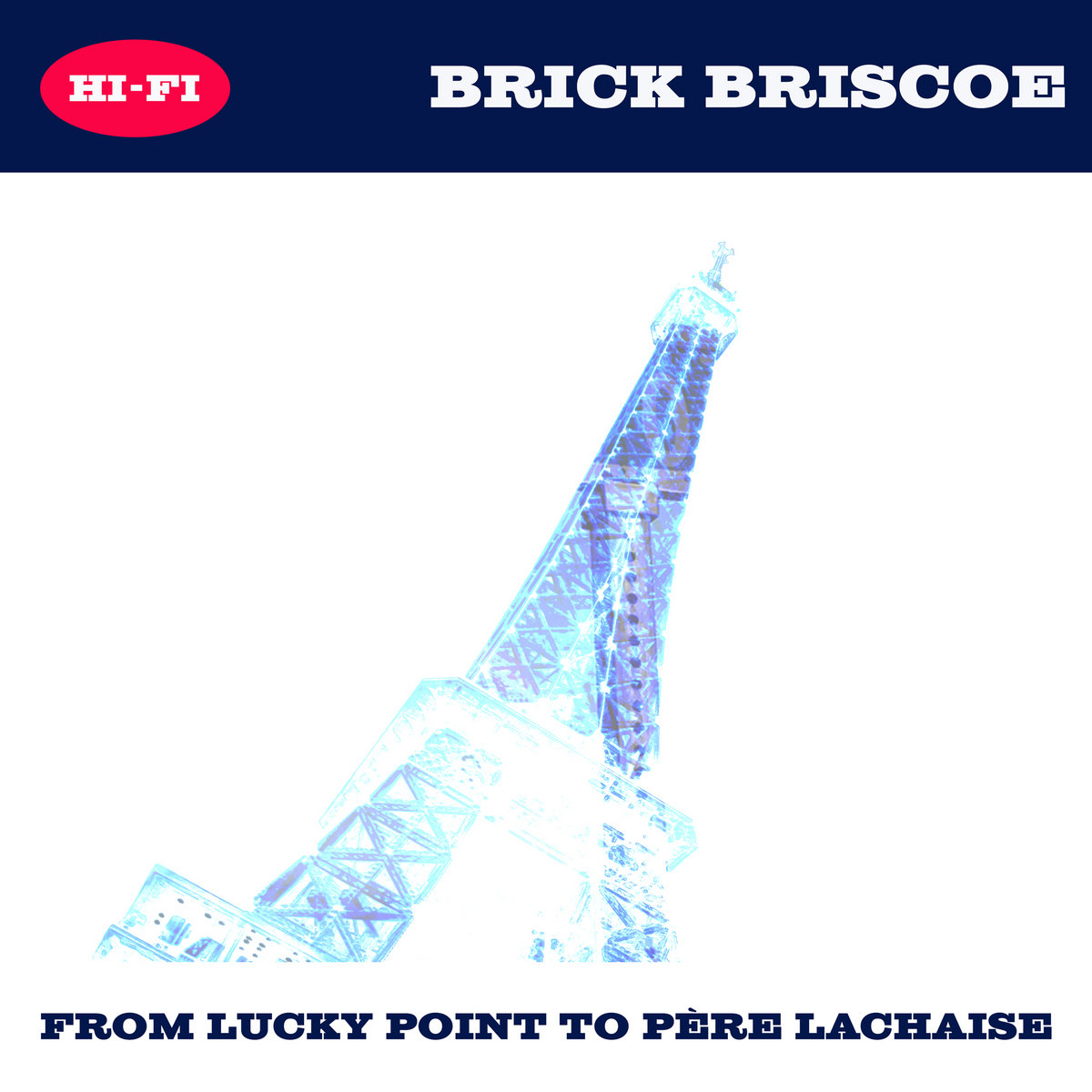
First though, a bit of back-story and how, while appreciating the acclaim on both sides of the Atlantic Ocean for his most recent LPs, 2020’s My Favorite Los Angeles Restaurant, and 2019’s Lucky Point to Pere Lachaise, Brick had decided that 2021 was a good time to mess things up and step outside his comfort zone. And his new record, credited to Brick Briscoe and the Skinny and titled (Iloveyousomuch) certainly did that, its live vibe aided by his rhythm section’s input on a winning collection of raw, emotional, full-on rock numbers.
Planting themselves in Brick’s co-producer Brett Mulzer’s studio, they looked to create an intense, direct, hook-laden record that reflected their live shows. And it certainly did. But by Brick’s own admission, the recording almost drove him crazy, a fella more used to running to his basement in Petersburg, Indiana, to work on ideas at 3am finding counting on the meticulous Mulzer to interpret his whims maddening, as he explained pre-launch.
“Brett and I are so similar, but different ends of the spectrum. He’s a freak about sonics, as I am about artistic and emotional intent. We were a perfect match. I can’t imagine not working like this from here on in.
“It was high time to get back in the studio with other musicians. I had a totally different LP written and was preparing to record it the way I’d done the last two … alone in my studio with a stiff drink and tears no one else sees.
“But we’ve been isolated from each other so long, I knew I had to do something where I was with people. We’ve all been lonely. I know I had been.
“With The Skinny, I knew I could take some rock-based songs I had in my case and work them out in ways I never would have conceived without them. The dynamic we have is so important to me, so why not get in a room and bash it out … then go to the best studio we can find and bash it out again. That’s what we did.
“Cory and Allen both take note of what I’m writing about and find ways to enhance those narratives. And dammit! We rock together, plain and simple. We’ve thrown out expectations and in turn made something accessible without trying to do so. I can’t tell you how excited I am for people to hear these songs or see us play it live. It will be either freaking amazing or a glorious mess.
“Basically, I’m asking you to give us 28 minutes, or about the time it takes to drive to work. We don’t fuck around and drag things on, we get to it, both musically and emotionally. We can make you happy and discombobulate you in the same half hour, That’s what I look for in records, and that was the goal here.”
This is a performer, 61 last month, who also finds time to produce and host US public radio’s The Song Show (‘broadcasting to the Indiana, Illinois and Kentucky tri-state area’, it says here), where he shows his passion for music and mines the deep history of song, relating common themes across genres and time periods in each episode, his guests the musicians and songwriters he comes across through playing or picks up the phone to call. He also hosts Any Road with Brick Briscoe for PBS, linked here, and produces TV and other audio-visual based projects from his Petersburg, Indiana, studio base, aka La Cueva de la Araña. But none of that, nor his recent health battles, stop him writing, recording and performing his own material.
I aimed to subtly inch towards his memorable LP launch show when I called, but he got straight to the subject in response to my initial enquiry, knowing this cancer survivor was just getting over positive Covid-19 status. Where was he up to in the health journey at present?
“Well, I would say I’m in the last moments of Covid. It was actually pretty easy. I was really sluggish for several days, I had one day of feeling really bad, but it wasn’t anything horrible. As you were calling, I was just finishing taking my medicines from my event that happened on 9/11, when we were doing our {album} release show.”
We really should get straight into that. You best talk me through what went on that fateful night. It’s difficult to piece together from social media, but clearly lots of people were worried about you.
“Yeah, including myself! We were playing our release show on a rooftop – a Beatles thing – in Evansville, Indiana. A city of 140,000 people probably. We were surrounded by these amazing big buildings, playing with 100 or so of our local followers. We were playing the last song. I remember looking up thinking, ‘Gosh, what a great night! This is just the best. We’re having so much fun’.
“Next thing I know, I hear a clang and I’d fallen face-first on my guitar. Next thing I know people are trying to revive me. Luckily, two EMTs (emergency medical technicians) happened to be in the audience and they tried to get me to settle down. Very soon I was in an ambulance. I had a 230 beats-per-minute heart-rate.”
Were you fully aware of this drama unfolding on the rooftop of the Arts Council of Southwestern Indiana?
“Yeah, I was in distress, but I got it. I knew what was happening. You think you’re having a heart attack or something. That wasn’t the case, but they stopped and started my heart, got it to go back into a rhythm. Next thing I know, I’m in hospital for six or seven days, and don’t make it back home for 11 days, because I’m in a safe house near the hospital for a short period of time.
“And now they’ve figured out what was wrong with me. It took quite a while. And it’s nothing terribly dangerous, it’s just when it happens that it is. Now … it’s under control. What happened to me is called vasovagal syncope. There’s a nerve near your chest and when it gets triggered, your blood pressure drops, and your heart feels like it’s got to catch up and make up for it.
“It got in a loop and couldn’t get out of there. It had happened to me a few times during the cancer, and it’s always nerve-racking, but it’s never been where I’ve passed out like that … particularly in front of 100 or so of my favourite people … and on the last song!
Team Talk: From the left, Brick Briscoe, Allen Clark III and Cory Folz discuss their game plan and tactics
“We filmed that concert, but I refuse to look at that. I’m so lucky that … people were just awesome and didn’t post anything … because you know how it is at any concert – it could be the worst band in the world and somebody would be filming it.
“We had a great show except for that last … y’know, the last 16 bars I didn’t get through.”
Was it a certain chord responsible for this, do you think?
“Ha! I don’t know! But my band refuses to play that song now. I wanted to run through it the other day for a warm-up, like, ‘We’ve got to get this off my back!’. It’s called ‘Heading to Kanorado’, and normally it’s our encore. It’s an old song of mine and it’s a lot of fun.”
And it’s a pretty full-on song.
“Yeah, it is, and we finish our show like it’s a big wave, so the last few songs are pretty full on.”
I can’t help but think of the late great comedian, Tommy Cooper’s final show, part of the audience – in the theatre and watching on TV – assuming his heart attack was just part of the act. Was there a sense of that from those you’ve spoken to since?
“There were a couple of people who thought it might have been part of the show. But then they knew it wasn’t. I wouldn’t ever pull that on purpose. We’re not quite that theatrical!”
Not that desperate to get your social media hits up, then.
“That’s right! If I was down with the kids, I’d definitely pull that!”
Was that launch set to be the first of a few live shows?
Live Presence: Allen Clark III lays down a winning rhythm for bandmate Brick Briscoe. Photo: AJ Casey
“Oh, yeah, we were gonna go to New York to places we like to play and find some we don’t know. Do a little tour, call it ‘The Hard Way’, play in front of people that didn’t know who we were as well.”
Are those shows on hold now? Or have you rescheduled them?
“We’ve cancelled everything, basically, until I come to Europe. But I think you’ll see us play Chicago before I go. We have a nice following there, and it’s only six hours away. We had to cancel shows there.”
Your medical experts haven’t suggested you never ever play live again?
“I think after they treated me for cancer, you know … I think it’s just about control. And the situation that happened at that show … I mean, as long as I’m on these medicines – and they’re very low maintenance medicines – I’m not worried about it. Most importantly, neither are they … and neither is my wife.”
Were any of your family at that launch?
“Well, my music family was there. My wife wasn’t, but my producer and the band and my closest buddies were there.”
Who made that difficult call to your better half after your collapse?
“I think it was my drummer, Allen Clark III, the youngest guy. He figured he could take it! An incredible kid … and he’d just had a baby.”
And all on September 11th, eh?
“Yeah, 9/11. A rather inauspicious date in the United States. But that didn’t play into it, it just happened to be when we could do it. In a lot of ways, we feel like it hasn’t even really been released yet, simply because we weren’t able to get out there.”
I suppose that’s no different to how it’s been for lots of bands these last two difficult years, bringing out new product amid the pandemic.
“Yeah, we were thinking when we were going to hit the road what songs we were gonna play, and I realised that from My Favorite LA Restaurant through to this we haven’t played any songs in front of people.”
However, this album sounds like a live album.
“Yeah, it really felt like it, and we made it that way. Apart from a few guitars and my vocals, the rhythm section and basic rhythm guitar parts were all done in the studio live, this incredible studio, by Brett Molzer. I used one of Pete Townshend’s actual amps, and we had one of Stevie Ray Vaughan’s in the studio. And one of the guitars belonged to Dweezil Zappa.
“The guy who owns the studio is a collector. And the Townshend amp made all the sense in the world! It was a lot of fun to have access to all those, one of those fancy consoles, and all the neat stuff you always want to work on that indie artists like myself seldom can afford.”
The new LP opens in no-nonsense style with two rockers, starting with the splendid ‘Dress Up’, suggesting an Iggy Pop vibe for me.
“Yeah, maybe!”
In fact, I can hear a bit of Iggy across this album.
“Oh, that’s a nice thing to hear. I love Iggy.”
And I get the feeling that in video’s golden era of ‘80s MTV and all that, you could have had a big production with this one, involving lots of big hair, wind machines, stadium rock settings, ZZ Top style gasoline station scenes …
“Ha! Okay, I’m gonna make a mental note, and maybe we’ll pull that off here!”
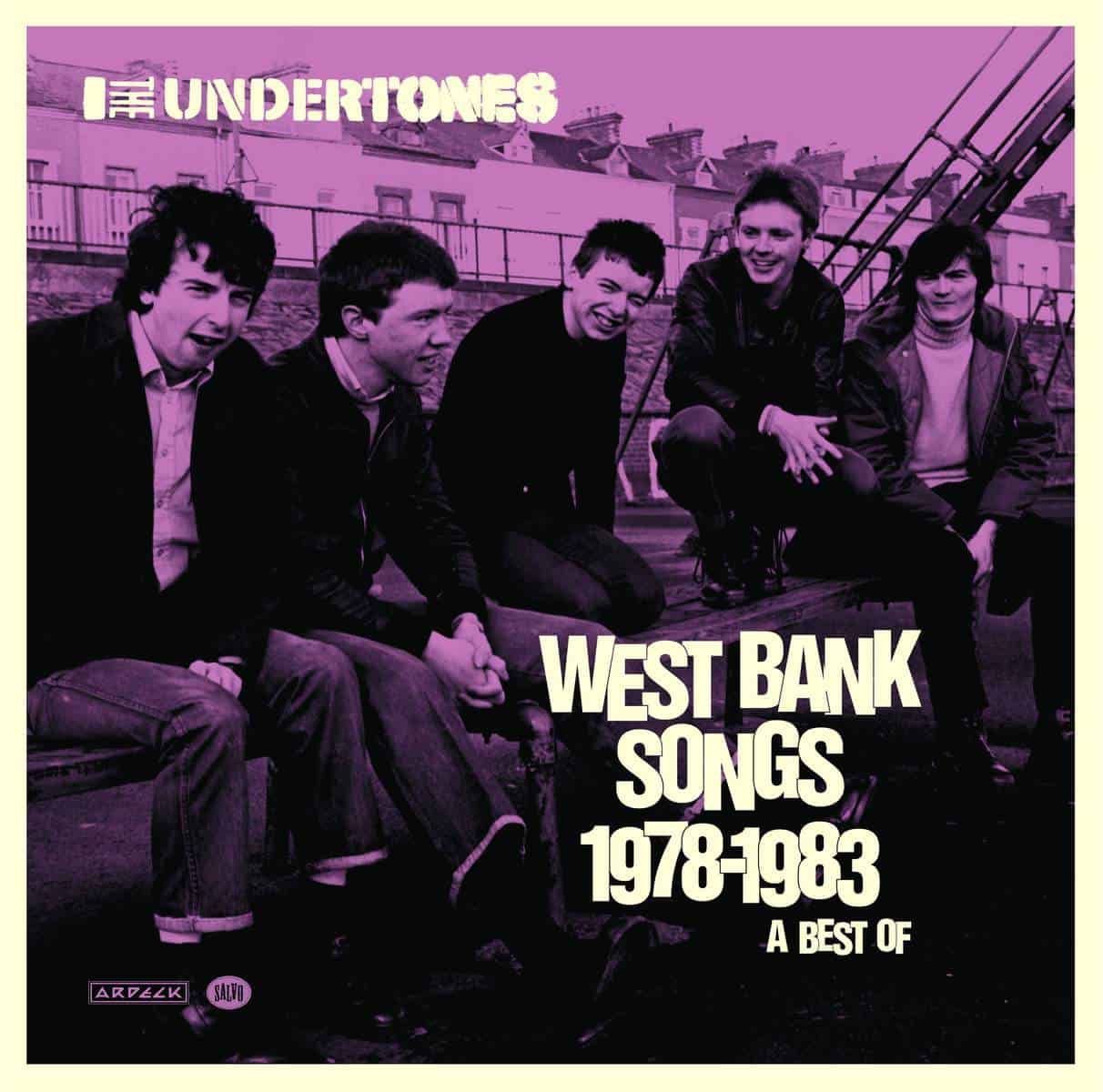
Then there’s ‘More Songs About Guns and Ammo’. It’s hardly The Undertones’ ‘More Songs About Chocolate and Girls’. Is this you reflecting on the gun culture that seems endemic in your home country?
“Oh yeah, I admit I own guns, but I inherited them. I’ve never taken them out. They’re antique. But I’m not shocked to see a gun. When I was living in New York, if I saw a gun, I was a little freaked out. Guns are a major part of people’s identity. I hate to say it, but it really is, you know, ‘Gosh, dang it, I got guns’, and I’m really not threatened to see somebody with a gun. But it’s more about that identity, you know, ‘I’m gonna have my gun, no matter what you say. I don’t care about your rights. I’m more worried about my rights’.
Worryingly true. And where does that leave your right to live? Or in your case, maybe your right to at least make it to the last song of a show, and perhaps even a second encore.
“Yeah! Next time, man, we’re gonna get there, I promise!”
Another of my favourites follows, ‘Up Yours, Up There’. There’s a Psychedelic Furs feel for me. Then again, they were heavily influenced by David Bowie.
“Well, we all were. And aren’t we all still doing that?”
True, and arguably Bowie was something of a magpie himself. And that song title suggests that this is your note to whoever’s upstairs that you’re here to stay, after all these health battles in recent years. It could be your ‘Where Are We Now?’ moment. In fact, it even carries ‘Space Oddity’-like harmonics.
“It does, doesn’t it. I didn’t even think of that. I wrote that as an anti-love song, more or less, appropriate probably to the labels and the industry … and my God, we’re in such disarray right now. It’s so depressing, I made a whole fucking movie about it!
“What I really liked about that song though was that I wanted to have that hook in there but at the same time I wanted it to be anti-rock. Allen has a wonderful jazz lick going on and the bassline Cory came up with is such a neat melodic thing. It’s so much fun live, and really shocks an audience used to seeing us do a certain type of thing.”
It’s maybe as reflective as this record gets, closer to where you were with the last couple of albums.
“I think so, although ‘Capitol Hill’ is pretty reflective. And ‘Gold Medal Uphill’, I wrote about my dad’s passing last year. But there’s no wrong answers, Malcolm!”
Well, let’s get on to brooding, Television-esque slow-burner ‘Capitol Hill’ then. It’s more than a year since those sickening happenings in Washington DC from Trump’s mob. Was this your reflection on all that?
Guitar Man; Indiana’s Brick Briscoe lets loose on his trusty six-string. Photo: Paula Borman
“Erm, no, that song was written a long time ago. It’s about Capitol Hill in Seattle, a neighbourhood I know. We were thinking about that a little bit, but, you know … we hope we’re on the right side of history here. As for what happened in Washington, I wish I was that prescient to do that.”
I was about to ask where you reckon we’re at now. What worries me – from a distance – is that Trump and his ilk found a big rock to crawl or sliver back under, the legal proceedings about those events coming to little, it seems.
“There’s a lot to be concerned about.”
I get the feeling they might be bigger and uglier than ever next time if people don’t stay on their guard and get out and vote next time.
“Yeah, and it’s so easy to not take it seriously. It’s so ridiculous. And I’m sure you guys are dealing with some of the same thing over there.”
True, the furthest right-wing Government we’ve encountered, and another leader somehow getting away with it as some just see him as a character.
“Well, that’s what we had. Our guy was the same, right? Basically cut from the same cloth. I would say your guy has a little more subtlety to him … but not a lot.”
Yes, London fell for it first, but then moved on. And now it’s the rest of the country. When you see Boris Johnson back in the day on comedy shows, he’d come over as a clown … some seeing him as a loveable clown. Entertaining, maybe, but hardly leader material.
“Yeah, we thought that about the former guy here. Who would ever have thought that somebody would think he could run the country? Obviously he was just spouting ‘BS’, but there are so many disenfranchised people. They just found someone they felt they could grab on to.”
Strange times, and it does polarise people, as you see in your backyard. People you felt you got on with that you possibly don’t feel you can now.
Bass Instinct: Cory Folz. That’s one Skinny dude, and highly recommended by Brick. Photo: AJ Casey
“Well, almost, but here’s the thing – I live in the reddest of states, but to be honest, you meet people in public and nobody ever talks about it. You can go out, talk to those people, and it never comes up. I know where I stand. I know where they stand. It’s still pretty civil publicly. The thing I’m most worried about in this country is with the voting laws, the way they’re trying to disenfranchise a whole group of people throughout the country.”
That also sounds very familiar. But we’ll come off all that, shall we?
“Please! There is some politics on the record, but you know, you can read between the lines, about gun control and things like that.”
Seeing as he mentioned closing number, ‘Gold Medal Uphill’, it’s only since he mentioned about that being inspired by his Dad’s passing that I saw it in another light. It seems to be a song about coming to terms with all that. Not an easy song to get to grips with. But first I felt there was a Stan Ridgway/Wall of Voodoo feel there. Maybe he just wears his influences on his sleeve.
“Well, I’ve heard that, and think about that sometimes, but it’s always after I’m done. I guess everybody does. I listen to so much music, because I do a radio show and produce a TV show about music. I like to think I’ve stepped out of the late ‘70s/early ‘80s but guess that’s where I cut my teeth and learned how to write and play. I’m not just a revivalist. I totally get that’s not an insult though.”
I tend to think of someone like Mick Jones, who lived and breathed Mott the Hoople in his formative years, so when he was writing his own stuff in later years, I often hear Ian Hunter qualities, not least on parts of London Calling, although I imagine he didn’t consciously bring that to the party.
“Absolutely. And boy, I’m a Mott the Hoople fan, so I’m glad I know that about him.”
That got us on to Mick Jones following Mott from town to town, and how bands like The Clash and The Jam would carry on that rock’n’roll tradition of sneaking young fans into shows or soundchecks.
“Sure, and on this side of the pond, REM was kind of like that. And I bet I’ve seen REM 30 times.”
From quite early?
Strings attached: Brick Briscoe, left, and Cory Folz, trade lines and licks. Photo: AJ Casey
“I first saw them when I was in college. They played the small cafeteria in the student centre. I had no idea who they were, then suddenly they started coming back there. All the way to the stadiums … and I saw them at Madison Square Garden. I never saw them without Bill on drums though. Not that I wouldn’t, just that I never did.”
That got me on to catching them on BBC’s revamped Whistle Test, coinciding with their Reckoning LP tour, early December ’84, playing ‘Pretty Persuasion’ and Michael Stipe’s haunting, a capella take on ‘Moon River’, the night before I saw him do that at The Lyceum in London.
“I saw him do ‘Moon River’. That was incredible! They were amazing live, and so good.”
Anyway, tell me about your own band, The Skinny. They’ve been with you for some time, yeah? And they’re clearly a big part of this LP.
“Yeah, we’ve been through thick and thin, and they’ve saved my life when I’ve had one of these attacks before, after walking on stage, took care of me.”
How far back was that?
“That would have been one of the last shows we played before Covid, around January 2020 in Chicago. They got me to a hotel. Anyway, I had all these songs, half-old half-new, and knew this was going to be a rock’n’roll record, not as esoteric as some of my other stuff. I felt the best thing to do was to get these guys in a room at Brett’s studio, and just bash this stuff out. Let them make the parts their own. Here’s the demo, here’s the little drum-beats I came up with, here’s the basslines I came up with, let’s just break these down and play ‘em until they’re just right – the way I imagined all my favourite records being made.
“We had that luxury because the producer totally believed in it. We got in that room and Cory, he’s played with some really high-level blues artists. Bottom line, he’s professional and an incredible bass player. He took control of his part, he delivered, and Allen Clark III, the drummer, his dad was on my first record in 1979!”
Allen Clark II, per chance?
Third Man: Allen Clark III, son of Brick Briscoe’s ex-bandmate of the same name. ‘He’s like my nephew’.
“Ha! I guess it would be, but I only knew him as Allen Clark. I was in a music store, a guitar shop in Evansville, Indiana, and this kid came up – he was working there – and said, ‘You’re Brick Briscoe!’. I said yeah, and he said, ‘Well, I’m Allen Clark’. I looked at him, said, ‘You’re not Allen Clark!’ then it dawned on me that was his son, who I hadn’t seen since I was living in Los Angeles. He moved out there around the time I had, to start another band. I went out there for the movies.
“I don’t know how many years, 30 years maybe, and here comes his son. I just knew right then, ‘You need to be in my band’. I didn’t even need to see him play. I knew he was going to be great. And he was, and he is, an extraordinary drummer. He can do anything.
“His Dad drummed for a band called The Lazy Cowgirls, who had quite a career here. And I don’t care whatever happens, Allen’s always gonna be in my life. He’s like my nephew, but at the same time we’re peers. He’s part of the family.”
Back to the new record, and the title track, albeit without brackets this time, ‘Iloveyousomuch’, although I get the feeling it is in brackets in the song – it’s almost apologetic, your delivery slightly embarrassed until towards the end, where you’re more vocal. Am I reading too much into that?
“No, I think you nailed it. My wife and I had just tripped to Los Angeles and were just loving it – ‘Oh my gosh, we got this great patio, and there’s a palm tree out our window, this is really cool’. We’re fixing dinner on a grill, cooking out on this patio, when a couple of guys run up in this little car and they jump out and beat the shit out of a Volkswagen with a baseball bat. And it’s, ‘Okay, this is the reality of living in the city’.
“As much as it looks great, Los Angeles, there’s always danger underneath, but you just keep telling yourself that you just love it, love it, love it. And this is no disparaging remark about LA, because it’s an amazing city. It’s a fabulous place, but at the same time it’s definitely a seat-of-your-pants sort of place.”
I get the feeling that song, another slow-burner with Television-like qualities for me (and I only heard Brick’s lyrical reference to Richard Hell a few listens in), like a lot of these songs started with a groove and a proper band rather than being knocked out on a pianola in the front room.
“I normally start writing everything on a bass, but you’re probably right on this record. That made it really easy to hand over to this great rhythm section, allowing me to just layer my stuff on top of that. But I think you’re dead on.”
The studio was in Brick’s co-producer Brett Molzer’s house in Evansville, about 45 minutes from his place. Was Brett there more in an engineering capacity, Steve Albini style, capturing that live feel?
Ongoing Debate: The Skinny pair Allen Clark III, left, and Cory Folz, centre, listen as Brick Briscoe delivers
“He was more of an engineer the first day, but once we got everything set up in there, it was our studio until we were done. He pushed me and the guys, particularly Allen, really made sure we were in that pocket. Not for the sake of losing spontaneity. We like it a little messy, but at the same time he was really a good taskmaster. We did several takes of some of these songs. When you listen to playback, it’s, ‘Yeah, that’s the one!’. There was minimal editing, and normally because of some noise we couldn’t control or something.”
And that leads me to my favourite on here, ‘Spoils, Sport Boy’. There’s something special, a bit like that Mekons intro on ‘Where Were You?’, a song I guess you must know.
“Of course I do! Oh, that’s so cool to hear. Thank you!”
That gorgeous riff instinctively drags you from the bar and down the front, and it’s a similar vibe here.
“That’s so cool to hear, because I always think that’s gonna be the least favourite people want to hear. Simply because it’s more abrasive, maybe.
“I saw The Mekons at the Whiskey {a Go-Go, LA} and Hugo Burnham {of fellow Leeds post-punk legends Gang of Four} played drums with them. And I didn’t realise until we started playing Chicago that John Langford lived there. I think Sally Timms is there a lot too. I’m a huge Mekons guy. Golly. But yeah, I thought that song was more abrasive!”
It’s great, and it’s not just about one riff either.
“I’m so glad to hear that. We’ll have to play that every show!”
Also, you’re done after two and a half minutes.
“Well, it was funny because that’s the thing our producer Brett kept saying. ‘Guys, these songs are short’. But you know, he comes from a Southern rock background. He wanted me to do an Allman Brothers thing! We could have done it, but it wouldn’t have been very good. Leave ‘em wanting more, man!”
It’s perfect, and ‘Smile on My Face’ is another highpoint. Another killer riff. And for me, that’s more like Bob Mould and Sugar.
“Cool!”
There are some winning chord structures there. However, this time I felt there was room for at least another half a minute.
“Well, I will admit that we did stretch that one out the other day in rehearsal. That’s the only song when we were about to start playing again I was going to play guitar on, until I’d built up my strength. Because it’s so chime-y and so much fun to play. To me, if I’ve ever written a hit, that’s the single, you know.”
Agreed. Take note, radio stations. So what’s next? Are you working on the next record?
“Oh, yeah, I’ve got about 25 songs written. One of the things, its working title is Opera’s Ready. It’s sort of my 28-minute song. It’s not opera, but it’s my take on a song with a lot of movements called ‘Northern Light’ that expands my feelings about my father and a wonderful night when my wife and I got in the car and started driving north until we could see the Northern Lights, but never got there. And those stories intertwined.
“I don’t know if I’m going to do that as a separate thing, but I’ve got another record written for the band, to get The Skinny to bang out, and then I’ve got another which will be similar in style maybe to Lucky Point to Pere Lachaise or My Favorite LA Restaurant.”
And you hope to cross the pond soon?
“Well, I’m scheduled to fly to Paris on March 30th for season four of my TV show. I’m hoping to come up your way and I’ve got gig opportunities in Belfast and Dublin, solo gigs. I don’t know how it’ll be over there, but I don’t play here where they’re clanking glasses all the time. But I’ll play wherever, you know, in front of people.
“Our goal is to come over there to the UK with the band in the fall. As long as it’s for adults. It’s not like we’re blue, it’s just that I write about certain things. We’re lucky we get to play places where they put you up as part of the deal and feed you. But we’re not locked into any of that. I really want to get the guys in the van and want to go play in Fargo, North Dakota, you know. I want to go places you just don’t expect us, to go out and see if we can communicate with people.
“We’ve all missed so much and haven’t got to do so many things because of all the crap that’s happened in the world. And you start thinking about this when you’re my age. How many more times am I going to be able to do this? I could be Mick Jagger, doing it at his age. I would be by choice, you know, but there’s no guarantees in life.”
Play every gig like you’re gonna cark it on the last song, yeah?
“Well, I will say that’s true about my band. We do that. You’d never know that this wasn’t our last time ever doing it. That’s what I hope we can project on our records, whether they’re rockers or whether they’re ballads. We’d want people to know that there’s something at stake.”
There is a footnote to this interview, something I pondered over with regard to adding, not least making sure he was okay with me doing so. Chasing something up last week following our chat, Brick, in typically understated fashion, told me, “I’ve just discovered I have leukemia. Luckily the doctor says I don’t have to change my plans or life much. But what a drag.”
It was difficult to know how to respond to that, but he quickly added, “The chronic not the acute, thankfully.” It seems that some people just can’t catch a break at times. But after what I hoped were at least a few meaningful words in response, and certainly heartfelt ones, he concluded, “I’m a very fortunate person. This won’t kill me or stop me from playing music or making my TV show.”
And there’s the mark of the fella. Here’s to the next chapter, and more great Brick Briscoe records, broadcasts and conversations with the man himself.
Tri-State Trio: Brick Briscoe, right, and his bandmates, The Skinny, aka Cory Folz and Allen Clark III
For last February’s WriteWyattUK feature/interview with Brick Briscoe, headhere. Brick Briscoe and the Skinny’s LP, (Iloveyousomuch) is out now. For more about Brick, upcoming dates and how to order the new LP and check out his back catalogue, head to his website or Bandcamp page.
Suburban Sound: JC Carroll, left, and Chris Payne, out front with The Members at the Conti. Photo: Rob Talbot
Two nights out in a row? What is this, 2019 or something? Well, daily figures suggest we’re far from over this damned virus, whatever those trying to save their political careers might try to spin. But there are positive signs regarding a return to where we once were, not least regarding live music, venues on my adopted patch such as The Continental and The Ferret in Preston showing the way.
Friday night at The Conti marked one such event. There were more punters for the following night’s Hacienda event with Dave Haslam, but those of us with a passion for late ‘70s/early ‘80s punk and new wave showed up the evening before at the third time of asking for a twice-rearranged date with The Members.
And while I’m still no way near attending the amount of shows I once did, I could hardly let JC, aka Jean-Marie Carroll, and fellow stalwart bandmates Chris Payne and Nick Cash travel all the way up from my old Surrey neck of the woods and not put in an appearance. I’m glad I did too, those attending treated to a healthy dose of punk rock’n’roll entertainment.
As it turned out, support Acme Sewage Co. pulled out, presumably flushed away, but next on the bill Blackpool low-fi punk trio Blow-Up did themselves proud, with plenty of fire, fuzz, Ramones spirit and a few ‘70s glam rhythms thrown in. Natalie’s voice reminded me of Placebo’s Brian Molko until the drumming of hubby Dan (also pitching in with the singing) made me re-think, hearing Quatro-esque qualities, confirmed by her dedicating the last song to Suzi Q. I’d hate to think how raw those vocal cords are the morning after, mind, that full-on rasp surely punishing. But together with lead guitarist Howard, they were the first of the night to prove the power and worth of the humble three-piece line-up.
Punk Spirit: Natalie and Howard out front with Blackpool trio Blow-Up at The Continental. Photo: Rob Talbot
Favourite moment? Maybe Natalie’s, “Here’s another song … can’t remember the name…” mid-set introduction. Smiles all round. Check out their Bandcamp page for details of a debut LP, not least ‘60s-surf punk-inflected lead song, ‘Bodybag’.
I’ve written plenty about The Members on these pages, not least the fact that I regret missing out on their first coming, at least live, 1979’s At the Chelsea Nightclub and 1983’s Going West (or Uprhythm, Downbeat, according to 1982’s US pressing) LPs making a big impression on a teenage me. Not being around for the reunion gigs, I missed out on seeing Nicky Tesco out front, but this was the second time I’d caught this stripped-down version – albeit last time out as a four-piece, with the addition of guitarist Calle Englemarc at the Star and Garter, Manchester in late 2018, reviewed here – and was again impressed by their authentic spirit and stamina in the face of on-rushing years.
From debut LP opener ‘Electricity’ and ‘Soho-a-Go-Go’ onwards, they were on fine form, ‘Working Girl’ – their big US and Aussie hit – then taking us from ’79 to ‘81, while ‘Offshore Banking Business’ reminded us how relevant they remain today, and their skanking reggae take on Kraftwerk’s ‘The Model’ always impressing. There was even a then and now moment as ‘Bedsitland’, the title track of last year’s LP currently topping the Heritage Singles Chart (recently with a Surrey 1-2-3 as The Vapors’ ‘One of My Dreams Came True’ and Paul Weller’s orchestrated ‘English Rose’ revisit completed the top spots) giving rise to older sibling, ‘Solitary Confinement’, perhaps still my favourite Members number.
Behind them, a banner proclaimed we were witnessing ‘The Original Sound of the Suburbs’, and while neither Carroll nor Payne featured in the first line-up, full attendance from ’77 to ’83 and ‘07 onwards is not to be sneezed at (particularly now covid masks are starting to come off), while Cash has warmed the drum-stool since 2008 (give or take a three-year gap when The Damned’s Rat Scabies sat in).
Payne Game: Chris looks on as JC is set loose on another inspirational moment at the Conti. Photo: Rob Talbot
Their ability to fuse punk with reggae always appealed and they remain masters of the art, Chris and Nick providing the driving heartbeat, not least on brooding dub number, ‘The Streets of Nairobi’ from the latest LP. And then there’s the mighty ‘New English Blues, Pt.2’ from 2012’s Ingrrland, a rousing modern-day Mott the Hoople-like anthem, JC in Ian Hunter territory for a band that has certainly left its mark down the years, and on Friday’s showing are here to stay.
They don’t take it for granted though, as the on-stage asides suggest, JC now and again – on a brief break from (as his autobiography suggests) Still Annoying the Neighbours – checking in with Chris as to where he feels they should head next, not wanting to finish his band off with too many fast ones, assuming a role of caring younger bro among ageing punk brethren, the baby of the band a mere 66-year-old.
As we all know too well, not everyone’s made it through these tricky last few years, and there was a respectful nod on stage to old friend Larry Wallis (ex-Pink Fairies, early Motorhead), lost aged 70 just before the pandemic truly hit, before the second LP’s cover of ‘Police Car’ (1980: The Choice is Yours also served by ‘Muzak Machine’), the song’s police chase relocated to the M6.
And then of course there was that giveaway guitar intro as ‘The Sound of the Suburbs’ sent us home happy, JC in inspirational mode during another mid-number breakdown, telling us it’s our song not his, a celebration of all those forgotten or non-celebrated towns that made and moulded us. True, that. As fellow old stagers Slade would have put it, ‘Keep on rocking’, fellas. There’s plenty more life in you yet. And this is the sound, after all.
Set Up: The Continental, Preston, all finally set for The Members’ visit, third time lucky. Photo: Rob Talbot
For all the latest from JC and The Members, follow the band via their website, Facebook, Instagram and Twitter. And for more on Blow-Up, head here.
Cnut Customer: Suggs in his element at Preston’s Charter Theatre back in 2018. Photo: Lynda McIntyre
‘It read, ‘’We missed you,”Between the lines, it said,
“We’ve waited for so long,But now it’s time to keep moving along.”
We were that close to missing the start of Graham ‘Suggs’ McPherson’s Warrington show, but to quote Michael Caine at the end of the song bearing his name on 1984’s Keep Moving, eventually ‘I think we got it there, don’t you?’.
There was me travelling down the M6 and into town, slowly flanking Warrington Wolves’ Halliwell Jones Stadium in late rush-hour congestion, fellow attendee Richard heading in from Chorlton-cum-Hardly-Moving-in-Traffic, the two of us soon at that difficult juncture where one of us had to leave a ticket on the door and hope the other got in alright.
By then I was half-celebrating a moral victory of sorts, not only managing a negative lateral flow test result, but also working out how to pay online to park behind the venue. Ah, the dilemmas of 2022 gig-going. And to cut a long story shorter than Spandau Ballet would, Suggs was already on his throne in a Brian May wig (you’ll have to see the show for that to make sense) when I stumbled in the dark on to the wrong row, Richard arriving a couple of minutes later, texting to ask where the hell I was. His ‘I’m in the lobby’ and ‘It has started’ messages suggesting increasing panic.
As it is, I have past form with Warrington, where I worked for five very long weeks around this time in 1994, having just moved up from Surrey, wondering what the hell I was doing on half my old wage working in a building society (remember them?) admin job, my 50-mile/50-minute daily round-trips largely comprising of 25 minutes’ motorway sailing followed by 25 more of town centre bumper-to-bumper crawling. And it seems nothing much has changed since.
As it was, back then I was soon off and working closer to my new Lancashire base, within a year and a half jacking it in to re-train at uni for the sometimes murky world of journalism. But when I was working in Warrington, Madness were still five years off their Wonderful return, although I did catch Lee Thompson and Chris Foreman in their guise as The Nutty Boys (aka Crunch!) at Islington Powerhaus in North London in August ’91 and a year later the full Madnificent Seven at nearby Finsbury Park, the day an earthquake erupted during the first Madstock reunion weekend, Ian Dury and the Blockheads plus Flowered Up supporting. Strange days indeed.
Enough about then, more about now, and we were soon up and running, Suggs our driver on a double-decker bound for Camden, Wembley and all over, his stick of celery thankfully left at home, his mate Deano acting as clippie, providing piano and occasional banter to great effect. I saw the same show in March 2018 at Preston’s Charter Theatre (with my review here) and loved it then and did so again this time.
That Close: Suggs gives it some jazz hands at Preston’s Charter Theatre back in 2018. Photo: Lynda McIntyre
There was a little extra polish from time to time, but it was otherwise the same – nothing too slick, always entertaining, Mr McPherson happy to feed off occasional audience input and briefly step out of his cartoon role as enterprising chancer somehow coming good. The premise, if you’re wondering (there’s more about that in the above review) is Suggs telling the tale of his extraordinary, initially unlikely showbiz career, from the early days of The Invaders through to 2012’s landmark (in more ways than one) appearance with his bandmates on the roof of Buckingham Palace … which I find it hard to believe will be 10 years ago this summer.
And while his show is in places a caricature version of his amazing story, it’s a great way to tell those yarns, keeping the audience invested, not least when he ventures into that remarkable songbook en route, with Deano’s help, the highlights including a rendition of (and the story behind) his ‘One Better Day’ co-write with Mark Bedford, a song that never fails to leave me a little dewy-eyed, those emotions seemingly more readily tipping over after two years of lockdowns, pandemic sorrow, and a few family heartaches in recent years. We’re all growing up a bit, I guess.
Then there’s ‘That Close’, his co-write with Chris Foreman, a latter-day Madness classic tucked away on sublime 2009 long player, The Liberty of Norton Folgate, good enough for Suggs to borrow the title for the 2013 autobiography which seemingly provided the source for this second coming of his life story one-man, two-man (went to mow a meadow) show.
Incidentally, I’ve been hoping to lure Suggs into interview territory for some time, but can’t really blame him for not going down that road so far. He arguably said all he wanted in his autobiography and 2009’s splendid Suggs and the City, his literary tribute to London. But one day I might be able to cajole him into a bit of a natter, hopefully.
Similarly, we still wait on new recorded product from Madness, not long off the road after their Ladykillers tour in the company of ‘very fragrant guests’ Squeeze. But for now we can at least reminisce again with their singer fella, the audience coming away from Parr Hall with smiles on faces, in our case heading across Palmyra Square for a swift pint at The Post House, where we supped a rather apt and certainly welcome Camden Town Brewery guest ale. What were the chances, eh? And then Richard and I were off in different directions, in my case crawling back through roadworks, northbound, the stop-start traffic having at least eased, no doubt inspired by that McPherson/Smith/Foreman title song of Keep Moving on my CD player.
For this summer and autumn’s Madness dates in the UK – starting at Brockwell Park, South London, on June 2nd – and also in Ireland, Spain, France, Belgium, Germany and Denmark, head to https://www.madness.co.uk/live/. And for the remaining 10 dates on this latest leg of Suggs’ What a King Cnut tour, check out the poster above.
World Coup: Joe Mount, seated, with his Metronomy bandmates (rear, from the left) Anna Prior, Olugbenga Adelekan, Michael Lovett, and Oscar Cash, coming to a town near you … pretty soon. Photo: Adam Lambert.
It’s sign of the times that barely a fortnight after Metronomy shared feelgood second single, ‘Things Will Be Fine’, from their forthcoming seventh album, sole ever-present member Joe Mount – newly returned from Paris – had been forced to temporarily relocate to his parents’ home in Devon, his children having tested positive to the dreaded coronavirus ahead of his promo duties for new LP, Small World.
Somewhat ironic, perhaps, seeing as the accompanying press explained how the new 45 is about ‘harnessing hopeful, sunny optimism in the face of difficult situations, speaking positivity into existence whether for our own reassurance or for that of our children or loved ones – even when we have no idea ourselves if things really will be fine’.
The meaning behind the new 45 and Joe’s fate on returning from the Continent (his partner is French) sum up the 2020s so far for this artiste, but Metronomy’s prime songwriter/arranger/producer remains optimistic, looking forward to a live return and the LP’s 18 February release on Anglo-French indie label Because Music (also the home of Christine & the Queens), the new single’s accompanying video ‘a paean to teenage nostalgia, described by Joe as a ‘sort of pseudo role-play therapy session in which we all re-visit our teenage selves’, where ‘everyone ended up more scarred than they did before making it’.
I’ve had the pleasure of a few sneak pre-release listens of the new LP, and enthused to Joe how there are songs that hook you right away and plenty more bound to stay with me a long time.
“Nice! The reaction part of it is only just starting, so I’m intrigued but very pleased. It’s weird, the more records you release, the more your feelings about releases changes. You feel different about the way things you do are critiqued. But ultimately, you’re still just hoping no one’s really horrible about it!”
Small World is seen as a return to simple pleasures for Metronomy – the band completed by Oscar Cash (keyboards, backing vocals, guitar, sax), Anna Prior (drums, vocals), Olugbenga Adelekan (bass guitar, vocals) and Michael Lovett (keyboards, guitars) – as they channel nature and embrace more pared down, songwriterly sonics, while ‘asking broader existential questions’.
Writing from home rather than being out on the road gave Joe a different perspective to draw from, and spending time with his girlfriend and their children during lockdown meant there was not only home-schooling duties, but also plenty of time spent in the garden, exploring. As he put it, “I could be a bit more loose with ideas, and relaxed.”
Small Worldhas its roots in the electronic pop that came before, but also ‘maps out the potential of a new sonic future for the group now the nights out are less’, Joe adding, “Whatever album you’re currently making is the one you’re oldest for, and I’ve always joked that when I get to the point where I don’t see any young people at the front of our gigs is when I will give up. I have maybe seemed preoccupied with age in the past couple of years, but I like now that, while of course we still have younger fans, there’s potentially a new generation getting passed down our music by their parents. I liked the idea of making a proper kind of record that’s ‘grown-up’.”
And while Joe was keen to avoid making an album characterised by our pandemic-influenced world at present, he still wanted to acknowledge ‘both the stillness and sadness of the past two years’ and its impact on his writing. Even the LP title seems to nod to the way our world shrunk as we were asked to stay at home. But as he stresses, “It’s not explicitly about coronavirus. It’s about life and the people that you love.”
Perhaps to the point, as his publicist puts it, ‘For all he seems to think he has made a comparatively sombre record, much of Small Worldstill pulses with the zesty, tongue-in-cheek joie de vivre you’d expect of a Metronomy record’.
That said, there’s a rather reflective opening with ‘Life and Death’. Is that his take on a couple of difficult years with Covid, lockdowns, and the accompanying sorrow and worries? We’ve all had plenty of time to think deep, after all.
“Yeah, the way the record came about, I wasn’t really wanting to make a record about Covid. But I ended up finding quite a lot of inspiration in all the things that were happening around me and my family, finding out things about myself.
“Then, towards the end of making the record, I felt it would be unfair to sort of mine the last two years for good inspiration and ignore the reality of it. It’s a bit exposing and embarrassing trying to write something about the experience of it all, but I also feel you shouldn’t shy away from things because they’re embarrassing. So in a way, it’s an attempt at acknowledging all the bad stuff.”
I get the impression this is Joe saying, ‘This is where we’re at, but here’s this’, soon launching into ‘Things Will Be Fine’, one of those bright sunshine ‘things always look clearer in the morning’ moments. It’s a wonderful song, but is this him trying to convince himself? Because we don’t have all the answers.
“I think it’s more about convincing my kids. Ironically enough, they’re now at home with Covid. I was away in Paris, and I’ve come back, so I’ve ended up having to escape to my mum and dad’s house.
“But back at the beginning of everything, we were having to explain to them, ‘Actually, this has never happened before, but everything’s gonna be okay, although there was that whole feeling of not knowing at all if things would be okay. Being afraid, I guess.”
Well, even a year ago we didn’t really know too much about vaccines and so on. It’s amazing how quickly it all changed.
“Yeah, I accidentally stumbled across something on Twitter today about Lawrence Fox. And it just makes me so fucking angry. He’s so disrespectful, me feeling, ‘Actually, no, it was very upsetting for everyone’.”
I’m with you on that, yet that’s someone I don’t want to give too much thought. It’s that dilemma – we don’t want to give him the oxygen, but at the same time we need to expose all the untruths. As with Nigel Farage and all their ilk.
“Exactly.”
For me though, that second track on the LP (the latest single) is somewhere between Neil Finn, Lightning Seeds, and Noah and the Whale, albeit far less pessimistic than the latter, lyrically. I guess you’ve always had that pop sensibility. And that comes through again.
“I quite like the Lightning Seeds reference. And I certainly like Neil Finn. I used to really like Crowded House when I was young.”
I tend to hear influences in your songs that you couldn’t possibly have heard first time around. But I’m guessing you grew up with radio and your folks playing good music.
“Definitely. My parents have got a decent record collection, which obviously I kind of ploughed. Then weirdly, I’d listen to Radio 1, but also proper local radio, and around here they’d always play stuff like 10cc and Don McLean. Never anything very modern. So I learned a lot about older music through them. What was the name of the radio station? I don’t remember, but basically, local radio.”
Track three, ‘It’s Good to be Back’ (the first single from the record) carries on the positive mindset. For me, it pitches somewhere between Confidence Man, Erasure and New Order. And the synth patterns beneath make it. It can’t fail to put smiles on faces, surely. I also get the feeling its low bass end saves it from being over-poppy in the form of a Clean Bandit No.1, for instance.
“Ha! Well, I’d kill for a Clean Bandit No.1! But for me, I have this idea I remember from when I was young of music that was too grown up for me. And there were certain things like hearing the Pet Shop Boys or Electronic, thinking there’s something I like about it, but it’s not for me – it’s too sophisticated.
“I guess I’m realising I’m having a bit of fun with this album, imagining I’m the sophisticated person, trying to put myself a little out of reach of young people. I’m trying to play with that a bit.”
‘Loneliness on the Run’ is more bluesy, with echoes of Gomez and Badly Drawn Boy. I suppose it’s just good pop structure though.
“Yeah, that was something I was trying to do. I wanted to make a record that was songwriterly, to try and include these classic parts of a song, to think of the song in terms of sections – verse, chorus, then a third section – trying to put it together like that. And as soon as you give yourself that classic structure, suddenly it starts to sound like all kinds of other stuff, purely because it’s working within the same kind of rules everyone else worked with. Yeah, that sort of happens quite naturally.”
‘Love Factory’ is another example. There’s even a David Bowie feel for me, not for the first time in your song catalogue. In this case though, maybe around his ‘Absolute Beginners’ period.
As for the LP’s sleeve image, I gather that garden scene was taken close to Totnes in the ‘90s by your Mum (‘It’s a scene that is serene, green and fecund. Only, as he puts it, “Those gardens don’t look like that anymore. They’ve sort of gone to shit.”’). Is there something about having children – Joe and his partner’s children are eight and seven – and reflecting on your own childhood, stoking happy family memories?
“Well, my oldest child is now almost nine, so it’s not like a new experience. But I think as you go through your life – and I’m not trying to sound like a sage – and have kids, I can see where I end up, you know. I can see myself eventually being a kind of elderly person with grown-up children. And if you’re lucky enough to be in that position, you’re lucky enough to have found – and I’m speaking for myself – a kind of focus for everything and a reason to be here. And as I grew up, I think about that more and more.”
Joe is based in Kent these days, but when he first left Devon – 20 years ago – he headed for the East Sussex coast. telling me he ‘still has an affection for Brighton’. It’s now 16 years since Metronomy’s debut long player, Pip Paine (Pay the £5000 You Owe),Joe and co. soon carving out a name synonymous with polished but offbeat electronic pop music over their previous six acclaimed LPs.
It’s also a decade now since Mercury Prize-nominated third LP, The English Riviera (the first to also feature Oscar, Anna and Olugbenga). So here’s a big question – how come you’re still going strong, while many of your contemporaries slipped by the wayside or moved on? Is it because you’ve remained in happening pop circles, this fella now – sorry to remind you – pushing 40 this year, but still working with established and emerging talent (including production and writing for Robyn and Jessie Ware, and remixing the likes of Sugababes and Lady Gaga).
“I think with a lot of contemporaries that have fallen by the wayside, sometimes it’s not necessarily what they wanted to happen. I mean, things can happen to you that you don’t want to happen. But, I don’t know, I just remember when I was younger, 15 or so, buying into the idea of career musicians or career bands, really loving the idea of finding out about people who had stories. I think in the first case I’ve been really driven to do it, and it’s not something I equate to being egotistical or super-confident.”
It’s more about a work ethic, I suppose.
“I guess so. And I’ve always liked the idea of getting to a point where I’ve got a back-catalogue and you can kind of be understood slightly by that catalogue. I’ve always been quite driven by that, I think.”
We’re taken to places we might not expect on this record, with a neat example on the slow-build of ‘I Lost My Mind’, which maybe takes a couple of extra minutes to hook you, but then truly reaches the soul. Meanwhile, ‘Right on Time’ is pure ‘70s and ‘80s pop, again far too early for you to recall first time surely, but similar territory – dare I say it – to that The Feeling mined to great effect. And it’s another sunshine record.
Then we have ‘Hold Me Tonight’, and I love Joe’s duet with Porridge Radio’s Dana Margolin, a band that came up in my conversation with namesake Dana Gavanski a few days earlier, an artiste who has supported Porridge Radio. And Dana Margolin is Brighton-based, isn’t she?
Pavement Art: Olugbenga Adelekan leads from the front with Metronomy earlier this year. Photo: Metronomy
“She is, but weirdly, someone said to me when I was doing an interview, ‘Have you known Porridge Radio for a while? Because I saw you at a gig of theirs in 2017/18.’ I was like, ‘I don’t think I’ve ever been to a Porridge Radio gig’. But they were like, ‘No, I saw you there!’. I think I’d gone to see the main band that night, and it turns out they’d been supporting. But I only met Dana recently, when we recorded the song.
“I felt there should be a female voice, and my manager suggested her. I’d already heard a few songs, but made myself more familiar with them, then Dana sent back this demo for what she was thinking, and I really loved it. It sort of twisted the song and gave it this meaning. I think she’s brilliant.”
She reminds me vocally on that track of Robert Smith, as you have at times in the past (for instance, The Cure meets Japan feel of 2011’s ‘She Wants’).
“Yeah, it’s weird, because I was obviously aware that people would mention The Cure. But when I first wrote that song, to me it sounded like The Velvet Underground. It didn’t have drums on it, and it was a different kind of song. It just sort of ended up growing into what it is now. But, you know, I’ve definitely been a Cure fan. No shame in that!”
Absolutely, and then the LP ends with ‘I Have Seen Enough’, which I love too. As the accompanying press release puts it, ‘He sings of the small, beautiful things in our own small, beautiful worlds that we can appreciate even within times that feel devastating and overwhelming: watching their children grow, enjoying a good show, picking fruit, marking out the seasons, soaking up the sunset.’
With a nod to his better half’s geographical roots, there’s a definite European feel for me, on a song somewhere between early Cinerama, Stereolab, and Serge Gainsbourg (whose daughter Charlotte is a labelmate), maybe.
“Yeah, that’s something I’m sort of … it was a song I kind of imagined being French in a sense, so I tried to write it in French. But yeah, definitely, now, because of my partner and because of our kids I feel French. Ha! And yeah, I guess it’s a bit of a nod to that kind of chansons stuff.”
I get the feeling that song might have lasted, happily, another couple of minutes, but you leave us yearning for more after three and a half minutes.
“Yeah, always leave them wanting more – that’s my ethos!”
Finally, you should be getting the chance to play these songs and a few more live soon, including dates either side of America. Then there’s Liverpool and Manchester on my adopted patch, Glasgow, Dublin, the Ally Pally in London, and even The Foundry in Torquay, not far off your old patch.
“Yeah, we can’t wait. It’s weird. The past few years, we’ve just been saying, ‘I can’t really believe it’ll happen’. Then of course, they got cancelled. But now it feels like they’re gonna happen. And yeah, it’s gonna be brilliant.”
Following a return to the US this month – with shows at The Lodge Room, Los Angeles and the Bowery Ballroom, New York (with ticket details here) – and a 30-date tour of mainland Europe in March and April, Metronomy are set to embark on a 12-date UK and Irish itinerary, calling at: Friday 22 April – Barrowland, Glasgow; Saturday 23 April – O2 Academy, Leeds; Sunday 24 April – Boiler Shop, Newcastle; Tuesday 26 April – Olympia Theatre, Dublin; Wednesday 27 April – O2 Academy, Liverpool; Thursday 28 April – Academy, Manchester; Saturday 30 April – O2 Academy, Birmingham; Sunday 1 May – Tramshed, Cardiff; Tuesday 3 May – The Foundry, Torquay; Wednesday 4 May – O2 Academy, Bristol; Thursday 5 May – O2 Academy, Oxford; Saturday7 May – Alexandra Palace, London. For tickets head here.
Green Credentials: Dana Gavanski, set to release new LP, When It Comes. Photo: Clementine Schneidermann
When talented singer-songwriter but self-confessed introvert Dana Gavanski lost her voice at a key stage of her fledgling career, it was a wonder that self-doubt didn’t conspire to sink her rise to indie fame.But like the Croatian sea organ heard on a life-affirming soundscape composition she recently made for national radio, it’s clear that Dana is made of sterner stuff than she suggests.
What’s more, this South London-based Canadian-Serb clearly has good people around her, near and far, seeing her through a stop-start couple of years due to the pandemic (she was holidaying in Serbia with partner and musical co-worker James Howard when the country closed its airports, leaving them unable to return at first) and big life moves.
Dana reveals of aptly-named second album, When It Comes, out on April 29th via Full Time Hobby (and set to be released in the US via Ba Da Bing Records and Flemish Eye in Canada), “In many ways this record feels like it is my first”.
She added, “When I could use my voice, I had to focus, so there is an urgency and greater emotional trajectory than before… it’s very connected to vocal presence, which extended into an existential questioning of my connection to music. It felt like a battle at times, which I frequently lost.”
Accordingly, Dana’s most vulnerable record to date is, “an ode to the voice as an instrument – its power, and how intricately it can deliver words to tug at, and tie knots in, every heartstring”.
I hear that, but feel the instrumentation, not least the LP’s electronic touches, adds something else again, carrying on where she recently left off.
Dana’s debut LP, 2020’s Yesterday Is Gone, and that year’s covers EP, Wind Songs (her cracking interpretation of King Crimson’s ‘I Talk to the Wind’ accompanied by Chic, Tim Hardin and Judee Sill covers, and a Macedonian folk song) were lauded for their intimacy, the first record tracing a timeline of her teenage years in Vancouver, a move to Montreal and visiting family homes for kitchen talks with her ‘Baka’ (grandma) in Serbia.
But while this LP started coming together in Montreal and was completed in Belgrade, it’s more of a London creation, while at the same time – as her label put it – ‘something altogether more atmospheric and widescreen’.
Dana explained, “Yesterday Is Gone consisted of straightforward pop songs, this album is about searching for something to excite me back into songwriting. It’s about finding the origins of my connection to music, that tenuous but stubborn and strong link – why it draws me and what if anything, I can learn from it.
“The album title has a heaviness to it but also a lightness, depending on your frame of mind. It’s about being open, and letting it come whatever it is, without judgement.”
She was at home when I called, recent spare time taken up by moves back and forth across town with husband James (Blue House, Fiction, Rozi Plain) to a new South London base.
Dana remains in New Cross for now though, prompting me to ask if there’s a flooded basement at her old or new property, one housing that sea organ heard on ‘The Rocks’, specially recorded for recent WriteWyattUK interviewee Cerys Matthews on BBC 6 Music.
“Mmm … yes, that’s where I did it. Ha! I guess that means you heard the sound-piece.”
Indeed, I was catching up on Cerys’ show and was pleased to hear you feature there.
“Oh, lovely! I had fun making that piece.”
In fact, Cerys tweeted at the weekend about the wonders of listening to Dana ‘humming along to the waves of the sea playing an organ (yes! a sea organ)’.
Tell me more about that composition … or are you going to keep it couched in mystery?
“Mystery is probably best! But Croatia is a special place to me.”
In fact, the mighty interweb tells me that sea organ is an architectural sound art object located in Zadar, Croatia, played by way of waves and tubes located beneath a set of large marble steps. Does that remind her of formative family holidays?
“Well, my mum’s partner is Croatian, she’s been with him more than 20 years. I only really started going to this place … not Zadar, that’s where the organ is, but I’ve been going to his island (home) since I was maybe … I don’t know, after about the 10-year mark, you start to forget whether it’s 15 or 17 or 18 years, but around when I was maybe 15 or 16.
“He had this really beautiful home that he built by hand, having bought the land when he made his first money from a sculpture he made, and it’s just a really beautiful island, and sometimes when you’re just surrounded by family … you need to get away somehow.”
That radio show’s escape theme reminded me of my past interviews with fellow Full Time Hobby act Erland Cooper, another kindred spirit also based in London but returning through his music to his Orkney roots. Is that how it works for Dana? After all, we all need a little escapism sometimes. Does music transport her elsewhere?
“It’s not usually that I need it. It was actually that Cerys was doing something around escape, so I came to it through that. I do get the concept of escape, and I think I do kind of deep down feel this need to escape when things just kind of start piling up …”
These last couple of harrowing years have been a good example of that.
“Oh my God, yeah, especially when it’s like non-stop these days, but music is actually not an escape that much for me. Sometimes it does get to that place, but you know, it’s actually a confrontation.”
Was this new LP largely written in the Camberwell house where you are now?
“Most of it, but the first song was the first track of the album …
Which is wonderful, by the way.
“Oh, have you heard the whole album? Cool.”
I have, playing it many times these last few days.
“Wow!”
Several songs have already made a huge impression, including that opener. An earworm in every good sense.
“Ah, that’s great. Thank you. I started that in Montreal, while I was waiting for my visa to come here, maybe a few months before this whole COVID thing happened in Europe. But a lot of it was written here, although ‘The Downfall’ was mostly written in Serbia.”
At the demo stage, this LP was largely about you and your toy Casiotone, I believe.
“Yeah, I was getting a little tired of my approach to the guitar. I ended up buying a Nord, but wanted to play with something else, so I wrote ‘Lisa’ on the Casio. ‘I Kiss the Night’ was guitar and Casio, but a lot of the songs kind of came between, like ‘Knowing to Trust’.
“I ended up buying a Moog and a Nord, and it’s interesting how instruments you’re not really used to, when they create new sounds, they can spark ideas and spark songs. Maybe they may not be able to do that again, but initially … I wrote ‘Indigo Highway’ on the Moog, and you can only play one note at a time, so … ha! That was interesting.”
‘Indigo Highway’ is another of my early favourites, with its ‘Baba O’Riley’ keyboard, a real road song feel. Inspiring, and surely one to play with the windows or roof down.
“Yeah, that’s good. That’s where it’s supposed to feel like – endless, and eternal.”
So where’s Capitol K’s Total Refreshment Centre (TRC), the studio where yourself and James (the pair co-producing the songs together) recorded this album?
“In the Dalston Junction area, a little north of there. It’s great. A lovely space. Alabaster dePlume is based there, and I’ve got to meet a lot of really amazing musicians through that space.”
You may be aware of Mancunian jazz multi-instrumentalist DePlume, otherwise known as Gus Fairbairn, and Dana describes the TRC as “a special place, like a community centre”, adding, “It’s very understated but important to the people who come through it. It’s a rehearsal space, a recording studio, and there are a handful of music studios”.
And at the centre of it all was yourself and your beau, James.
“Definitely. He helped me demo the songs, flesh them out a bit. It was just us trying to figure out what all this meant, and I was having a lot of difficulties, because of voice issues. I lost my voice for about a year.”
I imagine that was really worrying.
Reaching Out: A still from the @lauralynnpetrick video for the latest Dana Gavanski single, ‘Letting Go’
“That was pretty bad. The worst was when I could sometimes speak, but it would hurt. And I often just didn’t accept it, which was my downfall. It was hard for me to accept that was happening. Plus, it was the pandemic and …”
That wouldn’t have made it easy, presenting yourself for treatment, to get yourself checked out.
“Well, it wasn’t the beginning of the pandemic. I had this problem around the end of August, early September (2020), and managed to get an ENT check. It’s only now I’m not thinking about it. It had been on my mind every day until maybe about a month ago. I was still having some problems, but now I’m okay.”
How long have you been London-based?
“Officially since the end of January 2020, but I came here first on October 1, 2019.”
Does it feel like home yet?
“Yeah, the idea of potentially getting my visa rejected … y’know … scares me. I’m married now, but don’t really feel in two years you can really get your roots down. But I have the cat, you know. Ha!”
If you’re surrounded by those you love, that’s a start, surely.
“Definitely. And I have such a great musical community here too. A really special place.”
I was going to mention that network, although I was struggling at the beginning to place a few influences …
“Oh yeah. That’s cool!”
In the past, you worked with Mike Lindsay from Tunng (also with Full Time Hobby, and who co-produced the first LP with Sam Gleason), someone I spoke to last year with Laura Marling about their LUMP project. I get that feeling of like minds with him, and guess he’s one you keep in touch with and bounce ideas off.
“I mostly bounce off with James, the person closest to me …”
Stage Presence: Dana Gavanski in live action, and heading your way soon. Photo: @jacktennantstudio
She stops herself there, realising how that sounds, giggling somewhat …
“‘Bounce off with’? Ha! But Mike’s great. I’ve worked with him three separate times. Somebody I enjoy listening to, I really like his approach to music, and he’s just got a different thing – something I don’t have. I don’t know how to describe it, but it gives something to the music that I can’t give.”
That sounds a similar approach to how he works with Laura Marling. And in both cases, it works. That’s what matters.
“Well, he surprises me, but then also, we know how to talk very easily. He’s very down to earth, but also a bigger than life character. He’s both, and a really lovely person.”
When did you last get over to Canada?
“Not since … the last time was when I was applying for my visa to stay here. I’ve travelled a bit, but just not there.”
It seems that you’ve always stayed in touch with your roots though, be that in North America or with family in Belgrade.
“Yeah, Serbia, and Belgrade, and a small city called Aranđelovac, that’s where my family lives.”
Your father {Ogden Gavanski} has a successful career as a film producer, and I gather that’s where you felt you were heading. I guess something changed, perhaps realising you’ve got this wonderful voice and had something else to offer.
“Erm, I mean, I’ve always been really interested in music, but I am quite introverted, so it took me a while. I had my hand in a lot of different things throughout the years and discovered arthouse film in my late teens, then kind of become obsessed with it, fantasised about it.
“I went to a film school in Vancouver for about a year, but it was too expensive and just not really that good for me, so I just tried this out. Most of my friends in the beginning were involved in film and I still would love to, but I eventually ended up surrounded by a lot of musicians, then realised I got a little jealous, then realised, when I was like 25, I should try this.”
Pensive Mode: Dana Gavanski, out and about from February in the UK and mainland Europe. Photo: Tess Roby
Your songs can be rather cinematic, so maybe you get the best of both worlds, creating soundscapes.
“Yeah, I’m trying to kind of create a world, wanting each song to be its own thing and a world that you enter.”
It’s now five years since debut EP, Spring Demos (Fox Food Records,2017). How do you feel you’ve changed as an artist over that period?
“Oh, my God, I’ve changed a lot. Also, I’ve heard a lot of music. I was very innocent then, very shy, didn’t really know how to assert myself. I was too easily frightened. It did take a lot of courage for me to even start playing music, because that was the last thing I would have done.
“It’s strange, for me it’s just been about slowly getting used to it, even though the whole pandemic kind of put a damper on that. All of a sudden, I felt totally out of practise.
“For me, I think it has a lot to do with not fearing the fool. I think my introversion is to do with just, yeah, putting myself out there. And I think music’s helped me a lot with accepting the consequences of showing things to people you wouldn’t otherwise have shown.”
I mentioned struggling to place influences, but there are a few leftfield artists I hear in your work. I also think you must have grown up with a lot of pop on the radio.
“Oh, totally!”
For instance, there’s a bit of the ‘70s pop majesty of quirky but mainstream artists like Paul McCartney or Gilbert O’Sullivan, through to Christine and the Queens and maybe Florence and the Machine, as well as former Full Time Hobby label-mates Smoke Fairies, Kate Bush, Laurie Anderson …
“Mmm, that’s cool.”
I guess the bottom line is that it’s always interesting … and thankfully the (I’ll use that word again) quirky side of commercial.
Blue Yonder: Joni Mitchell’s classic 1971 LP proved ot be a gateway LP for Dana Gavanski
“Yeah, I love pop but actually started off … I did listen to a lot of radio, you know, like R&B and pop, then I heard Joni Mitchell for the first time and her album, Blue, and then only listened to ‘60s and ‘70s music, mostly folk, until I was about 25.
“I didn’t listen to any contemporary music and didn’t know anything about anyone until when I was about 27 or 28. I was like, ‘Ooh, who are these people? What’s indie rock? I don’t know what that is.’
“Then I listened to a lot of the weirdo soundscape stuff Brian Eno did, then cell music. And I love Meredith Monk. I just think I’m such a slow learner and late bloomer. It takes me a long time to sit with something and realise where I need to go next.”
I didn’t pick Dana up on that reference at the time, but maybe there’s something in her casually referencing fellow Canadian and self-confessed introvert Ron Sexsmith there, with the title track from his 2011 LP.
‘But I’m a late bloomer, I’m a slow learner, And I’ve turned the record over, I’m a long player, My song is my saviour.’
Both of her long players so far start so strong, and I was listening back this week to the amazing ‘One by One’ opening the debut, for me – summing up what I suggested – somewhere between another son of Canada, Leonard Cohen and upstate New York’s Lana Del Rey …
“Yeah … cool!”
That introductory number was followed on Yesterday is Gone by her debut single, ‘Catch’, the record well and truly set up. And on this album, she kicks straight in – like a modern-day Nico – with the afore-mentioned ‘I Kiss the Night’, its ‘music box sweetness and twinkling piano melody’ just gorgeous, on a song of wondrous little hooks and chord structures. Like all perfect pop it doesn’t do you any good trying to work out what it is that makes it work so well. But it’s certainly beguiling.
“Yeah, like a worm that gets into your ear, and you have to kind of figure it out.”
Lead single, ‘Letting Go’, has rightly received a fair bit of traction, its electronic keyboard brooding fuzz a neat accompaniment to that lovely voice. And there’s so much scope across the nine tracks in total.
I mentioned Smoke Fairies before, and maybe mystical lullaby ‘Under the Sky’ prompted that, while ‘The Day Unfolds’ not only carries Dana’s trademark wonky electronica but also added sax touches …
“Ah, yeah, you know who that is? That’s Dan Leavers {Danalogue} from The Comet is Coming. He plays sax on there, we called him that day and he was one of the few people who just happened to be around.”
Field Studies: Dana Gavanski, rising from th ground up, two LPS in. Photo: Milica Bugaric
“Cool! Yeah, I was just kind of trying to be as in instinctive as possible, which was really hard because of the voice problems. But I just had to go with what I was able to do. Even though often I wanted to do more, but at the end of the day, if I wanted to write something and my voice just wasn’t working, I had to just accept what I had.”
There’s also the baroque Wurlitzer-like nursery rhyme of ‘Bend & Fall’, while – like her ‘autumnal hymnal’, ‘Lisa’ – ‘The Reaper’ is another fine example of a song containing a broody feel and providing a real slow-build, its strings grabbing me part-way in, taking us somewhere else I wasn’t expecting.
“Ha! Yeah, that’s my genius partner.”
Incidentally, of ‘Lisa’, we learn that it was one of the first, more fictional tracks written for the record, from the viewpoint of the sea, watching the protagonist pass by day after day, offering a metaphorical reflection on the natural world around us.
Dana adds, “We don’t realise we are surrounded by all this beauty; we’re shut up inside, rushing to get to work, buying books online without ever leaving home. It’s about focus, recognising what’s in front of you”.
Then there’s the closing song, the atmospheric ‘Knowing to Trust’. I don’t know if he’s on her radar, I ask, but I half-expected cult late Scottish poet Ivor Cutler’s voice to come in over the organ.
“Oh, that’s lovely! That would have been really beautiful. His voice is just … I don’t know a lot of his music, but I have a few songs that I really love of his.”
Maybe you should sample him next time.
“Yeah, definitely.”
Hopefully, this time around she’ll get to properly tour the album. Having previously toured with Porridge Radio, Damian Jurado and Chris Cohen, she managed a mini-tour of festivals and such like last time (eventually), but this should be her first headline tour, starting in Brighton on February 27th, carrying on via Scotland to mainland Europe, this time featuring an expanded five-piece line-up (including regular bandmates Dimitrios Ntontis, who also features on the new LP, and / composer/ filmmaker/ chanteuse Clémentine March).
“Yeah, this is the one that was supposed to happen last March.”
Does that mean you have a big, two-album set lined up for us this time, voice willing?
“Yeah, I’m really excited. We have a five-piece that we’re touring with. And maybe in London, we’ll have some violinist and maybe a saxophonist join us.”
I’m hoping to get along to the Deaf Institute, so bring them up to Manchester too.
“Ah, yeah. I’ll have to find somebody that can maybe join. We’ve all been really, really looking forward to it.”
And seeing as we mentioned Cerys Matthews early on, I should mention further support from BBC 6 Music, not least making debut LP Yesterday is Gone its album of the week, and from past sessions for Marc Riley, a big supporter.
“Ah, definitely. I’m very touched by their support, and we’ll be on Marc’s show early on February 22. He’s been such an awesome presence.”.
Queen Beach: Dana Gavanki suffers the ultimate ice cream headache. Photo: Clementine Schneidermann
Dana Gavanski, with support from Naima Bock, visits Manchester’s Deaf Institute on Thursday, March 3. For details of that and other dates, visit her website. You can also keep in touch via Facebook, Instagram, and Twitter.
Cast Set: From left – Jay Lewis, Liam Tyson, Keith O’Neill, John Power. Photo: Duncan Stafford
John Power and his band, Cast, were backstage at the Academy in Liverpool before a sell-out show when I caught up with him, and it was clear that the adrenalin was up.
“We always look forward to playing hometown shows. And it’s not like you get nervous, it’s just that there’s a slightly more simmering …until you get on stage and start doing your thing. But because it’s a hometown (show), I suppose you always want to give a good representation of yourself. And once you go on and play the first chord, you tend to be amongst family. People get into it.”
At the same time, I’m guessing a Liverpool crowd will keep you in check. They won’t let you get above yourselves.
“Course not, and we’ll always be humble. But the thing is the music. Once the crowd relax – and they’re there for the same reasons – what happens is you’ve got this extra sense of excitement.
“Because they want to enjoy themselves, one of their own is coming back to town, and they want to celebrate that as much as we want to celebrate coming back to our own hometown. So you might have an awkward five minutes, but then you relax, and everybody will have a great night.”
The Liverpool return was part of an ongoing nationwide tour, the Britpop legends initially set to celebrate the 25th anniversary of the release of All Change, playing that classic LP in its entirety. However, Covid 19 restrictions led to major delays, that record – the highest-selling debut album in the history of the Polydor label – now closer to a 27th anniversary.
For all that time passed though, All Change – best known I guess for top-20 singles ‘Finetime’ and ‘Alright’, and top-10s ‘Sandstorm’ and ‘Walkaway’ – remains as sharp today as on its October 1995 release, something its songwriter only now truly appreciates.
And as John (vocals/guitar) put it, ‘All Change will always be special to me and the band. It captured all the energy and all our hopes, and it was packed to the hilt with great songs’.
For the ongoing tour, he’s joined by fellow long-servers Liam ‘Skin’ Tyson (guitar) and Keith O’Neill (drums), plus Jay Lewis (bass), a more recent acquisition but one also going a fair way back with his bandleader.
But first I tackled John on the premise of the anniversary, suggesting these shows have been so long coming, he should really be planning 25th anniversary shows for follow-up – and fellow platinum-selling long player – Mother Nature Calls instead.
“Yeah, it’s nearly the 27th anniversary! Of course, it’s been put off through all the shenanigans of lockdowns. But it’s just good to go out and play. I listened to the album the other day and I’d actually forgot how fucking good it was!
“Seriously. I don’t listen to my own stuff all the time, and people bandy around ‘classic album’. I hear that quite a bit, but maybe the right time has now gone since recording it. When people say it’s a classic album, it truly is a classic.
“I listened to it two nights ago, and it sounded fresh as a daisy. Everything was great on it. I mean, the band were great, the songs were great, the sound was great. I was impressed … blown away by it.”
Agreed. It struck me back in 1995 that it was very much in your face, a statement of intent, and I think it’s retained that power.
“Oh God, yeah, it has indeed. This is what I’m saying. It set the benchmark, setting the standard straight away when it comes in. And I really enjoyed playing last night {Cast’s tour opener at Oxford Academy}, playing ‘Mankind’, ‘Reflections’ … songs I haven’t really played …
Rather than just the singles you’re more likely to play on every tour.
“Yeah, that’s right. So you put ‘Promised Land’, ‘Mankind’, ‘Reflections’. ‘Tell it Like it is’, and the thing’s rockin’! I mean, ‘Back of my Mind’. It felt great, and we’re really in a good place to celebrate it ourselves. It’s come at the right time.
“I’ve been writing a new album with the idea of trying to get the feeling of writing a debut album for now, y’know, to represent if I was in a new band now, with all the influences I’ve known. I’ve been writing these songs, and it’s funny listening back to All Change, because it’s like, ‘Right, yeah!’
Shower Power: John, second left, set for anything, with (from left) Skin, Keith and Jay. Photo: Duncan Stafford
“There’s a lot of good stuff. There’s actually not that much going on. I mean, the riffs are there and they’re there to be heard. We played that album for two years, probably, before we recorded it. So when we got in the studio to record it, we knew exactly what we wanted.
“We weren’t looking for riffs. We weren’t writing in the studio. We had it all, every song was ready – waterproof and bullet-proof! It had all the riffs, all the drums, and we were tight as anything. So it went down like that – probably a big reason why it sounds so fresh and why all the parts work on it.”
I mentioned the follow-up, 1997’s Mother Nature Calls, and in a sense that was a continuation of what you were doing really, wasn’t it?
“It was, but I made a conscious decision to try and make it sound different. Songs like ‘Free Me’, ‘Guiding Star’, ‘Live the Dream’ and all that, I could have done them a bit harder, I guess, a bit more electric, but I thought it’d be a bit passe to repeat the same, although speaking to fans all these years later, everybody would have loved another All Change. But that’s hindsight.
“At the time, I didn’t really want to. I thought it would have been a bit easy for us to just do the same thing. But I don’t look back too much … and Mother Nature Calls is a cracking album.”
They’ve both stood the test of time, so you must have got something right.
“Yeah, definitely.”
By 1999’s silver-certified Magic Hour, Cast had brought in Gil Norton and Danton Supple, production-wise, while John co-produced with Tristin Norwell on 2001’s Beetroot (the band splitting two weeks after its release). But those first two LPs were both made with John Leckie. And the two Johns clearly got on well enough to work again when it came to my interviewee’s debut solo LP, Happening for Love, in 2003.
How would you best describe your working relationship with John Leckie?
“John is a very close friend and a wonderful kind of engineer/producer. He’s probably the last of a certain breed. There’s a lot of good producers and engineers out there, but it was a different art form those days, it was ‘tape and slice’.
“To edit, you had to cut the tape in half, put them together. Watching John do that was like watching a cordon bleu cook putting together something amazing. Literally, he was spinning two-inch tapes, pulling them together, and it would just match.
“He’d fucking tape the things together, you’d play it back and it would be amazing! John is great. We still keep in sorts, and hopefully he’ll come to one of the shows on this tour.”
That was recorded at The Manor in Oxfordshire and Sawmill in South Cornwall, wasn’t it?
“It was … and Abbey Road, and Eden. We recorded all over the place with John. He also did Troubled Times. I’ve done four records with him.”
Ah, of course, the 2011 Cast comeback LP, now itself a decade old. Have you got good memories of those recording sessions with him back in ’95 and ‘97? And were you a well-behaved band, or up to no good antics, Britpop-era style?
“Well, you know … look, it wasn’t that you were up to no good antics – they were the antics! That was just the way. That whole epoch of music … I mean, everybody was partying, y’know, from the people in the record industry offices to the journalists and bands. It was a big knees-up!”
And it was the end of an era, in a sense, I guess. The record industry has changed so much since.
“It has. Everything seemed to change. I do believe that was the last sort of gung-ho era of massive record deals and million-selling records. And every Saturday, pretty much every bloody music listener in the nation would go and buy a record.
“Everyone was glued to Top of the Pops or The White Room, there was only one chart, and everyone was interested in it. Now, I don’t even know who gives a shit about the charts! It was a different time, with this eclectic genre of music knocking around. There were loads of different bands. It wasn’t all just one type of guitar band. It was a big mixture of a lot of great artists.”
Pillar Talk: From left – Jay Lewis, Liam Tyson (rear), Keith O’Neill, and John Power. Photo: Duncan Stafford
How did working with John Leckie compare to working with Steve Lillywhite in your days with The La’s?
“Well, John and Steve are probably slightly of the same … we worked with John with The La’s as well. It just didn’t see fruition. That’s when I met John. Steve probably wasn’t as ‘hands on’ as John. He’d produce but couldn’t help himself jumping on and engineering as well, whereas Steve Lillywhite was your architectural kind of producer, telling the engineer what to do.
“But both … well, you know, their records speak for themselves. And although Steve Lilywhite didn’t quite see eye to eye with The La’s, he’s worked with numerous amazing artists and made numerous amazing records, just like John has.
“And they’re both of a tape-operating nature and came through producing records with tape. I don’t know how it works now. I’ve just been in the studio doing some demos, and the engineer I was working with threw up some drum loops, and it was like a fucking drummer, y’know!
“It’s quick and fast, especially with just getting your ideas down. You don’t have to get the whole band in to record demos. That’s one thing good now. You can just splice something, you can slow it down. Your sketch pad is a lot broader. But when you do the real record, you do it properly, I suppose.”
Seeing as you mentioned a drummer, you came up recently in an interview I did with one of the early La’s drummers, Iain ‘Tempo’ Templeton, later of Shack. It always seems to me that must have been a rather tortuous time ….
“Well, it was for him, ha!”
Indeed. I don’t think he’d argue with that. But I was going to say it was ultimately worth it for the finished product, released in 1990, another classic debut LP, painstaking as it seems to have been with regard to the intricate way those songs were made. How do you look back on those years now?
“It wasn’t tortuous. That was just the way it was, y’know. You did take after take, until you got the right take. Now, I guess it’s a bit different. I don’t know how people record modern records. It just depends on what type of band you are and if you want to sculpt out of a block of stone or marble, or you want to buy some sort of 3D printer that can print half of it out for you.”
Was that time recording with The La’s about you taking it all in, thinking ahead, working towards your own future, going out on your own or at least with your own band? Clearly there came a time when you thought, ‘I know what I want to do my own thing’. Were you a bit of a sponge in those days?
“I was a sponge. I very much listened and consciously and very much subconsciously absorbed things that were said. And they seemed to be the true cornerstones of something. I tended to recognise that very quickly. Never mind the detail at first, what you need is the foundation and rock cornerstones. Once you get that sorted, once you know what they are, you can spend time colouring it in, doing different shapes within that.
“So yeah, I think I was, and a lot of that probably stemmed from being around Lee {Mavers}, very closely, when I was very young. And he was a master songwriter – and still is – probably the most gifted songwriter of a generation, no doubt about it.”
Are you a believer in fate? I’m thinking specifically of you as an 18-year-old in July ’86 when you were on that course for unemployed musicians in Liverpool and happened to meet Mike Badger, in what proved ultimately to be your big break, joining The La’s, going on from there. Or was that just an exciting time, having a crack at this and that, living for the moment?
“I do believe in fate. I had a narrative, and seemed to read it off the page, and it kind of happened. I mean, I do believe in fate, but … it’s not a contradiction, but y’know, you keep coming to forks in the roads. And if you turn left, your fate opens a different reality or something else, but if you keep on your true course, I do believe there is a fate for us all.
“You’ve got to believe in magic and storytelling, you’ve got to believe in something that’s bigger than the mundane flesh and blood of yourself. Otherwise, you may think, ‘What’s it all worth anyway? Why am I trying? I’m only clay and blood. I go to bed, and I wake up’.
“So yeah, I believe in what can’t be expressed. But it can be expressed through things that are further than words and further than comprehension, y’know. We have instincts, and you choose to follow them or you don’t.
“Sometimes with those instincts, it feels like it could be a foolish thing to do. But if that instinct is strong, you’ll do it. And you’ll find out further down the path that actually you had to go through that, whereas other people will get off, where it feels unnatural to them maybe.
“Sometimes you’ve got to ride the white rapids, y’know, to get through. And it’s all part of the journey. Listen, we’ve been believing in things that are unattainable, and unformed … like grabbed … we haven’t made them yet. But isn’t that’s what evolution is?
“I’ve always imagined things that were not present, and in the future they become present, they become normal, you know. We’re sat here talking on the phone, or driving, and all these things are futuristic to one generation, but to another generation they’ll be looked on as primitive.
“The crazy thing about human nature is we’ve been trying to express our solitary soul in the universe, and our connection with many other people, you know. This is the big question … but I’m a big believer in something!”
Talking of forks in the road, it’s close to 30 years now that Liam ‘Skin’ Tyson and Keith O’Neill came on board the good ship Cast. Remind me, did you know them quite well before?
“Not particularly. But I knew when Keith and Skin joined the band that was right. We had numerous line-ups before, and it was never right. Another instinct. Some of them were closer friends, from around the area that I grew up. But it just wasn’t right. We had to disband and be cruel sometimes.
“But once they joined, it was obvious that they were the right ones. Keith was an exciting type of drummer, the kind I’d like to watch myself if he wasn’t in my band. While Skin is just, y’know, an amazing guitarist. So yeah, once you add that in … I had amazing songs, I knew that. I just needed an amazing band.”
It was a lot further down the line before Jay Lewis came in, but I’m guessing that, again, he clicked with you straight away.
“Well, of course, before that, Peter {Wilkinson} was integral to the band. But yeah, me and Jay are very close, and he’s very close with Keith and Skin. He played in The La’s and on my solo stuff. And he was the first man I called when Pete decided he didn’t want to be part of the band anymore.”
Peter Wilkinson (bass, backing vocals), previously with Shack, co-founded Cast with John, and was key to the set-up throughout the first coming. He initially returned in 2010, but departed in March 2015, having abruptly left a tour in December 2014, when Jay took over.
“Jay knew the songs and was playing with me acoustically. But Jay had to forge his own dynamic with the rest of the band. He’s not in the band because he’s my buddy, but because he’s an outstanding musician. He’s also a really cool soul, a really cool guy. He fits in and there’s a lot of love there.”
Now, as I mentioned, it’s even 10 years since Cast’s comeback LP, Troubled Times. Time flies. You mention new material, but do you instinctively know these days if you’ve written a song for Cast or for yourself?
“I think in the past, on Kicking up the Dust {Cast’s sixth LP, from 2017} I might have been guilty of maybe just throwing in a lot of good songs. But not on this one. I mean, I don’t want to make an OK record, I want to make one more seminal record. And then we’ll see what we do after that.
“I’m not talking about splitting up, we’ll keep playing and keep doing things. But the idea is to go back to our roots, and I now have some really good songs … I mean, I’d play them to you and you’d think it’s fucking brilliant, but they’re not going to be on this album.
“They just don’t feel right to go with these 12 or 13 songs … which are like little bullets, and they come flying out! They’re two and a half minutes long, they’re in and they’re out, and they sound just how I envisaged the new album to.
“And I’ve learned a lot from playing All Change recently, because I’ve realised those songs run together … they run together in a pack!
“So the next album has to have that sort of belief and outlook where they’re all parts of the same gang. I’ve got some beautiful songs, but they’re not going to make it on this album. They’ll be on a solo record, which I’m writing as well.”
Were all these songs you mention lockdown-built?
“Some of them. I’ve been thinking about the Cast album for a long time. I’ve wanted to go back to that space between The La’s and Cast, writing a record from that perception. I’ve never really done that. I’ve been working on this as an idea for a long time.
“It’s only over the last so many years that I’ve started to truly pull the songs out that actually sound like the idea. It’s alright talking the talk, but you’ve got to come up with the songs as well. I’ve got that for Cast and I’ve got some other good songs, which I’m not sure what I’ll do with them, but they sound great too. They might be a solo thing. It’s not all been written in lockdown, but a lot of it came together in lockdown.”
Did that prove a productive time for you?
“The first year was unproductive. I think like everyone else I just drank some wine in the garden. But the last year has been very productive. I’ve gone through all my ideas and got a better idea and a better picture of what the Cast album’s got to be.
“I did some demos about six months ago or whatever, then I got about five or six songs that were just fucking rad on the button! And I was like, ‘That’s how they’ve got to be!’. So it’s taken me another six months to find the other five or six …. but now I’m ready to go.”
I should point out there that following a brief La’s reformation around 2005, John went on to release his second and third solo albums, more in the acoustic folk vein, Willow She Weeps (October 2006) and Stormbreaker (January 2008). By then he was performing live in the John Power Band, featuring Jay Lewis (bass, slide guitar) and Steve Pilgrim (drums), Oli Hughes replacing Pilgrim after he joined Paul Weller’s band. John also went out on a solo acoustic tour with Jay in 2015.
Finally, if you could go back to the day you decided to bite the bullet and form your own band, post-La’s, what advice might you give yourself to save a few sleepless nights? Or did you always have that inner belief?
“I did always have the belief, but I suppose if I could do anything I would tell myself to enjoy it a bit more. All through the Cast success I was kind of a bit uptight, because I was writing songs and singing every night, y’know?
“I think I would say. ‘Just enjoy it a bit more’, because actually it wasn’t actually the greatest time of my life. Everybody thinks it was because we had big success, but there was plenty of that I didn’t really enjoy, being like a paranoid fucking freak putting yourself under extreme pressure. I mean, it was good fun. It was all a nice big knees-up, but it took me 10 years to get over it!”
But now you can go back to listen to those early records and enjoy them like the rest of us.
“Now I’m alright. I’ve made my peace with everything. It sounds great now, and, I mean, I don’t ever like to sit back on my laurels, but …”
I’m guessing you’re not quite ready for Rewind Festival type shenanigans then?
“No, not at all! But as I say, I played the first album the other day and I was quite gobsmacked at how fucking great it sounded! I was made up. And when people say ‘a classic album’, I believe them now.”
Quite right too.
“Alright, mate. I best go. I’ve got a soundcheck to do. Take care!”
Finetime Guaranteed: Cast – at last – on the All Change 25th anniversary tour. Photo: Duncan Stafford
For a previous WriteWyattUK interview with John Power, from October 2015, head here.
The All Change 25thanniversary tour, which started on January13 in Oxford and carried on in Liverpool, Birmingham, Leicester, and Dumfries, reaches The Foundry, Sheffield tonight (Thursday 20th), then heads for Manchester’s O2 Ritz (Friday 21st), Leeds’ O2 Academy (Saturday 22nd), Newcastle’s O2 City Hall (Sunday 23rd), Cardiff’s Tramshed (Thursday 27th), Southampton’s Engine Rooms (Friday 28th), London’s Shepherd’s Bush Empire (Saturday 29th), and Norwich’s The Waterfront (Sunday 30th), before February dates at Glasgow’s SWG3 (Friday 4th), Edinburgh’s Liquid Rooms (Saturday 5th), and a finale at Hull’s Asylum (Sunday 6th). Full ticket details of the remaining dates can be accessed via this link. And for more about Cast, check out their Facebook, Instagram, Spotify and Twitter links.
Peculiar Art: Alan Wilkes, aka Vinny Peculiar, has his 14th solo LP, Artists Only, out now. Photo: Paul Cliff
“We all need a little more art in our life.”
I can’t speak for you lot, but Channel 4’s Grayson’s Art Club has proved a big draw, so to speak, at WriteWyattUK Towers since the first UK covid lockdowns. Sometimes sad, occasionally deep, most often inspirational.
And I could say similar of Vinny Peculiar’s latest long player, Artists Only, a concept album of sorts where Grayson Perry is one of six artists celebrated by this acclaimed Worcestershire singer-songwriter, born Alan Wilkes. What’s more, Grayson’s well-loved childhood furry friend by the surname of Measles also gets a namecheck.
‘’The potter’s wheel of fortune spins and you invite us in
To share in the delights of broken kilns and a teddy bear called Alan.”
Artists Only is the 14th Peculiar solo venture, and it’s another winner, carrying on where he left off with 2019’s While You Still Can and the previous year’s Return of the Native. But these aren’t glib portraits of the artists portrayed – from Francis Bacon to Jackson Pollock, Paul Rothko to Andy Warhol, and David Hockney to the afore-mentioned GP – as much as reflections of what their artwork means to our Alan, and how they’ve touched his life.
Long since back to his West Midlands roots after several years in Manchester, Vinny (it’ll get confusing if I keep referring to him as Alan) continues to revel in his outsider status, this scribe first experiencing him live as support to The Wedding Present in Blackpool in Summer 2019 (reviewed here), having previously – after a successful career in nursing – shared an indie label with Elbow, past collaborations including those with The Smiths’ Mike Joyce and Andy Rourke, and alongside Oasis’ Bonehead in the splendid Parlour Flames. He also worked with KLF mastermind Bill Drummond and PIL’s Jah Wobble, Uncut describing him as ‘an under-sung national treasure’, while Q had him down as a ‘warm-hearted Morrissey’, and The Irish Times as ‘the missing link between Jarvis Cocker and Roger McGough’.
As for the dedicated artists’ album, I guess we could see this coming. I’ve probably missed a few, but there was ‘One Great Artist’ as far back as 2001’s Ironing the Soul, ‘Christo and Jeanne-Claude’, ‘Artrockers’ and ‘Art Thief’ in 2011, ‘Antony Gormley’ in 2015, ‘Art and Poverty’ in 2019, and ‘Unhappy Painter’ on late 2020’s outtakes LP, Peculiarities.
In fact, let’s start with the latter, for this is the fella who wrote, ‘I am an unhappy painter and I can’t draw to save my life’, now giving us a record where all but four of its 10 songs are inspired in some form or other by established canvas fillers. You’d best explain yourself.
“That’s a rather beautiful opening gambit, Malcolm! I’ve always been an art fan and a fan of galleries really. I’m not much of a painter myself. I’ve had a go in the past but haven’t really stuck with it in any great shape or form.
“I think my inspiration started with Robert Hughes’ book, The Shock of the New, in the early ‘80s, the Australian art critic. There was a TV series on Channel 4 which I became addicted to. He enthused about art’s cultural significance and the way it reflects and directs changes in society, and I got quite fascinated by it and acquired any number of glossy arty books … that I left on the coffee table to impress my dates!
“There was that kind of vague interest, and trips to the Tate Modern and Tate Liverpool. If I’m ever in a city on holiday, I’ll go to a gallery. So that’s my general enthusiasm. But for the album I tried not to do a collection of songs based on artists’ lives. It’s more to do with the way they’ve touched my life in a small way. Like getting a migraine at a Mark Rothko exhibition, or sharing a poster of a David Hockney – where a poster bought on holiday, early in a relationship, stays on the wall then gets taken down, and how things change in a relationship. It’s a kind of reflection.
Shocking Content: The man aka Vinny Peculiar, with Robert Hughes’ The Shock of the New. Photo: Stevie O
“And I still like ‘A Bigger Splash’. You can make a record and think, ‘Can I ever listen to that again?’, but I listened to that song the other day in the car and thought, ‘That’s not too bad’.
That was the lead single of this new LP, released in late October, setting the tone perfectly. In fact, it’s up there with the closing two numbers, ‘Fifteen Minutes’ and ‘Perfect Song’, my favourites. Meanwhile, the good (funereal) folk at Vinny’s label, Shadrack & Duxbury (you may well spot the reference, but if it’s nagging you, that’s the name of the funeral director for whom William Fisher, aka the titular Billy Liar, works in Keith Waterhouse’s 1959 book, brought to the screen four years later, Tom Courtenay taking the lead role) suggest this is a ‘typically eclectic and forthright collection’ with ‘elements of hard rock, blue-eyed funk and pastoral chamber pop’. And that’s about right, Vinny – as ever – buzzing between genres.
“Yeah, I often write stuff, then work out the style of music that would possibly suit the words. I think if I was with a band, developing a one-band sound where everybody did things in a certain way, there would probably be a more unified sound. But I’ve always liked diversity in music. I can do different things. I don’t feel constrained by any kind of stylistic strait-jackets.”
At this point, Vinny self-consciously reflects on what he’s just said, in trademark apologetic form, adding …
“Stylistic strait-jackets? That may be too grandiose, Malcolm!”
Yeah, but what a band they were. At least for the first two albums.
“You know what I’m saying though.”
I do indeed, but I’ll spare us the next section of our conversation, where we got on to reviews, music critics, and dreaded marks out of 10 from print and online media. For the record though, he’s had several good ones for this and previous LPs. And soon we’re back to ‘A Bigger Splash’, me suggesting he lays himself somewhat bare regarding emotions and memories, as is the case here and there, setting up his easel, in a sense. Yes, it’s about a famous David Hockney painting, but much more – it’s how that painting relates to him, Vinny adding a biographical framework, so to speak. Is that in effect what he’s doing, telling his own tales inspired by art?
“Yeah, even the ‘Grayson’ tune is … it’s a load of arty statements, but it’s basically saying ‘get some art into your life’, because it can help. And the way he (Grayson Perry) does his programme, the feedback from ordinary people is lovely to see. It reminds me of how I do workshops for kids, usually in the mental health system but not always, just get a group of people together, usually in a club or somewhere where there’s a sound engineer and put on a gig. They come together in the day and write songs and all I do is help them do it, and at night all their mates and their family come along. It’s great, and fun for them, giving them a sense of purpose. And I think any kind of art helps you validate your place in the world … which is sometimes a hard thing to find – who we are and what we’re about.”
At this point, his words are cut out by my answerphone, but he tells me he’d returned to the ‘wittering stage’ anyway, and he wasn;t talking about the West Sussex coast. Instead, I mention the line on ‘A Bigger Splash’ where he sings, in contrast to Hockney’s subject matter,
“Mine’s a different kind of heaven; Football in the park, walking by the Severn.”
However, as he puts it, ‘there’s so much of San Francisco in that’ song too, where he bought the poster in the first place. And there’s no denying a languid feel of the artist as a ‘70s Brit in LA on that number, this scribe also reminded of Al Stewart’s ‘Year of the Cat’.
“Yeah, someone else said that to me the other day. I tried to get that kind of West Coast electric piano undulating feel. I recorded loads of piano, thinking I’ll change the sample to an old Fender Rhodes and put it through various effects. And all of a sudden you get a little ripple of that, and being a song driven like that, with acoustic guitars and twangs, is a little bit of that era.”
That leads us on to ‘Rothko’, the first example of Vinny rocking out a bit, channelling ‘Ohio’-era Neil Young or Jimi Hendrix taking on Bob Dylan’s ‘All Along the Watchtower’. Is this him unleashing his inner guitar hero again?
“I think it is, that’s a really good way of putting it. I’m never going to be Jimmy Page, but that’s all I ever wanted to be, so every now and again … When I started playing in bands, I just wanted to be the guitar player, but always ended up at the front of them, writing the words, then became a singer.
“When you’re fronting bands or doing solo stuff, you tend to do less guitar dynamics and focus more on introductions and other elements, the way you put a song across. But there’s definitely a little Hendrix moment towards the end. And I quite liked that.
“Again, it’s a total cliché – those chords have been used by everyone. But you get to a certain point in life when you think, well, everyone’s used them, so I’ll use them as well. That really is the story of songwriting. There’s only so far you can take it, unless you want to get into the world of augmented fourths and triads and strange jazz tempos, and then it becomes almost impossible to relate to.”
So many great songwriters have taken that magpie approach. It’s just how you repackage something.
“It is. I mean, it’s the same chords as ‘All Along the Watchtower’, but they’re repackaged in a slightly different way! But we don’t want to go on too much about that, and interest Dylan’s publisher, as he’s just sold his entire back-catalogue. It could get us some good publicity though, Malcolm!”
A good point, leading me to bring up my interview last year with Du Kane, regarding Beautiful People’s If ‘60s were ‘90s LP in 1992, sampling Hendrix, one of those moments when you’d expect a pummelling from the publishers, but they ended up giving the project their blessing.
“In a similar way, Suzanne Vega ran with that British band that covered ‘Tom’s Diner’ (DNA, covering her 1987 Solitude Standing LP opener, giving an acapella track a breakbeat revamp). The guy that did that used to be the sound engineer at Moles in Bristol. He told me they were up in arms about it to start with, but suddenly realised it was a good thing, and it had a massive impact on their album sales.”
Old Flames: Alan Wilkes in the stand at Villa Park, behind Bonehead on a Parlour Flames photo-shoot
Talking of added drums, on this LP you have Joe Singh complementing six tracks, while Leah Walch provides backing vocals …
“Yes, that’s my daughter. She’s been roped in on many of them!”
Ah, there you go. Otherwise, it’s just Alan Wilkes. Was that chiefly because this turned out to be your lockdown LP?
“I suppose it was. Because I’ve been more isolated in the creation of this one, I’ve just done more things myself. Which is probably true of a lot of people making records. I would have preferred to rehearse a band and go in and do things live, and really want to do that for the next album. But that’s not really been very possible in the last couple of years.
“So this is essentially a studio album that I’ve had quite a long time to get ready. I recorded probably 23 songs. The others I’m currently tarting up a bit, seeing if they can fit on to something new.”
A few tracks don’t necessarily meet the concept theme but fit in well, the first of which, ‘Pathetic Lament’, carries shades of past Vinny Peculiar songs, but wouldn’t be out of place on a Ray Davies LP.
“Really? That’s very kind of. Ray Davies is the man! I love the way he’s just kept going. He just keeps working. I’ve had that song a while and just happened to re-do a vocal on it and thought, maybe I’ve about nailed the vocal on that now. Then my mate in Southport, who I worked with quite a bit, said, ‘Why don’t you just try and break it up a bit, and put that one on?’ So I did. It’s not really part of the art narrative though.”
No, but it works. And then we’re back into guitar overload territory on ‘Heavy Metal’, the spirit of Crazy Horse coming through, as well as a slight Mott the Hoople feel, something that hit me before hearing the lyrical reference to ‘Saturday Gigs’. Another autobiographical walk through the memories of early ‘70s Alan Wilkes, recanting, ‘teenage tales of heavy metal heartbreak’.
“Yeah, there is a slight Mott the Hoople reference there! I did play gigs on a Saturday, but realised when I did that line … but just left it in. That’s an older song as well. I did an album called Return of the Native, with loads of Midlands-based songs, but ran out of studio time and resources to finish it. But I always quite liked it.”
A song to prance about to on stage too, swishing his hair, early Teenage Fanclub style (although maybe Alex Chilton’s early ‘70s Memphis outfit Big Star could be more appropriate for a fella who wrote a song about them back in 2005.
Live Art: Another big night out with Worcestershire’s saucy export Vinny Peculiar
“Yeah! We recorded a live video of that at (Worcester venue) The Marr’s Bar. One for that and for ‘Rothko’. Yeah, you can see me playing my teenage licks there!”.
Incidentally, when I suggested that song’s Thin Lizzy-like twin guitars, he retorted, ‘More like Wishbone Ash in my case!’.
As for side one closer, ‘Jack the Dripper’, about Jackson Pollock, that’s more reflective and ethereal, while when we turn over, ‘Francis Bacon’ takes us somewhere else again, maybe more Julian Cope meets David Bowie in this LP of many parts. Who’s responsible for the sleeve art and inserts, anyway?
“That’s Dave Hulston, a Manchester painter, a good friend of my arts collaborator Paul Cliff, who’s a Manchester photographer and also a great friend. Paul photographed elements from Dave’s work and used them to represent individual songs, so you’ve got an eclectic set of images to match an eclectic set of songs from a painter. And they work so well. I’m the kind of person who gets excited about artwork. And in a funny kind of way, the whole look of the sound is an interesting thing. So I was really pleased with that.”
I scribbled early on by ‘A Man and his Shadow’ the comment, ‘just on the right side of Pink Floyd’. I’m not sure if that’s how I still see it, but …
“Yeah! It’s a bit bleak!”
It’s another providing a bridge to the main theme, like ‘Pathetic Lament’. And I’m guessing that song is the story of your lockdowns, in a way.
“Yeah, I think the mood of our interactions kind of changed. You know, whether it become more cautious, more suspicious, or more respectful sometimes. It doesn’t have any answers. It’s kind of bleak, but sometimes bleak can be beautiful.”
Absolutely, and from there we reach ‘Grayson’, taking more positive aspects of all that over a Talking Heads-like feel …
“Yeah, or ‘Fashion’ by David Bowie, with those Robert Fripp kind of dirty honking guitars as well! I tried to get that same sound. I’m probably nowhere near it, but it’s an approximation!”
Tune Smiths: Alan Wilkes in the esteemed company of Andy Rourke and Mike Joyce at Salford Lads’ Club
As you put it in that chorus, ‘We all need a little more art in our life’. Were you, like my family, rather glued to and inspired by Grayson’s Art Club during the lockdowns?
“I really enjoyed it. And I should really make an attempt to send the song to Grayson.”
You should, and get the opener to David Hockney. Both deserve a copy of the record for sure.
“Yeah, I need to try and work out how to do that. I did send an early version to Grayson’s film company. They said they really loved it, but I didn’t really hear any affirmation as to whether he heard it.”
The album’s peaks for me as ‘Grayson’ leads to ‘Fifteen Minutes’, a thing of beauty somewhere between Damon Albarn and Ray Davies again, the spirit of Morrissey and Marr in there too. I get the feeling this is you using Warhol as a way to reflect where we’re at right now with regard to creative art. And I’m not just talking art hung on walls.
“Yeah, and it’s a little more abstract. Some people would say it’s lazier. It’s doesn’t have a linear story to it. But sometimes songs just work with hopefully half-decent lines in them that aren’t always perfect. I kind of like that. I mention various things, like the factory closing down, everything getting copied … Warhol was a great copyist. He was such a copyist that he sent an actor around 30 American universities impersonating him, to give lectures. And all those lithographs of the Marilyns and … With all the classic Warhols, he’d oversee a couple, then say, ‘Just knock me up 500, I’m going to the cafe …’”
This to me reflects your own take on today’s music industry, something you go into in more explicit terms on finale, ‘Perfect Song’. There was a shop in my hometown, Guildford, Surrey, called ‘But Is It Art?’ It’s that kind of thinking for me – what is art? And musically, there’s a lovely Pulp-like rumble on that last song. I feel you’ve a potential hit on your hands there … although it might have fared far better on that front in 1995.
“Yeah, it’s the excitement and the disappointment, I suppose, of possibility. Everything’s about possibility, but then reality can take you both ways. That sounds a bit fuzzy, but I think you know what I mean!”
Park Life: Alan Wilkes gets sway from it all, and stuck into Charles Bukowski
I do, and that brings me to my ultimate refelction on this LP. I see Artists Only as your take on conceptual art, in your case perhaps striving for or alluding to that perfect song and breakthrough success but finding so much more to savour along the way. When people like Damon Albarn, Jarvis Cocker and so on broke through, you were there in the slipstream struggling to be heard. But now, I’d suggest, you’ve finally found your audience. I’m not sure how you got there, but you’ve now made 14 albums and you’re still at it!
“The other problem nowadays is you have to kind of get into this zone of maximum self-belief, maximum push, maximum publicity, social media, all that sort of stuff. Most musicians do their best with that, then kind of fade away, because we can’t spend every waking minute talking about how great we are, because that’s bad for the soul! We want a bit more balance and a bit more humanity in our lives, other than our own vanity!”
“Yeah, it’s quite a lot of work. I must have something in the dogged persistence gene that’s kept me going. Music can be quite a self-rewarding experience – performing can reward you and that same kind of completist experience of making a record is vaguely satisfying, even if the world doesn’t always embrace it to the extent you feel it may deserve.
True, and this week, for example, I get the feeling you’ve had to go against your more shy instincts to push the release of this LP, acting the reluctant PR guy.
“Well, I don’t mind doing that. I went on a course when I was still in Manchester, around 2014. Some guy was talking about how many tweets you needed to do and how to vary them, with a load of musicians sat there, thinking, ‘What, 10 times a day?’. But I suppose people like Bob Dylan have someone to do that for them.
“I do like Twitter sometimes, I’m not totally opposed to it. I’m just not engaged in it as much as some people.”
As for the next Vinny Peculiar record, will you move on again, away from the art concept? Could it be Never Mind the Pollocks?
“Ha! That’s sowing a great seed! I suppose I’m a quarter of the way into the next one. It’s probably not going to have a theme. It’s just going to be a collection of songs, because the last two or three albums have all had more of a concept album feel, so I’ll probably buck my own trend!”
Slim Shades: The artist long since known as Vinny Peculiar considers his latest interview. Photo: Paul Cliff.
For WriteWyattUK’s previous feature/interview with Vinny Peculiar, from late 2019, head here.
For information regarding tickets for Vinny Peculiar on Friday, March 11th at The Marr’s Bar, Worcester; Friday, March 18th at the Castle Hotel, Oldham Street, Manchester; and Saturday, March 26th at Thornton Hough, Birkenhead, head here. And to track down a copy of Artists Only and catch up with Vinny’s back-catalogue, head here. You can also keep tabs on him via Facebook, Instagram and Twitter.