In which author/writer Malcolm Wyatt jealously guards his own corner of web hyperspace, regular feature-interviews, reviews and rants involving big names from across the world of music, comedy, literature, film, TV, the arts, and sport.
Picture the scene. It’s the second Sunday of November, 1966, barely three months after England’s World Cup triumph, The Four Tops riding high in the UK charts, their fourth hit on this side of the Atlantic rather fittingly retaining the top spot, ‘Reach Out I’ll Be There’ at No.1 for the second of a three-week run, their On Top LP set to start its 23-week top-40 run the following weekend.
That evening, Levi Stubbs, Abdul ‘Duke’ Fakir, Lawrence Payton and Renaldo ‘Obie’ Benson played two sets at the Saville Theatre in London’s West End, Cliff Bennett and the Rebel Rousers the main support act for an event promoted by Beatles manager Brian Epstein. They’d be back for a proper UK tour two months later, including two sold-out shows at the Royal Albert Hall, the Tops’ love affair with the UK and Europe well under way, as Duke Fakir recalls in his forthcoming autobiography.
‘The Tops had always aimed high, wanting to entertain in the top venues in the country, not imagining that one day we’d be in demand in Europe too. When Brian Epstein foretold that he’d make us as popular as the boys from Liverpool, who were an international phenomenon, we gladly put ourselves in his hands. Brian was a young man, just a little older than we were, a nice Jewish guy who was easy to talk to, free-spirited but also a savvy businessman, an expert in marketing. His first step was bringing us over to the UK for a promotional tour with various bookings and lots of television appearances. On the last day of the tour, we performed at a small London theatre, the Saville, an eight-or-nine-hundred-seater. It wasn’t concert-sized, more like the size of our usual nightclub venues. Brian sold out every ticket in the house and invited key media people and artists. Backstage before we went on, he reiterated his promise: “This could be great for you. You do the best show you can do, and I guarantee you will be front-page news.”
‘The people just went crazy, and when Brian came backstage to congratulate us, he was almost crying. After that he brought us back for a whole tour of the UK, which was a complete sell-out. And in 1967 that was big, really big. To cap it off he gave us an amazing going-away party at his three-storey brownstone on Chapel Street. At the party were The Beatles, the Rolling Stones, The Who, Small Faces, and every other group in the country who was on the charts or on their way up. It was a party to behold.
‘The first floor was for meeting and greeting, saying hello and thank you, and drinking a little bit, which we all did. Paul McCartney asked about ‘It’s the Same Old Song’, which he was a big fan of. He told us he thought it was unique, it had a very particular sound to it, and he loved the rhythm. He said something like, “That’s some bad mother-fucking music!”. All of the artists were very nice and open, and it felt a lot like any artistic community in America where musicians gravitate to each other and shake hands and talk music. The women at the party ran up and kissed us and told us how much they loved the Tops. The guys said how much they loved the Motown sound. The thing everyone was most impressed with was how all that music could ‘come out of just one building’. It was astonishing to them.
‘Moving upstairs at the party, on the second floor, folks were smoking hash and weed. Everybody started gravitating up there. England had always been a little bit more open about getting high. Judging by today’s standards it may seem like it was a big drug scene. But in the ‘60s and ‘70s it was all part of the culture, the way people partied and had mind-altering experiences. It wasn’t like we were drug addicts. It was all about spreading kindness, joy, love and happiness. I think I was having too much fun because I never made it up to the third floor of the party. I had the driver take me home.”
Not quite sure what was happening on that third floor, and records suggest there was also a fourth floor at that swish Belgravia address, one Duke was clearly not party to, so to speak. Either way, by the end of August, Brian was gone, Duke describing his accidental overdose of sleeping pills as ‘a huge, tragic loss’. He added, ‘Later we learned that he and (Motown boss) Berry (Gordy) had been in discussions about joining forces and putting together some kind of business deal that never came to pass.’
But this nation’s love affair with the Tops continued, with promotional support initially from Brian’s agency, his belief in them proven right, their positive relationship with the UK continuing to this day, Duke now the sole survivor from that classic line-up.
One of the interviewing highlights of the last dozen years for this website was my first opportunity to speak to Duke, exactly six years ago, reminiscing about so many moments involving his past, present and pre-Tops years, celebrating one of the finest vocal bands of all time (with a link to that interview here). What’s more, a few months later I got to speak to Otis Williams, last surviving ever-present of The Temptations (with a link to that interview here).
For a lad won over by ‘60s soul in the early ‘80s, buying my first Four Tops and Temptations compilations on vinyl two decades after those early hits, it was a big moment, Duke by then on the road with three younger Tops, including original bandmate Lawrence’s son Larry, aka Roquel Payton, as was Otis with the modern take on The Temptations. And still they tour, together in fact, with plans to return later to the UK later this year, Duke and Otis – 86 and 80 years young respectively – remaining very much at the centre of each outfit.
As for that autobiography, as Duke puts it in the foreword of I’ll Be There: My Life with The Four Tops, told with Detroit-raised TV and film writer, producer, playwright and poet Kathleen McGhee-Anderson: ‘Most singing groups didn’t stay together for a lifetime, but The Four Tops did. Not until Lawrence Payton, Obie Benson and Levi Stubbs sang their last notes did we change our line-up. Now I’m the last Top left alive to tell our story and I’ve asked myself, ‘why me?’ and ‘what kept us together for so long?’.
‘In my view, most of it was out of our hands. Something bigger was at play from the very beginning. In the middle of the 20th century worlds were colliding, times were changing, and people were ready for a message of love and togetherness – and they could get that from music.
Four Midable: The Four Tops in more recent times, with Duke Fakir pictured right
‘The Four Tops were a part of that and maybe because of who we were – a band of brothers who stuck together, known for our melodious harmonies – we were ones to sing it.’
It’s a remarkable tale, not just about defining hit singles such as their afore-mentioned sole UK No.1 – among 11 top-10 singles here up to 1988’s ‘Loco in Acapulco’, and five top-10 LPs – but also of four bandmates who became tighter than brothers, touching on Duke’s marital ups and downs, struggles against drink and drugs, soured investment deals, over-riding religious faith, and the loss of those soul brothers, all told with honesty, humour and humility.
At its heart he draws on complicated relationships with his devout Christian mother, Rubyleon, and Muslim father, Nazim, plus the grandmother he credits with installing within his strong work ethic, and second wife Piper, ‘the love of my life’.
Religion plays a huge part throughout, but so does Detroit, Michigan, the Motor City where East India (Bangladesh) born Nazim settled after spells in London and Canada, a street singer and sitar maker who became a cook and chef before heading to his adopted home’s car factories, marrying a Georgia-born church choir director who later became a minister.
Abdul was the fourth of six children, his grandfather having set up the African Methodist Episcopal Church in the racially mixed North End of town, the church to which he would later devote himself, inspired by Piper to give up the hedonistic party lifestyle.
Duke, as he was known from a young age, was around seven when his parents separated, eight decades later remaining keen to advocate the peace and love message of each of their faiths, spirituality manifesting itself at various key events in his life, adamant regarding certain ‘special forces watching over me’.
Write Legend: The Four Tops’ Duke Fakir puts pen to paper, all these years on
Within, Duke and Kathleen paint a vivid picture of Detroit from the ‘40s to the ‘60s as he found his way towards his destiny, telling of a city where music culture rang out from assembly lines, shops and churches, ‘with a doo-wop group on every corner and talent shows every week of the year’.
At 13 he was blown away on seeing Jackie Wilson’s cousin, future bandmate Levi Stubbs, then 11, guesting with the Lucky Millinder Big Band, the pair later thrust together – as Pershing High School pupils – during a spell with a street gang they fell in with and were soon eager to distance themselves from, determined to make it their own way, seeking out a far more positive destiny.
Their first singing engagement was out west in Colorado, that particular quartet undone by an off-key fourth member, a learning experience that saw them vow to seek out a proper fit next time. And they soon met their fellow Four Aims (as they were known then), a wonderful moment of happenstance seeing Obi and Lawrence join them to perform at an invitation-only hometown graduation party in 1954, the chemistry and four-part harmonies there from the start, on a night involving Four Freshmen, Ray Charles and Orioles covers.
Lawrence’s instinctive arrangements quickly made an impact, each member bringing different qualities to the set-up, their first show proper following at a competition at the Warfield Theater, the biggest amateur show in town, subsequent interest leading to increasing numbers of bookings, far and wide.
On one occasion, their confidence took a knock on sharing a bill with James Brown and His Famous Flames in Atlanta, shocked by an outfit they knew nothing of before, stalling their own top-of-the-bill performance as long as they could that night, letting the crowd come back down to earth somewhat, Levi eventually suggesting, ‘We can’t out-funk him, we can’t out-dance him, we can’t out-holler him, but we can out-sing this mother-fucker, so we just going to go up there and sing!’. And sing they did, raising their game to new heights, on what proved to be another winning live appearance.
A first summer season at Daddy Bragg’s club in Idlewild, Michigan further raised their stock, Duke taking a particular interest in the business side that would serve him well over the years. And they also ended up winning over four of the dancing girls, a third of those liaisons ending in marriage, Duke hitching Inez, his first child following.
In time came their deal with the legendary Chess Records, leading to that name change on the Chicago label’s insistence, to avoid confusion with country act the Ames Brothers.
There were plenty more turns in the road, not least their unanimous decision to turn down a move to Berry Gordy’s fledgling Motown label back in their home city, concentrating on their R&B circuit labours, more prestigious bookings following, including various ‘top-of-the-line nightclubs out west’, inching closer to big-time venues in Las Vegas and Los Angeles.
As the ‘50s made way for the ‘60s, they recorded for Colombia then New York’s Riverside Records. Meanwhile, Berry Gordy’s firm continued to grow, the Tops in the audience at the Apollo Theatre in Harlem when the Motown Revue hit the town, Duke and co. marvelling at The Marvelettes, Martha and the Vandellas, Mary Wells and Marvin Gaye, wishing they were part of that bill but still retaining faith in their own destiny. But when a televised appearance on The Tonight Show in New York was caught back home in Detroit by Berry and his director of A&R, William ‘Mickey’ Stevenson, the latter accordingly reached out (I can use that particular turn of phrase in this case) and within weeks they were signing a deal at Hitsville, West Grand Boulevard, a few blocks down from General Motors’ HQ.
Their first Motown sessions, in 1963, led to an album of jazz standards, but Breaking Through would not be released for more than 35 years, Berry and Mickey already having other ideas, introducing them to in-house songwriters Eddy and David Holland and Lamont Dozier. And while the wages were modest at that stage, their studio education proved second to none, that first hit just around the corner, the Holland-Dozier-Holland penned ‘Baby I Need Your Loving’.
Their mighty rise followed, but Duke’s marriage was on the rocks, label-mates The Supremes’ Mary Wilson waiting in the wings, that romance cut short in an attempt to resuscitate his family unit for the sake of his children.
Soon, there was that first transatlantic trip, word spreading worldwide, but while things would never quite be the same beyond 1967, their take on ‘Walk Away Renee’ cracked the UK top-10 as the new year arrived, March ’68 single ‘If I Were a Carpenter’ also a success but proving to be their last big hit of the decade.
Changes were afoot, the landscape shifting, no better illustrated than by Duke’s inside story of how Marvin Gaye’s classic What’s Going On album came about, against the backdrop of the Civil Rights movement, escalation of the Vietnam War and ensuing protests and marches, picket lines, police brutality and overt racism, Duke and Obie on hand with Marvin and his brother Frankie, just back from ‘Nam, at the birth of the title song.
For Duke, those hometown riots of 1967 brought back memories of 1943’s racial tensions fuelled by the KKK, overcrowded housing and political suppression on Detroit’s East side. But while Motown took what followed as its cue to up and leave for Southern California, the Tops stayed put for now.
That sense of loyalty and brotherhood comes up time and again in this tale. While The Temptations, for instance, underwent personnel changes, and Diana Ross left The Supremes, Tops frontman Levi remained loyal to his bandmates as overtures were made by Gordy to take that solo path, seeing an opportunity for four hit acts where there were two. But while Levi said no, in a sense the writing was on the wall, their faces no longer fitting, leaving Motown in 1972.
There were still the occasional hits over the next quarter-century or so, and Duke has plenty more to tell, such as the story of the twist of fate (or faith, perhaps) that somehow saw them avoid the ill-fated Pan Am flight 103 just before Christmas 1988, following a festive Top of the Pops recording session. Then came 1990’s induction into the Rock and Roll Hall of Fame at the Waldorf Astoria, New York, marking a staggering 45 Billboard Hot 100 hits since 1964, including 24 top-40s and seven top-10s, the quartet introduced by Stevie Wonder.
Soon enough, Duke had swapped cocaine and weed in Vegas for a more pious hometown existence, Piper having introduced him to the church that just happened to be the one his grandfather set up 50 years before, now at its new address.
In 1997 they lost Lawrence, aged 59, the other originals continuing until Levi bowed out in 2000 after a stroke, more changes following Obie’s death in 2005, Levi passing away three years later.
Stage Presence: Duke Fakir, right, with The Four Tops at Glasgow’s SEC Armadillo, 2002 (Photo: Mirrorpix)
Duke carried on though, making it his mission to properly say goodbye and thank you to audiences on behalf of his soul brothers, a lifetime achievement Grammy in 2009 seen as the icing on the cake, 55 years after those first Four Aims engagements.
And he’s not looking to throw the towel in yet, Duke now behind a musical telling the Four Tops story, I’ll Be There set to open in Detroit later this year, while the current four-piece are set to join forces with fellow Motown legends The Temptations – Otis Williams among them – for their latest UK arena tour later this year.
Whatever happens next, we’ll always have those great records to savour. Before I started this piece, I revisited, online, the Tops’ spellbinding televised live show from Paris in 1967, their take on ‘I Can’t Help Myself’ on that occasion just as thrilling today as in the year I was born, the two drummers doing their level best to keep up. And the moment I post this, I’ll blast out ‘Bernadette’ on the record deck, savouring that heart-searing moment, around 2 minutes 39 seconds in, where the band cut away and Levi issues that emotionally charged call to the lady in question. Then, as I’m talking killer percussion, I’ll follow that with the super-charged ‘You Keep Running Away’, a favourite from my 45s box, and that very track Macca raved about way back then, ‘The Same Old Song’.
And now, not so far from treasured copies of Eddie and Brian Holland’s Come and Get These Memories: The Genius of Holland-Dozier-Holland and Gerri Hirshey’s Nowhere to Run, I have Duke’s own version of events to reach out for.
I’ll Be There: My Life with The Four Tops by Duke Fakir with Kathleen McGhee-Anderson, is published by Omnibus Press on Thursday, May 5th, pre-orders on offer including limited editions hand-signed by Duke.For more details, head here.
Sweet Memories: The Four Tops celebrate 21 years together in the mid-’70s (Photo: Mirrorpix)
The Four Tops and The Temptations’ delayed UK arena dates are now set to happen this autumn, with late-‘70s soul-disco favourites Odyssey as special guests, calling at Manchester’s AO Arena (Friday, September 30th), Leeds’ First Direct Arena (Saturday, October 1st), Liverpool’s M&S Bank Arena (Sunday, October 2nd), Southend’s Cliffs Pavilion (Wednesday, October 5th), Nottingham’s Motorpoint Arena (Thursday, October 6th), Bournemouth’s International Centre (Friday, October 7th), Birmingham’s Utilita Arena (Sunday, October 9th), Cardiff’s Motorpoint Arena (Monday, October 10th), and London’s O2 Arena (Tuesday, October 11th), with tickets available via 24-hour hotline number, 0844 888 9991, www.ticketline.co.uk, or direct from the venues.
Double Act: Swill and Cush co-fronted the band for getting on for 40 years (Photo: Peter Stevens)
Phil Odgers was working with bandmate Paul Simmonds over the bank holiday weekend, the pair back on track after a difficult year following the devastating loss of The Men They Couldn’t Hang co-frontman Stefan Cush to a heart attack in February 2021.
Phil, best known to fans as Swill, and Paul had an Easter ‘songwriting get-together’, my interviewee telling me they were working on tracks for the band’s next album, the band deciding late last year that carrying on was the right thing to do.
Before we spoke, I re-immersed myself in Phil’s latest solo LP, Ghosts of Rock’n’Roll, a cracking record that deserves all the critical praise garnered upon it so far … and more.
And I was reminded through an online interview with Phil from six months ago (by Dave Jennings for Louder Than War, linked below) marking that release, that while he remains busy with his solo venture, the band were honouring prior bookings, in what turned out a cathartic experience for fans and group alike.
“Yeah, obviously with Cush, it was a total shock, and right in the middle of lockdown. The gigs we ended up doing at the end of last year and beginning of this year had been moved around so many times – postponed, rescheduled, and rescheduled again and again – and we never thought in our wildest imaginations that Cush wouldn’t be here to do them.
“We had to think about what we were going to do, and thought we’d honour the commitments we had, doing those gigs as a way of … well, for a lot of people there, it was their first time out at a gig in two years, so people hadn’t even had a chance to get together, and this was a chance for everyone to do that.
“We always talk a lot anyway, but if we could talk about things over the mic. and people could talk to us at the bar or wherever … and certainly by the second or third gig it was quite clear to us that the right thing to do would be to continue.”
It’s always been a loyal fanbase, and Phil mentioned how it’s expanded, 38 years beyond the release of ‘The Green Fields of France’, their debut single on Elvis Costello’s Imp Records, and the first of their three John Peel sessions.
“With those people that come to see us, not only have a lot of those grown up with the band, there from the beginning, but there are also people coming who are bringing the next generation, and their children aren’t children anymore.
“So many times, I hear stories now of younger people who got into us because their parents would listen in the car. They kind of had no choice. In those days, you didn’t have Bluetooth, and kids couldn’t overtake car stereos with their phones. Ha!”
I guess those rearranged dates gave you all a chance to properly grieve for Cush.
“Totally. And, especially with the first few gigs, there would be times when pretty much all of us at one point or another during the gig would be extremely emotional. Also, I’m the one who’s got a microphone in front of me, and there were bits where you had to just compose yourself and bring yourself together. There’s no point you just standing there, blubbing!”
I still struggle to comprehend Cush is no longer with us, let alone the band. But I’m pleased I got to see them all again in Preston in late 2018 (with my reviewhere). And the Cock-a-Hoop LP was a great one for him to go out on, not least the songs he contributed, including the wondrous ‘Salutations’ and ‘Pone’.
And Cush and Swill were always a great double act as frontmen, forever covering for each other.
“I think I said, last time we spoke, that for Cush and myself, because we’d done it for so long, it was almost a case of knowing what the other was thinking, being able to step in immediately if the other one … I think sometimes I knew before Cush if he was going to make a mistake or get distracted, and vice versa, after such a long time working together like that, singing together, sharing all those experiences.
“Also, there’s the sound, with those two vocals, so what we did there and what we plan on doing going forward is that everyone’s singing, so I’m pretty much singing everything, with one or two songs where others are, but we’re all singing the choruses.
“And it’s surprising. Ricky (McGuire), the bass player, had never sung anything with the band, so we were quite shocked what a nice voice he’s got!”
Clearly, it’s been a cathartic experience, and I also gather you’re all helping out with a biography of the band, no doubt giving further opportunities to reflect.
“Yeah, in the sense of the cathartic thing, absolutely it has. It’s impossible not to. We’ve been trying not to write an album that dwells on Covid, because everybody went through that. The thing for us was Cush, and there’s one song that’s completely about him, and his memory is in those songs. It’s not a case of getting it out of your system, but …”
Crowd Pleasers: The Men They Couldn’t Hang at Shepherd’s Bush Empire, 2017 (Photo: Peter Stevens)
It can’t be forced. Those reflections may take a long time to emerge. As you’ve said yourself, you were such a huge part of each other’s lives.
“Yeah, and what makes it different about the Covid aspect is that we’ve all been through deaths in our lives. I lost my father, and lost my mum when I was young, but this happened during a time where you couldn’t go to funerals, and I really understand that word closure now. With Cush’s burial, we had to drive four hours to South Wales, have the funeral then drive back again. You couldn’t go to anyone’s house or get-together. But it was very important to sort of see him put in the ground and bring it home to you that it was real.
“Also, genuinely, I’ve felt his presence on stage at gigs. We all have, we’ve all felt that, and we bring his guitar with us now, have that on stage.”
The book is being compiled by Aaron Chapman, a Canadian writer previously known for publications about Vancouver’s former gangster and club scene, his work mostly Canada-centric. But he’s a long-time fan.
“Yes, to the extent that he couldn’t come into our gig when we played Toronto the first time because he was too young to get in. But he’d followed the band from a distance, and we’ve got to know him. We’ve been talking about it for a couple of years, and now it’s started, using Facebook as a platform to get stories. And we do interviews with him every now and then … telling our different versions of the same events!”
I guess it helps that he’s not too close to the band’s inner circle, therefore – in theory – able to get a clearer perspective on it all.
“Yeah, and if any one of us was to write our own book you’d just get that one point of view. Also, he’s connecting with people we’ve worked with in the past, other musicians, venue owners, DJs, producers, fans, and so on, so there’ll be all these different stories, some of them we won’t even know about … and hopefully they won’t be too awful. Ha!”
Incidentally, Phil also revealed that he’s working on a second songbook – or ‘more than just a songbook’, as he put it.
“Everybody thought during lockdown they’d have this extra time. I don’t know where the time went!”
True. I think I just started more writing projects … mostly unfinished.
“That’s what I did! I started a lot of projects and talked about a lot of projects with other people!”
Despite all the sadness and difficulties, the pandemic proved a relatively creative period for Phil, off the road and out of the studio, a full household at his West London family home ultimately leading to him demolishing a ‘damp old shed full of junk in the backyard’ and building a recording room – ‘my space’, as he put it – where his weekend session with Paul took place.
“What I hope is that I can go in there, shut the door, and most importantly, I’ve got a mic set up, so when I get that idea in the middle of the night, I can go in there with a guitar … and hopefully it will sound all right the next day!”
I guess – like many more of us – you’ve lost a few of those ideas down the years, those that might come to you on a dog-walk, for instance, struggling to keep them in your head until you get home and write it all down or sing into a device.
“Definitely, sometimes I’ve jotted down song ideas on my phone, put it on loop and walked around with one earphone in to get ideas. Other times I’ll get an idea and I’ll have to stop, get my phone out and hum it into my phone for when I get home. I don’t know what the dog thinks about it! He doesn’t mind when he wants to stop, sniff around and all that, but when it’s me, it’s a different story!”
That’s Monty he’s talking about, the first few minutes of our conversation taken up by updates on our respective rescue dogs, in his case ‘a total mongrel who a lot of people think is a Patterdale Terrier’.
“That’s what he looks like, but he’s from Romania. We tried Battersea Dogs’ home for a long time, but we have two cats and it’s not that easy – some of those dogs have particular issues where they’ll need a more experienced owner. So we have Monty, our Romanian refugee.”
Phil and his family live in the borough of Ealing, with ‘lots of green space’ nearby, but also plenty of ‘wild foxes and rabbits, and that sets him off!’. And yet he’s less than seven miles from Shepherd’s Bush, where he first met Cush in the early ‘80s and The Men They Couldn’t Hang took shape.
Back on the subject of Ghosts of Rock’n’Roll, there’s been a pleasing reaction.
“It’s been amazing. And I’m still getting good feedback. I was surprised how well it went down, and the folk chart position. I got a message saying it looked like it was going to chart, and could I send them a bio and a video if I had one. And then it went in at No.5, and I just couldn’t believe it went that high. And with the vinyl …”
Those ongoing delays at pressing plants have become a major issue, leading to disruption regarding dates when vinyl LPs were expected to be released. But finally it seems it’s set to happen in Phil’s case, in time for Record Store Day on June 18th, that version including a couple of tracks not on the CD.
One of many tracks from the album that jumped out at me straight away was his duet with The Long Ryders’ Sid Griffin on Phil Ochs cover, ‘Flower Lady’. Had Swill and Sid known each other a while?
“Yeah, first I think it was us doing the same festivals in mainland Europe, then – especially both living in London – we’d bump into each other at venues like the Mean Fiddler. And I’m a big fan, listening to The Long Ryders but also The Coal Porters, and all that.
“With Phil Ochs, I’d been compared to him over the years, time to time, in my style and some of my songwriting approach, kind of got curious about him, started listening properly, bought a biography about him and got quite obsessed, extremely interested in his life. I’m surprised they haven’t done a film about him. You know, the fact that he was always there, and had people like Bob Dylan looking up to him. He never quite got the recognition he deserved, and had a very troubled life. I got very interested in the idea of doing one of his songs, and decided on ‘Flower Lady’.”
A great choice, and you blend so well with Sid on that version.
“Yeah, and it was so good for Sid to come in, do his stuff, in that short gap during lockdown where you could get together again. And the album was recorded in four or five days. Sid was amazing. He then put bits of harmonica on other stuff, and we just had a laugh. He’s a real gent, the epitome of the American gent, so well-mannered.”
Among the other tracks I love is ‘Early Morning Rain’, which for me has a Jimmy Webb feel.
“I had a couple of Gordon Lightfoot albums, and he wrote that. He’s one of those artists where you get an album, and you know there’ll be three brilliant tracks on there. Like Stan Rogers, if you know him, the guy who wrote ‘Barrett’s Privateers’. But I heard ‘Early Morning Rain’, thought, ‘What a great song!’, and decided to do it. Billy Bragg did a version, not long ago, and when I found out I wavered, but then thought, ‘No, I really want to do this’.”
You’ve definitely made it your own, although there is that Jimmy Webb writing for Glen Campbell thing going on for me. But I suppose that’s not 100 times removed from where you’re at.
“No, and I often find little Glenn Campbell influences coming in, in lyrical ideas or the way of singing a line or playing a bit of a song. I am a fan.”
Thinking forward to your upcoming live shows supporting previous WriteWyattUK interviewee Ian Prowse, do you go back a long way?
“It’s pretty recent, another of those where I’m really surprised we didn’t cross each other or work together before. We did a gig in London a couple of weeks ago, were chatting away in the dressing room, and have lots of people we know in common, and had been on the same label at one point. Often when you go to a new label, they give you a ton of their other artists’ stuff, but I never had any Pele or Amsterdam or Ian Prowse records until recently. And I’d never seen him live.”
Was it his support slots with Elvis Costello that turned you on to his music?
“No, we were both doing online lockdown sessions and had a core of people tuning into mine and his, like a cross-pollination, getting comments from both sides. And he did a version of ‘The Green Fields of France’. Fans on my page were saying I should check out Ian’s page, and his fans the same thing, so we got chatting online, I sent him a copy of my album, and he liked that.
“He was still working on his at the time. The first time we met was playing together in London. I’m also doing one in Liverpool, but get a feeling there will be other things. Our influences are the same … and we’re politically aligned.”
What’s more, (ahem) the day after the Liverpool show (Saturday, May 7th, with details here), Phil’s doing a Sunday session, broadcast live on stage in Nottingham, at a venue called Foreman’s Bar.
Guitar Man: Phil ‘Swill’ Odgers, live with the Men They Couldn’t Hang (Photo: Peter Stevens)
That recent London show included Phil and Ian joining forces on a cover of The Clash’s ‘London Calling’. And seeing as Phil’s worked in the past with, for example, Eliza Carthy and more recently Sid Griffin, maybe there’s a duets LP coming someday, I suggested.
“I would think about doing something like that. That’s in the back of my mind. I’d like to do some more stuff with other people.”
But in the meantime, he’s busy with Paul again.
“Yeah, we spent Saturday working on seven songs or so. We’ve already been in the studio as a full band and recorded one new song for the album, and we’re going again at the end of May, planning to go in several times over the next few months, record one track with a full band for the album, and then we’ll do three tracks that would be the equivalent of B-sides, if you like, a bit more basic.
“Also, Tom (Spencer, lead guitar) came round and listened … and then we got quite drunk. Ha!”
As for Cush, after all those years I guess he’s never far from your thoughts.
“Oh, yeah, and as life gets more closer to ‘normal’, you’re constantly reminded of places you’ve been and things you’ve done.
Quo Quota: Cush and McGuire emulate Rossi and Parfitt, Preston Guild Hall, 2018 (Photo: Michael Porter)
“Because this book idea was coming up, and The Men They Couldn’t Hang were planning a new album and we were talking about an acoustic album, we had a Zoom get-together, the first we’d had … and it was four days after that when I got the call. We just couldn’t believe it.
“Again, because of lockdown it was as if someone was in Australia had gone. If that had been the case before, we’d have just gone out and got together, gone round and seen everyone … but you just couldn’t do it.”
It was a friendship and working relationship lasting almost 40 years, for a band of brothers who met ‘Right Time, Right Place, Right Song’.
“We met in this mental kind of flat we lived at in Shepherd’s Bush, round about the time that The Young Ones was on the telly. That was very much like where we lived! He was a friend of some people living next door, we all got on really well and just decided …
“I was reading an article this morning about bands on the dole and so on, how that was a real kind of inspiration. The article was almost saying if you weren’t a band on the dole, you weren’t really a band! We were all on the dole but didn’t have a band, but found busking a good way to supplement our dole money.”
Was Cush already roadie-ing for The Pogues then?
“Sort of. It all happened so quickly. I don’t know if he was doing it when we first met, but that whole thing exploded so quickly that by the time we were busking he’d been doing gigs with The Pogues, and within the space of just a couple of months or so we went to do our first gig, then we were doing gigs with Elvis Costello, being signed by him. It was all incredibly fast, with no major record company interest. It happened so quickly that it was its own little scene.”
Bush Ranger: ‘Swill’, working on a new The Men They Couldn’t Hang LP. Photo: Frances Mahony
For this website’s previous Phil Odgers feature/interview, from 2018, head here. For details of Phil’s Ghosts of Rock’n’Roll, other solo releases and merchandise go to https://philodgers.bandcamp.com/. For all the latest on The Men They Couldn’t Hang, their back catalogue and future dates, head to https://www.tmtch.co.uk/. And for Dave Jennings’ piece with Swill from last October, head here.
Scenic Two: Ocean Colour Scene’s Oscar Harrison and Simon Fowler, coming to a town near you very soon
Last time I chatted to Simon Fowler, four years ago, he was walking Cooper, his cockapoo, by the river near his home in Stratford-upon-Avon, not long before heading up to my adopted neck of the woods with Ocean Colour Scene to play Lancaster’s Highest Point Festival.
“Oh right. He was a little puppy then.”
And he’ll be back soon (Simon, that is), this time with bandmate Oscar Harrison for a two-man take on the band’s back-catalogue, the pair currently rehearsing for 25-date acoustic UK tour, An Evening with Simon and Oscar of Ocean Colour Scene, starting on April 29th at Fat Sam’s in Dundee and running through to June 2nd at The Globe in Cardiff.
For those shows, Simon (aka Foxy) sings and play acoustic guitar, and Ocean Colour Scene drummer Oscar also sings and plays piano, bass and percussion, the duo on the back of a sell-out full band UK tour in 2021, but this time playing more intimate seated venues, hopefully including acoustic performances of hits and anthems such as ‘The Riverboat Song’, ‘The Circle’, ‘You’ve Got It Bad’, ‘Better Day’, ‘Travellers Tune’, ‘Hundred Mile High City’, ‘It’s a Beautiful Thing’, ‘Profit in Peace’, ‘So Low’, and ‘The Day We Caught The Train’. So many great songs that formed an integral part of my soundtrack to that second half of the ‘90s … and beyond.
And it turns out they were in Lancashire last week too, playing Blackburn Museum & Art Gallery.
“We did a gig in memory of a great friend of ours who died last year, on the anniversary of his death. His name was Craig Dunstan. Him and his wife Tracy, they’d come and say {adopts a broad Lancashire accent}, ‘You know, this is the 186th time we’ve seen you!’. They were absolute super-fans, and went in the front car with Chris and Steve Cradock when Steve’s mother died. They were very, very close to us. So Oscar and I did a concert in memory and to raise money for a brain tumour charity, in an incredible venue in Blackburn, like a little theatre above a fantastic little museum.”
I see Paul Weller and his band (including Steve Cradock) were also in Blackburn last week, on his latest tour, playing King George’s Hall. As for Craig and Tracy, that goes to show the enduring love out there for the Scenies (as the fans would have it), a quarter of a century or so after that period in which they seemed to be everywhere, from Chris Evans’ TFI Friday TV show to major Oasis supports, the Weller affiliation, and that whole surge that came with the Britpop movement. But how does Simon look back on those mid-‘90s glory days now?
“Oh, with great fondness. And quite a bit of pride, to be quite honest. It was as good as you can imagine, really.”
I touched on those years with Louise Wener, from Sleeper, recently, someone else party to that inner circle of bands tucked in behind heavyweights Blur and Oasis, moving in similar circles.
Fourmidable Fare: OCS’s Raymond Meade, Simon Fowler, Steve Cradock, and Oscar Harrison
“Yeah … although I didn’t know them. They were kind of the Camden crowd … they were in Blur’s gang, and we were in Paul’s gang!”
Does it all seem a dreamy blur now – no pun intended – looking back on that? Did you get a chance to enjoy it at the time?
“Oh God, yeah … far too much! Haha! I’m glad we did that. We did the whole rock’n’roll show, we really did. We were just about young enough. Well, I was – me and Oscar are four years older than Steve (Cradock) and Damon (Minchella), and I was in my early 30s. But the idea of living that lifestyle now fills me with utter horror! Haha! I mean, the idea of going to a nightclub fills me with dread!”
It all started back in their native Solihull. Who was it that had past involvement with the band Echo Base?
“That was Oscar. They made an album at UB40’s studio, whilst it was being built. And they toured with them on the Geffery Morgan tour, when Oscar would have been about 17.”
What were you doing at the time? Were you aware of them, and did you know Oscar?
“No, I got to know Oscar through the manager we had before Chris Cradock. Oscar joined our band, The Fanatics, which Damon was also in. Then Steve joined us, and we became Ocean Colour Scene. That was in October 1989.”
Simon describes his forthcoming dates with Oscar as ‘a real tonic – a great chance to look the audience in the eye and interact with them on a more personal basis than ever before’, the latest chapter in a winning career.
The afore-mentioned Chris Evans’ support helped, the Scenies doing the pilot show for TFI Friday, its presenter also making ‘The Riverboat Song’ his BBC Radio 1 breakfast show record of the week for two weeks in a row, Top of the Pops performances and much more also regularly popping up.
There were top-10 albums with breakthrough second album Moseley Shoals (1996, No.2) and follow-ups Marchin’ Already (1997, No.1), One from the Modern (1999, No.4) and Mechanical Wonder (2001, No.7), the band also amassing 17 top-40 singles, including a staggering run of nine successive top-20 hits, six of those making the top-10, with a mantelpiece full of awards also coming their way.
They were clearly no overnight success though, having spent half a dozen initial years fine-tuning their sound. And before calling Simon I went back to their self-titled debut album, now 30 years old, and …
“The very first album? Crikey, yeah!”
Indeed, and I feel on a fresh listen that’s stood the test of time, even if it’s not one that gets talked about so much. As it was, they soon parted from the Fontana label and started writing their own material in a Birmingham studio, a period they now see as one where they ‘learnt how to make records rather than just playing two guitars, drum and bass on stage’. Was that earlier period (their first three singles initially came out on the Phffft label, before Fontana snuck in) your apprenticeship of sorts?
“Yes, I guess it was. Also, that’s when we got to know Paul, and that sort of made us. Yeah, that was part of our apprenticeship. And we were with Jimmy Miller, the (Rolling) Stones producer … which actually didn’t really work out because we had too much fun with Jimmy, and he was sacked. Haha!”
There was also a link with Alison Moyet in those days, the former Yazoo star adding guest vocals to ‘Giving It All Away’, one of the singles from the debut LP.
“Steve went out with Alison’s manager, a lady called Debbie Rawlings. And Alison became part of the gang. She came to my 25th birthday party at the dump where we lived in Birmingham, and proceeded to reverse a Range Rover into the wall and knock it down! Haha!”
A sort of ‘Alf was here’ calling card?
“And we were renting! She was a great laugh, Alison … goodness me!”
You were clearly never just a 15-minute fad, and listening back to that first album I hear those folk-rock roots and ‘60s influences, but much more too. And those were qualities you prided yourself upon really, weren’t they?
“Well, yeah, and now Oscar and I are doing this acoustic tour, that is essentially closer to how the songs were written. Much closer, because I wrote all the songs on an acoustic guitar with a little Sony tape player and a notepad. That’s how they were written, and then the others turned it into Ocean Colour Scene.”
All these years on, the fact that you weren’t fly-by-night successes is perhaps reflected in the amount of Ocean Colour Scene records still on my CD shelves, between Oasis, Orange Juice, OMD, The Orchids, and Otis Redding. In fact, there’s a wealth of albums you made that you can be rather proud of.
“Thank you. I think so, yeah.”
And behind the occasional swagger and layers of style, there were those great songs, the words and melodies finding their way into heads and hearts, ones we can now experience in that stripped-back format.
“Yeah, I hope so. A good example is ‘The Circle’, which we play as a ballad. That’s probably one of my favourite songs we do live. And it’s one of my favourite songs I’ve ever written.”
I wouldn’t disagree with that. Such a great song. As for the afore-mentioned Paul Weller, he latched on to you pretty early. Do you remember the first time you heard he was interested in your band?
“Yeah, Steve had always been a big, big fan. And it’s incredible, the path Steve’s life has taken, because they’re now best friends. He absolutely idolised Paul, and we ended up recording that first album initially at Solid Bond, which was Paul’s studio.”
That was near Marble Arch in London, long before Paul headed back to his Surrey roots to set up Black Barn.
“That’s how we ended up working with Brendan (Lynch) on the second album, because we got to know Brendan and Max (Beesley) through Paul, who were doing an album, Roads to Freedom, with Carleen Anderson’s band, Young Disciples.
“Brendan was doing that album whilst we were doing the album with Jimmy Miller. And by ‘93, Steve was in Paul’s band, and he’s been there ever since. Also, I went on the tours, around Britain and Europe as the support man. So I played the Albert Hall on my own, with songs like ‘The Day we Caught the Train’, before the band played that venue. That that really was a great apprenticeship … thanks to Paul.”
Having played those larger venues and big outdoor shows, it must offer a fresh buzz to be able to play those more intimate venues like those you have coming up on this tour with Oscar.
“Yeah, we like that, me and Os. Also, we can sit down! Haha! We are both 56, for Christ’s sake!”
And only just. Oscar turns 57 this weekend (April 15th), with Simon following suit within six weeks (May 25th). Do you tend to tell a few stories each night?
“Yeah, I like doing that.”
How about Oscar – does he pipe in, put you right on a few things?
“He normally tells me to shut up and get on with the act!”
I was talking last week to Neil Sheasby from Stone Foundation, and Paul Weller not only invites his band back time and again to record their LPs at Black Barn, but it seems he can’t help chipping in with vocals and instrumentation here and there.
“He’s a workaholic, isn’t he!”
True. Have you got a similar work ethic?
“Well … not really. Haha! I haven’t written for quite a while, but I’ve got a load of lyrics I’ve been working on. They’re kind of poems, but they need to be turned into songs. So maybe I’ll try and do that. Mind you, this year we’re kind of busy.”
I’m guessing as a band you’ve stayed pretty close, at least as friends, if not geographically … and you and Oscar aren’t so far from each other.
“Yeah, Oscar lives in Birmingham, while I live near Stratford-upon-Avon. Actually, Oscar’s meant to be over here now, because we’re doing something for Record Store Day, then we’re rehearsing upstairs in my little studio room.”
That Record Store Day engagement on April 23rd ties in with the re-release of hit album, Live on the Riverboat, from 20 years ago, recorded on the Renfrew ferry, which operates on the Clyde. Hence their visit to Strip Joint Records in Glasgow to mark the occasion. As for future Scenies dates (these days with Raymond Meade on bass), is it a case of meticulous checking of diaries, not least with Steve’s itinerary with Paul?
“Well, yeah, Steve’s with Paul at the moment. Then Ocean Colour Scene have some festivals over the summer. As have Oscar and I. But at the moment we’re concentrating on this tour, which is 25 dates … and we haven’t done that for years.”
Including a few on my adopted patch. And when you’re writing songs and lyrics, do you tend to think some are for the band and some for other projects?
“I never think that, because Ocean Colour Scene have a range which includes all of that. I think probably my favourite album is the B-sides album. And that’s sort of more akin to what Oscar and I are doing really.”
Incidentally, having written this interview up now, a number of OCS CDs still surround me, and I’ve moved that 1997 compilation, B-Sides, Seasides & Freerides (their other top-10 LP, reaching No.4) a little closer, with a view to revisiting it soon as I have a chance.
Do you think there might be a new album coming in the next year or so?
“There might.”
You’re not ruling it out.
“No, I’ll just see if I can drag my way from the Peroni!”
And how is Cooper?
“He’s great.”
Keeping you fit?
Dynamic Duo: Oscar Harrison and Simon Fowler see the funny side of their acoustic tour itinerary
“Well, I wish. I can’t walk that well actually. I’ve got a bad hip. That’s why I’ve had to drop the Mick Jagger moves a little bit recently. He hasn’t though, and he’s 78 … bastard! I hate him!”
Maybe he’s not having to walk a dog every day.
“He’s probably got someone to do that. But he does run about 10 miles a day, doesn’t he? He used to run around Richmond Park. I never saw him. I used to live in Ham. I’d run into Pete Townshend practically every day, and we sort of became pals. He’s just sold the house actually. He lives almost opposite where Mick lives. And Jerry Hall, who took over the main house in the split. I never bumped into Mick though, but I’d love to.”
There is another Stones link, the Scenies supporting them in Stuttgart, Germany, at one point, Simon saying in another interview they were thrilled about that, but never met them, adding, ‘There were two stadiums in the city and a football match at one of them. So our dressing rooms were two miles away and somehow, in all the logistics, we never got to shake Mick’s hand.’
On the Pete Townshend front though, there must have been a fair few moments like that when you thought, ‘How’s this lad from Birmingham got here?’.
“Oh, I know. I still think it’s absolutely absurd. Mind you, when I was a journalist, I interviewed Muhammad Ali. So beat that one! Haha! That was for the Birmingham Post & Mail. I was doing work experience there and ended up as a journalist on the Post and Mail for four years, I’d have joined the paper in … it must have been September ‘83.”
Glad you didn’t carry on with that?
“Yeah, I knew within a fortnight I didn’t like being shouted at by small sub-editors. They were always small, and they were always far better than me at their job! I thought, ‘I’m out of my depth here. I don’t like this’. I wanted to be a football commentator. That’s why I became a journalist. I wanted to be John Motson … and within a fortnight I wanted to be John Lennon.”
Well, he clearly found his path soon enough, and getting on for 33 years later all four members of the band are still going somewhere, just like the narrator of ‘The Circle’.
To head back to this website’s May 2018 feature/interview with Simon Fowler, head here.
An Evening with Simon and Oscar of Ocean Colour Scene dates: April 29th – Dundee, Fat Sam’s; 30th – Aberdeen, Lemon Tree.May 1st – Glasgow, Oran Mor; 2nd – Edinburgh, Liquid Rooms; 5th – Stockton-on-Tees, ARC; 6th – Newark, The Palace; 7th – Stamford, Corn Exchange; 8th – Sheffield, City Hall; 10th – Whitley Bay, Playhouse; 11th – Buxton, Opera House; 12th – Corby, The Core; 13th – Bridlington, Spa; 15th – Southend, Palace Theatre; 16th – Bury St Edmunds, The Apex; 17th – London, Islington Union Chapel; 19th – Ilkley, Kings Hall; 20th – Lytham-St-Annes, Lowther Pavilion; 21st – Manchester, RNCM; 22nd – Burnley, Mechanics; 24th – Bristol, St George’s; 26th – Bexhill, De La Warr Pavilion; 27th – Harpenden, Public Halls; 28th – Shrewsbury, Theatre Severn; 29th – Birmingham, Town Hall.June 2nd – Cardiff, The Globe.Tickets are available from venue box offices and Ticketmaster. You can also find out more via www.oceancolourscene.com and keep in touch with the band’s happenings via Facebook, Instagram and Twitter.
Soul Cookin’: Stone Foundation, heading your way on the back of Outside Looking In, their latest hit LP
For a fourth straight album release, Stone Foundation managed to score a top-40 hit last weekend, despite no major label backing, this eight-piece Midlands-based soul band entering the UK charts at No.27 with Outside Looking In, following similar success for the previous three long players they made at good friend and creative collaborator Paul Weller’s Black Barn Studios in Surrey.
But while they again joined the big league, on the back of similar commercial as well as critical kudos with Street Rituals (2017, No.25), Everybody, Anyone (2018, No.30) and Is Love Enough? (2020, No.39), don’t go thinking it’s a case of ‘more of the same’. In fact, every time they move on somewhat, a fresh and creative approach to their craft keeping them up where they belong.
This, their 10th studio album (released as with those most recent LPs on 100 Percent Records), continues their rich vein of form. But it’s been hard graft all the way, co-founders Neil Jones (guitar, vocals) and Neil Sheasby (bass) at the heart of the band for 24 years now, chopping and changing as they go, building on – as their band name suggests – that solid base, for an ever-growing and incredibly loyal fanbase.
And Stone Foundation remain very much a band, this soulful collective priding itself on its collaborative spirit and inclusive approach, Outside Looking In remaining true to their manifesto.
Once again, the afore-mentioned Paul Weller was on hand for key vocal and instrumental touches, this LP also featuring a guest lead vocal from legendary disco diva Melba Moore (on ‘Now That You Want Me Back’, also a single) as well as equally important contributions from Sulene Fleming, Laville, Sheree Dubois and Graziella Affinita.
What’s more, they remain determined not to sit back on past successes, as some of the fresh approaches on this latest record suggest. As Sheas put it (I’ll call him that in print to avoid confusion with namesake bandmate, Jonesy), “When creating music, the goal is always to recreate the sound you’re imagining in your head. Sometimes it’s achievable, sometimes you fall short. With this record I believe it’s the closest we’ve come to realising what we set out to achieve.
“It was important to push ourselves, and not get caught up in a musical cul-de-sac of complacency. It had to sound fresh and a leap forward into uncharted territory. I think the songs reflect that.”
That they do, for what Jonesy reckons is ‘one of our most optimistic and uplifting records to date’, their frontman adding, “We’ve all experienced so many negative things over the past few years and it was really important for us whilst writing this record to not dwell on the past but instead look forward to the future and all the amazing possibilities that lie ahead for everyone.
“Musically and lyrically, it feels completely fresh and exciting, like a brand-new chapter in our ever-evolving story.”
Vinyl Countdown: The two Neils, Jones and Sheasby, with the new Stone Foundation LP
The result? Another big step forward for an octet continuing to graft and make their own luck, and these days receiving more national airplay via the likes of BBC 6 Music and BBC Radio 2, as well as rave reviews from a range of publications, and plenty of love on the road from that fanbase. Incidentally, not long before I knocked this feature live, I read the latest of Sheas’ wonderful ‘Bass Notes’ on social media, and he wrote, ‘It feels a bit Duran Duran saying ‘fanbase’. I prefer ‘following’, although that makes us sound like a cult – which isn’t that far off the mark, I suppose’.
And yet, as the new LP title suggests, while now firmly established, establishment they are not, their underdog spirit remaining intact, as became clear from my latest chat with Sheas, first joking that I was surprised he even answered the phone to me, on the back of this latest chart success.
“Ah mate, none of that nonsense!”
I was lucky to catch him, Sheas with domestic duties while a couple of bandmates attended an in-store album launch show on the south coast, at Pie and Vinyl in Southsea, Jonesy and Dave Boraston (trumpet) stepping up, part of a week of in-store performances in association with record shops, another example of their work ethic behind the scenes, in keeping with that accountability to their supporters but also a way to help bolsters sales during the week of release, all registering towards those final chart positions.
And while they can clearly mix and match with regards to membership these days, if they need to, I’m still in awe, I told Sheas, at how all eight of them managed to fit on a comparatively tiny stage when I saw them live on my old patch at Boileroom in Guildford last autumn (with my review here), another stonking night for this great live act, which as well as the two Neils and Dave Boraston also involves Phil Ford on drums, Ian Arnold on keyboards, Rob Newton on percussion, Steve Trigg, also on trumpet, and Anthony Gaylard, saxophone.
“They are great fun, these events, but I couldn’t make this one. I had to take my lad to the airport for his holiday … and I play football on a Monday night.”
As for that chart success – the band also in at No.3 in the indie album chart and No.4 in the vinyl chart – how does it feel (as Noddy Holder and Jim Lea would put it)?
“The thing is, we’re not too hung up on chart positions. It’s a lovely thing, because you’re up against not just the download things like Adele, Elton John, Queen, or whatever, but … well, look at the companies, you’ve got Universal, Warner’s, Sony … and here we are, pretty much hand-to-mouth on a lovely little indie label. So it seems like a little victory.”
Turntable Warriors: Stone Foundation’s Neil Sheasby and Neil Jones on the wheels of steel
He knows this all the better from past days working in and managing record shops in the Midlands, albeit with that ‘80s and ‘90s world very different to how the music industry is now.
“It’s weird now, how the chart’s set up. Then, it was just new releases. But then they changed it to reflect what people were listening to, including downloads … so it could be Dark Side of the Moon in at No.10. But in the physical, new chart, if you look at new releases, we were actually No.6, if you take away everything released ages ago. It’s a real result for us and for the people that follow us. They’re part of it. It’s them that’s done it. We just put the records out!
“I thought this might be the difficult album, actually, because we changed tact a little bit, purposely, wanting to challenge ourselves, not knowing whether people would be on board with it … but it’s been received incredibly well.”
Quite right too, and I’ve enjoyed all their more recent albums, particularly since that Weller-backed era (and let’s face it, that’s when I became aware of them). And every time they’ve done something different, taking themselves into new, far from safe territory, somehow pulling it off.
“I think we have to. If we’re just resting on our laurels and it’s a case of, ‘Let’s just make another record with Paul Weller,’ we’d be doing ourselves a disservice. We have to challenge ourselves.”
Seeing the band were in the top 10 halfway through that first week, I did wonder if Ed Sheeran would release a couple of LPs a day later and they’d be down a few places. There was also the sad news about Taylor Hawkins, suggesting Foo Fighters would go on to bag all the top spots. But Stone Foundation were still in that top 30 a few days later. And what might have helped was an online message from Weller himself, saying he’d taken advantage of a special £4.99 digital download price for the record. In fact, he told them, in inimitable style, ‘Good luck with the album, comrades. I’ve just had £4.99 worth. Fiver for an album? Fuck me, amazing! Anyway, I’ll be blasting it on our tour bus’.
As for Stone Foundation, their next full tour is set for autumn, with details being announced fairly soon, but there are opportunities to see them before, with a mini-tour about to get going, plus festival and outdoor dates lined up this summer.
But now, a bit more about the new LP, track by track with Sheas, starting with opening number, ‘Soon You’ll Return’. As a band, they’ve made a point of saying they’re all about looking forward rather than dwelling on the shit-show of the last few years – from politics to pandemic – but I get the feeling this opener provides a bridge, covering that move away from everything negative that’s happened in recent years. Am I anywhere on the money?
Ritual Confrontation: Neil Sheasby, left, and co-founder Neil Jones, up close and personal, back in the day
“No. Haha! It was written pre-pandemic, actually. But yeah, it was a song that was developing, and it soon became apparent that it fitted that sentiment. What I should make clear is that the first two songs, and really the bulk of this record, came out of a project me and Neil were asked to do, to go to America to write and produce an album for other voices.
“It was going to be at Al Green’s studio. We were due to go in April 2020, right when it all kicked off. So that was curtailed. It was looking like it may get rescheduled, then it became obvious this was going to be more than just a couple of months of unpleasantness and travelling restrictions, and it all got scrapped.
“So we had these songs. ‘Soon You’ll Return’ was one, (second track) ‘Turning Up the Hurt’ was another. We worked them up in a demo form with Phil and Ian, went back to the demos and thought, ‘These songs are decent. This could actually be our next record. Let’s go back, look at the arrangements and get back into these, even though the intention was going into this American session with Boo Mitchell, which would have been tremendous, but …”
Was that where Al Green recorded his classic Hi Records albums with the late great Willie Mitchell?
“Yes, Boo Mitchell is his son, and still runs it, in Memphis. Unfortunately, that project was scrapped. I don’t know if that will happen again or not, that moment’s passed. But we then had these tunes and it became apparent to us that those first two songs should almost be one, linked almost together at the start.
“While ‘Outside Looking In’ is not connected to them, there’s only six chords between those three songs. Very Ramones-esque! And we thought, ‘This really fits, this really works’. At first, we thought, ‘Maybe this needs a bridge’. But it doesn’t, because of the dynamic of the arrangement.”
Very true. And I hate to use the word smooth, so instead I’ll say it’s a soulful way into the record, and from my first listen I felt there was something of a Marvin Gaye feel, circa What’s Going On? Accordingly, I thought that’s where it’s going as an album. But as it turned out, you go elsewhere before finally coming back for ‘Somewhere a Voice’, the last track, which also has that opening vibe.
Looking Up: Stone Foundation, keen to get back out there on the live circuit
“Well, there you go. That was from the same sessions. But we just had it in our heads that it should start with a BV, so we knew we were going to ask Laville, Graziella and Sheree to do that at Paul’s gaff. We had them in for a day or so. We felt we should have that kind of haunted start with the voices. But when they actually did it, we were like, ‘Fucking hell, this is it! This is definitely it!’. And with ‘Somewhere a Voice’, funnily enough, when we set up the first day in Black Barn, and were soundchecking the tunes, we just warmed up, trying to get the sound for that song, played it, went back into the control room to listen, and went, ‘Fuck me, that’s the take! That’s it!’ So the first thing we played became the last track on the album!”
Earlier, I was going to put tongue firmly in cheek and mention your ‘overnight success’, knowing full well it’s taken almost a quarter of a century to get where you are. And its clear that you have this chemistry these days where you can do those kind of one-take tracks. Because you know what you want and how to go about doing it, having been together so long. Seamless moments borne out of some kind of intuition.
“I think that’s a credit to the band as well. Me and Neil, over the course of nearly 25 years, we’ve changed bands quite often because, you know, people have not quite been at the races for where we want to go next. But thankfully, we’ve found a line-up, as used for Street Rituals, so that’s been … five years? And it’s just worked. I’ve played with Phil for years, since we were kids. But the horn section as well, they just get it – they get the arrangements and where we’re going with all this. They just get it – bang on – where we want to move with it. So that’s a big part of it as well.”
So much of it threads together, from Ian’s keyboard touches to that solid bass and drums rhythm partnership with Phil. But there’s also a subtlety coming through now, not least with Jonesy’s voice, often underplayed here, and all the more powerful for that.
“I agree. He’s not in a rush to impress. It’s not OTT. I was really pleased with the way it all came out. It’s one album where the sound in your head that me and him have … We’re quite intuitive, in tune with each other, and get ideas, but to get that out and make it sound exactly like what you were trying to do is a difficult process. I was really pleased when we finished this record, sat back and listened, and said, ‘Do you know what – I think we’ve got this!’.
“Take (title track) ‘Outside Looking In’. People say it sounds like Talking Heads, and it does …
Well, that saves me mentioning that again!
“Thanks! But we set out to get a NYC vibe, like James Chance, thinking, ‘Wouldn’t it be great to make something a bit edgy like that’. You know, new wave, but funky. So it was more that than Talking Heads. But it come out that way and we thought that was quite ambitious, even though it’s fairly simple – again, just a two-chord progression. But it’s the way you play it, the way you execute it, playing these mad things in the studio!”
The Landlord: Neil Jones with Paul Weller, together in live action
That includes that amazing breakdown towards the back end, which reminds me a little of your studio landlord, Mr Weller, when he’s in more experimental jazz-soul territory.
“Maybe. I hadn’t thought of that.”
While I’m handing out the plaudits, I was really impressed last time I caught your brass lads live. There are hints of Graham Parker’s The Rumour for me … a band I regret not seeing in their prime. And your trio come over so well on this LP, again with touches of ‘less is more’ subtlety, like the sax on the opening song, and the mute trumpet on ‘Movin’ On’.
“Yeah, it works nice that, doesn’t it, that trade-off between the two of them. Again, that’s credit to them and their understanding of what we need. And it’s not just us and the brass section, you know. With the Graham Parker comparison, it’s a bit like that. It’s very much a band really, like The Rumour were.”
Onto ‘Now That You Want Me Back’. How did the link with Melba Moore come about? In this country, most people just know her for 1976 hit ‘This Is it’, while others will know of her from the Northern Soul scene. What made you think she’d be right for this?
“We always like to have at least one collaboration, because we like the idea of it, and that was the tune. When we finished it, we thought maybe this is the one to get a female voice on, a soul diva thing. I was more interested in her ‘80s records really. And she popped up on our Instagram timeline. We watched this footage of her singing, and she’s got this incredible voice still. She looks great as well, and a friend of ours knew her manager … who turned out to be her partner. So, as always, we just pitched in, and it was put to her that this English modern soul band had a song they’d put forward with consideration for Melba’s vocal. And when she heard it, she said, ‘I’m bowled over by it. This is great, it’s gonna work!’.
“Actually, when we first sent it to Melba, she said it was far too low for her register, so we had to take it up a few notches, having to re-record the guitar and keyboard parts. She was good enough to do the video as well, and it just worked.”
It sure does. Now, don’t take this the wrong way, but there was something else there that I was reminded of … and then I got it – a more soulful take on Fleetwood Mac’s ‘Dreams’, not least your bassline threading its way through.
Live Foundation: The band in live action, and coming to a town near you
“Really? Ah, okay. That’s a bit weird, but yeah. I love the sound of that record. I play it now and again. It’s one of the best sounding records, I reckon. And the bass on that is amazing.”
Perhaps it’s subconsciously written into your DNA somewhere.
“Maybe. An interesting comparison!”
‘I Need Your Love’ keeps that groove going, and then there’s another single, ‘Echoes of Joy’, where you’re almost into piano driven Balaeric beats, at least a Blow Monkeys take on that. That stemmed from me messing about in lockdown. My kids were about, and my middle son, Lowell, who’s into his music and was studying, he’d been in his room for days on end and I said, ‘Come on, let’s go for a walk, you’ve been ages playing your Xbox’, and he said, ‘I’m actually working out this (Apple) Logic program, recording. Do you want to hear something?’. He played me it, and I was like, ‘Fuck!’.
“We started messing around, recorded a few bits, just for fun, and that was one of the things I had the idea of, this ‘Echoes of Joy’ beat, this chorus going ‘round me head! I said, ‘Let me put this down!’ and we had a bit of a sample of piano, and he did the beat … as you’ll see on the credits for a few of the songs. And it started with that track.
“Neil then came up with the bridge, and it took on a life of its own. We demoed it up at our studio, then took it to the (Black) Barn. It’s just trial and error really.”
Back to ‘Movin’ On’, and there’s a Curtis Mayfield feel for me, and there’s a great example of Neil’s vocal being more understated, and how I really like that.
“Do you know, he did that vocal, we played it back in the Barn, put the big speakers up, and I turned to him and said, ‘Y’know what, mate, I think that’s your best vocal! I thought if Terry Callier was still alive, I think that would have been a perfect song for him. But I love Neil’s vocal.”
Lining Up: Stone Foundation, having freshly delivered Outside Looking In
Then you move on again, with a Superbad ‘70s soul feel to Stylin’.
“Yeah, we had the riff first, then coloured it all in. I did the verse, Neil the chorus. A perfect example of how Neil and I work. I’ll say, I’ve got this bit, I’ve got the verse, he’ll say, ‘Okay, this will fit this’. And off he goes. We’ve always got melodies, and thankfully they glue together.”
Sulene Fleming features with a guest vocal. She’s been part of the set-up for a while now.
“Yeah, Neil met her through the Monk’s Road project (led by Dr Robert, of Blow Monkeys fame). She come on board to do some stuff with Is Love Enough? Wejust kept on, and it works. With that, we thought, ‘This is kind of like a Betty Davis thing. And who do we know who can pull that trick off? Okay, Sulene! On the deluxe version of the CD, there’s a hidden track, ‘Stylin’, Pt.2’, he really moves away on that one. That was fun to record.”
‘Feel the Colours’ is another departure. For me, there’s a ‘Digging Your Scene’ vibe. It’s a great pop song. It should be the next single.
“I think that’s the double-tracked sax. We went to record ‘Back to My Roots’ as a one-off a good while back, and on that session we recorded ‘Feel the Colours’, totally different. Initially it was a kind of ballad with piano. Paul played piano on it. But when we got home, we thought no, this isn’t right. Sounds a bit pedestrian. But we liked the song, thought let’s not discard it. That could have easily got chucked out of the sessions, but then we thought, ‘What if we do like a slow ‘Young Americans’ thing and double-track the sax? And it worked.”
That sax conjures up an ‘80s video played all over MTV, but there’s far more to it than that commercial appeal. Actually, it’s almost anthemic, perhaps more than anything else you’ve done. It’s potentially your biggest hit so far.
“You think? That’s Weller’s favourite, apparently, he texted to say ‘Feel the Colours’ is my favourite at the minute. So there you go. Maybe you should do the video then!” There’s a challenge. And then we have ‘Heaven Knows Why’. There’s a mid-‘80s feel to me, and I could hear that bursting out of a radio on a hot summer’s day. On that, you have Laville and Sheree Dubois guesting.
“Yeah, that was another destined for the US sessions they called back, we thought let’s look at this again … and I’m glad we did.”
And then ‘Reach Up Higher’, which leads to your ‘Somewhere a Voice’ finale, something else coming to mind there, shades of Anita Baker’s ‘Sweet Love’, again mid-‘80s.
“Oh right, yeah. I was probably listening a little to Dennis Edwards, that bassline kind of hints at that. Again, Neil came up with the hook and chorus, me and Lowell played around with it, getting that Soul II Soul feel. We took it to the band, and Phil said, ‘I think it should be like a Washington Go-go kind of beat, so that’s what that turned into. I added the verses, Neil the choruses, and Neil the other bit that to me sounded a bit like Minnie Ripperton.
“When we finished it, we thought it needed someone else to sing it. It was a bit high for Neil’s register. That’s why we brought the girls (Sheree Dubois and Graziella Affinito) and Laville in. Graziella works a lot with Laville, so he introduced us. And they were great.”
Well, congratulations all round, not just on the chart placing, but on another great record. It’s fair to say you’ve moved successfully on again, clearly not looking to play it safe and give us more of the same.
“Yeah, thank you, mate. It feels that way. It feels like it’s a step in a different direction. And we’ve started the next one already!”
And is your Birmingham O2 Academy finale rounding off your April mini-tour being treated as a celebration close to home ground?
“It’s always nice to play locally, and get a few local faces. And Arthur Tapp is a good promoter. He’s been promoting us since we started, including our previous bands. He’s been promoting gigs I’ve been involved with for 30 years, so definitely the 24 years of Stone Foundation.
“But we enjoy them all, Malc. We really do. We just enjoy playing.”
For this website’s 2017 feature/interview with Neil Sheasby, head here. For our 2020 feature/interview with Neil Jones, try here. Outside Looking In is available digitally and on a range of physical CD and vinyl formats. Meanwhile, the band’s mini-tour starts tonight at Newcastle Hoochie Coochie (Friday 8th), followed by Leicester Musician (Sunday 10th), Darlington Forum (Friday 15th), Stoke Sugarmill (Saturday 16th), Porthtowan Mount Pleasant Eco Park (Friday 22nd), and Birmingham O2 Academy (Friday 29th). For ticket details and all the latest from the band, check out their website here.
Going West: The McGuilty Brothers leave East Anglia for their next happening assignment
Whatever happened to The Farmer’s Boys? Those early ‘80s, Norwich-based, unlikely pop stars who found affinity with influential broadcaster John Peel, scoring three indie hits before signing for EMI Records and having a somewhat unexpected crack at the big time.
Somehow they were never quite as big as this teenager at the time felt they deserved, but they certainly flirted with commercial success, with plenty of national TV appearances (vowing to never return to Pebble Mill at One, but enjoying Crackerjack and somehow surviving kids’ game show Hold Tight, despite wobbling, mid-performance, on scary individual risers at Alton Towers – if you’re brave enough, watch the shaky VHS footage online, Baz’s trademark ironing board the only rigid prop) and national radio plays and sessions, even if the label number-crunchers and PR movers and shakers investing in their rise to fame didn’t get the returns they felt their promotional efforts deserved, assigned to an A&R man whose sole interest was his recent signing, Marillion.
There was also that moment when they reached No.44 with Cliff Richard cover ‘In the Country’ and were lined up to do Top of the Pops, only for Alphaville, slightly higher, to fly in from Germany at the last moment. Needless to say, ‘Big in Japan’ became a hit, while they slipped back down. And despite going along with various odd promo requests, often involving half-arsed, patronising agriculture-related ideas, the bottom line was that this somewhat awkward combo (signed to EMI the same day as Kajagoogoo) never felt comfortable with that corporate music industry world, far less interested in fame once the novelty allure faded, and totally disinterested in units sold.
Accordingly, two cracking LPs were largely overlooked, but after an inevitable split, lead singer Baz (by now trading as Barry McGuilty) and bass player Mark Kingston continued in harder-edged four-piece The Avons, prior pressure regarding record sales seemingly behind a band perhaps fittingly with Létharge Records, releasing an LP and a 12” single, describing their sound as ‘new Waveney’.
Later came The Great Outdoors, FBs guitarist Stan returning (his real name’s in the public domain, as is the case for Baz and Frog – who hopped on to Strawberry Switchblade then Julian Cope’s band -but those rock’n’roll monikers suit them), another LP following, again never seeing more than cult success. And these days they’re out there again in another guise, maybe one they were truly destined for, The McGuilty Brothers’ take on (whisper it) country and Americana a direction that always appealed. And their first two LPs – 2016’s Songs to Leave Home To and now Redemption & Rust – are a joy to behold, prompting me to track down Mark and talk about their musical past, present and future.
Before making that call, I flicked through my dog-eared copies of Farmer’s Boys’ fan club mag Griff, and press clippings squirrelled away from those teenage years regarding that band and post-split outfit, The Avons. And, I told him, that included Mark’s Portrait of a Farmer’s Boy as a Consumer entry. He had cracking taste in those days, so I’m guessing he still has.
“Ha! I can’t remember what it said. It was a long time ago.”
Well, the favourite records section alone included The Mekons’ ’Where Were You?’, David Bowie’s ‘Heroes’, The Teardrop Explodes’ Wilder, Roxy Music’s Country Life and Stranded, Elvis Costello’s Imperial Bedroom, Squeeze’s East Side Story, and The Fall’s Hex Enduction Hour and Fall in a Hole.
But as ABC’s Martin Fry put it in the same year The Farmer’s Boys released splendidly-titled debut LP, Get Out and Walk, that was then but this is now, and it’s been an odd two years for everyone. In fact, I reckon we all lost at least 12 months en route.
“Yeah, we were going to release an album in March (2020). It was all ready to go, then it was like, ‘Oh no, not so fast. So it sat on the shelf for a year.”
Was the pandemic lay-off a productive spell, all the same? Did you start on a third album while waiting for the second to drop?
“I’ve got loads of new stuff, and now we’re playing again. The current album’s almost old news for us.”
Well, it sounds fresh to me. I was late to the party for Songs to Leave Home For, but I’ve had a chance to get into that and Redemption & Rust since. How does the songwriting process happen, anyway?
“I sort of come up some ideas, the singer and I get together, make sure he can sing them and he’s happy with the words I’ve written, then we present them to the rest of the band, say, ‘This is the key it should be,’ … and we’re back in that process at the moment.”
In Farmer’s Boys’ days, there were four of you on the credits – ‘Baz, Frog, Mark and Stan’.
“It was always very democratic, everything split four ways, irrespective of whether someone had more input than any other. That was fine. But Barry and I used to do a lot of sitting in the corner of a pub playing covers and things, just for fun, then a few new songs crept in. We were going to put together a band of different people. But it just so happened that we said, ‘We can’t seem to find people who we like’. Ha! So we suggested this to the others, and they were up for it.
“That’s how it evolved, really. As far as writing goes, I don’t know how it’s worked out this way, but you write more and more, and they just expect you to write the stuff. So although we’ve got about two songs written by others, the rest are sort of mine. But that’s just how it’s worked out. I keep saying, by all means come up with some songs … but I think they’re quite happy to work on these. And because they’re so good, they pick it up straight away.”
You certainly sound like a proper band, and you can tell you’ve played together a long time. With an element of tongue-in-cheek, do you now see the ‘80s, ‘90s and Noughties as your Hamburg apprenticeship?
“Trouble is that back in the day, we’d sit in a room for hours, noodling, until something came up. Looking back, that was probably the wrong way to do it. I’d say the songwriting was quite hard in the end, trying to come up with something in a democratic way. Sometimes that just doesn’t work.”
As for musical direction …
Date Night: The McGuilty Brothers, already stocked up on the Cigarettes & Gasoline
“We were sitting, doing our own thing, and a lot of what we were doing was country music anyway. We had a book full of country songs and stuff from The Byrds or Gram Parsons.”
The cooler end of the range.
“Yeah, but even back in the ‘80s, we all loved country. So unfashionable! Whenever we tried to do anything like that it was really frowned upon. We’ve always loved it, but that’s probably more to do with … how shall I say this … country music’s quite popular in East Anglia, always has been, and lots of people sort of grew up on it. Certainly, in the ‘80s though, it was really uncool!”
Fellow Norwich-based post-punks Serious Drinking’s ‘Don’t Shoot Me Down’ B-side piss-take springs to mind there.
“Ha! Yeah, but when Barry and I were doing our stuff, we wanted to do something that had a slight country edge. I know, if I’m honest, the newer album’s probably less country than the first, but that’s probably just because we’ve got a bit more confident about what we do.”
Perhaps to spread the word outside East Anglia you should just use the term Americana. I admit, I’ve had a problems with the notion of country in the past, then at some point realised that’s really what Bruce Springsteen did, what Steve Earle did, and so on. Then there was an appreciation of the likes of Emmylou Harris, Gretchen Peters, and more. Maybe it was initial snobbery on my part.
“I think so. The Byrds’ Sweetheart of the Rodeo was quite influential, certainly for us. The other for us was The Gilded Palace of Sin by The Flying Burrito Brothers. Another big, influential album. Also, bizarrely, ‘(Don’t Go Back To) Rockville’ by REM. I think that was a turning point in that we thought, ‘Actually, this is more what we might want to sound like’.”
True, and there’s lots of good stuff out there. Maybe it’s just down to hearing and accessing that.
“I think it is. And just by adding pedal steel to something, you can make it sound country.”
Talking of which, your son, Laurence (now studying songwriting and performance in Brighton) often guests with The McGuilty Brothers, and he’s credited on the new record for guitars and pedal steel.
“Yeah, when he was about 12, we used to get him up for a song, he’d play a solo, and we thought that was cool …”
He was clearly a great player from an early age.
“Yeah. Difficult for me to say, because I’m his father, but gradually he’d join in more, then we thought, ‘Let’s just get him in the band!’. He’s been with us on and off since. Now he’s 19, he’s got a pretty good solo career. He lives in Brighton now, down there at uni.”
Was that bad timing, this delayed record coming out and your guest guitarist not around to play tie-in live shows?
“Not really, he just gets a train up, if we’re playing London, and we meet him there. We don’t rehearse with him. He just turns up, does his thing. That works fine. He’s still into doing it, and it’s nice having a youngster in a band, that gives you a little bit of bite. He’s a very good session player. You can tell him what to play, he’ll get it, he’ll do it, and always brings something else. It’s great having him in.
“I know lots of people who get younger players in, and it does change the dynamic of a band. He’s doing his own thing though, with a couple of albums out on Spotify. He does more gigs than we do, he’s got his own band, and writes his own stuff. He’s having a great time, and he’s my youngest, so I’m kind of used to them doing their own thing. He’s got a really good little group of friends, fantastic musicians, goes out as a solo artist, they back him, and it works really well. He was doing well up to the pandemic, getting more and more gigs. Then, just as he was starting to get a bit of traction, it all stopped. But it’s the same for everyone. I know lots of bands who literally didn’t have any money.”
As for the regular line-up, it’s the same five-piece as for the first LP, Barry (lead vocals, mandolin), Mark (bass guitar, backing vocals) and Stan (guitars) joined by Rob Masters (drums, percussion) and Justin Fisher (keyboards, guitar), the latter recording both albums at Stable Sounds.
“I’ve probably known Rob for 45 years, he and I were playing in bands, messing around years and years ago. In the ‘90s he was with us in The Great Outdoors, as was Justin, an old schoolfriend of Stan. We’ve known him years. When we set up, Justin and Rob got involved, and it’s been the same people ever since really.”
I was late to The Great Outdoors. I have 2001’s Fading Fast EP on CD, but that year’s What We Did in Our Holidays LP was harder to track down, going for a lot of money last time I checked. Not changing hands for as much as second Farmer’s Boys LP, With These Hands, mind.
Crowning Glory: The Great Outdoors practising what they preached, back in the day
“I think it’s available on digital and on Spotify. When The Great Outdoors started, we were originally with Fierce Panda Records.”
Simon Williams’ label?
“That’s it. We knew Simon from Farmer’s Boys days, and when Baz and I were in another band, The Avons.”
Among my clippings there’s an interview from his Jump Away fanzine. Around then, we bonded at a London gig when I was selling my Captains Log fanzine, him somewhat astounded I’d run a retrospective Farmer’s boys feature in the first issue. Soon, we were swapping correspondence and ‘zines, just before he started writing for the NME.
“I can’t remember how we ended up knowing him, but when we split, Baz and I formed The Avons, and he was very supportive of us. We ended up doing two singles on Fierce Panda. We also did a gig with Coldplay when they were still playing the back of pubs. Ha! Little did I know then … After that, we got Backs Records involved, who put the first Farmer’s Boys record out.”
Not only do you go back a long way with that Norwich indie label (and before that Waap, the cost of recording early ’82 debut 45, ‘I Think I Need Help’ £80, apparently), but also with Essex boy come good, former Norwich scene luminary, much-hired session supremo Terry Edwards, memorably described by Mark Adams as ‘the Jimmy Page of brass’, who turned up on several Farmer’s Boys records (and played for The Higsons – fronted by ‘Switch’, better known now as The Fast Show’s co-creator and author Charlie Higson – and Serious Drinking, plus Gallon Drunk, PJ Harvey, Ian Dury, and countless others).
“Last time I saw him was about a year ago. He came along to a gig we did in London. Terry’s great, we used to regularly play with The Higsons, and he ended up joining in on songs now and then, brass and stuff.”
It wasn’t until I re-found my copies of Griff that I recalled its Farmer’s Boys family tree (produced in Pete Frame style) and read about predecessors, The Ordinaires (originally La Ville Ordinaire), links to The Higsons, and much more.
“The Ordinaires was a strange kind of band. You didn’t know what the line-up was until the night. People just turned up and plaedy. When you look at that family tree, it splinters off everywhere! That was probably a bit before The Higsons. They met at UEA (University of East Anglia, Norwich), about the same time as The Farmer’s Boys started. That’s how we knew them. They played in Norwich, we’d go along, and we’d see a lot of gigs together.
Ironing Out: Baz out front with, from left, fellow Farmer’s Boys Stan, Frog and Mark, Anglia TV, 1982
“Although there was a Norwich scene, it was really just The Higsons, The Farmer’s Boys and Serious Drinking. The rest we didn’t really have much to do with … and they didn’t have much to do with us.”
According to that ‘rough family tree’, The Ordinaires not only included Stan and Mark, but also Rob (March to May ’81, ‘best described as chaos … responsible for foul tunes on the Casio, and all gigs being banned from the Prince of Denmark pub, Norwich’), while Stan and Justin were previously with Bang Goes My Stereo (1980 – March ’81, ‘a legendary pop combo, Stan used to wear a dress on stage and all the songs were less than two minutes long’). Meanwhile, Mark was previously with Dissolute Youth (1980-March ’81, ‘Dereham’s No.1 garage band, spent a long time supporting The Higsons and Screen 3’), bandmates including his brother, Paul, and future Avons drummer Ed Street.
While we’re talking FB predecessors, I’ll throw in Baz and Frog’s The Marauders (1978-80, ‘at one time hailed as Suffolk’s leading punk band’), and a short spell for Baz, with Justin on bass, in The Per Favors (May ’87, ‘not really a group, just three drunks who gatecrashed an Ordinaires gig one night and insisted on playing ‘Y Viva Espana’’). Furthermore, Frog was with the Gay Gordon & the Cumberland Squares ceilidh band before joining The Farmer’s Boys in February ’82.
While Mark says there were just three bands on that main Norwich scene, Channel 4’s Switch music magazine show, aired between series of The Tube, ran a memorable mini-feature involving that illustrious trio plus Popular Voice, who I recall as part of a four-band live package at one point.
“Yeah, if we did a tour, they’d support us. They were great. Good fun.”
Anyway, sorry, I’m in danger of veering way too far down Memory Lane.
“That’s the trouble when you go back 40 years! We worked out a few months ago it was the 40th anniversary of the first Farmer’s Boys gig … which is a bit frightening really. Royal Wedding day, in the back of a pub, the Prince of Denmark. Stan’s local. He lived up the road, and they said, ‘The Royal Wedding’s on, I hear you’ve got a band. Do you want to play?’, and he said, ‘Yeah, we’ve got about six songs’. I think Charlie Higson turned up, did a little review in the local paper.”
So there you go, Charles and Diana’s true legacy was not so much about producing an heir and a spare as inspiring the Prince of Denmark to commission the debut of the legendary Farmer’s Boys.
They were a three-piece then, Baz, Stan and Mark, ahead of Frog’s arrival a few months later. They had been a four-piece in rehearsals, but we’ll get to that later. Instead, back we go to Redemption & Rust, which I told Mark gets better with every listen, from opening track ‘Cigarettes & Gasoline’ on, bridging country and rock, as fellow Norwich band The Rockingbirds did, songs like ‘Better Apart’ almost with a Richard Hawley guitar feel, on a record chock-full of quality songwriting.
Magnificent Seven : The expanded version of The McGuilty Brothers, in live action
“The thing is, we started recording, got halfway through, I had all these songs, and we hadn’t really played them. Normally, bands would play them live a lot, then record them. We kind of went about it a different way. We had enough for an album, but the guys didn’t really know the songs that well. We sort of piled in, then it was, ‘Hang on a minute, is that the best arrangement for that?’. So we’ve actually recorded different versions of these songs, which is why there’s two versions of ‘Better Apart’ (on the LP). There are different versions of four or five songs. We’d say, ‘Actually, that should be a fast song’. What we got was not what we originally set out to do.”
In the old days, you’d have put those other versions as extras on 12-inch singles.
“Well, I’m always a bit mindful of putting stuff out you were never originally happy with.”
‘Last to Know’ provides a fine example of the close harmonies that work so well. Is that you with Barry?
“Yeah, that really came about from he and I sitting in the corner of a pub. We harmonise all the time, something we kind of developed later on. In the early days, certainly with The Farmer’s Boys, he’d do the majority of the harmonies, double-tracking.”
Barry’s certainly got a range on him, thinking of past tracks like ‘Soft Drink’ and ‘Heartache’.
“Not so much now, but he did. But we love harmonies. That’s why we love The Byrds and people like that. It’s a big part of what we do now.”
‘Getting Somewhere Now’ is another great example, while ‘World on Fire’ is perhaps the closest to a Farmer’s Boys song. As if it was from a third LP that never happened. I also see ‘Until the Roses Die’ in that light.
“Funnily enough, ‘World on Fire’ was written by Justin! It was something we had hanging over from The Great Outdoors, just before we split. We never recorded it. When we came to do this, it was like, ‘Hang on, we’ve still got this great song you wrote, Justin,’ so we kind of resurrected it. He wrote the music and Baz wrote the words. It’s from the ‘90s, but …”
Doggone Sextet: The McGuilty Brothers consider trying out another line-up
It’s all pretty seamless. And then there’s the epic, ‘Path of Least Resistance’, perhaps the closest to where you were with The Avons.
“I wouldn’t disagree with that. Ha! It’s a pretty depressing tune, but …”
Almost a dirtier cousin of ‘Whatever Is He Like?’. Despite a more sombre outlook.
“Ha! Yeah. And everybody’s got to have a song about drugs, I suppose.”
I won’t go into the song meanings. That’s often down to interpretation. But ‘Ghost of You’ jumps out. I mentioned Richard Hawley, and there’s a bit of him there, but something else nagged away at me until it came to me – traces of Catatonia’s ‘Dead From the Waist Down’. Maybe that piano lick. Either way, that’s another song I love.
“Ah, I appreciate that, and again that was another where it was completely different at first. When we originally recorded it, it was quite syncopated. Then it was like, ‘Hang on, we just need to play through it’. That’s why it’s got quite a lot of acoustics and stuff on it. At the time, it was, ‘Think of ‘Tequila Sunrise’. Ha! It didn’t quite happen that way, but it’s that sort of strumming we liked.”
And it’s a brave thing to do, covering The Bee Gees, in this case ‘To Love Somebody’. But it works. Has that been in the set for a while?
“That was one of the songs we used to do, sat in the corner of a pub. We’d do anything really from that to Bob Dylan, Rolling Stones … even did a Kylie Minogue song! It’s one of those songs we’ve always liked, and not actually very similar to the original, so we’re happy with that.”
I was a few lines in, thinking, ‘Oh, I know this! What’s this?’. That’s a good sign. You made it your own, in the way Al Green made ‘How Can you Mend a Broken Heart?’ his own.
“The thing about covers… quite often, it’s best not to listen to the original. I couldn’t even remember what that sounded like. We had the chords in front of us and sang it how we thought it was done. And when the band did it, it was like, ‘Well, this must be how it goes’. Then I remember hearing the original, thinking, ‘Oh, crikey, they’re completely different’. There are hundreds of versions, of course, and probably one out there similar to the one we did. But we were pleased with it, and we’ve no issues with doing covers. I mean, we did a Flying Burrito Brothers cover on the first album.”
That was ‘Wheels’, written by Chris Hillman and Gram Parsons.
“That was another song Baz and I used to do, just the two of us. Most of the covers we do now are like Creedence (Clearwater Revival) or Gram (Parsons), things Baz and I used to do, and we’ve been playing them for years.”
A friend’s band who went down the Americana line covered Dylan’s, ‘You Ain’t Going Nowhere’, and I could hear you covering that.
“Funnily enough, we did! We had a songbook with about 100 songs in it, and we’d sit there and go, ‘Shall we do that one next?’. We never had a set. If it went down badly, it never got played again!”
Returning to the LP finale, ‘Better Apart #2’ sounds like it must be a cover … but it’s you covering your own song, featured eight tracks earlier!
“We re-recorded it as more of a rock version, then thought, actually we can stick it on the end, because it’s quite a charming version. We had a mate who plays accordion, and he played on there.”
Is that Martin Mc?
“Yes, every now and then he’ll come and play with us. Never rehearses with us. Just turns up, we fill him full of beer, he sits on a stool with his accordion … and he’s got this fantastic ear. He can play to anything. An Irish guy, really funny. When he turns up, he has us in stitches!”
An honorary McGuilty brother?
Lights Action: On their way to drinking another bar room dry. Front, from left – Stan, Barry, Mark, Laurence
“Kind of. He hasn’t done the last couple of gigs, but he’s got a small child who keeps him busy. But if we’re doing a gig and he’s about, he’ll turn up. He’s great. So, sometimes we’re a seven-piece, but most the time we are six.”
I see Stan still hasn’t got a surname on the credits. Is that a throwback to post-punk days, struggling musicians claiming dole, trying to keep their heads down, keeping real names out of the equation? Your ‘BazFrogMarkStan’ days suggested that.
“Yeah … and to be fair, mine’s the only one that isn’t a nickname! But he’s always been known to us as Stan. Everyone calls him that, I think, apart from his wife. When we did this, there was a conscious effort we didn’t want to be like The Farmer’s Boys. But he said, ‘I don’t care. I’m happy just to be Stan’.
Regarding Stan, there were also spells under pseudonyms Dr Fondle (backed by an East Anglian version of the Love Unlimited Orchestra) and Alan Christchurch, and he appeared in the bands Mulch and Arthur Thirkettle’s Blues Breakers, all of which suggest entire other stories for a fella who once offered up his dodgy Mini for a ‘Win a Car’ competition run by their best-known band and EMI.
Anyway, we touched on how we shouldn’t really be surprised by the music direction taken, and there were hints down the years, not least ‘The Way You Made Me Cry’ on the first Farmer’s Boys LP, and the gloriously miserable ‘Heartache’ on its follow-up, which I always loved.
“Haha!”
And when I listened back to early B-side, ‘The Country Line’ … that’s almost an earlier version of ‘Heartache’.
“Erm, well … that was nearly going to be the A-side. I don’t know why, but we decided to do the other one, ‘More Than a Dream’. But John Peel played ‘The Country Line’ more. He really loved it. Baz, Stan and a couple of mates had this thing, Baz and the Bluegrass Boys. Every now and then they’d do a gig, and it was just country. ‘The Country Line’ came from that. The thing about us, we’d have happily done a whole album of that stuff, but the record company said, ‘No way!’.
Furthermore, listening back now, I hear traces of Edwyn Collins, way before he went that way.
Boyish Charm: The Farmer’s Boys in 1985. From left – Baz, Mark, Frog, Stan
“It’s a funny thing. If you say to someone you like country music, they immediately think of Charlie Pride, Don Williams, Jim Reeves … They have a fixed opinion in their head. Worse still, they think of things like Garth Brooks, ‘Achy Breaky Heart’, or whatever!”
Thanks, Mark. Now I’ll be singing that dreadful song for the rest of day.
“Sorry! But that’s the thing, like saying all pop music is ABBA, there’s so much more depth to it. And some of it’s just wonderful. And we quite like the naff stuff as well – it makes us laugh!”
I’m guessing ‘Heartache’ was recorded with tongue firmly in cheek.
“Ha! Oh, it would have been, yeah, but if you’re gonna do a slow country song, it’s got to be miserable!”
I love both LP sleeves too. Regarding Redemption & Rust, where’s Dante’s Discotheque? Dereham?
“That was a photograph that was taken, then we added that bit. We just thought it looked like hell! Ha!”
It reminds me of the The Avons’ Four Songs EP sleeve, four of you outside King Street Fish Stores, Norwich, which I had my own pilgrimage the year after. There’s a dodgy photo of me unable to keep a straight face, stood next to where Baz was, seemingly dressed by Man at C&A, August ’87, still just about a teenager.
“Ha! That’s funny. And that was quite an iconic picture for us.”
Three of us did the Norfolk Broads that week, so to speak, and that was most likely the same day we attended a pre-season friendly at Carrow Road, Norwich City vs John Toshack’s Real Sociedad (I mention this, knowing full well Mark’s an Ipswich Town fan … he doesn’t bite though). I’m guessing that shop’s long since gone.
Seeing Things: The Avons on location in King Street, Norwich – Baz, Ed, Mark, Hal
“I assume so. I just remember a photographer was going to take some pictures, and we didn’t really want to do it. We were bored, but it was like, ‘Oh, this will do’. I don’t think it even occurred to us. We just stood in front of it, and he took this picture really quickly.”
A subsequent Google Maps stroll along King Street suggests it’s now ‘Hair & Hound’ (‘purveyors of fine haircuts’). In case you want to do your own pilgrimage, possibly as part of a Farmer’s Boys East Anglian Sightseeing Experience. That would indubitably bring in tourists.
Back to the present, I missed out on the debut McGuilty Brothers LP first time around, but I was hooked on the band after a couple of plays of the wondrous ‘Things Will Change’. If ever there was closing credits music to a film version of your story … What’s more, I played it in the car returning from dropping my eldest daughter as she headed to uni in last autumn, both girls now having left home, the song taking on a whole new emotional meaning. As if it was written specifically for me.
“That was destined to be the end of a record. But again, it was one of the really early songs, recorded on a laptop or something, then I played it to the others, they did their thing, and they always, somehow … I think their arranging skills are fantastic. They always make something sound much better than I ever thought it would. They’re really good at just bringing out a song.”
Couldn’t agree more, the build-up sublime. Maybe that’s why I was quite surprised that lots of these songs started with Mark and Barry. They often sound like band co-writes.
“I think we’ve found from experience that different people do different things in different ways. But certainly, we found if you all stand in a room and go, ‘Right, we’ve got to write a song,’ that’s a painful process. Then you’ve got to be very diplomatic if someone comes up with something that nobody really likes. Although, because we’ve known each other 40-odd years, that doesn’t bother us anymore. We can say to each other, ‘Actually, that’s not very good,’ and no one takes it personally. With the time available, it’s easier to say, ‘Here’s a complete song, I’ll play it to you on an acoustic guitar. Tell me if you like it’. That’s a good starting point, it seems to work for us, and gets things done a lot quicker.”
When we spoke, the band had just played The Boogaloo in Highgate, North London, part of the Gospel Brunch Sunday series set up by close friend and resident DJ Andy Hackett, of Rockingbirds fame (also part of Edwyn Collins’ live band).
“I’ve known Andy’s since the ‘80s when we lived in Norwich. He was in bands with my brother. He then went to London. My brother was in The Rockingbirds at first. We got to know that band, did a few gigs with them. First there was Come Down and Meet the Folks, arranged by Alan Tyler, their singer, bands playing Sunday afternoons, a bit low-key. Andy’s doing a similar thing, and The Boogaloo’s a great pub, a proper London pub. I believe it was Shane McGowan’s local. It’s great to be part of. Andy said, ‘I’m going to find about six bands I really like and put you on rotation’.
“The first one went down really well, with an appreciative audience, a really nice feeling about the whole thing. Andy plays records, and the bands are a real eclectic mix, such as (Jose McGill and) The Vagaband, from Norwich, worth checking out. And he’s got a rock’n’roll, skiffle-type band, effectively Americana. It’s doing really well.”
Truly Rural: Stan, second left, takes exception to Mark, left, while Frog and Baz look away
While life moves on for The McGuilty Brothers, their past is never far away, and recently an excellent 74-track compilation from Cherry Red, The Shines Here, included ‘Whatever Is He Like?’, the early single version, their first for Backs Records (and the first with Frog on board). Cherry Red also helped put out the two McGuilty Brothers LPs, both released on its Franks Wild Ears Records label imprint.
“They’re good like that. They’ve been very good with the McGuilty stuff. They were quite happy to put it out, and we just published the songs. It was very easy. Then we just tend to get our own CDs done, mainly for gigs and promo. It seems to work pretty well.”
Talking of Cherry Red, I was recently impressed by their Aztec Camera boxset, covering Roddy Frame’s outfit’s 1984/95 WEA recordings, the sleevenotes and artwork reminding me The Farmer’s Boys and Martin Stephenson’s band, The Daintees, supported them at The Lyceum, London in late ’83, a month before the release of High Land, Hard Rain. Do you recall much about them that night?
“I know we liked them. We were big fans all that Postcard Records stuff. We did quite a few of those Lyceum things. We played with Orange Juice there as well, a couple of times. I remember Aztec Camera being really good. But I don’t think it was the right venue for them. They were one of those bands that would probably benefit from a smaller, more intimate venue. And that was a big, cavernous place.”
Incidentally, my 12th ever gig was The Farmer’s Boys at the University of Surrey in my hometown, Guildford. about five weeks after I saw Serious Drinking support The Fall there.
“Ah, okay. I can’t imagine Serious Drinking supporting The Fall.”
It was a strange night. I’ve spoken about this with Serious Drinking’s Martin Ling, how there were lots of dodgy Nazi skinheads in, causing trouble. Aged 15 at the time, I was yet to ‘get’ The Fall, having gone along for the support. But it was the intimidating idiots – there just for the aggro – that left the biggest impression that time.
“That could be quite intimidating. I remember seeing The Cramps, a similar kind of thing. I’ve never been so petrified in my life. There were people punching each other the whole evening. But Serious Drinking were great. When we first started The Farmer’s Boys, Andy Hearnshaw was in the band. There was four of us originally, Stan playing a little Casio keyboard. Then Andy had to leave because he was at the UEA and …”
He’d run out of money from his grant, hadn’t he?
“Something like that … or he hadn’t done any work on his degree! He hot-footed it back to his parents, back in the South West or somewhere, buggered off to kind of salvage his degree, and we carried on without him. When he came back, he (co-)formed Serious Drinking. We never did a gig with him. I think we had about three or four rehearsals. It’s probably 20 years or so since I last saw him.”
I got the impression there wasn’t really a Norwich scene as such … until Peel’s interest created one.
“There wasn’t really. But I think it’s because we all knew each other and were good friends. None of the bands sounded like each other. We didn’t sound like The Higsons and none of us sounded like Serious Drinking, although we did a lot of gigs together, and they were always good fun. I think that was the sum token. Popular Voice were different again. Everyone was making out it was like Liverpool, but it wasn’t anything like it!”
Much as I love the raw early stuff and the first LP, I also love With These Hands, the same way I love The Undertones’ The Sin of Pride, maybe built on nostalgia for a certain time and place in my life. Those days when you live and breathe music, learning all the words to songs from repeat plays. Whatever it was that hooked me, I’d really love to see a re-release. Is that right Cherry Red could be working with you on that?
“I think they’re looking at taking over all that stuff. Initially, digitally, and dependent on whether there’s demand for CDs … they might. They put out the first album, then a Japanese label put out the second on CD … or was it just vinyl?”
There was a CD, from Vinyl Japan, but it goes for silly prices. It’s certainly hard to come by.
The Shadows: Enid Blyton took a rather dark turn in Five Go Mad in the Waveney Valley
“I think Cherry Red are going to do all the indie singles and everything. So hopefully, yeah … we also did a reissue, probably in the late ‘90s, including John Peel and Kid Jensen sessions, demos, and so on. I think they’re going to put that out (again) as well.”
That was the splendid 19-track Once Upon a Time in the East (The Early Years 1981-1982) from Backs Records, while the equally good Get Out & Walk Cherry Red 2009 reissue included 10 extra tracks.
By the way, in that 1986 Jump Away fanzine interview with The Avons, Baz told Simon Williams, “In 10 years I hope to be singing country and western in the corner of a pub … songs about rivers and fishing.” As it turned out, it’d be a few more years before that came to pass. But I only reminded myself of that after our chat, and I’d already kept Mark, not long home from work, on far too long (his day-job is in design and marketing). He’s clearly still loving being part of all this though, alongside old friends.
“It’s just something we do, I think mainly just so we keep in touch with each other.”
That really comes over with so many bands of your vintage I’ve interviewed that are still out there. Doing it for the love of it, no longer worried about chasing the next hit or best-selling record, with no pressure from record companies, marketing companies or men in suits higher up the chain, just having fun, better appreciating their audience, their audience better appreciating them.
“We have little gaps where we stop doing it, but it’s almost like you’re compelled to … it’s a weird thing. Gigs-wise, we’ll be having a bit of a push now, as they’re more freely available. We don’t tend to do many though, just ones we think are going to be good rather than just taking anything.”
“It’s so easy when you get to our age, with all the other distractions of life … Baz and I live quite close to each other, but the others are in Norwich, and I don’t think I’d see much of them if I didn’t do this. I think that’s the reason why we do it. If you ask any of us, they’ll probably tell you that. And when we do it, we just love it, because we get on. That’s a big part of it.”
On Form: The Undertones in action at Manchester Academy 2. Photo courtesy of Steve Iggy
How I’ve missed this. My 13th live outing since last July’s return following the pandemic shutdown, and the biggest venue faced so far. And while until now I’ve stuck to smaller, trusted venues, this was a blast from beginning to end, one that gives hope looking ahead. No way is this pandemic over, but I’ll happily keep topping up if it means I can keep getting out there again.
While I’m firing stats at you, I reckon this was my 16th Undertones date since a Positive Touch tour happening in my hometown in June ’81, while it was 40 years ago in January that I first saw Hugh Cornwell fronting The Stranglers, ‘Golden Brown’ about to spend six weeks in the top-10, that gruff voice asking the assembled in Guildford, where it all began, how many were there for their first ever gig, downtown at The Star. Needless to say, half of a packed Civic Hall pretended they were, the set back in ’74 including one song still featured 48 years on, ‘Strange Little Girl’ one of tonight’s many highlights, Pat Hughes’ bass treatment almost cello-like on a reflective Beatle-esque re-boot.
Last time I caught Hugh, Pat and drumming colossus Windsor McGilvray (all three pitching in on the backing vocals, then as now) was at The Grand in Clitheroe in late 2018 (with a review here), and they remain a hard act to follow, a 13-song set from a rock-hard, tight trio segueing between old and new, Stranglers and solo years, never less than committed, always compelling.
I was gripped (and you should know) from the start, 1997’s ‘Black Hair, Black Eyes, Black Suit’ never sounding better to these ears, giving rise to ‘Big Bug’ from 1979’s Nosferatu and the wondrous ‘Duchess’ from that same year, this perennial youth transported right back. Particularly with those first two songs I realised just how much of an influence Lou Reed was on this stalwart performer, and then – as if he’d picked up on that – came ‘Mr Leather’, his love letter to Lou, one of several tracks from 2018’s Monster, also represented by tributes to ground-breaking animator Ray Harryhausen (the title track) and screen icon Hedy Lamaar (‘The Most Beautiful Girl in Hollywood’).
This time, Hugh just chose ‘Bad Vibrations’ from my favourite solo outing, Totem and Taboo, but time was against him. Besides, It never fails to hit me how good his later Stranglers hits are in this less layered format, ‘Always the Sun’ and ‘Skin Deep’ sounding so much better than I recall in the days when I wanted my Stranglers sounding more like they did in the ’70. And on that front, their incendiary 1977 debut was represented by the wondrous ‘Goodbye Toulouse’, then in a stonking finale, ‘London Lady’, before ‘Five Minutes’ saw us out. Never easy listening, but powerful for it.
It’s not about competition, the original band having reached a new high in recent years with Baz Warne, last year’s Dave Greenfield tribute, Dark Matters a case in point. But the ingenuity of this three-piece was never in doubt, and it seems that Hugh’s new bandmates similarly keep him switched on, 45 years – give or take a fortnight – beyond Rattus Norvegicus.
Monster Trio: Hugh Cornwell, Windsor McGilvray and Pat Hughes at the same venue back in 2018
I did wonder if Hugh – who held the fort the night before in Newcastle amid a backstage crisis – might deliver a longer set in Manchester to help cover the headliners’ predicament, but then came a blistering 30-song set that totally allayed my fears.
If you don’t know the story, Newcastle’s show was pulled at short notice due to a medical emergency involving drummer, Billy Doherty. He was taken to hospital for observation and soon returned home, friend of the band Kevin Sharkey stepping up for Friday in Manchester and Saturday in Liverpool, the Newcastle show set to be rearranged.
Anyway, I reckon I’ve now seen the Paul McLoone-fronted Undertones three times more than the classic five-piece, and they never fail to hit the spot, as driven now as on their 2000 return. And this time I got to see them with a Sharkey for the first time since Summer ’83, fellow Derry-ite Kevin thrown in the deep end without so much as blow-up armbands. It was seat-of-the-pants fare at times, but what a star, two hours of rehearsals followed by an amazing set. And even when it went slightly awry, there were smiles, belly laughs, much cajoling, and rock’n’roll spirit a plenty.
“Now we’ve got a drummer called Kevin,” sang Mickey, and while there was briefly a moment of unintentional jazz on one number, and he may have over-thought ‘Billy’s Third’ (perhaps worried about messing up the main-man’s song), Kev’s confidence grew song by song, to a stage where he started ’When Saturday Comes’ a day early … I mean, one song early, his bandmates ready for ‘Here Comes the Summer’. Mind you, the way the weather’s been this week, perhaps he was right and they were wrong.
And to rephrase my opening statement, how I’ve missed that easy on-stage banter, Mickey and Paul on form, the latter corpsing at one point following a typical Bradley one-liner about Billy’s absence, the band earlier ruminating as to whether he was by then sat at home with pipe and slippers, sipping Horlick’s, his bandmates soon ‘humming, leaping and minging’ away at the coalface all the same.
Song by song? There’s not enough space on the internet, but from the moment The Glitter Band faded out and they kicked into ‘Family Entertainment’ then ‘You’ve Got my Number (Why Don’t You Use It!) we were on for another sonic treat. It’s often the numbers I never assume I’ll hear that stay with me, and this time those included ‘True Confessions’, ‘I Gotta Getta’, ‘Girls That Don’t Talk’, and ‘Hypnotised’, while others reached or re-found new heights, ‘Get Over You’ among them.
This was my first Undertones show since May 2019 at the other end of Oxford Road at The Ritz (with a review here). It was also my first Undertones sighting at the Academy since October 2005, six of the songs featured on the new Paul Tipler-remixed Dig What You Need, their all-winners/no-fillers reformation years best of, my highlight of those ‘Here Comes the Rain’, part of a four-song encore starting with a chest-out, raucous ‘Male Model’ and ending in style with ‘I Know a Girl’ and of course, ‘My Perfect Cousin’, on the day Manchester Uni students finally got a graduation day, some smart boy bound to have got a first in maths, physics and bionics.
Get well soon, Billy. Health comes first, but we’ve got to have you back soon. That said, the other Sharkey played a blinder in your absence. I fear you may have to audition for Derry’s Finest at this rate.
For this website’s most recent interview with Mickey Bradley, head here. And to order Dig What You Need via Bandcamp, head here, or for digital downloads, try this link. You can also keep in touch with the band via Facebook, Twitter, Instagram and Spotify.
Lobster Ware: The Undertones’ merch stall at Manchester Academy 2. Photo courtesy of Steve Iggy
With thanks to Steve Iggy for the live and merch stall shots from the night, and to Rob Kerford at Sonic PR.
Sleeper Cell: Jon, Andy, Louise and Kieron, collectively Sleeper, 21st century style. Photo: Rob Blackham
It seems rather apt that a future Britpop star was born on the day of England’s sole World Cup Final triumph in the Summer of ’66. And yet, it’s fair to say Louise Wener was always about far more than just 15 minutes of fame, keen to reach further milestones long after that particular scene was behind her.
A published author as well as a songwriter, singer and guitarist for Sleeper, Louise has gone on to write four novels and an autobiography, as well as co-writing BBC Radio 4 series, Queens of Noise, with Roy Boulter of The Farm, run as part of Woman’s Hour’s drama slot, focusing on the rise of a fictional indie band, a subject both had plenty of insider knowledge on.
Those who properly knew Louise, brought up 20 miles east of the Twin Towers of Wembley in Gants Hill, Ilford, always realised she was far more than the pretty face fronting Sleeper, one of Britpop’s biggest female stars, high in Melody Maker and NME ‘Sexiest Woman’ polls two years running, a regular music press cover star, a Top of the Pops guest presenter, and TFI Friday regular, whose bandmates played up to the tongue-in-cheek status of ‘Sleeperblokes’, knowing full well media attention would rarely affect them.
And again, few would be too surprised by her career path after the band initially split, Louise often using significant media interest wisely, speaking out on female sexuality, censorship, and other issues from the start. But I had a confession for her regarding 2010’s Different for Girls: My True-life Adventures in Pop. It sat on my shelf for more than a decade before I finally picked it up in advance of this audience with its author, albeit soon absorbed within its pages.
More of that shortly, Louise’s focus right now on the band she co-founded in 1992, having met future bandmate Jon Stewart at Manchester University in 1987, a few forks in the road taken before a Melody Maker advert led to the arrival of bass player Diid Osman and drummer Andy Maclure, the latter – three decades after joining the fold – these days happily based in Brighton with the lead singer and their two teenage children.
The current focus – the band having reformed in 2017 – is on a pandemic-delayed 25th anniversary tour of Sleeper’s best-selling second album, The It Girl, produced by Stephen Street, the first of three he worked on with the band, released in May 1996, reaching No.5 in the UK – as did debut LP, Smart – and including top-20 singles, ‘What Do I Do Now?’, ‘Sale of The Century’, ‘Nice Guy Eddie’, and ‘Statuesque’.
That long player was their biggest seller, the band now set to perform the album in full. And as Louise put it, “We have such great memories of touring this album in the ‘90s. These songs took us all over the world, soundtracking an incredible period in our lives. It’s an album full of energy and optimism, and we plan on making these gigs something special.”
Time for a potted history to fill in some gaps. Sleeper, initially known as Surrender Dorothy before swapping a line from TheWizard of Oz for a Woody Allen film title, amassed eight UK top-40 hit singles and three UK top-10 albums in their comparatively short-lived but successful first coming, Louise and Jon having met in a political philosophy class, becoming an item and going on to play together in a number of bands as students in Manchester, including jazz outfit the Lime Street Blues Band.
After graduating in 1988, they moved to London, at the time Louise saying they ‘sounded not unlike The Sundays’, but ‘increasingly influenced by US bands such as Hole, Nirvana, and, most especially, the Pixies’. In fact, the music press ad that led to Diid and Andy’s recruitment read, ‘Bass player and drummer wanted. Influences The Pixies and The Partridge Family’, their profile soon raised by a fake Louise Weiner review of their talents in the NME.
Signing to Indolent Records, a subsidiary of RCA, in 1993, they released three EPs and singles before properly breaking through on the back of the wondrous ‘Inbetweener’, previously opening for Blur on their Parklife tour (and Louise’s rather frank observations on that particular outfit made me wince in Different for Girls), their spot on the Britpop bandwagon as good as sealed.
They also recorded three sessions for John Peel, the first two in 1994, when they also made his Festive Fifty with ‘Delicious’ (No.28) and ‘Swallow’ (No.48). While their debut LP was certified gold, selling more than 100,000 copies, its follow-up was certified platinum (more than 300,000 copies), their profile raised higher by the inclusion of their cover of Blondie’s ‘Atomic’ for the film Trainspotting.
But as her autobiography reveals in brutally honest fashion, Sleeper’s moment in the sun wasn’t about to last much longer, October 1997’s rather-rushed third long-playing offering, Pleased to Meet You, also making the UK top 10 and certified silver, but with sales falling, the band splitting in March 1998 after a tour in which shows were either cancelled or downsized due to lower-than-expected ticket sales.
From there, Louise and Andy worked on a new, more mainstream project, which included a guest appearance by George Michael. But that was never completed, Louise instead going on to that writing career.
Meanwhile, Jon – the couple’s relationship issues part of the timeline of the band – had by then moved to Los Angeles, his future credits including session guitar work for k.d. lang and Mel C, before returning, going on to become course leader of a degree course in music business and a lecturer in popular culture and music history at the British and Irish Modern Music (BIMM) Institute in Brighton, where bandmate Andy also lectures.
These days, alongside Sleeper duties, Jon also features with The Wedding Present (having joined in 2019). As for Diid, he was a session player with Dubstar before becoming an artist manager, his role in the band now filled by Kieron Pepper, part of the set-up since that 2017 reunion.
And when I spoke to Louise, she was looking forward to returning to the road, after a series of covid-related postponements and rearrangements. But first, I mentioned her and Jon’s contributions to one of the internet highlights of this very odd last couple of years, The Wedding Present’s August 2020’s ‘Locked Down and Stripped Back’ sessions, my favourite moments including a fresh take on ‘Nobody’s Twisting Your Arm’, with original backing vocalist Amelia Fletcher (Talulah Gosh, Heavenly, The Catenary Wires, Swansea Sound) and co-founding lead guitarist Peter Solowka (long since with The Ukrainians) back in tow, and a cover of Sleeper’s ‘We Should Be Together’, this year out there as part of David Gedge’s outfit’s 24 Songs project. Was that good fun to make?
“Yeah, but strange as well, because we had that song for 20 years! So to see it suddenly out there in two different places, it’s sort of amazing, having life breathed into it after so long. But it’s a lovely thing.”
My Space: Louise, backed by Jean Shrimpton on The Wedding Present’s take on ‘We Should Be Together’
‘Nobody’s Twisting Your Arm’ was more of a reimagining. Was that the case with your track too?
“Not really, it was very much how it was. Jon’s been playing with The Wedding Present and was playing that song, and doing different versions of it.”
(I should add that their own version of that track has made it out there as a single since. And that’s another winner.)
My personal highlight of that lockdown video version is where David Gedge sings, ‘Casually she walks away …’, and it cuts to you, sat on your rug back at yours, unable to suppress a smile after the first verse and chorus, as if sharing a private joke with Jon, his wry grin suggesting he’s thinking, ‘Where did it all go wrong, Louise?’. I’m guessing it was all edited together later, but it seems as if you remain somewhat mentally in tune all these years down the line.
“It was nice, and yet we all recorded in different places, so no one knew what anyone else’s video was like. Interesting, isn’t it.”
Well, it looks rather seamless, a moment of synchronicity that somehow really works.
“I love it when these things happen.”
And at your side is Jean Shrimpton as Astronaut (Richard Avedon’s classic shot for Harper’s Bazaar, a bit of a nod to the debut Sleeper LP cover, maybe).
“Yeah, absolutely! My lucky astronaut!”
Has it seen you through thick and thin, zero gravity and beyond?
“Definitely … or it’s trying to!”
I’m guessing that apart from sharing Jon as a guitarist, you and David Gedge have Brighton in common.
“Yeah. I’ve been in Brighton 14 years now. A long time! I really love it.”
Was that initially because of Andy’s day-job as a college music lecturer? Or was it a place you were gravitating towards anyway?
“We just couldn’t stay in London anymore. I was pregnant with our second child, we needed more space, and it was like, ‘Bring up our kids by the seaside, that’d be a really cool thing to do’. And Brighton’s a great city … well, it’s a little town really! It’s quite compact, easy, and very relaxed.”
I think a lot of us out-of-towners crave city living at key times in our lives, but not others. When I go back to London for gigs these days, for example, it seems to take even longer to get across town. And I guess you were ready for that move.
“Yeah, it took me a while to settle into it, I suppose. I’d say, ‘’Oh my God, I miss London!’. Now, when I go there to work, I guess I relax when I get on the train going back. I just want to get back. The air’s different, and I think I just love living by the sea.”
Well, we all need a bit of sea air from time to time. As for your Sleeper side-career, my pal Richard Bowes interviewed you a year ago and on the subject of Britpop (saving me from asking some of those questions!) and hinted at – as he put it – a ‘whiff of cash’ about reunions of certain bands from that era. However, he was keen to stress he didn’t see Sleeper among those playing that game. And I too get the impression you’re doing it for the love of it. For one thing, you’ve got your family and your writing, sirely you don’t really need the added aggro.
“Very much! We can’t really tour enough for it to be a big thing. I literally swore that we would never play live again. It was not something that was in our future at all. Six months before we reformed, I said, ‘Andy, you’ve got to sell your drum kit. We need a sofa! Sell your drum kit. You’re never gonna use it. What’s the point? It’s taking up space in the attic. Sell it!’.
“But then, my sister died in 2017, and I just had this mad impulse to do something massively out of my comfort zone. And everyone was really shocked, like, ‘Really?’. They’d occasionally say, ‘Shall we do a gig?’, and I’d say, ‘No, I’m never doing that’.
Incidentally, Louise’s sister was writer Sue Margolis, while brother Geoff Wener managed Sleeper back in the day and was integral to their story. As for that eventual reunion, Louise and Andy had formed a band, Huge Advance, playing around their old Crouch End neighbourhood. And that seemed to be the extent of their need for fulfilment on that front. But then came four shows in Summer 2017 as part of the Star Shaped Festival, the three remaining originals joined by Kieron, an 11-date UK headline tour following in Spring 2018, then a new album, The Modern Age, with Stephen Street again on production duties, released in early 2019, a tie-in tour following. But back to Louise …
“You’re right about it just being about the joy of it. With both me and Andrew in the band, when we do it, childcare’s a nightmare. Making all that stuff work is really hard, so we can’t do a huge amount of it. What we do are these little pop-up gigs when we can. And it has to be for the fun of it, otherwise it doesn’t make any sense.”
That more or less echoes what I was talking to Mickey Bradley from The Undertones about recently. He refuses to use the word gig or tour. He tells us they’re off on ‘jaunts’, and for them it’s mostly long weekends these days, as they all have other commitments and jobs. And it seems that’s how it is with you on this tour – weekend dates.
“Absolutely, and these are our little jaunts! It feels like we step out of our regular lives to do these gigs, because it’s something big, and I think that mirrors what’s happening for people in the audience, and that’s why it works. They’re after escapism, looking for a moment, so you don’t have to think about all the shit that’s going on around us at the moment. And because that’s the same for us, I think that’s why there’s this kind of pretty joyful experience that happens when we do gigs now.”
Well, all power to your elbow on that front. Incidentally, I was speaking recently to Clare Grogan …
“Ohhh!”
… and while she’s got a few years on us …
“But not many!”
… well, exactly, because she was so young when Altered Images broke through. But in her case, the spark was the lockdown and nearing 60, having that impulse to get back out there again, performing and recording. In fact, it was conversations with her daughter, talking about things she did when she was her age. And I think we’ve all evaluated and revalued what’s important and what we want to achieve as a consequence of the pandemic.
“Yeah, very much. I think there’s a real sense of trying to grab things, enjoy them, and not overthink it. That’s really important. That’s what’s so different from the ‘90s. There was lots of worrying and analysing, thinking about who else is doing what, trying to be cool, all that stuff. The fact you don’t waste any energy on that anymore is really important.”
Louise and Andy’s children are now 16 and 14. Do they casually throw in a few rock’n’roll anecdotes at the dinner table?
“Yeah, I mean, it’s really interesting to see them, because they’re pretty mortified by what we do! But part of them thinks it’s sort of cool, so when it comes to some of the big gigs … they’re particularly impressed by festivals, and if they get to come to those and bring their mates and suddenly they’re backstage … When they go to festivals on their own as they get older, I think they’re going to be really miffed if they don’t get backstage! ‘Well, when we’re with Mum and Dad …’!”
Not as if Louise and Andy didn’t keep themselves busy during the early lockdown, going on to compile unreleased material from previous recording sessions, including ‘We Are Cinderella’, with those afore mentioned backing vocals from George Michael, with new material as the basis for a new Sleeper album, This Time Tomorrow, which was released in December 2020. Thinking of opening track, ‘Tell Me Where You’re Going’, is that another indication of how you’re enjoying this second crack at it?
“Yeah, although again it’s a very old song. But it’s sort of reinvigorated and reimagined for now, so it’s really interesting to see what meaning they have now. It takes on a whole new meaning from that huge interval between when they were imagined and when they got recorded and played properly.”
That must be odd, rediscovering in a sense how you were thinking back then.
“Yeah, it’s lovely though. Andy would get out the tapes, we’d listen and go, ‘Oh my God, this is such a great song. We should do something with this one day’. Then of course, in lockdown we had that time.”
That sounds like me with writing projects … but then I have to hit the next deadline, and they go back on the shelf a while longer.
“Haha! Totally!”
Meanwhile, I can only apologise it’s taken me so long, but I’m finally reading It’s Different for Girls. And I’m loving it.
“Ah, thank you!”
Incidentally, I finished it a few days later, and it’s recommended for those yet to seek it out. Not just as a memoir of her time in the band – and it’s a somewhat authoritative insight into that whole ‘90s scene, told from the inside – but also growing up with that passion for pop in an era I definitely identify with, the Two Tribes chapter just one fine example, Louise painting a vivid picture of how life was for her on leaving school, clearly ready to move on and make her own way.
There’s a mention early on – seeing as I mentioned him before – of Mickey Bradley’s co-write with Damian O’Neill, ‘My Perfect Cousin’, in the days you were home-taping hits from the radio. In fact, there are lots of parallels for me, and I recall where I was when I first heard or saw many of those cultural highlights and lowlights mentioned. And it’s well written.
I was born just under 15 months after Louise, although we’d have been two school years apart. Also, as the youngest of five, 11 and half years younger than my big sister, I got to appreciate so many variations of musical tastes in my formative years, from rock’n’roll revivalists to The Beatles and the Stones, David Essex, glam, pop, rock and prog, then disco, soul, punk, new wave, post-punk, and onwards, filling in gaps in my knowledge ever since. That made me the music fan I am now. And I guess that’s how it was with you, influenced by older siblings.
“Yeah, very much. My sister was 12 years older, my brother’s almost eight years older. And my parents, when they had me, were quite old. My dad was into all sorts of jazz stuff. He was in his late 40s, a different generation, in the Second World War.”
I recall embarrassment at my parents, both born in 1933, thinking them so old, at least older than those of most classmates. And it sounds like yours had a few years on them.
“Yeah, 1926, I think. Ridiculous, right!”
However, that’s probably the case for the gap to your children (although I’m sure Louise was a far cooler Mum).
“Yeah, definitely. It’s funny though, because you still consider yourself modern. But in the context of what they’re doing, life has moved on. It’s so different, isn’t it.”
And here’s another confession. I kind of regret this now, and already did then, but taking redundancy in 2010 before going back to uni to do a master’s, with a mortgage to find and children growing up, I ended up selling various books and records. And as a late convert to CDs, there were plenty of vinyl LPs from the mid-‘90s that left the house, including (yikes) copies of Smart and The It Girl.
“Haha!”
They were works of art for the covers alone, and in near mint condition. And yet I just looked back and saw I got £4.99 plus postage for each in Autumn 2011.
“Ohhh!”
I really shouldn’t have let them go, but needs must sometimes, like you saying about Andy and his kit.
“Yeah, there are times where you just have to let go of things. You think, my God, why have I let go of that? That really meant something to me. It happens all the time, especially as you get older. And not to get hooked on nostalgia, because that’s also really unhealthy, but it’s important to celebrate things you love.”
As it was, part one of the Sleeper story was done and dusted by the time 1998 was out. But how about (bear in mind, this was before I got to that bit in Different for Girls) those initial half-dozen years between meeting Jon at Manchester Uni in 1987 and the deal with Indolent in 1993 – were you competent songwriters and musicians from the start?
“No, really, really not! I was absolutely learning. Ha! I’d never picked up a guitar until quite late on. I went to university, joined a band, and it was like, ‘If none of you can write songs, I’m gonna learn how to do this. I can do this!’. But I’ve always had that attitude a bit. When I was younger, I felt, ‘I can do that. I’m sure I can do it’. You have that self-confidence at that age.
“Not that I was hugely confident growing up. I wasn’t! But I was like, ‘I’m gonna have a shot,’ y’know? I was, umm … yeah, ambitious, and didn’t worry too much. I wasn’t self-conscious about it at that age. I think that happens as you get older, when you suddenly want to get in the spotlight, a little bit of that actually becomes harder.”
And that’s reminded me of something else from Different for Girls I identified with. Having older siblings,I was mature in my taste, into The Clash, The Jam, Buzzcocks, The Undertones, and so on. But looking back at family photos, this geeky tall lad with glasses, it doesn’t fit in with how I felt I looked, my inner punk rocker and new wave cool kid hidden from view.
“No, I was such a nerd. But that’s fine! I just wish I could have known you could evolve, right?”
Sleeper dates, Spring 2022 (with support from The Lottery Winners, who were among the supports on their initial reunion tour, and with whom Louise has recorded in more recent times): Friday 22nd April – Leeds, O2 Academy; Saturday 23rd April – Glasgow, SWG3; Thursday 28th April – Bristol, O2 Academy; Friday 29th April – Coventry, HMV Empire; Saturday 30th April – Manchester, Albert Hall; Sunday 1st May – Newcastle, Boiler Shop; Friday 6th May – London, Roundhouse; Saturday 7th May – Cambridge, Junction. Tickets available here. And for more on Sleeper, head hereand keep in touch via Facebook.
I can’t quite believe this was my first Woodentops sighting in 35 years. Last time was at 1987’s Glastonbury Festival, me a mere 19-year-old (still am in some respects, I know).
Truth be told, I’d seen far too many bands that weekend for these complex Rough Trade favourites to make the impression on me they might have. But I soon followed up my purchase of cracking debut, Giant, with Live Hynobeat Live, and that’s been on the turntable and in the CD drive so many times down the years. A truly colossal record, up there with … let’s see … Ramones’ It’s Alive, The Rezillos’ Mission Accomplished (But the Beat Goes On), and That Petrol Emotion’s Final Flame on the live LP front.
A great singles band too, ‘Move Me’ and ‘It Will Come’ still capable of jumping right off the deck and transporting me to the dancefloor at a moment’s notice. As for ‘Travelling Man’, that track regularly ended up on my compilation tapes. Honestly though, I still have the cassette of Wooden Foot Cops on the Highway, but after those souped-up numbers on the live platter, I wanted more of the same, and it took time to grab me. In retrospect, there’s some great songs there. More to the point, three and a half decades on, founder members Rolo McGinty, Simon Mawby and Frank de Freitas, plus more recent arrivals Wayne Urquhart and Vesa Haapanen still cut it in a live setting … big time. And their 2022 treatment of those second LP numbers made me see it in a new light.
But let’s start at the beginning of this stunning Sunday night three-hander in Preston, Lancashire, with openers and WriteWyattUK favourites The Amber List (our most recent feature/interview linked here) already into first number ‘Red Lines & Promises’ as I walked into this troubled Preston venue.
Ah, did I not mention that? There’s a question mark over the future of this treasured local, a ‘for sale’ sign having appeared, those involved behind the scenes working on solutions to save The Ferret, with help from the Music Venue Trust and a few city councillors. There’s also a move to put together an application to register the pub as an ‘asset of community value’, something hoped ‘might buy us some time’, those running the joint keen to remain positive, stressing there’s a couple of years left on the lease, while doing what they can to ensure it’s around far longer. For more detail, and to help support the cause, follow the link at the end of this review.
Amber Nectar: Simon, Tony, Mick and Tim, aka The Amber List, live at The Ferret. Photo: Malcolm Wyatt
I’ve mentioned before The Ache of Being, the debut Amber List LP, and played live its songs bear up to closer inspection, this seasoned four-piece (with various past credits to their names) very much a unit, frontman Mick Shepherd swapping bass, vocals and guitar duties with bandmate Tim Kelly, each giving great accounts of themselves, while Tony Cornwell coaxes sublime sounds from his guitar, and drummer Simon Dewhurst holds the shape with aplomb.
Six of their seven song set came from that album, ‘Home’ and ‘Back to the Start’ showing them at the top of their game before they went out all guns blazing on ‘A New Day Calling’. Sadly, I learned later that was it for Tim, (amicably) stepping away to concentrate on his Longhatpins recordings. But I’ve no doubt both parties will continue to impress, The Amber List set to reconvene as a three-piece. Cheers for the ride so far, lads. It’s been a blast.
Next up, Uhr, who only made their debut last summer across town at The Continental. I missed that, but I’d heard a couple on tracks online, instinctively knowing I was in for a treat. And what a performance, with nods to early Buzzcocks and Magazine and sonic hints of a post-punk industrial landscape previously scaled by the likes of The Fall and Gang of Four.
My last visit to The Ferret was for Girls in Synthesis in late 2018, that emerging London three-piece putting in an intense, memorable shift, one that night’s support, Erskine Brown, clearly took note of. I also enjoyed the latter’s set (with my review here). It gave hope for their future, and now two-thirds of that combo, dad and lad (not always in that order) John and Jack Harkins are back, this time bolstered by former Cornershop, Common Cold and Formula One driving drummer David Chambers.
Unsurprisingly, bass player/lead vocalist Jack’s admiration for The Stranglers’ J-J Burnel figures in his in-built musical DNA, while the spirit of Wire is definitely … erm, wired within (totally wired). But while Jack, John (lead guitar/effects) and David wear their influences on their colour-coded polo tops (something that in other hands could turn a bit Chigley or The Wiggles, but somehow suggesting a post-industrial vibe here), they’re very much their own beast, with art-rock sensibilities too. As for the sound, never mind the bandwidth, get a feel of that Stihl pulse, kids.
R’n’R Driveways: Uhr, namely (from left) John Harkins, David Chambers, Jack Harkins. Photo: Lisa Brown
Highlights? Fellow attendee Ann Nazario recorded and uploaded two Uhr songs I’d have chosen (follow the links to ‘Written Reply’ and ‘Butterfly House’ below), the latter certainly still etched on my memory. In fact, during the headliners’ set, I closed my eyes – lost in music – and reckon I could still see John ‘shorting’ at the climax, his bandmates long since departed.
As for the five ‘Tops, any lingering concern this wouldn’t be all I’d hoped were soon jettisoned, the band straight out of the traps with frenetic WFCOTH opener ‘Maybe It Won’t Last’. They were on their way now, that LP given extra balls, the surging rockabilly rhythm more out-front than it was with those original ‘80s keyboard flourishes.
There was little chance to catch a breath as ‘They Can Say What They Want’ kept the groove going, before ‘You Make Me Feel’ took us elsewhere, a Rolo love song (and I reckon most of us present would have been reticent to give anyone their last Rolo on this showing) acting as a curveball. When someone suggested to me this was his Paul Simon moment, I found it hard to get that vision out of my head, but I was thinking more Mark Knopfler. And think what you will but those three disparate acts all know how to write great songs.
‘Wheels Turning’ was stronger than the recorded version, Frank’s ‘Fashion’-esque resonant bass smouldering, playing Tina Weymouth to Rolo’s David Byrne. As for most recent recruit Vesa, he was tapped into a Prince and the Revolution-like groove, Rolo and Frank’s fellow founder Simon then taking to a little slide-action on another mighty UK almost-hit, ‘Stop That Car’.
While Simon, erm, initially fretted over the sound, he soon got stuck in, carrying the air of a modern-day Django Reinhardt – wispy ‘tache possibly leading me to that conclusion, his playing confirming it. Meanwhile, Frank (late Bunnymen legend Pete’s younger brother) and Vesa were locked in from the start, Rolo – as is his wont – gyrated quirkily and initiated each number, and Wayne, convincing with cello and keyboards alike, picked up the vibe and ran with it, albeit from his side-stage perch.
One of the moments to gather breath came with a more pared-back ‘Heaven’, but with no less given to the cause throughout, the lack of numbers present (it was after all Sunday night in the Republic of Prestonia) certainly not leading to anything less than a 100% approach to performing from all three bands. And fair play to them for that.
Top Entertainment: Rolo McGinty, on the tour’s first night at Firebug, Leicester. Photo: The Woodentops
Even tracks I previously felt lukewarm towards, like ‘What You Give Out’, worked here, Rolo’s all-in delivery proving somewhat infectious, the positive vibes difficult to dismiss. And while the pace slowed some more for the rather lilting ‘Tuesday Wednesday’ (Knopfler and Simon back in my head), the venue somewhat bending under the groove on a song arguably more Waterboys than Woodentops in original form, ‘In a Dream’ notched things back up in a fitting finale to the featured LP section, the original more Big Audio Dynamite meets ‘Homosapien’ era Pete Shelley feel (nowt wrong with that either, but it was very much of its time) replaced by a far more dynamic take, the band firing on all cylinders. An unexpected highlight.
I couldn’t tell you a right lot about the ’Tops story from there. My own global travels ensured I missed the band’s next more dance-oriented Balaeric beat phase and ‘Tainted World’ era, and I’d lost touch by the time of ’92’s downing of tools. As with many more acts I loved, life moved on and I drifted away. But on the strength of this performance, I’d missed a few more treats since the Granular Tales reboot, that LP represented here by ‘Stay Out of the Light’. We even got a bonus Lee ‘Scratch’ Perry-inspired dub number, memories of the accidental Roundhouse studio meeting that inspired the second LP’s title re-stoked.
I wish I’d got along to the Giant revisited tour, but Sunday night kind of made up for that, and I’ll be keen to catch Rolo and co. next time they’re out and about, to get back on board that Love Train. You can probably tell I wasn’t taking notes and never saw a setlist. Accordingly, I may have misremembered some of the part two songs, but ‘Well Well Well’ and ‘Why’ impressed. I think they played debut 45 ‘Plenty’ too, and should have known if they did ‘Love Affair for Everyday Living’ or ‘Move Me’. Problem was that I played all three later that night and couldn’t be sure by the time I scribbled my notes a few days later. Answers on a postcard, please.
As for that other lost hit that somehow wasn’t, ‘Good Thing’, the opening phase gave the impression we’d caught the band in post-split laidback Caribbean castaway lounge band residency status, but slowly but surely the song joyously came to life. And my other highlights included that stonking run through ‘Love Train’ and the gorgeous ‘Everything Breaks’, which was stuck in my head as I headed home beneath a full moon, temporarily back into my mid-‘80s world, resonating as much now as then, that line, ‘See the stars shine so brightly for me tonight’ still with me.
After such a full-on set, it seemed rather churlish to expect them to return from the upstairs dressing room to give us any ‘more’. Thinking of Vesa’s contribution alone made me ache. Besides, this was three great bands for the price of one, another fine example of how this venue pulls in impressive names and should-be-names. And there are (ahem) plenty more of those lined up.
If you want to see bands at a proper intimate venue that aren’t just about covers of ‘Wonderwall’ and the like, The Ferret and not so far off Continental are the place to be. There will be more of the same in your happening town too, no doubt. Use those venues, support them wisely, and drink in the atmosphere … while you still can.
Under Threat: The Ferret, Preston, up for sale, but efforts continue behind the scenes to secure its future
For the latest regarding community efforts to save The Ferret in Preston, head here.Six songs from the night were captured by Ann Nazario for her splendid YouTube channel, linked here.Meanwhile, for all the latest from The Woodentops, head here. The same goes for Uhr and The Amber List.
Fourmidable Force: Killing Joke’s (from the left) Youth, Jaz, Big Paul and Geordie are heading your way soon
Uncompromising post-punk legends Killing Joke are on the cusp of releasing their first new material in seven years and embarking on a series of Spring tour dates, their first UK run in more than three years.
The ‘Lord of Chaos’ EP, with a link to the title track here, features two new recordings plus re-workings of two songs from their most recent studio album, 2015’s Pylon, suggesting now provides the optimum time – with ‘the Doomsday Clock hitting 100 seconds to midnight’- to re-emerge.
As frontman Jaz Coleman (vocals, keyboards) put it, “I’ve never known anything like the time we’re living in now; not since the Cuban Missile crisis. But now in comparison we have multiple flashpoints, and ‘Lord of Chaos’ is about complex systems failure, when technology overloads and A.I. misreads the enemy’s intentions.”
And this confrontational combo – having reverted to their original line-up in 2008 – display no signs of mellowing, as those who turn out for the tie-in 11-date tour – starting with an intimate warm-up at the Frog & Fiddle in Jaz’s hometown of Cheltenham, Gloucestershire, on Sunday, March 27th, and concluding in a filmed appearance near the band’s West London roots at Hammersmith Apollo on Saturday, April 9th – will surely witness, the band promising ‘music as ritual – raw, uncompromising and precisely-targeted’.
Joined on stage and on record by fellow ‘founding fathers of the group’ and ‘ongoing influences on both alternative music and (counter) culture in general’, guitarist Geordie (aka Kevin Walker), bass player/legendary record producer Youth (Martin Glover), and drummer Big Paul (Ferguson), they promise ‘collective nostrils flared and righteous anger carried torch-high’, this combative quartet determined to ‘take their music of resistance to fresh levels’.
But you can only surmise so much from press releases, hence me taking the opportunity to quiz Jaz on the lead-up to those live shows. At first, that interview was set up for when he arrived in Prague from his base in New Zealand, but between lost mobile phones and manifold other reasons which make him hard to nail down, our pencilled-in appointments were arranged and rearranged several times before the following conversation came to pass, Jaz tracked down to a pub on the Portobello Road in Notting Hill, where Killing Joke’s journey truly started in 1979.
And that was just a case of me trying to pin down one-quarter of this notoriously transient outfit. Think of that 27km ring of super-conducting magnets in the Large Hadron Collider doing its thing on the particle acceleration front in Switzerland, and maybe you’re not far off understanding how this band operate. Accordingly, when I finally tracked Jaz down, I asked first if it was something of a logistical nightmare in the space-time continuum getting the band together.
“Well, Killing Joke was working right up, pretty much, until Covid kicked in, we were on tour right up until that happened. And we knew something big was going to happen because we’d looked at the astrology, knowing something massive was about to happen. So, of course, we lost about two years, and in those two years, places and people have changed massively.
“We all live in different countries, and I never stay in one place. I can’t. I’m a nomad. I’ve tried staying in one place, but I just can’t, you know, I just can’t keep still. And no one place has everything for me.”
But the magic still happens when you, Geordie, Big Paul and Youth finally get together.
“Ah, it’s an amazing chemistry. Sure, it does. Can you imagine, between us all we’ve got 250 years of experience. Ha ha!”
Yep, there’s that trademark rasping laugh, and not for the last time during our conversation, I might add.
I was lucky enough, I mentioned, to edit Chris Bryans’ excellent Killing Joke band biography and fan’s history, A Prophecy Fulfilled, which landed mid-pandemic (This Day in Music Books, 2020). And within he calls his band ‘a dysfunctional family’, going on to describe a cartoon drawn by Youth, in which a despairing mixing engineer has his head in his hands while Jaz and Youth argue as to whether the faders should go up or down. Another day at the office, KJ style?
“Ha! Yeah, it’s like that. I mean, it’s one almighty clash of wills and personalities. But when it locks in, it’s monstrous! Everybody, I can guarantee everyone … probably except Youth … is going through massive stress at the moment. Because it is stressful before we all get together, every time. I don’t know why, but it just is for everybody. But one thing you can be certain of is that however bad you feel, it’s worse for the other person. Haha!”
And yet, as you put it, you regard touring as a complete celebration, and when you’ve put together those live performances and come back off stage, you feel spiritually cleansed.
“Oh, I do – it’s the best thing in the world.”
Is that something you’ve missed in the last couple of years?
“Oh, sure. Touring with Killing Joke is like … we go into this with loads of gatherers, wherever we are, whatever continent we’re on. It’s amazing. And you’re with your own people, you’re with your own tribe, and these are the people I’ve given my life to. And these people have put food in my stomach. This is the counterculture that I believe in, and these are the people I believe in. And that’s it. You see, it’s also much more than just music. It’s a life. It’s a way of life.”
Talk Talk: Jaz humours your scribe, Duke of Wellington, Portobello Road, Notting Hill. Photo: Carla Potter
On the other hand, again in your own words, you’re ‘the only fucker who’s been fired from Killing Joke’.
“Well, yes, it’s true. There you are, I’ve been fired, and all sorts of things have happened to me in my long, long career with the band that I started. Ha! But you know, you go through these phases, and it tells you all about human nature. I mean, for sure, I never used to believe that man needs tweaking, but I do now. The question is, who will make up the philosophical elect? Who is morally responsible enough to make up a philosophical elect that can, for example, regulate artificial intelligence, and our participation in that? These are the huge questions that lie ahead for humanity.”
And are we any closer to an understanding to find those answers, do you think, or does everything throw up more questions?
“Well, we do have the framework on the planet to make this happen. What we don’t have is the moral compass. There’s not a single politician I like. Show me one leader who’s prepared to live in a small room and eat a frugal diet. Mankind is in essence greedy. I’m a collectivist. I like living with people, in groups of people, and I’ve always lived in squats, wherever possible, and I believe in Earth communities. And that’s what I’ve tried to develop in different parts of the world, secretly, over the last 40 years or so.”
I get the impression you’ve at least found a bit of that inner peace during your time living in New Zealand.
“Well, absolutely, because you see in the end, I think we waste so much energy on fear, and I have myself – I’m as guilty as anyone else of missing out on life. Haha! And this is something Killing Joke can help with. When you’re at our concerts, we can channel that fear away and get on with our lives. I mean, to be honest I use Killing Joke as a means to not think about apocalypses and negative images these dreadful religions have created and put in people’s minds – these death cults, as I call them. Because, if you think about what the physicists say, which is to say we’re all participants in creating our reality, if we visualise apocalypse all the time, that in essence is what we’re going to create.
“So I always use Killing Joke as a social function, a means to get the shit out and use art as a means to channel the fear. So we can all experience getting rid of this fear together … collectively. And that of course is the essence of a Killing Joke concert.”
You put your own epiphany towards this path you set out on in music and beyond initially down to discovering Can and weed. Does that still help you focus?
Chris Bryans’ Killing Joke band biography and fan’s history, A Prophecy Fulfilled, (TDIM Books, 2020)
“Well … I don’t … when I’m working I can’t take anything, to be honest. But when I’m not working … I’ll eat a space cookie. I’m not a big smoker anymore, because I have to sing. I like being high, but I’ve not had a drink for 17 years. And the rest of the time I get high on physical fitness, to be honest. Keeping fit.”
Stepping on to a stage to perform must provide a major high too.
“Ah! When you’re living, you’re alive. I don’t differentiate between fear and excitement. I don’t know which is which, y’know. I love it. What you call stepping out on stage for me is going into my front room, where all my friends are.”
That’s a neat way of putting it. And what was the first song you put down as a band that made you think you really had something going on? Or was there always that self-belief beneath the outward, confrontational stance created by the band’s music and stage presence?
“Oh, it was evident from the first jam, when it locked in. I remember the moment … I came from Cheltenham this morning, and of course, we’re playing in Cheltenham (on this tour) – for the first time in my hometown, which is pretty amazing. And I’m going to try and get the guys in the band to come to my family house to see Mum. They haven’t been there for 43 years, altogether in the house, since we were there when we started the band.”
Yes, the tour starts with an intimate warm-up show at the Frog & Fiddle in his hometown on the last Sunday of the month. I bet the thought of Sunday night in Cheltenham will conjure up a few memories too, reminding you of your past frustrations and so on, those initial feelings you had when putting a band together.
“Ah yeah, Sunday night in Cheltenham … that’s right. Well, y’know, I’ve got such a dodgy past in Cheltenham. I had four criminal offences before I was 16. When people start whining about their children, I go, ‘Really? Let me tell you about me, right, and what my parents had to go through with me. It’s nothing!’”
And what do you think Cheltenham makes of Dr. Jaz Coleman today? Not least being confronted by a giant end-of-terrace mural of him?
“I don’t know what people think. But actually, people are very kind when I walk through Cheltenham. What can I say? You know, it’s a big passage of time. I mean, what I’ve seen in my lifetime … when I was born, it took so many thousands and thousands of years to reach like three billion people. Then in my lifetime, it’s gone to about eight billion people.
“I remember being on steam trains and stuff as a kid, and seeing that technological transformation of the planet in a lifetime … well, I’ve been in the same band since I was a teenager, and I’ve had the privilege to be able to capture these huge moments in history, and living with the stresses and the fears of a nuclear age. We are a kind of Doomsday cult, in a way. Because we’ve learned to live with the fear of extinction and all-out thermonuclear war. We’ve lived with it. I’ve lived with it all my life.
“My father used to see me stressed out about it and he’d tell me what it was like in those days when the Nazis were coming, when they were coming to take over the UK. He used to remind me what the fear was like then, and that in the end we only have each other.
“And that brings me to Killing Joke, and all the divisions we always have in Killing Joke. I see it that we have to overcome our differences in our band. If we don’t, it’s a microcosm of a wider world and it means there is no hope for man. It is so important for me to listen to everybody and for us to come together, to draw together … as I expect all gatherers to do to help each other – love, care, protect and share, I always say, and I believe in this fervently.”
Only a week or so ago, you were in Prague. You’ve also got links going back to time in East Germany and even Minsk. You clearly see yourself as a world citizen, and it must make – knowing so many people across Eastern Europe – this current grim conflict in Ukraine all the more real. What’s more, it’s one unfolding right in front of our eyes on the TV.
“It’s been on the cards for the last 10 years. I visit Russia with music, as I do all continents. And I’ve noticed everything deteriorating in terms of Western/Russian relations, which I’ve seen consciously dismantled over that period. And the bottom line is this, right – if Tibet had oil, we’d give a fuck about Tibet! Ha! Russia is the largest landmass in the world, it stretches right the way to the Arctic, and there’s resources there, and we’re in the middle of a potential resource world war, and everybody’s out for themselves. But hopefully … well … diplomacy or extinction?”
I recall while travelling the world in 1991, the harrowing, car-crash spectacle of seeing the Gulf War unfold in front of us on all-night TV news channels. That was scary enough, but this time we’re not just seeing fighter planes, tanks and weaponry, but also refugees fleeing, and it makes it all the more relatable, because – surprise, surprise – they’re just like us. It could be us, despite all those right-wing rags and news networks stoking the fire, talking about invasions of migrants and so on. And, arguably, those are the kinds of horrors that until now we haven’t been able to see in past conflicts.
“No, but one way or another, nothing’s surprising. But look, let me tell you something – there’s something called the pendulum theory, which means to say that everything at the moment is swinging towards an extremely virulent form of fascism, which is ultimately ruled by corporations. But wait a minute, when the pendulum swings that far that way, where the fuck is it gonna go next? It’s gonna go the other way. And there you go, the 0.1% should be very, very scared. Because in the end, people are gonna wake up to this crap and … God knows what’s gonna happen. I don’t really know.”
Maybe that’s a more positive way to think of it, in the long run. There’s clearly darkness ahead, but hopefully some light as well.
“We are the torchbearers!”
And seeing as I mentioned that mural in Cheltenham, there’s very few of you from the music world with such an accolade in this country. Ringo Starr just this week and also John Lennon in Liverpool, David Bowie, Joe Strummer and Amy Winehouse in recent years in London, but not many others spring to mind. Does that make you feel proud?
“Not really, I don’t really give a fuck about things that stroke the ego, I don’t really know much about them. What I’m consumed with is having the opportunity to go back to my country and start a massive reforestation programme. That’s the kind of thing that would lift people’s spirits, when they see mass reforestation happening. This is the kind of message we need to put out in the world.
“I moved to New Zealand because I was inspired by the Rt. Hon. David Lange, who made New Zealand a nuclear-free zone. God rest his soul. In that tradition, long may New Zealand stay this way. And it may lead the world – and I believe it will – one day into a better way of living.”
With you a part of that?
“Yes, absolutely. I sign up to this, I believe in the restoration of the biosphere. I believe in the resurrection of nature and the planets and the goodness in mankind. I believe in this.”
A lovely point to finish on. Thanks for your time.
“A real pleasure, thanks Malcolm.”
And pretty soon you can get back on that tour bus for Honour the Fire, your first UK run of shows in more than three years.
“I’m looking forward to that. It’ll be real fun to see everybody after we’ve been gnashing our teeth and hating the thought of seeing each other. When you’re actually faced with everybody, it’s pretty wonderful, because there’s not many people that are witnesses to the all-incredible experiences of everything from the King’s Chamber {Killing Joke putting down vocal tracks inside the Great Pyramid of Giza, Egypt} and of time standing still and of the most extraordinary experiences. I happen to be in a band that have witnessed those experiences with me, and we’re still kicking arse … brutally kicking arse!
“So yeah, life’s good, come on, we must all march on! There’s a future ahead there. There’s no future in nuclear war.”
For a link to this website’s feature in February 2021 with Peter Hook about his K÷ side-project with Jaz Coleman and Geordie Walker, head here. And for this site’s feature/interview with Brix Smith, a special guest on the London date of the forthcoming Killing Joke tour, and her work with Youth, from the previous month, head here.
The ‘Lord of Chaos’ EP is available on CD, digital and three vinyl formats from March 25, its first two tracks – the title track and ‘Total’, both produced by Killing Joke and mixed by Tom Dalgety – setting the tone for the band’s next studio album, which is being worked on in Prague.Tracks three and four give a fresh spin to tracks from the Pylon album, with ‘Big Buzz (Motorcade Mix)’ remixed by Tom Dalgety and Nick Evans, and ‘Delete’ given full Dub treatment courtesy of Youth and named ‘Delete In Dub (Youth’s Disco 45 Dystopian Dub)’.To purchase or stream the EP, head here. And for the title track’s video, head here.
The Honour the Fire UK tour, with The Imbeciles supporting on all dates except Cheltenham, and Brix Smith a special guest in London: March: Sunday 27th – Cheltenham Frog & Fiddle; Monday 28th – Cardiff Tramshed; Tuesday 29th – Nottingham Rock City; Thursday 31st – Bristol O2 Academy. April: Friday 1st – Liverpool O2 Academy; Saturday 2nd – Birmingham O2 Institute; Monday 4th – Manchester Albert Hall; Tuesday 5th – Newcastle Boiler Shop; Wednesday 6th – Glasgow Barrowland; Friday 8th – Leeds O2 Academy; Saturday 9th –Hammersmith Eventim Apollo. Tickets are available via www.myticket.co.uk.For more on Killing Joke, check out their official website and Facebook page.
With thanks to Carla Potter (CPM), Rob Kerford (Sonic PR), and photographer and Killing Joke fan, Gary M. Hough, whose www.shotfrombothsides.co.uk website is well worth checking out.
Head Waiters: Franz Ferdinard pull some shapes, ahead of their 2022 tour. Photo: David Edwards
With more than 10 million albums sold, 1.2 billion streams, 14 platinum albums, Brit, Ivor Novello and Mercury Prize award wins, Grammy nominations and six million tickets sold for live shows worldwide, it’s fair to say it’s been a busy two decades for Glasgow indie favourites Franz Ferdinand.
However, as becomes very clear from chatting with co-founding bass player Bob Hardy, it seems there was never some kind of arrogant self-belief that it might all lead to such fame, back in the day.
Having signed to Domino in May 2003, releasing debut single, ‘Darts of Pleasure’ shortly after, it was second single, ‘Take Me Out’ that truly launched them, their eponymous 2004 debut album going on to sell nearly four million copies worldwide.
Artistically always forging forward, following albums You Could Have It So Much Better (2005), Tonight: Franz Ferdinand (2009), Right Thoughts, Right Words, Right Action (2013) and Always Ascending (2018) offered new takes on the template, working with pioneering producers such as Dan Carey, Joe Goddard and Alexis Taylor of Hot Chip, Todd Terje, and Philippe Zdar.
And now there’s Hits to the Head, a 20-track greatest hits collection, released today (Friday, March 11th) on that same label they signed up to 19 years ago. But first off – remind us, Bob – what initially drove this lad from Bradford, West Yorkshire, to Glasgow?
“A couple of things really. I moved here ostensibly to study at the art school, because the painting department was really good, and I wanted to paint. I was either going to London or Glasgow, I guess, but I didn’t really fancy London. Glasgow was more appealing to me. We always came to Scotland on holiday when I was a kid.
“And the music scene was a big draw as well. When I was a teenager in Bradford, I was an obsessive music fan and as a huge fan of Glasgow bands like Belle and Sebastian, Mogwai, Arab Strap, The Delgados … that whole Chemikal Underground scene. So it was a bit of both really.
“And it seemed very manageable, because of the size of the city. I had friends that came to Glasgow the year before, I came to visit them, the energy was great and you just felt … you’d see people from bands that I’d been a fan of since I was 15 in the pub! I felt, ‘This is amazing!’.
Is that right that your first bass guitar came from Belle & Sebastian?
“Yeah, that’s right. Mick (Cooke), who played trumpet in the Belles was in a band with Alex (Kapranos). He had a bass lying around the house that he was getting rid of, and Alex said, ‘I’ll take it off your hands’. Mick said, ‘Okay, make sure it’s for someone useful with it. So yeah, that was kind of the beginning of my bass playing career.”
I tend to think of someone like Jim Lea, obviously an artisan at what he did and a brilliant musician, but someone who chose bass because he wasn’t so bothered about being the guy out front. And I guess in Slade it was easy to hide behind Noddy Holder and Dave Hill if need be.
“Yeah … and I’ve never had the ambition to be a singer!”
Alex said recently, ‘It was just me and Bob in the kitchen, where I was a chef and he was a dishwasher, talking about what we’d do if we had a band. Having a laugh. Playing each other music we loved’. That’s something so many bands have in common. Do you think of those times as the best of all? Because, let’s face it, you won’t be short of highlights down the years.
“That was a fun time, but when we first started chatting about music when we were working together in the kitchen, there wasn’t a band. It was the very beginning. It was me and Alex talking. It was fun. But we’ve never really stopped talking about music. So yeah, that’s just something we do. And the whole band. Our conversation is just talking about music. But it was a fun place to work, Alex and I together in the kitchen.”
Where was that kitchen?
“It was in Glasgow, a restaurant called Groucho Saint Judes. It was brilliant. We had this head chef, Martin Teplitzsky, this Australian, he was pretty rock’n’roll. He would blast AC/DC and Motorhead full volume during service. It was really great, really fun, similar to being in a band, there was a lot of prep, and then a very intense period of service. So it’s similar to like, you know, rehearsals, and then the intensity of playing a show.
Talking to Glasgow’s own Clare Grogan recently, she said she’d come to the conclusion –considering Altered Images’ short spell in the limelight – that most bands last between four to seven years, even the successful ones. But it’s been 20 years for Franz Ferdinand. Explain yourself.
“Yeah, I think bands being around so long is unusual nowadays.”
You’re clearly bucking the trend. Even The Beatles probably lasted around a decade, less so as a studio outfit. There will always be those who prove that wrong, like the Rolling Stones for a start. But 20 years is a hell of a landmark for a band still making interesting and rather dynamic music all these years on. So what’s the secret? A little luck at key stages, the ability and craft to move on and move forward? I mean, one thing that jumps out at me is the fact that you’ve always had the same label – Domino. That’s a rarity in itself, surely.
“Yeah, we chose Domino back in 2003, and we’ve always been happy with that. I can’t really imagine us going anywhere else. We have such a great relationship with them, and Laurence Bell, who runs Domino, is such a great person for us, and he’s just part of Franz Ferdinand.
“I don’t think we’d ever planned … if you told us, you know, 20 years ago, we’d be doing this 20 years later, a greatest hits album, I don’t think we’d have believed you. It’s just something we take as it comes, like, we make a record, we tour it. We never make plans to meet to say, ‘Yeah, let’s start working next month on the next record. It’s never like that. Alex will send along at some point demos of the songs and there’ll be something in there that catches my excitement and I want to be a part of … and we go again.”
That shows, just listening to your product down the years. Having said that, reading about the band, you get the impression you shifted from post-punk to dance down the years. But surely those elements were already there. You’ve not strayed far from the path. And you’re always unmistakably Franz Ferdinand.
Looking Up: Franz Ferdinand, 2022 style, with interviewee Bob Hardy on the left. Photo: David Edwards
“Yeah, we were always setting out to be a band that played these guitars, you know, real instruments, from the rock’n’roll world, but using the dynamics of dance music. So yeah, I think we’ve always had a foot in both worlds really.”
By the time of 2017’s ‘Always Ascending’, the lead single from that following year’s LP of the same name, it’s almost Talking Heads meets Blancmange and Giorgio Moroder. So I guess that also documents that shift. Incidentally, did you ever complete your art college studies?
“I did, yeah, I graduated in June 2003, and we signed our contract the same month, I think.”
Is that something you still dabble in?
“I’m literally sitting here in my painting clothes!”
That’s something so many were switched back on to during the lockdowns and so on, not least with encouragement from the likes of Grayson Perry and his Channel 4 show, Grayson’s Art Club.
“Yeah, and I think it’s good for your mental health to have creative outlets. Definitely. Especially in these weird times. And one of the great things about the age we live in as well is social media, so I follow a lot of people online, such as painters. Not necessarily professional, but you know, there’s some really great stuff. And it’s so available – the same as music really. Everything’s kind of at your fingertips nowadays, so I like to keep abreast of what’s going on.”
I went back to the debut LP today, and it still carries that power it initially had, 18 years on.
“Oh, good.”
I know that was an era for front-loaded records aimed at those with short attention spans, but the blistering early pace and strength of tracks like ‘Jacqueline’, ‘Take Me Out’ and ‘Dark of the Matinee’ continues right through.
“Ah, totally. When we made the first record, we did treat it like a singles collection. We do that with all our records though. We have quite a high bar for what we record and release. There’s lots that falls away. We generally treat each album as if every song has equal importance.”
There’s so much scope within, from the classic disco feel of ‘Auf Achse’ to a Can meets Dr Feelgood and Wire motorik vibe for ‘Cheating On You’. In fact, there’s hardly a moment to take stock throughout. What’s more, this was clearly a band having fun. At the same time, a track like ‘Tell Her Tonight’ suggests to me – and it might just be in retrospect, knowing what happened later – here’s a band that would work well with Sparks. You were always wearing influences on sleeves, I guess.
“Yeah. You know, we were fans of Sparks back in the day. Absolutely.”
And hearing again the splendid debut single, ‘Darts for Pleasure’, it’s good to have that – much as it works so well with ‘Jacqueline’ at the top of the first LP – coming right at the outset of this compilation. And there’s a nice linear quality as well in that you end with ‘Billy Goodbye’, more of a glam-rock stamper meets dance epic.
“Yeah. It has swagger, doesn’t it! It was a fun song to record. We’ve played it live a couple of times now. Because of Covid and what-not, we haven’t done a lot of live gigs recently, but when we have done, it’s been a real joy to play.”
I suppose in a way, Alex becomes Bryan Ferry with early Roxy Music on that. But maybe he’s backed by Slade, seeing as I mentioned them before. In short, it’s a classic single in an era when we don’t really have so many of those.
“Yeah, we’re big Roxy fans as well as various other stuff. And Bryan Ferry’s solo stuff.”
Incidentally, should we read anything into Nick McCarthy pulling away in 2016 then Paul Thomson following last year? More to the point, I guess, I should ask what drives you and Alex to carry on making new music.
“Well, there are other people in the band, you know. Dino and Julian have been with us since 2016, six years now, so there is continuity through the career.”
That’s rhythm guitarist Dino Bardot and keyboard player/guitarist Julian Corrie, by the way. And most recently drummer Audrey Tait has made an impact too.
“Yeah, and to answer your question, I think it’s always the music that pulls me back in, really. Like I said before, we never made plans that the band would go on this long. It’s always that we take each album and each tour as it comes. If there’s still music, if we’ve got songs being written that I’m passionate about and want to play on, want to perform live and record, that’s the most fun thing in the world. It’s always led by the music.”
Even as much fun as those dance moves in the video for ‘Curious’, right?
Left Right: Franz Ferdinand don’t know where to look as their best of comes our way. Photo: David Edwards
“Ha! That was incredible! That was probably the most fun I’ve ever had at a video shoot.”
‘Curious’ is the other new recording featured – joining ‘Billy Goodbye’ – on Hits to the Head. Of the video (linked here), Alex said, ‘We’ve always said we play dance music, so why don’t we dance in the video? So we gave Andy Knowles, our old pal who was in Bob’s class at art school and played with us in 2005/6, a shout and he was up for it. You can spot his cameo and, yes, that is us actually dancing’.
And is ‘Billy Goodbye’ your tribute to those you’ve lost along the way?
“Well, that was written before Paul left. And Nick’s been gone quite a while now. Alex wrote the lyrics and was intending to write a song which celebrated the end of platonic relationships. I mean, there’s so many songs about the end of love affairs, but so few about the end of the platonic friendship. So he was kind of leaning for that.”
Regarding the sentiment behind the greatest hits compilation, Alex recently said, “I’ve always wanted to make a ‘best of’. They were such a big part of my life growing up. My parents didn’t have a huge record collection. They didn’t have every Bowie LP, they had Changes. The red and blue Beatles (1962-1966 and 1967-1970). Rolled Gold. For them, it was what they wanted to listen to. The best bits. The hits. That’s the point of this record: the hits to the head, hits to the heart, hits to the feet as they hit the dancefloor.
“For me those records were an introduction, a doorway into the artist’s world. It was more, though. For the artists, it was a retrospective. A way to understand the progression of ideas with the perspective of the long term. An indication of where the future may be taking them. Like going to see a retrospective in the Tate, you could see the curve of development without the distraction of every detail. It was a bit of a curve for us too.”
Talking of art, I get the impression that the band’s Glasgow roots save you from that notion of coming over ‘way too art school’, coming from a city where getting too ‘up yourself’, so to speak, would be frowned upon.
“Yeah, Glasgow’s a very normal city. It doesn’t have the extremities of wealth of places like London, so you keep your feet on the ground. But it also has really vibrant music and art scenes. It punches well above its weight, population size, you know, in what it produces and the quality. Music and art … and comedy, it’s kind of through the roof.”
I mentioned Sparks. That must have been a dream come true, the FFS project. You’ve also worked with Jane Birkin, Daft Punk, Debbie Harry, and Edwyn Collins, among others. Have you a long list of dream collaborators you’re gradually ticking off?
“Ha! Well, as these things come up, you know, we’ll say, ‘Oh, we’ll definitely do that!’. And if you’d listed these names 20 years ago, that you’d go on to work with these people at some point,we’d have (a) thought you were joking, and (b) ripped your arm off!”
And what happens next? Is there another direction coming our way to catch us out? Or do you not know yourself?
Band Meeting: Bob Hardy, back left, awaits his chance to talk on the phone. Photo: David Edwards
“Well, the next thing is touring. We’ve got a European tour. We had to postpone the first half, with Covid things getting in the way. But we start in mid-April, and we’re playing some UK shows and we’re finishing in October or November now. So yeah, there’s that – playing live again for the first time in three years, a huge thing that we’re looking forward to. And simultaneously, since May last year we’ve been getting together in the studio and writing for another record.”
Will that LP come our way soon?
“Nothing’s confirmed. We haven’t finished writing or recording. But yeah, it’s in the works.”
Were there tracks on this new compilation you listened to with fresh ears? For one thing, you couldn’t fit them all on.
“Yeah, there are limitations on how much we could put on with a vinyl release, you know, one of the reasons we decided we were releasing it at this point – before there were even more we’d have to leave off. But I’m so familiar with the songs because we play them all live. Through the pandemic, we did a few listening parties with fans online, so I’ve gone back and listened to records for a first time in a while and enjoyed it. There was stuff on there I’d forgotten about and things in songs that don’t necessarily appear in our live arrangements.”
Meanwhile, of all the awards and nominations along the way, which mean the most to you?
“Erm … I’m not sure. The MTV award involved a very nice statue. I’m looking at that right now. So I’ll say that one!”
And what do you reckon is the most fun you’ve had in the band these past two decades?
“Erm … too many to list really, you know, we’ve been touring the world for 20 years. More highlights than I can think of, really.”
I was thinking of something random that puts a smile on your face, making you think, ‘Bloody hell, what a life!’.
“Yeah, I mean, the first time we played in Glasgow after the record came out, our very first album. That was pretty special. We played the QMU in Glasgow. It was wild, and we weren’t expecting the kind of reaction we got.”
Well, hopefully, we’ll have more of that on this tour.
“I hope so, yeah. Fingers crossed.”
Hits to the Head is available as a CD, deluxe CD, double-gatefold double-LP, limited-edition indies-only gatefold red double-LP, limited-edition D2C exclusive gatefold gold double-LP vinyl, and a cassette. And the CDs and LPs feature extensive liner notes from former Les Inrockuptibles editor JD Beauvallet, and exclusive, unseen photographs. The album is also available digitally, and can be pre-ordered here.
Meanwhile, for ticket details ahead of the Hits to the Head tour, head to the band’s official website here. You can also keep in touch with the band via Facebook, Instagram, andTwitter.


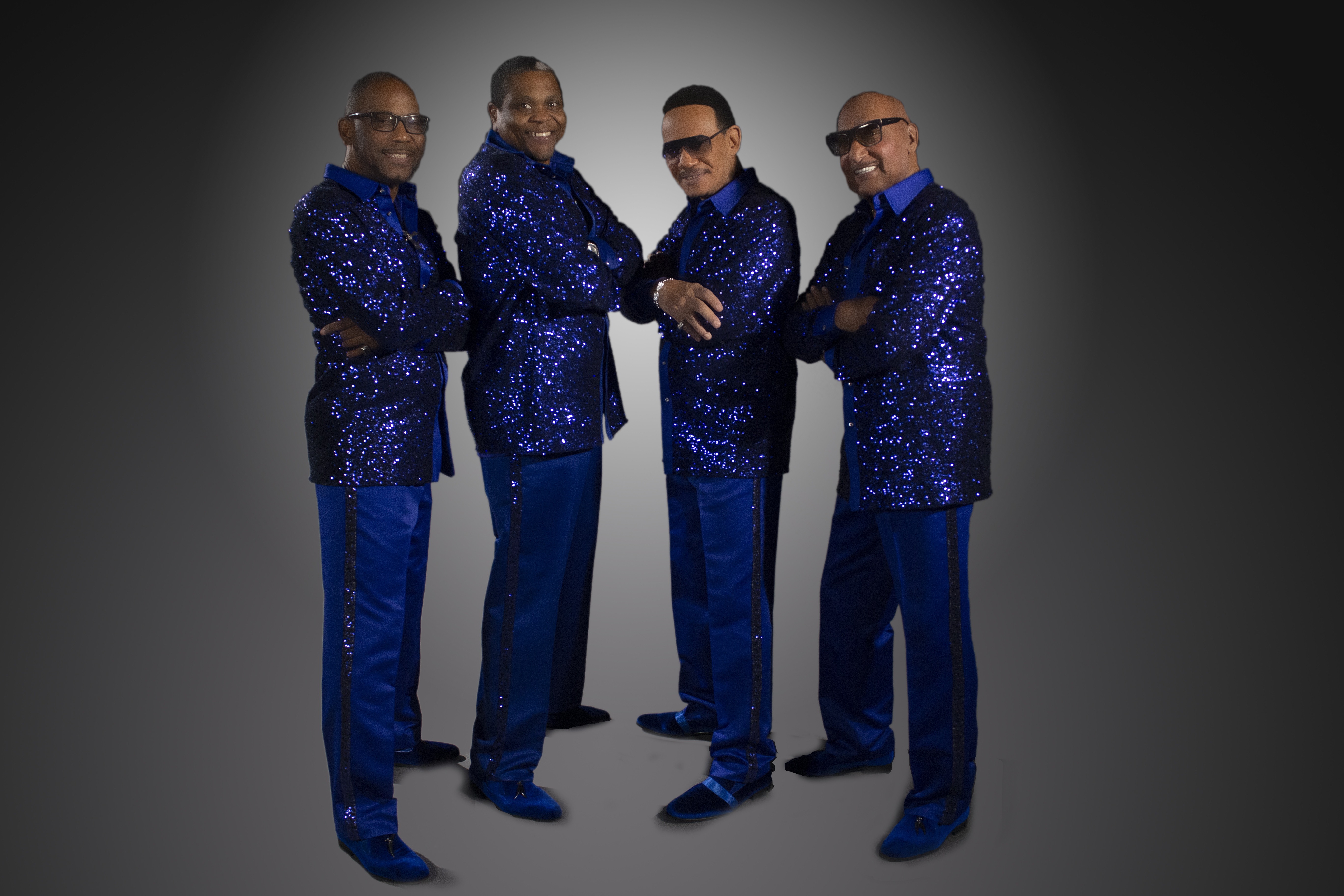


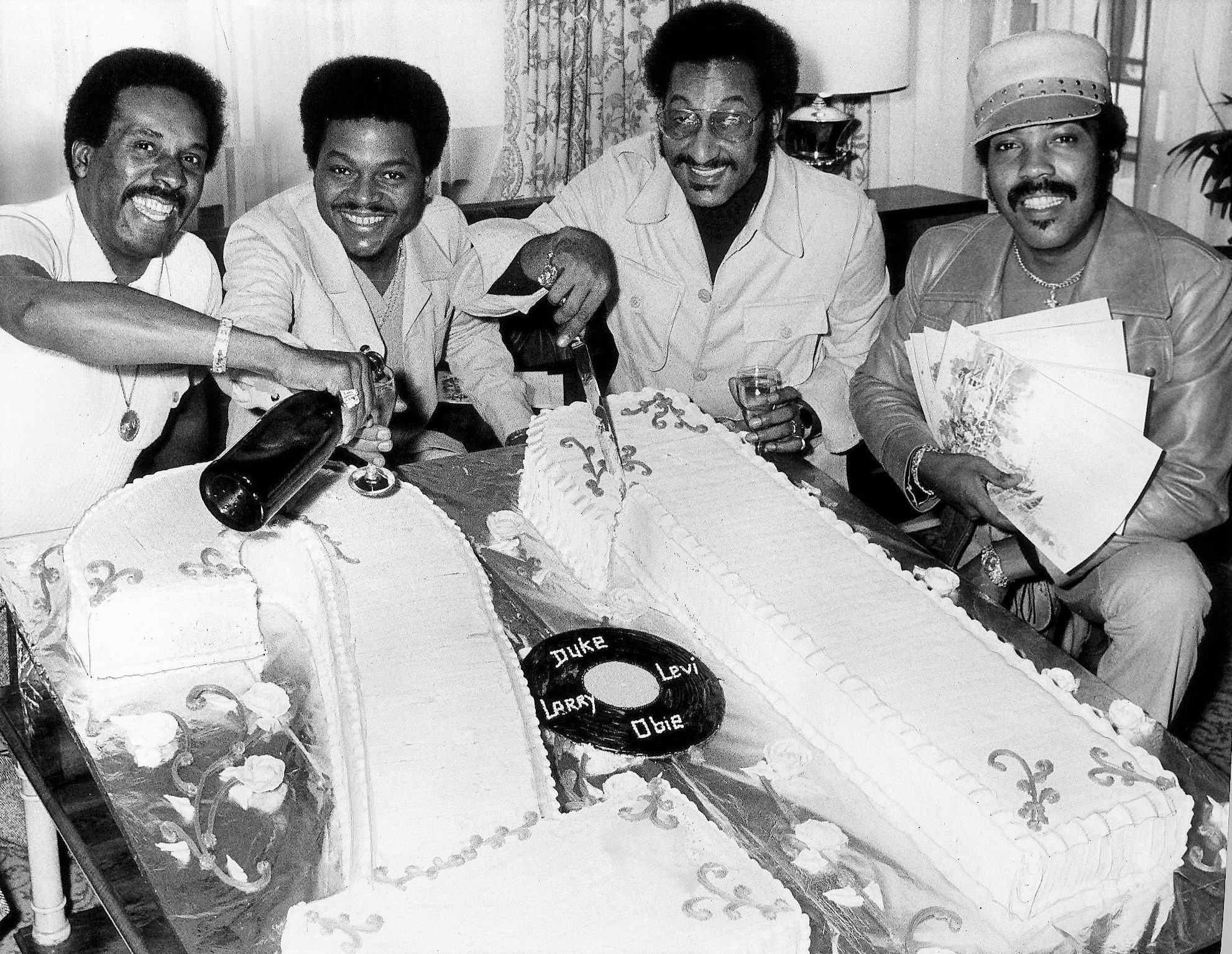
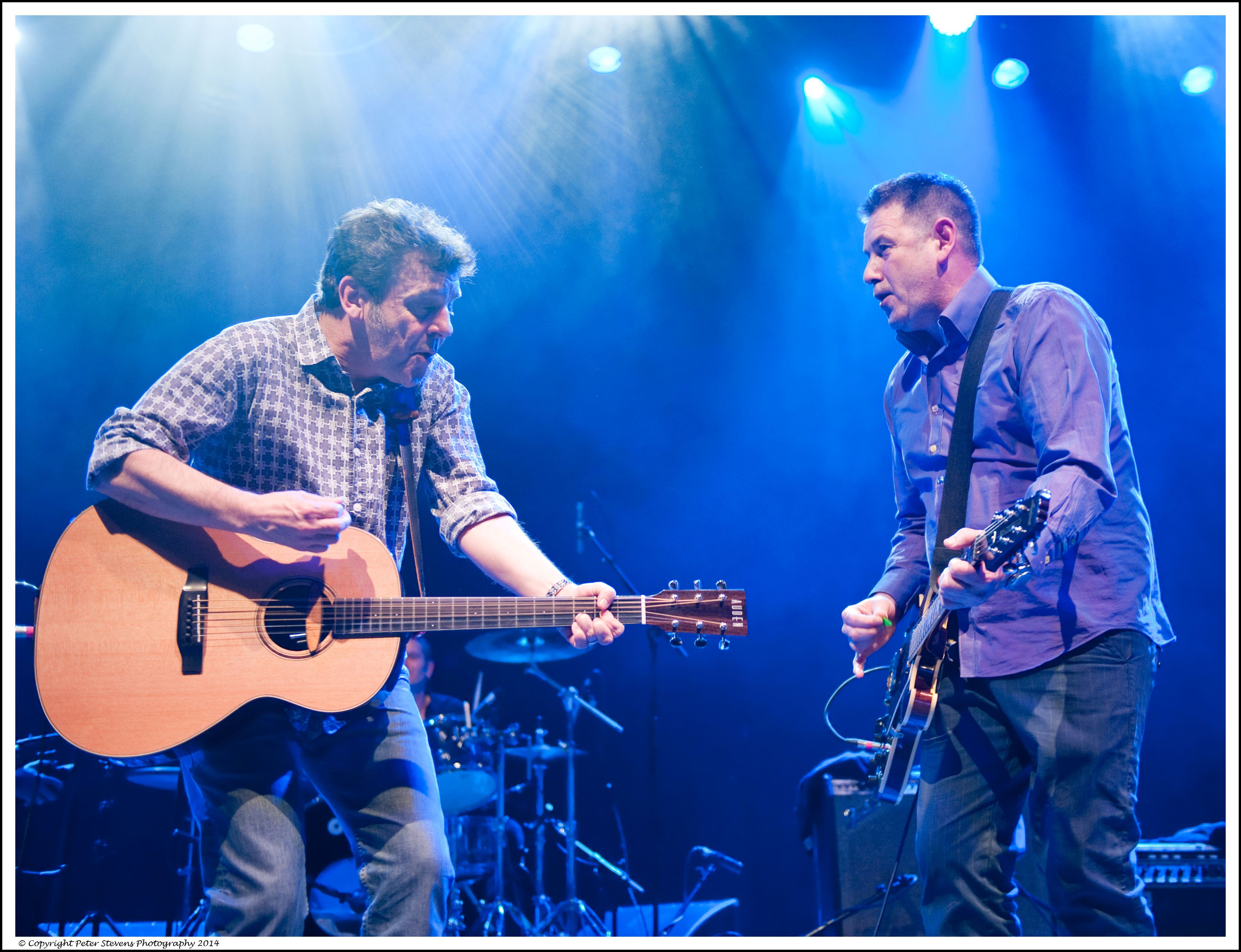


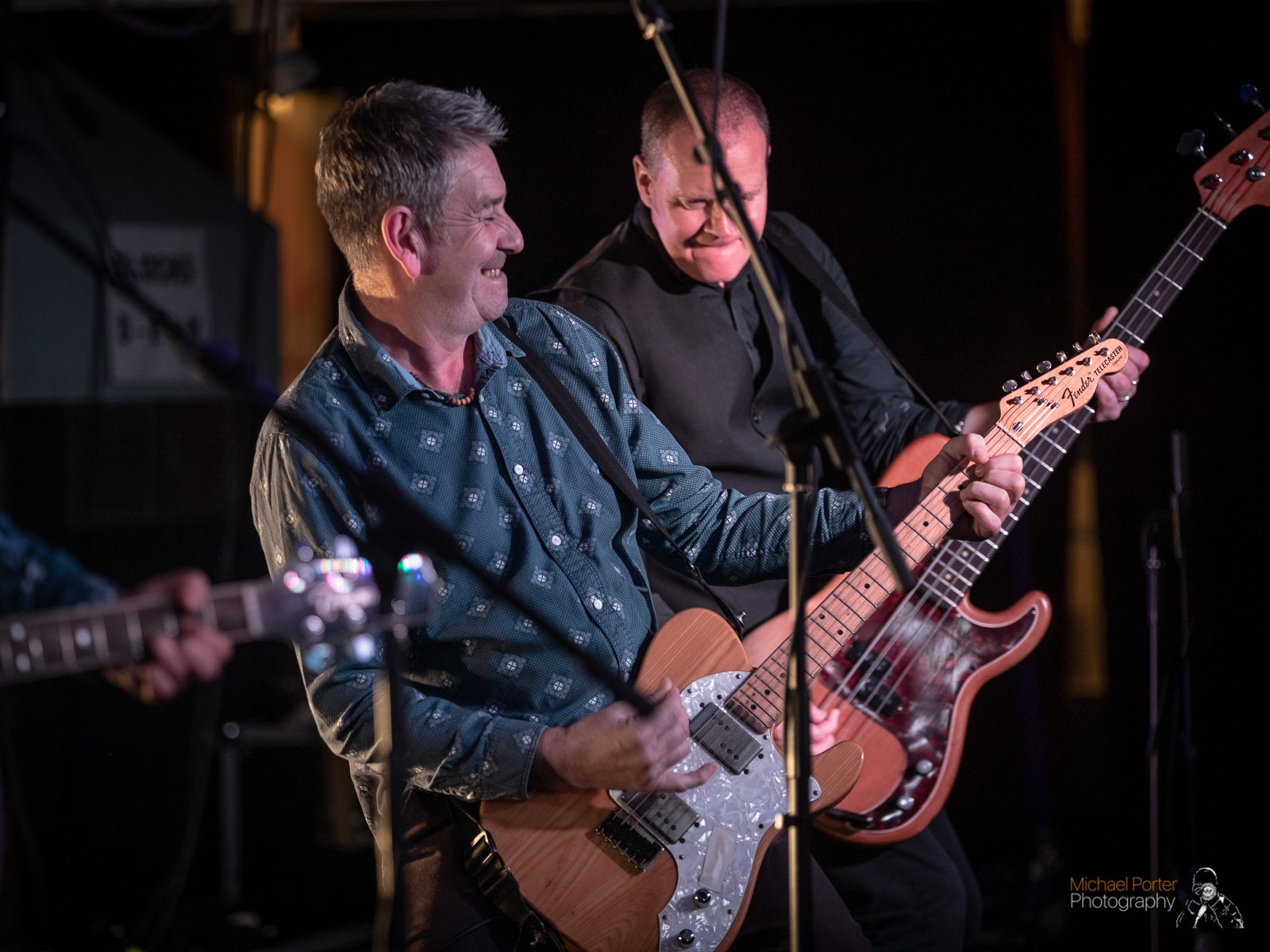


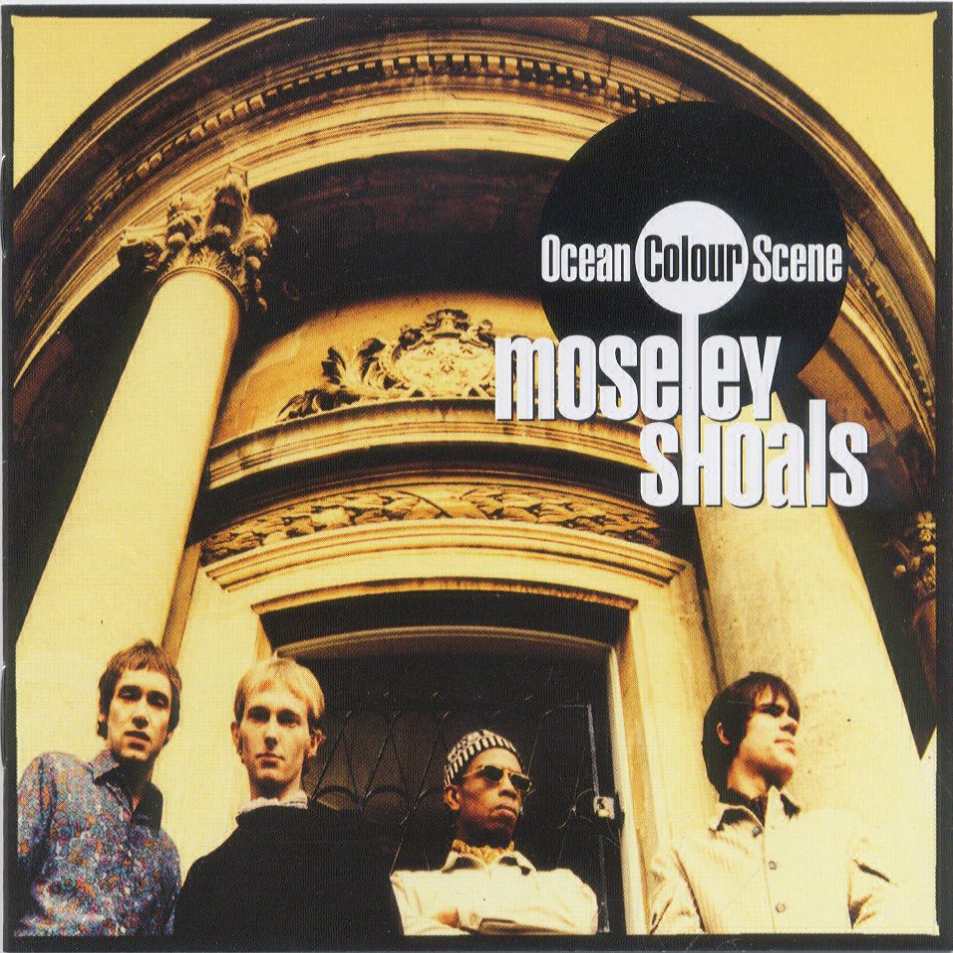


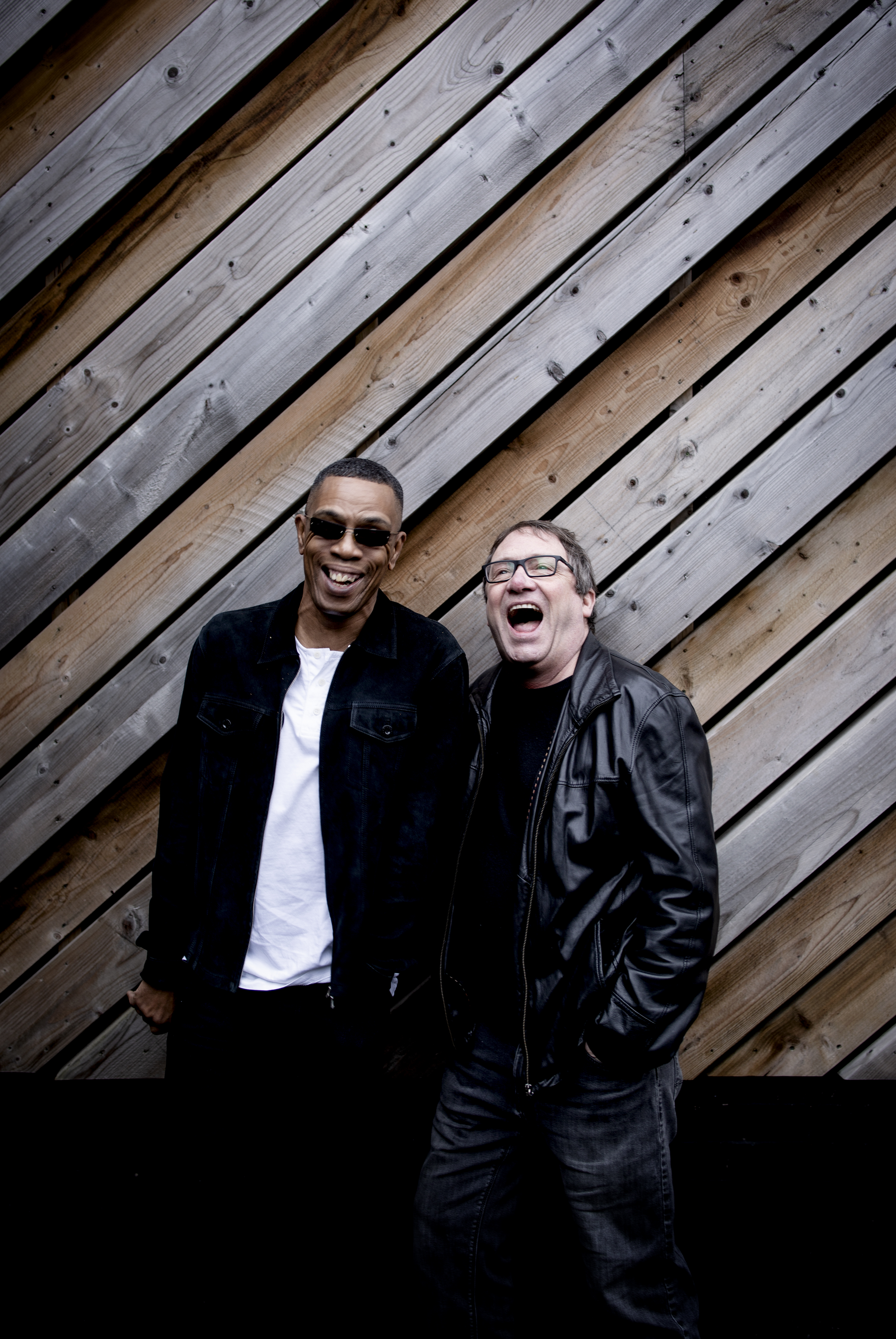
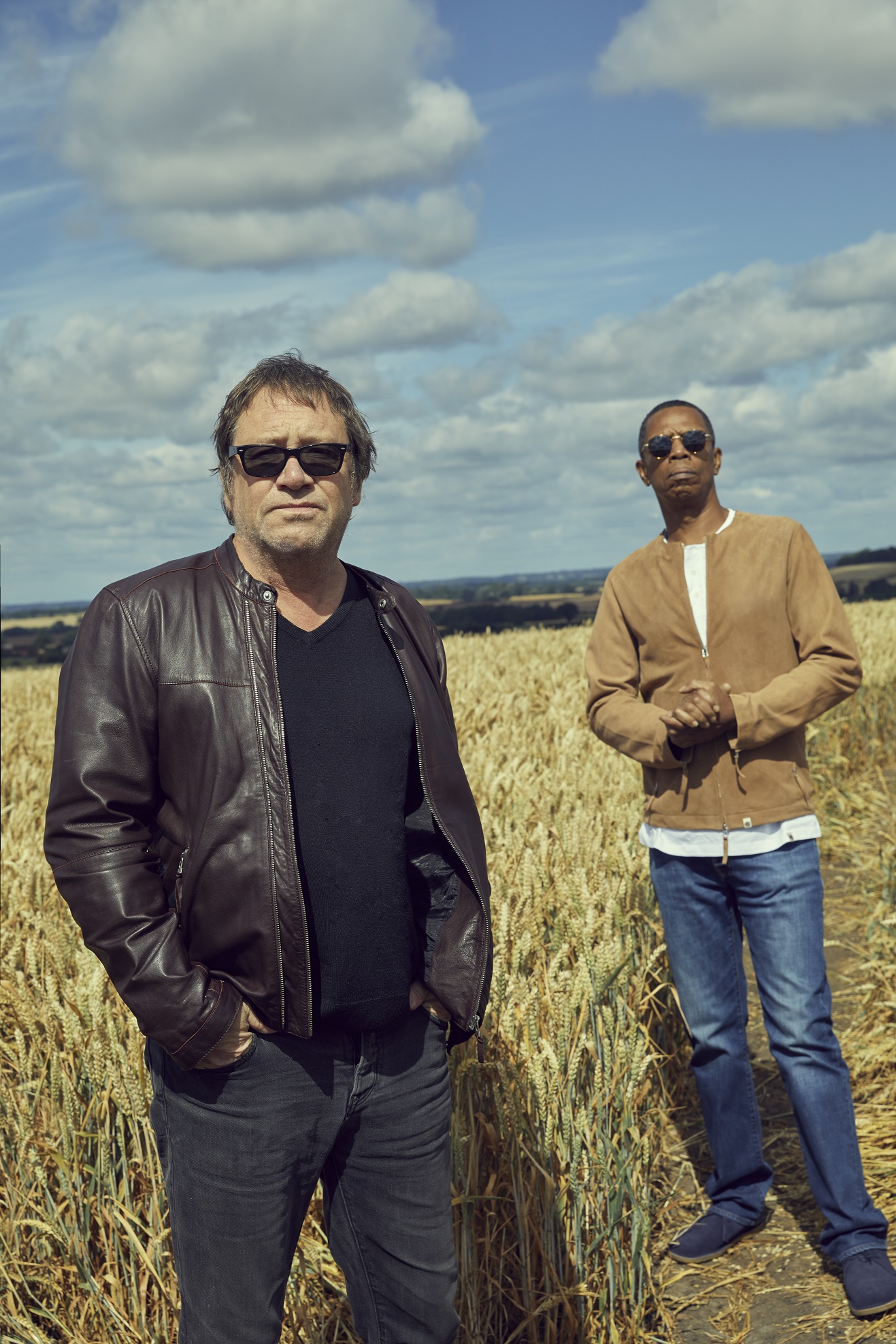


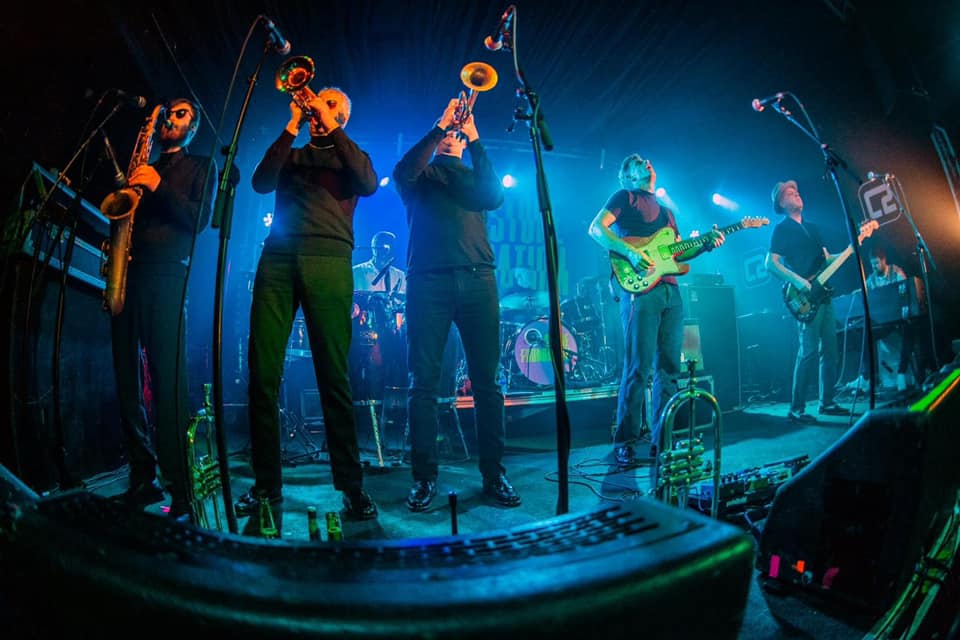

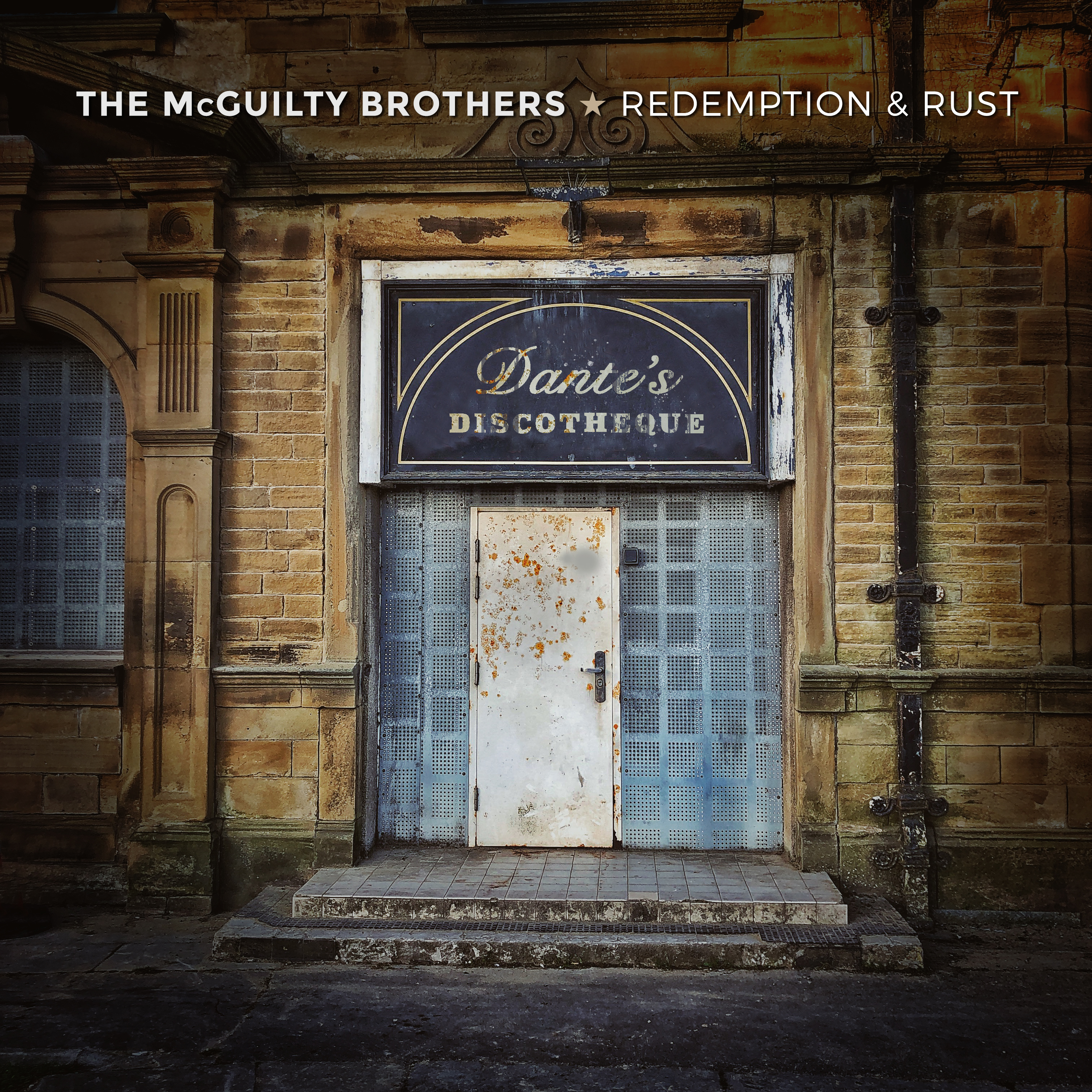


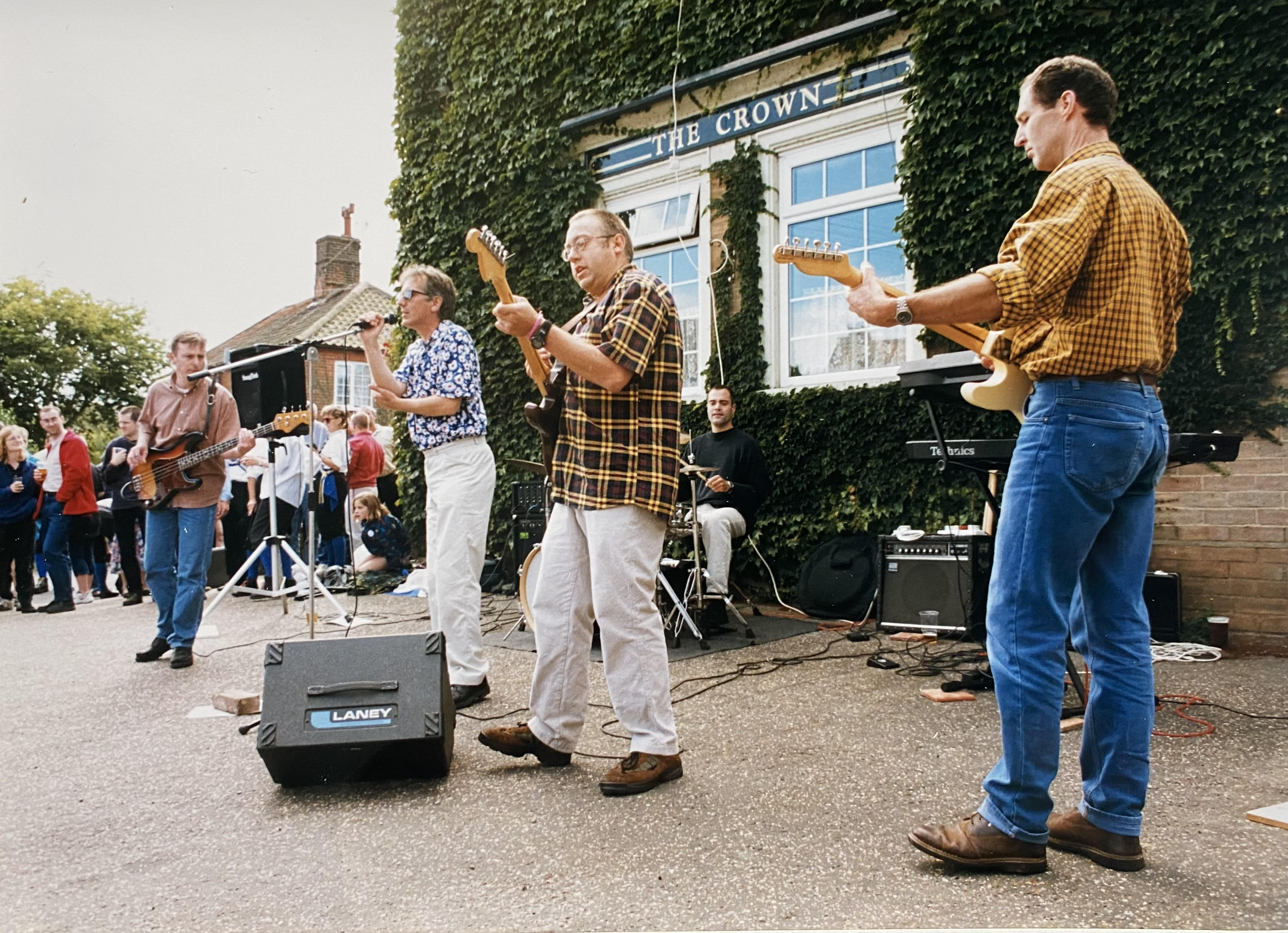


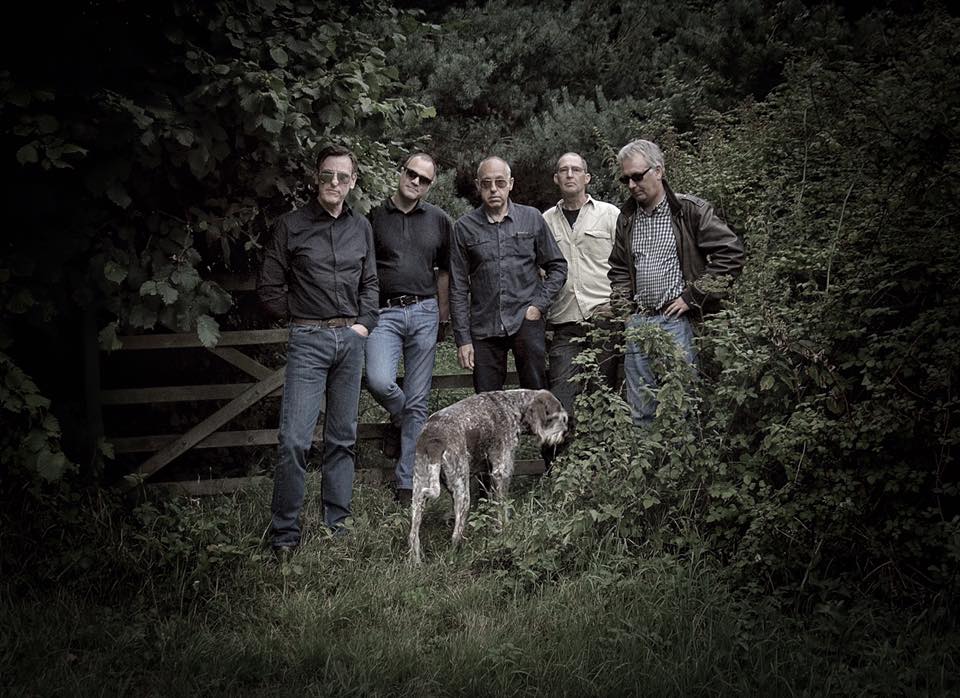
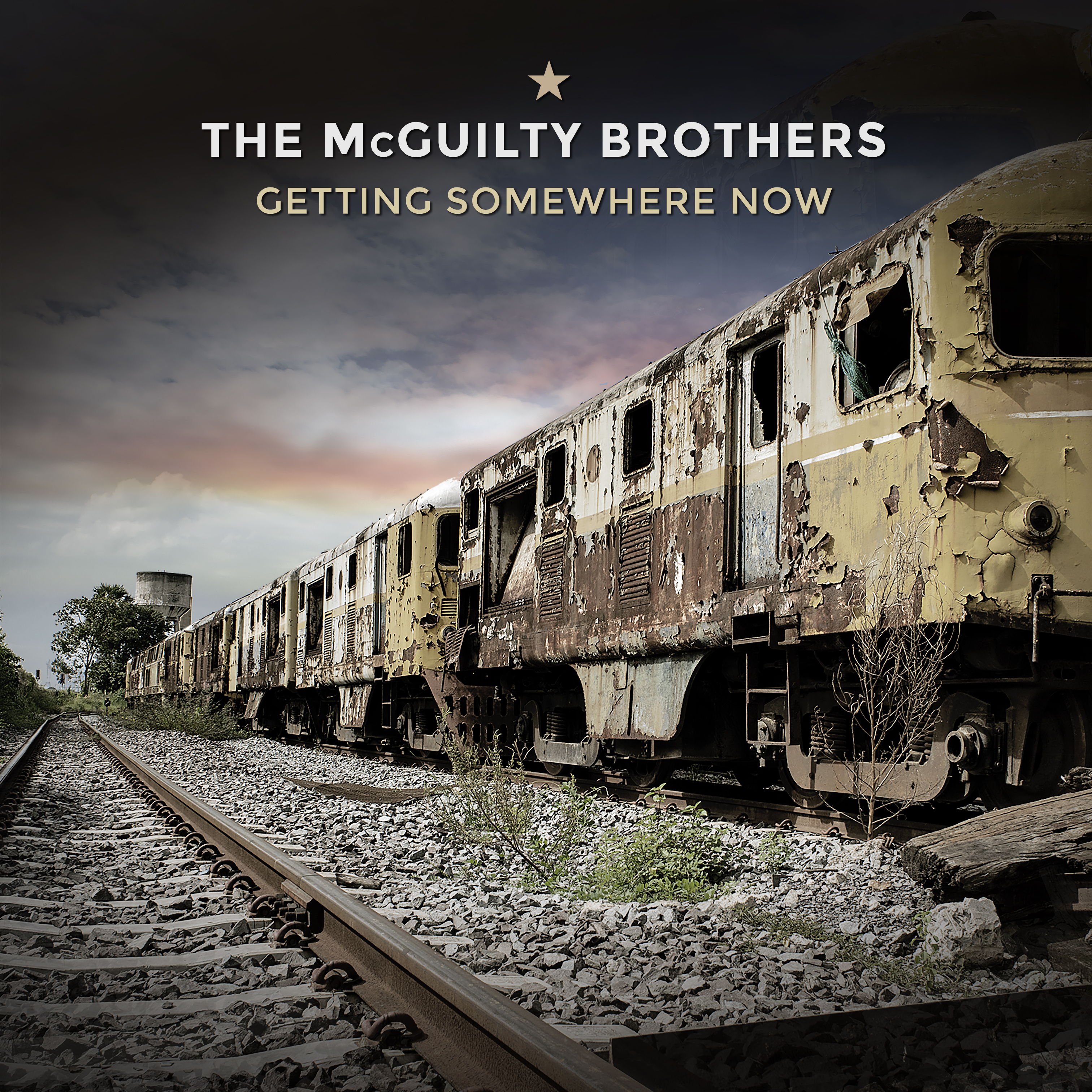


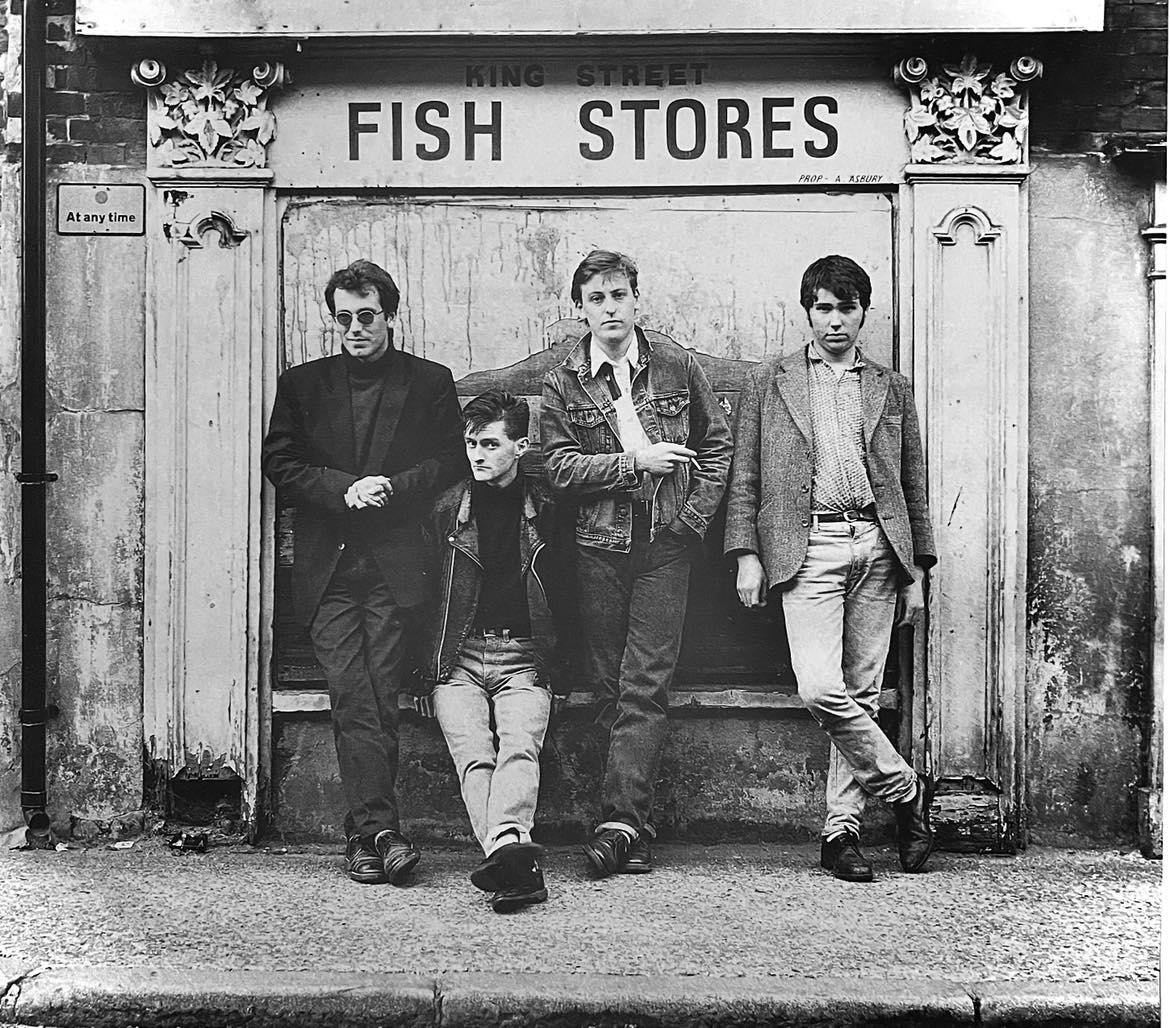
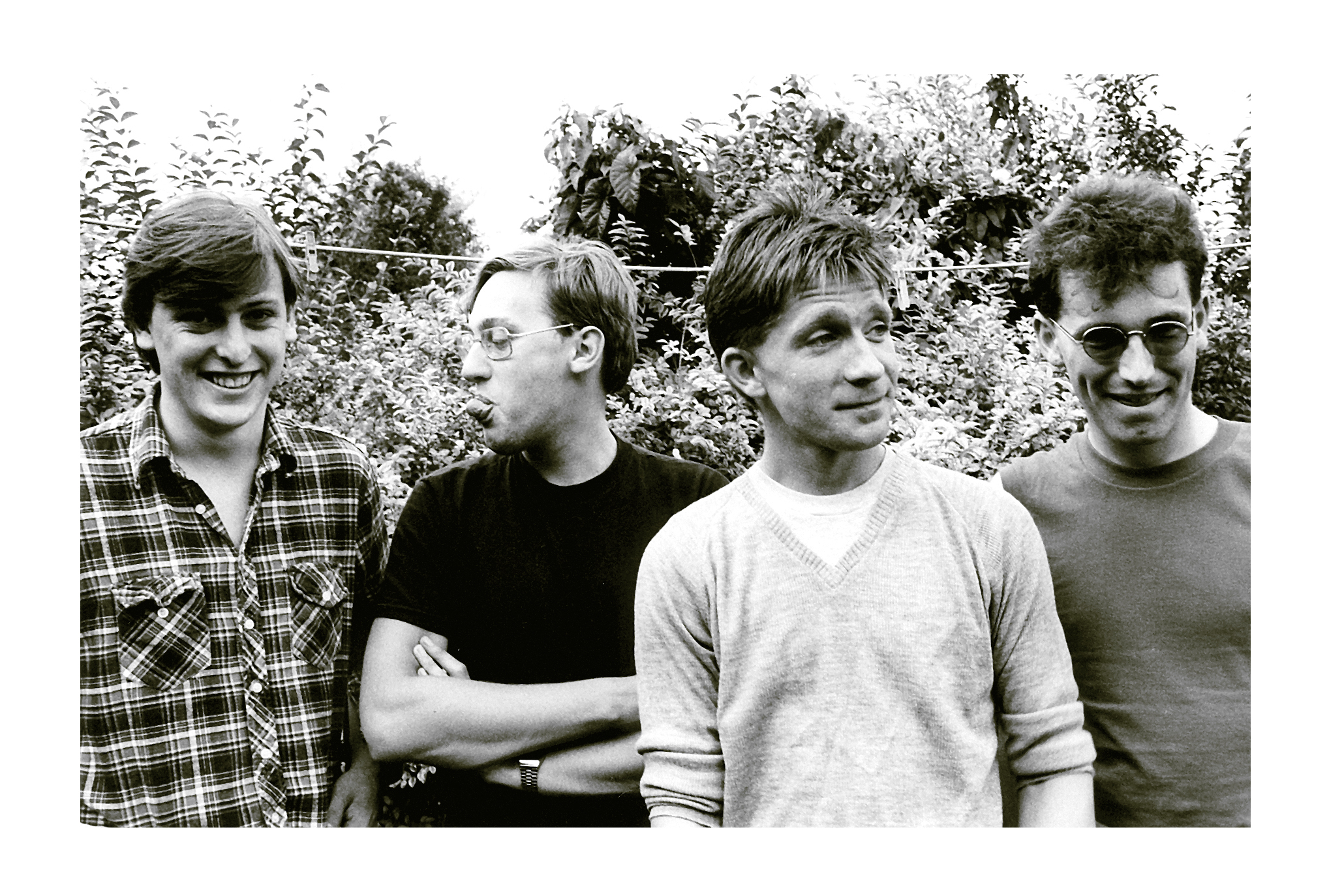

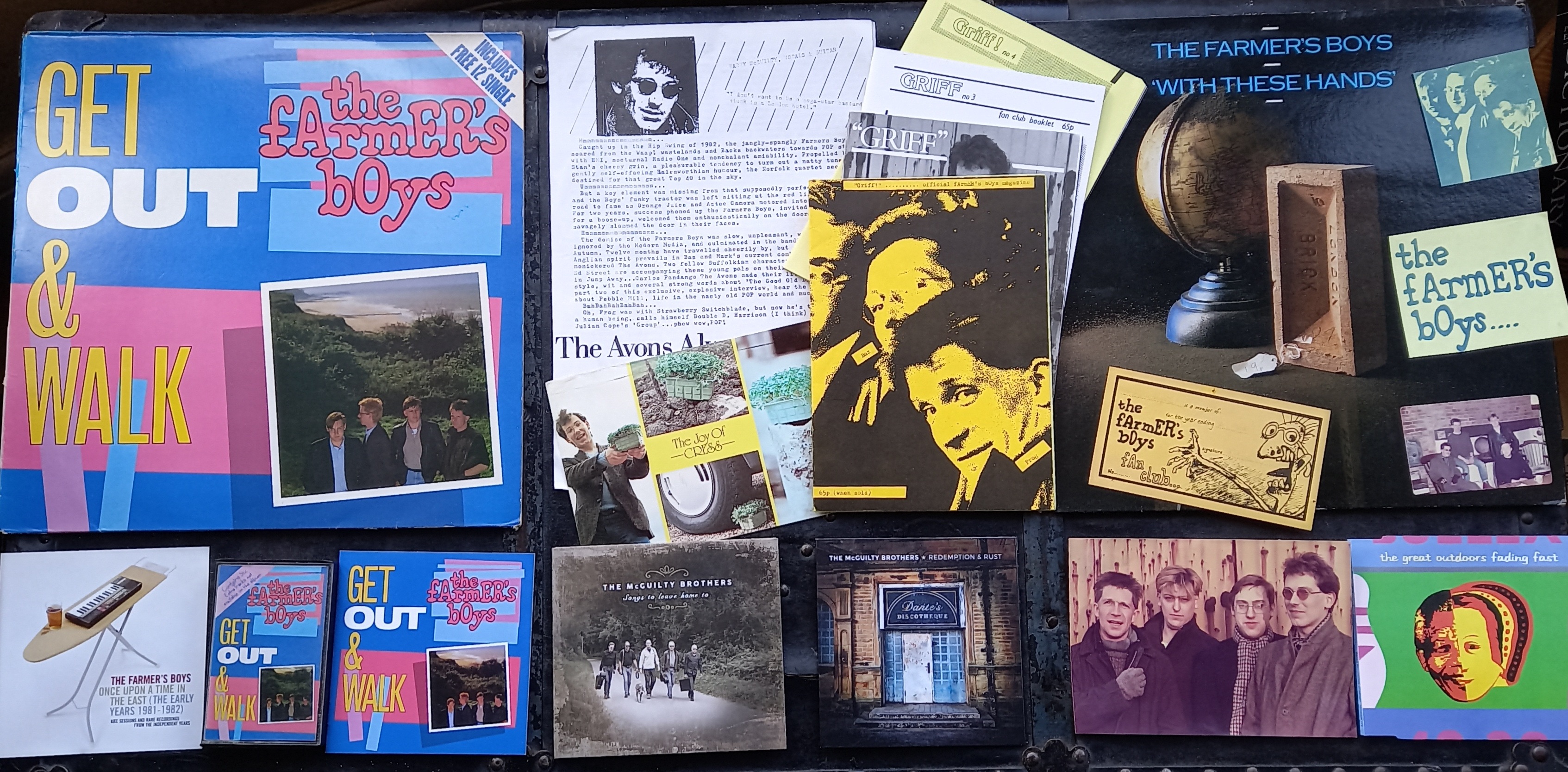

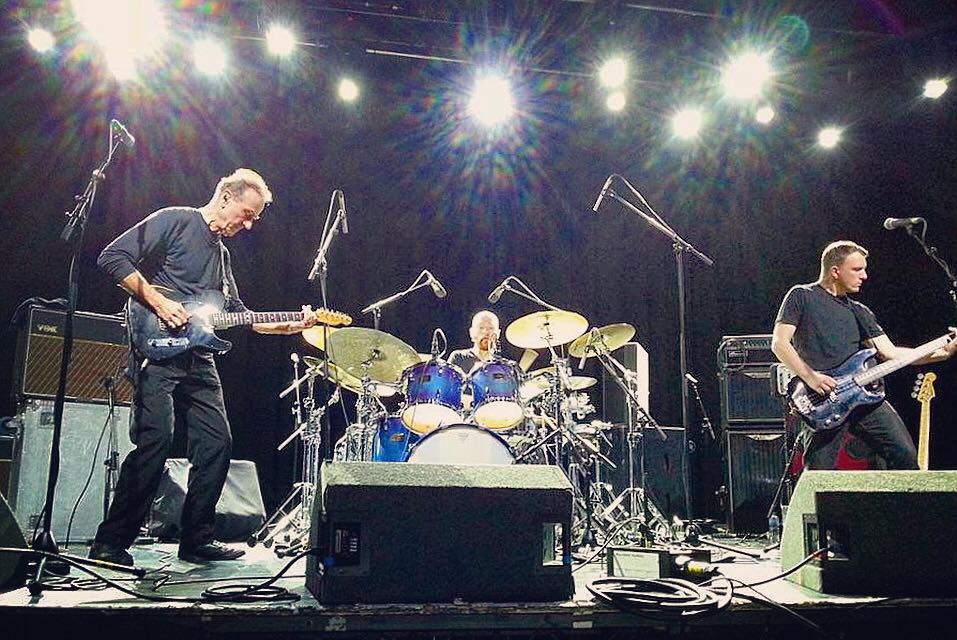








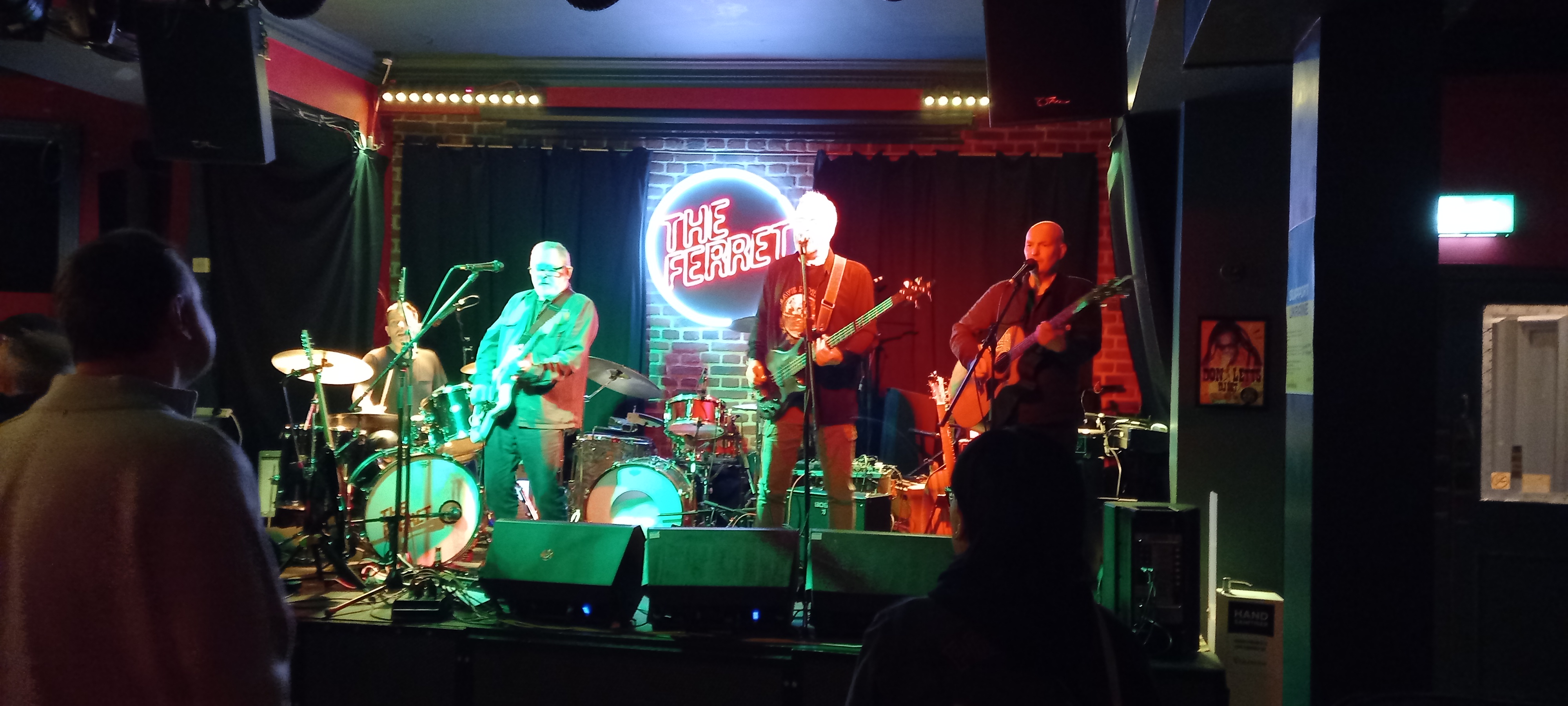
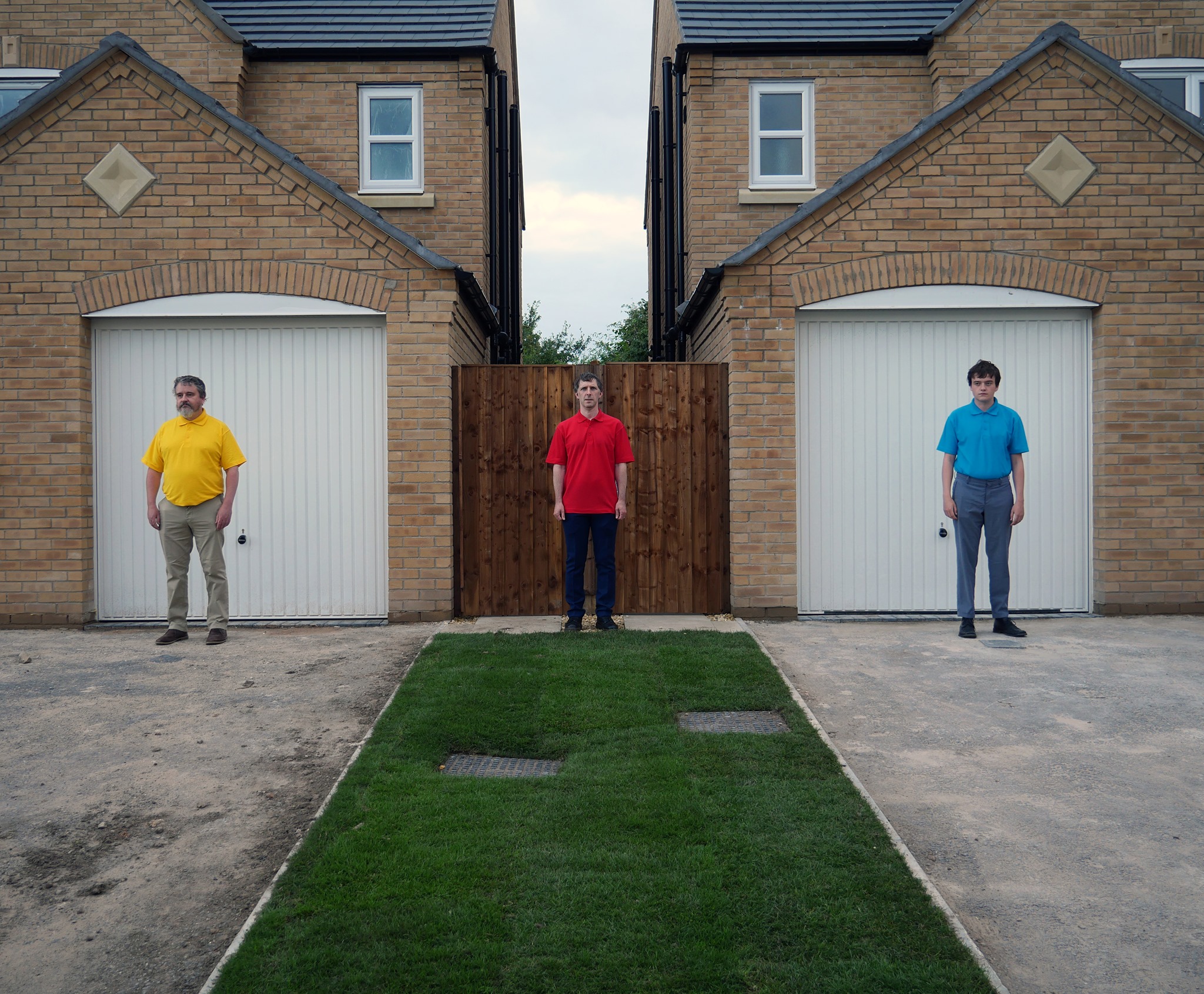


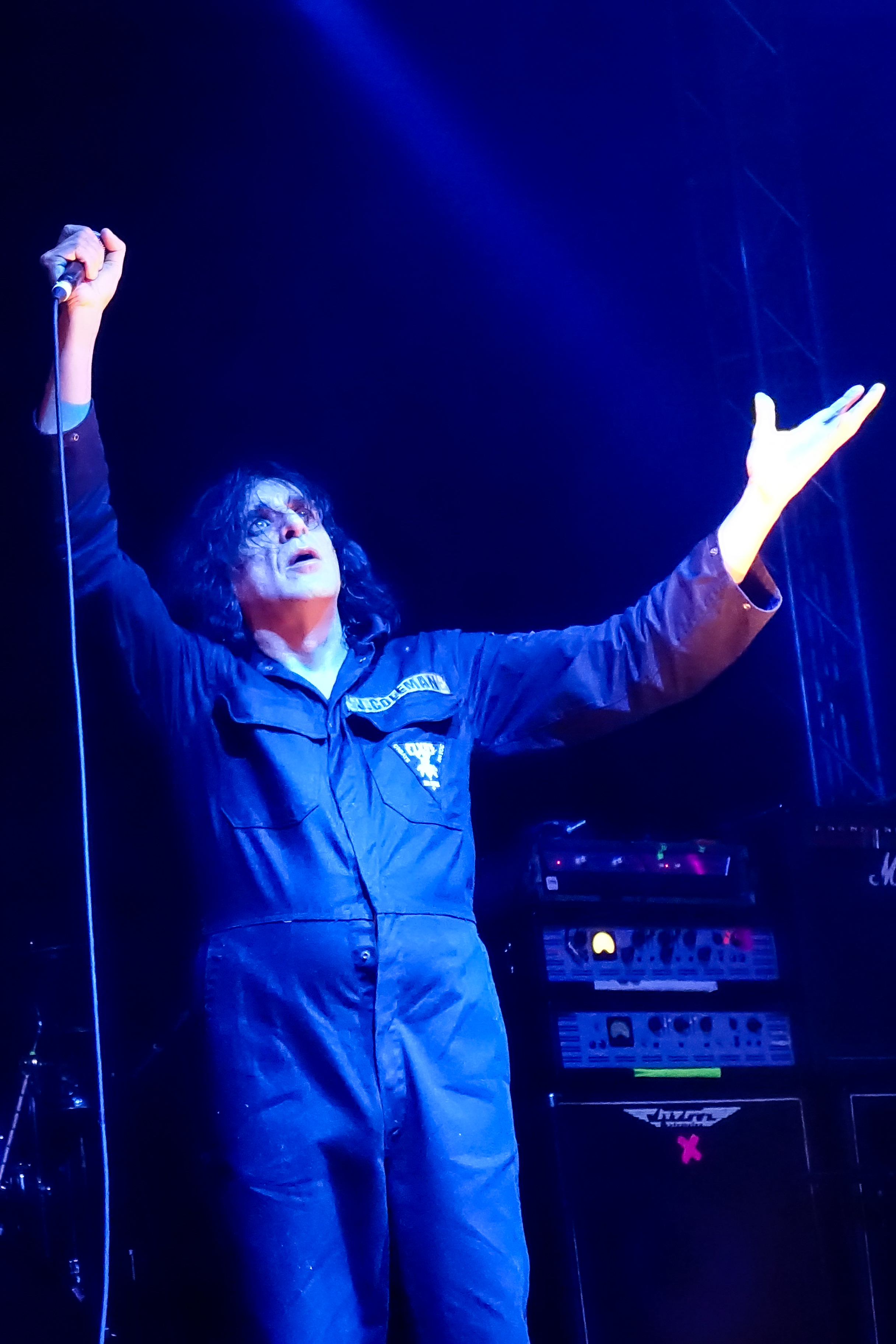
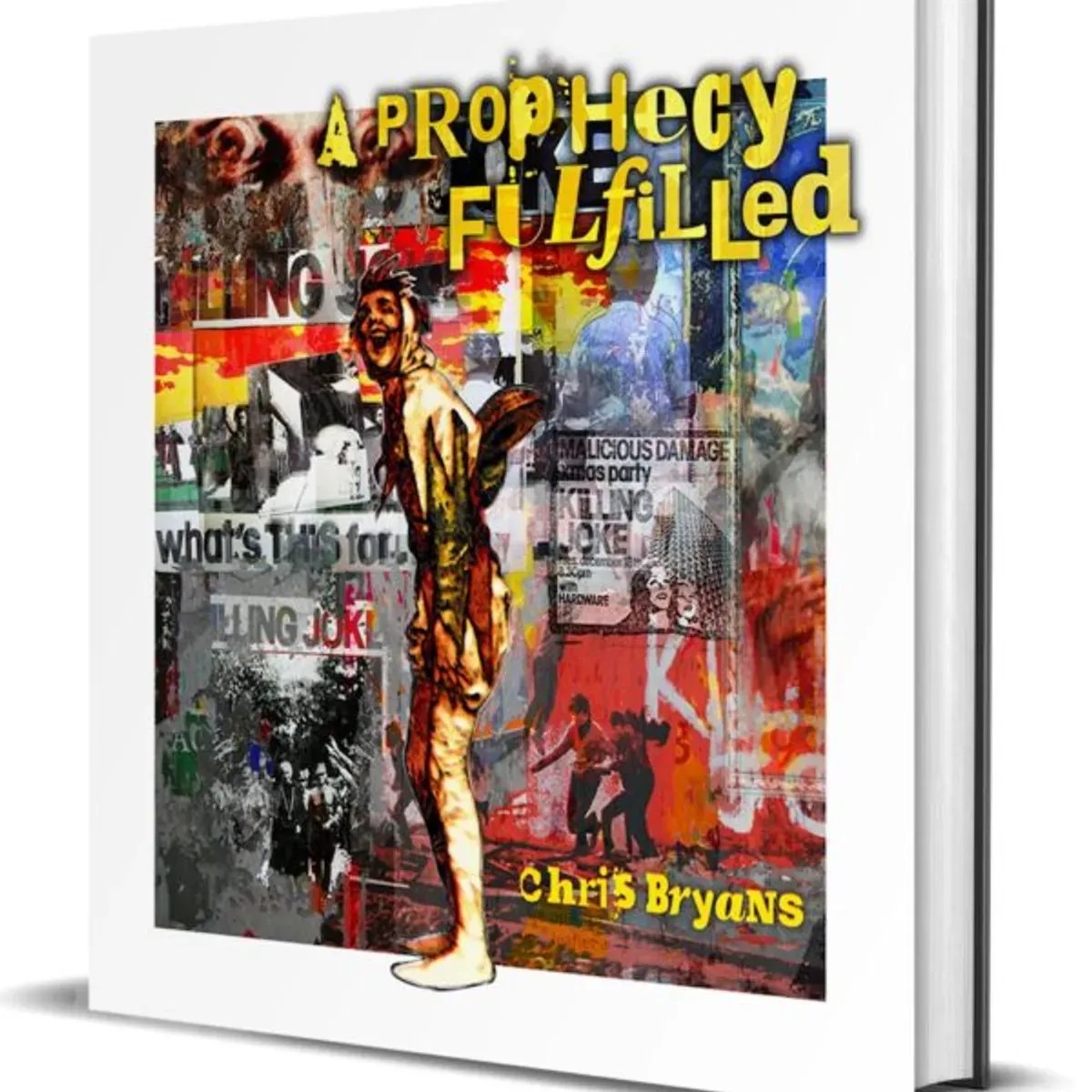

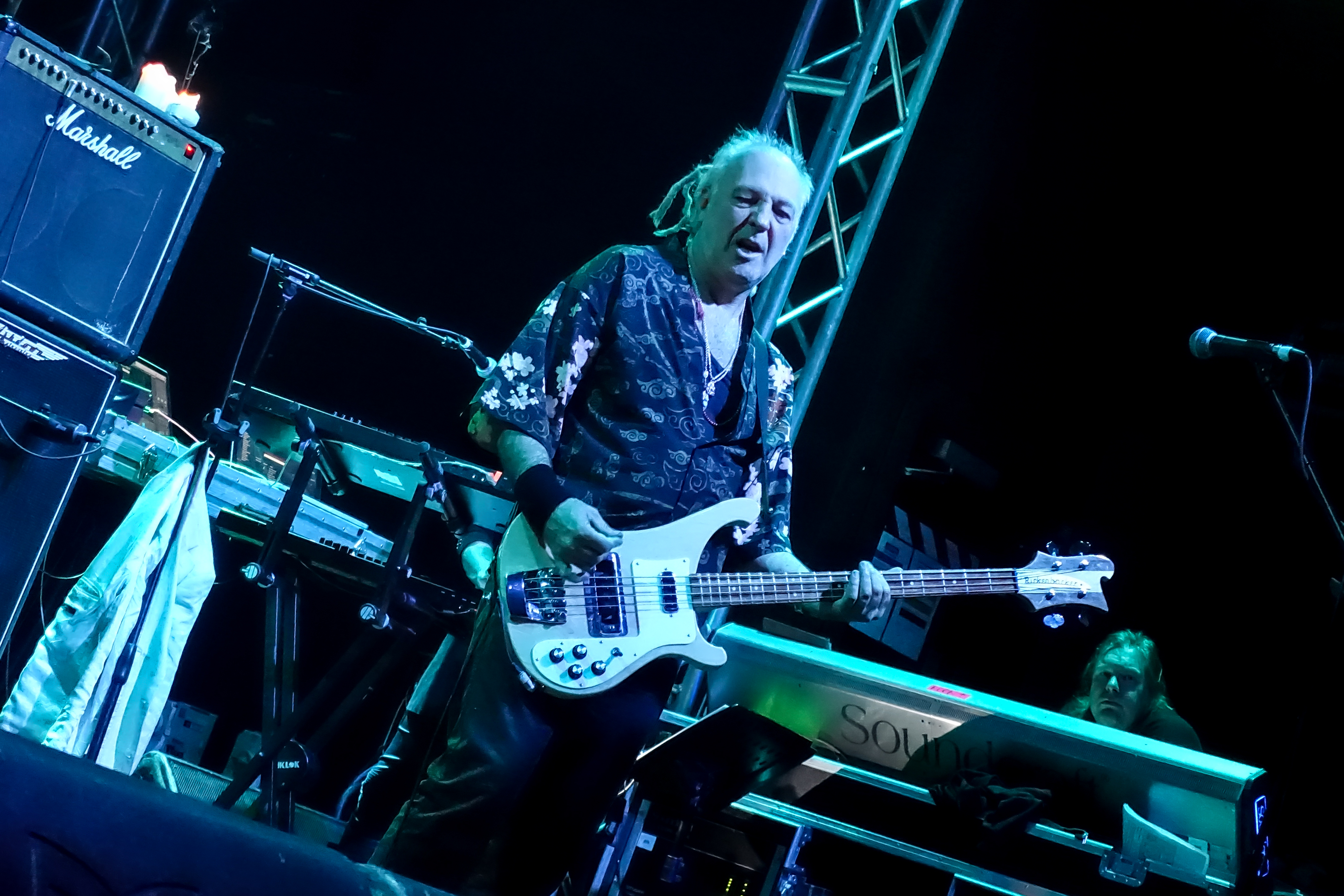

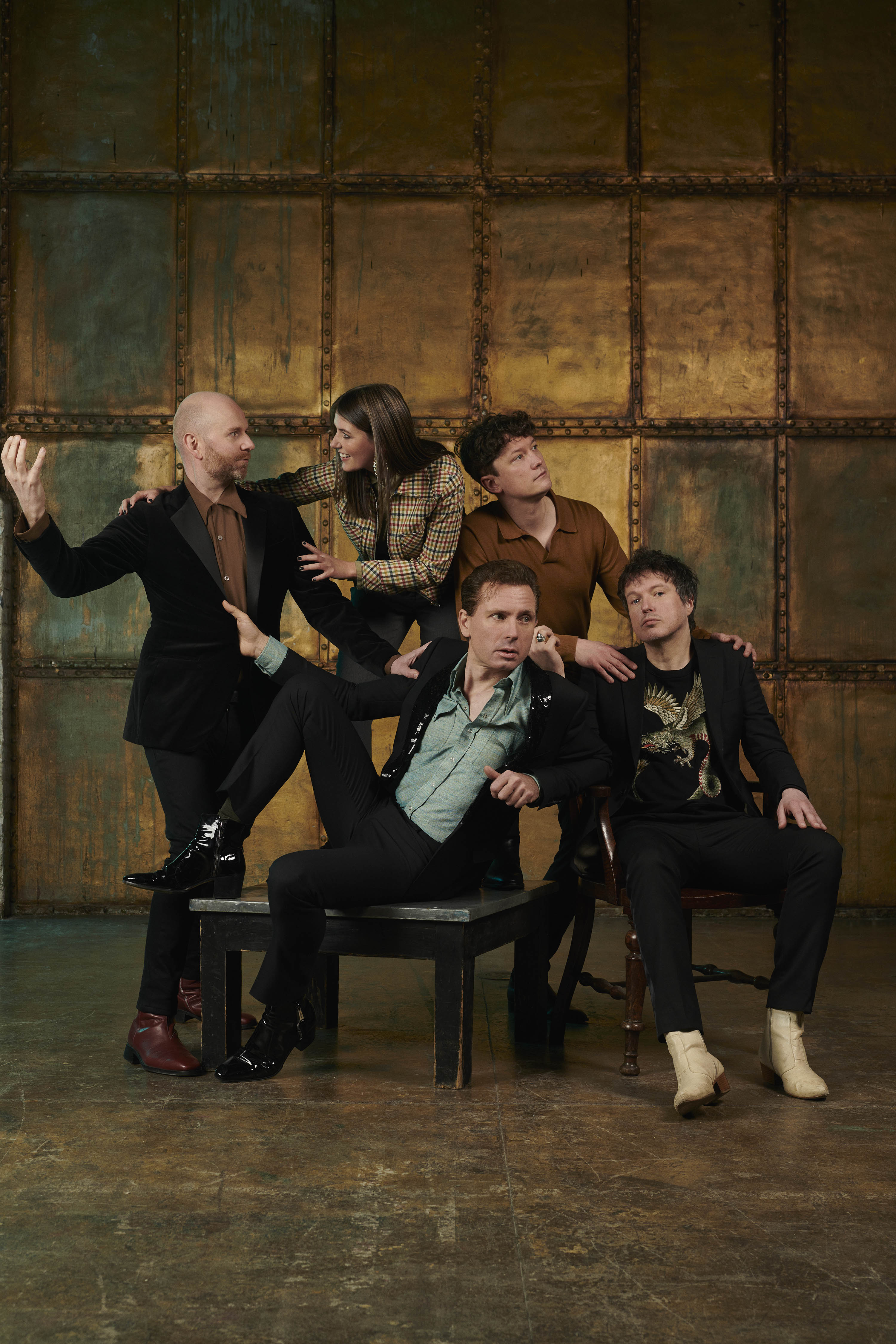

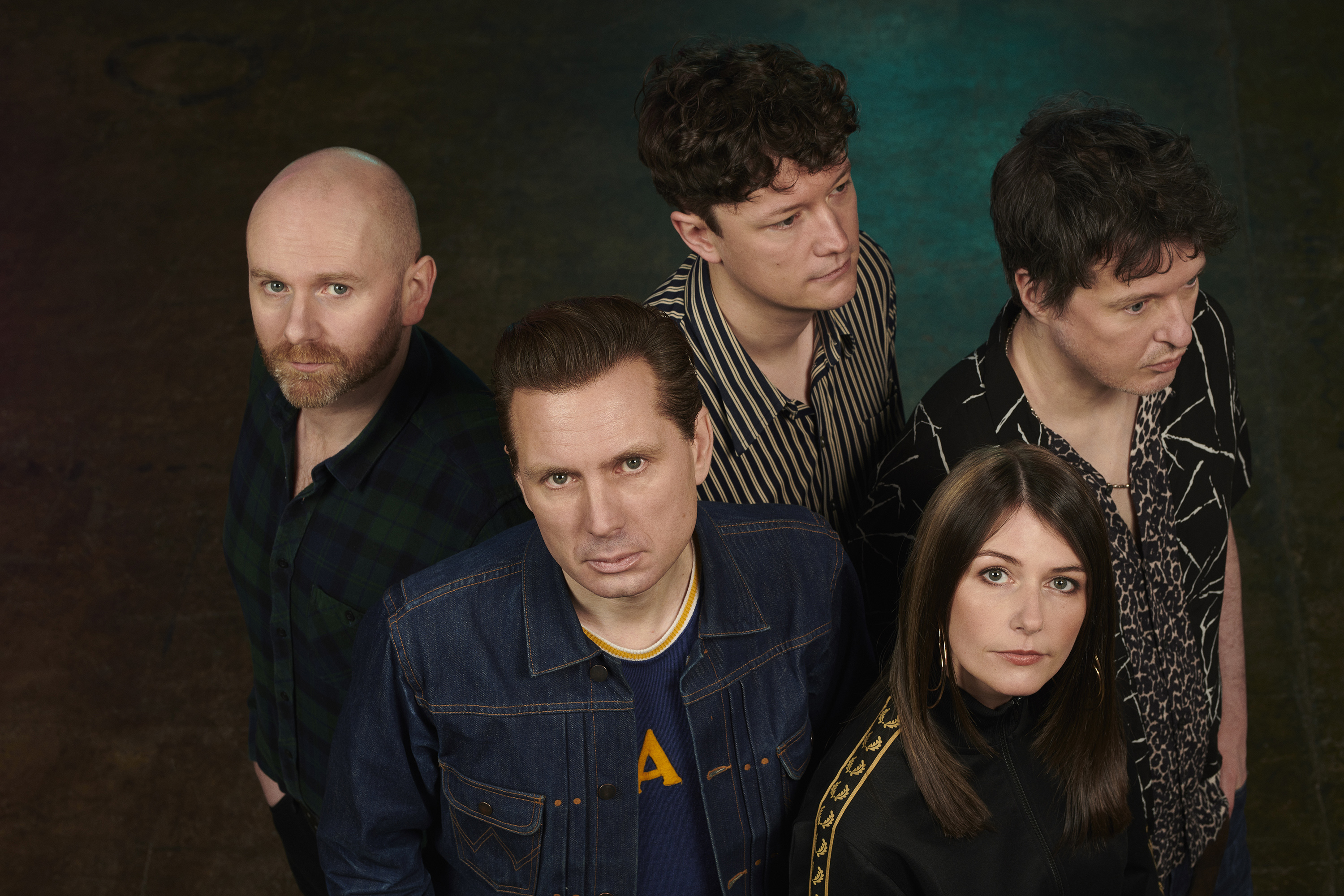



 writewyattuk