In which author/writer Malcolm Wyatt jealously guards his own corner of web hyperspace, regular feature-interviews, reviews and rants involving big names from across the world of music, comedy, literature, film, TV, the arts, and sport.
White Rat Boogie: Attila gets his pint at Foxtails in Chorley. Photo: Malcolm Wyatt
Mick Pike, frontman of Preston post-punk outfit Pike and Lancashire alt world music faves Deadwood Dog, has a new venture on the go alongside his day-job. He tells me, ‘We haven’t a clue what we’re doing,’ in a ‘Blockbuster’ style, but he’s fooling no one, his licensed coffee bar in Pall Mall, Chorley, a cracking venue to catch another old veteran of the punk wars, John Baine, the artist better known as Attila the Stockbroker, out there entertaining and spreading the word about the evils of fascism since an enlightening moment catching The Clash at the Rainbow in ’77.
It says ‘punk poet, dub ranter, singer-songwriter, early music punk pioneer, writer and social commentator’ on the tin, and these days Attila – now 66, just ahead of Paul Weller – organises gigging schedules around Brighton and Hove Albion fixtures. In fact, he’s probably done that for many moons, and on this occasion that involved a post-match trek from Anfield after a narrow defeat at Premier League title contenders Liverpool. And despite the result, it’s clear that on reflection he’d happily take that feeling of disappointment bearing in mind where his club were at when he first properly got involved behind the scenes with Dick Knight and co., helping resurrect the Albion from ’97, the club having narrowly avoided a drop into non-league but soon playing ‘home’ games 70 miles away at Gillingham (‘If Kent was the garden of England, that was the outside toilet,’ he put it last night, recalling the Priestfield days).
He certainly made swift progress from Merseyside after the final whistle, getting to the venue not long before me, a few miles away, rare Spring bank holiday sunshine having necessitated a back garden kickabout with the lad followed by a sharp exit while listening to the closing stages of Arsenal’s ground-out goalless draw at the City of Manchester Stadium that ensured Liverpool stayed top.
Arch Enemy of Fascism: Attila in action at Foxtails. Photo: John Winstanley
A pint of White Rat in hand, I squeezed in at the end of the bar just before his first set, the same bitter being drained a little more fluently by our Sussex coast visitor, mighty fine lubrication on a night when it seems his voice was on the edge of croakiness, Attila opening with songs about his beloved Joe Strummer and first pop love Marc Bolan. He’s never pretended to be a great singer, but he can work his way around a few chords as well as his sharp prose and poetry, as those who have caught his band Barnstormer will know. And he bedded in, he played to his strengths, easy and entertaining repartee and a little preaching to an admittedly already converted audience proving to be his danger USP (unique selling point, that is, for those who’ve not been on marketing courses), the White Rat a key stage prop (‘White Rat, I wanna Rat; White Rat, a rat of my own!’ he sang, his sten guns over Southwick transported 250 miles north west. Danger Stranger alert).
John’s stories and verse ranged from standing in for Donny Osmond one night to travels in Albania and North Korea, the latter connection ultimately leading to catchy singalong ‘DPRK’, the Village People’s ‘YMCA’ reworked. Props also included his phone for poems he couldn’t remember so well (I could never do his job – I’d remember bugger all without a book or a notepad, and I’d be sweating at the thought of gadgetry failing me if I was reliant on a moby) and two mascots from the National Poo Museum in Sandown on the Isle of Wight, where his poo-et in residence role not only gives him a chance to indulge in childish humour but also help spread the word re bowel cancer awareness and pollution at the hands of corpulent utilities companies seemingly working hand in hand with short-sighted, share-scheming, money-worshipping Governments.
For me the true standout sections across his first set were his personal takes on losing his mum to dementia and his relationship with his step-dad, respectively ‘It’s Made of Wire’ and ‘Never Too Late’, the latter something I hadn’t heard for a while but was no less poignant (this scribe having lost both his folks to that dreadful disease), while the second set included a triumphant dub poetry section, an autobiographical ’40 Years in Rhyme’ (although it’s 44 now, he added) for me suggesting lineage back to Ian Dury’s wonderful ‘You’ll See Glimpses’ before a crowd-pleasing ‘Tenorman’, loved by no less than late great Benjamin Zephaniah, his toasted take on advice for the ageing bloke detailing his own cancer battle and the need to check yourself out to potentially save your life, while praising the wonders of our ailing NHS.
Stockbroker Merch: John Baine’s mobile Trade Centre. Photo: John Winstanley
The politics was everywhere of course, from railing against Tory-voting relatives and Express/Mail/Sun-reading types to national obsession with the Royal Family, with ‘Prince Harry’s Knob’, ‘Maggots 1 Maggie 0’ and ‘Poison Pensioner’ worthy winners. These days he bats for the Labour Party, brought back into the fold by Jeremy Corbyn and determined to stick around, continuing a south coast pushback against the Tories, canvassing for his wife, Robina (who got plenty of mentions on the night), an ‘Anyone But Conservative’ philosophy at the ballot box not far from my own take on it all, determined to be rid of those in charge rather than focus on in-fighting among those on the left. And this being Attila, there was plenty of talk of socialism, the intricacies of anti-semitism name-calling and the sad erosion of national building blocks that the likes of Nye Bevan established, post-WW2, delivered by an artist proud to have been part of that golden generation that prospered under the Welfare State with regard to health, social care and education.
As he puts it on ‘40 Years in Rhyme’, ‘When I started off, spoken word was people talking to each other. Now it’s a genre!’ And I think we touched on it all, his words about Bob Crowe and the unions also going down well, and the finale a pensive piece on Palestine. I come out of gigs like this thinking the world will be alright after all, his words and the audience’s warmth for the subject suggesting perhaps the years of Brexit and twisted UK support for the Johnsons and Farages were just blips, the hedge fund drivers set to be banished, the Trusses, Kwartengs and Rothermeres to be resigned to history, as gleefully envisaged in ‘Left Wing Economic Establishment’, the song to go with the t-shirt. But then I think of the dinosaur who lives a few doors down, excited at the thought of Reform UK chancers coming through, suggesting we may still have some way to go. That said, all the time the likes of Attila are banging the drum and adding a little recorder (two at a time, I should add), there’s hope for a brighter future.
It took me just short of 35 years to catch him a second time, having first chanced upon Attila at Reading Festival in August ’89. But it was worth the wait… not as if my non-attendance down the years will have helped his bank balance. My mate Alex wrote this week, ‘I hope Attila doesn’t remember his review of our Guildford Labour Party Young Socialists’ magazine from the ’80s. It was, and I quote, ‘It’s shit’. If there had been a second edition, we could’ve put it on the front cover.’ We were sixth formers then. Wish I’d have been able to dig out my copy and get him to sign it, staples ‘n’ all. That may have been my first foray into publishing outside a school mag, quickly followed by Captains Log and Wubble Yoo fanzines, the latter charting my enduring love affair with Woking FC, one of our biggest paydays coming at the away end of the long gone Goldstone Ground ahead of an FA Cup tie in December 1992,the Cards securing a replay. That’s the only time I was on Match of the Day, slow-mo VHS plays catching me turning around to my better half with a wry, defeated smile among a sea of despondent fans following their goal. And thankfully Clive Walker later made up for his involvement in their eventual progress, signing for us, providing some of the best entertainment ever witnessed at Kingfield. Happy days. And while that has no real place in this review, if Attila’s allowed to rant and go off at tangents on stage, I am too. It is my website, after all.
Cheers, John. I raise a glass of White Rat in your direction.
Tails It Is: Mick Pike in earnest conversation with Attila the Stockbroker. Photo: John Winstanley
For my 2015 feature-interview with John Baine, aka Attila the Stockbroker, head here. And for the latest from Attila head to his Facebook, Instagram and Twitter pages and check out his Soundcloud and website links. And to see what’s coming up at Foxtails in Chorley, which offers cask ale, beers, wines, spirits, barista coffee, bar snacks and live music, and is sport-free – apart from when Attila’s visiting – and dog-friendly, check out their Facebook and Instagram links.
Sonic Odyssey: Keeley Moss, left, and Lukey Foxtrot, in action in Preston. Photo: Nick Clift
My second live sighting of Keeley, and another triumph, albeit in this case with a rather less frenetic audience than that encountered in Manchester on their first English mini-jaunt.
Thirty miles further North West in the heart of Lancashire, I missed hometown act Dead Things, but heard dead good things about them later, and was certainly impressed by Blackpool’s Sweet Knuckle, a three-piece of some pedigree, linked back to Factory acts Section 25 and Tunnelvision (a former support act to Joy Division and New Order, don’t ya know). Singing drummer they had, but Genesis they were not, angular grooves bringing to mind in places a little Wire for these ears, even if the bass player’s jacket with pushed up sleeves suggested late-’70s US power pop. The dance floor could have been busier, but two-thirds of the headliners – out front – were giving it some shapes at least.
After the on the edge drama of Keeley’s performance at Aatma in Manchester last time around (with my review here) – a venue they returned to the previous night – this was a comparatively laidback affair, audience-wise, but the band were no less impassioned from where I was standing, the audience invited to budge up a bit closer at one stage to bring on the intimacy. On a short tour that started with a support role to rightly loved reformed mid-‘80s blues-punk mavericks the Folk Devils at London’s 100 Club – this performance was followed by a night at Birmingham’s Sunflower Lounge then a return to the capital to play Camden’s renowned Dublin Castle. And six months on from my first Keeley live experience there’s been a line-up change, the band now a threesome (although word has it that Dublin-based keyboard player Marty ‘Mani’ Canavan still fills in from time to time), the eponymous Keeley Moss (guitar, vocals) now relocated from the Irish capital to these shores, closer to co-driver ‘Lukey Foxtrot’ Mitchell (bass) and Andrew Paresi (drums), the latter now in Tom Fenner’s place, his past credits including the first three Morrissey albums and work with producer Stephen Street.
The slightly slimmed-down set-up certainly worked well, the unit somehow more in your face, while a few electronic pedal effects kind of suggested a far grander ensemble than met the eye. In fact, I was getting keyboards in my head much of the night, in that way you do when you know a fair amount of the songs being served up, instinctively weaving them in. And what is it about that three-piece dynamic that proves the worth of a band? Think of The Jam, or Hugh Cornwell’s current trio. There’s proper gritty power there and no hiding places, in this case with plenty of luscious dreampop/rock in the mix. What you get is what you put in, and this trio certainly put something in.
Floating Above: Keeley Moss, live at Two Palms, Hackney back in January
Also, there must be something about this venue that helps acts turn it up a notch or two. When I think about the bands I’ve seen there in recent times, they often defy expectations. Take for instance intense performances by fellow dynamic trio Girls in Synthesis in 2018 and both Pip Blom and The Woodentops in 2022, all providing nights to remember, the latter on a bill including The Amber List, a locally-based trio that similarly pared down and somehow ended up all the mightier.
Set-wise, there were a few additions and changes to that I witnessed six months ago, but they started as last time with ‘Last Words’, from debut EP, Brave Warrior, albeit with technical gremlins – Andrew having to reconfigure his drum kit, giving Ms Moss the opportunity to tell us all about her muse and just where she’s coming from and travelling to, setting the scene, ever the broadcaster.
Techie issues addressed, they cracked on, further non-LP track ‘Where the Monster Lives’ from the Drawn to the Flame mini-LP seeing Lukey’s thumping bass and Andrew’s thudding beats proving a neat foundation for K’s Banshee-like guitar licks and often intense vocal phrasing, us punters soon lost in the moment.
Talking of muses, we were then introduced to recent set addition ‘Inga Hauser’, namechecking the German 18-year-old so cruelly robbed of her life on a solo European backpacking trip 36 years ago, all the songs dedicated and inspired by this tragic Munich teen that Keeley has set her life’s work on commemorating and keeping in the public eye (with a little background here for those not in the know, from my July 2021 feature-interview).
The indie (as in industrial in this case) dance of ‘Forever Froze’ and ‘Scratches on Your Face’ also helped set the scene perfectly, our guests in their own late ’80s bubble, fitting the overriding theme. And in that world, I reckon Lukey is the bass player I felt I was in my head back then, channelling Andy Rourke in places, the band chemistry clearly bringing out the best in the taskmaster to his right, with hints in her playing of earlier influences I’d not previously paid so much attention to, among them John McGeoch, Steve Severin and Keith Levine.
Ahead of the melodic ‘Railway Stations’ – yep, six songs in and still nothing from the debut Dimple Discs long player – she spoke of her first Preston visit, a brief stop-off at the station as part of a European rail trip retracing Inga’s steps, en route to Inverness at that point, in her case 30 years after that devastating incident. Of course, with such grim subject material you need plenty of light, and the music provides that at every turn, as do the ever engaging Keeley and forever cheery Lukey out front, their easy banter and clear passion for great music (our bass hero has his own electronica project too, under the name Lukey Foxtrot, as advertised on Keeley’s t-shirt) adding a little inspirational something.
Admittedly, there’s a feeling that Keeley overshares sometimes, arguably diluting the power of the song, but she’s determined to get the message across, and however you stand on that the four songs that followed did their own talking, a poignant, dreamy ‘To A London Sunrise’ followed by three more winning cuts from last year’s Floating Above Everything Else, the band in full blissed-out flow now, audience and band alike on a transcendental journey, ‘Seeing Everything’, ‘Forever’s Where You Are’ and ‘Arrive Alive’ ensuring we remained on those soaring heights.
The latter track was perhaps my favourite on the night, its Bizarro-era Wedding Present-like bass riff met with a Lush vocal delivery, so to speak. Above all else, to take that LP analogy further, the smiles on the band’s faces at those moments of sheer blissful musical chemistry spoke volumes, their set brought to a fitting end by another newbie, ‘Trans-Europe 18’, on a night when they further extended their sonic reach, this latest mini-tour keeping flames burning ahead of a second long player set to be ready before the year is out, Keeley’s profile set to grow again in 2025… on screen and on record. Watch this space, cats.
Sonic Odyssey: Keeley, left, Andrew Paresi on drums and Lukey Foxtrot, in Preston. Photo: Nick Clift
Keeley Moss and Andrew Paresi are taking part in the Manchester Festival’s Andy Rourke fundraiser concert in aid of The Christie Charity on May 17/18 at the Star & Garter, close to Piccadilly station, as part of tribute band Rourke in an event hosted by author Julie Hamill (with ticket information here).
Rollin’ On: John Robb, set to revisit his days among rock ‘n’ roll’s vanguard. Photo: John Middleham
Do You Believe in the Power of Rock ‘n’ Roll? John Robb does, and I’ve got to realise in recent years that you don’t have to do quite so much preparation for a chat with this ever-entertaining Manchester-based, Fylde coast-born alternative music aficionado.
Throw in a few choice observations about glam, punk, post-punk and indie, for example, and you’re away, as audiences across the UK will soon experience for themselves.
The author, bass player/vocalist, journalist, presenter, pundit and all-round man about town is set for a 22-date tour celebrating his life in music, running from late March to early May, where he’s sure to discuss everything from recently released bestseller The Art Of Darkness – The History of Goth to being the first person to interview Nirvana, coining of the term ‘Britpop’, and no end of adventures on the post-punk frontline.
His latest press release throws in ‘many-faceted creature’ too, as well as ‘music website boss, publisher, festival boss, eco-warrior, vegan behemoth and talking head singer from post-punk mainstays The Membranes’. And regular readers here will recall we’ve chewed the fat on many of those fronts before, but this time we’re concentrating on that talking tour.
Growing up in Fleetwood and Blackpool before punk rock ‘saved him’, John formed The Membranes, the highly influential, forward thinking post-punk band whose more recent albums have attracted no lack of critical acclaim. But he’s never one to put all his Lovely Eggs in one basket, so to speak, and that always ran alongside his writing, formative days on the Rox fanzine leading to a breakthrough ’80s stint with the established rock press, thrashing out copy for Sounds, his CV including becoming somewhat instrumental in kick-starting and documenting the Madchester scene.
These days, his Louder Than War website is apparently the fifth most-read UK music and culture site, and like its founder it remains at the forefront of diverse modern culture. Also a talking head on Channel 5 music documentaries and regular TV and radio face and voice, and having also dabbled with his other band project, Goldblade, John’s always happy (and richly qualified) to pitch in on music, culture and politics, having become one of our leading in-conversation hosts, with his own successful YouTube channel and a rightly adored book and music festival, Louder Than Words, annually run on his Manchester patch.
Then there are the best-selling books, also including Punk Rock – an Oral History and The Stone Roses and the Resurrection of British Pop, plus 2021’s publication on leading eco-energy boss Dale Vince, Manifesto, my interviewee now working on his autobiography and collected journalism works, part of the process of that neatly entwined with his Do You Believe in the Power of Rock ‘n’ Roll? tour.
But don’t go thinking he has his own plush office space among the swank of modern Manchester, Nuevo Cottonopolis’ own JR clearly one not to get too anchored down in his work, laughing when I ask him if the seemingly ever-falling rain has confined him to his desk.
“My office is usually just a little posh café in town where I sit and type away, but I’ve been away a few days so I’m just catching up.”
He was in Guernsey the previous week, his first trip to the Channel Islands, but now he’s back, back spinning plates (borrowed from the café, maybe) while looking forward to those live dates, following the success of his last jaunt around the British isles, promoting The Art Of Darkness – The History of Goth.
“Because that book tour went really, a promoter got in touch and said I should go out and do a spoken word thing. I’ll still talk about that book as part of it, but also other stuff I’ve done, for instance that first Nirvana interview, growing up in punk rock in Blackpool, post-punk, and the very DIY nature of it.
“You know, the first gig we played, we’d never been plugged into an amp before, didn’t know what chords were, or anything, it was so fumbling, and lots of people can go, ‘Yeah, I remember doing that as well.’ It’s not just about me. There will be stories that people should recognise, because we’ve all been through that kind of phase, the way punk could just turn people into creatives, who had never previously been creative.
“It was so inspiring, and it will be good to tell that kind of story. The story of bands like the Pistols are really important, but it’s been told a million times, and one of the great things about punk is that it was people in small towns getting it all wrong that actually created something really interesting.”
I was thinking about this recently, be that getting it wrong or just going off at major tangents. For instance, Haircut One Hundred, with Nick Heyward heavily into The Jam and guitarist Graham Jones well into The Clash, but then they went somewhere completely different, helped create an iconic pop outfit. That’s just one example telling a different story, with punk the spark for that DIY approach, inspired kids getting out there and doing their own thing.
“Yeah, the DIY thing was brilliant. Before that, the stage was something locked away from you. I was really into glam rock before punk, including all those bands like Sweet and Mud that you’re meant to pretend you didn’t like now, but were all really ace. And of course, Bowie and T-Rex, but to have any idea of making music seemed to be so remote. Bowie seemed like he was from outer space and everyone else was from London, and in Blackpool both scenes seemed so far away.”
And the consensus seems to be that the prog scene was also out of reach, unless you were some kind of virtuoso guitar or keyboard wizard.
“I think that prog thing’s been over-played. For a lot of us, 12 or 13 growing up watching Top of the Pops, you didn’t really know those people even existed. It wasn’t something you couldn’t attain so much as something you were totally unaware of. The music we really knew about was glam rock, then when I started buying music newspapers in about ’74, we’d read about all these other bands, interviews with bands like Man or Budgie, thinking, ‘How do these people even survive if they’re not on Top of the Pops?’ Not knowing you can spend your whole life being in bands and still not get to that level.”
Are you working on your autobiography alongside this latest tour?
“Yeah, somebody’s asked me to do it, so I’ve started collecting stories. And I’ve got loads of stories.”
I don’t doubt it. Are you thinking the live dates are going to prick your memory on a few more tales?
“Oh yeah, I think so, and we’ll see which ones people will be interested in, and the way to make it all work, so maybe I’ll partially be trying that out as I go along. But there are loads and loads of good stories, being part of that Manchester scene and all those years writing for the music papers, later life adventures like being at the Berlin Wall when that came down, when the pickaxes came out, smashing it down… there’s tons of stuff to put in there.
“But people could go to one of these events and not have any idea who I was – which is totally cool – and still understand the stories, because they grew up in those times and have stories themselves, or if they’re younger it could be like watching an archaeological dig into a pop cultural past! Ha ha!”
It’s a fair point, that archaeological Time Team led by a lad from the Fylde coast who was there for a key part of our cultural history, overseeing Britpop. Madchester, the grunge scene and more, not least what was going on at the edge of Eastern Europe. You never had pretensions of being there in the first place, I’m thinking. How did that happen?
“Yeah, you can’t really say that yourself, can you. You just do your thing. And I guess, in a way coming from a place like Blackpool, you could never be cool. You weren’t hanging around with Vivienne Westwood. You’re too far away. It doesn’t really matter what you get into, you just follow your instinct, and often I’ve got into things on that basis… like Nirvana, before the first single.”
That debut release being a 1988 cover of Dutch rockers Shocking Blue’s 1969 track ‘Love Buzz’, on Seattle indie label Sub Pop, made record of the week by Sounds, who’d already carried that first interview with John.
“The few people that heard them were saying, ‘These are very good,’ and I’m going, ‘These are amazing!’ But I didn’t have any idea they were going to sell millions of records. They were just really great. It was more an instinctive thing.”
Cover Up: John Robb, ready to hit the road again and answer a few questions. Photo: John Middleham
How do you look back on those Sounds days, and how long a spell was that?
“About five years, and the great thing about Sounds was… if you were writing about a new band in the NME, you’d have to check their midweek chart position first, whereas in Sounds, you’d just write about them. They’d say, ‘We’re not always into what you write about, musically, but we’ll just let you write about it.’ For us freelancers, that’s what made it a really brilliant paper. And what’s the point of having a freelancer on your paper if you don’t trust what they write about?”
Remind me how you got involved? I was – a few years later – this lad from the Surrey suburbs hoping to be spotted writing about indie bands for my Captains Log fanzine, London and South-East based. But in retrospect I wasn’t pushy enough to break into that world. I’m guessing there were mentors for you though that truly believed and pushed you, ultimately giving you that springboard.
“I had the fanzine, but also wrote for ZigZag. The weird thing is that I had a bit of a fallout with James Brown, who I’d known since he was 14, this kid writing a fanzine. But to sort of make up, he got me into Sounds. But it’s not like being a proper journalist, being a music journalist. It’s not like you go for a job interview. You kind of stumble into it. And in the end, if you’re a massive music-head and can write a bit, you’ll be a music journalist. It was never a career option… that’s why it’s funny now – although a lot harder as there’s a lot less money – that people say it’s not a career option. It never was a career option! Ha ha! It was always a very chaotic existence.”
Did you go straight from living in Blackpool to London, before settling in Manchester?
“I never lived in London. I went to Manchester… and stayed. But I’ve always moved around, couch surfing and so on.”
Do you think that, pre-punk days, the music papers would have entertained the idea of a writer living away from the capital?
“Well, I write about music from all over the world. I don’t have geographical boundaries. Being based in Manchester, it’s an obvious thing to say now that it’s a huge music scene. But even then, it was a cool music scene, and I felt close to that because I already knew people there, and there was always lots to write about.”
‘Branes Trust: John Robb with fellow Membranes Rob Haynes, Pete Byrchmore and Nick Brown
The Art Of Darkness – The History of Goth has done really well. And not only have you written a mammoth book there, but you also put in the legwork to sell it, with lots of public events and so on.
“You have to, really. Initially, it was self-released, because I fell out with about three publishers, as their idea of what the book should be about was different from mine. So I bought the book back off one of them, put it out itself. I had no idea how it was going to do. I thought, ‘If this flops, I’m going to lose quite a bit of money. But… then it went crazy, selling hand over foot, and I couldn’t keep up with it while I was on tour. Manchester University has a printing arm, though, and they took it over for me, because you don’t want to be on a train trying to get to the ferry for the Isle of Wight and trying to order 20 books for events. It’s so difficult. So they kind of took over, and it’s been a lot easier since, and just carried on selling. It’s way over 20,000 now. That’s a relief. Ha ha!
“And I like touring, so that’s a plus. I know how to do it, being in a band for years. I can arrange my own tours. I don’t have to wait for a book company to get me three Waterstones events. I can go out there, get in touch with record shops, venues, anyone who’s got a space, up and down the country. If they can cover certain costs, we can do it, and loads of people are up for it.”
It’s great sharing those stories at public events too, isn’t it, as I’ve found out with my Clash and Slade events. And you really have very little idea of what tales will come your way in those situations.
“Oh, I love that, and when I tour – all kinds of tours – I sit in with the merch. it’s nice when people buy stuff, because that keeps you going. But, you know what, it doesn’t really matter if they do – I just like to talk to people about music and stuff. My ideal gig – as well as sold out! – will be one where you get to chat to everybody who’s there, and hang out.”
At that point John mentions, by way of example, the second date of the tour, on March 23rd at Chorley Theatre, close to my patch.
“I haven’t been to Chorley since 1983, when I played a gig there. A pub, by the town square. I’ve got photographs of the gig that someone sent me, and I remember it very clearly. Luckily for a writer, I’ve got a photographic memory.”
Chorley has never really been seen as on the circuit, despite the odd memorable show, such as The Fall at Tatton Community Centre, just across town, where the audience included members of James, something Jim Glennie told me all about in a past interview.
“Well, the gig circuit was really ad hoc then. The venue campaign going on now is brilliant, and it’s really important. But I remember how ‘untogether’ gigs were in the ’80s, the person putting on the gig often younger than we were… probably not even allowed in the venue! Then they’d run out of money, collecting all the money, putting it in a plastic bag. It was super-DIY, wasn’t it. Ha ha!”
That grass roots image reminds me of you telling me about The Membranes playing upstairs at the Enterprise in Chalk Farm, London, on the evening of Live Aid in the Summer of ‘85, five weeks after my own visit to Dan Treacy’s Room at the Top happening there, catching That Petrol Emotion.
“Yeah, the only gig in town on the night of Live Aid, about 200 people crammed into a room that should have held about 130! There was a bar downstairs, and a massive crack appeared in the roof, so the landlady came and told us off! Somebody sent me pictures of it.”
I seem to recall from my own visit that the stage was no more than a step up from the crowd, the audience on the front row – the one in front of me – more or less linking arms to protect the band from stage invasions.
“Yeah, it must have been about three inches high. I’ll have to look back at the photos! And I never actually saw Live Aid, because I was playing that night. It’s like opposite ends of pop culture, musically – there were the bands that played Live Aid, and they were the diagrammatic opposite of our world, really.
“I’m not knocking it. I know Bob Geldof, he’s a good guy, and what he was doing was good. But as a piece of captivating entertainment, that’s different, isn’t it. Ha ha!”
And I’m guessing no one offered to transport The Membranes on Concorde to the next gig.
“Ha ha! No!”
You mentioned Chorley Theatre, a lovely venue that I know well, and there are lots on this tour that must jump out at you, such as the Music Room at Liverpool Philharmonic.
“That’s a really nice space, and it’s a slightly different circuit than what I’d normally do, so a lot of these are new venues to me. There’s towns on this tour I’ve never been to, although I’ve been to nearly every town in Britain. I’m looking forward to going to places like Pocklington and Selby, which I’ve passed but never been in.
“And when I go to any town on tour, we always look around, so there will be things about that town threaded into the talk. Like when we play in Norwich with the band, we go to this lookout tower, by the mediaeval walls, the Cow Tower. Every gig, I ask, ‘Anybody ever been to the Cow Tower?’ and people get really confused!”
That’s a late 14th century artillery blockhouse, pop kids. And talk of Norwich got me on to one of my favourite subjects, discussing various bands based there in the first half of the ’80s, chiefly The Farmer’s Boys, The Higsons, and Serious Drinking, and how there was supposedly no such scene until John Peel’s on-air patronage for those outfits created one.
“Yeah, a made-up scene, but the bands were good enough to make it worth that label. They all had cool, really catchy songs, and if those bands were going now, they’d be going really well. It’s funny now, looking back at that post-punk period – all the bands were kind of pioneers, treated as outsiders. Now you hear bands doing really well in the indie mainstream, like Yard Act from Leeds – they’d have been the sort of band that supported us in 1984 – quite quirky, really good, about 100 people liking them; but on today’s scene, they’ve had a No.2 album!”
Will you properly prepare for these live shows? Is there a framework you try to stick to? I can’t imagine you being too rigid on that. You’re more off the cuff, surely. I can’t imagine you getting lost in the headlights, but there must be moments when the mind goes blank.
“It never goes blank. I’ve been told to have some kind of structure though! I’ll probably have a setlist and just move around that. But I can’t learn it. I know Henry Rollins quite well, and seen him do his thing loads of times, and thought he was quite off the cuff, but he learns the whole thing, one end to the other. That to me is really impressive – how do you learn two hours of stuff? Stewart Lee is the same. He’s brilliant, and I asked him the same and he said he kind of learns most of it, although he goes off on those tangents. I’m impressed with that. I’d rather stand there two hours, off the cuff. Nearly everyone goes, ‘Oh my God, how can you do that?’ But I find it much easier to do that than learn it! And I like to change it every night.
“In Chorley, it’ll definitely have a Blackpool, Preston, Chorley and Lancashire line to it, but in Southampton I’d have a different version, alongside the main stories. It’ll be about the place I’m in, such as the music scene that came out of those towns and how those things connected with me. “And there will be two halves some nights, the first half my talk and the second half me in conversation with somebody then a Q&A with the audience, which is great – people could be asking me completely random stuff!”
At this point I suggest he gets local lad John Foxx along for an ‘in conversation’ at Chorley, letting on about Phil Cool getting in touch with me after I interviewed John, giving his side of a story that connected them in their school days.
“There are some weird crossovers, aren’t there! Like with Blackpool’s music scene. Jethro Tull went to my school, way before me, and when I interviewed Lemmy once, who also lived in Blackpool at one stage, I asked, ‘Did you ever meet Ian Anderson?’ And he said, ‘I didn’t know him that well, but yeah, I sold him my guitar… I wished I’d kept it!’ So when I interviewed Ian, I asked, ‘Did you buy a guitar off Lemmy?’ And he said yeah, remembering what he paid for it and everything. They both knew Roy Harper as well. He used to shout poetry at seagulls, and everyone was a bit scared of him! You wouldn’t think of those three being on the same time zone, but sometimes, in a very small town…
“And yet David Ball from Soft Cell and Chris Lowe from the Pet Shop Boys went to the same Blackpool school, and were one year apart, but never met each other.”
And what’s next for you, writing-wise, beyond the autobiography?
“I’m collating it now, putting little stories down, but I’m also writing a children’s book… kind of not for children! I wrote it in the pandemic, and about a month ago went back to it, thinking ‘This is actually pretty good!’ It’s about England… mythical England, it’s about nature, it’s pretty trippy, but kind of works as a book. It’s got Pan in there, running around Lancashire. It’s not going to be a bestseller, but someone who read it said it’s really evocative about nature. And because I still own my little book company, I thought I might put out a limited edition.
“I’m also still working on this green education project with Dale Vince, helping create green jobs. We’ve got the courses together now, so that’s closer to a launch point. There are so many projects going on, including a zero carbon project in Blackpool.
“I’ve said for some time that one thing Blackpool really needs is a university. Now they’re actually going to open a branch of Lancaster University in Blackpool, which is great. But I still think Blackpool needs it own university. Coming from around there you notice how snobby people really are about that. The university in Preston {UCLan} has done wonders for that area, it’s got a whole other vibe in the city centre, which you wouldn’t normally have.
“I went to Stafford Poly, which became Staffordshire University, in Stoke now. I went back a couple of years ago, and they gave me a doctorate. I only ever went to one lecture and got thrown out, but now I’ve finally got my degree, after 41 years!
“The weird thing is that Dale Vince went there at the same time. When I helped write his book for him, he told me he went to this ‘really boring polytechnic in the Midlands.’ Turns out it was the same one… and the same year! He obviously went to as few lectures as I did. We never met each other.
“Meanwhile, Blackpool wants me to be one of five representatives for a project in the House of Lords next month. That will be really cool. I’ve loads of ideas for all that. I don’t know how it’s supposed to work, how they choose where universities should be. But maybe we just need to cut the crap and make this all happen.
“I mean, why’s Blackpool not a city? I was in Brighton over the weekend, and it’s great, but it isn’t massively bigger than Blackpool. It’s going for city status too, but they won’t have it. Again, it’s snobbery. Living in Manchester now, I find every normal person loves Blackpool. And people like Ian Brown say, ‘You were so lucky growing up in Blackpool.’ They still go for day-trips.”
And while I’m on, I’ll mention how much I enjoyed my first visit to Louder Than Words last November. It was great to see Slade legend Don Powell, and there was a real buzz about the place. I just wished I had the time to fit in a few more events. Maybe next time.
“Ah, you should. And maybe we need Don back again too. We’d love that. Everyone loves him, and he loves going.”
For past feature-interviews with John Robb on this website, follow these links:
John Robb’s Do You Believe in the Power of Rock ‘n’ Roll UK tour 2024 dates: March – 22 Selby Town Hall; 23 Chorley Theatre; 27 Kendal Brewery Arts; 28 Sale Waterside; 29 Halifax Square Chapel. April – 10 Sheffield Leadmill; 11 Pocklington Arts Centre; 12 Buxton Pavilion Arts; 18 Worcester Huntingdon Hall; 19 Bristol Folk House; 20 Southampton The Attic; 21 Cambridge Junction; 22 Sudbury Quay Theatre; 23 Colchester Arts Centre; 24 Norwich Arts Centre; 26 Chester Storyhouse Garret; 27 Liverpool Philharmonic Music Room; 28 Leeds The Old Woollen. May – 1 Brighton Komedia; 3 London Woolwich Works; 4 London Soho 21; 9 Edinburgh Voodoo Rooms.For more information check out John Robb’s Twitter, Instagram, and Facebooklinks.
Rocks On: John Winstanley, left, at the opening with Simon Forte of Alias Kid, managed by Alan McGee
I can’t truly pinpoint when I first met John Winstanley, but in self-published 2014 memoir, Unsigned Unscene, he mentions a late summer 2002 news story I wrote in my Chorley Guardian newspaper days that created a spark, about a dozen or so lads from that Lancashire market town frustrated at being regularly asked to move on by local police for congregating during school holidays, suggesting they had nothing to do.
That tale proved a red rag to John’s inner bull, this grass roots music promoter and fanzine writer – at that point recently involved with a battle of the bands competition at Chorley Community Centre – writing an open letter to the paper, stressing how little things had changed from his own formative days in nearby Euxton, where he moved when he was six, eager to do something about it, this somewhat reluctant community campaigner involving Labour MP Lindsay Hoyle, now best known as the House of Commons speaker, this family man throwing his own precious spare time into new community initiatives, becoming something of a local music and culture champion in the process.
My own archive included CD recordings put my way back in the day of two bands he promoted, Chorley punks Let’s Not Lose Mars to the Commies and Burnley’s Pretendgirlfriend, while he brought legendary former Sex Pistol Glen Matlock to the North Bar, Blackburn. And I’m not sure he ever took his foot off the pedal in his promotional duties. If you’ve met John, you’ll know there’s no such thing as a five-minute chat on such matters, his passion for local music and arts these days more geared towards helping developing the area’s writing talent.
While I’ve always looked to spread the word about less feted and more obscure bands, I reckon John beats me hands down there. ‘You remember Rick from Fatal Carcass, right?’ Erm, the name rings a bell, John. ‘They became Swamp Logic.’ Ah, of course. Okay, not strictly the right names (although I quite like those names just plucked from the air), but often, I’ll have little idea about some of the bands he’s raving about, but admire his passion and belief, one that suggests he knows his subject well and these outfits not far from my doorstep will be worth a listen. And while my roots were South-East and it’s only really in the last dozen years or so that I’ve immersed myself in the North-West indie and alternative scene, John was there way back, a day-job in financial services back then seemingly somewhat removed from his commitment and understanding of that scene, something he calls ‘a beautiful distraction’.
Special Guest: Sarah Tutin in live action at the Lancashire Rocks launch
That was evident from the guests at his Lancashire Rocks: Chorley Music and Youth Culture in the Noughties exhibition launch event at Chorley Library on Saturday, the assembled guests getting a brief ‘in a nutshell’ stroll down the path – more a ginnel really, given the territory – of local talent, John still shining a spotlight on a largely unsigned underground ‘unscene’.
I learned a fair bit over a mere hour and a half of top entertainment (as Ted Chippington would put it), the assembled acts suggesting John’s eyes and ears remain on that promotional footing. I was also reminded of his own music story, as set out in the afore-mentioned memoir, our host out front, covering key moments from his youth and later days as band manager and concert promoter, music journalist (chiefly for the Pogo ‘til I Die fanzine) and Chorley FM community radio DJ, while eager to let us in on a few new names.
His 2014 memoir largely covered his time promoting various genres of local music in the first decade of the 21st century in and around Chorley, Blackburn and Preston, but we also discovered his own dalliance with dance and performance in the early years, this Okehampton, Devon-born lad who moved to Bridgwater, Somerset at two and a half, finding himself immersed in dance hall culture, with his dad – from Wigan – a motor mechanic by day and piano teacher and organist by night, and his mum – from Birkenhead – soon enrolling him into ballroom classes, something he mentioned in brief by way of introducing Chorley lad made good, Clive Donaldson, who I’ll get on to shortly.
John’s folks soon moved back to Lancashire, his dad enticed home by the chance of more work on that club and cabaret lounge circuit by night. And while in time his father left the family home, his mum continued to encourage John’s interest in music and dance, in time immersing him in the working men’s club scene when home from his Fylde coast boarding school, part of that story also told in his contribution to my own Wild! Wild! Wild! A People’s History of Slade (Spenwood Books, 2023), the appeal of the Black Country’s finest for John proving something of a gateway to a national scene. In fact, his next major passion in music came when he heard The Jam, the story of which he’s telling me more about for the book I’m now working on about that iconic outfit (see the foot of this feature).
Swing Commanders: Lancashire’s own All4One, ending the live proceedings at Lancashire Rocks in Chorley
There’s only so much I can tell in this feature, but John – whose last five years of high school and sixth form education were spent in Leyland, which became my base a few years later – remained enthralled by the arts world, and while attempts to gain national stardom as a disco dancer ultimately fell through, there would in time be a regular semi-pro drumming gig on the working men’s club circuit and a brief foray into amateur dramatics. Meanwhile, his love of Northern Soul sat alongside an appreciation of punk, and by the time he was working in Barrow-in-Furness in the mid-‘80s, a passion for the unsigned local music scene took hold, something rekindled after he’d settled down and had children, his ‘90s days with a young family in tow in time giving rise to a desire to get back involved in all that.
He tells that story in detail in Unsigned Unscene (in fact, his follow-up, Unwritten, Unread is expected to land later this year), but it seems that reaching the landmark age of 60 also made a big impression on him – not least having lost some dear friends along the way from that scene down the years – and a house move in more recent times led him to rediscover so many boxes of memorabilia and what-have-you from those promo years that he felt moved to – as part of a downsizing operation – contacting Lancashire Archives’ local studies archivist Hannah Turner, ultimately leading to this current exhibition, the information boards now on show upstairs at Chorley Library – written by John, working with Hannah – until June, while his newly-donated collection is now held within the county’s archives centre on Bow Lane, Preston, and available online.
As John – also a key player with the Chorley & District Writers’ Circle and as secretary for the Lancashire Authors Association – put it, “Through this exhibition I share my experiences, which could have happened to anyone in Lancashire who had an interest in live music. The pictures and many hundreds more, along with documents and recordings – audio and video – of the venues, musicians and the fans, are now held at Lancashire Archives and Local History.”
Saturday afternoon’s launch certainly proved to be an apt celebration of that handover to the Red Rose archives, John putting on a number of acts that helped show and tell the assembled guests just where he’s at now. And his love of Spain down the years was wonderfully reflected in an opening set from Mark Duckworth and Ted Duprez, aka Duckworth & Duprez, two talented guitarists bringing a flamenco-like energy and evocative backdrop to the proceedings, this scribe wondering if this was the sound of John’s adopted Chorley hill country setting these days. In fact, they’re from Clitheroe, but the same applies, I reckon.
Dnce moves: Clive ‘Wiggy’ Donaldson is put through his paces by two of his former dance students
Then came that hint of John’s dance hall days ahead of a short set by entertainer, performer and fellow promoter Clive Donaldson. Recognise the name? Well, a fair few of us certainly realised when he donned his trademark wig and became alter-ego Wiggy, this amiable Chorley lad a resident dancer on late-night weekend Granada TV show The Hitman and Her in the late-‘80s/early ‘90s, regularly hogging the camera shots in the Pete Waterman and Michaela Strachan-hosted show, filmed at night spots around the UK, that late-night theatre irregularly chanced upon by this punter, post-nights out back in Surrey and while visiting Lancashire, my own clubbing days already mostly behind me by then.
These days, Clive still has the moves – as proved in a breath-taking routine alongside two of his former proteges, now running their own dance schools – and is a music artist in his own right, giving us a brief hint of that with a soulful number, accompanying himself on keyboard.
From there, we also saw how John keeps his eye on the ball regarding local acts, Kayleigh Hall and Sarah Tutin providing separate two-song sets, both talented guitar-playing singer-songwriters with plenty to offer. Kayleigh’s from the Rossendale Valley, and recently saw her rather splendid ‘Where I Was’ single – featured on the day – played on BBC Music Introducing for Lancashire and Cumbria. As for Sarah, from Bacup, her rich, bluesy and soulful tones also impressed. But time was against us, and before we knew it, the last act were on, Wigan’s All4One bringing plenty of smiles and laughs with their Lankie twang take on The Andrews Sisters, these local lasses – four sisters, and my, couldn’t you tell – offering engaging wartime boogie-woogie, close harmony vocals and accomplished poetic touches in pastiches of ‘Chattanooga Choo-Choo’ and ‘Don’t Sit Under the Apple Tree’ (‘Don’t go walking into Chorley bars with anyone else but me,’ they sang). Guaranteed to make any retro-flavoured spring and summer gala swing, I’d venture.
And I think it’s fair to say the assembled got out of this event just what John intended, that passion and feeling he has for it all properly conveyed to one and all.
Flamenco Feel: Duckworth & Duprez kicking off proceedings at Saturday’s launch
John Winstanley’s Lancashire Rocks: Chorley Music and Youth Culture in the Noughties exhibition display can be found upstairs at Chorley Library until June 2024, in the Union Street library’s local history department, which is open on Tuesdays and Thursdays from 9.15am to 12.15pm and 2pm until 5pm, and Saturdays from 2pm until 4pm. For more information, head here.
For more about Kayleigh Hall, head to her Facebook and Instagram pages. For Sarah Tutin’s Facebook page, head here. And you can check out Duckworth & Duprez via this Facebook link.
Live Presence: Kayleigh Hall, mid-set at Lancashire Rocks in Chorley
John Winstanley first caught The Jam live at Reading Festival in 1978, and also got to see them at Blackburn’s King George’s Hall. Did you ever see them live and would like to tell Malcolm Wyatt your story for publication in a book coming out this year? If so, please drop him a line via thedayiwasthere@gmail.com
A cornerstone in my own music journey, The Jam resonated from the moment I first heard them – I’m thinking ‘Modern World’ on the radio, late ’77, aged 10 – and it still pains me that I never caught them in concert. By the time of their December ’82 split, I was 15 and while I’d already managed seven live shows – six on my patch, another up the road in Hammersmith – the opportunity never arose.
My debut gig at a village youth club in mid-July 1980, featuring Blank Expression, who ended up supporting them 21 months later, fell barely a week before The Jam played the third of their seven dates at my nearest big venue, Guildford Civic Hall. But that was between ‘Going Underground’ and ‘Start’ topping the charts, Paul, Bruce and Rick at a commercial peak. That coupled with the clamour for tickets to see these local lads made good ruled out any hope of someone’s 12-year-old brother getting in. The same went for their return that December, this Saturday kid just about a teenager by then.
There were back-to-back returns to the Civic in July ’81, barely a fortnight after my first visit there for The Undertones, this Boy About Town missing out, wages from a village grocer’s and Sunday paper-rounds not going so far, making do with a heady diet of All Mod Cons, Setting Sons and Sound Affects among my brother’s record collection.
When this dynamic three-piece from just up the A320 returned in March ’82 ahead of the Trans Global Unity Express tour, this 14-year-old secondary school lad wasn’t in on the whispers. And I was travelling back from a half-term Cornish break with my folks when the split were announced, with little chance of a ticket for December’s highly emotional farewell, the Guildford date tagged on to the end of the initial Beat Surrender farewell tour, a subsequent frenzy for tickets leading to a far bigger finale down the A281 at Brighton Conference Centre.
My brother and many more I got to know in years to come were at the Civic for what was seen as the last show proper, but I had to make do with those final telly appearances, and a soon worn-out copy of Dig the New Breed on cassette. The Bitterest Pill was mine to take.
I’ve seen Paul, Bruce and Rick many times since, in various band formats, and had the joy of meeting and interviewing the latter two. Four decades after it all ended, they all still have that same stellar allure for this perennial teenager. But as I never saw them first time around, hopefully you’ll indulge in me living the live experience via your own recollections of those halcyon days.
Solid Bond in Your Heart: A People’s History of The Jam is set for publication this September, celebrating an explosive three-piece that conquered hearts and minds all around the world, working their way up from Surrey’s working men’s club and pub scene, properly launching their first assault on the capital in the year punk rock exploded. And Woking’s finest went on to enjoy a half-dozen incendiary years of chart success before Paul Weller pulled the plug, the lead singer, guitarist and primary songwriter already set for the next adventure in an amazing five-decades-and-counting career.
What can we tell that’s not been told before? There’s been some great books about the band and its individual members. But we have a fresh chance to add to all that, many of these eyewitness accounts being told for the first time, further highlighting an influential outfit with the help of those who were there at various key stages. Including excerpts from this scribe’s interviews with PW’s main co-riders, and further primary players in and around the band, we’ll celebrate an evergreen legacy and a trio that inspire to this day, more than 40 years after The Jam parted company.
And I’d love to see and hear your stories about catching the band and how much The Jam meant to you, sending your words and related personal photographs (with your own copyright) and memorabilia via thedayiwasthere@gmail.com If you need any help, just ask and I’ll suggest a few prompts regarding what we’re looking for.
There’s a rather wonderful website out there listing more than 20 years of live performances for Noddy Holder, Jim Lea, Dave Hill and Don Powell, marking Slade’s evolution from their time with the bands that preceded the Black Country’s finest through to the final dates for the classic four-piece line-up.
I’ve lost myself in its pages many times, not least while writing, researching and editing Wild! Wild! Wild! A People’s History of Slade. Kudos there, as with so much detailed online information and history concerning this legendary outfit, to Chris Selby, who happens to remain on close terms with members of the group to this day and almost dismissively suggests he was just around ‘right time, right place’ to witness the band’s emergence and chart their progress. From newspaper cuttings to numerous hours scrolling through library archives, Slade fans have much to be thankful for regarding his painstaking research; with Don’s diaries also a great help along the way.
And this week is as good a time as any to skim through those archives in search of festive fixtures from the days of Dave and Don’s old band, The Vendors onwards, celebrating two decades of Christmas shows for an iconic West Midlands outfit forever associated with this magical time of the year.
I’ll start on Friday 20th and Saturday 21st December 1963, with The Vendors at Etheridge Youth Club, Bilston, then Claregate Boys Club, Tettenhall, Wolverhampton, while Noddy’s fledgling outfit The Rockin’ Phantoms were doing their own thing the following lunchtime and the night after at regular haunt, the Three Men in a Boat in Bloxwich, before a Christmas Eve engagement at North Walsall Working Men’s Club.
The following December, 1964, The Vendors were getting bookings as The ’N Betweens, including a Sunday 20th show at the Ship and Rainbow, Wolverhampton, supporting Alexis Korner, and a Boxing Day bill with The Moody Blues at the Casino Club in Walsall, By then, Noddy was with Steve Brett and the Mavericks, also playing Walsall’s Casino Club (23rd), Nottingham’s Bridgford Beat Club (24th), and supporting Tony Dangerfield & the Thrills at the Ship and Rainbow (26th), both bands managing two more shows before the year out, each in Wolverhampton.
By Christmas Eve ’65, The ‘N Betweens were apparently managing appearances at both Harold Clowes Hall in Bentilee, Stoke-on-Trent and the Civic Hall, Brierley Hill, Dudley, ending the year with a New Year’s Eve show at Sneyd Lane Youth Club, Bloxwich. And the following Christmas Eve, 1966, both Nod and Jim now also on board – the classic four-piece in place – they were at Le Metro, Livery Street, Birmingham, finishing the year there a week later at the Silver Blades ice rink. And in December ’67 – when I was barely eight weeks old – they were between dates at the Bolero Club in Wednesbury (24th) and the Woolpack in Salop Street, Wolverhampton (26th), just a few days after a Dudley Zoo date with Jimmy Cliff. Oh, to have witnessed that.
According to the records, they returned to the Woolpack the following Christmas Eve, 1968, also squeezing in a visit across town at Club Lafayette, appearing with the Montanas, before a Boxing Day Bolero Club return, then playing Wolverhampton Civic Hall on Friday 27th with The Idle Race (Jeff Lynne now featuring prominently in Roy Wood’s old band) and The Evolution.
But while there were a pre-Christmas trip to the Bolero Club in 1969, the year they became Ambrose Slade, released their debut album, then with Chas Chandler taking over the reins shortened the name, they were regularly venturing further afield, playing Fisher’s Melody Rooms in Norwich with Eyes of Blond on Christmas Eve, before a Boxing Day return to the Ship & Rainbow (although they were also down for Annabel’s nightclub in Sunderland, that day, a third visit that year, the first two as Ambrose Slade), with Wolverhampton’s Park Hall Hotel and Dudley Zoo’s Queen Mary Ballroom that weekend.
Things had clearly moved on come the first Christmas of the ‘70s, two nights at Glasgow’s Electric Gardens the weekend before the festive break – by which time Play it Loud was in the shops – followed by a George Hotel date in Walsall on Christmas Eve and Boxing Day’s trip down to the Temple Club on Wardour Street, central London… albeit keeping it real with a Sunday 27th Connaught Hotel show in Wolverhampton.
By Christmas ‘71 we’re talking bona fide pop stars, on the back of first UK No.1, ‘Coz I Luv You’, Slade‘s engagements that festive season including Preston Public Hall (21st), Up the Junction in Crewe (23rd), and back on Wardour Street, this time at the Marquee (24th), finishing the year with a Friday date at The Boathouse, Kew Bridge (29th), the audience for the latter including Andy Scott and Mick Tucker of The Sweet.
In fact, Andy told me recently, “I remember dragging Mick, when I first joined The Sweet, down to the Boathouse at Kew. We walked in, went into the dressing room, and you could see they were getting ready to go on. I said, ‘Nice to see you,’ they went on, and we stood at the back somewhere. And it was like being in a war zone, the sound. They had that huge WEM PA system, which was like, I suppose, a good quality transistor radio turned up very loud. There wasn’t a hell of a lot of frequency differences. But the band themselves… I remember Mick and I both going, ‘Well, you know, that is full on energy!’”
December 1972 involved three London dates between the Sundown Centre, Brixton (a short-lived disco in a venue now better known as the Academy) and linked Sundown Theatre, Edmonton (better known as The Regal), up to the 18th, the final date added to cope with demand. But there were no festive dates listed in 1973, while ‘Merry Xmas Everybody’ was at No.1, their third single to enter the charts at the top in that momentous year, a gap showing between November 20th’s European tour finale at Zirkus Krone in Munich and a January 9th US tour opener along with Jo Jo Gunne and Brownsville Station at the Spectrum, Philadelphia.
As for Christmas ’74, the schedule just shows Paris Olympia on December 16th – where French super-fan Gerard Goyer missed out, two days after his 19th birthday, as he was doing compulsory military service – and a TopPop performance in the Netherlands on the 29th, appearing with Mud, The Rubettes, George McCrae, ABBA and Carl Douglas… which all sounds a little bit frightening.
During their US exile, they appeared on Friday 19th December 1975 at The Centrum / Cherry Hill Arena, New Jersey, with Kiss and Steppenwolf, the first band majorly inspired by Slade, the other a key influence on the band at the tail end of the ’60s. And to see Slade ‘Bak ’Ome’ at Christmas you had to wait until December 1979, a private do at St Bart’s Hospital followed by a Goldsmiths College date then Camden’s Music Machine (13th), the latter venue becoming familiar to the Slade faithful (this being their fourth of eight dates at a venue at other times in its distinguished history known as Camden Palace and now Koko), before a Beau Sejour Leisure Centre engagement in Guernsey (22nd), a mixed bill also including West London punks The Lurkers. Times had certainly changed.
Daryl Easlea mentions the St Bart’s function in fellow 2023 arrival Whatever Happened to Slade? He writes, ‘Cutting engineer Phil Kinrade, a lifelong fan, was in hospital in December 1979 at St Barts in London’s Smithfield. Recovering from an operation, lying in bed, he kept thinking he could hear Slade playing in the distance. Worried, perhaps, that he may be hallucinating, Kinrade asked a nurse if he could hear Slade. It transpired the band were playing the hospital’s Christmas party.’
Meanwhile, Dave Hemingway, the former Housemartins drummer/vocalist who went on to feature with The Beautiful South and these days Sunbirds, told me that Goldsmith’s date was his second Slade show, while he was a student there in New Cross. ‘They played the students’ Christmas party when they were assumed to be past it – has-beens. Not a chance. The students’ hall they played had a really low roof, and was long and narrow, with Slade at one end, and I was lucky enough to be around ten yards from the front. I say lucky, but my ears were ringing for two days afterwards. They got a girl up on the stage and Noddy, Jim and Dave just rocked out at her while she danced.’
Live Presence: Dave Hemingway at The Continental, Preston, with his copy of Wild! Wild! Wild!
The following year saw them play Grimsby’s Central Hall on December 22nd, eight days before a Rotters Club engagement in Doncaster, that landing four months after their Reading Festival triumph, fortunes changing again.
That’s where it really came together, those next three Christmases all about celebrating with Slade and finishing the year in style, December ’81’s schedule climaxing at Newcastle’s City Hall (18th), Birmingham Odeon (19th) and Hammersmith Odeon (20th), while the following year also ended at those venues, two nights back in the capital (17th/18th) followed by a Birmingham return (19th).
And then came December 1983, Friday 16th’s Queen Margaret University date in Glasgow and Saturday 17th at Durham University followed by what proved to be Slade’s full UK live finale as the classic four-piece, at Liverpool’s Royal Court Theatre on Sunday 18th, 40 years ago this week and a year to the day after my sole live sighting of the legendary Nod, Jim, Dave and Don line-up at Hammersmith, when I was barely 15.
There were set to be more, the Black Country’s finest returning to America three months later, supporting their friend Ozzy Osbourne. But they managed just four warm-up dates – one in Texas, two in Colorado, then finally at the Cow Palace in Daly City, California, on Wednesday, March 28th. That was it, Jim collapsing in the dressing room after a performance, later diagnosed with hepatitis C. They returned home and never toured again, Noddy proving resistant to another bash, despite them finally making waves on the US charts, concentrating on sorting out his divorce, Slade’s final decade together confined to the studio and promo appearances.
In early December ’84, a 1985 tour was announced, but while they appeared on BBC children’s TV show Crackerjack! on Friday 14th, within a fortnight that tour was cancelled… and never rearranged.
I’ll head back here to Hammersmith Odeon on Saturday 18th December 1982. Backpacking around the world in 1990/91, I grew to understand how well known the support act, Cold Chisel, were in their native Australia, frontman Jimmy Barnes big news over there at the time. However, while reports suggest there was an impressive turnout from a fair dinkum expat/travelling fraternity, we were across the road soaking up the festive spirit in the Britannia instead.
As I put it in my introduction to Wild! Wild! Wild! heading up by train – Hammersmith bound – that night was ‘sketchy and vivid in equal measures.’ I shouldn’t have touched the ale, but the occasion commanded it, the clientele in the Fulham Palace Road boozer – lost to London by the end of the ’80s – that night ‘a motley mix of hippies, rockers, skins, punks and new wavers’, providing a cracking pre-gig vibe.
I wrote, ‘The first series of The Young Ones had just aired, and it seemed I was living it. A ginger-haired guy led the choir, his voice strong enough to secure the gig if Noddy rung in sick; a biker on the balcony poured beer on a stranger’s head below (getting little more aggro than a few swear-words); and a Vyvyan-like skinhead commanded, ‘Oi, hippie, buy me a pint!’ and his brazen request was granted.’ And I’d still love to know if anyone can name that red-haired ringmaster in the pub.
Overseas Pilgrimage: Gerard Goyer gets to meet Don Powell, backstage at Hammersmith Odeon, 1982
At the Odeon, the absolute power certainly registered, as did the sight of Santa-suited Nod and his scantily clad elves for the inevitable ‘MXE’ encore. And while my evening caught up with me on a packed Tube jolting back towards Waterloo, what a night that was… and thankfully there are more in-depth recollections of that show in Wild! Wild! Wild! A People’s History of Slade.
It wasn’t Slade’s first visit to the Odeon. In fact, there’s a testimony from Style Council/Dexys keyboard maestro Mick Talbot in the book about being there when they played there in mid-May 1974 (doing three nights on that occasion), when he was 15. A five-minute walk away – under the Hammersmith Flyover and beyond – there was also the Palais, where they filmed a scene for Slade in Flame in early September ’74, fan club member Steve Edwards among those recalling that appearance in the book, turning up both there and at the Rainbow Theatre (up on the Seven Sisters Road in North London) the previous night. Then there’s Trevor Brum, who mentions seeing them twice at the Odeon, something he managed at the Marquee too, as well as seeing them back at the Rainbow in ’77.
Lincoln lad Martin Brooks – nowadays with the Pouk Hill Prophetz tribute act – was also there, having first seen the band on home ground in late April ’78 at the Theatre Royal. As was Leeds-based regular attendee/commandeered roadcrew legend Nomis Baurley, on the scene since a March ’77 date at Sheffield City Hall, eventually amassing more than 100 Slade shows. And the same goes for fellow contributor Paul A. Smyth.
Dylan White, the London-based radio plugger and promo man responsible for getting Noel Gallagher on board for that ’96 Oasis cover of ‘Cum on Feel the Noize’ (and more recently getting plenty of acclaim for his own debut LP, Unfinished Business), has an association with Slade live dating back to the Palladium in January ’73… and he was also at the Hammy Odeon in ’74.
As for the aforementioned Gerard Goyer, he was there both nights in December ’82 for his fourth and fifth Slade shows (having also managed two Music Machine shows in 1980), taking a few photos too, his trip over from Paris by train and boat taking him three and a half hours, probably far less than those who came straight from a show in Glasgow that Thursday night.
I mentioned in my ‘Merry Xmas Everybody feature how that was Gavin Fletcher’s last Slade concert and author Bruce Pegg also enjoyed his night in the capital, in his case getting backstage with his US fiancée plus old friend Glenn Williams, later clambering out with Iron Maiden legend Bruce Dickinson and Girlschool drummer Denise Dufort, all five sharing a phone booth in a bid to keep warm while waiting on taxis. It was also Roy Capewell’s only chance to catch the classic Slade line-up.
As for Tony Roach, his recollections chime with mine. It was his last Slade show, and he recounted, ‘They were flaunting their heavy rock sound from Till Deaf Do Us Part, but it was regularly punctuated with Glam stompers like ‘Gudbuy T’ Jane’, ‘Mama Weer All Crazee Now’ and ‘Far Far Away’. Two immediate memories from that occasion: first, they were loud! You really did Feel the Noize. It vibrated through your ribcage like an earthquake. Second, the cross-section of the audience impressed me. There were kids and pensioners, hippy chick girls, black dudes, Japanese fans, middle-aged couples rubbing shoulders with Mohican-haired punks, Hell’s Angel types in studded biker leathers, dancing and joking with bovver-booted skinheads in denim and braces. Really, the most cosmopolitan crowd you could imagine, every one of them having a ball!
‘There wasn’t an ounce of trouble, just a groundswell of bonhomie which seemed contagious. The atmosphere in the audience itself was brilliant, let alone what was booming out from the stage… I’ve never seen anybody work an audience better than Noddy Holder. He teased us, he jested with us, he thrilled us. My God, that voice – like a pitch-perfect, melodic concrete mixer. If he stood next to the runway at Heathrow, he’d drown out the jet planes! Don Powell behind on the drums: immense, relentless. He had those trademark stick-of-rock stripey drumsticks and he was like a runaway juggernaut. Finally, twin imps springing in, out, up and down either side of Circus Ringmaster Noddy. Jim Lea gave a good impression of Spring-heeled Jack, playing his violin like a man possessed. And he was matched in energy by whirling dervish Dave Hill – resplendent in giant brimmed hat, bandolier and stack-heeled snakeskin boots. I remember him bouncing all over the stage that night, like Tigger on speed, his guitar breaks breath-taking.
Kew Noize: Andy Scott of The Sweet was impressed by the wattage at The Boathouse, Kew, in 1971
‘All in all, it was the most exhilarating concert I ever attended. We were visited by a musical cyclone that evening, and I didn’t see a single person leaving who wasn’t smiling and dripping with sweat. A fantastic night.’
Fast forward a year and they were clearly still on top form, not least judging by a piece online this week from another Wild! Wild! Wild! Contributor, Ian Edmundson, co-author with Chris Selby of the six-book The Noize series. Marking four decades since that final full UK show, he said, “I have to feel really sorry for anyone who didn’t see the original line-up totally destroy an audience in 70 minutes and a dozen songs. You missed out.”
Simon Harvey was among those who made it to Liverpool. He was 11 when he first heard ‘Get Down and Get With It’ and fell in love with Slade, three years later seeing them live for the first time at London’s New Victoria Theatre in late April ’75, travelling in from home town Slough with school friend Kim Bryant on public transport, embarking on his ‘Slade live journey in style’ with the first of 98 sightings between 1975 and 1983… up to that final gig on Roe Street, Liverpool, L1.
John Barker, who runs the Slade Are For Life – Not Just For Christmas online pages, saw them the previous day, writing, ‘I didn’t discover Slade until 1983. Keith Chegwin was doing an outside broadcast for the BBC’s Saturday Superstore from Saltaire, West Yorkshire. It was only about a mile from where I lived, so I thought I’d pop along and meet some school friends there. I found out that the band appearing with Cheggers that day was Slade. As a 13-year-old into Adam Ant and other popular ’80s acts, I knew ‘We’ll Bring the House Down’ but I didn’t really know ‘Merry Xmas Everybody’ and so on.
‘Seeing them do a playback performance of ‘My Oh My’ that day changed my life forever. There was a sense of fun about them, and Noddy’s personality shone through. He was wonderful with the crowd, even when the cameras weren’t rolling. That afternoon I bought the ‘My Oh My’ single from my local record shop and found a second-hand copy of Slade Smashes! on the market. From that moment, I was a Slade fan. My collection grew quickly, and I discovered just how great they were as recording artists. Sadly, I never saw the original Slade play live, as their final UK show was the day after that Superstore appearance.’
Another regular Slade attendee, Peter Smith, caught them the day prior to the Liverpool finale at Durham University Students’ Union, and wrote, ‘Slade were, as usual, excellent. A packed Dunelm House gave Slade a rapturous welcome. I didn’t know it at the time, but it would be the last time I would see the original Slade line-up. A UK tour was scheduled for 1985 but cancelled. An era had come to an end and one of the greatest rock bands the world has ever seen were no more.
‘Slade were truly one of the best bands I ever saw, and I carry many fond memories, particularly of wild shows in the 1970s. A class act. Their like is never to be seen again. The front cover of the tour programme at Durham shows Slade on stage at Reading in 1980. The concert was recorded and released as the live album, Slade on Stage. They were clearly very proud of that performance and wanted to be remembered for it and their status as heavy rock heroes. I am somewhere in that crowd close to the front, but I can’t see myself.’
Nomis Baurley revealed that the Liverpool gig wasn’t meant to be the 1983 tour finale. ‘It should have been Durham Uni, but gigs got switched to allow for Top of the Pops appearances in a bid to push ‘My Oh My’ to No.1. It didn’t happen, but we came so close. I’m glad the last gig was in a big theatre. Durham Uni was a small sweatbox. I travelled down from there with two of Slade’s old crew, Haden Donovan and Mickey Legg, in a Smith’s Self Hire van. We thought it would be a good idea to steal a Christmas tree from a service station to hoist above the stage in Liverpool at the gig.
‘Once again, it was another triumphant tour, with lots of back-slapping and ‘see ya next year’s… but it wasn’t to be. They got the call to support Ozzy in the States on the back of the success of ‘Run Runaway’ there, but a couple of gigs in, Jim got ill, and they had to cancel. A tour was announced for 1985 and then got cancelled.’
Peter Farrington, who first caught Slade on Top of the Pops when he was nine but didn’t get to see them until 1981, catching both Liverpool shows that year – at the Empire Theatre in February and the Royal Court Theatre in October. And now a policeman, he was back at the latter for ‘the last hurrah’ in December ’83. He wrote, ‘I later acquired a video recording, a story in itself. On the night I had no idea it would be the last show. That June, I was involved in a serious motorbike accident. I spent three weeks in hospital and my leg was in plaster for several weeks. I was on crutches and only returned to work late in November. I’d persuaded a doctor to let me back as I was worried I’d have my probationary period extended. I should not have been walking a beat as I couldn’t run or even cross the road easily – stepping on and off kerbs was very hard. I couldn’t bend at the knee. Nevertheless, such was the desire to see Slade, I took my chances. Again, I was blown away by the sheer power and their exuberance. Holder is the greatest frontman of all time, better than Mercury, Jagger, Lydon or anybody else that might contest that accolade. If you’ve never seen Slade, you just can’t grasp how different they were on stage to the TOTP sound and image most people know.’
Andrew Rigby added, ‘Did anyone ever see Slade play a bad gig? I doubt it. Although I missed them in their pomp, even in the doldrum years of the late Seventies and early Eighties they never failed to deliver, regardless of whether there were 100 people there or if it was at their Reading renaissance. For excitement and audience participation, I don’t think I’ve witnessed anyone to touch them, and that’s after nearly 45 years of concert-going. I would match them only with The Clash, Springsteen at his best and Thin Lizzy in their prime. And that’s some company! There are of course other artists with more credibility and respect, but no matter. Nod, Dave, Jim and Don had that something that made them untouchable as a live act, a bit like The Who. The sum of their parts together was never matched by them as individuals. Years of paying their dues up and down the M1, Nod’s almost vaudeville-like approach to audiences, Jim’s intensity and need for respect, and Dave and Don’s pop background all made for an untouchable live sound.
‘I think I saw them twelve times in all. Highlights were the infamous Christmas gigs, where the roofs were literally blown away when they launched into that song, and the Reading and Donington festivals, where they were considered underdogs on both occasions, only to blow away all the opposition even without lights or stage gimmicks to rely on. My personal favourite is what was (regrettably) their last stand, at the Royal Court Theatre in Liverpool. It was another Christmas tour, complete with Nod in Father Christmas garb. You could literally eat the atmosphere when they hit the stage, and they gave a performance never bettered by a rock ‘n’ roll band. You could feel the balcony literally shake, but this was nothing new at a Slade gig. Anything less was not acceptable.”
And I’ll leave you with another Royal Court Theatre finale attendee, Les Glover, of Don Powell’s Occasional Flames (alongside Slade poet laureate Paul Cookson), telling me, ‘It was brilliant, a full-on assault of the senses. I’m convinced they, along with Judas Priest and Motörhead, were the main cause of my hearing problems in later years. I’ve seen them several times since, and although never as good as the original four, they can still make you sing, smile and stomp like the best of them.’
Wild! Wild! Wild! A People’s History of Slade (Spenwood Books 2023) features more than 350 accounts about the band – live sightings, appreciations, and key moments – from down the years by close to 300 contributors, be those committed fans or musicians who played alongside the band or were inspired to follow their lead.
There are also excerpts from Malcolm Wyatt’s interviews with Dave Hill, Don Powell and Jim Lea, further insight from Noddy – with permission from the interviewer – and forewords by glam legends Suzi Quatro and Andy Scott (Sweet). Contributors include members of Status Quo, The Beat, The Jam, Lindisfarne, The Members, The Selecter, The Specials, The Stranglers, The Style Council, The Undertones, The Vapors, The Beautiful South, Carter USM, The Chords, Dodgy, The Farm, Folk Devils, The Loft, The Wolfhounds, The Wonder Stuff, and The Woodentops. Legendary photographer Gered Mankowitz, ‘80s pop icon Nik Kershaw, children’s author Cathy Cassidy, music writer John Robb, and Slade poet laureate Paul Cookson also feature.
There’s still time to order before Christmas direct via Spenwood Booksor online via Amazon, or you can try before you buy at your local library or order through your favourite bookseller. You can also track down copies in my old hometown at Ben’s Collector’s Records, Tunsgate, Guildford, Surrey, or Action Records, Church Street, Preston, Lancashire.
For Chris Selby’s impressive Slade concertography, my main source above, head here.And for more about Ian Edmundson and Chris Selby’s six-book The Noize series – namely The Noize: the Slade Discography; Six Years on the Road: 1978 – 1983; Did You See Us?; Slade on 45 (Volumes 1 and 2); and the newly added Prime Cuts: A Barn Records Singles Discography – head to the authors’ Amazon page.
Legends Both: Daryl Easlea with his celebrity interviewer, Don Powell, Louder Than Words 2023
Catching up with fellow author and freelance writer Daryl Easlea recently, we got the mutual backslapping out of the way fairly quickly, complimenting each other on our recent Slade publications.
It’s not just about being complimentary though, preferring the term complementary when it comes to the competition factor. We know full well that if fans of the Black Country’s finest (diehards or perhaps just more generally interested in ’60s, ’70s and ’80s music and culture, and the nostalgia that goes hand in hand) want to buy a Slade book this Christmas, there’s only so much money to go round, so £50 for two books, wonderful as they are, is a tall order. But I’d suggest you at least order both through your library, feeling first-hand the quality and width.
It’s not even a case of choosing between Daryl’s Whatever Happened to Slade?When the Whole World Went Crazee and my Wild! Wild! Wild! A People’s History of Slade. There are other fine Slade publications doing the rounds, not least those up for grabs (yeah, yeah, yeah) from fellow long-time fan Ian Edmundson and the band’s unofficial historian Chris Selby, equally busy in the year marking the 50th anniversary of Slade’s most commercially successful year.
Before we get going, a little about Whatever Happened to Slade? When the Whole World Went Crazee, in which Daryl endearingly tells the band’s story alongside personal histories of Noddy Holder, Jim Lea, Dave Hill and Don Powell, in his own inimitable style, charting their emergence from the ’60s beat boom, their initial successes, their glam heydays and attempts to crack the US. He also covers cult 1975 film Slade in Flame in depth, their re-emergence as hard-rocking heavyweights, their final dissolution, and their post-Slade careers. Drawing on hours of new interviews and meticulous research, there’s a foreword by Bob Geldof and an afterword by Jim Moir, the author reassessing a treasured band that won hearts across four incident-filled, bittersweet decades.
One of his Record Collector pals called it a ‘comprehensive analysis of all things loud and yobbish,’ suggesting Daryl ‘walks us through a long-gone world that is both vivid and chaotic.’ I’d agree, and the man himself adds, “Although The Beatles were my earliest love, Slade were the first band I found myself and the first pop poster I had on my bedroom wall. There was something so exciting, so vibrant, so dangerous about those singles, they just leapt out of the radiogram at you in a way few others did. Slade are one of the last bands of such magnitude to receive a serious reappraisal, as they are so much more than the cartoon image of them that prevails. It is a story of surprise and wonder, of the underdog at an extremely evocative time.”
I’m genuinely pleased that Daryl and I covered similar ground and quizzed many of the same contacts for further info and views yet ended up with very different books, despite each of us affording space in our respective publications to many of those who kept Slade’s (ahem) Flame burning down the years – from manager Chas Chandler to roadie Graham Swinnerton and on to the band’s fans’ champion, Dave Kemp – and many more who gave their own takes on the group, including Gered Mankowitz, Paul Cookson, David Graham, Stu Rutter, and the afore-mentioned Edmundson-Selby writing partnership.
And there was another factor at play in the process of delivering these publications that we both had to deal with – gingerly navigating our ways around the Slade experts out there. Most of whom are friendly and approachable, lovely people, I should add, but often fiercely protective (albeit with good intentions) of that wonderful legacy. It was a bit of a minefield at times, I suggested to Daryl.
“I wouldn’t know what you’re talking about.”
The Opposition: Malcolm Wyatt with Daryl Easlea’s latest masterpiece
Was that a wry grin directed my way on our WhatsApp call?
“Erm… But it’s great to see some of the same characters recurring. And why I think the two books work is that you can read about it in mine, then read someone’s reaction to the moment who was there in yours. I think they’re perfect partners in that sense.”
Daryl’s wisely keeping out of it, but I still feel a need to vaguely mention some lesser publications out there – some with awful fonts, lacking layouts and half-arsed content (often half-inched straight off t’interweb, most likely authored by AI). Arguably, that impacts less on Daryl – we know the quality we’ll get with his writing and Omnibus Press’ production. Yet others may have shelled out on shabbier publications and now fear they’ll get the same shoddy quality from an indie publisher. So this is my chance to say that’s not the case with anything my publisher, Richard Houghton produces at Spenwood Books, as feedback received confirms.
Anyway, enough marketing bolleaux. Let’s move on to the interview proper, once Daryl’s added one more plug…
“All of those things are what they are, but when you look at the quality of The Noize, I think that is an astonishing piece of work.”
That’s the Edmundson-Selby book series, with links for that too at the end. As for Daryl’s book, he’s keen to praise Michelle Hickman, aka 8bitnorthxstitch, for her original cross-stitch artwork on the endpapers.
“I really love her work. She did this thing with all the members of The Fall. I edited a Record Collector Fall special, and she’s in that too. I suddenly thought, wouldn’t it be fun… turn the sort of cartoon thing on its head a bit, because the first thing you see {in the book} is a form of cartoon of them {Slade}. And there’s a mug with it, and a poster you can buy. It does it very well, and it’s all genuine cross-stitch.”
This being what I assume is a fairly typical conversation with Daryl, we dart hither and thither throughout, soon veering on to the subject of past WriteWyattUK interviewees Smoke Fairies (he’d just caught them live and was mightily impressed) and Wreckless Eric (ditto), before we get back to the main subject matter. He even let it slip that he was off to the University of Warwick, where his daughter is studying, to see Steeleye Span, another band who had a festive UK hit in 1973, ‘Gaudete’ at No.14 while Slade were No.1 (their sixth chart-topper and the third of their singles going straight in at the top) and Wizzard were at No.4, with Elton John’s ‘Step Into Christmas’ the fourth highest, barely reaching the top-30 first time around.
The Opposition: Daryl Easlea with Malcolm Wyatt’s latest masterpiece
Let’s face it, Essex lad Daryl’s a busy man, between freelance writing duties, talks and stints as part of his Middle Age Spread DJ collective (grown up disco for those unafraid to dance). He was certainly a hard man to staple down at Louder Than Words at Innside, Manchester, a few weeks ago, to the extent that I now have Don Powell’s signature in my copy of his Slade biog, but not the author’s. In fact, it turns out that Daryl never got round to asking Don to sign his. We should do a swap.
Whatever Happened to Slade? When the Whole World Went Crazee is written with genuine love, everything that should be in is within those pages, and lots of interesting nuggets and background make it for me. For instance, when you talk about Ambrose Slade and detail the Gunnell brothers’ management, a period I’m intrigued by – looking at Soho and London at the time, and the part Rik and Johnny G played on that scene. Not least as I love Georgie Fame’s Rhythm and Blues at the Flamingo (Rik introducing Georgie’s set in Wardour Street that night, and writing the LP sleeve notes).
That level of detail is just one example of the colour Daryl adds. Having recently completed my Wild! Wild! Wild! A People’s History of Slade 2023 World Tour of Lancashire Libraries, many a time there and talking to radio presenters I’m asked more obvious questions like ‘will Slade ever get back together again?’ and ‘how much do they make each year from ‘Merry Xmas Everybody’?’ But that doesn’t interest me. I want nuggets. That’s how I approach my feature/interviews, not asking standard questions interviewees tend to trot out glib responses to without properly engaging or giving any real thought. And Daryl takes a similar approach, as illustrated in his detail from throughout Slade’s long career.
“As you know, they were sort of removed from the scene, but there was an association, you know – all the people Chas {Chandler} brought with him were the cream of the London scene. And if I hadn’t made contact with these people over the years… Chris O’Donnell is incredible, a sort of secret weapon. There’s a great story about Chas having a go at Phil Lynott, saying, ‘You’ve got to do it better than that, son, or you’ll be off the tour.’ Chris went on to become Thin Lizzy’s manager, but he started with the Gunnells, and is still working now, at Live Nation. Such knowledge, and a lovely bloke.
“When you join all that up, it’s like, ‘So that’s why the Gonzalez horn section was used!’ {on Slade in Flame} – because of the connection Chas had to know them and get them in. And for me, finding out Steve Gregory played the flute on ‘How Does It Feel’…!”
I don’t tend to add many exclamation marks, but Daryl’s still on a high discussing the wonders of that film, its soundtrack, and his own research, finding out about the accomplished musicians who helped put that LP together alongside Slade.
“I looked at all the other books and referenced the work, making sure the crediting was in there – the work Chris Selby’s done, that Dave Kemp did, and that amazing detail out there. But then {it’s about} bringing the bits to life around it, the context, and why they were there that night or what happened at that time.
“It was things like seeing the horn section listed on the back of that record. To me, the thing that makes that record is the flute. When that flute’s doing the semaphore, who played that? I got Chris Thomas and various people to find Steve Gregory. We had this quick interview on the phone, just to say, ‘Yes, it was me.’ He was coming to my launch in London where Helen O’Hara {ex-Dexys Midnight Runners} played, to play the flute, but in the end he couldn’t.
Drum Majors: Daryl Easlea with Don Powell and Simon Wolstencroft, Louder Than Words 2023
“But that’s what I wanted to do – treat {Slade} like another person would treat The Beatles or treat The Pink Floyd, not just…”
At this point Daryl lapses into an impression of a more neanderthal cliched revelation about Slade, as if revealing for the first time that they were loud and loved, and wore garish clothes. That said, those aspects are also extremely well dealt with in his book, including in the case of the latter, some wonderful insight from H’s costume designer, Steve Megson.
From there, I got on to Slade’s timeline and the fact that while I’d struggle to remember exactly what was going on, music-wise, in late 2016 as opposed to late 2023, I remain astounded that there were barely six years between The Beatles’ Abbey Road and the Sex Pistols’ ‘Anarchy in the UK’. And that was more than six months after the release of the debut LP by the Ramones, who loved ’50s rock ‘n’ roll and ’60s surf music, but also took inspiration from Slade.
And there’s another case in point – while The Clash sang, ‘No Elvis, Beatles, or the Rolling Stones in 1977,’ so many of my punk and new wave heroes turned on by that band, The Jam, the Pistols, Ramones and Buzzcocks took inspiration from Nod, Jim, Dave and Don as well as Bowie, Bolan, Mott, and so on. In fact, as testimonies show in Wild! Wild! Wild!A People’s History of Slade, those iconic Top of the Pops appearances and live shows influenced many acts that followed.
What’s more, while we tend to categorise and put things in boxes, when I hear Ambrose Slade cover Marvin Gaye’s ‘If This World Were Mine’ on Beginnings, I hear a band that bonded over soul music as much as any other genre, thinking – for example – of Jim’s audition, launching into Otis Redding’s ‘Mr Pitiful’ at Wolverhampton’s Blue Flame Club in February 1966; and the band expanding their set with a few soul covers in residency at the Tropicana in Freeport, Grand Bahama, a couple of years later, the ‘NBetweens still finding their way. It was never just about psychedelic pop, beat and rock, Beatles numbers, and rock ‘n’ roll.
“Yeah, and I think {that’s the case} with all those ‘overnight successes’ at that time. At Record Collector we’ve done this Roots of Glam special {O, Cum All Ye Faithful, linked here}, and all of them had a past, apart from maybe Roxy Music. There’s also that difference between glam and glam rock. When you think Gary Glitter was going in 1960, Bernard Jewry {later becoming Alvin Stardust} was with Shane Fenton and the Fentones in 1962…
“And when they hear ‘You Better Run’ by the ‘NBetweens or before that ‘Don’t Leave Me Now’ by The Vendors or ‘Sugar Shack’ by Steve Brett {and the Mavericks}, people are aghast, because they thought it began with ‘Coz I Luv You’ or ‘Get Down and Get with it’. But like any other band they did their time, learned their chops, did their 10,000 hours. And they were so ready to do what they did.
“And that’s the lovely thing about your book, where you’re talking to people who saw that happening, saw that evolution.”
Wakering Writes: Daryl Easlea asks, ‘And who should I make it out to?’
True, and I love the tale, for instance, of a young and impressionable Chris Selby on the top deck of a double-decker bus in the Black Country in late 1969 spotting these skinheads, finding out they were in a band and that one was called Noddy Holder – cue schoolboy sniggering – then going to see them in a community hall, where they were already ‘slam-against-the-wall loud’. Those stories make it for me. I’m not so interested in how they swapped the fifth song in the set at a uni show in ’82. And while I love the eyewitness reports from Reading Festival, I felt I knew a fair bit of that story already.
“Well, what I’ve learned is how little people do know! When I’ve gone, ‘We’re gonna do Don’s crash week, or Reading, or Flame {at one of my events}, most people genuinely don’t know. One of the greatest accolades I had was a guy who’d been in the music business for years, and was absolutely Bowie and Bolan through and through. He came to the launch, Liz Lenten and friends (who Daryl named Nicky-Nacky-Noo for the night. When Helen O’Hara played ‘Coz I Luv You’ they became Nicky-Nacky-Noo-Rye-Ay) did three songs, and he said, ‘You know, I’m gonna go back and listen to all these songs. I can’t believe how well written they are.’ And some 20-year-old from Liverpool reviewed the book and said, ‘I had no idea, I’ve gone back and listened, and in a way it’s a perfect storm – there’s a group with a perfectly-formed collection.’”
At that point, we head off track again, in this case talking about Paul McCartney, as Daryl was in the midst of curating a Record Collector Macca special, admitting hidden depths there that he hadn’t previously fully appreciated.
“I was listening to records that have legendarily been slagged off that I never bought because of it, and actually, they’re better than most people’s entire output.”
Agreed. Even when the production is somewhat of its time, the songs are there.
“Oh, I mean, Off the Ground especially. When that came out, his stock started to plummet. I was working in a record shop. I knew ‘Winedark Open Sea’, but ‘Golden Earth Girl’ and ‘I Owe It All to You’… I mean, Christ, they’d be someone’s greatest hits!”
Getting back to the mighty Slade, I let on that I never owned Chris Charlesworth’s Feel the Noize! late ’84 illustrated biog. I’d moved on at that point, the cover didn’t entice me back, and it’s been fetching silly amounts as long as I’ve been searching for it since.
“Well, there was one copy that Omnibus had in the office. I had it for years, then gave it back at the launch. It was very good… and what’s fascinating is that {as} with George Tremlett’s book they were just about to conquer America… ‘Run, Run Away’ was in the top 20 there. Jim was poorly but they were still going to go back and do it. So they both ended on relative highs. And Chris did brilliantly – he spoke to Swin and all the relevant people at the time. But it’s more sort of sex, drugs and rock ‘n’ roll, written in a very sort of 1984 way.”
Not Orwellian, I’m guessing. As for the Tremlett biography, The Slade Story, that’s the first rock bio I read, borrowed from my brother. It was only later, re-reading it, that I realised the dates didn’t always tally up, the ages of the band somewhat inventive.
“All those Futura paperbacks were very central to people of our age’s love of music. There’s a whole bunch of people in their mid- to late-50s now who were kids then, growing up when The Beatles had gone but very aware of them. Then people started mythologising about rock ‘n’ roll, before Grease, Happy Days, and all that. Suddenly, you could read about all that. There was Rick Sanders’ Pink Floyd one. I had that when I was 10, there was the Slade one, a Paul McCartney one, Howard Mylett’s Led Zeppelin one… it was, ‘Wow, this is what I want to do!’”
I agree, but have to say the more in-depth biogs from that era and beyond, chiefly concerning film or music stars, like ex-Rolling Stone editor Chet Flippo’s 1988 study of McCartney, were too ‘warts and all’ for me, putting me off being a rock biographer.
“Well, my editorial {for the Record Collector special on McCartney} is like, ‘I’m glad I’m doing this now and not 10 years ago’. That space between the two Glastonburys, when it was all, ‘Exhibit A, the Frog song,’ blah, blah, blah. But to look at it from this distance, fortunately, he’s getting the respect he deserves, and I think that’s wonderful.
“But you’re right, in that era the books became like, ‘Oh, they’re all bastards. He was this nasty piece of work.’ But now we’ve seen Get Back and realise, actually, he was the one desperately trying to keep them together, in the most positive way, when the others didn’t really give much of a shit.”
Based in Leigh-on-Sea and also a DJ, presenter and A&R consultant, Daryl began writing professionally in 1999, becoming deputy editor of Record Collector in 2000. He remains a regular contributor there and was appointed editor of The Rare Record Price Guide last year. He also writes for MOJO and Prog, his work appearing in The Guardian, Uncut, The Independent and The Glasgow Herald, among other publications.
His hefty CV also includes his curator’s role for Decca’s 90th anniversary celebrations and as co-editor of Decca: The Supreme Record Company, while his talks on pop music, Fast Forward, have been performed at festivals, the British Library, and the V&A. Then there’s monthly broadcast, Easlea Like A Sunday Morning on Ship Full Of Bombs/Thames Delta Radio (found via www.sfob.co.uk). And his past subjects in book form have included Everybody Dance: CHIC & the Politics of Disco (he was ‘born to dance’, apparently), Without Frontiers: The Life and Music of Peter Gabriel, and Talent Is an Asset: The Story of Sparks.
Regarding the latter, one of my big moments, I tell him, was interviewing Ron Mael, which like talking to Don, Jim and Dave, or getting Suzi Quatro and Andy Scott to write my book’s foreword, proved one of those special ‘if only my eight-year-old self could see me now’ moments.
“I think that is the beauty. And if you can retain that when you write… and what I’ve seen of your writing, it’s how you can allow that inner child to come out in your writing, without appearing a prat, with that ‘If my 16-year-old self knew what I was doing…’
It is a bit of a cliché. I think I’ve been guilty of that.
“Well, I look back at some of the things I’ve written quite recently and sort of wince, thinking, ‘Oh, maybe I was a bit too ‘fanboy’ there. I mean, reviews are lovely, and I make money – not a lot – from reviewing stuff, but I’d rather not review something than slag it. Just constructive criticism. If I’m going to get a book or record I really hate, give it to someone who might like or understand it better.
“When you write a book, you put yourself on the parapet. And when you write about Slade you become very aware how dear they are to so many people… a small but perfectly-formed group who are obsessed with them… which is why I made sure I had David Graham and Chris Selby and Dave Kemp as sort of spirit guides. Chris and I spoke weekly, daily, all the way through, with plenty of, ‘What about this?’
“I was very aware that I was this Little Lord Fauntleroy coming up from the south with big words and all that, but you don’t spend that long on something if you’re going to do a hatchet job – why bother?”
I had a similar response at first – ‘are you really a fan, why have I not heard of you before?’ It seems that was the case for you when you did an event in Bilston in 2017, but you at least had a head-start. I like the fact, however, that independent of each other – because I didn’t know who you’d spoken to – we sought out the same players and chose to pay tribute to the same people no longer with us. And while I only ever had limited exchanges with Dave Kemp, via social media, I felt he knew I was genuine. He came over really well.
“Dave was lovely, and I think because it was on Omnibus, and Chris Charlesworth gave me the intro, I met him on day one, we did a four-hour interview, and he gave me his scrapbooks. There was plenty of stop and start and a major project with Decca for their 90th anniversary took me away. But those scrapbooks went back to him, and the last time I saw him was when he was managing Slady. Wendy {Solomon, aka Jem Lea in Slady} has been a friend for 15 or so years, and I was there the first night they came together.
“That was the last time I saw Dave, and he was so kind. He’s the person that ran the fan club, and ‘gatekeepers’ can be incredibly possessive, or divisive, or whatever. But he was none of that. All of them, whatever side they’re on, have all been very pleasant. And all I want to do is celebrate their group.”
That comes over in every chapter.
“I mean, I’m not in love with everything they did. Anything after 1983 is a bit sort of… but the songs are still there, y’know.”
I know what you mean. It became Slade by Numbers with some of the later grand ballads, but a few still get hairs on the back of my neck up. They weren’t cool by then, but could still write a great song, as I think Jim is still proving, delving back into his catalogue, reinventing a few of those numbers.
“Ah, Jim just can’t stop. The stuff he does at home now, in 1975 It would have been No.11. I don’t think it leaves you. A bit like Paul McCartney, he’s a melodicist, or whatever they say, and does it phenomenally well.
“Anyway, have you asked me a question yet? Ha ha!”
It has been that sort of interview. But go on then – is the book selling well? It seems to be from where I’m sat. You did a roaring trade at Louder Than Words, with Don Powell in tow.
“Yeah. It’s been in and out of the Amazon Rock Top 20 or whatever, up to about No.7. Not that I spend my life looking at it, but I do from time to time. And everything above it was like Bernie Taupin’s book, Barbra Streisand’s book, Boy George’s book, a Taylor Swift fan magazine…
“For quite an obscure group in the sense that, you know, it’s not Barbra Streisand, it seems to be… as much as rock books sell.”
Reading Matters: Don Powell awaits another quality aside from Easy-E. Photo: Richard Houghton
We’re not making much money out of this business, are we.
“No. That’s why we do so many other things, but fortunately in my case related to what I do… so I’m not having to go and work somewhere else.”
One of my favourite pieces in Wild! Wild! Wild! Is a piece by Belfast city tour guide Arthur Magee, about how important ‘Merry Xmas Everybody’ was to him back then at the height of The Troubles, five decades ago. It genuinely moves me, being an everyman tale I can relate to, despite being brought up on a council estate in leafy Surrey. It’s instant nostalgia, takin’ me bak ‘ome, as Slade always do at this time of year. And when I do talks, it’s a story people pick up on and bring up afterwards, recognising many of the themes. And that’s what I wanted to convey with this book.
“That’s absolutely right. The thing is, you work on that fact that people’s childhoods have this tremendous resonance, and I think the way the world has turned to shit, really makes me look back. You don’t need rose-tinted glasses. It was simpler, we were happy with what we had, we weren’t told to have everything. As David Stubbs said in my book, your Christmas present lasted until your birthday present, and I think people love to go back there.
“Just hearing that harmonium at the start of ‘Merry Xmas Everybody’, it’s like someone’s put a lovely cloak around you, full of nostalgia. And we’re of an age where parents are no longer with us or older brothers are no longer here, and we’ve all lost people, however near or far they are.
“I mean, why are Morecambe and Wise still on the telly at this time of the year? And why are we so obsessed with The Beatles? What I really enjoy is that my daughter is so unsentimental, whereas I can see a paperclip and start tearing up!”
I know what you mean. My better half and I were trying to explain Quink Ink to our foster lad the other day, me thinking, ‘How on earth can I be nostalgic about that?’
“I still have an old-fashioned Halifax savings book, but they sent a letter yesterday saying they really are no more. I think when I go into the Halifax, they think here’s the eccentric coming in on his penny-farthing!”
Incidentally, I worked for nine months at the Halifax Building Society on first moving to the North West, 30 years ago, before retraining as a journalist in Preston. And I see your background was with Our Price from 1979 to 1997.
“Well, WH Smith’s record department first, then Our Price came to town. Smith’s was the third or fourth record shop in town when I was growing up. We didn’t have HMV or Our Price. It was better than Boots.”
Actually, I worked in Boots, Guildford in the mid-’80s… nipping to the record department at lunchtime to buy vinyl with my staff discount.
“I was offered a job in Boots the week before Our Price came along! I’m of that era where I knew exactly where I bought all my records. For instance, David Bowie’s Lodger was in a sale in Keddies, our town’s department store. It’s still got the stickers on it.”
Anyway, getting back to that career progression…
“I was going to university or to drama school, having places at both, but took a year off and was a store manager at the age of 19, which now I think about it is horrifying. Our Price Romford was my first job, and Our Price Southend my first manager’s job. I’d sit there, the public only there {he’s pointing, always good on a WhatsApp link}, and at Christmas I’m sat with a fag on, counting £10,000 in notes.
“But the skills it gave me… The main thing is that you know you have to get up and do something. I went up north with the job, and Preston was one of mine, Southport, Wigan, St Helens, Blackpool…”
You could well have served me, fresh up from Surrey, having visited for five years before relocating.
“I’m so glad I was with Our Price. I found out what a great place Preston was, and Lancaster, Blackpool, Wigan… You have this image of the north, growing up in the south, but I remember seeing Bolton Town Hall, thinking, ‘My God, look at this!
“Then Our Price got taken over by Virgin, which was fine, but they were very suspicious of Our Price – we were all a bunch of bloody hippies! I was offered to go to a megastore, become a regional manager, but I went to university {in Keele, Staffordshire}.”
That sounds a similar path to mine – out there in the working world after my A-levels, in my case locking up as much as a million pounds at a time in a walk-in safe, barely 21 – similarly horrifying me now I think of it – and later travelling the world then switching jobs, not getting to uni until I was 28, a miserable short spell in banking sharpening my resolve to retrain, aided by a supportive partner.
“It is amazing. I suppose it’s the same now, seeing kids go into retail or banking. But maybe those sums of money aren’t there anymore. It was a great grounding though.”
It also makes you realise what you really want to do with your life.
“Although I was really happy. I loved it. I worked exceptionally hard. That night in Manchester {at Louder Than Words} three of my colleagues and one of my managers were there – we all had areas in the north. I only knew one was coming, so that was lovely. We’ve maintained a friendship and learned an incredible amount.”
And you got experience in DJ-ing on student radio?
“Yes, Kube Radio, which I think still exists on the internet. Again, the people were great. One is Claudia Winkleman’s producer on Radio 2 now. Someone else worked for Yorkshire’s tourist board, really senior, and I’d come straight out of retail so started running it like a shop. Before me, the guy who ran it would just spark up a bifter. I could also do that, but it was like {being frantic}, ‘Right, we’ve got to do this… we’ve got to do that…’
“I never thought I could go to university – I wasn’t clever enough. But my wife had been before me, and she went later as well. And I ‘grew down’ – I had my childhood at 31… through to, well, 57! But when I was 20, I was about 53!”
Riddim Section: Daryl gets lucky with Don Powell and Jim Lea, Wolverhampton, August 2022
Whatever Happened to Slade?When the Whole World Went Crazee by Daryl Easlea (Omnibus Press, 2023), billed as ‘the first serious biography of the group in over three decades’, is available from all good bookshops and online stores, with more details at www.omnibuspress.com. You can also keep in touch with Daryl via Twitter.
As for Wild! Wild! Wild! A People’s History of Slade, it features more than 350 accounts about the band – live sightings, appreciations, and key moments – from down the years by close to 300 contributors, be those committed fans or musicians who played alongside the band or were inspired to follow their lead.
There are also excerpts from Malcolm Wyatt’s interviews with Dave Hill, Don Powell and Jim Lea, further insight from Noddy – with permission from the interviewer – and forewords by glam legends Suzi Quatro and Andy Scott (Sweet). Contributors include members of Status Quo, The Beat, The Jam, Lindisfarne, The Members, The Selecter, The Specials, The Stranglers, The Style Council, The Undertones, The Vapors, The Beautiful South, Carter USM, The Chords, Dodgy, The Farm, Folk Devils, The Loft, The Wolfhounds, The Wonder Stuff, and The Woodentops. Legendary photographer Gered Mankowitz, ‘80s pop icon Nik Kershaw, children’s author Cathy Cassidy, music writer John Robb, and Slade poet laureate Paul Cookson also feature.
There’s still time to order before Christmas direct via Spenwood Booksor online via Amazon, or you can try before you buy at your local library or order through your favourite bookseller. You can also track down copies in my old hometown at Ben’s Collector’s Records, Tunsgate, Guildford, Surrey, or Action Records, Church Street, Preston, Lancashire.
And for more detail about Ian Edmundson and Chris Selby’s six-book The Noize series – namely The Noize: the Slade Discography; Six Years on the Road: 1978 – 1983; Did You See Us?; Slade on 45 (Volumes 1 and 2); and the newly added Prime Cuts: A Barn Records Singles Discography – head to the authors’ Amazon page.
MC Easy: Daryl Easlea in full flow at Waterstones, Southend-on-Sea, supported by Slady
I was barely six years old when ‘Merry Xmas Everybody’ became Slade’s third single of 1973 to go straight in at the top of the UK charts. But I have vague memories from around then, and the Radio Times listings remind us that Johnnie Walker revealed that rundown on Tuesday, December 11th, just as he had on February 27th as Slade became the first band since The Beatles to enter at No.1, and again as they repeated the feat in the last chart of June with ‘Skweeze Me, Pleeze Me’.
What’s more, Slade also went straight in at the top of the album chart with the Sladest compilation LP that autumn, in a truly momentous year for a band at their commercial height, albeit one tinged with tragedy after Don Powell’s accident that summer.
Actually, The Beatles only managed that ‘straight in at No.1’ feat in the charts once, through ‘Get Back’ in late April 1969. And Slade’s singles’ treble remained unequalled until The Jam managed it in December ’82 with their final 45, ‘Beat Surrender’, following on from March 1980 double-A-side ‘Going Underground’/’Dreams of Children’ and February ‘82’s ‘Town Called Malice’/ ‘Precious’.
I can tell you Duran Duran were next in late March ’83 with ‘Is There Something I Should Know?’ But my interest in the charts was already dipping, and for all I know the likes of Ed Sheeran and Taylor Swift could have eight singles enter the top 10 every week these days.
My brother, seven and a half years my senior, told an increasingly cartoonish tale down the pub in later years regarding him and his schoolmates – Mark barely a fortnight off his teens at the time – listening on the field at Tillingbourne Secondary Modern School as Johnnie counted down that chart, ‘Cum on Feel the Noize’ dramatically soaring straight to the summit (replacing Sweet’s ‘Blockbuster’, in fact). But it was half term that week, so it’s more likely that was for ‘Skweeze Me, Pleeze Me.’
Fast forward to the final month of that year, at which point my dad was working his longer shifts as a postman (remember those days when the post arrived the next day, whatever the backlog?), and what with all the germs doing the rounds, it always seemed a battle as to who would be under the weather first among us five children, some bug or other doing its thing. And on the weekend Slade were celebrating their third chart-topper of a truly momentous year I was off to hospital.
I remember having tubes in my nostrils and a nosebag across my trough, after massive nose bleeds led to cauterisation. That said, the three-and-a-half hours my mum and I endured at the Royal Surrey County Hospital in Farnham Road, Guildford, seems fairly healthy by modern standards and our increasingly stretched, underfunded NHS. #ToriesOut
As it was, Mum and I had a two-and-a-half-hour wait for an outpatients’ appointment the following Tuesday 18th, my 10.45am appointment met just after Johnnie Walker confirmed a second week at the top for ‘Merry Xmas Everybody’. But I was back at school the Thursday we broke up. I always seemed to miss those early school Christmas parties due to some illness or other (it was chickenpox the previous year), but recall going to a fancy dress do that day, kitted out as a post-box, the common consensus being that if my nose started bleeding again, it wouldn’t spoil the red paintwork. Different times, eh.
I like to pretend I recall Slade being on Top of the Pops that Thursday night, but mum’s diary reads, ‘Went round post office with Malcolm, and then he had awful nosebleed. Awful mess!’ Yep, doubly awful. So chances are that I was tucked in bed by the time Tony Blackburn and Pan’s People were doing their thing in a 7.20pm slot on BBC One.
That Polydor single made a huge impression on me though. And what a Christmas for music, the closest chart to the big day chock-full of bangers, Slade keeping (whisper it) Gary Glitter’s ‘I Love You Love Me Love’ off the top spot, with Wizzard’s ‘I Wish It Could Be Christmas Every Day’ at No.4, Alvin Stardust’s ‘My Coo-ca-Choo’ next, Leo Sayer’s ‘The Show Must Go On’, David Essex’s ‘Lamplight’, Mott the Hoople’s ‘Roll Away the Stone’ and Roxy Music’s ‘Street Life’ completing the top 10.
That’s not just nostalgia, is it? We’re talking quality fare from a golden era for pop music. We also had Roy Wood solo with ‘Forever’ at No.11, then T.Rex’s ‘Truck on (Tyke)’, Gilbert O’Sullivan’s ‘Why, Oh Why, Oh Why’, and Steeleye Span’s ‘Guadete’ (one of the few festive ditties in the top half of the charts), with The Faces’ ‘Pool Hall Richard’/’I Wish It Would Rain’ at No.20, Mud’s ‘Dyna-Mite’ at 22, Paul McCartney & Wings’ ‘Helen Wheels’ at 24, Golden Earring’s ‘Radar Love’ at 25, and Elton John’s ‘Step into Christmas’ no higher than 26.
And while I’m at it, how about David Bowie’s ‘Sorrow’ (32), John Lennon’s ‘Mind Games’ (35) and Ringo Starr’s ‘Photograph’ (37), among hits I’d rather not recall from the likes of David Cassidy, various Osmond family members, The Carpenters, and The New Seekers.
I recently dipped in and out of the Tony Blackburn and Noel Edmonds-hosted Christmas Day ’73 edition of Top of the Pops, starting and ending with Slade, ‘Cum on Feel the Noize’ opening proceedings and ‘Merry Xmas Everybody’ providing the finale. And alongside the Donny and Jimmy Osmond and David Cassidy video clips, the Simon Park Orchestra, Tony Orlando and Dawn, and Peters and Lee for the non-glam generation (actually, I do love ‘Welcome Home’), there’s Glitter’s ‘Leader of the Gang’ (no doubt the main reason this won’t be getting a BBC iPlayer run-out in full), Suzi Quatro’s ‘Can the Can’, Sweet’s ‘Blockbuster’, Pan’s People giving it their all with a few bewildered dogs on a bench to the sound of Gilbert O’Sullivan’ ‘Get Down’, and 10cc’s pleasingly off-the-wall ‘Rubber Bullets’, before Wizzard’s wondrous ‘See My Baby Jive’ sets us up for the big finish (which by rights should have been followed by their current festive hit), the stage invasion at the end somewhat tame, the cameras not picking up who custard-pied Nod in the boat race, mid-song.
I can’t recall if we watched it on the day. Our black and white set was rarely on, even though my Nan and Mum might have been keen to see the Queen talking reconciliation and all that sort of thing just after, at 3pm. And while we all have rose-tinted specs when it comes to nostalgic memories of The Morecambe and Wise Show on Christmas Day, I should point out that BBC One’s schedule also included The Black and White Minstrel Show and Billy Smart’s Christmas Circus and the evening offered up The Generation Game and a Mike Yarwood Christmas Special before Eric and Ernie.
With my Grandad Wyatt staying with family in St Ives that Christmas, we had my nan around for the big day (they separated in the mid-‘50s), with his sister Win and hubby Bill visiting on Boxing Day, no doubt involving lots of laughs, good food and the odd tipple for the old ‘uns, amid hands of cards and raucous family games of Pit.
As for Slade, there had been no live shows since a string of dates in mainland Europe ended at Zirkus Krone, Munich on November 20th, and that remained the case until January 9th when they stepped out at The Spectrum in Philadelphia, appearing with US outfits Brownsville Station and Jo Jo Gunne.
The Old, New Borrowed and Blue topped the charts for one week that February, and there would be three more top-three hits that year on our side of the Atlantic, but Slade had peaked, commercially, and by the time of their finest 45, ‘How Does It Feel’ in early ’75 it would rise no higher than No.15 (while Telly Savalas was at No.1 with ‘if’). Pop had moved on, the masses far less interested in the band’s new direction.
But surely that’s always been the nature of that fickle world. Besides, there would remain a passion for what Slade dun at our place though. I may have been 150 miles and a world away from The Trumpet in Bilston, where Nod, Jim, Dave ad Don regularly returned to celebrate those significant landmarks and achievements, but in the small bedroom of a council house in the idyllic rural setting of Shalford, near Guildford, that love for the Black Country’s Finest never left me. I was barely four when ‘Coz I Luv You’ became their first UK chart-topper, but they were already my band by the end of ‘73, my brother’s devotion proving somewhat contagious.
And all 17 Slade Top 20 hits from 1971/76 will forever be steeped in nostalgia for this fan-boy, so it’s hard to convey my sense of wonder at getting to interview Dave, Don and Jim in recent years, let alone catch the band live in late ’82 and see Noddy on a stage a couple of times in recent years.
That classic fourpiece will forever Take Me Bak ‘Ome to idyllic days when, as the youngest of five kids, I dipped between David Essex, Hot Chocolate, Bay City Rollers, Pilot and ABBA in my sisters’ bedroom and The Beatles and Slade in ours. And while Dad had no time for all that racket (he preferred massed military bands quick marching at Wembley tattoos), Mum appreciated those Holder/Lea ballads, and we caught most of those iconic Top of the Pops appearances, this lad sold on the glam pop/rock dream. So, imagine my delight at Suzi Quatro and Sweet’s Andy Scott contributing forewords when I finally got the chance to write a book honouring their legacy.
In time, punk and new wave rocked my brother’s world and accordingly mine, but as the Walker Brothers put it in late ’65 – while the ‘N Betweens, the band that became Ambrose Slade and then simply Slade, toiled away in Dortmund and Witten – ‘You were my first love, and first love never ever dies.’ What’s more, many of those who came through afterwards later acknowledged a debt to Nod, Jim, Dave and Don, even if Bowie, Bolan, Mott and Roxy got more kudos.
Mark was there with schoolmate Alan as Slade played Surrey Uni on my 11th birthday in ‘78 (telling me he caught ‘H’ – his hair growing back under a bandana – with a flying bog roll) and again in early ’81, before I joined them on 18th December ’82 for my first London gig.
Heading up by train, Hammersmith bound, that night is sketchy and vivid in equal measures. Barely 15, I shouldn’t have touched the ale, but the occasion commanded it, the Britannia across the road, a motley mix of hippies, rockers, skins, punks and new wavers creating a cracking pre-gig vibe. The first series of The Young Ones had just aired, and it seemed I was living it. A ginger-haired guy led the choir, his voice strong enough to secure the gig if Noddy rung in sick; a biker on the balcony poured beer on a stranger’s head below (getting little more aggro than a few swear-words); and a Vyvyan-like skinhead commanded, ‘Oi, hippie, buy me a pint!’ and his brazen request was granted.
At the Odeon, the absolute power certainly registered, as did the sight of Santa-suited Nod and his scantily clad elves for the inevitable ‘MXE’ encore. My evening caught up with me on a packed Tube jolting back towards Waterloo, but what a night. And thankfully there are more in-depth recollections for that show and many more within the book that help tell the tale with more clarity.
Hero Worship: Malcolm Wyatt meets Don Powell at Louder Than Words, Manchester, November 2023
In the UK in the 1970s, there was no bigger band, yet six No.1 singles, three consecutive No.1 albums, 17 straight Top 20 singles and eight Top 20 LPs don’t tell the whole story. And from Nod’s wondrous voice and showmanship to Jim’s studio/stagecraft and genius, H’s guitar mastery, unique style and glitz, and Don’s dependable drumming and utter cool, they were the full package and deserve all the praise finally coming their way.
In Wild! Wild! Wild! A People’s History of Slade, author and publisher Tony Beesley, of Days Like Tomorrow Books, writes, ‘When Christmas 1973 arrived, Slade’s evergreen festive classic, ‘Merry Xmas Everybody’ seemed to completely take over and that Christmas and many others will always be synonymous with that record. I got my first guitar that Christmas, a crappy kids-dedicated acoustic, and even though I couldn’t play a single chord on the damned thing, I could effectively mime in our front room, guitar in hand, to the sound of Slade’s never-to-be forgotten declaration of, ‘It’s Christmas!’’
Belfast city tour guide Arthur Magee wrote a wonderful piece for the book in which he perfectly conveys just what ‘Merry Xmas Everybody’ meant to him, growing up at the height of the Troubles. It’s a piece I’ve shared a few times on library visits promoting the book, and always brings knowing looks and smiles. It’s an everyman’s tale of what Christmas was all about for so many of us back then, growing up in our various parts of the UK, and totally chimes. After one such reading, a woman confided, ‘You couldn’t see, because you had your head in the book, but I was smiling throughout that.’ It triggers so many memories, and when I first read it, I had a few tears.
I can’t convey that without including the whole piece, but I will add these lines from Arthur, who wrote, ‘It’s part of the furniture now is ‘Merry Xmas Everybody’, like old Morecambe and Wise re-runs and The Sound of Music, but it has never become stale or boring. It translates the excitement I felt as a 10-year-old and makes me remember the pure euphoria and joy for life you have at that age. Noddy’s voice is a siren call to a reminder of better days and the promise of better days to come when hurt and loss have subsided and new memories are made.’
I mentioned the BBC schedule earlier, but it’s worth noting that fellow contributor Martin Blenco got to see Slade on ‘the other side’ on Boxing Day ’73, special guests with Les Dawson on That’s Christmas Sez Les! He recalled,‘When it was announced that Slade were going to be performing ‘Merry Xmas Everybody’ on television over Christmas, I had to watch it. There was only one problem. We didn’t watch ITV in my house. My dad thought the three biggest evils of the modern world were Harold Wilson, Mick Jagger and commercial television, and the theme music of Coronation Street never sullied our ears. But I’d been given a second-hand reel-to-reel tape recorder for Christmas and persuaded Dad that, although it was on ‘the other side’, the Christmas edition of the Les Dawson show was a must see. My dad relented, the family called to order (or shooed out of the room) as I set up my mic in front of the big black and white television.
‘VCRs were many years away and for our family, colour television was only going to arrive when Cliff Pack, the local TV repair man, finally said our trusty 20-inch black-and-white had finally given up the ghost. I still have the tape with Noddy’s dismissive response to the host’s jokey introduction. ‘Ta for that introduction, Fatty. Don’t call us, we’ll call you.’ History tells me Slade were actually miming to a backing track and weren’t live at all, having pre-recorded the song at Yorkshire Television in September or October before an audience composed of Slade Fan Club members. Never mind. It was Christmas. Slade were on telly, and all was right with the world.’
Lancashire-based multi-instrumentalist Daev Barker is even younger than me (I know, ‘even younger’ is pushing it, seeing as I’m nearer to 60 than his age, 50, but…), but wrote, ‘I was born in the same year ‘Merry Xmas Everybody’ was released, my first exposure to Slade the best Christmas song ever, year after year. It’s no mean feat to create a cool Christmas song. Other than the other big hits, I had no further exposure to Slade until I was in my twenties, when a work colleague and fellow Seventies punk fan suggested I give them a listen. I thought Slade were no more than a fun band with two or three well-known songs. I borrowed a copy of Slayed? and didn’t really hold much hope for enjoying it. But from the opening track, ‘How D’you Ride’, I was hooked.’
The genius behind those pop hits was also touched on in a chat I had with JC Carroll, of The Members, insisting, ‘Songwriting-wise, there’s a little thing that happens in the chorus of ‘Merry Xmas Everybody’ that’s like, ‘Whoa! What are they doing there? What’s going on here?’ There are little bits in it that are like, ‘This is the secret!’ Little bits that make it really, really work. Bits of magic.’
Wild Wood: Wild! Wild! Wild! A People’s History of Slade at Ben’s Collectors Records, Guildford
Best-selling children’s author Cathy Cassidy also has great memories of ‘MXE’, telling me, ‘When I was 16, I saved and saved and bought myself my first high-heeled shoes. They weren’t platforms – they’d fallen from grace by then – and I tottered dangerously as I made my way to the big Christmas party. I felt like a giraffe in those shoes. I towered over every boy there, and no way could I dance… but when Slade’s ‘Merry Xmas Everybody’ came on, I’d had enough. EVERYBODY had to dance to that. It was the law. I kicked off the shoes and danced, and a boy danced with me. He walked me home through the snow, me in my stocking feet and him with the hated shoes in his pocket. My feet were blue and bleeding slightly, and I had a cold that Christmas, but my first boyfriend was a lot better than my first (and last) pair of high-heeled shoes. Thank you, Slade. I never did try the page-boy haircut, and that’s probably a good thing.’
Gavin Fletcher revealed that he hadn’t bought any singles until autumn ’73, ‘The Ballroom Blitz’ by Sweet a fine place to start. But then came ‘that single’, as Don Powell would put it, adding, ‘It stayed at No.1 for several weeks, into January, and was eventually replaced at the top by The New Seekers’ ‘You Won’t Find Another Fool Like Me’, which I absolutely hated then – and now! We had a regular babysitter for my younger brother and me, a Mrs Armstrong. She must have been in her fifties, but still liked her pop music. She was babysitting one Thursday in January ’74 when we were watching Top of the Pops. The New Seekers were performing ‘You Won’t Find…’ in their first week at No.1. Mrs Armstrong asked what I thought of that song. ‘Rubbish!’ I replied, ‘nowhere near as good as Slade’s ‘Merry Xmas Everybody’!’ She said, ‘Yes, but this can be played anytime, whereas ‘Merry Xmas Everybody’ can only be played at Christmas, and now Christmas is over you’ll never hear it again.’ I wonder how many times I’ve heard it since!’
Of course, ‘MXE’ gets plenty of mentions in the book from the recollections of those who saw Slade steal the show at Reading Festival in late August 1980, and inevitable features in lots of later year stories about the band. Take for instance Norfolk-based Peter Keeley, who saw them at the University of East Anglia in early December ’82, shortly before my Slade debut, saying, ‘They finished with the obligatory ‘Merry Xmas Everybody’, and I felt like a kid again.’ It was already all about nostalgia by then, Pete one of many who loved the band way before he found his way with punk.
A few days later, Nick Latham caught them at Keele University’s Students’ Union, and added, ‘It was a party from beginning to end. We danced, sang and jumped around for the whole two hours. Noddy swapped his famous mirrored hat for a Santa hat for ‘Merry Xmas Everybody’, which was all the more poignant at that time of year.’
It was a similar story for Alan Kent at Cornwall Coliseum, Carlyon Bay, St Austell, revealing, ‘They played ‘Get Down And Get With It’ next, then encored with ‘Mama Weer All Crazee now’ and ‘Merry Xmas Everybody’. The place went nuts again. Noddy came out wearing a Santa outfit and I remember some kind of confetti coming down from the ceiling.’
I mentioned my blurred recollections of Hammersmith Odeon a few days later, and it turns out that Gavin Fletcher was there as well, writing, ‘Elton John was playing a Christmas season there and had had the building wrapped up, so it looked like a huge Christmas present. He had a couple of nights off and on those two nights Slade played. When the group returned for the encore, Noddy was dressed as Santa Claus. He shouted to the audience, ‘Has anyone got any requests? You’d better say ‘Merry Xmas Everybody’!’ After the show was like being in the crowd at a football match. The subway to Hammersmith tube station was absolutely packed with Slade fans, everyone singing the chorus of ‘Merry Xmas Everybody’. Brilliant!’ I do hope he wasn’t one of those who had to evacuate my carriage rather quickly.
Bruce Pegg was also at the Hammy Odeon, and added, ‘My fiancée didn’t know any of the songs, not even set closer, ‘Mama Weer All Crazee Now’. As it was the weekend before Christmas, all 3,500 of us in the audience (apart from my fiancée), knew what was going to happen next… a spontaneous sing-song, ‘So here it is, Merry Xmas, everybody’s havin’ fun!’, broke out in the crowd as two beautiful young women walked on stage in scanty Santa Claus outfits. At this point, the whole place went bananas. The band then walked on and launched into ‘Merry Xmas Everybody’, and everyone (but my fiancée) screamed all the words back to Noddy and the band. Forty years on, I don’t think she’s fully recovered from the culture shock of that moment.’
Come December 84, the live shows had ended, but there was still plenty of capital to be made from ‘MXE’, and friend of this website, Andy Strickland, guitarist for The Loft, The Caretaker Race and The Chesterfields, was working as a music press reporter at that stage. He wrote, ‘I’ve been working as a freelancer at Record Mirror for a year. Slade hit the Top Ten earlier in ’84 with ‘Run Runaway’, so there’s enough interest from the editor to let me chase an interview for their ‘All Join Hands’ release – if, and only if, we can somehow roll it into our Christmas festivities and get some quotes about ‘Merry Xmas Everybody’. It’s suggested that I go on a pub crawl with Noddy Holder. Oh, go on then.
Cheers Nod: Andy Strickland raises a festive glass with Noddy Holder, Soho, 1984. Photo: Joe Shutter
‘Slade’s press officer is Keith Altham – possibly the most famous music journalist and now PR guru of the Sixties and Seventies. Keith tips me the wink that Noddy probably won’t want to spend an afternoon trawling Soho’s pubs with me, but he will meet me for a half in The Ship, outside the famous Marquee Club on Wardour Street. Noddy is a joy. Everybody recognises him and it’s not easy to keep his focus, but he’s happy to talk about Slade’s ‘rebirth’ since that 1980 Reading Festival appearance, and the new single, and to have a photo with me outside the pub raising a glass. Just a half for him.
‘Back at Keith’s office, I get 30 minutes with an engaged Jim Lea. Jim makes it very clear that he is the musical brain behind Slade and is delighted to tell me the story of writing and recording ‘Merry Xmas Everybody’. I’d always imagined a snowy Olympic Studios in West London or similar, but Jim explains how the band were halfway through an American tour in 1973 and he woke early one summer’s day with the song complete in his head. He rang Noddy and said, ‘I’ve got our Christmas No.1.’ The band recorded it as soon as possible in a sweltering New York, using the hallway of the Record Plant studios to get the big sound that Jim could hear in his head. Slade were not big in the US in 1973 and studio staff thought they were crazy, singing about Christmas in August. Half a million advance orders later that year suggested otherwise.’
Andy’s words save me from going into the stories about the song’s roots and recording here. They’re in the book though, and instead I’ll just add a few quotes from Don Powell, who in a previous interview with yours truly, remarked, ‘It’s amazing, y’know. We’ve had something like 24 hits, but people only remember that one! Don’t get me wrong. I’m not putting it down. It’s just so funny. When we recorded that, we were on a world tour, in New York in a heatwave, around 100 degrees. Yet there we were, recording ‘that song’. Chas said, ‘Do you have anything? If you have, we can go in the studio, do something.’ I remember Nod and Jim saying, ‘We’ve got this Christmas song.’ They played it to us, and Chas said, ‘We’ve got to do this!’ So we booked the Record Plant in New York City, 100 degrees outside, and there we were, singing ‘that record’. And would you believe that when we finished it, we didn’t want to release it? Chas thankfully said, ‘I don’t care what you lot say, this is coming out!’ I don’t reckon it’s been out of the top 100 at this time of year since. It’s phenomenal! Everybody must have this bloody record, but it keeps on selling. When I’m in a supermarket when it’s playing and I’m getting my groceries, all the attendants are singing it at the top of their voices.’
And I’ll conclude with a further line from Arthur Magee from his contribution to the book, writing, ‘If a song can have colours, ‘Merry Xmas Everybody’ is in primary shades, illuminating the damp and grey like the twinkling of Woolworth’s fairy lights against a wood chip wall.’ Can’t say fairer than that, eh.
Wild! Wild! Wild! A People’s History of Slade includes more than 350 accounts about the band – live sightings, appreciations, and key moments – from down the years by close to 300 contributors, from committed fans to musicians who played alongside the band or were inspired to follow their lead. It also includes my interviews with Dave Hill, Don Powell and Jim Lea, words from Noddy – used with permission from the interviewer – and forewords by Suzi Quatro and Sweet’s Andy Scott. There are also pieces from members of Status Quo, The Beat, The Jam, Lindisfarne, The Members, The Selecter, The Specials, The Stranglers, The Style Council, The Undertones, The Vapors, The Beautiful South, Carter USM, The Chords, Dodgy, The Farm, Folk Devils, The Loft, The Wolfhounds, The Wonder Stuff, and The Woodentops. Nik Kershaw, broadcasters Gary Crowley, Andy Kershaw and Mark Radcliffe, legendary photographer Gered Mankowitz, children’s author Cathy Cassidy, music writer John Robb, and Slade’s poet laureate Paul Cookson also feature.
There’s still just about time to order direct via Spenwood Books (link here), from your local bookseller, online via Amazon (link here), or try before you buy through your local library. You can also track down copies in my old hometown at Ben’s Collectors Records, Tunsgate, Guildford, Surrey, or Action Records, Church Street, Preston, Lancashire.
Those fiendish folk with the hummable, dance-around punk and indiepop song catalogue at Skep Wax Records are up to their festive tricks again right now, adding plenty more goodies for you to put in your basket – online or real, man – to help celebrate the time of the season.
Exhibit A is Swansea Sound’s belting Blue Aeroplanes meets Buzzcocks-tinged happy holiday song, ‘Santa Bail Me Out’, although at time of going to press – as us wizened old hacks don’t tend to say – there were only a few copies left of this rather marvellous three-track CD single (SKEPWAX018), which arrives housed within a special Christmas card.
It’s out tomorrow, December 8th, which is probably known in retail parlance as White Goods Friday, or something of that nature. Okay, I’m a bit late in sharing such news, seeing as the Bandcamp pre-purchase link was going live (the sort of thing the likes of Phillip Schofield, Sarah Greene, and the surname-less Trevor and Simon would know about, I guess) on14th November, but it’s definitely worth seeking out among the usual dross of Christmas singles, and there are more details here.
The Christmas card was designed by Swansea Sound co-driver Catrin Saran James, and Skep Wax’s real-life shunner of Daniel Ek’s streaming service, Rob Pursey reckons it will ‘look wonderful on any mantelpiece, and sounds good too.’ And it bloody does, lead track ‘Santa Bail Me Out’ rightly described as an ‘upbeat, headlong, high tempo, singalong tune, celebrating the joys of the festive season when you’re up to your ears in debt.’
‘Hang your stocking on the wall, hope that Santa calls with a nice windfall;
Cos he’s the guy who sorts it out, in his jolly suit, snow-encrusted boots;
‘Oh Santa, bail me out.’
Then there’s the gorgeously wistful ‘Nadolig, Pwy a Wyr?’ and ‘The Life we Led’, different versions of the same song, the first sung in Welsh by the afore-mentioned Catrin, the second in English by Pooh Sticks legend Hue Williams and Talulah Gosh/Heavenly/Marine Research/Catenary Wires chanteuse Amelia Fletcher. As Rob puts it, it’s a ‘catchy, emotional pop song’ that contains ‘fond memories of Christmases past, and strives to uncover the magic and the meaning – to hang on to something significant in an anonymous digitised world.’ I’d add that it’s the kind of song you find on the flipside of a Go-Betweens single and get quietly obsessed by, feeling it’s your own little hip secret. And while over time you’ll realise a few more are in on your secret, you can still pretend it’s only you that knows the Welsh language version, which hits you like a hidden track on The Wicker Man soundtrack. There’s lovely.
Sound Choices: Swansea Sound, spreading festive cheer and out and about down your way in 2024
The single is also available in all digital formats and (unusually for Swansea Sound) via streaming services. Apparently, Skep Wax Records plan to donate its streaming revenue from ‘Santa Bail Me Out’ to the 10 highest-earning artists on Spotify, Rob adding, ‘At this special time of the year it feels right to help Spotify in its mission to redistribute money to the rich. Happy Christmas.’ Oh, yes.
So, as Uncle Hue puts it, kids, ‘Sign your name right here, for some festive cheer.’
You should already know this, but Swansea Sound, in which Hue Williams (vocals), Amelia Fletcher (vocals), Catrin Saran James (vocals and artwork) and Rob Pursey (bass) are joined by Ian Button (drums) and Bob Collins (guitar), can be found on Facebook, Instagram and Twitter via @soundswansea. You could also do far worse than check out @skepwax while your dial-up t’internet is up and running.
And I shouldn’t need to tell you, although I clearly will, but Swansea Sound released the mighty Twentieth Century in September, one of my albums of the year (with a purchase link here), and marked the occasion later by recording a memorable live session for Marc Riley and Gideon Coe on BBC6 Music. There’s a link to my most recent Swansea Sound feature, celebrating Twentieth Century, here, that including links to past WriteWyattUK chats with Rob, Amelia and Hue. You can also find my words on Swansea Sound’s visit to the Talleyrand in Levenshulme, Manchester, in September, here.
Meanwhile, Skep Wax Records are for life, not just for Christmas, so here’s as good a place as any to give you a heads-up (albeit, again, a little later than I’d hoped, but I’m here now, so stop moaning) on Swansea Sound label-mates Heavenly, who have announced a vinyl reissue of their third album, 1994’s The Decline and Fall of Heavenly, a CD re-release of their ‘P.U.N.K. Girl’ single, and shows in Madrid and New York, to name but two magical destinations.
The reissued 13-track album (SKEPWAX019) is set for release on Friday, February 2nd, available on vinyl LP with a 7” square booklet, including all five tracks from ‘Atta Girl’ and ‘P.U.N.K Girl’, the 1993 7” singles that preceded the LP.
Heavenly featured Amelia Fletcher (guitar, vocals), her brother Mathew Fletcher (drums), Cathy Rogers (guitar, vocals), Rob Pursey (bass), and Peter Momtchiloff (guitar). And as Skep Wax’s mirrorball wizard Amelia put it, ‘These are the songs that earned Heavenly a whole new generation of fans: Tiktoks based on ‘P.U.N.K Girl’ have been liked by millions of teenagers and that song alone has accumulated over seven million Spotify streams. Heavenly’s renewed popularity also led to a recent Guardian feature on the band.’
And it just happens that Skep Wax are releasing a Bandcamp-only CD single of the very same, surf punk pop-flavoured ‘P.U.N.K. Girl’, Heavenly’s most celebrated tune, tomorrow (Friday, 8th December), coupled with the more guitar, bass and drum-driven dance delight ‘Atta Girl’ (a sparky number sharing a few hallmarks with Cinerama’s ‘Lollobrigida’, which landed seven years later), with t-shirt, badge and postcard bundles also available, with full details at www.heavenlyindie.bandcamp.com.
What’s more, there will be live appearances in 2024. Further announcements follow, but the band are set to play Madrid’s Galileo Galilei on January 27 (tickets) and New York’s Market Hotel on June 1st (tickets). Heavenly are also on for an acoustic performance at Rough Trade London on January 17th, in support of These Things Happen, a new book about Sarah Records by Jane Duffus. Meanwhile, the fourth and final Heavenly album, Operation Heavenly, is set to be re-released on vinyl later in 2024.
While Amelia and Rob play in The Catenary Wires and Swansea Sound these days, Peter features with The Would-Be-Goods and Tufthunter. To follow Heavenly on Facebook, Instagram and Twitter, type in @heavenlyindie or search via @skepwax. You can also track them down via https://heavenlyindie.bandcamp.com and www.skepwax.com.
Heavenly Figures: As they were in the beginning, and as they are now back on the racks
‘There’s a lighthouse on the harbour blowing kisses to the moon;
There’s an aircraft flying over, and I swear it feels like June.
There’s a cool breeze blowing down, and she says she’s feeling fine. This is my time!’
My second visit to Kanteena, and for a further grand showing from visiting East Lancs folk heroes – a welcome helping of Blancmange this time last year followed by another wintry trip up the M6, with barely half a degree showing on the temperature gauge.
I did wonder how much the heating bills come to at this impressive arts space south of the Lune, a Beaver Moon just a couple of days away on a dam freezing evening, but with everything toasty inside.
Perhaps that was down to the guitar/didgeridoo blues of support Greenheart, bringing a little Outback heat to the occasion, James Fraser’s opening shift alongside Ian ‘Scotty’ Moorhouse – stripping down to a t-shirt as the micro-climate kicked in – setting a sunlit uplands scene.
It took me a while to realise the fella to the side of Christopher Eccleston-lookalike Scotty, a wraparound scarf suggesting his own Dr Who link, was the Milltown Brothers’ bass player. His quick change before the headline set was all it took to fool me, or maybe it was the main guests’ forever youthful vibe that made the difference.
Jim and Scotty certainly beamed us up and teleported the band’s appeal (OK, enough sci-fi puns), their easy blend of delta meets dreamtime blues (true blues, you could say) a warming influence, somewhere between Gomez and The Charlatans for these ears, with plenty of recordings out there via Bandcamp to discover more about a locally-based pairing making music since 2007 (which is far longer than it sounds in my head).
Then came the headliners, the original five-piece joined by pedal steel player Gary Thistlethwaite, on board since the Long Road LP. And if that name sounds far too Lancastrian to convey a country feel, think again – you clearly never visited Morecambe’s Frontierland.
Gary nested in neatly alongside the Nelson bros – Simon and Matt – while Jim, down to four strings, headed to my right to keep keyboard wizard Barney Williams company, the latter getting us up and running after the band walked on to Indian Vibes’ evocative ‘Mathar’, sitar giving rise to a gloriously reworked Farfisa organic intro on ‘Apple Green’, the years falling away like ripe fruit from the tree accordingly, our former Colne highland babies carrying on from where they left off – I’m reliably informed – on a late summer raid across the Yorkshire border at Hebden Bridge’s Trades Centre.
Throughout, Nian Brindle kept things tight from the rear, adding that ol’ time last century influence, taking us back to Britpop days of yore. And it’s an odd thing to say when their frontman looked so youthful when we first clapped eyes on him as the ‘80s breezed into the ‘90s, but the band seem younger than in the publicity shots that came my way when I finally caught up with them again in 2015. Come to think of it, Matt must have a rare Lowry portrait tucked away in his attic.
An opening Slinky salvo continued with the glorious Byrds meets The La’s ‘Something Cheap’ and ‘Sally Ann’ before we stepped two years on to 1993’s Valve for the dynamic ‘Cool Breeze’, something of a resolute statement here as Matt revealed, ‘This is my time’, the band renewing their vows before a loving audience, the old dance moves from The Sugarhouse coming back to all and sundry around me, the main set having followed a few DJ-spun blasts from the past that set the scene, from The La’s to the Mary Chain, the Roses and beyond. And the headliners were certainly having the time of their life, returning to the starting theme for an extremely baggy yet similarly guitar-drenched ‘Nationality’.
‘Don’t Go Crying was next, the heart-wrenching first of two prime cuts from Long Road, the title track following, Gary T in his element on both, another three-part debut LP showing following with the wondrous ‘Here I Stand’, the very of its time organ-driven ‘Seems to Me’ and building LP finale ‘Real’, the latter segued into the more frenetic ‘Here I Stand’ B-side, ‘Jack Lemmon’ before they briefly slipped away.
If there was a little disappointment from the football results, the glass of Claret half empty, there was certainly no late cave-in here for the visiting Burnley fans in the band and the crowd. When they returned, Matt seemed to seek forgiveness for indulging us in a little Harvest homage, but there really was no need to apologise, Neil Young’s ‘Out on the Weekend’ wonderfully dealt with and neatly conveyed, as much of the Nelson DNA, I’d guess, as Teenage Fanclub would be to ‘F.I.L.A.’ from Stockholm, another recent number proving without doubt this is still a band that can pen a cracking song. And there was still time for the band to go back to their roots, so to speak, with the mighty ‘Roses’ from the Coming from the Mill EP, the splendid Lowry-esque figure on the backdrop overseeing all, the set then climaxing, somewhat inevitably, with the indie pop exclamation mark of ’Which Way Should I Jump?’, this particular love crowd enjoying every (single) moment.
‘Weather is in disarray, like all the things I’ve seen today.
Come on, take me away!’
In short, we’re talking a night of nostalgia with added kick that further proves this band’s return was anything but misguided. All that’s followed their second coming suggests they have much more in the tank, the newer songs proving they were never one-album wonders. I also get the impression that they have plenty of pencilled-in plans for 2024, and that’s quite some prospect on this showing.
All photographs copyright of Michael Porter, with links to his fine work via his website, Facebook, and Instagram.
For this website’s May 2015 feature/interview with Matt Nelson, head here. And for the WriteWyattUK verdict on Long Road back then, head here.
For all the latest from the Milltown Brothers, keep in touch with the band via Facebook, Instagram and Twitter.And for more about Greenheart, their releases so far, and forthcoming live shows, head here.


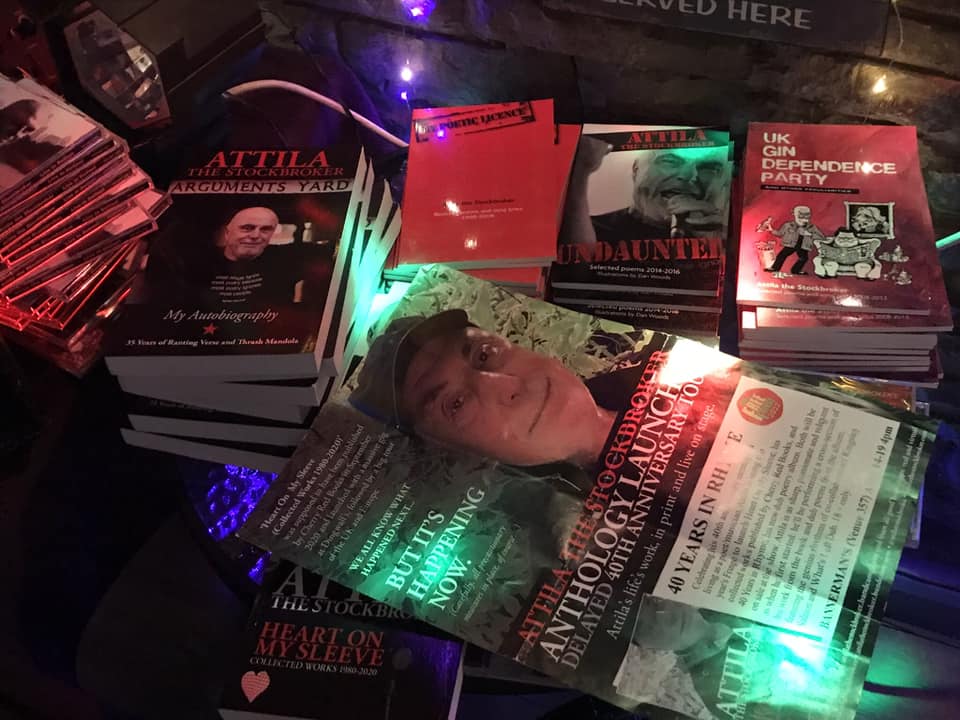
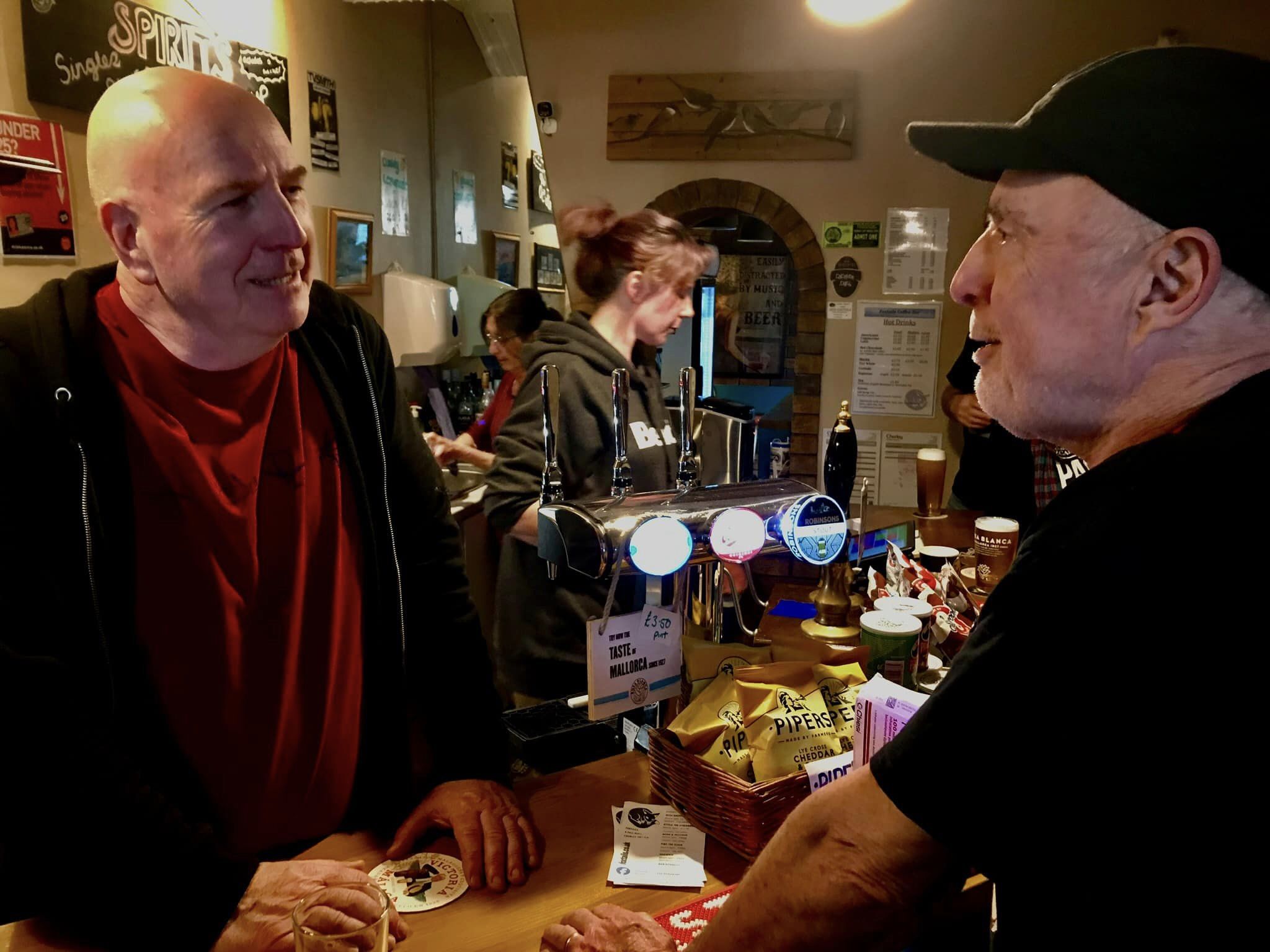

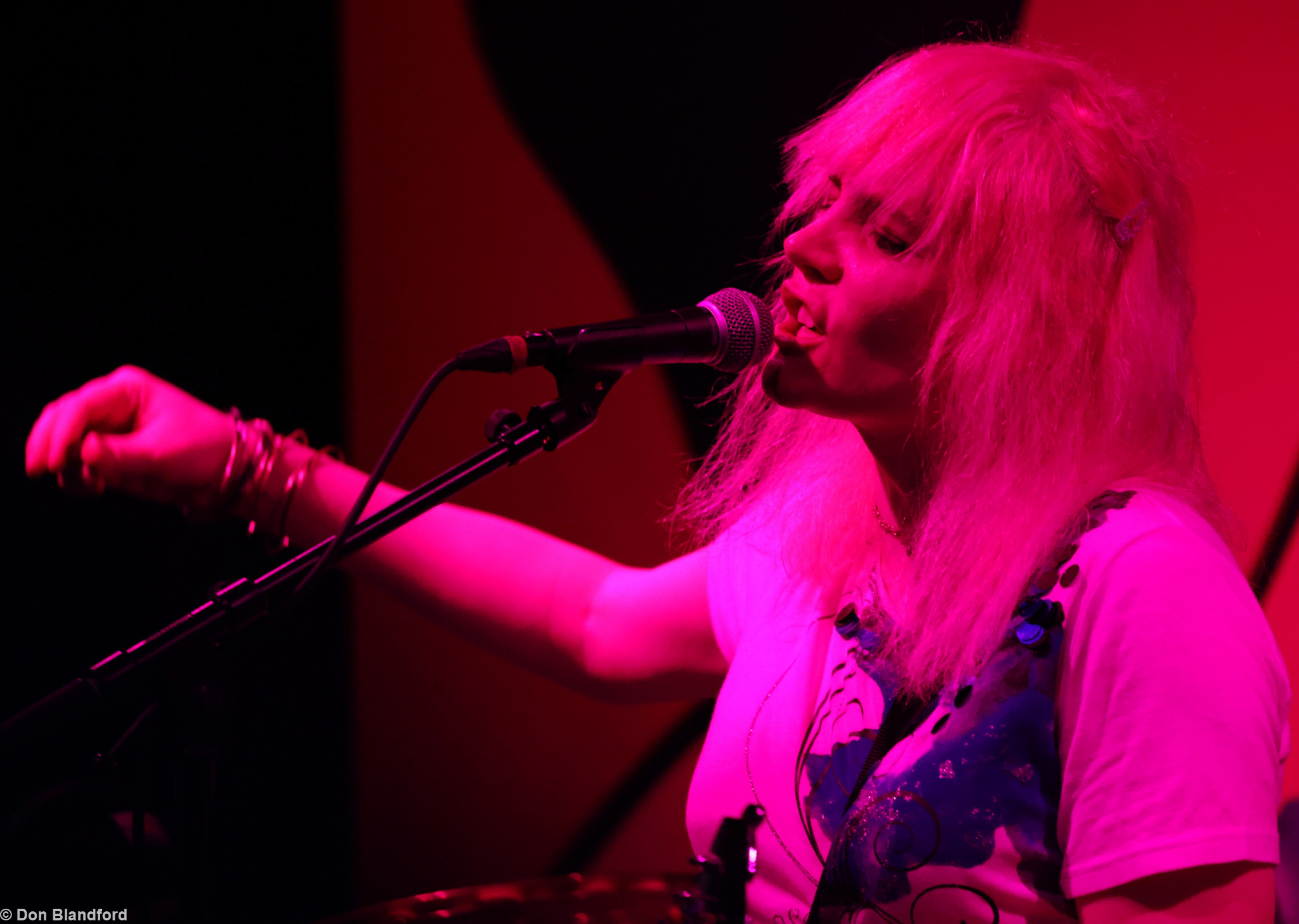
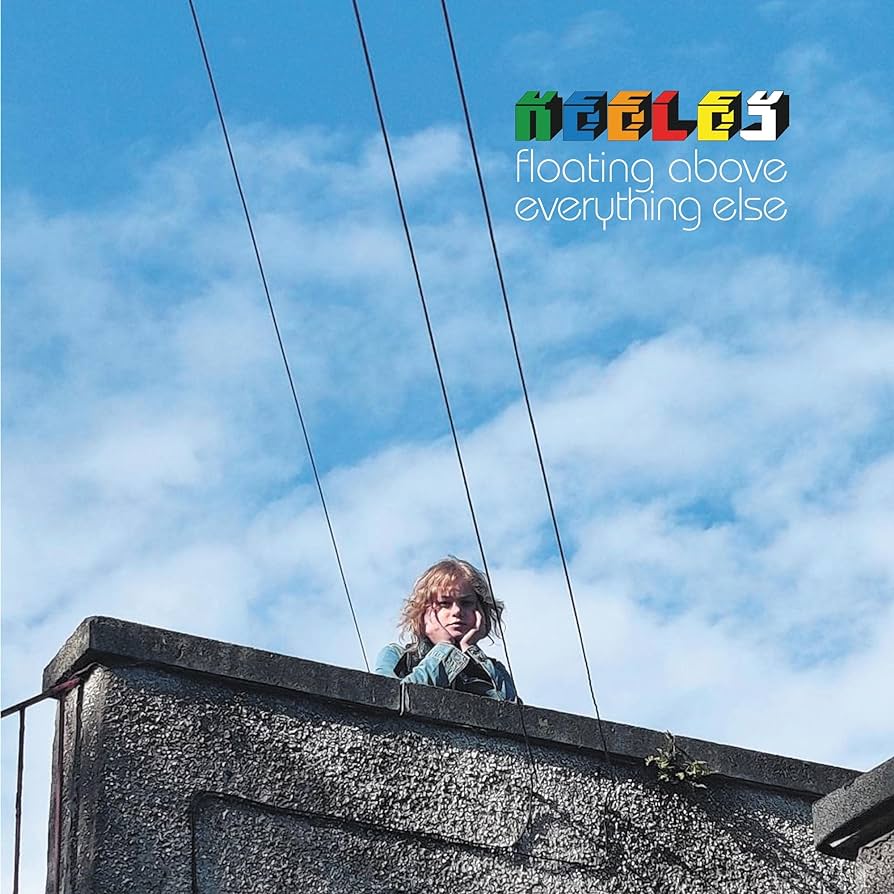


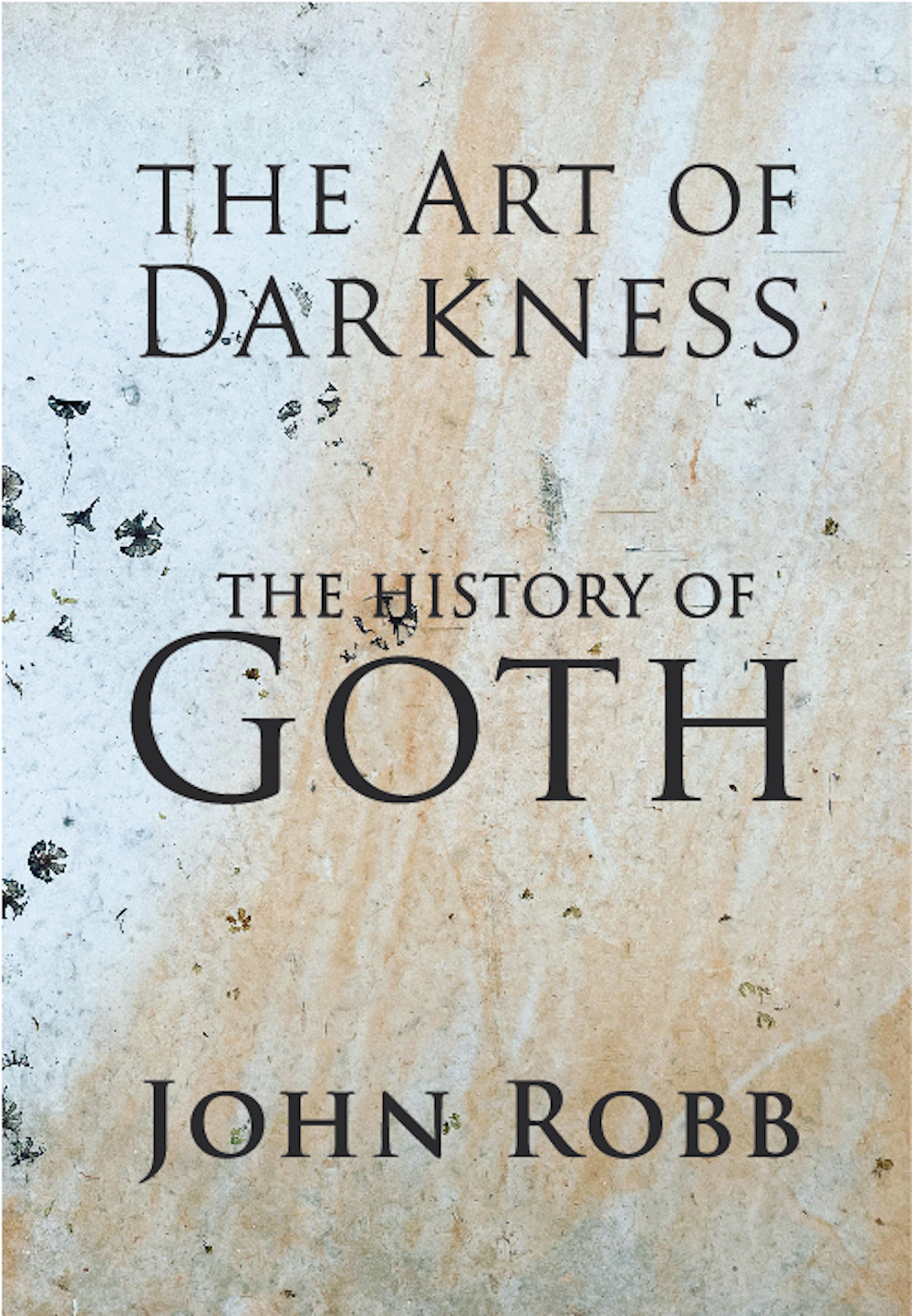


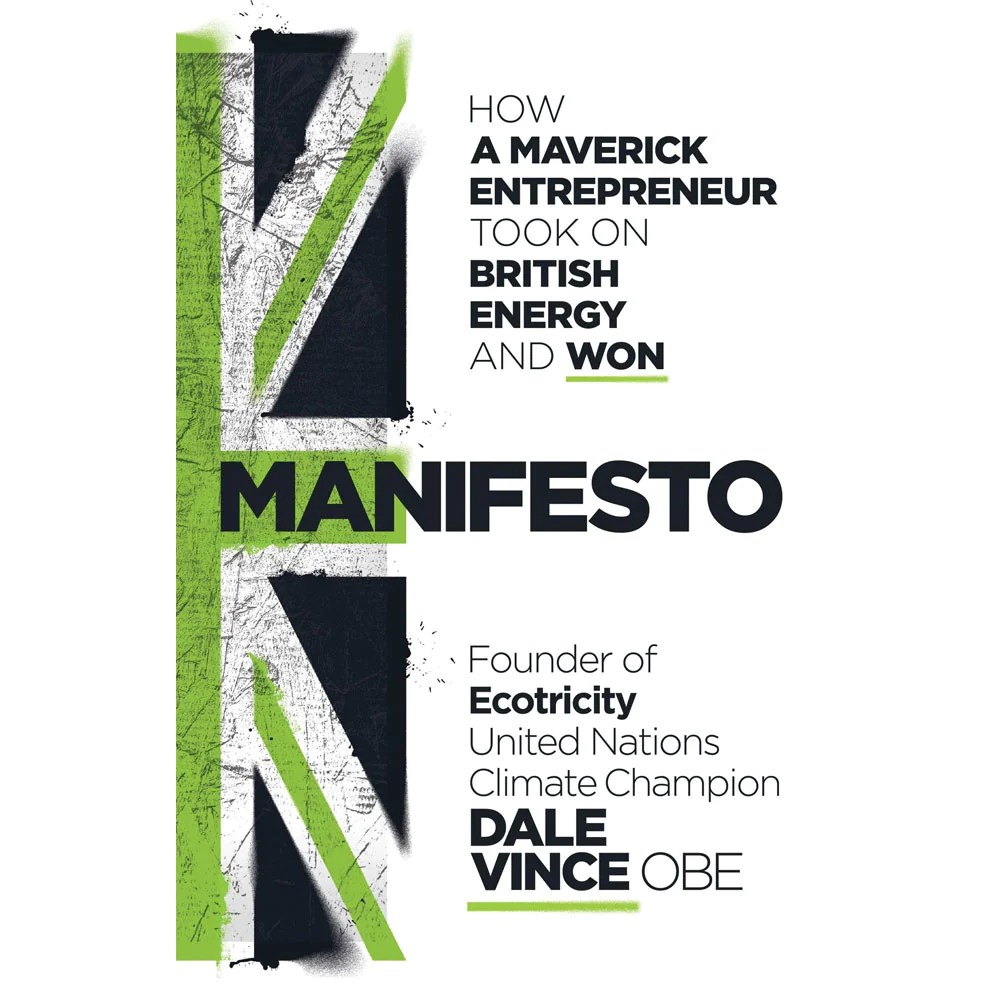


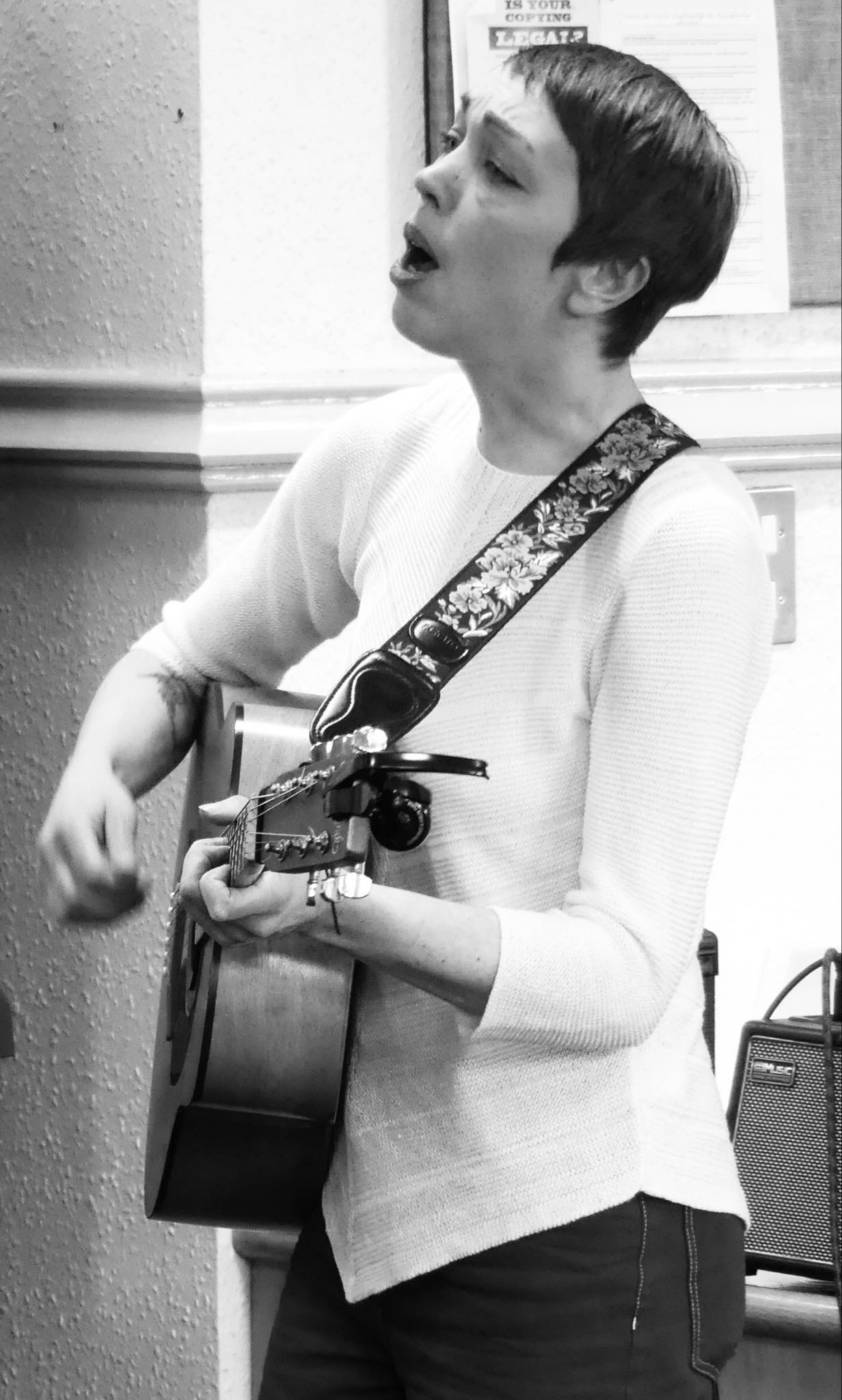

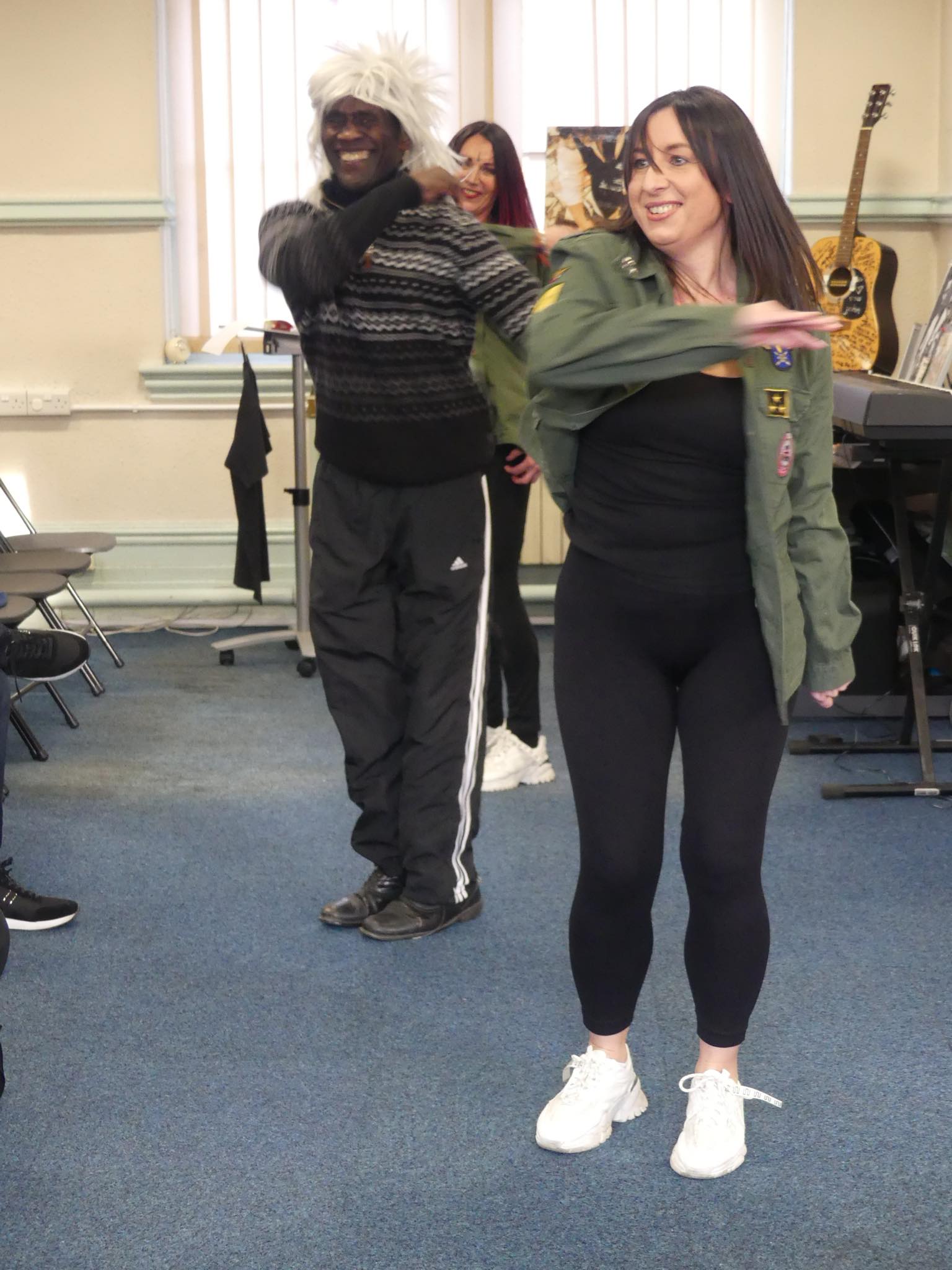


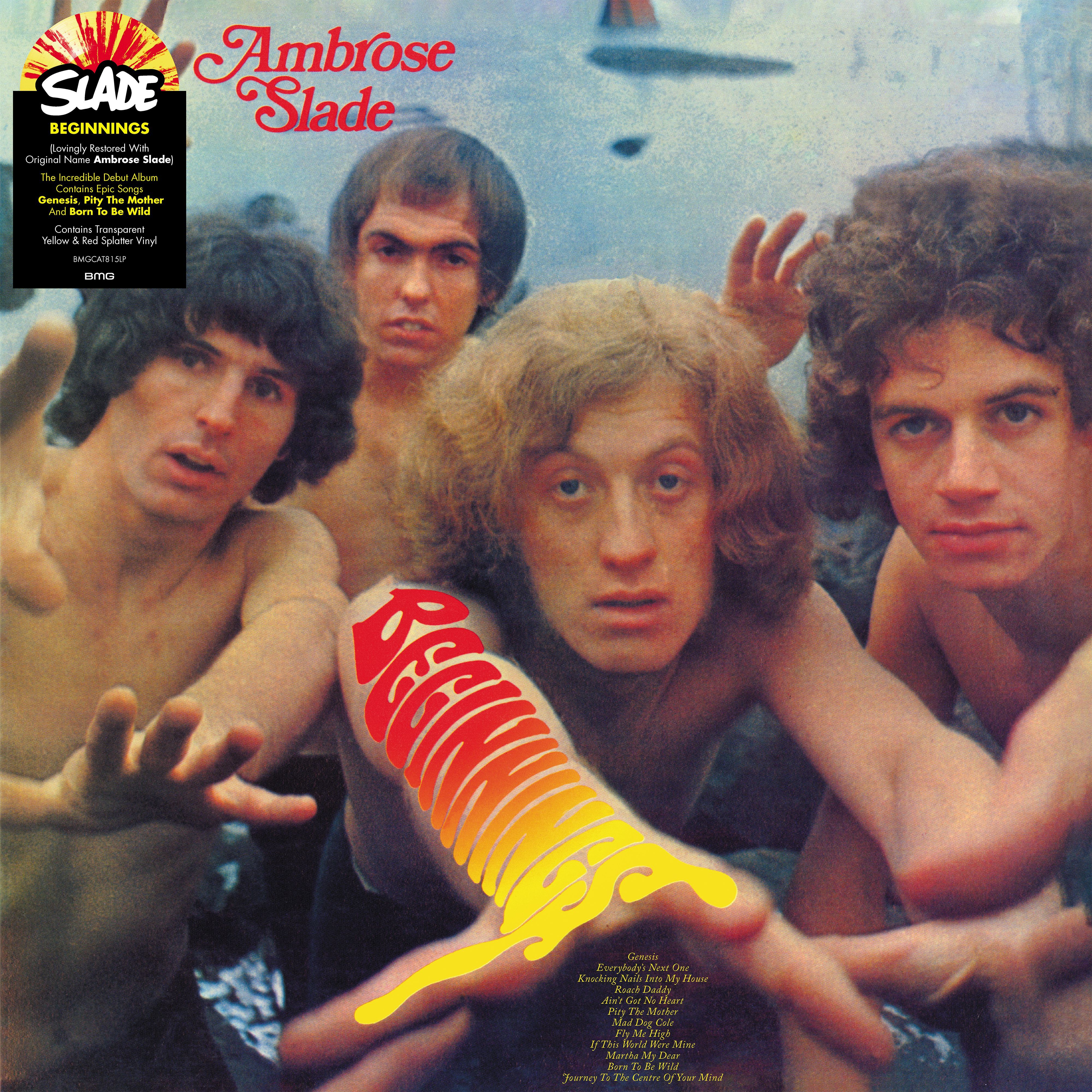




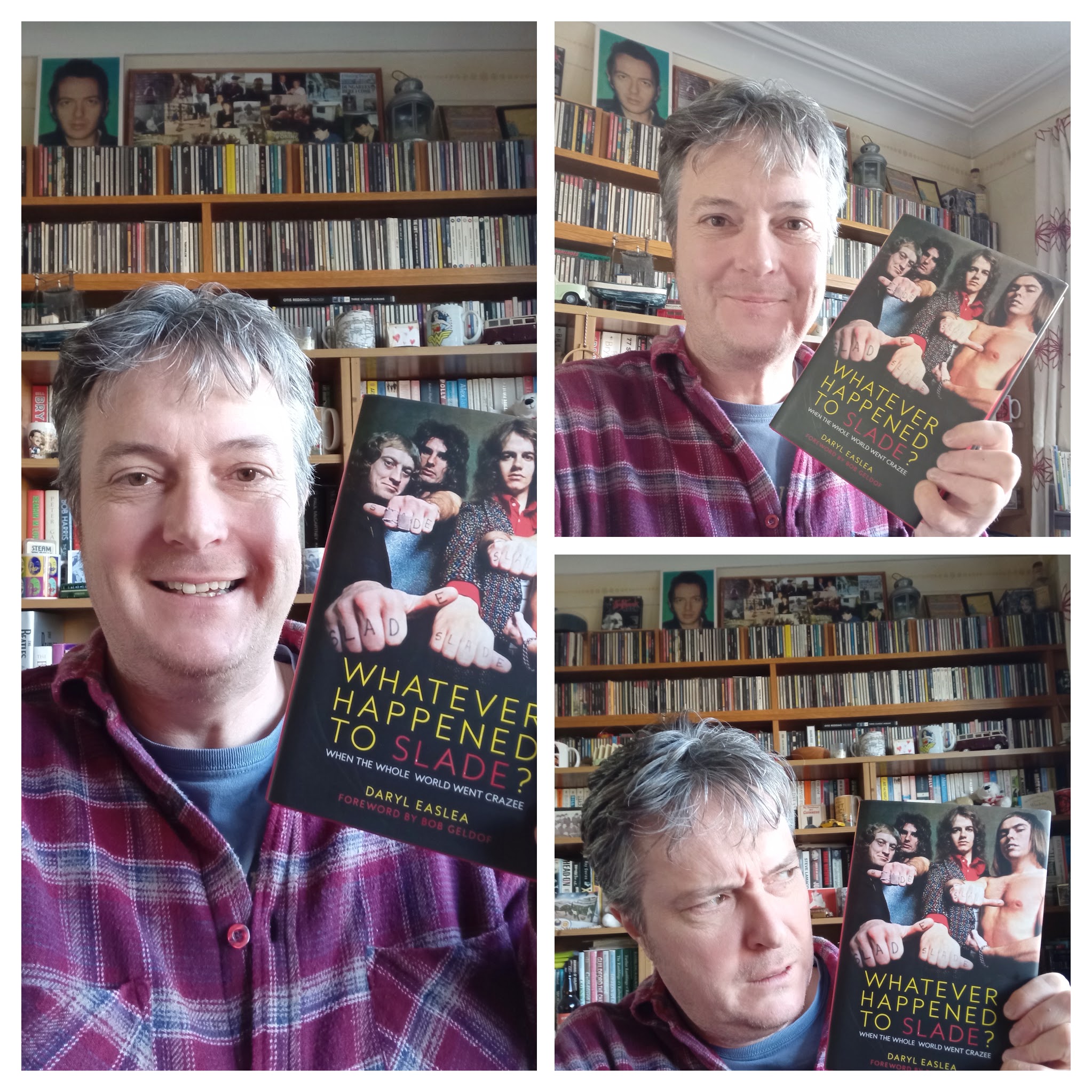


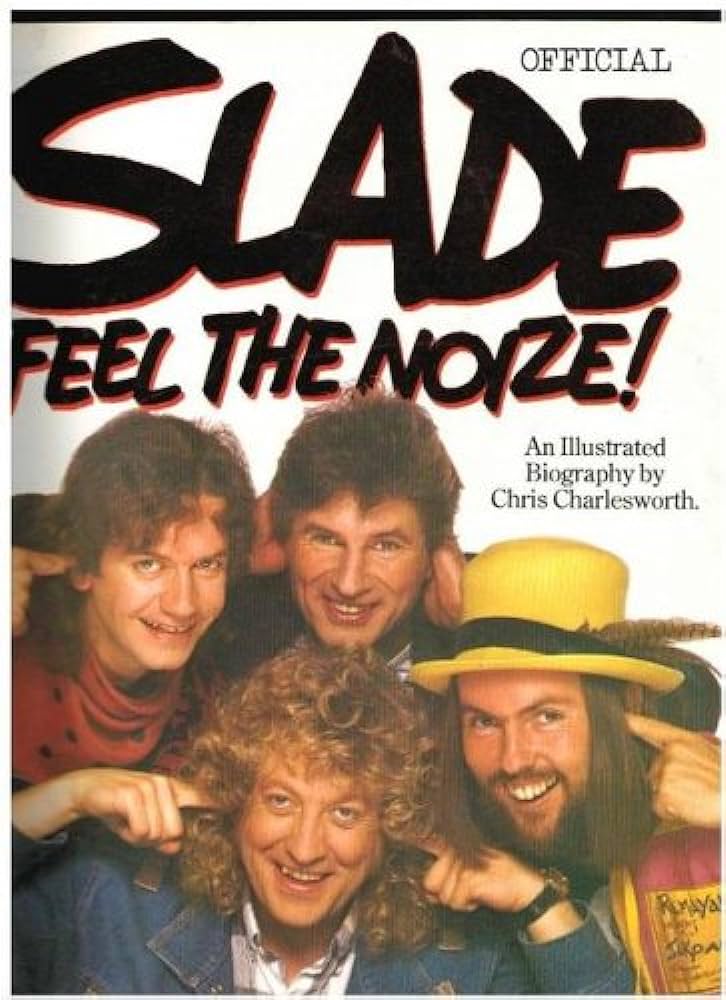


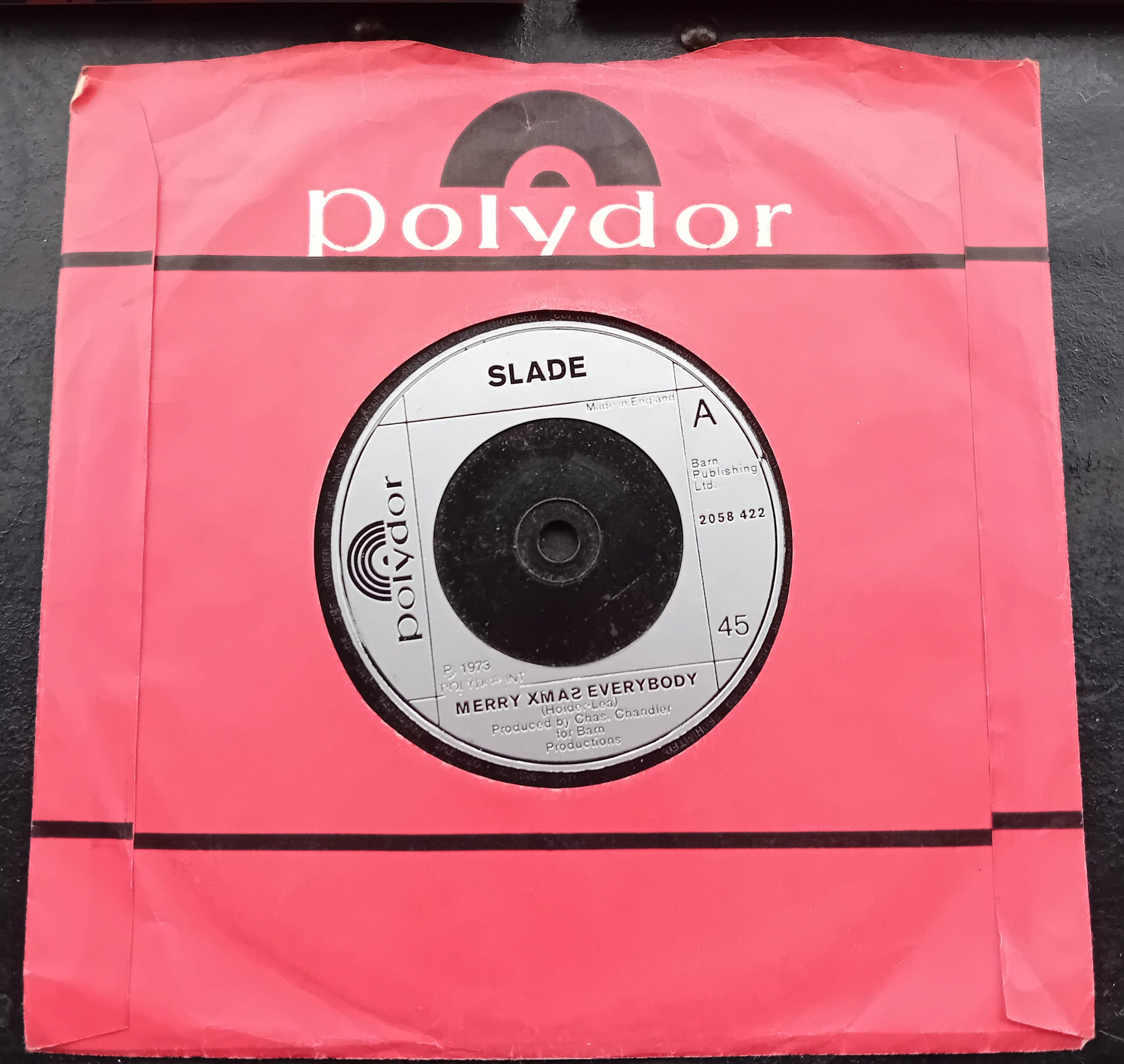


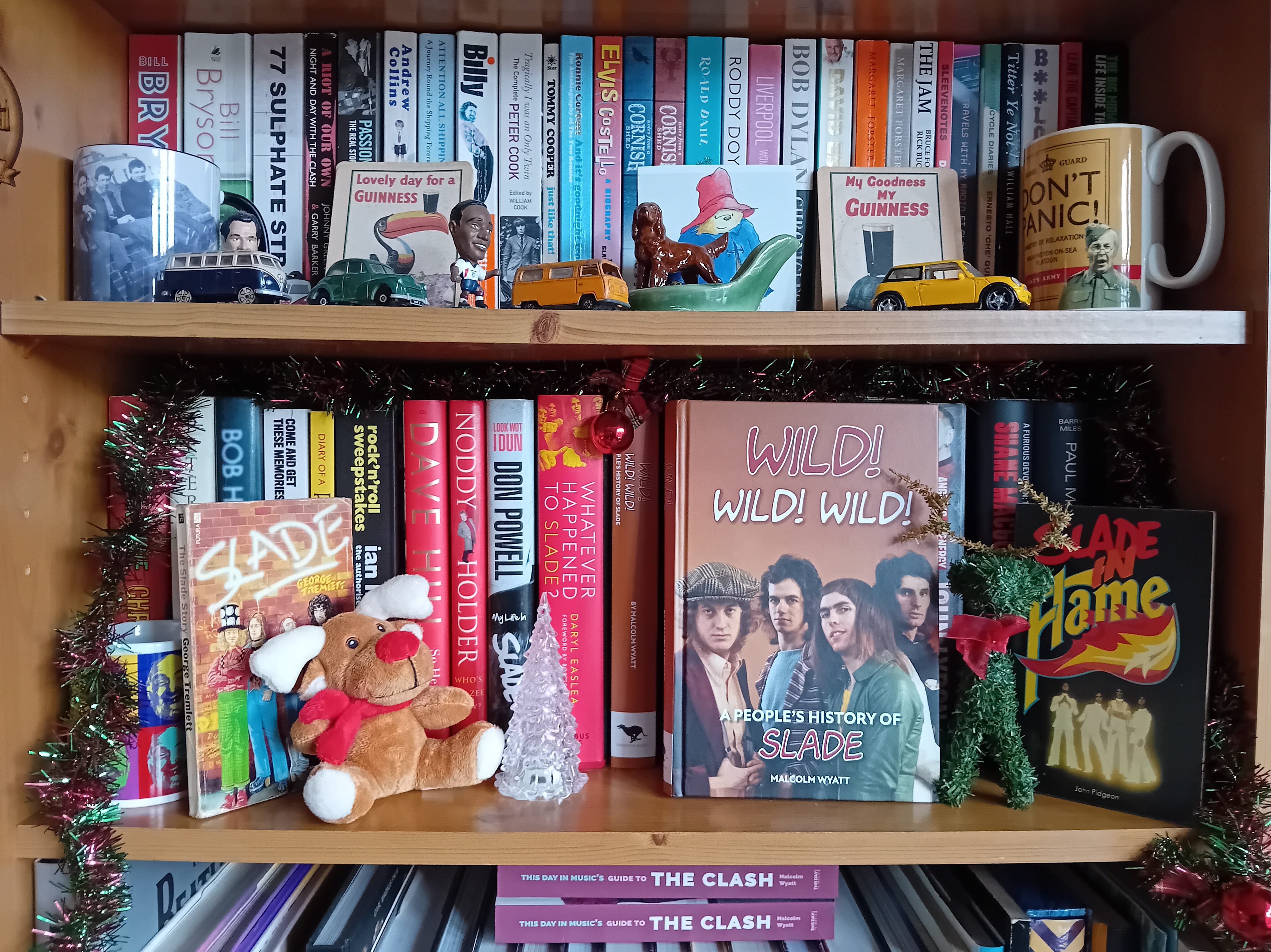
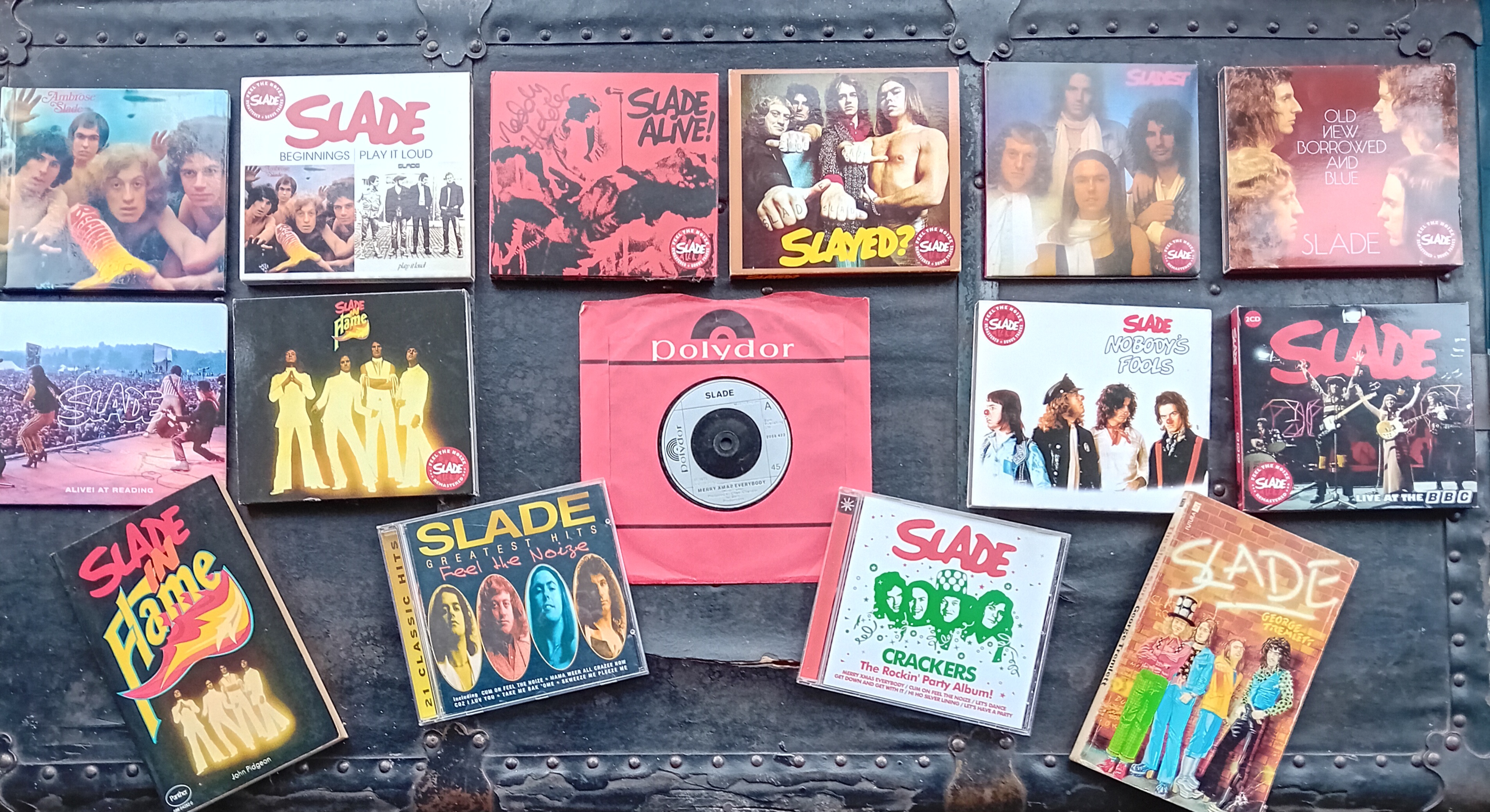




 writewyattuk