Now the time has come – back in touch with Bruce Foxton

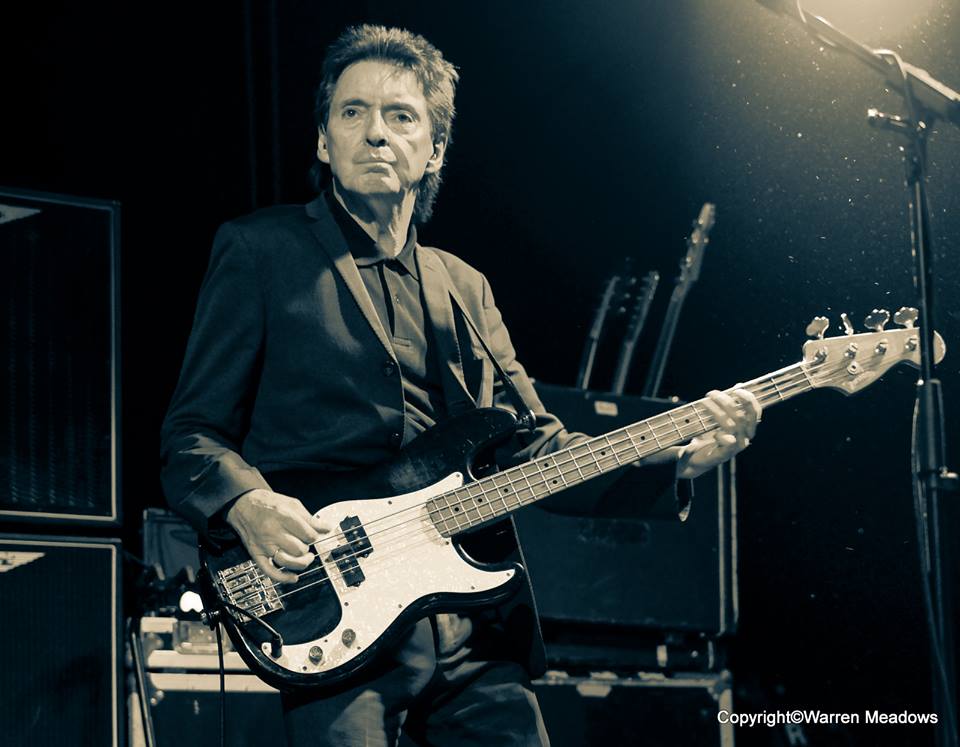
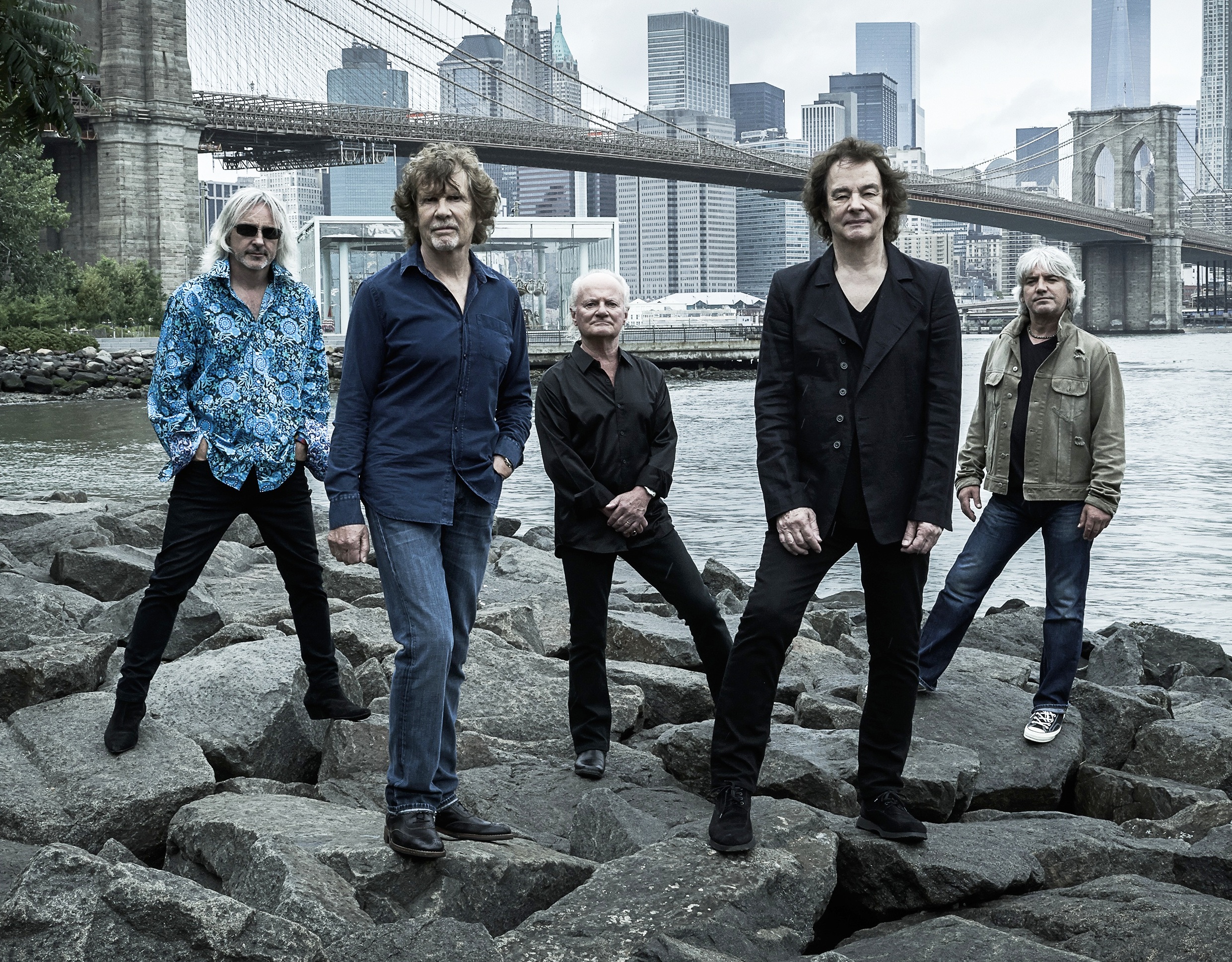
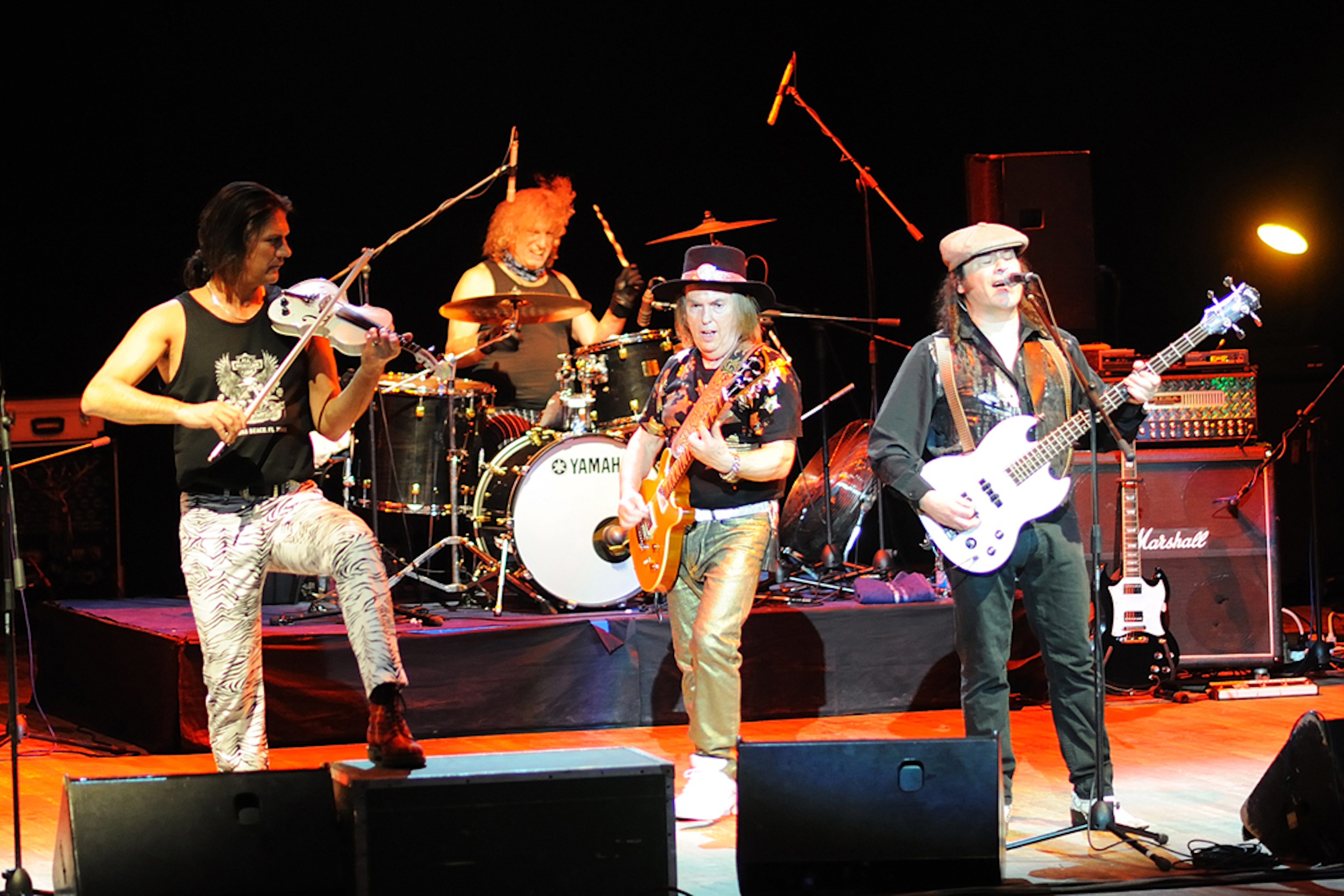
Bass Instinct: Bruce Foxton, performing with From The Jam at Cardiff Tramshed last December (Photo: Warren Meadows)

Bass Instinct: Bruce Foxton, with From The Jam, Cardiff Tramshed, December 2015 (Photo: Warren Meadows)

After an extended festive break, Bruce Foxton is all set for another punishing year for his band, with 100-plus gigs already arranged and a brand new album on its way.

If anything, the anniversary circuit is old hat for Bruce now, after several commemorative tours celebrating the music of The Jam, the Paul Weller-fronted band he initially joined in 1973.

From 1977 to 1982 this revered three-piece outfit, completed by drummer Rick Buckler, enjoyed massive worldwide success, releasing six studio albums and 18 singles, four of which topped the UK charts and five more made the top-10.

Then it was all over, The Jam’s front-man and chief writer forming The Style Council then later embarking on a stellar solo career. But while Bruce felt let down at first, he bounced back, a brief solo project followed by a lengthy spell in the reformed Stiff Little Fingers before Rick enticed him into guesting with Russell Hastings’ tribute band, in time evolving into From The Jam.

And while several personnel changes followed – not least Rick moving on at the end of 2009 – the inner nucleus of Foxton and Hastings remains, the duo set to release a second studio album this year under Bruce’s name.

Bruce and his songwriting partner clearly have another big year ahead, the diary already fairly full and Smash the Clock ever closer. So, to quote a song from the new LP, Now the Time Has Come.

“Exactly – back on it again! We finished in Brighton on December 19, and I enjoyed having Christmas and New Year off. We needed it really, to get fixed up again and all the aches and pains sorted out. Unfortunately, that’s the price Russ and myself pay. We give it everything … every show, and it takes its toll after a while.

“But we’re reasonably fit again now, so we’re going out again and I think we’ve got around 118 shows this year. It scares me when those words come out but it’ll be great once we get rolling again.”

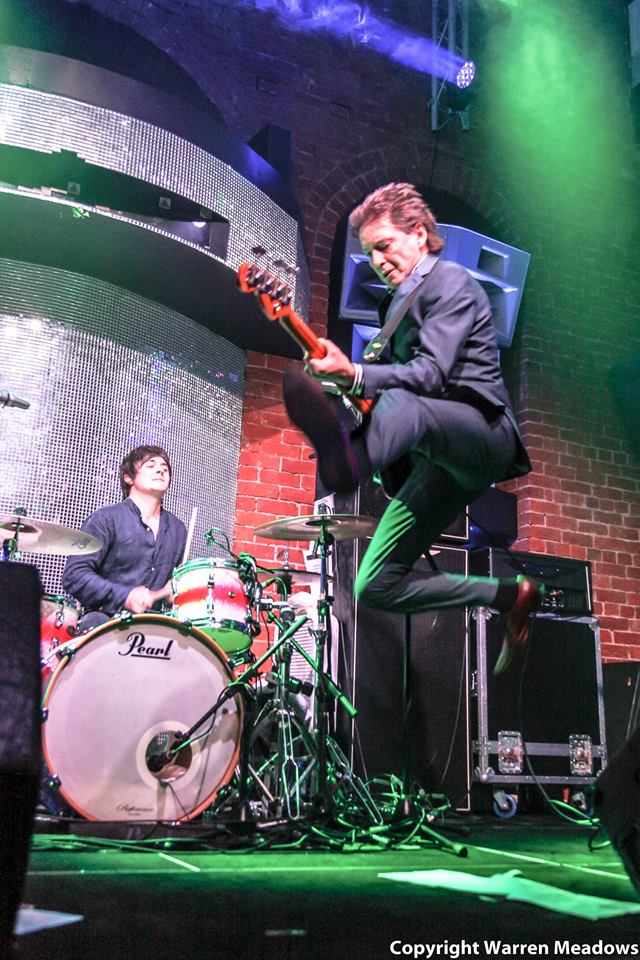
Jump Boy: Bruce Foxton makes one of his trademark leaps (Photo: Warren Meadows)

Jump Boy: Bruce Foxton makes one of his trademark leaps (Photo: Warren Meadows)

That’s a lot of bass leaps – photographers somewhat duty-bound to catch Bruce airborne while playing during those shows.

“Well, they’ve got their work cut out – I kind of restrict leaping around these days, having had a couple of cartilage operations on one knee and being advised to not leap about as much. It’s not choreographed anyway. It’s not false or fake. I’m not just doing it so a photographer can snap me. It’s just what I do … when I do it.”

Where are we at with Smash the Clock? I heard it was set for a March 18th release.

“Well, here’s an update for you. We’ve been full on and we’re using Paul Weller’s studio – so when he needs it, he has it. What with that and fitting in studio time to finish it around our commitments, we’ve now knocked it back to late April.

“Not because we haven’t got the material – we just need to do one more lead vocal and backing vocals on a couple of tracks, then mix it. We’re in again in early February to finish it.”

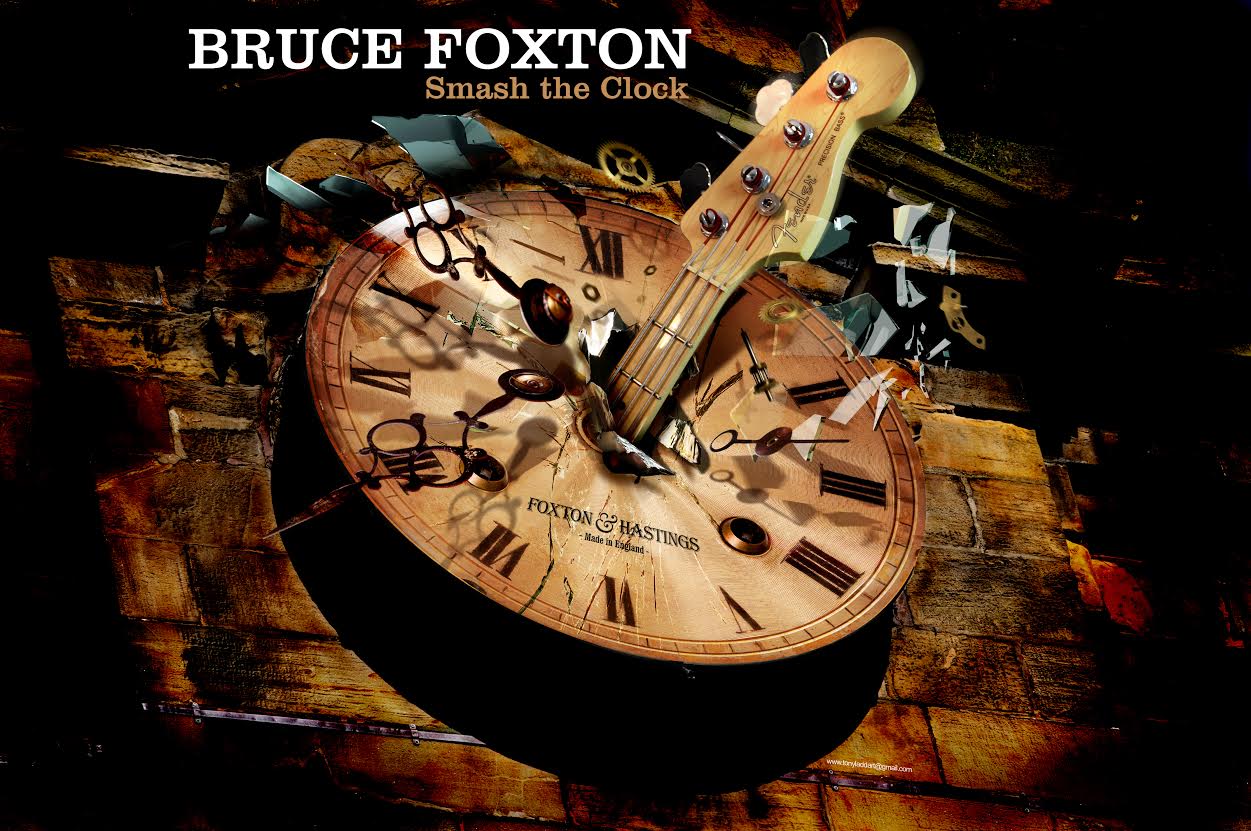
Bruce-Foxton-Smash-the-Clock-cover-jpgWell, we’ve waited since 2012’s Back in the Room, so I guess one more month won’t hurt.

“We kind of figured that all round. We’re really pleased with how it’s sounding, so don’t want to rush the last couple of tracks. In fact, on tour in December Russ came up with this verse which was really good. We knocked it up while we were on the road, and thought we should record it. So every cloud has a silver lining – wait an extra month and you get an extra track!”

Fantastic, and I like the snippets I’ve heard, as a Pledge Music subscriber to the album. Remind us who features on this album other than yourself and Russell.

“Paul (Weller) does. He pulled something completely off the wall and out of the bag, as he does – he’s a talented guy and really added to a couple of songs. Wilko Johnson’s on it as well, and was the first to come in actually, around February last year. It was lovely to see him. The Jam were heavily influenced by Dr Feelgood, and it was nice to see him after his major op, looking so well.”

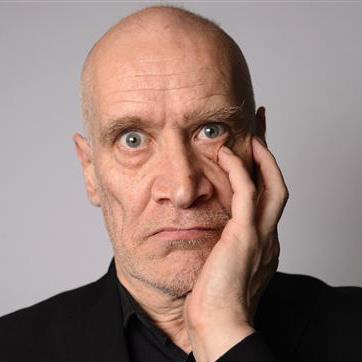
The Survivor: Wilko Johnson appears on Bruce Foxton's Smash the Clock album (Photo:  Wilko's <a href="https://www.facebook.com/WilkoJohnsonBand/">Facebook page</a>)

The Survivor: Wilko Johnson appears on Bruce Foxton’s Smash the Clock album (Photo:  Wilko’s Facebook page)

The legendary guitarist famously overcame the odds recently – having been told to prepare for the worst by medical experts – beating cancer following radical new surgery. In fact, Wilko seems to defy nature.

“Yeah, and long may that continue! We’ve also got Paul Jones, from The Blues Band and Manfred Mann involved. He lives very close to me, which I didn’t know until we got him in the studio, and plays great harmonica on a couple of tracks.

“It’s all sounding great. We’re really pleased with it, and now just want it finished.”

You mention Paul Jones, 73, and only last week I interviewed Colin Blunstone, 70, of The Zombies. Musical heroes like that, still playing and recording, must make 60-year-old Bruce feel young.

“Yeah – there’s hope for everyone! There’s no getting away from it, it’s hard being on the road. My wife ribs me about it, saying, ‘What are you moaning about? You’re in the car five or six hours, and you’re only sitting down’.

“It does gets tiring, but it’s a great way to get out there and earn a living. I’m just glad we’re still able to do it, very grateful – having all those classic songs to perform is a joy.”

From the Jam tend to alternate between band shows and acoustic performances these days. They’ve also taken to anniversary gigs celebrating past Jam albums. Is the Sound Affects 35th anniversary tour still on-going?

“I think there may still be one or two we rescheduled, but while we’re pretty much done there, our greatest hits sets still include tracks off every album.”

Those greatest hits shows – dubbed The Public Gets What the Public Wants in honour of a lyric from Going Underground – include visits to Bridgewater, Blake Hall (Friday, January 22nd), Barnstaple, Factory Petroc (Saturday, January 23rd) and Colne, The Muni (Saturday, January 30th) before the month is out, the latter following a rearranged Sound Affects show at Shrewsbury, The Buttermarket (Friday, January 29th).

And then there are the That’s Entertainment acoustic shows, starting at London’s Under the Bridge (Friday, March 11th).

“Yeah, we’ve got to get our heads around those again – they’re a whole different ball game the way we approach them, with the songs slightly changed as we don’t have a full kit behind us. I think we’ve got Tom (van Heel) on keys for those though.

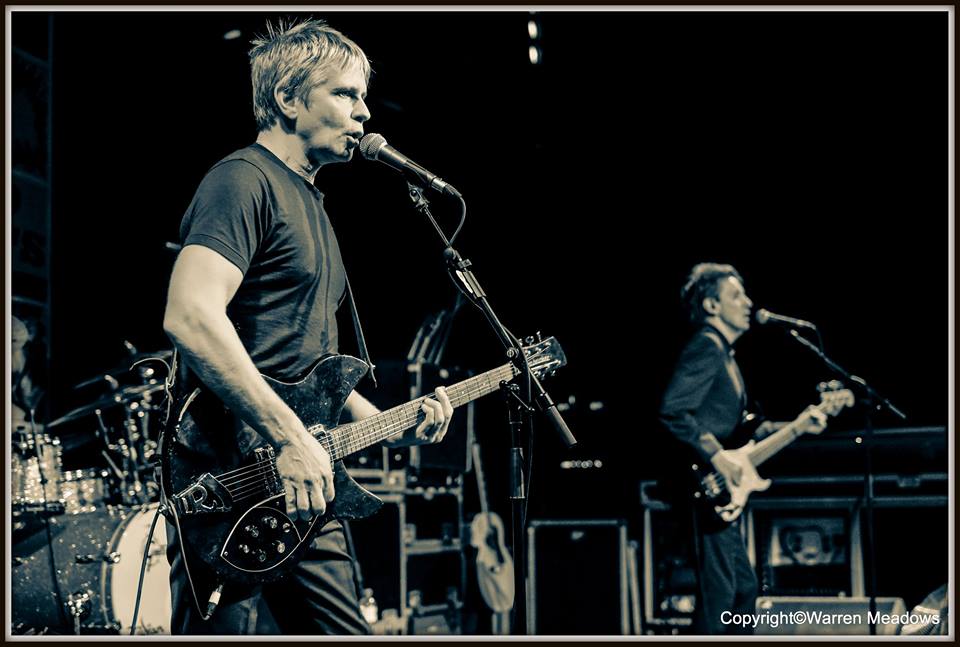
Sound Affects: Russ and Bruce out front at Cardiff Tramshed on the Sound Affects 35th anniversary tour (Photo: Warren Meadows)

Sound Affects: Russ and Bruce out front at Cardiff Tramshed last December (Photo: Warren Meadows)

“When the idea was first suggested, acoustic shows, I was really apprehensive, having been used to having the power of a band behind me. I was so nervous. I get nervous whatever the show, but to go out there acoustic, you’re really exposed. You can hear a pin drop.

“That said, they’ve taken on a life of their own at some venues, as raucous from the audience point of view as anything with a full band. Unbelievable! Again, it’s testament to how great those songs still are. If you can play them on an acoustic guitar and get a reaction, you know you’re on to a winner.”

Seeing as you’ve branded those acoustic gigs your That’s Entertainment shows, I take it you realise it’s 35 years next month since that classic single was released.

“Well … you know more than I do!”

I doubt that very much, but it was February 7, 1980, when the single came out.

“There you go – and that’s what amazes me doing these anniversary celebrations. In a lot of ways it doesn’t feel like that long ago and I never thought I’d be doing it.

Time Out: Bruce Foxton, taking a break from recording at Paul Weller's studio

Time Out: Bruce Foxton, taking a break from recording at Paul Weller’s studio

“When the Jam split in 1982 I thought that was the end of it. But I’m proud and grateful I can still play those songs, and we still get great crowds.”

For me, Sound Affects and the singles that followed suggest The Jam were on a creative high then.

“Absolutely. It’s a great album. With the Setting Sons and Sound Affects tours I’ve re-learned some of the songs, and it hits home even more how great Paul’s lyrics are. It’s incredible considering how young we all were, to come up with those lyrics. I’ve probably paid more attention to that side of it now.”

Since I last caught From the Jam live – the third time I’d seen them at Preston’s 53 Degrees – they’ve switched personnel again, with Steve ‘Smiley’ Barnard joining Rick Buckler, Big Country’s Mark Brzezicki and Paul Weller studio aide Tom van Heel (who still helps out when he can on keyboards) in the ranks of former From The Jam drummers.

In his place is Mike Randon, a lack of availability for Smiley – who previously featured with Joe Strummer and Robbie Williams, among others – leading to a rethink.

“We just agreed to part company. We’re friends, he came to the Brighton show and we remain in touch. There’s no animosity. It was the practicality, with his band, Archive, away he couldn’t do the run-up to the Sound Affects tour.

“But Russ heard about Mike and he’s just great – he fits the bill and is the closest thing to Rick in his style of drumming we’ve ever had. It’s working really well, he came to Australia with us last year, and we’ve kept him on since. He’s got a lot of detail in his drumming, as Rick has.”

Park Life: Nine Below Zero (Photo: http://www.ninebelowzero.com/)

Park Life: Nine Below Zero (Photo: http://www.ninebelowzero.com/)

Support at Colne in Lancashire next weekend comes from stalwart blues outfit Nine Below Zero. Is there a good camaraderie between the bands?

“Yeah, they’re no spring chickens either, they’ve been round the block – like I have. They’re no prima donnas either, excellent at what they do, very talented, and gentlemen as well. When we’re backstage, it’s a real nice friendship and vibe. I’m really happy they’re our special guests. It promises to be a great night out.”

Bruce goes back a long way with lead singer Dennis Greaves – who also fronted ‘80s outfit The Truth – and Nine Below Zero are enjoying something of an r’n’b resurgence,  thanks to younger acts like The Strypes and older hands like Wilko Johnson.

Meanwhile, there’s plenty of fresh interest in late-‘70s new wave bands judging by Squeeze’s 2015 comeback and continued live success for From The Jam and fellow Surrey outfit The Stranglers.

“Yeah, you can’t get shot of us, can you!”

True, and recently From The Jam played Manchester Academy alongside two more of my favourite old bands, The Undertones and The Beat.

“Yeah – that was good!”

Jam Session: Russell and Bruce in action at Cardiff Tramshed, December 2015 (Photo: Warren Meadows)

Jam Session: Russell and Bruce in action at Cardiff Tramshed, December 2015 (Photo: Warren Meadows)

It’s a fair step-up from the dreaded tribute circuit, I put to Bruce, leading to a typically-deadpan response.

“Yeah … I never understood that anyway. I can’t be a tribute to myself! I mean, how great am I? But it’s come on unbelievably since we embarked on it all.

“I think that’s testament to how hard we work and at such a high level. We’re very passionate about those Jam songs and want to perform them to the best of our ability, and I think we do that. The crowds appreciate that, and the numbers are getting bigger and bigger in most towns.”

Back to the new album – explain the title, Smash the Clock.

“Well, it’s a song title, and the outline is that good music is timeless. That sums it up really.”

Is it mostly Russell’s lyrics or both of you this time around?

“It’s probably 75/25.”

Prime Exhibit: Somerset House played host to last summer's Nice Time Inc Productions-supported exhibition

Prime Exhibit: Somerset House played host to last summer’s Nice Time Inc Productions-supported exhibition

Last year was a big one for Bruce’s old band, with a celebratory summer exhibition at Somerset House in London, The Jam: About the Young Idea, attracting large numbers.

“It was unbelievable, and lovely to see people like Barry Cain, who was at Record Mirror all those years ago and was a good friend of my first wife. There was also Paul Cook of the Pistols, and the actor, Martin Freeman. I didn’t realise he was such a big fan.

“More importantly, there was the chance to hang out with Paul, and his sister Nicky again. And I went back a few weeks later, met up with Paul and had a late morning walking around Somerset House, which was a lot calmer.

“It was nice to hang out. Our friendship is as strong as ever. I was very impressed with the actual exhibition too, seeing a lot I hadn’t seen at all or not for many years.”

Rick's Side: That's entertainment, the Rick Buckler autobiography, went down well with Jam fans in 2015

Rick’s Side: That’s Entertainment: My Life in The Jam (Omnibus Press, 2015)

As it happens, Rick Buckler was also there – although not at the same time as Bruce and Paul – just a couple of months after publishing his autobiography, That’s Entertainment: My Life in The Jam. Has Bruce read his book?

“I haven’t, but not for any reason. I just haven’t got around to it, and haven’t got a copy. But I’ve always wished him all the best.”

When I spoke to Rick last April he seemed keen to put any past disputes – mostly those played through the press, I might add – behind you all.

“That’s good, but if he really wanted to, he should have come to the preview! That was probably the last chance to get all three of us together for something.

“I was just disappointed he wasn’t there. If you want to let bygones be bygones, that would have been a good time. I haven’t any gripe with Rick. I don’t know about Paul. Either way, it wouldn’t have been brought up at a premiere of that exhibition. It would have been nice to see him and say hello. But the book did really well for him, and I wish him all the best with whatever he’s up to next.”

I should add at this stage that I’ve since understood that Rick was unavailable at such short notice for the preview event, not least as he was doing an In the Crowd fan event just across the river from Somerset House at The Roxy that evening. I also understand that he was ‘gutted’ to miss out. Hopefully though, the three of them will get ‘back in the room’ again one day, even if a performance is extremely unlikely, perhaps rightly so at this stage.

Finally, I put it to Bruce that next March will mark the 35th anniversary of The Jam’s final studio album, The Gift. All being well, will that also inspire a special commemorative tour?

“Yes, like you say, all being well. I haven’t got any wish to hang up the bass guitar as yet. You never know what’s around the corner, but God willing, and all that, I’ll keep going as long as I can, as long as I enjoy it and people still want to keep coming to see us.”

Clocking On: Bruce Foxton, with From The Jam, Cardiff Tramshed, December 2015 (Photo: Warren Meadows)

Clock Work: Bruce Foxton, with From The Jam, Cardiff Tramshed, December 2015 (Photo: Warren Meadows)

From The Jam and Nine Below Zero play the Muni Theatre, Colne, on Saturday, January 30 (doors 7.30pm, £20 advance, £23 on the night). For tickets call 01282 661234 or head to http://www.themuni.co.uk/.  

For details of all the other forthcoming From The Jam shows, head to the band’s Facebook page here, and to  find out more about Bruce’s new album, Smash the Clock, try here. 

This is just the latest Jam-related feature on this blog, with links to the previous ones here:

Super Sonik flight with Weller … again (April 20th, 2012)

Back (on the phone) with Bruce Foxton (May 31st, 2013)

Bruce Foxton (Back in the Room) – a writewyattuk review (May 31st, 2013)

Sound affects on a midsummer’s night (June 22nd, 2013)

Weller’s ever-changing mode (October 13th, 2013)

Where did it all go right? In conversation with Russell Hastings (May 3rd, 2014)

When Setting Sons rise again – the Bruce Foxton and From The Jam update (October 3rd, 2014)

From The Jam/Deadwood Dog – Preston 53 Degrees (October 12th, 2014)

Time for Truth – the Rick Buckler interview (April 2nd, 2015)

Posted in Books Films, TV & Radio, Music | Tagged , , , , , , , , , , , , , , , , , , , , | 12 Comments

The Thing About Jellyfish by Ali Benjamin – a writewyattuk book review

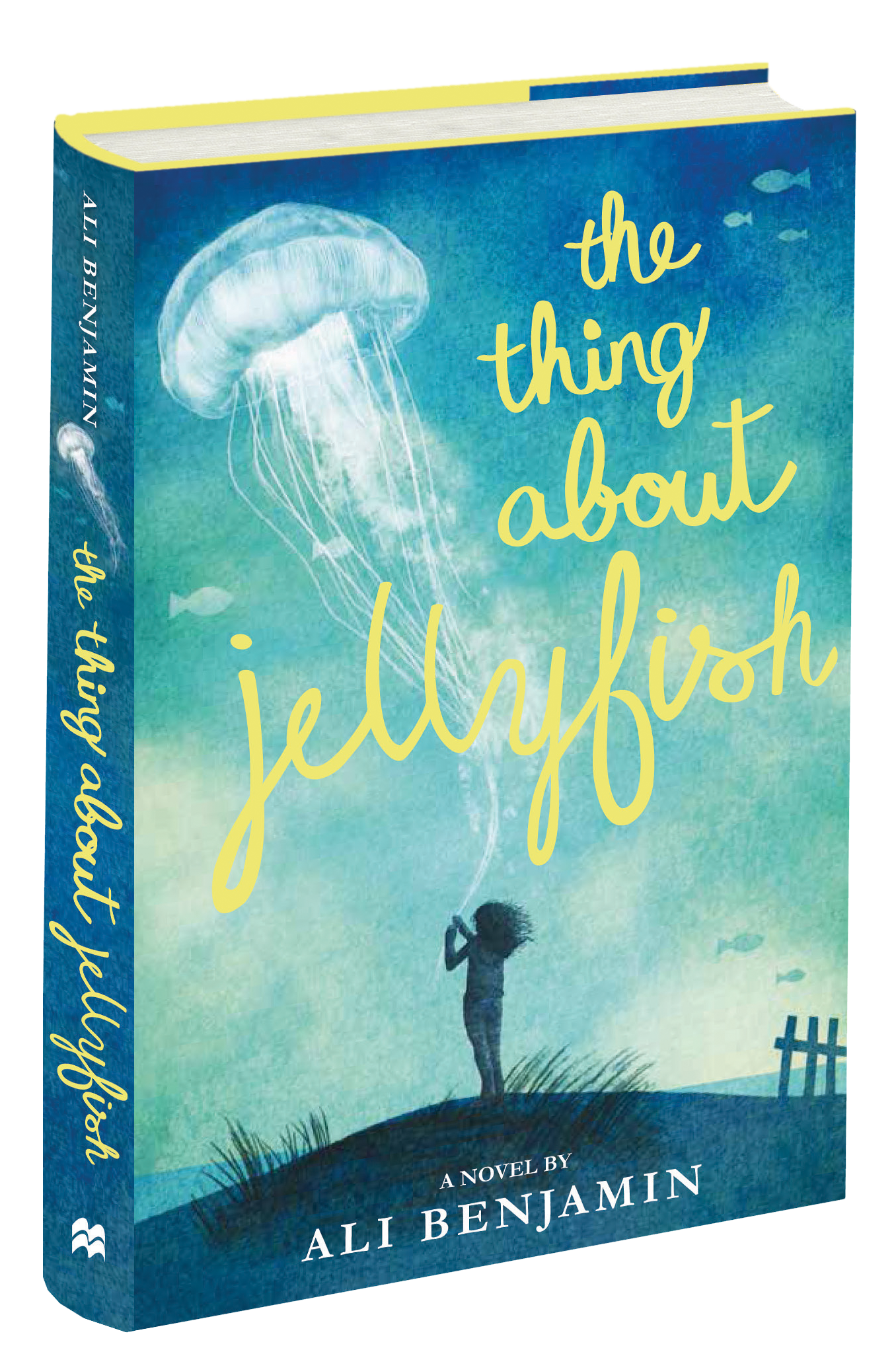
9781447283836Some books have you hooked from the start, and the debut novel from Ali Benjamin offers a prime example … even if the last thing I reckon I’d want on the end of a hook would be a jellyfish.

The title certainly reeled me in, and while this reader never had any great hankering to study marine biology, perhaps that’s because I never had an inspirational science teacher to fully engage me in the subject – like Mrs Turton in The Thing About Jellyfish. More to the point, on this evidence I’d say the author has similar qualities, with an ability to tidily translate her way with words into accessible children’s fiction us adults can appreciate too.

The scientific approach to a novel has largely passed me by before now, but Ali’s approach offers us fresh perspective. It also helps when you can truly identify with a character, and from the off I felt I knew and largely understood Suzy Swanson, a likeable 12-year-old coming to terms with the sudden death of her best friend, Franny Jackson.

We might soon question Suzy’s real motive in doubting the official verdict on strong swimmer Franny’s drowning on holiday in Maryland, but not once does she lose us as we follow her more logical approach to understanding the tragedy – unwilling to accept ‘sometimes things just happen’ and trying to piece together events the only way she feels she can – via the power of learning and research.

It’s a school trip to an aquarium that puts her on the road to what she sees as a more feasible explanation, even if we soon realise that’s not the whole story for a girl desperate to turn the page and get through the Eugene Field Memorial Middle School. What’s more, we have an exclusive peak into Suzy’s thought process, seeing as she’s opted for selective mutism, vowing to keep herself to herself and enter a pledge of silence until she has something concrete to share.

Suzy’s tale is told to some extent in the format of a science lab report, but we get to read between the lines as she aims to make sense of it all, immersing herself into extra-curricular studies to find the evidence that will convince everyone what she feels really happened out there in the water – however unlikely her theory might seem.

Science Fiction: Ali Benjamin certainly reels us in with The Thing About Jellyfish

Science Fiction: Ali Benjamin certainly reels us in with The Thing About Jellyfish

It’s as much a tale of how friendships change as we grow apart and are drawn to others though – the politics of the playground. Don’t think for a minute it’s a girls’ book either. Dedicated to ‘curious kids everywhere’, It should resonate with all readers who have been that age or thereabouts at some stage, irrespective of gender. It’s quirky too, and despite the dark premise there’s humour and plenty of warmth on offer down in South Grove, Massachusetts.

As Suzy aims to prove the interconnectedness (is that even a word?) of all those telling factors, she finds potential help via a kindred spirit halfway across the world, a high-profile scientist in Queensland, Australia. Taking that scholarly line, she explores ’cause and effect’ – in this instance how changes to one part of her world can lead others to change, at a time in Suzy’s life when everything seems to be shifting – not least as she copes with her parents’ separation and those troublesome friendship issues.

Meanwhile, a child psychologist who she refers to as ‘Dr Legs’ (‘the doctor I could talk to but would rather not’) does all she can to help Suzy, but Miss Swanson is adamant she’s doing okay on her own, even if that’s likely to involve some mighty big steps.

I won’t go into where she’s heading, but as Mrs Turton tells her pupils, ‘we learn as much from failures as we do from successes’, Suzy getting to redefine her personal relationships while reflecting on just where things went awry with Franny. In so doing, she proves to be someone we can all learn from, wise beyond her years and unclouded in her thinking.

In her author’s note, Ali – a member of the New England Science Writers and a busy working mum who likes to ‘teach kids about storytelling and writing’ – acknowledges others who have gone before her with that scientific approach to understanding the bigger picture. A prime example is Bill Bryson, with Ali giving credence to his explanation of ‘the origins of the universe, the natural history of our planet, and the astonishing fact of our own existence’. There’s a definite correlation there too, and what Bill does for the non-scientifically-minded reader (I’ll include myself in that category) she replicates in the form of engaging children’s fiction.

Like a good teacher, Ali helps us understand not only Suzy and her grief but the wider subject itself, helping us see the world through her main character’s eyes in a relatively easy yet enriching read. In so doing, Ali Benjamin gives science a good name, and word has it that her story is already set to be brought to life by Reese Witherspoon’s production company Pacific Standard Films.

Oh, and I got to learn a fair bit about jellyfish along the way too.

THING ABOUT JELLYFISH_packThe Thing About Jellyfish by Ali Benjamin is published in hardback (Macmillan Children’s Books, £10.99) on March 16th, 2016, available from all good bookstores and various online outlets in the UK. And for more about Ali, head to her website here.

Posted in Books Films, TV & Radio | Tagged , , , , , , , , , , | Leave a comment

Took a long time to come – the Colin Blunstone interview

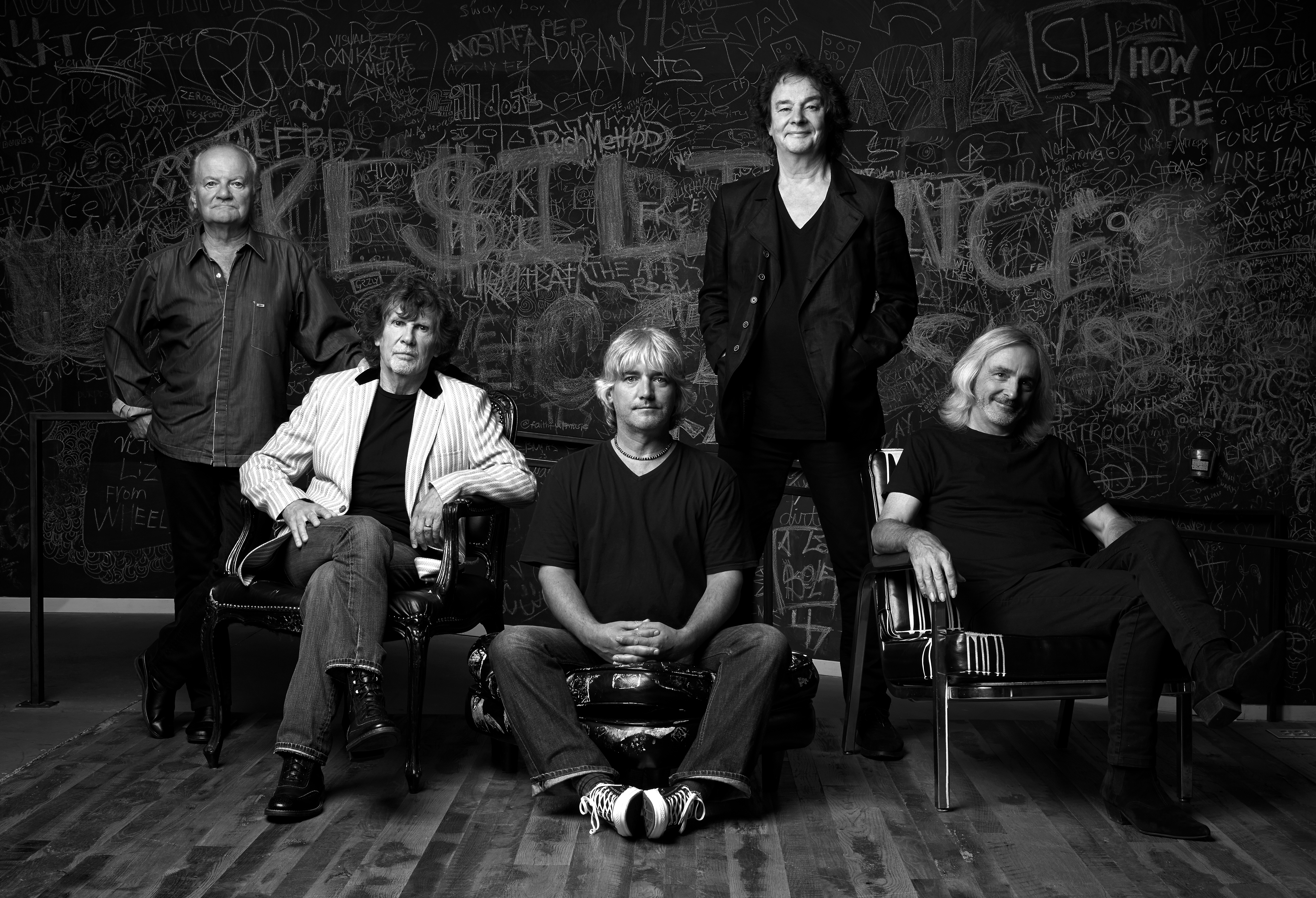
Seasonal Favourites: The Zombies, with Colin Blunstone, second right, and Rod Argent, second left (Photo copyright: Andrew Eccles)

Seasonal Favourites: The Zombies, with Colin Blunstone, second right, and Rod Argent, second left (Photo copyright: Andrew Eccles)

Some songs provide the soundtrack for key moments of our lives, whenever they were written. And many of those on mine were penned before I was even born, including at least a couple from The Zombies.

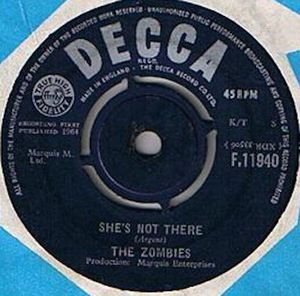
I’m not quite sure when I first heard 1964’s She’s Not There, but I’ll just be one of the many who felt that song could have been written for me at some stage in the late ’80s. And while I was a few years longer in the tooth by the time This Will Be Our Year truly resonated, there was a similar effect. Yet the band behind both were initially only around for a short period of the Swinging ‘60s, despite their lasting impact.

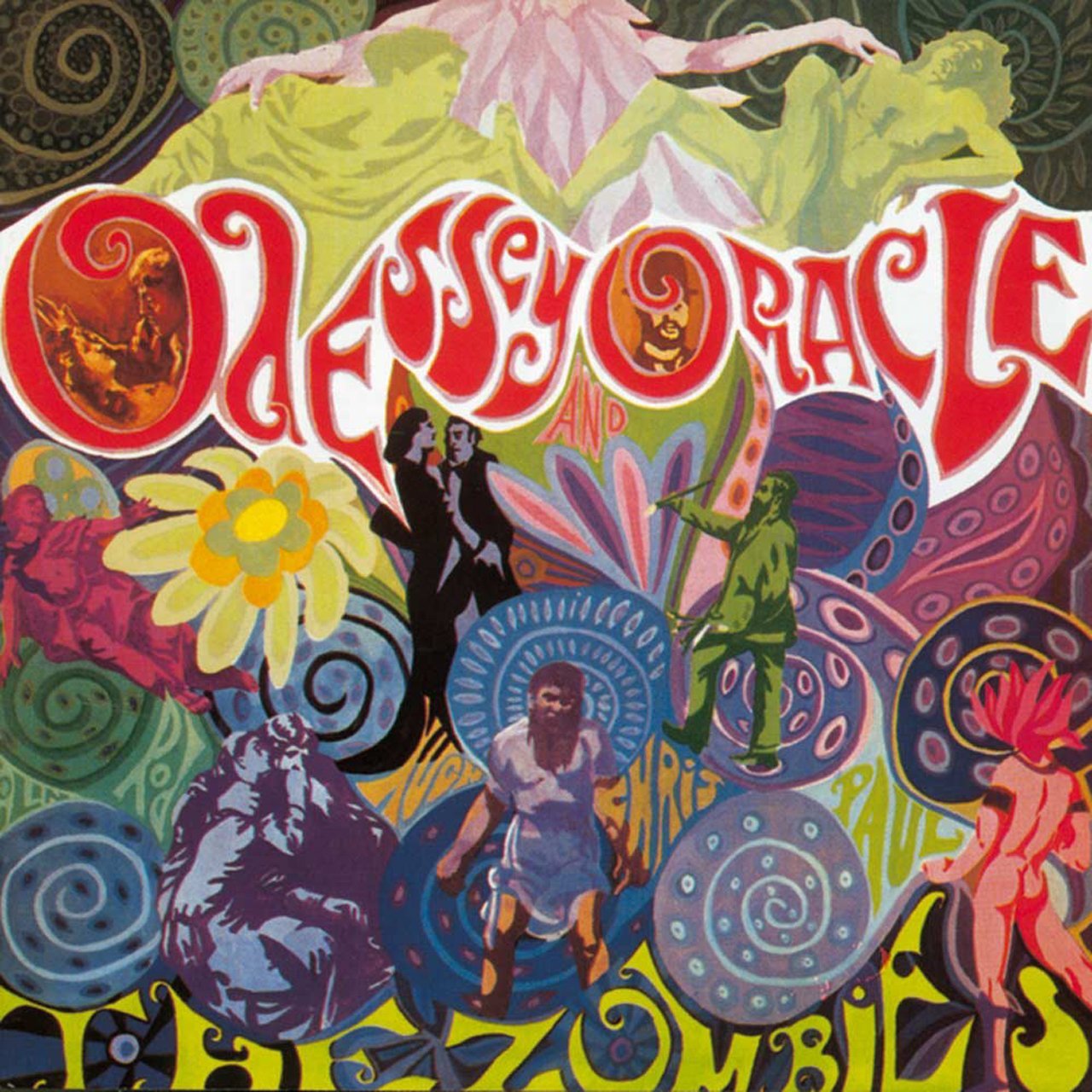
While the former track – the band’s Rod Argent-penned debut single – was a hit, they split up within three years, critical acclaim for their second album, 1967’s Odessey and Oracle, coming too late to save them. As it turned out though, a whispering campaign followed, several big names in the world of music coming forward from then on to rave about the influence of the latter.

Believe it or not, lead singer Colin Blunstone went to work for an insurance company after the split, but by the turn of the ‘70s he was back, and 45 years later is touring the world with his own band and The Zombies too – and still refreshingly surprised and thankful for the continued appreciation of his craft out there. The year 2015 certainly brought huge success for Colin’s reformed first band too, with a new Zombies album, Still Got That Hunger, going down well on both sides of the Atlantic.

But let’s go back a bit, asking Colin, based just outside Woking, Surrey these days – barely a mile from my old family haunts in the town – about his first meeting with the band in their hometown, St Albans, Hertfordshire. Does he recall that first jam session – aged 15 – around Easter 1961?

“I do, it was a Saturday morning and we met outside the Blacksmith’s Arms, where there’s now a blue plaque on the wall. I used to play a lot of rugby, and had my nose broken so had two black eyes and strapping across my face. I think I fitted in very well for a Zombies band … although we weren’t called that yet! I think they were hoping I was just passing through – I looked such a state. But eventually the guy I knew turned up as well, and off we went for our first rehearsal.”

Three years later, The Zombies hit the ground running. Did She’s Not There’s immediate success work against you though?

“I’ve often thought about that. You’ve got to be grateful for any success that comes your way, and I’m eternally grateful for She’s Not There. It changed all our lives. But we’d already decided to go professional, and in an ideal world it might have been better if we’d had a year or so learning the ropes. There were parts of the business side we were very naïve about. If we’d had that time it could have helped us cope with that transition.”

R-1411910-1359476444-3550.jpegShe’s Not There is a song you must get lots of feedback about. Your band-mate Rod Argent hit a note of universal resonance there.

“I think so, and very often you find it in people’s top 10 favourite tracks of all time. In terms of airplay though, worldwide, Time of the Season is much more popular. The irony is it was never a hit in this country – perhaps the only country where it wasn’t!”

Time of the Season, from Odessey and Oracle, was the band’s 14th single, and proved a commercial flop on release in 1968. However, a year later it was topping the charts in the USA and Canada. And the love for that second album remains to this day. Furthermore, a key factor in the re-emergence of The Zombies is down to continued critical acclaim for Odessey & Oracle, recorded in the summer of ’67 – just before I was born, I might add …

“I find things like that so strange. It was nearly 50 years ago! It’s hard to get my head around that. But it’s wonderful it has had this recognition. The bizarre thing is that it’s all come after such a long period – I’m not sure if there’s any other album like it in that respect.”

Indeed, and from what I can gather there were pretty much indifferent reviews first time around.

“There were really. Rod will always say there were some good reviews, but there certainly weren’t as many as we were hoping for. We were hoping it was going to be a commercial success. We weren’t thinking along the lines of it being a critical success. And we can certainly say, without doubt, it was not a commercial success!

“Yet two years after the album was finished Time of the Season went to No.1 in Cashbox in America, and No.2 in Billboard. That said, the album still only popped into the Billboard top 100 for one week – reaching No.98 … even with a No.1 record on it! Much of the problem here was that there was no band to promote it, help with marketing and all the things that a live band can do. That certainly didn’t help.

“After that, the whole Odessey and Oracle thing is still a bit of a mystery to me. I don’t think anybody actually understands it. About 10 years after it started to get critical acclaim, one review after another. A lot of big artists started citing The Zombies and particularly that album as a huge influence – people like Tom Petty and more recently Dave Grohl.

“And in this country Paul Weller has been fantastic. He’ll namecheck it as his favourite album, and if he’s out with friends and they haven’t heard it, he’ll go into a shop and buy it for them! He’s been sensational in his support.”

Colin’s not all about The Zombies though, as you might expect from an artist who made his own way soon after, scoring a few hits and recording plenty of revered material of his own. And you can expect only a couple of Zombies songs when he plays three dates in this country next weekend.

81j3tEDL8FL._SL1280_“With the solo band, the emphasis is very much to make the show something quite different, so the most we’ll probably play is a couple of Zombies tracks. But there’s a lot of other material from the last 50 years that are really good songs. And all of them have a very strong connection to me – I’ve either written them or recorded them.”

Despite his major input for The Zombies, it was only from around his first solo album, 1971’s One Year, that Colin started to prove himself as a songwriter for the Epic label.

“That’s true. I did write a couple of songs for the Zombies, but was very much finding my way as a writer. With One Year I had a few songs for the first time under my belt, and that was the case for the first three solo albums, covering Ennismore and Journey too. Since then I’ve always written, although I’m not the most prolific songwriter in the world.”

Did Rod have an influence on you in that respect?

“I think it comes easier to Rod as a world-class keyboard player and musician. I’m very definitely not! I can play guitar, but I’m quite an ordinary player, and think that always limited me a bit in terms of the quantity of songs I’ve written. Originally I was the rhythm guitarist for The Zombies, but we changed things around. Rod was going to be our lead singer when we first got together.”

Is that right that you sold insurance after the band split in 1967?

“Rod and Chris White wrote most of the songs so were in a totally different position to us – Hugh Grundy, Paul Atkinson and myself. We’d been very badly managed. We hadn’t had excessive lifestyles, but at the end of three years had absolutely no money, so all three of us had to get jobs. I phoned an employment agency and they had a job going in an insurance company. I wasn’t selling insurance – I didn’t know enough about it! It was just an office job, and I could have been doing anything.

“For me the sad bit is that the band ended – at the time I was devastated – and that the three of us had to get straight out and get a job. That’s an indictment of the people managing us.”

So remind us why that decision was made to go your separate ways?

“I think there was a general feeling in the band … remembering that it was a very singles-dominated market in those days …”

At this point, Colin seems to be struggling to find the right words.

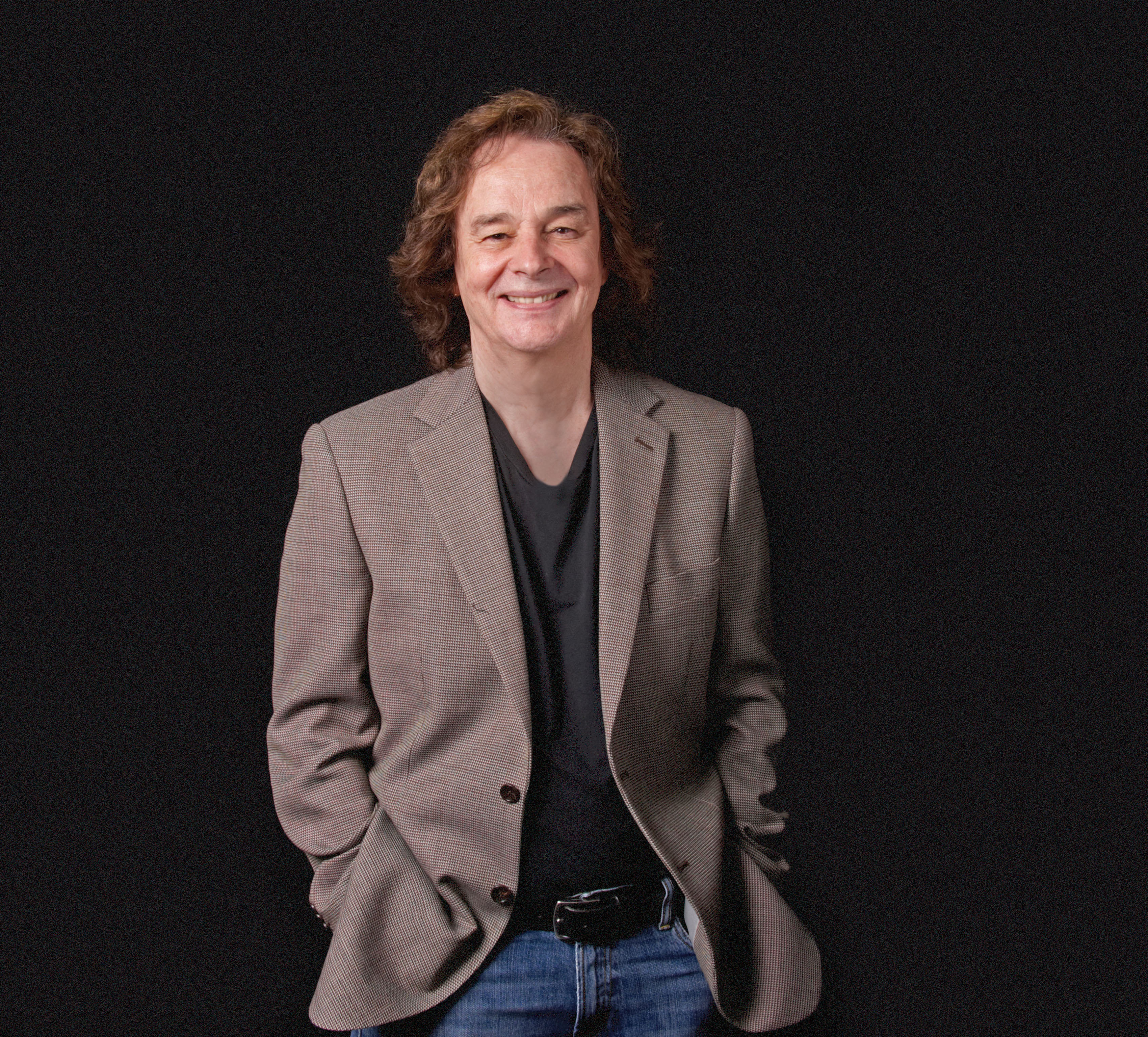
'60s Survivor: Colin Blunstone

’60s Survivor: Colin Blunstone

“When I look back I blush with embarrassment – the album hadn’t even been released, but after the first single failed to chart there seemed to be a feeling of indifference towards the LP and towards the band. It was only later that we realized. It’s so difficult to imagine the world as it was then in that pre-internet age, but it was very difficult to find out what your records were doing in different parts of the world.

“It was around a year after the band finished that we realised we’d always had a hit record somewhere in the world. In part, this was us being naïve – we should have known that. Also I think we were concentrating too much on the American and the UK charts, but if you have a hit anywhere that’s enough to sustain a career for a couple of years or so.

“With the benefit of hindsight it would have been interesting to see what might have happened next. But there was a feeling in the band that we’d done everything we could do and we’d completed a musical circle, if you like. It was time to move on.”

You mentioned Time of the Season, which still – quite rightly – gets many accolades. But for me I’d mention This Will Be our Year too, which never fails to hit the spot for this scribe.

“It’s a great song, and one I’ve grown to appreciate more in recent years and appreciate how much it means to so many – people have it as their special song or the first song they dance to at their wedding. It was written by Chris White, who wrote more for that album than Rod – another thing I only realised quite recently. Chris was in a particularly rich vein of writing at that time and there are some really cracking songs that both of them wrote on that album.”

For all that, Colin’s not someone to just dwell on the past, and he’s still writing and performing new songs, just like his old band-mates.

“I think that’s what sets The Zombies and my solo project apart – there aren’t many people who started in that era still writing and recording new material. And our most recent album reached Billboard’s top 100!”

You’ve clearly still got a loyal fan-base, and you’ve picked up a lot of support via the recommendation of others over the years.

oneyear“Yes, and that’s true with both bands I feature in. We’ve got people who have followed us from the ’60s, and a new generation coming to see us. I think people are quite surprised when they see the average age at our concerts.”

Moving on to the solo career, is there a solo album you’re particularly proud of and can signpost new fans to, particularly those who have only recently discovered you via The Zombies?

“I’d say One Year is one of the best I’ve done, so I’d point them in that direction. There is another, a bit more obscure, 1995’s Echo Bridge. I’m very fond of that as well, although One Year is often cited as the best introduction to my solo career.”

Listening to One Year again, I can hear a natural progression to what you were doing with Odessey and Oracle in 1967.

“People say it almost seems like it could have been the next Zombies album, and in a way  it almost was The Zombies under a different name – Rod and Chris produced that album and wrote quite a lot of the songs. And where a band is playing it’s Argent, so there are a lot of connections.”

You had a spell living and working in California and recording for Rocket in the 1970s. Did you get to know their label boss, Elton John then?

“We met a few times and had long talks, recording that first album, Planes, with Gus Dudgeon, his producer. The title track was a Bernie Taupin song, which Elton hadn’t released at that point. That was one of the advantages of being on Rocket.

“I did two more albums there, and Rocket was a wonderful company, very artist-orientated. They just wanted to give people an opportunity to do what they wanted to do. It was just unfortunate that I didn’t give them any hits in that period. That’s something I regret. Ironically, after my contract ran out, I had a big hit with Dave Stewart on What Becomes of the Broken-hearted. But that’s how things go sometimes.”

While One Year included Colin’s first top-20 solo hit, the splendid Say You Don’t Mind, written by Denny Laine (of Moody Blues and Wings fame), and 1973 follow-up Epic LP Ennismore included I Don’t Believe in Miracles, penned by Russ Ballard (Argent, Unit 4+2), he failed to trouble the top-40 again until that 1981 surprise hit for Stiff Records.

He’s retained something of a parallel existence ever since, between solo and group works, with The Zombies again and also with the Alan Parsons Project. Does that keep it all fresh?

download (5)“It does. There are a lot of insecurities in the music business, so even sub-consciously I’m thinking if one side of my career goes quiet, I’ve another side I can put the emphasis on until things pick up. Or I could go back to the insurance company!”

Do you think they’d still have you?

“I shouldn’t think so … not now. I don’t think I was very gifted in that market. As soon as I got the opportunity to record again, I was off like … well, like a rocket!”

Dare I ask what became of Neil MacArthur, your 1969 recording studio alter-ego in that period while you contemplated a comeback?

“It’s more of a mystery to me how he ever established himself in the first place! I was approached by Mike Hurst, who produced Cat Stevens’ first two albums and early singles like Matthew and Son, for Deram, a Decca offshoot.

“I loved those tracks so thought it would be great to record again, and did so in the evenings after finishing the office job, because I wasn’t sure – after the disappointment of The Zombies finishing – whether I really wanted to commit to get myself back in the music business.

“Mike suggested I re-record She’s Not There. I don’t really know why. He also suggested changing my name. I was going to be James MacArthur. It was a very casual thing, but at the last minute they realised there was an actor in Hawaii Five-O of that name. So we switched it.

“It was all a bit of an experiment as to whether I had the appetite for it, and I didn’t really think it through. She’s Not There became a small hit again, and for a year I stuck by that name. All a bit strange, to be honest.

“But I remember coming back from a party with Chris White, who was driving, and he suggested, ‘Why don’t you come and record with Rod and I? Forget about all that and record under your own name’. I jumped at that opportunity. And that was the beginning of the One Year project.”

And despite all the big label backing in the past, you’ve not been averse to new ideas, such as getting involved in crowd-funding projects more recently.

Begin_here_decca“The industry has changed out of all recognition, and it’s changing day by day in the last few years, let alone when I started out. You have to try these new ideas, because it’s very hard to stand still in this business. If you’re not moving forwards, you’re going backwards.

“It was very interesting to record with a pledge campaign, and hopefully we’ve kept the people involved informed of everything that’s been going on, including sharing clips of new songs and information about tour dates with ticket preference. It was a way of involving our fan-base in the whole project, with us learning as we went along. And to a large extent it worked, although if we do it again we could certainly do it better.”

So, 45 years on, Colin’s still going strong, with 2015 proving a very busy year. Any particular highlights spring to mind?

“It was certainly fantastic doing the Odessey and Oracle tour in America with Chris and Hugh Grundy, as it was here. We did around 20 dates, with people like Tom Petty and the Heartbreakers coming along.

“Then we had Susanna Hoffs from The Bangles sing with us at our soundcheck, which was fantastic. And a little earlier we played Santa Monica pier to 22,000 people – really wonderful, even more so as all this is totally unexpected.

“I thought our days of touring finished many, many years ago. It’s just grown very naturally since playing six dates together in 1997, when we enjoyed it so much that we just kept going.”

You’re out on the road again, this coming week in the UK then next month in Holland, not so long after getting back from America with The Zombies. Is this how you stay so young?

Colin laughs.

“That’s rather a leading question! I genuinely do think music and performing help keep you young. Music’s a wonderful thing and affects the way you feel. And the way you feel is the way you look. Just being busy and travelling can be self-perpetuating and give you more energy. It’s all a bit of a circle really, and I think it does make you stay young.

“Certainly, if you look at the ages of the people in The Zombies, there are a few of a good age, and they have more energy than most 21-year-olds. I have to say though, with my solo band the average age is considerably lower than for The Zombies!”

Bridge Generations: The Zombies, stateside (Photo copyright: Andrew Eccles)

Bridge Generations: The Zombies, stateside (Photo copyright: Andrew Eccles)

Between all the band and solo engagements, Colin’s a committed family man too, with his wife Suzy 30 years, the couple having a 27-year-old daughter. Has she got a nice voice too?

“She has, and she’s a very good dancer, but she’s in her final year at medical school, so if all goes well she’ll qualify as a doctor this March. That’s very exciting family news for us.”

And while we’re talking medicine, I ask how Colin keeps that great voice of his in shape.

“It’s not for me to say if it’s great or not, but both Rod and I studied with a singing coach a few years ago, learning about technique, and have CDs of singing exercises, which I do twice a day when I’m on the road and a couple of times a week when I’m not. They really help. We recommend that to all singers – at any age, but particularly as you get older. It’s really important to learn those techniques and do those exercises.”

Colin Blunstone is at Wimborne’s Tivoli Theatre (www.tivoliwimborne.co.uk) on Friday, January 22nd, St Helens’ Citadel Arts Centre on Saturday, January 23rd (www.citadel.org.uk) and Skegness’ Rock and Blues Festival on Sunday, January 24th (www.bigweekends.com), before seven dates in Holland in February and a further eight in England from mid-April.

For more details head to www.colinblunstone.co.uk and for the latest from The Zombies head here. 

Posted in Music | Tagged , , , , , , , , , , , , , , , , , , , , , , , | 4 Comments

Remembering Bowie, through Sound and Vision

Lasting Legacy: David Bowie (Image: New York Theatre Workshop)

Lasting Legacy: David Bowie (Image: New York Theatre Workshop)

There’s not a lot I can write here that hasn’t been covered elsewhere, but I couldn’t let the week pass without my own tribute to David Bowie, who left us on Sunday, January 10th, 2016, two days after his 69th birthday.

Not for the first time with something Bowie-related, Monday morning’s news was a huge shock. Who knew about that 18-month battle with cancer? But for all the sadness, we’ll always have his music, the legacy he left us, and all that inspired.

Amazingly, he gave us two return-to-form, typically-inventive albums on the approach to and during his fight with the big C, The Next Day (with this blog’s review of that album here) and Blackstar – his respective 24th and 25th studio albums – and both serve as a fitting epitaph that we just hadn’t seen coming and that we’re only just getting to grips with. But while I don’t feel best placed to review the latter here after just a couple of listens, its gloriously-epic 10-minute title track and the similarly-emotive Lazarus suggest another great addition to a rich canon, and something suitably special to go out on.

For all that though, while Bowie had that power to make us feel like kids in the sweetshop again, snapping up Blackstar on his birthday, there was also a sense of thinking ahead, wondering just what might be in store for his 70th birthday. So it’s hard to take that there won’t be one now.

While I never got a chance to see Bowie in person or on the stage over the years, I’ve got all those great albums and singles to savour, plus the many films, interviews, videos and various clips to delve into, and I revisited a few on the day we learned of his passing. My first call yesterday morning had to be Heroes, his celebration of coming out the other side after those early years of excess. It just seemed right to start there, and I felt more than a little dewy-eyed hearing that colossal track in the circumstances. It’s not the first time it’s got me like that either, and wherever we first chanced upon it, or whatever we relate to the experience, it just seems so timeless … and truly powerful.

As part of a day of commendable coverage on BBC 6 Music capped by recent writewyattuk interviewee’s Mark Radcliffe own tribute show, I was in a similar situation hearing the perennially-beguiling Life on Mars. Despite its other worldly theme, it’s as much about Britain in the early ’70s  as it is about escapism and things universal, and leaves me feeling nostalgic every time. As music writer John Harris put it on the BBC’s Five Years documentary, it’s a song loaded with imagery that’s ‘very mundane yet magical – he’s seen the cosmos in the bus stop’.

81GaOhfPyFL._SL1300_If two emotional moments weren’t enough, it happened again watching the familiar groundbreaking promo footage for Space Oddity during the TV news coverage – a further moment when it sank in that this wasn’t just a bad dream – he’d really gone. Things continued like that for much of the day too, with a few deadlines postponed, coming to terms with it all  …. grieving, I suppose.

The rest of Monday had as its backdrop a Bowie soundtrack, right from the moment my better half broke the news via BBC Radio 5 Live. That included a second listen to the new album, a return to 1971’s Hunky Dory to reacquaint myself with particular favourites such as the Velvets-like raunch of Queen Bitch and the playful, celebratory Kooks, and to generally dip in and out of so many more great tracks across the albums from there on. And even my occasional screen breaks involved getting a wider steer on this sad day from the radio and television.

It would serve no purpose to list every Bowie single and album track I hold dear, but so many have made an impression over the years. It was only two weeks ago that I played the entire 39-track EMI 2002 Best of Bowie two-disc CD during a festive visit to my old Surrey haunts from Lancashire, subjecting my teenage daughters – again – to an important part of my pop heritage via that esteemed back-catalogue. There are so many great moments there, as is the case for 1993’s Bowie The Singles Collection and many more before, stretching back to my first proper introduction to this musical enigma, hearing my brother’s Changesonebowie RCA compilation album in 1976, when I was still in single figures.

From The Laughing Gnome (not on any of those collections, but let’s not forget – in the week we also lost dear Ed ‘Stewpot’ Stewart, of Radio 1’s Junior Choice fame – that was part of my youth too) through to a super-camp Pet Shop Boys remix of Hello Spaceboy, he’s caught us out so many times. And from an early fixation with Anthony Newley right through, he never went for the obvious, and let’s be honest, there were points where it took us a while to get our heads around those new directions. Those risks didn’t always pay off, but I for one won’t pay too much attention to the misses, and you won’t find me going on about Tin Machine … honest.

While he was clearly a chancer – opportunist sounds better, I suppose – in forging his career path in those formative years, there was clearly a genius at work here, with a huge appetite for experimentation (chemical and electronic, for starters) – as confirmed by everyone from early contributor (and another 2015 writewyattuk interviewee) Rick Wakeman through to fellow key collaborators like Mick Ronson, Brian Eno and Robert Fripp.

One of the better examples of catching us out involved his biggest global hit album, 1983’s Let’s Dance. Who would have expected the guy behind 1977’s Low and all that to come up with such a blockbuster? But he did it so well, taking on those soulful touches we first saw on 1975’s Young Americans with expert help from Nile Rodgers, proving the true art of pop – without so much of a hint of Andy Warhol that time. Talking of fellow great artists, he worked with so many more too, from his post-Ziggy success with Mott the Hoople, Iggy Pop and Lou Reed through to Queen and Mick Jagger. And that’s just the more obvious ones. But I’m digressing there.

DavisBowieAladdinSaneBeing the age I am, I can’t put my hand on my heart and point to any defining moment when Bowie changed my life, however fascinating all those stories are, many told again this week (quite splendidly in a few cases (step forward Billy Bragg and recent writewyattuk interviewee former Tom Robinson, among others), nor wax lyrical about the wonder of seeing Ziggy and his Spiders from Mars in person (my mate Jim Wilkinson gave us a nice layman’s view on that last year, with a link here), but that doesn’t mean he didn’t have a great impact on me. It’s just that I’m struggling to pinpoint a specific moment. It’s like he’s always been part of the soundtrack of my life.

It was Space Oddity that first stopped me in my tracks, another moment of opportunism perhaps – latching on to an international hunger for all things Apollo-esque – but one that to this day still sounds so fresh. Yet all I knew about Bowie at first was all I ever heard on Wunnerful Radio 1 or Top of the Pops, or through my sisters and brother and their record collections. Similarly, I can’t honestly recall a specific moment when my old man asked ‘What the hell is that?’ as he pointed at this inspirational gender-bender on our black and white TV set. But chances are that it came during a transmission of Starman or The Jean Genie as this one-off from Brixton and his Hullensian mates Ronson and co. in their big girls’ blouses and space-suits shocked the nation (‘dockers in eyeliner’ is a description I love).

Fast forward a little, and I was certainly aware of the might of the Eno, Fripp and Visconti-augmented Heroes and a fair bit of that era’s material, and remember being genuinely excited by Boys Keep Swinging jumping out of the radio at me on a Cornish holiday in late spring 1979, when I was 11, the first fruits – so to speak – of Lodger, the last of his Berlin trilogy. And as it turned out, DB’s capacity to shock continued right up to this week really.

Having served his apprenticeship in the ’60s via rock’n’roll, r’n’b and his Mod days (and even folk), he translated all that into stardom in the ’70s, inspiring the glam rock era, reinventing soul and shining a light on krautrock along the way. And big changes were around the corner again as we arrived in the next decade, Bowie seeing us into the ’80s in style, courtesy of Scary Monsters and its memorable singles, not least updating Major Tom’s story for Ashes to Ashes, ushering in the Blitz era and spreading the word about that emerging New Romantic world, the die cast for his ultimate pop years and further global success as a video star.

That was an era of contradictions for me as well as him, finding my own feet musically, and while I fully subscribed to Let’s Dance and its finer moments, I wasn’t keen on worshipping a mainstream act. Instead, I concentrated on all I’d missed first time around, this indie kid rediscovering or re-evaluating all those great records. What’s more, I sought out some of the bands that influenced him in the first place and found many more that DB and his peers influenced in turn – the less-commercial, the more street cred, and the industry’s underdogs.

But while it took me a while to return and truly appreciate Bowie again, there were still big moments, from 1984’s Blue Jean to 1986’s Absolute Beginners, the latter adding kudos to a film that unfortunately didn’t work, never living up to the original Colin MacInnes novel. For me – and I know this won’t go down well in certain circles – the music, though pretty much an ’80s take on a late-’50s vibe, worked, not least DB’s title track and contributions from the likes of The Style Council, Working Week, Ray Davies and Sade. Contentious maybe, but Bowie’s main contribution brings a lump to the throat.

As it was, I never drifted too far away, lured back by further discoveries in the catalogue or something like his 1993 contribution to The Buddha of Suburbia. And if there was any remaining doubts over the next two decades as to this icon’s long-term worth they were blown out of the water by The Next Day all those years on – from the moment I first heard the beautifully-poignant Where Are We Now? onwards. And that’s something Black Star appears to build on.

Let’s face it, the Bowie collection is crammed full of genius moments and has plenty to drive the emotions, showing the power of popular music as a positive force. And David Robert Jones has always been there or thereabouts for me, supplying a vital part of the rich soundtrack that has framed my life so far, as he will continue to do. If Bowie’s aim really was, as he suggested in his earlier days, to turn people on to new ideas – a catalyst for ch-ch-changes, you could say – he succeeded in my case and for many more of us.

77-heroes-600b (1)I’ll stop now, or this may become a feature that is never completed, but I’ll sign off by letting on that I’ve just played Lazarus again, and not only do the lyrics jump out at me every time (‘Look up here, I’m in heaven’), but the moment he surges into that chorus the welling-up starts again. It gets better and more heartfelt with every listen. And however hard it is for us to take, it seems that its author and architect is now free … just like that bluebird. RIP David.

Posted in Books Films, TV & Radio, Music | Tagged , , , , , , , , , , , , , , , , , | 3 Comments

Behind the scenes at the Little Theatre

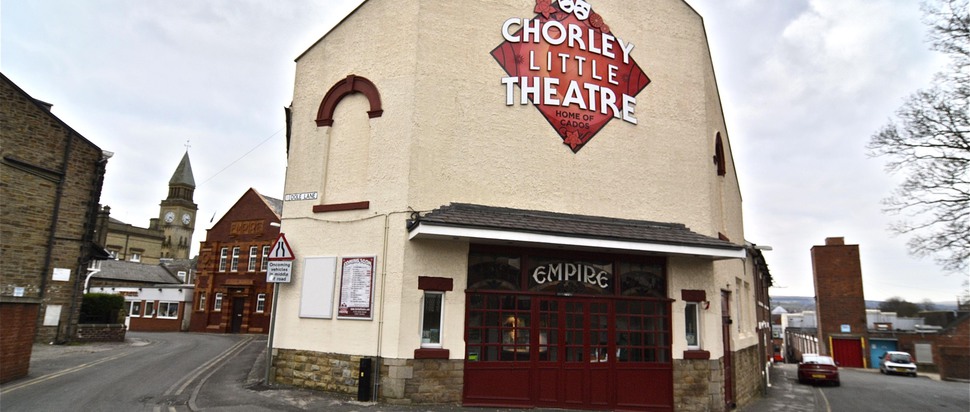
Dramatic Effect: Chorley Little Theatre (Photo copyright http://www.theskinny.co.uk/)

Dramatic Effect: Chorley Little Theatre (Photo copyright http://www.theskinny.co.uk/)

I don’t tend to plug successful local community ventures and thriving venues so much on this blog. But organisations like the Chorley Little Theatre – not far from my doorstep – deserve credit for surviving in these days of austerity measures, not least when we’re losing so many independent concerns and arts funding appears to be drying up.

Besides, this particular Lancashire-based multi-use arts venue ploughs any profits back into the place itself and what goes on there, and it isn’t just a local success story – carving out something of a reputation (at least regionally) on the comedy circuit.

I first visited Chorley Little Theatre in the mid-’90s as a trainee reporter on the newspaper next door, writing stories and features around those involved and – first off, I seem to recall – reviewing an adaptation of Arthur Miller’s A View From the Bridge. While there were elements of ‘local am-dram’, there were some lovely people involved and a fair few could act and direct. What’s more, the theatre was an important asset to the town and borough, even if it needed a little money and a fresh lick of inspiration here and there.

As it was, that’s exactly what happened over the years that followed, thankfully, and while he probably won’t want singling out, one of the prime drivers behind an upturn in fortunes was a local lad, Ian Robinson, the current Chorley Amateur Dramatic and Operatic Society (CADOS) chairman.

A successful 2015 proved that, and from a whole host of high-calibre comedy bookings (perhaps ‘belly-laugh’ is the collective term) to an extensive programme of theatrical productions and film showings, we seem to have another busy 12 months ahead at this striking Dole Lane venue, with Ian – first involved behind the scenes in 1989, aged 14 – and his team of fellow volunteers clearly raring to go.

It was the players’ side of the operation that ruled the roost when I first popped along, and that remains the case, despite that wider reputation in other fields. The theatre also hosts music events (the next involving rock’n’roll regulars DP and the Spectaculars on February 6th), while Chorley Youth Theatre – run by children aged between 11 and 18, guided by CADOS, and on board since 1985 – is about to stage its first production of 2016. And then there’s the Chorley Empire Community Cinema, presenting ‘the cinema experience’ on a ’21-foot wide screen with eight-speaker Surround Sound’, its roots in the Chorley Film Society (part of the operation since 1990). So how does Ian think things have changed in the quarter-century since he was first involved?

“The plays all tended to be set in living rooms or kitchens back then, usually involving a box set, and I just helped out with lighting and set-painting – basically ‘lights up’ at the beginning of an act, and ‘lights down’ at the end. I knew someone who was already involved, so ended up going down, doing a bit, then after college I came back and got involved with the Film Society then with CADOS, becoming chairman in 2009.”

What does that role involve in what seems to be something of a hands-on community operation?

“Well … I do the marketing and the programming, and sometimes a little producing.”

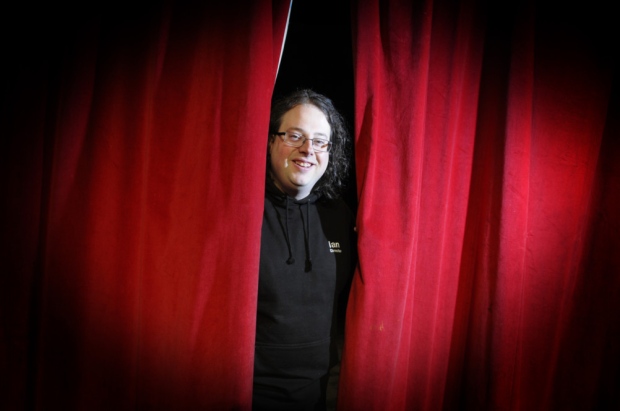
Curtain Call: Ian Robinson faces the public at Chorley Little Theatre (Photo copyright: Chorley Guardian)

Curtain Call: Ian
Robinson faces the public at Chorley Little Theatre (Photo copyright: Chorley Guardian)

Chorley Little Theatre was originally opened as Chorley’s first electric cinema in 1910, and since 1960 has been owned and operated by CADOS, which has put on quality productions for more than 75 years and now presents at least six productions per season (between September and July). All these years on, the theatre’s website suggests the venue is ‘run entirely by volunteers’. Does that suggest there’s still a day-job for Ian too?

“Yes, I’m a freelance designer. I did film and media studies at college, but my main course was graphic design and visual communication, and my main work after that was designing toys. I did that for 10 years, but got a little burnt out and now just freelance around my theatre work … keeping very strange hours!”

I’ve seen evidence of that, one night springing to mind that of Johnny Vegas’ visit in November 2013 alongside locally-based fellow comic Steve Royle (with a review here), the St Helens comic signing his autobiography into the early hours in the Empire Bar. At times like that, I guess it’s handy that Ian lives just a 10-minute walk away. But as a Chorley lad, where did he go to see cinema releases before the Little Theatre took on that mantle?

“The Plaza on Bolton Road. I saw loads of films there. That closed down in 1986, but I saw the whole Star Wars trilogy down there, Back to the Future, Ghostbusters, ET, Bedknobs and Broomsticks, Mary Poppins …”

His hometown lost something important there, didn’t it?

“It did, but it was run down and needed doing up, and unfortunately that year the attendances were at an all–time low. The Film Society started up partly to replicate that, although the remit has always been to bring popular films to the town.”

What would you say was the catalyst for the change that saw the Chorley Little Theatre re-energised and reborn to some extent?

“Part of it was through me as the chairman feeling a bit frustrated at the lack of use of this great facility, thinking we were the only theatre in town so ought to do a bit more to make the town appreciate us. If we were gone, people really would miss us. We saved enough money to work on the roof, but after the work was lined up, they found there were further problems, beyond the allocated budget.

“I felt that not only would we have to put things on to pay for all the work we needed to do, but also  we needed to ensure we weren’t in a position where something disastrous happened then people told us, ‘Oh, I really miss the theatre’. We really needed people behind us.”

Is there still a danger of this lovely old building crumbling around you?

“Not really. The amount of work we’ve done in the last five or six years has seen us go beyond what we could possibly have planned originally. We’ve re-done dressing rooms, toilets, the auditorium … we’ve been able to do so much, with the income coming from putting all the shows on – every penny going back into the building.”

So what’s the next big project needing a cash injection?

“We could do with a bit of work around the front of the building, the foyer for instance. We uncovered stained glass as part of the work five years ago with the word ‘Empire’ on, for instance. But a lot of stuff we did last year involved updating technology within the building, and we’re pretty much state-of-the-art now. We’ve done a lot, and the bar is twice the size it was six years ago.”

The year 2015 proved to be another great year for you. Can you pick out any specific highlights?

“We had more than 23,000 admissions, the most we’ve ever had, and new audiences are finding us. I’m really proud of the plays we’ve put on too, like Our Day Out, Sherlock Holmes: The Final Problem … well, all of them really. They’ve been such good quality.”

One recent event that led to a few famous post-show photo-calls was Bobby Ball’s The Dressing Room, with Cannon and Ball and Kate Robbins among the cast, and Ted Robbins and Peter Kay out front.

“That was great. Such a great atmosphere. It was hard work but worth it. When comedy heroes and people from your childhood come along and treat you as an equal, that’s really nice – things like Peter Kay popping along and saying hello. We’ve also had Andrew Flintoff here. It’s great to tick a few names off my wish-list, like Sarah Millican. I first asked for her around six years ago – no one ever came back to me then.”

Is it fair to say the venue would have closed if not for a little celebrity help on your doorstep, the likes of good friend of this blog Dave Spikey and so on coming forward to do their bit?

“It is. When we had the problem with the building and got in touch with Dave Spikey and Steve Royle and they came along and did shows, that kind of set us on the path, not least having more comedy. That was a great help.”

Lancashire Visitor: Lucy Beaumont visited Chorley Little Theatre with fellow Funny Northern Women Katie Mulgrew and Hayley Ellis

Lancashire Visitor: Lucy Beaumont visited Chorley Little Theatre with fellow Funny Northern Women Katie Mulgrew and Hayley Ellis

You’ve very quickly become a recognised venue on the comedy circuit, not just with the older or current big names like John Bishop, Sarah Millican, Mike Harding, Jo Caulfield, Phil Cool, Justin Moorhouse and Mark Steel but also a number of younger acts on the way up, such as Rob Beckett, Chris Ramsey and recent writewyattuk interviewee Lucy Beaumont.

“We’re really into our comedy. I’ve been to the Edinburgh Fringe for the last 11 years, and as a venue we find it comparatively easy to put on comedy. We don’t have much wing space here, so when we’re making sets for a show we have to do that on the stage, yet a comedian can come on in front of the curtain. It seems to have done well for us.

“It’s fabulous to have big names, but it’s the others coming through too, like Romesh Ranganathan, here in May this year for his fourth visit, while Chris Ramsey has done seven. First time he got 100 people, then you watch him and think, ‘Wow!’ It was the same with Romesh first time we saw him. It’s great that he’s now having such success. He seems to be everywhere at the moment. Rob Beckett was great as well, and Ed Byrne. That was nice to see as well.”

I saw you posting on social media how Rob Beckett shook hands with his entire audience after his recent show.

“Yes, he got off stage and ran around to shake hands and thank everyone for coming as they left the building, which was just amazing. It’s great when people appreciate how lucky they are, and have a good time. We’ll hopefully make them feel at home, and they’ll put on a good show.”

A full house at the venue involves 236 sold-out seats and spaces for three wheelchairs, by the way. And it appears that quite a acts prefer to do more than one night at Dole Lane than play a larger, somewhat less intimate venue.

“Yes, although ideally – long term – we’d like to get a few more seats in and make them comfier. But that would probably mean building a balcony, so is a long way off. At the moment we’re fine and everyone enjoys it as it is, and Chris Ramsey did two gigs here while Jenny Eclair sold out and will be coming back.”

It’s clearly a proper community venture too. With that in mind, I ask Ian how many volunteer helpers and financial backers he has on board, with his response best described as a high-pitched repeat of half of that question.

“’Financial backers?’ Ha! But in terms of volunteers, it changes from show to show, but we probably have around 30 on a weekly basis but up to around 100 for the panto, involved some way or other.”

I spotted a recent social media posting about a couple who left early during the panto because they ‘didn’t expect singing’. I’m guessing Ian’s heard some classic comments over the years.

“There is some weird stuff. We had a bloke who came to see Frozen with his kids, and he sat at the very front for around 20 minutes before the show started and as the screen came down he said, “I wasn’t expecting a film. No one said it was a film!’ He then came to see The Lego Movie the next week, and was similarly surprised. As for the couple who walked out of the panto, I’m not quite sure what they expected. But hopefully they’ll come back and try something else.”

Favourite Venue: Dole Lane's Chorley Little Theatre (Photo: Ian Robinson, Chorley Little Theatre)

Favourite Venue: Dole Lane’s Chorley Little Theatre (Photo: Ian Robinson, Chorley Little Theatre)

Ian’s significant other, Estelle, is part of the volunteer team too. Was theirs a Chorley Little Theatre romance?

“That was a bit weird! We actually met at a Comedy Sports gig, an improv show in Manchester. A mutual friend introduced us … and that was it.”

They certainly both seem to be part of the furniture now … in a good way.

“Yes, but mentioning partners, I think everyone who volunteers here has a long-suffering partner who either gets dragged in or joins the circle to help out, particularly at panto time. But the long-suffering ones have to put up with a lot of problems.”

You already have a lot planned for 2016. What in particular are you most looking forward to?

“There’s a lot going on, but we’re trying not to have too much, as last year was a bit too busy – really hard work. But we’ll have Jason Manford’s Comedy Club on a regular basis, showcasing comedians who won’t normally sell out on their own. Hopefully that will really take off.”

Will that include Jason himself at some point?

“We were hoping so, but he’s busy on Chitty Chitty Bang Bang, so may not be able to pop in. We’ll see. He picks a great line-up anyway – a lot of names that aren’t necessarily on TV but week-in, week-out are very funny. We’re also doing a musical with CADOS, and I’m directing a play in September, so that’ll be fun too. Even the Cannon and Ball play had a director from CADOS, and everything is geared around the plays.

“Now we do the most amazing sets, but still have the same amount of time to turn things around. It is hard work, but we have a great team, working around the clock.”

Stained Class: Chorley Little Theatre's foyer, from the outside

Stained Class: Chorley Little Theatre’s foyer, from the outside

Chorley Youth Theatre’s next play, The Light Burns Blue, runs on Friday, January 15th and Saturday, January 16th, set in 1917 and inspired by the story of the Cottingley Fairies, when Elsie Wright and her sister claimed to have photographed fairies at the bottom of their garden. For ticket details of all Chorley Little Theatre events call the box office on 01257 264362 and for more information head to http://www.chorleylittletheatre.com/

  • This is a revised edition of a feature that first appeared in the Lancashire Evening Post on Thursday, January 7th, 2016. 
  • STOP PRESS: News comes in that Dave Spikey will be joined by fellow Phoenix Nights stars Janice Connolly, Ted Robbins, Steve Royle and comedian Mike Wilkinson for a night of great stand-up comedy at Chorley Little Theatre in a fund-raiser for victims of the Croston floods on Thursday, February 4th (7.30pm – 10pm). All the money raised goes towards a charity set up in Croston to help residents, shops and businesses affected by the recent floods. There will also be a raffle on the night, with prizes donated by local businesses and tickets £20 (available from 10am on Monday, January 11th). For more details head here. 


Posted in Books Films, TV & Radio, Comedy & Theatre, Music | Tagged , , , , , , , , , , , , , , , , , , , , , , , | 3 Comments

Learning from the Laughter Master – the Stephen K Amos interview

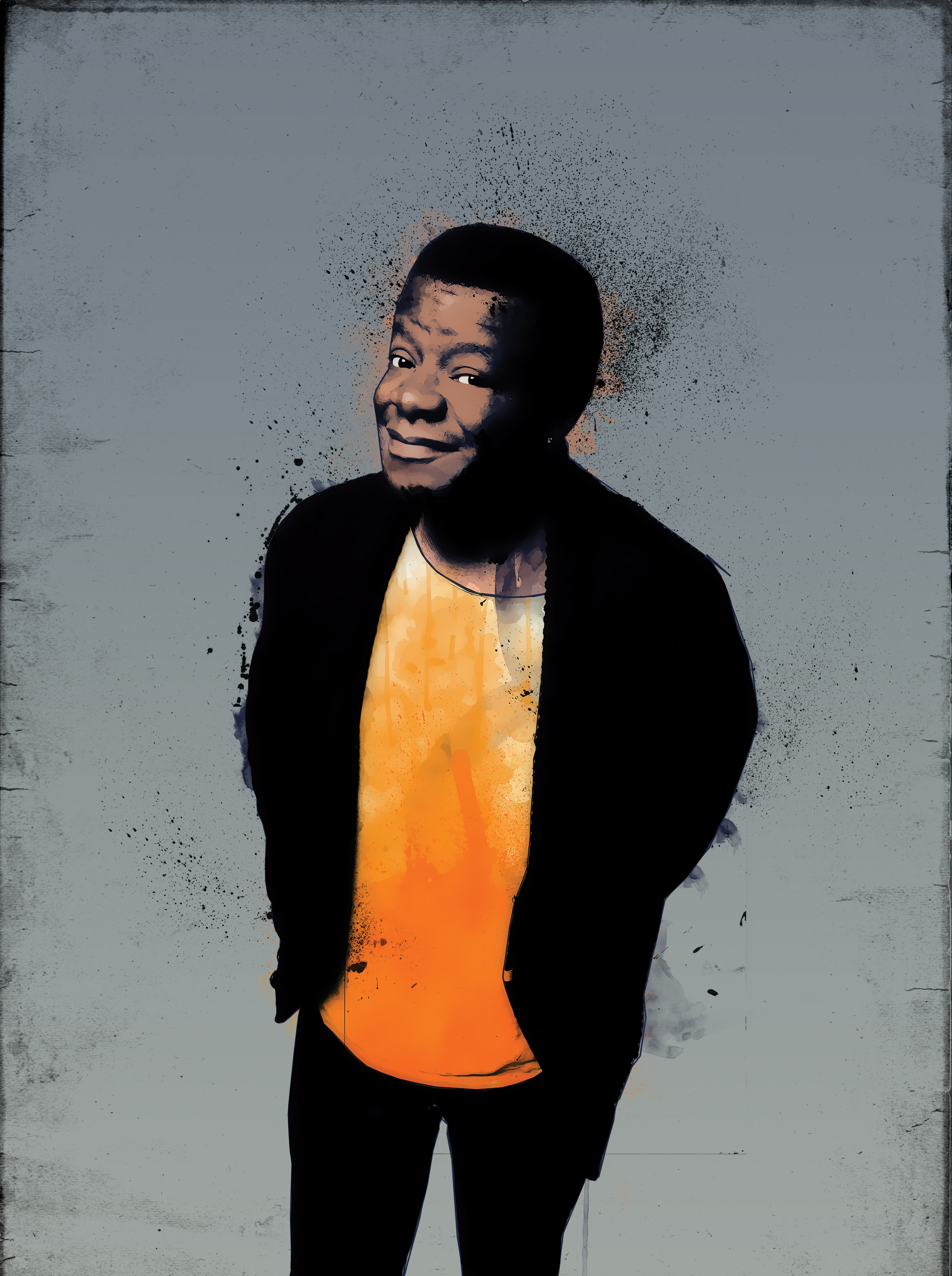
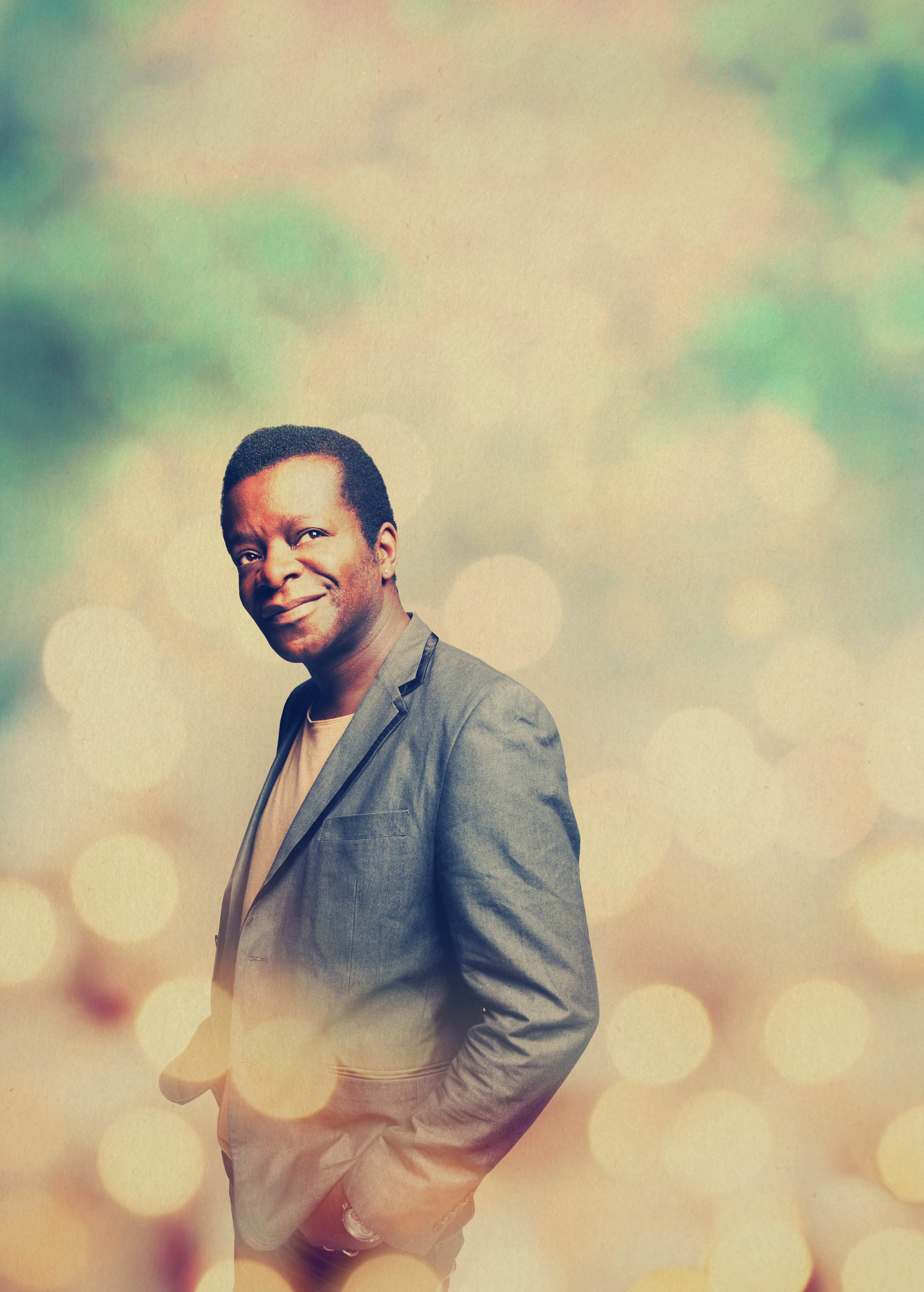
Master Mirth: Stephen K Amos

Master Mirth: Stephen K Amos

It’s fair to say Stephen Kehinde Amos has seen the world over the past decade or so, this highly-entertaining and likeable comedian charming audiences from Edinburgh to Sydney and several points in between.

And while we’ve all had plenty to feel world-weary about over the last few months – from austerity measures to terrorist atrocities – ‘the maestro of feelgood comedy’ is determined that we should still see the funny side of life too. That’s not to say this 48-year-old London entertainer is one to sweep issues under the carpet, as his ground-breaking work for gay rights in the Black community might suggest. But he is – above all – keen to get us laughing.

According to his latest press release, Stephen is ‘filled with an almost child-like joy and exuberance and can find the funny in some of the most unexpected places’. So come on then, what’s all this ‘laughter master’ business about?

“It’s been such a long time now that I think I’ve earned the right to call myself that. I’m not the orchestra leader, but if you come to my gigs, you will laugh. This show’s an extension of last year’s, taking a look at the confidence you see everywhere around us – maybe due to the huge popularity of social media – where everyone has an opinion and is liable to have a kneejerk reaction or have false stories to respond to and get angry quickly online.

“I’d like to think if you come to one of my shows, we will touch on heavy topics and important issues, but the whole idea is to be funny. That’s why people come to a comedy show. The kind of people that come to my show are on my wavelength anyway, so there’s no point me trying to preach to the converted, because I don’t have the answers. If I can have a funny take on a situation and dissect something, that’s where I’m at.”

Don’t you find yourself getting more political or perhaps more grumpy at the world’s evils as the years pass though?

“I think you’re right. In the early days, it might have been, ‘Look at me – jazz hands! Aren’t I funny!’ But the older and wiser you get, you’re more clued up and know you’ve got a captive audience. And what better platform to talk about things. In the old days, polite society wouldn’t dream of saying the things people say online to complete strangers. The level of abuse for simple things is really astonishing, so I want to remind people that when you go to see a comedy show, with people there of all different cultures and backgrounds and ages, your main bond is that you all want a laugh.”

Stephen released his debut DVD, Find the Funny, six years ago, recorded live Down Under at the Enmore Theatre, Sydney, and within two years was playing a mammoth 75-date third UK tour. By 2010 he had filmed the first BBC2 series of The Stephen K Amos Show and released a second DVD, The Feelgood Factor, and then in 2012 was on his fifth stand-up tour, Laughter Is My Agenda.

12122963_10153307055262991_2994121629273971847_nIn fact, it’s difficult to work out where one tour finishes and the next starts, this latest stint involving 40 shows between November and mid-February, that busy schedule including The Lowry in Salford and the Unity Theatre at Liverpool in late January, my excuse for speaking to him.

“I’ve played The Lowry, many times. I love it there, and because it’s such a fantastic venue they get lots coming through the different spaces within that complex. It’s great, and that whole region captures people from Manchester, from Liverpool, and all the surrounding areas. I’ve never played the Unity before, but when I go out on the road I always try and sneak in a place I’ve never been, just to mix it up.”

And Liverpool did play host to one of his defining gigs in 2007.

“When I did Liverpool’s Empire Theatre for the Royal Variety Show, that was really good fun. The Lowry’s up there with the best too. I think the first time I played it was there in the main room and back then I wasn’t doing any TV, so it was just from reputation alone that we managed to fill that, which was a really good feeling.”

The current dates for The Laughing Master follow more in the UK, Europe, Australia and yet another Edinburgh Fringe. Surely it must sometimes be a case of – to paraphrase the 1969 film – ‘If It’s Tuesday, This Must Be Buxton’.

“It can be like Groundhog Day, when you’re going up the same motorway, and I have to leave South London, where I live, at half past two in the afternoon to account for any traffic I may encounter. If you want me to go on any quiz show and name all the service stations on the M1, I’m your man.”

When you are travelling, is it just you in a car?

“It’s me, a tour manager and sometimes a support act, and we’ve been working together for at least two years so we’re all good mates as well. So the journey is recording itself for a podcast, I think. We all laugh at ridiculous situations.”

TV Times: Stephen K Amos on the box (Photo: BBC)

TV Times: Stephen K Amos on the box (Photo: BBC)

Are you a good passenger?

“I am, but I don’t like personally to travel more than three hours to do a gig. Otherwise it means staying overnight, because driving five hours there and five hours back is very taxing. But I can’t complain. I’m doing a job I really, really like.”

Away from the road, Stephen’s a prolific writer too, somehow fitting all that in besides a new hour-long show every year and touring the world’s festival circuit. But something has to give, and accordingly his acting often takes a back-seat. That said, he’s still managed to fit in appearances on shows such as Celebrity Great British Bake Off Comic Relief, Live At The Apollo and Mock the Week (BBC), Batty Man (Channel 4), and Dave’s One Night Stand (Dave). And then there’s the regular BBC Radio 4 work, including Just A Minute, Out To Lunch, The Big Night In, Life: An Idiot’s Guide and his What Does the K Stand For? show.

There must be moments in all this – while playing Sydney Opera House for instance – when he thinks, ‘This ain’t a bad life’, though.

“Well yeah, thinking back to being a young kid in South London, in my wildest dreams I would never have thought I’d be at one of the most iconic buildings in the world playing a show. I played the Opera House two or three years ago now, so to come back again this year to do that again was like, ‘Wow! Pinch yourself!”

A twice in a lifetime achievement, then. Or is he back in the car and on to the next show straight away, not having the time to properly visit these places?

“People assume that because you go to all these great places you get to take a holiday or see all the sights. But you’re there to work really and you’re kind of in and out. But when I go to Australia I’ll try and do a month in Melbourne and one or two weeks in Sydney and the same in Brisbane, and that’s nice, getting the odd day off. When you tour the UK, generally, it’s a different city or town every night. And I like my bed … when there’s nobody else in it.”

And you’ve played the Edinburgh Fringe festival every year since 2003, having debuted there two years before.

“This is the one time in a comic’s career that you can do an hour’s show in front of a comedy-savvie audience for people from around the world, at arguably the biggest arts festival in the world.”

Write Stuff: Stephen's 2012 autobiography

Write Stuff: Stephen’s 2012 autobiography

Do you tend to use that show as the basis for all those that follow?

“I do now. In the early days I would work up a show to debut at Edinburgh, doing it every night, tweak the material, introduce new bits, drop what you think isn’t working particularly well. And this year we did a talk show in the daytime a few times and it keeps you very busy, and you get extra spots later in the evening.”

This current tour is set to finish at Hackney Empire on February 13. Was that a venue you knew as a kid?

“No, I’m a South-West London guy, and my parents weren’t the kind of people to take us to the theatre or to see anything. But it’s a venue I now know very well. Last year I did a little run in the West End but this year I’ve decided to go to the Hackney Empire to finish the tour.”

As much as you enjoy it all, I’m guessing you’re looking forward to a rest in mid-February.

“You’d think so, but like I did this year, probably the next day or the day after I’ll be on a plane and either going to America or Australia!”

Something got to give with all this, and it’s been a while since I spotted you on TV. Any plans for a new series of The Stephen K Amos Show (BBC2), five years on?

“Never say never, I’m always in talks, and I’ve a couple of radio shows in development for TV transfer, but as you know there are lots of BBC cuts, and everyone says digital is where it’s at, so go online. When I started there were far fewer comics than there are now. So you’ve got to be really kind of seen to be doing things on live circuits so people don’t forget who you are, and I’ve got a big radio presence, and I’m still here if you want to call me!”

How well did your autobiography, I Used To Say My Mother Was Shirley Bassey – your 2012 memoir of ‘a life fitting in, standing out, and (almost) always laughing – go down?

“Let’s just say I did a show a few weeks ago where a young lady in the audience mentioned how the book was used in her A-level English Literature class, which I had no idea about. That was just mind-blowing. And people have commented on it and sent nice messages about the book. If people like what I do, that’s great.”

It also led to your radio show. So how much of your upbringing was reflected in that series?

“The first series was very much semi-autobiographical so very much based on the truth, but we don’t have as many siblings as I do. We did take some comedic license on certain things.”

Special K: Stephen K Amos

Special K: Stephen K Amos

As one of eight children, I’m guessing the Amos family reunions are big affairs.

“They are big affairs … and that’s why I try to avoid them at all costs.”

You’ve stayed pretty close to your family roots though.

“Yes, I’ve lived most of my life in South West London, and I’ve seen my old street regenerate. We’ve now got Starbuck’s, and an independent pram shop – that’s how my old place has now become gentrified!”

I’m sure your role in EastEnders – playing a doctor in 2007 – was a dream. And being involved with the BBC’s prime soap opera is something you have in common with Geoffrey from The Fresh Prince – Joseph Purcell – who you’ve mentioned in your past live shows as someone Americans have mistaken you for in the past.

“Oh, was he? Well. But it never really occurred to me that they’d ask me to become involved in something like EastEnders. That was really out of the box thinking-type casting, and it was great to be asked. And I like to do something that’s so different to my stand-up.”

Was there ever a plan to go down another line through your studies in criminal justice?

“That was the plan! I had no idea starting when I did in stand-up, by pure chance, and doing little gigs to 30 to 50 people, never in a million years did I think it would turn into all this. Back then there was very little stand-up on television. It was all quite new and no one quite knew where it would end. It was just people doing something they really enjoyed.”

Laughter Lines: Stephen K. Amos, coming to a town near you

Laughter Lines: Stephen K. Amos, coming to a town near you

You’ve probably had more of an impact than you might have in that field though, not least through trailblazing for gay rights in the Black community. Has that led to a lot of positive comeback?

“Yes, and if you have that audience and a chance to be in a position to have a voice, you do it! One thing that always amazes me on other people’s social media accounts is when they have to put a disclaimer saying ‘these views are my own’. I don’t have any of that. Nobody’s going to censor me … unless of course I’m doing something for the BBC or any other broadcaster as a sideline. But in terms of when I get out on stage.”

I’ve seen the American comic Richard Pryor mentioned as a big influence. What other comics or actors inspired you to get on a stage in the first place?

“We weren’t really exposed to American comics or actors. In our household it was just people we saw on television who kind of represented us. Lenny Henry was up there, the guys from The Real McCoy … all those people inspired me. Even my next-door neighbour, a musical actress in Cats. They were all people doing stuff that I didn’t think was in any way in my realm of vision.”

Finally, on your website it says, ‘Comfortable as a performer, presenter, actor and guest’, right next to a photo of you in a nice frock. I’ve seen plenty of drama group productions where the boys seem a little over-eager to dress up in drag. Was that your experience?

“I think we all want a bit of escapism, and we’ve all had either an imaginary friend or played imaginary games with friends and brothers and sisters, pretending to be people. I was very active in dramatics at school. But again, I never thought in a million years it would be a career changer.”

Stephen K Amos is at The Lowry in Salford on Sunday, January 24 (8pm, with details from http://www.thelowry.com/) and the Unity Theatre at Liverpool on Tuesday, January 26 (8pm, http://www.unitytheatreliverpool.co.uk/). For more information, and further dates, head to www.stephenkamos.com or follow @stephenkamos on Twitter.

Posted in Books Films, TV & Radio, Comedy & Theatre | Tagged , , , , , , , , , , , , , , , | 1 Comment

Into 2016 … and 103,000 hits can’t be bad

Going Underground: Rick Buckler, down in the tube station (Photo: Tony Briggs)

Going Underground: Rick Buckler, down in the tube station (Photo: Tony Briggs)

As the hands reached midnight on New Year’s Eve, the minions behind the scenes at writewyattuk.com polished off the last of the Irish cream (explaining at least one of those empty bottles that next morning) and got to work on a selection box of quotes from interviews on this site from 2015, when we attracted a best-ever 50,929 page views – taking our running total to 103,104 hits since a speculative toe into the worldwide web’s waters 45 months earlier on March 29th, 2012.

While I’m playing the number game, all bar 8,000 of those hits came in the last two years, and (before you all doze off) those figures haven’t dipped under 2,500 per month for the past 18 months. As I’ve put it before, it’s hardly a viral concern, but certainly encouraging, even if my wordpress hosts don’t reckon we attract enough traffic to invite any advertising yet. I need to act on that front soon though. Something has to give – I spend far too long here without it being an additional source of income. Many writers are poorly paid for their craft (please don’t quote Jo Rowling’s earnings at me, because her success offers a rare example of a Willy Wonka golden ticket), and a lot of writing professionals I’ve got to mingle with these last few years remain second wage-earners in their household. But there comes a point where I may have to (reluctantly) jettison this part of my working life if I’m to keep a roof over my children’s heads. Just saying.

Highlights of the last 12 months? Well, again I’ve spoken to a lot of my heroes and admired authors, comics and musicians, and the stats show my biggest hits were this blog’s interviews with Happy Mondays frontman Shaun Ryder and The Jam’s drumming legend Rick Buckler (both amassing more than 3,000 views), Stranglers frontman Baz Warne (affording more than 2,500 views), Squeeze songwriting genius Chris Difford (more than 2,000 views), Goodies/radio comedy icon Graeme Garden (1,500-plus views) and comedy/folk icon Mike Harding (more than 1,000 views). There were also impressive stats for features on Undertones frontman Paul McLoone, multi-hatted Archdruid Julian Cope, crossover classical artist Lucy Kay, go-to wildlife aficionado Steve Backshall, and the mighty-voiced Elkie Brooks and Carol Decker.

You can also factor in a number of the previous year’s interviews still picking up major traffic, not least those featuring Canadian comic Katherine Ryan, Stranglers bass legend Jean-Jacques Burnel and From the Jam’s Russell Hastings. And there was also a fair bit of interest in this blog’s feature/interviews with Slade’s Dave Hill, Echo & the Bunnymen’s Will Sergeant, Icicle Works’ Ian McNabb, Status Quo veteran Francis Rossi, Band Aid creator Midge Ure, self-styled Goth detective Noel Fielding, music and broadcasting legends Jools Holland, Mark Radcliffe, Tom Robinson and Rick Wakeman, Cast inspiration John Power, ex-Strangler Hugh Cornwell, Inspiral Carpets/Rainkings’ Stephen Holt, Heaven 17’s Martyn Ware, The Chameleons’ Mark Burgess, Milltown Brothers’ Matt Nelson, Dodgy’s Mathew Priest, Smoke Fairies’ Katherine Blamire, country noir’s Gretchen Peters, The Nouvelles’ Johnny Jackson, Big Red Bus’ Dave Spence, comic actress Crissy Rock, chief Dubious Brother Monty Mottram, esteemed authors Cathy Cassidy, Frank Cottrell Boyce and Kate Long, performance poets Attila the Stockbroker and Benjamin Zephaniah, and Motown legend Martha Reeves.

Many more features didn’t quite get the coverage I expected, not least a few comedy stars (stand up Bill Bailey, Lucy Beaumont, Jo Caulfield, Alan Davies, Justin Moorhouse and Dave Spikey), although – as opposed to the afore-mentioned Katherine Ryan – only the last two bothered to spread the word. But I’m also sure there are a few features here that will finally get wider recognition as word spreads (including the pieces with Wolf Alice’s Joff Oddie, Polly & the Billets Doux’s Polly Perry, Finch & The Moon’s Lee Parry, Buzzcocks’ Steve Diggle, The Cribs’ Gary Jarman, Leftfield’s Neil Barnes, and Public Service Broadcasting mastermind J Willgoose Esq.).

Anyway, I had diarised a cobbled-together celebration of this blog’s 2015 product for last week, but only returned from a festive visit to my old Surrey haunts in the late afternoon of the final day of the year, then had to overcome soggy broadband connections in flood-hit Lancashire. So here we are now instead, a few days later, with a taster of what we’ve showcased this past year from interviews I’ve conducted. Many appeared in the Lancashire Evening Post over that period, but there are a fair few more, and you’ll find a link in each case taking you back to the original.

So, albeit a little late, I wish you all a Happy New Year from everyone at writewyattuk.com (yep, that’s still just me really), and thank you for your new or continued support. Furthermore, feel free to stay with us in 2016, as it’s bound to be another special one (not in a Jose Mourinho style, mind). I won’t promise anything specific now, but let’s just say big plans are afoot.

And now that’s out of the way, grab yourself a cuppa (and maybe something to dunk in it) or something stronger, because here we go …

January
Lotta Bottle: We'll drink to that, Carol

Lotta Bottle: We’ll drink to that, Carol

Carol Decker (T’Pau) on the camaraderie of the ‘80s retro circuit

“I’m not in the industry with a capital ‘I’ anymore. We’re in our own little bubble now. I’ve come to be proud of myself, doing shows like Rewind with people like Tony Hadley and other pals like Martin Fry and Kim Wilde. We were the big-hitters of our day, and we’re still going strong. I’m proud of that. You get people who’ll knock it and say ‘give it up’, but I’ll just shrug it off. That’s the downside of social media – everybody’s a keyboard warrior and you get some nasty people who live to troll. But I’m proud of myself and my friends, and I’ve been a professional singer for 27 years, earned a good living, and provide for my family. The phone’s still ringing and the bookings still come in, so I must have got something right!”

Elkie Brooks (born Elaine Bookbinder) on that distinctive voice

“I’ve always had a husky voice, from being a little girl. My mother’s friends used to call me Tallulah Bankhead. I remember my headmistress saying, ‘You sound like a boy, Bookbinder!” I could never get in the school choir because it would always be too high for me. But I discovered a lot of black singers when I was 11 or 12 who also sang in my key. So I thought, ‘Yeah, I’m not the only one!’”

Uniform Guide: Julian Cope

Uniform Guide: Julian Cope

Julian Cope (The Teardrop Explodes) on his penchant for dressing up in old military gear

“I think that in order to make the best impression, it’s best to disguise myself as an invader. Also, I’d ask, ‘Who put the fist in pacifist?’ It’s very important not to fall into middle age, but constantly try something new that you didn’t know how to do. Pablo Picasso said, ‘I am always doing that which I can not do, in order that I may learn how to do it.’ When I finally learned to drive at the age of 34, there was a certain sense of freedom. I still live with that sense of freedom, and I’m always trying to serve new apprenticeships. Punk taught me to adopt an attitude of positivity, then you can achieve something. And what makes me more useful than most is that I just won’t be beaten.”

Jo Caulfield on falling into stand-up comedy in the mid-1980s

“People are very organised with their lives these days, but I wasn’t at all. By complete chance, I fell into comedy. I liked being funny, as a waitress or behind a bar. I realised that was quite good currency and got a thrill out of making mates laugh. But it wasn’t until a friend did an open mic. comedy spot that I went along. I remember seeing a video of Steve Martin. Before then, apart from Dave Allen, it was men in shirts telling jokes. None of it rang true. But when I saw Steve I thought, ‘He’s just an idiot – anyone can do this!’ not realising he was very skilful, but made it look that way.”

February

Lee Parry (Finch and the Moon) on the influences that brought him and partner Caitlin Gilligan together – from the Everly Brothers to Woody Guthrie

“Those harmony-driven influences were a big part of my growing up. And with Caitlin, her brother plays that kind of set, and with her parents that kind of stuff is played around the house quite a bit. There’s a nice kind of organic, freedom-fighting kind of influence there.”

Guitar Icon: Will Sergeant in early live action with The Bunnymen

Guitar Icon: Will Sergeant in early live action with The Bunnymen

Will Sergeant (Echo and the Bunnymen) on recording Crocodiles at Rockfield Studios, South Wales

“It was probably the happiest time of my life, until all the usual marriage, kids and the rest of that. We’d never really experienced that before. We were just scumbags from Liverpool, but then all of a sudden treated by nice people. You’d go to the fridge and it would be stocked full of grub, rather than getting by on half a tin of beans. It was just brilliant. Ultimately, you pay for everything, but we didn’t really think of that at the time.”

J. Willgoose Esq. (Public Service Broadcasting) on the band’s second album, The Race for Space and a mission to ‘teach the lessons of the past through the music of the future’

“For me, the interesting stuff happens between the lines of the past and present. It’s just reframing the past, putting it in a more modern context, I guess. That all sounds pretty pretentious and highbrow though. Really, we’re just sticking a beat underneath satellite noises.”

BBC Favourite: Gretchen Peters (Photo: http://www.gretchenpeters.com/)

BBC Favourite: Gretchen Peters (Photo: http://www.gretchenpeters.com/)

Gretchen Peters on being championed by the BBC by the likes of Bob Harris, Jools Holland and Terry Wogan

“They’ve been very supportive and helpful. You’re so lucky here to have people like that who champion music they personally love. It’s not everywhere you go that presenters can share what really moves them musically. I’ve found an audience so willing to embrace me, because I’m a bit of a hybrid. I’m a bit of a mutt, coming from a lot of different musical places – that didn’t seem to work for me as well in the States in 1996 as it did here. All the qualities that ensured I wasn’t a mainstream country artist there work for me in the UK.”

Johnnie Jackson (The Nouvelles) on his band’s relocation from Belfast and relaunch in Wigan, via Manchester

“Our whole priority is just avoiding this whole X-Factor circus. All sorts of people seem to be sucked into this stardom idea. It’s not what we’re about at all. We’re a purist indie band. One venue recently said, ‘These guys are going to be playing arenas at £70 per head soon’, but that’s not us! It nearly got a bit too much for us, leading to our hiatus. There were lots of labels around and we weren’t sure if it was the right moment. So when we came back, we decided to launch ourselves in Greater Manchester. And it’s been a master-stroke. You get an element of peace in Wigan, you can focus on it all very easily and don’t get caught up in things. It was fantastic in Manchester, but the master-stroke was to get out, take our time and see if we really wanted this, away from the journalists and massive fan-base.”

March

Kazoo Kings: Old farts Graeme Garden and Barry Cryer on the set of BBC Radio 4's I'm Sorry I Haven't A Clue

Kazoo Kings: Old farts Graeme Garden and Barry Cryer on the set of BBC Radio 4’s I’m Sorry I Haven’t A Clue

Graeme Garden, radio comedy stalwart and former Goodies star, on his Lancashire roots

“I didn’t really see my Dad for a couple of years, he was abroad in the Medical Corps, picking up the pieces at the end of the war. But when he got back he moved to Preston and got a job there, we all moved down, and he and my Mum stayed for the rest of their lives. He was doing orthopaedic work and because of his war service was very interested in trauma surgery. One of the reasons he stayed was because of the Preston bypass, the first motorway, thinking there would be quite a lot of challenging trauma work. When he was running the casualty department at the old PRI, they were the first to put radios in the ambulances and send out to medical staff. I went away to boarding school when I was about eight, just coming back for holidays, but the family were there right until my Mum died two or three years ago. We lived just outside Broughton, and I went to the church school there. Funnily enough I was watching some Morris dancers the other day in the Cotswolds and one came up to me wearing a cheese on his head and said, ‘Do you remember me?’ I said I didn’t think so, and he said we were at Broughton School together. It’s a small world.”

Frank Cottrell Boyce, screenwriter turned children’s author, on being inspired by literature at school

“I think it was around year six when I picked up the bug, doing that thing where you can make people laugh without being there. I had an amazing teacher, Sister Paul at my primary school in Rainhill, who if I wrote something funny, would read it out to the class. I would sit at the back, and even to this day if I’ve got a film out or a play or whatever, I’ll just sit at the back and think it’s just like being back in Sister Paul’s class.”

Library Legacy: Cathy Cassidy (Photo: Louise Llewelyn)

Library Legacy: Cathy Cassidy (Photo: Louise Llewelyn)

Cathy Cassidy, best-selling children’s author, on how libraries opened her eyes to reading and writing

“I would go to visit libraries with my Dad and come out with armfuls of books. That was such an education to me, and the library gave me all that for nothing. If you didn’t like a book you could just take it back the next week. I discovered so many things, unveiled by that ability to just go in and pick something randomly off a shelf. I could never have become the person I am today without libraries, yet they’re under threat right now – including the three libraries I regularly visited. That breaks my heart. They say kids don’t read these days but we know different to that, not least through these children’s book show events and just how much it means to these children.”

Baz Warne (The Stranglers), on acceptance by the band and their fans as the front-man in his legendary outfit

“They made me feel welcome and a part of it right from the word go. As far as they’re concerned, this is The Stranglers, and this line-up’s now been on the go nine years and we’ve done more than we’ve ever done, with the last two albums very well-received and JJ (Burnel) maintaining Giants is probably one of the best.”
Rasta Folkie: Benjamin Zephaniah gets serious

Rasta Folkie: Benjamin Zephaniah gets serious

Benjamin Zephaniah, Brummie author and poet, on choosing to settle in rural Lincolnshire

“I’ve always gone on about multi-culturalism, and multi-cultural Britain means I shouldn’t just have to live in areas that are seen as multi-cultural. I have the right to live in a small village, even if I made a few jokes at first, saying I was the only Black in the village. I’ve been in this small village just outside Spalding for some time, and often meet people who say – if they’re relaxed enough around me – I’m the first Black person I’ve met. There are people there who have never been out of the area. I’ve a close friend who does my handiwork who’s never been out of that area. People tend to think those that live in the countryside are all rich and privileged. But rural poverty is brutal, probably even more so that inner city poverty. If the lights go out, you can meet on the corner in an inner city. In the countryside it really goes dark, and places really close. If you miss a bus, you’ve had it! There are lots of suicides too, lots of quiet drug problems, and real issues.”

Attila the Stockbroker on his reinvention as a performance poet 30 years ago

“I’d been a bass player in punk bands, but I’d always been writing poetry and songs on the mandolin and wanted to earn my living out of it. My parents were both talented performers, and I just got this idea it would work getting up on stage between bands and shouting poetry. That’s what I did, and at the time I was doing this job in the city for a stockbroker’s company, hence this stage name. I went down quite well and it wasn’t very long before I was on the front cover of Melody Maker and getting sessions for John Peel.”

Sea View: Wayne Hemingway returns to his Morecambe roots

Sea View: Wayne Hemingway returns to his Morecambe roots

Wayne Hemingway, fashion designer, on his continuing love for hometown Morecambe

“It’s not quite back to the vibrancy it had when I was growing up, but it’s certainly in a better position than quite a few seaside towns. It also has something quite a few of those don’t have – that amazing view across to the Lakes. There are very few things more dramatic than watching the tide coming in and going out at Morecambe Bay at the speed it does. And it’s blessed with a pretty good climate and a lovely long seafront you can cycle or walk along.”

April

Rick Buckler on the need to heal wounds with The Jam bandmates Paul Weller and Bruce Foxton

“I’m actually sick to death of all that griping. To be honest, a lot of it has come from Paul’s camp. I don’t know why, but I don’t really even want to go there. This was really just from my point of view and the success of the band. It obviously had a big effect ton my life as well as Bruce’s and Paul’s but whenever I talk to fans there is this real connection that it had an effect on them as well. They were part of The Jam as much as we were. I think that connection was really important and don’t think you see that with many other bands.”

Crissy Rock, actress and stand-up comic, on being discovered by film director Ken Loach for a key role in Ladybird, Ladybird

“I just thought I was going to be an extra. I’m just dead down to earth. My grandmother always said, ‘Earn respect, don’t demand it’. I’m an ordinary person who just happens to have an unusual job.”

Derry's Finest: From the left, Damian O'Neill, Billy Doherty, Paul McLoone, Michael Bradley, John O'Neill

Derry’s Finest: Damian O’Neill, Billy Doherty, Paul McLoone, Michael Bradley, John O’Neill

Paul McLoone (The Undertones), Feargal Sharkey’s replacement, on hearing the band for the first time in 1978

“I was around 11 when Teenage Kicks came out and my first memory of the band is actually not getting to see them! They were scheduled to play a show in a small working men’s club in the Bogside, Derry, where I grew up. People were very excited about this free show, but I wasn’t allowed to go, because it would be full of ‘those punks’. I also remember a friend called Colm who had the Teenage Kicks EP and brought it to Mass. We were sat at the back looking at it. It had a couple of expletives on the back written on a wall, so there was this frisson of transgression about reading that in that setting! I was also fascinated by the fact that I’d never seen an EP before, the fact that it had two tracks on each side. What sorcery was this? Then there were those first Top of the Pops appearances. Even then I had an idea I was going to be a musician, an embryonic notion that this was what I wanted to do. Seeing these guys from your street up there proved to be an incredible lightning bolt. It absolutely short-circuited this idea that it couldn’t be you! These guys were not just from Derry, but were really ordinary guys who hadn’t even dressed up. There was this really powerful sense of, ‘That could be me!’ It was a tremendously important thing that they achieved. Let’s not labour the point, but Derry was going through really terrible times. Yet this was such a positive thing.”

Mike Harding on making it big as a comedian and folk singer

“Years ago I was having a pint with Billy Connolly after a play I did for Manchester Youth Theatre. We were talking about someone else who’d not quite made it, despite being in the same situation as us on that folk stand-up circuit, and he said, ‘He was incredibly talented but he never went that extra mile’. The difference between genius and being very good is sometimes 10,000 hours of practise. I’ often sit down and work really hard at what I was trying to do with a show. I wouldn’t write down every word but I’d always have some kind of plan, so even though it looked like I was making it all up as I went along I knew where I was.”

May

Two's Company: Katherine Blamire and Jessica Davies, aka Smoke Fairies

Two’s Company: Katherine Blamire and Jessica Davies, aka Smoke Fairies

Katherine Blamire (Smoke Fairies) on the band’s love of science

“Our imaginations are continually sparked by ideas of flight and space, and imagery to do with all that comes into our songs a lot. I feel like we’re always looking outwards. We’ve never been able to stop looking to the sky really. I don’t think we’re particularly scientific, although I do read a lot of books about things like string theory, trying to understand all that. I could probably cobble together some kind of spaceship, but I’m not sure how far I’d get.”

Matt Nelson (Milltown Brothers) on his band’s initial success

“We could have gone very folky or could have gone a bit more jingly-jangly. At the time everything was dominated by that whole Manchester scene, so we had to play the game really. It wasn’t a million miles from what we were doing anyway. We’d had Barney playing organ since the start. But we styled our haircuts and wore baggy trousers. Actually, my kids can barely watch the videos now.”

Stephen Holt (Inspiral Carpets/The Rainkings) on recording again with his side-project

Raining Champions: The Rainkings

Raining Champions: The Rainkings

“After Another Time, I wanted to do some new tunes. And when we recorded those first three songs they came out so well I felt we needed to do something again. After waiting a year and holding on to those, I felt they were too good not to be heard. Rather than chasing people trying to get them released, jumping through hoops and doing it on their terms … well, I’ve seen the mistakes some of the bigger labels can make and decided I can make those mistakes myself! With the Inspirals, there’s always been that get-up-and-do-it work ethic – making us think if no one else is prepared to do it, we’ll do it ourselves. It’s the old punk ethos really. So now – as The Rainkings – we’ve decided to have a go ourselves and be in control that way.”

Gary Jarman (The Cribs) on what it’s like to play in a band with his two brothers

“We’re more like best friends really. As with most siblings, we argue a lot about petty things – but nothing major. With some artistic partnerships it’s usually about a clash of egos, but I like to think the three of us are pretty free of that. We’re all on the same team. The reason we started a band was because we all had the same influences, feelings and intentions, and that’s been unwavering over the years. We couldn’t imagine being able to get on with anyone else. It’s best to be in a band with people you trust 100 per cent.”

Van Go: Polly and the Billets Doux arrive at their next destination.

Van Go: Polly and the Billets Doux arrive at their next destination.

Polly Perry (Polly and the Billets Doux) on her band’s many influences

“I think we’ll always remain a band with split personalities! We all love so many different kinds of music, and I like it that we bring in so many genres. But I feel we want to be a bit edgier, a bit heavier, take more risks, and we’re interested in bringing other sounds and rhythms in.”

June

Lucy Kay, crossover classical singer, on overcoming bullying

“I was badly bullied. I’d moved when I was four to this new city, Nottingham, and didn’t really know anyone, and nor did my Mum. We had a different accent, and I just wasn’t very good at making friends. Also, Dad had left. Sometimes children need that stability. For me, my only rock was my Mum. I was bullied from around seven upwards. It went on until my 20s, actually. I joined the Cantamus girls choir, and was with them every Friday, Saturday and Sunday. That made me unpopular and uncool, singing ‘God music’ as people saw it. By the time I was 10 or 11, people were saying they’d seen me on Songs of Praise, If I’d had any guts I’d have questioned why they were watching in the first place! At the time I was frightened, just wanted to keep my head down. People do anything to fit in, and some of those that bullied me were just doing it because others were doing it, thinking that was the way to gain power. The reason I decided to talk about all that is that my singing helped me through those bad times. That’s important for young boys and girls in that situation – if you have a passion for music or anything really, you’ve got to hold on to it. Whether you’re having a bad time at home, at school or anywhere, things like that can help. Music did it for me. I hate that it happened, but it makes you who you are.”

Jools Holland on the magic that still lives on in venues like The Empress Ballroom, Blackpool

“Blackpool has a romance to it, and is one of the most iconic towns in Britain. When you have a place where people have gathered and enjoyed themselves over the years, even when they’re not there a certain resonance stays. I think that’s happened in Blackpool, particularly at the Empress Ballroom. All those that saw big bands there and enjoyed themselves – something of that stays in the room, even when all the people have gone.”
Creative Force: Neil Barnes, the main energy behind Leftfield today

Creative Force: Neil Barnes, the main energy behind Leftfield today

Neil Barnes (Leftfield) on the latest album and where the band are today

“There’s always an honesty to the music. It’s genuine and comes from a genuine place. There’s an element of bravery too – after all this time I do feel like I’m jumping into the unknown a little. Some of the things that have happened in my life over the last two years have been very sad, and that’s reflected in the music. But it’s uplifting too. There’s a very emotional bedrock in everything I do, a genuine emotion that’s underneath it all. That’s precisely the feeling I’m trying to get across.”

Gary Taylor (New York Tourists) on his audition to join his band

“I was looking for bands and scouring the internet and they messaged me off a website, leading to this nerve-racking audition. They had all their mates in the room, around 10 people in all. There were no songs written at that stage, so I sang a Kings of Leon song, Molly’s Chambers, and that’s how it all sort of kicked off.”

July

Francis Rossi (Status Quo), on touring after all these years

“You look at the itinerary and it looks great – a few days here, then a day off. But when you’re doing it, it’s like … We go to Germany tonight, we’re back Tuesday evening, then on Thursday one of our tour buses goes to Europe and the other takes us to Preston. We’ll come out of Preston and go to a hotel, then in the morning get on a private plane we use occasionally and fly to Vienna, get in our bus again, and oh, Jeez! I’m kind of sick of travelling, although I like it when we’re actually in the bus and moving and there’s no show. My brother retires in a week or so, and said, ‘Let’s go to Italy’, but I said, ‘I don’t want to travel’. He goes, ‘Yeah! We can get a nice hotel …’ I said, ‘I don’t want to stay in a hotel!’ I’ve been living out of suitcases since I was 16. Holidays for me are pretty much coming home and being here.”

Glastonbury Heroes: Wolf Alice enjoyed a triumphant set in Somerset last weekend

No Hype: Wolf Alice

Joff Oddie (Wolf Alice) on finding success with fellow founder member Ellie Rowsell

“It’s coming up to six years since we set out, but I think we’ve done it right. A lot of bands get to a point and release an album when they’re not ready and the songs aren’t ready, and they haven’t quite got the fan-base either. They seem to think if you release an album based on hype, it will do well. But it’s been proved these last couple of years that doesn’t really work. You need that fan-base that buys tickets to come to your shows, gets involved and has enough of a narrative to get into and stay with the band.”

Martha Reeves (Martha & the Vandellas) on recording Motown classic Nowhere to Run 

“I’d returned from the road, coming back a little weary, with a bout of flu, but was called to do a session, and you don’t let anything stop you getting to that Motown mic. We’d have competitions with the producers as to who’d get the next song, and with Holland/ Dozier/ Holland the most prolific songwriters, we’d push and shove to get to them. The minute I heard it, something inside said, ‘You’ve got to sing this – this is exactly how you feel. You’ve got nowhere to run, nowhere to hide, so you better sing, however bad you feel’. I didn’t feel great, but the condition I was in was expressed completely in the deliverance of that song.”
Back Then: Steve Diggle, of Buzzcocks fame

Back Then: Steve Diggle, of Buzzcocks fame

Steve Diggle (Buzzcocks) on the writing process behind one of the band’s big hits

“Promises was my song, but I left the verses at home! There’s a demo where I’m making the verse up as I go along. Pete was by the mixing desk, so it was just me, John (Maher, drums) and Steve (Garvey, bass). He said, ‘I think I’ve got some verses for that melody’. It was going to be a socio-political song about promises made by the Government. I said, ‘You’ve turned it into a **** love song!’ Having said that, it worked out well all round. That’s the thing with lots of the songwriting. We complement each other.”

Mathew Priest (Dodgy) on his band playing more rural locations now and again

“What I love is how organic these gigs have come about. They’ve not all been devilishly planned. People tend to contact us and ask if we’ll play their local pub, and it’s generally people with Dodgy tattoos. The chap in Shrewsbury, for example, has a tattoo of us on his chest. Invariably they’re just lovely people. We’ve made lots of lovely friends, and it gives us a chance to be informal, play lots of songs from the new album, play a lot longer, and have a really good chat. At one we had a mass pop quiz, and with quite a few of these coming up, we decided to call these ‘fan gigs’, specifically getting in a lot of songs from the new album.”

August

Bass Instinct: Tom Robinson (© Jill Furmanovsky/rockarchive.com)

Bass Instinct: Tom Robinson (© Jill Furmanovsky/rockarchive.com)

Tom Robinson, punk survivor and BBC 6 Music presenter, on owning a Grey Cortina in 1979

“The first day I took it out I got into a race with some 17-year-old that had just started driving his father’s Vauxhall or something. He was racing away from the lights. The Cortina beat him, but I made the mistake – rather than going home and having a nice cup of tea – of pulling over to the side of the road to gloat as he went past. Unfortunately, he wasn’t a good driver and thought he’d drive really close and give me a scare. He rear-ended the Cortina just outside Shepherd’s Bush police station, writing it off. It had taken me about a year to get enough money to buy it too.”

Chris Difford (Squeeze) on touring and learning to get on again with songwriting partner Glenn Tilbrook

“It’s been very good for us to go out and play with the bare bones, and I think people enjoy it. We’re taking the show to America at the end of the year, so we’ll see what they make of it there. That should be an experience. I think in time you do get to understand each other much better, so the process of time has really healed a lot of wounds, and we’re getting on extremely well. So it’s all good really.”

Kate Long, on working hard to make it as a best-selling author, whatever barriers you face

“I’ve been a writer who can write when she needs to, managing to squeeze it in anywhere. I just set myself a word count and make myself get up to it. I think the less precious you can be about when and where you write, the more productive and the more practical it is, really. If you have nothing else to do other than write, you can claim whatever part of the day you like, for calling down the muse. But I’ve got children, a house, a job, and other things going on. I always have pen and paper somewhere, and if it comes to it, I’ll write on my hand. I’ve learned the hard way. If you don’t get stuff down, it vanishes. I once met a foster mum, at one point with five foster children in the house, who locked herself in the bathroom for half an hour early each morning, doing her writing then.”

Owl's That: Steve Backshall and a feathered friend prepare to tour

Owl’s That: Steve Backshall and a feathered friend prepare to tour

Steve Backshall, wildlife expert, naturalist, writer and TV presenter, on how nervous he felt first getting on a stage

“I was very, very nervous, really scared. But everyone’s always so nice and kind, and the reception’s always really positive. Eventually you get this sense of warmth from the crowd, which sets you at your ease. Now I actually quite enjoy it. It’s very different from just being out with just a couple of crew in the wild. There’s an immediacy of reaction and positivity which is immensely rewarding, particularly getting to see a whole new generation growing up to do essentially what I do for a living.”

Justin Moorhouse, comic actor/stand-up comedian, on time and again being recognised as the guy from Phoenix Knights with the tiger face-paint

“If I go somewhere with my daughter and she wants her face painted, I can’t be the one who takes her! Can you imagine it? ‘What do you want to look like?’ ‘Oh, like my Dad please!’ I’ve seen it before, face-painting at fairs, where people have actually had pictures of me“.

September

Keyboard King: Rick Wakeman lets loose (Photo: Lee Wilkinson /(http://www.lwmultimedia.co.uk/LWMultimedia.html)

Keyboard King: Rick Wakeman lets loose (Photo: Lee Wilkinson /(http://www.lwmultimedia.co.uk/LWMultimedia.html)

Rick Wakeman, keyboard wizard, prog legend and broadcasting regular, on his lesser-known past as a session musician

“My wife was only born in 1974, and when we met she knew nothing of what I did. But around three years in, Morning was Broken was played on the radio and the DJ mentioned I played piano on that. She said, “You did that? That’s one of my favourite records of all time!’ About an hour later they then played Life on Mars, and she found out I was on that too, saying, ‘Hunky Dory’s one of my favourite albums ever! I think you and I had better sit down and you can tell me whatever else you’ve played on.’”

Dave Spence (Big Red Bus) on supporting The Stone Roses

“We were given a tape and told we were supporting them the following week, and while we’d heard of them the first time we saw them was when we came off the stage at Preston Guild Hall and went back out front. We were just blown away by what they were doing. I don’t know what it held then, but the foyer wasn’t even full. It was just – and remains so – the most electric atmosphere I’d ever encountered at a live event. It was amazing, and they were riding the wave at the right time.”

Added Wisdom: Shaun Ryder (Photo: Elspeth Moore)

Added Wisdom: Shaun Ryder (Photo: Elspeth Moore)

Shaun Ryder (Happy Mondays) on his band’s Manchester gigging roots

“We played places like The Boardwalk, originally for around 300 people, then Corbieres, where we had a mad little show for around 100 people. To tell you the truth, small venues make for great rock’n’roll shows but terrified me. I can play 10,000 to 20,000 capacity venues and it doesn’t bother me – it’s showbusiness! But when you do the small venues … places like Corbieres, that’s where you got your stripes. There was no stage – you were eye-to-eye with the punters. And you’re at your most vulnerable when you’re wiggling your snake hips and someone’s staring right at you, 20 inches away.”

Alan Davies, stand-up comic and TV/radio regular, on choosing Little Victories as the title of his latest show

“Actually I wanted to call this show – following on from the previous one – Sex is Pain. But my Australian promoters asked if it might start attracting people expecting a different kind of evening. And I said, ‘That’s a fair point, well made! I’ll think of something else.’”

October
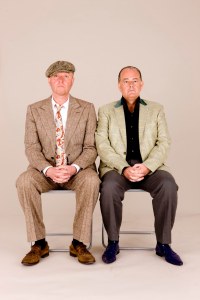
Waiting Game: Heaven 17's Glenn Gregory and Martyn Ware

Waiting Game: Heaven 17’s Glenn Gregory and Martyn Ware

Martyn Ware (Heaven 17) on the album How Men Are

“We knew we were going to have to work incredibly hard to try and top The Luxury Gap, and spent a lot of time and money on that album. To their eternal credit, Virgin basically gave us a blank cheque and said, ‘Just go for it!’ We recorded it in Air Studios and spent £300,000 on that album. That would equate to way over a million now. We just threw everything at it, and I thought it was a really brave statement. The only reason it didn’t quite do as well as we and the record company hoped is because we were about to do This is Mine on Top of the Pops when Glenn (Gregory) ruptured his cartilage the evening before. He was in such excruciating pain that he couldn’t do it and was in hospital. The producer said, essentially, if we didn’t do it, we’d never work in this town again. And we never did get any more Top of the Pops appearances for the rest of that album.”

Bill Bailey on exploring his towns and surroundings while on tour with his comedy shows

“It is a bit daunting, and there are the ups and downs, like being away from home. The novelty of hotels wore off a long time ago. What I tend to long for are the other experiences – to explore wherever I am, to get out there and get into the outdoors and educate myself a bit about every place I go to. I recognise I’ve been fortunate, and it’s a fortunate profession to be in, and I don’t want to squander that opportunity. I get the chance to go all around Britain, and see so much of it. I get the chance to go watching birds, walking and hiking. There’s always somewhere near the place I am which offers up some sort of interesting quirk about Britain, hitherto unknown.”

Pistols Offer: Midge Ure

Pistols Offer: Midge Ure

Midge Ure, former Ultravox frontman, on turning down Malcolm McLaren’s offer to join the Sex Pistols

“It was more important that he got someone who looked the part than someone who could be the part. It was less about making music than it was about using music as a vehicle to sell clothes. I just felt that was wrong. You can’t ask someone to join a band without knowing what it is they do.”

Ian McNabb (The Icicle Works), on the process of writing his autobiography, Merseybeast

“It was a completely cathartic and very therapeutic experience, and I’d recommend everyone to do the same. You don’t have to be famous or anything to just go through your life and try and write it down in an interesting and readable way, and you get to explain various things to yourself as well as other people.”

Taking Mic: Dave Spikey

Taking Mic: Dave Spikey

Dave Spikey on his brand of humour and a continued love for newspaper headlines

“I consider most headlines to be punchlines. It’s the perfect definition, something you set up with an opening paragraph summarising it all, then tell the story, and bang – your headline draws attention to that story. There are two sorts, ones where journalists are really clever in the way they’ve done it, mainly with ambiguity and a play on words, then some you just shouldn’t publish, and I get sent them from all over the world now. There was one from The Baltimore Sun recently about the weather, which read ‘Eight and a half inches make June the wettest for a long time’. Just what were they thinking of? Then there are stories that just demand a punchline, like one from the Hartlepool Mail, which said how police boarded a shop in the harbour to arrest a drunken sailor in conjunction with the harbour police at 5.30am. You just wonder what they’re going to do with the drunken sailor that early in the morning.”

John Power (Cast) on enjoying life again with his band

“We’ve been selling out on the night for pretty much the whole of this tour. That’s a really good sign. We’re not just playing the main musical strongholds. We’re playing all over the place, and places we haven’t really been for a long time or not at all. That shows us that out there’s a lot of affection for the band. And I think the audience needed to know that we’re out there and doing it, and we need to know they’re there. So this year has already been creative and positive. The band has spent a lot of time together and we’re also coming up with an album we never thought we were going to this time last year.”

November
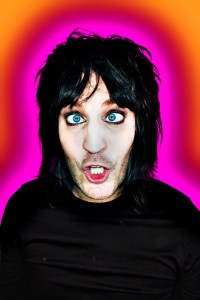
Totally Wired: Noel Fielding is plugged in (Image: Dave Brown)

Totally Wired: Noel Fielding is plugged in (Image: Dave Brown)

Noel Fielding pondering which band in history he’d like to go back and join, given the chance

“It would have to be the ‘70s, in the days of glam probably … or prog. Marc Bolan’s band, or a proggy rock band like Hawkwind. I love all that stuff, and Frank Zappa and Captain Beefheart. Me and Julian (Barratt) were obsessed with all that – the dressing up and the weird psychedelic, frightening stuff.”

Hugh Cornwell, former Stranglers frontman, on being labelled a punk back in the day

“It was an opportunity, and no one can convince me The Police were a punk band, or Blondie were a punk band, or Elvis Costello was a punk. Yet we didn’t care what they called us. Who cares! It was an opportunity for us to break into the music business and gain an audience. And it’s funny, because all the people that were on the periphery were the ones that came through and on to bigger things.”

Monty Mottram (Dubious Brothers) on the ‘lightbulb moment’ that inspired the band

“It was The Singing Detective. That pretty much changed my life, certainly musically. The way Dennis Potter juxtaposed the old music and made it darker. It was chirpy, sweet, 1930s’ and 1940s’ innocent music, yet he put it in a context of something that was much darker. That was one of the catalysts for what we eventually became. We were still synth-poppy, and didn’t really change until the first album. South America Welcomes the Nazis got a bit more swingy, but that darker old music hall, decaying Britain thing didn’t really happen until that first album.”

Richard Houghton, on his love for The Rolling Stones, the subject of his book, You Had To Be There! Live 1962-1969

“Essentially, the Stones started out as a pub band playing music very few people wanted to hear and so the audiences were often no more than a handful of enthusiasts. The band would just step off the stage and wander up to the bar during the interval, and there are some great anecdotes from contributors, with Mick showing someone how to play the harmonica or Keith teaching someone a chord. Once the vibe about how great a live act they were started to spread, and when they’d had a hit with Not Fade Away, things started to take off very quickly.”
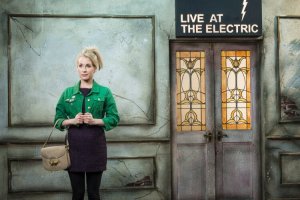
Electric Dreams: Lucy Beaumont waits for a bus home

Electric Dreams: Lucy Beaumont waits for a bus home to Hull

Lucy Beaumont on her hometown receiving City of Culture status for 2017 and what makes Hull tick 

“It’s had hard knocks has Hull, but deserves this. Let’s just hope people visit. It’s about the people, and the community spirit. People care about each other. That’s so important, and you sense it. When you’re proud of where you’re from it gives a place an atmosphere. You’re not living there because you have to work there, but because you’ve got roots there, and those bases are special. It’s been a long time coming, and we need some recognition. You wouldn’t believe the amount of professional actors, writers, artists and musicians who come out of Hull. For such a small place, it’s incredible, and people need to know.”

December

Mark Radcliffe, broadcaster/part-time rock’n’roll legend, on some of the puzzling decisions his former band The Shirehorses made

“We made a lot of odd decisions back then, like doing a full tour and never having any t-shirts. I remember sitting in the pub, saying if we get these t-shirts done we’d have to go and see someone in Preston. We decided we couldn’t be bothered, deciding to stay and have another couple of pints. That was how our decisions were made. We weren’t exactly young businessmen of the year.”

Mark Burgess (Chameleons Vox), on finding success after approaching legendary DJ John Peel

“It all happened very fast, in fact the day after our session for John Peel went out. And our lives completely changed. We were really surprised how incredulous people were when we later explained how we got on there. We didn’t realise the length people went to get his attention. All we did was go down and hang around outside the BBC, waiting for him, giving him our tape, talking to John for about 10 minutes. That was on the Friday, then on the Monday morning he phoned me – at our house. I thought someone was winding me up, doing an impression. He had to convince me.”
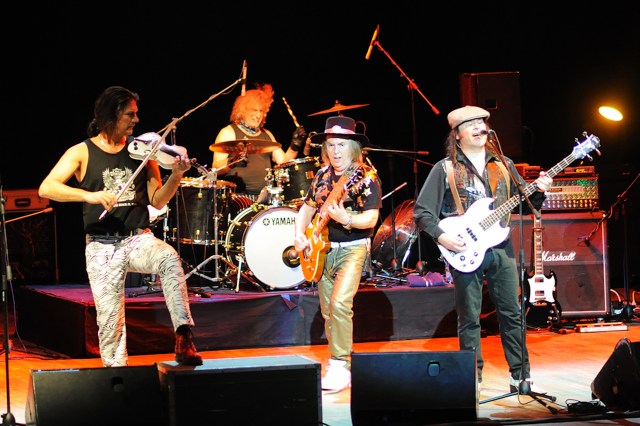
Alive Presence: Slade, 2015 style, live in Ekaterinburg, Russia

Alive Presence: Slade, 2015 style, live in Ekaterinburg, Russia

Dave Hill (Slade), asked whether he remembered playing Preston Public Hall with his band in 1971 and 1972

“I guess we must have knocked on most doors in our country, and certainly did in Manchester, Liverpool, Preston … it becomes a haze. We were a young bunch of guys travelling in an Austin J2 van, then a Transit when we could afford it, travelling up to your neck of the woods, whether it be playing a ballroom, a Mecca, a pub … we covered a lot of ground. There was an awful lot going on with us. We’d been in the ball park a long time, but by the time we’d actually started to score a goal – a hit record with Get Down Get With it – we were everywhere. Certainly by ’72 and ’73 we were the biggest thing of the time, like The Beatles of the ‘70s.”

Posted in Books Films, TV & Radio, Comedy & Theatre, Music | Tagged , , , , , , , , , , , , , , , , , , , , , , , , , , , , , , , | Leave a comment

Thanks for the memoirs – catching up with Slade’s Dave Hill

Alive Presence: Slade in Ekaterinburg, Russia - John Berry, Don Powell, Dave Hill, Mal McNulty

Alive Presence: Slade in Ekaterinburg, Russia – John Berry, Don Powell, Dave Hill, Mal McNulty

Looking at the extensive list of past shows on Don Powell’s website, it’s clear that Slade are old hands at this touring lark. An impressive archive of on-stage engagements runs from March 1963, and it’s fair to say Don’s diary remains relatively chock-a-block to this day.

Back in those early days Slade were two separate entities, with drummer Don and guitarist Dave Hill in club circuit blues band the Vendors (later the ’N Betweens) and guitarist/ singer Noddy Holder with Steve Brett and the Mavericks. But the trio – all now aged 69 – met on a ferry to Germany on their way to separate engagements 50 years ago, and not long after their return to Wolverhampton, Nod decided to take up Don and Dave’s offer to join their band.

By that time bass player and multi-instrumentalist Jim Lea, three years younger, was also on board, and history was in the making, this newly-honed four-piece in time becoming Ambrose Slade, then – with ex-Animals bassist and Jimi Hendrix manager Chas Chandler in charge – simply Slade, that classic line-up going on to enjoy mesmeric world success.

While the original Slade story ended in 1992 and chief songwriters Nod and Jim moved on to other projects, Dave and Don were soon touring again, initially as Slade II and since 2002 back under the original name. And they haven’t stopped rocking up at venues all over the world since, as Dave told me on his return from one such trip to Scandinavia earlier this week.

The old band occasionally gets together for the odd event, but live it’s just been Dave and Don of the originals for 23 years now, the last decade alongside Mal McNulty (vocals, guitar) and John Berry (bass, vocals, violin). And while every interview with the band still seems to include that inevitable question about the chance of Nod and Jim rejoining, Dave’s happy carrying on as things are.

So, five decades after that fateful meeting which ultimately led to the classic four-piece, does he ever ponder on what might have happened if Noddy had missed that ferry?

“I think in life it’s like that film Sliding Doors, where there are two outcomes, depending on your decision.”

Any idea what yourself and Don would have done for a living if the music hadn’t paid off?

“No idea! Music is in me.”

Merry Xmas: Every Santa has a ball in Rovaniemi (Photo: The Official Slade Facebook Page)

Merry Xmas: Every Santa has a ball in Rovaniemi (Photo: The Official Slade Facebook Page)

I should explain here that ours was a two-part interview, with an initial questionnaire I forwarded last weekend – returned a couple of days later – followed by a midweek morning chat on the phone from his office in Wolverhampton. So while some of the answers are a little more concise (those penned by Dave), others were more in-depth and philosophical in places (those transcribed by myself after our call).

And you’ll be pleased to know – as those who’ve met Dave over the years already knew – that the David John Hill I had the pleasure of catching up with this week was every bit the amiable, genuine rock legend I’d hoped he would be. There’s certainly no front to this fella, just plenty of down-to-earth, straight-forward honesty … as well as that occasional impish laugh and those distinctive Black Country tones.

Dave also proved to be refreshingly laid-back and somewhat pensive as we covered a wide array of subjects, from making best use of all the waiting around between shows and his on-going world travels to inspiration for songs, the band’s relationship with their loyal fans, and much more. And we also got on to his current project, following in Noddy Holder and Don Powell’s footsteps in writing an autobiography, although full details remain under wraps at present.

So Dave, seeing as I’ve caught you at something of a non-rock’n’roll hour, I should ask if you’re an early morning person these days?

“Very much so. I’m up in the morning, out for a walk, then breakfast, and it’s been like that for years. It sets me up for the day and keeps me moving. I always carry the phone with me too, as it has a recording device on it. When I’m out walking sometimes things come into my head. It could be a melody or words, so you need something to capture the moment. I find words often come to you when you’re away from racket or noise, and very often I come back and start work after something I’ve heard. And it seems to work for me.”

It’s a good idea. How many times have we had perfect melodies at times only to forget them when something else happens or we’re interrupted some way or other.

“Well, sometimes you’ll think of a perfect melody in your sleep, then you wake up and try to hum it. It may not turn out quite as good as you heard it, but could turn out to be a hit record.”

Dave knows a fair bit about hits, Slade having more than 20 top-20 singles and seven top-20 albums in the UK alone, with six of those singles and three of those LPs reaching No.1. between 1972 and 1974. Knowing he’s a big Beatles fan, I mention a certain Paul McCartney dream that he turned into Scrambled Eggs and ended as Yesterday.

“Yes, and there was that Blackbird singing in the dead of night, saying he nicked this tune off a bird, but altered it. It could just be something you hear from a distance, which you get the vibe from if not necessarily the melody. I wrote something once while delayed waiting for a plane. I was in an electrical shop in Brussels, something incessant going on over the tannoy sparking an idea. And because I was delayed several hours it ended up totally occupying me.

“And funnily enough, I answered most of the questions you sent me while sitting in at the lounge at the airport too!”

Slade_front_logo_300dpiAfter all these years, I’m guessing the trips between gigs, checking-in to hotels, sound-checking and hanging around doesn’t get any easier. I wonder how many of those hours you’ve lost over the decades while waiting or travelling between engagements.

“I think it was Charlie Watts of the Stones who said it was 10 per cent live shows, 90 per cent hanging around. But the way I view it is of the process of the journey you take in preparation for a show, which then epitomises what you’ve actually travelled out to do. For example, I was in Lapland the other day and it was awesomely snowy and beautiful, but we’d travelled quite a way. You can get into a mindset of moaning about all the ruddy travelling, but for me it’s about a process of engagement while you’re being checked in, and all that.

“If you weren’t travelling to do my job, you may just be sat around at home, which is alright for a period of time, but … Anyway, after 50 years of ‘travel, gig, hotel’, I make a point of seeing a town these days, whereas in the ‘hit’ days we whizzed from one place to another. I see far more of what’s going on these days, often travelling out a day earlier. We were only 20-something then. I’ve seen a lot more in the last 20-odd years than I saw in the entire career of the original band, visiting more interesting places.

“John Lennon talked about getting to meet your fans and knowing them by name, and that’s how it becomes – especially the loyal ones, such as those travelling over from Germany and other countries for this show we’re doing at the Robin 2 in Bilston (Thursday, December 17th, so apologies if you’re only reading this now), where we formed.

“But we work in their countries too, and people over here don’t always realise the amount of people we play to in big venues out there, sometimes packing arenas out. It’s nice that people here talk to me about that Christmas song, but there are all the others from the albums too, not just the ‘70s stuff but our ‘80s hits too.”

You mention Lapland, having just played northern Finland, and it seems that you’ve always had a great affinity with Scandinavia.

“There’s a deepness when I go to Norway, and I’ve always known it. Whether it’s rooted in my genealogy or not, I don’t know. I might try and find out one day. I wouldn’t mind approaching the people at Who Do You Think You Are? Maybe next year.

“But there is an affinity, in Finland, Sweden and Norway, all fine countries and all nice to visit. We’re there for the purpose of entertainment, but when you’re approached in a street by Norwegians who recognise you, it’s different again from being approached in England.

“My son grew up in the ‘80s so didn’t know so much about how it was before, and when he came with me on the road he saw all these foreigners besotted with the image and the music, thanking us for all the pleasure we’ve given them. Yes, it’s about playing and being on stage, but it’s also about all the other things that enhance your life while you live, and the travel’s been a big part of what I’ve done.

“A lot of artists decide not to continue touring and become studio-based, but I’ve never lost my love for it, and neither has Don. To me there’s nothing like the experience of standing on a stage and getting involved with the audience, seeing their reaction to it all. One of my daughters came to Belgium to see us, bringing her partner, and they were both amazed at the reaction and how people knew all the words. Yet people who see me around Wolverhampton might end up asking what I’m up to these days, and I have to tell them I’m still doing the same!”

Dublin Rocks: Slade face up to a loving Vicar Street crowd (Photo: The Official Slade Facebook Page)

Dublin Rocks: Slade face up to a loving Vicar Street crowd (Photo: The Official Slade Facebook Page)

Which is a nice way of bringing me back to Don’s online diary of past engagements, where I see there were very few days off in those early days. Take for example 1965’s festive season, with shows on the doorstep on Christmas Eve (Harold Clowes Hall, Bentilee), New Year’s Eve (Mossley Youth Club) and New Year’s Day (Sedgley Parish Hall). And as far as I can tell there were few breaks over that period from then until around 1972, by which time they’d moved on to wider touring, TV, promo and recording commitments.

By then the itinerary shows the band had moved further afield too, and – seeing as my excuse for talking to Dave was Slade’s last show of 2015 at Preston Guild Hall (Saturday, December 19th), I’ll mention that venue’s predecessor, Preston Public Hall, where they played on December 21st, 1971, the penultimate night of a tour (followed by the finale at London’s Marquee) in the year of their first three chart hits and debut No.1, Coz I Luv You. And they were back at the same hall on November 4th, 1972, four weeks before the release of their first No.1 album, Slayed. But I’m guessing it’s too much to ask that Dave would specifically recall that venue.

“To be honest, especially around then, we must have knocked on most doors in our country, and certainly did in Manchester, Liverpool, Preston … it becomes a haze. We were a young bunch of guys travelling in an Austin J2 van, then a Transit when we could afford it, travelling up to your neck of the woods, whether it be playing a ballroom, a Mecca, a pub … we covered a lot of ground.

“That included Germany of course. We were booked for a month there. Mind you, we didn’t last a month! The boss of the club didn’t like us, and we cleared off actually. We wouldn’t play pop hits for him, you see. He wanted us to play chart hits, but we were never that sort of band.

“I can’t actually think of what Preston was like then, and there was an awful lot going on at that time. We’d already been in the ball park a long time, but by the time we actually started to score a goal – as in our first hit with Get Down Get With it and with Coz I Luv You reaching No.1 after that – we were everywhere. Certainly by ’72 and ’73 we were the biggest thing of the time, like The Beatles of the ’70s. That’s definitely the impression I got from our Russian fans about us, and that from a nation that’s very loyal to rock fans from working class backgrounds.”

As it turns out, 44 years after Slade’s first Preston appearance, the current line-up are back this weekend, with the 2015 version of Mud supporting. Is this Dave and Don doing their charitable bit for the Lonely this Christmas?

“The Preston show and the previous one at the Robin 2 will be an absolute pleasure for all, I hope, with non-stop classics plus a certain tune – ha ha! And Mud are really nice chaps.”

I’m guessing there were occasions back in the day when you were on the same bill as the original Mud, at least on the same Top of the Pops. Any memories spring to mind?

“Yes, those involving Les and the boys, and bottles of champagne. Oh yes, we supped some stuff and had a laugh … as you did in those days.”

51CoNyg1WIL._SL500_AA280_Meanwhile, Slade remain in great demand to this day over the festivities, unsurprisingly seeing as we hear the mega-selling Merry Xmas Everybody almost daily from around October. So has it historically been a case of the band having to put off their own family festive celebrations until they’re free?

“I never missed any such events. Being with family and friends, that’s most important to me.”

And what do family Christmases involve these days for dad of three Dave – who also has grandchildren aged six and five – and his wife Jan, once the shows are over?

“Home is where my wife and kids are … and now my grandkids too.”

Are the little ones aware of what Grandad Hill does for a living yet?

“They’re not quite switched on yet. There will come a time when they’ll come and see a show though. And when my second children were born in the ’80s, I was Dad rather than anything to do with being a pop star. They didn’t know I was famous. They’re definitely their own people too. They’re three great children. We’re really lucky.”

Has Dave calmed down with the stage costumes these days? And is there a costume or a haircut he thinks – on refection – he wished he hadn’t gone with?

“I still wear colourful clothes. I invented the haircut, the boots and the costumes, and I’m proud of it. And I know people tuned into Top of the Pops to see what I’d wear next.”

Speaking of which, what became of that infamous ‘Metal Nun’ outfit he previously sported on stage? And how about the original YOB 1 number plate?

“I have great memories of everything I wore, and the Metal Nun is always around – ha ha! YOB 1 is still alive too.”

We use the term ‘branding’ now, but in Slade’s 70s heyday it was just plain marketing, and you definitely had some innovative ideas with regard to the Superyob fashion range. Was that a lucrative sideline?

Metal Nun: Dave Hill at the height of his sartorial elegance

Metal Nun: Dave Hill at the height of his sartorial elegance

“I think with the guitar it was something of an extension to the stage clothes, wearing the silver and glitter and high boots, all very spacey and very big shoulders. My designer who worked with me felt it would be great to have a guitar to go with all that. Everyone else was just using a Gibson.

“So the fashion designer sketched out a guitar which looked just like a cosmic raygun, and the Yob thing came from my car registration, deciding to call this guitar the Superyob. We had it made by John Birch, a guitar-maker who designed for Tommy Iommi of Black Sabbath, made by John Diggins. And we chose silver, which was Chas Chandler’s idea.

“But when I went on Top of the Pops with it, little did I know that a young Marco Pirroni, later in Adam and the Ants, was watching, and decided, ‘I want that guitar!’ He said it was like nothing he’d ever seen, and he was right. And Marco did end up getting the original, because I sold it and he bought it, but he loans it out now and again.”

As he did to Madness, ‘Chrissie Boy’ Foreman playing it in the video for their 1981 hit Shut Up.

“That’s right … and he leant it to me as well. I had one remade too, and the one I use now also has lights up the neck. But I didn’t get it made because it was a great guitar to play, but to use for a couple of songs then put to one side – as I do now. And to this day that’s all part of the imagery of what we do.”

Forty years on from the band’s critically-acclaimed feature film, Flame, I get the impression you all had differing views. For me it’s definitely stood the test of time, depicting the music scene better than any rock film from that or any other era.

“Flame is a good film, but it’s timed in the seventies. I reckon we should have had a Slade Hard Day’s Night caper, with Midlands humour. People like to see fun and humour.”

Staying in 1975, George Tremlett wrote in The Slade Story, ‘Hill is an extrovert, hard-working, superstitious, more sensitive than he cares to admit, perhaps over-conscious of his working class background – and at the same time warm in his personal relationships, an easy person to interview because he appears to enjoy relating anecdotes’. Did he get you about right?

“Yeah … background-wise. And I’m still in Wolverhampton, aren’t I.”

Absolutely, and while you’ve clearly always been ambitious and always wanted to make it big, you’ve never shunned your working class roots, coming over as very loyal to the area and those who helped break the band.

“My first drummer, when I was 14 or 15, told me later, ‘You knew what you wanted right there and then’. And I think I did. I found from a cheap guitar out of a Kay’s catalogue the beginning of something for me at a time when I wasn’t very good at school. The guitar came into my life and from then …

“My mother’s father was a classical pianist, so the music thing was around, but it must have been a shock to Mum and Dad when I was 18 – after doing a job for three years in an office – at a time when The Beatles were huge, telling them I wanted to go professional.

“But they’d seen me play several times, and there wasn’t really an argument. Mum was cautious, as she was quite business-like and wanted me to be a doctor to something – but that was never going to happen! I think she also recognised a musical ability, and they looked at each other, then went, ‘Well, give it a go’.

“From that, the next great thing my Dad did for me was to buy me a very special Gibson guitar, because our manager Chas Chandler wanted me to have a better one. That cost him £220 and in those days it was a case of him getting the cash and going down to London to buy the guitar. That guitar’s on some of the biggest hits we ever had, and hangs on my wall now.

Superyob Splendour: From the March 2006 issue of Guitarist Magazine

Superyob Splendour: From the March 2006 issue of Guitarist Magazine

“As far as the personal thing is concerned, I’ve a side to me that runs quite deep – poetical but also probably spiritual in a sense, without putting a finger on anything I do. I think a lot of musicians have a faith or purpose or a feeling that runs alongside what the power of music is, and that gift. I’m not spouting this to anyone, but when I had a stroke five years ago I think it changed me a lot and shook a lot of the debris out. I’m now half-way through writing my life story and there’s a lot there where the journey I’ve been on all these years has been re-lived.”

While priorities may have shifted – Don Powell also suffering a couple of health scares – the live shows carry on apace, 23 years after the very first Slade II gig on December 11th, 1992 at Mora in Sweden. Did it seem a little odd going back out there again without Nod and Jim?

“Yes, it was exciting and nervy too, to be honest. Having new people made it seem like the excitement of a new band.”

Mal McNulty has been with you 10 years now, and John Berry for 12 years. I guess they’re not just the ‘new boys’ these days.

“Definitely not new boys! Mal and John are in the Slade band now, simple as that.”

The line-ups have changed, but I make it 23 years since Nod and Jim left, after 27 years alongside Don and Dave. I guess they don’t plan too far ahead now, but it’s feasible that there will be a Mk. II silver anniversary by the end of 2017.

“All things are possible if you believe … a wise proverb.”

It’s been a sad year for Dave and Don with the loss of their good friend, Graham ‘Swinn’ Swinnerton to cancer, the former Slade tour manager who was immortalised in 1974 hit The Bangin’ Man having also been associated with their previous bands.

“Swinn was the first guy I met when I joined the Vendors. He was a great guy, funny, awkward, smart, well-read. My Dad liked him a lot too, which is a compliment. I will miss him and his ways. He was very much like a fifth member of the band. He wasn’t one for self pity, I have to say – he got on with it. He was an excellent tour manager and mate, and he was one of us.”

There must have been times – not least as those record sales fell off in the late ‘70s – when Dave wondered just how long this would all last. But he’s still out there. That’s some achievement, isn’t it?

“Swinn said to me when we last met, ‘It took some guts to go out without Nod’. I appreciated that thought, but more than anything I’m glad Don and I did what we did and the pleasure it’s brought to me and audiences worldwide. Being in it and keeping the music alive is our life. And I bought the ticket for a lifetime.”

51AhgKCVXQL._SY344_BO1,204,203,200_I thoroughly enjoyed Don’s Look Wot I Dun (2013, written with Lise Lyng Falkenberg), and before that Noddy Holder’s Who’s Crazee Now (1999). And now Dave’s working on his own memoir. What can he tell us at this stage?

“I’m working with a guy called Anthony Keates, and we’ve found a nice way to work, recording the stories. I really enjoy his company, and he’s from Walsall, and also a big fan of Slade, so knows all the background. Without saying too much, there will be interest. It’s about finding the right publisher. But I’m not concerned, not in any hurry. And at the moment I’m enjoying it.”

It sounds like you’re taking the same approach as you do with your time on the road – it’s about the journey as much as the arrival.

“A lot of people may want to read about the success of Slade, but a lot of that’s already been told through Nod’s and Don’s books. Some fans will want to see pictures of us with famous people – the way I am with The Beatles. But when you really look at it, it’s about what’s a person’s like before all that, and what makes the story.

“Yes, it’s not about the arrival – it’s about the journey. I might even say I haven’t arrived yet. Some might disagree when they look at what’s been achieved, but I don’t see it like that. The initial thing I did when I formed a group is still the same now. Otherwise, I wouldn’t still be doing it. It all comes back to why you did it in the first place, and that’s usually the joy of playing guitar and making music.”

I’m guessing it’s proved a cathartic experience, thinking back on certain memories.

“There’s a lot in there I don’t want to talk about at the moment, but the journey I’ve been on all these years is being relived through that whole experience. George Tremlett, in the book you mentioned, got some of it right, but hadn’t known me long enough to really know me.”

That’s true, and I have to say the author had you down as being born on April 4th, 1952, with the same discrepancies over the ages of your bandmates too.

“That was probably based on the original story, when we knocked five years off our age! If that was the case I wouldn’t be approaching my 70th now. He was probably somewhat misled!”

Dave’s trademark cackle follows, and it’s good to hear – taking me back, in the same way that his book project has taken him back home.

“I’ve wanted to do this book for a long, long time, but think it’s a lot more interesting now than if I’d written it back then. After my stroke I was doing talks for the Stroke Association and engaged with people who also survived strokes. I can relate to them, and they to me, and I have this natural ability to talk. In fact, I probably talk too much sometimes!

“People can initially be taken by your success, but once we meet and start to talk, they realise I’m just like them, and haven’t really changed in that area. I understand the fame thing and I’ve had to live through that. But round here these days it’s mostly people out walking their dogs, saying, ‘Morning, Dave’, rather than me being in some other town and people seeing me as that bloke from Slade.”

4315427Again, I don’t want to pre-empt the book, but I was always intrigued by the fact that you were born in Devon, at a castle serving as a maternity home, but very soon relocated to Wolverhampton. What was the story there?

“I think you’ll have to read the book, but it’s quite a story, and it’s very interesting how my Mum and Dad came together. There is a reason why they were down there, something I didn’t know until later life. But yes, I was born in a castle and moved to a council house … that’s a good start, isn’t it!”

Well, they say every Englishman’s home is his castle.

“Something like that! I did actually go back, knock at the door and say, ‘I was born here!’ as if I was about to claim it back! And the guy who answered the door – in another strange set of circumstances – happened to have designed an amplifier which Slade used. And I was with Don at the time! It’s a lovely place too, 500 acres – very nice.”

Moving on a few years, I believe you also had a science teacher who helped you learn the guitar.

“Yes, Brian Close. He didn’t so much teach me as start me off. He’s now living in Australia, and gave lessons to some of the boys at school. I had this guitar and he told me it was dreadful and I needed something better. He was a jazz guitarist. I’d go around his house and sit there with a sheet of music. One of the first pieces I learned was Tell Laura I Love Her.

“He also had quite an influence on me switching over the way I played. I was left-handed and had my guitar upside down. He told me, ‘You can’t have it that way! You’ll have to play it right-handed. You’ll get used to it.’ He was right. I did get used to it, and he may have done me a big favour.

“I later met someone in Middle of the Road who was left-handed, He said that was the best thing I could have done, saying, ‘I’m left-handed and play left-handed, but I think it’s a weakness, because my left-hand is on the fretboard and my right’s on the rhythm’. It works for some, and a lot of left-handers like Jimi Hendrix, who had his guitar upside down, and Paul McCartney play left-handed. But there’s a lot of power in my left hand, so it works well for me.”

All these years on, who does this left-handed, right-handed axe hero rate as his personal guitar favourites?

“The players I love are Hank Marvin, Paul Kossoff, Billy Gibbons, Carlos Santana, Peter Green, Eric Clapton of course, and Keith Richards.”

I read somewhere you gave music lessons at a local school in recent years.

“I did for a couple of years and really enjoyed it, and have a lot of experience of working with special needs children. Should I ever be called upon to do that again, I would at the drop of a hat. The school I helped out also helped me. One or two of those kids are not alive now, so it was sad in some ways, yet I touched base with some personal feelings, and that’s something I’ll always remember. It’s all part of doing things for one another.”

Classic Cinema: Slade In Flame

Classic Cinema: Slade In Flame

Yourself and Don are clearly survivors. What advice would you pass on to the next generations out there hoping to follow in your footsteps?

“I think the next generation of bands as we see it involves a different set-up, but longevity is about early experience and great songs, which Slade have.

“But most of all are the reasons you’re doing it. That’s what counts. I love what I do, and if you love what you do and people still want to hear it, that’s great.

“Take your legacy out there! Good wine lasts … and so does good music and entertainment!”


There must be nights when you find it hard to play certain songs after all these years though, especially those a crowd expects every night. But I guess there are also certain tracks you rediscover from time to time and feel justifiably proud of.

“I don’t get tired of our songs. They live on, and yes there’s a few cheery numbers around, and the ones I wrote are great in the act on stage too.”

I spotted a photo of Don with Nod at a ‘Scribblers, Pluckers, Thumpers and Squawkers’ lunch in Barnes recently. Is it always good to catch up again, despite the fall-outs?

“Those lunches are a nice way to see guys who’ve done the rounds and are still alive to tell the tale. And of course there are some useful people there who can help you with advice and experience, and funny stories.”

Four Play: Slade, 2015 style. From the left - Mal McNulty, Don Powell, Dave Hill and John Berry

Four Play: Slade, 2015 style. From the left – Mal McNulty, Don Powell, Dave Hill and John Berry

And if you had a quid for every time you were asked about putting the old band back together again, would that come anywhere near the royalties that come the way of the Holder/Lea estate every year for that big Christmas hit?

“That’s a good question … I won’t comment on that! But I’m happy where I am and what it’s done for me in life. I give a lot out there and feel a lot of love back – it’s infectious and fun. It’s what we do, and let’s face it – we all need some good times right now. Be in the moment and be happy with what joys we have. That’s the way for me now.

“I’d never have known the journey I’d take, the places and people I’d meet and the success I’d enjoy in the pop world, and just how big we’d became and the effect on the world we’d have when I started playing my £7.50 guitar from a Kay’s catalogue, when I was 13. And I’m still on that journey.”

Slade, supported by Mud, wrap up their 2015 dates at Preston Guild Hall on Saturday, December 19th. For tickets and further details of a VIP Christmas Party package call 01772 804440 or email info@guildpromotions.co.uk.

For this blog’s review of the Noddy Holder and Mark Radcliffe show at Preston Charter Theatre in May 2013, head here.

And for writewyattuk’s Slade Are For Life – Not Just For Christmas appreciation from December 2012, head here.

For more details about the band’s plans for 2016, head to the official website here and check out the official Facebook page here. 

  • With additional thanks to Abbie at the HCO for helping track down Dave.
Posted in Books Films, TV & Radio, Music | Tagged , , , , , , , , , , , , , , | 5 Comments

The Adventures of the Crumpsall Kid – A Memoir by Mike Harding – a writewyattuk review

Crumpsall Kid: Mike Harding takes us back to his youth

Crumpsall Kid: Mike Harding takes us back to his youth

When you get to know and like an author or performer, there’s a concern when you get a chance to review their latest work that you won’t be able to give an honest appraisal. But within a couple of pages of Mike Harding’s early years memoir, I realised that wouldn’t be an issue.

I already knew this Manchester-born singer-songwriter, comedian, dramatist, poet, broadcaster and multi-instrumentalist was a born storyteller, but he proves here he’s capable of turning anecdotes into entertaining prose too. And while highly lyrical in places, it’s never pretentious.

There’s plenty of honesty and humour too, this Yorkshire-based jack of all arts not out to over-egg his working class roots either. And it’s so much stronger for not being some kind of ‘By ‘eck, we had it hard …’ chronicle, Mike steering away from being portrayed as a victim, despite a potentially-scarring post-war Catholic education.

On the other hand, neither does he pretend that the latter did him no harm, the section relating to his later school days leaving this reader outraged on Mike’s behalf. Yet you get the feeling that – thankfully – his grounded family background and plenty of community spirit carried him through the darker moments.

Mike certainly tells his tale with plenty of colour, and over 250 pages provides valuable glimpses into a lost world of terraced red-brick houses and long-since sacrificed open spaces, in a highly-likeable portrait of a working-class nipper from the back streets of Manchester who went on to successfully find his feet.

There are parallels with Danny’s Baker’s Going to Sea in a Sieve, recently adapted into the BBC Two hit, Cradle to Grave, and to that end the TV companies would do well to take an option on this memoir. And like Danny, Mike is almost apologetic in stressing from the start how his was largely a happy childhood, despite his later school woes and losing his Dad before he was even born.

As he puts it, ‘I tried my best to write this as a work of miserabilia, part of that staple of today’s literature that my local Waterstones has titled ‘Unfortunate Lives’. But I failed. I wasn’t kept in a cupboard with nothing but a sponge to pee in. I wasn’t sent down the treacle mines at the age of six months, and I didn’t spend my days on my hands and knees fighting the dogs for their Spratt’s Ovals. I don’t want to make light of the terrible lives that some people have led, but mine, while far from being being that of Little Lord Fauntleroy, wasn’t all that bad. We were poor – but not as poor as the starving children in Africa (as my mother reminded me when I said I didn’t want to eat my stewed tripe and onions).’

We certainly get a valuable insight into austere post-war Britain, North Country style, and a nation looking to ‘rebuild itself, physically and emotionally‘. But it’s every bit as much about ‘childhood days consisting of sunshine and lemonade and leapfrog‘ too, and Mike paints a vivid picture about home life with his widowed Mum, her sister, his great-grandma, and two uncles not long out of the Army.

CoverOf those, the stand-out character is 80-year-odd Dubliner Nanna, one of the key female rocks that helped raise Mike while his Mum looked to earn a crust to top up a war widow’s pension. And Nanna – who many moons before rescued Mike’s mum and her siblings from a Nun-led home in Dublin – is a formidable woman, washing her hair in paraffin in front of the fire in winter, cooking Mike bubble’n’squeak and sitting him on her knee teaching him nursery rhymes, music hall songs and Irish street ballads, while firing his imagination with tales of tinkers’ curses, the banshee, saints, blessed martyrs, and rebellion.

Conversely, Mike’s male peers flit in and out, not least the Grandad who appears at Christmas and Easter while seeking out old drinking pals around Manchester. Yet they play a part too, the author acknowledging how his Grandad’s stories and jokes were responsible more than anything else for his future career choice.

As well as his uncles’ war tales from India and North Africa, there’s an unseen male character who clearly left a huge impression – Mike’s Dad, the Devon boy killed returning from a Lancaster bombing raid in late September 1944, a month before his birth, leaving the love of his life ‘a bride, a widow and a mother within a year’. Fans of the 71-year-old may already know that sad tale from the poignant Bombers’ Moon, and while only part of that story is retold, you can see just how much ‘Curly’ Harding meant to the family.

There’s another male influence too, one Mike – like most wayward lads – didn’t seem to truly appreciate at the time. But it becomes clear that his stepdad, Polish ex-serviceman Lou – ‘a kind and good man‘ – who valiantly fought Hitler only for Stalin to take his place, made many sacrifices to help his new family get by. And while Mike tells us, ‘there are no skeletons in our family cupboard; they’re all out there in the street dancing the double jig‘, there’s no warmth when it comes to ‘Mad Uncle Len‘, the severe teetotal Methodist, bigot and General Strike-breaker who marries his Aunt Julia. There’s even humour there though, in the tale of the Christmas trifle his aunt secretly pours a bottle and a half of sherry in to get around Len’s alcohol ban.

I mention a glimpse into a lost world, and Mike fills us in on the days the rag and bone man, the milkman and the ice cream man cometh by horse, including daily battles to reach the fresh shit first to help cultivate Nanna’s rosebush. And just past the doorways where the donkey-stoning women on hands and knees we reach the sweet shop and relive Mike’s first school days, not least his horror on realising the latter wasn’t ‘an optional, one-day event, like going to the park or the zoo‘. Instead we witness Mike ‘moaning and wailing‘, being ‘dragged through the Crumpsall streets, howling my grief at my mother’s treachery to the chimney pots and the heavens beyond‘.

Then there’s the author running away from home, aged six, planning to board a ship at Salford Docks to ‘sail away to make my fortune‘, aiming for ‘Nover Scosher‘, Canada, but ‘getting no further than Barney’s Croft‘. Other characters shine through too, not least his pal Wharfie, who sets himself ‘up as a barber with his mother’s scissors and an upturned bucket, inviting all the girls from the streets around up‘, female customers soon queuing, ready to sacrifice their long hair in favour of ‘Wharfie’s convict chic‘.

Away from the public trauma of Mike’s first communion and priestly insistence that all roads lead to heaven, hell or purgatory (with ‘limbo’ and the Holy Ghost to explain the trickier stuff), we witness Mike’s Green Hand Gang roaming the streets, climbing trees, kicking balls, seeing ‘who could pee the furthest’ and generally getting up to mischief. And on the days when he’s found out, there’s Nanna sat ‘by the fire shaking her head‘, muttering ‘something about how it was all because I was playing with Protestants‘.

There are also the secret playgrounds where he spends school holidays, weekends and long summer evenings in the era before public health and safety legislation, prevalent diseases still stalking, when ‘everybody knew some kid who had died, or knew somebody who knew somebody‘. And all are told with humour but also sympathetically in the case of Uncle Bernard, losing his little girl in one such tragic accident.

$_35While Mike credits his Mum for reading him Robert Louis Stevenson’s A Child’s Garden of Verse, there’s praise too for the BBC’s Singing Together radio show, name-checking ‘well-known leftie‘ Bert Lloyd’s influence as a folk singer and song collector as well as a writer and broadcaster – qualities it’s fair to say the author himself has since achieved.

Mike doesn’t see everything with rose-tinted NHS specs, as seen in sections about the meals he was raised on, the lack of clean air that led to ‘the Manchester chest’ and descriptions of the harsh winters of his youth. But there are still idyllic spots nearby, not least the country around Besses o’th’ Barn where he visits relatives, further retreating from a world of Catholic guilt, masses, benediction and plenty of holy water (‘Nanna’s WD40‘).

There’s nostalgia for a spell in the Scouts too – camping in the wilds of Whittle-le-Woods – and days scrumping, carol singing, visiting his local cinema and swimming baths and charabanc day-trips to Blackpool, Southport and Llandudno, all happy substitutes for family holidays. But puberty is catching up with Mike, and with it a successful 11-plus that essentially catapults him into a whole new chapter at Manchester’s St Bede’s College.

And this will be no Tom Brown’s Schooldays drama. As he writes, ‘Anybody who was slightly different or had a little spirit, particularly those boys who came from poorer, working-class families, found the college a very different place. the collective experience of many of the men I meet now who were at St Bede’s in the ’50s and ’60s is that it was a grim place run mostly on the principle that boys were elementally evil and had to have the evil beat out of them. It was a school ruled over by a number of damaged men who went on to damage a number of the children in their care … the only women to be seen anywhere near the place was a legion of whiskery nuns who cleaned and cooked and did the laundry‘. And then there was Matron, ‘a large lady of indeterminate sex who gave you aspirin and yellow ointment for everything from earache to leprosy‘.

As with tales of public school beatings, I can’t help but feel sad for the little boy within as Mike recalls sadistic masters and physical and sexual abuse from so-called men of God. Thankfully though, a few inspirational teachers help him through, as do key outside factors like Lonnie Donegan’s music, Bert Weedon’s play-in-a-day guitar handbook and his stepdad shelling out for that first guitar. And then there’s education elsewhere, not least from the North Manchester Girls’ School pupils he meets and a revealing film at The Globe, plus summer days and evenings cycling as far from Crumpsall as he can get, a love of travelling aided by the YHA.

Music-wise, an initial love of skiffle is replaced by rock’n’roll – his NHS specs given a Buddy Holly makeover – and Mike’s first paid gigs follow, his early days with The Stylos including a residency at the Dover Castle, ‘close enough to the Salford border to be in bandit country‘. He also paints a portrait of that era’s Working Men’s Club circuit, ‘dark, damp places with glitzy stages, cold dressing rooms and outside toilets‘ that ‘stank of chicken in the basket (the Matterhorn of sophistication in them there days) stale cigarette smoke and even staler beer‘.

Meanwhile, Mike revises for his O-levels while his bandmates fit carpets, sell cotton or make specs, his education elsewhere further improved by the local girls watching the band. And beyond his exams and a summer job packing ball-bearings, we oversee his switch – as a sixth former – to The Manchester Rainmakers, by which point a discovery of Jack Kerouac – with hitchhiking to London soon on the agenda – and The Beatles – instinctively knowing ‘the three-chord trick, drainpipe trousers and Teddy Boy sneers were not going to cut it now‘ – changes the rules again, this young beat further distanced from his college environment at such a happening time for musicians and writers.

We also witness Mike’s drift from home, ready to move away from his parents and their growing family in search of his own destiny, his midnight rambles around town making for compulsive reading, on nights when ‘Manchester was dead as Dixie’s dog, the pubs (apart from any late night drinking dens where curtains were drawn and lights and voices were low) were all shut, the clubs had finished and the butty van on Cannon Street, where you could get a sausage sandwich and a mug of tea for a bob, had shut up shop‘.

Evocative Descriptions: Mike Harding

Evocative Descriptions: Mike Harding

At times those descriptions are nothing short of evocative, whether he’s talking about ‘Nick the Greek’s‘ (The Oxford Snack Bar on Oxford Road) and its colourful clientele, the old Manchester before the developers got at it (‘The town hall did more damage than the Luftwaffe‘), or a sense of being part of a world changing in such a ‘wild and interesting time to be a teenager‘ for that ‘first generation of Welfare State kids‘, when ‘there was full employment and free education and unlike our parents we didn’t have to leave school and get a job in a non-unionised sweatshop.’

But life is about to change for Mike again, and we soon get the hook that sets us up nicely for book two. And I for one can’t wait.

The Adventures of the Crumpsall Kid – A Memoir by Mike Harding  (Michael O’Mara Books, £18.99), is available now.

For a writewyattuk interview/feature with Mike Harding, from April 2015, head here.

And for more details about Mike, his internet folk show and forthcoming dates and engagements, head to his website here.


Posted in Books Films, TV & Radio, Comedy & Theatre, Music | Tagged , , , , , , , , , , | Leave a comment

Instant karma, Chameleons Vox style – the Mark Burgess interview

Vox Pop: The Chameleons and Chameleons Vox front-man Mark Burgess in live action

Vox Pop: The Chameleons and Chameleons Vox front-man Mark Burgess in live action

It’s difficult to get over to the younger indie kids how important BBC Radio 1’s John Peel Show was during the latter decades of the 20th Century.

But I was hoping Mark Burgess could help, the front-man and bass player of The Chameleons – enjoying a fair amount of fan-base interest all these years on – having told me his band’s sole ambition on forming in 1981 was just to get played by Peely.

He wasn’t alone in that thinking either (a similar conversation with fellow Manc, Inspiral Carpets and Rainkings front-man Stephen Holt a while ago springs to mind), yet Mark also struggles to explain just how influential the late broadcaster – who died 11 years ago – was.

“I suppose you had two polarising drives. On one hand you had the wannabe pop stars who had that thing about Top of the Pops, then on the other there were those of us whose drive was to get on to the John Peel programme.”

As it turned out, The Chameleons’ over-riding ambition was soon achieved, this four-piece from Middleton, Greater Manchester, getting their first Peel Session within months of starting out (not returning for their next until exactly two years later).

At that stage the band comprised of Mark, guitarists Reg Smithies (also responsible for the majority of the band’s distinctive sleeve artwork) and Dave Fielding (along with Reg previously with Years, and before that with writewyattuk favourite David Gedge of The Wedding Present in his first band, Sen), and drummer Brian Schofield (who also has a Gedge link), the latter ‘gun for hire’ in time making way for John Lever.

And according to Mark, that initial radio session on June 8, 1981 – first broadcast nine evenings later – worked out to be be just what they needed.

“It all happened very fast, in fact the day after our session for John Peel went out. And our lives completely changed. We were really surprised how incredulous people were when we later explained how we got on there. We didn’t realise the length others went to get his attention. All we did was go down and hang around outside the BBC, waiting, giving him our tape and talking to John for about 10 minutes.

R-386310-1293642161.jpeg“That was on the Friday, then on Monday morning he phoned me at our house. I thought someone was winding me up, doing an impression. He had to convince me. I think he was really impressed, but when we approached him, I think he thought he was being attacked!

“I only met him two or three times altogether, but Peel was such a cool bloke and just to be on his show … well, we weren’t thinking beyond that … at all.”

Shortly after, a deal was done with CBS/Epic Records, and it seemed like the band had truly hit the big time, with the powerful debut single In Shreds (which went on to make that year’s Festive 50 on the Peel Show) the first fruit of their subsequent studio time with respected producer Steve Lillywhite. But from that promising beginning, The Chameleons’ machine seemed to grind to a halt, in what proved to be a frustrating period for the Mancunian quartet.

I’ll start before all that though, revisiting Mark’s first outfit, having reminded myself this last week of a few recordings he made with The Cliches, like 1980’s Leaving Town and Whole Wide World, which carry more of the spirit of The Clash and fellow Manc outfit Buzzcocks than the sound of his next band. Were they big influences?

“Massive, yeah! But The Cliches were kind of tongue-in-cheek with it, sending up what punk had become. We only did a few gigs, and I’m not sure that people got that. The songs were quite strong, but we were looking at each other a bit bemused that the send-up aspect wasn’t really coming across.”

There also seems to be a Teardrop Explodes influence with both The Cliches and the early Chameleons, something those who might mistakenly tar the band with a more Goth-like brush seem not to hear.

“Yeah, and in the immediate wake of punk, out of all the Liverpool bands, the best of the crop were The Teardrop Explodes and The Wild Swans.”

For me, that first Chameleons single and those early recordings offer elements of Echo and the Bunnymen, The Cure and The Psychedelic Furs too, while that distinctive guitar sound was arguably something later associated on a larger commercial scale with The Cult, a band formed over the other side of the Pennines (in Bradford) at around the same time (first as Southern Death Cult). How soon does Mark reckon The Chameleons had what they were looking for, sound-wise?

“That was relatively quick as well, in terms of the guitars. Reg was always there with it really. His sound is in his playing. Most of the evolution came from Dave, I’d say, and we benefitted from working with Steve Lillywhite really early. We learned a lot in that period.”

41z-4jwj0JLBut then came the frustration at how slowly the whole machine was turning, as Epic froze on that first album.

“It became obvious how our opinion of what constituted a great recording was very different from the more commercial interests CBS and even Steve Lillywhite had.

“When we recorded our first session it was so obvious what a great recording it was, so we were perplexed as to why they didn’t feel the same way. We were naïve and not thinking about chart placing and all that.

“For me it was a fantastic debut record and I had no doubt people would have been excited by it. We wanted to be a band to be discovered, not sold to people.”

Instead, the first two albums came out on Statik Records (although the fact that Virgin dealt with the label’s distribution ruled out any indie chart placings, and therefore arguably a little critical kudos). Were you free agents by then?

“Steve Lillywhite decided to pass on the album and do the third U2 album, so we needed a new producer and were introduced to various options which we weren’t impressed by. In the end we said we’d much rather do it ourselves with our regular engineer at Cargo Studios in Rochdale.

“After six months dancing around we were eager to record our songs and make our LP, and the next day we were off the label. They compensated us quite handsomely though, so we then had the luxury – and the arrogance, if you like – to do it ourselves.

“The Statik link came about because the very first thing we ever had released was on a compilation album a journalist put together for that label. A couple of the guys went to see them and were reasonably impressed. They gave us complete freedom to put out whatever we wanted, so that’s the direction we went in.”

The first sign that the band were up and running was the stirring Up the Down Escalator single at the beginning of 1983, followed a month later by As High As You Can Go and that June’s A Person Isn’t Safe Anywhere These Days, the latter two with hints of Julian Cope for this scribe (that’s a good thing, by the way, as far as I’m concerned). And then two months later we had the eventual release of defining debut album Script of the Bridge.

The Chameleons were truly up and running now, and were at Maida Vale for their third (and final) Peel Session in May 1984. And they were back in the studio again, this time north of the border, in Inverness at the beginning of 1985 for their second album, pre-empted by the mighty Singing Rule Britannia single – including its run-off tribute to The Beatles’ She Said She Said – in August 1985.

What Does Everything Mean? Basically then saw the light of day two months later, and was also largely well-received. And – skipping forward a little – then came the move to Geffen Records for the third album. So I’m guessing Mark felt they’d learned a lot from all those experiences by then.

“We had learned a lot, but it had been tough. The first album did well abroad – especially in the United States – but the label did a few naughty things we weren’t happy about. So financially we’d struggled. We were in that quagmire, shall we say, for six to eight months, but then switched management and got clear of all that, and got word that Geffen wanted to sign us. We met them and decided to go with that.”

MI0001776168Again we got a taster first, this time through the beguiling single Tears, followed – on the same day as second single, fans’ favourite Swamp Thing – by the release of the Strange Times album at the beginning of September, 1986. And it’s an LP that Mark remains particularly proud of.

“I am, and personally – based on my contributions – it’s the best work I’d done by far. Creatively I was very happy with it. It was a very strong record and the writing of the band was evolving, and maturing. Yes, I was extremely proud of it.”

In time, Tony Fletcher – widely seen as a calming influence on the band at a time when differing opinions were coming to the fore – agreed to manage the outfit, but it was a short-lived affair, the new boss’s sudden death after a heart attack ultimately leading to 1987’s split.

“Tony worked for the management company, coming in at their behest to help us, and we developed a very close relationship from there. We wanted him to be our official manager, but for ethical reasons he couldn’t do it, as he was employed by the company managing us. In the end he decided that was what he was going to do, and we were very excited about that, not least as there were a lot of acts he had said no to. He was very much admired in the business.

“But about three weeks after that, he died. That knocked us completely for six. I think it was more things coming to a head, tensions within the group he held in check. Without his influence it kind of erupted. I was very keen to get us back to America, where we were more respected, and Tony was of the opinion we should go out there for a couple of years.

“I was pushing for that, even without Tony, but they were probably right in resisting. Dave, in particular, said without Tony he wasn’t going. It ended up with me and John on one side and Dave on the other, with Reg backing him. It was actually John who left first.”

As it turned out, Mark worked with the band’s drummer soon after, on The Sun and The Moon album project, released on Geffen in 1988.

“Yes, that was a bit strange. He started phoning me up in the weeks after that, saying, ‘Let’s put something new together’. I was very unsure, but when I met with John and the guys he was working with the idea became attractive – getting together with a few mates and writing tunes. It was all very uncomplicated, something I hadn’t enjoyed for a long time.”

Meanwhile, the other two band-mates recorded two albums as The Reegs, and – skipping ahead again – Mark recorded his debut solo LP in 1993 and worked with three other bands before The Chameleons reconvened in early 2000, by which time Mark was based in Hamburg, where he remained between tours until 2010. So what had changed by then to bring about that band reformation?

“As you get older you get a little less extreme and intense, and I knew the popularity of the band was still growing through being in touch with the fan-base directly via the internet. I was weighing all that up against losing these friendships I’d had for so long, when I got a message from Dave asking to meet him, which was surprising.

“We had a few pints, and agreed it would be really great if we could put all that behind us and play some shows. I was quite amazed, because it had all been so bitter and vitriolic.”

716nHGrm+mL._SY355_First came the album Strip (2000), featuring older material reworked in an acoustic format, then the band’s final studio album Why Call It Anything (2001), and further acoustic album, This Never Ending Now (2002), as well as a reunion tour taking in Europe and America. So how does Mark sum up The Chameleons Pt. II?

“I couldn’t really. Initially it was quite amazing, for that first year though. It was first mooted that we did this show at the Witchwood in Ashton-under-Lyne, to which I was incredulous. I said, ‘You’ve got to me joking!’

“Their idea was to announce it, then arrange a second night. Even then, Reg was saying, ‘Do you think it will really go to two nights?’ They had no idea – it became six nights! Then we did the (Manchester) Academy in June 2000, and I can’t describe how I felt walking out of there. It gave me one of the proudest moments I’d ever experienced with The Chameleons.  The massive attendance and rapturous response after 10 years away was an unforgettable moment I’ll always cherish.

“But before long all the old gripes began to come back and I became concerned we were doing things we never would have done before for the pay cheque. Things came to a head. Dave and I are chalk and cheese and I guess it will never be any different. It was all a bit bitter-sweet. Perhaps we should have just come back, done a few shows and left it at that. It was a mistake taking it any further.”

That wasn’t the end of the story though, and in 2009 Mark and John Lever reformed to play back-catalogue material under the name Chameleons Vox. And while John is now back with Dave Fielding, performing and recording as The Red-Sided Garter Snakes, Mark continues to front a five-piece outfit under the Chameleons Vox handle, playing that original material.

And next weekend (December 18/19), Mark and his band are back on old ground at the Manchester Academy 2 for a two-night filmed residency, Home is Where the Heart Is 2015, carrying on from where they left off last year – having played the second and third albums over two nights – as part of the venue’s on-going 25th anniversary celebrations.

On the Friday night, The Fan & The Bellows & Early Recordings will see the band ‘revisit a lost gem in the back-catalogue’, playing their 1986 compilation in its entirety, along with a selection of choice cuts from the earliest days, the set including songs ‘that very rarely if ever have been performed before a wide audience’.

Then on the Saturday night, taking its name from a track from What Does Anything Mean? Basically, they conclude their residency with P.S Goodbye, delivering a set made up entirely of fans’ favourites, attendees having been given the opportunity to vote for the songs they love best in ‘a farewell gesture of sorts’.

“The second night will be a Jukebox Jack, the audience picking three choices of songs they would like to see performed. Manchester shows are always special, and as this is likely to be our last Manchester performance for quite some time, we want to make it doubly so.”

Fans have also been able to snap up weekend passes at a reduced rate, accessing both shows and getting a limited edition Chameleons Vox laminate and lanyard, plus a free download link for an exclusive track recorded at last year’s Academy shows. And also on the bill are (on Friday) Evi Vine and From Carbon, then (on Saturday) old friends of the band Oskar’s Drum, a project by Patrick Fitzgerald and Yves Altana (Kitchens of Distinction/Chameleons Vox).

Band Substance: Mark Burgess puts his best foot forward with Chameleons Vox

Band Substance: Mark Burgess puts his best foot forward with Chameleons Vox

“We’ve done it the last couple of years, rounding the year off with shows. They’ve all been really great. And the tour we’ve done this year is the biggest we’ve ever done, including South America, where we’ve never been before.”

It’s clearly not just the first-timers coming out to these shows either, with lots of younger fans turned on to The Chameleons these days. Is that down to bands out there who acknowledge your influence, like The Killers and The Editors?

“We’ve always been a musicians’ band, so a lot of people come and see us play and have been influenced that way. Then there are a lot of kids whose fathers are huge fans.”

Has college radio in the US been important too?

“Historically, that’s how the band did get known out there, although I’m not sure how influential it is these days with the internet.”

Looking at your latest homecoming, Manchester Academy has been an important venue for you over the years, but The Chameleons have been around longer. So which Manchester venues were important to you back at the beginning?

“We started off playing the Gallery on Peter Street, with fantastic memories. I actually saw REM there (1984), The Church (possibly 1982), and a few others. That was a great little place. Then there was The Band on the Wall of course, and we played the Free Trade Hall, where my first ever show was, seeing T-Rex in ’73 or ’74.”

Moving away from music for a while, I understand you worked for Manchester City FC for a while (in the mid-’90s). Do you still follow City, or do you see them as just another big money club now?

“Oh, I’m a dyed-in-the-wool City fan, and have been for 40–odd years.”

Cold Comfort: The Chameleons, back in the day, during their Statik tenure

Cold Comfort: The Chameleons, back in the day, during their Statik tenure

But your Dad – Albert Burgess – played for Manchester United?

“Yes, around 1955/6. All his friends were on the plane, actually. But he came off a motorcycle on Queens Road and smashed his leg in the weeks leading up to that, and that was the end of it. My Dad played for Manchester Boys and was in the Army at the time, and like a lot of people augmented his Army pay by playing for factory teams around the region. A United scout picked him up and he became an apprentice there, meeting Matt Busby with my grandfather, signing as a full-time professional. He was a great footballer, my Dad.”

Did that skill pass on to you?

“No. I wasn’t interested … which frustrated the shit out of him! I was happy to play on a Sunday, have a kick-around with my mates, but at school I wasn’t interested really. They were encouraging me, but it was only music that really got me passionate.”

So where’s home these days? I’m guessing you’re living back in Manchester again.

“I’m only here when we’re working, when there are things to do with the band. I spend a lot of time – about half the year – in the United States, the last couple of years in Florida.”

It’s not a bad life then, is it?

“It’s beautiful there.”

But you need a bit of Manchester rain now and again just to remind you of your roots?

“I get plenty of rain there, but Manchester’s a magnet and I’ll never stop coming back here.”

I’m guessing it keeps you grounded.

“It does.”

Talking of grounded, that brings me back on to the original Chameleons line-up, and the question I have to ask. Is there still animosity with your old band-mates?

“There’s a couple of guys I don’t speak to or have anything to do with, but I don’t really want to talk about it. I’d prefer to focus on positive things. I’m about the music really – that’s all that matters to me.”

Manchester Roots: Mark Burgess, heading back to the Academy with his band

Manchester Roots: Mark Burgess, heading back to the Academy with his band

The official line is that your latest line-up, Chameleons Vox, is ‘a vehicle for the perpetual performance of Chameleons material by people who have a deep passion for the music and a desire to keep the music alive in the wake of the original band’s demise in 2003’, with yourself ‘backed by a loose collection of musicians currently spanning two continents’. Can you explain that a bit more?

“It’s been evolving for the last five years. A lot of people have come and gone, and initially we weren’t really so concerned with getting the sound of the band, but just wanted the spirit of the music. All those who have been involved were all very passionate about this music, so initially that was the thing.

“Then, as it grew, we were thinking that if we were going to do this we owe it to the music , the legacy of the music and the people coming to try and do it as well as we can. So the emphasis came on to trying to perfect it, and I think we’ve got to the point where the band I play with now play that music as well as it can be played outside the original line-up.

“But there have been a lot of people who have come along at one time or another, and they’ve all been fantastic. We’re more like a cooperative.”

In one interview I heard you suggesting Chamelons Vox was more like Star Trek – The Next Generation. So, as the Chameleons’ captain, would you say you’re more a Captain James T. Kirk or a Captain Jean-Luc Picard figure?

“Oh, I’m definitely a Jim Kirk.”

Finally, do you have any regrets about the fact that – despite all your loyal fans, the love for your music out there, and the influence you continue to have – it was U2 who ended up making it big time, rather than The Chameleons?

“Well, what does that mean, really? To have feelings like that you’ve got to be dissatisfied with your life, and I’m not at all. What The Chameleons had given me is the complete freedom to do what I want, when I want, where I want, and with whom I want.

“I’ve been free – and I mean free – I go to bed when I want, get up when I want, I don’t have to jump on the shovel when someone shouts ‘shit’, and I’ve never been in a situation where I’ve never been able to do what I want for lack of resources, and I can walk down the street and go anywhere I want without being mithered.”

For further details and tickets for Chameleons Vox: Home is Where The Heart Is at Manchester Academy 2 (Friday, December 18 and Saturday, December 19) head to the venue’s official website link, or the venue’s Facebook page.


Posted in Music | Tagged , , , , , , , , , , , , , , , , , , , , | 5 Comments