Beyond the Boosh – the Noel Fielding interview

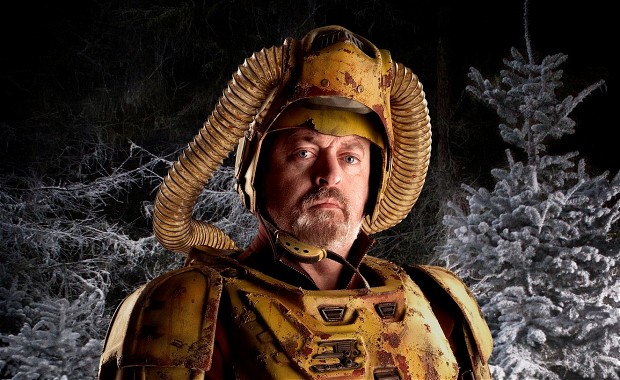
Boosh Baby: Noel Fielding is heading your way (Photo: Dave Brown)

Boosh Baby: Noel Fielding is heading your way (Photo: Dave Brown)

Memorably once described by Jimmy Carr as looking like ‘Rod Stewart has made love to a raven’, that there Noel Fielding’s back out on the road this month.

Hot on the heels of a successful first couple of legs of his tour, the 42-year-old Londoner – best known for multi-award winning comedy The Mighty Boosh – continues with his An Evening with Noel Fielding tour.

This being Noel, you can expect a magical mix of his somewhat unique brand of stand-up, live animation, music and meet a few of his best-known TV characters, such as the Moon and Fantasy Man, with guest slots thrown in from the likes of Noel’s brother Michael Fielding and Tom Meeten, both familiar to Boosh fans.

Noel’s never been one to rest on his laurels, or his hardys for that matter, and as well as a successful writing partnership with Julian Barratt – the NME labelling them ‘the funniest comedy double-act in Britain’ – he’s worked on several other successful projects, not least the half-live action, half-animated Noel Fielding’s Luxury Comedy, which also starred several Boosh regulars and included music by Kasabian’s Sergio Pizzorno.

Then there were his roles as Cradle of Filth-loving Goth Richmond on The IT Crowd and Jones the DJ on Nathan Barley, appearances in Doll & Em, How Not to Live Your Life, Michael McIntyre’s Comedy Roadshow, Comic Relief Does Top of the Pops, The Big Fat Quiz of the Year, his long-running team captaincy on Never Mind the Buzzcocks, and a little film work too.

As a solo performer, 2002’s Perrier Award-nominated debut show Voodoo Hedgehog also helped cement his live reputation, and then there were the art exhibitions – Psychedelic Dreams of the Jelly Fox and Bryan Ferry vs. the Jelly Fox – and his Scribblings of a Madcap Shambleton book of old and new paintings, drawings and photography.

But it was his link-up with Julian Barratt that made Noel’s name, first bringing to life Howard Moon and Vince Noir in the upstairs room of a North London pub, the Boosh making their Edinburgh Festival debut in 1998, winning the Perrier Award for Best Newcomer, further Edinburgh live shows and more awards following.

By 2001 the duo were commissioned by the BBC to write and star in a six-part comedy series for Radio 4 that won the Douglas Adams Award, their first TV series aired on BBC Three in 2004, soon moving to BBC2.

The awards and re-commissions continued, 2005’s series two leading to the duo’s first nationwide live tour, overwhelming public demand seeing the dates double in size, performing to some 100,000 punters and culminating in a sell-out five-night recorded run at Brixton Academy. A third series followed in late 2007 and a second UK live tour, Future Sailors, involved 100 arena performances, playing to more than a quarter of a million fans.
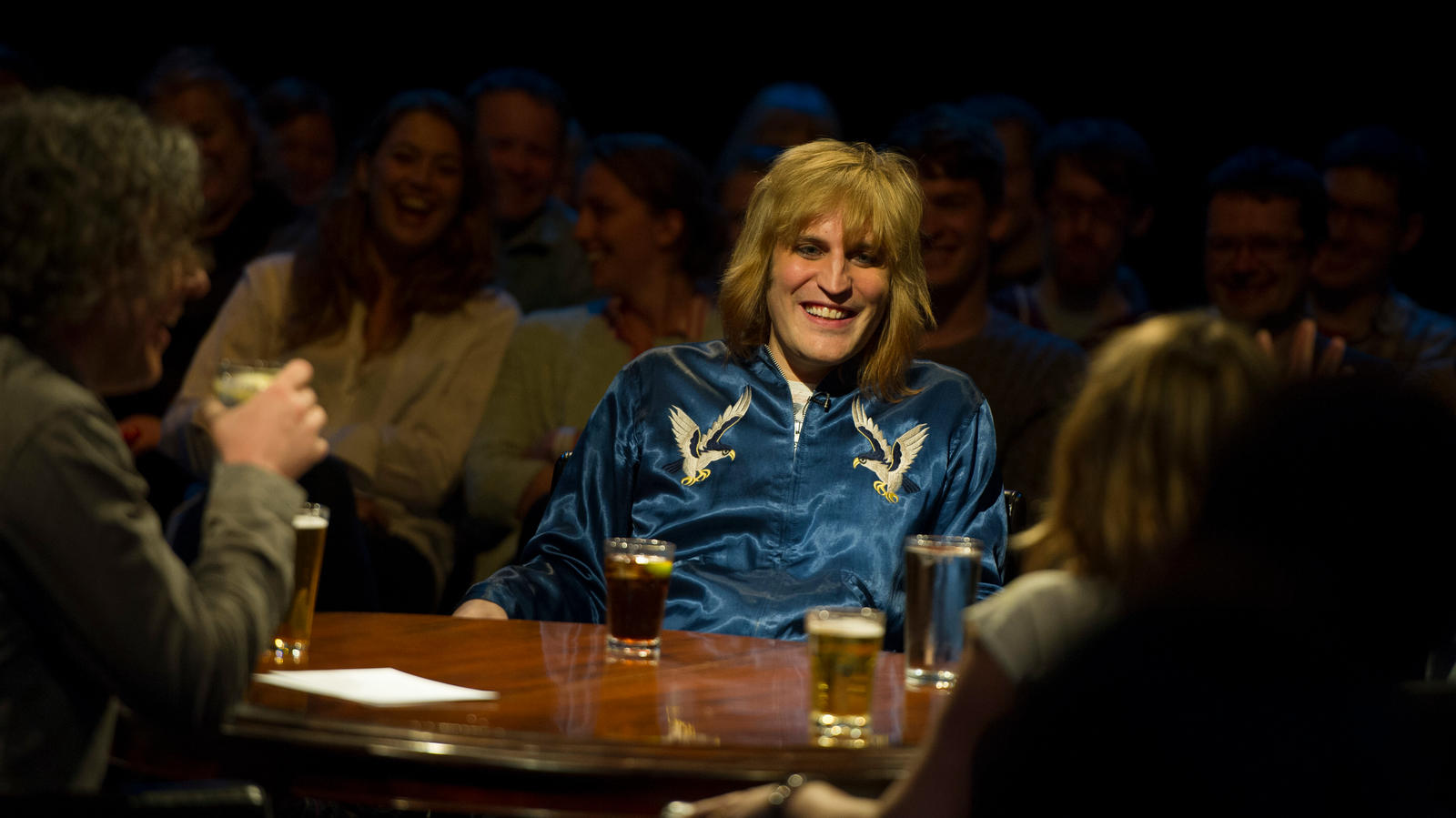
Untitled Sequence: Noel Fielding with Alan Davies and co on As Yet Untitled (Photo: Dave)

Untitled Sequence: Noel Fielding with Alan Davies and co on As Yet Untitled (Photo: Dave)

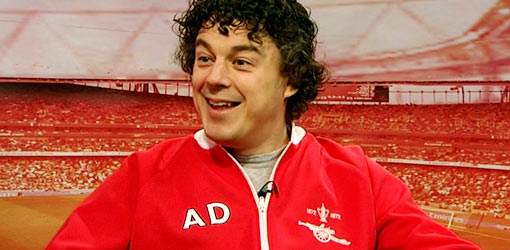
Fast forward to today, and Noel remains something of a regular on our TV sets, most recently spotted by this scribe on Alan Davies’ As Yet Untitled for Dave, where he told a rather compelling, typically-entertaining story about his brief spell in retail down in Brighton.

“Oh my God, I know! I recently saw Kevin Bishop from Star Stories, and we have a mutual friend, Dolly Wells, from Doll and Em, and we were with her, chatting about our absolute nightmare stories from when we got too drunk, and got on to that. That was a long time ago. I’m not even sure if that shop’s still there. If it is, I’d love to go in and say hello.”

Might that be the retirement plan one day – a move away from this business called show to take on a busy boutique somewhere?

“Do you know what? The reason we actually did that in the last Boosh series, when we had this second-hand shop, was because I thought it would be quite fun to work in a second-hand shop. I don’t know why. It’s probably really hard work, but … maybe. And I’ve got enough clothes that I could easily do that. It wouldn’t even make a dent in my collection.”

Perhaps you should start collecting envelopes now, unless you go on a till-training course.

“Exactly, or use some sort of barter system.”

Meanwhile, the live work continues, Noel now embarked upon on a month-long leg of his current tour. I take it – I ask – he’s enjoying the live experience.

“Yeah. I loved doing it the first time, with quite a big tour here, then went to Australia and New Zealand. That was really good fun. There were places we didn’t quite reach, first time, so we thought it might be nice to do another month and hit all those.

“And the shows got better and better. When we first went out in England, we’d just written it, so there were a few teething problems. By the time we got to Australia for that second phase, it was much stronger. So I’m hoping that phase three … this is where it takes!”

Mighty Alrighty : Julian Barratt and Noel Fielding (Photo: The Mighty Boosh!)

Mighty Alrighty : Julian Barratt and Noel Fielding (Photo: The Mighty Boosh!)

I’m guessing you know the set well enough to comfortably come off-plan?

“Totally! It’s a bit jazzy. It allows pockets of improvisation, I suppose. But there are a lot of points I have to hit. There’s stand-up in it, and the Moon’s got an alter-ego, a Dark Side. There are a few new characters, some sketchy stuff and some songs, and animation.”

Are you good at remembering what you’ve come up with on the night, or do you have moments where you did something good but can’t quite recall what?

“Weirdly, comedians never forget a joke. It’s the oddest thing. I can’t remember anything else, but I’ll never forget a joke! Somehow it comes back to you, and comedians never throw anything away.

”In the second half, there’s a break and then – after an hour of material – you have to introduce some sort of narrative, otherwise it gets a bit boring. I like to mix it up live. I can see comedians and they’re absolutely brilliant, but sometimes after 50 minutes I’ve had enough if it’s just stand-up.

“I was determined not to do that. I’ll do 45 minutes or so then make it more sketchy, or more cabaret-like, bring in some music, bring others on stage, some animation, then in the second half really get some narrative going.

“To raise it from there, I go and chat to the crowd. That makes it a bit more exciting and zingy. At the end, we bring someone on from the crowd, and they go into the animation. So hopefully there’s something for everyone.

“It’s a long show, but we work very hard at it, and if you work really hard at a live show you don’t have to worry so much about it when you take it out on tour. It’s quite knackering being on tour, so you don’t want to just be constantly fixing or tweaking stuff to make it work for you.”

Some would have you down as an improviser above all else, but you can’t be just that. There must be some preparation.

“You have to a little bit … yeah. Me and Russell (Brand) were talking about an unplanned show, because we’re both quite good at that. But there’s something slightly unsatisfying about a show that’s completely improvised. It can never be as good.”
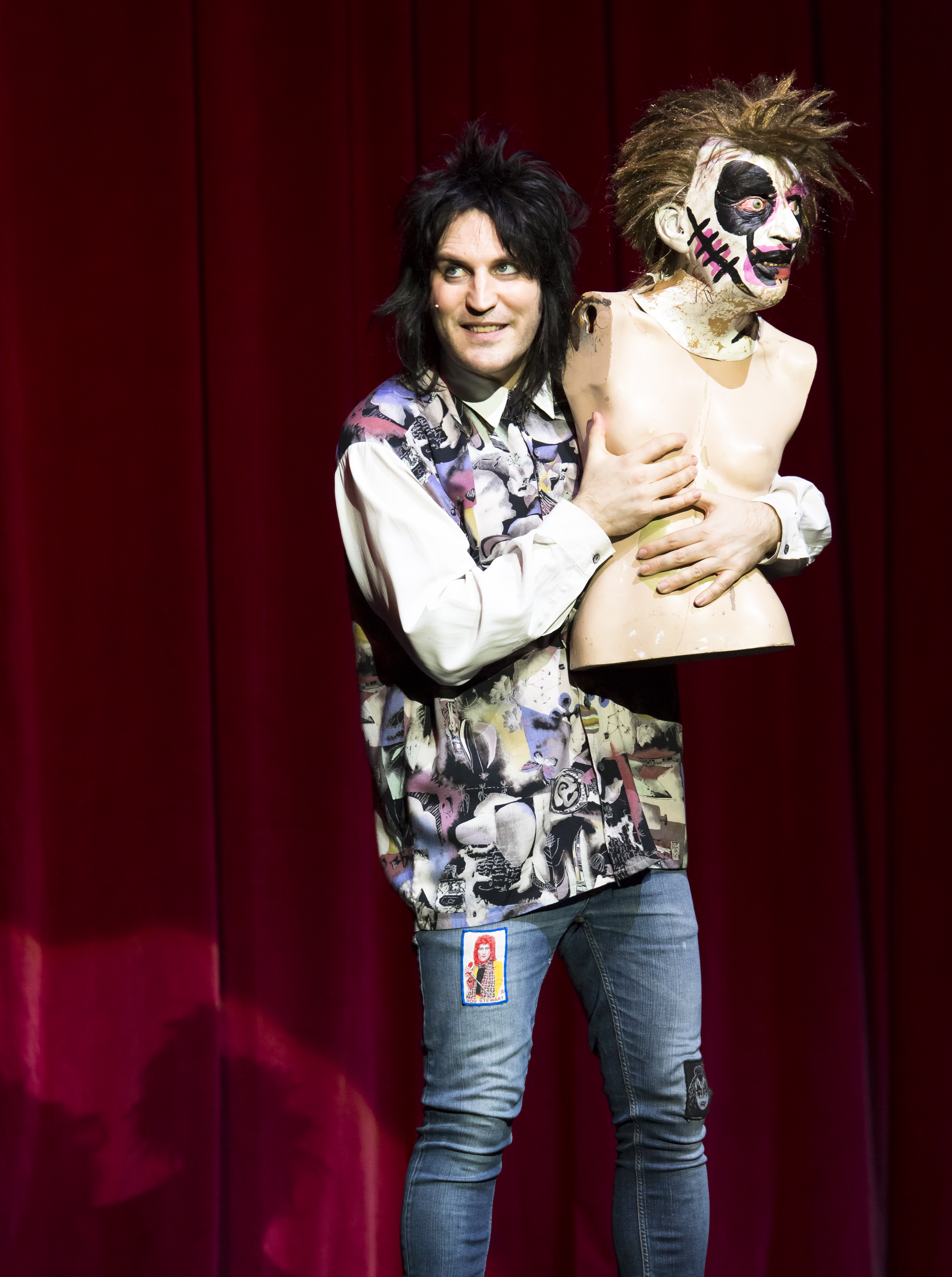
Mannequin Madness: Noel Fielding and a friend, live

Mannequin Madness: Noel Fielding and a friend, live

It seems to work with yourself and Russell though.

“Well, we did a Royal Albert Hall gig for the Teenage Cancer Trust, in which we literally had a few bullet points – that’s all! It was like, ‘Oh my God, this could be an absolute disaster!’ But somehow we always managed. I think you can if there’s an audience there, playing off them.”

Isn’t that just a special vibe with Russell? Could you even do that with Julian, as well as you know him?

“I think we could a bit, but with Julian it’s very jazzy. He likes to know what the theme is.”

There’s no obvious foil with you two. You’re both a bit off-kilter.

“The thing with Julian is he likes to know what he’s doing, go off then come back. He’s obsessed with Miles Davis, whereas with me and Russell, we’re quite free-form. There’s not even a script to begin with. We’re jumping off an invisible script at the same time! It can be good, can be quite chaotic, but occasionally you need a little bit of structure.”

You mentioned music links in the show, there was the Never Mind the Buzzcocks team captain’s role, and you have a few celebrity mates from that world. If you had a chance to nip back to any time in the history of music, which band do you wish you could have slotted in with?

“It would have to be the ‘70s, in the days of glam probably … or prog. Marc Bolan’s band, or a proggy rock band like Hawkwind. I love all that stuff, and Frank Zappa and Captain Beefheart. Me and Julian were obsessed with all that – the dressing up and the weird psychedelic, frightening stuff.

“It’s a bit conservative now, and I feel a little sorry for the kids. When you’re young it’s quite fun to dress up. I should imagine going to a Ziggy Stardust concert would have been pretty good if you all dressed up and went out together. Now, there’s not so much of that going on. Or maybe there is but I just don’t know about it. There certainly doesn’t seem to be too much ‘out there’ stuff.”

I’d personally steer clear of all The Rocky Horror Show type scene, but could see you in Beefheart or early Roxy Music.
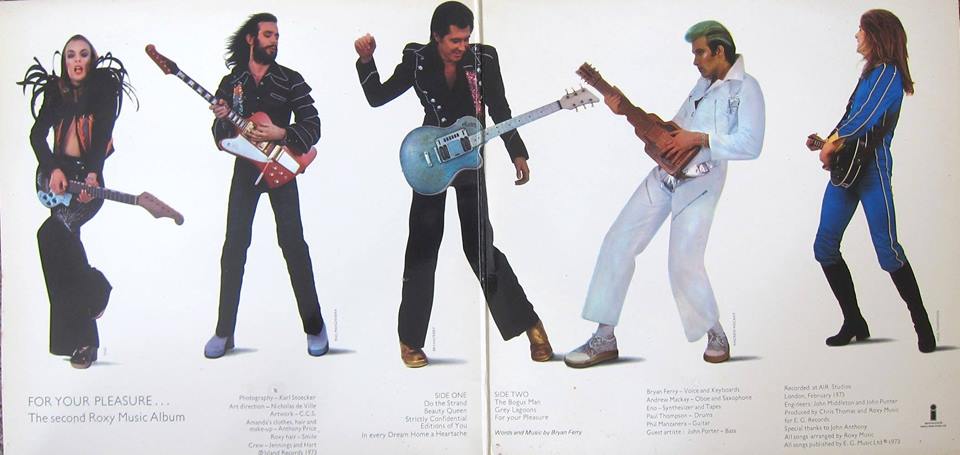
Pleasure Seekers: Roxy Music in 1973, from the gatefold sleeve of their For Your Pleasure LP. Noel Fielding not yet added.

Pleasure Seekers: Roxy Music in 1973, from the gatefold sleeve of their For Your Pleasure LP. Noel Fielding not yet added.

“I absolutely love Roxy Music! Then again, The Rocky Horror Show stuff is sort of amazing, and people love to join in with all that. Something like that today would go down so well, when people are more used to being in front of a camera or being in the limelight now.”

We heard it here first, eh?

“Yeah! Well, it was your idea!”

On a similar note, do you think you could have taken on being a full-time art teacher?

“I make a joke about that! I dunno, I like the art side a lot – paintings and animation, so it was good we were able to bring a bit of that into our live shows and with Julian, as with the music. But I don’t know if I would have been happy just doing that. I did a little teaching when I was at sixth form, and there’s something quite amazing about that.”

Perhaps you’d have been happy if you could have done that by day, and played in a glam or prog band by night.

“Maybe that would have been okay! There’s something quite rewarding about teaching. Kids are very open to learning.”

What were you like at school? Were you the quiet one, waiting for a moment to tap all these ideas?

“I was quite shy, but good at painting quite early on, so I think it was always felt I would go on and do that. The idea of performing was probably a bit frightening. I probably said maybe I was going to be a comedy writer.

“Then I started reading lots and realised I might have to do some stand-up, which seemed quite horrifying to me at the time. I did a few gigs at art college and they sort of went okay, so I thought I’d give myself a year when I left art school to go on the dole, try and get housing benefit, and do as many gigs as I could and see what happens.

“As it turned out, it all happened quite quickly. I think in my heart I felt I could do it. I had friends who were much more gregarious, outgoing and better performers, but maybe they didn’t have as much writing behind them. I had a whole backlog. You can get a certain way on performance and character alone, but you really need a lot of ideas.”

Buzzcocks Banter: Noel, right, with Phill Jupitus, left, and Rhod Gilbert on the Never Mind the Buzzcocks set (Photo: BBC)

Buzzcocks Banter: Noel, right, with Phill Jupitus, left, and Rhod Gilbert on the Never Mind the Buzzcocks set (Photo: BBC)

There have been several key moments along the way – like meeting Julian, or Bill Bailey asking if you’d like to try Never Mind the Buzzcocks.

“I know! In a way, you can’t control stuff. It’s weird. When you’re looking for it, it never really happens. The thing with meeting Julian – I don’t think that will ever happen again. Now we’ve not done the Boosh for a while, it’s clear how much people love that show and how special our relationship was. Double acts are few and far between anyway, but good ones are like unicorns – they just don’t exist.”

Don’t tell my youngest daughter that, I add, before Noel continues.

“With Julian we had a natural chemistry and could write together, which was pretty insane. You then think, I’ll be able to do that with lots of other people, but you can’t actually … or at least only to a degree.”

Seeing as you mentioned unicorns there, can you really talk to the animals, you’re your character, Mowgli in flares?

“I do have a weird sort of affinity with animals, although I’m not that bothered. My girlfriend loves animals, but they always bite or sting her, even jellyfish. With me, they always seem to love me, especially dogs. They tend to follow me about, and I’m like, ‘Look, come on, I’ve told you!’

Speaking of your other half – radio presenter Lliana Bird – have you any ambitions to do a bit more DJing – like Jones on Nathan Barley. Or are there already too many of those in your house?

“I think there are too many. I’d like to do a bit more acting, if something interesting came along. But it would have to be more interesting than whatever I was writing. That’s always going to be the case, unless what you’re offered is unusual.”

Personally, I’d love to see you and Russell come up with, as mooted a while ago by the tow of you, The Goth Detectives.

“I’d like to do that as well! But Russell’s quite hard to pin down, now he’s gone political. I’ve not seen him for a while.”
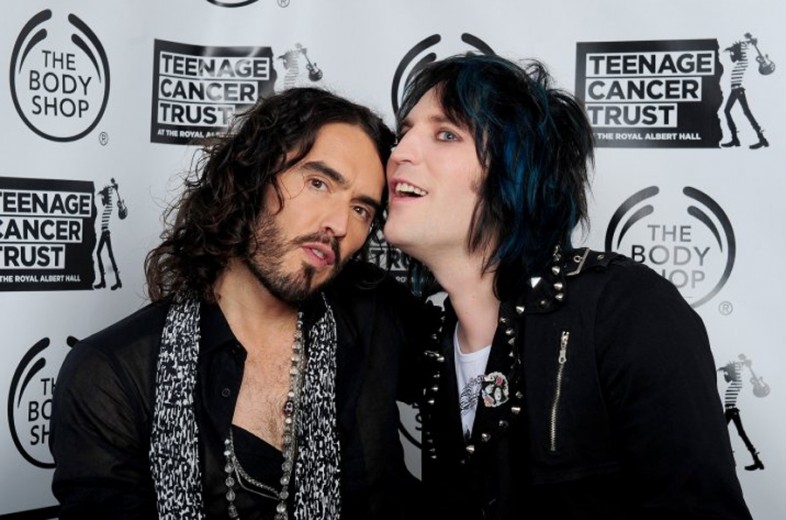
Goth Detectives: Russell Brand and Noel Fielding (Photo: http://www.teenagecancertrust.org/)

Goth Detectives: Russell Brand and Noel Fielding (Photo: http://www.teenagecancertrust.org/)

I guess we all expect the two of you to be partying all the time, but I guess the reality of it is probably quite tame – a cup of coffee and some Digestives perhaps?

“Well, especially with Russell. He hasn’t drunk for years. He likes a coffee, yeah – a coffee and mung beans! I don’t know what he’s up to at the moment. He’ll have something up his sleeve though.”

I was talking to Steve Diggle from the Buzzcocks the other day. I didn’t dare mention I had you up next though, in case he expected royalties from the makers of Never Mind the Buzzcocks.

“I do see him occasionally. He must live around here.”

He told me he lived quite close to Noel Gallagher actually.

“Really? I think I saw him around Highgate way. They’re an amazing band, aren’t they. But it’s gutting that Never Mind The Buzzcocks has been cancelled now.”

I must have missed that announcement. Apparently so – after 18 years, 28 series and nearly 270 episodes.

“Yeah. That’s really annoying. I loved doing that, and loved working with Phill (Jupitus) as well.”

Do you see Phill – who memorably described Noel as ‘a gothic George Best’ – socially outside of the show?

“We’re mates, yeah. He’s such a lovely dude, a good artist as well. We send each other art books and things. A lovely man.”

Totally Wired: Noel Fielding is plugged in (Image: Dave Brown)

Totally Wired: Noel Fielding is plugged in (Image: Dave Brown)

Many moons ago, when he was doing his stint with Go! Discs and I was writing my Captains Log fanzine, I’m pretty sure I received something from his office, and he’d signed a compliments slip in his Porky the Poet guise. Unfortunately, I think it’s long gone now.

“Actually, I think he might actually have started doing some poetry again, in Edinburgh last year.”

Who do you think the real Noel Fielding is closest to, character-wise – Richmond Avenal or Vince Noir? Or maybe the Moon?

“It was Vince, but I might be getting too old now. I’m getting like the Moon now, forgetting stuff, getting stuff wrong. Those characters I think were the ones that were probably the closest to me, rather than the scary ones like Old Gregg.

“I did like The Hitcher though, because it allowed me to play a slightly more evil character … or as evil as I can go. I’m not very evil naturally. When Julian goes evil, like with The Crack Fox, it’s really quite horrifying. But he’s quite sweet as well.”

I mention a wonderful visual gag on The IT Crowd where someone comes to look for Richmond in the office, and he’s hiding on the ceiling. Was that one of Noel’s ideas?

“Erm … I don’t think it was. I think it was one of Graham (Linehan)’s, but he was very generous and let us have a lot of ideas for our characters. I seem to think I was very hungover when I did that scene, and nearly vomiting.

“But when Graham said he was interested in talking to me about the part, I had an idea straight away for the voice. There was a documentary about Pink Floyd, live in Pompeii, and it made me laugh the way they were very posh … (Noel switches to his Richmond voice) because Goths are often quite posh.

Gothic Masterpiece: Noel's Richmond Avenal, with The IT Crowd co-stars Katherine Parkinson and Richard Ayoade (Photo: Channel 4)

Gothic Masterpiece: Noel’s Richmond Avenal, with The IT Crowd co-stars Katherine Parkinson and Richard Ayoade (Photo: Channel 4)

“Cockneys or chavs would never dress like Goths, really. I was a bit of a chav myself, but think the working classes like to dress a bit more smart, like Mods, whereas I imagine most New Romantics and Goths were middle class.”

Is that right you shared a flat with Lee Mack?

“Yeah … years ago. We lived together for two years running in Edinburgh, for six weeks or so while we were doing the Festival. Me and Julian, Lee and another comedian one year, then the year after it was me, Julian, all the Boosh, Lee, and someone else.

“Those days were quite fun. It’s the only time you ever live with other comedians. Some of them can be quite annoying, but Lee is probably the funniest person I’ve ever known. Or maybe it’s between Rich Fulcher (Bob Fossil in the Boosh) and Lee. They’re both unbelievable.”

Edinburgh Flatmate: Lee Mack

Edinburgh Flatmate: Lee Mack

Can Lee ever switch off?

“No. It’s like a disease. Really entertaining, and nice to live with, but me and him trying to make a cup of tea was unbelievable. It was the Chuckle Brothers meets Laurel and Hardy. Literally, you’ve never met two people less equipped to deal with real life!”

Finally, who do you think you’re closest to of all the past comics. I see the wonderful Spike Milligan mentioned a fair bit.

“I love Spike. I would never compare myself to him, but love his sense of being quite child-like. And I’d like to write children’s books, as he did. I have an idea. I also love Peter Cook and Dudley Moore. Julian and I always thought we were quite like them. We always felt we had an affinity with them.

“The Pythons are amazing too. Really, it’s the classics – Spike and The Goons, Pete and Dud, Python, Vic and Bob, The League of Gentlemen, then us. But I’ve probably left out a lot of my friends there! Blackadder and The Young Ones are in there somewhere.”

An Evening With Noel Fielding POSTER IMAGEAn Evening with Noel Fielding hits Preston Guild Hall on Friday, November 27, with tickets via 01772 804 444, and Blackburn King George’s Hall on Saturday, November 28, with tickets via 0844 847 1664.

For the rest of the tour dates and more details, head to www.ticketmaster.co.uk or www.seetickets.com.

And for all the latest from Noel, head to his official website here.

Posted in Books Films, TV & Radio, Comedy & Theatre, Music | Tagged , , , , , , , , , , , , | 2 Comments

The change is Cast (in stone) – John Power through the Looking Glass

Lining Up: Cast, 2015 style. From the left - Keith O'Neill, John Power, Liam 'Skin' Tyson, Jay Lewis

Lining Up: Cast, 2015 style. From the left – Keith O’Neill, John Power, Liam ‘Skin’ Tyson, Jay Lewis

It’s been a big year for Cast, these Liverpudlian indie veterans currently working on a brand new album and midway through a happening UK tour.

Those dates culminate in December 5’s sell-out All Change 20th anniversary show alongside the Royal Liverpool Philharmonic Orchestra in their home city. And four weeks before that – on November 6 – the Merseyside quartet are as good as guaranteed a full house when they resume their live shows at Preston’s 53 Degrees.

Cast originally formed in 1992, John Power having quit his bass and backing vocals duties with Liverpool legends The La’s for a fresh start, the new band taking its name from the last word of Looking Glass, the last track of that outfit’s acclaimed 1990 debut album.

These days Cast incorporate John, fellow guitarist Liam ‘Skin’ Tyson, drummer Keith O’Neill (both on board since 1993) and Jay Lewis, their most recent addition formerly with John’s solo band and a reformed La’s line-up, recently replacing bassist Peter Wilkinson, who formed the band with the mainman all those years ago.

And it’s now been three years since the band reunited with producer John Leckie (Stone Roses, Radiohead, The Fall) for Troubled Times, their first studio album in more than a decade.

At a time when so many acts are conducting anniversary tours, John Power is spoiled for choice, it being 25 years since the influential eponymous La’s album was released, along with the successfully-reissued There She Goes.

But this tour is all about Cast, showcasing their new songs – as they put finishing touches to their sixth studio album – and celebrating 20 years since their debut LP, which included top-20 hits Finetime, Alright, Sandstorm and Walkaway.

Hence that special collaboration at the Liverpool Philharmonic Hall. And while that date is now sold out, a new show has been announced at the same venue on February 27.

So, I ask John one evening as he prepares for a live show at The Warehouse in Falkirk, is he looking forward to his band’s dates with that Liverpool venue’s ‘house band’?

124010“It’s going to be a wonderful evening. It’s a new thing for us and a celebration of All Change after all these years.

“The score’s being written now and we’re going to rehearse with them in a couple of weeks. Hopefully it’s going to be an ocean of sound. We’re looking forward to it.”

And there’s a PledgeMusic campaign for the new album, I believe.

“Yes, we were one of the very first pioneers of PledgeMusic with our first comeback album, Troubled Times, when it was just getting up and running, and it’s now something most bands are involved with and I like the idea with this album too.

“It’s a way of connecting with your fans and the way a lot of things are financed these days, the industry not being as gung-ho or as supportive of bands in their development, at whatever level or whatever stage of their career.

“It’s a good way for people who are into the band or who are discovering the band to go. And it’s a way for the fans to feel more of a part of it. Things have changed … and rightfully so. Change is always afoot.”

All Change, you might say. But as proud as John is of the phenomenal sales of that first double-platinum Cast album – Polydor’s biggest-selling debut LP – he must have felt his more recent solo recordings deserved similar success.

For the record, John’s first solo album, Happening for Love, was released in 2003, with Willow She Weeps following three years later then Stormbreaker in early 2008, the latter two in more acoustic folk territory. And for these ears all three were winners. In fact, I put it to John that singles like Jumping Bean should surely have been top-10 hits, every bit a surefire hit as what came before.

“Well, there was a lot of interest, but there was more of a grass-roots approach, and I never had that same level of backing, so a lot of people didn’t realise stuff was out there. That was me kind of finding my feet again. And sometimes you need to take something down to take it back up, so people can fall back in love with it.

“I agree with you to some extent though. Jelly Bean was from an album that no one even f*****g knows about! I think for the style of music it was trying to capture I don’t think anything touched it. But that’s all led back to Cast.”

It certainly has, John’s 2010 solo Cast Acoustic Show tour pre-empting a reformation later that year, Troubled Times following. And the story continues to this day.

“We’re now getting out and about and playing gigs, and have been selling out on the night for pretty much the whole of this tour. That’s a really good sign. We’re not just playing the main musical strongholds either. We’re playing all over the place, and places we haven’t really been for a long time or not at all.

61XfZ+FFOdL“That shows us that out there’s a lot of affection for the band. And the audience needed to know we’re out there and doing it, and we need to know they’re there. This year has already been creative and positive. The band has spent a lot of time together and we’re coming up with an album we never thought we were going to this time last year.”

Going back to the early days with The La’s, it was only through reading up on your biography, reminding myself of some of that back-story ….

“You don’t wanna believe that shite, y’know!”

JP laughs, but I soldier on, although our conversation is sometimes lost amid background noise in his Scottish dressing room, with at least one more caller trying to get through on the line. He’s in fine form though, and comes over friendly, having already apologised for missing our earlier slot.

Anyway, I realised he’s only six weeks older than me, and that really put it all in perspective, helping me piece together key times in his career against my own experiences.

I’d just taken my A-levels when The La’s recruited 18-year-old John in July, 1986, after he met the band’s original guitarist Mike Badger on a course for unemployed musicians. So while I was spending my time between dead-end jobs and gigs in London and the South-East – and playing bass badly in a mate’s garage – John was doing it for real with a truly happening band.

Similarly, by the summer of 1991, shortly after I returned from my world travels, John was working towards his next venture, frustrated at the rate of progress for Lee Mavers’ band, as illustrated in a feature I cut out of the NME that August, by David Quantick, who was on the road with The La’s during a US tour.

I put it to John that – judging by that feature – there seemed to be an element of self-loathing of the songs within the band at that stage – the band members seemingly not too proud of that revered first album. I also picked up from that article how he was already writing a lot of songs.

“Yeah, we were doing Follow Me Down and Alright in the set at that time, and I was probably writing Fine Time and Sandstorm, or versions of that.”

Following increased tension with Lee, John left The La’s that December, forming Cast the following year.

“I wasn’t intending to actually leave The La’s, it’s just that things came apart. We’d been playing the same set a long time and it was just time for me to bite the bullet, grab the bull by the horns and follow my own path really.”

Citadel Sounds: Cast live at Ayr Citadel in mid-October (Photo: Stuart Westwood Photography)

Citadel Sounds: Cast live at Ayr Citadel in mid-October (Photo: Stuart Westwood Photography)

That’s a lot of cliches in one sentence, but I keep quiet. Besides, we’re up against time and the band’s soundcheck awaits.

“A lot of people thought that was maybe the wrong thing to do. The La’s were such an iconic band – and still are. But I think you’ve got to follow your own path at times, and have the confidence to do that. I had yet to form my own arrowhead, deciding to veer off from something that was established on the promise of that something I could establish – something new.”

It proved to be a sound choice, that first Cast album among my favourites from that whole BritPop era, the second and third having some mighty fine moments too.

A certain Noel Gallagher described watching Cast live as like a ‘religious experience’, and prestigious supports with Elvis Costello and Oasis helped break them, the band signing with Polydor in late 1994.

You could argue that the second album – also made with John Leckie – wasn’t as strong as the first, and while they seemed to up their game and reinvent themselves for the Gil Norton produced third LP Magic Hour, I must admit the fourth, 2002’s Beetroot, passed me by. I was busy changing nappies for one thing.

Either way, soon part one of the Cast story was over. So what had changed?

“Erm … I’d probably been working very hard … we’d all been partying and working very hard, and I wanted to do something different – and that was Beetroot. The songs on that are still very strong, I think, but maybe it could have been more of a solo project, sound-wise. I was getting into loops and just wanting to try something new.

“Also, times had changed, and I got sick of myself really, and sick of everything else. Like all things it comes to a point … I wasn’t in a good place deep down, but didn’t quite know that.”

John released the Leckie-produced Happening for Love solo LP a year later, although he later said, ‘I was still writing Cast-like tracks, but without the verve I had when I believed in it.’

MI0000735468Was there an element of finding the confidence to get back out there again?

“It wasn’t about confidence. It was just about being arsed, being turned off really! You’ve got to feel it got to want to do it, and got to feel it’s relevant. I didn’t want to parody Cast, in the same way that I didn’t want to parody The La’s when I formed Cast. I didn’t really do much for a while.

“Then I did Happening For Love. It’s neither here nor there really. There are some good songs on it, but I still hadn’t found a new identity. Going back to The La’s was something that was good though.”

The La’s reformed in 2005 for a series of headline and festival appearances in the UK, Ireland and Japan. But with no sign of new material, John soon returned to his solo career.

“It was just great, because I loved The La’s as much as I loved my own stuff. It was where I started, and all of a sudden I could enjoy being in a band that I loved, playing music I loved, with a kind of lineage I understood.

“It recharged me again in a way. It was a case of going round, completing the circle. That got me back into the rootsy stuff, and that was great – back to folk and back to rock’n’roll.”

Those next two solo albums followed, and live shows with The John Power Band, backed by Jay Lewis and Steve Pilgrim, the latter replaced by Oli Hughes after he joined Paul Weller’s band.

“From there, I made my peace with Cast and started writing again … and here we are now – enjoying ourselves!

I’ve been going back to my Cast albums again recently, and All Change in particular still sounds fresh, not least its ‘60s vibe and definable Liverpool sound. There are elements of early Merseybeat bands right through to Shack and The Coral, as well as The Byrds, The Who, and harmonies suggesting The Hollies or Crosby, Stills and Nash behind those guitars. Was that a conscious move or just part of his musical DNA?

“I don’t know really. I was just doing what was natural to me. Perhaps that was just me interpreting the music that had inspired me, sub-consciously. I suppose the dynamics of The Who were there, but apart from that I wasn’t trying to be anyone, and wasn’t working on harmonies to be like anyone.

“Those were just the ones I had! That’s just what came with the band, and were working naturally, y’know! When I look back on them now, they were quite complex.

“Now, I don’t know if I can force myself into that, and don’t do as many harmonies. But at the time, there were lots of Saturn rings around things.”

81MjCHOBnlL._SL1400_From The La’s to All Change and the following Cast LPs, then the solo work and Cast again, John can hardly be accused of standing still over the years.

“Well hopefully you’ll feel the same about the new album. It’s different. It’s not any parody. It’s more mature in its own place. It certainly feels like a band that’s been and done a few things. And we’re not trying to ape our own shadow.”

There’s proof of that in the only new track released so far, the sublime Baby Blue Eyes – which sounds like vintage Cast, but totally current and – I’ll say it again – fresh with it.

With founder member Peter Wilkinson (originally with Shack) having moved on last year, it’s now John, Liam and Keith, plus Jay. Does Paul Ellison join them on keyboards for these live shows?

“No, although we saw Paul in Brighton when we played the Komedia the first night (October 1). But we’re just a four-piece and it makes for a good energy.

“You’ve gotta all want to be on the stage together, and that’s what’s happening now. Unfortunately, Pete had to go and do his thing and sort himself out, but in a weird way it was like a weight off all our shoulders … including Pete’s.”

Jay’s been with your solo band as well, hasn’t he?

“Yes, and he was in The La’s in 2005, so I have a big history with him and he’s bedding in very well with the other members, forming his own relationship. There’s a good feeling at the moment, and it’s a good place to be.”

At this point, John – already 15 minutes behind on his interviews – has to get away. But I don’t feel short-changed. In fact, I find out an hour or so later it could have been far worse, the band posting a video of them backstage at Falkirk – Skin leading an impromptu guitar and percussion jam session in the changing room, the camera panning around a little dressing room and finding JP, with hands cupped to his ear and mobile phone, struggling to hear.

Eight successful Scottish shows followed, then another in Stockton-on-Tees, and now they’ll soon be off again, that Preston appearance the first of 10 more English dates in November before the first hometown orchestral collaboration. And what more can I say? Fine Time guaranteed.

Let Loose: Cast in action ... and coming to a town near you. From the left - Skin, JP and Jay

Let Loose: Cast in action … and coming to a town near you. From the left – Skin, JP and Jay

For tickets and further details head to www.casttour.com. And for details of Cast’s new music PledgeMusic campaign, visit www.pledgemusic.com/cast.

Posted in Music | Tagged , , , , , , , , , , , , | 4 Comments

Punchlines, headlines, good times and hard lines – the Dave Spikey interview

Mister Chips: Dave Spikey gets stuck in

Mister Chips: Dave Spikey gets stuck in

I go a few years back with Dave Spikey, first meeting this ever-entertaining Lancastrian when he dropped in at my old workplace, the Chorley Guardian, with fellow comedian Peter Kay in early 2000.

At that point the pair had already worked on Channel 4’s That Peter Kay Thing and were limbering up for cult classic Phoenix Nights with the same broadcaster. They were working on a new project based around a local newspaper, looking for inspiration nearby, or at least confirmation that they’d got it right.

And five years later – at which stage Kay had set out on his own stratospheric journey – came ITV’s Dead Man Weds, with Spikey starring as Gordon Garden, the ex-national journalist newly appointed over acting Fogburrow Advertiser editor Lewis Donat, played by Johnny Vegas.

It was Peter Kay who made the biggest impression during that initial Chorley visit, having his picture taken with the girls from the advertising section, playing up to the attention. He also sat at my desk for photos, holding my telephone and a second handset I used to feign being ‘on a call’ to avoid certain thankless jobs. And then he was away, telling his admiring audience he’d ‘give us three rings when he got home’, mistakenly disappearing into the kitchen instead of using the door that led to the main stairs. Milking it like a true pro. He was a natural, for sure. But he wasn’t the only emerging talent visiting that day.

As it turned out, that was one of two visits to newspapers around then, Dave finding what he was really looking for at the nearby Chorley Citizen. He later told Maxine Clayman at the Press Gazette, “Even the Chorley Guardian was too high-tech. There were loads of computers, people using Quark and hustle and bustle, so it wasn’t right. So I went down the road to the local free paper. I went in the office and knew I’d found it – four people, sat round twiddling their thumbs, looking at computer screens, playing solitaire.”

The fact that the news editor there at the time was a certain Gordon McCully and Dave’s character was called Gordon Garden possibly backs that up, although Dave’s been quick to add that his own middle name is Gordon.

Either way, by the end of that year the success of Phoenix Nights and his ground-breaking Live at the Top of the Tower video, filmed in Blackpool, had ensured Peter’s fame, while Dave’s own success was more low-key in comparison, the way he probably would have preferred it. He too became a star, but was never above taking the odd call from our office, dropping by, or stopping in town for a chat. An all-round good bloke.

It’s been a busy 15 years since for Dave, his decision to leave the NHS fully justified, his chance meeting on the comedy circuit with his fellow Boltonian leading to so much more.

That Peter Kay Thing won a British Comedy Award for Best New TV Comedy in 2000, the year Phoenix Nights was first aired, with Dave winning the nation’s hearts as cabaret compere without compare Jerry St Clair, that working men’s club sitcom – written by Kay, Spikey and Neil Fitzmaurice, who also appeared as Ray-Von – also winning a British Comedy Award, the People’s Choice.

By 2003 Dave was out on his debut solo tour, Overnight Sensation, the resultant DVD leading to a gold disc, the following year’s highlights including a Royal Variety Performance where he got to meet Dame Shirley Bassey, and a guest slot on Parkinson, where he met Sir Paul McCartney – two more life ambitions ticked off.

Headline Acts: Dave Spikey as Gordon Garden and Johnny Vegas as Lewis Donat in Dead Man Weds (Photo: ITV/Red Productions)

Headline Acts: Dave Spikey as Gordon Garden and Johnny Vegas as Lewis Donat in Dead Man Weds (Photo: ITV/Red Productions)

Then came Dead Man Weds, Dave going on to become a team captain alongside Jimmy Carr and Sean Lock on Channel 4 panel show 8 Out of 10 Cats, and even presenting a revival of quiz show Bullseye.

By 2008 he was touring The Best Medicine at more than 100 venues nationwide, another hit DVD following, and published his first book, He Took My Kidney, Then Broke My Heart (Michael O’Mara Books, 2009), taking an irreverent look at ambiguous newspaper headlines.

He continued touring, his Words Don’t Come Easy tour also going down well, and then published best-selling autobiography My Life – Under the Microscope (Michael O’Mara Books, 2010) while remaining a TV regular, presenting Channel 4’s TV Book Club.

Yet Spikey – real name Dave Bramwell, newly turned 64 – was never really one to fully embrace celebrity status, and has remained true to his adopted Chorley roots over the years. That said, I did once visit the cottage he shares with his beloved wife Kay for a Lancashire Design and Living feature, at which point they had a bit of a menagerie, I recall.

“That seems a long while ago. It’s all changed here now – the house and garden. The animals have all gone now. Natural causes. We do too much travelling now, hence throwing myself into animal charities, raising money and supporting them that way.

“The kids used to help look after the animals, but they’ve since moved away. We’ve not even got a dog now – just next-door’s cat, which comes and goes.”

Talking of his charity work, Dave was on Chorley Market a few days before we spoke, doing a blindfold walk for the area’s new Guide Dogs puppy training venture, at an event in which one of my  fellow ex-reporters, Helen Hunt, played a few songs (“Oh yeah – she’s got a lovely voice,” he adds). And apparently there was a similar awareness event for a testicular cancer initiative in Bolton that same week.

“Well, as you know, I’ve never bought into the whole celebrity lifestyle thing, resisting the urge to fall into that false world of showbusiness. But I worked in the NHS for 30 years, so can see how just by turning up and giving my name to a cause it can give it all a bit more publicity.

“There was this blindfold walk in Chorley, and before that a Bolton community initiative for testicular cancer, based on this cartoon family called The Oddballs, publicising signs and symptoms. So there were pictures of me all over Bolton holding a pair of balls in front of me.”

And now he’s back out on the road, with his new show, Punchlines, threatening to be another sell-out. What’s more, it appears that Dave sees a correlation between the subject of the show, the humble joke, and his passion for newspapers’ best and worst moments.

Standing Order: Dave Spikey, coming to a town near you

Standing Order: Dave Spikey, coming to a town near you

I put it to him that – knowing how streamlined most newspapers are these days – he’s probably finding even more opportunities to cut out occasionally-misleading headlines.

“There are, and I’d consider most headlines to be punchlines. It’s the perfect definition, something you set up with an opening paragraph summarising it all, then tell the story, and bang – your headline that draws attention to the story.

“Even then there are two sorts, ones where journalists are really clever in the way they’ve done it, mainly with ambiguity and a play on words, then some you just shouldn’t publish, and I get sent them from all over the world now because of the book and Dead Man Weds.

“There was one from The Baltimore Sun recently about the weather, which read ‘Eight and a half inches make June the wettest for a long time’. Just what were they thinking of? That needs no comment. Then there are stories that just demand a punchline, like one from the Hartlepool Mail, a little story which said how police boarded a shop in the harbour to arrest a drunken sailor in conjunction with the harbour police at 5.30am.

“You just wonder what they’re going to do with the drunken sailor that early in the morning. So yeah – I’m still tucking into the newspaper stories.”

I explain to Dave that I’d only recently spoken to Lancashire Evening Post subbing legend Phil Gorner, whose ‘Llama Drama Ding Dong’ headline featured in his 2009 book, topping a tale about an escaped animal that ran amok in a school playground.

“Actually, I think either The Star or The Sun used that just the other day. A lot of people tweeted me to tell me someone had nicked ‘my’ headline. I always credit the LEP of course. In fact, didn’t that headline writer have previous on that front? A story about a fight during Ramadan, headlined ‘Ramadan Ding Dong’?”

Getting back to Punchlines, have you ever cocked something up by putting one in the wrong place?

“You do now and again, generally if I’m getting too excited and really enjoying it, I’ll talk too fast. I’m more one for missing stuff out, getting to the punchline too early, having to go back and say, “Did I say he was a chemist?’ I did one the other night at the Liverpool Phil, but managed to rescue it. I got to the punchline too soon so had to twist it to make the line before the punchline … but it sort of worked. It’s just an instinctive thing.”

Ever found yourself down that dark corridor of despair where you’re trying to over-analyse comedy and why something’s funny?

Delivering Punchlines: Dave Spikey. Did he remember to tell you he was a bio-chemist?

Delivering Punchlines: Dave Spikey. Did he remember to tell you he was a bio-chemist?

“No, it sounds like I’m taking a very analytical approach to all this, in that I look at wordplay and ambiguity, misdirection, misleading, and how actions can be funny. But it’s not big and it’s not clever. It’s basic analysis. It’s not rocket science. And that’s only part of the show. In between, I look at problems at my age trying to remember jokes and punchlines, then get into other signs of ageing. It’s a broad, often blank canvas.”

While not touring or cutting out stories from newspapers, Spikey continues to work on various writing projects. As we’re speaking at 9am I ask if he’s an early-morning writer.

“That’s where I find myself most productive. But you have to be in the right mood. Sometimes you get up full of enthusiasm but it just won’t come, although you feel fresh and bright. Then sometimes you’re hung over and a couple of ideas come. It’s unpredictable.”

So what’s your next deadline?

“It’s quite exciting really. I’ve a script commission I’m writing with Jim Cartwright. That’s a big thrill for me – he’s one of my top writing heroes. I had this idea for a comedy-drama I pitched to the BBC, but they wanted someone else involved with experience in that field. I mentioned Jim, known for Little Voice, Road, Two, and so on. He lives quite close and we met for a drink, getting on very well. I sent him the project, he loved it, and we’ve been writing it ever since.

“I’ve had a couple of near-misses these last couple of years, and that’s so frustrating and disappointing. I wrote one with Neil Fitzmaurice last year about ballroom dancing, set in a little Blackpool hotel, tuning in on all this ballroom dancing fever. We wanted to make that secondary really, while wondering if we’d find the same sort of rivalry, elitism and snobbery at that grass-roots level.

“We got as far as casting, and everyone loved it, getting Alison Steadman to read the lead as the dance teacher and also Keith Barron and Jill Halfpenny, who’d just done Strictly. It couldn’t have gone better. We were just sort of metaphorically high-fiving each other when they just pulled the plug, for no reason really.”

Dave’s had several moments like that, despite his past TV hits, not least two promising TV series that got no further than the pilot stage, Magnolia, a sitcom based around a painter and decorator, and Footballers Lives, following a pub football team.

“I also get messages via social media regularly asking where people can find Dead Man Weds on DVD. But it doesn’t exist. I made it with Red Productions, and we’ve acquired the rights now. It’s just a question of clearances, getting it out somewhere people can download it.”

Do you tend to find you work better with others, as you do with Neil Fitzmaurice and did with Peter Kay in the past, bouncing ideas off each other.

Take Hat: Jim Cartwright, the playwright best known for The Rise and Fall of Little Voice

Take Hat: Jim Cartwright, the playwright best known for The Rise and Fall of Little Voice

“If you find yourself on the same wavelength, it’s brilliant. I’ve only had half a dozen sessions with Jim, but we were there four hours last time, tossing ideas around, ending up acting out scenes, laughing, then getting serious, with a little poignancy in there.

“I love writing on my own, but if you do that you’ve got to not be so precious about your work and have to employ a really good – ruthless – script editor. You still argue your corner, and you’ll win some and lose some, but in the end they’re probably right, because they’ve got the experience. It’s an interesting process.”

Dave goes on to mention a few more ‘near-misses’, other shows leading broadcasters and production companies have turned down at late stages, one part-based on his own experience in leaving the rat race to move to the country. I tell him I was particularly intrigued by the sound of Bringing in the Sheep, co-written with Terry Milligan. Then again, I could just see the commissioning panel’s reaction to the pitch for that.

“Well, I get so many scripts turned down where I’m told it’s a bit too much like this or like that. So we decided to write something that definitely hasn’t been done, then took it to a certain television company and pitched it, and the whole point is that this guy – as we discover during the series – goes to the Himalayas to escape whatever problems he’s got.

“He’s in a desperate situation and seeks peace, seeks isolation and seeks tranquility, and finds he can have this hut, which is isolated for much of the year because of snow, avalanches and so on. But when he gets up there, it’s mad – full of people like him, or on the run from the police and so on. So he finds it’s worse than he had at home.

“Well, we pitched the idea and this TV executive had read it all beforehand, and said, ‘We’ve been thinking, it’s very good, but … the Himalayas – does it have to be the Himalayas? We were wondering about somewhere maybe closer to home – like Snowdon.’ So we said, ‘But if it was Snowdon and it all went wrong, he’d just get the train home, wouldn’t he? You’ve missed the whole point!’

“That was just one of the pitches we did. But you just crack on, don’t you, rather than sit there in front of the telly and wonder how some pile of pap has got on there.”

Some series are worthy of their air-time, of course, such as Cradle to Grave, the recent BBC dramatisation of Danny Baker’s autobiography, in which Spikey’s old comedy partner Peter Kay plays Danny’s Dad, larger-than-life cockney character Spud Baker.

“It’s very good, isn’t it? And he’s 90 per cent there … although now and again he’ll go a bit Dick Van Dyke! But what a comedy character-actor he is. I can’t think of anyone who’s up there with him. People say Steve Coogan, but he’s not got the range Peter has. Maybe Paul Whitehouse. I can’t think of many others.”

So how’s the new tour going so far?

Fully Booked: Dave Spikey's autobiography

Fully Booked: Dave Spikey’s autobiography

“I’m in a very fortunate position where I attract my own audiences, and they’ve grown with me, as I’ve matured. I’m really lucky, and they’re so enthusiastic. At Wakefield the other night, even before I went on, as various punchlines were projected on to a screen, along with shop signs and newspaper headlines, I could hear the audience laughing!”

At this stage we get on to Dave telling audiences various punchlines, ones where they can probably guess the joke in question. I mention a particular favourite of mine, ‘What? Eric?’, which – however many times and wherever I hear it – always seems to involve the same name, as if it wouldn’t possibly work with any other.

“Well, some names are funnier than others, and when we were writing Phoenix Nights one of the biggest arguments we had – which lasted hours – was over what was the funnier pie, cheese and onion, or chicken and mushroom. Well, chicken and mushroom is – it stands out a mile – but Neil (Fitzmaurice) couldn’t see that, and we had this huge row!”

With that in mind, how about the phenomenal success of the sell-out Phoenix Nights charity live tour earlier this year, when Dave got Cher’s wish and turned back time, becoming Jerry ‘the Berry’ St Clair again?

“I’m not exaggerating here, but I get goose-bumps as soon as I start thinking about it. It was just such a wonderful, wonderful thing. There was that tragic first night when Ted (Robbins) collapsed, but once we got into the swing of things … I wasn’t on until the second half, but the atmosphere in the room was electric, with 15,000 people a night for 15 nights for a show from that many years ago.

“And tickets weren’t cheap, because it was for Comic Relief. Waiting to go on, dressed with Jerry’s white jacket and dickie-bow, doing my bit offstage, the compere without compare … The standing up and cheering … unbelievable. The love for that character and that show. Then you’ve got it backstage, the whole gang back together – very emotional.”

I had a similar response recently while interviewing ‘Young Kenny’ – Justin Moorhouse.  I know a few of you have kept in touch, but it seems that the camaraderie added to it all.

“In my dressing room, it was Neil, Justin and me. Wonderful. Then Paddy (McGunness) would drift in, Steve Edge, Archie Kelly … we just picked up where we left off. To be working together as a team was really something. We had very little time for rehearsal but were helping each other out and coming up with suggestions. It was just the best time.

“You get to a certain age where you become aware of your own mortality, but I’ll always have that memory now.”

Of course, I’m duty-bound to ask if there will be another reunion in five or so years.

“I doubt it very much. That was drawing the line under it. Mind you, we all thought the line had been drawn a long time ago. But I don’t think so. It was never mentioned. We threw ourselves into it as if it was going to be the last ever.”

Club Classics: Dave Spikey as Jerry St Clair with his fellow Phoenix Nights regulars (Photo: Channel 4)

Club Classics: Dave Spikey as Jerry St Clair with his fellow Phoenix Nights regulars (Photo: Channel 4)

Ever have days where you think back on your days working in haematology and wish you hadn’t put those test tubes away?

“Never. I was there 32 years and got to a stage where I was the chief biomedical scientist with massive areas of expertise in all sorts of spheres, but spent most of my life organising meetings for health and safety, risk assessment and development plans, while nobody else was doing my job, because no one else was qualified to do it. I just got so frustrated, and this all just came at the right time. And no one’s indispensable.”

If you’d have stuck with that, you might have long since retired by now.

“I probably would have been. But I left at 50 and took my pension.”

Not only that, but you won Celebrity Mastermind in 2006 with human blood as your specialist subject.

“Well, you say that, but I set myself up for a fall really. I’m alright with haematology, but not all biochemistry or immunology or microbiology of the blood. I could have got asked anything … and I was.”

There’s been a bit of talk about that show being ‘dumbed down’ over the years. But I can’t see that there.

“Well, I wanted to do the red blood cell as a subject. It’s a fascinating cell. I won’t bore you with it, but there’s books written just about that cell. But the researcher said, ‘That’s a bit narrow’. Well, I’d never heard that said about it before!”

Just a few more questions before I let you go. First off, are the panel show offers still coming in?

“Not recently. I’ve done that now, and it takes over your life. For one, they’re topical, so you’ve got to keep your eye on the news, and can write all week but then just when you come to record it two other major stories blow up that day and you lose everything. So most of your work is just gone. And then you have people who are so good at it, and so quick, like Lee Mack and Sean Lock, and it’s just natural for them. They’ve got the right sort of brains for that, whereas I need to work at it. I just wanted to get back doing my writing and my touring.”

Crown Prints: Dave Spikey and Johnny Vegas after another hard shift on the Fogburrow Advertiser (Photo: ITV/Red Productions)

Crown Prints: Dave Spikey and Johnny Vegas after another hard shift on the Fogburrow Advertiser (Photo: ITV/Red Productions)

How’s The Fogburrow Advertiser’s Gordon Garden these days? Does he keep in touch?

“I don’t know where he is. He’s probably retired. He’s probably doing what you’re doing. I don’t think he’ll be out in Syria under cover, or anything like that.”

Thinking of the Spikey and Sykey show with Rick Sykes that got you started on the comedy circuit, have you still got the VHS tapes from your New Faces appearance together?

“I probably have somewhere. I would never watch them. I hate watching myself anyway.”

Dare I ask what Sykey’s up to now?

“Rick? Yeah, he’s done very well in the teaching profession. We’re in touch now and again. He must be coming up for retirement soon.”

Do you think you’re his favourite anecdote – that ‘what might have been’ moment?

“Maybe, but the only reason I went solo – although it probably would have happened at some stage – was because he wouldn’t go over to Scarborough to do a talent contest.”

Dave’s children are now long since grown up. Is he a Grandad these days?

“No, I’ve got two kids and Kay’s got another, yet none of them show any inclination of settling down and having children.

Taking Mic: Dave Spikey

Taking Mic: Dave Spikey

“My son’s a musician, playing in Blackpool at the moment in a Legends show. He flies backwards and forwards. My daughter’s a deputy-head, totally career-focused. She’s in Blackrod, and has just got funding to open a special needs unit at her school. And Kay’s daughter is the head of cardiology at Wigan.”

Finally, when was the last time you were asked where the black bin bags were while walking around Asda?

“It’s every week! In fact, it’s any time I’m in any supermarket, people will come over and ask. Oh, you are so funny!”

Dave Spikey plays Kendal Brewery Arts Centre tonight (October 22, http://www.breweryarts.co.uk 01539 725133), Preston Charter Theatre tomorrow (October 23, http://www.prestonguildhall.com01772 804444), and has several more dates lined up, including Manchester Comedy Store (November 4, www.thecomedystore.co.uk/manchester 0161 839 9595) and Burnley Mechanics (November 6, http://www.burnleymechanics.co.uk 01282 664400).

For more tour dates and details and the very latest from Dave Spikey, head to www.davespikey.co.uk


Posted in Books Films, TV & Radio, Comedy & Theatre | Tagged , , , , , , , , , , , , , | 3 Comments

Back to The Icicle Works – the Ian McNabb interview


Works Outing: The Icicle Works, 2015-style - from the left, Roy Corkhill, Mathew Priest, Ian McNabb, Richard Naiff (Photo: David Munn)

Works Outing: The Icicle Works, 2015-style – from the left, Roy Corkhill, Mathew Priest, Ian McNabb, Richard Naiff (Photo: David Munn)

I don’t pretend to be the greatest aficionado on the life and times of Ian McNabb, the esteemed Liverpudlian singer-songwriter and leader of The Icicle Works. But I know a fair bit about the Merseybeast’s story, not least his considerable contribution to the story of his home city’s fine musical heritage.

His time as head honcho of the Icicle Works in the 1980s ‘put him on nodding terms with pop stardom’, as Paul Du Noyer put it in Liverpool – Wondrous Place, and ever since he’s proved his worth as a solo artist, with several albums of note.

Returning to Du Noyer’s observations, he adds: ‘He makes a warmly emotional noise, full of oily, clanging guitar chords. But he is always melodic and the effect is like receiving a drunken hug’. Neatly put.

One thing I sussed straight away during my chat with this Mercury Prize nominee was that there was no obvious side to this amiable 54-year-old – just plenty of down-to-earth honesty.

That even showed in his introduction over the phone. There I was, all set with my questions, and he just assumed I knew nothing and launched into a career summary, this scribe trying to find the right moment to butt in and at least prove I knew something about his impressive back-catalogue. Yet he was more self-deprecating than patronising.

It’s not as if he had a string of hits, I suppose, The Icicle Works’ Love is a Wonderful Colour the only top-20 hit, complete with its tell-tale brassy intro and Ian’s Byrds-esque Rickenbacker 12-string sound, evocative of so much great music from that period, much of it coming from that very part of the North-West.

But the fact that was the sole chart success surprises me, not least considering the strength of what followed, including singles Birds Fly (A Whisper To A Scream), Hollow Horse, Evangeline … right through to Motorcycle Rider. And that’s without even getting on to the solo years.

Ian, based in Liverpool’s Newsham Park, started with something of a resume of his formative days with The Icicle Works and subsequent solo career.

“We broke up in 1988, then I did another album in 1990 with Roy Corkhill, who was in Black, plus Paul Burgess, who was in 10cc, and a couple of people you may not have heard of, Mark Revell on guitar and Mike Baldwin on keyboards. I’m not quite sure where they are now.”

I might have made a Coronation Street reference regarding the latter, but decided to keep shtum. He was on a roll, after all. Besides, soon enough he corrected himself and told me it was in fact Dave Baldwin (‘F*!*ing hell – isn’t that shocking!’)

Hat's Entertainment: Ian McNabb gives a considered response to a writewyattuk question

Hat’s Entertainment: Ian McNabb gives a considered response to a writewyattuk question

“Anyway, we left it alone for a long time, and I became Ian McNabb, putting my first solo album out in 1991. But in 2006 we marked the 25th anniversary of The Icicle Works getting together.

“Chris Sharrock, the drummer, has been a very busy man and very successful, playing with so many people since the band broke up, including The La’s, Oasis, World Party, Beady Eye, and Robbie Williams, becoming one of the top drummers in the country.

“And Chris Layhe has effectively – although he’d probably baulk at me saying it – retired from music to do other things most of the time.

“But I wanted to mark an Icicle Works anniversary, and if I couldn’t have the people originally involved I was going to use others. So I got Roy Corkhill again, and I’ve been friends with Mathew Priest (of Dodgy fame, a previous writewyattuk interviewee, with a link here) since the early ‘90s, so asked him if he fancied playing drums, and he said yes, fortunately. We also have Richard Naiff on keyboards, who I met while playing bass and keyboards with The Waterboys on a couple of tours.

“We did that in 2006, which was very successful, then again in 2011. And we’re all very anniversary-conscious these days, so every few years I’ll take The Icicle Works out and play two-hour shows based on those five albums – with none of my solo material.”

Going back, it’s fair to say The Icicle Works were initially seen as part of an early 1980s neo-psychedelia wave, hot on the heels of The Teardrop Explodes, Echo and the Bunnymen (and Pete Wylie’s various Wah! incarnations too, I’d say). And now – 31 years after their self-titled debut album – they’re back. What’s more, I’ve seen some rave reviews from this latest tour. It’s going down well, isn’t it?

“It’s going down really well. I’m really pleased about that, and I find more people come to see me under that Icicle Works banner. We did pretty well, and they remember the name, whereas they’re not so sure about what Ian McNabb is, although I do a good smattering of those songs too. And I’m not afraid of my past, like some are.”

The band are just reaching the end of their current quota of gigs, with three more to come before the next ones in the spring – on Saturday, October 17th at King Tut’s Wah Wah Hut in Glasgow; on Sunday, October 18th at the Cluny 2 in Newcastle; and on Saturday, October 24th at Preston’s Blitz. There are a few solo gigs too, in November, December and March however.

While The Icicle Works are hardly playing the big arenas these days, for me that suggests an altogether-better live experience. In fact, not so long ago, Ian was playing solo not far off my patch in the Ribble Valley, enticed by promoter Carl Barrow, who loves his work so much he named his events company Hollow Horse.

“Yes, I know Carl well, he’s put a few shows on, and hopefully we’ll do a few more.”

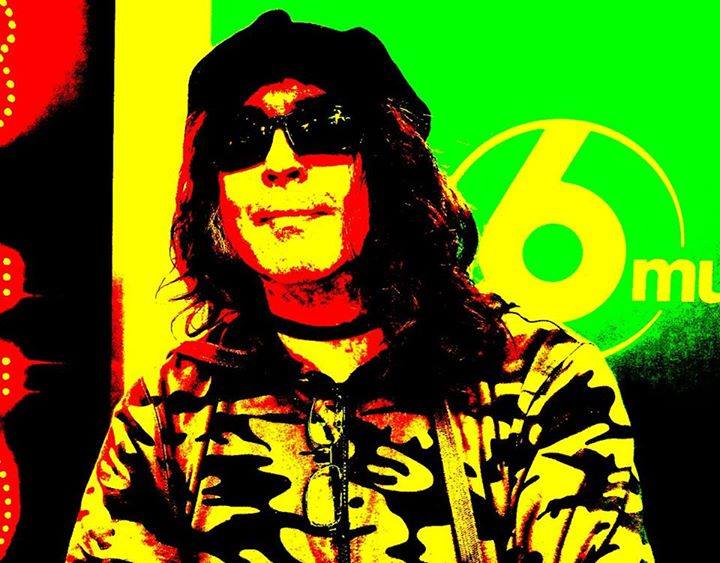
Neo Psychedelia: Ian McNabb visits BBC 6 Music

Neo Psychedelia: Ian McNabb, sans barbe, during a visit to BBC 6 Music

It’s something I was talking about with Midge Ure last week, another big name artist not averse to playing the rural and village hall circuit.

“Well, it’s a job for me! I love doing it, and have no compunctions about where I play, as long as people turn up and I get paid! The music industry has changed dramatically since we started – and I put myself in the same era as Midge, although he’s a little older.

“Things aren’t the same anymore. You don’t get the big record company or publishing advances. You don’t get a lot of money to tour. Originally, the plan would be that you went out on the road to promote your records, whereas now – while records are still incredibly important to some of us – because of the internet, downloads and streaming, as a revenue source it’s decreased scarily.

“So when perhaps we used to go out for maybe two or three tours a year, I think a lot of us now will just keep playing all the time, because we have to.”

You’ve seen the best of both worlds in that respect – with plenty of independent spirit on one hand, and the big company backing on the other.

“Yeah, I’ve done it every which way. We got signed in the early ‘80s, an incredibly booming time for the industry, largely due to CDs and MTV in America. That was really what got us going, and it pretty much lasted until the mid- to late-‘90s.

“You can almost see just where the internet made an impact and everyone started getting computers, not just the select few in the know. As it progressed towards i-Phones, laptops and what have you, it changed a hell of a lot, but I’m really glad I caught that last wave.

“Now it’s the new game, and this is how we do it. The internet is a double-edged sword, and somewhat devalues things as they are so accessible. In terms of live shows, back in the day when The Icicle Works were doing their thing, we were up against four channels on the TV.  Nowadays people can just sit at home, and they’ve got a world of entertainment at their fingerprints.”

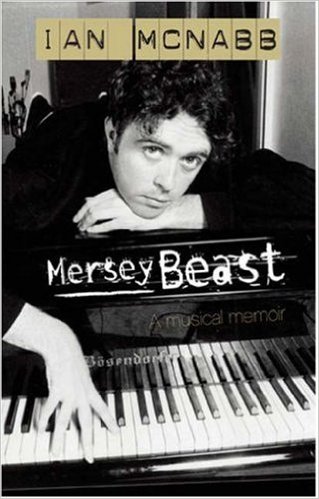
Cathartic Times: Ian's 2008 autobiography

Cathartic Times: Ian’s 2008 autobiography

Somehow I missed out on Ian McNabb’s Merseybeast autobiography when it first came out in late 2008, and seeing as it looks like a copy may set me back at least £30 now, maybe I’m not likely to see one for a while. Was that a cathartic experience for you?

“It was a completely cathartic and very therapeutic experience. I’d recommend everyone to do the same – you don’t have to be famous or anything to just go through your life and try and write it down in an interesting and readable way, and you get to explain various things to yourself as well as other people.”

Has it inspired a few more songs, getting into that mindset again?

“Yeah, because every day you’re forced to sit down and remember the person you were and situations you were in, and things you thought were incredibly important at the time – as you’re writing about them 20 or 30 years later – you realise they weren’t. And a lot of things you didn’t think were important at the time are. And it saves a lot of money on therapy!”

It’s not so long ago that I got around to reading Head On by fellow writewyattuk interviewee Julian Cope (with a link here), and of course you have a lot of experiences in common, one of which was recording early on at Rockfield Studios in South Wales.

“I’ve met Julian, and he’s absolutely charming and in that tradition of Great British eccentrics – people like Kevin Coyne, Robert Wyatt, and all of those cats. I’m a bit different to Julian, in that my interest primarily is music. He absolutely adores music, but he’s into megalithic structures and all that kind of stuff. He’s more diverse than me, shall we say.”

On the Rockfield front, I believe you insisted on Ian Broudie producing you. Did you know him quite well at the time?

“We sort of knew of each other, and he was still living in Liverpool at the time. We were on nodding terms, but then became mates, and still are mates. I’ve co-written songs with him and sung on quite a few of his records. I’d call him The Pop Detective, because he’d always find something commercial and appealing in the primitive scrawlings of whatever.”

Things moved on though, and you said the very last Icicle Works album in 1990 was more like a wake really.

“That was Permanent Damage, the album I made without the other guys, and it was a kind of funny time, with a lot of stuff going on, people pretty drunk a lot of the time and a lot of the music reflecting that. Having said that, going out and playing these songs now, we play three songs off that album in the show every night, and the audience loves them.

Permanent Damage: The original swansongs

Permanent Damage: The original swansongs, from 25 years ago

“I think time is the judge more than anything. It was very disappointing when that album came out and it didn’t do anything. We ended up doing just one album for Sony, who I was signed to. It left a bitter taste.

“We did two tours and they were really well attended but the album wasn’t well received, and also the times were changing, with that whole Manchester scene taking off. It was the beginning of something new, and despite the fact I was only 30, I might as well have been 50.”

A short spell with The Wild Swans followed, before Ian truly set out on the road to solo status. Does he think as a mindset, he was already a solo artist in everything but the name?

“I wanted to be a solo artist, even at the time of the Blind album (1988) with the original line-up, ready to put it all behind me. I’d just had enough of it and we’d sort of peaked. We tried really hard but couldn’t really get another hit and things were changing.

“As soon as people start getting married and having kids, they’re not quite as freewheeling about it. In the early days it was just us, and we didn’t really care how much money we earned, because we were always son the road and having a laugh. But then you get hitched up and it all changes.

“I felt our time had passed and felt like a solo artist. The reason Permanent Damage was an Icicle Works album was because Muff Winwood, who signed me to Epic, wanted a brand name that he knew was dependable, and wasn’t very keen on me just becoming Ian McNabb. But it was effectively a solo album.”

You mention families getting in the way. Are you a family man these days?

“No, not at all – no family.”

Married to the guitar?

“Yeah, I was born to rock, y’know! I live alone … well, my 81-year-old mother lives with me. I’m an only child and she lives in my house. So everything is devoted to the music, and to be honest, if I did have kids, I’d probably have to be doing something else as well.

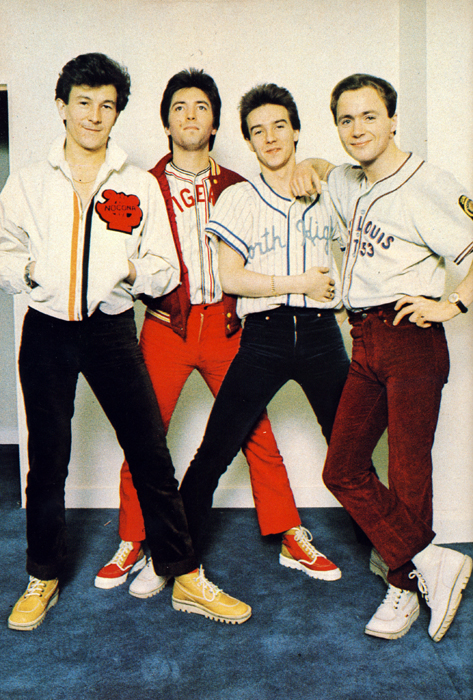
The Originals: The Icicle Works, way back in the day

The Originals: The Icicle Works, way back in the day

“I couldn’t survive just doing music. I’d probably have to teach or something, like everybody else does. Every musician from my era that wasn’t a really big act does something else. Mathew, my drummer, teaches, Roy, my bass player, does a lot of tour managing, Richard plays keyboards quite infrequently and is very happy working in Waterstone’s and going back to his family. A lot of people don’t want to be away from home.”

I think that’s quite refreshing, and suggests you’re all doing this for the right reasons.

“Well, I’m doing it because I love it, I’m obsessed with it, and I’m very pleased I still am, because a lot of people seem to go off the boil. I was really annoyed with my audience when they got to 30 and got hitched and had a couple of kids so tended not to go to gigs. But then they get to 50 when the kids have grown up and they’ve worked for most of their adult lives and have a bit of disposable income, starting to think about maybe going out to gigs again and getting back into it.”

Hence that nostalgia market. But in terms of getting the band back together I’m sure it proved a great experience for you in moving forward too.

“I suppose it is nostalgia, but it doesn’t feel particularly nostalgic to me standing on stage two and a half hours every night singing songs I wrote when I was in my early 20s, very high and very energetic.

“It’s a real challenge as a performer and a musician playing this stuff than anything else I’ve written since. Everything’s in a slightly lower key and not as frantic now. So I see it as a real affirmation that I’m still able to do it, because there’s a lot of people who can’t do that anymore and can’t hit the notes anymore.”

That left me barely enough time for asking Ian much else, time and the occasion stopping me going into too much detail about his solo career highlights this time around, except to say maybe – if you’ve missed out – it’s time for you to catch up and seek out all those albums yourself. You won’t be disappointed.

But I did ask Ian if he recommended recording on a barge, as he did in Twickenham in 2001, just outside Pete Townsend’s Eel Pie studios?

“The Batman album? That was tremendous fun! It was in a beautiful part of the world, and something a bit different. Ian Broudie rented the barge off Pete Townshend, and it was great except that the river will rise … and it did! I wasn’t too bothered, because I was getting a lift there, but our drummer (and co-producer) Geoff Dugmore’s Range Rover winded up down the street. It was quite funny doing vocals and seeing ducks looking at you through this porthole!”

Another Time: Ian McNabb, head honcho of The Icicle Works

Another Time: Ian McNabb, head honcho of The Icicle Works

There have been some big names you’ve featured with along the way, from Ringo Starr – whose son Zak Starkey had an early break in the industry playing in a late-’80s line-up of The Icicle Works – to The Waterboys’ Mike Scott, double bass legend Danny Thompson, and so on. And there was Neil Young’s band Crazyhorse …

“That was in 1993 for the second solo album (the Mercury Prize-nominated Head Like A Rock). We went to record it in the San Fernando Valley, California, and were able to get Neil’s band, doing half an album with them. They then came over to the UK and we did a bunch of shows, the last of which at Glastonbury. That was mind-blowing!”

Moments like that must make you wonder how it’s happened to you, this mere lad from Merseyside.

“Absolutely! I used to go around saying, ‘Jim fixed it for me’, but I can’t really do that anymore, can I.”

Finally, I wonder how things might have changed if you’d been successful in that audition for Brookside and landed the part that went to Paul Usher, portraying Bobby and Sheila’s eldest son, Barry Grant.

“Even if I’d got that, I don’t know what would have happened. It’s one of those crossroads things. I know I could have been a good actor because I still do that – in daily life. But music was always the real passion. And I’m pretty glad I ended up doing the music.”

12046711_10153294728919247_4592201528345818069_nThe Icicle Works play Blitz, Preston, on October 24 (7.30pm), with support on the night from Martin Bramah, and the Long Lost Band.

Rico La Rocca, aka event organiser Tuff Life Boogie, writes: “Martin Bramah formed the Blue Orchids in 1979 after departing The Fall, and they were viewed as one of a handful of post-punk outfits that delivered quality material with great songs and a mesmerising live act.

 “Bramah’s shamanic stage presence is not to be missed, as he delivers his songs with the fevered intensity of a travelling preacher man, with equal measures of passion and venom and none of this is lost in his occasional solo appearances.

 “Meanwhile, The Long Lost Band do spacey, wistful melodic pop and have been impressing people all over the North West since 2010. Their third album, One More Mile, a collaboration with Tim Buckley lyricist Larry Beckett, has just been released. 

 Advance tickets are £13, available in person from Action Records in Preston and from Blitz on Church Row in the city centre. 

For online tickets try ticketlinewegottickets or ents24, and to keep up with all things Ian McNabb and The Icicle Works, including a full list of up and coming shows, head to Ian’s website here.   

Posted in Books Films, TV & Radio, Music | Tagged , , , , , , , , , , , , , , , , , , , | 4 Comments

Time to Breathe Again, in the company of Midge Ure

midge-ure1If you were to condense the history of popular music from the mid-’70s to the turn of the ’90s into a few pages, Midge Ure would still get a pretty impressive showing.

Not just in the footnotes either, despite being in the shadows for a fair portion of that ground-breaking period. Many of us of a certain age recall his contributions to Slik, the Rich Kids, Visage, Ultravox, and even Thin Lizzy. And don’t forget a certain famine relief project that proved such a defining moment, in many respects.

There were major solo successes too, not least a top-10 cover with No Regrets and a No.1 of his own with If I Was, but it’s worth pointing out that while his last top-20 single was 24 years ago, this Lanarkshire lad has never really stood still. That said, this genial musician, vocalist and singer-songwriter doesn’t appear to be the sort of fella to track you down and shout in your face about the LPs you may have missed either.

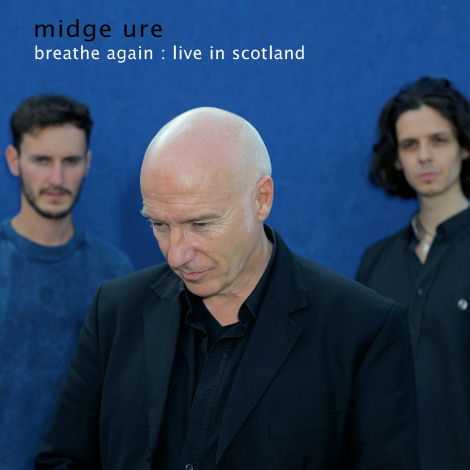
But Midge, who turns 62 today (Saturday, October 10th, 2015), is out on the road again though, reminding us about one such ‘lost’ gem, 1995’s Breathe, his current tour running through to London’s Union Chapel on October 23rd, before a show in Copenhagen then eight dates in Germany. And next up is Wednesday, October 14th’s visit to Preston’s Charter Theatre, my excuse for phoning him.

Even beyond that he has dates in Mexico and Italy before the year is out, then joins Big Country, Nick Heyward and Curiosity Killed The Cat’s ’80s Explosion for 15 bookings in March.

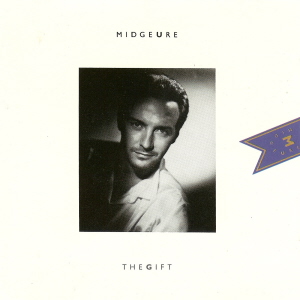
When we catch up – Midge calling from his base near Bath, where he’s been these past couple of decades since leaving London – I mention how I’m amazed it’s 20 years since Breathe … not least because that means it must be 30 years since The Gift, his most commercially-successful album.

“Seemingly! Believe it or not – yes! And someone’s been tweeting how it’s 30 years this week that If I Was made it to No.1.”

While we’re playing the anniversary game, I’ll go back a little further and say I can’t believe it will be 40 years in the New Year since your first No.1, Forever and Ever with Slik. In fact, this impressionable scribe – barely eight at the time – can still see that Bell label logo spinning on the platter, listening to my big sister’s singles on her Dansette – or at least the catalogue equivalent – in ’76.

“It can’t possibly be 30 years – I’m obviously not that old! But sadly, you’re right. Crikey. It seems that everyone had one of those stacking Dansettes. A fantastic thing. with its volume and tone control – that’s all it was. But imagine how much that’s worth now!”

Forever Friends: Slik, with Midge second from right

Forever Friends: Slik, with Midge second from right

I was intrigued by that song, not least in retrospect. It seemed to span the genres, with Midge a pioneer in that respect, mixing electronica with … erm, Bay City Rollers-type Caledonian pop.

“Well, with Slik I’m not sure if electronica was part of that sound.”

I suppose it’s that keyboard sound you had.

“Yes, the big organ thing. But it wasn’t until I joined the Rich Kids when I bought my first synthesiser. That was 1978, still early for incorporating electronics with traditional rock instrumentation. And by buying that synth, bringing it into the Rich Kids and breaking the band up because of it – that’s where the idea of Visage was born, and through Visage ending up with Ultravox.”

Despite the sheer energy of their self-titled debut single, the Rich Kids – in which Midge joined sacked Sex Pistol Glenn Matlock, Steve New and Rusty Egan – didn’t see out 1978, a disagreement over musical direction leading to Midge and Rusty, who by then had discovered Kraftwerk, La Dusseldorf, Can and Telex, forming electronic trail-blazers Visage, along with Blitz club host turned lead singer Steve Strange.

That initial Visage line-up was later expanded as Ultravox’s Billy Currie and Magazine’s Dave Formula, John McGeoch and Barry Adamson joined, the line-up that oversaw chart success at the end of 1980 with Fade to Grey.

And it was his friendship with Billy Currie that led to Midge joining Ultravox (I’ll leave out the bit about Thin Lizzy for now – otherwise it just gets too complicated), a band that had more or less disbanded after the departure of (past writewyattuk interviewee) John Foxx and guitarist Robin Simon.

Midge claimed the main role in the newly-revamped Ultravox, acting as singer, songwriter, guitarist and second keyboardist alongside Billy (keyboards), Chris Cross (bass) and Warren Cann (electronic drums). And following his brief spell with Thin Lizzy, they went on to enjoy major success, their breakthrough the 1980 album (and 1981 single) Vienna.

m.3180_ultravoxAs it turned out, the Ultravox Mk. II story continued right through until 1986, by which time Midge was already establishing himself as a solo artist. And that’s more or less where I came in, up the page a bit, The Gift the first of four albums under his own name over that next decade, with only Breathe – even the sumptuous title track failed to shift units, somwhow – failing to make the top-40.

Which all goes to show how Midge has never been one to stand still (‘We all stood still’, I hear you respond). And on that note I mention to the man himself how in his illuminating 2004 autobiography If I Was, he talks about hearing Telstar by the Tornados in 1962 on the radio and instinctively knowing what he wanted to do with his life.

That seems quite apt really, for someone who often strode that line between genres, being turned on by something that mixed early electronic sound with rock’n’roll.

“It was, they used that funny little electronic organ sound, and there was something about the atmospherics of those early records – it was like being bitten by a mosquito, it was in your system! All those early records like Telstar or Johnny Remember Me, with those haunting echoey vocals, I can still hear in what I do now.

“In my view that’s what dictates your musical taste – what you’ve heard in the past, from different genres and different eras and different periods of your life. And when you write music those influences are your apprenticeship.”

I feel a little guilty talking so much nostalgia with you. There must be times when you think, ‘Ask me about now – I’m still making music!’

“It’s all part of it. Nostalgia is your foundation. It’s what you started with. Everything you’ve done since is built upon that. So it’s understandable people want to talk about the past, because we all feel comfortable with that. It’s that rose-tinted glasses thing – it makes us all feel how wonderful it was in the past. But it wasn’t that great, you know! It was okay, but at the time, you just got through it.

“I still look at old black and white movies from the 1930s and 1940s and think, ‘Wouldn’t it have been great to be there’. But  it probably wasn’t. It was probably pretty rough.”

Rich Kids: Midge Ure and his new wave bandmates back in 1978

Rich Kids: Midge Ure and his new wave bandmates back in 1978

There’s a parallel there with the punk days. Those who were properly there recall they weren’t the greatest of times … like Midge, maybe, who famously turned down an offer from Malcolm McLaren – ‘this effeminate-looking bloke who talked in this very whiny, sibilant voice’ as he puts it in If I Was, the avant-garde impressario having visited him in Glasgow, in the company of future Clash manager Bernie Rhodes – of being the lead singer of a certain band he was putting together, the Sex Pistols.

Not long after Midge’s ‘no’, a certain John Lydon came into the frame. And let’s face it, he could sneer far better. So, no regrets (as Tom Rush, Scott Walker and my subject might say) about that decision?

“None at all! Because it was almost secondary. It was more important he got someone who looked the part than someone who could be the part. It was less about making music than about using music as using music as a vehicle to sell clothes. I just felt that was wrong. You can’t ask someone to join a band without knowing what it is they do.”

I can map out key moments in my life through Midge’s various musical incarnations, so I’m sure he must get a lot of that directed at him, having to remind himself to be nice as strangers approach him in public. Given the chance, what might he have done differently, looking back?

“It’s all important. I do motivational speaking, and recently in Grimsby someone asked if there’s anything I’d change in my life. Well, on that ideal CV, I’d take Slik out, because I really had very little to do with it – I didn’t write the songs, or produce them. But then again, that led me on to something else and taught me an amazing lesson about having the rug pulled from under my feet.

“All of a sudden you’ve got a No.1 record, but then you’re washed up because your particular genre of music has been wiped out by the next genre. That’s an invaluable lesson, and maybe without that happening back then I wouldn’t have gone on to do what I’ve done since. So I can’t dismiss any particular period in my life.”

Midge_Ure_-_The_Gift_album_coverAs it’s coming to that time of year when we’re set to hear it again, I remind Midge how he mentioned in If I Was how ‘this Z Cars-like jingle’ (Bob Geldof’s description) that became Band Aid’s Do They Know It’s Christmas? ‘was a pop song that caused ripples around the globe and proved that music can change the world’, and ‘a song that will be played long after the pair of us are dust’. It’s a fair point. Was it a millstone around the neck for a while, or did he soon realise what he’d achieved there – something that went way beyond music. Because he should feel very proud.

“I am! I can’t even think of it as a weight around my shoulders. Maybe Bob saw it as that for a while – everything else he was doing was over-shadowed by the vastness of Band Aid and Live Aid, while I was reasonably unscathed by it. I was still a gigging, working musician, whereas Bob wasn’t. The Boomtown Rats were gone, so at that point they saw him as a politician, this spokesman for youth. That was very difficult for him.

“I can look at it with great fondness, and weirdly, every time that song comes on the radio, it still does its job. Every single time! You hear that opening clang, then you go , ‘Ooh!’ and the hairs on my arms stand up, even 30 years down the line.”

Despite all the knocks about organised charities and how much money gets through to the right places, you’ve seen plenty of evidence of how Band Aid has made a positive difference, haven’t you?

“A few years ago there was a big ‘to do’ about charities and money being filtered off, and when the BBC reported it they used a big picture of Live Aid on the screen. We took them to task over that – and they had to apologise. The entire might of the BBC had to back down and say it was shoddy journalism and they should never have done it, because it was all proved complete nonsense.

“That kind of thing affects every charity – the next time you go to put a pound in a box, you might think twice about it. It’s very difficult for every charity to oversee exactly where every penny goes. At the time we were dealing with a war-torn Communist country in the middle of a massive, devastating famine. But what we’ve done to ensure none of that happens is to work hand-in-hand with agencies, such as Medecins Sans Frontieres, the Red Cross, Oxfam, Unicef …

Band Aid; The original line-up

Band Aid; The original line-up

“We don’t have an office and never did, so don’t have overheads. We said , ‘Give us a pound, we’ll give you a record, and we’ll send that pound to Africa’. And that’s what we continue to do that. The body of the trust we put together 30 years ago to oversee the finances – following advice from George Harrison about ensuring you we have good people and good accountants – is still there now.”

And Band Aid remains a going concern, its work in more recent times including help for those affected by the devastating Ebola crisis.

“Yes, and that record still generates income, so it has to all be assessed and monitored, all the projects we fund, for future generations to see. And once you get involved with something like this, you can’t walk away from it. It’s a responsibility you’ve created, and you can’t just be flippant about it. It’s too important.”

Seeing as you mentioned George Harrison, I’ll add that you’ve always had an ear for innovation in music, from early championing of The Beatles, The Who and the Small Faces through to early British blues, Roy Wood, and much more. Do you still have a passion for new music?

“I think you’d have to be dead not to! It’s tougher these days to find new music, and I’m currently bemoaning the fact I haven’t got a DAB radio in my car, where I’m a captive audience. I can’t stand listening to a lot of radio, when it’s repeating the same old manufactured nonsense, which drives me crazy. I end up turning the radio down more often than up.

“With a DAB radio I can listen to BBC 6 Music, which exposes you to the music we used to be exposed to 20 years ago, when it was less formatted and more open. Can you imagine these days national radio playing something like Wuthering Heights or Bohemian Rhapsody or Vienna? It wouldn’t happen, because it wouldn’t fit the format.

“You have to go out there and find it, but it’s still there. We’re still creating interesting music.”

Back to your early days, before joining Salvation in 1972 – the band that gave rise to Slik – I was going to ask you about your formative years in Glasgow. I recall Rick Parfitt letting on how he loves to sit outside his family homes and reminisce. But you can’t really do that … those old tenement blocks are now long gone …

“Well, I can sit in the car park that’s there instead!”

Guitar Man: Midge Ure and his trusty six-string

Guitar Man: Midge Ure and his trusty six-string

So do you still take yourself around the old home city when you’re touring? And do you have friends and family up there?

“I don’t have any family left up there. They moved out over the years to find work and move on, but when I go back I do wander around the streets and old haunts on a day off. Not purely for nostalgia though, but to remind me that what I’ve got now is exactly what I wanted. It’s so easy to forget and take it for granted. It’s easy to forget that you’re allowed to wake up in the morning and just stagger down to your studio, twiddle knobs and make noises all day. That’s a luxury, that’s an amazing job to have.

“I go back and walk past the Scout Hall where I did my first public performance when I was eight, and walk past my old school and what’s left of my background, and remember exactly walking around those streets when I was a 12 or 13-year-old kid, wishing I had something like this. ”

You answered my next question there. I was going to ask if your background helps keeps your feet on the ground, or at least inspires you to to make the best of life’s opportunities.

“Well. I’m also psychic, so there you go!”

Fast forward a few decades, and with his birthday fast approaching when we spoke, I asked if he had any plans, or was there a show to do?

“I’ve not – no. Just a few friends round for dinner or going out for dinner. I tend to just chill out, after all those years of celebrations!”

Are you very much a family man?

“I am. I’m incredibly lucky, not least with my beautiful daughters. That said, this year one’s in London and two are at university. So it’ll be a small family gathering this time, but they’re all back in a couple of weeks, so we’ll have a second birthday then.”

Incidentally, do you remain ‘Midge’ (a nickname landed on him by Salvation’s Jim McGinlay, who decided the band wasn’t big enough for two Jims, so flipped his first name) to everyone apart from your children, or are you still Jim to a few?

“I was Jim to my parents and still am to my brother, sister and cousins, and their children. That or Uncle Jim. But I think I’ve been Midge a lot longer than I ever was Jim.”

blue cover small for webBack to the tour, and – like the recently-released Breathe Live CD, recorded at a show in Scotland – Midge’s set is built around 1995’s Breathe, with a few hits and other career highlights thrown in, delivered by an acoustic three-piece, as it was at the time.

“While the entire album’s got that kind of instrumentation, I was kind of doubtful about how some of the other songs would translate into that kind of presentation. But I was totally blown away with how songs like Vienna, Lament or If I Was make the transition. They’re equally haunting, especially the textural ones like The Maker, but done in a very different way.

“When I started doing acoustic shows, people asked how I could possibly play Vienna. I had huge doubts too, but when you play it, people hear the bits that aren’t actually coming off stage. They hear the drumbeats and the instrumentation in their heads, because they know the songs so well. They fill in the gaps.

“And the guys I have with me – Cole Stacey and Joseph O’Keefe, of India Electric Co. – are a band in their own right and are going down an absolute storm. Their own songs are spectacular and they are seriously-talented young guys.”

Do they keep you young?

“They keep me on my toes … but I keep them on their toes too, because I keep forgetting the arrangements and they’ve got to follow me – even if it’s straight into the chorus! It really is a marriage made in heaven.

“I like to give new artists a hand up, and they opened up for me a few times, and were so good in that slot that we devised an entire tour thinking we could do the Breathe album in its entirety – which I’d never done – because they’re so versatile.”

You’ve played some major gigs down the years, but you’re not averse to a few smaller-scale shows – such as one you did recently, not far from Preston at Hurst Green Village Hall, for Hollow Horse Events (with the story of that Ribble Valley venture here). Do you appreciate ‘intimate’ as much as ‘large-scale’, gig-wise?

Joining Midge: India Electric Co. are backing Midge Ure on his latest tour

Joining Midge: India Electric Co. are backing Midge Ure on his latest tour

“It depends how you play it. If I’m doing a band thing, a big hall works perfectly because there’s a power and a volume and a strength to it. When you play an acoustic show – as a three-piece or on your own – it has to be whites-of-their-eyes!

“The first time I said to my agent – 20 years ago – I wanted to do some acoustic shows and go to all the places people don’t have to travel to see you, he tried to put me in huge big vacuumous aeroplane hangars. I just said, ‘It doesn’t work! They have to see me, and I have to see them’. It has to be an extension of me playing in a sitting room. That’s how it has to feel like.

“There’s a buzz you get, like I get in my studio watching Mark King or how I did watching Mick Karn playing bass, getting such a tingle seeing someone doing something beautifully. That’s the essence of seeing someone live – the antithesis of going to a field for a festival and watching someone on a big screen. It might sound great and might be a nice atmosphere, but it’s very different from sitting there, seeing someone’s fingers doing all that.”

It seems a while ago that we lost Mick Karn (the former Japan bassist died in early 2011), and I recently saw your website tribute to Steve Strange, who died back in February this year. You said, ‘He epitomised the vibrancy and flair of the ’80s’. You’ve had many well-catalogued lows as well as the highs over the years, but I’m guessing there were lots of good memories from that era.

“Absolutely. Even the bad bits were good when you’re doing something you absolutely love doing. People come to see you because you’ve created some of the soundtrack to their lives. It doesn’t get any better than that! We’re all affected by music, and all musicians are fans of someone else. We all fell in love with music because someone else wrote it and someone else played it, and it inspired us. That’s the case for musicians and non-musicians.

download“It’s like making one of those old ‘mix-tapes’. You make an album of all your tracks that meant something to you, and every time you play one of those songs, you remember who you were hanging out with, what you were wearing, who you fancied, and all of that. That’s what music does!”

At the risk of this turning into a tribute to late greats, I ask Midge about his brief role with Thin Lizzy, filling the void left by the departure of Gary Moore in 1979, sticking around for a year, having already known Phil Lynott for some time. What’s more, the pair later joined forces on 1980’s Yellow Pearl.

Midge made some entertaining contributions to a documentary about Thin Lizzy a couple of years ago. And Phil Lynott was another artist that strode the line between genres, although in this case we’re talking hard rock mixed with great tunes. He was an amazing talent, wasn’t he?

“Philip was a great songwriter, first and foremost, and I saw Thin Lizzy as an incredibly tasteful hard rock band, very melodic. When I think about them, I think of those twin guitars playing those beautiful melodies – not moronic three-chord thrash. It was beautifully done, and that’s why the songs stand up today.”

Finally, of all the music you’ve made over the past four and bit decades, you must feel some of it has been overlooked. Is that one of the reasons why you’ve gone back to Breathe, feeling that deserved far more acclaim?

“I think it did, and the Breathe Again set is a fantastic selection of music I’ve done over the last 35 or so years, from the Vienna album with Ultravox right through, Visage, the solo stuff, right up to Fragile last year. It incorporates all that, but I’ve done it in such a way that I think if you didn’t know any of my stuff you wouldn’t be able to tell which period those songs are from.

“There’s a flow and a style, and although the songs have changed over the years, the melodic elements, the structures and hopefully the interesting lyrics are still there. And it’s very, definably me – like a stick of rock, running all the way through the middle!”

Three's Company: Midge Ure with his band, coming to a town near you

Three’s Company: Midge Ure with his band, coming to a town near you

Midge Ure and his guests play Preston’s Charter Theatre on Wednesday, October 14th (7pm) with tickets £25, and hospitality packages available too. For more details head here or call the venue’s box office on 01772 80 44 44.

And for other tour dates and all the latest from the man himself, check out Midge’s official website here

Posted in Books Films, TV & Radio, Music | Tagged , , , , , , , , , , , , , , | 5 Comments

Living it up in Limboland – the Bill Bailey interview

Limbo Lad: Bill Bailey, in a halfway place, yesterday

Limbo Lad: Bill Bailey, in a halfway place, yesterday

Apparently, Bill Bailey’s current tour involves tales of the comic finding himself in a halfway place, railing against a world that doesn’t match up to expectations, while contemplating the true nature of happiness.

He’ll no doubt touch on his countless global travels too, while recounting a disastrous family trip to Norway to see the Northern Lights, and … well, you never quite know what you’re going to get with Bill.

The 51-year-old remains a familiar face on our TV screens, whether it’s for Never Mind the Buzzcocks, QI, Black Books, Spaced, Dr Who … you name it.

His latest tour has already received rave reviews in Australia, New Zealand, Hong Kong and Singapore, and this past week was in Ireland for the first eight dates of more than 90 – taking him up to mid-January and culminating in a 30-plus date Vaudeville Theatre residency in London’s West End.

It’s not all over then either, Limboland carrying on right through to early July 2016, after another 50-plus dates.

As you can imagine, the world’s press were waiting on the line to speak to him, so I only had 15 minutes and structure was always going to be key – not so easy with someone known to take conversation off into other realms.

We packed a lot in though, and I’m pleased to say his ready wit was to the fore, with this Somerset-born comic never anything less than genial, our conversation punctuated with plenty of laughter at both ends of the line.

He may have just been humouring me, of course, but I was impressed all the same. Sometimes you just know you’re talking to a genuine good bloke.

Internationally, Limboland’s already gone down a storm, with plenty of packed houses and critical acclaim.

But from his love and appreciation of history and science to a penchant for popular culture and his boundless imagination and creativity for music and comedy, there’s always plenty of substance in a Bill Bailey live performance.

On Track: Bill Bailey, not knowingly averse to the odd whiteboard thinking session

On Track: Bill Bailey, not knowingly averse to the odd whiteboard thinking session

So Bill, Limboland is – I understand – about the gap between how we imagine our lives to be and how they really are.  Was that the outcome of a comic’s whiteboard session – a bit of blue sky thinking outside the box, as they might say on those awful business seminars – or just a late deadline for the posters?

“Erm, yes. Perhaps it was. I have got a flip-chart in my office, but there’s just a lot of nonsense and doodles written on it. It’s not that helpful, to be honest.”

So what’s it all about?

“Comedy stand-up shows, I find, tend to progress in a rather haphazard way, and you get ideas and inspiration from all kinds of random sources – things that happen to you, like family holidays that go wrong or the daily frustrations of just living, moments of reflection, a bit more kind of contemplative wider things that all sort of coalesce into one.

“Gradually, that’s what happened with this show. I realised a lot of the stories and routines were sort of veering towards a similar theme that was emerging – that life doesn’t quite match up to how you imagine it’s going to be.

“But that’s fine, because actually what you end up with is what life is, and I identify that as quite a rich area for comedy.”

No Bill Bailey show is complete without music, so there may also be his version of the protest song, a heart-rending country’n’western ballad played on a Bible, and a fabulously downbeat Happy Birthday.

So will he stick to the plan, or veer off wildly (as we probably expect)?

“I do tend to, yes. Sometimes it goes completely off the rails, and I always like the shows to be not too polished and slick – otherwise I’ll lose interest. I need to churn it up a bit.

“As a show progresses and as you tour, material changes and things come into the show, while other things are dropped. It sort of rolls forward, in a slightly organic way.

Ridgeway Rambler: Bill at the end of his Ridgeway charity walk in late July. For more details head to https://www.justgiving.com/sponsorBillBailey

Ridgeway Rambler: Bill at the end of his Ridgeway charity walk in late July. For more details head to https://www.justgiving.com/sponsorBillBailey

“Sometimes I deliberately send it off the rails, thinking, ‘I quite like the way we’re going with this – let’s do a song about something that’s just happened!’

“I like there to be a combination of set-pieces which are worked on, alongside a slightly unpredictable element.”

The sheer size of this tour is colossal. Do you look at all those dates and wonder what you’re letting yourself in for?

“It is a bit daunting, and there are the ups and downs, like being away from home. The novelty of hotels wore off a long time ago.

“What I tend to long for are the other experiences – to explore wherever I am, to get out there and get into the outdoors and educate myself a bit about every place I go to.

“I recognise I’ve been fortunate, and it’s a fortunate profession to be in, and I don’t want to squander that opportunity. I get the chance to go all around Britain, and see so much of it.

“I get the chance to go watching birds, go walking and hiking. There’s always somewhere nearby which will offer up some sort of interesting quirk about Britain, hitherto not known.”

Does he have such plans for Blackburn and Preston while he’s here?

“Absolutely – if I can get out and about, I will. You’ll probably see me striding around. With my binos? Definitely.”

I won’t go into the details of Bill’s impressive career progression here – it’s all on his website and elsewhere. But it’s been a busy last couple of decades for sure, between live, TV, radio, acting and charity work. And it doesn’t seem to be slowing down.

Down Under: This time last year, Bill was about to start his Sydney run of the Limboland tour

Down Under: This time last year, Bill was about to start his Sydney run of the Limboland tour

You must miss your wife, Kristin, and 12-year-old son Dax. What does your lad make of it all?

“He’s grown up with it over the years, so he knows the score. Years ago I remember him asking, ‘How was the gig?’ when I came in, and he was only around five.

“He knows the life we have and fits around it. And occasionally, if there’s time or if it fits with school holidays, he’ll come out on a few dates.

“I remember when he came on tour when he was about two or three. We were in a hotel, an odd, slightly-rarified life, and he was watching a cartoon on TV and just reached over for the phone by the side of the bed. He picked it up – without taking his eyes off the screen – held the phone to his mouth, said, ‘More biscuits!’ then put it down. And it worked!”

Home for Bill between dates is Hammersmith these days. Handy for the Westway and returns to the West Country, I guess?

“Definitely. West London has been out home for the last 25 years, band it’s good for getting away, including overseas as well as to the Motherland.”

Looking at your parents’ work – his father was a medical practitioner and his mother a hospital ward sister – did a career in the health profession not beckon?

“It did at some stage. I did consider following in Dad’s footsteps. But I was so much drawn to the other side – the arts, performance and music – I felt it wasn’t the right fit for me.

“Mum and Dad – God bless ‘em – were very supportive and didn’t divert me from that. They were brilliant.”

Owls That: Bill and a friend, having a hoot

Owls That: Bill and a friend, having a hoot

Going back to your formative days in showbusiness, what were Behind Closed Doors, your first band, like?

“Essentially a kind of pop, prog rock band, I suppose, with no shortage of ambition in terms of the epic-ness of what we were aiming at, with sweeping piano riffs and big choruses.

“It was quite something, although we didn’t get that many gigs – obviously a problem.”

So where did the pitch-perfect Bill Bailey’s musical genes come from?

“I don’t know. My Dad liked to play the guitar, and Mum loved singing. There was always singing in the house, with the radio on.

“My Grandad was in a choir, while my uncle was in a barber shop quintet, and my cousin is a professional trumpet player in Portugal. So there was always music around, and a slight Von Trapp element to Christmas parties … without the Nazi element.”

This British Comedy Award winner has seen success the world, and from sell-out comedy tours and festivals around the world to Bill Bailey’s Remarkable Guide to the Orchestra, it’s been a blast.

He’s performed at the Edinburgh Festival almost every year since his 1995 Cosmic Jam debut, while branching out as a dramatic actor, his big screen roles including Saving Grace, Hot Fuzz, Nanny McPhee and the Big Bang, and Chalet Girl.

You can also factor in 11 series as a team captain from 2002/08 on Never Mind the Buzzcocks, three series of Channel 4 hit Black Books and a role in Spaced (Channel 4).

Then there was Is It Bill Bailey? (BBC2), Bill Bailey Live (Channel 4), parts in Jonathan Creek (BBC1) and teen drama Skins (Channel 4), plus panel shows Have I Got News for You (BBC1) and QI (BBC1), and a role in a 2011 Doctor Who Christmas special, playing a Droxil, a Harvest Ranger from the Planet Androzani Major.

Ranger Danger: Bill on the set of Dr Who (Photo: BBC/ Adrian Rogers)

Ranger Danger: Bill on the set of Dr Who (Photo: BBC/ Adrian Rogers)

Any more Dr Who appearances lined up?

“I don’t know. That’s for them to decide whether they need another baffled woodland type. I was playing this space park keeper, and I’m happy with that.”

Bill’s a great one for science fiction of course, which gave me a good excuse to ask him about his Trekkie credentials.

I’ll put you on the spot now (one where you get teleported up, prefereably), and ask what your favourite Star Trek moment is.

“Ooh! Erm, there’s an episode where Kirk is marooned on a planet with a giant sort of lizard thing. I don’t know the name of the episode but the bit that has always stuck in my mind is where he can’t teleport off and has to try and find all the materials for some kind of explosion.

“It’s like the Krypton Factor for Kirk, who has to get this mineral and put it in the thing, then bang it, while there are lizards coming at him. It’s a great episode.”

How’s your supposed (half-hearted) retirement from panel shows going?

“It’s gradually petering out.”

Is it a case of being strong and showing great resolve … until you get a call from Stephen Fry and Alan Davies?

“Yeah, it’s a case of, ‘Oh, go on then’ or ‘Who’s on? Carrie Fisher? Ooh! I’m on with Princess Leia! Alright then, I’ll do it.’”

Black Looks: Dylan Moran, flanked by Tamsin Greig and Bill on the set of Black Books (Photo: Channel 4)

Black Looks: Dylan Moran, flanked by Tamsin Greig and Bill on the set of Black Books (Photo: Channel 4)

I saw a comedy showcase in Shepton Mallet in the early ’90s involving Matt Lucas and Dylan Moran, which attracted around 20 people. I know you’ve had audiences even smaller than that, but it does bring me nicely onto whether there might be another Black Books series and a return for Manny Bianco?

“I doubt it at this stage, but only because Dylan is firmly entrenched in Scotland, getting into his stand-up career. I might be able to winkle him out though, see if I can talk him round.”

Bill loves his wildlife too, hence Wild Thing I Love You (Channel 4), Bill Bailey’s Birdwatching Bonanza (Sky1), Baboons with Bill Bailey (ITV1), and Bill Bailey’s Jungle Hero.

He also supports numerous charities, including International Animal Rescue, Good Vibrations and The Music House for Children, as well as his role as an Ambassador for Youth Music.

Then there’s the Sumatran Orangutan Society, Bowel Cancer UK, Prostate Cancer UK, The Asthma Society and Reprieve, among others.

Wild Thing I Love You (that wasn’t a comment by the way, much as I admire Bill) and your charity work showcase committed conservation credentials – be it caring for baboons, bears, birds or orangutans. Are there any campaigns we should be aware of?

“There are ones I support all the time, like International Animal Rescue. We’re involved with various sanctuaries in the Far East, and also here.

Wild Thing I Love You was about practical ways to help animals in strife, and I think actually that’s something everyone can get involved in.

“We have such a fantastic range of bird and wildlife here. We’re only a small country, and there’s not an enormous amount of room left.

“If we can preserve the wild places, it means they’re going to be around for a while. Because once they’re gone, they’re gone.

Cosmic Jam: Bill Bailey's breakthrough tour was 20 years ago now

Cosmic Jam: Bill Bailey’s breakthrough tour was 20 years ago now

Have you had much call to take advantage of your honorary membership of the Society of Crematorium Organists of late?

“Er, no. I think the focus is on the word ‘honorary’ – rather than it being some kind of hotline where someone phones and says, ‘We need an organist now – go, go, go!’

“Occasionally though, if I know there’s someone from the organisation in, I’ll always throw in a bit of crematorium organ, just to keep my hand in.”

I wonder if your six-piece The Famous Five and the mighty Beergut 100 were the finest bands I never heard. Any reunions planned?

“The Famous Five are all scattered to the four winds … or largely around the West Country, whichever way you look at it.

“Funnily enough though, I’m trying to grab some of the original members of Beergut 100 back. It’s 20 years since we did a gig at the Edinburgh Festival, so we may well get together.”

Was the Bovington Gurney School of Performing Arts and Owl Sanctuary the making of you?

“I think it probably was, yes. It’s become very prophetic actually – comedy and some kind of owl salvation has featured largely in my life in the last few years.”

From voicing a sperm whale in The Hitchhiker’s Guide to the Galaxy to narrating animated reading books for dyslexic children, and early antics accompanying a mind-reading dog, it’s not the average CV. What can we expect next (in an unexpected way)?

“It could be anything really. I’m about to record a very lovely audio book version of the Jungle Book, and I’ve been involved with the Outward Bound Trust, encouraging young people to get out there, out of their comfort zone, so may be involved in some preposterous kind of slightly hair-raising activities to raise money for them.

“I’ve just done a long walk across the Ridgeway to raise money for Cancer Research (raising more than £10,000, with a link here to his justgiving page to top that up), and I’m developing all sorts of ideas for TV – comedy ideas and perhaps something about the first man to discover Alaska, and first Englishman to arrive in Australia.

“All in all there are a few diverse and eclectic projects to keep me from just sort of sitting at home and eating lemon drizzle cake, while looking out of the window … which of course I’ll be doing as well.”

Show_BillBaileyLimbolandBill Bailey is at Blackburn King George’s Hall on October 23 and 24, with details on 01254 582579, and at Preston Guild Hall on November 13 and 14, with details on 01772 80 44 44.

All shows on the tour start at 8pm, with tickets £25 plus venue administration fees. For more date and ticket information try www.TicketMaster.co.uk or call 0844 844 0444.

And for all the latest from the man himself, head to www.BillBailey.co.uk.

Posted in Books Films, TV & Radio, Comedy & Theatre | Tagged , , , , , , , , , | 3 Comments

Squeeze / John Cooper Clarke – Liverpool Philharmonic Hall

maxresdefaultDr John Cooper Clarke was already halfway down Beasley Street by the time I rocked up at the Liverpool Phil on Monday night.

The legendary wordsmith is as much a stand-up comic these days, his one-liners and winning anecdotes soon banishing thoughts of my nightmarish drive into the city.

Before we knew it our special guest in black was bringing us up to date with a tour of the more upmarket Beasley Boulevard. The old master wasn’t strictly in black though, my prime vantage point ensuring I could admire his Roy Orbison shades and trademark suit with black drainpipe trousers hugging those liquorice stick legs, but also his brown suede Chelsea boots.

There was something else I couldn’t quite suss at first, until I realised the old spiky treatment of those dyed-black tresses was gone, Johnny now sporting an out-of-the-shower straight long-hair style. He rocked that look as well though.

He was soon on to one of his favourite subjects, growing old, not revealing his age as such, just hinting, ‘Let’s put it this way, I don’t buy green bananas these days’, while informing us that his blood type had been cancelled last week.

The razor-sharp-witted salvo of one-liners continued, the people’s performance poet moving on to thinly-veiled hints at those closest to shuffling off this mortal coil, such as ‘one-way tickets to Switzerland’ left on hospital pillows.

He also tackled a more optimistic view of Alzheimer’s, not least a few unexpected pluses about that degenerative disease (I’ll let him explain), before launching into Bedblocker Blues, which he subtitled ‘The older I get, the better I was’.

From there, the Inspiral Carpets’ Dr Reliable covered everything from masturbation and Irish/Jewish heritage (with a few borderline gags) to value-for-money prostitutes and why he’s never been to Oldham, although he wondered aloud if his Trouble at t’Mall would mean anything to the citizens of ‘this sophisticated seaport’.

Poetic Justice: Dr John Cooper Clarke

Poetic Justice: Dr John Cooper Clarke

Johnny’s observations on marriage and his general failure in that capacity followed (‘We split the house. I got the outside’), describing weddings as ‘funerals where you can smell your own flowers’, before the more optimistic I’ve Fallen in Love with My Wife.

Then he left us on a further JCC classic, Evidently Chickentown introduced with an anecdote about how BBC sound technicians filed for repetitive strain injury while working the swear-word bleeper during an early live recording.

Soon enough, the lights were down again and an introductory film was aired on a big screen – with shades of Public Service Broadcasting – to herald the main act’s arrival. And it turned out that our next new wave legends – back on that earlier sartorial elegance theme – also still scrubbed up pretty well.

Squeeze, 2015-style sees the founding At Odds Couple – Chris Difford and salmon pink-suited Glenn Tilbrook – joined by multi-instrumentalist Stephen Large, Last of the subtle Mohicans drummer Simon Hanson and new face Lucy Shaw, the band warming up with a semi-acoustic Hourglass and Is That Love?

But it turned out that the gremlins were in the works, Glenn leading the band briefly off again before a swift return and what Chris Difford dubbed a bonus track, the founders adding an Everly Brothers-like Annie Get Your Gun. The sound still wasn’t quite right though as they moved on to Another Nail in My Heart.

Glenn in particular was struggling to enjoy the experience, although most of the crowd appeared bemused as to what the problem was. Yes, there were elements of a Squeeze soundcheck, but I think we just felt privileged to witness one first-hand.

They were soon back on track, a neat jam giving Chris the platform for a somewhat laid-back Electric Trains (more of a Sunday service mix), a precursor to two selections from the new album, Only 15 and Beautiful Game, the latter accompanied by grainy images of past footie internationals.

By then, Melvin Duffy had joined in, initially playing pedal steel but like his band-mates switching instruments throughout, on what proved a busy night for the roadie on a night of regular swings ‘twixt and ‘tween semi-acoustic and rocking.

Back Again: Chris Difford and Glenn Tilbrook (Photo: Danny Clifford)

Back Again: Chris Difford and Glenn Tilbrook (Photo: Danny Clifford)

Glenn’s wondrous fretwork followed on the always-emotive Some Fantastic Place, bringing to mind late great local George Harrison, before a string-laden, further poignant moment, The Truth, from 1991’s Play.

The band were back to Cradle to the Grave for ‘Hot Chocolate and Chic mash-up’ Nirvana, Lucy in her element on bass and backing vocals as the glitterball spun and caught the light.

Glenn was left alone at the electric piano for the more moody Sweets from a Stranger track The Elephant Ride, blue-suited Stephen then taking took his place while Lucy switched to double bass for an acoustic-underpinned Everything, this beautifully-pensive cut from the new LP feeding into a crowd-pleasing, somewhat majestic Labelled with Love, Stephen on accordion this time (or perhaps I should say squeezebox).

A gloriously-storming, yeehawing Slap and Tickle saw the band lined up stage-front, the At Odds Couple’s bandmates in something of a skiffle, cajun and bluegrass musical stand-off (havin’ fun, y’all).

Chief instrument-switcher Stephen added innovative Ray Charles-like Wurlitzer touches on Black Coffee in Bed, Glenn’s impassioned delivery complemented by backing vocals galore, an extra-mellow feel underpinned by Lucy’s bass instinct and Simon Hanson’s brushwork. Besides, why should drummers always have to hang out at the back?

They were on a high now, the crowd chipping in on vocals for a glorious Goodbye Girl, which received an acoustic country makeover, footage of the band’s formative days on the screen adding extra nostalgic value.

By then, Stephen was on melodica, Melvin on mandolin, Lucy adding a driving bass and Simon going mad on the bongos, in what was fast becoming the ultimate busking experience. And the mighty acoustics of the Phil were nicely complemented by the gospel of Open from the latest album, its rousing spiritual feel leading neatly to title track Cradle to the Grave, Mr Tilbrook now on ukulele.

Glenn’s uke also punctuated a neat delivery of late-60s country hit Harper Valley PTA, Melvin giving his all on pedal steel, while Chris stepped back into the breach for a Lou Reed-like shamble through Tom Waits’ I Don’t Wanna Grow Up, band and audience alike clearly having fun.

Lined Up: Squeeze 2015 style. From the left - Glenn Tilbrook, Stephen Large, Chris Difford, Simon Hanson and Lucy Shaw. No sign of Melvin, mind (Photo: Squeeze)

Lined Up: Squeeze 2015 style. From the left – Glenn Tilbrook, Stephen Large, Chris Difford, Simon Hanson and Lucy Shaw. No sign of Melvin, mind (Photo: Squeeze)

A thrilling finale followed, GT’s vocal and Stephen’s piano kick-starting Tempted into a full-frontal assault on the senses, a storming Pulling Mussels (From the Shell) keeping us on our feet before Up the Junction – 36 years old and still as fresh as the day it was recorded – took us out in style.

They were soon back, the new album’s emotive closer Snap, Crackle and Pop framed by surprisingly-poignant scenes of early ‘70s traffic, Glenn’s bluesy guitar and Stephen’s subtle keyboard at its heart. And Glen and Chris are clearly still on a high about the radio airplay coming their way for the equally-evocative Happy Days, which was next.

Finally, Chris led us through an almost-celebratory Cool for Cats amid a visual backdrop of press clippings from the early days, before the At Odds Couple and their entourage saw us out on Take Me I’m Yours, mobile drummer boy Simon heading a conga around the stage before this treasured sextet jumped off and threaded their way down the middle towards the exit, a little overtime following, signing all and sundry for a devoted, ecstatic clientele.

squeeze-cradleFor the writewyattuk verdict on Squeeze’s Cradle to the Grave, head hereAnd you can also muse over this blog’s feature/interviews with Chris Difford and Glenn Tilbrook while you’re at it. 

Meanwhile, for all the latest from Squeeze, head to their official website here, and check out the splendid Packet of Three site too. 

  • With thanks to Sara French at Republic Media
Posted in Music | Tagged , , , , , , , , , , | 1 Comment

Heaven 17, plus 35 – the Martyn Ware interview

Waiting Game: Heaven 17's Glenn Gregory and Martyn Ware, a creative force to this day

Waiting Game: Heaven 17’s Glenn Gregory and Martyn Ware, a creative force to this day

It was 35 years ago that Martyn Ware left The Human League, what began as a creative non-band project soon evolving into Heaven 17.

Big times followed for both Sheffield outfits, and while Heaven 17’s ground-breaking debut LP Penthouse and Pavement went on to spend 14 weeks in the UK album charts over six months up to the Spring of 1982, the Philip Oakey-revamped Human League’s Dare topped the charts in the final week of October 1981, spending three further weeks there the following January.

That chart battle continued, spurred on by the No.1 success of the fourth Human League single from Dare, the mighty Don’t You Want Me. By 1983, Ware, fellow ex-League founder Ian Craig Marsh and vocalist Glenn Gregory were at the peak of their own commercial success on 1983’s The Luxury Gap, which spent 27 weeks in the main chart, reaching No.4. And these were the days when that meant a hell of a lot of shifted copies.

That second album included top-five singles Temptation and Come Live with Me, and then came another top-20 success with October 1984’s How Men Are, although this time the Yorkshire synth-pop outfit only managed five weeks on the main charts. And that’s as good a place to start as anywhere while chronicling the fortunes of a band that proved a major inspiration on so many future acts.

While much of the attention remains on those first two albums, this scribe – just turning 17 at the time – was rather fond of How Men Are, not least second single This is Mine and the album’s closer, non-charting follow-up … (And That’s No Lie). I even liked that naming convention. This was intelligent pop, with plenty of unexpected, quirky twists and turns.

It also reminds me of a solo trip to London to stay with my little sister, nursing in the capital then. We’d never seen eye to eye on music (although I later appreciated her early love of Abba), but among her singles I was surprised to find a copy of This is Mine. And that takes me to its very-’80s video, telling Martyn Ware as we commence our phone interview that I can still picture him sweating on the other end, like his character 31 years before – the inside man on a bank heist.

“Well, I’ve not changed much! Actually, I was pissed off with that. Stephen Frears directed us, and we wanted a go at something that looked more like a proper film or at least a trailer. They ended up spraying me with sweat, making me look all dishevelled. I thought, ‘Thanks a lot’, that’s really going to do a bundle for my pulling power!”

Well, I guess it was the era for that, and arguably Lee Thompson from Madness and Robert Smith from The Cure had to contend with far worse in the name of quality promo videos. But back to that album …

Video Star: Martyn Ware in his 'dishevelled' This is Mine promo guise in 1984

Video Star: Martyn Ware in his ‘dishevelled’ This is Mine promo guise in 1984

“Actually, I think it’s a very under-rated album. We knew we were going to have to work incredibly hard to try and top The Luxury Gap, and spent a lot of time and money on that album. To their eternal credit, Virgin basically gave us a blank cheque and said, ‘Just go for it!’ We recorded it in Air Studios and spent £300,000 on that album. That would equate to way over a million now. We just threw everything at it, and I thought it was a really brave statement.

“The only reason it didn’t do as well as the record company hoped is because we were about to do This is Mine on Top of the Pops when Glenn ruptured his cartilage the evening before. He was in excruciating pain and in hospital. But the producer said, essentially, if we didn’t do it, we’d never work in this town again. We never did get any more Top of the Pops appearances for the rest of that album.

“That track was amazing though, This is Mine is up there with the best things we’ve done, with the Phenix Horns and all that … it was a good piece of work, and we knew it.”

It’s stood the test of time too. A lot of tracks from that era seem dated now by the production, but not that. Somehow they get away with it. Actually, I say this aloud to Martyn, and immediately worry that I’ve offended him. But he laughs and carries on.

“Get away? Thanks! Well, with Penthouse and Pavement, we were just finding out who we were, but there was an avowed intention from The Luxury Gap onwards to make things that would last a long time.

“We couldn’t possibly imagine people would still be listening to those tracks 30 years down the line though. We probably thought we’d be dead by now! That’s incredibly flattering. But they were designed to last rather than just appeal to the moment. We spotted that as a problem in the ’80s, people buying the latest drum machine or synth to imitate the sound of that particular moment. We avoided that.”

While Penthouse and Pavement saw the band alternate between that new, funky direction and the band’s synth roots – something of a blueprint for the future of British electronica, arguably taking a John Foxx and Kraftwerk-inspired canvas and making it their own – second album The Luxury Gap was seen as their pop masterpiece, cracking lead single Let Me Go paving the way and the mighty Temptation – with its memorable duet between Glenn and Carol Kenyon – reaching No.2 in the UK in May 1983.

By September that year they were teen pop mag Smash Hits front cover stars, more big hits following with further fine cuts Come Live With Me and Crushed By The Wheels Of Industry, a political edge to the fore on a song tackling mass unemployment to a party beat.

Then came How Men Are, its first singles, Sunset Now and This Is Mine turning out be their last top-30 hits of the century other than a 1992 top-five success with a Temptation remix. Although they remained productive, the next albums, Pleasure One (1986) and Teddy Bear, Duke, and Pyscho (1988) arguably lacked direction.

By then Martyn was a successful producer for the likes of Tina Turner and Terence Trent D’Arby, with Heaven 17 put on hold. Bigger Than America, released in 1996 showed signs of the muse returning, but it would be Before After in the following decade before the band re-found form, with Hands Up To Heaven a huge US dance smash.

Wednesday Ware: Martyn gives more than two hoots about the Owls

Wednesday Ware: Martyn gives more than two hoots about the Owls

By the late 2000s, they were down to two original members, Ian Craig Marsh having left. Yet for all that, demand for the band live had picked up dramatically, helped by a whole new generation of artists citing Heaven 17 as prime influences, not least La Roux.

So, fast forward a bit, and the band were on home ground last weekend, headlining a 10-plus bill of local bands at Sheffield’s 02 Academy. Is it always good to play the Steel City?

“Of course – we love our hometown. I’m always up there anyway, supporting my football team, Sheffield Wednesday.

“The guy who organised this night is a friend of mine, Frank Wilkes, the only Sheffield United fan I’m friends with! He used to run The Darnall Music Factory, a music academy for young people in a very run-down area.

“He rang me out of the blue and told me about this event and explained how they’d pushed the boat out and hired this big capacity venue, so could we headline. And anything that encourages young talent is a good thing as far as we are concerned.”

From Joe Cocker and Paul Carrack to ABC, Heaven 17 and The Human League, and then from Pulp and Richard Hawley to Arctic Monkeys and Reverend and the Makers, Sheffield clearly remains a happening and creative place.

“It always has been, but it’s gone in and out of fashion. Arctic Monkeys gave it all an enormous shot in the arm, and I think there’s still a big desire and a huge thread of electronic music that runs through.

“There were also bands like Moloko and in the ’90s the Gatecrasher club thing, all with an appreciation of the legacy of bands like us, ABC … even back as far as Def Leppard and Joe Cocker. I’ve still got loads of friends from Sheffield, and hang out with Jon from Reverend and the Makers, another Wednesdayite. The same goes for Richard Hawley. There’s a good solid foundation, yet Sheffield’s not like somewhere like Manchester, where it’s more about showing out. Sheffield’s still bolshie, but a bit more under-stated.”

There’s a good example of that in another writewyattuk interviewee, Paul Carrack (linked here), someone who’s done so much yet plays it all down and comes over a decent, ordinary bloke.

“Another Wednesdayite, of course! He’s prodigiously talented, internationally famous, and what a voice! Yes, there’s something about the authenticity and how bands from Sheffield seem to last.”

That said, Martyn’s been based in London since 1981, with his Primrose Hill pad around a quarter of a mile from Glenn Gregory’s. I like that though. Ever since I first saw The Monkees and The Beatles on TV, I’ve always hoped bands live in conjoining houses.

“Well, we do live quite close!”

Groove Thang: That debut Heaven 17 single from 1981

Groove Thang: That debut Heaven 17 single from 1981

They do get around though, and the touring’s a major part of the Heaven 17 story these days, and later this month – after this Friday’s date at The Garage in North London (October 2nd) – they’re at Butlin’s in Bognor, Richmond Deer Park, Brighouse, Newcastle, Dusseldorf, then Manchester (that Academy 2 date on Saturday, October 31, part of the venue’s 25th anniversary celebrations). Quite a mix. That hasn’t always been the case for this outfit, who were exclusively a studio project at first.

“We didn’t start touring at all until 1996, I was producing Erasure’s I Say I Say I Say album, and in the studio Vince (Clarke) said, ‘If we said you could support us on this big arena tour, would you consider doing it?’ I said, ‘Yeah, why not!’ Next thing I know we’re playing the NEC to 17,000 people! We got the bug, and it’s kind of developed since. In fact, we’ve a new double live album out, from The Jazz Café, which you can get that exclusively on our website … and only there!”

Martyn adds this plug rather pointedly, and I can feel a rant coming on.

“We’re making a stand against any kind of digital distribution. We’ve had enough of that. There’s no point in doing it. We want people to support local musicians – be it us or some other band. The money doesn’t get to anyone otherwise.”

That independent standpoint has always been part of Heaven 17’s armoury, the band setting out something of a radical blueprint from the start. This is after all the band whose 1981 debut single was alternative dance favourite (We Don’t Need This) Fascist Groove Thang, bolting funky slap-bass and dancefloor piano to the driving musical philosophy of The Human League, the overtly-political lyrics enough to lead to a ban by the BBC, fearing a Ronald Reagan law suit, according to Ian Craig Marsh.

And despite having plenty of money thrown their way over the years by big record companies, they’ve learned how to get by without major backing.

“To be brutally honest, if someone offered us a huge amount of money tomorrow we’d probably say we’d do it that way, but the truth of the matter – not just for us, but almost everyone in the business – is it’s not happening, particularly for legacy acts at the moment.

“There’s a lot more attention and money to be made out of touring than selling records. So Glenn and I had a sit down and decided on a radical move for the next album. Actually, we’ve only finished two tracks, but we’re releasing them as a double A-side single on limited vinyl. That way we can make enough money to justify carrying on until we have an album of material. Unfortunately, we’re so busy with other things that we haven’t had chance to do any other tracks yet, as we want to go into the studio together – as we did back in the day.”

I take it you’ve had a busy festival season this summer?

“It’s been insane! But it’s not just Heaven 17. Glenn’s writing soundtracks and such, and I’m busy with my company, Illustrious, working on 3D soundscapes. We’ve done an enormous amount of things for festivals and events, and write for games and giant installations in Liverpool. You’ve got to make ends meet, go where the work is.”

Foundation Stone: BEF celebrating the Sony Walkman era in 1980

Foundation Stone: BEF celebrating the Sony Walkman era in 1980

Martyn formed Illustrious in 2000 with Vince Clarke, that work with the Liverpool One organisation involving a ‘half-hour sound experience’ marking Cunard’s 175th anniversary, composing what he classes as a ‘3D soundscape’.

“It proved a massive success and is also up for an award at an event I’m going to this week.”

It seems that Martyn’s a champion of surround sound, 3D, 5D … everything but 1D maybe.

“Definitely!”

There’s also an innovative initiative with the National Trust, recording sounds along parts of Britain’s coastline, that love of sound and technology part of Martyn’s story from The Human League days to the formation of the British Electric Foundation (BEF) production company, Heaven 17 and onwards.

BEF started less a record label and more a portfolio of future musical projects, of which Heaven 17 would be just one. Music For Stowaways and Music Of Quality and Distinction 1 followed, providing a template that was built upon by everyone from The Assembly and Electronic to the Damon Albarn and Jamie Hewlett-fronted Gorillaz. But going back to that first BEF release in 1980, Music for Stowaways – in honour of the first Sony Walkman – has Martyn still got his first personal stereo?

“I wish I had! I could probably sell it to the Science Museum!”

So you’re not a hoarder when it comes to electronic gear?

“Not at all. I’ve only got two of my old synths left. Everything else is virtual. I haven’t the space to store any of that. I’m really not a gear fetishist. I like new toys, but throughout our history we’ve generally either sold or got rid of our older gear to replace it with newer gear. If I kept everything I’d need another house!”

All the same, it’s not been a bad life for an act that was never intended as a band. But would things have worked out differently if the then-unavailable Glenn had fronted The Human League – as was planned – rather than Phil Oakey?

“I often wonder what would have happened. It’s a strange thought. Maybe things wouldn’t have turned out as well as they did though. We’d probably have gone down a similar route as the original Human League.”

Suits You: The first Heaven 17 album, Penthouse and Pavement, from 1981

Suits You: The first Heaven 17 album, Penthouse and Pavement, from 1981

There are lots of tales out there of internal wrangles between Oakey and Ware that led to that initial split, my favourite – mentioned on Wikipedia – involving Oakey being ‘observed chasing Ware up a Sheffield street, throwing bottles of milk from people’s doorsteps at him’. But all’s well now, apparently.

“Phil to his credit is quite a single-minded chap, as I suppose I am. But this manifesto of ‘only electronic instruments’ became quite restrictive after a while. We were very happy to be pioneers, in Britain anyway, but with the benefit of hindsight I can’t see a situation if we’d stayed together where we’d ever have moved away from that.

“Forming a new band meant all bets were off and we could do whatever we wanted, and at that time our social lives were very much oriented around house parties, dancing and clubbing. To be able to incorporate funk and funk-synthesis into a new band was liberating and very exciting. Looking back, the project we did as The Men (The Human League under a pseudonym) on I Don’t Depend on You was pretty much a template for Heaven 17.”

How would you define the sense of competition between yourself and The Human League today as opposed to in the early days? You do seem to share a few bills now. And had Phil’s success driven you on?

“There was always a sense of competition, certainly in the early days. But when we had our own success, that became less relevant. I just saw the whole thing as a bit childish, to be honest. By that time we’d fallen out, and it was around 15 years before we started talking to each other again.”

And it’s all okay again now?

“Yeah, we shared a lot of fantastic, formative experiences, and myself and Phil were best mates. So when we did become friends again it was really weird actually. It was like … I don’t know. I can’t explain it really, but it was much more than just becoming friends again. It was a deeper thing.”

I ask the same about Martyn and Glenn’s fellow Heaven 17 founder member, Ian Craig Marsh (also a founder member of The Human League), who ‘disappeared’ in 2006, resurfacing a year later to announce he’d quit. Word from the band suggested ‘he left to take a degree course in psychology’. Are they in touch again now?

Martyn, who like Ian worked with computers before forming the band that became The Human League, chooses his words carefully, finally adding: “I’ve not been contacted – either myself or Glenn – since the day he disappeared. There’s a biographer who’s been writing a book about us for the last five years, and he’s talked to Ian – tracking him down – so we keep tabs on how he’s getting on. But he’s never called, and we’ve the same contact details as we’ve always had. It’s just one of those Syd Barrett things.”

Commercial High: The second Heaven 17 album, 1983 best-seller The Luxury Gap

Commercial High: The second Heaven 17 album, 1983 best-seller The Luxury Gap

From the start, Heaven 17 created a ‘whole package’ approach – covering performances, writing and design. With the way band promotion has gone in recent years – with less money and support from the major record companies – that independent approach and control of your output must have helped.

“Yes, it was written into our contract, and came from that punk ethos. I designed the cover of Being Boiled, and most of the early Heaven 17 covers were designed by us. We saw the whole thing as an integrated art project, although none of us went to art college or university. We went straight from school to work. Our families were poor and we needed to earn some money.

“But we were fascinated by that world, and self-taught in all respects – for music, graphics, art, history, science fiction, everything. We had that desire to teach ourselves. That’s probably worth more ultimately than any amount of degrees. And it’s something myself and my wife try to imbue in our children.”

His children seem to be following his lead, Martyn telling me university student Eleanor, 19, is a multi-instrumentalist, singer and DJ, while A-level student Gabriel, 17, is involved in mobile gaming writing and composed ‘10 minutes of epic-scale, three-dimensional orchestral music’ for the Liverpool One project.

“They’re in the middle of their respective studies, and very good students too. I’m very proud of them.”

Getting back to that arty aspect, you mentioned that you didn’t go to art school. That seems to jar with my own pre-conception, which is probably built upon the sentiments of one of my favourite-ever singles, The Undertones’ My Perfect Cousin, and a certain line about your first band …

At this point, Martyn cuts me off with his own warbling version of the Damian O’Neill and Michael Bradley-penned, Feargal Sharkey-delivered line:

“His mother bought him a synthesiser, got The Human League in to advise her, Now he’s making lots of noise, playing around with the art school boys!”

Exactly. And while we’re on the subject of popular misconceptions, ’80s synth-pop might rather unfairly and lazily be seen in some circles as a soundtrack for the Thatcher era, Yet Heaven 17 were one of the many acts that stood against her in those turbulent times of inequality. What’s more, that standpoint is arguably as relevant today in this new era of austerity, amid fat-cat bonuses and big business interests served by those in charge.

“Politics has always been part of what we’ve done, and I’m an activist in all respects, as are all my family and friends. It’s an unjust world, run by greedy people, and needs to be counter-balanced by some form of protest. Otherwise, what the hell are we doing if we just stand by? Something I try to teach my children is that you don’t just think, ‘I’m a musician, and that’s all my responsibilities, I’ll just get my head down and earn enough money’.

“Every day you can vote with your actions. You might be a tiny influence, but a lot of people making that tiny influence make a big influence … hence the brilliance of Jeremy Corbyn. Only yesterday he announced the idea of people’s assemblies – a fantastic concept! That re-engages people who feel disenfranchised, not least young people.”

Third Dimension: How Men Are, the 1984 album from Heaven 17

Third Dimension: How Men Are, the 1984 album from Heaven 17

At this point Martyn tells me about a recent Ware family visit to the Amalfi coast of Italy and archaeological site links to Greek civilisation, not least the origins of the symposium. Our discussion then drifts towards current left-wing Brazilian government initiatives with super-fast broadband and wifi – reaching out to the favelas – before we return to the subject of the UK’s new Leader of the Opposition.

“We’ve got to get back to those principles. That’s what Jeremy Corbyn stands for, and I’m all for it … me and Brian Eno! Well, not just us of course. Loads of musicians support this new movement for a new kind of democracy.”

Much as I’m enjoying his detour, I need to finish now, so get us back on track, asking him about the current live set-up for Heaven 17, other than himself and Glenn.

“It changes on a regular basis, but the default setting is with Berenice Scott on keyboards and programming, and two female backing vocalists, from a pool of four. Billie Godfrey is our ‘dance captain’, in charge of it all, but sometimes she can’t make it, as she lives in France, so Rachel Mosleh, Kelly Barnes and Hailey Williams are with us too.  But it’s always five people.”

Talking of strong female vocalists, Martyn’s BEF operation helped re-launch Tina Turner’s career back in the ’80s. Do they keep in touch?

“She’s properly retired now. I saw her last show in London at the O2. She got ill after that and had to cancel some of the tour, but I hear on the grapevine that she’s very happy, having married her long-time partner.”

Finally, next May there’s a big birthday for Martyn – his 60th. Will that change his game plan?

“I’ll keep going all the time I’ve got the energy to do it. For my 50th, I made a vow that I would do something creative every day, because that’s what made me happy. I’ve kept that vow and never missed a day, and I think for my 60th I’m going to continue that, for another decade at least.”

h17-logo Feb 2012Heaven 17 play Manchester Academy 2 on Saturday, October 31 (7.30pm), with tickets (£20) from the box office on 0161 832 1111 or via this web link.

For other dates and all the latest from Heaven 17, head to their official website or seek them out via Facebook or the Martyn and Glenn Twitter links.

Posted in Books Films, TV & Radio, Music | Tagged , , , , , , , , , , , , , , , , | 1 Comment

Celebrating Little Victories – the Alan Davies interview

High Flier: Alan Davies is heading out again for the final leg of his Little Victories tour

High Flier: Alan Davies is heading out again, for the final leg of his Little Victories tour

Following the success of his 55-date Little Victories UK tour in 2014, and having already added extra dates this year, Alan Davies is set for a final 15-date autumn leg.

That includes a date at Preston Guild Hall in early November, and it’s not the actor and comedian’s first visit. In fact a piece in his entertaining 2009 early-years memoir My Favourite People & Me (1978-88) mentions a 1992 stand-up date played in the same building as Motown legends The Temptations.

He wrote, “The Temptations! I love them and they were playing at the Guild Hall, Preston, even though at least two of them were dead. I snuck in next to the mixing desk and watched 1,500 Lancastrians, on their feet, singing that they were doing fine on cloud nine. Joyous.”

I reminded him of this as we talked on the phone, Alan occasionally distracted while watching over his children at a soft-play centre in North London.

“Funnily enough, my little girl – who is now five – has just worked out how to use this old CD player of mine. I gave her a few discs to listen to and she came back and said, ‘I like the one with all the men on the front’. I said, “Oh, that’s The Temptations!’ She said, ‘Well, I really like them’, and I said, ‘Yeah … so do I!’ So I’m handing it down the generations.”

At this point, I only feel it right to burst Alan’s bubble and mention that his daughter may well lose that great taste for a few years while discovering some modern boy band.

“Yeah, probably, but as long as she’s got The Temptations to fall back on, she’ll be alright.”

While he remembered that past Guild Hall date, I put it to him that surely all the towns blend into one sometimes. Or does he take the Mark Steel’s in Town approach – undertaking plenty of local research first?

“God, no! Mark’s fantastic. That’s one of my favourite radio programmes. I try to have a potter about though, depending how long I’m in a town for. I’m just hoping there isn’t some massive fireworks display the whole town will go to that night.

Fireworks Night: Alan Davies is plotting how not to be outdone by Guy Fawkes

Fireworks Night: Alan Davies is plotting how not to be outdone by Guy Fawkes

“Actually, my other memory of Preston, years later, involves a documentary series about stand-up, interviewing Phil Kay at the railway station. He came down from Scotland, while I was somewhere in England, and we met there. I had a very funny couple of hours with him getting on and off trains he wasn’t meant to be getting on.”

Alan’s final 15 Little Victories dates start at Middlesbrough Town Hall on Friday, October 30th, and end at Bath Theatre Royal on Sunday, November 29th. And like its predecessor, Love is Pain – which was his first UK tour in more than a decade and was also extended twice – does seem to be the tour that keeps giving, this 49-year-old making up for his previous 12-year live hiatus. I’m guessing he’s loving life on the road again.

“It’s been so gratifying to me how many people are coming out to see the shows. And I always missed doing stand-up, so to be able to go back to it is something. This is the last leg, and it’s nice to finish on a high with more dates at home.”

Other than his children or his other half, children’s author Katie Davies, what does Alan miss most about home while on the road?

“It’s got to be the kids! There’s nothing at home for me if the kids or Katie aren’t there. I’d tour the world all year round if I was on my own … except when Arsenal play at home.”

Gunners Fan: Al of AFC in his club tracksuit

Gunners Fan: Al of AFC in his club tracksuit

Funny you should mention that. There’s plenty about his love of the Gunners in his 2009 autobiography. How far a walk is it from his North London gaff to the Emirates Stadium?

“We moved a couple of years ago, so if I was to walk it, it would take about 45 minutes, whereas it used to take 11 minutes. I have walked it, and sometimes cycle, but there’s a very tempting overground train at the bottom of my road.”

In the style of fellow celebrity Arsenal fan Nick Hornby, is there a certain ritual or route you take on matchdays that might seem embarrassing in writing?

“No, I don’t have those sort of superstitions.”

Perhaps the fact that your club moved to a new stadium killed all that off.

“It did a bit, but when I say I don’t have superstitions, there is a pair of socks that I’m convinced mean – if I wear them – that Arsenal will win. Although we’ve lost plenty of games while I’ve been wearing them. All those superstitions get defeated in the end.”

Talking of Davies’ home life, in an interview on this very blog with Julian Cope, he told me his wife and him sit opposite each other writing their own projects most mornings, making sure they’re both properly working rather than going on Ebay, or whatever. Is that the case with Alan and Katie too?

“That’s a very good system! But Katie has a room in the loft where she goes to write her books.”

The Adrian Gurvitz Suite, I voice, but Alan either doesn’t hear me in his loud soft-play area, or chooses – perhaps quite rightly – to ignore me and carry on.

“I can’t do my writing like that. I tend to have to go and do it in a little comedy club or a small theatre, doing work in progress. I did a week at the Edinburgh Festival, a new hour, using that process. Some of the audience were a bit bemused, having not seen that sort of thing, but I can’t develop the show without it.”

69416_home_heroWith the current show’s title in mind, what would he say are his most recent Little Victories?

“Those Little Victories refer to getting one over on my Dad as a kid, even if was just to get him off the sofa or out of the bath. Whereas my main persuasive technique is just to shout at mine, which I don’t like doing.

“Actually, I wanted to call this show – following on from the previous one Sex is Pain. But my Australian promoters asked if it might start attracting people expecting a different kind of evening. And I said, ‘That’s a fair point, well made! I’ll think of something else.’

Despite falling back in love with stand-up, Alan is probably still best known as the cheeky resident dunderhead on QI or the star of television drama Jonathan CreekBut it was as a comic that he first found fame, his debut slot at Whitstable Labour Club in 1988. What size audience was he up against then?

“It was a little club, but pretty packed. There was nowhere else to go when you were a student. So I don’t know how many were in – maybe 100 or so. Lots I knew from my course, and they were as nervous as I was. And how awful would it have been if I’d have come off and been absolutely shit? But I got a few laughs and got a real kick out of it and felt I really could do this. That set me on the road to doing stand-up, which is still the thing I think I do best and like the most.”

Duffle Coat: Alan Davies as Jonathan Creek (Photo: BBC)

Duffle Coat: Alan Davies as Jonathan Creek (Photo: BBC)

Alan went on to make his network television debut on Tonight with Jonathan Ross in 1992, and by 1994 having won the Edinburgh Festival Critics Award and seen a Perrier Award nomination.

It’s not a bad way to make a living. Then again, Glenn Tilbrook once told me about his nightmare moment while playing live with Squeeze, how he lost his train of thought one night after wondering mid-song if he’d turned the grill off before leaving his house. Ever had any mind-blank experiences like that?

“Nothing quite like that! Although when you’ve done a show a lot, you’re certainly able to drift and think of something else while carrying on.”

Many high-profile comedy festival appearances followed, around the world, but it was his eponymous role in Jonathan Creek that helped Alan cross over to a mainstream audience. Written by One Foot in the Grave creator David Renwick, the show continues to attract huge audiences and has scooped numerous plaudits, including a BAFTA and a National TV award. And I understand there are more specials to come.

“I’m not sure what’s happening with that. I’m hoping there’s at least one more. At the moment they’re trying to work out if they’ve got the budget, always the favourite topic. And if they have got it, it’s a question of when. So there’s no real positive news about that.”

Did Alan know David before he got to work on the programme?

“No, I was introduced to him when they were first looking for someone for the role. It was actually the BBC Christmas party in 1995 and I was about to be introduced to Ulrika Johnson. She was in a very nice dress and was looking … fine. But I got called away to meet David.”

There’s a brief silence before a low-key, “It was probably for the best in the long run.”

Bob--Rose-The-Complete-SeriesThere was also ITV’s 2001 award-winning Bob and Rose, Alan playing a gay teacher opposite Lesley Sharp.

“I’m very proud of Bob and Rose, one of the things I look back on with satisfaction. It was a wonderful cast and a very good experience.”

The fact that Russell T Davies was the writer means Alan is often mentioned on the list of future Dr Who possibles, not least with his Tom Baker type curls. Is he ready to take over from Peter Capaldi in a few years?

“I can’t imagine the call coming. All actors are on standby to be the next Dr Who. Not many actors will turn that down.”

After Bob & Rose came another acting role in Auntie and Me, an initial run in Edinburgh leading to a four-month West End run. And that same year Alan took part in a certain comedy quiz pilot hosted by Stephen Fry, QI subsequently running every year since 2003.

There have been plenty of big roles since, including the lead part in ITV legal drama The Brief, while My Favourite People 1978-1988 was adapted into a three-part documentary series for Channel 4, Teenage Revolution.

I enjoyed his 2009 book. This Surrey born’n’bred scribe is barely 18 months younger than Essex-raised Al, and there’s plenty I can relate to from my own childhood, even if I did fall more on the Tottenham and QPR side of the fence in those early years. That said, I appreciate his championing of Liam Brady, and we shared our worship of Pat Jennings.

51vqud1wkjL._SX323_BO1,204,203,200_What’s more, there was a mutual sense of wonder in those formative years for everyone from Debbie Harry and Chrissie Hynde to Paul Weller, CND, Tony Benn, Billy Bragg and John Peel, among other names and causes. So are we likely to see part two of the memoir soon, charting from 1989 onwards?

“Given that no one bought the first one, I don’t think so! I’m quite proud of some of the book, but don’t think it quite worked the way I’d hoped. And I certainly put too much football in it for the average reader.”

Well, that’s just wrong. Perhaps you shouldn’t worry about snaring the average readers.

“Some of the chapters I’m quite proud of, and I took a lot of care over it and worked hard on it. So it’s heartbreaking when someone makes the assumption it’s a ghost-written celebrity bit of nonsense. That’s the battle.

“I was also a bit let down by the publishers, to be honest. They said they were going to publish me in the spring as some kind of quirky non-fiction writer, but then they just threw me out in the autumn as part of the Christmas celebrity biography market. The editor might have had a one-eyed view of the book, but the marketing department had a very different idea.”

Master Chef: Alan Davies as Roland White in Whites (Photo: BBC)

Master Chef: Alan Davies as Roland White in Whites (Photo: BBC)

Alan laughs again, but you can tell it rankled, similar to the way he felt after the BBC lost faith in his sitcom Whites, in which he played the lead role of chef Roland White.

More recently, as well as his Jonathan Creek and QI appearances, there’s been the Davies-hosted Dave show As Yet Untitled. And it appears there’s more of that to come.

“I’m quite busy doing As Yet Untitled, and there’s a new series of QI going out in the autumn. So I’ve a fair bit going on, which I try and balance out with seeing the kids. I’m not really pushing for filling the diary too much … and also I’m quite knackered!”

I’ve been enjoying As Yet Untitled. If you were invited on as a guest, what stories would you tell which people might not know about?

“God knows! Good question. To be honest, the researcher and producers do a great job prising anecdotes out of the guests, so I’m sure they’d winkle something out of me!”

Do Alan’s children have any real concept of what he does for a living yet?

“No, they don’t. They know I do a show, and came to Edinburgh with me. I take them to kids’ shows and they sometimes see a poster for me. My daughter asked me, “Is it a proper show, or is it just talking?’ She’s very disappointed that there’s no singing or dancing.”

Quite Interesting: Alan Davies and host Stephen Fry on the QI set (Photo: BBC)

Quite Interesting: Alan Davies and host Stephen Fry on the QI set (Photo: BBC)

Bill Bailey was best man at Alan and Katie’s wedding. I’ve an interview to write up after talking to him recently. Does he see a lot of him?

“Not really. That’s one of the things about having kids. You look around and realise you haven’t seen your mates for a year. He’s very busy with his own son and his own career, and he lives on the other side of London to me. But it’s always good to see him and Kris. They’re a great couple. And I saw Bill fairly recently when he was having a big dinner for his 50th. That was fun.”

Talking of half-centuries, Alan reaches that landmark himself next March. Is that a daunting prospect?

“I’m not too keen on it, to be honest. I was absolutely made up when I was 40. I was having a whale of a time. But 50 feels a bit more … you very much notice the physical decline, the aches and pains. I still play six-a-side football a couple of times a week when I can, and a few of the lads there are 50-odd. But a few are in their 20s, and it’s excruciating to see the comparison … knowing that only gets worse! In your head, you’re still 28.”

No plans to ride a motorbike across America or something like that, to mark the occasion?

“I’d love to do all these things, but small children change your entire life. It’s not my time. The thing about having children so late is I’m not going to resume my life again until I’m about 75!

“So let’s hope there are some serious advances in medical science … then I will get on a motorbike.”

alan-davies-little-victoriesAlan Davies plays Preston Guild Hall on Thursday, November 5, with ticket details available from the box office on 01772 804444 or online via http://www.prestonguildhall.com

And for full tour details of the last leg of Little Victories, check out this link.

Posted in Books Films, TV & Radio, Comedy & Theatre | Tagged , , , , , , , , , , , , , , , , | 5 Comments

Squeeze – Cradle to the Grave – a writewyattuk review

Crossing Over: Squeeze enjoy a day out at the Kent & East Sussex Railway in Tenterden (Photo: Rob O'Connor)

Crossing Over: Squeeze enjoy a day out at the Kent & East Sussex Railway in Tenterden (Photo: Rob O’Connor)

Squeeze are back, some 17 years after the rather disappointing Domino, with a brand new set of songs. And they’re everything I might have hoped for.

In the same sense that I wish The Beatles’ Let It Be hadn’t followed Abbey Road (I know, technically much of it was completed before, but …), I always felt Ridiculous – 20 years old in a couple of months – would have made a better swansong for this accomplished South East London outfit.

But that’s all by-the-by now, because we finally have Messrs Difford and Tilbrook back in harness and again coming up with the goods. And while this – Squeeze’s 14th studio album, recorded at 45 RPM Studios in Charlton – is on the face of it a mere soundtrack, it’s far more than that.

If you’re not up to speed with Cradle to the Grave, I should explain that it’s Squeeze – with Chris Difford and Glenn Tilbrook joined by Simon Hanson on drums, Stephen Large on keyboards and Lucy Shaw on bass, although John Bentley also features here – delivering the tunes to go with the BBC series of (almost) the same name, based on Danny Baker’s immensely enjoyable autobiography Going to Sea in a Sieve.

But if that suggests a standard who-you-know commission – the producers putting together Danny (who wrote the TV adaptation with Jeff Pope) with some fellas just around the corner from his Rotherhithe roots – think again. It turns out that it was Glenn who first approached Danny, raving about the book and wanting to contribute. What’s more, the end result proves very much a two-way street – the songwriters inspired by the author’s work, and vice versa.

We certainly get off to a perfect start on this Tilbrook and Laurie Latham-produced platter, the evocative album and series title track, Cradle to the Grave, seeing Glenn let loose on ukelele, his chop chords bringing to mind everything from Paul McCartney on A Day In The Life to ELO’s Mr Blue Sky and Paul Weller’s Stanley Road. There’s plenty of Squeeze there too, the call and response chorus – much of the band chipping in on the vocals – giving it all a mighty spiritual lift.

maxresdefaultNirvana threw me at first, its piano intro reminiscent of The Boomtown Rats’ I Don’t Like Mondays, but that soon gives way to lilting pop-disco, its trademark Tilbrook key changes and hooks neatly augmented by Barry White’s Love Unlimited Orchestra-like strings. Then there’s Difford’s deep harmonies, again reflecting past Squeeze works. But why not? This is after all as much a celebration of the band as its ’60s and ’70s themes.

Tilbrook’s more jarring melodies surface again on Beautiful Game, but it works. Let’s face it, few have successfully caught the spirit of the football terraces and ‘going to the match’ on record, but this comes pretty close, even though it takes a few listens. There’s a touch of less-commercial Neil Finn as well, and further proof that Difford and Tilbrook have honed their songwriting skills away from each other these past two decades, the at-odds couple seemingly less reliant and less easily categorised now.

Happy Days is a joy to behold, and will easily sit on the next best of album (and there have been plenty). It’s certainly more than just This Summer Pt. 2, wonderfully sing-along nostalgic – its bridge giving it a real ’60s feel – and the gospel climax taking us to another level. Think of Madness Wings of a Dove sky-dive and slap it on to a halcyon holiday canvas. Come to think of it, I could see Suggs and co. guesting on a few tracks here, both bands sharing a certain dynamic to cherish.

Open also has that classic near-spiritual Squeeze feel, while harking back to the band’s pre-recording era with something of a mid-70s pop vibe. On the face of it there are too many words and it shouldn’t work, but that winning Difford and Tilbrook songcraft overcomes the odds, Glenn’s glorious guitar break sealing the deal.

Incidentally, if you haven’t caught up with Difford and Tilbrook’s solo work, it’s not too late. If Difford’s 1975 suggested he’s been back in a retrospective mindset for some time, such themes are further explored here with his old sparring partner – to great effect. And there’s another fine example in Only 15, tackling the tried and tested theme of teenage trials and tribulations, putting me in mind of tales from behind the chalets on Camber Sands (and at Waikiki) expressed in 1980. And it’s clearly a period that resonates with us and the band.

Sometimes there’s a danger that all this nostalgia will overwhelm us, and it would be easy to  take a critical sneer, contemplating the classroom talk of Top of the Form, not least its name-checks for Starsky and Hutch, PE lessons and roast dinners. But it’s honest and never dressed up as anything it shouldn’t be. In fact, talking of dressings, the ‘fish on Friday’ line reminds me of ex-bandmate Jools’ crawfish gumbo’ on 1989’s Dr Jazz.

Messed Around: The new Squeeze line-up, with Chris Difford out front and, from the left, Glenn Tilbrook, Stephen Large, Simon Hanson and new arrival Lucy Shaw (Photo: Rob O'Connor)

Messed Around: The new Squeeze line-up, with Chris Difford out front and, from the left, Glenn Tilbrook, Stephen Large, Simon Hanson and new arrival Lucy Shaw (Photo: Rob O’Connor)

Sunny is a rewrite of recent live favourite Tommy, echoing not only The Beatles’ Eleanor Rigby but also offering plenty of Ray Davies-type introspection, while delivered in an unmistakably Squeeze-esque fashion and reminding me of XTC’s emotionally-draining 1,000 Umbrellas on 1986 masterpiece Skylarking. And it’s the song that lodged in my head after my first three listens.

I keep mentioning a certain Liverpudlian four-piece, and there’s a touch of George Harrison guitar under-pinning Haywire, before a more country feel takes over, as if Labelled with Love was being covered by Ireland’s Americana-indie crossover favourites The Thrills, presumably with Melvin Duffy adding the pedal steel.

Honeytrap is perhaps the closest we get to the band playing with a little prog sensibility in Danny Baker’s honour, the listener taken on an epic trip from the early electronica of The Tornados’ Telstar, through a little Middle of the Road and Rick Wakeman towards some Dave Greenfield-fuelled Stranglers technoise (have I just coined that term?). We’re not done yet either, Glenn and Chris’ vocals then punctuated by Dr Feelgood-like pub r&B harmonica (from Nine Below Zero’s Mark Feltham) before a synthesised wig-out and – as we continue to span the genres – duelling ’70s guitars, all perfectly complementing this ensemble entreat. It’s an enjoyable romp, and I’d wager this is Squeeze having as much fun in the studio as they’ve had for many moons.

Everything, by comparison, is far more reflectively pensive, Glenn’s gorgeous vocal dreamily understated, the chord changes adding to a vibe suggesting perfect sunsets and happy memories.

And then we’re away with the equally-evocative Snap, Crackle and Pop, a further sun-baked snapshot, its wistful lyrical verses giving rise to a mighty crescendo of a chorus, all the while leading us to an emotional guitar and strings play-out. To mention the Fab Four one more time, this could easily be The End, but I’d prefer to think this is the album finale that suggests further inspirational collaborations between Chris and Glenn, who clearly remain more than capable of making fantastic music together, their recent solo forays adding further depth.

In short, I’m thinking not so much an epitaph as a renewal of vows. Welcome back.

squeeze-cradleCradle To The Grave is released on Friday, October 2nd, on the Virgin EMI label.  

For the recent writewyattuk interview with Chris Difford, head here.

To catch Squeeze live this autumn, check out their itinerary via their official website here. And for ticket details, call 0844 811 0051 or 0844 826 2826, or head to gigsandtours.comhttp://gigst.rs/Squeeze, or ticketmaster.co.uk.
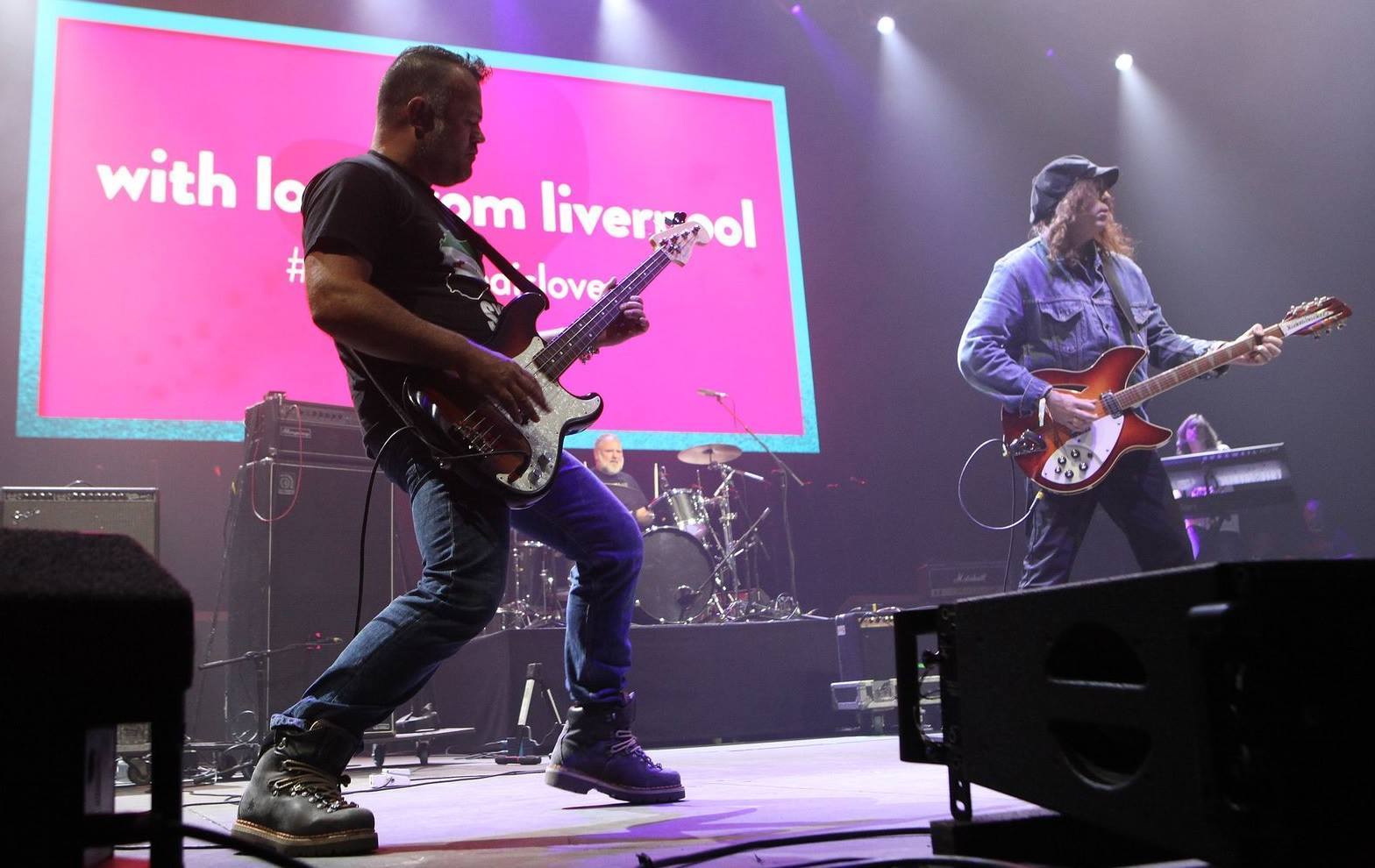
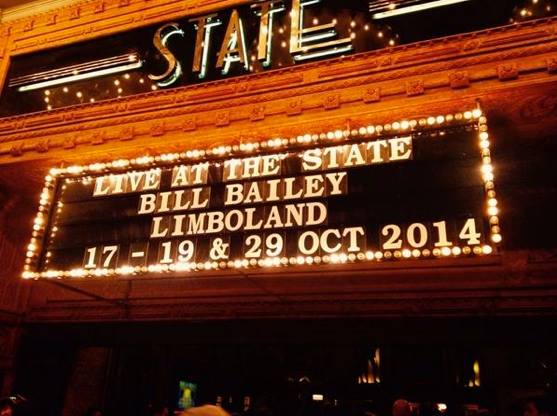
 

Posted in Books Films, TV & Radio, Music | Tagged , , , , , , , , , , , | 2 Comments