In which author/writer Malcolm Wyatt jealously guards his own corner of web hyperspace, regular feature-interviews, reviews and rants involving big names from across the world of music, comedy, literature, film, TV, the arts, and sport.
Dreampop Warrior: Keeley in action at Aatma, Manchester. Photo by Dermot de Faoite
Talk about nights that will stick long in the memory. My memory anyway. I’m pretty sure a few of the clientele present saw their photo streams the next day and wondered what the hell that was all about. But the rest of us will readily recall the evening we blissed out in Manchester with the rather Special K and co.
This was my first visit to Aatma, aka Studio Bee, hidden away down the back streets of the Northern Quarter, and it was a great location to catch three bands that clearly know how to put on a performance, an impressive young London band hopefully on their way up followed by a more seasoned North-West outfit who supplied much of the audience, then quality headliners that rose to the challenge and certainly made their mark.
Aatma is somewhat tucked away, and while Google Maps got me there, a subsequent battle to find a parking space then relocate afresh the red-bricked upstairs room I sought took some doing for this out-of-towner. Thankfully, a rock-hard doorman from a neighbouring pub was good enough to lead me down a dark alleyway then point out the next staircase on the right. I know, heart in mouth for a moment. The things we do for our fix of quality live music, eh.
As for the venue itself, if the English translation of the Hindu word points to ‘spirit, soul, appetite, mind,’ it’s fair to say all four qualities were showcased on the night.
I only caught the tail-end of the opening set by Vincent Christ – they also featured at the band’s Camden date a week earlier – but saw and heard enough to realise clear potential. First impressions, sonically? A young Jim Kerr fronting The Cure around the time of their first two LPs, the sound all-encompassing, their frontman having the intense presence needed to make that leap, his commanding, Sisters of Mercy-esque hoarse tones and the deep throb of the bass catching you out, the track ‘Midnight to Midnight’ just one that grabs you by the collar of your long, dark overcoat.
Four Play: Vincent Christ were on fine form at Aatma, Manchester. Photo: Dermot de Faoite
Apparently, the usual live set-up involves Vincent at the heart of a five-piece. They were a guitarist short on Friday, but pulled it off, none the less powerful for these ears.
They were certainly a hard act to follow for Def Robot, but again there was a quality there drawing your attention, frontman Paul Taylor (also adding keyboard here and there) proving quite the entertainer. His white shirt/dark waistcoat/goatee beard/not much on top look met with rock ‘n’ roll attitude brought modern-day Ian Anderson to mind, but sound-wise there was an added wonkiness early on that made me wonder if Meatloaf had paired up with Stump at one point.
Actually, they suggest elements of Pixies (which I definitely get – check out the anthemic ‘What is my Thing?’), The Fall (fair enough judging my latest LP closer, ‘Sucker for Science’), Fugazi, The Clash, Joy Division and Talking Heads, which if nothing else suggests we’re talking a wide church of influences. Check out the most recent of a mountain of records, Existential Boredom, to find out for yourself.
Paul certainly worked the crowd, and final song, ‘Gordon from Gordon’ seemed to be a tribute of sorts to Jilted John’s nemesis. Probably not, but I was in Manchester, so that sprang to mind. For a taster of what you missed, head to the mighty ‘Shadows’ via their Bandcamp band. Additionally, it was good to hear Paul not only praise the openers’ set but then stick around to give it some on the dancefloor for Keeley’s set, albeit seemingly doubling for venue safety officer at times.
Def Jamming: Paul Taylor out front with Def Robot at Aatma, Manchester. Photo by Dermot de Faoite
This was my first Keeley live show, and I certainly clicked lucky, her band becoming a four-piece on this occasion… and a hell of a four-piece at that. I should explain that, like Pip Blom (and indeed Vincent Christ), the name of the artist is the name of the group. There have been changes of personnel and a few rethinks over a relatively short stint of live performances – this one of just a handful of shows outside London and Ireland, and their first in Manchester, their mini-tour on the back of a few US dates – and on this occasion Keeley (guitar and vocals) was joined by fellow Dublin resident Marty ‘Mani’ Canavan on keyboards, over for the final two dates, plus London-based fellow dependables, Lukey Mitchell (bass) and Tom Fenner (drums). And I’ll admit here that I hadn’t clocked until I looked Tom up after the event – recognising his name – that he featured on so many great Microdisney and High Llamas records that I love. Respect due.
While touring in support of the sparkling Alan Maguire-produced Floating Above Everything Else LP on a tour that as well as that pre-mentioned London date also involved dates in Glasgow and Bristol and would end the following night in Leeds, this was a set split between those tracks and what came before, a few EP tracks and B-sides used to great effect. But I guess Keeley’s (surely unique) approach to songwriting lends itself to that approach.
In case this is news to you, all her songs are written about and dedicated to the memory of Inga Maria Hauser, the tragic German tourist murdered in Northern Ireland in 1988, Inga’s killer never bought to justice, Keeley determined to keep her heart-breaking story in the public eye and finally see justice done.
The headline set opened with the sumptuous yet heart-tugging ‘Last Words’ – ‘Wonder where I’ll stay tonight,’ – from debut EP, Brave Warrior, ‘Where the Monster Lives’ and ‘Shadow on the Hills’ from the Drawn to the Flame mini-LP, then ‘Scratches on Your Face’ from the Totally Entranced EP and ‘Railway Stations’ from the flipside of ‘Arrive Alive’, before we even got to the latest Dimple Discs release.
While I have a lot of time for all those recordings, live they really came together – no mean feat – suggesting this band has been together far longer than is the case. Keeley’s home tones bring Delores O’Riordan to mind at times, and maybe Placebo’s Brian Moloko at others, with plenty more is woven into the DNA, understandably seeing as this high-achieving student of indie and beyond (and occasional DJ) wallows in so much great music.
More to the point, she seems to thrive in the company of such adept bandmates. On record, I think that dreampop, shoe-gazey label she takes on board is fair comment, but regarding stage presence she’s definitely got more to her armour.
What followed was ‘To a London Sunrise’ and a rather determined, somewhat strident ‘Never Here Always There’ from the album, then after Drawn to the Flame’s ‘Boarded Up in Belfast’ we got five more numbers from the latest record, a rousing ‘Forever’s Where You Are’ setting the tone, the band in full flow now, the gorgeous ‘Echo Everywhere’ – for me the evening’s highlight, a slow-building stone-cold classic that packs a mighty dreamy punch – and totally lush (in more ways than one, maybe) ‘Arrive Alive’ leading to more poppy breakthrough single ‘The Glitter and the Glue’ then perfect set closer ‘Shine a Light’, an inspired take on the Jason Pierce-penned 1992 Spiritualised song.
(Editor’s Postnote: Having sight a few days later of a video shot by Dermot De Faoite on the night of that rendition of ‘Echo Everywhere’, I was reminded of something that doesn’t show on the video but happened right after, a collective coming together – so to speak – of the band after that song, with much hugging and self congratulation at absolutely nailing it, in absolute triumph of what had just unfolded before us. Blissed out doesn’t even cover it. Transcendental.)
As Keeley and her band delved deeper into their trademark blissed out dream state, the audience by turns joined them or bobbed and weaved around the floor (at times I wondered if I’d ever seen sections of an audience quite as stoned outside a festival). And there was plenty of love in the room, close as we were to the edge at times, Keeley and Lukey – the pair doing all the talking – eager to share their love of all things Manchester, Marty’s ‘Johnny Fucking Marr’ t-shirt suggesting he was definitely with them. And despite Lukey’s hybrid London-Cornish accent, I swear he looked the part in those surroundings, an honorary Manc putting in a mighty shift.
There’s plenty happening behind the scenes with Keeley right now, one such project sure to increase her profile and that of her band over the coming months. On this showing I reckon she has the resolve and determination to pull that all off and move on up to that next stage. And then, those who caught this mini-tour or any of the select dates that preceded it and that are sure to follow can proudly tell you they were there at the beginning of something rather special.
Cereal Thriller: Another day, another breakfast. Tom Fenner and Keeley at Nice ‘n’ Sleazy, Glasgow
For this website’s July 2021 feature/interview with Keeley Moss, head here. For Keeley’s website, head here, and for her Bandcamp page, try this link. And to check out Vincent Christ, head here, and to catch up with Def Robot, try here.
Moving Memoir: Pauline Murray at Action Records with Life’s a Gamble. Photo: Michael Porter
Catching up with Pauline Murray at Action Records in Preston, Lancashire, last week, she seemed somewhat surprised about the positive reaction to her autobiography, and genuinely chuffed that I thought it any good.
Played down reactions and not going out of your way to stand out from the crowd perhaps go with the territory. But Pauline stood out from the start with Penetration, and continues to do so, this trailblazing female artist having stuck by her North-East roots in what was perceived as a London-centric bloke-led scene.
Life’s a Gamble: Penetration, the Invisible Girls and Other Stories, newly published by Omnibus Press, follows the iconic singer/songwriter’s journey from working-class roots in County Durham to national recognition with Penetration then Pauline Murray and the Invisible Girls, revisiting and re-assessing her enduring influence as a key part of the UK punk movement. She emerged on that scene at 18, partly inspired by an early encounter with the Sex Pistols, going on to play alongside her punk peers while navigating the demands of the ‘70s music business then conquering the early ’80s post-punk landscape.
Her memoir also follows her journey towards opening a music studio in her adopted Tyneside base and the story behind Penetration’s 2001 return, throwing in a little faction romance, charting her enduring relationship with partner and long-time bandmate, Robert Blamire. And illustrated with previously unseen photographs and drawing on notes from her teenage diaries, interviews and archive material from her personal collection, Life’s A Gamble chronicles Pauline’s life as an innovative artist now properly acknowledged as a punk rock legend.
Gaye Black, of The Adverts’ fame, is spot on suggesting Pauline has produced ‘a beautifully written down-to-earth account of growing up in the north of England, discovering punk, and making a career from music,’ writing ‘from the heart with no airs or graces’ for a ‘unique perspective of those legendary times and beyond’.
So is another close friend and ally, Helen McCallum, aka Helen McCookerybook (The Chefs, Helen and the Horns), when she adds, ‘In a punk world where some still cling on to their ’77 punk rock personas and barely ever evoked the true spirit of that movement, Pauline was one of those who rode the wave and retained that spirit, forever moving on, never comfortable clinging on to where she’d been before for the sake of the nostalgia. She never loses her punk vision, and serves as an example to up-and-coming musicians of the resilience and tenacity you need to survive and thrive. You’re with her all the way.’
Pauline’s a survivor, for sure, but there’s also an occasional lack of belief in herself that makes me warm to her all the more. Stoicism and fragility in equal measures.
Action Stations: Pauline Murray with Action Records’ Gordon Gibson. Photo: Michael Porter
She surfaced amid an era when just being a female in the rock ‘n’ roll world made it all the harder to succeed in your own right and make your name as a bona fide artist. While the real punk message involved DIY ethics and equality for all, there was still that pull to pigeonhole or exploit the pretty lasses in the bands. But she stood firm, letting her music and ideals do the talking.
I wasn’t old enough to catch Penetration or Pauline Murray and the Invisible Girls live first time around, but was pleased to see both bands return in recent years and retain their sense of dignity, cool and purpose, leading by example for another generation. And the fact that Pauline felt like a fish out of water the first time offers came in to play the retro punk festival scene – feeling she had little in common with many of the other acts – speaks volumes. She’d moved on, as the music she was now making suggested.
I’ve read and heard lots about the UK punk scene, to a point where you feel you know where most anecdotes are going. But she provides a fresh perspective, and I learned a fair bit from Life’s a Gamble. Not so much content that put Pauline in a new light, but plenty that told me my gut instincts about her were right.
I’ve mentioned on these pages how I saw Blancmange in late 2017 and was taken by North-East support band Transfigure lead singer Grace’s stage presence, not at all shocked when I learned after the event that she was Pauline and Robert’s daughter. Grace and brother Alex have since both featured with The Invisible Girls (supporting The Psychedelic Furs last year), and now I learn from Pauline’s memoir that her mum was also a performer, albeit with her career dreams curtailed by circumstances. I wonder how much of Pauline’s creative fire comes from that need to prove herself.
The book was written initially with her children in mind, in recognition of losing her own parents in recent years, contemplating the ‘many things I wished I’d asked them.’ Drawn from memory and enhanced via old diaries and scrapbooks of press cuttings, she says she ‘tried many examples of musicians’ autobiographies,’ then ‘realised that I wasn’t Bruce Springsteen, Sting, Debbie Harry or Patti Smith. I was me, Pauline Murray, and would have to tell my own story and pick my life apart in fine detail.’
That in itself provided a challenge – the thought of sharing her story with the wider world ‘filled me with anxiety and I almost gave up on several occasions.’ And that’s a reaction returned to at various points, the not-so-long-since turned 65-year-old coming close to jacking it all in but somehow finding the resolve to plough on, her work ethic never in doubt.
I expected the initial story to unfold in Ferryhill, County Durham, seen as the spiritual home of Penetration. Instead, I found myself a dozen miles further north-west, in a pit village called Waterhouses, largely left to rack and ruin and slowly reclaimed by nature after its colliery closed. And arguably, the genesis of Pauline’s outsider status can be found right there on abandoned Arthur Street, not so far from countryside I’d pass en route to covering non-league football matches 20-plus years ago.
Her father was working down the pit then, prior to that shoeing pit ponies with his father, part of a strong family unit, born into a nomadic travelling community that visited local villages, towns and cities with a steam-fired model coal mine (built by Pauline’s grandfather), receiving ‘a different kind of education in the school of life, outside the confines of conventional society.’
As for Pauline, word has it that she could sing before she could talk, her maternal grandfather ‘music daft’, her mum and aunts dancers and singers as teenagers, part of a touring party entertaining the troops stationed nearby during the war. Her mum, Jean, auditioned and was offered the chance to sing with a big band, but circumstances intervened and in time she married and swapped showbusiness for Woolworths in a bid to make ends meet.
Music and fashion had already made a big impression on Pauline before that move to Ferryhill, her folks market traders by then, this young introvert forced into a fresh start. And it was in her final year at junior school that she first met a young lad from a family that ran the local printing works, ‘a tall, thin boy called Robert Blamire, sat in the next aisle’… one who ‘seemed aloof, reserved and composed, and was smartly dressed compared to some of the ragamuffins in the class.’ Pauline ‘was intrigued and would pick fights with him to get his attention.’
A ‘wayward kid’ by the time she was 10, she was bright enough to head to grammar school, that way at least avoiding conflict with those bullying her at primary school, soon retreating further into music, not least a love of soul, learning chords on a second-hand Spanish guitar her parents bought her, performing three-part harmonies with two other girls at school who also played.
That’s when she met Peter Lloyd at her local youth club, inspiring an early ‘70s broadening of her music education, finding a life outside school, catching bands on her patch such as Yes, Status Quo, T. Rex and David Bowie, the latter making the biggest impression, leading her in turn to Jacques Brel, Lou Reed, The Velvet Underground, The New York Dolls, and Mott the Hoople. Roxy Music followed, an initial appreciation of prog fading, nights out stretching to trips to London to catch Bowie (as he killed off Ziggy Stardust at Hammersmith Odeon) and others, browsing the shops of the Kings Road. Steve Harley and Cockney Rebel plus Be Bop Deluxe also featured in that era of three-day working weeks and power cuts amid industrial unrest, her parents still struggling to get by.
That was also the era when she met guitarist Gary Chaplin, his fledgling band, Image Fatale, including a certain Robert Blamire, always seemingly there or thereabouts. And for all her outside interests, she buckled down for exams, seven O-levels securing a place on an art and design foundation course in Darlington. Meanwhile, she latched on to Patti Smith and listened to John Peel, day jobs helping finance more time away, the NME’s mention of the Sex Pistols indirectly leading to Peter’s drop-in chat with Malcolm McLaren in Sex, the shop he ran with Vivienne Westwood, Malcolm calling ‘a few months later to ask if we knew of any venues in the North-East of England where the Sex Pistols could play.’
The stage was set, Pauline catching key early shows featuring the Pistols, The Clash, and Buzzcocks, an act that would play a key role in the Penetration story. By the end of 1976, they were writing their own material, Pauline adding, ‘I had turned 18, had my first full-time job, and had witnessed the birth and subsequent explosion of punk rock, which proved both an inspiration and a massive turning point for me. I was engaged, had joined a band as a singer and frontperson, and through that had unknowingly reconnected with a person who would be of creative and emotional significance throughout my life. It was as if all these factors had conspired to push me out of my comfort zone and into new and uncharted territory.’
What follows provides that key insight into the punk, new wave and post-punk scene of the late ‘70s, and while The Clash were ‘writing about urban landscapes, tower blocks, hate and war… I was writing about my own environment, which was a cultural vacuum… observing the state of society from a northern 18-year-old girl’s viewpoint. Influenced chiefly by Johnny Rotten’s sharp, angry delivery and Patti Smith’s cool push-out, where the energy of the vocal seemed to originate from somewhere deep inside of the body. But ultimately my own voice came through loud and clear.’
Granted, she’s written this with hindsight, but it seems she retained outsider status, the chapter on 1977 particularly illuminating, pointing out that ‘viewing the London scene from a distance of 260 miles through the lens of the music papers, perception and reality didn’t always match up. We held The Roxy in our minds to be some sort of mythical place and were really excited to be playing there. Seven hours in the back of a Luton-style box van … sitting on equipment that was sliding about, wasn’t the safest or most comfortable way to travel.’ But what we get is a window on that scene, meeting Steve Strange, Generation X, The Jam, The Slits, and many more prime players, Robert at one point turning down Glenn Matlock’s offer to join The Rich Kids.
By June ’77 they’d recorded nine songs on one of many trips to the capital, stocking up on stage gear at Sex, now known as Seditionaries, prestigious support slots leading to much more, juggling late nights with day jobs back home, Pauline in at nine in her clerical role after 5am returns without sleep. And they were making a big impression, Tony Wilson for one taken with their So It Goes performance, filmed at Manchester’s Electric Circus, the band soon signing with a management agency (albeit naively given the terms), quitting their jobs and getting by on £30-a-week retainers.
When the new year dawned, Sounds named them among ‘The Faces of ’78’, and that May they were out on the Buzzcocks’ Entertaining Friends tour, their profile raised further, debut LP Moving Targets following, with hardly a chance to draw breath before follow-up Coming Up for Air and utter exhaustion, by which time ‘the music business had sucked up the energy and creativity of punk and had regenerated itself for the next phase: the 1980s.’
When Penetration split, she was barely 21, but had packed in so much, going into a new decade feeling ‘a heavy weight had been lifted’ from her shoulders after an ‘endless cycle of writing, recording and touring… something that I couldn’t see myself doing for the rest of my life.’ However, she added, ‘I couldn’t give up on music and didn’t even contemplate a change of career.’ Time out was needed, and eventually she bounced back, this time with just Robert in tow, experiments with a four-track recorder at his parents’ house leading to what became the acclaimed Pauline Murray and the Invisible Girls album, Martin Hannett at the controls, a hit LP and tour following, an ‘extreme change in musical direction’ and ‘brave artistic gamble’ pulled off in style.
There was a further gamble as she followed her heart and became an item with Robert, recriminations back home creating new challenges, Pauline ending 1981 with ‘nowhere to live, no recording contract, no money, a new relationship, a broken marriage, and a suitcase of dirty laundry,’ unsure what would happen next. As it was, her new start took shape in Toxteth, Liverpool, the riots on her doorstep, a period of depression following while Thatcher took on Argentina over the Falklands, and ‘secret discussions were taking place about whether to let Liverpool go into ‘managed decline’.’
A return to Tyneside followed, Pauline writing again, but with the black dog soon back at the door. As she puts it, ‘I began to think that they would all be better off without me and entertained suicidal thoughts, and how to go about it.’ Thankfully, she found a way back from the brink, a new batch of more guitar-orientated songs emerging, Paul Harvey entering their lives in what became another enduring, creative friendship, the new-look band rehearsing south of the Tyne.
By the end of ’85 she was playing live again, performing a mixture of new songs and Invisible Girls numbers, a four-track EP on her own Polestar label following as Pauline Murray and the Saint. But by 1987, spirits were back at a low ebb, ‘back to square one again’, ready ‘to admit defeat, face the future, forget about making music, and concentrate on making money.’
There was another LP, Storm Clouds, in 1989, but as the ‘90s dawned, Robert was working full-time for the family printing firm, the pair mortgaged home owners, that following decade seeing her harboured ‘pipe dream of opening a music rehearsal studio’ come to fruition, ‘a supportive space where bands could come together as more of a music community.’ She swapped washing dishes at a local restaurant for running Polestar Recording Studios, and by 1995 they had two children and even briefly ventured into artist management. Then, with the new millennium came that next chapter of the Penetration story, the re-emergence of The Invisible Girls, and even shows as a solo artist (as far away as Australia).
By then, Penetration were ‘a heritage punk band… playing for our own enjoyment rather than trying to re-establish any type of career comeback.’ And it’s fair to say they never got beyond their own station, wonderful as the third album would turn out, a wonderful tale within of the night they played the Shay pub in Halifax a beautifully told illustration of that, that gig deemed the ‘antithesis of the New York Shea Stadium where The Beatles famously played.’
By no means did that signal the start of the end of the story. And nor did the 2009 financial market crash, when the future of her business was in serious doubt. Again, her resolve told, a subsequent move to a new studio base and then that Penetration resurgence via 2015’s Resolution album counting for so much more, 2020 bringing another album, Elemental, back under her own name. And while there may still be twists and turns ahead, as she suggests on ‘Beat Goes On’, as long as she has the energy to crack on, Pauline may occasionally ‘lose the battle’ but will always ‘win the war.’ And I’ll raise a glass to that.
Write Stuff: Yours truly with Pauline Murray at Action Records. Photo: Gary Binns
For this website’s 2019 feature/interview with Pauline Murray, head here. And for a review of the Penetration date at Preston’s Continental that followed, head here. For more about Life’s a Gamble: Penetration, The Invisible Girls and Other Stories head to the Omnibus Press website. And for the latest from Pauline Murray, visit her website and Facebook page.
Did I mention that I missed Swansea Sound’s live debut – two years ago last month – by barely half an hour? How I turned up at The Continental in Preston one August bank holiday weekend afternoon to spot them loaded up with guitar cases and what-have-you, headed for their van? Oh, I did. Well, I can put that to bed now, because I finally caught them on stage this week.
And while it’s an odd thing to say when they have such a rich indie history between them, they ain’t ‘alf come on since they were born out of lockdown (for some reason after writing that, I have Fred Wedlock and ‘The Oldest Swinger in Town’ in my head, and apologise for sharing that earworm), as proven by newly released second LP, Twentieth Century. But we’ll get on to them later.
Domestic priorities and M61/M60/A6 road shenanigans meant I turned up at The Talleyrand expecting to have missed openers Oh Hippo, but teething problems with the PA meant I arrived in plenty of time, the stage times scribbled out and recalculated.
I tend to find the bigger the band, the better the entertainment at this Levenshulme locale, and it’s always fun to see personnel lined up in at least two rows. And in this case, it looked a little cramped up there for a six-piece on another stifling night the closest you were to the front.
How can I describe Oh Hippo? There’s a question. My initial thought on walking through was that Jack Black (I soon revised that to Nativity’s Mr Poppy) and Gruff Rhys had joined a commune. But what a band they proved, the nervous energy and smiles on the faces of the performers somewhat contagious. I was initially getting a 21st century take on Helen and the Horns meets Twa Toots vibe, but then they went elsewhere, a prime example being the kind of wonky electronica unleashed on their rather splendid single, ‘Drunk in Town’ (available digitally via Bandcamp here).
Hippo Sextet: Manchester’s own Oh Hippo, on form at The Talleyrand
They soon warmed to their task, in-house technical gremlins allayed, vocalist/guitarist Lydia Walker, lead guitarist David McFarlane and keyboard player Becky Thomas leading by example out front, the harmonies rather splendid across the board when the sound was on their side, textured layers often giving something of an ethereal feel.
Then came Swansea Sound’s Parisienne labelmates Special Friend, namely Erica Ashleson (drums, vocals) and Guillaume Siracusa (guitar, vocals), and while techie dilemmas similarly tested this impressive ‘noise indie pop duo’ (their description), they absolutely shone.
Skep Wax co-boss Rob Pursey pondered after their memorable set, ‘How do two people make such a beautiful and complex noise? I don’t know… and I’ve seen them twice.’ They were about to rejoin the headliners in Cardiff, Carmarthen and Bristol before returning to France, no doubt winning over new audiences as they went, and we’re talking a school of lo-fi packing a real punch, full of melancholic twists and turns, the poppier touches bolstered by occasional forays into an effective use of distortion amid some gorgeous harmonies. Think The Lemonheads, Teenage Fanclub or The Wedding Present gone Gallic (Les Têtes de Citron, peut être, seeing as Cadeau de Mariage has already been taken), Erica‘s voice kind of how I hoped Dido would go (not so random as you might think, seeing as there is that French link) – she may have sold far less records, but I’d have loved her music far more.
There were a couple of times when they struggled, Guillaume having a bit of a ‘mare with his guitar (Swansea Sound’s Amelia and Bob stepping up to help while he switched). But that made it all the more real. I think his inner perfectionist insisted on starting a couple of songs afresh midway through, but it worked for me as it was. Besides, Hendrix at Monterey in ’67 just said, ‘Yes, I know I missed a verse, don’t worry,’ and cracked on.
A little background? Special Friend came together between Paris and Montreuil in 2018, American native Erica meeting Guillaume at a concert in Paris, looking to find a studio where she could practise learning drums, Guillaume offering to play guitar, their first compositions created within four months, their debut EP released on four French indie labels, first album Ennemi Commun following in 2021.
Lunar Landing: Erica Ashleson and Guillaume Siracusa reach The Moon Club, Cardiff
How do they describe themselves? Well, with the help of Google Translate, this is about ‘Bringing out a lot of emotions from a little… and just the right amount of strangeness.’ That sounds about right, and again in Rob’s words, ‘They feel like three-dimensional objects, impossible to pin down, endlessly inventive and enchanting.’ He’s not wrong either. And while musically, the label mentions hints of Yo La Tengo, Helvetia, Galaxie 500, Duster, Electrelane or The Pastels, and I feel a need to throw Stereolab in the mix (albeit without the electronica), they’re very much their own bete noire, so to speak.
But as I all too often add, don’t take my word for it, snap up the 10-song Wait Until the Flames Come Rushing In and find out for yourself. Tres magnifique.
Then came the headliners, again somewhat hard pushed to find space on that stage. But it worked. Recent interviews here with Fliss Kitson (The Nightingales) and John Robb (The Membranes) brought up the fact that when you don’t have so many of what are recognised as hits, you can perhaps be more ruthless with set choices. And this was a prime example, all bar the first and last songs drawn from latest platter, Twentieth Century. But that worked too… not least as I’d lived and breathed that record this past week or so. It was like greeting a newish friend.
From the introductory ‘Rock ‘n’ Roll Void’, their Buzzcocksy debut LP opener, we were ears and eye putty in their considerably talented hands. And while there’s no Catrin Saran James in the Swansea Sound live set-up – as she often is on the records – Hue and Amelia have a winning vocal duo dynamic, bandmates Bob Collins (guitar), Ian Button (drums) and Rob Pursey (bass) pitching in on the backing vox, to great effect.
You may have seen my review of the new record, so I’ll spare you a repeat, but ‘I Made a Work of Art’ sounded very Jilted John in that Manchester setting, while ‘Keep Your Head On’ – Hue and Amelia in Terry Hall and Katrina Phillips territory – sounded very much like the cult anthem it truly could be if there was any justice (there isn’t, of course). All hail the power of the accompanying video too, seeing as I expected the band to shake around a bit during the chorus, upset by turbulence.
Gower Pop: Ian Button, Hue Williams, Rob Pursey, Bob Collins and Amelia Fletcher, on tour
‘Seven in the Car’ quickly became something of a favourite at WriteWyattUK HQ, and shone on the night, while ‘Markin’ It Down’ – a song I reckon Robert Forster would gladly claim as his own – was everything I hoped it would be live, its added Kleenex, Can, Fall and Sonic Youth drum, keyboard and guitar flourishes everything I hoped they would be live, Bob in particular gloriously hamming it up.
‘Punish the Young’ is another song where Terry H meets Hue (not far from Levenshulme station). And while we’re talking geographical influences, ‘Far Far Away’, with its ‘Epiphanic one-note solos’, sounded all the more Pete Shelleyesque on the night, while ‘I Don’t Like Men in Uniform’ provided the perfect lead into the LP’s title track, the band at full pelt now and ‘Twentieth Century’ another highlight of the night, as I kind of suspected it would be, Hue and Amy’s interlinking voices and Bob, Rob and Ian’s feverish noodling somewhat sublime.
Where could they go from there? Well, ‘Pack the Van’ was a perfect choice, its wistful nostalgic premise just what was needed on a late summer’s night when the heat and stage lights poured in and a smallish but appreciative love crowd smiled and thought back on good times, while conjuring up hope of a fair few more to come.
And talking of looking back, there was just about time for Rob’s tribute to Hue and Amelia’s past in one final bout of group therapy, that celebratory air further explored in passion-arousing closing number ‘The Pooh Sticks’, past and present very much in tune, the best of all times nailed. No word of a lie.
For this website’s appraisal of Swansea Sound’s Twentieth Century and links to past Swansea Sound and Catenary Wires-related feature-interviews and reviews, head here.
Swansea Sound visit Rough Trade, Bristol, today (September 17th, tickets), then visit St Leonards’ The Piper (September 29th, tickets), Paris Popfest (September 30th, tickets), Leeds’ Wharf Chambers (October 13th, tickets), Newcastle-upon-Tyne’s Cumberland Arms (October 14th, tickets), Brighton/Hove’s The Brunswick (October 27th, tickets), and London’s The Water Rats (October 28th, tickets).
For the latest on Swansea Sound, check out their Facebook, Instagram and Twitter accounts, and keep in touch via the Skep Wax Records website and their Bandcamp pages.
The Don: Slade legend Don Powell with his copy of Wild! Wild! Wild! A People’s History of Slade
If you follow my social media, you’ll know I’ve become a little distracted across 2023, not least through completing Wild! Wild! Wild! A People’s History of Slade (available direct from the publisher via this link). And while this may sound a bit ‘arse about face’ – seeing as it only recently struck me that I haven’t written about that on this website since my request for people to share Slade-related memories, sightings and appreciations of the Black Country’s finest – today’s 77th birthday for Bilston-born drumming legend Don Powell is as good an excuse as any to give you a taster here, sharing part of the afterword.
It was in late May this year that Don took time out from a bank holiday weekend with his family in Silkeborg, Denmark, to talk to me. Don being Don, he was more than happy to help out, as was the case with previous conversations that led to feature/interviews here in December 2017, December 2020, and December 2022. And we started our Zoom call with me revealing how for several weeks I’d been back in a Slade zone, surrounded by their CDs, DVDs, vinyl, online resources, and past publications.
“Is that good or bad?” asked my interviewee, a mischievous grin on his face, but – as ever – genuinely questioning me, never one to assume public interest remained out there for his former band, despite all the evidence pointing to an enduring love for all things Slade. So I told him it was a very good thing, letting on that I’d been inundated with fans’ memories, memorabilia, photographs and tributes.
He’d not long since released his Don and the Dreamers LP, backed by a Danish band, that followed by The ‘N Betweens’ cracking comeback single, ‘The Train Kept a-Rollin”, when he joined forces with the one and only Jim Lea and fellow ’60s bandmates John Howells and Mick Marson.
“Yeah, and BMG have done a great package on all the old catalogue.”
It was also great to get not only Sweet legend Andy Scott but also the pair’s QSP bandmate Suzi Quatro involved with the book, I pointed out, each supplying cracking forewords.
“Ah, Suzi’s a good gal, and when we all did that tour together in Australia, we had a great time. And doing the album together was great fun.”
Thinking of that love out there for Slade, all these years on, when would you say was the first time you realised you had something of a fanbase? Was that in the days of The Vendors or The ‘N Betweens? When did you realise people were coming back each week to see you again?
“The vivid thing I remember was when it was myself, Johnny Howells and Mick Marson, playing youth clubs and birthday parties, when we first got together. Only Mick was on the telephone then, and John came back from somewhere and said, ‘We’ve got a booking at the town hall in Bilston and we’re getting paid for it. That was a total revelation for me! We got £6, so we got £1 each and could put the rest together and have chicken and chips that night from the chicken bar across the road from Johnny’s house.
“In those days, Mick and John would play through the same amp, I had my small kit, and we carried it round to the town hall, just around the corner. And if we were playing a youth club a few miles away, you could take it on the bus, and there’d be a luggage compartment underneath the stairs. Wonderful memories, when you think!”
There are some great resources online these days, the likes of Slade historian Chris Selby having done a grand job, after decades of research. I highly recommend his online pages (linked here), as well as Don’s official site (linked here). For instance, I recently discovered that on the day I was born in late October 1967, you were playing a pub called The Greenway in Baddeley Green, Stoke-on-Trent.
“Baddeley Green – yeah! We used to do a lot of gigs in Stoke-on-Trent. Pub gigs. We had a van then. We thought we were big time! We paid 90 quid for an Austin J2, put a partition in halfway through, so the equipment could go in the back and we could sit in the front. Stoke-on-Trent was about 30 minutes from us, and we’d feel like we were travelling to the other end of the world when we did that!”
I guess that was a very different Staffordshire in those days.
“Exactly. And blimey, I haven’t heard that for a long time – ‘Staffordshire’! That’s all gone now. Stoke brings back a lot of fond memories. We used to play there a lot. There was a pub there called the Golden Torch in Burslem. We played a lot of pubs around there.”
I recall you saying The ‘N Betweens’ ‘You Better Run’ was a No.1 hit locally…
“In Wolverhampton, yeah!”
Did you feel you’d made it then?
“Oh yeah, we were big time then! John used to announce it as ‘our No.1 record.’ Great fun!”
Drum Major: Don Powell suggests ‘Let’s call it sticks!’ amid a 2023 video shoot
The Slade story is one which suggests it takes several years to become an ‘overnight success’.
“That’s it! We kept going, thinking, ‘This is the big time now – we’ve done it now. Our gig money went from £20 or £30 to £50. This was incredible. We couldn’t believe it. Through meeting {US producer} Kim Fowley we were with the Derek Block agency.”
When was the first time you experienced anything that suggested scenes of ‘Slademania’?
“Oh, I think that was in Margate, a big ballroom right on the seafront {Dreamland}. When we got there, there was a huge queue round the block. At first, we were thinking, ‘Who else is on tonight then?’ We hadn’t got a clue, and never thought of ourselves as anything like that. That was at the time of ‘Get Down and Get With It’ becoming a hit. We already had a great reputation for live work anyway, before the hit records. That really helped, especially that single.”
(Records suggest that was early June 1972, a year later than Don recalls, with ‘Take Me Bak ‘Ome’ on its way to becoming Slade’s fourth hit and second UK No.1, that Dreamland date colourfully recalled by Roy Tappenden in the book.)
“In those days, ‘Get Down and Get With It’ was considered a bit too rowdy for radio plays. But they had a lot of live sessions on Radio One then, and we always used to play that. That was the only way we could get it played on radio… until it went into the charts. I remember it being a nail-biting time. It was No.32 in the charts, and you had to be in the top 30 to get on Top of the Pops. We felt, ‘Great, next week!’ But the following week it was at No.32 again! Nooo! But the following week, luckily, it went to No.29 and we got on Top of the Pops, and that was the programme in those days.”
That single went on to reach No.16. Slade were finally on their way. They had appeared on Top of the Pops before though.
“Yes, we had! With a song called ‘Shape of Things To Come’ {released in early 1970}, written by Barry Mann and Cynthia Weil, apparently the theme tune for a film, one only released in America {Wild in the Streets, 1968}. In those days they had a new release slot, and we got that, which was unbelievable. That was in the main BBC studios in Shepherd’s Bush, London. We’ll always have fond memories of that, because they had a great canteen! We weren’t earning much money, but you could get a great meal for just a few bob. We’d stuff our faces!”
‘N Betweeners: Don and Jim, 2023. Photo: John Barker, Slade Are For Life, Not Just For Christmas
Interesting you say that, as legendary photographer Gered Mankowitz (who worked very closely with the band and also features in the book) told me you Slade boys turned up early and more or less polished off the fresh-cooked turkey and sausages at one of his Christmas parties.
“Yeah, free food! I saw Gered a couple of years ago when I was working with Andy Scott and Suzi Quatro, and he did the photographs then too. We have lots of memories with him, like when we became skinheads and things like that. He did all those early album covers, and he was the photographer for Jimi Hendrix and in the early days did a lot of work for the Rolling Stones. And his Christmas parties were fantastic. We were always first in! There was him and his partner, Red, who looked like a mad Viking with his red hair, and they made these incredible big vats of punch. We’d go straight to the food and booze table!”
I also talked to Bob Young and Ray Laidlaw regarding (respectively) Status Quo and Lindisfarne’s parts in your package tour to Australia in early ’73.
“Ah, brilliant! That was a great tour, with us, Quo, Lindisfarne and Caravan, about three weeks. That was the first time we’d properly got together with them, although our first UK tour was with Quo, when – would you believe it – the ticket price was 50p! We’ve been mates with Quo ever since, and that tour of Australia was mayhem – we ended up having police escorts on the plane with us. We were just school kids really, fooling around and stuff like that, being silly. Great fun though.”
I also talked to Quo drummer John Coghlan for the book (the pair had a ‘talking’ gig last month on John’s adopted rural Oxfordshire patch, hosted by former BBC Radio 1 DJ Mike Read, these days best known for Talking Pictures TV and radio’s Heritage Chart Show), asking for his memories.
“Ah, about 25 to 30 of us musicians, actors and writers still get together for a lunch in London, putting about £30 in each and just eating and drinking all afternoon. Perfect. And me and John often sit together, reminiscing, and Bob Young’s there as well.
“I must tell you this. Back in the ’60s there was a band called The Tornados, and Clem Cattini, the drummer – another who attends these events – was telling us how after that band, he went into session work, and he’s played drums on over 200 hit records. I think it’s like 65 No.1s. That’s a hero, there! He once did two No.1s in one day. He never knew where he was going. He did ‘Lily The Pink’ in the morning, for The Scaffold, got his £36 – £12 an hour – packed his drums up and made his way to another studio, and did ‘It’s Not Unusual’ for Tom Jones. So he got £72 that day. A fantastic day.
“He’s got some great stories, and Bruce Welch from The Shadows is always there, another lovely bloke, telling us about when Cliff and the Shadows toured America in the Sixties – no private plane, but on a Greyhound bus, playing with Dion and the Belmonts, Frankie Avalon, people like that. Lovely stories.”
Drummers’ Union: Don Powell with a good friend, Status Quo legend John Coghlan
Talking of America, the official line is that Slade never made it in America, but there must have been times where it felt like you were on the verge of success there, picking up a following.
“Yes, when MTV started in the ’80s, and we got booked to do a tour with Ozzy Osbourne… but that got knocked on the head because Jim Lea went down with hepatitis. But we stayed over, Jim staying in his hotel room and being seen by a doctor every day while Nod, Dave and myself were doing promotion in Los Angeles, lots of radio interviews. ‘Run Runaway’ was the big record, and went Top 20 in ‘84. We never went back though. That’s when we should have done the tour with Ozzy.”
You were more of a studio outfit by then, weren’t you?
“I suppose we were. Nod didn’t particular want to tour anymore.”
Going back a little further, I wanted to touch on the ‘wilderness years’, after you returned from that huge spell in America in ’77 and found yourself at rock bottom. The audience had largely deserted you, but there were loyal fans who stuck by you and ultimately saw you through to that next big opportunity. I know it’s complicated by your memory issues, but by the time you were on that ‘chicken in a basket’ club circuit you must have started to recognise familiar faces out front, and I get the impression you were more or less one big family by then- the band and the fans.
“I tell you what, Malc, it never deterred us. We were still giving them the same show. We were down in the dumps, and it was hard to get gigs, so we started doing those particular kinds of clubs. But we wanted to work, and still wanted to play shows. That was it, really. And it wasn’t until the Reading Festival {1980} came up that…
“I remember Nod calling me. We hadn’t worked together for a couple of months, I think, but he told me we’d been offered Reading Festival, and we were killing ourselves laughing over the phone! But we felt we’d got nothing to lose. We got our gear together, with our equipment in the school room where we used to rehearse in Wolverhampton – just a classroom in a disused school. It was the local vicar who ran it, loaning the classrooms out for bands to rehearse in. I think it was about £4 or £5. We called him Holy Joe. He’d get his fiver, then he’d be up the pub on the corner, about 50 yards away. If you needed him to lock up, you’d find him in the pub!
“That’s what we did when we were offered Reading. We just had a couple of rehearsals. And we didn’t really have any passes. We were walking through with the punters, everyone saying, ‘What are you lot doing here?’ And we said, ‘Well, we’re playing tonight!’”
One contributor to the book mentions how he was at that festival when he started hearing rumours about you playing, but it was only he saw Swinn {Slade road manager Graham Swinnerton} walking around that they knew it was actually happening.
“Yeah, my best schoolmate, Swinn! It worked great for us, and as it was being recorded, we bought the tapes and released them.”
By then, Dave Hill was looking at setting himself up in a wedding car business, hiring out his gold Rolls-Royce and offering his services as a rock ‘n’ roll chauffeur – not so much ‘Get Down And Get With It’ as ‘Get Me To The Church On Time’. How about you? You must have had your own doubts and fears regarding a possible split, pre-Reading Festival.
“I did. I was in no man’s land. I was living in London then, and me and Nod used to see each other when he came to London, have a drink together. I was basically doing nothing. I’d helped a couple of guys out in the studio, did some drums for them. That was quite nice.”
Was that a bad place for you – having so much time on your hands, at a time when you were – let’s face it – hitting the bottle.
“I was a bit over the top on the old ‘falling down water’. Yeah, and when I think back to those years, I can’t believe I’m still here. Unbelievable.”
But it was the likes of (fan club revivalist) Dave Kemp and those loyal fans who kept you going until that late August 1980 revival, standing by you, knowing full well you could still knock them dead every night.
“It was wonderful. It’s amazing. Those people were always there. In those days, I still had a place in Wolverhampton, and from North London I could get in my car and get on the M1 pretty quickly if I was going back. But as it happened, when I lived in West Hampstead, I lived around the corner from Dave Kemp. And we owe a lot to those guys. They stood by us through thick and thin.”
Great Pals: Don Powell with Dave Kemp, the pair close friends for many years
Judging by where you’re at these days, into the second half of your seventies, appreciating your adopted home and loving family in Denmark but also getting back to the UK regularly for some or other project, you clearly still get that buzz performing and reminiscing about Slade.
“Oh, yeah, I love it. I’ve always said, as soon as I stop enjoying it, I’m getting out. But I’m having a great time. I’ve been recording with those Danish musicians. Henrik, the keyboard player, approached me, and I thought it was great. I didn’t know these guys in The Dreamers, but my wife Hanne did, saying they’d all been in big bands around Denmark through the years. And it was great – just like the old days – no machines, we just went in and played as a band in the studio. I forgot what that was like! If anybody made a mistake, you stopped and started all over again. No messing around with computers.”
Talking of mainland European links, any specific memories spring to mind of your time in Dortmund with the band that would become Slade, back in 1965?
“Oh, blimey, Dortmund! Would you believe it, we were on £12 or £13 a week each, and I always remember after playing eight or so hours at night, going to the local railway station, where there was always a caravan where we could get chicken and chips. This was November and we stayed in this farmhouse, all of us in one room. I don’t think I had a bath for a month – there was no hot water. But it didn’t matter, we were just five kids having a great time.”
I guess that’s where the bond came from which saw you all through so much, as was the case with your late ’60s Bahamas residency.
“Definitely. And I think that’s what bands are missing today. Like you say, that bond, sharing bags of chips and things like that. Great memories.”
Finally, I mentioned it before, but this is a people’s history of Slade, and it’s clear that there was always a close bond between the band and the loyal fans – it was two-way traffic. Just to reiterate what we were saying, those supporters pulled you through at key times. However strong a band you were, there were people out there who kept catching you live and being there for you.
“Yeah, we’d see that little group of people down the front at every gig, some of them even travelling to Europe, if we had a gig there. An incredible mainstay, they were. We owe a lot to them. They were fantastic. And we’ve always been a band that have appreciated people who have given us help. We’ve never forgot it, because we were the same as lots of struggling bands still trying to do it. So I still keep in touch and still speak to a lot of people who helped us along the way. It’s been fantastic, mate, and I really appreciate it.”
Visiting Time: Don Powell, outside Suzi Quatro’s dressing room at the Royal Albert Hall
To order a copy of Wild! Wild! Wild! A People’s History of Slade by Malcolm Wyatt (Spenwood books, 2023), follow this link.
A new Swansea Sound album? What’s not to love? Hue Williams reunited on record with Amelia Fletcher, 35 years beyond their initial Pooh Sticks collaborations, joined by Rob Pursey (Amelia’s co-rider from Talulah Gosh and Heavenly days through to The Catenary Wires), Ian Button (Death in Vegas, Louis Philippe, Pete Astor, Papernut Cambridge), Bob Collins (The Dentists, The Treasures of Mexico), Bill Brewer, Jan Stewer, Peter Gurney, Peter Davy, Dan’l Whiddon, Harry Hawke, Uncle Tom Cobley and all on second long player, Twentieth Century.
I might have added a few more band members there, unless they’re the ‘Seven in the Car’ on track two, or those asked to ‘Pack the Van’ on the closing number of this delightful 12-song opus, bringing it all to a fitting sandy end. Besides, we’ve had ‘Route 66’, then Billy Bragg’s Essex alternative, ‘A13 (Trunk Road to the Sea)’, so a hymn to the less celebrated A4067 coast road from Swansea to Oystermouth and the Mumbles is alright by me.
And it’s a record every bit as appealing as debut Swansea Sound LP Live at the Rum Puncheon, released in 2021 to considerable acclaim, from a pandemically-formed outfit that came about mid-lockdown, recording their first three singles without even meeting – ‘Corporate Indie Band’ appearing as a cassette on the Lavender Sweep label, getting lots of airplay, the next releases on 7” vinyl, including ‘Indies of the World’, which reached the UK vinyl top 10.
The new record, out on Rob and Amelia’s Skep Wax Records (SKEPWAX016) this Friday, September 8th on vinyl LP, CD, and digitally, lands in a month when the band are also set to play live on BBC 6 Music’s Marc Riley and Gideon Coe show and have been named as Huw Stephens’ album of the week on BBC Wales. What’s more, they’re touring the UK, with plans to play in the US and Japan in 2024.
So what do we get this time? ‘An album of sparkling pop-punk tunes from these lovable veterans of the indie scene… deploying their fuzzed-up guitars and melodic wiles in a set of loud, energetic pop songs… containing self-deprecating critiques of everything that was supposed to be great about the alternative culture of the 20th century, and of the way that culture left its adherents totally ill-equipped to deal with the reality of the 21st.’ And I can’t argue with any of that.
‘Paradise got digitised, lithium and cyanide.’
Taking a closer listen, we start on side one, track one with ‘Paradise’, where ‘old-school futuristic synth-bleeps accompany Hue as he tries to establish some kind of relationship with a woman who only really exists on his screen,’ and ‘like an early ‘80s Gary Numan aficionado, he spends most of his life in digital isolation.’ Meanwhile, ‘thousands of miles away in a coltan mine, using their bare hands to dig out the precious ore that will provide the raw materials for the manufacture of Hue’s smartphone, impoverished workers lose their lives,’ the woman Hue hopes to communicate with remaining as elusive as ever.
Starting an LP with a song of the same name as the lead track on 1979’s A Different Kind of Tension is a brave thing to do for a band who openly love the Buzzcocks. But 44 years on, we know better than ever that ‘everything’s fake, nothing’s real’, and the added surf harmonies work well, on an album where many times I’m caught between enthusing about what I’m hearing and wondering if I’ve heard that melody somewhere before. No bad thing, for the record, so to speak.
‘Seven in the Car’ for me is a celebration of past nights out, in the case of myself and the band in question to see some indie outfit or other in the late ‘80s. While I never caught the shambolic live wonder of The Rosehips, I know exactly where the writer’s coming from, and feel I may well have been in that motor. Not sure if you could legally fit seven in the Allegro on the band t-shirt, mind.
‘Keep your head on, cos they will do anything to gaslight you.’
‘Keep Your Head On’ was the first single from this LP, and it’s something of an understated treasure for these ears, the band digging into the kind of ’60s underground roots Primal Scream once toyed with. And while I don’t often mention promo videos, the one for this is a thing of wonder (as linked here). Hats off to Amelia and Rob. An evening class act, you could say.
‘Click It and Pay’offers ‘another cracked duet’, Hue the ‘stressed-out home-worker doing some online shopping’, Amelia ‘the girl in some distant hyper-warehouse who fulfils his requirements.’ They’ll never meet, but bond through CDs by The Police and Primal Scream that form part of his shopping list, as ‘21st century romance amounts to no more than the purchase of music reissued from the 20th’. The result is rather awesome Wire-esque fare that’d have me up the front in a heartbeat, a collision between Nuggets-style psych pop and indie punk, the sort of breathtaking number Graham Coxon was delivering in the mid-2000s.
And seeing as I’m down the front, I’ll stick around for dancefloor thriller ‘I Don’t Like Men in Uniform’, which tells a tale of frustration, the subject ‘still angry, still seething with pain’ but ‘no longer robust enough to sink his fists or his teeth into the authority figures he hates.’ As for the music, maybe it’s the missing link between Sparks, Buzzcocks and The Wedding Present.
‘Our clothes were black our amps were heavy, but were the population ready?’
Regarding killer riffs, they don’t come much bigger or more urgent than that driving wondrous title track and second single ‘Twentieth Century’, the tale of‘a pseudo-punk singer in fatigues, a purveyor of radical anthems, cushioned by a major label deal, who wonders why he’s lost contact with his once-devoted fans’ and ‘can’t tell whether he cares more about his integrity or his record sales.’ And that chugging Mekons-like guitar and glorious vocal jostling between Hue and Amelia is somewhat sublime. Oh, and another honorary mention for the inventive promo video (linked here).
When I say The Mekons, you realise I mean ‘Where Were You?’ I was going to say this is their 21st century take on that, but that would only confuse, going by the title. What’s more, they’re not content to just rest on the laurels of that ‘insistent, infectious guitar riff’, the middle-eight taking us elsewhere, in a ‘Townshend at his best’ kind of way. And you probably know me well enough by now to realise at least once a year I’ll write about a single deserving to top any number of charts, adding ‘it won’t be a hit in this day and age, but it bloody well should be…’ or words to that effect.
‘I Made a Work of Art’ sees a return to the bandmates’ indie past, I’d say. And do you know what? They not only pull it off all these years on, but I reckon they’re doing it better than ever. There’s power in an indie art punk union, it seems. And while we’re on the high points, ‘Markin’ It Down’ is next, and while we’ve had a few great songs about record shops – Jeffrey Lewis & the Voltage’s lo-fi indie classic ‘LPs’ for starters – this is a different spin, you could say, pitched somewhere between The Modern Lovers, Lou Reed, and Robert Foster. Complete with its own sonic nudges, nay respectful nods to Kleenex, Can, and The Fall. Marvellous.
‘Sitting in his easy chair, he runs his hands through greying hair And contemplates his country estate.’
On ‘Punish the Young’, we have ‘an ageing rock icon and sometime rule-breaker’ who ‘curses the young people of 2023 who couldn’t care less about his heroic past,’ despising them ‘because they don’t want to work for shit wages on the trout farm that he bought with his royalties back in the 1980s.’ Roger to that, eh. A little more guitar-driven, this, but with that ‘60s underground DNA apparent, The Kinks and Teenage Fanclub in there, those surf harmonies returning.
As for ‘Far Far Away’ (first, the Buzzcocks, now Slade, eh?), their ‘love song to Pete Shelley, a tribute to a true 20th century hero,’ I feel I should know that guitar vibe in the chorus. The Banshees or Magazine, perhaps? Anyway, I can envisage rock’n’roll animals Hue and Amelia heading off stage to start on the rider while their guitar god and rhythm buddies in the band deliver an extended jam on this number. Yeah, right.
For ‘Greatest Hits Radio’ – a real builder, I feel, and not necessarily like Wendy’s mate Bob, with Amelia’s added vocal making me think of Girls at our Best – the band focus on both ‘the brutal 19th century slate mines of North Wales’ and ‘digital corporations of the 21st, extracting as much profit as they can from two things people need: shelter and entertainment.’ Is this the band’s title song revisited? A ’Swansea Sound (Pt.2)’, that song’s grim take on radio broadcasting once more examined? Well, within we hear the voice of a ‘young girl forced to work in the contemporary coltan mine – as downtrodden and as abused as the kids who toiled underground in Blaenau Ffestiniog to extract the slate 200 years ago.’
So where is the hope? Well, the music – as ever – is joyful, guaranteed to ‘put a smile on your silly indie face’, not least closing number ‘Pack the Van’, where ‘the band make fleeting contact with the pure idealism of their early teenage years, remembering the beautiful beach on the South Wales coast that provided the backdrop to their passionate youth.’ And as they put it, ‘maybe if we could access that optimism again, we might find a way forward…’
‘So if we pack the van, maybe we’ll find the coast road. And where it turns to sand, the sky will still be gold.’
I’m getting the wistful positivity of It’s Immaterial’s ‘Driving Away from Home’, or maybe Neil Finn’s ‘Taking the Rest of the Day Off’. There’s also – probably because of the title – a reminder of lost BOB classic, ‘Another Crow’, my favourite song about touring {‘We travelled around but we didn’t see nothing new. In the back of the Transit, I wrote a song for you. Another motorway, another crow, and I’m afraid I forgot how your song goes.’)
And that brings me to another tour song, having talked to Ian Hunter about Mott the Hoople’s ‘Saturday Gigs’, mentioning ‘sehnsucht’, the German word meaning nostalgia for a place or time you’ve never visited. I felt that way about those early ‘70s Mott shows in Croydon, somehow sad I wasn’t there… and the same goes for Hue and co.’s coastal road trip. However, as is the case elsewhere on this record, it’s as much about anywhere as there, the Go-Betweens-style feel making me think it could as easily be about taking the road north or south from Brisbane or Sydney. Such is the power of a great song.
I like the fact that they never pretend to be anything other than creatures of the last century, happy to ‘celebrate the joy of cramming into a car with loads of mates to see a gig at a crappy indie venue in the small town where they live’, as is the case on ‘Seven in the Car’. And ‘they don’t see why that kind of joy needs to stop: in fact, it may be one of the important things we’ve got left.’ True, that. Here’s to future spot-on political and social observations, cracking songs, and wistful thinking, Swansea Sound style.
Swansea Sound are playing a number of live dates this Autumn, their September 9th Rough Trade East album launch in Brick Lane, London E1 (tickets) followed by visits to Manchester, The Talleyrand, September 14 (tickets); Cardiff, Moon Club, September 15 (tickets), Carmarthen, Cwrw, September 15 (tickets); Bristol, Rough Trade, September 17 (tickets); St Leonards, The Piper, September 29 (tickets); Paris, Popfest, September 30 (tickets); Leeds, Wharf Chambers, October 13 (tickets); Newcastle-upon-Tyne, Cumberland Arms, October 14 (tickets); Brighton/Hove, The Brunswick, October 27 (tickets); and London, The Water Rats, October 28 (tickets).
For the latest from Swansea Sound, check out their Facebook, Instagram and Twitter accounts, and also keep in touch via the Skep Wax Records website and their Bandcamp pages.
For this website’s December 2022 feature/interview with Rob Pursey of Swansea Sound, head here.For November 2021’s feature/interview with Hue Williams, head here. And for June 2021’s featuyre/interview with Amelia and Rob, marking the release of The Catenary Wires’ Birling Gap LP, head here.
Cast your mind back to a universe far away, The Beat having disbanded not so long after the Special Beat Service touched down, David Steele and Andy Cox deciding to take some time out, going their own way on an adventure which eventually led to mega commercial success with Fine Young Cannibals.
Meanwhile, the senior partners, sax legend Saxa and drummer Everett Morton, formed The International Beat, and co-frontmen Dave Wakeling and Ranking Roger also regrouped, joining forces with Specials bass player Horace Panter and Dexys Midnight Runners keyboard player Mickey Billingham and drummer Andy ‘Stoker’ Growcott to form General Public. And they even had Clash legend Mick Jones on board for a while.
I suggested to Dave Wakeling in an interview earlier this summer that it was a brave move for all concerned. But he didn’t see it that way.
“At the time, there wasn’t much of an alternative. It wasn’t such great bravery. A couple of the other lads wanted two years off, and were quite adamant about it, and we were trying to do a record deal with Virgin, who became aware of this. And they {bass player David Steele and guitarist Andy Cox} had good reason, they said it was ‘more planes than buses’ and just wanted to go shopping, not be recognised, buy some food, cook it and go back to bed, live a real life. They were worried we’d start writing songs about being on Rock ‘n’ Roll Boulevard, believing the lifestyle to the point it would become our reality and we’d be singing songs about it.
“But me and Roger had just started having babies and the money up to that point had been split equally amongst the band, so everybody had done okay but nobody had really got enough to not do anything for a couple of years… so we didn’t really have much option. It had been dying on the vine. You couldn’t get anything done. What had been spontaneous and enthusiastic was now torturous and hard to do.”
I think it’s fair to say The Beat ended it at the right time, the original adventure over barely three years beyond the arrival of the perennially fresh I Just Can’t Stop It, the songwriting maturity there from day one and moving on with each release, their third long player including timeless 45s ‘I Confess’ and ‘Save it for Later’… which I suppose they did in the long haul, new versions of the band re-emerging in time.
When we last spoke, Dave revealed to me the nuts and bolts of that regeneration of sorts, the vocalist/guitarist keen to keep the ball rolling and retain the interest of Virgin Records (at home) and the I.R.S. label (in America) after Cox and Steele departed. And perhaps more than with the other offshoot outfits, General Public carried on where The Beat left off, albeit with far less success on home territory.
Dave suggested, “I went down in history as the executioner of The Beat – I gave birth to it and killed it. But it wasn’t really that simple. I was more like the undertaker who had to come in and clean up the mess! The Beat had been dead on its feet for a while. We weren’t going anywhere, we weren’t doing anything. We thought it was just to do with exhaustion and musical issues, but looking back over the decades, parts of each of us got tired of parts of the others.
“We found ourselves in this situation, and thought, ‘What should we do? We should get a group,’ then all of a sudden, we were in a different position, and our friend from The Specials who played the bass was looking for a gig, and our friend who played the drums in Dexy’s was looking for a gig, as was his mate, the piano player. It went from, ‘Let’s look around locally for musicians,’ to creating a new wave Humble Pie, a sort of blue ribbon, transatlantic rock, the Blind Faith of the ‘80s.”
Mick Jones played guitar on a number of songs on the first General Public album, All the Rage (‘on loan from Real Westway,’ the credits read), but quit before the LP was finished, Kevin White taking his place. And now, almost 40 years after work started on that record, BMG has reissued that and 1986 follow-up, Hand to Mouth, on vinyl for the first time since the initial releases.
As it was, America proved more open to their overtures, All the Rage spending 39 weeks on the US Billboard 200, reaching the top 30, and while self-titled debut single ‘General Public’ and their finest moment, follow-up ‘Tenderness’ never properly troubled the UK charts, the latter reached the US top-30 and would feature in John Hughes films Sixteen Candles (1984) and Weird Science (1985).
Listening back now, debut album opener ‘Hot You’re Cool’ seems of its time, not least its keyboard flourishes. But how great it is to hear Saxa blow in on saxophone before the LP’s a minute in, while ‘Tenderness’ (with added vocals from Justine Carpenter, as on ‘Burning Bright’ and ‘General Public’) holds its pop power all these years on, and the bass and brass on ‘Anxious’ suggests a case of Dexys gone reggae in places (and only now am I reminded that it’s Aswad’s brass section guesting).
On an album produced by the band with Colin Fairley and Gavin MacKillop, we then return to tender pop with ‘Never You Done That’, reminding me that Dave and Roger guested on Madness’ Keep Moving that year, before ‘Burning Bright’ brings side one in, a real builder.
Now and again we get moments taking you back to a time and place labelled mid-‘80s, and side two opener ‘As a Matter of Fact’ carries commercial pop traces of Scritti Politti’s peerless Cupid & Psyche 85. As for ‘Are You Leading Me On?’, I’m getting General Public channelling Symarip, but maybe reimagined as ‘Skunkhead Moonstomp’ judging by Roger’s cover pic. Then, ‘Day-to-Day’ and ‘Where’s the Line?’ offer a bridge towards the finale, Steve Sidwell adding trumpet on the latter, ABC and a few crossover white soul bands of that era springing to mind. And then we’re away on ‘General Public’, the band manifesto unleashed, Fun Boy Three style, Gary Barnacle on sax this time.
On second album, Hand to Mouth, produced by Dave and Roger with David Leonard, Kevin and Stoker’s places were taken by brothers Gianni and Mario Minardi on guitar and drums respectively, and again there was little commercial success back home, while the LP peaked at No.83 on the US Billboard 200, the writing on the wall.
Listening back now, I see why attention slipped elsewhere, some of the more pleasing rougher edges polished off, in an ‘of its time’ drift towards synth pop, ‘Come Again’ setting the precedent and ‘Faults & All’ seemingly trying too hard on the ‘we need a hit’ front, pleasant enough but somewhat unremarkable.
But when they were on form, they pulled it off, the quality of the songwriting pulling them through. Dave’s anti-war anthem ‘Forward as One’, for example, is far more up my street, Saxa returning on something of a Madness meets UB40 hybrid number, Pato Banton also guesting on my highlight across these 10 tracks. But then ‘Murder’ takes us back to square one, Sister Sledge’s ‘Frankie’ brought to mind on a rather flimsy pop number.
Thankfully, side one closer ‘Cheque in the Post’ takes us up a level, but even then, the production smooths out the more promising, guitar-driven aspects, when it could have been ‘Twist and Crawl’, pt.2. Not that guitar fare is what is needed, particularly not in conjunction with overpowering synth, judging by side two opener ‘Too Much or Nothing’. All a little too MTV for my liking, the US market of the time seemingly the focus, the band arguably giving us their own take on Phil Collins’ ‘Sussudio’.
‘Love Without the Fun’ stands out for more positive reasons, Saxa back again on a Billingham/Wakeling pop ditty not too over-egged in the studio and as close as the band got to Dexys over these two records, Steve Brennan’s violin also a welcome addition (as is the case on ‘Never All There’).
Roger steps up on ‘In Conversation’, and this time the production seems more fitting, ‘Never All There’ then taking us towards the line… and I think there’s a good song in there too. But maybe Dave and Roger’s finale, ‘Cry on your Own Shoulder’ is more an indicator of where they were at, a song that would have struggled to get on Fine Young Cannibals’ self-titled debut LP a few months before. Harsh, maybe, but I reckon they were losing their way.
There was a return in 1994, the co-frontmen by then joined by Michael Railton (keyboards), Randy Jacobs (guitars), Wayne Lothian (bass), Thomas White (drums) and Norman Jones (percussion), landing another US hit with Staples Singers cover ‘I’ll Take You There’, used by both Bill Clinton and Barack Obama in successful presidential campaigns. That was followed by Epic Records LP, Rub It Better in 1995, Jerry Harrison (ex-Talking Heads) producing, Mick Jones, Saxa and Pato Banton guesting again, plus Chris Spedding, while co-founders Horace Panter and Stoker co-wrote one song apiece. But with Roger soon tired of travelling to America, they called it a day again.
Sadly, we lost Roger in March 2019, aged just 56, but US-based Dave remains a breath of fresh air and still tours with versions of both bands, The Beat putting on a 20-date Skavival UK tour this year, and General Public back on the road in the US recently as part of a Lost ‘80s Live tour. And Roger at least remains with us on record, with so many career highlights recorded across various projects, signing off in style on 2019’s afterword of sorts, The Beat Feat. Ranking Roger’s Public Confidential (his band including his son, Ranking Junior). What’s more, we now have those reissued mid-‘80s General Public LPs to pick over, an important part of the story, with links to 2023’s BMG repackaging of All the Rage and Hand to Mouthhere.
For this website’s June 2023 feature/interview with Dave Wakeling, head here. And for WriteWyattUK‘s April 2018 feature/interview with Dave, head here.You can also follow Dave Wakeling on social media, via Facebook, Instagram and Twitter.
Leisureland Lord: Wreckless Eric has delivered a mighty new album, and is set to tour. Photo: Bert Eke
When I told Eric Goulden, the artist best known as Wreckless Eric, where I was calling from, he pondered over the geography until I mentioned it was a few miles south of Preston, Lancashire.
“Oh, I know Preston. I’ve had the windscreen wipers torn off my van in Preston. I have a friend who always puts, whenever I announce any dates, ‘But you’re not playing in Preston.’”
Maybe it’s too late to add a date this time, but if you squeezed one in, I could aways bring some windscreen wipers along, just in case.
“What, you’d tear off your own windscreen wipers? Y’now, ‘For a bit extra I’ll rip your car aerial off and replace it with a coat-hanger.”
Ah, those were the days. Not so common with these new-fangled motors, of course.
“No, you don’t see that thing with the coat-hanger anymore.”
I had an elderly neighbour a few doors down who fashioned something similar at his place, so he could watch telly upstairs in bed. I felt that was a bit of a throwback.
“Marvellous! And when you get to a certain age, you can really freak people out if they give you a ride anywhere. As you get out the car, you say, ‘Oh, don’t worry about that. That will soon dry off.’ Ha! Or as you get in the car, look at the seat, put a newspaper down, and say, ‘I see you’ve had that Mr. Braithwaite in the car again.’”
Fantastic. And where do I find this much-loved musician, artist, writer, recording engineer and producer today?
“Oh, I’m in Cromer, in Norfolk.”
In your head or in real life?
“No, I mean in real life… really!”
The reason I ask is that in the press for his new LP, the rather splendid Leisureland, he suggests there’s a bit of Cromer in there.
Explaining the idea behind the LP’s theme, he says, ‘Standing Water is a British seaside town – amusement arcades, crazy golf, stagnant boating lake, unemployment… People flock in, spend money, but the locals don’t get rich, they get pushed out. They end up on the Brownfield Estate, tucked away behind the out-of-town supermarket, where local children play on grassed-over landfills that seep methane gas.
‘The derelict interior of the Majestic cinema: broken seats, rotting red velvet, fallen, gilt-covered plaster mouldings… the screen, ripped and lurching. It could be the theme for a budget TV soap. The music plays, the credits roll, mugshots of the cast of everyday characters loom and disappear – Mr Braithwaite played by a well-loved British character actor in his 80s with disquietingly perfect teeth; a genial young policeman, all sticky-out ears and Brillianteened quiff; an old sea salt; an antique dealer; a brace of lady dog breeders… Normal folk just like you and me.’
That sets the scene perfectly. With Cromer just one real-life example.
“There is a bit of Cromer in there. But there’s a bit of every seaside town I’ve ever investigated in any way. It’s not all about seaside towns, though, and I don’t know if ‘about’ is the right word, anyway, but there’s a lot of seasideness about it, and a lot of Englishness about it.”
He’s certainly nailed that. Is this his dog-eared love letter to the old Blighty he left behind?
“Well… yeah, my last three records were written and conceived, if you like, in America, and were pretty American. Not me. I’m still very English, but they dealt with much more American matters, so I really did have a conscious thing in my head that I’d do something that was more about England.
“I never want to lose that. I say England because I’m much more English, I think, than British. I think Scotland’s the best part of the British Isles in so many ways, but I’m not Scottish, and neither am I Irish. I’m probably one of the only people in America who doesn’t think they’re Irish!
“We’re actually working on moving back to England now, to live.”
When he says ‘we’, that’s him and long-time partner, Amy Rigby, an acclaimed singer-songwriter in her own right. And where might they settle?
“Well, you know… Norfolk… Cromer. We love the area. There are places that will be more convenient, in a way, ‘cos it’s a bit cut off, but we don’t like ‘em as much.”
Those most recent LPs mentioned were 2015’s amERICa, 2018’s Construction Timeand Demolition, and 2019’s Transience, widely praised as his best, from an artist looking to encapsulate ‘pop, bubblegum, garage trash and psychedelia – lyrical and sonic journeys, pop explosions, epic voyages, Polaroid snapshots.’ And then came covid, with Eric left at death’s door, his ultimate recovery leading to a whole load of introspection.
“Before the pandemic I used to tour all the time. It was almost as though I was addicted to it – new places, new people. During the lockdown I couldn’t go anywhere. I think that’s why I started to invent a place.
“Covid hit me hard, damaged my lungs, gave me a heart attack – I almost died in the emergency room. I began to feel extremely… mortal. I began to look at where I’ve been and where I come from. Maybe to get my mind off the ultimate destination.”
Accordingly, Leisureland sees him return to a more ramshackle world of recording – ‘guitars and temperamentally unpredictable analogue keyboards, beatboxes and loops,’ in conjunction with a real drummer, Sam Shepherd, who he met in a coffee shop in Catskill, New York, delighted to find he lived around the corner and could easily drop by to put drums on newly-recorded tracks. And while the recording methodology may be contemporary American, the subject matter is almost entirely from his home nation. It also contains more instrumentals than any of his previous albums.
He’s certainly captured the seaside feel he was after on this record, and that sense of Englishness. For me, there are elements of everything from The Beatles, The Kinks, and The Who – which I guess are all deeply woven into his musical DNA, not least those McCartney and Entwistle-esque bass guitar flourishes – through to Mott the Hoople and onwards. I’m even getting a bit of Tommy… or even David Essex in That’ll be the Day. Eric’s inner Tommy Walker… or perhaps his Jim MacLaine.
“Oh, that’s a very underrated film {That’ll be the Day}, an incredible document from that time. You know, you can’t find it anywhere anymore. I thought that was a great film. That was the generation just before mine, but there are so many overlaps. I could relate to it – that post-war austerity was still lingering when I was growing up. But I didn’t want {this album} to be nostalgic. It is contemporary, I think.
“My viewpoint is contemporary. I mean, the seaside is a fantastic thing. You have these places, and they have a grimy, darker side which is like, what you see is people enjoying themselves, middle-aged men taking their shirts off, their wives thinking, ‘You can carry this off, Mick!’ and they’re going, ‘Yeah, I can. I’ve taken my shirt off. Deal with it!’ I miss that kind of belligerence of the British holidaymaker. Ha!
“But most people are really nice, and there’s something really sweet about people being on holiday and having a great time. You see all that, but behind there’s a whole world of everyday life. There’s seasonal employment, there’s minimum wage employment, there’s a lack of decent places for people to live because everywhere’s rented out for holiday accommodation and the odious AirBnB. And what you get with that is drug problems, and you get a town like Great Yarmouth.
“Y’know, when everyone was going abroad for their holidays, those towns got incredibly run down, so you get asylum seekers there. ‘We’ll put them where nobody else wants to go.’ And it builds this hell on earth sometimes. It’s a strange dichotomy – on one hand you’ve got this jollity and joyful seaside experience, then you’ve got this awful, dark, other side to it. And to me, the thing that would really sum it up is the stagnant boating lake.”
One of so many poignant themes explored.
“They’ve actually filled in the stagnant boating lake in Cromer, made it into a crazy golf {course}.”
Casino Royale: Wreckless Eric on the way to Leisureland and a town near you, real soon. Photo: Bert Eke
That will lead to an inevitable backlash, cries of, ‘That’s health and safety gone mad. If we choose to drown in these places, that’s our prerogative!’
“Mmm, I nearly drowned in Torquay when I was a child. I was about three and managed to fall into the boating lake. They spent all week keeping me out of that, and on the last night I managed to fall in! But my grandfather fished me out, saved my life.”
There’s almost a parallel there with your old friend, Ian Dury. In his case though, there was no such saviour, polio contracted from a holiday swimming pool leading to a life of disability.
“It’s not really that much of a parallel. All I did was nearly drown in a boating like. He got polio from a swimming pool in Southend. I don’t know. I never quite got the story straight as to what happened with him.”
So sad, but something that defined him, I guess. But back to this wonderful new Wreckless Eric album, one I’ve been playing back-to-back since my first preview…
“You like it? Wow!”
I certainly do. And I think you may be teasing. I can’t imagine anyone of taste hearing a preview and not loving it.
“No, everyone seems to. I was thinking, ‘I hope people find a place for this.’ I’m never sure. I never know what to make of the work that I do. I just hope for the best.”
You’re too close to it, maybe.
“Well, you are really, when you do it. And I never really want to assume everything’s gonna be just great and it’s a God-given thing, because it never really is.”
Those neat segues between songs remind me of Paul Weller’s 22 Dreams in a sense, in this case breathing space between evocative sonic postcards from the old homeland. Did you go into the studio with that in mind, or was that something that happened along the way?
“I didn’t think, ‘I’ve written all the songs, now I need to book some studio time.’ I record all the time – we have a studio in the house. I’m a pioneer of home recording, I suppose. I spend a lot of time recording and sometimes, you know, I do it for a purpose. Sometimes I’ll think, ‘I’ve got this track, I’m gonna record it,’ and sometimes I’ve got bits of songs and record those. I never really make demos. I don’t like to think in terms of, ‘I’ll make a demo, then I’ll make the real version.’ I just start doing it and things get patched up and cut together. I’m more of a collage-ist than a songwriter. I kind of make it all up as I go along, see what happens.”
I like the way you come back to recurring themes, such as mentions of your John, Paul, George and Alan characters. I don’t like to suggest it’s a concept album, but there’s a bit of that.
“Sort of, yeah. I did think of making a concept album and was going to call it Standing Water. It was going to be 12 tawdry tales or something, but honestly, I couldn’t do it and then I had all these other bits of songs like ‘Radium Girls’. That’s actually American. It doesn’t fit, but it kind of fits… and I don’t know how. It may be just that I made it fit by saying, ‘Yeah, l made it fit. I’ve taken my shirt off too’!”
He’s off again.
“I don’t think men should be allowed to take their shirts off in public after a certain age. But anyway, ‘Radium Girls’ fits because I say that it fits, you know. Ha ha!”
It’s not all been a smooth ride, Eric previously putting on record he didn’t like either the music business, the mechanics of fame, or the name he’d been given to hide behind, so he ‘crawled out of the spotlight and disappeared into the underground’. He went on to release ‘20-something albums in 40-something years’ under various names – The Len Bright Combo, Le Beat Group Electrique, The Donovan of Trash, The Hitsville House Band, and with his wife as Wreckless Eric & Amy Rigby, finally realising he was stuck with that original stage name.
When we spoke, he was still a couple of weeks off his LP launch at London’s Rough Trade West (Friday, August 25th), ‘playing for 30 minutes or whatever it is.’ He also let on that he’d been asked to headline across town at Clerkenwell Festival (Sunday, August 27th), after Chris Difford pulled out through illness, ‘which is a shame – he’s a lovely man.’
I told him I felt he and Chris had a bit in common, but maybe I was back to musical DNA – the pair the products of everything they’d come from and listened to in their formative years.
“Well, yeah, we grew up at the same time. I don’t know if he’s a bit older than me. I can’t figure it out.”
Actually, they were born the same year – 1954 – albeit 55 miles apart, with Eric in Newhaven on the south coast, a few months older, Greenwich-born Chris yet to hit his 69th birthday.
Eric talked a little about his own beginnings in the press release with the album, dwelling on his East Sussex seaside roots.
“I thought of my birthplace. My parents hated it – they couldn’t wait to leave. They’d moved there because of my dad’s job. I was born there and even though it might be a dump, it was where I came from, and for a young boy it was paradise – docks, cranes, cargo ships, fishing boats, a Victorian swing bridge, a steam locomotive rolling through the town centre… And the ferry service to France. I could see it, from the cliffs alongside the dull bungalow suburb where we moved when advancement made home ownership possible – the old Versailles steaming out of the harbour mouth, disappearing over the horizon to a distant somewhere else.
“Growing up in South-East England I didn’t know how the world was laid out, though I had a pretty good idea that it was fucked-up. But my parameters were narrow – I lived an enclosed life. A walk to the end of the road, a bus ride, a train, a short walk to the school gates at the other end. Always the same bus, the same train, and the same walk. I got a bicycle and the possibilities widened – ride away from home for half a day, spend the other half riding back. Then I learned to hitchhike, I hitched rides to Brighton to see rock bands who sometimes came from America.
“I understood that the world was bigger than I first thought, but still hadn’t been much further than the end of the road. I was dumb, but in my defence the information that might help me to become less dumb was not readily available – Peacehaven Public Library didn’t carry books by Jack Kerouac, and it never occurred to me to look at a map or seek out a forward-facing independent book shop because, as I said, I was dumb. I was also stoned, detached, confused, and waging a battle with the ancient neolithic settlement that lived under our house and threatened to climb on top of me most nights and crush the life out of me. I was a weird kid. We slept with our heads facing north.
“When I was 17, I gave up on trying to tunnel my way out. I learned to drive – it was easy, I was a natural. Since then, I’ve driven all over the place and driven the length and breadth of the United States numerous times. I’ve been everywhere, man. I can tell you exactly how fucked-up it is. “
Talking of travel, Eric has a handful of dates back in the States (The Depot, Cambridge, New York, September 22nd;The Avalon Lounge, Catskill, New York,September 28th;Elkton Music Hall, Elkton, Maryland, September 29th; Moorestown Music Collective, Moorestown, New Jersey, September 30th) before a UK return, his main tour opening – after his latest BBC 6 Music radio session, for Marc Riley and Gideon Coe (Wednesday, October 11th) – at Gravesend’s LV 21 (Saturday, October 14th), including some interesting stop-offs. And as someone with a passion for Cornwall, I had to ask how come he’s included The Bush Inn at Morwenstow (Sunday, October 29th). Not a venue you tend to see on the circuit.
“I think I’ve played there three times. I was doing a few gigs down that way, and this guy got in touch, said, ‘I’d love you to come and play the back room of my pub. We do put things on. I could get an audience.’ I was a bit worried about this, but had a day I couldn’t fill, so said okay, and when I got there he’d printed out song lyrics from all different parts of … I thought, ‘Take the Cash’ or ‘Whole Wide World’, fair enough, but he had song lyrics from all over. He said, ‘You know that song you did on this album…?’ I realised, ‘Oh, he’s actually a real fan.’
“He owns this pub, run with his son or daughter and son-in-law. He’s really good, and I’ve got a soft spot for it. And there’s an intelligence kind of thing, like Jodrell Bank, nearby.”
That’ll be GCHQ Bude, at Cleave Camp, a couple of miles away.
“Yeah, a very, very strange area in some way.”
Also on the list is Hull (The Wrecking Ball, Friday, November 3rd), an important location for Eric over the years. Back to his art school days, but also with his beloved, Amy.
“Yes, I went to art college in Hull and wrote ‘(I’d Go the) Whole Wide World’ when I was there, and first played it there. Years and years later, I was going to play Hull and the promoter said, ‘Can you come up a day early? I’d like you to be the guest DJ at this gig by Amy Rigby. You’ll like her. She does ‘Whole Wide World’.” I said, ‘Oh yeah, I’ve heard of her.’ And she played the place where I first played ‘Whole Wide World’, having just written it. That’s where we first met. It’s funny. I could have stayed in the pub! I wrote this song saying, ‘I’ll go the whole wide world just to find you,’ and could have just stayed where I was, really, couldn’t I!
”I remember watching her playing, thinking, ‘She’s great, a bit like Chrissie Hynde. Really good at this, but she’s out of my league… and probably neurotic anyway. I had all these kinds of ideas. I would never have thought we’d be married, you know.”
He’s packed a fair bit in down the years, and in 1998 wrote his autobiography, A Dysfunctional Success – The Wreckless Eric Manual, covering his life in England in the punk rock years and the music industry, ending at his departure for France in 1989, having remained across the Continent for that previous decade.
As for his relationship with Amy, the pair having moved to upstate New York in late 2011, they’ve been an item for a fair few years now, releasing the first of their three LPs together in 2008, their liaison perfectly documented in the song, ‘Do You Remember That?’
“Yes, and it’s true, that – everything in that song. The one-way street mentioned was in Edinburgh. I did drive the wrong way down a one-way street. I can remember that. She’s going, ‘Do you always drive like this?’ There was a quick U-turn, all these people going, ‘What did you just do?’”
Going right back, is that right that while based in Hull you took a trip over to Oldham to see Kilburn and the High Roads, in what turned out to be a big turning point, shaping your own journey?
“No, some of my family come from Oldham, but I never went there to see Kilburn and the High Roads.”
Oh dear, seems I may have fallen foul of the rule concerning using unverified Wikipedia trivia.
“Oh, fucking hell! I don’t know how to start with Wikipedia. You know, a few years ago me and my daughter used to get on the Elvis Costello Wikipedia page and change things… because we could! It was a despicable thing to do.”
Maybe Costello was doing it to you too.
“No, I think he’s got better things to do. I hope he has. I feel it was awful to do that, but we wanted to see if we could. Anyone can write any crap. It’s the most spurious… I tried to change some of mine, but it wouldn’t let me because it wouldn’t believe I was me. I had no authority!”
All the same, I’m guessing there was a sea change when you saw a band of that ilk.
“No… actually, I saw The Pink Floyd when they were still cosmic and weird. I saw bands like Procol Harum. I used to go and see them a lot, because they had a Hammond organ, and found that so emotional. I saw a band called Stone the Crows, with Les Harvey – Alex Harvey’s brother – the guitar player, and that was an epiphany in a way. But every band I ever saw was like an epiphany… the Pretty Things… Kevin Ayers… a band called Patto with a guitar player called Ollie Halsall… you know, ‘How are these people doing this? How does this work?’ Kilburn and the High Roads were just another one of those, really.”
I didn’t realise, until I looked him up, Ollie Halsall’s link to The Rutles, having played many of the instruments and provided lead and backing vocals on their 1978 self-titled album. But Eric Idle was cast in his place in the film, Ollie – who died in 1992 – instead in a minor cameo role as Leppo, the legendary fifth Rutle who got lost in Hamburg.
Incidentally, John ‘Barry Wom’ Halsey wrote of him, ‘Ollie may not have been the world’s best guitarist, but he was certainly among the top two,’ while XTC’s Andy Partridge cited him as one of his top three influences, with Bill Nelson (Be-Bop Deluxe) and Alvin Lee (Ten Years After) also fans. But let’s get back to the other Eric and those formative Stiff Records days with Ian Dury and co.
“What I did like about Ian {Dury}, was that he was very, very English about it. At a time when it was assumed that we would sing with cod American accents. I was always questioning that. Ray Davies sang more with an English accent, and Kevin Ayers did, but it wasn’t the general thing.
“You definitely didn’t want to sound English. But I always wanted it to be truthful. I always wanted to have some kind of honesty. I never wrote about Mississippi, being out on the West Coast, or driving down I-95 or something, until I actually knew about those places and had been there.”
I’d say ‘Semaphore Signals’, not least with its ‘Messages of love to the green belt, from a semaphore lover on the hill’ is just one such very English line from your back catalogue. But there are of course many who would rather just keep asking about another song from that era (‘the first song I wrote that was any good’), and I get the impression – although it was Eric who brought it up in this conversation – he gets a bit tired of that.
“Well, it’s always difficult. ‘Whole Wide World’ is an enduring hit, and when you’re a kid you might dream of that. It’s a great thing, but then you get it, and … so often, people have that and the next thing, they go, ‘Well, I’m not all about that, y’know, I’ve got all this other stuff. Why do you have to always bring that up?’ And it’s like, ‘Because it’s a fucking hit! Didn’t you want one of those?’ So I prefer to be grateful. But yes, carry on.”
Among those who have since recorded ‘Whole Wide World’ are The Monkees and Green Day’s Billie Joe Armstrong. Meanwhile, Eric’s version featured in a 2022 travel ad, while a Cage the Elephant version is the new theme tune for the Smartless podcast. It sure has a long shelf life. Quite right too.
Anyway, I was going to ask where he reckons his new converts from that world should head. Do they start with Leisureland and work their way back through his impressive body of work? Or start at the beginning with the self-titled debut LP and work forward?
“Oh, it’d take years to start from the beginning. I always thought when they teach history in school, they’ll start with the Etruscans or something, but you think, ‘Who the bloody hell are they? I don’t know any Etruscans.’ But if they started off from now and took you back, that would give you a true sense of history. You know, ‘We live in the 21st century and we have this, this and this, but there was a time when they didn’t have the internet. And apparently, before that they didn’t have cars, and they didn’t have electricity…’ Work your way back, and maybe, if you’re extremely unlucky, you’ll get right back to the Etruscans and really understand history.
“So I’d say, start with the here and now and if you’re really interested, go back. Some of the super-fans will say, and they’re very kind, ‘Whole Wide World’ isn’t my best song. I really like that, and I’ll say, ‘Thank you,’ as it’s a kind gesture. But I don’t know if it is or how you measure that. It must be pretty good, because it seems to speak to a lot of people.”
Well, he should be extremely proud of that, and we could leave it at that, not go in too deep as to why that’s resonated so widely. As it is, I was only born in 1967 so I’m a bit younger than his original core fanbase, but my older brother had good taste and through him I got to hear ‘Reconnez Cherie’ and ‘Semaphore Signals’ on a cassette version of Live Stiffs (that I have to this day), so was always aware that he had more than one great song.
And back then, you had a hell of a band, Eric, joined as you were by Denise Roudette, Davey Payne, and a drummer by the name of Dury.
“Erm… that was a strange band. I mean, it was my band, but Ian was in charge.”
I can’t imagine a scenario when he wasn’t in charge.
“He was extremely bossy in those days. But while he knew about rhythm, he didn’t know about the rest of music, really. He didn’t know about melody lines or chords or anything. I remember an excruciating moment, playing a demo for somebody we were trying to screw some money out of. I said to Ian, ‘What do we do with this instrument?’ because he was producing the demo. He said, ‘What key is it in?’ I said, ‘It’s in E.’ He said, ‘Well, just play E for 32 bars and we’ll put something in there.’ It was a version of ‘Reconnez Cherie’ with 32 bars of ‘jing, jing, jing.’ We’re all playing the E chord and nothing’s happening. We sat in this meeting, trying to get some development money out of Dave Robinson at Stiff Records, and these 32 bars of E just went on for a year. It was excruciating!
“Davey was a freeform sax player, really – he was awesome – and knew when to start and stop. But he was also somewhat psychotic, inclined to violent outbursts. And then Ian stole him for The Blockheads. I told Ian, years later, ‘I could thank you for that. You saved me years of grief.’ And he said, ‘Yeah, I know I fucking did!’
“Even on his deathbed, although Ian was smiling when he told me, he said, ‘You sacked me, you fucking cunt!’ He’d always say that. ‘You sacked me, I’ll never forgive you for that!’ He’d say, ‘We had a real good Bohemian thing going on before you fucked it up!’ But I’d say, ‘No, you fucked it up – you got the gold record.’ I was trying to do my thing, but everyone was looking past me, trying to get a glimpse of the drummer hiding behind five great big cymbals, because he’s got a gold record. It’s not a good look!
“But yeah, it was a good band for a while. Denise was fantastic. I mean, she always wore like a party frock, and we thought that was really funny. You’ve got to make an effort.”
Have you still got that badge with ‘I’m a mess’ on it, as worn on the sleeve of the debut LP? And are you still?
“No, not really… well, everyone is, in some way. You’ve got too many photos on your phone, or you don’t know where the important documents are, or whatever it is.”
How does he see himself? Artist, musician, or both? Well, he suggests on his website, “I was an art student – four years in British art colleges in Bristol and Hull. I became a momentary pop star, though I thought of myself as an artist, and became a musician by virtue of standing behind a guitar and playing it for years and years. If you do something often enough, you’ll probably get good at it. The other option is to stop, but I’m not a quitter.
“I also play the bass guitar. I think I’m a good bass player, but I can’t be sure because people rarely say what they really think. Unless it gets to crisis point, and then it all comes out. It hasn’t reached crisis point with regard to my bass playing as yet, so I think I must be quite good.
“I play the piano too, but my piano playing is rudimentary to a point that stops just short of embarrassingly bad. I could describe myself as a multi-instrumentalist, because I also play the harmonica quite well, but I’m not so sure. Multi-instrumentalist is a fashionable term these days, I think it actually means the person in question owns a bass guitar.
“I’m known as a songwriter, though I’ve never really felt that I was born to it. I wrote songs because I was in a band in the early ‘70s that played covers – everyone played cover versions in those days unless they were either famous or pretentious. I didn’t want to be pretentious, but I thought the band needed a cohesive identity, and as no one else thought they could write songs I had no choice.
“And okay, I was a pretentious fucker too.”
But what would 1977’s Wreckless Eric make of 2023’s Eric Goulden, do you think?
“I don’t know. I can’t imagine that. God, wouldn’t it be weird if you could meet yourself? I think if I met him, I’d have a fucking good talking to him, and he’d go, ‘Yeah, yeah, whatever…’
I’m thinking he probably wouldn’t listen too hard.
“No, and I’d probably give him a clip round the ear. Ha ha!”
If you were to stumble upon Addis and the Flip Flops playing live today, what would you make of them?
“The Flip Tops! Not the Flip Flops. We weren’t a beach band! Addis and the Flip Tops were thoroughly appalling, but we must have had something, because we had our following at the time. People used to stand in front of us, and once I threw a box of ball bearings onto the dance floor. Whoops! There was always something that got us banned from somewhere else.”
Can you remember where the ball bearing incident was?
“I can’t, actually. Some Hull venue, with unpleasantness in car parks. There were people who hated us, but there always were people who hated you. There was this kid I went to school with – unfortunately, he died – and he was a guitar player and used to slag me off in his blogs and stuff. But I thought, actually, it’s okay. I wish we could get together and talk about stuff, because we actually agreed on so much… but he didn’t know that.”
Do you remember much about those late ’77 John Peel sessions you recorded? Was that a key experience? You said you don’t tend to think in terms of ‘this is the demo version’ or ‘this is the real thing.’ So that must have been a good way to try out songs.
“I remember on the first Peel session we played, I wanted to do the vocals live and do it all live, while a lot of people did it like they were making an album. They did it on an eight-track. We tried the whole thing live, but had to put the vocals on afterwards, because to do a live vocal for something that’s going to be listened to more than once, you’ve got to be really good… and in those days I wasn’t good enough to do that, really. Who knows if I am now.
“I had to replace the vocals afterwards, but I remember being adamant that we did it as live as possible. Years later, I would go into the studio and do it straight to two-track, and the engineers love that purity.
“I’ve done loads of {BBC 6 Music} sessions for Mark Riley, and when they were first doing those sessions, it was really gung ho. I remember doing one with two microphones in front of me, sitting on my amplifier. Those are really live, and I think there’s a purity to those. I’m always scared to listen back to them!”
Well, I’m pleased you’re still making fantastic music, and I better let you go now, but it’s been a real pleasure chatting with you.
“Thank you, and yeah, come to the gig in Manchester, at Gullivers. You’re probably having some rain up there now, yeah?”
I’m actually looking at clear blue sky from my window.
“No! That’s ungodly. Lancashire doesn’t have blue skies. Surely not! You best put your sunblock on. See you later!”
Pier Pressure: Wreckless Eric, out and about in old Blighty again this autumn. Photo: Bert Eke
Wreckless Eric’s Autumn 2023 UK live dates: LV21, Gravesend, October 14th (tickets); Holy Trinity Church, Folkestone; Rock ‘n’ Roll Brewhouse, Birmingham, October 19th (tickets); The Prince Albert, Brighton, October 26th (tickets); The Lexington, Islington, London, October 27th (tickets); The Moon, Cardiff, October 28th (tickets); The Bush Inn, Morwenstow, October 29th (tickets); Hen & Chicken, Bristol, October 30th (tickets); Gullivers, Manchester, November 2nd (tickets); The Wrecking Ball, Hull, November 3rd (tickets); Music & Arts Centre, Barnoldswick, November 5th (tickets); Swiss Cottage, Winchester, November 10th (two shows, later performance sold out, tickets); Voewood, Holt, November 11th; 50rpm, Coatbridge, November 12th; Voodoo Rooms, Edinburgh, November 13th (tickets); Rum Shack, Glasgow, November 14th (tickets); Claypath Delicatessen, Durham, November 16th (tickets); Brudenell, Leeds, November 17th (tickets); Guildhall, Gloucester, November 18th (tickets); Just Dropped In, Coventry, November 19th (tickets). And those dates are followed by half a dozen more in Germany and Austria before November is out. For full details and all the latest from Wreckless Eric, head to https://www.wrecklesseric.com/.
Travelling Man: Andy Sharrocks, out on the road, delivering his particular brand of ‘durty’ blues
It’s not often you get records brought straight to your front door by the artists who made them. It’s happened to me a few times, but that’s when it’s from personal friends. Yet when Andy Sharrocks turned up at WriteWyattUK HQ clutching a hot-off-the-presses copy of his impressive new triple album, I was kind of caught out.
Andy could be perceived as an imposing figure when he crosses your path, my better half working in the garden on a scorching summer’s day when he introduced himself and was shown through, a mutual friend having helped seek me out, my unexpected visitor en route between deepest Cheshire and his current Fylde coast base at the time.
But I’m glad he made the effort, coming over from the outset as a really genuine bloke rather than someone just playing the PR game, and leaving me with 36 fine tracks on six sides of glorious vinyl.
If the name doesn’t ring a bell, I should tell you a bit more about my mystery caller. Andy goes back some way, it’s fair to say. He started playing in groups and writing songs in 1976, covering Rolling Stones, New York Dolls, Velvet Underground, Doors and Stooges numbers and ‘other preachers of the dark side of life.’
He soon created a band as a vehicle for his material, coinciding with the advent of punk, following that path, self-financed singles with Accident on the East Lancs, ‘We Want It Legalised’ / ’Tell Me What Ya Mean’ and ‘Back End Of Nowhere’ / ’Rat Race’ released on his Roach Records label, the Shotguns and Hotshots album following on Cargo Records, recorded at Rochdale’s famed studio of the same name, those songs holding up to this day, their Dolls meets the Stones with traces of early Clash feel there for all to hear.
Apparently, those singles are now ‘fetching stupid money on the collectors’ market’, as he put it, and have been re-released, as has the LP, numerous times on different labels (Record Collector’s list of the 100 most collectable punk singles included ‘We Want It Legalised’ at No.43). His band played many free festivals too, including three appearances at the legendary Deeply Vale, Andy’s friendship with organiser Chris Hewitt – who tipped him off as to my whereabouts – continuing to this day.
Accident on the East Lancs also supported The Fall, Tractor, Here and Now, and Crass, but by 1982, Andy felt he’d missed the boat and decided he should go it alone, two years later signing a one-single deal for London’s Vibes and Vibes Record, releasing ‘I Believe in Love’, a ‘funky Prince/Bo Diddly-type ditty’ in ‘85.
Refusing to compromise and settle for covers, he struggled to make a living doing his own material, soon moving on again, a new-found appreciation of alt country and Americana – inspired by Steve Earle, Dwight Yoakam and Lyle Lovett – convincing him where his heart and soul lay musically.
He went on the road as a tour manager, meeting Hilly Briggs, who went on to produce and co-write Andy’s first solo album in 2004, for Lanta Records, Walking in Familiar Footsteps featuring former Stones guitarist Mick Taylor (who co-wrote two songs), Manfreds frontman/harp player extraordinare Paul Jones (who co-wrote another track), and Jeff and Tommy Vee, sons of the late Bobby Vee.
By then London-based, Andy gigged regularly on his own or with a revolving circle of musicians, under the name Andy Sharrocks & the Smokin’ Jackets, going on to play more than 500 gigs across the capital and around the UK, including supports for Mick Taylor, Buddy Whittington, Steve Gibbons, The Strawbs, Curved Air and John Mayall, opening for the latter on a nationwide tour and twice playing Camden’s Jazz Café with the former Bluesbreakers frontman.
He also featured at the Hells Angels’ Bulldog Bash three times, Skegness’ Rock ’n’ Blues festival, Belgium’s Herelbeke Blues festival, and Colne Blues festival. And in 2009 he made a second record for Lanta, Dirt receiving plenty of acclaim.
Fast forward another 14 years and he’s back in the North West, many of those initial influences still floating his boat, adding to that list Bob Dylan, Bruce Springsteen, Tom Waits, Townes Van Zandt, Warren Zevon, Howlin’ Wolf, Muddy Waters, Son House, Johnny Cash, Patti Smith, Lou Reed, Iggy Pop, and Johnny Thunders, having written more than 400 songs down the years, many yet to see the light of day.
Singing songs about ‘friends on the wrong side of the law, living and dying on drugs, child abuse, not being able to make ends meet, alcoholism, drug addiction, no-hope desperados fighting life and all that brings’ clearly still resonate, and ‘if he does write of love, it has usually gone wrong, although not always,’ forever drawing on his ‘life experience, and people who have passed through it.’
Latest Roach Records release Country Rock ’n’ Roll ‘n’ Durty Blues is a prime example of that approach, its 36 original songs described as a UK Americana collection, but to these ears far more than that, developed at Shabby Road Studio, Whalley Range, Manchester, and recorded live at The Edge Studio in Alderley Edge, Cheshire, over eight days, with a few overdubs.
Studio Tan: Andy Sharrocks at The Edge, putting down tracks in rural Cheshire
Andy’s in good company on the new record too, collaborating with Danny Bourassa (electric, slide, acoustic, Spanish and faux mandolin guitars, vibra-slap, whistle, tambourine) from Rhythm Conspiracy and Mentalist, having managed the former band in the mid-’90s, when he got to know how strong a player Danny was, his old pal co-writing nine of these songs here.
There’s also Phil Watts, who drummed with Manchester’s The Out and The Tunes and, going way back, featured on Graham Fellows’ self-titled ‘Jilted John’ single, and toured the world with Gloria Gaynor. And it turns out that Andy and Phil have known each other since childhood, albeit not featuring in the same band until now, other than Phil’s contributions to Andy’s Walking in Familiar Footsteps 19 years ago. And then there’s Phil Cawsey (electric and upright bass), recommended by the drummer, having played in many blues and folks combos over the years, the two Phils creating a powerful rhythm unit here, with accompaniment from Mr Wilson’s Second Liners brass section on four tracks, and strings on a few numbers too.
And the result? Well, Andy calls it’s ‘a smorgasbord of country blues, electric blues, alt country, cajun, rock ‘n’ roll, soul, and world music… unashamedly derivative… original unoriginal music… not groundbreaking… not at the cutting edge of new music’ nor ‘in the zeitgeist of some new musical movement’, instead ‘reaching out to an older demographic, the type of person who liked songs like these first time around, when they were possibly part of an exciting new counter-culture.’
Care to enlarge on any of that, Andy?
“I’m aware that some songs may borrow a swagger from the Stones, a pinch from Tom Waits, a sprinkling from Steve Earle, some crumbs from Bob Dylan, even some fairy dust from artists I possibly don’t even know about, having been a sponge for great music for the last 60 years… and this is the product of the sponge being wrung dry.”
I can concur from my own exposure to the new record, this scribe invested from the start through opening number ‘Little Boogaloo’, Andy channelling Lee Brilleaux and David Johansen, delivery-wise, a heady mix of ‘70s Stones, pub rock and punk fused together, a later guitar break capturing the spirit of the early Undertones as well as the Dolls and the Pistols. So it seems you can’t take the old punk out of the ‘durty blues’ player.
And across these six sides Andy and his collaborators explore many musical worlds, Helen Hill adding flute and Chris Hill cello on the pensive ‘Late September Night’, while ‘Muddy Waters Blues’, as the cover art of this fine record suggests, does what it says on the tin, the spirit of Mississippi’s bluesmen smoked, infused and transported to North-West England’s lesser-known delta regions (well, it sure does rain a lot up here).
Band Substance: Andy Sharrocks and co., in the studio, laying down six solid sides
As for ‘Demons’, there’s something of a Jagger delivery there, complemented by Henry Botham’s Hammond organ, that late-night blues number leading us to ‘Old Leather Coat’, Andy’s nod to Tom Waits, Henry’s piano and Chris Hill’s cello welcome additions, on a number carrying a little Springsteen spirit too.
As we turn over for the first time, ‘Christopher Cullingham’ has a Joe Strummer feel, somewhere between his 101’ers beginnings and late-door Mescaleros’ meanderings, while ‘Mississippi Beautiful’ is more Dylan meets Earle, Helen Hill’s trad folky vocal making it. And at times, with ‘How Could You Ever Marry An Actor’ a fine example, it’s like he’s got The Band back together, perhaps sharing studio space with Ronnie Lane’s Slim Chance, with cameos from Dylan, Earle and Strummer.
More to the point, they sound like they had a lot of fun making this record, so by rights wouldn’t really bother what I might make of it. And ‘Work Work Work’ is arguably a celebration of that spirit, or at least the fact that Andy – seemingly happy low in the mix – has outlived both Elvis Presley and Brian Jones. And seeing as I mentioned Strummer, perhaps this is Andy’s own Sandinista. Like that triple LP, it will split listeners, but there’s a lot of great stuff here.
‘Storm Coming Down’ is almost Primal Scream reinventing the Stones and The Doors, Andy the actor out on loan, riding that storm on a track that builds, builds, builds. A showstopper if ever there was one. Like Sandinista, it could be cut back, a wonderful double-LP crafted from within, but I kind of like it as it is. Not everyone will dig Andy’s vocals, but he kind of lives inside these songs, every bit the soul of the music, ‘Demons’ and its gruff ‘No you ain’t!’ declarations a case in point. And then you get ‘Where You Gonna Run To’, straight-up ‘70s crossover pub pop rock, wondering if Dave Edmunds and Nick Lowe have popped in to join this mighty jam. Another with ‘old school 45’ written large on it.
He’s certainly not tucked away all the best stuff on the first two sides either, ‘Deadman Walking’ providing a blistering start to record two, a punk rock ‘n’ roll gem that would have us draining pints and heading up the front to join the throng, Andy retaining that youthful vigour. And it’s timely that I’ve been listening to Wreckless Eric lately. I could see Andy on the Live Stiffs tour back in the day, arguably having little in common with many of that entourage, but part of the bigger picture.
He’s back in Springsteen meets Waits territory, with accompaniment from Henry on piano again, on ‘Jane’s Blues’, that title reminding me that Ian McNabb could have an interesting take on this number. Then comes the LP’s title song, evoking the spirit written across these 36 tracks. There’s no doubt that Andy’s lived that life, ‘travelling the world in his worn-out shoes, playing country rock’ n’ roll and dirty blues.’ And as mission statements go, that’s not a bad ‘un.
‘This Heart’s on Fire now’ offers breathing space, Danny’s slide guitar helping enable something of a ‘Rainy Day Women #12 & 35’ quality, albeit maybe more hungover, as Andy’s pared-back vocal suggests. And ‘You Gotta Get It While You Can’ carries Stones and late Beatles airs, its ‘gotta treat every day like it’s your last’ sentiment an antidote to Jagger and Richards’ ‘You Can’t Always Get What You Want’, tenor and bass sax, trombone piano, trumpet and Michelle Turnbull’s vocal bringing the party.
‘Hard Life’ offers a little contemplation before we turn over again, where we find ‘Crash and Burn’, another that bursts from the deck, a cracking punk rock guitar riff rather than owt overcomplicated, even if Danny’s slide six-string adds another dimension, the fourth side off to a fine start before ‘Get Some Distance’ and ‘Silver Tongued Phantom Lady’ give us chance to get our breath back, blues dripping off the frets.
Strings attached: Andy Sharrocks, all those years after the Accident on the East Lancs
There are echoes of the rock ‘n’ roll era on ‘Everytime I Get Drunk’, conjuring up for me the image of a band and their four-piece brass section travelling by bus between Stateside engagements, reaching another remote town on another sweltering night, tearing down the ‘Whites Only’ signs en route, Steve Earle then back in the room for ‘Cornbread and Wine’, banjo and extra voices well placed. And ‘Feel a Little Lowdown’ brings side four to a glorious finish, an out ‘n’ out rocker, almost AC/DC-like boogie-woogie in places. I can certainly imagine Bon Scott guesting, the ghost of Paul Kossoff rampant on the frets as we reach a blues-rock climax.
Then we’re on to record three, and ZZ Top would be proud of ‘Where’s All the Love Gone’, while Tim Marris’ fiddle carries the out West air (be that America, Ireland or Lancashire – you decide) of ‘George’s Blues’, while ‘Freeport’ is another great example of neatly constructed but deceptively simple crossover blues-pop Americana.
Danny’s Spanish guitar and Andy’s Waitsy menace then accentuate ‘Do You Still Think of Me’ as we enter a somewhat seedy saloon on our twist and crawl. And talking of twists, on ‘What Did You Say’ we have an off-the-chest, clear-the-air duet, Michelle Turnbull’s subtle vocal – bringing to mind Cornershop’s ‘Good to be Back on the Road Again’ – complementing Andy’s blues growl.
I mentioned Wreckless Eric, and he comes to mind as ‘Whole Wide World’-like chugging guitar underpins ‘You’re the Only One I Trust’. And Mr Goulden would be happy with that ‘Well, I left my car on the roadside, baby, it just broke down, like me’ opening line. Come to think of it, the song title makes me wonder if this is ‘You’re the One That I Want’ for modern times, John Travolta’s Danny left high and dry, 45 years on, soberly reminiscing about his Sandy.
Then we’re on for a ‘once more round’ lap of honour, ‘Soul Sister’ – the brass section on form on a Stax-like footstomper – setting us up neatly for ‘Oh Mama’, its beat dictated by Howard‘s darbuka, taking us to the mystical East (yes, even further west than Rochdale), and while Andy’s no Bob Plant, it kind of works, the ‘durt’ in those blues all-encompassing.
The brass quartet return one more time for ‘Saucier Man’, and suddenly it’s mardi gras blues time, the carnival not quite over for Lancashire’s answer to Dr John (in equal parts Captain Beefheart at times), before more honest rock ‘n’ roll guitar blues on ‘Too Much Time’, the end in sight, Andy confessing ‘too much time propping up the bar.’
Then we’re back on the blues train for ‘Welcome to the Real World’, Dr Feelgood dispensing more down-to-earth wisdom, Danny letting loose on electric guitar, heart on his strings, before – another 12 bars ticked off – we’re away on ‘Lay Your Hands Off My Banjo’, final guest Nick Pimbert doing the honours on a lo-fi send-off, Andy adding guitar and washboard and Phil Cawsey’s plodding bass steadying us towards the exit, one final blues holler catching me out late doors.
But don’t take my word for it. Check Country Rock ’n’ Roll ‘n’ Durty Blues out for yourself. I can’t promise Andy will hand-deliver your copy, but you’ll feel you know him by the time the tonearm returns six sides later.
Andy’s previous solo LPs,Walking in Familiar Footsteps and Dirt are available on CD and as downloads, while Shotguns and Hotshots is available on purple vinyl with a bonus live album via OzitMorpheus Records. For more details of those releases and new triple-album Country Rock ’n’ Roll ‘n’ Durty Blues, head to www.andysharrocks.net. You can also follow Andy at https://www.facebook.com/andysharrocksmusic.
Uncompromising from the very start, it’s fair to say Peter Murphy and the band Bauhaus always trod their own dark path, something I was reminded of on re-entering that netherworld while diving into Flood Gallery Publishing epic read, the line between the devil’s teeth and that which cannot be repeat: peter murphy lyrics 1980-2014.
I started out by revisiting their first non-album singles and 1980 debut album In the Flat Field, complete with its somewhat ‘jump out of the record rack’ cover reproduction of Duane Michals’ 1949 photograph, Homage to Puvis de Chavannes. Take for example ‘Stigmata Martyr’, Peter’s strict Catholic upbringing no doubt explored and perhaps exorcised within, and second single ‘Dark Entries’, their first for the label that became 4AD, there in all its dark glory on page 20 of this weighty and impressive 290-plus-page tome.
‘I came upon your room it stuck into my head
We leapt into the bed degrading even lice
You took delight in taking down
My shielded pride
Until exposed became my darker side.’
Heading back by car from my old South-East manor on Saturday morning, I caught Paul Gambaccini’s Pick of the Pops on BBC Radio 2, the veteran broadcaster revisiting the last top-20 of July 1980, this punter – still three months off his teens at the time – pleased to hear early influences such as Dexys Midnight Runners, Joy Division and The Undertones featured. It’s odd to think though that in the same month Daniel Ash, David J and Kevin Haskins, and Peter Murphy were putting finishing touches to their self-produced debut LP at Southern Studios in Wood Green, North London. As it was though, nothing quite broke into the mainstream for this post-punk Northamptonshire quartet until October ’82, when their take on ‘Ziggy Stardust’ reached the higher half of the top-40.
Right-hand image alongside ‘Tale of the Tongue’ lyrics by Paul Cox
Only April ‘83’s ‘She’s in Parties’, the lead track on posthumously released fourth LP Burning from the Inside – its glorious dub reggae vibe proof if it were needed that this was no one-dimensional goth rock act – came anywhere close. Had they reached a point by then where they were seen as the more acceptable side of goth rock, as borne out by two weeks in the top-10 for The Sky’s Gone Out the previous autumn? I don’t think so. There was certainly little if any concession to crossover territory, even if that would come at later points on Peter’s solo journey (to good effect).
I’m pretty sure the charts were purely incidental for this outfit anyway. I got my first exposure – as with so many leftfield forces – via John Peel, who first caught them live in their native Northants in the summer of ’79, leading to several plays of debut single ‘Bela Lugosi’s Dead’ (that’s where you expected me to start this feature, right?) and an invitation to record their debut BBC Radio 1 session before the year was out. And by the time 1982 was over, they not only had two Festive Fifty entries that year but were also sharing space with two perennial Peel faves mentioned earlier, Joy Division and The Undertones, in the top-10 of the All-Time Festive Fifty, the appeal of that initial tribute to the 1930s’ celluloid Count undiminishing.
There are certainly hints of contemporaries like the Banshees and the Ants and Joy Division on that self-produced first LP, as well as the influential Bowie and Iggy Pop. The critics weren’t quite so kind, but there was something of a goth rock blueprint laid down.
As it was, half of the band went on to more stateside exposure with follow-up act Tones on Tail and all bar Peter went on to form Love and Rockets. As for the vocalist, he was already the face of the Maxell audio cassette by then, with those memorable TV ads, those chiselled looks put to good use and of course instantly recognisable.
Musically, Peter went on to make The Waking Hour in 1984 with Japan’s Mick Karn, as Dalis Car (they reconvened in late 2010, managing just one recording session amid Mick’s cancer struggles, his death following in January), going on to record nine solo studio albums between 1986’s Should the World Fail to Fall Apart and 2014 late highpoint Lion, many of the lyrics from those tracks across those records included here.
Perhaps the most successful (and arguably most accessible) was 1989’s Deep, including the lead single that lent its name to the title of this new book, and ‘Cuts You Up’, which spent seven weeks at the top of the US modern rock charts and crossed over for a modest Billboard Hot 100 showing. That caught out even his label, Beggars Banquet, by all accounts. But still he made his own way, and as he let on in ‘A Strange Kind of Love’,
‘There is no middle ground
Or that’s how it seems
For us to walk or to take
Instead we tumble down
Either side left or right
To love or to hate.’
By the early 2000s, there was something of a sea change, his Beggars Banquet era behind him, 2002’s Dust (with Turkish-Canadian composer and producer Mercan Dede) seeing Peter experiment with traditional Turkish instrumentation, fusing elements of a more prog rock bent, trance, classical music, and Middle Eastern music with electronica, having moved to Istanbul with his Turkish wife a decade earlier.
Bauhaus returned in 2008, after a quarter-century break, for the Go Away White album, and beyond there Peter has carried on his solo journey in style, 2011’s Ninth his first album for Nettwerk. And then came Lion three years later, Killing Joke’s Youth performing his trademark wonders as a producer, bringing the best out of this now veteran artist (whisper it, but he recently turned 66), helping unleash his inner Bowie and Scott Walker, not least on a clear contender for my personal favourite across the mighty Murphy catalogue, ‘The Rose’.
I say contender as that fine record throws up many more tracks to at least match what had come before, including ‘Eliza’, and whether he’s talking about himself or his heroine there, I’m always going to love that line,
‘I’m a painter on the hearts of those I sing for.’
Now here we are with this published celebration of sorts of that career in oversized hardback deluxe art and lyric coffee table book form, limited to 600 copies, each individually numbered and signed by the main man, the song words including those from 1979-recorded, 2018-released The Bela Session. And as Peter, in the book’s introduction, puts it, “Lyric writing is a dive into the never-ending internal depth of your sea of being. You’re writing to, from, and for your fellow beings and Earth friends.”
Don’t shell out on this mighty tome – housed in a slipcase with gold foil design and coming with an exclusive giclee print painted by Peter – expecting major biographical detail. You’ll have to find that elsewhere. Instead, you get an impressive artsy artefact, including hand-written journal entries and previously unpublished paintings and illustrations from the main man, with quality photography throughout, including rare and unseen shots from Fin Costello, Paul Cox, E Gabriel Edvy, Kevin Haskins, Rob Sheridan and Justin Thomas.
My own musings will count as nothing or little to his legion of extremely loyal fans, many of whom took that darker path from post-punk into gothic rock while I swung towards indie pop, soul and more. But I always looked on with fascination and was pleased to hear his voice remained rather epic and intense by the time of that most recent solo triumph.
What we get here certainly provides a fascinating read, albeit posing several questions as to why certain key songs have been left out when they might have added a little more to the mix. However, I don’t think Peter will be worried that he remains as enigmatic a figure by the time you reach the endpapers as when you turned to the first page, the lyrics and paintings within suggesting little more than the notion that here is an iconic figure that remains difficult to easily pigeonhole, for all those somewhat lazy but understandable Godfather of Glam descriptions down the years.
Above all else, for all his dark theatrical leanings and brushes with a gothic showbusiness world, he remains very much underground and, I’d venture, private, a prime exponent of the ‘less is more’ school of rock, despite his grand on-stage and on-record presence and all he gives of himself in those instances. And that’s some tightrope walk to perfect.
As he put it, ‘My lyrics have always been of the sacred – not ‘inspired by’ – but from and of the sacred. Because I, like you, am sacred.’ And in this instance, we have almost 400 pages of lyrical and graphic content and yet we’re left barely any closer to knowing the real Peter Murphy… most likely the way he’d prefer it.
Meanwhile, this month Peter also unveiled his debut series of artwork at www.petermurphy.studio, exploring his iconic gothic aesthetic through self-portraiture and music iconography, with 21 works being released online throughout this month and August.
It’s something he’s contemplated since he was 17, when he was accepted into art school. Unable to attend due to work commitments – as a bookbinder, then a printer – he took a different path and progressed into music instead. However, Peter has always been a passionate fine artist, and this inaugural series of artwork provides ‘an in-depth exploration of Peter’s introspective journey throughout the last couple of years, with strong references to his ‘Godfather of Goth’ persona.
‘Expect bold colours, gothic undertones, energetic brushstrokes, and distinctive references to his musical career showing how interlaced the artist and musician are. There will be two releases of original artworks through his website and a limited-edition print series via online gallery partners, SOTA.’
And as the man himself puts it, “If you’ve got art in you, it has to come out.”
SOTA or State Of The Art Marketplace is an affordable online gallery created by entrepreneur, curator and artist, Emma Lang, to bring much needed change to the art industry. SOTA’s purpose is to democratise the arts by providing a fair and trustworthy platform for artists to sell their work. For more information, visit @sota_marketplace on Instagram or go to www.sotamarketplace.co
Saints Alive: The Who, live at St Helens RLFC’s Langtree Park. Photo: Richard Houghton
The Heinemann English Dictionary put my way on reaching secondary school in September 1980 (soon covered in wallpaper, like every other recommended text) lists serendipity as ‘the faculty of making unexpected but desirable discoveries.’
Slipping into the English language via Henry Walpole’s 1754 fairy tale, The Three Princes of Serendip, relating to an ancient name for Sri Lanka, its main characters were always making accidental and fortunate discoveries.
I tend to prefer the word fate, ‘the power that determines events,’ or even non-Heinemann-listed North American noun happenstance, ‘chance, especially when it results in something good,’ all three happily popping up in my life from time to time.
I posted something rather flippant via social media last Friday relating to a late-remembered non-encounter the previous weekend at Strensham Services, southbound on the M5, my better half returning from the loos while I was walking the grass verges enticing the dog to have a wee, telling me she’d just spotted Roger Daltrey. Yeah, right. Just the latest lookalike spot on our travels, no doubt. I checked on heading inside, but he was nowhere to be seen. Not so much as an echo from a cubicle of ‘Can you see the real me?’ And there was no sign of the Land Rover used in that 1985 American Express TV on the forecourt.
Five days later I remembered that on reading that friends of mine were heading to The Who at Cornwall’s Eden Project (tonight, July 25th). Yes, it turned out that she really did see him, en route to Badminton last Sunday. I also spotted that this legendary outfit were playing not so far off my Lancashire patch at Langtree Park, home of St Helens RFC (I can’t quite bring myself to write ‘Totally Wicked Stadium’, although the ‘Totally Wired Stadium’ would appeal to my inner Fall fan).
I immediately dismissed any notion of attending. Don’t get me wrong. I’ve always loved The Who, and the thought of catching Roger Daltrey and Pete Townshend certainly appealed, but I don’t tend to do stadium gigs, I had a lot going on, and chances of getting a ticket were slim. But then came a message from my friend, publisher and fellow author, Richard Houghton, just after 4pm on the day, reading, ‘Off to see The Who in a couple of hours. Not sure if it’s your kind of thing but I just bought two tickets, so if you fancy a rainy night in St Helens…’ Well, I couldn’t turn that offer down, could I?
Funny how the songwriter and the singer behind the line, ‘I hope I die before I get old’, first put our way 58 years ago, are still going strong and, as it turns out, remain at the heart of a dynamic live outfit in 2023. And the sentiment remains relevant – neither Pete, 78, nor Rog, 79, have grown old.
I mentioned September 1980 at the top, and the band were recording Face Dances then, which became their 12th top-10 LP and included their 14th and final top-10 single, ‘You Better You Bet’. But with Keith Moon already gone, they were considered yesterday’s men in some quarters by then. In fact, Pete was insistent by 1982 that the band should quit the live circuit and concentrate on being a studio outfit, hence a supposed farewell tour of North America later that year, with The Clash as support.
By then, the first ‘best of’ that came my way, my older brother’s cassette version of compilation The Story of The Who, had already been out six years, released less than three weeks after he started his first full-time job and I started middle school. But that double album made a big impression on me, and while I didn’t get to see Quadrophenia for some time, I caught Ken Russell’s ‘characteristically vibrant’ take on Townshend’s rock opera, Tommy on its UK television debut on August Bank Holiday Monday 1982 at my big sister’s house on the Surrey/Hants border, her fella Andy having caught the film’s premiere back in ’75 and setting me up that night – a couple of months before my 15th birthday – with headphones, a 10pm BBC Two showing simultaneously broadcast, Radio Times suggesting ‘viewers with stereo Radio 1… turn off TV sound and position their speakers on either side of the screen, but a few feet away. Stereo headphones provide a suitable alternative.’
My love for The Jam helped point me in the right direction about this iconic Mod outfit too, and in later days I’d truly appreciate the earlier material, debut LP My Generation a particular favourite, along with the Quadrophenia soundtrack album including those High Numbers tracks alongside other ‘60s classics.
On Friday night Pete told us this was the band’s first visit to St Helens (in barely six months short of 60 years), despite lots of shows in not far off Liverpool and Warrington back in the day, this scribe returning to his travelling companion’s book on the band – currently being updated, revised and expanded as This Guitar Has Seconds to Live: A People’s History of The Who – for eyewitness accounts of dates at Warrington’s Parr Hall (March 22nd 1965) and Co-Op Hall (January 23rd 1966). And while The Who today is clearly very much a different animal, their 2023 return proved another memorable night in an arguably unlikely setting.
For a set of shows billed as The Who Hits Back! – postponed by the pandemic, this appearance on the back of those at Hull’s Craven Park, Edinburgh Castle, the O2 in London, Derby’s County Ground, Badminton, and Durham Riverside, with Sussex CCC, Hove, and the Eden Project ahead – Pete and Rog were joined by (Pete’s younger brother) Simon Townshend (second guitar/backing vocals), Jon Button (bass), Loren Gold and Emily Marshall (keyboards), Zak Starkey (drums), and Billy Nicholls (backing vocals), along with the Heart of England Philharmonic Orchestra, conducted by Keith Levenson, including Katie Jacoby (lead violin) and Audrey Snyder (lead cello).
Talking of Zak Starkey, on board with The Who since 1996, I was reminded of one of his friends, Shack drummer Iain ‘Tempo’ Templeton, Zak having also served for Oasis between Who stints from 2004/08, both outfits taking Shack out on tour as a support. Liverpool lad Tempo, who died last year, told me in early 2021 how he’d taken Zak to The Empress, the Dingle hostelry featured on the cover of Ringo Starr’s 1970 solo LP, Sentimental Journey, where ‘once everybody clocked who he was, they all started ripping beermats, “Here y’are, sign this! You’re just like your auld feller!” And when he looks at you, he does look ‘Liverpool’. He looks local. A lovely guy.’
While my punk spirit always left me wary regarding the concept of the rock opera, there’s much that I love and admire about Tommy and Quadrophenia, two albums heavily featured in these shows, that quality orchestral backing just the ticket here, the band treating us to a few wonderful hits in between those bookending sets to seal the deal.
The whole ensemble started with Tommy’s scene-setting ’Overture’ (hang on, am I at a prog rock show?), tantalising hints at what was coming next all there, Pete in his element in this ‘slow burner’ opening, the tone neatly taken on through ‘1921’ (‘what about the boy?’ – well, turns out that Roger’s voice is still very much there, all these years on) and ‘Amazing Journey’ before band and orchestra alike showed true rocking out propensities on ‘Sparks’, ‘The Acid Queen’ then leading us on to the punching riffery of ‘Pinball Wizard’, the audience fully warmed up, albeit still with plenty of skyward glances, rainfall seemingly never far off for those of us out on the pitch.
My first major highlight followed, seven-minute wonder ‘We’re Not Gonna Take It’, but unfortunately with it came the first glitch, at the business end, the sound cutting out as Pete windmilled his way towards a thrilling climax, and with some irony as Rog sang, ‘Listening to you, I get the music…’ as everything save for the on-stage monitors went, band and orchestra seemingly oblivious and powering on, as the screens on either side of the stage confirmed, the crowd around us increasingly rattled, what seemed like an eternity ending after around 90 seconds, sound flooding back in and a huge roar ringing out.
It was history repeating itself, 38 years after Live Aid at Wembley, the sound temporarily fading away on ‘My Generation’ on that occasion. Pete was a little confused by that resultant rousing cheer, wondering if a photo of David Beckham had popped up on the screen (he really hadn’t done his research – surely Alex Murphy, Paul Sculthorpe or Keiron Cunningham would have gone down better in this setting). Order resumed, they cracked on, fans of lesser-known crime series CSI Thatto Heath’s interest peaked by ‘Who Are You’ – Roger also on guitar at that point – before 1982’s Pete-sung ‘Eminence Front’, the orchestra perhaps nipping out for a collective toke during the following band-only segment.
That’s where the defining hits were, although the sheer power I expected was missing somewhat on classic opener ‘The Kids Are Alright’ (but what a great song) before crowd singalongs on ‘You Better You Bet’ and ‘Substitute’, the clock turned back again for ‘Anyway, Anyhow, Anywhere’, that true Mod identity still evident, ‘I Can’t Explain’ and ‘My Generation’ keeping us on that high, albeit with rain starting to fall during the latter, jumpers then waterproofs donned.
‘Cry If You Want’ reminded us of the band’s early ‘80s era again, two more set highlights following, the ever-powerful ‘Won’t Get Fooled Again’ something of a surprise package in this two-thirds through slot, Roger’s vocal sublime, including those blood-curdling yells following Zak’s big moment, his dad’s splendid shift on Abbey Road conjured up every bit as much as Keith’s own powerhouse contributions on Who’s Next.
Breath back (ours and his), Roger showed us the other end of his impressive range with the gorgeous ‘Behind Blue Eyes’, Katie and Audrey’s strings to the fore, a further reminder if it were ever needed of the quality of that afore-mentioned 1971 opus, with one last throw of the dice to come.
The orchestra returned, Gordon Sumner’s Ace scooter – on hand for photo opportunities to raise funds for the Teenage Cancer Trust – brought to mind as we were treated to ‘The Real Me’, ‘I’m One’ ‘5.15’, ‘The Rock’ – the images on the big screen taking us from the oft-shown but still hard-hitting footage of the results of napalm attacks in Vietnam in ’72, around the same time the band started recording Quadrophenia, onwards – and a show-stopping ‘Love, Reign O’er Me’, this punter soaked but happy.
It wasn’t over, a belting ‘Baba O’Riley’ bringing up the rear, as vibrant today – in sound and vision – as ever, 52 years after its first airing, yours truly out in the field as Pete and Rog proved without doubt – 21 years after we lost John Entwistle, and close to 45 years since Keith Moon checked out, both touchingly remembered on the big screens in that final section – they still have the hunger, aided and abetted by Katie Jacoby behind the try line, commanding that stage with her fiddle and in fine fettle. And all the time our illustrious rock survivors have such youthful company alongside them, they’re unlikely to truly grow old.
And getting back to where we started, I happened to see on social media at half seven on Sunday morning a friend’s post, revealing that Franc Roddam’s 1979 cinematic adaptation of Quadrophenia had been aired that previous night on BBC 2, almost 41 years after my first Tommy viewing, fascination with Pete’s masterworks clearly remaining, as I found out first hand on a rather special rainy night in St Helens… be that down to serendipity, fate or happenstance.
The Who Hits Back! tour concludes at the Eden Project in Cornwall on Tuesday, July 25th, and Monday, August 28 on the Royal Sandringham Estate in Norfolk. For more details about live shows, release information and more Who-related news, head here.


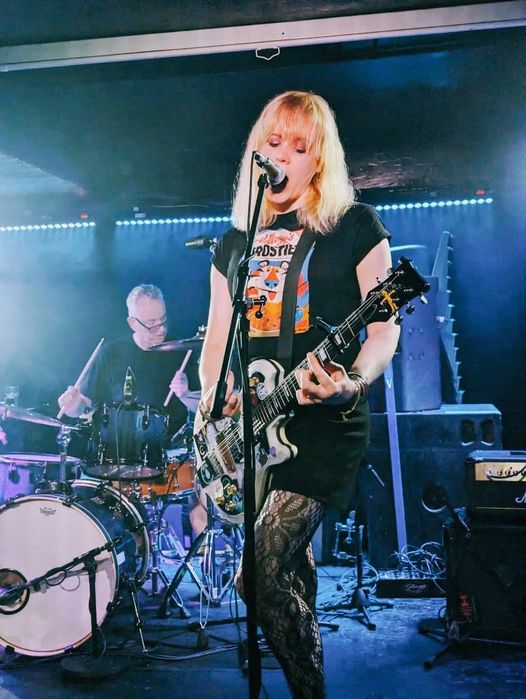

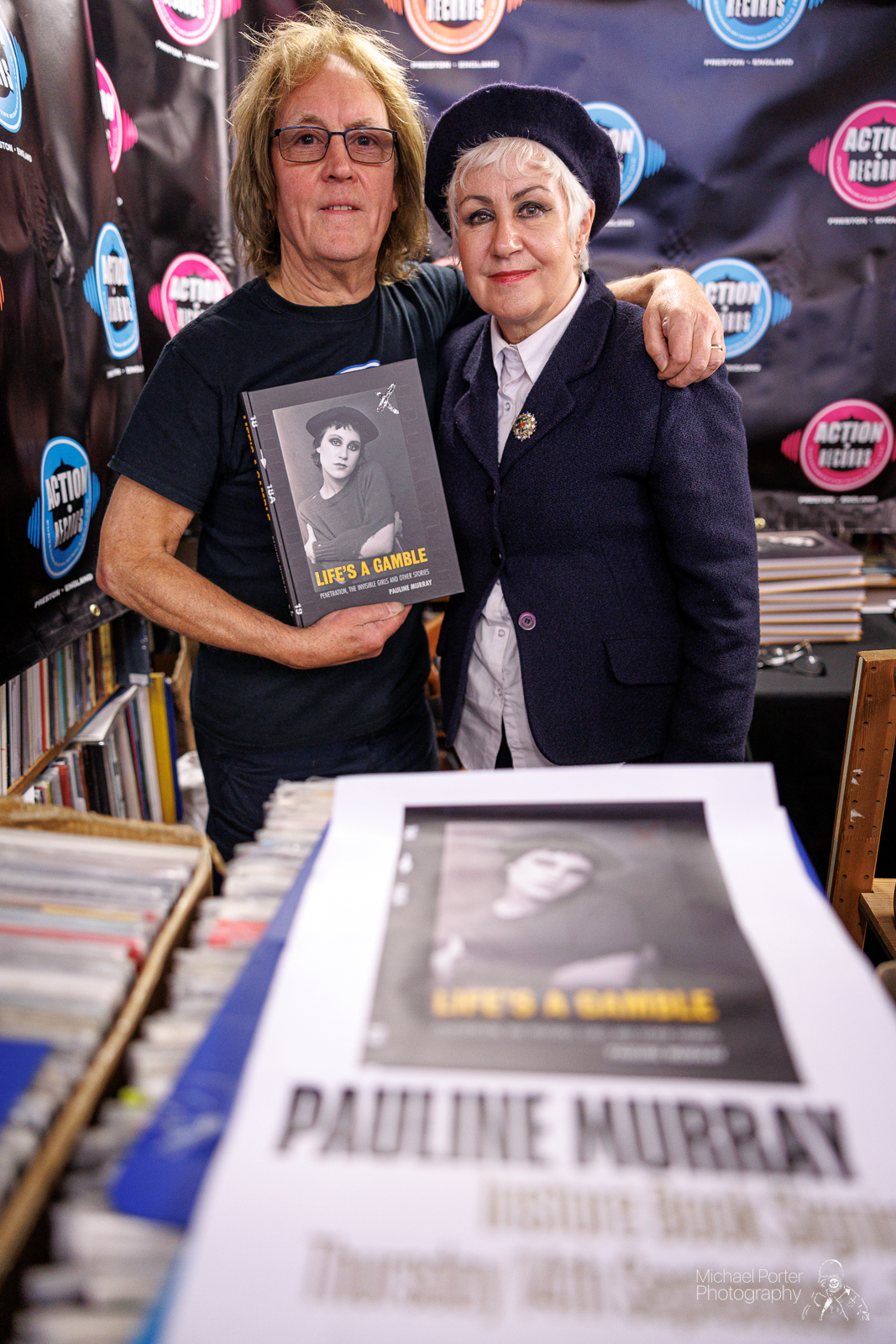
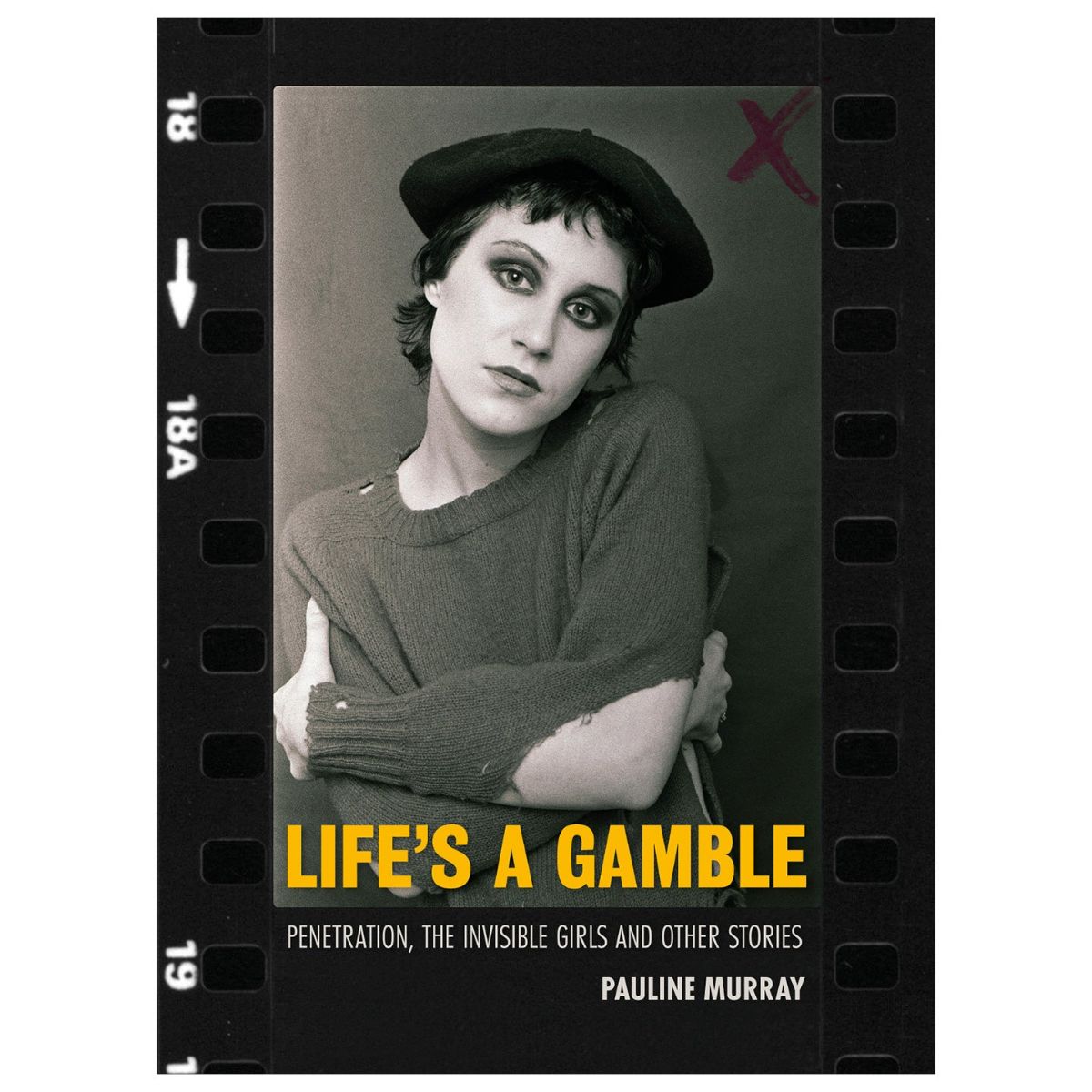

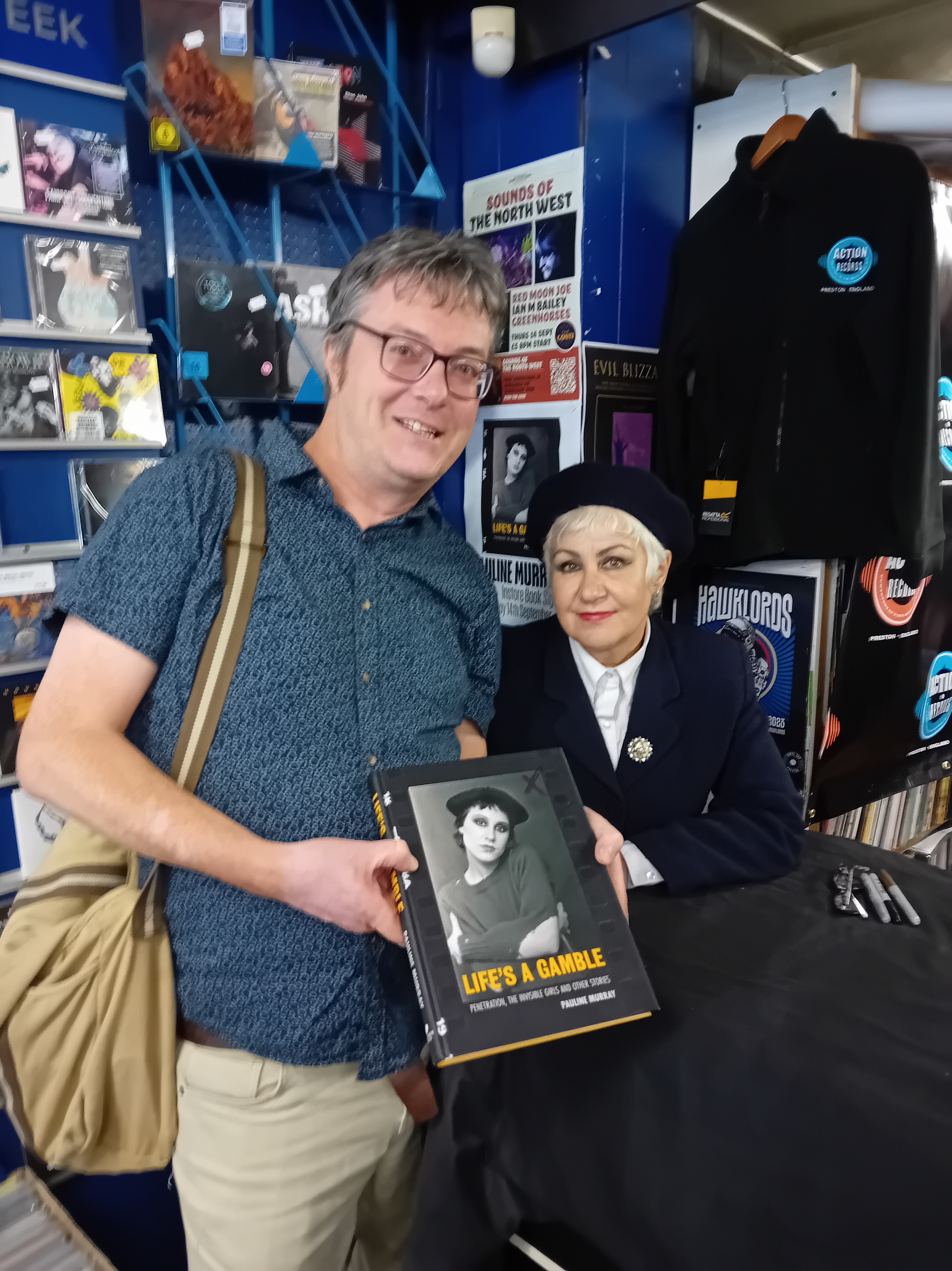


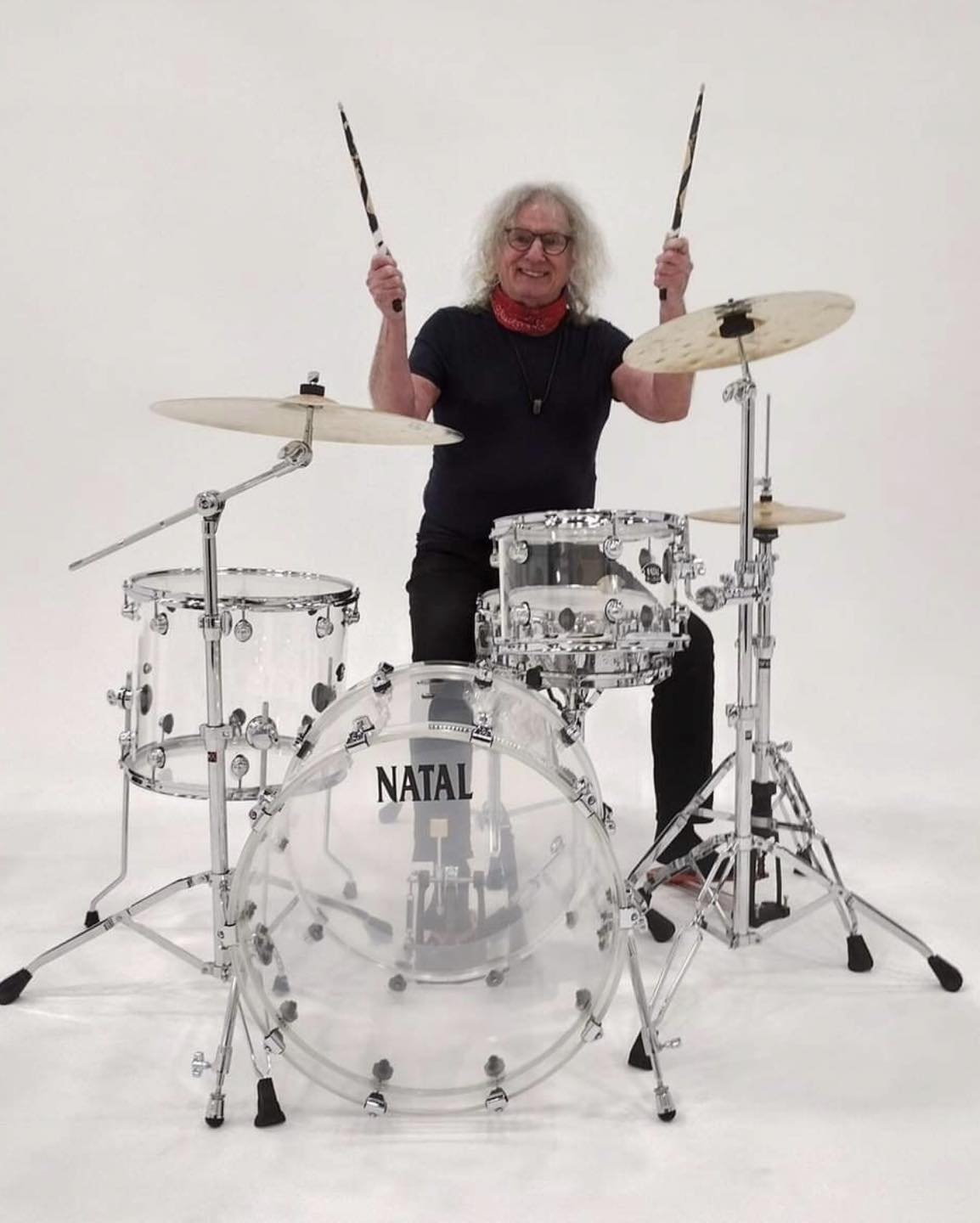


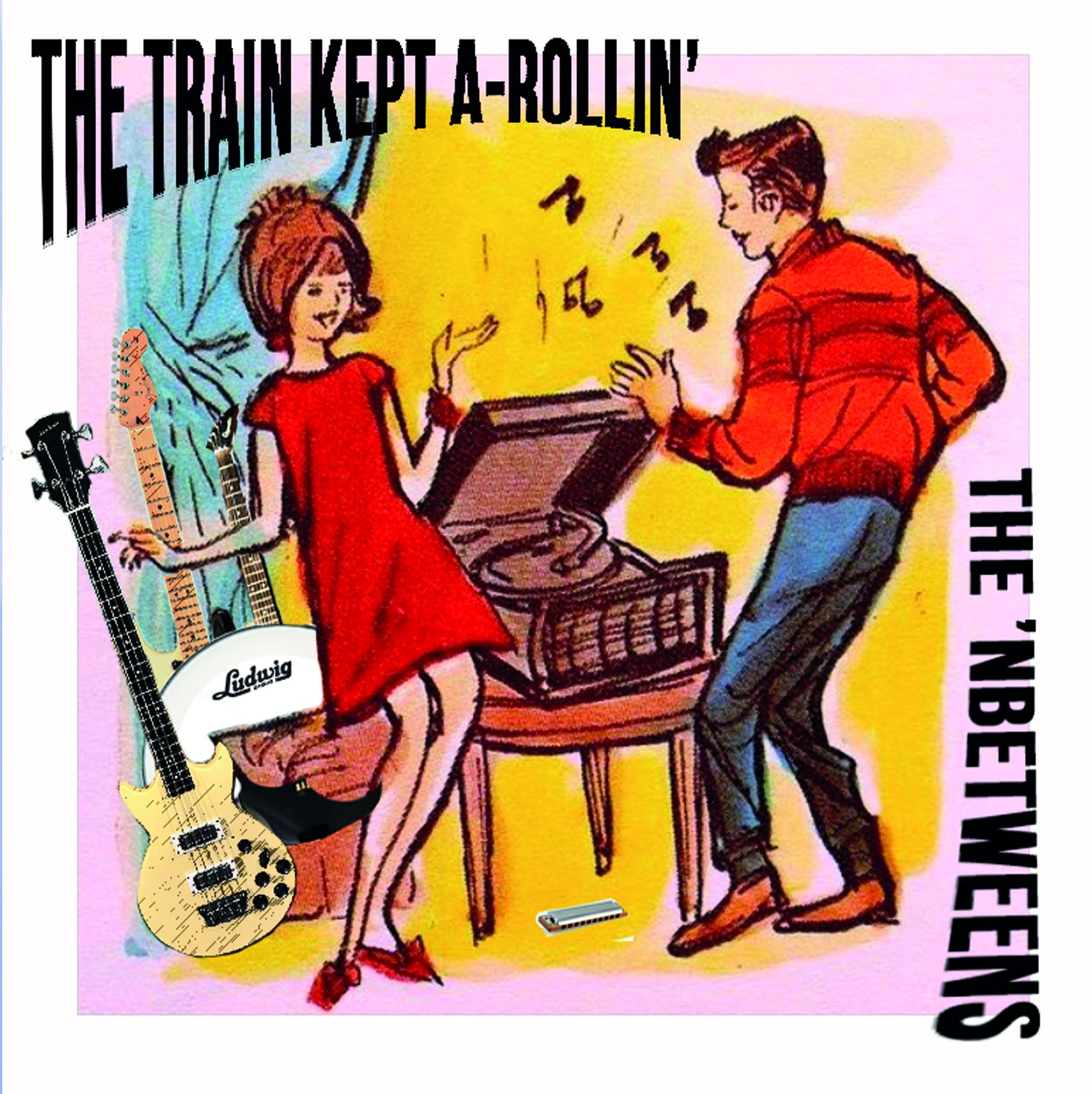


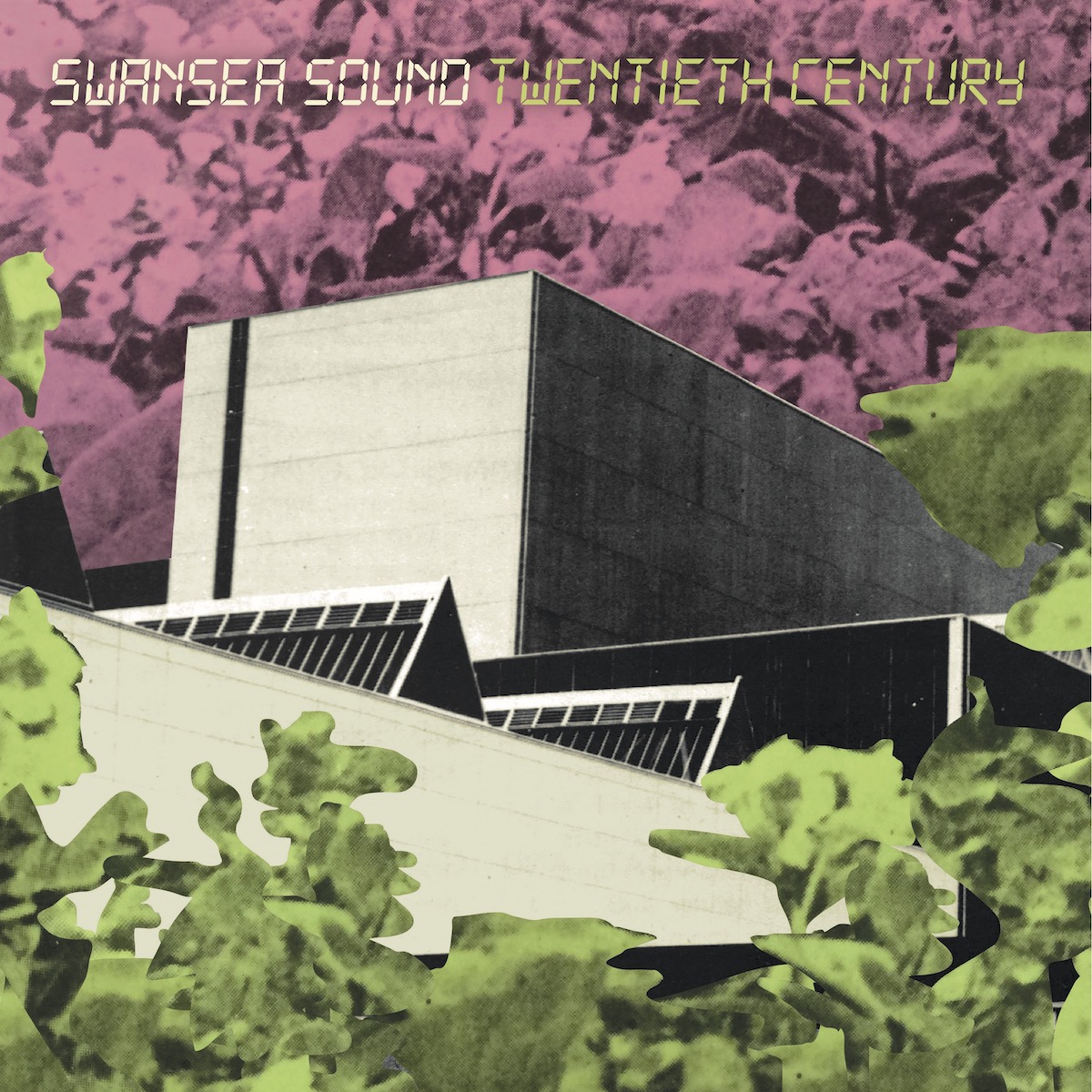
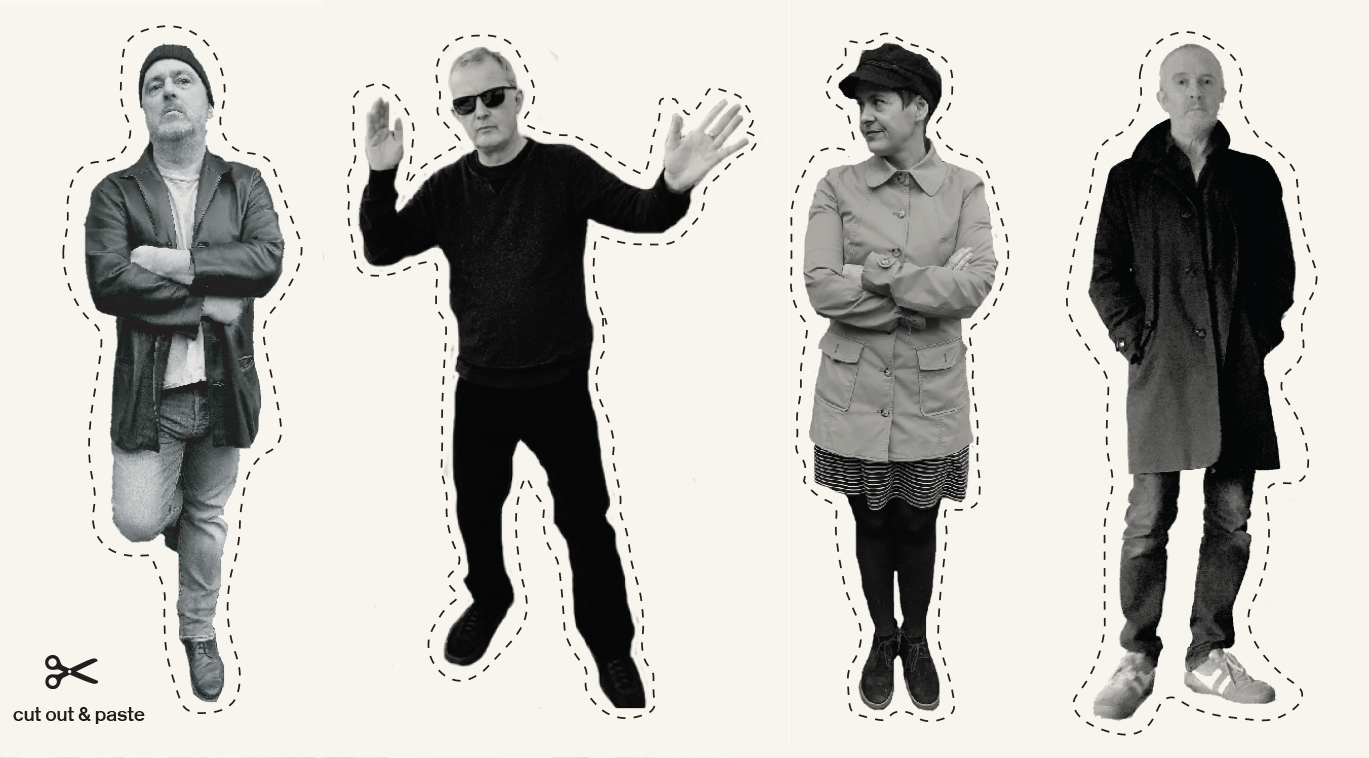




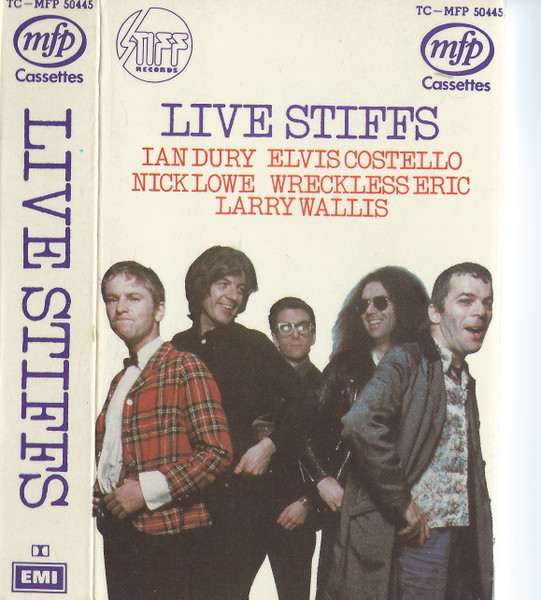


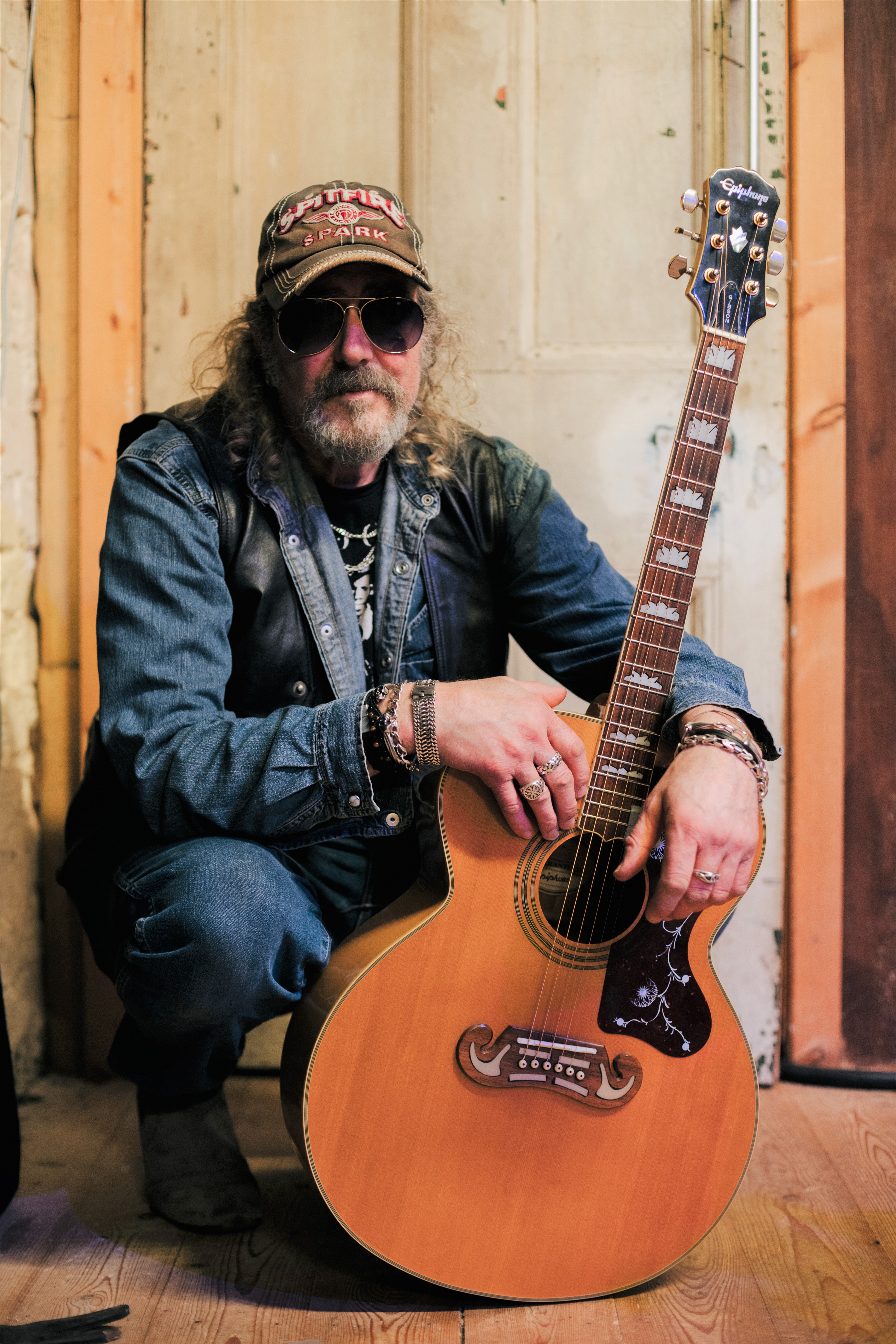


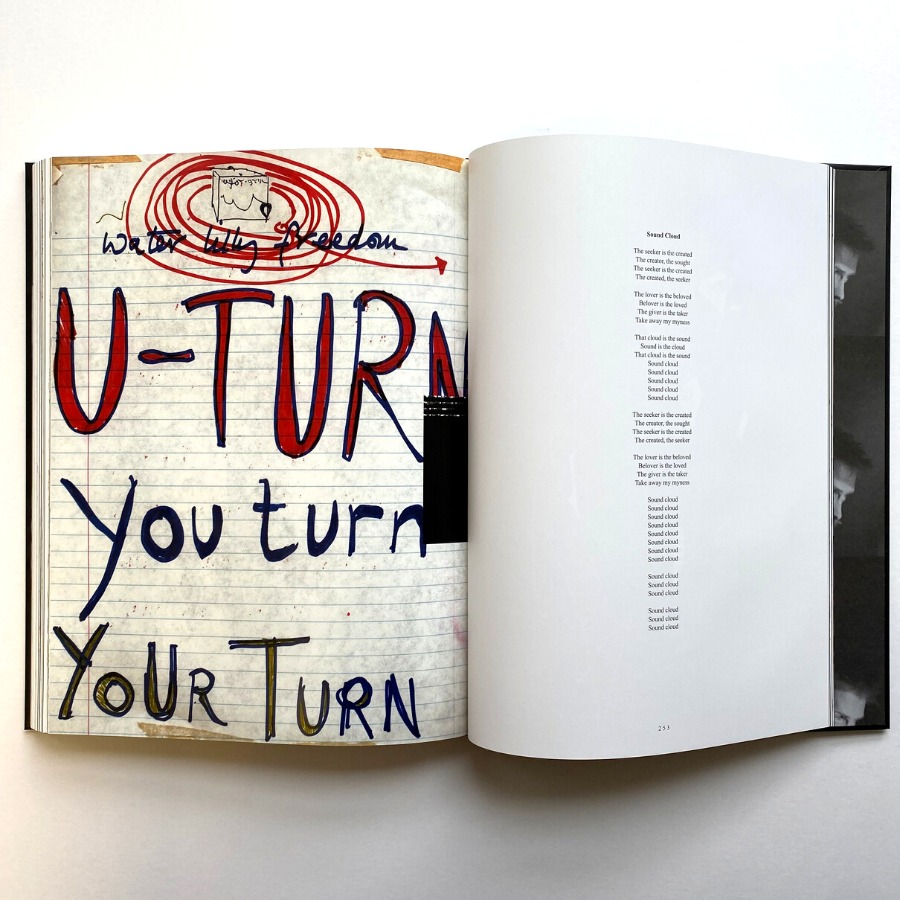


 writewyattuk