Inspiral Carpets/Blossoms – Preston 53 Degrees

Vocal Volley: Stephen Holt at full throttle at 53 Degrees (Photo copyright: Ian Rook,  @ianphotoboy,  www.ianrook.com)

Vocal Volley: Stephen Holt at full throttle at 53 Degrees (Photo copyright: Ian Rook, @ianphotoboy, http://www.ianrook.com)

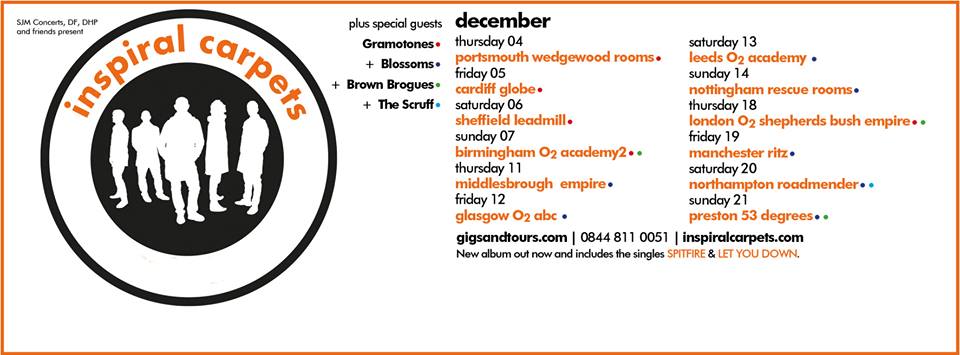
I had a feeling Inspiral Carpets would prove the perfect act to bring the curtain down on Preston’s threatened 53 Degrees venue, and they certainly ended their own 12-date December tour in style.

I’m afraid I missed first support Brown Brogues, but enjoyed an impressive set from the black-clad Blossoms, hints of Liam Gallagher and Lee Mavers from frontman Tom Ogden at the heart of this happening Stockport outfit, hopefully with plenty more to hear from them in the near future.

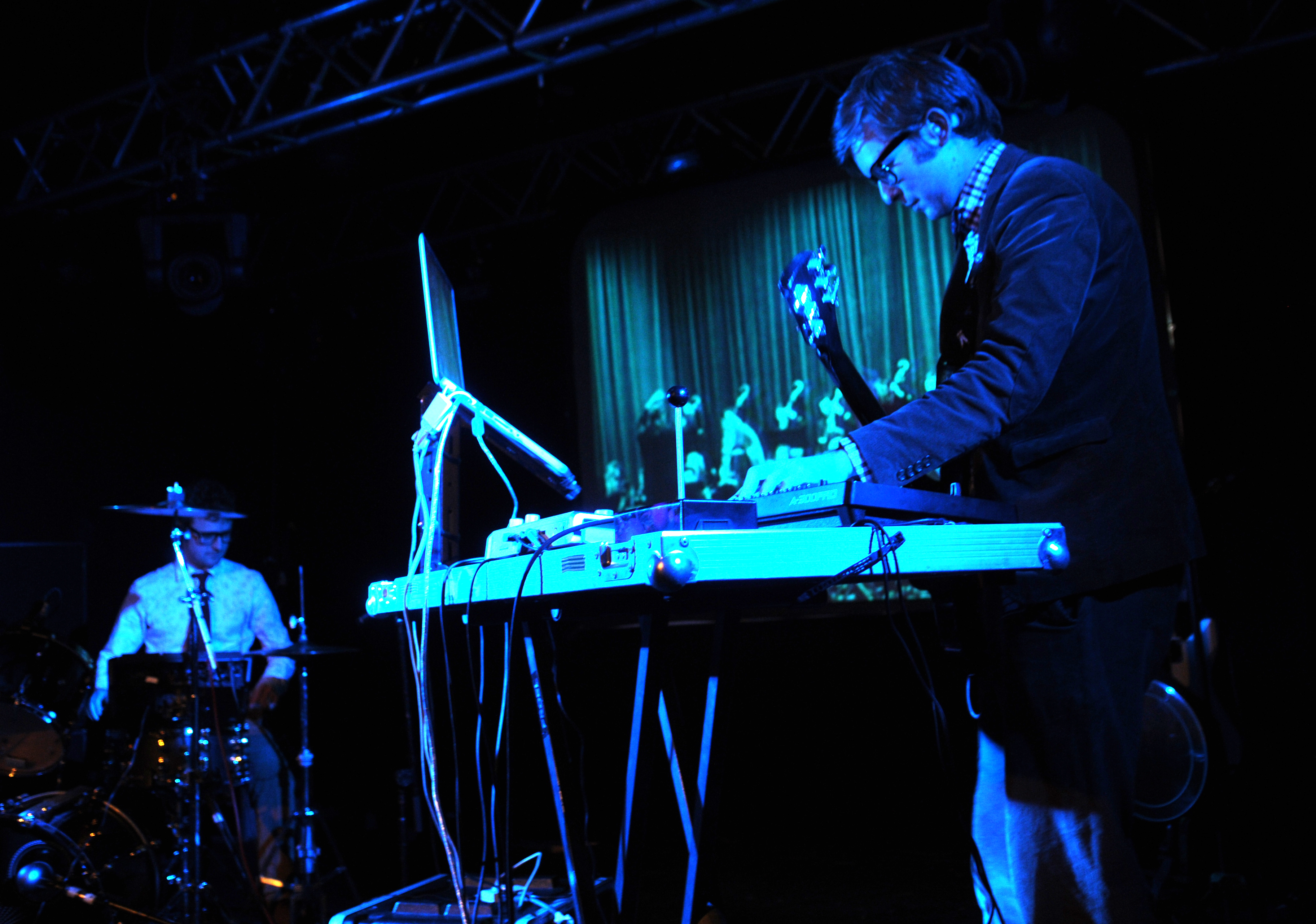
Meanwhile, expectation was growing, heightened as a crew member briefly tested Clint’s keyboard. But we didn’t have long to wait for the star attraction, the herd-like preponderance of ‘moos’ from the assembled drawing them out.

Monochrome provided a winning starting point, and while the sound was a little soupy all night, we knew what we were getting – plenty of passion from a band belying their shelf-life, surely as fresh today as first time round.

From Martyn’s driving bass to Clint’s tell-tale organ and Stephen’s Julian Cope-like vocal delivery, we quickly shifted up the gears.

All that was missing was a pounding floor, but not all the audience seemed to know the new songs, only truly coming alive for following pop explanation mark Joe.

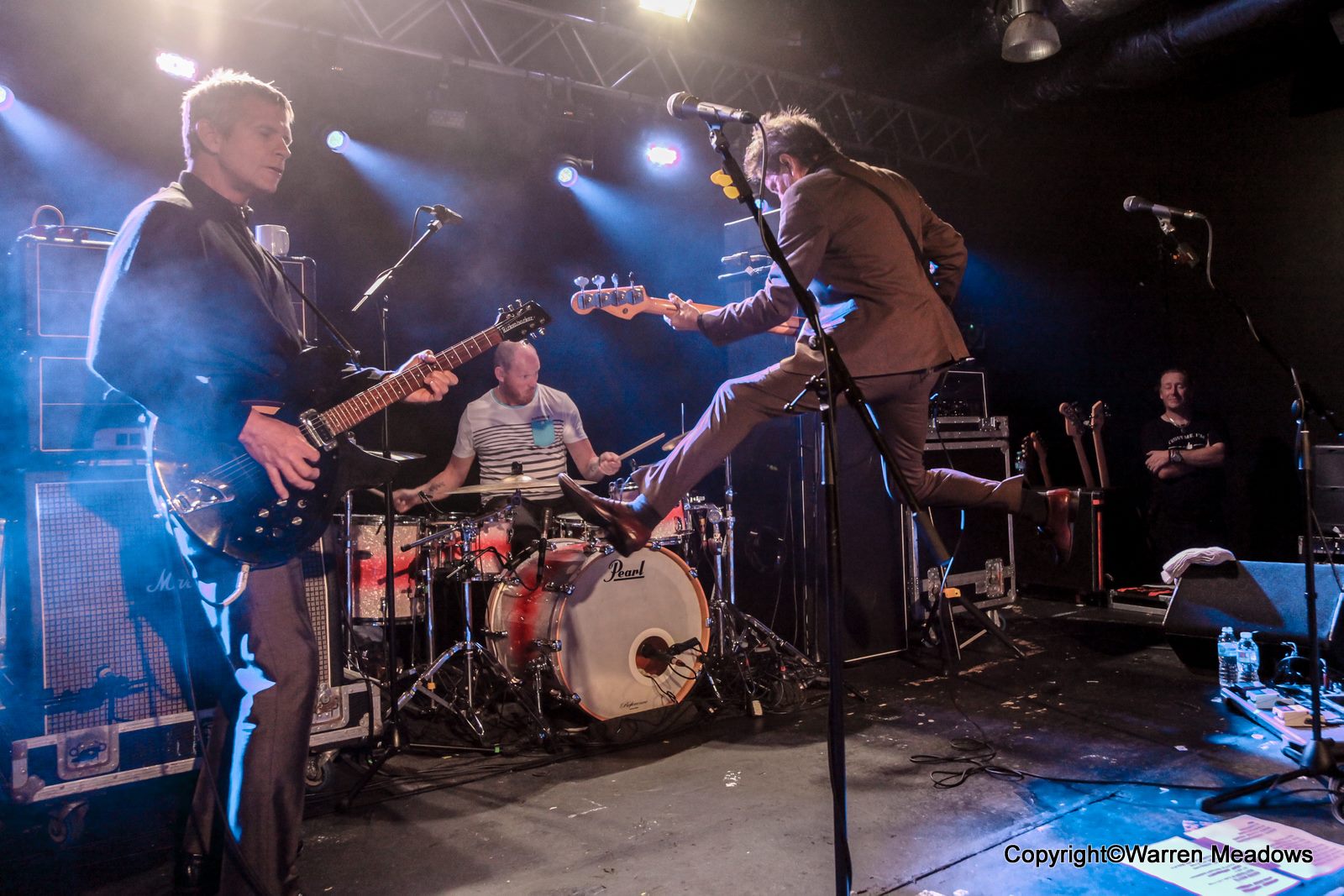
Craig’s military drumbeat called the tune, the band dynamic soon apparent – Clint doing most of the talking, Stephen saving himself for his occasional pogoing, Graham tucked away on the left, Martyn driving the whole shebang.

As with the opener, You’re So Good For Me deserved more crowd participation, the band’s great comeback clarion call taking me back to an earlier love of The Mighty Lemon Drops.

Band Substance: Inspiral Carpets wow 53 Degrees (Photo copyright: Ian Rook,  @ianphotoboy,  www.ianrook.com)

Band Substance: Inspiral Carpets wow 53 Degrees (Photo copyright: Ian Rook, @ianphotoboy, http://www.ianrook.com)

The pace slowed for 1992’s Two Worlds Collide, Stephen clearly at home with his predecessor (and of course his successor) Tom Hingley’s vocal lines, as we caught our breath.

They’re a solid, tight unit too, with plenty of smiles for the audience and band members alike, inspiring the joint to jump for She Comes In The Fall, still a floor-filler a quarter of a century after its initial release.

You can follow a timeline with this five-piece, and while it might date back to that hip US ‘60s underground scene, I’ll name-check The Stranglers instead.

So just a few months after Dave Greenfield led from the rear with his trademark organ at the same venue, Clint seemed to carry on where he left off on A to Z of My Heart.

It’s another track from the self-titled new album displaying those influences on the IC sleeve, alongside what appears to be a fairground spin on the riff from Johnny Tillotson’s Poetry in Motion.

The floor was soon pounding to the might of breakthrough hit This Is How It Feels, jokingly introduced as a new song written in a dub-step style, one inspiring plenty of generational nostalgia.

It was later remarked that someone suffering the after-effects of a good stint down the front sang,This is how it feels when you’re 60’. And while I’d argue a lower age, it was a fair point.

But if ever there was a sign that this is still a vital band with plenty of hooks, Spitfire seems to make up for all that lost time between incarnations, Martyn’s bass rumbling and the front of the hall moving en masse.

Boon Town: Clint calls the tune at 53 Degrees (Photo copyright: Ian Rook,  @ianphotoboy,  www.ianrook.com)

Boon Town: Clint calls the tune at 53 Degrees (Photo copyright: Ian Rook, @ianphotoboy, http://www.ianrook.com)

Talking of which, Move provided a further wander down Memory Lane, Madchester, Craig then taking us to Sackville before Stephen bounced his way through a rip-roaring Find Out Why.

Away from the singles there are plenty of new potentially-commercial nuggets too, with Calling Out To You just one great example.

It was time for the guest appearances then, and while we couldn’t quite see him behind the speaker stack, I definitely heard Manc legend Mark E. Smith introduce a throbbing I Want You.

Clint asked us what time it was – the Sunday curfew approaching – and one punter tried to hoodwink him into believing it was only half nine. Like us, he clearly didn’t want them to stop.

But time was ebbing away and another esteemed caller was waiting in the wings, John Cooper Clarke, the Bard of Salford – again via Clint’s techno-trickery – supplying his winning verse on the glorious Let You Down.

The band’s new single, already a big hit with this scribe, didn’t disappoint, that bass-line again bringing to mind the Droppies’ Tony Linehan and further back Teardrops-era Cope, the song underpinned by Clint’s roving keys as Dr Reliable saw us out.

After a brief refill they came back, the new album’s brooding Human Shield building nicely before 1992’s Dragging Me Down, Clint’s memorable riff seeing us in, the venue alive for its triumphant chorus.

Bass Instinct: Martyn surveys his 53 Degrees audience (Photo copyright: Ian Rook,  @ianphotoboy,  www.ianrook.com)

Bass Instinct: Martyn surveys his 53 Degrees audience (Photo copyright: Ian Rook, @ianphotoboy, http://www.ianrook.com)

So where to finish but another sumptuous pop moment, Saturn V, its Mysterians-like keyboard intro and Graham’s chop guitar providing the platform for the band to go out in style.

While 53 Degrees’ future may be in doubt, please don’t wait so long to come back, lads. For this treasured ‘cool ass five’ have plenty of good times ahead of them.

Inspiral Carpets Logo Sml (1)For a recent interview with Inspiral Carpets lead singer Stephen Holt on this blog, head here.

Also, check back to this review for some live shots from Ian Rook as soon as we can get them on!

And for the very latest from Inspiral Carpets and their plans for 2015, try their official site here.

10734179_782482418475995_638652498223954997_n

Posted in Music | Tagged , , , , , , , , , , , , , | 1 Comment

A fond farewell for 53 Degrees

Flying Again: From the Jam at 53 Degrees.  From left - Russell, Smiley and Bruce (Photo: Warren Meadows)

Flying Again: From the Jam at 53 Degrees. From left – Russell, Smiley and Bruce (Photo: Warren Meadows)

On the eve of a popular University of Central Lancashire club’s last gig in its current guise – featuring Inspiral Carpets – we bring you an interview with a former 53 Degrees in-house promoter about the passing of this much-loved Preston live venue.

While there’s a good chance that music will return to the setting in the New Year (and there’s the Dark-Cide New Year’s Eve party to come too) it’s the end of an era for a two-level location that cost £6.5 million and attracted an array of big names to Lancashire since 2005.

I’ve missed a fair few, but can count several highlights over that period, many chronicled on this blog. And since seeing Rick Buckler, Bruce Foxton, Russ Hastings and Dave Moore there in an earlier incarnation of From the Jam at the end of 2007, there have been plenty of nights to remember.

This year alone I experienced great sets from Gary Numan, The Stranglers and Miles Kane, packing out the 1,500-capacity main hall, and prior to that John Cooper Clarke headed an impressive performance poets’ bill.

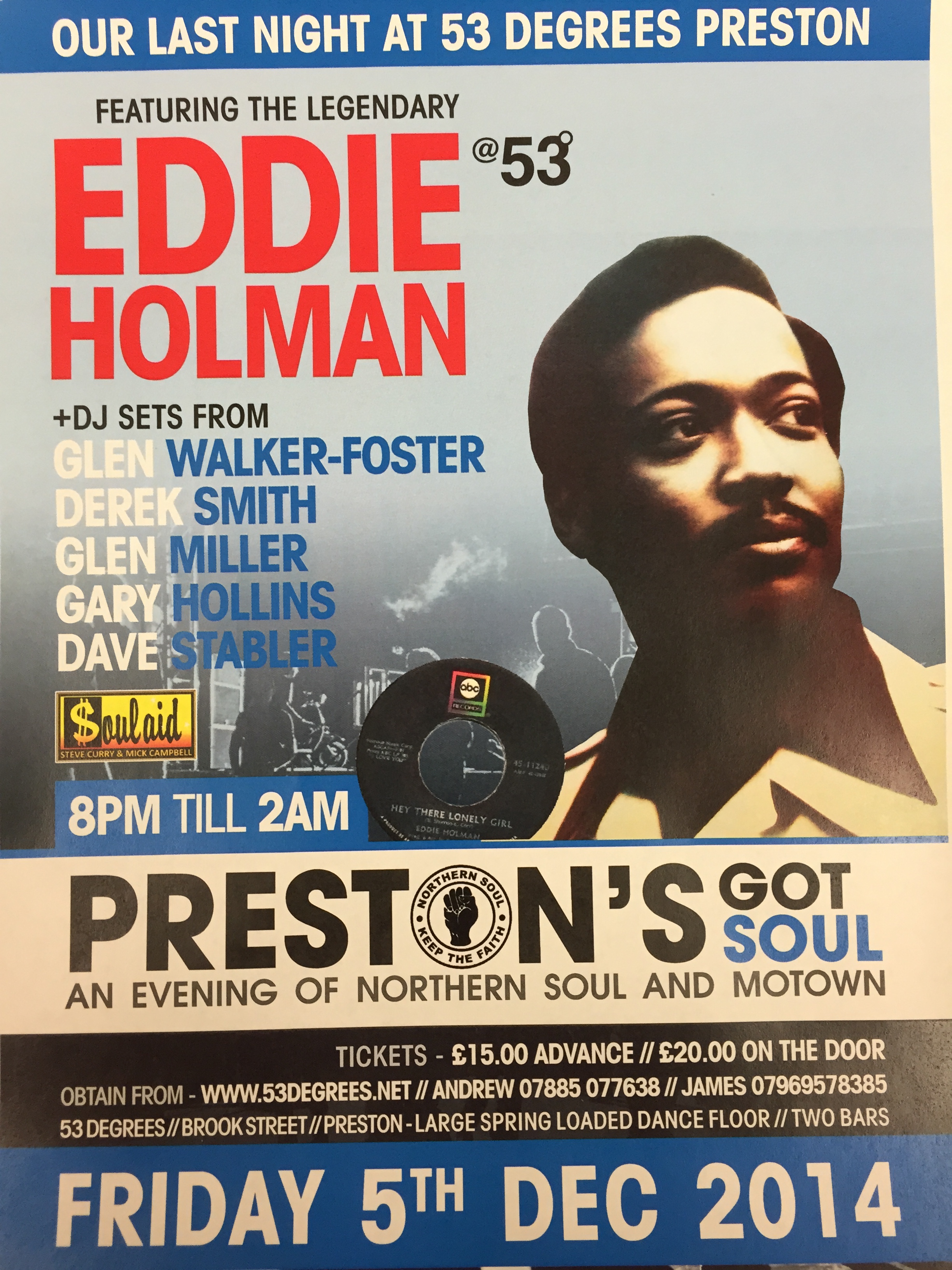
Meanwhile, Preston’s Got Soul enticed into that same setting Northern Soul survivors Eddie Holman and Judy Street this year, plus Motown legend Martha Reeves last Christmas.

Then there were a number of top club nights in a 400-capacity upstairs setting, and I can personally recount memorable appearances from The Blockheads, Evan Dando, From the Jam, Glenn Tilbrook, Hugh Cornwell, Public Service Broadcasting, Reverend & The Makers and The South.

Synth Attack: Public Service Broadcasting at 53 Degrees (Photo courtesy of Donna Clifford)

Synth Attack: Public Service Broadcasting at 53 Degrees (Photo courtesy of Donna Clifford)

I might have missed a couple – and I certainly did miss Johnny Marr and The Strypes, more’s the pity – but it’s fair to say this is an impressive venue that has attracted a number of great bands.

So why are we losing this fantastic venue? What happens now? And to paraphrase Monty Python’s Life of Brian – just what has 53 Degrees ever done for live music in the North-West? I put a few of those questions to someone in the know, out-going venue events assistant Mark Charlesworth.

First off, a bit about yourself. Where are you from, what was your first gig and how long have you been part of the 53 Degrees story?

“I grew up between Preston and Blackpool, living right next to the end of the BAE runway in Freckleton. You’d get these ear-splitting jets taking off at all hours, which I guess got me used to loud noise – maybe that’s why I ended up working in live music.

“My dad started taking me to gigs when I was a kid; we went to see INXS in Manchester, literally weeks before Michael Hutchence hung himself, so it felt like seeing something magical for the last time.

“The first gig I chose to go to myself was Mansun at Blackburn’s King George’s Hall in 1998. They were touring their fantastic Six album. It’s one of my all-time favourite records – a big, dark, twisty-turny epic with guest vocals from Tom Baker and the best album cover – so it was a pretty breathtaking moment for me.

“Although that might have been heightened by the substances the people next to me and my Mum were smoking!

Indelible Mark: Former 53 Degrees events assistant Mark Charlesworth

Indelible Mark: Former 53 Degrees events assistant Mark Charlesworth

“I’m 28 now, and I feel a great affinity for the 53 Degrees story. Construction started it when I was at Newman College: the bus would go past this weird structure every day – part spaceship, part giant anchovy tin – and we all wondered what the hell they were building!

“I know some people hated it, but its unique architecture certainly made it stand out in Preston. The venue was up and running by the time I was a student at UCLan and I saw some great gigs there.

“I’ve been working there for the past 3 years, but I’ve been involved with UCLan, first as a student, and then in various jobs, since 2006.

“I work at Manchester’s Bridgewater Hall now, so 53’s closure marks the end of an era to me as I’ll be saying goodbye to UCLan for maybe the last time.”

In early June, it was announced: ‘53 Degrees will cease to function as a ‘high street’ live music and student entertainment venue after December 31 this year.’ So what’s happening to the venue as of January 1st, 2015?

“That’s a tricky question at the moment, but the situation has improved slightly since the June closure announcement. As far as I’m aware, the upstairs club room will still get used for overspill events from the Union’s Source Bar.

“The club will also be available to hire for external promoters, which means that the regular DarkCide night will continue there, and Joff Hall – who’s run the venue for the last couple of years – will be putting on some shows.

“So it’s not quite the death knell: 53 won’t be able to have its own staff, but people hiring it will get the space, equipment and, most importantly, the reputation.

“As far as the downstairs room goes, that’s the university’s decision. I suspect it’ll get used for occasional events; it’d be a shame if it was left to mothball.”

Ben Latham, UCLan’s Students’ Union president, said: ‘Times are changing and students’ unions across the country are being faced with the reality that the costs of both running and supporting the investment needed in a venue such as 53 are unsustainable’. So has 53 Degrees been losing money?

“That’s a controversial question, and one I’m not totally at liberty to answer, partly because I’m not au fait with the full financial picture. From our point of view, it’s frustrating as they shows we’ve booked on have mostly made a profit.

“Even the poorly attended ones have made money if we’ve kept staffing and costs down. My cynical side would say it’s some of the big Freshers events that haemorrhage the cash, but – to be fair – I guess there are substantial opening, operating and licensing costs I’m not totally aware of.”

Stage Presence: Gary Numan at 53 Degrees (Photo copyright: Iain Lynn)

Stage Presence: Gary Numan at 53 Degrees (Photo copyright: Iain Lynn)

That Students’ Union statement added something about ‘the challenge of changing leisure habits and student demographics, developments in the music industry and the recent recession’. Can you shed light on that?

“It’s certainly true that things are tough for music venues at the moment (as they are for things across the music industry as a whole) and there are going to be casualties.

“We’re at an interesting position right now where small venues are under threat unless they have a loyal audience and a good relationship with their community.

“Arena size venues are struggling unless they can get acts like Take That and Coldplay in every night. Whereas mid-level venues, like Manchester’s recently re-opened Albert Hall, are doing really well.

“I guess that’s reflective of the state of music as a whole; if things are tougher financially, and a lot of young people have grown up thinking of recorded music as free, people still seem more willing to pay for an experience that seems more personal, intimate and that offers something a little bit special for them.

“If you go and watch the Manic Street Preachers at the Ritz or Apollo in Manchester, you feel a lot closer to the band than somewhere like the Arena, which essentially feels like a big garage!”

It seems to me that the kind of events 53 Degrees were putting on were attracting students and kudos to the city itself. Was that not the case?

“I think 53 Degrees has attracted a lot of kudos to Preston, bringing names to the area that just wouldn’t have come here before. It seems lunatic that the Frog & Bucket, 53 Degrees and (if current stories are to be believed) Blitz could all go without anyone from the council defending them or at least making a comment.

“Do they not realise what a blow this is in terms of getting people into the city centre? At least we still have The Guild Hall and The Harris Museum. But is that enough? To certain parts of the Preston public, this will be a big loss.

“Students, unfortunately, are a different story. People say ‘students get the train from Preston and queue up for gigs outside the Manchester Academy; why don’t they come to a venue that’s right on their doorstep?’ And it’s a tough one.

“I guess if students don’t have much disposable income, when they do go to a gig, they want it to seem more like a full entertainment package, and going to the venue next door isn’t quite as exciting as going on a night out in a bigger city, having a laugh on the train, seeing a band at a new, packed out venue and then maybe going to a club or staying over.

“That’s been one of the problems from the university’s point of view: although a lot of our gigs were busy, there weren’t necessarily that many students there, and unfortunately that means it doesn’t really fit in with the university’s mission statement.

“This has been a big part in prompting the university’s decision on all this, and I can see both sides of it. I imagine, from their point of view, times are hard in education, they’re getting less funding, and student numbers across the UK have taken a knock since the fees went up.

53 degrees“To carry on operating, they’re strengthening their core values so they don’t spread themselves too thinly, focusing on the things that they’re really good at and trying to offer a student-centric experience.

“If this means that some of the less student-orientated activities have to go and they have to cut down the volume of courses and staff – at the risk of making it a slightly less exciting and dynamic place to be – that’s a sacrifice they’ve chosen to make.

“It’ll be interesting to see how it plays out in the long-term, whether UCLan loses some of its vibrancy and energy, and if they come to regret it.”

Is there a danger now that the city of Preston won’t be attracting the kind of names it has in recent years through 53 Degrees?

“I think so. Preston’s quite a frustrating place to be at the moment. After a long burst of enthusiasm and development, from UCLan’s huge growth in the 1990s to Preston getting city status and right up to the 2012 Guild, things have suddenly run out of steam.

“It’s like the plug’s been pulled on all these exciting ventures, which people have invested huge amounts of time and effort in, before they’ve had time to properly establish themselves and get off the ground.

“It felt like Preston was making a valiant effort to become a city in more than name – with a vibrant culture, more venues, more galleries, trams in the centre – and none of it’s really worked out.

“Yes, there’ve been huge improvements to the high street in the centre, but where’s the culture? Where are the initiatives to get people travelling in?

“The Guild Hall seems to attract a different clientele and, fantastic news that it is that Simon Rigby’s stepped in to save the iconic building, his plans for the venue seem more centred around comedy, variety and theatre shows.

“Let’s hope that The Ferret and The Continental can pull in some of the smaller shows that would have traditionally come to 53, and that 53’s club room gets hired out enough to keep a decent live music presence in the city.”

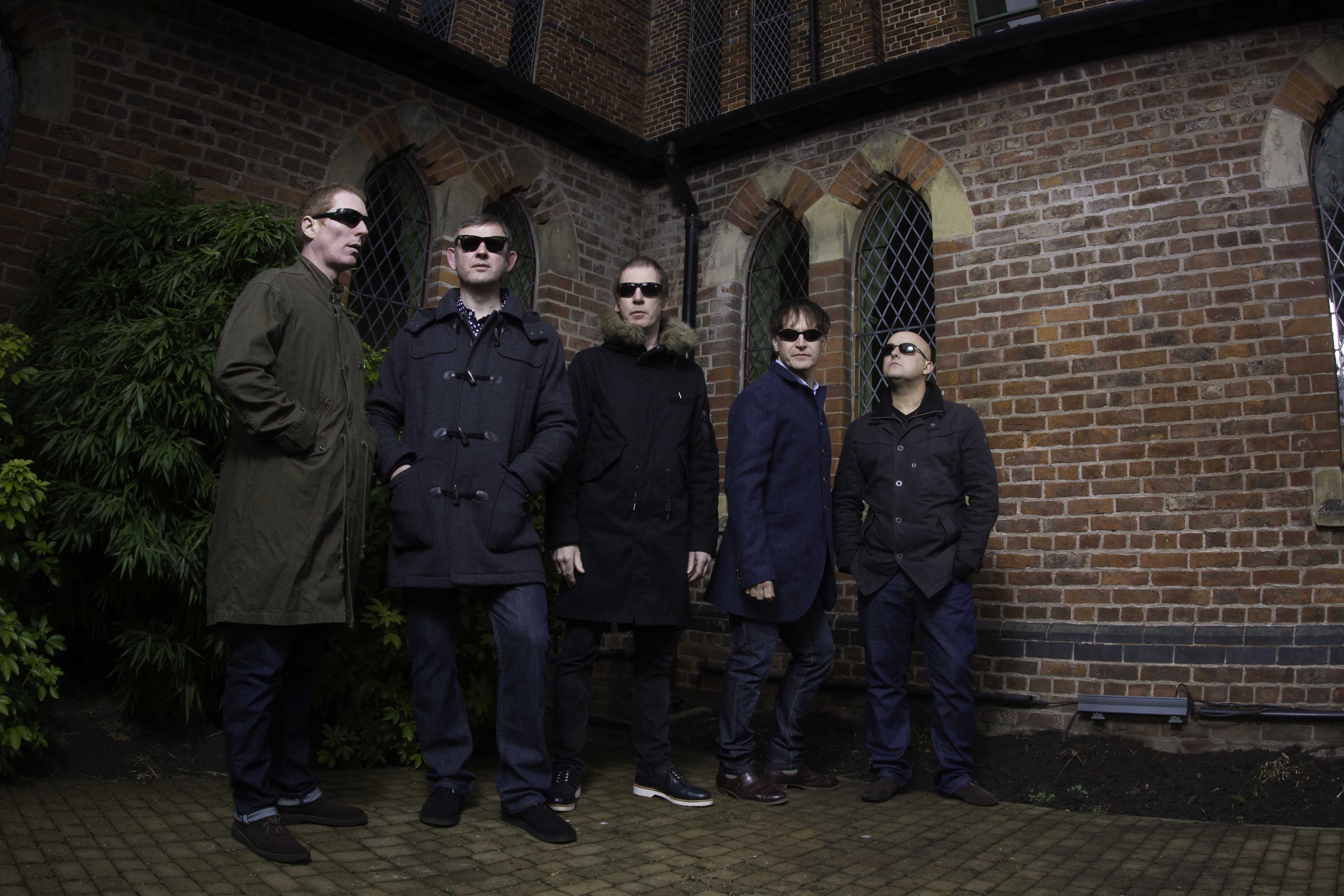
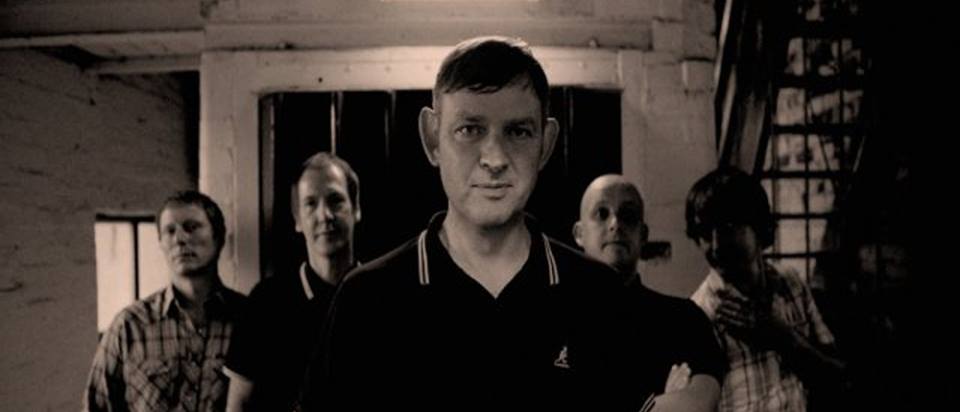
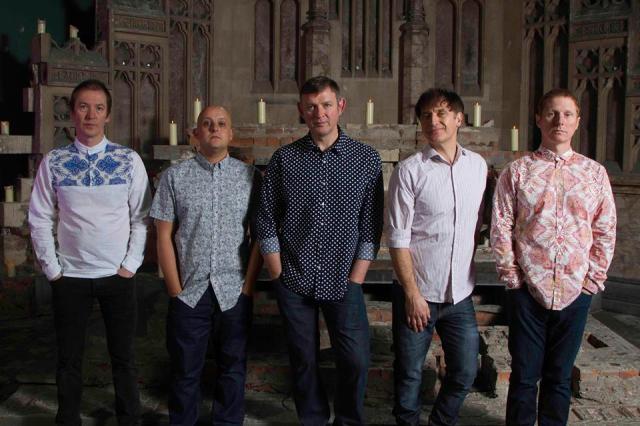
Inspiral Shades: The Carpets, 2014 (Photo: Ian Rook)

Inspiral Shades: The Carpets, 2014 (Photo: Ian Rook)

You’re bowing out with a good one though, gig-wise, with Inspiral Carpets on December 21, and I believe they chose the venue for that very reason for their own tour finale.

“Inspiral Carpets are the perfect band to close the venue. They know it’s got a state-of-the-art sound system and that it always pulls a good bunch of people, Clint Boon’s become a 53 favourite with his legendary DJ sets, and they’re Northerners so they’ll understand a bit about hardship, haha. You could call them ‘spiritual partners in crime’.

After that, we’ve got the DarkCide New Year’s Eve party to bring down the curtain. It’s the end of an era for 53 Degrees in its current state and definitely the end for its staff, but at least things like DarkCide will still be able to hire out and make use of the space.”

I believe the first 53 Degrees event was in 2005. Who was on the bill?

“Our first show was actually an AC/DC tribute. Incidentally, I’ve always wanted to see an Obsessive Compulsive support group tribute band called OC/DC, but sadly it wasn’t them.

“Our first proper show was a few days later, when The Subways rocked out the main room. They came back and played a packed out gig at 53 recently, so there’s a nice synchronicity there.”

What’s been your favourite moment (on or off duty) with regard to band or club nights at the venue?

“Seeing Orbital at the venue a few years ago was incredible. Weirdly enough, I’ve loved their brand of glitchy, intelligent, soundtrack inspired electronica since I was 9 years old, and have become friends with Paul Hartnoll over the last few years, so it was nice to catch up.

“But what I remember most is when they were sound checking – I was walking down a corridor in the next building and the whole thing was shaking from the sheer force of the bass. I’ve never known any other band feeling like they could quite literally bring the house down!”

True Gent: Hugh Cornwell in live action

True Gent: Hugh Cornwell in live action

Who was best to work with, artist-wise? 

“I spent a lovely hour chatting to ex-Stranglers man Hugh Cornwell. He has this reputation in the press of being difficult, and his management had been a pain when we were working on the lead-up to the show, so we were expecting this real ogre. Well, what a surprise it was to meet this well-mannered, intelligent and thoughtful gentleman who was as passionate about his northern chip shops as he was about his music.”

Tell me some funny stories about artists who played 53 Degrees and what was going on behind the scenes.

“Oddly enough, the funny stories all seem to take place in the laundry room. I remember Ian McCulloch from Echo & The Bunnymen asking a colleague of mine to wash his underpants – she was braver than me!

“We had a German band in once who stole a load of our towels, so maybe the stories about Germans marking their territory with beach towels isn’t so exaggerated after all.

“And we once had our washing machine repaired by Teenage Dirtbag hit makers Wheatus. It’s good to know that, if their loyal live following drops off, there’s an alternative career in waiting for them.”

Are there examples where ticket sales didn’t go as well as envisaged? Any disaster stories behind the scenes, late arrivals, power problems etc

“We had the rapper Tinchy Stryder on a couple of years ago, and it was disastrous. It was when the student market was starting to go elsewhere and we thought spending money on a bigger name would pull them back in, but he hadn’t had a hit in about a year and it only sold about 100 tickets in our 1500 capacity venue. Nightmare!

“I guess it shows how quickly audiences can change and how difficult it is to predict a trend. I hope, for Tinchy’s sake, that his stock will rise again following his recent appearance on I’m A Celebrity and, erm, his duet with The Chuckle Brothers.

“To be honest, the last couple of years have been very difficult for the venue: we’ve been down to an absolute skeleton staff, there’ve been no full time contracts, a tiny budget for marketing and no budget whatsoever to book shows.

“There was an article online a little while ago complaining about the Preston music scene which referenced 53 quite heavily, but I don’t think people appreciate how tricky its been: having to put more tribute shows in to pay for the bigger names, having to put on big touring acts with so few resources, taking on jobs way beyond the remit of our contracts to make things work.

“That doesn’t just go for me: it goes for all the staff who’ve worked for, or been associated with the venue, past and present, who’ve given their all and, sometimes, gone a long way beyond the call of duty.

“In the circumstances, I’m amazingly proud of what we’ve achieved, and I think some people will really miss the place when it’s gone.”

Taking Over: Miles Kane in full voice at 53 Degrees (Photo: Lisamarie Stirling Photography/ http://www.lisatakespictures.blogspot.co.uk/)

Taking Over: Miles Kane in full voice at 53 Degrees (Photo: Lisamarie Stirling Photography/ http://www.lisatakespictures.blogspot.co.uk/)

As mentioned, 53 Degrees’ final concert in its current guise is on Sunday, December 21, 2014, featuring Inspiral Carpets – recently interviewed for this blog, with a link here – supported by Blossoms and Brown Brogues (£18 plus booking fee). 

Then there’s December 31st’s Dark-Cide New Year’s Eve Party (£6.50 earlybird deal, with on the door prices still to be confirmed), running from 10pm until 3am. For more details try here.

And remember, this is not necessarily the end for 53 Degrees, with promoter Joff Hall hoping to bring acts to the venue in the New Year. So watch this space!

Posted in Comedy & Theatre, Music | Tagged , , , , , , , , , , , , | 1 Comment

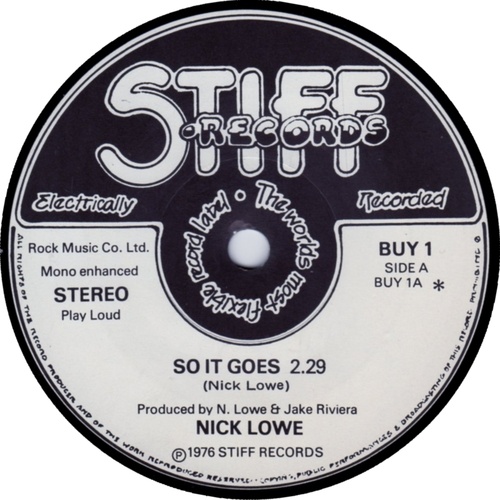
Be Stiff: The Stiff Records Story by Richard Balls – a writewyattuk review

stiffWhen it comes to music biographies, Richard Balls doesn’t go for easy options, and his latest subject matter couldn’t have been the easiest to research.

He’s managed to pull it off though, as you might expect from the author of 1999’s acclaimed Sex & Drugs & Rock’n’Roll: The Life of Ian Dury.

You probably know the rough plot, involving two unlikely maverick music entrepreneurs – Jake Riviera and Dave Robinson – who tore up the rule-book and effectively changed the sonic landscape in 1976.

Rumblings from that resultant record industry shake-up and wake-up call continue to this day, as contemporary artists look to fresh ways to get their product out there. And there’s so much to learn from the Stiff story, one of wily marketing, in-your-face sloganeering, gimmicks by the truck-load, and – thankfully – raw talent too.

As it was Riviera left within the year, yet Robinson took the label on to greater things and new heights as well as a few lows in an increasingly-savage marketplace.

It was Robbo’s vision that ensured we got to enjoy a wealth of fine bands from there, not least Madness and The Pogues. But Balls’ Stiff story is about much more.

The company balance sheet was enough to give the finest accountants palpitations from the start, and eventually – somewhat inevitably – the wheels spectacularly fell off. But the legacy of that journey – nicely chronicled in this weighty paperback – was something else, and Stiff remains with us, albeit in another guise.

It’s an epic tale, so it’s understandable if there are omissions in this 342-page tome, a must-buy not only for fans of Stiff’s many acts but anyone out there looking for inspiration for their own assault on today’s industry. Read and learn.

While Balls didn’t manage to nail down the co-founders, their stories are told in great detail by many of those who shared key parts of their journey.

It’s an impressive list of contributors too – from Graham Parker, Jona Lewie, Lene Lovich and Wreckless Eric through to Ed Tudor-Pole and Shane MacGowan.

damned-damnedfront_0The bit-part players add another dimension, not least The Attractions’ Pete Thomas, The Damned’s Rat Scabies, Madness’ Mark Bedford, early signing Larry Wallis and a number of leading Blockhead lights.

And all help recall the public and behind-the-scenes ups and downs of this revolutionary label, from its modest, haphazard beginnings onwards.

I struggled at times, particularly early on, wanting to hold the copy back and get Balls to explain a few of those moments in greater detail or ask his interviewees a little more. But it’s a monumental work all the same, with a lot of hard graft involved.

Besides, a fair amount of the full story is here as far as I can tell, not least the background of the key players – from Riviera and Robinson to Nick Lowe, Graham Parker and beyond.

We also see how The Attractions and The Rumour helped guide Elvis Costello and Parker accordingly, how Lowe played a telling part in that early success, and how Robbo’s first dealings with Costello and Ian Dury came way before Stiff surfaced.

Factor into that, Balls’ investigations into Lee Brilleaux’s supposed sponsorship of the whole venture – a Feelgood factor for sure – and how Riviera got one over on Malcolm McLaren as The Damned’s New Rose beat The Sex Pistols’ Anarchy in the UK to the kill, repeating that as Damned Damned Damned beat Never Mind The Bollocks out of the blocks, so to speak.

Where the book works best are the first-hand recollections of life at 32 Alexander Street and out on the road with the Stiff artistes, and how I’d have loved to have been a fly on the beer-soaked wall at that historic public debut for Costello with The Attractions in Penzance in July ’77, supporting Wayne County and The Electric Chairs, with Captain Sensible among those getting excitable in the audience.

Then there are reminiscences from Pete Thomas’ sister Philippa’s days at Alexander Street, having left behind the sunny canyons of LA, remembering the dilapidated furniture, visitors waiting on knackered aircraft seats, and Riviera smashing a hole in his desk with a hammer during some typically-fiery moment.

The portrait of legendary designer Barney Bubbles working on a shelf next to the sink, and an unsavory recollection of Riviera or Robinson mis-aiming in the loo above – the resultant dripping through the floorboards reaching his artwork – also leaves an indelible impression.

Add to that a vivid description of The Damned, straight from a gig and all-night drive, taking over Philippa’s front-desk shift, and how ‘apart from Dave Vanian, the others were covered in tomato ketchup’. Nice.

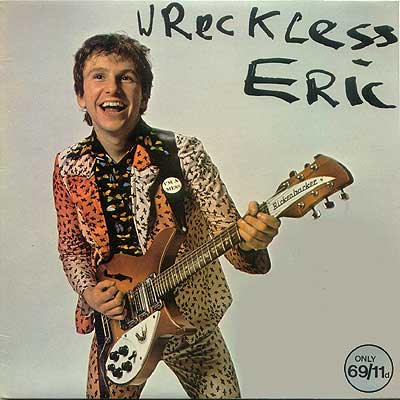
Wreckless_Eric_LPA further memorable moment is told by Wreckless Eric, the unlikely pop star having stopped for a few pints of Dutch courage before apologetically handing over his demo tape on his first visit to Stiff.

As it turned out, the American who took it from him was Huey Lewis, and within a few minutes both Lowe and Riviera had played Whole Wide World and loved it, taking to the streets to try and find the artist, who was already on his way home.

The tales from that first showcase tour are similarly colourful, not least concerning the battles between headliners Costello and Dury from day one at High Wycombe Town Hall.

As I write this, I’m looking at my cherished copy of the Live Stiffs cassette featuring that tour’s highlights, the 10 tracks from Lowe, Wreckless Eric, Wallis, Costello and Dury a great indicator of that big moment in time.

Here we get further illustrations of that epic undertaking, from the underlying tensions to the marathon drinking sessions involving Lowe, Wallis, Dave Edmunds, Pete Thomas, Kosmo Vinyl and Terry Williams. One such incident inspired Lowe’s post-Stiff hit I Love the Sound of Breaking Glass. You may know that one, but there will be other stories new to you.

By the time that tour was over, Costello, Lowe and Riviera had gone, but we then see Robbo pilot the Stiff ship to further success, sales of Dury’s New Boots and Panties! keeping the boat afloat.

As Balls reminds us, the focus shifted to the US, Robinson soon reeling in Devo – from under Richard Branson’s nose – plus Lene Lovich and 16-year-old Rachel Sweet.

Jona Lewie was another signing, and joined Wreckless Eric, Lovich, Sweet and Mickey Jupp for Be Stiff Route 78, new albums from each released to coincide with the tour, a finale at London’s Lyceum followed a month later by four nights at New York’s The Bottom Line.

download (4)Yet only Sweet charted, her B-A-B-Y cover hardly compensating for a 33-date tour involving a BR InterCity train (even if Robbo opted for the cheaper option and rickety old carriages). As the author puts it, ‘Financially, Robinson was effectively betting Stiff’s entire future on five oddities who wouldn’t have got past the reception desk at any other label’.

Thankfully, Dury was still shifting plenty of units, Hit Me With Your Rhythm Stick topping the charts in early 1979 and second LP Do It Yourself then Reasons to be Cheerful Pt.3 doing their bit, while Lovich enjoyed moderate chart success too.

That leads Balls on to those Nutty Boys from North London, Madness’ audition of sorts a live set at Robbo’s wedding reception at the Hammersmith Clarendon, bassist Mark Bedford suggesting the clincher for the groom signing them was that this was a band that could even inspire wedding guest Elvis Costello to dance.

As it turned out, 1979 was Stiff’s biggest year, but for every Dury and Madness hit there were plenty of misses, and Robbo’s return to the US for guidance and flirtations with the likes of The Plasmatics came to little beyond the hype, The Go-Go’s just one of the bands that got away after one single.

Graham Parker finally recorded an album for the man who discovered him, with Bruce Springsteen among his guests, but it was still Madness keeping things ticking over as Balls moves us on to Son of Stiff, the third showcase revue.

That five-act bill was even less star-studded, a package summed up by the author as ‘eclectic and rather disparate’, the tour making its way to America but to no great effect. In fact, Stiff saw more success back home via Jona Lewie’s You’ll Always Find Me in the Kitchen at Parties and later festive smash Stop the Cavalry.

Madness and Parker continued to sell well, but there were further financial losses – despite hits for Son of Stiff act Tenpole Tudor, then Dave Stewart and Barbara Gaskin and The Belle Stars. And Dury’s third LP Laughter proved to be his last for Stiff.

Suggs and co. remained chief breadwinners and were soon bolstered by Tracey Ullman’s arrival, the actress another natural in a video-friendly age, her hits including a cover of further Stiff talent Kirsty MacColl’s They Don’t Know.

But Mike Barson’s departure from Madness proved a forerunner to a turn in fortunes, one exacerbated by Robbo’s ill-advised deal with ailing Island, one that ultimately saved that label but arguably finished Stiff off.

Balls goes into plenty of detail on that perilous state of affairs and the story behind it, via the rise of ZTT and Frankie Goes to Hollywood plus a Bob Marley retrospective that became reggae’s bestseller. But it seems that the co-founder had taken his eye off the ball with Stiff.

Enter The Pogues, just in the nick of time to at least postpone the worst, their rise tied in with Costello through his recording expertise, a prestigious support role and an ensuing relationship with bassist Cait O’Riordan.

download (5)Shane MacGowan tells Balls here about the background to those first three wondrous albums.

But behind the scenes, dark clouds were gathering, the new base at 22 St Peter’s Square seemingly not a happy one.

Within 18 months of the hook-up, Stiff were set adrift from Island, and as the author puts it, ‘of 14 singles issued in 1985, only Billy Connolly’s Super Gran graced the top 40′. Winding-up proceedings followed in September ’86, with Stiff sold for £305,000 to innovative Buggle-eyed producer Trevor Horn’s wife Jill Sinclair, its staff pared down to 11 and various bands having jumped ship.

Dr Feelgood finally arrived but were hardly on a creative high, The Pogues now the sole success thanks to hits like late ’87 classic Fairytale of New York with MacColl. And pretty soon the party was over.

But as Balls concludes: “Stiff achieved what Riviera and Robinson set out to do. It had taken industry rejects and no-hopers and proved there was a mainstream audience for them”.

Furthermore, he reminds us, “Stiff was never grey. For almost 12 years it blazed a trail across the industry, always doing things its way and proving beyond any doubt, ‘If it ain’t Stiff, it ain’t worth a f*ck'”.

That wasn’t the end as it turned out, his epilogue detailing the eventual resurrection and how in 2006 Horn took the label by his namesake, his ZTT offshoot of Island ensuring Stiff continues to this day. What started as a back-catalogue concern became so much more.

Memorable new releases from the likes of Squeeze’s Chris Difford and the returning Wreckless Eric – this time alongside wife and songwriting partner Amy Rigby – followed, while 30 years after House of Fun scored Stiff’s last No.1, Sam and The Womps’ Bom Bom topped the charts in 2012, Stiff refusing to lie down.

And in a similar fashion, Balls’ re-telling of this tale of Goliath sticking two fingers up at the big boys also holds the interest, justifying Be Stiff: The Stiff Records Story‘s steep cover charge.

??????????????????Richard Balls’ Be Stiff: The Stiff Records Story (Soundcheck Books) is available in a Kindle edition as well as paperback – in five different limited edition covers, in the colours of the albums released to coincide with the Be Stiff Route 78 tour – from all good bookshops and online.

For the writewyattuk interview with Richard Balls, published on November 28th, 2014, head here. 

And to find out more about Stiff today, visit the label’s website here.

Posted in Books Films, TV & Radio, Music | Tagged , , , , , , , , , , , , , | 2 Comments

The fairy godmothers of swing-pop drop by – The Puppini Sisters interview

Reception Committee: The Puppini Sisters, 2014. From the left - Emma, Marcella and Kate

Reception Committee: The Puppini Sisters, 2014. From the left – Emma, Marcella and Kate

Marcella Puppini and Kate Mullins are sat by the phone, the two founding members of The Puppini Sisters well and truly in the festive spirit.

They’re clearly looking forward to their Christmas tour, those eight dates including visits to The Duke’s in Lancaster tomorrow and Manchester’s RNCM Theatre next Wednesday (December 17).

The girls – who met at the Trinity College of Music in Greenwich and formed their vocal ensemble a decade ago – are promising something to warm the cockles too.

And that seems rather apt considering their proximity to Morecambe Bay this weekend.

“Indeed! Definitely a little cockle-warming. Absolutely!”

That’s Marcella speaking, her Italian tones a little more London these days, but still with enough of a hint of a Sophia Loren or Gina Lollobrigida perhaps, in keeping with the Sisters’ screen sirens’ feel.

Marcella, Kate and most recent sisterly addition Emma Smith will be joined by a three-piece band, involving guitar, double bass and drums.

“Yes, on this occasion, although sometimes we do a slightly larger show with horns and strings as well. But we didn’t have enough room to bring them all.”

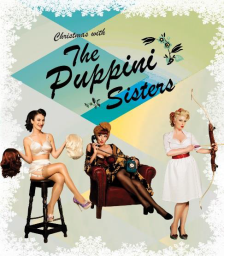
It sounds like a winner all the same, whether you fancy hearing their jazzy waltz treatment of Wham’s ‘Last Christmas’ or sultry seasonal staples such as ‘Santa Baby’.

The Puppini Sisters - 3So what do the girls know about Lancaster? Have they been to this part of the North-West coast before?

Marcella replies, “No, but we’re really looking forward to it. I have to admit I haven’t travelled that extensively in the UK outside of London and the big cities.”

Kate chips in, “We’ve never been to Lancaster before, but did something in the same area for the Jubilee, and it was a really nice show.

“But it’s been a while since, so we’re looking forward to recapturing the territory! And Lancaster Castle has already been highly recommended to us.”

With the festivities on the mind, and prior success in the shape of their 2010 Christmas with The Puppini Sisters album, I ask what the girls’ favourite seasonal songs are.

Marcella: “I really like our version of Mele Kalikimaka, and love the duet we did with Michael Buble.”

Kate: “As far as we’re concerned, the repertoire from the era we specialise in is all fantastic from around the Christmas season, from The Andrews Sisters arrangements onwards.

“Then there’s Doris Day for me, and her storming rendition of Silver Bells.”

Quite right too, and talking of Mr Buble – for whom they collaborated on Jingle Bells and Frosty the Snowman on his own Christmas album – is he likely to be supping a pint down the road from The Dukes on the night, poised to drop by to join you on stage?

Kate laughs, then announces, “Yeah … we’ll call him!”

The Puppini Sisters - 2If James Brown is The Godfather of Funk and Soul and Paul Weller’s The Modfather, does that make you The Fairy Godmothers of Swing-pop?

Kate: “Hey! That’s brilliant – we’re coining that!”

What do they think The Andrews Sisters or their inspirational predecessors The Boswell Sisters would make of the Puppinis?

Kate: “Well, we did hear from a mutual friend of Patty Andrews before she died, who thought we were rather good, and we took that as a seal of approval.

“Actually, I think that’s me being a little British about it – she thought we were very good. We were very touched at that.”

It’s been said of late that The Boswell Sisters have been forgotten down the years, but clearly not by The Puppini Sisters.

Marcella: “They were the inspiration for The Andrews Sisters, so were the ones that began it all.

“It is tragic if they’ve been forgotten. They are astoundingly amazing, and their sense of swing is unparalleled.”

Kate: “There was a darkness to them as well, which we quite appreciated.”

The Puppini Sisters - 1The Puppinis have turned up on Jonathan Creek and a few other TV shows in recent years, but I get the feeling they should be in a few period films too, in the spirit of those classic Hollywood moments their music emulates. Are those offers coming in?

Marcella: “Not yet. We’re waiting for Downton Abbey, but they’re not quite at the right period yet.”

Marcella and Kate have been touring as the Puppini Sisters for 10 years now. So where was their first show?

A brief discussion follows, with Marcella struggling before the answer comes to Kate, and for a while it’s like I’m on the set of a TV quiz show for the big money question.

“Yes! I do know! It was at The Amersham Arms in New Cross, with the two of us and a wonderful lady called Rosanna Schura who was studying with us, at a venue just down the road from our music college.

“I went to a gig there the other day actually, and it still smells the same – slightly damp and strange.

“But there was a very warm atmosphere there, and as I recall it, everybody really enjoyed The Puppinis’ first show.”

Did they think it was a one-off, or did they always believe in what they had together?

Marcella: “It wasn’t created with any big idea of it being a success, but it became quite apparent early on, because everywhere we went we got such an incredible response, and in the most random situations as well.

“We did a gig once where we opened for a heavy metal band, and all their fans absolutely loved us.

61SNk38sELL“Then we had a regular gig at a gay club in Soho, where after we played it was an established club night, playing Beyonce and all sorts.

“It was a completely random association, but they loved us there as well. We seem to fit everywhere we went and it became quite obvious that we had something.”

If they were playing to a heavy metal crowd, did they feel the need to throw something different into their set?

Kate: “We didn’t have to, although I did once try to rearrange Guns n’ Roses’ Welcome to the Jungle for The Puppinis.

“And it really didn’t sound that different to the rest of the set, because if you think about it, that song really kind of swings!”

Before meeting Kate at Trinity, Marcella was at Saint Martin’s College in London, as name-checked by Jarvis Cocker in Pulp’s Common People?

Marcella: “I hadn’t realised that, although, I knew he was there. I’ll have to re-listen.”

Marcella had had a career in fashion and worked with Vivienne Westwood before embarking on a music degree, with those first appearances à la mode.

But their gigs quickly attracted a mix of impassioned fans – jazz-goers, retro-aesthetes, nostalgia lovers, those with a style obsession, and younger fans – all spellbound by the vivacity and colour in the voices and costumes alike.

Is Marcella still in touch with Vivienne Westwood?

“I’m in touch with quite a lot of people who work with her. Not Vivenne herself, although If I did see her we’d still say hello and have a chat, I’m sure.”

The style, fashion and drama play a big part in all this, don’t they?

Marcella: “Absolutely! Because it’s a visual show, as is anything on stage. It’s about the whole package, and it’s all very important because the style and the clothes also tell a story and create a mood.”

1289491494_the-puppini-sisters-the-rise-fall-of-ruby-woo-2007Did you listen to a lot of close harmony jazz and swing when you were growing up?

Both answer yes, and Marcella says, “I was totally obsessed with Manhattan Transfer, and just couldn’t get enough of them. And my brother and I would sing Simon and Garfunkel songs together.”

That brings a hearty laugh from Kate, who chips in, “I was the same with my Dad!”

Was there an Italian influence around the house for Marcella?

“Oh yes, and growing up in Italy I was going to the Alps a lot, so there are lots of Alpine songs and choirs doing traditional songs.

“My friends and I would learn those and harmonise on those. And singing harmony is such an important part of Italian culture.”

What does newest member Emma add to the party?

Kate: “Emma’s 23, full of life, an incredible musician and one of the most talented people Marcella and I have had the privilege of working with.

“Her family are all musicians, her grandfather was Frank Sinatra’s right-hand man. He was a trombone player and she was in his big band from the age of 14, a touring musician.

“She was also the only singer they took in the Royal Academy jazz department for 20 years. Emma’s really one to watch and has a burgeoning solo career too.

“Emma was also born and raised in the same town as me – Harpenden, Hertfordfshire – and at school just down the road from me, a few years after.

“But she adds genuine warmth to our live performance, and is such a huge talent.”

Does Emma add the classical vibe that previous ‘Sisters’ Rosanna Schura and Stephanie O’Brien once did?

“More jazz really, and swing is in her blood. She swings like a demon!”

Puppini_Xmas_coverJudging by Marcella and Kate’s respective past punk and metal backgrounds, I have to ask, does the world really need to hear another version of Wham’s Last Christmas, as featured on their Christmas album.

They both laugh, then Kate adds, “You’d have to ask Stephanie about that. That was her choice!”

Past sets have also included The Smiths’ Panic, Kate Bush’s Wuthering Heights, and even a bit of Beyonce. All in their own style though, or ‘antiquing’ as they put it.

Any surprises in store for the set on this tour?

Kate: “There will be a couple of new numbers, having worked on some fresh arrangements.”

Marcella: “You’ll probably hear from us individually as well, with some solo places.”

As well as receiving gold and multi-platinum discs for past recordings, The Puppinis have made friends in high places in recent years too, and not only the afore-mentioned Michael Buble.

There’s also a certain HRH by the name of Prince Charles. So how did the next-in-line to the throne end up a Puppinis fan?

Kate explains, “We were on a Royal Variety Show and met him in the line-up after. He had an assistant whispering in his ear, telling him who was who.

“When Charles and Camilla got to us, we got the generic, ‘Hello, you were wonderful’.

“But then I think he twigged and said “Oh, it’s you! I think you’re wonderful. I bought your CD for my birthday and thought it was fantastic!”

MI0003271395And from UK to American royalty – Cyndi Lauper’s a fan too, I understand.

Marcella: “She was very impressed with us.”

Kate: “She’s great … and a real character.”

Marcella: “Although she wasn’t very impressed after one of our concerts when I inadvertently threw my microphone into her audience.”

Along the way, The Puppini Sisters have had plenty of prestigious sell-out shows and big festival moments too, including Glastonbury.

So what have been the most memorable gigs over their first decade performing?

Marcella: “There have been some incredible moments, but Koko in Camden in 2008 stands out.”

Kate adds, “And I think the Union Chapel last year, a church in Islington where we did a Christmas show with strings and horns.

“The strings on O Holy Night and The Little Matchseller, one of Marcella’s arrangements, just sounded sublime in that setting and with that orchestration. I was getting goosebumps just singing.”

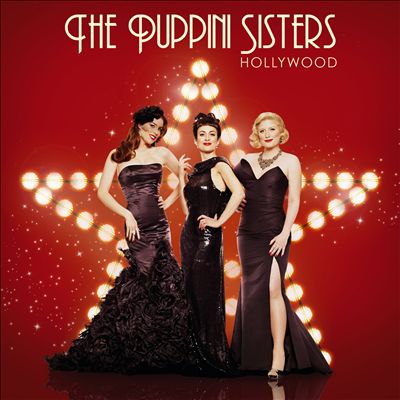
Finally, it’s been a while since your last album, 2011’s Hollywood. Are we due a new one?


Marcella: “Yes, that’ll be next year when we’re recording that.

“It’ll be a mixture of arrangements of classics, pop songs and original material. And it’s coming soon!”

For more about the Puppini Sisters and their festive dates, head to their website here

This is a revised and expanded version of a Malcolm Wyatt feature for the Lancashire Evening Post, from December 11th, 2014.

Posted in Books Films, TV & Radio, Comedy & Theatre, Music | Tagged , , , , , , , , , , | 3 Comments

Glam rock, glam role model – the Katherine Ryan interview

Canada Dry: Katherine Ryan always gets her can

Canada Dry: Katherine Ryan always gets her can

Katherine Ryan’s Glam Role Model show completes a 53-date UK tour this week, with nights at Lancaster’s Dukes Theatre (December 11) and Preston’s 53 Degrees (December 12) followed by a double-finale at Reading’s South Street Arts Centre (December 13/14).

And it’s proved to be a resounding success, one that started with sell-out runs at London’s Soho Theatre and the Edinburgh Festival.

Due to popular demand, the Canadian comic ended up adding 10 dates, the culmination of a big couple of years too which have seen her become a TV staple thanks to appearances on BBC 1’s Have I Got News For You, Live At The Apollo and Let’s Dance for Comic Relief, BBC 2’s Mock The Week, QI and Never Mind The Buzzcocks, and as a regular panellist on Channel 4’s 8 Out of 10 Cats.

Along the way the 31-year-old has brushed aside controversy and more, while carving out a big reputation as an ‘often dangerously-fierce pop culture-obsessed lady’.

While she proved tricky to pin down, so to speak, Katherine did manage to answer a few of my questions – albeit via email. And here’s how our discussion panned out.

So, did this Ontarian ever think she could have hacked life as a city planner, as per her original studies? Or maybe that’s still the plan if people just stop laughing one day.

“If I’d become a city planner after uni, I guess I’d find happiness there and I wouldn’t know that I’d missed out on the life I have now.

“We could all be leading a million different lives based on one tiny choice. It’s scary.”

While studying, Katherine put in the hours at Hooters, working her way up to corporate trainer, then travelling around Canada to train other waitresses.

I put it to her that perhaps running a restaurant or going back to the old job as a waitress was where the future might be.

“Yes. When you stop being a journalist and I stop being a comedian, we can waitress together somewhere.”

Nice image. You’ve been based in North London for some time now. Do you think of England as home yet?

“I identify as a British mum, as a Londoner. I’m proud to have grown up in Canada and I think it’s given my comedy a unique perspective.”

High Tea: Katherine Ryan with an admirer

High Tea: Katherine Ryan with an admirer

I gather you first came over with a boyfriend, and the comedy outlasted him. Is that right?

“That’s exactly right.”

Did you have a few quid to fall back on in those early days, if it all went pear-shaped?

“I was poor, but I was 23 years old. You can be penniless at 23 and find a way to survive.

“I’m the kind of person who isn’t too proud to work at anything, anytime, anywhere, so I’ll probably always be okay.”

How often do you get back to Canada?

“I take my daughter to visit the family once a year. My sister is getting married in 2015, so we’ll get to go twice!”

Are you at least getting warmer winters now?

“That’s not how global warming works exactly.”

From what I’ve read about your formative days in comedy, I gather waitresses’ gags about clubbing seals didn’t go down too well in your homeland.

“Not at Hooters anyway. People can be very sensitive about the political humour of their 19-year-old waitress, in my experience.”

But that at least led to your big break. Can you remember your first five minutes under the lights?

“I can’t, but I do know I had something about my mum getting me tickets to a live taping of Dr Phil. He’s like Canada’s Jeremy Kyle, only he started more like Dr Christian.

“He was respectable at first, but his daytime ‘help’ show has taken a dark turn and is now mostly exploitative.”

Totally Rad: Katherine Ryan warms to her task

Totally Rad: Katherine Ryan warms to her task

With your dad originally from Cork, would you say there’s a sense of the Irish in your comedy?

“My dad was born in Cork and moved to Canada aged around 30. Both my parents have always been funny in different ways.

“Most of the drunken storytelling that I witnessed growing up came from my mum’s side. Not her though, she managed everyone else beautifully.

“Once, I came down for breakfast and saw the dishwasher pushed against a door, holding it shut.

“My mum was cheerfully making pancakes, and said, ‘Oh hi, honey, the uncles are still up drinking so I’ve trapped them all downstairs….orange juice?’

“She rolled with it and made a joke of everything. Everything!”

As the eldest of three sisters. who was the funniest in your family when you were growing up?

“Oh, definitely me, but I needed them to set me up. We still laugh uncontrollably when we’re all together, but only at funerals or weddings.”

How old’s your ‘flat-mate’ – Katherine’s pet name for her daughter – now? And is she catching you up in the funny woman stakes?

“Violet is five, and she’s the calmest, strongest, kindest soul I’ve ever known. She’s really funny but probably too secure to become a comedian. She’s got absolutely nothing to fight against.”

How old will your daughter have to be before you’ll let her watch all your show?

“Oh, she’s seen all my shows many times. I’m a wonderful influence.”

Have you a favourite of all those panel shows we’ve got to know you for in recent times?

“I love shows for different reasons. Cats means a lot to me because it was my first one. And it’s a hard one so it feels great when it goes right.

Mock the Week is meant to be a bear pit, but I find it relaxing and fun. I’m becoming more and more of a Dara O’Briain fan everyday.

Panel Pal: Dara O Briain

Panel Pal: Dara O Briain

Buzzcocks is an absolute party! Have I Got News for You always teaches me something. I filmed an episode of Room 101 recently and had a lovely time with that.”

What’s the bigger accolade – your Nivea Funny Women Award or the Amused Moose Laugh-Off runner-up prize you managed back in your homeland?

“Neither matters, because I know awards are arbitrary and I probably didn’t deserve them anyway.”

After the luke-warm received comedy Campus, plus past roles in Episodes and Don’t Sit in the Front Row (with Jack Dee), have you any more TV sitcoms lined up?

“I’ve written two, so we’ll see. I’d also like to get a chat show made.”

I gather you’d been writing your own – is one related to your restaurant days?

“Yes, and a golf one.”

Was travelling around Canada training waitresses a good breeding ground for comedy?

“I travelled the world doing that and absolutely, it taught me a lot about how powerful it is to treat everyone with respect.

“Everyone has their story. And I learned to stand my ground.”

Lemon Squeezy: Katherine gets to grip with Nature's Candy

Lemon Squeezy: Katherine gets to grip with Nature’s Candy

After your role on Let’s Dance for Comic Relief, does a spell on Strictly Come Dancing or another of those celeb shows beckon?

“I’d love to do that. I’m up for anything!”

Has there been any comeback from Nicki Minaj over your big thigh take on Starships for Let’s Dance?

“I wish.”

As an outsider, what’s the difference between the North and South of England for you?

“The accent up North is better. They make pies with meat in the North, which worries me, but I love the people because they seem a little more Canadian.”

You’ve played a fair few North-West venues now – which are your favourites?

“North West is Kim & Kanye’s daughter. That’s all I can think of now.”

Finally, not only are you at Lancaster’s The Dukes, but also Preston’s 53 Degrees before your tour ends with two nights in Reading. So what can we expect on each occasion?

“My new show, Glam Role Model, looks at pop culture news, and the idea that for many people, celebrity is a religion. It’s a big deal. So it matters who we put in those roles.”

For all the latest from Katherine Ryan, head to her official website here or follow her on Twitter via @kathbum.

Meanwhile, ticket details for Katherine’s shows at Lancaster’s The Dukes, Preston’s 53 Degrees and Reading’s South Street can be found at www.livenation.co.uk.

This is a revised version of a Malcolm Wyatt interview for the Lancashire Evening Post, published on Thursday, December 11, 2014.

Posted in Books Films, TV & Radio, Comedy & Theatre | Tagged , , , , , , , , , , , | 2 Comments

Market Square to Gaza and back – Pete Trewavas talks Marillion

US-Promo3_hires

Sound Advice: Marillion today. From the left, Mark Kelly, Pete Trewavas, Steve Rothery, Steve Hogarth, Ian Mosley

According to Marillion’s latest press pack, this long-established Buckinghamshire-based band are one of the UK music scene’s best-kept secrets.

How much of a secret you can be when you’ve sold 15 million albums, released 17 studio albums, had eight UK top 10 albums, and played to more than three million people is debatable.

But I kind of understand the thinking behind that, not least as a lot of people out there still equate this band with their earliest material, when a certain Scot was at the helm.

As explored on this very blog fairly recently, former front-man Fish long ago established himself in his own right, and has gone from strength to strength in recent years.

And while he’s hit form in his latest recordings, it’s fair to say his old band-mates are also on a creative high, not least judging by heir 17th LP Sounds That Can’t Be Made.

In fact, the present line-up’s been unchanged for 25 years, this five-piece carving out something of a reputation for their live shows and studio craft, as an adoring, global fanbase will testify.

Steve Hogarth has fronted the band since Fish’s 1989 exit, the Aylesbury outfit’s lead vocalist and lyricist now having played on 13 albums alongside Mark Kelly (keyboards), Ian Mosley (drums), Steve Rothery (guitar) and my latest telephone victim Pete Trewavas (bass).

This is a reinvigorated band thriving on a constantly-redefined sound too, as Pete was quick to stress when I caught up with him during their Christmas tour rehearsals.

This is certainly a group that has forged into new territories with a succession of inventive albums, and this being Marillion, they display little regard to the vagaries of the musical fashion police or radio playlists.

Besides, you’ve got to love a band that played up to their unfashionable status by naming their 2001 album Anoraknophobia and printing t-shirts with the logo Marillion: Uncool as F*ck, their own spin on the Inspiral Carpets legendary logo.

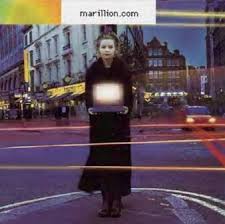
download (3)And since 1999’s redefining marillion.com album, they’ve also been free from outside record company pressure, releasing their product on their own label, Intact, and never looking back since.

Like their old cohort, Fish, they’ve taken independent business model to the next level too, developing a unique, intimate relationship with their fans.

And when we talk about the success of crowd-funding initiatives these days, it’s worth noting the impact this outfit made in that respect.

For Marillion led the way for all their peers in that respect – from sponsoring entire US tours to funding the recording of all their albums since Anoraknophobia.

That year, the band took the groundbreaking step of asking fans to pre-order an album 12 months before release, and 12,000 people signed up. The rest is music business history.

Many more such initiatives have followed, that innovative approach replicated in the studio along the way.

And as the band’s press would have it, ‘to those who already love Marillion, they’re something special; to everyone else they’re a love affair waiting to happen’.

But if this is a love affair, you could accuse Pete Trewavas of a little musical dalliance, the Marillion bassist also playing with Transatlantic, Kino and Edison’s Children, all successful in their own right.

He was also involved in tsunami charity project, Prog Aid, which may lead you to the conclusion that he’s only really comfortable with a guitar in his hand … or a bass … or playing keyboards.

But for the last 32 years, Pete’s primary motivation in the business has been his role in Marillion.

And you only have to see him talk about the band and their output on the official trailer for 2012’s Sounds That Can’t Be Made to see how committed he is to that cause.

That album still seems to have a life of its own two years on. I’m guessing there’s been a very good reaction from Marillion’s committed fan-base since its initial release?

“It’s been fantastic, with probably a much better reaction than we’d expected. It was quite a while in the making of and getting together, but even at that stage we played it to a few people and really felt we had something quite special with this album.

Bass Instinct: Pete Trewavas in live action (Photo: www.metal-archives.com)

Bass Instinct: Pete Trewavas in live action (Photo: http://www.metal-archives.com)

“The reaction from the fans when we’ve been on the road and from the media – and not just those we expected to get a good reaction from – seem to think it’s almost the start of a new era for Marillion.

“I don’t know quite how that’s going to pan out, but over the course of the campaign we’ve felt a rejuvenation process going on, leaving us in a very exciting place to be … after 30 years!”

You’ve been associated with Marillion since 1982, and that’s 30-plus years in itself. Did you ever think you’d still be doing all this at the age of 55?

“I don’t suppose I would have, but it’s good place to be. We’re in quite a relaxed frame of mind among ourselves, have a good business model, and all get on well, still loving music and doing what we’re doing.

“We try to do it for all the right reasons, have managed to get ourselves in a place where no one else is forcing our hand, and are able to dabble with what we want to.”

Starting an album with a 17-minute track (the epic Gaza) was a brave move, let alone something people may perceive as overtly political for a band once arguably more publicly associated with stilettoes in the snow.

“That was a bit of a worry, actually, but sometimes you need those things to put what you’re trying to do in context.

“We felt it was a cause that needed to be talked about, and that’s what we’re trying to do – get people engaged about a humanitarian issue.”

You highlighted the work of the Hoping Foundation too. That’s what it’s all about for you really, isn’t it? Highlighting how it’s kids who get caught up in these wars.

“Absolutely, it’s atrocious and there are many situations and causes around the world where you wonder how this is allowed to carry on. You can’t fix the world in a day, but …

Front Man: Steve Hogarth has been with the band 25 years now

Front Man: Steve Hogarth has been with the band 25 years now

“Steve was very reluctant to put pen to paper and say anything until we’d done a lot of research. He actually wanted to go over to Gaza, but was advised against it by Palestinians and Israelis alike.

“We met a lot of people on both sides who are trying to do good though. It’s not as clear-cut as some might perceive.

“The general public just want to try and get on, and ensure a safe life for their children, all around the world, regardless of what’s going on around them.”

I put it to Pete that Marillion in 2014 seem to be very much a ‘between other projects’ type band, not least with all the band being family men.

Pete, married with two grown-up sons, replied: “When you’ve been together as friends and business partners for this many years, you have to be able to be lenient with each other.

“But there’s no real reason for any of us to throw our toys out of the pram and say we’re leaving.

“Time is precious and you have to use it wisely, and that goes for our private lives and the career paths we like to dabble into.”

So is that how it is these days – lots of scrambling through diaries trying to find dates when you’re all available.

“It’s not quite that bad! The common love and bond between us is the music of Marillion, and the fact that we’re so creative together.

“After all the good will and faith around the world from fans in all we do, our name and good fortune we’ve had along the way, we’d be foolish to throw that all away.”

US-Promo1_Hires

Individual Portraits Marillion today

There seems to be a special chemistry there when you do get together.

“There’s a strange thing that happens when we’re in a room together, being creative, and it takes on its own identity, the sum being greater than the parts.”

This year saw the band embark on a Latin America tour and a return to the studio. So where are we up to with album no. 18?

“We’re in a good place. We’re a band that create in quite an organic, haphazard way, sometimes only getting together in twos and threes.

“When there’s five of us together we like to jam and create whatever comes to mind. There’s a filtration process then, picking out all the bits we’re really interested in and deciding what to do with them.

“Over a period of months you realise this fits perfectly with that. At the moment we have a lot of ideas, and next year we’ll put it all together and arrange the songs.

“Last year we did the finishing process at Real World. We went there with all the ideas we had and a few songs arranged.

“Although we’ve got our own studio, at a residential studio like Real World you’ve everything at your disposal and everyone is together 24-7.

“That gives you twice as many hours in the day where everyone’s thinking about music all that time.

“Life gets in the way sometimes, so we cut out all the commuting and family time and pour all our efforts into Marillion. And that provides the catalyst.”

Heart Beat: Steve Hogarth performing live with Marillion at the Cropredy Festival, back in August

Heart Beat: Steve Hogarth performing live with Marillion at the Cropredy Festival, back in August

They have some big shows coming too, and right before Christmas.

“Yes, it’s our European Christmas tour, with the UK leg first, and we all enjoy the performance element. We all picked up instruments because we wanted to perform.

“Writing is great, and if you’re a creative force you’re never going to stop creating. But being on the road is fantastic, especially around Christmas. For the last few years we’ve done tours in November, but not this time.”

What will we get on these shows, song-wise – a mix across the albums?

“Yes. A bit of a party, with most of it light. We’re rehearsing at the moment and it’s going to be a great show.”

Are you still happy to play the odd track from the Fish-era albums that made your name?

“There was a reluctance when Steve first joined, although there was a necessity then, without so much material.

“For a few albums we’ve focused on what we’re doing now, but there’s no harm in a nod to our history, because we’ve had a great history and should be proud of that.”

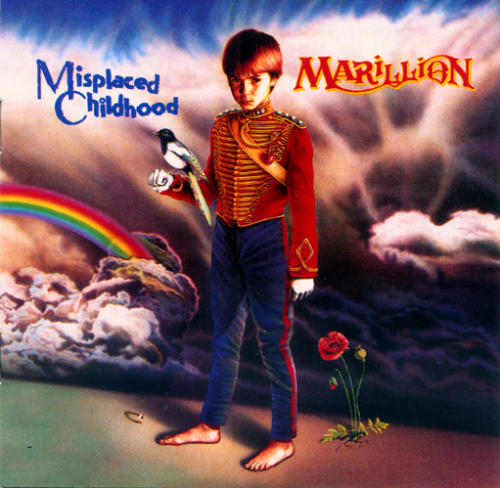
I believe Fish is doing his own Misplaced Childhood 30th anniversary tour next year?

“I believe so. I don’t know too much about that, but his last album was a very good album, well produced, with a lot of good people working on it, which always helps.”

cover_29362117102008Where Fish has gone from strength to strength, you’ve also redefined yourself and continue to move into new territory.

While there are fresh influences, I can still hear a little of that early Peter Gabriel sound in there.

“I think certain things become part of you, and certain influences from your younger days are going to stay with you.

“The Peter Gabriel era and genre of music when we were learning our craft was a very strong influence, and a lot of people have drawn on it since.”

I gather you’re up to around 15 million album sales now, with eight of those albums making the UK top 10, and have played gigs to more than three million people. That’s some going.

“I lose count, but it would be indecent to count them all.”

It must also help having such a loyal fan-base out there.

“One of the things that keeps us creative, active and retains that spark, is knowing there’s a real reason for doing it.”

That in itself wouldn’t be enough though, and I get the impression the band were truly fired up about the finished product when the last album came out.

“And we’re very lucky that we’re all good friends and have such a good time. One of the advantages of going away from Marillion and doing something on your own – putting a toe in another pond – is that you realise how hard and difficult this business could be.

“It’s hard for Marillion too, but we do have a cushion, particularly compared to bands just starting now in this recession.”

As with Fish, you’re big on the art-work aspect as part of the package. Are you a vinyl junkie? I can’t see you being happy with a cracked jewel case.

“I’ll possibly disappoint you by admitting I’ll listen on anything now. But I was always one to avidly read the sleeves of albums and work out who did what.

“I also liked to listen to music in the dark when I was younger, but don’t think people allow themselves the time to do that these days.”

Market Days: The pre-Steve Hogarth days, when Fish was still on the Marillion menu

Market Days: The pre-Steve Hogarth days, when Fish was still on the Marillion menu

Going back to those formative years, I see you were born in Middlesbrough but moved to Aylesbury when you were around five. How did that come about?

“My father got a better job. He worked for the council and got a job in Aylesbury as the deputy town clerk, a step up the ladder, in a more affluent direction.

A fateful move as it turned out, not least with all these musical minds coming together in those parts.

“I know, and I’m very lucky. One of the great things about living in Aylesbury when I was a kid was that we had Friars, the longest-running rock club, so I was able to go and see bands like The Police and Dire Straits there.

“Before my time, Genesis and Pink Floyd played there, and I saw Manfred Mann, Gillan, Mott the Hoople, all sorts – getting to see people doing what I wanted to do.”

That’s interesting – some may have had you down for a love of prog rock from the start, but that’s not necessarily the case then.

“I started out as a big fan of The Beatles, and in the ‘60s went from the Brit Pop of that era through to the start of progressive music, Freeman on the radio and so on.”

Do I detect from your surname a bit of Cornish heritage there too?

“Yes. My grandfather was born in Mousehole – pirate country! He had a house there so we’d go down every summer. A beautiful part of the world, and I still have a distant cousin near Lands End.”

MarillionLogo_750pxIt’s now 25 years since Steve Hogarth joined the band. And you remain that same five-piece 13 albums later. That’s some going.

“That’s pretty impressive really. We’re all very proud of that, and it’s good to be.”

So come on then – word has it that Marillion invented crowd-funding in 2001. Is that right?

“Yes, we did, asking our fans if they would contribute to that project. The thinking behind it was that the record company interest we had was not really sufficient to make the kind of album we wanted to.

“We’d made a couple of albums where we’d co-produced with our engineer and that time wanted to do something bigger and better. If we weren’t careful we would have been on a downward spiral.

“We thought of going to a bank and of asking a couple of people if they’d privately fund it, but Mark Kelly said, ‘Why don’t we ask the fans to donate what they think they could?’

“That was borne out of a tour a few years earlier in America where we couldn’t go because our record company in America couldn’t afford to fund us – not wanting to risk losing money.

“Unbeknown to us at the time, one fan opened a bank account and asked for contributions to ensure he brought us over. He said he’d rather us play over there than fly to Europe to see us.

“That went on to raise $70,000, and he’d raised around $20,000 by the time we found out about it and took over the bank account.

“We promised everyone who donated $10 or so a special live CD, only just pressing enough. That was the start of us thinking that way.

Doubled Up: Pete Trewavas goes for the top neck (Photo: http://progsheet1.hypermart.net/)

Doubled Up: Pete Trewavas goes for the top neck (Photo: http://progsheet1.hypermart.net/)

“For years, if you’d wanted to see a band perform, you’d buy a ticket well in advance – so it was a leap, but it wasn’t unknown.

“There are now two or three big companies involved in that approach, and it’s great, because it really does empower people.

”When I first walked into record companies in the late ‘70s, there was a lot of money being sloshed around by record companies.

“People would wander into the office at around 11, go to lunch, come back for a little recovery, then go home, and you wondered sometimes how any work got done.

“You presumed there was a team in another office doing all the work. If you were working for any of the big four or five companies at the time your love of music was lashed out of you and you were moulded into what that company wanted you doing.

“That’s where the apathy came in. In the ’60s and ‘70s there was more enthusiasm, but by the ’80s that began to wane at those big companies, ultimately landing them in trouble.”

Finally, have you been on to the deed poll people with your reworked monicker, Sweet Pea Tremendous, yet?

“No! I’m not even quite sure where that name came from. Probably Steve Hogarth. It sounds like a Hogarthism!

“I can’t be doing with any of that though. I just like to keep my feet firmly on the ground.”

Marillion, with support from Luke Jackson, are at Manchester’s HMV Ritz on Wednesday, December 10, with tickets available from www.ticketline.co.uk

For more on Marillion, including further dates, try their official website here, or visit their Facebook and Twitter pages. 

And for a writewyattuk feature and interview with former Marillion frontman Fish from September, head here.

Posted in Music | Tagged , , , , , , , , , , , , | Leave a comment

Eddie Holman / Preston’s Got Soul – 53 Degrees, Preston

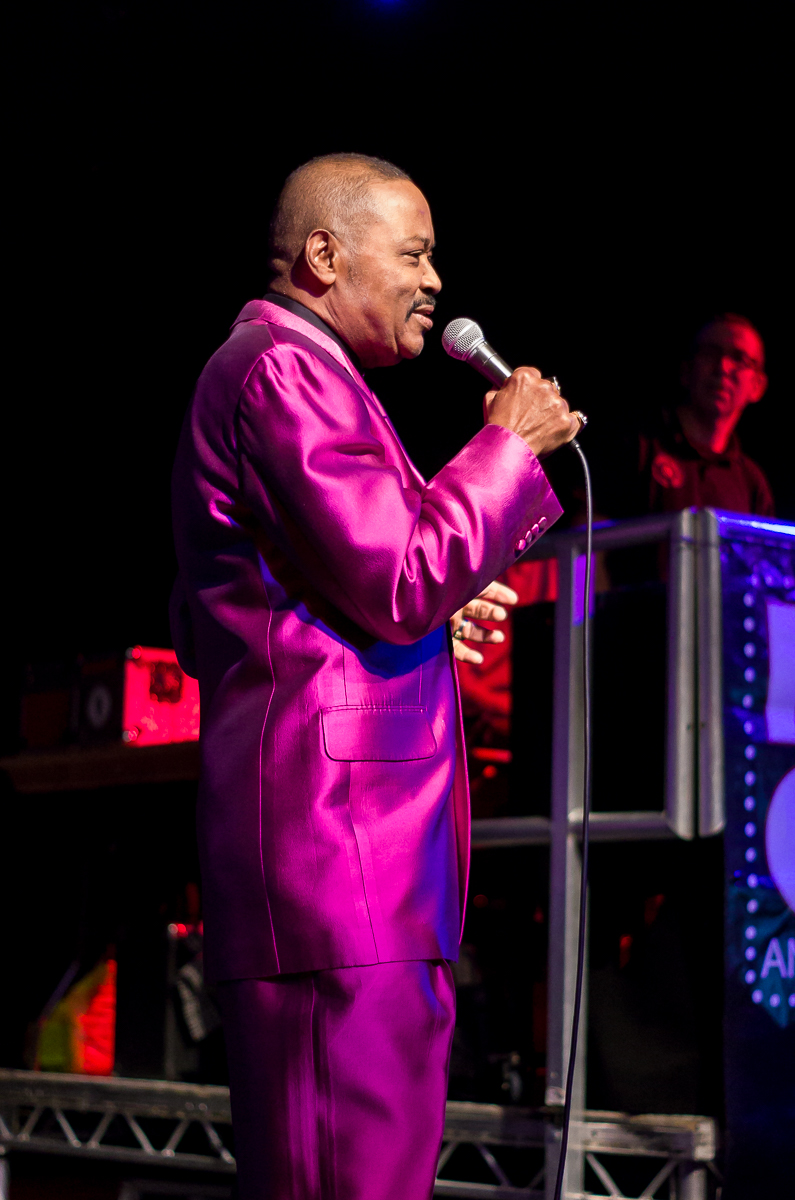
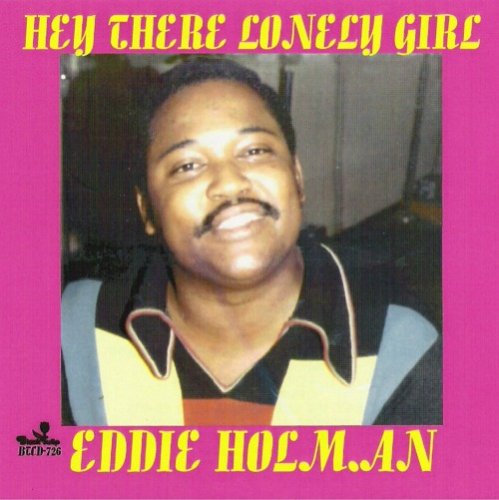
Shocking Pink: Eddie's the name, top notes are the game (Photo copyright: Ruth Hornby 2014)

Shocking Pink: Eddie’s the name, top notes are the game (Photo copyright: Ruth Hornby 2014)

While the temperature plummeted 52 degrees lower than the name of the venue, Eddie Holman brought plenty of warmth when he visited this Northern Soul stronghold on Friday night.

And from the moment this Philly veteran stepped on stage at Brook Street, a feelgood vibe transported an appreciative Preston in-crowd.

Granted, it was a disappointing turnout for one of the true survivors of the ’60s soul scene, but those who made the effort were amply rewarded.

As I walked in, the main man was already in full flow, albeit via the magic of the turntable, DJ Glenn Walker-Foster spinning the wondrous Eddie’s My Name, as fresh today as it must have seemed on its release 49 years before.

A couple more floor-filling tracks later, the man himself was out there, GWF’s introduction prompting our first sight of this resplendent vision in black shirt and pink suit.

Seconds later we could marvel at those soulful tones, as strong today as ever before, a great advert for all those church performances for this Baptist minister.

Eddie cut through the winter’s night on an assured opener, Stay Mine for Heaven’s Sake providing an apt vocal warm-up for this accomplished performer.

The floor was hardly rocking at that stage, his audience more curious, hiding at the back as if checking out just what he had to offer.

Eddie soon got around that though, luring us towards him and encouraging a few more dance moves, as if to prove Preston really has got soul.

Such moves were not for our special stateside guest though, but as the man himself said, ‘I’m a singer, not a dancer’, taking on board advice the legendary Jackie Wilson passed on all those years before.

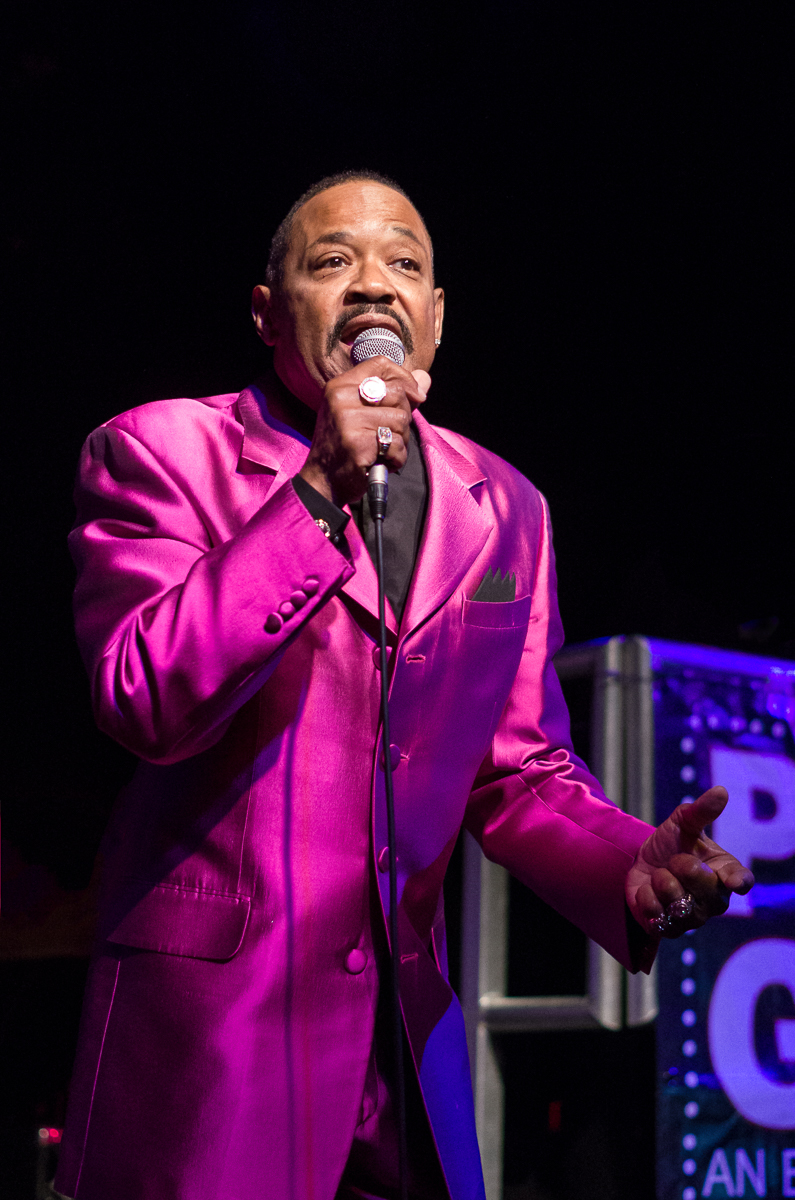
Lonely Game: Eddie Holman at 53 Degrees, with Glenn Walker-Foster looking on (Photo copyright: Ruth Hornby 2014)

Lonely Game: Eddie Holman at 53 Degrees, with Glenn Walker-Foster looking on (Photo copyright: Ruth Hornby 2014)

His own 2014 shot at Eddie’s My Name followed, a little slower than the original but with the groove intact.

That beat slowed down some more for the following winning ballad, his take on It’s All In The Game – the flip-side of his sole UK hit – again showcasing that wonderful voice.

Eddie was properly warmed up now, shedding his top layer but informing us, ‘I’m not the kind of singer who throws a jacket. I’ve still got payments to make on this suit.’

A pretty faithful run through Al Green’s sublime Let’s Stay Together followed, proof that there’s not just one rocking reverend that can switch effortlessly between gospel and soul.

Talking of legends, next up was Marvin Gaye’s I Heard It Through The Grapevine, introduced by a recollection of Eddie’s own ‘last to know’ first-love betrayal.

But while he hinted of halcycon days playing the field, there was plenty of talk about the rock in Eddie’s life too – his wife of 48 years, co-writer ‘Sheila the wheeler dealer’.

Their joint 1968 composition Four Walls followed, the main man going on to explain how Eddie’s my Name was one song his good lady did not approve of, not so keen on reminders of his prenuptial days.

Up next was She’s Wanted In Three States then a downright brooding I Love You, dedicated to all those UK fans who had supported him through the decades.

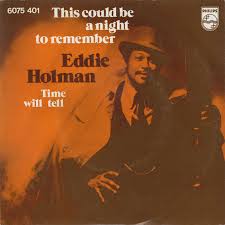
There was a case in point on the next song, one he said the success of which helped pay his children through college, the ’70s disco feel of This Could Be A Night To Remember having that dancefloor moving again.

He was on top form by now, and his biggest Northern Soul hit followed, I Surrender keeping the groove going.

Never Surrender: Eddie Holman takes Brook Street by storm (Photo copyright: Ruth Hornby 2014)

Never Surrender: Eddie Holman takes Brook Street by storm (Photo copyright: Ruth Hornby 2014)

In fact, Eddie was so impressed he decided to give it a second go straight after, truly on a high, as if unwilling to let his set end.

Earlier on, he jokingly explained how we couldn’t take anything for granted with regards to reaching those high notes, giving us a trial run through his big chart hit.

He could of course, and proved it in style with a momentous Hey There Lonely Girl, sheer falsetto power and good old-fashioned nostalgia proving a perfect combination.

For all his technical ability and showmanship, there was plenty of humour too, Eddie grabbing his suit trousers as if to suggest the tight undies helped him reach those high notes.

I’ve said it before – in relation to the last Preston’s Got Soul event with fellow Northern Soul star Judy Street – but I would have loved to have seen Eddie out there with a band, just like Martha Reeves had last December.

But he gave us no less of a performance with his backing tracks, although next time Eddie might do well to remember his specs so he can check his set-list a little more subtly.

It didn’t matter though. In fact, it probably added to the occasion, reminding us for all his pride at being the world’s No.1 falsetto, he’s genuine too, at ease with and at one with his audience.

With that he was away, Dave Stabler taking over the decks as Eddie took a brief break before coming out to mingle, having ensured PSG’s last 53 Degrees date was that Night to Remember we’d all hoped.

For a full interview with Eddie Holman on this blog, head here.

Posted in Music | Tagged , , , , , , , , , | Leave a comment

Cool as you like it – Stephen Holt on the return of Inspiral Carpets

14001_776366639087573_5351046165360368683_n

Praise Be: Inspiral Carpets, 2014. From the left – Clint, Martyn, Stephen, Graham, Craig

If you’d heard the album Inspiral Carpets in recent weeks without knowing the full story, you could be excused for thinking this was a debut LP.

Not just because the band chose their own name for the title, but the fact that this North Manchester collective seem so fresh, as if eager to get their songs out there for the first time.

In many respects it’s a case of carrying on where they left off though – not from their 2003 comeback nor even their initial break-up in 1995, but the day founder member and vocalist Stephen Holt left in 1989.

Inspiral Carpets were on the brink of success then, the album Life partly written and major interest in their initial recordings set to secure a deal with Mute Records.

In 1990 they had a top 20 hit with This Is How It Feels and an album only kept off the summit by a retrospective Carpenters compilation.

By then Stephen was leading The Rainkings though, with Tom Hingley taking over his vocal duties.

But the fruits of his eventual return – joining Clint Boon, Graham Lambert, Craig Gill and Martyn Walsh – can be heard on their new self-titled Cherry Red album, with the results arguably more in keeping with the band’s initial sound.

Either way, the reception from fans and critics alike has been largely positive, as Stephen revealed.

“Sales haven’t been tremendous, but the reviews and feedback have been brilliant, with many seeing it as either the best or second to Life of the albums we’ve done.

“We’re quite conscious of the fact that it’s our first album in 20 years, but in reality it only took us around six months to write the album.

10747_767029933354577_6025699866868471112_n“Since I came back we’ve been doing loads of gigs, starting with a greatest hits set, a live tour and a couple of Record Store Day gigs.

“We only started kicking round the idea of the album at the start of this year, when we got contacted by Cherry Red, seeing if we’d be interested in doing an album, getting Dung 4 out again, and all that.

“One of the big things about me coming back was that I didn’t just want to just do the hits – they could have got someone else in to do that.

“I wanted to do fresh material, as did everyone else, and I think one of the reasons it sounds so fresh and spontaneous is because we’ve had to just thrash the songs out and make it seem live.

“In the past some of the lads said they’ve gone into a studio and spent around a week finding the right drum sound.

“But with this we did it in our spare time really, because we’ve all got other things on. Trying to get together for long period of time has proved difficult.”

I put it to Stephen that there’s a bit of a Teardrop Explodes or perhaps Mighty Lemon Drops vibe on a couple of songs, not least super-catchy single You’re So Good To Me, albeit with Clint’s tell-tale keyboard sound.

“Oh, massively, and even when Tom was in the band, he got compared to Julian Cope for his voice.

“It’s a weird one though, because with this album, for the first time we’ve all had a hand in writing songs.

“We all bring in ideas and it’s a band effort, so there are five different sets of influences there.
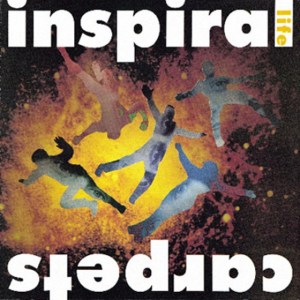
inspiral-carpets-life-dung8-560x560“But it’s about having that confidence to bring those ideas in too. You jam a bit, kick things around, then go for it!”

You’re doing it all for the right reasons too, I’m guessing. You didn’t have to have a crack at all this just to make a few quid, did you?

“No, and when I came back I was keen to do new stuff, while one of Clint’s big ambitions was to get that sound of Life as well as Trainsurfing, Planecrash, those early singles again, back to that garage sound the band had – our old roots.”

Stephen was there on day one, of course. Can it really be 31 years ago he put the band together with Graham?

“That’s scary that, and makes me feel old!

“I’d known Graham from school days, although we were at different schools. But we were a little older when we started kicking things around.

“Craig was still at school though, doing a paper around then! We had to pick him up from the school gates sometimes when we were off to gigs in London or elsewhere.”

Well, if it was good enough for George Harrison …

“Exactly! Graham and I knew each other from the area, played a lot of cricket and football and had mutual friends, so our paths crossed.

“There were a couple of indie discos around the Oldham area too, which we knew each other from.

“It wasn’t just the music, but the same philosophy and ideas, the inspiration to have a go, get a band together and see how it would go.”

And that independent spirit remains with the band to this day, by the sound of it.

“Definitely, we still say there’s no way we’re the best musicians in the world or the best songwriters.
1383109_770000913057479_1308901377747573975_n“But we have fun, knock out some tunes we really enjoy, and hope others do too. We just have a go, and our spirit keeps us going.”

What music did you have in common back then?

“I’ve always been more indie, into Joy Division, The Teardrop Explodes, Magazine, Echo and the Bunnymen, and more American punky stuff like Dinosaur Jr., Husker Du and early REM.

“Graham had those kind of influences but had more of a 60s influence too, bands like The Seeds and ? & the Mysterians.”

Funny you should say that. I was revisiting that early material, and Joe and Planecrash were very The Teardrops meets The Stranglers, while Find Out Why had that similar energy and was kind of Ramones meets ? & the Mysterians.

“Definitely, and maybe we’ve always worn our influences on our sleeves. I guess that’s how Clint came to be in the band in those early days as well.”

Talking of Mr Boon, who I believe had a studio in Ashton-under-Lyne at the time, I guess he has a few years on the rest of the band.

“He has. I wouldn’t like to divulge that to you though! But we knew of Clint and would rehearse at his studio, where he recorded a few demos for us.

“Graham’s love of those American psychedelic bands resonated with him – that’s where they locked in. And Clint was a massive punk fan in the early days.”

Have you listened to those early demos recently?

“Yeah, and we were quite raw and punky. It wasn’t until the Cow demo, the legendary Dung 4, when we first had that keyboard sound that became our direction.

“You could see where we were heading by then.”

It’s funny really that bands like yourself and The Charlatans, caught up in that whole Madchester thing, proved to be the ones with the true longevity.
10702017_747557351968502_7185957488988954039_n“I know what you mean. When I first heard The Charlatans I thought they were more a Carpets and Manchester copyist band, with a little Spencer Davis influence too.

“The Stone Roses were around in those days, and the Mondays were forming, but there were a lot of other bands just trying to drag along on the coat-tails of it all.”

You didn’t seem to have too much in common with those bands you were grouped in with, at least musically.

“No, we were more about developing our craft, or more likely banging our way through what we were doing.

“From that whole scene we were always more on the outside, but got dragged along just for the fact that we were around at the same time.”

I agree with that view of the Inspirals as scene outsiders, confessing that – new to the area at the time, and possibly because of that Teardrops-like sound – I felt they were more Liverpool than Manchester in certain respects.

I now know better perhaps, not least because of their Oldham roots and through listening to Stephen’s Mancunian tones.

“That’s interesting, although I’m not sure if some people would like us being referred to as a Scouse band!

“But I guess we’re more a northern North Manchester band, with an Oldham and Moston feel!”

I do know that when I started visiting Lancashire in the late ‘80s, you were all over Granada TV. So perhaps we’ll just compromise and just say ‘North-West’.

“Yeah, maybe.”

For all that, it was that old standby of John Peel airplay that made the difference, the legendary Radio 1 DJ playing the Planecrash EP then inviting them in for a session.

“He was a massive influence on the band, and the catalyst for us moving on, not least when he started playing Planecrash.

10615418_770001466390757_8089866631935238283_n“I would listen to Peel a lot, and we had a bit of a nod that he was about to play that first single. And when it came on first song, that really made my day!

“We then got invited to do a session and play live for a couple of his student nights, getting to meet him. That was brilliant.

“That was me made, really. At that time, to get played on Peel … well, I mean!”

Even by 1989 the Inspirals were going down the truly independent line. Is that something that helped them adapt to a very different music business 25 years later?

“I think so. Clint says – and he’s totally right – we’re hard-working, with a real work ethic, not afraid to go out and do however many gigs we feel necessary to put ourselves out there.

“There was also the thing with developing our own Cow record label, the merchandise thing with the t-shirts, and all that.

“We were never the sort of band to wait around for someone to come along and say they liked us, then just sit around and let them do it.

“That’s still the case, helping whoever’s working with us. Perhaps it’s our Northern working class roots.”

Ah yes, the merchandise. Everyone will remember those early band t-shirts too.

Cool Head: Clint Boon with an IC original canvas, auctioned off in aid of the CLIC Sargent children's cancer charity

Cool Head: Clint Boon with an IC original canvas, auctioned off in aid of the CLIC Sargent children’s cancer charity

“Yes, definitely, and even now there are people probably way too big, and old enough to know better, asking us for ‘cool as fuck’ t-shirts!”

But then, with half of the album written, Stephen and bassist Dave Swift left to form The Rainkings. Can he remind us why?

“For Dave it was never really permanent. He was around for the first singles but had been my best mate for years.

“He lived around the corner from me, went to the same school and were in schools bands together.

“He was and still is a great guitarist, but we’d just sacked our bassist, Scott, who went on to join the Paris Angels, and needed someone. So I said, ‘I know Swifty …’

“He came in just as it all picked up, but had done two years at uni and was struggling, feeling he needed to concentrate on that to get through his last year.

“With me, and I regret quite a bit of it now, things had started to change. The way I saw it was that a lot of that early spirit had gone.

“I guess I was a bit naïve there, but it had been about us doing it all, arranging the gigs, singles, and so on.

“But after Planecrash, managers and agents and all that getting involved, it seemed to be taken away from us.

“Clint was more driven in that respect, and Graham too, so they were moving the band in a direction I wasn’t so sure about.

Moptop Days: Inspiral Carpets, back in the day

Moptop Days: Inspiral Carpets, back in the day

“Rather than speaking up and saying, ‘I’m not sure about this’, I moved towards Swifty a bit more and we became more unsure and the negative side of the band.

“Meanwhile, Clint, Craig and Graham took a more positive view and were moving on. So I was thinking maybe this wasn’t for me. I’ll try something different.”

And how was it for Stephen to see the band’s subsequent success from the outside?

“I couldn’t have been more pleased for them, really. I knew it was right for them and never said anything negative, and wished them all the best.”

Those were heady days for the Inspirals of course, their second LP The Beast Inside also going top five the next year, with the band trying to break the US market too.

Then 1992’s Revenge of the Goldfish was also a top-20 album, but while 1994 offering Devil Hopping also made the top 10 and that fanbase never really fell away, a split followed.

“I was keeping an eye on how they were doing, but didn’t really have much contact with anyone for around 20 years.

“From what I understand, Mute let the band go, although demos were made for another album beyond Devil Hopping.

“But maybe things weren’t right between all five members. I think it was a case of ‘if we’re having a break from Mute, let’s have a break from the band’.”

Stephen had carried on recording, bringing out a couple of singles with The Rainkings on Playtime in 1989 and 1990. How does he think they stand up today?

10440828_755415204516050_7299094280473436959_n

Inspiral Spotlight: The band in live action

“Erm … the first single was … bad really. We rushed it, having been pushed by the label to an extent.

Trainsurfing ended up on Cow rather than Playtime, so I think they thought they’d been shafted by Inspiral Carpets, and instead jumped on The Rainkings, pushing us to challenge them, although we weren’t ready.

“But I’m still really proud of the second single, the Get Ready EP, which we recorded with Ian Broudie.

“That was another honour, not least because of his work with The Teardrops, The Bunnymen, and Wild Swans. He was an icon.

“We were together for around six or seven years, but weren’t the most active band!”

I’m guessing there were day-jobs by then.

“Yeah, Swifty went from uni straight into work, and I was developing a career, something I’m still doing now.”

Stephen manages a drug and alcohol support service in North Manchester these days, having studied social sciences during his early band days, then working in mental heath and support for vulnerable people.

But by the time The Rainkings were over and done with, Stephen’s old band-mates had their own thing going again.

“Yeah, Clint had The Clint Boon Experience and moved into DJ-ing, and Tom was putting together The Lovers and other solo work.”
Crucial Three: Clint Boon, The La's legend Lee Mavers and a certain Noel Gallagher (Photo  from the Inspiral Carpets facebook page)

Crucial Three: Clint Boon, The La’s legend Lee Mavers and a certain Noel Gallagher (Photo: Inspiral Carpets facebook page)

One of the Inspirals roadies famously formed his own band too, a certain Manc by the name of Noel Gallagher. So was he around in Stephen’s day?

“He was. He hadn’t started roadie-ing for us at that point, but was a massive fan, would come and watch and wanted to get involved.

“What I remember is this indie kid who looked pretty cool, wanting to be around the band, learn things and help out in any way.

“After I left, the band picked up on that as they got bigger, and from what I heard he did audition as the singer after I’d left.

“Even back then, he was always picking up a guitar, doing tunes, and people could see he had potential.”

There was a reformation in 2003, involving a single unearthed from those shelved Mute demos from 1995, followed by a couple of sell-out tours and notable back-catalogue releases.

“I was totally oblivious of it all at that time, I’d moved on. I knew they were touring but didn’t know they’d released anything.

“I believe they were offered loads of gigs and wanted a single to back that up.”

Sporadic touring followed, before Tom left in 2011 – supposedly frustrated at a lack of regular band activity – and Stephen stepped back into the Carpets fold.

0956_115322_InspiralCarpets_press_01Then came You’re So Good For Me and a big tour in 2012, then further dates with the Happy Mondays.

So did Stephen find both bands had grown up and become wiser for their respective experiences?

“Totally! Yeah, I think the Mondays were holding it together, had maybe learned from past mistakes and were doing it for the music.”

It’s been a busy 2014 too, with the Isle of Wight Festival, T in the Park, and a gig in  Manchester which proved to be another defining moment.

“Yeah, The Band on the Wall gig was the fastest-selling the venue ever had, the tickets going in around 10 minutes, I believe.

“We were putting things together for the album then and wanted a few warm-ups, but that turned out to be much more, becoming a focus for other stuff, including a DVD.

“That’s what’s also pleasing at the moment. We’ve still got our support, albeit with quite a few of them older and balder than they used to be. But there’s definitely a younger element to the audience as well.

“I love it when people say, ‘You were my dad’s favourite band and I’ve got all the old vinyl, now I’ve bought the new one’.

“It’s a heritage thing – music being handed down the generations, in some cases people coming along with their children to gigs.”

There was the Spitfire single to further whet the appetite before the album came out too, and finally that long-awaited eponymous LP, with a few more surprises.

Some 20 years after The Fall legend Mark E Smith memorably guested with the band, there’s a song with punk poet laureate John Cooper Clarke this time.

And the awesome Let You Down is a winner even beforeDr Reliable’ comes in to add some of his trademark wordsmithery.

“The Bard of Salford! As soon as we started doing that song, we knew it would lend itself to something like that.
10671370_782143185176585_8451125494888325489_n“With Clint a big Mark E. Smith fan, he brought him in on I Want You, so with John Cooper Clarke it was like, ‘is there any way we can bring him in? That would just be perfect!’”

It reminds me of JCC’s early classic recordings with Martin Hannett, teaming up with The Invisible Girls.

“Apparently, he didn’t like all that, feeling he was forced into putting music to his poems in those days, and it’s not something he wants to do again.

“But I agree with you, and we were so made up with what came back to us.

“We recorded the tune, sent that over, and we were lucky he was in Manchester, so Clint got him in at XFM to record it.

“We hadn’t heard what he’d come up with before. And as soon as he started …”

Was it a true hairs-on-the-back-of-the-neck moment?

“Oh, totally!”

And this whole album seems to bring the band full circle, the energy of those early recordings suggesting they’ve got more in the locker too.

So what’s next for Inspiral Carpets? Have you planned into the future on all this?

“We haven’t really. The plan was to give it this year, with the gigs lined up to finish the year and Let You Down possibly out as a single early next year.

“Then there’s a Butlin’s Minehead weekend, possibly with the Mondays again.

“Apart from that, we’re trying to let the album breathe really, give it a bit of time, see where it goes from there.”

Inspiral Shades: The Carpets, 2014 (Photo: Ian Rook)

Inspiral Shades: The Carpets, 2014 (Photo: Ian Rook)

Furthermore, the Inspirals are set to bring the curtain down in style in two respects at Preston’s 53 Degrees on December 21.

It’s not only the last of an 12-date tour but also the last gig at the popular university venue, another forced to close in these uncertain times.

“Yes, it’s sad that it’s going, but that was one of the main reasons when we were putting the tour together, deciding on it as the final night.

“We’re honoured, really. Graham’s been there a fair bit, and I believe it’s quite a venue. I’m looking forward to it.”

10734179_782482418475995_638652498223954997_nFor the full list of dates, and all the latest from Inspiral Carpets, head to their official website here.


Posted in Music | Tagged , , , , , , , , , | 3 Comments

‘Eddie’s my name!’ In conversation with Eddie Holman

eddieholman3lg Eddie Holman was up at 5am the day I called him, and two hours later the 68-year-old Baptist minister and soul legend was definitely on a roll.

That was Philadelphia time, five hours behind the UK, the man credited with the world’s greatest falsetto bounding down the stairs then stepping carefully over his sleeping cat while readying himself for my questions.

The following day he was bound for the UK, with four dates lined up, the first for Preston’s Got Soul at 53 Degrees tomorrow (December 5).

By the time we were done, half an hour later, he’d set the record straight on several tales that left me in no doubt that Eddie is no one-hit wonder, as anyone who loves ‘60s and ‘70s soul should already know.

My Guinness British Hit Singles suggests otherwise, this US vocalist spending 13 weeks in the charts with 1974 top-five hit Hey There Lonely Girl. But there’s a lot more to his story than that defining disc.

It’s 45 years since Eddie released that single, but it’s had a life of its own since, as this genial grandfather of nine concurs.

“Oh yeah! We recorded it in September 1969, releasing it in the US on my third wedding anniversary on October 29. And Sheila and I are now 48 years married!”

Oddly enough, the UK release followed on their eighth anniversary, by which time Eddie was already a name on our homegrown soul scene.

“There was so much great music happening, but one thing about the British market – they’re faithful if they like your songs and your music, even stuff you recorded that wasn’t a hit!”

Eddie laughs, but is genuinely appreciative of his support this side of the Atlantic, not least the love of Northern Soul’s in-crowd.

hqdefault

Vocal Mastery: Eddie Holman brings his audience to its feet

“The UK market didn’t forget about those songs. They know a lot more about what you’ve done than you know yourself sometimes!”

So has that distinctive high voice of his taken some looking after over the years? And more to the point, what’s his secret? It can’t just be tight undies, can it?

That infectious Holman laugh follows again.

“Not just tight undies – although that helps! You really have to take good care of yourself, and this is my 56th year in show-business as a professional performer.

“You can’t be around this long and be the best at what you do if you’re not taking care of yourself. You can’t abuse yourself.

“You have to take pride in what you do and always remember that an audience deserves your best.

“People come to pay money to see you perform, so you have to give them your very, very best.

“I’m still thankful, take good care of myself, and don’t even have a wrinkle. I don’t even look 45 – even if Hey There Lonely Girl has been around for 45 years!

“I don’t say that to boast, but I’m very thankful for having been out there for 56 years  and emphasise that to encourage everyone to know they can do the same thing if they take care of themselves – no matter what they do for a living.”

Eddie was singing by the time he was two, his mum introducing him not only to public performance, but also to guitar and piano at a very early age.

“I had a wonderful mother. She was a beautician and a beautiful woman. I’m a handsome man, and a handsome man has a beautiful mother!

“People say, ‘Can I have your autograph … ooh, you’re a handsome man!’ I’ve had that all my life, but that’s because my mother took good care of me.

Eddie_Holman_-_I_Love_You“She made the sacrifices that gave me singing lessons, dancing lessons, piano lessons, guitar lessons …

“She got me on at the Apollo when I was 10, when I won the Amateur Hour, winning first prize. Now I’m a living legend at that theatre, all because my mother believed in me. Yes sir!”

That’s the Apollo Theater, in the Harlem neighbourhood of Manhattan, New York City, perhaps best known for James Brown’s seminal recordings there in 1962, and revered in classic ‘60s soul circles as well as the world of swing and gospel.

From the 1930s onwards, the venue’s amateur night led to breakthroughs for the likes of Ella Fitzgerald, Billie Holliday, Sammy Davis Jr., The Supremes, Wilson Pickett, Jimi Hendrix, Gladys Knight and The Pips, Dionne Warwick, The Jackson 5, Marvin Gaye, Stevie Wonder, Aretha Franklin, The Isley Brothers, and many more.

So were there others before in Eddie’s family who could sing like him?

“No, but my Aunt Jessie sang back in Norfolk, Virginia, in the church I grew up with – the African Methodist Episcopal Church.

“She was a wonderful piano player and choir director, and very inspirational in helping me.

“I started singing in church when I was two. The family knew I had the ability and talent, so helped me develop that.”

And who first inspired Eddie to get out there and perform outside of church circles? I believe esteemed soul star Jackie Wilson was a huge influence.

“Well, it was really my mother, who had a great ear for music and a beautiful voice. She had a wonderful career herself, but was the one who took me to see all these people.

“The first time she took me to the Apollo, I was eight and Little Richard was headlining, with The Flamingos also on the bill.

“I knew right then and there I had to have that, and that was for me.

“My mother went to town and got me all these bright colours – aqua blues, yellows and reds. And for my 10th birthday she got me on Jocko Henderson’s radio show.

“She introduced me to Jackie Wilson, Nat King Cole, all these wonderful artists.

download (2)I was just saying to my wife yesterday, ‘I’ve seen everybody!’ And let me tell you something, the greatest artist and entertainer that influenced me was Jackie Wilson.

“This man loved me. We toured from New Haven, Connecticut, down to Tampa, Florida, and he told the promoter, ‘I want Eddie Holman to share my dressing room’.

“He took me under his wing and told me a lot of wonderful things that only someone with the talent and experience he had could share.

“Not to mould myself into a Jackie Wilson clone but develop what I had and what God gave to me.

“Jackie said, ‘You ain’t gotta dance, Eddie, and don’t have to be running around the stage. All you have to do is stand in front of the microphone and sing.

“I do that to this day, and get a standing ovation. He was right. That was some great advice, man!”

Eddie met Jackie Wilson at the Apollo when he first became a solo artist, having left Billy Ward and his Dominoes, Berry Gordy having written his first hit, Lonely Teardrops.

“When I was old enough, I was opening for LaVern Baker and Dinah Washington, Frankie Lymon and the Teenagers, The Cleftones, The Cadillacs and Ruth Brown.

“But Jackie and I got back together when Hey There Lonely Girl became a hit record. The first tour I did with him was in Canada and Detroit, then we toured around the country, and it was just fabulous.”

Eddie’s talents blossomed and appearances followed on NBC’s The Children’s Hour and at venues like Carnegie Hall while studying at Harlem’s Victoria School of Music.

Today, despite his advancing years and his ministry back home, he remains a regular on the road on both sides of the Atlantic, and Friday’s Preston’s Got Soul visit is followed by a night in County Durham, a show at Wigan The Cube, and a private gig.

szvid9qtuozcjs5djcwb_400x400So how long has he been aware of a love of his songs on the Northern Soul scene?

“Many years! Going back to the ‘80s, I’ve always been fortunate to have done a combination of work in the UK.

“As well as my rock’n’roll and pop engagements I’ve been fortunate enough to have some wonderful followers on that Northern Soul scene.

“It’s an advantage when your music crosses all genres. That’s when you get to work! And I do them all – rhythm’n’blues, soul, Northern Soul, pop, the legends …”

And songs like I Surrender and Eddie’s My Name never seem to be out of fashion with 60s soul lovers.

“Well, I Surrender is the theme song for a new movie filmed in England, coming out in the very new future, called The Brother. There’s also a documentary including that song.

“But for a lot of these songs remembered on that scene, I was just a teenager. I have grandchildren older than the age I was when I recorded those songs!”

At that point, Eddie’s laughing so hard that we lose our connection and I end up phoning him back for the rest of the story.

I start by mentioning his Preston’s Got Soul  show, asking if we can expect – like his late ‘70s hit – This Will Be A Night To Remember.

At first, he wonders if I’m talking about that old hit or his show itself, and I explain that I mean both. He’s soon off again.

“Oh – you got me on that! That’s a wonderful song and “I tell the Northern Soulers that song helped send my oldest son to his music college.

“I wasn’t eligible for grants and so on because of my income, so had to work to pay for his tuition and put money in his bank account.

“It was similar with my other kids. The record company took wonderful care of me and I was in demand here too, coming over to do concerts and shows up and down the UK, from the Midlands to Scotland, Manchester, all over.

“I never took it for granted. When I had a date, I’d go out there and take care of business, giving the people what they wanted. It’ll be the same this time.”

images (1)Eddie’s already been over in February and September this year, and must be stacking up the air miles.

With some artists, the voice maybe tails off a little with advancing years, but that’s not been the case with Eddie, despite all his years in the business.

“My voice is more powerful now than when I was a teenager. The reason I’m the King of Falsetto is that can’t nobody sing falsetto the way I sing it.

“It’s not boasting. The BBC said it too. They recognised me as the greatest falsetto of all time. I’ve always taken pride in being the best at what I can do.

“Only the strong survive. Other artists just stand and watch me and can’t believe it.”

That reference to the BBC concerned his part in an Alan Yentob documentary back in the summer of 2012, for the Imagine arts series, titled Just One Falsetto.

Come to think of it, I can’t see Eddie going through the motions on an off-night. Is it all or nothing with him?

“Yeah – well you just hit it there! That’s one of my favourite Frank Sinatra songs. I’m that kind of guy – it’s all or nothing at all!

“I give my very best every time, and I’m consistent. If you come to see me, you’re going to see a great performance!

“I know where it’s at! I’m going to come on and please my audience. And they’re gonna be amazed.”

Eddie was in full flow now, and it was fighting talk by the time I asked how important he was in creating what we now see as that 1970s’ Philly sound?

“No ifs and buts about it. I put the sweet soul sounds of Philadelphia on the map. There’s never been a singer greater than me!

img435“My first hit record I wrote and co-produced, This Can’t Be True, was one of the most beautiful ballads of all time, and inspired anybody and everybody that could even think of falsetto.”

When I think of Philly, I think of The O’Jays, Harold Melvin, Billy Paul, McFadden & Whitehead, Teddy Prendergrass, the MFSB band, even the Three Degrees.

I asked Eddie if he worked alongside any of those acts, and he was soon telling stories about old pals like McFadden and Whitehead and The O’Jays lead singer Eddie LeVert.

“Let me tell you this, Gene McFadden and John Whitehead loved me, and we’ve toured together over the years.

“We did a concert at the Beacon Theater in New York, and I was on my way to the promoter’s office to get the balance of my fee and they were coming towards me.

“They gave me big bear hugs. They were just crazy about Sheila too. But sadly that was the last show John did. In a couple of weeks he was murdered.

“The same promoter later put me on at Constitution Hall in Washington DC for Gene’s first performance by himself, and I was asked along with my wife to share a dressing room with him and his wife, to say a prayer beforehand.

“That was his last show. He passed away not too much longer after that.

“I also remember coming back from Constitution Hall on the train with Eddie Levert, a living legend, after a night playing Temple University.

“He showed such concern as Sheila was at that time on dialysis. She was supposed to come that night but had to be hospitalised.

“When the train got to Philadelphia, I had to drive straight to the hospital to be with her. She had an operation the next morning, and I announced it to the audience.

“But she received a kidney on November 3 last year, and she’s doing wonderfully now. And later this morning we’re going to my middle son Jerome’s for his 44th birthday.”

Eddie’s family mean a lot to him, and I asked how he ended up relocating from New York City to Philadelphia as a teenager, and why the initial move from Norfolk, Virginia.

“My father passed away when I was three, and my older sister, Margaret, moved to Brooklyn when she was 21, so my mother decided to move to New York too.

event-34057-0-67908400-1415142207“And you never know how God has a plan for you! That opened up a career and all those doors for me, and I’ve been blessed all my life.

“I also had a wonderful step-father, and I’ll be visiting his grave and mother’s grave before I leave for England. That’s my Thanksgiving visit.

“It was through him that we moved to Philadelphia. I’ve been here ever since. It’s where I met Sheila, and where my sons and grandchildren were born.”

Sheila co-wrote several of his songs too, but before all that Eddie was at teacher-training college when he recorded This Can’t Be True, the first of his stateside hits.

“I was prepared to teach school, but didn’t have the patience to teach kids. I was a kid myself! I knew it was pivotal moment when I wrote that song though.

“I knew it was going to be a hit record. I started making records when I was 16. My mother got me that first deal, and I got a couple beyond that.

“Even back then I was taking my career in my own hands. I’ve never really had to depend on someone else for something I can do for myself.

“I’ve been writing songs since I was 10, and had a songwriting partner back then from the same high school, James Solomon, who also matriculated at Cheyney.

51196BE1EALAs it was, it was someone else’s song that made his name, Eddie re-inventing Ruby and the Romantics’ 1963 hit Hey There Lonely Boy.

“I was in high school when that was a hit, a follow-up to their big hit, Our Day Will Come. and remember dancing to it.

“When it was recommended to me by Peter de Angelis, I said, ‘I don’t wanna do this!’ What the heck could I do with that? Plus I didn’t have any publishing on it.

“But Pete said, ‘Don’t take the final decision, take it home to Sheila, talk it over and see what she thinks’.

“When I told her about it, she said, ‘You know you like that song! If you sing that song as Hey There Lonely Girl, it’ll take care of us for the rest of our lives!’ And she was totally right.”

On that recent Just One Falsetto documentary, Eddie revealed ‘women love a guy with a high voice’.

Barry White and Isaac Hayes may have taken issue with that, but it’s fair to say Eddie’s never seems anything less than confident of his own abilities.

Reading up on his background, it suggests that Eddie learned a lot along the way from his time with the Delfonics and the Stylistics. I put this to him … and got short shrift.

“No! The Delfonics and the Stylistics learned a lot from me! I don’t know how they got this thing mixed up. I’ve always sung on myself.

“I’m an army alone! I don’t need anybody on stage with me, but me.

“I once had a 23-piece orchestra on stage with me at the Beacon Theater, where half the orchestra started playing one song and the other half another.

“I turned around and told the conductor, ‘If you can’t play it right, don’t play at all’. I played my set live, without accompaniment, and got a standing ovation.

“That’s what separates men from boys. It’s not a band or a group that makes me, it’s I that makes me!”

event-32988-0-84798600-1413140599Between live commitments at home and overseas, Eddie is committed to his Baptist church duties, working closely with community leaders, determined to inspire neighbourhood spirit and family values, and improve social conditions.

It’s something he’s been involved with for 30 years now. Does that calling help keep his head out of the clouds?

“It keeps you grounded. I’m proud of my accomplishments, of my wife, my sons, my grandchildren, my career. But most of all, I’m proud of my relationship with God.

“I thank God for blessing me, favouring me, having mercy on me and taking care of my wife, my family and friends.

“Of all the things I’ve ever accomplished I have to give all the honour and glory to God, for allowing me to do all the things I do.

“You’ve got to have health, walk and talk and communicate, and these blessings come from God. And most people will tell you that when you see me perform you see God.”

Is there a time down the road when Eddie might put down the mic?

“As long as I can sing, I don’t ever foresee not singing. I don’t look 68, and the older I get the more jobs I get, the bigger my career gets.

“Eubie Blake, one of the greatest entertainment legends of all time, was rediscovered aged 90, and couldn’t be touched.

“I don’t even have to be rediscovered – I ain’t gone no place! I see myself performing on a grand scale at 95 years old.

“If the Lord blesses me with longevity and I’m still in the land of the living, I’d love to be singing my butt off then!”

PGS_OCT14_177(1)Eddie Holman’s Preston’s Got Soul show includes DJ sets from Glenn Walker-Foster, Derek Smith, Glen Miller, Gary Hollins and Dave Stabler, and is at 53 Degrees this Friday, December 5 (8pm – 2am), with tickets £15 in advance (£20 on the door) or via www.53degrees.net.

And for Eddie’s own official website, head here.

This is a revised and enlarged version of a Malcolm Wyatt feature for the Lancashire Evening Post.  

Posted in Music | Tagged , , , , , , , , , | 1 Comment

Still Stiff, after all these years – the Richard Balls interview

Right now, the chief organ-grinder at writewyattuk is tackling Richard Balls’ Be Stiff: The Stiff Records Story, a compelling biography of the legendary and ground-breaking indie label.

A review will follow on these pages, but until then here’s an interview with the author himself, previously known for 2000’s mighty fine Sex & Drugs & Rock ‘N’ Roll: The Life of Ian Dury.

And so it goes, as Nick Lowe would say (with my questions in bold):

bs_124_richard_balls

Rich Pickings: Be Stiff author, Richard Balls

What’s the early reaction been to Be Stiff – The Stiff Records Story?

“There’s been a really positive response to the book. I think the label still strikes a chord with people, especially those old enough to remember the records and slogans. I find that as soon as you mention Stiff, it puts a smile on people’s faces.”

I thought Sex & Drugs & Rock ‘N’ Roll: The Life of Ian Dury was pretty ambitious. But this seems to go even further. There’s a lot of hard work in there, Richard.

“Writing any book is a huge undertaking and you never completely switch off from it. It took me about three years to contact people, do the interviews and write this one.”

What kind of numbers did you get to, sales-wise, with the Dury biography? And can you build on that again with Be Stiff?

“The Ian Dury book has sold around 40,000 copies and is still in print, more than 14 years after it came out. It was an incredibly strong subject and there was a huge amount of interest in Ian, especially after his death. I wouldn’t expect the Stiff book to replicate those kind of sales, but acts like Madness, Elvis Costello and The Pogues have huge fanbases, and books and TV programmes about the 1970s and 1980s seem to be very popular. Retro is cool!”

Three years researching, interviewing, writing, around 50 interviewees … That’s some going, isn’t it?

“Contacting people and setting up interviews has been made much easier by the internet, which was a pretty barren place when I was doing my previous book. I did a lot of the interviews via Skype, which was incredibly useful where people were living abroad. I have a chronic back condition and there were periods when I was in a great deal of pain. So being able to chat to people without having to make long trips was a godsend.

“I tended to do face-to-face interviews with key figures in the story and people I particularly wanted to meet up with, such as Shane MacGowan, Graham Parker, Lene Lovich, Wreckless Eric and Jona Lewie.”

If it was a novel, I think your publisher would have told you to cut down on the characters and just concentrate on a select few. Does that sum up why Stiff has endured so much – that strength of character?

“One of the reasons for the enduring appeal of Stiff is the eccentricity and originality of its artists. The records were amazing, but so were the acts performing them. People like Elvis Costello, Ian Dury and Lene Lovich were unique and continue to influence performers to this day. Off stage, Stiff had some colourful characters, from Barney Bubbles at the drawing board to Dave Robinson at the helm.”

Were there times when you got so wrapped up in this project that you wondered what the hell you had taken on?

“As I had done a book before, I knew the size of the task ahead of me. One of the hardest things is knowing when to stop interviewing people and gathering information and complete the job. There is always someone else you can speak to and more information to throw in, but you have to draw the line.”

There must have been some fantastic moments en route too, and you mention in your intro about some of those one-to-one interviews. That’s every fan’s dream, surely?

“That’s the most enjoyable part of the book and the least like work. Lene lives in Norfolk, so she called round and spent an evening chatting with me. I got to know Eric when I did the Dury book and he also came round while he was visiting the area. Meeting Shane MacGowan was as memorable as you might expect, and a definite highlight.”

Were there any notable interviewees who didn’t get back to you, or ones that proved particularly elusive?

“Obviously I approached both Dave Robinson and Jake Riviera, but both declined to take part. Rachel Sweet hasn’t spoken about her past with Stiff for many years and I was very keen for her to contribute. She did email me saying she would answer some questions, but that was the last I heard from her, so that was a real disappointment.”

Stiff-front-cover-300 (1)I like the idea of the five covers. There was a big thing with gimmicks and Dave Robinson, wasn’t there?

“One of the things people remember most about Stiff is its marketing. My Aim Is True came in a range of different colours and for the cover of Ian Dury’s second album Do It Yourself, Stiff used dozens of different Crown wallpaper patterns. I wanted the book to somehow emulate that kind of imagination and flexibility, so we came up with the idea of having a limited run of different coloured covers. For the Be Stiff tour, albums by each of the five artists were released on the same day and all on coloured vinyl and picture disc. Those colours – red, blue, green, yellow and white – are the ones we chose for the book. After this limited run, all books will have a black cover.”

Was it that which ensured Stiff’s success, in your eyes? Having great artists and knowing what might make a musical impact is one thing, but …

“The marketing was powerful and made up for the fact that Stiff didn’t have the massive budgets of the major labels. But ultimately it was the sheer talent of the artists that made it so successful. Elvis Costello and Ian Dury weren’t average artists who were brilliantly packaged – they were lyrical geniuses.”

Did your research make you think differently about any of the people involved? 

“Writing the book has made me appreciate some of the music more than before. I’ve been buying up Devo stuff and listening heavily to albums like Lene’s Flex.

Through your Ian Dury biography I got a better understanding of that very complex character, and it seems that’s the case with a few artists and background figures here too.

“Ian was a very complex character and his mood could swing quite violently. When he went out on the Stiff tour he was utterly focused and on great form, and the book provides an insight into what went on behind the scenes. However, fame didn’t agree with Ian and by the time of Laughter, his third album for Stiff, he was unhappy and sometimes downright unpleasant to be around. The book has some stories which illustrate that change of personality.”

Madness_-_One_Step_Beyond...

What was the first Stiff Records release that made you sit up and take notice? And how old were you at the time?

“My guess would be seeing Madness doing My Girl on Top Of The Pops when I was just 12. I went on to become a huge fan of Elvis Costello and Ian Dury, but that was later on and it was through Madness I made the connection with Stiff.”

I’m guessing your answer might have something to do with that Madness / Belle Stars gig mentioned at the back of the book, when you were 14. What year was that, and where? Was it a game-changer for you?

“It was 30th October, 1981, at the University of East Anglia in Norwich and I was 14. That was my first live gig and I never really looked back. I’ve been going to gigs ever since and last month I saw The Specials at the same venue.”

No doubt you’ve listened and re-listened to a lot of Stiff output over those three years. Tell us about a hidden gem of an album or something you’ve come to appreciate more (first or) second time around.

Be Stiff by Devo is a record I knew about and liked, but it made a massive impact on me when I went back and listened to it for the book. The song is about uptight Americans, not the label, but Stiff adopted it as an anthem, and I decided to use it for the title of the book. The guitar riff is totally addictive and I love the whole nervous energy of it. Social Fools – the flip side – is also amazing. I’ve also come to discover more about Rachel Sweet’s album Fool Around, which is surprisingly varied in style. Just My Style is so endearing, and Stay Awhile should have been a single.

Sometimes it’s odd couples that make creative partnerships special. Who would have thought that Robinson and Riviera would work as a unit?

“They were similar in that they were both driven and convinced of their own central position in the universe. But in other ways they were chalk and cheese and it was a relationship no one thought would last. They were the ideal people to start a label that would challenge the status quo, because they hated the way major labels operated and they wanted to give them a problem to deal with.”

There was Barney Bubbles’ visual impact too, of course.

“The influence of Barney Bubbles cannot be overstated. He was a genius who managed to embed the label’s irreverence and unapologetically-direct approach in the look and feel of its product, and created some of the most iconic sleeves in pop.”

Glass Acts: Shane McGowan with Richard Balls

Glass Acts: Shane McGowan with Richard Balls

Losing Jake Riviera might have been the end in retrospect, but then came the Madness signing and The Pogues for starters. Did that prove Robinson’s worth?

“Ian Dury came to Stiff’s rescue after Jake left and it was Robinson, his ex-manager, who had brought him into the fold. The signing of Madness after getting them to audition at his wedding was a masterstroke and their string of hit records helped keep Stiff out of financial trouble for several years. Dave Robinson also saw the value of the pop video long before the arrival of MTV and in that way was one step ahead of many of the bigger labels.”

I believe Jake still manages Nick Lowe. What’s Robbo up to these days?

“He manages the Lee Thompson Ska Orchestra among other things.”

It appears that there remain a few question marks, such as the initial funding of the label and the Dr. Feelgood link.

“Yes, it’s always been said that Stiff was started up with a £400 cheque that Lee Brilleaux handed Jake Riviera. But Dave Robinson said the cheque was never cashed and it was money from their management company Advancedale which got Stiff up and running. In an interview for the book, Graham Parker supports this version of events and describes the Brilleaux story as ‘a lovely legend’.”

There were some dark old days for Stiff and Robinson by the mid-80s. Was it hard work getting that part of the story together?

“Not really. I managed to speak to people who worked at Stiff after its move to Island, including Sonnie Rae and Alan Cowderoy, and also Nick Stewart, a key figure at Island. So they were able to given first-hand accounts of that difficult period.”

That should have been the end of the story, but … well, this is Stiff, after all. Then came 2006 – and the label’s still doing alright for itself, isn’t it?

“It was really good news when the label was reactivated and artists like Wreckless Eric and Henry Priestman returned to release new records. Stiff is still going and new generations are buying T-shirts and discovering its back catalogue.”

In this era of crowd-funding, pledging, and a return to the true independent spirit to survive for new and old artists alike, we can learn a lot from the Stiff story, can’t we?

“Record companies are constantly having to find new ways to sell their products, something Stiff was brilliant at. Music fans have shown they will pay serious money for ‘deluxe’ box-sets and expanded anniversary releases if they contain tracks that have not previously been made available or extensive booklets with never before seen pictures.

“Stiff was the only label at that time which appreciated the importance of creating products that were visually appealing and collectable. Coloured vinyl, picture discs, 10-inches, scratch ‘n’ sniff sleeves were just some of the gimmicks employed by Stiff.”

Famous Five: From the left, Nick Lowe, Elvis Costello, Wreckless Eric, Larry Wallis and Ian Dury, presumably  waiting for the 1977 tour bus

Famous Five: From the left, Nick Lowe, Elvis Costello, Wreckless Eric, Larry Wallis and Ian Dury, presumably waiting for the 1977 tour bus

I guess all this might lead to new material and a revised edition at some stage (albeit in a black jacket in keeping with the theme, of course).

“Stiff marks its 40th anniversary in 2016, so you never know.”

So what’s next for you (apart from a long lie down)?

“Writing a book is extremely time-consuming and impacts on family life, so I’ll take a rest from book writing for a while.”

What else do you get up to, to ensure the mortgage payments are made?

“I work full-time in communications for Norwich City Council.”

Where did you work as a journalist over the years?

“I grew up in Norwich but moved away to study journalism. Initially I worked for a series of weekly newspapers in north London, before moving to Dublin where I worked for national newspapers for nine years.

“Around the time I began working on the Ian Dury book, I moved back to Norwich to work for the Eastern Daily Press as a public affairs and then a crime correspondent. I was then  appointed news editor of the Norwich Evening News before joining Norwich City Council as communications manager in 2007.”

I’m sure a supportive partner and family has helped you with this project too.

“My wife Anne and my two daughters have been incredibly supportive and understanding and I couldn’t have done it without them.”

Do you need to reintroduce yourself to the family now, or are you good at turning off and spending time away from it all? Only I’m guessing that if Suggs calls in the middle of the night, you’re not likely to say, ‘Piss off, McPherson, I’m busy!’

il_fullxfull.195529826“I’m really looking forward to taking a proper break and receiving the procedure that will hopefully give me lasting relief from my ongoing back pain.”

Finally, I asked Richard to pick his favourites of all the Stiff singles, with this Norwich City supporter’s answer turning into an all-time Stiff XI, with special mentions for:

Ian Dury – What A Waste 

Devo – Be Stiff

The Damned – New Rose 

Lene Lovich – Bird Song 

The Pogues – Sally MacLennane 

Larry Wallis – Police Car 

Kirsty MacColl – They Don’t Know 

Richard Hell – Blank Generation

Elvis Costello – Watching The Detectives

But that only makes nine, because out in front were these gems, pop-pickers:

download (1)Wreckless Eric – Whole Wide World

“Two chords is all it took for singer songwriter and industry square peg Eric Goulden to forge his greatest-ever composition. That it failed to trouble the charts on its release in 1977 but remains a favourite among Stiff records fans to this day, speaks volumes about its universal appeal. If just one record best reflects the early ethos of Stiff, a haven for artists who couldn’t get a deal elsewhere, this is probably it.”

6029ff466fb2a098d990e586381b5504Nick Lowe – So It Goes

“Three major guitar chords, thundering drums and the opening line…’I remember the night the kid cut off his right arm’. Nick Lowe’s So It Goes was a Spector-esque burst of energy and the musical embodiment of what Stiff reckoned was needed in an industry gone stale. Lowe’s voice was given plenty of space amid the Fifties’-style guitars and the result was the perfect good-time, rock ‘n’ roll record to announce the arrival of Stiff.”

Be Stiff: The Stiff Records Story (Soundcheck Books) by Richard Balls is available in a Kindle edition as well as in paperback from all good bookshops and online.


Posted in Books Films, TV & Radio, Music | Tagged , , , , , , , , , , , , , | 1 Comment