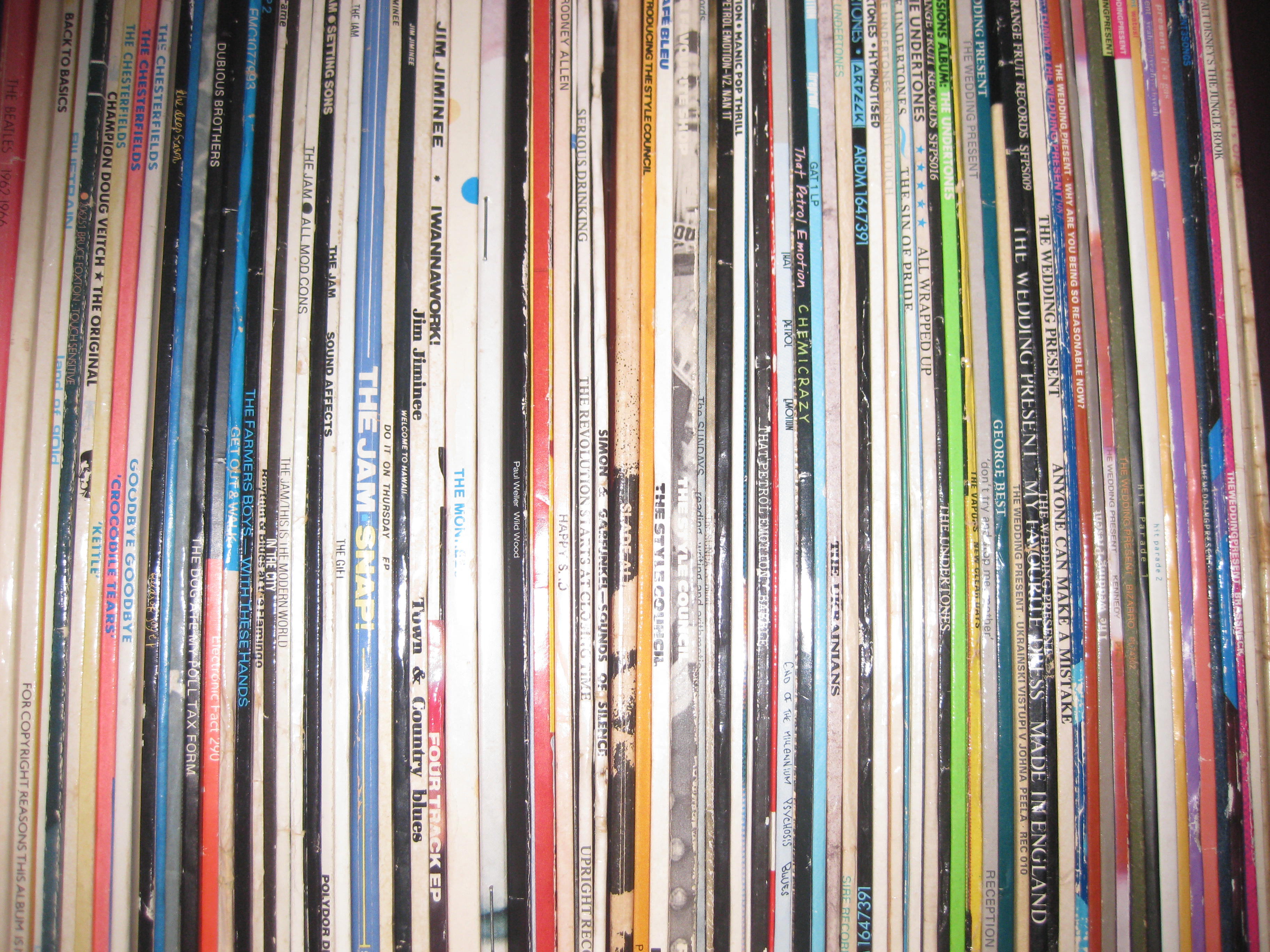
Record Store Day – beware the corporate take-over

img_9417.jpgI’LL start with an admission. I tend to buy quite a bit of my back-catalogue from charity shops these days. Then there’s a few I borrow from the library, my young, free and single era replaced by an almost-middle-aged, economical and 45 phase (see what I did there?).

I know what you’re thinking. Cheapskate. But I do at least still try to spend a little of my hard-earned pocket money in independent record shops, and during holidays away in this country or visits to a strange town (with blisters on my feet, like Woking’s finest), I’ll quickly get something of the flavour of a place by a look around these tucked-away emporia.

Now HMV and Our Price are consigned to history, it’s clearly a crucial time for our remaining independent record shops, and this weekend many of these were somewhat easier to find than usual – on account of a spot of unexpected round-the-bend queueing.

I’m not talking foreign tourists or dyed-in-the-wool flag-waving little Englanders camped out in sleeping bags the night before to get a prime spot of the main action the next day. But it wasn’t far off at a few of these stores, by all accounts.
rcd2013I was surprised to see even Action Records in Preston announcing on its website a one-in-one-out early-morning door policy to mark Record Store Day 2013. Blimey, what’s the world coming to? This was a hidden gem in a less-than-salubrious back-water last time I visited, staffed by burly, sometimes surly-looking long-hairs in rock band t-shirts. And I mean that in a good way.

So it appears from that and most of the tweets I saw on Saturday morning that Record Store Day has now become just another day in the corporate calendar. And what a shame that is – seemingly flying in the face of that good ole indie ethic that made a lot of these stores so enticing in the first place.

To further illustrate my point, when I asked a good friend who runs a successful record store in my old neck of the woods what he was up to for RSD 2013, he said: “Funny enough, with a £30 signing-on fee and thousands of phone calls in the days before by e-bayers wanting to reserve limited edition discs to re-sell for a quick profit it has in my view veered away from what it should be!”

Instead, for the second year running, his shop – Ben’s Collectors Records in Guildford –  decided to mark the occasion with live music provided by a ’60s folk duo, the guitarist in fact a former bass player from Sham 69. Now that’s more like it.

Prime Spot: Ben’s Collectors Records, with sheer weight of vinyl suggesting shop on slope (Photo: Ben Darnton)

But this can’t afford to just be a knocking piece. I’m all in favour of anything that helps promote independent stores and keep these traders afloat. I know just how much the afore-mentioned Ben has to splash out on rates to stay in a prime spot in his affluent county town, when it seems like the cards are loaded against him and in favour of all those soulless designer stores nearby.

Quite a few of us proper music lovers were carried along by the whole she-bang this weekend, and music journo Pete Paphides tweeted: “I am in a queue. Hoping that the 30-odd people ahead of me are mainly here for Marillion” while @keepingitpeel (in honour of late DJ legend John Peel) asked: “Can you play an mp3 at the wrong speed? No. Go out, find your local music store and buy a record.”

That said, esteemed crime writer and vinyl lover Ian Rankin noted ‘early doors’: ‘Record Store Day items already listing on Ebay – with bids’, while respected music broadcaster and writer David Hepworth tweeted a rather deep: ‘Have I got this right? Record Shop Day appears to be an annual event which taxes their most faithful customers.’

I should re-iterate at this point how I’m all in favour of giving the thumbs-up needed in these times of austerity, and there was plenty to celebrate on RSD 2013, despite the fact that the major labels seemed to hijack the event in places.

Paul Weller joined forces with The Strypes at a Rough Trade store, as did Public Service Broadcasting, and on what other weekend would you have heard Wedding Present front-man David Gedge talking on BBC Radio Five Live at 8am on a Saturday morning?

There was even a new Undertones single released to mark the occasion, and I certainly like the concept of Record Store Day. But more needs to be done to ensure we retain the last of our truly independent shops than this once-a-year beancountfest.

In the same way that Mother’s Day has become an excuse for florists and chocolatiers to make a few quid – the less-organised shamed into grabbing whatever they can find at the last minute from their local garage to mark the occasion and show heart-felt love for Mum – why don’t we just use a little independent spirit and free-thinking instead?

So here’s a revolutionary thought. Why not forget the Record Store Day branding exercise  and instead pop into your local record shop one quiet lunchtime this week instead?

I love my music, I love my CDs, and can’t bear to part with the last of my beloved vinyl.  Record Store Day means nothing to me, but I’ll continue to try and do my bit by splashing out a few quid here and there to keep these high street and back street gems as going concerns.

So next time I’m in Porthmadog I’ll pop in to Cob Records, next time I’m in Guildford I’ll drop by at Ben’s Collectors Records (both recently name-checked in the Guardian’s ‘best record stores’ readers’ poll, incidentally), and next time I’m in Preston, I’ll see if those burly blokes are still behind the counter at Action Records. As long as there’s not a queue to get in, mind.

Cob Records Porthmadog

Welsh Gem: Cob Records, Porthmadog, established in 1967, like the blogger himself,  (Photo: cobrecords.com)
Posted in Music | Tagged , , , , , , , , , , , , , , | Leave a comment

Reasons to be Grateful, Part 53

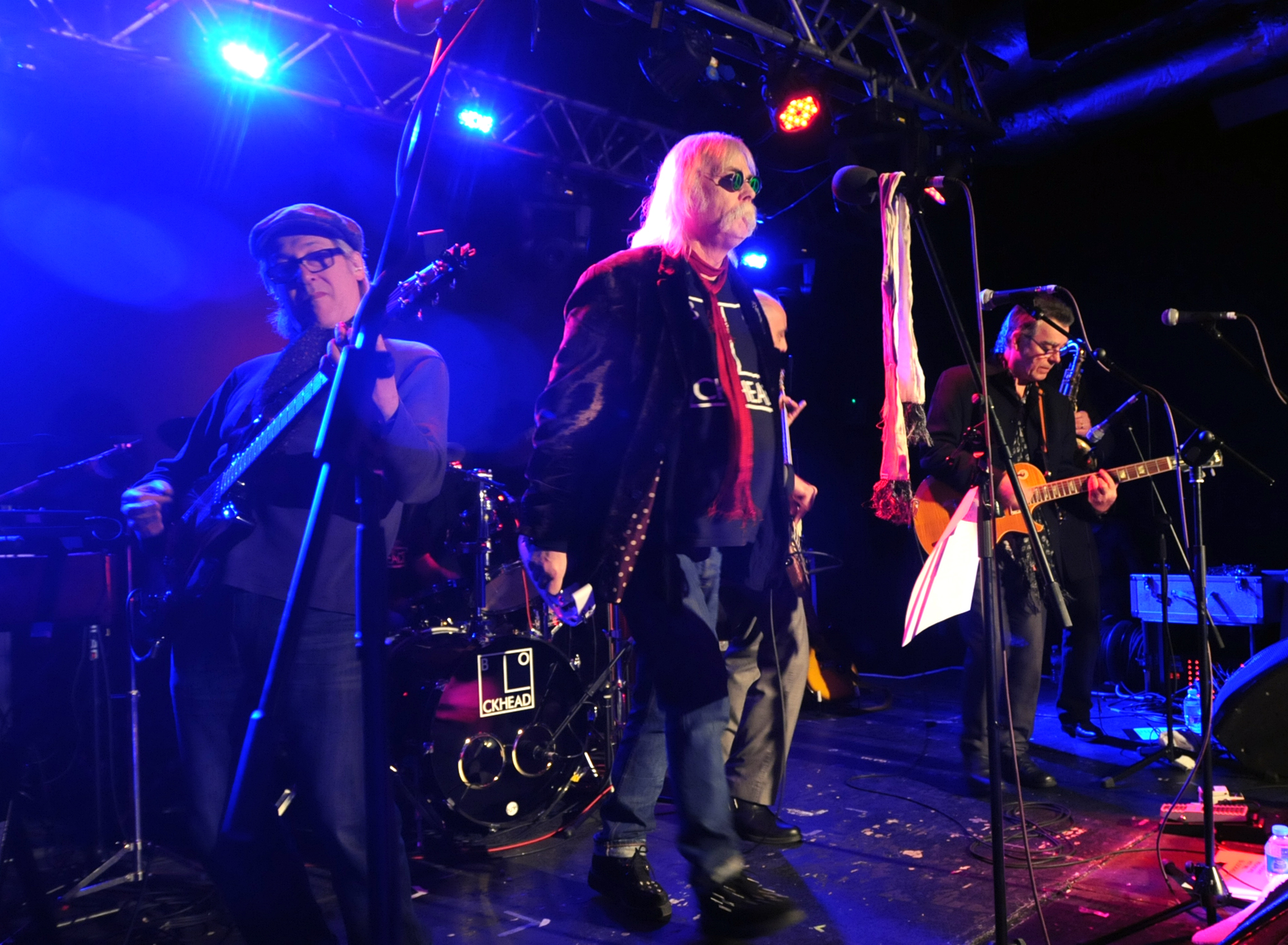
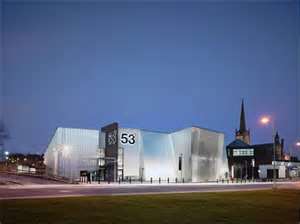
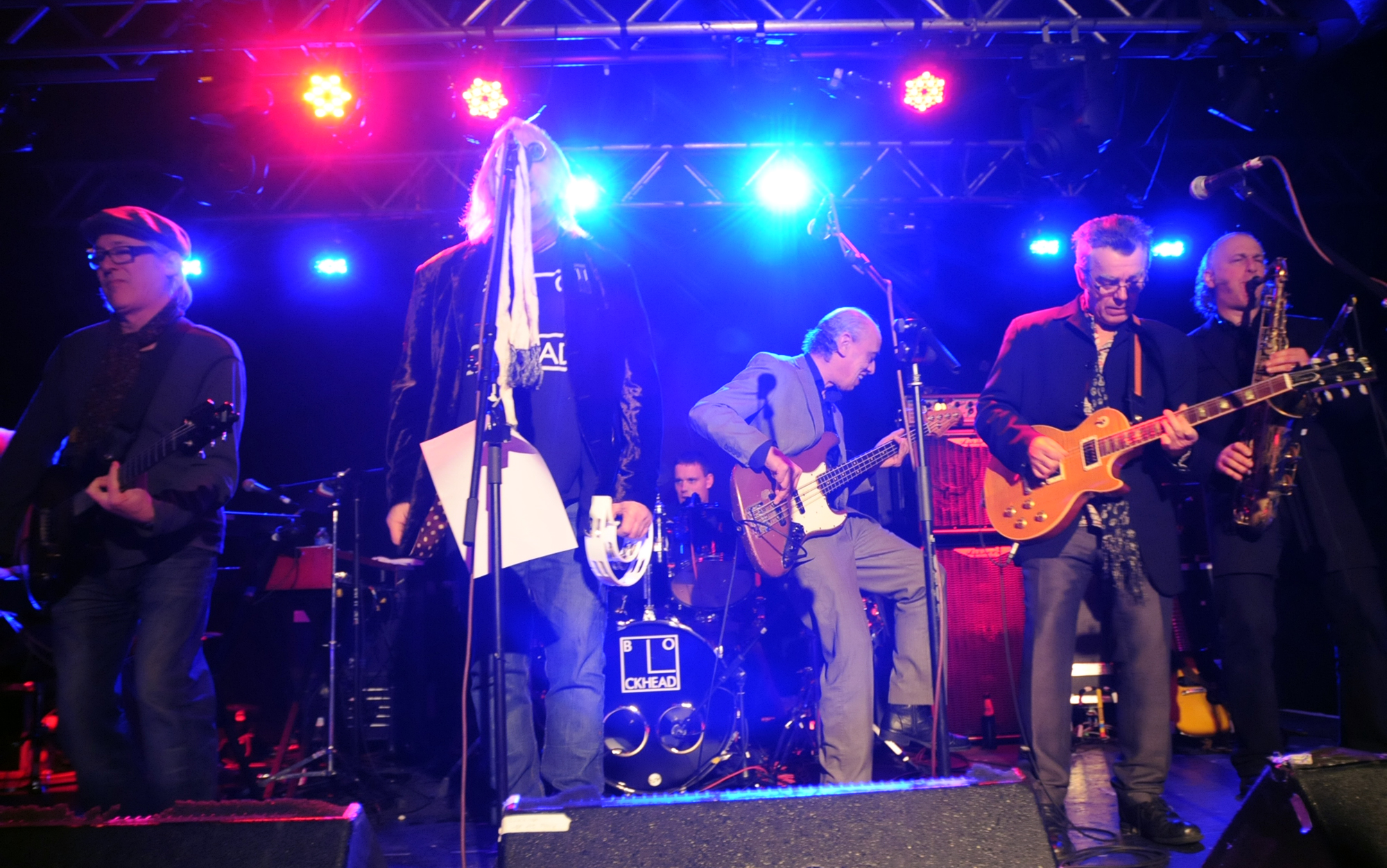
blockheads 5OI OI! They may be missing the main man these days, but The Blockheads are going strong, judging by Friday night at Preston’s 53 Degrees.

Cutting to the chase, Derek Hussey – familiar on-stage long before his promotion to front-man – does very well, even though the band’s power remains in the words of sadly-departed Ian Dury and his excellent backing band.

The Blockheads were always so much more than mere back-up of course, with such talent in their ranks.

And while this is definitely a collective, Marty Feldman-like figure Norman Watt-Roy on bass looks right centre-stage alongside Derek the Draw, the technically-brilliant and all-round good egg nothing less than a diamond in the rough.

Blockheads 2Then there’s Dury’s main co-writer Chaz Jankel, a cross these days between Clive Dunn’s Grandad and Grandpa Piggley from Irish children’s TV series Jakers, what with his flat cap, specs and cravat.

Also playing a stormer was Dave Lewis, one of the more recent ‘Heads on the block, and while Mickey Gallagher was hidden away behind the PA stack to my left, there was no doubting his keyboard contribution.

It was also good to see Johnny Turnbull his usual cheeky self on guitar, and grinning from ear to ear – as if he can’t quite get over the fact he’s with all these senior citizens of new wave – drummer John Roberts kept it all together.

You get the feeling from the start that it’s Derek under the microscope for those who haven’t seen the band lately.

I was among those, my last Blockheads gig being a memorable 1990 benefit for original drummer Charley Charles at Kentish Town’s Town & Country Club. Ten years later, Dury had also left us (13 years ago this very week), but now the band are back, still writing strong material and celebrating – at least on a low-key basis – 35 years on the road.

That’s always been an on-off existence, members drifting in and out over the years, with a wealth of other projects between fall-outs with a notoriously-difficult original frontman.

Did you realise, for example, Watt-Roy played that memorable bass-line on Frankie Goes To Hollywood’s Relax, part of a session band suggesting it was more Holly Johnson and the Blockheads than as advertised.

Blockheads 4I saw Watt-Roy one memorable night in the mid-80s with the Wilko Johnson Band, a three-piece delighting a bustling Kennington Cricketers crowd, not long after the Dr Feelgood co-founder had played his own part in a rich Blockheads history.

Needless to say, Norman dedicated a song to Wilko and his on-going battle with cancer, before the band launched into Sweet Gene Vincent, with Ian and Charlie also getting name-checks from Derek. But this is a band of survivors for sure, Norman remarking how they need the drugs ‘to stay alive’ these days, after Mickey’s mention of the 35th anniversary.

As for the songs, they delighted from the start with Sex & Drugs & Rock & Roll and I Wanna Be Straight before Hussey-penned Staring Down The Barrel songs A Little Knowledge and George the Human Pigeon, the latter offering shades of Park Life alongside a Steely Dan band feel.

Back to the old days it was New Boots & PantiesIf I Was With a Woman and Do It Yourself‘s Inbetweenies, although I’m not sure we needed to see Derek’s actions to go with the suggestive bits.

Then came 2009’s upbeat, inspirational Hold Tight, before an unmistakable piano intro greeted Wake Up and Make Love With Me, followed by the part-wistful part-rocking classic Sweet Gene Vincent.

The hits kept coming, the wondrous What a Waste including tailored line ‘I tried to play the fool in a seven-piece band’, while Preston sang happily along to the ever-sublime tale of Clever Trevor, amid much middle-age grooving all around.

Photo: David HurstThe Blockheads at 53 Degrees, PrestonIt may take much longer to get up North the slow way, but on this evidence Derek doesn’t feel the need to prove himself, and certainly showed his worth on Prophet of Doom, a pensive environmental lyric echoing Lou Reed’s Last Great American Whale as much as Dury’s You’ll See Glimpses.

Then came the wonderfully-catchy Itinerant Child from Dury’s valued farewell Mr Love Pants, signalling a column gear change up for big finale Reasons To Be Cheerful Pt 3 – including a brief segue into Jack Shit George – then Hit Me With Your Rhythm Stick.

The latter ’78 classic – possibly the first song I knew every line to – included Dave Lewis’s considerable two-sax appeal, played at once of course, and a whole host of storming solos, not least Norman’s coup de grace bass.

There was still time for two more Dury/Jankel show-stoppers, the raucous self-titled Blockheads followed by under-stated finale Lullaby to Francies, providing a welcome ear-worm as we headed off all warm and fuzzy into the sub-zero Lancashire night.

Thank you Blockheads, it was a blast. You’ve given us much to savour these past four decades, and long may you groove on.

* For all enquiries re photos reproduced on these pages, contact writewyattuk.

Posted in Music | Tagged , , , , , , , , , , , | 5 Comments

Hats off to James Herbert, a master of his art

james herbertTHE kids of today have got it easy, of course. All that young adult fiction out there, waiting to be discovered.

It wasn’t like that for my generation. My transition from Clive King’s Stig of the Dump and J. Meade Faulkner’s Moonfleet to cult reads like Colin MacInnes’ Absolute Beginners came via an altogether more rugged, steep gradient.

I can’t remember any peer pressure, but I wasn’t the first at my school to discover James Herbert, who died this week just short of his 70th birthday. Looking back now, I wonder if he was writing teen fiction before there was even a name for it. Either way, his books were the talk of the playground and classroom at one stage, and in time I was intrigued enough to get hold of my own copies.

herbert ratsThe Rats was the one that got us sitting up and taking notice. It sold 100,000 copies in the first fortnight alone, despite mixed reviews. Herbert was 28 at the time. That was in 1974, when I was only six, so I only got to read it in around four years later, during middle school.

It was graphic for sure, whether we’re talking about the gory scenes of mutilation or the other X-rated scenes that went hand in glove with that, so to speak. Either way, it certainly had an impact on this impressionable youngster. I’ve not gone back to re-read those books anew, but can see now how important they were, setting me up for a move towards Stephen King and beyond. The fact that The Rats held something of a message about the decay of post-war London was probably lost on me.

Within a few years I’d moved away from horror, but like to think I learned a lot about suspense and writing along the way, and have Herbert and King in particular to thank for that. Both had that rare ability to make you feel you were entering a dark room or wood with their main characters, unsure what you might find there, every creaky floorboard or crack of a branch likely to spring real horror upon you – slow-building drama that drew you in.

Herbert had a lot to answer for my generation in certain respects. Let’s face it, chances were that those embarrassing sex education lessons in stuffy classrooms with hot-under-the-collar teachers came too late, so to speak. Instead, the teenage lad’s learning zone was more likely to be outside the school disco, through a secret stash of dodgy magazines or a well-thumbed paperback by this East End author, springing open at select passages.

By the time I was reading The Rats, there were more contenders from the same writer, his second book, The Fog, taking us from man-eating giant black rats to accidentally-released chemical weapons unleashing insanity and depravity in equal measures. And unlike the unrelated John Carpenter film from 1980, I could relate to the geography too.

Herbert clearly never forgot his London roots, and when he moved on it was to settle in West Sussex, so we had that South-East bond in common. Not as if I saw much evidence of frothing fog-affected victims in suburban Surrey or saw too many disease-carrying vermin around my neck of the woods. That said, Guildford band The Stranglers practised in my village scout hut at one stage, so maybe they got the inspiration there for the ground-breaking Rattus Norvegicus album.

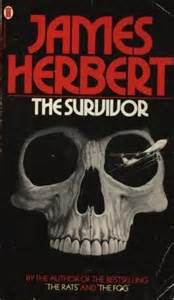
herbert survivorHis third book, The Survivor, about the aftermath of a terrible airline crash, made more of an impression. All three had an influence on this young teenager, but the supernatural horror aspects of the latter perhaps asserted more resonance.

I seem to recall being disappointed with Fluke. Maybe I just wasn’t ready to see what life might be like if i was to be reincarnated as a dog. Incidentally, I think I borrowed my copy from the travelling library that visited the bottom of the road. I can still feel that vehicle rocking as you walked towards the back, and not because someone was in a dark corner reading The Rats.

Then came The Spear, a supernatural horror with a chilling depiction of the rise of neo-Nazism in the UK. This was evil that a council house lad with leftist sympathies could get his head around – conspiracy theories, degenerate Americans, arms dealers, the occult, right-wing activists, and a secret bid to resurrect Heinrich Himmler. I had Donald Pleasance in mind as the latter when I imagined the screenplay.

Lair was next, the follow-up to The Rats picking up where we’d left off, but taking his rodent invasion to the countryside now. I think I made a mental point at that stage to keep out of Epping Forest, and have kept to that somehow.

By that stage, Herbert had finally given up his day-job in an advertising agency and was writing full-time. I vaguely recall 1980’s The Dark – kind of The Fog pt II – and 1981’s The Jonah, by which time he’d moved towards thrillers (with plenty of horror thrown in though). I was probably scaring myself witless with King’s The Shining and Salem’s Lot and a few early VHSs then, and pretty soon I’d lost that early love/hate relationship with horror. Luckily I got out before Freddy Krueger came to town too. Nightmare.

Music and comedy had re-taken centre-stage, most of my reading out of school by then involving film and music biographies, and any features in Smash Hits then the NME. Like many authors, music played a big part in Herbert’s story too, his Desert Island Discs radio outing with Michael Parkinson in 1986 suggesting a love of rock’n’roll – from Fats Domino’s Blueberry Hill to Eddie Cochran’s Summertime Blues – as well as Edvard Grieg’s Morning from Peer Gynt and Gustav Holst’s The Planets suite, the latter of which he felt musically mirrored the plot of a few of his novels.

herbert cottageHerbert kept on writing, publishing 23 full-blown novels in all, of which six were adapted into films or for radio or television, selling 54 million books worldwide, translated into 34 languages. Within 15 years – while still portrayed as the writer who brought us The Rats – he’d even moved on to three-word titles, maturing with works like The Magic Cottage, shifting further away from sci-fi to supernatural elements. He also illustrated his own work and had a hankering to write children’s books too. That never seemed to come to fruition though.

By 2010, he was an OBE, and a BBC TV adaptation of The Secret of Crickley Hall made an impact only late last year. I recall an interview with the man himself by Graham Norton on Radio 2, and outings on the BBC Breakfast sofa too, a walking stick at his side and age starting to catch up, although this man in black still had a hankering for his drainpipe trousers. As it was, Herbert’s death came soon after the paperback release of Ash, which saw a return to his parapsychologist and cynical ghost-hunter, first introduced in 1988’s Haunted.

TV Times: Suranne Jones and Tom Ellis featured alongside Dougie Henshall in last year’s BBC adaptation of Herbert’s The Secret of Crickley Hall (Pic: BBC)

While my own sphere of reading changed over the intervening years, I acknowledge a debt to James Herbert. Above all, I truly respect a fellow working-class writer who overcame the odds and did most of his own promotional work, long before that was seen as the way forward in the publishing world.

Many more great writers were inspired by him in their impressionable years, from Neil Gaiman to Ian Rankin, quick to praise an author who took horror away from the Hammer era and made it more relevant to the world we were living in.

You were a master in your field, and came over as a good bloke too. RIP Jim.

Posted in Books Films, TV & Radio | Tagged , , , , , , , , , | Leave a comment

Neil Finn and Paul Kelly – Sydney Opera House

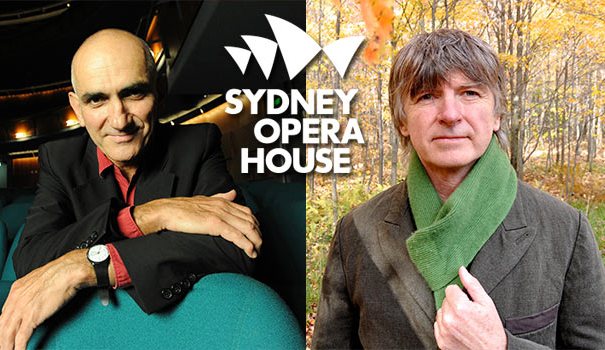
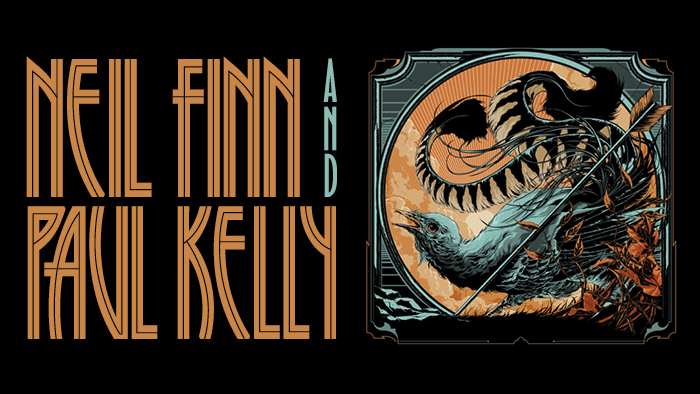
Neil-Finn-Paul-Kelly-2013-Sydney-Opera-House-Australian-music-concert-gigBLIMEY. Pushed out the boat a bit for this one, didn’t we? This blog’s just under a year old  yet I’m already snapping up expenses-paid trips to New South Wales?

Well, not quite. Besides, any writewyattuk profits go straight to hosts WordPress at this point in time. But ain’t technology marvellous, kids? For this week I got to see a live streaming of New Zealand singer-songwriter Neil Finn and his esteemed Aussie buddy Paul Kelly’s end of tour stage party, beamed in from Sydney via YouTube.

Sometimes, I have trouble with websites set up barely a few miles from here, and often struggle to receive mobile phone text messages from my better half asking to put the kettle on when she leaves work. But there on Monday was a hitch-free two-and-a-half hour transmission from half-way around the world, with barely a handful of technical glitches throughout, most involving brief frozen images.

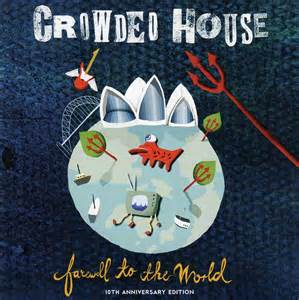
What a show too, Finn returning to Sydney Cove 16 years after Crowded House’s momentous Farewell to the World show outside the Opera House, this time with Adelaide’s finest musical export for company.

farewell

Last Time: Crowded House famously played Sydney Opera House in ’96

While Kelly’s own output is little known outside his native Australia, Finn’s appeal has secured a huge fan-base around the world, from his younger days in brother Tim’s Split Enz through to his admirable international solo output in recent years. And there was a great taste of that material throughout this set, alongside a few classics in their own right from Kelly, many new to us on this side of the world.

Even the opening was memorable, these celebrated songsmiths entering from opposite wings carrying lanterns, breaking the pitch-dark, arriving at stage front to shake hands before an acoustic guitar and vocal duet on Kelly’s Don’t Stand So Close To The Window, followed by Finn’s Woodface classic Four Seasons in One Day, joined part-way through by their band-mates – Zoe Hauptmann on bass, Paul’s nephew Dan Kelly on guitar, and Neil’s son Elroy on drums.

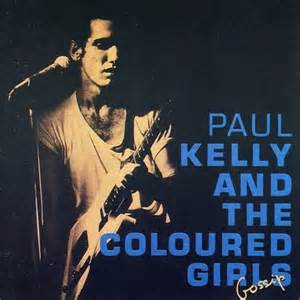
That format became the key, Finn and Kelly trading compositions, their own individual touches skewing ownership, or ‘morphing’ as they put it, Paul often singing Neil’s parts and vice versa – as was the case on Before Too Long, dating from Kelly’s mid-’80s days, when he had hair and Coloured Girls for company.

Past Passion: Paul Kelly, when he still had hair

Past Passion: Paul Kelly, when he still had hair

Finn’s commercially under-valued She Will Have Her Way followed, from 1998’s Try Whistling This, giving his all on his russet red electric guitar, the hits and near-misses continuing as Kelly gave us his ‘parlour song’ For The Ages – with Zoe on double bass while Elroy took to his brushes – then we were treated to a more country waltz take on Beatle-esque final Crowded House Mk.I single Not The Girl You Think You Are.

It was only 10.30 in the morning in Northern England at that point and I really should have been  working, but how could I turn away? Remember the episode of Friends where Joey and Chandler chance upon free porn and are scared to turn off the TV in case they lose it? Well, this was the musical alternative, and I was here for the long haul.

Finn’s Sinner, again from 1998, was next, Kelly adding the kooky synth loop, then telling us, ‘it’s good to have Neil Finn in your band, because he can sing all the high bits’, before using that Finn falsetto to good effect on his Dylan-esque Careless.

finn everyone

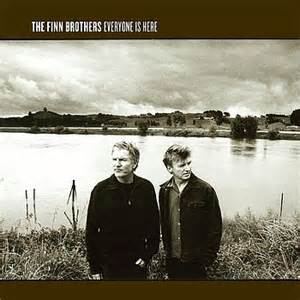
Brotherly Love: Tim & Neil’s superb Everyone Is Here

Then it was the Finn Brothers’ Won’t Give In, (sort of) title track of the luscious Everyone is Here, the duo still trading verses, as they did on another Tim and Neil song, Only Talking Sense, from their first brothers-only release in 1995, Dan cranking up his electric and Elroy in full flow at his kit for the climax.

While Finn spoke of writing songs with his bro, Kelly boasted co-writing duties with early 17th-century poet John Donne on New Found Year, then re-arranged Finn’s Crowded House number Into Temptation from 1988’s Temple of Low Men, enhancing an already haunting song.

Finn reciprocated with a re-telling of Kelly’s You Can Put Your Shoes Under My Bed in tribute to his Irish-born mum and All Blacks rugby legend Tana Umaga, pensive piano complementing the songwriter’s wistful harmonica, before Kelly’s folky They Thought I Was Asleep then a mournful acoustic take on Crowded House’s Private Universe and a brooding version of Split Enz’s Squeeze-like One Step Ahead, penned by a 22-year-old Finn back in 1980.

Finn & KellyK_EVENT_700x394_The songs kept coming between the banter, the band stepping up the pace with Kelly’s Dumb Things – Finn adding boogie-woogie piano – then Dan Kelly taking a Neil Young approach to his uncle’s Springsteen-like Deeper Water, both front-men swapping lead vocals.

You always expect a few Finn standards from these collaborative shows, and soon the Opera House guests were treated to Crowded House lump-in-the-throat crowd-pleaser Better Be Home Soon. And while Kelly has had fewer hits, there was mass appreciation for his cherished How To Make Gravy story song too, bringing memories of late, great Go-Between Grant McLennan to mind for me.

Back Catalogue: Paul Kelly's fame Down Under is largely yet to cross over

Back Catalogue: Paul Kelly’s fame Down Under is largely yet to cross over

Finn had more in his armoury of course, the wondrous Distant Sun up next from 1993’s Together Alone, Kelly’s spoken verse adding a fresh dimension and the ‘seven worlds will collide whenever I am by your side’ line particularly apt on such a night, as the rest of the globe tuned in via the internet. There’s progress for you.

Time marched on and the encores arrived, but neither front-man looked like they wanted to leave. Kelly sporting his natty fedora again when they returned for My Winter Coat, protection for his bald pate as artificial snow fell on him and into Finn’s red wine, while Dan added Duane Eddy guitar to his uncle’s Leonard Cohen-like vocal.

There was a spirit of droll mischief from Kelly as he asked, “Got another hit for us, Neil?” to which the son of Te Awamutu replied, “Yeah, it’s about time I wrote another one, isn’t it?” in something that sounded like it was lifted straight from cult TV comedy Flight of the Conchords.

That particular hit was Fall At Your Feet, another sublime Woodface classic, before Kelly’s Dylan and The Band-style To Her Door, complete with Finn’s ‘rollicking piano’. And the chat went on between songs, the latter mentioning how Finn only had to learn five chords for their combined set, while he had to learn around 50, the last of those the quickly-recognised intro to Don’t Dream It’s Over (somehow now 27 years old), Finn on keyboards as the rest of the band, the Opera House guests and 18,000 web-watchers back home added backing vocals.

Early Days: New Zealand's finest, way back then

Early Days: New Zealand’s finest, way back then

They returned again, Zoe’s reverberating bass leading us into Kelly’s almost-anthemic and certainly inspirational Love Is the Law followed by more mellow but no less powerful Split Enz hit Message to My Girl, penned by a 26-year-old Finn nearly 30 years before, and delivered as ever with real emotion.

They still weren’t done, the twin headliners giving us a twist on the winning Everly Brothers formula with their band on Buddy Holly’s gorgeous Words of Love, Zoe’s double bass adding to it all.

Then came a gorgeous finale, just Neil and Paul left for Henry Mancini and Johnny Mercer’s five-decade old Moon River, the harmonies perfect, Kelly again adding plaintive harmonica, the ‘two drifters off to see the world, there’s such a lot of world to see’ line poignant to say the least.

And just as they’d arrived, so they departed, this treasured pair picking up their lanterns and exiting in different directions, after a truly amazing 155-minute diversion from all life’s toils, all over this connected world.

Since finishing this review, I’ve chanced upon the full concert again courtesy of the SOHfestival on YouTube, with a link here if it’s still posted. 

Posted in Books Films, TV & Radio, Music | Tagged , , , , , , , , , , | 1 Comment

Cardinal deliberations and Garry’s magic 50

Lining Up: The Woking players get ready for a battling draw at Macclesfield Town (Photo courtesy of David Holmes)

Lining Up: The Woking players get ready for a battling draw at Macclesfield Town (Photo courtesy of David Holmes)

ANYONE who’s listened to outwardly gruff, sometimes grouchy, occasionally gregarious Garry Hill’s post-match interviews this season will know he’s had a bit of a thing for that ‘magical 50-point mark’.

With all due respect to the Woking FC boss, it’s one of those cliched yardsticks in football that comes up time and again, despite its complete absence from any established works of spell-bound literary fantasy by Pullman, Rowling or Tolkien.

You never heard about that magical quest for football’s Holy Grail of avoiding relegation from Frodo Baggins (not to be confused with Cards legend Mark Biggins), Lyra Belacqua (nothing to do with Hull City’s ex-Woking keeper Adriano Basso) or that speccy lad Potter (that’s Harry, not pre- and post-war Cardinal Doug).

Those successive wins I mentioned on this blog at Southport and at home to Forest Green saw Hill’s points target just one win away by the time of Lincoln City’s March 1st visit. But a draw then, followed by a home defeat to Mansfield, left us grounded on 48.

It looked like we had at least a point at Cambridge United on the 9th, but in the week the Cardinals maybe had their minds on other things in Rome, the Abbey Stadium away end proved something of a dissolved monastery at full time, Seb Brown’s error leading to a late, late home winner, while their keeper Pope (I kid you not) and his team-mates celebrated.

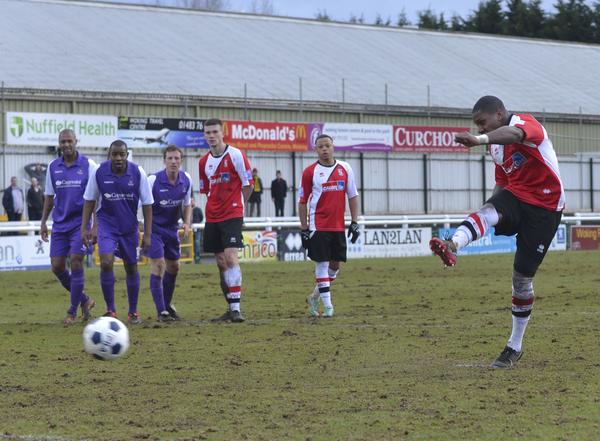
We needed a boost after that, and it came in the shape of a battling display in a goalless draw at Macclesfield Town the following Tuesday, taking us up to 49 points. And what a performance that was, every bit as important as the more headline-grabbing home wins Woking have carved out this season.

In the end, it took a final great save from Brown to absolve that previous match’s error and ensure a point, keeping out ex-Card Keiran Murtagh, who along with his gaffer Steve King – described by that night’s radio summariser John Moore as looking more like he was off to a   gymkhana with the Cheshire set – seemed to suggest they had something to prove against these part-time Surrey upstarts.

Saving Grace: Woking stopper Seb Brown saves the day at the Moss Rose (Photo courtesy of David Holmes)

Saving Grace: Woking stopper Seb Brown saves the day at the Moss Rose (Photo courtesy of David Holmes)

It wasn’t the on-loan Dons stopper’s first important save of the night, but he seemed to have gained confidence as the game worse on, buoyed by a committed defensive display from central pairing Joe McNerney and man of the match Brett Johnson, who proved assured beyond belief.

Then there was John Nutter, a thorn in the Silkmen’s armoury at both ends, while captain Mark Ricketts was his usual cool and commanding self in the middle of the park, despite a couple of choice Macc challenges (even if Lee Sawyer’s own part was curtailed by a caution which saw his half-time departure and a further ban in the offing).

Equestrian Style: Steve King gets animated at Macclesfield (Photo courtesy of David Holmes)

Equestrian Style: Steve King gets animated at Macclesfield (Photo courtesy of David Holmes)

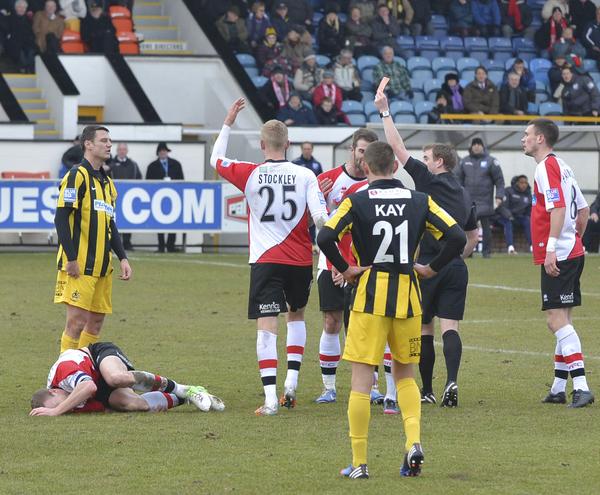
While we rarely looked like having the ability to unlock Macc’s own defence in that first half, an inspired interval switch saw Kevin Betsy come into his own and Bradley Bubb and Jayden Stockley cause all manner of problems up front … apart from scoring of course, but you can’t have it all (apparently).

After the final whistle at the Moss Rose, I was on hand as the home stewards gathered for their stand-down, Steve Thompson took the Cards players for a warm-down on the pitch, and our Garry gave his post-match interviews and on-air summary. He then headed down the main stand steps and was informed of that night’s results, seemingly giving his blessing to each (yep, that religious theme again), announcing how he wanted 60 points now. Eh? 60? Blimey, he’d unofficially changed the goalposts again. But why not.

Come Saturday, our big chance of reaching that new plateau arrived in the form of a home clash with as-good-as-doomed AFC Telford United, rock bottom after just 31 points from 38 league matches, a succession of behind-the-scenes traumas mirrored on the pitch for the beleaguered Bucks.

Not as if that made us any more confident. We have a habit of beating the better teams yet coming unstuck against the others. The stats were simple enough – 10 draws, 14 defeats and no victories since October 9th’s 4-1 victory at Dartford, that just three days after a 1-0 home win over the Cards in which keeper Aaron Howe was dismissed in the third minute.

But, on what Bucks caretaker boss John Psaras told BBC Radio Shropshire was a ‘potato field’ (didn’t stop both teams playing nice football on it, mind), the visitors were three goals down by the break, left with a ‘mountain to climb’ (another misguided topographical reference, methinks), with returning midfield playmaker Billy Knott – on loan from Sunderland but regularly sidelined by injury – wasting no time in melting our hearts again.

Loan Ranger: Billy Knott on the ball against Telford (Photo courtesy of David Holmes)

Loan Ranger: Billy Knott on the ball against Telford (Photo courtesy of David Holmes)

I couldn’t be at Kingfield, but Jon Howick’s BBC Surrey commentary was just the job, the club highlights later adding to the picture. The Cards forged ahead through two Bubb strikes and a belter from Stockley, unlucky Telford giving it a go but beaten by superior finishing. But it wouldn’t be my Woking without a few missed heartbeats, and after Bucks keeper Ryan Young twice kept out Stockley, former Northern Ireland striker Steve Jones (who I remember in his younger days at Chorley) pulled one back early in the second half.

Still we might have finished them off, Bubb not far off again and a Betsy delivery beating the keeper and last defender only for Jack Parkinson to somehow scoop over. And you might have thought in the week when the Cardinals finally made their deliberations and chose Francis that we had been offered absolution of past sins at that point.

However, I’m talking about sub Adam Francis, son of Gerry (one of my boyhood heroes, along with England and QPR team-mate Stan Bowles), and I think all that red and white smoke issuing from the Kingfield version of the Sistine Chapel (well, it is my church, after all) seemed to get in our eyes, Platters-style, as Aaron Williams struck a second for Telford with nine minutes left, and it looked like we were about to be ex-communicated, forever destined to retain negative goal difference after that December thrashing at Hyde.

However, Young then went from Bucks hero to villain in rather bewildering circumstances, his post-challenge shirt-grabbing of Parkinson leading to something of a free-for-all and the ref calling play back, booking the keeper and awarding a penalty. While there was confusion at the incident, Bubb positively blasted the ball to Young’s left for his hat-trick.

Brad Blast: Woking's Bradley Bubb ties up the Cardinals' victory over Telford (Photo courtesy of David Holmes)

Brad Blast: Woking’s Bradley Bubb ties up the Cardinals’ victory over Telford (Photo courtesy of David Holmes)

There was still time for a sloppy Bucks pass to play in Betsy, who rounded the keeper with aplomb -whatever that is – and slotted home a last-minute fifth, on a day when Hill admitted it might have been 10-6. One thing’s for sure, that Michelangelo would have struggled to have come up with a snappy mural on the Victoria Arch underpass to depict this seven-goal thriller. 

Whether ‘Bubby’ (as our gaffer later called the on-loan Aldershot striker) or ‘Knotty’ (I made that one up of course) will be with us come the end of term remains to be seen, but the fact is that – as Hill later underlined – in a national division of 16 full-time clubs and 13 ex-Football League outfits, we’ve punched well above our weight this time, making our 52 points and counting every bit as pleasing as last year’s Blue Square South title.

New Mission: Garry Hill

New Mission: Garry Hill

Our Garry had something else to add before heading home, telling Jon Howick on the radio ’65 points has to be the target’. Eh? 65 points? Had I misheard him? Clearly not. For there he was on camera soon after, telling us: “If we can get 65 points I’ll probably look at that as being a better achievement than winning the Conference South last year.”

So there we go, in the week when the Cardinals deliberated then finally delivered, while the Holy Grail had been found, there was still plenty to play for. Enough poor religious and supernatural metaphors and puns? Maybe. But our Garry tells us the mission from here on in and those last nine league games is to gain at least 65 points. If we can do that perhaps we could even arrange a blessing at St Peter’s. In Old Woking that is, of course, rather than Vatican City. And that’ll be magic enough until next season.

* To those who for some reason unfathomable to this blogger are puzzled as to the origins of my club’s nickname, the Cardinals, it is believed – he adds, vaguely – to go back to a visit to the area by Cardinal Thomas Wolsey nearly 500 years ago, when Clive Walker was just a twinkle in his father’s eye.

Sing Up: Cardinal Wolsey, here depicted by Frank O. Salisbury in his 1910 painting, asking the KRE to raise their voices

Palace Fan: Cardinal Wolsey, depicted by Frank O. Salisbury in his 1910 painting, asking the KRE regulars to sing up

It is understood that  ‘Wolster’ (his on-pitch nickname) was staying with his old mucker King Henry VIII (whom I believe preferred a Saturday afternoon wedding to a keen-fought derby) at Woking Palace (surprisingly not a football team in their own right) in 1515 (quarter past kick-off) when he heard he had been made a cardinal by Pope Leo X. 

Actually, my sources reveal that Tommy was more of a Saturday afternoon shopper than a footie fan, hence one of Woking’s two main shopping centres being named after him since. But the idea stuck, and we were soon wearing Cardinal Red.

Incidentally, while we’re at it, the afore-mentioned Pope had nothing to do with that 1970s’ big-haired clown-loving singer Sayer nor the 16th-century version of the appalling Simon Cowell-driven TV ‘talent’ contest. So now you know. Personally, I’d have preferred it if we’d gone with the other nickname that caught on in our early days, the Cremators. More of that next time … probably.

Posted in Football, sport | Tagged , , , , , , , , , , | 1 Comment

Public Service Broadcasting – 53 Degrees, Preston

Synth Attack: Public Service Broadcasting at 53 Degrees, Preston

Synth Attack: Public Service Broadcasting at 53 Degrees, Preston

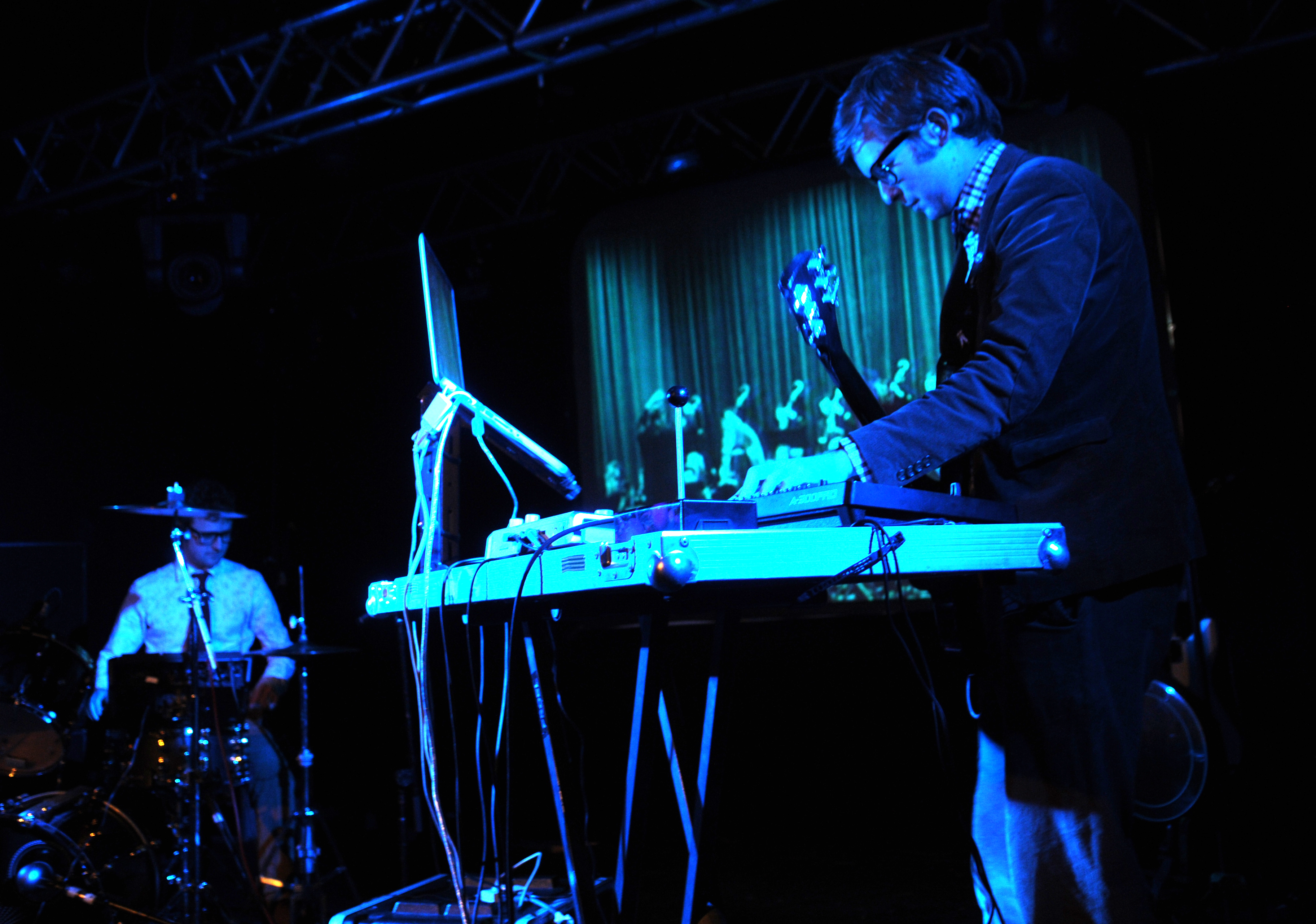
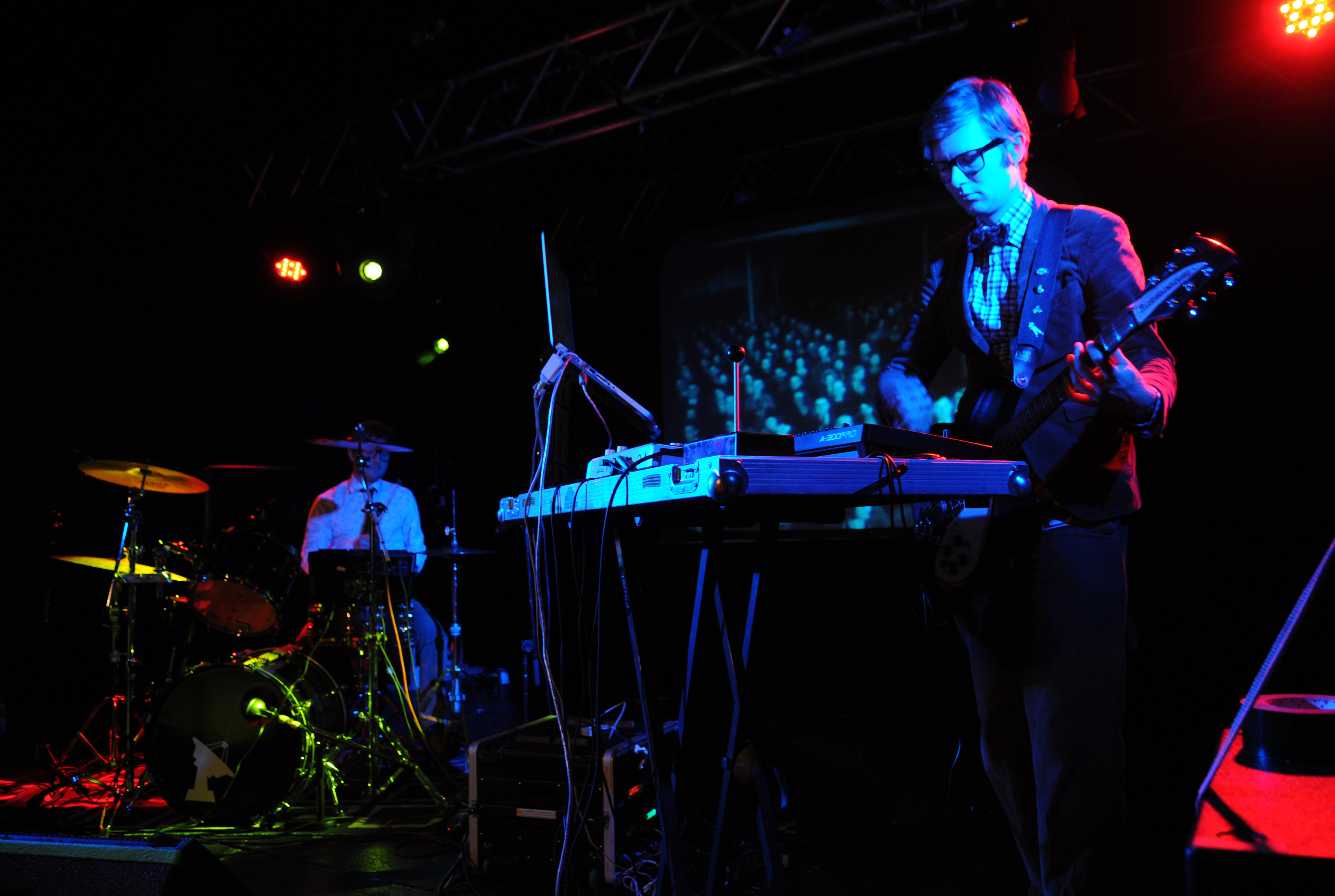
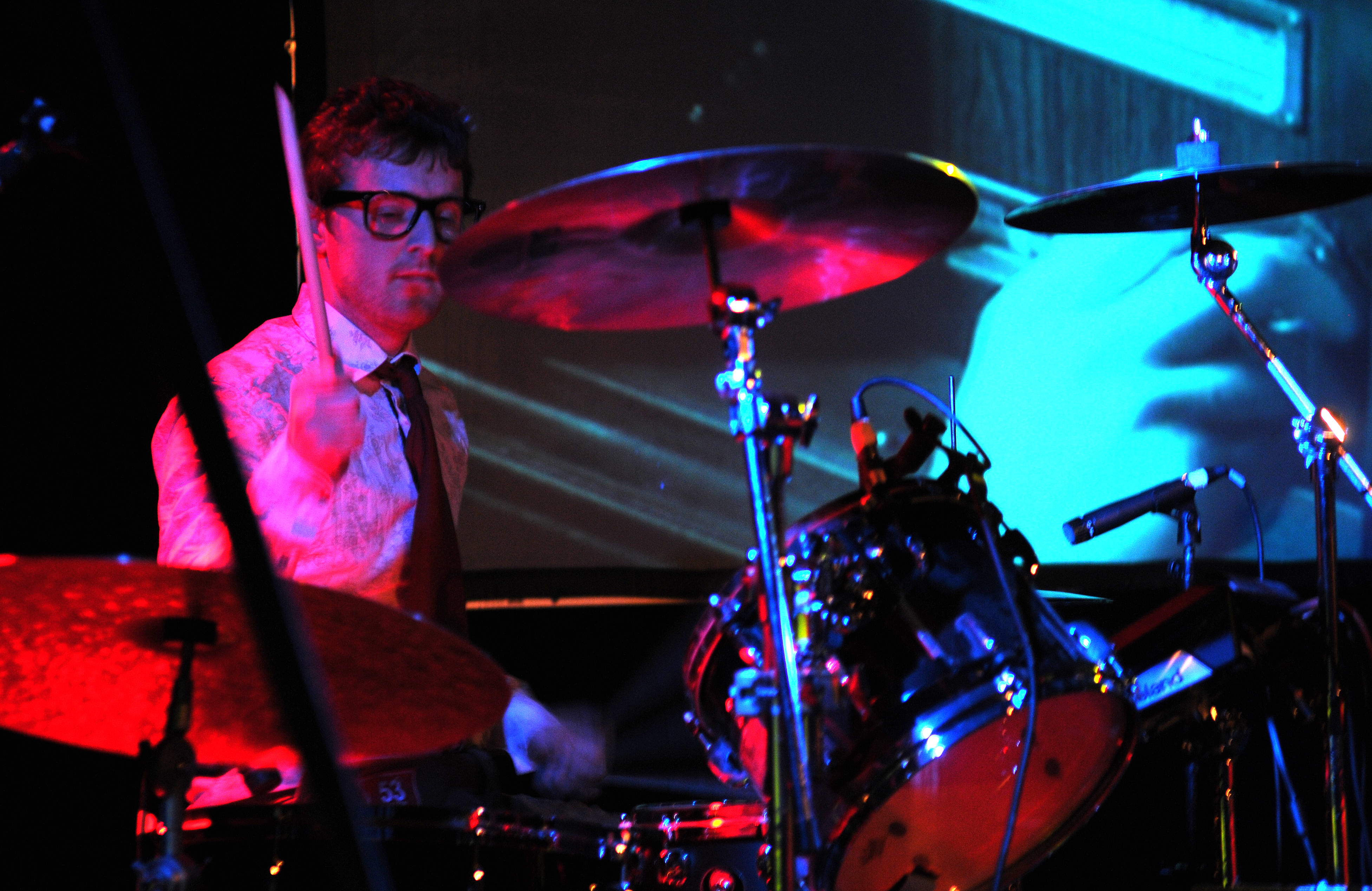
FROM the moment corduroy-clad eccentric J Willgoose Esq. and his drumming companion Wrigglesworth entered stage-right upstairs at 53 Degrees, a clearly appreciative Preston audience was feeling the love for this inventive duo.

For those not yet in the know, how best to explain Public Service Broadcasting? Well, in a way they do what they say on the tin – inform, educate and entertain, via a wondrous soundscape to a backdrop of truly evocative public information film clips from yesteryear.

Their mission, if you should choose to join them any time, is to ‘teach the lessons of the past through the music of the future’. But that’s only really part of the story for this celebrated London two-piece.

Think of the power of WH Auden’s poetry to Benjamin Britten’s score on cult short Night Mail, then swap orchestral strings for the guitar, banjo and heart varieties, the floor-filling grooves of the James Taylor Quartet, indie assault of The Blue Aeroplanes and The Wedding Present and inspirational dance cacophony of The Go! Team, then you’re at least part-way there.

for malc2

Exquisite Images: Public Service Broadcasting in full yet under-stated flow

With the first film reel projected behind our dynamic duo as they let loose on Introduction (Let Yourself Go), we were away for an hour of sometimes nostalgic, occasionally art-house, and gloriously exquisite images, beautifully complemented by hypnotic beats, gorgeous guitar and heart-tugging banjo.

Next up was London Can Take It from the superb War Room EP, the cover of the vinyl version proudly displayed as I walked in, and the sound of the air raid warning soon heralding the song itself, an American war correspondent walking us through the blitzed capital as its under-siege residents got ready for another night of carnage from the air.

It’s not all about those dark old days of the early 1940s, and New Dimensions In Sound took us on something of a stereophonic voyage of discovery in words, pictures and lush yet driven sound, its added rock riff ensuring electronica met rock head on.

Hypnotic Beats: Wrigglesworth in action

Hypnotic Beats: Wrigglesworth in action

Talking of ‘head on’, leather-seat gripping new single Signal 30 was next, a thrilling backdrop of past-day US car chase sequences a fast and furious setting for Willgoose’s guitar blast, with elements of That Petrol Emotion’s head-spinning live surge.

If there’s any link with a certain two-piece electronic outfit band with the same initials, it arrived when the alternative Tennant and Lowe invited us to a vintage fashion show on The Now Generation, adding a sumptuous synth mix to their already-over-spilling creative inventory.

Like the afore-mentioned Chris Lowe, Public Service Broadcasting don’t do traditional chat between songs, but Willgoose’s computer-geek wizardry ensured techno-dialogue between sequencers and audience throughout. “We always wanted to play … (pause while he fiddled with his machine) Preston,” came the announcement, up went the cheers.

We were soon back on the WWII theme with the inspirationally-rousing and beautifully-choreographed Dig for Victory, a work of art for its images alone, and then came signature tune Theme from PSB, before another foray back into times of austerity with the more pensive yet similarly emotionally-powerful If War Should Come.

As Neville Chamberlain’s announcement informed ‘what happened next’, 1939-style, the band launched into the stunning Spitfire, their cinematically-gripping tribute to the power of the man-made ‘bird’ that proved to be this nation’s salvation.

Behind You: Willgoose in concentration mode at Preston

That aerial theme led to a maritime one with the slow-to-build but similarly-strong Lit Up, the screen images again transporting us back to an integral part of our modern history while the band’s  added soundtrack brought a lump to the throat.

Then we’re back into an exciting post-war world of technicolour triumph on understated dance show-stopper ROYGBIV, Willgooses’s banjo picking adding to that sense of victory over the forces of evil – towards a brighter day.

They came back once more, Willgoose and Wrigglesworth – via the medium of sound frequencies – telling us “Preston, you look … good, and sound … fine”. That summed them up to a tee, for while the music suggests hyperbole, the pair themselves remain quintessentially British, taking the audience’s adulation with a sense of embarrassment, happy to hide behind their instruments.

There was one more treat to come, reaching their peak on Everest, iconic images of Hillary, Tenzing and co. taking us to a new height, feeling a sense of that spirit of achievement and exhilaration those intrepid mountaineers discovered 60 years before.

And then, just in case we were getting a little too carried away with such a mammoth spectacle, our low-key heroes bid their fond farewells above the strains of the Last of the Summer Wine theme tune. Glorious.

For more about Public Service Broadcasting, their upcoming gigs and to pre-order their debut LP, head here

Posted in Books Films, TV & Radio, Music | Tagged , , , , , , , , , , | 5 Comments

Where true Northern grit meets real romance

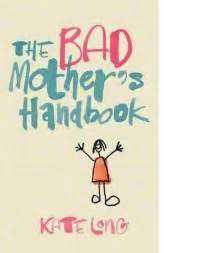
With Mother’s Day just around the corner, writewyattuk turns its focus to Bad Mothers United, Kate Long’s newly-published and long-awaited sequel to her best-selling 2004 debut novel, The Bad Mother’s Handbook.

WHILE there seems to be an overwhelming compulsion for the publishing industry to label books and authors, some just don’t tend to fit those artificially-neat genre and category boxes.

And even though the cover art and accompanying blurb of Kate Long’s Bad Mothers United (Simon & Schuster, 2013) suggests straightforward laugh-a-minute chick-lit and that whole gamut of yummyslummymummydom, it’s so much more than that.

kate Bad-Mothers-United-newIf you insist on a label, the closest I can suggest is perhaps Northern grit-lit with dashes of trans-Pennine romcom.

However, I can’t help but think that under-sells Kate’s keyboard and pen craft and only tells part of the tale. And this long-awaited sequel to her best-selling debut The Bad Mothers Handbook is multi-stranded for sure.

Both books could so easily fail in the hands of lesser writers, its component parts on the face of it covered well enough elsewhere.

What have we got? Young mum becomes young gran, full of resentment at missed opportunities. Second generation young mum similarly resentful as fate alters life path. Ailing grandma on slippery downward slope via dementia, into old folks’ home. Then there’s Dad, edged out but trying to rekindle his former relationship, and another unwilling to play his part, while an alternative boyfriend takes his place but is largely taken for granted.

But the main difference here is how well those characters are portrayed – drawn from memory and drawn from life, as E H Shepherd put it.

For each character comes over as nothing short of real, yet at the same time this is no cliched window on Northern working class life. There’s the odd kitchen sink and talk of abortion, but that’s about it. For these are believable people leading not-so-ordinary lives, with various ups and downs coming their way yet these core characters offering inspiration from the most mundane existences.

Spot On: Kate Long gets it right

Spot On: Kate Long gets it right

I won’t mention names, but some authors write about the North of England like it’s some sociological project. Alternatively, there are those who just don’t research their subjects. But Kate Long gets it spot on. She’s clearly led that life, or at least understood what makes a working class mum (often with middle class aspirations) tick. And this is no cosy tale of life in the big city, but one hewn from good, honest Lancashire stock and that whole battle to keep afloat while circumstances, society and life in general has a habit of dishing out its worst aspects.

I’ll try not to be too specific about Bad Mothers United or its predecessor, lest you’ve yet to wallow within. You may have seen the accompanying 2007 TV series to The Bad Mother’s Handbook, starring Catherine Tate, Holly Grainger, Anne Reid, Robert Pattinson and Steve Pemberton, among others. If so, you’re ahead of me. But while Kate had a hand in the screenplay, I’m still glad I encountered the book first.

The Bad Mother’s Handbook (2004) followed a year in the lives of Charlotte Cooper, her mum Karen, and her Nan, in 1997 – the year Tony Blair was elected, Princess Diana died, and everything changed for this core trio. Charlotte, at a key point in her A-levels, falls victim to a stray condom, much to the disgust of her mum, now set to be a 33-year-old gran at a point where she’s having to deal with Nan’s ailing health, forced to further  put her own aspirations on the back-burner.

kate long BMHThere are funny moments, plenty of poignant ones, sad and joyous moments, and real humour among Lancashire’s hill country. In short, three generations of under-valued and less than confident mums get to re-evaluate their own part in the scheme of things and consider whether they’re  the bad mothers they think they are.

The author’s realistic touch lends itself to Nan’s recollections of her between-the-wars childhood too, something that also continues into the follow-up as the younger generations look to keep her memory alive.

In certain respects, not much has changed when we return in 2000 for Bad Mothers United. But Charlotte is now commuting between Mum – in part reduced to babysitting duties for her daughter’s toddler Will – in Bank Top and her uni studies in York. As she rides a rollercoaster of resentment,  jaded romance and temptations elsewhere, her mum tries her best to stay afloat back home – getting to grips with a series of domestic and not-so domestic crises in love and life.

Like I said, I won’t go much further than that, but I will say that despite the chummy use of words like ‘catastrophic’ on the cover, the whole plot remains feasible throughout, never straying far from realistic. That doesn’t make it any less imaginative though. In fact, it adds to the book’s charm, as Kate so cleverly managed with the original.

What the author does particularly well is subtly tell both sides of each story – through first-person narrative for both mum and daughter – to the point where you understand totally where the main characters are coming from, even if you don’t always agree with their viewpoint.

Along the way, with a number of great twists, there are chances for each to re-evaluate their roles and contemplate just where they might have gone wrong. Yet at no point does that slow down the pace. And throughout all the highs and lows Charlotte and Karen (and in turn Nan) experience, you know full well they’re not the bad mums they think they are.

For more about Kate Long and her books, go to http://www.katelongbooks.com/

Posted in Books Films, TV & Radio | Tagged , , , , , , , , , | 1 Comment

Where we are now – Bowie 2013 style

In which writewyattuk gets in a few early listens of the eagerly-awaited new David Bowie LP, The Next Day, and is suitably impressed …

Camera Obscurer: The Next Day cover

Camera Obscurer: The Next Day cover

EVEN the cover of David Bowie’s new album is something of a statement, a blanked-out version of his classic 1977 Heroes sleeve perhaps suggesting a clean slate and chance for this iconic artist to be judged afresh.

It’s difficult to ignore his past of course, and the early January release of first single Where Are We Now? – on his 66th birthday – courted comparisons with Bowie’s Berlin trilogy. A fair bit of the left-field output on this album suggests there’s something in that. And whatever the intention, we certainly have his most accomplished album in three decades.   

Two years in the making, and 10 years since his last, The Next Day is Bowie’s 24th studio album, and on this evidence let’s hope there are more to come. Tony Visconti proves to be a perfect production partner, and there are no fillers here either, the most discordant moments having their place in the scheme of things, and the material strong throughout – commercial or otherwise.

From the opener, title track The Next Day, I’m hooked, Gerry Leonard and David Torn’s under-stated yet duelling, abrasive guitars taking me back to nights watching the high-octane six-string assault of early That Petrol Emotion. But Bowie’s often-imitated but never quite mastered vocal ensures you’re never in doubt who you’re listening to.

There are no real statements of intent on this album, but “here I am … not quite dying” seems apt for the 2013 Bowie. The same could be said for this song’s narrator’s promise to stick around a bit, “and the next day, and the next, and another day.

If The Next Day suggests present and future, there’s a nod to the past on the following track, Dirty Boys, grainy images from the Space Oddity and Ashes to Ashes promos springing to mind as the artist formerly known as Aladdin wipes his lamp to reveal glimpses of all the guilty fun of Finchley Fair, Tobacco Road, stolen cricket bats and smashed windows. Are we in North Carolina or North London? Who knows. “The sun goes down and the die is cast, and you have no choice.” It’s stream of consciousness stuff maybe, but the harmonies point to evidence of a re-kindled passion for sound and vision. Boys Keep Swinging Pt II anyone?

Like many tracks here, it doesn’t outstay its welcome either, fading just as I realise I could be listening to a Nick Cave song. It seems churlish to mention later artists and their influence on Bowie, when surely it was always the other way round. But it does go to show how relevant he remains – at one with the best talents of the past 30 years while so clearly a huge inspiration on them in the first place.

Star Turn: David Bowie and Tilda Swinton in the video for The Stars (Are Out Tonight)

Star Turn: David Bowie and Tilda Swinton in the video for The Stars (Are Out Tonight)

Talking of relevance and resonance, The Stars (Are out Tonight) is perhaps the closest we have here to an old-fashioned chart hit, bringing together the best elements of Bowie’s ’80s commercial success, Blue Jean and all. It’s certainly crafted too, the very expression of a soundtrack for driving the open road, although with the Thin White Duke on board you expect some jarring imagery en route.

The gorgeous rumbling sax (oddly reminiscent of Absolute Beginners) creeping in below the strings part-way through helps bring it all together, not least that nod to nostalgia he so effectively employs. The complementary cutting guitar adds to that sense of celebration. And then there’s the sumptuous stellar imagery. But this is far more than a fresh attempt at increased radio airplay.

There’s more of that ‘80s Bowie feel on Love Is Lost, this time from the slow-build school of fine songwriting, and Leonard’s howling blues guitar somewhere in the distance helps us navigate our way from station to station. In fact, even the bend on the drum offers insight on how to produce a timeless track.

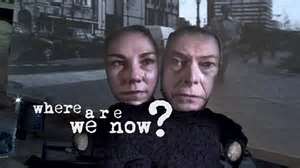
Pensive Puppets: Jacqueline Humphries and Bowie in the Where Are We Now? video

Pensive Puppets: Jacqueline Humphries and Bowie in the Where Are We Now? video

Where Are We Now? was the first track aired, and grows more powerful by the play, a spaced-out oddity you could say. It’s become one of my favourite-ever Bowie singles, and when he hits that chorus the hairs stand up on the back of the neck. Introspective, hauntingly beautiful, and a pensive recollection of past days. And if Tony Levin’s punctuating bass gives a Daniel Lanois feel, Bowie is the Emmylou Harris of the piece, his subtle keyboard complemented by heart-felt vocals.  

It must have been difficult to know where to go from there, but Valentine’s Day hits the right notes, a low-key 70s-style hybrid of sweet rock’n’roll – suggesting more than a hint of past collaborations with Mott the Hoople – wrapped around a timely and deadly theme of outsiders, grudges and high school shootings.

If You Can See Me is altogether more jarring musically, the man who fell to earth’s harmonies with Gail Ann Dorsey the closest we get here to other-worldly Bowie – competing rhythms and time signatures taking us into uncharted waters in something of an aural mash-up that may rule out too much Radio 2 airplay. But maybe that’s Bowie for you, seemingly never comfortable too long with the quiet life.

Before we know it, he changes gears again, giving us something altogether more Brit Pop in I’d Rather Be High. For someone seemingly at home in every era, there’s as much a hint of Blur here as Revolver-era Beatles, that later assumption aided by Levin’s bass again. Close your eyes and you might even see the black’n’white footage, that 60s’ feel under-pinned by a 40s’ style tale of the horrors of war.

Iconic Image: The 1977 Heroes cover shot by Masayoshi Sukita

Iconic Image: The 1977 Heroes cover shot by Masayoshi Sukita

But if that was Bowie’s musical bid to leave his Tin Machine capsule and flirt with the best of ‘90s pop, Boss of Me takes us back to ground-breaking ’70s material. I guess that’s largely down to Steve Elson’s baritone saxophonics, with elements of early Roxy Music on display too.

Dancing out in Space is as much a catch-all for Bowie today as throughout the decades, giving us snippets of everything in his make-up (and let’s face it, he’s slapped a fair bit of make-up on over the years), an all-out chugging rhythm bringing to mind past workmate Iggy Pop and Lust for Life. Perhaps there’s something in that too. Bowie may have had periods we’d rather gloss over, but there’s no doubting he’s on his game here and has regained his own lust for music, time and erm, space.  

With How Does the Grass Grows we’re in the 70s again, and you can envisage the face-paint, high heels and post-war parents tutting at this alarming vision. Yet, aside from its bubblegum feel and playground chorus, a more reflective middle-eight takes us to a whole different level, setting us up nicely for the album’s climax.

(You Will) Set the World on Fire cranks up that pace again, Earl Slick and Leonard’s heavy rock riff suggesting we’re really building to something. While I remain reticent to mention modern influences, I’ll get around that by highlighting instead those I think might pull off a cover version, with Brett Anderson’s Suede springing to mind here.

If this album can be interpreted as a statement of where Bowie is in, the poetic You Feel So Lonely You Could Die has more the feel of an obituary. Yet for its maudlin subject matter, musically it’s an inspirational tribute to someone who’s given so much over the last 50 years. And the swirling chords, Zachary Alford’s hypnotic drumming and Dorsey’s mesmeric bass combine perfectly.

And then we’re away on the back of Heat, with the credits rolling. Much of the cinema is emptying, but we’re still gripped as Bowie’s jangling acoustic guitar – offering shades of Major Tom and all that – offer a perfect foil to the live band feel, as those strings increase and see us off in style. While the verse resembles Leonard Cohen’s Hallelujah, a soaring, intense but somehow still subtle chorus takes us onto a whole new plain, in a soundtrack to what could be a truly inspirational movie.

Word has it that there are no plans for Bowie to tour this album, and maybe that’s a relief after all the hard work put in by the man himself and Visconti to blend a live feel with hidden studio magic.

In a nutshell, The Next Day works on so many levels, not just as a celebration of Bowie’s longevity and continued relevance, but also proof positive that he can still hit such a fresh, creative height after all these years.

Posted in Music | Tagged , , , , , , , , | 1 Comment

A lubbly Bubbly awayday at Haig Avenue

Hubba Bubba: Bradley Bubb gets the Haig Avenue awayday off to a fine start (Photo courtesy of David Holmes)

Hubba Bubba: Bradley Bubb gets our Haig Avenue awayday off to a fine start (Photo courtesy of David Holmes)

WHAT a week for the Cards, and a rare one for me as I’d seen them play three matches.

A half-term trip South allowed me to take in a battling Kingfield defeat to play-off hopefuls Newport County, before a return home and midweek trek to Barrow and shock 2-0 reverse, among barely 30 travelling fans. But by the weekend I’d finally seen my first away win since October, and on my doorstep in the Cardinals’ graveyard of Southport.

Haig Avenue – or the Merseyrail Community Stadium as the club like to call it these days – has been a miserable hunting ground for us over the years. I’ve tried to blank out most of those games, so I was genuinely surprised when I did some digging and realised just how badly we’d fared at the Conference ground closest to my Lancashire base.

We have to go back to October ’93 for the first visit, while I was doing 500-mile round-trips to see my better half between my native Surrey and the heart of Lancashire. Delving through some old programmes, I found my ‘fan’s eye view’ report of that match – during our second Conference season – against newly-promoted Port, titled ‘Buried in the Sand’, which probably tells you all you need to know.

I’ve slept since then, but according to this scribe’s report it proved a nightmare for our ‘leader’, revered keeper Laurence Batty, who appeared to throw the ball into his own net at a crucial stage in the game. We did pull one back through debut loanee Andy Gray, but ultimately lost 2-1. Incidentally, it cost £4 to get in, and no doubt I still felt robbed. But I got used to that over the years.

I recall very little about the following season’s 2-0 defeat save for it being a sunny if not wind-blown last day of the season. I had a house-load of visitors, and instead of being half-frozen to death – more often than not the case at Haig Avenue – we got sunburn. I also remember a visit to the beach after, with light aircraft lined up on the sands. Can that be right? Perhaps it was the ale. Anyway, eight days later Colin Fielder’s extra-time strike saw us past Kidderminster Harriers at Wembley, so I guess we got over it.

The Legend: Geoff Chapple, as portrayed by esteemed journalist and former Card Clive Youlton

The Legend: Geoff Chapple, as portrayed by top journalist and former Card Clive Youlton

That next season we finished second to Macclesfield, with Southport one place behind. And at Haig Avenue we came back from 2-0 down for a point, thanks to Junior Hunter and Clive Walker. Geoff Chapple recalled how we  eventually overcame a strong wind and direct home tactics to keep it down, finishing in the ascendancy.

What I recall more readily is how we felt the wrath of some fastidious Port stewards, evangelical in their attempts to keep us corralled into their open-plan away end within their precious yellow lines, despite the fact that there were probably no more than 100 of us.

I’ve completely blotted out April ’97’s 4-1 defeat, although I see the wondrous Shane Wye scored our goal. The same could be said for our visits in February ’98 and March ’99, both ending in goalless draws. A report for the first game mentioned Nat Abbey’s masterclass in goal, covering Batty’s absence, as John McGovern’s side somehow dealt with rain, snow, sleet and freezing cold wind. In that next stalemate, dashing Darran Hay received a red card. Again I’ve clearly blanked that.

The weather must have been better for our August ’99 visit. We were unbeaten at the time, but it was the first day of the season. We hadn’t won in six previous attempts there, but Brian McDermott was feeling bullish and gave debuts to four new signings. We lost 4-1 though, the future Reading boss telling reporters ‘defensively we were shocking’ and ‘Southport out-fought us in the midfield areas’. Sub Steve West scored our goal, but Batty was lobbed by Andy Gouck in the opening attack and in another horrid encounter of pumped high balls and strong wind it went from bad to worse for the new-look Cards.

If that wasn’t enough, we had to go back in late February for an FA Trophy fifth round tie – 13 years ago this week. As Clive Youlton put it in Cards On The Table (Tempus, 2003), “Another dreaded trip to Southport and Haig Avenue loomed. A comprehensive 3-0 defeat, with his team bereft of ideas, spelled the end. Even defender Richard Goddard had been tried up front to show just how desperate McDermott’s thinking had become.”  He got the bullet at that Monday’s board meeting, and now it was no wins in eight attempts at Haig Avenue. But finally salvation was on its way.

Happy Days: The late Colin Lippiatt (Photo: Woking FC)

Happy Days: The late Colin Lippiatt (Photo: Woking FC)

On September 23rd, 2000, we finally won for the first time there – under the late, great, white-trainered Cards legend that was Colin Lippiatt. Darryl Flahavan kept a clean sheet and Jinky Steele grabbed what proved to be the winner on 42 minutes. I should remember more, but with an eight-month-old daughter at the time it was all a bit of a blur.

Normal service soon resumed with a 2-0 defeat in mid-February ’02, followed by an horrific 5-1 defeat in October that year, 43-year-old coach Glenn Cockerill with a battling midfield display and Ben Abbey putting us ahead before a second-half capitulation, Warren Patmore sent off for a dodgy challenge and legendary boss Geoff Chapple, who was back in charge, subsequently potted.

Paul Beard wrote in the WFC programme of the performance being ‘our most awful for well over a decade’, eclipsing even an 8-1 home defeat to Dagenham and Redbridge. The doomed boss recalled in Clive Youlton’s biography Geoff Chapple – The Story Behind The Legend (Tempus, 2006): “I was sitting opposite Glenn (Cockerill) on the way to that game and we were ringing up people like Paul Gascoigne, just to see if they could turn out for us because we were so short of players. Glenn had to play himself, which was an embarrassment. We were winning 1-0 for an hour and we lost 5-1 after Glenn, who was playing well, brought himself off. I was absolutely shell-shocked.”

But for Shwan Jalal’s goalkeeping it could easily have been double figures, and at 9am that Monday at Kingfield, Chapple got the heave-ho, with Cockerill taking over. Yet somehow we survived the drop that turbulent season, a record nine end-of-term draws followed by a win over Telford seeing the Sandgrounders relegated instead.

That at least ensured there were no Port defeats for two seasons, but on their return from the Conference North, we lost 1-0 at Haig Avenue on a miserable Monday night in April 2006, where I was among a handful of hardy Cards, and the next season’s visit – a last day of the season 0-0 – proved to be the hosts’ last in the top flight for a while. And as it turned out, we followed them into regional football within two seasons.

Lining Up: The Southport and Woking players shake hands before kick-off (Photo courtesy of David Holmes)

Lining Up: Southport and Woking shake hands before kick-off (Photo courtesy of David Holmes)

If I’d remembered all that last Saturday, I might not have got out of bed, thinking Lippiatt’s win was destined to be our only ever success in PR8. But like most Cards fans (and all proper footie fans) I have this compulsion to regularly inflict pain upon myself, so a freezing cold day in late February in the North West held no fear.

After our performance at Holker Street against Barrow, maybe I shouldn’t have bothered. But I could hardly turn down my guests’ free lift to see my beloved Cardinals at a ground less than 17 miles away.

We’d had a similar season to the Sandgrounders, with Port boss Liam Watson proving as canny a manager as Garry Hill in some respects, helping put this former Football League club back on the map and punching above their financial weight, despite part-time status.

Grand Exit: Port's Simon Grand gets his marching orders (Photo courtesy of David Holmes)

Grand Exit: Simon Grand is dismissed, and Mark Ricketts feels his pain (Photo courtesy of David Holmes)

Having missed out on a pre-match pint, we headed straight for the away terrace, and I was well prepared this time, the extra layers ensuring I didn’t feel the cold in the first half. And as it turned out, Bradley Bubb, who ruled himself out of the midweek slog to Barrow (perhaps he had bluebird flu), was on form, grabbing the headlines with both Woking goals, while Mark Ricketts was at his best in the middle of the park. It probably helped that Port were reduced to 10 men when Simon Grand was shown a straight red midway through the first half for a bad challenge on Ricketts, and Brad finally made them pay before the break.

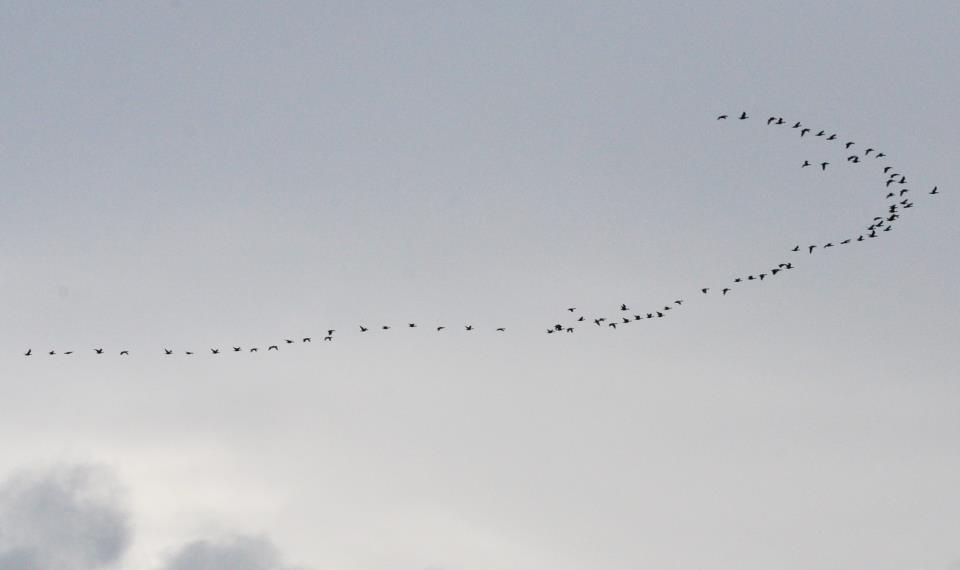
Flying High: The local birdlife make their point to the away fans (Photo courtesy of David Holmes)

Flying High: The local birdlife make their point to the away fans (Photo courtesy of David Holmes)

There was concern before that perhaps we should have taken note of the spectacular wildfowl formations in the skies above us, the local birdlife seemingly advocating being anywhere but here. That seemed all the more likely when the second half started amid biting arctic wind, snowflakes, and a slight wobble as Port levelled from a cracking Aaron Chalmers free-kick just past the hour.

But things eventually warmed up on account of all the hot air directed the ref’s way by the home fans and players following a contentious decision minutes later. You could say the game turned, the official seemingly unmoved as Shaun Whalley was bundled over by loan keeper Seb Brown, the home support woken from their slumbers to shout abuse as one, and the players joining in. Meanwhile, Woking broke up the other end, and Bubb found the net via a hapless home defender, running behind the goal to celebrate.

We had several chances to put the game out of reach after that, but it wouldn’t be Woking without some late jitters, and it at least made that moment when the ref finally blew for time all the better. For once, that trip back to Surrey must have been bearable, and our renewed confidence showed in the following midweek home win over Forest Green.

High Praise: Bradley Bubb celebrates after his second goal (Photo courtesy of David Holmes)

High Praise: Bradley Bubb celebrates  (Photo courtesy of David Holmes)

This time I missed out, but Radio Surrey’s Tim Durrans and summariser John Moore perfectly described a mighty 90 minutes for the Cards which left us in nosebleed territory – above Luton in ninth place. 

For the visiting fans who’d suffered against Newport and Barrow, Southport provided a perfect antidote. There was an element of keeping your head down and your smirk zipped in as we made our way past the home throng outside the stadium after. But let’s face it, after 20 years of hurt at Haig Avenue, we truly deserved that moment of gloating.

Posted in Football, sport | Tagged , , , , , , , , , , , | 1 Comment

Three Poets Walk Into a Club …

IF YOU still reckon poetry’s all about stuffy old school textbooks or finger-in-the-ear performance nights upstairs at your local boozer, think on.

For away from the quieter corners in Waterstone’s and uni lecture rooms, there’s evidence that this ancient art can still chime with us all – with three fine examples of performance poetry at its best at 53 Degrees in Preston on Saturday night, and one even on the GCSE syllabus these days.

Proud Manc: Mike Garry (Photo: http://nigelmaitlandphotography.com)

Proud Manc: Mike Garry (Photo: http://nigelmaitlandphotography.com)
The proceedings got off to a gripping start through Mike Garry, a proud Manc who formerly put the ‘rar’ into librarian, supplying a perfect introductory act – his inter-poem banter setting the tone nicely.

His way with words was almost hypnotic at times, this long-haired linesmith – think Steve Coogan meets David Threlfall as Frank Gallagher – easing us in via a window on the hard-line world of paranoia and worry about the way we’re heading.

From his sad tale of a girl begging outside the World-Famous Embassy Club in Penny for a Guy onwards, there was plenty to think about.

“When the guy down the pub slags the Nigerians for nicking our jobs,

When the guy down the pub for 19 years has continually signed on”

And while Garry’s subject matter might struggle to break the ice at parties, there’s a spirit of real life here and inspiration behind the pain. Furthermore, behind his pensive poems and aural talent you instinctively know there’s a good, honest bloke.

One such example was Saint Anthony, his tribute to Tony Wilson and the late TV legend’s encompassing influence on seemingly everything that encapsulated Garry’s North-West during the previous decades, provided in an A-to-Z name-check of key moments.

Hamlet, Ibsen, the IRA, Jesus, Mary and Keith Joseph,

Joy Division, Judaism, the importance of the moment

His further warts’n’all portraits of hidden Manchester in the epic Fallowfield proved similarly beguiling, its trials and tribulations resonating in a less-wholesome picture-postcard portrayal of everyday working-class life in the pubs and clubs of his old manor.

Sandwiched between Garry and the main act was Luke Wright, who passed himself off as ‘the token Southerner on the bill’, Braintree’s ‘one-man boy band’ shedding light on life in his native Essex and giving credence to his description in The Observer as ‘the best young performance poet around’.

While his arrival might have led to a few shuffles and scrapes (this was my first seated experience at 53 Degrees) as a predominantly North-West clientele weighed up its guest, he put them at ease and disarmed the cynics with the Essex Lion, a poetic re-telling of the moment a few inebriated caravan-bound holidayers tried to convince the world of the existence of a big cat on the prowl near Clacton-on-Sea, leading to a large-scale police search and national headlines for what was in effect … erm, a big cat.
“Sausages on grills abandoned, couples pegging it in tandem.

But I just stopped and gazed in wonder at the great beast standing yonder.”

Luke Sharp: Essex performance poet Luke Wright

Luke Sharp: Essex performance poet Luke Wright

Anyone who rhymes “Officer, don’t be a benny, the thing I saw was MGM-y” is alright by me, and there was plenty more to come from this spikey-topped three-piece suit, including his tale of Barry vs the Blob, an alternative view of Brentwood life for those more prone to think of The Only Way Is Essex.

That was followed by Posh Plumber, a portrait of a less-than-perfect middle-class artisan with a ‘pastry face like Quentin Letts’, delivered in an Estuary English accent bringing Matt Lucas to mind:

“He might be slow, he might be late, or pitch up on a different date,

He may hum Haydn’s No.8, but he’ll never call you ‘mate’.”

Then we had a Hilaire Belloc-style telling of public school life, its underlying message suggesting – despite the huge admission fees – Charterhouse is still just another boys’ school where pupils draw willies on desks.

And before we knew it, Wright was away, having first shed light on his ultimate female fantasy in Bloody hell, it’s Barbara, partly inspired by reality TV’s Supernanny Jo Frost.

When we finally got to top-of-the-bill John Cooper Clarke, there was a feeling of last-minute mayhem from the moment he asked the backstage team to cut the big music intro, his leather bag of poems and lord-alone-knows-what-else plus a glass of gin and tonic never far from his side.

Added Colour: John Cooper Clarke remains a major inspiration all these years on

Added Colour: John Cooper Clarke remains a major inspiration all these years on

At times he was more stand-up comic then poet, with gags about everything from the humble Lada and old age (he’s 64) to voiced opinions on Alzheimer’s, Amnesty International, Hugh Grant, Lord Leveson and Raoul Moat, forever deviating from his path in a mostly heart-warning but occasionally borderline bid to bridge the gap between his poetry.

In a BBC 6 interview with the original Punk Poet the day before, Stuart Maconie revealed he’d performed 200 solo JCC gigs around the world in his ‘never-ending tour’ in the past three years, a heart-warming statistic after the forgotten years proving there is life after drugs.

But as the man himself said on the night, “I’ve seen the future and I ain’t there – things can only get worse!” – Clarke delivery his take on the Dignitas debate, including a major rant about Terry Pratchett, the right to die, and how it would be his worst nightmare to meet his end in Switzerland (or ‘an Alpine-natural neighbourhood, then back to Britain in all dressed in wood’, as he put it).

Things Can Only Get Worse also led to glimpses of his family life too, at least in stand-up style, telling us how heart-breaking it is for teenage children to tell you, ‘I’ve no sympathy for you’ and ‘you’re a fool to yourself’.

A long dialogue on past brushes with the law followed, leading to Thirty Six Hours and Bi-Polar Inmate Diary, adding how – despite his short punishment – he had more cause to write about prison life than Johnny Cash. And police dealings also came up in new offering Pleb Squad.

Then we had segues into advertising and mentions of a voiceover deal with a famous pizza firm, which he felt timely as it followed the outbreak of swine flu – ‘any food you can slide under a door has got to be the future’.

On he went, via a rant about the re-branding of VD as STI,  the appearance of ‘Ragamuffin Romeo’ Dean Friedman at one gig and how it led to the renaming of his Lydia Lydia ‘for litigious reasons’ – proving how necessity was the mother of invention (‘and not Frank Zappa like a lot of people think’).

Despite hints as to why he never really enjoyed mainstream success, Clarke reminded us of his great talent on the mighty Beasley Street and an updated version, following the location’s Laurence Llewelyn-Bowen style make-over in Beasley Boulevard.

From the Arctic Monkeys and Kate Nash to Plan B, newer acts continue to doff their cap to JCC’s influence, and there’s no disguising our love (so to speak) for this icon – still going strong (if not a little wobbly) after all those years and everything he’s come through.

And his ‘high-yield pension fund’ show-stopper Evidently Chicken Town (recently borrowed by The Sopranos) summed up his talent, even if he did lose the momentum while rummaging through his bag for an encore – a fair chunk of the crowd wondering if they were about to miss the last train.

He finally got there though, a monologue on past marital woes followed by a happy conclusion with I’ve Fallen in Love With My Wife. And with that, and the 53 Degrees ‘curfew’ broken, the Bard of Salford shambled off stage.

I’d have preferred JCC in his pomp with the Invisible Girls, rattling off Martin Hannett-produced Disguise in Love stand-outs like I Don’t Want to Be Nice and Valley of the Lost Women. But I can’t complain, having been in the presence of a living legend touched by genius. And God bless you for that, Johnny Clarke.

53 degreesTo find out more, check out:

Mike Garry here

Luke Wright here

John Cooper Clarke here

And for 53 Degrees in Preston, try here


Posted in Books Films, TV & Radio, Comedy & Theatre, Music | Tagged , , , , , , , , , | 1 Comment