Years on the clock, but magic in the songbook – the Craig Reid interview

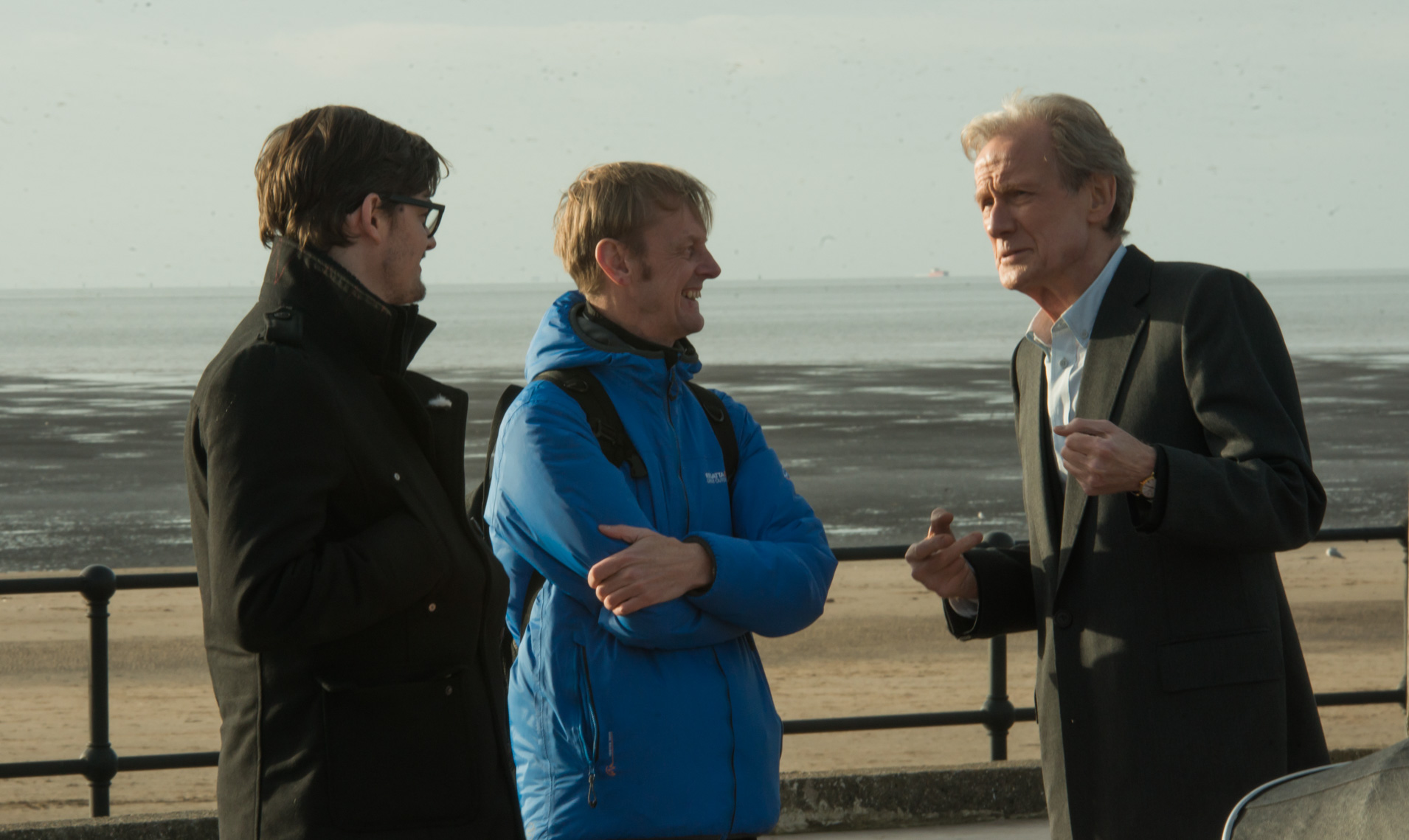
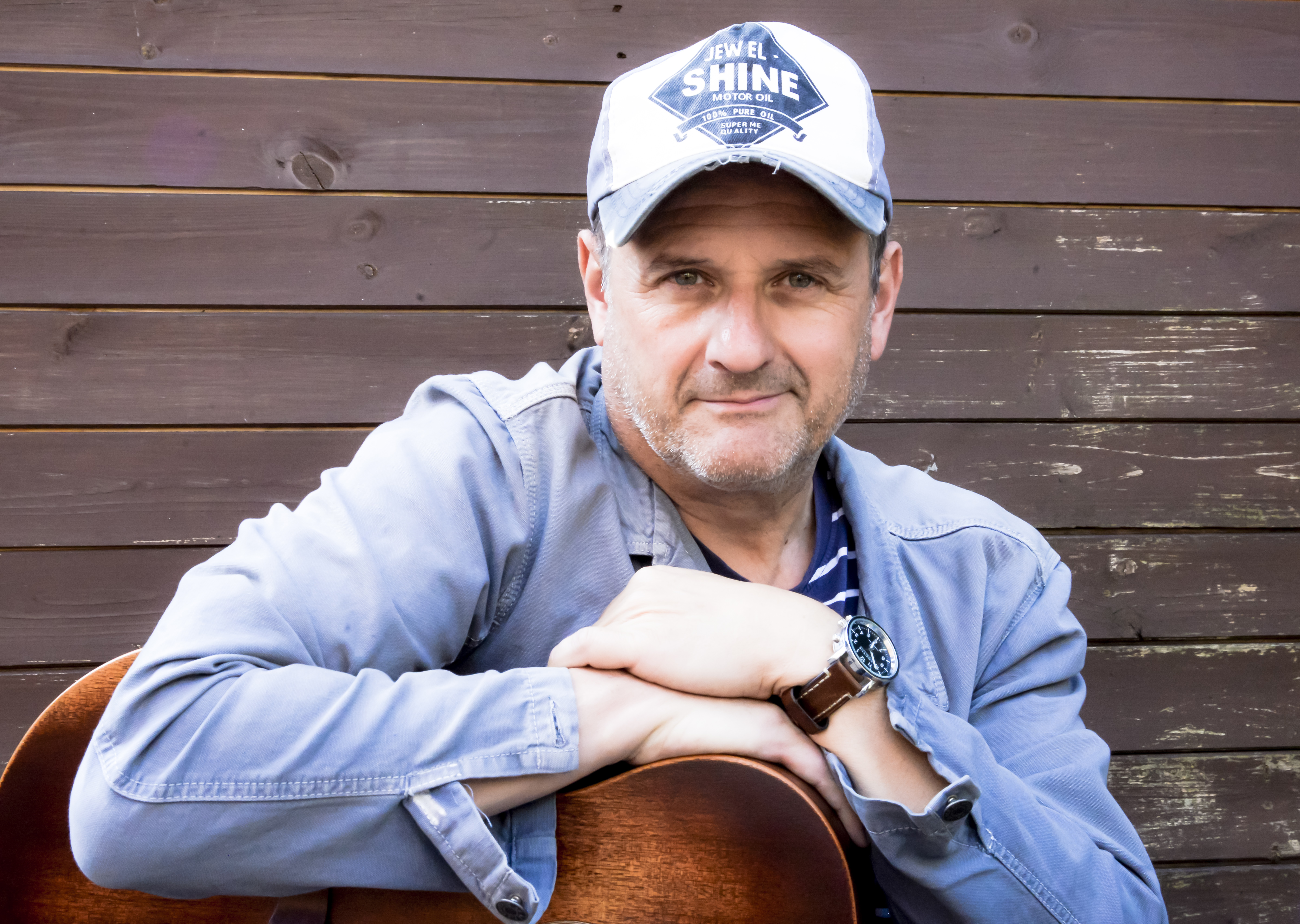
Chain Males: Craig and Charlie Reid, The Proclaimers, still pedalling quality songs. (Photo: Murdo MacLeod)

It’s been a busy year for The Proclaimers, still promoting last year’s mighty Angry Cyclist album with live dates here, there and everywhere, clocking up a hell of a lot more than 500 miles and 500 more so far.

But the finish line is now in sight, getting on for a year after their 11th studio LP saw the light of day.

Angry Cyclist saw Caledonian twins Charlie and Craig Reid still at the peak of their songwriting prowess, with plenty of catchy hooks, melodies and gorgeous close harmonies, plus clever, subtle but often biting lyrics.

I saw the brothers and their long-term band at Sheffield City Hall last October, and was suitably impressed (with a review here). And while that first leg of shows ended in December – featuring a sell-out 47 shows in the UK and a 13-date coast-to-coast tour of Canada – they’re back out there now for several more big dates.

And all that 32 years after first impressing this scribe and countless other fans around the world, the Reid boys similarly inspired the first time I saw them in 1987 at Glastonbury Festival, their songcraft and inner fire as strong as ever, long after This is the Story first stopped so many of us in its tracks.

They’ve even inspired a musical, the play and film Sunshine on Leith, a new generation of fans picked up along the way, with the movie becoming the fifth-highest grossing independent UK film of 2013 and Stephen Greenhorn’s original musical enjoying its fourth UK run last year and believed to now be heading toward’s London’s West End.

Charlie and Craig, born in Leith, Edinburgh, in 1962, were flying to Amsterdam the day after I called the latter, looking forward to a first ever appearance at the Paradiso, then a show in Bruges, before returning to the UK for a date in Solihull that Sunday. And when we spoke, their latest appearances at Edinburgh Castle were still very much on the mind.

“We did it once before, 11 years ago, but this time we did two nights, and for the first the weather conditions were perfect. On the second there was a little rain and the wind was pretty high, and a couple of times I think we thought we were going to have to pull it. But luckily, we got to do the whole show, and it was great. Yes, a very memorable experience.”

That involved 8,000-capacity sell-outs each night, as opposed to a similarly-impressive 5,500 success for a recent Inverness date. And I believe there’s a documentary about the song ‘Sunshine on Leith’ coming soon.

“There is. They asked a while ago if they could film both nights (at Edinburgh) for this film, so I wait to see how that turns out.”

I see you’ve been asking fans via social media for memories of what that song means to them. I’m guessing you’ve heard lots of inspirational stories so far.

“Yes, about ‘Sunshine on Leith’ and many other songs of ours, but that song more than any other.”

My chief excuse for talking to you this time is the Warrington Parr Hall show this Sunday, August 4th, and Blackpool Opera House on Saturday, August 17th, with dates at Watford Colosseum (9th), Oxford New Theatre (11th) and Stoke-on-Trent Victoria Theatre (16th) in between. Have you played the Opera House before?

“We played Blackpool three years ago, and that’s definitely going to be the biggest crowd we’ve played to. We’re looking forward to getting back there.”

It’s been a long tour, and it goes on. You see out August at Salisbury City Hall (30th) and The Hexagon in Reading (31st), then in September have your Home Internationals of sorts, with dates at Swansea’s Brangwyn Hall (1st), Cork Opera House (5th), Dublin’s Bord Gais Energy Theatre (7th) and Belfast’s Waterfront Hall Auditorium (8th) followed by a finale at the Glasgow SSE Hydro (14th). Will that be the last show for a while?

“That’ll be the last for this album. I think by that time we’ll have been touring with this record since June of last year, so I think we’ll take a break then make another record. I’d have thought that next year we’ll all be writing and recording, and I wouldn’t have thought we’d be playing any live dates.”

When I saw you live last autumn, you were already on the money, so I can’t imagine how tight a band performance it must be now. Could you be doing this in your sleep by now?

“No, we do keep changing things. Even at Edinburgh Castle we changed songs for the second night. You’ve got to keep yourself on your toes. We’ve a lot of songs we can play. There are some you feel you should play every night, but others to switch around and keep it interesting.”

I’m guessing it might get a little wearing going into something like ‘(I’m Gonna Be) 500 Miles’ every night, great a number as it is. Then again, I saw a clip of the Jacaranda School in Malawi singing the song as part of the Mary’s Meals charity initiative. Moments like that must make you proud and somewhat emotional.

“Yeah, it does. It’s great when your song can get through to so many people. Certainly, ‘500 Miles’ is not a difficult song, but I think that adds to it. That’s part of the popularity. That’s why so many people have done it in so many different situations.”

It must play on your mind or indeed any other successful band with something like that, wondering just what it was that made it become such a worldwide hit. If you could bottle that … Then again, I don’t see you and Charlie looking for an elusive formula that might guarantee a hit record.

“No. We didn’t expect to get them in the first place, so we don’t set out to make hit records.”

How was your Glastonbury Festival this time around?

“It was fantastic. We were on at 11.45, by which time the sun was directly over the stage, and it was very hot. But it got much worse in the late afternoon. I really pitied the acts that were on after us. The heat was incredible. I’ve never felt it like that at any festival. But it was good to get back there.”

That’s where I first saw you live in 1987, and in a similar mid-afternoon slot I seem to recall.

“We did, yeah. The first album was not long out at that stage, possibly a month or so.”

I said in my review from Sheffield City Hall from last October that you seemed somewhat channelled when you got out there, but fired straight into ‘Angry Cyclist’ and it made for a mighty, punchy start. I get the impression you still get nervous.

“Yes, sometimes. Even playing regularly. It’s not something where you get a couple of gigs and then you feel fine for the rest of the tour.”

I suppose it’s good to have that nervous energy. It leaves you less likely to get complacent.

“I don’t think we’d ever become that, y’know. It’s never happened, and I don’t think that’s ever going to happen with us.”

The lyrics for that song are spot on. It perfectly encapsulates the state we’re in politically right now, on both sides of the Atlantic, with a clear shift to the right and the seemingly-unchecked rise of populism. It seems that you must have so much material to go at as a songwriter right now, yet that must get hard – feeling a need to raise those issues all these years on.

“Yeah, I think that the polarisation of politics in many Western democracies, America and Britain especially, has been very obvious. For a number of years now. I think it will end eventually, but I don’t know how or when it will. It’s got a while to run yet. And I don’t think you could watch what’s gone on in the last couple of years and not write about it.”

Even the day we spoke, waiting – despairingly – to hear whether Boris Johnson or Jeremy Hunt would emerge as Conservative leader and therefore Britain’s next Prime Minister, I thought of another Proclaimers song, ‘What School’. We seem to be living little vignettes from your songbook. And on a similar front, 30 years or so down the line, can you still feel at times, thinking of a song from your previous album, ‘Forever Young’?

“No … in spirit I suppose, but reality and age catches up with you by the time we step down from the bus when we’re out on tour and the bloody legs are playing up. I think you take longer to recover from gigs and everything.”

Do you find it difficult to write songs when you’re out on the road? Because you’ll have spent a long time in that situation this past year or so.

“I never even try. I get an occasional tune and I’ll maybe just sing that into the phone, and might use that later on, but I don’t make any attempt to write on the road. I concentrate on what we’re doing.

“If you tour long enough you do look forward to writing again, and I look forward to probably October when we start.”

When you are back home, do you live quite close to Charlie these days?

“Yeah, about four miles or something like that.”

Do you see a lot of each other between recording and touring commitments? Do you still properly socialise?

“We do, but only for the reason that we rehearse a couple of times a week. Even when we’re not on the road, just to keep the voices right and when we’re writing new songs. Once we’ve got maybe three or four together we start rehearsing them, and that takes us through the months. So we end up seeing each other at least a couple of times a week even when we’re not touring. But it’s not a social thing. It’s work.”

And amid all this, where do you get your own sense of piecethese days? Is that still around and about Edinburgh, communing with that special ‘Sunshine on Leith’, or elsewhere?

“I think in Edinburgh, yeah, I think so.”

For this site’s August 2018 feature/interview with Craig’s twin, Charlie Reid, head here.

Spokes Persons: Craig and Charlie Reid on location with The Proclaimers in Leith (Photo: Murdo MacLeod)

For full details of The Proclaimers’ remaining 2019 dates and ticket information, head to the band’s Facebook and Twitter pages and their website.  


Posted in Books Films, TV & Radio, Comedy & Theatre, Music | Tagged , , , , , , , , , , | Leave a comment

The Wedding Present / Vinny Peculiar – Waterloo Music Bar, Blackpool

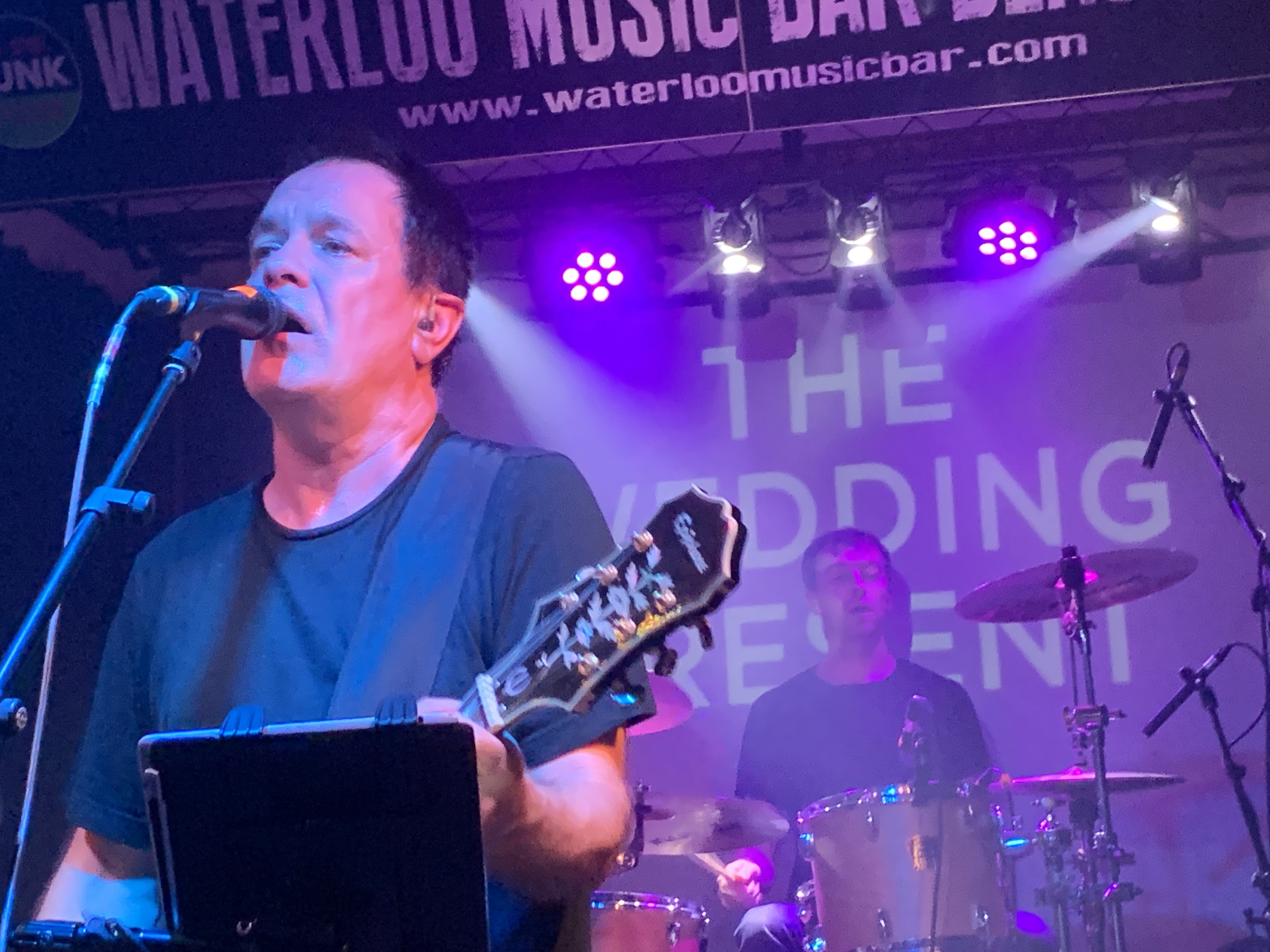
Live Presents: David Gedge and Charles Layton have put in the most TWP appearances (Photo: Richard Houghton)

Thirty summers ago I saw the semi-legendary Wedding Present play to possibly their largest audience thus far at Reading Festival, and certainly a bigger crowd than when I saw them at Glastonbury two years earlier.

It had been an amazing year, the success of October 1987 LP George Best propelling them way beyond the realms of mere indie stardom, moving away from venues like Reading Majestic, where I finally saw them in early ’87. And a year after that stunning debut album, a new record landed, Bizarro, with tickets duly snapped up for shows at Portsmouth Guildhall then the first of two nights at Kilburn National Club.

If I recall rightly, it was at the latter that during a full-on ‘Take Me!’ David Gedge and Peter Solowka gave it some tongue-in-cheek rock star poses, announcing, ‘Status Quo – 25 years in the business’. They’d clearly hit the big time, yet seemed not so much bewitched or bothered as bewildered by the experience. And anyone who’s spoken to members of the band knows that down-to-earth approach never left them.

That stretches to their choice of venues – they’re still capable of filling the biggies, but are at home elsewhere too, bringing intimacy to them all. That’s something I spoke to two lads near the front about on the night. They couldn’t work out how they managed to snap up tickets with just a week or two to spare in this Blackpool watering hole for a band they witnessed fill the Academy at Leeds a few months before. But perhaps that’s just how the Boy Gedge rolls.

While the guitarist known as Grapper became the second of at least 20 personnel to leave what would soon be acknowledged as a rolling line-up just after third LP, Seamonsters, The Wedding Present had already proved they were here to stay, with Bizarro playing a key part in that.

Blackpool Visit: The Wedding Present impressed at the Waterloo Music Bar (Photo copyright: Richard Houghton)

Gedge is the only TWP constant down the years, bringing to mind Mark E. Smith’s line that, ‘If it’s me and yer granny on bongos, it’s the Fall’. But as he pointed out on Saturday night in Blackpool, current drumstool incumbent Charlie Layton has now played more shows than anyone else other than him. What’s more, The Wedding Present have now reached three and a half decades under that banner since Gedge and Keith Gregory stepped away from The Lost Pandas.

Having mentioned Gregory, I clearly hear his mark on that second LP – like the first, produced by Chris Allison – and love so many of those basslines. They remain integral to its sound all these years on too, perfectly executed on this occasion by most recent addition, Melanie Howard.

While this was an anniversary-type gig, it wasn’t what I expected. I saw a Bizarro celebration gig after the record turned 20, the band on similarly great form at Preston’s 53 Degrees. But this time, shifting from Fylde Road to the Fylde coast, the format changed.

A rough and ready venue with good, honest punk rock sawdust appeal – one where Camper Van Beethoven could happily retire for a pint after taking the skinheads bowling at the ‘Wembley of crown green bowls’ venue next door – certainly suited opening act Vinny Peculiar, invited along by Gedge after previous TWP supports, making new friends on this occasion too.

Try and imagine a singer-songwriter with vocal dashes of Ian Hunter and Steve Harley, offering hints of the songcraft of Ray Davies and Neil Hannon, wrapped up with something of the look of John Otway, John Shuttleworth and Robyn Hitchcock rolled into one, and you’re on your way towards a picture of an artist The Irish Times dubbed ‘the missing link between Jarvis Cocker and Roger McGough’.

Worcestershire Source: Vinny Peculiar bowled us over at the Waterloo last weekend (Photo: Richard Houghton)

He’s certainly personable, full of biographical tales and vignettes of life in the Malverns, with liberal lashings of Worcestershire sauce and past North West adventures between ad during selections from his Down the Bright Stream, Silver Meadows, The Root Mull Effect, and Return of the Native LPs, with a new record about to land.

He’s Bromsgrove’s answer to whatever the question was in the first place, his lyrical matter often somewhere between whimsy and introspection, his voice and guitar competently complemented by bandmate Rob Steadman on keyboards and added vocals.

Highlights included a Kinks-esque ‘English Village’, pensive Clifford T. Ward tribute ‘The Singing Schoolteacher’, a Bonzo Dog Doo-Dah Band-like ‘Anthony Gormley’, The Go-Betweens-ish ‘Everyone Has Something To Say’, a reflective ‘Pop Music, Football & Girls’ (recorded with his previous band Parlour Flames), and singalong finale ‘Sometimes I Feel Like a King‘. One to seek out live and on record, I’d say.

How to follow that? Well, Gedge and co. sailed straight into ‘Rotterdam’ from the classic 1991 LP, Seamonsters, a perfect work-out teeing up the first three selections from our guest LP, 100mph renditions of ‘Brassneck’ – the crowd reaction as strong as ever – and ‘Crushed’ followed by a peerless ‘No’, Melanie’s chunky bass throb taking this punter back down the years.

We went off-piste for promising newbie ‘Don’t Ask Me’ before a trundle back to 1992, the year of the band’s 12 hit singles, ‘Go-Go Dancer’ and ‘California’ B-side ‘Let’s Make Some Plans’ as fresh as ever, the latter reminding me – as if it were needed – what great songs former Weddoes support Close Lobsters are capable of.

Strings Attached: Danielle Wadey co-wrote the new TWP 45, their first picture disc (Photo: Richard Houghton)

Back to Bizarro we went, seeing out side one with ‘Thanks’ and ‘Kennedy’, the latter still capable of dragging old-ish fellas into the middle of the throng (and don’t get me wrong,  a Wedding Present gig is certainly no male-only club). I’m not so sure we had a sprung dancefloor, but it became one for a while.

In case you assume this is a band living off past success, brand new B-side ‘Panama’ was next, and it’s perhaps the mark of the band that it was that and not A-side ‘Jump In, The Water’s Fine’ getting an outing here. Besides, it’s an instant winner on this evidence, even if a few old heads are still not convinced by David’s bid to initiate audience-participatory hand-clapping. New fangled ways, eh.

‘Crawl’ was next, from 1990’s ‘Three Songs’ EP, while I was lost in music again for compelling Bizarro side two opener and epic tour de force ‘What Have I Said Now?’, a brief segue following through the surging ‘Wow’ by Cinerama, another key part of the Gedge story.

The band wrenched up the tempo further still for a super-charged ‘Granadaland’, heading from there to the beguiling ‘Bewitched’, inspiring a feeling of enhanced trance-like matter. And while tonight’s version didn’t carry so much of the slow drop-out and urgent return of past encounters, it’s no less mesmeric. What’s more, I imagined I sensed recently-departed Doris Day at the end, as if willing the band home.

We were nearly there, a heartfelt, reflective ‘Spangle’ from 1994’s Watusi another mighty gateway for this accomplished quartet, launching straight into a monumental ‘Take Me!’  If anything, I enjoyed it as much as at any point down the years, Charlie on sparkling form at the back and Danielle and Melanie willing the Boy Gedge on out front.

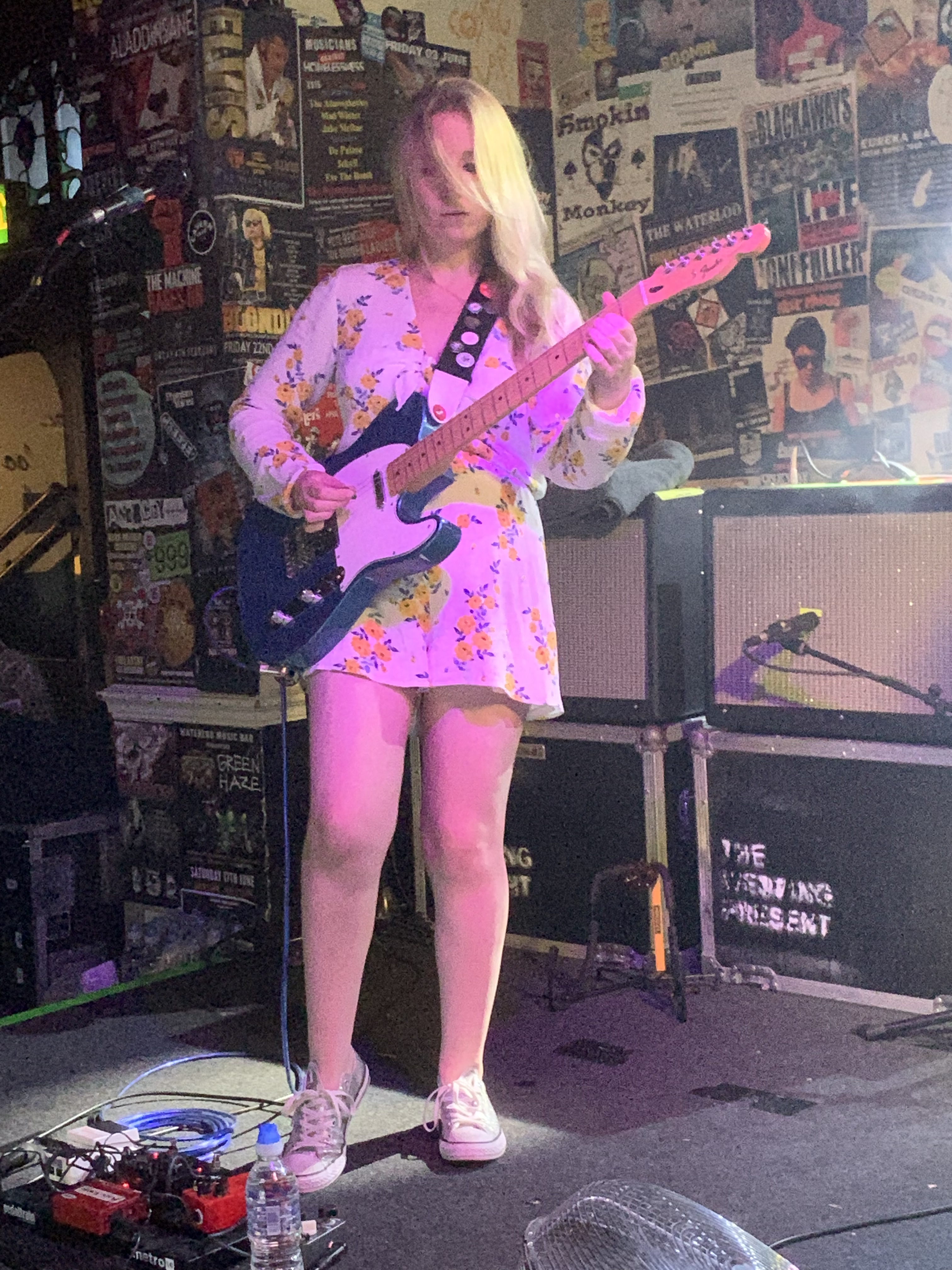
Bass Instinct: Melanie Howard, with The Wedding Present (Photo copyright: Richard Houghton)

Bass Instinct: Melanie Howard, the most recent Wedding Present arrival (Photo copyright: Richard Houghton)

Yep, 35 years in the business and somehow still with something left behind after another nine or so enthralling minutes, the sweat dripping from audience and band alike.

His breath briefly back, a few departing words followed from Gedge, still feeling a need to explain to newcomers (and there are a few, I’m pleased to say) his no-encore policy before a reconfigured ‘Be Honest’. And as soon as the needle arm returned, they saw us out with another classic 45, this scribe happily transported back to the days I was still buying 12”s, ‘Nobody’s Twisting Your Arm’ as crisp today as in ’88.

To catch up on Vinny Peculiar’s back-catalogue, find out about new LP While You Still Can and forthcoming dates, try his Bandcamp, Facebook, Instagram and Twitter bases.

For the latest from The Wedding Present, including remaining Bizarro 30th anniversary shows and At the Edge of the Sea XI Festival on August 9th/10th at the Concorde 2, Brighton, head here. You can also keep in touch with David Gedge and co. via Facebook, Instagram and Twitter.

To see WriteWyattUK’s verdict on the band’s two nights at the Continental, Preston in July 2017, head here, for a review from the Boileroom, Guildford, in February 2017, try here, for my verdict on 2016’s Going Going … head here, for a past band appreciation wrapped around a review of 2012’s Valentina, try here, and for a link to an interview with David Gedge at Hebden Bridge’s Trades Club from five years ago, head here

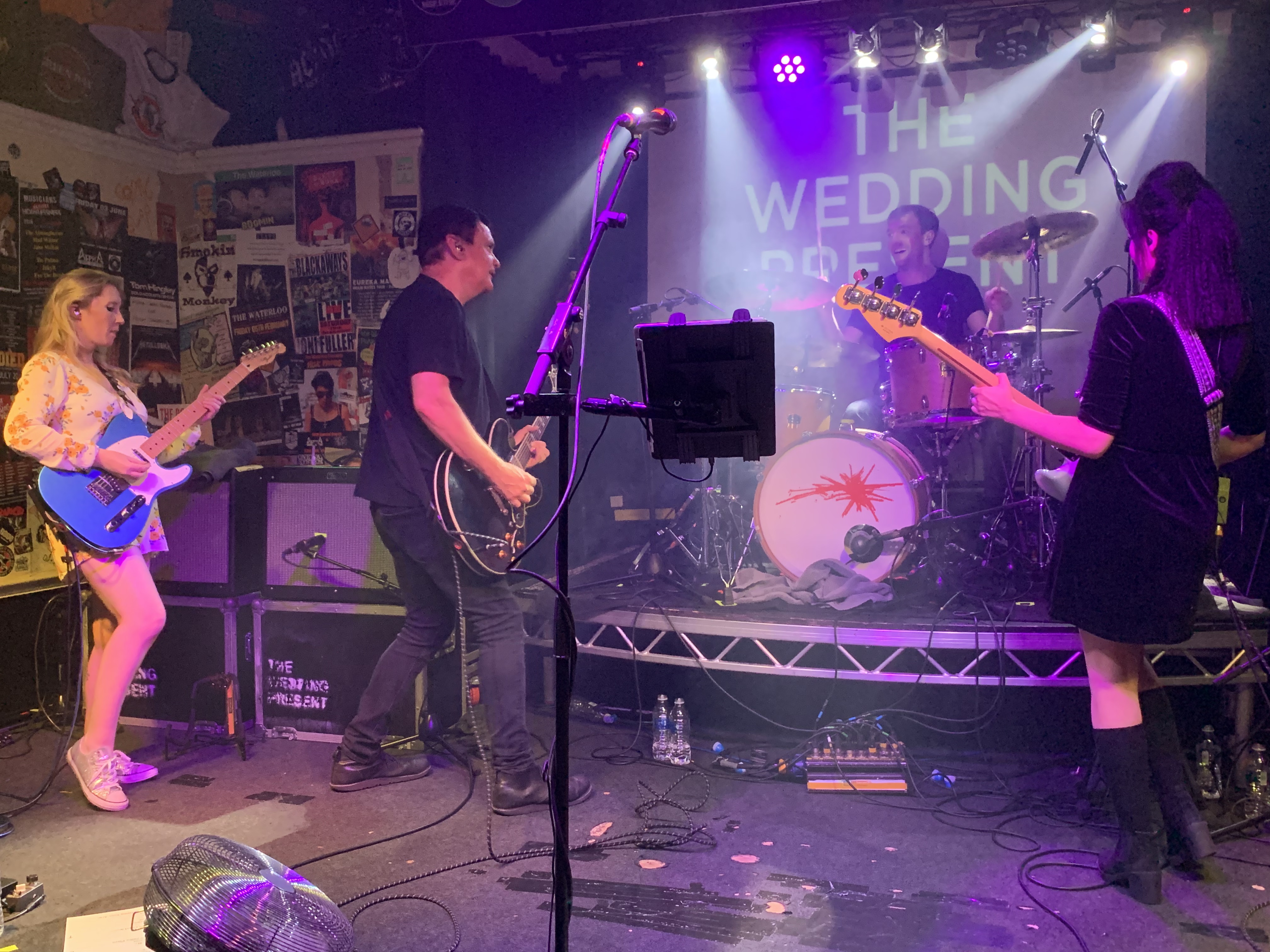
Band Substance: The Wedding Present check up on Charlie at the Waterloo Bar, Blackpool at the weekend. From the left – Danielle Wadey, David Gedge, Charles Layton, Melanie Howard (Photo copyright: Richard Houghton)

With kind permission for photographs from the Waterloo Music Bar from Richard Houghton, who worked alongside David Gedge on official band publication The Wedding Present: Sometimes These Words Just Don’t Have To Be Said.  

Posted in Books Films, TV & Radio, Music | Tagged , , , , , , , , , , , , , | 4 Comments

Even Better with The Real Thing – in conversation with Chris Amoo

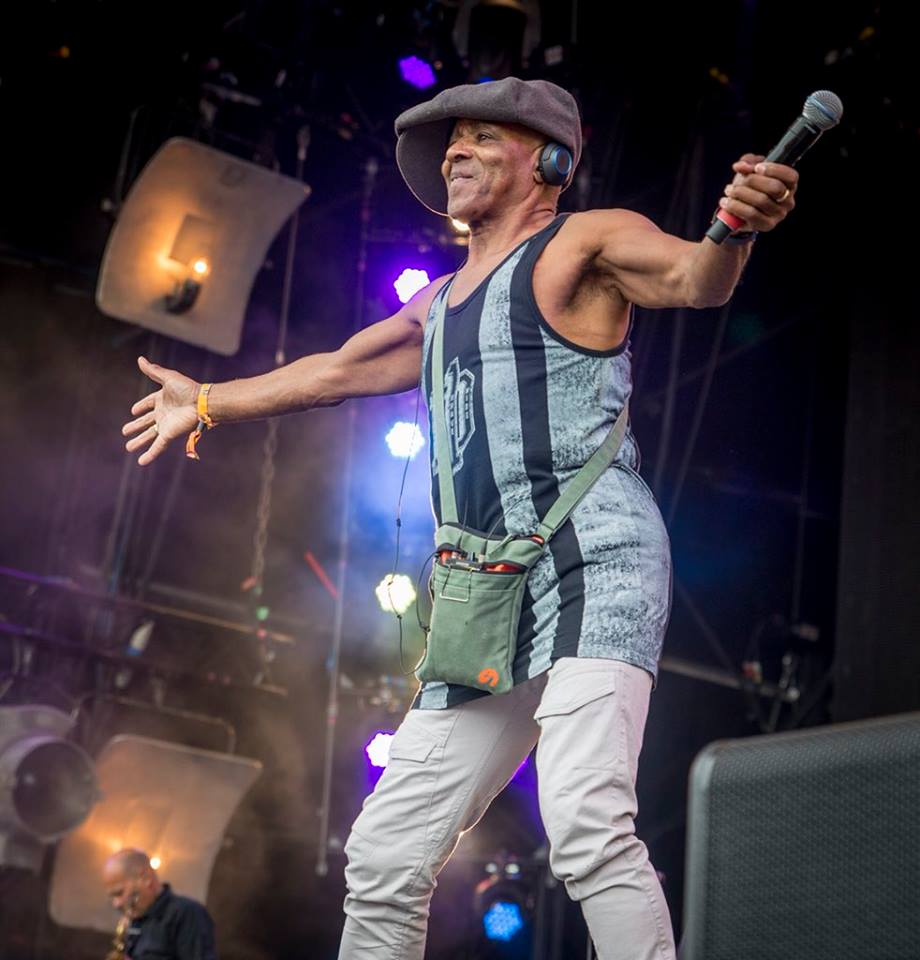
Real Live: The Real Thing, still a force to be reckoned with in 2019, and coming to a town near you soon.

Almost five decades after their debut single, The Real Thing are still out there, treading the boards, with no intention of slowing down for co-founders Chris Amoo and Dave Smith.

The passing of Chris’ older brother Eddie Amoo in February 2018, aged 73 put that in doubt. But as long as there’s an appreciative audience, they decided the show will go on. And it’s never just been about record sales for this popular Merseyside combo.

Was there ever a doubt they’d carry on after losing Eddie last February, I asked Chris, when I called him at home in Liverpool. After all, his big brother hadn’t been part of the band at the start.

“At first there was. He was my right arm. And we never ever pictured ourselves without each other. It was a hard decision to carry on. We felt there was no way we were going to try and replace him. For me and Dave he was irreplaceable.

“We wanted to always be known as the original Real Thing, rather than bringing someone else in and making it into something else. But we can do that because I was the lead singer. While I’m there we’ve still got the Real Thing sound.

“What I have, basically – and this is technology for you – I’ve sung all Eddie’s parts, and our keyboard player can play them along with us while we’re singing. So we’ve still got that nice three-part harmony.”

I guess in that sense, it seems like he’s still out there with you.

“Of course, And we’ve never known anybody else- there was me and Dave, Eddie and Ray. We’ve never known anybody else, from when we were in school, we were together. Me and Dave know each other inside out and we know how to carry the show. And we know what we’ve always done to carry a show. So we’ve just carried on, and it’s been very successful.”

Big Brother: Eddie Amoo was a big influence on younger brother and co-writer Chris, not least in his Chants days.

Big time success followed shortly after Eddie’s arrival. Was he the missing link before then, in a sense?

“No, he wasn’t. We were quite proficient before, but at some stage he was going to join. We were brothers and we were already doing all the writing and working on the musical direction of the band, so it was always obvious that he was going to join. And he added another level, because his voice was higher than the parts we had, so we could do a nice four-part harmony.”

I equate The Real Thing with the long hot summers of my youth in suburban Surrey, a key part of the soundtrack accompanying my childhood, their singles blasting out of the transistor radio and my older sister’s Dansette. And as she was (and remains) a big David Essex fan, that makes even more sense now, the band having recorded with and toured internationally beside Plaistow-born David.

What’s more, I’m reminded now that their Ken Gold-produced big hit, ‘You To Me Are Everything’, recorded at Camden’s Roundhouse Studios and becoming their sole UK No.1 (also a minor US pop and soul hit), reached the top during the long hot summer of 1976, the group only kept off the summit with follow-up ‘Can’t Get by Without You’ that autumn by Abba’s ‘Dancing Queen’.

While I was primarily about punk and new wave by 1979, that track still resonated with this pre-teen when they reached the top-five again with ‘Can You Feel the Force?’. And at a stage when I was closer to the indie scene in the mid-‘80s, there was still a more soulful side to my growing singles collection when they climbed the charts again with commercially-successful remixes of the old hits.

It was only in later years that I was introduced to a less pop-influenced side of The Real Thing, discovering late on their 1977 long player, Four From Eight, a whole different aspect to this accomplished outfit revealed. But more of that later.

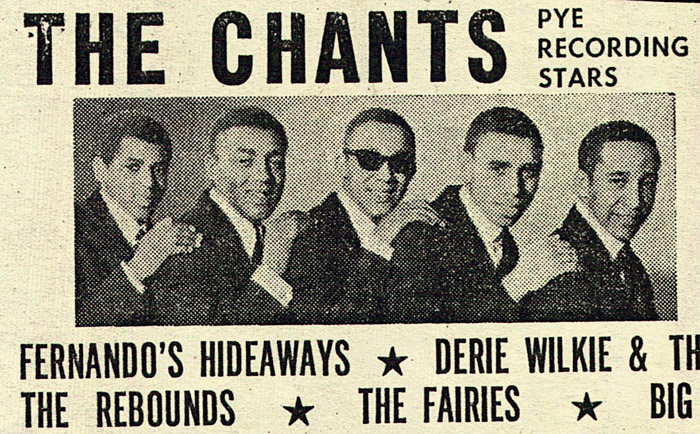
Before I get on to The Real Thing, I should go back a bit and talk a little about influential 1960s’ Liverpool doo-wop outfit The Chants, the vocal group from which Eddie Amoo emerged. Seen as the UK’s first black acapella quintet, The Beatles and several other Merseybeat outfits were among their fans.

Apparently, a chance meeting with Paul McCartney at a Little Richard show at Birkenhead’s Tower Ballroom led to them being invited to audition for The Beatles at the Cavern Club, the Fab Four so knocked out by the group’s sound that they invited them to appear with them that night, to the reluctance of Brian Epstein. And thanks to John Lennon’s persistence, they did so, the Beatles manager going on to briefly represent them.

Early Influence: 1960s Liverpudlian doo-wop outfit The Chants, including Chris’ big brother Eddie Amoo

They were signed to Pye Records by Tony Hatch, but despite touring for 13 years they never quite reached the next level. That doesn’t mean they weren’t a major influence on Eddie’s younger brother though.

“They were like our big brothers, and an influence in as much as how it showed us it can be done and you can have a career on stage. Unfortunately, they never ever made it, but at least they had a living doing it, which was all we wanted to do at the time.”

I guess they proved that a band from Toxteth, Liverpool 8, could make it.

“That’s what I mean. We could always look to them and we could always – even if we’d never had a hit – we knew we could go around and do it professionally.”

Founded in 1970 by Chris, Dave, Kenny Davis and Ray Lake, and later briefly joined by Edward Ankrah, younger brother of Joe Ankrah from The Chants, The Real Thing were originally known as The Sophisticated Soul Brothers, manager Tony Hall – the London-based A&R man – renaming them after taking the band on in early 1972, inspired by seeing a Coca-Cola neon sign while stuck at traffic lights at Piccadilly Circus.

They soon secured a recording deal with EMI, having taken that next big step closer to fame by winning an episode of Hughie Green-fronted Thames TV national talent show Opportunity Knocks, with a cover of ‘Grazin’ the Grass’.

Opportunity Knocks opened the door to the nation, but David Essex made us really. It takes a lot to make it, because there are so many people wanting to make it in this business. You need elements of luck, and the first we got was meeting Tony Hall. That was the very first piece of magic, because there was nobody quite like him in this country for black music. And he was respected worldwide.”

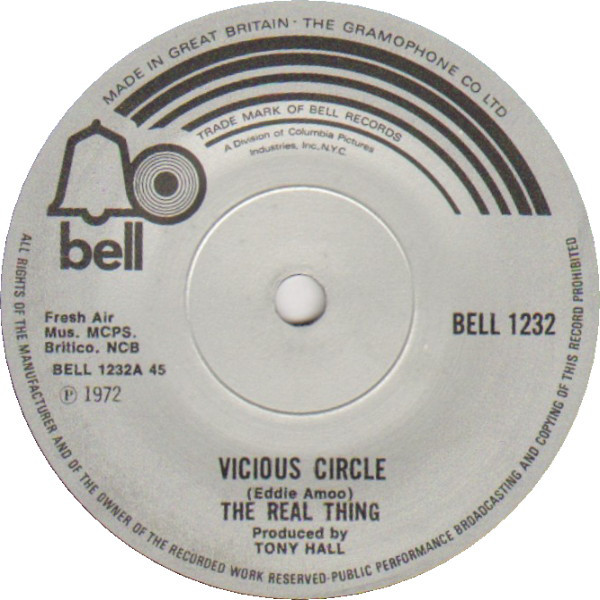
Within three months, in April 1972, they released their debut 45, ‘Vicious Circle’, written by Eddie. Listening back now, I suggested to Chris, I detect more than a few traces of The Temptations or perhaps War there.

“Yeah, The Temptations, definitely.”

Debut Single: 1972’s ‘Vicious Circle’

Was that where you were at by that stage, the Temps, the Philly sound, and all that?

“Yeah, the Temptations – that was the whole thing about that particular record. And at that point there were five of us. And they were one of the first to have those five different lead singers. We were right into that – we could all be in the limelight!”

There’s a band who have regenerated of sorts, bringing in old friends and younger family down the years after original members departed. Is there another generation of Amoo boys or girls waiting to come through the ranks too?

“No, unfortunately.”

Did you ever get to meet The Temptations?

“Never met The Temptations. They were a little before us.”

You say that, but as with their tour-mates The Four Tops (with original member Duke Fakir still performing), there’s a Temptations line-up still going strong, past WriteWyattUK interviewee Otis Williams touring all these years on.

“Yeah, although the one I would be interested in seeing is Dennis Edwards. He was a big, big influence.”

After ‘Vicious Circle’ there was second single ‘Plastic Man’, again credited to Eddie, earning a first appearance on BBC TV’s Top of the Pops, a few more faltering 45s following before Kenny Davis departed, the band continuing as a trio – backed by a formidable band – until Eddie joined permanently following the demise of The Chants.

Next single ‘Stone Cold Love Affair’, their first for Pye, became a club hit in Europe and the US, and through producer Jeff Wayne the group was introduced to David Essex, who quickly took a shine to the band, inviting them to contribute backing vocals to his 1975 album, All the Fun of the Fair – perhaps most notably on ‘Rolling Stone’ – while writing and producing their next single, ‘Watch Out, Carolina’, released that September.

“Our number two stroke of luck was meeting David Essex and Jeff Wayne, with David taking us under his wing, doing Top of the Pops with him, and things like that. When we got ‘You To Me …’ out, it was snapped up first and foremost by lots of his followers.

Vocal Backing: The Real Thing chipped in on David Essex’s 1976 hit album, All the Fun of the Fair

“We were quite good by then. By the time we met David we knew exactly what we were about. We were writing good songs – me and Eddie – and out manager was taking us in the right direction, career-wise. When we met David, we were ready for it.  And we learned how to put on a proper show, going to America with him, so by the time we’d finished with David and we had our own hit record, we took to doing theatres and knew exactly how to put a show on.”

Meanwhile, Jeff Wayne engaged the band to sing on the soundtrack of his concept album, War of the Worlds, Chris supplying lead vocals on the iconic ‘Forever Autumn’. Yet Pye soon pulled out, the track later re-recorded by The Moody Blues’ Justin Heyward, a major hit following, The Real Thing’s contributions left on the cutting room floor.

The band toured extensively with David Essex though, including his US ‘Lamplight’ tour, and can be heard on an On Tour live LP that saw the light of day in 1976. And that year they also appeared on his next single, ‘City Lights’, including a promo video shot in London’s West End. But pretty soon, they had that elusive hit of their own, ‘You to Me Are Everything’ taking them to a whole new level.

In fact, in the early ‘80s they returned to working with David Essex, featuring on his top-20 hit, ‘Me and My Girl (Nightclubbing)’, and accompanying him on a 1983 tour of South Africa in the era of apartheid, a decision they now consider one of the few regrets of their career.

Did the Amoo brothers – Liverpool-born, with African and Irish roots – and their bandmates ever doubt big time success would follow within four years of recording ‘Vicious Circle’?

“To be honest with you, no – we never ever doubted it, but that’s the arrogance of youth. We never doubted that at some point we were going to crack it, especially having the manager we had. We had a lot of confidence in him. We were only kids.”

Was there music on both sides of your family – in both your Ghanaian and Irish roots?

“Definitely on the Ghanaian side. My Dad used to play guitar, playing in a lot of trios when he first came over, in London.”

In time, you were deemed the most successful UK black soul act of the ‘70s. That’s something to be proud of.

“Absolutely proud. And not many get a chance to record hit records, especially three classics.”

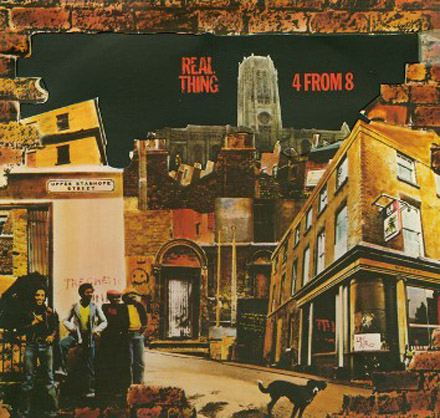
Eight Wonder: The Real Thing’s 1977 LP, a tribute to their Toxteth roots

I mentioned before second LP, 1977’s Four from Eight, its title alluding to the Toxteth, Liverpool 8 neighbourhood in which they grew up, the band taking a more socially-aware approach, channelling experiences of growing up in a racially-integrated, low-income area. It included lead single ‘Love’s Such A Wonderful Thing’, a quarter-century later sampled by Daft Punk for a white-label bootleg, then two years later by The Freeloaders for ‘So Much Love to Give’, a major club hit following. And at the heart of the record there was the ground-breaking medley of title track ‘Liverpool 8’, ‘Children of the Ghetto’ and ‘Stanhope Street’, the middle cut later covered by Earth, Wind & Fire’s Philip Bailey, Courtney Pine, Paul Hardcastle and Mary J. Blige.

In his excellent Liverpool: Wondrous Place (Virgin Books, 2002), music writer Paul Du Noyer rightly sees ‘Children of the Ghetto’ ‘in the socially-committed vein of latter-day Marvin Gaye and Stevie Wonder’. Was that album chiefly about The Real Thing paying their dues?

“It was something we were always really interested in doing, writing that type of song, hence ‘Children of the Ghetto’ and those songs about our experiences of growing up. We were very influenced by people like Curtis Mayfield, doing all those songs like ‘Move On Up’. That was just another step as writers in what we were pursuing. And it was a little bit ahead of the time, actually.”

Have you got happy memories of your first forays into all this in 1970 – 50 years ago next year?

“Yeah, because basically we had no worries. All we wanted to do was sing and anyone who could give us a microphone we were there. It didn’t matter what pub, what social club … if they had a microphone we’d show up and we’d do a bit of acapella, and we built up a really good following around Liverpool with all the youngsters. They could all relate to you, y’see.”

Think of The Beatles and you think of The Cavern, while later with Echo & the Bunnymen, The Teardrop Explodes, and Wah! It was nearby Eric’s. Was there a venue you became associated with more than any other?

“We never had a residence, but we used to do all the clubs in Liverpool – the Mardi Gras and places like that. And then of course we did Opportunity Knocks. We won that, and that opened the door to the nation, really. We were then professional, singing all over England.”

Was it all cover versions at that point, or were you increasingly introducing your own material?

Number One: The Real Thing topped the charts in 1976

“It was mainly covers, but we did a few of our own songs, like ‘Vicious Circle’ and ‘Children of the Ghetto’.

That suggests you were playing that latter song long before it showed up on a Real Thing album.

“Yes, we were. We used to play a lot of universities, and that was fantastic for those shows. And we were always into that type of song – more so than the poppier stuff.”

Was Liverpool on board with you from the start? It’s always had the reputation of a city that looks outwardly rather than inwardly, welcoming all its residents, regardless of colour.

“I don’t think there was that much popularity for black music in Liverpool, to be honest with you. We were different, but when we cracked it, obviously they took us to their hearts.

“Basically, I think Liverpool was a Beatles-type city, whereas London was more diverse in its music. There was a lot more happening for black music in London. If there was in Liverpool, I can’t remember it. Bands like The Chants were a lot older than us.”

You say that, but it seems that the pioneering bands like The Beatles took on board a lot of outside influences and added their own stamp to those, like American R&B.

“Yeah, definitely.”

When this all started in 1970, could you ever have imagined that you might still be treading the boards five decades on?

“Never thought about it really. We were just worried about the time and what we were enjoying at the time. We never thought about records or anything else, to be quite honest. We were just enjoying being on stage.”

And the band still has a busy schedule. When I spoke to Chris he was fresh from a date in St Alban’s, heading off the following evening to play Hale Barns Carnival in Cheshire, then Felixstowe on Sunday, before my excuses for speaking to him – this weekend’s dates in Morecambe and their home city, Liverpool, their tour set to continue in early August, with at least 28 dates in the diary up until early December.

Back Then: The Real Thing in the early days, with Chris Amoo and Dave Smith still out there in 2019

I’m guessing you wouldn’t still be out there if you weren’t enjoying it.

“Yeah, that’s all we’ve ever done.”

Time moves on, and Dave’s just turned 67, with you not far behind. Do you plan to keep performing as long as possible?

“As long as we can, as long as people want to hear us.”

And what do we get on the ‘Feel the Force’ tour? Is it yourself, Dave and your five-piece band (John Chapman on saxophone, Sam Edwards on keyboards, Stuart Ansell on guitar, Jon Bower on bass and Danny Rose on drums)?

“Yeah, we’ve got a band we’ve had for a long, long time, and they’re super-tight. We’ll be doing hits and some new songs as well, and a mixture of one or two classics that we particularly like.

“You can come along, have a nice sing, you can have a dance, and you can have a nice, relaxing evening … but be prepared – put your dancing shoes on!”

Force Field: The Real Thing, still feeling it at the Rewind Festival, Scone Palace, Perth (Picture: Martin Bone)

The Real Thing are playing Morecambe Platform this Friday, July 26, with tickets available via this link, and Liverpool’s Let’s Rock Festival at Croxteth Hall Country Park on Saturday, July 27, with details here. And the Feel the Force tour then continues at: Thursday, August 1 – Birmingham Jam House; Saturday, August 3 – Jersey Royal Showground; Friday, August 16 – Bournemouth Canvas; Thursday, August 22 – Alcester Ragley Hall (Warwickshire Festival); Sunday, August 25 – Codicote GoatFest; Saturday, August 31 – London Boisdale; Sunday, September 1 – Bolton Albert Halls; Friday, September 6 – Milton Keynes Stables; Saturday, September 7 – Let’s Rock Essex: Chelmsford Hylands Park / Broxbourne Spotlight; Saturday, September 14 – Kettering Lighthouse Theatre; Friday, September 20 – Worksop Van Dyk Hotel; Friday, September 27 – Bognor Regis Butlin’s; Saturday, September 28 – Selsey Embassy; Sunday, September 29 – Littlecote Warner; Friday, October 4 – Minehead Butlin’s; Friday, October 11 – Great Yarmouth Vauxhall Holiday Park; Saturday, October 19 – Purnerend P3; Friday, October 25 – Peterborough East of England Showground; Saturday, October 26 – Bilston Robin 2; Saturday, November 2 – Croydon Fairfield Hall; Sunday, November 3 – Skegness Butlin’s; Friday, November 8 – Leiden Gebr De Nobel; Saturday, November 9 – Hilversum Vorstin Concert Hall; Friday, November 15 – Skegness Butlin’s; Saturday, November 16 – Whitby Spa Pavilion; Friday, November 29 – Dunstable Grove Theatre; Saturday, November 30 – Eastleigh Concorde; Wednesday, December 4 – High Wycombe Swan.

For more details about those shows and the band, head to The Real Thing‘s website. You can also keep in touch via Facebook and Twitter.


Posted in Books Films, TV & Radio, Music | Tagged , , , , , , , , , , , , , , , , , , | 1 Comment

Still living the Impossible Dream – the Bez interview

Back Again: Happy Mondays, coming to a town near you this October, November and December 2019.

Four decades after crossover indie/dance combo Happy Mondays set out on their initial adventure, and 30 years after their biggest-selling LP, the legendary Manc outfit have announced a marathon greatest hits tour for October, November and December this year. And it’s fair to say that the band’s resident freaky dancer and percussionist, Mark Berry – best known the world over as Bez – is mad for it.

It’s a big undertaking this, I put to one of music’s great characters, still twisting his melons where and when he can all these years on. I mean, 29 dates in total – is he up for that?

“Let’s just say I’ve left it a little bit late now for any career change. You can’t teach an old dog new tricks. And luckily, I’m still fit and healthy, so yeah, I’m really looking forward to it.”

It’s the classic line-up too, also featuring frontman Shaun Ryder, Rowetta (vocals), Gary Whelan (drums), Paul Ryder (bass), Mark Day (guitar) and Dan Broad (guitar/keyboards), with memorable tracks such as ‘Step On’, ‘Kinky Afro’, ‘Hallelujah’, ‘W.F.L.’, ‘Loose Fit’ and ‘24 Hour Party People’ pretty much guaranteed.

I spoke to Rowetta when you were touring two summers ago, and she told me that September 2015 WriteWyattUK interviewee Shaun Ryder was a different bloke since he’d become a family man. Have you mellowed too over the years?

“Well, I’m a different bloke to when I first set out. I have changed my lifestyle slightly, moving into more sustainable living. I got involved in politics for a while, and I’m a Grandad these days.”

Ah, splendid. Tell me more.

“Grandad Bez, he calls me! He’s seven, and his name’s Luca. He had to go into hospital to have an operation done on his ears, and when he woke up afterwards, he was talking to the nurses about being at Glastonbury that summer. That was on his mind at the time for some reason. I don’t know why. Ha ha!”

Born in Bolton and raised there and in Salford and Wigan, and at one point a next-door neighbour of his pal Shaun – the pair popping up this last week on a celebrity edition of Channel 4’s Gogglebox – in the High Peaks of Derbyshire, Bez has shifted from his North West roots of late to Herefordshire. But I guess he’s been a wandering soul for some time.

I recall him popping up in the story of Joe Strummer, among his campfire crew, part of a scene that ultimately inspired The Clash frontman’s return from his wilderness years fronting the Mescaleros, the pair among those roaming the great outdoors of Hampshire before Joe moved to Somerset. Happy days, Bez?

“They were great days, and I’m lucky to live in an area where we’ve not spoiled the countryside now.”

I think he was alluding there to light pollution and a superior night sky somewhat removed from his old Greater Manchester haunts, ideal for stargazing and evening campfires. But you can’t have it all, and his mobile reception wasn’t so great, Bez drifting in and out as we spoke. So home is no longer Urmston then?

“No, I’m near Hereford these days. It’s a beautiful area and I really enjoy living there, but I’m back and forth all the time to see family and everything else in Manchester.”

It was a big shock losing Joe Strummer when we did, in December 2002.

“Yeah, and he died so young. But all the campfire kids are really good friends to this day, and Joe left us some great music behind.”

Talking of friends in the music business, I was talking to Carl Hunter from The Farm the other day about his first film as a director, the splendid Sometimes Always Never, and he put the 2004 reformation of his band squarely at the door of the Mondays, inviting them to get back together as a support act on a tour that year.

“Yeah, we always had a good relationship with The Farm. They’re from a similar background to ourselves, and we enjoy their company.”

He mentioned politics, and not only did that involve standing for Parliament – in Salford and Eccles for the 2015 General Election, independently on behalf of the Realist Party on a platform of ‘free energy, free food and free anything’, winning 703 votes, 1.6%, in a seat won by Labour’s Rebecca Long-Bailey with 50% of the vote – but also continued protest against shale gas fracking. In fact, four and a half years ago he was a media presence on site, at the forefront of the battle, on-site as well as joining fellow activists outside Lancashire County Hall in Preston, opposing proposed tests.

He told reporters at the time, ‘The welfare of the people don’t come into question. What comes into question is profits – that’s all they care about. They haven’t any interest at all in any sort of welfare or the being of this planet or even care for the planet itself.’

The story’s not on the front of the newspapers right now, but I get the impression you still want people to remain vigilant.

“I believe they’re planning on resuming drilling in West Lancashire at Preston New Road. We’ve done everything we can so far to stop them and they’ve lost every battle as we try to uphold our rights to freedom of protest. We’ve fought court battles to ensure rules aren’t changed. I don’t know where they’re getting their money from. Any other company who’d lost that much money would have left. But they’re still there, still going, with plenty of corporate backing, and my fear is that they’re now waiting for a Brit exit and then a new deal with America. We’ve got no idea what that deal’s about, and when it’s implemented it will remain secret for years. I think that’s what these fracking companies are waiting for. But it’s not over yet. They’re intent on going on, but they ain’t gonna succeed!”

After signing to Tony Wilson’s Factory Records, the late ‘80s saw Happy Mondays become pioneers of the ‘Madchester’ sound, blending their love of funk, rock, psychedelia and house music with the sounds of the UK’s emerging rave scene. It was the third LP, 1990’s platinum-selling Pills ‘n’ Thrills And Bellyaches, that saw the Mondays cross over into the mainstream, and a quarter of a century later they won the Ivor Novello’s Inspiration Award in 2016, helping cement their reputation.

However you might class part-time beekeeper and beer brewer Bez’s creative input for Happy Mondays over the years and Black Grape in the past, he’s certainly been a key factor in both bands’ appeal, and has hardly been shy in front of the cameras over the years. And while there have been a lot of questionable choices and actions down the years, including a short custodial sentence and bankruptcies along the way, his popularity has hardly waned, as seen in a 2005 Celebrity Big Brother public vote victory. And then there was last September’s celeb Bargain Hunt victory on the BBC alongside Rowetta over Pulp’s Jarvis Cocker and Candida Doyle, until subsequent disqualification after it emerged that his girlfriend bought two of the items at the auction, Bez paying their £8 profit to Comic Relief out of his own pocket.

It’s been a rollercoaster ride. Ever think for one moment when you joined the Mondays that you might still be out there on our TV screens and playing live, treating us all to your freaky dancing, shaking your maracas – so to speak – and living the life of a music star at the age of 55?

“No, it’s absolutely incredible. If you’d told us when we were young kids, when we first set about in the business, when we were struggling musicians, that we’d still be out there after 35 years, it would have been like an impossible dream. How fortunate we’ve been to pursue a career doing something that you absolutely love doing. Not many people get that opportunity in life, with the lifestyle that goes with it.”

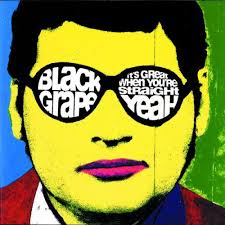
Not just one successful band either, but Black Grape back in the day too, amassing six top-10s and 13 top-40 hits between those bands, even scoring a 1995 No.1 with the latter’s It’s Great When You’re Straight … Yeah album.

“Yeah, the sad thing with Black Grape is that (first) album would have been the next Happy Mondays album. Kermit actually sang on the last Happy Mondays album, and that was like the stepping stone in the direction we were moving into. It’s such a shame that we all fell out. I think we would have all gone on to greater success. But we went on with Black Grape, and that’s one of the biggest selling albums we ever produced.”

And going back to your recording roots, have you still got your copies of Happy Mondays’ hard to find 1985 Factory singles – the ‘Forty Five’ EP and ‘Freaky Dancin’’ singles?

“No. At the time I used to give everything away. But I still see them knocking about. People still bring them out and I sign them. And I always look at them and say, ‘Ooh, I wish I had that record!’”

I’d run out of time by then, but still managed a couple of quick-fire questions. Does he still get around in his black cab?

“No, the black cab got stolen. You can’t have anything these days unless it’s tied down.”

What did you make of Chris Cogshill’s portrayal of yourself in the 24 Hour Party People film?

“I’m actually gutted because he’s taller than me, more handsome than me, and does me better than I do myself!”

Finally, if you could go back 40 years and take aside your 15-year-old self, what advice would you offer him?

“Well, when I was that age, I wasn’t very good at taking any advice. I suppose if I was able to go back again I’d be in that same sort of position where I wouldn’t really listen to any advice. But that’s what’s life’s all about. It’s all about experience, whether it’s good or bad. That’s what you live for.”

Happy Mondays’ late 2019 tour begins on Wednesday, October 23 in Inverness, the first of four Scottish dates, and runs through until a Saturday, December 21 date at Lincoln’s Engine Shed, highlights including London’s Roundhouse on Thursday, October 31, and North west dates at Preston Guild Hall on Thursday, November 14, a Manchester homecoming at the Academy on Thursday, November 21, and a visit to Liverpool’s Mountford Hall on Friday, December 6.

Full list of tour dates: Wed 23 October – Inverness The Ironworks; Thu 24 October – Aberdeen Music Hall; Fri 25 October – Dunfermline Alhambra Theatre; Sat 26 October – Glasgow O2 Academy; Thu 31 October – London The Roundhouse; Fri 1 November – Southend Cliffs Pavilion; Sat 2 November – Cambridge Corn Exchange; Thu 7 November – Brighton Dome; Fri 8 November – Folkestone Leas Cliff Hall; Sat 9 November – Portsmouth Pyramids Centre; Thu 14 November – Preston Guild Hall; Fri 15 November – Newcastle  O2 Academy; Sat 16 November – Scunthorpe Baths Hall: Thu 21 November –  Manchester Academy 1; Fri 22 November – Sheffield O2 Academy; Sat 23 November –  Bristol O2 Academy; Thu 28 November – Oxford O2 Academy; Fri 29 November – Cardiff University, Great Hall; Sat 30 November – Nottingham Rock City; Wed 4 December – Belfast Limelight 1; Fri 6 December – Liverpool Mountford Hall; Sat 7 December – Leeds O2 Academy; Thu 12 December – Norwich UEA; Fri 13 December –  Northampton Roadmenders; Sat 14 December – Birmingham O2 Institute; Wed 18 December – Frome Cheese & Grain; Thu 19 December – Bournemouth O2 Academy; Fri 20 December – Guildford G Live; Sat 21 December – Lincoln Engine Shed.

Maracas Master: Mark Berry, the artist best known as Bez, still mad for it all these years on. (Photo: Paul Dixon)

Tickets are on sale now, available from this link. For more information try Happy Mondays’ Facebook, Instagram and Twitter pages.

Posted in Books Films, TV & Radio, Music | Tagged , , , , , , , , , , , , , , , , , , | Leave a comment

Kooks still hung up on romancing – in conversation with Hugh Harris

It’s been 15 years since The Kooks took shape, and while this Brighton outfit increasingly distanced themselves from their initial sound, the latest singles suggest they’ve returned to their roots.

As co-founder Hugh Harris puts it, new single ‘So Good Looking’, out now via Lonely Cat / AWAL Recordings, and predecessor ‘Got Your Number’ sound ‘very Kooksy’. And that’s surely a good thing.

The multimillion-sellers who took their name from David Bowie’s 1971 Hunky Dory track, met as students at the Brit School in Croydon, South London, before moving further south to Brighton’s British Institute of Modern Music Institute (BIMM). And soon they’d signed to Virgin Records, going on to receive their first Brit and MTV Europe awards.

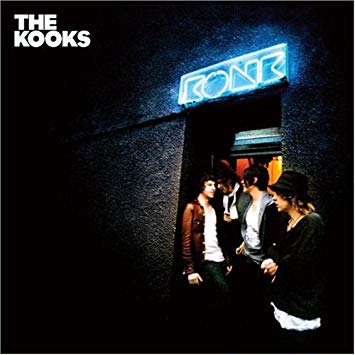
But they were no flash in the pan, 2006 debut LP, Inside In / Inside Out last year finally achieving four-times platinum status, a decade after 2008 follow-up Konk went straight in at No.1. In fact, all five of their studio LPs and a best of compilation have made the UK top-20 album charts, with an estimated billion-plus streams gathered en route and success enjoyed around the world.

These days the band is down to core members Hugh (lead guitar, backing vocals, piano, keyboards, bass, rhythm guitar) and fellow co-founder Luke Pritchard (vocals, guitar), plus 2012 recruit Alexis Nunez (drums). And all this time on, they continue to attract huge audiences, last summer supporting the Rolling Stones on two stadium dates and playing the main stage at the Reading and Leeds festivals before embarking on a more intimate UK tour promoting fifth LP, Let’s Go Sunshine.

What’s more, this weekend they’re back on the festival circuit, a recent London Community Festival date – playing to 40,000 on Finsbury Park – followed by this weekend’s appearances at Manchester’s Sounds of The City tonight (Friday, July 12th) and Glasgow’s TRNSMT Festival (Sunday, July 14th).

When I called, Hugh was gearing up for the first of those dates, a North London headliner on a bill also including Blossoms, Kate Nash and Gerry Cinnamon. And I couldn’t help but wonder whether any of the Stones went shopping in Selfridges for an outfit for their children before playing Hyde Park 50 years ago. I say that because Hugh was looking to get his three-year-old daughter togged up there when we spoke.

“I guess festivals are as much as about fashion these days as they are everything else, so you’ve got to look the part!”

Still Selling: The debut Kooks LP, now 13 years young, yet recently certified quadruple-platinum

It’s hardly the spirit of ’69 though, is it. And I guess no one will be releasing doves during your set.

”I know, man, a different era altogether. But it‘s cool. I enjoy it. And it’s a very different world today to when we started the band, but it’s nice to have a bit of maturity.”

Is it fair to say you’re somewhat domesticated these days?

“Pretty much, yeah. I love it, and I’ve taken to it well. A bit of wriggling at first, then you kind of realise …”

You’re second fiddle?

“Exactly!”

I’ve heard the new single, ‘So Good Looking’, a few times, and it’s a winner, the sound of summer for these ears.

“I guess it is. And it’s very Kooksy. I think we’re kind of channeling ourselves, thinking, ‘Do you know what – if anyone can do this, surely we have license to!”

Kinks Links: The Kooks’ second LP, 2008’s Konk, recorded at the studio of the same name.

A few years ago, I’d have said the new single’s a sure-fire top-10 hit. Not sure if it works that way now though. You’re clearly still selling well, but are you expecting big things from this?

“No. Our streaming numbers are really good for a British indie band. They’re fantastic. We’re way out ahead, but I think charts went out a long time ago. Songs have such a journey in themselves, and through that journey can be synched up to all sorts of things and can be synonymised with all sorts of events. It’s not just about the first week of the release. And that’s kind of more exciting. Songs these days have more of a life and a lineage, and I don’t think we’ve ever aimed for the charts as a band.”

Maybe that’s why you’re still going strong.

“Yeah. We have our goalposts firmly set in some kind of very simple ethics and a very simple ethos.”

There’s a Beatles-like quality there, but also something of the era from which you emerged, with shades of bands like Dodgy and Supergrass.

“Yeah, big time, we’re ‘90s children! It was all Brit Pop for me, with Oasis one of the main reasons I got in a band, while Jimi Hendrix was one of the main reasons I picked up a guitar. And we absolutely love that kind of Immediate movement.”

As in the Small Faces?

“Yeah. We went on this journey for a few records to kind of distance ourselves from the thing I think we were perhaps quite good at. And now it’s nice to have found our stripes again.”

The two latest 45s are neatly crafted, and ‘Got Your Number’ for me has shades of everything from Sparks and Cockney Rebel through to The Cure and Franz Ferdinand at their more poppy. But I shouldn’t be surprised, seeing as I get the impression you’re historians of good music.

“That’s a nice way to speak about it. I guess we’re kind of … although it’s like town planning in a way! But because we still have such a big fan-base and we’re still going as a band, we just feel it’s our responsibility. You could criticise that, say it’s regurgitation, but I think we have our own sound by now and our own twist, and it’s fun to play music that we enjoy, and it definitely draws on a huge range of influences. And if we can encourage a kid in his bedroom to play guitar and follow our lineage, in our eyes that’s our job done really.”

Live Presence: The Kooks in action. From the left – Hugh Harris, Luke Pritchard and Alexis Nunez.

I said historians, but I guess it’s as much about DNA, being the sum of your influences and building on that.

“Yeah, we’re really a bit of an afterglow of a huge amount of good music, and I don’t really feel there’s a lot of that going on in among our contemporaries. So it’s even more important really. And these gigs we’ve got coming up like the Community Festival and the Castlefield Bowl show, with great bands supporting, it’s important to fly the flag, now more than ever,

Recent sales for your debut LP suggest it’s still being discovered, presumably by a new generation.

“It’s a conveyor belt!” And we do still see in the front three or four rows that kind of doe-eyed innocence from teenagers just getting into music. It’s really quite tender and kind of sweet, with a huge amount of admiration there towards us. There’s a similar thing with the others, but perhaps they’re just a little more drunk and older!”

You’re playing a few festival dates this season. Do you prefer the more intimate shows though?

“Well, everything! I’ll take whatever I can get my hands on! Any performance is treasure to me. I think performing in any sense of the word is just the most beautiful expression and the most important thing for our culture. And festivals that bring people together – specially in such divisive times – if gigs can do that in this climate, they’re pretty powerful things. Yeah, I have a huge amount of respect for all performing arts that bring people together.”

Do these latest singles suggest a sixth album is coming?

“I wouldn’t read too much into that. Those songs belong with the recording session for Let’s Go Sunshine the album that came out last year. They were going to be on that album, but then we thought we should keep some candy back.”

Double Act: The Kooks’ Hugh and Luke at London’s Community Festival, Finsbury Park (Photo: John Williams)

Have you been writing a fair bit since?

“Absolutely. We never really stop writing. There are various solo projects coming up to, which is exciting. So next year there might be a bit of a break, and I’ve got something lined up – as have Al and Luke – that’s taken me around seven years to complete. We’ve been so busy, but I’ll take some time out to do that next year.”

Will that also be a little ‘Kooksy’?

“It sounds nothing like us! I went to Cuba to record horns, and there’s strings and a gospel choir and drums, and I went to an ashram in India to record a choir. It’s all a bit mental, really.”

We mentioned your musical DNA, and although I know your band roots are really in Brighton, it could be Huyton, Merseyside at times – there’s a trace of everyone from The La’s and Cast to The Coral, The Zutons, even the Head brothers in your work. I’m not so sure that’s just Luke’s vocals either.

“Yeah, he’s got a bit of a Merseyside lilt, definitely. That’s what I really like about his voice. It’s kind of playful, and borrows from a lot of phonetics. He’s a bit of a salad of articulation, isn’t he!

“But I was just out in Dublin, going out to catch some kind of folk music out there, and you can hear a bit of Beatles in that, but you can also hear where jazz came from – if you swing it, it’s jazz.”

Balloony Tunes: The Kooks, at that point a four-piece, launching last year’s album, their fifth (Photo: Andrew Whitton)

We mentioned before your understanding  of the history of pop and rock, and you were music students. Is that label something you’ve tried to shy away from since?

“No, I love that we’re students of music. I don’t know how you could criticise someone who loves playing music going to music school. For me, we probably were taught all that stuff. But when you write it all on paper you’re probably more interested in going out, meeting people and having a good time. Physically investigating the history of music is much more exciting than being taught in a class. And exposing yourself to as many live performances as possible, that’s an absolute thrill.”

I guess your student days in that respect were your Hamburg apprenticeship.

“Yeah, I guess, in a very modern way. At the British Institute of Modern Music, we incubated and just kind of grew … and partied. And we got our stripes in order.”

Hugh grew up not so far from the band’s Brighton base, in the nearby Sussex town of Lewes, ‘which was kind of a bit shit when I was there, but now is full of hybrid coffee shops and what-not’.

And did he get to properly meet the Rolling Stones when the band supported them last year?

“Yeah, we did. We met them a few times. The last time it was a bit lack lustre, I think they may have been working quite hard. But we’ve supported them four times now, and it’s very reassuring, to put it that way.”

And they were one of the bands you cited when you started out too.

“Definitely, and their fizziness was something we related to.”

And now you’re honed down to a three-piece. I’ve always been a fan of that set-up, from The Jam right through to Wilko Johnson’s band right now. There’s a real energy there, and it must keep you on your toes. I guess no one can hide in a three-piece band. Does that set-up work well for you?

“Yeah, it’s great! I feel as though quite a lot of the songwriting duties have been on Luke’s shoulders and to an extent mine also, with regards to things like sonic soundscapes.

“But we enjoy playing with lots of musicians. Kooks is not really one line-up. It’s more of a concept … although that sounds really wanky! But we don’t suffer from the band syndrome. We see a lot of bands on stage who hate each other, but we don’t stand for that. Music should be about joy, and if something’s not working or if someone is perhaps not flying that flag, we’d prefer to continue without that negativity.”

Finally, seeing as I mentioned the summer sound of the most recent singles, I should mention how the opening track of your debut album, ‘Seaside’, has appeared on several of the CD compilations I’ve put together over the years, part of the soundtrack for family holidays with my girls to Cornwall, the Welsh coast, the Isle of Wight, and all over.

“Ah, that’s amazing. That’s so good to hear. Thank you for telling me that.”

It’s only 90 seconds or so, but it’s a perfect starting point not just for that album but also  summertime adventures, and hopefully my daughters will get that same nostalgic feeling about your music in years to come.

“Yeah, it’s a nice kind of … dip your big toe in!”

The Kooks play Manchester’s Sounds of The City, Castlefield Bowl – a multi-day event also featuring Kylie Minogue, Elbow, Bloc Party, Janelle Monae, The National, Hacienda Classical, and The Wombats – tonight (Friday, July 12th), with support from The Sherlocks and Sea Girls. For tickets and more information, head here. The band then play Glasgow Green’s TRNSMIT Festival on Sunday (July 14th), on a bill topped by George Ezra and Jess Glynne, with tickets and more details here.

Band Substance: Hugh Harris, left, with his Kooks bandmates Luke and Alexis, getting into the swing of things.

For the latest from The Kooks, head to their website, or follow them via Facebook, Twitter and Instagram

Posted in Books Films, TV & Radio, Music | Tagged , | Leave a comment

Introducing West London’s Magnificent Six – back in touch with Matteo Sedazzari

Three years after our last conversation on these pages, WriteWyattUK got back in touch with author and Zani website creator Matteo Sedazzari, following the publication of his second novel, Tales of Aggro.

Following 2015’s A Crafty Cigarette – Tales of a Teenage Mod, Surrey-based author and online magazine creator Matteo Sedazzari decided on a further foray into fiction, this time delivering the tale of a gang of ‘working-class loveable rogues’ fresh out of school, claiming the streets of Shepherd’s Bush and White City as their playground.

Describing his ‘Magnificent Six’ as a group of ‘fashion-conscious, music-obsessed and shooting from the lip’ lads, Matteo tells a story of West London life and ‘ordinary people getting up to extraordinary adventures’, introducing various vigorously-drawn characters en route.

To find out more about the inspiration behind his latest novel and the figures he portrayed, I tracked Matteo down to his Walton-on-Thames base, offering congratulations on Tales of Aggro and wondering, second time around, if it remains special to see his work in print and on the bookshelf.

“Thank you. Yes, a proud moment in finishing and marketing my second novel, and people are starting to respond, which is nice.”

This time you’ve tackled a rum band of friends, dubbed ‘The Magnificent Six’. Are the characters based on people you’ve known over the years, or composites of old mates?

“In A Crafty Cigarette, the main characters are based on real people. Yet in Tales of Aggro the majority originate from my imagination, with aspects of certain people I’ve met over the years, seen on TV or read about, used to shape the characters’ personalities.”

Is there a character among them you identify most with? I’m guessing Oscar De Paul, not least with his appreciation of The Jam and Paul Weller’s lyrics. Is he at least partly you?

“Oscar, to a degree is loosely based on me, yet I mean loosely. He’s passionate about things, means no harm but gets excited by petty crime, yet knows deep down that a living out of being creative will be far more fulfilling than a life of crime. I included The Jam and Paul Weller reference as Weller was popular with the Casual movement back in the day, especially The Style Council, and some Casuals were former Mods, so I wanted to keep that association.

“The first story in Tales of Aggro about Oscar doing telesales for a living, along with hoax calls, is the only semi-autobiographical part of the novel. As mentioned in a previous interview, hoax calls are not cool, and certainly at my age I do not endorse them!

“After that story, I separated myself from Oscar, so I could focus on the other characters, from Rooster the dealer to Priscilla Pryce, the Page Three Girl, otherwise it would have been A Crafty Cigarette part two.”

For A Crafty Cigarette, you chose your current base, Walton-on-Thames as a location. This time we’re uptown, in West London. Why Shepherd’s Bush and White City? Am I right in thinking your brother was based there, and that’s how you got to know that turf?

“No, more via the A316, the road that runs from Sunbury, my place of birth and childhood, through Twickenham, Richmond, Hammersmith then Shepherd’s Bush. When I was a kid and my parents drove into London, that was the route they took, and to this day I often use that route to get into the old smoke. But back in the day, it was my gateway into the inner city.

“Also, in the 1970s, Top of The Pops was filmed at the BBC at Shepherd’s Bush, White City, and The Osmonds had a weekly show at Shepherd’s Bush Empire. So I thought as a child this must be the place where the musicians live. I was a kid, ha! Later I had friends who lived around that area, in the late ‘80s and early ‘90s, getting to know the area well, even getting into the odd filming of Top of The Pops and Later With Jools Holland.

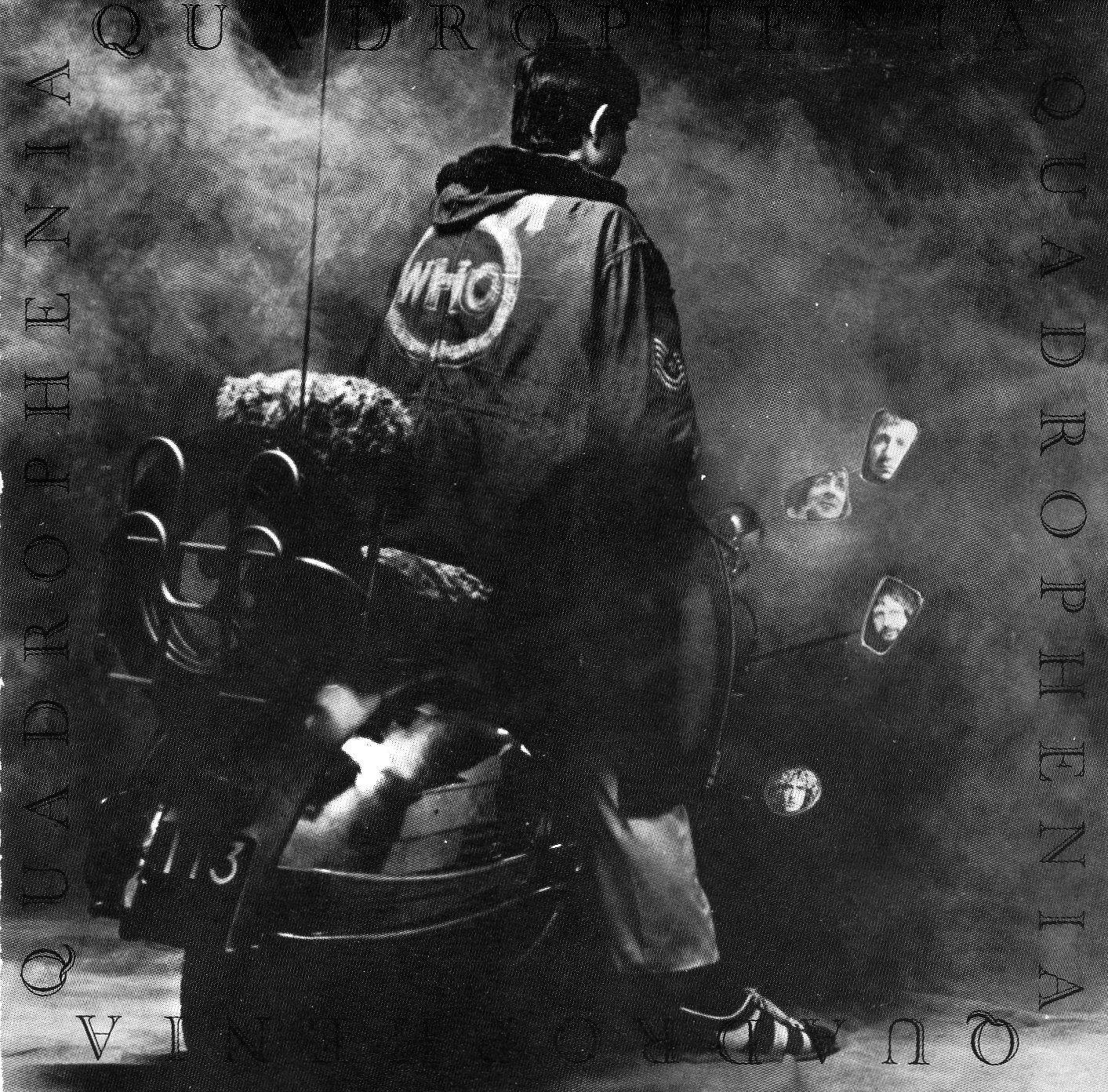
“Also, the Bush is the part of London where three original members of The Who came from – Daltrey, Townshend and Entwistle, with Quadrophenia – the album and film – set around there. Guitarist Steve Jones and drummer Paul Cook from the Sex Pistols are Shepherd’s Bush lads too. And you’ve got Stuarts’ clothes shop down the Uxbridge Road, a Mecca for Casuals back then, still going strong today.

“Finally, Steptoe and Son is set around the Bush, which after Porridge, is my favourite comedy. It’s a part of London with a rich history of TV, music, youth and subcultures, fashion, comedy and more.

“When my brother moved there, it was a case of him moving to a part of London I already knew. Shepherd’s Bush has grown on me since my childhood. It would be pretentious to say it’s my spiritual home, but it’s a place I know well and like. So when I was writing Tales of Aggro, I could visualise in my head the scene and characters.”

You describe the book as ‘a collection of short stories all about love and unity with a little bit of aggro’. These are your people, aren’t they … warts’n’all? ‘A gang of ‘working-class loveable rogues’ and rough diamonds.

“My people? I’ve just written about everyday folk from a working-class or lower middle-class background. I suppose a gang of well-dressed young lads and girls from a subculture, estate or whatever will always be seen as ‘loveable rogues’. The Magnificent Six change over the course of the book, as it goes from the early ‘80s to the present. At the end they’ve all gone down different paths, moving away from being a gang hanging outside a chip shop.”

There’s a danger of this all being about ‘the lads’, but you have wannabe pop star Stephanie in the mix too. Is that a character you feel you could write more about now?

“Stephanie is a great character. I enjoyed creating her and was highly influenced by the narrative style of Gillian Flynn, author of Sharp Objects, Dark Places, and Gone Girl, when I wrote her story in the first person. There are other strong female characters, like Eve Berry, the beautiful travel agent, who saves the day for Rockin’ Wilf and his friends, and there’s Priscilla Pryce, the Page Three Girl, who solves a countryside murder before falling in love with Jamie Joe, a man with a troubled pass who finds salvation with Priscilla. Plus, Oscar’s sister Olivia may not feature heavily but is seen as a strong character by Oscar. These tough female characters don’t make it about ‘the lads’, and that was a conscious decision from the onset.”

A Crafty Cigarette was told from the viewpoint of a young lad approaching and encountering his teen years. Are you hoping to go back to that story at some stage?

“Yes, one day, and Vinnie from A Crafty Cigarette does have a cameo in Tales of Aggro, so I’ve already created my own universe.”

You make the point that some of the language is offensive, Irvine Welsh calling it ‘a real slice of life told in the vernacular of the streets’, yet you’re at pains to stress offence is not your aim, particularly in light of race, religion, gender or sexuality. It’s a tricky balancing act, but works well with characters like Life on Mars’ Gene Hunt or even Steve Coogan’s Alan Partridge. Did you find yourself wincing at times at the more controversial characters like Det. Sgt. Legg and Sgt. McDonald?

“Good question. I did the disclaimer to cover myself and have total authenticity. For instance, in a story set in the summer of 1983, local headcase and drug dealer, Rooster calls The Magnificent Six ‘mincers’, and back then someone like him would use homophobic insults to belittle someone. It still goes on today, yet I don’t fucking hang out with anyone that does!

“I didn’t want certain people picking up Tales of Aggro thinking the author was encouraging this sort of language and mindset. We live in the day and age where people are easily offended, and that can lead to censorship. Look at Mark Twain and The Adventures of Huckleberry Finn. Some people want to ban it, believing the sometimes-racist language inappropriate for children. Twain wrote in an authentic, of the time narrative, and Finn is a ‘loveable’ rogue in 19th Century America, when slavery was ongoing, when a white child or adult of that era and location would use racist language. Yet Finn frees the slave, Jim, as he thinks it is wrong, but will go to hell, as it is against God’s will, yet this vagabond went against Christianity to save a man. That is not a racist act, and clearly Twain saw slavery as wrong.

“We can’t ban books just because language may offend. Generations need to know how it was in the past. Censorship is not the answer. I know Tales of Aggro will get more press in the next 12 months, and I could see some reviewer going on about the language, so I wrote the disclaimer to cover myself. I read Tom Sawyer and Huckleberry Finn when I was writing A Crafty Cigarette, both influencing my writing, neither book offending me.

“Gene Hunt and Alan Partridge wouldn’t be great characters if they spoke and acted in non-offensive PC language and fashion. They wouldn’t have their wonderful dramatical impact. It wouldn’t work. Hunt is symbolic of racist and sexist men from the ‘70s and how we changed, reminding us how bad some men were back in the day. With censorship, we’d be none the wiser.

“I’m pleased you highlighted Det. Sgt. Legg and Sgt. McDonald. There’s certainly a bit of Gene Hunt in them. I didn’t wince, I wouldn’t be an author if my own work offended me. I just wanted to highlight how bad the police were to the youth in the ‘80s, and this does come from experience, not from Shepherd’s Bush but Walton-on-Thames.”

We’ve all known John Roost type characters, and I get that fear of their presence. Do a few of these encounters take you back to your own misspent youth?

“I wouldn’t say my youth was misspent. Far from it, it was an amazing experience, full of dreams with a lust for life and curiosity. It was good and bad, which I learnt from, it developed me and now I’m a published author on the up, using my ‘misspent youth’ for content.

“The misspent part of my life came much later, when I joined the 5.30 club, going straight down the pub after work, drinking with negative people with limited beliefs, like the poem in Tales of Aggro. That was a waste, yet I now see that aspect of my life just as a detour, and I’m on the right path now.

“John Roost is loosely based on dope dealers from the suburbs of Surrey, usually going by nicknames, utter nutters that were either ex-army or ex-cons, or both, loved violence, yet listened to laid-back music, real passive/aggressive people. In fact, scoring off them was more of an experience then smoking the puff itself. But I wasn’t really a big smoker. And I’m not just saying that in case my mother reads this!”
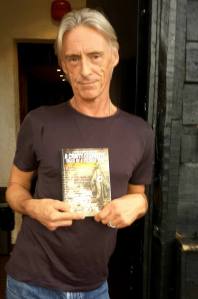
Mod Royalty: Paul Weller gives his endorsement to A Crafty Cigarette (Photo: Matteo Sedazzari)

For all its brutal touches, this is almost nostalgia compared to the nightmares with gang culture and stabbings in big cities now. Is that harrowing story be best left to the next generation of writers coming through?

“You’re right to a degree, yet I think Crafty is more nostalgic, and there is violence throughout Tales of Aggro. A lot of it is set in an era when stabbings weren’t so common. They happened, but not on the scale they do today. Fortunately for me, my friends and family, we haven’t lost anyone due to a senseless stabbing.

“In regard to the next generation of writers coming through, experiencing this horrible rise in knife crime, I’m sure there are many that have penned novels, short stories or graphic novels about it. A novel isn’t going to solve this, but it would be good to have a book that draws awareness to knife crime. I’m not sure if I could write that story, but I’d support any author that does.

“This is a deep subject, and it saddens me when I see the senseless death over usually something minor, knowing a family will be scarred for life, with joyful days like Christmas tragic days instead. That is true heartbreak.”

At what point did you realise you might be going down the short-story road, rather than just a narrative centred around one or two main characters?

“At the start, I wanted it to be a collection of short stories. I wanted to write a collection of love stories, and one-off relationships between Stephanie and Oscar is the only story carried over from that. I called the book Tales of Oscar De Paul and Other Adventures, in homage to Mark Twain, until the kid at my local bank said that was way too long. I said, ‘What about Tales of Aggro?’ and he smiled and said, ‘Nice’.

Casuals, Mods, skinheads … I mentioned last time that I felt no compulsion to belong exclusively to one tribe or other. I could see the value of various aspects (identifying more with Mod, appreciating the love of ska and Bluebeat with the original skins, and so on), but felt a need to distance myself from the crowd and the more plastic, blind followers. How about yourself at that impressionable age – did you find it a tricky path to navigate and choose a side, or did that sense of togetherness appeal?

“Belonging to a tribe has its pros and cons. It’s nice to have like-minded friends who share similar tastes in music, fashion and such-like. I was a Jam fan before I became a Mod, discovering the band by accident when going through my brother’s record collection, All Mod Cons. For some reason, it resonated. It was enlightenment, it really was. I had no idea who Weller, Foxton and Buckler were. It just felt right. I felt it was for me, as I was struggling at school, not with my friends, but with teachers. The sound of The Jam gave me the voice I was looking for, as covered in A Crafty Cigarette. At that moment, I didn’t care if I was the only Jam fan in the world. It was me seeing the light … and no, I’m not comparing The Jam to Jesus!

“Then I started to meet other fans my age or a little older, wearing parkas and all that, and thought this is for me, as many others did. That part was and still is beautiful, yet in tribes you have hierarchies. I was tested – tested brutally – before I was accepted by the Mods, which I glossed over in A Crafty Cigarette. Yet once I was accepted, I became arrogant and highly elitist to anyone new joining our gang. That was my defence mechanism. Then, as a schoolboy Mod, my friend Richard Knights (Rick in the novel) and I got into Jazz/Funk but had to keep it a secret from the other Mods. That was odd and wrong, to have that pressure at an early age.”

It can be a confusing world for teens to find their way through and carve out an identity, not least those leaving school with near to zero prospects. It seems to be as much about trying to fit in as a love of good clothes and great music.

Celeb Endorsement: Recent WriteWyattUK interviewee Alan McGee with his copy of Tales of Aggro

“To quote Tales of Aggro, ‘Anyway, we, The Magnificent Six, just thought our swagger, boyish good looks, thieving, cheeky charm, dress sense, and proficiency at music, street fights and gallows humour were all we needed to get on. But we have all learnt a harsh lesson—it isn’t. Well, not yet.’ It is true – leaving school is a serious wake-up call. That’s why I went back to college to do A-levels. I was clueless to what I truly wanted to be. As mentioned with my experience through a love of The Jam, belonging to a subculture can give confidence and strength.”

As Paul Weller wrote, ‘Life’s a drink, and you get drunk when you’re young; Life is new, and there’s things to be done, you can’t wait to be grown up, acceptance into the capital world’. Your characters neatly encapsulate that element of cocky youth, ‘shooting from the lip’, life yet to wear them down. Was that part of the appeal in telling this story – a kind of nostalgia for a time when us cynics felt we knew all the answers?

“Good point. I suppose it was, and with me writing it, I rediscovered some of the lost drive from my youth, so it was good therapy for me.”

Speaking of The Jam, a band that often come into your work, these are Weller’s ‘Saturday’s Kids’ you’re writing about, aren’t they?

“Weller’s ‘Saturday Kids’ accepted the situation and the system. ‘Think about the future, when they’ll settle down, Marry the girl next door, with one on the way.’ The Magnificent Six might have been Saturday Kids when they were at middle school, yet all of them are dreamers, not wanting to end up like their parents or peers.”

You weave a few real-life situations into the narrative, and celebrities – from Frank Bough to Mike Reid, even using the Sex Pistols’ Paul Cook and Steve Jones’ old school. Does that add authenticity?

“Without doubt, and also adds humour, like The Magnificent Six getting offered out by Frank Bough and Oscar De Paul having a grudge with Mike Reid over a failed audition for Runaround. Cook and Jones are brought in to give Tales of Aggro an element of Punk and DIY culture.”

I mentioned the dodgy cops and there’s an element of changing times in the era you chose to write about – from outmoded out-of-their-depth policeman to out-of-step villains being pushed out of their territories. London was changing.

“I wanted to show that change. Back then, the police were truly brutal and suspects weren’t given legal representation.”

‘Stay Free’, the song Mick Jones wrote for The Clash about his schoolmate Robin, gave a peek into the world of those crossing the line with the law and getting caught out, through petty crime or worse. You mention Feltham Borstal, HMP Wandsworth, then HMP Brixton. There for the grace of God would have gone a few of us if job opportunities hadn’t arisen or supportive families hadn’t had such positive impacts, yeah?

“Well, ‘Stay Free’ is one of my favourite Clash songs. I think when you’re a teenager or younger, hanging out with like-minded peers, and you’re unhappy with your home life and school, there’s a big danger that you can cross the line, without knowing it.
“François Truffaut’s semi-autobiographical film 400 Blows covers this. Antoine Doinel, a kid from 1950s Paris, from an unloving family, bunks off school, leaves school, steals a typewriter from his stepfather’s place of work, tries to do the right thing by returning it, yet is sent to borstal. One simple mistake, and that’s it. I’ve been arrested for minor things, from petty theft to criminal damage, but last time was way back in 1992, I just wised up.”

I think of that line from Billy Bragg’s ‘Levi Stubbs’ Tears’, where, ‘Her husband was one of those blokes who only laughs at his own jokes; the sort that war takes away. There wasn’t a war, he left anyway.’ In another era, the John Roost types had a chance to be painted as heroes, yeah?

“Rooster, yes maybe, but he had mental health problems along with a drink problem. He couldn’t handle it. In fact, that story is a morality one. He shouldn’t have gone to prison and been labelled a threat to society by the police and the media. Tragically, he believed his own hype and became what society cruelly perceived him to be. At the start, John Roost is a nice kid with one dream, to join the army. The story isn’t an anti-army one, but one of mental health issues, and how society back then dealt with it. It’s a veiled story, not one I’m shouting from a soap-box.”

In the case of Ed’s uncle, Rockin’ Wilf, there’s something of a throwback there to the Teds of Notting Hill in Colin MacInnes’ Absolute Beginners. Another influence?

“I haven’t read Colin MacInnes or Absolute Beginners for a long time. Rockin’ Wilf’s older brothers were original Teds, Wilf was born in the late ‘40s, and was part of the Ted revival of the early ‘70s. He was influenced by a toy bear I had as a child, called Wilf, who liked to steal and loved Elvis. No shit! And Wilf the bear was based on a neighbour, an original Teddy Boy called Sid, the street’s Del Boy. A good man.”

There’s a CD included with Tales of Aggro, attributed to Zani, recorded last summer, with words and music by yourself. Which came first – the songs or the novels? Or were both key elements of where you felt you were headed?

“The riffs came from old songs I wrote many years, and I came up with the words last year. I’m using it more to market the book, plus it was fun to get back recording again. I enjoyed it. I intend to push the music more over the next couple of months, so watch this space.”

You can tell there are characters here who will find success, be that social, personal, financial, or all three, while there are others almost destined to fall by the wayside. Did you know where your characters were headed when you started out?

“I more or less knew the paths Eddie the Casual and Oscar would take, but for the other members of The Magnificent Six that was organic, Like a lot of the book was, I have a simple idea or plot, start hitting the keyboard, and a few hours later I’ve created something fresh. I love that part of writing, as I can put my imagination in full force.”
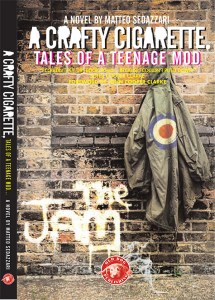
You’ve a similar passion for film, as regular readers of Zani will know, and I can see your stories being adapted for TV or the big screen, in the same way writing heroes of yours like Martina Cole crossed over. Is that an intention of yours, and are you courting interest on that front?

“Yes, and yes again! It is a dream and on the project list. As mentioned in another interview, both books are the hands of a top director and screenwriter, and both are friends. I will push this more, because Crafty would a great film, whilst Tales of Aggro would be great as a web series. It is a burning passion.”

At a time when the publishing world is struggling, the likes of yourself and a few other platforms suggest there’s a future for truly independent writing. Are you managing to make ends meet through the Zani empire and your writing?

“Empire! Love it, I still do contract telesales – a month here, a month there, two to three days a week, working from home. I haven’t worked in an office since 2002, nor been a PAYE employee since then. Some of the profits from my work is used to promote the books and site. I am looking to be a writer full time. Let’s just say I’m working on a plan.”

Finally, what’s the next novel? Is it already taking shape, and when might that land? Personally, I reckon we need something about your part-Italian roots, something more autobiographical.

“Thank you, it’s been a good interview, with intelligent questions – in depth and intense. I love that, it got my brain working. And I will write something about those part-Italian roots, but I’m already on the fourth chapter of my third novel, planned for release in March/April 2020. Details nearer the time, but I will say that it’s in the realms of The Lion, The Witch and The Wardrobe, Wind in The Willows and such-like. I’m letting my imagination run free and stay free!”
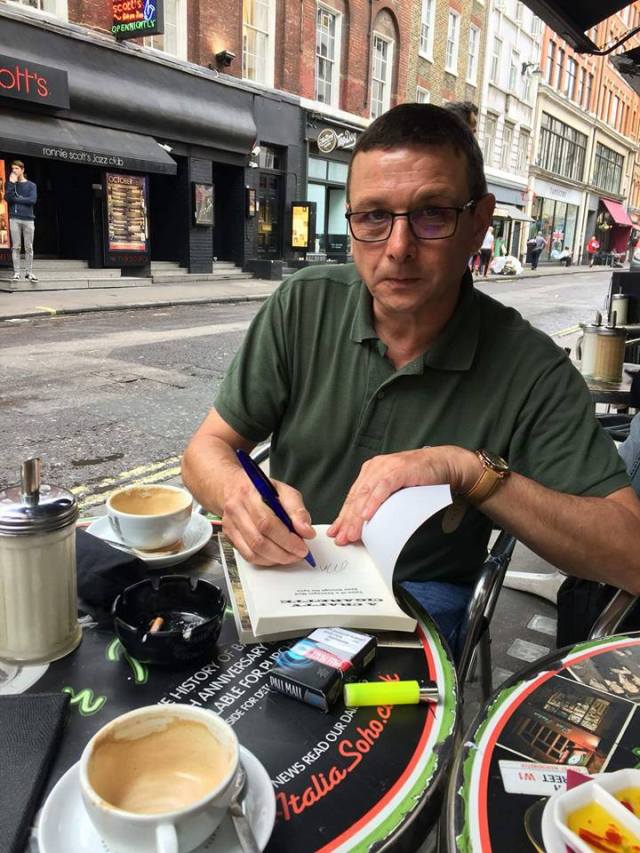
Soho Signing: Matteo Sedazzari puts pen to paper on Frith Street, London W1

For a look back at WriteWyattUK’s August 2016 interview with Matteo Sedazzari, concentrating on his first novel, head here.

You can find a copy of Tales of Aggro by Matteo Sedazzari (ISBN 978-1527235823) via Amazon, and via the same online marketplace catch up with Matteo’s debut novel, A Crafty Cigarette – Tales of a Teenage Mod, with an Amazon link here

Meanwhile, Matteo’s Zani website is a recommended portal for a wealth of features and reviews from the world of films and TV, music, sport and culture, accessed via this link. West london, Zani, Shepherd’sMark Twain

Posted in Books Films, TV & Radio, Comedy & Theatre, Music | Tagged , , , , , , , , , , , , , , , | Leave a comment

Still winning Hearts and Minds – in conversation with Carl Hunter

Merseyside musings: Director Carl Hunter, centre, in conversation with Bill Nighy, right, in Sometimes Always Never.

Carl Hunter was stir crazy at the airport when I tracked him down, delayed an hour and condemned to sit around talking to me while drinking Yorkshire tea, his days of rock’n’roll excess with The Farm possibly behind him.

He was en route to Toronto for a two-day dash built around a screening at Oakville Film Festival, where he would join forces with Tim McInnerny, best known for memorable roles in Blackadder and one of the stars of Carl’s first feature film as a director, Sometimes Always Never. How does he think that job description sounds?

“Sounds pretty good, although I’ve made a number of things in the past as a director, about 30 documentaries for television, and a feature film before with Frank.”

That’s past WriteWyattUK interviewee Frank Cottrell-Boyce, the esteemed screenwriter and children’s author, who adapted their latest film from his short story, Triple Word Score, the pair previously linking up for 2007’s Grow Your Own, starring Eddie Marsan. Omid Djalili and Olivia Colman, a film that surely deserved more accolades.

“The weird thing is that it’s more topical now than when we made it. If anything, I think the BBC should show it, bearing in mind what’s going on politically. Given the current move towards the right wing – which is frightening and also incredibly wrong – it might help raise awareness, and that would be so topical.”

It’s been a while since I last saw that. I loved it, and must dig it out again (so to speak). It was very much about community and different cultures coming together, wasn’t it?

“Yeah, it was, and about understanding people really. How it doesn’t matter where you’re from in the world, there’s a lot of commonality we all share. Poor people are poor people, whether you live in Liverpool or anywhere else in the world. Pain is pain. I also worked on a Channel 4 documentary series about refugees, victims of war and torture, women broken by a brutal regime who came to Liverpool to find a better life, and safety.”

I get the impression that Liverpool has a proud history of accepting foreigners, for want of a better descriptive term.

Producer's Role: Carl and Frank also worked together on Grow Your Own

Producer’s Role: Carl and Frank also worked together on Grow Your Own

“Yeah, as a port, so many people have come and gone from Liverpool, so it’s a city used to immigration. Some stayed, some wandered on. And through dealing with immigrants, that leads to a better and more interesting understanding of cultural issues.”

Incidentally, there was also a refugee theme threaded through the pair’s work on Frank’s 2011 children’s book, The Unforgotten Coat, involving two Mongolian brothers who end up in Merseyside. But more of that later, for my excuse to speak to Carl was his latest project with Frank, Sometimes Always Never, featuring Bill Nighy as retired Merseyside tailor Alan Mellor, a Scrabble enthusiast searching for his estranged son, with Sam Riley, Jenny Agutter, Alice Lowe and Alexei Sayle also cast.

The film had been out barely a week when we spoke, early screenings at Fact in Liverpool and Carl and Frank’s local picture house, Crosby’s Plaza Cinema proving a hit. In fact, Carl, originally from Bootle, let on that he lives less than three miles from where his life journey began, joking, “I didn’t move that far – I’m incredibly lazy!”

He came from an art school background, the 54-year-old not only playing bass guitar with The Farm but also designing the Merseyside outfit’s record sleeves down the years. And I mentioned early in our conversation how he has The Undertones’ ‘My Perfect Cousin’ record sleeve artwork on his Facebook profile page, something telling me instinctively that I liked the fella.

“Ha! You can tell a lot about people from when they post a picture of a record sleeve. Straight away!”

Indeed, and further to that I see you have ‘The Cost of Living’ EP sleeve art as your profile pic on your Twitter page.

“That’s right. I’m a huge fan of music. I have been since I was very young. And I’m a huge fan of record design. I did a BA and MA in graphic design at the Liverpool Art School – Liverpool Poly as it was then – and later did a five-part documentary on the history of record sleeve design for Granada (in 2000), concentrating on the North West and the impact it had on the packaging of music. I interviewed all the key people – (members of) 10cc, The Smiths, Peter Saville, Malcolm Garrett, right through to dance music, Badly Drawn Boy, and that era. That was an absolute joy to make.”

Interestingly, after our conversation I thumbed through a few old interviews with The Farm, coming across one in Vox in early 1991 where Carl told Martin Townsend, on the subject of Malcolm Garrett’s Buzzcocks sleeves, ‘When their next record was out it became like, ‘What’s on the sleeve?’ You were as excited about the sleeve as you were about the record. I don’t think I’ll ever be able to do what he did, but the point is it’s not just about the music you make, it’s about the attitude’.

Carl made an impact through his sleeves too, the likes of Sex Pistols sleeve designer Jamie Reid singing his praises. the most memorable including the ‘Stepping Stone’ single with its (following the fashion crowd) sheep cover and the Spartacus album’s parody of a Radion detergent design, their response to ‘anti-working class’ digs from the press, suggesting they carried an anonymous, ordinary image.

And while The Farm called it a day in 1996, they were back within a decade, Carl still enjoying occasional live outings alongside his work in the film industry, while he also puts out records via The Label Recordings, running out of Edge Hill University in Ormskirk, where he’s also a senior lecturer in media, film and television, assisted in both respects by Clare Heney, calling that enterprise ‘incredibly successful’.

Band Substance: The Farm today. From the left – Carl Hunter, Keith Mullin, Peter Hooton, Roy Boulter, Steve Grimes.

“Finding the right music is what makes it work. Radio has always been a great support, and we’ve managed to attract regional, national and international press for bands, and bands have gone on to sign management deals, such as Hooton Tennis Club, who put out a single with us, then signed to Heavenly Records.”

Just hearing him speak, you know he’s still very much enthused by music, all those years after breaking through with The Farm.

“Well, we formed in 1983, and we’re still going now. When I joined, the band hadn’t been going that long. And we’re soon starting a massive run of festivals.”

Did you ever see The Excitements, the band from which The Farm sprang?

“No, but I’m a huge fan. Steve (Grimes, guitar) has kept songs from those days, and found a box of photographs of them, which I’d never seen. They’re brilliant, and so are the songs. If I was Steve I’d get in the studio, record and release them. They were more punk/new wave, more like Buzzcocks. They were great.”

Next year marks the 30th anniversary of your breakthrough singles, later recaptured on the 1991 hit album, Spartacus. Does that seem possible?

“I’m always shocked when I hear that mentioned, but maybe because we remained close friends, and as a band we’ve gone on a similar journey. For instance, with Sometimes Always Never, Roy (Boulter) – our drummer – his production company (Hurricane Films) produced the film and also did the last three Terence Davies films, back to back. They have a massive international reputation. Also, Peter (Hooton, vocals) is in it, with a cameo as a grumpy ice cream man.”

I seem to recall you have a thing about ice cream vans, as regular readers of your tweets will know.

“Yeah, I’m fascinated by them, in the same way as we have phone and letter boxes … although I don’t even like ice cream! I don’t ever buy one, but I’m interested in them as kind of statements, really. There’s a documentary I want to make and I’m getting closer to doing about ice cream vans, but more of an international story.”

Another Place: Bill Nighy as retired tailor Alan Mellor, on the atmospheric Crosby set of Sometimes Always Never.

At this point I interject, mentioning my home village of Shalford, Surrey, and its link with The Stranglers, who played their first shows in nearby Guildford, recalling how drummer and band creator Jet Black once sent his fellow bandmates out on the streets to sell ice cream to earn their keep between gigs.

“Wow. I never knew that. Jet Black was an ice cream man! That could be a lyric from a Fall song!”

You’re right there. And I see recent WriteWyattUK interviewee Alan McGee remains a keen Farm fan, placing their 2014 acoustic appearance at his former Baptist church venue The Tabernacle in Talgarth, Wales, in his top-10 all-time gigs.

“Yeah, and I’m a big fan of his. He’s a huge music fan to this day, always helpful and supportive. In recent times, through The Tabernacle, he’s booked us a few times, and it was wild! And he’s got a great ear for a band.”

Remind me what happened in 1996. That seemed to mark the end of the first part of the band story, but by then it looked like you’d already set out on a path towards being a celebrated film-maker.

“Yeah, I think by ’95 the world had changed. There was this desire for bands like us, but then Nirvana came along and it all changed. And by the way, that’s how it should be. Then Brit Pop moved in, which we never part of. We were finished by then. But I think in any pop culture, I don’t see anything wrong in that. It’s unfortunate when you’re a victim – one minute you’ve got a pop career, the next you’ve not – but you have to accept you can’t keep doing the same thing. I come from an art background, and you need movements in the arts, otherwise nothing ever changes.”

I’m guessing you split on good terms then.

“Oh yeah, and in a way it’s quite a blessing. We went into hibernation – we never split up – because it wasn’t working anymore. But I was getting into filmmaking, working on documentaries, while Roy became a screenwriter, writing at least 500 episodes of soaps (Brookside, Hollyoaks, EastEnders, his credits also including The Bill and The Street), and then became a film producer, working on big movies, while Steve went on to write music for films and documentaries.
Iconic Sleeve: The Farm's 1991 hit album, with design by Carl Hunter

Iconic Sleeve: The Farm’s 1991 breakthrough hit album, Spartacus, was designed by bass player Carl Hunter

“Meanwhile, Ben (Leach), our keyboard player, just disappeared and ended up on tour with George Michael, Take That, Duran Duran, and … you name any band that could fill an arena! And Keith became a lecturer at LIPA, Paul McCartney’s school. So when we went into hibernation, we all pursued other things, Peter becoming a cultural spokesman and a writer, publishing books and God knows how many thousands of articles for newspapers and magazines. We all wandered into the world of media, and did so successfully for years. Then one day, Happy Mondays phoned us and said, “You don’t fancy doing a gig with us, do ya?’ We thought, ‘Oh God, we haven’t played for years! But we’ve been playing ever since. And we remain big friends of the Mondays – us of them, and them of us.”

That first gig was at Brixton Academy in 2004, and 15 years on they’re still out there, this summer’s dates including a hometown headline show at Bootle Music Festival this Sunday, July 7th  (with details here or here).

At this stage, we spoke a little about the Mondays, and I mentioned an interview I had lined up with Bez, mentioning to Carl about his part in Joe Strummer’s wilderness years, prompting him to get back to Sometimes Always Never and a link to the latter.

“Bill Nighy plays a tailor by the name of Alan Mellor, with his shop called Mellor’s, the reason being Joe (real name John Mellor), in a deliberate nod to The Clash.”

I shouldn’t be surprised. Carl told Martin Townsend in ’91 that his hero was fellow bass player Paul Simonon, of whom he said he ‘just played the right notes at the right time’. And Mike Pattenden wrote in an August 1994 feature for Vox that Carl and Steve Grimes would often do a Clash number at soundchecks, becoming known as the ’77 Twins’.

Another diversion followed as we got on to our mutual love of the Undertones, a band with their own link to Frank Cottrell-Boyce via his part in Derry’s 2013 City of Culture celebrations. You also worked together on 2016 short film, A Winter’s Tale: Shakespeare Lives. How did you get to know him?

“Frank lives in Crosby and was involved with a community cinema there (The Plaza), where a friend of mine, John, volunteers – he’s the arthouse film programmer. He said we should meet, as we had very similar interests. And he was right. We got on like a house on fire. From that day to this we spend a lot of time in each other’s company and we’re working on a new film together now. It’s kind of a four-page outline at the moment … it’s very good though … and funny!”

Refugee Tale: Carl Hunter provided photographs for Frank Cottrell-Boyce's 2011 children's book.

Refugee Tale: Carl Hunter and Clare Heney provided photographs for Frank Cottrell-Boyce’s 2011 children’s book.

You also worked together on The Unforgotten Coat, with Clare Heney again.

“Yeah, that was an interesting project, shooting Polaroids to try and make Bootle look like Mongolia! It’s kind of about seeing the world differently, but also in a way you want other people to see it, and it’s a wonderful story.”

There’s been a great response to Sometimes Always Never. Was it a something of a dream realised to get the likes of Bill Nighy, Alexei Sayle and Jenny Agutter involved?

“Oh, completely. In fact, when I was asked on a wish-list who I’d want to play Alan, I said Bill Nighy. He said yeah, and was wonderful to all the cast, very talented and great to work with. When you’ve got a cast as strong as that… it’s so good. And the way they can turn a line around, the depth of what they can do is breathtaking.”

There must be moments when you’re brimming with pride, having big names speak your lines and act your scenes.

“Sometimes you can kind of forget what you’re doing, and when you’re making a film it’s very intense, working on it every day for 10 months or so. It’s a marathon. And because you’re doing it all the time it becomes your life really. So I can be a little blasé about it. But not because I don’t care or I’m rude or arrogant.

“I remember a mate asking what I was up to one week, and I said, ‘I’m going up to Scotland to spend a few days with Edwyn Collins to work on the soundtrack of the film. And he went, ‘Fuck off! You’re not! Orange Juice Edwyn Collins? You’re gonna work with him?’

I was unaware of that myself until I watched the trailer and recognised his voice.

“I was asked about a composer for the film, but I never wanted a composer. I wanted a songwriter, and that was partly because I’d seen Submarine, where Alex Turner did the music. I liked that, and I’d always had this idea of working with Edwyn. I asked if he’d be interested, he said yeah, then recruited Sean Read, of The Thunderbirds, and Chay Heney, who was in a band called Sugarmen (and Station Agent). The three of them moved into Edwyn’s studio in Scotland in the depths of winter, and were properly snowed in. Yet these three musical alchemists turned out this amazing soundtrack, with two classic Edwyn songs out as a 7” double A-side single, then a 12” vinyl album following.”

Film Role: Edwyn Collins is following recent LP Badbea with work on the Sometimes Always Never soundtrack

I’m guessing Edwyn had seen the script.

“He had, he loved it, had ideas, and when the three of them got together in the studio it became like a supergroup. Edwyn collects vintage guitars and recording equipment, and it’s an Aladdin’s cave of vintage instruments and electronics. He gets very excited by music, and also playing. There’ll be some instrument we’ve never heard of, and we’ll follow him to his shed and he’ll get something from 1945 or 1950, some bizarre item of equipment, and say, ‘Let’s plug it in!’ It was great fun, the soundtrack’s fantastic, and it’s watching three people enjoying themselves.”

And did Kentish lad Bill Nighy easily adapt to a Merseyside accent?

“Oh yeah! He said, ‘I’m going to learn five Liverpool accents and I’ll test them on you. You tell me which is the most appropriate. I spent an afternoon with him while he tried out these five accents, and for one I just said, ‘That’s it! That’s the one to go for.’”
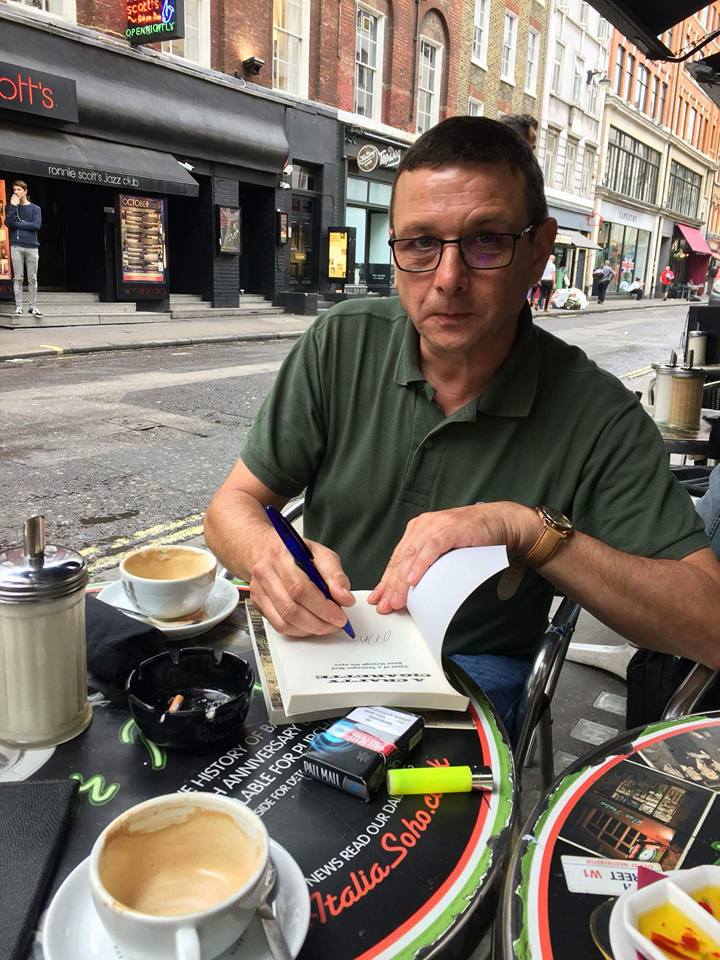
I love Bill’s line where Alan says, ‘I always say the only good thing about jazz is that it scores very highly in Scrabble.’ Was that one of yours?

“Actually, our guitarist said that one night, when we were gigging somewhere. A saxophonist was playing something and Steve said, ‘The only good thing about jazz is that you get 26 for it in Scrabble.’ I remember telling Frank that, and he said that’d be a brilliant line in the film, changing it slightly.”

And this project started with a short story by Frank?

“Yeah, he’d written this brilliant short story, Triple Word Score, which I read and loved. I said, ‘I wonder if it’d make a film’, and he went, ‘I’d love to make it as a film. Do you fancy having a go at it? That’s where the journey started, around nine years ago, us coming back to it now and again. There were times when it was about to be made then fell at the last hurdle, like most things. But then it happened, and now it’s on at cinemas in Australia, New Zealand, Britain …”

Scene Set: Carl Hunter, second left, and Bill Nighy, second right, on the last day filming Sometimes Always Never.

With thanks to Aneet Nijjar and Jon Rushton for the use of stills from Sometimes Always Never, which is on at The Dukes, Moor Lane, Lancaster, on Friday, July 5th, Saturday, July 6th (two screenings), Wednesday, July 10th, and Thursday, July 11. To book tickets, call 01524 598500 or head here. There are also screenings this weekend at the Picture House at Fact in Liverpool, Hebden Bridge Picture House, and Ilkley Cinema. Check out each venue for details. 


Posted in Books Films, TV & Radio, Comedy & Theatre, Music | Tagged , , , , , , , , , , , , , , , , , , , , , , , , | 1 Comment

Sex Pistols / The Clash, The Black Swan, Sheffield, July 4th, 1976 – an extract from This Day in Music’s Guide to The Clash

‘Things went wrong during the evening, and Mick had to come over and tune my guitar, but it didn’t bother me. I just wanted to jump around, but Mick wanted it to be in tune.’ (Paul Simonon, The Clash: Strummer, Jones, Simonon, Headon, 2008)

If it seems odd that two rival bands, not least with the perceived needle between Pistols manager Malcolm McLaren and Clash manager Bernie Rhodes, should set out on a 300-plus mile round-trip to South Yorkshire for a one-off concert, it’s worth noting the feeling within the UK punk rock scene and the idea of creating a revolutionary force within the industry that couldn’t be denied. As Strummer put it in Westway to the World, ‘You had to be in league with each other. There were so many enemies.’ This was about camaraderie, despite the obvious competition simmering beneath the surface.

Known locally as the Mucky Duck, later becoming The Boardwalk (gone by 2010), The Black Swan, Snig Hill, Sheffield, was a regular stop-off point for London pub-rockers like Brinsley Schwarz, Ducks Deluxe and Dr Feelgood – before punk took off, and played host to a Sex Pistols/Clash show during the long, hot summer of ’76, in the process Mick Jones beating fellow ex-London SS bandmate Brian James to the stage with The Damned by two days, supporting the same headliners at the 100 Club. The Clash’s live debut – the first of an estimated 600 or so gigs – was to be their only appearance that month, Rhodes’ idea by all accounts. There were probably only a handful of people present, although eye-witnesses reported a sizeable crowd amid that summer’s sweltering drought conditions. On the same day that America celebrated the bicentennial of its revolution against the British, tensions were already building in both band camps, and that night a disaffected Keith Levene reckons he approached the singer known as Johnny Rotten with a view to joining forces if the Pistols broke up, something they would do within a couple of years when Lydon launched Public Image Ltd.

Jones told John Robb’s Louder Than War website, ‘We went in the back of a removal truck, with the gear piled next to us. We all sat in the back. It had a gate on the back, open like an old army truck. It was quite hairy! The gig was in the back room of a pub. There were 50 people there. A couple of punks. It was interesting. Wherever you went, you could see a couple of them in the early times, then you’d see more all the time. They would tell their friends. It was a big thing. Very often people got it completely wrong, but in a way, you couldn’t get it wrong. It wasn’t formed. We were just starting to find out what it could be. When you’re young and you think about it after in the post-match analysis. By the time everyone has sussed it, it was already over.

‘We were dressed in black and white. A couple of us had ties on. Black and white shirts with suity bits. It was punky style. Not good suits. A bit ripped, tight, slightly different. We would dress fairly straight and well behaved in a way. Maybe a little rip here, splash of colour here, a couple of pin-type things. Not safety pins. The look was still formulating. There was a bit of paint dribbled here and there. It had come off when we had to paint the rehearsal room. We got the paint from the car-spray place just over the road. Bernie was involved in garages. He used to go down there and get spray. We started spray-painting all the amps pink, and as we were painting everything we were getting covered in paint.

‘I guess that was our first look. Also, Glen (Matlock) has a claim to do this as well, because he had a pair of trousers that were paint-splattered, a la Pollock. So, he should take a bit of credit for it. The style thing came naturally through Paul. We were all into the style, especially Paul and I. Joe not so much, but we would always encourage each other.’

Paul Simonon, in The Clash: Strummer, Jones, Simonon, Headon, said, ‘It was the first time I ever played on stage. The night before it felt frightening but once we were on the way I began larking about. I tied one of Keith’s shoes to a piece of string and hung it out of the back of the van. The door had to be open anyway so we could breathe. There we were, sitting with all the amps and luggage, with a plimsoll bouncing around behind us, all the cars behind us slowing down to avoid it. But the moment we walked out on stage it was like I was in my own living room. I felt really comfortable.”

On Westway to the World, the band mention Simonon messing up the intro of instrumental, ‘Listen’, due to nerves, leading to an on-stage crack-up, his bandmates unsure where to come in. And Strummer, using the microphone he’d made that death-defying climb to liberate from the English National Opera House two years earlier, gave an account to Jon Savage for England’s Dreaming, saying, ‘It was a Sunday, but 200 people turned up. They were very receptive.’

Keith Levene added, ‘I remember John (Lydon) sitting miles away from the rest of the band members, looking miserable. And there’s me sitting in another corner away from all my band members, looking miserable. I walk over to Lydon and talk to him. We knew each other, but don’t know each other because we’re the rival bands. We’re both in the same scene but knew we were the best bands on the scene at the time. I said, ‘I’m out of here after this gig’. Turns out I was a few gigs later, after The Roundhouse show. ‘Do you want to get a band together if the Pistols ever end? Though it doesn’t look like it at the moment. It looks like you could be the next Beatles. But if it ever changes. And there’s no way I’m going to be in a band with Steve Jones’.’

They played around a dozen songs, including the 101’ers ‘Rabies (From the Dogs of Love)’ and Mick Jones’ ‘Ooh, Baby, Ooh (It’s Not Over)’, neither featuring again. A fortnight later, a review followed in the NME, a letter from Reg Cliff – speculation suggesting it was written by someone in the band’s immediate circle to drum up publicity – saying, ‘I went to see the Sex Pistols and Clash (formerly 101’ers) for the first time. I was very, very disappointed. Both bands were crap. It’s enough to turn you on to Demis Roussos. Clash were just a cacophonous brigade of noise. The bass guitarist had no idea how to play the instrument and even had to get another member of the band to tune it for him. They tried to play early ‘60s r’n’b and failed dismally. Dr Feelgood are not one of my favourite bands but I know they could have wiped the floor with Clash.’ Yet he added, ‘The Sex Pistols were even worse.’

Lydon had his own take on the gig in 1993’s Rotten: The Autobiography, saying, ‘Strummer and the rest of them had a horrible attitude at that gig. Keith Levene was in the band and was the only one who could actually hold a decent conversation with us. Malcolm and Bernie were competing, so Bernie was revving this band to take a very anti-Pistols stance – as if they were the real kings of punk. I’ve never liked The Clash. They weren’t good songwriters. They’d run out of steam halfway through their gigs, because they would go so mad at the beginning. The Sex Pistols learned dynamics on stage. I credit Paul for that. He could break the tempo down. Strummer would start everything off and from there on in it was just full-on speed. That’s not good enough, because you’re not saying anything just by being fast. You can’t dance to it, and you can hardly listen to it. It’s unpleasant after half an hour.

‘To me The Clash looked and sounded like they were yelling at themselves about nothing in particular – a few trendy slogans stolen here and there from Karl Marx. The Clash introduced the competitive element that dragged everything down a little. It was never about that for us. We never saw ourselves as being in a punk movement. We saw ourselves as just the Pistols. What the rest of them were up to was neither here nor there. Quite frankly, they weren’t there in the beginning. They laid none of the groundwork. They just came in and sat on our coat-tails.’

While mellowing in certain respects, Lydon still had little praise for The Clash speaking to Barry Cain in 2007, for Sulphate 77, saying, ‘I always thought The Clash were a rip-off of Bernie Rhodes vs Malcolm McLaren and nothing to do with the bands. I loved The Clash as people, and always will. Just wonderful people. But it didn’t mean I had to like their music. It was political sloganeering. I thought it was wrong for them. Mick Jones was someone I knew anyway from The Roundhouse. He was one of the kids who used to bunk in. Mick was Jimmy Page. He actually tried out to be the Sex Pistols’ guitarist. Mick Jones was always around. I remember turning up at The Roundhouse when Osibisa were playing and Mick Jones got in because he was part of the Osibisa crowd. I thought, how the hell did he do that?’

He added, ‘Joe had this ridiculous Cockney accent that wasn’t quite right. He used to really drive me crazy. What the hell are you talking about, Joe? This is where Joe Strummer ended up in a house in the country as a lord. He did everything wrong. Joe became the landed gentry, and that was irrefutably wrong. It’s nice to earn it, but it’s not nice to buy it. Beyond that little world or schism, it was really ridiculous. There’d be Joe Strummer running around with all the posh towels, the steel towel-rail people. It was awful trying to get past their middle-class sensibilities, we’d still be banned in clubs where the likes of Joe was accepted because he had, what, ambassador credentials?’

Mucky Duck: The Black Swan in Sheffield, four decades after The Clash made their live debut there, supporting the Sex Pistols (Photo: Malcolm Wyatt)

This is an extract from This Day in Music’s Guide to The Clash, published by This Day in Music Books in late 2018. For more details, head to this feature here. There are still copies of This Day in Music’s Guide to The Clash out there, and if you’d like to buy a personalised and signed edition at £12 plus p&p, just send me a note via this WriteWyattUK page link on Facebook or through a private message on this website. You can also buy direct via Amazon.

Posted in Books Films, TV & Radio, Music | Tagged , , , , , , , , , , , | Leave a comment

Our first year with Tom – part one of the handsome dog’s tale

Our Tom: As captured so wonderfully for the Wolfwood charity, near Lancaster (Photo: Sue Milligan Photography)

I find it hard to believe it’s a year since we first met Tom. It’s difficult to remember a time when he wasn’t such a key part of our family life.

Sunday, June 17th, 2018 was the day, barely 20 hours after we first saw a photograph of him, our Lottie having been a major contributing factor, her near-constant, brow-beating questioning increasing by the week. “Can we have a dog? Why can’t we have a dog?”

We argued at first that we couldn’t commit. I really didn’t know where work would take me, and where would we find the time and money to ensure a new arrival was properly looked after? But as the months went on, we became all the more assured that it might work.

Besides, I’d been self-employed for around eight years, much of that time working from home. The old excuse of having no one to look after a dog during the day had fallen by the wayside. Time was of the essence though, our eldest, Molly off to university soon. We didn’t want her to think she was being replaced, cute as any new arrival would indubitably be.

So with GCSEs and A-levels done and dusted, it had to be now, even if that meant extra headaches when it came to our summer holiday. That would at least give Molly chance to properly bond before heading across the Pennines to Sheffield in September. Both girls had a busy few weeks ahead, dates in the diary piling up, but soon, head started to be won over by heart, and we started looking, several dogging sites added to internet favourites on phones, laptops and hard drive. Erm, sorry, that should read dog-related sites.

Not as if we fully agreed on what we were looking for. Sentiment for me suggested a Labrador or retriever, an Irish setter like our cousins had in Cornwall in the ‘70s, a springer spaniel, or Jayne’s first choice, a Collie. I’d be happy with any of those. Molly wasn’t so keen on the idea of a big dog, preferring the notion of a spaniel perhaps. Something fluffy and cute, but nothing pedigree. As for Lottie, she was soon falling in love with any mutt she found on the internet, wanting to take them all in. And I think we all knew that if we went to a rescue centre, we’d choose the dog everyone else was likely to walk straight past.

We did sort of agree on a girl (I tried the word bitch there, but it looked wrong), half-expecting a male addition to the family to be so pleased to see everyone he came into contact with that he’d be forever humping legs. Us lads can be like that sometimes. And while we liked the idea of a rescue dog – rather that than supporting an industry built around fashionable pedigree breeding – in a bid to give a home to a pooch with an unfortunate start in life, we could well be dealing with a few issues. What might we be committing ourselves to, not knowing a full history? It was a dilemma.

With those admittedly wide parameters set, we got to it. I initially contacted a rehoming centre not far off my patch (no names, no breed here), but felt like an animal abuser by the time I got off the phone. I understand there are vetting processes, so to speak, but was made to feel rather uncomfortable at being a first-timer. I never did get a call back after my initial ‘interview’. Soon enough though, we were looking online each day, and every hour at times. And despite our earlier concerns, we were soon concentrating on rescue websites, local RSPCA sites in particular getting a hammering. I even reckon Lottie’s geography was improving. ‘Erm, you do realise – gorgeous as she is – Stafford’s 80-plus miles away, right?’

Lead On: Tom all ready for his next walk at Wolfwood, a year ago (Photo: Sue Milligan Photography)

Soon, we fell in love – as we kind of expected – with Skye, a beautiful old black and tan  scruffy terrier that no one seemed able to commit to. We spoke to the centre looking after her and our next dilemma followed. Apparently, an arthritic condition meant she didn’t have the stamina for more than short walks. It broke our hearts to make the decision, but surely there was someone out there who wasn’t seeking long walks, just wanting a little gentle company, whereas part of our motivation was to get fit and enjoy plenty of fresh air and exercise. Of course, once the hard decision was taken, we continued to sneak looks to see if Skye had been rehomed, while putting out the word ourselves.

Then came news of a wonderful Collie, who looked right up our street. Her name was Nell, and that seemed apt. As a keen family historian, I was aware of twins up my tree (so to speak) known as Nell and Tot, the latter really a Lottie, like my youngest. Frightening as it seemed, this was the moment, right?

We dithered, we talked it over, we weighed up pros and cons, we talked it over some more, then finally decided to get down to Merseyside that weekend and check her out. But someone got there first, her photo profile quickly updated to ‘now on a home visit’, leaving us genuinely upset that we’d missed out. But if that disappointment taught us anything, it was to act faster next time. And it also confirmed that we really did want a dog. There were no doubts now.

Then came a distinct possibility via another website we previously ruled out on account of the fact that the centre name, Wolfwood, suggested something more Canis lupus than we were looking for. It wasn’t far off, just south of Lancaster, but did we really want to rehome a wild dog? But it turned out that Wolfwood was all about rescuing, rehabilitating and releasing injured and displaced wildlife from local vets, RSPCA officers and the public. More to the point, in our case it was about rescuing, rehabilitating and rehoming unwanted and stray dogs and finding appropriate new owners, even working with a dog behaviourist to help resolve any issues.

There was something else about this latest option that seemed to fly in the face of our earlier tick-list. He was a handsome fella, but … ah, there you have it – ‘he’. This here Tom was absolutely gorgeous, but … definitely a boy. Was our interest just some kind of on-the-rebound, kneejerk reaction? Maybe, but after Nell we knew there could be no stalling.

Lottie was in town that Saturday, but we sent her a message and she made the appropriate ‘noises’ in response, involving lots of heart emojis and exclamation marks. Consequently, my better half made the call around two that afternoon, with Molly and I listening in. We tried to convince ourselves it was just so we could find out a little more, then discount it as an option. We’d just say, ‘Ah, he’s lovely, but really we’re after a girl. If anything comes up that fits our (admittedly vague) description, could you let us know?’ Yeah, right.

The words on the site simply read, ‘Collie cross Tom is about eight years old. He is a lovely lad to be around and has been brilliant since he arrived’. But it was the pictures that really enticed us. Local photographer Sue Milligan took lots of lovely shots for Wolfwood, and the ones of Tom did him great credit, works of art in their own right. He looked so handsome. Could it just be trick photography? We really were being cautious, cushioning ourselves against what would seem to be the inevitable crushing disappointment.

So there we were, Stephen from Wolfwood telling us down the telephone line, ‘Ah, he’s a lovely lad. Unfortunately, he’s driven by his testicles at the moment.’ We looked at each other. Did he really just say that? Yes, but he added, ‘That’ll change in a couple of days though. He’s booked in to be done,’ Yikes. Poor lad. He then talked some more about that procedure and we learned a little about Tom’s history, at least as much as they knew, Lancaster City Council’s dog wardens having apparently found him roaming the streets. Not sure when, where or for how long, but no one had come forward and now he was up for rehoming. Bless.

Cross purposes: Tom, the Collie cross, awaits his next adventure, Summer 2018 (Photo: Sue Milligan Photography)

Who could do that? But all those (still unanswered) questions and possible theories would have to wait. Before we knew it, we’d agreed to pop up the following day and meet Tom, see how the Wolfwood operation worked. And there was certainly no sales patter in that phone call or any subsequent face-to-face meeting – just easy going, honest advice and shared experience, with no obligation on our part. Meanwhile, Lottie was on her way home and we shared further frantic WhatsApp messages, mulling over where we were at, excited at the prospect of the next day’s trip north.

While we had no real idea how old he really was, his handlers and the vet reckoned eight, judging by his teeth, which weren’t great. But his coat suggested he had been looked after, as did his demeanour. Perhaps an elderly owner could no longer cope, or a decision was taken from them, that owner’s family with too much on their own plate to properly care for him. Or maybe it was a homeless person whose situation had changed and for some reason or other could no longer properly look after their soul mate. All mere speculation, but that was all we had.

We must have gone through every possible scenario over the next few weeks as to how Tom ended up being looked after by the team at Wolfwood. But we’d soon come to the conclusion that he’d been loved and looked after before circumstances had somehow changed. Occasionally, in the months to come, albeit extremely rarely, we saw glimpses of reactions that suggested he wasn’t always surrounded by those who looked after him. Just a feeling. But he was definitely well mannered, friendly, inquisitive, occasionally playfully boisterous – certainly when he wanted a walk and we were taking too long – and very quickly melted our hearts.

That was all in the future though. For on that scorching Sunday morning, after a 25 mile drive up the M6, Jayne and I were trying to act dispassionately, weighing up more cautious outcomes. To add to that, when we parked up within Wolfwood’s gates, we were met with a barrage of seemingly relentless noise, from high-pitched yaps to fully resonant deep and loud barking. We walked towards the office, as if shell-shocked, trying to smile, expectation almost finishing us.

A young couple were just ahead, deep in conversation and paperwork about two young bull mastiffs tethered on leads at their side, barking at anything they could. It turned out that the couple were off on holiday, leaving the little fellas for a week or so in the kennels, a big adventure awaiting the dogs and their owners. And the look of relief on the fella’s face as they passed us to leave spoke volumes. What the hell were we letting ourselves in for? It was sheer mayhem, it seemed. We must both looked a little stunned. Trawling the websites, we saw so many dogs needing homes, and these two had clearly found a forever home. But their saviours needed a little rest and recuperation right now.

It was soon our turn to introduce ourselves, a message following via walkie-talkie, one of the handlers, Dianne, despatched to fetch Tom with us. And that’s something I haven’t mentioned yet. Tom was the name Wolfwood gave him, and Thomas was my Mum’s maiden name (don’t try and crack my online security questions, you’ve missed the boat by several years), having passed away after a long dementia battle a couple of months before. And her first name? Diana, close enough for me to give that serious reflective thought. Perhaps some things are just meant to be.

We soon headed off together to the kennels, Dianne and the girls in front, me holding back, waiting on the pathway, the cacophony continuing all around. Jayne later told me she was desperately trying not to make eye contact with all the other deserving four-legged pooches dreaming of a forever home, worried she’d end up offering to take them all in.  That’s probably why I held back. Furthermore, Lottie told me that amid all the mayhem on either side of him, this gorgeous snooter suddenly appeared through the bars of the pen, and there was Tom, sniffing them out, his eyes seeming to tell them, ‘It’s bloody loud in here, can we go for a walk?’

Actually, fairly soon we decided he was a little hard of hearing, or at least hard of listening … unless meals or walks were involved. But the first I knew of all this was when Tom padded nonchalantly out, Dianne with the lead and the girls just behind, all smiles, hearts duly melted. It wasn’t about eye contact yet, with no obvious sign of him clocking me, but perhaps that was an in-built defence, not getting too attached at such an early stage, a few trust issues yet to be bridged. All Tom seemed to care about was that it was a lovely day and he had his lead on, so hopefully it was time for his next walk.

So it turns out that Sue’s photographs weren’t studio wizardry after all. That was the real Tom she’d captured there. And he was extremely handsome. We stroked him and said hello, the girls already in love. Me too. And that wagging tale suggested it was mutual.

Handsome Boy: Tom posing for the camera, hoping to find a forever home. (Photo: Sue Milligan Photography)

With thanks to Sue Milligan Photography for the use of the photographs, and to all at Wolfwood in Lancaster. Part two to follow soon.

Posted in Adventure & Travel, Uncategorized | Tagged , , , , , | 1 Comment

Just past the crossroads – back in touch with Mark Radcliffe

Une Memento: Mark Radcliffe with his collaborator in electronic duo Une, Paul Langley, all set to play three happening North West music festivals this summer. As they say, ‘If the cap fits …’

When much-loved BBC radio and TV broadcaster, musician and writer Mark Radcliffe announced on air he was receiving treatment for cancer, I think we all feared the worst.

Boltonian Mark, this weekend co-presenting TV coverage of the 2019 Glastonbury Festival, made his big announcement on The Folk Show on Radio 2 in early October, delivering the news in trademark matter of fact way, telling listeners, ‘Now, here’s a thing. I’m sad to say unfortunately I’ve got cancerous skin and lymph node issues, and so as I’m sure you’ll understand I’m going to be disappearing for a while to get all that sorted out.’

But there was an air of positivity in his message, Mark stressing, ‘I will be back. You can depend on that.’ And less than nine months later he is back, and seemingly busy as ever, his treatment successfully behind him.

As well as a return to The Folk Show and his BBC 6 Music show with Stuart Maconie – now switched to weekday mornings – there’s a new book landing in September, incorporating the story of his cancer battle. And he’s also set to play a number of festivals with electronic collaborator Paul Langley, the pair going under the name Une.

Mark was diagnosed last September, surgeons removing a ‘walnut-sized thing from deep down on the back of my tongue’, then from his neck, ‘something the size of an apple,’ his wife Bella apparently declaring, ‘An apple and a walnut? That’s practically a Waldorf salad’.

He was holidaying in North Cornwall last July when he found a lump, not so long after his 60th birthday, telling The Mirror, ‘I’d had a beard for a while and thought, ‘Oh it’s too hipster, everyone has a beard now. I’ll go clean shaven’, and as I took it off, I noticed something on my neck.’

He put it down to a swollen lymph gland but on his return went to his GP, who sent him for an ultrasound, Mark soon seeing a specialist at Macclesfield for a biopsy and receiving his diagnosis. A full body MRI followed at Manchester’s Christie Hospital, his surgeon later telling him he was lucky he saw a doctor so promptly. Despite little discomfort, he had a large tumour hidden at the back of his tongue.

Following surgery, there was an intensive six-week course of radiotherapy and two rounds of chemotherapy, his treatment ending in mid-December, leaving him feeling ‘emotionally unstable’, January proving tough for the Knutsford-based broadcaster, feeling flat after all his day-to-day care. But he found his solution in a return to the airwaves, soon recording his Radio 2 show again, then joining Stuart live on BBC 6 Music from mid-February.

Cancer Awareness: Mark Radcliffe doing his bit for the North West Cancer Research #SpeakOut awareness campaign

By mid-March, he was in remission, Mark now down to six-month check-ups, but also taking time out to help publicise North West Cancer Research’s head and neck cancer #SpeakOut campaign, raising awareness among men, found to be three times more likely to be diagnosed with the cancer yet often ignoring early signs.

And from the moment he picked up the phone, he sounded just like the old Mark to me, albeit perhaps with a different take on life. Although I’d seen him doing a live show in late April, 2017 in Preston Guild Hall’s bar, last time we spoke, I reminded him, was for an interview in December 2015, just before his band Galleon Blast sailed up the River Ribble and dropped anchor for a show at The Continental.

“Oh right. I remember that. It was badly flooded at the time, wasn’t it. The river was raging torrents.”

Luckily, as a band you knew your way around such choppy waters though.

“Yeah, we were alright. We’re used to rough seas.”

My excuse for speaking to Mark this time around is his latest music venture, Une, which despite its name involves a pairing between Mark and fellow hot-blooded male Paul Langley, set to play the Cotton Clouds, Bluedot and Kendal Calling festivals this summer.

Of Cotton Clouds, at Saddleworth Cricket Club, Oldham, where fellow acts include The Wailers, Peter Hook and the Light, and Ash, he told me, “It looks good. I don’t know much about it, even though it’s not far from me. We’ve been asked to play through Tim Burgess (The Charlatans, also appearing), so I don’t think we’re on the main stage – we’re probably in a little shed somewhere … which is fine. But we’re looking forward to it.

“It’s a bit of a departure for me, really. I’ve always loved electronic music, I’m a big Kraftwerk fan, and we just started writing these songs. We didn’t know where it would go. We didn’t know if it would work. We didn’t know if we’d enjoy it. We didn’t really have any plan for it. We worked separately on it, really. I’d get the ideas and write the words, then I’d give them to Paul, ask him to have a look. He’d then do the music and we’d get together, edit and fine-tune it. And it’s turned out really good, I think.”

The snippets I’ve heard so far sound good. ‘Cerebral disco rave’, I believe. Is that right?

“Is that a quote from me? It sounds like the sort of thing I’d say. Yeah, it is songs, and it’s sort of pop music, but interesting sonically. I’m really enjoying it. We’ve only played twice live at the moment. But I’m just enjoying doing something different.”

Kind of neo-Neu?

“Well, that was one of the starting points. And I liked the name Une, which is an anagram of Neu, so … even though it’s wrong really, ‘une’ in French being feminine.”

Well, we’re all in touch with our feminine side here, aren’t we?

“Yeah … I’m not sure Paul is, but yeah, we’re really looking forward to getting it out there.”

And who’s better with a screwdriver on stage when it all goes wrong?

“Paul. I leave all the technical stuff to him, really. I like to think of myself as the romantic poet of the organisation. He’s operating all the stuff.”

Has that always been the case? There’s a nice clip of you and engineer Mike Robinson behind the controls at the BBC in Maida Vale, when legendary broadcaster John Peel made a rare visit to sit in on a Tools You Can Trust  recording session for his show in late 1984, for a feature on the Whistle Test show.

“Well, even then … I’m not very good with technology. I’m no good with gadgets. I’m a drummer – I hit things. I can manage a guitar, although I tend to hit that more than in a dexterous approach.

“I’m lucky I’ve got three daughters, so if there are any technical problems I’ll put one of my children on it, while they look at me with a look of disdain. In our house with things like Netflix and different accounts, there’s only Rose, who’s 17, who really knows how to work the telly. I’ve got a little telly in my room with Freeview on it. I can work that. Anything else is beyond me really.

“In Une, Paul’s very much the technological maestro, while I do singing and guitar. But I listen well. Sometimes I’ll say to him, ‘That’s not right. We need to do this’. I’m good at mixing things. I can hear the whole thing in my head and get a good picture of it. I’ve always had that, which is what a producer needs.”

On that Whistle Test clip, you pipe up to tell the Manchester band in session that ‘it’s a bit ragged’ at one point.

“I know. I don’t really like that clip of me. I feel a bit embarrassed now. I’ve got some sort of mullet and a yellow jumper on. And I now realise it wasn’t for me to tell Tools You Can Trust it sounded a bit ragged. It was for them to tell me this is how we sound, and this is what John Peel does. What you say doesn’t really matter. I sort of learned that over a period of time. I became a better producer by doing less. Leaving them to it, making sure they had a cup of tea. I think that was the most useful thing I did by the end.”

Who was your very first Peel session with?

“Wow. I’ve a feeling my first might have been the Tom Robinson Band. But I think I might have been shadowing someone. My first sessions would have started in mid-1983, although I can’t really remember who the first ones were.”

Incidentally, I’m not sure about that. I’ve since looked back, and while Tom did record sessions for Peel with TRB and as a solo artist, I can’t find mention of that one. Perhaps it was for Peel’s ‘rhythm pal’ David ‘Kid’ Jensen. Someone out there will know.

Back to Une, with Mark telling me that while the first album, Lost, is already recorded, it’s not out until September.

“We were fine tuning the artwork today, and it’s all done – it’s mixed and mastered. We’re ready to roll with it, and due to do more gigs later in the year. We’ve been spending a bit of time editing visuals, with good footage. We like to have a screen. For the first gig we had random, abstract images, but now we’ve edited images together for each song. We’re working on it all the time, and it’s getting better.

“We played in Northwich at a little festival (the DDGW festival in early May) and it went great. People loved it, and that really enthused me that we might not be so daft to put our heads above the parapet with it after all.”

Is that right that legendary punk performance poet John Cooper Clarke also features on the new album?

“He’s recorded some stuff that’ll be on the second album. We wrote a song to play live. Some of the album’s very quiet and reflective, so when we started to play live we wrote a couple of new tracks just to make it work. Our first gig was at a festival in Scotland – in Ullapool, called Lupalu – and we were up there with John. So while we were there, we recorded in the hotel vocals for this track.”

Not just because you mentioned Tim Burgess, but do you feel like, erm, charlatans for the sheer fact that you’ll be up there playing on the same stage as the legendary Kraftwerk (Blue Dot Festival, Macclesfield, July 20th) and the like this year?

“Ha! I don’t think anybody would see us in direct competition. We don’t really over-think it. We wrote these songs, We produced them electronically, but there’s a live element to it, with live guitar, drum pads, sampling, and vocals. But electronic music for me is different for me after years of being in bands, either playing drums or guitar. There’s a lot that’s pre-prepared. That’s the nature of electronic music. But I think we’ve a long way to go before Kraftwerk need to look over their shoulders!”

In the meantime, how about your fellow swarthy seadogs, Galleon Blast? Are they busy without you?

Rum Bunch: Mark Radcliffe and his Galleon Blast shipmates.

“That’s sort of on hiatus really (the band have dates of their own this summer, as you’ll find out here, but not with Mark). Having cancer last year in my throat and mouth, that left me unable to sing. I’ve got my voice back, as you can probably tell, and I do sing. I did a folk festival yesterday in Shropshire with Chris Lee from Galleon Blast on mandolin and our mate Dave Russell on bass – a little acoustic trio. At the moment I’ve no plans to do a big band, because playing drums, singing and talking places quite a strain on my voice, and I get tired. I’m not doing that at the moment … but never say never.”

That phrase ‘never say never’ makes me think of Mark’s good friend, Noddy Holder’s oft-repeated words, never truly ruling out another Slade engagement, unlikely as that might be. And there’s a bloke who’s surely learned a great deal about the perils of not looking after your larynx after all this time. How’s he doing?

“Yeah, Noddy’s alright. I had lunch with him and Roy Wood at a pub near Leek. They both had chilli.”

Nice touch of extra detail there, Mark. Saves me asking. And I see Nod’s got a new haircut.

“Yeah, he’s got like a Mod haircut. It looks really great.”

Agreed. It suits him, and takes me back to the Play It Loud days of Slade, around the turn of the ‘70s.

“Absolutely. He looks like he’s back in Ambrose Slade. He looks great, and Roy … looks like Roy. He’s not had a haircut. He’s still got his black and purple long ponytail. And I love having those two as friends. They’re so sweet, so lovely, both of them. I sometimes have to remind myself that they’re legends.”

They certainly are. You’ve also helped out with publicity for various cancer services and campaigns since your treatment, including for North West Cancer Research, alongside the likes of comic Dave Spikey, and also the Teenage Cancer Trust. Is this you spreading the word about great facilities and NHS staff who helped pull you through, while encouraging us to flag up problems as soon as we can?

Leg Ends: Noddy Holder and Mark Radcliffe, with Roy Wood missing on this occasion.

“Yeah, anything you can do to tell people to get checked. I was lucky really, my cancer was visible – it was a lump in my neck. They got to it quite quickly. But they call it a silent killer as you’ve no idea of knowing what’s going on there. With any sign, you need encouraging to get it checked out.

“I think blokes tend to think, ‘Oh, it’ll be nothing’. Not necessarily just blokes. Some women are like that. It’s a very simple message – just get it checked. It’s amazing, if you catch something early – things that would have killed you 10 or 20 years ago – they can get you back from that point now. They said with mine it would have killed me in months, not years. So I’m lucky to be here and I’m enjoying life – loving every day.”

This time last year you were set to celebrate a 60th birthday, and it all seemed to happen so fast.

“It did happen fast. Thank goodness, because once they found it, they got me straight in there. From finding it in August, soon I was in Wythenshawe, having the operation in early October, and finished all the treatment by Christmas. I now have regular scans, and that’s fine.”

I saw you via social media tolling a bell at the centre where you were treated, as has become the tradition.

“I did, that’s when you’ve completed your treatment. It doesn’t mean you’ve got the all-clear. That wasn’t until March. That was an amazing day. It felt like I could stand up straight for the first time in six months.”

Stupid question, I know, but has this whole episode changed your outlook on life? Do you do anything differently now? Was it a wake-up call?

“Well, it’s the usual clichés really. It puts everything in perspective. Things that used to get you down just really don’t. Y’know, it’s been raining for three weeks. Well, who cares! I might never have seen the rain again, the way things could have gone. It does make you appreciate what’s important in life.

“And yes, grab every day. You never know what’s around the corner in life. Live a bit, enjoy the now. Nothing profound that hasn’t been felt by everyone else, but nevertheless, it’s a life-changing thing.”

Glasto Stalwarts: Mark Radcliffe with Jo Whiley and Lauren Laverne during the BBC’s past Glastonbury Festival coverage (Photo: BBC)

And talking of grabbing every day, I see you’re presenting from Glastonbury Festival again.

“Yeah, I’m going down on Thursday, and the weather was looking very menacing but seems to have turned round completely. It looks beautiful, bright and sunny, not too hot. It looks perfect at the moment, on my app. But it’s a BBC app, and you should never trust the BBC, should you!”

As I’m putting finishing touches to this interview, it’s Saturday afternoon and it’s sweltering, ‘hot enough to boil a monkey’s bum’, as the fellas from the University of Woolloomooloo would say. So maybe those forecasts weren’t quite right. But there you go. At least he’s not likely to get stuck in the mud.

Meanwhile, The Folk Show continues in midweek on BBC Radio 2, and Mark’s BBC 6 Music show with Stuart Maconie has shifted to weekends this year. How’s that going?

“We’re fine. We sat down when the afternoon show ended, wondering, ‘Should we go our separate ways now?’ But we both decided we wanted to carry on working together, because we liked it and thought it worked. I think we were disappointed and surprised they moved us, but also philosophical. We know nothing lasts forever and we’ve had a good innings.

“Stuart’s busy with lots of writing projects and stuff like that, and I’ve been ill so three hours a day, five days a week might have been quite a tough ask for me. So even though I don’t like getting up early in the morning on Saturday and Sunday, I only really work regularly on those days and on Wednesday night for The Folk Show. I quite like the life now. It seems to fit. I’m still really rebuilding my strength, and I’ve been doing some writing myself.”

Ah, nice one. Can you tell us more about that?

“Yeah, it’s called Crossroads, and it’s about amazing moments in music where things changed forever. It was inspired by going to America, being at the crossroads in Mississippi where Robert Johnson met the Devil. But also with the cancer, my Dad dying and my dog dying last year, and turning 60, there were crossroads for me. It was that concept that sucked me in. That’s where it started.

“That’s due to land in the first week of September. And yeah, I’m getting back out there, taking baby steps. I’m doing the Une thing and enjoying that, and it doesn’t require me to sing and shout a lot. That seems to be a good, sensible way of progressing, y’know.”

To find out more about symptoms of head and neck cancer, and North West Cancer Research’s #SpeakOut campaign, visit nwcr.org.

Back Again: Mark Radcliffe has returned to broadcasting and the live circuit, following his cancer battle (Photo: Paul Langley)

Meanwhile, Une play the Bluedot Festival at Jodrell Bank Observatory, near Macclesfield, on Friday, July 19th; Kendal Calling at Lowther Deer Park in the Lake District on Saturday, July 27th; and the Cotton Clouds Festival at Saddleworth Cricket Club, near Oldham, on Saturday, August 17. 

Posted in Books Films, TV & Radio, Comedy & Theatre, Music | Tagged , , , , , , , , , , , , , , , , , | Leave a comment