The Men They Couldn’t Hang, still on the loose, avoiding the noose – the Phil Odgers interview

Guitar Man: Phil ‘Swill’ Odgers in live action at the Shepherd’s Bush Empire (Photo: Peter Stevens)

Listen to Cock-a-Hoop, the new record by The Men They Couldn’t Hang, and you get an album by a band sounding as fresh today as when their first album was released in 1985.

What’s more, the subject matter of their particular brand of indie-folk (call it what you like – the music press went for cowpunk in the early days) is just as relevant. As I put it to co-vocalist/guitarist/founder-member Phil ‘Swill’ Odgers, there’s been a resurgence of sorts in more political folk lately. Is the time ripe for a Men They Couldn’t Hang revival?

“Ha! I always think the time is ripe for a Men They Couldn’t Hang revival! But we’ve suddenly fallen into some kind of legacy band territory, seen as the Godfather of folk-punk and all that. Some of the American bands of that ilk have nodded towards us, and even the likes of Mumford and Sons and people like Frank Turner.”

There’s plenty to write about today too. Having overseen Thatcher, apartheid and all that, we have the neo-right (call them what you like – fascists will do) making strong ground again, the rich getting richer while the world obsesses on immigration and border controls.

“Well, as Paul said when he was writing for this album, all the stuff from before – ‘Ironmasters’, ‘Ghosts of Cable Street’, ‘Shirt of Blue’ – they’ all equally relevant and have lost none of that meaning. And while Cock-a-Hoop is maybe not as blatant, there’s a very strong current there of political content and comment.”

Similarly, your voices seem to have added maturity too, after all these years.

“Oh, I’m amazed our voices have held up at all, after all the shouting, smoking and drinking! But I think we’re growing old disgracefully, which is good, and I think the sort of thing we’re doing means that we are able to continue doing things that don’t make us a laughing stock and retain a little dignity as well.”

Swill’s based in West London, where he’s been for much of the time The Men They Couldn’t Hang have been around, shifting barely five miles from the band’s Shepherd’s Bush roots.

“That was pretty much the meeting place for all the band. We were driven towards London and all hooked up there in the early to mid-‘80s, pretty much around a squat scene there.”

While born in Scotland, he was brought up with his brother – the band’s drummer, Jon Odgers – around Southampton, as was the case for prime songwriter Paul Simmonds, who Swill knew from college days. In fact, they were initially together in South coast punk outfit Catch 22. Were they cruelly robbed of fame in their own right?

“Ha! Yeah, we were talking about wanting to be in a band in 1977. Paul said he could play guitar and I said I could sing, and both of us were lying. Anyone can pretend they can sing, but guitar? You have to brush up very quickly and learn three chords. But that was a really great time, and we supported The Clash in Bournemouth, doing two dates on the 16 Tons tour.

“We did Portsmouth first, with Joe Strummer and Mick Jones watching us from the side of the stage, then coming into the dressing room afterwards, asking if we’d like to do the next night. And they didn’t even have to ask! We certainly didn’t ask, ‘How much?’

“Then, a few years later, when I moved to London, I was in a pub in Westbourne Park with my Dad, who’d come up from Southampton to see me, when Joe Strummer happened to walk in, on his own. I went up and said hello, a little bit anxious, and he was so friendly and remembered those gigs.

“My Dad was even more impressed than I was. Even though he didn’t really know who he was, he could tell it was someone who meant a lot to me. And I was struck by how decent he was. That was a year or two before The Men They Couldn’t Hang started, around ’82 or ’83.

“And literally just before Joe passed away, our bass player, Ricky (McGuire, on board since Shanne Bradley left in 1986 following a short spell with The UK Subs), phoned and told me he’d had word that Joe (with The Mescaleros) was set to play Acton Town Hall, and Mick Jones might turn up. He said he had guest tickets and asked, ‘Did I want to come down?’ But I’d just become a Dad and felt I should stay in, go to the next one instead. Of course, there never was another one.”

Garage Band: Joe Strummer is behind the band at an FBU benefit show, Notting Hill, 2012 (Photo: Peter Stevens)

The Men They Couldn’t Hang did get to headline a special memorial concert marking the 10th anniversary of that memorable Fire Brigades Union benefit show (Strummer’s last London gig) in November 2012 though, at Notting Hill’s Tabernacle. And when he sent me some pictures to go with this feature, Swill told me more about that night.

“Apart from The Men They Couldn’t Hang, also on the bill were Strummer’s friend and sometime-Mescalero, Tymon Dogg, Newtown Neurotics frontman, Steve Drewett and Clash tribute band, Take the 5th.

“Something amusing that stood out for me that night was that, for some reason, Paul, Cush and Tom’s guitars stopped working, and mine was the only one coming through the PA. I had to pass it around to whoever had the most important guitar part on each song.

“It struck me as ironic that this almost fitted in with a line from Joe’s lyrics to ‘Garageland’: “There’s five guitar players! But one guitar. Back in the garage…,” written by Strummer as a response to a review in the NME in 1976 by Charles Shaar Murray, who said The Clash were “the kind of garage band who should be returned to the garage immediately”. And we certainly sounded like a garage band that night!”

Garage band or not, it’ll be 35 years next year since the band’s own story truly began. So how was that first Easter ’84 festival performance in Camden at the Electric Ballroom? A fairly shambolic affair?

“Totally. Although, while you tend to think all those things in those days were, very occasionally a tape surfaces, you have a listen, and actually we weren’t too bad. But that one must have been. We didn’t even have a band as such. It was me and Cush, and I think there was Shanne, and we borrowed Andrew Ranken on drums and James Fearnley on accordion, from the Pogues.

“We really just pulled it together as more of a laugh than anything else, and it went so well. We did a set of just a few of our own songs, like ‘Walkin’, Talkin’’ and ‘A Night To Remember’, stuff like that, but also ‘Rawhide’, ‘High Noon’, ‘Just Like Eddie’ that we’d been doing busking.”

The latter track as in the 1963 Eddie Cochran tribute from Heinz?

“Yes, and funnily enough, I got mistaken for Heinz on the isle of Wight once, playing pool in a pub, way back!”

Early Days: On the back of the Night of a Thousand Candles LP, Swill’s brother Jon sporting his bleached look

Funnily enough, looking at the band pic on the front of the debut LP, it’s Swill’s brother by that stage with the Heinz-like bleached hair. Incidentally, while I ended up selling a fair bit of my original vinyl, that album, along with follow-up How Green is the Valley and first single ‘The Green Fields of France (No Man’s Land)’ I still proudly hold my copies of. Are they worth a bit now?

“Erm … I don’t know. They’re probably worth the cover price!”

Speaking of that first Phil Chevron-produced single for Elvis Costello’s Imp label (IMP003), the B-side was your title track of sorts, ‘The Men They Couldn’t Hang’. So what came first, the band or track name?

“Almost the same time, but probably the band. The track itself was just a bit of fun really. I was trying to imagine a story behind it. And the name sums up an image really, so I had this side of romanticising that image really.

“The name itself has been our blessing and our curse right from day one really. In fact, at one point when we still had a record company – we tended to be with one, make an album, then move on, there were a few times when a label would suggest we changed our name, and one suggestion was to The Men, to which we thought, ‘Bloody hell! The Men?’ And one label seriously suggested we changed it to anything, looking at the floor and saying, ‘Even ‘The Carpet Tiles’.’ Our manager also used to say it’s too long and how, for a poster, your name is always going to be too small.”

You say that, but you got around that nicely, coming up with that distinctive band logo pretty early on.

“Yes, and I’m proud to say that was me! I was working in Wandsworth as a paste-up artist. I cut up these letters, long before any kind of digital wizardry, just sort of stuck them all together on a piece of paper, photographed that, wanting to have the look of a something of a wanted poster thing. It’s been criticised in more recent years for not having the apostrophe in ‘Couldn’t’. But I can only say that it was deliberate! They didn’t have those apostrophes originally. Those posters were made out of woodcut in those days.”

There was that strong identity from the start with The Pogues, not least with Phil Chevron producing a lot of the early tracks. But your name and that of the other main band on at that first gig in Camden (also involving the Shillelagh Sisters and Hackney Five-0), The Boothill Foot Tappers, saw you categorised as part of some kind of skiffle-punk scene, if I remember right. What was the term the music press used?

“Oh God, there was skifflebilly and cowpunk. You almost had like two camps – with us and The Pogues more influenced by traditional music, while the Boothills and some of the others took more of a country inspiration.”

Men Only: From the WriteWyattUK personal vinyl archive (Photo: Malcolm Wyatt)

Are you still in touch with members of either of those bands?

“Yes, Cush married Merill, one of the singers from the Boothills, and they have two children together, although they’re separated now, and I’m still in touch with James and Spider from The Pogues, and we’ve toyed with the idea of doing stuff together. I’ve just started a new Pledge campaign for a new album of my own, possibly with Spider involved next time he’s in London.”

Details of that Pledge campaign follow at the end of this feature, so we’ll get back to that. But carry on, Swill …

“It was difficult to remain friendly at some stages, with so much pressure put on us by others, almost creating a division. But we did a lot of gigs together and were very good friends in the early days,  borrowing equipment, until The Pogues got much bigger, going off travelling and playing bigger venues. But we’d still do occasional gigs together in Europe and come together at festivals.”

With this feature set to land on the 14th anniversary of John Peel’s passing, it seems apt to mention that I first heard ‘The Green Fields of France (No Man’s Land)’ on his legendary BBC Radio 1 late-night show. I was still 16, and 17 by the time it reached No. 3 on 1984’s Festive 50. It struck a real nerve with me, and that must have been a proud moment for the band.

“Yeah, that was amazing to hear Peel playing our stuff. And as well as that, ‘Ironmasters‘ was in his Festive 50 the following year. He did us a world of good and I think we did three Peel sessions in the end. We never met him then, as they were recorded at Maida Vale, but we met on other occasions – gigs and so on.”

I’ll jump in there and confirm there were three Peel Sessions in 1984 and 1985, the first in July ’84 produced by Barry Andrews and featuring ‘Walkin’, Talkin’’, ‘The Men They Couldn’t Hang’, ‘The Green Fields of France (No Man’s Land)’, and ‘A Boy Named Sue’. Meanwhile, the second was from February ’85, produced by future presenter Mark Radcliffe and featuring ’Ironmasters’, ‘A Night to Remember’, ‘Scarlet Ribbons’, and ‘Donald, Where’s Your Trousers’, and the third in July ’85, produced by John Owen Williams, featured ‘Shirt of Blue’, ‘Where Have All the Flowers Gone’, ‘Greenback Dollar’, and ‘Kingdom Come’. And all those sessions are fondly recalled by this here scribe. Anyway, keep going, Swill …

“I always felt as a kid, listening to John Peel – and I wrote a song about this recently, and I’d have to listen with the covers over my head with this little transistor radio, otherwise my Mum would be telling me to turn it off and go to sleep – I’d dream about doing a Peel session, thinking if I’d ever get to do that, that would be it – I’d have made it and nothing else would matter. Then, a few years later, we did that, then did it again and again. And as many bands do, we owe an eternal debt of gratitude to John.”

Lining Up: The Men They Couldn’t Hang in action at the Shepherd’s Bush Empire in April 2017 (Photo: Peter Stevens)

On a similar front, even if you’d split after two albums, you’d already have secured a special place for me. And while perhaps the Eric Bogle cover and splendid Paul Simmonds-penned, Stefan Cush-delivered tracks like ‘Ironmasters’, ‘Scarlet Ribbons’, ‘Ghosts of Cable Street’ and ‘Shirt of Blue’ were arguably recognised more, you were a key songwriter from the start, offering – for want of a better description – a less ranty side to the band, initially through tracks like ‘The Day After’, ‘A Night to Remember’, and ‘Parted From You’, all making an impression on my teenage self.

“And I suppose that’s what we’re saying about Cock-a-Hoop having a variety of sounds. I think that’s something that’s separated The Men from others of our ilk … and God, I said ‘The Men’ there! … I think it’s the fact that it has these different flavours, different personalities, and we’re not one-trick ponies.

“Going back to the very beginning, we were signed up by Elvis Costello, introduced to him by Phil Chevron, meeting Elvis at this gig, supporting him on his A Month of Sundays run at Hammersmith Palais, and he came to one of our gigs at the Clarendon in Hammersmith.

“He said he wanted to do a single, put to put out ‘The Green Fields of France’. The obvious one to go for was ‘Walkin’ Talkin’’, but he said with that we’d have a hit record, but a novelty one, and we’d be forever branded as this kind of cowpunk band. That’s why we ended up putting out this seven-minute anti-war folk song! But it became an indie hit.”

Good advice, although perhaps unlikely, and the album, Night of a Thousand Candles also proved a hit, and was certainly an important album for me. But that relationship with Demon/Imp set a trend, lasting just one album, follow-up How Green is The Valley arriving via MCA, while next LP Waiting for Bonaparte was on Magnet, the next two were on Silvertone, and so on (and space and time stop me from concentrating on anything more than the first two albums and the latest in this feature).

So, after the first album came that switch to MCA, your biggest label really, I guess. Did that mean a bit of money was suddenly coming your way (he asks, knowingly)?

“Not really. It just meant a much bigger budget for recording. If you watch The Comic Strip Presents … Bad News Tour (Channel 4, 1983), where they’re eating free food from the stand while making a promo video and someone explains it’s not free but comes from their money. It never dawned on us either!”

Are you still paying that contract off now then?

“We’re not paying it off, but they withheld royalties and we never saw those album royalities. And that’s almost like part and parcel of the times, with dodgy contracts and all that. But what it did do was elevate us from busking and signing on to be able to become full-time musicians.”

Whereas at one stage you’d have been happy enough recording Peel sessions.

“We would, and every record we made – probably still now – we thought could be our last. We’d never ever have imagined back then that we’d still be making records now, rather than settling down and having grandchildren!”

So, seeing as we’re doing anniversaries, it’s 35 years next year since you started out, 30 years this year since Waiting for Bonaparte, even 15 since The Cherry Red Jukebox, and five years since your own The Godforsaken Voyage solo venture.

“How time flies when you’re enjoying yourselves!”

It’s the career that keeps on giving.

“Absolutely. It doesn’t give out any money though. That’s the only thing.”

A few of us have still got some catching up to do though. Cock-a-Hoop is your 10th studio album, alongside all the compilations and live recordings out there, as well as the side-projects yourself, Paul and Cush have also been involved in. So where should those who have missed out start – buy the new album and work backwards, or start at the beginning?

“Well, if you were starting out now, I’m not sure where you’d start. Actually, I had an email from a guy today who signed up to my Pledge project, who said he lost all his belongings in a fire. He had an insurance pay-out but lost all his records and so on, including three of our records that he couldn’t find now, that thankfully I can now put his way.”

There will inevitably be times over a 35-year career where fans won’t have the money to shell out and keep up to date, for whatever reason. Also, over that period the nature of the music industry has changed immeasurably, heading back towards that old punk DIY approach to putting records out there. And you seem to have mastered that method over the years.

“Yes, and knowing what I know now … Like yourself (this scribe was responsible for Captains Log) I was involved with a fanzine back in Southampton, and there were so many of those things that people built up themselves and learned how to do themselves – from fanzines to independent record labels.

“Now, that same do-it-yourself ethos can be backed up by the technology to make that very competitive towards anything that the industry can produce – from albums to books – and they can all be done at home, on a computer or via outlets where you can directly liaise.

“While a lot of people complain about digital technology, you can be profitable and survive by selling fewer things by doing it yourself. But although lots of people know The Men’s name now – and it’s inevitable after all that time – we’ve never made money, so to speak. Yet we’ve got by, and it’s all been very pleasurable.”

And part of that indie approach is seen in the way Swill remains at the heart of the band’s marketing, not least helping ship out CDs and vinyl, with a personal touch.

“Yeah, I’ve been enthused by all that. I’m a little bit of a control freak at times and do like to keep a hand on things, but also think it’s good to have that connection, and I’ll also put a note in.”

Admittedly, I lost touch for a while, perhaps after the Domino Club album in 1990, when I was off on my world travels. It took me a while to catch up again, but that period included The Men supporting David Bowie on his Sound & Vision show for two appearances at Milton Keynes Bowl. How was that experience?

“Well, I’ll go back a little further, to when we were in a tiny club, Gaz’s Rock & Blues, around Soho in the West End, and Cait from The Pogues was also there, along with their manager, Frank Murray. We used to hang out there and knew each other, and then David Bowie rolled in one night. I remember him dancing with Cait and being very chatty and friendly.

“Then, fast forward to the Milton Keynes shows, which just goes to show the difference between the person and the entourage and the people in charge of all that. He arrived in a helicopter that landed in a nearby field, and was then taken by limo to a backstage area, almost like a small town really, that had to be evacuated so he could come in on his own, and nobody could look at him or talk to him, apart from my sister-in-law – Jon having just become a Dad – who was breast-feeding at the time and refused to leave.

“Also, on stage at the gig, during the last song I was aware of these footsteps of his – ‘X’s painted on for where he would stand on certain songs, for the lighting man. And for that last song we did ‘The Laughing Gnome’, a song Bowie didn’t really acknowledge existed most of the time. His crew were not impressed with us, but the audience loved it, and we had a lot of people who followed us from there.”

Despite seeing The Men (yep, I’m doing it now too) four times in the late ’80s, I’m ashamed to say I’ve not managed to get along to one of their gigs since Reading Festival in August ‘89. The time is clearly ripe for my next date.

“That was a good one though. Was that where it poured down with rain?”

Well, I remember yourselves, The Pogues, Billy Bragg, The Wedding Present, John Peel MC’ing, Frank Sidebottom, Mary Coughlan, Attila the Stockbroker … and yeah, there must have been rain, surely.

“They’ve been trying to make a documentary film about that particular festival year, featuring all the bands on that year. We’ve already done our bit.”

That May I also saw you in my hometown at Guildford Civic Hall, on the Silvertown tour. And this has only just come back to me, but were you playing The Undertones’ ‘Teenage Kicks’ at the time?

“Yes, occasionally we’d pick up on a song and cover it over a tour, and we definitely did that.”

Prior to that, in November ’87 there was a night at Egham’s Royal Holloway College, with The Cropdusters supporting, which must have been just before the Waiting for Bonaparte LP came out.

“Yeah, that would be right. I remember that night, and The Cropdusters were mates of ours from around Hampshire way, and were always pretty wild. There would be a bit of competition between us at gigs as well, but friendly, y’know. We’d share the same dressing room, and there’d be some mad times.”

I enjoyed all those gigs, but you had something of a laddish following at that time. I’m not sure if that’s something you picked up on.

“Yeah, we’ve always had a very loyal crowd, but around that time … yeah, I suppose it could be called laddish. We had a lot of people travelling across Europe with us as well, and I was surprised sometimes, talking to some of them … they were nice people but sometimes their political views might be somewhat off in a different direction, around the times of Thatcher and so on.

“But some of those people stuck with us. And we still have an incredibly loyal following. I’m really impressed by that … constantly. But also in the last few years, I’ve noticed young people at gigs – from around 17 to early 20s, and talking to some of them afterwards, it turns out that they’re the next generation – either Mum or Dad or both were fans, and they’ve grown up on it. And that’s really great.”

That takes me back to my own introduction to the band. You fell at the right time for me. Politicised at an early age, although part of a mere minority of young socialists in largely middle-class Guildford, I was turned on by the politics of The Clash and The Jam, and then we had the likes of Billy Bragg and yourselves. And as an A-level History student, Paul’s songs of the early Labour movement, the Chartists, the anti-fascist marches of the first half of the 20th century, the Miners’ Strike …

“We sounded like your ideal band!”

You were, and it all seemed to fall right for me … or should I say left, first catching you live at the University of Surrey in May ’86, on the How Green is the Valley tour. Remind me, was Shanne still on board then?

“Yeah, and that was an odd one. We were touring Europe and the UK pretty extensively, doing long, hard tours in the back of a Transit van, then all crowding into tiny dressing rooms in little venues in Vienna or somewhere. It was quite difficult to be the only woman among all those sweaty blokes. It was a bit like one big family in that way, but as with families we’d probably feud a little as well.”

Despite the stops and re-starts, the side-projects and so on – Liberty Cage, Swill and the Swaggerband, etc. – it’s been a fairly solid line-up over the decades. Shanne left after How Green is My Valley, with Ricky coming in at that stage. But other than that, you all seem to still come back after the odd break here and there.

“Yeah, we’re a six-piece now, sometimes a seven-piece, and Ricky came in more than 30 years ago but some people still refer to him as the new boy! But Cush, Paul, Ricky and myself have been there more or less all those years, and now Jon’s back on drums for half of the gigs, another original.”

What’s more, Tom Spencer’s been on board for around a decade now. Has that given you added inspiration?

“Yes, and there’s also Bobby Valentino (the violinist and guitarist who also featured for The Bluebells, the Fabulous Poodles and Hank Wangford), a kind of unofficial member. Actually, Tom’s a mate from Acton way who was playing for other bands and came along on tour with us originally as a roadie and support act, joining us for a couple of songs. He’s been involved for the last 15 years or so, doing more and more, playing amazing lead guitar, banjo and back-up vocals, adding another flavour and another ingredient in there and very important to the final mix … to further that baking analogy!”

And now we have this mighty 10th studio album, Cock-a-Hoop, which I aim to write more about in a separate piece shortly (the internet may break if I add any more words this time around). But I’ll let Swill tell you a bit more for now …

“Most of the tracks were recorded at Kirsty MacColl’s family house in Ealing. Steve Lillywhite had designed and built a studio for her. It’s fantastic and we worked very well with Jim Knight, who produced the album and had produced my previous solo album.  It’s steeped in musical history and rumour has it that Kirsty’s original vocal to ‘Fairy Tale Of New York’ is on a reel-to-reel there somewhere … maybe it’ll come to light when the studio is, sadly, torn out early next year.”

In short, it’s been a long and bumpy journey for The Men They Couldn’t Hang, but they’re still managing to avoid the scaffold, still going strong, and I’m loving the new songs.

“Yeah, it has been a bumpy ride, but with The Men there’s never a plan really, and in terms of having a rough path to follow we did The Defiant a couple of years ago, funded by a Pledge campaign, which was absolutely brilliant, for an album heralded as being up there with our best and a return in some respects to an older sound, and we were really pleased with that and the reception it got.

“But coming to make another album, we were thinking it’s no point doing the same thing again, just serving up another helping of that. So in that respect, we had a slightly different agenda, and were also working with a producer we’d never worked with before. Also, Cush, Paul and I split the songwriting a bit more across the board.”

Cush rarely wrote songs in the early days.

“No, in fact he came to the studio very enthused, with these ideas for songs, working with our producer, Jim Knight, also our horn player … and we have a lot more brass on here than on previous albums.”

I was just listening to the track ‘Pone’ before I called, and that’s a great example of that approach.

“Absolutely. Bang on, and the great thing about that song in particular, on the tour we’ve just started, we’ve done acoustic sections for years now, live, and in the middle of the set we’ll do two or three songs acoustically. But on the last few shows Cush has been doing ‘Pone’ acoustically and it works totally like that as well.”

Always the mark of a good song. Strip everything down, and it’s still got it. No chance of replicating the horns live then?

“I don’t think we can afford to. We might do though. Maybe at the Borderline or somewhere. That’s another thing though. Some bands are very precious about sounding the same on stage as they do on a record, even to the extent of using backing tracks. But we’ve also been conscious of the fact that our live sound is going to be different to our recordings. We’re still like we were the first time we went into a studio, still playing around and getting great delight in that. And we’ve got people who prefer us live and others who prefer us on record.”

Crowd Pleasers: Mesmerising their audience at Shepherd’s Bush Empire in April 2017 (Photo: Peter Stevens)

The band announced on October 24th that forthcoming dates in Derby, Newcastle, Glasgow and London’s The Borderline (‘Friday, with very few Saturday still available’) had already joined Bristol and sold out, while tickets for Preston Guild Hall (Saturday, November 3rd, 01772 80 44 44 or this link), Birmingham Academy, Lewes Con Club and Norwich’s Waterfront Studio were still available but selling fast. For full details and more on new LP Cock-a-Hoop and the band, head to their website and keep in touch via Facebook, Instagram, or Twitter.

And for details of Phil’s Uke Town Pledge Music campaign, try this link and keep in touch with him via his website, Bandcamp, Facebook and Twitter links.   

Posted in Books Films, TV & Radio, Music | Tagged , , , , , , , , , , , , , , , , , , , , , , , , | 3 Comments

The Proclaimers / Jack Lukeman – Sheffield City Hall

Caledonian Swing: The Proclaimers, Sheffield City Hall, October 2018 (Photo: Molly Wyatt)

There was a rather understated vibe as Craig and Charlie Reid first took to the stage on Sunday night alongside their bandmates in Sheffield. But with The Proclaimers it’s always been about the songs first and foremost.

I’m not sure if they still get nervous – nerves are a good thing in these situations anyway – but while Charlie can at least partially hide behind his acoustic guitar, Craig looked more unsettled initally, no smile to break the ice, just that ‘head held high’ stance, launching straight into new LP title track, ‘Angry Cyclist’.

It’s a cast-iron opener (made from girders, perhaps), packing a mighty punch, perfectly illustrating our 21st century woes, those opening lines biting, this era truly kissed by the aura of an angry cyclist.

I’m writing this after my cross-Pennine return from South Yorkshire, Tommy Robinson’s latest attention-seeking court appearance hogging the news, blinkered grass-roots support taking me back to the lines, “Watch bigotry advance, give ignorance a chance, with fascists we will dance by and by”. Yep, that “old prejudice hasn’t gone, new energy drives it on” observation says it all.

Yet if that opening statement illustrates current reality, our Fife-born twins offer hope, and over the following 90 minutes showed a way forward, 30-plus years on the road and the skill needed to hone their songcraft ensuring that while the early tracks still hold true, the latter say all the more with added wisdom.

Stage Set: Waiting for The Proclaimers, Sheffield City Hall, October 2018 (Photo: Molly Wyatt)

The deep timbre of Irish singer-songwriter Jack Lukeman set the ball rolling nicely at a sold-out City Hall, a grand venue where an appreciative Yorkshire crowd helped bring the best out of their cross-border raiders. And at a time when divisional talk of lines in the sand and exclusion seem to be the norm, it’s important to stress that The Proclaimers are about no such thing, seeing their own support of independence in their homeland as about ‘joining a more civilised world on our own terms’ rather than breaking away.

As Charlie put it to me in early August, ‘I’m not really big on flags. It was never about that for me. It was about democracy, and is still about democracy, and I would hope it’s more about getting a more modern country.’ And on the night, his twin Craig told us, “I am what I am,” heart on sleeve as he launched into a statement from 2015’s Let’s Hear it For the Dogs, the Reid brothers’ manifesto further expanded before our first sing-along, those glorious duelling vocals truly warmed up – the early nervousness seemingly gone – as we headed into ‘Over and Done With’ and ‘Letter From America’.

Those two songs and many more were introduced to a new generation of fans via the feelgood splendour of the Sunshine on Leith film, and brought plenty of smiles on the night, my daughter – now studying in Sheffield – among them, part of a new generation duly inspired by timeless songs written before she was born. It’s been 31 years since I first heard the band live for the first time at Glastonbury Festival, and on vinyl via This is the Story, and they remain as powerful today, the Reids having grown into their faces and yet, like their second number, ‘Forever Young’.

With the film and stage musical concentrating on the first two albums, it’s easy to bypass the rest of a bulging song catalogue, but many a case was made for filling in gaps in the collection at the City Hall, not least through airing the band airing ‘Should Have Been Loved’ from 2003’s Born Innocent, before we returned to today and the boys’ latest love letter to their home city, ‘Streets of Edinburgh’. And this is no rose-tinted portrait, but one conveying ‘an air of sordid passion’ and ‘a look of dirty grace’, our tour guides still living there rather than reminiscing from affair, where ‘along these broken pavements I let my mind run free’.

With solid support from the Reids’ regular band – Stevie Christie (keyboards), Clive Jenner (drums), Garry John Kane (bass) and Zac Ware (electric guitar, pedal steel, mandolin) – we were back to more familiar ground for the majority on next number ‘Let’s Get Married’. And while it’s another original, I like to think there’s a 1994 nod to Al Green’s proposal 21 years earlier, the siblings’ great blend of soul, country and post-punk passion bubbling up beneath the surface.

Another Angry Cyclist highlight, ‘A Way with Words’, and 2012’s ‘Spinning Around in the Air’ also show the songcraft and showcase wondrously-intuitive harmonies, those masterly touches of creative introspection followed by a withering take on denominational division in 2015’s ‘What School?’

‘Sometimes it’s the Fools’ offers a new inspirational high, not least its resolve that “the thing to do, just for its own sakes, is to build a world that’s much less rotten, ‘cos in good time we’re all forgotten”. And after the bitter love song approach is neatly nailed on 2003’s ‘Hate My Love’ and ‘94’s ’What Makes You Cry?’ I’m transported back to 1987 again with the glorious ‘Sky Takes the Soul’ before ‘A Long, Long, Long Time Ago’, somehow more than a quarter-century old in its own right, but still so fresh.

Of course, they could easily close each show with the amazing ‘Sunshine on Leith’, a true classic of our times, but instead moved on to the celebratory title track of 2007’s Life With You, a renewal of vows as it were, while ‘Rainbow and Happy Regrets’ is another powerful ditty, somewhat anthemic, like a James Bond theme that got away. Maybe we need Sean Connery out of retirement for Sunshine on Leith II. Working title From Rosyth with Love, anyone?

You could take a (Forth) bridge back from that to first encore ‘Cap in Hand’, admiring the band’s afore-mentioned maturity over the years as you go. But before we got to the latter, we had three more crowd-pleasing moments, ‘I’m on My Way’, ‘I Met You’ and ‘I’m Gonna Be (500 Miles)’, to bring this impressive house down. And as the line goes on the night’s finale, ‘I never seem to notice time’ when The Proclaimers are about, Sheffield singing along loud and clear as ‘Make My Heart Fly’ was followed by ‘Joyful Kilmarnock Blues’, the band sending us home on a high, the best view of all still where the land meets the sky.

Band Substance: The Proclaimers, live the previous weekend at Blackburn's King George's Hall (Photo: Lynda McIntyre)

Band Substance: The Proclaimers, live the previous weekend at Blackburn’s King George’s Hall (Photo: Lynda McIntyre)

For this site’s August 2018 feature/interview with Charlie Reid, head here.

Remaining 2018 dates: October – 23 Leicester De Montfort Hall, 24  Southend Cliffs Pavilion, 25 Portsmouth Guild Hall,  27 Bath Forum, 28 Brighton Dome, 29 Birmingham Symphony Hall, 31 Cambridge Corn Exchange; November – 1 London  Palladium, 2 Coventry WAC, 4 Manchester Opera House, 9/10 Edinburgh Playhouse,  5 Dunfermline Alhambra,  16/17 Glasgow Academy,  22 Perth Concert Hall, 23  Inverness Leisure Centre, 24  Aberdeen BHGE Arena, 29 Ipswich Regents Theatre,  30 Basingstoke Anvil; December – 1 Hastings White Rock, 7 Belfast Ulster Hall, 8 Dublin  Vicar Street, 13 Motherwell Town Hall, 14 Stirling Albert Hall, 15 Dundee Caird Hall. For further information, head to the official website or keep in touch with the band via Facebook and Twitter. 

Posted in Books Films, TV & Radio, Comedy & Theatre, Music | Tagged , , , , , , , , , , , | Leave a comment

Open return to Guildford – Hugh Cornwell, back on the line

Monster Riffs: Hugh Cornwell at the Tivoli, Buckley, in 2016 (Photo copyright: Warren Meadows)

With a new LP out and an accompanying tour next month, Hugh Cornwell is commuting between his Somerset home and a few old Surrey haunts at present, getting his band truly match-fit.

And it turns out that the former Stranglers lead vocalist/guitarist has been back to his Guildford roots, from where the band that made his name first emerged 44 years ago.

“The band members I play with live and work in that area, and I’ve been rehearsing with them. We’ve still got the final polishing to be done.”

His current bandmates are tutors at the town’s acclaimed Academy of Contemporary Music, although –  as I pointed out – he was with Chris Bell (drums) and Caroline Campbell (bass) when I saw him at Preston‘s 53 Degrees back in 2013.

“Ah, yes. That’s absolutely right. Well now, I have Windsor McGilvray, an exceptionally-talented drummer with an exceptional work ethic, who I first found when he was 21 years old and had just graduated from that college. He played with me for around five or six years, then Chris came in, and now Windsor’s back.

“And the bass player is now Pat Hughes, again very good, And the thing is that both sing like birds, which means we can capture those three-part harmonies quite easily.”

Despite making his name in a four-piece, Hugh’s long been a fan of the classic trio, something going right back to his love of Cream and the Jimi Hendrix Experience.

“You can do amazing things with it, and it leaves those bits of space, which I like. And voices – I think people under-estimate what you can do with backing vocals. The Who were fabulous with that, and I’m a fan of all that.

“And with the Stranglers songs we’re playing, we have to be a bit original, with creative arrangements … but no one’s complained yet.”

Three’s Company: Monster Riffs: Hugh Cornwell with Chris Bell and Caroline Campbell at the Tivoli, Buckley, in 2016 (Photo copyright: Warren Meadows)

When I saw him touring Totem & Taboo tour five years ago (with my review here), he followed each track off that fine album with a Stranglers oldie, and it proved to be a great fit. But he’s trying something different this time.

“Well, it made sense to have input to both catalogues. But this time around I’m being very brave. I’ve got two sets – the first is about half of the new LP plus selections from my other solo albums, and then we’re going to take a little break, then ram Stranglers down their throats!  We’re genning up on a lot of Stranglers stuff, so we’ll be able to give a good hour of Stranglers at the end.”

Including a few more obscure choices?

“Oh yeah, yeah, yeah. It’s the first time I’ll ever have done a set with just my solo stuff in it. I’ve always done that mixing before. But because there’s a new album and we wanted to concentrate on that, that’s going to be the first thing.”

Last time he toured, earlier this year, was with another great three-piece, Wilko Johnson’s band. And Wilko’s an inspiration to us all, yeah?

“Absolutely. Incredible.”

And his band’s not so shabby either.

“Wonderful guys. Very talented.”

And before that Hugh joined forces for a tour and album alongside legendary punk poet/comic John Cooper Clarke.

“Absolutely fantastic. John’s a gent, and has quite a good voice. We were astounded how he went to it like a duck to water. He was so in his element, singing with us. It was great.”

The first track aired from the new album, impressive title track, ‘Monster’, has a bit of a rock’n’roll feel, I reckon. Was that a case of you still being in the zone after your collaboration with JCC on the This Time It’s Personal album project?

“Well, you get a bit of that when you don’t put keyboards on. Soon as you take them out of the equation, you’re back to the classic rock situation set-up. So it’s bound to do that, but it wasn’t intentional. If a song’s good though, it should stand up either very little done to it, and that’s something I’ve tried to stick to.”

Well, you proved that with the raw and rather stark feel you got on Totem & Taboo, through working with acclaimed engineer Steve Albini.

“Yeah, absolutely … with as little over-dubs as possible.”

Any other artists still on your ‘I’d like to work with them’ list?

“Oh … let me think. Yeah, loads of people. I won’t go into names, but you never know. Something might crop up.”

After 45 years playing music, does Hugh think he might have hacked life as a biochemist, as he studied?

“Mmm. I don’t know. I think I’d have got bored. I like travelling, it’s in my blood. That’s what this job entails, and it suits me, doing this.”

Monster Calls: The 1955 movie It Came From Beneath the Sea was another with technical effects by Ray Harryhausen

Monster Calls: The 1955 movie It Came From Beneath the Sea was another with technical effects by Ray Harryhausen

Touching on your studies, I can see you there in the lab in your white coat, which takes me (somehow) on to you creating Monster. The title track is about Ray Harryhausen, who you call ‘an inspiration for fantasy film-makers throughout the world’. He was responsible for so many memorable pre-CGI, painstaking stop-frame special effects on movies from the era of The Beast From 20,000 Fathoms (1953) and It Came From Beneath the Sea (1955) through to ’60s classics like Jason and the Argonauts (1963), First Men in the Moon (1964) and One Million Years BC (1966), right on to Sinbad and the Eye of the Tiger in the year of ‘No More Heroes’ (1977) and Clash of the Titans in the year you recorded ‘Golden Brown’ (1981). Was he … erm, a hero to you?

“Oh absolutely, and not just me. Something I like about him is that I found out that his father took him to see King Kong when he was about seven, and when he came out of the cinema, he said, ‘That’s what I want to do when I grow up’. Just like that. And that’s what he did. That’s amazing, to be so convinced, know what you want to do with your life, and should be an inspiration to us all.”

Don’t take this the wrong way, but the title track of the album, particularly regarding your clipped kind of approach on the main vocal, makes me think Suggs and Madness could cover this track.

“Oh, I see. Well, that’s a good idea. Maybe they should cover it.”

That would pay for a few more recording sessions, maybe.

“Let’s hope so. Yeah, that’d be good. I’d never thought of it like that. Thanks for the idea!”

And, going back to the theme, cinema’s had a big effect on you, not least with a little acting in the past. Was that the dream as a child – a life in the movies? I’m wondering where else your ambitions might have taken you.

“I haven’t done it for a very long time, but I love films and getting involved in all that. Actually, I’m just getting involved in a feature at the moment. I doubt if I’ll be on that side of the screen, but I love all that, and for me, movies are the ultimate escape.”

Talking of your creative pursuits outside music, are there any more novels in the offing?

“Yeah, I’m on two at the moment, one’s almost there – it needs another rewrite – and with the other I’ve only just started. It’s just finding the time to do it all, fitting it around music.”

Any hints about the one that’s nearly done?

“It’s science fiction, set within the next 30 or 40 years. All sorts of things have happened. A bit of a noir thriller, set in the future.”

Meanwhile, although this tour is an electric affair, the Monster album is a record of two halves (or maybe four quarters). So what was the idea behind Restoration, the second LP included, featuring 10 acoustic Stranglers tracks recreated in the studio?

“I’ve been out doing acoustic tours regularly these last 10 years, every couple of years, and over that time I’ve found an amazing number of old Stranglers songs – some quite unusual ones – that fit really well with just acoustic guitar and voice.

“The record company said, ‘Why don’t you commit some of those to a record’. And although I’ve done acoustic albums live, I’d never recorded myself in a studio doing things acoustically. I like doing things I’ve never done before, so I thought it was a great idea.

“And I tell you what, I went in and it took me almost as much time to make it as it did to make Monster, but it was very enjoyable. I’m very pleased with it, and maybe some Stranglers people will find it interesting.”

Speaking of which, it’s now a staggering 28 years since he left that amazing outfit after 16 memorable years. That kind of puts it into perspective.

“It does indeed. Amazing.”

There’s 44 years for starters, and before that there were your days with Johnny Sox, your first as a bona fide live performer.

“Oh God, yeah, that was ‘73/’74, and those were all different phases and all part of my plank-playing* history that I’ve learned something from. I learned from playing with Johnny Sox and learned from playing with Stranglers.”

(* I think he says ‘plank-playing’ there. It certainly sounds like it. I may be wrong of course, as I have been with some of his lyrics over the decades)

I think we all did.

“Ha! Yeah, it’s interesting looking back at it all. It’s been a long and chequered past.”

And what an amazing legacy. That said, I wonder if while fielding these calls you start a stopwatch to see how long it is before there’s a mention of that band who made your name … and I don’t mean Johnny Sox.

“Ha ha! Well, you know … it’s to be expected.”

Any words with JJ Burnel, Dave Greenfield or Jet Black of late?

“I don’t keep in touch with them. They do their thing and I do mine, y’know.”

It’s sad to see Jet’s had his health problems of late.

“Well, he’s not playing, which is unfortunate and rather sad. Imagine being told you can’t do what you’ve been enjoying doing for the last 30 or 40 years. That must be a shock. So I hope he’s managing to fill his time.”

Perhaps for old time’s sake you could get back over to him, take one of his vans out, make a few quid selling ice creams to help top up his pension.

“Ha ha!”

Next year marks your 70th – is that an important one to you? Or is that too far ahead to think about?

“I’m not a big man for birthdays. They just come and … if you have too much time to think about them it means you’re not busy enough.”

Finally, I reminded Hugh how he was one of my very first interviews for this website, after leaving journalism and going it alone, back in the summer of 2013. And I told him how part of the way through our conversation, he told me to stop interrupting so he could answer the questions properly. He didn’t actually tell me to shut the fuck up, but as good as did. I was kind of shocked at the time, but he probably had a point.

This makes him laugh, and I share with him that maybe I was trying too hard to impress upon Hugh that I knew my stuff and had been a big fan of his work over the years.

“Yeah, probably … over-enthusiastic!”

I don’t doubt it. Well, hopefully it’s been better today then.

“Sure, it has. It’s been lovely!”

Live Presence: Hugh Cornwell in action at the Tivoli, Buckley, in 2016, with Caroline Campbell on bass (Photo copyright: Warren Meadows)

For this website’s November 2015 feature/interview with Hugh Cornwell, head here.  And for the July 2013 writewyattuk feature/interview with Hugh, head here. For a July 2014 writewyattuk interview with Jean-Jacques Burnel, head here. And for a March 2015 writewyattuk interview with Baz Warne, head here.

Hugh’s Monster Electric UK tour opens at Chinnerys in Southend (Thursday, November 1st) and runs through to Brighton’s Concorde 2 (Sunday, November 18th), including visits to my own patch at  Manchester’s Club Academy (Saturday, November 3rd, 7pm, £22) and Clitheroe Grand (Saturday, November 10th, 7.30pm, £20). For a full list of dates – including four shows in Ireland in late November – and ticket details try 08444 780 898 or this link. 

For more about Hugh Cornwell and his new album, Monster, head to his website. You can also keep in touch via his Facebook and Twitter links. ​

Posted in Uncategorized | Tagged , , , , , , , , , , , , , , , , , , | 3 Comments

In off the Rebound – the Eleanor Friedberger feature

Rebound Sound: Eleanor Friedberger, heading back to Europe (Photograph: Chris Eckert)

Before I even ask Eleanor Friedberger a question, I’m being heckled by her Dad about cricket. I’d expect sledging from Australians, but not someone from Chicago, Illinois.

Turns out he’s originally from Northamptonshire, picking up on where I was calling from, alluding to Lancashire’s relegation from the County Championship top flight. Not as if Northants’ form was anything to write home about this season. As a Surrey boy, I might have countered with something about a 19th title and an already-bulging trophy cabinet. I’m not one to gloat though. Honest.

Closer to the subject, I’ve learned that Eleanor’s grandmother was a musician and choir director at a Greek Orthodox church, with at least three female generations showcasing musical talents.

“Mum’s American, but her family’s Greek, and I started going with her over 20 years ago, regularly for family holidays, then about eight or nine years ago started playing shows in Athens and developed a great network of friends there. And in early 2017 I stayed for a month, doing the same later that year, getting a group of guys together as a backing band, playing a bunch of shows.

“I went with the idea that I was going to write an album there, but ended up messing around a lot as well as taking Greek lessons and developing friendships, which was good for when I came back to write the album.”

That exhaustive groundwork – nice work if you can get it – eventually led to Eleanor’s acclaimed fourth solo LP, Rebound, following eight treasured albums with her brother Matthew, four years her senior, in indie outfit The Fiery Furnaces. Apparently though, she hadn’t written so much of the latest record before visiting a Greek club of the same name, described as ‘an ’80s goth disco where everyone does the chicken dance’, discovering therein what resembled a Mediterranean knock-off of  The Cure or Joy Division, which Jonah Bromwich, reviewing the record for Pitchfork, reckons ‘imbued the new record with that spooky, dancy vibe, lacing its gentle psychedelia with a dash of foreboding’, with the ‘bleached, hazy feel of a sun-damaged Polaroid with a blurred figure in the corner’. Well put.

Eleanor was born in Oak Park, Chicago, 42 years ago, and that was there I found her ahead of a show at The Empty Bottle. She resides in Ulster County, New York, these days, between travels with her music, but is very much a citizen of the world. No borders or phoney walls for this gifted performer, who was set to complete a 17-date North American run when I got in touch, a show the next day in Detroit followed by a flight to London.

“Yes, it’s kind of hard to believe we just drove across the country in two days. And before that there was rather a dramatic ending with a van I’d been driving for the last 15 years, hoping it would get me around the country one more time, but I ended up leaving it in Los Angeles. So I’m going to have to go back and most likely sell it in California.”

Hot Stuff: Matthew and Eleanor Friedberger in their formative Fiery Furnaces days (Photograph: Ken Hively)

So, next up is the European leg of her tour, with eight UK shows followed by 10 more in the Netherlands, Germany, Belgium, Spain and, fittingly, Greece.

“I’m playing with yet another band, a few Welsh guys, rehearsing in Cardiff for a week. They’re in various bands, and I met one through Cate Le Bon. He plays in her band. I’ve been clued into this whole Welsh scene, I guess, since The Fiery Furnaces opened for Super Furry Animals quite some time ago. It’s a pretty small scene, but all incredibly talented musicians. I’m lucky to play with them.”

The first date is at Oslo in Hackney, getting on for two decades after Eleanor had a brief stint in London before moving to New York and co-founding The Fiery Furnaces.

“Dad’s English and I have dual-citizenship, with family living in West London. I went as a teenager and a cousin took me up to Camden when I was 16, and had it in my head that I wanted to try living there. I did, after college, wanting to work on a film or on a TV set as a PA or something. That never worked out, but I found a cheap place to live in Camden, went into a University of London student centre, saw a notice-board and got a room for £55 a week with a bunch of medical students.

“I then wandered down the street into a health food store and was hired on the spot, working there and making a bunch of good friends, seeing a lot of music but not playing music. That was in 1999. I wasn’t hanging around with musicians, but I did see a huge amount of music, and it was a great place to live, in the centre of town. I could walk anywhere, it was a really great time.

“Some of my best friends I made were Swedish, and one was very encouraging. In fact, first time I ever played music in front of anyone was when I went that following summer to visit them in Stockholm. He kind of forced me to play in front of people in a bar.”

Was that a nerve-racking moment, or fairly natural for you?

“A bit of both. I was really nervous but I did feel it was something I had to do. It’s pretty natural, although it’s good to have a few butterflies. I feel pretty comfortable on stage, and sometimes the more awkward the situation the more comfortable I feel!”

On this latest visit – not least seeing as I’m posting this during National Libraries Week – Eleanor’s UK dates include a Get It Loud in Libraries show in Lancaster, part of an initiative dating back to 2005 showcasing emerging acts, delivering more than 240 library shows in the North West of England since 2005, reaching 30,000 or so punters, some of the more high-profile names involved – in Lancaster alone – including Adele, Bat for Lashes, Camera Obscura, Ellie Goulding, Florence and the Machine, Jessie J, Plan B, Robert Forster, The Thrills, and past WriteWyattUK interviewees Ian Broudie and James Walsh. But has Eleanor ever played a public library before?

“That’s a good question. I wonder if … I definitely played somewhere in Princeton University, New Jersey, where I’m pretty sure we played a library there.”

Were public libraries important to you growing up?

“Oh my gosh, yeah, very much. I was lucky to grow up in a place that had a very good public library, and that was just part of regular life. A thing to do – just go in there and check out books. My Dad’s a historian, my Mum’s a big reader, and my brother has basically a bookstore’s worth of books.

“So there have always been lots of books around. And going to libraries, spending time with Dad, he’d be off going to different university libraries, and I’d spend a lot of time hanging out there.”

The UK leg includes two Scottish dates, my excuse to skate on thin ice and mention Franz Ferdinand’s ‘Eleanor Put Your Boots On’, written in her honour by Eleanor’s ex, Alex Kapranos. I guess she gets asked a lot about that song.

“Uh-huh.”

Is she still in touch with the band?

“Not so much, no.”

Is it nice to have songs written about you?

“Erm, of course it’s nice. But I’ve had several songs written about me. That’s just one, y’know.”

She laughs at this, but I get the feeling the matter’s closed so I move on, back to her student days. Before London there was Austin, studying film and American Studies at the University of Texas. Was she writing back then?

“I did very briefly, when I first started playing and I’d just got a four-track recorder, but I didn’t take it very seriously when I was in college. I was dating another musician. I don’t know if I was living vicariously by him or something. But it was really formative, being with somebody who was touring and making records on a real label.

“I got to see that first-hand, so maybe without knowing it I was learning about the other aspects of being in a band aside from the writing, and learned a lot from that experience.  And Austin was an amazing place to see live music. I could see bands four or five times a week.”

When you moved to New York City, was Matthew already established there?

“No, it was the other way around. I moved there first. He came maybe nine months later. I’d already started playing with a friend I’d gone to university with, and he joined us.”

Did the two of you already have the idea of the band?

“It’s hard now to really remember. When I came back from living in London, we started writing songs by me kind of telling him stories. I remember telling him one and he said, ‘That’ll make a good song’, and that was the first we wrote.

“I think he just saw me playing and … I don’t remember who asked who, but he was the best musician I knew, so it made sense to ask him to play with us. There was no scheming master-plan though. It was more like, ‘All these other people are doing this, we can do just as well as them.”

And the records you made together still sound so fresh listening back. You were fairly prolific too. Was that work ethic always there?

“Yeah, now it seems kind of shocking that I’ve been making records on my own for seven years, almost as long as The Fiery Furnaces, and we made eight albums or something.  I don’t know where that work ethic comes from. I’ve been lucky I haven’t had to have another job, and I’ve just plugged away at this.”

Was it an emotional finale at the Primavera Sound Festival in Barcelona in 2011, or just a story put on hold? I think you’ve used the term ‘hiatus’.

“Yeah, we hadn’t played in a year when we did that show. It wasn’t something we discussed, but it was a festival we always wanted to play. But to be honest I was already on to my solo work. It wasn’t a sombre time. We had other things to do.”

Was it inevitable that you were always going to go it alone?

“I don’t know about that. It’s easy to say in hindsight.”

I’m guessing that decade or so together gave both of you confidence to move on, do your own thing.

“For sure. I don’t know if I gave him that, but he certainly gave me that.”

Four solo albums followed those eight studio LPs with her brother, the first of which was Last Summer in 2011 for Merge Records. Was that a case of hitting the ground running? And were those songs already fully-formed?

“Yes, that was slightly similar to the album I’ve just put out. I made all these demos first, and started using GarageBand on my computer for the first time. I hadn’t made home demos since using a four-track recorder.

“So for me that was re-learning how to do that, having fun and a few drinks at night, hitting ‘record’ and seeing what happens. It was a lot of fun and gave me the freedom to improvise lyrics and then decide to keep them.”

Three more critically-acclaimed albums have followed, namely Personal Record (2013), New View (2016), and this year’s fine offering, Rebound. Does she see each as a certain moment in time, telling her story, snapshots of her life along the way, or is she too close to the subject to tell?

“I do see them that way. I see them all far too clearly! I don’t know how much to give away in terms of explaining what it is, but I know exactly not only where each album comes from but each song and each line.”

After the more guitar-centric focus and band feel of the splendid New View, it took me a couple of listens to get to grips with the new long player, but it’s a winner all the same. And while opening tracks ‘My Jesus Phase’ and ‘The Letter’ suggest a seemingly-deeper, somewhat darker feel to Eleanor’s songcraft, the next three tracks appear to define the more airwave-friendly sound of this latest record – the catchy summer soundtrack of ‘Everything’, ‘In Between Stars’ and ‘Make Me a Song’ all good indicators of what Heather Phares of allmusic.com calls ‘literate electronic pop’. But if we can fill the charts with something classy, why not? Even then though, Eleanor can’t resist occasional gear changes into more complex structures.

On side two, the more reflective ‘Nice to be Nowhere’ takes us back where we were, guitar again breaking through a warm sea of synth, while further in another highlight, ‘Are We Good?’ further showcases an inventive approach and appreciation of a great hook. And while the influences aren’t overtly Club Med, this is the sound of an engaging singer-songwriter showing and telling what she did on her holiday, on a largely reflective set of songs.

On the subject of that progression from record to record, I suggest to Eleanor this is perhaps her most commercial record to date.

“Oh gosh, I have no idea.”

I’m guessing that’s not something you set out to achieve then.

“No, and to me it doesn’t sound that way. That’s cool, but I don’t even know what would make it that. So much of it was recorded by myself at home, and we used a lot of that. So to say it sounds commercial is so funny, because it was definitely lo-fi.”

Maybe it’s just that’s it’s more synth-led than guitar-oriented (and there’s that characterful rich vocal too, of course).

“Well, it’s funny that drum machines and synthesisers equate to what’s more commercial … but I guess that makes sense.”

I’ll put it another way. Don’t take this the wrong way, but I see a couple of those singles more on a par with a Sharleen Spiteri release because of your voice, straddling that pop world (perhaps even with ’70s hints of Carly Simon, I thought later), than maybe the more Aimee Mann-like craft of the records that came before (I say that with something like New View’s splendid ‘He Didn’t Mention His Mother’ in mind).

Athenian Ending: Eleanor finishes her tour with a special performance of Rebound in its entirety at Stavros Niarchos Hall in Athens on November 26th, accompanied by the Hellenic EFG and a string quartet.

“OK.”

She’s clearly not going to give me more on that, so I ask instead who she feels have been her biggest influences in recent times.

“You’d be surprised, I guess. I had this experience doing shows in conjunction with the Andy Warhol Museum, and we did a show at the Barbican in London a few years ago, so someone like Martin Rev from Suicide. It’s not Aimee Mann, but maybe someone more like him … and his attitude. I saw him sing the song ‘Kansas City’, like karaoke, and that to me was a big moment.”

Eleanor’s involvement in the Exposed arts project involved live-scoring previously unseen Warhol films. How did she end up getting on board?

“Dean Wareham, who was in Galaxie 500 and Luna, did a project scoring Andy Warhol’s screen-tests. That went well so he was asked to curate another project, and he chose four additional musicians – me, Tom Verlaine from Television, Martin from Suicide and Bradford Cox from Deerhunter. We were each assigned three films and made music for them.”

Well, that sounds like a super-group and a half to me.

“Yeah, it was pretty amazing.”

And she’s worked in various fields for quite some time – from that film-scoring and regular podcast guest appearances to house-band roles on NBC’s Late Night with Seth Meyers, advertising for Italian fashion label Miu Miu, and work with multi-media artist Doug Aitken’s experimental train project and subsequent film, Station to Station. Is this how to get by in this day and age, or just a case of variety making it all work for her?

“A little bit of both. It’s fun, and I wish I could be even more diverse in the things I could do. It’s fun to get to work with different people, because usually it’s a kind of solitary existence. I’d love to do more quirky projects if I could.”

Corner Shot: Eleanor Friedberger, all set for her next set of UK dates (Photograph: Chris Eckert)

Rather than just you and an acoustic guitar in the bedroom?

”Yeah, that’s pretty tiring.”

And when you do get home, that’s  in Ulster Country, New York. Tell me about that neck of the woods.

“It’s about 75 miles north of Manhattan, and a part of the world people from New York City have been moving to forever. There’s this famous beat-writer, Diane Di Prima, who lived in the town very briefly, and wrote even then – in the ’50s – that it was becoming over-populated. I live kind of close to Woodstock too, which is still seen as this creative hub. So I’m close to the city – about a two-hour drive – but it feels like a different world, and it’s a lot more affordable to live there.”

And what do you miss most about home when you’re out on the road?

“Erm … my bed! I don’t miss too much though. I don’t know what the characteristic is, but it’s ‘out of sight, out of mind’. I try to be in the present and don’t think about that stuff too much.”

Four Sure: Eleanor Friedberger now has four solo albums behind her (Photograph: Chris Eckert)

For Lancaster Library tickets (Saturday, October 27) try this link and for other dates head here.  And for more on Eleanor, try her official website, or via Facebook, Instagram, and Twitter. 

Posted in Books Films, TV & Radio, Music | Tagged , , , , , , , , , , | 1 Comment

Happy families seek Wanderlust – Neil Arthur’s continuing Blancmange adventure

At a time when international debate and key government policies are focused on borders and freedom of movement, it’s clear to see where Neil Arthur stands and draws his lines.

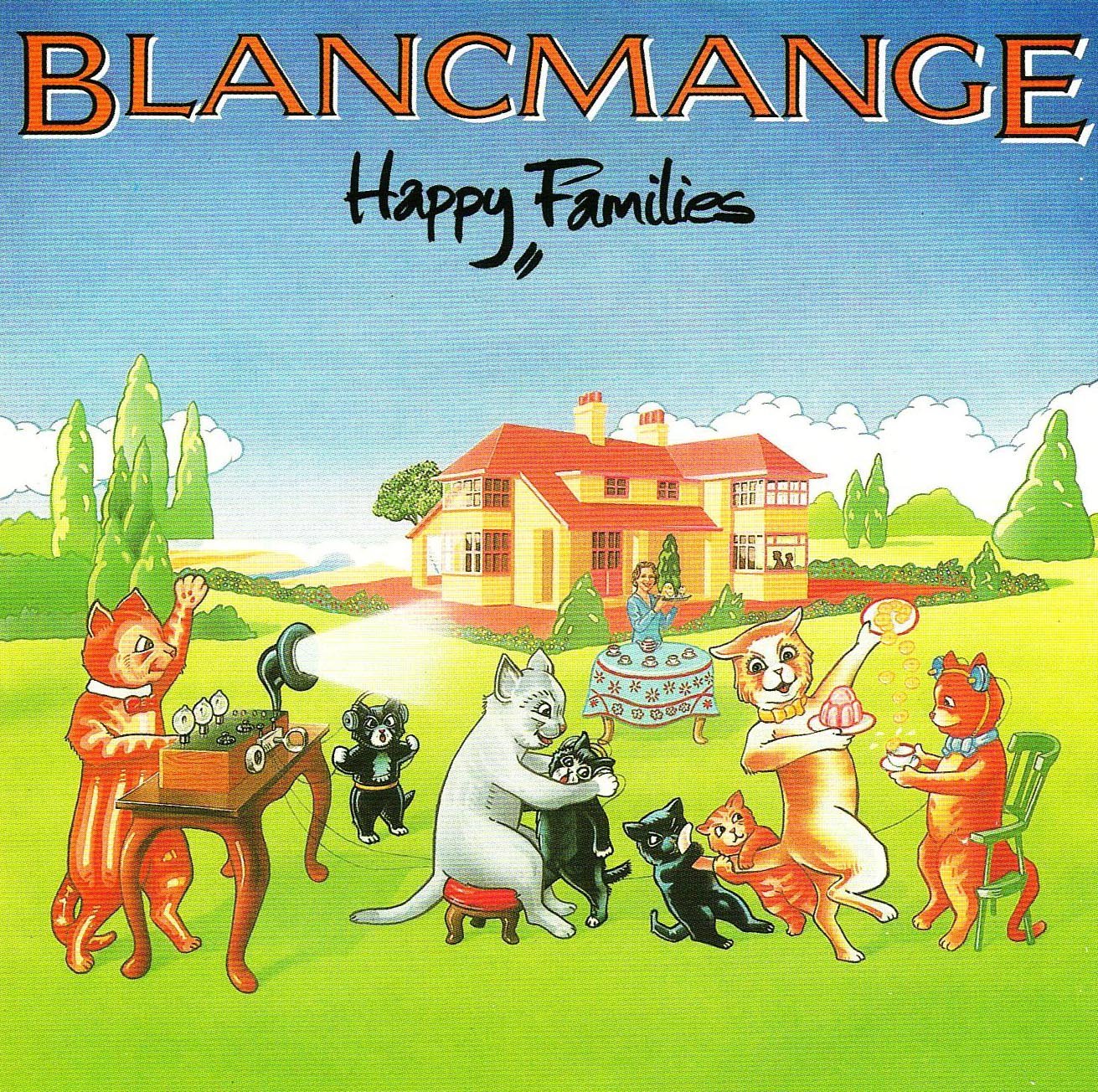
High-ranking pop chart success may be behind the sole survivor of 1980s hit-makers Blancmange, but there’s still plenty of deserved acclaim, adulation and appreciation afforded this Gloucestershire-based Lancastrian’s stunning body of work. And new LP, Wanderlust, continues that creative discourse, 36 years after debut album, Happy Families.

If there’s an over-riding theme to his new record, a set of 10 songs composed by Neil and arranged, co-produced and mixed with Ben Edwards, aka Benge (Wrangler/Creep Show) at the latter’s Memetune Studios in Cornwall, it involves the title’s subject matter – that strong desire to travel, be that a personal or political journey. And believe you me (as we say in Blancmange circles), he’d much rather you interpret its meaning than himself.

But before we get to all that, how’s his adopted Gloucestershire today?

“It’s absolutely beautiful. I had a fantastic walk this morning, way out, walking the dog with the missus. I’m back in work now, in the studio. I’ve just cycled up a very steep hill, doing a few errands.”

As many of my conversations go these days, we soon got on to dogs, Neil telling me a Blancmange-related not-so-shaggy dog tale involving his Parson Russell Terrier, Audrey, a ‘feisty lady to say the least’.

“At another studio I had, I was working on one of the Blancmange albums, had done the main vocal and was adding backing vocals, layering them up, with headphones on, then I was listening back and hearing this weird noise. I isolated every track, working out what I’d picked up on there, going through the guitars, synths and then vocal tracks, and on every chorus the bloody dog’s joining in!

“I put about four tracks down, and she joined in … Audrey the dog, singing along. She still does. When we sing happy birthday to friends and relatives, she joins in. She’s got a better voice than me.”

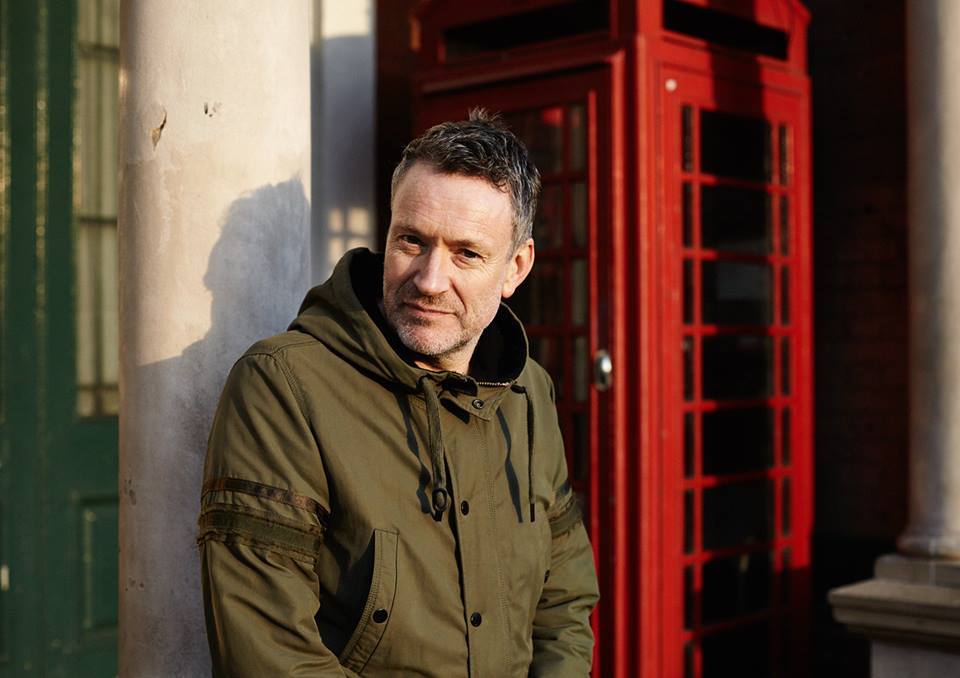
Looking Up: Blancmange mastermind Neil Arthur (Photo: Piers Allardyce).

Did you leave her on the recording?

“No! It was too good. It was embarrassing. She was more in tune than I was. I had to sack her. I didn’t even know she was in the studio. They follow you around, and she snuck in there.”

While clearly loving life on the edge of the West Country, Neil headed further toward Land’s End to record again with Benge, as on last autumn’s wondrous Unfurnished Rooms and with the pair’s side-project Fader before that. What’s more, Wanderlust is his second album this year, after a collaboration with electronic solo artist Jez Bernholz on Near Future’s debut album Ideal Home in May. It’s also the fifth Blancmange LP since Neil’s musical partner Stephen Luscombe was forced by illness to stop touring and recording in 2011.

And the results certainly suggest that Neil and Benge had fun playing in the studio in Cornwall.

“Yeah, in all the darkness … It’s great, and I really enjoy working with Benge.”

Reading an Attack magazine interview with him, he said his studio there is kind of the complete opposite of the one he had before in East London.

“Yeah, and for me the opportunity to work with him is amazing. We get on really well. He’s an absolute expert on synths, engineering and mixing, and we understand each other and don’t step on each other’s toes but push each other to get the best out of one another and surprise each other. You don’t know what’s going to happen sometimes.”

Does David Rhodes, your touring guitarist, come in later?

“He only played on one track on this album, on ‘Leaves’.”

Well, there’s a beautiful big sound on that track. It’s a real builder.

Commuter 23: Neil Arthur, discovering yet another platform with Blancmange

“Yes, I wanted something quite dramatic for the choruses, and Benge got out not only electronic drums, but we ended up using real stuff as well, as a kind of overlay, and one of my reference points was a band called This Heat.

“I wanted something dramatic to empathise the simplicity of the vocal line and let it breathe a bit in the verses. That was one of the first tracks we recorded. And I ended up doing the other guitar – if you can call it guitar – as I’d written it. Benge said, ‘Let’s keep it. It works’. I’ve always written on guitar, but in terms of being a guitarist … maybe not. I’m nowhere near the standard Mr. Rhodes gets up to.”

That’s typical Neil – first denigrating himself as a singer, then as a guitarist too. Maybe it’s his Lancashire roots, not wanting to appear to be acting above his station. And talking of Lancashire, it appears that he couldn’t resist another return to his native Darwen and the Library Theatre on his forthcoming tour, on the back of a great night at the same venue around the same time last year.

“Absolutely. I’m really looking forward to it, and I’m hoping I might get a wander up on the moors. Last time we had technical issues and I had interviews, and by the time we got through a soundcheck it was too dark … although I did venture forth to a local pub!”

This time he has a gap in the itinerary before his November 7th date there, heading straight on to Edinburgh, Glasgow, then Newcastle before another short break. In fact, he’s nudged his East Lancs show two weeks closer to the end of the year. It’s as if he wants to be snowed in for a couple of days, embracing a Northern winter.

“If that’s the case, I’ll definitely get myself up on the moors. I’ll have to dig out my Mum and Dad’s seat (up there) to sit on it amid a snowdrift.”

Switched On: Neil’s collaborator Benge gets to grips with his machinery.

He’s also tagged on six more dates next April and May, including further North-West dates in Liverpool and Manchester.

“Yes, taking in some of the areas we won’t be able to get to this time around, also including Birmingham, London, Sheffield, and a gig in Southend, a lovely one to do.”

I mention his Sheffield date, seeing as my eldest daughter is now there for university, Neil mentioning the ‘fantastic countryside surrounding it’, leading to me telling him that – like Rome – it’s a city surrounded by seven hills, something even mentioned in George Orwell’s classic 1937 sociological study of Northern England, The Road to Wigan Pier.

“Ah, is it! Blimey, so we’ll be going to the Rome of the North and the Athens of the North (Edinburgh)! Yeah, there are a lot of dates, but it’ll be good fun.”

Seeing as we were talking about weather patterns back there, the LP’s lead single, ‘Distant Storm’, suggests to me a band maybe 30 years younger than the birth certificates suggest.  Think Joy Division’s ‘Atmosphere’ given a Giorgio Moroder treatment. Come to think of it, throughout Wanderlust, Blancmange again prove that futuristic ’80s dance music remains relevant. In fact, good dance – from Fats Domino, Ray Charles and James Brown through – fails to age as long as you avoid recording fads and throwaway techniques that date songs, as ‘Distant Storm’ proves.

“Well, thank you very much. It’s been a pleasure. I thoroughly enjoy my work. It’s always been the case really, regardless of some of them ending up being hits in terms of pop music. Fortunately, we have an audience who are appreciative, and I hope it comes across. I try and be as honest as I can. I’m not trying to be anybody else.”

On the subject of that single, it’s not a wholly conventional Neil Arthur vocal, but mention of a car park (his East Lancashire tones coming through again) and ‘forensic detail’ prove to be a giveaway, Perhaps we have another incident, like on the last LP’s ‘We Are the Chemicals’, involving ‘a trading estate in Altrincham’.

“Ah, well, it might not be a million miles away. I’ve even name-checked Cheadle Hulme later! (on ‘Gravel Drive Syndrome’)”

The same goes for those shuddering bass-synth touches, which could neatly segue into old favourite, ‘Feel Me’ (not as if I’m looking to order his live set-list this time around).

“Yeah, there’s a bit of a groove on ‘Distant Storm’. When I started writing, before I went out to Benge, I got this idea in my head that the album was going to have quite a lot of dance tracks on it. I wrote a number of songs in that vein, and we ended up with a pool of material, then decided on which we’d work on. I wanted Benge to have a big input, and he chose the songs he wanted to work on.

“That effectively shaped what you hear – the 10 songs, although initially there were 17, which will all eventually arrive, some of which are already finished but ended up not being put on the album. ’Distant Storm’ was one of the very dance-y tracks, whereas others didn’t end up going on as we ended up taking a slightly different course.

“But with that, we ended up having a remix done by Kincaid, and that’s going down well, being played by DJs. Of course, the other thing about Kincaid is that he also happens to be my son, so it’s really nice to be working on a collaboration with my lad.”

Incidentally, Blancmange have reached new audiences of late via last year’s remix of ‘What’s the Time?’ (for Disco Halal) and a new collaboration with Kincaid, ‘Fat Head’, both tracks played by the likes of Ame (Innervisions Label) and Solomun. And talking of those dance music effects, we’re talking dreamy vocoder over moody Moogs on ‘Distant Storm’. I’ve always been suspicious of auto-tune type phasing, since Cher’s ‘Believe’ probably, something that winds me up about a lot of modern pop, but Neil’s quick to let me know that’s a whole different approach to his own.

“We’ve used vocoder on quite a few tracks before, and there’s quite a bit on this album. It just gives you a break from me really!”

If there’s a theme to this album, your press release suggests it’s where ‘wistfulness turns to anger; dislocation morphs into a powerful desire to be somewhere else, with a sense of someone fighting for forward motion, dreams, family and the joys of life while seeing … the pretence of a normal world being erased’. Is this Neil getting to grips with an uncaring, crumbling Government, this whole Brexit farce, and so on (not as if I’m leading him)?

“There’s certainly a lot of that, without a doubt. I wouldn’t even call this a Government. They’re careerists. They don’t give a shit about us. So yeah, there’s a lot of that, and I just absorb stuff going on around that you can maybe make stories from, make observations, including stuff I wish wasn’t happening.

“We should be concerned, without a doubt. I’m not standing on a bloody soapbox though. These are just songs – poetry with music over the top of it. And there’s other stuff on the album that has more to do with slightly more personal things, with an overview of a lack of empathy in the world.

“I was determined to get Rees-Mogg into one song, get the words in there and slowly unravel this thing. Instead of giving all the answers – which I’m still searching for – you leave a certain amount of ambiguity and people can make out of it what they want.

“But there are other songs, a lot about being a parent. You just talked about your daughter going to university, which is fantastic, but it also means she’s not at home, and you’ve got to let go. We’re not in a dissimilar position, and everybody goes through this in families. It’s the same the first day your child goes to school, or their first sleepover later, the first stages of letting go.

“You cannot control, and they have an absolute need to be a long way away from you in terms of the way a relationship changes. They must be their own person. And with the last track on the album, ‘Wanderlust’, that word’s the closest we can get to it, but another German word, ‘fernweh’, carries far more weight – about this absolute need to be away.”

That answers another question regarding that title track. The lady on the sample’s not saying, ‘Tenby wanderlust’ then? I felt for a moment it might be about escaping to South West Wales. It’s a lovely area after all.

“No, it’s not my place … well, it is. Each person has their own place they need to go. I used to go to Worm’s Head, not too far from there. Very beautiful. But I’m writing about my children and their need to be away, and I’m also in a situation where I’m observing it as myself – amid all the mayhem around me, with my own need to get away.

“But again, I’ll reiterate, I’m not on some bloody soapbox, and I don’t have any answers! It just seems that people in control are making a right pig’s ear of it, and this whole Brexit thing drives me absolute bonkers.”

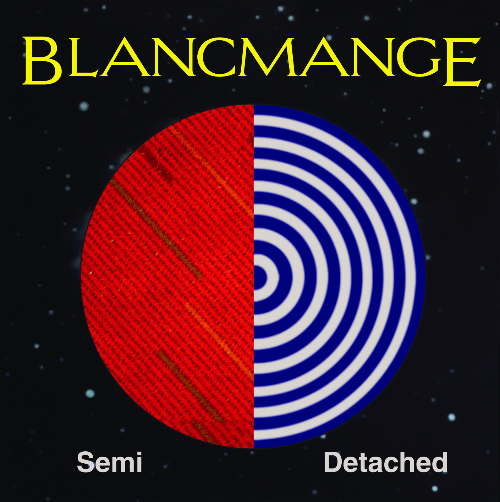
Two Sides: 2015’s Semi Detached

It finally strikes me that the subject of ‘Leaves’ might be more political than I first envisaged, but Neil would rather we made our own interpretations of what that’s about. That said, he’s still on one.

“We’ve gone down a route where people are screaming because they don’t like something, But what’s coming our way is going to be a damned sight worse. I’d rather be at the table, talking, than locked out and no longer be able to.

“These are our neighbours! We’re all immigrants! We’ve got to come from somewhere. And after all the horror, all the difficulties, all the pain everybody’s been through in Ireland, for these people to talk so flippantly about it … it’s ignorance.”

Taking the album track by track beyond ‘Distant Storm’, there’s another nod to Blancmange’s pop past on the second number, ‘In Your Room’, to me the best Depeche Mode single I’ve heard in some years, somewhere between their own pop roots and later, darker material. A hit, in old money.

“Ha! Their dark minimal ways, yeah? Well, there’s no intention. I wrote that a number of years ago, and never found the right time to release it until now. Simply, (it’s about) when you’re with somebody and at one with them and at ease with them, the room is enough, not wanting to deal with what’s out there at that moment – out there, it’s all too much.”

I could say the same about track three, ‘I Smashed Your Phone’, which to carry on my earlier theme, could have been Ultravox’s finest ever single. Yet thematically it could be an alternative take on Gruff Rhys’ recent duet with Lily Cole on the gorgeous ‘Selfies in the Sunset’, a track I suggested Neil checked out after our conversation.

“The idea of that … well, you can’t even have a conversation these days without someone having a look at their bloody phone, like they’re umbilically attached to it … myself included at times. Also, it’s just that generational thing – the world changes and we like to think we understand it, but we don’t. You never know. I’m learning all the bloody time. The one thing I’m certain about is that I don’t know.”

And seeing out side one, you seem like you’re having a lot of fun in the studio with Benge on ‘Gravel Drive Syndrome’ and ‘Talking to Machines’.

“We had a fantastic time with those synths! We got a VCS3 out on ‘Gravel Drive Syndrome’. And on ‘Talking to Machines’ I put down drums, but because of the kind of stuff Benge has access to, we can go down so many different routes, so there’s loads of analogue drums and weird basses going on. And before that, on ‘I Smashed your Phone’ we referenced Ringo Starr’s drums on ‘Ticket to Ride’.

“For ‘Gravel Drive Syndrome’, I got this idea for a story about social climbing at any cost, and the emptiness at its core to get where you want to be. I wanted this groove, having this reference in my head to ‘Love is the Drug’, doing it from memory rather than listening to that song.”

Debut LP: Blancmange’s Happy Families

Ah, now the gravel drive in the title makes sense.

“That’s why it came up, although it never appears in the lyric. With ‘Talking to Machines’, I love The Beatles but what I really liked as well was the Plastic Ono Band, so there’s a reference to that at times, in the type of production we went for.”

Neil’s wordplay and imagery hits another high on ‘Gravel Drive Syndrome’, not least that image of how, addressing his social climber, ‘Your record still stands for the longest scream of anyone falling off anything, anytime, anywhere’.  And musically that track strikes me as a theme tune to a timeslip movie set in the late ‘70s or early ‘80s. There’s also a bit of Bowie in there for me, as is the case with ‘Talking to Machines’ and later, ‘TV Debate’. For me, all three could be out-takes from Blackstar. I put this to Neil, but he’s not going there.

“Blimey. I don’t think so. That’s very much a different world. He was an absolute genius.”

We briefly talk some more about Blackstar, Neil mentioning how its heart-searing final track, ‘I Can’t Give Everything Away’, references an earlier Bowie track, my interviewee going back to his online collection while I hang on the line, attempting to place it, despite the fact that his next caller is now due.

I soon hear Blackstar playing in the background, Neil crooning along, mentioning ‘the Midnight Cowboy mouth organ thing going on’, determined as he tells me, ‘I’m not going to let this go now. You’re going to have to bear with me. I will find it!’ He finally gets there, deciding on ‘Soul Love’ from 1972’s The Rise and Fall of Ziggy Stardust and the Spiders from Mars, adding an emphatic, ‘Isn’t that fantastic, referencing one of your own songs! Unbelievable.

“As RCA put it for the launch of Heroes, ‘There’s old wave, there’s new wave, and there’s David Bowie.’ And that’s exactly how we saw it. He was out there on his own, and such a massive influence on all of us. And there would always be changes with Bowie! You didn’t have to stay the same – keep re-inventing and experimenting.”

Back to Wanderlust, and I meant to mention how the stabbing synth on ‘Talking to Machines’ reminds me of Soft Cell’s 12″ ‘Tainted Love’ and ‘Where Did Your Love Go?’ mash-up, a dance tune within escaping. I was already way over my allotted time though, so moved on to mention our mutual friend Hannah Peel, who also worked with Benge in her days working with influential electronic pioneer John Foxx‘s band The Maths. She’s had another interesting year, I ventured, not least through her more recent work – along with her partner in The Magnetic North, Erland Cooper – with Paul Weller on True Meanings, her star continuing its rise.

And there’s certainly a pleasing vocal blend with Neil and Ms Peel on the chorus of side two opener, ‘Not a Priority’, a song about ‘people who are apparently not seen by others, who have a sense that you don’t count or are seen as not important.’ Again, there’s Blancmange’s balancing act between melancholy and hope for renewed self-belief, Hannah adding Star Trek-like ethereal chanting as well as harmonies. Or perhaps, with Neil painting a picture of ‘The sky at night glitching in the system’, it’s not so much Hannah as her alter-ego, the eponymous heroine of Mary Casio: Journey to Cassiopeia.

“Oh! That was an absolute privilege. We asked Hannah if she’d sing on that song, and her contribution is huge. I’m very grateful, and she’s a really lovely person and an incredibly talented songwriter and musician.”

Next off, there’s the afore-mentioned Bowie-esque ‘TV Debate’, guitars finally breaking through on an often under-stated yet powerful number, featuring a series of channel-surfing images about contemporary politics and vacuous celebrity shows. And again the imagery is truly evocative. Then, beyond the beautiful build of ‘Leaves’, carrying on apace with where we left off on track seven – the end/leave line seemingly in sight – there’s ‘White Circle, Black Hole’, another track that really hit me from the first play, one I’m convinced I’ll be playing a lot more these coming weeks. A huge hit in any other decade, with a great hook, multi-layered yet truly accessible. And dare I mention it’s almost Vangelis-esque in parts? Somehow I’ll find my way home … from up there. With that in mind, not least after bringing in John Grant on the last LP, how about Neil enticing fellow East Lancastrian Jon Anderson out for an alternative version?

“Ha! We’ll have to have a chat!”

Mange Neuf: Neil Arthur is back with Blancmange’s ninth original studio album, Wanderlust.

Then, finally, there’s that electronically yet emotionally-charged finale, the spoken words and Neil’s poetic discourse evoking that longing to be elsewhere, craving new experiences, living for the moment. There’s sadness in what change can bring, but elation too at letting go and moving on. And musically, a nod to Kraftwerk, maybe?

“Not knowingly, but you know I like Kraftwerk. Probably more Neu if there’s a reference. Certainly German! But sometimes you don’t know in terms of referencing. It could be noises I’d heard in my sleep, which is where ‘Distant Storm’ came from. That’s something I heard in the night. It was actually my partner breathing. I couldn’t quite work out what it was. I was in that kind of in-between state.

“And ‘White Circle, Black Hole’, which is a bit like ‘I’ve Seen the Word’ in many respects, is actually about a repetitive nightmare I had when I was a child, but I try and sing it in a really nice way.”

So – with songs about the cycle of life, that craving to make sense of the modern world, and that continuing search for meaning – is this all aural therapy for you?

“Yeah, I suppose so, getting it out of my system!”

Ringing Endorsement: Neil Arthur, still waiting patiently for writewyattuk’s call

Malcolm Wyatt previously spoke to Neil Arthur for a March 2016 interview, with a link here, and in September 2017, with a link here. You can also check out a live review of Blancmange at Darwen’s Library Theatre from October 2017 here and the WriteWyattUK take on last year’s Unfurnished Rooms here. 

Wanderlust is out on October 19th on Blanc Check Records (BCR012), while Blancmange’s November tour calls at: Norwich Arts Centre (1st); Nottingham Rescue Rooms (2nd); Cardiff Acapela (3rd); Bristol The Fleece (4th); Darwen Library Theatre (7th); Edinburgh Voodoo Rooms (8th); Glasgow Oran Mor (9th); Newcastle The Cluny (10th); Brighton The Old Market (15th); Southampton Brook (16th); Dover Booking Hall (17th); Wolverhampton Robin 2 (22nd); Gloucester Guild Hall (23rd); Northampton Roadmender (24th); Leeds The Wardrobe (29th); Derby Flowerpot (30th). for more details, head to www.blancmange.co.uk You can also keep in touch with the band via Facebook, Twitter, and Instagram.


Posted in Books Films, TV & Radio, Music | Tagged , , , , , , , , , , , , , , , , , , | 2 Comments

Everything’s coming up Rosy with Goat Girl

How high: Goat Girl, reaching up to the top right now. From left – Rosy Bones, Clottie Cream, L.E.D., Naima Jelly (Photo: Holly Whitaker)

After a delay while she was getting to New Cross on the train, Rosy Bones had reached the pub by the time I got hold of her late on Tuesday afternoon, visiting friends after a day of ‘admin’ and a visit to the Rough Trade offices with fellow Goat Girl bandmates Clottie Cream (vocals/guitar), L.E.D (guitar), and Naima Jelly (bass).

I’m not convinced those names will appear on the 2021 census, but it’s all I have for now.

Rosy, the band’s drummer, is based in Lewisham but grew up in South-West London, while her bandmates gravitate from East London, getting to know her via a happening South London music scene, ‘getting integrated into this thing’.

“We all went to the same gigs and like the same things. That’s how I met them, really.”

Which bands were they watching back then?

“Erm … Warmduscher, Meatraffle … Trashmouth Records’ nights every so often. There’s always a gig to go to.”

That takes me back to formative nights listening to John Peel in the ’80s, those not in the know always slightly amused or bemused by the odd names of bands we craved back then. Now, 30 or so years on, it seems that I’m the clueless one. Have I become that bloke?

The Windmill in Brixton was key to that whole scene, Rosy told me, and she’d soon joined the band that became Goat Girl, practising with them, with gigs around Peckham and New Cross too.

My excuse for speaking to her was an upcoming Manchester Gorilla date (Tuesday, October 23rd) on the band’s autumn UK tour. And it wasn’t so long ago, I pointed out,  that they were in nearby Salford for Sounds from the Other City.

”That was crazy. We had quite a fun day, although I’d twisted my ankle a couple of months before, then fell and re-twisted it. It was kind of mad. We didn’t expect the crowd we had. We were on really late, the only thing still on, and everyone seemed really drunk. It was a good crowd. Yeah, I really liked that festival.”

I’m not suggesting she’s accident prone, but the previous month Goat Girl had to postpone a date in Sheffield after an accident on a ferry from Dublin when Rosy had boiling water poured over the left side of my body. Ouch. Anyway, talking of festivals, how was Portmeirion and their No.6 appearance?

“Oh yeah, that was alright but a bit horrible with the weather, really rainy and muddy. It was all good, but we did a few gigs before that around the UK, and were a bit tired, with a lot of waiting around.”

What other festivals or other appearances stand out from this year?

“I think Green Man was probably the highlight. We didn’t play that well, but the crowd was really good. Loads of people were there, including friends. Another big moment was this festival in Zurich, with Kendrick Lamar playing. That was amazing. There was a storm as soon as he’d finished. The clouds opened, with massive thunder and lightning. We ran out into the heaviest rain ever, had a little rain-dance.”

I was reminding myself of your appearance on BBC 2’s Later with Jools Holland this summer too, sharing a bill with Niles Rodgers’ Chic, former Supergrass frontman Gaz Coombes, and Chas and Dave, one of their very final appearances together.

“I was very excited to see Chic, and Chas & Dave … RIP Chas! Actually, I’m a bit worried we’re cursed, having also appeared on the same bill as Mark E Smith in some of his last shows.”

Those were at The Garage and the 100 Club in early May, Goat Girl chosen by the legendary front-man for what turned out to be The Fall’s final London gigs.

And it’s been a manic year for the girls, still in their early 20s, with lots going on, not least the release of their self-titled debut album, with lots of rightful acclaim following. Is it nice to be appreciated, or is there concern that the music press traditionally build bands up only to knock them down later? Everyone seems to be raving about you at the moment.

“Well, it’s nice that people are listening. We’re not going to sacrifice anything though. It will always be about the music we want to make, whether people like it or not. And we’re all pretty level-headed.”

Green Lights: Goat Girl, about to head off out again, this time for an autumn UK tour (Photo: Holly Whitaker)

Was there a lightbulb moment when you were out watching bands, realising you could do this? And was there a manifesto for success and where you could get to?

“No, we’ve never really had any sort of plan. For some, it works to have a manifesto. But for us, if it works … well, we try not to over-think it.”

The first single, Country Sleaze, seemed to light the way for you, waking people up to who you were and somewhat setting out your stall. Was there a good feeling putting those early songs together?

“I guess so. I kind of think we’ve only recently realised that we are kind of good! We never really thought of ourselves as that. We just thought, ‘Let’s enjoy it, y’know.’ If we hadn’t had the label around us, we’d still be making music, although I don’t know if we’d have released anything.”

That’s certainly seems to be one of their strengths. There’s a raw feel to the band, one that shows on their recorded product so far.

When I hear Goat Girl, I hear the likes of PJ Harvey, but also Nick Cave, and even Blur’s Graham Coxon’s solo material. You’ll see plenty of others touted as influences. But who were the bands Rosy heard that inspired her to have a crack at all this?

“I think we were all influenced by different music we were listening to when we were growing up, including female pop stars like Rihanna and Gwen Stefani.”

That’s more down the pop line than I expected. But in the week Wolf Alice secured the Mercury Prize, there does seem to be a resurgence of interest in critical circles for female-fronted guitar bands too.

“Maybe, but I always find that kind of thing rigged, and just think good music should be appreciated (regardless of awards).”

Monkey Do: Everybody has something to hide apart from Rosy and her monkey (Photo: Holly Whitaker)

Rosy started playing drums at the age of 12, having stalled with early piano and guitar lessons, while ‘the drums made sense’. She is learning and enjoying piano now though, and you’ll see her tinkering away for an filmed acoustic stroll through album track ‘Viper Fish’ for BBC 6 Music’s Marc Riley show recently.

“That was a lot of fun! And it’s nice to be able to stretch out the songs.”

I’m reading Robert Forster’s Grant and I at the moment, a great read from a fellow performer with a Rough Trade past, in his days with The Go-Betweens. He talks about the band only starting to finally get a wage, and we’re talking £50 a week, after a few albums and perceived success in the late ‘80s. Is that how it is for you 30 years on?

“I think there’s still money in it for the big cheeses. We get money to live off, because we can’t really have jobs, but it’s kind of like fake money really. And I don’t think there’s much in it for bands anymore. There’s a threshold.”

Back to the LP, and it’s 19 tracks and 40 minutes altogether, certainly value for money. Do you think you’ve captured the true live Goat Girl experience on there?

“Yeah, definitely. We wanted it to have that live feel … and there’s a few mistakes in there as well!”

Well, that’s a good thing as far as I’m concerned. I also love the feel of the A Hard Day’s Night-like promo video for ‘The Man’. Where was that filmed?

“In and around London, with some of it around Borough Market. We spent around two days filming that. Yeah, that was fun.”

What happens next, after this tour? Are you on with the next record? Or is it like with Joe Strummer’s shocked, ‘What do you mean, ‘second album’?’ when questioned after basking in the glory of The Clash’s self-titled debut LP?

“I think we’re going to go on a hiatus, focus on writing some new bangers! We haven’t really had the time, and I think we want to do some sort of charity work and get back to some sort of reality and be able to write songs. Because we’ve used them all up now!”

And if you weren’t doing all this now, or at least if no record company came calling, what would you be up to instead?

“It was always like a big passion, but we’re also really passionate about animals, so I think I’d want to be sort of helping turtles get into the sea or something, doing some sort of humanitarian thing … or travelling … working and saving money to go travelling.”

London Girls: Goat Girl, making a huge impact across the UK in 2018 (Photo: Holly Whitaker)

For Goat Girl’s autumn tour details, head here. You can also keep in touch with the band via their website, and Facebook and Instagram pages.

Posted in Books Films, TV & Radio, Music | Tagged , , , , , , , , , , , , , , , , , | 1 Comment

A new belief and sweet relief for The Coral – talking to Nick Power

No big moves to London or even Liverpool for The Coral, it seems, an outfit perfectly happy with life on the Wirral, 22 years after their first fumblings at getting a band together.

As keyboard player Nick Power, at home in Hoylake painting his stairs when I called, put it, “We’re still all pretty much based in and around the area, or within a five-minute drive.”

In fact, Nick tells me they never moved away, even at their commercial peak around the time of second LP, Magic and Medicine, a 2003 UK No.1 and one of nine top-20 albums in all.

I briefly side-tracked him there, revealing how I was editing an official history of fellow prime Wirral export, Orchestral Manoeuvres in the Dark, whose formative gigs included church hall shows in Hoylake.

“I think they were from the same area, and there are quite a lot of old halls and things like that round here. It’s almost like a retirement village.”

Thankfully, there’s no retirement plan yet for The Coral, who last month released Move Through the Dawn, recorded at Liverpool’s Parr Street Studios and produced by the band with Rich Turvey. Their second LP for Ignition, it reached No.14 in the UK, and is seen by the band as the second chapter in the story of ‘The Coral Reborn’.

After 2010’s Butterfly House album, a group whose members went from being at school to being on tour with Oasis with hardly a moment to contemplate it all, took five years out to work on other projects, an experience Nick saw as ‘like going into Castle Greyskull. The outside world was a scary place.’

They finally returned, recharged, with 2016’s psychedelic, riff-heavy Distance Inbetween LP. And now they’re back with something completely different, showing off their proven pop potential as well as their superior songcraft. Perhaps, like their lauded Merseyside neighbours and inspiration, The La’s, ‘The melody always finds me, whenever the thought reminds me.’

The Wordsmith: Nick Power, concentrating on his writing

Before we got on to that though, we carried on talking about those Wirral roots.

“It’s sort of like a tradesmen’s town.”

I told Nick I have a friend now base din Western Australia who hails from just off Birkenhead Park and always told us he was actually from ‘rural Cheshire’, although I’m not sure we truly believed him.

“Even to Liverpool, we’re the ugly ducklings of the area, like.”

Talking about the importance of his roots ahead of the new LP’s release, Nick wrote (I only found these quotes afterwards), “We live by the sea. When you go to New Brighton on the Wirral peninsula you hear Del Shannon’s ‘Runaway’ in the arcade, or on the waltzer. I went the other day and they were playing Pink Floyd’s ‘Comfortably Numb’ and ‘Break On Through’ by The Doors. It’s a great timewarp to be in.

“People do grow up on Love, Captain Beefheart and Floyd up here, which might have something to do with people congregating in bedrooms, smoking weed and doing acid. Liverpool is not affected by fashions and as a result has its own roots music, its own jingle-jangle quality.

“I used to think of Merseybeat as a swearword, but I like it now. And we’re all still in The Wirral — I live on the road behind James (Skelly), Paul (Duffy) is behind that, and Ian (Skelly) is up the road — so we’re pretty tight-knit. We haven’t bought mansions in LA. Not that anyone has offered them. I think you hear that in the music.”

When we spoke, I’d only heard a few tracks on the new LP – something since remedied – but of those, first single, ‘Sweet Release’, plus ‘Eyes Like Pearls’, ‘After the Fair’ and ‘Reaching Out for a Friend’ certainly impressed. It’s fair to say The Coral still know how to write a hell of a song.

“Yeah, nice one! That’s what we try to do, really. The album that preceded it didn’t particularly have anything on it like that. We wanted to come out, do something more besides, like Pink Floyd or Hawkwind.

“I think people were probably expecting us to do that again. But for better or for worse we always recoil from that and end up doing the opposite. I think we’d probably be more well off now if we’d have just done what people expected us to do, but it’s not in our nature to do that.”

I can see that. I think of fellow Wirral musician, Elvis Costello, getting the impression he could always write great three-minute pop if he wanted to, but it never interested him most of the time. And there’s an element of that about The Coral. You have your quirky moments and then out and out classic pop moments like ‘Pass It On’, a timeless staple of many of my in-car compilation CDs back in the day.

“Lovely. Yeah, we always turn away from the production techniques of the time, so I don’t think they date badly. And there is a sort of timeless element to some of those recordings.”

Coral Reefers: The Coral take it to the Great Outdoors

The band have cited Phil Spector’s ‘70s work with The Ramones and Dion as influences on their latest batch of songs; ‘albums that brought a big sound while still holding onto a sense of innocence’. Meanwhile, lead singer and main songwriter James Skelly also cites early Bob Marley, ELO and the Traveling Wilburys as inspirations, while a simple lyrical and philosophical theme runs throughout: ‘trying to find something real in a world that seems more artificial by the day’.

But above all else, they’ve looked to make an album ‘in service to the song’, going ‘back to pure melody’, seeing Distance Inbetween as ‘extreme in one way’ and Move Through The Dawn ‘extreme in the other way’.

“If you are a fan of ours,” Nick added, “You don’t want to hear the same album all over again. I love well-written songs as much as I love Faust or Can. To write a simple song, and make it sound like something a four-year-old kid whistled on the way to the bus stop, is not easy. That’s what we’ve tried to do.”

Founded in 1996 by friends Ian Skelly (drums) and Paul Duffy (bass), practising in school, lead guitarist Bill Ryder-Jones, Ian’s older brother James Skelly, and rhythm guitarist Lee Southall soon joined a band initially known as Hive.

Two years later, Nick joined, but had always known them, sitting in on their ‘praccies’ while in another band, their schoolroom sessions followed by those in Ian’s bedroom, the fledgling outfit then using connections to jam elsewhere, such as the basement of Hoylake pub Flat Foot Sam’s.

Soon, they graduated to the Liverpool circuit, including a residency at the Cavern on Sunday afternoons, playing ‘three gigs a day to three Japanese tourists’. And in time, Alan Wills heard them, offering to manage them and even form a record label, Deltasonic, around them. The big time quickly beckoned.

These days The Coral feature my interviewee, the Skelly brothers, Paul Duffy and Paul Molloy (covering for Lee since 2015), and somehow it’s been 20 years in the frame for Nick, who also contributes guitar, organ, piano, melodica, harmonica, backing vocals and lyrics.

“I know! It’s becoming scarier every day, how time speeds up and your sense of time runs away with itself. I remember going through my 20s thinking I’ll do whatever it is I need to do tomorrow. Time seemed so slow. But now I can almost see my hands changing in the light.”

While they remain far removed from the heritage circuit and gloriously ‘now’, I told Nick the first single from the album, ‘Sweet Release’, was more about glam rock urgency for me, reminiscent of a Sweet song, spanning the decades.

“Yes, that’s kind of what I was trying to do with that, actually.”

I also hear something of latter-day That Petrol Emotion there too, not least the riff, leading to this scribe filling Nick in on a band he somehow missed, explaining how they were around just a tad too early to get the attention latter, lesser bands did amid BritPop fever, despite paving the way in many ways.

“I think with every great scene, there are bands ahead of the curve who don’t necessarily make it. Even in my generation, bands like The Strokes, who thought of themselves as the best. Then there are bands like The Killers who get on that and go to the top.”

So where do you see The Coral on that scale? You had that very high-profile period around the time Magic and Medicine built on the success of your self-titled debut album.

“I don’t know. I probably saw us as outsiders.”

Which is probably a good thing.

“Yeah, it is. Revisionists now kind of write us out of everything. It started with The Strokes and The White Stripes, and then The Libertines came along. But we were out there with The Strokes.

“It’s the same with (Echo and) the Bunnymen. All Bunnymen articles are stand-alone articles, but when it’s written about the collective (scene), they always seem to get written out. But I suppose you choose your own fate in the end.”

That took us briefly on to that particular legendary Liverpool outfit, not least as I was about to speak later that day to Ian McCulloch about their new album, prompting Nick to talk a little about Mac and Will Sergeant.

“I’ve had some amazing nights with McCulloch, one of the funniest fellas … but there’s been times when I’ve wanted to punch his lights out as well!”

Getting back to The Coral’s more commercial highs, you always had that ability to mix things up, go for the unexpected, and right from the start, it seems. Despite the more poppy songs, you’d still offer a little more off-kilter material too.

“Yeah. I thought that was the only way to break through at the time. There was this weird thing with Liverpool bands, a hangover from The La’s. People wouldn’t touch Liverpool bands for ages, so at that point in your career you’re going, how can we escape? What do we have to do to get signed or break through and get people to listen to us?’

“And it was that sort of obscure side of the ’60s and that weird stuff we got into. You’d just do whatever’s most original to get attention. Even though we gravitate towards that music naturally, you’re doing whatever you can, in that Springsteen way.”

Part of the reason you did break through was thanks to Alan Wills, his Deltasonic label putting out your first six studio albums. He certainly championed your music … and not just the more commercial elements. Not so many would have seen or understood your potential.

“Alan was a massive part of that, and was even an outsider on the Liverpool scene. He was this fella with massive enthusiasm and really strong opinions, but no one really took him that seriously. But an outsider like that, they’re the visionaries and they’ve got nothing to lose. He was massive for us.”

Many of the record companies around at the time would have said, ‘That’s not a single,’ to something like your debut release, ‘Shadows Fall.’

“Yeah, and he’d encourage us to do all that. He got me into so many good authors and so many good film directors, like Wim Wenders and Jim Jarmusch, and stuff like Leningrad Cowboys, all that alternative stuff.

“He was just so giving. He’d just give it to you, like ‘take that home, listen to that.’ To each band member. He said to me, ‘Read this book by Sam Shepard, and it’s my favourite of all time. Motel Chronicles. I’ve still got the copy and it’s one of the most important things that ever happened to me, giving me that book.”

That took me neatly on to Nick’s own writing. When The Coral had their hiatus and his bandmates went off to explore solo music projects, production or Jame sand Ian’s Skeleton Key label, he looked to his publishing interests. Is that where he is now, between the band and his writing projects?

“Kind of. There’s a tour diary that’s out with this album, and I’ve had really good feedback from. So yeah, I am between the two really. I’ve tried doing poems and monologues, I’m not sure about novels, but there’s some sort of in-between space that can be filled.”

That new publication, his third, is Into the Void, Nick’s first-hand account of the recording, release and touring of the Distance Inbetween album, ‘a memoir on life in The Coral after that five-year break’.

As the band press release puts it, as ‘an insight into the band experience, from dealing with fights at gigs to trying to sleep in a cell-like Travelodge bed to capturing a moment in time on an album before moving on, it is as essential as it is entertaining’. Included are tales of shared rehearsal space with a swingers’ club, and wandering Los Angeles in search of The Castle; the legendary former home of Bela Lugosi where Arthur Lee and Love wrote Forever Changes.

In short, the band see Into The Void as underlining ‘the special thing The Coral have, of being a band forged of friendship and a shared love of cool music, books, films and ideas’.

Does Nick now think he might be in a position at some stage to write an insiders’ biography of the band?

“Not anytime soon. The band thought is that we just need to keep it current. We’re not about looking back at the moment. We’re not into the legacy artists. We’re not there yet. We’ve still got a lot to give. As long as I’ve got the chance to do it, I’m gonna do it because the opportunity’s there and that’s what I love doing.”

When major success came The Coral’s way around the time of the second LP, did it all come a bit too fast for you to properly enjoy the experience?

“At some point, yeah. After that we all took a year off. We were all just teenagers and had to become adults in the midst of it all.”

Is that ultimately why Bill Ryder-Jones moved on in 2005?

“It’s a tough one with Bill. I can’t really speak for him. But we never had a great infrastructure for touring. It was always wild. Sometimes you look at other young bands and they’re really well organised. That’s how you’ve got to do it. I think we were put off touring a bit because we did it so ramshackle.”

Was the album Butterfly House about starting again in that sense?

“Pretty much. It was a case of, ‘can we do it without Bill?’ But I think that was more about the end (of part one of The Coral’s story). Distance Inbetween was about starting again, and I do enjoy it more now. It’s just … I don’t know … it’s just better to be in. It’s debatable if we’re better as artists. That’s for other people to decide, but I’m just loving it.”

Well, it sounds pretty good from where I’m standing, and I think perhaps that hiatus period you had as a band helped strengthen you as a creative unit.

“Exactly. You go away and get a lot a stuff of your system. When it was just us in the band and that’s all we had, everyone in the band would be trying to put their whole year’s-worth of experience into a guitar line. Sometimes you’ve just got to sit back and allow a song to breathe. We’re a lot more laid-back in that respect.”

On a similar point, James Skelly – the eldest, but still only 20 when the band got signed – said, “We had the best attitude on the first album, when everyone was going in the same direction. Sometimes tension does make for great tunes, but it is hard to make a cohesive album when the band isn’t functioning as one. Usually Ian and I will be in the studio and the others sit behind us, slagging off everything we’re doing. And once they stop slagging it off, you know you’re onto something.”

And Nick added, “When we started out it came so quick, and we were so young and hungry, that we didn’t question anything. But by our mid-20s, we thought: what are we doing this for? So we took a break. People did solo albums.

“Everyone was spreading their wings, hanging out with other artists, getting a different perspective. It was hard psychologically and financially, especially as we’re not qualified to do anything else, but it was enriching creatively. We looked outward rather than inward.”

James added more on the band’s recent direction change too, revealing, “We’d pretty much written a whole other album in the style of the last one. Distance Inbetween was well received, and it would have been easy to go in and do the same thing again.

“Then we booked the studio and had a revelation: we had to go in the opposite direction. We had to write three-minute songs, all the fat trimmed off, hardly any solos. I mean, I like the War on Drugs and the Arcade Fire, but does your shortest track have to be over five minutes long? It seemed that three-minute songs had become unfashionable in guitar music and they needed reviving.”

Talking of pop sensibilities, going right back to the beginning, we mentioned The La’s, a band I still hear in The Coral’s music. They at least sound like they were a major influence. Were they, Nick?

“Yeah. You couldn’t really get away from them. There was a point where we had to do something really drastic to not sound like them in those early days. Because everyone did and no one stood out for not trying to sound like The La’s.”

Hence you going down a more psych-rock avenue?

“I think so. When we moved to Liverpool, we met loads of other bands on the Zanzibar scene, and everyone knows them. So it was a case of getting into other stuff like The Teardrop Explodes and all the Nuggets stuff, The Doors were massive for us, and Echo and the Bunnymen and all that.”

On that first single, there was something of a Specials ska feel.

“I think ‘Ghost Town’ was the greatest single ever. Never been bettered. Jerry Dammers is one of my favourite writers. And songs like ‘Stereotype’ … brilliant.”

It’s fair to say The Coral proved influential too. Early tracks like ‘Goodbye’, for example, seem to pre-date lauded later acts like Seattle’s Fleet Foxes, not least with their harmonies.

“Definitely. When they came out, that was one of my favourite periods of music, that year, with so much of the things I like – weird sort of Christian or Quaker music mixed with The Beach Boys. I fell back in love with music around then.”

I’m not sure if it’s just about geography, but there’s definitely a Liverpool identity to your sound, and not just because Ian Broudie co-produced four of your first five albums.

“I’m massively into the theory of geography and how it affects music. It’s psychography almost, the way it influences you. The thing about us and Liverpool bands, it’s in your blood, the way you construct or sing a melody, the product of living by docks and freighters, all that.

“Then on the Wirral we can see the Liverpool Docks clearly. I can see them from my house now. But I can see hills as well, and we took from Super Furry Animals and Gorky’s as well, so it’s a weird mix of Welsh psychedelia and Merseybeat almost.”

He mentions Super Furry Animals there after a brief chat about my previous interviewee Gruff Rhys, Nick claiming, ‘He’s like a British jewel in the crown – he’s a fucking genius!’  And talk of ‘90s’ Welsh outfits reminded me of seeing Gorky’s Zygotic Mynci support Catatonia at Llangollen in 1999, with ex-Pale Fountains frontman Michael Head also playing, early in his second spell fronting Shack. Was Michael another key influence on The Coral’s song-craft?

“Yeah. We met Mick Head a few times when we were 15 or 16, and he was great, another big influence. Yet he’s only starting to get recognition now. He was really unfashionable back then. But he’s such a good writer. It’s like The Rime of the Ancient Mariner, some of it!”

You’re right, and long before Shack I loved The Pale Fountains’ 1984 LP, From Across the Kitchen Table.

“Yeah, and he’s always been a really positive fella, with no real ego about new bands. He’s a true artist.”

The other band I haven’t mentioned so far who seem to have walked a parallel path with The Coral is another Liverpool outfit, The Zutons. Were you close to them?

“At the time we were, and Russ (Pritchard) plays bass with Noel Gallagher now (The Coral were on the bill with Noel Gallagher’s High Flying Birds in late May, on the back of eight dates supporting the Manic Street Preachers). We know everyone, yeah … all good.”

The Coral’s eight-show October run starts at Newcastle’s Riverside Club (Wednesday 3rd), and heads to Birmingham Institute (Friday 5th), Leeds Beckett Students’ Union (Saturday 6th), Sheffield Leadmill (Sunday 7th),  then Bristol SWX (Tuesday 9th) and London’s Koko in Camden (Thursday 11th), before ending at Liverpool University’s Mountford Hall (Friday 12th) and Manchester’s Albert Hall (Saturday 13th). Is it always good to play hometown gigs … or at least Liverpool?

“Ah, great, yeah … apart from family ringing you every five minutes to get backstage!”

Suddenly remembering who you are?

“Yeah, exactly!”

But you still really enjoy playing live as well as in the studio, I guess.

“Ah, I love it, and it’s so much more of a live set now … and has been for years.”

Studio Tan: The Coral in 2018 (Photo: Ben Morgan)

For ticket details of all The Coral’s forthcoming live dates and more on new album Move Through the Dawn and how to get hold of Nick’s Into the Void book, head to www.thecoral.co.uk. You can also keep in touch with the band via their Facebook and Twitter pages.


Posted in Books Films, TV & Radio, Music | Tagged , , , , , , , , , , , , , , | 2 Comments

Babelsberg calling – the Gruff Rhys interview

Three months after the release of a record he originally considered putting out two years earlier, musician, composer, producer, filmmaker and author Gruff Rhys is set to re-tread the boards around the UK, amid plenty of deserved acclaim for Babelsberg.

In fact, it’s been four years since the Haverfordwest-born, Bethesda-raised, Cardiff-based Super Furry Animals front-man came up with the LP’s name, revealing, “I’d made a note of the name after driving past a sign when I was on tour. Cut to a few years later and the (Bristol) studio where I recorded the album was being knocked down, just a week after I finished, to make way for a ‘luxury’ apartment development.

“I was looking for a name that evoked the Tower of Babel – people building towers to reach an idea of heaven … but maybe creating a kind of hell – I’m an atheist, by the way. In any case I had written ‘Babelsberg’ down and when I listened to the songs together, it finally made sense why.”

Babelsberg is Gruff’s fifth solo album, and his first for Rough Trade since 2007’s Candylion, its 10 tracks initially recorded in a whirlwind three-day session before producer Ali Chant’s studio was demolished, working with drummer Kliph Scurlock (ex-Flaming Lips) and multi-instrumentalists Stephen Black and Osian Gwynedd, 18 months passing before Swansea composer Stephen McNeff added orchestrated scores and brought in the 72-piece BBC National Orchestra of Wales (NOW).

The result is something of a triumph, Gruff’s songcraft – melodies and lyrics – shining through, perfectly reflecting the troubled times we live in. There was proof of the album’s staying power in his initial hometown outing for the record in June, joining the BBC NOW at the Millennium Centre as part of Cardiff’s annual Festival of Voice.

And this week’s Barbican Centre show with the London Contemporary Orchestra is being followed this weekend by a two-night stand at the Royal Northern College of Music in Manchester, this time with the RNCM Orchestra.

You may have heard a few of the tracks already, the already-aired ‘Frontier Man’ and ‘Limited Edition Heart’ (I’m not sure if we can call these tracks singles these days – I see no evidence of 7″ vinyl), just two of many highlights. And while the landscape in the songs is often bleak, the soundscape is somewhat gorgeous.

But what else would you expect from a fella who’s no stranger to commercial and critical success, Super Furry Animals – recording in Welsh and English, like Gruff, who prior to that fronted the band Ffa Coffi Pawb, among the leading lights of the Welsh music scene at the time – having managed 19 top-40 singles and 10 top-10 LPs between 1996 and 2009.

Gruff, also part of electro-pop collaborative project Neon Neon in recent years, was at home in Cardiff when we spoke, a few days ahead of last-minute rehearsals for his London and Manchester orchestral shows, telling me, “It’s still quite a new set, and the songs aren’t second nature yet.”

Does it seem odd talking publicly about Babelsberg now, two years after completing much of the LP?

“Yeah, I think I’ve prepared myself to let it stick around a lot longer. I could have released it in a kind of raw form but decided to work on it a bit more. And I’ll be playing these songs for a few years. But I’m really happy with the record, and to talk about it.”

How much input did you have in Stephen McNeff’s orchestral scores? Or did you take a step back?

“One one hand I insisted completely that his scores would be pretty spectacular, just from working with him previously and knowing his work. I made some suggestions and sent him YouTube links to orchestral pop music I’m into and similar music, playing the odd melody I wanted to convey that weren’t on the songs in their raw state. But beyond that it was all him and I was happy to hand it over.”

I’m guessing there were no hang-ups on your part, considering the difference between your world and that of Stephen’s classical music background.

“Yeah, I suppose it’s just a pop album. I don’t know what kind of pop, but the sound’s pretty simple, and not particularly experimental. I suppose if anything I was encouraging, ‘If in doubt keep it dangerous’. I thought it was quite a heavy record in its raw form, and it’s quite a breezy listen now.”

Was it a special moment hearing those scores the first time?

“Oh yeah. It felt like I’d gate-crashed someone else’s recording session. It was amazing, and I was trying not to get carried away.”

Alongside his musical journey, Gruff was the subject of Dylan Goch’s 2010 documentary film, Separado! about his trip to Patagonia  to try to locate members of his family, whose ancestors had emigrated in Victorian times.

In 2014, the pair then co-directed a film about Welsh explorer, John Evans,  American Interior. And you can see a lot of that ‘soundscape’ treatment in Gruff’s work before and since.

The new LP’s definitely a grower. The more I hear the songs, the more I love them. And I suppose in that sense you’ve carried on where you were with the Set Fire to the Stars soundtrack (2014) and before that your American Interior album (2016).

“I think so. I’ve learned a lot making those records and fed that into this record. And although it’s got a full orchestra on it, it’s not a perfectionist album, and I didn’t try and clean it up. The songs speed up and down, and my voice goes out of tune now and again. I wanted to keep some of that immediacy.”

If there’s a theme, what is it? Thematically, is this you trying to make sense of Brexit Britain, Trump’s America, and all that? There’s clearly a political message to be had about this Tower of Babel (as you might expect from an artist who in 2016 composed and sang ‘I Love EU’ to support the Remain campaign in the UK European Membership Referendum).

“Yeah, it’s not a concept record, and there’s no one theme, but that was definitely affecting my mental state during the making of it! And the lyrics reflect what seemed to me at the time to be a very frustrating time to be alive.

I was reading about your father’s world outlook (Ioan Bowen Rees, 1929/99, ‘poet, essayist, polemicist, mountaineer, internationalist … and a White Robe Druid of the Gorsedd of Bards’), seemingly a proud Welshman but not a great one for nationalism. That appears to be your standpoint too. I see you with a true sense of national identity but can’t see you holding out to the idea of hard borders and all that.

“Yeah … I definitely think it’s healthy to have cultural exchanges, and I suppose a lot of the songs are about the rise of popularism and delusional politicians … and musicians!”

At the same time, you seem to have come some way from your early days with Super Furry Animals and more in-your-face singles like The Man Don’t Give a Fuck. And in a sense the subtlety in your current material gives your message just as much of an impact.

“Yes, it’s hard for me to be objective but it’s difficult not to make the same record over and over again … no matter how hard I try. I’m trying to work on my songs and I still feel I’ve got some way to go with songwriting and getting words to fit properly in the songs.”

I won’t dwell too much on the earlier years here (although it’s about time this website carried a feature on that whole wondrous scene), but was there a genuine feeling of being part of some kind of movement of Welsh bands in the ‘90s, along with the likes of Catatonia and Manic Street Preachers, inspired by ‘80s trailblazers like Anhrefn?

“Erm, we were definitely inspired and helped by those bands and actively helped by the Manics as well, taking us on tour. We were very close to Catatonia, sharing a lot, including a kind of ambition. And bands like Anhrefn in a way pioneered everything and were our kind of political education as youngsters.”

And I guess I shouldn’t really be surprised at the direction you’ve taken over the years. That song-craft was always there with Super Furry Animals. 2001’s sublime ‘Juxtaposed With U’ for example having something of an Elvis Costello feel, vocally and melodically.

Incidentally, when I first heard this LP I was thinking of the likes of Scott Walker, in the same way that someone like Jarvis Cocker might interpret him. But then I thought again and felt that perhaps it was more like a lost Kinks album, with a real Ray Davies vibe.

“Well, I’ve listened to thousands of records and suppose the songs on this record and how they’ve been played is quite old school. I didn’t set out to make it Ray Davies sounding, but it’s not far-fetched in that I’m dealing with orchestral pop music and some kind of lyrical, social commentary.”

Meanwhile, there remains a lot of love out there for your work, and it seems that concert ticket sales are going really well, including a few sell-outs on your forthcoming UK and European tour.

“Yes, it’s quite exciting, and I’m going to be doing the tour with the core of the band I played with on the record, so it’s going to be true to those takes. And I’ve rarely been able to play a whole album live.

“Usually in the studio I’m really into production techniques and experimenting and sometimes that means songs are hard to play live, and sometimes were never played live in the studio. So to be able to perform live this album, playing it in order all the way through and playing every song on guitar …”

I was wondering about that. You recorded the LP with the BBC National Orchestra of Wales (NOW), but your Barbican Centre show is with the London Contemporary Orchestra and the Manchester show with the RNCM Orchestra. Are the core of the autumn dates with the NOW?

“They played on the album and I played with them – a full 72-piece orchestra – in June in Cardiff, but we’ve also done a mini-version for about 24 musicians so we’re going to do that in London, and Stephen McNeff is going to conduct. Then we’re doing two nights in Manchester.”

Gruff also revealed how the Royal Northern College of Music shows involved special guests, being joined on Saturday, September 15th by H. Hawkline, who’s played guitar for Cate Le Bon and records for Heavenly Records in his own right, while the Sunday, September 16th show will involve 9 Bach’s Lisa Jen Brown. Has Gruff played that Manchester concert hall before?

“I played there before on my own, so this will be a little different, with about 30 of us on stage!”

If the main bones of this album were recorded by you a couple of years ago, does that mean you’re already working on a follow-up?

“Yeah, I’ve been writing lots. At the time of Babelsberg I could only write bleak songs, lyrically, and it seems everything’s going worse by the minute in political life, but I seem to be out of that patch, into something quite a bit different.”

Well, you say bleak, but there’s something quite beguiling about the music that brings the listener through, not least on his post-apocalyptic duet with actor and supermodel Lily Cole on closer ‘Selfies in the Sunset’, If we’re all going to go out under a mushroom cloud, surely that’s not a bad way to go.

“I was asked to help out with some music she was creating. I had this song on the go and felt it could be an interesting one for someone who’s been photographed a lot, feeling she’d have more insights into the song, and she helped adapt the words.”

I guess it would have been more likely that you’d have shared that vocal with someone you’ve worked with before, like Lisa Jen Brown, and that also made me think of the duet she recently did with J. Willgoose Esq. from Public Service Broadcasting on Every Valley’s lovely ‘You + Me’ last year. In fact, that’s almost a parallel song, I’d suggest – another sweet love song removed from the mainstream.

And how about the splendid penultimate track, ‘Architecture of Amnesia’, which to me has that kind of ethereal, later David Bowie, ‘Black Star’ feel.

“Ah, it’s strange, with ‘Black Star’ I felt so sad he had died that I couldn’t listen to the record. I just couldn’t face it.”

I know the feeling. It took me a long while before I could properly play that whole album. But it was worth the wait. It’s a beautiful piece of work, and a fitting finale.

“Sometimes I’m not ready for some records, but I’m sure there’ll be a time in life when I’ll be ready for it.”

Listening to this album has certainly made me go back to your earlier solo records, not so much seeing that body of work in a new light as just wanting to hear more of your post-Super Furry Animals material. Something else has struck me though. I get the feeling that with every solo release you’re moving further away from being in a position where that next album might come together with the band that made your name.

“Erm … in a sense, a record is as mysterious to anyone in the band as it is to me. It’s made a band go to places where you can’t think what a finished record’s going to be like when you’ve got five particular personalities making it and you can’t decide exactly what makes the records what they are. They could only be the product of the five members in a way.

“Making solo records is more predictable in the sense that they’re planned out and they end up quite like you set out to do, whereas band records have some kind of alchemy of what a particular group of people can do together. It’s quite a different process.”

But you wouldn’t rule out a 10th Super Furry Animals album at some point?

“Yeah … but at the moment there’s no plan at all.”

Maybe one day though?

“I’ve no idea. It’s definitely ….”

I think hiatus is the term that’s been used so far.

“Hibernation, I think!”

A few days after this feature went live, a promo video emerged featuring  Gruff and Lily Cole for ‘Selfies in the Sunset’, too good not to share, directed and animated by Ewan Jones Morris, its stars creating animojis ahead of the apocalypse.

Gruff wrote, “A couple of years ago I noticed some smiling, healthy looking young people taking selfies in front of a particularly spectacular sunset, I turned around to walk away only to see another sunset in front of me.

“I realised the first sunset was just the glow looming above a chemical plant. Still, the selfies would have looked like they were taken in California (we weren’t in California). 

“It got me thinking about Armageddon. Maybe people will be taking selfies till the very end. They’ll be pretty spectacular and will feature the golden colours of the Sunset. With the acceleration of climate change maybe it is the end. A slow painful process not an event.

“My friend Graham from South Shields was working with Lily Cole on some music a while back – there was some talk of me helping out in some way as a musician. “Nothing came of it – but I invited her to help me finish this song in any case, as she has a greater insight into the world of imagery. It turns out that her Mother is from Rhydaman and has been taking selfies since the 1960’s. 

“This isn’t a judgmental song about Selfies – Selfies aren’t the problem. They bring joy into this precarious life. It’s just a really sad song.” 

Gruff then signs off ‘with sincerest apologies to Mel Gibson’. Video link here.

Reflective Energy: Gruff Rhys at work, channeling Babelsberg (Photo: Kirsten McTernan)

This Saturday and Sunday (September 15th/16th), Gruff Rhys appears with the RNCM Orchestra at Manchester’s Royal Northern College of Music, followed by a show at Hull’s Jubilee Church on Saturday, September 29th  and 15 Canadian and US dates in October. And then comes his UK and European autumn tour, involving visits to:

Nov 8th – Portsmouth, Wedgewood Rooms; Nov 9th – Brighton, The Old Market; Nov 10th – Folkestone, The Quarterhouse; Nov 11th – Oxford, O2 Academy; Nov 12th – Bristol, SWX; Nov 13th – Birmingham, Glee Club; Nov 15th – Glasgow, SWG3; Nov 16th – Leeds, Church Leeds; Nov 17th – Liverpool, Arts Club (sold out); Nov 19th – Paris, France, Le Badaboum; Nov 20th – Schaffhausen, Switzerland, Tap Tab; Nov 21st  – Munich, Germany, Ampere; Nov 22nd  – Berlin, Germany, Privatclub; Nov 23rd – Hamburg, Germany,  Turmzimmer; Nov 24th – Copenhagen, Denmark, Alice; Nov 26th – Brussels, Belgium, Botanique/Rotonde; Nov 27th – Cologne, Germany, Studio 672; Nov 28th – Amsterdam, NL,  Paradiso Noord; Dec 1st – Cork, Ireland, Live At St.Luke’s; Dec 2nd – Galway, Ireland, Roisin Dublin; Dec 3rd – Dublin, Ireland, Button Factory.

For tickets and further information head to http://www.gruffrhys.com/. You can also keep in touch via the Gruffington Post Facebook, Instagram and Twitter artist pages.

Posted in Books Films, TV & Radio, Music | Tagged , , , , , , , , , , , , , , , , , | 5 Comments

Remembering Joe Strummer, with Lucinda Mellor and Robert Gordon McHarg III


All-Round Inspiration: Joe Strummer, Polaroid style (Photo: Bob Gruen)

To mark late September 2018’s release of a box-set tribute to Clash frontman, punk pioneer, singer/songwriter, activist and all-round inspiration Joe Strummer, who died in late 2002, WriteWyattUK  tracked down the project’s main drivers – artist Robert Gordon McHarg III and Joe’s widow, Lucinda Mellor. But first, a little pre-amble. 

Later this month, Ignition Records issue new LP/CD/digital boxset project, Joe Strummer 001, the first compilation spanning Strummer’s career outside The Clash,  including various rarities and fan favourites from recordings with the 101’ers and The Mescaleros, his solo LPs and soundtrack work, plus an LP of unreleased songs.

All formats include tracks that have never appeared before, as well as new remasters, and the album of unreleased material includes an early ‘This Is England’ demo (‘Czechoslovak Song/Where Is England’), a solo ‘Letsagetabitarockin’’ demo recorded in Elgin Avenue in 1975, outtakes from Sid & Nancy featuring Joe’s main Clash collaborator Mick Jones, and unreleased songs ‘Rose Of Erin,’ biographical/mythical recording ‘The Cool Impossible’, and ‘London Is Burning’, one of the last he recorded.

Arguably the most charismatic and passionate frontman to emerge from the punk rock explosion of the late ‘70s, it was discovered after Joe’s untimely death in December 2002 that he’d been quite an archivist of his own work, with barns full of writings and tapes stored in his back garden. In fact, there are now more than 20,000 items in the Joe Strummer Archive, the archiving of material and compiling of Joe Strummer 001 overseen by his widow, Lucinda Mellor, and artist Robert Gordon McHarg III.

All the tracks for the box-set were restored and mastered by Grammy Award winner Peter J. Moore at the E. Room in Toronto, Canada. And going through cassettes and recording tapes it was discovered that Joe was also rather frugal and keen on hiding tracks. On cassettes he would leave 20 minutes between songs, and on one-inch eight-track recordings hidden tracks were discovered superimposed on to each other. For example, tracks one to four were taken by one song and tracks five to eight by two other songs, initially thought when played back to be caused by tape denigration until Moore stepped in and separated one song from another.

The box-set has the same content as the CD set and is pressed on audiophile quality 180g vinyl, while an accompanying book included with the deluxe CD set features rarely seen and previously unpublished memorabilia from Joe’s personal collection as well as historical press reviews and technical notes about the albums. The cover of all formats is taken from Joe’s 1990 Californian driving licence.

The project was curated by long-time friend of Joe Strummer, Canada-born artist Robert Gordon McHarg III, who previously worked on The Clash’s Sound System box-set with Paul Simonon, and also curated the Black Market Clash exhibition. Gordon explained, “The idea behind the book is that it’s an A4 notebook done as if Joe had designed it himself, telling his story. Hopefully it’s an insight into his workings and includes hand-written lyrics with personal notes and scribbles.”

To mark the occasion, I asked Gordon and Joe’s widow Lucinda Mellor their thoughts on the project and Strummer’s enduring legacy, 16 years after his departure. My questions follow in italics, followed by answers from Gordon, Luce, or both.

A lot of hard work went into this collection, as with all your labour compiling Joe’s archive. Was this project at the drawing board stage for a long time?

Gordon: “Joe did all the hard work; we’ve laboured. Finding a way to share the archive has taken time.”

Luce: “No not really, as we were concerned primarily with the written work he left behind, having no idea of the wealth of recording material buried in the boxes and bags.”

The first thing I heard from this box-set was part of a different treatment of ‘London’s Burning’/’Burnin’ Streets’, just one shining example showcasing the versatility of so many great tracks in his back-catalogue. I gather that Joe was one for ‘hidden tracks’ tucked away on tapes. Was there a fear that some of those old tapes would snap and be lost forever after all this time?

Gordon: “Preserving all of Joe’s archive has been a challenge. ‘London Is Burning’ was Pockets’ ((another old friend of Joe) contribution to JS001.”

Luce: “Yes, this was real fear, and for this reason Gordon sought out the amazing Peter Moore in Canada, a master at repairing these precious old tapes.”

Was there much gnashing of teeth, scratching of heads and arguments for arguments’ sake over the track-listing? I guess it would seem fairly apt to Joe’s memory if that was the case.

Gordon: “Absolutely. It took months. I worked on around seven variations. Having archived so many of Joe’s set-lists, it was imperative to try and channel that dedication into trying to get it right.”

Luce: “There was a little bit, as the question of why these gems never found the light of day was always prominent in our selection, and also personal preferences are subjective.”

True Icon: Joe Strummer in 1989 (Photo: Bob Gruen)

Were there occasional conversations in compiling this box-set when you felt the need to ask Joe’s opinion on something?

Gordon: “Occasional? All the way through this. It’s ongoing …”

Luce: “Continual, but then I still find that today and wonder ‘What would Joe do or say?’.”

As I understand it, there are more than 20,000 items in the Joe Strummer Archive. Were there moments when it all seemed a bit much to even contemplate sorting out?

Gordon: “It’s been emotional!”

Luce: “Yes, the project has been huge, and without the input, help and enthusiasm from Gordon and Martin Bradley and his team, I would have abandoned it years ago. It really has been a mammoth undertaking.”

Have there been sleepless nights thinking you shouldn’t have left such and such a track off? And is there scope for a ‘Joe Strummer 002’?

Gordon: “There have been many sleepless nights. I care so much about not letting Joe down. The archive is so rich in material, there is more to share. JS002 is definitely a desire.”

Luce: “Many, many sleepless nights, and I’m sure there are many varying opinions out there as to what we should and shouldn’t have included, but there is easily a 002 and maybe even a 003.”

In an interview in 2007 with The Independent, you (Lucinda) suggested an ‘amazing book’ may follow on the archive someday. Any further advanced on that?

Luce: “This is what we were originally planning when we realised Joe had left so many interesting and beautiful lyrics, poems and drawings. So we have put together a book to accompany the release with his handwritten lyrics, scribbles, drawings, photographs and a bio he wrote himself. In effect, we’ve left the book to Joe to introduce us to the album. That is not to say that sometime in the future I would love to put out a glossy coffee table book!”

I’ve come to appreciate in recent years the strength of the 101’ers material. Might that have been something Joe was likely to go back to and reinterpret/re-record a few songs?

Luce: “That I cannot answer, but it’s interesting to note that ‘Pouring Rain’ was first visited in 1984 and then again in 1993, so I guess we will never know.”

There were a few ‘in between’ projects before the Mescaleros evolved, not least the film soundtrack work. What tracks from those less celebrated albums really jumped out at you all these years on?

Gordon: “I have enjoyed watching and learning more about the films Joe was involved in. I Hired A Contract Killer by Aki Kaurismaki is high on my list, and the track ’Burning Lights’ is up there. To add to that, when Luce played me ‘Generations’ I thought this is one of Joe’s best. It had to go on. And of course, when he wrote ‘Sandpaper Blues’ for my exhibition soundtrack, that will always be a personal life highlight.”

Luce: “I think my favourites are the songs he did for Sara Driver’s film, When Pigs Fly. But Walker is astounding too. I find myself listening to that album a lot and never tire of it.”

It seems sad that it took Joe’s departure for much of his work to be truly recognised in certain circles, but I’m more and more convinced I don’t just hold the last two albums in such reverence because of the circumstances, but because he was on a genuine career high.

Gordon: “I really enjoyed seeing Joe play with The Mescaleros. All the albums are great.”

Luce: “I feel he was just getting back into his stride too, and he had a fantastically talented bunch of musicians in the Mescaleros who reignited his passion for writing, recording and performing, so I would agree with you.”

There’s a tendency to think, going back over old interviews, footage and records, that we’re still in late 2002 in Joe’s world. But while I felt Streetcore was perhaps his finest body of work and a couple more albums of that strength may have followed, his restless nature might have seen him move on to another band or solo project at some stage. Do you reckon that may have happened?

Gordon: “Joe was always working with different artists …”

Luce: “Perhaps. He really enjoyed his collaborations with Horace Andy, Richard Norris, Jimmy Cliff and right at the end of his life with Dave Stewart, so I’m sure he would have branched out, and of course he was swapping ideas with Mick at the end too.”

Inevitably, talk will always go back to a Clash reformation and whether it was likely to happen. Signs and snippets of quotes suggest It was at least on a bucket-list for Joe at some point. Any thoughts?

Gordon: “I don’t have the answer … (but) Joe loved The Clash.”

Luce: “As I said, Mick and he were swapping ideas in the last few months of his life, and I guess the Clash was always unfinished business. He had enormous respect and love for Mick, so who knows.”

We tend to think of you as Joe’s widow, Luce, but time moves on. Where are you at now? And where’s home these days?

Luce: “Home is Somerset and where my heart is.”

What’s (Joe and Lucinda’s daughter) Eliza up to these days? Are you still in touch with (Joe’s other daughters) Jazz and Lola and other members of his family? And do you often speak to Mick, Paul and Topper?

Luce: “Eliza is a singer and a producer and goes under the name of Lyza Jane. She has an EP out on Blah Records and has just finished writing her first album. Jazz and Lola are both mothers, living on the South coast, and I saw them a couple of weekends ago. Mick, Paul and Topper, not as often as I don’t come to London much these days, but we are in touch.”

It’s now 25 years since you met Joe, and although you were only together around a decade, you clearly knew him so much better than most. Although you both had West London links, he seemed to be just as at home in Somerset, away from the big city.

Luce: “He took to Somerset life easily and did love it down here, although he never lost his thirst for London and indeed other cities.”

Joe was something of an archivist of his own work and could seemingly outdo most of us with his hoarding capabilities. I get a picture of a ‘carrier-bag man’ keeping hold of so many items that might one day come in handy (lyrics or whatever). Were there ever difficult ‘Do you really need this, Joe?’ conversations?

Luce: “Many. I couldn’t understand why he kept these endless plastic bags which littered the house, especially as I am the opposite, and love a good clear-out.”

How important was Gordon’s input in setting the right tone on this box-set project? 

Luce: “This whole project is really Gordon’s baby, he has masterminded and engineered it from conception.”

How did you (Gordon) get to know Joe? I think you suggested to Robert Elms on BBC Radio London that it involved a copy of a Hank Williams book and a pumpkin pie.  

Country Style: Joe Strummer in 1984 (Photographer Unknown)

Gordon: “Back in the early ‘90s, my friend Lucky Pete, drummer of Gaz Mayall’s band The Trojans, left my Hank Williams book at Joe’s house. I wanted my book back and lived around the corner from Joe when he was living on Lancaster Road. I remember having a Baby Belling cooker and thought I would make a pie and customise the outside of the box – ‘Slim’s Pumpkin Pie’. I was cooking Sunday lunch at The Globe, Talbot Road at the time. Anyway … I turned up, rang the bell; Joe opened the door and I asked for my Hank book. He went and got it from the lounge and said he read it, which made me happy. Standing at the front door sporting my cowboy hat and pie in hand, I said ‘I made this for you’. He immediately invited me in, with my son Hughie and Lucky Pete. He seemed happy with the pie. We chatted and my son played with his kids Lola and Jazzy. This was the beginning of our friendship.”

Were you a Clash fan, growing up in Montreal? Ever dream you might get to know the band and know their London? And what did you think when Luce asked you to get involved on all this?

Gordon: “Yes. I saw The Clash in Montreal 1982. I was 18. ‘The Call Up’ really got into my head.

“I arrived in London on Carnival Monday, 1983, and knew no one. I didn’t know that Notting Hill Carnival was on and ended up on Portobello Road, under the Westway, listening to Aswad. Six years later I met Paul Simonon at his after-carnival party through my friend Gaz.

“I always feel it is a great privilege to help Luce with Joe’s archive.”

You’ve paid tribute to Joe with art installations in London, Belfast and Tokyo, most famously the Edgware Road tube project. Ever try to define what it was about him that truly resonated with you?

Gordon: “The Joe Strummer Subway was my guerrilla project to rename the subway under the Marylebone flyover intersection of the Westway and the Edgware Road where I had The Subway Gallery for 10 years.

“Joe was one of my teachers, along with Hank Williams, John Fogerty, The Beatles, Gene Clark, John Cooper Clarke, Shel Silverstein, to name but a few. I have learned a lot through rock’n’roll, and Joe was a huge part of that.”

Four years ago, you were saying how your ‘seven-day pop-up shop’ was to raise funds for a Strummer statue. There have been temporary murals and tributes in London, Spain and the US since 2002. Any closer to your dream?

Lone Ranger: Joe Strummer, caught on camera by Lucinda in 1997 (Photo: Lucinda Mellor)

Gordon: “I raised enough from the pop-up shop to make a 3D-printed maquette. It ended up totally different to my original idea. In Joe’s archive I found a great drawing that he did. A self-portrait of Joe as a cactus with a cowboy hat, boom-box and a smoke. We made a special print of this for the JS001 box-set. My dream is to make this as a life-size sculpture.”

The biographers who got closest to the subject, not least Pat Gilbert, Marcus Gray and Chris Salewicz, gave honest portraits of a man who (like us all) for all his faults still came out as nothing less than charismatic and passionate, words that come up time and again when reference is made to Joe. Yet he remained something of an enigma. Do you think only a few of you got to know the real John Mellor?

Gordon: “I got to meet Joe Strummer …”

Luce: “Perhaps.”

Have there been genuine moments when you’ve been overwhelmed by just how much love there is still out there for Joe, all around the world, where he’s touched so many lives and inspired so many people?

Gordon: “Never overwhelmed. Proud to be a part of it.”

Luce: “Yes, I’m continually amazed that the passion and love for the man and his music is still so strong.”

The way politics has gone in recent years, particularly in the UK and US, seems to be the antithesis of everything Joe fought for – anti-poverty, anti-borders, pro-inclusion, promotion of the arts/culture, pro-cooperation and connecting. He would have plenty to rail about if he was still with us, wouldn’t he?

Gordon: “Yes. Without doubt.”

Luce: “Of that I am certain.”

Where are we at with the Joe Strummer Foundation in 2018? Are there projects ongoing? And are there special events taking place to mark the release of the box-set?

Gordon: “Yes. We are working on something special for the release …”

Luce: “The Foundation is going really well and there are many projects happening at the moment. We have partnered with Kerrang Radio to create Revolution Rock, where we are helping provide musical instruments for financially-challenged schools and music-mentoring for the homeless and/or underprivileged, helping youths find a way out of gang crime or music therapy for mental health issues. There was also Strummer Jam in August and a gig at Dingwall’s on September 7th, plus supporting emerging musicians in the Hastings area through a project called DEBUT (all information for those events and more can be found via joestrummerfoundation.org).

Finally, in a sense, Joe never left us – his music remains with us. Approaching 16 years after his passing, what do you both think of when Joe Strummer springs to mind today? What picture of him do you see?

Gordon: “His energy and laugh. Chatting with him around his campfire at Fuji Rock Festival and Glastonbury.”

Luce: “I see him in the kitchen with a half-eaten sandwich, his dog asleep on his feet, waving a piece of paper at me and asking me to fax it quick to Mick.”

This feature/interview appears in a different format in a new biography of The Clash by Malcolm Wyatt, published in December 2018. There’s more about This Day in Music’s Guide to The Clash, including online sales links, here. If you would like a personally-dedicated, signed copy from the author, just get in touch via this page. And for a WriteWyattUK  lowdown on ‘White Riot’, 40 years on, published in mid-March 2017, follow this link.

Joe Strummer 001, out on Friday, September 28th, is available via this link in the following formats: 

Limited edition deluxe box-set: quadruple heavyweight vinyl, 7” vinyl single, cassette, A4 book, enamel badge, art print, screen print, lyrics and sticker sheet (IGN53BOX).

Limited edition deluxe double CD in A4 book (IGNCD53X).

Double CD in slipcase (IGNCD53).

Quadruple heavyweight vinyl in slipcase (IGNLP53X).

Digital download.

Meanwhile, ’London Is Burning’, an alternative/early version of ‘Burnin’ Street’ from Joe Strummer & The Mescaleros’ final album Streetcore is available now via this link.  

Live Presence: Joe Strummer in impassioned action with The Mescaleros in 2002

For more details about ongoing charity projects in Joe’s name, head to joestrummerfoundation.org.

Posted in Books Films, TV & Radio, Music | Tagged , , , , , , , , , , , , , , , , | 3 Comments

Hold tight, now we’re on our own – the Fay Fife interview

Point Made: Fay Fife shows her Rezillos bandmates which way she reckons they should be heading next

Four decades after first gracing our TV screens, belting out the tremendous ‘Top of the Pops’ on the iconic BBC chart show of the same name, the alluring Fay Fife clearly still has a passion for rock’n’roll.

Anyone who’s caught The Rezillos live knows that, and from this week onward she’ll be leaping about at venues up and down the country again, out front with co-founder Eugene Reynolds, 42 years after they first teamed up north of the border.

A shared love of ‘50s rock’n’roll and ‘60s garage bands inspired them initially, punk rock providing the spark for a ‘new wave beat group’ who could never be accused of taking the more po-faced approach to their art.

In 1978, the Edinburgh College of Art formed outfit made an impact with debut LP Can’t Stand the Rezillos, following that with mighty live follow-up, Mission Accomplished…But the Beat Goes On! By the time that latter Glasgow Apollo show was committed to vinyl they’d already split though, guitarist/songwriter Jo Callis going on to join The Human League, in time co-writing several more top-20 hits, including the Sheffield synth-pop stars’ sole No.1 hit, ‘Don’t You Want Me’. However, Fay (real name Shelagh Hynd) and co-vocalist Eugene (real name Alan Forbes) reconvened to co-front The Revillos, carrying on until 1985, and the band’s pulling power endures all these years on.

The Rezillos briefly reformed in the mid-‘90s for a number of Japanese and UK dates, with Jo Callis back on board around then, getting back together again – this time for good – in 2001 after an invite to play Edinburgh’s Hogmanay celebrations. And while the current band – with Fay and Eugene joined by fellow founder-member Alasdair ‘Angel’ Paterson (drums), 2008 recruit Chris Agnew (bass) and 2010 recruit Jim Brady (guitar) – remain busy with other music projects, they still get together when they can. That includes occasional recordings, their most recent LP of fresh material, Zero, landing in 2015. But right now, they’re heading back out again, proving – all these years on – that The Beat Goes On!

When I called Fay, she was sat at her computer, working on one of ‘various music projects ongoing’, briefly mentioning a ‘big multi-media project’ coming our way later this month. She told me, “I also have an alternative country band … but I know you’re phoning up about The Rezillos.”

It just so happens that the first tour date this time around is on my patch, visiting Preston Guild Hall’s LiVe room this Thursday, September 6th, supported by Department S, best known for 1981 hit ‘Is Vic There?’

“We’re doing quite a lot of UK dates through autumn, including London and Edinburgh. We’re kind of busy ‘til the end of the year, and then there are other plans I probably shouldn’t talk about yet.”

At this stage I professed my long-term love for the band, not least that splendid debut LP and the record that followed, which remains one of my favourite live albums.

“Oh right … I think I’ve only listened to it once!”

While the Flying Saucer Attack: The Complete Recordings 1977-1979 compilation landed courtesy of Cherry Red earlier this year, it’s fair to say The Rezillos are hardly the most prolific of acts, taking 37 years to get around to releasing that second studio album, Zero. Will we have to wait that long for the next one?

“Well, there is another in the pipeline. I wouldn’t say The Rezillos are really quick off the mark, but we are actually starting to write material for a new album. One of the new songs we’re going to do on a BBC 6 Music session, called Goodbye, My Motorbike Guy. But we really need to get to work on all that. Everybody in The Rezillos does other things, so it’s hard to get everybody together to get it done, but I’m pushing for that. If you’re going to be doing this and not staying creative, there’s no point.”

I guess that was always the case. You were always sparking off at different angles, that creative energy a key component of the band’s appeal. You also saw that in the careers you all carved out, such as your move into theatrical studies, Eugene setting up his motorbike business, Angel developing his architectural concern in his adopted Germany …

“Well, I only did the theatrical thing for a short time, then took time out to bring up my son, then later studied psychology. I don’t know what I was thinking there. I’ve done all sorts of things, and now I’ve come full circle, in the last few years returning completely to music. I wanted a more settled life when my son was growing up, but now he’s at university (aged 23, studying games design), I feel I can do more of my own thing.”

Incidentally, Fay’s son’s father was Revillos guitarist Kid Krupa, a ‘very fine guitarist and producer’ who died in his early 40s in 2005, having joined the Mk. II outfit in 1980, aged 17, later becoming a session player for the likes of Tim Finn, Roger Daltrey, Del Amitri, Bonnie Tyler and Shakin’ Stevens, later returning to the ranks for the mid-‘90s shows.

Fay also remains involved with the University of Edinburgh, where she studied after the band’s first two incarnations, these days providing services in ‘therapy for people with addiction problems’, a sideline she feels keeps her ‘fairly grounded’.

But make no mistake. This is no highbrow concern. Aside from the more serious side of punk, The Rezillos always struck me as more fun, with plenty of touches of art-rock experimentation about them too.

“I think you’re right, and there are different sorts of laughter, I guess. And if you’re feeling creative and working with creative people, you laugh very easily and humour is part of it. If you’re going to be over-serious and dour, even if you’re writing a serious song, it kind of deadens things. We’ve always had that angle to us, and are still able to tune into that.

“Certainly, myself and Eugene have a similar humour and sort of spark off each other.”

That certainly shows in their stage presence. Is it easier to get on with each other all these years on, or was that never an issue?

“I don’t know. Age brings a bit of settling down, and there is some of that, but people still maintain the core of their personality and identity. It’s not like you get older and all the problems in life disappear. You still come up against challenges, inter-personal things too, and have creative challenges as to what direction to take. All these things are still up for discussion, but in general we manage them better.”

And there’s still a love from the band across the world, as proved by the last two decades’ adventures.

“There’s certainly still an appetite for it. People think we’ve come back several times, but we haven’t. We reformed in 2001 and have continued on and off since, although we’ve had times when we didn’t do very much, which was a mutual decision. We’ve either got too much going on or we can’t get people to do things all at the same time, but we’ve never stopped doing things.”

The travelling continues, and not long ago they had a get-together with several fellow punk luminaries in Germany, celebrating a successful LP by former John Peel favourites Die Toten Hosen, also involving past WriteWyattUK interviewees Steve Diggle (Buzzcocks), JC Carroll (The Members) and Damian O’Neill (The Undertones), among others.

“That was a bit of a blast. What an outrageous and fun event. You could write a wee novel about that … but I’ll draw a discreet blind over that.”

That’s a shame. Maybe I’ll ask her again sometime. But seeing as I mentioned WriteWyattUK favourites The Undertones (and it doesn’t usually take me long to get on to that subject), I’ve heard great stories about their time with Sire Records, not least with Seymour Stein. How was your own experience with that renowned label boss?

“I can’t remember having any negative relationship with him, but I do recall that I seriously put his and his wife’s noses out of joint when I got a bit high-spirited at a party, with a bit of alcohol going around, and decided to put a bit of cake – a big cream cake – on top of her head. It was a laugh at the time, but I don’t know why I did it. It seemed appealing. I don’t know what came over me. But in general, I think we got on fine.”

While we’re talking travel, this year alone has included festival dates in Spain, Italy … even Canada.

“Yeah, we’ve really been galloping around the place, and these were really nice things to play. We’ve done quite a lot of travel in Spain. We’re quite popular there. We do a lot of shows and keep on doing this because we know we put on a good show and enjoy doing it.

“It does seem strange that we’re still doing that, but for me we’ve got to keep putting in new material and developing it as well as giving people the old music. We can’t deny we are a heritage band, but nevertheless – to keep it fresh for me – we keep the material developing.”

Somehow, it’s now been 42 years since it all began. Can Fay remember much about the first show? And was there a lightbulb moment when they realised this had real potential?

“I think there were several lightbulb moments, but I think the key one was at our first gig. There was another singer in the band then, Gail (Warning), and we made our stage outfits that day, really unusual things for the time. I had a red plastic dress and she had a green plastic dress, and everyone turned up that night like themselves but a slightly exaggerated version.

“When we got on stage, something happened. You’ll have to remember that The Rezillos was my first band, whereas among us two or three of us had another band at the same time. So I’d never really been on stage with a band until then. But Eugene said – and I wasn’t aware of this at the time – it was really clear once we started singing that something else happened and took over, some sort of performance thing.

“That was me personally, and altogether we just completely gelled and took off. And we really communicated with the audience, and you could tell they were getting it. So that was the big moment – that realisation that our performance was quite something.”

There was also that love of ‘50s rock’n’roll and ‘60s beat bands that you had in common. But there seems to be a blurred line between the likes of The Rezillos and pioneering US bands with similar influences like The B-52’s and The Cramps. Did they predate them?

“I don’t know if we did. I think we were all around about the same time. We were certainly independent of each other. We actually went to New York to record Can’t Stand The Rezillos and sort of linked up with Lux (Interior) and (Poison) Ivy, becoming good pals with them. They’d been around New York for a while trying to get a thing going and were aware of the B-52’s too. So I think it was around the same time for everybody.”

This tour includes a visit to La Belle Angele in Edinburgh (Friday, October 19th). Is it always good to have a hometown gig?

“Well, yeah, and we did a gig here in early summer for a big exhibition of pop music, Rip It Up, with this festival to celebrate the opening. But this is our own show, so that should be good too.

“I always think we’re an Edinburgh band, although I’m the only person in the band who actually lives here. Eugene lives nearby, in the countryside, Chris lives in Fife, Jim lives in Glasgow, and our drummer lives in Germany. So we do feel this is our hometown gig, but Glasgow is almost our other hometown gig and also very important to us. We’re not there this time, partly because of the big fire in Glasgow (at the celebrated Mackintosh building, the School of Art, in June), but we’ll put that off until a wee bit later.”

When I spoke to Eugene for this website (April 2014, with a link here), he told me life’s always been ‘birds, booze and bikes’ or ‘music, motorcycles and madness’. How would Fay describe her own experience with The Rezillos over the years?

“Well … the first thing that came into my mind there was ‘art, music and sex’. What more can you say?”

What indeed. And does she still get people asking about her acting days and appearances in Taggart and The Bill?

“No, you’re the first person who’s asked me for about 15 years or something! It was just such a small part of my life. I didn’t really take to acting very much. I really loved doing lots of improvisation but didn’t really take to it other than that. It was more like a side-step. It was interesting, but it’s music I really like.

“Interestingly though, I’m currently working with an actor and I understand a bit where she’s coming from, because I’ve done a bit of that and understand it from a different performance perspective. Even though I’m not an actor and I’m not theatrical, I’ve been there to some extent.

“And interestingly, last night I was working on another project with (former Casualty regular and current Coronation Street star) Rula Lenska.”

Finally, when I think of The Rezillos, I think not only of those first two albums but also one of those memorable Top of the Pops appearances in 1978, Fay decked out in classic ’60s chic, behind the boys but still hogging the camera shots in lurid green and orange spotted white mini-dress, huge hoop ear-rings, and orange tights, with plenty of excessive pointing at the audience during the chorus as if to underline the irony of the lyric, the location, and the occasion. But are there moments across the band’s history that stand out above all others more for her?

“To me, the first of two great peak moments of everything I’ve been involved in goes way back to when The Revillos were touring America. We did it on a fairly small scale, although we played a few shows with a pretty big capacity. We were in a mini-bus, and traveled all over, including down to Tucson, Arizona, and through the Grand Canyon, and over the Rockies. It was like being in an extended, bizarre musical adventure. It reminded me of Scooby Doo, such an amazing experience.

“That was fantastic, and more recently, maybe three years ago, we were touring America again, this time on the West coast. We had a really great tour bus and I had my room at the end and felt like Tammy Wynette. I just loved the fact that you’d sometimes wake up really early and look out on really amazing scenery. We travelled down from Canada right down to Mexico, and there was something about it that was quite transcendent.”

I can understand that, and there must be moments where you realise this isn’t such a bad way to make a living.

“Yes, sometimes you feel that, then others, it’s, ‘My God, I’ve spent about a million hours getting to the gig, I’ve gone on stage for 45 minutes, and then I’ve gone home!”

Line Dancers: The Rezillos, heading for a town near you, celebrating 40 years since that iconic debut album

The Rezillos and support Department S kick off their autumn tour at Preston Guild Hall LiVe on Thursday, September 6 (01772 804 444, with details here). For more dates and all the latest from the band, try their web, Facebook and Twitter links. 


Posted in Books Films, TV & Radio, Comedy & Theatre, Music | Tagged , , , , , , , , , , , , , , , , , | 1 Comment