Bass Notes: Life and Times on the Road with Stone Foundation – back in conversation with Neil Sheasby

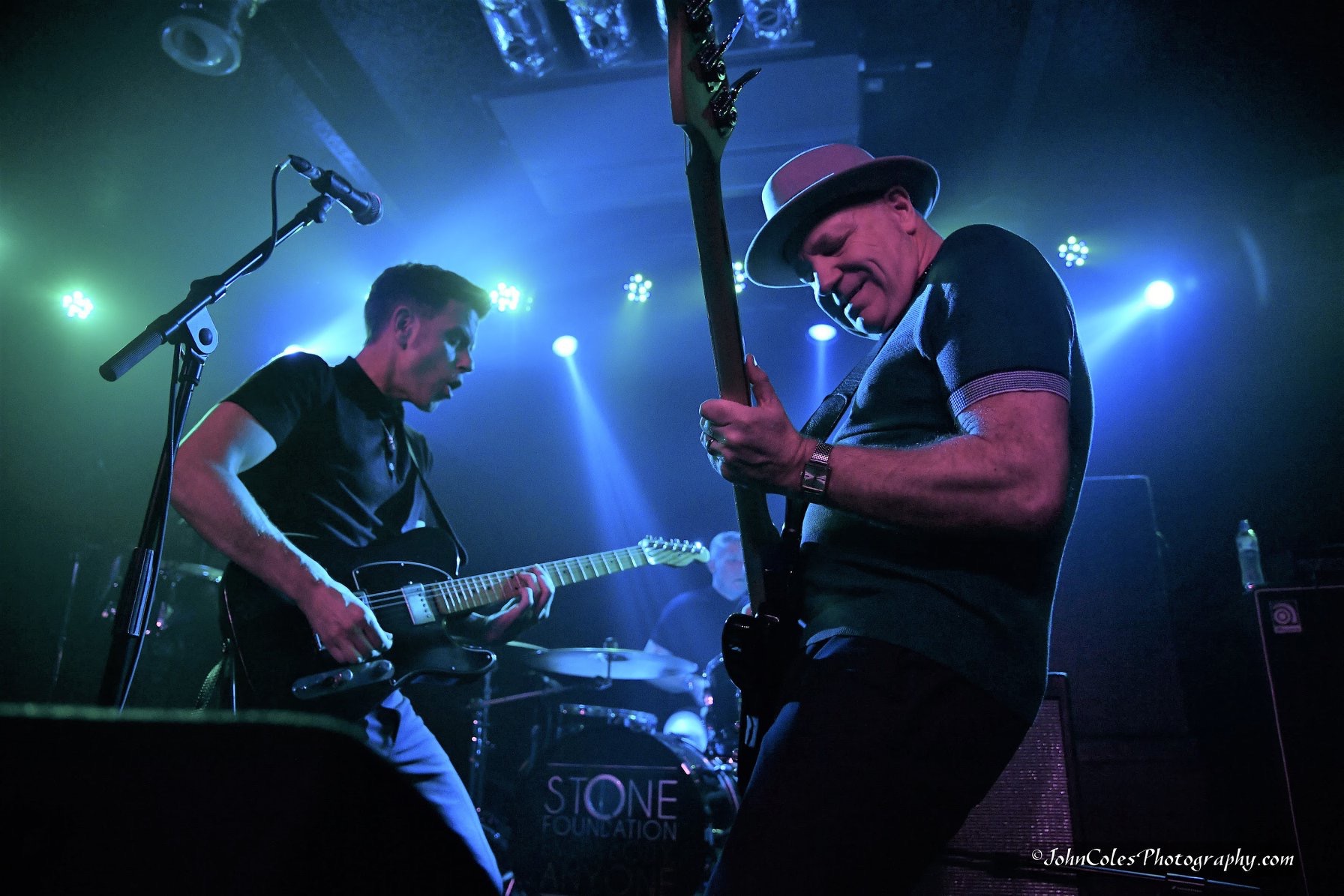
Neil Sheasby was at home in Atherstone when I caught up with him earlier this week, having a breather between live commitments with Stone Foundation, the Midlands soul band he co-founded with namesake Neil Jones a quarter of a century ago.

Sheas was back with family before the first of the acclaimed outfit’s final three shows of another busy year, set to return to the capital for a two-night stint at Islington’s Assembly Hall this weekend (Friday, November 24th, and Saturday, November 25th), before what’s become something of an end of year knees-up closer to his roots, playing Nuneaton’s Queen’s Hall (Saturday, December 9th).

But on this occasion, we talked music books too, him saying kind things about my Slade biography, and me reciprocating about his latest publication, the entertaining and insightful Bass Notes: Life and Times on the Road with Stone Foundation, an abridged collection of diary entries from Sheas’ popular online column of the same name.

In Horace Panter’s foreword for Bass Notes, the Specials legend suggests his bass-playing compadre captures ‘not just the glamour and the mundanity of touring as a band, but the friendships and the things that forge those friendships; the shared frustrations and passions that can make eight grown men rise from their beds before dawn to sit in a cramped van and drive halfway across Europe to perform on a stage not much bigger than the surface area of a baby grand piano at a small club in an unpronounceable town 50km south-west of Heidelberg. And then travel all the way home again. Not only that, but over again the following weekend.’

The 2 Tone stalwart, aka (to coin a phrase) Sir Horace Gentleman, goes back a fair bit with Stone Foundation, supplying cover art for the To Find the Spirit and A Life Unlimited LPs in 2014 and 2015 respectively, a link going back to a support slot for Sheas and co. in late 2011 on a memorable Specials reunion tour. And Horace sees Neil’s collection of diary notes as a ‘story of righteous toil’, one portraying Stone Foundation ‘from the ground up, warts and all.’

I was a little late to the Stone Foundation party. It was only when Paul Weller started recording with them in 2017 that I properly sat up and took notice. I think the gorgeous ‘Your Balloon is Rising’ was the key moment that made me seek out their back catalogue and move forward with them from there. Somehow, that earlier Specials link passed me by. I always loved the headliners, but… well, put it down to the fact that having a young family kept me out of the loop for a while. I would dearly have loved to catch Terry Hall and all back then, but the opportunity never arose.

In that sense, Bass Notes gives me the chance to fill in a few gaps. I’d soon grow to love Sheas’ social media despatches from the SF frontline, admiring today’s interviewee’s honest, colourful, sometimes funny, often refreshingly matter of fact accounts of life on the road. And here we have edited highlights from the period from late 2011 to the end of 2022, just over 11 years of the band’s 25-year odyssey but also their most successful stint, a chance meeting with Specials drummer John Bradbury having provided a springboard to a latter-years success story.

With Stone Foundation it always seems to have been about 100 per cent commitment and plenty of grit, toil and determination. But we all need that lucky break taking us to that next level. And what seemed at the time to be a wrong turn at the Fiddler’s Elbow, Camden, in 2011 proved to be the portal to the next phase of an amazing journey.

From the glamour of supporting Paul Weller at the Royal Albert Hall (not a million miles from the Albert Hall, Long Street, Atherstone, where Sheas’ contemporaries queued for their dole money back in the day, and where the band held their Small Town Soul LP launch in 2008) to playing on a staircase in a Spanish hotel, he’s experienced more than his fair share of peaks and troughs with Stone Foundation. And Bass Notes documents all the fun and the fear of a hard grafting touring band, those factors growing with each album. 

The book covers more than 120 shows, up and down England, Scotland, Wales and Ireland, and around mainland Europe too, mostly Spain and Germany, and even Japan on four separate trips between 2014 and 2017. And each entry provides (as his publisher points out) ‘a window into the humour, love, a wistfulness and an honesty of Neil’s days in a splitter van, travelling with his band of brothers.’

Along the way, we also get to understand a little more about those bandmates too, and get a feeling of the people they meet – famous and not so famous – and the all that unfolds outside those stage times, from budget hotel stays to the monotony of the road and service station visits, spare hours thumbing through record racks or meeting old and new friends, and an insider’s view of regarding all those treasured venues that provide the fabric of our live experiences, but aren’t always what they seem to be, while sampling the good and potentially bad and ugly nights, and the band’s sense of achievement at keeping it all together or pulling it off in the face of adversity, despite stinking colds, general fatigue, and what have you.  

And for all those experiences, there are still the occasional butterflies, endearing me more to the band, those occasional down to earth shared fears resonating. And then you can factor in the unwinding in pubs and clubs, that primary love of this chosen career coming over throughout.

Starting with those career-changing three weeks with The Specials, we get on to the link with the afore-mentioned Weller – a chance to record at his Black Barn studio in early 2016 leading to so much more – and the likes of Doctor Robert, Graham Parker, Mick Talbot, Steve White, Melba Moore, Carleen Anderson, Shirley Jones, Kathryn Williams, Hamish Stuart, Bettye LaVette, William Bell, the now departed Nolan Porter, and many other musical luminaries (even Peter Capaldi), in a compelling read… just like those original Facebook notes that turned so many of us deeper into this band’s on stage, in the studio, and behind the scenes existence, ultimately shedding light on what life really is like on the road in the modern era.

When we caught up this week, Sheas had just had his first weekend off in a couple of months, after various UK and mainland European dates in another winning year.

“It’s been great. I’ve really loved it. And that’s not always the case. I enjoy the gigs but it’s everything that comes with it, you know – the travelling and all that, being three to a room or whatever. That can be a ball ache, but I’ve got to say it’s been brilliant, I’ve loved this tour.”

That’s something that comes over in Bass Notes, in this format and in the Facebook version we’ve come to know and love. And sometimes it’s those bonding experiences with bandmates that make you, like when you were all in the same room in a hostel at the time of appearing in Brighton, supporting The Specials in late 2011. Could you go back to all that again?

“God almighty. I’d go back to the gigs, but not the hostel! Dear me, it was grim. But needs must, sometimes. If you want to make it work, if you want to carry a big band, you’ve got to budget yourselves, especially back then when we weren’t getting so much money. You have to cut your cloth accordingly.”

Those are surely the moments that bring you together as a band, a proper collective. Those grim shared experiences where you really find out if this is what you want to do with your life.

“Sure, yeah. A bit like us in Japan, where you look around and think, ‘We make that noise and people come here, people on the other side of the world are interested. It’s crazy.’ That can spur you forwards.”

Talking of ‘pinch me’ moments, what would the 13-year-old Neil Sheasby who caught The Specials live in the summer of 1981 (an anti-racism show at the Butts Stadium in Coventry, also featuring Hazel O’Connor and The Bureau) make of Horace Panter – who also happens to have designed a couple of your records – writing a foreword for your second book, a dozen years after a chance encounter with John Bradbury saw him take you under his wing, providing you with that big break?

I’m guessing you’ll mention that 100% effort, drive and determination – as your record label name suggests – but we still need an element of luck or fate. And that’s what you had at a key moment in Camden, getting to meet John.

“Good luck, fortune, yeah, and that night particularly it was. These were the early days of the Internet and he was just searching, under the pretence it was going to be a Northern Soul night he was starting in London. And he probably did have that in mind. But he walked in, and it was just fortune that the night he had off – and he lived up the road from the Fiddler’s Elbow – we were playing and were the first thing that came up on his search. And in his mind what he really wanted was one of the choices for the support for the tour. He wanted a soul band rather than a ska band. And there we were.

“As I say in the book, my default setting was JB’s Allstars, rather than The Specials, so I was asking how Bill Hurley and Drew Barfield were and what they were up to. He was like, ‘Fucking hell, you remember all that?’ We just kind of bonded, y’know.”

I’ve found, interviewing musical heroes, a bit of added research, seeking out rare nuggets to ask about rather than the same mundane questions most regional journalists might ask, can be the difference that inspires a brilliant interview, sometimes with the toughest of customers and people bored with the whole notion of interviews. And it seems you took a similar approach.

“Yeah, common ground. Absolutely, and thankfully we did our thing and he got it. It all unfolded and transpired that this was what he wanted to do, take us out, and that did change everything. For example, we’d never really played Scotland before, yet there we were at the SECC, and then we could go back to Glasgow and sell something like King Tut’s Wah Wah Hut when we went back.

“All of a sudden, 10% to 20% of that crowd is going to get what you do, so we’re forever thankful for that. Everyone focuses on the Weller thing now, but that was a big, big full circle for me as well, from being a kid. Lynval {Golding} came into the dressing room, we were talking, and I told him I was at the Rock against Racism gig they played with The Bureau at the Butts. He said, ‘God, man, we done it for the kids like you!’ It steers your path, really – your consciousness of racism or political stance. It influences you. That was 2011, but even at the time was, ‘Bloody hell, that’s mad!”

Seeing as you mention steadily climbing percentages, in March 2012 you talk about playing Uncle Tom’s Cabin, Blackpool’s ska and soul festival, and meeting a fella from Skelmersdale who tells you he’s coming back with 20 or so of his family for a show at The Cavern in a few months.

“Yeah, and I was in Liverpool last weekend, and they were still there, that same group, still bringing more people. It’s mad!”

Word-of-mouth publicity clearly still counts for something. But it must be hard to keep motivated, all these years on. Like me, you’re a family man. It must be bloody hard saying goodbye to your better half, heading off for weeks at a time on tour.

“Yeah, on the flip side of that coin, I am under their feet for about six months, not gigging, so they’re equally keen to get rid of me, probably! But yeah, it can be. Funnily enough, we just got the tour dates for next year. We’ve been thrashing that out with the promoter. I’ve just put them in my diary, and the first thing I think, when I look, is, ‘I’m missing Sonny’s game there, when he’s playing that week. Then there’s the chance to see Lowell or Mason {his other lads}, but you’ve got to get out there and do it, because if you don’t go out and gig, you’re not really a full-blown musician.

“I don’t think it would suit us to just be a recording band. Our thing is that live arena, and I like touring at this time of year. People are ready to come out again, we’ve seen that on the last tour. Post-lockdown, people have now got past that, and it’s been really good, man. But it is a balance. Every year, we ask, ‘Shall we press the pause button?’ But there’s always something that makes me think there’s still gas in the tank.”

Reaching that 25-year milestone must have made you wonder what’s next. You need those moments that drag you back out there again, to carry on upwards and onwards.

“Yeah, new songs really. I probably wouldn’t do it if it’s just nostalgia, churning out everything you’ve done, reflecting. It’s more like, ‘We’ve got loads of new songs, we’ve got another album here!’ I’m excited by that, so it’s, ‘Let’s get that done, then gig them!’ As long as that keeps happening, I feel relevant, we’ve got an audience, and people are interested in what we’re doing, it sails on.”

And this from a band that… well, in the early stages of Bass Notes you refer to the band as ‘not so young soul rebels.’ And that was a dozen years ago. Those of us brought up on John Peel and all that know age is largely irrelevant – it’s whatever floats your boat and inspires you. But there must be times when you see younger bands coming through and question your relevance to a scene.

“I don’t think the age thing is as bad as it used to be. If I look back to when we were growing up, it’s like, ‘Fuck me, I couldn’t imagine being in a band at 56.’ It’d be horrendous! No way. But we started Stone Foundation when I was 30. So even then, I felt old. But I don’t now. That doesn’t really come into play. As long as we’ve got something to say, we’re still ‘aving it. It’s good, it’s keeping me interested, so I’ll do it. And I think the last album, Outside Looking In, was my favourite. I thought that was really good.”

From where Bass Notes starts in late 2011, it’s not just you and Neil Jones still there. There’s Phil Ford and Ian Arnold too. Four of the original seven.

“Just changing brass sections, really. That’s what that was. If you look back 25 years, there’s only me and Neil left, although Phil was in my previous bands. Yeah, it’s nice. I loathe to use the word comfortable, because it shouldn’t be comfortable, but they feel like the right people to get our ideas and be around us.”

These published diaries start in 2011. Were you keeping good notes before?

“Not band-wise. I kept a personal diary for a few years before. After I lost Hammy, getting back to the Boys Dreaming Soul subject… when I lost him, I was trying to process it, and I was struggling for about six months or so after that. It was down to Zoe actually, the Pinnacle rep that used to come in the record shop I was working in. She’d lost her brother in a motorcycle accident. She said, ‘You writer quite well, you want to keep a diary. If you’re feeling down and you’re grieving, write things down, day by day, it really just comes out of you. It will be therapeutic.

“So I did. I decided to keep a diary, just mundane bollocks, writing down what the day had done. It could be the most boring thing, but I just kept them privately, getting into the flow, and I was enjoying it. It worked for me, and that coincided with John coming in and putting us on The Specials’ tour, and I thought, ‘This is never going to happen again. This is it. This is really unique. So I’m going to write a diary of this and publish them on Facebook.’ Just for myself and the band, day by day, writing in the moment. And of course, everyone loved them, and I never stopped doing them for the next 15 years or however long it’s been now.”

For those yet to read Boys Dreaming Soul, I should explain that Paul Hanlon, aka Hammy, who died after a long battle with cancer in late 2001, aged just 34, was an integral part of Sheas’ formative years, featuring in his first two bands, The in Crowd and Dance Stance. In his words, the pair were ‘an instant mash, a team, a partnership right from the off, a formidable double act,’ describing his friend as ‘an archetypal Boy About Town, the local Face.’

You can be blatantly, often refreshingly honest about people you come across in this music business and around the industry, I ventured. For instance, you talk about the relative merits of writer Paolo Hewitt, a good friend of yours, and influential director Shane Meadows, before a slating of the actor, Neil Morrissey. It’s clear at times you’ve not tried to tone these entries down since.

“Not really. Some things I probably keep to myself, but… I’m writing in the moment, and that’s what happened that night. That was the headline news, and it did change the atmosphere. But I thought it was funny as well.”

While there are plenty of poignant and deeper moments, and appreciations of the music you love, there’s also attention to detail and lots of laughs, including the sort of road tales I imagine the band will still be talking about down the pub a few years down the line, reflecting on this or that tour. I wonder though, if you look back at that rehearsal room 12 years ago, on the eve of the Specials tour, do you still recognise yourself as a band? Are you still the same people, the core of you in that band?

“Yeah, pretty much. I think so. We were prepared for the opportunity. That’s what I always say. That’s what we did back then, and that’s what we do now. You never know what’s around the corner. We always kept ourselves on our toes and made sure we put the work in, and if anything like that – the opportunity with that tour or when Paul {Weller} came knocking and whatever else transpires with the band – we’re always ready. And I recognise that in 2011 as much as I do in 2023.”

Talking of those early days, I hadn’t realised you were playing Porthtowan’s Mount Pleasant Eco Park as early as 2012. There’s no mention of Haircut One Hundred guitarist Graham Jones at that point (there is later), despite his long link with that part of the world, and the fact he’s been a fan for many moons, as you are of his band.

“I didn’t have contact with him then. I’d always talked to Les (Nemes, bass}, but with Graham that was probably a few years later. I didn’t realise he was living there then. And they were completely quiet then. I think they got together just after that for a gig at Cadogan Hall that I went to in London. And it was lovely to see them {playing live recently} again.”

You also mention it was in Porthtowan that Wendy May came down to see you. Another fan, as it turns out, with a further full circle element as you were a regular at her dance nights back in the day.

“Yes, once we got talking, I realised, ‘Oh, you’re Wendy from the Locomotion!’ I went to loads of them nights at the Town and Country Club. That was again an instant match, and we’ve stayed friends ever since.”
There’s one, in particular, I recall. Usually, we’d have been back away across London to the South-East, getting on for 40 miles, but I stuck around after a James Taylor Quartet gig at that venue (now The Forum) for the Locomotion, having read about her love of good soul and being a fan of her band, the Boothill Foot-Tappers, back in the day.

“It’s quite possible I’d have been at that. But 40 miles? I was in the bloody Midlands. Miles away!”

Fair point. And I’d be surprised if our paths hadn’t crossed, not least as we were born 11 days apart and had fairly similar musical influences and inspirations, despite 125 miles or so between us. And on that front, I’m sad to say that when you talk about losing your Dad in late October 1988, that turns out to have been on my 21st birthday. I can only imagine how devastating that was, losing him at such a key time in your life.

That led to Sheas deflecting my question, understandably, instead remarking on a photo I’d just shared on social media – me with my Dad (now 11 years gone), Easter ’76, taken in the front garden of our rural Surrey council house when I was eight, us sat on the front lawn, him holding my orange football, me in an orange top that I felt made me as good a player as Johan Cruyff (my geography was always good, not least because of football, but I came unstuck in thinking Barcelona was part of Holland, as Cruyff played for them both back then). And my Dad – 42 then – is chewing on his pipe, Condor Long Cut in the bowl, just as it was for my Grandad. And that rekindles a memory from Neil.

“I used to go to the football with my Dad, We’d go to lots of matches, every Saturday, wherever that may be. I always remember blokes smoking pipes then, the smell of pipe smoke always in the ground. I used to love that, but it just disappeared over the next decade, after that generation.

“And that ball he’s holding, I’m assuming it’s one of those old orange plastic balls, like Woolworth’s used to sell. They were the best, weighted perfectly. Not too heavy or the light ones that would just blow away. They were perfect. I love all that.”

Back to now, and you’ve mentioned these final dates of the year, and are clearly working on something for 2024. Are there new songs on the way?

“We’ve been writing quite a bit, but we’ve only just done demos, so we’re going to go in the studio and start recording in, I think, February. We’re going back to our rehearsal space first, in January, to whip through all the ideas we’ve got, then start recording properly, which means it may come out at the end of 2024, maybe even 2025. But it’s happening.

“There’s going to be a new record for sure, and we’ll see where it takes us. Then we’ve a few dates starting to be announced for Spring. Then we’ll be into May and June and the festival season, doing a few things around then. And it seems every year it’s October, November, December, working on a big tour.

“We’re very keen to get back to forward facing, playing new music. We’ll try a few things out on the road this year, as well as keeping the old ones ticking over. It’s a good time for us. I’m really enjoying it, I feel optimistic, ready to go again, and I’m really excited about it.”

I mentioned The Specials and Paul Weller, then Paolo Hewitt, the boys from Haircut One Hundred, Wendy May, and so on, and there are plenty of kindred spirits out there, ones you’ve sought out that you didn’t know personally at the start of this amazing journey, including Stone Foundation documentary filmmakers Mark Baxter and Lee Cogswell.

“I don’t know about having sought them out. I think they’ve gravitated towards us! People came to us and got into our thing. And we just feel like, you know, we have common ground. Just like mates. The same interests, I suppose.”

I was surprised that Lee – who first crossed paths with Mark Baxter on the set of a promo video for ‘To Find the Spirit’ – was filming you as early as late 2011. I guess you’d known him a while by then.

“I didn’t, but he was just around the corner in town – Atherstone. It was Richard Atkins filming for us then. He was doing a bit for Rich. He’s younger than us, but we just got on, then thought it was handy, him being local, as Rich was in Bristol. So we thought we’d use Lee for a few things, and our friendship blossomed.”

And when did you last catch up with Paul Weller?

“We saw him in Milan, supporting him on the tour. And he was in good spirits, out on the road. He’s got a new record coming next year and seems really excited and buoyed by that. I think he may be turning up next week. You can never say for sure, but… Then we’re back in the {Black} Barn early next year. Whether he’s around or not, I don’t know. But…”

He’s probably got a dulcimer or something he feels needs playing on some track or other.

“I’m sure he’ll be involved. Yeah, he’s great.”

And finishing where we started, with The Specials, you clearly had a good working relationship and forged a friendship with John Bradbury. You also mentioned Lynval Golding, and there’s plenty in the book about Roddy Byers. How about Terry Hall? In light of his departure just before Christmas last year, did you ever feel you got to know him?

“Not really. He kept himself to himself. He was the most private one of the lot. And you respect that. When you’re on tour with people, you don’t want to be in their faces. If they want to talk to you, they’ll come to you. You knew the ones who would be really open… like Lynval and John.

“I think they were having their own little dramas as well, that was a bit weird, but Terry was a funny guy, and we did have those moments when he’d speak to us. He was lovely, but yeah, he was quite guarded, kept himself to himself. Mainly we spoke about football. As a massive Man U fan, there was a connection he had with Jonesy. Once he found out I was Leeds, he’d give me a bit of all that!”

It’s odd to think Roddy was still part of the band then. Clearly there were more fallouts to come.

“Yeah, and you felt like banging their heads together, because the sum was obviously bigger than the parts. Each one of them would take turns to come into the dressing room, having the craic with us. And you just wanted them to get on together. But on stage, the chemistry and magic was there, and that tension probably added to the great spectacle on that tour.”

And with that, Sheas was away, albeit not without a further book recommendation, having started the conversation praising Wild! Wild! Wild! A People’s History of Slade (Spenwood Books, 2023), ending it by mentioning Kevin Armstrong’s Absolute Beginner (Jawbone, 2023), covering the journeyman London guitarist’s years as a sideman with the likes of David Bowie and Iggy Pop, Sheas revelling in its ‘great stories of rock ‘n’ roll excesses.’ Just like a night out with Stone Foundation, eh.

For this website’s April 2022 interview with Neil Sheasby, head here. For our 2017 feature/interview with Sheas, head here. And for our 2020 feature/interview with Stone Foundation’s Neil Jones, try here. 

WriteWyattUK’s impression of Stone Foundation supported by Steve Brookes at Guildford’s Boileroom in late 2021 is here. And this site’s take on Stone Foundation at Gorilla in Manchester in late 2019 is here.

Bass Notes: Life and Times on the Road with Stone Foundation by Neil Sheasby is available now from Soul DeepBooks via www.souldeep.co.uk and all good bookshops. And for ticket details for all Stone Foundation shows and more about the band and their releases, head here.

Posted in Books Films, TV & Radio, Music, Uncategorized | Tagged , , , , , , , , , , , , , , , , , , , , , | Leave a comment

Vinny Peculiar / Common Hall / John Denton – Castle Hotel, Manchester

A return to Manchester’s Northern Quarter, and somehow my first visit to the Castle Hotel, and something of a showcase for three happening singer-songwriters at different stages in their… well, I’ll say careers, because they all deserve them.

It’s a venue I’ve noted on the circuit many times but had never previously frequented. Another winner too. And at the risk of repeating myself, an intimate one at that.

I’m not known for turning up before the first act plugs in, but when I stepped into the back room of the Castle, opening act John Denton was already raring to get up there, among barely half a dozen punters lurking near the back at that point. He’s 13 years old, so arguably shouldn’t have even been in this pub venue. If ever a Salford Lads club t-shirt was more apt. And yet the confidence of youth spoke volumes.

He’s mainly all about his own songs, but there were a few choice covers, Arctic Monkeys’ ‘Mardy Bum’ something of a pointer towards his Northern primary influences, while The Smiths’ ‘There Is a Light That Never Goes Out’ and ‘Please, Please, Please, Let Me Get What I Want’ were coolly dealt with and neatly tackled, as you might expect from the recipient of 2023’s Salford Foundation Trust Johnny Marr Award (with photographic evidence online, including John getting fretboard pointers from Johnny).

He leads his own band too, three-piece The Height. And while I begrudge plugging owt that further lines Daniel Ek’s pockets, there are a fair few of his quality songs on Spotify. Cracking voice, faultless playing, big future. John talked at 110mph between songs, nervously buzzing, but what a talent. At that age I felt further advanced than most of my contemporaries, with three gigs ‘in the crowd’ under my elastic snake belt. But performing live? Get out of here. Oh, for his confidence then… and yet there’s no hint of arrogance. I went to have a word, pass on my best, but he was off upstairs and presumably soon away on a school night, an appreciative audience having increased by the song.

Next up was Common Hall, aka Robert Williams, for a first show in 15 or so years, I understand. Originally from Clitheroe, Lancashire – and a Milltown Brothers fan as a lad, I’m told – Robert’s an award-winning, acclaimed author beyond the day job, and in this case a gifted singer-songwriter nudged out of self-imposed performing retirement (he’s 10 years younger than me, I might add) by the headliner, another fan.

Again, a great set. And while I felt I was a bit ‘in his face’ in that audience, up front and central (rather than hanging on to the wall, as I was for the opening act), he later told me I was ‘a reassuring presence’. I’ll take that. Opening number ‘We Were There’ gave off a Robert Forster vibe, but I soon changed my mind and felt within a few songs he was closer to his namesake’s Go-Betweens accomplice, Grant McLennan. Either way, there was an understated yet sharp story song element, highlights including ‘My Town on TV’ and ‘As Broken as you Think’, first delivered with past act The Library Trust, while ‘The Meeting’ and ‘Golden Island’ – the latter more barbed wire folk – were maybe more where he’s at now, seemingly fragile yet increasingly acerbic, his songs stripped to the bare bones. Prime examples were the bitter yet measured ‘Hope This Hurts’ and ‘They Don’t Sing for Me’. 

There’s someone else there I can’t quite place, a little ‘60s rootsy perhaps, but Stephen Jones (Babybird), John Bramwell (I Am Kloot) and Neil Hannon (The Divine Comedy) spring to mind. Maybe even an in-key Dan Treacy (Television Personalities), and Robert can certainly hold a tune. Entice him out again, get him to step into the wind and release more songs, then judge for yourself.    

With the first two performers it was just them and guitars, but then came a five-piece led by Alan Wilkes, aka Vinny Peculiar, in full band LP launch get-up to celebrate How I Learned to Love the Freaks, one of my 2023 albums of the year. And despite his Worcestershire roots, this was something of a Manchester homecoming for an artiste who cut his performing teeth in these parts, not least in past side-projects alongside Paul ‘Bonehead’ Arthurs, Craig Gannon, Mike Joyce, and the sadly departed Andy Rourke.

Vinny had tackled this one-step cramped stage a few times before. Could a five-piece fit on there? Would it end up like an early Elvis Presley TV appearance, the band unable to swivel hips, in fear of knocking each other off, so to speak? Well, it worked, Viiny’s combo the third act to capture the Castle, although my admittedly not great photos largely lacked evidence of the presence of keyboard player (and backing vocalist) Rob Steadman and drummer Paul Tsanos, tucked away respectively behind guitarists Adam Webb and Vinny.

They were certainly a sight to see, even if – as Vinny pointed out – there was a marked lack of dressing up in his decreed flower power theme, the lead singer – resplendent in beads and trademark straggly hair – looking to Rob and Adam. That said, I got the feeling the others hadn’t delved that deep into their wardrobes, this being something of their standard stage gear – Vinny, Paul and bass player Jim Gee looking the part on a more natural basis.

They started with the opening three songs of the new LP, a scene-setting ‘Death of the Counterculture’ and ‘Going to San Francisco’ followed by Vinny repeating the last line of that second song, over-explaining (rather charmingly) how it had indeed ‘all got out of hand, man,’ labouring the point of how the ‘hippies made love to strangers’ and the dream was soon over.

With that, they moved on to the more reflective ‘Peace and Love’ and the LP’s work of art title track, before giving us four songs by way of a potted history of past VP endeavours, starting with the rather splendid Go-Betweens-like ‘Everyone Has Something to Say’ from the (sadly) lesser known Silver Meadows (Fables from the Institution) album followed by ‘Malvern Winter Gardener’ from nostalgic coming-of-age collection Return of the Native. They then reached further back for ‘Jesus Stole My Girlfriend’ from 2002’s Ironing the Soul before ‘I Only Stole What I Needed’ added further food for thought from 2015’s Down the Bright Stream, the quality of songwriting there for all to hear and witness.

The band rocked out again with super-catchy glam stomper, ‘Hippy Kids’, threats of audience clap-along participation coming to nowt, bass player Jim’s half-beat suggestion deemed too complicated by the frontman, with no alternative put forward, us making do with the odd impassioned ‘hey!’ instead.

The evening was already running away from us, a befitting ‘Man Out of Time’ from pre-pandemic long player While You Still Can taking us to the finish line. Well, kind of. The pantomime of rock ‘n’ roll encores seems increasingly exposed as ludicrous as years roll on, Vinny having none of it, suggesting they might just stick around just in case. Inevitably, fully deserved applause followed, and we were royally rewarded, our headliners launching into an impassioned take on Talking Heads’ ‘Life During Wartime’.

Our leading light sang, ‘This ain’t no party, this ain’t no disco, this ain’t no fooling around. No time for dancing, or lovey-dovey, I ain’t got time for that now.’ But he wasn’t fooling anyone, the floor certainly moving. How could it not be? Vinny suggested their version was more shambolic each time they played it. Not from where I was grooving, it wasn’t. That said, shambolic works for me. Heard about Houston? Heard about Detroit? Heard about Manchester M4, more like. Glorious.

There was time for one more, our Love Freaks quintet bringing the ‘Ashram Curtains’ down on a grand night out. There are still a couple of Vinny Peculiar duo dates in the diary this year, and a few full band shows lined up for May 2024. Hopefully I’ll catch this five-piece line-up again soon enough. Maybe even back in Manchester. And if that’s the case, as the man himself put it on the finale, ‘I’ll be waiting right here.’

For this website’s feature-interviews with Vinny Peculiar from November 2019 and January 2022, a July 2019 review of Vinny supporting The Wedding Present in Blackpool, and the WriteWyattUK consensus on How I Learned to Love the Freaks, follow the highlighted links.

Vinny Peculiar appears (alongside Rob Steadman) at Kitchen Garden Café, Kings Heath, Birmingham on Thursday, November 23rd, and Green Note, Parkway, Camden, London NW1 on Friday, November 24th. For more details and tickets, plus information about Vinny’s releases and 2024 band dates, head here.

For more about Common Hall, head here. You can also check out Robert Williams’ website and find him on Twitter. And for details of John Denton and his band, The Height, check out his Facebook, Instagram and Twitter pages.

Posted in Books Films, TV & Radio, Music, Uncategorized | Tagged , , , , , , , , , , , , | Leave a comment

‘He paints with light!’ Talking Slade with influential rock ‘n’ roll photographer Gered Mankowitz

In which Malcolm Wyatt publishes further excerpts from Wild! Wild! Wild! A People’s History of Slade, in this case the full-length version of his late April 2023 feature/interview with esteemed South East Cornwall-based photographer Gered Mankowitz

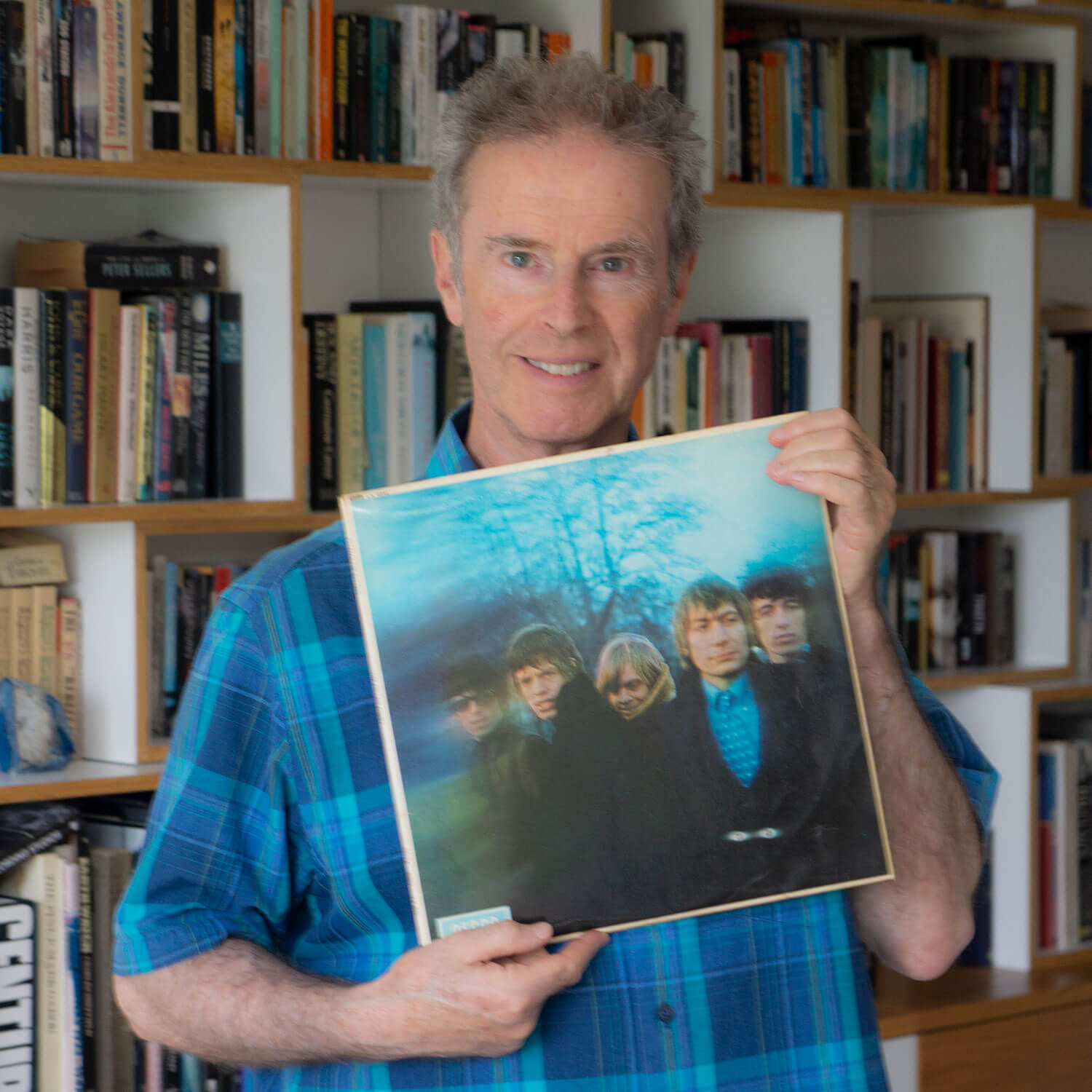
In Gered Mankowitz: Rock and Roll Photography (Goodman, 2016), the legendary photographer wrote, ‘I loved Slade! They were always fun to work with and I ended up shooting over 35 sessions with them throughout their long and distinguished career. I shot almost every album cover they did, and many other sessions as well. They were hugely talented and made an endless stream of brilliant, raucous pop hits, throughout the Seventies. I considered them to be good mates and am still in contact with Noddy Holder, and recently had tea with Dave Hill and Don Powell when they played a local gig.’

That was all I needed by way of an excuse to track down the man himself to his South Cornwall home studio on the lead up to publishing Wild! Wild! Wild! A People’s History of Slade (Spenwood Books, 2023), Gered, now 77, apparently inspired to take up photography by comedian Peter Sellers, opening his first studio in 1963, going on to work with Slade from the turn of the Seventies.

Finding himself at the centre of Swinging London in the early Sixties, Gered worked solidly for the next five decades, his many iconic images – from ABC and AC/DC to Wings and The Yardbirds – also including those of Duran Duran, George Harrison, The Jam, Jimi Hendrix, Kate Bush, Led Zeppelin, Madness, Marianne Faithfull, Oasis, the Rolling Stones, Small Faces, Status Quo, and Wham!

But how did Gered end up working so closely with Chas Chandler’s Slade, at such a key time in their development, building such a creative, successful working relationship?

“I started working for Chas in ‘67 when I photographed the Jimi Hendrix sessions. I did two with Jimi and the Experience. I was trying to remember how I got to know Chas, because I never photographed The Animals, so there was no obvious link. I think it was because I was doing work for Rik and John Gunnell. They managed bands and I’m sure Chas was involved in some way. He asked me to photograph Hendrix, and we remained in touch.

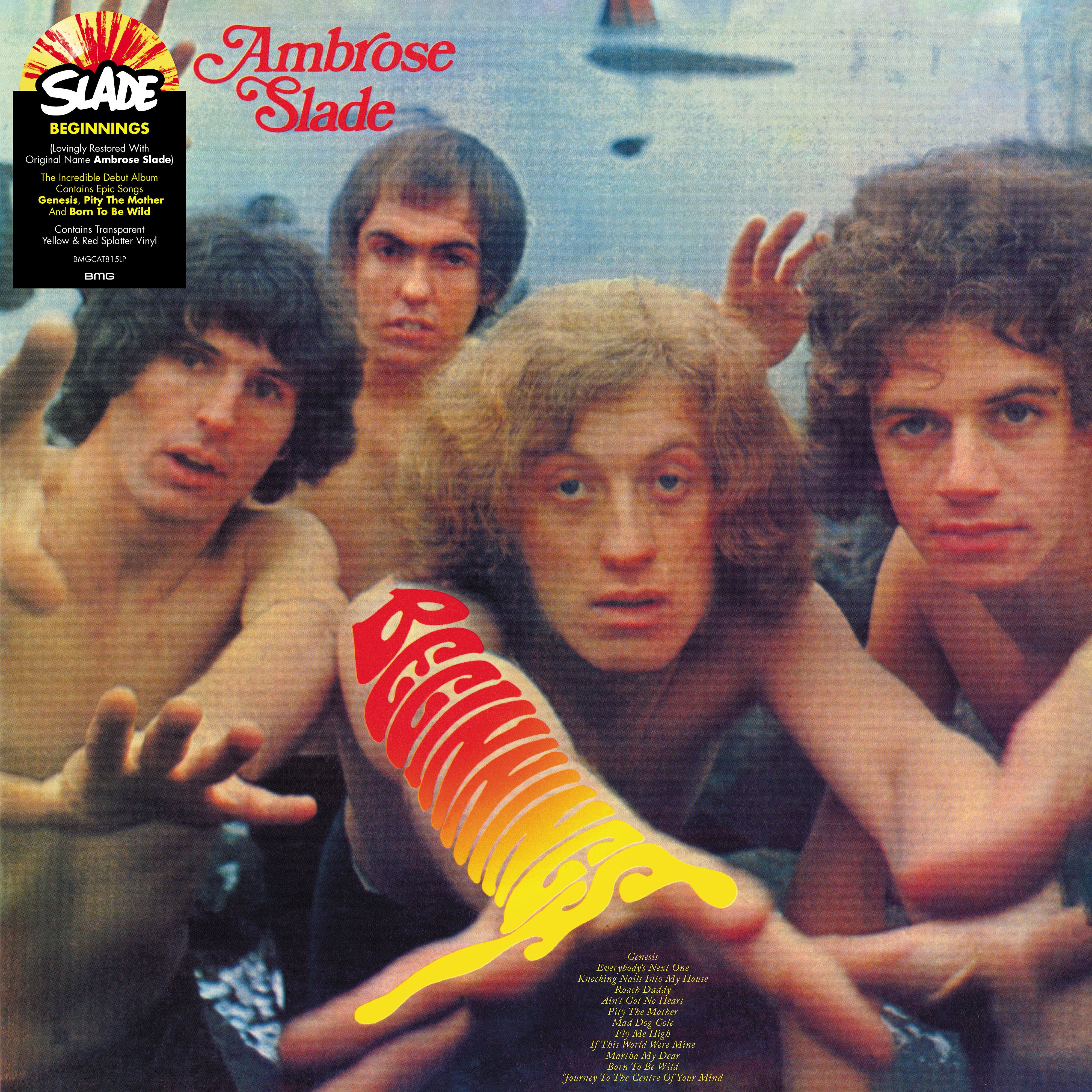
“I photographed other artists for him, and then he approached me to photograph Ambrose Slade, in, I guess, ‘69. I don’t know the exact chronology, but as far as I know it was their first session since moving to town.”

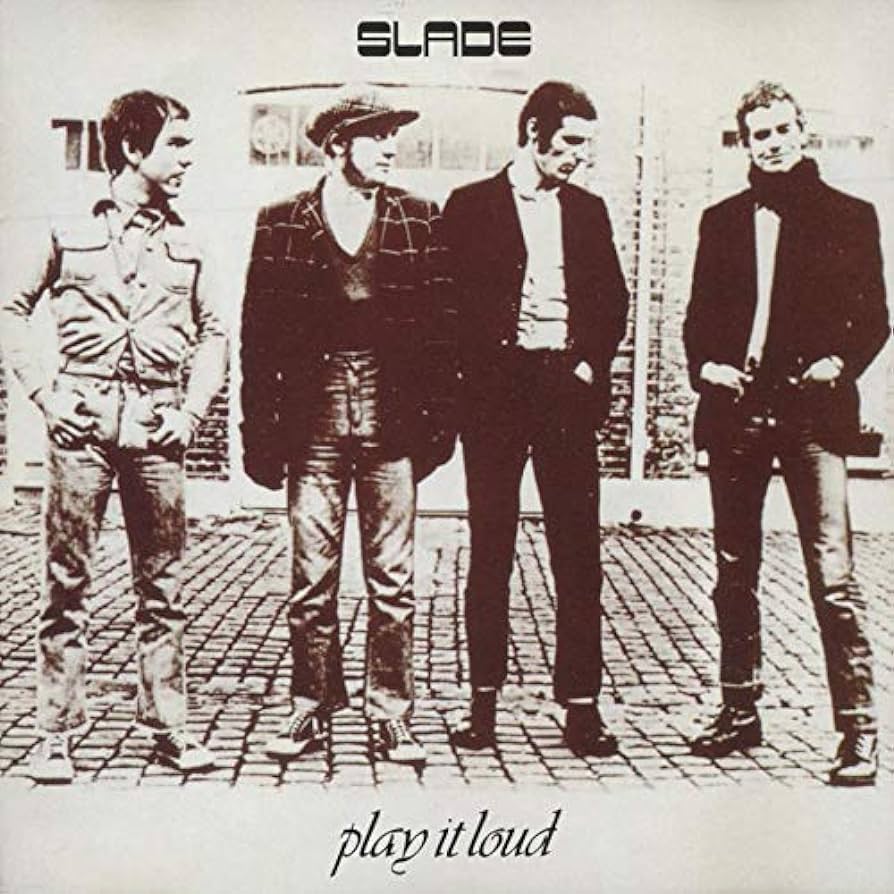
I get the impression that past experiences with photographers and record label types, through their earlier label, Fontana, helped them wise up, as suggested by ‘Pouk Hill’ on 1970’s Play It Loud, written about their experience of a Black Country photo-shoot with Richard Stirling for sole Ambrose Slade LP, Beginnings, the previous year.

“I don’t know that story, but they were quite independent in their thinking, even then. And Dave {Hill} was very opinionated, very full of himself. But I enjoyed their company from the outset, and I think they enjoyed mine. And it was the beginning of a long-lasting, very productive, lovely relationship. I mean, I loved them dearly, and consider them really good friends.”

I guess 30-plus sessions together tells its own story.

“I think there were over 40. They were fun to be with, extremely creative, and it was always a very positive experience being with them. They were never moody or difficult, and they had a real sense of their identity. It was always a very enjoyable working relationship. We had fun. We were always giggling, and they were great piss-takers.

“Gosh, they used to tease me, based on a character in a famous Tony Hancock episode {The Publicity Photograph}, very funny, where Kenneth Williams played the photographer. For the life of me, I’ve forgotten what he was called, but they’d call me that. ‘He paints with light!’ Yes, it was a very friendly, very enjoyable, productive time.”

Hilary St Clair was that character, by the way. And of all the Slade record sleeves Gered shot, does one stick out above all others? Several certainly became iconic images.

“I was going to say Nobody’s Fools. Not because of the sleeve, but because of the session. I didn’t like the sleeve. Between them, Polydor and Chas messed that up. I wanted the black and white version with coloured red noses, which I thought was a vastly superior photograph. I think it would have worked really well. But record companies wanted colour for some reason, and they did a horrible thing to the picture.

“I liked the session very much, and thought the band were looking extremely polished at that point in their identities, their images visually really refined. I’ve always loved the black and white pictures from that session. That stands up, and Play It Loud, because that was quite a breakthrough picture at the time. It wasn’t a sort of natural cover image. I was very proud of that and enjoyed most of my sessions with them.”

One that strikes me from those earliest sessions is where you’ve got them sat with boots forward, in skinhead garb. And in at least a couple of cases, they look anything but hard.

“I know! Again, the exact chronology escapes me, but Chas rang and said, quite soon after I’d done either the first or second Ambrose Slade session, ‘You better get back here… quick,’ so I did, and we did the skinhead session. The thing is, they were so sweet looking… Don was possibly the hardest looking, but they just look sweet. And Dave, I mean, he looked like a baby!”

Not really the image Chas envisaged, I’m sure.

“They certainly didn’t look hard, but I guess with the music and the boots and stomping around on stage, it tapped into that skinhead vibe.”

It seems that some of that skinhead crowd of the time stuck with them too, long after the hair grew back.

“With the beat, the raucousness, and the quality of the band, they were something to watch. And they were a major band, awfully good. Maybe it’s something to do with the Seventies as a decade, but Slade were an incredibly important powerful band and a huge influence, yet they’ve never been a band whose merit has not been truly assessed.”

I’ve found time and again – perhaps chiefly because the musicians in my contacts book are mostly drawn from the punk and new wave era rather than the heavy metal followers that latched on to them after the 1980 Reading Festival – there was a year zero approach to what came before 1976 and all that. A lot of emerging acts kept it quiet that Slade were an influence, from early sightings on Top of the Pops onwards.

“I think that’s true, and very interesting. I’m not a music historian, so I don’t really think about it in terms of when things happened. I just know they happened, and Slade were a great band… and important.

“I’m always singing the praises of Slade, whenever I get the opportunity. Whenever anybody asks who my favourite bands were, I always include them, and enjoy talking about them. And everybody at the studio loved them. When we had the studio in Great Windmill Street {Soho, London W1}, pretty much throughout the Seventies, they’d come several times a year.

“We’d have a big Christmas party there. I’d cook a turkey and a ton of sausages, and we’d make a huge punch, famous for being an absolute killer punch. You had absolutely great sounds, and we invited people from all walks of life, and we’d invite Slade and their roadies, particularly Swinn {Graham Swinnerton}. They arrived, one year, were almost the first there, and I’m at the door welcoming people, saying, ‘Great to see you, go right through, there’s food over there.’

“After about 20 minutes, I managed to escape the door, went inside, and the turkey had gone, the sausages had gone, and Slade and the roadies were just sitting around. ‘Great grub!’ They cleaned us out in 20 minutes!”

I’m proud to say the forewords for Wild! Wild! Wild! A People’s History of Slade are from two of your other past subjects, Suzi Quatro and Sweet’s Andy Scott.

“Yes, two other friends, and I’m still in touch with both. I adore Suzi, working with her throughout the Seventies, up until relatively recently. She’s somebody I like enormously. And I did the pictures for the band Suzi, Andy and Don Powell formed {QSP}.”

Having spoken to Suzi, I had to have a quiet word with my 10-year-old self, the young lad who’d be in awe of her stage appeal for five years by then, from Top of the Pops appearances but also those record covers and so many of your iconic shots.

“That’s nice to know. The thing is, certainly back in the Sixties and Seventies, seeing bands wasn’t as easy as perhaps it is today with social media and everything, so those pictures were very important. And that first vision of the artist is very important.

“In the early Sixties, you’d listen to bands on Radio Luxembourg and have absolutely no idea what they looked like and didn’t even know what colour they were or how many of them were in the band. You just listened to the music and thought it was great. But image became increasingly important, and those primary images become iconic images if you’re lucky.”

They’d had an amazing run, so arguably it had to end at some point, Slade out of popular favour on their return from the States, maybe part of the reason Nobody’s Fools is only getting kudos now.

“Well, the band didn’t stop being good. I can understand anybody saying it was a mistake trying to crack America, but they really had to do it. Chas was very much of the management school where if you didn’t make it in America, you hadn’t really made it. And the interesting thing is that they were incredibly important influences on several American bands.”

That’s something that happens time and again. The Rolling Stones, another of the bands you famously shot, recognised, to some extent replicated, and reinvented the sounds of the bluesmen of America, then took that music to new generations stateside, and some of those ended up in bands that influenced others on this side of the Atlantic. And so on down the years.

“Absolutely, talk about coals to Newcastle. But it needed an incredibly enthusiastic young band. I think it was much more of a tribute. They loved that music, Brian Jones in particular a real aficionado of that music. He really understood and loved it. I don’t think he wanted to do anything else. I think the blues was the bedrock of their success, and maybe the Stones had to have ‘(I Can’t Get No) Satisfaction’, a global hit, to consolidate their career and success. And perhaps Chas tried to emulate that with Slade.

“The other problem is that you can get out of step very quickly, especially if you’re an important part of a previous step – and they were, for the best part of a decade. It’s very difficult when the mantle has been passed, to get back in. So that was a misstep, I guess.”

“But Slade were the complete package. Not only did they write the material, they looked the business and outperformed anybody else on the bill. They weren’t trendy. They were just there, and they were in your face. They were sort of unique.”

Those Black Country working-class roots and attitudes helped too. They were never pretentious.

“Yes, and I’ve just recalled another great night with them. I can’t remember the name of the pub, but I went to Wolverhampton with them to shoot some live stuff…”

Was it The Trumpet in Bilston?

“Yes, oh my God! We had such a great night. What struck me was that they were regulars and were truly treated as such, not as anything special. They loved that and were 100 per cent at home. Everybody loved them, nobody hassled them, it was a wonderful night. I’m not a big pub person, but I really loved that because the vibe was simply glorious, like being with a huge family.

“I haven’t seen Jimmy for years and years, but I’ve seen Nod, who sends me a shouty Christmas message and came to a couple of my openings at a gallery in Manchester. And I saw Dave and Don together when they were doing the rounds with {their version of} Slade at the Hall for Cornwall in Truro, having tea with them, which was great fun. And it was another incredible show, even though it’s not the band it was. I also had a nice time hanging out with Don when we did the QSP session. My feelings towards them haven’t changed. Nor has my sense of affection and admiration for them.”

You also did the publicity shots for Slade in Flame. What did you make of that film first time around, not least bearing in mind your own film background.

“I thought it was a very good film, one that tried to capture the music scene in an honest way. I don’t think I’d seen it by the time we did the pictures, but I enjoyed that session. It was very challenging, technically. We used a system called front projection. The suits we had made were very uncomfortable, difficult for the band to wear. We had to get the flattest surface to take the projection cleanly – if it increased, it gave you horrible grey lines. It was complicated.

“They had to be very disciplined, and I had to be very disciplined. But it was very successful, the pictures memorable… and they worked. I’d quite like to see the film again, if I could find it.”

Every time I see it, with the passage of time, I think it gets better and better. It really stands up, not least the opening scenes.

“Funnily enough, I was so close to Chas and the boys at that time, I had an idea for a television series, based a bit on The Monkees. I wrote up a brief script and discussed it with Chas, but he thought it was a bit too juvenile for Slade.”

Dave Hill has suggested to me before that he would have loved to have gone down that road. I get the impression he wanted a take on A Hard Day’s Night.

“I think everybody would have liked that. The idea of a television series built around a band seemed a really good idea. I know The Monkees had done it, but there seemed to be room to do it again, differently.”

Well, I guess Reeves and Mortimer went on to give us Slade in Residence. And do you still play the records, and if so, what songs jump out at you all these years on?

“Honestly, I’m afraid I couldn’t tell you. I like some of the slower ones. I always thought they were fantastic songwriters, the Lennon/McCartney of the day.”

A love of The Beatles often shone through, and I realise I’m talking to someone who enjoyed a good working relationship with George Harrison.

“They had to be. You had to be cut off from the world not to be influenced by and admire The Beatles. You might not have necessarily liked them in terms of image, but we were all in awe of and full of admiration.”

All LP cover images above shot by Gered Mankowitz and copyright of Gered Mankowitz / Iconic Images Ltd. 2023. For more about Gered, head to his website via this link. You can also follow Gered via social media on Facebook, Instagram and Twitter.

And to order a copy of Wild! Wild! Wild! A People’s History of Slade by Malcolm Wyatt (Spenwood Books, 2023), follow this publisher’s link, taking advantage of a 25% discount offer across all titles when using the code 2KQUCX7Q at the checkout. The publisher also has various other music publications up for grabs, including Rolling Stones, Cream, Faces, The Who, Pink Floyd, Queen, Thin Lizzy, Fairport Convention, and Wedding Present titles.

You can also order the book via Amazon, ordering through your local bookseller, or trying before you buy via your nearest library.

Posted in Books Films, TV & Radio, Music | Tagged , , , , , , , , , , , , , , , , , , , , | Leave a comment

Going Full Circle with The Sweet – back in touch with Andy Scott

The Sweet are all set to go Full Circle, the 1970s glam-rock hitmakers all set for a 13-date December UK tour.

Guitarist/vocalist cum national treasure and glam rock royalty, Andy Scott, the golden thread linking the band’s past to present – over six happening decades – acknowledges that the long tours can’t carry on indefinitely and is looking to ‘wind down’ some of his live commitments… but he insists it’s not the end for the band.

“This could be our last tour, but that doesn’t mean we’re not going to do any more gigs, just that we might not be doing 15 to 20 dates strung together. Then again, we might!”

Having scored 15 top-40 hits in the ‘70s, eight of those going top-five – including 1973’s classic UK No.1 ‘Blockbuster’ – it’s fair to say that The Sweet perfected the art of making memorable records in a highly-competitive era.

And as well as the fire and steel shown in the recording studio and the glamour and excitement they transmitted onto our TV screens, there was always plenty of live passion too, something that his current bandmates Paul Manzi (vocals), Bruce Bisland (drums, vocals), Lee Small (bass, vocals) and Tom Cory (guitar, keyboards) know only too well, as you can find out for yourself on the Full Circle tour, which opens in Wrexham, where Andy made his debut in a church hall youth club 60 years ago, at the age of 14, and ending in Frome, Somerset, close to his West Country base of the last 30-plus years.

From 1971 breakthrough ‘Co-Co’ to 1978’s ‘Love is like Oxygen’, and all points between and beyond, The Sweet’s song catalogue also includes ‘The Ballroom Blitz’, ‘Fox on the Run’, ‘Hellraiser’, ‘Little Willy’, ‘Teenage Rampage’, ‘Action’, and ‘Wig-Wam Bam’.

And their most recent single, ‘Changes’, with its chugging guitar riff and catchy chorus, suggests Andy is still enjoying making music to this day. Is he still fired up on the songwriting front? And are these songs still coming to him regularly?  

“The older you get, as a record producer… Well, I’m such a bad editor. When I say bad, I mean… if I don’t think an idea is anywhere near where it should be, it gets ditched straight away. So you have these moments where you spring up in the middle of the night and you write down some lyrics or you patter down to the studio area – which is on a gallery, because I live in a barn – and I pick up an acoustic guitar and hopefully record it on the phone before it goes completely.”

I’ll bet you’ve lost a few songs in the past, though, haven’t you?

“Yes! Of course, in your dreams, the song’s magnificent. ‘Fox on the Run’ was one of those. It was my friend Kevin who found the original demo. He goes through my cassettes and stuff, where I’m almost whispering and just chunking the acoustic guitar. I wrote that one when living in a house near Heathrow Airport. I woke up in the middle of the night and didn’t want to wake my fairly new-born son and first wife, so I’m going {Andy whispers}, ‘I – I – I don’t want to know your name…’”

Iconic. And talking of ‘70s legends, I see your good pal Suzi Quatro’s doing the rounds again too, putting on a few dates in mid-November. Meanwhile, fellow QSP bandmate and Slade drumming legend Don Powell is keeping busy with a number of projects, while his former bandmate Dave Hill’s doing his own thing with his version of Slade, Jim Lea has been exceptionally busy in the studio this year, and Noddy Holder’s guested on a few live dates. And all of them despite – like Andy – a few major health issues in recent years. What is it about you lot that keeps you out there, performing, all these years on?

“Well, I did speak to Don, and said, ‘Do you ever envisage yourself going back on the road?’ Especially after the fallout between him and Dave. And he basically said, ‘No, but I don’t mind doing the odd gig.’ When he comes back, he’s got a pile of mates and they’re going to do a gig somewhere. And he’s got a band he can step up with in Denmark. But he said, ‘I don’t want to start having the Don Powell Band doing what you do.’ And I can see that. He doesn’t need to do it, but when he’s doing it, he enjoys it.”

Well, you do it big time when you’re out there.

“Yeah. But like me, his recovery rate… it’s going to take some time, you know.”

My conversations with Andy always tend to include some discussion or other about his old chart rivals and good friends, Slade. We talked in our previous interview – five years ago, in December 2018 (linked here) about how he was also ‘schooled’ in the ‘60s on that pub and club circuit at home and overseas. And as he pointed out when he was good enough to write me a foreword for Wild! Wild! Wild! A People’s History of Slade – following Suzi Quatro’s lead – his early days included a mid-‘60s spell in The Elastic Band, who just happened to be playing a Grand Bahama club residency at the same time as The ‘N Betweens, the band that morphed into Slade, who were playing another nightspot on the island.

What’s more, by late ‘71 they’d both tasted UK chart success – Andy by then with The Sweet. Far greater success was to follow, but there was already a sense of accomplishment.

“Absolutely. And I was a bit of a fan of Slade. When I got back from the Bahamas and The Elastic Band imploded, I remember going to see them somewhere. I think that was when they were doing some of the skinhead stuff. I remember being in the dressing room, chuckling a little bit, and Noddy looked at me and kind of went, ‘Just leave it, alright!’”

As he knows full well, a couple of them looked the part, but for the others it just didn’t work, look-wise. They didn’t look so hard, really. The music could be though, and it made people sit up and take notice, which was Chas Chandler’s intention. So that certainly worked. It was an inspired idea, and it made them stand out from the crowd. And I’m guessing that Andy probably learned from that experience as well.

“Well, I remember dragging Mick {Tucker} when I first joined The Sweet, down to the Boathouse at Kew. We walked in, went into the dressing room, and you could see they were getting ready to go on. I said, ‘Nice to see you,’ they went on, and we stood at the back somewhere. And it was like being in a war zone, the sound. They had that huge WEM PA system, which was like, I suppose, a good quality transistor radio turned up very loud. There wasn’t a hell of a lot of frequency differences. But the band themselves… I remember Mick and I both going, ‘Well, you know, that is full on energy!’”

Records suggest that Kew Bridge show was on December 29th in 1971, when ‘Slade’s ‘Coz I Luv You’ had just spent its 10th week in the UK top-40 (after four weeks at the top),with The Sweet’s ‘Alexander Graham Bell’ having just finished its UK top-40 run, their third charting single that, their transition from bubblegum pop to a harder glam sound still some way ahead of them.

And talking of 1971, does he recognise himself now on Top of the Pops footage for the band’s first No.2 hit, ‘Co-Co’, kept off the summit for two weeks that July by Middle of the Road’s dreadful ‘Chirpy Chirpy Cheep Cheep’? Is he back in the moment remembering that appearance?

“With ‘Co-Co and ‘Chirpy Chirpy Cheep Cheep’ that summer, in Europe one or other was No.1 in the charts everywhere, for about two or three months. You couldn’t go anywhere. I remember doing a TV show in Spain, and the hotel where we were staying were playing both. You just couldn’t get away from it!

“But to answer your question, I don’t think any of us would remember the first appearance on Top of the Pops. We were probably like rabbits in headlights, and a little bit stiff-legged. How can I put it… when the camera comes round, catches you, you put a little cheesy smile on. But Brian (Connolly, lead singer} was magnificent in those days.”

He was a great frontman. Did that kind of take the pressure off you a bit, In a sense?

“Well, I think you’re all just happy to be on Top of the Pops, aren’t you. Regardless of whether you’re fully into the material. It’s a hit, so you do the best that you can. Yeah. And then you set about trying to manoeuvre things. And Mike Chapman {co-producer, co-writer} grabbed the shield and sword and was going into battle for us, saying, ‘The band needs to play on these records. It’s all very well having ‘Co-Co’, with a bunch of Latin-Americans and all that stuff. But the band has to start…’ And he started to write these songs.

“When he came to see us, he realised that we were big Who fans, as we were doing a big Who medley. So when he wrote ‘Little Willie’, the first thing Mick {Tucker, drums} and I noticed when he played it to us, it’s like the start of a Who song.”

Well, now you mention it.

“We were a pop band emulating, shall we say, a Who riff. And then ‘Wig-Wam Bam’ was probably a ‘50s rock ‘n’ roll song.”

There was a lot of those influences in that era, from the Electric Light Orchestra to Mott the Hoople, and I guess David Essex, Mud, Showaddywaddy… rock ‘n’ roll with an early ‘70s treatment.

“Yeah, and T-Rex were all a bit Chuck Berry. Cheesy, but with easy guitar, you know.”

And then came 1973 and ‘Blockbuster’, 50 years ago. Does he recall where he was when it overtook Little Jimmy Osmond at No.1?

“Well, I remember – and I’ve seen the photographic evidence – being at Top of the Pops when we were at No.1, and there were magnums of champagne in our dressing room. I’m not even sure whether we were allowed to have alcohol in the dressing room in those days.”

You had five weeks at the top with that, eight weeks in the top 10, 12 weeks in the top 40. That’s not so bad, is it. You kept contemporary competition like David Bowie, (whisper it) Gary Glitter and Elton John off the top. And then The Strawbs, before finally giving way to Slade’s ‘Cum on Feel the Noize’ in a momentous year for them.

“Yeah, and now I’m told, if we could sell all our vinyl on tour, when we have a 2,500 run, if you could make sure they were bought in advance so they could go in with some downloads and others, you would go in the charts with 2,000 to 3,000 sales. And yet that wouldn’t even have covered our daily sales back then.”

The Sweet are now seen first and foremost as a singles band, and the albums were not nearly as successful, chart-wise. But I saw somewhere that you’ve sold around 55 million albums.

“I think that’s been exaggerated. It’s 55 million units sold. We haven’t sold 55 million albums. Otherwise I would be a very rich man and living the life! And the truth of that is, I would still be doing what I’m doing. But when you total it all up, probably there were more singles sold than albums. Because every one of those singles from ‘Blockbuster’ and ‘Hellraiser’ to ‘Ballroom Blitz’, ‘Teenage Rampage’, ‘Fox on the Run’ and ‘Love Is Like Oxygen’, they all sold more than a million units. And I think ‘Co-Co’ did as well.”

You had a run of other No.2s as well, and were also kept off the top by Dawn’s awful ‘Tie a Yellow Ribbon’, plus Wizzard’s amazing ‘See My Baby Jive’ and ‘Angel Fingers’. Even the Simon Park Orchestra’s ‘Eye Level’, the theme tune from Van der Valk. With a couple of those, I guess it was more a case of those rare moments when the older generation went out and bought a single. But was there a real sense of competition between yourselves, Slade, Wizzard, Glitter, and so on?

“I think we all knew when the others were going to be releasing things. There was an unwritten rule that you didn’t have a Slade, a Wizzard, David Bowie or Sweet single coming out at the same time. You tried to stagger them.”

By time you were back there with ‘Teenage Rampage’ (perhaps my favourite Sweet moment), it was ‘Tiger Feet’ keeping you off the top. Did you have a good relationship with Mud?

“Oh, yeah. I liked the lads in Mud. I’ll never forget Mick Tucker’s words to Nicky, when we ended up with the No’s 1, 2 and 3 in January ‘74. There was Mud at No.1 with ‘Tiger Feet’, then us with ‘Teenage Rampage’, and Suzi {Quatro} with ‘Devil Gate Drive’.

“We were expecting, after a couple of weeks, that we would go to No.1. But what happened? We stayed at No.2, and Suzi went to No.1 for one week. And Mick’s word to Nicky Chinn was, ‘Judas!’ In other words, if anybody should have been No.1, it should have been us, because we were the ones that kickstarted you with all these other bands! But it just made me roar with laughter.”

By 1975, The Sweet had stalled again at No.2 with ‘Fox on the Run’, with the Bay City Rollers at No.1 with ‘Bye Bye Baby’ this time. Had the fickle world of pop music already moved on?

“Well, it certainly wasn’t our immediate goal to have another No.1 single. I think you’re absolutely right. And by that time, we’d also moved on from Phil Wainman as producer, and Nicky {Chinn} and Mike {Chapman}as the writers. Because the album that we were then making for RCA was the heavy metal album, in Germany. We’d moved on and we were starting to play arenas, on the same circuit as Deep Purple, Led Zeppelin, and a few of the other bands in Germany.

“And not a lot of people realise that by 1975, we’d stopped playing in the UK. We didn’t play here between the end of ’74 and the beginning of ‘78.”

By which time you were into the ‘Love is Like Oxygen’ era.

“Yeah, I can’t remember the last gig in ’74, but the first gig we did in ‘78 was at the Hammersmith Odeon.”

And did you find you still had the numbers turning out then?

“Oh, if our agent had been a little bit quicker off the mark, we’d have done two or three nights at Hammersmith Odeon. It sold out so quickly. When he went in there, there wasn’t another date for at least 10 days. I said, ‘Well, let’s do another two weeks afterwards then,’ but, you know, the moment had gone.”

We mentioned album sales. Do you look at one particular album and think, ‘That’s where we properly got it together’? I’m thinking, Sweet Fanny Adams or Desolation Boulevard. Do you think either of those LPs truly told the tale of you at those particular moments in time?

“I definitely think that regarding working with Phil, without interference from Nicky and Mike, on Sweet Fanny Adams – because they were in America. The fact that there was no single on the album, it was just album tracks and we had written the majority of them… And for the next album, Desolation Boulevard, the American version is basically Sweet Fanny Adams with a couple of tracks – like ‘The Six Teens’ – from the European Desolation Boulevard. That’s a good album, but they cherry-picked the best of two albums.”

“But quite frankly, I still like, Level Headed.”

Do you think that (1978 LP) gets enough kudos?

“Well, the only song they would immediately know on that is ‘Love is Like Oxygen’. And of course, it takes up space on the vinyl. There are only four tracks on that side, because it’s nearly seven minutes long.”

Returning to the modern day, Andy remains fiercely protective of the band’s legacy, today as ever. But I note that he’s being a little careful regarding his description of this forthcoming tour. Not least with regard to saying whether this is the last Sweet tour. However, I get the impression he’s looking forward to these dates, and having a bit of a party out there.

“Yeah. As I’ve said, UK dates might be a little easier, but I don’t want to start going away for four or five weeks, like we have done, going from Switzerland to Austria to Germany to the Netherlands, or Denmark or Sweden. I don’t mind going abroad and doing a couple of shows, as long as the distances are not outrageous. As long as we’re not going from Hamburg to Munich. And we’ve got a couple of guys out in Germany who are looking after us properly.

“I’ve also cut my own cloth accordingly. If I’m going to be doing this, it’s not about the money for me. It’s got to be about having the right band, making sure that they’re happy as well. I don’t need to have a figure in my mind as to what I need to earn for everything. And I’ve got an agent who realises that. I’d rather stay in the best hotel, have a car pick me up and drive me everywhere and travel business class everywhere, rather than come home with an extra few hundred quid. It’s not about that for me.”

Of the classic line-up, there’s just Andy now, but we are after all talking about a legendary mainstay of a band that has managed a colossal 53 years of hit singles, shifted millions of albums, and amassed 34 No.1s. And it’s a group that has clearly stood the test of time. What’s more, it all starts off in Andy’s former neck of the woods, in Wrexham on December 1st, although I see he’ll be struggling to get in a home game at the Racecourse Ground this time around, with the fixtures not exactly in his favour (although his beloved football team host Morecambe in League Two on November 25th, then Yeovil Town in the FA Cup second round on December 3rd).

“I don’t get to the football as often as I should, but it will be 60 years since I did my first show, with my school band in a youth club in a church hall in Wrexham, so this will be virtually 60 years on, because it was November/December 1963, when I was 14.”

So it’s proper Full Circle, as the tour title suggests.

“Exactly!”

And will there be post-tour celebrations in the West Country at the end?

“Well, I’ve been told that I might be kidnapped by some guys who don’t see me enough down my local. As I come off stage, someone says, ‘We’re gonna put a bag over your head and drag you to our local.’ But I’m trying to look after myself, and going down the pub like I used to – early doors – having a couple of pints, isn’t part of the agenda anymore.”

It seems that Andy might do well to heed the advice of that immortal line, “You better beware, you better take care …”

Andy Scott and Suzi Quatro have provided forewords for Wild! Wild! Wild! A People’s History of Slade (Spenwood Books, 2023), which you can order via the publisher’s link or through Amazon or your local bookseller. You can also try before you buy via your nearest library.

The Sweet’s Full Circle tour takes place this December, with dates at William Aston Hall, Wrexham, Friday 1st; The Wulfrun, Wolverhampton; Saturday 2nd; Picturedrome, Holmfirth, Friday 8th; Queen Margaret Union, Glasgow, Saturday 9th; Fire Station, Sunderland, Sunday 10th; Apex, Bury St Edmunds, Thursday 14th; Academy, Manchester, Friday 15th; Lowther Pavilion, Lytham St Anne’s, Saturday 16th; Tramshed, Cardiff, Sunday 17th; Rock City, Nottingham, Wednesday 20th; Islington Assembly Hall, London, Thursday 21st; Lighthouse, Poole, Friday 22nd; Cheese & Grain, Frome, Saturday 23rd. Tickets are available via this link.

For further information, check out the band’s website and keep in touch via Facebook, Instagram and Twitter. You can also check out the band’s YouTube channel.  

Posted in Books Films, TV & Radio, Music | Tagged , , , , , , , , , , , , , , , , , , , , , | Leave a comment

Sunbirds – Preston, The Continental

Three and a quarter years after I first discussed Sunbirds with co-frontman Dave Hemingway (linked here), on the build-up to the release of debut long player, Cool to be Kind, I finally got to catch them live. And it was worth the wait.

Not as if there were too many chances to see them in that first couple of years. Initially more a studio project, that suited the band fine in the wake of the pandemic. Besides, former Housemartins and Beautiful South singer Dave Hemingway was in no great hurry back then to return to the road.

Having called time on post-PD Heaton and Jacqui Abbott outfit The South in 2015 after six years back with ex-bandmate Alison Wheeler and co., Dave, aka Hammy, felt somewhat frustrated that his passion for recording new music was not seen as the priority across the board, despite praise for 2012 LP Sweet Refrains.

So, with guitarist Phil Barton – who had a hand in writing seven songs on Sweet Refrains and remains on board with The South to this day – a new band was formed, the pair joined by violinist/vocalist Laura Wilcockson and drummer Marc Parnell, leading to that cracking 2020 Sunbirds first LP.

However, it was clear by the time of my chat with Phil last August (linked here) that they were keen to play live, and this time last year they were about to head out on their first short tour as an expanded six-piece band, with guitarist/keyboard player Chris Offen and bass player Jerry Jobson.

Audience reactions certainly vindicated what they felt they had. And here we are in late 2023, now with Phil Chapman in Jerry’s role, and a fair few more dates in the bag, this latest Lancashire outing to be followed by seven more live shows before the year is out, the diary already fairly full from early February 2024.

What’s more, there’s a new record in the pipeline, A Life Worth Living marking what they see as ‘another step in the continuing evolution of the band’s sound’. The jury remains out on when it will see its release (the main issue is ‘the old green manalishi’ according to Phil), but the belief in those new songs certainly came through at the Conti, with just seven of the cuts from the first record aired in a 20-song set.

They started with the rolling blues of the debut LP’s ‘Big Moneymaker’, that blend of Hammy and Laura’s vocals, searing guitars and shuffling bass and drums setting Sunbirds’ stall out nicely. But the next four numbers at The Continental were new to me. A brave move. In the circumstances you might have expected a little bum-shuffling from this seated, sold-our audience (the first time I’ve attended a seated show at the Conti, other than a July 2021 tables and chairs set-up for Martin Stephenson on my first post-pandemic live outing). However, that perceived increase in confidence is with good reason, I’d venture.

I get the impression the songwriting doesn’t fall so heavily on Phil now. He had a hand in all but one of the songs on that first LP – to great effect – but it seems there’s a far more across the board band approach now, Chris and Laura (erm) instrumental in their contributions with a pen and a stave.

Dave’s vocals were a little muffled where I was stood at the back, but it worked all the same, and I get the impression he’s happier with the focus elsewhere, Laura leading from the middle, so to speak… relishing the opportunity of co-fronting such a tight, professional band.

On the guitar front, Phil and Chris switched between lead and rhythm duties, bringing out the best in each other, pushing that little bit further, as heard on the Teenage Fanclub meets Long Ryders-like ‘And We Can’, given a further twist by Laura’s violin.

‘Every Road’ had a proper late ‘80s feel. Think The Bible. It could have been a Boo Hewerdine number for these ears. In fact, at times I feel this is a band that collectively fits into a past scene I once lived and breathed, where indie pop found fresh influences by delving backwards, not least rediscovering ‘60s country rock. And in this case, the more understated studio take was neatly transferred to a live set-up.

Further new song ‘Bring It Back’ was then followed by ‘Hey’, Laura out front on a number showing a perhaps even more radio friendly approach. It certainly showcases her fine voice alongside her accomplished musician tag – a big vocal but somehow subtly used on a big old, lighter-waving ballad that should work well on the festival circuit come next summer. Expect a bigger name to have a huge hit with this. I’ll always prefer the original though. It also gave Phil and Chris a chance to noodle somewhat on those guitars, another key factor all night.

‘The Black Sea’ was one of the first LP’s less commercial highlights for me, and they certainly give a good fist of replicating its power live, Hammy lost in the emotion of the moment. That was followed by ‘Maybe It’s Me’, the next new number, then the first album’s ‘Holiday Monday’. Sort of Mamas and Papas done Tom Petty style (not least that guitar break partway through). I see an accompanying ‘60s style surf promo video, the band driving al convertible along a beach road. Mind you, that East Yorkshire coast might be a bit nippy at this time of year.

Aptly, ‘Ride’, another addition to the set, was next, before a return to Cool to be Kind for Phil’s beautifully crafted ‘When I’m Gone’, a love letter to his daughter, delivered with plenty of heart from Hammy. I mentioned The Bible earlier, and there’s something of ‘Honey Be Good’ here, with Laura’s backing vocal a nice touch.

Two more new songs followed, ‘Right Place’ and the Chris-led ‘Who Knew?’ followed by a moment of nostalgia, The Beautiful South’s No.1 single, ‘A Little Time’. That takes me back, that song all over the radio ahead of my impending departure for my 1990/91 world travels, a sense of potential guilt at going away reflected in that Heaton/Rotheray hit, Laura in Briana Corrigan’s role here.

Gearing up for a big finish, two more first LP cuts followed, the Beautiful South-like ‘Hatred Lies in the Ruins of Love’ followed by the ever-sparkling, celebratory ‘Gene Kelly’, their biggest pop moment yet. If ever a single deserved to be a hit…

Talking of 45s, recent Heritage Chart hit ‘Make Up Your Mind’ was introduced with a slight twist by Phil on guitar, us wondering if we were about to get Bryan Adams’ ‘Summer of ‘69’. In fact, maybe this is their most commercial moment so far, Laura in full Belinda Carlisle mode. US college radio of old would have loved this. Hopefully it still will.

Then came ‘Done and Dusted’, a true bluesy number ending with a rousing instrumental breakdown, Chris and Phil in their element with a twin-guitar assault, Thin Lizzy style. Get off your knees, indeed. Meanwhile, Laura and Hammy danced like recently introduced friends of friends in a nightclub, a six-string bromance unfolding alongside, the two of them seemingly unsure quite where to look.

It was Marc that put the song to bed, having not put a drumstick wrong all night in a solid performance alongside new bass-playing rhythm pal, Phil C, who also seemed to be having a ball, and before we knew it the band launched into Nick Lowe classic ‘(What’s So Funny ‘Bout) Peace, Love and Understanding’, which never fails to hit the spot (49 years after it was written), not least when half of the world is up in flames, in this case an apt as can be reminder of the unfolding horrors in Gaza.

On returning, Sunbirds were briefly a five-piece, Marc taking the air while Hammy returned to his old seat at the back, reprising his role as singing drummer on ‘Build’, 36 years after it became The Housemartins’ final top-20 hit, Dave’s voice seemingly the clearest it had been all night. Another unexpected highlight.

And then back came Marc, with Dave leading out front on the finale, his hymn to Hull, the band’s first single, ‘Meet You on the Northside’ providing a grand send-off on a top night out. And here’s to plenty more of those in the company of Sunbirds.

For the latest from Sunbirds, head to their Nectar Records website, or check them out via Bandcamp. You can also keep in touch with the band via Facebook, Instagram and Twitter.

All the above photographs appear here courtesy of Michael Porter Photography, with a link to Michael’s website here. You can also keep in touch via Facebook and Instagram.

Posted in Books Films, TV & Radio, Music | Tagged , , , , , , , , , , , , , , , | Leave a comment

From Stanhope Place to Richfield Avenue: Ambrose Slade: Beginnings and Slade: Alive! At Reading – the WriteWyattUK review

It’s odd to think there were merely 11 and a quarter years between the release of Beginnings, the debut LP from the classic fourpiece that became Slade, and the band’s show-stealing 1980 Reading Festival performance, credited with relaunching their career when they most needed it, paving the way for the final assault of a glittering live and recording career, reminding the wider music world they were truly a force to be reckoned with.

Almost four times that amount of time has passed since, yet love remains for this iconic Black Country outfit, new generations now properly discovering Slade for themselves, while others who for some reason or other misread them at the time (perhaps it was those spellings) are finally realising their talent.

I say that as I gaze at the latest product celebrating these particular snapshots in history, BMG’s repackaging of the Ambrose Slade record and the label’s reissue of recordings from a direction-changing live performance from Dave, Don, Jim and Nod on Sunday, 31st August 1980, when the phrase ‘phoenix from the ashes’ didn’t even cum near to nailing it.

Let’s start at the Beginnings, a band not long since rebranded after taking shape as The ‘N Betweens looking to find their feet with what proved something of a mixed bag of an album, one most of us reading this were not old enough to have appreciated back then (writes a fella who’d only just had his second New Year’s Day when they started recording that debut long player) but now like to pretend we saw the merits of from the start.

As it was, the band’s instrumental call to arms on opening track ‘Genesis’, the LP’s sole single – which the majority of us got to know in its second coming (with words) as ‘Know You Are’ – sees us invested from the start. Those aircraft-like sound effects and that driving bass – eight years later arguably half-inched by Greg Lake for ELP’s take on ‘Fanfare for the Common Man’ – setting us up nicely for what we’re about to receive. 

I used the term ‘mixed bag’, and that’s certainly the case, these 12 tracks – recorded at Stanhope Place, London W2, close to Hyde Park, with engineer Roger Wake, the band having reluctantly took its moniker from separate names A&R boss Jack Baverstock’s secretary gave her handbag and powder compact, apparently – seemingly providing more a shop window display of what they were capable of rather than a statement album.

One of the striking points for me now, 54 years down the line, is Noddy’s more nasal delivery, this treasured frontman possibly stricken by a cold during the recording process. But if it was good enough for John Lennon on The Beatles’ debut LP six years earlier… More relevant is that our Neville seems to bathe in ’60s elements at times, still finding his place, while the climax of ‘Everybody’s Next One’ (the first of two Steppenwolf covers – in fact, it was the B-side of their stab at ‘Born to be Wild’, released on the same day a year earlier) sounds more Who-like for these ears, an influence I never previously considered but one that also makes sense.

As for ‘Knocking Nails into my House’ (originally by The Idle Race), that has more of a Marriott and Lane feel, alongside a little of the ingenuity of future chart rival Roy Wood (perhaps unsurprising seeing as it was penned by sometime bandmate and fellow Brummie, Jeff Lynne). Yep, half Small Faces, half The Move, I’d say – not a bad place to be… but it’s not quite Slade, still grappling away in a bid to unearth their true calling and identity. What’s more, maybe it’s that building theme, but I get a bit of Bernard Cribbins in Nod’s oration. Not quite but almost, ‘Right,’ said Fred, ‘Have to take the wall down. That there wall is gonna have to go.’

Word has it that the ‘N Betweens implosion came as half of the band wanted to cling on to a more bluesy direction, while the others – Dave and Don – saw future salvation in embracing the beat era, selling that vision to new boys Nod and Jim. But ‘Roach Daddy’ – like ‘Genesis’ and ‘Mad Dog Cole’, seeing all four band members given a credit – suggests they couldn’t unlearn what they’d plugged away at on that circuit. Besides, The Beatles were arguably heading that same way.

‘Ain’t Got No Heart’, borrowed from Frank Zappa and the Mothers of Invention, is another product of its time, and that’s fine by me, more Ambrose Psych than the band we’d get to properly discover. I see sequinned shirts and ridiculous moustaches, but Nod’s vocal delivery is almost punky.

‘Pity the Mother’, the only number with that soon to be classic Holder/Lea credit, takes that previous theme and stance a little further. There’s more than a little Led Zep there, I feel, that marriage of delicate blues licks and ‘eavy metal. And you could just about sit down and scratch your beard to it rather than stomp your feet and clap your hands. But it’s Jim’s violin that provides an unexpected twist. Within two years the nation would be knocked out by a similar approach on ‘Coz I Luv You’, but this must have had an impact on an earlier audience. And long before Dave Arbus did his thing on ‘Baba O’Riley’ for what was initially intended as The Who’s Lifehouse project.

Talking of the ‘Oo, it’s interesting to note that Beginnings landed 10 days before Tommy, and in the same month The Beatles were fannying around with Get Back (albeit with that never seeing the light of day for another year, as Let It Be).

Side two’s instrumental opener ‘Mad Dog Cole’ is more of a blues stomper, including searing guitar lines and scat vocal noodling. It’s as if the band are giving us a little freeform jazzy r & b while their working men’s club audience settle down after the meat raffle, the venue’s MC and club sec out back in a ciggie smoke-filled room, working out how much they can get away with paying their upstart visitors.

We’re then properly away again with one of my favourite moments, ‘Fly Me High’, the Moody Blues number. I interviewed Justin Hayward, its author, five years ago and couldn’t quite get my head round the fact that he was unaware at the time of that cover, which landed three years after it was a single, the first Justin recorded with the band after replacing Denny Laine.

As for Marvin Gaye’s ‘If This World Were Mine’, that’s a surprise package in light of what Slade became. Nod’s nasal vocal aside, I see it as more of a late Jam or early Style Council B-side. And while – surprisingly considering the power of his voice – it seems our Neville over-stretches in places, we at least get traces of that soul influence they took on board from the start.

‘Martha My Dear’ was a brave move, but again Jim’s violin adds Slade’s stamp to proceedings, stopping it becoming just another Beatles cover. Incidentally, is that the first time the band made that observation, ‘Look wot you dun’? Don’s drum pattern is interesting too, as if he’s still working his way through the style book, taking mental notes.

Then we have Steppenwolf’s ‘Born to be Wild’, the only song that appears on both records, a track that was perhaps already slaying audiences, as heard at Piccadilly’s Command Studios in October ’71 and tearing up venues for many more moons to come. And it’s no less dynamic here.

Finally, we’re away with another cover, Ted Nugent and the Amboy Dukes’ ‘Journey to the Centre of Your Mind’, the band well and truly back in the land of late ‘60s psychedelic rock on a song that would sit comfortably on a Monkees LP, as if it were an offcut from Head, released six months earlier.

While the 2006 Salvo CD reissue (coupled with Play It Loud) concluded on ‘Wild Winds Are Blowing’ – the first release of their skinhead era – BMG opt for its Powell/Holder/Lea-penned B-side, ‘One Way Hotel’, perhaps Slade’s first proper story song. Why they chose that, I’m unsure, but I’m not complaining, and maybe it’s just a nod (so to speak) to what came next, that song revisited for the next LP, Baverstock’s secretary’s handbag binned by then, Chas Chandler’s involvement taking the band upwards and onwards, the first LP as Slade landing a year and a half later, the group ever closer to what they became.

As it was, Beginnings not so much bombed as got lost, failing to dent either the UK or US (where it was rebranded Ballsy and given a revised track-listing and far worse cover art) charts. In fact, it says something that while I know full well that the wonderful ‘Pouk Hill’ – written about the photoshoot for the front sleeve of the debut LP – fits perfectly on that next record, it’s that fine ditty I hear when I see Beginnings, its lyrical theme suggesting they learned a hell of a lot from the experience of this ’69 Fontana debut, taking those lessons on board, the golden years not so far, far away.

I’m not sure if, as Peter Jones reckons on the original sleeve notes, ‘I voluntarily and totally flipped’ on first hearing Beginnings, but I agree to an extent with Record Mirror’s review of the ‘Genesis’ single, describing the accompanying LP as a ‘fine debut’ from a band of ‘very substantial talent’. And as Dave Ling puts it on his sleeve notes this time, ‘For Slade, the Gud times were just around the corner.’

It seems odd to jump from there to late August 1980, but while, my oh my, times ‘adn’t ‘alf changed by then, there is at least one key factor linking Beginnings and Alive! At Reading – Slade’s determination to prove themselves and bounce back, be that emerging out of the shadows as the ’60s gave rise to the ‘70s, or out of the doldrums – or at least the wilderness – after those halcyon chartbusting years on their UK return after an ultimately fruitless US assault.

It’s not quite as simple as that, but you catch my drift. Anyone who caught the band in the intervening years knew how powerful they remained. If anything, they even upped their game. And Reading wasn’t the first time they proved the detractors wrong. Take for example, Lincoln Festival in late May ’72. There too, some of those who attended knew only too well what a phenomenal live band Slade were, rather than just gifted crafters of great singles.

I might as well get the criticism out of the way regarding this second BMG repackage, mentioning the use of live shots from a later Monsters of Rock set at Knebworth and a 1973 Danish shot on the rear. And this isn’t the complete live set, which also included ‘Dizzy Mama’, ‘My Baby Left Me’, ‘Everyday’ and ‘Gudbuy t Jane’. But the spirit’s definitely there, and kudos needs be paid to the BBC’s Friday Rock Show bods who recorded it for Tommy Vance’s show in the first place.

As late, late replacements for Ozzy Osbourne at Richfield Avenue, delivering a sensational performance to around 80,000 punters, few knew they were going to be performing until shortly before their Sunday set, but they provided the highlight of the festival and that audience response ultimately led to Slade enjoying a renaissance. They certainly come out with guns blazing on ‘Take Me Bak ‘Ome’ – originally released three years to the month after Beginnings – and it’s as refreshingly vital eight and a half years after it became their second No.1. If anything, this four and three-quarter minute version carries a finale that’s almost Sex Pistols-like, Nod’s call and response panto ensures the heavy brigade were on their side too. You can almost hear the masses turn round and swarm back from the camping fields towards the main stage.

‘Is it loud enough for everybody?’ asks Noddy. ‘No!’ comes the resounding response. ‘No? Charlie! It ain’t loud enough! Get it up! Full poke! Think mi ears are going a bit!’ Whether sound man Charlie Newham needed to do anything of the sort is unlikely, but they soon had the crowd in their pocket.

And it wasn’t just nostalgia, fairly new songs like the incendiary ‘When I’m Dancin’, I Ain’t Fightin’’ and ‘Wheels Ain’t Coming Down’, from that May’s Six of the Best EP (although the latter appeared first on the previous October’s Return to Base), showing the great unwashed just what they might have been missing… a core of Slade diehards amongst them with every right to scream, ‘Didn’t I tell you?’    

The band’s eardrum-blasting six-minute-plus rock’n’roll medley follows, while Nod leads the crowd on a brief ‘chorus of ‘You’ll Never Walk Alone’ before a stonking ‘Mama Weer All Crazee Now’ takes us back to late ’72, the chances of the crowd hearing what’s being said to them back at work that following week already nil.

‘Get Down and Get With It’ is next, Nod’s ‘Well, alright everybody…’ a further call to arms, feet, hands and boots, Dave, Don, Jim and the Rock ‘n’ Roll Preacher ‘(‘I’ve seen the light!’) at the very top of their game, the years having rocked and rolled away… to the surprise of absolutely none of those who had stuck by the band through the thin as much as the thick. A glorious noize.

And I feel rather emotional hearing Nod announce to those ‘rocking and rolling and ripping it up in Reading tonight’ that ‘we’ve got to go now’ before that final ‘alright!’ Some 43 years on, there’s still a sense that nobody quite wants to the party to end.  

Where could they go from there? Turns out that they could just about go anywhere. Almost back to No.1, in fact. In the meantime, for the encore Noddy led a crowd rendition of ‘Merry Xmas Everybody’ on this last day of August (maybe not that surprising seeing as they recorded it seven years earlier amid a late summer NYC heatwave) before ‘Cum on Feel the Noize’ and ‘Born to Be Wild’ brought the house down. A thundering conclusion, and what a blast. If I were there, I reckon I’d have just turned round and left at that point, tears in my eyes.      

For several eyewitness accounts of Slade’s momentous Reading Festival 1980 appearance and plenty more memories regarding their amazing journey down the decades, check out Wild! Wild! Wild! A People’s History of Slade (Spenwood Books, via the publisher’s link), which also includes forewords by Suzi Quatro and Sweet’s Andy Scott. You can also track down a copy via Amazon, have a word with your local bookseller, or try before you buy at your local library.

BMG’s 2023 reissues of Beginnings by Ambrose Slade and Alive! At Reading by Slade are available now on limited edition vinyl (for the first time) and deluxe CD. Representing pivotal moments in Slade’s career, Beginnings is pressed on transparent yellow and orange splatter vinyl, with Alive! At Reading on orange and black splatter vinyl. The Beginnings CD is housed in a deluxe mediabook, while Alive! At Reading is available as a CD digipack. 

And to order other releases in BMG’s series of limited-edition Slade vinyl reissues and deluxe CDs, including Sladest, Slayed?, Old New Borrowed and Blue, Slade in Flame, Slade Alive!, Nobody’s Fools, and The Amazing Kamikaze Syndrome, visit https://slade.lnk.to/OfficialStore. Also available is the All the World is a Stage 5CD live boxset via https://slade.lnk.to/alltheworldPR

Posted in Books Films, TV & Radio, Music | Tagged , , , , , , , , , , , , , , , , , | 3 Comments

Calum Gilligan, Zoë Bestel, Caitlin Gilligan – Barnoldswick Music & Arts Centre

It says something that on my first visit to the Lancashire music venue perhaps furthest from the coast that we were treated to plenty of stirring songs from the sea.

But even the part of my opening paragraph citing the Red Rose county is contentious, this acoustic-based venue in the Pendle Hills slap-bang in the middle of a market town that formed part of the West Riding of Yorkshire until 1974. I know that’s nearly 50 years now, but identity counts.

In this case, the artistes were from far further afield, all associated in their formative years with the Galloway Hills of South-West Scotland, even if the siblings at either end of the bill are these days based in Liverpool (where their close friend joining them was born), all three ensconced in but maybe not exclusive to the contemporary folk scene.

I knew Caitlin’s material best, her exquisite vocal having first made an impression on me some years ago (in fact, there’s an early 2015 feature/interview with her former musical partner Lee Parry on these pages, the pair performing as Finch and the Moon back then, having met as students in Manchester). And all the acts, while happy reinterpreting other artistes’ works or creating their own takes on traditional folk songs, are very much singer-songwriters in their own right.  

Caitlin’s opening number, ‘Wild Heather’, set the tone for a quality evening, with the feel of a lost Nick Drake classic there, Zoë later revealing that Calum almost had no support acts, the girls not so long before trapped inside the green room, a little DIY ingenuity required from the opener, so to speak, who next launched into traditional Scottish folk tune ‘Henry Martin’. Or as she put it, a song about ‘what happens when you mess with pirates.’

If you know the location, you’ll already have a vivid picture of this intimate setting, a wonderful relatively compact 60-capacity cellar room festooned with great photographs of a variety of happening performers from the past seven decades or so, in a happening venue where so many big names have played down the years, despite its modest size. And the sound was spot on all night, even if Zoë reckons she heard chants of ‘Shots! Shots! Shots!’ from the Irish bar above us as Caitlin delivered the poignant ‘Woman of the Hills’, the title track of her forthcoming EP, another Galloway-inspired number, carrying something of the spirit of Mike Scott and The Waterboys for me, that and next selection, ‘A Letter to Myself’, baring something of Cailin’s soul, the latter penned while she cat-sat in Wales, apparently.

Caitlin has a more recent Cornish link too, and when she sings about sailing boats you’re left in no doubt as to her hands-on (deck) knowledge, the next choice of song recorded on a 1930s Scottish herring trawler she was helping restore and lived on, moored in the idyllic Helford estuary.

‘A Whisper of Light’, her 2021 single, is another self-penned number that brings Nick Drake to mind, that wondrous voice so arresting, not least on the lines, ‘I was never much a dancer till I heard your voice; I was never much a writer till I had no choice.’ Meanwhile, next number ‘Fly Me to the Sun’, she revealed, is her oldest song but only newly recorded, destined for the new EP, her interwoven call of the cuckoo somehow complemented by an errant punter’s sneeze late on.

Caitlin swapped guitar for ‘squeezy box’ on a poignant retelling of ‘Our Captain Cried All Hands’, afforded something of a This Mortal Coil feel. And then we had our first taste of Zoë for a finale, their vocal blend giving an added quality to Leonard Cohen’s ‘Suzanne’. Such sweet harmonies. Perfection.

What also worked was the fact (despite that lineage and so much common ground) that all three acts are so different in their deliveries, Zoë – armed solely with trusty baritone ukulele – setting her stall out after an introductory nod to Tim Hardin on ‘If I Were a Carpenter’ (it probably tells you more about my less-folky background that I’ll think of Levi Stubbs’ take on that number first, as I would for Rod Stewart’s version of ‘Reason to Believe’) on the rather deep but surprisingly delicate ‘Porcelain Tapestry’.

She announced, ‘You can’t be a folk singer without some sad love songs’ after that, then gave us a somewhat seasonal ‘Witchy’, before her anti-war statement, ‘Eye for an Eye’, written for another conflict but particularly resonant in the light of (or darkness of) the horrors unfolding in Gaza again.

I’ll not attempt to over-analyse the difference between the voices, but while Zoë’s is seemingly more fragile on first impressions, both opening acts project crystal clear qualities, and with each I’m pleased to say there’s a more off the wall element that possibly goes with Zoë’s self-style ‘nu folk’ label. Actually, with the middle act I hear elements of Mitski too, albeit with less showy performance vibes. Maybe even The Sundays’ Harriet Wheeler. Can’t be sure though.

Discussion followed regarding her instrument of choice, a voice out front suggesting she never knew a ukulele could sound so good, a tongue-in-cheek discourse following on how George Formby has proved to be the bane of Zoë’s life while describing her instrument of choice.

A similarly heartfelt and pensive ‘Utopia’ – seek it out online, I implore you – took us back to lockdown days and Zoë’s half-hour’s exercise from a Glasgow tenement block, this Dumfries and Galloway-raised lass feeling somewhat hemmed in, sharing limited outdoor space with all and sundry.

I’ll mention Kate Bush too, another artist that comes to mind here and there, Zoë’s first post-lockdown song, ‘Sad Song’, seeing her guard back down, its rather low-key sentiment (and I’m all for that, by the way) somewhat offset and lightened by an in-key moby phone ringtone from a no doubt embarrassed punter, before she ended with a fine ditty ‘about murderous mermaids’, which led into a gloriously other-worldly melody which apparently had its roots in a now-forgotten Swedish folk song, which for me suggested elements of Paul Giovanni and Magnet’s The Wicker Man soundtrack.

Then along came Calum, our evening’s MC of sorts, and the third performer to weave a little of the magic of the solitude of the Galloway Hills into his set, starting with two numbers from last year’s highly commendable Footsteps on the Broken Road album, which I’ve been listening to in the car ever since. ‘Oh, It Begins’ is arguably something of a Scottish take on ‘Take Me Home, Country Roads’ (well, there is a John Denver quality to his vocal at times), but one I identify far more with, while the similarly atmospheric ‘Winds-a-Wailing’ took us back on to those choppy waters surrounding this island.

Trad folk with a Calum spin followed, ‘Flash Company’ setting us up for another ode to Glasgow, in this case his own ‘Otago Fox’, from five-track 2018 EP, Maybe Half a Lifetime, then Norma Watterson’s ‘When I First Came to Caledonia’, Calum swapping guitar for bouzouki now (something he’s clearly got an affinity for, although he sees himself as a novice on that front), as was the case with his (ship) master’s take on traditional seafaring tale, ‘Lowlands of Holland’.

And then Caitlin returned to add brooding, atmospheric harmonium as the siblings gave us ‘Galloway no More’, the pair then harmonising with natural aplomb on Scottish trad folk number ‘The Bothy Lads’ before Zoë joined them, our talented but never showy trio concluding with a Caitlin-led ‘The Factory Girl’. Quite the ending, and I’d happily seek out all three again at the earliest opportunity.

Calum Gilligan’s Autumn tour, remaining dates: ReadiFolk, Reading (Sunday, November 5th); British Music Experience, Liverpool, with Robin Adams (Thursday, November 11th); Corn Exchange, Faringdon, Oxfordshire, with Katie Grace Harris (Friday, November 17th); Live Rooms, Chester, supporting Tankus the Henge (Saturday, November 18th); Bothy Folk Club, Southport (Sunday, November 26th); St George’s Bristol (Friday, December 1st). For more about Calum, his live dates and releases, head here.

For live shows, releases and all the latest from Zoë Bestel, head here. And for more information on Caitlin Gilligan, including her forthcoming shows and releases, visit her website here.

Posted in Books Films, TV & Radio, Music | Tagged , , , , , , , , , , , , | Leave a comment

The Undertones / Neville Staple Band – Manchester Academy 2

You may well know how it is – weekend traffic on a second trip into Manchester in four nights taking its toll. For Haircut One Hundred on Wednesday, we let the train take the strain, but there’s always that worry about cancellations on a creaking network, Government underfunding truly telling. Besides, I had a willing driving team on this occasion, saving that last-minute schlep up Oxford Road to get to the venue.

We hadn’t planned on dodgy temporary traffic lights though, and then there was the moment we saw the huge queue and wondered when we’d get in. Thankfully it was Ellie Goulding doing the family entertainment there. We were next door, getting in just in time for the majority of Neville Staple’s nothing less than celebratory ska party, his 16-legged groove machine perfectly setting the scene for an end of tour happening. I’d have loved to catch The Rezillos – 45 years after their initial dates with The Undertones – or the Tom Robinson Band, also putting in special guest showings on this nine-date tour, but no one was short changed.

They’d set out on ‘The Lunatics (Have Taken Over the Asylum)’ – co-written with Lynval Golding and the much-missed Terry Hall – as we entered the Academy 2, and it all seemed rather apt… as relevant today as when first aired by the Fun Boy Three late in ’81, the year of Positive Touch and my first ‘Tones sighting, aged 13. Roddy Byers’ ‘Concrete Jungle’ also sounded on-trend as the Original Rudeboy and his Rudegirl, Sugary, strutted their stuff to the mighty accompaniment of brass, bass, guitar, keyboards and drums.

My favourite moments were blistering takes on Toots and the Maytals’ ‘Monkey Man’ and The Pioneers’ ‘Long Shot Kick de Bucket’. The sound was a bit lost where we were for ‘Ghost Town’, but both that and ever-wondrous Specials debut LP opener ‘A Message to You, Rudy’ took me right back, before a nostalgic foray into Symarip’s ‘Skinhead Moonstomp’ saw them out in style. A little bit of Cov come to Cottonopolis. Carry on, Nev, 68 years young. We still need you to brighten our nights.

As per the same pairing’s appearance up the other end of Oxford Road at the Ritz in May 2019 (with my review here), this was an inspired choice of bill, and as per then there was to be a reappearance for two of the band, but I’ll get on to that. There’s not much I can write about The Undertones live that I haven’t before, yet from the moment those first chords rung out I was transported and totally invested, and in this instance ‘Emergency Cases’ launched us into a memorable night, side B track two of the ‘Teenage Kicks’ EP that first grabbed the attention this time in 1978 there in all its glory, followed in this instance by ‘Family Entertainment’, always such a blast, before true contender for best single ever, ‘You Got My Number (Why Don’t You Use It!)’. They could have played country takes on the third and fourth LP’s numbers then ended with those three numbers, and I’d have been more than happy. But no, there were still – I reckon – 30 stonking more songs to follow, and everyone a Maserati, as Monty Python’s Graham Chapman’s bus conductor put it.

‘The Love Parade’ remains as fresh as in 1982. In fact, better live. I just wish I still had that original t-shirt of the cover. ‘Jimmy Jimmy’ never fails to get a venue moving, ‘Tearproof’ has so many great lines, and ‘Thrill Me’ is somehow now 20 years young and also remains just as sharp.

Then Neville’s brass boys added sax and trombone to ‘It’s Going to Happen’, 42 years after I first heard that given added blow at Guildford Civic Hall on my first of at least 18 Undertones shows (which pales in comparison to the 120 one punter down the front has got to, Paul McLoone suggesting that’s more than the band have actually played). Also from that third LP there was ’Crisis of Mine’, never sounding better to these ears (still ringing as I write this – I think that’s the loudest I’ve heard the band in many moons).

Marking the main celebratory aspect of the night, they then whipped through the other three tracks from that iconic debut extended play, ‘Teenage Kicks’, ‘True Confessions’ and ‘Smarter Than You’. Unconfined joy. We then sprang forward 29 years to John O’Neill’s title track of most recent studio LP, ‘Dig Yourself Deep’, ‘Nine Times out of Ten’ following in all its glam rock wonder before Get What You Need’s ‘Oh Please’, one of Mickey Bradley’s finest moments. And we were still only halfway through as ‘I Gotta Getta’ gave rise to ‘Girls That Don’t Talk’ and inspirational punk rock classic ‘Male Model’.

Seeing as we were in Manchester, ‘Here Comes the Rain’ was a given (it was actually dry until we made our way back to the car at chucking out, chucking down time), which neatly exists alongside ‘Here Comes the Summer’ in these days of climate emergency. A heartfelt tribute followed to one of Manchester’s favourite sons (and of course Ashington, England, and the world’s), the peerless Bobby Charlton, whose (flawless) passing was announced that afternoon, aged 86, adding a poignant element to ‘When Saturday Comes’, that respectful nod followed not long after by Damian O’Neill lauding the  talented Blackpool-born, Hyde-based cartoonist Tony Husband, set to be there that night but having checked out this week, rather suddenly at the age of 73. So sad.

The show goes on, of course. It’s how they roll, and we had ‘Girls Don’t Like It’ and ‘(She’s a) Runaround’ before a gear change with John’s beyond reproach moments of reflective genius, ‘Julie Ocean’ and ‘Wednesday Week’. And from there, ‘Listening In’ and ‘Get Over You’ took us to a much-needed breather, two more classic nuggets of punk rock gold.

Those who have caught this band this past quarter-century will know and cherish the easy conversation between Mickey and Paul (with occasional bouts of giggling from the latter), with this occasion no exception, my favourite between-songs moment when Damian went down to sort out a guitar malfunction and Mickey suggested he’d dropped 50p, a deadpan mention of how he’d dropped his own plectrum earlier following, with John, to his right, remaining tight-lipped (I know, That Petrol Emotion fans, that was a Ciaran McLaughlin song), concentrating on getting through the next few songs before he could finally relax. As for Billy Doherty, it was a similar story, saving his own one-liners for those wonderful drum patterns, and probably ready to rail against some messed-up line or other that most of were either oblivious to or just not bothered by.

When they returned, ‘Hypnotised’, ‘I Know a Girl’ and ‘Jump Boys’ put the tin hat on it all. Come to think of it, Mickey suggested, amidst inevitable shouted requests, they were actually going through in alphabetical order. Either way, we got ‘Mars Bars’ too at some stage (I can’t recall when), ‘There Goes Norman’ and ‘My Perfect Cousin’ providing the last hurrahs on another wondrous night with Derry’s Finest. And I loved every single minute… but you probably guessed that.

For this website’s recent feature/interview with Billy Doherty, and links back to past Undertones-related interviews, features and live reviews, head here. And for this website’s March 2019 feature/interview with Neville Staple, head here. For the latest from The Undertones, try here. And for the latest from Neville Staple, try here.

Posted in Books Films, TV & Radio, Football, Music, Uncategorized | Tagged , , , , , , , , , , , , , , | 2 Comments

Haircut One Hundred / Barbara – Manchester O2 Ritz

‘Then you suddenly smiled, you took me by surprise.’

There were miles of smiles on the sprung dancefloor of the Ritz on Whitworth Street West, Manchester, when Haircut One Hundred came to town on Wednesday night, these early ‘80s pop-funk and soul masters peeling back the years for a cracking set built around wondrous early ’82 bestselling debut LP Pelican West, with a few added surprises and two new songs thrown in.

A note of commendation before I get stuck in for dynamic five-piece pop support act Barbara, built around Henry and John Tydeman, the latter’s Harry Styles meets Mika demeanour and the Brighton brothers’ tank tops perhaps a nod to what was to come. The name suggests they’ve lived next door to me at some point since the mid-90s, but that’s not the actual case. Musically, they were spot on, with plenty of pop craft, professionalism (I suspect one of those rock schools was involved) and, well, let’s face it, confidence, reminding me somewhat of The Feeling, and heard recently on Mortimer and Whitehouse: Gone Fishing, no less. Check them out. I reckon they’ll go far.

And then, exactly 42 years beyond their own first memorable single, ‘Favourite Shirts (Boy Meets Girl)’, Nick Heyward (lead vocals, guitar), Graham Jones (guitar) and Les Nemes (bass) were on top form throughout, a recent health episode for drummer Blair Cunningham ruling him out, but with deputising drummer, Andy Treacey, and percussionist, Sian Monaghan, both fantastic, as were brass trio, Gareth Lumbers (sax), Sam Ewens (trumpet) and Dave Horden (trombone). ‘Bring on the trumpet brigade,’ indeed.

Yes, we missed Blair, but three of his former bandmates did him and the band proud. Nick and Graham did a lot of the talking and seemed to love every minute. As for Les, he told us early on, ‘I know I look miserable, but I’m just concentrating,’ suggesting he was having a grand old time on the inside. And there was no doubting that either.

There was also the band’s take on Nick’s ‘Blue Hat for a Blue Day’, a sign of maybe what could have been if the Haircuts’ union lasted a little longer (for the record, I love the main man’s North of a Miracle, and also have a soft spot for Paint and Paint, the Nick-less Haircuts’ follow-up record, so I’m well and truly happy sat upon that fence). As for those new songs, Graham told me, ‘The Unloving Plum’ was the pop and ‘Soul Bird’ the funky one.’ And I enjoyed them both, the former having hit written all over it for this punter, in a Lightning Seeds-like way.

Talking of pop, Nick had the presence of mind to see the quality in Harry Styles’ ‘As It Was’, the hit song the band covered for Ken Bruce’s BBC Radio 2 Piano Room show at Maida Vale in February, here an integral, inspired part of the encore.

Other moments of note? Well, just nine nights after the tour kicked off at Limelight in Belfast (followed by shows in Dublin, Newcastle and Edinburgh) they didn’t put a foot wrong all night, far as I was concerned, and ‘Nobody’s Fool’, not my favourite Haircuts’ single, sounded far better live than I remembered it. But I guess most of the smiles in my case came as a result of the aired album tracks I hoped would be in there… and didn’t disappoint. Step up scene-setting opener ‘Baked Beans’ and the glorious ‘Milk Film’, the latter bringing to mind, as Nick concurred, countryside summer drives in a Triumph Herald… and what’s not to love there.

‘Glad that I live am I, glad that the sky is blue.
Glad for the country lanes, glad for the fall of dew.’

Then there was ‘Snow Girl’, ‘Lemon Fire Brigade’, ‘Love’s Got Me in Triangles’, ‘Kingsize (You’re My Little Steam Whistle)’, and two tracks apparently previously never played live, ‘Marine Boy’ and the track quoted at the top of this review, ‘Surprise Me Again’, which summed it all up so well. What glorious fare. I and many more were in their element.

As for those wondrous big hits, I was surprised how fresh ‘Love Plus One’ – arguably the song I’ve heard too much on the radio down the years – sounded. The same goes for ‘Fantastic Day’, which proved such a blast of unadulterated, celebratory joy, with rousing singalongs and huge smiles to the fore, aft and wherever you looked and listened. And while I’m not a big one for repeated live tracks, the night’s second outing for ‘Favourite Shirts (Boy Meets Girl)’ – a 12″ take that went, as Nick promised, ‘like the clappers’ – worked wonderfully.

Just one notable omission, far as I could tell, and I was reminded of that as my fellow attendee and I struggled back across the road through rainy, blustery Babet-powered storm swirls to nearby Oxford Road station – ‘Calling Captain Autumn’. However, I gather, ‘the opening has Blair’s signature drum intro, which is hard to emulate! So it’s his…’ And I can’t argue with that either.

These boys certainly crafted classic pop songs and added a soulful quality that was so of its time, but one that certainly stands that longevity test too. All power to their collective guitar-chugging elbows. There are lots more dates to come, and I can’t recommend a better soulful pop-tinged night out right now. This was instant nostalgia, but so much more than that.

All live shots courtesy/copyright of Rob Kerford at Sonic PR.

To gaze back at this website’s December 2022 feature./interview with Haircut One Hundred’s Graham Jones, head here. And for a WriteWyattUK feature/interview starring Nick Heyward, from July 2017, head here.

For all the latest from Haircut 100, head here. And for more about Barbara, try this link.

Posted in Books Films, TV & Radio, Music | Tagged , , , , , , , , , , , , , , , , , , , | Leave a comment

Pies, Peas, Performances and Paul – in conversation with Paul Cookson, the poet touched by the band of Nod

Paul Cookson was at home in Nottinghamshire when I called his number on the lead-up to the publication of Wild! Wild! Wild! A People’s History of Slade, taking a breather between back-to-back school visits and social engagements, planning his next Pies, Peas and Performances event.

This Lancashire-born poet and performer, based in Retford ‘with his wife, two children, a dog and several ukuleles’, has visited thousands of schools since 1989, performing to hundreds of thousands of pupils and staff. And he was certainly on fine form when we swapped notes, discussing our mutual love of the Black Country’s Finest, football, pies, peas, performances, poetry, and much more.

Gaze at his impressive CV and you’ll see he’s also featured as poet in residence at the National Football Museum and Literacy Time Plus magazine, was the poet for the Everton Collection at Liverpool Library, a poetry ambassador for United Learning, and remains Slade’s poet laureate. and yes, you read that last bit right.

Down the years, he’s also stood in for John Cooper Clarke (who said of Paul, ‘if it’s laughter you’re after, you could do worse’) at Sheffield’s Off the Shelf Festival, and for Andrew Motion at Warwick University Arts Centre with the European Chamber Orchestra.

And among Paul’s poems, chances are that you may recall ‘Let no-one steal your dreams’, latterly adopted by numerous schools for mission statements, school mottos and leavers’ poem, my interviewee having amassed vast experience leading workshops with all age groups and abilities. In fact, as I was updating this interview, he’d just spent a week in schools in Eccles, Greater Manchester, working alongside illustrator/author Liz Million.

His work has taken him all over the world, including visits to Argentina, China, Malaysia, Singapore and Uganda as well as mainland Europe. He’s also appeared on the BBC’s Match of the Day, Radio 5 Live, Radio 2, World Service and CBBC, as well as Sky Sports and Talksport Radio, and in his beloved Everton FC’s matchday programme. And as part of the National Year of Reading, he was nominated as a National Reading Hero, receiving his award at No.10 Downing Street.  

For his National Football Museum role, Paul wrote a set of commemorative poems for England’s 1966 World Cup winning team, going on to meet six of that legendary squad to present his works. As for his club affiliations, he’s written poems celebrating a variety of his Everton heroes – including Brian Labone (read by teammate Ian Callaghan at his funeral), Dixie Dean, Howard Kendall, Neville Southall, Alex Young, Joe Royle (who returned the compliment with the words, ‘Paul Cookson is my favourite poet’) and Graeme Sharp – and performed them at official events, with Duncan McKenzie using one in his autobiography.

But how did that National Football Museum post – going back to its days at the home of Preston North End FC – initially come along for Paul (seen above with his copy of the author’s Wild! Wild! Wild! A People’s History of Slade), brought up just eight miles south-west of Deepdale in the village setting of Walmer Bridge?

“Years ago, I did a book of football poems for Macmillan, and visiting the museum I asked if I could do a free book launch. They said yes, and education officer, Peter Evans – now retired, an ex-teacher – said he’d book me and pay me next time. I said, ‘Do you want to make it a regular thing?’ And it carried on when it moved to Manchester. I’m not used quite so extensively, but I’m still involved.”

That book Paul mentions was Give Us a Goal, sharing its name with a 1978 Slade single. Not their best song, but one that certainly sticks in my memory, not least its accompanying promo video, shot at Brighton and Hove Albion’s former Goldstone Ground home.

So how about that prestigious ‘poet laureate for Slade’ role for Paul, born in 1961 – was he a fan from an impressionable age?

“Yeah, I was aware of ‘Gudbuy t’ Jane’ and ‘Mama Weer All Crazee Now’, but at 12, I was just interested in football. In fact, the first Top of the Pops I watched was in 1970, when England were at No.1 with ‘Back Home’… and I hated it because they were on last – I didn’t want to watch the other stuff!

“I was there with my dad, we got the tape recorder out so we could record it, and I didn’t realise – with the microphone pointing at the screen – it would pick up everything else. When we listened back, they’re singing and I’m saying, ‘There’s Nobby… Bobby Charlton… Martin Peters… Bobby Moore…,’ so I had my own commentary on it as well.

“It was ’73 when I got into music, really. ‘Cum on Feel the Noize’ was the first song I liked… from the first band I liked.”

These days, Paul also features alongside good friend Les Glover, from not so far off Warrington, in Don Powell’s Occasional Flames, the pair having appeared on stage before the Slade drummer joined bandmate Jim Lea at a spoken word event at Wolverhampton Art Gallery last year.

In fact, as I was going to press, I was reminded that they’re about to bring out a new 12-track Christmas record, Never Mind the Baubles, 50 years after the release of another festive ditty you may recall… one Don refers to merely as ’that song’ these days.

But we didn’t get on to that. With good reason. Much of this interview came together in March, when I was writing, researching and editing Wild! Wild! Wild! A People’s History of Slade, for Spenwood Books, for which Paul made some cracking contributions, part of which is featured here.

Back to Wolverhampton Art Gallery, though.

“We did a poem with spoken verses and a sung chorus before they came on stage. Les is the same age, so we grew up watching Slade… then suddenly we’re supporting half of them! Don’s got loads of projects on, including his Danish band, Don and the Dreamers, and the Don Powell Band, with Steve Whalley now involved, the singer for a while in Slade II.”

For the few of you that didn’t know, Slade II was Dave Hill and Don Powell’s live band after the classic four-piece split in 1992, later rebranded simply as Slade, Steve Whalley involved until 2005 and Don until 2020.

“I only saw them once in those years, but it was great seeing Don drumming again. And Steve’s got a good voice. But if Noddy ain’t singing… err…

“But have you seen Slady, the all-female tribute band? They’re brilliant! Great musicians, and Danie – or Gobby Holder, as she likes to be called – has a real presence about her… and a little menace as well! There’s an element of sexism with Slade, of course… but not with her around.”

Paul also wrote a poem for Jim Lea’s legendary show leading a three-piece band at The Robin 2 in Bilston, in deepest Slade country, in 2002, performing it on stage as part of the warm-up.

And then he adds…

“I was also the last person to introduce them on stage. Me and a guy called Phil Gaston. There was a Slade convention for the 25th anniversary at Walsall Town Hall in 1991, and we shared compere duties. They came on, borrowing instruments, and did ‘Johnny B. Goode’. That was the last time they ever played together.”

That must have been an honour for a childhood fan, thinking back to those seminal Top of the Pops appearances.

“Yes, and being in Walmer Bridge, growing up … when you’re 12 or 13 and from a Methodist church family, none of us took the bus into town to gigs until we were 16 or 17. We’d be playing football and stuff like that. So the only time we were aware of them was on Top of the Pops, or Crackerjack, or Runaround, or Supersonic, or Lift Off with Ayshea. Or as guests on The Bay City Rollers’ show, with the Arrows, or whatever. Because there was nothing on telly, you’d watch every music programme.

“The thing is, people today think we all dressed like them on Top of the Pops, but we were in browns and yellows. You couldn’t afford the clothing. I had a brown tank top with four stripes, which I thought was very glam, but I looked more like a liquorice allsort… and the fat one that you don’t like eating!”

Paul had to wait a little longer before he could catch Slade alive… in 1979.

“I saw them at a big disco place at Liverpool. Oscar’s. The stage wasn’t even 3ft high. A glitterball disco. They hadn’t yet come back into fashion. ‘We’ll Bring the House Down’ hadn’t come out, and they hadn’t done Reading {Festival}, but some of those songs they played at Reading [August 1980} they played that night, and there were loads of skinheads there, because they always had that following. The girl I was with had this handbag and they were sat around it, so I was a bit nervous, but then they were real gentlemen and said, ‘Here y’are, love!’ and handed it back.

“I remember them playing ‘Wheels Ain’t Coming Down’. There was loads of dry ice, then they suddenly stopped, as there were two skinheads knocking seven bells out of each other. Noddy said, ‘Will you effin’ stop your effin’ fighting! We’re have to have effin’ fun, for eff’s sake!’ So these two guys stopped, and he said, ‘Right, we’ll effin’ carry on! One-two-three …’ Ha!

”That was my first time. I was at college at Edge Hill in Ormskirk, and they played Liverpool once or twice over the next couple of years. And I once missed Noddy going into a record shop in Ormskirk, when that EP, ‘Six of the Best’ came out {1980}.

“I remember walking into Ormskirk, and on the way back I looked in the record shop, having gone a different way into town, and it said, ‘Noddy Holder,’ written on cardboard, ‘appearing at 10 o’clock today.’ And it was 12 o’clock, and he’d gone!

“I thought that might be my last chance, but I’ve met him several times since… most recently with a marrow!”

Well, I couldn’t not ask him more about that, could I?

“Matt and Dave from Preston band The Hellfire Preachers do a Beatles show, and {Noddy’s wife) Suzan did a show with us last year to publicise her Beatles book, Matt and Dave doing a show afterwards. She did her piece, then we had the pies, then it was their show, and it was great fun. Then she emailed me, said, ‘That was one of the nicest audiences, will you have us back?’ So we crowbarred that in, being late notice during half term. Hallowe’en, I think.

“When she came back, she came to set up and said, ‘Hiya Paul, hope it’s okay, I’ve brought a friend with me.’ And Nod walks in, says, ‘Hello, my man, how’re you doing?’ It was brilliant, and she was on great form. We had an American singer-songwriter, Brooks Williams, a blues guitarist, giving us the history of rock ’n’ roll, from Appalachian blues and so on, him and Nod talking backstage in this church hall about Big Mama Thornton and so on, bonding over that.

“We’d had a church fair that day and had two marrows among the prizes. So I’ve a photo of me and Noddy Holder, him holding a marrow! I also had my ukulele, so when someone said about having a photo with Noddy and the marrow, I said that sounded like a George Formby song, started playing the ukulele, and he started referencing the marrow. So yes, I’ve got a seven-second clip of me and Noddy duetting, me on ukulele and him holding a marrow, giggling!”

Regular social media visitors may have spotted Paul’s daily poems on Facebook, and the day after, he ‘wrote a George Formby-esque song’ called ‘Hello, Mrs Holder, have you seen me marrow?’

“That was then performed by Henry Priestman from The Christians, Les Glover and me at Pies and Peas. It was through Henry that I got to know Les. There’s another Slade connection that goes back even further. I know Miles Hunt, and his then-partner, Erica {Nockalls}, a violin player, is from a little place called Roote in Doncaster. They did a couple of gigs at the village hall there, one of which we had a Pies and Peas do in the pub afterwards, walking there from the hall.

“Miles of course is a big Slade fan and was very impressed that I knew the reference of ‘Size of a Cow’ related to the Arabian Nights from Banana Splits. His brother Russ was also there, another big Slade fan, their uncle, Bill Hunt, having been in Wizzard. And you’ll have to ask Miles this, but apparently Dave Hill once asked him to be the lead singer of Slade.

“His brother, Russ knew I played ukulele, and he knows Henry, sending me a clip of Henry playing ukulele in a school. So Henry and I messaged each other, started talking, and met at a Miles Hunt gig in Liverpool. I gave him a lift home, we kept in touch, and ended up working in a school in Hull, where he’s from. In fact, the other guy involved was Stan Cullimore, from The Housemartins. I’ve known him for years, and there’s a school in Hull that had the three of us in – a poet and two ex-pop stars! Great fun. And it was through Henry that I met Les, who started coming to Pies and Peas.”

As for the Don Powell connection…

“I emailed Don, said, ‘Would you come over?’ He did, and it was like This is Your Life. There were 130 people there, and he told lots of stories. Les did a couple of songs, and Don said, ‘Look, lads, that was really enjoyable, can I come back and do another one?’ So about a year later he came back. In the meantime, me and Les had written a couple of nostalgic ‘70s-based songs that referred to Slade, and we said, ‘If we record these, will you drum on them?’ We were thinking he’d say, ’Thanks for asking, lads, but it’s alright,’ but instead he said, ‘Of course I will!’

“He came over the day before my daughter went to university… so I was in trouble for that! We had two songs and borrowed a drum kit in this little studio, the size of a kitchen in Retford, played through them twice, and he nailed them straight away. It was midday, and he said, ‘Anything else?’ Les said, ‘We’ve got a couple of demos,’ and he said, ‘Well, let’s do them!’

“By about three o’clock, I said, ‘Bloody hell, that’s half an album … shall we do an album?’ Whereas the second one, the session for ‘Just My Cup of Tea’ was more fully formed, and Don wrote some of the lyrics. Before Noddy started writing lyrics, he wrote loads.”

He certainly did, some great ones too.

“We actually did a booklet of his lyrics for the first event, and I think he only uses the word ‘baby’ once…”

As opposed to three times at the start of Nod and Jim’s ‘Skweeze Me, Pleeze Me’.

“They’re not very rock ’n’ roll, or at least they’re not obvious rock ‘n’ roll lyrics. Anyway, he sent me this file over, and I thought they’d be verses and chorus style, but it was probably a hundred sheets of paper, some with phone numbers on, some with three lines on, and I just sat at my big dining room table, got them all out and started putting them all together, two or three songs coming together. There was one, ‘Rhythm of the Road’, about being on tour, but there were others I put together from different pieces, and added a few other bits.”

This is after all a poet who rewrote ‘Merry Xmas Everybody’ for a Christmas book, under the pseudonym Neville Ambrose Xavier, including the line, ‘May sleigh daydreams be filled with hope, it’s Christmas.’

My introduction to Paul came from friends of this website The Amber List, their frontman, Mick Shepherd, having known the Lancashire born and bred poet and performer from past school visits, the pair bonding over music and football, going on to write songs together, Mick’s band appearing at Paul’s social events.

As a published poet with more than 60 titles for adults and children, Paul’s sold more than three-quarters of a million books (bestseller The Works shifting 200,000-plus copies alone), his poems appearing in more than 200 other publications. And he’s in many more as an editor.

Among the broadcasters and peers that have sung his praises are Simon Mayo (‘Everyday should have a Paul Cookson moment – keep him by your bedside for emergencies’), Mike Harding (‘Paul manages to capture that misty world of childhood in a way that nobody has succeeded yet and walks us through that door and into that garden many of us had forgotten’), Ian McMillan (‘Simple, direct and poetic. Caring, compassionate and funny’), and Mark Radcliffe (‘Wordsmithery of the highest order and wittiest bent’).

It’s not all about the big names, though, and on his website, Paul mentions Tarleton High School teacher, Mrs Graham, among his inspirations. And it turns out she’s not the only one who saw his talent early.

“I remember her lessons at secondary school being enjoyable, including writing stories. My mates had competitions to see who could write the longest or goriest.

“Also, I went to Little Hoole Primary School, Walmer Bridge, when they found out I was an ex-pupil, and was there for two days. At the end of the first day, I got an email saying, ‘Are you the Paul that was in my class in 1970?’ It was from my teacher, Mrs. Burton. She came in the next day, and we’re friends on Facebook now.

“She’ll go on my page, saying, ‘Great poem, Paul, I’m really proud of you.’ And I’m thinking, ‘I’m 61 and still getting marks off the teacher!’ She also sent me a poem I wrote when I was 10, from a scrapbook she kept of pupils’ work.”

From Walmer Bridge and Tarleton, Paul went on to Hutton Grammar School, where sixth-form concerts made an impression.

“Monty Python sketches and daft stuff. The first time I performed. I remember doing a poem about our deputy head, who would use words like ‘convivial’, the first time I got laughs with a poem. He was big on geography and geology. I remember the first line, ‘I wandered lonely as a cloud, cumulonimbus to be exact.’

From there, he studied for a social sciences degree at Edge Hill, planning to become a social worker. But then…

“Two weeks before I was due to leave, with a place to do a Certificate of Qualification in Social Work in Manchester, deferred for a year, I was asked, ‘Have you thought about teaching? I think you’d be rather good at it.”

Accordingly, he switched directions, his PGCE course seeing him stay on two more years, teaching ultimately leading to performance poetry and getting published, his latest works a two-parter, The Man Who Launched a Thousand Poems, out earlier this year.

The father of two had just had delivery of volume one when we spoke, volume two appearing soon after, a joint launch following at the end of April at St Saviour’s Community Centre in his adopted hometown of Retford, where he also launched I’ll Be Bernie, You Be Elton, Volumes 1 and 2, a double-CD of songs co-written with a host  of names, including the aforementioned Don Powell, Miles Hunt, Henry Priestman, Les Glover, Stan Cullimore, Brooks Williams, and Mick Shepherd, the launch night featuring Les, Mick’s band, The Amber List,  and fellow contributors Helen Turner, Darren Poyzer, and Sam Hill.

And why did he eave Lancashire for Nottinghamshire? Was it down to romance?

“Someone gave me a teaching job, so it was finance, not romance! Ha! When I was applying for jobs, I still had a girlfriend in the North-West. This was the only place I applied to outside the North-West, and they gave me the job. And for what I do now, in terms of travelling around different schools, within a couple of hours you’re in most areas of the country.”

Paul Cookson is among 300-plus contributors to Wild! Wild! Wild! A People’s History of Slade (Spenwood Books, 2023), available now from the publisher via this link, and also from Amazon, your local bookseller, and also via your local library.

Paul is set to visit The Venue, Penwortham, Lancashire this Friday, October 13th (7pm), joining forces with close friend and fellow bestselling poet Stewart Henderson for Broadly Speaking. He’s then set to return to the same location on Saturday, October 28th, hosting an event featuring aforementioned author Suzan Holder and recent Slade Fans Convention attendees, The Hellfire Preachers. For ticket details and information regarding both shows and others, not least Paul’s Pies, Peas and Performances, head to his Facebook page via this link.

For more about Paul, his many publications, and further details of I’ll Be Bernie, You Be Elton, head here. And for details of how to track down Don Powell’s Occasional Flames’ Never Mind the Baubles LP, head here.

Posted in Books Films, TV & Radio, Comedy & Theatre, Football, Music | Tagged , , , , , , , , , , , , , , , , , , , , , , , , , , , | Leave a comment