From boy to man and NME to Catching the sun – the Tony Parsons interview

Tony Parsons: “As a writer, I am happy that people can still get that excited about the written word.”

Can it really be 36 years since Tony Parsons first burst on to the UK music scene as a writer with the NME, answering an advert calling for ‘hip, young gunslingers’? By that stage he already had his first novel under his belt (The Kids, 1976), and was publishing underground paper the Scandal Sheet while moving from job to job in London.

Pretty soon he was championing the emerging punk and new wave scene, chronicling such notables as The Clash, Sex Pistols, Blondie, Buzzcocks, Iggy Pop, The Jam, New York Dolls, Ramones, The Stranglers, Talking Heads, David Bowie, Bruce Springsteen and Led Zeppelin. Those days were later touched on – in fictional form – with 2005’s Stories We Could Tell.

This son of Romford, Essex, also collaborated on The Boy Looked at Johnny in 1979 with fellow NME reporter Julie Burchill, the pair going on to marry. And it was the collapse of that marriage – left as a single parent caring for a four-year-old son in 1984 – that proved a major influence on breakthrough 1999 novel Man and Boy, the first of many successes for a truly impressive writer.

For several years, Parsons struggled to make a living as a freelance writer, but by the 1990s he was a regular on live BBC panel show, Late Review, making Channel 4 documentaries, and writing newspaper columns for the Daily Telegraph then the Daily Mirror. He also published Bare, an authorised biography of George Michael.

Man and Boy, a superb example of Parsons’ trademark ‘fiction as therapy’ approach, touched on his lone-parent experiences and relationships with his folks, proving a word-of-mouth hit and taking a year to top the book charts. It remains his biggest seller, published in 39 languages, and won the British Book Awards’ Book of the Year Prize in 2001.

Since then he’s gone on to write two further Harry Silver books, Man and Wife (2002) and Men From The Boys (2010), alongside many more fine novels touching on similar themes, not least One For My Baby (2001), The Family Way (2004), My Favourite Wife (2008) and Starting Over (2009).

And this year alone Parsons has published the critically-acclaimed Catching the Sun and short-story collection Departures: Seven Stories From Heathrow.

Parsons married his Japanese wife, Yuriko, in 1992 and lives with his wife and a daughter in the capital. He also writes a monthly column for GQ magazine and a weekly column for the Daily Mirror. Yet for all his success, as Malcolm Wyatt found out, he remains extremely approachable and a good bloke all round, proud of his working class family roots and always happy to pass on advice.

MW: It’s proved a difficult time to bring out a new book, with the publishing world caught napping in the wake of 50 Shades of Grey. But Catching the Sun has sold well considering the current financial climate, hasn’t it?

TP: The summer of 2012 probably wasn’t the greatest time to publish a book! 50 SHADES OF GREY is by far the most successful book ever – nothing else comes even close. Not Harry Potter, Stieg Larsson, nothing. So it is distorting the market and sales are down all over – but I figure that you do the best work you can and hope it finds an audience. I don’t know what else you can do. Publishers are shell-shocked by 50 SHADES – truly shell-shocked, and I think it does change things – although nobody knows quite what. I think people like the boxed DVD experience – you can buy all three at once, and you don’t have to wait for a year. Personally, I think it is great that a book can sell 700,000 copies in one week. As a writer, I am happy that people can still get that excited about the written word.

MW: There have been lots of positive reviews for Catching the Sun. Do you still get the same sense of pride you did when Man and Boy became a success? Can you still get excited by a positive review after all those best-sellers? Or hurt by bad feedback?

TP: You are always cheered up by good reviews and positive feedback, and you are always brought down and hurt by snide remarks and sniping. I think what changes is that you build up defence mechanisms – there is no rule that says you have to seek out everything that is written about you. Most of the things that are written about you are best ignored. I am not one of those people who gets into fights on Twitter. I have lots of time for the people who like me, and those that don’t should just keep moving.
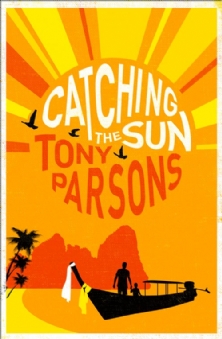
Catching The Sun (2012)

MW: Catching the Sun paints a vivid picture of life in South-East Asia. Have you spent a lot of time in Thailand?

TP: I spent a lot of time in the northern part of Phuket researching CATCHING THE SUN. I first went to Thailand 20 years ago, for a wedding, but I have never considered myself any kind of expert of Thailand. I know Japan and China much better than I know Thailand. But I spent a lot of time in Nai Yang, in the north of Phuket, and after a few years of spending time there, I do feel that I know that part of Thailandvery well.

MW: Were you in that part of the world when the Boxing Day 2004 tsunami – an integral part of the story in Catching the Sun – struck?

TP: I have a friend who lives on Phuket, and another friend – a lawyer in Hong Kong– who has a home there. They were both there when the Boxing Day Tsunami struck, although the first they knew about it was when people began running across the highway they were driving on. I spoke to them, and I spoke to foreigners who were on holiday there, and I spoke to the locals about what it was like and what it meant. It is very easy to meet people who were on Phuket that day, because they came from all over the world. Plenty of people who live in my neighbourhood in north Londonwere there, and I used the experience of one of them pretty much as it happened. That is what is in the book.

The other thing I used was my experience of being in a bad earthquake in Japan a few years ago. That gave me a sense of the power of nature – something I never really felt in the country where I was born. I used that in CATCHING THE SUN – that naked sense of helpless panic you feel in an earthquake.

MW: You clearly have a fascination for the Far East, one that shows in some guise or other in so many of your books. With your wife’s cultural background, do you spend much time in Japan?

TP: Over the last few years we have been going to Japan in the summer – I usually stay for two or three weeks, and celebrate my daughter’s birthday at the end of July, and my wife and daughter stay all summer. It has been a bit different over the last 12 months or so because my father-in-law is dying of lung cancer, so we have been going more frequently for shorter periods of time. But I love Japan – everything about it. The culture, the food, the cities, the countryside – and the way that everybody tries to treat everybody else with a bit of human decency. I think that life is mostly made of those small human transactions. Somebody asked Lawrence of Arabia why he loved the desert, and he said, “Because it’s clean.” And I feel like that about Japan. I love it because it’s clean.

MW: I was discussing with my better half who’d play who in Catching the Sun. I went for Ray Winstone as Tom Finn but she pointed out he might be deemed too old now! We agreed instead on Winstone as Farren and Shaun Dooley as Tom. I had Rosamund Pike down as Tess. Do you ever ‘cast’ when you’re developing characters?

The Family Way (2004)

TP: I think that I don’t cast the films anymore because I have had projects fall through at the last moment too many times. Harvey Weinstein bought MAN AND BOY for Miramax; Julia Roberts bought THE FAMILY WAY and got me to write a screenplay. They were both great experiences but in the end they didn’t happen. So I think in future I will just try to make the books stand alone. I did have a meeting with Dev Patel of Slumdog Millionaire fame recently, who likes a script I have written for STORIES WE COULD TELL. But I don’t get carried away with the film stuff. It is hard to make any kind of film, even a bad one. I would love them to all be great films – or no films at all. If it is written in the stars, then it will happen. Often it happens – films of books, I mean – after the writer’s dead, so that would be fine too.

MW: How did the airport ‘writer in residency’ project and Departures: Seven Stories From Heathrow come about? Did you enjoy that alternative short story discipline?

Departures: Seven Stories From Heathrow (2012)

TP: DEPARTURES: SEVEN STORIES FROM HEATHROW came about because they asked me if I would be their second writer in residence. I was a fan of Alain de Botton’s book – he was their first writer in residence – and I thought it would be a bit of an adventure while my wife and daughter were in Japan. A bit of a summer job. Like being a lifeguard. And it was really fascinating because Heathrow was full of surprises – the air traffic controllers were all about 30 years younger than I was expecting them to be, the BA pilot I hung with was from a very working class background – I loved it all, and I thought the collection of short stories I got out of it was pretty good. Raymond Carver, the great short story writer, is one of my heroes and it is quite rare to be asked to write a collection of short stories because there is not much money in it for anyone. But I think good work is never wasted, and I learned something – in fact I learned a lot – by doing DEPARTURES. It is hard to write good short stories. You can’t afford to waste one word.

MW: You said you might have become a ‘£10 Pom’, but your mum ruled it out at the last moment as she would have missed the rest of the family too much. That seems to sum up a lot of your work – wrangles between disillusion, ambition, staying put in the UK or trying to become a success elsewhere. Do you still see yourself as a patriot?

TP: I am a big patriot. I am a British patriot rather than an English patriot, because I have Irish blood on my mum’s side and Scottish blood on my dad’s, and I am proud of all of it. The Union Jack is my flag. I think it is a thing of great beauty. This is my home and the more I travel, the more I realize it is my home. But my dad nearly took us to Australia, and my wife might get me to move to Japanone day – and that would be fine too. I know a lot of ex-pats all over the world – Hong Kong, Australia, Canada, America – and they are the most fanatical patriots I know. Hardly a day goes by when they don’t crack open the marmalade and a Blackadder DVD boxed-set. I think my dad felt bitter disappointment with this country. He was a Royal Naval Commando and most of his outfit were killed on their last raid – Operation Brassard, on Elba. So he sacrificed a lot more for this country than I ever could. This country has been good to me and I don’t have too many complaints about it, although I do think it is run by pygmies who have no experience of the real world.

MW: Are you already making in-roads into the next novel? Can you tell us anything about what’s in the pipeline?

TP: I want to write a straight thriller next. Something that grabs you by the throat and doesn’t let go. I am re-reading all the Ian Fleming 007 books, and I think it is incredible that we are still making James Bond films more than half a century after Fleming’s death. I would like to try inventing a character that strikes that kind of chord. A series – that is what I am thinking about.

MW: How old are your children, and what do they make of your success? Are they likely to follow you into writing or journalism?

TP: My son is 31, and my daughter will be 10 next week. My son works in the gambling industry, and my little girl wants to be an illustrator. She writes really well – especially poetry. Her old man has tried to tell her there’s no money in poetry but she doesn’t listen to me.

MW: How many days a year, on average, will you spend at your desk in London these days?

TP: I am spending more and more time at my desk in London. I have cut right back on foreign promotion. I used to fly all over promoting my books and I do that a lot less these days. I did 5 book tours of America and it would take an awful lot to get me to do another. I think, on the whole, a writer is better off staying at home with his family and his work. It can be nice seeing places that you would not otherwise have seen – like Nashville, or Krakow, or Malmo – but it takes you away from your work and your family.

MW: You’re a big advocate of Twitter and have been for a while. Don’t you find yourself easily distracted by all this 21st Century media gubbins?

TP: I try not to get too involved with the digital life because it just burns the time. I will Tweet if I have something to say, and I will look at the DMs I have been sent once a day. That’s enough. You are better off reading a book.

MW: I was astounded to see you have a big birthday at the end of next year (60)! How does that sit with you? Clearly, you’ve achieved so much to be proud of, on a personal and public front. I guess you’ll never hang up the pen. Do you remain highly motivated?

TP: Writers never retire. We just keep going – even if nobody is interested, we keep going. So that simplifies things in many ways. Retirement doesn’t come up. You just keep writing until it’s your turn to go. What keeps me motivated is that I have a daughter who still has a lot of growing up to do – so I want to stay healthy, to stay successful, to make my golden prime last as long as I can.

MW: Does that motivation and work ethos go back to your working class roots and upbringing?

TP: I think coming from a working class background does influence – I think I am lucky to have the life and career that I have, I know how to count my blessings, and I appreciate that nobody out there is obliged to read my books. If I died today then I would have had a great life, and I know it – and part of that knowledge comes from seeing my father work at 3 jobs so he could get us out of a rented flat into a modest little semi in Essex. I grew up in the shadow of a hero, and I am aware of it every day of my life.

MW: Lots of writers could pass us on the street and we wouldn’t recognise them, but after all those late night and breakfast TV appearances, you’ve become a well-known face. Does that ever get to you? And do people thrust dog-eared scripts at you or half-baked creative writing essays?

TP: I get recognized but it is always on a very pleasant level – people are friendly, they like something you have done, at some point you have made some kind of connection. It’s a good thing. I don’t get a lot of work offered to me to read – I think most people understand that you need an agent to do that for you – writers have enough on their plate with their own stuff.

MW: I’ve just re-read Man and Boy, and was reminded what a powerful but overtly personal book it is. Is Harry Silver the closest we’ve got in fiction to the real Tony Parsons?

Men From The Boys: The third in the Harry Silver trilogy (2010)

TP: Yes – Harry Silver is probably closer to me than any other character in my books. Certainly Tom Finn, in CATCHING THE SUN, is much more like my dad. Harry is nicer than me, though – I think I have a harder heart than Harry Silver. Although he is me, a lot of the bad stuff is left out – by the time I was Harry’s age, 29 at the start of MAN AND BOY, I had done years in the music business, seen some of my best friends kill themselves with heroin, taken lots of drugs myself, had periods of promiscuity that Harry never had – he is like me in his love for his father and his son, but in some ways he is not like me at all.

MW: Have you ever found yourself analysing why that book hit such a nerve? Nick Hornby did something similar a year before with About A Boy and more followed. Was it just a breath of fresh air to read about real blokes and their turn-of-the century ‘new man’ priorities? We’ve all known people go through messy divorces, parents growing old and the inevitable happy/sad rollercoaster. Yet you write about it so well.

TP: There’s an element of dumb luck involved in any runaway bestseller. The paperback of MAN AND BOY came out in 1999 and people were ready to read that kind of emotional intensity from a man. And the book was quite raw because my mum was dying while I was writing it. That’s where a lot of the emotion comes from – my dad had been dead for a long time when I was writing MAN AND BOY. You can’t stop your life happening to you, and it influences every line, even if you are not aware of it. It took an entire year to get to number one in the paperback chart, and got there on word of mouth and the same day that the next book, ONE FOR MY BABY, got to number one on the hardback chart. You are very, very lucky if that happens to you once in a lifetime. I will write better books than MAN AND BOY but I don’t honestly think I will write anything that commercially successful again. Because when you sell millions you have to write a book that appeals to everyone – even if they only buy it because they are curious to see what all the fuss is about.

Starting Over (2009)

MW: For 2009’s Starting Over, a Guardian reviewer said your ‘specialist subject is contemporary emotional issues which almost every other male writer has ignored’ Is that the secret?

TP: I think that review of STARTING OVER was spot-on – I wrote about these things – fathers and sons, husbands and wives, marriages and jobs, everything falling apart and then trying to put it back together – because I didn’t know what else I would write about. Writers complain about critics but sometimes they see a truth about our work that we haven’t.

MW: What were you reading as a child? How did that reading progress over the years? Was fiction always a big influence?

TP: My mum read me the Rupert the Bear books. That gave me the bug. My dad bought classics – Dickens, Wind in the Willows, Swallows and Amazons, My Family And Other Animals – and some of them I liked, and some of them I didn’t. My mum had six brothers, most of them in the print, all of them great readers, and they introduced me to Ian Fleming when I was 11. And the Bond books were probably the first books I truly loved.

MW: Do you still read widely, and prolifically? Is that essential for a successful writer? What recent publications stand out most? Who are your favourite authors?

Goldfinger: Ian Fleming’s James Bond series remains a big influence on TP

TP: You can’t write if you don’t read. You have to make time for reading. You have to feed your head. I am rereading a lot of things I have read before at the moment – THE SILENCE OF THE LAMBS by Thomas Harris, ROGUE MALE by Geoffrey Household, and I am working my way through the James Bond books. I am near the end of GOLDFINGER.

MW: Did you write from an early age? Was there a specific book that made you think ‘I can do that’ or ‘I want to learn how to do that’?

TP: I always felt that writing was the one thing in the world that I could be halfway good at. But you struggle with it for a lifetime. Getting the story in your head to be the story on the page is still the great magic trick that you never quite master.

MW: Harry Silver made his living in TV. Does any other medium appeal to you other than your TV critic and newspaper column work? Screenwriting for example?

TP: It is all writing to me. Newspapers, magazines, books – it’s all the same, it’s all communication. I would like to write a TV series – and tried it a few years ago with my friend Andy Harries, who produced The Queen and Wallander. But the trouble with film and TV is that you need someone to front a lot of money. I quite like the empty white page you get with books and journalism. No bean counter can tell you that you are not allowed to do it.

MW: Do you meet other writers socially, at least for a coffee on a slow Tuesday? Or is it a solitary business at the writing stage and you save all that for the promo work?

Nick Hornby: ‘Lovely man, beautiful writer‘ (photo: http://www.penguin.co.uk/nickhornby)

TP: The one novelist I used to see socially was Nick Hornby when I was living in Highbury. We used to meet at a Korean restaurant halfway between our homes. Lovely man, beautiful writer, and we lost touch after I moved away. Novelists tend to be lone wolves. I have mates who are journalists, but my closest mates live in Hong Kong, and they are all lawyers. I don’t hang out with mates that much, to be honest. I like being with my family, and I like being alone. I think a writer has to be very happy with his own company.

MW: From the description of Harry Silver’s dad’s appreciation of Frank Sinatra and Dean Martin onwards, music’s clearly always been important to you. Then there were those halcyon late ’70s days when you found your teeth at the NME. That must seem a lifetime away. Do you keep in touch with any journalists or band members from those days? Did you make a lot of lasting friendships?

TP: I still love music but it is a completely different experience from when I was working for the NME and seeing 6 great bands every night of the week. If I see members of The Clash, or Paul Weller, or the Stranglers, or any of that vintage, then we are friendly to each other, but it is not more than that. I don’t keep in touch with any NME journalists, and the musicians that I was fondest of – Joe Strummer, Johnny Thunders, and Phil Lynott of Thin Lizzy – are all dead. So all that is a long time gone for me.

MW: Are you still excited by music today? What was the last great band you saw?

TP: I can’t remember the last gig I saw – I think it was probably a Prefab Sprout gig that my wife took me to a few years back. Or maybe it was Cream at the Albert Hall, which a friend took me too. I was a bit too young to be a fan of Cream in their pomp, so I was happy to see them – it was great. But I would never go to see the comeback tour of a band I loved – Led Zeppelin, the Sex Pistols, the Stone Roses. I prefer to keep my memories intact.

Tony Parsons: “Enjoy every sandwich, kid.”

MW: Finally, would you have any advice for a 19-year-old Tony Parsons? Or is everything life throws at us all just part of some big plan and makes us what we are today?

TP: If I had some advice for the 19 year old me it would be – you can’t believe how quickly a lifetime flashes by. Enjoy every sandwich, kid.

Posted in Books Films, TV & Radio | Tagged , , , , , , , , , | 3 Comments

Am I old enough to read this?

No, this isn’t about that over-hyped EL James book that you only need one hand to read, but the newly re-stoked reading row regarding age classification of books.

Fiction Factory: across the shelves at writewyattuk:hq

Ex-vicar, ex-policeman, ex-roadie and exorcist (or outspoken self-publicist, depending on your point of view) GP Taylor stirred up the hornet’s nest this week from the BBC Breakfast couch, saying children’s books have got too dark and should be age-certified. This from a man who admitted his own recent vampire books were among the worst offenders. Fellow children’s and young adult fiction writers Patrick Ness and comic genius turned successful Young Bond and zombie expert Charlie Higson were quick to disagree, and before the day was out the debate had raged via the social media platforms.

I’ll give Taylor the benefit of the doubt that he was caught on the spot. Let’s face it, we all say things on the spur of the moment and go on to regret them. Having met GP on his rounds at the University of Central Lancashire a couple of years ago, I can vouch that he’s certainly forthright in his views, but interesting with it and certainly inspirational when it came to advocating the old punk ethos of do-it-yourself rather than rely on the major publishing houses for your break. He clearly knows how to court controversy too, and is far from slow in publicising his own back-catalogue en route. But isn’t that publicity gene something all authors need in this day and age to be heard? Blatant self-aggrandisement appears to be the best way to keep a high profile, unless you’ve hit the jackpot with your impeccably-timed mummy porn trilogy.

While there are far too many authors out there quick to jump on bandwagons and write whatever they feel the public wants at that moment in time – from supernatural blood-letters and angel fiction to ghosted works for masquerading celebs – to make a living, there are still great examples of writers out there not just servicing exploitative publishers.

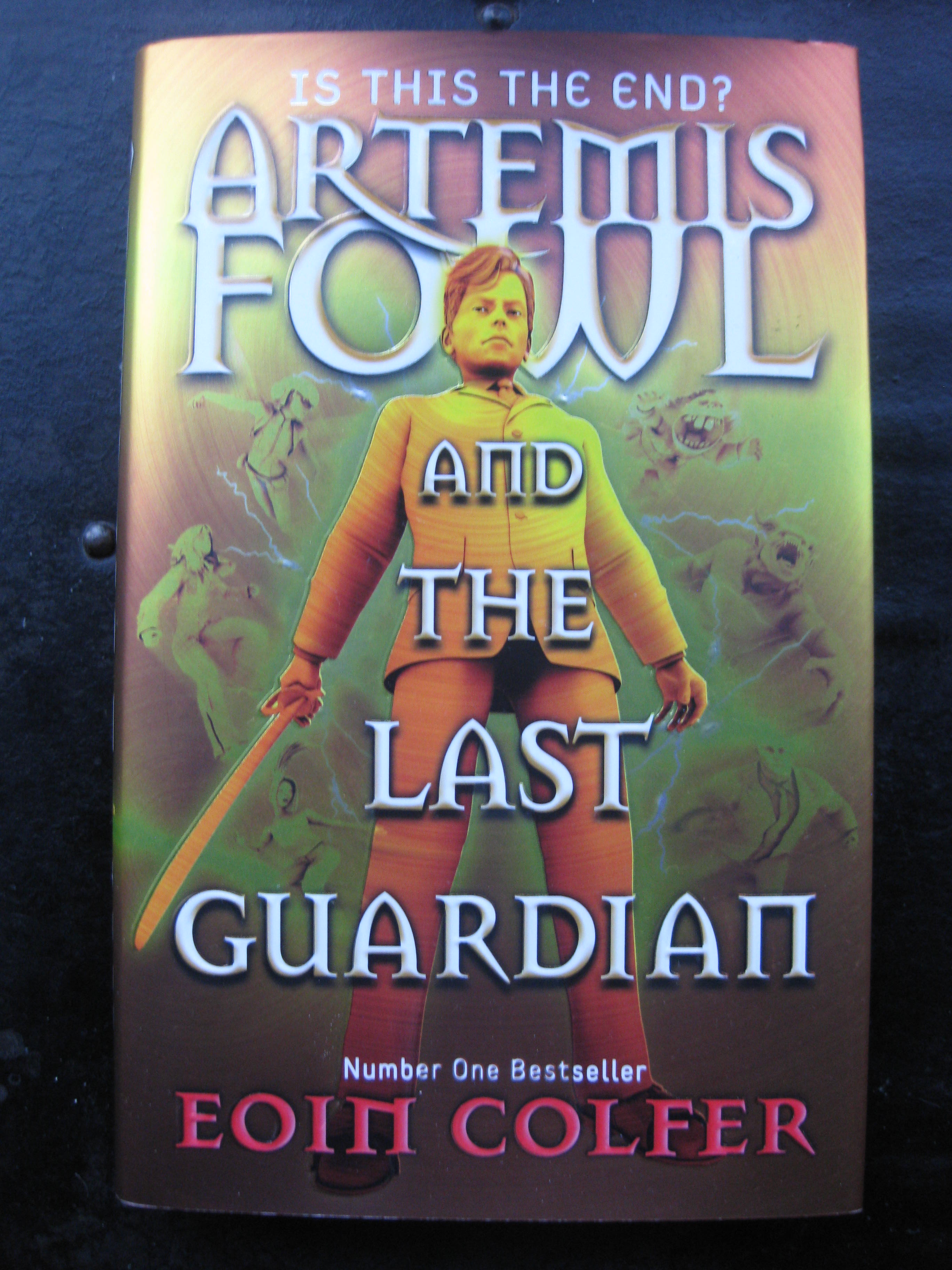
I like to think that category includes one I met this week, the inspirational Irish writer Eoin Colfer, who was passing through Preston during a brief tour promoting the climax of his highly-successful Artemis Fowl series.

I was pleased to learn that Eoin is a down-to-earth good bloke, seemingly unfazed by public appearances while somehow keeping a semblance of other-worldliness about him. It’s a bit of a cliché, I guess, but I felt I was listening to Ardal O’Hanlon at times, the Wexford wordsmith – with his newly-cultivated grey beard – courting an across-the-ages audience with tales of the poor state of Irish TV in the early 70s, his first school disco, experiences with his younger son in a French toilet, and much more. Amiable, entertaining, and perhaps above all a born story-teller.

Fowl Fare: Eoin Colfer’s latest release concludes the long-runing saga of cult Irish teenage criminal mastermind Artemis Fowl

At one stage of the following question and answer session, Colfer was asked about his approach to writing for children and why he never seeked to ‘dumb down’ It was clearly a subject he felt strongly about, and the former primary schoolteacher enthused about how he loved to entertain parents as well as children, get his readers scurrying for dictionaries, and never felt the need to tell young readers what age category they should be at.

There lies the crux of the matter. I’m just two years younger than Colfer, and we were both raised in an era in which you weren’t quite sure where to go after tackling Stig of the Dump and age-old adventures like Moonfleet (in my case) or Huckleberry Finn (in his). As it was, we soon found Douglas Adams (and Colfer ended up writing the sixth of Adams’ Hitchhikers Guide series) and Stephen King.

So were King and British alternative James Herbert deemed age-appropriate for us at the age of 12? I shouldn’t think so. Did that reading choice turn me into someone with a penchant for demonic and paranormal activity, breeding giant rats or releasing chemical vapours to encourage mutilation and general degradation? Not that I can recall. What it did do was open up a wider sphere of reading in the hands of skilled writers, and a world no less scary than that in some of Enid Blyton’s works.

Blyton is an easy target of course. But while I wanted adventure from my books, her world of children being sent off to dubious uncles and aunts and left to their own devices for entire summers meant little to me and certainly less to recent generations. One criticism of current books for children is that we’re more likely to find tales of abandoned children with troubled or absent parents. But I’d rather my kids read skilled practitioners like Anne Fine or Jacqueline Wilson’s measured spins on those situations than those I was brought up with. It needs to be real, however fantastic.

If Taylor himself is heading back from the world of ‘undead’ fiction to more traditional adventure, he’ll do far worse than read some of the better books already out there. And what I’d give to be 12 now and appreciate first time around fine writers like Colfer, Higson, Andrew Lane and Frank Cottrell Boyce.

But we don’t need stickers to tell us what’s on offer, just good judgement and gentle recommendations. All the time we have great librarians – in our schools and out in the community – and responsible parents and carers to help steer children in the right direction, there’s simply no need for age classification.

Ness feels it would be ‘irresponsible’ for young adult novels to ignore the darker side of life. When you get to a certain age it’s important to explore bigger themes like sex and violence. He said ‘if you tell the truth about what’s difficult, that lives can be dark and hard, then when you tell the truth about what’s good, love and hope and friendship, they listen to you and take it more seriously because you haven’t lied about what’s difficult.’

Higson wonders who might police this system of age categorisation: “The Government? Publishers? A new organization? Kids themselves? There’s a wild difference among kids in reading ages, tastes, interests, blood-thirstiness. You can’t have a one-size fits all system.”

If I was that age again and saw a ‘12’ sticker on a book, chances are that I’d not want to be seen reading it. I’d choose one with ’14’, ’15’ or ’16’ on it instead. Would I then be challenged at the counter and asked to show ID? It’s a dangerous precedent. By that yardstick, there’d be a few high school students being told to put those MR James ghost stories or Daphne Du Maurier classics back on the shelf too. Imagine that.

GP Surgery: Taylor’s breakthrough children’s fiction reads

I think I’d rather try and work out if it was a book for me by reading the blurb or getting to know if the author was talking my language. And there’s a wealth of good (and safe) websites and the like out there to help you do that. So what possible gain is there in age categories? The publishing industry toyed with the idea then quietly dropped it last time. Let’s not go through all that again. By all means try and guide a child into appropriate reading, but ultimately let them make that choice rather than some number-crunching bureaucrat or reading evangelist.

Posted in Books Films, TV & Radio | Tagged , , , , , , , , | 6 Comments

Marray, Murray, Middletons and Mud

In the words of the Cowardly Lion in The Wizard of Oz, “Unusual weather we’re having, ain’t it?” And while we’re on that subject, did you hear that Dorothy’s other good friend the Tin Man finally got what he wanted during a recent trip to see Wizzard?

Sounds like he was just in time, Roy Wood forced to cancel an appearance at Weyfest 2012 due to a spinal operation. Perhaps it was Andy Murray’s earlier trip to see him that did the damage, the once-dour Scot and occasional Brit clearly following the Tin Man’s “I’m presumin’ I could be kind-a-human if I only had heart” advice and finally getting on board with his emotions.

Set point: Muzzer looks to the heavens (photo courtesy of BBC Sport)

There wasn’t a dry seat on Centre Court – even if the roof was closed – after Murray’s post-match blub in SW19 on Sunday, the world waking up on Monday morning to the possibility that here was a man who actually had a heart as well as truck-loads of true grit and determination.

It wasn’t enough against amiable Swiss maestro Roger the Federer this time, but I think we all saw enough to finally suss we could like this guy and realise that he’s not necessarily made of stone. The future could be bright for British tennis, just as long as the cameras stop showing our best hope’s Mum in the crowd.

At one stage, I did worry that Murray might not finish the match. His early promise and first-set success were swiftly followed by the double whammy of a Federer comeback and an assassination attempt by an army of green-clad ball-boys and groundsmen racing to get the covers on and suffocate the Scotsman in the process. Perhaps it was some kind of All-England directive and a little payback for Bannockburn. I suspect Cliff Richard had something to do with it. Rumour has it that he was about to cover Alice Cooper’s ‘No More Mr Nice Guy’ rather than ‘Livin’ Doll’ if the roof failed to close properly, followed by a duet with Katie Midd on ‘Umbrella‘.

Sunday was a truly emotional day for Muzzer (as we know him … maybe), even if wild-card whipper-snapper Jonathan Marray (or Mazzer as we know him … maybe) had usurped him the previous day, bagging a Wimbledon title in the men’s doubles with Danish partner Fred ‘I can’t live, if living is without you’ Nielsen.

Trophy guys: Fred & Mazzer in a double-take (photo courtesy of BBC Sport)

That ensured the steely Sheffield scrapper became the first Briton to enjoy a Wimbledon men’s doubles success in 76 years. Let’s face it, we hear plenty about Fred Perry’s singles titles in 1934, 1935 and 1936, but few of us knew about Patrick Hughes and Raymond Tuckey’s 1936 win. Respect due.

Before Marray’s win, I thought our best hope was in the mixed-up doubles, not least with comedy mayor Boris ‘Bungle’ Johnson and royal-in-law Peppa Midd on the sidelines at Centre Court the following day. Failing that, there was always the Beckhams, who both seem to have a bit of free time on their hands on the lead-up to the Olympics (where one will presumably take on some of the royal duties on offer while the other puts herself to good use as a javelin).

Of course, while this was all taking place and UK hopes were being inflated then swiftly popped, the Williams sisters were nonchalantly heading home with further singles and doubles titles. Well done girls, but just remember how jolly lucky you are that you never had to play Ann Haydon-Jones or Virginia Wade.

But it wasn’t all about Wimbledon this weekend, and there were plenty of other top summer sporting spectacles in good old wet and wild Blighty. While the cricket seems to have failed to win the masses over so far this year, there was something bordering on hysteria in the motor racing world as a bit of weather and traffic chaos kept those who forked out for tickets away from Silverstone, the venue for an annual summer festival of non-sport, where Mud seemed to be head-lining this year.

Okay, I admit it, Formula One – or ‘driving’ as I know it – hasn’t really gripped me since the days of Emerson Fittipaldi, Niki Lauda and James Hunt, that mid-70s period when Les Gray and his band were at their chart-topping peak. But I thought the sport missed a trick this weekend, not least when the British Grand Prix organisers seemed intent on only letting in helicopter pilots on practise day.

I’ve always liked the idea of drivers racing into the pit lanes only to be met by a couple of surly mechanics, who scratch their beards then say there’s no way they can change those tyres until a week Wednesday, as they’re flat out what with Terry being in Magaluf and Brian off with chronic back pain after too many years scrabbling around on cold garage floors.

Perhaps instead of the usual qualifying ‘excitement’ we could have had live coverage of the drivers making their way to the circuit instead. You could have Mark Webber trying to get a ferry over from the Isle of Wight (well, Australia would have been a bit too far) with the last of that previous weekend’s festival-goers, while Rosberg, Wettel, Glock, Hulkenberg and Schumacher had to drive a fleet of Trabants up from Harwich docks after sailing over from Hamburg.

To make it fair, Lewis Hamilton would have to take a pedal go-kart from Stevenage, and Jenson Button a tractor from Somerset. And to keep the viewing figures up, Bruno Senna would be behind the wheel of an HGV carrying a carnival float packed with top South American models samba-ing away to their hearts’ content, while Fernando Alonso drove a taxi from Luton loaded with UK-based Spaniards still slaughtered after their Euro 2012 post-tournament celebrations.

If that wasn’t enough to whet your appetite, there would be added drama at the gripping climax as a couple of fascist jobsworths on the gates randomly turned away drivers for not having the right tickets and passes. I’d definitely pay to watch that.

There’s still plenty more sport to savour before the Olympics finally gets underway, and while the ‘outdoor snooker’ at Royal Lytham & St Annes won’t excite everyone, we can at least look across St George’s Channel and marvel at yellow jersey-donning Bradley Wiggins’ sideburns as he carries on his quest for success at the Tour De France. It’s all going pretty well for the Chorley rider and his team so far, even if at first glance the Wiggins camp could be mistaken for extras from an early Style Council video. ‘Allez, allez, allez!’ as Mick Talbot might say.

Posted in sport | Tagged , , , , , , , , , | Leave a comment

Catching the sun – Tony Parsons

Shelving options: along the writewyatt bookcase

I guess the best fiction takes you on a journey, and in the case of Catching the Sun, Tony Parsons has you making an 8,500 mile trek to Phuket, Thailand.

Not to an all-inclusive honeymoon-friendly world of five-star travel though, but the reality of the everyday struggle for those wishing to ‘live the dream’, and a window on the hard life of the Thai in this island idyll.

It’s been 22 years since my last visit to Thailand, but there’s something of that world I briefly tasted on Ko Samui here, in a beautifully-penned tribute and something of a love note to the hard-working locals who labour around the clock to make these South-East Asian resorts tick.

In Catching the Sun, the Finn family – Tom, Tess and twins Rory and Keeva – leave a troubled UK existence, perpetually looking to make ends meet (something so many of us can empathise with), for a new life in the sun. It’s set in Phuket, but could so easily be Australia, the Med, or wherever you feel your own dream lies.

Island idyll: Tony Parsons’ Catching the Sun

Parsons fans will not need reminding how well he weaves his vignettes of everyday life with high drama to perfectly pace a story we can all relate to. Whether you know Phuket or not, we’ve all experienced that feeling of ‘wouldn’t it be great if we could just stay here?’ The reality can be anything but, of course, yet Parsons lovingly describes what might entice you in the first place. And even in the darkest moments you can appreciate the draw of the beaches and hinterland he paints.

Good drama needs villains, and there are plenty here, again roundly drawn and real, and it is a testament to the author that you’re there with Tom and Tess as they face their uphill battles to get by.

There’s an informed portrayal of the family’s Thai neighbours too, again believable characters, and those who have to scratch a living in this tourist paradise. The descriptions of the Thai holiday nightlife and a resort that never seems to sleep are brought vividly to life, that never-ending throbbing soundtrack from the bars, traffic and daily trading adding to the picture. Yet you also get a feel of the peace that generations of back-packers and independent travellers have coveted about this treasured part of the world since the days of the hippie trails.

The descriptions of the wildlife are also clearly well grounded in the author’s hands-on research – from efforts to free a stranded dolphin to the daily swim for elephants, and the bitter-sweet stories of the gibbons, turtles, the rainforest and the seas as they are exploited for human gain.

There are trademark Parsons scenes where the children – in this case Tom’s son Rory –  are the wise ones, imparting the kind of knowledge the adults are too blind to see, a love of nature finding a true voice as an outlet to educate. And the best teachers are always those who pass on their knowledge without you realising you’re learning.

Back catalogue: Past Parsons in the writewyattuk collection

That way we get to understand more of the dark side of the island’s history and that constant battle between the preservationists and the unthinking locals and tourists, seeking advantage of a natural beauty that should never be taken for granted.

It’s not just nature either, with Parsons giving a non-preachy approach to document the sex industry that gives Thailand such a bad name. For Catching the Sun is every bit a story of temptation as well as opportunity and exploitation.

There’s something of Michael Morpurgo’s brilliantly-drawn Running Wild in here, not least Parsons’ measured, colourful descriptions of the 2004 Boxing Day tsunami that so devastated this part of the world, something that also told us so much about ourselves and our own attitudes to the bigger picture. But for all those wider themes, the heart of this tale lies with the human relationship.

We’ve all known families that have looked to an outside solution in a bid to start afresh and build a better life, and the Finn family have that chance, yet soon realise life’s far from rosy and your baggage always come with you.

But along the way, Parsons’ meticulously-drawn characters and settings take you there among the casuarina trees, the bow-shaped bay, the longtail boats, turquoise waters, and smells and sights of Thai life, in the best tradition of a fine story-teller.

* Catching the Sun by Tony Parsons (Harper Collins, 2012) is available from all good book shops, amazon.co.uk and other leading internet stores 

Posted in Adventure & Travel, Books Films, TV & Radio | Tagged , , , , , | Leave a comment

Deutschland uber alles at the New Table of Dreams

Was ist das? Yes, sorry to break it to you like that, readers, but Joachi Lowenbrau’s Germany were crowned Kings of Yooropa last night, after a thrilling final and a momentous climax to the Yooro 2012 table football tournament.

Deutschland reigned supreme in Daftown after a topsy-turvey encounter at the New Table of Dreams, the Germans getting off to a slow start and finding themselves 2-0 down before pulling their metaphorical socks up and storming into a 7-2 lead.

From there, Lauren Blancmange’s French France – the form side going into this encounter – upped the ante and pulled their own proverbial chausettes up, briefly leading  8-7 before a major ding-dong, a veritable ping-pong of points and plenty of pinball-style moves led to the sides being locked at 9-9.

Nerves were truly taut from that point on, but in the end Messi Ozone – who had already bagged two German goals – hit a wicked shot that took a cruel deflection off Patsy Nevra to wrong-foot the until-then unflappable French keeper Huge ‘HGV’ Laurie.

Contrasting Emotions I: A delighted Luke Podcastski at the final whistle

Contrasting Emotions II: A devastated Sammy Nicely at the final whistle

It was a bitter-sweet night for the French, who did enough to secure the goalscoring award with 59 strikes across six matches, and who also boasted golden boot winner Florentine Mangetout.

The Chelski star made sure of that award with a hat-trick to make him the highest goal-scorer with 14 finishes, beating off Fabi Pigherder, who scored two on the night, and Supermario Gnomez, whose own double ensured parity on 13 strikes. But ultimately it wasn’t to be the Frenchman’s night.

In an emotional post-match interview with Daftown TV, Blancmange was visibly wobbly yet tried to put a brave face on his side’s defeat, saying ‘the proof is in the pudding, and unfortunately it was a Black Forest night’, in reference to his earlier war of words with Lowenbrau.

The German coach previously said the French had more chance of pushing trifle up the Eiffel Tower than claiming the Harry Delawnmower trophy. Yet Joachi was full of praise for his opponents after Sunday’s final, saying France were ‘clearly not to be trifled’ with in future, adding that as a player he ‘would have gladly served Blancmange’.

Tense moment: The view from a passing blimp just before kick-off. Note the poor positioning by German keeper Manny Annoyer that would ‘cost his side early doors’ according to DTV summariser Reg Hatkinson.

That left Daftown TV presenter and ex-Ingerland legend Barry Spinnaker with very few pudding puns left, but he did quip that he was glad summariser and French World Cup winner Patrice Viagra ‘hadn’t desserted’ him after the match, going on to add a few more deadpan one-liners with delighted Deutscher studio guest Yogi Klingfilm. And after a staggering 510 goals over the tournament, there was plenty of drama, fantastic finishing and dynamic defending to talk about.

It was also noted by high-ranking YooArthur officials Seth Blather and Michel Platypus that there were precious few cards shown, no penalties, mercifully few rod-spins, only a handful of over-enthusiastic table rocks, and little sign of the crowd trouble or technical problems expected pre-tournament.

An early drama in which one goal-line sagged was quickly put right by the groundswoman and some perfectly-placed parcel tape, and while there was slight concern over rod warping (not to be confused with the famous Scottish celebrity fan and ex-Faces singer), the New Table of Dreams was deemed a great success, having clearly survived its traumatic transfer from t’other side of Wigan in a major rebuild just prior to the tournament.

The garage now awaits the NTOD, but future outings are expected, and there’s already talk of the organisers entertaining Brazilians for the prestigious staging of the 2014 Fifi World Cup Finals in Daftown.

Results: Group A – Poland 10 Greece 6; Russia 7 Czech Republic 10; Greece 10 Czech Republic 4; Poland 5 Russia 10; Czech Republic 6 Poland 10; Greece 6 Russia 10. Group B – Holland 10 Denmark 8; Germany 10 Portugal 5; Denmark 10 Portugal 4; Netherlands 4 Germany 10; Portugal 10 Netherlands 6; Denmark 10 Germany 8. Group C – Spain 10 Italy 4; Ireland 9 Croatia 10; Italy 10 Croatia 6; Spain 7 Ireland 10; Croatia 2 Spain 10; Italy 9 Ireland 10. Group D – France 10 England 8; Ukraine 8 Sweden 10; Ukraine 4 France 10; Sweden 7 England 10; England 7 Ukraine 10; Sweden 9 France 10. Quarter-Finals – Russia 6 Germany 10; Denmark 8 Poland 10; Ireland 10 Ukraine 7; France 10 Spain 8. Semi-finals: Germany 10 Ireland 8; Poland 3 France 10. Final: Germany 10 France 9.

Posted in sport | Tagged , , , , , | Leave a comment

No Eire faerytale for Van Trapp in Yooro semi-showdown

The dream is over … again. Following a group stage exit for Ingerland, there was no Eire faerytale finish for Tony Van Trapp’s over-achieving Oirish outfit in their Yooro 2012 table football tournament semi-final.

Ireland finally got their come-uppance on Wednesday night at the hands of Joachi Lowenbrau’s Germany, the technic-proficient Germans on typically-top form as they progressed to the final after a 10-8 victory – taking their goals tally to 48 so far.

But there was no hint of trouble between the opposing fans in Daftown, with reports of David Hasselhoff and Dubliners songs being played into the early hours as the party continued, with schadenfreude and shenanigans aplenty.

Bad night: Eire’s Johnny St Patrick tries to look calm after his defensive mistake, while keeper Stray ‘Cat’ Gideon is clearly way off his line.

There was also drama the following night as Polska followed Ireland home (apparently, their Daft Air charter flight was refuelling in Dublin), after something of a thrashing from Laurent Blancmange’s formidable French France side.

In their rather bewildering post-semi-final press conferences, both Blancmange and Lowenbrau were quick to out-gloat and out-quote each other in a series of Cantona-style musings and pronouncements about their respective teams’ chances in the final.

Blancmange chided that his strike force were ‘likely to make Black Forest gateaux out of their German opponents’ in Sunday’s big match if they continued their current hot form. But Lowenbrau bit back, saying at least that proved his side ‘are tasty’, adding that Blancmange had ‘more chance of pushing trifle up the Eiffel Tower than lifting any trophy at the New Table of Dreams’.

However, the flamboyant French go into the final on the back of the only 100 per cent record in the tournament after five fine wins, following Thursday’s 10-3 semi-final thrashing of an off-form Polska side.

That proved to be the second biggest win of the tournament, after Espana’s 10-2 humbling of the Croats in Group C, a tired Wyatt daughters’ pairing proving fatal as Franc Rubbery and Florentine Mangetout pulled the Poles apart – so to speak – much to the delight of watching YooArthur official and French legend Michel Platypus.

Matches 29 and 30 of the Yooro 2012 table football championships were -as ever -action-packed, and also ensured at least 500 goals in the tournament – even if we see a 10-1 drubbing in the final. That’s not likely, but it probably won’t rule out a busy Saturday at Daftown’s Ladsbroke, Yoobin Done and Bet Dave gambling emporiums before Sunday night’s final.

Big Defeat: The Poles’ heads were clearly down after their semi-final defeat to French France

In Wednesday’s nail-biter, early slapdash defending from Oirish quarter-final hero Johnny St Patrick and comical goalkeeping from Stray ‘Cat’ Gideon led to what proved an unassailable lead for Lowenbrau’s Deutsch Jungen, and despite a great comeback and two goals each for Bobby Keynote and Danny Duffy, it wasn’t long before Supermario Gomez and Messi Ozone had finished the job.

It was far more emphatic the following night, on a night to forget for Polish keeper and one-hit wonder Gooner Szczesny Hawkes. But French France boss Blancmange will certainly have to do his devoir-scolaire if he is to successfully plot his team’s way past favourites Germany in the final.

Yet he can take heart from the the fact that his French fancies are the tournament’s top scorers so far, having amassed a scintillating cinquante goals so far from their five matches. And whatever the likely outcome, the New Table of Dreams’ stage is certainly set for what promises to be a memorable final.

Results: Group A – Poland 10 Greece 6; Russia 7 Czech Republic 10; Greece 10 Czech Republic 4; Poland 5 Russia 10; Czech Republic 6 Poland 10; Greece 6 Russia 10. Group B – Holland 10 Denmark 8; Germany 10 Portugal 5; Denmark 10 Portugal 4; Netherlands 4 Germany 10; Portugal 10 Netherlands 6; Denmark 10 Germany 8. Group C – Spain 10 Italy 4; Ireland 9 Croatia 10; Italy 10 Croatia 6; Spain 7 Ireland 10; Croatia 2 Spain 10; Italy 9 Ireland 10. Group D – France 10 England 8; Ukraine 8 Sweden 10; Ukraine 4 France 10; Sweden 7 England 10; England 7 Ukraine 10; Sweden 9 France 10. Quarter-Finals – Russia 6 Germany 10; Denmark 8 Poland 10; Ireland 10 Ukraine 7; France 10 Spain 8. Semi-finals: Germany 10 Ireland 8; Poland 3 France 10.

* You’ll only find coverage of the Yooro 2012 table football tournament final via https://writewyattuk.wordpress.com (I should imagine). 

Posted in sport | Tagged , , , , , | Leave a comment

Ireland ready for Lowenbrau taste test

Tony Van Trapp was putting the finishing touches to a brash meisterplan this week – his bid to unseat Yooro 2012 favourites Germany in Wednesday’s table football tournament semi-final showdown.

TVT’s Oirish outsiders surprised us all with Group C victories over Spain and Italy, then added a 10-7 victory over Ukraine on Saturday night in a quarter-final epic. But the Italian boss – speaking through a County Kerry translator – cryptically admitted his side ‘may have to move Macgillycuddy’s Reeks’ if they are to progress any further, with Joachim Lowenbrau’s Germany ‘standing in the way of a grand finale’ against either Poland or France.

MacGillycuddy’s Reeks: Eire may have to move these mountains to beat Germany, according to Tony Van Trapp

There might have been a couple of stouts involved, but after his earlier fall-out with his own fans, former Eire international, Muncaster United legend and Daftown TV summariser Rory Keynote was having something of a love-in with the Oirish fans after that historic win over Ukraine.

Two goals each from namesake Bobby Keynote, Jack O’Seamus and Danny Duffy did the damage, a perfect display topped off by inspirational defender Johnny St Patrick’s winner amid fantastic scenes at the New Table of Dreams.

Plenty more pints of the dark stuff have been consumed in Downtown Daftown since that  shock result, but now Van Trapp’s side face their stiffest test yet. And as Lowenbrau said – similarly mystifyingly – in his press conference, “I am not looking to tolerate any  leprechaun shenanigans on the night’. So there you have it.

The following night there was further drama as Laurent Blancmange’s French France side saw off tournament co-favourites Espana to set up Thursday’s semi-final with Polska. And Spanish team boss Vince Del Busker was left speechless at the post-match conference, not least after a hat-trick for until-then out-of-form striker Ferdie Toreador was followed by a late double from Johan Cabbage.

Those two nail-biters were the culmination of a thrilling weekend in which Daftown house-guests the Beans and the Champions played their part in what Brazilian table football legend Hudson Oranges do Natimental – better known as Pilau – would no doubt have labelled the ‘Beautiferous Game’ if he’d actually accepted our tournament invite.

Fondant fancy: Johan Cabbage was on form again for French France

In the first quarter-final, Lowenbrau’s Germany were ‘lager than life’ according to national icon Frank Buchenboomer. The self-styled ‘Deutsch Jungen’ saw off Russian 10-6 – despite a great display from Roman Pavlovachunk – with Luke Podcastski scoring four goals on the night.

Poland kept their nerve in the second quarter-final for a 10-8 win over Orson Morsen’s Denmark, the opposition’s rousing choruses of ‘Wonderful Copenhagen‘ and assured performances from strike duo Dali Rommcom and Nicky Bandido not enough to put off determined Polish keeper and one-hit wonder Gooner Szczesny Hawkes in a stunning spectacle of table football.

And if each of those four victorious nations show similar form in the next two matches, we’re definitely in for further hyperboles and over-exaggerations from here. For sure.

Results: Group A – Poland 10 Greece 6; Russia 7 Czech Republic 10; Greece 10 Czech Republic 4; Poland 5 Russia 10; Czech Republic 6 Poland 10; Greece 6 Russia 10. Group B – Holland 10 Denmark 8; Germany 10 Portugal 5; Denmark 10 Portugal 4; Netherlands 4 Germany 10; Portugal 10 Netherlands 6; Denmark 10 Germany 8. Group C – Spain 10 Italy 4; Ireland 9 Croatia 10; Italy 10 Croatia 6; Spain 7 Ireland 10; Croatia 2 Spain 10; Italy 9 Ireland 10. Group D – France 10 England 8; Ukraine 8 Sweden 10; Ukraine 4 France 10; Sweden 7 England 10; England 7 Ukraine 10; Sweden 9 France 10. Quarter-Finals – Russia 6 Germany 10; Denmark 8 Poland 10; Ireland 10 Ukraine 7; France 10 Spain 8.

* Stay in touch with https://writewyattuk.wordpress.com for the thrilling conclusion of the Yooro 2012 table football tournament. 

Posted in sport | Tagged , , , , | Leave a comment

England expect … too much

Has everyone calmed down a bit now? I made the mistake of trawling through the social media channels after Sunday night’s England penalties defeat, and saw how many ‘experts’ there were out there purporting to know exactly what went wrong.

The best thing about our Euro 2012 campaign was that we weren’t given a cat in hell’s chance of success. And perhaps that helped push us on to a group win and give an admittedly more technically-adept Italian side a real run for the deflated Euro.

In the end, the penalties hoodoo counted, and near-misses from the two Ashleys were the difference that mattered. On another day, Joe Hart might just have stood there and caught that cheeky down-the-middle ‘spoon’ from Andrea Pirlo. But it wasn’t to be. So get over it.

Hart surgery: What can possibly go wrong from here? (pic courtesy of BBC TV)

Pretty soon after that, a succession of theories as to what went wrong followed from across the broadband network, starting with the BBC’s Alan Hansen and permeating through to a succession of barstool connoisseurs of the Beautiful Game.

Granted, I’d love to see a bit of flair return to the national set-up, but was that really the match to do it in? From Jimmy Greaves onwards, we’ve never really built our team around such talent – more’s the pity. And not being born until 1967, I’m a bit sketchy on what happened when Greavesie was left out of Alf Ramsey’s team the previous year.

Finishing? There is that too. A few more shots on target might help too. Stop me if you think I’m being picky though. The passing could certainly be better, but at times we did seem to string a few together, and even some of the Air Force One balls directed at our pony-tailed Geordie sub were more often than not nicely controlled and laid off again. Credit where credit’s due.

Guidance required: Roy and Ray are rocked (pic courtesy of BBC TV)

Actually, I’ve got an issue with the pony-tail. I’m not actually coming out here, but I have to admit my youngest daughter insisted I wore her hair extension for the big match in honour of our substitute with the girl’s name. More to the point, she tied my mock-mullet up with a bobble when he took to the field. I caught sight of it earlier and thought it was more Roberto Baggio than Andy Carroll anyway, so didn’t stand in the way of such modification. Besides, I like to think I at least had something to do with AC’s better moments on the night. The things you do for your country.

At the end of the day, to be fair, in all honesty, etc etc, ad nauseum, perhaps Roy Hodgson did the best he could with the team he picked. Maybe it wasn’t the best team. Maybe it wasn’t the best squad. Maybe on another day Wayne Rooney might have been on top form and won the game single-handedly. All maybes. Nothing more than that.

There could have been the odd tweak here and there, but I’d like to give Roy the benefit of the doubt that he had the right idea and knew what he was doing … sort of.

A cocktail of Fabio Capello’s technical ability and Roy’s spirit seemed to be the preferred recipe from those speaking on the radio over the cornflakes on Monday. But it doesn’t always work like that.

I for one was pleased to see we finally had a bit of team spirit, a certain camaraderie in the squad alongside good old English true grit. Lancashire comic Steve Royle pointed out on twitter that ‘never has the class divide been more epitomised than in Scott Parker’ with his ‘upper class hair and working class mouth’. I like that. A truly British image. And to keep the comedy theme going, I’ll go back to the bit about camaraderie and that classic line on Only Fools and Horses where Trigger thinks ‘Camaraderie’ was ‘that Italian boy’ in Slater and Del Trotter’s school football team. But that’s another story.

Buffon direction: Gianluigi points to the problem  (pic courtesy of BBC TV)

In a post-match interview, England captain Steven Gerrard said: “I’m just in a zone of frustration and disappointment because we’ve come so close to ending that quarter-final hoodoo.” Couple that with the BBC commentator’s line about Gianluigi Buffon being in the corridor of uncertainty at one point, and you can see it’s a complex map we have to digest then memorise if we’re ever going to reach Gerrard’s promised land – the ability to compete with the might of the Spanish and German national teams.

Over our four games, Terry justified his inclusion – whatever we might make of him – while Johnson, Lescott, Cole, Parker and Walcott provided the odd moment, and hopefully promising futures await Oxlade-Chamberlain and Welbeck and some of the players in the wings this time through injury or what-have-you.

Much of this has probably been said somewhere since Sunday night, but there was one other important factor in our defeat that none of these so-called experts picked up on, that I can exclusively reveal here. I was playing Newmarket with some visitors and our girls the night before and lost heavily. Luckily, it was only Minstrels we were playing for, and they were pretty hot and sweaty by that time, so it was no real loss. But I noted that the diamonds were definitely holding sway over the hearts when it came to the red cards (you can probably see how this complicated mind works now, so hold on tight to that thought). And as long as I can remember, I’ve always referred to the former as ‘diamante / diamanti’, like the Spanish or Italian. No particular reason. So when Alessandro Diamanti took to the field in the later stages, I had a foreboding feeling of doom – one proved right with the very last kick as the Italian sub out-witted Joe Hart in the England goal and ensured his side’s progress.

As pointed out by ‘In Roy we trust … maybe’ a few days ago, at least I can now relax and enjoy the competition at a more chilled pace now England are out. But I admit it does leave a bit of an empty feeling. First, the host nations’ swift exit, then disappointment at the Irish underdogs, now us. We have arguably the best footballing sides left in the contest now, and I think we all expect a Germany v Spain final – unless a little more magic from Pirlo or Cristiano Ronaldo can make a difference.

Either way, this has been yet another international tournament that has proved a joy to watch most of the time, with the hosts playing their part too. As for us, roll on Brazil 2014. Give Roy a chance and see what he can change over these coming few months. The future is bright. The future is Roy … maybe.

* Stay in touch with https://writewyattuk.wordpress.com tomorrow for the story of the Yooro 2012 table football tournament quarter-finals. 

Posted in Football, sport | Tagged , , , , , | Leave a comment

The Wedding Present – Valentina (Scopitones, 2012)

I don’t suppose you’ll ever get a truly unbiased review from this scribe for a new release from The Wedding Present, a band that have played a fairly pivotal part in my life these last 25 years. Besides, what started as a straight review soon turned into something of a valentine to the song-writing genius of David Lewis Gedge.

“I used to think that I’d rather fight with you than fall in love with somebody new. I think I needed shaking up; I’m not going back to how it was” (You’re Dead)

I’d appreciated the Weddoes some time before my first sighting, courtesy of John Peel’s championing of the band and their inclusion on seminal NME promo tape, C86. Yet for one reason or other it took a while before I finally clapped eyes on them.

If memory serves me right it was meant to be at Fetcham Riverside Club, Leatherhead, but a double-booking led to an early TWP departure, the band leaving a hand-written A3-size apology to those who had sought them out in deepest Surrey.

“There’s really no need to explain, he’s Tarzan and you’re Jane. He’s Bogart, you’re Bacall, and I’m sure he has it all” (You Jane)

Some product: The Wedding Present & Cinerama on CD

We were disappointed, but decided to drown our sorrows over a pint before heading home. Yet there was a sense even at this stage that the band was going to be big, and we contemplated taking the band’s apology with us … only to find someone had beaten us to it. Outrageous.

As a result, my first Weddoes live experience was at Reading’s Majestic Ballroom in February, 1987, backed by the wondrous Close Lobsters. If passion is measured in broken guitar strings, outfield trio Gedge, Keith Gregory and Peter Solowka were off the Casanova scale that night, and we were hooked. I noted at the time it’s not often you see a bass string break 10 seconds into a song. It was that kind of night.

“I’d never met her before I found the heel that came off her shoe. I laughed when she swore. Her lips were red and full. I said: “I think I want to kiss you” She said: “When will you know for sure?” (Meet Cute)

Things escalated from there, and by October of that year – 25 years ago! – the size of the venues had grown for the tour promoting sublime debut LP George Best. I still remember the heady excitement of my first play, many of the songs already well known to us by the time they were committed to vinyl.

As all TWP followers will know, the inter-song banter and general feel you got from the band ensure – however large the auditorium – there is always an intimacy, something that continues to this day.

“Since you’ve begun to show what kind of person you are I think I might have had an epiphany. That’s why I need to go and this may sound a little bizarre, but I’m going before you do the same to me.” (Back A Bit… Stop)

Prime cuts: The Wedding Present on vinyl

I’ve lost count of how many times I’ve seen the band or off-shoot Cinerama now, but it’s included many great nights around London and – since the mid-90s -Manchester. That included several at the Hop and Grape, followed by manic sprints back to catch the last train out of Oxford Road. I think it was sheer adrenaline that ensured I got home alright, although that last-gasp hike over the bridge to the right platform nearly finished me off.

Nostalgia remains a great reason for sticking with Gedge through his many band re-jigs, but while – with a wink to the camera – ‘all the songs sound the same’, it doesn’t really matter when the music is that good in the first place.

“You’re in so many of her dreams that there’s no room left, it seems, for me. And I curse the day you met and I’m begging you to set her free” (Stop Thief!)

DLG’s pride and joy sounded as fresh as ever on the George Best 20th anniversary tour – playing the album in its entirety in track order – at Manchester Academy the day before my 40th in 2007, a triumphal concept repeated for the Bizarro album 21 years on – this time witnessed on a memorable snowy night in late 2010 at Preston’s 53 Degrees.

I’m sure it will be a similar tale for this year’s Seamonsters 21st anniversary tour, but don’t think for one minute the band are not still making great albums. The personnel might have changed somewhat over the years, but on the evidence of latest release Valentina, Gedge still has plenty to offer.

“And when you entered your number into my ’phone I knew, right then, that I would never call. I was going through the motions, which I’d never usually condone, but you were safely trapped behind ‘The Wall’” (The Girl From The DDR)

Past passion: the author waxes lyrical on TWP in his late ’80s publication Captains Log, including a ‘My Favourite 10’ LPs list submitted by David Gedge

From the moment Gedge’s vocal snarl meets Charles Layton’s drum intro on You’re Dead, we’re on to another TWP winner. That heady mix of innocence, maturity, joy and pain has been a staple since those early waxings and is never far from the surface, the band effortlessly shifting gears on the opener before chugging into the slow-building You Jane, and never looking back from there.

There’s little point in a traditional review here. Most bands give a casual nod to their influences, and you can hear elements of the bands Gedge has loved over the years. Yet for me the prime source is always The Wedding Present, and there’s nothing you can put your finger on and label ‘derivative’. Just when you think you know where they’re going, Gedge and co. are off again, taking an unexpected fork.

“You won’t give it a thought and that’s neither wrong nor right. But I’m the deer that’s caught in your headlight. And how can it be that just one glance is enough to petrify me?” (Deer Caught In The Headlights)

Along the way, there are many sumptuous moments, not least the trademark chop guitar, rumbling bass, complementary-sweet backing vocals, and persuasive percussion with the power to beckon this pensmith down the front at live outings. Add to that the fly-on-the-wall poetic licence DLG has honed so well over the years, and you’re getting the picture.

It’s fair to believe a band still making albums 25 years down the line has seen all its finest moments, but the passion here tells otherwise. Remember 1992, when TWP released a single each month and broke into the charts each time? Well, 20 years later, tracks like The Girl From The DDR suggest they can still write hits, Gedge as proficient as ever for off-the-wall love songs with a twist. In this case, Pepe Le Moko’s luscious backing adds a Frank and Nancy Sinatra style setting for the usual guitar-fest.

“Effortlessly chic, with scarcely any make-up. You’re really quite unique from the second that you wake up” (524 Fidelio)

Ex-band member Terry De Castro adds further vocal charm on two songs, suggesting there’s always a way back into the squad for ex-band-mates. And perhaps all these anniversary album outings have helped remind Gedge what it takes to produce top form.

With the George Best analogy springing back to mind, perhaps it’s a squad rotation policy – this time fellow song-writer Graeme Ramsay, Le Moko and Layton ensuring a proper band feel – that keeps Gedge on his game. Like Best, he was never likely to be dropped to the bench, but seems to crave that fresh creative spark around him.

“There’s never really a good time to say goodbye. But don’t pretend it’s not a relief to hear me say: “I’m thinking, right now, maybe we should end it” (End Credits)

Valentina was never going to be the Weddoes’ finest studio outing, but it is certainly their latest triumph, and its songs are as inspirational as those we were hearing in 1987. So fair play to you, David, and keep up the good work. We clearly still need you.

“And no one could’ve been more surprised than me when you wrote your number down and said: “Call me at the first opportunity”. Because this does not happen to me.” (Mystery Date)

* Thanks to the band and Scopitones for use of the lyrics. For forthcoming dates, check out http://www.scopitones.co.uk/ 

Meanwhile, Valentina is available from all good record shops, internet stores or direct from the band’s website.   

Posted in Music | Tagged , , , , | 7 Comments

Shadows in the sky by Pete Cross

writewyattuk hq: the books stop here

It’s a sure sign of a great read when you finish the last page and go right back to the start again … and that’s exactly how it is with Pete Cross’ Shadows in the Sky.

Look along my book shelves and you’ll find history, classic and contemporary fiction, travelogue, biography, and a growing section of children’s and young adult fiction.  I’m really not sure which section Shadows In The Sky should belong to, but it falls perfectly into all those categories.

I know Cross best for his monthly column in Cornwall Today magazine, this reviewer living the dream from afar – forever inspired by a county, its landscapes and people that have been a part of my life so long, and never far from my thoughts.

Through that column, Cross regularly champions the cause of the Cornish chough, and he‘s a regular volunteer at The Lizard’s Southerly Point RSPB watch-point, helping spot a remarkable and treasured bird for so long associated with England’s most westerly county.

Winning prose: Shadows In The Sky

Admittedly, it took a while for Shadows in the Sky to rise to the top of my reading pile (erm, five years in fact), but aren’t some of the best treasures those that remain hidden for so long and become unexpected pleasures?

At school, I had a teacher who often spoke in endearing terms about Richard Bach’s Jonathan Livingston Seagull, and there are elements of that here. The same goes for Richard Adams’ Watership Down, Henry Williamson’s Tarka the Otter, Paul Gallico’s The Snow Goose, and more modern children’s fiction, not least Michael Morpurgo’s War Horse, Born To Run, Running Wild and Shadow.

Yet Shadows In The Sky isn’t necessarily for children. It’s just good, honest story-telling that happens to appeal to all ages. Boys and girls of all ages will be drawn in, a passion for his subject shining through in Cross’ writing.

While it’s a page-turner and something of an easy read, the description of the land and seascape is up there with the very best Cornish-based fiction over the years, from Winston Graham’s Poldark series through to Helen Dunmore’s adult and children’s books set in the Duchy.

It may well be a labour of love, but I have to say it’s not what I expected. It could have been a very dry history of pyrrhocorax pyrrhocorax, a simple child’s story, or just a collection of wide-eyed musings over this beautiful red-billed and red-legged member of the crow family – its author desperate to get his passion over to the rest of the world. But I should have known better, for Cross has a gift for story-telling, whatever the medium, and he proves that here with literary dexterity.

In short, Shadows In The Sky takes us through 300-plus years of the chough’s dogged history in an eminently-readable style, expertly weaving historical fact and fictional interpretation. The result is a realistic spin on troubled times for one of our national treasures. En route, we encounter (almost first-hand) the chough’s trials and tribulations from 1700, when it thrived in the Far West, through to 1900, by which time its numbers had dwindled dramatically, and on to its return a century later.

Each section follows that odyssey through the eyes of the choughs themselves and the people who play their part in their story, right through to a 2001 return from exile, leaving  Brittany and setting up the small colony – happily calling Cornwall home.

Colin Stimpson’s evocative illustrations complement Cross’ prose nicely, and from the moment we encounter what looks to be one of the last-ever Cornish chough sightings in the early 1970s, the author weaves history back and forth – seemingly effortlessly – to great effect, to a point where you’re there on the wing and the clifftops at the end. Or is it really the beginning?

* Shadows in the Sky by Pete Cross (Studio Cactus, 2007) is available from all good book shops, amazon.co.uk and other leading internet stores 

Posted in Books Films, TV & Radio | Tagged , , , , | 2 Comments