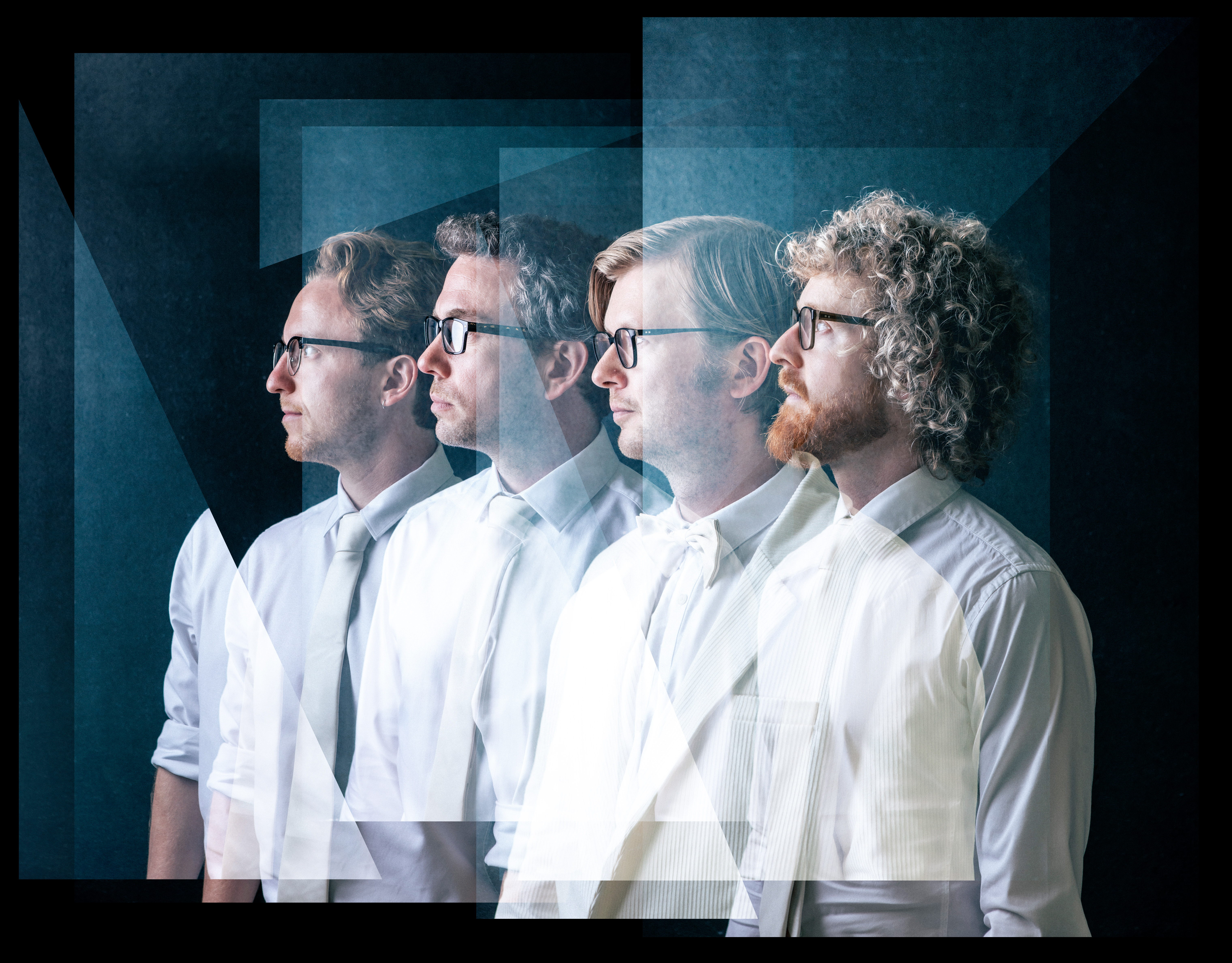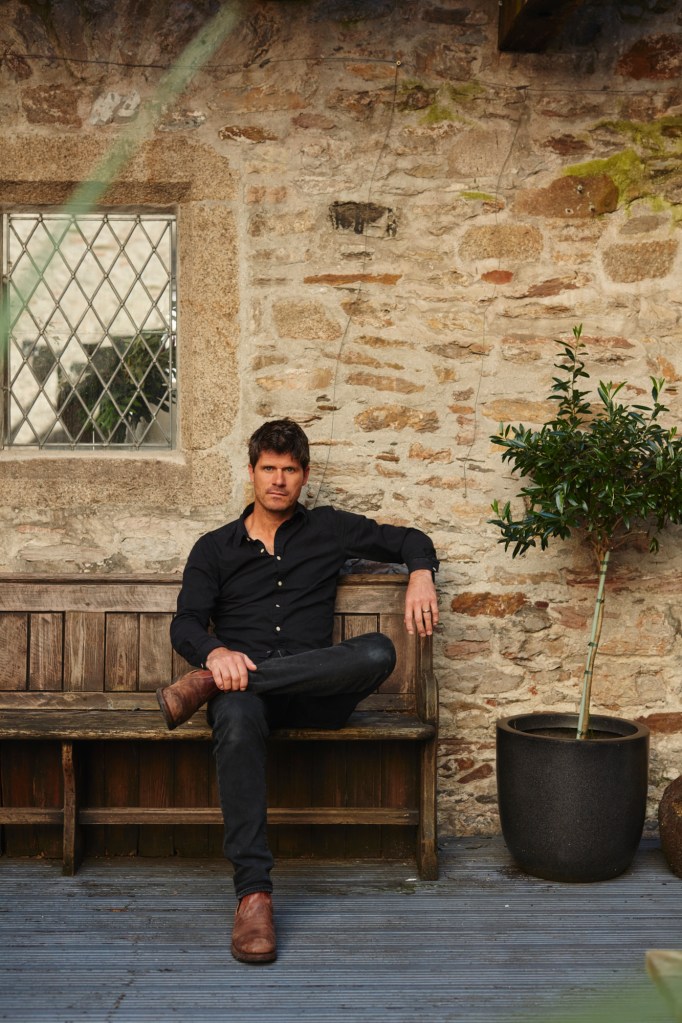
Up, up and away – a late introduction to Magic Roundabout

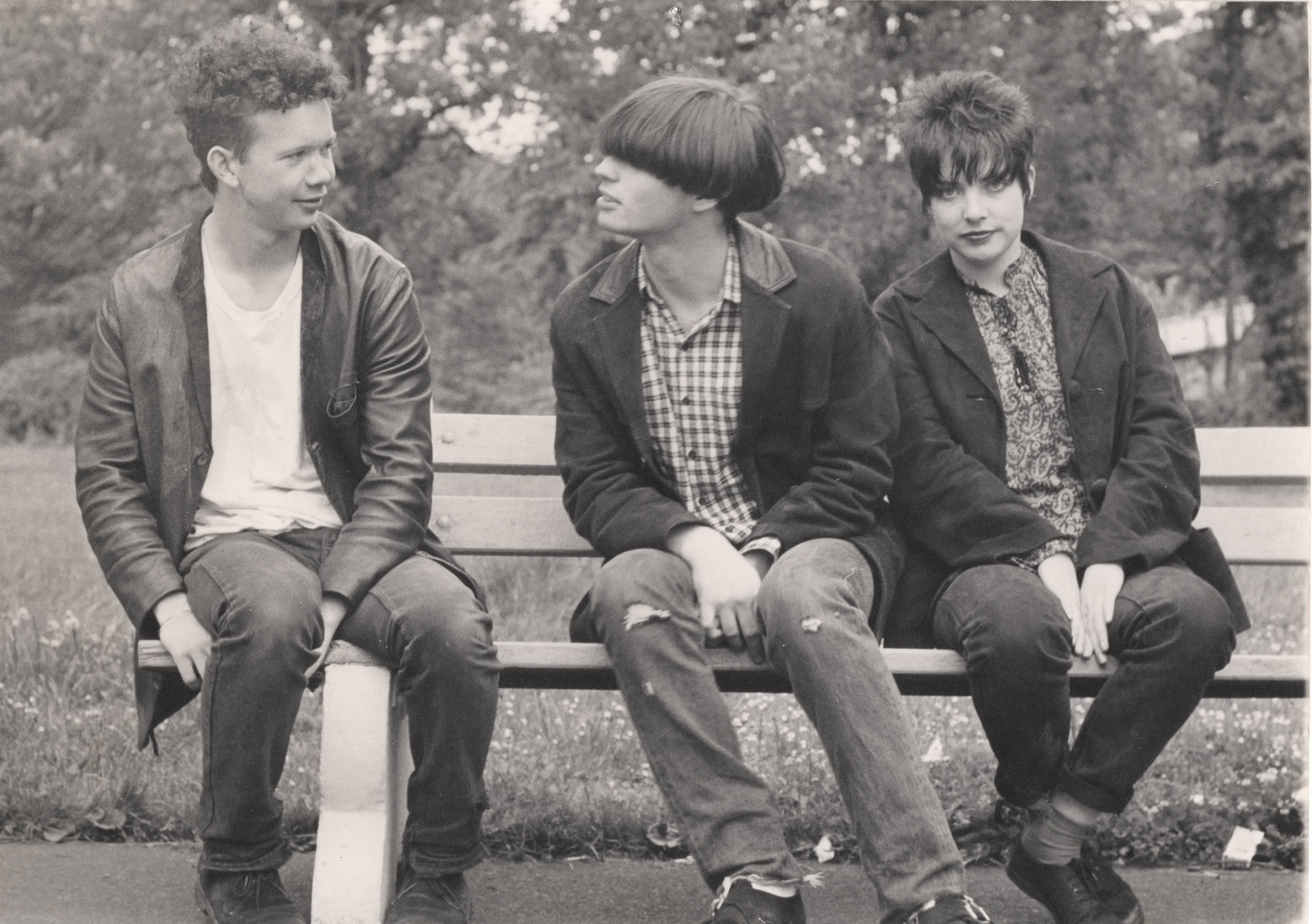
Once upon a long ago, there was a band – described by their modern-day label as ‘criminally-unheard Manchester noisemakers’ – that borrowed its name from a hit UK children’s TV show that itself started life in a very different form in France.

In the case of this particular ‘80s post-punk indie outfit – originally from neighbouring Bolton – though, fame was not forthcoming. But enough people appreciated them down the line for their memory to live on.

And now, three and a half decades after Magic Roundabout’s first live outings, The White Stripes’ Jack White’s US label Third Man Records has released their debut LP, Up.

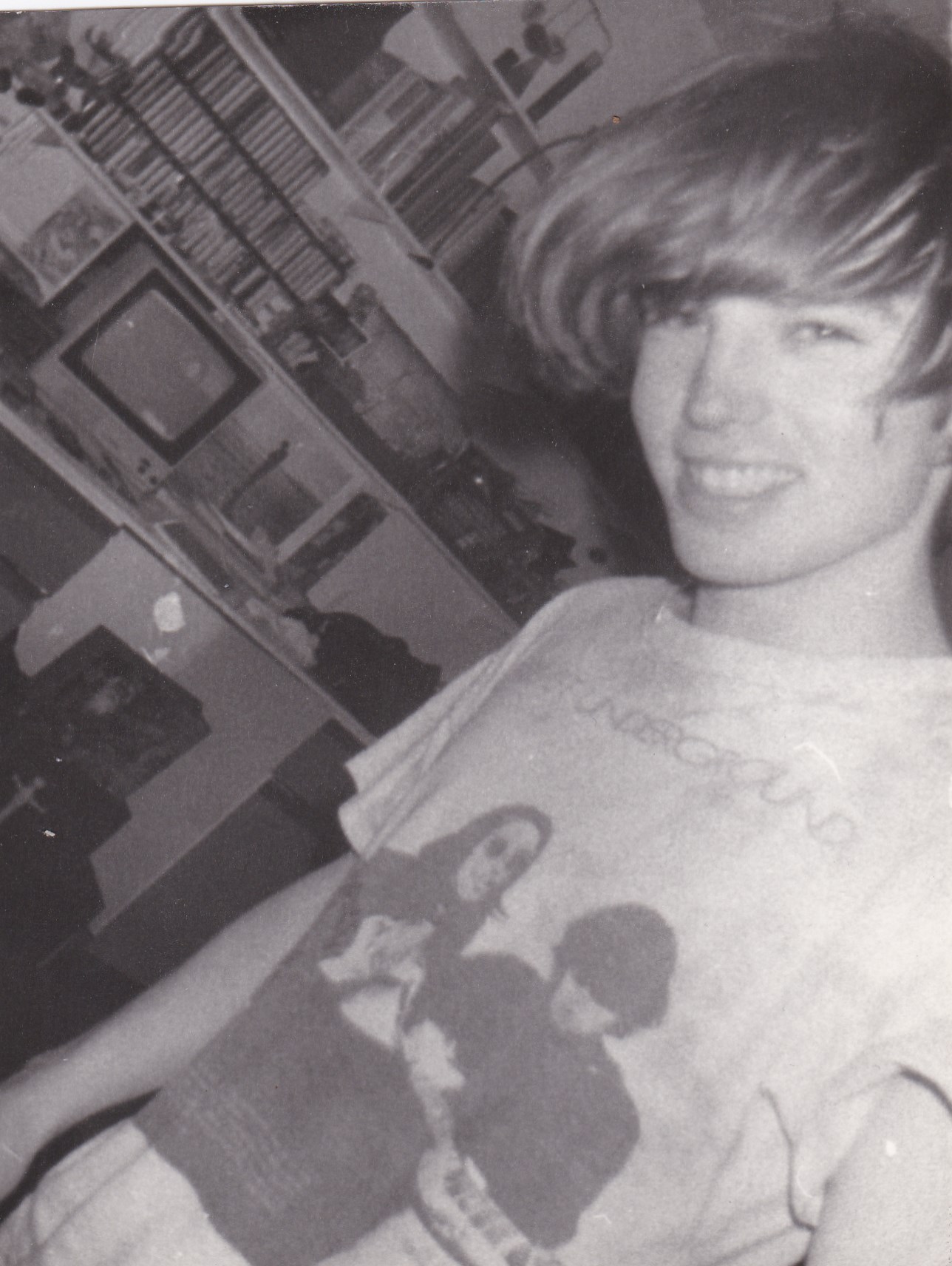
According to their press, ‘Like so many other disenfranchised kids in the heady days of the mid-‘80s, Magic Roundabout came armed with leather jackets, charity shop instruments, singles by The Fall and Buzzcocks, good haircuts, a healthy Velvet Underground obsession and a little psychedelic inspiration.

‘Influenced into existence at early gigs by The Jesus and Mary Chain and Shop Assistants, The Roundies wanted to change the world, or at the very least make some noise, shake things up and be a part of the happening’.

Moving into a house in Nottingham in early 1986, they began rehearsing, recording and gigging, with memorable shows following as support to The Blue Aeroplanes, The Pastels, Spacemen 3, Loop, My Bloody Valentine and Inspiral Carpets. And rumour has it that Noel Gallagher roadied their final show.

Just one song was released though, ‘She’s a Waterfall (Pts. 1 and 2)’ appearing on Oozing Through the Ozone Layer, a compilation cassette put together by future Pulp guitarist Mark Webber in his fanzine days. There was also talk of a flexi-disc, but that never saw the light of day, and by the end of the ‘80s the band had all gone their separate ways, their recordings lost forever.

Or so it seemed, Magic Roundabout’s 1987 recordings recently unearthed by Pale Saints singer/bass player Ian Masters for Third Man Records and given the ‘treatment’ by Warren Defever, the resultant album heralded by a brushed-up version of that prior-mentioned track, ‘She’s a Waterfall’ (its accompanying video linked here). But is their resultant, much-delayed debut album 34 years too late or perfectly steeped and presented at just the right moment, as their label suggests?

With that and many more questions needing answers, I tracked down Magic Roundabout survivors Linda Jennings and Nick Davidson for an online video interview, and we were soon on to the subject of The Shop Assistants, the Edinburgh indie outfit they saw at Blackburn’s King George’s Hall and who proved a huge influence on them making that step up from imaginary to real band.

Nick: “When we saw them, we were like, ‘Whoah!’

Linda: “It was a case of, ‘We’re not worthy!’. They were great and had that quirky sort of pop thing.”

While The Shop Assistants were part of the C86 scene, named after the NME compilation that helped spread the word about so many emerging indie bands from that era, the mystery to me on hearing Magic Roundabout’s recordings now is that – for an outfit at times carrying a Girls at our Best joining forces with the Mary Chain feel – Alan McGee didn’t seek them out and sign them to Creation Records. Surely they’d have been right up his street. How did he miss them?

Linda: “We didn’t really have a quality recording. Just this demo, which was a bit naff on a cassette. We did get one to Tony Wilson, when he was watching a band at The Boardwalk, where we were rehearsing. But he was quite cold on the night. I didn’t get anything back off him. He was a bit smug and nonchalant.”

Nick: “We took turns giving out demos, usually me and Linda. But didn’t really send demos of anything on this album. We were recording really fast, and by summer ’87 we were so into what we were doing that we didn’t have so much time to think about where we were going.”

Linda: “We weren’t chasing anything. We were playing gigs, supporting people, thinking, ‘Wow, we’re playing with them!’.”

For so many bands I love, there was what some saw as a lack of ambition, but sometimes it was just about enough to feature alongside other bands you loved, get on John Peel’s show, and make a couple of singles, rather than landing five-album deals. Anything else was a bonus.

Also, I suggested to Linda and Nick, maybe when they approached Tony Wilson, he’d already found his new direction. Besides, that wasn’t what they were about, that whole Madchester scene. Creation would have made for a good fit though.

Linda: “Yeah, definitely.”

Nick: “There wasn’t really a scene in Manchester, at least not music of the same kind. There wasn’t really anyone else into the same stuff as us. We were friendly with Inspiral Carpets, they were really good to us. But we had more in common with King of the Slums and Dub Sex, that sort of band.”

I was on the London and South East scene at the time, and got the impression at the time that when the A&R men went to Manchester, they were more likely looking for another Stone Roses or another Happy Mondays.

Nick: “We were a little bit before that as well …”

Linda: “We split up at the wrong time! We should have stayed together.” 

I was very much into That Petrol Emotion at the time (I still am, of course), yet you could argue that they never got the kudos they deserved until it was too late, being touted as an influence by bands like My Bloody Valentine after they finally broke through.

Nick: “I saw them {My Bloody Valentine} on my 18th at The Boardwalk, with Dave Conway singing. I loved what they became, but I loved them then too. Great band. But a lot of the bands we liked were seen as a bit lame at the time, like Spacemen 3, My Bloody Valentine …”

Two examples of bands perhaps better appreciated further down the years.

Linda: “I think people were a bit behind that vibe. It’s now seen as cool, but back then in our second-hand clothes, we didn’t want to follow the mainstream at all, and were always trying to find another band to listen to. But our influences were also ‘60s bands like Love, and obviously the Velvets.”

I hear the latter on tracks like the lead single, not just the Nico-like vocals, but the way it’s put together, not least with those guitars.

Linda: “I just wish it had been in tune!”

Don’t get me wrong, but as a half-baked bass player of a garage band that never quite left the garage, I can listen to a couple of those tracks and think, ‘That could have been me!’. But rough and ready as it seems in places, there’s definitely plenty of spirit captured on those recordings. Do they sound different now Third Man Records have polished them up?

Nick: “Yes and no! It’s really good mastering, but Warren kept in touch with us and was keen to not mess with it, really. But a lot were second generation tapes anyway.”

Linda: “My cassette copy that got used for this, they tried to master it to get a good copy, but it still had some of the hiss on it, and it was so difficult. But he sent what he’d done to Third Man, and they managed to take away all the hiss. We were like, ‘How did they do that?’. But there are tiny fragments that you could never recreate on that original cassette.”

Nick: “And mastering is a dying art, as I understand it.”

So how did it come to this? Was it a case of a missing tape unearthed, or is that just record company spin and some romantic notion?

Linda: “A bit of a romantic notion.”

Nick: “We’re not sure where some of that came from, but we played in Leeds in this upstairs room at the Three Legs pub, one of the roughest then. It was around April/May ’87. We supported Loop that night. They lost their licence the next day, because it was so loud!

“There were only about 20 or so there, but Ian {Masters, his band Pale Saints hailing from Leeds} liked us, approached us after, and we swapped addresses. We’ve been friends since. He’s been a great supporter of the band.”

At this point, Linda disappears, and before I have a chance to work out how I’ve upset her, she returns to show me the original cassette, labelled catalogue number 18, apparently put her way by Nick after the band split. Why did they split?

“We were together for around two years, but for around nine or so months it was really intense. For some mad reason we decided we’d live in a band house, moving to Nottingham. We just thought that was what bands did … like The Monkees! We left Manchester, because we didn’t like the Happy Mondays and all that shite! But it was the death of us really.”

Linda: “Yeah. It was all, ‘Your turn to wash up!’, ‘No, you do it! I’m making tea!’. It was like The Young Ones.”

Nick: “We were 18 or 19. We had no social skills. We had rehearsals in the house, brought dustbins in and played them.”

Linda: “I missed all my friends as well. I was homesick for them … not my parents.”

Why did you choose Nottingham?

Linda: “I think Nick just stuck a pin in the map!”

Nick: “We did actually get quite a lot of material that we didn’t record. But living together put the mockers on it all, really. The last thing we did together was ’Song for Gerard Langley’, the B-side of the single. That was recorded there.”

Linda: “I think that’s of a better quality, the way we recorded it. Showed some promise. If we’d stuck in Manchester, maybe …”

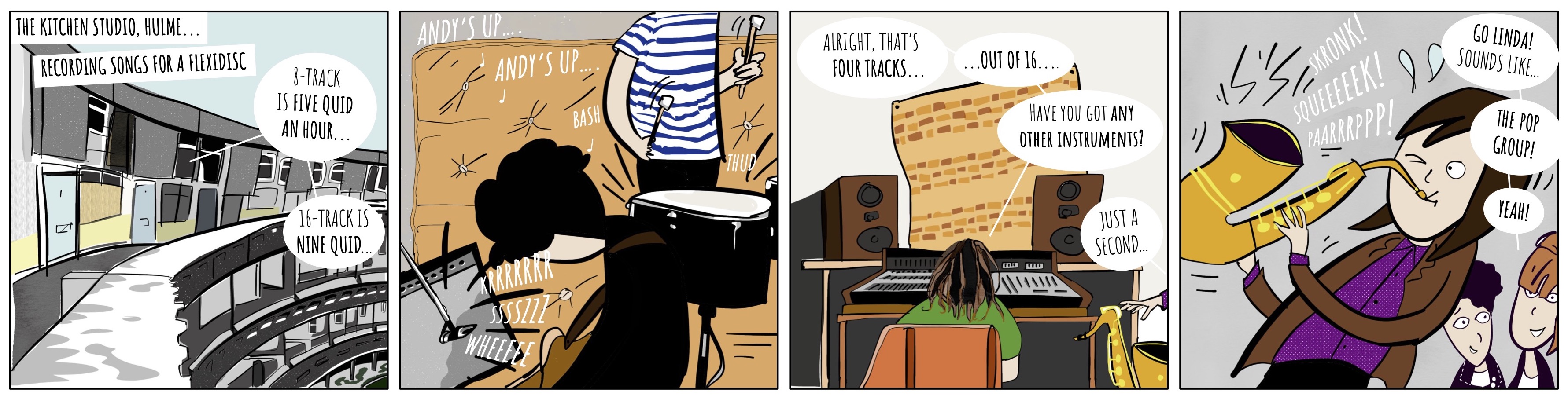
I was intrigued by that Gerard Langley link, not least as the frontman of The Blue Aeroplanes – and past WriteWyattUK interviewee – also gets a mention on mammoth LP closer ‘Alice’s Paper Plane’. And it turns out, their first gig was with the cherished Bristol outfit, as depicted in Simon Beecroft’s splendid comic strip creation telling their story (far better than I can, probably) up to the time Karrie Price joined the band.

Nick: “That was our first gig, and it was a grand one. It went really well. They were lovely. We couldn’t have asked for a better gig. We didn’t know them. I hadn’t even heard of them. But they were brilliant.”

Linda: “Me and Paul, the bass player, went to Glastonbury that year, and saw them there.”

Ah, Glastonbury Festival ’87. I was there too. Amazing, weren’t they.

Linda: “Yeah, and I saw Stump there, and Julian Cope, with his weird mic. stand. We were sleeping in the car, and I had a Walkman to record on. I recorded Julian and quite a few others … until my batteries ran low.”

Stump were also great, though somehow I missed Julian Cope. Perhaps he was on that Friday evening, before New Order, while we were still waiting in Castle Cary for my mate Steve’s smashed windscreen to be replaced. Another abiding memory of mine though was Zodiac Mindwarp and the Love Reaction’s van getting stuck in the mud, left there and eventually torched.

Linda: “I’ve got a black and white photograph I took of that! An iconic shot.”

I wasn’t venturing too far beyond London back then, and assume most of your dates were north of Birmingham.

Nick: “We got down to Bristol. Rocker from The Flatmates put us on a couple of times, promoting gigs there and in Birmingham. But not London. That’s perhaps one of the reasons … I found a diary and we had some gigs set up that never happened, including one with Spacemen 3 in London.”

Linda: “We played with Ozric Tentacles in Birmingham …”

Nick: “That was a gig! A tough punk crowd. But we went down alright once we’d got through a couple of songs.”  

I imagine you were a rather intense outfit live. Did you tend to end – as on the LP – with ‘Alice’s Paper Plane’?

Nick: “Sometimes that was the only track we played! I don’t know why now, looking back. But when we supported The Darling Buds in Bristol, that went down like a lead balloon!”

I never leave gigs early if I can help, but half-way through that I would have been looking furtively at my watch, worried that I might miss the last bus or train.

Nick: “Yeah, we cleared a few places!”

Linda: “It does go on and on and on! I think that’s where we had differences … and split. I wanted to play tunes, while Nick wanted to be more experimental. There didn’t seem to be any middle ground between us.”

That approach works for me. Take the Velvets with Nico. A mixture of a couple of styles. Proper chemistry.

Nick: “Well, we never hid the fact that we were massive Velvets fans. I still love them.”

Linda: “Classic tunes. You don’t really get anything like that. And I love the Warhol thing.”

Nick: “We wouldn’t have dared say that then though. You’d just get slated … although it’s as obvious as anything.”

Linda: “And the title track on this record is about Andy Warhol’s death.”

Nick had just turned 19 when the band split, having been friends with bandmate and fellow co-founder Paul Chadwick since school. Meanwhile, Linda turned 20 in July ’87, the band’s oldest member along with later addition Karrie, who came in to play violin and extra guitar. And while it was Nick and Paul’s first band, Linda had played guitar from age 10 and seen service elsewhere.

Linda: “I ended up having classical guitar lessons at school and was singing in a choir, doing three-part harmonies. And me and a friend would play guitar in our bedroom, learning songs. I’d go up to Horwich Folk Club when I was 15 and 16. And Nick and Paul lived in Bolton.”

Nick: “We started in Bolton in ’86, but there was no real scene there, so we shifted over to Manchester, and The Boardwalk was key to us. I found in the back of the (Manchester) Evening News that there was rehearsal space there. And it was cheap. When we started rehearsing there, they gave us membership cards and we got in to see everything for free.”

Linda: “There were some great bands rehearsing there. Nico was supposed to be rehearsing there in ’87, James were there, and needed a bass player at the time. And if I were a bass player! And the Mondays rehearsed there.”

I think James co-founding bass player Jim Glennie, on board since 1982, might take issue with that. In fact, it may have been a guitarist they were looking to recruit. Either way, she missed out. How about The Fall (of whom Jim Glennie was a big fan)? They rehearsed there too.

Nick: “We never saw them. We’d be looking around for Mark E. Smith though. Paul later ran a newsagent’s in Reddish, and Mark would rehearse there. He’d come in asking for 20 Embassy No.1, every rehearsal!”

Were you Fall fans?

Nick “Oh, massive! That was the only band in Manchester for us. To me, I’d come to think they were better than The Velvet Underground as time went on, lyrically and … they seemed to fore-shadow so much to me.”

Linda: “Massive fans! It’s just that character of Mark E. Smith. And his accent. Manchester … with an arr! Just awesome. In a way, I didn’t think it was that Manc. It’s just how he intonated the lyrics.”

Nick: “And in my experience, Manchester was the sort of place where no one likes each other. It’s very competitive, but that’s maybe just typical Mancunian.”

Linda: “I think they’re a bit more hard-edged in how they sort of deal with people. Scousers are more friendly or comical.”

As for what happened next, Nick’s now in Shipley, bear Bradford, and Linda’s back in the North West, while it turns out that bandmates Paul and Karrie took another direction and went on to become breakbeat specialists.

Nick: “I trained as a nurse in Leeds and Wakefield, and that’s what I did for the next 30 years. That’s partly why the record’s coming out now. I retired a couple of years ago and had a bit more time, thinking surely we could license some of these tracks. That’s how the project started rolling. But I always kept involved in music, working with Ian and on underground stuff. And Linda’s certainly been active.”

Linda: “I joined another band who needed a singer. We were called Your Ticket Explained. We didn’t last long! I was going out with the guitarist, but then started going out with the bass player, and married him … so the guitarist split the band up! Just one of those things. But I stayed in music as much as I could.

“At one point I was going to a poetry group, doing paintings, singing at blues and folk nights, and got asked to sing with this jazz band on Sundays, a jazz breakfast at the Old Angel … mostly for people with big hangovers coming in for a big breakfast to drown their sorrows from the night before.

“I was also in this rock’n’roll band, playing guitar, while I had an 18-month-old (child). That got a bit too hard, but I carried on doing gigs on my own and found a popular music college course and ended up moving north to go to Salford Uni, ending up in bands up here.”

So you’ve now got the Pennines between you?

Nick: “Yeah, but we’ve worked together for the last 20 years. I got back in touch as I was doing some recording, asking Linda to do some vocals. And we’ve recorded on and off for years. For the past 10 years we’ve also had this project called The Objects, with a recent-ish album available on Bandcamp. And we like writing together.

“A bit like The Fall, if it’s me, Linda and your granny, it’s Magic Roundabout! And Paul and Karrie have been involved with dance music – once rave came along, then jungle – called Backdraft, with the label Botchit & Scarper. And we’ve all kept in touch, pretty much.

“We did lose touch with Nicola (Mckenzie) and Maria (Gomez Brown), who (both) played tambourine, but managed to get in touch again with the album coming out. And we’ve had people send us some songs we’d forgotten about, on tape … so yeah, things are started to come back to us!”

And will there be live dates to help promote the record?

Nick: “We’re looking at that at the moment. Depends if anyone will pay us, really. We’re a bit old to do it for nothing anymore! But yeah, hopefully.

“We’ve also been having a think about trying to finish off some of the things we didn’t manage to. By the end, we were listening to Love all the time, and Nuggets, stuff like that. And I’ve bought an organ in the last year.”

For more about Up and how to order a copy, head here. And for more about Magic Roundabout, check out their Bandcamp link and follow them on Facebook.

Posted in Uncategorized | Tagged , , , , , , , , , , , , , , , , , , , , , , , , , , , , , , , , | Leave a comment

Making a vinyl connection with the Bunnyman – back in touch with Will Sergeant

Last time I saw Will Sergeant, I was barely two feet away from him on a Sunday night in the snug bar of The Continental, Preston, Lancashire, thrilling to the garage/surf punk spectacle and hearing sensation that is Michael & the Angelos, the ‘60s cartoon-ish alter-egos of equally-mysterious Liverpool band The Kool Aiders.

That was at Tuff Life Boogie’s Preston Pop Fest in late August, with Echo & the Bunnymen’s guitar hero as enthralled as the rest of us – barely a couple of dozen as it turned out, the rest of the festival-goers back in the main room, waiting for The Bluebells to bring the curtain down on a happening indie pop weekend.

Word was that when the organiser told the band he’d head back through and drum up a few more punters, frontman Bob Parker (also ex-Walkingseeds) wasn’t so bothered about numbers, clearly preferring a low-key approach.  

“Ah! A good night that, and it’s a great place, The Continental.”

I reckon my ears were still recovering from chief Kool Aider Bob and his band a couple of weeks on. Do you two go back a long way?

“Me and Bob? Oh yeah, years. I played some stuff with (his previous band) The Mel-o-Tones and did lights for them once or twice. And I’m The Hawk.”

Tune into Michael & the Angelos’ website Radio Hour episodes and that’ll make more sense, if you’re not yet hip to that particular trip. Besides, any words I write won’t do justice to this amazing sonic happening. Highly recommended.

“It’s a great idea. I’m always saying he should get someone in like Matt Groening, referencing all the ‘60s, ‘70s and even the punk stuff.” 

You clearly still enjoy a bit of dirty rock’n’roll and garage rock alongside an appreciation of the likes of Love, early Genesis, and all that.

“I love all that stuff – that classic record period from the ‘50s through to the ‘80s. It’s kind of what I’m about really. And I love records, so I’m chuffed they’re putting all these LPs out on vinyl again. They’ve been going on about it for years, and everyone else seemed to have their records coming back out on vinyl.”

That’s our excuse for a chat, the re-release of the classic first four LPs by Echo & the Bunnymen, from the years 1980/84, available again on vinyl from this weekend.

Formed in Liverpool in 1978 with Will on lead guitar, Ian McCulloch on vocals and rhythm guitar, and Les Pattinson on bass, Echo & the Bunnymen were soon joined by Pete De Freitas on drums. The rest is history.

Debut 7” single ‘Pictures on My Wall’ c/w ‘Read It in Books’ was released via Zoo Records in 1979, the A-side then appearing on first album Crocodiles in 1980, cementing the band’s reputation amidst a growing wave of post-punk outfits, the NME describing it as ‘probably the best album this year by a British band’. Ultimately breaking into the top-20, it garnered much critical acclaim.

They followed that with the release of the Shine So Hard EP in 1981, recorded live at Pavilion Gardens, Buxton, then second studio album Heaven Up Here the same year, the band’s first UK top-10 album, going on to win the 1981 NME Best Album award. Considered slightly darker, Heaven Up Here was produced by Hugh Jones and was well received by critics and fans, highlights including ‘A Promise’, ‘Over the Wall’ and ‘Show of Strength’.

Then the Bunnymen’s cult status was transformed into mainstream success in 1983 with the release of third LP Porcupine, produced by future Lightning Seeds creator Ian Broudie, their best chart performances following, ‘The Cutter’ reaching No.8 in the singles charts and the LP No.2 in the album charts, soon certified gold.

And 1984 brought fourth studio album Ocean Rain, regarded by many as the band’s classic opus, recorded in Liverpool and Paris, incorporating a 35-piece orchestra, award-winning composer Adam Peters – still a close friend of Will – scoring the strings for an album best known for classic singles ‘Silver’, ‘Seven Seas’ and ‘The Killing Moon’.

Heading into Cornwall recently, dropping my youngest daughter off to start at university, I saw the sign from the A30 near Jamaica Inn on Bodmin Moor for Warleggan/St Neot/Mount, the way to Carnglaze Caverns, where the cover of Ocean Rain was shot,an extra copy back in the day giving me a chance to Blu Tack that iconic photographic image by Brian Griffin to my bedroom wall, Brian’s photos and Martyn Atkins’ design also featuring on the three previous LPs. Perhaps I should arrange a pilgrimage one day, take a boat out and stab a sorry heart in the water with my favourite finger, in a Mac style.

“Ah, I think we stayed in Fowey – tucked away in this little guest house – when we were doing that.”

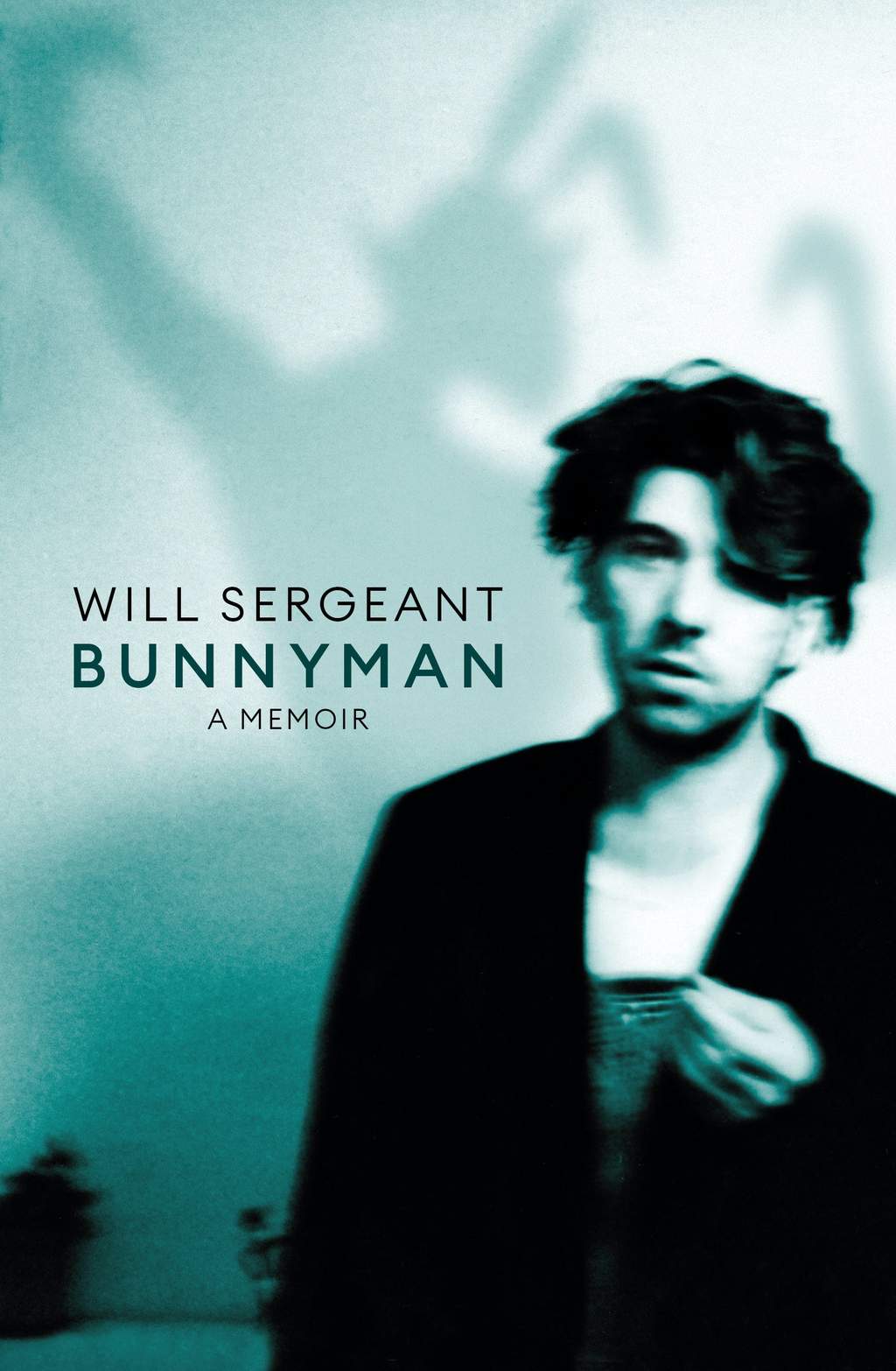
Will’s been on the mind a fair bit this last couple of years, having raised his social media profile somewhat to mark the release and success of Bunnyman: A Memoir (Constable, 2021), retelling part one of his life story, from formative years growing up in Melling – an outlying Liverpool district back then classed as within Lancashire, not far from where he still resides – through to the early days of the band. Is he hard at work on part two now? 

“Yeah. I’m getting all my research together at the moment.”

Are you re-immersing yourself in that next era (with Pete de Freitas on board by that point)?

“Yeah, I find I can travel back in time in my mind, remembering what we were wearing, the sort of things we were influenced by, what we were into, how we recorded, all that. It’s amazing what can be dragged up.”

Is it a cathartic experience?

“It’s nice, like having a time machine. With the first one, a lot of it was about being a kid, and that was great, going back to then and what we used to get up to, all those scallywag things we used to do.”

You’re not so far from that patch now, around 10 miles from your Melling roots, right?

“Yeah, if that. I just like it round here. When we were bigger, in our heyday – I was going to say massive, but we were never massive – loads of bands moved to London, and it was like, ‘Why move to London?’. It was full of fakers.

“To me, London seemed to be too many people scrambling around. We were trying not to do that. We turned down more things than we did. Even if there was some band on down there we didn’t like the look of, or they had the wrong trousers on or something. ‘We’re not going on with them,’ y’know. ‘They’re shit!’. London felt a bit like that, everyone too desperately trying to impress the local A&R man and all that stuff.”

There was a lot more money being thrown at bands then, it seemed. Those of you still playing all these years on seem to have a far healthier attitude, playing for the right reasons – loving being in a band, playing live and making music, rather than chasing chart-topping status and vast sums of money. Competition doesn’t seem to be such an issue.

“Yeah, it’s not really like that anymore. It’s not a game, anyway. There was always a bit of rivalry between us and people like U2 … although I think they won that one! Ha.”

Speaking of whom, breakthrough Irish band Inhaler played an Action Records promotion in late summer at the afore-mentioned Continental, and catching footage of them at Reading Festival shortly after, I felt seeing frontman Elijah Hewson in action was like watching his dad in U2’s early days.

“We share a roadie with them, and we’ve met them a couple of times. They’re a really nice bunch. Dead cool, like. And it’s a difficult track to follow, isn’t it? I’ve seen them live, and they were good.”

From February onwards, Will should be back out on the road with the Bunnymen again, with 20 live dates lined up for a classic band who managed 20 top-20 UK singles. Which made me wonder, for all his cool demeanour, was he ever secretly thrilled about the prospect of chart hits, Top of the Pops appearances, and all that?

“Only once. I think it was for ‘The Cutter’. Rob Dickens at the record label had loads of stuff he’d been given in his office, like a Pee-wee Herman bike with flat tyres. Me and Les were disgusted that the tyres weren’t even pumped up. We loved Pee-wee’s Big Adventure.

“He also had – just leaning against the wall – an Andy Warhol Electric Chair print. I said, ‘That’s great!’, and he said, ‘Oh yeah, someone gave me that’, or he bought it for buttons or something. He said, ‘I tell you what – if your single gets to No.5, you can have it’. So I really wanted to get to No.5 … and I think it got to No.7, so I hit the post on that one. And I think he would have given it me, he was a man of his word.” 

It actually reached No.8, the first of three Bunnymen top-10 hits. Not bad for a lad born on the Lancashire side of Liverpool. And going back to those roots, Odyssey style, I mention to Will how Status Quo’s Rick Parfitt would often return to his childhood address on my old patch in Woking, Surrey, gazing at the house where he lived from his car, re-igniting memories. Is that the case with Will and Melling, taking a walk or drive down Station Road, looking at his family home?

“Yeah, and the weird thing is, our house was the shittiest in the road – towards the end of Dad’s life, her and Dad’s life had fallen to bits – but someone’s bought it, done it up, and it’s now the poshest house in the street, extended and everything. It looks like it doesn’t belong there.”

No blue plaque to follow? No chance of the National Trust coming in, as they did with Forthlin Road and Menlove Avenue for Paul McCartney and John Lennon’s homes further into the city?

“No, it’s a completely different house now. You wouldn’t recognise it.”

If you had the chance to go back and be a fly on the wall for Echo & the Bunnymen and The Teardrop Explodes sharing the bill at the legendary Eric’s in Liverpool, late ’78, what do you think you’d make of each band?

“Well, we weren’t the competent players we became. I think the Teardrops could play a lot better than us. Mick Finkler was great on the guitar and Julian (Cope) was obviously a really good bass player. I don’t know what I’d think, but …”

You clearly had something about you.

“Yeah, with Mac up front and everything. He’s sort of got it, hasn’t he, you can’t really deny it. He’s got something. As a frontman, if you can bottle that … like an arrogance … an assuredness, he exudes it.”

Thinking of the vinyl reissues of the early LPs, do you still have and play the originals? I recall Noddy Holder once saying he lent someone a copy of his first LP with Ambrose Slade and didn’t get it back, and he didn’t have one for years.

“Our records? There’s loads I haven’t got. Half the time, they put things out and don’t even send us them. There was one that came out not long ago with sunflowers on the cover. I never got that.”

The day I spoke to Will, I was hoping the postie would knock on the door with a copy of Will’s Bunnyman, but I was still waiting when we spoke.

“Well, Costco have got it cheap! The cheapest I’ve seen. No VAT.”

Recently, I read Steve Hanley’s entertaining, informative Fall memoir, The Big Midweek – Life Inside The Fall, and there’s a mention of a meet-up between your bands in Liverpool, around 40 years ago, Mac and his old pal Mark E. Smith trading insults and cutting repartee, while Steve made small talk with Les and new Radio 1 DJ Janice Long.

He also revealed how he got home and put on Heaven Up Here, suggesting he could play Les’ parts and join you. It seems he felt he might have had an easier life in your band. Do you think he would have?

“Yeah. I met him the other day, actually, when I did a book signing and talk with Dave Haslam in Manchester at the International Anthony Burgess Foundation. We had a chat in the bog! I’m set to do another with John Robb at the Louder Than Words festival. I think with Marc Riley and Steve we’re all going to be out for a curry later. It’s gonna be a hoot, that night. Nice lads.”

That date with John Robb – on Saturday, November 13th, at Innside, First Street, Manchester, with ticket details here – sounds like a winner, judging by their conversation for John’s Louder Than War website in July (linked here). In fact, John has contributed to my forthcoming Fall appreciation, and Will too has good memories of seeing The Fall.

“I loved The Fall. They were just different, weren’t they, kind of like … they weren’t really punk, but they weren’t anything and didn’t want to be anything. They were their own thing. And I loved Mark E. Smith. He was funny as fuck!”

Was there a particular period you liked above all others?

“I bought all the records for maybe 10 years. They kind of drifted off from there. Live at the Witch Trials was great. I loved the cover – the pencil drawing. Pendle’s not so far from here, really, and it’s got that sort of weird, dark satanic mill kind of feel. Kind of odd, that, places like Saddleworth Moor and Holcombe Hill, spooky kind of areas. The Fall almost tapped into that with the area they were based, and it played into his lyrics.

“And I love the way he used to use people’s names. Like ‘Taxi for Mr Nelson!’. That was great. The only ones now doing something slightly similar are Sleaford Mods. Yeah, The Fall were great.”

When did you last play live, and where was that?

“Erm, 2019, I can’t remember where.”

Records suggest it was at Queen’s Hall in Edinburgh with the Bunnymen on December 18th, 2019. Have you missed all that?

“Er, it’s a weird thing with playing live. It’s a lot of pressure, a lot of anxiety. After a few gigs you get into a flow though, and it becomes okay. You stop worrying. But it’s a lot of worry for me. Is it going to work, will I get all the parts right, will we get the sound correct, not too loud and not too quiet?

“And because I have loads of effects and things I play with, it’s not just playing the guitar. It’s pressing on loads of pedals, making sure you’re in the right place at the right time. And tuned up. It’s like Pressure Central. But once you’ve done a couple, it kind of eases and becomes natural. And I’m going to have to play soon, because all my fingers have gone soft.”

There has been a long gap … not as if I’m trying to add to your anxiety on that front.

“Well, I’m frightened anyway.”

Has the lockdown been a good time for your artwork too? Or was the writing all-consuming?

“I’ve done a bit. I got into doing collages for a while, just for the fun of it really. I started the writing before the lockdown. That sort of came initially from doing …. these records have been re-released before by a smaller label that licensed them, with these fancy booklets. And those liner notes kind of started me off on the writing thing.

“Around 2013, I think it was, I started a science fiction story. I got to about 17 chapters, and it was all about a world where instead of industrial technology, it was more bio-genetic. I got deeply into it, then that film Avatar came out, and I just thought, ‘Fucking hell, this is too similar!’. But I might revisit it. And I’d love to do short stories. I love John Wyndham, Ray Bradbury, James Herbert, all that.”

As for the memoirs, part two will cover from Pete’s early days with the band. Up until when?”

“I might go up to the end of Heaven Up Here. That’s a couple of records, loads of touring, Europe for the first time, all that stuff. That was the first time I’d ever been abroad. To Belgium, a place called  Plan K, these sort of hipsters running these nights. Joy Division were on the week before.

A Certain Ratio, us and The Teardrops went over and did it, in this old sugar refinery. I’d never seen anything like that, thinking you could do anything you liked in Europe – get an old factory and turn it into a gig without much money or interference from authorities. It seemed to be a place that was open.”

Records suggest that was in Sint-Jans-Molenbeek on January 26th 1980, with William S. Burroughs, Buzzcocks, Cabaret Voltaire and Scritti Politti among the previous year’s guests there, and Orchestral Manoeuvres in the Dark on 12 days earlier than the Bunnymen. And such happenings are something this up’n’coming generation of bands won’t be able to experience at this rate, post-Brexit. It would cost too much to get over and play, with too many new bureaucratic hoops to jump through.

“Yeah, I don’t know what’s going to happen there.”

Last time we spoke, in early 2015, you told me you weren’t a big reader and you’d rather put a record on. You seem to have proved yourself wrong on that front.

“I’m not much of a reader. I’m better with an audio book in the car, driving around, or on dog walks with the headphones on. “I’m listening at the moment to Shantaram (by Gregory David Roberts), about an Australian who breaks out of jail, ending up in Bombay, embroiled in all sorts in these shanty towns. It’s brilliant, and my mate Adam Peters is doing the soundtrack music for a series. They’re in Thailand filming at the minute. He’s asked me to help with odd bits.”

As you mentioned Australia, how’s Bunnymen bass player Les doing? Is he still Down Under?

“He’s alright. I’m in touch with him most days, via WhatsApp or whatever. He’s always sending me jokes and pictures. It looks amazing, where he lives. In Mornington, Melbourne, on this big bay. They go sailing and all that. He does trials riding too.”

With that, our time slot is well and truly done, but Will tells me we should catch up at the Conti again soon – where he also caught Can’s Damo Suzuki and Gnod fairly recently – and revealed a few details about another musical project he has lined up.

“I’m toying with the idea of going out and doing ambient gigs on my own. I’ve got to plan it out, work out what I’m going to do, get some projections together. There’s a bloke round here with an organic farm and he built this baboon house in his back garden, made for Knowsley Safari Park. He’s made it into this groovy space. He’s a bit of a hippie. They do yoga in there and sound baths.

“I was saying you could put things on, like poetry readings or ambient nights. I was going to do something acoustic with our keyboard player, do some of his tunes and some of mine, then I was thinking of something more electronic, with a table-top set-up, something we used to do years ago, under the name Glide. But keep it minimal.”

By then, your fingers may be more hardened up again.

“I probably wouldn’t be playing the guitar. Last time I did the Glide stuff, I played guitar with a screwdriver and a metal rod. I’d thrash the shit out of it! Using the screwdriver like a slide, with open tuning … maybe a bit violent for a gentle ambient night.”

The first four Echo & the Bunnymen LPs (Crocodiles, Heaven Up Here, Porcupine and Ocean Rain) are available from today (Friday, October 22nd) on heavyweight black vinyl and limited-edition coloured vinyl, with further details via https://lnk.to/EchoandtheBunnymen_Vinyl.

Meanwhile, Mac, Will, and the current line-up will be playing a full UK and Irish tour in Spring 2022 to celebrate Echo & the Bunnymen’s 40-year careers. For ticket details head here. And for all the latest on the Bunnymen, head to their website or keep in touch via Facebook, Twitter and Instagram.

Posted in Books Films, TV & Radio, Music | Tagged , , , , , , , , , , , , , , , , , , , , , , , , , , , , , , , , , , | Leave a comment

Celebrating BOB’s Berlin Independence Days 21/10/91

“Sink back into time, I’ve been hypnotised; and meanwhile my time’s not my own.”

Thirty years ago today, one of the bands that provided a key component of the soundtrack of my 20s stepped on stage at Berlin’s Quartier Latin as part of a cross-city live event celebrating the first anniversary of Germany’s reunification, for a show also starring LA alternative rock outfit Hole and cult London post-punk group The Monochrome Set.

Three decades later, BOB’s set – broadcast live on national radio in Germany that day, 21/10/91 – is commemorated by Berlin Independence Days, which was due to be out in June as a limited-edition 10-track vinyl-only LP before a backlog in vinyl manufacture saw the release date put back, the delay leading to a decision to reward those who pre-ordered with a subscriber-only exclusive CD version.

As co-frontman Richard Blackborow put it earlier this year, “We’re proud of this record. We were on great form and, luckily, we were professionally recorded on the night by clever German recording technicians who broadcast the show live on Berlin radio. No one has heard it since, and we were lucky enough to escape with the multi-track tape of the show. Simon (Armstrong) and I mixed it during lockdown last year and we’re chuffed to bits with the results.”

I spoke to BOB drummer Dean Leggett, who first appeared on these pages in late 2019, to ask for his memories of that Berlin show.

“We played in London, either the night before or the previous one. There’s bit of a disagreement, but we were at The Underworld in Camden, which received a fairly good review in the NME, and we played the same set in Berlin. I think ‘Nothing for Something’ was about to come out as a single.

“As I recall, we packed up the gear after the gig in Camden but couldn’t leave till late as there was a club at the venue and you had to load out through the back doors. You couldn’t load out while there was dancing. We were really knackered, but still had to load the van, drive to Dover, smoke all the weed we’d got before we got there, then get on the ferry and drive all the next day.

“We got to Berlin in the afternoon. I think we checked into the hotel, had a kip, then pretty much went straight there. That’s my recollection, but Simon thinks we left the following day. Either way, we more or less went straight there.”  

The North London based indie outfit’s visit came just four months after the Bundestag switched from Bonn to Berlin, honouring an earlier stipulation of the Unification Treaty to make this born-again city the capital of the Federal Republic of Germany.

“We’d already played in Berlin, on the East side, a castle on an island, and played a small club on the West side around six months earlier to about 60 people. We went through Checkpoint Charlie, even though the Wall had come down, either 1990 or earlier in 1991. The (previous) gig in East Berlin was absolutely packed, sold out, around 200 in. But this one was more a showcase.”

Dean met Courtney Love, playing with Hole, at an after-show party that night. In fact, he reckons he met Kurt Cobain too, although it seems the Nirvana frontman and bandmates Krist Novoselic and Dave Grohl were playing in Austin, Texas that day, on their Nevermind tour.

“Our agent, Rob, came with us. He had loads of bands, including Babes in Toyland, but was trying to get Hole as well. We were staying in the same hotel and had a party with them upstairs in their room, where Courtney was. She was snogging some guy with blond hair. I recall her being quite bossy. There were around 30 or 40 in this smoky room, and she was making him take boxes of beer around to give out. Henry (Hersom), our bass player, was with me. Simon was watching The Monochrome Set and Richard was struggling with a cold and didn’t come out. Me and Henry always said it was Kurt. We didn’t have a camera though.”

While I missed Nirvana, I did see BOB three months earlier at Reading’s After Dark Club – my seventh sighting since April ’88 – but that late night set is a little sketchy in my mind now, and as it turned out, I had to wait 28 years for my next live fix, at Leeds’ Wharf Chambers in late 2019. But this Berlin performance helps fill in a few gaps.   

“The reason we did the gig was to try and get a European agent, and we were looking for funding for the next album, which would have been You Can Stop That for a Start. When we came back, we started writing, then went on another tour of Europe, playing nearly all the songs on that record, to learn them. We’ve footage of us playing those songs in Germany, which we hope to put out at some point. When we recorded them, we did it all in five days in Harlow then in Bristol for a few days.”

The story of that and the subsequent 28-year wait for the LP to be released is told in my interview last year with Richard Blackborow. And, as I said to Dean, it seems a trademark BOB move that this live album – also including ‘Round’, which finally appeared on that delayed second long player – features a song called ‘You Can Stop That for a Start’, which – as it turned out – didn’t even make it on to the record of the same name.

“Yeah, exactly! Ha!”

It’s not the only song that missed out, this fan loving ‘Another Crow’ too, originally dubbed ‘Tour Song’, as included on 2014’s deluxe version of Leave the Straight Life Behind in pared-back but spot on demo form. But I certainly can’t argue with the final track listing on You Can Stop That for a Start, and the live record is also a winner.

“We had a very basic soundcheck, about three in the afternoon. There were other things happening around the city, all being recorded for German radio, and we had to be there at half four to go on at five or half five on the dot. We weren’t allowed to drink or swear or take too long talking between songs. Everything was mic’d up, it would go straight to a sound deck, mixed by our engineer, Chris, with a cable going out the back of the building to a van with a huge dish on top, fired to the radio tower on the front of the record sleeve (Berliner Fernsehturm, aka Berlin TV Tower).

“We were all on form, and played really well, so Richard said to Chris, ‘I want you to go out there and get the tape, and I don’t want you to come back until you’ve got it’. Ha! Two hours later, he came back with the reel-to-reel tape. The radio guy said, ‘You can have these, but we want them back’. I don’t know how he persuaded him. Then, 29 years later, Richard gets the tape, bakes it in an oven – as you have to – put it in his computer and up pop the tracks, tweaked a bit where necessary, and when I sent it to Ian (Allcock) at Optic Nerve, who initially wasn’t sure about putting out a live album, he listened and said, ‘Let’s put it out – it’s great!’ The quality’s that good.”

The band come on to Miles Davis’ ‘Milestones’, in a recording mixed from the original ½” digital multitrack tape in 2020. And from incendiary opener ‘Skylark III’ through to fellow Leave the Straight Life Behind prime cut Skylark II, it’s something of a time capsule treat, like the two records that preceded it.

We also get ‘Tired’, apt in the circumstances according to Dean’s back-story, released as a single the previous year, before a return to the prior album for ’95 Tears’, BOB stepping up through the gears again, the set continuing with the first two numbers from early 1990’s Stride Up EP, kicking off our shoes for the splendid ‘Flagpole’ (I’d love to have heard Nancy Sinatra and Lee Hazlewood cover this gem, not as bizarre a suggestion as you might think when you know the story behind it) and of its time Madchester/Screamadelic-tinged Bible Belt America mash-up, ‘My Blood is Drink’.

The title track of the LP that didn’t come our way for a near-eternity (the one that didn’t make the final XIII, as it turned out) starts side two in style, before ‘Nothing for Something’, which seemed destined to be BOB’s final single until their welcome return and the release of ‘Queen of Sheba’ last year. And listening back now, this should well have taken the band on again, bringing in the wider audience they deserved, as ‘Convenience’ should have before.

As for ‘Round’, here was a Teenage Fanclub-esque (maybe even Status Quo-like) guitar romp that suggested the power of what was coming our way next. Given a year or so, perhaps it could have been a nailed-on set opener, but on this occasion it instead leads to the big finish, the band back in Leave the Straight Life Behind territory, the Smiths-like collage of ‘Take Take Take’ – and the irony was just how long that stop was before they started again – followed by inevitable show-stopping finale ‘Skylark II’, in typically more live than live form.

Seconds and years, icebergs and tears; this time I’m not on my own.”

And all in all, this Berlin Independence Days set provides a timely reminder – if we should ever need one – of the live might of BOB, showcasing what a great outfit they were on their day, something only now truly realised in some circles. But enough hyperbole. I’m clearly tired and emotional as I write this, so I’ll stop that for a start. As Richard himself put it, ‘I’ve had a lovely evening, please close the door behind you’.

For all the latest from BOB, check out the Optic Nerve Recordings website link at https://www.opticnerverecordings.com/collections/bob and keep in touch with the band via social media, following these Facebook and Twitter links, Richard’s BOB account on Instagram, and heading to the BOB/House of Teeth web link.

Posted in Books Films, TV & Radio, Music | Tagged , , , , , , , , , , , , | Leave a comment

The Vapors / Chris Pope & Mic Stoner – Boileroom, Guildford

I waited a long time for this. How long? Take your pick – 54 years since my arrival, give or take a fortnight; 41 years since New Clear Days; 39 years since the original split; three years since my last Vapors sighting; 22 months since my last hometown visit; 19 months since the first lockdown, that dreaded virus putting paid to live shows for an eternity. But it was worth it in the end. A homecoming for The Vapors, and me. And, to paraphrase Dave Fenton, this one just had to be the best.  

The word intimate does a lot of legwork, but on this occasion it’s about right. The Civic Hall’s long gone and replacement G Live wouldn’t have the same pull, yet as Steve Smith suggested, here’s a venue just a few streets from the launderette above which the band rehearsed and kicked into shape many of the songs on the LP we were celebrating. Yep, it was an emotional night.

The price of its beer aside, I love the Boileroom. But you’ve got to get it right. Head to the bar when it’s packed, and chances are you won’t get that top spot back again. If you do though – even if the closeness of fellow punters after the last two years may give you palpitations – it’s a winner. Even then, there were times I couldn’t see Michael Bowes do his thing. But I bet he was smiling.

First up was Chris Pope and Mic Stoner, representing The Chords UK, 2021’s take on the cult late ‘70s/ early ‘80s outfit of whom Paul Weller’s professed admiration led to a Mod band label. But this was no Who copyist collective, having better tunes than many of the contemporaries lumped into that genre.

On this occasion, while just a two-piece they carried the on-stage energy of a far bigger unit, a description also befitting bass player Mic. And I say that respectfully. When he joked at one stage they were going down so well that they might just carry on for a couple more hours, I wasn’t going to argue. There were new-ish songs, including latest single ‘Hey Kids! Come the Revolution’ but also plenty of old school Chords classics, including ‘Maybe Tomorrow’, my highlight ‘Now It’s Gone’, and ‘The British Way of Life’. Probably So Far Away‘s title track and‘Something’s Missing’ too, but I’d played that LP recently, and often struggle to recall what’s in a set if I don’t write notes. Must be my age.

I had hoped to catch original Chords drummer Buddy Ascott and later arrival Kip Herring (I say later, but it was still four decades ago) elsewhere on this tour with The 79’ers, alongside Simon Stebbing (Purple Hearts) and Ian Jones (Long Tall Shorty). Reviews have been great, but it looks like I’ll have to wait until next time, some 42 years after the original band cringed across town at the Civic as soon-to-be ex-manager Jimmy Pursey led an ill-conceived stage invasion after a turned down request to jam with headliners The Undertones alongside fellow ‘Sham Pistols’ Paul Cook and Steve Jones the night both bands came to my hometown. All happens in Guildford, y’know.

Tonight’s headliners were also seen in some quarters as Mod revivalists early on, similar initial interest from The Jam a factor. To me though, both were more on the new wave fringes of punk, if we have to hand out labels. Whatever the tag, on this occasion Chris and Mic (also serving the Hot Rods these days) worked hard to win the assembled over, and succeeded. And there’s certainly no doubting their passion. A real sound from the street.

So it came to pass that The Vapors, 2021 style, wandered down from the dressing room at this Stoke Fields venue – The Elm Tree in my Guildford days – and on to the cramped stage (I’ve got tickets for Stone Foundation there next month, and I’m struggling to see how that octet will fit on there without a shoehorn and axle grease), warming up with debut 45 ‘Prisoners’ and Together’s title track then ‘King L’ before launching into side one of their wondrous first LP in this belated 40th anniversary tour show. And while I’d already caught the band a couple of times since their re-emergence, this was the best yet. Partly because it was a hometown gig and because of all we’ve been through (it fell 23 months after my last Guildford live shows, seeing The Selecter at G Live and The Wedding Present at the Boileroom in one brief return), and partly as it brought a rare chance to catch up with family and friends – my sister Jackie seeing them, while stalwart Al had his first sighting in 40 years – including members of an online faithful I’d not previously met. But also it was because of the way the band gelled on the night.

As mentioned here before, I was too young (sort of) to see the band first time, but loved the records, so 2016 at Liverpool Arts Club was something I never dared to dream happening. Then came Manchester’s Ruby Lounge in July 2018, both featuring the classic line-up’s Dave, Steve and Ed Bazalgette, plus ever-entertaining Michael on drums. But this topped those. I never got to see Howard Smith play, but it was great seeing Ed a couple of times back in situ. Yet this time, a four-piece involving Dave’s son Dan Fenton deputising on lead guitar pulled out all the stops. And while it never pays to over-analyse, evergreen Michael and Dan totally bring out the irrepressible youth in Steve and Dave.

From the moment they launched into ‘Spring Collection’ then ‘Turning Japanese’, I was sold, the latter inspiring a mad post-song verdict from an over-emotional fan down the front. He’s probably still telling people how ‘fucking brilliant’ it was a few days on. ‘Cold War’ and ‘America’ trod a similar path before the first of my major highlights, another Guildford-inspired song, ‘Trains’, as fresh today as ever, and ‘Bunkers’, as covered live by His Wooden Fish, the band I laughingly managed, their lead singer among the returning faithful tonight, up from the New Forest.

Before they metaphorically turned the vinyl over, we got soon-to-be released single, ‘One of My Dreams’, charged with emotion given that it was five years to the day of the official return at Dingwalls, Camden, a song held back from Together suggesting there’s still plenty in the tank all these years on. Again, I’ve said it before, this is no band content with past or near glory, but all about creating great music and re-interpreting what came before without losing the original spirit. And as Dave puts it on ‘Somehow’, I’d be obliged if they ‘don’t leave me now’.

Two tracks followed from 1981’s Magnets, another LP surely set for full play treatment soon – again a delayed 41 years on – ‘Jimmie Jones’ never sounding better to these ears and ‘Daylight Titans’ also delivered with plenty of verve. And then we got side two, Dan pointing at his old man during the timeless ‘News at Ten’, before further high-points (they all were) ‘Somehow’ (with plenty of audience participation), ‘Sixty Second Interval’, ‘Waiting for the Weekend’ (which never got the chart run it deserved, even if the album version was better), and always poignant LP finale ‘Letter from Hiro’.

There were times when the guitar got a bit lost, but there’s no doubting Dan’s abilities in Ed’s absence and I know every note anyway, so kind of heard what I missed in my head. What’s more, he does less heavy metal posturing these days, maturing into his role, and looked every bit an integral part of the band, at times seeming to be what Dave needed to get through, thus allowing Steve to do his own thing, in a left-handed legendary style.

The spot-on three-part harmonies also deserve a mention, and of course ‘Microwave’ Michael’s input, our sticksman spending a good part of the proceedings on his feet. I guess his view was obscured too. And that grin and the ability of his playing never fails to cheer even the miserable punters. Long may that continue.

There was still time for Together’s ‘In Babylon’, again proving the strength in depth and future promise, before curtain-closer ‘Here Comes the Judge’. On my last sighting in Manchester, travelling mate Steve C warned that we had to leg it somewhat to catch the last train from Piccadilly. It’s alright, this is definitely the last song, I assured him. But anyone who’s ever turned over ‘Turning Japanese’ or seen the band live knows I was tempting fate, the traditional finale never over-long yet certainly stretching the limits of endurance for those keen to avoid missing public transport down the years. But tonight, I was driving and in control of the situation, savouring every moment.

The next day it took six and a half hours to get home from Surrey, crawling through the West Midlands and Cheshire to Lancashire, but it was all worth it. Because I was there. And this one was different from the rest.

With thanks to Dan at Redd45Photos for use of the photographs copied here. For more of his splendid photographic images, head here.

The Chords play a full band set at the 100 Club in Oxford Street, London, on Saturday 19th February 2022, a launch for their album, Big City Dreams. To find out more, check out this website link.

Posted in Uncategorized | Tagged , , , , , , , , , , , , , , | 1 Comment

Liam Ó Maonlaí, Jacquelyn Hynes and Clive Mellor / Hungry Bentley – Penwortham, The Venue

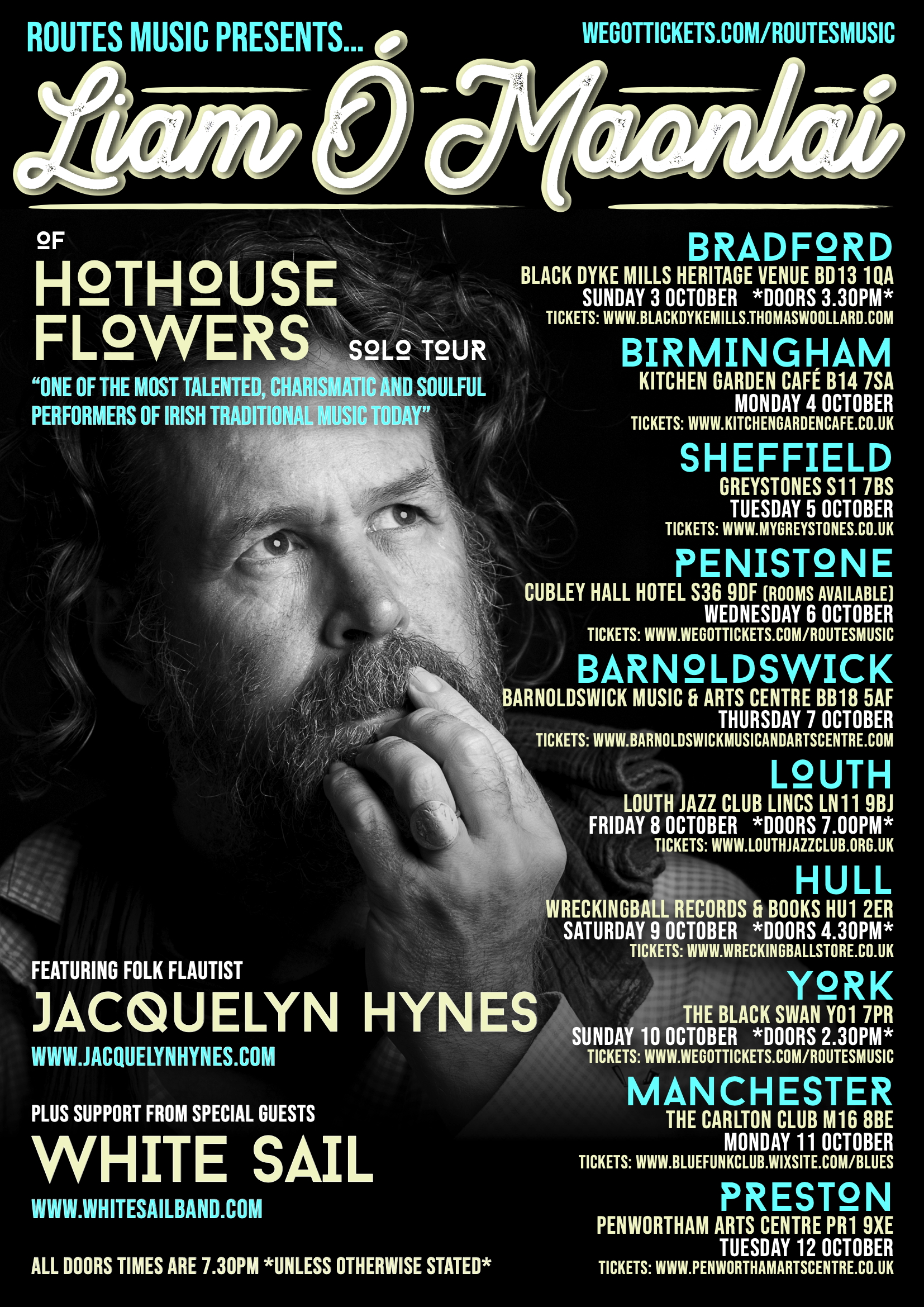
A night out with Liam Ó Maonlaí is a spiritual affair, and the intimate surroundings of this Lancashire arts centre proved perfect for our Dublin visitor, a sell-out crowd clearly there for a full-on music experience rather than casual chats with friends at the bar during the sets.

It’s not always the case that a performer, no matter how beguiling – and Liam certainly fits that description – can bring it right down at times and hear himself breathe and his keyboard hum, but this appreciative audience was happy to keep it buttoned until invited to join in, as befitting a live show in a former library.

An uplifting evening got off to a mellow start as local lad John Clayton, aka Hungry Bentley, shared all but one song from new platter, Exposition, his Nigel Stonier-produced long player reduced to sole voice and guitar, and going down a treat.

Openers ‘Don’t Frighten the Horses’ and ‘Loose Arrangement’ carried shades of Damon Gough, yet John’s not badly drawn on this evidence, and if next choice ‘Elodie’ was an exercise in writing a song about a girl and finding The Beautiful South have stolen many available names, he somehow got by, with hints of Lightning Seeds in places.

‘Alabama Chrome’ was a pared-back highlight, a pleasing chord sequence afforded Robert Forster-like quirk, and ‘Play Them as They Lay’ also impressed, John in namesake Lennon territory with a splash of Dylan thrown in.

While ‘Time is a Number’ also echoed Ian Broudie-esque melodic flair, closing number ‘Car in the Rain’ was more a pensive, precipitous nod to Justin Currie’s town where nothing ever happens, in what proved an apt precursor to the main guest’s opener.

It was the wet ride from Manchester that inspired Liam to treat us to ‘An Emotional Time’ on arrival, a brave decision given that the Songs from the Rain title track of sorts includes some taxing notes for a tonsil-warmer, the red wine yet to work its magic.

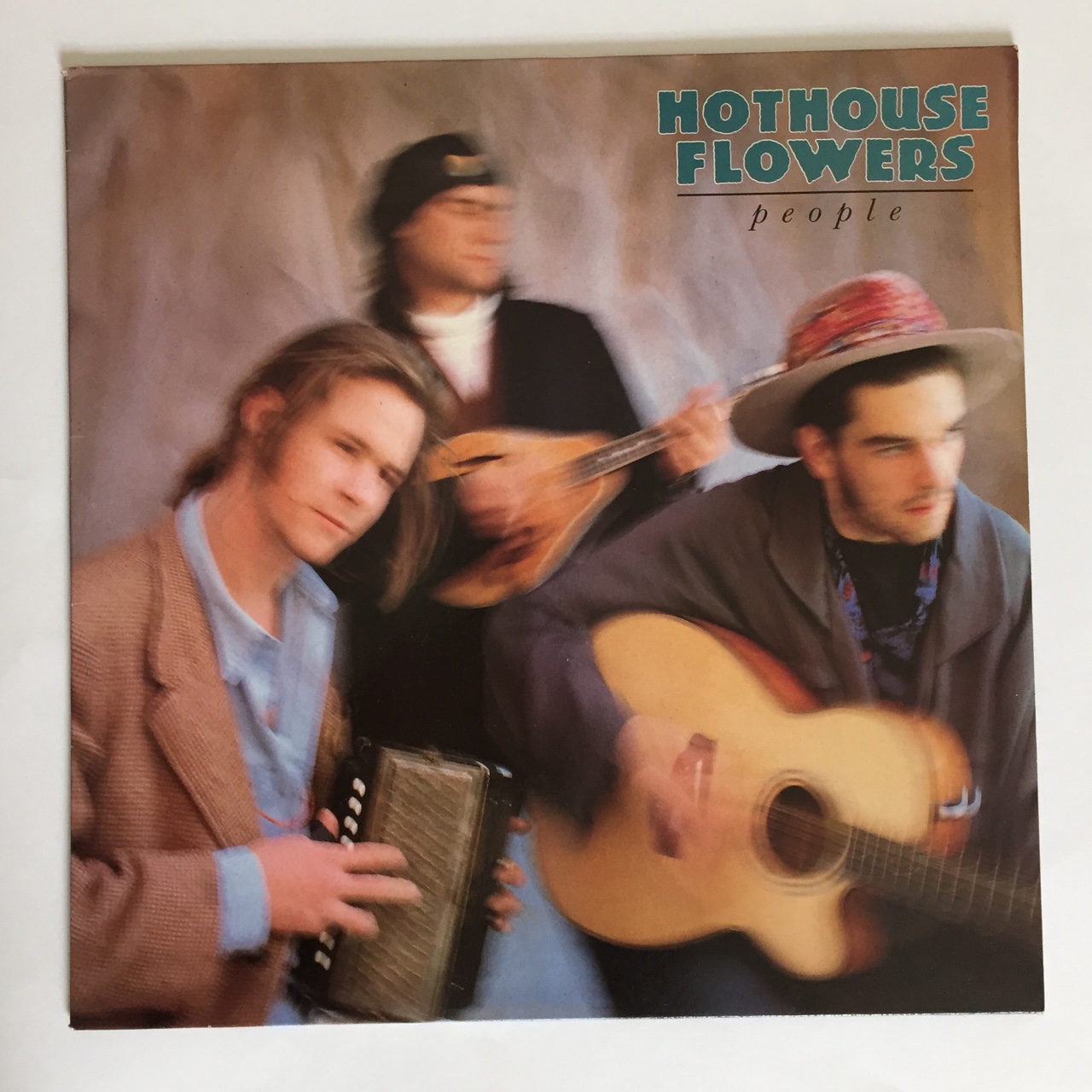
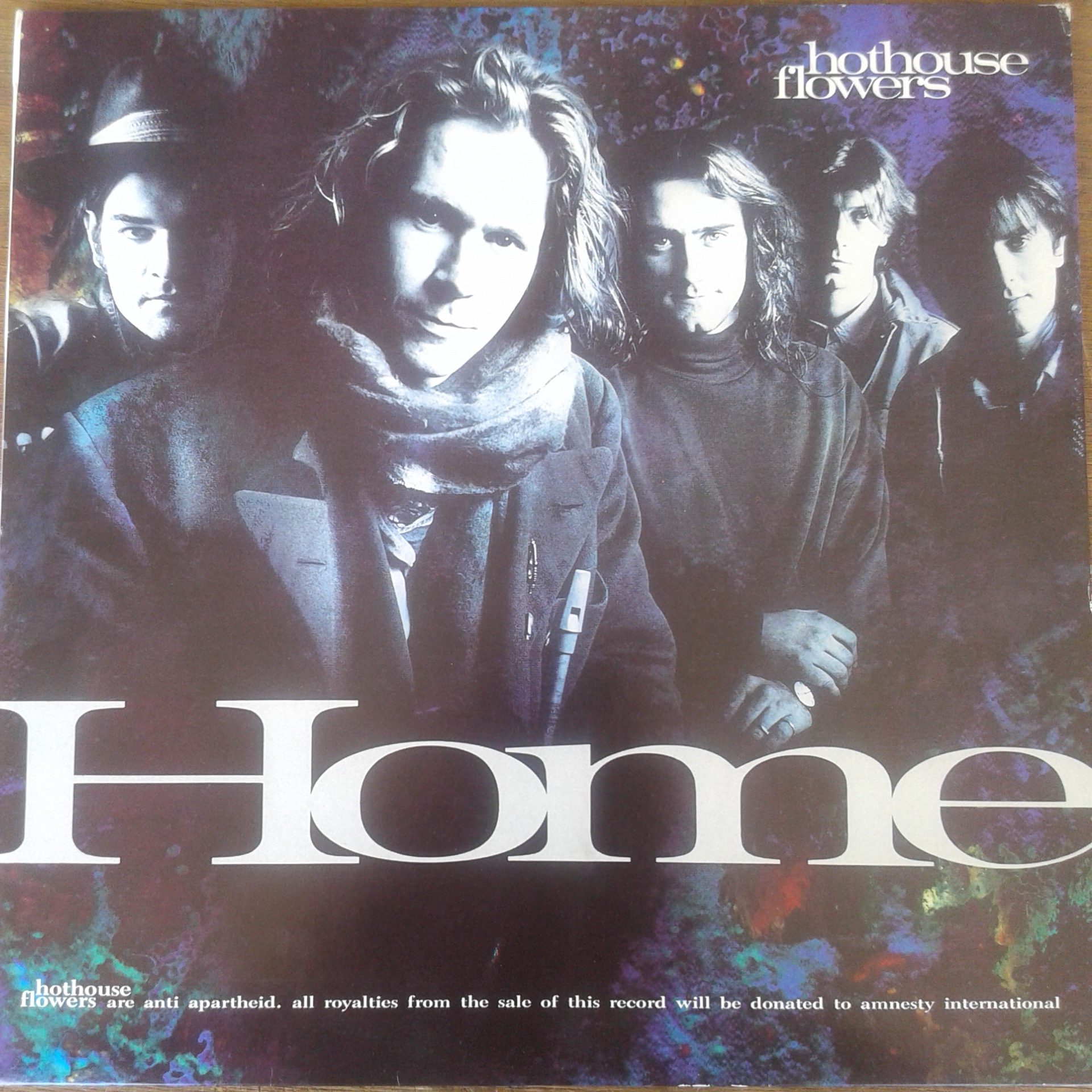
Soon the voice was soothed though, and so were we, next number ‘Sweet Marie’ transporting us to Home, Hothouse Flowers’ 1990 style, before the first of two borrowed love songs, Liam breezing from ’68 to ’78 through Bacharach and David’s ‘This Guy’s In Love with You’ (‘Probably gonna kill it,’ he warned, but it was never in doubt he’d deliver) to ‘a bit more vulnerable’ fellow classic, Dylan’s ‘Is Your Love in Vain?’ never more gorgeous, perfect for those wondrous vocals.

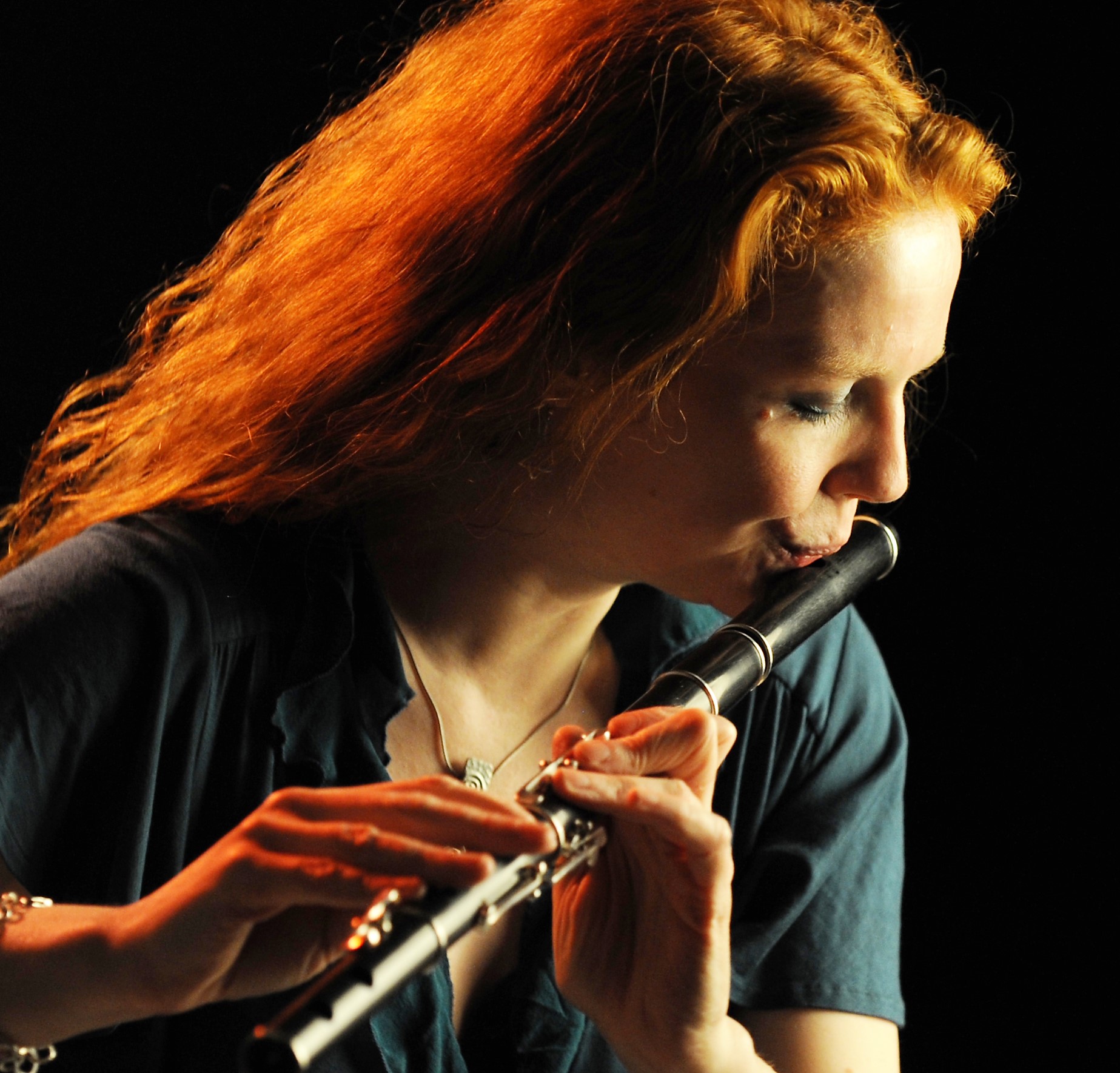
The day after Paddy Moloney’s passing, Liam talked of collective mourning at his loss, paying tribute to The Chieftains’ co-founder and ever-present as he was joined by special guest Jacquelyn Hynes for a fitting penny whistle (Liam) and flute (Jacquelyn) tribute, ‘Limerick’s Lamentation’.

From there we were back to 1993 and the Flowers’ third LP, the subtle power of ‘Your Nature’ providing an opening set finale that left hairs up on the back of necks before a call to replenish our glasses ahead of part two.

(As it turns out, 1993 was also the year – Jacquelyn later told me – ‘Limerick’s Lamentation’ featured on The Celtic Harp – A Tribute to Edward Bunting, The Chieftains (who previously featured the number on their 1977 Live! Album, although the first sound recording was by Sean O’Riada and Ceoltoiri Cualainn in the early ‘60s, including many Chieftains’ founding members, Paddy Moloney among them) joined by the Belfast Harp Orchestra (‘led by Janet Harbison, a great harpist’). But she added, “I learned it from Martin Hayes and Denis Cahill’s 1997 album, The Lonesome Touch”.)

If ever there was confirmation that neither the Flowers nor their frontman believe in the constraint of set-lists, here it was, a woman in the front row asking on Liam’s return the tale behind 2016 LP Let’s Do This Thing’s opener, ‘Three Sisters’, the main man happy to oblige, filling us in on a family story or two before playing the song, following that with another anecdote about one of those sisters and Liam and a brother, before taking us into – not related, I might add – a traditional number about ‘two brothers, and one of ‘em’s been poisoned’, ‘Amhrán na hEascainne’, or ‘The Song of the Eel’.

(Again, Jacquelyn filled me in later, telling me it was ‘recorded by Joe Heaney, a famous Sean nos singer from Connemara who recorded it in 1964 for On the Road to Connemara. The English version is ‘Lord Randall’, and there’s a version on Martin Carthy’s Anthems in Eden”.)

Liam described ‘Amhrán na hEascainne’ as a song of ‘collective pain’ and the blues in different form, and on this occasion it gave rise to a mighty bluesy romp, the Allman Brothers’ ‘Stormy Monday’ seeing a scene-stealing appearance from harmonica artisan Clive Mellor, miraculously appearing from the bar in another evening high, two years and four days after I last saw him work his magic on stage with Richard Hawley at Liverpool’s Mountford Hall. What that man can wring out of the humble mouth organ defies belief. He has true soul, and as he retreated back to his drink, a fella in front of me speculated out loud the chances of that unfolding in Penwortham on a Tuesday night. He had a point, but as Liam put it, there’s always that chance, underlining that by heading into ‘The Song of Possibilities’. At least I think so. I can’t seem to find mention of that out there. Someone’ll put me right, I’m sure.

I kind of lost my thread, notebook-wise, as we headed towards the finishing line, but Jacquelyn led the pair of them far away on her own composition, ‘Lost in Marrakesh’, on a night when we also got a snatch of Ian Dury’s ‘Clevor Trever’ from Liam, joking about his jealousy at actor brother Colm getting to meet the chief Blockhead on a film set back in the day.

And all along the way there was that amazing stage presence from the man at the electric piano, the slightest of facial expressions from our distinguished, hirsute visitor enough to raise a smile or garner attention, a cocked head to the cameraman and mere swish of that mane ensuring we ate from his hand. But time was soon against us, the volunteer staff looking anxiously at watches, a curfew almost upon us. Liam saw that and acknowledged he may need to finish on a hit, offering a sublime choice of ‘Don’t Go’, ‘Hallelujah Jordan’ or ‘This Is It’. A three-way split on that became four as a fella at the back with a Northern Irish accent chose ‘I Can See Clearly Now’. And so it came to pass that our visitor gave us something of a medley, a fresh take on the first Flowers’ hit including occasional tilts into Johnny Nash territory before ‘Hallelujah Jordan’ and a further visit to Nash-ville.

We sang along, then there were calls for more, but Liam drained his glass and pointed out the ‘anxious beautiful women behind the bar’ waiting to lock up. I was soon away, but not before a handshake with our esteemed visitor, 30 years after my last sighting in Sydney with the band who made his name. And how had I not realised he was barefoot before? To be fair, I’m not even sure he was touching the ground earlier. In fact, we were all floating at times on the power of song. Come again soon, Liam. And bring your friends back too.

For the recent WriteWyattUK feature/interview with Liam Ó Maonlaí and further links, head here. With thanks to Michael Porter for the photographs. You’ll find more examples of his work here. Thanks also to Jacquelyn Hynes for the extra information. Jacquelyn’s website is here. The same goes to John Clayton, aka Hungry Bentley, for his labours on the night. For more about Hungry Bentley and new LP, Exposition, head here.

Posted in Uncategorized | Tagged , , , , , , , , , , , , , , , , , , | Leave a comment

Beyond the lockdowns, Normal service resumes – in conversation with Henry Normal

It’s fair to say Henry Normal kept himself busy over the 18 months when the world seemed to stand still, a spell that for this Nottingham-born BAFTA award-winner included publication of two new poetry collections.

After more than 30 years making acclaimed TV and film, writer and producer Henry – real name Peter Carroll – has returned to his love of poetry, new live tour The Escape Plan currently doing the rounds.

Recently turned 65, Henry draws on more than 40 years of work in his live show, sharing tales, jokes and poems from his Audio and Radio Industry Awards (ARIA) nominated BBC Radio 4 series, each episode exploring a different theme, the next – A Normal Ageing – airing in early November. And then there are those 10 poetry books, the latest of which, The Beauty Within Shadow and Distance Between Clouds, were written during the COVID-19 pandemic, covering many aspects of lockdown, life and love, with plenty of that distinctive humour.

Henry’s poetry renaissance was inspired by his experiences bringing up his autistic son Johnny, something central to the live show and his latest books, the result a funny and moving collection of work on the page and the stage, about life and family.

There have also been weekly online poetry sessions via his New Poetry Society, Henry joined each week by guest poets for conversation and verse. Two poets, one hour, every week, live via Zoom, hosted by the Inspire library programme and a poetry festival he founded in his native Nottingham.

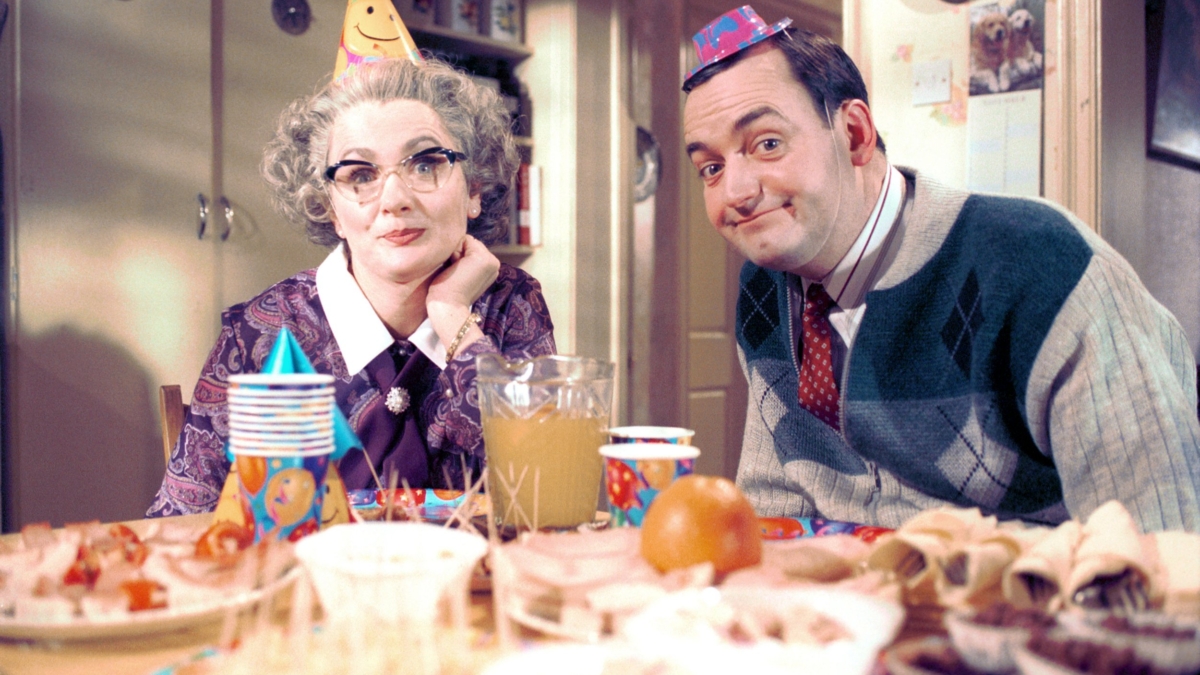
You’ll probably know most of this, but Henry received his special BAFTA for services to television in June 2017, his output including some of the nation’s best-loved programmes, co-writing and script-editing credits including, with Caroline Aherne and Craig Cash, The Royle Family, The Mrs Merton Show and spin-off Mrs Merton and Malcolm, and with Steve Coogan, Paul and Pauline Calf Video Diaries, Coogan’s Run, Tony Ferrino, Doctor Terrible, all three of Steve’s live tours and the film The Parole Officer.

And as co-founder/MD of Baby Cow Productions, set up with Steve in 1999, he produced and script-edited among others Gavin and Stacey, Alan Partridge, Moone Boy, Uncle, The Mighty Boosh, Nighty Night, I Believe in Miracles, Marion and Geoff, Red Dwarf, Hunderby, Camping,and Oscar-nominated film Philomena, before stepping down in 2016.

Prior to all that though, there was his performance poetry, touring with the likes of pre-fame Pulp, stand-up stars such as Linda Smith, and literary giants, including Seamus Heaney, travelling from Helsinki to New York via factories, schools, pop concerts, jazz clubs, folk clubs and festivals. And now it seems he’s returned to that world.

Is that some masochistic tendency in him, I asked, for all his success in writing, to all intents and purposes staying out of the limelight while close friends and colleagues down the years like Steve Coogan and Caroline Aherne courted it, returning to the loneliness of the stage, cruising the UK in a new 90-minute live show?

“Ah, well, I like a challenge! There’s no point in just doing the easy thing all your life. I started off as a poet. You can’t make a lot of money as a poet. You can just about scrape a living, but I got bamboozled by the bright lights of comedy and television. It’s akin to my 40 years in the desert.”

You’re not just happy dusting down your BAFTA behind closed doors?

“D’you know, that wanes after a couple of days. I’ve always been in the communication business, one way and another, and the great thing about poetry is that it’s a communication of perception, and the way I view the world gets communicated to another person. The great things is, with a film you may have 200 to 300 people working on it, so it gets pulled this way and that. But with a poem, it’s essentially just me and you, it’s the purest form of communication in a rhythm sense.”

And not just one, but two new poetry collections out there. The Beauty Within Shadow (written between August 2019 and June 2020, its poetry concerned with ‘the balancing of darkness and light in our everyday lives, the search for an understanding of pain and sorrow, and the processing of other thoughts we’d usually avoid by filling our days with mindless distractions’) and follow-up The Distance Between Clouds (written between June 2020 and March 2021, ‘a collection of poetry about joy, positivity and optimism, before I die unloved and forgotten’) making it 10 poetry books in total.

“I think so, yeah. I wrote one going into the lockdown because it was a strange, new adventure. We’d done so much running around that the idea of standing still and exploring your family, ourselves, your home and your space, well, what’s happened over the last year and a half is that we’ve explored that space deeper than before, and the first book I wrote was called The Beauty Within Shadow. Because we are within the shadow of this awful pandemic, but there’s still beauty to be found.”

The first year or so of my features in that period often touched on interviewees asking, ‘what happens next?’, but now it seems to be more about reflecting back on that period. For a while we saw a collective responsibility, Spirit of the Blitz positivity, and acknowledgement of those who were truly important, from community and family to health and care workers. But then there was the ‘let the bodies pile high’ mentality, Dominic Cummings test-driving his eyesight, and so on, that belief seemingly compromised.  

“I think the trouble is we don’t know what the future is. We never know, but it seems our muscle memory has had a bit of a jolt, so even something like going to the post office, you’ve got to remember what the social norms are for that. All those little things you take for granted.

“I always say to people who come to be me about writing, write what you know, and a good illustration of that is if you think of your local café. If you’re writing about my local café, you don’t know the details, but if you write about your own, you know if it’s waitress service, if you go to the counter, whether you tip, if you order your food and pay straight away or at the end. All those sorts of things. And in a way, we’re re-learning those things. 

“And the second book, Distance Between Clouds, if you think about clouds and rainfall, you can look at the negatives, such as, ‘Oh, it’s going to rain,’ but if you look at the distance between them, you’ll think, ‘Well, I’ve got that much sunshine’. So, again, what I’m trying to do is look for the optimism, and this new world we’re building and examining, we can see whether we like the old way of doing it or whether there’s a new way.”

I guess that fits in with your weekly Zoom poetry sessions, The New Poetry Society. Is that your way of spreading the word and inspiring?

“Well, yes, it helps me keep in touch. When Zoom first became a thing, I did a few meetings, then thought, it’s alright performing like you’re on stage, but really it’s a more intimate thing. You’re in your home, everyone’s n their home. What you really need is conversation. What we’re missing is sitting down with each other, having a conversation.

“I started off getting Lemn Sissay, an old mate of mine, and he was great, and the thing is, when you start talking, I learn things about them that I didn’t know, and I’ve done 21 now, the last eight for the Manchester Libraries, and that was great. I’m a big fan of the libraries, and I’ll be coming to Darwen Library on this tour.”

Ah, Darwen Library Theatre. A great venue. I’ve seen Blancmange there a couple of times, Neil Arthur having gone to school next door, sharing some stories about his youth each night.

“I always thought Blancmange was the best name for a pop band. There’s no way you can become the big ‘I am’ with a name like Blancmange!”.

True, although Neil Arthur’s local sensibilities were already kept in check on that front. He tells a lovely tale about a woman across the road from where he grew up calling him over while he was back home, probably gloating about his new success in that there London, her deriding him in true down-to-earth Lancastrian style for his performance on Top of the Pops, picking up on that line from ‘Living on the Ceiling’, taking exception to him being ‘Up the wall, I’m up the bloody tree’, as if to say, ‘Y’daft bugger, what’re you on about?’.

“Ha! Yeah, ‘Have a word wi’ y’self!’”

Head on the block here, but poetry was something I didn’t realise I liked until a realisation that Ray Davies, Chris Difford, Pete Shelley, John O’Neill, Paul Weller, and so on wrote poetry. They just happened to call it lyrics. Then there was John Cooper Clarke, in the scheme of things not far off from fellow Salfordian Mark E. Smith.

“Exactly, and the thing is, there’s a million different flavours of poetry. No one would ever say, ‘Do you know, I don’t like music,’ and you’d never say, ‘I don’t like paintings, they’re not for me’. Yet with poetry, people will, as though they’ve seen every poet and read every poem and decided that’s not for them.

“If you think about music, the difference between classical and jazz and blues, there’s all those variations in poetry, even to the extent that … I’m a big Nick Cave fan, so within the genre of rock or pop or whatever, I could say I like that and say I like a particular artist. There are artists I don’t like in rock and pop – being from Nottingham, I was never a big fan of Paper Lace. And talking about Nick Cave, there are certain albums I like and certain albums I don’t, like Nocturne or something like that, and then of those albums, there will be certain tracks I’ll play more than others.

“But you don’t think of that in terms of poetry, saying, ‘I like some of his books, and some of his poems’. It’s always a sort of carte blanche ‘you do like poetry, or you don’t’.”

In my case, I became aware of certain First World war poets, then maybe Dylan Thomas, then there was begrudging acceptance that despite my teenage self’s Dad loving him, I had to admit I enjoyed John Betjeman’s verse, and in more recent years the likes of Luke Wright, Mike Garry, and so on. It gradually gets you.

“It does, and very often we don’t really know that much of it. Were taught a little at school, but that’s not necessarily the flavours we’re going to like throughout life. I remember when I started, thinking, ‘This poetry lark is not passionate enough’. I’m talking the early ‘70s. The First World War poets, some of them, but I hadn’t read them. I think a lot of people’s misgivings about poetry is borne out of ignorance, for want of a better word … in the same way you might say, ‘I don’t like jazz’. But there’s a million flavours of jazz.”

I gather your journey into performance poetry started alongside the likes of Pulp and emerging new wave bands.

“When I started, there were really no poetry events to go to, certainly not for the sort of poetry I was doing. Only what I’d call dry poetry events. I did some of those, but in order to reach an audience, I had to do things like prisons – a very captive audience there! – and hospitals, schools and pop concerts. I lived in Chesterfield for a while, so I’d tour with some of the Sheffield bands, as they seemed to be doing well. Pulp had released a few albums but still hadn’t made it, and we’d turn up at some gigs there’d very often be no one there, or just an ‘andful.

“There were no Nottingham bands at that time, and a lot of the Sheffield bands you won’t have heard of, because they never made it. Dig Vis Drill was one of my favourites, a sort of electronic and guitar band. I loved them to bits. There was Mr Morality, Screaming Trees, a goth band, and some Chesterfield bands like Le Bland and Criminal Sex, a punk band. I drove their van a couple of times – they were too young to hire a van …”

Perhaps too young to be in a band of that name too.

“Yes, I was never involved, apart from driving the van – I was just the getaway driver! Then there was Body Factory, a few who never quite made it. Then I came to Manchester, where there were a lot of singer-songwriters, Martin Coogan I met early on, and went on to some success with The Mock Turtles. And of course, I met his brother. But probably my favourite of the Manchester lot was someone who used to be called Johnny Dangerously, now better known as John Bramwell, or I Am Kloot. Lemn Sissay and I toured with him, must have done around 30 gigs, and those are probably my favourite gigs of all time, touring with Lemn and John.”

John was the second last live act I saw before the shutters came down with the virus, playing in the intimate surroundings of The Venue, Penwortham. A great night it was too.

“D’you know, for me he’s always got the heart of a poet, so he got on very well with us. We toured together in a little car, and he has a great sense of humour.”

In Penwortham he was giggling much of the night.

“Yes … he’s probably better as he drinks! I’ve seen him drunk on stage a few times, and he actually gets funnier the more he’s pissed off! We’d do a gig, then play pitch and putt, go-kart riding, on a beach, or something. They were more than just gigs. They were days out, really.”

We talked about your latest books trying to make sense and cope with all the strangeness and sadness around us, with the pandemic. How do you reckon you coped? Was it just you, Angela (Pell, a screenwriter, the pair publishing best-seller A Normal Family in 2018, drawing on their family experience), and your son?

“Yes, and with Johnny being autistic, to be honest I think he prefers the lockdown. It’s quieter, the sequences of our life are quite rigid, and he likes that routine. For him, less planes in the sky and less cars on the road means less noise, and there’s less people coming round, so he’s very happy.”

I see he’s an artist ‘in his own write’, as John Lennon would put it, responsible for the cover art of the latest two poetry books (and given his own month-long art exhibition in April 2018 at Phoenix Arts Centre, Brighton, Art By Johnny proving an acclaimed success and breaking attendance records).

“Very much so. He paints every day and he’s been doing Zoom classes, exploring different types of painting and forms of creativity, and he’s enjoyed those. They’ve been brilliant. We’ve coped very well, and I’m looking forward now to going out, being a social animal, meeting crowds, having a laugh. To have a laugh with a couple of hundred in a room, you can’t beat it. I don’t do drugs, I don’t drink to excess, anything like that, but the adrenaline and the way your blood surges when you’re having a laugh with a crowd is a big draw, a big high.” 

Of course, I never really believed that you’d retired.

“Ha! Well, I’ve retired from television and film, but I had to put that because people kept sending me scripts and saying, ‘Can you get this on the telly?’. I made more than 450 television programmes, so to a lot of people it’s what I’m known as. But if I made 451 programmes, nobody would know the difference. And once we’d made Philomena, a massive hit all over the world, I’d probably peaked in terms of film and TV production. I think it’s worth recognising that was quite a huge event.

“Doing Gavin and Stacey was great, but you don’t want to compete with yourself all the time, trying to top that. To actually top The Royle Family was quite a hard thing, and in a way I don’t think I ever could, so rather than carry on writing I moved into production, getting things like The Mighty Boosh off and Julia Davis’ work off was sort of investing in the next generation. And I loved helping their careers and dreams.

“But now, as I reach pensionable age … well, I say that, but they keep moving it back, don’t they …  as I keep chasing the pension, I’m thinking there are things I’d like to say, and fun to be had in doing what I’m very passionate about, and I hope what I do best. I don’t know if you’ve heard any of the Radio 4 shows …”

I was going to ask more about A Normal Ageing and The Escape Plan.

A Normal Ageing is the one I’m researching at the moment. I think it’s my 10th show. What I do is pick a subject, go on to Wikipedia, put the word ‘ageing’ or whatever it is in, read the definition and what it’s about, so I know what I’m talking about, then just read as much as I can. With ageing, there are creatures that don’t age, like jellyfish and various worms. And do you know lobsters don’t really age? But they do pee through their faces, so it’s not an ideal existence.

“Finding facts like that is very interesting, and then I talk to lots of people, get their views on the subject. It’s only a half-hour show but I try to do an hour’s worth of material then reach some sort of conclusion. And it’s worked well on all the others. And the shows I do live are very similar to the radio shows – you’ve got stories, jokes and poems as I explore these subjects. And with The Escape Plan, it’s escape through creativity. Richard Lovelace said, ‘Stone walls do not a prison make,’ and we’ve all been in lockdown but we’re all in us ‘eads, so we can escape any time we want.”

I thought there might also be a nod to your Brighton surroundings, and The Escape Club.

“Well, I do live in Brighton, although I’ve got to say my heart’s still in the north. It’s quite funny, I’m bringing up a southerner, but strangely enough, because he only speaks to me and his mum, he’s got a northern accent.”

It’s the other way with me, trying to give my girls a southern identity, having moved to Lancashire from Guildford in late ‘93.

“Oh, I see. You’re part of that movement! But I think you can safely say you’re a northerner now.”  

I’m not quite sure what to make of that, but maybe that’s acceptance from Henry, so I’ll take it on that level. With such an amazing CV as a writer and producer, and all those shows we mentioned and many more, I wondered what you loved watching, growing up.

“Well … (Sgt.) Bilko. I loved Bilko. The weird thing is, when BBC Three started, they said, ‘We need more teenagers on, as teenagers will watch teenagers,’ but I watched Bilko, and it never occurred to me he was a 50-year-old American bloke. He was just a great character.”

Do you remember early ‘80s post-punk outfit Serious Drinking? They had a great song, Countdown to Bilko, about how dull Sunday television was in those days … until The Phil Silvers Show came on later that evening.

“That’s brilliant! Yes, Bilko was my favourite television programme, and my favourite comedian, one that really inspired me, was Jack Benny. There was something beautiful about him, he was such a lovely man and always able to take the mick out of himself. I don’t know if you’ve ever seen the original To Be or Not to Be, he did a great version during the war, and it’s his stillness that’s brilliant. He’s got this lovely way of milking the scene for more than it’s there for.

“And the moment I realised I wanted to be either a writer or a performer was when Jack Benny was on the Dean Martin Show. Dean Martin would pretend to be at home, and was on the phone when Jack Benny walked in, and they’re both in tuxedos.

“Now, I’m a raggedy-arse kid in Bilborough, Nottingham, about 12 years old, my Mum’s died, there’s five kids and a Dad who works at Raleigh, we’ve no money, and I’m watching these two blokes in tuxedos. But they nod at each other while he’s on the phone, Jack walks around the settee but doesn’t sit on it, he gets on the floor, starts throwing dice. This is a grown-up man. I’d never seen a grown-up having fun like this. I looked at that, and thought, ‘That’s the world I want to be in!’.”

We all had our ways of getting through the lockdowns, and for many of us part of that involved binge-watching TV shows we’d missed for some reason or other. In my case that included a late conversion to the wonders of Mortimer and Whitehouse: Gone Fishing, The Detectorists, and The A-Word, and returning to old favourites on the BBC iPlayer, including – for the first time since they first went out – The Royle Family. And that’s certainly stood the test of time, not least the early series. Does catching those clips take Henry back to working with Caroline Aherne and Craig Cash?

“Oh, yeah. The lovely thing is I was paid to sit in a room with funny people. Caroline beyond the television was a funny person anyway. When the bosses used to come up from London, we worked on the sixth floor at Granada, they’d have a chat with us, then when they left, Caroline would open the window and shout down to them, these big top brass, ‘Do a funny walk!’. And because she was so cheeky and charming, they would do a funny walk across the road.

“I love that she wasn’t over-awed by authority. She had that little devilment. If she didn’t feel like writing, we’d go on a Granada tour, go shopping, or go for a bite to eat. Most days we’d probably only write for a couple of hours.”

Were you the one saying, ‘Come on, we best get back’?

“Oh, I was definitely the responsible one. I’d write it all down then type it all up. Even when we were doing Mrs Merton, when we had Dave Gorman writing with us. There’d be four of us, but I’d be the one writing it down. I got paid as a script editor as well as a writer, which was quite nice. I was the only one with a computer. But it was such good fun, and nobody ever worried if you told a bad joke. You’ve got to be able to fail in creativity as well and push the boundaries. And you don’t know where the boundaries are, until you’ve crossed them.”  

There are some impressive stop-offs on this forthcoming tour, not least Liverpool Philharmonic Hall, where I last saw John Cooper Clarke, supporting Squeeze.

“And of course, Ricky Tomlinson and Sue Johnston are from Liverpool. People often forget the mum and dad in The Royle Family are from Liverpool. And they were always in the frame for that, from day one.

“And the Liverpool poets were a big influence on my career. I’ve worked with Roger McGough {in 2018 Henry recorded an episode of Poetry Please which he curated and co-presented with Roger} and Brian Patten, and when I started Manchester Poetry Festival {now Manchester Literature Festival}, I put him on there, and when I started Nottingham Poetry Festival, I put him on there. I’m a big fan. In a way, I like to think I’m a composite of all three {I’m guessing the third referred to is Adrian Henri}. They had three distinct areas in poetry, and I like to dabble in all three. And of course, Spike Milligan was the other big influence.”

That’s someone I meant to mention, having known him from radio and telly but also from a young age for Puckoon and his war memoirs before that great body of poetry.

“Well, I read all his comedy books, then bought Small Dreams of a Scorpion, and it made me cry. He’s so funny, and yet … Back to the tour though, there’s the Sale gig, right near Wythenshawe, where The Royle Family was based, and Wigan, where Lemn’s from. In fact, he sent me a text and it just said, ‘I’ve made it, Henry – a full house at Wigan!’”

You’ve reminded me of a conversation with John Bramwell, talking about the Liverpool and Manchester scenes in music and how he didn’t really fit in either. There’s something of that with you, and The Royle Family had feet in both camps.

“Well, I’m from Nottingham originally, lived in Hull for a while, lived in Chesterfield, lived in Manchester for about 15 years. I think I’ve general northern. I’m probably Doncaster station. Somebody once billed me as ‘local boy everywhere north of Derby’.”

With not only an honorary doctorate of letters from Nottingham Trent University and another by Nottingham University, but also a beer and a bus named after you in your home city.  

“Yes, that’s very nice. That bus has been touring more than I have, of course. But I’m really looking forward to going to the north west. I’ve got such fond memories, and there have been many great poets. Going over to Preston I’m going to be thinking about Hovis Presley. Every corner, as it were, brings back good memories.”

I could have sworn you said Elvis Presley for a moment.

“Hovis Presley! He had a show called Poetic Off Licence. Unfortunately, he died too young. I did manage to film him for television. I got around 60 poets for a programme, Whine Gums, including some who’d never been filmed before, which I’m quite proud of.”

In fact, Hovis was from Bolton, but that’s not far off. As for Henry, how about that tag, ‘the Alan Bennett of poetry’, as The Scotsman put it?

“Well, I love Alan Bennett. I always remember that documentary he did, in a Harrogate hotel {Dinner at Noon, 1988}. He’s on camera talking about the hotel, goes into the bathroom, and he’s shouting at the cameraman, ‘There’s oodles of towels in here!’. He’s got such a lovely way with everyday language.”

“Anyway, I realise you’re going to have to condense this all down to 100 words. Did you know, when we started The Mrs Merton Show, we used to have about five guests? Then it went down to four, then three, then two, because we always complained you never really get a proper conversation going otherwise.”

Well, the word-count stretched to considerably more than 100 words, and I should acknowledge here my thanks to Henry, not least for not mentioning my namesake, Mrs Merton’s lad Malcolm during our conversation (particularly after suffering at school for all those ‘Course you can, Malcolm’ comments for Vicks Sinex adverts from 1972 onwards … not to be confused with a later Tunes advert where the fella asks for a ‘second class return to Dottingham, please’), having half-expected a prompt to get back to my boxroom at some stage.

The Escape Plan tour opened on Dylan Thomas’ old patch in Laugharne, Carmarthenshire, on October 1st, moving on this weekend to Sale Waterside – 8th October, a Morecambe Playhouse sell-out on October 9th and The Library Theatre, Darwen – 10th October, then King’s Place, London – 27th October. Then there’s Square Chapel, Halifax – 3rd November, Barnsley Old School House – 4th November, Retford St Saviours – 13th November, plus a Collingham sell-out – 15th November, a hometown date at Metronome, Nottingham – 16th November, The Met, Bury – 17th November,, Liverpool Philharmonic Hall, Liverpool – 19th November, Garret Theatre, Chester (part of the Chester Literature Festival) – 20th November, The Ferret, Preston – 21st November, King’s Hall, Ilkley – 23rd November, and a sell-out at Brighton Komedia – 1st December. Henry’s live outings then resume next year at The Quay Theatre, Sudbury – 10th February, Bristol Folk House, Bristol – 12th February, The Old Courts, Wigan – 13th February, Knutsford Little Theatre – 14th February, Wylam Brewery, Newcastle – 15th February, The Leadmill, Sheffield – 16th February, Stamford Corn Exchange – 17th February, The Pound Arts, Corsham – 24th February, Plough Arts Centre, Great Torrington – 25th February, before a finale at The Acorn, Penzance – 26th February.

And for all the latest from Henry Normal, head here. You can also keep tabs via Facebook, Instagram and Twitter.

Posted in Uncategorized | Tagged , , , , , , , , , , , , , , , , , , , , , , , , , , , , , , , , | Leave a comment

Coming to an understanding of myself – the Liam Ó Maonlaí interview

It’s not often that world-renowned singer-songwriters – not least those from Dublin – end solo tours on the outskirts of Preston, Lancashire. But Liam Ó Maonlaí’s rarely one to take a conventional route.
Hothouse Flowers frontman Liam’s Routes Music-promoted 11-date tour opened at the Tyneside Irish Festival, and has since involved dates in Bradford and Birmingham, with Sheffield and Penistone in South Yorkshire next, then briefly across into East Lancashire for a show in Barnoldswick before darting back over the Pennines and beyond to Louth in Lincolnshire then up to Hull and York, finishing at The Carlton Club, Manchester, and The Venue, Penwortham early next week, a musical journey in an intimate setting promised at every step.
One of the more talented, charismatic, soulful performers, musician’s musician Liam’s prowess goes well beyond his Dublin roots, impressive not just for that amazing voice, but also for his mastery of piano, flute, harmonica, penny-whistle, bodhrán, and more.
And while still featuring with Hothouse Flowers – the band taking off in the mid-‘80s after U2’s Bono labelled them the ‘best unsigned band on the planet’, their biggest chart hits being 1988 debut 45 ‘Don’t Go’ and 1990 Johnny Nash cover, ‘I Can See Clearly Now’, their first three LPs all UK top-10 hits – as a solo performer, Gaelic speaker Liam also continues to wow audiences with a bit of traditional Irish folk, gospel, blues, soul, country, rock … you name it.
He feels his foundation in music came first from his mother and father, letting on, “My mother’s people were all piano players. My father could make you cry with a song.”
Soon discovering his own path, by the age of nine he found himself in different towns by virtue of the strength of his whistle and bodhrán playing and later mastery of unaccompanied singing in the traditional Irish style known as Sean Nós, explaining, “Our style of singing is about taking the pain of the people, of your neighbours and yourself, and making beauty out of it to get you through. Blues is also this. I play to soothe myself first. When I reach that feeling, that feeling travels with me of its own free will”.
But how’s it been these past 18 months or so? Did the dreaded coronavirus change the way he worked?
“Yeah, everything was cancelled. But that was alright – that’s like a clean slate. I took to walking and got into the habit of getting up on waking. I wasn’t lying in. I got up early every morning and got out of the house and found that to be a game-changer for me – something I needed.”
Therapeutic?
“Yes, to say the least!”

Has it been a productive time for you, with regards to writing or making music?
“Yeah, I co-created a bit of theatre, I recorded an album, I set the wheels in motion for a project with the National Concert Orchestra … so, busy, yes! And there was a lot of artwork as well.”
Is that you with a brush, a pencil, or both?
“Yeah, multi-media. I like to use natural pigment and acrylic. I don’t always use brushes. I might use a roller or a hard edge – sometimes that’s good for abstract work.”
Is that a private affair, or something you’re happy to share with the world?
“Well, it’s not something I feel I need to hide. But at the same time, it’s not linked to any commercial system … although I did meet a person with a space in town and she’s interested in hosting me with a visual show that I might make into a multi-media show. So I’m excited about that.”
Recently, I went back and re-watched his performance on the splendid BBC Scotland/BBC Four/RTÉ Ireland joint production, Transatlantic Sessions from 2009, with cracking star band accompanied takes on ‘Worry Not’ and ‘Work Song’. More recently, there have been internet shows from his own patch, with home these days a 15-minute Luas tram ride from Dublin, ‘pretty close, but quite green and also close to the mountains’. Has he been out and about playing a few shows recently?
“Yeah, a few, and loads of online stuff. We were supposed to play London on St Patrick’s Day in 2020, but decided we’d pull that. Your side of the water closed things down a bit later than ours, so we feasibly could have done it, and in retrospect I might have gone for it.”
I think you may have made the right call. It was a bit of a scrum around then.
“Well, it was a bit. I suppose we’ll just appreciate doing it when we do it. But it’s a funny old thing. It seems to be just another political game.”

I always had an affinity with Hothouse Flowers. And we’re not just talking the Greenhouse Effect here, even though that’s become more and more of an issue as the years are passing. Flicking back through my diaries, I was reminded that I first caught Hothouse Flowers live in June 1989 at Glastonbury Festival. A special time for me. Within three weeks I’d met my better half on a Turkish holiday, we’re still an item 32 years down the road, and those first three LPs were definitely part of our collective soundtrack..

“Oh very good! That’s always good to hear. It’s good to find your mate.”

Do you recall much about that festival, also including the likes of Elvis Costello, Suzanne Vega, The Bhundu Boys, Fairground Attraction, and your pals, Martin Stephenson & The Daintees.

“Yeah, and {Martin} came on tour with us subsequent to that – that year or maybe the next. There was Fela Kuti also, Van the man, The Waterboys …”

Mike Scott too was a big inspiration on Liam and his bandmates back in the day, and I next saw them while on my backpacking world travels in February 1991, Down Under at Sydney St George’s RSL Club.

“Amazing!”

Have you special memories of those days? Were you good company as a band? Martin Stephenson suggested you were in our recent interview.

“Yeah, and just having the gift of music … music did all the talking for us. It was the consummation of our friendship, really. We weren’t always the best at talking, but a good gig … there’s nothing like it, to share an experience like that. And three of us are still together … and we’re very rich for having those experiences shared.”

Do you and your fellow Flowers tend to chat on the phone, or is it a case of turning up on the doorstep these days?

“Well, the friendship is on the stage actually, we don’t see much of each other bar significant life events these days. But when we do get to see each other, we’re really glad to. And that’s the way our friendship sort of works. There’ll be the odd phone call, alright, but …”

Does the conversation carry on where it last left off?

“Yeah, and there’s always great excitement when we get together. We’ve known each other for a long, long time now.”

To the point that you’re finishing each other’s sentences?

“Err, maybe … sometimes … or sometimes just stopping them dead in their tracks!”

And while I never got to see the three of them perform together, I loved your Alt band project in the mid-1990s with your Northern Irish housemate of the time, Andy White, and upstairs neighbour Tim Finn, of Split Enz and Crowded House fame. What’s more, my love for the resultant one-off 1995 LP, Altitude remains strong.

“Oh yeah! Well, that was something I … I always have this desire to create music from the moment, and I know I had it with the Flowers. But we were so tied with the formal side of recording that songs had to be ready before we went in the studio.

“That was all well and good, but I really hungered for a chance to go into the studio with some people and let the studio capture those moments of inspiration … instead of having those moments of inspiration and then trying to remember them.

“And they were willing to give us our space, and because we had spent a summer and a winter together – Andy, Tim and myself – and really had a fantastic time, we just had a great spontaneity with writing.”

It shows. And maybe it was the lack of pressure too. It sounded organic, and you were away from the record label ‘write, record, tour, and repeat’ treadmill, perhaps.

“It was just that the inspiration was allowed to happen in the studio. There was never too much pressure, even with the Flowers. It’s just that it had to be ready. And the idea of working with two other singers was great.”

Absolutely, and the diversity in your voices added something special.

“Yeah, I love to sing, and I love voices – no matter what shape a voice has. I really do love a voice.”

Well, I was going to say, I love your voice, and Tim’s work with his Split Enz and Crowded House and that special blend he has – in particular – with his brother Neil is amazing, but I also love the way you two and Andy gel. You head somewhere else completely, and it’s all great in different measures.

“Exactly!”

As a result of all that, I put on a compilation made in honour of the year 2000 arrival of my first-born, a song called ‘The Day You Were Born’ from that album. And it remains a personal favourite.

“Ah, great. A lot of people think that was written for my son, but it was written before he came along. I was very pleased with that song. That’s one of the few songs that I just wrote myself. I just sat down with an instrument and … carved it.”

Liam’s son, Cian, from his first marriage, is now 25, while his daughter with his French partner, Marion is now 15. Is that right the eldest has followed your career path?

“Yes, he’s great. I’m really proud of him. He’s got something … he’s got a little bit of what I have, but also has something from his mother’s side. His grandfather had a very quiet but like a volcanic presence, and my son has that as well.”

Cian is part of the group, Big Love, who this year released the impressive single, ‘Lily’. And once you know that association, there’s no denying it’s Liam’s lad. Not as if he’s taking advantage of that family link.   

“It’s great to see somebody making their way … in their own way … and watching. They released a single and it really did well for them, publicly. It got a lot of exposure … and didn’t have a publicity machine behind it, apart from what they could drum up themselves. Even on the strength of that … it got a lot of interesting breaks, and they went into the studio with the (Irish) Chamber Orchestra last week. And that just came from the strength of the song.”

It seems that the next generation has well and truly arrived. Only this summer gone, my youngest got to see an intimate show at The Continental in Preston featuring Inhaler, the band – selling out left, right and centre at present – fronted by Bono’s son, Elijah Hewson. Time truly flies.

“Oh yes! Time just doesn’t stop.”

Getting back to Alt, have you been in touch with Andy and Tim in recent times?

“I was. They sent me some stuff to see if I’d be interested in adding my bit to it. I never got around to it, but they ended up making a record, which they’ve asked me to do some artwork for. So that’s on its way.”

Is there a new record coming our way from you as well?

“Well, I went to Paris last year when there was a window of opportunity. We took a ferry over, my partner and daughter and I. We went over to see her family, but I was getting a lot in inspiration while I was here and was almost reluctant to go, as I felt this was where it was happening.

“But I couldn’t resist going over and contacted a woodwind player by the name of Renaud-Gabriel Pion, who plays bass clarinet, bassoon and a lot of medieval instruments. I just said, ‘Let’s make a record’, and he said yes.

“He had a little studio set-up in a little apartment at the top of a place in the middle of Paris, and we spent five days I think just playing together. And it was one of those records where a couple of musicians come together and just play … and that’s my favourite way of working, with no pre-arranged songs or melodies.

“A couple of times I had a few riffs I might add, but other than that we just played to each other, and came up with three hours or more of music. So that still has to be edited, and deciding what kind of a shape it’s going to take. It’s quite ambient and filmic. Trance-like, but we weren’t using any loops or beats, just our own rhythm.”

It sounds like it might even be a double album in the making.

“Well, if we decided to go with that formula, there might be a different way of releasing it. We’ll see. There’s also a folk magazine, RnR, and I put one of the tracks from that on to one of their monthly CDs.”

Going back to your own beginnings, dare I ask what your first band, The Complex, were like? Was it maybe fated that you’d go one way and your bandmates Kevin Shields and Colm Ó Cíosóig would take a very different path with what became My Bloody Valentine?

“Only as much as …musically, it wasn’t. We got on really well. I think they liked what I was bringing. It was just that I was about 15 and my Dad just said, ‘You’re not allowed to be in that band anymore’. I would have kept going, probably. I’m a kind of person that if I land on something, I kind of stick to it.

“With the Flowers, similarly, I might have left for all kinds of reasons, but I stuck with it for some reason. Sometimes the reasons that might trigger you to leave can be very earthly or ego-based, and sometimes you can look at the bigger picture and realise you should hang in there, for some bizarre reason.

“Somebody said one time there are no bad decisions – some might land you in awful situations but … there’s always learning. And I’ve come to the understanding that the object of the game is just to learn about yourself and how to shine in your life … and make the most of it.”

When Bono told Rolling Stone magazine about Hothouse Flowers being the best unsigned band on the planet, was it a shock to you, and did it all happen really quickly from there?

“Yeah, it was. And a lot of things happened really quickly … which wasn’t always that easy. There was a scramble for management and a ruthlessness in the business I hadn’t expected to see, and I hadn’t expected it to affect me in such a way. But again … always learning from the experience.

“When I heard, I said, ‘No way! You’re joking’. I came in from somewhere, into some building or other to meet one of the lads, and they said, ‘Have you heard, there’s a photo-shoot with Melody Maker tomorrow?’. What! Then there was that Rolling Stone magazine quote. But there it is.”

Is there frustration in a sense that the wider world stopped listening after the last Hothouse Flowers hit, despite you carrying on making great records? Or does that not fit the character of this laidback performer we know and love?

“No, it’s beautiful to feel that the whole world was hearing something you had to say or play, but I knew that once we’d pulled away from the management we had and also parted company with our record label, that we didn’t have that machine behind us. And you’re competing with everything that’s up there on every billboard.

“I’d love to come up with something that would resonate, but to a degree it would have to be of its own terms. Not my terms or anybody else’s, but the terms of the music itself. Who knows. The beauty of where I’m at now is that I can say yes to so many things.

“And from Friday on, I’m going to be extraordinarily busy until – I think – March. Kind of crazy, but you know … I’m up for it, I suppose, because it’s of my own design, for better or for worse. There’s a few curveballs in there for me too. I’m not a comfort zone person. I do believe that music has a way of getting itself through … even through the most unlikely avenues.

“And I’m going to create a piece of dance theatre with a Basque company starting in November, so that’ll be something else.”

So you have these live solo dates, then you’ll be straight into that?

“Pretty close. I’m going to Sweden as well. I’ve a gig there … and I’m going to do a tour with some Belgian musicians I’ve never met in my life! You just say yes as many times as you can and see where it leads!”

And for me it’s almost come full circle, my children now moving on to their own university and career paths … and you calling on my own adopted patch in Lancashire, a few miles up the road from me on the last night of your solo tour.

“Ah, brilliant!”

Is that right you have (Irish traditional flautist) Jacquelyn Hynes accompanying you on stage?

“She’s going to maybe join me for a tune or two. I’m not exactly sure how that’s all going to pan out yet though. That’s a complete unknown. I do about an hour and a half, but it’s different every night … as are the Flowers gigs. We never write a setlist … and I never write a setlist.”

Will there be some new Hothouse Flowers shows coming soon then?

“Oh, there will. And we’re going to be in London on St Patrick’s Day. That could be the next one.”

And if you had a chance to go back in the time machine to early 1985 and give a little sage advice to 20-year-old Liam Ó Maonlaí, busking on the streets of Dublin with schoolmate Fiachna Ó Braonáin, what would you tell yourself?

“I probably wouldn’t listen, and I really don’t know. My Dad and myself, we had a tough enough relationship. I loved him – he’s gone now – but I suppose to look at the basis of that a bit more than anything else, or just to maybe make a few more mistakes. I made loads of mistakes, but probably should have made more.”

Well, it’s been good chatting, although I have to ask … that ticking I’m hearing now and again in the background – you’re either setting up a metronome for a recording session, or in a car, making occasional left and right turns or pulling over.

“Yeah, I find I can talk better when I’m in the car. And the phone works better in the car.”

I thought as much. I could hear the indicators going now and again.

“Yeah, I was negotiating the rhythms of the road!”

As well as Jacquelyn Hynes, Liam also has a tour support band in York-based trio White Sail, with his show on the final date in Penwortham also involving John Clayton, aka Hungry Bentley, whose fourth full-band LP, Exposition, produced by Nigel Stonier (The Waterboys, Fairport Convention, Thea Gilmore) is newly out.

Remaining October UK dates: Greystones, Sheffield (Tue 5th); Cubley Hall Hotel, Penistone (Wed 6th); Music & Arts Centre, Barnoldswick (Thu 7th); The Jazz Club, Louth (Fri 8th); Wreckingball Records & Books, Hull (Sat 9th); Black Swan, York (Sun 10th, 2.30pm); The Carlton Club, Manchester (Mon 11th); The Venue, Penwortham (Tue 12th).

Posted in Uncategorized | Tagged , , , , , , , , , , , , , , , , , , , , , | Leave a comment

Juggling life’s priorities, comedy style – the Steve Royle interview

Beanbag Bounty: Steve Royle leaps to his own conclusions ahead of our chat (Photo: Andy Hollingworth)

It’s been quite a year for Steve Royle, appearances on prime-time ITV show Britain’s Got Talent attracting a whole new audience, his entertaining performances wowing celebrity judges and TV audiences alike, ensuring a top-three finish after a public vote.

And now he’s finally back on the road for a frantic dose of wholesome family entertainment fusing stand-up, slapstick and comic routines. Or ‘a feast of entertainment for both eyes and ears of the young and old’, as his promoters put it.

Away from the acting, writing, comedy and juggling, there’s also presenting, with a Gillard Award secured for his BBC Radio Lancashire show, a performer who was part of Peter Kay’s 16-night Phoenix Nights Live charity show at Manchester Arena having down the years supported some of the UK’s most popular comics, also including former WriteWyattUK interviewee Dave Spikey and Roy Walker.

Steve’s CV includes parts in hit TV comedies Car Share, Phoenix Nights, Max and Paddy’s Road to Nowhere, Peter Kay’s Britain’s Got the Pop Factor and Stand Up Britain, plus straight acting roles in The Things You Do for Love: I Still Believe – a key moment for him, as we’ll find out – and Magnolia.

And while the pandemic delayed his title role launch in a national tour of Naturally Insane: The Life of Dan Leno, that’s set for its West End premiere soon, after a successful Lytham Hall run. But first there’s his surely ironically-titled debut UK tour, so far involving dates in Barnsley, Middlesbrough, Barnard Castle, Leeds, Northwich, Camberley and Newcastle-upon-Tyne,as well as on his home patch at Chorley Theatre (with another show due there in late January) and Burnley Mechanics, with Blackpool Grand and Southport Comedy Festival coming soon.

As those who saw his Britain’s Got Talent appearances now know (cards on the table here – I’d never watched the show before, but made a special exception for Steve, and from what I saw of his fellow finalists, he deserved to win by a mile), entertainment runs in the family, with his partner Janet – an actor and a drama/singing tutor – and three daughters making live TV cameos with him in that final.

What’s more, I can testify after my initial morning call to the winner of the inaugural Red Rose Awards Entertainer of the Year gong that his youngest has the comedy genes too, her recorded answer-machine message including a mischievous, “I’m 11 years old, what could possibly go wrong?”.

 “Ah, she’s good, in’t she? A good secretary, that.”

Last time we spoke, I pointed out, he only had one daughter, although the arrival of the next was imminent. But now Daisy and Rosie have been joined by the pre-discussed Lucy. Time flies, eh.

“Yeah … obviously she was the accident.”

Well, I know how that feels as the youngest of five, with neat two-year gaps between the older four then a five-and-a-half year wait for me.

“Oh, that’s a ‘book him in for the snip the next day’ accident, that!”

Steve, originally from Milnrow, Rochdale, was back home later than planned that morning after chatting to the presenters on BBC Breakfast. I missed that but caught his pal Dave Spikey on the red sofa not long before, paying tribute to fellow ex-Eight Out of Ten Cats panellist Sean Lock. And that led to our brief chat about a respected, razor-sharp comedy great, lost far too young.

“He was someone you really admired as a comedian, and someone Dave knew really well.”

By all accounts, Sean was every bit as funny off stage and screen as on.

“Yeah, you tend to like acts that are very different from yourself, and he was quite surreal in some respects. I remember watching him thinking I’d love to be able to do that, make it feel as effortless as he did.”

Steve remains in touch with Dave Spikey, the pair ‘long overdue a meal out’ together. As for me, last time I saw Steve in person was in November 2013, in an interviewer’s role at Chorley Little Theatre for an Ebb & Flo bookshop event marking the publication of Becoming Johnny Vegas, alongside the much-loved St Helens comic.

“As far back as that? Wow. That was a mad night, wasn’t it? I think I left at three in the morning, and he still hadn’t finished signing all the books!”

Funny you should say that. Rumour has it there are still people queuing for the bar, waiting to have their books signed by Johnny.

“It wouldn’t surprise me! Unbelievable.”

After a couple of hours, I gave up, leaving my copy with the theatre staff, who promised they’d get it back to me the following day. And they did, Johnny obliging overnight.

“A very sensible move! I’ve spoken about that night to so many people as an example of just how lovely he is. You didn’t just get your book signed, you got a personal 10-minute experience with Johnny Vegas and a personalised book. I think I was only hanging around to get my copy signed. He said, ‘I’ll do yours last’. Bloody hell! But it was a very elaborate copy when he finally did it.”

As for my last Royle command performance, that was supporting fellow local Mr Spikey at that same venue on his Overnight Success tour in July 2003. He repeated that role on Dave’s following Living the Dream tour, but it’s the earlier one that seems more apt now, 18 years on, following Steve’s own late elevation to the limelight. I mean, it’s been blistering, I suggested, the speed of his rise to national treasure.

“Yeah! There I was on the big irony of Dave’s Overnight Success tour, and now … well, if I didn’t have this surname … instead we’ve made this the Royle Variety Performance UK tour.”

Talking of trips down Memory Lane, I recently unearthed some cuttings from my newspaper past, including a Lancashire Evening Post feature/interview with Steve from August 2005, when he’d just returned from the Edinburgh Fringe with his Slaughterhouse Live co-performers, including Martin Pemberton, a fellow Lancashire lad who worked alongside then took over Steve’s chief jester role at Camelot Theme Park.

Then there was an autumn feature for the Lancashire Design and Living glossy magazine, Steve – also a panto regular – and Janet inviting photographer Paul Simpson and I to nose around their house, the tale of which I still dine out on 16 years later.

“Ah, I still occasionally see that article! The photographer also took a picture of a shoe that had just been moved to put it out of the way, part of a tidy-up, and it got featured. Ha!”

I shall now attempt to retell my story … in as few words as possible. First, let me set the scene. As we walked in, Steve and Janet made us feel welcome, making us a cuppa, and after a lengthy chat, Paul – his next job elsewhere already lined up – got to work while we carried on chatting in the kitchen, me taking notes as he walked around, taking various shots of treasured objects and wandering from room to room.

Then, Steve invited me upstairs (don’t worry, it’s not that kind of story), and with Paul joining us, led us to his daughter’s bedroom, where there was a lovely mural on the wall, which Steve told us was painted by Martin Pemberton.

“Do you remember Martin? He was the jester who took over from me at Camelot Theme Park when I left.”

I did remember him, and we talked about Martin for a while, Steve then explaining that the caravan he previously lived in at the Charnock Richard visitor attraction (long since closed now) was then taken over by Martin, but was in a bit of a state, less and less habitable as time wore on. If you weren’t careful, he pointed out, you could put your foot right through the rusting floor and do yourself a major injury. He then added, ‘Consequently, it was condemned, and Martin had to move out. In fact, he lives here now.”

And with that, Steve reached across to a big in-built cupboard, opened the door, and there was Martin, peering out of the dark from inside, with a casual nod before he greeted us both with a deadpan, ‘Alright’, Steve then closing the cupboard door, before adding, ‘Anyway, which room next, fellas?’, walking ahead of us while we stood there, mouths agape, wondering what the hell had just happened. A few seconds later, Steve returned, cracking up, opened the cupboard door again for Martin to walk out and join us, myself and Paul in a state of shock, soon crying with laughter.  

I didn’t know Paul before that day, but he seemed to be in a bit of a mess after that, occasionally knocking over items as we continued our tour, the two of us trying to get our minds back on the job, Steve also in fits as Martin headed off to the kitchen to talk to Janet, myself and Paul now and again staring at each other, breaking into giggles.

“Ah, that’s got to go down as the best practical joke ever, that! I’d forgotten about that until you started talking about it!”

Indeed, and there I was with around 2,000 words to play with at the time, wondering how I could possibly re-tell that tale in print.

As for Martin today, I had a brief look at his online acting CV via the imdb website before picking up the phone, and it seems he remains prolific, not least as a stuntman.

“He’s done amazingly well. I saw him a couple of weeks ago and he’s done all sorts recently, including a new Tim Minchin musical film version of Matilda, and doubling as Phil Mitchell in EastEnders.”

He must have filled out then, I’m guessing.

“Ha! Because he was small, he used to do kids’ stunt doubling, but now it’s big fat bald men. Things have changed for him quite considerably!”

Are you still in touch with the rest of your Slaughterhouse (‘laughter with an ‘s’, as they put it) Live mates?

“Yeah, we have a Slaughterhouse WhatsApp group, and one day we’ll all get back out there … once we’ve decided what acts we can still do. Ha!”

One mentioned in my feature was your character, Alan Sonar.

“Yeah, a blind juggler and inventor of tabasco eyedrops!”

Indeed, described as Phoenix Nights meets Vic & Bob’s Big Night Out, although I never quite managed to see that show live.

“Well, when we reconvene and have a gig, I’ll make sure you’re the first to know about it.”

Are you still in the same house in Chorley’s ‘hill country’ (as we used to call it in print)?

“I am, and still love it here. It’s beautiful, I’m dead lucky. It’s such a lovely area.”

And now you’re back on the road. Has it been tough, this past 18 or so months? And were these dates a long time coming, rearranged, and so forth?

“I think the hardest thing was the uncertainty. When we first went into lockdown, we felt it would be maybe a couple of months, and that worried me, thinking I could probably survive until summer. Then it got beyond that.

“But that’s where Britain’s Got Talent came in. It gave me something to focus on. Otherwise, I think I’d have gone proper mad – I wouldn’t have known what to do with myself. I was lucky in that sense.”

Talking mostly to musicians, I get the impression those who missed out on live performances built up nerves over that period, with too much time to reflect and over-think maybe, performers thinking they’ll have forgotten how to do it after so long.

“There is that, but I’ve also noticed audiences are so much more forgiving, more responsive. And they’re willing you to do well. But there will come a time where I’ll think things are back to normal when I go on stage and get the miserable ones sat staring at me.”

With the hard-boiled ‘C’mon, make me laugh, lad’ folded arms approach?

“Yeah, soon as I get back to one of those gigs, I’ll know, ‘Okay, things are back to normal now, I’ve got the miseries back!”

The public voting for you in droves for Britain’s Got Talent suggests there’s definitely an audience out there for what you do. But a ‘debut UK tour’? That seems hard to get my head round. I mean, you’re no stranger to the circuit, surely.

“Ah, well you can only imagine how I feel about that then, can’t you! As a support act for so many years, finally seeing my own name up there and getting brochures sent from so many areas of the country …

“I’ve always had a bit of a following in the North West – such as the Grand Theatre in Blackpool, where I’ve done panto for so many years – but when you’re selling tickets in places like Poole and Exeter … I’ve just seen a message this morning from someone saying, ‘Just seen you on the telly this morning and we’ve booked tickets for Exeter’. Then there’s North Yorkshire, and so on. It’s suddenly put me on the national map, this ‘local celebrity’.”

It must have been a shock when you put your specs on, realising Barnard Castle was on the schedule.

“That really did make me laugh! I don’t know if my agent put that one on deliberately. Last year, people were tagging me in comments on Twitter, saying, ‘What’s Dominic Cummings doing on Britain’s Got Talent?’. If I have one regret during the pandemic, it’s not getting in touch with him sooner, taking the flak for that. If I could have bribed him for at least a quarter of a million-winning prize, we’d both be in a better place today.” 

Dare I ask if success has changed you? Will there be a few blue gags to drive shocked parents away, muttering, ‘That wasn’t what I expected’?

“I’m trying to bill it as a family show, so there won’t be anything too offensive, but I’ll continue to try and entertain all levels all the time … and throw something in for the Dads! It sounds ridiculous, but I just have to be myself on stage, be that clown I’ve always been.

“And I’ve not got too big for my boots. I’ll still chat to people after. My Dad gave me the best bit of grounding when the final came on, with John Courtenay – who won it – playing these tunes on the piano. I phoned Mum and Dad up just after the results, and Mum was full of praise and, ‘Well done, son, I’m so proud of you, Steve.’ She couldn’t believe I didn’t get anything for third. I had to explain it’s not a church raffle.

“Then it was, ‘Anyway, your Dad wants a word now …’. He came ont’ phone and his first words to me were, ‘I told you that you should have kept up those piano lessons.’ And when you’ve got a grounding like that …”

Was that the piano I saw at yours back in the day, the one belonging to your Grandpa?

“Oh yeah, it was! And it’s still there. That was my Grandpa on my Mum’s side.”

It seems to me that your daughters could be following in your footsteps, career-wise.

“It’s the youngest one who’s the very quick-witted one in the family. My eldest, still a baby when you popped around, flees the nest in September, going off to university to study at the London School of Fashion. The middle one’s into dance, so at least staying theatrical. She’s a big dancer. And the youngest is the comedian in the family. She’s always funny and does some amazing characters.”

Where does she get that from?

“I don’t know.”

Mum’s a drama teacher, isn’t she?”

“Yeah, that’s it. Blame the mother. Don’t blame me!”

When you said the middle one’s into dance, I thought you said she was in Gdansk. I hadn’t expected that.

“Ha! Yeah, she’s big on Polish history. And she’s off to Sunderland the week after!”

The lad’s still got it. And what’s his Camelot Theme Park alter-ego, Mad Edgar up to these days?

“Probably still in some medieval hovel somewhere. I dread to think what he’s up to. Actually, that’s how I know how long people have known me. If it’s from Britain’s Got Talent, they say, ‘Hi Steve,’ and if it’s from Camelot days, I get, ‘Hi Edgar!’. King Arthur still lives half a mile from me … and I still call him King. You never lose respect for someone like that.”

Whereas his Camelot friend Martin Pemberton made it to the big screen, his past roles including one in Cold Mountain, Steve seems happy with past small screen ‘bit-parts’, not least The Things You Do For Love: I Still  Believe, a Granada TV drama about crooner Ronnie Hilton and his affair with a dancer, as it was on that set when Steve met Janet.

As for his friendship with Peter Kay, Steve was working the nights he staged his charity comeback this summer, but remained in touch with the Bolton comic during the pandemic.

“We had some proper chats, and he was very helpful, giving me tips on Britain’s Got Talent. And it’s just brilliant seeing him back at it.”

Do you think there will ever be a return for Phoenix Nights (Steve having appeared not only in Peter’s Car Share in 2017, but also as an uncredited ‘Crap Juggler’ 20 years ago, which at least makes for a better credit than the one he got for his role as a ‘Wanking Santa’ in 2004 TV movie Christmas Lights)?

“I doubt it very, very much. It’s the dream we’d all very much love to be fulfilled, but I think he’s so busy, going on to do so well with Car Share, his tours, and other things. I don’t see it ever happening, really. I doubt it.”

Well, if all goes to pot and the stage engagements dry up, there’s always a DIY shop opening for you where you started back in Rochdale, I guess.

“Yeah, I can still cut a key. And I’m still a dab hand with a metre rule!”

You told me when I first interviewed you, you had dreams one day of owning a restaurant chain, probably one where all the dishes arrive in threes.

“Ha! Well, there’s so many TV programmes with chefs nowadays, I realise it’s a much tougher job than I thought. When you get in late from gigs, like I do, there’s three things on telly – old editions of Homes Under the Hammer, Naked Attraction – getting to watch people naked in boxes – or Gordon Ramsay visiting horror restaurants. And do you know what – that’d be my restaurant. I will certainly continue to frequent lots of restaurants and bars, but I won’t be looking to run one myself.”

How about your title role in Naturally Insane: The Life of Dan Leno – is that still set to happen, including its prestigious West End premiere? Or did the pandemic kill off that opportunity?

“We actually did the show again at Lytham Hall, and we’re about to be back in the West End, premiering that in November. And it’s something I absolutely love doing. It’s a real passion, and it’s just nice to act. It’s alright being me, but I like being someone else … even if it’s a madman in a lunatic asylum!”

It’s certainly an intriguing true story (the Lytham Hall production having also featured Janet). I recall an article about Dan Leno that made an impression on me as a teenager, not just about his legacy but also later ghostly sightings of him in the West End.

“Yeah, the Drury Lane Theatre, apparently.”

Or apparitionally, perhaps. I also recall reading a theory that perhaps Dan’s genius moved on to Stan Laurel, then Peter Sellers.

“Yes, and Roy Hudd had quite an affinity. He was doing the play with us until he sadly died last year. I think I have that affinity too. Maybe he’s put a little of himself in all of us. He was so influential. People don’t realise, because of when he was around, but he was a big influence on the likes of Charlie Chaplin and, as you say, Stan Laurel, who then went on to influence so many others. We probably have more reason than we realise to be grateful to the guy.” 

Finally, these days you’re credited as an actor, writer, comedian, juggler and award-winning radio presenter. Which description sits best with you?

“Ah … Dad! Or – having three daughters, taxi driver is probably the best description for me now. That’s what I tend to be doing most of the time now, between gigs, ferrying them around.”

You’ll no doubt be missed in that respect when you’re back on the road then. In the meantime, I’m pleased to see your own overnight success finally come to fruition, and hopefully it won’t be 15-plus years before our next catch-up.

“Yeah, try and make it shorter, will you? Don’t come and visit me in a home, saying, ‘I’m sorry it took me so long’. I don’t want to be wheeled out for our next interview!”

Steve Royle’s October dates continue this weekend, reaching Northallerton The Forum tonight (Fri 1st, 7.30pm, 01609 776 230), then Blackpool Grand Theatre (Sat 2nd, 7.30pm, 01253 290190) and Bilston Town Hall (Sun 3rd, 7.30pm). He then heads for Norwich Playhouse (Wed 6th, 7.30pm, 01603 598598), Lowestoft Marina Theatre (Sat 9th, 7.30pm, 01502 533200), Peterborough Key Theatre (Thu 14th, 7.30pm, 01733 207 239), Southport Comedy Festival (Sun 17th, 2pm), Eastbourne Royal Hippodrome (Fri 15th, 7.30pm, 01323 802020), Hayes Beck Theatre (Tue 19th, 7.30pm, 0208 561 8371), Exeter Corn Exchange (Wed 20th, 8pm, 01392 665 938), Bridgwater McMillan Theatre (Thu 21st, 7.30pm, 01278 556 677), Taunton Brewhouse (Friday 22nd, 7.30pm, 01823 283 244), London Leicester Square Theatre (Sun 24th, 7.30pm, 0207 734 2222), Llanelli Theatr Ffwrnes (Tue 26th, 7.30pm, 0345 226 3510), and Poole Lighthouse (Thu 28th, 7.45pm, 01202 280000).

And next January, you can see Steve at Kettering Lighthouse (Thu 12th January, 7.30pm, 01536 414141, ) and his Chorley Theatre return (Sat 29th January, 7.30pm, 01257 264 362). For all the latest from Steve Royle, head to his website, and keep in touch via Facebook, Instagram and Twitter.

Posted in Uncategorized | Tagged , , , , , , , , , , , , , , , | Leave a comment

Lighting the Bright Magic lantern – back in touch with Public Service Broadcasting’s J.Willgoose, Esq.

On the eve of the release of the fourth Public Service Broadcasting studio album, a celebration of the cultural and political metropolis that is Berlin, and with the London-based outfit set to return to live action, it was time to catch back up with the band’s key sonic architect, J. Willgoose, Esq.

Bright Magic, out this Friday, September 24, is an album in three parts (Building A City / Building A Myth / Bright Magic), seen as their most ambitious undertaking yet, following in the footsteps of David Bowie, Depeche Mode and U2, recording in and inspired by the delights of the hauptstadt of the Federal Republic of Germany.

A four-piece comprising my interviewee, drumming companion Wrigglesworth, multi-instrumentalist JF Abraham and visuals guru Mr. B, they’re set to tour the new record from next month, prompting further headaches – but welcome ones – after what’s proved a stressful last two years.

As 2013’s debut LP, Inform – Educate – Entertain, used archival samples from the British Film Institute as audio-portals to the Battle Of Britain, the summit of Everest, and beyond, 2015’s follow-up, The Race For Space, used similar methods to laud the superpowers’ rivalry and heroism in orbit and on the Moon. Then in 2017, they were joined by voices such as Manic Street Preachers’ James Dean Bradfield on Every Valley, a moving exploration of community and memory via the rise and fall of the British coal industry, reaching No.4 on the UK charts. And now they’ve moved on again.

While the use of electronics and surging guitar rock remain familiar, Bright Magic uses samples and the English language sparingly, in a less linear and narrative and more impressionistic portrait of a city from the ground up.

J’s Eureka moment came in late 2018 when he heard cinematographer Walter Ruttmann’s 1928 Berlin tape-artwork Wochenende, a collage of speech, field recordings and music that provides a sonic evocation of the city and is sampled on three Bright Magic tracks.

Starting to get a feel for where his title wanted to take him, ‘towards ideas of illumination and inspiration, electricity and flashes of light and colour and sound’ – all the tracks eventually colour-coded – he moved to Berlin in April 2019, and was soon found on the Leipzigerstrasse, site of the city’s first electric street lights, walking ‘up and down recording electrical currents and interference’, some of those frequency buzzes, clicks and impulses heard on in ‘Im Licht’, inspired in part by pioneering lightbulb manufacturers AEG and Siemens, my interviewee determined to ‘capture those tiny little pulses you pick up while walking through a city’.

I was a couple of listens in when we spoke, already enraptured, but asked J straight away if this was just an eloquent and creative way of a band with an ongoing mission of ‘teaching the lessons of the past through the music of the future’ to say ‘Bollocks to Brexit’.

“Erm … it’s clearly a pro-European record, I would say, just from its very existence … yeah, it’s not explicit, but at the same time I realise in the lead up to making it, if I was ever going to realise this ambition of moving there for a bit, writing and recording, I needed to do it pretty quick, because the door was closing. While it’s not impossible now, it’s certainly a lot harder than it was … for no real good reason. But there you go.

“To speak about the record though, and what it’s trying to say, it’s implied rather than explicit, having these cities where all nationalities move in and out and inspire each other and contribute to the patchwork and mosaic of creative industry in that place. Berlin in the ’20s was full of people from all over the world – exiled Russians, Americans, English, all sorts – and being able to facilitate that as a city, you see the benefits it’s reaped from that. It’s a city that nobody in the course of the last two years when I’ve told them what I’ve been doing, said, ‘I didn’t really like it there’. Every single person said, ‘I love Berlin!’. It’s so revered.”

As he puts it, the finished record is ‘ultimately not just about one city, but all centres of human interaction and community which allow the free exchange and cross-pollination of ideas’. But he managed nine months there before the lockdown arrived. Was that always the plan, or did he realise what was happening and change his schedule?

“The original plan was to stay a year, do the record and come back. But within two weeks of getting there, my wife was waving a little white stick at me, telling me she was pregnant, so that changed things. We wanted to come home for various reasons, we did in January and everything went well, but then the walls started closing in – pandemic-wise – and it swiftly became apparent that our lofty dream of all heading back as a family in early summer to live for a couple of months while I finished up was not going to happen.”

Well, hopefully you’ll be back soon.

“I hope so. I had dreams of taking photos of my daughter with the piano in the big room at Hansa, but not this time.”

He’s referring to Kreuzberg’s famed Hansa Tonstudio, where the LP was written and recorded, also used for Depeche Mode’s ‘80s triumvirate, U2’s Achtung Baby, and, crucially, David Bowie’s Heroes and Low. And as J put it, ‘It’s become an album about moving to Berlin to write an album about people who move to Berlin to write an album’.

It’s always a pleasure working out where PSB are heading next, I tell him. They’ve taken us from the darkness of the war years to scale Everest and higher still for the Space Age, then down to the valleys and pits of South Wales, shining a miner’s light on the importance of community. And this time we have another fantastic story and winning spotlight project. Did he know early on this was going to be his next album concept?

“Yeah, I’d been banging on about it to the others for ages! I think I knew that even during the writing and research for Every Valley. It was in the offing for a very long time and seemed pretty destined.

“However, it’s all very well saying, ‘I’m going to move to Berlin, write a record about Berlin’ – and our albums have more of a narrative feel to them, I suppose – but it’s not as simple as moving there, writing 10 songs about love then moving back. It’s a case of ‘what am I actually writing about, what is this nebulist concept going to distil down into, and what am I focusing on?’. And it was getting the title of the record that came before anything else, and really defined it. An odd way of doing things, but that’s what happened!”

Was that before you discovered and became inspired by Wochenende?

“Yeah, but that’s why when I finally saw the Ruttmann films and other Lichtspiels we finally focused on, it made such sense. I was thinking, ‘bright magic – imagination, inspiration and illumination’. And to then realise Berlin was this early heart of abstract animated film and these beautiful films all came out of there, was like a lightbulb moment in my head. That was a day off in Berlin in November 2018 when we were on tour there. I got back in the van the next morning proudly telling everyone, ‘I’ve got it! I know what I’m doing now!’.”

From the moment that female voice comes in and announces or demands ‘mach show’, I’m in the Star Club in Hamburg, I let on, The Beatles being bullied into another demanding live set.

“I think that’s misheard. I’m pretty sure she says, ‘mach schon’, which is ‘get ready’ … but if it does have echoes of Hamburg and The Beatles, I’m certainly not going to tell people otherwise!”

Well, perhaps they misheard, and that’s what the Star Club owner was demanding of them.

“Maybe. It would make sense. And they were worked pretty hard over there.”

This record is unmistakeably Public Service Broadcasting, but at the same time incorporating so many European cultural motifs. Were you always a lover of Kraftwerk, Einsturzende Neubaten, and so on? John Peel loved his German bands. Were you listening to all that?

“Yeah, although I wrote ‘Spitfire’ before I really dug down into proper krautrock. I’d heard the echoes of it down the generations afterwards, like the influences on New Order, Primal Scream and a David Holmes album I loved. So I got it second-hand. It was only after ’Spitfire’ came out that I went back and did the proper work. For me, it’s NEU!, it’s Harmonia, it’s Kluster, it’s Roedelius, and the stuff Eno did with Harmonia especially, which only just recently resurfaced.

“I do like Kraftwerk. Any band that plays any kind of electronic instrument obviously owes them an extraordinary debt, but in terms of the focus on krautrock for me, I think Neu are my number one.” 

‘Der Rhythmus der Maschinen’ for me is somewhere between Moby at his 2002 creative peak and the 18 LP, and Grace Jones.

“Ha! Wow!”

How did the link-up with Blixa Bargeld, veteran of The Bad Seeds and Einstürzende Neubauten, who becomes the voice of Berlin’s industry on that track, come about?

“I think that’s the first time in all our collaborations it was suggested by the label rather than coming from me. Not because Blixa and Einstürzende Neubauten weren’t on my radar, but I just thought, ‘Why would he want anything to do with us?’. I didn’t have the audacity to ask him! But when someone asks if we’d thought about it and said, ‘I can put you in touch,’ it was, ‘Well, put me in touch, but he won’t be interested’. But then they came back, said he was interested, and I was saying, ‘Are you sure they’ve spoken to him? Is it just someone asking on his behalf?’. They assured me he was, and I said again, ‘Are you sure?’.

“And although I didn’t meet him in person, we spoke online then did a remote recording. It was an experience – he’s a formidable character – but did a great job with it. The voice of the machines that kind of descends half-way through, takes it somewhere else entirely. It’s great.”

Meanwhile, ‘People, Let’s Dance’, the first single – featuring vocals from Berlin-based musician EERA – set the scene brilliantly, and incorporated a guitar riff from Depeche Mode’s ‘People Are People’, the song taking its title from a chapter of Rory MacLean’s Berlin: Imagine A City, and opening up part two of the album, the scene shifting to a three-day weekend club environment and an aspect of Berlin as a long-established free zone for pleasure, art and expression, its accompanying video featuring colourful roller-skaters against a city backdrop, directed by Chloe Hayward. A bit like ‘Gagarin’ six years earlier, I suggested, it takes a dance level entry to a wider themed record.

“Ha! Yeah, you dangle these radio-friendly things out there to hope you can trick people into listening to a relatively obscure record! But it was a fun song to write, and to write a song about Berlin club culture – even if you’re not going to make it a techno-banger, as it were – it has to be pretty up and appealing.

“That song has its own purpose and function, with echoes of that Depeche Mode track and the Hansa thread that runs through that. Even in itself it’s densely woven, full of references, little clues to other stuff. But when you put it in the context of the rest of the record, there’s so much going on in pretty much every track in terms of where it draws your ear and eye to. It’s quite dense!”  

You mention Depeche Mode, and also talk about the importance of U2’s Berlin period, but I clearly detect the influence of someone else above others who worked so memorably there, a certain David Bowie. And I’d like to think if he was still with us, he’d deflect from talk of his own ‘Let’s Dance’ from 1983 to mention yours instead.

“Ah, I don’t think he would! Again, what on earth would someone like him want to do with us? But one of the hardest things about this was being able to be lucky enough to rent a room in Hansa for the best part of a year and write there, walking past his image every day and hearing these ghosts that hang around the building, like Depeche Mode, U2, and Neubauten. All these people who’ve been there really defined the building and defined eras of music at the same time. It’s really something to have that hang over you when you enter the building every day and not take it on your shoulders to think, ‘What am I possibly hoping to contribute to this? I am not in the same bracket as them!”

Well, it obviously raised your game.

“Erm … I mean, has it? I don’t know. I hope so, but it’s not for me to judge.”

Was the LP that followed your immersion in Berlin the key to getting through lockdowns, borders closing, and all that on your return home, albeit with a new family member as well?

“No, actually for the first five or six months of lockdown last year, it was a tremendous source of stress and worry. All my equipment was in Germany. I was still renting a studio and renting an apartment in Germany, but couldn’t get there and didn’t have any equipment here to make music. That’s when I did my side-project of Late Night Final, choosing loads of synths that had been sat at the back of cupboards for ages, and guitar pedals I’d never really plugged in, bodging together bits and bobs to try and get some kind of creative juices flowing. It really helped me mentally to get that done while I was dealing with the prospect of maybe not being able to finish the record the way I hoped – either having to abandon it or record it here and run up the white flag.

“So much was in the balance then. I don’t think I really had vocalists for most of the tracks, and it just felt impossible at that point. I was a bit heartbroken and crushed by it. Then, when things started to relax, in June and July, I was booking dates in, hoping beyond hope we could all actually get out there without contracting Covid, work together in that environment, get it done, get our stuff and get home. It was really quite stressful. But the actual recording, thankfully, ended up being very enjoyable – a refreshing slice of normality in a very un-normal year.”

I can’t pretend to have been on board right from the start, but it was ‘Spitfire’ that made me go back to the first two EPs and singles, courtesy of Radcliffe and Maconie on BBC 6 Music, and I was sold. It’s now eight years since I first saw you at Preston’s 53 Degrees, and it’s been more than a decade altogether. Where’s that time gone? Has it flown for you (‘like a bird – a spitfire bird’)?

“Yeah, it has, and it hasn’t. It’s a strange thing, with many personalities and aspects to it. Now and again I’m almost transported back in time to what it was like in the beginning. It’s so exciting when things are taking off. You get taken back there at various points, and think, ‘God, that feels like a long time ago’. I listened to a demo version of ‘Spitfire’ the other day and was transported back to late 2011, thinking, ‘I’m really trying to write something good here, and it’s not working’.

“And it’s strange that this weird concept for a band has been embraced so widely and allowed us to fulfil these crazy ambitions, doing stuff with some of our heroes and going somewhere as revered as Berlin and Hansa, being able to make a record and contribute our own piece to that history. It’s a privilege.”

Along the way, you’ve also introduced me to a few acts, from Smoke Fairies to 9 Bach, and back to properly check out Camera Obscura. And this time I can add EERA for ‘People, Let’s Dance’ and ‘Gib Mir das Licht’, Nina Hoss on closing track, ‘Ich und die Stadt’, and Andreya Casablanca, of Berlin garageistes Gurr, standing in for Marlene Dietrich on ‘My Blue Heaven’, an anthem of proud self-determination. How did Andreya come up on your radar?

“For that track I wanted somebody with a bit of spike and punk to them, who’d have a bit of that attitude she seemed to have. A remarkable woman, a remarkable character, and I use the word advisedly, as I do feel a lot of the time she’s playing somebody. I wanted somebody with that edge and while I knew of Gurr I didn’t realise they were from Berlin. And while trawling the internet to find female vocalists I thought would be good for this, Gurr popped up and it turned out they weren’t working together on collaborations but Andreya was.

“We went from there, wrote most of the lyrics online together last year, sending demo files backwards and forwards, going through it line by line. It came together very slowly, and I didn’t really hear what we had until it was all recorded, when I thought, ‘Oh, that’s not bad, that!’”

That track, ‘Blue Heaven’, is perhaps my early LP favourite, another that’s trademark Public Service Broadcasting, but also initially New Order then – when you step up the guitars, as on past songs like ‘Signal 30’ – The Wedding Present, which is absolutely fine by me.

“Yeah, it’s all in there, it’s The Walkmen, it’s Jesus & Mary Chain, Here We Go Magic were a big one for that track, it’s Slowdive, Asobi Seksu … I’m just thinking of all the songs I ripped off for that one! When you’re writing music, if you’re like me, a bit of a magpie – and that’s probably one thing I do share with Bowie, always keeping an ear out for something you can take – it’s a big part of making music, taking other people’s work and incorporating it into your own.

“There is of course a line you shouldn’t cross. If we’d used that Depeche Mode riff without asking … but there are still ways of paying tribute to things without plagiarising them, and I hope it’s a line we stayed the right side of. There’s all sorts of musical nods to all sorts of people, perhaps most explicit with Low and Bowie and ‘The Visitor’.”

‘The Visitor’ was initially intended to feature a sample of Bowie reflecting on ‘how he viewed himself as this vessel for synthesizing and refracting other influences, and presenting avant-garde influences to the mainstream’, my interviewee revealing that the band ‘tried to absorb a bit of that spirit’. And that number for me is perhaps this record’s ‘The Other Side’, with a hint – when it all comes together – of Hubert Parry’s music to William Blake’s ‘Jerusalem’, I suggest.

“It’s become clear to me afterwards that it’s not dissimilar in some respects … or ‘Jupiter’.”

True, and with an underlying feel of Ultravox. In fact, I can see the fog on the streets on a well-known video of a certain hit single from 40 years ago.

“Yeah, it was all about conjuring an atmosphere similar to ‘Warszawa’, the song that kicks off side B {of Low}, layering up the piano and the synths. I think I just used a bit of background electrical noise to create the flanged intro that was again a sort of nod to Station to Station. Then that melody wrote itself in my head. The drums were a very late addition. They weren’t in the demo version. And we put the snare drum through ’Even Tide’, so you get that pitched down effect Visconti pioneered and everyone in the ’80s then used.”

Well, I said Ultravox because that’s probably where I heard it first.

“Yeah, and Visconti probably nicked it from somewhere else!”

Talking of that kind of feel, I’m briefly back in my church choir when the organ leads us into ‘Lichtspiel I: Opus’.

“The strange thing is it’s all one instrument, the lead of that, and it does sound like an organ when all the filters are down. The other thing that might give it the sound of the organ is that on earlier synthesisers they didn’t call it octaves, they called it feet – like an organ. And I was kind of playing those in real time, so you get these harmonic layers that pitch and shift and move on top of other stuff. When you’re playing with those sort of harmonies, it’s going to take some people back to church music, which is built around those.”

Absolutely, and that’s not something I’ve said to any other interviewee (not even Rick Wakeman).

“Ha!”

So how are you, Wrigglesworth, JF and Mr B going to manage to get all this over on the forthcoming tour?

“I’m just getting to that now. I think I was too worried it wasn’t going to happen. Now it seems it will, because of the Government’s policy of unorganised chaos, so I’m now starting to scratch my head about it. But I think we need some help on the vocals front, and we’ll probably try and enlist live vocals some way or another. When they’re as central to the songs as they are on some of this record, and even on the last one, you do need that represented on stage.”

It sounds like that might involve some visas.

“Erm … it might. It certainly involves a bigger, more complicated and more expensive show. Very few bands are in a position to be able to think about those things, because we’ve all not really worked for a year and a half. It does leave you with a lot of head-scratching moments, chiefly, ‘how do we afford this?’. But there you go.”

And dare I ask where you’re headed next? I was thinking something to do with Empire Windrush and the positive impact of immigration before, but I was wrong this time and will probably be wrong again. Perhaps you’ll just confound us with a verse/chorus/verse/chorus/middle-eight/chorus-type LP next time instead.

“Well, it is nice to be asked. It shows people are interested. To be honest though, this is the first time since we started that I don’t really know. There’s something potentially in the works for next year, but I’ve not heard a lot about it for a while, so who knows.

“Other than that, without going into too much detail, this was a really difficult record to make for all sorts of reasons. It definitely took its toll. So I should really feel quite happy to just try and recharge on some level.”

No pressure from me, by the way. I’m not saying you’re only as good as your next LP.

“Well, you know. There will be pressure at some point! And I’ll try to embrace that.”

For the April 2017 writewyattuk interview with J. Willgoose, Esq., marking the release of Every Valley, head here. For this site’s February 2015 feature/interview with J, marking the release of previous LP, The Race for Space, head here. You can also seek out writewyattuk‘s lowdown on Inform-Educate-EntertainThe Race For Space, and PSB live at 53 Degrees in 2013 and the Ritz, Manchester in 2015.

Public Service Broadcasting live dates, with tickets available here: October – Sun 24 Cardiff University Great Hall; Mon 25 Brighton Dome; Tue 26 Bristol O2 Academy; Wed 27 Exeter Great Hall; Thu 28 Southampton O2 Guildhall; Sat 30 Aylesbury Friars; Sun 31 Birmingham O2 Institute. November – Mon 1 Leeds O2 Academy; Tue 2 Llandudno Cymru Theatre; Thu 4 Manchester O2 Apollo; Fri 5 Newcastle O2 City Hall; Sat 6 Aberdeen Music Hall; Sun 7 Glasgow Barrowland; Tue 9 Nottingham Rock City; Wed 10 London Brixton O2 Academy; Thu 11 Cambridge Corn Exchange.

Bright Magic is released on Friday, September 24th via Play It Again Sam, with a pre-order link here. And you can connect with Public Service Broadcasting via Facebook, Twitter, Instagram and YouTube.

Posted in Uncategorized | Tagged , , , , , , , , , , , , , , , , , , , , , , , , , , , , , , , , , | 2 Comments

The telling adventures of Saint Etienne – the Sarah Cracknell interview

Despite there never being more than a seven-year gap between Saint Etienne LPs over their 31-year existence, when I think about this London-rooted outfit – built predominantly around Sarah Cracknell and co-founders Bob Stanley and Pete Wiggs – the years 1990 to 1995 spring to mind first, treading my own path to their soundtrack.

I always admired where they were at culturally, sonically and visually, and when I hear ‘Only Love Can Break your Heart’, the Moira Lambert-fronted Neil Young cover that launched them, I’m transported back to the summer of Italia ’90, a timeframe in which I introduced my beloved to Cornwall and worked as far afield as the Isle of Wight to earn enough for world travels, while remaining ensconced on the London and South-East music scene.

By the time they re-issued ‘Nothing Can Stop Us’ off the back of debut LP, Foxbase Alpha, my backpacking adventures were done but the wanderlust remained, saving up for my next trip, a holiday in Tolon, Greece, serving as a stopgap amid sorting office work-shifts and weekend UK trips visits, with plenty more live engagements but my music fanzine by then replaced by another engineered around frequent home and away Woking FC terrace engagements.

When ‘You’re in a Bad Way’ – still my favourite ever Saint Etienne moment – and the So Tough LP landed in early ’93, I was into my last year in Surrey, still squeezing in social and unsocial hours alongside a Royal Mail day-job but planning ahead to a North West move, Sarah’s festive duet with Tim Booth on ‘I Was Born on Christmas Day’ playing as I carried the next alphabetical third of my record collection into my better half’s Victorian terrace home as she realised I might actually be moving in after four and half years of 500-mile round-trips.

And as the Saints went Europop with ‘He’s on the Phone’ just after my 28th birthday, I’d not long since ditched a fairly miserable stop-gap building society job for uni, setting off into journalism, book and TV manuscripts to one side for a while, a new phase underway.

So when I learned that new Saint Etienne LP, I’ve Been Trying to Tell You – out now via Heavenly Recordings – is all about optimism, youth and the late ‘90s, it took me a while to get my head into that space, recalling where I was then … and Saint Etienne themselves, by then having vaulted the Heavenly Recordings stable gate for Creation, ‘Sylvie’, ‘The Bad Photographer’ and Good Humor signalling a welcome gear change into a less dance-pop era, more akin to The Cardigans, perhaps. But I wasn’t listening so hard at the time, more’s the pity, probably wrapped up in a world of morning and weekly newspaper deadlines, match reporting and occasional Aegean and Mediterranean holidays.

What’s more, by the time of their ambient and trip-hop statement, Sound of Water, in the summer of 2000, I had a five-month-old daughter and life had changed again. And truth be told, it’s only in recent times I’ve caught up with and appreciated both of those records.

Those were the band’s fourth and fifth studio long players, with the new record their 10th, accompanied by a film of the same name directed by acclaimed photographer/film-maker Alasdair McLellan, who also provides stills photography.

Locations in the film – Avebury, Portmeirion, Doncaster, Grangemouth and London – help evoke that era through a fog of memory, the sonic and visual results described as ‘beautiful, hypnotic and all-enveloping’, Alasdair seeing his starting point for the project as ‘an interpretation of my memories from the time I first started to listen to Saint Etienne’s music’. As he put it, ‘At that time, I was a bored teenager in a village near Doncaster, South Yorkshire; a place where very little happened. I now look back at that time as something quite idyllic – even the boredom seems idyllic – and a big part of its soundtrack was Saint Etienne’.

The film premiered last week, kicking off a BFI The Films of Saint Etienne weekend of screenings and Q&As on London’s Southbank, its tie-in LP already inspiring Daniel Avery, Jane Weaver and Vince Clarke remixes, with Saint Etienne also set to tour in November. All of which gave me the excuse to seek out Sarah Cracknell to tackle the band’s past, present and future.

I started by telling her I’d played a lot of the LP that week, first in the background, slowly taking it in more and more, increasingly impressed, having that morning also had a first look at its trailer – additionally intrigued by Alasdair’s film.

“I know. Isn’t he brilliant! He’s been amazing. He interpreted the music so well.”

What came first – Alasdair’s vision, the songs, or a bit of both? Did he work on what you sent him?

“First of all, we had another album we’d been making in a tiny studio, with a lovely man called Shawn Lee {who co-produced the band’s last LP, 2017’s Home Counties} in Finsbury Park. It was nearly finished, but then restrictions happened. But also, Bob and Pete started messing around, taking old records and ‘smushing’ them up … for want of a better word!

“Alasdair at first was going to work on the other album, but then heard some of the new songs, and around then our manager said, ‘This is great, you should do an album of this,’ especially now we could do things a bit more remotely. So Alasdair got into it, and started working on it. He’s been all over the country, and it’s amazing what he’s done, especially during lockdown. We sent him songs bit by bit, and then he got the full album, and they work so well as a pair.”

Was Sarah looking forward to the BFI film season and the reaction? Or is it all a bit strange after so long away from the public glare?

“Well, there’s always that feeling, when you put an album or film out. You just don’t know. The people who’ve heard the album and seen the film are all quite close to us, so maybe they’re just saying they like it! They’re opinions we trust, but we just don’t know until it’s out there.

“I was looking forward to the premiere and screenings until they told me I had to be part of the Q&A. Ha! That’s the bit I’m most concerned about!”

Strange, isn’t it, after so long. A few artists I’ve spoken to have never felt more nervous about getting out there again. We want to be, but it’s easy to build it up in your mind that it’s going to be difficult. You can be on a roll, then it stops, and you end up over-thinking it all. Strange times.

“It is, and there’s also, ‘If I start doing this, are they going to stop me again?’. I hope not though.”

The new LP lands 30 years after the release of debut LP, Foxbase Alpha, the latest addition constructed largely from samples and sounds drawn from the years 1997-2001, a period topped and tailed by Labour’s election victory and the terrorist attack on the Twin Towers.

Was the optimism of that era a lost golden age, or a period of naïvety, delusion and folly? Well, Bob, Pete and Sarah contest that the collective folk memory of any period differs from the reality, and tell us I’ve Been Trying to Tell You is an album about memory, how it works, how it tricks you and creates a dream-like state. It also taps into the way we think of our youth, a sense of place, and where we come from, the new record made remotely in collaboration with film/TV composer Gus Bousfield, who contributed to two songs and co-produced with Pete Wiggs.

While Pete’s in Hove on the East Sussex coast these days, and Bob’s in Bradford, West Yorkshire, Sarah has been in Oxfordshire a long time now, having bought a house there around 20 years ago, transforming it slowly from the initial ‘wreck’ she says it was. So it seems that the period the LP focuses on also marked the end of her London days.

“Yeah, absolutely. I was living in and around West London. It was nothing like this! In fact, my youngest is now in sixth form and wondering what he’s going to do next, and says he might go to uni or college, but he’s only going to London!”

I’m six months younger than Sarah (she wears it far better, of course) and like her, I guess, first got to regularly see live music and obsess about it from the early ‘80s, yet also – like Saint Etienne – regularly harked back to ‘60s influences. And what I still struggle to grasp is that today the ‘90s are as far away as that era was to us back then.

“You’re making me feel very old now! I know though, and that fascination with that period – especially with my son for the ‘90s – is really the same as us looking back at the ‘60s. It’s just one of those things, isn’t it.”

When we were growing up, we did have all that ’50s nostalgia – from American Graffiti to Grease and Happy Days – but now it’s like, ‘The ‘90s? That was only yesterday, wasn’t it?’.

“I know! Ha!”

But in the same way the ‘60s was about far more than The Beatles and the Stones to me, the ‘90s was about far more than all those nostalgia documentaries suggest. It wasn’t all just about Blur or Oasis chart battles, or The Spice Girls stealing their thunder. And Saint Etienne were a key part of all that.

What’s more, if their latest release is an album about optimism, youth and the late ‘90s, we all need a bit of that optimism right now, don’t we?

“Precisely. For the last 18 months to two years, there’s not been a lot of optimism, and there was around then … although slightly misguided optimism perhaps. It’s about exploring that, and how you can remember things not quite as they were – a bit blurry, through gauze. You don’t remember the intricacies. You just have a feeling about it.”

I get what you say about that period – topped and tailed by Labour’s election victory and the Twin Towers attack – being the end of an era, but it’s easy for us to blank that out now as we hurtle towards new calamities in a period defined by that disastrous Brexit vote, the pandemic, and so on.

I tend to think of the 2012 Olympics as the end of the era now, as loosely defined in Danny Boyle and Frank Cottrell-Boyce’s celebration of all that was good about the UK in the preceding years at the opening ceremony – not least the NHS and Welfare State. But maybe you’re right too.

“I know what you mean about that whole 2012 Olympics – I’ve never felt so uplifted. I was watching it with the whole of my husband’s family in Italy. It was amazing and made me feel really positive. A good point.”

Am I right in thinking Saint Etienne were there when they were levelling the land ahead of the construction of the Olympic Stadium?

“Yeah, we were filming in the Lea Valley. I was only there a couple of days, but Pete was there the whole time, I think. I don’t know if this is public knowledge, but they started filming, and then it was announced. So it was a good job they’d started documenting that site, before it completely and utterly changed.”
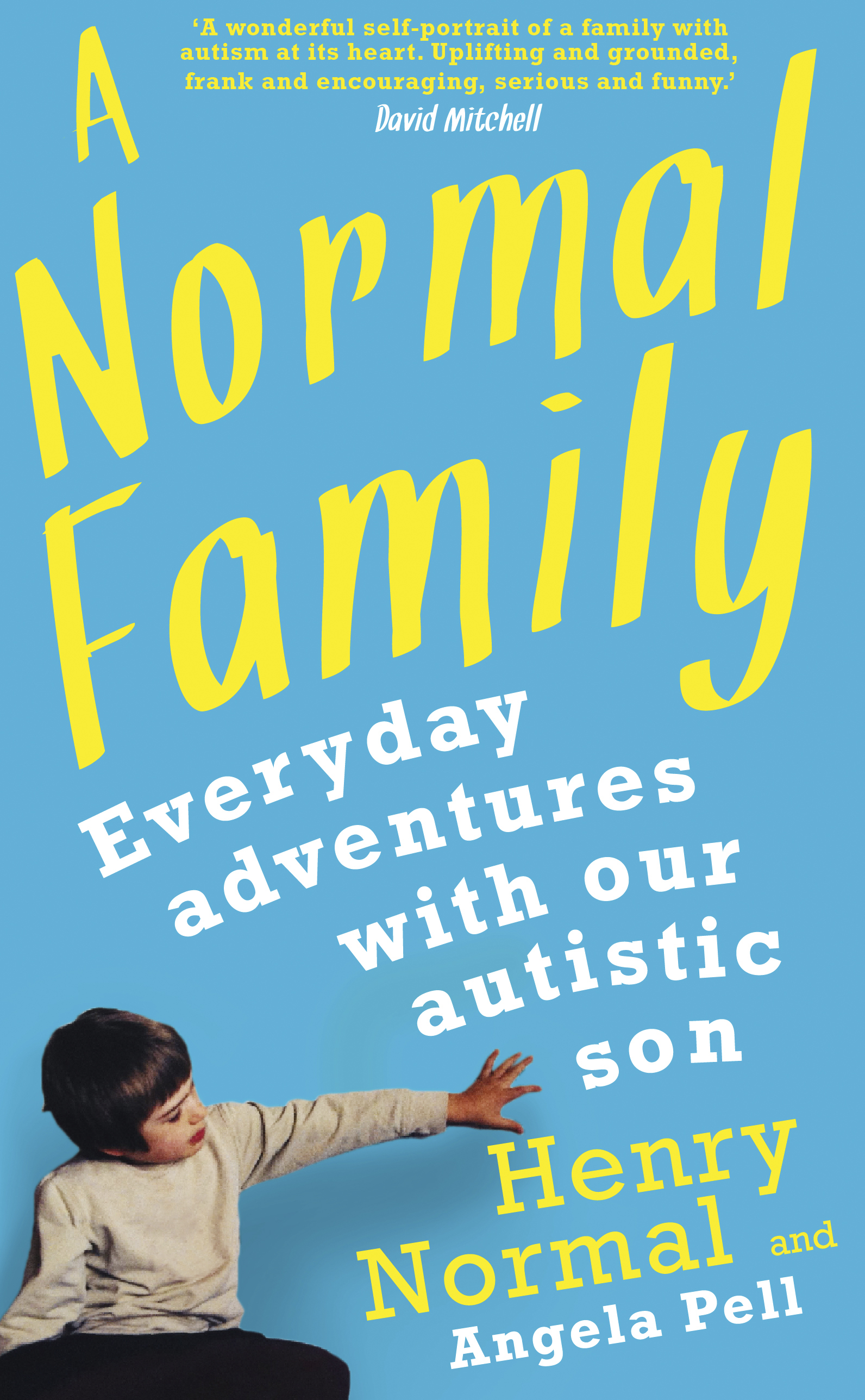
Idly flicking through Wikipedia, I see you’re down, genre-wise, as an exponent of house, alternative dance, synthpop, indie pop and alternative rock. And that’s just you, not the band. But I guess it’s good that people still struggle to put definitive labels on you.
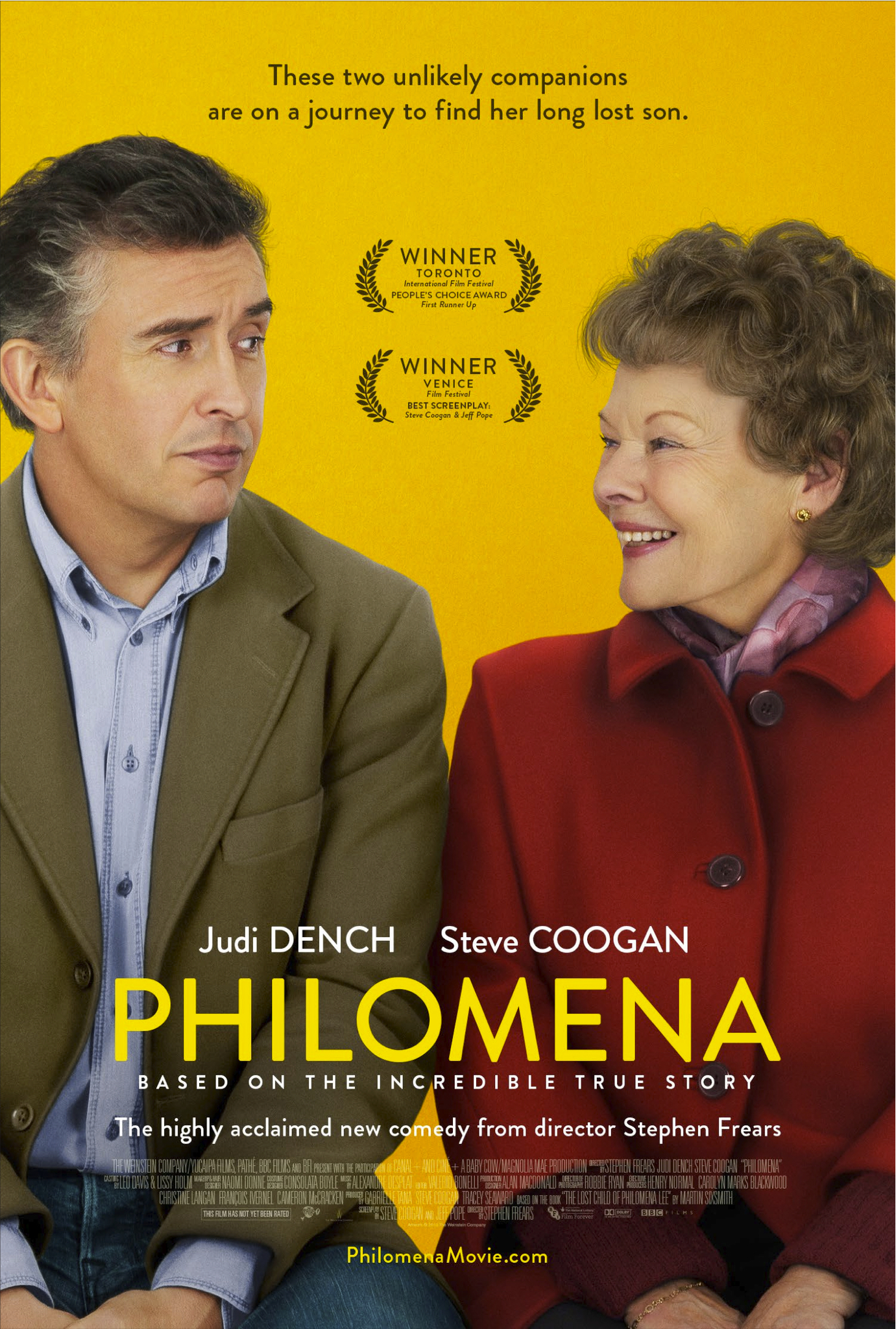
“Yeah, I’m very proud! I didn’t know that. That’s really interesting. That’s great that I’m not to be pigeon-holed!”

Does it surprise you that this is somehow the 10th Saint Etienne LP, 30-plus years having passed? Because despite what I said before, it seems an age since I first heard ‘Only Love Can Break Your Heart’ and delved deeper.

“It does … and then it seems like yesterday! I was talking to Bob yesterday – we were doing an interview together on Zoom – and because the guy was asking specifically about Foxbase Alpha, at that point – and I think all three of us would agree – we were amazed we’d even made an album, let alone consider making another one … let alone this many!

“I think before an album’s out, we don’t really know if we’re going to make another one, ever, to be honest.”

I suppose that keeps you on your toes.

“Yeah, and I think that’s probably got a lot to do with us not having been on a major label … or at least always through an indie. We’ve never been locked into five albums or something ridiculous like that!”

How aware were you of ‘Only Love Can Break Your Heart’ when it came out? Did you hear that before you were involved?

“Yes, I did. I was a big fan of the record, and the reason I ended up meeting Bob and Pete was through … I grew up in Windsor, and was good friends with a lot of people there, and can’t remember who it was who first played that to me, it may have been my friend, Jonny Male, but Bob was going out with a girl from Windsor who I knew, called Celina …”

Was that Celina Nash, who’s on the debut LP’s cover?

“That’s right, and I heard the record and really liked it, and Bob and Pete were looking for someone to sing ‘Nothing Can Stop Us’. That was it, really. That’s all they were looking for. What they wanted was a different singer for different records, so she put them in touch with me.”

Like Erasure, the original premise for Vince Clarke was to have different vocalists. Which is possibly the first time anyone’s compared you to Andy Bell, another singer who came in to do a job and stuck around, to great effect.

“Ha! Yeah. My theory is that touring would become a logistical nightmare – you’d need one bus for all the singers, and another for the rest!”

It’ll be 30 years and six days between the release of Foxbase Alpha and the new record. And seeing as you mentioned ‘Nothing Can Stop Us’, Bob sees that as the first song him and Pete wrote with lyrics, and reckons – according to a piece he wrote for Robin Turner’s book celebrating Heavenly Recordings 30th anniversary, …Believe in Miracles, they ‘got very lucky in the studio’. Was that a special moment, hearing that track back in the studio for the first time?

“Yeah, absolutely. It was amazing. I was surprised, and I think they were! Like you say, they hadn’t really written anything before. But I think that was a confidence thing – they just didn’t know they could write, but once they started they were on a roll.”

You say of the new record, “It’s the first sample-driven album we’ve made since So Tough and it’s been a really refreshing experience, such fun! It’s both dreamy and atmospheric, late summer sounds.” Is there a sense for you that So Tough was the first proper album, in that you received writing credits for ‘Avenue’ and ‘You’re in a Bad Way’? Or did you already feel properly part of it?

“I think I already felt part of it. Bob and Pete had known each other since they were tiny, and they had a lot of in-jokes. It took a while, but I never felt they were laughing at me … at least I don’t think they were! They would just be sniggering about something in a corner.

“I felt very comfortable with them, and think with Foxbase Alpha, because of the Mercury Music Prize nomination, blah blah blah, I already felt quite a part of the band. But I know what you mean – with So Tough, that’s when I started to put my ideas across. And I’d been writing songs since I was about 15 … in my band.”

She sounds almost apologetic at the end there, but I’m not letting it slip by. Was that with her Windsor outfit, The Worried Parachutes? 

“Oh God! How did you find that out?”

Sorry, I did warn you I’d been delving online.

“Hilarious!”

Tell me more about that band.

“Err … kind of electronic pop, lots of keyboards, three girls originally, all from Windsor. We sort of folded, then the bass player and I went off and did our own thing for quite a few years. His name’s Mick Bund. We had two bands together. I stopped doing that around ’87 and went to drama school in ’88 for a year, thinking I’d be an actress. I always had an interest in that. I came out and did a few fringe productions, then met Bob and Pete.”

It was clearly meant to be. So were songs like ‘You’re in a Bad Way’ new, or something you’d had a while?

“No, that was new.”

Although I’ve been in Lancashire since early 1994, my roots are in Guildford, moving north between the recording and release of the third Saint Etienne LP, Tiger Bay

“Oh really. Home Counties as well, then!”

Definitely, and Windsor’s Community Arts Centre and The Old Trout were fairly regular venues for me from ’88.

“Oh, I played there a couple of times!”

I thought you might have, with London and the South East my patch in the days I wrote a fanzine, going up to town, seeing bands all over …

“Yeah, didn’t we all!”

Exactly, and the subject of Windsor-born Andrew Weatherall – three years Sarah’s senior – has come up a few times lately in interviews, Brix Smith talking of his inspirational words and Dot Allison about the compilation tapes he put her way, introducing her to new sounds. How was it with Saint Etienne and Andrew?

“Well, I knew Andrew from Windsor, but he got involved before I joined, with ‘Only Love Can Break Your Heart’. I didn’t know that then, but that was via Jeff {Barrett, the Heavenly Recordings head honcho), who put Bob and Pete Andrew’s way. But I knew Andy from when I was about 15. He was an incredibly influential person, such an inspiration, so funny, and really warm. He was just lovely, and it’s terribly sad …”

We’ve all got stories of people we’ve lost this last year or so, but he was one of the more high-profile departures.

“Oh God, yeah, and he was so loved. I went to the funeral and there were so many people there … and a lot of tears.”

Going back to your Windsor days, did you know instinctively where you wanted to be and what you wanted to do? I’m guessing acting was just part of the bigger picture – performing and doing something creative.

“Well, yeah, I knew from when I was really small that I wanted to be on a stage, doing something creative. My Dad was in the film industry and I’d go on set and on location, and just loved everything about that and any kind of creative process. I was writing poems and doing drama exams at school,  singing … It was always something I wanted to do.”

Sarah’s father, Derek Cracknell – who died a few months before Foxbase Alpha’s release, and to whom her 1997 debut solo LP, Lipslide, was dedicated – had a distinguished film career, more than 50 assistant director credits ranging from the Boulting Brothers’ Heavens Above to Stanley Kubrick’s 2001: A Space Odyssey and A Clockwork Orange, Bond movies Diamonds are Forever, Live and Let Die and The Man With the Golden Gun, through to 1989’s Batman. He also took that iconic photograph of six-year-old Sarah used on the cover of So Tough.

As for the new record, the guitar line underpinning ‘I Remember It Well’ reminds me of ‘Dreaming’ by Blondie. In fact, you could argue that track is more ‘Dreaming’ than ‘Dreaming’.

“Ha! I suppose it is, isn’t it!”

Similarly, ‘Fonteyn’ has a bit of ‘Love is in the Air’ about its main hook. I guess what I’m saying that while Saint Etienne from the start were very much about the future and possibilities, you always had a foot in pop’s past too.

“Yeah, we love things from the past, absolutely, but like to turn things into something we feel is looking to the future. Exactly what you just said, really! And the thing about using samples again is that it’s such good fun, making something new out of something old.”

I suppose the concept of music being married with something visual, filmic and the world of multi-media has always been there, not least with your film soundtrack contributions, on Finisterre in 2002 with its accompanying DVD, and the Royal Festival Hall artists-in-residence project.

“Yeah … it’s not a surprise, is it!”

Tell me about the beguiling yet rather mysterious ‘Penlop’, not least as it’s maybe the track we hear you most on (and is my favourite number on the new LP). Is there a story here about travel and Bhutan, perhaps?

“Erm … I’m avoiding talking about that kind of thing, and our lyrics. There’s a lot of stuff, vocally, on the album that’s pretty abstract, and it’s meant to be part of the music. There’s no lyrical narrative. The narrative really comes from the film. When they’re paired together, the music just goes with it.”

So the ear, and in this case the eye too, is the beholder perhaps.

“Exactly! We don’t want to spoil it. It’s like when you imagine lyrics from other songs. Often, when you hear what it really is, you’re quite disappointed – the version in your mind was a lot better.”

That took us briefly to The Stranglers’ ‘Golden Brown’, and how I was initially disappointed discovering Hugh Cornwell wasn’t in fact laid down with his ‘mancherums’ – which I presumed were some kind of exotic, potent Far Eastern cigarette – but that, ‘with my mind she runs’.

“I always thought it was something Asian, like a guru … a kind of ‘Sexy Sadie’!”

Ah, whom of course ‘laid it down for all to see’ … and ‘broke the rules’. Maybe Sarah’s interpretation wasn’t so far from mine after all.

Saint Etienne have clearly come a long way from Foxbase Alpha, so to speak, the band that told us ‘London Belongs to Me’ back in September ’91 having put their latest record together remotely, in Bradford, Hove and Oxford. And you can’t say that about many LPs, surely.

“Exactly! And it worked really well, thanks again to my useful youngest teen, who’s really good at ProTools and all that sort of thing. He recorded it and was my vocal engineer! To be honest, without him I’d have had to learn how to do these things.”

Incidentally, you probably know this, but Sarah has two sons with husband Martin Kelly, Saint Etienne’s manager and Jeff Barrett’s former label partner, who also co-founded the legendary Heavenly Social club and was with fellow Heavenly act, East Village. But I’ll let her carry on …

“We’ve done so many Zooms that we feel we’ve seen each other a lot, but I said to Bob yesterday, ‘When did I actually see you in the flesh the last time?’. At least 18 months ago. I’ve at least seen Pete – he came here one day.”

I was interviewing someone recently who told me he was so relieved ours was a phone call rather than a Zoom – it meant he didn’t have to worry about what he was wearing and that he might occasionally be staring off into space.

“Yeah, I know! And where I am, there’s broad daylight straight in my face. It’s really brutal!”

And would you be tempted to follow that remote formula again, or will it be about sharing rooms next time?

“I think we’d like to share rooms, to be honest. We often start sending ideas across, then we’ll all make up tunes, scribble some words, then we’ll go in a studio, start pulling it together.”

Well, long may it continue. This LP’s getting under my skin, and I’m looking forward to seeing the film too.

“Oh good. I think you’ll love that. It really adds to it. It’s a good combi.”

I’ve Been Trying to Tell You is out now via Heavenly Recordings (HVNLP196) in digital, vinyl, CD, CD-DVD and boxset formats, with details here. Rough Trade also made it their September album of the month, offering an exclusive sky-blue vinyl edition with three-track remix CD involving mixes by Daniel Avery, Jane Weaver and Vince Clarke. There’s also a Heavenly edition with free flexidisc (linked via their Bandcamp shop here), and a ‘super deluxe’ limited-edition boxset with signed prints, film poster, DVD, exclusive 10” vinyl and 12” album.

The film of the same namepremiered on London’s BFI Southbank HQ in early September, with the trailer here, part of the Films Of Saint Etienne season, screenings accompanied by Q&As with the band and their collaborators, also including This Is Tomorrow, Asunder, Finisterre, How We Used to Live, Lawrence of Belgravia, What Have You Done Today Mervyn Day? and Saint Etienne: Shorts Programme.

Saint Etienne tour dates: Glasgow St Luke’s, November 18th; Sunderland (venue to be confirmed), November 19th; London’s Alexandra Palace Theatre, November 20th; Bristol Trinity, November 23rd; Birmingham Institute, November 24th; Saltaire Victoria Hall, November 25th; Liverpool Grand Central Hall, November 26th; and Hove Old Market, November 27th, with tickets available here

For all the latest, keep in touch via the official Saint Etienne website and via Bandcamp, Facebook, Instagram and Twitter, with more links available via Spotify and YouTube.

Posted in Uncategorized | Tagged , , , , , , , , , , , , , , , , , , , , , , , , | Leave a comment